










Drug Trade Filled Coffers of Taliban, Bin Laden Group
by James Rosen
The Minneapolis Star Tribune
September 30, 2001
Long before he became Public Enemy No. 1, Osama bin Laden was waging a different
kind of war on Americans and their Western allies.
Since the mid-1990s, while the spotlight shone on cocaine cartels in Latin America, Bin Laden fortified a drug-trafficking network that provided major revenues for Afghanistan's Taliban regime _ and financed his Al-Qaida network of terrorism.
Bin Laden's commerce in narcotics helped make Afghanistan the world's leading exporter of heroin, some 2,200 pounds of which reached the United States last year, according to the U.S. State Department.
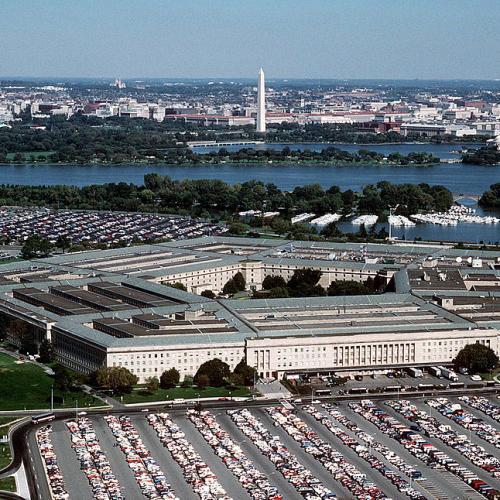
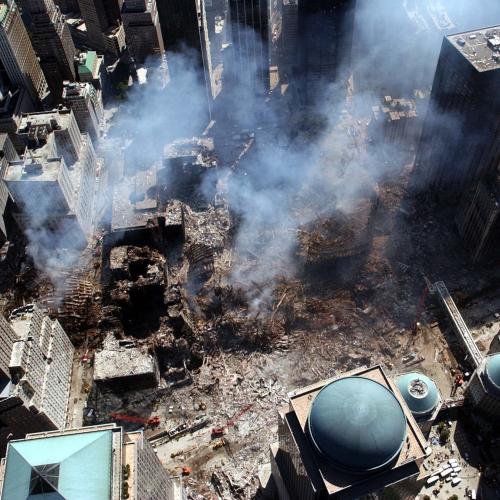
Worth at least $260 million in street value, some of the proceeds from the American heroin sales found their way back to Bin Laden, who stands accused by President Bush of orchestrating the Sept. 11 suicide hijack attacks on the World Trade Center and the Pentagon.
"What better way to poison the Western world than through drugs," said Donnie Marshall, who headed the U.S. Drug Enforcement Administration from July 1999 through June of this year. "It's another weapon in their arsenal."
Yoseff Bodansky, author of a 1999 biography of Bin Laden and director of the congressional Task Force on Terrorism and Unconventional Warfare, said the terrorist kingpin takes a 15 percent cut of the drug trade money in exchange for protecting smugglers and laundering their profits.
"The Afghans are selling 7 to 8 billion dollars of drugs in the West a year," Bodansky said. "Bin Laden oversees the export of drugs from Afghanistan. His people are involved in growing the crops, processing and shipping. When Americans buy drugs, they fund the jihad (holy war)."
Bin Laden is the son of a Saudi construction magnate, and estimates of his wealth vary widely. Some intelligence experts say his family cut him off after the Saudi government expelled him in 1992 for organizing violent protests of its alliance with the United States in the Gulf War.
Many experts believe that Bin Laden oversees a large stream of income from a web of legitimate businesses, donations from wealthy Muslims throughout the Middle East, drug trafficking and ties to other organized crime.
Rachel Ehrenfeld, who tracks international money laundering and drug trafficking as director of the New York-based Center for the Study of Corruption said Bin Laden recycles the drug proceeds through businesses in Europe and the Far East.
"The drug trade is a triple-pronged weapon for Bin Laden and the Taliban," she said. "It finances their activities. It undermines the enemy. And it proves that the enemy is corrupt, which they then use in their own recruiting propaganda."
Heroin is produced in labs through a chemical process from opium gum, a thick sap scraped from the scored flower bulbs of poppy plants. Ten pounds of opium produces 1 pound of pure heroin, which is dried, pulverized into white powder, cut with corn starch and other substances, then sold on the street in varying degrees of purity.
Afghanistan's Taliban rulers announced a ban on poppy plant cultivation 14 months ago. Before the Sept. 11 attacks, they complained that the ban had not succeeded in easing economic sanctions the United Nations imposed on Afghanistan in 1998 for harboring terrorists and drug traffickers.
"We have done what needed to be done, putting our people and our farmers through immense difficulties," Abdol Hamid Akhondzadeh, director of the Taliban's High Commission on Drug Control, said in May. "We expected to be rewarded for our actions, but instead were punished with additional sanctions."
But a five-person panel of United Nations experts concluded that 10 months after the ban, stored opium was being sold to buy arms, "finance the training of terrorists and support the operation of terrorists in neighboring countries and beyond."
The U.N. panel also noted that Afghanistan was still importing large quantities of acetic anhydride, the main chemical used in heroin production.
Many Western experts suspect the Taliban of stockpiling opium gum and heroin, which unlike cocaine have long shelf lives and can be stored for years if securely packaged.
"They have reduced poppy cultivation over the last year or two, but I think that was largely a sham," said Marshall, the former DEA chief. "There is a lot of evidence that they have stockpiled opium gum and that limiting cultivation is not going to have any impact because they have been preparing for several years to do that."
Indeed, wholesale opium prices have plummeted in recent days, signaling to Marshall and other experts that the Taliban has started to dump its stockpiles before the possible outbreak of war in Afghanistan.
The Taliban, a sect of Islamic extremists, gained control of Kabul and most of Afghanistan in 1996 after a four-year civil war. Soviet troops left Afghanistan in 1989 after a nearly decade-long occupation, and the Moscow-backed communist government fell in 1992.
Among the world's poorest countries, Afghanistan has a mainly subsistence economy with little industry or large-scale commerce. The Taliban is still fighting an opposition coalition in northern Afghanistan.
Robert Brown, deputy director of supply reduction in the White House Office of National Drug Control Policy, said the Taliban raises revenue by taxing opium cultivation and heroin production.
"A substantial percentage of the Taliban's government proceeds comes from the opium trade," Brown said. "There has been really no significant reduction in the outflow of drugs from Afghanistan despite the cultivation ban."
Afghanistan and Burma were the only two countries the United States failed to certify in March in its annual assessment of foreign nations' cooperation in fighting illegal drugs. Congress passed a law in 1986 requiring two dozen countries to get annual anti-trafficking certification as a condition for getting U.S. aid.
"Traffickers of Afghan heroin continued to route most of their production to Europe, but also targeted the United States," the State Department said in its report. "Those in positions of authority have made proclamations against poppy cultivation, but they have had little or no effect on the drug trade, which continues to expand."
Afghan drug trafficking didn't begin with the rise of the Taliban or the arrival of Bin Laden five years ago. Mujahedin rebels who successfully repelled the Soviet invasion financed their war through opium sales.
Alfred McCoy, a professor of Southeast Asian history at the University of Wisconsin, said U.S. and Pakistani intelligence officials sanctioned the rebels' drug trafficking because of their fierce opposition to the Soviets.
Gulbuddin Hekmatyar, a rebel leader who received $1 billion in covert CIA funds, was a major heroin trafficker, according to McCoy. Afghan opium production ballooned from 250 tons in 1982 to 2,000 tons in 1991.
"The CIA's mission was to fight the Cold War, and for that they were willing to sacrifice the drug war," McCoy said. "If their local allies were involved in narcotics trafficking, it didn't trouble CIA. They were willing to keep working with people who were heavily involved in narcotics."
Charles Cogan, now a research associate at Harvard University's John F. Kennedy School of Government, directed the Afghan operation for the CIA in the 1980s. He said the agency did not know at the time that the anti-Soviet rebels were engaged in drug trafficking.
"We found out about it later on," he said.
But in 1995, Cogan told an Australian television reporter: "Our main mission
was to do as much damage as possible to the Soviets. We didn't really have the
resources or the time to devote to an investigation of the drug trade. I don't
think that we need to apologize for this. Every situation has its fallout. .
. . There was fallout in terms of drugs, yes. But the main objective was accomplished.
The Soviets left Afghanistan."
© Copyright 2001
FAIR USE NOTICE: This site contains copyrighted material the use of which has not always been specifically authorized by the copyright owner. We are making such material available in our efforts to advance understanding of criminal justice, political, human rights, economic, democracy, scientific, and social justice issues, etc. We believe this constitutes a 'fair use' of any such copyrighted material as provided for in section 107 of the US Copyright Law. In accordance with Title 17 U.S.C. Section 107, the material on this site is distributed without profit to those who have expressed a prior interest in receiving the included information for research and educational purposes. For more information go to: http://www.law.cornell.edu/uscode/17/107.shtml. If you wish to use copyrighted material from this site for purposes of your own that go beyond 'fair use', you must obtain permission from the copyright owner.
- Inform your media and political representatives of this vital information on 9/11. To contact those close to you, click here. Urge them to call for the release of classified documents and videos and to press for a new, impartial investigation.
- Explore the wealth of reliable, verifiable information on 9/11, including several excellent documentaries, in our 9/11 Information Center available here.
- Learn more about 9/11 and the secret societies likely involved in this powerful lesson from the free Insight Course.
- Explore inspiring ideas on building a brighter future by reading this short essay.
- Spread this news to your friends and colleagues, and recommend this article on key social networking websites so that we can fill the role at which the major media is sadly failing. Together, we can make a difference.
See our exceptional archive of revealing news articles.
Please support this important work: Donate here.
www.momentoflove.org - Every person in the world has a heart
www.personalgrowthcourses.net - Dynamic online courses powerfully expand your horizons
www.WantToKnow.info - Reliable, verifiable information on major cover-ups
www.weboflove.org - Strengthening the Web of Love that interconnects us all
Subscribe here to the WantToKnow.info email list (two messages a week)