















9/11 Cover-up Document
Media Website Requires Payment to View Article
Free
Copy Given Below
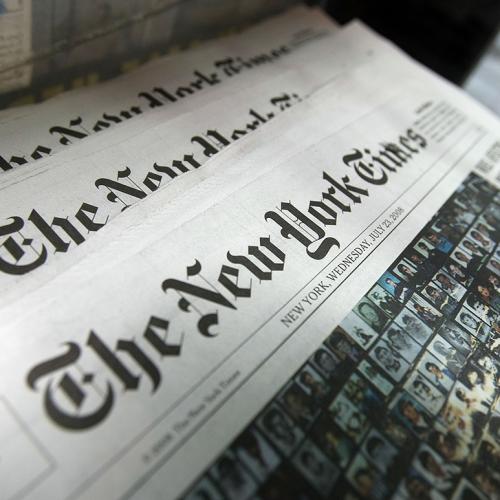
This is one of the articles on the 9/11 summary for which the media website requires payment. For the New York Times website, you must both register as a member (which is free), and then pay a small fee by credit card on line in order to be able to view or download the full article. Once registered, you can view an abstract of the article for no cost. First, go to:
http://select.nytimes.com/gst/abstract.html?res=F00B15F83E5E0C708EDDA80994D9404482
If you haven't previously signed up as a user, fill in the required information. Once complete, you will see the abstract and have the option to view and download the full article with payment. We provide a copy of the article below for free.
November 23,
2001, Friday
FOREIGN DESK
V. Pasechnik, 64, Is Dead; Germ Expert Who Defected
By WOLFGANG SAXON ( Obituary (Obit); Biography ) 660 words
Dr. Vladimir Pasechnik, a senior Soviet biologist whose defection in 1989 alerted Western intelligence to the scope of Moscow's clandestine efforts to adapt germs and viruses for military use, died on Wednesday in Wiltshire, England. He was 64 and lived in a nearby village.
The cause was a stroke, said Dr. Christopher J. Davis of Great Falls, Va., formerly in British intelligence.
It was Dr. Pasechnik who provided a first glimpse of Biopreparat, a network of secret laboratories, each focused on a deadly agent. His revelations were confirmed in 1992 with the defection to the United States of Dr. Ken Alibek, the No. 2 scientist for the program.
The picture that emerged was of a system of centers scattered chiefly around European Russia. There, a small army of scientists and technicians were developing potential biological weapons like anthrax, Ebola, Marburg virus, plague, Q fever and smallpox.
Dr. Pasechnik was in charge of one known as the Institute of Ultra Pure Biochemical Preparations in St. Petersburg, then Leningrad. Once in England, he told interviewers that he had no inkling that his work violated the 1972 treaty under which the United States and the Soviet Union were to halt such activities.
Once revealed, the Soviet government insisted that the research was intended to defend against acts of biological warfare by an enemy and that the program had been stopped, two claims doubted by Western intelligence.
Dr. Pasechnik defected on an official trip to the West, but little was known about his background until early 1993 when the British government permitted him to speak.
He said he had become ''disgusted'' with the biological weapons program, which had been denied by Presidents Mikhail S. Gorbachev and Boris N. Yeltsin, or had been hidden from them. Dr. Pasechnik said he defected in an effort to help stop it. (His own laboratory had been working on a strain of plague.)
James Adams, in his 1994 book ''The New Spies,'' described Dr. Pasechnik as ''one of the brightest stars at the Leningrad Polytechnical Institute.'' A native of Volgograd, formerly Stalingrad, he graduated in physics at the top of his class.
He specialized in the study of polymers for biological uses at the Institute of High Molecular Compounds in St. Petersburg. His interest, Mr. Adams wrote, was in developing new antibiotics and methods to treat diseases without known cures.
At age 37, Dr. Pasechnik was invited to start his own institute, Mr. Adams wrote, with an unlimited budget to buy equipment in the West and recruit the best staff available. The laboratory he created was part of the countrywide Biopreparat.
He later reported that the institute, with a staff of 400, did research on modifying cruise missiles to spread germs. Flying low to foil early-warning systems, the robot craft were intended to spray clouds of aerosolized pathogens over unsuspecting enemies.
Dr. Pasechnik said his team succeeded in producing an aerosolized plague microbe that could survive outside the laboratory.
Increasingly distressed, Dr. Pasechnik had begun to plan his defection in 1988, he but had never been permitted to travel abroad, Mr. Adams wrote. Meanwhile, Western intelligence agencies had been poring over bits and pieces of information for years, trying to assess the state of Soviet efforts in his field.
Dr. Pasechnik got his chance to travel in the summer of 1989. He volunteered to wrap up a pending deal with a French maker of chemical laboratory equipment. In recognition of past performance, he was allowed to travel to Toulouse to sign the contracts.
Instead, he called the British Embassy in Paris.
FAIR USE NOTICE: This site contains copyrighted material the use of which has not always been specifically authorized by the copyright owner. We are making such material available in our efforts to advance understanding of criminal justice, political, human rights, economic, democracy, scientific, and social justice issues, etc. We believe this constitutes a 'fair use' of any such copyrighted material as provided for in section 107 of the US Copyright Law. In accordance with Title 17 U.S.C. Section 107, the material on this site is distributed without profit to those who have expressed a prior interest in receiving the included information for research and educational purposes. For more information go to: http://www.law.cornell.edu/uscode/17/107.shtml. If you wish to use copyrighted material from this site for purposes of your own that go beyond 'fair use', you must obtain permission from the copyright owner.
- Inform your media and political representatives of this vital information on 9/11. To contact those close to you, click here. Urge them to call for the release of classified documents and videos and to press for a new, impartial investigation.
- Explore the wealth of reliable, verifiable information on 9/11, including several excellent documentaries, in our 9/11 Information Center available here.
- Learn more about 9/11 and the secret societies likely involved in this powerful lesson from the free Insight Course.
- Explore inspiring ideas on building a brighter future by reading this short essay.
- Spread this news to your friends and colleagues, and recommend this article on key social networking websites so that we can fill the role at which the major media is sadly failing. Together, we can make a difference.
See our exceptional archive of revealing news articles.
Please support this important work: Donate here.
www.momentoflove.org - Every person in the world has a heart
www.personalgrowthcourses.net - Dynamic online courses powerfully expand your horizons
www.WantToKnow.info - Reliable, verifiable information on major cover-ups
www.weboflove.org - Strengthening the Web of Love that interconnects us all
Subscribe here to the WantToKnow.info email list (two messages a week)