








































9/11 Cover-up Document
Media Website Requires Payment to View Article
Free
Copy Given Below
This is one of the articles on the 9/11 summary for which the media website requires payment. For the New York Times website, you must both register as a member (which is free), and then pay a small fee by credit card on line in order to be able to view or download the full article. Once registered, you can view an abstract of the article for no cost. First, go to:
http://select.nytimes.com/gst/abstract.html?res=F30E16FD39540C728DDDAE0894DA404482
If you haven't previously signed up as a user, fill in the required information. Once complete, you will see the abstract and have the option to view and download the full article with payment. We provide a copy of the article below for free.
THE DETAINEES
U.S. Deports Most of Those Arrested in Sweeps After 9/11
By SUSAN SACHS
As legal challenges to its policy of secret detentions advance slowly through the courts, the government has managed to deport most of the Sept. 11 detainees at the center of the lawsuits.
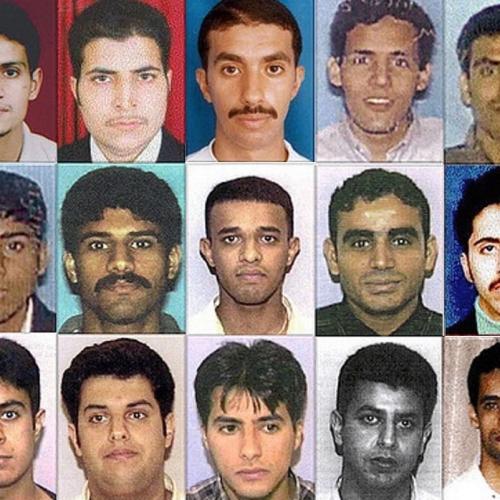
Some 1,200 South Asian and Arab men were arrested in sweeps after the terrorist attacks, and 750 of them were ultimately detained on immigration violations, the Justice Department said. As of four weeks ago, when the latest head count was released, all but 74 had been expelled to their home countries or, in a handful of cases, released to resume their lives in the United States.
The government, citing national security concerns, has refused to disclose the names of those foreigners it held in detention, including the vast majority who were never charged with anything other than overstaying a visa. It has also banned the public from the deportation hearings of "special interest detainees" once it has finished investigating them.
The secret detentions and secret hearings have been attacked in federal lawsuits filed by civil liberties groups in Washington, D.C., New Jersey and Michigan, and those cases continue to wend their way through the judicial system.
"The fact that many of the so-called 9/11 detainees have been deported in no way diminishes the significance of the current legal challenges," said Lee Gelernt, a lawyer at the American Civil Liberties Union, adding that some detainees are still affected by the government's secrecy policies.
The group's lawsuits asked for the names of all detainees, whether they were still in the country or not.
Federal district judges have ruled against the government's blanket closing of hearings and refusal to release detainees' names. The Justice Department prevailed in just one instance so far. The New Jersey Supreme Court on Tuesday let stand an appellate decision against the disclosure of names.
Civil liberties groups and Muslim-American organizations have complained for months about the treatment of the foreigners picked up after Sept. 11, the lack of information given to the prisoners' relatives and the continued detention of people who had agreed to leave the country.
The pace of expulsions began to pick up in March, culminating in the group deportation of 26 Pakistani detainees on a chartered aircraft on June 26.
They were among 131 Pakistanis who flew home together after being gathered from detention centers around the country. In addition to the Sept. 11 detainees, the passengers included 70 people who had ignored previous deportation orders and 35 who had been charged with crimes.
The immigration service routinely organizes special flights, usually once or twice a week, when large numbers of people from the same country are being deported, said Karen Kraushauer, a spokeswoman for the I.N.S.
Other expulsions of the Sept. 11 detainees have been so abrupt that family members did not know for days after the fact.
In the case of Ali Yaghi, a Jordanian detainee who had applied for residency, his American wife and three children in Albany were never told that he was deported to Jordan on June 24, after spending nearly nine months in the Metropolitan Detention Center in Brooklyn on an immigration charge.
Mr. Yaghi has not been heard from since, raising fears in his family that Jordan's security services may have been so suspicious about his long detention that they arrested him upon arrival.
FAIR USE NOTICE: This site contains copyrighted material the use of which has not always been specifically authorized by the copyright owner. We are making such material available in our efforts to advance understanding of criminal justice, political, human rights, economic, democracy, scientific, and social justice issues, etc. We believe this constitutes a 'fair use' of any such copyrighted material as provided for in section 107 of the US Copyright Law. In accordance with Title 17 U.S.C. Section 107, the material on this site is distributed without profit to those who have expressed a prior interest in receiving the included information for research and educational purposes. For more information go to: http://www.law.cornell.edu/uscode/17/107.shtml. If you wish to use copyrighted material from this site for purposes of your own that go beyond 'fair use', you must obtain permission from the copyright owner.
- Inform your media and political representatives of this vital information on 9/11. To contact those close to you, click here. Urge them to call for the release of classified documents and videos and to press for a new, impartial investigation.
- Explore the wealth of reliable, verifiable information on 9/11, including several excellent documentaries, in our 9/11 Information Center available here.
- Learn more about 9/11 and the secret societies likely involved in this powerful lesson from the free Insight Course.
- Explore inspiring ideas on building a brighter future by reading this short essay.
- Spread this news to your friends and colleagues, and recommend this article on key social networking websites so that we can fill the role at which the major media is sadly failing. Together, we can make a difference.
See our exceptional archive of revealing news articles.
Please support this important work: Donate here.
www.momentoflove.org - Every person in the world has a heart
www.personalgrowthcourses.net - Dynamic online courses powerfully expand your horizons
www.WantToKnow.info - Reliable, verifiable information on major cover-ups
www.weboflove.org - Strengthening the Web of Love that interconnects us all
Subscribe here to the WantToKnow.info email list (two messages a week)