
















9/11 Cover-up Document
Media Website Requires Payment to View Article
Free
Copy Given Below
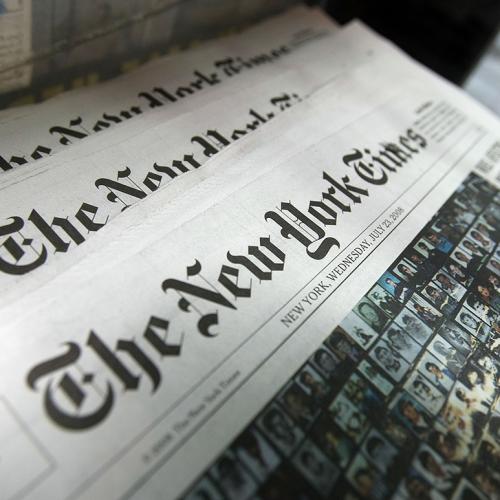
This is one of the articles on the 9/11 summary for which the media website requires payment. For the New York Times website, you must both register as a member (which is free), and then pay a small fee by credit card on line in order to be able to view or download the full article. Once registered, you can view an abstract of the article for no cost. First, go to:
http://select.nytimes.com/gst/abstract.html?res=F70E17F63F550C728DDDA00894DA404482
If you haven't previously signed up as a user, fill in the required information. Once complete, you will see the abstract and have the option to view and download the full article with payment. We provide a copy of the article below for free.
September 11, 2002, Wednesday
NATIONAL DESK
THREATS AND RESPONSES: NEWS ANALYSIS; Investigating 9/11: An Unimaginable Calamity, Still Largely Unexamined
By JIM DWYER ( News Analysis ) 1795 words
Of course the country had to understand what went wrong. One of the largest structures ever built had failed, at a terrible cost in lives. When warned of danger, those in charge had shrugged. Many died because the rescue effort was plagued by communication breakdowns, a lack of coordination, failure to prepare.
These findings on the sinking of the Titanic entered the public record after the Carpathia docked at the Chelsea piers in Manhattan on April 18, 1912, with the 705 survivors plucked from the North Atlantic. Starting the next morning at the Waldorf-Astoria, the barely dry witnesses provided a rich body of facts about the accident, the Titanic, and maritime practices to the United States Senate Commerce Committee, which held 18 days of hearings. Their testimony gave form to a distant horror, shaping law and history.
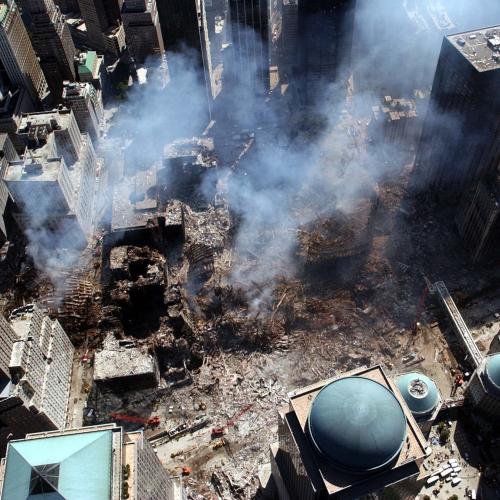
No inquiry remotely similar in scope, energy or transparency has examined the attacks of last Sept. 11, the devastating collapse of two of the world's tallest structures, the deaths at the Pentagon or on United Airlines Flight 93 in Pennsylvania. A handful of tightly focused reviews have taken place mostly in secret, conducted by private consultants, or by Congressional committees.
One year later, the public knows less about the circumstances of 2,801 deaths at the foot of Manhattan in broad daylight than people in 1912 knew within weeks about the Titanic, which sank in the middle of an ocean in the dead of night.
That hardly seems possible, considering that 9/11 iconography has been absorbed into everything from football pageants to pitches by speakers peddling lessons in leadership. And yet, says John F. Timoney, once a senior police commander in New York and the former police commissioner in Philadelphia, the events of Sept. 11 are among the most rare in American public life: true catastrophes that have gone fundamentally unscrutinized.
''You can hardly point to a cataclysmic event in our history, whether it was the sinking of the Titanic, the Pearl Harbor attack, the Kennedy assassination, when a blue-ribbon panel did not set out to establish the facts and, where appropriate, suggest reforms,'' Mr. Timoney said. ''That has not happened here.''
In Washington, a special joint Congressional committee met a dozen times in secret to investigate the performance of the intelligence services, but planned public hearings have been postponed.
In New York, which suffered the greatest loss of life in the attacks, no formal review of the emergency response was opened until January, when Michael R. Bloomberg succeeded Rudolph W. Giuliani as mayor. And even then, the city proceeded with maximum circumspection. The new administration commissioned McKinsey & Company, a management consulting firm, to assess the Police and Fire Departments separately. Mr. Bloomberg pointedly said that the two reports ''should not be described as investigations; they have not attempted moment-by-moment re-creations of the events of 9/11.'' The purpose, he said, was only to identify ''specific and important opportunities'' for improvement.
Nor has there been a wide public demand for answers, to the frustration of a handful of victims' families.
Why this national reluctance to face the country's bloodiest modern disaster in all its dimensions?
The familiar narrative and images of heroism surely offer comfort and pride. Any wide-ranging study is bound to find unflattering profiles of self-inflicted wounds, poor preparation, even a kind of mass stupor in the face of rising threats. Islamic fundamentalists had, after all, been killing Americans and attacking American symbols for a decade, in New York, in Saudi Arabia, in Africa, in Yemen. They tried to knock over the twin towers in 1993, and were caught plotting to crash hijacked airplanes into landmarks in 1994 and 1995.
Legislators who examine even lame and flimsy intelligence operations run the risk of seeming to make matters worse by opening up methods to scrutiny by enemies. Now the F.B.I. is investigating Congressional staff members and senators to see if they were the source of news reports that said the National Security Agency had bobbled hints of a pending attack.
In New York, different questions have undermined searching inquiries into the emergency response.
The adequacy of the building code for skyscrapers, while a technical issue, is by definition a matter of life and death. Also by definition, it is a question of costs for the real estate industry. A joint government-industry task force is now studying the New York codes, separate from the emergency responses. After the 1993 trade center bombing, a similar group made almost no changes because of resistance from the building industry, said Alan Reiss, who was the director of the trade center until last summer. By shaping basic structural requirements, the codes resonate on issues as basic to survival as the number of lifeboats a ship like the Titanic must carry: these laws effectively determine how rescue workers attack fires, whether people can escape from elevators and how many stairways are necessary.
At least 1,100 people survived the initial impacts from the planes, but were trapped. How many might have been saved if the buildings had stood longer? The city has not explored that question.
While Mr. Bloomberg endorsed proposed changes in police and fire management practices, the mayor has been plainly uninterested in revisiting the specifics of what went wrong on Sept. 11, saying that it was far more pressing to maintain flexible, well-equipped forces than to spend months going to school on the last calamity.
''Every single major event is different from all others,'' the mayor said when he released the McKinsey reports last month. ''The training of how you would respond to the last incident is not really important.''
Yet officials in New York City did have a blueprint for an attack of this sort, and it was the last attack.
In 1993, fundamentalists parked a truck bomb in the trade center basement. Six people were killed. For rescuers, ''Communications in that complex was the No. 1 issue, a big problem that had to be fixed,'' said Dennis Smith, the author of ''Report From Ground Zero'' (Viking, 2002) and a retired firefighter who has studied both attacks.
The firefighters returned Sept. 11 carrying the same radio equipment, with one big difference: the department had arranged to link the radios to a system of boosters and cable lines. Even so, nearly every surviving firefighter reported problems sending and getting messages. Yet Fire Department officials did not obtain the single known recording of their operations inside the tower until after The New York Times reported its existence in July. At that point, the response study had already been drafted.
Mr. Reiss, of the Port Authority of New York and New Jersey, said the Fire Department needed to figure out why the changes did not work. ''I felt like we spent a lot of money, we tried to do the right thing, but it didn't work,'' he said.
Mr. Reiss was not interviewed for the Fire Department report, which recommends that the city create tax incentives for other high-rise owners to install the sorts of technical improvements made at the trade center -- the very ones that, for unexplored reasons, did not work.
Another residue of the 1993 attack was the use of helicopters by the police, who had landed on a roof and removed people stranded on the upper floors. The firefighters, whose department has no helicopter, saw the police as showboats taking risks.
Afterward, the Port Authority, with the agreement of the Fire Department, decided to lock the roof doors as a security measure. On Sept. 11, some 200 people tried to get onto the south tower's roof but could not open the door. The police decided a landing was too dangerous. One pilot noted that he did not see anyone on the roof. The city studies did not consider the wisdom of locking roof doors in skyscrapers, and do not mention if such arrangements exist elsewhere.
As the towers were burning, Randy Mastro, a lawyer who served as deputy mayor under Mr. Giuliani, was asked on CNN if the city had changed its approach since 1993. Indeed it had, he said.
In 1993, Mr. Mastro said, ''There was no coordinated city response. There was no Mayor's Office of Emergency Management. Rudy Giuliani established that. It's been one of the hallmarks of his tenure. And unfortunately, there are circumstances like this one where that coordinated effort has to come into play and is coming into play now.''
The belief in the coordinated public safety efforts of the Giuliani administration turned out to be much like the belief in the unsinkability of the Titanic. Early in the crisis, the Office of Emergency Management had to be evacuated. It had been placed in the trade center complex by Mr. Giuliani, against advice that it was unwise to put an emergency center in a terrorist target. The Police and Fire Departments barely spoke on 9/11. They set up separate command posts. The firefighters stayed on the ground, 900 feet below fires that the police in helicopters were seeing up close. The two departments had not practiced helicopter operations for at least a year before the attack.
Literally as Mr. Mastro was speaking, the police in the sky were urging that everyone pull back from the tower, saying that a collapse appeared inevitable. This message was sent over police radios, but went unheard by firefighters. As many as 100 of them were resting on the 19th floor of the north tower. ''A wall of firemen, shooting the breeze, as if we were in a park,'' said Deputy Chief Joseph Baccellieri, the commanding officer of the New York State Court Officers Association.
The McKinsey consultants evaluated 16 tasks undertaken by the police on 9/11. None involved cooperating with other agencies. Important as that is, the McKinsey consultants wrote, it was ''outside the scope'' of their assignment.
As for Deputy Chief Baccellieri and other witnesses who saw crowds of doomed firefighters resting on the 19th floor, they all said they would gladly share their accounts with anyone investigating the events of Sept. 11.
So far, no one has called.
FAIR USE NOTICE: This site contains copyrighted material the use of which has not always been specifically authorized by the copyright owner. We are making such material available in our efforts to advance understanding of criminal justice, political, human rights, economic, democracy, scientific, and social justice issues, etc. We believe this constitutes a 'fair use' of any such copyrighted material as provided for in section 107 of the US Copyright Law. In accordance with Title 17 U.S.C. Section 107, the material on this site is distributed without profit to those who have expressed a prior interest in receiving the included information for research and educational purposes. For more information go to: http://www.law.cornell.edu/uscode/17/107.shtml. If you wish to use copyrighted material from this site for purposes of your own that go beyond 'fair use', you must obtain permission from the copyright owner.
- Inform your media and political representatives of this vital information on 9/11. To contact those close to you, click here. Urge them to call for the release of classified documents and videos and to press for a new, impartial investigation.
- Explore the wealth of reliable, verifiable information on 9/11, including several excellent documentaries, in our 9/11 Information Center available here.
- Learn more about 9/11 and the secret societies likely involved in this powerful lesson from the free Insight Course.
- Explore inspiring ideas on building a brighter future by reading this short essay.
- Spread this news to your friends and colleagues, and recommend this article on key social networking websites so that we can fill the role at which the major media is sadly failing. Together, we can make a difference.
See our exceptional archive of revealing news articles.
Please support this important work: Donate here.
www.momentoflove.org - Every person in the world has a heart
www.personalgrowthcourses.net - Dynamic online courses powerfully expand your horizons
www.WantToKnow.info - Reliable, verifiable information on major cover-ups
www.weboflove.org - Strengthening the Web of Love that interconnects us all
Subscribe here to the WantToKnow.info email list (two messages a week)