















































9/11 Cover-up Document
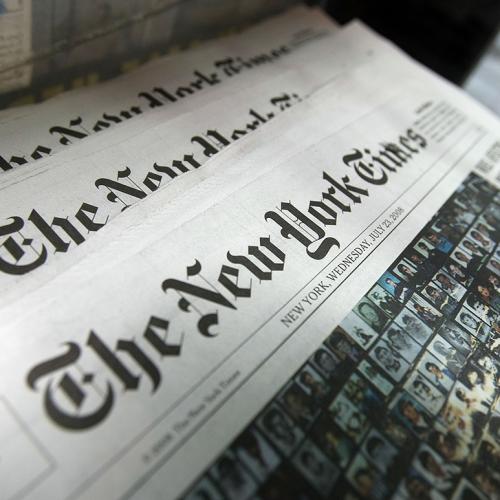
New York Times
Website Requires Payment to View Article
Free Copy Given Below
This is one of the articles on the 9/11 summary for which the media website requires payment. For the New York Times website, you must both register as a member (which is free), and then pay a small fee by credit card on line in order to be able to view or download the full article. Once registered, you can view an abstract of the article for no cost. First, go to:
http://select.nytimes.com/gst/abstract.html?res=F30D16FE3B540C7A8DDDA00894DA404482
If you haven't previously signed up as a user, fill in the required information. Once complete, you will see the abstract and have the option to view and download the full article with payment. We provide a copy of the article below for free. The quote about the Arab terrorists' plan to fly a bomb-laden plane into the World Trade Center is in the first sentence.
September 19, 2002, Thursday
NATIONAL DESK
THREATS AND RESPONSES: THE INVESTIGATION; U.S. FAILED TO ACT ON WARNINGS IN '98 OF A PLANE ATTACK
By JAMES RISEN (NYT) 1370 words
WASHINGTON, Sept. 18 -- The United States intelligence community was told in 1998 that Arab terrorists were planning to fly a bomb-laden plane into the World Trade Center, but the F.B.I. and the Federal Aviation Administration did not take the threat seriously, a Congressional investigation into the Sept. 11 attacks has found.
That August 1998 intelligence report from the Central Intelligence Agency was just one of several warnings the United States received, but did not seriously analyze, in the years leading up to the Sept. 11 attacks that were detailed today at a Congressional hearing.
The existence of the 1998 intelligence report was disclosed in a presentation by the committee's staff director, Eleanor Hill.
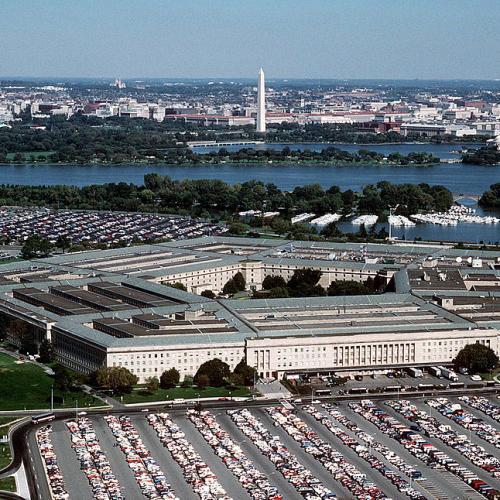
The report concluded that there was evidence of a growing interest by Al Qaeda and related groups in high-profile attacks inside the United States years before the attacks on the trade center and the Pentagon.
The Congressional report was the first disclosure that there was specific intelligence about terrorist plans to crash airplanes into the trade center, though officials said that those plans did not appear to be connected to the Sept. 11 attack.
And while the joint committee made public several intelligence reports that had been received in the years before Sept. 11 that related to Al Qaeda's intentions to launch an attack inside the United States and its interest in using aircraft for terrorism, Ms. Hill emphasized that the joint committee had still not found a ''smoking gun'' that could have helped prevent the Sept. 11 attacks.
''People have said there was no smoking gun,'' Ms. Hill said. ''But there was still a lot out there that was never pulled together.''
In fact, from 1998 to the summer of 2001, the C.I.A., the F.B.I. and other agencies repeatedly received reports of Al Qaeda's interest in attacking Washington and New York, either with airplanes or other means. The threat level grew so high that by December 1998, the director of central intelligence, George J. Tenet, issued a ''declaration of war'' on Al Qaeda, in a memorandum circulated in the intelligence community. Yet, Ms. Hill said, the intelligence agencies failed to adequately follow up on the declaration, and by Sept. 10, 2001, the F.B.I. still had only one analyst assigned full time to Al Qaeda.
The 1998 intelligence report about the trade center cited plans by a group of unidentified Arabs, who the United States now believes had ties to Al Qaeda, to fly an explosives-laden plane from a foreign country into the trade center. American intelligence officials said today that despite the similarities, they did not believe that the 1998 report was related to the Sept. 11 attack.
Still, the Congressional panel criticized the way in which the intelligence was handled, particularly by the F.B.I. and aviation agency. The committee said the F.B.I.'s New York office ''took no action on the information.'' The flight agency, meanwhile, ''found the plot highly unlikely,'' because of the state of the unidentified foreign country's aviation program.
''We did review the technical aspects of the information, but any decisions about whether it was credible was based on an F.B.I. determination,'' a spokesman for the Transportation Department said.
Law enforcement officials said the F.B.I.'s conclusion that the threat was not credible was based on the seeming difficulty of launching the attack from the unidentified country.
Recent months have seen a flood of reports concerning what kind of information intelligence agencies had about plans for a terrorist attack on the United States. For example, it has already been reported that in 1996, a Pakistani terrorist, Abdul Hakim Murad, confessed to federal agents that he was learning to fly an aircraft in order to crash a plane into the C.I.A. headquarters. It was disclosed in June that the National Security Agency had intercepted two cryptic communications the day before the Sept. 11 attacks. One indicated that ''the big match'' was scheduled for the next day; the other referred to Sept. 11 as ''zero hour.''
Some officials say it was not clear the messages related to the Sept. 11 attacks. Agency analysts did not translate them until Sept. 12.
Still, today's disclosures provide the most detailed official description of intelligence lapses.
While that August 1998 report most closely paralleled the final attack, the C.I.A. received other warnings in that period of Al Qaeda's interest in using aircraft against targets in United States.
In September 1998, intelligence agencies obtained information warning that Osama bin Laden's next major operation could involve flying an aircraft loaded with explosives into an American airport and then detonating it. That same fall, another intelligence report stated that there was a Qaeda plot in the works that involved the use of aircraft in both New York and Washington.
Yet the reports did not prompt the C.I.A. or other intelligence agencies to conduct an analysis of that specific threat to American aviation, the joint committee found. In addition, the aviation agency did not change its traditional assumptions that airplane hijackings were not suicide missions. American airlines directed their flight crews not to fight back against hijackers.
But the reports of Al Qaeda's interest in attacks in the United States extended beyond aircraft. In the spring of 1999, the C.I.A. received another report that Mr. bin Laden wanted to attack a government building in Washington.
In August 1999, another report said Al Qaeda had apparently chosen the secretary of state, the defense secretary and the C.I.A. director for assassination. The C.I.A. had been told the previous year that Mr. bin Laden and his lieutenants had also agreed to issue $9 million bounties for the assassination of four top intelligence officers, whom the report did not identify, after the United increased a reward for Mr. bin Laden.
In the spring and summer of 2001, American intelligence picked up several reports that strongly indicated that Al Qaeda intended a major attack against American targets. Since Sept. 11, American intelligence officials have said that most of that intelligence suggested that the attack was to be overseas.
Still, there were some reports in that period that referred to domestic attacks, the joint committee revealed in its interim report released today. In April 2001, an individual with terrorist connections speculated that Mr. bin Laden would be interested in using commercial pilots as terrorists. The individual warned that Al Qaeda wanted to mount ''spectacular and traumatic'' attacks like the first bombing of the trade center in 1993.
The C.I.A. first created a unit inside its counterterrorism center to track Mr. bin Laden in 1996. But the joint committee's report strongly suggests that it was not until 1998 that officials throughout the F.B.I., C.I.A. and other agencies began to recognize the urgent threat posed by Al Qaeda, after the August 1998 bombings of two American embassies in East Africa.
The response of intelligence agencies to the Qaeda threat varied widely. On Dec. 4, 1998, Mr. Tenet issued his declaration of war, saying, ''I want no resource or people spared.'' Yet the joint committee found that few of the F.B.I. agents interviewed by it had ever heard of Mr. Tenet's declaration.
The panel also concluded that prior to Sept. 11, only one F.B.I. analyst was assigned full time to Al Qaeda, although others were working on individual terrorist cases related to Mr. bin Laden's network. The joint committee report also said that in 1999, the C.I.A.'s counterterrorism center had only three analysts assigned full time to Al Qaeda.
Both the C.I.A. and the F.B.I. disputed those figures today. Law enforcement officials said the committee's numbers were misleading, because at the time of last year's attacks, the F.B.I.'s Al Qaeda analysts were not assigned to a separate analytical section, but to two operational groups with about 30 people.
FAIR USE NOTICE: This site contains copyrighted material the use of which has not always been specifically authorized by the copyright owner. We are making such material available in our efforts to advance understanding of criminal justice, political, human rights, economic, democracy, scientific, and social justice issues, etc. We believe this constitutes a 'fair use' of any such copyrighted material as provided for in section 107 of the US Copyright Law. In accordance with Title 17 U.S.C. Section 107, the material on this site is distributed without profit to those who have expressed a prior interest in receiving the included information for research and educational purposes. For more information go to: http://www.law.cornell.edu/uscode/17/107.shtml. If you wish to use copyrighted material from this site for purposes of your own that go beyond 'fair use', you must obtain permission from the copyright owner.
- Inform your media and political representatives of this vital information on 9/11. To contact those close to you, click here. Urge them to call for the release of classified documents and videos and to press for a new, impartial investigation.
- Explore the wealth of reliable, verifiable information on 9/11, including several excellent documentaries, in our 9/11 Information Center available here.
- Learn more about 9/11 and the secret societies likely involved in this powerful lesson from the free Insight Course.
- Explore inspiring ideas on building a brighter future by reading this short essay.
- Spread this news to your friends and colleagues, and recommend this article on key social networking websites so that we can fill the role at which the major media is sadly failing. Together, we can make a difference.
See our exceptional archive of revealing news articles.
Please support this important work: Donate here.
www.momentoflove.org - Every person in the world has a heart
www.personalgrowthcourses.net - Dynamic online courses powerfully expand your horizons
www.WantToKnow.info - Reliable, verifiable information on major cover-ups
www.weboflove.org - Strengthening the Web of Love that interconnects us all
Subscribe here to the WantToKnow.info email list (two messages a week)