

















































New York Times Now Requires
Payment to View This Article
Free
Copy Given Below
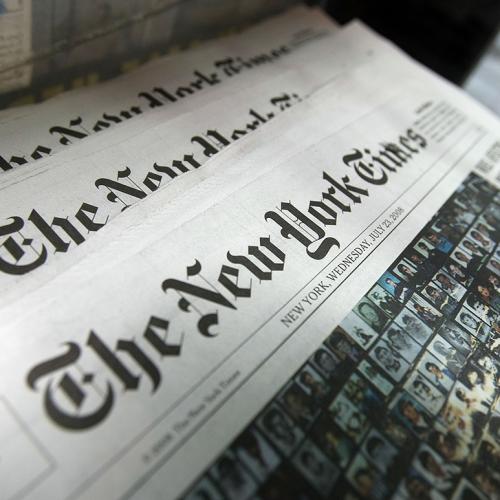
This July 2003 article was available for free viewing at the time we posted the information on electronic voting problems. It was moved to the archives just days after the November 2004 elections and now requires a $3.95 payment for viewing on New York Times website. Click the link immediately below to order. We provide a copy of the full article below for free.
http://select.nytimes.com/gst/abstract.html?res=F70A15F73E5B0C778EDDAE0894DB404482
NATIONAL DESK
Computer Voting Is Open to Easy Fraud, Experts Say
By JOHN SCHWARTZ (NYT) 897 words
Published: July 24, 2003
The software that runs many high-tech voting machines contains serious
flaws that would allow voters to cast extra votes and permit poll workers
to alter ballots without being detected, computer security researchers said
yesterday.
''We found some stunning, stunning flaws,'' said Aviel D. Rubin, technical director of the Information Security Institute at Johns Hopkins University, who led a team that examined the software from Diebold Election Systems, which has about 33,000 voting machines operating in the United States.
The systems, in which voters are given computer-chip-bearing smart cards to operate the machines, could be tricked by anyone with $100 worth of computer equipment, said Adam Stubblefield, a co-author of the paper.
''With what we found, practically anyone in the country -- from a teenager on up -- could produce these smart cards that could allow someone to vote as many times as they like,'' Mr. Stubblefield said.
The software was initially obtained by critics of electronic voting, who discovered it on a Diebold Internet site in January. This is the first review of the software by recognized computer security experts.
A spokesman for Diebold, Joe Richardson, said the company could not comment in detail until it had seen the full report. He said that the software on the site was ''about a year old'' and that ''if there were problems with it, the code could have been rectified or changed'' since then. The company, he said, puts its software through rigorous testing.
''We're constantly improving it so the technology we have 10 years from now will be better than what we have today,'' Mr. Richardson said. ''We're always open to anything that can improve our systems.''
Another co-author of the paper, Tadayoshi Kohno, said it was unlikely that the company had plugged all of the holes they discovered.
''There is no easy fix,'' Mr. Kohno said.
The move to electronic voting -- which intensified after the troubled Florida presidential balloting in 2000 -- has been a source of controversy among security researchers. They argue that the companies should open their software to public review to be sure it operates properly.
Mr. Richardson of Diebold said the company's voting-machine source code, the basis of its computer program, had been certified by an independent testing group. Outsiders might want more access, he said, but ''we don't feel it's necessary to turn it over to everyone who asks to see it, because it is proprietary.''
Diebold is one of the most successful companies in this field. Georgia and Maryland are among its clients, as are many counties around the country. The Maryland contract, announced this month, is worth $56 million.
Diebold, based in North Canton, Ohio, is best known as a maker of automated teller machines. The company acquired Global Election Systems last year and renamed it Diebold Election Systems. Last year the election unit contributed more than $110 million in sales to the company's $2 billion in revenue.
As an industry leader, Diebold has been the focus of much of the controversy over high-tech voting. Some people, in comments widely circulated on the Internet, contend that the company's software has been designed to allow voter fraud. Mr. Rubin called such assertions ''ludicrous'' and said the software's flaws showed the hallmarks of poor design, not subterfuge.
The list of flaws in the Diebold software is long, according to the paper, which is online at avirubin.com/vote.pdf. Among other things, the researchers said, ballots could be altered by anyone with access to a machine, so that a voter might think he is casting a ballot for one candidate while the vote is recorded for an opponent.
The kind of scrutiny that the researchers applied to the Diebold software would turn up flaws in all but the most rigorously produced software, Mr. Stubblefield said. But the standards must be as high as the stakes, he said.
''This isn't the code for a vending machine,'' he said. ''This is the code that protects our democracy.''
Still, things that seem troubling in coding may not be as big a problem in the real world, Mr. Richardson said. For example, counties restrict access to the voting machines before and after elections, he said. While the researchers ''are all experts at writing code, they may not have a full understanding of how elections are run,'' he said.
But Douglas W. Jones, an associate professor of computer science at the University of Iowa, said he was shocked to discover flaws cited in Mr. Rubin's paper that he had mentioned to the system's developers about five years ago as a state elections official.
''To find that such flaws have not been corrected in half a decade is awful,'' Professor Jones said.
Peter G. Neumann, an expert in computer security at SRI International, said the Diebold code was ''just the tip of the iceberg'' of problems with electronic voting systems.
''This is an iceberg that needs to be hacked at a good bit,'' Mr. Neumann said, ''so this is a step forward.''
FAIR USE NOTICE: This site contains copyrighted material the use of which has not always been specifically authorized by the copyright owner. We are making such material available in our efforts to advance understanding of criminal justice, political, human rights, economic, democracy, scientific, and social justice issues, etc. We believe this constitutes a 'fair use' of any such copyrighted material as provided for in section 107 of the US Copyright Law. In accordance with Title 17 U.S.C. Section 107, the material on this site is distributed without profit to those who have expressed a prior interest in receiving the included information for research and educational purposes. For more information go to: http://www.law.cornell.edu/uscode/17/107.shtml. If you wish to use copyrighted material from this site for purposes of your own that go beyond 'fair use', you must obtain permission from the copyright owner.