
















































 |
| INSIDEBAYAREA | ONLINE STORE | CAREERS | REAL ESTATE | AUTO | CLASSIFIEDS |
| | Subscribe | Contact Us |
 |
 Link To Article
 Print Article
 Email Article
|
|
Article Last Updated: Friday, December 19, 2003 - 3:42:31 PM PST |
Leave Cuban tourists to their cigars
NOW THAT America is safe from Saddam Hussein and his weapons of mass destruction, our government is securing us against the threat posed by Fred Burks.
Fred Burks? you ask. Yes, Fred Burks, that notorious Berkeley resident who in 1999 traveled to Cuba as a tourist because his girlfriend fell in love with the documentary "Buena Vista Social Club." You know, that seditious film pretending to be about aging Cuban musicians.
Burks, aka case No. 03T001, is in line to be the first U.S. tourist prosecuted by the U.S. Treasury Department for spending money in Cuba. Technically, it is not illegal to travel to Cuba, only to spend money there. Of course as a tourist, complying with that rule is highly improbable, if not impossible.
Burks could be charged with naiveté. He told U.S. Customs he had taken a side trip to Cuba when returning from Mexico. But he could hardly be considered a threat or even a dissident. In fact, he does contract work for the U.S. State Department and translated during President Bush's trip to Bali.
So why is the Treasury Department going after him with a $7,590 fine? No one seems to have a clear answer. Maybe his number just came up. A Treasury Department representative told reporters it was pursuing 90 cases; 37 of those had settled and the others were moving forward. Burks turned down a $250 settlement agreement because he thought the tide was turning against a hard line on Cuban travel.
The tide was turning until Bush threatened to veto a vote to lift the travel restrictions approved by both the House and the Senate. Now, with the election coming up, appeasing Florida's hard line Cuban exile community is a priority. In addition, Bush's right-hand woman, National Security Adviser Condoleezza Rice, is known for her hard line on Cuba.
So the Bush administration is tightening the screws on U.S. citizens who travel to Cuba. At the end of the year, the people-to-people trips arranged by non-profits will be eliminated. According to Global Exchange, one of the groups that conducted the tours, 30,000 citizens traveled to Cuba legally under the program.
Education, humanitarian and research groups will still be able to make the trip and politicians, physicians and journalists will be eligible for licenses to visit Cuba.
But even Americans going there legally are facing more scrutiny. The Department of Homeland Security proudly announced it had searched 45,000 of the 54,000 travelers returning from Cuba in the past two months. And what did it find? Communications with terrorist cells? Weapons of mass destruction? Contraband, even?
It found 600 people who had violated the restrictions of the embargo by bringing back too many cigars or bottles of rum.
I feel so much safer knowing these excess cigars and bottles of rum have been confiscated. Don't you? And if a person is willing to sneak in extra cigars, who knows what he or she is likely to do to bring down the government.
After searching 45,000 citizens, officials found violations in 1.3 percent of the cases. There's an efficient use of the time and resources of the Department of Homeland Security.
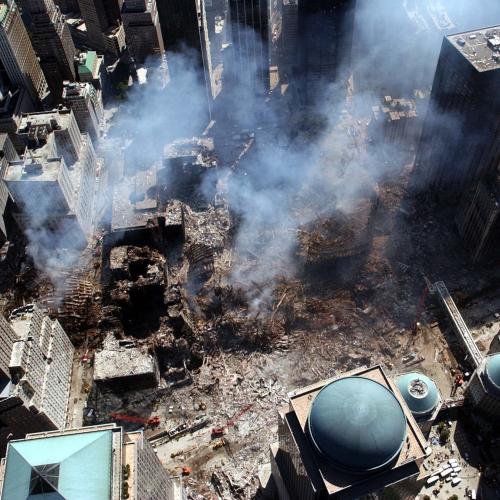
Never mind that, as 9-11 demonstrated, there are actual terrorists plotting to harm U.S. citizens, and none of them has been linked in any way to Cuba. They would appear to be more focused on the Middle East.
Ignore the point that Cuban dissidents opposing President Fidel Castro are against the embargo and travel restrictions, saying increased interaction will be more effective in undermining his regime.
Forget that American businesses and farmers want the embargo dropped because they are being frozen out of the market in Cuba.
Put all of this aside and cater to a small group of wealthy extremist Cuban exiles who've exerted unbelievable influence on U.S. Cuban policy for decades -- doesn't anyone remember how that community represented itself during the Elian Gonzalez crisis? That's sound foreign policy, looking out for the interests of the United States and its citizens.
And don't lose sight of the threat posed by Fred Burks, that notorious Berkeley tourist who fell under the insidious influence of the seditious "Buena Vista Social Club." Aging Cuban musicians, indeed.
Brenda Payton's column appears in the local section on Tuesdays
and Fridays and on the opinion page on Sundays.