
































Avian and Swine Flu News Stories
Below are key excerpts of revealing news articles on the Avian and Swine Flu from reliable news media sources. If any link fails to function, a paywall blocks full access, or the article is no longer available, try these digital tools.

European criticism of the World Health Organization's handling of the H1N1 pandemic intensified ... with the release of two reports that accused the agency of exaggerating the threat posed by the virus and failing to disclose possible influence by the pharmaceutical industry on its recommendations for how countries should respond. The WHO's response caused widespread, unnecessary fear and prompted countries around the world to waste millions of dollars. At the same time, the Geneva-based arm of the United Nations relied on advice from experts with ties to drug makers in developing the guidelines it used to encourage countries to stockpile millions of doses of antiviral medications. The first report ... came from the Social, Health and Family Affairs Committee of the Parliamentary Assembly of the Council of Europe, which launched an investigation in response to allegations that the WHO's response to the pandemic was influenced by drug companies that make antiviral drugs and vaccines. The second report, a joint investigation by the [British Medical Journal] and the Bureau of Investigative Journalism ... criticized 2004 guidelines the WHO developed based in part on the advice of three experts who received consulting fees from the two leading manufacturers of antiviral drugs used against the virus, Roche and GlaxoSmithKline.
Note:Explore extensive, eye-opening coverage from reliable sources revealing how the swine and avian flu "pandemics" were designed for corporate profit.
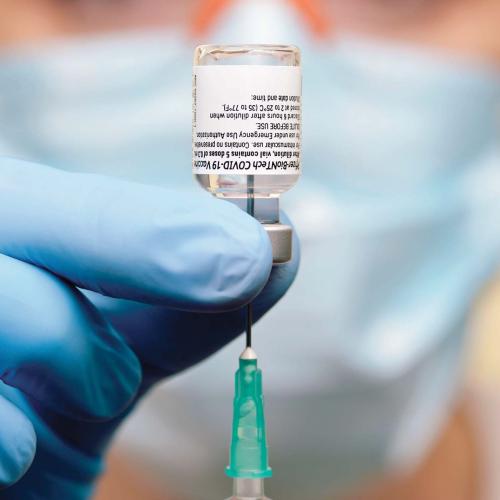
Despite months of dire warnings and millions in taxpayer dollars, less than half of the 229 million doses of H1N1 vaccine the government bought to fight the pandemic have been administered -- leaving an estimated 71.5 million doses that must be discarded if they are not used before they expire. Between 81 million and 91 million doses of swine flu vaccine were injected into peoples' arms or squirted up their noses through the end of February, according to federal officials, leaving about 138 million doses unused. An estimated 60 million of those will be donated to poor countries or saved for possible future use. But doses already in vials and syringes will be thrown away if not used before their expiration dates pass. The prospect of millions of doses of the once-precious vaccine being discarded is the latest twist in the $1.6 billion program -- the most ambitious immunization campaign in U.S. history. The government-led effort produced a vaccine in record time, but unexpected production problems delayed delivery of the bulk of supplies until after the second wave of infections had peaked.
Note: Yet the pharmaceutical companies get to keep the huge profits from the vaccines, paid for by the taxpayers. For key reports from major media sources on the government and pharmaceutical corporation corruption involving bird and swine flu vaccines, click here.
Remember the warnings of 65,000 dead? Health chiefs should admit they were wrong yet again about a global pandemic. Let me recap. Six months ago [the] BBC was intoning nightly statistics on what "could" happen as "the deadly virus" took hold. The happy-go-lucky virologist, John Oxford, said half the population could be infected, and that his lowest estimate was 6,000 dead. The chief medical officer, Sir Liam Donaldson, bandied about any figure that came into his head, settling on "65,000 could die", peaking at 350 corpses a day. The media went berserk. The World Health Organisation declared a "six-level alert" so as to "prepare the world for an imminent attack". If anyone dared question this drivel, they were dismissed by Donaldson as "extremists". When people started reporting swine flu to be even milder than ordinary flu, he accused them of complacency and told them to "wait for next winter". He was already buying 32m masks and spending more than 1bn on Tamiflu and vaccines. It was pure, systematic government-induced panic in which I accept that the media played its joyful part.
Note: For lots more on the gross profiteering and fear mongering of swine flu scare, click here.
Drug companies manipulated the World Health Organisation into downgrading its definition of a pandemic so they could cash in on a swine flu outbreak, it is claimed. An inquiry heard yesterday that the WHO allegedly softened its criteria for declaring a H1N1 flu pandemic last spring - just weeks before announcing there was a worldwide outbreak. Critics said the decision was driven by pharmaceutical companies desperate to recoup the billions of pounds they had invested in researching and developing pandemic vaccines after the bird flu scares in 2006 and 2007. As a result, millions of people have been vaccinated against a mild illness, and money that could have been used to prevent and treat major killers such as heart disease has been squandered. The claims, which emerged during the first of several Council of Europe hearings into the handling of the swine flu pandemic, were strongly rejected by the WHO. Following the organisation's declaration of a pandemic, the Department of Health warned of 65,000 deaths, set up a special advice line and website, and suspended normal rules so anti-flu drugs could be given without prescription. But with just 250 or so deaths in Britain and 14,000 worldwide, the WHO is being asked to account for its actions.
Note: For lots more on the swine flu "false pandemic" from reliable sources, click here.
More than half the scientists on the swine flu taskforce advising the [UK] Government have ties to drug companies. Eleven of the 20 members of the Scientific Advisory Group for Emergencies (SAGE) have done work for the pharmaceutical industry or are linked to it through their universities. Many have declared interests in GlaxoSmithKline, the vaccine maker expected to be the biggest beneficiary of the pandemic. The disclosure of the register of interests comes just days after a health expert branded the swine flu outbreak a 'false pandemic' driven by the drug companies which stood to profit. The Government is now trying to offload up to 1billion worth of unwanted swine flu vaccine. Last July, the Department of Health warned of up 65,000 deaths, with 350 a day at the pandemic's peak. But the death toll now stands at just 251. SAGE was created to give Ministers recommendations on how to control and treat the virus. Official documents show some members are linked to vaccine manufacturer Baxter and to Roche, which makes Tamiflu. GSK, Baxter and Roche stand to make up to 1.5billion between them from Government contracts related to swine flu.
Note: For lots more on the Swine Flu "false pandemic," click here.
In an interview with SPIEGEL, epidemiologist Tom Jefferson speaks about dangerous fear-mongering, misguided, money-driven research and why we should all be washing our hands a lot more often. SPIEGEL: Do you consider the swine flu to be particularly worrisome? Jefferson: There are some people who make predictions year after year, and they get worse and worse. None of them so far have come about, and these people are still there making these predictions. Sometimes you get the feeling that there is a whole industry almost waiting for a pandemic to occur. SPIEGEL: Who do you mean? Jefferson: The WHO and public health officials, virologists and the pharmaceutical companies. They've built this machine around the impending pandemic. And there's a lot of money involved, and influence, and careers, and entire institutions! And all it took was one of these influenza viruses to mutate to start the machine grinding. SPIEGEL: Do you think the WHO declared a pandemic prematurely? Jefferson: Don't you think there's something noteworthy about the fact that the WHO has changed its definition of pandemic? The old definition was a new virus, which went around quickly, for which you didn't have immunity, and which created a high morbidity and mortality rate. Now the last two have been dropped, and that's how swine flu has been categorized as a pandemic.
Note: For lots more on the Swine Flu "false pandemic," click here.
The World Health Organization said it plans to conduct a review of its response to swine flu as policymakers in Europe prepare for an urgent debate on the influenza pandemic. Yesterday, the Parliamentary Assembly of the Council of Europe said false pandemics, a threat to health will be a major theme of its next plenary session. Health authorities worldwide are assessing whether their response to swine flu is justified by its threat as cases retreat in the U.S. and Western Europe. The new H1N1 virus, which has targeted children and younger adults, has so far resulted in fewer deaths than attributed to seasonal strains, which kills mostly the frail elderly. Council of Europe parliamentarian Wolfgang Wodarg said last week he and several colleagues had called for a commission of inquiry into a false pandemic and the way it was handled at national and European levels, claiming pressure from pharmaceutical firms. The WHO moved to the top level of its six-step pandemic alert in June after the discovery of swine flu in Mexico and the U.S. in April.
Note: BusinessWeek deleted this article days after posting it. Could someone have pressured them to do this? If you click the above link, the article is gone, though you can still see a promo here and read it on BusinessWeek in the Google cache available here. For a link to the article on the Bloomberg website, click here. For revealing reports of the corruption surrounding the swine flu and previous health scares, click here.
A leading health expert says the swine flu scare was a "false pandemic" led by drugs companies that stood to make billions from vaccines. Wolfgang Wodarg, head of health at the Council of Europe, claims major [drug] firms organised a "campaign of panic" to put pressure on the World Health Organisation to declare a pandemic. He believes it is "one of the greatest medicine scandals of the century" and has called for an inquiry. Dr Wodarg said: "It's just a normal kind of flu. It does not cause a tenth of deaths caused by the classic seasonal flu. The great campaign of panic we have seen provided a golden opportunity for representatives from labs who knew they would hit the jackpot in the case of a pandemic being declared. We want to clarify everything that brought about this massive operation of disinformation. We want to know who made decisions, on the basis of what evidence, and precisely how the influence of the pharmaceutical industry came to bear on the decision-making." He added: "A group of people in the WHO is associated very closely with the pharmaceutical industry."
Note: For powerfully revealing reports of the corruption regarding swine flu and previous health scares, click here.
Ministers are preparing to offload millions of unwanted swine flu vaccines, it has emerged, as officials predicted that there will be no third wave of the pandemic this winter. Millions of [dollars] could be wasted if the Government is unable to get out of orders for the vaccine it has placed with GlaxoSmithKline (GSK), the pharmaceutical giant. Officials confirmed that they are considering a number of options, including attempting to sell or give away millions of the vaccines. They also considering whether to stand down the National Pandemic Flu Service, the network of call centres which diagnose swine flu and hand out antiviral medications. In May, even before a pandemic had been declared, ministers had signed contracts thought to be worth around 100 million to deliver 90 million vaccines to Britain. Britain has now received almost 29 million doses of the H1N1 vaccine, but only just over 3.7 million have been given out and in total the Government has announced plans to inoculate only 14 million people.
Note: For a powerful insight into the corrupt symbiosis between pharmaceutical corporations and government, read this analysis by Marcia Angell, former editor of the New England Journal of Medicine. For lots more on the swine flu scare, click here.
A new analysis, using H1N1 deaths in the United States in the spring and projecting likely outcomes for this fall, shows that a typical -- or possibly even a milder flu season than average -- should have been expected. The finding [raises] the question: Has swine flu been oversold? The new study, done by researchers at Harvard University and the Medical Research Council Biostatistics Unit in the U.K., says swine flu cases in the spring indicated a flu season that might be, at worst, slightly worse than normal. "It would have been great to have that back in June," said Philip Alcabes, an associate professor in the program in urban public health at Hunter College's School of Health Sciences. "There would have been one more bit of evidence behind my assertion six months ago" that people were overreacting to H1N1. Around the time that swine flu first started making headlines, Alcabes' book, Dread: How Fear and Fantasy Have Fueled Epidemics From the Black Death to Avian Flu, was published, and he said the circumstances surrounding H1N1 provide an apt case study. "I think that it was, from the very beginning, created as a crisis and overstated as a real threat," he said.
Note: For powerful, reliable articles showing major profiteering and fear-mongering around the swine flu to the great risk of public health, click here and here.
A new report finds that the Centers for Disease Control and Prevention did a poor job of screening medical experts for financial conflicts when it hired them to advise the agency on vaccine safety. Most of the experts who served on advisory panels in 2007 to evaluate vaccines for flu and cervical cancer had potential conflicts that were never resolved, the report said. Some were legally barred from considering the issues but did so anyway. In the report ... Daniel R. Levinson, the inspector general of the Department of Health and Human Services, found that the centers failed nearly every time to ensure that the experts adequately filled out forms confirming they were not being paid by companies with an interest in their decisions. The report found that 64 percent of the advisers had potential conflicts of interest that were never identified or were left unresolved by the centers. Thirteen percent failed to have an appropriate conflicts form on file at the agency at all, which should have barred their participation in the meetings entirely, Mr. Levinson found. And 3 percent voted on matters that ethics officers had already barred them from considering.
Note: For lots more on corporate and government corruption from reliable sources, click here and here.
Dr. Julie Gerberding, former director of the U.S. Centers for Disease Control and Prevention, was named president of Merck & Co Inc's vaccine division. Gerberding, who led the CDC from 2002 to 2009 and stepped down when President Barack Obama took office, will head up the company's $5 billion global vaccine business that includes shots to prevent chickenpox, cervical cancer and pneumonia. She had led CDC from one crisis to another, including the investigation into the anthrax attacks that killed five people in 2001, the H5N1 avian influenza, the global outbreak of severe acute respiratory syndrome, or SARS, and various outbreaks of food poisoning. She may be charged with reigniting flagging sales of Merck's Gardasil vaccine to prevent cervical cancer by protecting against human papillomavirus or HPV. After an encouraging launch Gardasil sales have been falling and were down 22 percent in the third quarter at $311 million.
Note: So the head of the CDC now is in charge of vaccines at one of the biggest pharmaceutical companies in the world. Could this be considered conflict of interest? Could this possibly be payback for supporting the vaccine agenda so strongly for years? For more on the risks and dangers of vaccines, click here.
Deep inside an 86-page supplement to United States export regulations is a single sentence that bars U.S. exports of vaccines for avian bird flu and dozens of other viruses to five countries designated "state sponsors of terrorism." The reason: Fear that they will be used for biological warfare. Under this little-known policy, North Korea, Iran, Cuba, Syria and Sudan may not get the vaccines unless they apply for special export licenses, which would be given or refused according to the discretion and timing of the U.S. Three of those nations -- Iran, Cuba and Sudan -- also are subject to a ban on all human pandemic influenza vaccines as part of a general U.S. embargo. The regulations, which cover vaccines for everything from Dengue fever to the Ebola virus, have raised concern within the medical and scientific communities. Officials from the U.S. Department of Health and Human Services and the Centers for Disease Control and Prevention said they were not even aware of the policies until contacted by The Associated Press ... and privately expressed alarm. They make "no scientific sense," said Peter Palese, chairman of the microbiology department at Mount Sinai School of Medicine in New York. Some experts say the idea of using vaccines for bioweapons is far-fetched.
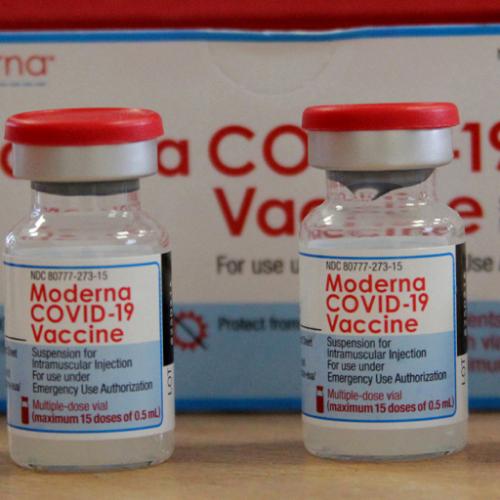
Drug company GlaxoSmithKline has told Canadian doctors to stop using one lot of its H1N1 vaccine until an investigation into a higher-than-expected number of severe allergic reactions is completed. The U.S. vaccine will not be identical to Arepanrix, the GSK H1N1 vaccine used in Canada. Arepanrix contains an adjuvant, a substance designed to boost the immune response, but adjuvants have never been approved for use in U.S. flu vaccines. Almost all of the 172,000 doses in question, distributed the week of Nov. 2 to six Canadian provinces, already have been administered, said Geoffrey Matthews, a spokeswoman for the Public Health Agency of Canada, which, with GSK and Health Canada, is investigating cases of anaphylaxis. Symptoms of anaphylaxis include trouble breathing, chest tightness and swelling of the mouth and throat. Six cases have been reported, Matthews says. In the USA, the Vaccine Adverse Event Reporting System said that as of Nov. 13 it had received 116 reports of serious health events related to the vaccine, including eight deaths similar to the number in previous years after a similar number of seasonal flu vaccine doses had been shipped.
Note: For lots more on the risks of swine flu vaccines, click here.
As the pandemic H1N1 influenza surges with the onset of winter, the nations of Eastern Europe and the former Soviet Union appear particularly vulnerable to the deadly virus. Burdened with weak health-care systems, relatively inexperienced news media outlets and shaky governments that have little public trust, the region also seems ripe for panic and political strife over the flu. The potential for trouble is already on display in Ukraine, where 1.5 million of its 46 million people have had diagnoses of flu and respiratory illnesses since the start of the outbreak and 356 have died, according to the government. More telling than the numbers, however, has been the widespread fear the virus has caused in Ukraine, and the outsize impact it has had on the nation's political landscape. Anxious residents have overwhelmed hospitals and pharmacies, buying up supplies of medicine, gauze masks and home remedies such as lemons and garlic. Rumors have proliferated that people are dying of a new, more lethal strain of the virus. Semyon Gluzman, a psychiatrist and Soviet-era dissident in Kiev, said the fear was a rational response in a nation with a dysfunctional health-care system and a corrupt, ineffective government. "What we're seeing is a normal, psychological reaction to the complete incompetence of the state authorities," he said. "People are scared, and they don't know who to trust anymore."
European scientists and health authorities are facing angry questions about why H1N1 flu has not caused death and destruction on the scale first feared, and they need to respond deftly to ensure public support. Accusations are flying in British and French media that the pandemic has been "hyped" by medical researchers to further their own cause, boost research grants and line the pockets of drug companies. Britain's Independent newspaper this week asked "Pandemic? What Pandemic?." France's Le Parisien newspaper ran the headline: "Swine flu: why the French distrust the vaccine" and noted a gap between the predicted impact of H1N1 and the less dramatic reality. "Dangerous liaisons between certain experts, the labs and the government, the obscurity of the contracts between the state and the pharma firms have added to the doubt." In Britain, health authorities' original worst-case scenario -- which said as many as 65,000 could die from H1N1 -- has twice been revised down and the prediction is now for around 1,000 deaths, way below the average annual toll of 4,000 to 8,000 deaths from seasonal winter flu.
Note: It's quite interesting and telling that a thorough Internet seach showed that no major media picked up this article from Reuters News Agency
Although federal health officials decline to use the word “peaked,” the current wave of swine flu appears to have done so in the United States. Flu activity is coming down in all regions of the country, the Centers for Disease Control and Prevention said Friday, though it is still rising in Hawaii, Maine and some isolated areas. The World Health Organization said Friday that there were “early signs of a peak” in much of the United States. On Wednesday, the American College Health Association, which surveys over 250 colleges with more than three million students, said new cases of flu had dropped in the week ending Nov. 13. It was the first drop since school resumed in the fall, and it was significant — new cases were down 27 percent from the week before. And on Friday, Quest Diagnostics, the country’s largest laboratory, said its tests of 142,000 suspected flu specimens since May showed that the flu peaked in late October. Nonetheless, Dr. Anne Schuchat, the director of immunization and respiratory diseases at the C.D.C., chose her words carefully, saying: “I wish I knew if we had hit the peak. Even if a peak has occurred, half the people who are going to get sick haven’t gotten sick yet.” The drop was clearly not caused by the swine flu vaccine drive, which has not gone as fast as the authorities had hoped.
Note: Just like the avian flu scare a few years ago, the swine flu hype has turned out to be largely a whimper, yet the pharmaceutical companies are happy, as again they have made billions of dollars from the massive amonts of vaccines and drugs purchased by the government with your tax dollars. For more, click here and here.
As Germany launched its mass-vaccination program against the H1N1 flu virus on Monday, the government found itself fending off accusations of favoritism because it was offering one vaccine believed to have fewer side effects to civil servants, politicians and soldiers, and another, potentially riskier vaccine to everyone else. The German government prepared for its mass-vaccination campaign earlier this year by ordering 50 million doses of the Pandemrix vaccine. The vaccine, manufactured by GlaxoSmithKline, contains an immunity-enhancing chemical compound, known as an adjuvant, whose side effects are not yet entirely known. The Interior Ministry confirmed that it had ordered a different vaccine, Celvapan, for government officials and the military. Celvapan, which is made by U.S. pharmaceutical giant Baxter, does not contain an adjuvant and is believed to have fewer side effects.
Note: For a revealing article exposing more on this critical issue, click here. Other thoroughly researched articles suggesting a major cover-up around the swine flu vaccine are available here.
If you've been diagnosed "probable" or "presumed" 2009 H1N1 or "swine flu" in recent months, you may be surprised to know this: odds are you didnt have H1N1 flu. In fact, you probably didnt have flu at all. That's according to state-by-state test results obtained in a three-month-long CBS News investigation. Why the uncertainty about who has and who hasn't had H1N1 flu? In late July, the CDC abruptly advised states to stop testing for H1N1 flu, and stopped counting individual cases. CBS News learned that the decision to stop counting H1N1 flu cases was made so hastily that states weren't given the opportunity to provide input. When CDC did not provide us [CBS News] with the material, we filed a Freedom of Information request with the Department of Health and Human Services (HHS). More than two months later, the request has not been fulfilled. We also asked CDC for state-by-state test results prior to halting of testing and tracking, but CDC was again, initially, unresponsive. We asked all 50 states for their statistics on state lab-confirmed H1N1 prior to the halt of individual testing and counting in July. The vast majority of cases were negative for H1N1 as well as seasonal flu, despite the fact that many states were specifically testing patients deemed to be most likely to have H1N1 flu, based on symptoms and risk factors, such as travel to Mexico. With most cases diagnosed solely on symptoms and risk factors, the H1N1 flu epidemic may seem worse than it is.
Note: Some states found that less than 2% of cases claimed to be swine flu turned out to be the real thing. The numbers have been greatly exaggerated. Yet the drug companies raked in billions of dollars in profit from all the fear mongering. For more reliable information on this, click here and here.
Swiss drugmaker Novartis said sales would grow faster than expected this year, even without a shot in the arm of up to $700 million from its H1N1 swine flu pandemic vaccine. Third-quarter net profit at Novartis ... nudged up 1 percent to $2.1 billion. This year is turning out to be better than initially feared for Novartis and other major pharmaceutical companies, thanks to hefty price increases and windfall sales arising from the H1N1 outbreak. Both Pfizer, the world's biggest drugmaker, and Eli Lilly topped earnings forecasts this week. Roche reported a sharp jump in sales of its Tamiflu drug for flu last week and analysts expect GlaxoSmithKline's Relenza will also see strong sales in the third quarter. On the vaccine front, Glaxo, Sanofi-Aventis and AstraZeneca are all expected to highlight an expected jump in fourth-quarter sales due to swine flu. The H1N1 flu vaccine is expected to contribute about $400-700 million of sales in the fourth quarter.
Note: Donald Rumsfeld personally made millions as a direct result of the avian flu scare a few year ago. For more on this, click here. For more on pharmaceutical corporation profiteering from swine flu vaccines, click here.
Important Note: Explore our full index to revealing excerpts of key major media news stories on several dozen engaging topics. And don't miss amazing excerpts from 20 of the most revealing news articles ever published.