









































Banking Bailout Media Articles
Below are key excerpts of revealing news articles on the 2008 banking bailout from reliable news media sources. If any link fails to function, a paywall blocks full access, or the article is no longer available, try these digital tools.

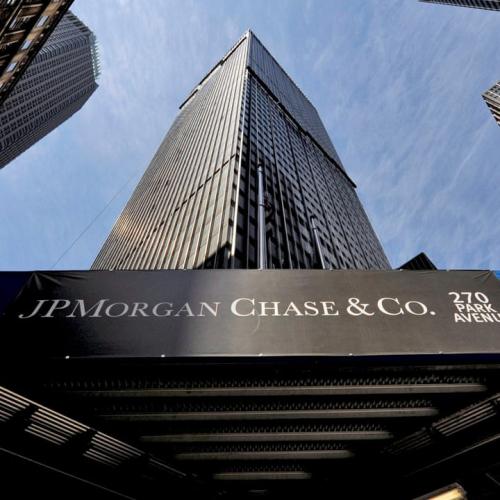
Jamie Dimon was reelected chairman and CEO of JPMorgan Chase yesterday afternoon. He got to keep his $23 million pay package, too. This means that at ... three of the top five bank holding companies dominating U.S. derivatives exposure, loans, assets, and deposits, the same man holds the chairman and CEO positions - at Goldman Sachs, Wells Fargo, and JPM Chase. At the shareholders meeting there was no mention of the details behind the mistake that cost the bank $2 billion, just that it should never have happened. The fact that after a formal announcement, a friendly Meet the Press chat, and a face-to-face with the firm's shareholders, Dimon can still call it a mistaken hedge is ludicrous. It was a directional bet on the health of North American corporate bonds that the firm got wrong, enacted via the synthetic derivatives market, to worsen the blow. To the extent that it's betting wrong, it's a mistake, but it's not a hedge. Included in the proxy materials in the shareholder package that went out before the vote was ... a wealth of negativity about regulations. The letter stressed that ... two regulations would actively hurt the bank's competitive ability, the Volker Rule and the derivatives rules. JPM Chase holds nearly $70 trillion of derivatives exposure on $1.8 trillion of assets. Bank chairmen, like Jamie Dimon ... claim that regulation is too complex, too anti-competitive, and too un-American (putting U.S. banks at a disadvantage against other global banks). [Yet] pretending that it's okay to allow dormant volcanoes of risk to remain embedded in big bank balance sheets, supported by customer money and taxpayer guarantees is not sensible.
Note: For a treasure trove of revealing reports from reliable sources on the criminality and corruption of major financial corporations and their "regulators" in government, click here. For disturbing news articles on the derivatives market time bomb, click here.
What strikes Phil Angelides the most about the $2 billion (and counting) loss sustained by JPMorgan Chase on a big trade gone bad, is how little has changed since the financial crash of 2008. "The big banks continue to be casinos," said the chairman of the government-appointed Financial Crisis Inquiry Commission, which laid out how such trades, referred to in some quarters as "bets," contributed to the crash that the country is still struggling to pull itself out of. "It has to be stopped," he said. Trouble is - as Angelides, the former California state treasurer, and others point out - no one is stopping them. Jamie Dimon, JPMorgan's CEO, dismissed initial concerns about the trades last month as a "complete tempest in a teapot." His main concern, he told analysts, was how the affair "plays right into the hands of a bunch of pundits out there." Dimon was referring to those who have been pushing for regulations to prevent federally insured banks like JPMorgan from indulging in such trades in the first place. "They've been fighting a ferocious rear-guard, no-holds-barred action," said Angelides, referring to the army of lobbyists hired and millions of dollars spent to beat back the regulations. The Securities and Exchange Commission is investigating the trades, which involved the use of complex financial instruments called credit default swaps as a hedge against the value of U.S. bonds.
Note: For a most excellent two-minute video of former U.S. Labor Secretary Robert Reich presenting five of the most urgent problems with the economy and an easy solution all in two minutes, click here. For an enlightening five-minute TED talks video further showing how the rich getting richer while they pay increasingly less taxes is at the root of most economic woes, click here. For a treasure trove of revealing reports from reliable sources on the criminality and corruption of major financial corporations and their "regulators" in government, click here.
The $2 billion trading loss that JPMorgan Chase disclosed late on Thursday provided ample ammunition for supporters of the Volcker Rule, which would restrict government-backed banks' ability to conduct proprietary trading. But it also prompted a fair amount of finger-wagging toward the company, given JPMorgan's stance as one of the rule's fiercest opponents. JPMorgan has been among the most outspoken detractors of the proposed financial regulation that is making its way through Washington. The firm has laid bare its feelings about the Volcker Rule several times, including in a Feb. 13 comment letter to the Federal Reserve. In that document, JPMorgan argued that the proposal would restrict its efforts to rein in risk-taking and would harm the firm's ability to compete against foreign rivals that did not face the same restrictions. In the letter, JPMorgan specifically mentions its chief investment office, the trading group which caused the $2 billion trading loss. JPMorgan also happens to run one of the most active and best-financed lobbying operations within the commercial banking industry. In the first four months of 2012, the firm has spent $1.92 million, barely trailing Wells Fargo in terms of banks' lobbying expenses. Last year, JPMorgan spent $7.62 million; two years ago, it spent $7.41 million, the most in its industry. And JPMorgan's chief, Jamie Dimon has been among the most frequent visitors to Washington to press his case.
Note: For lots more from major media sources on the corruption of major financial corporations, click here.
Protesters enraged about the country's economic miasma disrupted Wells Fargo's annual summit [on April 24], as shareholders celebrated the bank's record profit and awarded its chief executive a pay package of nearly $20 million. Hundreds of activists - including union members, Occupy activists and people whose homes have been foreclosed - surrounded the Merchants Exchange Building in downtown San Francisco, where about 250 shareholders gathered on the 15th floor to hear details of the bank's 28 percent profit increase last year. Fifteen protesters, allowed into the meeting because they own stock in Wells Fargo, shouted over CEO John Stumpf as he presented a PowerPoint slide show about the bank's $15.9 billion profit last year. Police escorted out the protesters, who were cited for disrupting the meeting and released. It was the bank's involvement in foreclosures ... that brought hundreds of protesters to the meeting. Some came from as far away as Minnesota. They filled the air with lively chants, led by people using loudspeakers set up on a flatbed truck alongside an 8-foot-high, inflated rat smoking a cigar. A protester-built, 10-foot-high mockup of Wells Fargo's signature stagecoach stood in the street, covered with slogans denouncing the bank.
Note: For key reports from reliable sources on Occupy and other protests against the criminal profiteering of banks and other financial corporations, click here.
We have finally reached the point in our financial history where even bankers hate bankers. Last week, the Federal Reserve Bank of Dallas issued its 2011 annual report with a 34-page essay, "Why We Must End Too Big To FailNow." The report [dubs the nation's largest banks] "a clear and present danger to the U.S. economy." It begins with a letter from regional Fed president Richard Fisher. "More than half of banking industry assets are on the books of just five institutions," he complains. "They were a primary culprit in magnifying the financial crisis, and their presence continues to play an important role in prolonging our economic malaise." This is a member of the Federal Reserve itself an institution that bears responsibility for our banking system devolving into an untenable oligarchy that buys off politicians, captures regulators and eats up our money. This is a member of the establishment saying Too-Big-To-Fail, or TBTF, must die. "The term TBTF disguised the fact that commercial banks holding roughly one-third of the assets in the banking system did essentially fail, surviving only with extraordinary government assistance," the essay reads. Their executives paid themselves fortunes to execute failed mergers and acquisitions and accumulate unimaginable piles of toxic debts. We saved them to save the financial system. But now we must break them up so they don't put us in this ridiculous situation again.
Note: For lots more from major media sources on the criminal practices of the biggest banks and financial firms and the collusion of government agencies, see our "Banking Bailout" newsarticles.
The Goldman Sachs executive who didn't so much burn as firebomb his career bridges with a poisonous resignation letter in the New York Times wasn't the only former employee to go on a publicized rant this week. A couple of days earlier, James Whittaker, an engineering director at Google who recently moved to Microsoft, took direct aim at the Mountain View search giant in a blog post arguing that the company has lost its way in the desperate quest to funnel users into its social network. Later that day, in an opinion piece on Wired.com, Andy Baio assailed Yahoo's patent-infringement suit against Facebook ... calling it "extortion" and a betrayal of employees. Obviously these parting shots carried extra weight coming from onetime senior, internal sources. While it's hard to draw broad conclusions about the criticisms, we can safely draw some narrow ones: Goldman Sachs should stop being an awful, awful corporate citizen (but then we've known that). Google shouldn't undermine its culture and core product in search of the next big thing. And Yahoo should drop this embarrassing lawsuit over bogus patents and get to work on real innovation. Alas, the conclusion most companies will probably draw from these episodes is that they need to toughen up their nondisclosure agreements.
Note: For revealing reports from reliable sources on corruption and criminality at the biggest financial corporations, click here. For lots more on corporate corruption, click here.
Today is my last day at Goldman Sachs. Over the course of my career I have had the privilege of advising two of the largest hedge funds on the planet [and] five of the largest asset managers in the United States. My clients have a total asset base of more than a trillion dollars. After almost 12 years at the firm ... I believe I have worked here long enough to understand ... its culture, its people and its identity. And I can honestly say that the environment now is as toxic and destructive as I have ever seen it. To put the problem in the simplest terms, the interests of the client continue to be sidelined in the way the firm operates and thinks about making money. Today, if you make enough money for the firm (and are not currently an ax murderer) you will be promoted into a position of influence. What are three quick ways to become a leader? a) Execute on the firm's "axes," which is Goldman-speak for persuading your clients to invest in the stocks or other products that we are trying to get rid of because they are not seen as having a lot of potential profit. b) "Hunt Elephants." In English: get your clients -- some of whom are sophisticated, and some of whom aren't -- to trade whatever will bring the biggest profit to Goldman. c) Find yourself sitting in a seat where your job is to trade any illiquid, opaque product with a three-letter acronym. I attend derivatives sales meetings where not one single minute is spent asking questions about how we can help clients. It's purely about how we can make the most possible money off of them.
Note: The author of this article, Greg Smith, was a Goldman Sachs executive director and head of the firms United States equity derivatives business in Europe, the Middle East and Africa. For an excellent compilation of news articles and government documents showing the huge risk of the derivatives bubble being manipulate by Goldman Sachs and others, click here.
Three top executives of MF Global Holdings Ltd. when it collapsed could get bonuses of as much as several hundred thousand dollars each under a plan by a trustee overseeing the securities firm's bankruptcy case. Louis Freeh, the former Federal Bureau of Investigation director now in charge of unwinding what is left of the New York company, is expected to ask a bankruptcy-court judge as soon as this month to approve performance-related payouts for the chief operating officer, finance chief and general counsel at MF Global. Under the expected pay plan, the three executives and as many as 20 other MF Global employees working for Mr. Freeh would get the bonuses only if they hit specified targets such as increasing the value of MF Global's estate for creditors. The bonus plan could face fierce resistance. One reason: Criminal and civil investigators are scrutinizing the role of top executives and others at MF Global in money transfers that resulted in a $1.6 billion shortfall in customer accounts. So far, many hedge funds, farmers and other investors who bought and sold through MF Global have gotten about 72 cents out of every $1 held by the firm when it collapsed. Hopes for additional recoveries have dimmed as the probe grinds on. Neal Wolkoff, a former executive at the New York Mercantile Exchange who now works as a consultant, said it "is shocking" that Messrs. Abelow and Steenkamp still work at MF Global and could earn bonuses "because it represents a conflict of interest."
Note: For an abundance of major media articles revealing major financial manipulations, click here.
Icelanders who pelted parliament with rocks in 2009 demanding their leaders and bankers answer for the countrys economic and financial collapse are reaping the benefits of their anger. Since the end of 2008, the islands banks have forgiven loans equivalent to 13 percent of gross domestic product, easing the debt burdens of more than a quarter of the population, according to a report published this month by the Icelandic Financial Services Association. You could safely say that Iceland holds the world record in household debt relief, said Lars Christensen, chief emerging markets economist at Danske Bank A/S in Copenhagen. Iceland followed the textbook example of what is required in a crisis. Any economist would agree with that. Most polls now show Icelanders dont want to join the European Union, where the debt crisis is in its third year. The islands households were helped by an agreement between the government and the banks, which are still partly controlled by the state, to forgive debt exceeding 110 percent of home values. On top of that, a Supreme Court ruling in June 2010 found loans indexed to foreign currencies were illegal, meaning households no longer need to cover krona losses.
Note: The amazing story of the Icelandic people demanding bank reform is one of the most underreported stories in recent years. Why isn't this all over the news? To see what top journalists say about news censorship, click here. For blatant manipulations of the big banks reported in the major media, click here.
A "strictly confidential" report on Greece's debt projections prepared for eurozone finance ministers reveals Athens' rescue programme is way off track. The ... debt sustainability analysis ... found that even under the most optimistic scenario, the austerity measures being imposed on Athens risk a recession so deep that Greece will not be able to climb out of the debt hole over the course of a new three-year, 170bn bail-out. It warned that two of the new bail-out's main principles might be self-defeating. Forcing austerity on Greece could cause debt levels to rise by severely weakening the economy. The report made clear why the fight over the new Greek bail-out has been so intense. A German-led group of creditor countries -- including the Netherlands and Finland -- has expressed extreme reluctance to go through with the deal since they received the report. A "tailored downside scenario" in the report suggests Greek debt could fall far more slowly than hoped, to only 160 per cent of economic output by 2020 -- well below the target of 120 per cent set by the International Monetary Fund. Under such a scenario, Greece would need about 245bn in bail-out aid, far more than the 170bn under the "baseline" projections eurozone ministers were using in all-night negotiations in Brussels on Monday.
Note: For key reports from major media sources exposing the interests served by the imposition of austerity on Greece and other countries, click here.
A report this week showing rampant foreclosure abuse in San Francisco reflects similar levels of lender fraud and faulty documentation across the United States, say experts and officials who have done studies in other parts of the country. The audit of almost 400 foreclosures in San Francisco found that 84 percent of them appeared to be illegal, according to the study released by the California city. "The audit in San Francisco is the most detailed and comprehensive that has been done - but it's likely those numbers are comparable nationally," Diane Thompson, an attorney at the National Consumer Law Center, told Reuters. Across the country from California, Jeff Thingpen, register of deeds in Guildford County, North Carolina, examined 6,100 mortgage documents last year, from loan notes to foreclosure paperwork. Of those documents, created between January 2008 and December 2010, 4,500 showed signature irregularities, a telltale sign of the illegal practice of "robosigning" documents. Robosigning involves the use of bogus documents to force foreclosures without lenders having to scrutinize all the paperwork involved with mortgages. The practice was at the heart of the foreclosure scandal that led to a $25 billion settlement between the U.S. government and five major banks last week.
Note: For lots more from major media sources on the illegal foreclosures made by the biggest banks and financial firms, the collusion of government agencies, and more, see our "Banking Bailout" news articles.
[A] report from San Francisco auditors [shows] that 84 percent of foreclosures examined contained at least one violation of the law by the foreclosing party. The report is only the latest in a series of incidents involving bad actors in the foreclosure crisis. In fact, problems have been so rampant that banks now require many buyers of foreclosed homes to sign contracts absolving the bank of liability should irregularities appear with the original foreclosure. In light of these negligent practices, the $26 billion settlement last week between the U.S. Department of Justice, state attorneys general and the major banks raises as many questions as answers. For instance: If a house is illegally foreclosed upon and subsequently sold by the bank, who owns the home? The new buyer or the original owner? Untangling this mess might require new consumer protections, not just a payout from the banks accused of wrongdoing. The best way to prevent foreclosure problems, however, has always been to prevent foreclosures in the first place. Offering families facing foreclosure the same bankruptcy protections enjoyed by business speculators is one place to start. As it stands today, a single family that buys a home in a housing development is treated differently in bankruptcy court than a businessman who bought 10 units in the same project. If and when the housing bubble bursts, the underwater speculator is able to seek bankruptcy relief on all 10 units, while the owner of the single home is left out in the cold.
Note: For lots more from reliable sources on the impacts of the financial crisis on homeowners, click here.
The corporate barbarians are through the gate of American democracy. Not satisfied with their all-pervasive influence on our culture, economy and legislative processes, they want more. They want it all. Two years ago, the United States supreme court betrayed our Constitution. In its now infamous decision in the Citizens United case, five justices declared that corporations must be treated as if they are actual people under the Constitution when it comes to spending money to influence our elections, allowing them for the first time to draw on the corporate checkbook in any amount and at any time to run ads explicitly for or against specific candidates. What's next a corporate right to vote? When the supreme court says ... that corporations are people, that writing checks from the company's bank account is constitutionally-protected speech and that attempts by the federal government and states to impose reasonable restrictions on campaign ads are unconstitutional, our democracy is in grave danger. Corporations are not people with constitutional rights equal to flesh-and-blood human beings. Corporations are subject to regulation by the people.
Note: For key reports on the overpowering influence of corporate money on the US political system, click here and here.
[The US is now] a country whose patrician overlords are regularly conjuring the feudalism of Europe circa the Middle Ages. Today, our mayors deploy police against homeless people and protesters; our governors demand crushing budget cuts from the confines of their taxpayer-funded mansions; our Congress exempts itself from insider-trading laws and requires the government to offer lawmakers the good health benefits so many Americans have no access to ; and our nation's capital has become one of the world's wealthiest cities, despite the recession. Taken together, we see that there really are "Two Americas," as the saying goes - and that's no accident. It's the result of a permanent elite that is removing itself from the rest of the nation. Nowhere is this more obvious than in education - a realm in which this elite physically separates itself from us mere serfs. The Washington Post, for instance, notes that it has become an unquestioned "tradition among Washington's power elite" - read: elected officials - to send their kids to the ultra-expensive private school Sidwell Friends. At the same time, many of these officials have backed budget policies that weaken public education. In many cases, these aristocrats aren't even required to publicly explain themselves. Worse, on the rare occasions that questions are posed, privacy is the oft-used excuse to not answer. This might be a convincing argument about ordinary citizens' personal education choices, but it's an insult coming from public officials.
Note: For a treasure trove of reliable reports on social inequality in the US, click here and here.
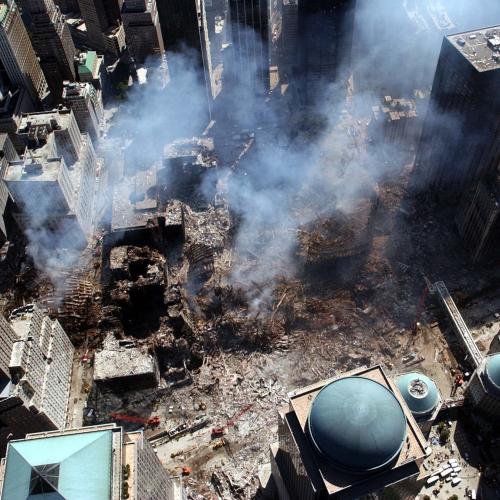
A tax-free bond program that provided below-market financing to build Goldman Sachs Group Inc.s headquarters is expiring while New York developers say the citys commercial real estate market still needs support. Congress created the Liberty Bond program in March 2002 with $8 billion in tax-exempt funds to rebuild lower Manhattan after the Sept. 11 terrorist attacks. The allocation ran out last month, and the tax exemption ended on Dec. 31 along with dozens of other breaks for manufacturers, energy companies and transit commuters. Critics that include affordable housing advocates say the bonds were little more than a subsidy for fancy Manhattan apartments and office towers for Goldman Sachs and Bank of America Corp. Developers counter that, more than a decade after the attacks, low-cost financing remains necessary to help lower Manhattans commercial market recover. The Liberty Bonds made available to the World Trade Center site are only enough to support rebuilding a little less than 60 percent of the office space lost on 9/11, Larry Silverstein, the World Trade Centers developer, said in an e- mail. In an ideal world, more such resources would be made available to help jump-start construction of the remaining 40 percent of the office space that was destroyed by terrorists. His company, Silverstein Properties Inc., received almost $3 billion through the Liberty Bond program to help redevelop the World Trade Center site. Goldman financed construction of its headquarters at 200 West St. with about $1.5 billion in Liberty Bond financing. Bank of Americas tower across from Bryant Park was financed with $650 million in Liberty Bonds.
Note: Larry Silverstein can't stop complaining about terrorists despite the billions of dollars he made from the 9/11 attacks. For his admission on television that WTC 7 was brought down by controlled demolition at his command, not by terrorists, click here.
The stunning reality is that five years into the financial meltdown, it's business as usual on Wall Street - outlandish rewards for insiders with downside for almost everyone else. Occupy Wall Street protesters are right - something is wrong - but they're not sure what. Let's revisit the latest debacle - the implosion of yet another Wall Street darling, MF Global. The fallout of its bad bets on European bonds is hitting home hard, even in rural America, where many of its agricultural customers work. As the eighth-largest bankruptcy filing in U.S. history, MF Global represents just about everything that is wrong on Wall Street. 1. The cult of a Wall Street superstar. 2. Gambling disguised as investing. 3. The bail-me-out syndrome. 4. Enormous conflicts of interest. 5. Leverage on a grand scale. 6. Failure of regulators and the reform law. 7. Misappropriation of client funds. 8. Worthless rating agencies. 9. Golden parachutes soaring high. 10. Breakdown of morality. Wall Street will keep sucking huge sums out of our economy and putting 100 percent of us at risk unless the rules change. Most important, we must stop gambling and start investing again to build valuable companies. The next crisis will make 2008 look like a warm-up. Imagine how big the Occupy camps will be if that happens.
Note: For a treasure trove of reports from reliable sources which provide detailed information on all the problematic dimensions of Wall Street's operations described in the article above, click here.
Wall Street is its own worst enemy. It's busily shredding new regulations and making the public more distrustful than ever. The Street's biggest lobbying groups have just filed a lawsuit against the Commodities Futures Trading Commission, seeking to overturn its new rule limiting speculative trading in food, oil and other commodities. The Street makes bundles from these bets, but they have raised costs for consumers. In other words, a small portion of what you and I pay for food and energy has been going into the pockets of Wall Street. Just another redistribution from the middle class and the poor to the top. The Street argues that the commission's cost-benefit analysis wasn't adequate. Putting the question into the laps of federal judges gives the Street a huge tactical advantage because the Street has almost an infinite amount of money to hire so-called "experts" who will say benefits have been exaggerated and costs underestimated. But when it comes to regulating Wall Street, one big cost doesn't make it into any individual weighing: the public's mounting distrust of the entire economic system, generated by the Street's repeated abuse of the public's trust. Wall Street's shenanigans have convinced a large portion of America that the economic game is rigged. Wall Street has blanketed America in a miasma of cynicism.
Note: The author of this analysis, Robert Reich, is a former U.S. secretary of labor, is professor of public policy at UC Berkeley and the author of Aftershock: The Next Economy and America's Future. He blogs at www.robertreich.org.
Regulators and the world's $700 trillion derivatives industry are closely watching a legal battle that began in Britain ... and which will fuel a sea change in swaps payouts. Four cases, including one involving a unit of collapsed U.S. bank Lehman Brothers, are being presented in a five-day hearing at the UK Court of Appeal. All revolve around payouts under the derivatives industry's "master agreement", a framework contract. A bank that trades swaps with another bank typically has one master agreement which sets the terms for millions of transactions between them. The master agreement ... covers around 90 percent of off-exchange derivatives transactions. Under the agreement, Lehman's bankruptcy is considered a default. However, in the four cases before the court this week, the other party in the contracts elected not to terminate them because they would have had to pay out to the defunct bank.
Note: Like most reporting in the major media, this article trivializes the massive size of the derivatives market. $700 trillion is equivalent to $100,000 for every man, woman, and child in the world! Do you think the financial industry is out of control? For lots more powerful, reliable information on major banking manipulations, click here. For a powerful analysis of just how crazy things have gotten and with some rays of hope by researcher David Wilcock, click here.
No one could have known that when a Tunisian fruit vendor set himself on fire in a public square in a town barely on a map, he would spark protests that would bring down dictators in Tunisia, Egypt and Libya and rattle regimes in Syria, Yemen and Bahrain. Or that that spirit of dissent would spur Mexicans to rise up against the terror of drug cartels, Greeks to march against unaccountable leaders, Americans to occupy public spaces to protest income inequality, and Russians to marshal themselves against a corrupt autocracy. Protests have now occurred in countries whose populations total at least 3 billion people, and the word protest has appeared in newspapers and online exponentially more this past year than at any other time in history. Everywhere, it seems, people said they'd had enough. They dissented; they demanded; they did not despair, even when the answers came back in a cloud of tear gas or a hail of bullets. The root of the word democracy is demos, "the people," and the meaning of democracy is "the people rule." And they did, if not at the ballot box, then in the streets. Protest is in some ways the source code for democracy and evidence of the lack of it. For steering the planet on a more democratic though sometimes more dangerous path for the 21st century, the Protester is TIME's 2011 Person of the Year.
Note: For a treasure trove of reports from major media sources that explain why protestors worldwide have been occupying their cities, click here.
Treasury Secretary Henry Paulson stepped off the elevator into the Third Avenue offices of hedge fund Eton Park Capital Management LP in Manhattan. It was July 21, 2008, and market fears were mounting. Amid tumbling home prices and near-record foreclosures, attention was focused on a new source of contagion: Fannie Mae and Freddie Mac, which together had more than $5 trillion in mortgage-backed securities and other debt outstanding. Around the conference room table were a dozen or so hedge-fund managers and other Wall Street executives -- at least five of them alumni of Goldman Sachs Group Inc., of which Paulson was chief executive officer and chairman from 1999 to 2006. After a perfunctory discussion of the market turmoil ... the discussion turned to Fannie Mae and Freddie Mac. The secretary [desribed] a possible scenario for placing Fannie and Freddie into conservatorship -- a government seizure designed to allow the firms to continue operations despite heavy losses in the mortgage markets. Paulson explained that under this scenario, the common stock of the two government-sponsored enterprises, or GSEs, would be effectively wiped out. So too would the various classes of preferred stock, he said ... leaving little doubt that the Treasury Department would carry out the plan. The managers attending the meeting were thus given a choice opportunity to trade on that information.
Note: For a treasure trove of reports from reliable sources on corruption and collusion between government officials and the largest financial firms, click here.
Important Note: Explore our full index to key excerpts of revealing major media news articles on several dozen engaging topics. And don't miss amazing excerpts from 20 of the most revealing news articles ever published.



