























Banking Bailout Media Articles
Below are key excerpts of revealing news articles on the 2008 banking bailout from reliable news media sources. If any link fails to function, a paywall blocks full access, or the article is no longer available, try these digital tools.

The European Union has levied a record antitrust fine of 1.71 billion ($2.3 billion) on six European and U.S. banks and brokers for rigging benchmark interest rates. Deutsche Bank was hit with the single biggest penalty of 725.4 million for participating in illegal cartels to manipulate the Euro Interbank Offered Rate, or Euribor, and London interbank offered rate, or Libor. "What is shocking about the Libor and Euribor scandals is ... the collusion between banks who are supposed to be competing with each other," said Joaquin Almunia, Europe's top antitrust official. Other banks fined [were] Societe Generale (446 million), Royal Bank of Scotland (391 million), JP Morgan (79.9 million) and Citigroup (70 million). U.K.-based broker RP Martin was fined 247,000 for facilitating one infringement. EU investigators said the Euribor cartel operated for nearly three years between 2005 and 2008, as traders discussed submissions used to calculate the benchmark rate, and compared trading and pricing strategies. They also discovered illegal collusion in the setting of Libor in Japanese yen between 2007 and 2010. UBS and Barclays, [which] have already been fined by regulators in the U.K. and U.S. for Libor rigging, were spared further punishment because they cooperated with the European Commission investigation. They dodged new fines of 2.5 billion and 690 million respectively. The scandal broke in the middle of 2012 when Barclays admitted trying to manipulate Libor, which together with related rates is used to price trillions of dollars of financial products around the world.
Note: Notice that no one is going to jail and no one is being personally fined for these incredibly outrageous manipulations. For an analysis that argues the "record fines" are really just a "slap on the wrist" for the big banks, click here. For more on financial corruption, see the deeply revealing reports from reliable major media sources available here.
My first year on Wall Street, 1993, I was paid 14 times more than I earned the prior year and three times more than my father's best year. For that money, I helped my company create financial products that were disguised to look simple, but which required complex math to properly understand. That first year I was roundly applauded by my bosses, who told me I was clever, and to my surprise they gave me $20,000 bonus beyond my salary. When I did ask, rather naively, if this was all kosher, I would be assured multiple times that multiple lawyers and multiple managers had approved the sales. One senior trader, consoling me late at night, reminded me, You are playing in the big leagues now. If a customer wants a red suit, you sell them a red suit. If that customer is Japanese, you charge him twice what it costs. Being paid very well also helped ease any of my concerns. Feeling guilty, kid? Here take a big check. I was, for the first time in my life, feeling valued for my math skills. Ego and money are nice salves for any potential feeling of guilt. After a few years on Wall Street it was clear to me: you could make money by gaming anyone and everything. The more clever you were, the more ingenious your ability to exploit a flaw in a law or regulation, the more lauded and celebrated you became. Nobody seemed to be getting called out. No move was too audacious. Traders got more and more audacious, and corruption became more and more diffused through the system. By 2006 you could open up almost any major business, look at its inside workings, and find some wrongdoing.
Note: For more on financial corruption, see the deeply revealing reports from reliable major media sources available here.
Senator Elizabeth Warren, the champion of Main Street versus Wall Street, just got another boost to the presidential campaign she said she isnt running. It lies in the $13 billion deal that JP Morgan Chase reached with the US Justice Department. The settlement, which ends the governments probe into the banks risky mortgage business, reportedly represents the largest amount a single company has ever committed to pay Uncle Sam. Thats significant but so is the banks unusual admission that it failed to disclose the risks of buying its mortgage securities. Warren was a force in both aspects of JP Morgans day of reckoning. After the economic collapse of 2008 and before her election as senator Warren led the charge for Wall Street accountability while overseeing the government response to the banking crisis. As senator from Massachusetts, she ... isnt shy about acknowledging her role in achieving them. In September, Warren [said] that her lobbying of Mary Jo White, the newly installed chairwoman of the Securities and Exchange Commission, played a key role in getting government regulators to require more companies to admit wrongdoing, not just pay fines which is what happened in JP Morgans case. The JP Morgan headlines play out as the stock market surges and unemployment ticks up. The gap between Americas rich and poor is growing bigger. The divide creates an opening for a Democrat who speaks to the shrinking middle class, as well as to those already squeezed out of it. Warren could be that candidate, if she chooses.
Note: For more on financial corruption, see the deeply revealing reports from reliable major media sources available here.
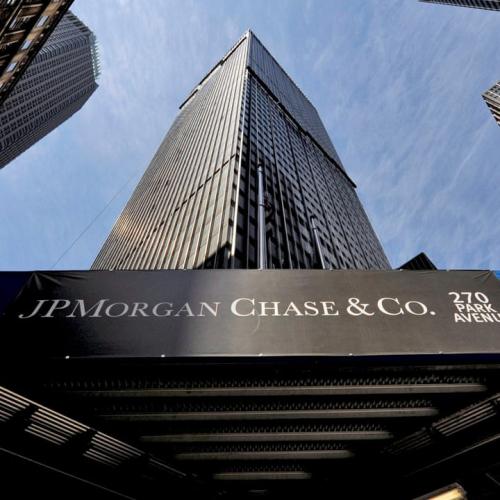
When the fires from the 2007-08 financial crisis were still being fought, JPMorgan Chase looked like a winner. Not only was JPMorgan Chase able to scoop up former rivals Washington Mutual and Bear Stearns for bargain basement prices, but its stock value shot up by nearly 31 percent over the past 4 1/2 years. But this year has been a little less kind to JPMorgan Chase. On [November 20) JPMorgan Chase agreed to a $13 billion settlement with the federal government over selling toxic mortgage investments. It also admitted to wrongdoing in knowingly peddling the instruments. Both settlements are for the "incomplete information" JPMorgan Chase gave to the pension funds for their purchases of toxic securities during the years 2004 to 2008. Even for a colossus such as JPMorgan Chase, $13 billion is a lot of money - about half of its annual profit. Forcing JPMorgan to admit wrongdoing - a rare concession - may open the door to more headaches for the company, especially because the government is continuing a criminal probe into its mortgage prices. The scale of the devastation is still so enormous that the only question left for the Justice Department to answer is why no one from any of the big banks has yet to go to jail. Wall Street's wrongdoing was about more than a dollar cost - it was about the widespread human suffering that remains with us today. Jail time would be more than appropriate, but so far the banks have been able to pay their way out of it.
Note: Because JP Morgan Chase can write off $11 billion of the fine as tax deductible, the real fine is actually reduced by $4 billion to about $7 billion, just one-third of Chase's $21 billion profit in the year 2012. For more on financial fraud, see the deeply revealing reports from reliable major media sources available here.
I can only say: I'm sorry, America. As a former Federal Reserve official, I was responsible for executing the centerpiece program of the Fed's first plunge into the bond-buying experiment known as quantitative easing. The central bank continues to spin QE as a tool for helping Main Street. But I've come to recognize the program for what it really is: the greatest backdoor Wall Street bailout of all time. Where are we today? The Fed keeps buying roughly $85 billion in bonds a month, chronically delaying so much as a minor QE taper. Over five years, its bond purchases have come to more than $4 trillion. Amazingly, in a supposedly free-market nation, QE has become the largest financial-markets intervention by any government in world history. And the impact? Even by the Fed's sunniest calculations, aggressive QE over five years has generated only a few percentage points of U.S. growth. By contrast, experts outside the Fed, such as Mohammed El Erian at the Pimco investment firm, suggest that the Fed may have created and spent over $4 trillion for a total return of as little as 0.25% of GDP (i.e., a mere $40 billion bump in U.S. economic output). Both of those estimates indicate that QE isn't really working. Unless you're Wall Street. Having racked up hundreds of billions of dollars in opaque Fed subsidies, U.S. banks have seen their collective stock price triple since March 2009. The biggest ones have only become more of a cartel: 0.2% of them now control more than 70% of the U.S. bank assets. As for the rest of America, good luck.
Note: For more on government corruption, see the deeply revealing reports from reliable major media sources available here.
U.S. Senator Elizabeth Warren said the political system is still rigged by lobbyists and special interests who work to keep the public in the dark. Ive been in the Senate for nearly a year and believe as strongly as ever that the system is rigged for powerful interests and against working families, Warren said. Warren, a critic of Wall Street, rose to prominence by highlighting tricks and traps of credit-card disclosures and creating [the Consumer Financial Protection Bureau (CFPB)] as part of the 2010 Dodd-Frank Act. Warren said despite progress by the consumer bureau and confirmation of its director after a two-year delay, lobbyists for the financial industry continue to fight it and consumer groups shouldnt let down their guard. We all know that the fight isnt over and that the lobbyists are still working to undercut the agencys work, Warren said. She compared the CFPB to government agencies that test the safety of physical products like cribs and paint, and said the bureaus work on the safety of financial products will become just as valued by the public. You tell me: When was the last time you heard someone call for regulators to go easier on companies that want to use lead paint on our childrens toys or leave the safety switches off toasters? Warren asked. The CFPB was designed from the very beginning to cut out tricks and traps in consumer finance and add transparency to the marketplace.
Note: For an excellent video showing the courage and forthrightness of Elizabeth Warren, click here. For more on government corruption, see the deeply revealing reports from reliable major media sources available here.
Federal Reserve Bank of New York President William Dudley said [that] any effort to reduce the threat to financial stability posed by massive financial firms also must include compelling banking executives to have more respect for the law and the broader impact on society of their actions. There is evidence of deep-seated cultural and ethical failures at many large financial institutions, Mr. Dudley said. Whether this is due to size and complexity, bad incentives or some other issues is difficult to judge, but it is another critical problem that needs to be addressed as regulators seek to deal with the problem of banks that are considered too big to fail, the official said. Mr. Dudley [added] that ending too big to fail and shifting the emphasis to longer-term sustainability will encourage the needed cultural shift necessary to restore public trust in the industry. His comments on banking issues come in the wake of last weeks decision by the Fed to stay the course on its $85-billion-a-month bond-buying program. Mr. Dudley has been a steadfast supporter of the aggressively easy-money policies pursued by the central bank.
Note: For more on the banking bailout, see the deeply revealing reports from reliable major media sources available here.
"The Hustle." That's the name of a program run by Countrywide, the slimy subprime lender purchased by Bank of America in 2008. Under the program, Countrywide brokers were paid bonuses to originate loans, firing them off to borrowers with less than stellar credit in an attempt to gin up quick profits. The loans were then sold to government-backed mortgage giants Fannie Mae and Freddie Mac, where they often went sour. This sounds like a fairly typical tale from the financial crisis: Most of the nation's largest banks have, in one way or another, been accused of formulating sloppy loans and dumping them off on the taxpayer or of selling toxic mortgage securities to unwitting customers. But there's a new twist to the old story: Yesterday, a jury found Bank of America guilty of fraud, the first time that a major U.S. bank has been held responsible by a U.S. court for actions tied to the financial crisis. The jury also held a former Countrywide manager liable for fraud. That we're still wondering whether the banks will face any consequences for their actions more than five years after the financial crisis began in earnest is a pretty damning indictment of the Obama administration's approach to the matter. Can lawmakers summon the will to actually take on Wall Street or are a few good headlines from DOJ all we can hope for? The Dodd-Frank financial reform law was a good opening effort and, despite its imperfections, will make some difference in reining Wall Street. But there is still a lot that the law either left unaddressed or up to the interpretation of regulators who are bombarded by missives from Wall Street lobbyists.
Note: For more on the collusion of big banks and banking regulators, see the deeply revealing reports from reliable major media sources available here.
Investigative journalist Greg Palast has obtained a secret memo authored by then deputy Treasury secretary Larry Summers and his protg Timothy Geithner detailing their plans to roll back financial regulation. In the piece, titled "The Confidential Memo at the Heart of the Global Financial Crisis", [Palast] writes: "The Memo confirmed every conspiracy freak's fantasy: that in the late 1990s, the top U.S. Treasury officials secretly conspired with a small cabal of banker big-shots to rip apart financial regulation across the planet. When you see 26.3 percent unemployment in Spain, desperation and hunger in Greece, riots in Indonesia and Detroit in bankruptcy, go back to this End Game memo, the genesis of the blood and tears." [Palast:] This is really important right now because Larry Summers is President Obama's top choice to become head of a Federal Reserve Board. He would take Ben Bernanke's place. And what this memo is--they call it the "end game memo". Geithner calls it the "end game". And what's the game being played? The memo asks Summers to get back to the five biggest, most powerful bankers in the United States to act on and determine what our policy should be for world governance of the banking system. Basically, there were secret calls going between Larry Summers and the head of Bank of America, the head of Goldman Sachs, the head of Citibank and Merrill, the five big boys, to find out what should happen to the world financial policing order. And the answer was: smash it. Summers was holding secret meetings with the big bankers to come up with a scheme to eliminate financial regulation across the planet.
Note: Greg Palast is a New York Times-bestselling author and a freelance journalist for the British Broadcasting Corporation as well as the British newspaper The Observer. He is one of the few journalists uncovering the deepest layers of secrecy in our world. For a key past report of his on elections corruption, click here.
Richmond [CA] city officials took a giant leap forward for everyday people last week when they announced a program to purchase ailing residential mortgages and refinance them through a financial partnership and a bold new initiative that's already begun. To accomplish the task, the city said it will use its eminent domain powers in reverse: To save a home instead of condemn it. Much to the displeasure of the banking industry, the city sent offer letters to more than 600 homeowners whose mortgages are held by nongovernment lending institutions. The program offers to pay lenders the current market value of the property, not the higher value of the mortgage. Under the Richmond program, a bank that approved a $500,000 mortgage would be paid roughly 80 percent of its investment. Already, some lenders contend that such a law violates constitutionally protected property rights and sets a precedent that could open the floodgates for other cities in the same predicament. The mere exploration of similar programs in a half-dozen California cities and counties provoked a strong reaction from the banking industry. Financial experts have warned that the Richmond policy is certain to spawn legal challenges and a backlash from lenders who recalculate higher mortgages in Richmond to offset the risk of the city using a local law to claim a foreclosed property. That's interesting, because no measure was too extreme, no taxpayer sacrifice too great to come up with and fund a new financial model to bail out the bankers and brokerage firms in 2008. But that's what the federal government - and American taxpayers did.
Note: For more on financial corruption, see the deeply revealing reports from reliable major media sources available here.
The tale of how the Obama economic team was recruited en masse from Robert Rubin acolytes who either facilitated Wall Streets pre-crash recklessness while in the Clinton administration or cashed in on it later (or, like Rubin, did both) never loses its power to shock. Michael Froman, Rubins chief of staff as Clinton Treasury secretary, not only served as the Obama transition teams personnel director but moonlighted as a Citigroup managing director while doing so. Obama essentially entrusted the repairing of the china shop to the bulls whod helped ransack it, [Jeff] Connaughton writes [in The Payoff: Why Wall Street Always Wins]. [In This Town Mark] Leibovich updates the story of the tacky prehistory of the Obama White House with its aftermaththe steady parade of Obama alumni who traded change we can believe in for cash on the barrelhead as soon as they left public service. The starry list includes, among many others, Peter Orszag (director of the White Houses Office of Management and Budget, now at Citi), Jake Siewert (the Treasury Department counselor turned chief flack for Goldman Sachs), and David Plouffe (the campaign manager and senior presidential adviser who did consulting for Boeing and General Electric). When I am president, Obama had said in 2008, I will start by closing the revolving door in the White House thats allowed people to use their administration job as a stepping-stone to further their lobbying careers. Puzzling over how so many colleagues have strayed from this credo, the former press secretary Robert Gibbs has theorized that either somehow we have all changed or, alternatively, maybe Washington changed us.
Note: For more on government corruption, see the deeply revealing reports from reliable major media sources available here.
CNBCs BRIAN SULLIVAN: Is there anyone else in the Senate that is a professor? ELIZABETH WARREN: I don't think so. ... We had the big crash in 2008. What does everyone say about it? They say too much concentration in financial services creates too big to fail. It puts us at bigger risk. And what's happened since 2008? The four biggest financial institutions are now 30% bigger than they were in 2008. The central premise behind a 21st century Glass-Steagall is to say if you want to get out there and take risks, go ahead and do it. But ... you can't get access to FDIC insured deposits when you do. That way ... at least one portion of our banking sector stays safe. From 1797 to 1933, the American banking system crashed about every 15 years. In 1933, we put good reforms in place, for which Glass-Steagall was the centerpiece, and from 1933 to the early 1980s, thats a 50 year period, we didnt have any of that none. We kept the system steady and secure. And it was only as we started deregulating, [you hit] the S&L crisis, and what did we do? We deregulated some more. And then you hit long-term capital management at the end of the 90s, and what did we do as a country? This country continued to deregulate more. And then we hit the big crash in 2008. You are not going to defend the proposition that regulation can never work, it did work. SULLIVAN: I didnt say regulation never worked, Senator. By far and away, and I agree, there were fewer bank failures in that time after Glass-Steagall. ELIZABETH WARREN: Fewer, as in, of the big ones, zero.
Note: Sen. Warren is one of the few bright lights in Congress. Watch this interview to see why. To read about later censorship of this interview by NBC, click here.
It's long been suspected that ratings agencies like Moody's and Standard & Poor's helped trigger the meltdown. A new trove of embarrassing documents shows how they did it. Everybody else got plenty of blame: the greed-fattened banks, the sleeping regulators, the unscrupulous mortgage hucksters. But what about the ratings agencies? Thanks to a mountain of evidence gathered for a pair of major lawsuits by the San Diego-based law firm Robbins Geller Rudman & Dowd, ... we now know that the nation's two top ratings companies, Moody's and S&P, have for many years been shameless tools for the banks, willing to give just about anything a high rating in exchange for cash. In incriminating e-mail after incriminating e-mail, executives and analysts from these companies are caught admitting their entire business model is crooked. Ratings agencies are the glue that ostensibly holds the entire financial industry together. Their primary function is to help define what's safe to buy, and what isn't. But the financial crisis happened because AAA ratings stopped being something that had to be earned and turned into something that could be paid for. The Financial Crisis Inquiry Commission published a case study in 2011 of Moody's in particular and discovered that between 2000 and 2007, the agency gave nearly 45,000 mortgage-backed securities AAA ratings. One year Moody's doled out AAA ratings to 30 mortgage-backed securities every day, 83 percent of which were ultimately downgraded. "This crisis could not have happened without the rating agencies," the commission concluded.
Note: This is another great, well researched article by Rolling Stone's Matt Taibbi. Why isn't the major media coming up with anything near the quality of this man's work? For deeply revealing reports from reliable major media sources on financial corruption, click here.
Senior employees at U.K. banks may face a 10-year wait for bonuses under proposals put forward by a committee investigating the failures of the industry, which also recommended making reckless management of lenders a crime. The Parliamentary Commission on Banking Standards' ... proposal to introduce a criminal offence for mismanagement, which could see executives of failed firms facing jail time, was endorsed by Prime Minister David Cameron. The potential rewards for fleeting short-term success have sometimes been huge, but the penalties for failure, often manifest only later, have been much smaller or negligible, the authors of the report said. "Performance should be assessed using a range of measures rather than just return on equity, which creates perverse incentives, the committee said. "Taxpayers have bailed out the banks. The public have the sense that advantage has been taken of them, that bankers have received huge rewards, that some of those rewards have not been properly earned, and in some cases have been obtained through dishonesty, and that these huge rewards are excessive, bearing little or no relationship to the value of the work done. The committee recommended introducing an offence for reckless misconduct and potential prison time for bankers found responsible for the worst mismanagement, the first such sanctions."
Note: For a related article in the London Review of Books, which starts "the blame in Spain falls mainly on the banks as it does in Ireland, in Greece, in the US, and pretty much everywhere else too," click here. For more on financial corruption, see the deeply revealing reports from reliable major media sources available here.
The probe of Libor manipulation is proving to be the tip of the iceberg as inquiries into assets from derivatives to foreign exchange show that if theres a chance to rig benchmark rates in world markets, someone is usually willing to try. Singapores monetary authority last week censured 20 banks for attempting to fix interest rate levels in the island state and ordered them to set aside as much as $9.6 billion. Britains markets regulator is looking into the $4.7 trillion-a-day currency market after Bloomberg News reported that traders have manipulated key rates for more than a decade, citing five dealers. Its happened time and again: all of these markets have been influenced by major market-makers, which is a polite way of saying theyve been rigged, Charles Geisst, a finance professor at Manhattan College in Riverdale, New York, said. While the indexes under scrutiny are little known to the public, their influence extends to trillions of dollars in securities and derivatives. Barclays, UBS and Royal Bank of Scotland have been fined about $2.5 billion in the past year for distorting the London interbank offered rate, which is tied to $300 trillion worth of securities. Regulators are also probing ISDAfix, a measure used in the $370 trillion interest-rate swaps market, as well as how some oil products prices are set. Inquiries are broadening into the transparency of benchmarks whose levels can be determined by the same people whose income they affect. In the case of Libor, traders who stood to profit worked with bank employees responsible for submissions for the benchmark to rig the price.
Note: To read highly revealing major media articles showing just how crazy and unregulated the derivatives market is, click here. For deeply revealing reports from reliable major media sources on financial corruption, click here.
One of the world's most respected economists has said Wall St is full of "crooks" and hasn't reformed its "pathological" culture since the financial crash. Professor Jeffrey Sachs told a high-powered audience at the Philadelphia Federal Reserve earlier this month that the lack of reform was down to a docile president, a docile White House and a docile regulatory system that absolutely cant find its voice. Sachs, from Columbia University, has twice been named one of Time magazines 100 Most Influential People in the World, and is an adviser to the World Bank and IMF. What has been revealed, in my view, is prima facie criminal behavior, he said. Its financial fraud on a very large extent. Theres also a tremendous amount of insider trading. We have a corrupt politics to the core, I am afraid to say, and . . . both parties are up to their neck in this. This has nothing to do with Democrats or Republicans." Sachs described an environment of Wall Street influencing politicians with growing campaign contributions. In the 2012 election cycle, political contributions by the securities and investment sector hit $271.5 million, compared with $176 million in 2008, according to the Center for Responsive Politics. I am going to put it very bluntly: I regard the moral environment as pathological. They have no responsibility to pay taxes; they have no responsibility to their clients; they have no responsibility to people, to counterparties in transactions, he said. They are tough, greedy, aggressive and feel absolutely out of control in a quite literal sense, and they have gamed the system to a remarkable extent.
Note: For deeply revealing reports from reliable major media sources on criminal practices of Wall Street corporations, click here.
Conspiracy theorists of the world, ... we skeptics owe you an apology. You were right. The world is a rigged game. The world's largest banks may be fixing the prices of, well, just about everything. You may have heard of the Libor scandal, in which ... perhaps as many as 16 ... banks have been manipulating global interest rates, in the process [manipulating] the prices of upward of $500 trillion ... worth of financial instruments. Now Libor may have a twin brother. Word has leaked out that the London-based firm ICAP, the world's largest broker of interest-rate swaps, is being investigated by American authorities for behavior that sounds eerily reminiscent of the Libor mess. Regulators are looking into whether or not a small group of brokers at ICAP may have worked with up to 15 of the world's largest banks to manipulate ISDAfix, a benchmark number used around the world to calculate the prices of interest-rate swaps. Interest-rate swaps are a tool used by big cities, major corporations and sovereign governments to manage their debt, and the scale of their use is almost unimaginably massive. [It's] a $379 trillion market, meaning that any manipulation would affect a pile of assets about 100 times the size of the United States federal budget. It should surprise no one that among the players implicated in this scheme to fix the prices of interest-rate swaps are the same megabanks including Barclays, UBS, Bank of America, JPMorgan Chase and the Royal Bank of Scotland that serve on the Libor panel that sets global interest rates.
Note: For deeply revealing reports from reliable major media sources on the criminal practices of the financial industry, click here.
Were now witnessing what happens when all of the economic gains go to the top. Four years into a so-called recovery and were still below recession levels in every important respect except the stock market. A measly 88,000 jobs were created in March, and total employment remains some 3 million below its pre-recession level. Labor-force participation is its lowest since 1979. The underlying problem is the vast middle class is running out of money. They cant borrow more and shouldnt, given what happened after the last borrowing binge. Real annual median household income keeps falling. Its down to $45,018, from $51,144 in 2010. All the gains from the recovery continue to go to the top. Widening inequality is not inevitable. If we wanted to reverse it and restore middle-class prosperity, we could. We could award tax cuts to companies that link the pay of their hourly workers to profits and productivity, and that keep the total pay of their top 5 executives within 20 times the pay of their median worker. And impose higher taxes on companies that dont. We could raise the minimum wage to half the average wage. We could increase public investment in education, including early-childhood. We could eliminate college loans and allow all students to repay the cost of their higher education with a 10 percent surcharge on the first 10 years of income from full-time employment. And we could pay for all this by adding additional tax brackets at the top and increasing the top marginal tax rate to what it was before 1981 at least 70 percent.
Note: For deeply revealing reports from reliable major media sources on the collapse of the global economy assisted by speculation and profiteering by financial corporations, click here.
Europe needs to recapitalise, restructure or shut down its banks as part of a vital clean-up of the industry, International Monetary Fund managing director Christine Lagarde said as she warned that the threat from worlds biggest lenders was more dangerous than ever. Speaking in New York ahead of next weeks IMF Spring meeting, Ms Lagarde launched a broadside against the financial services industry for resisting urgent reform. In too many cases from the United States in 2008 to Cyprus today we have seen what happens when a banking sector chooses the quick buck ..., backing a business model that ultimately destabilizes the economy. We simply cannot have pre-crisis banking in a post-crisis world. We need reform, even in the face of intense pushback from an industry sometimes reluctant to abandon lucrative lines of business. Almost five years since Lehman Brothers collapsed, she claimed: The 'oversize banking model of too-big-to-fail is more dangerous than ever. We must get to the root of the problem with comprehensive and clear regulation. Regulators have forced banks to increase significantly their loss-absorbing capital buffers since the crisis, but are still working on "resolution" mechanisms that will allow giant lenders to fail without hitting the taxpayer and threatening financial stability. Regulators must also work together, she added, amid evidence that some countries are caving into pressure from the banking lobby.
Note: For deeply revealing reports from reliable major media sources on financial corruption, click here.
The world's biggest banks won a major victory on [March 29] when a U.S. judge dismissed a "substantial portion" of the claims in private lawsuits accusing them of rigging global benchmark interest rates. The 16 banks had faced claims totaling billions of dollars in the case. The banks include: Bank of America, Citigroup, Credit Suisse, Deutsche Bank, HSBC Holdings, JPMorgan Chase, [and others]. They had been accused by a diverse body of private plaintiffs, ranging from bondholders to the city of Baltimore, of conspiring to manipulate the London Interbank Offered Rate (Libor), a key benchmark at the heart of more than $550 trillion in financial products. In a significant setback for the plaintiffs, U.S. District Judge Naomi Reice Buchwald in Manhattan granted the banks' motion to dismiss federal antitrust claims and partially dismissed the plaintiffs' claims of commodities manipulation. She also dismissed racketeering and state-law claims. Buchwald did allow a portion of the lawsuit to continue that claims the banks' alleged manipulation of Libor harmed traders who bet on interest rates. Small movements in those rates can mean sizable gains or losses for those gambling on which way the rates move. Buchwald's decision may make it more likely that banks will talk settlement with a significant win in their pocket. The decision also could cast doubt on some of the highest analyst projections about potential Libor damages, and quell some concerns that the banks have not reserved enough for litigation expenses.
Note: For deeply revealing reports from reliable major media sources on criminal operations of the financial industry, click here.
Important Note: Explore our full index to key excerpts of revealing major media news articles on several dozen engaging topics. And don't miss amazing excerpts from 20 of the most revealing news articles ever published.