



































Banking Bailout News Articles
Below are key excerpts of revealing news articles on the 2008 banking bailout from reliable news media sources. If any link fails to function, a paywall blocks full access, or the article is no longer available, try these digital tools.

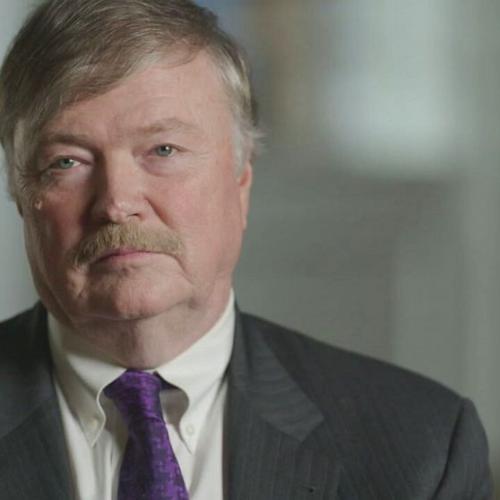
In 2009, shortly after the housing market crashed and the markets melted down, the owners of a small community bank in New York Citys Chinatown discovered fraud within their loan department. The banks owners, the Chinese-American Sung family ... reported the fraud to their regulators. But two-and-a-half years later, the bank was accused of mortgage fraud by the Manhattan District Attorneys Office making Abacus Federal Savings the only U.S. bank to be prosecuted in relation to the financial collapse and the first bank indicted in New York since 1991. Why did Abacus face charges, while the biggest banks on Wall Street all avoided prosecution for fraud? Thats the question at the heart of [the new documentary film] Abacus: Small Enough to Jail. Abacus chronicles the Sung familys quest to clear their names, the district attorneys case against the bank and how 19 of the banks ex-employees, largely immigrants, were treated by the justice system. When 12 ex-employees of the bank who refused to plead guilty were arraigned, [they were] handcuffed to each other, and in the words of one of their attorneys, herded like cattle down courthouse hallways. Reporters ... were treated to this extraordinary photo opportunity, this almost Stalinist looking chain gang of Asian Americans, says journalist Matt Taibbi. I had never seen that in my entire time at the DAs office, says Chanterelle Sung, whose father, Thomas, is the banks founder. She had worked at the office as a prosecutor for seven years.
Note: You can watch the PBS special on this strange story on this webpage. A transcript of this documentary is available here. For more along these lines, see concise summaries of deeply revealing news articles on corruption in government and in the financial industry.
Three senior Irish bankers were jailed on Friday for up to three-and-a-half years for conspiring to defraud investors in the most prominent prosecution arising from the 2008 banking crisis. The trio will be among the first senior bankers globally to be jailed for their role in the collapse of a bank during the crisis. The crash thrust Ireland into a three-year sovereign bailout in 2010. It could take another 15 years to recover the funds pumped into the banks still operating. Former Irish Life and Permanent Chief Executive Denis Casey was sentenced to two years and nine months. Willie McAteer, former finance director at the failed Anglo Irish Bank, and John Bowe, its ex-head of capital markets, were given sentences of 42 months and 24 months respectively. All three were convicted of conspiring together and with others to mislead investors, depositors and lenders by setting up a 7.2-billion-euro circular transaction scheme between March and September 2008 to bolster Anglo's balance sheet. "They manufactured 7.2 billion euros in deposits by obvious sham transactions," Judge Martin Nolan told the court. No senior industry executives in [the US or UK] have been sent to jail.
Note: Iceland allowed big banks to fail and in 2015 sent 26 bankers to jail for their role in the 2008 financial crisis. It's economy is in good shape. For more along these lines, see concise summaries of deeply revealing news articles about corruption in government and in the financial industry.
Eric Holder has long insisted that he tried really hard when he was attorney general to make criminal cases against big banks in the wake of the 2007 financial crisis. [Yet Holder] held his department back [according to] a new, thoroughly-documented report from the House Financial Services Committee. Prosecutors in 2012 wanted to criminally charge the global bank HSBC for facilitating money laundering for Mexican drug lords and terrorist groups. But Holder said no. In September 2012, the Justice Departments Asset Forfeiture and Money Laundering Section (AFMLS) formally recommended that HSBC be prosecuted for its numerous financial crimes. From 2006 to 2010, HSBC failed to monitor billions of dollars of U.S. dollar purchases with drug trafficking proceeds in Mexico. It also conducted business going back to the mid-1990s on behalf of customers in Cuba, Iran, Libya, Sudan, and Burma, while they were under sanctions. Such transactions were banned by U.S. law. AFMLS Chief Jennifer Shasky wanted to seek a guilty plea for violations of the Bank Secrecy Act. On November 7, Holder presented HSBC with a take it or leave it offer of a deferred prosecution agreement, which would involve a cash settlement and future monitoring of HSBC. No guilty plea was required. HSBC [then] successfully negotiated to have individual executives immunized from prosecution. Lack of desire at the highest levels of the Justice Department was ... the primary reason that no prosecutions took place.
Note: While attorney general of the United States, Eric Holder consistently refused to prosecute Wall Street. For more along these lines, see concise summaries of deeply revealing news articles about corruption in government and in the financial industry.
Goldman Sachs will pay about $5 billion to resolve state and federal investigations into its handling of mortgage-backed securities in the years leading up to the 2008 financial crisis, the bank said today. The agreement will settle "actual and potential civil claims" by the U.S. Justice Department and the attorneys general of New York and Illinois, as well as the Federal Home Loan Banks of Chicago and Seattle and the National Credit Union Administration. Goldman said the settlement, an agreement in principle, has not yet been finalized by the parties involved. If it is, it will reduce earnings for the last three months of 2013 by $1.5 billion. Ever since the subprime mortgage crisis upended the global financial system, authorities have been investigating a number of large financial institutions and their sale of mortgage-backed securities. The investigations have centered on whether the banks misrepresented the real value of the assets. Regulators have already won large multibillion-dollar settlements from several large banks, including JPMorgan Chase, Bank of America and Citigroup. Last May, Goldman announced it was negotiating with federal and state authorities to resolve claims against it.
Note: Yet no individual goes to jail for their actions which costs taxpayers billions of dollars. Once again, those who commit white collar crimes go free.And since the bailout in 2008, the percentage of US banking assets held by the big banks has almost doubled. Could this possibly have been planned? For more along these lines, see concise summaries of deeply revealing news articles about corruption in government and in the financial industry.
Seven years ago, the Federal Reserve and the Treasury Department bailed out the largest financial institutions in this country because they were considered too big to fail. But almost every one is bigger today than it was before the bailout. If any were to fail again, taxpayers could be on the hook for another bailout. To rein in Wall Street, we should begin by reforming the Federal Reserve, which oversees financial institutions. Unfortunately, an institution that was created to serve all Americans has been hijacked by the very bankers it regulates. What went wrong at the Fed? The chief executives of some of the largest banks in America are allowed to serve on its boards. During the Wall Street crisis of 2007, Jamie Dimon, the chief executive and chairman of JPMorgan Chase, served on the New York Feds board of directors while his bank received more than $390 billion in financial assistance from the Fed. Next year, four of the 12 presidents at the regional Federal Reserve Banks will be former executives from one firm: Goldman Sachs. We would not tolerate the head of Exxon Mobil running the Environmental Protection Agency. And we should not allow big bank executives to serve on the boards of the main agency in charge of regulating financial institutions. Financial reforms must not stop with the central bank. We must reinstate Glass-Steagall and break up the too-big-to-fail financial institutions. The sad reality is that the Federal Reserve doesnt regulate Wall Street; Wall Street regulates the Fed.
Note: After the bailout in 2008, the percentage of US banking assets held by the big banks has almost doubled. Could this possibly have been planned? And why is the only US presidential candidate talking seriously about bank reform being given little attention by mainstream media? For more along these lines, see concise summaries of deeply revealing news articles about corruption in government and in the financial industry.
Congress has passed, and President Obama has said he would sign, a budget bill that allows banks to use your savings when they make giant financial bets called derivatives. Again. And because those savings are insured by the federal government, you, the taxpayer, would be on the hook if those bets go south. Again. This isnt arcane financial stuff we can ignore. These are the exact financial mechanisms that led to the global crisis just six (short!) years ago. The Dodd-Frank reform law that was passed in the wake of that crisis forbade this from ever happening. People in the personal finance field love to talk about how if we could just get more Americans to save, if we could just get more Americans to learn the basics of the stock market, if we could just convince Americans to forego that latte at Starbucks, if we could just put Americans on a budget, then things would be OK. But how is any of that supposed to work when banks can use peoples savings to play the roulette wheel that is the stock market and then when they lose, they just order another cup of coffee and use the federal budget to make sure that the losses fall not on them but on the people who just tried to save a little money in the first place? This one is only on workers if they say nothing and fail to educate themselves on what is being plundered from their futures. The powers that be are counting on you not to pay attention, or to feel so impotent that you just give up.
Note: Read how literally hundreds of trillions of dollars are being recklessly gambled by the banks using our savings and retirement. For more along these lines, see these concise summaries of deeply revealing articles about widespread corruption in government and banking and finance.
New York states top financial regulator has demanded documents from more than a dozen banks including Barclays, Deutsche, Goldman Sachs and RBS as a probe widened into trading practices in the $5.3tn-a-day global foreign exchange markets. Benjamin Lawsky, New York's financial services superintendent, made the move following the banks decision to fire or suspend at least 20 traders following reports that employees at some firms had shared information about their currency positions with counterparts at other companies. Lawskys move marks the latest escalation in a global investigation by regulators into the manipulation of benchmark rates. The currency probe comes as regulators are still investigating the manipulation of the Libor lending rate by traders at some of the worlds biggest banks. The Wall Street Journal reported that Goldman Sachs Steven Cho, formerly global head of spot and forward foreign exchange trading for major currencies, was retiring from the bank. His departure came a day after Citigroup announced that Anil Prasad, its global head of foreign exchange, was leaving the company. It is not know if his retirement is in any way linked to any investigation. Prasads exit comes a month after Rohan Ramchandani, formerly Citis head of European spot foreign exchange trading, was fired. Ramchandani had been a member of the Bank of Englands foreign exchange joint standing committee.
Note: For more on financial corruption, see the deeply revealing reports from reliable major media sources available here.
Despite the hoopla over the approval of the Volcker rule, which restricts banks from making certain types of speculative investments, our financial system isn't much safer than it was before 2008. A major reason for the continued complexity and risk in the financial system is lobbying power. The Volcker rule as it stands now has been turned into Swiss cheese by bank lobbyists, who represent the second biggest corporate special-interest bloc after the health care complex, spending nearly half a billion dollars a year on lobbying, according to the nonprofit, nonpartisan Center for Responsive Politics. So while the rule limits federally insured banks from trading for its own sake, they are still allowed to hedge their portfolios, which opens up a lot of gray territory for trading. Certainly having more lenders rather than fewer would help other kinds of businesses, and having trading walled off from lending would encourage that. The fact that the five largest U.S. financial holding companies control 55% of industry assets--compared with 20% in 1990--keeps competition low and credit constrained. In the next two to five years, there will likely be another crisis or trading loss of the kind that reignites the debate over closing trading loopholes and creating a truly safer financial system. Right now, banks complain about rules that would require them to hold a mere 5% of their assets in high-quality, low-risk capital (known as Tier 1 capital), despite the fact that in any other industry, doing business with less than 50% of your own cash would be considered extreme.
Note: For more on government collusion with the biggest banks, see the deeply revealing reports from reliable major media sources available here.
I can only say: I'm sorry, America. As a former Federal Reserve official, I was responsible for executing the centerpiece program of the Fed's first plunge into the bond-buying experiment known as quantitative easing. The central bank continues to spin QE as a tool for helping Main Street. But I've come to recognize the program for what it really is: the greatest backdoor Wall Street bailout of all time. Where are we today? The Fed keeps buying roughly $85 billion in bonds a month, chronically delaying so much as a minor QE taper. Over five years, its bond purchases have come to more than $4 trillion. Amazingly, in a supposedly free-market nation, QE has become the largest financial-markets intervention by any government in world history. And the impact? Even by the Fed's sunniest calculations, aggressive QE over five years has generated only a few percentage points of U.S. growth. By contrast, experts outside the Fed, such as Mohammed El Erian at the Pimco investment firm, suggest that the Fed may have created and spent over $4 trillion for a total return of as little as 0.25% of GDP (i.e., a mere $40 billion bump in U.S. economic output). Both of those estimates indicate that QE isn't really working. Unless you're Wall Street. Having racked up hundreds of billions of dollars in opaque Fed subsidies, U.S. banks have seen their collective stock price triple since March 2009. The biggest ones have only become more of a cartel: 0.2% of them now control more than 70% of the U.S. bank assets. As for the rest of America, good luck.
Note: For more on government corruption, see the deeply revealing reports from reliable major media sources available here.
"The Hustle." That's the name of a program run by Countrywide, the slimy subprime lender purchased by Bank of America in 2008. Under the program, Countrywide brokers were paid bonuses to originate loans, firing them off to borrowers with less than stellar credit in an attempt to gin up quick profits. The loans were then sold to government-backed mortgage giants Fannie Mae and Freddie Mac, where they often went sour. This sounds like a fairly typical tale from the financial crisis: Most of the nation's largest banks have, in one way or another, been accused of formulating sloppy loans and dumping them off on the taxpayer or of selling toxic mortgage securities to unwitting customers. But there's a new twist to the old story: Yesterday, a jury found Bank of America guilty of fraud, the first time that a major U.S. bank has been held responsible by a U.S. court for actions tied to the financial crisis. The jury also held a former Countrywide manager liable for fraud. That we're still wondering whether the banks will face any consequences for their actions more than five years after the financial crisis began in earnest is a pretty damning indictment of the Obama administration's approach to the matter. Can lawmakers summon the will to actually take on Wall Street or are a few good headlines from DOJ all we can hope for? The Dodd-Frank financial reform law was a good opening effort and, despite its imperfections, will make some difference in reining Wall Street. But there is still a lot that the law either left unaddressed or up to the interpretation of regulators who are bombarded by missives from Wall Street lobbyists.
Note: For more on the collusion of big banks and banking regulators, see the deeply revealing reports from reliable major media sources available here.
The tale of how the Obama economic team was recruited en masse from Robert Rubin acolytes who either facilitated Wall Streets pre-crash recklessness while in the Clinton administration or cashed in on it later (or, like Rubin, did both) never loses its power to shock. Michael Froman, Rubins chief of staff as Clinton Treasury secretary, not only served as the Obama transition teams personnel director but moonlighted as a Citigroup managing director while doing so. Obama essentially entrusted the repairing of the china shop to the bulls whod helped ransack it, [Jeff] Connaughton writes [in The Payoff: Why Wall Street Always Wins]. [In This Town Mark] Leibovich updates the story of the tacky prehistory of the Obama White House with its aftermaththe steady parade of Obama alumni who traded change we can believe in for cash on the barrelhead as soon as they left public service. The starry list includes, among many others, Peter Orszag (director of the White Houses Office of Management and Budget, now at Citi), Jake Siewert (the Treasury Department counselor turned chief flack for Goldman Sachs), and David Plouffe (the campaign manager and senior presidential adviser who did consulting for Boeing and General Electric). When I am president, Obama had said in 2008, I will start by closing the revolving door in the White House thats allowed people to use their administration job as a stepping-stone to further their lobbying careers. Puzzling over how so many colleagues have strayed from this credo, the former press secretary Robert Gibbs has theorized that either somehow we have all changed or, alternatively, maybe Washington changed us.
Note: For more on government corruption, see the deeply revealing reports from reliable major media sources available here.
Were now witnessing what happens when all of the economic gains go to the top. Four years into a so-called recovery and were still below recession levels in every important respect except the stock market. A measly 88,000 jobs were created in March, and total employment remains some 3 million below its pre-recession level. Labor-force participation is its lowest since 1979. The underlying problem is the vast middle class is running out of money. They cant borrow more and shouldnt, given what happened after the last borrowing binge. Real annual median household income keeps falling. Its down to $45,018, from $51,144 in 2010. All the gains from the recovery continue to go to the top. Widening inequality is not inevitable. If we wanted to reverse it and restore middle-class prosperity, we could. We could award tax cuts to companies that link the pay of their hourly workers to profits and productivity, and that keep the total pay of their top 5 executives within 20 times the pay of their median worker. And impose higher taxes on companies that dont. We could raise the minimum wage to half the average wage. We could increase public investment in education, including early-childhood. We could eliminate college loans and allow all students to repay the cost of their higher education with a 10 percent surcharge on the first 10 years of income from full-time employment. And we could pay for all this by adding additional tax brackets at the top and increasing the top marginal tax rate to what it was before 1981 at least 70 percent.
Note: For deeply revealing reports from reliable major media sources on the collapse of the global economy assisted by speculation and profiteering by financial corporations, click here.
Bipartisan agreement in Washington usually means citizens should hold on to their wallets or get ready for another threat to peace. Beneath all the partisan bickering, bipartisan majorities are solid for a trade policy run by and for multinationals, a health-care system serving insurance and drug companies, an energy policy for Big Oil and King Coal, and finance favoring banks that are too big to fail. Economist James Galbraith calls this the predator state, one in which large corporate interests rig the rules to protect their subsidies, tax dodges and monopolies. This isnt the free market; its a rigged market. Wall Street is a classic example. The attorney general announces that some banks are too big to prosecute. Despite what the FBI called an epidemic of fraud, not one head of a big bank has gone to jail or paid a major personal fine. Bloomberg News estimated that the subsidy they are provided by being too big to fail adds up to an estimated $83 billion a year. Corporate welfare is, of course, offensive to progressives. But true conservatives are or should be offended by corporate welfare as well. Conservative economists Raghuram Rajan and Luigi Zingales argue that it is time to save capitalism from the capitalists, urging conservatives to support strong measures to break up monopolies, cartels and the predatory use of political power to distort competition. Here is where left and right meet, not in a bipartisan big-money fix, but in an odd bedfellows campaign to clean out Washington. For that to happen, small businesses and community banks will have to develop an independent voice in our politics.
Note: For deeply revealing reports from reliable major media sources on the collusion between the US government and corrupt financial corporations, click here.
Whatever the final outcome in the Cyprus crisis ... the island nation will have to maintain fairly draconian controls on the movement of capital in and out of the country. It will mark the end of an era for Cyprus, which has in effect spent the past decade advertising itself as a place where wealthy individuals who want to avoid taxes and scrutiny can safely park their money, no questions asked. But it may also mark at least the beginning of the end for something much bigger: the era when unrestricted movement of capital was taken as a desirable norm around the world. [With] the rise of free-market ideology, the assumption [is] that if financial markets want to move money across borders, there must be a good reason, and bureaucrats shouldnt stand in their way. But the truth, hard as it may be for ideologues to accept, is that unrestricted movement of capital is looking more and more like a failed experiment. Its hard to imagine now, but for more than three decades after World War II financial crises of the kind weve lately become so familiar with hardly ever happened. Since 1980, however, the roster has been impressive: Mexico, Brazil, Argentina and Chile in 1982. Sweden and Finland in 1991. Mexico again in 1995. Thailand, Malaysia, Indonesia and Korea in 1998. Argentina again in 2002. And, of course, the more recent run of disasters: Iceland, Ireland, Greece, Portugal, Spain, Italy, Cyprus. The best predictor of crisis is large inflows of foreign money: in all but a couple of the cases ... the foundation for crisis was laid by a rush of foreign investors into a country, followed by a sudden rush out.
Note: For deeply revealing reports from reliable major media sources on the collusion between the US government and corrupt financial corporations, click here.
Are banks too big to jail? If there was any doubt about the answer to that question, Eric H. Holder Jr., the nations attorney general, last week blurted out what weve all known to be true but few inside the Obama administration have said aloud: Yes, they are. I am concerned that the size of some of these institutions becomes so large that it does become difficult for us to prosecute them when we are hit with indications that if we do prosecute if we do bring a criminal charge it will have a negative impact on the national economy, perhaps even the world economy, Mr. Holder told the Senate Judiciary Committee. I think that is a function of the fact that some of these institutions have become too large. Mr. Holder continued, acknowledging that the size of banks has an inhibiting influence. To put this in the proper perspective, Mr. Holder said, for the first time, that he has not pursued prosecutions of big banks out of fear that an indictment could jeopardize the financial system. Does this mean that our banks are still too big to fail? Should we prosecute corporations? Should the size of an institution or its systemic importance influence the decision of prosecutors? It has been almost five years since the financial crisis, but the big banks are still too big to fail, [Senator Elizabeth] Warren, a Democrat, said in a statement. Attorney General Holders testimony that the biggest banks are too-big-to-jail shows once again that it is past time to end too-big-to-fail.
Note: For deeply revealing reports from reliable major media sources on the collusion between government and finance, click here.
After campaigning last year as an outspoken consumer advocate and Wall Street critic, Senator Elizabeth Warren was surprisingly quiet during her first month on Capitol Hill. But that changed on [Feb. 14] at the Massachusetts senior senators first hearing, when she rebuked federal regulators for settling civil cases with big banks instead of taking them to trial. Looking at the seven regulators arrayed before the Senate Banking Committee, and noting that she had often sat at the same witness table before becoming a senator, she used her new power to question why the federal government has not been more aggressive. The question I really want to ask is about how tough you are about how much leverage you really have, Warren said. Tell me a little bit about the last few times youve taken the biggest financial institutions on Wall Street all the way to trial. None of the witnesses representing the Securities and Exchange Commission, the Commodity Futures Trading Commission and others offered a response. Warren seized the hearing to chide regulators for not taking legal stands against Wall Street, saying that the threat of trial is an important tool in keeping big banks in line, despite the vast resources required to do so. If a party is unwilling to go to trial either because theyre too timid or they lack resources the consequence is they have a lot less leverage, Warren said. If [banks] can break the law and drag in billions in profits and then turn around and settle paying out of those profits, they dont have that much incentive to follow the law.
Note: For deeply revealing reports from reliable major media sources on the corrupt regulation of financial activities, click here.
Pressing ahead where others have balked, 11 European countries received the green light ... to plan a financial transaction tax that could generate billions of dollars in revenue for cash-strapped governments. Led by Germany and France, the European Unions two heavyweights, the nations will now work out how to introduce a levy on the buying and selling of stocks and bonds and on the use of complex financial instruments known as derivatives. Advocates say such a tax is not only necessary to help discourage risky transactions like those that precipitated the 2008 global financial meltdown but also a fair way to make financial institutions pay to help clean up the leftover mess. The U.S., at the urging of Wall Street, has opposed a financial transaction tax; so has Britain, which is home to Europes largest financial trading hub. Hesitation in London as well as some other European capitals stalled a proposal, made in September 2011, to charge a unified financial transaction tax across the 27-nation EU. The 11 countries, all of which share the euro as their currency, decided to forge ahead on their own, deepening integration among a subset of EU members that together account for more than half of the regions economic output. EU-wide, officials had estimated that a levy of just 0.1% on trades of stocks and bonds and 0.01% on derivatives could bring in $75 billion a year.
Note: For deeply revealing reports from reliable major media sources on the profiteering of an unregulated financial industry, click here.
Syracuse University art professor Thomas Gokey earned his Master of Fine Arts degree five years ago, but remains chained to his alma mater by $49,983 of debt. Soon after he graduated, the grim prospect of indefinite payments inspired its own art piece. Gokey put his debt up for sale in reconstituted squares of shredded money from the Federal Reserve. This year, together with the activist group Strike Debt, he helped organize a bold "People's Bailout" called the Rolling Jubilee, which has raised over $465,000. Bringing that money to the marketplace where collections companies buy and sell debt for pennies on the dollar, Strike Debt intends to purchase about $9 million of Americans' medical and educational debtand then cancel it. Strike Debt, which grew out of Occupy Wall Street, wants to foment conversation about the debt we rack up in pursuit of basic needs, and the industries that profit from that debt. Gokey is currently on a year-long unpaid leave from teaching to help organize the Rolling Jubilee and upcoming Strike Debt projects. Thomas Gokey: Since I'm an educator, I'm thinking about the ways in which my students and I seem to be getting taken advantage of. We look at how much it's costing each one of my students to take one of my classes, and how much I'm getting paid to teach the class. And we look at each other and think, why don't we just go hold our classes at the public library? Somebody's obviously making money off both of us, so can't we cut out that middleman and focus on education?
Note: For deeply revealing reports from reliable major media sources on income inequality, click here.
State and federal authorities decided against indicting HSBC in a money-laundering case over concerns that criminal charges could jeopardize one of the worlds largest banks and ultimately destabilize the global financial system. Instead, HSBC announced ... that it had agreed to a record $1.92 billion settlement with authorities. The bank, which is based in Britain, faces accusations that it transferred billions of dollars for nations like Iran and enabled Mexican drug cartels to move money illegally through its American subsidiaries. The case, officials say, will claim violations of the Bank Secrecy Act and Trading with the Enemy Act. While the settlement with HSBC is a major victory for the government, the case raises questions about whether certain financial institutions, having grown so large and interconnected, are too big to indict. Four years after the failure of Lehman Brothers nearly toppled the financial system, regulators are still wary that a single institution could undermine the recovery of the industry and the economy. But the threat of criminal prosecution acts as a powerful deterrent. If authorities signal such actions are remote for big banks, the threat could lose its sting.
Note: For deeply revealing reports from reliable major media sources on government collusion with financial corruption, click here.
Move over, adulterous generals. It might be time to make way for a new sexual rats' nest at America's top financial police agency, the SEC. In a salacious 77-page complaint ... David Weber, the former chief investigator for the SEC Inspector General's office, accuses the SEC of retaliating against Weber for coming forward as a whistleblower. According to this lawsuit, Weber was made a target of [retaliation] after he came forward with concerns that his bosses may have been spending more time copulating than they were investigating the SEC. Weber claims that in recent years, while the SEC Inspector General's office has been attempting to investigate the agency's seemingly-negligent responses in such matters as the Bernie Madoff case and the less-well-known (but nearly as disturbing) Stanford Financial Ponzi scandal, two of the IG office's senior officials former Inspector General David Kotz and his successor, Noelle Maloney were sleeping together. Weber also claims that Kotz was also having an affair with a lawyer representing a key group of Stanford victims, a Dr. Gaytri Kachroo. Weber claims that Maloney last year refused to meet with Kachroo as part of the Stanford investigation. By then, Kotz had stepped down as SEC IG and Maloney had replaced him as Acting IG. Weber was fired on October 31st. Apparently he has decided not to take the firing quietly. "When David Weber began to uncover the depth of dysfunction at the SEC, they fired him," his attorney Cary Hansel said. "He has no intention of being silenced by threats and false allegations."
Note: We don't normally use Rolling Stone as a source, but this important story has not been covered elsewhere in the major media.
Important Note: Explore our full index to revealing excerpts of key major media news articles on several dozen engaging topics. And don't miss amazing excerpts from 20 of the most revealing news articles ever published.



