































Big Brother Media Articles
Below are key excerpts of revealing news articles on Big Brother from reliable news media sources. If any link fails to function, a paywall blocks full access, or the article is no longer available, try these digital tools.

Democratic presidential candidates Sens. Bernie Sanders, Kamala Harris and Elizabeth Warren on Wednesday defended Rep. Ilhan Omar against the backlash to her comments slamming pro-Israel groups and politicians, which have been called anti-Semitic. Sanders, who is Jewish, said criticism of Omar and efforts to get her taken off the House Foreign Affairs Committee ... are aimed at stopping a discussion about American's foreign policy toward Israel. [He] differentiated between promoting anti-Semitism and criticizing Israel as a state. Harris called out all instances of bigotry and expressed concern that the focus on Omar "may put her at risk." Warren [stated], "Branding criticism of Israel as automatically anti-Semitic has a chilling effect on our public discourse and makes it harder to achieve a peaceful solution between Israelis and Palestinians. Threats of violence -- like those made against Rep. Omar -- are never acceptable." Last month, Omar faced criticism for tweets insinuating that the pro-Israel lobbying group American Israel Public Affairs Committee was effectively buying off US politicians. The Minnesota Democrat subsequently apologized after demands from Speaker Nancy Pelosi of California. Omar [also] implied that pro-Israel lawmakers are under a "political influence in this country that says it is OK for people to push for allegiance to a foreign country." House Foreign Affairs Chairman Eliot Engel said Tuesday that he does not want Omar removed from her seat on the committee because of her recent comments, despite previously calling for her to apologize in a fiery statement.
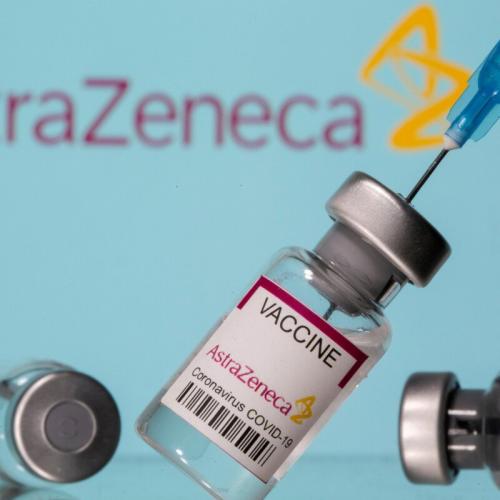
Amazon has apparently started removing anti-vaccine documentaries from its Amazon Prime Video streaming service. The move came days after a CNN Business report highlighted the anti-vaccine comment available on the site, and hours after Rep. Adam Schiff wrote an open letter to Amazon CEO Jeff Bezos, saying he is concerned "that Amazon is surfacing and recommending" anti-vaccination books and movies. Anti-vaccine movies that were previously available free for Prime subscribers, like "We Don't Vaccinate!," "Shoot 'Em Up: The Truth About Vaccines," and "Vaxxed: From Cover-Up to Catastrophe," are now "currently unavailable." While some anti-vaccine videos are gone from the Prime streaming service, a number of anti-vaccine books were still available for purchase on Amazon.com ... and some were still being offered for free to Kindle Unlimited subscribers. A sponsored post for the book "Vaccines On Trial: Truth and Consequences of Mandatory Shots" also remained live. Amongst the titles taken down are "VAXXED: From Cover-Up to Catastrophe," the notorious anti-vaccine documentary that was banned from the Tribeca Film Festival in 2016, and whose director, Andrew Wakefield, is one of the central figures in the anti-vaccine movements. Schiff had previously written letters to the heads of Facebook and Google, which owns YouTube, about anti-vaccine content on their platforms. Both companies publicly vowed to make changes to how anti-vaccine content is made available.
Note: This New York Times article reports that facebook is also removing key vaccine content. Our freedom to access information on all sides of various debates is gradually being eroded by giants like amazon and facebook. The documentary "Vaxxed" presents solid, verifiable evidence of a major cover-up around vaccine safety. You can find it on this webpage. For more along these lines, see concise summaries of deeply revealing news articles on vaccine risks from reliable major media sources. Then explore the excellent, reliable resources provided in our Health Information Center.
Robert A. Maheu was such a colorful character that its widely believed the television show Mission: Impossible was based on him and his private investigative agency. As an ex-FBI agent, the CIA asked him to handle jobs it wanted to steer clear of, such as lining up prostitutes for a foreign president or hiring the mafia to kill Fidel Castro. For more than 15 years, Maheu [was] on monthly retainer to The Agency, CIA records show. Maheu was the right-hand man to Howard Hughes as Hughes ... helped finance CIA operations. A new book alleges that Maheu may have performed another mission for the CIA: the assassination of Sen. Robert F. Kennedy. Maheu would have had access to the CIAs experiments in hypnosis and mind control. That would have enabled him to frame Sirhan Sirhan as a patsy for the slaying of Kennedy, while other gunmen actually fired the fatal shots, argues author Lisa Pease, who spent 25 years researching her book, A Lie Too Big to Fail." Sirhans lawyers in 2010 accused the CIA of hypnotizing Sirhan and making him an involuntary participant. With Maheus contacts throughout the CIA and organized crime, he is the most credible high-level suspect for the planner of Robert Kennedys assassination, Pease wrote. Chief among that evidence is the autopsy finding that Kennedy was shot point blank in the back of the head, while Sirhan was in front of Kennedy. Witnesses at the scene of the shooting were adamant that Sirhan never got close enough to fire at close range. Not long after the trial, a ballistics expert examined the three bullets recovered from the scene and found that they did not match Sirhans gun.
Note: The entire article at the link above is chock full of excellent information which leaves little doubt that RFK was not assassinated by one man. For more along these lines, see concise summaries of deeply revealing news articles on the Kennedy assassinations from reliable major media sources. Then explore the excellent, reliable resources provided in our Media Information Center, which show how the media has been complicit in covering huge stories like this and many more.
Jeffrey Epstein had a little black book filled with the names and personal phone numbers of some of the world's wealthiest and most influential people, from Bill Clinton and Donald Trump to actors, actresses, scientists and business tycoons. For years, Epstein lured an endless stream of teenage girls to his Palm Beach mansion, offering to pay them for massages. Instead, police say, for years he coerced middle and high school girls into engaging in sex acts with him and others. As evidence emerged that there were victims and witnesses outside of Palm Beach, the FBI began an investigation in 2006 into whether Epstein and others employed by him were involved in underage sex trafficking. But in 2007, despite substantial evidence that corroborated the girls' stories of abuse by Epstein, the U.S. attorney in Miami, Alexander Acosta, signed off on a secret deal for the multimillionaire, one that ensured he would never spend a day in prison. Acosta, now President Donald Trump's secretary of labor, agreed to seal the agreement so that no one – not even Epstein's victims – would know the full extent of his crimes or who was involved. The Miami Herald obtained thousands of FBI and court records, lawsuits, and witness depositions, and went to federal court in New York to access sealed documents in the reporting of "Perversion of Justice." The Herald also tracked down more than 60 women who said they were victims, some of whom had never spoken of the abuse before.
Note: See the timeline on this critical story. Learn about other major cover-ups in high places in deeply revealing news articles on sexual abuse scandals from reliable major media sources. Watch an excellent segment by Australia's "60-Minutes" team "Spies, Lords and Predators" on a pedophile ring in the UK which leads directly to the highest levels of government. A second suppressed documentary, "Conspiracy of Silence," goes even deeper into this topic in the US.
On July 26, 2016, the Office of the Inspector General (OIG) issued a report “Army General Fund Adjustments Not Adequately Documented or Supported”. The report indicates that for fiscal year 2015 the Army failed to provide adequate support for $6.5 trillion. Given that the entire Army budget in fiscal year 2015 was $120 billion, unsupported adjustments were 54 times the level of spending authorized by Congress. An appendix to the July 2016 report shows $2 trillion in changes to the Army General Fund balance sheet due to unsupported adjustments. On the asset side, there is $794 billion increase in the Army's Fund Balance with the U.S. Treasury. There is also an increase of $929 billion in the Army's Accounts Payable. What is the source of the additional $794 billion in the Army's Fund Balance? The July 2016 report is not the only such report of unsubstantiated adjustments. Mark Skidmore and Catherine Austin Fitts, former Assistant Secretary of Housing and Urban Development, conducted a search of government websites and found similar reports dating back to 1998. While the documents are incomplete, original government sources indicate $21 trillion in unsupported adjustments have been reported for the Department of Defense and the Department of Housing and Urban Development for the years 1998-2015. [And why] after Mark Skidmore began inquiring about OIG-reported unsubstantiated adjustments, [was] the OIG's webpage, which documented, albeit in a highly incomplete manner, these unsupported "accounting adjustments," ... mysteriously taken down?
Note: Explore this webpage for a brief background to this astounding news. See also a detailed analysis of these missing trillions, which amount to $65,000 per man, woman, and child in the US. And don't miss this highly revealing interview with Prof. Mark Skidmore of Michigan State with even more startling news.
Dont want to get a vaccine for yourself or your child? Prepare to face the consequences. In the last month, a Detroit mother went to jail because she refused to vaccinate her child. Fifty people lost their jobs at a group of Midwestern hospitals and clinics because they declined a flu shot. And an Oregon university has blocked students from registering for classes unless they have a meningitis shot. All states have some vaccine requirements for public educationno shots, no school. All but three states - Mississippi, West Virginia and California - allow parents to send their child to school without vaccines based on some kind of non-medical exemption. In 2013, more than 90 percent of American children had been vaccinated for chicken pox, hepatitis B, measles, mumps and rubella, according to the Centers for Disease Control and Prevention. However, a significant number of people ... hesitate when a doctor offers them a vaccine. A new study released on Monday found that 27 percent of the parents surveyed could be classified as moderately or highly hesitant around vaccines. That same study found these people may be particularly concerned with the purity of vaccines. Increasingly, parents who choose not to vaccinate are warned of harsh penalties. People who choose not to vaccinate themselves may also face serious consequences. Some states have laws guiding which vaccinations people working at hospitals or other health care facilities must have; more often, requirements may be enshrined in a facility's policy, not in law.
Note: Watch an excellent video of Emmy award winning reporter Sharyl Attkisson exposing how the government fired an vaccine expert who found links to autism. For more along these lines, see concise summaries of deeply revealing vaccine controversy news articles from reliable major media sources.
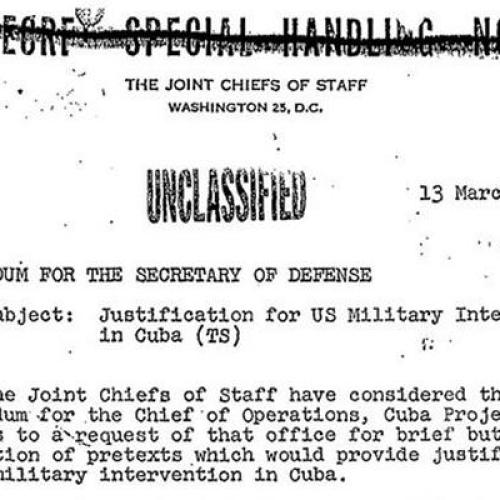
The U.S. government [planned] false flag attacks with Soviet aircraft to justify war with the USSR or its allies, newly declassified documents surrounding the assassination of President John F. Kennedy show. In a three-page memo, members of the National Security Council wrote, "There is a possibility that such aircraft could be used in a ... provocation operation in which Soviet aircraft would appear to attack US or friendly installations to provide an excuse for U.S. intervention." The memo shows that the department, along with the CIA, considered buying Soviet aircraft to stage the attacks, even getting estimates from the Air Force on how long it would take and how much it would cost to produce the planes domestically and covertly. The document also outlined the possibility of purchasing such aircraft from non-Soviet Bloc countries that had received planes from the USSR, or from pilots that had defected, instead of building them domestically. The CIA deemed those plans too risky. It is unclear when the memo was written or circulated. The NSC staff mention a meeting on March 22, 1962, when a "Special Group" discussed the attorney general's questions about acquiring Soviet aircraft. The document was last reviewed by the CIA in February 1998, and a stamp shows it was declassified in March 2016. But, strangely, the document's cover letter shows a date of "00/00/00."
Note: ABC News back in 2001 was the only major media to report on Operation Northwoods, which is the code name for a very similar plan, when the first documents on this were declassified. As these earlier documents show, the plan was approved by the top Pentagon chiefs to create a pretext for war with Cuba by sinking an American ship in the Havana harbor or creating a "terror campaign" in cities like Miami and Washington D.C. Why was this stunning news only reported by ABC? For a possible reason, see this excellent summary of testimony by major media whistleblowers.
Regulators have approved the first drug with a sensor that alerts doctors when the medication has been taken. The digital pill combines two existing products: the former blockbuster psychiatric medication Abilify - long used to treat schizophrenia and bipolar disorder - with a sensor tracking system first approved in 2012. Experts say the technology could be a useful tool, but it will also change how doctors relate to their patients as theyre able to see whether they are following instructions. The pill has not yet been shown to actually improve patients medication compliance, a feature insurers are likely to insist on before paying for the pill. Additionally, patients must be willing to allow their doctors and caregivers to access the digital information. The technology carries risks for patient privacy, too, if there are breaches of medical data or unauthorized use as a surveillance tool, said James Giordano, a professor of neurology at Georgetown University Medical Center. Could this type of device be used for real-time surveillance? The answer is of course it could, said Giordano. The new pill, Abilify MyCite, is embedded with a digital sensor that is activated by stomach fluids, sending a signal to a patch worn by the patient and notifying a digital smartphone app that the medication has been taken.
Note: In 2010, it was quietly reported that Novartis AG would be seeking regulatory approval for such "chip-in-a-pill technology". For more along these lines, see concise summaries of deeply revealing news articles on microchip implants and the disappearance of privacy.
Trump administration lawyers are demanding the private account information of potentially thousands of Facebook users in three separate search warrants served on the social media giant. The warrants specifically target the accounts of three Facebook users who are described ... as "anti-administration activists who have spoken out at organized events, and who are generally very critical of this administration's policies." One of those users, Emmelia Talarico, operated the disruptj20 page where Inauguration Day protests were organized and discussed; the page was visited by an estimated 6,000 users whose identities the government would have access to if Facebook hands over the information. Talarico says if her account information was given to the government, officials would have access to her "personal passwords, security questions and answers, and credit card information," plus "the private lists of invitees and attendees to multiple political events." The American Civil Liberties Union, representing the three Facebook users, filed a motion to quash the warrants Thursday. "What is particularly chilling about these warrants is that anti-administration political activists are going to [be] scrutinized by the very administration they are protesting," said ACLU attorney Scott Michelman. Facebook was initially served the warrants in February 2017 along with a gag order which barred the social media company from alerting the three users that the government was seeking their private information.
Note: United Nations officials recently said that the US government's treatment of activists was increasingly "incompatible with US obligations under international human rights law". For more along these lines, see concise summaries of deeply revealing news articles on government corruption and the disappearance of privacy.
As grocery shoppers work to digest Amazons massive acquisition of Whole Foods for $13.7 billion, the digital storefront recently scored a victory that aims to reinforce the companys growing investments in brick-and-mortar retail. Amazon was awarded a patent May 30 that could help it choke off a common issue faced by many physical stores: Customers use of smartphones to compare prices even as they walk around a shop. But Amazon now has the technology to prevent that type of behavior when customers enter any of its physical stores and log onto the WiFi networks there. Titled Physical Store Online Shopping Control, Amazons patent describes a system that can identify a customers Internet traffic and sense when the smartphone user is trying to access a competitors website. When that happens, Amazon may take one of several actions. It may block access to the competitors site, preventing customers from viewing comparable products from rivals. It might redirect the customer to Amazons own site or to other, Amazon-approved sites. It might notify an Amazon salesperson to approach the customer. Or it might send the customers smartphone a text message, coupon or other information designed to lure the person back into Amazons orbit.
Note: For more along these lines, see concise summaries of deeply revealing corporate corruption news articles from reliable major media sources.
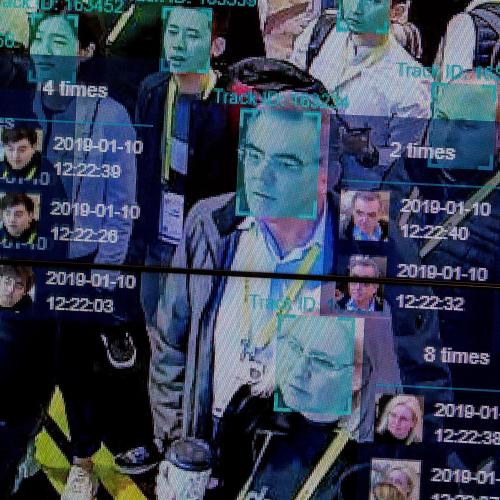
Approximately half of adult Americans photographs are stored in facial recognition databases that can be accessed by the FBI, without their knowledge or consent, in the hunt for suspected criminals. About 80% of photos in the FBIs network are non-criminal entries, including pictures from drivers licenses and passports. The algorithms used to identify matches are inaccurate about 15% of the time, and are more likely to misidentify black people than white people. These are just some of the damning facts presented at last weeks House oversight committee hearing, where politicians and privacy campaigners criticized the FBI and called for stricter regulation of facial recognition technology at a time when it is creeping into law enforcement and business. The FBI first launched its advanced biometric database ... in 2010, augmenting the old fingerprint database with further capabilities including facial recognition. The bureau did not inform the public ... nor did it publish a privacy impact assessment, required by law, for five years. The FBI made arrangements with 18 different states to gain access to their databases of drivers license photos. Last year, the US government accountability office (GAO) analyzed the FBIs use of facial recognition technology and found it to be lacking in accountability, accuracy and oversight. It doesnt know how often the system incorrectly identifies the wrong subject, explained the GAOs Diana Maurer. Innocent people could bear the burden of being falsely accused.
Note: For more along these lines, see concise summaries of deeply revealing news articles about government corruption and the disappearance of privacy.
WikiLeaks dump of messages to and from Clintons campaign chief offer an unprecedented view into the workings of the elite, and how it looks after itself. The emails [are] being slowly released ... from the hacked account of Hillary Clintons campaign chair John Podesta. Their significance goes far beyond mere scandal: they ... furnish us with an opportunity to observe the upper reaches of the American status hierarchy. In one now-famous email chain, for example, the reader can watch current US trade representative Michael Froman, writing from a Citibank email address in 2008, appear to name President Obamas cabinet even before the great hope-and-change election was decided. This genre of Podesta email, in which people try to arrange jobs for themselves or their kids, points us toward the most fundamental thing we know about the people at the top of this class: their loyalty to one another and the way it overrides everything else. Of course Hillary Clinton staffed her state department with investment bankers and then did speaking engagements for investment banks as soon as she was done at the state department. Of course she appears to think that any kind of bank reform should come from the industry itself. And of course no elite bankers were ever prosecuted by the Obama administration. Read these emails and you understand, with a start, that the people at the top tier of American life all know each other. They are all engaged in promoting one anothers careers, constantly.
Note: For more along these lines, see concise summaries of deeply revealing government corruption news articles from reliable major media sources.
A human sacrifice has been staged in the grounds of the European Organisation for Nuclear Research, the home of the God Particle. A video circulating online shows hooded figures apparently engaging in a ritual, staged under a huge statue of a Hindu deity, at the end of which a woman is stabbed. The footage appears to have been recorded as part of a prank by scientists at Europes top physics lab, which serves as the home of the Large Hadron Collider. The identity and motives of those behind the video hasnt yet been discovered. In the footage itself, multiple people are shown wearing long, flowing black robes and one appears to have hiking boots on underneath. They are depicted walking around, before a woman moves onto the floor and is apparently stabbed. As that happens, the person who is supposedly recording the video appears to react firing out expletives and apparently running away, which causes the camera to move away from the scene before it is cut off. A Cern spokesperson confirmed that the video had been filmed there, but said that it had been made without permission or knowledge. Its far from the first time that scientific work has been associated with the occult or the mystical. Because of the highly-specialised and often terrifying work that goes on at Cern, it has become a haven of speculation.
Note: Was this sacrifice really faked? Watch the one-minute video available here. The opening of the huge Gotthard tunnel with its most bizarre, occult opening ceremony (as reported by BBC), occurred not long before this ritual. Watch a video filled with intriguing speculation on this and more. And to dive even deeper into what's going on with occult sacrifice, read this important article.
Trump delegate and Gawker bankrupter Peter Thiel is no stranger to the idea of increasing his lifespan through science. On Bloomberg TV in 2014, Thiel explained that he was taking human-growth hormone pills as part of his plan to live 120 years. Given Thiels obsession with warding off death, it comes as no surprise that the Silicon Valley billionaire is interested in at least one radical way of doing it: injecting himself with a young persons blood. [In] a year-old interview ... the venture-capitalist [said] that hes interested in parabiosis, which includes the practice of getting transfusions of blood from a younger person, as a means of improving health and potentially reversing aging. I'm looking into parabiosis stuff. This is where they did the young blood into older mice and they found that had a massive rejuvenating effect, he said. Its one of these very odd things where people had done these studies in the 1950s and then it got dropped altogether. I think there are a lot of these things that have been strangely under-explored. A Thiel Capital employee ... previously expressed interest in the technique to Jesse Karmazin, the founder of Ambrosia LLC, a company that has been looking for volunteers over the age of 35 to receive blood transfusions from individuals under the age of 25. Bercovici notes that Silicon Valley is abound with rumors of wealthy tech elites experimenting with parabiosis, and Gawker ... received a tip in June claiming that Thiel spends $40,000 per quarter to get an infusion of blood from an 18-year-old.
Note: One university researcher has found that many in the European royalty until the end of the 18th century practiced selective cannibalism in the belief if would keep them young. Another article goes into greater depth about the practice some elder members of the wealthy elite taking blood infusions from young people to stay young.
The [FDA] amassed a stockpile of pistols, shotguns, and semiautomatic rifles, along with ample supplies of ammunition, liquid explosives, gun scopes, and suppressors. Between 2006 and 2014, [the Animal and Plant Health Inspection Service, an agency of the USDA] spent nearly $4.8 million to arm itself. And far from being an outlier, it is one of dozens of federal agencies that spends lavishly on guns, ammunition, and military-style equipment. A report issued this month by American Transparency ... chronicles the explosive - and expensive - trend toward militarizing federal agencies, most of which have no military responsibilities. Between 2006 and 2014, the report shows, 67 federal bureaus, departments, offices, and services spent at least $1.48 billion on ammunition and material one might expect to find in the hands of SWAT teams, Special Forces soldiers - or terrorists. The Internal Revenue Service, for example, now spends more than $1 million annually on firearms, ammunition, and military gear. Since 2006, the Department of Veterans Affairs ... has poured nearly $11.7 million into guns and ammo. Even the Smithsonian Institution and the Social Security Administration have each devoted hundreds of thousands of dollars to weaponry. There are now fewer US Marines than there are officers at federal administrative agencies with the authority to carry weapons and make arrests.
Note: The Washington Post in 2009 reported that military influence over US civilian authorities was quietly increasing, and the militarization of US police has been well-documented. For more along these lines, see concise summaries of deeply revealing news articles about government corruption and the erosion of civil liberties.
Senior CIA officials have for years intentionally deceived parts of the agency workforce by transmitting internal memos that contain false information. The practice is known by the term eyewash. Officials said there is no clear mechanism for labeling eyewash cables or distinguishing them from legitimate records being examined by the CIAs inspector general, turned over to Congress or declassified for historians. Senate investigators uncovered apparent cases of eyewashing as part of a multi-year probe of the CIAs interrogation program, according to officials who said that the Senate Intelligence Committee found glaring inconsistencies in CIA communications about classified operations, including drone strikes. Former CIA officials ... acknowledged that the internal mechanisms for managing eyewash cables were largely informal. Skeptics described the safeguards as inadequate. When you introduce falsehoods into the communications stream then you can destabilize the whole system of intelligence oversight and compliance with the law, said Steven Aftergood, a government secrecy expert at the Federation of American Scientists. It wasnt that long ago that we had a CIA executive director who was engaged in criminal activity - you dont want someone like him preparing eyewash cables, Aftergood said, referring to Kyle Dusty Foggo, the former No. 3 executive at the agency.
Note: Read more about the strange case of Kyle "Dusty" Foggo, the CIA executive convicted of fraud in connection with secret CIA prisons. For more along these lines, see concise summaries of deeply revealing Intelligence agency corruption news articles from reliable major media sources.
The tools European security agencies now have at their disposal ... would make any American or Canadian intelligence officer drool. Britain has literally created a surveillance state. The British Security Industry Authority estimated three years ago the government has installed about six million closed-circuit TV cameras in the public square; one for every 10 citizens. The French, too, have vastly expanded public video surveillance in recent years. And it's all been done with overwhelming support from the general public, which feels safer for the presence of the surveillance, never mind the lack of objective proof that they are more protected against outrages, which keep on occurring. Both England and France are former colonial powers that ... long ago subordinated individual rights to collective security. Canada and America more dearly cherish individual rights. Still, a surveillance state is growing here, too. David Lyon, a professor of surveillance studies at Queen's University, has identified several public surveillance trends, all of which he says are "increasing at an accelerating rate." Canada is not about to become Western Europe, he says, but "it is incumbent upon us as a society to think about the ethical consequences" of mass surveillance. [Some] would argue that the cameras are desperately needed tools, and that anyone who isn't doing anything wrong has nothing to worry about. That of course is the police state justification. They hate us because we are free, we are told. The fact that we've responded by giving up ever more freedom doesn't seem to matter.
Note: Many of the politicians publicly defending the surveillance state receive huge sums of money from private security companies. For more along these lines, see concise summaries of deeply revealing news articles about government corruption and the disappearance of privacy.
Jade Helm 15, the controversial Special Operations exercise that spawned a wave of conspiracy theories about a government takeover, will open next week without any media allowed to observe it, a military spokesman said. Embedded reporters wont be permitted at any point during the exercise, in which military officials say that secretive Special Operations troops will maneuver through private and publicly owned land in several southern states. The exercise is scheduled for July 15 through September 15 and is expected to include more than 1,200 troops. Army Special Operations Command announced the exercise in March, saying its size and scope would set it apart from most training exercises. For months, some protesters have said Jade Helm is setting the stage for future martial law. Texas Gov. Greg Abbott, a Republican, called in April for the Texas State Guard to monitor the exercise [to] improve communication between Special Operations forces and civilians in Texas. The Washington Post has several times requested access to observe the exercise, making the case to the military that first-hand media coverage would help explain the mission. [Army spokesman Lt. Col. Mark] Lastoria said it is not possible to allow a journalist to travel with Special Operations forces in the field. The military has granted access to Special Operations in the past, however. In one recent example, a journalist observed the exercise Robin Sage in North Carolina.
Note: See interesting information on Jade Helm 15 based on government documents concluding that it is largely an artificial intelligence operation.
Elite service members from four branches of the U.S. military will launch an operation this summer in which they will operate covertly among the U.S. public and travel from state to state in military aircraft. Texas, Utah and a section of southern California are labelled as hostile territory, and New Mexico isnt much friendlier. Thats the scheme for Jade Helm 15, a new Special Operations exercise that runs from July 15 to Sept. 15. Army Special Operations Command announced it last week, saying the size and scope of the mission sets it apart from many other training exercises. The exercise has prompted widespread conspiracy theories that the United States is preparing to hatch martial law. In particular, some have expressed alarm about this map, which outlines events for the exercise in unclassified documents posted online last week. The Washington Post verified them to be legitimate by speaking to Army sources. They appear to have been prepared for local authorities. Its also worth noting that the military has routinely launched exercises in the past in which regions of the United States are identified as hostile for the purpose of training.
Note: This Washington Post article is clearly playing down some important facts and developments. Why is the US military spending so much time and money preparing for scenarios where US soil and citizens are considered enemies? Read and educate yourself with this excellent article on Operation Jade Helm 15, one in a string of US exercises planning for mass civilian arrests under a variety of scenarios.
Olympic National Park and Olympic National Forest in Washington State are ... where the US Navy aims to conduct its Northwest Electromagnetic Radiation Warfare training program. It will fly ... 2,900 training exercises over wilderness, communities and cities across the Olympic Peninsula for 260 days per year, with exercises lasting up to 16 hours per day. No public notices for the Navy's plans were published in any media that directly serve the Olympic Peninsula. But word spread. Public outcry forced the Navy to extend the public comment period until November 28 and schedule more public meetings. According to the US Navy's Information Dominance Roadmap 2013-2028, the Navy states it "will require new capabilities to fully employ integrated information in warfare by expanding the use of advanced electronic warfare." The purpose of these war games is to train to deny the enemy "all possible frequencies of electromagnetic radiation (i.e. electromagnetic energy) for use in such applications as communication systems..." David King, the mayor of Port Townsend, a town on the Northeast corner of the Olympic Peninsula, has voiced his opposition to the plan, along with numerous other public officials. Mike Welding, the Naval Air Station at Whidbey Island spokesman, recently admitted to reporters, "If someone is in the exclusion area for more than 15 minutes, that's a ballpark estimate for when there would be some concern for potential to injure, to receive burns."
Note: We don't generally use truth-out.org as a reliable source, but as no major media are covering this most important development, we're including this article here. To verify this information, please click on some of the links in the article and see the U.S. Navy's "Information Dominance Roadmap".
Important Note: Explore our full index to key excerpts of revealing major media news articles on several dozen engaging topics. And don't miss amazing excerpts from 20 of the most revealing news articles ever published.