



























Civil Liberties Media Articles
Below are key excerpts of revealing news articles on the erosion of our civil liberties from reliable news media sources. If any link fails to function, a paywall blocks full access, or the article is no longer available, try these digital tools.

In the days after the September 11, 2001, terrorist attacks, when Congress voted to authorize military force against the people who planned, authorized, committed, or aided the hijackings, few Americans could have imagined the resulting manhunt would span from West Africa all the way to the Philippines. Today ... it looks like the war on terror is still in its opening act. The Islamic State, which was largely created by the U.S. invasion of Iraq, controls vast swaths of territory in Iraq, Syria, and Libya. The death toll in the countries the U.S. attacked remains untallied, but conservative estimates range from the hundreds of thousands to well over a million. The financial cost of the war on terror is incalculable. After 15 years, the only winners in the war on terror have been the contractors. At home, the war on terror has become a constitutional nightmare. The U.S. has adopted a practice of indefinitely detaining terror suspects. Police departments across the country secretly import military-grade spy equipment. Courts have ruled that families cannot sue to get their children off government kill lists. NSA whistleblower Edward Snowden revealed that the U.S. has become the largest surveillance state in history. Bombing multiple countries in the Middle East has become business as usual, and often goes unreported. As ... media engagement with the wars diminishes, and it is all too easy to forget about our permanent state of war. But the victims of U.S. violence are unlikely to forget, creating a potentially endless supply of new enemies.
Note: Read a well-researched essay describing how the war on terror is a fraud. For more along these lines, see concise summaries of deeply revealing news articles on terrorism and war.
A bipartisan campaign to reduce mass incarceration has led to enormous declines in new inmates from big cities, cutting Americas prison population for the first time since the 1970s. But large parts of rural and suburban America ... have gone the opposite direction. Prison admissions in counties with fewer than 100,000 people have risen even as crime has fallen. Just a decade ago, people in rural, suburban and urban areas were all about equally likely to go to prison. But now people in small counties are about 50 percent more likely to go to prison than people in populous counties. The stark disparities in how counties punish crime show the limits of recent state and federal changes to reduce the number of inmates. Far from Washington and state capitals, county prosecutors and judges continue to wield great power over who goes to prison and for how long. And many of them have no interest in reducing the prison population. The divide does not appear to be driven by changes in crime, which fell in rural and urban areas at roughly equal rates. Cities have adopted a more lenient approach to drug offenses in particular, diverting many low-level drug offenders to probation or treatment rather than to jail. Those choices have started to reverse - if only modestly - longstanding racial disparities in American prisons, where blacks and Hispanics are incarcerated at drastically higher rates than whites. But rural, mostly white and politically conservative counties have continued to send more drug offenders to prison.
Note: The war on drugs has been called a "trillion-dollar failure," and spending on jails outpaced spending on schools by three times over the last 30 years. For more along these lines, see concise summaries of deeply revealing news articles about judicial system corruption and the erosion of civil liberties.
When should police be able to deactivate your social media account? The question is becoming more urgent, as people use real-time connections in the middle of critical incidents involving law enforcement. In the case of Korryn Gaines in Baltimore County, Md., earlier this month, police said that a suspect actively using a social media connection makes a standoff worse. Gaines posted videos to Instagram of the unfolding standoff with police, who were outside her apartment trying to get her to surrender. Gaines was shot and killed by Baltimore County police, [who] got Instagram's parent company, Facebook, to temporarily suspend her account. These days, police can use a special Web page provided by the social media company where they can make an emergency request to take down somebody's account. For cops, this is no different than the old practice of cutting a phone line. But to Rashad Robinson, it is different. He runs Color of Change, an online racial justice organization. He says live social media are much more than just a line of communication. "As the movement around police accountability has grown, it's been fueled by video evidence, the type of video that gives us a real insight into what's happening and creates the narrative, builds the narrative, for people to understand," he says. Robinson says imagine if police in Minnesota had blocked the Facebook Live video of the aftermath of the police shooting of Philando Castile earlier this summer. There wouldn't have been nearly the same kind of public reaction.
Note: For more along these lines, see concise summaries of deeply revealing news articles on police corruption and the erosion of civil liberties.
Federal drug agents regularly mine Americans travel information to profile people who might be ferrying money for narcotics traffickers - though they almost never use what they learn to make arrests or build criminal cases. Instead, that targeting has helped the Drug Enforcement Administration seize a small fortune in cash. The DEA surveillance is separate from the vast and widely-known anti-terrorism apparatus. DEA units assigned to patrol 15 of the nations busiest airports seized more than $209 million in cash from at least 5,200 people over the past decade They count on this as part of the budget, said Louis Weiss, a former [DEA group] supervisor. Basically, youve got to feed the monster. Federal law gives the government broad powers to seize cash and other assets if agents have evidence that they are linked to crime. That process, commonly known as asset forfeiture, has come under fire ... after complaints that police were using the law as a way to raise money rather than to protect the public or prevent crime. Court records show agents and informants flagged travelers for questioning based on whether they were traveling with one-way tickets, had paid in cash, had listed a non-working phone number on the reservation or had checked luggage. Agents said Zane Young fit that profile when they ... seized $36,000 from his bags. Youngs lawyer, Thomas Baker, said in a court filing that the drug agencys profile was vague, ambiguous, overbroad, and can be manipulated to include just about anyone.
Note: Read about how the DEA stole a young man's life savings without ever charging him with a crime. For more along these lines, see concise summaries of deeply revealing news articles on government corruption and the erosion of civil liberties.
America has been enmeshed in a wrenching discussion about how the police treat young black men. But this weeks blistering report from the Justice Department on police bias in Baltimore also exposed a different, though related, concern: how the police in that majority-black city treat women, especially victims of sexual assault. In six pages of the 163-page report documenting how Baltimore police officers have systematically violated the rights of African-Americans, the Justice Department also painted a picture of a police culture deeply dismissive of sexual assault victims and hostile toward prostitutes and transgender people. It branded the Baltimore Police Departments response to sexual assault cases grossly inadequate. Baltimore officers sometimes humiliated women who tried to report sexual assault, often failed to gather basic evidence, and disregarded some complaints filed by prostitutes. Some officers blamed victims or discouraged them from identifying their assailants. And the culture seemed to extend to prosecutors, investigators found. In one email exchange, a prosecutor referred to a woman who had reported a sexual assault as a conniving little whore. A police officer, using a common text-message expression for laughing heartily, wrote back: Lmao! I feel the same. Other pattern or practice investigations of police departments - including in New Orleans; Puerto Rico; and Missoula, Mont. - have also identified gender bias.
Note: For more along these lines, see concise summaries of deeply revealing news articles on police corruption and sexual abuse scandals.
The devastating trauma and abuse inflicted on children held by Australia in offshore detention has been laid bare in the largest cache of leaked documents released from inside its immigration regime. More than 2,000 leaked incident reports from Australias detention camp for asylum seekers on the remote Pacific island of Nauru totalling more than 8,000 pages are published by the Guardian today. The Nauru files set out as never before the assaults, sexual abuse, self-harm attempts, child abuse and living conditions endured by asylum seekers held by the Australian government, painting a picture of routine dysfunction and cruelty. Children are vastly over-represented in the reports. More than half of the 2,116 reports a total of 1,086 incidents, or 51.3% involve children, although children made up only about 18% of those in detention on Nauru during the time covered by the reports, May 2013 to October 2015. The findings come just weeks after the brutal treatment of young people in juvenile detention in the Northern Territory was exposed. Allegations of sexual assault ... are a persistent theme of the files. In one report an asylum seeker described being told she was on a list written by local Nauruan guards naming single women they were waiting for. In [another] report a cultural adviser for Wilson Security, the company that employs guards at the detention camp, allegedly told an asylum seeker who had been sexually assaulted in camp that rape in Australia is very common and people dont get punished.
Note: Watch an excellent segment by Australia's "60-Minutes" team "Spies, Lords and Predators" on a pedophile ring in the UK which leads directly to the highest levels of government. A second suppressed documentary, "Conspiracy of Silence," goes even deeper into this topic in the US. For more along these lines, see concise summaries of deeply revealing news articles on corruption in government and sexual abuse scandals.
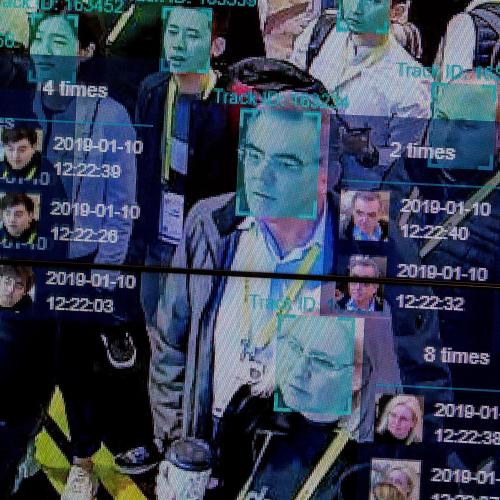
For more than a decade, professional snoops have been able to search troves of ... addresses, DMV records, photographs of a persons car - and condense them into comprehensive reports costing as little as $10. Now they can combine that information with the kinds of things marketers know about you, such as which politicians you donate to, what you spend on groceries, and whether its weird that you ate in last night, to create a portrait of your life and predict your behavior. IDI, a year-old company in the so-called data-fusion business, is the first to centralize and weaponize all that information for its customers. Chief Executive Officer Derek Dubner says the system isnt waiting for requests from clients - its already built a profile on every American adult, including young people who wouldnt be swept up in conventional databases, which only index transactions. These personal profiles include all known addresses, phone numbers, and e-mail addresses; every piece of property ever bought or sold, plus related mortgages; past and present vehicles owned; criminal citations, from speeding tickets on up; voter registration; hunting permits; and names and phone numbers of neighbors. The reports also include photos of cars taken by private companies using automated license plate readers - billions of snapshots tagged with GPS coordinates and time stamps to help PIs surveil people or bust alibis. IDI also runs two coupon websites ... that collect purchasing and behavioral data.
Note: For more along these lines, see concise summaries of deeply revealing news articles on corporate corruption and the erosion of privacy.
When Ebony Buggs followed the noise of commotion to a vacant unit below her apartment on Chicagos West Side, she found a group of men beating teens from the neighborhood. One man grabbed her and punched her in the face, according to Buggs, now 26. Buggs mother, seeing her daughter lying on the ground, threatened to call the police. We are the police, one of the men responded, as he grabbed her phone and threw it. The man who Buggs alleges beat her is Edwin Utreras. He was part of a group of five officers that city residents dubbed the Skullcap Crew, who patrolled the citys South Side public housing communities until they were torn down. The members of this crew Edwin Utreras, Robert Stegmiller, Christ Savickas, Andrew Schoeff and Joe Seinitz have together faced at least 128 known official allegations from more than 60 citizen-filed complaints over almost a decade and a half. They have also been named in more than 20 federal lawsuits. Yet over the course of their careers, these officers have received little discipline. Instead, they have won praise from the department, accruing more than 180 commendations. All of them remain on the force except Seinitz, who resigned in 2007. The Citizens Police Data Project, a repository of more than 56,000 official complaints against police, has found that less than 3% of Chicago police misconduct complaints lead to disciplinary action.
Note: Another gang of Chicago police was recently reported to have run a drug dealing and extortion ring with the tacit support of their fellow officers. For more along these lines, see concise summaries of deeply revealing police corruption news articles from reliable major media sources.
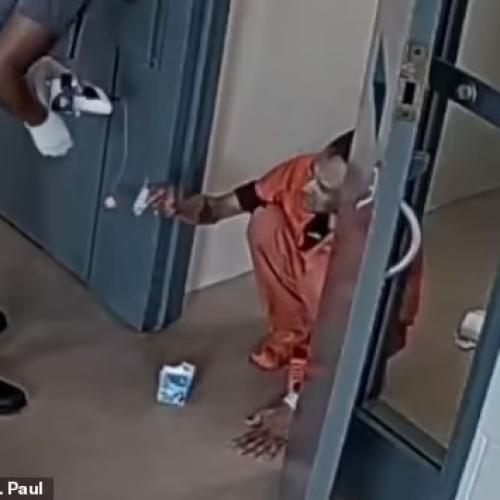
The president of the Australian Human Rights Commission, Gillian Triggs, has called for an inquiry into juvenile detention after the ABC aired harrowing footage of apparent abuses of young people in custody in the Northern Territory. The program also prompted the leader of the NT, Adam Giles, to pledge he would seek advice on establishing a royal commission. The ABC's Four Corners program on Monday night aired footage of a 17-year-old boy, one of six boys tear-gassed at a juvenile detention centre near Darwin, being hooded and strapped to a mechanical restraint chair. The footage is part of a catalogue of evidence obtained by Four Corners of the repeated assault and mistreatment of boys at youth detention centres in the Northern Territory. Amnesty International has described the abuses carried out against children as shown in the Four Corners program as a violation of both the UN Convention on the Rights of the Child and the Convention Against Torture. Julian Cleary, Indigenous rights campaigner at Amnesty International Australia, called for an end to the systemic abuse of children in youth detention. "To see a crying, distressed child seized by his neck, forced to the ground, manhandled, stripped naked by three grown men and left naked in a cell is just sickening," he said. "The footage of guards laughing at a child being tear-gassed and in distress defies belief." The NT has the highest rate of youth detention in Australia, and 95 per cent of detainees are Aboriginal.
Note: Unlike the US, Australia has signed and ratified The United Nations Convention on the Rights of the Child. A follow-up article suggests that the UN may take action on prison system corruption in Australia.
The images that shaped public imagination of the American Indian - 19th and early 20th century photographs - were mostly fiction. Often, they were sentimentalized portrayals of what Edward S. Curtis, the most successful of all who trained their cameras on the subject, called the vanishing race. The ... pictures glossed over attitudes and policies that today are seen as cruelly neglectful, if not genocidal. Curtis himself, funded with J.P. Morgan money to produce some 40,000 photographic documents for his magnificent 20-volume The North American Indian, is known to have choreographed ceremonies and dances, phonied up costumes, retouched negatives to remove all signs of modernity; he paid reservation residents to play the part of native nobility. Other photographers purported to show the fearsomeness of the American Indian warrior. Two ... intensely engaging exhibitions newly opened at the California Historical Society present images of Northern California and southern Oregons Modoc tribe. Sensationalist Portrayals of the Modoc War, 1872-73 examines reports of a sad chapter of American history, when a band of about 60 Indian fighters held off 600 U.S. Army troops. Native Portraits: Contemporary Tintypes by Ed Drew features Drews revival of a 19th century photographic process to depict present-day Modocs as they choose to be seen. Side by side, the two shows add up to a quiet rebuke of photographys cravenly racist portrayal of the first Americans.
Note: For more along these lines, see concise summaries of deeply revealing media corruption news articles.
A Wall Street Journal reporter was detained by federal agents at the Los Angeles airport who demanded to confiscate her two cell phones. Maria Abi-Habib, a reporter who covers the Middle East for the paper, detailed in a long Facebook post Thursday how Department of Homeland Security agents detained her in "a special section of LAX airport" to ask her questions. Abi-Habib has both U.S. and Lebanese citizenship and was traveling on an American passport. "They grilled me for an hour," she wrote. The agents then asked for her cellphones. "That is where I drew the line," Abi-Habib wrote. "I told her I had First Amendment rights as a journalist she couldn't violate and I was protected under." The agent then presented a DHS document that read that the government has the right to confiscate phones within 100 miles from U.S. borders. "If they forgot to ask you at JFK airport for your phones, but you're having a drink in Manhattan the next day, you technically fall under this authority," she wrote. "And because they are acting under the pretense to protect the U.S. from terrorism, you have to give it up." Abi-Habib told the agents that they would have to call the Wall Street Journal's lawyers because the phones are the property of the newspaper. This led to the agent accusing her of "hindering the investigation." The agent left to speak with her supervisor, returning 30 minutes later to tell Abi-Habib that she was free to go. DHS acknowledged the incident occurred, [and] asserted it has legal authority to confiscate anyone's electronics.
Note: For more along these lines, see concise summaries of deeply revealing news articles on government corruption and the erosion of civil liberties.
One of the most tortured men in the history of Guantnamo Bay has received clearance from the wartime prisons quasi-parole board to leave after nearly 14 years of detention without charge. Mohamedou Ould Slahi, a Mauritanian citizen whose harrowing account of his torture at Guantnamo Bay became an international bestseller in 2015, will soon leave behind the Cuban detention center where US military personnel contorted his body; bombarded him with noise; deprived him of sleep; stuffed his clothing with ice during a nighttime boat ride meant to to convince him he was headed to an even worse place; threatened his life; and threatened his mother with rape. A nonlegal panel representing various US security agencies tasked with assessing threats posed by Guantnamos 76 residual detainees, found Slahi to represent no continuing significant threat to the security of the United States. The consensus decision, reached on 14 July, was made public on Wednesday. A federal judge in 2010 [had previously] ordered him freed for lack of evidence untainted by torture to justify his detention, yet the US justice department appealed. In the summer of 2003, senior Guantnamo officials, believing Slahi was an important link to al-Qaida, sought and received permission from the Pentagon to torture him. US defense secretary Donald Rumsfeld personally approved Slahis torture. In his book, Slahi recalled ... that he would tell his tormentors whatever they wished to hear. I dont care, as long as you are pleased, Slahi informed his interrogators.
Note: By the time Slahi's bestselling book Guantanamo Diary was published, leaked documents obtained by BBC News had revealed that more than 150 innocent people were detained at Guantanamo after being rounded up for no reason. For more along these lines, read about how the torture program fits in with a long history of human experimentation by corrupt intelligence agencies working alongside unethical scientists.
On July 7, Dallas police officers used a bomb robot to kill the suspected perpetrator of a shooting that left five Dallas-area police officers dead and seven others wounded. While police have used robots to deliver chemical agents and pizza, it looks as if the deployment of the robot bomb on Thursday night was the first time American police officers have used a robot to kill someone. According to Dallas Police Chief David Brown, We saw no other option but to use our bomb robot and place a device on its extension for it to detonate where the suspect was. The death of the alleged shooter in Dallas should prompt us to think carefully about how new technologies will be used by police to deliver lethal force. Robots like the one used by Dallas police are used by police departments across the country as part of bomb squads. But its worth keeping in mind that these robots will continue to improve, making it easier for police to use them in situations like the standoff in Dallas. Other tools such as drones could also potentially be used to kill suspects. In fact, North Dakota has legalized the use of armed drones in some circumstances, and Florida law defines a police drone as one that can carry a lethal or nonlethal payload. As technology improves, using tools such as robots to kill dangerous suspects will become easier, and we shouldnt be surprised if they proliferate. Amid such changes we should keep a careful eye on how and when police use remote devices, especially in cases not as clear cut as the recent standoff.
Note: The use of robots in warfare has been increasing. Militarization of US police, led by the Pentagon, suggests that robots will also be increasingly used in domestic law enforcement. For more along these lines, see concise summaries of deeply revealing police corruption news articles from reliable major media sources.
Police officers arrest more than 1.2 million people a year in the United States on charges of illegal drug possession. Field tests ... help them move quickly from suspicion to conviction. But the kits - which cost about $2 each and have changed little since 1973 - are far from reliable. Some tests ... use a single tube of a chemical called cobalt thiocyanate, which turns blue when it is exposed to cocaine. But cobalt thiocyanate also turns blue when it is exposed to more than 80 other compounds, including methadone, certain acne medications and several common household cleaners. Other tests use three tubes, which the officer can break in a specific order to rule out everything but the drug in question - but if the officer breaks the tubes in the wrong order, that, too, can invalidate the results. There are no established error rates for the field tests, in part because their accuracy varies so widely depending on who is using them and how. In Las Vegas, authorities re-examined a sampling of cocaine field tests conducted between 2010 and 2013 and found that 33 percent of them were false positives. By 1978, the Department of Justice had determined that field tests should not be used for evidential purposes, and the field tests in use today remain inadmissible at trial in nearly every jurisdiction. But this has proved to be a meaningless prohibition. Most drug cases in the United States are decided well before they reach trial, by the far more informal process of plea bargaining.
Note: Drug test field kits sometimes produce wildly inaccurate results. And recently the FBI was found to have faked an entire branch of forensic science. For more along these lines, see concise summaries of deeply revealing judicial corruption news articles from reliable major media sources.
Tailyn Wang was two months pregnant when federal police officers broke into her house in Mexico City, ripped off her nightgown and threw her to the ground. They groped her breasts while punching and kicking her in front of her terrified children, before taking her blindfolded to a police base without an arrest warrant. Wang is one of scores of innocent women illegally arrested and tortured by Mexican security services looking to boost arrest figures to justify the war on drugs, according to damning new research by Amnesty International. Of the 100 women interviewed for the report, 72 said they were sexually abused during or soon after the arrest. Ten of the women were pregnant when arrested; eight subsequently suffered a miscarriage. The vast majority were young, poor, single mothers. Most spend years in prison awaiting trial, without access to adequate healthcare or legal advice. Wang, who has reported the torture to judges, prosecutors, doctors, and the National Commission for Human Rights, was falsely accused by an acquaintance, a local police officer, after he was also tortured. Reports of torture have increased exponentially in Mexico since former President Felipe Caldern first deployed tens of thousands of armed forces on the streets to combat warring drug cartels and organised crime. The navy, which has been deployed in some of the most violent states ... appears to have a particularly serious torture problem. Among the women interviewed by Amnesty, eight out of the ten arrested by the navy were raped.
Note: For more along these lines, see concise summaries of deeply revealing police corruption and sexual abuse scandal news articles from reliable major media sources.
The [FDA] amassed a stockpile of pistols, shotguns, and semiautomatic rifles, along with ample supplies of ammunition, liquid explosives, gun scopes, and suppressors. Between 2006 and 2014, [the Animal and Plant Health Inspection Service, an agency of the USDA] spent nearly $4.8 million to arm itself. And far from being an outlier, it is one of dozens of federal agencies that spends lavishly on guns, ammunition, and military-style equipment. A report issued this month by American Transparency ... chronicles the explosive - and expensive - trend toward militarizing federal agencies, most of which have no military responsibilities. Between 2006 and 2014, the report shows, 67 federal bureaus, departments, offices, and services spent at least $1.48 billion on ammunition and material one might expect to find in the hands of SWAT teams, Special Forces soldiers - or terrorists. The Internal Revenue Service, for example, now spends more than $1 million annually on firearms, ammunition, and military gear. Since 2006, the Department of Veterans Affairs ... has poured nearly $11.7 million into guns and ammo. Even the Smithsonian Institution and the Social Security Administration have each devoted hundreds of thousands of dollars to weaponry. There are now fewer US Marines than there are officers at federal administrative agencies with the authority to carry weapons and make arrests.
Note: The Washington Post in 2009 reported that military influence over US civilian authorities was quietly increasing, and the militarization of US police has been well-documented. For more along these lines, see concise summaries of deeply revealing news articles about government corruption and the erosion of civil liberties.
In 2009, I was living in Tel Aviv during Operation Cast Lead. During that offensive, Israel killed about 1,400 Palestinians in Gaza. To take concrete action to bring about freedom and full rights for Palestinians ... I embraced the Boycott, Divestment, and Sanctions movement. The non-violent effort, started in 2005 by a broad coalition of Palestinian civil society organizations, is a call for solidarity from the international community until Israel complies with international law and ends its violations of Palestinian rights. Its hard going though. Seven years later, there have been two more horrific assaults on Gaza. During this time there have been attacks on Israeli civilians too. These are a horrifying symptom of ongoing occupation and repression, as Tel Aviv Mayor Ron Huldai pointed out after a recent attack in Tel Aviv killed four Jewish Israelis. BDS is a powerful way to encourage the state to act. But our efforts have been threatened here in the United States by a nationally coordinated, well-funded strategy financed by the Israeli government and advocacy organizations. Over the last year, 22 states have introduced or passed anti-BDS legislation. Many of these measures make it illegal for states to do business with companies that support BDS. New York Gov. Andrew Cuomo (D) has escalated that strategy with a draconian executive order that would create a blacklist of companies and organizations that choose not to invest in Israel or that advocate for BDS.
Note: Read an Israeli soldier's account of following orders to methodically kill women and children in Israel's 2009 Gaza offensive. For more along these lines, see concise summaries of deeply revealing government corruption news articles from reliable major media sources.
Anyone venturing into a 3.3-square-mile event zone surrounding next months Republican National Convention will be prohibited from carrying tennis balls, tape, rope, bike locks, sleeping bags, or any object they could stand on to rise above the crowd and speak. But if they have a license, theyll be permitted to openly carry real guns, including assault weapons. The restrictions imposed on the large event zone drawn around Clevelands Quicken Loans Arena ... have earned the city a lawsuit filed by the ACLU of Ohio and widespread criticism. Its the first time Ive gone to a protest where theres been so much talk of guns and the fact that people can carry them legally, said [activist] John Penley. They throw pro- and anti-Trump protesters together, and throw in the fact that maybe people will be carrying weapons. It seems like what they want to do is increase the chances for conflict. Cleveland received a $50 million federal grant to gear up for the RNC. The city has obtained ... 10,000 sets of flex cuffs; nonlethal munitions like bean bag pellets; pepper spray; 2,000 sets of riot gear; 2,000 retractable steel batons; 3.7 miles worth of steel barriers; as well as ... video surveillance equipment, laptops, night vision devices, and 16 Pointer Illuminator Aiming Lasers, which a technology retailer describes as being used for night direct-fire aiming and illumination. The convention center itself is under the control of the Secret Service, which has imposed a separate set of restrictions, including a ban on weapons.
Note: New York City in 2014 agreed to pay $18 million to settle lawsuits brought by hundreds of people illegally arrested at the 2004 RNC. Non-lethal weapons including a noise gun originally developed for military use may be used at this year's RNC in Cleveland.
At a time of justified concern about arbitrary police stops, the Supreme Court on Monday made such harassment more likely. By a 5-3 vote, the court upheld the search of a drug defendant that grew out of a stop that the state conceded was unlawful. The decision in a Utah case pokes yet another hole in an important principle: that courts may not consider evidence that is the result of an illegal search or seizure the so-called fruit of the poisonous tree. Edward Strieff was stopped by a police officer after he walked out of a house in South Salt Lake City. After Strieff identified himself, the officer ran his name through a database and discovered an outstanding arrest warrant for a traffic violation. The officer then arrested Strieff on that charge and searched him, finding a bag containing methamphetamine and drug paraphernalia. The state subsequently admitted that the officer lacked reasonable suspicion to stop Strieff, as required under Supreme Court interpretations of the 4th Amendment. Writing for the majority, Justice Clarence Thomas concluded that it didnt matter if the officer had no basis on which to stop Strieff; the evidence was admissible anyway. The decision could have far-reaching consequences. As Justice Sonia Sotomayor wrote in a powerful dissent: This case allows the police to stop you on the street, demand your identification, and check it for outstanding traffic warrants - even if you are doing nothing wrong. If the officer discovers a warrant for a fine you forgot to pay, courts will now excuse his illegal stop.
Note: For more along these lines, see concise summaries of deeply revealing news articles about judiciary corruption and the erosion of civil liberties.
The push by congressional Democrats to bar suspected terrorists from acquiring guns and explosives has focused renewed attention on the governments secretive terrorist watch lists, which have grown exponentially since the 9/11 attacks. Since the mass shooting in a gay nightclub in Orlando on June 12, Democrats have endorsed various measures to get weapons out of the hands of people on the lists. The Orlando shooter, Omar Mateen, had been on the FBIs terrorist watch list but was removed in 2014. His was one of approximately 800,000 names in that database, the most prominent of at least seven overlapping watch lists. The government does not release the exact number of watch lists or the specific criteria for getting on them. The no-fly list ... contained 16 people on Sept. 11, 2001. By 2014, it had grown to about 64,000 people. Civil liberties advocates [say] the watch lists are riddled with inaccurate and outdated information, nearly impossible to get off and stigmatize the people on them. The largest watch list is The Terrorist Identities Datamart Environment (TIDE), maintained by the National Counterterrorism Center. As of August 2014, it contained about 1.1 million names. The FBIs Terrorist Screening Center ... maintains what is known as the governments "consolidated Terrorist Watchlist." It contains about 800,000 names. Last year, [a] federal judge ruled that the governments lack of effective procedures for people to challenge their inclusion on the no-fly list was unconstitutional.
Note: A 2013 New York Times article further describes the rapid expansion of these mysterious lists, which are made according to secret rules. Some people have reportedly been added to watch lists by federal air marshals simply to meet quotas. For more along these lines, see concise summaries of deeply revealing civil liberties news articles from reliable major media sources.
Important Note: Explore our full index to key excerpts of revealing major media news articles on several dozen engaging topics. And don't miss amazing excerpts from 20 of the most revealing news articles ever published.



