
























Civil Liberties News Articles
Below are key excerpts of revealing news articles on the erosion of our civil liberties from reliable news media sources. If any link fails to function, a paywall blocks full access, or the article is no longer available, try these digital tools.

A newly declassified document gives a fascinating glimpse into the US military's plans for "information operations". The declassified document is called "Information Operations Roadmap". It was obtained by the National Security Archive at George Washington University using the Freedom of Information Act. Officials in the Pentagon wrote it in 2003. The Secretary of Defense, Donald Rumsfeld, signed it. The operations described in the document include a surprising range of military activities: public affairs officers who brief journalists, psychological operations troops who try to manipulate the thoughts and beliefs of an enemy, computer network attack specialists who seek to destroy enemy networks. The military's psychological operations, or Psyops, is finding its way onto the computer and television screens of ordinary Americans. "Psyops messages will often be replayed by the news media for much larger audiences, including the American public. Strategy should be based on the premise that the Department [of Defense] will 'fight the net' as it would an enemy weapons system," it reads. The document recommends that the United States should seek the ability to "provide maximum control of the entire electromagnetic spectrum". US forces should be able to "disrupt or destroy the full spectrum of globally emerging communications systems, sensors, and weapons systems dependent on the electromagnetic spectrum". The fact that the "Information Operations Roadmap" is approved by the Secretary of Defense suggests that these plans are taken very seriously indeed in the Pentagon.
Note: For other revealing news articles on military corruption, click here. For other revealing news articles on government corruption, click here.
Woody Norris aims the silvery plate ... demonstrating something called HyperSonic Sound (HSS). I pace out a hundred yards. Norris pelts me with the Handel. The sound is inside my head. Imagine, he says, walking by a soda machine (say, one of the five million in Japan that will soon employ HSS) ... then hearing what you alone hear -- the plink of ice cubes and the invocation, ''Wouldn't a Coke taste great right about now?'' An HSS transmission can travel 450 feet - at practically the same volume all along its path. In past months, Norris and his staff have made a further, key improvement to HSS -- instead of sending out a column of sound, they can now project a single sphere of it, self-contained, like a bubble. [And] there are Defense Department applications. Norris [has] been busy honing something called High Intensity Directed Acoustics (HIDA). Although [it] has been routinely referred to as a "nonlethal weapon," ... in reality, HIDA is both warning and weapon. If used from a battleship, it can ward off stray crafts at 500 yards with a pinpointed verbal warning. Should the offending vessel continue ... the stern warnings are replaced by 120-decibel sounds that are as physically disabling as shrapnel. Certain noises, projected at the right pitch, can incapacitate even a stone-deaf terrorist; the bones in your head are brutalized by a tone's full effect whether you're clutching the sides of your skull in agony or not. "HIDA can instantaneously cause loss of equilibrium, vomiting, migraines - really, we can pretty much pick our ailment," he says brightly. Last month, [Norris' company] A.T.C. cut a five-year, multimillion-dollar licensing agreement with General Dynamics, one of the giants of the military-industrial complex.
Note: This entire article is well worth reading if you want to understand just how advanced these dangerous weapons are. And there is little doubt that this weapon can cause death. Remember the article was written in 2003. Sound weapons developed for war are now routinely used against civilian populations. Explore an excellent, well researched article going into more detail on these weapons. For more along these lines, see concise summaries of deeply revealing non-lethal weapons news articles from reliable major media sources.
Over the past three years, more than 60 institutions, including several of the world's most prestigious research centers, have been criticized by the U.S. government for failing to protect human subjects adequately. As recently as 1974 individual scientists and their financial backers could decide for themselves what constituted ethical research. Most of the time their judgment was sound, but there were plenty of appalling exceptions. In the 1950s Army doctors gave LSD to soldiers without telling them what it was. In 1963 researchers injected prisoners and terminally ill patients with live cancer cells to test their immune responses; they were told only that it was a "skin test." In the 1950s mentally retarded children at Willowbrook, a state institution in New York, were deliberately infected with hepatitis so that scientists could work on an experimental vaccine. And in perhaps the most infamous case on record, doctors at Georgia's Tuskegee Institute, starting in the 1930s, deliberately withheld treatment from syphilis-infected African-American men for 40 years to monitor the course of the disease. Financial conflicts of interest can extend not only to the institutions but also to the researchers themselves. Jesse Gelsinger's death in the University of Pennsylvania's gene-therapy trial in 1999 seemed especially scandalous [because] James Wilson, the principal investigator in the study, held a 30% equity stake in Genovo, which owned the rights to license the drug Wilson was studying; the university owned 3.2% of the company. When Targeted Genetics Corp. acquired Genovo, Wilson reportedly earned $13.5 million and Penn $1.4 million.
Note: For a powerful, reliable list of astounding incidents in which government and medical professionals used humans as guinea pigs over the past hundred years and continuing to the present, click here. Links are provided to reliable sources for verification. For key facts on government mind control programs, click here.
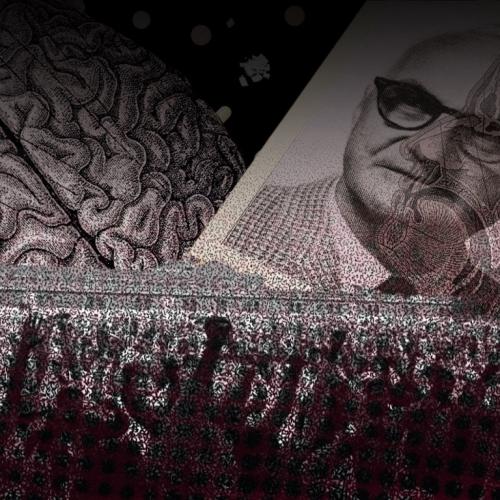
Dr. Jose M. R. Delgado of [Yale University] is one of the leading pioneers in ... E.S.B.: electrical stimulation of the brain. He is also the impassioned prophet of a new “psychocivilized” society whose members would influence and alter their own mental functions to create a “happier, less destructive and better balanced man.” [Delgado said,] “We know that [E.S.B.] can delay a heartbeat, move a finger, bring a word to memory, evoke a sensation.” [His] animals performed like electrical toys. One monkey, Ludy, each time she was stimulated [would] stand up on two feet and circle to the right; climb a pole and then descend again. This “automatism” was repeated [by Ludy] through 20,000 stimulations! The tickling of a few electric volts can send a monkey into a deep sleep, or snap him awake. Similarly, human beings are unable to resist motor responses elicited by E.S.B. Large-scale studies of rats with electrodes in [a] “pleasureful area” found that they preferred E.S.B. above all else—including water, sex and food. Sometimes ravenously hungry rats, ignoring nearby food, would stimulate themselves up to 5,000 times an hour—persisting with manic singleness of purpose for more than a day running, until they keeled over on the floor in a faint! “In humans also ... states of arousal and pleasure have been evoked" ... Delgado added. One patient of ours was a rather reserved 30-year-old woman. E.S.B. at one cerebral point made her suddenly confess her passionate regard for the therapist—whom she'd never seen before." According to one psychoanalyst, “The danger of this being abused is ... tremendous.”
Note: Though quite long, this entire intriguing article is well worth reading. If behavior manipulation was this advanced in 1970, what are they capable of now, and why is it being kept quiet? For more along these lines, see concise summaries of deeply revealing news articles on mind control from reliable major media sources. Then explore the excellent, reliable resources provided in our Mind Control Information Center.
The Biden administration likely infringed upon the First Amendment when it leaned on social media companies to remove false or misleading COVID-19 content, a federal court of appeals ruled Friday — narrowing a bombshell district court order that barred several officials and agencies from communicating with the platforms. The White House, surgeon general, Centers for Disease Control and Prevention and the FBI “likely coerced or significantly encouraged social-media platforms to moderate content” and in doing so, “likely violated the First Amendment,” the New Orleans-based Fifth US Circuit Court of Appeals determined. The three-judge panel, however, adjusted the scope of US District Judge Terry Doughty’s July 4 order ... removing officials from the National Institute of Allergy and Infectious Disease, the Cybersecurity and Infrastructure Security Agency and the State Department from the injunction. The Fifth Circuit vacated nine of the 10 provisions in Doughty’s order that prevented Biden administration officials from “urging, encouraging, pressuring” or “inducing” social media companies from removing content. Similarly, the appeals court determined that “following up with social-media companies” about content moderation, “requesting content reports from social-media companies” or asking platforms to “Be on The Lookout” for certain types of material does not violate individuals’ First Amendment rights.
Note: Many posts that were censored contained factual information on COVID-related issues. For more along these lines, see concise summaries of deeply revealing news articles on the coronavirus and media manipulation from reliable sources.
Western intelligence agencies are attempting to manipulate and control online discourse with extreme tactics of deception and reputation-destruction. Today, [The Intercept is] publishing [a document from GCHQ's previously secret unit, JTRIG, the Joint Threat Research Intelligence Group], entitled "The Art of Deception: Training for Online Covert Operations." Among the core self-identified purposes of JTRIG are two tactics: (1) to inject all sorts of false material onto the internet in order to destroy the reputation of its targets; and (2) to use social sciences and other techniques to manipulate online discourse and activism to generate outcomes it considers desirable. To see how extremist these programs are, just consider the tactics they boast of using to achieve those ends: "false flag operations" (posting material to the internet and falsely attributing it to someone else), fake victim blog posts (pretending to be a victim of the individual whose reputation they want to destroy), and posting "negative information" on various forums. Government plans to monitor and influence internet communications, and covertly infiltrate online communities in order to sow dissension and disseminate false information, have long been the source of speculation. Harvard Law Professor Cass Sunstein, a close Obama adviser and the White House's former head of the Office of Information and Regulatory Affairs, wrote a controversial paper in 2008 proposing that the US government employ teams of covert agents and pseudo-"independent" advocates to "cognitively infiltrate" online groups and websites, as well as other activist groups. Sunstein also proposed sending covert agents into "chat rooms, online social networks, or even real-space groups" which spread what he views as false and damaging "conspiracy theories" about the government.
Note: To see a guidebook developed by intelligence agencies full of charts and information on how to infiltrate and deceive the public, click here. The Intercept is a media source being funded by Pierre Omidyar and featuring Glenn Greenwald and other top reporters known for their independence. Note that Greenwald fails to mention that Sunstein's almost exclusive focus was on "conspiracy theories" advocated by the 9/11 truth movement. For more on his call for what amounts to a new COINTELPRO, see David Ray Griffin's book Cognitive Infiltration.
Imagine a global spying network that can eavesdrop on every single phone call, fax or e-mail, anywhere on the planet. It sounds like science fiction, but it's true. Two of the chief protagonists - Britain and America - officially deny its existence. But the BBC has confirmation from the Australian Government that such a network really does exist. The base is linked directly to the headquarters of the US National Security Agency (NSA) at Fort Mead in Maryland, and it is also linked to a series of other listening posts scattered across the world, like Britain's own GCHQ. The power of the network, codenamed Echelon, is astounding. Every international telephone call, fax, e-mail, or radio transmission can be listened to by powerful computers capable of voice recognition. They home in on a long list of key words, or patterns of messages. The network is so secret that the British and American Governments refuse to admit that Echelon even exists. But another ally, Australia, has decided not to be so coy. The man who oversees Australia's security services, Inspector General of Intelligence and Security Bill Blick, has confirmed to the BBC that their Defence Signals Directorate (DSD) does form part of the network. Asked if they are then passed on to countries like Britain and America, he said: "They might be in certain circumstances." They are looking for evidence of international crime, like terrorism. But the system is so widespread all sorts of private communications, often of a sensitive commercial nature, are hoovered up and analysed.
Note that this is a 1999 article, long before the revelations of Edward Snowden. The capability to monitor all communications has existed for a long time. For a powerful, well documented 20-page paper in the Federal Communications Law Journal providing strong evidence that this program is unconstitutional, click here.
In the five decades since Martin Luther King Jr. was shot dead by an assassin at age 39, his children have worked tirelessly to preserve his legacy. They are unanimous on one key point: James Earl Ray did not kill Martin Luther King. For the King family and others in the civil rights movement, the FBIs obsession with King in the years leading up to his slaying in Memphis on April 4, 1968 - pervasive surveillance, a malicious disinformation campaign and open denunciations by FBI director J. Edgar Hoover - laid the groundwork for their belief that he was the target of a plot. Until her own death in 2006, Coretta Scott King, who endured the FBIs campaign to discredit her husband, was open in her belief that a conspiracy led to the assassination. Her family filed a civil suit in 1999 ... and a Memphis jury ruled that the local, state and federal governments were liable for Kings death. There is abundant evidence, Coretta King said after the verdict, of a major, high-level conspiracy in the assassination of my husband. The jury found the mafia and various government agencies were deeply involved in the assassination. Mr. Ray was set up to take the blame. But nothing changed afterward. William Pepper, a New York lawyer and civil rights activist who knew and worked with King ... became convinced of Rays innocence and continued to investigate the case even after Ray died. Pepper wrote three books outlining the conspiracy, most recently The Plot to Kill King in 2016, which were largely ignored by the media.
Note: Watch an excellent, six-minute clip from Canada's PBS giving powerful evidence based on the excellent work of William Pepper that King was assassinated by factions in government that wanted his movement stopped. For more along these lines, see concise summaries of deeply revealing civil liberties news articles from reliable major media sources.
The [FDA] amassed a stockpile of pistols, shotguns, and semiautomatic rifles, along with ample supplies of ammunition, liquid explosives, gun scopes, and suppressors. Between 2006 and 2014, [the Animal and Plant Health Inspection Service, an agency of the USDA] spent nearly $4.8 million to arm itself. And far from being an outlier, it is one of dozens of federal agencies that spends lavishly on guns, ammunition, and military-style equipment. A report issued this month by American Transparency ... chronicles the explosive - and expensive - trend toward militarizing federal agencies, most of which have no military responsibilities. Between 2006 and 2014, the report shows, 67 federal bureaus, departments, offices, and services spent at least $1.48 billion on ammunition and material one might expect to find in the hands of SWAT teams, Special Forces soldiers - or terrorists. The Internal Revenue Service, for example, now spends more than $1 million annually on firearms, ammunition, and military gear. Since 2006, the Department of Veterans Affairs ... has poured nearly $11.7 million into guns and ammo. Even the Smithsonian Institution and the Social Security Administration have each devoted hundreds of thousands of dollars to weaponry. There are now fewer US Marines than there are officers at federal administrative agencies with the authority to carry weapons and make arrests.
Note: The Washington Post in 2009 reported that military influence over US civilian authorities was quietly increasing, and the militarization of US police has been well-documented. For more along these lines, see concise summaries of deeply revealing news articles about government corruption and the erosion of civil liberties.
The Justice Department and FBI have formally acknowledged that nearly every examiner in an elite FBI forensic unit gave flawed testimony in almost all trials in which they offered evidence against criminal defendants over more than a two-decade period before 2000. Of 28 examiners with the FBI Laboratorys microscopic hair comparison unit, 26 overstated forensic matches in ways that favored prosecutors in more than 95 percent of the 268 trials reviewed so far, according to the National Association of Criminal Defense Lawyers (NACDL) and the Innocence Project, which are assisting the government with the countrys largest post-conviction review of questioned forensic evidence. The cases include those of 32 defendants sentenced to death. Of those, 14 have been executed or died in prison, the groups said under an agreement with the government to release results after the review of the first 200 convictions. The admissions mark a watershed in one of the countrys largest forensic scandals, highlighting the failure of the nations courts for decades to keep bogus scientific information from juries, legal analysts said. The question now, they said, is how state authorities and the courts will respond to findings that confirm long-suspected problems with subjective, pattern-based forensic techniques like hair and bite-mark comparisons that have contributed to wrongful convictions in more than one-quarter of 329 DNA-exoneration cases since 1989.
Note: For more along these lines, see concise summaries of deeply revealing news articles on the threats to civil liberties posed by government corruption from reliable major media sources.
In March I received a call from the White House counsels office regarding a speech I had prepared for my boss at the State Department. The speech was about the impact ... of National Security Agency surveillance practices. The draft stated that if U.S. citizens disagree with congressional and executive branch determinations about the proper scope of signals intelligence activities, they have the opportunity to change the policy through our democratic process. But the White House counsels office told me that no, that wasnt true. I was instructed to amend the line. Some intelligence practices remain so secret, even from members of Congress, that there is no opportunity for our democracy to change them. Public debate about the bulk collection of U.S. citizens data by the NSA has focused largely on Section 215 of the Patriot Act. Based in part on classified facts that I am prohibited by law from publishing, I believe that Americans should be even more concerned about the collection and storage of their communications under Executive Order 12333 than under Section 215. Unlike Section 215, the executive order authorizes collection of the content of communications, not just metadata, even for U.S. persons. It does not require that the affected U.S. persons be suspected of wrongdoing and places no limits on the volume of communications by U.S. persons that may be collected and retained. None of the reforms that Obama announced earlier this year will affect such collection.
Note: The above was written by John Napier Tye, former section chief for Internet freedom in the State Departments Bureau of Democracy, Human Rights and Labor. A 2014 Washington Post investigation sheds more light on the NSA's legally dubious domestic mass surveillance program. For more along these lines, see concise summaries of deeply revealing news articles about intelligence agency corruption and the disappearance of privacy.
Whistle-blower AT&T technician Mark Klein says his effort to reveal alleged government surveillance of domestic Internet traffic was blocked not only by U.S. intelligence officials but also by the top editors of the Los Angeles Times. Klein describes how he stumbled across "secret NSA rooms" being installed at an AT&T switching center in San Francisco and later heard of similar rooms in at least six other cities. Eventually, Klein says he decided to take his documents to the Los Angeles Times, to blow the whistle on what he calls "an illegal and Orwellian project." But after working for two months with LA Times reporter Joe Menn, Klein says he was told the story had been killed at the request of then-Director of National Intelligence John Negroponte and then-director of the NSA Gen. Michael Hayden. Klein says he then took his AT&T documents to The New York Times, which published its exclusive account last April [later removed from NY Times website]. In the court case against AT&T, Negroponte formally invoked the "state secrets privilege," claiming the lawsuit and the information from Klein and others could "cause exceptionally grave damage to the national security of the United States." The Los Angeles Times' decision was made by the paper's editor at the time, Dean Baquet, now the Washington bureau chief of The New York Times. As the new Washington bureau chief of The New York Times, Baquet now oversees the reporters who have broken most of the major stories involving the government surveillance program, often over objections from the government.
Note: This webpage was removed from the ABC website, but is still available through archive.org on thise webpage. So after the NY Times has the guts to report this important story, the man who was responsible for the censorship at the LA Times is transferred to the very position in the NY Times where he can now block future stories there. For why this case of blatant media censorship isn't making headlines, click here.
In December 1974, the New York Times reported that the CIA had conducted illegal domestic activities, including experiments on U.S. citizens during the 1960s. That report prompted investigations by both Congress (in the form of the Church Committee) and a presidential commission (known as the Rockefeller Commission) into the domestic activities of the CIA, the FBI, and intelligence-related agencies of the military. Congressional hearings and the Rockefeller Commission report revealed to the public for the first time that the CIA and the DOD had conducted experiments on both cognizant and unwitting human subjects as part of an extensive program to influence and control human behavior through the use of psychoactive drugs (such as LSD and mescaline) and other chemical, biological, and psychological means. They also revealed that at least one subject had died after administration of LSD. Frank Olson, an Army scientist, was given LSD without his knowledge or consent in 1953 as part of a CIA experiment and apparently committed suicide a week later. Subsequent reports would show that another person ... died as a result of a secret Army experiment involving mescaline. The CIA program, known principally by the codename MKULTRA, began in 1950 and was motivated largely in response to alleged Soviet, Chinese, and North Korean uses of mind-control techniques on U.S. prisoners of war in Korea. Most of the MKULTRA records were deliberately destroyed in 1973 by order of then-Director of Central Intelligence Richard Helms.
Note: This highly revealing article on a U.S. government website shows that the CIA was actively involved in mind control projects. Explore also an excellent summary based on thousands of pages of declassified CIA documents showing the secret creation of unknowing assassins or "Manchurian Candidates."
A federal court in Texas issued a ruling on Thursday afternoon preliminarily enjoining enforcement of Texas law banning contractors from boycotting Israel. The court ruled that the law plainly violates the free speech guarantee of the First Amendment. Following similar decisions by federal courts in Kansas and Arizona, the ruling becomes the third judicial finding out of three who have evaluated the constitutionality of such laws to conclude that they are unconstitutional attacks on the free speech rights of Americans. The case was brought by Bahia Amawi, a longtime elementary school speech pathologist in Austin, Texas, whose contract renewal was denied due to her refusal to sign an oath certifying that she does not participate in any boycotts of Israel. Amawi, a U.S. citizen and mother of four U.S.-born children, was required to sign the pro-Israel oath due to a new law enacted with almost no dissent by the Texas State Legislature in May 2017, and signed into law two days later by GOP Gov. Greg Abbott. When signing the bill, Gov. Abbott proclaimed: Any anti-Israel policy is an anti-Texas policy. But this was precisely the mentality, along with the virtually unanimous pro-Israel sentiment in the Texas State Legislature, that the Texas federal judge identified when explaining why the pro-Israel oath so blatantly violates the free speech guarantees of the U.S. Constitutions First Amendment.
Note: Watch a video documenting Amawi's story. For more along these lines, see concise summaries of deeply revealing government corruption news articles from reliable major media sources.
Our personal data and the ways private companies harvest and monetize it plays an increasingly powerful role in modern life. One unifying thread to this pervasive system is the collection of personal information from marginalized communities, and the subsequent discriminatory use by corporations and government agencies–exacerbating existing structural inequalities across society. Data surveillance is a civil rights problem, and legislation to protect data privacy can help protect civil rights. Where mobile apps are used disparately by specific groups, the collection and sharing of personal data can aggravate civil rights problems. For example, a Muslim prayer app (Muslim Pro) sold geolocation data about its users to a company called X-Mode, which in turn provided access to this data to the U.S. military through defense contractors. In 2016, Twitter, Facebook, Instagram, and nine other social media platforms were found to have provided software company Geofeedia with social media information and location data from their users. This data was subsequently used by police departments across the U.S. to track down and identify individuals attending Black Lives Matter protests. Moreover, lower-income people are often less able to avoid corporate harvesting of their data. For example, some lower-priced technologies collect more data than other technologies, such as inexpensive smartphones that come with preinstalled apps that leak data and can't be deleted.
Note: Read how Clearview AI gave law enforcement access to 30 billion images from social media sites. For more along these lines, see concise summaries of deeply revealing news articles on government corruption and the erosion of civil liberties from reliable major media sources.
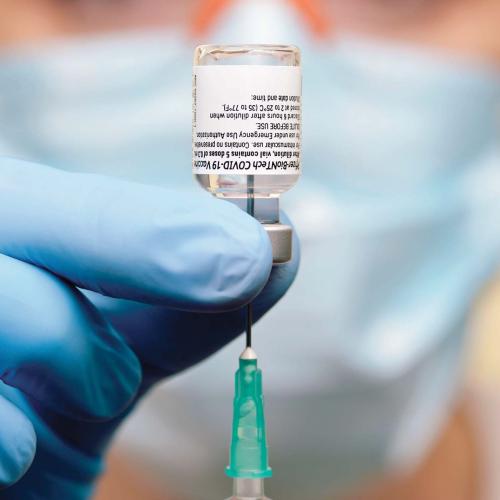
The number of recommended vaccines was only 23 doses of seven vaccines in 1983. By 2017, the CDCs recommended number skyrocketed to 69 doses of 16 vaccines – 50 doses given before age 6. Vaccination is not appropriate for every individual due to ones genetic disposition, autoimmune deficiency, allergy or other circumstance. Medical professionals would never claim that because a certain drug or therapy was approved for most people, everyone should be subject to it – but with vaccine injury, the clinical evidence does not seem to apply. Despite ... specific warnings on each vaccine insert, there is an unwillingness to acknowledge the risk for some individuals. While some claim vaccine injuries are rare, the CDC-funded Harvard Pilgrim Projects [found] that less than 1 percent are ever reported to VAERS, the Vaccine Adverse Events Reporting System. Taxpayers not liability-free pharmaceutical companies have paid patients $4 billion for their injuries or death through the Vaccine Injury Compensation Program since 1988. Most families that have experiences with vaccine reactions were never notified beforehand of [this] program. Certain ingredients in vaccinations, including chemicals, human, animal, and insect DNA and RNA, are abhorrent to some for religious or ethical reasons. Mandated vaccination should not force someone to compromise their beliefs. The American Medical Associations code of ethics affirms the right to both religious and philosophical exceptions for physicians themselves to not be vaccinated. The same standard should apply to their patients.
Note: See the highly revealing 6-page report on the US government's "Health Information Technology" website that states, "Adverse events from drugs and vaccines are common, but underreported. ... Fewer than 1% of vaccine adverse events are reported." A concise summary of this report can be found here. More valuable information is available here. For even more along these lines, see concise summaries of deeply revealing news articles on vaccines from reliable major media sources. Explore also the best website calling for responsibility in vaccination.
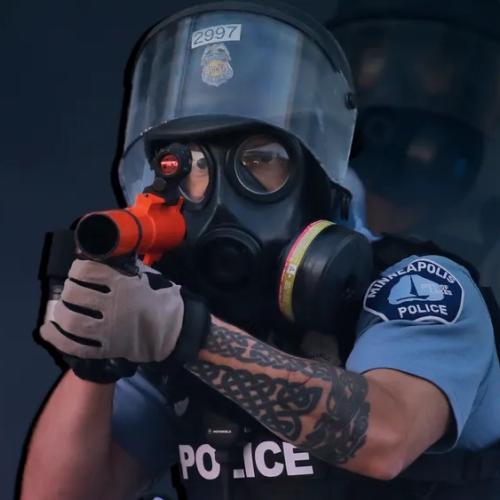
Covering protests in Minneapolis on Saturday, photojournalist Ed Ou could feel his hands and face were wet. For a long time, he didnt know if it was teargas, pepper spray, or blood in the end, it turned out to be a combination of all three. He has documented civil unrest in the Middle East, Ukraine and Iraq, where he learned a few things. So when the curfew hit and police fired teargas into the crowd of protesters, Ou stood steady, out of the way, documenting. And then the unexpected happened. They literally started throwing concussive grenades in our direction, in the middle of the journalists, he says. What ensued was a prolonged attack that involved being hit at with batons, being teargassed, dodging concussive grenades and begging for help. As of 9pm Thursday, the US press freedom tracker has received 192 reports of journalists being attacked by police forces while covering the protests across the US. Among them, some have sustained serious injuries. Linda Tirado, a photojournalist, was hit in the face with a tracer round, resulting in loss of sight in one eye. The Chicago Tribunes Ryan Fairclough was left with stitches after being shot through the window of his moving car. In Detroit, Nicole Hester was hit by pellets fired by Detroit police, leaving welts on her body. Others have been beaten up, arrested, their equipment damaged and they have been threatened for taking photos and filming on public streets. These are not one-off incidents: this is a picture of widespread attacks on the profession.
Note: For more along these lines, see concise summaries of deeply revealing news articles on police corruption and the erosion of civil liberties from reliable major media sources.
Bill Gates ... just called for a complete and utter shutdown and quarantining of the entire American nation. Despite urging from public health experts, Gates wrote in a Washington Post opinion piece, some states and counties havent shut down completely. This is a recipe for disaster. Because people can travel freely across state lines, so can the virus. The countrys leaders need to be clear: Shutdown anywhere means shutdown everywhere. Until the case numbers start to go down ... no one can continue business as usual or relax the shutdown. He then added that the impacts of the new coronavirus could linger another 18 months or so, until a vaccine was developed. For the peons of America, work isnt an option. Its food. Its survival. The fate of a hard-earned dream shouldnt rest with a globalist billionaire whos warning of dire coronavirus consequences to come all the while making hands-over-fist coronavirus money. Its a conflict of interest. WHO didnt announce the coronavirus as a pandemic until the very day after Gates ... made a very large donation to a cause that benefits WHO. In a 2017 piece titled, Meet the worlds most powerful doctor: Bill Gates, Politico wrote: Some billionaires are satisfied with buying themselves an island. Bill Gates got a United Nations health agency. Over the past decade, the worlds richest man has become the World Health Organizations second-biggest donor, second only to the United States. This largesse gives him outsized influence over its agenda. The result, say his critics, is that Gates priorities have become the WHOs.
Very Important Note: To understand how the coronavirus is being used to exert more control over humanity, don't miss this incredibly important video focused on how Bill Gates is using fear around the coronavirus to push through his agenda to vaccinate everyone on the planet and then require a "digital certificate" to ensure they've been vaccinated. For other reliable, verifiable informing demonstrating how Gates' vaccine agenda has already harmed hundreds of thousands of children read this excellent article by Robert F. Kennedy, Jr.
As white supremacists have carried out a growing number of deadly attacks in recent years, the FBI has come under mounting criticism for its failure to address the threat posed by far-right extremist ideologies, whose adherents account for most of the politically motivated violence in the U.S. At the same time, the bureau has also been heavily criticized for devoting large resources to surveilling political dissent by groups and individuals, often of color, who pose no threat but are critical of the government because they oppose official immigration policies or demand police accountability. The FBIs preoccupation with policing nonviolent critical ideologies while neglecting to investigate ideologies tied to real, and increasing, violence was perhaps best captured in an infamous 2017 threat assessment report warning law enforcement agencies of the supposed rise of a black identity extremist movement targeting police. The black identity extremism category was a product of the FBIs imagination. Last year ... bureau officials told legislators that they were doing away with a set of earlier domestic terrorism categories in favor of four larger ones. The FBIs fictional black identity extremists would now be lumped together with white supremacists under a new racially motivated violent extremism category. That false equivalence made it virtually impossible for the public to know whether the FBI was devoting resources to investigating real threats of racist violence or social and racial justice groups critical of government.
Note: Read a revealing essay on COINTELPRO, the FBI program that targeted civil rights and anti-war activists from 1965-1975. For more along these lines, see concise summaries of deeply revealing news articles on civil liberties from reliable major media sources.
A high school class in Hightstown, New Jersey, has found an impressive way to shed light on unsolved civil rights crimes from the 1950s and '60s. The AP class, studying US government, drafted a bill that would create a board to review, declassify, and release documents related to such cases. The students ... went to Washington, walked the halls of Senate office buildings and passed out folders with policy research and information about their bill, said former student Joshua Fayer. Their efforts caught the attention of Rep. Bobby Rush of Illinois, who introduced the bill - modeled after the JFK Assassination Records Act - in March 2017. Later Sens. Doug Jones of Alabama and Ted Cruz of Texas signed on. The House and Senate versions ... passed late last year, and President Trump signed the bill into law on January 8. Former student Jay Vainganker said the class was initially trying to solve unresolved hate crimes from the [civil rights] era. They filed public records requests for information from the FBI and Department of Justice, and they got back redacted responses from the government. In some cases, entire pages were redacted. That's when their focus changed, Vaingankar said. They decided to draft a bill that would make the government "a little bit more transparent." The Civil Rights Cold Case Records Collection Act creates "a board that would be authorized to look at these documents and see what should be redacted, what isn't relevant, what should be released," he said.
Note: Explore a treasure trove of concise summaries of incredibly inspiring news articles which will inspire you to make a difference.
On May 31, the city of Chicago agreed to settle a whistleblower lawsuit brought by two police officers who allege they suffered retaliation for reporting and investigating criminal activity by fellow officers. The settlement, for $2 million, was announced moments before the trial was to begin. As the trial date approached, city lawyers had made a motion to exclude the words code of silence from the proceedings. Not only was the motion denied, but the judge ruled that Mayor Rahm Emanuel could be called to testify about what he meant when he used the term in a speech. The prevailing narrative in the press was that the city settled in order to avoid the possibility that Mayor Emanuel would be compelled to testify. But the mayors testimony, had it come to pass, would have been unlikely to provide much illumination. By contrast, that of the plaintiffs, Shannon Spalding and Danny Echeverria, promised to ... show extraordinarily serious retaliatory misconduct by officers at nearly all levels of the CPD hierarchy. Spalding ... and her partner, Danny Echeverria, spent over five years working undercover on a joint FBI-CPD internal affairs investigation that uncovered a massive criminal enterprise within the department. A gang tactical team led by a sergeant named Ronald Watts operated a protection racket in public housing developments on Chicagos South Side. In exchange for a tax, Watts and his team shielded drug dealers from interference by law enforcement and targeted their competition. They were major players in the drug trade.
Note: Read the second article in this series titled "Corrupt Chicago Police Were Taxing Drug Dealers and Targeting Their Rivals." Read also how this criminal gang of police routinely framed people for crimes. For more along these lines, see concise summaries of deeply revealing police corruption news articles from reliable major media sources.
The sneak-and-peek provision of the Patriot Act that was alleged to be used only in national security and terrorism investigations has overwhelmingly been used in narcotics cases. Now the New York Times reports that National Security Agency data will be shared with other intelligence agencies like the FBI without first applying any screens for privacy. The ACLU of Massachusetts blog Privacy SOS explains [that] domestic law enforcement officials now have access to huge troves of American communications, obtained without warrants, that they can use to put people in cages. This basically formalizes what was already happening. Weve known for a couple of years now that the Drug Enforcement Administration and the IRS were getting information from the NSA. Because that information was obtained without a warrant, the agencies were instructed to engage in parallel construction when explaining to courts and defense attorneys how the information had been obtained. It certainly isnt the only time that that national security apparatus has let law enforcement agencies benefit from policies that are supposed to be reserved for terrorism investigations in order to get around the Fourth Amendment, then instructed those law enforcement agencies to misdirect, fudge and outright lie about how they obtained incriminating information. This isnt just a few rogue agents. The lying has been a matter of policy.
Note: For more along these lines, see concise summaries of deeply revealing news articles about government corruption and the disappearance of privacy.
There is evidence the RCMP broke the law while conducting a high-profile terrorism sting and must hand over confidential legal documents, says a B.C. Supreme Court judge. Justice Catherine Bruce has not yet ruled whether the RCMP entrapped John Nuttall and Amanda Korody into plotting to blow up the B.C. legislature in 2013, but she said in a ruling released Wednesday that the Mounties may be guilty of knowingly facilitating a terrorist act. Undercover officers posing as jihadi warriors gave Nuttall and Korody groceries, cigarettes, bus passes, cell phones, phone cards, clothing, cash and a portable hard drive. They also provided the pair with a place to work on their terrorist scheme and a location to build the explosives, chauffeured them to various stores to purchase bomb-making equipment and transported them ... over the course of the four-month sting operation. Lawyers had advised the RCMP on numerous occasions, including recommending officers "drive target but don't shop" when purchasing materials to build the explosives. Bruce's ruling ordered the police to disclose confidential legal advice they received about running the undercover affair.
Note: Read this New York Times article which shows how the FBI also aids and abets terrorism on a regular basis to keep us in fear. For more along these lines, see concise summaries of deeply revealing news articles about corruption in government and throughout intelligence agencies.
On Page 5 of a credit card contract used by American Express ... is a clause that most customers probably miss. If cardholders have a problem with their account, American Express explains, the company may elect to resolve any claim by individual arbitration. Those nine words are at the center of a far-reaching power play orchestrated by American corporations. By inserting individual arbitration clauses into a soaring number of consumer and employment contracts, companies like American Express devised a way to circumvent the courts and bar people from joining together in class-action lawsuits, realistically the only tool citizens have to fight illegal or deceitful business practices. It has become increasingly difficult to apply for a credit card, use a cellphone, get cable or Internet service, or shop online without agreeing to private arbitration. The same applies to getting a job, renting a car or placing a relative in a nursing home. By banning class actions, companies have essentially disabled consumer challenges to ... predatory lending, wage theft and discrimination. This is among the most profound shifts in our legal history, William G. Young, a federal judge ... said in an interview. Ominously, business has a good chance of opting out of the legal system altogether and misbehaving without reproach. Thousands of cases brought by single plaintiffs over fraud, wrongful death and rape are now being decided behind closed doors. And the rules of arbitration largely favor companies.
Note: For more along these lines, see concise summaries of deeply revealing news articles about corruption in financial industry and throughout the corporate world.
Britain allegedly helped Saudi Arabia's controversial election to the UN human rights council (UNHRC) through a secret vote-trading deal, leaked diplomatic cables have reportedly shown. Saudi foreign ministry files, among 61,000 documents released by Wikileaks, reportedly refer to talks with British diplomats ahead of a November 2013 vote in New York and have been translated by Geneva-based human rights organisation UN Watch. The classified exchanges, published by The Australian newspaper, allegedly suggest the UK initiated the secret negotiations by asking Saudi Arabia for its support. Both countries were later elected to the UNHRC, which consists of 47 member states. Saudi Arabia has been repeatedly denounced for its poor human rights record. The Gulf state is planning to imminently behead and crucify Ali Mohammed al-Nimr, who was arrested in 2012 for his participation in the Arab Spring protests when he was just 17 years old. The wife of imprisoned blogger Raif Badawi said the "scandalous" appointment shows that "oil trumps human rights".
Note: Watch an incredibly eye-opening video report by Abby Martin showing blatantly how money trumps ethics. Saudi Arabia, a brutal regime run by a king and an all-powerful monarchy, is one of four countries to still allow public executions, often by beheading. Women must ask permission of their husbands to work and do almost anything in public. Workers from foreign countries are treated like slaves. Watch also an episode of Empire Files documenting the human rights violations of this repressive regime. The UK profits handsomely from selling arms to human rights violators.
Joseph Rivers ... pulled together $16,000 in seed money to fulfill a lifetime dream of starting a music video company. Last month, Rivers took the first step in that voyage [by] boarding an Amtrak train headed for Los Angeles. He never made it. A DEA agent boarded the train at the Albuquerque Amtrak station and began asking various passengers, including Rivers, where they were going and why. When Rivers replied that he was headed to LA to make a music video, the agent asked to search his bags. Rivers complied. The agent found Rivers's cash, still in a bank envelope. He explained why he had it. The agents didn't believe him. Rivers let them call his mother back home to corroborate the story. They didn't believe her, either. The agents found nothing in Rivers's belongings that indicated that he was involved with the drug trade. They didn't arrest him or charge him with a crime. But they took his cash anyway, every last cent, under the authority of the Justice Department's civil asset forfeiture program. Rivers says he suspects he may have been singled out for a search because he was the only black person on that part of the train. According to a Washington Post investigation last year ... asset forfeiture is lucrative. In fiscal year 2014 Justice Department agencies made a total of $3.9 billion in civil asset seizures, versus only $679 million in criminal asset seizures. Asset forfeitures have more than doubled during President Obama's tenure.
Note: Read a New York Times article on this program which allows law enforcement agencies to seize money with impunity. For more along these lines, see concise summaries of deeply revealing news articles about government corruption and the erosion of civil liberties from reliable major media sources.
The FBI and major media outlets yesterday trumpeted the ... latest counterterrorism triumph: the arrest of three Brooklyn men, ages 19 to 30, on charges of conspiring to travel to Syria to fight for ISIS. It appears that none of the three men was in any condition to travel or support the Islamic State, without help from the FBI informant. One of the frightening terrorist villains told the FBI informant that, beyond having no money, he had encountered a significant problem in following through on the FBIs plot: his mom had taken away his passport. In this regard, this latest arrest appears to be quite similar to the overwhelming majority of terrorism arrests the FBI has proudly touted over the last decade. These cases ... end up sending young people to prison for decades for crimes which even their sentencing judges acknowledge they never would have seriously considered, let alone committed, in the absence of FBI trickery. Were constantly bombarded with dire warnings about the grave threat of [terrorism]. But how serious of a threat can all of this be, at least domestically, if the FBI continually has to resort to manufacturing its own plots by trolling the Internet in search of young drifters and/or the mentally ill whom they target? Shouldnt there be actual plots, ones that are created and fueled without the help of the FBI? The Justice Department is aggressively pressuring U.S. allies to employ these same entrapment tactics in order to create their own terrorists, who can then be paraded around as proof of the grave threat. The FBIs terrorism strategy keep fear alive drives everything they do.
Note: Human Rights Watch has documented the government manufacture of fake "terrorism" plots being used to keep fear alive in war on terror. There is even evidence that the 1993 World Trade Center bombing was an F.B.I. entrapment plan gone awry. In 2012, the New York Times exposed the pattern of F.B.I. entrapment used to produce these fake "terrorism" plots. How can corrupt intelligence agencies continue to blatantly manipulate public perception like this?
At least 50 U.S. law enforcement agencies have secretly equipped their officers with radar devices that allow them to effectively peer through the walls of houses to see whether anyone is inside. Those agencies, including the FBI and the U.S. Marshals Service, began deploying the radar systems more than two years ago with little notice to the courts and no public disclosure of when or how they would be used. The technology raises legal and privacy issues because the U.S. Supreme Court has said officers generally cannot use high-tech sensors to tell them about the inside of a person's house without first obtaining a search warrant. The radars work like finely tuned motion detectors, using radio waves to zero in on movements as slight as human breathing from a distance of more than 50 feet. They can detect whether anyone is inside of a house, where they are and whether they are moving. The device the Marshals Service and others are using [was] first designed for use in Iraq and Afghanistan. They represent the latest example of battlefield technology finding its way home to civilian policing and bringing complex legal questions with it. Those concerns are especially thorny when it comes to technology that lets the police determine what's happening inside someone's home.
Note: This technology is not new. Working as interpreter in Washington, DC, WantToKnow.info founder Fred Burks witnessed this technology being used by the police there in the late 1980s. Explore an informative ACLU report detailing the many surveillance technologies used by police which are often used illegally. For more along these lines, see this deeply revealing summarized NPR report about The Pentagon's massive Program 1033 to widely distribute military hardware to domestic police forces.
Civil asset forfeiture ... allows the government, without ever securing a conviction or even filing a criminal charge, to seize property. The practice ... has become a staple of law enforcement agencies because it helps finance their work. Under a Justice Department program, the value of assets seized has ballooned to $4.3 billion in the 2012 fiscal year from $407 million in 2001. From Orange County, N.Y., to Rio Rancho, N.M., forfeiture operations are being established or expanded. Much of the nuts-and-bolts how-to of civil forfeiture is passed on in continuing education seminars for local prosecutors and law enforcement officials, some of which have been captured on video. In the sessions, officials ... offered advice on dealing with skeptical judges, mocked Hispanics whose cars were seized, and ... gave weight to the argument that civil forfeiture encourages decisions based on the value of the assets to be seized rather than public safety. Prosecutors boasted in the sessions that seizure cases were rarely contested or appealed. Civil forfeiture places the burden on owners, who must pay court fees and legal costs. And often the first hearing is presided over not by a judge but by the prosecutor whose office benefits from the proceeds. Mr. McMurtry [chief of the forfeiture unit in the Mercer County, N.J., prosecutors office] said his handling of a case is sometimes determined by department wish lists. If you want the car, and you really want to put it in your fleet, let me know Ill fight for it.
Note: Watch the video at the link above showing a trainer teaching cops how to steal a car that a cop might want legally. For more along these lines, see these concise summaries of deeply revealing government corruption and civil liberties news articles from reliable sources.
The U.S. government threatened to fine Yahoo $250,000 a day in 2008 if it failed to comply with a broad demand to hand over user communications a request the company believed was unconstitutional according to court documents unsealed [on September 11] that illuminate how federal officials forced American tech companies to participate in the National Security Agencys controversial PRISM program. The documents ... outline a secret and ultimately unsuccessful legal battle by Yahoo to resist the governments demands. The companys loss required Yahoo to become one of the first to begin providing information to PRISM, a program that gave the NSA extensive access to records of online communications by users of Yahoo and other U.S.-based technology firms. The ruling by the Foreign Intelligence Surveillance Court of Review became a key moment in the development of PRISM, helping government officials to convince other Silicon Valley companies that unprecedented data demands had been tested in the courts and found constitutionally sound. Eventually, most major U.S. tech companies, including Google, Facebook, Apple and AOL, complied. Microsoft had joined earlier, before the ruling, NSA documents have shown. PRISM was first revealed by former NSA contractor Edward Snowden last year. Documents made it clear that the program allowed the NSA to order U.S.-based tech companies to turn over e-mails and other communications to or from foreign targets without search warrants for each of those targets. Other NSA programs gave even more wide-ranging access to personal information of people worldwide, by collecting data directly from fiber-optic connections.
Note: For more on this, see concise summaries of deeply revealing government surveillance news articles from reliable major media sources.
The US governments web of surveillance is vast and interconnected. You can be pulled into the National Security Agencys database quietly and quickly. Through ICREACH, a Google-style search engine created for the intelligence community, the NSA provides data on private communications to 23 government agencies. More than 1,000 analysts had access to that information. It was confirmed earlier this month that the FBI shares its master watchlist, the Terrorist Screening Database, with at least 22 foreign governments, countless federal agencies, state and local law enforcement, plus private contractors. The watchlist [is] based on [low] standards and secret evidence, which ensnares innocent people. Indeed, the standards are so low that the US governments guidelines specifically allow for a single, uncorroborated source of information including a Facebook or Twitter post to serve as the basis for placing you on its master watchlist. Of the 680,000 individuals on that FBI master list, roughly 40% have no recognized terrorist group affiliation, according to the Intercept. These individuals dont even have a connection as the government loosely defines it to a designated terrorist group, but they are still branded as suspected terrorists. The US [government uses] a loose standard so-called reasonable suspicion in determining who, exactly, can be watchlisted. ["Reasonable suspicion"] requires neither concrete evidence nor irrefutable evidence. Instead, an official is permitted to consider reasonable inferences and to draw from the facts in light of his/her experience.
Note: For more on this, see concise summaries of deeply revealing terrorism news articles from reliable major media sources.
Nearly all of the highest-profile domestic terrorism plots in the United States since 9/11 featured the "direct involvement" of government agents or informants, a new report says. Some of the controversial "sting" operations "were proposed or led by informants", bordering on entrapment by law enforcement. Yet the courtroom obstacles to proving entrapment are significant, one of the reasons the stings persist. The lengthy report, released on [July 21] by Human Rights Watch, raises questions about the US criminal justice system's [respect for] civil rights and due process in post-9/11 terrorism cases. [The report] portrays a system that features not just the sting operations but secret evidence, anonymous juries, extensive pretrial detentions and convictions significantly removed from actual plots. "In some cases the FBI may have created terrorists out of law-abiding individuals by suggesting the idea of taking terrorist action or encouraging the target to act," the report alleges. Out of the 494 cases related to terrorism the US has tried since 9/11, the plurality of convictions ... are not for thwarted plots but for "material support" charges, a broad category expanded further by the 2001 Patriot Act that permits prosecutors to pursue charges with tenuous connections to a terrorist act or group. Several cases featured years-long solitary confinement for accused terrorists before their trials. Some defendants displayed signs of mental incapacity. Jurors for the 2007 plot to attack the Fort Dix army base, itself influenced by government informants, were anonymous, limiting defense counsel's ability to screen out bias.
Note: Why was this important news not picked up by any major US media? For more on this, see concise summaries of deeply revealing intelligence agency operations news articles from reliable major media sources.
Officials in North Carolina are investigating how a teen allegedly shot himself in the head while handcuffed in the back of a police cruiser. Durham Police Chief Jose Lopez said ... at a news conference that Jesus Huerta, 17, died of a self-inflicted gunshot [wound] to the head in November. Lopez said a handgun was found in the car and that Huerta was still handcuffed from behind, according to the station. "The medical examiner's office has confirmed that Jesus Huerta died from a gunshot wound to his head," Lopez said. "Whether that wound was accidental or intentional is unknown at this time." Huerta [had been] picked up early on Nov. 19 on a trespassing warrant stemming from a July incident, after family members reported concerns for his safety in a 911 call. Chief Lopez said Huerta was searched by police prior to the shooting incident and the weapon was not detected. "I know that it is hard for people not in law enforcement to understand how someone could be capable of shooting themselves while handcuffed behind the back," Lopez said. "While incidents like this are not common, they unfortunately have happened in other jurisdictions in the past." Huertas family released a statement following the news conference. "How did Jesus end up dead in the parking lot at police headquarters in these circumstances? Searched. Handcuffed behind the back. How is it even possible to shoot oneself?" the statement reads.
Note: If, as the police chief states, other incidents of people shooting themselves while handcuffed behind the back have happened, maybe it's time for a thorough investigation of these police forces. For more on the deadly corruption in the government-prison-industrial complex, see the deeply revealing reports from reliable major media sources available here.
The Denver Post, on February 15th, ran an Associated Press article entitled "Homeland Security aims to buy 1.6b rounds of ammo". It confirmed that the Department of Homeland Security has issued an open purchase order for 1.6 billion rounds of ammunition. Some of this purchase order is for hollow-point rounds, forbidden by international law for use in war, along with a frightening amount specialized for snipers. Also reported elsewhere, at the height of the Iraq War the Army was expending less than 6 million rounds a month. Therefore 1.6 billion rounds would be enough to sustain a hot war for 20+ years. DHS now is [also] showing off its acquisition of heavily armored personnel carriers, repatriated from the Iraqi and Afghani theaters of operation. The Department of Homeland Security is apparently taking delivery (apparently through the Marine Corps Systems Command, Quantico VA, via the manufacturer Navistar Defense LLC) of an undetermined number of [recently retrofitted] Mine Resistant Protected MaxxPro MRAP vehicles for service on the streets of the United States. Why would they need such over-the-top vehicles on U.S. streets to withstand IEDs, mine blasts, and 50 caliber hits to bullet-proof glass? In a war zone yes, definitely. [But] on the streets of America?
Note: For a U.S. Army field manual titled "Internment and Resettlement Operations" (FM 3-39.40) describing how large numbers of American citizens could be sent to internment camps if involved in "terrorist" activities, click here. The introduction to this document states, "Commanders will use technology and conduct police intelligence operations to influence and control populations, evacuate detainees and, conclusively, transition rehabilitative and reconciliation operations to other functional agencies." For a disturbing report on the massive expansion of drones over US skies, click here.
The newly disclosed white paper offering a legal reasoning behind the claim that President Obama has the power to order the killing of American citizens ... coyly describes another, classified document ... that actually provided the legal justification for ordering the killing of American citizens. That document still has not been provided to Congress, despite repeated demands from lawmakers. According to the white paper, the Constitution and the Congressional authorization for the use of force after the attacks of Sept. 11, 2001, gave Mr. Obama the right to kill any American citizen that an informed, high-level official decides is a senior operational leader of Al Qaeda or an associated force and presents an imminent threat of violent attack. It never tries to define what an informed, high-level official might be, and the authors of the memo seem to have redefined the word imminent in a way that diverges sharply from its customary meaning. It takes the position that the only oversight needed for such a decision resides within the executive branch, and there is no need to explain the judgment to Congress, the courts or the public or, indeed, to even acknowledge that the killing took place. The paper argues that judges and Congress dont have the right to rule on or interfere with decisions made in the heat of combat. The white paper is a confusing blend of self-defense and law of war concepts said Kate Martin, director of the Center for National Security Studies. Its due process analysis is especially weak.
Note: To read the entire 'white paper' on drone strikes on Americans, click here. For a more detailed analysis by a distinguished lawyer, click here. What this means is that if the president doesn't like someone and deems him an imminent threat, he can have that person killed and legally keep it all a secret. Is America drifting towards a police state?
New documents prove what was once dismissed as paranoid fantasy: totally integrated corporate-state repression of dissent. It was more sophisticated than we had imagined: new documents show that the violent crackdown on Occupy last fall so mystifying at the time was not just coordinated at the level of the FBI, the Department of Homeland Security, and local police. The crackdown, which involved, as you may recall, violent arrests, group disruption, canister missiles to the skulls of protesters, people held in handcuffs so tight they were injured, people held in bondage till they were forced to wet or soil themselves was coordinated with the big banks themselves. The Partnership for Civil Justice Fund, in a groundbreaking scoop that should once more shame major US media outlets (why are nonprofits now some of the only entities in America left breaking major civil liberties news?), filed this request. The document reproduced here in an easily searchable format shows a terrifying network of coordinated DHS, FBI, police, regional fusion center, and private-sector activity so completely merged into one another that the monstrous whole is, in fact, one entity: in some cases, bearing a single name, the Domestic Security Alliance Council. And it reveals this merged entity to have one centrally planned, locally executed mission. The documents, in short, show the cops and DHS working for and with banks to target, arrest, and politically disable peaceful American citizens.
Note: For analysis of these amazing documents revealing the use of joint government and corporate counterterrorism structures against peaceful protestors of financial corruption, click here and here. For a Democracy Now! video segment on this, click here.
On 20 November, district court Judge David D Dowd Jr sentenced three anarchists with the Occupy Cleveland movement to prison terms ranging from 8 to 11.5 years for attempting to bomb a highway bridge last spring. Shaquille Azir, a paid FBI informant with a 20-year criminal record, facilitated every step in the plot. Azir molded the five's childish bravado and drunken fantasies into terrorism. He played father figure to the lost men, providing them with jobs, housing, beer and drugs. Every time the scheme threatened to collapse into gutterpunk chaos, he kept it on track. FBI tapes reveal Azir led the brainstorming of targets, showed them bridges to case out, pushed them to buy C-4 military-grade explosives, provided the contact for weapons, gave them money for the explosives and demanded they develop a plan because "we on the hook" for the weapons. This case could have put on trial the post-September 11 strategy of "preventative prosecution", in which the FBI dispatches provocateurs to infiltrate targeted religious and political groups to see what they can stir up. Anarchists are inherently suspect. A recent FBI document calls anarchists "criminals seeking an ideology to justify their activities." Pardiss Kebriaei, a senior attorney specializing in national security at the Center for Constitutional Rights, claims standard operating procedure in terror cases "starts with surveillance and profiling on the basis of religion, politics and national origin". She notes parallels between the Cleveland anarchists and the "Newburgh Four", named for the upstate New York town in which the plot was hatched.
Note: For information on how to contact Brandon Baxter, Joshua Stafford, Connor Stevens and Douglas Wright, see cleveland4solidarity.org. For the Newburgh Four, see projectsalam.org For deeply revealing reports from reliable major media sources on entrapment operations and other manipulations by the FBI and intelligence agencies, click here.
Expert comparisons of hair, handwriting, marks made by firearms on bullets, and patterns such as bite marks and shoe and tire prints are in some ways unscientific and subject to human bias, a National Academy of Sciences panel chartered by Congress found. Even fingerprint identification is partly a subjective exercise that lacks research into the role of unconscious bias or even its error rate, the panels 328-page report said. Since 2002, failures have been reported at about 30 federal, state and local crime labs serving the FBI, the Army and eight of the nations 20 largest cities. A 2009 study of post-conviction DNA exonerations now up to 289 nationwide found invalid testimony in more than half the cases. FBI examiners claimed until recently that they can match fingerprints to the exclusion of any other person in the world with 100 percent certainty. The academy report found that assertion was not scientifically plausible and had chilled research into error rates. In 1999, a Justice Department official, Richard Rau, told a federal court that the department delayed such a study because of the legal ramifications. Meanwhile, errors occur. In 2004, DNA for the first time exonerated a person convicted with a fingerprint match and, separately, the FBI made its first publicly acknowledged fingerprint misidentification. Brandon Mayfield, a Portland, Ore., lawyer, mistakenly was arrested in connection with the terrorist train bombings in Madrid that killed 191 people.
Note: A Washington Post investigation recently found that over a 20 year period, "nearly every examiner in an elite FBI forensic unit gave flawed testimony in almost all trials in which they offered evidence". For more along these lines, see concise summaries of deeply revealing news articles about the corrupt prison industry built upon by systematic violations of civil rights.
[On March 8, 2012], President Obama signed into law the Federal Restricted Buildings and Grounds Improvement Act of 2011. This law permits Secret Service agents to designate any place they wish as a place where free speech, association and petition of the government are prohibited. It permits the Secret Service to make these determinations based on the content of speech. Thus, federal agents whose work is to protect public officials and their friends may prohibit the speech and the gatherings of folks who disagree with those officials or permit the speech and the gatherings of those who would praise them, even though the First Amendment condemns content-based speech discrimination by the government. The new law also provides that anyone who gathers in a restricted area may be prosecuted. Permitting people to express publicly their opinions to the president only at a time and in a place and manner such that he cannot hear them violates the First Amendment, which guarantees the right to useful speech. The same may be said of the rights to associate and to petition. If peaceful public assembly and public expression of political demands on the government can be restricted to places where government officials cannot be confronted, then those rights, too, have been neutered. This abominable legislation enjoyed overwhelming support from both political parties in Congress because the establishment loves power, fears dissent and hates inconvenience, and it doesnt give a damn about the Constitution.
Note: How strange that the Washington Times was one of the few media to have even covered this incredible infringement on the right to free speech. Fox News also covered it, as you can see in this excellent video. Now instead of being a country where free speech is held in great esteem, the US has "free speech zones" outside of which citizens lose their right to speak freely. What's happening here?
Even as we pass judgment on countries we consider unfree, Americans remain confident that any definition of a free nation must include their own the land of [the] free. Yet ... in the decade since Sept. 11, 2001, this country has comprehensively reduced civil liberties in the name of an expanded security state. The most recent example of this was the National Defense Authorization Act, signed Dec. 31, which allows for the indefinite detention of citizens. While each new national security power Washington has embraced was controversial when enacted, they are often discussed in isolation. But they dont operate in isolation. They form a mosaic of powers under which our country could be considered, at least in part, authoritarian. Americans often proclaim our nation as a symbol of freedom to the world while dismissing nations such as Cuba and China as categorically unfree. [Yet] the United States now has much more in common with such regimes than anyone may like to admit. These countries also have constitutions that purport to guarantee freedoms and rights. But their governments have broad discretion in denying those rights and few real avenues for challenges by citizens precisely the problem with the new laws in this country. The list of powers acquired by the U.S. government since 9/11: 1. Assassination of U.S. citizens. 2. Indefinite detention. 3. Arbitrary justice. 4. Warrantless searches. 5. Secret evidence. 6. War crimes. 7. Secret court. 8. Immunity from judicial review. 9. Continual monitoring of citizens. 10. Extraordinary renditions.
Note: Thank you to the Washington Post for publishing this amazing article revealing the disturbing and severe erosion of freedom and civil liberties in the U.S. ever since 9/11. Written by Professor Jonathan Turley of George Washington University in the nation's capital, this incisive essay lays bare what so many citizens don't know, and what many don't even want to know. Yet, in this case, ignorance is not bliss. Don't miss the full article listing the loss of 10 important civil liberties at this link.
Undercover police officers routinely adopted a tactic of "promiscuity" with the blessing of senior commanders, according to a former agent who worked in a secretive unit of the Metropolitan police for four years. The former undercover policeman claims that sexual relationships with activists were sanctioned for both men and women officers infiltrating anarchist, leftwing and environmental groups. Sex was a tool to help officers blend in, the officer claimed, and was widely used as a technique to glean intelligence. He said undercover officers, particularly those infiltrating environmental and leftwing groups, viewed having sex with a large number of partners "as part of the job". His comments contradict claims last week from the Association of Chief Police Officers that operatives were absolutely forbidden to sleep with activists. The claims follow the unmasking of undercover PC Mark Kennedy, who had sexual relationships with several women during the seven years he spent infiltrating a ring of environmental activists. Another two covert officers have been named in the past fortnight who also had sex with the protesters they were sent to spy on, fuelling allegations that senior officers had authorised sleeping around as a legitimate means of gathering intelligence.
Note: For a comprehensive overview of the still-ongoing revelations about police provocateur Mark Kennedy and his cohorts in the UK police infiltration of environmental and related activist groups, click here.
The Transportation Security Administration ... has on its web site a mythbuster that tries to reassure the public. Myth: The No-Fly list includes an 8-year-old boy. Buster: No 8-year-old is on a T.S.A. watch list. Meet Mikey Hicks, said Najlah Feanny Hicks, introducing her 8-year-old son, a New Jersey Cub Scout and frequent traveler who has seldom boarded a plane without a hassle because he shares the name of a suspicious person. Its not a myth. Hickss mother initially sensed trouble when he was a baby and she could not get a seat for him on their flight to Florida at an airport kiosk; airline officials explained that his name was on the list, she recalled. The first time he was patted down, at Newark Liberty International Airport, Mikey was 2. He cried. After years of long delays and waits for supervisors at every airport ticket counter, this years vacation to the Bahamas badly shook up the family. Mikey was frisked on the way there, then more aggressively on the way home. Up your arms, down your arms, up your crotch someone is patting your 8-year-old down like hes a criminal, Mrs. Hicks recounted. It is true that Mikey is not on the federal governments no-fly list, which includes about 2,500 people, less than 10 percent of them from the United States. But his name appears to be among some 13,500 on the larger selectee list, which sets off a high level of security screening.
Note: For many reports from major media sources on the extreme loss of liberties brought about by the highly touted "war on terrorism," click here.
Every phone call, text message, email and website visit made by private citizens is to be stored for a year and will be available for monitoring by government bodies. All telecoms companies and internet service providers will be required by law to keep a record of every customer’s personal communications, showing who they have contacted, when and where, as well as the websites they have visited. Despite widespread opposition to the increasing amount of surveillance in Britain, 653 public bodies will be given access to the information, including police, local councils, the Financial Services Authority, the ambulance service, fire authorities and even prison governors. They will not require the permission of a judge or a magistrate to obtain the information, but simply the authorisation of a senior police officer or the equivalent of a deputy head of department at a local authority. The Government announced yesterday it was pressing ahead with privately held “Big Brother” databases that opposition leaders said amounted to “state-spying” and a form of “covert surveillance” on the public. It is doing so despite its own consultation showing that it has little public support. The new rules ... will not only force communications companies to keep their records for longer, but to expand the type of data they keep to include details of every website their customers visit.
Note: For many more reports from major media sources on the disturbing trend toward increasing government and corporate surveillance and loss of privacy, click here.
A federal appeals court yesterday backed the president's power to indefinitely detain a U.S. citizen captured on U.S. soil without any criminal charges, holding that such authority is vital during wartime to protect the nation from terrorist attacks. The ruling, by the U.S. Court of Appeals for the 4th Circuit, came in the case of Jose Padilla, a former gang member and U.S. citizen arrested in Chicago in 2002 and a month later designated an "enemy combatant" by President Bush. Padilla has been held without trial in a U.S. naval brig for more than three years, and his case has ignited a fierce battle over the balance between civil liberties and the government's power to fight terrorism since the Sept. 11, 2001, attacks. A host of civil liberties groups and former attorney general Janet Reno weighed in on Padilla's behalf, calling his detention illegal and arguing that the president does not have unchecked power to lock up U.S. citizens indefinitely. In its ruling yesterday, the three-judge panel overturned a lower court. Avidan Cover, a senior associate at Human Rights First, said the ruling "really flies in the face of our understanding of what rights American citizens are entitled to." Opponents have warned that if not constrained by the courts, Padilla's detention could lead to the military being allowed to hold anyone who, for example, checks out what the government considers the wrong kind of reading materials from the library.
Note: For many disturbing reports from major media sources on government threats to civil liberties, click here.
Recent pronouncements from the Bush Administration and national security initiatives put in place in the Reagan era could see internment camps and martial law in the United States. When president Ronald Reagan was considering invading Nicaragua he issued a series of executive orders that provided the Federal Emergency Management Agency (FEMA) with broad powers in the event of a "crisis" such as "violent and widespread internal dissent or national opposition against a US military invasion abroad". On July 20 the Detroit Free Press ran a story entitled "Arabs in US could be held, official warns". The story referred to a member of the US Civil Rights Commission who foresaw the possibility of internment camps for Arab Americans. FEMA has practised for such an occasion. FEMA, whose main role is disaster response, is also responsible for handling US domestic unrest. From 1982-84 Colonel Oliver North assisted FEMA in drafting its civil defence preparations. They included executive orders providing for suspension of the constitution, the imposition of martial law, internment camps, and the turning over of government to the president and FEMA. A Miami Herald article on July 5, 1987, reported that the former FEMA director Louis Guiffrida's deputy, John Brinkerhoff, handled the martial law portion of the planning. Today Mr Brinkerhoff is with the highly influential Anser Institute for Homeland Security.
Note: Most of these provisions are still in place today. Isn't it time for a change?
In 1953, Joseph Alsop, then one of Americas leading syndicated columnists, went to the Philippines to cover an election. He did not go because he was asked to do so by his syndicate. He did not go because he was asked to do so by the newspapers that printed his column. He went at the request of the CIA. Alsop is one of more than 400 American journalists who in the past twenty-five years have secretly carried out assignments for the Central Intelligence Agency, according to documents on file at CIA headquarters. Journalists provided a full range of clandestine servicesfrom simple intelligence gathering to serving as go-betweens with spies in Communist countries. Reporters shared their notebooks with the CIA. Editors shared their staffs. Some of the journalists were Pulitzer Prize winners, distinguished reporters who considered themselves ambassadors-without-portfolio for their country. Most were less exalted: foreign correspondents who found that their association with the Agency helped their work; stringers and freelancers who were as interested in the derring-do of the spy business as in filing articles; and, the smallest category, full-time CIA employees masquerading as journalists abroad. In many instances, CIA documents show, journalists were engaged to perform tasks for the CIA with the consent of the managements of Americas leading news organizations.
Note: To understand how the CIA and others manipulate the major media is in its news coverage, see the brilliant summary of the work of 20 award-winning journalists on this key topic at this link.
YouTube has banned any coronavirus-related content that directly contradicts World Health Organization (WHO) advice. The Google-owned service says it will remove anything it deems "medically unsubstantiated". Chief executive Susan Wojcicki said the media giant wanted to stamp out "misinformation on the platform". The move follows YouTube banning conspiracy theories falsely linking Covid-19 to 5G networks. Mrs Wojcicki made the remarks on Wednesday during her first interview since the global coronavirus lockdown began. "So people saying, Take vitamin C, take turmeric, well cure you, those are the examples of things that would be a violation of our policy, she told CNN. Anything that would go against World Health Organization recommendations would be a violation of our policy. Last week, Facebook announced users who had read, watched or shared false Covid-19 information would receive a pop-up alert urging them to visit the WHO's website. Facebook-owned messaging service WhatsApp, meanwhile, stopped users forwarding messages already shared more than four times by the wider community to more than one chat at a time. It comes as some of the UK's largest news publishers, including Daily Telegraph and the Guardian, criticised Google for failing to be transparent about its approach to filtering adverts alongside coronavirus-related content, according to the Financial Times.
Note: So now anything posted by those not deemed to be "experts" will be banned. Whatever happened to free speech? Watch YouTube's CEO spell this out in this video. More excellent, little-known information here in an interview with a respected MD whose video was banned. And how can BBC state links between 5G and Covid-19 are false, when that has yet to be established? Is it just a coincidence this CNBC article states China's 5G networks went online just weeks before the coronavirus outbreak? See also concise summaries of revealing coronavirus news articles.
Our Attorney General submitted a proposal last week that would dramatically erode our civil liberties. Among other things, the proposal suspends habeas corpus ... or the right to appear before a judge before being detained. That right is enshrined in our Constitution and without it, Barr could hold Americans indefinitely without a trial. Our justice system is grounded in an unwavering guarantee that each one of us is entitled to certain inalienable rights, including the right to due process before one's freedom is taken away. On March 13, the President declared a national emergency, which unlocked special powers to keep our country safe. Congress has enacted roughly 120 laws that allow presidents such powers to meet precisely these types of threats while maintaining our democracy. These laws are not without limits. Nor were they meant to be used to capitalize on fear to unnecessarily erode our freedoms. Yet while the world is consumed by this pandemic and when he thought no one was watching, Attorney General William Barr proposed granting himself immense, permanent powers extending far past the needs posed by this threat. For example, the proposal grants Barr personally the power to ask any chief judge to hold a citizen, "whenever the district court is fully or partially closed by virtue of any natural disaster, civil disobedience, or other emergency situation." If this were about COVID-19, the proposal would suspend only certain rights narrowly tailored to fighting this disease.
Note: This New York Times article details how autocrats around the world are using the fear generated to grab power. Read another highly informative article on how this crisis is being exploited to grab power. For more along these lines, see concise summaries of deeply revealing news articles on the coronavirus pandemic and the erosion of civil liberties from reliable major media sources.
Even as President Trump says he tested negative for coronavirus, the COVID-19 pandemic raises the fear that huge swaths of the executive branch or even Congress and the Supreme Court could also be disabled, forcing the implementation of "continuity of government" plans. Above-Top Secret contingency plans already exist for what the military is supposed to do if all the Constitutional successors are incapacitated. Standby orders were issued more than three weeks ago to ready these plans, not just to protect Washington but also to prepare for the possibility of some form of martial law. The various plans codenamed Octagon, Freejack and Zodiac are the underground laws to ensure government continuity. Under these extraordinary plans, "devolution" could circumvent the normal Constitutional provisions for government succession, and military commanders could be placed in control around America. Since Hurricane Katrina in 2006, no emergency has triggered any state to even request federal military aid under these procedures. Part of the reason, the senior officer involved in planning says, is that local police forces have themselves become more capable, acquiring military-grade equipment and training. And part of the reason is that the governors have worked together to strengthen the National Guard, which can enforce domestic law when it is mustered under state control.
Note: For more along these lines, see concise summaries of deeply revealing news articles on the coronavirus pandemic from reliable major media sources.
Law enforcement frequently infiltrates progressive political movements using agent provocateurs who urge others to engage in violence. More rarely, such provocateurs commit acts of violence themselves. In protests across the country over the past week, the clear actor escalating the violence generally hasnt been a protester or even a right-wing infiltrator, but the police themselves. The best documented use of provocateurs by the U.S. government occurred during the Federal Bureau of Investigations Counter-Intelligence Program, or COINTELPRO, from 1956 to 1971. The reason the documentation is available is because a group of citizens broke into an FBI office in Pennsylvania ... and stole files that they then passed to the media. In one notorious example in May 1970, an informant working for both the Tuscaloosa police and the FBI burned down a building at the University of Alabama during protests over the recent Kent State University shootings. The police then declared that demonstrators were engaging in an unlawful assembly and arrested 150 of them. The list goes on and on from there. Thirteen Black Panthers were accused of a plot to blow up the Statue of Liberty after receiving 60 sticks of dynamite from an FBI informant. After 28 people broke into a federal building to destroy draft files in 1971, an FBI informant bragged, I taught them everything they knew. When and whether the FBI ever stopped, however, is an open question. In any case, police forces in the U.S. continued the same tactics.
Note: Read more about the FBI's notorious COINTELPRO program. For more along these lines, see concise summaries of deeply revealing news articles on police corruption and the erosion of civil liberties from reliable major media sources.
Police are violating no clearly established rights when they steal someones property after seizing it with a legal search warrant and, therefore, cant be sued in federal court, an appeals court ruled Wednesday. The Ninth U.S. Circuit Court of Appeals in San Francisco refused to reinstate a suit against Fresno police by two people whose homes and business were searched in 2013 during a gambling investigation. After the search, three officers signed an inventory sheet saying they had seized about $50,000. But the two owners, Micah Jessop and Brittan Ashjian, who operated automatic teller machines ... said the officers had actually taken $276,000 - $151,000 in cash and $125,000 in rare coins - and pocketed the difference. Darrell York, Jessops and Ashjians attorney, said police and a city attorney denied that a theft occurred. Even if Kumagai and his fellow officers stole money and coins from Jessop and Ashjian, the appeals court said, the owners could not sue in federal court to get their money back. Such a suit would require proof that their constitutional rights were violated, the court said, and suits against police must clear the additional hurdle of showing that those rights were clearly established. The allegation of any theft by police officers - most certainly the theft of over $225,000 - is undoubtedly deeply disturbing, Judge Milan Smith said in the 3-0 ruling. Whether that conduct violates the Fourth Amendments prohibition on unreasonable searches and seizures, however, is not obvious.
Note: Read about "civil asset forfeiture" used by police to steal money and other private property for their departments. For more along these lines, see concise summaries of deeply revealing police corruption news articles from reliable major media sources.
YouTube has removed two videos of California doctors ... Dan Erickson and Artin Massihi of Bakersfield, California [which] downplayed the risk of the coronavirus and asserted that stay-at-home measures were unnecessary. Facebook, however, has not removed the doctors' videos. The different reactions of YouTube and Facebook highlight the challenges of moderating high-stakes misinformation as it goes viral, especially when it is considered to be expert opinion. The video removed by YouTube showed a one-hour news conference livestreamed by local media, including NBC and ABC affiliates in Bakersfield. By Wednesday, the video had been seen at least 15 million times. Erickson and Massihi, owners of several urgent care centers in the area, presented data from 5,213 COVID-19 tests. The data, they claimed, showed that the coronavirus was widespread in the community already but had caused few deaths. Their data, they said, supported the need to rethink state stay-at-home measures. Furthermore, Erickson ... claimed that COVID-19 death numbers were inaccurate, citing other unnamed doctors in Wisconsin and California who he said had told him that they were urged to list the disease as a cause of death even if it was unrelated. "The only justification for taking it down was that the two physicians on screen had reached different conclusions from the people currently in charge," said Fox News host Tucker Carlson. Massihi posted a video to his personal Facebook page Tuesday thanking supporters while insisting that their comments were meant only to share their own data, not to drive national or even state policy.
Note: Watch an excellent follow-up interview with Dr. Erickson exposing further deception. Even if these doctors are wrong about some of their conclusions, don't they have a right to express their opinions? Will anyone who disputes the claims of government officials be banned from expressing their opinions on social media? Sadly, this BBC article shows that is already true for the coronavirus on YouTube. For more along these lines, see concise summaries of deeply revealing news articles on the coronavirus from reliable major media sources.
The United States government has been secretly amassing a "large amount" of "sensitive and intimate information" on its own citizens, a group of senior advisers informed Avril Haines, the director of national intelligence. The government effort to accumulate data revealing the minute details of Americans' lives [is] described soberly and at length by the director's own panel of experts in a newly declassified report. The report states that the government believes it can "persistently" track the phones of "millions of Americans" without a warrant, so long as it pays for the information. It is often trivial "to deanonymize and identify individuals" from data that was packaged ... for commercial use. Such data may be useful, it says, to "identify every person who attended a protest or rally based on their smartphone location or ad-tracking records." Such civil liberties concerns are prime examples of how "large quantities of nominally 'public' information can result in sensitive aggregations." What's more, information collected for one purpose "may be reused for other purposes," which may "raise risks beyond those originally calculated," an effect called "mission creep." "In the wrong hands," [Office of the Director of National Intelligence] advisers warn, the same mountain of data the government is quietly accumulating could be turned against Americans to "facilitate blackmail, stalking, harassment, and public shaming." These are all offenses that have been committed by intelligence agencies and White House administrations in the past.
Note: For more along these lines, see concise summaries of deeply revealing news articles on government corruption and the disappearance of privacy from reliable major media sources.
California law enforcement pursued criminal charges against eight anti-fascist activists who were stabbed or beaten at a neo-Nazi rally while failing to prosecute anyone for the knife attacks against them. In addition to the decision not to charge white supremacists or others for stabbings at a far-right rally that left people with critical wounds, police also investigated 100 anti-fascist counter-protesters, recommending more than 500 total criminal charges against them, according to court filings. Meanwhile, for men investigated on the neo-Nazi side of a June 2016 brawl ... police recommended only five mostly minor charges. The documents have raised fresh questions about California police agencies handling of rightwing violence and extremism, renewing accusations that law enforcement officials have shielded neo-Nazis from prosecution while aggressively pursuing demonstrators with leftwing and anti-racist political views. The Guardian previously interviewed two victims who were injured, then pursued by police Cedric OBannon, a black journalist and stabbing victim who ultimately was not charged, and Yvette Felarca, a well-known Berkeley activist whose case is moving forward. Previous records also revealed that police had worked with the neo-Nazi groups to target the anti-racist activists. The records disclosed this week provided new details about six other stabbing and beating victims who were treated as suspects by police after the rally ... which was organized by a neo-Nazi group.
Note: For more along these lines, see concise summaries of deeply revealing news articles on police corruption and the erosion of civil liberties.
From the mid-1970s to the mid-80s, Americas incarceration rate doubled, from about 150 people per 100,000 to about 300 per 100,000. From the mid-80s to the mid-90s, it doubled again. By 2007, it had reached a historic high of 767 people per 100,000. In absolute terms, Americas prison and jail population from 1970 until today has increased sevenfold, from some 300,000 people to 2.2 million. In 2000, one in 10 black males between the ages of 20 and 40 was incarcerated 10 times the rate of their white peers. At a cost of $80 billion a year, American correctional facilities are a social-service program providing health care, meals, and shelter for a whole class of people. An authoritative report issued last year by the National Research Council concluded, the current U.S. rate of incarceration is unprecedented by both historical and comparative standards. Even once an individual is physically out of prison, many do not elude its grasp. In 1984, 70 percent of all parolees successfully completed their term without arrest and were granted full freedom. In 1996, only 44 percent did. As of 2013, 33 percent do. Deindustrialization had presented an employment problem for Americas poor and working class of all races. Prison presented a solution: jobs for whites, and warehousing for blacks. Mass incarceration widened the income gap between white and black Americans, writes [historian] Heather Ann Thompson ... because the infrastructure of the carceral state was located disproportionately in all-white rural communities.
Note: The article above provides a detailed history of some U.S. policies that created the corrupt prison industry.
The United States remains in a heightened threat environment fueled by several factors, including an online environment filled with false or misleading narratives and conspiracy theories, and other forms of mis- dis- and mal-information (MDM) introduced and/or amplified by foreign and domestic threat actors. These threat actors seek to exacerbate societal friction to sow discord and undermine public trust in government institutions to encourage unrest, which could potentially inspire acts of violence. The convergence of the following factors has increased the volatility, unpredictability, and complexity of the threat environment: (1) the proliferation of false or misleading narratives, which sow discord or undermine public trust in U.S. government institutions; (2) continued calls for violence directed at U.S. critical infrastructure; and (3) calls by foreign terrorist organizations for attacks on the United States. COVID-19 mitigation measures—particularly COVID-19 vaccine and mask mandates—have been used by domestic violent extremists to justify violence since 2020 and could continue to inspire these extremists to target government, healthcare, and academic institutions that they associate with those measures. Domestic violent extremists have ... have recently aspired to disrupt U.S. electric and communications critical infrastructure, including by spreading false or misleading narratives about 5G cellular technology.
Note: Since when does questioning how much we trust our government make a person an extremist or terrorist? What ever happened to the first amendment of the U.S. Constitution? Our founding fathers would likely have been declared terrorists by the DHS. So sad... For more along these lines, see concise summaries of deeply revealing news articles on government corruption and the erosion of civil liberties from reliable major media sources.
The Covid-19 pandemic is now giving Russian authorities an opportunity to test new powers and technology, and the country's privacy and free-speech advocates worry the government is building sweeping new surveillance capabilities. Perhaps the most well-publicized tech tool in Russia's arsenal for fighting coronavirus is Moscow's massive facial-recognition system. Rolled out earlier this year, the surveillance system had originally prompted an unusual public backlash, with privacy advocates filing lawsuits over unlawful surveillance. Coronavirus, however, has given an unexpected public-relations boost to the system. Last week, Moscow police claimed to have caught and fined 200 people who violated quarantine and self-isolation using facial recognition and a 170,000-camera system. Some of the alleged violators who were fined had been outside for less than half a minute before they were picked up by a camera. And then there's the use of geolocation to track coronavirus carriers. Prime Minister Mikhail Mishustin earlier this week ordered Russia's Ministry of Communications to roll out a tracking system based on "the geolocation data from the mobile providers for a specific person" by the end of this week. According to a description in the government decree, information gathered under the tracking system will be used to send texts to those who have come into contact with a coronavirus carrier, and to notify regional authorities so they can put individuals into quarantine.
Note: For more along these lines, see concise summaries of deeply revealing news articles on the coronavirus pandemic and the disappearance of privacy from reliable major media sources.
Exactly 10 years ago this week, the FBI warned of the potential consequences including bias of white supremacist groups infiltrating local and state law enforcement, indicating it was a significant threat to national security. In the 2006 bulletin, the FBI detailed the threat of white nationalists and skinheads infiltrating police in order to disrupt investigations against fellow members and recruit other supremacists. The bulletin was released during a period of scandal for many law enforcement agencies throughout the country, including a neo-Nazi gang formed by members of the Los Angeles County Sheriffs Department who harassed black and Latino communities. Similar investigations revealed officers and entire agencies with hate group ties in Illinois, Ohio and Texas. Much of the bulletin has been redacted, but in it, the FBI identified white supremacists in law enforcement as a concern, because of their access to both restricted areas vulnerable to sabotage and elected officials or people who could be seen as potential targets for violence. The memo also warned of ghost skins, hate group members who dont overtly display their beliefs in order to blend into society and covertly advance white supremacist causes. At least one white supremacist group has reportedly encouraged ghost skins to seek positions in law enforcement for the capability of alerting skinhead crews of pending investigative action against them, the report read. In the 10 years since the FBIs initial warning, little has changed.
Note: For more along these lines, see concise summaries of deeply revealing news articles on police corruption and the erosion of civil liberties from reliable major media sources.
Even before he became director of the FBI, [J. Edgar] Hoover was conducting secret intelligence operations against U.S. citizens he suspected were anarchists, radical leftists or communists. After a series of anarchist bombings went off across the United States in 1919, Hoover sent five agents to infiltrate the newly formed Communist Party. "From that day forward, he planned a nationwide dragnet of mass arrests to round up subversives, round up communists, round up Russian aliens," [author Tim] Weiner says. On Jan. 1, 1920, Hoover sent out the arrest orders, and at least 6,000 people were arrested and detained throughout the country. "When the dust cleared, maybe 1 in 10 was found guilty of a deportable offense," says Weiner. Hoover, Attorney General Mitchell Palmer and Secretary of the Navy Franklin Delano Roosevelt all came under attack for their role in the raids. Hoover started amassing secret intelligence on "enemies of the United States" — a list that included terrorists, communists, spies — or anyone Hoover or the FBI had deemed subversive. Later on, anti-war protesters and civil rights leaders were added to Hoover's list. "Hoover saw the civil rights movement from the 1950s onward and the anti-war movement from the 1960s onward, as presenting the greatest threats to the stability of the American government since the Civil War," [Weiner] says. "These people were enemies of the state, and in particular Martin Luther King [Jr.] was an enemy of the state."
Note: Read more about the FBI's COINTELPRO program. For more along these lines, see concise summaries of deeply revealing news articles on intelligence agency corruption and the erosion of civil liberties from reliable major media sources.
Tokyos coronavirus state of emergency is as surreal as they come. Though the streets are noticeably quieter than normal, subways and buses are still jammed with commuters. Stock trading goes on as normal. Many bars, restaurants and cafes are abuzz. So are barbershops, beauty salons and home improvement centers. In Shibuya and other meccas of youth culture, teenagers who should be hunkering down at home are out and about. Leave it to Japans largest metropolis to morph shelter-in-place into a giant kabuki performance starring 8.3 million people. [Prime Minister] Abe should dispense with the pandemic kabuki and call for a strict shelter-in-place policy. Though there are legal questions about enforceability, Abe could use the bully pulpit to urge Japanese and companies to comply.
Important Editor's Note: This article is a prime example of how the media is bulldozing it's social isolation agenda and convincing people to willingly give up their freedoms. Japan was one of the first countries hit by the virus, with it's first death due to the coronavirus on Feb. 13th. Yet while the U.S., Italy, France, Spain, and the UK all had their first coronavirus deaths after Japan, all of these countries as of April 12th had tens of thousands of deaths, while Japan had only 124 deaths. That's 100 times less. Instead of calling for stricter policies in Japan, why isn't everyone asking what they are doing to have such an incredibly low death rate without instituting lockdown procedures? For more serious questions on how we are being manipulated, see this excellent essay.
Dozens of journalists covering anti-racism protests that have rocked the US have reported being targeted by security forces using tear gas, rubber bullets and pepper spray. In many cases, they said it was despite showing clear press credentials. The arrest of a CNN news crew live on air on Friday in Minneapolis, where unarmed black man George Floyd died at the hands of police, first drew global attention to how law enforcement authorities in the city were treating reporters. On Tuesday, Australian Prime Minister Scott Morrison asked his embassy in Washington to investigate the use of force by police against an Australian news crew as officers dispersed protesters there. It comes after dozens of attacks on journalists and media crews across the country over the weekend were reported on social media. In total the US Press Freedom Tracker, a non-profit project, says it is investigating more than 100 "press freedom violations" at protests. About 90 cases involve attacks. On Saturday night, two members of a TV crew from Reuters news agency were shot at with rubber bullets while police dispersed protesters in Minneapolis. In Washington DC, near the White House, a riot police officer charged his shield at a BBC cameraman on Sunday evening. On Friday night, Linda Tirado, a freelance photojournalist and activist, was struck in her left eye by a projectile that appeared to come from the direction of police in Minneapolis. She has been permanently blinded in that eye.
Note: For more along these lines, see concise summaries of deeply revealing news articles on police corruption and the erosion of civil liberties from reliable major media sources.
My adulthood has been punctuated by severe national emergencies. The first my generation experienced was the terrorist attack on September 11, 2001. The government quickly responded by attempting to achieve two things: one, expanding executive power, and two, transferring public wealth into private corporations. The second national emergency my generation experienced was the 2008 housing bubble collapse and subsequent recession. Again the federal government ... sought to exploit the crisis to move vast wealth from the public treasury into private bank accounts. A staggering $14tn was transferred from taxpayers to private hands. [The] latest iteration is the Covid-19 pandemic. Once again, the federal government appears poised to exploit this emergency to expand executive power and move wealth from the public treasury into private bank accounts. As we witnessed with the authoritarian reactions to 9/11, emergency violations of civil liberties are not easily rolled back, and often aggregate over time. In the wake of 9/11, Congress passed the National Defense Authorization Act, which gave sweeping powers to the executive branch. In 2012, Obama signed an expanded version into law, which gave the president the power to hold individuals, including US citizens, in military detention indefinitely, which means for life. We must reject such authoritarian measures wholly.
Note: For more along these lines, see concise summaries of deeply revealing news articles on government corruption and the erosion of civil liberties from reliable major media sources.
The FBI opened a domestic terrorism investigation into a civil rights group in California, labeling the activists extremists after they protested against neo-Nazis in 2016. Federal authorities ran a surveillance operation on By Any Means Necessary (Bamn), spying on [the] groups movements in an inquiry that came after one of Bamns members was stabbed at the white supremacist rally. The FBIs Bamn files reveal: The FBI investigated Bamn for potential conspiracy against the rights of the Ku Klux Klan and white supremacists. The FBI considered the KKK as victims and the leftist protesters as potential terror threats, and downplayed the threats of the Klan. The FBI ... cited Bamns advocacy against rape and sexual assault and police brutality as evidence in the terrorism inquiry. The FBIs 46-page report ... presented an astonishing description of the KKK, said Mike German, a former FBI agent. The FBI launched its terrorism investigation and surveillance of Bamn after white supremacists armed with knives faced off with hundreds of counter-protesters, including Bamn activists, at a June 2016 neo-Nazi rally in Sacramento. Although numerous neo-Nazis were suspected of stabbing at least seven anti-fascists in the melee... the FBI chose to launch a inquiry into the activities of the leftwing protesters. California law enforcement subsequently worked with the neo-Nazis to identify counter-protesters, pursued charges against stabbing victims and other anti-fascists, and decided not to prosecute any men on the far-right for the stabbings. In a redacted October 2016 document, the FBI labeled its Bamn investigation a DT [domestic terrorism] ANARCHIST EXTREMISM case.
Note: Why was Newsweek the only major media outlet in the U.S. to write an article on this mind-boggling story? The article states, "Yvette Felarca, a Berkeley teacher and member of BAMN, was stabbed at the rally. Felcara has now been charged with assault and rioting. Police also wanted to bring six charges againstCedric OBannon, an independent journalist at the rally who was stabbed by a pole while filming." For more along these lines, see concise summaries of deeply revealing news articles on intelligence agency corruption from reliable major media sources.
When a judge acquitted a white St. Louis police officer in September 2017 for fatally shooting a young black man, the citys police braced for massive protests. But St. Louis Metropolitan Police Department Officer Dustin Boone wasnt just prepared for the unrest - he was pumped. Its gonna get IGNORANT tonight!! he texted on Sept. 15, 2017, the day of the verdict. Its gonna be a lot of fun beating the hell out of these s---heads once the sun goes down and nobody can tell us apart!!!! Two days later, prosecutors say, thats exactly what Boone did to one black protester. Boone, 35, and two other officers, Randy Hays, 31, and Christopher Myers, 27, threw a man to the ground and viciously kicked him and beat him with a riot baton, even though he was complying with their instructions. But the three police officers had no idea that the man was a 22-year police veteran working undercover, whom they beat so badly that he couldnt eat and lost 20 pounds. On Thursday, a federal grand jury indicted the three officers in the assault. They also indicted the men and another officer, Bailey Colletta, 25, for the attack. Prosecutors released text messages showing the officers bragging about assaulting protesters, with Hays even noting that going rogue does feel good. To protest leaders, the federal charges are a welcome measure of justice but also a sign of how far St. Louis still has to go.
Note: If the man beaten had not been a police officer, we would never have heard about this. How often does it happen to other protestors acting peacefully? For more along these lines, see concise summaries of deeply revealing news articles on police corruption and the erosion of civil liberties.
Police in the U.S. recently combined two existing dystopian technologies in a brand new way to violate civil liberties. A police force in California recently employed the new practice of taking a DNA sample from a crime scene, running this through a service provided by US company Parabon NanoLabs that guesses what the perpetrators face looked like, and plugging this rendered image into face recognition software to build a suspect list. Parabon NanoLabs ... alleges it can create an image of the suspect’s face from their DNA. Parabon NanoLabs claim to have built this system by training machine learning models on the DNA data of thousands of volunteers with 3D scans of their faces. The process is yet to be independently audited, and scientists have affirmed that predicting face shapes—particularly from DNA samples—is not possible. But this has not stopped law enforcement officers from seeking to use it, or from running these fabricated images through face recognition software. Simply put: police are using DNA to create a hypothetical and not at all accurate face, then using that face as a clue on which to base investigations into crimes. This ... threatens the rights, freedom, or even the life of whoever is unlucky enough to look a little bit like that artificial face. These technologies, and their reckless use by police forces, are an inherent threat to our individual privacy, free expression, information security, and social justice.
Note: Law enforcement officers in many U.S. states are not required to reveal that they used face recognition technology to identify suspects. For more along these lines, see concise summaries of important news articles on police corruption and the erosion of civil liberties from reliable major media sources.
In March 2003, the newly christened Department of Homeland Security, or DHS, opened its doors. The department took everything from immigration enforcement and counterterrorism to airport security and disaster response under one gargantuan bureaucracy. Despite these wide-ranging missions, the department's unifying logic in the post 9/11 era has been to wage the so-called war on terror at home. The result has been systemic abuse of minority communities, a dangerous militarization of American life, and a massive waste of money that sapped resources from addressing the real threats to our homeland. DHS agencies have militarized U.S. streets, sending officers in tactical gear to respond to civilian protests and conducting surveillance of U.S. citizens engaged in constitutionally protected activities. There are stories of DHS drones surveilling Indigenous water and land protectors and DHS forces spying on Black Lives Matter protesters. DHS even monitored journalists who reported on the department's tactics. None of these abuses have come cheap. Since its founding in 2003, the U.S. has spent $1.4 trillion on the agency. That's more than seven times what the government spent over the same period on the Centers for Disease Control and Prevention (CDC), including the CDC's COVID-19 pandemic response—and more than five times more than on the Environmental Protection Agency. The [DHS] was supposed to be about making the U.S. safer. But it has failed.
Note: A thorough investigation reveals details on the DHS "Disinformation Governance Board," an unsuccessful effort in 2022 to police online speech it considers inaccurate and dangerous. Now, the DHS board and its key subcommittees are undergoing sweeping changes as public concern grows over social media censorship and government overreach.
The US government’s new mobile app for migrants to apply for asylum at the US-Mexico border is blocking many Black people from being able to file their claims because of facial recognition bias in the tech, immigration advocates say. The app, CBP One, is failing to register many people with darker skin tones, effectively barring them from their right to request entry into the US. People who have made their way to the south-west border from Haiti and African countries, in particular, are falling victim to apparent algorithm bias in the technology that the app relies on. The government announced in early January that the new CBP One mobile app would be the only way migrants arriving at the border can apply for asylum and exemption from Title 42 restrictions. Racial bias in face recognition technology has long been a problem. Increasingly used by law enforcement and government agencies to fill databases with biometric information including fingerprints and iris scans, a 2020 report by Harvard University called it the “least accurate” identifier, especially among darker-skinned women with whom the error rate is higher than 30%. Emmanuella Camille, a staff attorney with the Haitian Bridge Alliance ... said the CBP One app has helped “lighter-skin toned people from other nations” obtain their asylum appointments “but not Haitians” and other Black applicants. Besides the face recognition technology not registering them ... many asylum seekers have outdated cellphones – if they have cellphones at all – that don’t support the CBP One app.
Note: For more along these lines, see concise summaries of deeply revealing news articles on government corruption and the erosion of civil liberties from reliable major media sources.
The power of the president is enormous. As Mr. Trump stated in March, "I have the right to do a lot of things that people don't even know about." What the president appears to have been referring to are his presidential emergency action documents, often referred to as PEADs. "Even though I've had security clearances for the better part of 50 years and been in and out of national security matters during that half-century, I had never heard of these 'secret powers,'" said former Senator Gary Hart. Ted Koppel asked, "Do you know what they are, now that you've heard of them?" "Only vaguely, due to research done at the Brennan Center for Justice," Hart said. "What these secret powers are, apparently, based on the research, is suspension of the Constitution, basically." The Brennan Center research that Senator Hart referred to has been spearheaded by Elizabeth Goitein. Goitein says what little we do know about PEADs comes from references to them in other documents, some of which are now declassified. "They originated in the Eisenhower administration," Goitein said. "But since then ... no presidential emergency action document has even been released, or even leaked. Not even Congress has access to them. Congress is not aware of these documents, and from public sources we know that at least in the past these documents have purported to do things that are not permitted by the Constitution things like martial law and the suspension of habeas corpus and the roundup and detention of people not suspected of any crime."
Note: For more along these lines, see concise summaries of deeply revealing news articles on government corruption from reliable major media sources.
The Netherlands has tried to adopt an "intelligent lockdown", but the infection is spreading rapidly and it has one of the world's highest mortality rates from the pandemic. Having shunned the stricter measures of neighbouring states the government has pursued an "intelligent" or "targeted" lockdown. It wants to cushion the social, economic and psychological costs of social isolation and make the eventual return to normality more manageable. [The] local florist, ironmonger, delicatessen, bakery and toy store are still serving customers. Posters on the door and sticky tape on the floor encourage people to give each other space. Only those businesses that require touching, like hairdressers, beauticians and red light brothels, have been forced to cease trading. Schools, nurseries and universities are closed. Bars, restaurants and cannabis cafes are shut, although they seem to be doing a roaring trade in takeaways. "We think we're cool-headed," explained Dr Louise van Schaik of the Clingendael Institute of International Relations. "We don't want to overreact, to lock up everybody in their houses." People have been advised to stay at home, but you can go out if you are unable to work from home ... as long as you maintain 1.5m (5ft) social distance. It helps that the Dutch appear to be broadly compliant. One survey suggested 99% of people kept their distance. Dutch public health agency RIVM has launched a study to see how far antibodies created when people are exposed remain effective in preventing re-infection. "It's kind of like creating your own internal vaccine, by being exposed to it and then letting your body generate those antibodies naturally," Prof Aura Timen from the RIVM told the BBC.
Note: On 3/28, the Netherlands had over six times as many deaths as California with 639 compared to California's 104. Yet 15 days later (4/12), California had risen 608% to 633, whilethe Netherlandshas gone up only 428%to 2,737. This is quite interesting considering that California has been in lockdown since 3/19. You can verify this by going tothis linkof archived statistics on the virus and clicking on the dates in question. For more along these lines, see concise summaries of deeply revealing news articles on the coronavirus from reliable major media sources.
In Hungary, the prime minister can now rule by decree. In Britain, ministers have what a critic called eye-watering power to detain people and close borders. Israels prime minister has shut down courts and begun an intrusive surveillance of citizens. Chile has sent the military to public squares once occupied by protesters. Bolivia has postponed elections. As the coronavirus pandemic brings the world to a juddering halt and anxious citizens demand action, leaders across the globe are invoking executive powers and seizing virtually dictatorial authority with scant resistance. Critics say some governments are using the public health crisis as cover to seize new powers that have little to do with the outbreak, with few safeguards to ensure that their new authority will not be abused. The laws are taking swift hold across a broad range of political systems in authoritarian states like Jordan, faltering democracies like Hungary, and traditional democracies like Britain. And there are few sunset provisions to ensure that the powers will be rescinded once the threat passes. We could have a parallel epidemic of authoritarian and repressive measures following close if not on the heels of a health epidemic, said Fionnuala Ni Aolain, the United Nations Special Rapporteur on counterterrorism and human rights. As the new laws broaden state surveillance, allow governments to detain people indefinitely and infringe on freedoms of assembly and expression, they could also shape civic life, politics and economies for decades to come.
Note: For more along these lines, see concise summaries of deeply revealing news articles on the coronavirus pandemic and the erosion of civil liberties from reliable major media sources.
Crystal Mason, the woman who became the poster child for voter suppression when she was sentenced to five years for casting a ballot in Texas, has gone into federal prison. Masons crime was to cast a ballot in the 2016 presidential election. An African American woman, she had been encouraged by her mother to do her civic duty and vote. When she turned up to the polling station her name was not on the register, so she cast a provisional ballot that was never counted. She did not read the small print of the form that said that anyone who has been convicted of a felony as she had, having previously been convicted of tax fraud was prohibited from voting under Texas law. For casting a vote that was not counted, she will now serve 10 months in the federal system. While locked up it is likely that her final appeals in state court will be exhausted, which means she could be passed at the end of the 10 months directly to state custody for a further five years. Her lawyer, Alison Grinter, said she was dismayed to see Mason ripped from her family. This is an act of voter intimidation, not the will of a free people. Grinter added: Texas ... has one of the most strict voter ID laws in the country. Fort Worth ... has been particularly hardline, not only prosecuting Mason but also going after a Hispanic woman, Rosa Ortega, for mistakenly voting as a non-US citizen. Ortega, 37, who had permanent resident status in the US having come to the country as an infant, was sentenced to eight years in prison to be followed by deportation.
Note: For more along these lines, see concise summaries of deeply revealing news articles on corruption in elections and in the judicial system.
The Justice Department was caught in another high-profile travesty last month. On Dec. 20, federal judge Gloria Navarro declared a mistrial in the case against Nevada rancher Cliven Bundy and others after prosecutors were caught withholding massive amounts of evidence undermining federal charges. Bundy, a 71-year old Nevadan rancher, and his sons and supporters were involved in an armed standoff with the Bureau of Land Management (BLM) ... stemming from decades of unpaid cattle grazing fees and restrictions. The Bundys have long claimed the feds were on a vendetta against them, and 3,300 pages of documents the Justice Department wrongfully concealed from their lawyers provides smoking guns that buttress their case. A whistleblowing memo by BLM chief investigator Larry Wooten charges that BLM chose "the most intrusive, oppressive, large scale and militaristic trespass cattle (seizure) possible" against Bundy. The feds charged the Bundys with conspiracy in large part because the ranchers summoned militia to defend them after they claimed that FBI snipers had surrounded their ranch. Justice Department lawyers scoffed at this claim in prior trials ... but newly-released documents confirm that snipers were in place prior to the Bundys call for help. The feds also belatedly turned over multiple threat assessments which revealed that the Bundys were not violent or dangerous, including an FBI analysis that concluded that BLM was "trying to provoke a conflict" with the Bundys.
Note: For more along these lines, see concise summaries of deeply revealing news articles on corruption in government and in the judicial system.
The 13th Amendment to the United States Constitution did not end slavery. In fact, it is the first time the word "slavery" was ever mentioned in the Constitution and it is in this amendment where it is ... given the constitutional protection that has maintained the practice of American slavery in various forms to this very day. It is why, right now, the largest prison strike in American history is about to enter its third week - the men and women inside of those prisons are effectively slaves. Their free or nearly free labor represents, according to Alice Speri, a $2 billion a year industry that employs nearly 900,000 prisoners while paying them a few cents an hour in some states, and nothing at all in others. In addition to work for private companies, prisoners also cook, clean, and work on maintenance and construction in the prisons themselves forcing officials to pay staff to carry out those tasks in response to work stoppages. They cannot run these facilities without us, organizers wrote ahead of the strike. We will not only demand the end to prison slavery, we will end it ourselves by ceasing to be slaves. The entire 13th Amendment ... is just 47 words long. About a third of those words aren't about ending slavery, but are shockingly about how and when slavery could receive a wink and a nod to continue. In essence, the 13th Amendment both banned and justified slavery in one fell swoop. Slavery is legal in prisons.
Note: It's strange to note that very few major media have given any coverage to this important story. For more along these lines, see concise summaries of deeply revealing news articles on corruption in government and in the prison system.
Federal drug agents regularly mine Americans travel information to profile people who might be ferrying money for narcotics traffickers - though they almost never use what they learn to make arrests or build criminal cases. Instead, that targeting has helped the Drug Enforcement Administration seize a small fortune in cash. The DEA surveillance is separate from the vast and widely-known anti-terrorism apparatus. DEA units assigned to patrol 15 of the nations busiest airports seized more than $209 million in cash from at least 5,200 people over the past decade They count on this as part of the budget, said Louis Weiss, a former [DEA group] supervisor. Basically, youve got to feed the monster. Federal law gives the government broad powers to seize cash and other assets if agents have evidence that they are linked to crime. That process, commonly known as asset forfeiture, has come under fire ... after complaints that police were using the law as a way to raise money rather than to protect the public or prevent crime. Court records show agents and informants flagged travelers for questioning based on whether they were traveling with one-way tickets, had paid in cash, had listed a non-working phone number on the reservation or had checked luggage. Agents said Zane Young fit that profile when they ... seized $36,000 from his bags. Youngs lawyer, Thomas Baker, said in a court filing that the drug agencys profile was vague, ambiguous, overbroad, and can be manipulated to include just about anyone.
Note: Read about how the DEA stole a young man's life savings without ever charging him with a crime. For more along these lines, see concise summaries of deeply revealing news articles on government corruption and the erosion of civil liberties.
For more than a decade, professional snoops have been able to search troves of ... addresses, DMV records, photographs of a persons car - and condense them into comprehensive reports costing as little as $10. Now they can combine that information with the kinds of things marketers know about you, such as which politicians you donate to, what you spend on groceries, and whether its weird that you ate in last night, to create a portrait of your life and predict your behavior. IDI, a year-old company in the so-called data-fusion business, is the first to centralize and weaponize all that information for its customers. Chief Executive Officer Derek Dubner says the system isnt waiting for requests from clients - its already built a profile on every American adult, including young people who wouldnt be swept up in conventional databases, which only index transactions. These personal profiles include all known addresses, phone numbers, and e-mail addresses; every piece of property ever bought or sold, plus related mortgages; past and present vehicles owned; criminal citations, from speeding tickets on up; voter registration; hunting permits; and names and phone numbers of neighbors. The reports also include photos of cars taken by private companies using automated license plate readers - billions of snapshots tagged with GPS coordinates and time stamps to help PIs surveil people or bust alibis. IDI also runs two coupon websites ... that collect purchasing and behavioral data.
Note: For more along these lines, see concise summaries of deeply revealing news articles on corporate corruption and the erosion of privacy.
Tailyn Wang was two months pregnant when federal police officers broke into her house in Mexico City, ripped off her nightgown and threw her to the ground. They groped her breasts while punching and kicking her in front of her terrified children, before taking her blindfolded to a police base without an arrest warrant. Wang is one of scores of innocent women illegally arrested and tortured by Mexican security services looking to boost arrest figures to justify the war on drugs, according to damning new research by Amnesty International. Of the 100 women interviewed for the report, 72 said they were sexually abused during or soon after the arrest. Ten of the women were pregnant when arrested; eight subsequently suffered a miscarriage. The vast majority were young, poor, single mothers. Most spend years in prison awaiting trial, without access to adequate healthcare or legal advice. Wang, who has reported the torture to judges, prosecutors, doctors, and the National Commission for Human Rights, was falsely accused by an acquaintance, a local police officer, after he was also tortured. Reports of torture have increased exponentially in Mexico since former President Felipe Caldern first deployed tens of thousands of armed forces on the streets to combat warring drug cartels and organised crime. The navy, which has been deployed in some of the most violent states ... appears to have a particularly serious torture problem. Among the women interviewed by Amnesty, eight out of the ten arrested by the navy were raped.
Note: For more along these lines, see concise summaries of deeply revealing police corruption and sexual abuse scandal news articles from reliable major media sources.
The Justice Department has announced that it is resuming a controversial practice that allows local police departments to funnel a large portion of assets seized from citizens into their own coffers under federal law. The "Equitable Sharing Program" gives police the option of prosecuting some asset forfeiture cases under federal instead of state law. Federal forfeiture policies are more permissive than many state policies, allowing police to keep up to 80 percent of assets they seize. Asset forfeiture is a contentious practice that lets police seize and keep cash and property from people who are never convicted of wrongdoing - and in many cases, never charged. Use of the practice has exploded in recent years, prompting concern that, in some cases, police are motivated more by profit and less by justice. A wide-ranging Washington Post investigation in 2014 found that police had seized $2.5 billion in cash alone without warrants or indictments since 2001. In response, then-Attorney General Eric Holder announced new restrictions on some federal asset forfeiture practices. Asset forfeiture is fast growing - in 2014, for instance, federal authorities seized more than $5 billion in assets. That's more than the value of assets lost in every single burglary that year. Reformers had hoped that the suspension of the program in December was a signal that the Justice Department was looking for ways to rein in the practice. But that no longer appears to be the case.
Note: Some police decide what property to seize based on departmental "wish lists". For more along these lines, see concise summaries of deeply revealing news articles about government corruption and the erosion of civil liberties.
Federal prosecutors declined to bring charges against law enforcement officers in the United States facing allegations of civil rights violations in 96 percent of such cases between 1995 and 2015, according to an investigation by the Pittsburgh Tribune-Review newspaper. The newspaper examined nearly 3 million U.S. Justice Department records related to how the department's 94 U.S. attorney's offices across the country ... handled civil rights cases against officers. The data included cases referred to the Justice Department by the Federal Bureau of Investigation and other agencies. Overall, prosecutors turned down 12,703 potential civil rights violations out of 13,233 total complaints. By contrast, prosecutors rejected only about 23 percent of referrals in all other types of criminal cases. The findings could bolster arguments by activists, such as those involved in the Black Lives Matter movement, who claim police officers are rarely held criminally responsible for their misconduct. The report comes just days after the U.S. attorney in Manhattan, Preet Bharara, announced he would not press charges against a white officer who killed an unarmed black teenager inside his own apartment in 2012. The most common reasons that prosecutors cited for declining to bring civil rights cases against officers were weak or insufficient evidence, lack of criminal intent and orders from the Justice Department.
Note: For more along these lines, see concise summaries of deeply revealing news articles about government corruption and the erosion of civil liberties.
In April 2012, a Kansas SWAT team raided the home of Robert and Addie Harte, their 7-year-old daughter and their 13-year-old son. The couple, both former CIA analysts, awoke to pounding at the door. The family was then held at gunpoint for more than two hours while the police searched their home. They found no evidence of any criminal activity. The investigation leading to the raid began ... when Robert Harte and his son went to a gardening store to purchase supplies to grow hydroponic tomatoes. The Johnson County Sheriffs Department began [sending] deputies out to sort through the familys garbage. The deputies repeatedly found saturated plant material that they thought could possibly be marijuana. On two occasions, a drug testing field kit inexplicably indicated the presence of THC, the active drug in marijuana. Lab tests would later reveal that the saturated plant material was actually loose-leaf tea. Why did the field tests come up positive for pot? These tests come up positive whenever the police need them to. The tests [can] be manipulated to generate positive results. The Hartes wanted to know what happened. They spent more than $25,000 in legal fees just to learn why the sheriff had sent a SWAT team into their home. Once they finally had that information, the Hartes filed a lawsuit. U.S. District Court Judge John W. Lungstrum dismissed every one of the Hartess claims, [and] ruled that the police were under no obligation to know that drug testing field kits are inaccurate.
Note: A detailed report by forensics expert John Kelly and former FBI chief scientist Dr. Frederick Whitehurst reveals "a drug testing regime of fraudulent forensics used by police, prosecutors, and judges." And recently the FBI was found to have faked an entire branch of forensic science. For more along these lines, see concise summaries of deeply revealing news articles about government corruption and the erosion of civil liberties.
On the day of the mass shooting in San Bernardino, Calif., the city's SWAT team was training for an active shooter situation just minutes away from the scene of the massacre. "We were just working through scenarios when this call went out," says Lt. Travis Walker, the SWAT team commander. Walker was running his officers through scenarios with volunteers playing the role of shooters. "We'd just finished a training scenario that involved multiple shooters at multiple locations within a small confined area," he says. And then they were off to the scene of a real-life multiple-shooter attack. They didn't get there in time to stop it, but the suspects were killed in a shootout later in the day. Walker and his team were there for that, too, using armored vehicles to get close. That scene was meaningful because those were the very same kind of armored vehicles that for the past year or so have become a symbol of what some people call police militarization.
Important Note: So "by coincidence" a team was training for a terrorist event the very day of this shooting not far from the scene. The very same "coincidence" happened in the recent Paris shootings, on the day of 9/11 where a team was training in DC for an attack where a plane would hit a government building, and the London bombings where a team was training for a subway terrorist attack that very morning at the same stations where the bombings occurred. Could all four be just coincidences? Might this have been another false flag operation to promote fear and the militarization agenda? Read also solid evidence that ISIS was a creation of intelligence services, including a confession by a USAF General that "we helped build ISIS."
Civil asset forfeiture ... lets police seize and keep cash and property from people who are never convicted - and in many cases, even charged - with wrongdoing. The past decade has seen a "meteoric, exponential increase" in the use of the practice. In 2008, there were less than $1.5 billion in the combined asset forfeiture funds of the Justice Department and the U.S. Treasury. But by 2014, that number had tripled, to roughly $4.5 billion. Critics ... say that the increase in forfeiture activity is due largely to the profit motive created by laws which allow police to keep some or all of the assets they seize. In one case represented by the Institute [for Justice], a drug task force seized $11,000 from a college student at an airport. They lacked evidence to charge him with any crime, but they kept the money and planned to divvy it up between 13 different law enforcement agencies. Asset forfeiture's defenders say that the practice is instrumental in dismantling large-scale criminal enterprises. But evidence suggests that forfeiture proceedings are often initiated against small time criminals or people who aren't criminals at all. An [ACLU] report earlier this year found that the median amount seized in forfeiture actions in Philadelphia amounted to $192. These forfeiture actions were concentrated in the city's poorest neighborhoods. In most states the typical forfeiture amount is very small. The median forfeiture case in Illinois is worth $530. In Minnesota, $451. Those are hardly kingpin-level hauls.
Note: Some police decide what property to seize based on departmental "wish lists". For more along these lines, see concise summaries of deeply revealing news articles about government corruption and the erosion of civil liberties.
Tens of thousands of troops were used in testing conducted by the U.S. military between 1922 and 1975. The military wanted to learn how to induce symptoms such as "fear, panic, hysteria, and hallucinations" in enemy soldiers. Those who are still alive are part of a class action lawsuit against the Army. If they're successful, the Army will have to explain to anyone who was used in testing exactly what substances they were given and any known risks, [as well as] provide those veterans with health care for any illnesses that result, in whole or in part, from the testing. At least 70,000 troops were used in the testing. Researchers kept information about which agents they were administering from test subjects, [referring to the agents by] code names such as CAR 302668. That's one of the agents, records show, that researchers injected into Frank Rochelle in 1968. In 1975, the Army's chief of medical research admitted to Congress that he didn't have the funding to monitor test subjects' health after they went through the experiments. Since then, the military says it has ended all chemical and biological testing. Test subjects like Rochelle say that's not enough. "We were assured that everything that went on inside the clinic, we were going to be under 100 percent observation; they were going to do nothing to harm us," he says. "And also we were sure that we would be taken care of afterwards if anything happened. Instead we were left to hang out to dry."
Note: The rampant use of humans as guinea pigs in government, military, and medical experiments over the last century is laid out on this timeline. For more along these lines, see concise summaries of deeply revealing military corruption news articles from reliable major media sources.
The Associated Press sued the U.S. Department of Justice Thursday over the FBI's failure to provide public records related to the creation of a fake news story used to plant surveillance software on a suspect's computer. At issue is a 2014 Freedom of Information request seeking documents related to the FBI's decision to send a web link to the fake article to a 15-year-old boy suspected of making bomb threats to a high school. The FBI has used spyware before to pursue suspected criminals. AP strongly objected to the ruse, which was uncovered last year. AP General Counsel Karen Kaiser [wrote] in a 2014 letter to then-Attorney General Eric Holder, "It is improper and inconsistent with a free press for government personnel to masquerade as The Associated Press or any other news organization. The FBI may have intended this false story as a trap for only one person. However, the individual could easily have reposted this story to social networks, distributing to thousands of people, under our name, what was essentially a piece of government disinformation." In a November opinion piece in the New York Times, FBI Director James Comey revealed that an undercover FBI agent had also impersonated an AP reporter. AP's records request also seeks an accounting of how many times since 2000 the FBI has impersonated media organizations to deliver malicious software. In a response to AP, the FBI indicated it might take nearly two years to find and copy the requested records.
Note: According to The Guardian, the FBI forced an informant to hack into and compromise the computer systems of a major UK newspaper in 2011. For more along these lines, see concise summaries of deeply revealing news articles about corruption in the intelligence community and the manipulation of mass media.
An undercover police unit that monitored political groups over 40 years gathered intelligence on members of at least five trade unions, a whistleblower has revealed. Peter Francis, who spent four years undercover infiltrating political activists, has named five trade unions whose members he spied on: Unison, the Fire Brigades Union, Communication Workers Union, National Union of Teachers, and the National Union of Students. Francis, who has become a whistleblower in recent years ... was part of the covert Metropolitan police unit, the Special Demonstration Squad (SDS), that monitored hundreds of political groups between 1968 and 2008. Francis gave a statement to a packed meeting in Parliament that marked the launch of a new book about the blacklisting of thousands of workers by multi-national construction firms. This month, the Daily Mirror revealed that one of the undercover officers in the SDS, Mark Jenner, posed as a joiner and was a member of the construction workers union, UCATT, for three years. Jenners involvement in trade unions is detailed here by the Undercover Research Group, a resource on covert infiltration of political groups. It describes how he attended meetings of UCATT and other unions, regularly went on pickets and ferried trade unionists to demonstrations. In his statement ... Francis said, Let me state very clearly that Mark Jenner was 100% one of my fellow undercover SDS police officers deployed alongside me in the 1990s.
Note: While undercover, Mark Jenner had a four-year relationship with a woman who did not know his real identity. For more along these lines, see concise summaries of deeply revealing government corruption news articles from reliable major media sources.
The U.S. Supreme Court building proclaims a high ideal: Equal Justice Under Law. But inside, an elite cadre of lawyers has emerged [to give] their clients a disproportionate chance to influence the law. A Reuters examination of nine years of cases shows that 66 of the 17,000 lawyers who petitioned the Supreme Court ... were at least six times more likely to be accepted by the court than were all others. About half [of these 66 lawyers] worked for justices past or present, and some socialize with them. Although they account for far less than 1 percent of lawyers who filed appeals to the Supreme Court, these attorneys were involved in 43 percent of the cases the high court chose to decide from 2004 through 2012. The Reuters examination of the Supreme Courts docket, the most comprehensive ever, suggests ... a decided advantage for corporate America. Some legal experts contend that the reliance on a small cluster of specialists, most working on behalf of businesses, has turned the Supreme Court into an echo chamber a place where an elite group of jurists embraces an elite group of lawyers who reinforce narrow views of how the law should be construed. Of the 66 most successful lawyers, 51 worked for law firms that primarily represented corporate interests. In cases pitting the interests of customers, employees or other individuals against those of companies, a leading attorney was three times more likely to launch an appeal for business than for an individual, Reuters found.
Note: How interesting that no major media seem to have picked up this revealing story. For more along these lines, see concise summaries of deeply revealing news articles about government corruption from reliable major media sources.
The shooting of Michael Brown, an 18-year-old African-American, by a police officer in Ferguson, Missouri, is a reminder that civiliansinnocent or guiltyare far more likely to be shot by police in America than in any other rich country. In 2012, according to data compiled by the FBI, 410 Americans were justifiably killed by police409 with guns. That figure may well be an underestimate. Not only is it limited to the number of people who were shot while committing a crime, but also, amazingly, reporting the data is voluntary. Last year, in total, British police officers actually fired their weapons three times. The number of people fatally shot was zero. In 2012 the figure was just one. Even after adjusting for the smaller size of Britains population, British citizens are around 100 times less likely to be shot by a police officer than Americans. Between 2010 and 2014 the police force of one small American city, Albuquerque in New Mexico, shot and killed 23 civilians; seven times more than the number of Brits killed by all of England and Waless 43 forces during the same period. The explanation for this gap is simple. In Britain, guns are rare. Only specialist firearms officers carry them; and criminals rarely have access to them. In America, by contrast, it is hardly surprising that cops resort to their weapons more frequently. In 2013, 30 cops were shot and killedjust a fraction of the 9,000 or so murders using guns that happen each year. Add to that a hyper-militarised police culture and a deep history of racial strife and you have the reason why so many civilians are shot by police officers.
Note: For more on this, see concise summaries of deeply revealing police corruption news articles from reliable major media sources.
The secretive British spy agency GCHQ has developed covert tools to seed the internet with false information, including the ability to manipulate the results of online polls, artificially inflate pageview counts on web sites, amplif[y] sanctioned messages on YouTube, and censor video content judged to be extremist. The capabilities, detailed in documents provided by NSA whistleblower Edward Snowden, even include an old standby for pre-adolescent prank callers everywhere: A way to connect two unsuspecting phone users together in a call. The tools were created by GCHQs Joint Threat Research Intelligence Group (JTRIG), and constitute some of the most startling methods of propaganda and internet deception contained within the Snowden archive. Previously disclosed documents have detailed JTRIGs use of fake victim blog posts, false flag operations, honey traps and psychological manipulation to target online activists, monitor visitors to WikiLeaks, and spy on YouTube and Facebook users. A newly released top-secret GCHQ document called JTRIG Tools and Techniques provides a comprehensive, birds-eye view of just how underhanded and invasive this units operations are. The documentavailable in full hereis designed to notify other GCHQ units of JTRIGs weaponised capability when it comes to the dark internet arts, and serves as a sort of hackers buffet for wreaking online havoc.
Note: For more on this, see concise summaries of deeply revealing intelligence agency operations news articles from reliable major media sources.
Ordinary Internet users, American and non-American alike, far outnumber legally targeted foreigners in the communications intercepted by the National Security Agency from U.S. digital networks, according to a four-month investigation by The Washington Post. [90% of] account holders found in a large cache of intercepted conversations, which former NSA contractor Edward Snowden provided in full to The Post, were not the intended surveillance targets but were caught in a net the agency had cast for somebody else. Many of them were Americans. [Many] files, described as useless by the analysts but nonetheless retained, have a startlingly intimate, even voyeuristic quality. They tell stories of love and heartbreak, illicit sexual liaisons, mental-health crises, political and religious conversions, financial anxieties and disappointed hopes. The daily lives of more than 10,000 account holders who were not targeted are catalogued and recorded nevertheless. The cache Snowden provided came from domestic NSA operations under the broad authority granted by Congress in 2008 with amendments to the Foreign Intelligence Surveillance Act. FISA content is generally stored in closely controlled data repositories, and for more than a year. The files offer an unprecedented vantage point on the changes wrought by Section 702 of the FISA amendments, which enabled the NSA to make freer use of methods that for 30 years had required probable cause and a warrant from a judge.
Note: For more on this, see concise summaries of deeply revealing government surveillance news articles from reliable major media sources.
Its not just the NSA that has been caught spying on Americans. Some of our nations largest corporations have been conducting espionage as well, against civic groups. Thats the lesson of a new report on corporate espionage against nonprofit organizations by ... Essential Information. The title of the report is Spooky Business, and it is apt. Spooky Business is like a Canterbury Tales of corporate snoopery: Hiring investigators to pose as volunteers and journalists. Hacking. Wiretapping. Information warfare. Physical intrusion. Investigating the private lives of nonprofit leaders. Dumpster diving using an active duty police officer to gain access to trash receptacles. Electronic surveillance. Many different types of nonprofit civic organizations have been targeted by corporate spies: environmental, public interest, consumer, food safety, animal rights, pesticide reform, nursing home reform, gun control and social justice. A diverse constellation of corporations has planned or executed corporate espionage against these nonprofit civic organizations. Food companies like Kraft, Coca-Cola, Burger King, McDonalds and Monsanto. Oil companies like Shell, BP and Chevron. Chemical companies like Dow and Sasol. Also involved are the retailers (Wal-Mart), banks (Bank of America), and, of course, the nations most powerful trade association: the U.S. Chamber of Commerce. Plenty of mercenary spooks have joined up to abet them, including former officials at the FBI, CIA, NSA, Secret Service and U.S. military. Sometimes even government contractors are part of the snooping.
Note: For more on corporate corruption, see the deeply revealing reports from reliable major media sources available here.
When Ban Ki-moon, the United Nations secretary general, sat down with President Obama at the White House in April to discuss Syrian chemical weapons, Israeli-Palestinian peace talks and climate change, it was a cordial, routine exchange. The National Security Agency nonetheless went to work in advance and intercepted Mr. Bans talking points for the meeting, a feat the agency later reported as an operational highlight in a weekly internal brag sheet. It was emblematic of an agency that for decades has operated on the principle that any eavesdropping that can be done on a foreign target of any conceivable interest now or in the future should be done. After all, American intelligence officials reasoned, whos going to find out? From thousands of classified documents, the National Security Agency emerges as an electronic omnivore of staggering capabilities, eavesdropping and hacking its way around the world to strip governments and other targets of their secrets, all the while enforcing the utmost secrecy about its own operations. It spies routinely on friends as well as foes, as has become obvious in recent weeks; the agencys official mission list includes using its surveillance powers to achieve diplomatic advantage over such allies as France and Germany and economic advantage over Japan and Brazil, among other countries. The scale of eavesdropping by the N.S.A., with 35,000 workers and $10.8 billion a year, sets it apart.
Note: For more on the realities of intelligence agency operations, see the deeply revealing reports from reliable major media sources available here.
[Barrett] Brown is not a household name like Edward Snowden or Bradley Manning. But after helping expose a dirty tricks plot, he faces jail. Brown made a splash in February 2011 by helping to uncover "Team Themis", a project by intelligence contractors retained by Bank of America to demolish the hacker society known as Anonymous. The Team Themis story began in late 2010, when Julian Assange warned WikiLeaks would release documents outlining an "ecosystem of corruption [that] could take down a bank or two." Bank of America went into damage-control mode and, as the New York Times reported, assembled "a team of 15 to 20 top Bank of America officials scouring thousands of documents in the event that they become public." Days later, Bank of America retained the well-connected law firm of Hunton & Williams [which] "proposed various schemes to attack" WikiLeaks. Its partners suggested creating false documents and fake personas to damage progressive organizations. The tech companies' emails which Anonymous hacked and Barrett Brown helped publicize listed planned tactics: "Feed[ing] the fuel between the feuding groups. Disinformation. Create messages around actions to sabotage or discredit the opposing organization. Submit fake documents and then call out the error." Brown [has] been cooling his heels in a jail outside Dallas ... awaiting two separate trials that could put him on ice for more than 100 years. In contrast to the FBI's aggressive pursuit of Brown, no probe of the Team Themis project was launched despite a call from 17 US House representatives to investigate a possible conspiracy to violate federal laws.
Note: With the wide focus on the privatized national security state by the leaks from Edward Snowden, there is renewed interest in Brown's plight and the campaign for justice in his case. For more on this and to support Barret Brown, click here. For more on intelligence agency corruption, see the deeply revealing reports from reliable major media sources available here.
Britain's spy agency GCHQ has secretly gained access to the network of cables which carry the world's phone calls and internet traffic and has started to process vast streams of sensitive personal information which it is sharing with its American partner, the National Security Agency (NSA). The sheer scale of the agency's ambition is reflected in the titles of its two principal components: Mastering the Internet and Global Telecoms Exploitation, aimed at scooping up as much online and telephone traffic as possible. This is all being carried out without any form of public acknowledgement or debate. One key innovation has been GCHQ's ability to tap into and store huge volumes of data drawn from fibre-optic cables for up to 30 days so that it can be sifted and analysed. GCHQ and the NSA are consequently able to access and process vast quantities of communications between entirely innocent people, as well as targeted suspects. This includes recordings of phone calls, the content of email messages, entries on Facebook and the history of any internet user's access to websites all of which is deemed legal, even though the warrant system was supposed to limit interception to a specified range of targets. The existence of the programme has been disclosed in documents shown to the Guardian by the NSA whistleblower Edward Snowden. Britain's technical capacity to tap into the cables that carry the world's communications ... has made GCHQ an intelligence superpower. A total of 850,000 NSA employees and US private contractors with top secret clearance had access to GCHQ databases.
Note: For solid evidence spy agencies targeted even top politicians, click here. For more on intelligence agency corruption, see the deeply revealing reports from reliable major media sources available here.
Since 9/11, there has been, at first secretly but increasingly openly, a revocation of the bill of rights for which this country fought over 200 years ago. In particular, the fourth and fifth amendments of the US constitution, which safeguard citizens from unwarranted intrusion by the government into their private lives, have been virtually suspended. The United States is not now a police state. But given the extent of this invasion of people's privacy, we do have the full electronic and legislative infrastructure of such a state. These powers are extremely dangerous. There are legitimate reasons for ... secrecy about communications intelligence. But what is not legitimate is to use a secrecy system to hide programs that are blatantly unconstitutional. In 1975, Senator Frank Church spoke of the National Security Agency in these terms: "I know the capacity that is there to make tyranny total in America, and we must see to it that this agency and all agencies that possess this technology operate within the law and under proper supervision, so that we never cross over that abyss. That is the abyss from which there is no return." The dangerous prospect of which he warned was that America's intelligence gathering capability which is today beyond any comparison with what existed in his pre-digital era "at any time could be turned around on the American people and no American would have any privacy left." That has now happened. That is what [Edward] Snowden has exposed, with official, secret documents. We have fallen into Senator Church's abyss.
Note: The above was written by Daniel Ellsberg, a former US military analyst who in 1971 leaked the Pentagon Papers, showing how the US public had been misled about the Vietnam war. For more along these lines, see concise summaries of deeply revealing news articles about questionable intelligence agency practices and the erosion of privacy.
Senior Internal Revenue Service officials knew agents were targeting Tea Party groups as early as 2011, according to a draft of an inspector generals report obtained by The Associated Press that seemingly contradicts public statements by the IRS commissioner. The IRS apologized [on May 10] for what it acknowledged was inappropriate targeting of conservative political groups during the 2012 election to see if they were violating their tax-exempt status. The agency blamed low-level employees, saying no high-level officials were aware. But on June 29, 2011, Lois G. Lerner, who heads the IRS division that oversees tax-exempt organizations, learned at a meeting that groups were being targeted, according to the watchdogs report. At the meeting, she was told that groups with Tea Party, Patriot or 9/12 Project in their names were being flagged for additional and often burdensome scrutiny, the report says. The 9-12 Project is a group started by conservative TV personality Glenn Beck. Lerner instructed agents to change the criteria for flagging groups immediately, the report says. On Jan, 25, 2012, the criteria for flagging suspect groups was changed to, political action type organizations involved in limiting/expanding Government, educating on the Constitution and Bill of Rights, social economic reform/movement, the report says.
Note: For deeply revealing reports from reliable major media sources on government corruption, click here.
On December 7, 1941, Japanese war planes bombed the U.S. naval base at Pearl Harbor, Hawaii. Six decades later, Al Qaeda terrorists flew hijacked airplanes into the World Trade Center and the Pentagon. Neither President Franklin Roosevelt nor President George W. Bush targeted and killed Americans on U.S. soil in the aftermath of those attacks. Doing so wouldn't have made any sense. How strange, then, that Attorney General Eric Holder invoked those very attacks in a letter confirming that President Obama believes there are circumstances in which he could order Americans targeted and killed on U.S. soil. "It is possible ... for the President to authorize the military to use lethal force within the territory of the United States," he wrote. "The President could conceivably have no choice but to authorize the military to use such force if necessary to protect the homeland in the circumstances of a catastrophic attack like the ones suffered on December 7, 1941 and on September 11, 2001." The very scenario to be guarded against is a president using the pretext of a terrorist attack to seize extraordinary powers. Isn't that among the most likely scenarios for the United States turning into an authoritarian security state?
Note: For more along these lines, see concise summaries of deeply revealing news articles on government corruption and the erosion of civil liberties.
The Government has secretly ramped up a controversial programme that strips people of their British citizenship on national security grounds with two of the men subsequently killed by American drone attacks. Since 2010, the Home Secretary, Theresa May, has revoked the passports of 16 individuals, many of whom are alleged to have had links to militant or terrorist groups. Critics of the programme warn that it allows ministers to wash their hands of British nationals suspected of terrorism who could be subject to torture and illegal detention abroad. They add that it also allows those stripped of their citizenship to be killed or rendered without any onus on the British Government to intervene. At least five of those deprived of their UK nationality ... were born in Britain, and one man had lived in the country for almost 50 years. Those affected have their passports cancelled, and lose their right to enter the UK making it very difficult to appeal. The leading human rights lawyer Gareth Peirce said the present situation smacked of mediaeval exile, just as cruel and just as arbitrary. Ian Macdonald QC, the president of the Immigration Law Practitioners Association, described the citizenship orders as sinister. Its not open government; its closed, and it needs to be exposed. Government officials act when people are out of the country on two occasions while on holiday before cancelling passports and revoking citizenships.
Note: For deeply revealing reports from reliable major media sources on crimes committed in wars of aggression, click here.
A German man committed to a high-security psychiatric hospital after being accused of fabricating a story of money-laundering activities at a major bank is to have his case reviewed after evidence has emerged proving the validity of his claims. Gustl Mollath, 56, was submitted to the secure unit of a psychiatric hospital seven years ago after court experts diagnosed him with paranoid personality disorder following his claims that staff at the Hypo Vereinsbank (HVB) including his wife, then an assets consultant at HVB had been illegally smuggling large sums of money into Switzerland. Mollath was tried in 2006 after his ex-wife accused him of causing her physical harm. He denied the charges, claiming she was trying to sully his name in the light of the evidence he allegedly had against her. He was admitted to the clinic, where he has remained against his will ever since. But recent evidence brought to the attention of state prosecutors shows that money-laundering activities were indeed practiced over several years by members of staff at the Munich-based bank, the sixth-largest private financial institute in Germany. A number of employees, including Mollath's wife, were subsequently sacked following the bank's investigation. The "Mollath affair", as it has been dubbed by the German media, has taken on such political dimensions that it now threatens to bring down the government of Bavaria.
Note: For deeply revealing reports from reliable major media sources on financial corruption, click here.
I [Tangerine Bolen] am one of the lead plaintiffs in the civil lawsuit against the National Defense Authorization Act, which gives the president the power to hold any US citizen anywhere for as long as he wants, without charge or trial. In a May hearing, Judge Katherine Forrest issued an injunction against it; this week, in a final hearing in New York City, US government lawyers asserted even more extreme powers the right to disregard entirely the judge and the law. On Monday 6 August, Obama's lawyers filed an appeal to the injunction a profoundly important development that, as of this writing, has been scarcely reported. In the earlier March hearing, US government lawyers had confirmed that, yes, the NDAA does give the president the power to lock up people like journalist Chris Hedges and peaceful activists like myself and other plaintiffs. Government attorneys stated on record that even war correspondents could be locked up indefinitely under the NDAA. In this hearing ... Obama's attorneys refused to assure the court, when questioned, that the NDAA's section 1021 the provision that permits reporters and others who have not committed crimes to be detained without trial has not been applied by the US government anywhere in the world after Judge Forrest's injunction. In other words, they were telling a US federal judge that they could not, or would not, state whether Obama's government had complied with the legal injunction that she had laid down before them. I, like many in this fight, am now afraid of my government. We have good reason to be.
Note: For deeply revealing reports from reliable major media sources on civil liberties, click here.
In a five-four ruling this week, the supreme court decided that anyone can be strip-searched upon arrest for any offense, however minor, at any time. [This joins] the NDAA, which lets anyone be arrested forever at any time, and HR 347, the "trespass bill", which gives you a 10-year sentence for protesting anywhere near someone with secret service protection. Is American strip-searching benign? The man who had brought the initial suit ... described having been told to "turn around. Squat and cough. Spread your cheeks." There's the sexual abuse of prisoners at Bagram, [where] in some cases, an interrogator would place his penis along the face of the detainee while he was being questioned. Other inmates were raped with sticks or threatened with anal sex. And there's the policy ... to grope US travelers genitally or else force them to go through a machine – made by a company, Rapiscan, owned by terror profiteer and former DHA czar Michael Chertoff – with images so vivid that it has been called the "pornoscanner". Believe me: you don't want the state having the power to strip your clothes off. History shows that the use of forced nudity by a state that is descending into fascism is powerfully effective in controlling and subduing populations. Where are we headed? These recent laws ... are being set up to work in concert with a see-all-all-the-time surveillance state. Remember, you don't need to have done anything wrong to be arrested in America any longer. The man who was forced to spread his buttocks was stopped for a driving infraction. As one internet advocate said: "There is a race against time: they realise the internet is a tool of empowerment that will work against their interests, and they need to race to turn it into a tool of control."
Note: How sad that it takes a British newspaper to spell out the highly repressive and invasive new laws being passed in the US. For many revealing major media articles showing the dangers of big brother in our world, click here. For excellent articles revealing the severe erosion of civil liberties, click here.
The Supreme Court on Monday ruled by a 5-to-4 vote that officials may strip-search people arrested for any offense, however minor, before admitting them to jails even if the officials have no reason to suspect the presence of contraband. Justice Anthony M. Kennedy, joined by the courts conservative wing, wrote that courts are in no position to second-guess the judgments of correctional officials. The procedures endorsed by the majority are forbidden by statute in at least 10 states. According to a supporting brief filed by the American Bar Association, international human rights treaties also ban the procedures. Justice Stephen G. Breyer, writing for the four dissenters, said the strip searches the majority allowed were a serious affront to human dignity and to individual privacy and should be used only when there was good reason to do so. Justice Breyer said that the Fourth Amendment should be understood to bar strip searches of people arrested for minor offenses not involving drugs or violence, unless officials had a reasonable suspicion that they were carrying contraband. People have been subjected to the humiliation of a visual strip search after being arrested for driving with a noisy muffler, failing to use a turn signal and riding a bicycle without an audible bell. A nun was strip-searched ... after an arrest for trespassing during an antiwar demonstration. In a study of 23,000 people admitted to a correctional facility in Orange County, N.Y., using that standard, there was at most one instance of contraband detected that would not otherwise have been found.
Note: For an abundance of major media articles showing severe erosion of civil liberties, click here.
The U.S. government is legally justified in killing its own citizens overseas if they are involved in plotting terror attacks against America, Attorney General Eric Holder said [on March 5], offering the Obama administration's most detailed explanation so far of its controversial targeted killing program. The Fifth Amendment provides that no one can be "deprived of life" without due process of law. But that due process, Holder said, doesn't necessarily come from a court. "Due process and judicial process are not one and the same, particularly when it comes to national security. The Constitution guarantees due process, not judicial process," the attorney general said. The ACLU called Holder's explanation "a defense of the governments chillingly broad claimed authority to conduct targeted killings of civilians, including American citizens, far from any battlefield without judicial review or public scrutiny." "Few things are as dangerous to American liberty as the proposition that the government should be able to kill citizens anywhere in the world on the basis of legal standards and evidence that are never submitted to a court, either before or after the fact," said Hina Shamsi, director of the ACLUs National Security Project. "Anyone willing to trust President Obama with the power to secretly declare an American citizen an enemy of the state and order his extrajudicial killing should ask whether they would be willing to trust the next president with that dangerous power, she said. The ACLU is suing the Obama administration, seeking to have documents regarding the targeted killing program made public.
Note: Attorney General Holder's claim that US citizens can be killed by the government without judicial process clearly violates the U.S. Bill of Rights. In addition to the Fifth Amendment that states that no person shall be held to answer for a crime "without due process of law," the Sixth Amendment states that "the accused shall enjoy the right to a speedy and public trial."
The FBIs Joint Terrorism Task Force has recommended for many years that animal activists who carry out undercover investigations on farms could be prosecuted as domestic terrorists. New documents obtained through a Freedom of Information Act request by activist Ryan Shapiro show the FBI advising that activists including Shapiro who walked onto a farm, videotaped animals there and rescued an animal had violated terrorism statutes. The documents ... were issued by the Joint Terrorism Task Force in 2003 in response to an article in an animal rights publication in which Shapiro and two other activists (whose names were redacted from the document), openly claimed responsibility for shooting video and taking animals from a farm. The FBI notes discuss the videotaping, illegal entry and the removal of animals, then concludes with there is a reasonable indication that [Subject 1] and other members of the [redacted] have violated the Animal Enterprise Terrorism Act, 18 USC Section 43 (a). The penalties for such a conviction can include terrorism enhancements which can add decades to a sentence. Its simply outrageous to consider civil disobedience as terrorism, Shapiro [said]. Civil disobedience is not terrorism. It has a long and proud place in our nations history, from Martin Luther King to Occupy Wall Street, and the [Animal Enterprise Terrorism Act] takes that kind of advocacy that we celebrate from the civil rights movement and turns it into a terrorist event.
Note: As the Animal Enterprise Terrorism Act shows, the animal experimentation lobby has demonstrated its considerable clout by getting Congress to pass legislation making principled demonstrations against animal torture and killing into a form of "terrorism". Do you think that Wall Street might lobby for a similar law making "terrorists" out of Occupiers?
A self-described "caravan of criminal mothers" defied federal law [on November 1] by transporting raw milk across state lines from a Pennsylvania farm and drinking it in front of the Food and Drug Administration headquarters in Maryland. "It's totally natural for me as a parent to want to feed my children good food that makes them healthy," said Liz Reitzig, 31, a mother of five in Bowie, Md., who organized the protest. "In this case that is fresh, clean, raw milk from farmers we know and trust. The idea that we become criminals for engaging in that transaction is what is so appalling." The protesters, numbering about 100, ... drove in from as far away as Illinois and Kentucky to denounce government tyranny, corporate cabals and the "agricultural-industrial complex," promising more protests and civil disobedience. The FDA considers it "perfectly safe to feed your kids Mountain Dew, Twinkies and Cocoa Puffs, but it's unsafe to feed them raw milk, compost-grown tomatoes and Aunt Matilda's pickles," said Joel Salatin, the Virginia farmer made famous by the documentary "Food, Inc.," who joined the protesters. The protest sprang from an FDA sting operation on Amish farmer Dan Allgyer's tiny dairy of three dozen cows in Kinzer, Pa., that culminated in a predawn raid on the farm last year. Allgyer had been selling milk to consumers in Maryland who had formed a buying club. None of Allgyer's milk was contaminated. His alleged crime was selling it across state lines.
Note: For a great video of the raw milk freedom riders, click here. For key reports from reliable sources on government attacks on civil liberties, click here.
The astounding revelation that U.S. medical researchers intentionally gave Guatemalans gonorrhea and syphilis more than 60 years ago is so horrifying that we want to believe that what happened then could never happen today. A report from the United States Department of Health and Human Services noted that roughly 80 percent of drug approvals in 2008 were based in part on data from outside the U.S. Susan Reverby, a distinguished historian at Wellesley College in Massachusetts, has ... long researched the infamous Tuskegee Syphilis Study, the experiment where poor, black men in rural Alabama were deliberately left untreated for syphilis by government researchers. The study, somehow, was allowed to run from 1932 to 1972. More recently, Reverby came across documents that showed that Dr. John C. Cutler, a physician who would later be one of the researchers involved in the Tuskegee study, was involved in a completely unethical research study much earlier in Guatemala. Cutler, who went to his grave defending the Tuskegee experiment, directly inoculated unknowing prisoners in Guatemala with syphilis and also encouraged them to have sex with diseased prostitutes for his research from 1946-48. His work was sponsored by lauded organizations such as the United States Public Health Service, the National Institutes of Health with collaboration of the Pan American Health Sanitary Bureau (now the Pan American Health Organization), and the Guatemalan government.
Note: The author of this commentary is Arthur Caplan, director of the Center for Bioethics at the University of Pennsylvania. For many other examples of government-sponsored experimentation on human guinea pigs, click here.
The Pentagon has burned 9,500 copies of Army Reserve Lt. Col. Anthony Shaffer's memoir Operation Dark Heart, his book about going undercover in Afghanistan. A Department of Defense official tells Fox News that the department purchased copies of the first printing because they contained information which could cause damage to national security. The U.S. Army originally cleared the book for release. The U.S. Defense Intelligence Agency attempted to block the book about the tipping point in Afghanistan and a controversial pre-9/11 data mining project called "Able Danger." In a letter obtained by Fox News, the DIA says national security could be breached if Operation Dark Heart is published in its current form. The agency also attempted to block key portions of the book that claim "Able Danger" successfully identified hijacker Mohammed Atta as a threat to the United States before the Sept. 11, 2001, terror attacks.
Note: Able Danger was the program which identified Mohamed Atta and three other alleged 9/11 hijackers as a potential terror threat before 9/11. To read major media reports on the intense controversy around this program (which is likely why the book is being burned), click here.
It wasn't his daredevil stunt [on his motorcycle] that has [Anthony Graber] facing the possibility of 16 years in prison. For that, he was issued a speeding ticket. It was the video that Graber posted on YouTube one week later -- taken with his helmet camera -- of a plainclothes state trooper cutting him off and drawing a gun during the traffic stop near Baltimore. In early April, state police officers raided Graber's parents' home in Abingdon, Md. They confiscated his camera, computers and external hard drives. Graber was indicted for allegedly violating state wiretap laws by recording the trooper without his consent. Arrests such as Graber's are becoming more common along with the proliferation of portable video cameras and cell-phone recorders. Videos of alleged police misconduct have become hot items on the Internet. YouTube still features Graber's encounter along with numerous other witness videos. "The message is clearly, 'Don't criticize the police,'" said David Rocah, an attorney for the American Civil Liberties Union of Maryland who is part of Graber's defense team. "With these charges, anyone who would even think to record the police is now justifiably in fear that they will also be criminally charged." Carlos Miller, a Miami journalist who runs the blog "Photography Is Not a Crime," said he has documented about 10 arrests since he started keeping track in 2007. Miller himself has been arrested twice for photographing the police.
Note: To our knowledge, no one has ever been prosecuted for videotaping police doing good things, which they often do, yet many have been arrested for catching police doing bad things. Where's the justice here?
Last Sunday's Observer claimed to expose how "an officer from a secretive unit of the Metropolitan police" worked "undercover among anti-racist groups in Britain, during which he routinely engaged in violence against members of the public and uniformed police officers to maintain his cover". Despite this sensationalist introduction, "Officer A" does not describe his involvement in any violent incidents. No wonder. The organisation he infiltrated, Youth Against Racism in Europe (YRE) is a peaceful organisation of young people, which in the 1990s organised mass protests against racism and the BNP [British National Party]. YRE [has often faced] violence from the far right, and unfortunately also from the police. The police not only used violence against [YRE] demonstrations but also carried out a secretive, unaccountable and clearly expensive infiltration operation. They gained nothing from it. Far from being secretive [YRE] publicly advertised [its] events. The Observer's revelation is not unique. Christopher Andrew's The Defence of the Realm: the Authorized History of M15, published last year, also describes state infiltration of Militant, the National Union of Miners and others. Surveillance of peaceful protestors has mushroomed. Police brutality also, as the tragic death of Ian Tomlinson showed, is not a thing of the past.
Note: Why would police place officers promoting violence in peaceful groups working against racism? Could it be that key elements within the police are racist?
On Nov. 28, 1953, Frank Olson, a ... 42-year-old government scientist, plunged to his death from room 1018A in New York's Statler Hotel. [Twenty-two] years later, the Rockefeller Commission report was released, detailing a litany of domestic abuses committed by the CIA. The ugly truth emerged: Olson's death was the result of his having been surreptitiously dosed with LSD days earlier by his colleagues. The belated 1975 [admission] ... generated more interest into a series of wildly implausible "mind control" experiments on an unsuspecting populace over three decades. Much of this plot unfolded here, in New York, according to H.P. Albarelli Jr., author of A Terrible Mistake: The Murder of Frank Olson and the CIA's Secret Cold War Experiments. Albarelli spent more than a decade sifting through more than 100,000 pages of government documents and his most startling chestnut might be his claim that the intelligence community conducted aerosol tests of LSD inside the New York City subway system. "The experiment was pretty shocking shocking that the CIA and the Army would release LSD like that, among innocent unwitting folks," Albarelli told The Post. An Olson colleague, Dr. Henry Eigelsbach, confirmed to Albarelli that the LSD subway test did, in fact, occur in November 1950, albeit on a smaller scale than first planned. Little, however, is known about the test what line, how many people and what happened.
Note: For lots more reliable information on CIA mind control experiments, click here and here.
When Annie Brown's daughter, Isabel, was a month old, her pediatrician asked Brown and her husband to sit down because he had some bad news to tell them: Isabel carried a gene that put her at risk for cystic fibrosis. While grateful to have the information -- Isabel received further testing and she doesn't have the disease -- the Mankato, Minnesota, couple wondered how the doctor knew about Isabel's genes in the first place. After all, they'd never consented to genetic testing. It's simple, the pediatrician answered: Newborn babies in the United States are routinely screened for a panel of genetic diseases. Since the testing is mandated by the government, it's often done without the parents' consent, according to Brad Therrell, director of the National Newborn Screening & Genetics Resource Center. In many states, such as Florida, where Isabel was born, babies' DNA is stored indefinitely, according to the resource center. Many parents don't realize their baby's DNA is being stored in a government lab, but sometimes when they find out, as the Browns did, they take action. Parents in Texas, and Minnesota have filed lawsuits, and these parents' concerns are sparking a new debate about whether it's appropriate for a baby's genetic blueprint to be in the government's possession.
Note: For many reliable reports on the increasing governmental and corporate threats to privacy, click here.
Police are gathering the personal details of thousands of activists who attend political meetings and protests, and storing their data on a network of nationwide intelligence databases. The hidden apparatus has been constructed to monitor "domestic extremists". Detailed information about the political activities of campaigners is being stored on a number of overlapping IT systems, even if they have not committed a crime. Senior officers say domestic extremism, a term coined by police that has no legal basis, can include activists suspected of minor public order offences such as peaceful direct action and civil disobedience. Three national police units responsible for combating domestic extremism are run by the "terrorism and allied matters" committee of the Association of Chief Police Officers (Acpo). In total, it receives 9m in public funding, from police forces and the Home Office, and employs a staff of 100. The main unit, the National Public Order Intelligence Unit (NPOIU), runs a central database which lists thousands of so-called domestic extremists. It filters intelligence supplied by police forces across England and Wales, which routinely deploy surveillance teams at protests, rallies and public meetings. Vehicles associated with protesters are being tracked via a nationwide system of automatic number plate recognition (ANPR) cameras. Police surveillance units, known as Forward Intelligence Teams (FIT) and Evidence Gatherers, record footage and take photographs of campaigners as they enter and leave openly advertised public meetings. Surveillance officers are provided with "spotter cards" used to identify the faces of target individuals who police believe are at risk of becoming involved in domestic extremism. Targets include high-profile activists regularly seen taking part in protests.
Note: This important article should be read in its entirety. For further revelations of the magnitude of this surveillance and "rebranding protest as extremism " program, click here.
Three undercover officers accused of inciting protesters to attack riot police at the 2007 North American leaders summit in Montebello are being summoned to testify before Quebec's independent police ethics committee. The decision from the committee released this week overrules an independent review that exonerated the officers. It also comes more than two years after the black-clad trio were first exposed on YouTube. Dave Coles, the union leader who confronted the men at the time and filed a complaint against the police ... said he suspects an inquiry would find there was political involvement. This is the big question: Who sent them in? asked Mr. Coles. And don't give me some lame excuse that it was a low-level officer. Video images of the incident posted on YouTube showed three officers disguised as protesters wearing black tops and camouflage pants. Their faces were covered by black and white bandanas. One of them, wearing a sideways ball cap marked with graffiti, held a large stone in his hand. Mr. Coles yelled at them to show their faces and the officer carrying the rock responded with a two-handed shove.
Note: Click on the link above to watch the astonishing YouTube video of this police provocation. This is just one case that happened to be caught on film. Why are undercover police infiltrating activist groups and inciting violence at demonstrations around the world?
The Justice Department ... made public detailed memos describing brutal interrogation techniques used by the Central Intelligence Agency, as President Obama sought to reassure the agency that the C.I.A. operatives involved would not be prosecuted. In dozens of pages of dispassionate legal prose, the methods approved by the Bush administration for extracting information from senior operatives of Al Qaeda are spelled out in careful detail like keeping detainees awake for up to 11 straight days, placing them in a dark, cramped box or putting insects into the box to exploit their fears. The interrogation methods were authorized beginning in 2002, and some were used as late as 2005 in the C.I.A.s secret overseas prisons. The United States prosecuted some Japanese interrogators at war crimes trials after World War II for waterboarding and other methods detailed in the memos. Together, the four memos give an extraordinarily detailed account of the C.I.A.s methods and the Justice Departments long struggle, in the face of graphic descriptions of brutal tactics, to square them with international and domestic law. Passages describing forced nudity, the slamming of detainees into walls, prolonged sleep deprivation and the dousing of detainees with water as cold as 41 degrees alternate with elaborate legal arguments concerning the international Convention Against Torture. The revelations may give new momentum to proposals for a full-blown investigation into Bush administration counterterrorism programs and possible torture prosecutions.
Note: For many revealing reports from major media sources on increasing threats to civil liberties, click here.
When CIA officials subjected their first high-value captive, Abu Zubaida, to waterboarding and other harsh interrogation methods, they ... succeeded in breaking him, and the stories he told of al-Qaeda terrorism plots sent CIA officers around the globe chasing leads. In the end, though, not a single significant plot was foiled as a result of Abu Zubaida's tortured confessions, according to former senior government officials who closely followed the interrogations. Nearly all of the leads attained through the harsh measures quickly evaporated, while most of the useful information from Abu Zubaida -- chiefly names of al-Qaeda members and associates -- was obtained before waterboarding was introduced, they said. Moreover, within weeks of his capture, U.S. officials had gained evidence that made clear they had [falsely accused] Abu Zubaida. Abu Zubaida was not even an official member of al-Qaeda, according to a portrait of the man that emerges from court documents and interviews with current and former intelligence, law enforcement and military sources. Rather, he was a "fixer" for radical Muslim ideologues, and he ended up working directly with al-Qaeda only after Sept. 11 -- and that was because the United States stood ready to invade Afghanistan. Since 2006, Senate intelligence committee members have pressed the CIA, in classified briefings, to provide examples of specific leads that were obtained from Abu Zubaida through the use of waterboarding and other methods, according to officials familiar with the requests. The agency provided none, the officials said.
Note: Was the torture of Abu Zubaida an error, or was it for some other purpose than extracting information from him? For many reports which raise similar questions about the so-called "Global War on Terror", click here.
The [U.K.] government has been accused of trampling on individual liberties by proposing wide-ranging new powers for bailiffs to break into homes and to use reasonable force against householders who try to protect their valuables. Under the regulations, bailiffs for private firms would for the first time be given permission to restrain or pin down householders. They would also be able to force their way into homes to seize property to pay off debts, such as unpaid credit card bills and loans. These laws strip away tried and tested protections that make a persons home his castle, and which have stood for centuries, said Paul Nicolson, chairman of the Zacchaeus 2000 Trust, a London-based welfare charity. They could clearly lead to violent confrontations and undermine fundamental liberties. Bailiffs have for hundreds of years been denied powers to break into homes for civil debt or to use force against debtors, except in self-defence. Ministers have now proposed bailiffs be given powers to physically remove debtors who try to defend their property, for example by draping themselves over a car or blocking the door of their home. Details of the new guidelines were obtained under freedom of information laws. Reasonable grounds for breaking down the door include the movement of a curtain, a radio being heard or a figure being spotted inside which may be the offender. In one case, an 89-year-old grandmother returned home to find a bailiff sitting in her chair having drawn up a list of her possessions. He was pursuing a parking fine owed by her son, who did not even live at the address.
Note: For many disturbing reports from reliable sources on threats to civil liberties, click here.
Flying today can be stressful, inconvenient and downright difficult. But what if there was a way to make it all easier? What if you had one small device, say a bracelet, which carried all your flight information and other data to make things easier? This bracelet could even track you and your luggage. Former United States Air Marshal Jeffrey Denning describes the idea this way: "The bracelets would take the place of boarding tickets. [They] would also work as a GPS to track air travelers and their luggage." Denning says airline passengers might use this bracelet technology in place of a boarding pass but the government could use it for something else. "And here's the shocking part," Denning said. "No pun intended. If the passengers act up it (the bracelet) would shock and immobilize them for several minutes." That's right. If the flight crew decides that you're getting out of control or posing a threat, to them or the plane, they could simply engage a computer, press a button which would activate this bracelet, shocking and incapacitating you for as long as several minutes. "I guess the design was ... for any air passengers who would become a terrorist or be a terrorist," Denning told [CBS4-TV]. "The bracelet has a capacity to shock ... whoever is wearing it kind of like a police 'taser.'"
Note: What will they think of next? To watch this revealing CBS news broadcast, click here.
Charlie Black, senior adviser to John McCain, caused a fluff by saying that a terrorist attack on U.S. soil would be a "big advantage" to his candidate. No one mentioned that eight years ago, the Project for a New American Century called for "a new Pearl Harbor" that could move the American people to accept the neoconservative vision of militarized global domination. Then 9/11 happened, lifting George W. Bush from the shadows of a disputed election to the heights of a "war presidency." Bush has taken on unprecedented powers since the events of 9/11. On that day, the president issued his "Declaration of Emergency by Reason of Certain Terrorist Attacks" under the authority of the National Emergencies Act. This declaration, which can be rescinded by joint resolution of Congress, has instead been extended six times. In 2007, the declaration was quietly strengthened with the issuance of National Security Presidential Directive 51, which gave the president the authority to do whatever he deems necessary in a vaguely defined "catastrophic emergency," including everything from canceling elections to suspending the Constitution to launching a nuclear attack. Not a single congressional hearing was held on this directive. Will Congress act decisively to remove the president's emergency powers, challenge the directive and defend the Constitution?
Thirty pages into a memorandum discussing the legal boundaries of military interrogations in 2003, senior Justice Department lawyer John C. Yoo tackled a question not often asked by American policymakers: Could the president, if he desired, have a prisoner's eyes poked out? Or, for that matter, could he have "scalding water, corrosive acid or caustic substance" thrown on a prisoner? How about slitting an ear, nose or lip, or disabling a tongue or limb? What about biting? These assaults are all mentioned in a U.S. law prohibiting maiming, which Yoo parsed as he clarified the legal outer limits of what could be done to terrorism suspects as detained by U.S. authorities. The specific prohibitions, he said, depended on the circumstances or which "body part the statute specifies." But none of that matters in a time of war, Yoo also said, because federal laws prohibiting assault, maiming and other crimes by military interrogators are trumped by the president's ultimate authority as commander in chief. In the sober language of footnotes, case citations and judicial rulings, the memo explores a wide range of unsavory topics, from the use of mind-altering drugs on captives to the legality of forcing prisoners to squat on their toes in a "frog crouch." It repeats an assertion in another controversial Yoo memo that an interrogation tactic cannot be considered torture unless it would result in "death, organ failure or serious impairment of bodily functions." Yoo, who is now a law professor at the University of California at Berkeley, also uses footnotes to effectively dismiss the Fourth and Fifth amendments to the Constitution, arguing that protections against unreasonable search and seizure and guarantees of due process either do not apply or are irrelevant in a time of war. He frequently cites his previous legal opinions to bolster his case.
The Justice Department concluded in October 2001 that military operations combating terrorism inside the United States are not limited by Fourth Amendment protections against unreasonable searches and seizures, in one of several secret memos containing new and controversial assertions of presidential power. The memo, sent on Oct. 23, 2001, to the Defense Department and the White House by the Office of Legal Counsel, focused on the rules governing any deployment of U.S. forces inside the country "in the event of further large-scale terrorist activities." Administration officials declined to detail what domestic military operations were being contemplated at the time. The memo has not been formally withdrawn. The Fourth Amendment assertion is one of several far-reaching legal arguments revealed by the disclosure Tuesday of a 2003 Justice Department memo that authorized harsh military interrogations. In its footnotes, asides and central text, that 81-page memo asserted nearly unlimited presidential powers during a time of war. The document disclosed, for example, that the administration's top lawyers had declared that the president has unfettered power to seize oceangoing ships as commander in chief; that Congress has no ability to pass legislation governing the interrogations of enemy combatants; and that federal laws prohibiting assault and other crimes did not apply to military interrogators. One section discussed to what extent the president might be allowed to legally maim a prisoner, such as through the use of a "scalding, corrosive, or caustic substance." A footnote argued that Fifth Amendment guarantees of due-process rights "do not address actions the Executive takes in conducting a military campaign against the Nation's enemies."
Note: For further disturbing reports on threats to civil liberties, click here.
When the Justice Department publicly declared torture abhorrent in a legal opinion in December 2004, the Bush administration appeared to have abandoned its assertion of nearly unlimited presidential authority to order brutal interrogations. But soon after Alberto R. Gonzaless arrival as attorney general in February 2005, the Justice Department issued another opinion, this one in secret. It was a very different document; according to officials briefed on it, [it was] an expansive endorsement of the harshest interrogation techniques ever used by the Central Intelligence Agency. The new opinion ... for the first time provided explicit authorization to barrage terror suspects with a combination of painful physical and psychological tactics, including head-slapping, simulated drowning and frigid temperatures. Later that year, as Congress moved toward outlawing cruel, inhuman and degrading treatment, the Justice Department issued another secret opinion. The Justice Department document declared that none of the C.I.A. interrogation methods violated that standard. The classified opinions, never previously disclosed, are a hidden legacy of President Bushs second term and Mr. Gonzaless tenure at the Justice Department. Congress and the Supreme Court have intervened repeatedly in the last two years to impose limits on interrogations, and the administration has responded as a policy matter by dropping the most extreme techniques. But the 2005 Justice Department opinions remain in effect, and their legal conclusions have been confirmed by several more recent memorandums, officials said. They show how the White House has succeeded in preserving the broadest possible legal latitude for harsh tactics.
One after another, the men and women who have stepped forward to report corruption in the massive effort to rebuild Iraq have been vilified, fired and demoted. Or worse. For daring to report illegal arms sales, Navy veteran Donald Vance says he was imprisoned by the American military in a security compound outside Baghdad and subjected to harsh interrogation methods. He had thought he was doing a good and noble thing when he started telling the FBI about the guns and the land mines and the rocket-launchers all of them being sold for cash, no receipts necessary, he said. The buyers were Iraqi insurgents, American soldiers, State Department workers, and Iraqi embassy and ministry employees. The seller, he claimed, was the Iraqi-owned company he worked for, Shield Group Security Co. It was a Wal-Mart for guns, he says. It was all illegal and everyone knew it. So Vance says he blew the whistle, supplying photos and documents and other intelligence to an FBI agent in his hometown of Chicago because he didnt know whom to trust in Iraq. For his trouble, he says, he got 97 days in Camp Cropper, an American military prison outside Baghdad. Congress gave more than $30 billion to rebuild Iraq, and at least $8.8 billion of it has disappeared. If you do it, you will be destroyed, said William Weaver, professor of political science at the University of Texas-El Paso and senior advisor to the National Security Whistleblowers Coalition. Reconstruction is so rife with corruption. Sometimes people ask me, Should I do this? And my answer is no. If theyre married, theyll lose their family. They will lose their jobs. They will lose everything, Weaver said.
Part One: 'A Different Understanding With the President': In less than an hour ... Cheney's proposal had become a military order from the commander in chief. Foreign terrorism suspects held by the United States were stripped of access to any court -- civilian or military, domestic or foreign. They could be confined indefinitely without charges and would be tried, if at all, in closed "military commissions." "What the hell just happened?" Secretary of State Colin L. Powell demanded ... when CNN announced the order that evening, Nov. 13, 2001. National security adviser Condoleezza Rice, incensed, sent an aide to find out. Even witnesses to the Oval Office signing said they did not know the vice president had played any part. "Angler," as the Secret Service code-named him, has approached the levers of power obliquely, skirting orderly lines of debate he once enforced as chief of staff to President Gerald R. Ford. He has battled a bureaucracy he saw as hostile, using intimate knowledge of its terrain. He has empowered aides to fight above their rank, taking on roles reserved in other times for a White House counsel or national security adviser. And he has found a ready patron in George W. Bush for edge-of-the-envelope views on executive supremacy that previous presidents did not assert. Over the past six years, Cheney has shaped his times as no vice president has before. [The] relationship [between Bush and Cheney] is opaque, a vital unknown in assessing Cheney's impact on events. Officials who see them together often, not all of them admirers of the vice president, detect a strong sense of mutual confidence that Cheney is serving Bush's aims.
Note: This is an important, in-depth investigation of the Cheney vice-presidency. It is highly revealing and well worth reading it its entirety.
Behind the county hospital's tall cinderblock walls, a 27-year-old tuberculosis patient ... sits in a jail cell equipped with a ventilation system that keeps germs from escaping. Robert Daniels has been locked up indefinitely, perhaps for the rest of his life, since last July. But he has not been charged with a crime. Instead, he suffers from an extensively drug-resistant strain of tuberculosis. It is considered virtually untreatable. County health authorities obtained a court order to lock him up as a danger to the public because ... he did not heed doctors' instructions to wear a mask in public. "I'm being treated worse than an inmate," Daniels said. "I'm all alone. Four walls. Even the door to my room has been locked. I haven't seen my reflection in months." He said sheriff's deputies will not let him take a shower -- he cleans himself with wet wipes -- and have taken away his television, radio, personal phone and computer. His only visitors are masked medical staff members who come in to give him his medication. Though Daniels' confinement is extremely rare, health experts say it is a situation that U.S. public health officials may have to confront more and more because of the spread of drug-resistant TB and the emergence of diseases such as SARS and avian flu.
Note: If the above link fails, click here. What possible reason is there for taking away this man's TV, radio, cell phone, and computer? Are we being prepared for mass quarantines and imprisonment due to disease? For more, click here.
Let's say your teenager is a habitual truant and there is nothing you can do about it. A Washington area politician thinks he might have the solution: Fit the child with a Global Positioning System chip, then have police track him down. "It allows them to get caught easier," said Maryland Delegate Doyle Niemann (D-Prince George's), who recently co-sponsored legislation in the House that would use electronic surveillance as part of a broader truancy reduction plan. "It's going to be done unobtrusively. The chips are tiny and can be put into a hospital ID band or a necklace." Niemann's legislation mirrors a bill sponsored by state Sen. Gwendolyn Britt (D-Prince George's). Both would provide truants and their parents with better access to social services, such as mental health evaluations and help with schoolwork. Electronic monitoring would be a last resort. Still, the prospect of tagging children and using them in some "catch and release" hunt by police casts a pall over everything that's good about the plan. Odd how billions and billions of dollars keep going to a war that almost nobody wants, but there's never enough to fund the educational programs that nearly everybody says are needed. Aimed solely at students in Prince George's the only predominantly black county in the Washington area the truancy effort is called a "pilot program," a first-of-its-kind experiment. It would cost $400,000 to keep track of about 660 students a year.
Note: For more reliable information on the push to microchip the entire population, click here.
A disturbing recent phenomenon in Washington is that laws that strike to the heart of American democracy have been passed in the dead of night. So it was with a provision quietly tucked into the enormous defense budget bill at the Bush administrations behest that makes it easier for a president to override local control of law enforcement and declare martial law. The provision, signed into law in October, weakens two obscure but important bulwarks of liberty. One is the doctrine that bars military forces, including a federalized National Guard, from engaging in law enforcement. The other is the Insurrection Act of 1807, which ... essentially limits a presidents use of the military in law enforcement to putting down lawlessness, insurrection and rebellion, where a state is violating federal law or depriving people of constitutional rights. The newly enacted provisions upset this careful balance. The president may now use military troops as a domestic police force in response to a natural disaster, a disease outbreak, terrorist attack or to any other condition. Changes of this magnitude should be made only after a thorough public airing. But these new presidential powers were slipped into the law without hearings or public debate. The president made no mention of the changes when he signed the measure, and neither the White House nor Congress consulted in advance with the nations governors.
[Book Review of] Medical Apartheid: The Dark History of Medical Experimentation on Black Americans From Colonial Times to the Present. Harriet Washington opens the door on the torture room in "Medical Apartheid". Experimental operations on the skulls of slave children, Washington writes, were a favorite pursuit of a particularly sadistic South Carolinian doctor named J. Marion Sims, widely revered today as the "father of gynecology." For years, Sims experimented on a group of slave women, to whom he refused anesthesia. The most notorious post-slavery racial crime of American medicine [was] the Tuskegee Syphilis Study, conducted by the U.S. Public Health Service between 1932 and 1972. More than 100 black subjects ... were denied treatment, even and especially after the discovery of penicillin in 1943. The research required that they suffer and die, the more slowly the better. Tuskegee was hardly unique. The Rockefeller Institute ... conducted a study in 1910 that saw 470 black syphilitics injected with a deadly strain of malaria. Black Americans were also disproportionately used ... as subjects in government inquiries into the effects of radiation. Washington's chilling history ends with contemporary case studies. At the Incarnation Children's Center in New York, Columbia University doctors continue to administer experimental AIDS drugs to minority orphans, even after many develop painful and debilitating reactions. As for current clinical trials in Africa, Washington describes the continent as the new "laboratory for the West," where unsuspecting patients regularly receive experimental therapies that might never receive state sanction in the United States or Europe.
Note: For more reliable, verifiable information on major corruption in the health industry, click here. It's also interesting to not that no other major media chose to review this important book.
In a nation that preaches the virtues of democracy, the United States government has consistently eroded the media's ability to report. U.S. press freedom has been slipping away since Sept. 11, 2001. Many other countries are now ranked freer than the United States. In the most recent survey by Freedom House [the U.S.] tied for 17th place. International free-press advocates Reporters Without Borders ranked us 53rd, tied with Botswana, Croatia and Tonga. Now that we are in a seemingly permanent "war" on terrorism, the government claims wartime powers that result in restricting press freedom. The Bush administration has multiplied exponentially the number of documents it classifies as secret. The office of Vice President Dick Cheney claims to be exempt from reporting even the numbers of records it brands with the "classified" stamp. Within weeks after 9/11, President Bush issued Executive Order 13233, allowing him to veto public release not only of his own presidential papers but those of former [presidents]. One of former Attorney General John Ashcroft's first post-Sept. 11 acts was to issue a directive to federal agencies restricting access to government records under the Freedom of Information Act. Cheney [refused] to disclose even the identity of the corporate executives he met with to determine the administration's energy policy. The U.S. Supreme Court held ... that there is no such thing as a First Amendment right of access to government information or facilities. The Bush administration did not advance press freedom by producing ... favorable "news" stories with fake reporters. It is hard to stomach the hypocrisy of claiming to spread democracy abroad while restricting at home the very freedoms that make democracy possible.
"The Under Secretary of the Navy (UNSECNAV) is the Approval Authority for research involving: (a) Severe or unusual intrusions, either physical or psychological, on human subjects (such as consciousness-altering drugs or mind-control techniques). (b) Prisoners. (c) Potentially or inherently controversial topics (such as those likely to attract significant media coverage or that might invite challenge by interest groups). The UNSECNAV forwards to the Director, Defense Research and Engineering (DDR&E) for final determination: (a) All proposed research involving exposure of human subjects to the effects of nuclear, biological or chemical warfare agents or weapons, as required by reference (a)."
Note: This 2006 US Department of the Navy document shows that the US military continues to develop mind control techniques, use mind-altering drugs, and expose individuals to lethal nuclear, biological, and chemical agents while keeping it all out of the media's eye. For lots more showing blatant disregard for human rights on this topic, click here and here.
John K. Vance [was] a member of the Central Intelligence Agency inspector general's staff in the early 1960s who discovered that the agency was running a research project that included administering LSD and other drugs to unwitting human subjects. Code-named MKULTRA (and pronounced m-k-ultra), the project Mr. Vance uncovered was the brainchild of CIA Director Allen Dulles, who was intrigued by reports of mind-control techniques allegedly conducted by Soviet, Chinese and North Korean agents on U.S. prisoners of war during the Korean War. The CIA wanted to use similar techniques on its own POWs and perhaps use LSD or other mind-bending substances on foreign leaders, including Cuba's Fidel Castro a few years after the project got underway in 1953. Heading MKULTRA was a CIA chemist named Sidney Gottlieb. In congressional testimony, Gottlieb, who died in 1999, acknowledged that the agency had administered LSD to as many as 40 unwitting subjects, including prison inmates and patrons of brothels set up and run by the agency. At least one participant died when he jumped out of a 10th-floor window in a hotel; others claimed to have suffered serious psychological damage. Mr. Vance learned about MKULTRA in the spring of 1963 during a wide-ranging inspector general survey of the agency's technical services division. The inspector general's report said: "The concepts involved in manipulating human behavior are found by many people both within and outside the agency to be distasteful and unethical." MKULTRA came to public light in 1977 as a result of hearings conducted by a Senate committee on intelligence chaired by Sen. Frank Church (D-Idaho).
Note: If the above link fails, click here. For an excellent two-page summary of reliable verifiable information on CIA mind control programs which clearly violated ethical and moral standards, click here.
In the slightly less than a hundred years from 1898 to 1994, the U.S. government has intervened successfully to change governments in Latin America a total of at least 41 times. That amounts to once every 28 months for an entire century. Direct intervention occurred in 17 of the 41 cases. These incidents involved the use of U.S. military forces, intelligence agents or local citizens employed by U.S. government agencies. In another 24 cases, the U.S. government played an indirect role. That is, local actors played the principal roles, but either would not have acted or would not have succeeded without encouragement from the U.S. government. The 41 cases do not include incidents in which the United States sought to depose a Latin American government, but failed in the attempt. The most famous such case was the failed Bay of Pigs invasion of April 1961. Also absent from the list are numerous cases in which the U.S. government acted decisively to forestall a coup detat or otherwise protect an incumbent regime from being overthrown. In nearly every case, U.S. officials cited U.S. security interests, either as determinative or as a principal motivation. With hindsight, it is now possible to dismiss most these claims as implausible. In many cases, they were understood as necessary for generating public and congressional support, but not taken seriously by the key decision makers.
When Kevin Warwick enters his office building on the campus of Reading University, strange things happen. As Warwick heads down the main hall, lights turn on. When he turns to the right, an office door unbolts and opens. Each step is clocked and recorded. The building knows who he is, where he is, and what he expects to happen. The building [even] says, Hello Professor Warwick. The structure knows Warwick because of the electrical fuse-sized smart card implanted in his left arm. In Britain, hes been dubbed The Cyborg Man, the first person known to have a microchip implanted in his body for communication with outside machines. Warwick predicts chip implants will one day replace time cards, criminal tracking devices, even credit cards. Capable of carrying huge amounts of data, they may, he says, one day be used to identify individuals by Social Security numbers, blood type, even their banking information. No one knows yet how the body will respond to this type of invasion. Warwick is not blind to the ethical questions of this technology. Implants ostensibly designed to clock workers in and out might be misused to monitor where people are at all times and who they are meeting. Governments could move to use implants instead of I.D. cards and passports, but what would stop them from using this new science to invade privacy? I feel mentally different. When I am in the building I feel much more closely connected with the computer.
Note: Those who would like to control the public named these implants "smart cards" to encourage us to accept them. For more reliable information on important topic, click here and here.
During the reign of Quebec Premier Maurice Duplessis in the 1940s and 1950s, an alarming number of healthy children living in sanctuaries were hastily diagnosed as mentally incompetent, psychotic patients. The diagnoses were always swift the children went to bed orphans and woke up psychiatric patients. The reason? Shrewd fiscal planning; federal subsidies paid out more to hospitals than to orphanages. Some children allegedly endured lobotomies, electroshock, straitjackets and abuse. For the rest of their lives they would struggle to bring attention to their story and demand compensation. They called themselves the Duplessis Orphans. Born out of wedlock and deemed "children of sin," [these] thousands of Quebec children were cut off from society and sent to orphanages during the 1940s and 1950s. Many were improperly diagnosed as mentally incompetent. The diagnosis would be a lifelong sentence; the orphans endured a difficult and sometimes abusive childhood. Fifty years later, the orphans who are now in their 40s and 50s have organized and are seeking compensation.
Note: For more on this most bizarre story, click here. To learn how these children were likely being used for secret mind control experiments, click here.
Agents of the Federal Bureau of Investigation committed widespread acts of unauthorized lawlessness including the burning of automobiles, assaults and illegal wiretapping, while conducting internal security investigations in the last five years, law enforcement sources said. Militant antiwar activists at Queens College in Flushing were one target of illegal and unauthorized electronic surveillance. Agents placed illegal "wildcat" telephone taps and electronic bugs, the sources said, ... because these were often the best methods of getting intelligence on militant leftist activity. Agents would disguise the source of the information in their reports to make it appear that it came from live informants. One source said, however, that he believed that supervisory F.B.I. personnel were "aware" that information was coming from taps but did nothing about it. Car burnings and assaults upon individuals in the radical left were efforts to disrupt antiwar activity. The cars were set afire with "Molotov cocktails" made from glass bottles filled with gasoline. This was done in such a manner as to appear to have been an attack by another extremist group. Cars were also disabled to strand suspects during a surveillance. Agents, the sources said, from time to time "roughed up" radical antiwar figures to frighten them or to disrupt a demonstration or protest activity. At least one radical was kidnapped for the same reason. One source said that the victim of a beating was never seriously hurt because agents did not want to create a situation that might be traced to the bureau. The victim, this source said, would not know he was attacked by bureau men.
Note: The above link requires a small payment to view the article on the Times website. To view it free, click here. For deeply revealing reports from reliable major media sources on intelligence agency corruption, click here.
As thousands of protesters converged in Brooklyn on Monday evening, NYPD scanners picked up a bit of radio chatter. After a police dispatcher noted protester movement near the 77th Precinct, a voice on the same channel replies clearly: Shoot those motherfuckers. Just as clear was the immediate response: Dont put that over the air. The radio message was yet another indicator that police see protesters as enemies to combat rather than the citizens they are sworn to protect. [It] was also a sign of how emboldened police have become in calling for violence, and how little they seem to fear repercussions. Officers have responded to protests prompted by anger at police violence ... with yet more violence and, mostly, no consequence. Over the last several days, NYPD officers have beaten protesters with nightsticks, ripped off masks to pepper-spray them at close range, [and] driven their vehicles into crowds. The abuse has been enabled by laws that shield officers from accountability and by barriers to police oversight as well as by city leaders who have long allowed police to operate with impunity. In response to the police crackdown, NYPD Commissioner Dermot Shea expressed his pride as he congratulated his officers for their actions. Mayor Bill de Blasio ... continued his long-held practice of defending police misconduct in the face of indisputable evidence and attempted to shift the blame to protesters. Officials have responded to pressure for greater police transparency [by] making everything from complaints of misconduct to the findings of internal reviews, to body camera footage largely inaccessible to the public.
Note: While some policemen are standing with protestors, as reported in this ABC News article, another revealing article shows that the large majority of attacks on journalists came from police and not protestors. For more along these lines, see concise summaries of deeply revealing news articles on police corruption from reliable major media sources.
Much of Europe is still on coronavirus lockdown, with severe restrictions on movement and penalties for those who transgress. But not Sweden. Restaurants and bars are open in the Nordic country, playgrounds and schools too, and the government is relying on voluntary action to stem the spread of Covid-19. The Swedish government is confident its policy can work. Sweden's actions are about encouraging and recommending, not compulsion. Elisabeth Liden, a journalist in Stockholm, [noted that] "the subway went from being completely packed to having only a few passengers per car. I get the sense that a vast majority are taking the recommendations of social distancing seriously." On March 24, new rules were introduced to avoid crowding at restaurants. But they very much stayed open. So did many primary and secondary schools. Gatherings of up to 50 people are still permitted. The country's state epidemiologist, Anders Tegnell ... defended the decision to keep schools open [saying] "a lot of children are suffering when they can't go to school." Much of Sweden's focus has been to protect the elderly. Anyone aged 70 or older has been told to stay at home and limit their social contact as much as possible. Another factor in Sweden's favor is a generous social welfare net that means people don't feel obligated to turn up for work if their young child is sick. State support kicks in on day one of absence from work due to a child being sick. The next month will determine whether the Swedish system got it right.
Note: On 3/28, Sweden had twice as many deaths (203) as California (104). Yet 15 days later (4/12), California had risen 608% to 633, whileSwedenhad risen only 443% to 899. This is quite interesting considering that California has been in lockdown since 3/19, yet Sweden is not. You can verify these figures by going tothis linkof archived statistics from Johns Hopkins on the virus and clicking on the dates in question. For more along these lines, see concise summaries of deeply revealing news articles on the coronavirus from reliable major media sources.
At least 50 journalists in the US have been arrested during Black Lives Matter demonstrations across the US, while dozens of others have also been injured by rubber bullets, pepper spray and tear gas. The US Press Freedom Tracker has collected nearly 500 incidents from 382 reports, from the unrest in Minneapolis in the wake of George Floyds killing by police in late May, to demonstrations in more than 70 cities across 35 states since. At least 46 journalists were arrested between the end of May and the beginning of June. Dozens of others reported injuries from law enforcement, firing less lethal projectiles, tear gas canisters and other weapons into crowds or directly at reporters during demonstrations, even when they had identified themselves and shown credentials. Two reporters have suffered permanent eye injuries. The latest reports mark a significant spike since the end of May, when nationwide protests started, at which point the organisation had recorded only five arrests and 26 attacks for the entire year. But by the end of the month, the number of attacks had increased nearly five times. The conversations and reckoning that lie ahead of us as a country are taking shape right now, Press Freedom Tracker managing editor Kristin McCudden said. Whats happened in 70 cities in more than 30 states across the nation in one month is unlike anything weve seen in modern history and surpasses the Trackers entire ... history of documentation.
Note: Read more about the violent attacks on members of the media by police this year. For more along these lines, see concise summaries of deeply revealing news articles on police corruption and the erosion of civil liberties from reliable major media sources.
When hundreds of protesters took over Melbourne’s West Gate Bridge on Tuesday, the Real Rukshan was there to capture it. With 60,000 people concurrently viewing his livestream, Real Rukshan — the online nom de plume of Rukshan Fernando — was recognised by a man dressed in hi-vis: “Rukshan,” he yelled over the chaos, “you’re the reason we came down.” Fernando is one of a number of Australian content creators such as Avi Yemini and Morgan C Jonas who position themselves as independent journalists documenting the “freedom” movements opposing lockdowns and vaccines. Fernando’s live streams have functioned as the connective tissue for Melbourne protests and the broader movement, with millions of people watching from his perspective. His content and commentary take an anti-media and anti-government slant. Fernando says: “When you have the government interfere with your life, that really makes you arc up and be more politically attuned to what’s happening around you.” During a general “freedom” protest last week, Fernando narrated his live stream by repeatedly claiming that all the protesters were being peaceful and that police were instigating violence. At many protests, mainstream media organisations haven’t had reporters present. Unlike other creators, Fernando doesn’t appear to make money from his content. He’s posted about refusing donations and hasn’t made any efforts to monetise his online presence.
Note: Australia’s huge protests against vaccine mandates and the lockdown have gotten very little coverage outside of Australia and highly biased coverage against the protests in the country. This video shows the thousands participating in Melbourne, while this disturbing video shows the intense police response with many hundreds of police deployed. For more along these lines, see concise summaries of deeply revealing news articles on the coronavirus from reliable major media sources
The leader of the far-right Proud Boys group was a "prolific" informer for federal and local law enforcement, reports say. Enrique Tarrio worked undercover for authorities after he was arrested in 2012, according to a 2014 federal court document obtained by Reuters. During a Miami court hearing a federal prosecutor, an FBI agent and Mr Tarrio's lawyer described his work for law enforcement and said that he had helped convict more than a dozen people in drugs, gambling and human smuggling cases. He has become an increasingly high-profile figure as his violent group gained an elevated profile during the Trump administration. The ex-president infamously told the group to "stand back and stand by" when asked to denounce them during a presidential debate last September. They have been involved in a string of high-profile clashes in Washington DC, including the 6 January pro-Trump Capitol riot. [Mr Tarrio] was arrested in Washington DC in January two days before the riot and charged with possession of two high-capacity rifle magazines, and setting fire to a Black Lives Matter banner during a December pro-Trump demonstration in the city. Mr Tarrio was ordered to leave the city and has a June court date. During the 2014 court case Reuters says that Mr Tarrio's lawyer and prosecutors asked a judge to reduce his prison sentence after he and two defendants pleaded guilty in a fraud case related to stolen diabetes test kits. The prosecutor told the judge that Mr Tarrio had provided information that resulted in the prosecution of 13 people.
Note: For more along these lines, see concise summaries of deeply revealing news articles from reliable major media sources.
Images of tense encounters between protesters and police officers piled up over the weekend, as authorities intensified their efforts to quell nationwide uprisings, using rubber bullets, pepper pellets and tear gas in violent standoffs that seared cities nationwide. But some officers took different actions, creating contrasting images that told another story about the turbulent national moment following the death of George Floyd, a 46-year-old black man, in police custody in Minneapolis. From New York to Des Moines to Spokane, Wash., members of law enforcement sometimes clad in riot gear knelt alongside protesters and marched in solidarity with them. The act has become synonymous with peaceful protests in recent years after football player Colin Kaepernick knelt as part of his protests against police brutality on unarmed black citizens. A video circulating widely on Facebook captured two people in uniform joining a kneeling crowd in Queens. Thank you! cheered members of the crowd. The officers remained as a circle of people began to chant names of black Americans killed in infamous recent cases. Trayvon Martin! they called. Philando Castile! Cheers erupted, too, in the Iowa capital as Des Moines officers took a knee behind a police barricade. Acceding to the demands of protesters brought a rebuke in some places. In downtown Washington, a black officer who knelt was yanked from the crowd by his supervisor, and he returned standing to the line forming to hold back the demonstrations.
Note: For more along these lines, see concise summaries of deeply revealing news articles on police corruption from reliable major media sources.
A national public inquiry into possibly thousands of missing and murdered indigenous women in Canada has called the deaths a "Canadian genocide". The report was leaked to Canada's national broadcaster CBC which published details. The 1,200-page document reportedly blames the disproportionate violence faced by indigenous women on deep-rooted colonialism and state inaction. The findings of the National Inquiry into Murdered and Missing Indigenous Women and Girls are long-awaited in Canada, where there are about 1.6m indigenous people. "It took 40 years to get to this present moment and only because indigenous women have been on the ground making noise about this," Robyn Bourgeois, a campaigner on the issue, told the BBC. The inquiry concluded that about 1,200 aboriginal women had been murdered or gone missing in Canada since 1980, but some activists say the number is likely to have been far higher. The report acknowledged disagreements over what constituted genocide, but concluded: "The national inquiry's findings support characterizing these acts, including violence against Indigenous women, girls, and 2SLGBTQQIA [two-spirit, lesbian, gay, bisexual, transgendered, queer, questioning, intersex and asexual] people, as genocide." The inquiry, which cost C$92m ($67m; 53m), focused on the systemic causes of violence against indigenous women as well as on prevention. It has heard from more than 2,000 witnesses since 2017.
Note: Kevin Annett is a great Canadian hero who has worked tirelessly and courageously in the face of death threats to expose the systematic abuse and murders of native children in Canada. He was recently kidnapped while crossing the border. Don't miss his amazing story of all the happened.
By now, almost everyone knows what Edward Snowden did. He leaked top-secret documents revealing that the National Security Agency was spying on hundreds of millions of people. The key to Snowdens effectiveness, according to Thomas Devine, the legal director of the Government Accountability Project (GAP), was that he practised civil disobedience rather than lawful whistleblowing. None of the lawful whistleblowers who tried to expose the governments warrantless surveillance ... had any success, Devine told me. They came forward ... but the government just said, Theyre lying. Were not doing those things. And the whistleblowers couldnt prove their case because the government had classified all the evidence. The NSA whistleblowers were not leftwing peace nuts. They had spent their professional lives inside the US intelligence apparatus devoted, they thought, to the protection of the homeland and defense of the constitution. They were political conservatives, highly educated, respectful of evidence, careful with words. And they were saying, on the basis of personal experience, that the US government was being run by people who were willing to break the law and bend the states awesome powers to their own ends. They were saying that laws and technologies had secretly been put in place that threatened to overturn the democratic governance Americans took for granted and shrink their liberties to a vanishing point.
Note: The article above was is adapted from Mark Hertsgaards book, Bravehearts: Whistle Blowing in the Age of Snowden. For more along these lines, see concise summaries of deeply revealing news articles on intelligence agency corruption and the disappearance of privacy.
We have long known about the F.B.I. director J. Edgar Hoover’s animus toward the Rev. Dr. Martin Luther King Jr. Hoover built an extensive apparatus of surveillance and disruption designed to destroy King. It’s time to ... recognize the power structure that supported the F.B.I.’s campaign. Many Americans — starting with the president — thought movement activists like King posed threats to the established order and needed to be watched and controlled. Members of the press could have exposed the bureau’s campaign. And many government officials who could have stopped, curtailed or exposed the F.B.I.’s attack on King instead enabled or encouraged it. F.B.I. records declassified in the past several years and documents from the Johnson archives released in 2022 force us to reconsider the nature of Johnson’s involvement in the F.B.I.’s campaign against King. White House documents ... suggest that Johnson, from the beginning of his presidency in 1963 to King’s assassination in 1968, was apprised almost weekly by Hoover himself on the F.B.I.’s surveillance of King. Johnson did nothing to stop or rein in the F.B.I., even after at least one top administration official expressed concern. In addition to the president and the media, other officials at the F.B.I. ... worked to ruin King. Scores of ranking officials and agents at the F.B.I., dozens of elected officials and several informants embedded in King’s inner circles knew what was going on, and none, as far as the public records indicate, blew a whistle on the campaign.
Note: Few people know about the 1999 King Family civil trial in Memphis, where it took a jury only one hour to find the U.S. government guilty for the assassination of Martin Luther King Jr. For more along these lines, see concise summaries of deeply revealing news articles on government corruption and the erosion of civil liberties from reliable major media sources.
In the late summer of 2020, Bruce Bartman went to Pennsylvania’s voter registration website and signed up his mother and mother-in-law to vote. Both women were dead. A few months later, Bartman, who is white, requested a mail-in ballot for his late mother and cast her vote for Donald Trump. Bartman was arrested that December and charged with perjury and unlawful voting. He pleaded guilty, admitted he made a “stupid mistake”, was sentenced to five years of probation and barred from serving on a jury or voting for four years. When Bartman pleaded guilty, nearly 1,000 miles away, in Memphis, a Black Lives Matter activist named Pamela Moses was facing her own election-related criminal charges. A few years previously, Moses, who is Black, permanently lost the right to vote after committing a felony. But no one had actually removed Moses from the voter rolls or told her she couldn’t vote. And in 2019, when state officials began looking into her eligibility, a probation officer signed a certificate saying Moses had completed her sentence and was eligible to vote. So she applied to do so. Even though corrections officials conceded they made an error, Moses was indicted anyway. She was sentenced to six years and one day in prison. The case ... underscored what many experts see as a double standard in the US criminal justice system: white people face relatively light punishment for intentional cases of fraud, while Black people face tougher punishments for unintentional voting errors.
Note: For more along these lines, see concise summaries of deeply revealing news articles on court system corruption from reliable major media sources.
Standing Bear was born sometime between 1829 and 1834 in the Ponca tribes native lands in northern Nebraska. In 1876 ... Congress declared that the Poncas would be moved to Indian Territory in Oklahoma. More than a third of the Poncas died of starvation and disease including Standing Bears sister and his beloved son. Standing Bear and his burial party evaded capture while they traveled home but were caught and detained after visiting relatives at the Omaha reservation. The man who caught them, Brig. Gen. George Crook ... was moved by Standing Bears reasons for leaving the Indian Territory and promised to help him. The civil rights case that resulted was called Standing Bear v. Crook. The U.S. attorney argued that Standing Bear was neither a citizen nor a person. On the second day, Chief Standing Bear was called to testify, becoming the first Native American to do so. He raised his right hand and, through an interpreter, said: My hand is not the color of yours, but if I pierce it, I shall feel pain. If you pierce your hand, you also feel pain. The blood that will flow from mine will be the same color as yours. The same god made us both. I am a man. The judge agreed, ruling for the first time in U.S. history that the Indian is a person and has all the rights and freedoms promised in the Constitution. The judge also ordered Crook to free Standing Bear and his people immediately. Standing Bear ... buried his son alongside his ancestors. When he died there in 1908, he was buried alongside them, too.
Note: Explore a treasure trove of concise summaries of incredibly inspiring news articles which will inspire you to make a difference.
The nationwide anti-police brutality protests sparked by the killing of George Floyd in the US have been marked by widespread incidents of police violence, including punching, kicking, gassing, pepper-spraying and driving vehicles at often peaceful protesters in states across the country. The actions have left thousands of protesters in jail and injured many others, leaving some with life-threatening injuries. From Minnesota to New York, Texas, California, Washington DC and many places beyond, from small towns to big cities, police officers have demonstrated just how problematic law enforcement is in the US, drawing condemnation from international groups as well as domestic civil rights organizations. Numerous incidents of police violence have been exposed in disturbing videos and press accounts in recent days. Officers in a police SUV drove at a crowd of protesters in Brooklyn. A police officer was caught on camera violently shoving a woman to the ground during a demonstration. The woman, Dounya Zayer, was taken to hospital and said she suffered a seizure and concussion. An officer yanked a facemask from an African American man who was standing with his hands in the air, then pepper-sprayed him in the face. In Buffalo ... two officers shoved a 75-year-old man to the ground. A video showed the man hitting his head on the ground, causing his blood to spill on the sidewalk. He is now gravely ill in hospital. Frequently journalists have been met with the same aggressive policing as demonstrators. Police attacked journalists at least 140 times in the last four days of May. In most cases ... no action has been brought against officers or police departments.
Note: While some policemen are standing with protestors, as reported in this ABC News article, this revealing article shows how police are trained to be violent. For more along these lines, see concise summaries of deeply revealing news articles on police corruption from reliable major media sources.
Allegations by FBI Special Agent Steve Friend contained in a whistleblower complaint filed late Wednesday with the Department of Justice inspector general reveal a politicized Washington, DC, FBI field office cooking the books to exaggerate the threat of domestic terrorism, and using an “overzealous” January 6 investigation to harass conservative Americans and violate their constitutional rights. Friend, 37, a respected 12-year veteran of the FBI and a SWAT team member, was suspended Monday, stripped of his gun and badge, and escorted out of the FBI field office in Daytona Beach, Fla., after complaining to his supervisors about the violations. He was declared absent without leave last month for refusing to participate in SWAT raids that he believed violated FBI policy and were a use of excessive force against Jan. 6 subjects accused of misdemeanor offenses. “I have an oath to uphold the Constitution,” he told supervisors when he asserted his conscientious objection to joining an Aug. 24 raid on a J6 subject. “I have a moral objection and want to be considered a conscientious objector.” In his whistleblower complaint to DOJ Inspector General Michael Horowitz ... Friend lays out multiple violations of FBI policy involving J6 investigations in which he was involved. He says he was removed from active investigations into child sexual exploitation and human trafficking to work on J6 cases sent from DC. As a result, he believes his child exploitation investigations were harmed.
Note: Read how Facebook is silencing activity related to this whistleblower. Read also Matt Taibbi’s reporting on this important case. For more along these lines, see concise summaries of deeply revealing news articles on government corruption from reliable major media sources.
Right up until his death in 2018, Ferik Duka dreamed of seeing his three eldest sons, Shain, Dritan, and Eljvir, freed from prison. In 2009, the three brothers were sentenced to life for their role in an alleged plot to attack the Fort Dix military base in New Jersey. The convictions followed a terrorism sting ... that ran for over a year and involved multiple government informants. The investigation into the “Fort Dix Five,” as the case became known, was marred by outrageous law enforcement and legal abuses, documented in a 2015 investigation and documentary by The Intercept. Their case was just one of many in which zealous FBI officials and prosecutors, operating in the heated atmosphere of post-9/11 America, branded individuals who posed no appreciable threat to the country as enemies of the state. Many of them, like the Duka brothers, were given long prison sentences or otherwise had their lives ruined after being convicted on material support for terrorism charges. “There hasn’t been any reckoning with the legacy of this era,” said Ramzi Kassem, a ... Law professor. Kassem said, “It is alarming when you look across these cases and see an overrepresentation of suspects who were mentally deficient, marginalized, or otherwise vulnerable. Informants proposed so-called terrorism plots, funded them, provided means of execution, coaching, and even coaxed the targets of stings over prolonged periods of time in order to enable prosecutors to paint their conduct as criminally punishable.”
Note: Read more about terrorism plots hatched by the FBI. For more along these lines, see concise summaries of deeply revealing news articles on government corruption and terrorism from reliable major media sources.
I consider myself a lay historian. But for all my study, I never read a page of any school history book about how, in 1921, a mob of white people burned down a place called Black Wall Street, killed as many as 300 of its Black citizens and displaced thousands of Black Americans who lived in Tulsa, Okla. My experience was common: History was mostly written by white people about white people like me, while the history of Black people — including the horrors of Tulsa — was too often left out. Until relatively recently, the entertainment industry, which helps shape what is history and what is forgotten, did the same. That includes projects of mine. I knew about the attack on Fort Sumter, Custer’s last stand and Pearl Harbor but did not know of the Tulsa massacre until last year, thanks to an article in The New York Times. The truth about Tulsa, and the repeated violence by some white Americans against Black Americans, was systematically ignored. Our predominantly white schools didn’t teach it, our mass appeal works of historical fiction didn’t enlighten us, and my chosen industry didn’t take on the subject in films and shows until recently. It seems white educators and school administrators (if they even knew of the Tulsa massacre, for some surely did not) omitted the volatile subject for the sake of the status quo, placing white feelings over Black experience — literally Black lives in this case. Should our schools now teach the truth about Tulsa? Yes, and they should also stop the battle to whitewash curriculums.
Note: The above was written by renowned actor Tom Hanks. For more along these lines, see concise summaries of deeply revealing news articles on civil liberties from reliable major media sources.
Christopher David had watched in horror as videos surfaced of federal officers in camouflage throwing protesters into unmarked vans in Portland. The 53-year-old Portland resident had heard the stories: protesters injured, gassed, sprayed with chemicals that tugged at their nostrils and burned their eyes. David, a graduate of the U.S. Naval Academy and former member of the Navys Civil Engineer Corps, said he wanted to know what the officers involved thought of the oath they had sworn to protect and defend the Constitution. So, he said, on Saturday evening, he headed to downtown Portland to ask them. He asked one woman when the feds would show up, but she said it was also her first protest since the Department of Homeland Security deployed tactical units from U.S. Immigration and Customs Enforcement and U.S. Customs and Border Protection to bolster protections for federal buildings. Just as he was about to leave, David said, the federal officers emerged. Why are you not honoring your oath? he bellowed. Why are you not honoring your oath to the Constitution? An officer trained his weapon on Davids chest as several agents pushed him, sending David stumbling backward. But he regained his center and tried again. Another agent raised his baton and began to beat David, who stood unwavering with his arms at his sides. Then another officer unloaded a canister of chemical irritant spray into Davids face. At the hospital, he said, he learned his right hand had been broken in two places.
Note: For more along these lines, see concise summaries of deeply revealing news articles on government corruption and the erosion of civil liberties from reliable major media sources.
America in the summer of 1919 ran red with blood from racial violence, and yet today, 100 years later, not many people know it even happened. Hundreds of African American men, women and children were burned alive, shot, hanged or beaten to death by white mobs. Thousands saw their homes and businesses burned to the ground and were driven out, many never to return. It was branded "Red Summer" because of the bloodshed and amounted to some of the worst white-on-black violence in U.S. history." There are no national observances marking Red Summer. History textbooks ignore it, and most museums don't acknowledge it. The reason: Red Summer contradicts the post-World War I-era notion that America was making the world safe for democracy, historians say. "Ethnic cleansing was the goal of the white rioters," said William Tuttle, a retired professor of American studies at the University of Kansas. "They wanted to kill as many black people as possible and to terrorize the rest until they were willing to leave and live someplace else." The violence didn't start or end in 1919. Some count the era of Red Summer as beginning with the deaths of more than two dozen African Americans in East St. Louis, Illinois, in 1917 and extending through the Rosewood Massacre of 1923, when a black town in Florida was destroyed. All told, at least 1,122 Americans were killed in racial violence over those six years.
Note: For more along these lines, see concise summaries of deeply revealing news articles on civil liberties from reliable major media sources.
At least 500 Native American, Alaska Native and Native Hawaiian children died while attending Indian boarding schools run or supported by the U.S. government, a highly anticipated Interior Department report said Wednesday. The report identified over 400 schools and more than 50 gravesites and said more gravesites would likely be found. The report is the first time in U.S. history that the government has attempted to comprehensively research and acknowledge the magnitude of the horrors it inflicted on Native American children for decades. But it falls well short of some independent estimates of deaths and does not address how the children died or who was responsible. The report also sheds little new light on the physical and sexual abuse generations of Indigenous children endured at the schools, which were open for more than 150 years, starting in the early 1800s. The report identified more than 500 child deaths after examining records for 19 of the facilities, a small share of the total number of schools identified. The number is significantly less than some estimates, which are in the tens of thousands. Preston S. McBride, an Indian boarding school historian and a Comanche descendent ... has found more than 1,000 student deaths at the four former boarding schools he has studied, and estimates the overall number of deaths could be as high as 40,000. “Basically every school had a cemetery,” he said. “There are deaths at or deaths because of virtually every single boarding school.”
Note: Canada has been investigating its own residential schools. What happened at these schools was akin to "cultural genocide," according to a 2015 report from Canada's Truth and Reconciliation Commission. For more along these lines, see concise summaries of deeply revealing news articles on government corruption from reliable major media sources.
The Trump Department of Justice has asked Congress to craft legislation allowing chief judges to indefinitely hold people without trial and suspend other constitutionally-protected rights during coronavirus and other emergencies, according to a report by Politico. The DOJ has requested Congress allow any chief judge of a district court to pause court proceedings whenever the district court is fully or partially closed by virtue of any natural disaster, civil disobedience, or other emergency situation, according to draft language obtained by Politico. This would be applicable to any statutes or rules of procedure otherwise affecting pre-arrest, post-arrest, pre-trial, trial, and post-trial procedures in criminal and juvenile proceedings and all civil processes and proceedings. But the Constitution grants citizens habeas corpus which gives arrestees the right to appear in front of a judge and ask to be released before trial. Enacting legislation like the DOJ wants would essentially suspend habeas corpus indefinitely until the emergency ended. Further, DOJ asked Congress to suspend the statute of limitations on criminal investigations and civil proceedings during the emergency until a year after it ended. That means you could be arrested and never brought before a judge until they decide that the emergency or the civil disobedience is over. The DOJ ... also asked Congress to pass a law saying that immigrants who test positive for COVID-19 cannot qualify as asylum seekers.
Note: For more along these lines, see concise summaries of deeply revealing news articles on the coronavirus pandemic and the erosion of civil liberties from reliable major media sources.
California has prepared for worst case scenarios as the coronavirus pandemic heightens, including the possibility of enacting martial law. Governor Gavin Newsom said during a press conference on Tuesday he would consider implementing martial law if it was necessary to curb the novel virus. We have the ability to do martial law ... if we feel the necessity, he said. Issuing martial law would be an unprecedented move rarely used by officials in US history. If enacted, it would temporarily replace civil rule with military authority. The precedent for martial law in the US states certain civil liberties may be suspended, such as the right to be free from unreasonable searches and seizures, freedom of association, and freedom of movement, according to a legal journal. The president and Congress have the power to enact martial law for the entire country. State governors also have the power to enact martial law if its in their states constitution. Previous examples of martial law used include after World War II, specifically following the bombing of Pearl Harbour, when the state of Hawaii was held under martial law from 1941 to 1944. President Abraham Lincoln also used martial law during the Civil War to temporarily suspend habeas corpus, which is the right to a trial before imprisonment. California considering the possibility of using martial law on Tuesday comes just two days after the governor said he had no current plans for the measure.
Note: For more along these lines, see concise summaries of deeply revealing news articles on the coronavirus pandemic and the erosion of civil liberties from reliable major media sources.
Principled insiders have been busy in recent years blowing the whistle on wrongdoing from Big Pharma to Wall Street to Washington. Without whistleblowers, wed probably never have heard about the lead-laced water in Flint, Mich., Jeffrey Epsteins under-the-table funding of MIT, fraud at Guantanamo, corner-cutting at Boeing and the FAA, or the dubious dealings by President Trump in Ukraine that the House has put at the center of an impeachment inquiry. But ... it has become harder than ever to speak truth to power. What has led us here? A rise in institutional corruption and normalized fraud. Healthy organizations tend to self-correct, fixing problems long before they explode in public. Where they dont, healthy governments intervene via independent regulators. Whistleblowing only becomes necessary when organizations become more interested in silence and loyalty than in ethics or public welfare, or when government watchdogs have been muzzled or euthanized. Anti-whistleblower pressure intensified with the Obama administrations implementation of Insider Threat programs throughout government. These programs, a response to the WikiLeaks disclosures, frequently portray lawful disclosures by public employees as criminal acts and lump legitimate whistleblowers together with spies and criminals. Despite these barriers, whistleblowers keep coming forward, because the voice of the individual conscience grows stronger as fraud becomes normalized.
Note: For more along these lines, see concise summaries of deeply revealing news articles on government corruption from reliable major media sources.
The FBI spends "every day, all day long" interrogating people over their Facebook posts. At least, that's what agents told Stillwater, Oklahoma, resident Rolla Abdeljawad when they showed up at her house to ask her about her social media activity. Three FBI agents came to Abdeljawad's house and said that they had been given "screenshots" of her posts by Facebook. Her lawyer Hassan Shibly posted a video of the incident. "Facebook gave us a couple of screenshots of your account," one agent in a gray shirt said in the video. "So we no longer live in a free country and we can't say what we want?" replied Abdeljawad. "No, we totally do. That's why we're not here to arrest you or anything," a second agent in a red shirt added. "We do this every day, all day long. It's just an effort to keep everybody safe and make sure nobody has any ill will." Shibly says that he doesn't know which Facebook post caught the agents' attention, and that it was the first time he had heard of Facebook's parent company, Meta, preemptively reporting posts to law enforcement. [Abdeljawad] made multiple angry posts per day about the war in Gaza, referring to Israel as "Israhell." But none of the posts on her feed call for violence. Ironically, Abdeljawad had also posted a warning about exactly the kind of government monitoring she was later subjected to. "Don't fall for their games. Our community is being watched & they are just waiting for any reason to round us up," Abdeljawad wrote.
Note: For more along these lines, see concise summaries of deeply revealing news articles on government corruption and the erosion of civil liberties from reliable major media sources.
The Department of Homeland Security (DHS) is likely the single largest collector and consumer in the U.S. government of detailed, often intimate, information about Americans and foreigners alike. The department stores and analyzes this information using vast data systems to determine who can enter the country and who is subjected to intrusive inspections, including by parsing through travel records, social media data, non-immigrant visa applications, and other information to detect patterns of behavior that the department has determined are worthy of scrutiny. As we explain in a new Brennan Center report, these systems ... are too often deployed in discriminatory ways that violate Americans’ constitutional rights and civil liberties. It is past time for DHS to stop improvising how it designs and implements its automated systems, with inadequate mechanisms for evaluation and oversight, weak standards, and disproportionate impacts on marginalized communities and individuals. DHS must disclose additional information about its systems, including the policies that govern their operations and reports explaining how they are used. An independent body should undertake a rigorous investigation of DHS’s automated systems, evaluating whether they are useful and accurate, assessing how they function, and determining whether they contain sufficient safeguards to protect privacy, civil rights, and civil liberties.
Note: For more along these lines, see concise summaries of deeply revealing news articles on government corruption and the disappearance of privacy from reliable major media sources.
Canada has been dealt a somber reminder of one of the darkest chapters of its history over the past week. The remains of 215 children were found last month buried in unmarked graves at a former residential school, one of more than 150 institutions in a defunct system that for well over a century forcibly separated Indigenous children from their families to assimilate them into Canadian society. The school where the remains were found is in Kamloops. The institution, the biggest residential school in Canada, operated under the auspices of the Catholic Church from 1890 to 1969. The Canadian government then took over and oversaw the school until it closed in 1978. Enrollment peaked in the early 1950s at 500. There are official records of at least 51 children who died at the school from 1900 to 1971. The graves, which were discovered with ground-penetrating radar last month, are believed to be undocumented. Some of the children are believed to have been as young as 3. While the sheer number of children's remains found in Kamloops is shocking, it is just the tip of the iceberg, and the discovery is by no means an isolated incident. An estimated 150,000 First Nations and Inuit children were required to attend the state-funded residential schools from 1831 to 1996. Many never went home. In 2015, a Truth and Reconciliation Commission declared that the residential schools played a central role in Canada's "cultural genocide" of Indigenous people.
Note: The 2015 Truth and Reconciliation Commission report led to a $5 billion settlement between the government and surviving First Nation students. For more along these lines, see concise summaries of deeply revealing news articles on government corruption from reliable major media sources.
Detaining immigrant children has morphed into a surging industry in the U.S. that now reaps $1 billion annually a tenfold increase over the past decade. Health and Human Services grants for shelters, foster care and other child welfare services for detained unaccompanied and separated children soared from $74.5 million in 2007 to $958 million dollars in 2017. The agency is also reviewing a new round of proposals amid a growing effort by the White House to keep immigrant children in government custody. Currently, more than 11,800 children, from a few months old to 17, are housed in nearly 90 facilities in 15 states. By far the largest recipients of taxpayer money have been Southwest Key and Baptist Child & Family Services. From 2008 to date, Southwest Key has received $1.39 billion in grant funding to operate shelters; Baptist Child & Family Services has received $942 million. International Educational Services also was a big recipient, landing more than $72 million in the last fiscal year before folding amid a series of complaints about the conditions in its shelters. The recipients of the money run the gamut from nonprofits, religious organizations and for-profit entities. They are essentially government contractors for the Health and Human Services Department the federal agency that administers the program keeping immigrant children in custody. In a recently released report, the State Department decried the general principle of holding children in shelters, saying it makes them inherently vulnerable.
Note: For more along these lines, see concise summaries of deeply revealing government corruption news articles from reliable major media sources.
The indictment was damning enough: A former police chief of Biscayne Park and two officers charged with falsely pinning four burglaries on a teenager. But the accusations revealed in federal court last month left out far uglier details of past policing practices in tranquil Biscayne Park, a [suburb] of Miami. Records obtained by the Miami Herald suggest that during the tenure of former chief Raimundo Atesiano, the command staff pressured some officers into targeting random black people to clear cases. If they have burglaries that are open cases that are not solved yet, if you see anybody black walking through our streets and they have somewhat of a record, arrest them so we can pin them for all the burglaries, one cop, Anthony De La Torre, said in an internal probe ordered in 2014. They were basically doing this to have a 100% clearance rate for the city. In a report from that probe, four officers a third of the small force told an outside investigator they were under marching orders to file the bogus charges to improve the departments crime stats. Only De La Torre specifically mentioned targeting blacks, but former Biscayne Park village manager Heidi Shafran, who ordered the investigation after receiving a string of letters from disgruntled officers, said the message seemed clear for cops on the street. The federal case doesnt raise allegations of racial profiling, but records show the false charges were filed against a black Haitian-American teen identified only as T.D. in the indictment.
Note: For more along these lines, see concise summaries of deeply revealing news articles on police corruption and the erosion of civil liberties.
The business of housing, transporting and watching over migrant children detained along the southwest border is not a multimillion-dollar business. Its a billion-dollar one. Southwest Key Programs has won at least $955 million in federal contracts since 2015 to run shelters and provide other services to immigrant children in federal custody. Its shelter for migrant boys at a former Walmart Supercenter in South Texas has been the focus of nationwide scrutiny, but Southwest Key is but one player in the lucrative, secretive world of the migrant-shelter business. About a dozen contractors operate more than 30 facilities in Texas alone, with numerous others contracted for about 100 shelters in 16 other states. Trumps order ... calling for migrant families to be detained together likely means millions more in contracts. A small network of private prison companies already is operating family detention centers in Texas and Pennsylvania, and those facilities are likely to expand. Defense contractors and security firms are also building a presence in the system, including General Dynamics ... and MVM Inc.. In Harlingen, [Texas] one recent morning, the federal courthouse that hears immigration cases was packed. Teenagers who had been apprehended crossing the border sat in the courtrooms. In the lobby, a group of men and women ... patiently waited for the hearings to end. They were there for the migrant youth. But they were neither relatives nor lawyers. They were contractors.
Note: What this article doesn't include is the possibility that some of these children are being fed into secret mind control programs and possibly even clandestinely sold into sex trafficking. For more on this, read this essay . For more along these lines, see concise summaries of deeply revealing government corruption news articles from reliable major media sources.
The National Memorial for Peace and Justice, which opens on Thursday, is a place unlike any other in the United States. Together with a new Legacy Museum which also opens this week, it addresses head on a subject that has been marked by a booming silence until now the enforcement of white supremacy in America through racial terrorism in the form of lynching, as well as its other guises: slavery, segregation and modern mass incarceration. The memorial records and honors the more than 4,000 people of color ... who lost their lives to terror lynching. [It] sits audaciously atop a hill overlooking the heart of Montgomery. From its grounds you look down on the state capitol, the legislative beating heart of Alabama that acted as the first capital of the Confederacy and presides over a state constitution that to this day outlaws white and black kids going to school together: in 2004 and 2012 Alabamans held referendums on whether to remove the racist ban; both times the overwhelmingly white majority voted to keep it. [Equal Justice Initiative] has identified more than 4,384 lynchings by white people of people of colour [from] 1877 to 1950. They spanned 800 counties. Huge crowds often turned out: 10,000 to watch Henry Smith, 17, tortured and burned on a 10ft-high stage in Paris, Texas in 1893; 20,000 at the burning alive of Willy Brown in Omaha, Nebraska in 1919. Such was the communal complicity that sometimes entire white communities would attend to a man, woman and child.
Note: For more along these lines, see concise summaries of deeply revealing civil liberties news articles from reliable major media sources.
Fifty years ago ... Dr. Martin Luther King Jr. was gunned down in Memphis. The Washington Post is running a series of commentaries. The New York Times ran an emotional editorial. Neither paper will mention that they each denounced Dr. King in his later years. Nor will any outlet today likely mention that King had fallen sharply out of favor with much of the national media ... on April 4, 1967. The offense was a speech in New York. King spoke of the hundreds of thousands trembling under our violence abroad, and added that a country as financially and politically committed to war as ours could never fight a War on Poverty in earnest. One hundred and sixty-eight newspapers denounced him in the days that followed. These editorials had a peculiarly vicious flavor. In late 1967, King pooh-poohed the violence and extremism criticisms of the civil rights movement, explicitly saying the excesses of urban rioters were infinitely less dangerous and immoral than the cold, corporatized murder of the American mainstream. If destruction of property is deplorable, he asked, what is the use of napalm on people? Yet the mainstream King is the one most Americans have been conditioned to believe in. King ... died wanting us to radically change our way of life. But history has sanitized him, turning him into a mainstream leader who accomplished what he could within an acceptable role. That sanitizing continues on each of these anniversaries, and is a sad commentary on our inability to listen to even the best of us.
Note: A recent Corbett Report on the assassination of MKL has some powerful evidence of conspiracy at the highest levels. For more along these lines, see concise summaries of deeply revealing news articles on media corruption and the erosion of civil liberties.
The Supreme Court on Monday shielded a police officer from being sued for shooting an Arizona woman in her front yard, once again making it harder to bring legal action against officers who use excessive force, even against an innocent person. With two dissents, the high court tossed out a lawsuit by a Tucson woman who was shot four times outside her home because she was seen carrying a large knife. Justices Sonia Sotomayor and Ruth Bader Ginsburg said in dissent the victim did not threaten the police or a friend who was standing nearby. This "decision is not just wrong on the law; it also sends an alarming signal to law enforcement officers and the public," Sotomayor wrote. Since the Civil War, federal law has allowed people to sue government officials, including the police, for violating their constitutional rights. But in recent years, the Supreme Court has erected a shield of immunity for police and said officers may not be sued unless victims can point to a nearly identical shooting that had been deemed unconstitutionally excessive in a previous decision. The justices did not rule on whether officer Andrew Kisela acted reasonably when he used potentially deadly force against Amy Hughes. The court instead ruled [that Kisela] could not be sued because the victim could not cite a similar case. Sotomayor said the majority had revised the facts to favor the officer. "Hughes was nowhere near the officers, had committed no illegal act, was suspected of no crime, and did not raise the knife," she wrote.
Note: For more along these lines, see concise summaries of deeply revealing news articles on corruption in policing and in the court system.
Eric Loomis pleaded guilty to attempting to flee an officer, and no contest to operating a vehicle without the owners consent. Neither of his crimes mandates prison time. At Mr. Loomiss sentencing, the judge cited, among other factors, Mr. Loomiss high risk of recidivism as predicted by a computer program called COMPAS, a risk assessment algorithm used by the state of Wisconsin. The judge denied probation and prescribed an 11-year sentence. No one knows exactly how COMPAS works; its manufacturer refuses to disclose the proprietary algorithm. We only know the final risk assessment score it spits out, which judges may consider at sentencing. Mr. Loomis challenged the use of an algorithm as a violation of his due process rights. The United States Supreme Court declined to hear his case, meaning a majority of justices effectively condoned the algorithms use. Shifting the sentencing responsibility [from judges] to a computer does not necessarily eliminate bias; it delegates and often compounds it. Algorithms like COMPAS simply mimic the data with which we train them. An algorithm that accurately reflects our world also necessarily reflects our biases. A ProPublica study found that COMPAS predicts black defendants will have higher risks of recidivism than they actually do, while white defendants are predicted to have lower rates than they actually do.
Note: For more along these lines, see concise summaries of deeply revealing news articles on judicial system corruption and the erosion of civil liberties.
Saudi Arabia's crown prince declared that his country, long linked to terrorism and repression, will eradicate extremism. We wont waste 30 years of our lives dealing with any extremist ideas," said [Crown Prince Mohammed bin Salman], who is the de-facto leader of the oil-rich state, at a conference for wealthy and influential business people. For decades, Saudi Arabia has been ruled by an absolute monarchy and governed under Wahhabism, a fundamentalist strain of Sunni Islam that has inspired extremist groups like al-Qaeda and the Islamic State. Saudi Arabia has been criticized for exporting Wahhabism abroad and promoting radicalization. Recently, Saudi Arabia announced that it would allow women to drive and would open parts of its state-owned oil company to private investors. Experts say these moves are meant to impress Western allies and attract expats and foreign investors. While serving as Secretary of State, Hillary Clinton devised plans to stop Saudi Arabia from funding terrorism. We need to ... bring pressure on the governments of Qatar and Saudi Arabia, which are providing clandestine financial and logistic support to (the Islamic State) and other radical Sunni groups in the region, Clinton wrote in an email released by Wikileaks. Meanwhile, rights groups argue that Saudi Arabia continues to jail journalists and commit widespread human rights violations.
Note: For more along these lines, see concise summaries of deeply revealing news articles on government corruption and terrorism.
Saudi Arabia is easing restrictions on women driving, finally allowing almost half its population to get behind the wheel. A royal decree has been issued that will allow women in the country to drive, the Saudi Foreign ministry said Tuesday. The government will have until June 24, 2018, to implement the new decree. Manal al-Sharif, one of the women behind the Women2Drive campaign, celebrated the victory by posting a photo on Twitter of herself behind the wheel of a car. Sharif, who now lives in Australia, was jailed in Saudi Arabia 2011 after posting a video on YouTube of herself, wearing a black headscarf and sunglasses, driving a car. The act provoked death threats and spurred her to start the campaign. Liesl Gerntholtz, executive director of the Women's Rights Division at Human Rights Watch, told CNN while it was a "very important step" there was still a long way to go for Saudi women. "This prohibition on driving is just one in a vast series of laws and policies which prevent women from doing many things," she said. "The guardianship rule stops women from making every decision in her life without the assistance of a male relative, even if that relative is her 7-year-old son. The Kingdom of Saudi Arabia follows a strict form of Wahhabi Islam that bans the mixing of sexes at public events and places numerous curbs on women. These restrictions are enforced by religious police.
Note: The kingdom of Saudi Arabia is one of the strongest allies of the US, yet it is also about the most backward country in the world on women's rights. And it is a dictatorship by monarchy. Why isn't there more reporting on this? For more along these lines, see concise summaries of deeply revealing civil liberties news articles from reliable major media sources.
Body camera video produced Wednesday appears to show a Baltimore police officer plant drugs in late January, an act that later resulted in a criminal arrest. The 90-second Baltimore police body camera video, which was made public by the Maryland Office of the Public Defender, belongs to Officer Richard Pinheiro, who appears to hide and later "find" drugs among trash strewn on a plot next to a Baltimore residence. Two other officers appear to be with the Pinheiro as he hides the drugs. "This is a serious allegation of police misconduct," Baltimore Police Commissioner Kevin Davis said. "There is nothing that deteriorates the trust of any community more than thinking for one second that police officers ... would plant evidence of crimes on citizens." One of the officers has been suspended, and two others have been placed on "nonpublic contact" administrative duty, Davis told reporters. Pinheiro is a witness in about 53 active cases, and he was even called to testify in a case earlier this week, the Public Defender's Office said. The new video has led to that case's dismissal after an assistant public defender forwarded it to the Baltimore City State's Attorney's Office. Debbie Katz Levi, head of the Baltimore Public Defender's Special Litigation Section, said that Baltimore police have long had a problem with officer misconduct but that the city does not hold individuals accountable. "We have long supported the use of police body cameras to help identify police misconduct, but such footage is meaningless if prosecutors continue to rely on these officers, especially if they do so without disclosing their bad acts," Levi said.
Note: And how many thousands of times over the years has this been done and not recorded on video? Watch this video at the NBC link above. For more along these lines, see concise summaries of deeply revealing police corruption news articles from reliable major media sources.
Racial disparities have long been evident in the U.S. criminal justice system, but a new report drilling into statistics on wrongful convictions points up exactly how nefarious the problem is. African Americans are much more likely to be wrongfully convicted of a murder, sexual assault or drug offense than whites. The report, by the National Registry of Exonerations, found that innocent black people are about seven times more likely to be convicted of murder than innocent white people, and thus also account for a disproportionate share of the growing number of exonerations. African Americans who were convicted and then exonerated of murder charges also spent four years longer on death row than wrongfully convicted whites (and three years longer for those sentenced to prison). According to the report, African Americans convicted of murder are about 50% more likely to be innocent than other convicted murderers, and that such wrongful convictions, even when later corrected, expands the impact of violence on African American communities.
Note: For more along these lines, see concise summaries of deeply revealing news articles on judicial system corruption and the erosion of civil liberties.
The Department of Justice proudly announced the first FBI terror arrest of the Trump administration on Tuesday: an elaborate sting operation that snared a 25-year-old Missouri man who had no terrorism contacts besides the two undercover FBI agents who paid him to buy hardware supplies they said was for a bomb - and who at one point pulled a knife on him and threatened his family. Robert Lorenzo Hester of Columbia, Missouri, didnt have the $20 he needed to buy the 9-volt batteries, duct tape, and roofing nails his new FBI friends wanted him to get, so they gave him the money. The agents noted in a criminal complaint that Hester, who at one point brought his two small children to a meeting because he didnt have child care, continued smoking marijuana despite professing to be a devout Muslim. But according to the DOJ press release, Hester had plans to conduct an ISIS-sponsored terrorist attack on Presidents Day that would have resulted in mass casualties had it succeeded. News reports breathlessly echoed the governments depiction of Hester as a foiled would-be terrorist. But the only contact Hester had with ISIS was with the two undercover agents. There appears to be little to suggest that [Hester] had the wherewithal or capacity to carry out a terrorist attack. His case is similar to many others in which individuals in financial, legal, or psychological distress have been befriended by undercover FBI agents or government informants and coaxed into developing a terrorist plot.
Note: The FBI has been stepping up its use of stings in ISIS cases. Read how an FBI mole posing as a potential lover recently convinced a man to become a terrorist. If terrorism is such a grave threat in the US, why does the FBI have to manufacture "terrorist" plots and then exaggerate its anti-terrorism success?
Using loopholes it has kept secret for years, the FBI can in certain circumstances bypass its own rules in order to send undercover agents or informants into political and religious organizations, as well as schools, clubs, and businesses. If the FBI had its way, the infiltration loopholes would still be secret. They are detailed in a mammoth document obtained by The Intercept, an uncensored version of ... the Domestic Investigations and Operations Guide, or DIOG. If an undercover agent wants to pose as a university student and take classes, or if an FBI handler wants to tell an informant to attend religious services - two examples straight out of the rulebook - he or she must obtain a supervisors approval and attest both to the operations importance and to its compliance with constitutional safeguards. But all those rules go out the window if an agent decides the group is illegitimate or an informant spies on the group of his or her own accord. Civil rights groups ... worry that the FBI has made use of precisely these kinds of loopholes, silently undermining cherished freedoms enshrined after a dark chapter of FBI history: the COINTELPRO program in the 1950s and 60s, when the FBI spied on, harassed, and tried to discredit leftists, civil rights leaders, and anti-war protestors. The exposure of COINTELPRO led to a famous Senate investigation and to institutional reform. The DIOG, despite being hundreds of pages of dense bureaucracy, actually documents a loosening of the standards enacted to rein in the FBI after COINTELPRO and other scandals ... after the 9/11 attacks.
Note: Read a detailed essay on the FBI's COINTELPRO program from the well-researched online book Lifting the Veil. For more along these lines, see concise summaries of deeply revealing news articles about intelligence agency corruption and the erosion of civil liberties.
The problem of racial bias among police [has] been a concern of the FBI for at least a decade. 10 years ago ... the FBI warned of the potential consequences - including bias - of white supremacist groups infiltrating local and state law enforcement, indicating it was a significant threat to national security. In the 2006 bulletin, the FBI detailed the threat of white nationalists and skinheads infiltrating police in order to disrupt investigations against fellow members and recruit other supremacists. The bulletin was released during a period of scandal for many law enforcement agencies throughout the country, including a neo-Nazi gang formed by members of the Los Angeles County Sheriffs Department. Similar investigations revealed officers and entire agencies with hate group ties in Illinois, Ohio and Texas. Much of the bulletin has been redacted, but in it, the FBI ... warned of ghost skins, hate group members who dont overtly display their beliefs. At least one white supremacist group has reportedly encouraged ghost skins to seek positions in law enforcement for the capability of alerting skinhead crews of pending investigative action against them, the report read. Neither the FBI nor state and local law enforcement agencies have established systems for vetting personnel for potential supremacist links. That task is left primarily to everyday citizens and nonprofit organizations like the Southern Poverty Law Center, one of few that tracks the growing number of hate groups in America.
Note: For more along these lines, see concise summaries of deeply revealing news articles about police corruption and the erosion of civil liberties.
Two documentary film-makers are facing decades in prison for recording US oil pipeline protests, with serious felony charges that first amendment advocates say are part of a growing number of attacks on freedom of the press. The controversial prosecutions of Deia Schlosberg and Lindsey Grayzel are moving forward after a judge in North Dakota rejected riot charges filed against Democracy Now! host Amy Goodman for her high-profile reporting at the Dakota Access pipeline protests. But authorities in other parts of North Dakota and in Washington state have continued to target other film-makers over their recent reporting on similar demonstrations. Schlosberg, a New York-based film-maker, is facing three felony conspiracy charges for filming protesters on 11 October at a TransCanada Keystone Pipeline site in Pembina County in North Dakota. The 36-year-old ... could face 45 years in prison. In Goodmans case, a judge forced prosecutors to drop a serious riot charge. But prosecutors and sheriffs officials said they may continue to pursue other charges against the critically acclaimed journalist. In Schlosbergs charges, North Dakota prosecutors have alleged that she was part of a conspiracy, claiming she traveled with protesters with the objective of diverting the flow of oil. I was surprised at the conspiracy charges. I never thought that would ever happen, her attorney Robert Woods told the Guardian. All she was doing was her job of being a journalist and covering the story.
Note: For more along these lines, see concise summaries of deeply revealing news articles on government corruption and the erosion of civil liberties.
I do my best to resist the thought that prison is a reflection of our society, but the comparisons are unavoidable. From the moment I crossed the threshold from freedom to incarceration because I was charged with, and a jury convicted me of, leaking classified information to a New York Times reporter, I needed no reminder that I was no longer an individual. Prison, with its one size fits all structure, is not set up to recognize a persons worth; the emphasis is removal and categorization. Inmates are not people; we are our offenses. Considering the charges and conviction that brought me here, Im not exactly sure to which category I belong. No matter. There is an overriding category to which I do belong, and it is this prison reality that I sadly compare unto the world: Im not just an inmate, Im a black inmate. Here, I am my skin color. Whenever, in my stubborn idealism, I refuse to acknowledge being racially categorized and question the submission to it, the other prisoners invariably respond, Man, this is prison. What I see in prison is sad, but what Im seeing from prison is worse. During my time in the CIA it became clear, in the organizations words and actions toward me, that they saw me not as an American who wanted to serve his country but as a big black guy. There is a black America, there is a white America, there are many Americas. The greatness and promise of this country lies in equality reinforced by our differences. When I am free, I dont want to feel that Im merely going from one prison to another.
Note: The above was written by Jeffrey Sterling, a former CIA agent targeted for prosecution as part of the Obama Administration's "crack down on the press and whistle-blowers." Author James Risen tried to help Sterling expose CIA racism, and later wrote an unrelated book exposing some questionable government practices. Sterling was then sent to prison for what Risen wrote. Risen's latest book exposes major government corruption related to the war on terror.
In the days after the September 11, 2001, terrorist attacks, when Congress voted to authorize military force against the people who planned, authorized, committed, or aided the hijackings, few Americans could have imagined the resulting manhunt would span from West Africa all the way to the Philippines. Today ... it looks like the war on terror is still in its opening act. The Islamic State, which was largely created by the U.S. invasion of Iraq, controls vast swaths of territory in Iraq, Syria, and Libya. The death toll in the countries the U.S. attacked remains untallied, but conservative estimates range from the hundreds of thousands to well over a million. The financial cost of the war on terror is incalculable. After 15 years, the only winners in the war on terror have been the contractors. At home, the war on terror has become a constitutional nightmare. The U.S. has adopted a practice of indefinitely detaining terror suspects. Police departments across the country secretly import military-grade spy equipment. Courts have ruled that families cannot sue to get their children off government kill lists. NSA whistleblower Edward Snowden revealed that the U.S. has become the largest surveillance state in history. Bombing multiple countries in the Middle East has become business as usual, and often goes unreported. As ... media engagement with the wars diminishes, and it is all too easy to forget about our permanent state of war. But the victims of U.S. violence are unlikely to forget, creating a potentially endless supply of new enemies.
Note: Read a well-researched essay describing how the war on terror is a fraud. For more along these lines, see concise summaries of deeply revealing news articles on terrorism and war.
A bipartisan campaign to reduce mass incarceration has led to enormous declines in new inmates from big cities, cutting Americas prison population for the first time since the 1970s. But large parts of rural and suburban America ... have gone the opposite direction. Prison admissions in counties with fewer than 100,000 people have risen even as crime has fallen. Just a decade ago, people in rural, suburban and urban areas were all about equally likely to go to prison. But now people in small counties are about 50 percent more likely to go to prison than people in populous counties. The stark disparities in how counties punish crime show the limits of recent state and federal changes to reduce the number of inmates. Far from Washington and state capitals, county prosecutors and judges continue to wield great power over who goes to prison and for how long. And many of them have no interest in reducing the prison population. The divide does not appear to be driven by changes in crime, which fell in rural and urban areas at roughly equal rates. Cities have adopted a more lenient approach to drug offenses in particular, diverting many low-level drug offenders to probation or treatment rather than to jail. Those choices have started to reverse - if only modestly - longstanding racial disparities in American prisons, where blacks and Hispanics are incarcerated at drastically higher rates than whites. But rural, mostly white and politically conservative counties have continued to send more drug offenders to prison.
Note: The war on drugs has been called a "trillion-dollar failure," and spending on jails outpaced spending on schools by three times over the last 30 years. For more along these lines, see concise summaries of deeply revealing news articles about judicial system corruption and the erosion of civil liberties.
Police officers arrest more than 1.2 million people a year in the United States on charges of illegal drug possession. Field tests ... help them move quickly from suspicion to conviction. But the kits - which cost about $2 each and have changed little since 1973 - are far from reliable. Some tests ... use a single tube of a chemical called cobalt thiocyanate, which turns blue when it is exposed to cocaine. But cobalt thiocyanate also turns blue when it is exposed to more than 80 other compounds, including methadone, certain acne medications and several common household cleaners. Other tests use three tubes, which the officer can break in a specific order to rule out everything but the drug in question - but if the officer breaks the tubes in the wrong order, that, too, can invalidate the results. There are no established error rates for the field tests, in part because their accuracy varies so widely depending on who is using them and how. In Las Vegas, authorities re-examined a sampling of cocaine field tests conducted between 2010 and 2013 and found that 33 percent of them were false positives. By 1978, the Department of Justice had determined that field tests should not be used for evidential purposes, and the field tests in use today remain inadmissible at trial in nearly every jurisdiction. But this has proved to be a meaningless prohibition. Most drug cases in the United States are decided well before they reach trial, by the far more informal process of plea bargaining.
Note: Drug test field kits sometimes produce wildly inaccurate results. And recently the FBI was found to have faked an entire branch of forensic science. For more along these lines, see concise summaries of deeply revealing judicial corruption news articles from reliable major media sources.
Anyone venturing into a 3.3-square-mile event zone surrounding next months Republican National Convention will be prohibited from carrying tennis balls, tape, rope, bike locks, sleeping bags, or any object they could stand on to rise above the crowd and speak. But if they have a license, theyll be permitted to openly carry real guns, including assault weapons. The restrictions imposed on the large event zone drawn around Clevelands Quicken Loans Arena ... have earned the city a lawsuit filed by the ACLU of Ohio and widespread criticism. Its the first time Ive gone to a protest where theres been so much talk of guns and the fact that people can carry them legally, said [activist] John Penley. They throw pro- and anti-Trump protesters together, and throw in the fact that maybe people will be carrying weapons. It seems like what they want to do is increase the chances for conflict. Cleveland received a $50 million federal grant to gear up for the RNC. The city has obtained ... 10,000 sets of flex cuffs; nonlethal munitions like bean bag pellets; pepper spray; 2,000 sets of riot gear; 2,000 retractable steel batons; 3.7 miles worth of steel barriers; as well as ... video surveillance equipment, laptops, night vision devices, and 16 Pointer Illuminator Aiming Lasers, which a technology retailer describes as being used for night direct-fire aiming and illumination. The convention center itself is under the control of the Secret Service, which has imposed a separate set of restrictions, including a ban on weapons.
Note: New York City in 2014 agreed to pay $18 million to settle lawsuits brought by hundreds of people illegally arrested at the 2004 RNC. Non-lethal weapons including a noise gun originally developed for military use may be used at this year's RNC in Cleveland.
From 2013 to 2015, the NSA and CIA doubled the number of warrantless searches they conducted for Americans data in a massive NSA database ostensibly collected for foreign intelligence purposes, according to a new intelligence community transparency report. The estimated number of search terms concerning a known U.S. person to get contents of communications within what is known as the 702 database was 4,672 - more than double the 2013 figure. And that doesnt even include the number of FBI searches on that database. A recently released ... court ruling confirmed that the FBI is allowed to run any number of searches it wants on that database, not only for national security probes but also to hunt for evidence of traditional crimes. No estimates have ever been released of how often that happens. The missing data from the FBI is of great concern to privacy advocates. The USA Freedom Act, passed in June 2015, conspicuously exempts the FBI from disclosing how often it searches the 702 database, the Project on Government Oversight (POGO) wrote in a letter to the Director of National Intelligence, James Clapper, in October 2015. There is every reason to believe the number of FBI queries far exceeds those of the CIA and NSA, POGO wrote. It is essential that you work with the attorney general to release statistics on the FBIs use of U.S. person queries. The new report also leaves unanswered how many Americans communications are collected in the first place.
Note: For more along these lines, see concise summaries of deeply revealing news articles about intelligence agency corruption and the disappearance of privacy.
There are no good national numbers on police conduct. Even the government's most basic statistic - the number of people killed by police - [is] way off. The White House says it wants to change that with the Police Data Initiative ... whose final report called for greater data transparency as a means to build trust between police and communities. The Police Data Initiative encourages departments to anticipate the kind of numbers their communities want to see, and provide them, preferably in database format. As an example, the White House cites the online data portal on police shootings set up by the Dallas Police Department. But there's a caveat, here: This is all voluntary. The White House says 53 jurisdictions so far have pledged to share this kind of data. But an additional 17,000 or so law enforcement agencies have not yet signed on, and they account for about 85 percent of the country's population. Openness to providing data seems to be most prevalent in police departments that are already in cooperative relationships with the federal government. Many of them receive federal grants, observes David L. Carter, a professor in the School of Criminal Justice at Michigan State University. "In many cases, progressive police executives feel it's 'the right thing to do,' and will volunteer," says Carter in an email. But he thinks others may take a pass. The result? There may be good stats on places like LA and Dallas, while thousands of smaller communities ... will continue to be white spaces on the statistical map.
Note: For more along these lines, see concise summaries of deeply revealing news articles on government corruption and civil liberties.
There were 149 people exonerated in the United States last year after being wrongly convicted of crimes. More than a third of the people exonerated were convicted of murder, says a report released Wednesday by the National Registry of Exonerations, a project of the University of Michigan Law School and the Northwestern University School of Law. All of the people exonerated last year ... had served an average of more than 14 years in prison. Five of the people who were exonerated had been sentenced to death. All told, the National Registry says it has logged 1,733 exonerations in the country since 1989. Not long ago, any exoneration we heard about was major news, the report stated. Now its a familiar story. We average nearly three exonerations a week, and most get little attention. There are also more exonerations in cases involving false confessions or guilty pleas than there used to be. In four of 10 exonerations last year, the people had pleaded guilty, largely in cases involving charges of drug possession. About a third of all exonerations last year involved these drug possession cases. A remarkable number of these cases occurred in just one place: Harris County, Tex., home to Houston. The registrys report described how the Harris County District Attorneys office had investigated cases after noticing a number of people who pleaded guilty to possessing illegal drugs, only for a crime lab - sometimes months or years later - to reveal that the materials these people had were not drugs after all.
Note: Most false convictions never see the light of the day. A detailed report by forensics expert John Kelly and former FBI chief scientist Dr. Frederick Whitehurst reveals "a drug testing regime of fraudulent forensics used by police, prosecutors, and judges." And recently the FBI was found to have faked an entire branch of forensic science. For more along these lines, see concise summaries of deeply revealing prison system corruption news articles from reliable major media sources.
The Flint water crisis continues to generate headlines, but the negligence and mismanagement of public resources in largely minority communities reaches far beyond the borders of that central Michigan city. Across the country, blacks and Latinos are more likely than whites to live dangerously close to environmental hazards. Connecticut is among the states with the worst disparities, with a higher proportion of poor minorities living near facilities that use, store, process or emit harmful chemicals, according to the Center for Effective Government report released this month. Nationwide, proximity to such sites increases the risk of death, disease and other poor health outcomes. Flints water problems are more complex than simple proximity to an industrial facility. In a bid to save the financially ailing city money on its water supply infrastructure in 2014, Flint officials stopped sourcing water from a Detroit supplier that took proper anti-contamination measures. Instead, it drew from the contaminated Flint River through pipes without proper chemicals, resulting in dangerous levels of lead, E. coli and other contaminants in darkly colored and odiferous water for the citys 100,000 residents. For months, residents complained to state and local officials in Michigan about the contaminated water. But instead of a swift response to clean it up, officials scrambled to minimize liability and convince residents that they were safe to shower, drink and cook with the water.
Note: For more along these lines, see concise summaries of deeply revealing government corruption news articles from reliable major media sources.
More than 3,000 indigenous children and youth died in residential schools - many of them buried in unmarked graves - and those who had the power to prevent these deaths did little to stop it. The heartbreaking details of those deaths are contained in the final report of the Truth and Reconciliation Commission (TRC) released Tuesday, which details the dark history and unsettling legacy of Canadian residential schools that saw 150,000 First Nations, Mtis and Inuit children come through their doors. Many students who went to residential school never returned, says the final report. They died at rates that were far higher than those experienced by the general school-aged population. Their parents were often uninformed. No one took care to count how many died or to record where they were buried. says the final report, [which] includes a volume titled Missing Children and Unmarked Burials detailing the circumstances, when known, of the 3,201 students deaths between 1867 and 2000 it was able to record. Both the regulatory regime in which the schools operated and the level of compliance with that regime were inadequate to the task of protecting the health and safety of the students. "Government, church, and school officials were well aware of these failures and their impact on student health. If the question is, Who knew what when? the clear answer is, Everyone in authority at any point in the systems history was well aware of the health and safety conditions in the schools, the report concludes.
Note: A recent BBC report goes deeper into the role of these schools in Canada's "cultural genocide" of First Nation peoples. For more along these lines, see concise summaries of deeply revealing civil liberties news articles from reliable major media sources.
The devastating civil war in Syria has claimed the lives of more than 19,000 children since the conflict began in 2011, according to new estimates tabulated by the Syrian Human Rights Network. The report found that 18,858 Syrian children were killed by government forces, mostly through missile shelling and the use of barrel bombs in active conflict zones, from March 2011 through October 2015. 582 children were shot by snipers and 159 were tortured to death in government prisons, the group wrote. Rebel forces killed an additional 603 children in that time frame, and another 229 died at the hands of the Islamic State militant group. Since September, Russian airstrikes have resulted in the deaths of at least 86 children, while airstrikes by U.S.-backed coalition forces have killed 75, the report said. The influx of Syrian refugees into Europe has stoked a continent-wide crisis in recent years. But a newer debate around how many refugees to accept, and how to screen them, has cropped up in Europe and the United States in recent days amid fears that terrorists could try to infiltrate refugee groups. Various human rights groups put the total civilian death toll from the Syrian conflict at around 200,000, making child deaths around 10 percent of the carnage. But death counts have been overwhelmingly difficult to calculate; the United Nations announced last year it would stop updating its estimates.
Note: The New York Times recently reported that a Syrian passport found at a Paris bombing site was planted as part of a false evidence trail "to turn public opinion against Syrian refugees." For more along these lines, see concise summaries of deeply revealing war news articles from reliable major media sources.
Its a wretched yet predictable ritual after each new terrorist attack: Certain politicians and government officials waste no time exploiting the tragedy for their own ends. The remarks on Monday by John Brennan, the director of the Central Intelligence Agency, took that to a new and disgraceful low ... after coordinated terrorist attacks in Paris killed 129. Mr. Brennan complained about ... the sustained national outrage following the 2013 revelations by Edward Snowden, a former National Security Agency contractor, that the agency was using provisions of the Patriot Act to secretly collect information on millions of Americans phone records. It is hard to believe anything Mr. Brennan says. Last year, he bluntly denied that the C.I.A. had illegally hacked into the computers of Senate staff members conducting an investigation into the agencys detention and torture programs when, in fact, it did. In 2011 ... he claimed that American drone strikes had not killed any civilians, despite clear evidence that they had. And his boss, James Clapper Jr., the director of national intelligence, has admitted lying to the Senate on the N.S.A.s bulk collection of data. Even putting this lack of credibility aside, its not clear what extra powers Mr. Brennan is seeking. Most of the men who carried out the Paris attacks were already on the radar of intelligence officials in France and Belgium, where several of the attackers lived. The problem in this case was not a lack of data. In fact, indiscriminate bulk data sweeps have not been useful.
Note: The above is an excellent article by the New York Times editorial board. Yet the role of the largely subservient media, which strongly supported Bush's campaign to go to war in Iraq is ignored. Read this analysis to go even deeper. For more along these lines, see concise summaries of deeply revealing news articles about government corruption and the disappearance of privacy.
While deadly police shootings in the United States have gained international attention this year, [Calvon] Reid is one of 47 lesser-known people who lost their lives after law enforcement officers deployed a Taser, according to The Counted, an ongoing Guardian investigation documenting fatalities that follow police encounters. Reid died following shocks administered seemingly in violation of national guidelines. These rules ... acknowledge the lethal potential of electronic control weapons (ECW) deployed for more than three standard shock cycles of five seconds each. Many police departments are still not regulating the use of Tasers in accordance with these nationally accepted standards. Taser International, which sells ECWs to 17,800 of the United States roughly 18,000 law enforcement agencies and commands an overwhelming monopoly on the market, has ... sued medical examiners in the past, in one case leading to the examiners representative body to state that Taser Internationals actions were dangerously close to intimidation. The weapons are likely responsible for many more deaths than coroners can easily record. An epidemiological study on the in-custody death rates of 50 California police departments ... found a startling 600% increase in sudden-death incidents in the year after Taser introduction, and then a 40% increase over pre-Taser rates for the next four years.
Note: Taser International operates a virtual monopoly in the US by trading luxury vacations and cushy retirement jobs to police chiefs in exchange for lucrative no-bid contracts. For more along these lines, see concise summaries of deeply revealing news articles about "non-lethal weapons", or read about how sophisticated and deadly some of these weapons technologies can be.
Confidential files containing evidence of violations committed during El Salvadors civil war have been stolen from a Washington-based human rights group days after it launched legal proceedings against the CIA over classified files on a former US-backed military commander implicated in massacres, death squads and forced disappearances. A computer and hard drive containing testimonies from survivors were stolen from the office of the director of the University of Washington Center for Human Rights (UWCHR) last week. The directors office was the only one raided, there were no signs of forced entry, and items of monetary value were left behind. The stolen files contained details of investigations related to the 1980-1992 civil war, which left at least 75,000 people dead, 8,000 missing and a million displaced. The vast majority of crimes were committed by US-backed military dictatorships against civilians ... suspected of supporting the leftist guerrillas, according to the UN. Perpetrators were granted immunity from prosecution by a 1993 amnesty law, which remains intact despite being ruled illegal by the Inter American Court of Human Rights. The UWCHR has uncovered previously unseen information held by federal agencies such as the CIA and DEA, which it has shared with relatives of victims. The group filed a freedom of information suit against the CIA on 2 October. The sensitive files were stolen two weeks later. Several rights groups in El Salvador investigating war crimes have suffered similarly suspicious robberies.
Note: Several military human rights abusers in El Salvador were trained by the US Army's School of the Americas, along with over 500 known human rights abusers.
American Indians are more likely than any other racial group to be killed by the police, according to the Center on Juvenile and Criminal Justice, which studied police killings from 1999 to 2011. But apart from media outlets like Indian Country Today, almost no attention is paid to this pattern of violence against already devastated peoples. When it comes to American Indians, mainstream America suffers from willful blindness. Economic and health statistics, as well as police-violence statistics, shed light on the pressures on American Indian communities and individuals: Indian youths have the highest suicide rate of any United States ethnic group. Adolescent women have suicide rates four times the rate of white women in the same age group. Indians suffer from an infant mortality rate 60 percent higher than that of Caucasians. At the root of much of this is economic inequality: Indians are the poorest people in the United States. Todays avoidable tragedies of oppressed Indian lives and troubled deaths remain far too often in the shadows. At this moment, when black Americans are speaking up against systemic police violence, and their message is finally being carried by virtually every major news source, its time we also pay attention to a less visible but similarly targeted minority: the people who lived here for many thousands of years before this country was founded, and who also have an unalienable right to respect and justice.
Note: For more along these lines, see concise summaries of deeply revealing news articles on civil liberties and income inequality from reliable major media sources.
Saudi Arabia is having a bad year on the human rights front. In the past few months, the U.S. ally has drawn widespread condemnation for sentencing a blogger to 1,000 lashes with a cane for writing about free speech (only 50 lashes have been delivered so far), and for its plans to execute a young political dissident by beheading him and publicly crucifying his body afterward. The same week ... a watchdog group drew attention to the fact that Saudi Arabia had been selected to oversee an influential U.N. panel on human rights. That panel "selects top officials who shape international human rights standards and report on violations worldwide," said UN Watch, the watchdog group based in Geneva. Saudi Arabia had earlier this year sought the leadership slot of the entire Human Rights Council of the U.N.. The kingdom routinely comes in at the bottom of Freedom House's rankings of world freedom. UN Watch executive director Hillel Neuer said in a statement, "This UN appointment is like making a pyromaniac into the town fire chief, and underscores the credibility deficit of a human rights council that already counts Russia, Cuba, China, Qatar and Venezuela among its elected members." Some observers have questioned why Saudi Arabia has a seat at the 47-member Human Rights Council at all.
Note: Watch an incredibly eye-opening video report by Abby Martin showing how the choice of Saudi Arabia as head of the UN rights panel s reveals just how much money trumps ethics. This brutal regime, run by a king and an all-powerful monarchy without any democracy, is one of four countries to still allow public executions, often by beheading. Women must ask permission of their husbands to work and do almost anything in public. Workers from foreign countries are treated like slaves. The list goes on. Yet the UN chose this country to head up a panel on human rights.
The Chicago Police Department has routinely spied on activist groups during the past six years, police records obtained by the Chicago Sun-Times show including union members, anti-Olympics protesters, anarchists, the Occupy movement, NATO demonstrators and critics of the Chinese government. And it has continued to do so, according to the records ... which the police department fought to withhold. Under the departments rules, cops arent allowed to purposely interfere with people exercising their free-speech rights. In recent years, though, department officials have repeatedly justified spying on protesters by saying they fear they might engage in disorder and civil disobedience. One investigation involving the surveillance of protest groups is still underway, 10 months after it was launched, the records show. The police wont say who is being investigated or discuss the methods being used. Theres something deeply disturbing about monitoring and documenting the exercise of First Amendment rights, says Molly Armour, an attorney who has represented protesters investigated by the police. In July, the Illinois attorney generals office issued an opinion saying worksheets outlining the scope of these investigations are public records under the states Freedom of Information Act. The office ordered the police department to promptly produce unredacted copies of the worksheets. It took nearly two months for the department to comply with the ruling.
Note: Undercover police in New York City have reportedly been spying on Black Lives Matter activists. Does the mention of an unnamed investigation that is "still underway" suggest that Chicago police are doing the same? For more along these lines, see concise summaries of deeply revealing civil liberties news articles from reliable major media sources.
On the evening of April 21 in Building 21 at the Fishkill Correctional Facility, Samuel Harrell ... got into a confrontation with corrections officers, was thrown to the floor and was handcuffed. As many as 20 officers repeatedly kicked and punched Mr. Harrell, who is black, with some of them shouting racial slurs, according to more than a dozen inmate witnesses. Mr. Harrell was then thrown or dragged down a staircase. Corrections officers called for an ambulance, but ... mentioned nothing about a physical encounter, [and] told the ambulance crew that Mr. Harrell probably had an overdose of K2, a synthetic marijuana. An autopsy report ... concluded that Mr. Harrell, 30, had cuts and bruises to the head and extremities and had no illicit drugs in his system. The manner of death: Homicide. No officers have been disciplined in connection with the death. Inmate witnesses at Fishkill say they are the ones who have been punished. Several described being put into solitary confinement and threatened with violence after speaking with Mr. Harrells family, their lawyers and with news reporters. The Times documented similar allegations of abuse from inmates at the Clinton Correctional Facility in Dannemora, N.Y., where in June two convicted murderers escaped, resulting in a three-week manhunt. There, inmates described being beaten and choked with plastic bags by corrections officers seeking information about the escapees.
Note: For more along these lines, see concise summaries of deeply revealing prison system corruption news articles from reliable major media sources.
One of the biggest corruption scandals to hit America's juvenile justice system began unfolding in 2007, when parents in a central Pennsylvania county began to complain that their children had been tossed into for-profit youth centers without a lawyer to represent them. The kickback scheme, known as "kids for cash," has resulted in prison terms for two Luzerne County judges and two businessmen. Convictions of thousands of juveniles have been tossed out. Now the case is entering its final chapter: a few remaining class action lawsuits. One of those claims drew to a close ... when a federal judge signed off on a settlement in which one of the businessmen, Robert Powell, would pay $4.75 million. Powell, who co-owned two private juvenile justice facilities, served an 18-month prison term after admitting to paying hundreds of thousands of dollars in bribes to former ... Judge Mark Ciavarella Jr. and his boss, Judge Michael Conahan. In return, Ciavarella routinely found children guilty and sent them to Powell's facilities. Ciavarella was convicted in 2011 of racketeering and other charges, and sentenced to 28 years in prison. Conahan, a friend of Powell's who oversaw the scam, pleaded guilty to racketeering and was sentenced to more than 17 years behind bars. A fourth conspirator ... pleaded guilty for his part in the plot and was sentenced to a year in prison.
Note: More than 5,000 kids were exposed to a court that jailed them for profit in this conspiracy involving just a handful of corrupt officials. For more along these lines, see concise summaries of deeply revealing news articles on government corruption and civil liberties.
The Defense Department earlier this summer released a comprehensive manual outlining its interpretation of the law of war. The 1,176-page document, the first of its kind, includes guidelines on the treatment of journalists covering armed conflicts that would make their work more dangerous, cumbersome and subject to censorship. Journalists, the manual says, are generally regarded as civilians, but may in some instances be deemed unprivileged belligerents, a legal term that applies to fighters that are afforded fewer protections than the declared combatants in a war. The manual warns that Reporting on military operations can be very similar to collecting intelligence or even spying. It says that governments may need to censor journalists work or take other security measures so that journalists do not reveal sensitive information to the enemy. Allowing this document to stand as guidance for commanders, government lawyers and officials of other nations would do severe damage to press freedoms. Authoritarian leaders around the world could point to it to show that their despotic treatment of journalists including Americans is broadly in line with the standards set by the United States government. The documents broad assertion that journalists work may need to be censored lest it reveal sensitive information to the enemy ... seems to contravene American constitutional and case law, and offers other countries that routinely censor the press a handy reference point.
Note: Read a critical analysis of the Pentagons new manual from the Committee to Protect Journalists. For more along these lines, see concise summaries of deeply revealing news articles about corruption in the intelligence community and the manipulation of public perception.
When police officers shoot people under questionable circumstances, Dr. Lewinski is often there to defend their actions. He has testified in or consulted in nearly 200 cases over the last decade. His conclusions are consistent: The officer acted appropriately, even when shooting an unarmed person. Even when shooting someone in the back. Even when witness testimony, forensic evidence or video footage contradicts the officers story. He has appeared as an expert witness in criminal trials, civil cases and disciplinary hearings, and before grand juries. In addition, his company, the Force Science Institute, has trained tens of thousands of police officers. His research has been roundly criticized by experts. An editor for The American Journal of Psychology called his work pseudoscience. The Justice Department denounced his findings as lacking in both foundation and reliability. Civil rights lawyers say he is selling dangerous ideas. In the protests that have followed police shootings, demonstrators have often asked why officers are so rarely punished for shootings that seem unwarranted. Dr. Lewinski is part of the answer. In testimony on the stand, for which he charges nearly $1,000 an hour, he ... sprinkles scientific explanations with sports analogies. Dr. Lewinski and his company have provided training for dozens of departments. His messages often conflict, in both substance and tone, with the training now recommended by the Justice Department and police organizations.
Note: An article in the UK's Guardian newspaper, titled The Uncounted, describes why the U.S. government claims it is unable to keep track of killings by police, but does not mention that police shootings rise as crime falls. For more along these lines, see concise summaries of deeply revealing government corruption news articles from reliable major media sources.
[One spy unit is] responsible for some of the United Kingdom's most controversial tactics of surveillance, online propaganda and deceit. Documents ... demonstrate how the Joint Threat Research Intelligence Group (JTRIG), a unit of the signals intelligence agency Government Communications Headquarters (GCHQ), is involved in efforts against political groups it considers "extremist". Though its existence was secret until last year, JTRIG quickly developed a distinctive profile [after] Edward Snowden revealed that the unit had engaged in "dirty tricks" like deploying sexual "honey traps" designed to discredit targets, launching denial-of-service attacks to shut down Internet chat rooms, pushing veiled propaganda onto social networks and generally warping discourse online. Particularly revealing is a fascinating 42-page document from 2011 detailing JTRIG's activities. The document lays out the tactics the agency uses to manipulate public opinion, its scientific and psychological research into how human thinking and behavior can be influenced. Many GCHQ documents describing the "missions" of the "customers" for which it works make clear that the agency has a wide mandate far beyond national security, including providing help on intelligence to the Bank of England, ... to various departments on agriculture and whaling activities, to government financial divisions to enable good investment decisions. Beyond JTRIG's targeting of Anonymous, other parts of GCHQ targeted political activists deemed to be "radical," even monitoring the visits of people to the WikiLeaks website. [The document] includes detailed discussions of how to foster "obedience" and "conformity".
Note: Read amazing excerpts of this report at the link above showing how JTRIG plays an active role on the Internet in directly manipulating many political discussions and websites. For more along these lines, see concise summaries of deeply revealing news articles on corruption in intelligence agencies from reliable major media sources.
Retailers have the ability to scan your face digitally, and use that identification to offer you special prices or even recognize you as a prior shoplifter. But should they use it? Should they get your permission first? Privacy advocates announced Tuesday they have walked away from a government-run effort with industry intended to ... hash out voluntary protocols for facial recognition technology in a way that doesn't hurt consumers. The Commerce Department's National Telecommunications and Information Administration, or NTIA, was acting as mediator. The two sides had been meeting for 16 months ... until the nine major privacy groups said they had hit a dead end and that "people deserve more protection than they are likely to get in this forum. At a base minimum, people should be able to walk down a public street without fear that companies they've never heard of are tracking their every movement and identifying them by name using facial recognition technology," the groups said. "We have been unable to obtain agreement even with that basic, specific premise." The ability to apply a unique signature to a person's face, even if you don't identify them by name, is particularly invasive, according to privacy advocates. "You can change your password and your credit card number; you cannot change your fingerprints or the precise dimensions of your face. Through facial recognition, these immutable, physical facts can be used to identify you, remotely and in secret, without any recourse."
Note: Read this article for more in this matter. Remember, the same technologies that lead to the disappearance of privacy rights for individuals are also used by corrupt corporations against nonprofit civic organizations to undermine democracy.
At any given time, roughly 480,000 people sit in America's local jails awaiting their day in court, according to an estimate by the International Centre for Prison Studies. These are people who have been charged with a crime, but not convicted. They remain innocent in the eyes of the law. Three quarters of them ... are nonviolent offenders, arrested for traffic violations, or property crimes, or simple drug possession. Many will be found innocent and have their charges dropped completely. Defendants who [are] detained before trial [wait] a median of 68 days in jail. Many ... are forced to wait simply because they can't afford to post bail. A 2013 analysis by the Drug Policy Alliance ... found that nearly 40 percent of New Jersey's jail population fell into this category. People sit behind bars not because they're dangerous, or because they're a flight risk, but simply because they can't come up with the cash. A recent analysis by the Vera Institute ... found that 41 percent of New York City's inmates were sitting in jail on a misdemeanor charge because they couldn't meet a bail of $2,500 or less. For low income people, the consequences of a pre-trial detention, even a brief one, can be disastrous. And in many cases, these people will eventually be found to be innocent. Some civil rights reformers [argue] that bail policies are tantamount to locking people up for being poor. We spend somewhere in the ballpark of $17 billion dollars annually to keep innocent people locked up as they await trial.
Note: For more, read this New York Times article. For more along these lines, see concise summaries of deeply revealing news articles about income inequality and systemic prison industry corruption.
More than 750 plaintiffs are suing the Johns Hopkins Hospital System Corp. over its role in a series of medical experiments in Guatemala in the 1940s and 1950s during which subjects were infected with venereal diseases. The lawsuit in Baltimore seeks $1 billion in damages for individuals, spouses and children of people infected with syphilis, gonorrhea and other sexually transmitted diseases through a U.S. government program between 1945 and 1956. The suit claims Johns Hopkins officials had "substantial influence" over the studies, controlling some advisory panels, and were involved in planning and authorizing the experiments. A Hopkins spokesperson ... confirmed that faculty members took part in reviewing funding applications, but said this did not warrant a lawsuit against the medical center. The statement expressed "profound sympathy for individuals and families impacted by the deplorable 1940s syphilis study conducted by the U.S. Government in Guatemala," and noted that the ethical standards for conducting medical research have changed significantly in the decades since then. It's the latest in a series of lawsuits over the studies. A federal judge in 2012 dismissed a lawsuit against the U.S. government involving the same study.
Note: Explore an excellent list of dozens of studies over the years in which humans were used unknowingly as guinea pigs in clear breach of ethical standards. Links are provided for verification of each study. For more along these lines, see concise summaries of deeply revealing news articles about corruption in the medical industry and in government.
The Chicago police department operates an off-the-books interrogation compound. The facility, a nondescript warehouse on Chicagos west side known as Homan Square, has long been the scene of secretive work by special police units. Police practices at Homan Square [allegedly] include: Keeping arrestees out of official booking databases; Beating by police, resulting in head wounds; Shackling for prolonged periods; Denying attorneys access to the secure facility; Holding people [as young as 15] without legal counsel for between 12 and 24 hours. Unlike a precinct, no one taken to Homan Square is said to be booked. Jacob Church learned about Homan Square the hard way. On May 16 2012, he and 11 others were taken there after police infiltrated their protest against the Nato summit. After serving two and a half years in prison, Church ... and his co-defendants were found not guilty in 2014 of terrorism-related offenses. Tracy Siska, a criminologist and civil-rights activist with the Chicago Justice Project, said that Homan Square, as well as the unrelated case of ex-Guantnamo interrogator and retired Chicago detective Richard Zuley, showed the lines blurring between domestic law enforcement and overseas military operations. The real danger in allowing practices like Guantnamo or Abu Ghraib is the fact that they ... creep into domestic law enforcement, either with weaponry like with the militarization of police, or interrogation practices. Thats how we ended up with a black site in Chicago.
Note: Church was one of three young activists charged with 'terrorism' after police manufactured evidence against peaceful Occupy Wall St protesters in Chicago in 2012. For more, read about the increasing militarization of police in the U.S. after 9/11, or see concise summaries of deeply revealing civil liberties news articles.
Journalist and former Anonymous member ... Barrett Brown was sentenced to 63 months in prison by a federal judge in Dallas on Thursday. The judge also ordered him to pay more than $890,000 in restitution and fines. An investigative journalist, essayist and satirist who has written for the Onion, Vanity Fair and the Huffington Post, as well as for the Guardian, Brown claims to have split with Anonymous in 2011. Brown also founded Project PM, a crowdsourced investigative thinktank dedicated to looking into abuses by companies in the area of surveillance. In September 2012, Brown was arrested by the FBI. In October 2012, after being held for two weeks without charge, he was indicted on charges of making an online threat, retaliating against a federal officer and conspiring to release personal information about a government employee. Two months later, he was indicted on 12 further charges related to the hacking of private intelligence contractor Stratfor in 2011. Jeremy Hammond, the hacker who actually carried out the Stratfor breach, was sentenced to the maximum possible 10 years. Brown, who was accused of sharing a link to the data Hammond obtained from the breach ... at one point faced a possible sentence of 105 years. He will reportedly be eligible for supervised release after one year, and once released will have his computer equipment monitored. The $890,250 in restitution payments will go to Stratfor and other companies targeted by Anonymous.
Note: Even after being targeted by a high level conspiracy, jailed on spurious charges, and forced to pay nearly a million dollars to Stratfor for merely writing about the hack of their private spy agency, Brown states that he remains committed to exposing corruption as a journalist from within the US prison system.
An undercover California Highway Patrol officer who was attempting to infiltrate a demonstration against police brutality in Oakland pulled a gun on the protesters after he and his partner were outed. "About 50 people were marching near Lake Merritt just after 11:30 p.m. Wednesday when some of the demonstrators began calling out two men who were walking with the group," said [news photographer] Michael Short. Just as we turned up 27th Street, the crowd started yelling at these two guys, saying they were undercover cops, Short said Thursday. Somebody snatched a hat off the shorter guys head and he was fumbling around for it. A guy ran up behind him, knocked him down on the ground. The crowd began surging on them. The other taller guy... as the crowd started surging on them, he pulled out a gun. Chief Browne said the officer also pulled out a badge ... though Short, other members of the media and protesters reported that they did not see a badge. The officers, who Browne said he is not identifying, had been trailing the crowd in an unmarked car and began following on foot. Short said the officers were wearing street clothes and had their faces covered with bandannas. Browne confirmed this and ... said it was common. Several protesters took to Twitter to say that the officers had actually instigated acts of vandalism and were banging on windows alongside others.
Note: Here is proof that the police are infiltrating marches by protesters and wearing masks to cover their identities. Often those promoting violence are using masks. Could the police in some instances actually be provoking violence among protesters to discredit the movement?
Eric Garner was not the first American to be choked by the police, and he will not be the last, thanks to legal rules that prevent victims of police violence from asking federal courts to help stop deadly practices. The 1983 case City of Los Angeles v. Lyons vividly illustrates the problem. That case also involved an African-American man choked by the police without provocation. Unlike Mr. Garner, Adolph Lyons survived. He then filed a federal lawsuit, asking the city to compensate him for his injuries. He also asked the court to prevent the Los Angeles Police Department from using chokeholds in the future. The trial court ordered the L.A.P.D. to stop using chokeholds. The Supreme Court overturned this order. The court explained that Mr. Lyons would have needed to prove that he personally was likely to be choked again in order for his lawsuit to be a vehicle for systemic reform. This is the legal standard when a plaintiff asks a federal court for an injunction or a forward-looking legal order. When the stakes are this deadly, federal courts should step in. If police departments still failed to comply, federal judges could impose penalties. How do we know? Consider school segregation. Local officials had promised change but failed to ensure it. It took decades of close supervision by federal courts to make a dent in the problem. As the courts started to leave this field in more recent years, de facto segregation returned.
Note: For more along these lines, see concise summaries of deeply revealing news articles about civil liberties and government corruption from reliable major media sources.
Two Ohio men wrongly accused of murder experienced freedom for the first time in nearly four decades on Friday morning, but said they dont harbor bitterness over their unjust imprisonment. A Cleveland judge on Wednesday had dropped all charges against Ricky Jackson, 57, and Wiley Bridgeman, 60, allowing for the pairs release. Jackson was 19 when he was convicted along with Bridgeman and Bridgemans brother, Ronnie, in the 1975 shooting death and robbery of Harold Franks, a Cleveland-area money order salesman. Testimony from a 12-year-old witness helped point to Jackson as the triggerman and led a jury to convict. The witness, Edward Vernon, now 53, recanted his testimony last year, saying he was coerced by detectives, according to Cuyahoga County court documents. Vernon wrote in a 2013 affidavit that he never saw the murder take place, but he was told by detectives that if he didnt testify against Jackson, his parents would be arrested. The Ohio Innocence Project, which took up the case, said Jackson had been the longest-held U.S. prisoner to be exonerated. Jackson was originally sentenced to death, but that sentence was vacated because of a paperwork error. The Bridgeman brothers remained on death row until Ohio declared the death penalty unconstitutional in 1978. One of them came within 20 days of execution before Ohio ruled the death penalty unconstitutional said Mark Godsey, director of the Ohio Innocence Project.
Note: Watch an inspiring five-minute video of this beautiful man who was originally sentenced to death based largely on the testimony of a 12 year old, who it turns out was coerced by police to blame him. And how many have been wrongly executed that we will never know about? For more along these lines, see concise summaries of deeply revealing civil liberties articles from reliable major media sources.
The intelligence services have routinely been intercepting legally privileged communications ... according to internal MI5, MI6 and GCHQ documents. The information obtained may even have been exploited unlawfully and used by the agencies in the fighting of court cases in which they themselves are involved, the Investigatory Powers Tribunal (IPT) has been told. MP David Davis, a former shadow home secretary, said past practice was to delete such material immediately if it was ever picked up. 28 extracts of internal intelligence policies showing how legally privileged material is handled by security officials were released to lawyers pursuing a claim through the IPT. The claim has been brought by two Libyans, Abdel-Hakim Belhaj and Sami Al Saadi. They were abducted in a joint MI6-CIA operation and ... tortured by Colonel Muammar Gaddafis regime in 2004. Belhaj has been given permission to sue the government for his mistreatment. Davis, who attended the hearing, said: In the past, when a bug or intercept on a criminal accidentally picked up a conversation with the criminals lawyer, the rule was that it was immediately deleted. Todays hearing shows that is no longer the case. Agencies are clearly keeping records of legal privileged material, and have explicit policies to handle it. In the case of MI5 that policy includes concealing ... that they have the material. This change has been carried out without changing the law or telling parliament. This is an enormous breach of defendants judicial rights.
Note: For more along these lines, see concise summaries of deeply revealing intelligence agency corruption news articles from reliable sources.
Prime Minister John Key ... has denied that New Zealands spy agency GCSB engages in mass surveillance, mostly as a means of convincing the country to enact a new law vesting the agency with greater powers. Let me be clear: any statement that mass surveillance is not performed in New Zealand, or that the internet communications are not comprehensively intercepted and monitored, or that this is not intentionally and actively abetted by the GCSB, is categorically false. If you live in New Zealand, you are being watched. At the NSA I routinely came across the communications of New Zealanders in my work with a mass surveillance tool we share with GCSB, called XKEYSCORE. It allows total, granular access to the database of communications collected in the course of mass surveillance. It is not limited to or even used largely for the purposes of cybersecurity, as has been claimed, but is instead used primarily for reading individuals private email, text messages, and internet traffic. I know this because it was my full-time job in Hawaii, where I worked every day in an NSA facility with a top secret clearance. The prime ministers claim to the public, that there is no and there never has been any mass surveillance is false. The GCSB, whose operations he is responsible for, is directly involved in the untargeted, bulk interception and algorithmic analysis of private communications sent via internet, satellite, radio, and phone networks. It means they have the ability see every website you visit, every text message you send, every call you make, every ticket you purchase, every donation you make, and every book you order online. From Im headed to church to I hate my boss to Shes in the hospital, the GCSB is there. Your words are intercepted, stored, and analyzed by algorithms long before theyre ever read by your intended recipient.
Note: New Zealand's prime minister has acknowledged that Snowden may be right, as reported in this article. For more on this, see concise summaries of deeply revealing government surveillance news articles from reliable major media sources.
Khalid Sheikh Mohammed [is] facing a military commission at Guantanamo Bay and potentially the death penalty. He was captured in 2003 but his case still hasn't gone to trial. Last week, Maj. Jason Wright one of the lawyers defending Mohammed resigned from the Army. He has accused the U.S. government of "abhorrent leadership" on human rights and due process guarantees and says it is crafting a "show trial." For nearly three years, he served on Mohammed's defense team. Wright formally resigned on Aug. 26. Wright [says] that it's hard to gain any client's trust, but it was especially hard with Mohammed. His former client is one of six "high-value detainees" being prosecuted at Guantanamo for offenses that could carry the death penalty. "All six of these men have been tortured by the U.S. government," he says. Wright says Mohammed in particular has faced a level of torture "beyond comprehension." He says his client was waterboarded by the CIA 183 times and subjected to over a week of sleep deprivation; there were threats that his family would be killed. "And those are just the declassified facts that I'm able to actually speak about," Wright says. Wright wasn't allowed to discuss too many details of the detainee abuse in court. "The CIA tortured these men. They've gone to extraordinary lengths to try to keep that completely hidden from public view," Wright says. "So the statute that Congress passed has a number of protections to ensure that no information about the U.S. torture program will ever come out."
Note: Why hasn't this been covered by other major media in the US? For more on this, see concise summaries of deeply revealing terrorism news articles from reliable major media sources.
Les Goldsmith, the CEO of ESD America [marketers of the Crytophone 500], points me to a map that he and his customers have created, indicating 17 different phony cell towers known as interceptors, detected by the CryptoPhone 500 around the United States during the month of July alone. Interceptors look to a typical phone like an ordinary tower. Once the phone connects with the interceptor, a variety of over-the-air attacks become possible, from eavesdropping on calls and texts to pushing spyware to the device. Interceptor use in the U.S. is much higher than people had anticipated, Goldsmith says. One of our customers took a road trip from Florida to North Carolina and he found 8 different interceptors on that trip. We even found one at South Point Casino in Las Vegas. Who is running these interceptors and what are they doing with the calls? Goldsmith says we cant be sure, but he has his suspicions. Are some of them U.S. government interceptors? [asks] Goldsmith. Interceptors vary widely in expense and sophistication but in a nutshell, they are radio-equipped computers with software that can use arcane cellular network protocols and defeat the onboard encryption. For governments or other entities able to afford a price tag of less than $100,000, says Goldsmith, high-quality interceptors are quite realistic. Some interceptors are limited, only able to passively listen to either outgoing or incoming calls. But full-featured devices like the VME Dominator, available only to government agencies, can not only capture calls and texts, but even actively control the phone, sending out spoof texts, for example.
Note: Do you think the government might have put up fake cell towers to nab more data? For more on this, see concise summaries of deeply revealing government surveillance news articles from reliable major media sources.
The National Security Agency is secretly providing data to nearly two dozen U.S. government agencies with a Google-like search engine built to share more than 850 billion records about phone calls, emails, cellphone locations, and internet chats, according to classified documents obtained by The Intercept. The documents provide the first definitive evidence that the NSA has for years made massive amounts of surveillance data directly accessible to domestic law enforcement agencies. ICREACH [as the search engine is called] contains information on the private communications of foreigners and, it appears, millions of records on American citizens who have not been accused of any wrongdoing. Details about its existence are contained in the archive of materials provided to The Intercept by NSA whistleblower Edward Snowden. Earlier revelations sourced to the Snowden documents have exposed a multitude of NSA programs for collecting large volumes of communications. The NSA has acknowledged that it shares some of its collected data with domestic agencies like the FBI, but details about the method and scope of its sharing have remained shrouded in secrecy. ICREACH has been accessible to more than 1,000 analysts at 23 U.S. government agencies that perform intelligence work, according to a 2010 memo. Information shared through ICREACH can be used to track peoples movements, map out their networks of associates, help predict future actions, and potentially reveal religious affiliations or political beliefs.
Note: For more on this, see concise summaries of deeply revealing government surveillance news articles from reliable major media sources.
The officers got the wrong man, but charged him anywaywith getting his blood on their uniforms. Police in Ferguson, Missouri, once charged a man with destruction of property for bleeding on their uniforms while four of them allegedly beat him. [A] 52-year-old welder named Henry Davis ... had been arrested for an outstanding warrant that proved to actually be for another man of the same surname, but a different middle name and Social Security number. The booking officer had no other reason to hold Davis, who ended up in Ferguson only because he missed the exit for St. Charles and then pulled off the highway because the rain was so heavy he could not see to drive. The cop who had pulled up behind him must have run his license plate and assumed he was that other Henry Davis. Davis said the cop approached his vehicle, grabbed his cellphone from his hand, cuffed him and placed him in the back seat of the patrol car, without a word of explanation. The booking officer ... proceeded to escort him to a one-man cell that already had a man in it asleep on the lone bunk. Davis balked at being a second man in a one-man cell. The booking officer summoned a number of fellow cops. One opened the cell door while another suddenly charged, propelling Davis inside and slamming him against the back wall. [A] female officer allegedly lifted Davis head as the cop who had initially pushed him into the cell reappeared. He ran in and kicked me in the head, Davis recalled. Paramedics came. They said it was too much blood. I had to go to the hospital. A federal magistrate ruled that the [police] perjury about the property damage charges was too minor to constitute a violation of due process and that Davis injuries were ... too minor to warrant a finding of excessive force. Never mind that a CAT scan taken after the incident confirmed that he had suffered a concussion.
Note: If you are willing to know how bad it gets, read the entire article at the link above. Then read an educational article on the skewed reporting of the New York Times on the Michael Brown murder. For more on this, see concise summaries of deeply revealing government surveillance news articles from reliable major media sources.
Alex Landau, who is African-American, was adopted by a white couple as a child and grew up in largely white, middle-class suburbs of Denver. "I thought that love would conquer all and skin color really didn't matter," [his mother, Patsy] Hathaway [said, speaking to her son]. "I had to learn the really hard way when they almost killed you." That was in 2009, when Landau, then a college student, was stopped by Denver police officers and severely beaten. Landau was 19 at the time, driving around Denver with a friend in the passenger seat. He noticed red and blue lights behind him. The officer who pulled him over "explained I had made an illegal left turn, and to step out of the car," Landau says. Landau thought he was safe. He wasn't in handcuffs, he says, and he'd already been patted down. "Plus there's three officers on the scene. And I had never had a negative interaction with police in my life. "So I ask them, 'Can I please see a warrant before you continue the search?' " Landau says. "And they grab me and began to hit me in the face. I was hit several times, and I remember gasping for air" and spitting blood, he says. "And then I hear an officer shout out, 'He's reaching for a gun,' " he tells his mother. "I immediately started yelling, 'No, I'm not. I'm not reaching for anything.' " Landau felt a gun against his head, he says. "And I expected to be shot. And at that point I lost consciousness. ... It took 45 stitches to close up the lacerations in my face alone," Landau says. I was just another black face in the streets, and I was almost another dead black male." In 2011, Alex was awarded a $795,000 settlement by the City of Denver.
Note: Listen to the very moving three-minute audio of this white mother and her black son who was nearly killed by police simply for being black. Then read an educational article on the skewed reporting of the New York Times on the Michael Brown murder. For more on this, see concise summaries of deeply revealing police corruption news articles from reliable major media sources.
The Obama administration has quietly approved a substantial expansion of the terrorist watchlist system, authorizing a secret process that requires neither concrete facts nor irrefutable evidence to designate an American or foreigner as a terrorist. The March 2013 Watchlisting Guidance, a 166-page document issued last year by the National Counterterrorism Center, spells out the governments secret rules for putting individuals on its main terrorist database, as well as the no fly list and the selectee list, which triggers enhanced screening at airports and border crossings. The new guidelines allow individuals to be designated as representatives of terror organizations without any evidence they are actually connected to such organizations, and it gives a single White House official the unilateral authority to place entire categories of people the government is tracking onto the no fly and selectee lists. It broadens the authority of government officials to nominate people to the watchlists based on what is vaguely described as fragmentary information. It also allows for dead people to be watchlisted. The rulebook ... was developed behind closed doors by representatives of the nations intelligence, military, and law-enforcement establishment, including the Pentagon, CIA, NSA, and FBI. Emblazoned with the crests of 19 agencies, it offers the most complete and revealing look into the secret history of the governments terror list policies to date.
Note: For more on this, see concise summaries of deeply revealing intelligence agency operations news articles from reliable major media sources.
A classified 2010 legal certification and other documents indicate the NSA has been given a far more elastic authority than previously known, one that allows it to intercept through U.S. companies not just the communications of its overseas targets but any communications about its targets as well. The certification approved by the Foreign Intelligence Surveillance Court and included among a set of documents leaked by former NSA contractor Edward Snowden lists 193 countries that would be of valid interest for U.S. intelligence. The certification also permitted the agency to gather intelligence about entities including the World Bank, the International Monetary Fund, the European Union and the International Atomic Energy Agency. The documents underscore the remarkable breadth of potential foreign intelligence collection. An affidavit in support of the 2010 foreign-government certification said the NSA believes that foreigners who will be targeted for collection possess, are expected to receive and/or are likely to communicate foreign intelligence information concerning these foreign powers. That language could allow for surveillance of academics, journalists and human rights researchers. A Swiss academic who has information on the German governments position in the run-up to an international trade negotiation, for instance, could be targeted if the government has determined there is a foreign-intelligence need for that information. If a U.S. college professor e-mails the Swiss professors e-mail address or phone number to a colleague, the Americans e-mail could be collected as well, under the programs court-approved rules.
Note: For more on this, see concise summaries of deeply revealing intelligence agency news articles from reliable major media sources.
A whistle-blower living in exile in Russia. A publisher seeking the asylum he has already been granted while his sources are imprisoned. This isn't the cast of a summer blockbuster. It's a perfect storm of real-life cases that make it clear that constitutional guarantees of a free press and government accountability are rhetorical devices, not political realities. The whistle-blower is Edward Snowden. This month marks the first anniversary of his disclosures of massive National Security Agency surveillance. The publisher is Julian Assange. Thursday marks two years since he sought refuge in the Ecuadorian Embassy in London. Meanwhile, two of Assange's sources, Chelsea Manning (formerly known as Bradley Manning) and Jeremy Hammond, remain in prison for providing WikiLeaks with confidential documents. Harassment, targeting and prosecution of whistle-blowers, journalists and publishers have become a dangerous new normal one we should refuse to accept, especially in a time when governments are becoming more powerful and less accountable. It's time to end this assault, starting with granting Snowden amnesty and withdrawing the threat of U.S. criminal prosecution of Assange. Similar harsh treatment and excessive punishments haven't applied to the people in government who perpetrated the crimes exposed by these whistle-blowers and published by WikiLeaks. In fact, people such as national intelligence director James Clapper, who lied under oath to Congress, have avoided consequences altogether.
Note: For more on this, see concise summaries of deeply revealing civil liberties news articles from reliable major media sources.
As President Obama ushers in the end of what he called Americas long season of war, the former tools of combat M-16 rifles, grenade launchers, silencers and more are ending up in local police departments, often with little public notice. During the Obama administration, according to Pentagon data, police departments have received tens of thousands of machine guns; nearly 200,000 ammunition magazines; thousands of pieces of camouflage and night-vision equipment; and hundreds of silencers, armored cars and aircraft. The equipment has been added to the armories of police departments that already look and act like military units. Police SWAT teams are now deployed tens of thousands of times each year, increasingly for routine jobs. Police departments ... are adding more firepower and military gear than ever. Some, especially in larger cities, have used federal grant money to buy armored cars and other tactical gear. And the free surplus program remains a favorite of many police chiefs who say they could otherwise not afford such equipment. The number of SWAT teams has skyrocketed since the 1980s, according to studies by Peter B. Kraska, an Eastern Kentucky University professor who has been researching the issue for decades. Recruiting videos feature clips of officers storming into homes with smoke grenades and firing automatic weapons. In Springdale, Ark., a police recruiting video is dominated by SWAT clips, including officers throwing a flash grenade into a house and creeping through a field in camouflage.
Note: For more on this, see concise summaries of deeply revealing government corruption news articles from reliable major media sources.
The list of those caught up in the global surveillance net cast by the National Security Agency and its overseas partners, from social media users to foreign heads of state, now includes another entry: US lawyers. A top-secret document, obtained by former NSA contractor Edward J. Snowden, shows that a US law firm was monitored while representing a foreign government in trade disputes with the United States. The disclosure offers a rare glimpse of a specific instance of Americans ensnared by the eavesdroppers and is of particular interest because US lawyers with clients overseas have expressed growing concern that their confidential communications could be compromised by such surveillance. The government of Indonesia had retained the law firm for help in trade talks, according to the February 2013 document. The NSAs Australian counterpart, the Australian Signals Directorate, notified the agency that it was conducting surveillance of the talks, including communications between Indonesian officials and the US law firm, and offered to share information. The NSA is banned from targeting Americans, including businesses, law firms, and other organizations based in the United States, for surveillance without warrants, and intelligence officials have repeatedly said the NSA does not use spy services of its partners in the so-called Five Eyes alliance Australia, Britain, Canada, and New Zealand to skirt the law. The Australians told officials at an NSA liaison office in Canberra, that information covered by attorney-client privilege may be included in the intelligence gathering. Most attorney-client conversations do not get special protections under US law from NSA eavesdropping.
Note: For more on intense deception perpetrated by the intelligence community, see the deeply revealing reports from reliable major media sources available here.
A 36-year NSA veteran, William Binney resigned from the agency and became a whistleblower after discovering that elements of a data-monitoring program he had helped develop - nicknamed ThinThread - were being used to spy on Americans. So 2005, December, The New York Times article comes out. ... How important was it? "It touched on that real issues," [said Binney]. "The warrantless wiretapping was not really a major component of it, but it touched on the data mining, which is really, really the big issue, data mining of the metadata and content. That was really the big issue, because that's how you can monitor the entire population simultaneously, whereas the warrantless wiretaps were isolated cases. You could pick an isolated number of them and do them, whereas in the mining process, you would do the entire population." The administration [used] this article to start an aggressive whistleblowing hunt. "[On July 22, 2005] the FBI was in my house ... pointing a gun at me when I was coming out of the shower. The raid took about seven hours. At the time we didn't know that Tom Drake had gone to The Baltimore Sun," [said Binney]. "Material [Tom Drake was indicted for] was clearly marked unclassified, and all they did was draw a line through it and classified that material, and then they charged him with having classified material. It's like framing him. The judge in the court ... knew they were framing him," [said Biney].
Note: For more along these lines, see concise summaries of deeply revealing news articles on intelligence agency corruption and the disappearance of privacy.
The federal governments main terrorist watch list has grown to at least 700,000 people, with little scrutiny over how the determinations are made or the impact on those marked with the terrorist label. The government refuses to confirm or deny whether someone is on the list, officially called the Terrorist Screening Database, or divulge the criteria used to make the decisions. Even less is known about the secondary watch lists that are derived from the main one, including the no-fly list (used to prevent people from boarding aircraft), the selectee and expanded selectee lists (used to flag travelers for extra screening at airport checkpoints), the TECS database (used to vet people entering or leaving the United States), the Consular Lookout and Support System (used to screen visa applications) and the known or suspected terrorists list (used by law enforcement in routine police encounters). For people who have landed on these lists, the terrorist designation has been difficult to challenge legally. The Terrorist Screening Center, which administers the main terrorist watch list, declined to discuss its procedures, or to release current data about the number of people on various watch lists, and how many of them are American citizens.
Note: For more on government threats to civil liberties, see the deeply revealing reports from reliable major media sources available here.
The German, French, Spanish and Swedish intelligence services have all developed methods of mass surveillance of internet and phone traffic over the past five years in close partnership with Britain's GCHQ eavesdropping agency. The bulk monitoring is carried out through direct taps into fibre optic cables and the development of covert relationships with telecommunications companies. A loose but growing eavesdropping alliance has allowed intelligence agencies from one country to cultivate ties with corporations from another to facilitate the trawling of the web, according to GCHQ documents leaked by the former US intelligence contractor Edward Snowden. The files also make clear that GCHQ played a leading role in advising its European counterparts how to work around national laws intended to restrict the surveillance power of intelligence agencies. US intelligence officials have insisted the mass monitoring was carried out by the security agencies in the countries involved and shared with the US. The Guardian revealed the existence of GCHQ's Tempora programme, in which the electronic intelligence agency tapped directly into the transatlantic fibre optic cables to carry out bulk surveillance. GCHQ officials expressed admiration for the technical capabilities of German intelligence to do the same thing, [saying] the Federal Intelligence Service (BND) had "huge technological potential and good access to the heart of the internet they are already seeing some bearers running at 40Gbps and 100Gbps". Bearers is the GCHQ term for the fibre optic cables, and gigabits per second (Gbps) measures the speed at which data runs through them.
Note: For more on the realities of intelligence agency operations, see the deeply revealing reports from reliable major media sources available here.
[In] Miram Shah, the frontier Pakistani town that has become a virtual test laboratory for drone warfare, ... residents paint a portrait of extended terror and strain within a tribal society caught between vicious militants and the American drones hunting them. Their claims of distress are now being backed by a new Amnesty International investigation that found, among other points, that at least 19 civilians in the surrounding area of North Waziristan had been killed in just two of the drone attacks since January 2012 a time when the Obama administration has held that strikes have been increasingly accurate and free of mistakes. Miram Shah ... has become a fearful and paranoid town, dealt at least 13 drone strikes since 2008 more than any other urban settlement in the world. Even when the missiles do not strike, buzzing drones hover day and night, scanning the alleys and markets with roving high-resolution cameras. The strikes in the area mostly occur in densely populated neighborhoods. The drones have hit a bakery, a disused girls school and a money changers market, residents say. The constant presence of circling drones and accompanying tension over when, or whom, they will strike is a crushing psychological burden for many residents. Sales of sleeping tablets, antidepressants and medicine to treat anxiety have soared, said Hajji Gulab Jan Dawar, a pharmacist in the town bazaar. Women were particularly troubled, he said, but men also experienced problems. State services have virtually collapsed. At the local hospital, corrupt officials are reselling supplies of medicine and fuel in the town market, doctors said.
Note: For more on the illegal killing worldwide of innocent men, women, and children by missile strikes from US drones, see the deeply revealing reports from reliable major media sources available here.
A Department of Justice memo [distributed by the FBI] instructs local police, under a program named "Communities Against Terrorism," to consider anyone who harbors "conspiracy theories" about 9/11 to be a potential terrorist. The memo thus adds 9/11-official-story skeptics to a growing list of targets described by federal law enforcement [as] security threats, such as those who express "libertarian philosophies," "Second Amendment-oriented views," interest in "self-sufficiency," "fears of Big Brother or big government," and "Declarations of Constitutional rights and civil liberties." A newly released national poll shows that 48 percent of Americans either have some doubts about the official account of 9/11, or do not believe it at all. The FBI memo entitled "Potential Indicators of Terrorist Activities Related to Sleepers" says that people who should be 'considered suspicious' [for] possible involvement in "terrorist activity" include those who hold the "attitude" described as "Conspiracy theories about Westerners." The memo continues: "e.g. (sic) the CIA arranged for 9/11 to legitimize the invasion of foreign lands." "Sleepers" refers to "sleeper cells," in FBI jargon, which are terrorists awaiting orders to be activated into terrorist activity. According to the polling firm YouGov, 38% of Americans have some doubts about the official account of 9/11, 10% do not believe it at all, and 12% are unsure about it. Among well-known doubters of the official 9/11 account are many military officers, law enforcement personnel, firefighters, and pilots.
Note: We don't normally use Digital Journal as a news source, but this article is too important to not include, and no major media source is covering the story. For evidence that search engines are actively blocking 9/11 truth videos, click here. For more on the questions raised about the official explanation of the 9/11 events by highly respected professors and former government and military officials, click here and here.
The New York Police Department has secretly labeled entire mosques as terrorism organizations, a designation that allows police to use informants to record sermons and spy on imams, often without specific evidence of criminal wrongdoing. Designating an entire mosque as a terrorism enterprise means that anyone who attends prayer services there is a potential subject of an investigation and fair game for surveillance. Since the 9/11 attacks, the NYPD has opened at least a dozen "terrorism enterprise investigations" into mosques, according to interviews and confidential police documents. Many TEIs stretch for years, allowing surveillance to continue even though the NYPD has never criminally charged a mosque or Islamic organization with operating as a terrorism enterprise. The documents show in detail how, in its hunt for terrorists, the NYPD investigated countless innocent New York Muslims and put information about them in secret police files. As a tactic, opening an enterprise investigation on a mosque is so potentially invasive that while the NYPD conducted at least a dozen, the FBI never did one, according to interviews with federal law enforcement officials. The revelations about the NYPD's massive spying operations are in documents recently obtained by The Associated Press and part of a new book, Enemies Within: Inside the NYPD's Secret Spying Unit... The book ... is based on hundreds of previously unpublished police files and interviews with current and former NYPD, CIA and FBI officials.
Note: For more on the realities of intelligence operations, see the deeply revealing reports from reliable major media sources available here.
It has been an infuriating few days for anyone who values the freedom of the press, as authorities in the United Kingdom resorted to the tactics of tyrants and thugs to squelch reporting that they simply don't like. In acts clearly calibrated for optimal intimidation, they have detained the partner of a journalist, threatened to shut down a reporting operation that has prompted a critical public debate over government spying and forced the destruction of a major publication's hard drives. It's breathtaking in its audacity - and if it comes to light that the U.S. government took any part in organizing, encouraging or supporting these acts, it will warrant immediate congressional investigation. As it is, the accelerating assaults on investigative journalism [indicate the need for] stronger protections for journalists and their sources. Using laws designed to ferret out suspected terrorists to detain a person aiding acts of journalism is a cut-and-dried abuse of government power, an act of intimidation that may well be illegal - and certainly should be. It gives the lie to the naive but oft-repeated notion that if you've done no wrong, you have nothing to fear. Such attacks on investigative journalism here and abroad appear to be escalating. The Justice Department has been caught spying on reporters at the Associated Press, and named a Fox News reporter a "co-conspirator" in a leak inquiry. Judges have threatened reporters at both the New York Times and Fox News with jail time for refusing to disclose their sources.
Note: For more on government attacks on civil liberties, see the deeply revealing reports from reliable major media sources available here.
Pop quiz: Name a state residential school where children were enrolled in medical experiments over an almost 20-year period, in which they were unknowingly fed a steady diet of radioactive isotopes, subjected to regular blood draws, and placed in solitary confinement if they refused to cooperate. Answer: the Walter E. Fernald State School in Waltham [Mass.} during the mid 20th century. Unfortunately, as Allen Hornblum, Judith Newman, and Gregory Dober painfully describe in their chilling new book, Against Their Will: The Secret History of Medical Experimentation on Children in Cold War America, Fernald was not the only institution in the country, or even in the state, where children were conscripted into sometimes deadly medical experiments. These were conducted by ambitious physicians and scientists whose belief in what they were trying to accomplish often blinded them to the potentially horrific consequences of their actions. Against Their Will opens with an overview of the eugenics movement in the United States, which found sympathizers among many luminaries of American medicine in the 19th and early 20th centuries. With its disdain for the disabled, who were considered genetically inferior, the movement paved the way for use of defective children in research. The book then provides multiple examples of medical experiments perpetrated on developmentally delayed and physically disabled children at multiple institutions across the country over the course of decades, often reading like case studies straight out of the 1947 Nazi doctors trial.
Note: For a long list of verifiable incidents where unknowing citizens were used as guinea pigs on a massive scale, click here.
The Army is blocking all access to The Guardian newspaper's reports about the National Security Agency's sweeping collection of data about Americans' email and phone communications, an Army spokesman said Thursday. The Monterey (Calif.) Herald reported that employees at the Presidio of Monterey, an Army public affairs base about 100 miles south of San Francisco, were unable to gain access to The Guardian's articles on former NSA contractor Edward Snowden and his professed leaks of classified information about the intelligence programs. Late Thursday, an Army spokesman told The Herald by email that the newspaper's NSA reports were, in fact, being blocked across the entire Army. He wrote that it's routine for the Defense Department to take "network hygiene" action to prevent disclosure of classified information, The Herald reported. "We make every effort to balance the need to preserve information access with operational security," the newspaper quoted the spokesman as saying. "However there are strict policies and directives in place regarding protecting and handling classified information."
Note: To read the full story in the Monterey Herald, click here. For the Guardian's coverage of this, click here. Does the military have the right to censor its members' access to information?
Russ Tice, a former intelligence analyst and Bush-era NSA whistleblower, claimed Wednesday that the intelligence community has ordered surveillance on a wide range of groups and individuals, including high-ranking military officials, lawmakers and diplomats. They went after and I know this because I had my hands literally on the paperwork for these sort of things they went after high-ranking military officers. They went after members of Congress, both Senate and the House, especially on the intelligence committees and on the armed services committees," [said] Tice. But they went after other ones, too. They went after lawyers and law firms. They went after judges. One of the judges is now sitting on the Supreme Court. Two are former FISA court judges. They went after State Department officials. They went after people in the executive service that were part of the White House. Then Tice dropped the bombshell about Obama. "In summer of 2004, one of the papers that I held in my hand was to wiretap a bunch of numbers associated with a 40-something-year-old wannabe senator for Illinois ... thats the president of the United States now. FBI whistleblower Sibel Edmonds and Tice agreed that such wide-ranging surveillance of officials could provide the intelligence agencies with unthinkable power to blackmail their opponents. I was worried that the intelligence community now has sway over what is going on, Tice said. Tice first blew the whistle on ... domestic spying across multiple agencies in 2005.
Note: Listen to Tice's shocking revelations in this interview. For more along these lines, see concise summaries of deeply revealing news articles about corruption in government and throughout intelligence agencies.
At various points over the past two years, Internal Revenue Service officials targeted nonprofit groups that criticized the government and sought to educate Americans about the U.S. Constitution, according to documents in an audit conducted by the agency's inspector general. The documents, obtained by The Washington Post from a congressional aide with knowledge of the findings, show that on June 29, 2011, IRS staffers held a briefing with senior agency official Lois G. Lerner in which they described giving special attention to instances where statements in the case file criticize how the country is being run. Six months later, the IRS applied a new political test to groups that applied for tax-exempt status as social welfare groups. On Jan. 15, 2012 the agency decided to target "political action type organizations involved in limiting/expanding Government, educating on the Constitution and Bill of Rights, social economic reform movement," according to the appendix in the IG report, which ... has yet to be released. The new revelations are likely to intensify criticism of the IRS, which has been under fire since agency officials acknowledged they had deliberately targeted groups with "tea party" or "patriot" in their name for heightened scrutiny. Sen. Susan Collins ... described the practice as absolutely chilling and called on President Obama to condemn the effort.
Note: For more along these lines, see concise summaries of deeply revealing news articles on government corruption and the erosion of civil liberties.
One of the major governmental abuses denounced by the 1976 final report of the Church Committee was the FBI's domestic counter intelligence programs (COINTELPRO). Under that program, the FBI targeted political groups and individuals it deemed subversive and dangerous ... and infiltrated them with agents who, among other things, attempted to manipulate members into agreeing to commit criminal acts so that the FBI could arrest and prosecute them. What made the program so controversial was that the FBI was attempting to create and encourage crimes rather than find actual criminals - all in order to punish those whose constitutionally protected political activism the US government found threatening. Over the past decade, US Muslims have been routinely targeted with precisely this same tactic of preemptive or anticipatory prosecution. It's all designed to take people engaged in political and religious advocacy which the US government dislikes ... and use paid informants to trick them into saying just enough to turn them into criminals who are then prosecuted and imprisoned for decades. The same pattern repeats itself over and over. The FBI ensnares some random Muslim in a garden-variety criminal investigation involving financial fraud or drugs. Rather than prosecute him, the FBI puts the Muslim criminal suspect on its payroll, sending him into Muslim communities and mosques in order not only to spy on American Muslims, but to befriend them and then actively manipulate them into saying just enough to make their prosecution possible.
Note: For deeply revealing reports from reliable major media sources on illegal activities of intelligence agencies, click here.
It's beyond dispute that Jorge Mario Bergoglio, [the new Pope], failed to openly confront the 1976-1983 military junta as it kidnapped and killed thousands of people in a "dirty war" to eliminate leftist opponents. But human rights activists differ on how much responsibility Pope Francis personally deserves for the Argentine church's dark history of supporting the murderous dictatorship. Some leading Argentine human rights activists agree that Bergoglio, now 76, doesn't deserve to be lumped together with other church figures who were closely aligned with the dictatorship. "Perhaps he didn't have the courage of other priests, but he never collaborated with the dictatorship," Adolfo Perez Esquivel, who won the 1980 Nobel Peace Prize for documenting the junta's atrocities, said. But others say Bergoglio's rise through the Argentine church since then has put him in many positions of power where he could have done more to atone for the sins of Catholic officials who did actively conspire with the dictators. Some priests even worked inside torture centers, and blessed those doing the killing. Bergoglio twice invoked his right under Argentine law to refuse to appear in open court in trials involving torture and murder inside the feared Navy Mechanics School and the theft of babies from detainees.
Note: An entire edition of Democracy Now! was devoted to the record of Bergoglio, including an interview with the Argentine journalist Horacio Verbitsky. For more analysis, click here, here and here.
The Obama administration is drawing up plans to give all U.S. spy agencies full access to a massive database that contains financial data on American citizens and others who bank in the country, according to a Treasury Department document. The proposed plan represents a major step by U.S. intelligence agencies to spot and track down [targeted persons] by bringing together financial databanks, criminal records and military intelligence. Financial institutions that operate in the United States are required by law to file reports of "suspicious customer activity," such as large money transfers or unusually structured bank accounts, to Treasury's Financial Crimes Enforcement Network (FinCEN). The Federal Bureau of Investigation already has full access to the database. However, intelligence agencies, such as the Central Intelligence Agency and the National Security Agency, currently have to make case-by-case requests for information to FinCEN. The Treasury plan would give spy agencies the ability to analyze more raw financial data than they have ever had before. Financial institutions file more than 15 million "suspicious activity reports" every year, according to Treasury. Banks, for instance, are required to report all personal cash transactions exceeding $10,000.
Note: For deeply revealing reports from reliable major media sources on the games intelligence agencies play, click here.
Commencing immediately upon the 9/11 attack, the US government ... has spent 12 straight years inventing and implementing new theories of government power in the name of Terrorism. Every year since 9/11 has ushered in increased authorities of exactly the type Americans are inculcated to believe only exist in those other, non-free societies: ubiquitous surveillance, impenetrable secrecy, and the power to imprison and even kill without charges or due process. The Obama administration has already exercised the power to target even its own citizens for execution far from any battlefield. [This] has prompted almost no institutional resistance from the structures designed to check executive abuses: courts, the media, and Congress. Last week's 13-hour filibuster of John Brennan's confirmation as CIA director by GOP Sen. Rand Paul was one of the first ... Congressional efforts to dramatize and oppose just how radical these Terrorism-justified powers have become. For the first time since the 9/11 attack, even lowly cable news shows were forced ... to extensively discuss the government's extremist theories of power. All of this put Democrats ... in a very uncomfortable position. The politician who took such a unique stand in defense of these principles was not merely a Republican but a leading member of its dreaded Tea Party wing. Some Democrats, to their credit, publicly supported Paul. But most Democratic Senators ran away as fast as possible from having anything to do with the debate. Paul was doing nothing more than voicing concerns that have long been voiced by leading civil liberties groups such as the ACLU. But almost without exception, progressives who defend Obama's Terrorism policies steadfastly ignore the fact that they are embracing policies that are vehemently denounced by the ACLU.
Note: For deeply revealing reports from reliable major media sources on the loss of civil liberties in the US, click here.
Attorney General Eric Holder has said in a letter to Sen. Rand Paul that the president could in an "entirely hypothetical" situation authorize the military to use lethal force within U.S. territory. The letter to Paul came in response to three inquiries the Kentucky Republican sent to John Brennan, President Obama's nominee for CIA director. Paul's letters asked if it was legal for the U.S. government to use lethal force, including in the form of drone strikes, on Americans inside the country. Here's Holder's response, in part: "As members of this Administration have previously indicated, the U.S. government has not carried out drone strikes in the United States and has no intention of doing so. The question you have posed is therefore entirely hypothetical, unlikely to occur, and one we hope no President will ever have to confront. It is possible, I suppose, to imagine an extraordinary circumstance in which it would be necessary and appropriate for the President to authorize the military to use lethal force within the territory of the United States. For example, the President could conceivably have no choice but to authorize the military to use such force if necessary to protect the homeland in the circumstances of a catastrophic attack like the ones suffered on December 7, 1941, and September 11, 2001."
Note: For deeply revealing reports from reliable major media sources on the loss of civil liberties in the US, click here.
The Federal Bureau of Investigation has a track record of attacking the undesirables of the time. In the early part of the 20th century, immigrants from Italy were the focus; in the 1940s, it was Japanese-Americans; in the 1950s, it was Americans who questioned U.S. foreign policy; in the 1960s, civil rights activists. Today, it's ... the Arab. It's the South Asian. And often, the FBI uses entrapment to create a terror case out of thin air and then claim to have foiled it. San Jose resident Matthew Llaneza, who converted to Islam in 2011, is accused of attempting to bomb a bank building in Oakland. However, many feel that the FBI used entrapment, which, in criminal law, is a legal defense. It is the act by law enforcement officers of inducing or encouraging a person to commit a crime when the potential criminal is not otherwise predisposed to committing the crime. Over the past several years, the FBI has repeatedly manufactured terror plots by targeting vulnerable members of the Arab, South Asian and Muslim communities. The target is usually an individual or a small group of people with a troubled past, psychological issues or financial problems. Llaneza's is a classic case of entrapment. [It] closely follows the pattern. [He] has a history of psychological problems. This presumed inability to make sound judgment is perfect for entrapment. His bombing plot seems to first emerge in a conversation with law enforcement, and his history of mental illness indicates he didn't have the capacity to commit acts of terror on his own.
Note: For deeply revealing reports from reliable major media sources on the games intelligence agencies play, click here.
A confidential Justice Department memo concludes that the U.S. government can order the killing of American citizens if they are believed to be senior operational leaders of al-Qaida or an associated force -- even if there is no intelligence indicating they are engaged in an active plot to attack the U.S. The 16-page memo ... provides new details about the legal reasoning behind one of the Obama administrations most secretive and controversial polices: its dramatically increased use of drone strikes against al-Qaida suspects abroad, including those aimed at American citizens. In March, Attorney General Eric Holder specifically endorsed the constitutionality of targeted killings of Americans, saying they could be justified if government officials determine the target poses an imminent threat of violent attack. But the confidential Justice Department white paper introduces a ... broader concept of imminence than actual intelligence about any ongoing plot against the U.S. homeland. The condition that an operational leader present an imminent threat of violent attack against the United States does not require the United States to have clear evidence that a specific attack on U.S. persons and interests will take place in the immediate future, the memo states. Instead, it says, an informed, high-level official of the U.S. government may determine that the targeted American has been recently involved in activities posing a threat of a violent attack and there is no evidence suggesting that he has renounced or abandoned such activities. The memo does not define recently or activities.
Note: To read the entire 'white paper' on drone strikes on Americans, click here. For detailed analysis by a distinguished lawyer, click here.
Britain's largest police force stole the identities of an estimated 80 dead children and issued fake passports in their names for use by undercover police officers. The Metropolitan police secretly authorised the practice for covert officers infiltrating protest groups without consulting or informing the children's parents. Over three decades generations of police officers trawled through national birth and death records in search of suitable matches. Undercover officers created aliases based on the details of the dead children and were issued with accompanying identity records such as driving licences and national insurance numbers. Some of the police officers spent up to 10 years pretending to be people who had died. The technique of using dead children as aliases has remained classified intelligence for several decades, although it was fictionalised in Frederick Forsyth's novel The Day of the Jackal. As a result, police have internally nicknamed the process of searching for suitable identities as the "jackal run". One former undercover agent compared an operation on which he was deployed to the methods used by the Stasi. The practice was introduced 40 years ago by police to lend credibility to the backstory of covert operatives spying on protesters, and to guard against the possibility that campaigners would discover their true identities. Since then dozens of SDS [Special Demonstration Squad] officers, including those who posed as anti-capitalists, animal rights activists and violent far-right campaigners, have used the identities of dead children.
Note: For deeply revealing reports from reliable major media sources on police corruption, click here.
In December 2010, the hacktivist collective Anonymous voiced their displeasure with PayPal, over that company's part in the banking blockade of Wikileaks. A reported 10,000 protesters around the world took to the internet with a protest method known as DDoS (distributed denial of service) the functional equivalent of repeatedly hitting the refresh button on a computer. With enough people refreshing enough times, the site is flooded with traffic, slowed, or even temporarily knocked offline. No damage is done to the site or its backing computer system; and when the protest is over, the site resumes business as usual. This is not "hacking". It is protest, and it is speech. Or it was until the United States government decided to serve 42 warrants and indict 14 protesters. While protest charges have typically been seen as tantamount to nuisance crimes, like trespassing or loitering, these were different. The 14 PayPal defendants, some of whom were teenagers when the protest occurred, find themselves looking at 15 years in federal prison for exercising their free speech rights; for redressing their grievances to PayPal, a major corporation; for standing up for what they believed was right. Instead of being handed a $50 fine, as one would face for traditional protest crimes such as a sit-in, the PayPal defendants' freedoms are in real jeopardy. Since the PayPal prosecution, there have been no DDoS protests on that scale. Speech has been chilled. Supreme court Justice William O Douglas said: "Restriction of free thought and free speech is the most dangerous of all subversions. It is the one un-American act that could most easily defeat us."
Note: For deeply revealing reports from reliable major media sources on civil liberties, click here.
With the importation of what will be tens of thousands of drones, by both US military and by commercial interests, into US airspace, with a specific mandate to engage in surveillance and with the capacity for weaponization which is due to begin in earnest at the start of the new year it means that the police state is now officially here. In February of this year, Congress passed the FAA Reauthorization Act, with its provision to deploy fleets of drones domestically. Jennifer Lynch, an attorney at the Electronic Frontier Foundation, notes that this followed a major lobbying effort, "a huge push by the defense sector" to promote the use of drones in American skies: 30,000 of them are expected to be in use by 2020, some as small as hummingbirds. Others will be as big as passenger planes. Business-friendly media stress their planned abundant use by corporations: police in Seattle have already deployed them. An unclassified US Air Force document reported by CBS News expands on this unprecedented and unconstitutional step one that formally brings the military into the role of controlling domestic populations on US soil. This document accompanies a major federal push for drone deployment this year in the United States, accompanied by federal policies to encourage law enforcement agencies to obtain and use them locally, as well as by federal support for their commercial deployment. That is to say: now HSBC, Chase, Halliburton etc can have their very own fleets of domestic surveillance drones.
Note: For deeply revealing reports from reliable major media sources on civil liberties, click here.
In Strasbourg, France, a 17-judge panel of the European Court of Human Rights ruled unanimously on Thursday that U.S. intelligence did in fact kidnap a German citizen in Macedonia. The court said he was locked in a hotel room for 23 days, then handed over to a C.I.A. rendition team at an airport, where he was severely beaten, sodomized, shackled and hooded. Later he was sent to Afghanistan and illegally detained for months. The German citizen, Khaled el-Masri, had no connection to terrorism, unless you count the fact that U.S. officials were seeking an Al Qaeda operative with a similar name. The court ordered Macedonia to pay Mr. Masri $78,000 in damages. He has been refused a day in American courts on flimsy claims of national secrets (that the names of the men who broke the law brutalizing him might be revealed). No official has been held accountable for his illegal detention and torture or for that matter for the similar beastly treatment of other prisoners. The detention camp in Guantanamo Bay remains open, an indelible stain on the American justice system. There is no plausible reason to keep the prison open. There has been no official accounting of the Bush administrations detention policies, and perhaps there never will be because in 2009, when he took office, President Obama decided to sweep that whole period of lawlessness and brutality under the rug. Disclosure did not suit his political agenda. He wanted, we were all told ad nauseam, to look forward and not back. The torturers, and the men who gave orders to torture, have been absolved of responsibility.
Note: For deeply revealing reports from reliable major media sources on illegal activities of intelligence agencies, click here.
Most of the world's dictators share a common fear, and it's not of the United States, NATO, the United Nations or any outside entity. No, the force that most threatens them is social media. Originally designed as enhanced online chat forums for young Americans, Facebook, Twitter, blogs and the rest have spread around the world and are now being used as cudgels against authoritarian leaders in places like Vietnam, Russia, Belarus and Bahrain. In those states and so many others, the leaders are attacking tweeters and bloggers as if they were armed revolutionaries. And the repression is spreading. In India ... a 21-year-old medical student posted a mildly critical comment about a Hindu political figure who'd just died. Within 24 hours, police arrested her and a friend who had "liked" the student's Facebook post and charged them with engaging in hateful, offensive speech -- this in one of the world's strongest democracies. Recently, Ecuador's Supreme Court turned down an extradition request from Belarus for a blogger who fled there after the government charged him with fraud. Alexander Barankov had been blogging about widespread government corruption. Iran, not surprisingly, is even tougher. Bloggers are given long prison terms or sentenced to death, charged with "enmity against God" and subverting national security. But the sad truth is, the dictators whose people are the most repressed -- locked in abject poverty -- don't have to worry about the social-media problem.
For several decades, the US government - in annual "human rights" reports issued by the State Department (reports mandated by the US Congress) - has formally condemned nations around the globe for the practice of indefinite detention: imprisoning people without charges or any fixed sentence. [The] 2011 report condemned numerous nations for indefinite detention, including Libya ("abuse and lack of review in detention"), Uzbekistan ("arbitrary arrest and detention"), Syria ("arbitrary arrest and detention"), and Iran ("Authorities held detainees, at times incommunicado, often for weeks or months without charge or trial"). In Afghanistan and Iraq, the US government is engaged in a fierce and protracted battle over the fundamental right to be free of indefinite detention. Specifically, the US is demanding that the governments of those two nations cease extending this right to their citizens. The US has long been demanding that the Afghan government continue the American practice of indefinite detention without charges, and still presses this demand even after the top Afghan court in September ruled that such detentions violate Afghan law. Human rights workers in Afghanistan have long pointed out that America's practice of imprisoning Afghans without charges is a major source of anti-American sentiment in the country.
Note: For deeply revealing reports from reliable major media sources on war crimes carried out by the US in its illegal wars of aggression in the Middle East, Asia and Africa, click here.
At Yale University, you can be prevented from putting an F. Scott Fitzgerald quote on your T-shirt. At Tufts, you can be censured for quoting certain passages from the Quran. Welcome to the most authoritarian institution in America: the modern university"a bizarre, parallel dimension," as Greg Lukianoff, president of the Foundation for Individual Rights in Education [FIRE], calls it. In his new book, Unlearning Liberty: Campus Censorship and the End of American Debate, Mr. Lukianoff notes that baby-boom Americans who remember the student protests of the 1960s tend to assume that U.S. colleges are still some of the freest places on earth. But that idealized university no longer exists. It was wiped out in the 1990s. Today, university bureaucrats suppress debate with anti-harassment policies that function as de facto speech codes. FIRE maintains a database of such policies on its website, and Mr. Lukianoff's book offers an eye-opening sampling. What they share is a view of "harassment" so broad and so removed from its legal definition that, Mr. Lukianoff says, "literally every student on campus is already guilty." Conservatives and libertarians are especially vulnerable to such charges of harassment.
Note: For deeply revealing reports from reliable major media sources on civil liberties, click here.
Colleges and universities are supposed to be bastions of unbridled inquiry and expression, but they probably do as much to repress free speech as any other institution in young peoples lives. Since the 1980s ... colleges have enacted stringent speech codes. From protests and rallies to displays of posters and flags, students have been severely constrained in their ability to demonstrate their beliefs. The speech codes are at times intended to enforce civility, but they often backfire, suppressing free expression instead of allowing for open debate of controversial issues. In a study of 392 campus speech codes last year, the Foundation for Individual Rights in Education ... found that 65 percent of the colleges had policies that in [their] view violated the Constitutions guarantee of the right to free speech. Some elite colleges in particular have Orwellian speech codes that are so vague and broad that they would never pass constitutional muster at state-financed universities. A 2010 study by the American Association of Colleges and Universities of 24,000 college students and 9,000 faculty and staff members found that only 35.6 percent of the students and only 18.5 percent of the faculty and staff strongly agreed that it was safe to hold unpopular positions on campus. Colleges have promulgated speech codes that are not only absurd in their results but also detrimental to the ideals of free inquiry. Students cant learn how to navigate democracy and engage with their fellow citizens if they are forced to think twice before they speak their mind.
Note: For deeply revealing reports from reliable major media sources on civil liberties, click here.
Last week, New York Mayor Michael Bloomberg joined NYPD Commissioner Ray Kelly to unveil a major new police surveillance infrastructure, developed by Microsoft. The Domain Awareness System links existing police databases with live video feeds, including cameras using vehicle license plate recognition software. No mention was made of whether the system plans to use or already uses facial recognition software. But, at present, there is no law to prevent US government and law enforcement agencies from building facial recognition databases. And we know from industry newsletters that the US military, law enforcement, and the department of homeland security are betting heavily on facial recognition technology. As PC World notes, Facebook itself is a market leader in the technology but military and security agencies are close behind. According to Homeland Security Newswire, billions of dollars are being invested in the development and manufacture of various biometric technologies capable of detecting and identifying anyone, anywhere in the world via iris-scanning systems, already in use; foot-scanning technology (really); voice pattern ID software, and so on. What is very obvious is that this technology will not be applied merely to people under arrest, or to people under surveillance in accordance with the fourth amendment. No, the "targets" here [include] everyone. In the name of "national security", the capacity is being built to identify, track and document any citizen constantly and continuously.
Note: For deeply revealing reports from reliable major media sources on civil liberties, click here.
President Barack Obama rang in the New Year by signing the NDAA law with its provision allowing him to indefinitely detain citizens. Obama signed one of the greatest rollbacks of civil liberties in the history of our country. It was a continuation of the dishonest treatment of the issue by the White House since the law first came to light. The White House told citizens that the president would not sign the NDAA because of the provision. [But] sponsor Senator Carl Levin ... went to the floor and disclosed that it was the White House [that] insisted that there be no exception for citizens in the indefinite detention provision. The almost complete failure of the mainstream media to cover this issue is shocking. Reporters continue to mouth the claim that this law only codifies what is already the law. That is not true. The administration has fought any challenges to indefinite detention to prevent a true court review. Moreover, most experts agree that such indefinite detention of citizens violates the constitution. The White House conducted a misinformation campaign to secure this power while portraying the president as some type of reluctant absolute ruler, or, as Obama maintains, a reluctant president with dictatorial powers. Most Democratic members joined their Republican colleagues in voting for this un-American measure. Some Montana citizens are moving to force the removal of these members who, they insist, betrayed their oaths of office and their constituents.
Note: For important analyses of the implications of Obama's signing of the NDAA legislation, click here, here and here.
Barack Obama has abandoned a commitment to veto a new security law that allows the military to indefinitely detain without trial American terrorism suspects arrested on US soil who could then be shipped to Guantnamo Bay. Human rights groups accused the president of deserting his principles and disregarding the long-established principle that the military is not used in domestic policing. The legislation has also been strongly criticised by libertarians on the right angered at the stripping of individual rights for the duration of "a war that appears to have no end". The law ... effectively extends the battlefield in the "war on terror" to the US and applies the established principle that combatants in any war are subject to military detention. The law's critics describe it as a draconian piece of legislation that extends the reach of detention without trial to include US citizens arrested in their own country. "It's something so radical that it would have been considered crazy had it been pushed by the Bush administration," said Tom Malinowski of Human Rights Watch. "It establishes precisely the kind of system that the United States has consistently urged other countries not to adopt. At a time when the United States is urging Egypt, for example, to scrap its emergency law and military courts, this is not consistent."
Note: The implications of the passage of this bill to authorize the US military to carry out domestic arrest and imprisonment of US citizens have hardly been reported on by the major media. The defense authorization bill undermines protections established by the Bill of Rights and the Posse Comitatus Act against use of US military forces in domestic control and arrest. For further analysis of the implications of this legislation, click here and here.
The violent police assaults across the US are no coincidence. Occupy has touched the third rail of our political class's venality. US citizens of all political persuasions are still reeling from images of unparallelled police brutality in a coordinated crackdown against peaceful OWS protesters in cities across the nation this past week. But just when Americans thought we had the picture was this crazy police and mayoral overkill, on a municipal level, in many different cities? the picture darkened. The New York Times reported that "New York cops have arrested, punched, whacked, shoved to the ground and tossed a barrier at reporters and photographers" covering protests. In New York, a state supreme court justice and a New York City council member were beaten up; in Berkeley, California, one of our greatest national poets, Robert Hass, was beaten with batons. The Mayor of Oakland acknowledged that the Department of Homeland Security had participated in an 18-city mayor conference call advising mayors on "how to suppress" Occupy protests. I noticed that rightwing pundits and politicians on the TV shows on which I was appearing were all on-message against OWS. Journalist Chris Hayes reported on a leaked memo that revealed lobbyists vying for an $850,000 contract to smear Occupy. Message coordination of this kind is impossible without a full-court press at the top. As the puzzle pieces fit together, they began to show coordination against OWS at the highest national levels.
Note: For key reports from reliable sources on the reasons why people nationwide are occupying their city centers in protest against the collusion between powerful corporate and government elites, click here.
Police organizations across the country co-operated to spy on community organizations and activists in what the RCMP [Royal Canadian Mounted Police] called one of the largest domestic intelligence operations in Canadian history, documents reveal. Information about the extensive police surveillance in advance of last year's G8 and G20 meetings in southern Ontario comes from evidence presented in the case of 17 people accused of orchestrating street turmoil during the summits. Two undercover police officers ... spent 18 months infiltrating southern Ontario community groups ahead of the June 26-27, 2010, gathering of world leaders. They were part of a much larger so-called joint intelligence group (JIG) operation [which] employed more than 500 people at its peak. "The 2010 G8 summit in Huntsville ... will likely be subject to actions taken by criminal extremists motivated by a variety of radical ideologies," reads a JIG report. "The important commonality is that these ideologies ... place these individuals and/or organizations at odds with the status quo and the current distribution of power in society." The RCMP-led intelligence team made a series of presentations to private-sector corporations, including one to "energy sector stakeholders" in November 2011. Other corporations that received intelligence from police included Canadas major banks, telecom firms, airlines, downtown property companies and other businesses seen to be vulnerable to the effects of summit protests.
Note: For lots more from major media sources on government attacks on civil liberties, click here.
A cross-section of 13 news organizations in New York City lodged complaints ... about the New York Police Departments treatment of journalists covering the Occupy Wall Street movement. Separately, ten press clubs, unions and other groups that represent journalists called for an investigation and said they had formed a coalition to monitor police behavior going forward. [The] actions were prompted by a rash of incidents on Nov. 15, when police officers impeded and even arrested reporters during and after the evictions of Occupy Wall Street protesters from Zuccotti Park, the birthplace of the two-month-old movement. The news organizations said in a joint letter to the Police Department that officers had clearly violated their own procedures by threatening, arresting and injuring reporters and photographers. The letter said there were numerous inappropriate, if not unconstitutional, actions and abuses by the police against both credentialed and noncredentialed journalists in the last few days. The letter was written by George Freeman, vice president and assistant general counsel for The New York Times Company, and signed by representatives for The Associated Press, The New York Post, The Daily News, Thomson Reuters, Dow Jones & Company, and three local television stations, WABC, WCBS and WNBC. It was also signed by representatives for the National Press Photographers Association, New York Press Photographers Association, Reporters Committee for Freedom of the Press, and the New York Press Club.
Note: For key reports from reliable sources on the reasons why people nationwide are occupying their city centers in protest against the collusion between powerful corporate and government elites, click here.
One week after a U.S. military airstrike killed a 16-year-old American citizen in Yemen, no one in the Obama administration, Pentagon or Congress has taken responsibility for his death, or even publicly acknowledged that it happened. The absence of official accountability for the demise of Abdulrahman al-Awlaki, a Denver native and the son of [Anwar al-Awlaki], deepens the legal and ethical murkiness of the Obama administrations campaign to kill alleged enemies of the state outside of traditional war zones. Officials throughout the U.S. government ... have refused to answer questions for the record about how or why Awlaki was killed Oct. 14 in a remote part of Yemen, along with eight other people. The official silence about the death of the American teenager contrasts with the Obama administrations eagerness to trumpet another airstrike in Yemen two weeks earlier. In that case, armed drones controlled by the CIA killed the teens father, Anwar al-Awlaki. [A] U.S. official said the airstrike was launched by the militarys secretive Joint Special Operations Command, or JSOC. The younger Awlaki was the third U.S. citizen killed by the U.S. government in Yemen in recent weeks.
Note: For deep background on reasons why the US government may have wanted to eliminate Anwar al-Awlaki and his son, click here.
Working inside the New York Police Department is one of the CIA's most experienced clandestine operatives. He arrived in July as the special assistant to the deputy commissioner of intelligence. While his title is clear, his job responsibilities are not. Federal and city officials have offered differing explanations for why this top CIA officer was assigned to a municipal police department. The CIA is prohibited from spying domestically, and its unusual partnership with the NYPD has troubled top lawmakers and prompted an internal investigation. The last time a CIA officer worked so closely with the NYPD, beginning in the months after the 9/11 attacks, he became the architect of aggressive police programs that monitored Muslim neighborhoods. With that earlier help from this CIA official, the police put entire communities under a microscope based on ethnicity rather than allegations of wrongdoing. On Monday, New York Mayor Michael Bloomberg defended the arrangement. "If the CIA can help us I'm all for getting any information they have and then letting the police department use it," he said. All of this has troubled lawmakers, including Sen. Dianne Feinstein, D-Calif., the chairwoman of the Senate Intelligence Committee, who has said the CIA has "no business or authority in domestic spying, or in advising the NYPD how to conduct local surveillance."
Note: While it is quite amazing that this information was reported in the major media, well-informed people have known that CIA operatives are secretly inserted in police stations across the US. They are also deployed in key positions in every major media outlet in the U.S. and many around the world, where they can stop reporting of information which reveals too much. To read the fascinating accounts of two award-winning journalist providing clear evidence of this, click here.
American militants like Anwar al-Awlaki are placed on a kill or capture list by a secretive panel of senior government officials, which then informs the president of its decisions, according to officials. There is no public record of the operations or decisions of the panel, which is a subset of the White House's National Security Council. Neither is there any law establishing its existence or setting out the rules by which it is supposed to operate. The panel was behind the decision to add Awlaki ... to the target list. He was killed by a CIA drone strike in Yemen late last month. The White House is portraying the killing of Awlaki as a demonstration of President Barack Obama's toughness toward militants who threaten the United States. But the process that led to Awlaki's killing has drawn fierce criticism from both the political left and right. Obama, who ran for president denouncing predecessor George W. Bush's expansive use of executive power in his "war on terrorism," is being attacked in some quarters for using similar tactics. They include secret legal justifications and undisclosed intelligence assessments. Liberals criticized the drone attack on an American citizen as extra-judicial murder. Conservatives criticized Obama for refusing to release a Justice Department legal opinion that reportedly justified killing Awlaki.
Note: State assassination of a citizen without due process would seem to be the ultimate attack on civil liberties. For lots more on such threats from reliable sources, click here.
Since the Sept. 11 terrorist attacks, the New York Police Department has become one of the nation's most aggressive domestic intelligence agencies, targeting ethnic communities in ways that would run afoul of civil liberties rules if practiced by the federal government. The operations have benefited from unprecedented help from the CIA, a partnership that has blurred the line between foreign and domestic spying. The department has dispatched undercover officers, known as "rakers," into minority neighborhoods as part of a human mapping program, according to officials directly involved in the program. They've monitored daily life in bookstores, bars, cafes and nightclubs. Police have also used informants, known as "mosque crawlers," to monitor sermons, even when there's no evidence of wrongdoing. Many of these operations were built with help from the CIA, which is prohibited from spying on Americans but was instrumental in transforming the NYPD's intelligence unit. A veteran CIA officer, while still on the agency's payroll, was the architect of the NYPD's intelligence programs. The CIA trained a police detective at the Farm, the agency's spy school in Virginia, then returned him to New York, where he put his new espionage skills to work inside the United States. And just last month, the CIA sent a senior officer to work as a clandestine operative inside police headquarters.
Note: For more on this important story from NPR, click here. For lots more from reliable sources on government threats to civil liberties, click here.
A Pennsylvania judge was sentenced to 28 years in prison in connection to a bribery scandal that roiled the state's juvenile justice system. Former Luzerne County Judge Mark Ciavarella Jr. was convicted of taking $1 million in bribes from developers of juvenile detention centers. The judge then presided over cases that would send juveniles to those same centers. The case came to be known as "kids-for-cash." The Pennsylvania Supreme Court tossed about 4,000 convictions issued by Ciavarella between 2003 and 2008, saying he violated the constitutional rights of the juveniles, including the right to legal counsel and the right to intelligently enter a plea. Ciavarella, 61, was tried and convicted of racketeering charges earlier this year. More than a dozen people who said they had been affected by the judge's decision stood outside [the court house in Scranton, PA], awaiting the sentencing. Jeff Pollins was in that crowd. His stepson was convicted by Ciavarella. "These kids are still affected by it. It's like post traumatic stress disorder," Pollins told the Times Leader. "Our life is ruined. It's never going to be the same".
Note: Two crooked judges and a for-profit detention center company used millions of taxpayer dollars to systematically violate the rights of thousands of kids. For more along these lines, see concise summaries of deeply revealing prison industry corruption news articles from reliable major media sources.
Early one morning, 50 years ago today, while his wife, Mary, slept upstairs, Ernest Hemingway went into the vestibule of his Ketchum, Idaho, house, selected his favorite shotgun from the rack, inserted shells into its chambers and ended his life. There were many differing explanations at the time: that he had terminal cancer or money problems, that it was an accident, that hed quarreled with Mary. None were true. As his friends knew, hed been suffering from depression and paranoia for the last year of his life. This man, who had stood his ground against charging water buffaloes, who had flown missions over Germany, who had refused to accept the prevailing style of writing but, enduring rejection and poverty, had insisted on writing in his own unique way, this man, my deepest friend, was afraid afraid that the F.B.I. was after him. Decades later, in response to a Freedom of Information petition, the F.B.I. released its Hemingway file. It revealed that beginning in the 1940s J. Edgar Hoover had placed Ernest under surveillance because he was suspicious of Ernests activities in Cuba. Over the following years, agents filed reports on him and tapped his phones. In the years since, I have tried to reconcile Ernests fear of the F.B.I., which I regretfully misjudged, with the reality of the F.B.I. file. I now believe he truly sensed the surveillance, and that it substantially contributed to his anguish and his suicide.
Note: The view that FBI harassment contributed to Hemingway's suicide is similar to the conclusion of many observers that the FBI hounded microbiologist Bruce Ivins to death by investigating him for involvement in the anthrax attacks that occurred just after 9/11. For an important analysis of the reality of the anthrax attacks by Prof. Graeme MacQueen of McMaster University, which makes it clear they could not have been carried out by a "lone nut" as claimed by the FBI, click here.
When two senators warned that the Patriot Act is being interpreted in a secret way that would alarm Americans if they knew the details, civil liberties activists could only speculate about what they meant. The activists' fear: that the government is using the anti-terrorism law to collect vast troves of personal information, including cellphone records, on Americans who have no link to terrorism. Sens. Ron Wyden of Oregon and Mark Udall of Colorado, both Democrats, proclaimed that the Patriot Act's surveillance powers are being used far more expansively than most Americans realize. "Today the American people do not know how their government interprets the language of the Patriot Act," Wyden said. "Someday they are going to find out, and a lot of them are going to be stunned. Some of them will undoubtedly ask their senators: 'Did you know what this law actually did? Why didn't you know? Wasn't it your job to know, before you voted on it?'" The warnings by two lawmakers with access to secret information underscore the extent to which government surveillance is shielded from view, in an age when nearly every American leaves a digital trail through the Internet and mobile devices. A clue about Wyden's concerns may be found in a separate bill he is proposing, to forbid the government from tracking, without a court order, the location of Americans through the GPS signals given out by their cellphones.
Note: For key reports from major media sources on government surveillance and other threats to privacy and civil liberties, click here and here.
Pennsylvania Amish farmer Dan Allgyer has become a cause celebre for raw milk drinkers as the target of a Food and Drug Administration campaign - using sting operations and guns-drawn raids usually reserved for terrorists and drug lords - to eliminate unpasteurized milk. Such milk, also known as raw or fresh milk, is legal in California and considered essential to Europe's finest cheeses, creams and butters. Allgyer is the latest to feel the force of a yearslong Food and Drug Administration campaign against raw milk that has focused on tiny farms and consumer co-ops. Raw milk drinkers say cooking milk diminishes its flavor and nutrients. They said similar sterilization standards, if applied across the American diet, would ban sushi, medium-rare steaks, oysters on the shell and most raw fruits and vegetables. The Food Safety and Modernization Act approved by Congress last year and signed by President Obama in January has vastly enhanced the agency's powers. Starting July 3, the agency can confiscate any food at any farm that it deems unsafe or mislabeled. Throughout Europe, uncooked milk is the norm, dispensed in vending machines in Switzerland, Austria, France, Italy, Slovenia and the Netherlands. It is healthy, adherents say, because it contains fat that is not broken down by homogenization and is free of antibiotics and hormones, because cows are raised in small herds on pastures.
The mob was already waiting for James Zwerg by the time the Greyhound bus eased into the station in Montgomery, Alabama. Looking out the window, Zwerg could see men gripping baseball bats, chains and clubs. They had sealed off the streets leading to the bus station and chased away news photographers. They didn't want anyone to witness what they were about to do. Zwerg accepted his worst fear: He was going to die today. Only the night before, Zwerg had prayed for the strength to not strike back in anger. He was among the 18 white and black college students from Nashville who had decided to take the bus trip through the segregated South in 1961. They called themselves Freedom Riders. Their goal was to desegregate public transportation. Zwerg had not planned to go, but the night before, some students had asked him to join them. To summon his courage, Zwerg stayed up late, reading Psalm 27, the scripture that the students had picked to read during a group prayer before their trip. "The Lord is my light and my salvation, of whom shall I fear?" the Psalm began. But there was another passage at the end that touched Zwerg in a place the other students didn't know about: "Though my mother and father forsake me, the Lord will receive me." Zwerg's parents had forsaken him for joining the civil rights movement.
Note: For another amazingly inspiring story of a man in the civil rights movement who faced death by hatred with compassion, click here. And for a powerfully inspiring New York Times article on the 50th anniversary of the Freedom Riders, click here. We have clearly come a long way in building more harmony between races.
Weeks after generating an uproar for the aggressive screening of a six-year-old child in New Orleans, the TSA is again facing criticism for an enhanced pat-down. Former Miss USA Susie Castillo says she was "molested" by a TSA screener at Dallas/Fort Worth International Airport after declining to go through a body scanner due to radiation concerns. According to a detailed account from the Dallas Morning News, Castillo wrote "My private area was grazed four times!" on a complaint card after the screening. Castillo immediately shot a tearful video recounting the episode more explicitly and posted it on YouTube. The Boston Herald quotes from the video: "That's why I'm crying, that's why I'm so upset. They're making me choose to either get molested, because that's what I feel like, or go through this machine that's completely unhealthy and dangerous." TSA spokesman Luis Casanova defended the screening procedure. "Everything [the screener] did was according to protocol," Casanova said.
Note: For key articles on increasing reductions of civil liberties by governments, click here.
The "war on drugs" has failed and should be abandoned in favour of evidence-based policies that treat addiction as a health problem, according to prominent public figures including former heads of MI5 and the Crown Prosecution Service. Leading peers including prominent Tories say that despite governments worldwide drawing up tough laws against dealers and users over the past 50 years, illegal drugs have become more accessible. Vast amounts of money have been wasted on unsuccessful crackdowns, while criminals have made fortunes importing drugs into this country. The increasing use of the most harmful drugs such as heroin has also led to enormous health problems, according to the group. The MPs and members of the House of Lords, who have formed a new All-Party Parliamentary Group on Drug Policy Reform, are calling for new policies to be drawn up on the basis of scientific evidence. It could lead to calls for the British government to decriminalise drugs, or at least for the police and Crown Prosecution Service not to jail people for possession of small amounts of banned substances.
Note: If you examine topics on which the government has declared war, what is being fought against often increases instead of decreasing. Could it be that the best way to deal with serious problems is not to wage war?
The US military is developing software that will let it secretly manipulate social media sites by using fake online personas to influence internet conversations and spread pro-American propaganda. A Californian corporation has been awarded a contract with United States Central Command (Centcom), which oversees US armed operations in the Middle East and Central Asia, to develop what is described as an "online persona management service" that will allow one US serviceman or woman to control up to 10 separate identities based all over the world. Critics are likely to complain that it will allow the US military to create a false consensus in online conversations, crowd out unwelcome opinions and smother commentaries or reports that do not correspond with its own objectives. The discovery that the US military is developing false online personalities known to users of social media as "sock puppets" could also encourage other governments, private companies and non-government organisations to do the same. Once developed, the software could allow US service personnel, working around the clock in one location, to respond to emerging online conversations with any number of co-ordinated messages, blogposts, chatroom posts and other interventions.
Note: The Pentagon claims that the "fake persona" software will not be used on social networks in the United States, because that would break laws against using propaganda on US citizens. How much credence should be given to this assurance?
Three Metropolitan Police officers are under investigation after they were alleged to have inadvertently recorded themselves arranging to falsely arrest a protester during the student fees demonstrations. The officers, who have not been named, are alleged to have conspired to arrest a 20-year-old man who had broken through the police cordon during the protests at Parliament Square in December. The man was chased and caught and, it is alleged, was then struck in the face with a police riot shield which chipped his tooth. The officers are then alleged to have discussed how to arrest the man and are believed to have concocted a story in which they claimed the man had threatened to cause criminal damage to a nearby building. However one of the officers was wearing sound recording equipment which recorded the chase and arrest of the man and the subsequent conversation between the officers. The officers have each been served with letters telling them that they are now being investigated for gross misconduct and criminal matters believed to be assault and false arrest. A total of 113 complaints were received by the IPCC about police officers behaviour during the four demonstrations. One of them concerns 20-year-old student Alfie Meadows, who needed brain surgery after he was allegedly struck on the head during a protest in December.
Note: For lots more on government corruption, click here.
The US government is offering private intelligence companies contracts to create software to manage "fake people" on social media sites. Private security firms employeed by the government have used the accounts to create the illusion of consensus on controversial issues. The contract calls for the development of "Persona Management Software" which would help the user create and manage a variety of distinct fake profiles online. According to the contract, the software would "protect the identity of government agencies" by employing a number of false signals to convince users that the poster is in fact a real person. A single user could manage unique background information and status updates for up to 10 fake people from a single computer. The software enables the government to shield its identity through a number of different methods including the ability to assign unique IP addresses to each persona and the ability to make it appear as though the user is posting from other locations around the world. The document describes how they would 'friend' real people on Facebook as a way to convey government messages.
Note: To read the government contract for "Persona Management" software, click here.
About a half-hour past midnight [on January 28] in Egypt, the Internet went dead. Almost simultaneously, the handful of companies that pipe the Internet into and out of Egypt went dark as protesters were gearing up for a fresh round of demonstrations calling for the end of President Hosni Mubarak's nearly 30-year rule, experts said. Egypt has apparently done what many technologists thought was unthinkable for any country with a major Internet economy: It unplugged itself entirely from the Internet to try and silence dissent. Experts say it's unlikely that what's happened in Egypt could happen in the United States because the U.S. has numerous Internet providers and ways of connecting to the Internet. Coordinating a simultaneous shutdown would be a massive undertaking. But the idea of a single "kill switch" to turn the Internet on and off has seduced some American lawmakers, who have pushed for the power to shutter the Internet in a national emergency. The Internet blackout in Egypt shows that a country with strong control over its Internet providers apparently can force all of them to pull their plugs at once. It also sets a precedent for other countries grappling with paralyzing political protests though censoring the Internet and tampering with traffic to quash protests is nothing new.
Note: For information on how a Israeli company bought out by Boeing facilitated the shutdown of the Internet in Egypt, click here. And to learn about a bill being proposed which would give the US president power over an Internet "kill switch," click here.
[Mark] Kennedy moved from undercover agent to agent provocateur. He worked for a murky organisation called the National Public Order Intelligence Unit (NPOIU). With a budget of 5m this operates as a branch of the National Domestic Extremism Unit (NDEU) which, in turn, works alongside the National Extremism Tactical Co-ordination Unit (NETCU). Ask where this stands, and you will be told it reports to the Association of Chief Police Officers' Terrorism and Allied Matters Committee, codenamed Acpo(TAM). Kennedy's bosses in the NPOIU work for Acpo, but this is not what it seems. It is not, as its name suggests, the police officers' staff club, nor is it a public body of any sort. [ACPO] is a private company, incorporated in 1997. It is sub-contracted by Whitehall to operate the police end of the government's counterterrorism and "anti-extremism" strategies. It is thus alongside MI5, but even less accountable. It now runs its own police forces under a police chief boss, Sir Hugh Orde, like a British FBI. It trades on its own account, generating revenue by selling data from the police national computer for 70 an item (cost of retrieval, 60p). It owns an estate of 80 flats in central London. As a private company, Acpo need not accede to Freedom of Information requests and presumably could distribute its profit to its own board. The whole operation is reminiscent of the deals set up by the Pentagon with private firms to run the Iraq and Afghan wars, free of publicity or accountability.
Note: For further information on the amazing undercover career of UK agent provocateur Mark Kennedy, click here and here and here.
A year after a Nigerian man allegedly tried to blow up a Detroit-bound airliner, officials say they have made it easier to add individuals' names to a terrorist watch list. The failure to put Umar Farouk Abdulmutallab on the watch list last year renewed concerns that the government's system to screen out potential terrorists was flawed. Even though Abdulmutallab's father had told U.S. officials of his son's radicalization in Yemen, government rules dictated that a single-source tip was insufficient to include a person's name on the watch list. Since then, senior counterterrorism officials say they have altered their criteria so that a single-source tip, as long as it is deemed credible, can lead to a name being placed on the watch list. But civil liberties groups argue that the government's new criteria, which went into effect over the summer, have made it even more likely that individuals who pose no threat will be swept up in the nation's security apparatus, leading to potential violations of their privacy and making it difficult for them to travel. "They are secret lists with no way for people to petition to get off or even to know if they're on," said Chris Calabrese, legislative counsel for the American Civil Liberties Union. The list, which stands at 440,000 people, [is now] about 5 percent larger than last year.
Note: For lots more from reliable sources on growing threats to civil liberties, click here.
Nine years after the terrorist attacks of 2001, the United States is assembling a vast domestic intelligence apparatus to collect information about Americans, using the FBI, local police, state homeland security offices and military criminal investigators. The system, by far the largest and most technologically sophisticated in the nation's history, collects, stores and analyzes information about thousands of U.S. citizens and residents, many of whom have not been accused of any wrongdoing. The months-long investigation [by The Washington Post], based on nearly 100 interviews and 1,000 documents, found that: * Technologies and techniques honed for use on the battlefields of Iraq and Afghanistan have migrated into the hands of law enforcement agencies in America. * The FBI is building a database with the names and certain personal information, such as employment history, of thousands of U.S. citizens and residents whom a local police officer or a fellow citizen believed to be acting suspiciously. * Law enforcement agencies have hired as trainers self-described experts whose extremist views on Islam and terrorism are considered inaccurate and counterproductive by the FBI and U.S. intelligence agencies. * The Department of Homeland Security sends its state and local partners intelligence reports with little meaningful guidance, and state reports have sometimes inappropriately reported on lawful meetings.
Note: This report is part of a series, "Top Secret America," by The Washington Post. For more, click here.
The British military has been training interrogators in techniques that include threats, sensory deprivation and enforced nakedness in an apparent breach of the Geneva conventions. Training materials drawn up secretly in recent years tell interrogators they should aim to provoke humiliation, insecurity, disorientation, exhaustion, anxiety and fear in the prisoners they are questioning, and suggest ways in which this can be achieved. A manual prepared in April 2008 suggests that "Cpers" captured personnel be kept in conditions of physical discomfort and intimidated. Sensory deprivation is lawful, it adds, if there are "valid operational reasons". It also urges enforced nakedness. More recent training material says blindfolds, earmuffs and plastic handcuffs are essential equipment for military interrogators, and says that while prisoners should be allowed to sleep or rest for eight hours in each 24, they need be permitted only four hours unbroken sleep. It also suggests that interrogators tell prisoners they will be held incommunicado unless they answer questions. The 1949 Geneva conventions prohibit any "physical or moral coercion", in particular any coercion employed to obtain information. All the British classified training material was produced after the death of Baha Mousa, the Iraqi hotel receptionist tortured to death by British troops in Basra in September 2003.
Note: For a survey of historic and contemporary uses of torture, click here. For more disturbing information on how Nazi torture techniques were eventually used by the CIA for mind control, click here.
That photo of the Rev. Dr. Martin Luther King, Jr. riding one of the first desegregated buses in Montgomery, Ala.? He took it. The well-known image of black sanitation workers carrying I Am a Man signs in Memphis? His. He was there in Room 306 of the Lorraine Hotel, Dr. Kings room, on the night he was assassinated. But now an unsettling asterisk must be added to the legacy of Ernest C. Withers, one of the most celebrated photographers of the civil rights era: He was a paid F.B.I. informer. On [September 12], The Commercial Appeal in Memphis published the results of a two-year investigation that showed Mr. Withers, who died in 2007 at age 85, had collaborated closely with two F.B.I. agents in the 1960s to keep tabs on the civil rights movement. From at least 1968 to 1970, Mr. Withers, who was black, provided photographs, biographical information and scheduling details to two F.B.I. agents in the bureaus Memphis domestic surveillance program, Howell Lowe and William H. Lawrence, according to numerous reports summarizing their meetings. The reports were obtained by the newspaper under the Freedom of Information Act and posted on its Web site. While he was growing close to top civil rights leaders, Mr. Withers was also meeting regularly with the F.B.I. agents, disclosing details about plans for marches and political beliefs of the leaders, even personal information like the leaders car tag numbers.
Note: For a fascinating CNN interview with civil rights leader and former Atlanta mayor Andrew Young on this issue, click here. For key reports from reliable sources raising unanswered questions about the assassination of Martin Luther King and other major US political leaders, click here.
The North Carolina justice system shook [on August 18] as an audit commissioned by state Attorney General Roy Cooper revealed that the State Bureau of Investigation withheld or distorted evidence in more than 200 cases at the expense of potentially innocent men and women. The full impact of the disclosure will reverberate for years to come as prosecutors and defense attorneys re-examine cases as much as two decades old to figure out whether these errors robbed defendants of justice. Some of the injustices can be addressed as attorneys bring old cases back to court. For others, it's too late. Three of the defendants in [corrupt] cases have been executed. Two former FBI agents, Chris Swecker and Mike Wolf, examined more than 15,000 cases at the invitation of Cooper, a Democrat who has been attorney general since 2001. The exoneration of Greg Taylor, a Wake County man imprisoned 17 years for a murder he didn't commit, prompted the review. SBI analyst Duane Deaver admitted in February that he failed to report tests indicating a substance on Taylor's SUV was not blood. Swecker's findings, he said, signal potential violations of the U.S. Constitution and North Carolina laws by withholding information favorable to defendants.
Note: Three innocent individuals were likely executed in this one US state. How many more are there like this around the world?
For six years, Nicholas Merrill has lived in a surreal world of half-truths, where he could not tell even his fiancee, his closest friends or his mother that he is "John Doe" -- the man who filed the first-ever court challenge to the FBI's ability to obtain personal data on Americans without judicial approval. No one knew he was the plaintiff challenging the FBI's authority to issue "national security letters," as they are known, and its ability to impose a gag on the recipient. Now, following the partial lifting of his gag order 11 days ago as a result of an FBI settlement, Merrill can speak openly for the first time about the experience, although he cannot disclose the full scope of the data demanded. "One of the most dangerous and troubling things about the FBI's national security letter powers is how much it has been shrouded in secrecy," said Melissa Goodman, a lawyer with the American Civil Liberties Union who helped Merrill sue the government in April 2004 and was one of only a handful of people outside the FBI -- all lawyers -- who knew Merrill had received a letter. The FBI between 2003 and 2006 issued more than 192,500 letters -- an average of almost 50,000 a year. The Justice Department inspector general in 2007 faulted the bureau for failing to adequately justify the issuance of such letters.
Note: For key reports from major media sources on the erosion of civil liberties by government, click here.
When Ian Tomlinson's widow watched video footage of his last moments alive for the first time on a laptop 16 months ago, she was speechless. Julia Tomlinson had been told by police her husband had died of natural causes as he tried to get home through the G20 protest in London, and there was nothing suspicious about the death. But as she watched [video] footage ...a different story unfolded. Tomlinson, hands in pockets, was walking away from police. An officer who was not displaying his badge number, and whose face was concealed behind a balaclava, lunged at her husband from behind and, without provocation, struck him on the leg and pushed him to the ground. The police disregard for Tomlinson was [evident] on footage of the aftermath of the attack, which left him lying on the ground in front of a line of riot police shortly after 7.25pm on 1 April. None of the officers went to the aid of the 47-year-old, who was clearly in distress. Looking disoriented, Tomlinson then stumbled 100 yards down the road before collapsing and dying. The initial police response was to accuse protesters of wrongdoing. Within four hours, Scotland Yard had released a statement saying officers had gone to the victim's aid and called an ambulance, and were attempting to save his life with cardiopulmonary resuscitation. In the following days, City of London police, which was investigating the death, would receive information from witnesses that suggested Tomlinson might have been assaulted by an officer. His family were not told about this, and were advised instead that he had died after being caught up in a fracas prompted by anarchist demonstrators attacking police.
Note: This excellent article shows all too clearly how police departments will lie and severely manipulate evidence to defend their own, even when they know they are in the wrong.
The CIA received secret permission to attack a wider range of targets, including suspected militants whose names are not known, as part of a dramatic expansion of its campaign of drone strikes in Pakistan's border region. The expanded authority, approved two years ago by the Bush administration and continued by President Obama, permits the agency to rely on what officials describe as "pattern of life" analysis ... to target suspected militants, even when their full identities are not known, the officials said. Previously, the CIA was restricted in most cases to killing only individuals whose names were on an approved list. Instead of just a few dozen attacks per year, CIA-operated unmanned aircraft now carry out multiple missile strikes each week against safe houses, training camps and other hiding places used by militants in the tribal belt bordering Afghanistan. "There are a lot of ethical questions here about whether we know who the targets are," said Loch Johnson, an intelligence scholar at the University of Georgia and a former congressional aide. President Bush secretly decided in his last year in office to expand the program. Obama has continued and even streamlined the process, so that CIA Director Leon E. Panetta can sign off on many attacks without notifying the White House beforehand, an official said.
Note: How can the CIA be allowed to kill people whose names aren't even known? Why are they allowed to kill anyone without some form of judicial process? For more on this secret and expanding CIA assassination program, click here. For analysis, click here.
All dogs are to be compulsorily microchipped so that their owners can be more easily traced under a crackdown on dangerous dogs. Under the scheme a microchip the size of a grain of rice is injected under the skin of the dog between its shoulder blades. The chip contains a unique code number, the dog's name, age, breed and health as well as the owner's name, address and phone number. When the chip is "read" by a handheld scanner the code number is revealed and the details can be checked on a national database. The measures will be set out by the home secretary, Alan Johnson, who will point to rising public concern that "status dogs" are being used by some irresponsible owners to intimidate communities or as a weapon by gangs. If the scheme were made compulsory owners would face a fine for failing to microchip their dogs.
Note: Once all dogs are required to be microchipped, what will come next? To be informed of some disturbing plans to microchip all of us, click here. For lots more on microchipping from reliable sources, click here.
The director of national intelligence affirmed rather bluntly today that the U.S. intelligence community has authority to target American citizens for assassination if they present a direct terrorist threat to the United States. "We take direct actions against terrorists in the intelligence community; if we think that direct action will involve killing an American, we get specific permission to do that," Director of National Intelligence Dennis Blair told the House Intelligence Committee. "Whether that American is involved in a group that is trying to attack us, whether that American ... is a threat to other Americans. Those are the factors involved." Blair explained. According to U.S. officials, only a handful of Americans would be eligible for targeting by U.S. intelligence or military operations. The DNI said that Internet and social media sites have become critical to terrorism recruitment efforts. "The homegrown radicalization of people in the United States is a relatively new thing." Blair said U.S. intelligence was rapidly working to counter the emerging problem.
Note: To read a valuable commentary on Director of National Intelligence Dennis Blair's claimed "war exception" to the Constitution, permitting assassination of American citizens by the US military and intelligence services without judicial review or legal process of any kind, click here. For the views of several legal experts, click here.
The CIA sequence for a Predator strike ends with a missile but begins with a memo. Usually no more than two or three pages long, it bears the name of a suspected terrorist, the latest intelligence on his activities, and a case for why he should be added to a list of people the agency is trying to kill. No U.S. citizen has ever been on the CIA's target list. But that is expected to change as CIA analysts compile a case against a Muslim cleric who was born in New Mexico but now resides in Yemen. He is a U.S. citizen and until recently was mainly known as a preacher espousing radical Islamic views. Awlaki's status as a U.S. citizen requires special consideration, according to former officials familiar with the criteria for the CIA's targeted killing program. But while Awlaki has not yet been placed on the CIA list, the officials said it is all but certain that he will be. The CIA has carried out Predator attacks in Yemen since at least 2002, when a drone strike killed six suspected Al Qaeda operatives traveling in a vehicle across desert terrain. The agency knew that one of the operatives was an American, Kamal Derwish, who was among those killed. Derwish was never on the CIA's target list, officials said, and the strike was aimed at a senior Al Qaeda operative.
Note: As the last few sentences of this long report indicate, assassination of their own citizens by US military and intelligence agencies has been going on for years. For many key reports from reliable sources on assassination as state policy, click here.
Researchers are already using brain-computer interfaces to aid the disabled, treat diseases like Parkinson's and Alzheimer's, and provide therapy for depression and post-traumatic stress disorder. Work is under way on devices that may eventually let you communicate with friends telepathically, give you superhuman hearing and vision or even let you download data directly into your brain, a la "The Matrix." Researchers are practically giddy over the prospects. "We don't know what the limits are yet," says Melody Moore Jackson, director of Georgia Tech University's BrainLab. At the root of all this technology is the 3-pound generator we all carry in our head. It produces electricity at the microvolt level. But the signals are strong enough to move robots, wheelchairs and prosthetic limbs -- with the help of an external processor. One of the more controversial uses under development is telepathy. It would require at least two people to be implanted with electrodes that send and receive signals. DARPA, the Pentagon's technology research division, is currently working on an initiative called "Silent Talk," which would let soldiers on secret missions communicate with their thoughts alone. This stealth component is attractive, but naysayers fear that such soldiers could become manipulated for evil means.
Note: Remember that secret military research such as that undertaken by DARPA is often years ahead of capabilities publicly acknowledged.
Health care workers are planning to take to the streets Tuesday at a rally in front of the Albany, N.Y. state capitol to protest mandatory vaccination. The rally is intended to call for "freedom of choice in vaccination and health care" and to protest mandatory vaccination for influenza and the H1N1 swine flu. "This vaccine has not been clinically tested to the same degree as the regular flu vaccine," Tara Accavallo, a registered nurse on Long Island, told Newsday. "If something happens to me, if I get seriously injured from this vaccine, who's going to help me?" While physicians, nurses, and medical technicians may not be known for their willingness to march on state capitols, a recent New York Department of Health requirement has sparked an unusually intense response. The August 13 regulations say that all health care workers who "could potentially expose patients" must be vaccinated for influenza by November 30 unless it would be "detrimental" to the recipient's health. This raises an obvious and important question: Under what circumstances can government officials order mandatory vaccination? And could the general public be ordered to roll up their sleeves for injections, even if there might be side effects beyond a sore arm or mild fever? The concern in New York also comes as skepticism of vaccination in general seems to be on the rise.
Note: For more on this protest, click here. Note that the U.S. government has granted immunity from lawsuits to the drug companies manufacturing the vaccines. So who will be responsible if there is a repeat of the 1976 swine flu vaccination campaign, where hundreds died and thousands were paralyzed by the vaccines?
The Justice Department has indicated that the Obama administration is in support of renewing [three] controversial sections of the USA Patriot Act that expire later this year. The provisions that will expire in December include Section 206, that allows "roving" wiretaps so FBI agents can tap multiple phones or computers (with court authorization) that a specific person (target) may use. Another expiring provision, Section 215, is the so-called "library provision," which allows investigators to obtain [library, medical, business, banking and other] records with approval from the Foreign Intelligence Surveillance Court. And the final provision which was nicknamed the "Lone Wolf" authorization, allows intelligence gathering of people not suspected of being part of a foreign government or known terrorist organization. Critics of the Patriot Act protested loudly that the FBI could obtain individuals' library records under the legislation. [But] section 215 is much more expansive than reviewing a suspected terrorist's summer reading list. [It] allows the FBI to obtain any business record, "any tangible things," like credit card and bank statements and also allows access to medical and mental health records. The provision has been used to obtain communication and subscriber information to help set up surveillance and monitoring of computers and telephones.
Note: The American Library Association, the national organization of professional librarians, was the first and strongest defender of civil liberties after the passage of the PATRIOT Act. For a discussion of the concerns of professional librarians over this decision by the Obama administration, click here.
A written exam administered by the Pentagon labels "protests" as a form of low-level terrorism enraging civil liberties advocates and activist groups who say it shows blatant disregard of the First Amendment. The written exam, given as part of Department of Defense employees routine training, includes a multiple-choice question that asks: Which of the following is an example of low-level terrorism? Attacking the Pentagon IEDs Hate crimes against racial groups Protests. The correct answer, according to the exam, is "Protests." Its part of a pattern of equating dissent and protest with terrorism," said Ann Brick, an attorney with the American Civil Liberties Union, which obtained a copy of the question after a Defense Department employee who was taking the test printed the screen on his or her computer terminal. "It undermines the core constitutional values the Department of Defense is supposed to be defending, Brick said, referring to the First Amendment right to peaceably assemble. She said the ACLU has asked the Defense Department to remove the question and send out a correction to all employees who took the exam. There were other employees who were unhappy with it and disturbed by it, Brick said. Anti-war protesters, who say they have been targets of federal surveillance for years, were livid when they were told about the exam question. Thats illegal, said George Martin, national co-chairman of United for Peace and Justice. Protest in terms of legal dissent has to be recognized, especially by the authorities. Its not terrorism or a lack of patriotism. We care enough to be active in our government.
Note: For lots more on the continually-escalating government threats to civil liberties, click here.
Five Muslim community workers have accused MI5 of waging a campaign of blackmail and harassment in an attempt to recruit them as informants. The men claim they were given a choice of working for the Security Service or face detention and harassment in the UK and overseas. They have made official complaints to the police, to the body which oversees the work of the Security Service and to their local MP Frank Dobson. Now they have decided to speak publicly about their experiences in the hope that publicity will stop similar tactics being used in the future. Three of the men say they were detained at foreign airports on the orders of MI5 after leaving Britain on family holidays last year. After they were sent back to the UK, they were interviewed by MI5 officers who, they say, falsely accused them of links to Islamic extremism. On each occasion the agents said they would lift the travel restrictions and threat of detention in return for their co-operation. When the men refused some of them received what they say were intimidating phone calls and threats. Two other Muslim men say they were approached by MI5 at their homes after police officers posed as postmen. Each of the five men, aged between 19 and 25, was warned that if he did not help the security services he would be considered a terror suspect. A sixth man was held by MI5 for three hours after returning from his honeymoon in Saudi Arabia. He too claims he was threatened with travel restrictions if he tried to leave the UK."
Note: For lots more on the "war on terror" from reliable sources, click here.
The National Security Agency has been campaigning to lead the governments rapidly growing cybersecurity programs, raising privacy and civil liberties concerns among some officials who fear that the move could give the spy agency too much control over government computer networks. The security agencys interest in taking over the dominant role has met resistance, including the resignation of the Homeland Security Department official who was until last month in charge of coordinating cybersecurity efforts throughout the government. Rod Beckstrom, who resigned in March as director of the National Cyber Security Center at the Homeland Security Department, said ... that he feared that the N.S.A.s push for a greater role in guarding the governments computer systems could give it the power to collect and analyze every e-mail message, text message and Google search conducted by every employee in every federal agency. Mr. Beckstrom said he believed that an intelligence service that is supposed to focus on foreign targets should not be given so much control over the flow of information within the United States government. To detect threats against the computer infrastructure including hackers, viruses and intrusions by foreign agents and terrorists cybersecurity guardians must have virtually unlimited access to networks. Mr. Beckstrom argues that those responsibilities should be divided among agencies. I have very serious concerns about the concentration of too much power in one agency, he said. Power over information is so important, and it is so difficult to monitor, that we need to have checks and balances.
Note: For further disturbing reports from reliable sources on government efforts to establish total surveillance systems, click here.
Canadian officials have denied outspoken anti-war British MP George Galloway entry into Canada on grounds he poses a threat to national security. Alykhan Velshi, a spokesperson for Immigration Minister Jason Kenney, said today Galloway has openly supported Hamas, classified as a terrorist group in Canada, as well as other terrorists. Galloway, who was expected to begin a Canadian speaking tour in Toronto on March 30, called the ban outrageous. Galloway said his supposed support for Hamas amounted to leading an aid convoy into Gaza to break the "illegal siege" following the month-long Israeli incursion in January. "I led a convoy of 110 British vehicles, more than 300 British citizens, to break the illegal siege of Gaza just a few days ago. Most people in the world think that feeding people under siege is something to be commended rather than something to get you banned," he told the Star in a telephone interview from his London office. He noted that when news he was being denied entry to visit Canada first appeared in the British press, it was supposedly because he had expressed opposition to the NATO-led Afghan war. Some critics have called the government's decision to bar Galloway an attack on free speech. Galloway was expelled from the Labour Party in 2003 for urging British soldiers not to fight in Iraq. He formed his own party, Respect, and won re-election to the Commons in 2005.
Powerful Democrats on Capitol Hill are clamoring for creation of a bipartisan "9/11 style" commission to investigate the legality of the Bush administration's antiterrorism tacticsespecially its use of harsh interrogation techniques. The case for a "truth" commission was bolstered by the disclosure this month that the CIA had destroyed 92 videotapes of the interrogations and confinement of Al Qaeda suspects. A dozen showed the use of ... torture. Lawmakers say the obvious model for such an inquiry would be the 9/11 Commission. [But] the commission appears to have ignored obvious clues throughout 2003 and 2004 that its account of the 9/11 plot and Al Qaeda's history relied heavily on information obtained from detainees who had been subjected to torture, or something not far from it. The [Commission] raised no public protest over the CIA's interrogation methods. In fact, the Commission demanded that the CIA carry out new rounds of interrogations in 2004 to get answers to its questions. That has troubling implications for the credibility of the commission's final report. In intelligence circles, testimony obtained through torture is typically discredited; research shows that people will say anything under threat of intense physical pain. Former senator Bob Kerrey of Nebraska, a Democrat on the commission, told me last year he had long feared that the investigation depended too heavily on the accounts of Al Qaeda detainees who were physically coerced into talking. Kerrey said it might take "a permanent 9/11 commission" to end the remaining mysteries of September 11.
Note: For key statements by hundreds of respected scholars and professionals questioning the accuracy of the 9/11 Commission's report, click here.
The National Security Agency (NSA) is developing a tool that George Orwell's Thought Police might have found useful: an artificial intelligence system designed to gain insight into what people are thinking. The device will be able to respond almost instantaneously to complex questions posed by intelligence analysts. As more and more data is collectedthrough phone calls, credit card receipts, social networks like Facebook and MySpace, GPS tracks, cell phone geolocation, Internet searches, Amazon book purchases, even E-Z Pass toll records - it may one day be possible to know not just where people are and what they are doing, but what and how they think. The system is so potentially intrusive that at least one researcher has quit, citing concerns over the dangers in placing such a powerful weapon in the hands of a top-secret agency with little accountability. Known as Aquaint, which stands for "Advanced QUestion Answering for INTelligence," the project was run for many years by John Prange, an NSA scientist at the Advanced Research and Development Activity. A supersmart search engine, capable of answering complex questions ... would be very useful for the public. But that same capability in the hands of an agency like the NSA - absolutely secret, often above the law, resistant to oversight, and with access to petabytes of private information about Americans - could be a privacy and civil liberties nightmare. "We must not forget that the ultimate goal is to transfer research results into operational use," said ... Prange.
Note: Watch a highly revealing PBS Nova documentary providing virtual proof that the NSA could have stopped 9/11 but chose not to. For more along these lines, see concise summaries of deeply revealing news articles on intelligence agency corruption and the disappearance of privacy.
Widespread civil violence inside the United States would force the defense establishment to reorient priorities in extremis to defend basic domestic order and human security. Deliberate employment of weapons of mass destruction or other catastrophic capabilities, unforeseen economic collapse, loss of functioning political and legal order, purposeful domestic resistance or insurgency, pervasive public health emergencies, and catastrophic natural and human disasters are all paths to disruptive domestic shock. An American government and defense establishment lulled into complacency by a long-secure domestic order would be forced to rapidly divest some or most external security commitments in order to address rapidly expanding human insecurity at home. Already predisposed to defer to the primacy of civilian authorities in instances of domestic security and divest all but the most extreme demands in areas like civil support and consequence management, DoD might be forced by circumstances to put its broad resources at the disposal of civil authorities to contain and reverse violent threats to domestic tranquility. Under the most extreme circumstances, this might include use of military force against hostile groups inside the United States. Further, DoD would be, by necessity, an essential enabling hub for the continuity of political authority in a multi-state or nationwide civil conflict or disturbance.
Note: For an analysis which deconstructs the opaque military jargon in which this revealing strategic document is written, click here. Use of military forces to maintain domestic order has been forbidden since 1878 by the Posse Comitatus Act. The Pentagon appears to be planning to abrogate this key support of civil liberties.
The Justice Department's former top criminal prosecutor says the U.S. government's terror watch list likely has caused thousands of innocent Americans to be questioned, searched or otherwise hassled. Former Assistant Attorney General Jim Robinson would know: he is one of them. Robinson joined [with] the American Civil Liberties Union on Monday to urge fixing the list that's supposed to identify suspected terrorists. "It's a pain in the neck, and significantly interferes with my travel arrangements," said Robinson, the head of the Justice Department's criminal division during the Clinton administration. He believes his name matches that of someone who was put on the list in early 2005, and is routinely delayed while flying despite having his own government top-secret security clearances renewed last year. He [said] "I expect my story is similar to hundreds of thousands of people who are on this list who find themselves inconvenienced." [The watch list] was created after the Sept. 11, 2001 attacks to consolidate 12 existing lists. Audits of the watch list over the last several years ... have concluded that it has mistakenly flagged innocent people whose names are similar to those on it. More than 30,000 airline passengers had asked the Homeland Security Department to clear their names from the list as of October 2006. The ACLU predicted the watch list would include 1 million names as early as Monday. The civil liberties group reached that number by citing the 700,000 records on the watch list as of last September and adding 20,000 names each month, as forecast by the Justice Department's inspector general.
Note: For many disturbing reports on threats to civil liberties, click here.
Nearly 40 years ago, the FBI was roundly criticized for investigating Americans without evidence [that] they had broken any laws. Now, critics fear the FBI may be gearing up to do it again. Tentative Justice Department guidelines, to be released later this summer, would let agents investigate people whose backgrounds -- and potentially their race or ethnicity -- match the traits of terrorists. Such profiling ... echoes the FBI's now-defunct COINTELPRO, an operation under Director J. Edgar Hoover in the 1950s and 1960s to monitor and disrupt groups with communist and socialist ties. Before it was shut down in 1971, the domestic spying operation -- formally known as Counterintelligence Programs -- had expanded to include civil rights groups, anti-war activists, ... state legislators and journalists. Among the FBI's targets were Martin Luther King Jr., Malcolm X, and John Lennon, along with members of black [political] groups ... and student protesters. The new proposal to allow investigations of Americans with no evidence of wrongdoing is "COINTELPRO for the 21st century," said Barry Steinhardt of the American Civil Liberties Union. "But this is much more insidious because it could involve more people. In the days of COINTELPRO, they were watching only a few people. Now they could be watching everyone."
Note: For many disturbing reports on threats to civil liberties, click here.
The two-star general who led an Army investigation into the horrific detainee abuse at Abu Ghraib has accused the Bush administration of war crimes and is calling for accountability. In his 2004 report on Abu Ghraib, then-Major General Anthony Taguba concluded that "numerous incidents of sadistic, blatant, and wanton criminal abuses were inflicted on several detainees." He called the abuse "systemic and illegal." And, as Seymour M. Hersh reported in The New Yorker, he was rewarded for his honesty by being forced into retirement. Now, in a preface to a Physicians for Human Rights report based on medical examinations of former detainees, Taguba adds an epilogue to his own investigation. The new report, he writes, "tells the largely untold human story of what happened to detainees in our custody when the Commander-in-Chief and those under him authorized a systematic regime of torture. This story is not only written in words: It is scrawled for the rest of these individual's lives on their bodies and minds. The profiles of these eleven former detainees, none of whom were ever charged with a crime or told why they were detained, are tragic and brutal rebuttals to those who claim that torture is ever justified. In order for these individuals to suffer the wanton cruelty to which they were subjected, a government policy was promulgated to the field whereby the Geneva Conventions and the Uniform Code of Military Justice were disregarded. The UN Convention Against Torture was indiscriminately ignored. There is no longer any doubt as to whether the current administration has committed war crimes."
Note: For many revealing reports on the brutal realities of the Iraq and Afghanistan wars, click here.
The framework under which detainees were imprisoned for years without charges at Guantanamo and in many cases abused in Afghanistan wasn't the product of American military policy or the fault of a few rogue soldiers. It was largely the work of five White House, Pentagon and Justice Department lawyers who, following the orders of President Bush and Vice President Dick Cheney, reinterpreted or tossed out the U.S. and international laws that govern the treatment of prisoners in wartime, according to former U.S. defense and Bush administration officials. The Supreme Court now has struck down many of their legal interpretations. The quintet of lawyers, who called themselves the War Council," drafted legal opinions that circumvented the military's code of justice, the federal court system and America's international treaties in order to prevent anyone ... from being held accountable for activities that at other times have been considered war crimes. The international conventions ... to which [the US is] a party, were abandoned in secret meetings among the five men in one another's offices: ... David Addington, the ... longtime legal adviser and now chief of staff to Cheney [whose] primary motive, according to several former administration and defense officials, was to push for an expansion of presidential power that Congress or the courts couldn't check; Alberto Gonzales, first the White House counsel and then the attorney general; William J. Haynes II, the former Pentagon general counsel; former Justice Department lawyer John Yoo, [and] Timothy E. Flanigan, a former deputy to Gonzales.
Note: Virtually no major media other than the Herald picked up this key story.
In dozens of top-secret talks and meetings in the White House, the most senior Bush administration officials discussed and approved specific details of how high-value al Qaeda suspects would be interrogated by the Central Intelligence Agency, sources tell ABC News. The so-called Principals who participated in the meetings also approved the use of "combined" interrogation techniques -- using different techniques during interrogations, instead of using one method at a time -- on [captives] who proved difficult to break, sources said. The high-level discussions about these "enhanced interrogation techniques" were so detailed, these sources said, some of the interrogation sessions were almost choreographed -- down to the number of times CIA agents could use a specific tactic. The advisers were members of the National Security Council's Principals Committee, a select group of senior officials who met frequently to advise President Bush on issues of national security policy. At the time, the Principals Committee included Vice President Cheney, former National Security Advisor Condoleezza Rice, Defense Secretary Donald Rumsfeld and Secretary of State Colin Powell, as well as CIA Director George Tenet and Attorney General John Ashcroft. Rice chaired the meetings, which took place in the White House Situation Room and were typically attended by most of the principals or their deputies. According to multiple sources, it was members of the Principals Committee that not only discussed specific plans and specific interrogation methods, but approved them. The Principals also approved interrogations that combined different methods, pushing the limits of international law and even the Justice Department's own legal approval in the [infamous] 2002 memo.
If you hear mysterious voices in your head the next time you stroll down the street, they may be trying to sell you something. That was the case recently in New York when people walking beneath a billboard for the A&E show "Paranormal State" suddenly heard a woman's disembodied voice whisper: "Who's there? Who's there?" and "It's not your imagination." The creepy effect was caused by technology called Audio Spotlight that projects sound in a focused beam so only people in a certain spot can hear it. "The idea of directing sound was a real uphill battle when we first started, but all of a sudden people are coming to us saying, 'We have to have directional sound. We don't want all this noise in our store,' " said Woody Norris, founder of American Technology Corp. in San Diego. Norris said he has sold many units for use with video screens in checkout lines in ... grocery stores so audio can reach waiting customers without constantly bombarding store workers. While some of the advertising applications are recent, directed sound is often used in museums and other places where sound must be focused on people standing in front of an exhibit or display without disturbing those around them. Smithsonian museums in Washington have used [such] systems [as have] the New York Public Library, the Boston Museum of Fine Arts and ... the observation deck of the Seattle Space Needle. Directed-sound devices ... use narrow beams of ultrasound waves that can't be heard by human ears. The beam distorts air as it passes through, generating sound people can hear along its length.
Note: It's not hard to imagine non-advertising uses for this invasive technology. Could it possibly be used to influence people's thinking in ways other than advertising?
Since 9/11, and seemingly without the notice of most Americans, the federal government has assumed the authority to institute martial law, arrest a wide swath of dissidents (citizen and noncitizen alike), and detain people without legal or constitutional recourse in the event of "an emergency influx of immigrants in the U.S., or to support the rapid development of new programs." Beginning in 1999, the government has entered into a series of single-bid contracts with Halliburton subsidiary Kellogg, Brown and Root (KBR) to build detention camps at undisclosed locations within the United States. The government has also contracted with several companies to build thousands of railcars, some reportedly equipped with shackles, ostensibly to transport detainees. According to diplomat and author Peter Dale Scott, the KBR contract is part of a Homeland Security plan titled ENDGAME, which sets as its goal the removal of "all removable aliens" and "potential terrorists." What kind of "new programs" require the construction and refurbishment of detention facilities in nearly every state of the union with the capacity to house perhaps millions of people? The 2007 National Defense Authorization Act (NDAA) ... gives the executive the power to invoke martial law. The Military Commissions Act of 2006 ... allows for the indefinite imprisonment of anyone who ... speaks out against the government's policies. The law calls for secret trials for citizens and noncitizens alike. What could the government be contemplating that leads it to make contingency plans to detain without recourse millions of its own citizens?
Note: This important warning from former U.S. Congressman Dan Hamburg and Lewis Seiler should be read in its entirety. For more chilling reports on serious threats to our civil liberties, click here.
The FBI is embarking on a $1 billion effort to build the world's largest computer database of peoples' physical characteristics, a project that would give the government unprecedented abilities to identify individuals in the United States and abroad. Digital images of faces, fingerprints and palm patterns are already flowing into FBI systems. Next month, the FBI intends to award a 10-year contract that would significantly expand the amount and kinds of biometric information it receives. And in the coming years, law enforcement authorities around the world will be able to rely on iris patterns, face-shape data, scars and perhaps even the unique ways people walk and talk, to ... identify [people]. The increasing use of biometrics for identification is raising questions about the ability of Americans to avoid unwanted scrutiny. It is drawing criticism from those who worry that people's bodies will become de facto national identification cards. "It's going to be an essential component of tracking," said Barry Steinhardt, director of the Technology and Liberty Project of the American Civil Liberties Union. "It's enabling the Always On Surveillance Society." The FBI's biometric database ... communicates with the Terrorist Screening Center's database of suspects and the National Crime Information Center database, which is the FBI's master criminal database of felons, fugitives and terrorism suspects. At the West Virginia University Center for Identification Technology Research (CITeR) ... researchers are working on capturing images of people's irises at distances of up to 15 feet, and of faces from as far away as 200 yards. Soon, those researchers will do biometric research for the FBI. Covert iris- and face-image capture is several years away, but it is of great interest to government agencies.
Note: For many important major-media reports on threats to privacy, click here.
For at least a year before the 2004 Republican National Convention, teams of undercover New York City police officers traveled to cities across the country, Canada and Europe to conduct covert observations of people who planned to protest at the convention, according to police records and interviews. From Albuquerque to Montreal, San Francisco to Miami, undercover New York police officers attended meetings of political groups, posing as sympathizers or fellow activists. They made friends, shared meals, swapped e-mail messages and then filed daily reports with the departments Intelligence Division. In hundreds of reports stamped N.Y.P.D. Secret, the Intelligence Division chronicled the views and plans of people who had no apparent intention of breaking the law. These included members of street theater companies, church groups and antiwar organizations. Three New York City elected officials were cited in the reports. In at least some cases, intelligence on what appeared to be lawful activity was shared with police departments in other cities. In addition to sharing information with other police departments, New York undercover officers were active themselves in at least 15 places outside New York including California, Connecticut, Florida, Georgia, Illinois, Massachusetts, Michigan, Montreal, New Hampshire, New Mexico, Oregon, Tennessee, Texas and Washington, D.C. and in Europe. To date, as the boundaries of the departments expanded powers continue to be debated, police officials have provided only glimpses of its intelligence-gathering.
The Justice Department's inspector general revealed on March 9 that the FBI has been systematically abusing one of the most controversial provisions of the USA Patriot Act: the expanded power to issue "national security letters." It no doubt surprised most Americans to learn that between 2003 and 2005 the FBI issued more than 140,000 specific demands under this provision. It did not, however, come as any surprise to me. Three years ago, I received a national security letter (NSL) in my capacity as the president of a small Internet access and consulting business. The letter ordered me to provide sensitive information about one of my clients. There was no indication that a judge had reviewed or approved the letter, and it turned out that none had. The letter came with a gag provision that prohibited me from telling anyone, including my client, that the FBI was seeking this information. Based on the context of the demand -- a context that the FBI still won't let me discuss publicly -- I suspected that the FBI was abusing its power. Living under the gag order has been stressful and surreal. Under the threat of criminal prosecution, I must hide all aspects of my involvement in the case -- including the mere fact that I received an NSL -- from my colleagues, my family and my friends. When I meet with my attorneys I cannot tell my girlfriend where I am going or where I have been. I hide any papers related to the case in a place where she will not look. When clients and friends ask me whether I am the one challenging the constitutionality of the NSL statute, I have no choice but to look them in the eye and lie. At some point -- a point we passed long ago -- the secrecy itself becomes a threat to our democracy.
Patients were put in isolation, tied down or drugged, and subjected to hours and hours of taped recordings meant to brainwash them at the behest of the Central Intelligence Agency. They were subjected to massive electroshocks, experimental drugs and LSD, most of them unwilling and unknowingly part of the U.S. spy agency's experimentation. Now it's time for the federal government to compensate those victims, lawyer Alan Stein argued. Mr. Stein is seeking court approval for a class-action lawsuit on behalf of his client, Janine Huard, one of the hundreds of patients of Ewen Cameron to be subjected to the Cold War-era experiments. "She never knew ... that she was being used by Dr. Cameron and his staff as a guinea pig," Mr. Stein told the court. The CIA ... recruited Dr. Cameron to experiment with mind-control techniques beginning in 1950. The experiments ... were jointly funded by the CIA and the Canadian government. They were part of a larger CIA program called MK-ULTRA, which also saw LSD administered to U.S. prison inmates and patrons of brothels without their knowledge. Ms. Huard was one of nine Canadian victims who received nearly $67,000 (U.S.) from the CIA in 1988 to compensate her for her suffering. But her claim for compensation from the federal government ... was rejected three times. In 1994, 77 patients were awarded $100,000 each from the federal government, but more than 250 others were denied compensation because they were not "totally depatterned."
Note: What this article fails to mention is that Dr. Cameron was also the president of both the American Psychicatric Association and the World Psychiatric Association. For more reliable information, click here.
Atty. Gen. John Ashcroft's announced desire for camps for U.S. citizens he deems to be "enemy combatants" has moved him from merely being a political embarrassment to being a constitutional menace. Ashcroft's plan, disclosed last week but little publicized, would allow him to order the indefinite incarceration of U.S. citizens and summarily strip them of their constitutional rights and access to the courts by declaring them enemy combatants. Ashcroft hopes to use his self-made "enemy combatant" stamp for any citizen whom he deems to be part of a wider terrorist conspiracy. Aides have indicated that a "high-level committee" will recommend which citizens are to be stripped of their constitutional rights and sent to Ashcroft's new camps. Few would have imagined any attorney general seeking to reestablish such camps for citizens. We have learned from painful experience that unchecked authority, once tasted, easily becomes insatiable. We are only now getting a full vision of Ashcroft's America. Ashcroft seems to dream of a country secured from itself, neatly contained and controlled by his judgment of loyalty. For more than 200 years, security and liberty have been viewed as coexistent values. Ashcroft and his aides appear to view this relationship as lineal, where security must precede liberty. Every generation has its test of principle in which people of good faith can no longer remain silent in the face of authoritarian ambition. If we cannot join together to fight the abomination of American camps, we have already lost what we are defending.
Note: If the above link fails, click here. This aritcle was written by Jonathan Turley, a professor of constitutional law at George Washington University. Though Ashcroft resigned, the laws he crafted remain in place.
The American criminal justice system relies too heavily on imprisoning people and needs to consider more effective alternatives, according to a study released Wednesday by the American Bar Assn., the nation's largest lawyers' organization. "For more than 20 years, we've gotten tougher on crime," said Dennis W. Archer, a former Detroit mayor and the group's current president. "We can no longer sit by as more and more people particularly in minority communities are sent away for longer and longer periods of time while we make it more and more difficult for them to return to society after they serve their time. The system is broken. We need to fix it." Both the number of incarcerated Americans and the cost of locking them up are massive, the report said, and have been escalating significantly in recent years. Between 1974 and 2002, the number of inmates in federal and state prisons rose six-fold. By 2002, 476 out of every 100,000 Americans were imprisoned. In 1982, the states and federal government spent $9 billion on jails and prisons. By 1999, the figure had risen to $49 billion. Based on trends, a black male born in 2001 has a 1 in 3 chance of being imprisoned during his lifetime, while the chances for a Latino male are 1 in 6, and for a white male, 1 in 17. The report contains numerous reform proposals. Among them: the repeal of mandatory minimum sentencing laws; more funding for substance abuse and mental health programs; assistance for prisoners reentering society; [and] task forces to study racial and ethnic disparities in the criminal justice system.
Note: If above link fails, click here. The prison-industrial complex attracts huge profits and strongly supports laws like "three strikes" where third time offenders are automatically imprisoned for life, even for petty crime.
The military, technological, security and political classes in this country appear united in their desire to make robot dogs part of our future, and we should all be worried. On 1 February ... the Department of Homeland Security (DHS) issued a press release titled “Robot Dogs Take Another Step Towards Deployment at the Border”. DHS dressed up their statement with the kind of adorable language made to warm the hearts of dog lovers everywhere. A picture of the “four-legged ground drone” accompanied the release. These particular robot dogs are made by Ghost Robotics, which claims that its 100lb machine was “bred” to scale “all types of natural terrain including sand, rocks and hills, as well as human-built environments, like stairs”. Each robot dog is outfitted with a bevy of sensors and able to transmit real-time video and information feeds. A testing and evaluation program is under way in El Paso, Texas. As the Electronic Frontier Foundation notes, “people who live along the border are some of the most heavily surveilled people in the United States. A massive amalgamation of federal, state and local law enforcement and national security agencies are flying drones, putting up cameras and just generally attempting to negate civil liberties – capturing the general goings-on of people who live and work in proximity to the border.” Then there’s the question of lethal force. These specific ground drones may not be armed, but Ghost Robotics is already infamous for the combination of robot dog and robot rifle.
Note: Singapore used robot dogs to enforce pandemic distancing measures. For more along these lines, see concise summaries of deeply revealing news articles on government corruption and the disappearance from reliable major media sources.
By March 2017, the fight over the construction of the Dakota Access pipeline had been underway for months. Law enforcement was ... discussing plans with Energy Transfer, the parent company of the Dakota Access pipeline. Throughout much of the uprising against the pipeline, the National Sheriffs’ Association talked routinely with TigerSwan, Energy Transfer’s lead security firm on the project, working hand in hand to craft pro-pipeline messaging. Documents, released by the North Dakota Private Investigation and Security Board, reveal how TigerSwan and the sheriffs’ group worked together to twist the story in the media so that it aligned with the oil company’s interests, seeking to pollute the public’s perception of the water protectors. The private security firm pushed for the purchase, by Energy Transfer, of hundreds of thousands of dollars worth of radios for the cops. TigerSwan also placed an order for a catalog of so-called less-lethal weapons for police use, including tear gas. Off the Record Strategies, the public relations firm working for the National Sheriffs' Association, coordinated with the opposition research firm Delve to track activists' social media pages, arrest records, and funding sources. The companies sought to paint the protesters as violent, professional, billionaire-funded, out-of-state agitators whose camps represented the true ecological disaster, as well as to identify movement infighting that might be exploited.
Note: Read how TigerSwan treated water protectors as terrorists. For more along these lines, see concise summaries of deeply revealing news articles on corporate corruption and the erosion of civil liberties from reliable major media sources.
The Department of Homeland Security launched a failed operation that ensnared hundreds, if not thousands, of U.S. protesters in what new documents show was as a sweeping, power-hungry effort before the 2020 election to bolster President Donald Trump’s spurious claims about a “terrorist organization” he accused his Democratic rivals of supporting. An internal investigative report, made public this month by Sen. Ron Wyden ... details the findings of DHS lawyers concerning a previously undisclosed effort by Trump’s acting secretary of homeland security, Chad Wolf, to amass secret dossiers on Americans in Portland attending anti-racism protests in summer 2020 sparked by the police murder of ... George Floyd. The report describes attempts by top officials to link protesters to an imaginary terrorist plot in an apparent effort to boost Trump’s reelection odds, raising concerns now about the ability of a sitting president to co-opt billions of dollars’ worth of domestic intelligence assets for their own political gain. DHS analysts recounted orders to generate evidence of financial ties between protesters in custody; an effort that, had they not failed, would have seemingly served to legitimize President Trump’s false claims about “Antifa.” The report describes the dossiers generated by DHS as having detailed the past whereabouts and the “friends and followers of the subjects, as well as their ... First Amendment speech activity.”
Note: Read about the FBI's use of entrapment to manufacture terrorist plots. For more along these lines, see concise summaries of deeply revealing news articles on government corruption and the erosion of civil liberties from reliable major media sources.
On April 17, 2018, Terry Albury appeared in a federal court in Minneapolis, where he pleaded guilty to charges of leaking classified information to the press. The allegations — that Albury downloaded, printed and photographed internal F.B.I. documents on his office computer, sending some of them electronically to a journalist and saving others on external devices found in his home — resulted from a 17-month-long internal investigation by the F.B.I., prompted by two Freedom of Information Act requests by a news organization ... in March 2016. Nine months after these FOIA requests were made, a trove of internal F.B.I. documents shedding new light on the vast and largely unrestricted power of the post-9/11 F.B.I. was posted on the investigative-journalism site The Intercept. The cache included hundreds of pages of unredacted policy manuals, including the F.B.I.’s byzantine rule book, the Domestic Investigations and Operations Guide, exposing the hidden loopholes that allowed agents to violate the bureau’s own rules against racial and religious profiling and domestic spying as they pursued the domestic war on terror. In October 2018, he was sentenced to four years in prison. Albury says he felt a moral imperative to make his disclosures, motivated by his belief that the bureau had been so fundamentally transformed by Sept. 11 that its own agents were compelled to commit civil and human rights violations.
Note: Listen to Albury talk about his experiences in this podcast. For more along these lines, see concise summaries of deeply revealing news articles on government corruption and the erosion of civil liberties from reliable major media sources.
The intimidation, disempowerment and humiliation of the “other” to maintain entitled rights has been a recurring narrative since the arrival of European colonizers in America. This is a lens through which to understand the significance of the ... 1921 Tulsa Race Massacre, among the worst acts of violence in US history. Between 31 May-1 June, white residents, peace officers, and soldiers attacked the historical Greenwood district of Tulsa, Oklahoma, known as the “Black Wall Street”, killing an estimated 300 residents, displacing upwards of 1,000 more, and inflicting irrevocable economic damage to a thriving business district created by and for Black Americans. As Blacks were recklessly and wantonly raped, murdered and driven from hard-earned homes and businesses, the cover-up by local and state government representatives was chillingly efficient. A century later, thanks to the last three survivors of the Tulsa Massacre and the descendants of those who were killed or survived the violence, the full horror may finally be understood. White Americans in the south and the north saw Black strivers as an existential threat. They seized upon any reason, no matter how flimsy the excuse, to lay waste to their neighbourhoods and communities through physical attacks.
Note: For more along these lines, see concise summaries of deeply revealing news articles on civil liberties and terrorism from reliable major media sources.
Helen Yost, a 62-year-old environmental educator, has been a committed activist for nearly a decade. Yost may not fit the profile of a domestic terrorist, but in 2014 the FBI classified her as a potential threat to national security. According to hundreds of pages of FBI files obtained by the Guardian through a Freedom of Information Act (FOIA) lawsuit, and interviews with activists, Yost and more than a dozen other people campaigning against fossil fuel extraction in North America have been identified in domestic terrorism-related investigations. The investigations, which targeted individual activists and some environmental organizations, were opened in 2013-2014, at the height of opposition to the Keystone XL Pipeline. In 2010, the DoJs inspector general criticized the FBI for using non-violent civil disobedience as grounds to open domestic terrorism investigations. US citizens swept up in such investigations can be placed on terrorism watchlists and subjected to surveillance and restrictions on international travel. In recent years, Donald Trump has approved construction of the Keystone XL and Dakota Access pipelines, and his administration has also advocated for stiffer penalties against activists who engage in non-violent direct action targeting fossil fuel infrastructure. Meanwhile, in the wake of the Standing Rock protests, seven states have passed legislation making it a crime to trespass on property containing critical infrastructure.
Note: For more along these lines, see concise summaries of deeply revealing news articles on government corruption and the erosion of civil liberties from reliable major media sources.
Saudi Arabia has executed 37 men convicted of terror-related crimes, the kingdom's official news agency said Tuesday. One of the convicts was crucified. In Saudi Arabia, crucifixion means the body of someone executed is strung up and put on display as a deterrent to others. The majority of those executed were Shia men, according to Amnesty International, which dismissed the legal proceedings that led to the convictions as "sham trials that violated international fair trial standards which relied on confessions extracted through torture." The kingdom has repeatedly denied allegations of torture. Those executed include 11 men convicted of spying for Iran, and at least 14 others who were convicted of violent offenses related to participation in anti-government demonstration. One of the men listed in Tuesday's government statement was Abdulkareem al-Hawaj, who, according to Amnesty, was arrested at the age of 16 and convicted of offenses related to his involvement in anti-government protests. Since Prince Mohammed bin Salman first emerged onto the kingdom's political scene in 2015, he has overseen an intensified crackdown on dissent. He began his political career as defense minister and was elevated to Crown Prince in 2017. In recent years, the Crown Prince has ordered the rounding up of scores of activists, high-profile clerics, analysts, businessmen and princes, as well as women's rights defenders who were allegedly tortured.
Note: How is it that this monarchy which brands famous feminists as "traitors", beheads its enemies and strings up their bodies in public display is one of the closest allies of the US? According to this ABC news article a 2010 massive arms sale to the kingdom was "the single largest sale of weapons to a foreign nation in the history of the U.S." For more along these lines, see concise summaries of deeply revealing government corruption news articles from reliable major media sources.
A newspaper's report that the commander for the police rapid response team exchanged friendly text messages with a leader of far-right protests that have rocked the city [of Portland, OR] confirms collusion exists between some police and right-wing extremists. "I am not shocked, and I am not surprised at today's reporting of Lt. Jeff Niiya's collaboration with Patriot Prayer leader Joey Gibson over text to provide aid and support for their hate marches," [Portland] Councilwoman Jo Ann Hardesty said in a statement. Willamette Week obtained text messages through a public records request between Niiya and Gibson. The texts purportedly show Niiya had a friendly rapport with Gibson, frequently discussing Gibson's plans to demonstrate. In one text reported by the newspaper, Niiya tells Gibson that he doesn't see a need to arrest his assistant, Tusitala Toese, who often brawls with antifascist protesters, even if he has a warrant, unless Toese commits a new crime. Portland police were accused at a protest last August of being heavy-handed against people, injuring some, who were protesting a rally of extreme-right demonstrators organized by Gibson. Hardesty said the "broken policing system in Portland" must be addressed. "This story, like many that have come before it, simply confirms what many in the community have already known there are members of the Portland police force who work in collusion with right-wing extremists," she said.
Note: Portland is know as being a fairly progressive city. In how many less progressive cities might some police have similar connections to hate groups? Police in Memphis, Tennessee were recently reported to have systematically spied on community activists. For more along these lines, see concise summaries of deeply revealing news articles on police corruption and the erosion of civil liberties.
When Chanelle Helm helped organized protests after the March 13 killing of Breonna Taylor, Louisville police responded with batons, flashbang grenades and tear gas. The 40-year-old Black Lives Matter activist still bears scars from rubber bullets fired at close range. So Helm was startled and frustrated Wednesday to see a White, pro-Trump mob storm the U.S. Capitol - breaking down barricades, smashing windows and striking police officers - without obvious consequence. "Our activists are still to this day met with hyper-police violence," Helm said. "And today you see this full-on riot ... with people toting guns, which the police knew was coming and they just let it happen. I don't understand where the 'law and order' is. This is what white supremacy looks like." For veteran social justice demonstrators, the images of men and women wearing red Trump 2020 hats and clutching American and Confederate flags walking through the Capitol building largely unmolested came as shocking yet predictable evidence of their long-held suspicions that conservative, White protesters intent on violence would not be met with any of the strongarm tactics as anti-police brutality demonstrators. Lezley McSpadden, mother of Michael Brown, who died at age 18 in a 2014 police shooting in Ferguson, Mo., [said] that the lack of a police response was stunning. "There was no shooting, no rubber bullets, no tear gas," she said. "It was nothing like what we have seen. Nothing like what we have seen."
Note: For more along these lines, see concise summaries of deeply revealing news articles on police corruption from reliable major media sources.
What was your first reaction when you saw the video of the white cop kneeling on George Floyds neck while Floyd croaked, I cant breathe? If youre white, you probably muttered a horrified, Oh, my God while shaking your head at the cruel injustice. If youre black, you probably leapt to your feet, cursed, maybe threw something (certainly wanted to throw something), while shouting, Not @#$%! again! Then you remember the two white vigilantes accused of murdering Ahmaud Arbery as he jogged through their neighborhood in February, and how if it wasnt for that video emerging a few weeks ago, they would have gotten away with it. And how those Minneapolis cops claimed Floyd was resisting arrest but a stores video showed he wasnt. And how the cop on Floyds neck wasnt an enraged redneck stereotype, but a sworn officer who looked calm and entitled and devoid of pity. I dont want to see stores looted or even buildings burn. But African Americans have been living in a burning building for many years, choking on the smoke as the flames burn closer and closer. Racism in America is like dust in the air. It seems invisible even if youre choking on it until you let the sun in. Then you see its everywhere. So, maybe the black communitys main concern right now isnt whether ... a few desperate souls steal some T-shirts or even set a police station on fire, but whether their sons, husbands, brothers and fathers will be murdered by cops or wannabe cops just for going on a walk, a jog, a drive.
Note: For more along these lines, see concise summaries of deeply revealing news articles on police corruption and the erosion of civil liberties from reliable major media sources.
When women speak, they shouldnt be shrill. Clothing must flatter, but short skirts are a no-no. After all, sexuality scrambles the mind. Women should look healthy and fit, with a good haircut and manicured nails. These were just a few pieces of advice that around 30 female executives at Ernst & Young received at a training held in the accounting giants gleaming new office in Hoboken, New Jersey, in June 2018. The 55-page presentation, used during the day-and-a-half seminar on leadership and empowerment, was given to HuffPost by an attendee who was appalled by its contents. Full of out-of-touch advice, the presentation focused on how women need to fix themselves to fit into a male-dominated workplace. The training, called Power-Presence-Purpose or PPP ... was billed to participants as advice on how to be successful at EY, according to Jane, a training attendee and former executive director at the firm. Attendees were even told that womens brains are 6% to 11% smaller than mens, Jane said. She wasnt sure why they were told this, nor is it clear from the presentation. Womens brains absorb information like pancakes soak up syrup so its hard for them to focus, the attendees were told. Mens brains are more like waffles. Theyre better able to focus because the information collects in each little waffle square. The only reason to talk to women about their size of their brains is to make them feel inferior to men, said Bruce McEwen, a neuroscientist at Rockefeller University.
Note: For more along these lines, see concise summaries of deeply revealing news articles on corporate corruption from reliable major media sources.
The Trump administration ... argues it is not legally required to provide [immigrant minors] with such items as soap, toothbrushes and sleeping accommodations. [This] drew an incredulous response from federal appeals court judges Tuesday at a hearing in San Francisco. The administration is appealing a federal judges June 2017 ruling that immigration officials were violating a 1997 court settlement requiring unaccompanied minors in federal custody to be kept in safe and sanitary conditions before being released. U.S. District Judge Dolly Gee of Los Angeles found that youths held in the Rio Grande Valley in Texas were being denied basic necessities and appointed a monitor to oversee compliance. Gee found evidence that minors were kept overnight in crowded, chilly rooms, sleeping on concrete floors with aluminum-foil blankets with the lights kept on all night. The administration denied violating the settlement and argued in court papers that nothing in the 1997 agreement required officials to provide minors, in all situations, with sleeping accommodations, toothbrushes, toothpaste, showers, soap, towels and dry clothes, as long as the facilities were safe and sanitary. A panel of the Ninth U.S. Circuit Court of Appeals was clearly unconvinced. Its within everybodys common understanding that if you dont have a toothbrush, you dont have soap, you dont have a blanket, those are not safe and sanitary, Judge A. Wallace Tashima told Justice Department lawyer Sarah Fabian.
Note: For more along these lines, see concise summaries of deeply revealing news articles on government corruption from reliable major media sources.
Until very recently, the entire Congress has remained mostly silent on the human rights nightmare that has unfolded in the occupied territories. Our elected representatives, who operate in a political environment where Israel's political lobby holds well-documented power, have consistently minimized and deflected criticism of the State of Israel. Many civil rights activists and organizations have remained silent as well ... because they fear loss of funding from foundations, and false charges of anti-Semitism. They worry ... that their important social justice work will be compromised or discredited by smear campaigns. Many students are fearful of expressing support for Palestinian rights because of the [blacklisting of] those who publicly dare to support boycotts against Israel, jeopardizing their employment prospects and future careers. We must condemn Israels ... unrelenting violations of international law, continued occupation of the West Bank, East Jerusalem, and Gaza, home demolitions and land confiscations. We must cry out at the treatment of Palestinians at checkpoints, the routine searches of their homes and restrictions on their movements, and the severely limited access to decent housing, schools, food, hospitals and water. We ought to question ... the $38 billion the U.S. government has pledged in military support to Israel. And finally, we must, with as much courage and conviction as we can muster, speak out against the system of legal discrimination that exists inside Israel ... ignoring the rights of the Arab minority that makes up 21 percent of the population.
Note: With a population of less than 9 million, when you divide $38 billion by 9 million, you find that the U.S. provides the equivalent $400 in military support for every citizen of Israel, many times more than support to any other country in the world. Why is this?
Authorities swiftly called the death a homicide. The victim was 44-year-old Michael Williams. Days later, law enforcement agencies announced they had arrested and charged a 31-year-old army veteran, Steven Vogel, with murder. Williams had been strangled, according to the medical examiner’s office. Authorities arrested and charged three others with helping Vogel move the body. The case attracted national attention. Michael Williams was Black, and his body was burned and dumped in an almost-exclusively white part of Iowa. The four people arrested were white. These events occurred 15 weeks after Minneapolis police publicly murdered George Floyd. And yet, law enforcement immediately declared that no evidence suggested the murder had been motivated by racism. Williams’s family and other members of central Iowa’s Black community weren’t convinced. The simple fact a white man hanged a Black man with a rope and then set him on fire in an easily visible spot – with three other white people helping cover up the murder – was telling. Data analyzed by the Guardian reveals this to be common: victims’ loved ones clearly see racist motives, while law agencies often don’t. From the outset, authorities rejected a racial motive. “They never pursued it,” says Paula Terrell, Williams’s aunt. “They just kept saying ‘it’s a love triangle.’” In fact, Williams’s murder was one of several incidents in central Iowa that targeted Black people in short sequence.
Note: For more along these lines, see concise summaries of deeply revealing news articles on police corruption from reliable major media sources.
The drama surrounding Peng Shuai is following a familiar script, in which someone who has run afoul of China's Communist government disappears from view. What happens next depends on the case, but it is not uncommon for the person in question to disavow the statements or actions that first upset officials. Other times, the person simply keeps a lower profile. Sometimes, their arrest is eventually announced. Peng's saga began in November, when she wrote in a social media post that a former member of the party’s all-powerful Politburo Standing Committee had forced her to have sex three years ago despite repeated refusals. The post was quickly taken down and the former top-ranked doubles player dropped out of public view late last year. After she reappeared weeks later, she denied to a Singapore newspaper that she ever made any accusation of sexual assault. In an interview published Monday by a French sports paper, the tennis player called the whole situation an “enormous misunderstanding.” Other people ... have disappeared over the years — a phenomenon that has expanded since President Xi Jinping came to power in 2013. Liu [Xiaobo], a dissident writer who joined calls for increased freedoms in China in 2008, was detained a day before the appeal for reforms was released. After his arrest, his whereabouts were unknown for a time. He was eventually accused of subversion and sentenced to 11 years in prison. He was awarded the Nobel Peace Prize and died of cancer before he was ever released.
Note: What most likely happens is that these people are subjected to well established mind control procedures, such that afterward they dare not challenge those in power. For more along these lines, see concise summaries of deeply revealing news articles on government corruption and mind control from reliable major media sources.
Researchers across Canada are racing to shed light on a bleak part of the countrys history: How many indigenous children died at residential schools, and where are their unmarked graves? From 1883 to 1998, nearly 150,000 indigenous children were forcibly separated from their families and sent to the government-funded, church-run boarding schools in an attempt to assimilate them. Once there, they were frequently neglected and abused. What happened at the schools was akin to cultural genocide, concluded a 2015 report from Canadas Truth and Reconciliation Commission. It also found that at least 3,200 students died at residential schools ... though the commission contended that the number was probably much higher and merited further investigation. In 2015, Prime Minister Justin Trudeau promised to implement the Truth and Reconciliation Commissions calls to action, [which include] creating a register of the missing children and mapping their graves. But nearly three years later, some say that a lack of resources and missing documents is inhibiting progress, increasing the likelihood that the relatives of missing residential-school children will die without knowing the fate of their loved ones, and that unmarked graves could be destroyed. School records were often destroyed or inconsistently kept. Officials also frequently failed to record the name and gender of students who died or the cause of death. Authorities even neglected to report the deaths to the parents.
Note: Read more about the role of these schools in Canada's "cultural genocide" of First Nation peoples. For more along these lines, see concise summaries of deeply revealing civil liberties news articles from reliable major media sources.
A black Miami doctor was handcuffed outside his home last week while on his way to hand out tents to the citys homeless during the coronavirus outbreak. Security footage appeared to show a police sergeant handcuffing Dr. Armen Henderson, an internal medicine physician at the University of Miami Health System, as he was placing camping tents in his van. According to Henderson, the officer asked him what he was doing and if he was littering Henderson told him he lived there. At some point, he got upset with what I was saying and he handcuffed me, Henderson [said]. The officer then walked him over to the police car and pointed his fingers at him, all while not wearing a mask. Hendersons wife, Leyla Hussein, came out of the house with identification to prove they both lived there. Incidents like these underscore why black communities often distrust law enforcement. Only about a third of blacks say local police, do an excellent or good job in using the appropriate force on suspects, according to a 2016 Pew Research Center study. After fatal police shootings of black men such as Walter Scott and Alton Sterling, [a] study found that black people were, in fact, more likely to be stopped by police. If youre black or a minority, youre significantly more likely to be arrested if they stop you, Ted Miller ... who led the study, [said]. In 2019, another study ... revealed black men were 2.5 times more likely than white men to be killed by the police.
Note: Read about a 26-year-old black woman who was an EMT needlessly shot to death in her home and the purely racist murder of 25-year-old jogger Ahmaud Arbery. When will it stop? For more along these lines, see concise summaries of deeply revealing news articles on police corruption from reliable major media sources.
A group of US environmental activists engaged in non-violent civil disobedience targeting the oil industry have been listed in internal Department of Homeland Security documents as extremists and some of its members listed alongside white nationalists and mass killers, documents obtained by the Guardian reveal. The group have been dubbed the Valve Turners, after closing the valves on pipelines in four states carrying crude oil from Canadas tar sands on 11 October 2016. It was described as the largest coordinated action of its kind and for a few hours the oil stopped flowing. The five climate activists ... cut their way through fencing and turned the valves. The activists notified the energy companies whose pipelines were being disrupted and posted videos of their protest online and waited patiently to be arrested. The groups actions attracted the attention of the DHS. In a recent intelligence bulletin evaluating domestic terrorism threats between 2018 and 2020, the department included the Valve Turners and described the group as suspected environmental rights extremists. The document points to an uptick in sabotage attacks conducted ... against the Dakota Access pipeline in 2016. In addition to providing an overview of domestic terrorism threats the document includes an appendix summarizing select incidents. Two of the Valve Turners are listed alongside violent white supremacists such as Dylann Roof and James Fields, who have both been convicted of murdering innocent civilians.
Note: For more along these lines, see concise summaries of deeply revealing news articles on government corruption and the erosion of civil liberties from reliable major media sources.
The FBI has come under intense criticism after a 2017 leak exposed that its counterterrorism division had invented a new, unfounded domestic terrorism category it called black identity extremism. A number of civil rights groups have filed public records requests to try to better understand who exactly the FBI is investigating under that designation. The latest batch of FBI documents ... reveals that between 2015 and 2018, the FBI dedicated considerable time and resources to opening a series of assessments into the activities of individuals and groups it mostly labeled black separatist extremists. This designation was eventually folded into the category of black identity extremism. Assessments differ from full-blown investigations - or predicated investigations, in the bureaus lingo - because they do not need to be predicated on a factual basis. As a new report by the civil liberties group Defending Rights & Dissent notes, when choosing targets for an assessment, agents are allowed to use ethnicity, religion, or speech protected by the First Amendment as a factor, as long as it is not the only one. As the report notes, Even though the standards for opening an assessment are extraordinarily low, the FBI is allowed to use extremely intrusive investigative techniques in performing them, including physical surveillance, use of informants, and pretextual interviews. The bureau has in recent years shifted its target from those espousing separatist views to the much larger group of those protesting police violence.
Note: Read more about the FBI's use of "Black Identity Extremism" as a label in its terrorism investigations. For more along these lines, see concise summaries of deeply revealing news articles on government corruption and the erosion of civil liberties from reliable major media sources.
When thousands of New Yorkers poured into the city’s streets last summer following the police killing of George Floyd in Minneapolis, they were met with the very police violence they had come to protest. New York police arrested hundreds of people, many with no probable cause. Over multiple incidents, police regularly and unjustifiably used force against peaceful protesters, with state investigators finding that they beat people with blunt instruments at least 50 times, unlawfully pepper-sprayed them in at least 30 instances, and pushed or struck protesters at least 75 times. Officers targeted and retaliated against people engaging in constitutionally protected activity, New York Attorney General Letitia James’s office concluded, and “blatantly violated the rights of New Yorkers.” Leading the violent crackdown was the New York Police Department’s Strategic Response Group, or SRG, a heavily militarized, rapid-response unit of several hundred officers. Investigators found a disproportionate number of SRG officers accused of wrongdoing to have exceeded their legal authority, when compared with the wider department. The group earned a reputation among activists as the NYPD’s “goon squad.” Despite initial reassurances to the contrary, the SRG ended up policing protests far more than it did any “counterterrorism” work — already the job of the NYPD’s Counterterrorism Bureau — but it brought its militarized mentality and tactics to the policing of civil unrest.
Note: For more along these lines, see concise summaries of deeply revealing news articles on police corruption from reliable major media sources.
In the exquisitely constructed, deeply unnerving "MLK/FBI," filmmaker Sam Pollard takes viewers behind the looking glass into the shadowy world of governmental surveillance during the mid-century civil rights movement, a program of spying, infiltration and harassment that reached its perverse apotheosis with FBI Director J. Edgar Hoover's obsession with Martin Luther King, Jr. In this meticulously constructed narrative, which centers on FBI files that are scheduled to be declassified in 2027, Pollard reminds viewers that, at the time of his death, King was anything but universally admired. By the time he came out against the Vietnam War and began linking race and class via the Poor People's Campaign, Hoover's years-long campaign to peg King as a Communist had taken hold. Archival footage [shows] anti-King demonstrators spouting lies they've uncritically accepted about the Baptist minister. Pollard delves into the history of Hoover's career with the federal law enforcement agency, his quest to root out Communists and the path that took him to King's door and, eventually, bedroom. Once Hoover discovered that King was having extramarital affairs, he became even more single-minded, tapping the activist's phone lines, bugging his house and placing informants in proximity. When King was awarded the Nobel Peace Prize in 1964, Hoover redoubled his efforts, culminating in the notorious tape and anonymous letter sent to Coretta Scott King, obliquely suggesting that her husband kill himself.
Note: Read more about the controversy surrounding King's assassination. Then watch an eye-opening six-minute video report on a 1999 court trial that found the U.S. government guilty for assassinating King, yet the media almost universally refused to report on this important trial. For more along these lines, see concise summaries of deeply revealing news articles on government corruption and the erosion of civil liberties from reliable major media sources.
Jurisdictions once monitored by the justice department for racially discriminatory voting practices have collectively closed more than 1,000 polling places since a watershed 2013 US supreme court ruling released the jurisdictions from oversight, according to a new watchdog report. In 757 counties and county equivalents that formerly had to pre-clear voting practice changes with Washington, 1,173 polling places disappeared between 2014 and 2018, a study by the Leadership Conference Education Fund, part of the nations oldest and largest civil rights coalition, found. The closures could disproportionately disenfranchise voters of color, especially when combined with restrictive voter ID laws, gerrymandering and aggressive voter roll purges, the report warned. Last month, a separate study found that US election jurisdictions with histories of egregious voter discrimination have been purging voter rolls at a rate 40% beyond the national average. Closing polling places has a cascading effect, leading to long lines at other polling places, transportation hurdles, denial of language assistance and other forms of in-person help, and mass confusion about where eligible voters may cast their ballot, the report said. For many people, and particularly for voters of color, older voters, rural voters and voters with disabilities, these burdens make it harder and sometimes impossible to vote.
Note: For more along these lines, see concise summaries of deeply revealing news articles on elections corruption from reliable major media sources.
Facebook on Thursday banned conspiracy theorist and InfoWars founder Alex Jones and the accounts of other controversial figures. The company, citing violations of its policies on hate speech and promoting violence, is also blocking religious leader Louis Farrakhan, who is known for sharing anti-Semitic views; Paul Nehlen, a white nationalist who ran for Congress in 2018; far-right figures Milo Yiannopoulos and Laura Loomer; and conspiracy theorist Paul Joseph Watson. Those individuals and accounts that represent them are also banned from photo-sharing app Instagram, which Facebook owns. They have rules, but enforcement is completely random, said Roger McNamee, a high-profile Silicon Valley investor who has become a sharp critic of Facebook. They dont do anything about it until massive harm has been done and they can no longer find a dodge. Facebook is clearly feeling pressure. McNamee said Facebooks business model depends on amplifying content that stimulates fear and outrage, and banning a few influential figures doesn't change that. "It is sacrificing a handful of the most visible extreme voices in order to protect a much larger number of users it needs to maximize profits," he said. The Menlo Park, Calif., company didnt say what specific posts or actions led to the bans, though a spokesperson said that Jones, Yiannopoulos and Loomer have all recently promoted Gavin McInnes, founder of the violence-prone far-right group the Proud Boys, whom Facebook banned in October.
Note: What happened to freedom of speech guaranteed in the US Constitution? For more along these lines, see concise summaries of deeply revealing news articles on corporate corruption and the manipulation of public perception.
The British government targeted the American civil rights leader Stokely Carmichael and sought to weaken the Black Power movement with covert disinformation campaigns, recently declassified documents have revealed. The effort was the work of a secret unit known as the Information Research Department, based in London and part of the Foreign Office, which created and distributed literature from fake sources as part of a broader effort to destabilise cold war enemies. The effort against Carmichael, a firebrand orator who travelled to west Africa in part to escape harassment by US law enforcement agencies, aimed to portray the prominent Black Power leader as a foreign interloper in Africa who was contemptuous of the inhabitants of the continent. Based mainly in Guinea from July 1969, the 28-year-old activist had became a vocal advocate of socialist, pan-Africanist ideologies, which worried British officials. The IRD was particularly worried by the movement’s potential influence in the Caribbean. In 1969, the IRD also created a new fake group: The Organisation of African Students for African Power. This was supposedly based in East Germany and adopted contemporary radical New Left ideas, “proclaiming a plague on both” the capitalist west and the Soviet bloc. The IRD felt this provided a better platform to “damage opponents” than the dated nationalist approach, while being difficult to trace back to Britain because many similar groups had genuinely sprung up in the late 1960s.
Note: For more along these lines, see concise summaries of deeply revealing news articles on intelligence agency corruption and the erosion of civil liberties from reliable major media sources.
The Palestinian population is intimately familiar with how new technological innovations are first weaponized against them–ranging from electric fences and unmanned drones to trap people in Gaza—to the facial recognition software monitoring Palestinians in the West Bank. Groups like Amnesty International have called Israel an Automated Apartheid and repeatedly highlight stories, testimonies, and reports about cyber-intelligence firms, including the infamous NSO Group (the Israeli surveillance company behind the Pegasus software) conducting field tests and experiments on Palestinians. Reports have highlighted: “Testing and deployment of AI surveillance and predictive policing systems in Palestinian territories. In the occupied West Bank, Israel increasingly utilizes facial recognition technology to monitor and regulate the movement of Palestinians. Israeli military leaders described AI as a significant force multiplier, allowing the IDF to use autonomous robotic drone swarms to gather surveillance data, identify targets, and streamline wartime logistics.” The Palestinian towns and villages near Israeli settlements have been described as laboratories for security solutions companies to experiment their technologies on Palestinians before marketing them to places like Colombia. The Israeli government hopes to crystalize its “automated apartheid” through the tokenization and privatization of various industries and establishing a technocratic government in Gaza.
Note: For more along these lines, see concise summaries of deeply revealing news articles on government corruption and the disappearance of privacy from reliable major media sources.
The FBI spent years surveilling the "Queen of Soul" Aretha Franklin, trying to gauge how involved she was with the civil rights movement, communism and the Black Power movement, a 270-page document shows. Franklin, who died in 2018, was monitored ahead of several performances and attendances she made for civil rights groups, such as the National Association for the Advancement of Colored People and the Southern Christian Leadership Conference, whose first president was Dr. Martin Luther King, Jr. Informants mentioned Franklin, a Detroit native, in separate memos for possibly appearing at the SCLC's 1967 and 1968 national conventions, in Atlanta and Memphis, respectively. The FBI mailed several copies of "The Atlanta Voice" newspaper, which reported on her visit to town, to FBI offices around the country, as well as the U.S. attorney general and the Secret Service. During this time, Franklin was, in fact, actively involved in the civil rights movement through her music and personal connections. She was identified in a 1969 memo titled "Possible Racial Violence, Urban Areas, Racial Matters" when, in the year before, Denver concertgoers rioted after she refused to perform at the Red Rocks amphitheater due to not being properly paid. In 1971, memos named the Black Panther Party of Los Angeles and the Boston Young Workers Liberation League as organizations who intended to book her for rallies.
Note: For more along these lines, see concise summaries of deeply revealing news articles on intelligence agency corruption and the erosion of civil liberties from reliable major media sources.
After President Biden’s inauguration this year, protesters marched once again through the streets of Portland, Ore., sending a message that putting a Democrat in the White House would not resolve their problems with a system of policing and corporate wealth that they saw as fundamentally unfair. The event ... included a variety of anarchists, antifascists, communists and racial justice activists. But there were others mingling in the crowd that day: plainclothes agents from the Federal Bureau of Investigation. The F.B.I. set up extensive surveillance operations inside Portland’s protest movement ... with agents standing shoulder to shoulder with activists, tailing vandalism suspects to guide the local police toward arrests and furtively videotaping inside one of the country’s most active domestic protest movements. The breadth of F.B.I. involvement in Portland and other cities where federal teams were deployed at street protests became a point of concern for some within the bureau and the Justice Department who worried that it could undermine the First Amendment right to protest against the government. Some within the departments worried that the teams could be compared to F.B.I. surveillance transgressions of decades past, such as the COINTELPRO projects that sought to spy on and disrupt various activist groups in the 1950s and 1960s. There has been no evidence so far that the bureau used similar surveillance teams on right-wing demonstrators during the Jan. 6 riot at the U.S. Capitol.
Note: Read more about the FBI's COINTELPRO program. For more along these lines, see concise summaries of deeply revealing news articles on government corruption and the erosion of civil liberties from reliable major media sources.
It was an unusual forearm tattoo that the police said led them to Luis Reyes, a 35-year-old man who was accused of stealing packages from a Manhattan building’s mailroom in 2019. But the truth was more complicated: Mr. Reyes had first been identified by the New York Police Department’s powerful facial recognition software as it analyzed surveillance video of the crime. His guilty plea this year ... was part of the sprawling legacy of one of the city’s darkest days. Since the fall of the World Trade Center, the security apparatus born from the Sept. 11 attack on the city has fundamentally changed the way the country’s largest police department operates, altering its approach to finding and foiling terrorist threats, but also to cracking minor cases like Mr. Reyes’s. New Yorkers simply going about their daily lives routinely encounter post-9/11 digital surveillance tools like facial recognition software, license plate readers or mobile X-ray vans that can see through car doors. Surveillance drones hover above mass demonstrations and protesters say they have been questioned by antiterrorism officers after marches. The department’s Intelligence Division, redesigned in 2002 to confront Al Qaeda operatives, now uses antiterror tactics to fight gang violence and street crime. The department’s budget for intelligence and counterterrorism has more than quadrupled, spending more than $3 billion since 2006, and more through funding streams that are difficult to quantify, including federal grants and the secretive Police Foundation.
Note: For more along these lines, see concise summaries of deeply revealing news articles on police corruption and the disappearance of privacy from reliable major media sources.
The federal government deliberately targeted Black Lives Matter protesters via heavy-handed criminal prosecutions in an attempt to disrupt and discourage the global movement that swept the nation last summer in the wake of the Minneapolis police killing of George Floyd, according to a new report released Wednesday by The Movement for Black Lives. The prosecution of protesters over the past year continues a century-long practice by the federal government, rooted in structural racism, to suppress Black social movements via the use of surveillance tactics and other mechanisms. "The empirical data and findings in this report largely corroborate what Black organizers have long known ... about the federal government's disparate policing and prosecution of racial justice protests," the report stated. Titled "Struggle For Power: The Ongoing Persecution of Black Movement By The U.S. Government," the report details how policing has been used historically as a major tool to deter Black people from engaging in their right to protest. It also drew a comparison to how the government used Counterintelligence Program techniques to "disrupt the work of the Black Panther Party and other organizations fighting for Black liberation." A key finding of the report was that the push to use federal charges against protesters came from top-down directives. In 92.6% of the cases, there were equivalent state level charges that could have been brought against defendants.
Note: Read about the FBI's COINTELPRO program which suppressed dissent by targeting activists. For more along these lines, see concise summaries of deeply revealing news articles on government corruption and the erosion of civil liberties from reliable major media sources.
Voter suppression has taken centre stage in the race to elect potentially the 46th president of the United States. But we’ve heard little about the 5.2 million Native Americans whose ancestors have called this land home before there was a US president. The rights of indigenous communities – including the right to vote – have been systematically violated for generations with devastating consequences. Voter turnout for Native Americans and Alaskan Natives is the lowest in the country, and about one in three eligible voters (1.2 million people) are not registered to vote. In a new book, Voting in Indian County: The View from the Trenches, Jean Reith Schroedel ... at Claremont Graduate University weaves together historical and contemporary voting rights conflicts. American Indians and Native Alaskans were the last group in the United States to get citizenship and to get the vote. Some laws used to disenfranchise them were still in place in 1975. Voting by mail is very challenging for Native Americans for multiple reasons. First and foremost, most reservations do not have home mail delivery. Instead, people need to travel to post offices or postal provide sites – little places that offer minimal mail services and are located in places like gas stations and mini-marts. Take the Navajo Nation that encompasses 27,425 square miles – it’s larger than West Virginia, yet there are only 40 places where people can send and receive mail. In West Virginia, there are 725. Not a single PO box on the Navajo Nation has 24-hour access.
Note: For more along these lines, see concise summaries of deeply revealing news articles on elections corruption from reliable major media sources.
Acting Homeland Security Secretary Chad Wolf on Friday directed the intelligence branch of his department to cease collecting information involving journalists and ordered a review of the incident that was made public on Thursday. The department "will no longer identify US members of the media in our intelligence products," he wrote ... adding that he is ordering an "immediate review of the circumstances surrounding the collection and dissemination of intelligence on US members of the press." The order comes a day after The Washington Post reported that DHS compiled "intelligence reports" about the work of two American journalists covering protests in Portland, Oregon, in what current and former officials called an alarming use of a government system meant to share information about suspected terrorists. The revelations that DHS collected and disseminated information on journalists comes amid increased scrutiny of the department's handling of the unrest in Portland. Homeland Security officials have warned in recent weeks that the increased politicization of law enforcement risks undercutting public trust in the department. One of the journalists DHS collected information on wrote in a series of tweets responding to the Post story, "What is troubling about this story is that I&A shared my tweets *as intelligence reporting,* that is, an intelligence arm of the government filed a report on a citizen for activity at the heart of journalism: revealing newsworthy information about government to the public."
Note: For more along these lines, see concise summaries of deeply revealing news articles on government corruption and media manipulation from reliable major media sources.
In a press conference on Tuesday, Chad Wolf, the acting head of the Department of Homeland Security, responded to media reports that unidentified federal agents using unmarked vehicles have been arresting protesters in Portland, Oregon. Since early July, men in military-style uniforms have waged battle against protesters there ... with what looks like a regular army moving on unarmed protesters night after night. On behalf of the D.H.S. and its uniformed services, Wolf claimed responsibility for the armed presence in Portland. He asserted that his agency was doing exactly what it was created to do. He was right. The original proposal for the D.H.S. described the agency as a new government structure to protect against invisible enemies that can strike with a wide variety of weapons; one hypothetical example of an invisible enemy was a non-citizen that intends to enter our nation and attack one of our chemical facilities. The nation used to protect itself against other nations and their hostile military forces, but now it had to fear individuals. This is the premise on which secret police forces are built. The secret police, even when it looks and appears to act like an army, always has a single individual as its target. As we learn more about what is happening in Portland - as footage of federal troops waging war on protesters floods social media ... we are watching the perfect and perhaps inevitable combination of a domestic-security superagency and a President who rejects all mechanisms of accountability.
Note: For more along these lines, see concise summaries of deeply revealing news articles on government corruption and the erosion of civil liberties from reliable major media sources.
The strange and frightening images of unidentified military-looking men taking protesters off the streets of Portland, Oregon, and into unmarked vans may be headed to a city near you if that city is, as President Donald Trump declared Monday, run by "liberal Democrats." The teams of masked authorities seen in Portland dressed up for war like special forces apparently belong to the Department of Homeland Security's Customs and Border Protection Unit. They're trained for drug missions, but ... they've been dispatched to American streets. Trump suggested more federal agents will soon be headed to more American cities. The fact that DHS would deploy its own warriors into American streets without much discussion and without a clear mandate (they're vaguely supposed to be protecting federal buildings?) is dark-of-night dystopian stuff. Meanwhile, the militarized response has led to more violent levels of protest in Portland, where racial justice and anti-police brutality demonstrations have lasted more than 50 days. The atmosphere has not been helped by the efforts of federal agents, according to Portland Mayor Ted Wheeler, who called the administration's actions "abhorrent." "People are being literally scooped off the street into unmarked vans, rental cars," Wheeler [said]. Both Wheeler and Oregon's governor have demanded the federal authorities leave. And multiple House committee chairs are also calling for an immediate watchdog investigation.
Note: For more along these lines, see concise summaries of deeply revealing news articles on government corruption and the erosion of civil liberties from reliable major media sources.
Federal law enforcement officers have used unmarked vehicles to detain protesters in Portland. Videos shared online show officers driving up to people, detaining them without explanation, then driving off, Oregon Public Broadcasting first reported. The ACLU filed a lawsuit Friday evening to try and end what it called "lawlessness" on the streets of Portland. The lawsuit ... seeks to block the Department of Homeland Security and other agencies from attacking journalists and legal observers at protests. "Federal agents are terrorizing the community, threatening lives, and relentlessly attacking protesters demonstrating against police brutality," the ACLU said. "This is not law and order. This is lawlessness and it must be stopped." Conner OShea, 30, a Portland resident whos been attending protests for almost two months, told USA Today that early Thursday morning, around 2 a.m. he and a friend had left protests downtown and were walking back to their car when they were suddenly pursued by men who they believed to be federal agents. OShea did not see any sort of identifying markers on the men badges or numbers or words on their camouflage uniforms. OShea managed to get away. But his friend Mark Pettibone, 29, has told media he was arrested and booked by federal agents. Pettibone told the Washington Post that officers placed him in a holding cell in a federal courthouse, where he was read his Miranda rights. After Pettibone ... declined to answer questions, he was released.
Note: Read a CNN article questioning the degree to which we are moving towards martial law. For more along these lines, see concise summaries of deeply revealing news articles on government corruption and the erosion of civil liberties from reliable major media sources.
Attorney General William P. Barr oversaw the deployment of a show of military force in the District in response to protests in recent days. His flood the zone strategy included the use of men in military tactical gear without any markings to indicate their names or agencies where they work. He thus took a page from the dictators handbook, threatening force without any accountability. Why did these unmarked troops refuse to identify themselves when asked by journalists and protesters? Some of the mystery forces in the District were special operations teams from the Bureau of Prisons. The bureau confirmed this in a statement to NBC, saying the crisis management teams were sent to Washington and Miami at Mr. Barrs request, and carry badges but were not wearing BOP specific clothing as they are serving a broader mission.. Mr. Barr also personally authorized the clearing of peaceful protesters in Lafayette Square on Monday so President Trump could walk to his photo op at St. Johns Episcopal Church. Two U.S. Park Police officers have been put on administrative leave after video showed Australian reporter Amanda Brace and cameraman Tim Myers being assaulted while reporting live on that melee. Was Mr. Barr in control of the Park Police, too? The Justice Departments inspector general and Congress ought to seek answers. In a democracy, where law enforcement works for the people and not against them, it must be identifiable and accountable.
Note: Read a related, incisive article on politico.com. For more along these lines, see concise summaries of deeply revealing news articles on government corruption and the erosion of civil liberties from reliable major media sources.
A new NGO report has found that the treatment suffered by families forcibly separated at the US-Mexico border meets the definition of torture. Physicians for Human Rights (PHR) says its report provides the first medical and psychological evidence of the long-lasting harm associated with family separation. The report, You Will Never See Your Child Again: The Persistent Psychological Effects of Family Separation ... describes findings from in-depth psychological evaluations of 26 asylum seekers, nine of them children and 17 parents. All the children and all but two of the adults showed the symptoms of various psychological problems, including post-traumatic stress disorder (PTSD), major depressive disorder or generalized anxiety disorder. The policy of separating children and parents who crossed the Mexican border without documents including asylum seekers began after the Trump administration moved to a zero-tolerance approach to border crossings. Donald Trump signed an executive order to end the practice in June 2018. However, the administration has continued to pursue hardline immigration policies since then, including ones that would affect families, and the separations continued after Trump signed his order. More than 1,110 families have been separated since then. In September 2019, a federal judge rejected new regulations that would have allowed the government to detain children and their parents indefinitely.
Note: For more along these lines, see concise summaries of deeply revealing news articles on government corruption from reliable major media sources.
Both chambers of Virginias General Assembly passed the Equal Rights Amendment Wednesday, fulfilling a promise that helped Democrats seize control of the legislature and marking a watershed moment in the nearly century-long effort to add protections for women to the U.S. Constitution. Numerous legal hurdles still have to be cleared before the ERA, which prohibits discrimination based on sex, would become part of the Constitution. First proposed in 1923, the ERA was reintroduced in every session of Congress until it passed in 1972. U.S. lawmakers set a deadline of March 22, 1979, for three-quarters of the states to ratify the amendment, a measure ERA supporters now say is unconstitutional because it was not included in the amendment text. As that deadline approached, Congress extended it to June 30, 1982. Because only 35 of the needed 38 state legislatures ratified the ERA by that time, the amendment was declared a failure. Subsequently, legislatures in Idaho, Kentucky, Nebraska, Tennessee and South Dakota rescinded their ratifications. ERA supporters say there is no provision for rescissions in the Constitution, and therefore they do not count. No federal court has conclusively ruled on that question. Since 2017, Nevada and Illinois have ratified the ERA, which put Virginia in place as the final state needed for ratification, if the five withdrawals are not counted. But the U.S. Justice Department last week issued a finding that the amendment ... could no longer be ratified.
Note: For those who don't know, the text of the ERA amendment reads simply "Equality of rights under the law shall not be denied or abridged by the United States or by any State on account of sex." For more along these lines, see concise summaries of deeply revealing news articles on civil liberties from reliable major media sources.
The government's watchlist of more than 1 million people identified as "known or suspected terrorists" violates the constitutional rights of those placed on it, a federal judge ruled Wednesday. The ruling from U.S. District Judge Anthony Trenga grants summary judgment to nearly two dozen Muslim U.S. citizens who had challenged the watchlist with the help of a Muslim civil-rights group, the Council on American-Islamic Relations. But the judge is seeking additional legal briefs before deciding what remedy to impose. The watchlist is disseminated to a variety of governmental departments, foreign governments and police agencies. "There is no evidence, or contention, that any of these plaintiffs satisfy the definition of a 'known terrorist'," Trenga wrote. And the alternate standard for placement that of a "suspected terrorist" can easily be triggered by innocent conduct that is misconstrued, he said. The watchlist, also known as the Terrorist Screening Database, is maintained by the FBI and shared with a variety of federal agencies. Customs officers have access to the list to check people coming into the country at border crossings, and aviation officials use the database to help form the no-fly list, which is a much smaller subset of the broader watchlist. The watchlist has grown significantly over the years. As of June 2017, approximately 1.16 million people were included on the watchlist, according to government documents filed in the lawsuit. In 2013, the number was only 680,000.
Note: For more along these lines, see concise summaries of deeply revealing news articles on civil liberties from reliable major media sources.
The dark secret of Americas death penalty the blatant and intentional racial bias that infects the system, distorting juries and throwing inordinate numbers of African Americans on to death row will be laid bare next week in North Carolina. Some of the countrys top capital lawyers will gather on Monday at the state supreme court in Raleigh. The courts seven judges will be asked to address a simple question. Will they allow men and women to be condemned to die despite powerful evidence that prosecutors deployed racially discriminatory tactics to put them on death row? At the heart of the case are four inmates facing execution: three African American men and a Native American woman. Over the past seven years Marcus Robinson, Quintel Augustine, Tilmon Golphin and Christina Walters have been on an extraordinary judicial roller coaster that has seen them taken off death row on grounds that their sentences were racially compromised, only to be slapped back on to it following a partisan backlash by the Republican-controlled state legislature. In all four cases, a review of their trials found racial bias had been an overwhelming feature of how death sentences were secured. In particular, the juries had been bleached. Black potential jurors were systematically struck off consciously and intentionally at a rate far higher than their white equivalents. As a result, juries were produced that were almost exclusively, or in Augustines case entirely, white.
Note: For more along these lines, see concise summaries of deeply revealing news articles on judicial system corruption from reliable major media sources.
While we all live under extensive surveillance, for government employees and contractors - especially those with a security clearance - privacy is virtually nonexistent. Everything they do on their work computers is monitored. Even when they try to outsmart their work computer by taking photos directly of their screen, video cameras in their workplace might be recording their every move. Government workers with security clearance promise never [to] divulge classified information to anyone who is not authorized to receive it. But for many whistleblowers, the decision to go public results from troubling insights into government activity, coupled with the belief that as long as that activity remains secret, the system will not change. The growing use of the Espionage Act, a 1917 law that criminalizes the release of national defense information by anyone with intent or reason to believe that it is to be used to the injury of the United States or to the advantage of a foreign nation, shows how the system is rigged against whistleblowers. Government insiders charged under the law are not allowed to defend themselves by arguing that their decision to share what they know was prompted by an impulse to help Americans confront and end government abuses. The act is blind to the possibility that the publics interest ... might outweigh the governments interest, Jameel Jaffer, head of the Knight First Amendment Institute, wrote recently. It is blind to the difference between whistle-blowers and spies.
Note: The above article includes the stories of four whistleblowers charged under the Espionage act. For more along these lines, see concise summaries of deeply revealing news articles on intelligence agency corruption and the disappearance of privacy from reliable major media sources.
The bone-rattling trip to the upper reaches of Earths atmosphere used to require a steady hand, a powerful jet and the precision of an airman ready to dodge enemy fire. It was just the sort of challenge that a chiseled 29-year-old aspiring astronaut named Ed Dwight was after. In 1962, he piloted an F-104 Starfighter, essentially a chrome javelin ... designed to go very fast and very high. A massive engine took up one end; the other was occupied by the pilot. Dwight only made a handful of flights like this, but all told he spent 9,000 hours in the air. A former altar boy turned airman, he was among the pilots training to become astronauts at the Aerospace Research Pilot School, helmed by Chuck Yeager at Edwards Air Force Base in California. Unlike every other pilot in the program, he was black. From Day 1, Dwight said, Yeager wanted him gone. Dwight said he immediately felt he was not welcome, that he was not of the group. Every week, right on the dot, Dwight recalled, hed call me into his office and say, Are you ready to quit? This is too much for you and youre going to kill yourself, boy. Calling me a boy and Im an officer in the Air Force. Dwight ... felt his treatment was so unfair that he later took bias charges to higher-ups. Yeager ultimately graduated him. In October 1963, the agency held a news conference in Houston to announce the astronauts selected for the next class. The 14 chosen men, including the future moonwalker Buzz Aldrin, filed onstage. Dwight was not there. He was not among the chosen.
Note: Don't miss the excellent 13-minute NY Times documentary on this great man. For more along these lines, see concise summaries of deeply revealing news articles on civil liberties from reliable major media sources.
In the fields of south Texas Mexican women work long hours in dangerous conditions under the ever-present threat of deportation. Many of them are paid on a contract basis, by the box. A box of cilantro will earn a worker $3; experienced farmworkers say they can fill one within an hour, which means a typical 5am to 6pm work day would earn them $39 total. The work can vary from physically uncomfortable and mundane (cilantro, lettuce, beets) to outright painful and dangerous (watermelon, parsley, grapefruit). The few women who work in the fields face even more hardships. Instances of workplace sexual harassment and rape are rampant and are both underreported and under-prosecuted. It is common for women to relent to a supervisors advances because she cant risk losing her job or deportation. Most of these women are supporting children as well. [They] represent a diverse cross-section of lives upturned by drug-related and domestic violence in Mexico. Under new US immigration protocols, these are extraordinarily tense times for immigrants. A report by Human Rights Watch notes that although US law entitles undocumented workers to workplace protections, the US governments interest in protecting unauthorized workers from abuse conflicts with its interest in deporting them. That report was written in 2015, but President Trumps heightened drive for deportation and border closure has only made things more impossible for undocumented farmworkers attempting to protect their labor rights.
Note: For more along these lines, see concise summaries of deeply revealing news articles on civil liberties from reliable major media sources.
FBI Director Christopher Wray said Thursday that white supremacy presents a "persistent" and "pervasive" threat to the United States. Wray also spoke out against hate crimes and was asked by Democrats what the FBI was doing to crack down on hate crimes, which they say have ticked up during Trump's presidency. "We are determined not to tolerate hate-filled violence in our communities, so we're going to aggressively investigate those cases," Wray said, adding that there has been an increase in "the reporting of hate crimes," but that this doesn't automatically mean more hate crimes were happening. FBI efforts to encourage the public to report hate crimes could be yielding benefits, he said. These comments aren't exactly in line with what Trump has said about the topic of white nationalism. Trump, who appointed Wray in 2017, has downplayed the danger of white nationalism and even praised some of the Nazi sympathizers who marched in Charlottesville, Virginia. After the New Zealand mosque massacre last month, where a right-wing extremist killed 50 Muslim worshippers, Trump said he didn't consider white nationalism to be a rising global threat. "I think it's a small group of people that have very, very serious problems, I guess," Trump said. An FBI assessment released last year found that there was a 17% spike in reports of hate crime incidents in 2017, compared to 2016.
Note: For more along these lines, see concise summaries of deeply revealing news articles on civil liberties from reliable major media sources.
At least 25 prominent artificial-intelligence researchers, including experts at Google, Facebook, Microsoft and a recent winner of the prestigious Turing Award, have signed a letter calling on Amazon to stop selling its facial-recognition technology to law enforcement agencies because it is biased against women and people of color. The letter, which was publicly released Wednesday, reflects growing concern in academia and the tech industry that bias in facial-recognition technology is a systemic problem. Amazon sells a product called Rekognition through its cloud-computing division, Amazon Web Services. The company said last year that early customers included the Orlando Police Department in Florida and the Washington County Sheriffs Office in Oregon. In January, two researchers at the Massachusetts Institute of Technology published a peer-reviewed study showing that Amazon Rekognition had more trouble identifying the gender of female and darker-skinned faces in photos than similar services from IBM and Microsoft. It mistook women for men 19 percent of the time, the study showed, and misidentified darker-skinned women for men 31 percent of the time. There are no laws or required standards to ensure that Rekognition is used in a manner that does not infringe on civil liberties, the A.I. researchers wrote. We call on Amazon to stop selling Rekognition to law enforcement.
Note: For more along these lines, see concise summaries of deeply revealing news articles on corporate corruption and the erosion of civil liberties.
Political prisoners in Saudi Arabia are said to be suffering from malnutrition, cuts, bruises and burns, according to leaked medical reports that are understood to have been prepared for the countrys ruler, King Salman. The reports seem to provide the first documented evidence from within the heart of the royal court that political prisoners are facing severe physical abuse, despite the governments denials that men and women in custody are being tortured. The Guardian has been told the medical reports will be given to King Salman along with recommendations that are said to include a potential pardon for all the prisoners, or at least early release for those with serious health problems. Pressure on Saudi Arabia over the detention and treatment of political prisoners has been growing in recent months amid claims that some female activists have been subjected to electric shocks and lashings in custody. With the kingdom also reeling from the aftermath of the murder of the dissident journalist Jamal Khashoggi, King Salman is said to have ordered a review of the decision to arrest and detain about 200 men and women in a crackdown ordered by his heir, Crown Prince Mohammed bin Salman. According to the medical reports seen by the Guardian, the comments about the detainees suggest many have been severely ill-treated and have a range of health problems. In almost all cases, the reports demanded the prisoners be urgently transferred from solitary confinement to a medical centre.
Note: For more along these lines, see concise summaries of deeply revealing government corruption news articles from reliable major media sources.
The nation's eighth-largest nonprofit donated $56.1 million to a series of organizations identified as hate groups from 2015 to 2017, according to a report from Sludge. National Christian Foundation, which identifies itself as the largest Christian grant maker and one of the largest donor-advised funds in the nation, has served as a vehicle for individuals trying to anonymously send money. Donor-advised funds allow individuals sending the tax deductible contributions to remain anonymous from the IRS and instruct where they want the payments to be sent. For those donating via NCF, this meant sending money to 23 organizations that the Southern Poverty Law Center has labeled hate groups. Most of the hate organizations that received money from the NCF opposed LGBT rights. The report also found that the NCF donated to anti-Muslim and anti-immigrant organizations. Organizations receiving the most funds from NCF included the Alliance Defending Freedom, which has advocated for sterilizing transgender individuals, and the Family Research Council, which has advocated conversion therapy. Members of the Family Research Council including Tony Perkins, the organization's president, have sought to link pedophilia and homosexuality. The NCF's website says it has "accepted over $12 billion in contributions and made over $10 billion in giver-recommended grants to more than 55,000 charities."
Note: For more along these lines, see concise summaries of deeply revealing civil liberties news articles from reliable major media sources.
Philando Castile, Walter Scott and Sandra Bland were all pulled over by police in routine traffic stops. All are dead. In an effort to curb racial profiling, North Carolina became the first state to demand the collection and release of traffic stop data. University of North Carolina professor Frank Baumgartner took a look at that data and wrote a book on the subject titled, "Suspect Citizens." Baumgartner analyzed 22 million traffic stops over 20 years ... and found that a driver's race, gender, location and age all factor in to a police officer's decision to pull over a vehicle. The data showed that African Americans had been stopped twice as often as white drivers, and while they were four times more likely to be searched, they were actually less likely to be issued a ticket. The study also highlighted that whites were more likely to be found with contraband than blacks or Hispanics. "There's a way that police interact with middle-class white Americans and there's a way that people in the police forces interact with members of minority communities, especially in poorer neighborhoods," Baumgartner said. Police discretion is a power that's been backed by the U.S. Supreme Court for decades. Baumgartner believes that's largely because the court looks like him, a white man. Philando Castile was stopped 46 times according to police records, racking up a total of $6,000 in fines. "When we look at some of these infractions, they're trivial. It's not keeping us any safer," Baumgartner said.
Note: For more along these lines, see concise summaries of deeply revealing news articles on police corruption and the erosion of civil liberties.
The world is moving towards legal gender equality - but it's moving very, very slowly. Only six countries currently give women and men equal rights, a major report from the World Bank has found. That's an increase - from zero - compared to a decade ago, when the organization started measuring countries by how effectively they guarantee legal and economic equality between the genders. But the rate of progress means that, by CNN calculations, women won't achieve full equality in the areas studied by the World Bank until 2073. Belgium, Denmark, France, Latvia, Luxembourg and Sweden scored full marks of 100 in the bank's "Women, Business and the Law 2019" report. Of those nations, France saw the biggest improvement over the past decade for implementing a domestic violence law, providing criminal penalties for workplace sexual harassment and introducing paid parental leave. But countries in the Middle East and Sub-Saharan Africa averaged a score of 47.37, meaning the typical nation in those regions gives women under half the legal rights of men in the areas measured by the group. The study ... did not measure social and cultural factors, or how effectively laws were enforced. The criteria analyzed were: going places, starting a job, getting paid, getting married, having children, running a business, managing assets and getting a pension. Overall, the global average came in at 74.71. The score indicates that in the average nation, women receive just three-quarters of the legal rights that men do.
Note: For more along these lines, see concise summaries of deeply revealing civil liberties news articles from reliable major media sources.
The number of hate groups in the United States rose for the fourth year in a row in 2018, pushed to a record high by a toxic combination of political polarization, anti-immigrant sentiment and technologies that help spread propaganda online, the Southern Poverty Law Center said Wednesday. The number of hate groups rose by 7 percent last year to 1,020, a 30 percent jump from 2014. That broadly echoes other worrying developments, including a 30 percent increase in the number of hate crimes reported to the F.B.I. from 2015 through 2017 and a surge of right-wing violence that the Anti-Defamation League said had killed at least 50 people in 2018. The centers findings run parallel to a report on extremist-related killings in the United States that was issued last month by the Anti-Defamation Leagues Center on Extremism. That report said that right-wing extremism was linked to every extremist-related killing the group tracked in 2018, at least 50, and that jihadist groups were linked to none. It said that made 2018 the deadliest year for right-wing extremism since the 1995 Oklahoma City bombing. The law center and the Anti-Defamation League both pointed to the killing of 11 people at the Tree of Life Synagogue in Pittsburgh in October as a symptom of the increasingly combustible mix of anti-immigrant sentiment, violence and online conspiracy-mongering.
Note: For more along these lines, see concise summaries of deeply revealing civil liberties news articles from reliable major media sources.
Human rights activists in Colombia say they are being gunned down by hitmen who can be hired for as little as $100, a top United Nations official said on Monday. A peace deal in Colombia signed two years ago that ended the nations half-century civil war has led to a 40 percent decline in the overall murder rate, but killings of activists have risen, Michel Forst, the U.N. special rapporteur on human rights defenders said. According to a July report by British-based campaign group, Global Witness, nearly four land and environmental activists were killed each week last year, in the deadliest year on record, with Latin America faring the worst. In rural areas ... men and women (human rights) defenders are an easy target for those who see in them or in their human rights agenda an obstacle to their interests, Forst said in a statement after a 10-day visit to Colombia. Activists working on human rights and land rights, those defending LGBT+ rights and community leaders from Afro-Colombian and indigenous groups, are most at risk, Forst said. I was really appalled by what I heard from them, Forst, who met with more than 200 activists across Colombia, told reporters in the capital Bogota. Forst noted that just during his 10-day official visit, four activists had been murdered. Forst said he was also concerned to hear testimonies from Afro-Colombian activists who claimed attacks on them may have directly or indirectly involved foreign companies operating in Colombia, mainly those from the extractive sector.
Note: Read a 2017 New York Times article describing the involvement of high level state agents and corporate executives in the assassination of Honduran activist Berta Cceres. For more along these lines, see concise summaries of deeply revealing news articles on corruption in government and in the corporate world.
The new documentary series Shut Up and Dribble, which premiered the first of its three parts this weekend on Showtime, is a response to commentator Laura Ingraham's dismissive February 2018 sneer in the direction of LeBron James. The idea that athletes or actors, or writers shouldn't be politically active in the public sphere is surprisingly widely held. The point of the series is to demonstrate that in the case of black athletes, holding the game at a distance from the society in which it's played is not only contrary to history but impossible. And, perhaps, that it would be irresponsible. Shut Up And Dribble uses its first installment to chronicle several of professional basketball's early standouts who collided with the wider world in different ways: Bill Russell, Kareem Abdul-Jabbar, Oscar Robertson, and Isaiah Thomas. The next two installments ... consider the era of Michael Jordan and the explosion of endorsement deals which ... tamped down public discussions of politics as protection of each athlete's personal brand became critical. While it's about activism and racism, much of this series is about power. Power accumulated by players, whether it's the economic power of endorsements or the bargaining power of free agency, directly enables them to use their platforms without worrying that they'll be, for instance, let go from their teams and unable to get new jobs because a political stand they consider crucial proves to be unpopular, or makes them targets.
Note: For more along these lines, see concise summaries of deeply revealing civil liberties news articles from reliable major media sources.
The first thing I saw on my Facebook feed after news of the shooting at Tree of Life synagogue broke was a photo my friend posted from his daughter's bat mitzvah. As a former leader of a white supremacist group in the late 1980s and early 1990s, seeing images of Jewish, black, Latino, Asian and Muslim children today make me ask myself how I could have been so deranged as to think that they were anything less than children. The answer is: fear. Everything I did back then was rooted in fear, as was every genocide in human history. And nationalism cannot exist without fear: fear of losing, fear of others, fear of change. Thus, it's no surprise that nationalism and genocide often go hand in hand. Looking back at how my twisted mind operated when I was a white nationalist, I spun every shred of information to suit that same narrative of fear. They are coming for us. And nationalism was the context necessary to focus fear into an us/them binary. I was incredibly fortunate that the exhaustion of constant spin and fear, along with the loving guidance of my parents and brave people who refused to capitulate to my hostility, eventually led me from nationalism to where I am today: a place in which I embrace diversity, and the constant change that creates it. Embracing those truths is critical to reforming nationalist thinking. It is how we unlearn fear and separatism and find not only peace with change, but joy as well. That is how we create a society where all are valued and included.
Note: The story of a prominent white nationalist who changed his ways is introduced in this article and explored in-depth in this book. For more along these lines, see concise summaries of deeply revealing civil liberties news articles from reliable major media sources.
Georgia secretary of state and gubernatorial candidate Brian Kemp improperly purged more than 340,000 voters from the states registration rolls, an investigation charges. Greg Palast, a journalist and the director of the Palast Investigative Fund, said an analysis he commissioned found 340,134 voters were removed from the rolls on the grounds that they had moved but they actually still live at the address where they are registered. Their registration is cancelled. Not pending, not inactive cancelled. If they show up to vote on 6 November, they will not be allowed to vote. Thats wrong, Palast [said]. Its the latest voting rights controversy to crop up in the Georgia governors race, which pits Republican Kemp against Democrat Stacey Abrams, who if elected would become the first African American woman governor of any state. Lawsuits have also charged that Kemp blocked the registrations of 50,000 would-be voters, 80% of them black, Latino or Asian, because of minor discrepancies in the spelling or spacing of their name. Another suit targeted the states most diverse county after it rejected an unusually large number of absentee ballots. Brian Kemp has abused his power as secretary of state of Georgia to purge the voting rolls of Georgia primarily of black and brown people, said Joe Beasley, an Atlanta civil rights activist. If he had ... integrity, he would have stepped aside as secretary of state, because you cant referee an election in which you stand to be a winner.
Note: More on this is available in this MSNBC article. For more along these lines, see concise summaries of deeply revealing elections news articles from reliable major media sources.
Marsha Appling-Nunez was showing the college students she teaches how to check online if they're registered to vote when she made a troubling discovery. Despite being an active Georgia voter who had cast ballots in recent elections, she was no longer registered. She tried re-registering, but with about one month left before a November election ... Appling-Nunez's application is one of over 53,000 sitting on hold with Georgia Secretary of State Brian Kemp's office. Kemp, who's also the Republican candidate for governor, is in charge of elections and voter registration in Georgia. His Democratic opponent, former state Rep. Stacey Abrams, and voting rights advocacy groups charge that Kemp is systematically using his office to suppress votes and tilt the election, and that his policies disproportionately affect black and minority voters. Through a process that Kemp calls voter roll maintenance and his opponents call voter roll purges, Kemp's office has cancelled over 1.4 million voter registrations since 2012. Nearly 670,000 registrations were cancelled in 2017 alone. According to records obtained from Kemp's office through a public records request, Appling-Nunez's application - like many of the 53,000 registrations on hold with Kemp's office - was flagged because it ran afoul of the state's "exact match" verification process. An analysis of the records obtained by The Associated Press reveals racial disparity in the process. Georgia's population is approximately 32 percent black, according to the U.S. Census, but the list of voter registrations on hold with Kemp's office is nearly 70 percent black.
Note: More on this is available in this MSNBC article. For more along these lines, see concise summaries of deeply revealing elections news articles from reliable major media sources.
In the summer of 2015, as Memphis exploded with protests over the police killing of a 19-year-old man, activists began hearing on Facebook from someone called Bob Smith. His profile picture [was] a Guy Fawkes mask, the symbol of anti-government dissent. Smith acted as if he supported the protesters. Over the next three years, dozens of them accepted his friend requests, allowing him to observe private discussions. He described himself as a far-left Democrat, a fellow protester and a man of color. But Smith was not real. He was the creation of a white detective in the Memphis Police Departments Office of Homeland Security whose job was to keep tabs on local activists. The detective, Tim Reynolds, outed himself in August under questioning by the American Civil Liberties Union of Tennessee, which sued the police department for allegedly violating a 1978 agreement that prohibited police from conducting surveillance of lawful protests. The revelation validated many activists distrust of local authorities. It also provided a rare look into the ways American law enforcement operates online. Social media monitoring - including the use of software to crunch data about peoples online activity - illustrates a policing revolution that has allowed authorities to not only track people but also map out their networks, said Rachel Levinson-Waldman, senior counsel at [the] Brennan Center for Justice. But there are few laws governing this kind of monitoring.
Note: Memphis police were recently reported to have systematically spied on community activists. For more along these lines, see concise summaries of deeply revealing news articles on police corruption and the erosion of civil liberties.
The FBI doesnt want the public to know more about how its agents pose as journalists during undercover investigations. But, in a federal court case, Justice Department lawyers ... acknowledged in a court filing that FBI agents who pretend to be journalists create a chilling effect, making it harder for real journalists to gain trust and cooperation from sources. The astonishing admission came as the FBI attempted to fend off litigation from Reporters Committee for Freedom of the Press, which has filed requests for documents under the Freedom of Information Act. The Reporters Committees litigation involves documents related to an FBI undercover operation in which agents posed as documentary filmmakers from a fake company called Longbow Productions to investigate Nevada rancher Cliven Bundy and his supporters. In a motion filed July 23, Assistant U.S. Attorney Johnny H. Walker argued that providing FBI documents about the Bundy investigation and others in which a journalistic cover may have been used would not only disclose sensitive investigative techniques but also ... would allow criminals to judge whether they should completely avoid any contacts with documentary film crews, rendering the investigative technique ineffective. The FBI has previously disclosed that agents have pretended to be news reporters to further investigations. But questions remain about how often such covers are used and what policies are in place to govern the deployment of fake reporters.
Note: A mistrial was recently declared in the case against Cliven Bundy and others after the Justice Department was found to have withheld "massive amounts of evidence undermining federal charges". For more along these lines, see concise summaries of deeply revealing news articles on government corruption and the erosion of civil liberties.
A trove of documents released by the city of Memphis late last week appear to show that its police department has been systematically using fake social media profiles to surveil local Black Lives Matter activists, and that it kept dossiers and detailed power point presentations on dozens of Memphis-area activists. The surveillance project was operated through the Memphis police departments office of homeland security. In a deposition for a lawsuit filed by the American Civil Liberties Union over the information gathering, officials said it ... began to focus on local individuals or groups that were staging protests [around 2016]. This included the publication of daily joint information briefings on potential protests and known protesters. The briefings regularly included information about meetings on private property, panel discussions, town halls, and even innocuous events like Black Owned Food Truck Sunday. A good deal of that information appears to have been obtained by a fake MPD Facebook profile for a Bob Smith, which the ACLU said was used to view private posts, join private groups, and otherwise pose as a member of the activist community. The briefings, which contained ... photographs, dates of birth, addresses, and mental health histories were distributed beyond the department according to the ACLU lawsuit, to a number of local businesses including the regions largest employer FedEx and the county school district.
Note: For more along these lines, see concise summaries of deeply revealing news articles on police corruption and the erosion of civil liberties.
We do not have a policy of separating families at the border, Homeland Security Secretary Kirstjen Nielsen tweeted. President Trumps top domestic policy adviser, Stephen Miller, was quoted in Sundays New York Times touting the crackdown. It was a simple decision by the administration to have a zero tolerance policy for illegal entry, he said. Period. DHS announced last week that around 2,000 children have been taken from their families during the six weeks since the policy went into effect, and officials acknowledge the number may be even higher. More than a month after Attorney General Jeff Sessions announced Trumps new zero tolerance policy to great fanfare, members of the administration continue to struggle with how to talk about it alternating between defending the initiative as a necessary deterrent, distancing themselves, blaming Democrats, trying to use it as leverage for negotiations with Congress or denying that it exists at all. Former first lady Laura Bush compares whats happening to Japanese internment: I appreciate the need to enforce and protect our international boundaries, but this zero-tolerance policy is cruel. It is immoral. And it breaks my heart. Our government should not be in the business of warehousing children in converted box stores or making plans to place them in tent cities in the desert outside of El Paso. People on all sides agree that our immigration system isnt working, but the injustice of zero tolerance is not the answer.
Note: On June 20th, Trump signed an executive order intended to keep families of immigrant detainees together, though the fate of the more than 2,300 children already separated is not clear. For more along these lines, see concise summaries of deeply revealing government corruption news articles from reliable major media sources.
Sen. Jeff Merkley (D-Ore.) went to a shuttered Walmart in Brownsville, Texas, that has been converted into a detention center for immigrant children who have been separated from their parents. He asked for a tour. Instead, the government contractor that runs the converted store called the cops. An officer filled out a police report, and the senator was asked to leave. The half-hour incident at a strip mall near the southern border with Mexico underscores the lack of transparency from President Trumps administration about its intensifying efforts to break up undocumented families caught crossing the border, the centerpiece of a zero tolerance policy announced by Attorney General Jeff Sessions last month. The administration calls this zero tolerance.' ... It is really a zero humanity policy," Merkley said. The senator said he tried to go through proper channels to arrange a site visit but was rebuffed. Merkley said hes also sought to figure out just how many kids are being held at the old Walmart ... but he still cannot get a straight answer. [This] policy may split up an untold number of families. Minors are not allowed in criminal jails, where adults are held when theyre charged with crimes related to crossing the border. Children are sent to separate facilities. This happens even if their folks present themselves at official ports of entry and declare that they are seeking asylum.
Note: The response from the White House to this incident was to blame Merkley for immigrant crimes. For more along these lines, see concise summaries of deeply revealing government corruption news articles from reliable major media sources.
Cedric OBannon tried to ignore the sharp pain in his side and continue filming. The independent journalist, who was documenting a white supremacist rally in Sacramento, said he wanted to capture the neo-Nazi violence against counter-protesters with his GoPro camera. But the pain soon became overwhelming. He lifted up his blood-soaked shirt and realized that one of the men carrying a pole with a blade on the end of it had stabbed him in the stomach, puncturing him nearly two inches deep. He limped his way to an ambulance. Police did not treat OBannon like a victim. Officers instead monitored his Facebook page and sought to bring six charges against him, including conspiracy, rioting, assault and unlawful assembly. His presence at the protest along with his use of the black power fist and social media posts expressing his ideals were proof that he had violated the rights of neo-Nazis at the 26 June 2016 protests, police wrote in a report. None of the white supremacists have been charged for stabbing OBannon. OBannons case is the latest example of police in the US targeting leftwing activists, anti-Trump protesters and black Americans for surveillance and prosecution over their demonstrations and online posts. At the same time, critics say, they are failing to hold neo-Nazis responsible for physical violence. Michael German, a former FBI agent, said the Sacramento case was part of a pattern of police in the US siding with far-right groups and targeting their critics.
Note: A New York Times article describes how journalists, legal observers and volunteer medics were charged with riot-related crimes for attending a protest. United Nations officials recently said that the US government's treatment of activists was increasingly "incompatible with US obligations under international human rights law". For more along these lines, see concise summaries of deeply revealing news articles on police corruption and the erosion of civil liberties.
Saudi Arabias Crown Prince Mohammed bin Salman has cast himself as a reformer, advocating equality for women and granting them the right to drive. But in the past few days, Saudi activists who called for exactly those things were arrested, accused by the authorities of undermining national security and branded traitors in pro-government newspapers. The unusually vicious state-led crackdown has targeted Saudi Arabias most prominent womens rights advocates, including activists who led the first protests against the driving ban decades ago and were jailed for their defiance. The arrests have been puzzling for their timing occurring just weeks before the driving ban is set to be lifted. But Saudis have also been stunned by the gravity of the charges and the deeply personal attacks on the activists, whose pictures were circulated in government-friendly media outlets in what human rights groups called a smear campaign intended to silence calls for womens rights. But the detentions of the womens rights advocates continue a pattern: Over the past year, as the crown prince has consolidated power, authorities have locked up dozens of dissidents and perceived enemies, including rights activists, clerics, businessmen and princes.
Note: Why is the US such close allies with such a repressive Muslim regime with almost total disregard for human rights? For more along these lines, see concise summaries of deeply revealing news articles on government corruption and threats to civil liberties.
The U.S. military took more than four years to process a Freedom of Information Act request for a copy of the Guantnamo guidelines for censoring prison library material - and censored the guidelines when it processed the request. The paperwork the military released appeared to leave out three pages of the prisons procedure for handling the Quran. The Miami Herald sought the Nov. 27, 2013, document in a Dec. 10, 2013, FOIA request. The U.S. Southern Command apparently released the document, with redactions, on March 21 but didnt put it in the mail for five more days. It arrived at the Herald newsroom, which is next door to Southcom, on Tuesday. The Guantnamo prison is a Law of War detention site run by the Pentagon; left unclear was the U.S. militarys law enforcement or prosecution function related to the Detainee Library, which circulates books among 26 of the prisons 41 detainees. Of those 26, only two have been convicted of war crimes. Former CIA captives at the clandestine Camp 7 prison, including those accused of plotting the 9/11 attacks, dont have privileges at the main library but can draw from a different, secret collection. In May 2016, a U.S. Army officer in charge of detainee diversionary programs told reporters that negative screening criteria included military topics, extreme graphic violence, nudity, sexuality and extremism. Many of the prisons current detainees were held by the CIA for weeks or years before their transfer to U.S. military custody.
Note: A letter titled, "Will I Die At Guantanamo Bay? After 15 Years, I Deserve Justice" was recently published by Newsweek. For more along these lines, see concise summaries of deeply revealing news articles on corruption in government and in the intelligence community.
Eight humanitarian volunteers who help migrants survive desert treks have been charged with federal crimes, prompting fears of an escalating crackdown by the Trump administration. The volunteers, all members of the Arizona-based group No More Deaths, appeared in court on Tuesday charged with a variety of offences including driving in a wilderness area, entering a wildlife refuge without a permit and abandoning property the latter an apparent reference to leaving water, food and blankets on migrant trails. The charges came a week after No More Deaths, a coalition of religious and community activists, published a report accusing border patrol agents of condemning migrants to death by sabotaging water containers and other supplies. It also accused agents of harassing volunteers in the field. Hours after the reports publication one activist, Scott Warren, 35, was arrested and charged with harboring two undocumented immigrants, a felony. No More Deaths stopped short of calling it retaliation for the report but said the timing was suspicious. Warren was among the eight who appeared in court this week. No More Deaths said the charges fit a pattern of interference in efforts to save the lives of migrants who trek for days or weeks across harsh deserts which bake by day and freeze by night. The charges relate to activities in Cabeza Prieta national wildlife refuge. Some 32 sets of human remains were found there last year.
Note: A New York Times article is titled "4 Convicted of Entering Refuge in Quest to Aid Migrants." And this informative article shows the US government's obsession with stopping activists.
The secret letter was tucked inside the pages of an old book. It had been written by FBI Director J. Edgar Hoover to a top lieutenant, condemning civil rights leader Martin Luther King Jr. [in] 1964. Hoover the previous day had assailed King at a news conference as the most notorious liar in the country. Now he was writing a colleague privately to say he hoped King was getting his just deserts. Four years later, King would be assassinated. And the letter ... sheds yet more light on the historic malice the FBI director had toward King. Washington scholar James L. Swanson said he found the letter ... clipped to a page in [a book] he purchased. This is a hitherto unknown and unpublished letter, Swanson said. What happened was this: It was announced [the previous month] that Dr. King had been awarded the Nobel Peace Prize, and that provoked Hoover, he said. Hoover believed that King and his movement were threats to the social order. The FBI had begun wiretapping Kings home and office, and bugging his hotel rooms. No serious links to communism were uncovered, but hints about Kings sexual dalliances allegedly were. Days after Hoovers news conference, a salacious anonymous letter was delivered to Kings wife. This letter was ... in a package that also [contained] a tape recording that allegedly captured evidence of Kings sexual misconduct. King suspected that the FBI was behind the letter. Sullivan ... later admitted his involvement in the plan during testimony before a Senate committee.
Note: Watch an excellent, six-minute clip from Canada's PBS giving powerful evidence based on the excellent work of William Pepper that King was assassinated by factions in government that wanted his movement stopped. For more along these lines, see concise summaries of deeply revealing news articles on government corruption and assassinations.
Shell should face investigations in three countries for alleged complicity in Nigerian government abuses, including murder and rape, more than two decades ago in the oil-rich Niger River delta, Amnesty International said. Authorities in Nigeria, the Netherlands and UK should investigate Shells conduct, especially in the Ogoni area of the southern delta, the London-based human-rights group said. Violations linked to Europes largest energy company amounted to criminal infractions for which it should be prosecuted, it said. The evidence we have reviewed shows that Shell repeatedly encouraged the Nigerian military to deal with community protests, even when it knew the horrors this would lead to, Audrey Gaughran, director of Global Issues at Amnesty International, said. Shell even provided the military with material support, including transport, and in at least one instance paid a military commander notorious for human rights violations, she said. Shell, the oldest energy company in Africas biggest oil producer, operates a joint venture with the government that pumps more than a third of the nations crude, the states main source of revenue. Other joint ventures are run by ExxonMobil, Chevron, Total and Eni. Protests by the Ogoni ethnic minority against Shell in the 1990s alleging widespread pollution and environmental degradation prompted a repressive response from the military government then in power. Nine ethnic-minority activists, including the writer Ken Saro-Wiwa, were executed in 1995.
Note: It was reported in 2010 that pollution linked to oil production had reduced rural Nigerian life expectancy to "little more than 40 years of age". For more along these lines, see concise summaries of deeply revealing news articles on corruption in government and in the corporate world.
In recent months, Immigration and Customs Enforcement has called for five new detention facilities to be built and operated by private prison corporations across the country. ICE spends more than $2 billion a year on immigrant detention through private jails like [the Joe Corley Detention Facility], owned by GEO Group, the nation's largest private prison company. ICE and the U.S. Marshals Service pay GEO $32 million a year to house, feed and provide medical care for a thousand detainees. Between 2013 and 2014, Douglas Menjivar was one of those ICE detainees. Menjivar says he was raped by gang members in his cell, and when he reported it to the medical staff they mocked him. His lawyer has filed a federal civil rights complaint. Menjivar also says he was forced to work for a dollar a day. The forced labor allegations are part of two class-action lawsuits in federal court. But these are just the latest grievances against the business of immigrant incarceration. Human rights groups ... claim corporations skimp on detainee care in order to maximize profits. In its latest budget request, ICE has asked for more than 51,000 detainee beds - a 25 percent increase over the last year. The two largest private corrections corporations, GEO Group and CoreCivic, each gave $250,000 to Trump's inaugural festivities. The Obama administration [phased] out contracts with private prisons that house immigrants. Since Trump took office, the Bureau of Prisons has restored those contracts.
Note: For more along these lines, see concise summaries of deeply revealing news articles on prison industry corruption and the erosion of civil liberties.
The U.S. Coast Guard is targeting low-level smugglers in international waters - shackling them on ships for weeks or even months before arraignment in American courts. The U.S. Coast Guard never intended to operate a fleet of floating Guantnamos, as a former Coast Guard lawyer put it. But a set of laws, including the 1986 Maritime Drug Law Enforcement Act ... defined drug smuggling in international waters as a crime against the United States. Through the 2000s, maritime detentions averaged around 200 a year. Then in 2012, the Department of Defenses Southern Command [was] tasked with leading the war on drugs in the Americas. In 2016, under the Southern Commands strategy, the Coast Guard ... detained 585 suspected drug smugglers, mostly in international waters. That year, 80 percent of these men were taken to the United States to face criminal charges, up from a third of detainees in 2012. In the 12 months that ended in September 2017, the Coast Guard captured more than 700 suspects and chained them aboard American ships. Most of these men remain confounded by their capture by the Americans, dubious that U.S. officials had the authority to arrest them and to lock them in prison. But it is the memory of their surreal imprisonment at sea that these men say most torments them. These detainees paint a grim picture of the conditions of their extended capture. The ... periods of detention employed by the United States in its antidrug campaign run counter to international human rights norms.
Note: The war on drugs has been called a "trillion dollar failure" with an "overwhelmingly negative" public health impact. For more along these lines, see concise summaries of deeply revealing news articles on military corruption and the erosion of civil liberties.
I traveled from Baltimore to join hundreds of thousands of protesters at counterdemonstrations around Mr. Trumps swearing-in. Little did I know that I would be swept up into a legal nightmare that demonstrates how prosecutors intimidate and manipulate defendants into giving up their rights. Minutes after I got to downtown Washington on Jan. 20, police officers used pepper spray, sting-ball grenades and flailing batons to sweep up an entire city block in a mass-arrest tactic known as kettling. Next, prosecutors ... took the highly unusual step of indicting more than 200 of those arrested. Most of the people in the group, which includes journalists, legal observers and volunteer medics, face charges of engaging in a riot, inciting a riot, conspiracy to riot and property damage. In addition to seizing the contents of at least 100 cellphones, prosecutors secured broad warrants for Facebook pages. The government has failed to provide most defendants in the case with evidence of their alleged individual wrongdoing. For example, I was offered a plea deal (to a single misdemeanor charge) on the basis of virtually nothing more than being at the site of the protest. This serves to illustrate a critical problem in the American justice system: Prosecutors have the power to single-handedly destroy lives, and there are few consequences for abuse of that power. At the same time, their main measure of success is the ability to secure convictions, not the degree to which justice is served.
Note: United Nations officials recently said that the US government's treatment of activists was increasingly "incompatible with US obligations under international human rights law". For more along these lines, see concise summaries of deeply revealing news articles on judicial system corruption and the erosion of civil liberties.
The FBI counterterrorism divisions identification of a movement it calls black identity extremists is the latest addition to the list of protesters and dissidents the agency puts under the domestic terrorism umbrella. But many national security experts say the designation [is] simply a label that allows the FBI to conduct additional surveillance on basically anyone whos black and politically active, said Michael German, who left the FBI in 2004. While the practice of labeling certain protest groups as domestic terrorists is not unique to President Trumps administration, Hina Shamsi ... at the American Civil Liberties Union, said theres concern that abusive and unjustified investigations by the FBI are rising. The problem, Shamsi said, is partly in the overly broad definition of domestic terrorism in the Patriot Act as a violation of the criminal laws ... intended to influence the policy of a government by intimidation or coercion. Eighty-four members of Congress cited that intention to intimidate or coerce in a letter to the Justice Department last week that asked whether the department had labeled Dakota Access Pipeline protesters domestic terrorists. The Justice Department did not respond to questions about the letter. The FBI report that focused on black identity extremists ... had interest groups questioning whether the designation has been used to single out members of Black Lives Matter.
Note: The Department of Homeland Security has reportedly been monitoring the Black Lives Matter movement since 2014, in some cases producing "minute-by-minute reports on protesters movements". For more along these lines, read about Cointelpro, the program used by corrupt intelligence agencies to spy on and attack the U.S. civil rights movement beginning in the 1960's. See also concise summaries of deeply revealing news articles about the erosion of civil liberties.
An Oregon parent wanted details about school employees getting paid to stay home. College journalists in Kentucky requested documents about the investigations of employees accused of sexual misconduct. Instead, they got something else: sued by the agencies they had asked for public records. Government bodies are increasingly turning the tables on citizens who seek public records that might be embarrassing or legally sensitive. Instead of granting or denying their requests, a growing number of school districts, municipalities and state agencies have filed lawsuits against people making the requests - taxpayers, government watchdogs and journalists who must then pursue the records in court at their own expense. The lawsuits generally ask judges to rule that the records being sought do not have to be divulged, [and] name the requesters as defendants. The recent trend has alarmed freedom-of-information advocates, who say it's becoming a new way for governments to hide information, delay disclosure and intimidate critics. At least two recent cases have succeeded in blocking information while many others have only delayed the release. Even if agencies are ultimately required to make the records public, they typically will not have to pay the other side's legal bills. "You can lose even when you win," said Mike Deshotels, an education watchdog who was sued by the Louisiana Department of Education after filing requests for school district enrollment data last year.
Note: For more along these lines, see concise summaries of deeply revealing news articles on government corruption and the erosion of civil liberties.
This week, Donald Trump lifted the ban on certain military-grade weapons and equipment available from the Pentagon to our local police forces across the nation. Before Barack Obama signed an executive order in 2015 limiting the transfer of certain types of military equipment under the Pentagons 1033 Program, the Department of Defense transferred more than $5bn in surplus military equipment directly to police agencies. The Pentagon program creates a pipeline that bypasses normal ... procurement processes, enabling police departments to acquire expensive-to-maintain and often unneeded military equipment directly from the Pentagon without the approval or even knowledge of [elected] government officials. Citizens are left to pay the price when these military toys are put into the anxious hands of often untrained local law enforcement. Handing our police weapons of war, including but not limited to large-capacity, rapid-fire weapons and ammunition including .50-calibers bayonets, grenade launchers, armored vehicles including military tanks, unmanned vehicles (armed drones), explosives and pyrotechnics, and similar explosive devices, makes us less safe. It also drives a wedge between police officers and ... communities. Our nation was built on the principle that there are clear lines between our armed forces and domestic police. Moreover ... law enforcement is subject to civilian authority. This program blurs those lines. Militarizing Americas main streets wont make us any safer, just more fearful.
Note: The above was written by US Congressman Hank Johnson, author of the Stop Militarizing Law Enforcement Act of 2017. The Pentagon's 1033 program now being revived led to what the ACLU called an "excessive militarization of American policing". For more along these lines, see concise summaries of deeply revealing news articles on police corruption and the erosion of civil liberties.
Local police departments will soon have access to grenade launchers, high-caliber weapons and other surplus U.S. military gear after President Donald Trump signed an order Monday reviving a Pentagon program that civil rights groups say inflames tensions between officers and their communities. President Barack Obama had sharply curtailed the program in 2015. Sen. Rand Paul of Kentucky called the plan a dangerous expansion of government power that would "subsidize militarization." Rep. Mark Sanford of South Carolina said the program "incentivizes the militarization of local police departments, as they are encouraged to grab more equipment than they need." Congress authorized the program in 1990, allowing police to receive surplus equipment to help fight drugs, which then gave way to the fight against terrorism. Agencies requested and received everything from camouflage uniforms and bullet-proof vests to firearms, bayonets and drones. More than $5 billion in surplus equipment has been given to agencies. The new order largely lets local agencies set their own controls and rules governing use of the equipment. The plan to restore access to military equipment comes after [Attorney General Jeff] Sessions has said he intends to pull back on court-enforceable plans to resolve allegations of pervasive civil rights violations. Sessions ... has also revived a widely criticized form of asset forfeiture that lets local police seize cash and property with federal help.
Note: The Pentagon's 1033 program now being revived led to what the ACLU called an "excessive militarization of American policing". The civil asset forfeiture program now being revived was widely criticized because it made it easy for corrupt police to steal money and property from poor people and seize private assets based on departmental "wish lists".
As soon as Theo Wilson started making YouTube videos about culture and race, trolls using racial slurs started flocking to his page. After engaging in endless sparring matches in the comments section, Wilson began to notice something curious: His trolls seemed to speak a language unto themselves, one replete with the same twisted facts and false history. Curious about where his trolls were getting their revisionist history lessons, Wilson ... decided to go undercover in their world. In 2015, he started by creating a ghost profile named Lucious25, a digital white supremacist. Within a few weeks Wilson's alternate identity was questioning President Barack Obama's birthplace [and] railing against Black Lives Matter. After several months, he was a disaffected fixture on alt-right websites that draw white supremacists. During his eight months as a racist troll, Wilson never revealed his true identity. When it was all over, Wilson said, he came to appreciate the way in which the far-right media bubble disables its participants - offering an endless stream of scapegoats for their problems but no credible solutions. "There are still people who think black people are not fully human and that we are lagging in terms of evolution," [said Wilson]. "My compassion comes from knowing these people are still so vulnerable to social programming. But the social forces that make racism commonplace aren't necessarily going away. Look at what happened in Charlottesville, for example. How did a brand-new generation of white guys get that hateful?"
Note: Theo Wilson describes his experience as an undercover racist in this Tedx video. For more along these lines, see concise summaries of deeply revealing civil liberties news articles from reliable major media sources.
The US government is seeking to unmask every person who visited an anti-Trump website in what privacy advocates say is an unconstitutional fishing expedition for political dissidents. The warrant appears to be an escalation of the Department of Justices (DoJ) campaign against anti-Trump activities, including the harsh prosecution of inauguration day protesters. On 17 July, the DoJ served a website-hosting company, DreamHost, with a search warrant for every piece of information it possessed that was related to a website that was used to coordinate protests during Donald Trumps inauguration. The warrant ... seeks to get the IP addresses of 1.3 million people who visited [the site], as well as the date and time of their visit and information about what browser or operating system they used. The warrant was made public Monday, when DreamHost announced its plans to challenge the government in court. The government has aggressively prosecuted activists arrested during the 20 January protests in Washington DC. In April, the US attorneys office in Washington DC filed a single indictment charging more than 217 people with identical crimes, including felony rioting. The Electronic Frontier Foundation, which has been advising DreamHost, characterized the warrant as unconstitutional. I cant conceive of a legitimate justification other than casting your net as broadly as possible, senior staff attorney Mark Rumold [said]. What they would be getting is a list of everyone who has ever been interested in attending these protests.
Note: In May, United Nations officials said that the US treatment of activists was increasingly "incompatible with US obligations under international human rights law". For more along these lines, see concise summaries of deeply revealing news articles on government corruption and the erosion of privacy.
Watergate prosecutors had evidence that operatives for then-President Richard Nixon planned an assault on anti-war demonstrators in 1972, including potentially physically attacking Vietnam whistleblower Daniel Ellsberg, according to a never-before-published memo obtained by NBC News. The document, an 18-page 1973 investigative memorandum from the Watergate Special Prosecution Force, sheds new light on how prosecutors were investigating attempts at domestic political violence by Nixon aides, an extremely serious charge. A plot to physically attack Ellsberg is notable because the former Pentagon official has long alleged that Nixon operatives did more than steal his medical files, the most well-known effort to discredit him. [The memo] states that an extensive investigation found evidence that Nixon operatives plotted an assault on antiwar demonstrators at a rally at the U.S. Capitol featuring Ellsberg and other anti-war "notables. The anti-war demonstration occurred near a viewing of recently deceased FBI Director J. Edgar Hoover. An accompanying memo [states that] the attack would be on "long-haired demonstrators, in particular Ellsberg ... with the objectives of impugning Ellsberg for protesting near to Hoover lying in state and "simply having Ellsberg beaten up.
Note: For more along these lines, see concise summaries of deeply revealing news articles on corruption in government and the erosion of civil liberties.
A shadowy international mercenary and security firm known as TigerSwan targeted the movement opposed to the Dakota Access Pipeline with military-style counterterrorism measures, collaborating closely with police in at least five states. TigerSwan, [working] at the behest of its client Energy Transfer Partners, the company building the Dakota Access Pipeline, [described] the movement as an ideologically driven insurgency with a strong religious component and [compared] the anti-pipeline water protectors to jihadist fighters. Daily intelligence updates developed by TigerSwan ... were shared with law enforcement officers, thus contributing to a broad public-private intelligence dragnet. [Leaked] documents ... also reveal a widespread and sustained campaign of infiltration of protest camps and activist circles. TigerSwan agents using false names and identities regularly sought to obtain the trust of protesters, which they used to gather information they reported back to their employer. In an October 3 report, TigerSwan discusses how to use its knowledge of internal camp dynamics: Exploitation of ongoing native versus non-native rifts, and tribal rifts between peaceful and violent elements is critical in our effort to delegitimize the anti-DAPL movement. The way TigerSwan discusses protesters as terrorists, their direct actions as attacks, and the camps as a battlefield, reveals how the protesters dissent was not only criminalized but treated as a national security threat.
Note: The above article is part of an in-depth series, and includes many original source documents. Standing Rock activists were also targeted for investigation by the FBIs joint terrorism taskforce. For more along these lines, see concise summaries of deeply revealing news articles on corporate corruption and the erosion of civil liberties.
Residents in North Carolina are fighting back against one of the state's most prominent industries: hog farming. But the legislation may not be on their side - a group of lawmakers in the state passed House Bill 467 last week, legislation that limits how much residents can collect in damages from hog farms. Hog farms in North Carolina dispose of pig feces and urine by spraying it, untreated, into the air where residents live. In response, nearly 500 of those residents ... from eastern North Carolina, brought a class action suit against Murphy-Brown, the state's largest producer of hogs. The lawsuit has now made its way to federal court. Residents have said the process of waste disposal has caused health problems. Much of the waste disposal affects low-income residents and black communities. "It can, I think, very correctly be called environmental racism or environmental injustice that people of color, low-income people bear the brunt of these practices," [University of North Carolina professor] Steve Wing ... said. "I shut my hog operation down, and I got out of it. And I ... just couldn't do another person that way, to make them smell that," Don Webb, a former pig factory farm owner, told Democracy Now. "You get stories like, 'I can't hang my clothes out.' Feces and urine odor comes by and attaches itself to your clothes." HB 467 ... was passed by both houses of the North Carolina Legislature. The bill would prevent people from recovering damages like those for healthcare bills and pain and suffering.
Note: In 2014, video footage of toxic cesspools around North Carolina farms exposed shockingly lax agricultural waste disposal standards. In response, the North Carolina Legislature passed a law to prevent whistle-blowers from exposing corporate wrongdoing. For more along these lines, see concise summaries of deeply revealing news articles on corruption in government and in the corporate world.
Jose Charles was dazed, bleeding from his head and surrounded by police. His mother had gone to take one of the 15-year-olds siblings to the bathroom at a Fourth of July celebration in Greensboro, N.C. - and returned to find an officers hand around Joses neck. Police charged Jose with four crimes, including attacking an officer. The teenager and his mother say police slammed and choked him without provocation. In a month, the courts interpretation of the incident could determine Joses fate. Body camera footage from several officers who were at the scene of the encounter is sitting ... where almost no one can see it. Standing in the way of clarity and transparency, critics say, is a new North Carolina law that makes it more difficult than ever to view recordings of controversial interactions between police and members of the public. The law requires anyone who wants to see police body camera footage to pay a fee and plead their case to a Superior Court judge. The law gives an inordinate amount of power to prosecutors. Jose Charless mom, Tamara Figueroa ... said [her son] suffers from schizoaffective disorder. She said prosecutors have told her that if Jose doesnt plead guilty to assault, theyll ask a judge to send him to a [facility] which Figueroa calls a kiddie jail, unequipped to treat his mental illness. The video could change public perception and her sons fate, Figueroa said: She has seen the footage and remains adamant that her son didnt assault a police officer.
Note: For more along these lines, see concise summaries of deeply revealing news articles on corruption in policing and in the judicial system.
The FBI is investigating political activists campaigning against the Dakota Access pipeline, diverting agents charged with preventing terrorist attacks to instead focus their attention on indigenous activists and environmentalists. Officers within the FBIs joint terrorism taskforce have attempted to contact at least three people tied to the Standing Rock water protector movement in North Dakota. The idea that the government would attempt to construe this indigenous-led non-violent movement into some kind of domestic terrorism investigation is unfathomable to me, said Lauren Regan, a civil rights attorney. Its outrageous, its unwarranted and its unconstitutional. Regan ... said she learned of three cases in which officers with the taskforce, known as the JTTF, tried to talk to activists in person. She described the encounters as attempted knocks and talks, meaning law enforcement showed up at peoples doors without a subpoena or warrant and tried to get them to voluntarily cooperate with an interview. The three individuals ... asserted their fifth amendment rights and did not respond to the officers, according to Regan. All three contacts were made in recent weeks after Trumps inauguration. Trump, a former investor in Energy Transfer Partners, the Texas-based firm behind the pipeline, took executive action in his first week in office to expedite the project. On Wednesday, workers began drilling to complete the pipeline.
Note: The FBI has a long history of violating activists' rights. The 2011 National Defense Authorization Bill broadened the definition of "supporter of terrorism" to include peaceful activists, authors, academics and even journalists. For more along these lines, see concise summaries of deeply revealing news articles on government corruption and the erosion of civil liberties.
White supremacists and other domestic extremists maintain an active presence in U.S. police departments and other law enforcement agencies. [FBI] policies have been crafted to take this infiltration into account. An October 2006 FBI internal intelligence assessment ... raised the alarm over white supremacist groups historical interest in infiltrating law enforcement communities or recruiting law enforcement personnel. In 2009 ... a Department of Homeland Security intelligence study, written in coordination with the FBI, warned of the resurgence of right-wing extremism. The report concluded that lone wolves and small terrorist cells embracing violent right-wing extremist ideology are the most dangerous domestic terrorism threat in the United States. The report caused an uproar. Faced with mounting criticism, DHS Secretary Janet Napolitano disavowed the document. The agencys unit investigating right-wing extremism was largely dismantled and the reports lead investigator was pushed out. They stopped doing intel on that, and that was that, Heidi Beirich, who leads the Southern Poverty Law Centers tracking of extremist groups, told The Intercept. Daryl Johnson, who was the lead researcher on the DHS report ... says the problem has since gotten a lot more troublesome. Homeland Security has given up tracking right-wing domestic extremists. Its only the FBI now, he said, adding that local police departments dont seem to be doing anything to address the problem.
Note: For more along these lines, see concise summaries of deeply revealing news articles about police corruption and the erosion of civil liberties.
Four more journalists have been charged with felonies after being arrested while covering the unrest around Donald Trumps inauguration, meaning that at least six media workers are facing up to 10 years in prison and a $25,000 fine if convicted. A documentary producer, a photojournalist, a live-streamer and a freelance reporter were each charged with the most serious level of offense under Washington DCs law against rioting, after being caught up in the police action against demonstrators. The Guardian learned of their arrests after reporting on Monday that the journalists Evan Engel of Vocativ and Alex Rubinstein of RT America had also been arrested and charged with felonies while covering the same unrest. All six were arraigned in superior court on Saturday and released to await further hearings. These charges are clearly inappropriate, and we are concerned that they could send a chilling message to journalists covering future protests, said Carlos Laura, the [Committee to Protect Journalists'] senior Americas program coordinator. The National Lawyers Guild accused Washington DCs metropolitan police department of having indiscriminately targeted people for arrest en masse based on location alone and said they unlawfully used teargas and other weapons. None of the arrest reports for the six journalists makes any specific allegations about what any of them are supposed to have done wrong.
Note: These outrageous charges come on the heels of similar tactics being used to silence reporters covering last October's Dakota Access Pipeline protests. For more along these lines, see concise summaries of deeply revealing news articles on government corruption and the erosion of civil liberties.
For a shocking glimpse of whats been happening in the name of criminal justice in America, look no further than a Justice Department report last week on police behavior in Louisiana. Officers there have routinely arrested hundreds of citizens annually without probable cause, strip-searching them and denying them contact with their family and lawyers for days - all in an unconstitutional attempt to force cooperation with detectives who finally admitted they were operating on a mere hunch or feeling. This wholesale violation of the Constitutions protection against unlawful search and seizure ... was standard procedure. The report described as staggering the number of people who were commonly detained for 72 hours or more with no opportunity to contest their arrest, in what the police euphemistically termed investigative holds. The sheriffs office in Evangeline, with a population of 33,578, initiated over 200 such arrest-and-grilling sessions between 2012 and 2014. In Ville Platte, which has 7,303 residents, the local police department used the practice more than 700 times during the same years. The residents faced demands for information, the report said, under threat of continued wrongful incarceration, resulting in what may have been false confessions and improper convictions. Literally anyone in Evangeline Parish or Ville Platte could be arrested and placed on hold at any time, the report found.
Note: For more along these lines, see concise summaries of deeply revealing news articles about police corruption and the erosion of civil liberties.
What do you say to someone who spent years on death row for a murder DNA evidence later proved he didn't commit? It's a question that Utah legislators and law students were faced with last week when they met Ray Krone, an Arizona man who was tried, convicted and sentenced to death for a 1991 Phoenix barroom slaying only to be exonerated and freed after years of staring down his potential execution. Krone is the 100th death row inmate freed in the United States since the death penalty was reinstated in 1976 and Utah executed Gary Gilmore. He was in Utah last week, meeting with more than a dozen legislators on Wednesday ahead of another attempt by death-penalty opponents to repeal Utah's law on executions in the upcoming legislative session. Last legislative session, a bill to repeal the death penalty passed the Senate but was blocked in the House. Marina Lowe, staff attorney with the American Civil Liberties Union of Utah, said stories like Krone's, where the system got it wrong, were missing from the debate last year. "I want the public to see there are actually two sides of the justice system. It's not simply that everyone has done something wrong or they wouldn't have been arrested," Krone said. "To ignore the fact that people are being exonerated and to ignore the fact that our justice system is getting it wrong, to ignore the fact that police and prosecutors can perjure themselves - to ignore that fact puts us all at danger in our justice system if we are caught up in that."
Note: 100 innocent people who would have been executed have been exonerated. How can this happen? Can we trust our judicial system with all of its corruption to sentence people to death? For more along these lines, see concise summaries of deeply revealing judicial system corruption news articles from reliable major media sources.
US journalist Amy Goodman is facing charges of participating in a "riot" after filming Native American-led protests over an oil pipeline in North Dakota. The Democracy Now! reporter said she would surrender to authorities on Monday in response to the charge. District Judge John Grinsteiner will decide whether there is sufficient evidence to support the riot charge. Ms Goodman filmed the crackdown on protesters by authorities last month. "I wasn't trespassing, I wasn't engaging in a riot, I was doing my job as a journalist by covering a violent attack on Native American protesters," Ms Goodman said. The charge relates to her Democracy Now! coverage of the protests against the Dakota Access pipeline on 3 September. Earlier this month US actress Shailene Woodley was arrested at a construction site for broadcasting the North Dakota protests on Facebook. The video by the Divergent star was viewed more than 2.4 million times on social media within hours of being posted. The Dakota Access oil pipeline project, which will cross four states, has drawn huge protests. Native Americans have halted its construction in North Dakota, saying it will desecrate sacred land and damage the environment.
Note: A judge later rejected the riot charge for Goodman, but the fact that she was even accused speaks volumes. For more along these lines, see concise summaries of deeply revealing news articles on government corruption and the erosion of civil liberties.
An alleged accomplice in the Sept. 11 terror attacks is to undergo surgery this week for decade-old damage from his sodomy in CIA custody, his attorney says. Defense attorney Walter Ruiz, a Navy Reserve officer, disclosed the upcoming surgery for his client, Mustafa al Hawsawi, 48, on the eve of pretrial hearings Tuesday in the case that accuses the Saudi Arabian Hawsawi and four other men of orchestrating the Sept. 11, 2001, terror attacks. Ruiz said a case prosecutor informed him of the procedure over the weekend. Defense lawyers have been litigating over conditions at the remote prison and, in the case of their client, have specifically sought medical intervention to treat a rectal prolapse that has caused Hawsawi to bleed for more than a decade. The disclosure comes days after The New York Times published a detailed account of former CIA and Guantnamo captives grappling with the aftereffects of torture. Hawsawi was denied a request to have a member of his legal team on standby near the surgery. He has sat gingerly on a pillow at the war court since his first appearance in 2008. But the reason was not publicly known until release of a portion of the so-called Senate Torture Report on the CIA program ... which described agents using quasi-medical techniques called rectal rehydration and rectal re-feeding. Former CIA captives like Hawsawi are segregated in a clandestine lockup called Camp 7 that has been described ... as having its own medical facility, the capabilities of which are not known.
Note: For more along these lines, see the "10 Craziest Things in the Senate Report on Torture". For more, see concise summaries of deeply revealing news articles about corruption in government and in the intelligence community.
Legal papers filed by the New York police department reveal that the department sent its own undercover officers to protests led by Black Lives Matter after the death of Eric Garner. The NYPD documents also show that it collected multimedia records about the protests. The revelations come from the same records request that led to the Intercepts release of documents last summer showing that MTA and Metro-North transit police had regularly spied on Black Lives Matter protesters in and around Grand Central, deploying plainclothes officers to monitor demonstrations, track their movements, and share photos of activists. The NYPDs newly revealed operations are potential constitutional violations. The fear and disarming effect caused by undercovers being assigned to what were and continue to be extraordinarily peaceful protests is disturbing, said MJ Williams, one of the attorneys involved in the records request. As someone who was present at the protests, its disturbing to know the NYPD may have a file on me, ready to be used or to prevent me from getting a job simply because Ive been active in some political capacity. The MTA and Metro-North disclosures from last summer revealed that transit police tracked activists locations and shared images of some activists. If similar multimedia images are being held by the NYPD, they could be a violation of the NYPDs protest monitoring rules ... which are supposed to prevent the department from deploying undercovers or collecting images of protesters solely to keep tabs on their political activity.
Note: For more along these lines, see concise summaries of deeply revealing news articles on police corruption and the erosion of civil liberties.
America has been enmeshed in a wrenching discussion about how the police treat young black men. But this weeks blistering report from the Justice Department on police bias in Baltimore also exposed a different, though related, concern: how the police in that majority-black city treat women, especially victims of sexual assault. In six pages of the 163-page report documenting how Baltimore police officers have systematically violated the rights of African-Americans, the Justice Department also painted a picture of a police culture deeply dismissive of sexual assault victims and hostile toward prostitutes and transgender people. It branded the Baltimore Police Departments response to sexual assault cases grossly inadequate. Baltimore officers sometimes humiliated women who tried to report sexual assault, often failed to gather basic evidence, and disregarded some complaints filed by prostitutes. Some officers blamed victims or discouraged them from identifying their assailants. And the culture seemed to extend to prosecutors, investigators found. In one email exchange, a prosecutor referred to a woman who had reported a sexual assault as a conniving little whore. A police officer, using a common text-message expression for laughing heartily, wrote back: Lmao! I feel the same. Other pattern or practice investigations of police departments - including in New Orleans; Puerto Rico; and Missoula, Mont. - have also identified gender bias.
Note: For more along these lines, see concise summaries of deeply revealing news articles on police corruption and sexual abuse scandals.
The devastating trauma and abuse inflicted on children held by Australia in offshore detention has been laid bare in the largest cache of leaked documents released from inside its immigration regime. More than 2,000 leaked incident reports from Australias detention camp for asylum seekers on the remote Pacific island of Nauru totalling more than 8,000 pages are published by the Guardian today. The Nauru files set out as never before the assaults, sexual abuse, self-harm attempts, child abuse and living conditions endured by asylum seekers held by the Australian government, painting a picture of routine dysfunction and cruelty. Children are vastly over-represented in the reports. More than half of the 2,116 reports a total of 1,086 incidents, or 51.3% involve children, although children made up only about 18% of those in detention on Nauru during the time covered by the reports, May 2013 to October 2015. The findings come just weeks after the brutal treatment of young people in juvenile detention in the Northern Territory was exposed. Allegations of sexual assault ... are a persistent theme of the files. In one report an asylum seeker described being told she was on a list written by local Nauruan guards naming single women they were waiting for. In [another] report a cultural adviser for Wilson Security, the company that employs guards at the detention camp, allegedly told an asylum seeker who had been sexually assaulted in camp that rape in Australia is very common and people dont get punished.
Note: Watch an excellent segment by Australia's "60-Minutes" team "Spies, Lords and Predators" on a pedophile ring in the UK which leads directly to the highest levels of government. A second suppressed documentary, "Conspiracy of Silence," goes even deeper into this topic in the US. For more along these lines, see concise summaries of deeply revealing news articles on corruption in government and sexual abuse scandals.
One of the most tortured men in the history of Guantnamo Bay has received clearance from the wartime prisons quasi-parole board to leave after nearly 14 years of detention without charge. Mohamedou Ould Slahi, a Mauritanian citizen whose harrowing account of his torture at Guantnamo Bay became an international bestseller in 2015, will soon leave behind the Cuban detention center where US military personnel contorted his body; bombarded him with noise; deprived him of sleep; stuffed his clothing with ice during a nighttime boat ride meant to to convince him he was headed to an even worse place; threatened his life; and threatened his mother with rape. A nonlegal panel representing various US security agencies tasked with assessing threats posed by Guantnamos 76 residual detainees, found Slahi to represent no continuing significant threat to the security of the United States. The consensus decision, reached on 14 July, was made public on Wednesday. A federal judge in 2010 [had previously] ordered him freed for lack of evidence untainted by torture to justify his detention, yet the US justice department appealed. In the summer of 2003, senior Guantnamo officials, believing Slahi was an important link to al-Qaida, sought and received permission from the Pentagon to torture him. US defense secretary Donald Rumsfeld personally approved Slahis torture. In his book, Slahi recalled ... that he would tell his tormentors whatever they wished to hear. I dont care, as long as you are pleased, Slahi informed his interrogators.
Note: By the time Slahi's bestselling book Guantanamo Diary was published, leaked documents obtained by BBC News had revealed that more than 150 innocent people were detained at Guantanamo after being rounded up for no reason. For more along these lines, read about how the torture program fits in with a long history of human experimentation by corrupt intelligence agencies working alongside unethical scientists.
On July 7, Dallas police officers used a bomb robot to kill the suspected perpetrator of a shooting that left five Dallas-area police officers dead and seven others wounded. While police have used robots to deliver chemical agents and pizza, it looks as if the deployment of the robot bomb on Thursday night was the first time American police officers have used a robot to kill someone. According to Dallas Police Chief David Brown, We saw no other option but to use our bomb robot and place a device on its extension for it to detonate where the suspect was. The death of the alleged shooter in Dallas should prompt us to think carefully about how new technologies will be used by police to deliver lethal force. Robots like the one used by Dallas police are used by police departments across the country as part of bomb squads. But its worth keeping in mind that these robots will continue to improve, making it easier for police to use them in situations like the standoff in Dallas. Other tools such as drones could also potentially be used to kill suspects. In fact, North Dakota has legalized the use of armed drones in some circumstances, and Florida law defines a police drone as one that can carry a lethal or nonlethal payload. As technology improves, using tools such as robots to kill dangerous suspects will become easier, and we shouldnt be surprised if they proliferate. Amid such changes we should keep a careful eye on how and when police use remote devices, especially in cases not as clear cut as the recent standoff.
Note: The use of robots in warfare has been increasing. Militarization of US police, led by the Pentagon, suggests that robots will also be increasingly used in domestic law enforcement. For more along these lines, see concise summaries of deeply revealing police corruption news articles from reliable major media sources.
At a time of justified concern about arbitrary police stops, the Supreme Court on Monday made such harassment more likely. By a 5-3 vote, the court upheld the search of a drug defendant that grew out of a stop that the state conceded was unlawful. The decision in a Utah case pokes yet another hole in an important principle: that courts may not consider evidence that is the result of an illegal search or seizure the so-called fruit of the poisonous tree. Edward Strieff was stopped by a police officer after he walked out of a house in South Salt Lake City. After Strieff identified himself, the officer ran his name through a database and discovered an outstanding arrest warrant for a traffic violation. The officer then arrested Strieff on that charge and searched him, finding a bag containing methamphetamine and drug paraphernalia. The state subsequently admitted that the officer lacked reasonable suspicion to stop Strieff, as required under Supreme Court interpretations of the 4th Amendment. Writing for the majority, Justice Clarence Thomas concluded that it didnt matter if the officer had no basis on which to stop Strieff; the evidence was admissible anyway. The decision could have far-reaching consequences. As Justice Sonia Sotomayor wrote in a powerful dissent: This case allows the police to stop you on the street, demand your identification, and check it for outstanding traffic warrants - even if you are doing nothing wrong. If the officer discovers a warrant for a fine you forgot to pay, courts will now excuse his illegal stop.
Note: For more along these lines, see concise summaries of deeply revealing news articles about judiciary corruption and the erosion of civil liberties.
The push by congressional Democrats to bar suspected terrorists from acquiring guns and explosives has focused renewed attention on the governments secretive terrorist watch lists, which have grown exponentially since the 9/11 attacks. Since the mass shooting in a gay nightclub in Orlando on June 12, Democrats have endorsed various measures to get weapons out of the hands of people on the lists. The Orlando shooter, Omar Mateen, had been on the FBIs terrorist watch list but was removed in 2014. His was one of approximately 800,000 names in that database, the most prominent of at least seven overlapping watch lists. The government does not release the exact number of watch lists or the specific criteria for getting on them. The no-fly list ... contained 16 people on Sept. 11, 2001. By 2014, it had grown to about 64,000 people. Civil liberties advocates [say] the watch lists are riddled with inaccurate and outdated information, nearly impossible to get off and stigmatize the people on them. The largest watch list is The Terrorist Identities Datamart Environment (TIDE), maintained by the National Counterterrorism Center. As of August 2014, it contained about 1.1 million names. The FBIs Terrorist Screening Center ... maintains what is known as the governments "consolidated Terrorist Watchlist." It contains about 800,000 names. Last year, [a] federal judge ruled that the governments lack of effective procedures for people to challenge their inclusion on the no-fly list was unconstitutional.
Note: A 2013 New York Times article further describes the rapid expansion of these mysterious lists, which are made according to secret rules. Some people have reportedly been added to watch lists by federal air marshals simply to meet quotas. For more along these lines, see concise summaries of deeply revealing civil liberties news articles from reliable major media sources.
The CIA took naked photographs of people it sent to its foreign partners for torture. A former US official who had seen some of the photographs described them as very gruesome. In some of the photos, which remain classified, CIA captives are blindfolded, bound and show visible bruises. Some photographs also show people believed to be CIA officials or contractors alongside the naked detainees. It is not publicly known how many people ... were caught in the CIAs web of so-called extraordinary renditions, extra-judicial transfers of detainees to foreign countries, many of which practised even more brutal forms of torture than the US came to adopt. Human rights groups over the years have identified at least 50 people the CIA rendered, going back to Bill Clintons presidency. Is the naked photography a form of sexual assault? Yes. Its a form of sexual humiliation, said Dr Vincent Iacopino, the medical director of Physicians for Human Rights. Its cruel, inhumane and degrading treatment at a minimum and may constitute torture, he said. International human rights law, to include the Geneva conventions, forbids photographing prisoners except in extremely limited circumstances related to their detention, to include anything that might compromise their dignity. The CIA is known to have employed nudity in other aspects of its custody of terrorism suspects. Often the nudity occurred in tandem with other torture techniques, such as shackling and frigid conditions, leading in at least one case to a detainees death.
Note: For more along these lines, see the "10 Craziest Things in the Senate Report on Torture". For more, see concise summaries of deeply revealing news articles about corruption in government and in the intelligence community.
The Justice Department is asking local courts across the country to be wary of how they slap poor defendants with fines and fees. In a letter ... to the chief judges and court administrators in all 50 states, Vanita Gupta, the head of the departments Civil Rights Division, and Lisa Foster, director of the Office for Access to Justice, wrote that illegal enforcement of fines and fees had been receiving increased attention. Individuals may confront escalating debt; face repeated, unnecessary incarceration for nonpayment despite posing no danger to the community; lose their jobs; and become trapped in cycles of poverty that can be nearly impossible to escape, Gupta and Foster wrote. Furthermore, in addition to being unlawful, to the extent that these practices are geared ... toward raising revenue, they can cast doubt on the impartiality of the tribunal and erode trust between local governments and their constituents. The White House and the department convened a summit on the issue in December. The Justice Department alleged in a recent lawsuit that officers in Ferguson, Mo., were violating citizens civil rights in part because their policing tactics were meant to generate revenue. The financial penalties - typically for minor misdemeanors, traffic infractions or violations of city code - disproportionately affect the poor, who cannot afford to pay immediately and are then hit with arrest warrants or additional penalties. Some towns [derive] 40 percent or more of their annual revenue from [these] petty fines and fees.
Note: Along with relying on municipal fines and fees that disproportionately impact the poor, some police departments simply steal from people when times get tough. For more along these lines, see concise summaries of deeply revealing news articles about government corruption and income inequality.
A national debate has played out over mass surveillance by the National Security Agency. [Meanwhile], a new generation of technology ... has given local law enforcement officers unprecedented power to peer into the lives of citizens. The powerful systems also have become flash points for civil libertarians and activists. This is something thats been building since September 11, said Jennifer Lynch, a senior staff attorney at the Electronic Frontier Foundation. First funding went to the military to develop this technology, and now it has come back to domestic law enforcement. Its the perfect storm of cheaper and easier-to-use technologies and money from state and federal governments to purchase it. But perhaps the most controversial and revealing technology is the threat-scoring software Beware. As officers respond to calls, Beware automatically runs the address. The searches return the names of residents and scans them ... to generate a color-coded threat level for each person or address: green, yellow or red. Exactly how Beware calculates threat scores is something that its maker, Intrado, considers a trade secret, so ... only Intrado - not the police or the public - knows how Beware tallies its scores. The system might mistakenly increase someones threat level by misinterpreting innocuous activity on social media, like criticizing the police, and trigger a heavier response by officers.
Note: For more along these lines, see concise summaries of deeply revealing news articles about government corruption and the disappearance of privacy.
Nearly a thousand times this year, an American police officer has shot and killed a civilian. In a year-long study, The Washington Post found that ... the great majority of people who died at the hands of the police fit at least one of three categories: they were wielding weapons, they were suicidal or mentally troubled, or they ran when officers told them to halt. Although black men make up only 6 percent of the U.S. population, they account for 40 percent of the unarmed men shot to death by police this year. The FBI is charged with keeping statistics on such shootings. Fewer than half of the nations 18,000 police departments report their incidents to the agency. The Post documented well more than twice as many fatal shootings this year as the average annual tally reported by the FBI over the past decade. The research also noted whether victims were mentally ill or experiencing an emotional crisis. Officers fatally shot at least 243 people with mental health problems: 75 who were explicitly suicidal and 168 for whom police or family members confirmed a history of mental illness. Most of them died at the hands of police officers who had not been trained to deal with the mentally ill. An average of five officers per year have been indicted on felony charges over the previous decade; this year, 18 officers have been charged with felonies. Such accusations rarely stick, however.
Note: A similar project run by The Guardian called "The Counted" tracks police killings by all methods - not just shootings - and had noted 1117 such deaths in 2015 as the above story went to press. For more along these lines, see concise summaries of deeply revealing civil liberties news articles from reliable major media sources.
Navy SEALs stomped on ... bound Afghan detainees and dropped heavy stones on their chests. A few hours earlier, shortly after dawn on May 31, 2012, a bomb had exploded at a checkpoint manned by an Afghan Local Police unit that the SEALs were training. Angered by the death of one of their comrades in the blast, the police militiamen had rounded up half a dozen or more suspects from a market in the village of Kalach and forced them to a nearby American outpost. Along the way, they beat them. A United States Army medic standing guard at the base, Specialist David Walker, had expected the men from SEAL Team 2 to put a stop to the abuse. Instead, he said, one of them jump-kicked this guy kneeling on the ground. Two others joined in, [and] beat the detainees so badly that by dusk, one would die. Four American soldiers working with the SEALs reported the episode. The SEAL command, though, cleared the Team 2 members of wrongdoing in a closed disciplinary process that is typically used only for minor infractions. Two of the SEALs and their lieutenant have since been promoted. Several military justice experts ... said that it had been inappropriate for the SEAL command to treat such allegations as an internal disciplinary matter. Its unfathomable, said Donald J. Guter, a retired rear admiral and former judge advocate general of the Navy, in charge of all its lawyers. It really does look like this was intended just to bury this.
Note: For more along these lines, see concise summaries of deeply revealing military corruption news articles from reliable major media sources.
Tim Ballard's career with the CIA and Homeland Security may not be what you'd expect. With years of leading rescue efforts to free victims of human trafficking, especially those used as prostitutes, he founded Operation Underground Railroad to liberate captive slaves. Ballard explains the need for his work. "There are an estimated 27 million enslaved human beings in the world: more slaves than ever existed during the trans-Atlantic slave trade. Many are sex slaves, as sex trafficking represents the fastest growing criminal enterprise in the world. Many reputable organizations exist to disseminate information about this problem, and others function as aftercare organizations for victims. Very few, if any, dedicate themselves to the pro-active rescue and direct extraction of the victims, and to the capture and prosecution of their captors. Operation Underground Railroad fills this void." Operation Underground Railroad's work is already logging success. "In just our first two years, O.U.R. has already rescued over 350 victims of human trafficking," Ballard reports. "Foreign governments often seek out O.U.R. to assist in sting operations against child sex traffickers. We keep the respective U.S. Embassies informed of our activities, and have been fortunate to count on their support and participation in a number of our rescues.
Note: Don't miss an incredibly inspiring video interview of Tim Ballard with Tony Robbins.
Ali al-Nimr was sentenced to beheading and crucifixion for participating in a protest at age 17. Raif Badawi was to receive a thousand lashes - a punishment sure to kill - for his blog posts. A Sri Lankan maid, whose name has not been released, was sentenced, on scant evidence, to death by stoning for adultery. These are just some of the people awaiting horrific punishment in Saudi Arabia for things most of the world would not consider serious crimes, or crimes at all. Saudi Arabias justice system has gone into murderous overdrive. More than 150 people have been executed this year, the most since 1995. More than 50 people are reported to be scheduled for imminent execution on terrorist charges, though some are citizens whose only crime was protesting against the government. This wave of killing has prompted some to compare Saudi Arabia to the Islamic State: both follow Shariah law. Part of the problem is the lack of a penal code defining specific crimes and punishments, leaving judges complete discretion. That Saudi Arabia serves on the United Nations Human Rights Council makes this years execution spree all the more egregious. It is shameful that the United States and other democracies that consider Saudi Arabia a valuable ally are so often silent in the face of such gruesome excesses.
Note: Yet Saudi Arabia is one of the closest allies of the US. George H.W. Bush was even at a conference with Bin Laden's brother the day before 9/11, as reported in this Washington Post article. And this Wall Street Journal article reports how Bush along with his Secretary of Defense and Secretary of State "have made the pilgrimage to the bin Laden family's headquarters in Jeddah, Saudi Arabia."
On a snowy afternoon in February 2004, an FBI agent came to Nick Merrills door, bearing a letter that would change his life. At the time, Merrill was running a small internet service provider. The envelope that the agent carried contained what is known as a national security letter, or NSL. It demanded details on one of his companys clients; including cellphone tower location data, email details and screen-names. It also imposed a non-disclosure agreement which was only lifted this week, when after an 11-year legal battle by Merrill and the American Civil Liberties Union, he was finally allowed to reveal the contents of the letter to the world. The NSL which Merrill was given was a new use for what was a relatively old tool. The FBI had long if sparingly used them, [but] the Patriot Act vastly expanded the scope of what an NSL could be applied to. The FBI greatly increased the number issued; according to a 2007 inspector generals report, the NSL that Merrill was handed by the agent was one of nearly 57,000 issued that year. All of those thousands of NSLs were accompanied by a non-disclosure agreement, or gag order which barred recipients were ever disclosing that they had received an NSL even to the person whose records were being sought. With the ACLU, Merrill went to court to challenge the constitutionality of the letter, especially of the gag order. In 2014, Merrill sued again, helped by ... the Yale Law Clinic. Finally, [a] judge ... ruled that the gag order be completely lifted. It had taken Merrill almost 12 years.
Note: A 2007 Washington Post article summary sheds more light on Merrill's long struggle.
The Federal Bureau of Investigation has used a secretive authority to compel Internet and telecommunications firms to hand over customer data including an individuals complete web browsing history and records of all online purchases, a court filing released Monday shows. The documents are believed to be the first time the government has provided details of its so-called national security letters, which are used by the FBI to conduct electronic surveillance without the need for court approval. National security letters have been available as a law enforcement tool since the 1970s, but their frequency and breadth expanded dramatically under the USA Patriot Act, which was passed shortly after the Sept. 11, 2001 attacks. They are almost always accompanied by an open-ended gag order barring companies from disclosing the contents of the demand for customer data. The secretive orders have long drawn the ire of tech companies and privacy advocates, who argue NSLs allow the government to snoop on user content without appropriate judicial oversight. Last year, the Obama administration announced it would permit Internet companies to disclose more about the number of NSLs they receive. But they can still only provide a range such as between 0 and 999 requests. Twitter has sued in federal court seeking the ability to publish more details in its semi-annual transparency reports. Several thousand NSLs are now issued by the FBI every year. At one point that number eclipsed 50,000 letters annually.
Note: Read more about the FBI's use of these controversial secret letters. For more along these lines, see concise summaries of deeply revealing civil liberties news articles from reliable major media sources.
On Sept. 6, I locked myself out of my apartment in Santa Monica, Calif. A few hours and a visit from a locksmith later, I was inside my apartment and slipping off my shoes when I heard a mans voice ... near my front window. I imagined a loiterer and opened the door to move him along. Whats going on? I asked. Two police officers had guns trained on me. They shouted: Whos in there with you? How many of you are there? I had no idea what was happening, but I saw [that] something about me - a 5-foot-7, 125-pound black woman - frightened this man with a gun. I sat down, trying to look even less threatening. I again asked what was going on. I told the officers I didnt want them in my apartment. They entered anyway. One pulled me, hands behind my back, out to the street. The neighbors were watching. Only then did I notice the ocean of officers. I counted 16. They still hadnt told me why theyd come. Later, I learned that the Santa Monica Police Department had dispatched 19 officers after one of my neighbors reported a burglary at my apartment. It didnt matter that I told the cops Id lived there for seven months, told them about the locksmith, offered to show a receipt for his services and my ID. To many, the militarization of the police is primarily abstract or painted as occasional. That thinking allows each high-profile incident of aggressive police interaction with people of color - Michael Brown, Eric Garner, Freddie Gray - to be written off as an outlier. What happened to them did not happen to me, but it easily could have.
Note: For more along these lines, read about the increasing militarization of police, and see concise summaries of deeply revealing news articles about the erosion of civil liberties.
Simply put, Guantnamo is one of the best propaganda tools that terrorists have today. Its no coincidence that the Islamic State, also known as ISIS or ISIL, dresses its victims in the same orange prisoner suits used in Guantnamo before conducting their ghastly beheadings. Our policies have allowed terrorists to cloud who holds the moral high ground. President George W. Bush said that he wanted Guantnamo to be closed. So did the former secretaries of state Condoleezza Rice and Colin L. Powell, as well as the former secretaries of defense Robert M. Gates and Leon E. Panetta, among others. In addition to being a terrorist recruiting tool, Guantnamo is a huge drain on taxpayer dollars. The cost per detainee at Guantnamo is 30 times more than that of the most secure detention facilities in the United States. Its hard to justify spending more than $2.5 million per detainee when it costs just $86,374 to hold an inmate in the so-called Supermax federal penitentiary in Colorado. During the Bush administration, 779 people were brought to Guantnamo, all without charge. Over time weve learned that many were simply at the wrong place at the wrong time and shouldnt have been detained in the first place. Most detainees 532 to be exact were released by the Bush administration. Of the 112 detainees who remain today, only about 10 have been convicted or charged with a crime. One thing has become clear: Keeping detainees at Guantnamo indefinitely hasnt worked.
Note: The above was written by Sen. Dianne Feinstein, vice chairwoman of the Select Committee on Intelligence. In 2013, a Senate Judiciary Committee subcommittee heard that "Guantanamo is a terrorist-creating organization". A carefully researched report on the covert origins of ISIS suggests the creation of terrorists is useful for Washington's elite.
Five years ago this week, FBI agents raided the homes of six political activists of the Freedom Road Socialist Organization (FRSO) in Minnesota, Illinois and Wisconsin, as well as the office of the nonprofit Anti-War Committee. A series of FBI documents left behind at Mick Kellys Minneapolis home shed more light on the FBIs activities. What is especially illuminating is the mindset the documents reveal, particularly some of the questions FBI agents were instructed to ask those being served with the search warrants, such as What did you do with the proceeds from the Revolutionary Lemonade Stand? In February 2014, as a result of further legal action ... the search warrants for the raids [were] unsealed. The FBI began surveilling the FRSO shortly after the protests at the 2008 GOP convention, using a confidential informant. Despite the FBIs collection of over a hundred hours of recordings and its multiyear [investigation], to date none of the activists have been charged with any crime. Just four days prior to the FBI raids against the Anti-War Committee and the FRSO, the Department of Justice Inspector General [IG] released the results of an investigation into post-9/11 surveillance of peace groups and other domestic dissidents up through 2006, [which] found that the bureau engaged in tactics and strategies toward those groups and their members that were inappropriate, misleading and in some cases counterproductive, [and] accused FBI witnesses of ... offering incomplete and inconsistent accounts of events.
Note: By 2011, the legal definition of "supporter of terrorism" had come to include peaceful activists, authors, academics and journalists. For more along these lines, read about Cointelpro, the program used by corrupt intelligence agencies to spy on and attack U.S. activists beginning in the 1960's.
It was the spring of 2002. Pakistani authorities burst into the house [Emad Hassan] shared with 14 other foreign students and brought them to a nearby prison. After two months of beatings and interrogation, the Pakistanis handed him over to the U.S. military. They stripped him of his clothes and put him in a diaper. Then they blindfolded him, placed earmuffs over his head and marched him onto a plane. When the aircraft landed, he soon learned he was in the U.S. prison at Guantnamo Bay, Cuba. For years, the White House has been trying to close Gitmo. As of early September, 52 of the 116 prisoners who remain at the U.S. facility have been cleared to be set free, a tacit admission, critics say, that they should never have been imprisoned. The Pakistani forces who took Hassan from his student housing, his lawyers say, received $5,000 from the U.S. military. This was typical. According to a 2006 analysis ... the vast majority of detainees at Guantnamo Bay were arrested by local groups eager to profit from the counterterrorism gold rush. His lawyers claim much of the U.S. governments incriminating information comes from a small group of informants at Guantnamo who told interrogators what they wanted to hear. Many sold out their fellow detainees for small rewards. [In 2009] Obamas task force cleared Hassan for release - a process that requires six federal agencies to agree that a prisoner doesnt pose a national security threat.
Note: In 2015, Hassan was freed from Gitmo and granted asylum by Oman. For more along these lines, see concise summaries of deeply revealing civil liberties news articles from reliable major media sources.
David Cameron is facing questions over Britains decision to follow the US model of drone strikes after the prime minister confirmed that the government had authorised an unprecedented aerial strike in Syria that killed two Britons fighting alongside Islamic State (Isis). Cameron justified the strikes on the grounds that Reyaad Khan, a 21-year-old from Cardiff, who had featured in a prominent Isis recruiting video last year, represented a clear and present danger. Two other Isis fighters were killed in the attack, [which was] the first time that a UK prime minister has authorised the targeting of a UK citizen by an unmanned aerial drone outside a formal conflict. One of them, Ruhul Amin, 26, was also British. A third Briton, Junaid Hussain, 21, was killed by a separate US airstrike three days later. Cameron disclosed the strikes in a dramatic afternoon statement which had originally been billed as a chance to outline his plans to take thousands of extra refugees from Syria. Downing Street dismissed suggestions that the prime minister had deliberately engineered UK involvement in the drone strikes rather than leaving them to the US ... as a way of making the case for greater British involvement in action against Isis in the country. Cameron, who had said that he would seek parliaments approval before extending any British military action against Isis targets from Iraq to Syria, said he had acted in line with his commitments, [because he] reserved the right to authorise strikes without a vote in the event of an emergency.
Note: So as long as a person is declared a known terrorist, the government is claiming the right to kill that person without any legal process. Is that constitutional? For more along these lines, see concise summaries of deeply revealing war news articles from reliable major media sources.
Thomas Demint's voice is heard only briefly on the eight-minute video he took of police officers arresting two of his friends, and body-slamming their mother. "I'm videotaping this, sir," he tells an officer. After he stopped recording, Demint says three officers tackled him, took away his smartphone and then tried, unsuccessfully, to erase the video. They then arrested him on charges of obstruction of governmental administration and resisting arrest. Demint is part of a growing trend of citizen videographers getting arrested after trying to record police behavior. "By all accounts the situation has gotten worse," said Chris Dunn ... of the New York Civil Liberties Union. "People are more inclined to pull out their phones and record, but that is often met with a very bad response from police." What makes the situation hard to define ... is that no one is ever arrested on a charge of recording police because that has widely been upheld as protected under the First Amendment. Instead, they are being hauled into court on obstruction, resisting arrest or other charges. Jonathan Turley, a law professor at George Washington University, said the right to take videos of police encounters in public is clearly protected by the First Amendment. He said the trend is for police to detain people who are shooting video, and subsequently drop the charges. "State and federal courts ... have made it abundantly clear that citizens have right to film police in public," he said. "Police are ignoring this clear precedent and continue to threaten citizens."
Note: For more along these lines, see concise summaries of deeply revealing civil liberties news articles from reliable major media sources.
Federal prosecutors are battling in court to keep $167,000 in cash seized in a 2013 traffic stop, despite the motorist never being charged in the incident. The case ... highlights the ongoing concerns about the government unjustly seizing money and property. A Nevada state trooper pulled over ... Straughn Gormans motor-home in January 2013 for allegedly going too slow along Interstate 80. The trooper released Gorman but not before requesting the county sheriffs office stop him again ... this time with a drug-sniffing dog. No drugs were found [when] Gorman was pulled over for two alleged traffic violations. But his vehicle, computer, cellphone and the cash ... were seized. In June, a federal judge in Nevada ordered Gormans cash be returned. In his ruling, District Judge Larry Hicks cited Gormans prolonged detention for the alleged traffic violations and criticized federal authorities for failing to disclose that the first officer requested the second stop. Hicks [wrote], The two stops were for minor traffic violations, and they both were extended beyond the legitimate purposes for such traffic stops. Hicks also said in his ruling the second stop never would have happened if the first officer had not relayed information about the first stop. The federal government earlier this month appealed Hicks' ruling in the 9th Circuit Court. Federal attorneys did not submit a reason for the appeal. The court is expected to also decide whether Gorman should be reimbursed $153,000 in legal fees, which federal lawyers dont want to pay.
Note: A recent Washington Post investigation found that the theft of private property by police and other government officials has dramatically increased in recent years. For more along these lines, see concise summaries of deeply revealing news articles about government corruption and the erosion of civil liberties.
It is now legal for law enforcement in North Dakota to fly drones armed with everything from Tasers to tear gas thanks to a last-minute push by a pro-police lobbyist. House Bill 1328 wasnt drafted that way. The bills stated intent was to require police to obtain a search warrant from a judge in order to use a drone to search for criminal evidence. In fact, the original draft of Representative Rick Beckers bill would have banned all weapons on police drones. Then Bruce Burkett of the North Dakota Peace Officers Association was allowed ... to amend HB 1328 and limit the prohibition only to lethal weapons. Less than lethal weapons like rubber bullets, pepper spray, tear gas, sound cannons, and Tasers are therefore permitted on police drones. Even less than lethal weapons can kill though. At least 39 people have been killed by police Tasers in 2015 so far. The Grand Forks County Sheriffs Department ... is hiding a full accounting of how many drone missions theyve flown since 2012. The FAA notes 401 drone operations performed by the Grand Forks County Sheriffs Department from 2012 to September 2014, while [County Sheriff Bob] Rost and [drone pilot Al] Frazier maintain just 21 missions have taken place. We dont make a practice of snooping on people, Rost said recently. However, Rosts statement was followed by an admission that the sheriff expects drones to be used in criminal investigations in the near future. Few noticed when HB 1328 passed with a clause allowing them to be armed.
Note: For more along these lines, read about the increasing militarization of police in the U.S. after 9/11. Also, see concise summaries of deeply revealing news articles about ""non-lethal weapons", or read about how sophisticated and deadly some of these weapons technologies can be.
Nearly 300 documents, released by the Metropolitan Transit Authority and the Metro-North Railroad, reveal more on-the-ground surveillance of Black Lives Matter activists than previous reports have shown. Conducted by a coalition of MTA counterterrorism agents and undercover police in conjunction with NYPD intelligence officers, the protest surveillance ... raises questions over whether New York-area law enforcement agencies are potentially criminalizing the exercise of free speech. In [one] document, sent February 13 concerning a demonstration at Grand Central, Anthony DAngelis, identified in the document as an MTA liaison with the NYPDs counterterrorism division, shared and labeled a photo of Alex Seel, a local photographer. Several protesters at Grand Central say they are perturbed by the photo files existence, considering that Seel did not share his name publicly that night and usually only comes to the protests as a quiet photographer. Another document from a December 7 protest [includes] a photo of prominent activist and former Philadelphia police officer Ray Lewis, [and mentions] Lewis past activities with Occupy Wall Street. Alex Vitale, a Brooklyn College [sociology professor] argues this is part of a long history of police surveillance of activists, [noting that], "in the post-9-11 environment, theres been a ... massive expansion of intelligence gathering. Protest activity often gets lumped in with terrorism investigation.
Note: For more along these lines, read about Cointelpro, the program used by corrupt intelligence agencies to spy on and attack the U.S. civil rights movement beginning in the 1960's. For more, see concise summaries of deeply revealing news articles about the erosion of civil liberties.
18-year-old Michael Brown ... was fatally shot by officer Darren Wilson. The final few minutes of Browns life had been captured by a small surveillance camera rolling inside a nearby grocery shop. As protesters have taken to the streets to demonstrate over Browns death, even a year on, so a legion of amateur cameramen and women have begun watching officers closely, posting recordings that undermine the monopoly once held by police on the official version of events. The surge in vigilante recording is being met with aggressive resistance from police. Judges uphold the right of American people to film law enforcement officers under the first amendment of the US constitution. But officers increasingly complain that filming interferes with their duties. An increasing number are taking direct action to prevent recordings snatching or smashing phones or demanding the handover of footage, sometimes even after it has been livestreamed directly online. For many who capture horrific acts of violence, returning to a normal life becomes impossible. They complain of harassment by police, of threats against their life and of recurring trauma as a result of the death and brutality they have witnessed. Carlos Miller [is] a former journalist who now tracks the issue on his website Photography Is Not A Crime. Already this year, the site has reported on 87 cases in which people were arrested, manhandled or threatened for filming police. The rate of such incidents has increased in recent years, Miller says.
Note: For more along these lines, see concise summaries of deeply revealing civil liberties news articles from reliable major media sources.
The Department of Homeland Security has been monitoring the Black Lives Matter movement since anti-police protests erupted in Ferguson, Missouri last summer, according to hundreds of documents obtained by The Intercept through a Freedom of Information Act request. The reports confirm social media surveillance of the protest movement and ostensibly related events in the cities of Ferguson, Baltimore, Washington, DC, and New York. The tracking of domestic protest groups and peaceful gatherings raises questions over whether DHS ... has allowed its mission to creep beyond the bounds of useful security activities as its annual budget has grown beyond $60 billion. In an email to The Intercept, DHS spokesman S.Y. Lee wrote: The DHS National Operations Center statutory authority ... is limited to providing situational awareness." Baher Azmy, a legal director at the Center for Constitutional Rights, however, argues that, What they call situational awareness is Orwellian speak for watching and intimidation. Some of the documents show that the DHS has produced minute-by-minute reports on protesters movements in demonstrations. Surveillance of [an] April 29th protest, which the bulletin explicitly refers to as a First Amendment-protected event, raises questions about the potentially compromised state of protesters civil liberties a worry that also surfaced after it was revealed in 2012 that the DHS was monitoring Occupy Wall Street.
Note: For more along these lines, read about Cointelpro, the program used by corrupt intelligence agencies to spy on and attack the U.S. civil rights movement beginning in the 1960's. For more, see concise summaries of deeply revealing news articles about the erosion of civil liberties.
The torture scandal consuming the USs premiere professional association of psychologists has cost three senior officials their jobs. As the American Psychological Association copes with the damage reaped by an independent investigation that found it complicit in US torture, the group announced on Tuesday that its chief executive officer, its deputy CEO and its communications chief are no longer with the APA. All three were implicated in the 542-page report issued this month by former federal prosecutor David Hoffman, who concluded that APA leaders colluded with the US department of defense and aided the CIA in loosening professional ethics and other guidelines to permit psychologist participation in torture.. Despite rumors ... the APA framed the departures of longtime executive officials Norman Anderson and Michael Honaker as retirements. Rhea Farberman, who served as APAs communications director for 22 years, resigned, the APA said in a statement. Anderson, Honaker and Farberman join Stephen Behnke, the APAs former ethics chief also implicated in torture, in the first wave of APA departures as the organization seeks to rebuild its credibility. A call to end all psychologist participation in US interrogation and detention operations is slated for APA consideration at a major conference next month.
Note: For more along these lines, read about how the torture program fits in with a long history of human experimentation by corrupt intelligence agencies working alongside unethical scientists. For more, see this list of programs that treated humans as guinea pigs.
The Oscar-winning documentary film-maker Laura Poitras is suing the US government. Poitras, 51, said she had been held at borders more than 50 times between 2006 and 2012, often for hours at a time. At various times she alleges being told by officials that she was on a no fly list, having her electronic equipment confiscated ... and being threatened with handcuffs for taking notes. The latter incident took place when she was working on a film about the WikiLeaks founder Julian Assange. Poitras [is] launching the legal action "because the government uses the US border to bypass the rule of law, said the film-maker. She was repeatedly stopped until 2012, when the journalist Glenn Greenwald wrote an article about her experiences. Poitrass reporting on the NSA whistleblower Edward Snowden, along with work by Greenwald, Ewen MacAskill and Barton Gellman contributed to the Pulitzer prize for public service won jointly by the Washington Post and the Guardian in 2014. Her film on Snowden, Citizenfour, won the 2015 Oscar for best documentary. The director is being represented by lawyers from digital-rights advocacy group the Electronic Frontier Foundation. The well-documented difficulties Ms Poitras experienced while traveling strongly suggest that she was improperly targeted by federal agencies as a result of her journalistic activities, senior counsel David Sobel told the Intercept. Those agencies are now attempting to conceal information that would shed light on tactics that appear to have been illegal.
Note: For more along these lines, see concise summaries of deeply revealing news articles about corruption in the intelligence community and attempts to manipulate mass media.
The Central Intelligence Agencys health professionals repeatedly criticized the agencys post-Sept. 11 interrogation program, but their protests were rebuffed by prominent outside psychologists who lent credibility to the program, according to a new report. The 542-page report ... raises repeated questions about the collaboration between psychologists and officials at both the C.I.A. and the Pentagon, [and] concludes that some of the [American Psychological] Associations top officials ... sought to curry favor with Pentagon officials by seeking to keep the associations ethics policies in line with the Defense Departments interrogation policies. The associations ethics office prioritized the protection of psychologists even those who might have engaged in unethical behavior above the protection of the public, the report said. Two former presidents of the psychological association were on a C.I.A. advisory committee, the report found. One of them gave the agency an opinion that sleep deprivation did not constitute torture, and later held a small ownership stake in a consulting company founded by two men who oversaw the agencys interrogation program. The associations ethics director, Stephen Behnke, coordinated the groups public policy statements on interrogations with a top military psychologist, the report said, and then received a Pentagon contract to help train interrogators while he was working at the association, without the knowledge of the associations board.
Note: For more along these lines, read about how the torture program fits in with a long history of human experimentation by corrupt intelligence agencies working alongside unethical scientists. For more, see this list of programs that treated humans as guinea pigs.
Three days after the New York Times revealed that the U.S. government was secretly monitoring the calls and emails of people inside the United States without court-approved warrants, the National Security Agency issued a top-secret assessment of the damage done to intelligence efforts by the story. The conclusion: the information could lead terrorists to try to evade detection. Yet the agency gave no specific examples of investigations that had been jeopardized. The December 2005 bombshell story, by James Risen and Eric Lichtblau, set off a debate about the George W. Bush administration's expansion of spying powers after the 9/11 attacks, and also about the Times editors' decision to delay its publication for a year. White House officials had warned the Times that revealing the program would have grave consequences for national security. "To this day we've never seen any evidence despite all the claims they made to keep us from publishing that it did any tangible damage to national security, " Lichtblau told The Intercept. "The reality was that the story ... didn't tell terrorists anything that they didn't know," he said. The NSA's damage assessment on the article ... is among the files provided by former NSA contractor Edward Snowden. The memo recounts meetings in 2004 and 2005 in which administration officials disclosed "certain details of the special program to select individuals from the New York Times to dissuade them from publishing a story on the program at that time."
Note: You can read the revealing memo mentioned at the link above. For more along these lines, see concise summaries of deeply revealing news articles on civil liberties from reliable major media sources. Then explore the excellent, reliable resources provided in our Media Information Center.
A US appeals court on Wednesday reinstated a claim against former attorney general John Ashcroft and other Justice Department officials, stemming from the abuse of Arab and Muslim men and others detained for months ... after the September 11 attacks. The unusual decision cleared the way for once-anonymous plaintiffs to advance charges that the top officials in the Justice Department had violated their constitutional guarantees of equal protection under the law. Officials ... knew the abuse was happening and that they knew the detainees werent terrorism suspects. The court wrote, The suffering endured by those who were imprisoned merely because they were caught up in the hysteria of the days immediately following 9/11 is not without a remedy. The case was first brought 13 years ago by the Center for Constitutional Rights, a New York-based nonprofit. The current complaint is joined by eight named plaintiffs, all of whom were caught up in law enforcement sweeps that netted hundreds of men after the 9/11 attacks. The 9/11 detainees had in common an unresolved immigration status and a perceived Arab or Muslim background. The result, in some cases, was months of detention without charges, abuse at the hands of guards, solitary confinement and other punitive measures. The complaint details gratuitous strip searches, beatings, broken bones and verbal abuse. In one case, a Buddhist from Nepal ... was arrested for filming a Queens street, and held and abused in a Brooklyn detention center for three months. The appeals court found those measures to be punitive and unconstitutional.
Note: For more, read this New York Times article. Most of the "9/11 detainees" were deported after being cleared of any involvement in terrorism. For more along these lines, see concise summaries of deeply revealing news articles about investigations into 9/11 and its aftermath, or read the excellent, reliable resources provided in our 9/11 Information Center.
A study has found rules that required Canadian aboriginals to attend state-funded church schools were responsible for "cultural genocide". The report released on Tuesday found that First Nation children were often physically and sexually abused. "They were stripped of their self-respect and they were stripped of their identity," said Murray Sinclair, one of the study's authors. More than 130 residential schools operated across Canada. The Canadian government forced more than 150,000 First Nation children to attend these schools from the 19th Century until the mid-1990s. The schools sought to integrate the children into mainstream Canadian society, but in doing so rid them of their native culture. The policies have been cited as a major factor in an epidemic of substance abuse on reservations. Students said they were beaten for speaking their native language and were separated from their parents and customs. Prime Minister Stephen Harper issued a historic apology in parliament in 2008, acknowledging the physical and sexual abuse that took place in the schools. The Truth and Reconciliation Commission, which wrote the report, was created in 2006 as part of a $5bn (3.3bn) class action settlement between the government, churches and the 90,000 surviving First Nation students. The report issued 94 recommendations including an investigation into missing and murdered aboriginal women and an apology from Pope Francis on behalf of the Catholic Church.
Note: Watch powerful evidence in a suppressed Discovery Channel documentary showing that child sexual abuse scandals reach to the highest levels of government. For more along these lines, see concise summaries of deeply revealing news articles on sex abuse scandals and violations of basic civil rights.
The US Central Intelligence Agency used a wider array of sexual abuse and other forms of torture than was disclosed in a Senate report last year, according to a Guantnamo Bay detainee turned government cooperating witness. Majid Khan said interrogators poured ice water on his genitals, twice videotaped him naked and repeatedly touched his private parts none of which was described in the Senate report. Khans is the first publicly released account from a high-value al-Qaida detainee who experienced [these] enhanced interrogation techniques. The 35-year-old Khan ... is awaiting sentencing after [confessing] to delivering $50,000 to al-Qaida operatives in Indonesia. Khan was captured in Pakistan and held at an unidentified CIA black site from 2003 to 2006, according to the Senate report. In the interviews with his lawyers, Khan described a carnival-like atmosphere of abuse when he arrived at the CIA detention facility. He said that he experienced excruciating pain when hung naked from poles and that guards repeatedly held his head under ice water. In a July 2003 session, Khan said, CIA guards hooded and hung him from a metal pole for several days and repeatedly poured ice water on his mouth, nose and genitals. When a doctor arrived to check his condition, Khan begged for help. Instead, Khan said, the doctor instructed the guards to again hang him from the metal bar. After hanging from the pole for 24 hours, Khan was forced to write a confession while being videotaped naked.
Note: For more, read about the 10 Craziest Things in the Senate Report on Torture and many other questionable intelligence agency practices.
The FBI breached its own internal rules when it spied on campaigners against the Keystone XL pipeline, failing to get approval before it cultivated informants and opened files on individuals protesting against the construction of the pipeline in Texas. Internal agency documents show for the first time how FBI agents have been closely monitoring anti-Keystone activists, in violation of guidelines designed to prevent the agency from becoming unduly involved in sensitive political issues. The hugely contentious Keystone XL pipeline, which is awaiting approval from the Obama administration, would transport tar sands oil from Canada to the Texas Gulf coast. It has been strongly opposed for years by a coalition of environmental groups ... who have been monitored by federal law enforcement agencies. Mike German, a former FBI agent ... said [the documents] indicated the agency had opened a category of investigation that is known in agency parlance as an assessment. Introduced as part of an expansion of FBI powers after 9/11, assessments allow agents to open intrusive investigations into individuals or groups, even if they have no reason to believe they are breaking the law. German ... said the documents also raised questions over collusion between law enforcement and TransCanada. These documents suggest the FBI interprets its national security mandate as protecting private industry from political criticism, he said.
Note: For more along these lines, see concise summaries of deeply revealing news articles about intelligence agency corruption and the erosion of civil liberties from reliable major media sources.
Chicago's leaders took a step Wednesday typically reserved for nations trying to make amends for slavery or genocide, agreeing to pay $5.5 million in reparations to the mostly African-American victims of the city's notorious police torture scandal and to teach schoolchildren about one of the most shameful chapters of Chicago's history. Chicago has already spent more than $100 million settling and losing lawsuits related to the torture of suspects by detectives under the command of disgraced former police commander Jon Burge from the 1970s through the early 1990s. The city council's backing of the new ordinance marks the first time a U.S. city has awarded survivors of racially motivated police torture the reparations they are due under international law, according to Amnesty International. "It is a powerful word and it was meant to be a powerful word. That was intentional," Alderman Joe Moore said of the decision to describe it as reparations. "This stain cannot be removed from our city's history, but it can be used as a lesson in what not to do," said Mayor Rahm Emanuel, who stressed that Chicago had to do more than just pay the victims if it is to really get beyond this stain on its history.
Note: Jon Burge tortured false confessions out of as many as 120 prisoners, and according to the Chicago Reader, may have learned how to do this while serving as a soldier in Vietnam. Chicago police maintain hidden interrogation sites where brutal treatment of suspects is used to obtain criminal confessions. For more along these lines, see concise summaries of deeply revealing news articles about civil liberties and government corruption from reliable major media sources.
Whenever Chicago Police commander Jon Burge needed a confession, he would walk into the interrogation room and set down a little black box, his alleged victims would later tell prosecutors. The box had two wires and a crank. Burge ... would attach one wire to the suspects handcuffed ankles and the other to his manacled hands. Then [he] would place a plastic bag over the suspects head. Finally, he would crank his little black box and listen to the screams of pain as electricity coursed through the suspects body. As many as 120 African-American men on Chicagos South Side ... were allegedly tortured by Burge between 1972 and 1991. On Tuesday, Chicago Mayor Rahm Emanuel announced the establishment of a $5.5 million fund for these victims. Some of the men spent years on Illinoiss death row because of confessions allegedly obtained by Burge under duress. In 2003, Governor George Ryan pardoned four men on death row who claimed to have been tortured by Burge, [whom] the Chicago Police Board voted to fire [in 1993] for his alleged torture activities. [He] was allowed to keep his $4,000 per month pension. In 2002, Cook County appointed [a special prosecutor] to investigate Burges conduct. The investigation took four years and cost $7 million, but the 300-page report didnt recommend bringing any charges against the former cop. The statute of limitations for the alleged crimes had expired, Egan argued.
Note: According to the Chicago Reader, Burge may have learned how to torture prisoners while serving as a soldier in Vietnam. Chicago police maintain hidden interrogation sites where brutal treatment of suspects is used to obtain criminal confessions. For more along these lines, see concise summaries of deeply revealing news articles about civil liberties and government corruption from reliable major media sources.
Human rights campaigners have prepared a federal lawsuit aiming to permanently shut down the bulk collection of billions of US phone records not, this time, by the National Security Agency, but by the Drug Enforcement Agency. The program ... served as a template for the NSAs gigantic and ongoing bulk surveillance of US phone data after 9/11. The revelation of mass phone-records collection in the so-called war on drugs raises new questions about whether the Obama administration or its successors believe US security agencies continue to have legal leeway for warrantless bulk surveillance on American citizens. Starting in 1992, the so-called USTO effort operated without judicial approval, despite the US constitutions warrant requirement. Attorney general Eric Holder ended USTO in September 2013 out of fear of scandal following Snowdens disclosures. While Snowden did not expose USTO, several NSA programs he has exposed referenced the DEA as an NSA partner, giving the DEA another secret pathway to massive amounts of US communications records. The warrantless bulk records collection provides prosecutors the ability to enter into evidence incriminating material that could otherwise be thrown out of court, [and] has not stopped the upward growth of domestic narcotics consumption.
Note: In order to deny due process to people accused of crimes, the DEA's Special Operations Division constructs lies about the origins of data obtained from warrantless mass surveillance. Award-winning journalists have presented powerful evidence of direct DEA and CIA involvement in and support of drug running and drug cartels. For more along these lines, see concise summaries of deeply revealing news articles about corruption in government and in the intelligence community.
Elite service members from four branches of the U.S. military will launch an operation this summer in which they will operate covertly among the U.S. public and travel from state to state in military aircraft. Texas, Utah and a section of southern California are labelled as hostile territory, and New Mexico isnt much friendlier. Thats the scheme for Jade Helm 15, a new Special Operations exercise that runs from July 15 to Sept. 15. Army Special Operations Command announced it last week, saying the size and scope of the mission sets it apart from many other training exercises. The exercise has prompted widespread conspiracy theories that the United States is preparing to hatch martial law. In particular, some have expressed alarm about this map, which outlines events for the exercise in unclassified documents posted online last week. The Washington Post verified them to be legitimate by speaking to Army sources. They appear to have been prepared for local authorities. Its also worth noting that the military has routinely launched exercises in the past in which regions of the United States are identified as hostile for the purpose of training.
Note: This Washington Post article is clearly playing down some important facts and developments. Why is the US military spending so much time and money preparing for scenarios where US soil and citizens are considered enemies? Read and educate yourself with this excellent article on Operation Jade Helm 15, one in a string of US exercises planning for mass civilian arrests under a variety of scenarios.
When Yonas Fikre stepped off a luxury private jet at Portland airport last month, the only passenger on a $200,000 flight from Sweden, he braced for the worst. The 36-year-old Eritrean-born American was finally back in Portland at the end of a five-year odyssey that began with a simple business trip but landed him in an Arab prison where he alleges he was tortured at the behest of US anti-terrorism officials because he refused to become an informant at his mosque in Oregon. Fikre is suing the FBI, two of its agents and other American officials for allegedly putting him on the USs no-fly list a roster of suspected terrorists barred from taking commercial flights to pressure him to collaborate. When that failed, the lawsuit said, the FBI had him arrested, interrogated and tortured for 106 days in the United Arab Emirates. As shocking as the claims are, they are not the first to emanate from worshippers at Fikres mosque in Portland, where at least nine members have been barred from flying by the US authorities. The no-fly list gives the FBI an extrajudicial tool to coerce Muslims to become informants, said Gadeir Abbas, a lawyer who represents other clients on the list. Theres definitely a cluster of cases like this at the FBIs Portland office. Fikre has not been charged with any terrorism related crimes or even questioned as a potential threat on his return to the US. He remains on the no-fly list.
Note: For more along these lines, see concise summaries of deeply revealing articles about questionable intelligence agency practices from reliable sources.
A powerful new surveillance tool being adopted by police departments across the country comes with an unusual requirement: To buy it, law enforcement officials must sign a nondisclosure agreement preventing them from saying almost anything about the technology. Any disclosure about the technology, which tracks cellphones and is often called StingRay, could allow criminals and terrorists to circumvent it, the F.B.I. has said in an affidavit. But the tool is adopted in such secrecy that communities are not always sure what they are buying or whether the technology could raise serious privacy concerns. What has opponents particularly concerned about StingRay is that the technology, unlike other phone surveillance methods, can also scan all the cellphones in the area where it is being used, not just the target phone. Its scanning the area. What is the government doing with that information? said Linda Lye, a lawyer for the American Civil Liberties Union of Northern California, which in 2013 sued the Justice Department to force it to disclose more about the technology. In November, in a response to the lawsuit, the government said it had asked the courts to allow the technology to capture content, not just identify subscriber location.
Note: For more along these lines, see concise summaries of deeply revealing news articles about the erosion of privacy rights from reliable major media sources.
A group of top American intellectuals have volunteered to "take" the 1,000 lash sentence imposed by the Saudi government on a prominent liberal blogger. Raif Badawi ... received the sentence for insulting his country's hardline Islamic clerics. The move, which follows widespread international outrage at the sentence, is being led by Robert P. George, a leading professor at Princeton University. Professor George said: "Together with six colleagues on the US Commission on International Religious Freedom, I sent a letter to the Saudi Ambassador to the US calling on the Saudi government to stop the horrific torture of Raif Badawi an advocate of religious freedom and freedom of expression in the Saudi Kingdom. If the Saudi government refuses, we each asked to take 100 of Mr. Badawi's lashes so that we could suffer with him. The seven of us include Republicans and Democrats, liberals and conservatives, Christians, Jews, and a Muslim." Mr Badawi, 31, who set up a liberal website to discuss Saudi politics in which he criticised the countrys hardline religious establishment, has been sentenced to ten years in prison as well as 1,000 lashes. So harsh is the flogging that it has to be administered in individual sessions of 50 lashes a time in order to stop the recipient dying or suffering serious injury during the process. The first bout of 50 lashes was dished out to Mr Badawi on January 9, before hundreds of spectators in a public square in front of a mosque in the Red Sea city of Jeddah. The date for a second set of lashes has so far been postponed as doctors have said that Mr Badawi's injuries from the first flogging have not yet healed.
Note: Explore a treasure trove of concise summaries of incredibly inspiring news articles which will inspire you to make a difference.
The outrageous legal attack on WikiLeaks and its staffers ... is an attack on freedom of the press itself. WikiLeaks has had their Twitter accounts secretly spied on, been forced to forfeit most of their funding after credit card companies unilaterally cut them off, had the FBI place an informant inside their news organization, watched their supporters hauled before a grand jury, and been the victim of the UK spy agency GCHQ hacking of their website and spying on their readers. Now weve learned that, as The Guardian reported on Sunday, the Justice Department got a warrant in 2012 to seize the contents plus the metadata on emails received, sent, drafted and deleted of three WikiLeaks staffers personal Gmail accounts. The tactics used against WikiLeaks by the Justice Department in their war on leaks [are] also used against mainstream news organizations. For example, after the Washington Post revealed in 2013 the Justice Department had gotten a warrant for the personal Gmail account of Fox News reporter James Rosen in 2010 without his knowledge. Despite the ongoing legal pressure, WikiLeaks has continued to publish important documents in the public interest.
Note: In recent years, Wikileaks' radical transparency has made draft texts of the Trans-Pacific Partnership public, and uncovered a secret CIA report that suggests the US governments policy of assassinating foreign 'terrorists' does more harm than good. So who is the real problem here?
Hardly a week goes by without a new report of some massive data theft that has put financial information, trade secrets or government records into the hands of computer hackers. The best defense against these attacks is clear: strong data encryption and more secure technology systems. U.S. intelligence agencies hold a different view. James Comey, the FBI director, is lobbying Congress to require that electronics manufacturers create intentional security holes so-called back doors that would enable the government to [easily] access data on every American's cellphone and computer. Building a back door into every cellphone, tablet, or laptop means deliberately creating weaknesses that hackers and foreign governments can exploit. What these officials are proposing would be bad for personal data security and bad for business. Built-in back doors have ... disastrous results. The U.S. House of Representatives recognized how dangerous this idea was and in June approved [an] amendment [to] prohibit the government from mandating that technology companies build security weaknesses into any of their products. I introduced legislation in the Senate to accomplish the same goal. Advances in technology always pose a new challenge to law enforcement agencies. But curtailing innovation on data security is no solution, and certainly won't restore public trust in tech companies or government agencies.
Note: Ron Wyden, a member of the Senate Intelligence Committee, wrote the article summarized above. The NSA routinely creates and exploits security holes in commercial encryption software and devices to spy on people, and shares the personal data it obtains with the CIA, FBI, IRS, and others through the DEA's Special Operations Division. What exactly is the FBI director asking congress for now?
One quiet consequence of this weeks sensational release of the Senate Intelligence Committees report on the C.I.A. detention program was a telephone call that a human rights lawyer, Meg Satterthwaite, placed to a client in Yemen, Mohamed Bashmilah. For eight years since Mr. Bashmilah, 46, was released from C.I.A. custody, Ms. Satterthwaite ... had been trying without success to get the United States government to acknowledge that it had held him in secret prisons for 19 months and to explain why. In the phone call on Wednesday, she told him that the Senate report listed him as one of 26 prisoners who, based on C.I.A. documents, had been wrongfully detained. After learning the news, Mr. Bashmilah pressed Ms. Satterthwaite, who heads the global justice program at New York University Law School, to tell him what might follow from the Senates recognition. Would there be an apology? Would there be some kind of compensation? Among the others mistakenly held for periods of months or years, according to the report, were an intellectually challenged man held by the C.I.A. solely to pressure a family member to provide information; two people who were former C.I.A. informants; and two brothers who were falsely linked to Al Qaeda. Ms. Satterthwaite was not able to answer Mr. Bashmilahs question about an apology or reparation. No apology was forthcoming from the C.I.A., which declined to comment on specific cases.
Note: An ACLU lawsuit filed on behalf of Mr. Bashmilah and others flown to prisons on C.I.A. aircraft was dismissed on the grounds that it might expose state secrets. For more along these lines, see concise summaries of deeply revealing stories about questionable intelligence agency practices from reliable sources.
(senior federal district judge) Jed A. Rakoffs essay in The New York Review of Books ... tries to explain why innocent people so often plead guilty. At least 20,000 people have pled guilty to and gone to jail for felonies they did not commit if you very conservatively take criminologists lowest estimates, and cut them in half. Rakoff identifies three ways the criminal justice system obstructs its own truth seeking mechanism, a trial by jury: 1. By embracing the increasingly popular plea bargain. 97 percent of federal trials were resolved last year through plea bargain. Plea bargains ... are weighted largely in favor of the prosecutor. The notion that a plea bargain is a contractual mediation between two relatively equal parties, Rakoff argues, is a total myth. 2. Through mandatory minimum sentences. The combination of mandatory sentences and prosecutorial discretion forces the defendant [to] run the risk of losing the case and serve the maximum sentence or take a reduced charge, at a reduced sentence, even when innocent. 3. Via the unfettered rise of prosecutorial power. Prosecutors have far more power ... than any other party involved in the criminal justice system. The one mechanism that could check their power is the jury trial, which is becoming virtually extinct in federal court, Rakoff writes. One possible solution to all these problems aside from repealing mandatory minimum sentences and generally reducing the severity of sentences is greater judicial oversight.
Note: For more along these lines, see these concise summaries of deeply revealing government corruption and civil liberties news articles from reliable sources.
For almost 40 years, Carole Hinders has dished out Mexican specialties at her modest cash-only restaurant. She deposited the earnings at a small bank branch a block away until last year, when two tax agents knocked on her door and informed her that they had seized her checking account. She has not been charged with any crime. The money was seized solely because she had deposited less than $10,000 at a time. Using a law designed to catch drug traffickers ... the government has gone after run-of-the-mill business owners and wage earners without so much as an allegation that they have committed serious crimes. The government can take the money without ever filing a criminal complaint. Richard Weber, the chief of Criminal Investigation at the I.R.S., said in a written statement ... that making deposits under $10,000 to evade reporting requirements, called structuring, is ... a crime. The Institute for Justice, a Washington-based public interest law firm ... analyzed structuring data from the I.R.S., which made 639 seizures in 2012, up from 114 in 2005. Only one in five was prosecuted as a criminal structuring case. Law enforcement agencies get to keep a share of whatever is forfeited. This incentive has led to the creation of a law enforcement dragnet, with more than 100 multiagency task forces combing through bank reports, looking for accounts to seize. There are often legitimate business reasons for keeping deposits below $10,000, said Larry Salzman, a lawyer with the Institute for Justice. For example, he said, a grocery store owner in Fraser, Mich., had an insurance policy that covered only up to $10,000 cash.
Note: For more along these lines, see concise summaries of deeply revealing civil liberties news articles.
[National security letters], the reach of which was expanded under the Patriot Act in 2001, let the FBI get business records from telephone, banking, and Internet companies with just a declaration that the information is relevant to a counterterrorism investigation. The FBI can get such information with a subpoena or another method with some judicial oversight. Can the government make demands for data entirely in secret? That was the question yesterday before a federal appeals court in San Francisco, where government lawyers argued that National Security Letters FBI requests for information that are so secret they cant be publicly acknowledged by the recipients were essential to counterterrorism investigations. One of the judges seemed to question why there was no end-date on the gag orders, and why the burden was on the recipients of NSLs to challenge them. It leaves it to the poor person who is subject to those requirements to just constantly petition the government to get rid of it, said the judge, N. Randy Smith. The FBI sends out thousands of NSLs each year 21,000 in fiscal year 2012. Google, Yahoo, Facebook and Microsoft filed a brief in support of the NSL challenge, arguing that they want to publish more detailed aggregate statistics about the volume, scope and type of NSLs that the government uses to demand information about their users. Twitter also announced this week that it was suing the U.S. government over restrictions on how it can talk about surveillance orders. Tech companies can currently make public information about the number of NSLs or Foreign Intelligence Surveillance Court orders they receive in broad ranges, but Twitter wants to be more specific.
Note: For more along these lines, see concise summaries of deeply revealing civil liberties news articles from reliable major media sources.
Amid widespread criticism of the deployment of military-grade weapons and vehicles by police officers in Ferguson, MO ... NPR obtained data from the Pentagon on every military item sent to local, state and federal agencies through the Pentagon's Law Enforcement Support Office known as the 1033 program from 2006 through April 23, 2014. We took the raw data, analyzed it and have organized it. We are making that data set available to the public. The 1033 program is the key source of ... military items being sent to local law enforcement [such as] mine-resistant, ambush-protected vehicles, or MRAPs. More than 600 of them have been sent ... mostly within the past year. The Pentagon has also distributed: 79,288 assault rifles, 205 grenade launchers, 11,959 bayonets, 3,972 combat knives, $124 million worth of night-vision equipment, including night-vision sniper scopes, 479 bomb detonator robots, 50 airplanes, 422 helicopters, [and] more than $3.6 million worth of camouflage gear and other "deception equipment." The list [also] includes building materials, musical instruments and even toiletries. Congress authorized the 1033 program in 1989 to equip local, state and federal agencies in the war on drugs. In 1996, Congress widened the program's scope to include counterterrorism. The data do not confirm whether either of those public safety goals are, in fact, driving decisions.
Note: For more along these lines, see this Time Magazine article, which references a deeply revealing ACLU report on the increasing militarization of American police.
Development of a U.S. counterattack for cyberterrorism that could do more harm than good was one of the final events that drove Edward Snowden to leak government secrets, the former National Security Agency contractor tells Wired magazine. Snowden ... said the MonsterMind program was designed to detect a foreign cyberattack and keep it from entering the country. But it also would automatically fire back. The problem, he said, is malware can be routed through an innocent third-party country. "These attacks can be spoofed," he told Wired. MonsterMind for example ... could accidentally start a war. And it's the ultimate threat to privacy because it requires the NSA to gain access to virtually all private communications coming in from overseas. "The argument is that the only way we can identify these malicious traffic flows and respond to them is if we're analyzing all traffic flows," he said. "And if we're analyzing all traffic flows, that means we have to be intercepting all traffic flows. That means violating the Fourth Amendment, seizing private communications without a warrant, without probable cause or even a suspicion of wrongdoing. For everyone, all the time. You get exposed to a little bit of evil, a little bit of rule-breaking, a little bit of dishonesty, a little bit of deceptiveness, a little bit of disservice to the public interest, and you can brush it off, you can come to justify it," Snowden told Wired. "But if you do that, it creates a slippery slope that just increases over time. And by the time you've been in 15 years, 20 years, 25 years, you've seen it all and it doesn't shock you. And so you see it as normal."
Note: Read the cover story from Wired magazine with a deep inside report on Snowden.
When Australia's Susie O'Neill claimed the gold medal at the 1996 Atlanta Olympics, she dedicated her victory to Scott Volkers, the swimming coach who had taken over her training two years earlier. By this time, three women who had been Volkers' students were losing belief in themselves and the swimming community. Julie Gilbert, Kylie Rogers and Simone Boyce took the stand at the royal commission into child abuse in Sydney this week to describe their mental breakdowns, eating disorders, anxiety and isolation from a swimming hierarchy that refused to believe them or failed to explore the possibility that Volkers molested them as girls aged 12 to 18 in the 1980s. Volkers remained on the payroll of elite Australian swimming institutions until 2010, when he was finally forced to move to Brazil, where he still works as a leading coach. Was it Australia's win-at-all-costs swimming culture that kept him in the presence of young athletes? An exasperated Andrew Boe, the lawyer representing Gilbert, Rogers and Boyce, pointed out: "This is not an examination of whether he was a good swimming coach or not." Nor is it an examination of the guilt or innocence of Volkers against whom charges concerning these three alleged victims were dropped in 2002 or other swimming coaches. It is an inquiry into the institutional responses to abuse. Swimming Australia's association with Volkers [ended] in 2005, when the coach's fourth accuser came forward with claims that Volkers had groped her breasts and attempted to stimulate her vagina in the late 1990s, when she was 15. The allegations were very similar to the earlier cases.
Note: For more on this, see concise summaries of deeply revealing sexual abuse scandals news articles from reliable major media sources.
The American Civil Liberties Union has released the results of its year-long study of police militarization. The study looked at 800 deployments of SWAT teams among 20 local, state and federal police agencies in 2011-2012. Among the notable findings: 62 percent of the SWAT raids surveyed were to conduct searches for drugs. Just 7 percent of SWAT raids were for hostage, barricade, or active shooter scenarios. In at least 36 percent of the SWAT raids studied, no contraband of any kind was found. This figure could be as high as 65 percent. SWAT tactics are disproportionately used on people of color. 65 percent of SWAT deployments resulted in some sort of forced entry into a private home. In over half those raids, the police failed to find any sort of weapon, the presence of which was cited as the reason for the violent tactics. SWAT teams today are overwhelmingly used to investigate people who are still only suspected of committing nonviolent consensual crimes. And because these raids often involve forced entry into homes, often at night, theyre actually creating violence and confrontation where there was none before. In short, we have police departments that are increasingly using violent, confrontational tactics to break into private homes for increasingly low-level crimes, and they seem to believe that the public has no right to know the specifics of when, how and why those tactics are being used.
Note: For more along these lines, see this deeply revealing NPR report about The Pentagon's massive Program 1033 to widely distribute military hardware to domestic police forces.
The First Amendment protects public employees from job retaliation when they are called to testify in court about official corruption, the Supreme Court ruled [on June 19]. The unanimous decision cheered whistleblower advocates, who said it could encourage more government workers to cooperate with prosecutors in public fraud cases without fear of losing their livelihoods. The justices decided in favor of Edward Lane, a former Alabama community college official who says he was fired after testifying at the criminal fraud trial of a state lawmaker. Lower courts had ruled against Lane, finding that he was testifying as a college employee, not as a citizen. Writing for the court, Justice Sonia Sotomayor said Lane's testimony was constitutionally protected because he was speaking as a citizen on a matter of public concern, even if it covered facts he learned at work. In past cases, the court has said that public employees generally do not have free-speech rights when they discuss matters learned at their jobs. "This ruling gives a green light to all public employees who have information concerning official corruption and fraud and want to expose these crimes," said Stephen Kohn, Executive Director of the National Whistleblower Center. He predicted the decision [will] have a "wide impact" on investigations of securities, banking and tax fraud. Lane was director of a college youth program at Central Alabama Community College in 2006 when he discovered that a state lawmaker, Sue Schmitz, was on the payroll but not showing up for work. Lane fired Schmitz despite warnings that doing so could jeopardize his own job.
Note: For more on this, see concise summaries of deeply revealing civil liberties news articles from reliable major media sources.
The opportunity those in power have to characterise political opponents as "national security threats" or even "terrorists" has repeatedly proven irresistible. In the past decade, the government ... has formally so designated environmental activists, broad swaths of anti-government rightwing groups, anti-war activists, and associations organised around Palestinian rights. One document from the Snowden files, dated 3 October 2012, chillingly underscores the point. It revealed that the agency has been monitoring the online activities of individuals it believes express "radical" ideas and who have a "radicalising" influence on others. Among the information collected about the individuals, at least one of whom is a "US person", are details of their online sex activities and "online promiscuity." The agency discusses ways to exploit this information to destroy their reputations and credibility. The record is suffused with examples of groups and individuals being placed under government surveillance by virtue of their dissenting views and activism Martin Luther King, the civil rights movement, anti-war activists, environmentalists. The NSA's treatment of Anonymous ... is especially troubling and extreme. Gabriella Coleman, a specialist on Anonymous at McGill University, said that [Anonymous] "is not a defined" entity but rather "an idea that mobilises activists to take collective action and voice political discontent. It is a broad-based global social movement with no centralised or official organised leadership structure. Some have rallied around the name to engage in digital civil disobedience, but nothing remotely resembling terrorism."
Note: This excerpt is from the new book No Place to Hide by Glenn Greenwald. For more on government surveillance, see the deeply revealing reports from reliable major media sources available here.
When NSA contractor Edward Snowden downloaded tens of thousands of top-secret documents from a highly secure government network, it led to the largest leak of classified information in history and sparked a fierce debate over privacy, technology and democracy in the post-9/11 world. Now, in "United States Of Secrets," FRONTLINE goes behind the headlines to reveal the dramatic inside story of how the U.S. government came to monitor and collect the communications of millions of people around the worldincluding ordinary Americansand the lengths they went to trying to hide the massive surveillance program from the public. This is as close to the complete picture as anyone has yet put together and its bigger and more pervasive than we thought, says veteran FRONTLINE filmmaker Michael Kirk. In part one ... Kirk [pieces] together the secret history of the unprecedented surveillance program that began in the wake of September 11 and continues today even after the revelations of its existence by Edward Snowden. Then, in part two, premiering Tuesday, May 20 ..., veteran FRONTLINE filmmaker Martin Smith continues the story, exploring the secret relationship between Silicon Valley and the National Security Agency, and investigating how the government and tech companies have worked together to gather and warehouse your data. Through in-depth interviews with more than 60 whistleblowers, elected officials, journalists, intelligence insiders and cabinet officials, we have woven together the secret narrative that reveals the scale and scope of the governments spying program, says Kirk.
Note: Don't miss this engaging program, available at this link. For more on government surveillance, see the deeply revealing reports from reliable major media sources available here.
On Sunday 9 June 2013, the Guardian published the story that revealed [Edward] Snowden to the world. The article told Snowden's story, conveyed his motives, and proclaimed that "Snowden will go down in history as one of America's most consequential whistleblowers, alongside Daniel Ellsberg and Bradley [now Chelsea] Manning." We quoted [a note from Snowden that said:] "I understand that I will be made to suffer for my actions but I will be satisfied if the federation of secret law, unequal pardon and irresistible executive powers that rule the world that I love are revealed even for an instant." The reaction to the article and the video was more intense than anything I had experienced as a writer. Ellsberg himself, writing the following day in the Guardian, proclaimed that "there has not been in American history a more important leak than Edward Snowden's release of NSA material and that definitely includes the Pentagon Papers 40 years ago". Several hundred thousand people posted the link to their Facebook accounts in the first several days alone. Almost three million people watched the interview on YouTube. Many more saw it on the Guardian's website. The overwhelming response was shock and inspiration at Snowden's courage.
Note: Don't miss the full, exciting story of how Snowden originally came to leak his stunning information at the link above. This excerpt is from the new book No Place to Hide by Glenn Greenwald. For more on government surveillance, see the deeply revealing reports from reliable major media sources available here.
A federal judge in Newark has thrown out a lawsuit against the New York Police Department for spying on New Jersey Muslims, saying if anyone was at fault, it was the Associated Press for telling people about it. In his ruling ... U.S. District Court Judge William J. Martini simultaneously demonstrated the willingness of the judiciary to give law enforcement alarming latitude in the name of fighting terror, greenlighted the targeting of Muslims based solely on their religious beliefs, and blamed the media for upsetting people by telling them what their government was doing. The NYPDs clandestine spying on daily life in Muslim communities in the region with no probable cause, and nothing to show for it was exposed in a Pulitzer-Prize winning series of stories by the AP. The stories described infiltration and surveillance of at least 20 mosques, 14 restaurants, 11 retail stores, two grade schools, and two Muslim student associations in New Jersey alone. In a cursory, 10-page ruling issued before even hearing oral arguments, Martini essentially said that what the targets didnt know didnt hurt them: "None of the Plaintiffs injuries arose until after the Associated Press released unredacted, confidential NYPD documents and articles expressing its own interpretation of those documents. Nowhere in the Complaint do Plaintiffs allege that they suffered harm prior to the unauthorized release of the documents by the Associated Press. This confirms that Plaintiffs alleged injuries flow from the Associated Presss unauthorized disclosure of the documents. The harms are not fairly traceable to any act of surveillance."
Note: For more on government corruption, see the deeply revealing reports from reliable major media sources available here.
The United States did not live up to the promise of the First Amendment last year, far from it, sinking to 46th in global press freedom rankings, a respected international nonprofit group said. The U.S. plummeted 13 slots to 46th overall amid increased efforts to track down whistle-blowers and the sources of leaks, Reporters Without Borders warned in an annual report. The trial and conviction of Private Bradley Manning and the pursuit of NSA analyst Edward Snowden were warnings to all those thinking of assisting in the disclosure of sensitive information that would clearly be in the public interest, the organization said. The group ... also cited the Department of Justices seizure of Associated Press telephone records and a courts pressure on New York Times reporter James Risen to testify against a CIA staffer accused of leaking classified information. The whistle-blower is clearly the enemy in the U.S., Delphine Halgand, who heads the RSF outpost in Washington, told Yahoo News. Eight whistle-blowers have been charged under the Obama administration, the highest number of any administration, of all other administrations combined. Overall, RSF said in its report, countries that pride themselves on being democracies and respecting the rule of law have not set an example, far from it. Freedom of information is too often sacrificed to an overly broad and abusive interpretation of national security needs, marking a disturbing retreat from democratic practices. Investigative journalism often suffers as a result, the group said.
Note: As if to underscore the sad state of US press freedom, we couldn't find any major media who reported this sad news, other than a Washington Post blog at this link, which simply downplays the news and tries to explain it away. To read how the media censors some of the biggest stories never reported, click here.
After a tumultuous year at the war-on-terror detention center in Guantanamo Bay, Cuba, where the U.S. military's motto is "Safe, Humane, Legal, Transparent," operations are cloaked in secrecy. The prison approaches the start of its 13th year next week with a new reclusive regime that no longer discloses what was once routinely released information. The daily tally of hunger striking detainees the protest that engulfed more than 100 prisoners at its peak this summer stopped in December. Guards and other prison camp troops are under orders to withhold their names when talking to reporters. On the witness stand in the war court recently, a lawyer in the uniform of an Air Force officer gave sworn testimony under a curious, unexplained fake name "Major Krueger." Guantanamo is remote, and what is happening there in this new era has mostly gone unnoticed. The government controls access to everything pertaining to Guantanamo. Journalists have to get the military's permission to go there, navigate censorship of their pictures, wait 40 seconds to hear what happens in court and then wait weeks to see court filings. The current crackdown on information can range from the mildly curious to the outright comedic. At times it seems to signify a gratuitous use of power by troops on rotation with sudden power to [wield] a censor's scissors. At times, it suggests a government bureaucracy whose default is knee-jerk secrecy.
Note: For more on government secrecy, see the deeply revealing reports from reliable major media sources available here.
Federal officials on [December 9] unsealed five criminal cases filed against 18 current and former Los Angeles County sheriff's deputies as part of an FBI investigation into allegations of civil rights abuses and corruption in the nation's largest jail system. Four grand jury indictments and a criminal complaint allege unjustified beatings of jail inmates and visitors at downtown Los Angeles jail facilities, unjustified detentions and a conspiracy to obstruct a federal investigation into misconduct at the Men's Central Jail. The FBI has been investigating allegations of excessive force and other misconduct at the county's jails since at least 2011. [An] official said the arrests were related to the abuse of individuals in the jail system and also allegations that sheriff's officials moved an FBI informant in the jails possibly to thwart their probe. Among those charged with conspiracy and obstruction of justice in the 18-page indictment are two lieutenants, one of whom oversaw the department's safe jails program and another who investigated allegations of local crimes committed by sheriff's personnel, two sergeants and three deputies. All seven are accused of trying to prevent the FBI from contacting or interviewing an inmate who was helping federal agents in a corruption and civil rights probe. In an attempt to find out more information about the investigation, one lieutenant and the two sergeants sought a court order to compel the FBI to provide documents, prosecutors said. When a state judge denied the proposed order, the two sergeants allegedly attempted to intimidate one of the lead FBI agents outside her house and falsely told her they were going to seek a warrant for her arrest, the indictment said.
Note: For more on government corruption, see the deeply revealing reports from reliable major media sources available here.
The partner of the Guardian journalist [Glenn Greenwald], who has written a series of stories revealing mass surveillance programmes by the US National Security Agency, was held for almost nine hours ... by UK authorities as he passed through London's Heathrow airport on his way home to Rio de Janeiro. David Miranda ... was returning from a trip to Berlin when he was stopped by officers at 8.05am and informed that he was to be questioned under schedule 7 of the Terrorism Act 2000. The controversial law, which applies only at airports, ports and border areas, allows officers to stop, search, question and detain individuals. The 28-year-old was held for nine hours, the maximum the law allows before officers must release or formally arrest the individual. According to official figures, most examinations under schedule 7 over 97% last less than an hour, and only one in 2,000 people detained are kept for more than six hours. Miranda was released, but officials confiscated electronics equipment including his mobile phone, laptop, camera, memory sticks, DVDs and games consoles. "This is a profound attack on press freedoms and the news gathering process," Greenwald said. "To detain my partner for a full nine hours while denying him a lawyer, and then seize large amounts of his possessions, is clearly intended to send a message of intimidation to those of us who have been reporting on the NSA and GCHQ. The actions of the UK pose a serious threat to journalists everywhere. But the last thing it will do is intimidate or deter us in any way from doing our job as journalists. Quite the contrary: it will only embolden us more to continue to report aggressively."
Note: For more on government attacks on civil liberties, see the deeply revealing reports from reliable major media sources available here.
A small organic farm in Arlington, Texas, was the target of a massive police action ... that included aerial surveillance, a SWAT raid and a 10-hour search. Members of the local police raiding party had a search warrant for marijuana plants, which they failed to find at the Garden of Eden farm. Farm owners and residents who live on the property [said] that the real reason for the law enforcement exercise appears to have been code enforcement. Local authorities had cited the Garden of Eden in recent weeks for code violations, including "grass that was too tall, bushes growing too close to the street, a couch and piano in the yard, chopped wood that was not properly stacked, a piece of siding that was missing from the side of the house, and generally unclean premises." The raid on the Garden of Eden farm appears to be the latest example of police departments using SWAT teams and paramilitary tactics to enforce less serious crimes. In recent years, SWAT teams have been called out to perform regulatory alcohol inspections at a bar in Manassas Park, Va.; to raid bars for suspected underage drinking in New Haven, Conn.; to perform license inspections at barbershops in Orlando, Fla.; and to raid a gay bar in Atlanta where police suspected customers and employees were having public sex. A federal investigation later found that Atlanta police had made up the allegations of public sex. Other raids have been conducted on food co-ops and Amish farms suspected of selling unpasteurized milk products. The federal government has for years been conducting raids on medical marijuana dispensaries in states that have legalized them.
Note: The author of this report, Radley Balko, is a senior writer and investigative reporter for The Huffington Post. He is also the author of the new book, Rise of the Warrior Cop: The Militarization of America's Police Forces. For an ABC News report on this disturbing raid, click here.
A secretive U.S. Drug Enforcement Administration unit is funneling information from intelligence intercepts, wiretaps, informants and a massive database of telephone records to authorities across the nation to help them launch criminal investigations of Americans. Documents reviewed by Reuters show that law enforcement agents have been directed to conceal how such investigations truly beginnot only from defense lawyers but also sometimes from prosecutors and judges. The undated documents show that federal agents are trained to "recreate" the investigative trail to effectively cover up where the information originated, a practice that some experts say violates a defendant's constitutional right to a fair trial. If defendants don't know how an investigation began, they cannot know to ask to review potential sources of exculpatory evidenceinformation that could reveal entrapment, mistakes or biased witnesses. "I have never heard of anything like this at all," said Nancy Gertner, a Harvard Law School professor who served as a federal judge from 1994 to 2011. Gertner and other legal experts said the program sounds more troubling than recent disclosures that the National Security Agency has been collecting domestic phone records. The NSA effort is geared toward stopping terrorists; the DEA program targets common criminals, primarily drug dealers. "It is one thing to create special rules for national security," Gertner said. "Ordinary crime is entirely different. It sounds like they are phonying up investigations."
Note: For more on government corruption, see the deeply revealing reports from reliable major media sources available here.
As the 50th anniversary of the 1963 March on Washington approaches ... where Martin Luther King Jr gave his famous "I have a dream" speech, it is important to recall the extent to which King was targeted by the government. The FBI operation against King is one of the most shameful episodes in the long history of our government's persecution of dissenters. In a heavily redacted, classified FBI memo dated 4 January 1956 just a little more than a month after Rosa Parks was arrested for refusing to give up her seat on a bus to a white passenger stated that an agent "had been assigned ... to find out all he could about Reverend Martin L King, colored minister in Montgomery and leader in the bus boycott to uncover all the derogatory information he could about King." [FBI] director, J Edgar Hoover ... was deploying the vast resources he controlled against any and all perceived critics of the United States. The far-reaching clandestine surveillance, infiltration and disruption operation Hoover ran was dubbed "COINTELPRO", for counterintelligence program. The FBI's COINTELPRO activities ... were thoroughly investigated in 1975 by the Church Committee, [which] reported that the FBI "conducted a sophisticated vigilante operation aimed squarely at preventing the exercise of first amendment rights of speech and association." Among COINTELPRO's perverse activities was an FBI effort to threaten Martin Luther King Jr with exposure of an alleged extramarital affair, including the suggestion, made by the FBI to King, that he avoid embarrassment by killing himself. Deeply concerned about the crackdown on dissent happening under Obama, scholar Cornel West ... wondered if [King] "would not be invited to the very march in his name."
Note: This article fails to mention a key fact. At a 1999 court trial held in Memphis, the family of Rev. King accused elements of the U.S. government of complicity in King's death. After one month of hearings from 70 witnesses, a jury composed of six white and six black jurors took only one hour to find the U.S. government, the state of Tennessee, the city of Memphis, the Memphis police, and several individuals guilty of murdering King. Yet the mainstream media completely boycotted this trial. Thankfully, CBC (Canada's PBS) gave it some coverage. To see a six-minute CBC clip of this highly revealing trial, click here.
FBI Director Robert Mueller acknowledged [to the Senate Judiciary Committee on June 19 that] the law enforcement agency uses drone aircraft in the United States for surveillance. He did not say how many unmanned surveillance vehicles (UAVs) the FBI has or how often they have been used. But a law enforcement official told CNN the FBI has used them a little more than a dozen times but did not say when that started. The official said drones are useful in hostage and barricade situations because they operate more quietly and are less visible than traditional aircraft such as helicopters. Bureau spokesman Paul Bresson said their use allows "us to learn critical information that otherwise would be difficult to obtain without introducing serious risk to law enforcement personnel." Bresson said the aircraft can only be used to perform surveillance on stationary subjects and the FBI must first get approval from the Federal Aviation Administration to fly in a "very confined geographic area." Senate Intelligence Committee Chairman Dianne Feinstein expressed concern over drone use domestically. "I think the greatest threat to the privacy of Americans is the drone and the use of the drone, and the very few regulations that are on it today and the booming industry of commercial drones," the California Democrat said. The FAA forecasts some 10,000 civilian drones will be in use in the United States within five years, including those for law enforcement and commercial purposes.
Note: For more on domestic US drone surveillance, click here. For deeply revealing reports from reliable major media sources on the hidden realities of intelligence agencies, click here.
A bill that bans the wearing of masks during a riot or unlawful assembly and carries a maximum 10-year prison sentence ... became law today. The bill is meant to give police an added tool to prevent lawful protests from becoming violent riots, and that it will help police identify people who engage in vandalism or other illegal acts. The bill originally proposed a penalty of up to five years, but the House of Commons justice committee amended it and doubled the penalty to up to 10 years in prison for committing the offence. The bill didn't have unanimous support, and was opposed by some who are concerned about its effect on freedom of expression and privacy. Civil liberties advocates argued the measures could create a chilling effect on free speech and that peaceful protesters can unintentionally find themselves involved in an unlawful assembly. They also noted that there are legitimate reasons for wearing masks at protests; some may be worried about reprisals at work, for example, if sighted at a political protest. "Any law that infringes upon civil liberties needs to be held to a test of absolute necessity, and I don't think that test has been met in this instance," said Michael Byers, a political scientist at the University of British Columbia.
Note: Police seem to be specifically targeting the now popular Guy Falkes masks representing opposition to oppressive authority. For more on the erosion of civil liberties, see the deeply revealing reports from reliable major media sources available here.
The Obama administration acknowledged [on May 22] that it has killed four Americans in overseas counterterrorism operations since 2009, the first time it has publicly taken responsibility for the deaths. Three are known to have died in CIA drone strikes in Yemen in 2011: Anwar al-Awlaki, his 16-year-old son and Samir Khan. The fourth Jude Kennan Mohammad, a Florida native indicted in North Carolina in 2009 was killed in Pakistan, where the CIA has operated a drone campaign against terrorism suspects for nearly a decade. His death was previously unreported. In addition to disclosure of the four killings, Holder wrote that Obama has approved classified briefings for Congress on an overall policy document, informally called the playbook. The document, more than a year in the making, codifies the administrations standards and processes for its unprecedented program of targeted killing and capture of terrorism suspects outside of war zones. Nearly 400 drone strikes, in Pakistan, Yemen and Somalia, have been launched by the CIA and U.S. military forces during Obamas presidency. According to Holders letter, Awlaki was the only U.S. citizen the administration has specifically targeted and killed. Two weeks after Awlakis death, his 16-year-old son, Abdulrahman who had gone to the Yemeni desert in search of his father was killed in a drone strike meant for someone else. That strike was similarly unacknowledged, although a senior administration official privately characterized it as a mistake.
Note: So an American citizen, Awlaki's son, was killed by a drone by "mistake"? What happened to the Fifth Amendment of the U.S. Constitution, which states no citizen shall "be deprived of life, liberty, or property, without due process of law"? For deeply revealing reports from reliable major media sources on the atrocities carried out by the US and UK in their global wars of aggression, click here.
With the decision to label a Fox News television reporter a possible co-conspirator in a criminal investigation of a news leak, the Obama administration has moved beyond protecting government secrets to threatening fundamental freedoms of the press to gather news. The latest reported episode involves James Rosen, the chief Washington correspondent for Fox News. In 2009, Mr. Rosen reported on FoxNews.com that North Korea planned to launch a missile in response to the condemnation of its nuclear tests by the United Nations Security Council. The Justice Department ... indicted Stephen Jin-Woo Kim, a State Department security adviser, on charges of leaking classified information. Mr. Kim pleaded not guilty. Normally, the inquiry would have ended with Mr. Kim leak investigations usually focus on the source, not the reporter. But, in this case, federal prosecutors also asked a federal judge for permission to examine Mr. Rosens personal e-mails, arguing that there is probable cause to believe Mr. Rosen is an aider and abettor and/or co-conspirator in the leak. Though Mr. Rosen was not charged, the F.B.I. request for his e-mail account was granted secretly in late May 2010. The government was allowed to rummage through Mr. Rosens e-mails for at least 30 days.
Note: For a fascinating and revealing look inside Fox News by an insider, click here. For deeply revealing reports from reliable major media sources on government threats to civil liberties and freedom of the press, click here.
A Wisconsin dairy farmer is set to go on trial for a strange offense: selling raw milk to a group of consumers who were members of a private buyers club. So in many parts of America, its basically legal to grow, sell, and smoke pot. But you can go to jail for selling people fresh milk? Wisconsin dairy farmer Vernon Hershberger, a 41-year-old father of ten, will go on trial later this month. Hershberger started a private buyers club for raw milk in 2003 after some friends from townwho were retired farmerswanted to continue getting this raw milk that they had for years. By word of mouth ... it grew from there. By the time of his arrest in 2010, over 100 families were members. Technically, these club members were not customers of the farm, but partners: they legally leased animals from Hershberger, and in return for his family boarding and caring for their cattle on his 157 acres of farmland, they paid certain agreed-upon fees each time they came to pick up the products of those cattlenamely, raw milk. So Hershberger felt he didnt need a license as a retail food establishment, because there was no retail going on; the milk already belonged to the club members. Hershberger grew up milking cows by hand on a small Amish dairy farm, and this hold order violated his religious values: though no longer Amish, hes a non-denominational Christian, and opposes waste.
Note: For deeply revealing reports from reliable major media sources on government corruption, click here.
The Internal Revenue Services special scrutiny of small-government groups applying for tax-exempt status went beyond keyword hunts for organizations with Tea Party or patriot in their names, to a more overtly ideological search for applicants seeking to make America a better place to live or criticize how the country is being run, according to a part of an inspector generals report that was given to Congress. The head of the division on tax-exempt organizations, Lois Lerner, was briefed on the effort in June 2011, seemingly contradicting her assertion on Friday that she learned of the effort from the press. But she seemed to work hard to rein in the focus on conservatives and change it to a look at any political advocacy group of any stripe seeking tax exemptions. The appendix of the inspector generals report ... chronicles the extent to which the IRSs exempt organizations division kept redefining what sort of social welfare groups it should single out for extra attention since the 2010 Supreme Court ruling Citizens United v. Federal Election Commission. That decision allowed corporations and labor unions to raise and spend unlimited sums on elections as well as register for tax-exempt status under section 501(c)4 of the tax code, as long as their primary purpose did not consist of targeting electoral candidates. On June 29, 2011, according to the documents, IRS staffers held a briefing with Lerner in which they described giving special attention to instances where statements in the case file criticize how the country is being run.
Note: For deeply revealing reports from reliable major media sources on government corruption, click here.
CNN's Out Front with Erin Burnett [has been] focused on the possible involvement in the Boston Marathon attack of Katherine Russell, the 24-year-old American widow of the deceased suspect, Tamerlan Tsarnaev. Anonymous government officials are claiming that they are now focused on telephone calls between Russell and Tsarnaev that took place both before and after the attack to determine if she had prior knowledge of the plot or participated in any way. Burnett interviewed Tim Clemente, a former FBI counterterrorism agent, about whether the FBI would be able to discover the contents of past telephone conversations between the two. He quite clearly insisted that they could: BURNETT: There's no way they actually can find out what happened, right, unless she tells them? CLEMENTE: No, there is a way. We certainly have ways in national security investigations to find out exactly what was said in that conversation. We certainly can find that out. BURNETT: So they can actually get that? People are saying, look, that is incredible. CLEMENTE: No, welcome to America. All of that stuff is being captured as we speak whether we know it or like it or not. On Thursday night, Clemente again appeared on CNN. He reiterated what he said the night before but added expressly that "all digital communications in the past" are recorded and stored. All digital communications - meaning telephone calls, emails, online chats and the like - are automatically recorded and stored and accessible to the government after the fact. To describe that is to define what a ubiquitous, limitless Surveillance State is.
Note: All of our communications have been monitored by government computers for years. BBC News reported in this this 1999 article about the Echelon network which monitors all communications globally. For deeply revealing reports from reliable major media sources on government and corporate threats to privacy, click here.
The initial debate over the treatment of Dzhokhar Tsarnaev focused on whether he should be advised of his Miranda rights or whether the "public safety exception" justified delaying it. Now, the Los Angeles Times ... reports something which, if true, would be a much more serious violation of core rights than delaying Miranda warnings - namely, that ... Tsarnaev had repeatedly asked for a lawyer, but the FBI simply ignored those requests, instead allowing the interagency High Value Detainee Interrogation Group to continue to interrogate him alone: "Tsarnaev has not answered any questions since he was given a lawyer and told he has the right to remain silent by Magistrate Judge Marianne B. Bowler on Monday, officials said. Until that point, Tsarnaev had been responding to the interagency High Value Detainee Interrogation Group, including admitting his role in the bombing, authorities said. A senior congressional aide said Tsarnaev had asked several times for a lawyer, but that request was ignored since he was being questioned under the public safety exemption to the Miranda rule." Denying him the right to a lawyer after he repeatedly requests one is ... as fundamental a violation of crucial guaranteed rights as can be imagined. To ignore the repeated requests of someone in police custody for a lawyer, for hours and hours, is just inexcusable and legally baseless. If the LA Times report is true, then it means that the DOJ did not merely fail to advise him of his right to a lawyer but actively blocked him from exercising that right.
Note: The government appears to be setting a precedent in seeing how far they can go with taking away our constitutionally guaranteed rights. For deeply revealing reports from reliable major media sources on civil liberties, click here.
We have had gadflies among us ever since [Socrates], but one contemporary breed in particular has come in for a rough time of late: the hacktivist. Hacktivists, roughly speaking, are individuals who redeploy and repurpose technology for social causes. In this sense they are different from garden-variety hackers out to enrich only themselves. Barrett Brown, a journalist who had achieved some level of notoriety as the the former unofficial not-spokesman for Anonymous, the hacktivist group, now sits in federal custody in Texas. Mr. Brown came under the scrutiny of the authorities when he began poring over documents that had been released in the hack of two private security companies, HBGary Federal and Stratfor. Mr. Brown did not take part in the hacks, but he did become obsessed with the contents that emerged from them in particular the extracted documents showed that private security contractors were being hired by the United States government to develop strategies for undermining protesters and journalists, including Glenn Greenwald, a columnist for Salon. Because Stratfor had not encrypted the credit card information of its clients, the information in the cache included credit card numbers and validation numbers. Mr. Brown didnt extract the numbers or highlight them; he merely offered a link to the database. For this he was charged on 12 counts, all of which pertained to credit card fraud. The charges against him add up to about 100 years in federal prison.
Note: For deeply revealing reports from reliable major media sources on civil liberties, click here.
The use of drones by domestic US law enforcement agencies is growing rapidly, both in terms of numbers and types of usage. As a result, civil liberties and privacy groups led by the ACLU ... have been devoting increasing efforts to publicizing their unique dangers and agitating for statutory limits. The belief that weaponized drones won't be used on US soil is patently irrational. Police departments are already speaking openly about how their drones "could be equipped to carry nonlethal weapons such as Tasers or a bean-bag gun." The drone industry has already developed and is now aggressively marketing precisely such weaponized drones for domestic law enforcement use. Domestic weaponized drones will be much smaller and cheaper, as well as more agile - but just as lethal [as the large missile-firing drones used by the US military overseas]. The nation's leading manufacturer of small "unmanned aircraft systems" (UAS) ... is AeroVironment, Inc. (AV). AV is now focused on drone products - such as the "Qube" - that are so small that they can be "transported in the trunk of a police vehicle or carried in a backpack." AV's website ... touts a February, 2013 Defense News article describing how much the US Army loves [its] "Switchblade" [drone]. Time Magazine heralded this tiny drone weapon as "one of the best inventions of 2012", gushing: "the Switchblade drone can be carried into battle in a backpack. It's a kamikaze: the person controlling it uses a real-time video feed from the drone to crash it into a precise target. Its tiny warhead detonates on impact."
Note: This important article also discusses drones used by government agencies such as police for purposes of continuous surveillance. But it misses entirely another major dimension: privately owned and controlled drones, which are becoming dirt cheap and within the reach of virtually anyone. Will the new "DroneWorld" in the making combine the worst features of the Police State with the Wild West?
The government of the United States, wrote Chief Justice John Marshall in his famous decision in Marbury v. Madison, has been emphatically termed a government of laws, and not of men. This principle grounded in the Constitution, enforced by an independent judiciary is central to the American creed. Citizens have rights, and fundamental to these is due process of the law. Yet last week Attorney General Eric Holder, speaking for the administration with an alarmingly casual nonchalance, traduced the whole notion of a nation of laws. First, the attorney general responded to Sen. Rand Pauls inquiry as to whether the president claimed the power to authorize a lethal force, such as a drone strike, against a U.S. citizen on U.S. soil and without trial. Holder wrote that, speaking hypothetically, it is possible to imagine an extraordinary circumstance in which that power might become necessary and appropriate. In response to the growing furor, Holder sent Paul another letter, stating clearly that the president has no authority to use a weaponized drone against an American in the United States who is not engaged in combat. But that, of course, only underscores the issue. The country is waging a war on terrorism that admits no boundary and no end. Now Holder is saying that the president has the authority to kill Americans in the United States if they are engaged in combat. No hearing, no review, no due process of law.
Note: For a disturbing report on the massive expansion of drones over US skies, click here.
Sen. Rand Paul, R-Ky., is filibustering the nomination of John Brennan to be director of the CIA, delivering a protracted speech on the Senate floor in protest of the Obama administration's controversial drone program, of which Brennan has been a key architect. Paul, speaking during the debate surrounding Brennan's nomination on the Senate floor, said he would "speak until I can no longer speak" in order to get his point across. "I will speak as long as it takes, until the alarm is sounded from coast to coast that our Constitution is important, that your rights to trial by jury are precious, that no American should be killed by a drone on American soil without first being charged with a crime, without first being found to be guilty by a court," he said. Yesterday, Attorney General Eric Holder clarified to Paul in a letter that the U.S. drone policy does authorize the use of military force on against Americans on U.S. soil in cases of "extraordinary circumstance." Paul, a longstanding opponent of the administration's controversial targeted killing policy, expressed his outrage in a statement following his receipt of the letter and continued that tirade on the floor today. "That Americans could be killed in a cafe in San Francisco or in a restaurant in Houston or at their home in bowling green, Kentucky, is an abomination," Paul said. "I object to people becoming so fearful they gradually give up their rights."
Note: For deeply revealing reports from reliable major media sources on the loss of civil liberties in the US, click here.
If Bradley Manning did what he is accused of doing, then he is a consummate hero, and deserves a medal and our collective gratitude, not decades in prison. At his court-martial proceeding [today] in Fort Meade, Manning ... pleaded guilty to having been the source of the most significant leaks to WikiLeaks. He also pleaded not guilty to 12 of the 22 counts, including the most serious - the capital offense of "aiding and abetting the enemy", which could send him to prison for life - on the ground that nothing he did was intended to nor did it result in harm to US national security. The US government will now almost certainly proceed with its attempt to prosecute him on those remaining counts. Spencer Ackerman was there and reported: "Manning's motivation in leaking, he said, was to 'spark a domestic debate on the role of the military and foreign policy in general', he said, and 'cause society to reevaluate the need and even desire to engage in counterterrorism and counterinsurgency operations that ignore their effect on people who live in that environment every day.' Manning is absolutely right when he said today that the documents he leaked "are some of the most significant documents of our time". They revealed a multitude of previously secret crimes and acts of deceit and corruption by the world's most powerful factions. Journalists and even some government officials have repeatedly concluded that any actual national security harm from his leaks is minimal if it exists at all. To this day, the documents Manning just admitted having leaked play a prominent role in the ability of journalists around the world to inform their readers about vital events.
Note: For deeply revealing reports from reliable major media sources on crimes committed in wars of aggression, click here.
The New York Times ... reported yesterday that the State Department "reassigned Daniel Fried, the special envoy for closing the prison at Guantnamo Bay, Cuba, and will not replace him". That move obviously confirms what has long been assumed: that the camp will remain open indefinitely. Dozens of the current camp detainees have long been cleared by Pentagon reviews for release - including Adnan Farhan Abdul Latif, a 36-year-old Yemeni who died at the camp in September after almost 11 years in a cage despite never having been charged with a crime. Like so many of his fellow detainees, his efforts to secure his release were vigorously (and successfully) thwarted by the Obama administration. What [makes] Guantnamo such a travesty of justice [is] not its geographic locale in the Caribbean Sea, but rather its system of indefinite detention: that people [are] put in cages, often for life, without any charges or due process. Obama's plan was to preserve and continue that core injustice - indefinite detention - but simply moved onto US soil. Put simply, Obama's plan was never to close Gitmo as much as it was to re-locate it to Illinois: to what the ACLU dubbed "Gitmo North". That's why ACLU Executive Director Anthony Romero said of Obama's 2009 "close-Gitmo" plan that it "is hardly a meaningful step forward" and that "while the Obama administration inherited the Guantnamo debacle, this current move is its own affirmative adoption of those policies." That's because, he said, "the administration plans to continue its predecessor's policy of indefinite detention without charge or trial for some detainees, with only a change of location."
Note: For deeply revealing reports from reliable major media sources on government attacks on civil liberties, click here.
Recently released FBI files about the Occupy movement do not reveal the kind of dirty tricks J. Edgar Hoover's bureau used against demonstrators in the Bay Area during the '60s, but they present some striking parallels to those dark days and have rightly raised concern among civil libertarians. The records ... show that over the decades the machinery of surveillance remains much the same, even as expanded intelligence powers and technological advances magnify potential abuse. As in the '60s, the FBI reports use sweeping language like "potential terrorist threat" to characterize nonviolent dissent. As then, the bureau exchanges information with a vast network of federal agencies, state and local police, campus cops and corporate security. And once again the FBI is invoking great secrecy. Such activity, Congress found in the '70s, contributed to massive intelligence abuses. The FBI released 99 heavily redacted pages and withheld 288 more in response to a Freedom of Information Act request from the Partnership for Civil Justice Fund, a public-interest legal organization in Washington, D.C. Even while noting Occupy organizers do "not condone the use of violence," the records show that FBI field offices across the nation collected information on the premise [that] the protests posed a potential "terrorist" or "criminal" threat. The bureau shared information on Occupy with police on joint terrorism task forces, which have raised concerns about skirting local surveillance restrictions, and with fusion centers, regional intelligence hubs recently criticized by Congress as violating civil liberties.
Note: The writer of this article, Seth Rosenfeld, is the author of Subversives: The FBI's War on Student Radicals, and Reagan's Rise to Power. For deeply revealing reports from reliable major media sources on the games intelligence agencies play, click here.
The Federal Bureau of Investigation used counterterrorism agents to investigate the Occupy Wall Street movement, including its communications and planning, according to newly disclosed agency records. The F.B.I. records show that as early as September 2011, an agent from a counterterrorism task force in New York notified officials of two landmarks in Lower Manhattan Federal Hall and the Museum of American Finance that their building was identified as a point of interest for the Occupy Wall Street. In the following months, F.B.I. personnel around the country were routinely involved in exchanging information about the movement with businesses, local law-enforcement agencies and universities. An October 2011 memo from the bureaus Jacksonville, Fla., field office was titled Domain Program Management Domestic Terrorist. The memo said agents discussed past and upcoming meetings of the movement, and its spread. It said agents should contact Occupy Wall Street activists to ascertain whether people who attended their events had violent tendencies. Since the Sept. 11, 2001, attacks, the F.B.I. has come under criticism for deploying counterterrorism agents to conduct surveillance and gather intelligence on organizations active in environmental, animal-cruelty and poverty issues. The records were obtained by the Partnership for Civil Justice Fund, a civil-rights organization in Washington, through a Freedom of Information request to the F.B.I.
Note: For analysis of these amazing documents revealing the use of joint government and corporate counterterrorism structures against peaceful protestors of financial corruption, click here and here. For a Democracy Now! video segment on this, click here.
CIA agents tortured a German citizen, sodomising, shackling, and beating him, as Macedonian state police looked on, the European court of human rights said in a historic judgment released on [December 13]. In a unanimous ruling, it also found Macedonia guilty of torturing, abusing, and secretly imprisoning Khaled el-Masri, a German of Lebanese origin allegedly linked to terrorist organisations. Masri was seized in Macedonia in December 2003 and handed over to a CIA "rendition team" at Skopje airport and secretly flown to Afghanistan. It is the first time the court has described CIA treatment meted out to terror suspects as torture. "The grand chamber of the European court of human rights unanimously found that Mr el-Masri was subjected to forced disappearance, unlawful detention, extraordinary rendition outside any judicial process, and inhuman and degrading treatment," said James Goldston, executive director of the Open Society Justice Initiative. He described the judgment as "an authoritative condemnation of some of the most objectionable tactics employed in the post-9/11 war on terror". Jamil Dakwar, of the American Civil Liberties Union, described the ruling as "a huge victory for justice and the rule of law". The Strasbourg court said it found Masri's account of what happened to him "to be established beyond reasonable doubt".
Note: For deeply revealing reports from reliable major media sources on illegal acts by US intelligence agencies, click here.
The Senate intelligence committee approved a long-awaited report ... concluding that harsh interrogation measures used by the CIA did not produce significant intelligence breakthroughs. The 6,000-page document ... is the most detailed independent examination to date of the agencys efforts to break dozens of detainees through physical and psychological duress. Officials familiar with the report said it makes a detailed case that subjecting prisoners to enhanced interrogation techniques did not help the CIA find Osama bin Laden and often [was] counterproductive in the broader campaign against al-Qaeda. It could be months, if not years, before the public gets even a partial glimpse of the report or its 20 findings and conclusions. When that is completed, the committee will need to vote again on whether to release even a portion of the report, a move likely to face opposition from the CIA, which has fought to keep details of the interrogation program classified. Earlier this year, the Justice Department closed investigations of alleged abuses, eliminating the prospect that CIA operatives who had gone beyond the approved methods would face criminal charges. Civil liberties groups praised the report.
Note: For deeply revealing reports from reliable major media sources on illegal activities of intelligence agencies, click here.
November 29th ... marks the two-year anniversary of the first front pages around the world from Cablegate, an archive of 251,287 U.S. State Department diplomatic cables. In collaboration with a network of more than 100 press outlets [Wikileaks] revealed the full spectrum of techniques used by the United States to exert itself around the world. The young intelligence analyst Bradley Manning was detained as an alleged source. Manning has been detained without trial for 921 days. This is the longest pre-trial detention of a U.S. military soldier since at least the Vietnam War. U.S. military law says the maximum is 120 days. The material that Bradley Manning is alleged to have leaked has highlighted astonishing examples of U.S. subversion of the democratic process around the world, systematic evasion of accountability for atrocities and killings, and many other abuses. WikiLeaks released European Commission documents showing that Senator Lieberman and Congressman Peter T. King directly influenced decisions by PayPal, Visa and MasterCard to block donations to WikiLeaks. Since the release of the diplomatic cables, WikiLeaks has continued its operations despite the financial blockade. The information we've disclosed frustrates the controlled political discourse that is trumpeted by establishment media and Western governments to shape public perception. We will continue our fight against the financial blockade, and we will continue to publish. The Pentagon's threats against us do the United States a disservice and will not be heeded.
Note: We don't usually use Huffington Post as a source, but as no other major media carried this important and revealing article written by Wikileaks founder Julian Assange, we are including it here.
WikiLeaks ... has never been charged by any government with any crime, let alone convicted of one. Despite that crucial fact, WikiLeaks has been crippled by a staggering array of extra-judicial punishment imposed either directly by the US and allied governments or with their clear acquiescence. In 2008, the Pentagon prepared a secret report ... that decreed WikiLeaks to be a "threat to the US Army" and an enemy of the US. That report plotted tactics that "would damage and potentially destroy" its ability to function. That is exactly what came to pass. In December 2010, after WikiLeaks began publishing US diplomatic cables, it was hit with cyber-attacks so massive that the group was "forced to change its web address after the company providing its domain name cut off service". Master Card and Visa both announced they would refuse to process payments to the group, as did America's largest financial institution, Bank of America. Acting in the name of Anonymous, a handful of activists targeted those companies with simple "denial of service" attacks, ones that impeded the operations of those corporate websites for a few hours. In stark contrast to the far more significant attacks aimed at WikiLeaks, these attacks, designed to protest the treatment of WikiLeaks, spawned a global manhunt by western nations and, ultimately, the arrest of dozens of mostly young alleged hackers, four of whom are now on trial in London. Last year, the FBI arrested 16 people in the US in connection with similar attacks on Master Card, Visa and Amazon, and charged them with crimes that carry 10-year prison terms.
Note: For deeply revealing reports from reliable major media sources on government corruption, click here.
Congress has finally approved legislation to strengthen protections for federal whistleblowers. The legislation is designed to protect employees who expose government wrongdoing against retaliation by supervisors. The Office of Special Counsel (OSC), which will enforce the Whistleblower Protection Enhancement Act (WPEA), praised the Senates action. In a statement, OSC said the legislation will: *Overturn court decisions that narrowed protections for government whistleblowers. *Give whistleblower protections to employees who are not currently covered, including Transportation Security Administration officers. *Restore the Office of Special Counsels ability to seek disciplinary actions against supervisors who retaliate. *Hold agencies accountable for retaliatory investigations. Whistleblower advocates hailed congressional approval of the legislation. The WPEA closes many loopholes and upgrades protections for federal workers who blow the whistle on waste, fraud, abuse and illegality, said Angela Canterbury, director of public policy for the Project On Government Oversight. With the Senates action, free speech rights for government employees never have been stronger, said Tom Devine, legal director of the Government Accountability Project. But Devine added that the legislation is not all that advocates wanted. It would be dishonest to say our work is done, however, or to deny that government whistleblower rights are still second class compared to those in the private sector, he said.
Note: For deeply revealing reports from reliable major media sources on government corruption, click here.
A multibillion-dollar information-sharing program created in the aftermath of 9/11 has improperly collected information about innocent Americans and produced little valuable intelligence on terrorism, a Senate report concludes. It portrays an effort that ballooned far beyond anyone's ability to control. What began as an attempt to put local, state and federal officials in the same room analyzing the same intelligence has instead cost huge amounts of money for data-mining software, flat screen televisions and, in Arizona, two fully equipped Chevrolet Tahoes that are used for commuting, investigators found. The report underscores a reality of post-9/11 Washington: National security programs tend to grow, never shrink, even when their money and manpower far surpass the actual subject of terrorism. When fusion centers did address terrorism, they sometimes did so in ways that infringed on civil liberties. The centers have made headlines for circulating information about Ron Paul supporters, the ACLU, activists on both sides of the abortion debate, war protesters and advocates of gun rights. One fusion center cited in the Senate investigation wrote a report about a Muslim community group's list of book recommendations. Others discussed American citizens speaking at mosques or talking to Muslim groups about parenting. No evidence of criminal activity was contained in those reports. The government did not circulate them, but it kept them on government computers. The federal government is prohibited from storing information about First Amendment activities not related to crimes.
Note: For deeply revealing reports from reliable major media sources on civil liberties, click here.
The US military has designated Julian Assange and WikiLeaks as enemies of the United States - the same legal category as the al-Qaeda terrorist network and the Taliban insurgency. Declassified US Air Force counter-intelligence documents, released under US freedom-of-information laws, reveal that military personnel who contact WikiLeaks or WikiLeaks supporters may be at risk of being charged with "communicating with the enemy", a military crime that carries a maximum sentence of death. The documents, some originally classified "Secret/NoForn" - not releasable to non-US nationals - record a probe by the air force's Office of Special Investigations into a cyber systems analyst based in Britain who allegedly expressed support for WikiLeaks and attended pro-Assange demonstrations in London. The suspected offence was "communicating with the enemy, 104-D", an article in the US Uniform Code of Military Justice that prohibits military personnel from "communicating, corresponding or holding intercourse with the enemy". US Vice-President Joe Biden labelled Mr Assange a "high-tech terrorist" in December 2010 and US congressional leaders have called for him to be charged with espionage. Sarah Palin and Mike Huckabee - both once involved in presidential campaigns - have both urged that Mr Assange be "hunted down". Mr Assange's US attorney, Michael Ratner, said the designation of WikiLeaks as an "enemy" had serious implications for the WikiLeaks publisher if he were to be extradited to the US, including possible military detention.
Note: So revealing top secrets can cause you to be labelled an enemy of the state. Write you political and media representatives to protest this stance. For analysis of this story, click here. For deeply revealing reports from reliable major media sources on military corruption, click here.
At 11:05 on a February night in 1953, a worker employed by the U.S. Army opened a valve on a motorized blower and for five minutes dispersed a mysterious fluffy powder into downtown St. Louis. So began military-sponsored tests in St. Louis that remained secret for four decades and, to this day, raise questions about what the government was up to in the Cold War operation. St. Louis was among several cities where the aerosol testing took place in the 1950s and 1960s with zinc cadmium sulfide, a chemical powder mixed with fluorescent particles so that dispersal patterns could be traced. In 1953 alone, the military conducted 16 tests involving 35 separate releases of zinc cadmium sulfide in St. Louis, many in an area described at the time as "a densely populated slum district." The Army conceded later that the tests were part of a biological weapons program and that St. Louis was chosen because it roughly matched the population and terrain of Russian cities that the United States might attack. Relying heavily on documents obtained under the Freedom of Information Act, [Prof. Lisa] Martino-Taylor identifies connections between participants in the St. Louis testing and scientists who took part in wartime efforts to build the atomic bomb. Noting postwar efforts to test radioactive materials on Americans, she raises suspicions that the St. Louis testing involved not just materials called harmless by the Army but possibly radioactive isotopes. Martino-Taylor found in her research that the aerosol particles were milled so as to be easily absorbed into lungs.
Note: For a follow-up news video on this, click here. Many other examples of secret spraying and other tests using unknowing humans as guinea pigs with links for verification are listed at this link. For reliable evidence of chemtrails endangering public health, click here. For deeply revealing reports from reliable major media sources on secret military and intelligence agency experimentation on unwitting civilians, click here.
Before he died on Sept. 8, Adnan Farhan Abdul Latif had spent close to 4,000 days and nights in the American prison at Guantnamo Bay, Cuba. He was found unconscious, alone in his cell, thousands of miles from home and family in Yemen. Like so many men still imprisoned at Guantnamo, Mr. Latif was fleeing American bombing - not fighting - when he was apprehended by the Pakistani police near the Afghan border and turned over to the United States military. He was never charged with a crime. The United States government claims the legal authority to hold men like Mr. Latif until the "war on terror" ends, which is to say, forever. Setting aside this troubling legal proposition, his death and the despair he endured in the years preceding it remind us of the toll Guantnamo takes on human beings. Adnan Latif is the human face of indefinite detention. [In 2010] a United States District Court judge hearing Mr. Latifs habeas corpus petition ordered him released, ruling that the accusations against him were "unconvincing" and that his detention was "not lawful." By that time, Mr. Latif had been cleared for release from Guantnamo on three separate occasions, including in 2009 by the Obama administrations multiagency Guantnamo Review Task Force. Nevertheless, the Department of Justice appealed the district courts decision to the United States Court of Appeals for the District of Columbia Circuit - which has ruled in the governments favor in nearly every habeas corpus appeal it has heard.
Note: For deeply revealing reports from reliable major media sources on civil liberties, click here.
A 26 year old former Marine has been ordered to undergo a psychiatric evaluation after being detained for alleged threats he made on Facebook. Brandon Raub, who lives in Chesterfield, Virginia, was detained [on August 16] after being questioned by law enforcement about his postings. Sharpen up my axe; Im here to sever heads, Raub posted to Facebook on August 13, 2012. The post appears to be a lyric from the band Swollen Members and its song Bring Me Down. The case has pitted First Amendment freedoms against potential security concerns. Raub, who served tours in Iraq and Afghanistan, was questioned by the FBI, U.S. Secret Service and Chesterfield County Police ... and was then taken into custody by the Chesterfield County Police Department. At a court hearing on [August 20] Raub was ordered to be detained for mental evaluation for 30 days. Court records on Raub only showed traffic violations. A Facebook group supporting Raub already has over 5,800 supporters. For government officials to not only arrest Brandon Raub for doing nothing more than exercising his First Amendment rights but to actually force him to undergo psychological evaluations and detain him against his will goes against every constitutional principle this country was founded upon. This should be a wake-up call to Americans that the police state is here, said John Whitehead, president of The Rutherford Institute, which is serving as counsel for Raub.
Note: Thanks to public outcry, this man was later released. For more on this, click here. For deeply revealing reports from reliable major media sources on civil liberties, click here.
[Trapwire is] a CCTV surveillance system that recognises people from their face or walk and analyses whether they might be about to commit a terrorist or criminal act. According to documents released online by WikiLeaks [it] is being used in a number of countries to try to monitor people and threats. Founded by former CIA agents, Trapwire uses data from a network of CCTV systems and numberplate readers to figure out the threat level in huge numbers of locations. The documents outlining Trapwire's existence and its deployment in the US were apparently obtained in a hack of computer systems belonging to the intelligence company Stratfor at the end of last year. Documents from the US department of homeland security show that it paid $832,000 to deploy Trapwire in Washington DC and Seattle. Stratfor describes Trapwire as "a unique, predictive software system designed to detect patterns of pre-attack surveillance and logistical planning". It serves "a wide range of law enforcement personnel and public and private security officials domestically and internationally", Stratfor says. Some have expressed doubts that Trapwire could really forecast [future] acts based on data from cameras. The claims might seem overblown, but then the idea that the US could have an international monitoring system seemed absurd until the discovery of the Echelon system, used by the US to eavesdrop on electronic communications internationally.
Note: For more on the growing use of this secret technology, click here. For deeply revealing reports from reliable major media sources on privacy, click here.
Two Portland residents say they will appear before a federal grand jury in Seattle Thursday in an investigation of anarchist activity, according to a statement they released on [August 1]. Grand jury subpoenas have also been served to activists in Olympia and Seattle ... according to the Seattle Chapter of the National Lawyers Guild, which identifies itself as an association of progressive lawyers. The guild urged the U.S. Attorneys Office to drop the subpoenas [because] they were being used as a pretext for harassing political activists. It concerns us any time there are law-enforcement raids that target political literature, first amendment-protected materials, [guild spokesman Neil] Fox said. Two weeks before a heavily armed, July 25 FBI raid that Dennison Williams and Leah-Lynn Plante said took place at their Portland home, the Seattle Police Department SWAT team seized evidence connected to the May Day investigation from a Judkins Park apartment of Occupy Seattle members. In both cases, those searched told media that law-enforcement charged into their homes [with a battering-ram] early in the morning and used a stun grenade, a non-lethal object that creates a disorienting loud bang and bright light. Williams told The Oregonian that the FBI took his laptop computer, cell phone, two thumb drives, multiple pieces of black clothing, and a T-shirt that read on the front Multi Death Corporations.
Note: Amazingly, the FBI raids on political activists in Seattle and Portland have gone completely unreported by the mass media. For analysis of the FBI's attacks on dissenters, click here, here and here. For a Democracy Now! video report, click here. For deeply revealing reports from reliable major media sources on civil liberties, click here.
The first systematic look at the New York police department's response to Occupy Wall Street protests paints a damning picture of an out-of-control and aggressive organization that routinely acted beyond its powers. In a report that followed an eight-month study, researchers at the law schools of NYU and Fordham accuse the NYPD of deploying unnecessarily aggressive force, obstructing press freedoms and making arbitrary and baseless arrests. The study ... found evidence that police made violent late-night raids on peaceful encampments, obstructed independent legal monitors and was opaque about its policies. The NYPD report is the first of a series to look at how police authorities in five US cities, including Oakland and Boston, have treated the Occupy movement since it began in September 2011. The research concludes that there now is a systematic effort by authorities to suppress protests, even when these are lawful and pose no threat to the public. Sarah Knuckey, a professor of law at NYU, said: "All the case studies we collected show the police are violating basic rights consistently, and the level of impunity is shocking". To be launched over the coming months, the reports are being done under the Protest and Assembly Rights Project, a national consortium of law school clinics addressing America's response to Occupy Wall Street.
Note: For lots more from reliable major media sources on government threats to civil liberties and other types of government corruption, click here and here.
The Department of Homeland Security will soon be using a laser at airports that can detect everything about you from over 160 feet away. This laser-based scanner ... could read everything from a persons adrenaline levels, to traces of gun powder on a persons clothes, to illegal substances and it can all be done without a physical search. It also could be used on multiple people at a time, eliminating random searches at airports. The scanner is called the Picosecond Programmable Laser. The device works by blasting its target with lasers which vibrate molecules that are then read by the machine that determine what substances a person has been exposed to. The inventor of this invasive technology is Genia Photonics. Active since 2009, they hold 30 patents on laser technology designed for scanning. In 2011, they formed a partnership with In-Q-Tel, a company chartered by the CIA and Congress to build a bridge between the Agency and a new set of technology innovators. Although the technology could be used by Big Brother, Genia Photonics states that the device could be far more beneficial being used for medical purposes to check for cancer in real time, lipids detection, and patient monitoring.
Note: For deeply revealing reports from reliable major media sources on government threats to privacy, click here.
Revelations that top officials are targeting people to be assassinated abroad, including American citizens, are only the most recent, disturbing proof of how far our nations violation of human rights has extended. This development began after [9/11] and has been sanctioned and escalated by bipartisan executive and legislative actions. While the country has made mistakes in the past, the widespread abuse of human rights over the last decade has been a dramatic change from the past. With leadership from the United States, the Universal Declaration of Human Rights was adopted in 1948 as the foundation of freedom, justice and peace in the world. This was a bold and clear commitment that power would no longer serve as a cover to oppress or injure people, and it established equal rights of all people to life, liberty, security of person, equal protection of the law and freedom from torture, arbitrary detention or forced exile. It is disturbing that, instead of strengthening these principles, our governments counterterrorism policies are now clearly violating at least 10 of the declarations 30 articles, including the prohibition against cruel, inhuman or degrading treatment or punishment. Recent legislation has made legal the presidents right to detain a person indefinitely on suspicion of affiliation with terrorist organizations or associated forces, a broad, vague power that can be abused without meaningful oversight from the courts or Congress. This law violates the right to freedom of expression and to be presumed innocent until proved guilty, two other rights enshrined in the declaration.
Note: For revealing reports from major media sources on war crimes committed by US forces in the "global war on terror," click here.
Today marks two years of imprisonment of Private Bradley Manning. The US government was going to use Manning as a warning to anyone else who might feel compelled to report on war crimes, or any other crimes they witness from within the system. Blow the whistle, goes the warning, and you will be buried alive by the state, shredded by the same secrecy machine a whistleblower would try to expose. Because of courage and creativity of activists, Bradley Manning has not been forgotten, even if that was the aim of authorities, and he never shall be forgotten. His case has been largely shunned by most of the mainstream media, especially in the US. This needs to change, because if he is indeed found guilty of being a whistleblower of such magnitude that it shook the entire secrecy machine of our world out of its comfort zone, his acts would need to be honored as an inspiration to change the way governments hide the reality of their actions from the people they are supposed to be serving and informing. Manning should not be convicted in secret: the media should be given access to the court filings; and the media should be pushing harder for the first amendment of the US constitution to be honored in the Manning case.
Note: For key reports on government secrecy from reliable sources, click here.
Thousands of nurses and other protesters gathered [on May 18] at a downtown Chicago plaza for a noisy but peaceful demonstration demanding a "Robin Hood" tax on banks' financial transactions. Members of National Nurses United, the nation's largest nurses union, were joined by members of the Occupy movement, unions and veterans at the rally city officials have said could attract more than 5,000. The nurses and their supporters dressed in red shirts and wore green felt Robin Hood caps with red feathers. The rally which originally was scheduled to coincide with the start of the G-8 economic summit before it was moved from Chicago to Camp David drew a broad spectrum of causes, from anti-war activists to Occupy protesters. Meanwhile, lawyers for NATO summit protesters said police on [May 18] released four of nine activists arrested ... on accusations that they had or planned to make Molotov cocktails. The lawyers said police, with their guns drawn, raided an apartment building where activists were staying and arrested nine people. The Chicago chapter of the National Lawyers Guild said officers broke down doors in the building in the South Side Bridgeport neighborhood and produced no warrants. "The nine have absolutely no idea what they're being charged with because they were not engaged in any criminal activity at all," said guild attorney Sarah Gelsomino. "They're really very confused and very frightened." The Chicago Police Department refused to comment.
Note: For more on the defense of the victims of the police crackdown on Occupy in Chicago and elsewhere, click here. For a most excellent two-minute video of former U.S. Labor Secretary Robert Reich presenting five of the most urgent problems with the economy and an easy solution all in two minutes, click here. For an enlightening five-minute TED talks video further showing how the rich getting richer while they pay increasingly less taxes is at the root of most economic woes, click here.
A group [of] political activists and journalists has launched a legal challenge to stop an American law they say allows the US military to arrest civilians anywhere in the world and detain them without trial as accused supporters of terrorism. The seven figures, who include ex-New York Times reporter Chris Hedges, professor Noam Chomsky and Icelandic politician and WikiLeaks campaigner Birgitta Jonsdottir, testified to a Manhattan judge that the law dubbed the NDAA or Homeland Battlefield Bill would cripple free speech around the world. They said that various provisions written into the National Defense Authorization Bill, which was signed by President Barack Obama at the end of 2011, effectively broadened the definition of "supporter of terrorism" to include peaceful activists, authors, academics and even journalists interviewing members of radical groups. Controversy centres on the loose definition of key words in the bill, in particular who might be "associated forces" of the law's named terrorist groups al-Qaida and the Taliban and what "substantial support" to those groups might get defined as. Whereas White House officials have denied the wording extends any sort of blanket coverage to civilians, rather than active enemy combatants, or actions involved in free speech, some civil rights experts have said the lack of precise definition leaves it open to massive potential abuse.
Note: For discussion of the extreme crackdown by police, based on "anti-terrorism" legislation, against Occupy movement protestors, click here.
Army Pfc. Bradley Mannings 11 months in solitary confinement was cruel, inhuman and degrading treatment, the UN chief on torture said Monday, though he stopped short of calling it torture. Manning, 25, faces 22 counts, including aiding the enemy after he allegedly released classified documents to WikiLeaks. He was held in solitary confinement for 23 hours a day following his arrest in May 2010 in Iraq, and continuing through his transfer to the Marine Corps Base in Quantico, Va. The confinement, lasting about 11 months, ended upon his transfer to Fort Leavenworth, Kan., on April 20, 2011. When Juan Mendez, special rapporteur on torture and other cruel, inhuman or degrading treatment or punishment, asked Department of Defense officials why Manning was held in such a condition, he was told it was due to the gravity of the crime and for prevention of harm though they did not specify what that meant, citing privacy concerns. He hasn't been convicted of any crime yet so subjecting him to a very long period of solitary confinement on the basis that he might be found guilty of a crime seems to me to be both a violation of his presumption of innocence but also a violation of his right not to be treated cruelly or inhumanely, Mendez told msnbc.com. The explanations for Mannings solitary confinement were insufficient, according to Mendez. That's why I reached the conclusion that the United States government was responsible for having inflicted on him cruel, inhuman and degrading treatment, he said.
Note: For key reports from major media sources on the use of torture and government restrictions of basic civil liberties, click here.
Attorney General Eric Holder thinks it's legal to kill American terrorism suspects overseas without any judicial review or public notice. It's an astonishing claim to make and a shameful stand for the Obama administration, which came to office pledging to curb such constitutionally shaky excesses. In a speech, Holder essentially offer the "trust us" argument in defense of targeted killings. The guidelines are murky: The military will compile a list of dangerous terrorists including U.S. citizens, hunt them down, and if the host country can't or won't catch the suspect, then the United States will. The example at issue is last year's drone attack that killed Anwar al-Awlaki, a New Mexico-born al Qaeda leader. Under Holder's ground rules there is no outside review, court deliberation or explanation of how a suspect makes the kill list. For those critics concerned about oversight or legal caution, he offered this observation: " 'Due process' and 'judicial process' are not one and the same, particularly when it comes to national security. The Constitution guarantees due process, not judicial process." Holder didn't cite an in-house legal opinion used to justify the policy, which he's refused to release and is the subject of a civil liberties lawsuit. Obama still hasn't closed the Guantanamo Bay gulag as promised. Now he's shielding targeted killings from genuine review. This presidential subversion of rule of law was unacceptable under George W. Bush, and it is unacceptable under Barack Obama.
Note: Attorney General Holder's claim that US citizens can be killed by the government without judicial process clearly violates the U.S. Bill of Rights. In addition to the Fifth Amendment that states that no person shall be held to answer for a crime "without due process of law," the Sixth Amendment states that "the accused shall enjoy the right to a speedy and public trial."
A new federal law, signed by the president on [February 14], compels the Federal Aviation Administration to allow drones to be used for all sorts of commercial endeavors. Local police and emergency services will also be freer to send up their own drones. But while businesses, and drone manufacturers especially, are celebrating the opening of the skies to these unmanned aerial vehicles, the law raises new worries about how much detail the drones will capture about lives down below and what will be done with that information. Some questions likely to come up: Can a drone flying over a house pick up heat from a lamp used to grow marijuana inside, or take pictures from outside someones third-floor fire escape? Can images taken from a drone be sold to a third party, and how long can they be kept? The American Civil Liberties Union and other advocacy groups are calling for new protections against what the A.C.L.U. has said could be routine aerial surveillance of American life. The new law, part of a broader financing bill for the F.A.A., came after intense lobbying by drone makers and potential customers. These manufacturers have been awaiting lucrative new opportunities at home. The market for drones is valued at $5.9 billion and is expected to double in the next decade, according to industry figures. Drones can cost millions of dollars for the most sophisticated varieties to as little as $300 for one that can be piloted from an iPhone.
Note: For more information on the use of drones by police in the US, click here. For more on the threats to civil liberties created by this new law, click here. For lots more from reliable sources on surveillance in the US, click here.
Victims of a decades-old sterilisation programme in the US state of North Carolina are to receive $50,000 each in compensation. As many as 7,600 people were sterilised by the state from 1929 to 1974, often without their knowledge. About half a dozen states have apologised for similar programmes, but North Carolina is the only one to consider financial payment. The figure will have to be approved as part of the state's next budget. The sterilisation victims were sometimes mentally disabled or institutionalised people. However, a task force set up by North Carolina found that starting the 1950s the state increasingly focussed its programme - which the task force dubbed a "eugenics" programme - on welfare recipients. This led to a "dramatic rise of sterilisation for African-Americans and women that did not reside in state institutions". Dr Laura Gerald, the head of the task force, said in a statement that the compensation served to send the message that "we do not tolerate bureaucracies that trample on basic human rights". North Carolina has so far verified 72 sterilisation victims, but about 2,000 are estimated to still be alive.
Note: For a detailed timeline of disturbing experiments where humans were used as guinea pigs without their knowledge with links to reliable sources for verification, click here.
If terrorists ever target Fargo, N.D., the local police will be ready. In recent years, they have bought bomb-detection robots, digital communications equipment and Kevlar helmets, like those used by soldiers in foreign wars. For local siege situations requiring real firepower, police there can use a new $256,643 armored truck, complete with a rotating turret. Until that day, however, the menacing truck is mostly used for training runs and appearances at the annual Fargo picnic, where its been displayed near a childrens bounce house. Fargo, like thousands of other communities in every state, has been on a gear-buying spree with the aid of more than $34 billion in federal government grants since the Sept. 11, 2001, terrorist attacks on New York and the Pentagon. The federal grant spending, awarded with little oversight from Washington, has fueled a rapid, broad transformation of police operations in Fargo and in departments across the country. More than ever before, police rely on quasi-military tactics and equipment. A review of records from 41 states obtained through open-government requests, and interviews with more than two-dozen current and former police officials and terrorism experts, shows police departments around the U.S. have transformed into small army-like forces. Many police, including beat cops, now routinely carry assault rifles.
Note: For lots more on the militarization of US police from reliable sources, click here and here.
When I was 14, my mother told me not to panic if a police officer stopped me. And she cautioned me to carry ID and never run away from the police or I could be shot. In the nine years since my mother gave me this advice, I have had numerous occasions to consider her wisdom. One evening in August of 2006, I was celebrating my 18th birthday with my cousin and a friend. We were ... enjoying the evening when suddenly, and out of nowhere, squad cars surrounded us. A policeman yelled from the window, "Get on the ground!" Then I was on the ground - with a gun pointed at me. In the spring of 2008, N.Y.P.D. officers stopped and frisked me, again. I was stopped again in September of 2010. It was the same routine: I was stopped, frisked, searched, ID'd and let go. For a black man in his 20s like me, it's just a fact of life in New York. Here are a few other facts: last year, the N.Y.P.D. recorded more than 600,000 stops; 84 percent of those stopped were blacks or Latinos. Police are far more likely to use force when stopping blacks or Latinos than whites. These stops are part of a larger, more widespread problem - a racially discriminatory system of stop-and-frisk in the N.Y.P.D. The police use the excuse that they're fighting crime to continue the practice, but no one has ever actually proved that it reduces crime or makes the city safer. Those of us who live in the neighborhoods where stop-and-frisks are a basic fact of daily life don't feel safer as a result.
Note: For key reports on government threats to civil liberties from reliable sources, click here.
Rather than batons or rubber bullets, some police departments have started using an intense beam of sound to manage protesters, but the annoying tone has drawn criticism from some who say it can cause permanent damage. More U.S. police and emergency-response agencies are using the so-called Long-Range Acoustic Devices ... for crowd control. The leading manufacturer, LRAD Corp. of San Diego, said the product was developed as a nonlethal option for military use. Some people who have been on the receiving end call the devices "sound cannons." A woman is suing the city of Pittsburgh claiming the piercing tone from a police blaster during the 2009 G-20 summit permanently damaged her hearing. There were reports that New York City police used the punishing tone on protesters. The devices were developed for the U.S. Navy. They have also been used to deter pirates from attacking cruise ships. The products range from a 15-pound, battery-operated, hand-held unit to a 320-pound device with a range of nearly 2 miles. Even the smallest unit, the LRAD 100X, emits as much as 137 decibels at 1 meter, which is louder than a jet takeoff at 100 meters.
Note: For key reports from reliable sources on so-called "non-lethal" weapons, click here.
Armed with a search warrant, Nelson County Sheriff Kelly Janke went looking for six missing cows on the Brossart family farm in [eastern North Dakota]. He called in reinforcements from the state Highway Patrol, a regional SWAT team, a bomb squad, ambulances and deputy sheriffs from three other counties. He also called in a Predator B drone. Sophisticated sensors under the nose helped pinpoint the three suspects and showed they were unarmed. Police rushed in and made the first known arrests of U.S. citizens with help from a Predator, the spy drone that has helped revolutionize modern warfare. But that was just the start. Local police say they have used two unarmed Predators based at Grand Forks Air Force Base to fly at least two dozen surveillance flights since June. The FBI and Drug Enforcement Administration have used Predators for other domestic investigations, officials said. The drones belong to U.S. Customs and Border Protection, which operates eight Predators on the country's northern and southwestern borders to search for illegal immigrants and smugglers. The previously unreported use of its drones to assist local, state and federal law enforcement has occurred without any public acknowledgment or debate.
Note: "Looking for six cows," the Sheriff called in "a regional SWAT team, a bomb squad, ambulances and deputy sheriffs from three other counties. He also called in a Predator B drone." Does that sound like a reasonable response to the problem of missing cows? Or could there be an agenda to establish aerial surveillance by drones as the norm in the US?
In a luxury Washington, DC, hotel last month, governments from around the world gathered to discuss surveillance technology they would rather you did not know about. The annual Intelligence Support Systems (ISS) World Americas conference is a mecca for representatives from intelligence agencies and law enforcement. But to the media or members of the public, it is strictly off limits. Behind the cloak of secrecy at the ISS World conference, tips are shared about the latest advanced ... methods used to spy on citizens computer hacking, covert bugging and GPS tracking. The use of such methods is more commonly associated with criminal hacking groups, who have used spyware and trojan viruses to infect computers and steal bank details or passwords. But as the internet has grown, intelligence agencies and law enforcement have adopted similar techniques. "The current method of choice would seem to be spyware, or trojan horses," said Chris Soghoian, a Washington-based surveillance and privacy expert. "When there are five or six conferences held in closed locations every year, where telecommunications companies, surveillance companies and government ministers meet in secret to cut deals, buy equipment, and discuss the latest methods to intercept their citizens' communications that I think meets the level of concern," he said. "Decades of history show that surveillance powers are abused usually for political purposes."
Note: For more on corporate and government threats to privacy and civil liberties, click here and here.
[New York police] officers five are still on the force, and three are retired and four other men were accused of transporting M-16 rifles and handguns, as well as what they believed to be stolen merchandise across state lines, according to a complaint filed in the case in Federal District Court in Manhattan. The gun-trafficking accusations strike at the heart of one of the Police Departments most hard-fought and robust initiatives, and one that has been a central theme of the administration of Mayor Michael R. Bloomberg: getting guns off the citys streets. Mr. Bloomberg is the head of Mayors Against Illegal Guns, a coalition of 600 municipal chief executives from around the nation. [NYPD], the largest municipal police force in the nation, [is] already besieged by corruption accusations. In recent weeks, testimony at the trial of a narcotics detective has featured accusations that he and his colleagues in Brooklyn and Queens planted drugs or lied under oath to meet arrest quotas and earn overtime, leading to the arrests of eight officers, the dismissal of hundreds of drug cases because of their destroyed credibility and the payout of more than $1 million in taxpayer money to settle false arrest lawsuits.
Note: For lots more from major media sources on government corruption, click here.
U.S. officials last week acknowledged that unmanned predator aircraft killed two U.S. citizens, Anwar al-Awlaki and Samir Khan, in Yemen. Yet, U.S. media outlets have chosen to refer to them as "American born" or "U.S.-born," as in "the American-born cleric Anwar al-Awlaki was killed by U.S. armed drones." No concrete proof of their guilt has been furnished beyond what the government and multiple media outlets have reported. In the case of the al-Awlaki killing, U.S. officials said, "Al-Awlaki played a 'significant operational role' in plotting and inspiring attacks on the United States," as they justified the killing of an American citizen. In the post-9/11 world, such reporting garners little attention from the public. But those who believe in the rule of law find such mundane pronouncements frightening. The Sixth Amendment guarantees the accused the right to a public trial by an impartial jury, regardless of his or her ethnic background or previous alleged activities. Government-sanctioned assassinations of U.S. citizens without due process should be discussed rather than blindly accepted as a victory in the war on terror. The obvious follow-up question is: What about other U.S. citizens? Might they also be targeted for assassination without due process? The targeted killings of al-Awlaki and Khan should shock Americans reared on the rule of law, justice, liberty and freedom.
Note: State assassination of a citizen without due process would seem to be the ultimate attack on civil liberties. For lots more on such threats from reliable sources, click here.
For more than a year, federal authorities pursued a man they called simply "the Hacker." Only after using a little known cellphone-tracking device a stingray were they able to zero in on a California home and make the arrest. Stingrays are designed to locate a mobile phone even when it's not being used to make a call. The Federal Bureau of Investigation considers the devices to be so critical that it has a policy of deleting the data gathered in their use, an FBI official told The Wall Street Journal. A stingray's role in nabbing the alleged "Hacker" Daniel David Rigmaiden is shaping up as a possible test of the legal standards for using these devices in investigations. Stingrays are one of several new technologies used by law enforcement to track people's locations, often without a search warrant. These techniques are driving a constitutional debate about whether the Fourth Amendment, which prohibits unreasonable searches and seizures, but which was written before the digital age, is keeping pace with the times. Mr. Rigmaiden maintains his innocence and says that using stingrays to locate devices in homes without a valid warrant "disregards the United States Constitution" and is illegal.
Note: For lots more on threats to civil liberties from reliable sources, click here.
Computer networks proved their organizing power during the recent uprisings in the Middle East [but] those same networks showed their weaknesses as well, such as when the Egyptian government walled off most of its citizens from the Internet in an attempt to silence protesters. That has led scholars and activists increasingly to consider the Internet's wiring as a disputed political frontier. One weekend each month, a small group of computer programmers gathers [in Washington DC] to build a homemade Internetnamed Project Byzantium - that could go online if part of the current global Internet becomes blocked by a repressive government. The leader of the effort ... says he fears that some day repressive measures could be put into place in the United States. He is not the only one with such apprehensions. Hundreds of like-minded high-tech activists and entrepreneurs in New York at an unusual conference called the Contact Summit. The summit's goal is not just to talk about the projects, but also to connect with potential financial backers, recruit programmers, and brainstorm approaches to building parallel Internets and social networks. The meeting is a sign of the growing momentum of what is called the "free-network movement," whose leaders are pushing to rewire online networks to make it harder for a government or corporation to exert what some worry is undue control or surveillance.
Note: For a revealing BBC News article showing the Pentagon's desire for "maximum control of the Internet," click here. Released government documents show the US military's intent to be able to "disrupt or destroy the full spectrum of globally emerging communications systems, sensors, and weapons systems." For lots more on threats to civil liberties from reliable sources, click here.
Tamera Medley begged the police officer to stop slamming her head - over and over - into the hood of a police cruiser. Thinking they were helping, passers-by Shakir Riley and Melissa Hurling both turned their cellphone video cameras toward the melee that had erupted on Jefferson Street in Wynnefield, they said. But then the cops turned on them. Riley had started to walk away when at least five baton-wielding cops followed him, he said, and they beat him, poured a soda on his face and stomped on his phone, destroying the video he had just taken. Although it's legal to record Philadelphia police performing official duties in public, all three were charged with disorderly conduct and related offenses, and officers destroyed Hurling and Riley's cellphones, erasing any record of Medley's violent arrest. Echoes of the incident, which was corroborated by a half-dozen witnesses, have been reverberating nationwide in recent years as the combination of cellphone video and police officers has simmered into what is an increasingly explosive formula. The issue is gaining national attention. The American Civil Liberties Union has civil lawsuits pending in Washington, D.C., Florida, Illinois and Maryland. Last week, a federal appeals court in Boston ruled that police had violated the First Amendment rights of a lawyer who was arrested after filming cops arrest a teenager. Suits have been settled in Pennsylvania.
Note: For lots more from major media sources on growing threats to our civil liberties, click here.
The Obama administration is facing criticism for prosecutions brought under the US Espionage Act against government employees accused of leaking sensitive information. Mark Feldstein, professor of media at the University of Maryland, sees a worrying trend of espionage prosecutions since President Obama took office. "To everyone's surprise, the Obama administration has escalated the war against whistleblowers and the attacks on information that journalists and the public were depending on to get evidence of wrongdoing by powerful institutions and individuals," Prof Feldstein says. On Friday, Thomas Drake, a former senior official at the National Security Agency, a highly secretive US spy agency, was sentenced to one year's probation, after the Department of Justice's case against him collapsed. He had been accused of passing on information to a journalist about a government computer programme he considered wasteful. Outside court, Mr Drake said the government's prosecution had been "vindictive and malicious". According his lawyer Jesselyn Radack, the charge that he passed on secret information was a ''bald-faced lie''. Critics say the US classification system is often arbitrary, with documents often stamped ''classified'' when the content is not secret or that sensitive.
Note: For key reports from major media sources on government threats to civil liberties, click here.
The Obama administration approved the secret detention of a Somali terror suspect on board a US navy ship, where for two months he was subjected to military interrogation in the absence of a lawyer and without charge. The capture and treatment of Ahmed Abdulkadir Warsame has rekindled the debate within the US about the appropriate handling of terror suspects. Civil rights groups have objected to the secret questioning of Warsame on board a navy vessel, an innovation that they fear could see a new form of the CIA's widely discredited "black site" detention centres around the world. The US government is turning to detention at sea as a way of avoiding legal and political impediments in the treatment of terror suspects, both domestically and on the international stage. Last week Admiral William McRaven, soon to become head of US Special Operations Command, told his confirmation hearing that militants captured outside Afghanistan were often "put on a naval vessel" to be held until they could be sent to a third country or a case was compiled against them for prosecution in the US courts. Officials told the Washington Post that Warsame was interrogated on "all but a daily basis" on board the ship. The right to a lawyer was withheld along with other habeas corpus rights known in the US as Miranda rights. Civil rights groups have said the secret interrogation was a blatant violation of the Geneva conventions that prohibit prolonged detention of suspects at sea.
Note: For key reports from major media sources on the illegal actions taken by the US government in its "global war on terror", click here.
A former senior C.I.A. official says that officials in the Bush White House sought damaging personal information on a prominent American critic of the Iraq war in order to discredit him. Glenn L. Carle, a former Central Intelligence Agency officer who was a top counterterrorism official during the administration of President George W. Bush, said the White House at least twice asked intelligence officials to gather sensitive information on Juan Cole, a University of Michigan professor who writes an influential blog that criticized the war. In an interview, Mr. Carle said his supervisor at the National Intelligence Council told him in 2005 that White House officials wanted to get Professor Cole. Since a series of Watergate-era abuses involving spying on White House political enemies, the C.I.A. and other spy agencies have been prohibited from collecting intelligence concerning the activities of American citizens inside the United States. These allegations, if true, raise very troubling questions, said Jeffrey H. Smith, a former C.I.A. general counsel. The statute makes it very clear: you cant spy on Americans. Mr. Smith added that a 1981 executive order that prohibits the C.I.A. from spying on Americans places tight legal restrictions not only on the agencys ability to collect information on United States citizens, but also on its retention or dissemination of that data.
Note: For important reports from major media sources on a wide array of threats to civil liberties by out-of-control government agencies and officials, click here.
FBI agents took box after box of address books, family calendars, artwork and personal letters in their 10-hour raid in September of the ... house shared by Stephanie Weiner and her husband. The agents seemed keenly interested in Weiners home-based business, the Revolutionary Lemonade Stand, which sells silkscreened baby outfits and other clothes with socialist slogans, phrases like Help Wanted: Revolutionaries. The search was part of a mysterious, ongoing nationwide terrorism investigation with an unusual target: prominent peace activists and politically active labor organizers. Investigators, according to search warrants, documents and interviews, are examining possible material support for Colombian and Palestinian groups designated by the U.S. government as terrorists. The apparent targets, all vocal and visible critics of U.S. foreign policy in the Middle East and South America, deny any ties to terrorism. They say the government, using its post-9/11 focus on terrorism as a pretext, is targeting them for their political views. The activists have formed the Committee to Stop FBI Repression, organized phone banks to flood Attorney General Eric H. Holder Jr.s office and the White House with protest calls, solicited letters from labor unions and faith-based groups and sent delegations to Capitol Hill to gin up support from lawmakers.
Note: For lots more from reliable sources on government attacks on civil liberties, click here.
For a bespectacled, peace-loving Englishman, there can be few places less congenial than a berth on the sixth floor of Miami main jail. The place has to be seen to be believed. Up to 24 inmates are crowded into a single cell, living behind metal bars on steel bunks, sharing a single shower and two toilets. Little of the bright Miami sun filters through the grilles on the windows. Visits to the yard happen twice a week for an hour. The rest of the time, inmates are holed up round the clock, eating, sleeping, and going slightly crazy. But what is most shocking is the behaviour of the inmates themselves. For reasons that remain to some extent opaque ... the incarcerated here have created a brutal gladiatorial code of fighting. They fight for respect, for food and snacks, or simply to pass the time. With around 7,000 inmates, the Miami jail system is one of the biggest in America - a so-called "mega-jail". In America, jails are distinct from prisons in that they hold people who are pre-trial and therefore unconvicted. But the hardened few hundred who are either charged with particularly serious offences or have a track record of misbehaving behind bars get sent to the fifth and sixth floors of the main jail - a place with its own myth and lore.
Note: If you want to understand that tragedy of some U.S. jails and why they tend to harden criminals much more than reform them, read the full article.
A Texas high school cheerleader who was kicked off the squad for refusing to chant the name of a basketball player - the same athlete she said had raped her four months earlier - lost a U.S. Supreme Court appeal [on May 2]. A federal appeals court ruled in September that the cheerleader was speaking for the school, not herself, and had no right to remain silent when called on to cheer the athlete by name. The Supreme Court denied review of the case. The girl, identified by her initials H.S., was 16 when she said she was raped at a party in her southeast Texas hometown of Silsbee in October 2008. She identified the assailant as Rakheem Bolton, [who] ultimately pleaded guilty in September 2010 to a misdemeanor assault charge. At a February 2009 basketball game in Huntsville, Texas, H.S. joined in leading cheers for the Silsbee team, which included Bolton. But when Bolton went to the foul line to shoot a free throw, H.S. folded her arms and was silent. H.S. said the district superintendent, his assistant and the school principal told her she had to cheer for Bolton or go home. She refused and was dismissed from the squad. H.S., joined by her parents, sued school officials and the district. They claimed the school had punished her for exercising her right of free expression. Federal courts have also ordered H.S. and her parents to reimburse the district more than $45,000 for the costs of defending against a frivolous suit.
Police officer perjury in court to justify illegal dope searches is commonplace. One of the dirty little not-so-secret secrets of the criminal justice system is undercover narcotics officers intentionally lying under oath. It is a perversion of the American justice system that strikes directly at the rule of law. Yet it is the routine way of doing business in courtrooms everywhere in America. Why do police ... show contempt for the law by systematically perjuring themselves? The first reason is because they get away with it. They know that in a swearing match between a drug defendant and a police officer, the judge always rules in favor of the officer. Another reason is the nature of most drug cases and the likely type of person involved. The defendant is poor, uneducated, frequently a minority, with a criminal record, and he does have drugs. But the main reason is that the job of these cops is chasing drugs. Their professional advancement depends on nabbing dopers. It's reinforced by San Francisco's own sorry history of infamous undercover narcotics officers promoted to top levels in the department despite contempt for the law shown by bullying, brutality and perjury in carrying out illegal searches and arrests. So the modern narcotics officer is just following a well-worn path.
Note: For lots more on government corruption, click here.
The FBI disclosed to a presidential board that it was involved in nearly 800 violations of laws, regulations or policies governing national security investigations from 2001 to 2008, but the government won't provide details or say whether anyone was disciplined, according to a report by a privacy watchdog group. The San Francisco-based Electronic Frontier Foundation sued under the Freedom of Information Act to obtain about 2,500 documents that the FBI submitted to the President's Intelligence Oversight Board. Most of the records were so heavily censored that they couldn't be properly evaluated. Nevertheless, the documents "constitute the most complete picture of post-9/11 FBI intelligence abuses available to the public," says the report. "The documents suggest," the report says, "that FBI intelligence investigations have compromised the civil liberties of American citizens far more frequently, and to a greater extent, than was previously assumed." The records obtained by the foundation go beyond national security letters. About a third of the reports of violations involved rules governing internal oversight of intelligence investigations, and about a fifth involved potential violations of the Constitution, the Foreign Intelligence Surveillance Act or other laws governing criminal investigations or intelligence-gathering activities, the report says.
Note: For lots more from major media sources on government attacks on civil liberties, click here.
An Italian appeals court on [December 15] increased the sentences against 23 Americans convicted in the kidnapping of an Egyptian terror suspect who was part of the CIA's extraordinary renditions program. In upholding the convictions, the court added one year to the eight-year term handed down to former Milan CIA station chief Robert Seldon Lady and two years to the five-year terms given to 22 other Americans convicted along with him, defense lawyers said. They were never in Italian custody and were tried and convicted in absentia but risk arrest if they travel to Europe. The Americans and two Italians were convicted last year of involvement in the kidnapping of ... Abu Omar from a Milan street on Feb. 17, 2003 the first convictions anywhere in the world against people involved in the CIA's practice of abducting terror suspects and transferring them to third countries where torture was permitted. The cleric was transferred to U.S. military bases in Italy and Germany before being moved to Egypt, where he says he was tortured. He has since been released. Amnesty International praised [the] decision as a step toward demanding greater accountability in Europe for the CIA's extraordinary rendition program. Julia Hall, an Amnesty counter-terrorism expert, said in a statement, "The Italian courts have acknowledged that the chain of events leading to such serious abuses cannot go unanswered. Kidnapping is a crime, not a 'state secret.' "
Note: This is amazing news which shows that the CIA is losing its former status as immune in courts of law.
It started with a fingerprint of a 25-year-old college professor who opposed the Vietnam War and ended with a search for his remains, 32 years later, in a wooded area near Eveleth, Minn. The FBI's files on Paul and Sheila Wellstone [show that] the FBI initially took interest in Wellstone as part of the broader surveillance of the American left ... and, in the end, [sifted] through the wreckage of the fatal plane crash that killed Wellstone and seven others eight years ago. Wellstone's surviving sons declined to comment on the documents, which were obtained in response to a Freedom of Information Act request filed by MPR News. The FBI did not include 76 pages related to the National Transportation Safety Board, the agency that investigated the crash. A request for those records is pending. Coleen Rowley, the 9/11 whistleblower and former chief legal advisor in the FBI's Minneapolis office, said the documents from 1970 shed light on the FBI's far-reaching efforts to quash political dissent. "I think this really is valuable because it's basically history repeating what we have right now," she said, noting the recent FBI raids at the homes of several anti-war organizers in Minneapolis. Wellstone's arrest occurred less than a year before the official end of Cointelpro, a series of secret domestic surveillance programs created by FBI Director J. Edgar Hoover to monitor and disrupt groups deemed to be a threat to national security.
Note: For insights into the deeper implications of Senator Wellstone's mysterious plane crash, click here.
A CIA lawsuit threatens to turn a little-known two-year-old tell-all by a disgruntled former spy into a bestseller. Within hours of the lawsuit's filing [on October 19], The Human Factor: Inside the CIA's Dysfunctional Intelligence Culture, had rocketed up the Amazon rankings. The Human Factor, written by an ex-agent using the pseudonym Ishmael Jones, went largely unnoticed when it was first published in July 2008. In the book, "Jones" charges the CIA with waste, fraud and abuse as he details his career over two decades working under non-official cover, or NOC, mainly in Europe. The agency is seeking any money Jones received for the publication or sales of the book. The suit, which does not allege that Jones revealed any classified information, raises questions about why the agency would bring a case two years after publication and where both sides agree no sensitive secrets were revealed. Steven Aftergood, an expert on government secrecy, said "This is a bone-headed move. You'll make an obscure book by an unknown author into a national news story." But Aftergood said the agency's real aim is internal discipline. "The government is not simply concerned about protecting secrets. It is also concerned about Jones' overt defiance of established security rules." Jones and other former CIA officers have complained in the past that the CIA's publication review consistently favors former spies who tell stories flattering to the agency. Jones suggested that the antipathy towards the book focused on his message, a sharp critique of the CIA.
Note: For a highly informative documentary on the secrets of the CIA, click here.
Yasir Afifi, a 20-year-old computer salesman and community-college student, took his car in for an oil change earlier this month and his mechanic spotted an odd wire hanging from the undercarriage. The wire was attached to a strange magnetic device that puzzled Afifi and the mechanic. They freed it from the car and posted images of it online, asking for help in identifying it. Two days later, FBI agents arrived at Afifi's Santa Clara apartment and demanded the return of their property a global-positioning-system tracking device now at the center of a raging legal debate over privacy rights. One federal judge wrote that the widespread use of the device was straight out of George Orwell's novel Nineteen Eighty-Four." By holding that this kind of surveillance doesn't impair an individual's reasonable expectation of privacy, the panel hands the government the power to track the movements of every one of us, every day of our lives," wrote Alex Kozinski, the chief judge of the 9th U.S. Circuit Court of Appeals, in a blistering dissent in which a three-judge panel from his court ruled that search warrants weren't necessary for GPS tracking. In his dissent, Chief Judge Kozinski noted that GPS technology is far different from tailing a suspect on a public road, which requires the active participation of investigators. "The devices create a permanent electronic record that can be compared, contrasted and coordinated to deduce all manner of private information about individuals," Kozinksi wrote.
Note: For an AP photo of this device, click here.
A privacy watchdog has uncovered a government memo that encourages federal agents to befriend people on a variety of social networks, to take advantage of their readiness to share -- and to spy on them. In response to a Freedom of Information request, the government released a handful of documents, including a May 2008 memo detailing how social-networking sites are exploited by the Office of Fraud Detection and National Security (FDNS). Facebook, Twitter, MySpace, and Digg had not commented on the report, which details the official government program to spy via social networking. Other websites the government is spying on include ... Craigslist and Wikipedia, according to the Electronic Frontier Foundation (EFF), which filed the FOIA request. "Narcissistic tendencies in many people fuel a need to have a large group of 'friends' link to their pages, and many of these people accept cyber-friends that they don't even know," stated one of the documents obtained by the EFF. "This provides an excellent vantage point for FDNS to observe the daily life of [members]," it said. Among the networks specifically cited for analysis "were general social networking sites like Facebook, MySpace, Twitter, and Flickr, as well as sites that focus specifically on certain demographic groups such as MiGente and BlackPlanet, news sites such as NPR, and political commentary sites DailyKos," the EFF wrote.
Note: For more information, read the full report at the Electronic Frontier Foundation.
About a week ago, Iranian President Mahmoud Ahmadinejad declared to the United Nations that most people in the world believe the United States was behind the terrorist attacks of Sept. 11, 2001. Surveys show that a majority of the world does not in fact believe that the U.S. orchestrated the attacks. However, the belief persists strongly among a minority, even with U.S. allies like Turkey or in the U.S. itself. A 2006 survey by the Pew Global Attitudes Project found that significant majorities in Egypt, Indonesia, Jordan and Turkey ... said they did not believe Arabs carried out the attacks. Such beliefs have currency even in the United States. In 2006, a Scripps Howard poll of 1,010 Americans found 36 percent thought it somewhat or very likely that U.S. officials either participated in the attacks or took no action to stop them. Tod Fletcher of [WantToKnow.info] has worked as an assistant to David Ray Griffin, on books that question the Sept. 11 record. He was cautious about the Iranian president's comments about conspiracy theories, suggesting Ahmadinejad may have been politically motivated by his enmity with the U.S. government. "It seems like it's the sort of thing that could lead to further vilification of people who criticize the official account here in the United States," Fletcher said.
Note: To listen to Tod Fletcher's commentary on WantToKnow team member David Ray Griffin's recent book, Cognitive Infiltration: an Obama Appointee's Plan to Undermine the 9/11 Conspiracy Theory, about the latest attempts by the US government to vilify 9/11 truth movement members as "extremist," "violent" and "likely to resort to terrorism", click here.
News that the US is buying custom-made vans packed with something called backscatter X-ray capacity has riled privacy advocates and sparked internet worries about "feds radiating Americans." American Science & Engineering, a Billerica, Mass.-company, tells Forbes it [has] sold more than 500 ZBVs, or Z Backscatter Vans, to US and foreign governments. The Department of Defense has bought the most for war zone use, but US law enforcement has also deployed the vans to [use] inside the US, according to Joe Reiss, a company spokesman. On [September 28], a counterterror operation snarled truck traffic on I-20 near Atlanta, where Department of Homeland Security teams used mobile X-ray technology to check the contents of truck trailers. Authorities said the inspections weren't prompted by any specific threat. Backscatter X-ray is already part of an ongoing national debate about its use in so-called full body scanners being deployed in many US airports. [Critics] worry that radiating Americans without their knowledge is evidence of gradually eroding constitutional protections in the post-9/11 age. "This is another way in which the government is capturing information they may lose control over. I just have some real problems with the idea of even beginning a campaign of rolling surveillance of American citizens, which is what this essentially is said [Vermont-based privacy expert Frederick Lane, author of American Privacy.]
Note: For further reports from reliable sources on the militarization of US police forces, click here.
The Obama administration on Saturday invoked the state secrets privilege which would kill a lawsuit on behalf of U.S.-born cleric Anwar al-Awlaki, an alleged terrorist said to be targeted for death or capture under a U.S. government program. In its court papers, the Justice Department said that the issues in the case are for the executive branch of government to decide rather than the courts. The department also said the case entails information that is protected by the military and state secrets privilege. "The idea that courts should have no role whatsoever in determining the criteria by which the executive branch can kill its own citizens is unacceptable in a democracy," the American Civil Liberties Union and the Center for Constitutional Rights said in a statement. "In matters of life and death, no executive should have a blank check." Al-Awlaki's father, through the CCR and the ACLU, filed the case in federal court in Washington. The lawsuit filed on the cleric's behalf seeks to have a court declare that the Constitution and international law bar the government from carrying out targeted killings; seeks to block the targeted killing of al-Awlaki; and seeks to force the U.S. government to disclose the standards for determining whether U.S. citizens can be targeted for death.
Note: For an analysis of the Obama administration's assertion of the right to assassinate US citizens, click here. For many reports from reliable sources on state secrets, click here.
A federal appeals court ... dismissed a lawsuit [on September 8] accusing a Bay Area aviation-planning company of arranging CIA flights of [captives] to overseas dungeons. The ruling is a victory for both President George W. Bush's administration, which directed the rendition program and acknowledged its existence, and the Obama administration, which ... argued that it was too sensitive to be litigated in court. The American Civil Liberties Union said it would appeal to the Supreme Court. The high court has refused to review two rulings by other appeals courts dismissing suits against the government by men who said they were abducted by the CIA and flown to foreign torture chambers. "Not a single victim of the Bush administration's torture program has had his day in court," ACLU lawyer Ben Wizner said. Jeppesen, a Boeing Co. subsidiary, was described in a 2007 Council of Europe report as the CIA's aviation services provider. In a court declaration in the current suit, a company employee quoted a director as telling staff members in 2006 that Jeppesen handled the CIA's "torture flights." Dissenting Judge Michael Hawkins said the courts should decide legal disputes rather than "permitting the executive to police its own errors." He also said the court should have kept the case alive and required the government to show why specific evidence should remain secret.
Note: The ruling in this case can be read here. For analysis, click here and here.
Government agents can sneak onto your property in the middle of the night, put a GPS device on the bottom of your car and keep track of everywhere you go. This doesn't violate your Fourth Amendment rights, because you do not have any reasonable expectation of privacy in your own driveway and no reasonable expectation that the government isn't tracking your movements. That is the bizarre and scary rule that now applies in California and eight other Western states. The U.S. Court of Appeals for the Ninth Circuit, which covers this vast jurisdiction, recently decided the government can monitor you in this way virtually anytime it wants with no need for a search warrant. It is a dangerous decision one that, as the dissenting judges warned, could turn America into the sort of totalitarian state imagined by George Orwell. It is particularly offensive because the judges added insult to injury with some shocking class bias: the little personal privacy that still exists, the court suggested, should belong mainly to the rich. Plenty of liberals have objected to this kind of spying, but it is the conservative Chief Judge Kozinski who has done so most passionately. "1984 may have come a bit later than predicted, but it's here at last," he lamented in his dissent. And invoking Orwell's totalitarian dystopia where privacy is essentially nonexistent, he warned: "Some day, soon, we may wake up and find we're living in Oceania."
Note: For key reports from reliable souces on increasing government threats to civil liberties, click here.
Mexico's sixth-largest city, Leon, is on the road to ... a future in which everyone is tracked wherever they go. Fast Company reports that U.S. biometrics firm Global Rainmakers and its Mexican partner announced yesterday that they have begun installing iris-scanning technology in the city of more than 1 million in Guanajuato state. The companies aim ... to create "the most secure city in the world." The first phase concentrates on law enforcement and security checkpoints. Then the iris scanners, which the firms say can "identify humans in motion and at a distance while ensuring liveness," will fill malls, pharmacies, mass transit, medical centers and banks, "among other public and private locations," Fast Company writes. "In the future, whether it's entering your home, opening your car, entering your workspace, getting a pharmacy prescription refilled, or having your medical records pulled up, everything will come off that unique key that is your iris," says Jeff Carter, CDO of Global Rainmakers. Before coming to GRI, Carter headed a think tank partnership between Bank of America, Harvard, and MIT. "Every person, place, and thing on this planet will be connected [to the iris system] within the next 10 years," he says.
Note: For lots more from reliable sources on threats to privacy, click here.
Can you invent a realistic scenario wherein you shoot a man dead; justify it with a story witnesses contradict; confiscate any surveillance video; claim a "glitch" makes it impossible to show the video to anyone else all while enjoying the support of state legal apparatus? Police in Las Vegas did that last month, after they shot Erik Scott seven times as he exited a Costco. Cops say Scott pointed a gun at them; witnesses say Scott's licensed weapon was in a concealed holster, and five of those seven shots hit him in the back. The confiscated surveillance video might settle the question; too bad about that glitch. At least Costco's not in trouble for recording police actions. That's illegal in 12 states, even (or especially) when you record police misbehaviour. Even in states where it's allowed, officers are wont to ignore the law and go after photographers anyway, and they can always record you with their own dashboard cams. Whenever Tasers are issued, they're used with shocking (sorry) frequency. With guns, police at least have to argue "Oops, I thought he was dangerous", after shooting you; Tasers don't even require that. In 2004, Malaika Brooks, then seven months pregnant, was stopped for speeding in Seattle. She refused to sign the ticket a non-arrestable misdemeanour at the time, though she was arrested for it anyway and was Tasered three times. Last March, a federal appeals court ruled that the Tasering, which left permanent scars, was not "excessive force" since it only inflicted "temporary, localised pain".
Note: The short video in this article of a mother being tazed for no apparent reason is particularly revealing.
Under mysterious circumstances and with unusual abruptness, two websites used to create blogs and message boards were taken down at the behest of U.S. investigators earlier this month, baffling users and commentators on the Web alike. Both Blogetery.com, which said it hosted around 70,000 blogs, and online forum site IPBFree.com were taken offline in early July. The initial cryptic responses to users' questions about what happened added to the confusion. Both IPBFree administrators and Burst.net, Blogetery's Web host, deeply apologized for the incident but said they were barred by law to provide any specific information. But Burst.net later told PC World that they had voluntarily decided to take down Blogetery after investigators approached them. It is still unclear who hosted the IPBFree site, why it was taken down or if the action was related to the Blogetery case.
Note: For more on this, click here. It appears certain factions within government are testing their ability to shut down certain websites.
America is different from the rest of the world in lots of ways, many of them good. One of the bad ones is its willingness to lock up its citizens. One American adult in 100 festers behind bars (with the rate rising to one in nine for young black men). Its imprisoned population, at 2.3m, exceeds that of 15 of its states. No other rich country is nearly as punitive as the Land of the Free. The rate of incarceration is a fifth of Americas level in Britain, a ninth in Germany and a twelfth in Japan. Americas incarceration rate has quadrupled since 1970. Similar things have happened elsewhere. The incarceration rate in Britain has more than doubled, and that in Japan increased by half, over the period. But the trend has been sharper in America than in most of the rich world, and the disparity has grown. It is explained neither by a difference in criminality (the English are slightly more criminal than Americans, though less murderous), nor by the success of the policy: Americas violent-crime rate is higher than it was 40 years ago. Many states have mandatory minimum sentences, which remove judges discretion to show mercy, even when the circumstances of a case cry out for it. Three strikes laws, which were at first used to put away persistently violent criminals for life, have in several states been applied to lesser offenders.
Note: For a recent report on the size of the US prison population in comparison with other countries, click here.
*Lulu Maxwell, 17, Grade 12, Rosedale Heights: Maxwell and a friend were hanging around near Queen and Dufferin Sts. at a convergence centre for protesters on Sunday afternoon when police started making arrests. My friend was blowing bubbles and I was scribbling peace signs on the sidewalk. Within minutes, her friend was grabbed and Lulu was put up against a wall. Her backpack was searched and Lulu says an officer said she could be charged with possession of dangerous weapons because I had eyewash solution in my backpack. She was taken to the detention centre and almost 12 hours after her arrest was allowed to call her parents. She was released, without charges being laid, at 5 a. m. *Erin Boynton, 24, London, Ont. She was arrested at The Esplanade early Sunday morning after police boxed dozens of protesters in. I was with a protest marching peacefully down Yonge from Dundas Square, she said. When the cops came at us, many people scattered and those who were left in front of the (Novotel) got arrested. She said police came from all sides and squished us in. They didnt give us a warning to leave. just announced that we are arresting all of you. She said a lot of people at the detention centre were innocent bystanders. The police violated all our rights . . . there was police brutality. Quite frankly, it was quite disgusting. Boynton wasnt charged.
Note: For lots more from major media sources on mounting threats to civil liberties, click here.
The host city for this weekend's Group of 20 summit is preparing for an invasion of world leaders, police and protesters by shutting its doors. The Toronto Blue Jays baseball team is leaving town, the Royal Alexandra Theatre is closing for the first time in more than a century, and thousands of bankers and money managers such as David Cockfield are working from home. "People coming to cover the G-20 are going to find Toronto just empty, with wind blowing through the downtown canyons, asking 'Where are all the people?' " said Cockfield, a portfolio manager at MacNicol & Associates Asset Management. A 12-block section of Toronto's financial district already is surrounded by 10-foot-high chain-link fences and concrete barriers, part of the largest security operation ever in Canada with 20,000 police and security guards.
Note: What does it say about world government when a whole city has to close doors simply because the world's leaders are meeting there?
The Daily Beast reports that Pentagon investigators are trying to track down Julian Assange, the elusive Australian-born founder of WikiLeaks, who they believe is preparing to publish several years of State Department cables allegedly passed by the 22-year-old Manning, now being detained in Kuwait. The cables contain "information related to American diplomatic and intelligence efforts in the war zones in Afghanistan and Iraq," and they could do "serious damage to national security" if made public, government officials told the Beast. But even if they find him, it's not clear what they could do to stop publication. Daniel Ellsberg says Assange "is in danger." Meanwhile, Wired's Threat Level blog, which broke the Manning story, is reporting that Assange ... is arranging Manning's legal defense and says Manning is no spy. Assange, who first gained notoriety as a computer hacker, canceled an appearance today at an International Reporters and Editors conference in Las Vegas.
Note: For more of Daniel Ellsberg's assessment of the personal dangers to Assange from the Pentagon's manhunt for him, click here.
Protesters marching at the G20 summit next month may be greeted with ear-splitting sound cannons, the latest Toronto police tool for quelling unruly crowds. Toronto police have purchased four long-range acoustic devices (LRAD) often referred to as sound guns or sound cannons for the upcoming June 26-27 summit. Purchased this month, the LRADs will become a permanent fixture in Toronto law enforcement, said police spokesperson Const. Wendy Drummond. They were purchased as part of the G20 budget process, Drummond said. Its definitely going to be beneficial for us, not only in the G20 but in any future large gatherings. But critics say they are really non-lethal weapons and infringe upon protester rights. LRADs can emit ear-blasting sounds so high in frequency they transcend normal thresholds of pain. LRADs are being increasingly employed as a crowd-control device and at last years G20 summit in Pittsburgh, police used them on protesters before deploying tear gas and stun grenades. The acoustical devices can also be pointed at specific targets, transmitting a laser of sound that is less aggravating for anyone standing outside its beam.
Note: This is the sort of thing on which the $1 billion in security preparations for the upcoming G8 and G20 meetings is being spent. For revealing reports from reliable sources on the grave risks posed by so called "non-lethal" weapons, click here.
The Obama administrations decision to authorize the killing by the Central Intelligence Agency of a terrorism suspect who is an American citizen has set off a debate over the legal and political limits of drone missile strikes, a mainstay of the campaign against terrorism. The notion that the government can, in effect, execute one of its own citizens far from a combat zone, with no judicial process and based on secret intelligence, makes some legal authorities deeply uneasy. To eavesdrop on the terrorism suspect who was added to the target list, the American-born radical cleric Anwar al-Awlaki, who is hiding in Yemen, intelligence agencies would have to get a court warrant. But designating him for death, as C.I.A. officials did early this year with the National Security Councils approval, required no judicial review. Congress has protected Awlakis cellphone calls, said Vicki Divoll, a former C.I.A. lawyer who now teaches at the United States Naval Academy. But it has not provided any protections for his life. That makes no sense. But like the debate over torture during the Bush administration, public discussion of what officials call targeted killing has been limited by the secrecy of the C.I.A. drone program.
Note: Obama is the first president to publicly order the assassination of an American citizen. Neither George W. Bush nor Dick Cheney asserted such a power on the part of the president. For an analysis, click here.
A federal judge ruled [on March 31] that the National Security Agencys program of surveillance without warrants was illegal, rejecting the Obama administrations effort to keep shrouded in secrecy one of the most disputed counterterrorism policies of former President George W. Bush. In a 45-page opinion, Judge Vaughn R. Walker ruled that the government had violated a 1978 federal statute requiring court approval for domestic surveillance when it intercepted phone calls of Al Haramain, a now-defunct Islamic charity in Oregon, and of two lawyers representing it in 2004. Declaring that the plaintiffs had been subjected to unlawful surveillance, the judge said the government was liable to pay them damages. The ruling by Judge Walker, the chief judge of the Federal District Court in San Francisco, rejected the Justice Departments claim first asserted by the Bush administration and continued under President Obama that the charitys lawsuit should be dismissed without a ruling on the merits because allowing it to go forward could reveal state secrets. The judge characterized that expansive use of the so-called state-secrets privilege as amounting to unfettered executive-branch discretion that had obvious potential for governmental abuse and overreaching.
Note: For illumination of the dark world of state secrecy, click here.
Why is the national security community treating the "Enemy Belligerent, Interrogation, Detention, and Prosecution Act of 2010," introduced by Sens. John McCain and Joseph Lieberman on [March 4] as a standard proposal, as a simple response to the administration's choices in the aftermath of the Christmas Day bombing attempt? A close reading of the bill suggests it would allow the U.S. military to detain U.S. citizens without trial indefinitely in the U.S. based on suspected activity. According to the summary, the bill sets out a comprehensive policy for the detention, interrogation and trial of suspected enemy belligerents who are believed to have engaged in hostilities against the United States by requiring these individuals to be held in military custody, interrogated for their intelligence value and not provided with a Miranda warning. There is no distinction between U.S. persons--visa holders or citizens--and non-U.S. persons. It would require these "belligerents" to be coded as "high-value detainee[s]" to be held in military custody and interrogated for their intelligence value by a High-Value Detainee Interrogation Team established by the president.
Note: Read the bill here. For lots more on serious threats to civil liberties, click here.
President Barack Obama has signed a one-year extension of several provisions in the nation's main counterterrorism law, the Patriot Act. Provisions in the measure would have expired on [February 28] without Obama's signature [the day before]. The act, which was adopted in the weeks after the Sept. 11, 2001 terror attacks, expands the government's ability to monitor Americans in the name of national security. Three sections of the Patriot Act that stay in force will: -- Authorize court-approved roving wiretaps that permit surveillance on multiple phones. -- Allow court-approved seizure of records and property in anti-terrorism operations. -- Permit surveillance against a so-called lone wolf, a non-U.S. citizen engaged in terrorism who may not be part of a recognized terrorist group. Obama's signature comes after the House voted 315 to 97 Thursday to extend the measure. The Senate also approved the measure, with privacy protections cast aside. Thrown away were restrictions and greater scrutiny on the government's authority to spy on Americans and seize their records.
Note: Remember that the PATRIOT Act was passed by Congress immediately after weaponized anthrax attacks on two key senators opposed to the legislation, a crime that the FBI has closed the books on without solving. Congress continues to support the Act despite its widespread unpopularity with the US public. Why? For lots more from major media sources on the increasing government threats to civil liberties, click here.
U.S. military teams and intelligence agencies are deeply involved in secret joint operations with Yemeni troops who in the past six weeks have killed scores of people. The operations, approved by President Obama, involve several dozen troops from the U.S. military's clandestine Joint Special Operations Command (JSOC), whose main mission is tracking and killing [targeted persons]. Obama approved a Dec. 24 strike against a compound where a U.S. citizen, Anwar al-Aulaqi, was thought to be. He has since been added to a shortlist of U.S. citizens specifically targeted for killing or capture by the JSOC. The combined efforts have resulted in more than two dozen ground raids and airstrikes. After the Sept. 11 attacks, Bush gave the CIA, and later the military, authority to kill U.S. citizens abroad. The Obama administration has adopted the same stance. Both the CIA and the JSOC maintain lists of individuals, called "High Value Targets" and "High Value Individuals," whom they seek to kill or capture. The JSOC list includes three Americans, including Aulaqi, whose name was added late last year. As of several months ago, the CIA list [also] included three U.S. citizens.
Note: For many reports from reliable sources on the growing governmental threats to civil liberties, click here.
Simon Glik, a lawyer, was walking down Tremont Street in Boston when he saw three police officers struggling to extract a plastic bag from a teenagers mouth. Thinking their force seemed excessive for a drug arrest, Glik pulled out his cellphone and began recording. Within minutes, Glik said, he was in handcuffs. The charge? Illegal electronic surveillance. Civil libertarians call [such arrests] a troubling misuse of the states wiretapping law to stifle the kind of street-level oversight that cellphone and video technology make possible. The police apparently do not want witnesses to what they do in public, said Sarah Wunsch, a staff attorney with the American Civil Liberties Union. With the advent of media-sharing websites like Facebook and YouTube, the practice of openly recording police activity has become commonplace. But in Massachusetts and other states, the arrests of street videographers, whether they use cellphones or other video technology, offers a dramatic illustration of the collision between new technology and policing practices. Police are not used to ceding power, and these tools are forcing them to cede power.
Note: For lots more on increasing government and corporate threats to civil liberties, click here.
Bush administration officials came up with all kinds of ridiculously offensive rationalizations for torturing prisoners. It’s not torture if you don’t mean it to be. It’s not torture if you don’t nearly kill the victim. It’s not torture if the president says it’s not torture. It was deeply distressing to watch the United States Court of Appeals for the District of Columbia Circuit sink to that standard in April when it dismissed a civil case brought by four former Guantánamo detainees never charged with any offense. The court said former Secretary of Defense Donald Rumsfeld and the senior military officers charged in the complaint could not be held responsible for violating the plaintiffs’ rights because at the time of their detention ... it was not “clearly established” that torture was illegal. The Supreme Court could have corrected that outlandish reading of the Constitution, legal precedent, and domestic and international statutes and treaties. Instead, last month, the justices abdicated their legal and moral duty and declined to review the case. The justices surely understood that their failure to accept the case would further undermine the rule of law. In effect, the Supreme Court has granted the government immunity for subjecting people in its custody to terrible mistreatment. It has deprived victims of a remedy and Americans of government accountability, while further damaging the country’s standing in the world.
Note: For many reliable reports on the torture used by governments pursuing the "war on terror", click here.
The CIA is to be given broad access to the bank records of millions of Britons under a European Union plan to fight terrorism. The Brussels agreement, which will come into force in two months time, requires the 27 EU member states to grant requests for banking information made by the United States under its terrorist finance tracking programme. The EU said it had agreed that Europeans would be compelled to release the information to the CIA as a matter of urgency. The records will be kept in a US database for five years before being deleted. Critics say the system is lopsided because there is no reciprocal arrangement under which the UK authorities can easily access the bank accounts of US citizens. They also say the plan to sift through cross-border and domestic EU bank accounts gives US intelligence more scope to consult our bank accounts than is granted to law enforcement agencies in the UK or the rest of Europe. This weekend civil liberties groups and privacy campaigners said the surveillance programme, introduced as an emergency measure in 2001, was being imposed on Britain without a proper debate. Shami Chakrabarti, director of Liberty, said: The massive scope for transferring personal information from Europe to the United States is extremely worrying, especially in the absence of public debate or parliamentary scrutiny either at EU or domestic level.
Note: For reports from major media sources on erosion of privacy by governments and corporations, click here.
In a case that raises questions about online journalism and privacy rights, the U.S. Department of Justice sent a formal request to an independent news site ordering it to provide details of all reader visits on a certain day. The grand jury subpoena also required the Philadelphia-based Indymedia.us Web site "not to disclose the existence of this request" unless authorized by the Justice Department, a gag order that presents an unusual quandary for any news organization. Kristina Clair, a 34-year old Linux administrator living in Philadelphia who provides free server space for Indymedia.us, said she was shocked to receive the Justice Department's subpoena. The subpoena ... demanded "all IP traffic to and from www.indymedia.us" on June 25, 2008. It instructed Clair to "include IP addresses, times, and any other identifying information," including e-mail addresses, physical addresses, registered accounts, and Indymedia readers' Social Security Numbers, bank account numbers, [and] credit card numbers. Clair [called] the Electronic Frontier Foundation in San Francisco, which represented her at no cost. Making this investigation more mysterious is that Indymedia.us is an aggregation site, meaning articles that appear on it were published somewhere else first, and there's no hint about what sparked the criminal probe. Clair, the system administrator, says that no IP (Internet Protocol) addresses are recorded for Indymedia.us, and non-IP address logs are kept for a few weeks and then discarded. "This is the first time we've seen them try to get the IP address of everyone who visited a particular site," [EFF's Kevin] Bankston said. "That it was a news organization was an additional troubling fact that implicates First Amendment rights."
Note: For many reports from major media sources of growing government threats to civil liberties, click here.
Newly released FBI data offer evidence of the broad scope and complexity of the nation's terrorist watch list, documenting a daily flood of names nominated for inclusion to the controversial list. During a 12-month period ended in March this year, for example, the U.S. intelligence community suggested on a daily basis that 1,600 people qualified for the list because they presented a "reasonable suspicion," according to data provided to the Senate Judiciary Committee by the FBI in September and made public last week. The ever-churning list is said to contain more than 400,000 unique names and over 1 million entries. Nine percent of those on the terrorism list, the FBI said, are also on the government's "no fly" list. Before the attacks of Sept. 11, 2001, the FBI needed initial information that a person or group was engaged in wrongdoing before it could open a preliminary investigation. Under current practice, no such information is needed. The inquiries can be opened by individual agents "proactively," meaning on his or her own or in response to a lead about a threat.
Note: For lots more from major media sources on the growing government threats to civil liberties, click here.
The man who used a digital camera to record the death of Robert Dziekanski at the Vancouver airport says he feels guilty he didn't try to help the Polish immigrant. Dziekanski, 40, died Oct. 14, 2007, following several shocks from a Taser four RCMP officers used to subdue him after he caused a disturbance. The incident might never have received much attention if Paul Pritchard had not decided to grab his digital camera and start recording the actions of the distraught Dziekanski before police arrived. The release of the 10-minute video, which contradicted the police version of the incident, led to widespread public outrage around the world and diplomatic tensions between Canada and Poland. The 10-minute Pritchard video [showed that] four RCMP officers rushed in and confronted Dziekanski, who backed up toward a counter. Dziekanski then faced the officers with what later turned out to be a stapler in one hand. Immediately, there was a loud crack from a Taser, followed by Dziekanski screaming and convulsing as he stumbled and fell to the floor. Another loud crack can be heard, as an officer appears to fire the Taser at Dziekanski again. Then, as the officers kneel on top of Dziekanski and handcuff him, he continues to scream and convulse on the floor. One officer is heard to say, "Hit him again. Hit him again," and there is another loud cracking sound. Evidence at the inquiry revealed the Taser was eventually fired five times at Dziekanski. After he was subdued, the RCMP left him handcuffed on the floor, where he died before medical help arrived.
Note: If these police would be so brutal in front of the public, imagine what they might have done when no one is looking. And note that the complete text of this article reveals that their brutal actions were covered up at high levels in the police department.
Suppose you're returning home from a vacation in Cancun. A customs agent asks you to open your suitcase so he can check its contents. So far, so good. Now, the agent asks you to log on to your laptop so he can read your e-mails and personal files and examine which Web sites you've visited. He makes a copy of your hard drive so the government can comb through its contents. You've done nothing to give the agent any cause for suspicion. That can't be legal - can it? Until recently, it would not have been allowed. Long-standing customs directives prohibited agents from reading travelers' personal documents unless they reasonably suspected them to be merchandise or evidence of illegal activity. Then the Bush administration changed the rules, allowing agents to "review and analyze" the contents of electronic devices, including laptops, cell phones and BlackBerrys "absent individualized suspicion." Agents also could make copies of the devices' contents and share them with other government agencies. In a Senate Judiciary Committee hearing in May, Secretary of Homeland Security Janet Napolitano promised to review the policy. Homeland Security has now released a new policy - and it is the same as the Bush policy in almost every relevant respect. The government may still search electronic devices without reasonable suspicion, retain copies indefinitely to complete its search and share information with other agencies. Both administrations have cited national security to justify suspicionless searches. There's no evidence, however, that a suspicionless search has ever turned up a security threat.
Note: The author of this op-ed, Elizabeth Goitein, is the director of the Liberty and National Security Project at the Brennan Center for Justice at NYU School of Law. For lots more on how politicians use "national security" as a means to protect their own manipulations at the expense of the public good, click here.
U.S. military troops will begin getting required swine flu shots in the next week to 10 days, with active duty forces deploying to war zones and other critical areas going to the front of the vaccine line. Air Force Gen. Gene Renuart also [said] that as many as 400 troops are ready to go to five regional headquarters around the country to assist federal health and emergency management officials. The Pentagon has bought 2.7 million vaccines, and 1.4 million of those will go to active duty military. National Guard troops on active duty are also required to receive the vaccine, as are civilian Defense Department employees who are in critical jobs. "Because I can compel people to get the shots, larger numbers will have the vaccine," said Renuart, commander of U.S. Northern Command. "They will, as a percentage of the population, be vaccinated more rapidly than many of us. So we may see some objective results, good or not, of the vaccinations." Shots will be doled out on a priority basis, with troops preparing to deploy first, followed by other active duty forces, particularly any who might be needed to quickly respond to a hurricane or other emergency. Inoculating the military is a key requirement of the Pentagon's emergency plan, as a way to ensure that troops are available to protect the nation. They also will be on tap to provide help to states if problems come up as the flu season continues.
Note: It is not made clear by this article precisely how military personnel will "assist" civilian authorities handle a mass swine flue vaccination program. The plans to use the military for this purpose are unprecedented and formerly illegal. For lots more from reliable sources on the dangers of vaccines, click here and here.
A Senate bill would offer President Obama emergency control of the Internet and may give him a "kill switch" to shut down online traffic by seizing private networks -- a move cybersecurity experts worry will choke off industry and civil liberties. Details of a revamped version of the Cybersecurity Act of 2009 emerged late Thursday, months after an initial version authored by Sen. Jay Rockefeller, D-W.V., was blasted in Silicon Valley as dangerous government intrusion. "In the original bill they empowered the president to essentially turn off the Internet in the case of a 'cyber-emergency,' which they didn't define," said Larry Clinton, president of the Internet Security Alliance, which represents the telecommunications industry. The new legislation allows the president to "declare a cybersecurity emergency" relating to "non-governmental" computer networks and make a plan to respond to the danger, according to an excerpt published online -- a broad license that rights experts worry would give the president "amorphous powers" over private users. "As soon as you're saying that the federal government is going to be exercising this kind of power over private networks, it's going to be a really big issue," Lee Tien, a senior staff attorney with the Electronic Frontier Foundation.
Note: For revealing reports from major media sources on threats to civil liberties, click here.
Scientists in Israel have demonstrated that it is possible to fabricate DNA evidence, undermining the credibility of what has been considered the gold standard of proof in criminal cases. The scientists fabricated blood and saliva samples containing DNA from a person other than the donor of the blood and saliva. They also showed that if they had access to a DNA profile in a database, they could construct a sample of DNA to match that profile without obtaining any tissue from that person. You can just engineer a crime scene, said Dan Frumkin, lead author of the paper, which has been published online by the journal Forensic Science International: Genetics. Any biology undergraduate could perform this. Dr. Frumkin is a founder of Nucleix, a company based in Tel Aviv that has developed a test to distinguish real DNA samples from fake ones that it hopes to sell to forensics laboratories. The planting of fabricated DNA evidence at a crime scene is only one implication of the findings. A potential invasion of personal privacy is another. Using some of the same techniques, it may be possible to scavenge anyones DNA from a discarded drinking cup or cigarette butt and turn it into a saliva sample that could be submitted to a genetic testing company that measures ancestry or the risk of getting various diseases. Tania Simoncelli, science adviser to the American Civil Liberties Union, said the findings were worrisome. DNA is a lot easier to plant at a crime scene than fingerprints, she said. Were creating a criminal justice system that is increasingly relying on this technology.
Note: For lots more on government threats to civil liberties, click here.
While the Bush administration had defended its program of wiretapping without warrants as a vital tool that saved lives, a new government review released Friday said the programs effectiveness in fighting terrorism was unclear. Most intelligence officials interviewed had difficulty citing specific instances when the National Security Agencys wiretapping program contributed to successes against terrorists, the report said. The program ... played a limited role in the F.B.I.s overall counterterrorism efforts, the report concluded. The Central Intelligence Agency and other intelligence branches ... could not link it directly to counterterrorism successes, presumably arrests or thwarted plots. The report also hinted at political pressure in preparing the so-called threat assessments that helped form the legal basis for continuing the classified program, whose disclosure in 2005 provoked fierce debate about its legality. The initial authorization of the wiretapping program came after a senior C.I.A. official took a threat evaluation, prepared by analysts who knew nothing of the program, and inserted a paragraph provided by a senior White House official that spoke of the prospect of future attacks against the United States. These threat assessments, which provided the justification for President George W. Bushs reauthorization of the wiretapping program every 45 days, became known among intelligence officials as the scary memos, the report said. Intelligence analysts involved in the process eventually realized that if a threat assessment identified a threat against the United States, the wiretapping and related surveillance programs were likely to be renewed, the report added.
Note: For many illuminating reports from reliable sources on the realities behind the "war on terror", click here.
The National Security Agency intercepted private e-mail messages and phone calls of Americans in recent months on a scale that went beyond the broad legal limits established by Congress last year, government officials said in recent interviews. Several intelligence officials, as well as lawyers briefed about the matter, said the N.S.A. had been engaged in overcollection of domestic communications of Americans. They described the practice as significant and systemic. The legal and operational problems surrounding the N.S.A.s surveillance activities have come under scrutiny from the Obama administration, Congressional intelligence committees and a secret national security court. Congressional investigators say they hope to determine if any violations of Americans privacy occurred. It is not clear to what extent the agency may have actively listened in on conversations or read e-mail messages of Americans without proper court authority, rather than simply obtained access to them. While the N.S.A.s operations in recent months have come under examination, new details are also emerging about earlier domestic-surveillance activities, including the agencys attempt to wiretap a member of Congress, without court approval, on an overseas trip. After a contentious three-year debate that was set off by the disclosure in 2005 of the program of wiretapping without warrants that President George W. Bush approved after the Sept. 11 attacks, Congress gave the N.S.A. broad new authority to collect, without court-approved warrants, vast streams of international phone and e-mail traffic as it passed through American telecommunications gateways.
Note: For further disturbing reports from reliable sources on government efforts to establish total surveillance systems, click here.
Medical personnel were deeply involved in the abusive interrogation of terrorist suspects held overseas by the Central Intelligence Agency, including torture, and their participation was a gross breach of medical ethics, a long-secret report by the International Committee of the Red Cross concluded. Based on statements by 14 prisoners who belonged to Al Qaeda and were moved to Guantnamo Bay, Cuba, in late 2006, Red Cross investigators concluded that medical professionals working for the C.I.A. monitored prisoners undergoing waterboarding, apparently to make sure they did not drown. Medical workers were also present when guards confined prisoners in small boxes, shackled their arms to the ceiling, kept them in frigid cells and slammed them repeatedly into walls, the report said. Facilitating such practices, which the Red Cross described as torture, was a violation of medical ethics even if the medical workers intentions had been to prevent death or permanent injury, the report said. But it found that the medical professionals role was primarily to support the interrogators, not to protect the prisoners, and that the professionals had condoned and participated in ill treatment. At times, according to the detainees accounts, medical workers gave instructions to interrogators to continue, to adjust or to stop particular methods. The Red Cross report was completed in 2007. It was obtained by Mark Danner, a journalist who has written extensively about torture, and posted Monday night with an article by Mr. Danner on the Web site of The New York Review of Books.
Note: Much of content of the Red Cross report was revealed in a March article by Mr. Danner and in a 2008 book, The Dark Side, by Jane Mayer, but the reporting of the Red Cross investigators conclusions on medical ethics and other issues are new.
A federal judge ruled on Thursday that some prisoners held by the United States military in Afghanistan have a right to challenge their imprisonment, dealing a blow to government efforts to detain terrorism suspects for extended periods without court oversight. In a 53-page ruling that rejected a claim of unfettered executive power advanced by both the Bush and Obama administrations, United States District Judge John D. Bates said that three detainees at the United States Bagram Air Base had the same legal rights that the Supreme Court last year granted to prisoners held at the American naval base in Guantnamo Bay, Cuba. The three detainees two Yemenis and a Tunisian say that they were captured outside Afghanistan and taken to Bagram, and that they have been imprisoned for more than six years without trials. Arguing that they were not enemy combatants, the detainees want a civilian judge to review the evidence against them and order their release, under the constitutional right of habeas corpus. The importance of Bagram as a holding site for terrorism suspects captured outside Afghanistan and Iraq has increased under the Obama administration, which prohibited the Central Intelligence Agency from using its secret prisons for long-term detention and ordered the military prison at Guantnamo closed within a year. The administration had sought to preserve Bagram as a haven where it could detain terrorism suspects beyond the reach of American courts, telling Judge Bates in February that it agreed with the Bush administrations view that courts had no jurisdiction over detainees there.
Note: For key articles from major media sources on threats to civil liberties, click here.
The Obama administration threw open the curtain on years of Bush-era secrets Monday, revealing anti-terror memos that claimed exceptional search-and-seizure powers and divulging that the CIA destroyed nearly 100 videotapes of interrogations and other treatment of terror suspects. The Justice Department released nine legal opinions showing that, following the Sept. 11, 2001, terrorist attacks, the Bush administration determined that certain constitutional rights would not apply during the coming fight. Within two weeks, government lawyers were already discussing ways to wiretap U.S. conversations without warrants. An October 2001 memo by the Justice Department's John Yoo authorized the use of the U.S. military within the United States in combating terrorists. Yoo defined the 9/11 attacks as "war" and therefore concluded the President could employ the military domestically in a "military action" rather than a police action. Under Posse Comitatus Act, the American armed forces are forbidden from operating domestically. A March 2003 memo gave the President broad powers to transfer captured al Qaeda and Taliban prisoners to third countries. It also stipulated that the torture provisions of the Geneva Convention did not apply, because these prisoners were "non state" enemy combatants and therefore not entitled to Geneva protections. The Obama administration also acknowledged in court documents Monday that the CIA destroyed 92 videos involving terror suspects, including interrogations - far more than had been known.
Note: For key reports from major media sources on the hidden realities of the war on terror, click here.
The Maryland State Police surveillance of advocacy groups was far more extensive than previously acknowledged, with records showing that troopers monitored -- and labeled as terrorists -- activists devoted to such wide-ranging causes as promoting human rights and establishing bike lanes. Intelligence officers created a voluminous file on Norfolk-based People for the Ethical Treatment of Animals, calling the group a "security threat" because of concerns that members would disrupt the circus. Angry consumers fighting a 72 percent electricity rate increase in 2006 were targeted. The DC Anti-War Network, which opposes the Iraq war, was designated a white supremacist group, without explanation. One of the possible "crimes" in the file police opened on Amnesty International, a world-renowned human rights group: "civil rights." The [surveillance] ... confirmed the fears of civil liberties groups that have warned about domestic spying since the Sept. 11, 2001, attacks. "No one was thinking this was al-Qaeda," said Stephen H. Sachs, a former U.S. attorney and state attorney general appointed by Gov. Martin O'Malley (D) to review the case. "But 9/11 created an atmosphere where cutting corners was easier." Maryland has not been alone. The FBI and police departments in several cities, including Denver in 2002 and New York before the 2004 Republican National Convention, also responded to [dissent] by spying on activists.
Note: For wide coverage from reliable sources of disturbing threats to civil liberties, click here.
A bipartisan panel of senators has concluded that former defense secretary Donald H. Rumsfeld and other top Bush administration officials bear direct responsibility for the harsh treatment of detainees at Guantanamo Bay, and that their decisions led to more serious abuses in Iraq and elsewhere. In the most comprehensive critique by Congress of the military's interrogation practices, the Senate Armed Services Committee issued a report yesterday that accuses Rumsfeld and his deputies of being the authors and chief promoters of harsh interrogation policies that disgraced the nation and undermined U.S. security. "The abuse of detainees in U.S. custody cannot simply be attributed to the actions of 'a few bad apples' acting on their own," the report states. "The fact is that senior officials in the United States government solicited information on how to use aggressive techniques, redefined the law to create the appearance of their legality, and authorized their use against detainees." Human rights and constitutional law organizations have urged further action, ranging from an independent commission to prosecutions of those involved in authorizing the interrogations. Michael Ratner, president of the Center for Constitutional Rights, which has helped defend detainees at Guantanamo, said the committee report is valuable because "it's official, it's bipartisan. It's open and explicit, going right to Rumsfeld and having Rice involved," Ratner said. "It breaks new ground in saying that the [torture] techniques basically don't work . . . that they're actually designed to elicit false confessions."
Note: To read the full report, click here. For many key reports from major media sources detailing US torture and war crimes in Iraq and Afghanistan, click here.
To friends in the protest movement, Lucy was an eager 20-something who attended their events and sent encouraging e-mails to support their causes. Only one thing seemed strange. "At one demonstration, I remember her showing up with a laptop computer and typing away," said Mike Stark, who helped lead the anti-death-penalty march in Baltimore that day. "We all thought that was odd." Not really. The woman was an undercover Maryland State Police trooper who between 2005 and 2007 infiltrated more than two dozen rallies and meetings of nonviolent groups. Maryland officials now concede that, based on information gathered by "Lucy" and others, state police wrongly listed at least 53 Americans as terrorists in a criminal intelligence database -- and shared some information about them with half a dozen state and federal agencies, including the National Security Agency. Among those labeled as terrorists: two Catholic nuns, a former Democratic congressional candidate, a lifelong pacifist and a registered lobbyist. One suspect's file warned that she was "involved in puppet making and allows anarchists to utilize her property for meetings." "There wasn't a scintilla of illegal activity" going on, said David Rocah, an attorney for the American Civil Liberties Union, which filed a lawsuit and in July obtained the first surveillance files. State police have released other heavily redacted documents. Investigators, the files show, targeted groups that advocated against abortion, global warming, nuclear arms, military recruiting in high schools and biodefense research, among other issues.
Note: For lots more on increasing threats to civil liberties, click here.
Using technology originally developed for mass disasters, Boston disease trackers are embarking on a novel experiment - one of the first in the country - aimed at eventually creating a citywide registry of everyone who has had a flu vaccination. The resulting vaccination map would allow swift intervention in neighborhoods left vulnerable to the fast-moving respiratory illness. The trial starts this afternoon, when several hundred people are expected to queue up for immunizations at the headquarters of the Boston Public Health Commission. Each of them will get a bracelet printed with a unique identifier code. Information about the vaccine's recipients, and the shot, will be entered into handheld devices similar to those used by delivery truck drivers. Infectious disease specialists in Boston and elsewhere predicted that the registry approach could prove even more useful if something more sinister strikes: a bioterrorism attack or the long-feared arrival of a global flu epidemic. In such crises, the registry could be used to track who received a special vaccine or antidote to a deadly germ. "Anything you can do to better pinpoint who's vaccinated and who's not, that's absolutely vital," said Michael Osterholm, director of the Center for Infectious Disease Research & Policy at the University of Minnesota. "I wish more cities were doing this kind of thing." When people arrive for their shots, they will get an ID bracelet with a barcode. Next, basic information - name, age, gender, address - will be entered into the patient tracking database. There will be electronic records, too, of who gave the vaccine and whether it was injected into the right arm or the left, and time-stamped for that day.
Note: For more on the serious risks and dangers posed by vaccines, click here and here.
Baggage searches are SOOOOOO early-21st century. Homeland Security is now testing the next generation of security screening a body scanner that can read your mind. Most preventive screening looks for explosives or metals that pose a threat. But a new system called MALINTENT turns the old school approach on its head. This Orwellian-sounding machine detects the person not the device set to wreak havoc. MALINTENT, the brainchild of the cutting-edge Human Factors division in Homeland Security's directorate for Science and Technology, searches your body for non-verbal cues that predict whether you mean harm to your fellow passengers. It has a series of sensors and imagers that read your body temperature, heart rate and respiration for unconscious [tell-tale signs] invisible to the naked eye. But this is no polygraph test. Subjects do not get hooked up or strapped down for a careful reading; those sensors do all the work without any actual physical contact. It's like an X-ray for bad intentions. When the sensors identify that something is off, they transmit warning data to analysts, who decide whether to flag passengers for further questioning. The next step involves micro-facial scanning, which involves measuring minute muscle movements in the face for clues to mood and intention. Homeland Security has developed a system to recognize, define and measure seven primary emotions and emotional cues that are reflected in contractions of facial muscles. MALINTENT identifies these emotions and relays the information back to a security screener almost in real time.
Note: For many more major-media reports on threats to civil liberties, click here.
In her important new book, The Dark Side: The Inside Story of How the War on Terror Turned Into a War on American Ideals, Jane Mayer of The New Yorker devotes a great deal of space to David Addington, ... the lead architect of the Bush administrations legal strategy for the so-called war on terror. In the view of Mr. Addington and his acolytes, anything and everything that the president authorized in the fight against terror regardless of what the Constitution or Congress or the Geneva Conventions might say was all right. That included torture, rendition, warrantless wiretapping, the suspension of habeas corpus, you name it. Ms. Mayer wrote: "The legal doctrine that Addington espoused that the president, as commander in chief, had the authority to disregard virtually all previously known legal boundaries rested on a reading of the Constitution that few legal scholars shared." Ms. Mayer mentioned a study conducted by attorneys and law students at the Seton Hall University Law School. "After reviewing 517 of the Guantnamo detainees cases in depth," she said, "they concluded that only 8 percent were alleged to have associated with Al Qaeda. Fifty-five percent were not alleged to have engaged in any hostile act against the United States at all, and the remainder were charged with dubious wrongdoing, including having tried to flee U.S. bombs. The overwhelming majority all but 5 percent had been captured by non-U.S. players, many of whom were bounty hunters." The Dark Side is essential reading for those who think they can stand the truth.
Note: For lots more on the realities behind the "war on terror", click here.
Procurement documents released by the U.S. Air Force give a rare glimpse into Pentagon plans for developing an offensive cyber-war capacity that can infiltrate, steal data from and, if necessary, take down enemy information-technology networks. The Broad Area Announcement, posted ... by the Air Force Research Laboratory's Information Directorate, outlines a two-year, $11 million effort to develop capabilities to "access ... any remotely located open or closed computer information systems," lurk on them "completely undetected," "stealthily exfiltrate information" from them and ultimately "be able to affect computer information systems through Deceive, Deny, Disrupt, Degrade, Destroy (D5) effects." "Of interest," the announcement says, "are any and all techniques to enable user and/or root-level access to both fixed [and] mobile computing platforms ... [and] methodologies to enable access to any and all operating systems, patch levels, applications and hardware." The announcement is the latest stage in the Air Force's effort to develop a cyber-war capability and establish itself as the service that delivers U.S. military power in cyberspace. Last year, the Air Force announced it was setting up a Cyberspace Command ... and was developing military doctrine for the prosecution of cyber-war operations. The developments highlight the murky legal territory on which the cyber-wars of the future will be fought. More important, because of the difficulties in identifying attackers and immediately quantifying damage from a cyber-attack, it can be hard to determine when such attacks constitute an act of war as opposed to crime or even vandalism.
The FBI has withdrawn a secret administrative order seeking the name, address and online activity of a patron of the Internet Archive after the San Francisco-based digital library filed suit to block the action. It is one of only three known instances in which the FBI has backed off from such a data demand, known as a "national security letter," or NSL, which is not subject to judicial approval and whose recipient is barred from disclosing the order's existence. NSLs are served on phone companies, Internet service providers and other electronic communications service providers, but because of the gag order provision, the public has little way to know about them. FBI officials now issue about 50,000 such orders a year. The order against the Internet Archive was served Nov. 26, and the nonprofit challenged it based on a provision of the reauthorized USA Patriot Act, which protects libraries from such requests. The privacy advocacy group Electronic Frontier Foundation represented the archive in the suit, which was joined by the American Civil Liberties Union. The archive also alleged that the gag order that accompanied the data demand violated the Constitution. As part of their settlement, the FBI agreed to drop the gag order and the archive agreed to withdraw the complaint. The case was unsealed Monday. Yesterday, redacted versions of key documents were filed, allowing the parties to discuss the case. "We see this as an unqualified success," said Brewster Kahle, the archive's co-founder and digital librarian. "The goal here was to help other recipients of NSLs to understand that you can push back."
Note: The Internet Archive has now posted excellent information on how to deal with cases like this at http://government.zdnet.com/?p=3795. Three cheers for the Internet Archive!
Forty years ago, Dr. Martin Luther King, Jr. was shot down. The alleged assassin [was] a small time criminal on the run. Some of Dr. King's closest aides believe the full story has yet to be told. From his first days in the civil rights movement, Dr. King lived under the shadow of death - his house bombed in the Montgomery bus boycott, followers killed in Birmingham and Selma. He was stabbed once in Harlem at a book signing. Dr. King's electrifying speech at the March on Washington in August of 1963 had made him the ... the FBI's nightmare, according to the official paper trail. They called him in one of the FBI memos released later "the most dangerous Negro." Pulitzer Prize winner David Garrow ... discovered thousands of these memos while writing his book, "The FBI and Martin Luther King." The memos show an FBI obsessed. Director J. Edgar Hoover sent Attorney General Robert Kennedy [the] warning [that] communists were pulling Dr. King's puppet strings. Fellow minister Ralph Abernathy discovered an FBI bug while speaking at an Alabama church. Hoover ... called Reverend King "the most notorious liar in the country" in a rare 1964 press conference. When Dr. King won the Nobel Prize, the FBI mailed an anonymous package to Dr. King's office [containing sexually explicit recordings along] with an ominous note. There was nothing nervous about him that last day in Memphis. "I'm not worried about anything. I'm not fearing any man," King said. He probably never even heard the shot.
Note: Watch clips of this news report and a CNN program on a conspiracy surrounding the Martin Luther King, Jr. assassination. Then watch an excellent six-minute video clip of a Canadian news program giving an excellent overview of the 1999 civil trial in Memphis which found the U.S. government guilty in the assassination.
Almost 32 years to the day after President Ford created an independent Intelligence Oversight Board made up of private citizens with top-level clearances to ferret out illegal spying activities, President Bush issued an executive order that stripped the board of much of its authority. The White House did not say why it was necessary to change the rules governing the board when it issued Bush's order [on February 29]. But critics say Bush's order is consistent with a pattern of steps by the administration that have systematically scaled back Watergate-era intelligence reforms. "It's quite clear that the Bush administration officials who were around in the 1970s are settling old scores now," said Tim Sparapani, senior legislative counsel to the American Civil Liberties Union. "Here they are even preventing oversight within the executive branch. They have closed the books on the post-Watergate era." Ford created the board following a 1975-76 investigation by Congress into domestic spying, assassination operations, and other abuses by intelligence agencies. The probe prompted fierce battles between Congress and the Ford administration, whose top officials included Dick Cheney, Donald Rumsfeld, and the current president's father, George H. W. Bush. Some analysts said the order is just the latest example of actions the administration has taken since the 2001 terrorist attacks that have scaled back intelligence reforms enacted in the 1970s. Frederick A. O. Schwarz Jr., the former chief counsel to the Senate committee that undertook the 1975-76 investigation into intelligence abuses, said "It's profoundly disappointing if you understand American history, and it's profoundly harmful to the United States."
Note: For many key articles on government secrecy, click here.
A California appeals court ruling clamping down on homeschooling by parents without teaching credentials sent shock waves across the state this week, leaving an estimated 166,000 children as possible truants and their parents at risk of prosecution. The homeschooling movement never saw the case coming. "At first, there was a sense of, 'No way,' " said homeschool parent Loren Mavromati, a resident of Redondo Beach (Los Angeles County) who is active with a homeschool association. "Then there was a little bit of fear. I think it has moved now into indignation." The ruling arose from a child welfare dispute between the Los Angeles County Department of Children and Family Services and Philip and Mary Long of Lynwood, who have been homeschooling their eight children. Mary Long is their teacher, but holds no teaching credential. The parents said they also enrolled their children in Sunland Christian School, a private religious academy in Sylmar (Los Angeles County), which considers the Long children part of its independent study program and visits the home about four times a year. The Second District Court of Appeal ruled that California law requires parents to send their children to full-time public or private schools or have them taught by credentialed tutors at home. "California courts have held that ... parents do not have a constitutional right to homeschool their children," Justice H. Walter Croskey said in the 3-0 ruling issued on Feb. 28. "A primary purpose of the educational system is to train school children in good citizenship, patriotism and loyalty to the state and the nation," the judge wrote, quoting from a 1961 case on a similar issue.
Note: To support the ability of parents to teach their children at home and sign a petition with already over 100,000 signatories, click here.
More than 1 percent of adult Americans are in jail or prison, an all-time high that is costing state governments nearly $50 billion a year, in addition to more than $5 billion spent by the federal government, according to a report released Thursday. With more than 2.3 million people behind bars at the start of 2008, the United States leads the world in both the number and the percentage of residents it incarcerates, leaving even far more populous China a distant second, noted the report by the nonpartisan Pew Center on the States. The ballooning prison population is largely the result of tougher state and federal sentencing laws enacted since the mid-1980s. Minorities have been hit particularly hard: One in 9 black men age 20 to 34 is behind bars. For black women age 35 to 39, the figure is 1 in 100, compared with 1 in 355 white women in the same age group. When it comes to preventing repeat offenses by nonviolent criminals - who make up about half of the incarcerated population - alternative punishments such as community supervision and mandatory drug counseling that are far less expensive may prove just as or more effective than jail time. About 91 percent of incarcerated adults are under state or local jurisdiction, and the report documents the trade-offs state governments have faced as they have devoted ever larger shares of their budgets to house them. For instance, over the past two decades, state spending on corrections (adjusted for inflation) increased by 127 percent, while spending on higher education rose by 21 percent.
A newly declassified document shows that J. Edgar Hoover, the longtime director of the Federal Bureau of Investigation, had a plan to suspend habeas corpus and imprison some 12,000 Americans he suspected of disloyalty. Hoover sent his plan to the White House on July 7, 1950, 12 days after the Korean War began. It envisioned putting suspect Americans in military prisons. Hoover wanted President Harry S. Truman to proclaim the mass arrests necessary to protect the country against treason, espionage and sabotage. The F.B.I would apprehend all individuals potentially dangerous to national security, Hoovers proposal said. The arrests would be carried out under a master warrant attached to a list of names provided by the bureau. The names were part of an index that Hoover had been compiling for years. The index now contains approximately twelve thousand individuals, of which approximately ninety-seven per cent are citizens of the United States, he wrote. In order to make effective these apprehensions, the proclamation suspends the Writ of Habeas Corpus, it said. Habeas corpus, the right to seek relief from illegal detention, has been a fundamental principle of law for seven centuries. Hoovers plan called for the permanent detention of the roughly 12,000 suspects at military bases as well as in federal prisons. The prisoners eventually would have had a right to a hearing under the Hoover plan. The hearing board would have been a panel made up of one judge and two citizens. But the hearings will not be bound by the rules of evidence, his letter noted. The only modern precedent for Hoovers plan was the Palmer Raids of 1920, named after the attorney general at the time. The raids, executed in large part by Hoovers intelligence division, swept up thousands of people suspected of being communists and radicals.
Note: For understandable reasons, many are concerned at how the current administration has weakened habeas corpus in recent years. Any cititzen who is declared an enemy combatant is no longer protected.
With overwhelming bipartisan support, Rep. Jane Harman's "Violent Radicalization and Homegrown Terrorism Prevention Act" passed the House 404-6 late last month. Swift Senate passage appears certain. Not since the "Patriot Act" of 2001 has any bill so threatened our constitutionally guaranteed rights. Diverse groups vigorously oppose Ms. Harman's effort to stifle dissent. Unfortunately, the mainstream press and leading presidential candidates remain silent. Ms. Harman ... thinks it likely that the United States will face a native brand of terrorism in the immediate future and offers a plan to deal with ideologically based violence. But her plan is a greater danger to us than the threats she fears. Her bill tramples constitutional rights by creating a commission with sweeping investigative power and a mandate to propose laws prohibiting whatever the commission labels "homegrown terrorism." The proposed commission is a menace through its power to hold hearings, take testimony and administer oaths, an authority granted to even individual members of the commission - little Joe McCarthys - who will tour the country to hold their own private hearings. Ms. Harman's proposal includes an absurd attack on the Internet ... and legalizes an insidious infiltration of targeted organizations. While Ms. Harman denies that her proposal creates "thought police," it defines "homegrown terrorism" as "planned" or "threatened" use of force to coerce the government or the people in the promotion of "political or social objectives." That means that no force need actually have occurred as long as the government charges that the individual or group thought about doing it. Any social or economic reform is fair game. The bill defines "violent radicalization" as promoting an "extremist belief system." But American governments, state and national, have a long history of interpreting radical "belief systems" as inevitably leading to violence to facilitate change.
Note: For many major media reports on serious new threats to civil liberties, click here.
The Prince Group, the holding company that owns Blackwater Worldwide, has been building an operation that will [develop] intelligence ... for clients in industry and government. The operation, Total Intelligence Solutions, has assembled a roster of former ... high-ranking figures from agencies such as the CIA and defense intelligence. Its chairman is Cofer Black, the former head of counterterrorism at CIA known for his leading role in many of the agency's more controversial programs, including the rendition and interrogation of ... suspects and the detention of some of them in secret prisons overseas. Its chief executive is Robert Richer, a former CIA associate deputy director of operations who was heavily involved in running the agency's role in the Iraq war. Because of its roster and its ties to owner Erik Prince, the multimillionaire former Navy SEAL, the company's thrust into this world highlights the blurring of lines between government, industry and activities formerly reserved for agents operating in the shadows. Richer, for instance, once served as the chief of the CIA's Near East division and is said to have ties to King Abdullah of Jordan. The CIA had spent millions helping train Jordan's intelligence service in exchange for information. Now Jordan has hired Blackwater to train its special forces. "Cofer can open doors," said Richer, who served 22 years at the CIA. "I can open doors. We can generally get in to see who we need to see. We ... can deal with the right minister or person." "They have the skills and background to do anything anyone wants," said RJ Hillhouse, who writes a national security blog called The Spy Who Billed Me. "There's no oversight. They're an independent company offering freelance espionage services. They're rent-a-spies."
For three decades Vice President Dick Cheney conducted a secretive, behind-closed-doors campaign to give the president virtually unlimited wartime power. Finally, in the aftermath of 9/11, the Justice Department and the White House made a number of controversial legal decisions. Orchestrated by Cheney and his lawyer David Addington, the department interpreted executive power in an expansive and extraordinary way, granting President George W. Bush the power to detain, interrogate, torture, wiretap and spy -- without congressional approval or judicial review. "The vice president believes that Congress has very few powers to actually constrain the president and the executive branch," former Justice Department attorney Marty Lederman tells Frontline. "He believes the president should have the final word -- indeed the only word -- on all matters within the executive branch." After Sept. 11, Cheney and Addington were determined to implement their vision -- in secret. The vice president and his counsel found an ally in John Yoo, a lawyer at the Justice Department's extraordinarily powerful Office of Legal Counsel. In concert with Addington, Yoo wrote memoranda authorizing the president to act with unparalleled authority. "There were extravagant and unnecessary claims of presidential power that were wildly overbroad to the tasks at hand," [former Assistant Attorney General Jack L. Goldsmith] says. As the White House and Congress continue to face off over executive privilege, the terrorist surveillance program, and the firing of U.S. attorneys, Frontline tells the story of what's formed the views of the man behind what some view as the most ambitious project to reshape the power of the president in American history.
Note: To watch this revealing Frontline video, click here.
An elementary-school teacher who was dismissed after telling her class on the eve of the Iraq war that "I honk for peace" lost [her] U.S. Supreme Court appeal. The justices ... denied a hearing to Deborah Mayer, who had appealed lower-court decisions upholding an Indiana school district's refusal to renew her contract in June 2003. The most-recent ruling, by a federal appeals court in Chicago, said teachers in public schools have no constitutional right to express personal opinions in the classroom. A teacher's speech is "the commodity she sells to an employer in exchange for her salary," the [court] said in January. "The Constitution does not enable teachers to present personal views to captive audiences against the instructions of elected officials." The appellate ruling is ... one of a series of recent decisions taking a narrow view of free speech for teachers, other government employees and students. Mayer, who now teaches sixth grade in Florida, was distraught. "I don't know why anybody would want to be a teacher if you can be fired for saying four little words," she said Monday. "I'm supposed to teach the Constitution to my students. I'm supposed to tell them that the Constitution guarantees free speech. How am I going to justify that?" She said her class of fourth- through sixth-graders was discussing an article in the children's edition of Time magazine, part of the school-approved curriculum, on protests against U.S. preparations for an invasion of Iraq in January 2003. When a student asked her whether she took part in demonstrations, Mayer said, she replied that she blew her horn whenever she saw a "Honk for Peace" sign, and that peaceful solutions should be sought before going to war. After a parent complained, the principal ordered Mayer never to discuss the war or her political views in class.
Note: To read further reliable reports of threats to our civil liberties, click here.
Be careful what you say and whom you help -- especially when it comes to the Iraq war and the Iraqi government. President Bush issued an executive order last week titled "Blocking Property of Certain Persons Who Threaten Stabilization Efforts in Iraq." It could be interpreted as targeting the financial assets of any American who directly or indirectly aids someone who has committed or "poses a significant risk of committing" violent acts "threatening the peace or stability of Iraq" or who undermines "efforts to promote economic reconstruction and political reform" in the war-torn country. The text of the order, if interpreted broadly, could cast a far bigger net to include not just those who commit violent acts or pose the risk of doing so in Iraq, but also third parties -- such as U.S. citizens in this country -- who knowingly or unknowingly aid or encourage such people. The targeting of not just those who support perpetrators of violence but also those who support individuals who "pose a significant risk" of committing violence goes far beyond normal legal language related to intent and could be applied in a highly arbitrary manner, said Bruce Fein, a senior Justice Department official in the Reagan administration. Fein also questioned the executive order's inclusion of third parties, such as U.S. citizens who assist, sponsor or make "any contribution or provision of funds, goods, or services" to assist people on the Treasury list. "What about a lawyer hired to get someone off the list?" Fein asked. The Treasury Department's Office of Foreign Assets Control keeps a "Specially Designated Nationals and Blocked Persons" roll that includes those covered by several such executive orders. It most recently ran to 276 pages.
Note: To read the full text of the Executive Order, "Blocking Property of Certain Persons Who Threaten Stabilization Efforts in Iraq," click here.
A terrorist watch list compiled by the FBI has apparently swelled to include more than half a million names. Privacy and civil liberties advocates say the list is growing uncontrollably, threatening its usefulness in the war on terror. The bureau says the number of names on its terrorist watch list is classified. A portion of the FBI's unclassified 2008 budget request posted to the Department of Justice Web site, however, refers to "the entire watch list of 509,000 names."A spokesman for the interagency National Counterterrorism Center (NCTC), which maintains the government's list of all suspected terrorists with links to international organizations, said they had 465,000 names covering 350,000 individuals. Many names are different versions of the same identity. In addition to the NCTC list, the FBI keeps a list of U.S. persons who are believed to be domestic terrorists - abortion clinic bombers, for example, or firebombing environmental extremists, who have no known tie to an international terrorist group. Combined, the NCTC and FBI compendia comprise the watch list used by federal security screening personnel on the lookout for terrorists. While the NCTC has made no secret of its terrorist tally, the FBI has consistently declined to tell the public how many names are on its list. "It grows seemingly without control or limitation," said ACLU senior legislative counsel Tim Sparapani of the terrorism watch list. Sparapani called the 509,000 figure "stunning. If we have 509,000 names on that list, the watch list is virtually useless," he told ABC News. "You'll be capturing innocent individuals with no connection to crime or terror." U.S. lawmakers and their spouses have been detained because their names were on the watch list.
Welcome to the new world of border security. Unsuspecting Americans are turning up at the Canadian border expecting clear sailing, only to find that their past -- sometimes their distant past -- is suddenly an issue. There was a time not long ago when a trip across the border from the United States to Canada was accomplished with a wink and a wave of a driver's license. Those days are over. Take the case of 55-year-old Lake Tahoe resident Greg Felsch. Stopped at the border in Vancouver this month at the start of a planned five-day ski trip, he was sent back to the United States because of a DUI conviction seven years ago. Not that he had any idea what was going on when he was told at customs: "Your next stop is immigration." Felsch was ushered into a room. "There must have been 75 people in line," he says. "We were there for three hours. One woman was in tears. A guy was sent back for having a medical marijuana card. I felt like a felon with an ankle bracelet." Or ask the well-to-do East Bay couple who flew to British Columbia this month for an eight-day ski vacation at the famed Whistler Chateau, where rooms run to $500 a night. They'd made the trip many times, but were surprised at the border to be told that the husband would have to report to "secondary" immigration. There, in a room he estimates was filled with 60 other concerned travelers, he was told he was "a person who was inadmissible to Canada." The problem? A conviction for marijuana possession ... in 1975. This is just the beginning. Soon other nations will be able to look into your past when you want to travel there.
Pediatricians, gynecologists and even health insurers all call Gardasil, the first vaccine to prevent cervical cancer, a big medical advance. But medical groups, politicians and parents began rebelling after disclosure of a behind-the-scenes lobbying campaign by Gardasil's maker, Merck & Co., to get state legislatures to require 11- and 12-year-old girls to get the three-dose vaccine as a requirement for school attendance. Some parents' groups and doctors particularly objected because the vaccine protects against a sexually transmitted disease. Vaccines mandated for school attendance usually are for diseases easily spread through casual contact, such as measles and mumps. Bowing to pressure, Merck said Tuesday that it is immediately suspending its controversial campaign, which it had funded through a third party. Legislatures in roughly 20 states have introduced measures that would mandate girls have the vaccine to attend school. Texas Gov. Rick Perry on Feb. 2 issued an executive order requiring Texas girls entering the sixth grade as of 2008 get the vaccinations. Dr. Anne Francis, who chairs an American Academy of Pediatrics committee [stated] "I believe that their timing was a little bit premature," she said, "so soon after (Gardasil's) release, before we have a picture of whether there are going to be any untoward side effects." The country has been "burned" by some drugs whose serious side effects emerged only after they were in wide use, including Merck's withdrawn painkiller Vioxx. The vaccine also is controversial because of its price - $360 for the three doses required.
Note: $360 for every girl in school would amount to quite a hefty transfer of funds from taxpayers into the pockets of Merck. Could profit and campaign contributions be behind the move to make this mandatory?
The US defence department has set up a new unit to better promote its message across 24-hour rolling news outlets, and particularly on the internet. The Pentagon said the move would boost its ability to counter "inaccurate" news stories and exploit new media. The newly-established unit would use "new media" channels to push its message and "set the record straight", Pentagon press secretary Eric Ruff said. A Pentagon memo seen by the Associated Press news agency said the new unit would "develop messages" for the 24-hour news cycle and aim to "correct the record". The unit would reportedly monitor media such as weblogs and would also employ "surrogates", or top politicians or lobbyists who could be interviewed on TV and radio shows.
BLITZER: Let's check in with Jack Cafferty right now. JACK CAFFERTY, CNN ANCHOR: The House just passed President Bush's bill to redefine the treatment of detainees, and the Senate's expected to do the same thing tomorrow. Buried deep inside this legislation is a provision that will pardon President Bush and all the members of his administration of any possible crimes connected with the torture and mistreatment of detainees dated all the way back to September 11, 2001. At least President Nixon had Gerald Ford to do his dirty work. President Bush is trying to pardon himself. Under the War Crimes Act, violations of the Geneva Conventions are felonies. In some cases, punishable by death. When the Supreme Court ruled the Geneva Conventions applied to al Qaeda and Taliban detainees, President Bush and his boys were suddenly in big trouble. They had been working these prisoners over pretty good. In an effort to avoid possible prosecution, they're trying to cram this bill through Congress before the end of the week when Congress adjourns. The reason there's such a rush to do this, if the Democrats get control of the House in November, well, this kind of legislation probably wouldn't pass. You want to know the real disgrace of what these people are about to do or are in the process of doing? Senator Bill Frist and Congressman Dennis Hastert and their Republican stooges apparently don't see anything wrong with this. I really do wonder sometimes what we're becoming in this country. The question is this: Should Congress pass a bill giving retroactive immunity to President Bush for possible war crimes?
Note: To watch a video clip of this broadcast, click here.
You could be on a secret government database or watch list for simply taking a picture on an airplane. Some federal air marshals say they're reporting your actions to meet a quota, even though some top officials deny it. The air marshals, whose identities are being concealed, told 7NEWS that they're required to submit at least one report a month. If they don't, there's no raise, no bonus, no awards and no special assignments. "Innocent passengers are being entered into an international intelligence database as suspicious persons, acting in a suspicious manner on an aircraft ... and they did nothing wrong," said one federal air marshal. These unknowing passengers who are doing nothing wrong are landing in a secret government document called a Surveillance Detection Report, or SDR. Air marshals told 7NEWS that managers in Las Vegas created and continue to maintain this potentially dangerous quota system. "Do these reports have real life impacts on the people who are identified as potential terrorists?" 7NEWS Investigator Tony Kovaleski asked. "Absolutely," a federal air marshal replied. "That could have serious impact ... They could be placed on a watch list. They could wind up on databases that identify them as potential terrorists or a threat to an aircraft. It could be very serious," said Don Strange, a former agent in charge of air marshals in Atlanta. He lost his job attempting to change policies inside the agency.
Note: For further reports on key civil liberties issues, click here.
Russell Tice, a longtime insider at the National Security Agency, is now a whistleblower the agency would like to keep quiet. For 20 years, Tice worked in the shadows as he helped the United States spy on other people's conversations around the world. "I specialized in what's called special access programs," Tice said of his job. "We called them 'black world' programs and operations." But now, Tice tells ABC News that some of those secret "black world" operations run by the NSA were operated in ways that he believes violated the law. He is prepared to tell Congress all he knows about the alleged wrongdoing in these programs run by the Defense Department and the NSA. Tice says the technology exists to track and sort through every domestic and international phone call...and to search for key words or phrases that a terrorist might use. President Bush has admitted that he gave orders that allowed the NSA to eavesdrop on a small number of Americans without the usual requisite warrants. But Tice disagrees. He says the number of Americans subject to eavesdropping by the NSA could be in the millions. The NSA revoked Tice's security clearance in May of last year based on what it called psychological concerns and later dismissed him. Tice calls that bunk and says that's the way the NSA deals with troublemakers and whistleblowers.
Note: For many years, both the U.S. and U.K. denied the existence of Echelon, which according to the BBC article below is a "spying network that can eavesdrop on every single phone call, fax or e-mail, anywhere on the planet." http://news.bbc.co.uk/1/hi/world/503224.stm
The FBI, while waging a highly publicized war against terrorism, has spent resources gathering information on antiwar and environmental protesters and on activists who feed vegetarian meals to the homeless, the agency's internal memos show. For years, the FBI's definition of terrorism has included violence against property. That definition has led FBI investigations to online discussion boards, organizing meetings and demonstrations of a wide range of activist groups. The FBI's encounters with activists are described in hundreds of pages of documents obtained by the American Civil Liberties Union under the Freedom of Information Act after agents visited several activists before the 2004 political conventions. ACLU attorneys acknowledge that the FBI memos are heavily redacted and contain incomplete portraits of some cases. Still, the attorneys say, the documents show that the FBI has monitored groups that were not suspected of any crime. FBI officials respond that there is nothing improper about agents attending a meeting or demonstration.
Jose Padilla, who was born in New York and grew up in Chicago, landed at O'Hare airport more than three years ago and hasn't been seen since. He disappeared into a succession of jails and military prisons without being charged with a crime, without trial and without even a hearing on the allegations against him. In a ruling that puts the liberties of every citizen at risk, a federal appeals court said Friday there's nothing wrong with that. Worse, the ruling -- expected to be appealed -- isn't limited to O'Hare airport or to Padilla. The court said Congress has given the president authority to order the jailing of anyone anywhere for as long as he wishes, as long as he claims it's connected to the war on terrorism. That sounds more like the power accorded a dictator than the president of the United States. Repeal of the Constitution's Fourth, Fifth and Sixth amendments wasn't part of the package when Congress passed that anti-terrorism resolution after the 9/11 attacks.
The only grade school in this rural town is requiring students to wear radio frequency identification badges that can track their every move. Some parents are outraged, fearing it will rob their children of privacy. The badges introduced at Brittan Elementary School on Jan. 18 rely on the same radio frequency and scanner technology that companies use to track livestock and product inventory. The system was imposed, without parental input, by the school as a way to simplify attendance-taking and potentially reduce vandalism and improve student safety. Some parents see a system that can monitor their children's movements on campus as something straight out of Orwell. This latest adaptation of radio frequency ID technology was developed by InCom Corp., a local company co-founded by the parent of a former Brittan student, and some parents are suspicious about the financial relationship between the school and the company. InCom has paid the school several thousand dollars for agreeing to the experiment, and has promised a royalty from each sale if the system takes off, said the company's co-founder, Michael Dobson, who works as a technology specialist in the town's high school.
Starting in the early 1900s, hundreds of thousands of American children were warehoused in institutions by state governments. And the federal government did nothing to stop it. The justification? The kids had been labeled feeble-minded, and were put away in conditions that can only be described as unspeakable. A large proportion of the kids who were locked up were not retarded at all. They were simply poor, uneducated kids with no place to go, who ended up in institutions like the Fernald School in Waltham, Mass. The Fernald School, and others like it, was part of a popular American movement in the early 20th century called the Eugenics movement. The idea was to separate people considered to be genetically inferior from the rest of society, to prevent them from reproducing. Eugenics is usually associated with Nazi Germany, but in fact, it started in America. Not only that, it continued here long after Hitler's Germany was in ruins. Few of the attendants [at Fernald] showed any kindness. And ... there was sexual abuse. The place was tailor made for it. The school [also] allowed them to be used as human guinea pigs. In 1994 Senate hearings, it came out that scientists from MIT had been giving radioactive oatmeal to the boys ... in a nutrition study for Quaker Oats. All they knew is that they'd been asked to join a science club. The boys were recruited with special treats [like] extra milk. But they forgot to mention the milk was radioactive, says David White-Lief, an attorney who worked on the state task force investigating the science club. These experiments, because of the lack of informed consent, violated the Nuremburg Code established just 10 years earlier, says White-Lief.
Note: The extreme racism of the Nazis was quite popular among certain groups in the U.S. For lots more on how these ideas came to pervade some groups in U.S. intelligence services, click here. For a powerful list of military and government sponsored experiments on human guinea pigs with links for verification, click here.
The Federal Bureau of Investigation acknowledged today that its agents plotted in 1970 to besmirch the reputation of Jean Seberg, the actress who committed suicide last week, by planting a rumor with news organizations that she was pregnant by [a] high-ranking member of the Black Panther Party. The action against Miss Seberg, part of the F.B.I.'s counterintelligence program COINTELPRO, was intended to discredit her support of the black nationalist movement. According to a document dated April 27, 1970, the Los Angeles office of the F.B.I. requested permission from J. Edgar Hoover, then Director of the bureau, to publicize Miss Seberg's pregnancy, saying it was felt the possible publication of Seberg's plight could cause her embarrassment and serve to cheapen her image with the general public. Romain Gary, the prominent French author and diplomat who was Miss Seberg's husband in 1970, said at a news conference in Paris last week that the baby was his and that the F.B.I. had destroyed the actress's life. The bureau could not say today how many celebrities or others had been harassed or otherwise adversely affected by COINTELPRO activities similar to those directed at Miss Seberg. However, the bureau's animus toward the Rev. Dr. Martin Luther King Jr. and its activities against him are well documented. As with all documents released by the F.B.I., those relating to Miss Seberg were issued with names of all other living persons deleted.
Note: Read more on te FBI's COINTELPRO program. For more along these lines, see concise summaries of deeply revealing civil liberties news articles from reliable major media sources.
Last summer, when the American rapper A$AP was tried in a Swedish court on assault charges, President Donald Trump dispatched his special envoy for hostage affairs to Sweden. This week, Secretary of State Mike Pompeo has traveled to Saudi Arabia, where our family members are just some of the U.S. citizens and relatives of U.S. citizens being held by the government on spurious charges, denied due process and even tortured. Why is there no sign the hostage envoy is accompanying Pompeo on his trip to Riyadh? We join Republican and Democratic members of Congress who have urged Pompeo to raise the case of Saudi American physician Walid Fitaihi who after a brutal detention has been barred, along with his family, from leaving the kingdom until after his trial on vague charges relating to his obtaining of U.S. citizenship and alleged ties to the Muslim Brotherhood. But we want pressure and attention to be brought to our loved ones, as well. Pompeo has pledged to raise human rights with the Saudis. But the U.S. government has shown little willingness to go beyond lip service for these hostages of the Saudi regime. U.S. officials seem to assume Americas long-term interests are too valuable to risk alienating or weakening the Saudi royal family, which enjoys close ties with Trumps inner circle. Indulging this autocratic and unstable regime not only punishes the domestic activists who most uphold American values, it also undermines the very reliability of any joint military or business undertakings.
Note: Saudi Arabia's recent attempts to silence its critics have included intimidation and murder. For more along these lines, see concise summaries of deeply revealing news articles on government corruption from reliable major media sources.
More than three years after the FBI came under fire for claiming “Black identity extremists” were a domestic terrorism threat, the bureau has issued a new terrorism guide that employs almost identical terminology. The FBI’s 2020 domestic terrorism reference guide on “Racially or Ethnically Motivated Violent Extremism” identifies two distinct sets of groups: those motivated by white supremacy and those who use “political reasons — including racism or injustice in American society” to justify violence. The examples the FBI gives for the latter group are all Black individuals or groups. The FBI document claims that “many” of those Black racially motivated extremists “have targeted law enforcement and the US Government,” while a “small number” of them “incorporate sovereign citizen Moorish beliefs into their ideology, which involves a rejection of their US citizenship.” In 2017, a leaked copy of an FBI report on “Black identity extremists” sparked an outcry from activists, civil rights groups and Congress, who criticized the bureau for portraying disparate groups and individuals as a single movement, even though the only common factor was that those associated with the term were Black Americans. Those critics also faulted the FBI for equating isolated attacks against law enforcement with those perpetrated by white supremacists, which even the FBI said represent the majority of domestic terror attacks in recent years.
Note: The above article is also available here. For more along these lines, see concise summaries of deeply revealing news articles on government corruption and the erosion of civil liberties from reliable major media sources.
A group of American hackers who once worked for U.S. intelligence agencies helped the United Arab Emirates spy on a BBC host, the chairman of Al Jazeera and other prominent Arab media figures during a tense 2017 confrontation pitting the UAE and its allies against the Gulf state of Qatar. The American operatives worked for Project Raven, a secret Emirati intelligence program that spied on dissidents, militants and political opponents of the UAE monarchy. A Reuters investigation in January revealed Project Ravens existence and inner workings, including the fact that it surveilled a British activist and several unnamed U.S. journalists. At first, the goal was to crack down on terrorism by helping the UAE monitor militants around the region. But Ravens mission quickly expanded to include monitoring and suppressing a range of UAE political opponents. Among its targets was Qatar, which the UAE and Saudi Arabia had long accused of fueling political opposition across the region, in part through the Qatari governments funding of Al Jazeera. The Emiratis also tapped Raven in the effort to contain dissent at home. After the Arab Spring, the operatives were increasingly tasked with targeting human rights activists and journalists who questioned the government. The Raven effort went beyond the Middle East. Operatives [targeted] the mobile phones of other media figures the UAE believed were being supported by Qatar, including journalists for London-based Arabic media outlets.
Note: For more along these lines, see concise summaries of deeply revealing news articles on intelligence agency corruption and the manipulation of public perception.
Hours after police Officer Darren Wilson shot and killed 18-year-old Michael Brown on a quiet suburban street in Ferguson, Missouri, Olajuwon Ali Davis stood with a few dozen people on that same street. Davis, who was 22 at the time, kept showing up as the protests grew larger. Three months later, Davis and another young man named Brandon Orlando Baldwin were arrested in an FBI sting and accused of planning to ... blow up St. Louiss iconic Gateway Arch. Three years later, the FBI listed Daviss case in a secret memo warning of the rise of a black identity extremist movement whose members perceptions of police brutality against African Americans spurred what the FBI claimed was an increase in premeditated, retaliatory lethal violence against law enforcement. The black identity extremism report was prepared by the FBIs Domestic Terrorism Analysis Unit ... and was distributed to scores of local and federal law enforcement partners. Davis and Baldwin ... appear to be the first individuals retroactively labeled by the FBI as black identity extremists. According to The Intercepts analysis, Davis and Olajuwons case was the only federal prosecution of individuals the FBI considers to be black identity extremists that resulted in a conviction. By comparison, the analysis found that 268 right-wing extremists were prosecuted in federal courts since 9/11 for crimes that appear to meet the legal definition of domestic terrorism.
Note: For more along these lines, see concise summaries of deeply revealing news articles on government corruption and the erosion of civil liberties.
The U.S. government created a secret database of activists, journalists, and social media influencers tied to the migrant caravan and in some cases, placed alerts on their passports. At the end of 2018, roughly 5,000 immigrants from Central America made their way north through Mexico to the United States southern border. As the migrant caravan reached the San Ysidro Port of Entry in south San Diego County, so did journalists, attorneys, and advocates who were there to work and witness the events unfolding. But in the months that followed, journalists who covered the caravan, as well as those who offered assistance to caravan members, said they felt they had become targets of intense inspections and scrutiny by border officials. Documents leaked to NBC 7 Investigates show [that the] government had listed their names in a secret database of targets, where agents collected information on them. Some had alerts placed on their passports, keeping at least two photojournalists and an attorney from entering Mexico to work. The documents were provided to NBC 7 by a Homeland Security source on the condition of anonymity. The individuals listed include ten journalists, seven of whom are U.S. citizens, a U.S. attorney, and 48 people from the U.S. and other countries, labeled as organizers, instigators or their roles unknown. In addition to flagging the individuals for secondary screenings, the Homeland Security source told NBC 7 that the agents also created dossiers on each person listed.
Note: For more along these lines, see concise summaries of deeply revealing news articles on government corruption and the erosion of civil liberties.
Not all stops are created equal. Sometimes the police pull people over for traffic-safety reasons for speeding or running a red light, for example. More nefariously, recent reports ... have shown that police departments ... have used traffic enforcement to generate fines to fund local government. But [another] kind of stop an investigatory or pretext stop uses the traffic laws to uncover more serious crime. Such stops (and subsequent searches) exploded in popularity in the 1990s. Pretext stops are responsible for most of the racial disparity in traffic stops in the US. Political scientist Charles Epp found that when the police are actually enforcing traffic safety laws, they tend to do so without regard to race. But when they are carrying out investigatory or pretext stops, they are much more likely to stop black and other minority drivers: black people are about two-and-a-half times more likely to be pulled over for pretext stops. The damage from a pretext stop of a driver, a pedestrian, a loiterer doesnt end with the stop itself. The pretext-stop regime ... propels disparities in the rest of the criminal justice system. By ... 2000, we had been steadily, incrementally, building the punitive criminal justice system we still live with today. Most of the pieces the aggressive prosecutions and policing, longer sentences, prison-building, collateral consequences of convictions such as losing the right to vote or the chance to live in public housing had been put in place. The years since [have] been primarily dedicated to maintaining ... that basic architecture.
Note: For more along these lines, see concise summaries of deeply revealing news articles on corruption in policing and in the judicial system.
Angeline Cheek is preparing for disaster. The indigenous organizer from the Fort Peck reservation in Montana fears that the proposed Keystone XL pipeline could break and spill. But environmental catastrophe is not the most immediate threat. The government has characterized pipeline opponents like her as extremists and violent criminals and warned of potential terrorism. Recently released records [suggest] that police were organizing to launch an aggressive response to possible Keystone protests, echoing the actions against the Standing Rock movement in North Dakota. There, officers engaged in intense surveillance and faced widespread accusations of excessive force. Documents obtained by the ACLU ... have renewed concerns from civil rights advocates about the governments treatment of indigenous activists known as water protectors. Notably, one record revealed that authorities hosted a recent anti-terrorism training session in Montana. The Department of Homeland Security (DHS) and the Federal Emergency Management Agency also organized a field force operations training to teach mass-arrest procedures, riot-control formations and other crowd-control methods.
Note: For more along these lines, see concise summaries of deeply revealing civil liberties news articles from reliable major media sources.
Was it coincidence that a mass raid on two Memphis homes occurred on the first day of a trial in which police face claims of illegal surveillance of Black Lives Matter campaigners? More than two dozen police cars, most unmarked, blocked off the street before officers raided two homes. Witnesses described more than 50 heavily armed officers: local police, sheriffs deputies, some from other agencies. Many shielded their identity with black ski masks. Minutes away, at a downtown courthouse, the police department was entering its first day on trial. The case, brought by activists and the American Civil Liberties Union (ACLU), alleges the Memphis police department (MPD) engaged in illegal surveillance of activists involved with Black Lives Matter and Fight for 15, including catfishing them with fake social media accounts. The homes raided belonged to the uncle and grandmother of ... one of the targets of the alleged police spying. Following the raids, activists reported police searching a community garden, tailing activists in unmarked cars, and ... pulling over a vehicle in which one passenger was an ACLU lawyer representing the activists. The lawyer was briefly detained, in handcuffs. A federal judge is currently considering his verdict on the ACLU lawsuit. He has already ruled that the city violated a federal consent decree barring the city from engaging in political surveillance.
Note: Memphis police were recently reported to have systematically spied on community activists. For more along these lines, see concise summaries of deeply revealing news articles on police corruption and the erosion of civil liberties.
Fifty years after the federal Fair Housing Act banned racial discrimination in lending, African Americans and Latinos continue to be routinely denied conventional mortgage loans at rates far higher than their white counterparts. This modern-day redlining persisted in 61 metro areas even when controlling for applicants' income, loan amount and neighborhood, according to millions of ... records analyzed by Reveal from The Center for Investigative Reporting. Lenders and their trade organizations do not dispute the fact that they turn away people of color at rates far greater than whites, [and] singled out the three-digit credit score ... as especially important in lending decisions. Reveal's analysis included all records publicly available under the Home Mortgage Disclosure Act. Credit score was not included because that information is not publicly available. That's because lenders have deflected attempts to force them to report that data to the government. America's largest bank, JPMorgan Chase & Co., has argued that the data should remain closed off even to academics. At the same time, studies have found proprietary credit score algorithms to have a discriminatory impact on borrowers of color. The "decades-old credit scoring model" currently used "does not take into account consumer data on ... bill payments," Republican Sen. Tim Scott of South Carolina wrote in August. "This exclusion disproportionately hurts African-Americans, Latinos, and young people who are otherwise creditworthy."
Note: For more along these lines, see concise summaries of deeply revealing news articles on financial industry corruption and civil liberties.
Last week, the existence of a draft Department of Homeland Security (DHS) report came to light, which calls for long-term surveillance of Sunni Muslim immigrants. Internal documents obtained from the FBI and DHS last year also showed how the agencies are surveilling the Movement for Black Lives, bringing into mind tactics of Cointelpro, an FBI program which secretly and illegally conducted surveillance on the civil rights movement in order to disrupt Americans ability to organize politically. But these are not the only types of surveillance this administration is engaged in. On 18 October, DHS implemented a new rule to track the internet activity of all visa applicants, visa holders and legal permanent residents. The rule would also apply to naturalized US citizens. The new rule would track and store social media account information and other highly sensitive data as part of individuals immigration files. The policy would allow DHS to collect and track immigrants social media accounts handles as well as aliases, and search results from both public search engines as well as commercial databases. The rule ... seems like it was designed with the specific purpose of hampering our freedom of speech, in line with the Trump administrations other chilling tactics of attacks on the press and crackdowns on protesters who do not fall in line with the policies of this administration. This covert surveillance, now culminating in overt spying on immigrants, is designed as a tactic to control and fracture dissent.
Note: Read more about the FBI's infamous Cointelpro program. For more along these lines, see concise summaries of deeply revealing news articles on intelligence agency corruption and the disappearance of privacy.
I was captured when I was in my 20s and brought to Guantanamo Bay in 2004, after more than two years in secret prisons. I have been imprisoned here without charges since then. I am now 43. Thirteen years ago, your country brought me here because of accusations about who I was. Confessions were beaten out of me in those secret prisons. I tried, but I am no longer trying to fight against those accusations from the past. What I am asking today is, how long is my punishment going to continue? Your president says there will be no more transfers from here. Am I going to die here? If I have committed crimes against the law, charge me. In 15 years, I have never been charged, and the worst things the government has said about me were extracted by force. The judge in my habeas case decided years ago that I had been subjected to physical and psychological abuse during my interrogations, and statements the government has wanted to use against me are not reliable. Even if I were cleared, it would not matter. There are men here who have been cleared for years who are sitting in prison next to me. Detainees here, all Muslim, have never had rights equal to other human beings. Even when we first won the right to challenge our detention, in the end, it became meaningless. It is hard for me to ... believe that laws will not be bent again to allow the government to win. But this week, I am joining a group of detainees here, all of us who have been held without charges for years, to try again to ask the courts for protection.
Note: The above was written by Sharqawi Al Hajj, a Yemeni citizen detained at Guantanamo Bay. For more along these lines, see the "10 Craziest Things in the Senate Report on Torture". For more, see concise summaries of deeply revealing news articles on corruption in government and in the intelligence community.
An international rights group says Egyptian President Abdel-Fattah el-Sissi has given a green light to systematic torture inside detention facilities. Human Rights Watch says el-Sissi, a U.S. ally who was warmly received at the White House earlier this year ... has effectively given police and National Security officers a green light to use torture whenever they please, said Joe Stork, deputy Middle East director at the New York-based group. The allegations, the group said, amount to crimes against humanity. Most of the detainees are alleged supporters of the Muslim Brotherhood group, which rose to power after the 2011 uprising that toppled President Hosni Mubarak. Egypt arrested or charged some 60,000 people in the two years after Mohammed Morsi, a Brotherhood leader who became Egypts first freely elected president, was overthrown following a divisive year in power. Hundreds have gone missing in what appear to be forced disappearances, and hundreds of others have received preliminary death sentences. Based on interviews with 19 Egyptians detained as far back as 2013, the rights group documented abuses ranging from beatings to rape and sodomy. Local rights groups have documented dozens of deaths under torture in police custody. The Interior Ministry ... denied allegations of systemic torture. Citing national security, the government has shut down hundreds of websites, including many operated by independent journalists and rights groups.
Note: The US financially supports Egypt's military. For more along these lines, see concise summaries of deeply revealing news articles on corruption in government and in police departments.
Fifteen years after he helped devise the brutal interrogation techniques used on terrorism suspects in secret C.I.A. prisons, John Bruce Jessen, a former military psychologist, expressed ambivalence about the program. He described himself and a fellow military psychologist, James Mitchell, as reluctant participants in using the techniques, some of which are widely viewed as torture. The two psychologists ... are defendants in the only lawsuit that may hold participants accountable for causing harm. Revelations about the C.I.A. practices ... led to an eventual ban on the techniques and a prohibition by the American Psychological Association against members participation in national security interrogations. The two psychologists argue that the C.I.A., for which they were contractors, controlled the program. But it is difficult to successfully sue agency officials because of government immunity. Under the agencys direction, the two men ... proposed [and applied] the enhanced interrogation techniques. Their business received $81 million. When [the psychologists] wanted to end the waterboarding sessions as no longer useful, C.I.A. supervisors ... ordered them to continue. Dr. Mitchell said that the C.I.A. officials told them: You guys have lost your spine. I think the word that was actually used is that you guys are pussies. There was going to be another attack in America and the blood of dead civilians are going to be on your hands.
Note: Prior to condemning torture, some of the American Psychological Associations top officials sought to curry favor with Pentagon officials by supporting the CIA's brutal interrogation methods. For more along these lines, read about how the torture program fits in with a long history of human experimentation by corrupt intelligence agencies working alongside unethical scientists. For more, see this list of programs that treated humans as guinea pigs.
In 1953, the then-Director of Central Intelligence officially approved project MKUltra. Originally intended to make sure the United States government kept up with presumed Soviet advances in mind-control technology ... MKUltra has gone down in history as a significant example of government abuse of human rights. The intent of the project was to study the use of biological and chemical materials in altering human behavior, according to ... official testimony. Under MKUltra, the CIA gave itself the authority to [experiment on] unwitting test subjects, like drug-addicted prisoners, marginalized sex workers and terminal cancer patients. The covert testing programs resulted in massive abridgements of the rights of American citizens, sometimes with tragic consequences, concluded a Senate hearing in 1975-76. MKUltra wasnt one project, as the US Supreme Court wrote in a 1985 decision. It was 162 different secret projects that were indirectly financed by the CIA, but were contracted out to various universities ... and similar institutions. In all, at least 80 institutions and 185 researchers participated, but many didnt know they were dealing with the CIA. Many of MKUltras records were destroyed. But 8,000 pages of records - mostly financial documents that were mistakenly not destroyed in 1973 - were found in 1977. Nobody ever answered for MKUltra. Two lawsuits related to the program reached the Supreme Court, [writes Melissa Blevins for Today I Found Out], but both protected the government over citizens rights.
Note: Unfortunately, MK-ULTRA is far from the only program to have used humans as guinea pigs in attempts to create more powerful mind control technologies. For more along these lines, see concise summaries of deeply revealing mind control news articles from reliable major media sources.
Undercover officers in the New York police department infiltrated small groups of Black Lives Matter activists and gained access to their text messages, according to newly released NYPD documents obtained by the Guardian. The records, produced in response to a freedom of information lawsuit ... provide the most detailed picture yet of the sweeping scope of NYPD surveillance during mass protests over the death of Eric Garner in 2014 and 2015. Lawyers said the new documents raised questions about NYPD compliance with city rules. The documents, mostly emails between undercover officers and other NYPD officials, follow other disclosures that the NYPD regularly filmed Black Lives Matter activists and sent undercover personnel to protests. In one email, an official notes that an undercover officer is embedded within a group of seven protesters on their way to Grand Central Station. This intimate access appears to have helped police pass as trusted organizers and extract information about demonstrations. In other emails, officers share the locations of individual protesters at particular times. Throughout the emails, the NYPDs undercover sources provide little indication of any unlawful activity. The documents uniformly show no crime occurring, but NYPD had undercovers inside the protests for months on end as if they were al-Qaida, said David Thompson, an attorney of Stecklow & Thompson, who helped sue for the records.
Note: It was reported in 2015 that the Department of Homeland Security monitored the Black Lives Matter movement closely enough to produce "minute-by-minute reports on protesters movements". For more along these lines, see concise summaries of deeply revealing news articles on police corruption and the erosion of civil liberties.
On any given day in the United States, at least 137,000 people sit behind bars on simple drug-possession charges, according to a report released Wednesday by the American Civil Liberties Union and Human Rights Watch. Nearly two-thirds of them are in local jails. The report says that most of these jailed inmates have not been convicted of any crime: They're sitting in a cell, awaiting a day in court, an appearance that may be months or even years off, because they can't afford to post bail. "It's been 45 years since the war on drugs was declared, and it hasn't been a success," lead author Tess Borden of Human Rights Watch said in an interview. "Rates of drug use are not down. Drug dependency has not stopped. Every 25 seconds, we're arresting someone for drug use." Federal figures on drug arrests and drug use over the past three decades tell the story. Drug-possession arrests skyrocketed, from fewer than 200 arrests for every 100,000 people in 1979 to more than 500 in the mid-2000s. The drug-possession rate has since fallen slightly ... hovering near 400 arrests per 100,000 people. Police make more arrests for marijuana possession alone than for all violent crimes combined. The report finds that the laws are enforced unequally, too. Over their lifetimes, black and white Americans use illicit drugs at similar rates. But black adults were more than 2 times as likely to be arrested for drug possession. The report calls for decriminalizing the personal use and possession of drugs, treating it as a public-health matter.
Note: This latest report adds to the evidence that the war on drugs is a trillion dollar failure. For more along these lines, see concise summaries of deeply revealing news articles on corruption in policing and in the prison system.
The poster child of the American torture program sits in a Guantanamo Bay prison cell, where many U.S. officials hope he will simply be forgotten. Zayn al-Abidin Muhammad Husayn, known to the world as Abu Zubaydah ... was the guinea pig of the CIA torture program. He was the first prisoner sent to a secret CIA black site, the first to have his interrogation enhanced and the only prisoner subjected to all of the CIAs approved techniques, as well as many that were not authorized. He is the man for whom the George W. Bush administration wrote the infamous torture memo in the summer of 2002. Senior officials thought he had been personally involved in every major al-Qaeda operation, including 9/11. Today, the United States acknowledges that assessment was, to put it graciously, overblown. His extended torture provided no actionable intelligence about al-Qaedas plans. He has never been charged with a violation of U.S. law, military or civilian, and apparently never will be formally charged. Instead, he languishes at Guantanamo. After years in secret prisons around the world, he remains incommunicado, with no prospect of trial. Who is Zubaydah, really? Public understanding about Zubaydah remains remarkably controlled and superficial. In connection with Zubaydahs stalled case seeking federal court review of his detention, the government has recently agreed to clear for public release a few of the letters he has written to us. These brief letters [are] published here for the first time.
Note: The use of humans as guinea pigs in government, military, and medical experiments has a long history. For more along these lines, see the "10 Craziest Things in the Senate Report on Torture". For more, see concise summaries of deeply revealing news articles about corruption in government and in the intelligence community.
Protesters at the Standing Rock Sioux Reservation in Cannon Ball, N.D., rallying against the Dakota Access oil pipeline have been calling for reinforcements since summertime. As of this week, about 800 people had come. But in the course of just a few days, more than 1.5 million people marked themselves present at the pipeline protest using Facebook - even though they werent actually there. A recent report by the American Civil Liberties Union revealed that law enforcement agencies across the country use location tracking and social media data to identify activists. Protesters have reported phones turning on on their own, phone calls cutting out and live video streams being interrupted as evidence that theyre being spied on, said Jennifer Cook, the policy director for the ACLU of North Dakota. Law enforcement agencies ... said they are not relying on Facebooks check-in system to track protesters. Last week, video of violent clashes between lines of police and protesters circulated online, showing demonstrators running from officers as 142 people were arrested. Most of them were charged with rioting and criminal trespassing. About 300 people have been arrested since the protests began over the summer. Tensions have intensified in recent weeks as the pipelines construction moves closer to a river crossing that activists view as a critical water source that they fear will be compromised by the oil main, which many Native American tribes have said treads on sacred land.
Note: For more on this under-reported movement, see this Los Angeles Times article and this article in the UK's Guardian. For more, see concise summaries of deeply revealing news articles on government corruption and the erosion of civil liberties.
A Wall Street Journal reporter was detained by federal agents at the Los Angeles airport who demanded to confiscate her two cell phones. Maria Abi-Habib, a reporter who covers the Middle East for the paper, detailed in a long Facebook post Thursday how Department of Homeland Security agents detained her in "a special section of LAX airport" to ask her questions. Abi-Habib has both U.S. and Lebanese citizenship and was traveling on an American passport. "They grilled me for an hour," she wrote. The agents then asked for her cellphones. "That is where I drew the line," Abi-Habib wrote. "I told her I had First Amendment rights as a journalist she couldn't violate and I was protected under." The agent then presented a DHS document that read that the government has the right to confiscate phones within 100 miles from U.S. borders. "If they forgot to ask you at JFK airport for your phones, but you're having a drink in Manhattan the next day, you technically fall under this authority," she wrote. "And because they are acting under the pretense to protect the U.S. from terrorism, you have to give it up." Abi-Habib told the agents that they would have to call the Wall Street Journal's lawyers because the phones are the property of the newspaper. This led to the agent accusing her of "hindering the investigation." The agent left to speak with her supervisor, returning 30 minutes later to tell Abi-Habib that she was free to go. DHS acknowledged the incident occurred, [and] asserted it has legal authority to confiscate anyone's electronics.
Note: For more along these lines, see concise summaries of deeply revealing news articles on government corruption and the erosion of civil liberties.
Government lawyers on Thursday continued their fight to bury the Senate Torture Report, arguing before the D.C. District Court of Appeals that the 6,700-page text could not be released on procedural grounds. When the 500-page executive summary of the report was released more than a year ago, it prompted international outcry and renewed calls for prosecution. The summary describes not only the CIAs rape and torture of detainees, but also how the agency consistently misrepresented the brutality and effectiveness of the torture program. But many of the most graphic details are in Volume III of the full report, which former Senate Intelligence Committee chair Dianne Feinstein has said contains excruciating details on each of the 119 known individuals who were held in CIA custody. On the same day the executive summary was released, the Intelligence Committee sent copies of the full report to executive branch agencies with instructions ... that they be used as broadly as appropriate to make sure that this experience is never repeated. Last year, after succeeding Feinstein as chair, Sen. Richard Burr, R-Ga., requested that the copies distributed to federal agencies be returned to Congress, prompting a legal standoff. In the meantime ... the Justice Department has refuse[d] to allow executive branch officials to review the full and final study.
Note: For more along these lines, see the "10 Craziest Things in the Senate Report on Torture". For more, see concise summaries of deeply revealing news articles about corruption in government and in the intelligence community.
692 felony convictions in California ... were thrown out between 1989 and 2012 based on errors or misconduct by police, prosecutors, defense lawyers or judges, according to a new study by researchers at UC Berkeley and the University of Pennsylvania. The report ... didnt include misdemeanor cases, which amount to about 80 percent of all prosecutions, or juvenile cases. And it also excluded the costs of jailing people who were later released without charges, which may amount to $70 million a year, the report said. The study examined only records from California and ... looked at cases in which felony convictions were overturned and the defendants were later cleared. More than half the cases involved prosecutors wrongful withholding of evidence. One example was that of former Black Panther Elmer Geronimo Pratt. Pratt was convicted in 1972 of murdering schoolteacher Carolyn Olson [in 1968] and was sentenced to life in prison, based in part on [witness] testimony. He was freed in 1999 after a judge found that prosecutors had withheld evidence that the witness was an informant for the FBI, which was then trying to discredit Pratt as part of its Cointelpro campaign. The authors questioned long-standing laws that shield prosecutors from lawsuits by criminal defendants. They said they knew of no other profession that received immunity for intentional wrongdoing that gravely injures another.
Note: For more along these lines, see concise summaries of deeply revealing news articles on corruption in government and in the prison system.
The Federal Bureau of Investigation has quietly developed a new way to measure its success in the war on terror: counting the number of terror threats it has disrupted in a year. In the section on Performance Measures in the FBIs latest financial statement, the bureau reports 440 terror disruptions in the 12-month period ending on September 30, 2015. Thats ... more than three times the 2015 target of 125. In a vacuum, that would appear to suggest that the FBIs terror-fighting mission - which sucked ... 54 percent of the bureaus $9.8 billion budget in 2015 - is exceeding expectations. But that number - 440 - is much higher than the number of arrests reported by the FBI. The Washington Post counted about 60 terror-related arrests in 2015. Of those arrests, many were of people trying to travel abroad or trying to help others do so. Many more involved people planning attacks that were essentially imaginary, often goaded by FBI informants. There was only one genuinely foiled attack in the United States between January 2014 and September 2015. And that one ... was stopped by the local police department. The fact that the agency establishes a target for terrorism disruptions is also troubling, said Michael German, a former FBI agent.
Note: The FBI has made a habit of manufacturing "terrorist plots" from thin air. Now it appears that activities reminiscent of COINTELPRO are again being carried out to justify massive anti-terrorism spending. For more along these lines, see concise summaries of deeply revealing terrorism news articles from reliable major media sources.
Mayor Rahm Emanuel's Law Department again has been sanctioned for withholding records involving a fatal police shooting, marking the eighth time in recent years a federal judge has formally punished the city [of Chicago] for failing to turn over potential evidence in a police misconduct lawsuit. U.S. District Court Judge Joan Gottschall on Tuesday ruled that the city acted in "bad faith" when it ignored a court order and made little effort to provide documents to the lawyer for the family of 20-year-old Divonte Young, who was shot and killed by an officer in 2012. In a sharply worded 24-page order, the judge criticized the city for its approach to discovery, the legal process that allows the two sides in a lawsuit to uncover relevant facts. "The City's cavalier attitude toward the discovery process ... warrant findings of willfulness, fault and bad faith," Gottschall wrote. In imposing her punishment, Gottschall ... stripped the city of legal protections that would have allowed its lawyers to withhold some documents from the Young family's lawyer. A Tribune investigation last year that analyzed nearly 450 cases alleging police misconduct since Emanuel took office found that a federal judge had to order the city to turn over potential evidence in nearly 1 of every 5 cases. The issue came to a head in January 2016, when a federal judge sanctioned one city lawyer for intentionally concealing evidence and ... took the rare step of tossing out a jury verdict in favor of the city and ordering a new trial.
Note: For more along these lines, see concise summaries of deeply revealing police corruption news articles from reliable major media sources.
The tools European security agencies now have at their disposal ... would make any American or Canadian intelligence officer drool. Britain has literally created a surveillance state. The British Security Industry Authority estimated three years ago the government has installed about six million closed-circuit TV cameras in the public square; one for every 10 citizens. The French, too, have vastly expanded public video surveillance in recent years. And it's all been done with overwhelming support from the general public, which feels safer for the presence of the surveillance, never mind the lack of objective proof that they are more protected against outrages, which keep on occurring. Both England and France are former colonial powers that ... long ago subordinated individual rights to collective security. Canada and America more dearly cherish individual rights. Still, a surveillance state is growing here, too. David Lyon, a professor of surveillance studies at Queen's University, has identified several public surveillance trends, all of which he says are "increasing at an accelerating rate." Canada is not about to become Western Europe, he says, but "it is incumbent upon us as a society to think about the ethical consequences" of mass surveillance. [Some] would argue that the cameras are desperately needed tools, and that anyone who isn't doing anything wrong has nothing to worry about. That of course is the police state justification. They hate us because we are free, we are told. The fact that we've responded by giving up ever more freedom doesn't seem to matter.
Note: Many of the politicians publicly defending the surveillance state receive huge sums of money from private security companies. For more along these lines, see concise summaries of deeply revealing news articles about government corruption and the disappearance of privacy.
America ... is indecently over-incarcerated. We lock up far more people per capita than any nation even close to our size: roughly 2.4 million men, women, and children. The financial toll of mass incarceration is irresponsible; the human toll is unconscionable. Just 40 years ago, our incarceration rates were much lower, and on par with our peer nations. Since then, however, our prison population has ballooned by about 700%. What happened? We launched the so-called War on Drugs. Criminalizing drug abuse only further shatters people and families that are already in pieces. Our criminal-justice system ... takes people whom we have failed since birth subjecting them to substandard food, poor living conditions, failing schools, unsafe communities and then tries to correct them through inhumane, over-punitive treatment. For four decades, we have embraced the lie that incarceration ... protects us. Mass incarceration does not make us safer; it makes us more vulnerable. It destroys communities, wastes resources, separates families, ruins lives. It is the result of policies that criminalize poverty and make prisons and jails become warehouses for deeply damaged people with little or no access to mental health or substance abuse treatment. Instead, lets invest those resources in our neighbors and family members so they dont end up in the system to begin with, and if they do, so they can get back on their feet.
Note: What is not mentioned here is the role of the greedy prison-industrial complex which has privatized prisons and made imprisoning people profitable. For more along these lines, see concise summaries of deeply revealing news articles about the corrupt prison industry built upon by systematic violations of civil rights.
Pete Seeger, composer of classic American folk tunes including "If I Had a Hammer" and "Where Have All the Flowers Gone?", was spied on by FBI agents for more than two decades because he wrote a protest letter as a young man concerned about plans to deport tens of thousands of Japanese American citizens at the end of the second world war. A vast file on Seeger was released ... in response to a request under the freedom of information act. The bureaus spies first took an interest in the singer in 1943, [and continued] into the early 1970s. The suspicion was that Seeger, who died in early 2014, was a security risk with close connections to the Communist party. The FBI file on him has nearly 1,800 pages 90 of them are still withheld for security reasons. Throughout the 1950s, when Seeger was part of the Weavers folk group, the bureau commissioned hundreds of reports on him. As the Weavers scored chart hits, Seeger was blacklisted for his suspected Communist party links. In 1955 he was called before the House Committee on un-American Activities and asked if he was a communist. I am not going to answer any questions as to my associations, my philosophical or religious beliefs or my political beliefs or how I voted in any election or any of these private affairs, Seeger replied. Two years later he was cited for contempt of Congress and then, four years later, found guilty and sentenced to a year in prison. Let free on bail, Seegers conviction was overturned a year later.
Note: For more along these lines, see concise summaries of deeply revealing intelligence agency corruption news articles from reliable major media sources.
Guantnamo Diary ... in which Guantanamo detainee Mohamedou Ould Slahi tells of his odyssey through overseas prisons and his torture and abuse by the US and its counterterrorism allies, is pockmarked with redactions left by military censors. The diary was finally published last week. Slahi, a 44-year-old Mauritanian educated in Germany, was rendered by the CIA to prison in Jordan in late 2001, then held by the U.S. in Afghanistan and Guantanamo. The U.S. has never charged him with a crime. By the time the editor Larry Siems got hold of the manuscript in 2012, volumes of information about Slahis case had come into the public record. In 2006, the government released transcripts from hearings evaluating prisoners detention status, Slahis among them. Reports from the Justice Department and the Senate Armed Services Committee detailed his interrogation. Siems was able to cross-reference these materials to establish the chronology of Slahis narrative, in which all dates have been redacted. Journalists have not been allowed to speak directly to current detainees. For Larry Siems, censorship is at the core of Slahis story, and while the redactions sometimes impede his narrative, they serve a literary function as well. Secrecy was imposed in order for abuse to happen, and then more secrecy was imposed in order to cover it up, said Siems. The redactions are like the fingerprints of that longstanding censorship regime.
Note: Despite U.S. officials acknowledging that many Guantanamo detainees pose no real threat to society, prisoners like Slahi continue to be detained as part of the ineffective but profitable war on terror.
[Making bank deposits of] less than $10,000 is illegal if it is done to evade a federal bank reporting requirement. [By] a practice known as civil asset forfeiture, prosecutors can seize [such bank deposits]. As an individual, you may be presumed innocent unless or until you are proven guilty, but your money and possessions have no such protections. To get your money back, you have to go to court essentially to prove that you and your assets are not guilty. Federal agents have used this power to seize medical marijuana dispensaries in states that have legalized medical marijuana ... to shut down what are legal businesses under California law without having to establish beyond a reasonable doubt that the owners violated federal drug laws. Loretta Lynch, the U.S. Attorney for the Eastern District of New York and President Obamas nominee to succeed Eric Holder as Attorney General, has been an aggressive practitioner of asset seizures. Lynchs office has served as a major forfeiture operation, bringing in more than $113 million in civil actions from 123 cases between 2011 and 2013. [One] case involves Bi-Country Distributors, a Long Island family business that stocks convenience stores. In May 2012, federal agents seized more than $400,000 from the business bank account. Brothers Jeffrey, Richard and Mitch Hirsch who run the business ... made frequent deposits under $10,000. Federal prosecutors grabbed the money, but didnt charge the Hirsches with a crime.
Note: This story references facts from a Wall Street Journal article that calls civil asset forfeiture "an all-purpose cash machine for police departments and prosecutors." For more along these lines, see this deeply revealing summary of a New York Times article that shows how cops steal from innocents to pad police department budgets.
Did you know that when you buy an airline ticket and make other travel reservations, the federal government keeps a record of the details in a file called Passenger Name Record or PNR? If airlines dont comply, they cant fly in the U.S., explains Ed Hasbrouck, a privacy expert with the Identity Project who has studied the records for years and is considered the nations top expert. Before each trip, the system creates a travel score for you, generated by your PNR. Before an airline can issue you a boarding pass, the system must approve your passage, Hasbrouck explains. Thats one way people on the No Fly List are targeted. The idea behind extensive use of PNRs, he says, is not necessarily to watch known suspects but to find new ones. Want to appeal the process? Its a secret administrative process based on the score you dont know, based on files you havent seen, Hasbrouck says. The program collects seemingly trivial details. If you have an argument with an airline gate agent and that agent enters a notation ... that record stays in your PNR. The U.S. government is getting the data and sharing it in ways we dont fully know about with other governments, Hasbrouck says. The information collected by the airlines is shared with third-party data companies who store it. Where? In the cloud. Make you feel safer? In Canada and the European Union, the collection of this information spurred public debate. But not here.
Note: Read this excellent article for lots more details on how the government spies on your travels. For more along these lines, see concise summaries of deeply revealing civil liberties news articles from reliable sources.
Last week, a federal judge told us what we already knew. Namely, that police in Ferguson, Mo. violated the rights of protesters demonstrating against the shooting death of Michael Brown. U.S. District Judge Catherine Perry struck down an ad hoc rule under which cops had said people could not stand still while peacefully protesting. Still, ones sense of righteous vindication is tempered by the fact that police felt free to try this absurd stratagem in the first place and by the fact that this was hardly the only recent example of police using the Constitution for Kleenex. Ferguson, let us not forget, is also the town where reporters were tear gassed and jailed and photographers ordered to stop taking pictures. In our unthinking mania for laws to get tough on crime, we actually made it tougher on ourselves, altering the balance of power between people and police to the point where a cop can now take your legally-earned money off your sovereign person and theres little you can do about it. Indeed, at the height of the Ferguson protests, an L.A. cop named Sunil Dutta published in the Washington Post an Op-Ed advising that, if you dont want to get shot, tased, pepper-sprayed, struck with a baton or thrown to the ground, just do what I tell you. Dont argue, he said, even if you believe (or know) your rights are being violated. Deal with it later. Its all well and good that now, several weeks after the fact, a court affirms the rights Ferguson police denied. But thats a poor consolation prize. An argument can be made that rights which arent respected in the moment they are asserted are not really rights at all.
Note: For more on the history of civil rights violations in Ferguson, MO, see this deeply revealing news article. For more along these lines, see concise summaries of recent news articles about the erosion of our civil liberties from reliable major media sources.
Just before Edward Snowden became a household name, the ACLU argued before the supreme court that the FISA Amendments Act one of the two main laws used by the NSA to conduct mass surveillance was unconstitutional. In a sharply divided opinion, the Supreme Court ruled, 5-4, that the case should be dismissed because the plaintiffs didn't have "standing". The court relied on two claims by the Justice Department to support their ruling: 1) that the NSA would only get the content of Americans' communications without a warrant when they are targeting a foreigner abroad for surveillance, and 2) that the Justice Department would notify criminal defendants who have been spied on under the Fisa Amendments Act, so there exists some way to challenge the law in court. It turns out that neither of those statements were true. One of the most explosive Snowden revelations exposed a then-secret technique known as "about" surveillance. As the New York Times first reported, the NSA "is searching the contents of vast amounts of Americans' e-mail and text communications into and out of the country, hunting for people who mention information about foreigners under surveillance." In other words, the NSA doesn't just target a contact overseas it sweeps up everyone's international communications into a dragnet and searches them for keywords. The Snowden leaks also pushed the Justice Department to admit ... that the government hadn't been notifying any defendants they were being charged based on NSA surveillance.
Note: For more on the realities of intelligence agency operations, see the deeply revealing reports from reliable major media sources available here.
The Transportation Security Administration is expanding its screening of passengers before they arrive at the airport by searching a wide array of government and private databases that can include records like car registrations and employment information. It is unclear precisely what information the agency is relying upon to make these risk assessments, given the extensive range of records it can access, including tax identification number, past travel itineraries, property records, physical characteristics, and law enforcement or intelligence information. The measures go beyond the background check the government has conducted for years, called Secure Flight, in which a passengers name, gender and date of birth are compared with terrorist watch lists. Now, the search includes using a travelers passport number, which is already used to screen people at the border, and other identifiers to access a system of databases maintained by the Department of Homeland Security. I think the best way to look at it is as a pre-crime assessment every time you fly, said Edward Hasbrouck, a consultant to the Identity Project, one of the groups that oppose the prescreening initiatives. The default will be the highest, most intrusive level of search, and anything less will be conditioned on providing some additional information in some fashion. Critics argue that the problem with what the agency calls an intelligence-driven, risk-based analysis of passenger data is that secret computer rules, not humans, make these determinations. Civil liberties groups have questioned whether the agency has the legal authority to make these assessments.
Note: For more on the realities of intelligence agency operations, see the deeply revealing reports from reliable major media sources available here.
A court challenge has delayed plans to expel a Texan student for refusing to wear a radio tag that tracked her movements. Religious reasons led Andrea Hernandez to stop wearing the tag that revealed where she was on her school campus. The tags were introduced to track students and help tighten control of school funding. A Texan court has granted a restraining order filed by a civil rights group pending a hearing on use of the tags. ID badges containing radio tags started to be introduced at the start of the 2012 school year to schools run by San Antonio's Northside Independent School District (NISD). Ms Hernandez refused to wear the tag because it conflicted with her religious beliefs, according to court papers. Wearing such a barcoded tag can be seen as a mark of the beast as described in Revelation 13 in the Bible, Ms Hernandez's father told Wired magazine in an interview. NISD suspended Ms Hernandez and said she would no longer be able to attend the John Jay High School unless she wore the ID badge bearing the radio tag. Alternatively it said Ms Hernandez could attend other schools in the district that had not yet joined the radio tagging project. The Rutherford Institute, a liberties campaign group, joined the protests and went to court to get a restraining order to stop NISD suspending Ms Hernandez. The Rutherford Institute said the NISD's suspension violated Texan laws on religious freedom as well as free speech amendments to the US constitution.
Note: For deeply revealing reports from reliable major media sources on microchips and radio tag technologies used to track children, click here.
Last week, PFC Bradley Manning offered to accept responsibility for releasing classified documents as an act of conscience not as charged by the US military. The military under the Obama administration has displayed a desire to over-prosecute whistleblowing with life-in-prison charges including espionage and "aiding the enemy", a disturbing decision which is no doubt intended to set an example. With today's advanced military technology and the continued ability of business and political elites to filter what information is made public, there exists a great barrier to many citizens being fully aware of the realities and consequences of conflicts in which their country is engaged. Responsible governance requires fully informed citizens who can question their leadership. For those citizens worldwide who do not have direct, intimate knowledge of war, yet are still affected by rising international tensions and failing economies, WikiLeaks releases attributed to Bradley Manning have provided unparalleled access to important facts. Revealing covert crimes in Iraq and Afghanistan and corporations' pervasive influence in governance, this window into the realities of modern international relations has changed the world for the better. Bradley Manning ... went through a profound moral struggle between the time he enlisted and when he became a whistleblower. Through his experience in Iraq, witnessing suffering of innocent civilians and soldiers alike, he became disturbed by top-level policy that undervalued human life. Like other courageous whistleblowers, he was driven foremost by a desire to reveal the truth.
Note: For further information, visit the Bradley Manning Support Network. For deeply revealing reports from reliable major media sources on military corruption, click here.
In 2008, the US Senate voted to let the NSA [National Security Agency] wiretap any US citizen's emails and phone calls internationally in the interest of national security so long as the government's purpose was to collect "foreign intelligence information". The American Civil Liberties Union (ACLU) brought a constitutional challenge to the Fisa Amendments Act. As the Director of the ACLU's Center for Democracy, Jameel Jaffer, pointed out, the amendments "gave the NSA unprecedented power to monitor the international communications of people living in the United States to listen to their phone calls, and to read their emails. 'We are targeting our own country', one NSA whistleblower observed." Dragnet surveillance of people with nothing at all to do with terrorism began at once. These Fisa amendments lose their authority in December, and the reauthorization battle will unfold in the context of a new high profile lawsuit's activities. The ACLU group's lawsuit includes several journalists and organizations including Naomi Klein, Chris Hedges, Human Rights Watch, the Global Fund for Women, the Pen American Center and the Nation Magazine. The ACLU group argues fear of NSA surveillance is hampering the abilities of these people to report the news, gain testimony from witnesses and represent victims of human rights abuses.
Note: For deeply revealing reports from reliable major media sources on civil liberties, click here.
Exclusive audio obtained by The Nation of a stop-and-frisk carried out by the New York Police Department freshly reveals the discriminatory and unprofessional way in which this controversial policy is being implemented on the citys streets. On June 3, 2011, three plainclothes New York City Police officers stopped a Harlem teenager named Alvin. Two of the officers questioned and frisked him while the third remained in their unmarked car. Alvin secretly captured the interaction on his cell phone, and the resulting audio is one of the only known recordings of stop-and-frisk in action. In the course of the two-minute recording, the officers give no legally valid reason for the stop, use racially charged language and threaten Alvin with violence. Early in the stop, one of the officers asks, You want me to smack you? When Alvin asks why he is being threatened with arrest, the other officer responds, For being a fucking mutt. Later in the stop, while holding Alvins arm behind his back, the first officer says, Dude, Im gonna break your fuckin arm, then Im gonna punch you in the fuckin face. Alvins treatment at the hands of the officers may be disturbing but it is not uncommon. According to their own stop-and-frisk data, the NYPD stops more than 1,800 New Yorkers a day. A New York Times analysis recently determined that more than 20 percent of those stops involve the use of force. And these are only the numbers that the Department records. Anecdotal evidence suggests both figures are much higher.
Note: For more on civil liberties issues, see the deeply revealing reports from reliable major media sources available here.
The five men accused of plotting the Sept. 11 attacks used their weekend war court appearances to stage peaceful resistance to an unjust system being used for political reasons, defense lawyers said Sunday a day after the 9/11-accused turned the judges plans to hold a simple arraignment into a 13-hour marathon of prayer and protest. The system is a rigged game to prevent us from doing our jobs, argued criminal defense attorney David Nevin, accusing the prison camp commander of making it impossible to learn from alleged mastermind Khalid Sheik Mohammed how the CIA waterboarded him 183 times and used other since-outlawed techniques to break him. The government wants to kill Mr. Mohammed, Nevin said, to extinguish the last eyewitness to his torture. Each of the accused steadfastly refused to answer basic questions posed to them by Army Col. James L. Pohl, the war courts chief judge, on whether they accepted their Pentagon-appointed attorneys. Instead, they periodically disrupted the proceedings with demonstrations of Muslim prayer and protests of prison conditions. These men have endured years of inhumane treatment and torture that will infect every aspect of this military commission tribunal, attorney James Connell III warned.
Note: For key reports from reliable sources on the destruction of civil liberties in the name of the "global war on terror," click here.
Tim Weiners new book, Enemies: A History of the F.B.I., is an outstanding piece of work. The F.B.I. ... from World War I on investigated all manner of political radicals and Communists, compiled lists of Americans to be detained in the event of national emergency and engaged in at least half a century of illegal wiretapping, mail opening and burglaries. This is certainly the most complete book we are likely to see about the F.B.I.s intelligence-gathering operations, from Emma Goldman to Osama bin Laden. Where Mr. Weiner excels is in connecting the dots. He identifies his themes, almost all involving the conflicting demands of civil liberties and civil order the saga of our struggle to be both safe and free, as he puts it and rigorously pursues them. Illegal wiretaps and burglaries were the F.B.I.s key weapons almost from the beginning. Time and again, going back to the 1930s, this or that court would rule such procedures illegal. Time and again, J. Edgar Hoover, the bureaus director from 1924 until his death in 1972, simply ignored the law. A string of presidents, from Roosevelt to Richard M. Nixon, knew exactly what the bureau was doing and refused to stop it. Hunting Commies ... was Hoovers true lifes work the one thing, other than his reflexive bureaucratic defensiveness, that obsessed him from his first radical raids in 1919 into the 1960s.
Note: Mr. Weiner, a former reporter for The New York Times, previously wrote an admired history of the C.I.A., Legacy of Ashes. For deeply revealing reports from reliable major media sources on intelligence agency skullduggery, click here.
Sen. Dianne Feinstein said [on February 29] that her legislation to roll back an antiterror law, which allows the military to indefinitely detain people in the United States suspected of ties to al Qaeda or "associated forces," would have to be limited to citizens and permanent legal residents. Her bill, the Due Process Guarantee Act, ... would ensure that the detainee portions of last year's National Defense Authorization Act, or any declaration of war or congressional authorization to use military force, would not allow the military to imprison without trial citizens and green card holders living in the United States. Rep. John Garamendi, D-Walnut Grove (Sacramento County) has introduced a companion bill in the House. The detainee provisions of the law ... have generated a rare combination of outrage from liberals and conservatives who say it violates constitutional liberties and habeas corpus rights that provide an individual redress to unlawful imprisonment by the state. Civil liberties groups have argued that the Constitution's Bill of Rights extends to all people, regardless of their citizenship. Noncitizens include tourists, students and business travelers as well as illegal immigrants. Feinstein said including noncitizens in her bill is not politically feasible. Feinstein described her bill as a follow-on to the 1971 Non-Detention Act, a response to the Japanese internment that was signed by former President Richard Nixon. The act bars imprisonment of citizens suspected of sabotage without explicit congressional approval.
Note: The NDAA clearly violates the U.S. Bill of Rights, which clearly states in the fifth amendment that no person shall be held to answer for a crime "without due process of law," and in the sixth amendment which states that "the accused shall enjoy the right to a speedy and public trial." It is simply amazing that the American public is not loudly protesting this breach of the constitution.
More and more US schools have police patrolling the corridors. Pupils are being arrested for throwing paper planes and failing to pick up crumbs from the canteen floor. Why is the state criminalising normal childhood behaviour? Like hundreds of schools in the state, and across large parts of the rest of the US, Fulmore Middle [school] has its own police force with officers in uniform who carry guns to keep order in the canteens, playgrounds and lessons. Each day, hundreds of schoolchildren appear before courts in Texas charged with offences such as swearing, misbehaving on the school bus or getting in to a punch-up in the playground. Children have been arrested for possessing cigarettes, wearing "inappropriate" clothes and being late for school. In 2010, the police gave close to 300,000 "Class C misdemeanour" tickets to children as young as six in Texas for offences in and out of school, which result in fines, community service and even prison time. What was once handled with a telling-off by the teacher or a call to parents can now result in arrest and a record that may cost a young person a place in college or a job years later. "We've taken childhood behaviour and made it criminal," said Kady Simpkins, a lawyer. "They're kids." The very young are not spared. Texas records show more than 1,000 tickets were issued to primary schoolchildren over the past six years .
Note: For a long list of bizarre arrests of children, for behavior not at all unusual, that have been reported in the mainstream media, click here.
Can the president use the military to arrest anyone he wants, keep that person away from a judge and jury, and lock him up for as long as he wants? In the Senates dark and terrifying vision of the Constitution, he can. Last week ... the Senate Armed Services Committee decided to meet in secret. Behind closed doors, it drafted an amendment to a bill appropriating money for the Pentagon. The amendment would permit the president to use the military for law enforcement purposes in the United States. Essentially, this legislation would enable the president to divert from the criminal justice system, and thus to divert from the protections of the Constitution, any person he pleases. And that person, under this terrifying bill, would have no recourse to a judge to require the president either to file charges against him or to set him free. The Fifth Amendment to the Constitution says, No person shall be deprived of life, liberty, or property, without due process of law. Note, the Founders used the word person. Thus, the requirement of due process must be accorded to all human beings held by the government -- not just Americans, not just nice people, but all persons. If this legislation becomes law, it will be dangerous for anyone to be right when the government is wrong. It will be dangerous for all of us. Just consider what any president could get away with. Who would he make disappear first? Might it be his political opponents? Might it be you?
Note: The author of this op-ed, Andrew P. Napolitano, is a former judge of the Superior Court of New Jersey. His most recent book is It Is Dangerous to Be Right When the Government Is Wrong: The Case for Personal Freedom.
Frederic Whitehurst had no idea what being a whistleblower entailed. He simply became outraged when he witnessed a colleague in the FBI laboratory giving misleading testimony in a criminal case two decades ago. So the supervisory agent decided to speak up, telling the defense experts about the inaccuracies. It cost him nearly a decade of his career, almost all his life savings, several emotionally draining internal investigations, the humiliation of a psychiatric exam, and an epic legal fight with the bureau. But the proudly stubborn Vietnam veteran persevered and ultimately prevailed in forcing sweeping ethical and scientific reforms at the vaunted FBI crime lab that began in the 1990s and still reverberate today. And while hed do it all again, Whitehurst doesnt want future whistleblowers to make the same mistakes he did. Thats why he and 19 other of Americas most famous corporate and government muckrakers of the last quarter century have banded together this month to donate thousands of copies of a book by their lawyer, Stephen Kohn, to libraries across America. Their goal is to give the next generation of American whistleblowers a roadmap, a virtual how-to guide to ensure they can call out wrongdoing successfully, be protected from the customary retributions, and maybe even cash in on False Claim Act awards that can reach into the millions of dollars. [They] are using their own money to buy copies of Kohns book, The Whistleblowers Handbook: A Step-by-Step Guide to Doing Whats Right and Protecting Yourself, and donating them to libraries around the country.
Note: For deeply revealing reports from reliable major media sources on government corruption, click here.
What's good for the police apparently isn't good for the people - or so the law enforcement community would have us believe when it comes to surveillance. That's a concise summary of a new trend noted by National Public Radio last week - the trend whereby law enforcement officials have been trying to prevent civilians from using cell phone cameras in public places as a means of deterring police brutality. Oddly, the effort - which employs both forcible arrests of videographers and legal proceedings against them - comes at a time when the American Civil Liberties Union reports that "an increasing number of American cities and towns are investing millions of taxpayer dollars in surveillance camera systems." The assault on civil liberties in America is a very real problem. As USA Today reported under the headline "Police brutality cases on rise since 9/11," situations "in which police, prison guards and other law enforcement authorities have used excessive force or other tactics to violate victims' civil rights increased 25 percent" between 2001 and 2007. Last year alone, more than 1,500 officers were involved in excessive force complaints, according to the National Police Misconduct Statistics and Reporting Project.
Note: For lots more from major media sources on government and police threats to civil liberties and privacy, click here and here.
New rules allow investigators to hold domestic-terror suspects longer than others without giving them a Miranda warning, significantly expanding exceptions to the instructions that have governed the handling of criminal suspects for more than four decades. The move is one of the Obama administration's most significant revisions to rules governing the investigation of terror suspects in the U.S. The new rules give interrogators more latitude and flexibility to define what counts as an appropriate circumstance to waive Miranda rights. The Justice Department believes it has the authority to tinker with Miranda procedures. Making the change administratively rather than through legislation in Congress, however, presents legal risks. Before becoming president, Mr. Obama had criticized the Bush administration for going outside traditional criminal procedures to deal with terror suspects, and for bypassing Congress in making rules to handle detainees after 9/11. He has since embraced many of the same policies while devising additional onesto the disappointment of civil-liberties groups that championed his election.
Note: For key reports from major media sources on government threats to civil liberties, click here.
Giving Transportation Security Administration agents a peek under your clothes may soon be a practice that goes well beyond airport checkpoints. Newly uncovered documents show that as early as 2006, the Department of Homeland Security has been planning pilot programs to deploy mobile scanning units that can be set up at public events and in train stations, along with mobile x-ray vans capable of scanning pedestrians on city streets. The non-profit Electronic Privacy Information Center (EPIC) [has] published documents it obtained from the Department of Homeland Security showing that from 2006 to 2008 the agency planned a study of of new anti-terrorism technologies. The projects range from what the DHS describes as a walk through x-ray screening system that could be deployed at entrances to special events ... to covert inspection of moving subjects employing the same backscatter imaging technology currently used in American airports. The 173-page collection of contracts and reports, acquired through a Freedom of Information Act request, includes contracts with Siemens Corporations, Northeastern University, and Rapiscan Systems. One project allocated to Northeastern University and Siemens would mount backscatter x-ray scanners and video cameras on roving vans, along with other cameras on buildings and utility poles, to monitor groups of pedestrians, assess what they carried, and even track their eye movements. Its not clear to what degree the technologies outlined in the DHS documents have been implemented.
Note: When WantToKnow.info manager Fred Burks worked as a language interpreter with the US State Department, he accompanied foreign dignitaries on ride-alongs with police where they were already using equipment like this over 10 years ago in clear violation of privacy laws. For other major media articles revealing clear violations of civil liberties, click here.
A US judge has quashed a lawsuit by an American who said he was illegally detained and repeatedly tortured for three years in a US navy jail. Jose Padilla was seeking to sue current US Defence Secretary Robert Gates and his predecessor, Donald Rumsfeld, for violating the constitution. Judge Richard Gergel ruled that US laws did not offer clear guidelines on the detention of enemy combatants. Any trial, he wrote, would be "an international spectacle with Padilla, a convicted terrorist, summoning America's present and former leaders to a federal courthouse to answer his charges". Ben Wizner, the litigation director at the American Civil Liberties Union, called Thursday's ruling "troubling". "The court today held that Donald Rumsfeld is above the law and Jose Padilla is beneath it," he said in a statement. "But if the law does not protect Jose Padilla, it protects none of us, and the executive branch can simply label citizens enemies of the state and strip them of all rights, including the absolute right not to be tortured."
Note: For lots more from reliable sources on government threats to civil liberties, click here.
Christopher Drew is a 60-year-old artist and teacher who wears a gray ponytail and lives on the North Side [of Chicago]. Tiawanda Moore, 20, a former stripper, lives on the South Side and dreams of going back to school and starting a new life. About the only thing these strangers have in common is the prospect that by spring, they could each be sent to prison for up to 15 years. The crime they are accused of is eavesdropping. The authorities say that Mr. Drew and Ms. Moore audio-recorded their separate nonviolent encounters with Chicago police officers without the officers permission, a Class 1 felony in Illinois, which, along with Massachusetts and Oregon, has one of the countrys toughest, if rarely prosecuted, eavesdropping laws. Before they arrested me for it, Ms. Moore said, I didnt even know there was a law about eavesdropping. I wasnt trying to sue anybody. I just wanted somebody to know what had happened to me. Ms. Moore ... is accused of using her Blackberry to record two Internal Affairs investigators who spoke to her inside Police Headquarters while she filed a sexual harassment complaint last August against another police officer. Mr. Drew was charged with using a digital recorder to capture his Dec. 2, 2009, arrest for selling art without a permit on North State Street in the Loop. Both cases illustrate the increasingly busy and confusing intersection of technology and the law, public space and private.
Note: For lots more from major media sources on governmental threats to civil liberties, click here.
Federal law enforcement and national security officials are preparing to seek sweeping new regulations for the Internet, arguing that their ability to wiretap criminal and terrorism suspects is going dark as people increasingly communicate online instead of by telephone. Essentially, officials want Congress to require all services that enable communications including encrypted e-mail transmitters like BlackBerry, social networking Web sites like Facebook and software that allows direct peer to peer messaging like Skype to be technically capable of complying if served with a wiretap order. The mandate would include being able to intercept and unscramble encrypted messages. James X. Dempsey, vice president of the Center for Democracy and Technology, an Internet policy group, said the proposal had huge implications and challenged fundamental elements of the Internet revolution including its decentralized design. They are really asking for the authority to redesign services that take advantage of the unique, and now pervasive, architecture of the Internet, he said. They basically want to turn back the clock and make Internet services function the way that the telephone system used to function.
Note: For an analysis of this new government move to spy on US citizens, click here. For lots more from reliable sources on disturbing government threats to privacy and civil liberties, click here and here.
For some Americans, milk has become a test of their freedom. And they're not paranoid kooks either; the government really is out to get them, authorizing seizures of bottles and jugs of unpasteurized milk and, in one recent case, a full-on, agents-brandishing-guns raid. Currently, under federal law, it's illegal to sell consumers unpasteurized milk that has been transported across state lines. Raw milk cannot be sold at all in 10 states. In 30 states, it can be sold only by certain farms under certain conditions. And in the remaining states, retail sales are allowed but are greatly hindered by technicalities. An underground railroad has emerged to get milk from cows to consumers without any high-tech processing in between. Now comes the proposed Food Safety Modernization Act, federal legislation that would improve the FDA's ability to trace [illness] outbreaks and give the agency which can already fine companies that knowingly sell contaminated foods the power to order recalls. Supporters say they know the milk may contain pathogens; the most ardent say they welcome the bugs, many of which have peacefully resided in our guts for thousands of years. All agree that they should be able to drink raw milk if they want to.
Note: For many key reports from reliable sources on important health issues, click here.
Thousands of foreign domestic workers are living as slaves in Britain, being abused sexually, physically and psychologically by employers. More than 15,000 migrant workers come to Britain every year to earn money to send back to their families. Many endure conditions that campaigners say amount to modern-day slavery. Kalayaan, a charity based in west London that helps and advises migrant domestic workers, registers around 350 new workers each year. About 20% report being physically abused or assaulted, including being burnt with irons, threatened with knives, and having boiling water thrown at them. "Two-thirds of the domestic workers we see report being psychologically abused," said Jenny Moss, a community advocate for the charity. "That means they've been threatened and humiliated, shouted at constantly and called dog, donkey, stupid, illiterate." A similar proportion say they were not allowed out alone and have never had a day off. Nearly three-quarters say they were paid less than 50 a week. "The first thing to understand when we're talking about slavery is that we're not using a metaphor," said Aidan McQuade from Anti-Slavery International. "Many of the instances of domestic servitude we find in this country are forced labour a classification that includes retention of passports and wages, threat of denunciation and restriction of movement and isolation."
Note: This phenomenon also happens in big cities in the US much more than people might suspect.
With no warning one weekday morning, investigators entered an organic grocery with a search warrant and ordered the hemp-clad workers to put down their buckets of mashed coconut cream and to step away from the nuts. Then, guns drawn, four officers fanned out across Rawesome Foods in Venice. Skirting past the arugula and peering under crates of zucchini, they found the raid's target inside a walk-in refrigerator: unmarked jugs of raw milk. Cartons of raw goat and cow milk and blocks of unpasteurized goat cheese were among the groceries seized in the June 30 raid by federal, state and local authorities the latest salvo in the heated food fight over what people can put in their mouths. On one side are government regulators, who say they are enforcing rules designed to protect consumers from unsafe foods and to provide a level playing field for producers. On the other side are " healthy food" consumers [who] seek food in its most pure form. "This is about control and profit, not our health," said Aajonus Vonderplanitz, co-founder of Rawesome Foods. "How can we not have the freedom to choose what we eat?" Demand for all manner of raw foods including honey, nuts and meat has been growing, spurred by heightened interest in the way food is produced. But raw milk in particular has drawn a lot of regulatory scrutiny, largely because the politically powerful dairy industry has pressed the government to act.
Note: For lots more on government corruption from reliable sources, click here.
Former Pennsylvania judge Michael Conahan has pleaded guilty to a racketeering conspiracy charge for helping put juvenile defendants behind bars in exchange for bribes. He is accused along with former judge Mark Ciavarella of taking $2.8m (1.8m) from a profit-making detention centres. Prosecutors in a federal court in Scranton, Pennsylvania, said Conahan had closed a county-owned juvenile detention centre in 2002, just before signing an agreement to use a for-profit centre. Prosecutors say Mr Ciavarella, a former juvenile court judge, then allegedly worked with Mr Conahan to ensure a constant flow of detainees. The two men were originally charged in early 2009 with accepting money from the builder and owner of a for-profit detention centre that housed county juveniles in exchange for giving children longer, harsher sentences. A spokeswoman for the non-profit Juvenile Law Center alleges that Mr Ciavarella gave excessively harsh sentences to 1,000-2,000 juveniles between 2003 and 2006. Some of the children were shackled, denied lawyers, and pulled from their homes for offences which included stealing change from cars and failure to appear as witnesses.
Note: To understand just how corrupt our judicial system is, watch Consipiracy of Silence at this link.
The federal government is launching an expansive program dubbed "Perfect Citizen" to detect cyber assaults on private companies and government agencies running such critical infrastructure as the electricity grid and nuclear-power plants. The surveillance by the National Security Agency, the government's chief eavesdropping agency, would rely on a set of sensors deployed in computer networks for critical infrastructure that would be triggered by unusual activity suggesting an impending cyber attack. Defense contractor Raytheon Corp. recently won a classified contract for the initial phase of the surveillance effort valued at up to $100 million. Some industry and government officials familiar with the program see Perfect Citizen as an intrusion by the NSA into domestic affairs. One internal Raytheon email, the text of which was seen by The Wall Street Journal [said,] "Perfect Citizen is Big Brother." Raytheon declined to comment on this email. The information gathered by Perfect Citizen could also have applications beyond the critical infrastructure sector, officials said, serving as a data bank that would also help companies and agencies who call upon NSA for help with investigations of cyber attacks, as Google did when it sustained a major attack late last year.
Note: For key reports of government and corporate surveillance from reliable sources, click here.
To the list of the enemies threatening the security of the United States, the Pentagon has added WikiLeaks.org, a tiny online source of information and documents that governments and corporations around the world would prefer to keep secret. The Pentagon assessed the danger WikiLeaks.org posed to the Army in a report marked unauthorized disclosure subject to criminal sanctions. It concluded that WikiLeaks.org represents a potential force protection, counterintelligence, OPSEC and INFOSEC threat to the U.S. Army or, in plain English, a threat to Army operations and information. WikiLeaks, true to its mission to publish materials that expose secrets of all kinds, published the 2008 Pentagon report about itself on [March 15]. WikiLeaks ... has rankled governments and companies around the world with its publication of materials intended to be kept secret. The Armys interest in WikiLeaks appears to have been spurred by ... its publication and analysis of classified and unclassified Army documents containing information about military equipment, units, operations and nearly the entire order of battle for American forces in Iraq and Afghanistan in April 2007. WikiLeaks also published an ... unclassified copy of the standard operating procedures at the military prison in Guantnamo Bay, Cuba. WikiLeaks said the document revealed methods by which the military prevented prisoners from meeting with the International Red Cross and the use of extreme psychological stress as a means of torture.
Note: For many reports from reliable sources on government secrecy, click here.
A 50-year mystery over the 'cursed bread' of Pont-Saint-Esprit, which left residents suffering hallucinations, has been solved after a writer discovered the US had spiked the bread with LSD as part of an experiment. In 1951, a quiet, picturesque village in southern France was suddenly and mysteriously struck down with mass insanity and hallucinations. At least five people died, dozens were interned in asylums and hundreds afflicted. For decades it was assumed that the local bread had been unwittingly poisoned with a psychedelic mould. Now, however, an American investigative journalist has uncovered evidence suggesting the CIA peppered local food with the hallucinogenic drug LSD as part of a mind control experiment at the height of the Cold War. One man tried to drown himself, screaming that his belly was being eaten by snakes. An 11-year-old tried to strangle his grandmother. Another man shouted: "I am a plane", before jumping out of a second-floor window, breaking his legs. He then got up and carried on for 50 yards. Many were taken to the local asylum in strait jackets.
Note: For lots more reliable information on CIA mind control experiments, click here and here.
When Officer Adil Polanco dreamed of becoming a cop, it was out of a desire to help people not, he says, to harass them. "I'm not going to keep arresting innocent people, I'm not going to keep searching people for no reason, I'm not going to keep writing people for no reason, I'm tired of this," said Adil Polanco, an NYPD Officer. Polanco says One Police Plaza's obsession with keeping crime stats down has gotten out of control. He claims Precinct Commanders relentlessly pressure cops on the street to make more arrests, and give out more summonses, all to show headquarters they have a tight grip on their neighborhoods. "Our primary job is not to help anybody, our primary job is not to assist anybody, our primary job is to get those numbers and come back with them?" said Officer Polanco. Eyewitness News asked, "Why do it?" "They have to meet a quota. One arrest and twenty summonses," said Officer Polanco. Eyewitness News asked, "Are you telling me they're stopping people for no reason, is that what you're saying?" "We are stopping kids walking upstairs to their house, stopping kids going to the store, young adults. In order to keep the quota," answered Officer Polanco. "I cannot be more honest than I've been. There's no reason for me to lie, there's no reason for me to get into the trouble I am, cause I just could've kept quiet and made the money," said Officer Polanco.
Note: If you think this is only a problem in New York City, think again. It is likely a problem in many major cities.
From 2004 through 2009, in a policy that has gotten completely out of control, New York City police officers stopped people on the street and checked them out nearly three million times, frisking and otherwise humiliating many of them. Upward of 90 percent of the people stopped are completely innocent of any wrongdoing. And yet the New York Police Department is compounding this intolerable indignity by compiling an enormous and permanent computerized database of these encounters between innocent New Yorkers and the police. They have been collecting the names and all sorts of other information about everybody who is stopped and frisked on the streets, said Donna Lieberman, the executive director of the New York Civil Liberties Union, which is fighting the departments stop-and-frisk policy and its compiling of data on people who are innocent. This is a massive database of innocent, overwhelmingly black and Latino people, she said. Police Commissioner Kelly has made it clear that this monstrous database, growing by a half-million or so stops each year, is to be a permanent feature of the departments operations.
Note: For lots more from major media sources on serious threats to civil liberties, click here.
After five years of investigation, the Justice Department has released its findings regarding the government lawyers who authorized waterboarding and other forms of torture during the interrogation of suspected terrorists at Guantnamo Bay and elsewhere. In contrast, the government doctors and psychologists who participated in and authorized the torture of detainees have escaped discipline, accountability or even internal investigation. It is hardly news that medical staff at the C.I.A. and the Pentagon played a critical role in developing and carrying out torture procedures. Psychologists and at least one doctor designed or recommended coercive interrogation methods including sleep deprivation, stress positions, isolation and waterboarding. The militarys Behavioral Science Consultation Teams evaluated detainees, consulted their medical records to ascertain vulnerabilities and advised interrogators when to push harder for intelligence information. Psychologists designed a program for new arrivals at Guantnamo that kept them in isolation to enhance and exploit their disorientation and disorganization.
Note: To learn about top doctors and psychiatrists who abused their positions to forward secret government mind control programs, click here.
An influential lobby group is asking the US government to basically consider open source as the equivalent of piracy - or even worse. It turns out that the International Intellectual Property Alliance ... has requested with the US Trade Representative to consider countries like Indonesia, Brazil and India for its "Special 301 watchlist" because they use open source software. What's Special 301? It's a report that examines the "adequacy and effectiveness of intellectual property rights" around the planet - effectively the list of countries that the US government considers enemies of capitalism. It often gets wheeled out as a form of trading pressure - often around pharmaceuticals and counterfeited goods - to try and force governments to change their behaviours. Most FOSS [Free Open Source Software] isn't state-owned: it just takes price elasticity to its logical conclusion and uses free as a stick to beat its competitors with (would you ever accuse Google, which gives its main product away for free, of being anti-capitalist?). Governments don't even need to pass legislation. Even a recommendation can be enough. Last year the Indonesian government sent around a circular to all government departments and state-owned businesses, pushing them towards open source. But the IIPA suggested that Indonesia deserves Special 301 status because encouraging (not forcing) such takeup "weakens the software industry" and "fails to build respect for intellectual property rights."
Israel's Supreme Court has ordered the military to let Palestinians use a road that runs through the West Bank. Palestinians were barred from the Jerusalem to Tel Aviv Highway 443 in 2002 when militants shot dead a number of Israelis in their cars. The case was brought by Palestinians who live in the villages along the 12.5-mile (20-km) West Bank section of the road. Human rights groups hailed the decision saying it was "a huge victory". The court said the military did not have the authority to impose the kind of sweeping limitation that "in effect transforms the road into a route designed for 'internal' Israeli traffic alone". The road was built on land appropriated from the villagers. But villagers are prevented from getting on the highway by concrete barricades and military checkpoints along its length. The military have five months to implement the ruling and dismantle the barriers. It is the second time in recent months the court has ordered the military to open roads to Palestinians. The Association for Civil Rights in Israel, which provided legal representation to the Palestinians, said it was "a huge victory". But the ruling was condemned by Israeli right-wingers.
In spring 2007, as one of many American air travelers who were inconvenienced when our names popped up on a federal "watch list," I never could get straight answers from my government. Was this a mistake, or was I being flagged for some reason? How many Americans were on that watch list? What were the criteria for getting on it? I filed my appeal with the Department of Homeland Security's Travel Redress Inquiry Program (TRIP). The Department of Homeland Security received 75,315 requests for redress under the TRIP program as of Oct. 31. Of those requests, 49,826 have been adjudicated, 7,217 are under review, and 18,272 are awaiting supporting documentation, according to the DHS. "Absolutely, the system didn't work as well as it should have," said Suzanne Trevino, a spokeswoman for the Transportation Security Administration. Once an airline receives a passenger's control number, along with full name, date of birth and gender, that information is transmitted to the government for clearance. Fewer than 2,500 known and suspected terrorists are actually on the "no fly" list, according to Trevino. And less than 10 percent of them are Americans. [Yet] the FBI's Terrorist Screening Center has acknowledged that its watch list has more than 1 million entries of names and aliases representing about 400,000 people [with] with an average of 1,600 people who presented a "reasonable suspicion" being added every day.
Note: For many revealing reports from major media sources on the worsening threats to civil liberties, click here.
Police ordered protesters to disperse at the Group of 20 summit last week with a device that can beam earsplitting alarm tones and verbal instructions that the manufacturer likens to a "spotlight of sound," but that legal groups called potentially dangerous. The device, called a Long Range Acoustic Device, concentrates voice commands and a car alarm-like sound in a 30- or 60-degree cone that can be heard nearly two miles away. The volume measures 140-150 decibels three feet away — louder than a jet engine. During the Pittsburgh protests, police used the device to order demonstrators to disperse and to play a high-pitched "deterrent tone" designed to drive people away. It was the first time the device was used in a riot-control situation on U.S. soil. Those who heard it said ... the "deterrent tone" as unbearable. Joel Kupferman, who was at Thursday's march as a legal observer for the National Lawyer's Guild, said he was overwhelmed by the tone and called it "overkill." "When people were moving and they still continued to use it, it was an excessive use of weaponry," Kupferman said. Witold "Vic" Walczak, legal director for the American Civil Liberties Union in Pennsylvania, said the device is a military weapon capable of producing permanent hearing loss, something he called "an invitation to an excessive-force lawsuit." Catherine Palmer, director of audiology at the University of Pittsburgh Medical Center, said 140 decibels can cause immediate hearing loss. ["Public safety"] officials said the complaints prove the device worked as designed.
Note: To watch a disturbing 10-minute clip of the use of this weapon at the G-20 meeting, click here. For many revealing reports from major media sources on increasing threats to civil liberties, click here.
The Obama administration is fighting on multiple fronts - in courts in San Francisco, Washington and London - to keep an official veil of secrecy over the treatment of a former prisoner who says he was tortured at Guantanamo Bay. The administration has asked a federal appeals court in San Francisco to reconsider its ruling allowing Binyam Mohamed and four other former or current prisoners to sue a Bay Area company for allegedly flying them to overseas torture chambers for the CIA. Most recently, a British government lawyer told her nation's High Court last month that Secretary of State Hillary Rodham Clinton had threatened to limit U.S. intelligence-sharing with Great Britain if the court disclosed details of Mohamed's treatment in Guantanamo. The British court declared in August 2008 that there was evidence Mohamed had been tortured, but deleted the details from its public version of the ruling at the Bush administration's insistence. Mohamed, 30, an Ethiopian refugee and British resident, ... and four other men have sued Jeppesen Dataplan, a San Jose subsidiary of the Boeing Co., for its alleged role in arranging their flights for the CIA. A Council of Europe report in 2007 described Jeppesen as the CIA's aviation services provider. The Ninth U.S. Circuit Court of Appeals in San Francisco reinstated the suit in April, rejecting arguments originally made by the Bush administration that the case posed grave risks to national security. Obama administration lawyers endorsed those arguments at a hearing in February and have asked the court for a rehearing. Mohamed's lawyers, Clive Stafford Smith and Ahmad Ghappour of the British human-rights group Reprieve, were threatened with jail after drafting a letter to Obama in February urging him to release the evidence of their client's treatment in U.S. custody or to authorize Britain to do so.
Note: For many illuminating reports from major media sources on government secrecy, click here.
The Bush administration built an unprecedented surveillance operation to pull in mountains of information far beyond the warrantless wiretapping previously acknowledged, a team of federal inspectors general reported Friday, questioning the legal basis for the effort but shielding almost all details on grounds they're still too secret to reveal. The report, compiled by five inspectors general, refers to "unprecedented collection activities" by U.S. intelligence agencies under an executive order signed by President George W. Bush after the Sept. 11, 2001, terror attacks. Just what those activities involved remains classified, but the IGs pointedly say that any continued use of the secret programs must be "carefully monitored." The report says too few relevant officials knew of the size and depth of the program, let alone signed off on it. They particularly criticize John Yoo, a deputy assistant attorney general who wrote legal memos undergirding the policy. His boss, Attorney General John Ashcroft, was not aware until March 2004 of the exact nature of the intelligence operations beyond wiretapping that he had been approving for the previous two and a half years, the report says. Most of the intelligence leads generated under what was known as the "President's Surveillance Program" did not have any connection to terrorism, the report said. The only piece of the intelligence-gathering operation acknowledged by the Bush White House was the wiretapping-without-warrants effort. Although the report documents Bush administration policies, its fallout could be a problem for the Obama administration if it inherited any or all of the still-classified operations.
Note: For many disturbing reports on increasing threats to privacy under the pretext of protection against terrorism, click here.
School-age children will be a key target population for a pandemic flu vaccine in the fall, and they may be vaccinated at school in a mass campaign not seen since the polio epidemics of the 1950s. The federal government should get about 100 million doses of vaccine by mid-October, if the current production by five companies goes as planned. But enough vaccine for wide use by the 120 million people especially vulnerable to the newly emerged strain of H1N1 influenza virus will not be available until later in the fall. Those were among the messages administration officials delivered to about 500 state, territorial, city and tribal health officials yesterday at a "flu summit" at the National Institutes of Health's Bethesda campus. President Obama, speaking by audio link from the Group of Eight summit in L'Aquila, Italy, urged "complete ownership" of preparations for what he termed a "significant outbreak" of H1N1 flu in the next few months. "We want to make sure that we are not promoting panic, but we are promoting vigilance and preparation," he said. He added that "the most important thing for us to do is to make sure that state and local officials prepare now to implement a vaccination program in the fall." Children, pregnant women, adults with chronic illnesses, and health-care workers would probably be first in line for the vaccine, Health and Human Services Secretary Kathleen Sebelius told the gathering. Education Secretary Arne Duncan said "we would absolutely welcome" the idea that the nation's schools be a principal venue for delivering the vaccine. He called them "natural sites" and said that "to open our doors and be part of the solution really makes sense."
Note: The fear-mongering and vaccination plan continues. Note the Post's claim that "more than 1 million Americans have become ill from it." Where did they get this number? The CDC website at this link as of July 10th claims around 40,000 cases in the US. Could this mistake have been intentional? For lots more on this, see this link. And to watch a powerful segment from CBS 60 Minutes showing how government propoganda killed and maimed thousands during the swine flu scare of 1976, click here.
The Federal Bureau of Investigation has incorrectly kept nearly 24,000 people on a terrorist watch list on the basis of outdated or sometimes irrelevant information. By the beginning of 2009, the report said, this consolidated government watch list comprised about 400,000 people, recorded as 1.1 million names and aliases, an exponential growth from the days before the attacks of Sept. 11, 2001. The new report, by the office of the Justice Departments inspector general, provides the most authoritative statistical account to date of the problems connected with the list. An earlier report by the inspector general, released in March 2008, looked mainly at flaws in the system, without an emphasis on the number of people caught up in it. The list has long been a target of public criticism, particularly after well-publicized errors in which politicians including Senator Edward M. Kennedy and Representative John Lewis showed up on it. People with names similar to actual terrorists have complained that it can take months to be removed from the list, and civil liberties advocates charge that antiwar protesters, Muslim activists and others have been listed for political reasons. One of the biggest problems identified in the report was the use of outdated information, or material unconnected to terrorism, to keep people on the bureaus own terror watch list, which is incorporated in the consolidated list. The report, examining nearly 69,000 referrals to the F.B.I. list that were either brought or processed by the bureau, found that 35 percent of those people, both Americans and foreigners, remained on the list despite inadequate justification.
Note: For many detailed reports from reliable sources indicating the "war on terror" isn't really what it's claimed to be, click here.
As many as 100 detainees at the prison at Guantnamo Bay, Cuba, could end up held without trial on American soil, Defense Secretary Robert M. Gates suggested Thursday, a situation that he acknowledged would create widespread if not unanimous opposition in Congress. The estimate was the most specific yet from the Obama administration about how many of the 241 prisoners at Guantnamo could not be safely released, sent to other countries or appropriately tried in American courts. Mr. Gates said discussions had started this week with the Justice Department about determining how many of the Guantnamo detainees could not be sent to other countries or tried in courts. He did not say which detainees might be in that group, but independent experts have said it probably would include terrorism suspects whom the military has not yet brought charges against, among them detainees from Yemen and the Qaeda figure Abu Zubaydah, who was subjected to brutal interrogation in secret prisons run by the Central Intelligence Agency. He did not say ... under what law they would be held. The Obama administration is debating how to establish a legal basis for incarcerating detainees deemed too dangerous to be released but not appropriate to be tried because of potential problems posed by their harsh interrogations, the evidence against them or other issues. Mr. Gates said he had asked for $50 million in supplemental financing in case a facility needed to be built quickly for the detainees.
Note: Ironically, it would seem from these plans revealed by Gates that closing the prison in Guantanamo is going to be used as the pretext to establish indefinite detention, without the right of habeas corpus, on American soil. But the reason for the widespread demand to close the prison is precisely to end such detentions! Do they think no one will notice? For many revealing reports from reliable sources on government attempts to erode civil liberties, click here.
The CIA's secret prisons are being shuttered. Harsh interrogation techniques are off-limits. And Guantanamo Bay will eventually go back to being a wind-swept naval base on the southeastern corner of Cuba. But even while dismantling these programs, President Obama left intact an equally controversial counter-terrorism tool. Under executive orders issued by Obama recently, the CIA still has authority to carry out what are known as renditions, secret abductions and transfers of prisoners to countries that cooperate with the United States. Current and former U.S. intelligence officials said that the rendition program might be poised to play an expanded role going forward because it was the main remaining mechanism -- aside from Predator missile strikes -- for taking suspected terrorists off the street. The rendition program became a source of embarrassment for the CIA, and a target of international scorn, as details emerged in recent years of botched captures, mistaken identities and allegations that prisoners were turned over to countries where they were tortured. The European Parliament condemned renditions as "an illegal instrument used by the United States." Prisoners swept up in the program have sued the CIA as well as a Boeing Co. subsidiary accused of working with the agency on dozens of rendition flights. But the Obama administration appears to have determined that the rendition program was one component of the Bush administration's war on terrorism that it could not afford to discard. The decision underscores the fact that the [War on Terror] is far from over.
Note: For key reports from reliable sources on the hidden realities of the War on Terror, click here.
The Defense Advanced Research Project Agency, that secretive band of Pentagon geeks that searches obsessively for the next big thing in the technology of warfare, is 50 years old. So what's hot at DARPA right now? Bugs. The creepy, crawly flying kind. The Agency's Microsystems Technology Office is hard at work on HI-MEMS (Hybrid Insect Micro-Electro-Mechanical System), raising real insects filled with electronic circuitry, which could be guided using GPS technology to specific targets via electrical impulses sent to their muscles. These half-bug, half-chip creations DARPA calls them "insect cyborgs" would be ideal for surveillance missions, the agency says in a brief description on its website. Such bugs "could carry one or more sensors, such as a microphone or a gas sensor, to relay back information gathered from the target destination." Scientist Amit Lal and his team insert mechanical components into baby bugs during "the caterpillar and the pupae stages," which would then allow the adult bugs to be deployed to do the Pentagon's bidding. "The HI-MEMS program is aimed at developing tightly coupled machine-insect interfaces by placing micro-mechanical systems inside the insects during the early stages of metamorphosis," DARPA says. DARPA declined TIME's request to interview Dr. Lal about his program and the progress he is making in producing the bugs. But in a written statement, spokeswoman Jan Walker said that "living, adult-stage insects have emerged with the embedded systems intact." Presumably, enemy arsenals will soon be well-stocked with Raid.
Note: For many disturbing reports on threats to civil liberties, click here.
President Bush says he knew his top national security advisers discussed and approved specific details about how high-value al Qaeda suspects would be interrogated by the Central Intelligence Agency, according to an exclusive interview with ABC News. "Well, we started to connect the dots in order to protect the American people," Bush told ABC News White House correspondent Martha Raddatz. "And yes, I'm aware our national security team met on this issue. And I approved." As first reported by ABC News, the most senior Bush administration officials repeatedly discussed and approved specific details of exactly how high-value al Qaeda suspects would be interrogated by the CIA. The president had earlier confirmed the existence of the interrogation program run by the CIA in a speech in 2006. But before [ABC's original] report, the extraordinary level of involvement by the most senior advisers in repeatedly approving specific interrogation plans -- down to the number of times the CIA could use a certain tactic on a specific al Qaeda prisoner -- had never been disclosed. Critics at home and abroad have harshly criticized the interrogation program, which pushed the limits of international law and, they say, condoned torture. In the interview with ABC News, Bush defended the waterboarding technique used against KSM. "We had legal opinions that enabled us to do it," Bush said. "And no, I didn't have any problem at all trying to find out what Khalid Sheikh Mohammed knew." The president said, "I think it's very important for the American people to understand who Khalid Sheikh Mohammed was. He was the person who ordered the suicide attack -- I mean, the 9/11 attacks."
Note: For a transcript of the interview with President Bush on the Washington Post website, click here. For a powerful two-page summary of many unanswered questions about who really ordered the 9/11 attacks, click here.
Bush administration officials from Vice President Dick Cheney on down signed off on using harsh interrogation techniques against [captives] after asking the Justice Department to endorse their legality, The Associated Press has learned. The officials also took care to insulate President Bush from a series of meetings where CIA interrogation methods, including waterboarding, ... were discussed and ultimately approved. A former senior U.S. intelligence official familiar with the meetings ... spoke on condition of anonymity because he was not authorized to publicly discuss the issue. Between 2002 and 2003, the Justice Department issued several memos from its Office of Legal Counsel that justified using the interrogation tactics, including ones that critics call torture. "If you looked at the timing of the meetings and the memos you'd see a correlation," the former intelligence official said. The meetings were held in the White House Situation Room in the years immediately following the Sept. 11 attacks. Attending the sessions were Cheney, then-Bush aides Attorney General John Ashcroft, Secretary of State Colin Powell, CIA Director George Tenet and National Security Advisor Condoleezza Rice. The American Civil Liberties Union called on Congress to investigate. "With each new revelation, it is beginning to look like the torture operation was managed and directed out of the White House," ACLU legislative director Caroline Fredrickson said. "This is what we suspected all along." The former intelligence official described Cheney and the top national security officials as deeply immersed in developing the CIA's interrogation program during months of discussions over which methods should be used and when."
Hours before the new year, open-government groups won a key victory in their years-long fight to force government agencies to release documents without months, and sometimes years, of delay. The moment came when President Bush reluctantly signed a law enforcing better compliance with the Freedom of Information Act. But in his budget request this week, Bush proposed shifting a newly created ombudsman's position from the National Archives and Records Administration to the Department of Justice. Because the ombudsman would be the chief monitor of compliance with the new law, that move is akin to killing the critical function, some members of Congress and watchdog groups say. "Justice represents the agencies when they're sued over FOIA ... It doesn't make a lot of sense for them to be the mediator," said Kristin Adair, staff counsel at the National Security Archive. The law establishes the ombudsman's office to hear disputes over unmet FOIA requests, monitor agencies and foster best practices. The ombudsman would be part of the National Archives and Records Administration, the non-partisan repository where most of the nation's important documents eventually wind up, and from which they are distributed. The Justice Department has hardly shown itself to be a strong supporter of public information requests: After the Sept. 11, 2001, terrorist attacks, then-Attorney General John D. Ashcroft issued a memo urging agencies to use all legal means to refuse public document requests. A recent review of overdue FOIA requests by the National Security Archive criticizes Justice for holding up public records releases. In at least four cases, the delay was for more than 15 years.
Note: For many revealing major media reports on government secrecy, click here.
The Foreign Intelligence Surveillance Court, the special court that reviews government requests for warrants to spy on suspected foreign agents in the United States, seems to have forgotten that its job is to ensure that the government is accountable for following the law not to help the Bush administration keep its secrets. Last week, the court denied a request by the American Civil Liberties Union to release portions of past rulings that would explain how it has interpreted the Foreign Intelligence Surveillance Act, or FISA. The court should share its legal reasoning with the public. After the 9/11 attacks, the National Security Agency for years engaged in domestic spying that violated both FISA and the Constitution. Earlier this year, after a court ruled that the program was illegal, the Bush administration said that in the future it would conduct surveillance with the approval of the intelligence court. At the same time, it announced that a judge of the court had issued orders setting out how the program could proceed. The administration has repeatedly referred to these orders, but has refused to make them public. As a result, it is impossible for the American people and even some members of Congress to know how the court reached its conclusions, or the state of the law with respect to domestic surveillance. The idea of courts developing law in secret and handing down legal principles that the public cannot know about should not be part of the American legal system. That is especially true when the subject matter is as important as the government spying on its citizens, an issue the founders who drafted the Fourth Amendment cared about deeply. The people have a right to know how the act, which is in the process of being revised, is being interpreted so they can tell their elected representatives what they think the law should be.
The Constitution protects individuals against unreasonable searches, but for this protection to have practical meaning, the courts must enforce it. This week, the Supreme Court let stand a disturbing ruling out of California that allows law enforcement to barge into peoples homes without a warrant. The case has not prompted much outrage, perhaps because the people whose privacy is being invaded are welfare recipients, but it is a serious setback for the privacy rights of all Americans. San Diego Countys district attorney has a program called Project 100% that is intended to reduce welfare fraud. Applicants for welfare benefits are visited by law enforcement agents, who show up unannounced and examine the familys home, including the insides of cabinets and closets. The program does not meet the standards set out by the Fourth Amendment. For a search to be reasonable, there generally must be some kind of individualized suspicion of wrongdoing. These searches are done in the homes of people who have merely applied for welfare and have done nothing to arouse suspicion. The United States Court of Appeals for the Ninth Circuit, based in San Francisco, rejected a challenge brought by welfare recipients. In ruling that the program does not violate the Constitution, the majority made the bizarre assertion that the home visits are not searches. It is a fun-house mirrors version of constitutional analysis for a court to say that government agents are not conducting a search when they show up unannounced in a persons home and rifle through her bedroom dresser. Judge Harry Pregerson, writing for himself and six other Ninth Circuit judges who voted to reconsider the case, got it right. The majority decision upholding Project 100%, Judge Pregerson wrote, strikes an unprecedented blow at the core of Fourth Amendment protections. When the government is allowed to show up unannounced without a warrant and search peoples homes, it is bad news for all of us.
The Bush administration acknowledged for the first time that telecommunications companies assisted the government's warrantless surveillance program and were being sued as a result, an admission some legal experts say could complicate the government's bid to halt numerous lawsuits challenging the program's legality. "[U]nder the president's program, the terrorist surveillance program, the private sector had assisted us," Director of National Intelligence Mike McConnell said in an interview with the El Paso Times. His statement could help plaintiffs in dozens of lawsuits against the telecom companies, which allege that the companies participated in a wiretapping program that violated Americans' privacy rights. David Kris, a former Justice Department official, ... said McConnell's admission makes it difficult to argue that the phone companies' cooperation with the government is a state secret. "It's going to be tough to continue to call it 'alleged' when he's just admitted it," Kris said. McConnell has just added to "the list of publicly available facts that are no longer state secrets," increasing the plaintiffs' chances that their cases can proceed, Kris said. McConnell's statement "does serious damage to the government's state secrets claims that are at the heart of its defenses," said Greg Nojeim, senior counsel at the Center for Democracy and Technology. Bruce Fein, an associate deputy attorney general in the Reagan administration, said that McConnell's disclosure shows that "an important element of a program can be discussed publicly and openly without endangering the nation. These Cassandran cries that the earth is going to fall every time you have a discussion simply are not borne out by the facts," he said.
President Bush signed into law ... legislation that broadly [expands] the governments authority to eavesdrop on the international telephone calls and e-mail messages of American citizens without warrants. The law [goes] far beyond the small fixes that administration officials had said were needed to gather information about foreign terrorists [and will] sharply alter the legal limits on the governments ability to monitor millions of phone calls and e-mail messages going in and out of the United States. The new law for the first time [provides] a legal framework for much of the surveillance without warrants that was being conducted in secret by the National Security Agency and outside the Foreign Intelligence Surveillance Act, the 1978 law that is supposed to regulate the way the government can listen to the private communications of American citizens. This more or less legalizes the N.S.A. program, said Kate Martin, director of the Center for National Security Studies in Washington. Previously, the government needed search warrants approved by a special intelligence court to eavesdrop on ... electronic communications between individuals inside the United States and people overseas. The new law gives the attorney general and the director of national intelligence the power to approve the international surveillance, rather than the special intelligence court. The law also gave the administration greater power to force telecommunications companies to cooperate with such spying operations. The companies can now be compelled to cooperate by orders from the attorney general and the director of national intelligence.
An independent oversight board created to identify intelligence abuses after the CIA scandals of the 1970s did not send any reports to the attorney general of legal violations during the first 5 1/2 years of the Bush administration's counterterrorism effort, the Justice Department has told Congress. The President's Intelligence Oversight Board -- the principal civilian watchdog of the intelligence community -- is obligated under a 26-year-old executive order to tell the attorney general and the president about any intelligence activities it believes "may be unlawful." The board was vacant for the first two years of the Bush administration. The board's mandate is to provide independent oversight, so the absence of such communications has prompted critics to question whether the board was doing its job. "It's now apparent that the IOB was not actively employed in the early part of the administration. And it was a crucial period when its counsel would seem to have been needed the most," said Anthony Harrington, who served as the board's chairman for most of the Clinton administration. Senate Judiciary Committee chairman Patrick J. Leahy (D-Vt.) added: "It is deeply disturbing that this administration seems to spend so much of its energy and resources trying to find ways to ignore any check and balance on its authority and avoid accountability to Congress and the American public."
The Bush administration is writing a new plan to maintain governmental control in the wake of an apocalyptic terrorist attack or overwhelming natural disaster, moving such doomsday planning for the first time from the Federal Emergency Management Agency to officials inside the White House. Discussion among legal specialists, homeland security experts and Internet commentators [includes] concerns that the policy may [make] it too easy to invoke emergency presidential powers such as martial law. The ... new "National Continuity Policy" contains few details about how surviving officials would invoke emergency powers, or when emergency powers should be deemed to be no longer necessary. The unanswered questions have provoked anxiety across ideological lines. The conservative commentator Jerome Corsi [wrote] that the directive looked like a recipe for allowing the office of the presidency to seize "dictatorial powers" because the policy does not discuss consulting Congress about when to invoke emergency powers -- or when to turn them off. Some specialists say that the White House should be more specific about its worst-case scenario plans, pointing out two unanswered questions: what circumstances would trigger implementation of the plan and what legal limits the White House recognizes on its own emergency powers. The policy ... does not contain a direct reference to statutes in which Congress has imposed checks and balances on the president's power to impose martial law or other extraordinary measures, [nor does it] explicitly acknowledge the National Emergencies Act, [a] law that gives Congress the right to override the president's determination that a national emergency still exists.
A secret FBI intelligence unit helped detain a group of war protesters in a downtown Washington parking garage in April 2002 and interrogated some of them on videotape about their political and religious beliefs. [Washington] D.C. police said authorities only recently found the logs of police responses to that day's events. That discovery came after three years of police assurances in federal court that no such records or logs existed showing the FBI's role. The FBI and D.C. police said they had no records of such an incident. And police told a federal court that no FBI agents were present when officers arrested more than 20 protesters that afternoon for trespassing; police viewed them as suspicious for milling around the parking garage entrance. Similar intelligence-gathering operations have been reported in New York, where a local police intelligence unit tried to infiltrate groups planning to protest at the Republican National Convention in 2004, and in Colorado, where records surfaced showing that the FBI collected names and license plates of people protesting timber industry practices at a 2002 industry convention.
David Slone arrived in the small Kentucky town of Corbin in 2005, seeking a haven after Hurricane Katrina ripped through his hometown of Biloxi, Miss. Slone didn't know until he arrived that he would be one of only a few blacks living in Corbin, a town still trying to come to terms with a troubled racial history. In 1919, more than 200 black men worked in Corbin. In what came to be known as Red Summer, white mobs shot and lynched dozens of blacks in more than two dozen locales from Chicago to the Mississippi Delta. Trouble came to Corbin the following fall. A mob drove nearly all the town's black residents to the train station. "They swore at us and said: 'By God we are going to run all Negroes out of this town tonight,'" said longtime black resident John Turner in a signed affidavit a few months after the incident. Between the Civil War and the 1920s, in Corbin and many other American towns, whites forcefully expelled virtually all blacks from their communities. In some cases more than a century has passed since blacks were driven out of these counties, and yet they still remain islands inhabited almost exclusively by whites. Anyone who carefully digs through the history of these islands will often find the evidence of these long-ago eruptions. Almost 90 years later, Corbin's leaders say their town is as welcoming to black people as any other. They just need a chance to prove it.
Note: In Buried in the Bitter Waters, Pulitzer Prize-winning journalist Elliot Jaspin writes about racial cleansings from Central Texas through Georgia. Click on the article link above to read an excerpt. For more on the devastating impact of Hurricane Katrina, click here.
Gov. Rick Perry on Thursday angrily defended his relationship with Merck & Co. and his executive order requiring that schoolgirls receive the drugmaker's vaccine against the sexually transmitted cervical-cancer virus. The Associated Press reported Wednesday that Perry's chief of staff had met with key aides about the vaccine on Oct. 16, the same day Merck's political action committee donated $5,000 to the governor's campaign. In issuing the order, the governor made Texas the first state to require the vaccine Gardasil for all schoolgirls. But many lawmakers have complained about his bypassing the Legislature altogether. The executive order has inflamed conservatives, who said it contradicts Texas' abstinence-only sexual education policies and intrudes into families' lives. Critics have previously questioned Perry's ties to Merck. Mike Toomey, Perry's former chief of staff, now lobbies for the drug company. And the governor accepted a total of $6,000 from Merck during his re-election campaign. Merck has waged a behind-the-scenes lobbying campaign to get state legislatures to require girls to get the three-dose vaccine to enroll in school. But on Tuesday the pharmaceutical company announced it was suspending the effort because of pressure from parents and medical groups. The Kentucky House on Thurday passed a bill that would require the vaccination for middle school girls unless their parents sign a form opposing it. Virginia lawmakers have also passed legislation requiring the vaccine, but the governor has not decided if he will sign it.
Note: The drug company lobby is the most powerful in the U.S., as reported by the former editor-in-chief of one of the most respected medical journals in the U.S. Click here for more.
One of the Bush administration's most far-reaching assertions of government power was revealed quietly last week when Attorney General Alberto Gonzales testified that habeas corpus -- the right to go to federal court and challenge one's imprisonment -- is not protected by the Constitution. "The Constitution doesn't say every individual in the United States or every citizen is hereby granted or assured the right of habeas," Gonzales told Sen. Arlen Specter, R-Pa., during a Senate Judiciary Committee hearing Jan. 17. Gonzales acknowledged that the Constitution declares "habeas corpus shall not be suspended unless ... in cases of rebellion or invasion the public safety may require it." But he insisted that "there is no express grant of habeas in the Constitution." Specter was incredulous, asking how the Constitution could bar the suspension of a right that didn't exist -- a right, he noted, that was first recognized in medieval England as a shield against the king's power to dispatch troublesome subjects to royal dungeons. Later in the hearing, Gonzales described habeas corpus as "one of our most cherished rights'' and noted that Congress had protected that right in the 1789 law that established the federal court system. But he never budged from his position on the absence of constitutional protection -- a position that seemingly would leave Congress free to reduce habeas corpus rights or repeal them altogether.
The New York Daily News today reports on a signing statement President Bush quietly issued two weeks ago, in which he asserts his right to open mail without a warrant. Signing statements have historically been used by presidents mostly to explain how they intend to enforce the laws passed by Congress; Bush has used them to quietly assert his right to ignore those laws. The President asserted his new authority when he signed a postal reform bill into law on Dec. 20. Bush then issued a 'signing statement' that declared his right to open people's mail under emergency conditions. That claim is contrary to existing law and contradicted the bill he had just signed, say experts who have reviewed it. The Postal Accountability and Enhancement Act ... explicitly reinforced protections of first-class mail from searches without a court's approval. Here is the signing statement in question. Here is information on the bill in question. Are these signing statements just a bunch of ideological bluster from overenthusiastic White House lawyers -- or are they actually emboldening administration officials to flout the laws passed by Congress? If the latter, Bush's unprecedented use of these statements constitutes a genuine Constitutional crisis.
An Ohio company has embedded silicon chips in two of its employees - the first known case in which US workers have been "tagged" electronically as a way of identifying them. A private video surveillance company said it was testing the technology as a way of controlling access to a room where it holds security video footage for government agencies and the police. Embedding slivers of silicon in workers is likely to add to the controversy over RFID technology, widely seen as one of the next big growth industries. RFID chips inexpensive radio transmitters that give off a unique identifying signal have been implanted in pets or attached to goods so they can be tracked in transit. "There are very serious privacy and civil liberty issues of having people permanently numbered," said Liz McIntyre, who campaigns against the use of identification technology. "There's nothing pulsing or sending out a signal," said Mr Darks, who has had a chip in his own arm. "It's not a GPS chip. My wife can't tell where I am." The technology's defenders say it is acceptable as long as it is not compulsory. But critics say any implanted device could be used to track the "wearer" without their knowledge.
Russell Tice, a longtime insider at the National Security Agency, is now a whistleblower the agency would like to keep quiet. For 20 years, Tice worked in the shadows. "I specialized in what's called special access programs," Tice said of his job. "We called them 'black world' programs and operations." Some of those secret "black world" operations run by the NSA were operated in ways that he believes violated the law. He is prepared to tell Congress all he knows. Tice says the technology exists to track and sort through every domestic and international phone call...and to search for key words or phrases that a terrorist might use. Tice...says the number of Americans subject to eavesdropping by the NSA could be in the millions if the full range of secret NSA programs is used. "For most Americans [who] placed an overseas communication, more than likely they were sucked into that vacuum." He told ABC News that he was a source for the [New York] Times. But Tice maintains that his conscience is clear. "We need to clean up the intelligence community. We've had abuses, and they need to be addressed." The NSA revoked Tice's security clearance in May of last year based on what it called psychological concerns and later dismissed him. Tice calls that bunk and says that's the way the NSA deals with troublemakers and whistleblowers.
Former CIA chief Stansfield Turner lashed out at Dick Cheney on Thursday, calling him a "vice president for torture" that is out of touch with the American people. Turner's condemnation...comes amid an effort by Sen. John McCain, R-Arizona, to pass legislation forbidding any U.S. authority from torturing a prisoner. McCain was tortured as a Vietnam prisoner of war. Cheney has lobbied against the legislation, prompting Turner to say he's "embarrassed that the United State[s] has a vice president for torture. I think it is just reprehensible." Turner...scoffed at assertions that challenging the administration's strategy aided the terrorists' propaganda efforts. "It's the vice president who is out there advocating torture. He's the one who has made himself the vice president in favor of torture," said Turner, who from 1972 to 1974 was president of the Naval War College, a think tank for strategic and national security policy. "We military people don't want future military people who are taken prisoner by other countries to be subjected to torture in the name of doing just what the United States does," he said.
Secrecy has been perhaps the most consistent trait of the George W. Bush presidency. Whether it involves refusing to provide the names of oil executives who advised Vice President Dick Cheney on energy policy, prohibiting photographs of flag-draped coffins returning from Iraq, or forbidding the release of files pertaining to Chief Justice John Roberts...President Bush seems determined to control what the public is permitted to know. Perhaps the most egregious example occurred on Nov. 1, 2001, when President Bush signed Executive Order 13233, under which a former president's private papers can be released only with the approval of both that former president (or his heirs) and the current one. Before that executive order, the National Archives had controlled the release of documents under the Presidential Records Act of 1978, which stipulated that all papers, except those pertaining to national security, had to be made available 12 years after a president left office. Now, however, Mr. Bush can prevent the public from knowing not only what he did in office, but what Bill Clinton, George H. W. Bush and Ronald Reagan did in the name of democracy. The best interests of the nation are at stake. As the American Political Science Association, one plaintiff in the federal lawsuit, put it: "The only way we can improve the operation of government, enhance the accountability of decision-makers and ultimately help maintain public trust in government is for people to understand how it worked in the past."
Note: For more on secrecy and what we can do about it, click here.
The US National Football League is embroiled in a standoff with President Donald Trump after it said players would be allowed to take the knee during the American national anthem in protest against racism. After the NFL announced its U-turn, Trump tweeted late on Friday night: We should be standing up straight and tall, ideally with a salute, or a hand on heart. There are other things you can protest, but not our Great American Flag NO KNEELING! The NFL commissioner Roger Goodell said ... that the leagues earlier ban on players taking the knee had been mistaken. We were wrong for not listening to NFL players earlier, and encourage all to speak out and peacefully protest, Goodell said. The change in the NFLs position came after some players urged the league to condemn racism and the systemic oppression of black people. The practice of taking the knee during the national anthem before games started in 2016 as a protest by black player Colin Kaepernick against racial injustice. In the past two weeks, it has become an international symbol of opposition to racism. Trump has frequently denounced the action. Two years ago, he praised the NFLs ban on taking the knee during the pre-game national anthem, saying: You have to stand proudly for the national anthem. Or you shouldnt be playing, you shouldnt be there. Maybe you shouldnt be in the country. Last week, the president criticized New Orleans Saints quarterback Drew Brees for dropping his opposition to NFL kneeling protests.
Note: For more along these lines, see concise summaries of deeply revealing news articles on civil liberties from reliable major media sources.
Israels parliament has passed a law that could ban groups critical of the armed forces or the state from entering schools and speaking to students. As an amendment to the countrys education act, the law grants extensive powers to Education Minister Naftali Bennett, the education minister and head of the religious-nationalist Jewish Home party. He can decide to ban groups, the bill states, if they actively promote legal or international political actions to be taken outside Israel against soldiers of the Israel Defence Forces ... or against the state of Israel. However, critics warn the law is so vague that it could apply to any person or body that criticises Israel to a foreign entity or government for example, an Israeli rights group that submits an unfavourable report to a UN agency. The legislation has been dubbed the Breaking the Silence bill, a reference to an anti-occupation Israeli human rights group run by military veterans that collects and publishes testimony on army abuses. Bennett has been deeply scathing of the organisation, accusing it of damaging Israels image abroad and putting soldiers and officials at risk of prosecution for alleged war crimes. Yehuda Shaul, one of the founders of Breaking the Silence, said the law was the broadest restriction on freedom of expression for political reasons ever put into Israeli law. He said its goal was to silence criticism of the Israeli occupation of the Palestinian territories and Jewish settlements in the West Bank.
Note: For more along these lines, see concise summaries of deeply revealing government corruption news articles from reliable major media sources.
The Supreme Court ruled that police generally need a search warrant to review cell phone records that include data like a user's location, which will impose a higher bar for law enforcement to access data collected on the millions of people who use smartphones on a daily basis. The plaintiff in the case, Timothy Carpenter, was convicted of multiple robbery and gun offenses in 2010 but challenged the conviction saying that officers investigating the case didn't get a warrant for his cell phone records. The government argued that law enforcement doesn't need a warrant to get cell phone records from the service provider since it's a third party. The Court ruled that the government's search, in this case, did not meet the bar for probable cause for a warrant. Chief Justice John Roberts wrote in the majority decision that the government is obligated to get a warrant before compelling a wireless provider to provide cell phone records in an investigation. "We decline to grant the state unrestricted access to a wireless carrier's database of physical location information," Roberts said.
Note: While this ruling limits police powers, the NSA was authorized in 2016 to freely share communications data it collected without warrants on Americans with 16 intelligence and law enforcement agencies. For more along these lines, see concise summaries of deeply revealing news articles on police corruption and the disappearance of privacy.
The United States has quit the United Nations Human Rights Council (UNHRC), saying the body is a "cesspool of political bias." US ambassador Nikki Haley announced the move Tuesday, which followed criticism by the UNHRC of Israel's shooting of unarmed protesters and the separation of children from their parents at the US-Mexico border. While US officials have tried to frame the move as pro-human rights, Washington's withdrawal is likely to renew criticism that the Trump administration places less value on human rights than its predecessors, as exemplified by Trump's dealings with alleged human rights abusers like North Korean leader Kim Jong Un or Philippines President Rodrigo Duterte. The UNHRC is only the latest international body or agreement that the Trump administration has withdrawn from, including the Paris climate accords, the Iran nuclear deal, and the Trans-Pacific Partnership. Both Haley and Trump have previously sparred with the wider UN ... with Haley claiming the international community pays outsized attention to Washington's actions while ignoring the "reprehensible human rights records of several members of its own Human Rights Council." That comment was in response to UN criticism of the Trump administration's "zero tolerance" immigration policy. However, both the Trump White House and previous US administrations have been open to dealing economically and otherwise with human rights abusers such as Saudi Arabia, China and Egypt.
Note: For more along these lines, see concise summaries of deeply revealing government corruption news articles from reliable major media sources.
Trump administration lawyers are demanding the private account information of potentially thousands of Facebook users in three separate search warrants served on the social media giant. The warrants specifically target the accounts of three Facebook users who are described ... as "anti-administration activists who have spoken out at organized events, and who are generally very critical of this administration's policies." One of those users, Emmelia Talarico, operated the disruptj20 page where Inauguration Day protests were organized and discussed; the page was visited by an estimated 6,000 users whose identities the government would have access to if Facebook hands over the information. Talarico says if her account information was given to the government, officials would have access to her "personal passwords, security questions and answers, and credit card information," plus "the private lists of invitees and attendees to multiple political events." The American Civil Liberties Union, representing the three Facebook users, filed a motion to quash the warrants Thursday. "What is particularly chilling about these warrants is that anti-administration political activists are going to [be] scrutinized by the very administration they are protesting," said ACLU attorney Scott Michelman. Facebook was initially served the warrants in February 2017 along with a gag order which barred the social media company from alerting the three users that the government was seeking their private information.
Note: United Nations officials recently said that the US government's treatment of activists was increasingly "incompatible with US obligations under international human rights law". For more along these lines, see concise summaries of deeply revealing news articles on government corruption and the disappearance of privacy.
Hundreds of activists gathered to block construction of the Dakota Access pipeline on Thursday. Police with tanks and riot gear surrounded them and began making mass arrests. One officer on the loudspeaker warned the demonstrators not to shoot bows and arrows. For some Native American activists, the officers comment was the latest sign that a highly militarized police force has little understanding of indigenous culture. The notion that the criminal justice system is biased against Native American protesters came into sharp view hours later, when a jury in Portland, Oregon, issued a verdict of not guilty for white militia leaders who staged an armed occupation of federal land to protest government policies. The fact that protesters with guns were acquitted on the same day police arrested 141 water protectors, who have often relied on indigenous songs and prayers to convey their message, sparked a firestorm on social media. At the Standing Rock camps in North Dakota, where the fight against the $3.8bn oil pipeline is escalating ... Native Americans said the Oregon verdict was an infuriating and painful reminder that the law treats them differently and that the odds are stacked against them in their ... battle to save their land. The ultra-conservative activists who seized the Malheur refuge were fighting against environmental restrictions aimed at protecting ... public lands. In North Dakota, the Native American-led movement is grounded in the idea that the land is sacred and must be preserved.
Note: For more on this under-reported movement, see this Los Angeles Times article and this article in the UK's Guardian. For more, see concise summaries of deeply revealing news articles on government corruption and the erosion of civil liberties.
When Ebony Buggs followed the noise of commotion to a vacant unit below her apartment on Chicagos West Side, she found a group of men beating teens from the neighborhood. One man grabbed her and punched her in the face, according to Buggs, now 26. Buggs mother, seeing her daughter lying on the ground, threatened to call the police. We are the police, one of the men responded, as he grabbed her phone and threw it. The man who Buggs alleges beat her is Edwin Utreras. He was part of a group of five officers that city residents dubbed the Skullcap Crew, who patrolled the citys South Side public housing communities until they were torn down. The members of this crew Edwin Utreras, Robert Stegmiller, Christ Savickas, Andrew Schoeff and Joe Seinitz have together faced at least 128 known official allegations from more than 60 citizen-filed complaints over almost a decade and a half. They have also been named in more than 20 federal lawsuits. Yet over the course of their careers, these officers have received little discipline. Instead, they have won praise from the department, accruing more than 180 commendations. All of them remain on the force except Seinitz, who resigned in 2007. The Citizens Police Data Project, a repository of more than 56,000 official complaints against police, has found that less than 3% of Chicago police misconduct complaints lead to disciplinary action.
Note: Another gang of Chicago police was recently reported to have run a drug dealing and extortion ring with the tacit support of their fellow officers. For more along these lines, see concise summaries of deeply revealing police corruption news articles from reliable major media sources.
The president of the Australian Human Rights Commission, Gillian Triggs, has called for an inquiry into juvenile detention after the ABC aired harrowing footage of apparent abuses of young people in custody in the Northern Territory. The program also prompted the leader of the NT, Adam Giles, to pledge he would seek advice on establishing a royal commission. The ABC's Four Corners program on Monday night aired footage of a 17-year-old boy, one of six boys tear-gassed at a juvenile detention centre near Darwin, being hooded and strapped to a mechanical restraint chair. The footage is part of a catalogue of evidence obtained by Four Corners of the repeated assault and mistreatment of boys at youth detention centres in the Northern Territory. Amnesty International has described the abuses carried out against children as shown in the Four Corners program as a violation of both the UN Convention on the Rights of the Child and the Convention Against Torture. Julian Cleary, Indigenous rights campaigner at Amnesty International Australia, called for an end to the systemic abuse of children in youth detention. "To see a crying, distressed child seized by his neck, forced to the ground, manhandled, stripped naked by three grown men and left naked in a cell is just sickening," he said. "The footage of guards laughing at a child being tear-gassed and in distress defies belief." The NT has the highest rate of youth detention in Australia, and 95 per cent of detainees are Aboriginal.
Note: Unlike the US, Australia has signed and ratified The United Nations Convention on the Rights of the Child. A follow-up article suggests that the UN may take action on prison system corruption in Australia.
In 2009, I was living in Tel Aviv during Operation Cast Lead. During that offensive, Israel killed about 1,400 Palestinians in Gaza. To take concrete action to bring about freedom and full rights for Palestinians ... I embraced the Boycott, Divestment, and Sanctions movement. The non-violent effort, started in 2005 by a broad coalition of Palestinian civil society organizations, is a call for solidarity from the international community until Israel complies with international law and ends its violations of Palestinian rights. Its hard going though. Seven years later, there have been two more horrific assaults on Gaza. During this time there have been attacks on Israeli civilians too. These are a horrifying symptom of ongoing occupation and repression, as Tel Aviv Mayor Ron Huldai pointed out after a recent attack in Tel Aviv killed four Jewish Israelis. BDS is a powerful way to encourage the state to act. But our efforts have been threatened here in the United States by a nationally coordinated, well-funded strategy financed by the Israeli government and advocacy organizations. Over the last year, 22 states have introduced or passed anti-BDS legislation. Many of these measures make it illegal for states to do business with companies that support BDS. New York Gov. Andrew Cuomo (D) has escalated that strategy with a draconian executive order that would create a blacklist of companies and organizations that choose not to invest in Israel or that advocate for BDS.
Note: Read an Israeli soldier's account of following orders to methodically kill women and children in Israel's 2009 Gaza offensive. For more along these lines, see concise summaries of deeply revealing government corruption news articles from reliable major media sources.
Microsoft filed a landmark lawsuit against the U.S. Department of Justice on Thursday. The company accuses the federal government of adopting a widespread, unconstitutional policy of looking through Microsoft customers' data - and forcing the company to keep quiet about it. Over the past 18 months, federal judges have approved 2,600 secret searches of Microsoft customers. In two-thirds of those cases, Microsoft can't even notify their customers that they've been searched - ever - because there's no expiration date on these judicial orders. At issue here is the 1986 Electronic Communications Privacy Act, which creates a double standard when it comes to a person's right to know when police are rummaging through their stuff. "People do not give up their rights when they move their private information from physical storage to the cloud," Microsoft says in its lawsuit. "The government, however, has exploited the transition to cloud computing as a means of expanding its power to conduct secret investigations." In its lawsuit, Microsoft claims that federal agents have been violating the company's First Amendment right to speak to its own customers, as well as their customers' Fourth Amendment right to know when they're being searched. This lawsuit also notes the odd, modern distinction that the government makes between searching your computer and searching your information on a company's computer. Law enforcement agents often remain covert when they dig through information stored on company data backup services.
Note: For more along these lines, see concise summaries of deeply revealing news articles about government corruption and the disappearance of privacy.
The Transportation Security Administrations new rules for screening passengers with its controversial full-body scanners - which were quietly changed just before the busy holiday travel season - represent a significant policy reversal that could affect your next flight. Getting checked by the TSAs advanced-imaging technology used to be entirely optional, allowing those who refused a scan to be subjected to a pat-down. In fact, many observers thought the agency installed the 740 body scanners in 160 airports with an understanding that no one would be forced to use them, ever. But on a Friday in late December, the TSA revised its rules, saying an opt out is no longer an option for certain passengers. The TSA is going back on its word, says Fred Cate, a law professor at Indiana University and prominent TSA-watcher. The scanners were sold to Congress and the public on the promise that they were optional, but for at least some people, that is no longer the case. In previous court filings, the agency offered written assurance that the scanners were optional. Based on the agencys statements, a federal appeals court affirmed the legality of using the full-body scanners as long as fliers were given a choice.
Note: Read more on the controversy surrounding TSA's costly but technically questionable scanners. For more along these lines, see concise summaries of deeply revealing government corruption news articles from reliable major media sources.
A high-ranking member of Thailands police force charged with investigating human trafficking has fled to Australia and requested asylum. Major General Paween Pongsirin said he ... believed his life was in danger after the investigation uncovered evidence that members of Thailands military and police force were participating in human trafficking operations. I worked in the trafficking area to help human beings who were in trouble, he said. But now it is me who is in trouble. Paween began leading the investigation in May, after more than 30 bodies were found buried in graves near Thailands southern border with Malaysia. Paweens investigation has led to allegations of trafficking against 153 people, including at least one senior military official, though he said other government officials would be implicated. The suspected traffickers are accused of starving refugees and denying health treatment, among other offenses. Thailands military has held leadership in the country since a coup d'tat last year. Paween told the Guardian he resigned in November after the five-month investigations was halted. Despite his protests, Paween was transferred to southern Thailand, where he said "senior police" officials were linked to the human trafficking trade. Human trafficking is a big network that involves lots of the military, politicians and police, he told the Guardian. Unfortunately, those bad police and bad military are the ones that have power.
Note: For more along these lines, see concise summaries of deeply revealing news articles about government corruption and the violation of civil liberties.
Survivors of CIA torture have sued the contractor psychologists who designed one of the most infamous programs of the post-9/11 era. In an extraordinary step, psychologists James Mitchell and Bruce Jessen now face a federal lawsuit for their role in convincing the CIA to subject terror suspects to mock drowning, painful bodily contortions, sleep and dietary deprivation and other methods long rejected by much of the world as torture. In practice, CIA torture meant disappearances, mock executions, anal penetration ... and at least one man who froze to death, according to a landmark Senate report last year. On behalf of torture survivors ... as well as a representative of the estate of Gul Rahman who froze to death in a CIA black site in Afghanistan the American Civil Liberties Union (ACLU) filed the suit against Mitchell and Jessen on Tuesday in a federal court in Washington state. The suit calls the torture program a joint criminal enterprise and a war crime in which the CIA, Mitchell and Jessen colluded and from which Mitchell and Jessen financially profited. Although numerous US government investigations have pierced the veneer of secrecy around the torture program, the programs government architects have faced no legal reprisal. A Justice Department inquiry ended in 2012 without prosecutions. The new lawsuit, aimed not at government officials but the contractors Mitchell and Jessen, aims to break the trend.
Note: For more along these lines, read about how the torture program fits in with a long history of human experimentation by corrupt intelligence agencies working alongside unethical scientists. For more, see this list of programs that treated humans as guinea pigs.
Fourteen years later, thanks a heap, Osama bin Laden. With a small number of supporters, $400,000-$500,000, and 19 suicidal hijackers, most of them Saudis, you ... goaded us into doing what you had neither the resources nor the ability to do. George W. Bush and company used those murderous acts and the nearly 3,000 resulting deaths as an excuse to try to make the world theirs. It took them no time at all to decide to launch a Global War on Terror in up to 60 countries. Dont you find it strange, looking back, just how quickly 9/11 set their brains aflame? Dont you still find it eerie that, amid the wreckage of the Pentagon, the initial orders our secretary of defense gave his aides were to come up with plans for striking Iraq, even though he was already convinced that Al Qaeda had launched the attack? Washingtons post-9/11 policies in the Middle East helped lead to the establishment of the Islamic States caliphate in parts of fractured Iraq and Syria. The United States has gone into the business of robotic assassination big time, [and] Washington has regularly knocked off women and children while searching for militant leaders. Fourteen years later, dont you find it improbable that our war on terror has so regularly devolved into a war of and for terror; that our methods ... have visibly promoted, not blunted, the spread of Islamic extremism; and that, despite this, Washington has generally not recalibrated its actions in any meaningful way? Fourteen years later, how improbable is that?
Note: A carefully researched report on the covert origins of ISIS suggests the creation of terrorists is useful for Washington's elite. For more along these lines, see concise summaries of deeply revealing terrorism news articles from reliable major media sources.
Local police around the country are increasingly using high-tech mass surveillance gear that can vacuum up private information on entire neighborhoods. Many cops are ... purposefully hiding their spying from courts to avoid any scrutiny from judges. Two important news reports from the last week have shed light on the disturbing practices. The first investigation, done by USA Todays Brad Heath, found: In one case after another ... police in Baltimore and other cities used the phone tracker, commonly known as a stingray, to locate the perpetrators of routine street crimes and frequently concealed that fact from the suspects, their lawyers and even judges. Stingrays are so controversial that some state legislatures have already passed laws restricting their use which is exactly why police want to keep [their use] secret. The Wall Street Journal also reported last week about newer devices costing as little as a few hundred dollars [that] the police supposedly dont think ... require a court order at all to use against potential suspects. These devices are handheld or can be attached to clothing. Not only are these cops violating the constitutional rights of defendants by spying on them without court orders, but, in some cases, theyre also allegedly dismissing felony cases involving potentially dangerous criminals, so they can prevent judges from ruling on whether their surveillance tactics are legal ... all to continue their blanket surveillance practices with minimal scrutiny.
Note: For more along these lines, see concise summaries of deeply revealing news articles about the erosion of privacy rights.
A police officer in Alabama proposed murdering a black resident and creating bogus evidence to suggest the killing was in self-defence, the Guardian has learned. Officer Troy Middlebrooks kept his job and continues to patrol Alexander City after authorities there paid [Vincent Bias] $35,000 to avoid being publicly sued over the incident. Middlebrooks, a veteran of the US marines, said the man needs a god damn bullet and allegedly referred to him as that nigger, after becoming frustrated that the man was not punished more harshly over a prior run-in. The payment was made ... after a secret recording of Middlebrookss remarks was played to the citys police chiefs and the mayor. Elected city councillors said they were not consulted. A copy of the recording was obtained by the Guardian. Middlebrooks, 33, made the threatening comments to Biass brother-in-law during a May 2013 encounter at his home, which Bias was visiting. Police came to the home after they discovered an unleashed dog. A lawsuit from Bias that the city paid to settle before it reached court stated that ... the officer remarked to Biass brother-in-law, who is white, that he was tired of that nigger being released from jail. Middlebrooks allegedly said the police were going to pull [Bias] aside on a routine traffic stop and [Bias] would get killed.
Note: For more along these lines, see concise summaries of deeply revealing government corruption news articles from reliable major media sources.
In some juvenile court systems around the country, young people regularly appear at hearings in handcuffs, leg irons, or both. But 21 states five this year alone have reformed such shackling practices. Skye Gosselin was 12 the first time court officers shackled her. She had been charged with disorderly conduct. At 14, she spent several hours handcuffed to another girl as she awaited her hearing, this time for skipping school. Then she was taken into court with metal bands wrapped around both her wrists and ankles, said the now-16-year-old. "The dehumanizing experience shaped not only how others saw me, but how I saw myself for many years. (It) made me think of myself as a criminal, [she said]. Children as young as 9 have been shackled, as have children who have been abused by their parents. Up to 100,000 youths are shackled each year. [Reformers] say the automatic use of restraints is not in line with the rehabilitative purpose of juvenile court, limits youths ability to participate in their defense, tends to hurt and humiliate them, and, in some cases, traumatizes them. It makes little sense that adult courts typically have to follow guidelines to determine if shackling is really needed, but juvenile courts in many states dont, says Shakyra Diaz, policy manager for the American Civil Liberties Union of Ohio. The US Supreme Court has ruled that routine shackling of adults in court is unconstitutional because it can undermine the presumption of innocence.
Note: For more along these lines, see concise summaries of deeply revealing civil liberties news articles from reliable major media sources.
The frustrated politicians who called for a federal investigation into Chicagos off-the-books police warehouse have renewed calls for the first official inquiry into the facility. Danny Davis, the US congressman who represents the home district of Homan Square, said he would personally seek ... to learn the rationale for a practice of holding Americans without a public record of their whereabouts or access to a lawyer while interrogating them at the police site, known as Homan Square. On Wednesday, the Guardian revealed the initial results of a transparency lawsuit it filed to uncover the extent of Homan Squares emergence as what ex-detainees, lawyers and activists describe as the domestic equivalent of a CIA black site. The lawsuit compelled the Chicago police to disclose that over 3,500 people 82% of whom a Guardian independent investigation found to be black have been subject to detention at Homan Square, with only three documented visits from lawyers to the building since September 2004. Long-time Chicago civil rights lawyers [responded to the lawsuit] as the extremely troubled results of a city with a fundamentally racist history of law enforcement. Police assassination of Black Panther leaders, the torture of scores of African American suspects, the police red squad spying indiscriminately on black citizens, and now Homan Square, said attorney Flint Taylor, who played a major role in pushing the city to creating a reparations fund earlier this year.
Note: For more along these lines, read about the increasing militarization of police in the U.S. after 9/11, or see concise summaries of deeply revealing civil liberties news articles.
According to newly released police video, a Texas trooper threatened Sandra Bland with a Taser when he ordered her out of her vehicle during a traffic stop on July 10, three days before she was found dead in a county jail. Bland a 28-year old African American woman was stopped for failing to signal while changing lanes, but the routine traffic stop turned confrontational after the officer, Brian Encinia, ordered Bland to put out her cigarette. Bland refused. Encinia opened the drivers door and attempted to physically remove Bland from the vehicle. Im going to yank you out of here, Encinia said as the two struggled in the car. Dont touch me, Im not under arrest, Bland said. I will light you up! Encinia said, while pointing the Taser at Bland. State Sen. Royce West (D) said that after viewing the video, he could confirm that Bland was threatened with a Taser by the officer. Details of the confrontation were not included in the arrest warrant written by Encinia, which officials released ... eight days after Blands death in the Waller County Jail. During the incident, Bland repeatedly asks why she is being arrested. The remainder of the confrontation occurs outside the view of the camera, but the audio captured what appeared to be a struggle. On Wednesday, authorities responded to allegations that the dashcam video had been edited from its original form. The video uploaded by state officials to YouTube contains visual sequences that appeared to repeat themselves.
Note: The video referenced above was removed from YouTube after this article was published. See strong evidence in this NPR report showing the video was altered to hide what really happened. For more along these lines, see concise summaries of deeply revealing news articles about the routine violation of civil liberties.
With every video that surfaces of questionable or shocking police conduct, at least two questions arise. The first is how exactly each incident happened. The second is how common such incidents are. The first question can be addressed though investigation, which can surprise both police and their critics, and eventually through better training. The second question is more straightforward - and the lack of an answer is unacceptable. The U.S. Department of Justice actually has two separate counts of deaths in police custody - one by the Federal Bureau of Investigation, and one by the Bureau of Justice Statistics. Each count misses half of all deaths; the department hoped that by combining them, it would get a reasonably accurate number. Its hope was misplaced. The department pretty much acknowledges that its number is unreliable. The Bureau of Justice Statistics suspended its data collection more than a year ago and has since been examining ways to improve the accuracy of its count. A law passed last December with strong bipartisan support allows the attorney general to withhold up to 10 percent of some federal grants to states if they fail to comply with reporting requirements. The law gives states 120 days to begin reporting deaths on a quarterly basis, but the department will not set any requirements for reporting until it completes an internal review of its own data collection. Better numbers won't solve the problem. But they can be a useful gauge through which to measure and focus any proposed solution.
Note: An article in the UK's Guardian newspaper, titled The Uncounted, describes why the U.S. government claims it is unable to keep track of killings by police, but does not mention that police shootings rise as crime falls. The Guardian now independently tracks killings by U.S. police.
The US government does not keep a comprehensive record of people killed by law enforcement, often leaving families, politicians and advocates powerless to quantify and analyse the size of the issue at hand. The lack of data has been glaring amid the protests, riots and the national debate set in motion by the fatal police shooting of Michael Brown last summer in Ferguson, Missouri. We lack the ability right now to comprehensively track the number of incidents, the outgoing US attorney general Eric Holder said before stepping down earlier this year. Fixing this is an idea that we should all be able to unite behind. The Guardian has begun an investigative project, The Counted, to record the deaths of people at the hands of US police. When informed of the comprehensive reporting project, which will also be crowdsourced, the families of those whose deaths led to international attention called The Counted a breakthrough. [Many] relatives, campaign groups, activists and authorities ... argue that a national standard of mandatory accounting is a prerequisite for an informed public discussion about the use of force by police. Erica Garner-Snipes, daughter of Eric Garner: "Giving this kind of data to the public is a big thing. Other incidents like murders and robberies are collected, so why not police-involved killings? With better records, we can look at what is happening and what might need to change."
Note: Another recent Guardian article, titled The Uncounted, describes why the U.S. government claims it is unable to keep track of killings by police, but does not mention that police shootings rise as crime falls.
The Equal Justice Initiative in Montgomery, Ala., released a report on the history of lynchings in the United States. The authors of the report compiled an inventory of 3,959 victims of racial terror lynchings in 12 Southern states from 1877 to 1950. Next comes the process of selecting lynching sites where the organization plans to erect markers and memorials, which will involve significant fund-raising, negotiations with distrustful landowners and, almost undoubtedly, intense controversy. The process is intended, [Equal Justice Initiative founder Bryan] Stevenson said, to force people to reckon with the narrative through-line of the countrys vicious racial history, rather than thinking of that history in a short-range, piecemeal way. Lynching and the terror era shaped the geography, politics, economics and social characteristics of being black in America during the 20th century, Mr. Stevenson said, arguing that many participants in the great migration from the South should be thought of as refugees fleeing terrorism rather than people simply seeking work. The lynching report is part of a longer project Mr. Stevenson began several years ago. One phase involved the erection of historical markers about the extensive slave markets in Montgomery. The city and state governments were not welcoming of the markers, despite the abundance of Civil War and civil rights movement memorials in Montgomery, but Mr. Stevenson is planning to do the same thing elsewhere.
Note: See just how widespread historic racial violence was on this interactive map of lynchings developed from the Equal Justice Initiative report. Then read about the black policeman who has been subjected to a "stop and frisk" search 30 times. For more along these lines, see concise summaries of deeply revealing civil liberties news articles from reliable major media sources.
On the Today show and CBS, [Sec. of State John Kerry] said [Edward] Snowden "should man up and come back to the United States" to face charges. But John Kerry is wrong. As Snowden told Brian Williams on NBC later that night, ... he would have no chance whatsoever to come home and make his case in public or in court. Snowden would come back home to a jail cell and not just an ordinary cell-block but isolation in solitary confinement, ... probably [for] the rest of his life. The current state of whistleblowing prosecutions under the Espionage Act makes a truly fair trial wholly unavailable to an American who has exposed classified wrongdoing. The other NSA whistleblower prosecuted, Thomas Drake, was barred from uttering the words "whistleblowing" and "overclassification" in his trial. In the recent case of the State Department contractor Stephen Kim, the presiding judge ruled the prosecution "need not show that the information he allegedly leaked could damage US national security or benefit a foreign power, even potentially." Without reform to the Espionage Act that lets a court hear a public interest defense or a challenge to the appropriateness of government secrecy in each particular case Snowden and future Snowdens can and will only be able to "make their case" from outside the United States. Snowden acted in full knowledge of the constitutionally questionable efforts of the Obama administration, in particular, to use the Espionage Act in a way it was never intended by Congress: as the equivalent of a British-type Official Secrets Act criminalizing any and all unauthorized release of classified information.
Note: or more on the Snowden case, see the deeply revealing reports from reliable major media sources available here.
Tired of Washington gridlock? Want to see ways to get things done for the American people? Unstoppable: The Emerging Left-Right Alliance to Dismantle the Corporate State [presents the] thesis of an unstoppable left-right alliance, [which] can apply operationally in 24 areas of needed change ... including strengthening civil liberties and reform prison policy. Progressives and libertarians - already in verbal agreement over the outrageous violations of privacy and other civil liberties by the national security state - can band together in a powerful alliance to correct the invasive parts of the so-called Patriot Act when it comes up for congressional review in 2015. Under this act and its abuses, librarians have to turn over information about what books you have borrowed. Librarians who merely tell their patrons about receiving these national security letters can be criminally prosecuted. Your home can be searched without you being told until 72 hours transpire. Your medical and financial records can be accessed without real probable cause. Earlier this month, more major technology companies declared their noncompliance with government's confidential demands for e-mail records and other online information. Twitter and Yahoo went earlier on this defiance, followed by Apple, Microsoft, Facebook and Google, who say they routinely will notify users about government data seizures, unless enjoined by the courts. If this left-right alliance approaches Congress with a visible, cogent set of demands, the legislators will be more likely to deliberate in public hearings and not rubber-stamp renewal next year of the 12-year-old Patriot Act.
Note: Check out tireless activist Ralph Nader's new book at the link above. For more on government corruption, see the deeply revealing reports from reliable major media sources available here.
One person's freedom fighter may be another's terrorist, but David Miranda is very clearly neither. Yet he was detained at Heathrow airport for nine hours under schedule 7 of the Terrorism Act 2000. That the high court has now found his detention to be lawful is disappointing, to say the least. If someone travelling as part of journalistic work can be lawfully detained like this questioned for hours without a lawyer present, his electronic equipment confiscated and cloned and all without the merest suspicion of wrongdoing required then clearly something has gone wrong with the law. Schedule 7 suffers the same glaring flaws as the old section 44 counter-terrorism power that also allowed stop and search without suspicion. Such laws leave themselves wide open to discriminatory misuse: section 44 never once led to a terrorism conviction but was used to stop people like journalist Pennie Quinton. In a significant victory, Liberty took her case to the European court of human rights and the power was declared unlawful. Liberty and other organisations intervened in [Miranda's] case on just this point, arguing that the detention violated article 10 of the European convention, the right to freedom of expression. Our riled security services' transparent intimidation and interference with Miranda is shocking. But it's also important that we use his case to shed light on the murky everyday reality of schedule 7.
Note: For more on threats to civil liberties, see the deeply revealing reports from reliable major media sources available here.
New York City has agreed to pay $18 million to settle dozens of lawsuits filed by protesters, journalists and bystanders who said they were wrongly arrested at the 2004 Republican National Convention and held for hours in makeshift holding cells. The settlement, which must be approved by a federal judge, would end nearly a decade of legal wrangling over more than 1,800 arrests, mostly on charges of disorderly conduct or parading without a permit. Hundreds sued, saying they were illegally arrested by an overzealous police department. Nearly all the arrests were dismissed by the court or the defendants acquitted. Lawyers with the New York Civil Liberties Union had previously asked the judge hearing case to conclude that police didn't have probable cause to make mass arrests during the convention, at which President George W. Bush was nominated for another term. "This historic settlement sends a clear message," said NYCLU attorney Chris Dunn. "We will not allow the police to trample on the First Amendment rights of protesters." Sarah Coburn, 30, said her arrest at the convention inspired her to become an attorney to fight for the civil rights of others. She was 20 at the time, and was held for 30 hours before she was released. She's now a public defender. "It was awful to be subjected to those conditions," she said. "I want to make sure no one else has to be."
Note: For more on government assaults on civil liberties, see the deeply revealing reports from reliable major media sources available here.
Jorge Mario Bergoglio - who will be now known as Pope Francis - has spent nearly his entire career at home in Argentina, overseeing churches and shoe-leather priests. The 76-year-old archbishop of Buenos Aires ... is the first Jesuit to be elected pope. In a lifetime of teaching and leading priests in Latin America, which has the largest share of the world's Catholics, Bergoglio has shown a keen political sensibility. Bergoglio is known to be conservative on spiritual issues. He opposes abortion, same-sex marriage and supports celibacy. Bergoglio's legacy as cardinal includes his efforts to repair the reputation of a church that lost many followers by failing to openly challenge Argentina's murderous 1976-83 dictatorship. Many Argentines remain angry over the church's acknowledged failure to openly confront a regime that was kidnapping and killing thousands of people as it sought to eliminate "subversive elements" in society. Bergoglio twice invoked his right under Argentine law to refuse to appear in open court, and when he eventually did testify in 2010, his answers were evasive, human rights attorney Myriam Bregman said. Bergoglio's own statements proved church officials knew from early on that the junta was torturing and killing its citizens, and yet publicly endorsed the dictators. The dictatorship could not have operated this way without this key support," [Bregman said.]
Note: An entire edition of Democracy Now! was devoted to the record of Bergoglio, including an interview with the Argentine journalist Horacio Verbitsky. For more analysis, click here, here and here.
A Texas school district can transfer a student who is citing religious reasons for her refusal to wear an identification card that is part of an electronic tracking system, a federal judge ruled on [January 8]. The parents of 15-year-old Andrea Hernandez had requested a preliminary injunction that would have prevented the school district from transferring their daughter from her San Antonio high school while the lawsuit on whether she should be forced to wear the tracking badge went through federal court. Last fall, the Northside Independent School District began experimenting with locator chips in student ID badges on two campuses, allowing administrators to track the whereabouts of 4,200 students with GPS-like precision. Hernandezs suit against Northside the fourth-largest school district in Texas argues that the ID rule violates her religious beliefs. Her family says the badge is a mark of the beast that goes against their religion. But U.S. District Judge Orlando Garcia ... denied a request to stop her from being transferred, saying the badge requirement has an incidental effect, if any, on (Hernandez's) religious beliefs. Garcia said that if Hernandez does not accept the school districts accommodation of wearing a badge without the tracking chip, the district can transfer her to another campus. John Whitehead, president of The Rutherford Institute, a Virginia-based civil rights group that is representing Hernandez and her family in court, said his organization plans to appeal the judges ruling.
Note: For deeply revealing reports from reliable major media sources on ID tracking technologies, click here.
A former US marine who was taken from his home and involuntarily detained for psychiatric evaluation for posting controversial song lyrics and conspiracy theories on Facebook is to file a civil lawsuit against the FBI and police. Speaking for the first time since his release, after a judge ruled there was insufficient evidence to detain him, Brandon Raub said his experience was frightening and that it sent a "extremely alarming" message to Americans. Raub, 26, a former combat engineer who has served in Iraq and Afghanistan, was taken forcibly from his home in Chesterfield County, Virginia, by two FBI agents and police on 16 August. He was not charged with any crime. He was handcuffed and detained in a psychiatric hospital for seven days before a judge ruled on 23 August that there was not sufficient evidence to keep him there. In an interview ... Raub said: "It made me scared for my country. The idea that a man can be snatched off his property without being read his rights I think should be extremely alarming to all Americans." He said that Americans needed to educate themselves about government intrusions into the lives of citizens, and he urged people to do so. Raub's mother, Cathleen Thomas, told reporters that her son ... is "concerned about all the wars we've experienced" and believes the US government was complicit in the September 11 terrorist attacks. One of his Facebook posts, she said, pictured the gaping hole in the Pentagon and asked "where's the plane?
Note: For deeply revealing reports from reliable major media sources on civil liberties, click here.
A judge on [May 16] blocked enforcement of a recently enacted law's provision that authorizes indefinite military detention for those deemed to have "substantially supported" al Qaeda, the Taliban or "associated forces." District Judge Katherine Forrest in Manhattan ruled in favor of a group of civilian activists and journalists who said they feared being detained under a section of the law, which was signed by President Barack Obama in December 2011. "In the face of what could be indeterminate military detention, due process requires more," the judge said. She added that it was in the public interest to reconsider the law so that "ordinary citizens are able to understand the scope of conduct that could subject them to indefinite military detention." By issuing a preliminary injunction, the judge prevents the U.S. government from enforcing section 1021 of the National Defense Authorization Act's "Homeland Battlefield" provisions. During day-long oral arguments in March, Forrest heard lawyers for former New York Times war correspondent and Pulitzer Prize winner Chris Hedges and others argue that the law would have a "chilling effect" on their work. The judge said she worried at the government's reluctance ... to specify whether examples of the plaintiffs' activities ... would fall under the scope of the provision. "Failure to be able to make such a representation... requires the court to assume that, in fact, the government takes the position that a wide swath of expressive and associational conduct is in fact encompassed by 1021," the judge wrote.
Note: For more on the courageous journalist behind this lawsuit, Chris Hedges, see his excellent columns at this link. For reports from major media sources on governmental threats to civil liberties, click here.
The principles of openness and universal access that underpinned the creation of the internet three decades ago are under greater threat than ever, according to Google co-founder Sergey Brin. In an interview with the Guardian, Brin warned there were "very powerful forces that have lined up against the open internet on all sides and around the world". "I am more worried than I have been in the past," he said. "It's scary." The threat to the freedom of the internet comes, he claims, from a combination of governments increasingly trying to control access and communication by their citizens, the entertainment industry's attempts to crack down on piracy, and the rise of "restrictive" walled gardens such as Facebook and Apple, which tightly control what software can be released on their platforms. He said five years ago he did not believe China or any country could effectively restrict the internet for long, but now says he has been proven wrong. Brin's comments come on the first day of a week-long Guardian investigation of the intensifying battle for control of the internet being fought across the globe between governments, companies, military strategists, activists and hackers. From the attempts made by Hollywood to push through legislation allowing pirate websites to be shut down, to the British government's plans to monitor social media and web use, the ethos of openness championed by the pioneers of the internet and worldwide web is being challenged on a number of fronts.
Note: For lots more on government and corporate threats to civil liberties, click here.
Interpol has been accused of abusing its powers after Saudi Arabia allegedly used the organisation's red notice system to get a journalist arrested in Malaysia for insulting the Prophet Muhammad. Police in Kuala Lumpur said Hamza Kashgari, 23, was detained at the airport "following a request made to us by Interpol" the international police cooperation agency, on behalf of the Saudi authorities. Kashgari, a newspaper columnist, fled Saudi Arabia after posting a tweet on the prophet's birthday that sparked more than 30,000 responses and several death threats. The posting, which was later deleted, read: "I have loved things about you and I have hated things about you and there is a lot I don't understand about you I will not pray for you." Clerics in Saudi Arabia called for him to be charged with apostasy, a religious offence punishable by death. Reports suggest that the Malaysian authorities intend to return him to his native country. Kashgari's detention has triggered criticism by human rights groups of Malaysia's decision to arrest the journalist and of Interpol's cooperation in the process. Jago Russell, the chief executive of the British charity Fair Trials International, which has campaigned against the blanket enforcement of Interpol red notices, said: "If an Interpol red notice is the reason for [Kashgari's] arrest and detention it would be a serious abuse of this powerful international body that is supposed to respect basic human rights (including to peaceful free speech) and to be barred from any involvement in religious or political cases."
With little notice and only occasional complaints, the American military and local authorities have been engaged in an ambitious effort to record biometric identifying information on a remarkable number of people in Afghanistan and Iraq, particularly men of fighting age. Information about more than 1.5 million Afghans has been put in databases operated by American, NATO and local forces. In Iraq, an even larger number of people, and a larger percentage of the population, have been registered. Data have been gathered on roughly 2.2 million Iraqis. A citizen in Afghanistan or Iraq would almost have to spend every minute in a home village and never seek government services to avoid ever crossing paths with a biometric system. What is different from traditional fingerprinting is that the government can scan through millions of digital files in a matter of seconds. While the systems are attractive to American law enforcement agencies, there is serious legal and political opposition to imposing routine collection on American citizens. Various federal, state and local law enforcement agencies have discussed biometric scanning, and many have even spent money on hand-held devices. But the proposed uses are much more limited, with questions being raised about constitutional rights of privacy and protection from warrantless searches.
Note: Many new technologies for domestic population control are developed, deployed, and tested by the US military in war theaters abroad, and then shared with police agencies in the US. For many examples see our "Non-lethal" Weapons article archive available here.
A NATO security report about "Anonymous" - the mysterious "hacktivist" group responsible for attacks on MasterCard, Visa, PayPal, Amazon and, most recently, Sony - has led the underground group to respond by cautioning NATO, "This is no longer your world. It is our world - the people's world." NATO's report, issued last month, warned about the rising tide of politically-motivated cyberattacks, singling out Anonymous as the most sophisticated and high-profile of the known hacktivist groups. In response, Anonymous issued a lengthy statement ... that says, in part: "We merely wish to remove power from vested interests and return it to the people - who, in a democracy, it should never have been taken from in the first place. Our message is simple: Do not lie to the people and you won't have to worry about your lies being exposed. Do not make corrupt deals and you won't have to worry about your corruption being laid bare. Do not break the rules and you won't have to worry about getting in trouble for it." It goes on to warn, "do not make the mistake of challenging Anonymous. Do not make the mistake of believing you can behead a headless snake. If you slice off one head of Hydra, ten more heads will grow in its place. If you cut down one Anon, ten more will join us purely out of anger at your trampling of dissent."
The first time President Obama was publicly asked about Bradley Manning, the soldier accused of disclosing government secrets to WikiLeaks, his answer was reminiscent of George W. Bush. The second time - when he declared Manning guilty without a trial - it was more like Richard Nixon. The issue landed in Obama's lap via P.J. Crowley, the State Department's chief media spokesman and the only member of the administration known to have protested Manning's treatment. Crowley called the conditions of Manning's confinement "ridiculous and counterproductive and stupid." Two days later, the State Department announced Crowley's "resignation," government-speak for signing a farewell note while being pushed out the window. [When] asked ... about Manning ... the president first replied that military secrecy laws apply to everyone. "If I was to release stuff, information that I'm not authorized to release, I'm breaking the law," Obama said. "We don't individually make our own decisions about how the laws operate. He (Manning) broke the law." It's the first time a U.S. president has made such a public comment since 1971, when Nixon declared that cult leader Charles Manson, then on trial, "was guilty, directly or indirectly, of eight murders." Obama's comments also raise the question of whether he looks at all criminal cases through the same lens or uses different standards depending on whether the government is alleged to be the victim or the victimizer.
There are more than 280 million cellphone subscribers in the U.S., and many of those phones can record video. With so many cameras in pockets and purses, clashes between police and would-be videographers may be inevitable. "All of us, as we walk around, have to understand that we could be filmed, we could be taped," says Deborah Jacobs, director of the ACLU chapter. "But police officers above all others should be subject to this kind of filming because we have a duty to hold them accountable as powerful public servants." Tom Nolan, a former Boston police officer, says police have to get used to the world of cameras everywhere. "There's always going to be a pocket of police officers who are resistant to change," he says. Nolan now teaches at Boston University. He says police in Massachusetts train their officers to tolerate video recording, as long as no other crime is taking place. And Nolan thinks departments around the country will eventually do the same. "The police will get the message when municipal governments and police departments have got to write out substantial settlement checks," he says. "Standing by itself, that video camera in the hands of some teenager is not going to constitute sufficient grounds for a lawful arrest."
Note: Yet police are lobbying in many U.S. states to make it illegal to videotape them, and according to this CNN article, it may already be illegal in three states. For much more information from reliable sources on government and police threats to civil liberties, click here.
Chief State Department spokesman P.J. Crowley quit on [March 13] after causing a stir by describing the military's treatment of the suspected WikiLeaks leaker as "ridiculous" and "stupid," pointed words that forced President Barack Obama to defend the detention as appropriate. Crowley's comments about the conditions for Army Pfc. Bradley Manning at a Marine Corps brig in Quantico, Va., reverberated quickly. Manning is being held in solitary confinement for all but an hour every day, and is stripped naked each night and given a suicide-proof smock to wear to bed. His lawyer calls the treatment degrading. Amnesty International says the treatment may violate Manning's human rights. Crowley, who retired as colonel from the Air Force in 1999 after 26 years in the military, was quoted as telling students at a Massachusetts Institute of Technology seminar on Thursday that he didn't understand why the military was handling Manning's detention that way, and calling it "ridiculous, counterproductive and stupid."
A member of parliament in Iceland who is also a former WikiLeaks volunteer says the US justice department has ordered Twitter to hand over her private messages. Birgitta Jonsdottir, an MP for the Movement in Iceland, said last night on Twitter that the "USA government wants to know about all my tweets and more since november 1st 2009. Do they realize I am a member of parliament in Iceland?" She said she was starting a legal fight to stop the US getting hold of her messages, after being told by Twitter that a subpoena had been issued. She added that the US authorities had requested personal information from Twitter as well as her private messages and that she was now assessing her legal position. "It's not just about my information. It's a warning for anyone who had anything to do with WikiLeaks. It is completely unacceptable for the US justice department to flex its muscles like this. I am lucky, I'm a representative in parliament. But what of other people? It's my duty to do whatever I can to stop this abuse."
Note: For a New York Times article with more on this, click here.
The Obama administration is preparing an executive order that would formalize indefinite detention without trial for some detainees at the U.S. military prison at Guantanamo Bay, Cuba ..., U.S. officials said. Some civil liberties groups oppose any form of indefinite detention. "Indefinite detention without charge or trial is wrong, whether it comes from Congress or the president's pen," said Laura W. Murphy, director of the American Civil Liberties Union's Washington legislative office. "Our Constitution requires that we charge and prosecute people who are accused of crimes. You cannot sell an indefinite detention scheme by attaching a few due-process baubles and expect that to restore the rule of law. That is bad for America and is not the form of justice we want other nations to emulate." Legislation supported by some Republicans ... would create a system of indefinite detention not only for some Guantanamo detainees but also for future terrorism suspects seized overseas.
Note: Why are so few people speaking out about indefinite detention, when it is done in a way that gives the person detained virtually no legal rights or recourse? This clearly violates the sixth amendment to the US Constitution which states, "the accused shall enjoy the right to a speedy and public trial."
A device designed to control unruly inmates by blasting them with a beam of intense energy that causes a burning sensation is drawing heat from civil rights groups who fear it could cause serious injury and is "tantamount to torture." The mechanism, known as an "Assault Intervention Device," is a stripped-down version of a military gadget that sends highly focused beams of energy at people and makes them feel as though they are burning. The Los Angeles County sheriff's department plans to install the device by Labor Day, making it the first time in the world the technology has been deployed in such a capacity. The American Civil Liberties Union of Southern California criticized Sheriff Lee Baca's decision ..., saying that the technology amounts to a ray gun at a county jail. The ACLU said the weapon was "tantamount to torture," noting that early military versions resulted in five airmen suffering lasting burns. It requested a meeting with Baca, who declined the invitation. [ACLU attorney Peter Eliasberg noted that] the sheriff was creating a dangerous environment with "a weapon that can cause serious injury, that is being put into a place where there is a long history of abuse of prisoners. That is a toxic combination."
Note: For revealing and reliable reports on so-called "non-lethal" weapons used by police and military, click here.
With more and more ways to take pictures or images, police departments are lobbying state legislatures to pass laws which in effect allow them to operate without public oversight. "It's not right," said Colorado Attorney General, John Suthers. "We think that allows police agencies, who are public employees, working for tax payers, to operate outside the First Amendment." Defense attorneys also claim the laws give the impression police are above the law. Police work is done in public and if they are being photographed in public that gives the public the ability to judge their work (unlike people in the private sector). Many say that getting prosecuted for taking pictures of police is the [purpose] of police and official intimidation, and when people are ordered to stop taking pictures of police, few want to test the veracity of those threats; most will comply. Those who don't will be arrested, but attorneys say it makes little sense to say the government can take our pictures without letting us take pictures of them. One attorney said, "At last check, they work for us, we don't work for them."
Note: For key reports from reliable souces on increasing government threats to civil liberties, click here.
The growing use by the police of new technologies that make surveillance far easier and cheaper to conduct is raising difficult questions about the scope of constitutional privacy rights. The issue is whether the Fourth Amendments protection against unreasonable searches covers a device that records a suspects movements for weeks or months without any need for an officer to trail him. The GPS tracking dispute coincides with a burst of other technological tools that expand police monitoring abilities including ... the widely discussed prospect of linking face-recognition computer programs to the proliferating number of surveillance cameras. Some legal scholars ... have called for a fundamental rethinking of how to apply Fourth Amendment privacy rights in the 21st century. Traditionally, courts have held that the Fourth Amendment does not cover the trailing of a suspect because people have no expectation of privacy for actions exposed to public view. On [August 12], five judges on the San Francisco appeals court dissented from a decision not to re-hear a ruling upholding the warrantless use of GPS trackers. Chief Judge Alex Kozinski characterized the tactic as creepy and un-American and contended that its capabilities handed the government the power to track the movements of every one of us, every day of our lives.
Note: For lots more on threats to civil liberties and privacy, click here and here.
It is just a technical matter, the Obama administration says: We just need to make a slight change in a law to make clear that we have the right to see the names of anyones e-mail correspondents and their Web browsing history without the messy complication of asking a judge for permission. It is far more than a technical change. The administrations request, reported [on July 29] in The Washington Post, is an unnecessary and disappointing step backward toward more intrusive surveillance from a president who promised something very different during the 2008 campaign. To get this information, the F.B.I. simply has to ask for it in the form of a national security letter, which is an administrative request that does not require a judges signature. The F.B.I. used these letters hundreds of thousands of times to demand records of phone calls and other communications, and the Pentagon used them to get records from banks and consumer credit agencies. Internal investigations of both agencies found widespread misuse of the power, and little oversight into how it was wielded. President Obama campaigned for office on an explicit promise to rein in these abuses. But instead of implementing reasonable civil liberties protections, like taking requests for e-mail surveillance before a judge, the administration is proposing changes to the law that would allow huge numbers of new electronic communications to be examined with no judicial oversight.
Note: For key reports on the growing government and corporate threats to privacy, click here.
My city feels like a crime scene and the criminals are all melting into the night, fleeing the scene. No, Im not talking about the kids in black who smashed windows and burned cop cars on Saturday. Im talking about the heads of state who, on Sunday night, smashed social safety nets and burned good jobs in the middle of a recession. Faced with the effects of a crisis created by the worlds wealthiest and most privileged strata, they decided to stick the poorest and most vulnerable people in their countries with the bill. How else can we interpret the G20s final communiqu, which includes not even a measly tax on banks or financial transactions, yet instructs governments to slash their deficits in half by 2013. This is a huge and shocking cut, and we should be very clear who will pay the price: students who will see their public educations further deteriorate as their fees go up; pensioners who will lose hard-earned benefits; public-sector workers whose jobs will be eliminated. And the list goes on. These types of cuts have already begun in many G20 countries including Canada, and they are about to get a lot worse. But there is nothing to say that citizens of G20 countries need to take orders from this hand-picked club. Already, workers, pensioners and students have taken to the streets against austerity measures in Italy, Germany, France, Spain and Greece, often marching under the slogan: We wont pay for your crisis. And they have plenty of suggestions for how to raise revenues to meet their respective budget shortfalls. Many are calling for a financial transaction tax that would slow down hot money and raise new money for social programs.
Note: This report from Toronto is by Naomi Klein, the author of The Shock Doctrine: The Rise of Disaster Capitalism. For powerful evidence that the violence at the recent G20 meeting was largely instigated by undercover police, click here.
The elusive founder of WikiLeaks, who is at the centre of a potential US national security sensation, has surfaced from almost a month in hiding to tell the Guardian he does not fear for his safety but is on permanent alert. Julian Assange, a renowned Australian hacker who founded the electronic whistleblowers' platform WikiLeaks, vanished when a young US intelligence analyst in Baghdad was arrested. The analyst, Bradley Manning, had bragged he had sent 260,000 incendiary US state department cables on the wars in Iraq and Afghanistan to WikiLeaks. The prospect of the cache of classified intelligence on the US conduct of the two wars being put online is a nightmare for Washington. The sensitivity of the information has generated media reports that Assange is the target of a US manhunt. Assange told the Guardian in Brussels, "Politically it would be a great error for them to act. I feel perfectly safe but I have been advised by my lawyers not to travel to the US during this period." Assange appeared in public in Brussels for the first time in almost a month to speak at a seminar on freedom of information at the European parliament.
Julian Assange, the Australian-born founder of Wikileaks, is said to be under threat with reports that the site has hundreds of thousands of classified cables containing explosive revelations. Daniel Ellsberg, who leaked Pentagon papers in the 1970s showing government deceit over the Vietnam War, says he believes Mr Assange has reason to keep his whereabouts secret. "I think he would not be safe, even physically, entirely wherever he is. We have ... for the first time ever ... in any democratic country ... a president who has announced that he feels he has the right to use special operations operatives against anyone abroad that he thinks is associated with terrorism." As far fetched as Mr Ellsberg's claim sounds, the national president of Whistleblowers Australia, Peter Bennett, agrees Mr Assange's life may be at risk. "There is a lot of money to be made from wars. There is a lot of people who will become very, very wealthy through the course of this Afghan war," he said. "To stop anybody raising questions about its conduct would put those profits at risk and profit is a high motivation to stop somebody interfering with those profits. There is a serious chance that his wellbeing could be at risk."
Note: For more on the ever-increasing governmental threats to civil liberties, click here.
As Newton resident Lisa Dodson, a Boston College sociology professor in the thick of a research project, was interviewing a grocery story manager in the Midwest about the difficulties of the low-income workers he supervised, he asked her a curious question: Dont you want to know what this does to me too? She did. And so the manager talked about the sense of unfairness he felt as a supervisor, making enough to live comfortably while overseeing workers who couldnt feed their families on the money they earned. That inequality, he told her, tainted his job, making him feel complicit in an unfair system that paid hard workers too little to cover basic needs. The interview changed the way Dodson talked with other supervisors and managers of low-income workers, and she began to find that many of them felt the same discomfort as the grocery store manager. And many went a step further, finding ways to undermine the system and slip their workers extra money, food, or time needed to care for sick children. She was surprised how widespread these acts were. In her new book, The Moral Underground: How Ordinary Americans Subvert an Unfair Economy, she called such behavior economic disobedience." Dodson concluded that [many] were following the American tradition of civil disobedience - this time, against the economy - and creating a moral underground."
The British government [has] disclosed once-secret details of the United States' harsh treatment of a former Guantanamo Bay detainee after losing a lengthy legal battle to suppress the information. According to the information, from a judge's summary of a classified CIA report to British authorities, Binyam Mohamed was subjected to "cruel, inhuman and degrading" treatment during interrogations in Pakistan in 2002, including being shackled and deprived of sleep while interrogators played upon "his fears of being removed from United States custody and 'disappearing.' " Mohamed, 31, was born in Ethiopia and lives in Britain. Arrested in Pakistan in 2002, he says he was tortured by American authorities and others under U.S. instruction there and in Morocco. He says he was beaten with a leather strap, subjected to a mock execution and sliced with a scalpel on his chest and penis. Mohamed says Britain knew about his treatment because information used during his questioning could have come only from British intelligence. He spent seven years in detention, four of them at the U.S. military prison at Guantanamo Bay, Cuba. Reprieve, a legal organization representing Mohamed in a lawsuit against the British government, said in a statement that the disclosures show that "the U.S. documented their efforts to abuse Mr. Mohamed" and that British authorities "knew he was being abused and did nothing about it."
Note: For lots more from reliable sources on the illegal actions undertaken by the US and UK in the prosecution of the fraudulent "war on terror," click here.
An American military detention camp in Afghanistan is still holding inmates ... without access to the International Committee of the Red Cross. The site, known to detainees as the black jail, consists of individual windowless concrete cells, each illuminated by a single light bulb glowing 24 hours a day. Former detainees said that their only human contact was at twice-daily interrogation sessions. While Mr. Obama signed an order to eliminate so-called black sites run by the [CIA] in January, it did not also close this jail, which is run by military Special Operations forces. Military officials said as recently as this summer that the Afghanistan jail and another like it at the Balad Air Base in Iraq were being used to interrogate high-value detainees. And officials said recently that there were no plans to close the jails. All three former detainees interviewed by The New York Times complained of being held for months after the intensive interrogations were over without being told why. Human rights researchers say they worry that the jail remains in the shadows and largely inaccessible both to the Red Cross and the Afghan Independent Human Rights Commission.
Note: For many revealing reports from major media sources on the worsening threats to civil liberties, click here.
The Department of Homeland Security is finalizing a proposal to collect fingerprints or eye scans from all foreign travelers at U.S. airports as they leave the country, officials said, a costly screening program that airlines have opposed. The plan ... would collect fingerprints at airport security checkpoints, departure gates or terminal kiosks, allowing the government to track when roughly 35 million foreign visitors a year. In a concession to industry, DHS said it probably will drop plans to require airlines to pay for the bulk of the program and is looking to cut costs, which could reach $1 billion to $2 billion over a decade, largely to be paid by taxpayers or foreign travelers. In addition, the program would not operate for now at land borders, where 80 percent of noncitizens enter and leave the country, because fingerprinting travelers there could cost billions more and significantly delay commerce. Congress focused on inbound travelers after the [September 11, 2001 attacks,] appropriating $3 billion since 2003 on the US-VISIT tracking program. The program collects biological identifiers, such as fingerprints and digital photographs, from all arriving foreigners except Canadians and Mexicans with special border-crossing cards. By the time Bush administration officials unveiled a $3.5 billion program in April 2008, however, political impetus for changes had weakened.
Note: For many reports from major media sources of growing government threats to civil liberties, click here.
Shares of VeriChip Corp tripled after the company said it had been granted an exclusive license to two patents, which will help it to develop implantable virus detection systems in humans. The patents, held by VeriChip partner Receptors LLC, relate to biosensors that can detect the H1N1 and other viruses. The technology will combine with VeriChip's implantable radio frequency identification devices to develop virus triage detection systems. The triage system will provide multiple levels of identification -- the first will identify the agent as virus or non-virus, the second level will classify the virus and alert the user to the presence of pandemic threat viruses and the third level will identify the precise pathogen, VeriChip said in a white paper published May 7, 2009. Shares of VeriChip were up 186 percent.
Note: Beware of efforts to scare you into getting microchipped for your own safety. Click here for more on this. For more on pharmaceutical corporation profiteering from swine flu vaccines, click here.
The Obama administration will largely preserve Bush-era procedures allowing the government to search -- without suspicion of wrongdoing -- the contents of a traveler's laptop computer, cellphone or other electronic device. The policy, disclosed ... in a pair of Department of Homeland Security directives, describes more fully than did the Bush administration the procedures by which travelers' laptops, iPods, cameras and other digital devices can be searched and seized when they cross a U.S. border. And it sets time limits for completing searches. Representatives of civil liberties and travelers groups say they see little substantive difference between the Bush-era policy, which prompted controversy, and this one. "It's a disappointing ratification of the suspicionless search policy put in place by the Bush administration," said Catherine Crump, staff attorney for the American Civil Liberties Union. "It doesn't deal with the fundamental problem, which is that under the policy, government officials are free to search people's laptops and cellphones for any reason whatsoever." "Under the policy begun by Bush and now continued by Obama, the government can open your laptop and read your medical records, financial records, e-mails, work product and personal correspondence -- all without any suspicion of illegal activity," said Elizabeth Goitein, who leads the liberty and national security project at the nonprofit Brennan Center for Justice.
Note: For important revelations of government threats to civil liberties, click here.
The Department of Homeland Security is reining in a "maverick" division of the agency following criticism of a report it issued that details domestic "extremists" ranging from anti-tax movements to pro-environment groups, a DHS official told FOX News on Tuesday. The report, released in March ... was on top of a controversial document the same office produced last month that said U.S. veterans were ripe for recruitment by terrorist groups. The quickly withdrawn report, titled the "Domestic Extremism Lexicon," comes from the department's Office of Intelligence and Analysis, the same unit that produced the report on right-wing extremists recruiting vets. The document, first uncovered by The Washington Times, uses a broad brush to define terms used when analyzing dozens of supposedly extremist ideologies inside the United States. They cover: Jewish extremists, animal rights extremists, Christian identity extremists, black separatism extremists, anti-abortion extremists, anti-immigration extremists, anti-technology extremists, Cuban independence extremists and tax resistance extremists, to name a few. In addition to the report on right-wing threats issued last month -- for which DHS Secretary Janet Napolitano apologized -- DHS detailed left-wing threats in a similar report released in January. The "Domestic Extremism Lexicon" covers ideologies across the spectrum. The top of the document also defines "alternative media" as something sinister -- though the term is commonly used to describe blogs and popular publications like New York's Village Voice.
Note: How strange that Fox News posted this report, yet other major media largely ignored this important news. Click here to read the extremism report.
When FBI and immigration agents arrested a 28-year-old Guatemalan woman three months ago in Los Angeles, they announced that they had shut down one of the most elaborate sex trafficking rings in the country. But it was one of only a few such cases to be spotlighted by national media, contributing to the false impression that cases of immigrant sex trafficking are isolated incidents. The reality is that human trafficking goes on in nearly every American city and town, said Lisette Arsuaga, director of development for the Coalition to Abolish Slavery and Trafficking, a human rights organization in Los Angeles. Her assessment is shared by authorities in Bexar County, Texas, where the Sheriffs Office has formed a task force with Shared Hope International, an anti-slavery organization founded by former Rep. Linda Smith, D-Wash. Bexar County is considered a crossroads of the cross-border Mexican sex slave trade. Federal officials agree that the trafficking of human beings as sex slaves is far more prevalent than is popularly understood. While saying it is difficult to pinpoint the scope of the industry, given its shadowy nature ... officials estimated that it likely generates more than $9.5 billion a year. The Justice Department maintains a human trafficking hotline at 1-888-428-7581. Weve come to learn that cases of trafficking are all around us in plain sight, [Carmen Pitre, executive director of the Task Force on Family Violence,] said. Today, you can buy a human being for $200 in any major city in the world.
With the help of CIA spotters, the Peruvian air force shot down 15 small civilian aircraft suspected of carrying drugs, in many cases without warning and within two to three minutes of being sighted, a U.S. lawmaker said Thursday. It was the first public disclosure of the number of planes shot down between 1995 and 2001 as part of the Airbridge Denial Program, a CIA counternarcotics effort that killed an innocent American missionary, Veronica Bowers, and her infant daughter in 2001. Michigan Rep. Pete Hoekstra, senior Republican on the Intelligence Committee of the House of Representatives, told The Associated Press most of the 15 planes shot down with the help of the CIA crashed in the jungle. The wreckage has not been or could not be examined to ascertain whether narcotics were aboard the aircraft. "The Bowers could have gone in the same category if they had crashed in the jungle," Hoekstra said, speaking of the missionary family from Hoekstra's state, Michigan. The Bowers' plane made an emergency river landing after it was hit. Excerpts from a CIA inspector general's report released in November raised questions about whether the missionaries' plane was the only craft mistakenly suspected of drug smuggling. The CIA report said that in most of the shootdowns, pilots fired on aircraft "without being properly identified, without being given the required warnings to land, and without being given time to respond to such warnings as were given to land."
Note: For many key reports from major media sources on government corruption, click here.
The U.S. military expects to have 20,000 uniformed troops inside the United States by 2011 trained to help state and local officials respond to a nuclear terrorist attack or other domestic catastrophe, according to Pentagon officials. Critics of the change, in the military and among civil liberties groups and libertarians ... express concern that the new homeland emphasis threatens to ... undermine the Posse Comitatus Act, a 130-year-old federal law restricting the military's role in domestic law enforcement. The Pentagon's plan calls for three rapid-reaction forces to be ready for emergency response by September 2011. The first 4,700-person unit, built around an active-duty combat brigade based at Fort Stewart, Ga., was available as of Oct. 1, said Gen. Victor E. Renuart Jr., commander of the U.S. Northern Command. Two additional teams will join nearly 80 smaller National Guard and reserve units made up of about 6,000 troops in supporting local and state officials nationwide. All would be trained to respond to a domestic chemical, biological, radiological, nuclear, or high-yield explosive attack, or CBRNE event, as the military calls it. In 2005, a new Pentagon homeland defense strategy emphasized "preparing for multiple, simultaneous mass casualty incidents." In late 2007, Deputy Defense Secretary Gordon England signed a directive approving more than $556 million over five years to set up the three response teams, known as CBRNE Consequence Management Response Forces [CCMRF].
Note: For many reports from major media sources of increasing threats to civil liberties, click here.
Hundreds of US citizens overseas have been eavesdropped on as they called friends and family back home, according to two former military intercept operators who worked at the giant National Security Agency (NSA) center in Fort Gordon, Georgia. "These were just really everyday, average, ordinary Americans who happened to be in the Middle East, in our area of intercept and happened to be making these phone calls on satellite phones," said Adrienne Kinne, a 31-year old US Army Reserves Arab linguist assigned to a special military program at the NSA's Back Hall at Fort Gordon from November 2001 to 2003. She said US military officers, American journalists and American aid workers were routinely intercepted and "collected on" as they called their offices or homes in the United States. Another intercept operator, former Navy Arab linguist, David Murfee Faulk, 39, said he and his fellow intercept operators listened into hundreds of Americans picked up using phones in Baghdad's Green Zone from late 2003 to November 2007. Both former intercept operators came forward at first to speak with investigative journalist [James] Bamford for a book on the NSA, The Shadow Factory, to be published next week. "It's extremely rare," said Bamford, who has written two previous books on the NSA, including the landmark Puzzle Palace which first revealed the existence of the super secret spy agency. "Both of them felt that what they were doing was illegal and improper, and immoral, and it shouldn't be done, and that's what forces whistleblowers."
Note: For many reports from major media sources of disturbing threats to privacy, click here.
The United States military's Northern Command [NORTHCOM], formed in the wake of the September 11 terrorist attacks, is dedicating a combat infantry team to deal with catastrophes in the U.S., including terrorist attacks and natural disasters. The 1st Brigade Combat Team of the 3rd Infantry, which was first into Baghdad, Iraq, in 2003, started its controversial assignment [on October 1]. The First Raiders will spend 2009 as the first active-duty military unit attached to the U.S. Northern Command since it was created. They will be based in Fort Stewart, Georgia, and focus primarily on logistics and support for local police and rescue personnel, the Army says. The plan is drawing skepticism from some observers who are concerned that the unit has been training with equipment generally used in law enforcement, including beanbag bullets, Tasers, spike strips and roadblocks. That kind of training seems a bit out of line for the unit's designated role as Northern Command's CCMRF (Sea Smurf), or CBRNE Consequence Management Response Force. CBRNE stands for chemical, biological, radiological, nuclear and high-yield explosive incidents. Use of active-duty military as a domestic police force has been severely limited since passage of the Posse Comitatus Act following the Civil War. Bloggers are criticizing the new force, saying that because it has been training in law enforcement tactics it could be be used for domestic law enforcement.
Note: Naomi Wolf, author of Give Me Liberty and The End of America, considers this domestic deployment of combat troops to be a coup d'etat with frightening implications.
The Bush administration has overturned a 22-year-old policy and now allows customs agents to seize, read and copy documents from travelers at airports and borders without suspicion of wrongdoing, civil rights lawyers in San Francisco said Tuesday in releasing records obtained in a lawsuit. The records also indicate that the government gives customs agents unlimited authority to question travelers about their religious beliefs and political opinions, said lawyers from the Asian Law Caucus and the Electronic Frontier Foundation. They said they had asked the Department of Homeland Security for details of any policy that would guide or limit such questioning and received no reply. "We're concerned that people of South Asian or Muslim-looking background are being targeted inappropriately" for questioning and searches, said Asian Law Caucus attorney Shirin Sinnar. The Bay Area legal groups filed a Freedom of Information Act suit against the government in February, seeking documents on the policies that govern searches and questioning of international travelers. The organizations said they had received more than 20 complaints in the previous year, mostly from South Asians and Muslims. The travelers said customs agents regularly singled them out when they returned from abroad, looked at their papers and laptop computers, and asked them such questions as whom they had seen on their trips, whether they attended mosques and whether they hated the U.S. government.
Note: For many reports from major media sources of rising threats to civil liberties, click here.
For nearly seven years, scientist Bruce E. Ivins and a small circle of fellow anthrax specialists at Fort Detrick's Army medical lab lived in a curious limbo: They served as occasional consultants for the FBI in the investigation of the deadly 2001 anthrax attacks, yet they were all potential suspects. Over lunch in the bacteriology division, nervous scientists would share stories about their latest unpleasant encounters with the FBI and ponder whether they should hire criminal defense lawyers. In tactics that the researchers considered heavy-handed and often threatening, they were interviewed and polygraphed as early as 2002, and reinterviewed numerous times. Their labs were searched, and their computers and equipment carted away. The FBI eventually focused on Ivins, whom federal prosecutors were planning to indict when he committed suicide last week. Colleagues and friends of the vaccine specialist remained convinced that Ivins was innocent: They contended that he had neither the motive nor the means to create the fine, lethal powder that was sent by mail to news outlets and congressional offices in the late summer and fall of 2001. Mindful of previous FBI mistakes in fingering others in the case, many are deeply skeptical that the bureau has gotten it right this time. "I really don't think he's the guy. I say to the FBI, 'Show me your evidence,' " said Jeffrey J. Adamovicz, former director of the bacteriology division at the U.S. Army Medical Research Institute for Infectious Diseases, or USAMRIID. "A lot of the tactics they used were designed to isolate him from his support. The FBI just continued to push his buttons."
Note: For revealing insights into the realities behind the war on terror, click here.
The number of people under supervision in the nation's criminal justice system rose to 7.2 million in 2006, the highest ever, costing states tens of billions of dollars to house and monitor offenders as they go in and out of jails and prisons. According to a recently released report released by the Bureau of Justice Statistics, more than 2 million offenders were either in jail or prison in 2006, the most recent year studied in an annual survey. Another 4.2 million were on probation, and nearly 800,000 were on parole. The cost to taxpayers, about $45 billion, is causing states such as California to reconsider harsh criminal penalties. In an attempt to relieve overcrowding, California is now exporting some of its 170,000 inmates to privately run corrections facilities as far away as Tennessee. "There are a number of states that have talked about an early release of prisoners deemed non-threatening," said Rebecca Blank, a senior fellow in economic studies at the Brookings Institution. "The problem just keeps getting bigger and bigger. You're paying a lot of money here. You have to ask if some of these high mandatory minimum sentences make sense." The bureau's report comes on the heels of a Pew Center on the States report showing 1 percent of U.S. adults behind bars, a historic high. The United States has the largest number of people behind bars in the world, according to the Pew report. Black men, about one in 15, were most affected, and Hispanics, one in 35, were well represented among offenders. The number of women in prison "rose faster in 2006 than over the previous five years."
Norman Finkelstein, the controversial Jewish American academic and fierce critic of Israel, has been deported from the country and banned from the Jewish state for 10 years, it emerged yesterday. Finkelstein, the son of a Holocaust survivor who has accused Israel of using the genocidal Nazi campaign against Jews to justify its actions against the Palestinians, was detained by the Israeli security service, Shin Bet, when he landed at Tel Aviv's Ben Gurion airport on Friday. Shin Bet interrogated him for around 24 hours. "I did my best to provide absolutely candid and comprehensive answers to all the questions put to me," [he said.] "I have nothing to hide. Apart from my political views, and the supporting scholarship, there isn't much more to say for myself: alas, no suicide missions or secret rendezvous with terrorist organisations." Finkelstein is one of several scholars rejected by Israel in the increasingly bitter divide in academic circles, between those who support and those who criticise its treatment of Palestinians. Finkelstein was also refused tenure last year at Chicago's DePaul University. The Association for Civil Rights in Israel said the deportation of Finkelstein was an assault on free speech. "The decision to prevent someone from voicing their opinions by arresting and deporting them is typical of a totalitarian regime," said the association's lawyer, Oded Peler. "A democratic state, where freedom of expression is the highest principle, does not shut out criticism or ideas just because they are uncomfortable for its authorities to hear. It confronts those ideas in public debate."
On a cloudless spring day, the NYPD helicopter soars over the city, its sights set on the Statue of Liberty. A dramatic close-up of Lady Liberty's frozen gaze fills one of three flat-screen computer monitors mounted on a console. Hundreds of sightseers below are oblivious to the fact that a helicopter is peering down on them from a mile and a half away. "They don't even know we're here," said crew chief John Diaz, speaking into a headset over the din of the aircraft's engine. The helicopter's unmarked paint job belies what's inside: an arsenal of sophisticated surveillance and tracking equipment powerful enough to read license plates or scan pedestrians' faces from high above the nation's largest metropolis. "It looks like just another helicopter in the sky," said Assistant Police Chief Charles Kammerdener, who oversees the department's aviation unit. Police Commissioner Raymond Kelly has said that no other U.S. law enforcement agency "has anything that comes close" to the surveillance chopper, which was designed by engineers at Bell Helicopter and computer technicians based on NYPD specifications. The $10 million helicopter is just part of the department's efforts to adopt cutting-edge technology for its [surveillance] operations. The NYPD also plans to spend tens of millions of dollars strengthening security in the lower Manhattan business district with a network of closed-circuit television cameras and license-plate readers posted at bridges, tunnels and other entry points. Civil rights advocates are skeptical about the push for more surveillance, arguing it reflects the NYPD's evolution into ad hoc spy agency.
Note: For many important reports on disturbing threats to privacy, click here.
Faced with an unfriendly Congress, the Bush administration has found another, quieter way to make it more difficult for consumers to sue businesses over faulty products. It's rewriting the bureaucratic rulebook. Lawsuit limits have been included in 51 rules proposed or adopted since 2005 by agency bureaucrats governing just about everything Americans use: drugs, cars, railroads, medical devices and food. Decried by consumer advocates and embraced by industry, the agencies' use of the government's rule-making authority represents the administration's final act in a long-standing drive to shield companies from lawsuits. Of the 51 regulations, 41 came from the Food and Drug Administration and the National Highway Traffic Safety Administration, or NHTSA. Underlying this bureaucratic version of lawsuit reform is the concept of federal preemption. Rooted in the Supremacy Clause of the Constitution, federal preemption refers to circumstances in which federal law and regulation trump state law, in this instance state laws that govern when one person may be held liable for another's injury. An expansive interpretation of preemption leaves little room for consumers to sue, and that is what the national trial lawyers group, the American Association for Justice, says is taking place. Jon Haber, AAJ's chief executive officer, says the agencies are engaging in "a brazen end run around Congress, the Constitution and the states in an effort to let negligent corporations off the hook and knowingly put consumers at risk."
Note: For lots more on government corruption from major media sources, click here.
The number of Americans being secretly wiretapped or having their financial and other records reviewed by the government has continued to increase as officials aggressively use powers approved after the Sept. 11 attacks. But the number of terrorism prosecutions ending up in court -- one measure of the effectiveness of such sleuthing -- has continued to decline, in some cases precipitously. The trends, visible in new government data and a private analysis of Justice Department records, are worrisome to civil liberties groups and some legal scholars. They say it is further evidence that the government has compromised the privacy rights of ordinary citizens without much to show for it. The Bush administration has been seeking to expand its ability to gather intelligence without prior court approval. The [Justice] department ... reported a sharp rise in the use of national security letters by the FBI -- from 9,254 in 2005 to 12,583 in 2006, the latest data available. The letters seek customer information from banks, Internet providers and phone companies. They have caused a stir because consumers do not have a right to know that their information is being disclosed and the letters are issued without court oversight. Civil liberties groups say the new data reveal a disturbing consequence of the government's post-Sept. 11 expanded surveillance capabilities. "The number of Americans being investigated dwarfs any legitimate number of actual terrorism prosecutions, and that is extremely troubling," said Lisa Graves, deputy director of the Center for National Security Studies, a Washington-based civil liberties group.
Note: For many reports from major media sources that question the reality of the "terror" threat, click here.
The Justice Department's newly declassified torture memo outlined the broad legal authority its lawyers gave to the Bush White House on matters of torture and presidential authority during times of war. The March 14, 2003 memorandum ... provided legal "guidance" for military interrogations of "alien unlawful combatants," and concluded that the president's authority during wartime took precedence over the individual rights of enemies captured in the field. The memo ... determined that amendments to the U.S. Constitution, which in part protect rights of individuals charged with crimes, do not apply equally to enemy combatants. "The Fifth Amendment due process clause does not apply to the president's conduct of a war," the memo noted. It also asserted, "The detention of enemy combatants can in no sense be deemed 'punishment' for purposes of the Eighth Amendment," which prohibits "cruel and unusual" forms of punishment. The memo was drafted by John Yoo, who was at the time the deputy assistant attorney general for the Justice Department's Office of Legal Counsel. Former aides to John Ashcroft say the then-attorney general privately dubbed Yoo "Dr. Yes" for being so closely aligned with lawyers at the White House. The memo also provided an argument in defense of government interrogators who used harsh tactics in their line of work. The memo also laid out a defense against the authority of the U.N. Convention Against Torture, or CAT. Jack Goldsmith who headed OLC from October 2003 to July 2004, and worked at the Pentagon before coming to the department ... described the problems he had reviewing and standing by Yoo's work. "My first [reaction] was disbelief that programs of this importance could be supported by legal opinions that were this flawed."
Note: For further disturbing reports on threats to civil liberties, click here.
The FBI has increasingly used administrative orders to obtain the personal records of U.S. citizens rather than foreigners implicated in terrorism or counterintelligence investigations, and at least once it relied on such orders to obtain records that a special intelligence-gathering court had deemed protected by the First Amendment, according to two government audits released yesterday. The episode was outlined in a Justice Department report that concluded the FBI had abused its intelligence-gathering privileges by issuing inadequately documented "national security letters" from 2003 to 2006. The report makes it clear that the abuses persisted in 2006 and disclosed that 60 percent of the nearly 50,000 security letters issued that year by the FBI targeted Americans. Because U.S. citizens enjoy constitutional protections against unreasonable searches and seizures, judicial warrants are ordinarily required for government surveillance. But national security letters are approved only by FBI officials and are not subject to judicial approval; they routinely demand certain types of personal data, such as telephone, e-mail and financial records, while barring the recipient from disclosing that the information was requested or supplied. "The fact that these are being used against U.S. citizens, and being used so aggressively, should call into question the claim that these powers are about terrorists and not just about collecting information on all kinds of people," said Jameel Jaffer, national security director at the American Civil Liberties Union. "They're basically using national security letters to evade legal requirements that would be enforced if there were judicial oversight."
Note: For many key reports from major media sources on increasing threats to civil liberties, click here.
The Bush administration allowed CIA interrogators to use tactics that were "quite distressing, uncomfortable, even frightening," as long as they did not cause enough severe and lasting pain to constitute illegal torture, a senior Justice Department official said last week. In testimony before a House subcommittee, Steven G. Bradbury, the acting chief of the Justice Department's Office of Legal Counsel, spelled out how the administration regulated the CIA's use of rough tactics and offered new details of how [waterboarding] was used to compel disclosures by prisoners. Bradbury indicated that no water entered the lungs of the three prisoners who were subjected to the practice, lending credence to previous accounts that the noses and mouths of CIA captives were covered in cloth or cellophane. Cellophane could pose a serious asphyxiation risk, torture experts said. Bradbury's unusually frank testimony ... stunned many civil liberties advocates and outside legal scholars who have long criticized the Bush administration's secretive and aggressive interrogation policies. Martin S. Lederman, a former Office of Legal Counsel official who teaches law at Georgetown University, called Bradbury's testimony "chilling." Lederman said that "to say that this is not severe physical suffering -- is not torture -- is absurd. And to invoke the defense that what the Spanish Inquisition did was worse and that we use a more benign, non-torture form of waterboarding . . . is obscene." Bradbury wrote two secret memos in 2005 that authorized waterboarding, head-slapping and other harsh tactics by the CIA. As a result of that and other issues, Senate Democrats have repeatedly blocked Bradbury's nomination to head the legal counsel's office permanently.
For the last four years, two robot rovers operated from the Jet Propulsion Laboratory in La Canada Flintridge have been moving across the surface of Mars, taking photographs and collecting information. It's an epic event in the history of exploration, one of many for which JPL's 7,000 civilian scientists and engineers are responsible -- when they're not fending off the U.S. government's attempts to conduct an intimidating and probably illegal inquisition into the intimate details of their lives. The problem began -- as so many have -- in the security mania that gripped the Bush administration after 9/11. Presidential Directive No. 12, issued by the Department of Homeland Security, directed federal agencies to adopt a uniform badge that could be used by employees and contractors to gain access to government facilities. NASA Administrator Michael Griffin ... directed Caltech, which has a contract to run JPL for NASA, to make sure all of the lab's employees complied. The government demanded that the scientists, in order to get the badges, fill out questionnaires on their personal lives and waive the privacy of their financial, medical and psychiatric records. The government also wanted permission to gather information about them by interviewing third parties. Twenty-eight of JPL's senior scientists sued in federal court to stop the government and Caltech from forcing them to agree to the background checks as the price of keeping their jobs. They point out that Griffin is one of those who remain skeptical that human actions contribute to global warming, and that some of JPL's near-Earth science has played a critical role in establishing the empirical case to the contrary. They see the background checks as the first step toward establishing a system of intimidation that might be used to silence inconvenient science.
Note: For many disturbing reports on threats to our civil liberties, click here.
Transcript: [Suzanne] MALVEAUX: A Texas mystery solved -- at least partially. We now know Houston police are going to start using unmanned drone aircraft. But the question remains, well, for what? Stephen Dean of CNN affiliate KPRC has got an exclusive look. STEPHEN DEAN, KPRC CORRESPONDENT (voice-over): HPD [Houston Police Dept.], the federal Department of Homeland Security and other invited guests all watching to see how this drone could be used for police work in and around Houston. We tracked that drone from News Chopper 2. And that drone was able to use a high-powered camera to track us. Those cameras can actually look into people's homes or even follow them in moving cars -- which raises all sorts of new questions. HPD quickly hustled together a news conference when it realized our cameras were there for the entire secret test. Executive Assistant Chief Martha Mantabo admits that could mean covert police action. But she says it's too early to tell what else HPD will do with the aircraft. We asked, are these drones headed for ticketing speeders from the sky? MONTALVO: I'm not ruling anything out. DEAN: Back at the secret test site, police helicopter pilots claimed the entire air space was restricted and even threatened our local 2 Investigates pilot with action from the FAA if we didn't leave. But we checked with FAA several times and there never was a flight restriction. That leaves some to wonder whether the police are now ready to use terrorism fears since 911 to push the envelope further into our private lives.
Note: To watch the video of secret police work in action, click here.
According to a former AT&T employee, the government has warrantless access to a great deal of Internet traffic should they care to take a peek. As information is traded between users it flows also into a locked, secret room on the sixth floor of AT&T's San Francisco offices and other rooms around the country -- where the U.S. government can sift through and find the information it wants, former AT&T employee Mark Klein alleged Wednesday at a press conference on Capitol Hill. "An exact copy of all Internet traffic that flowed through critical AT&T cables -- e-mails, documents, pictures, Web browsing, voice-over-Internet phone conversations, everything -- was being diverted to equipment inside the secret room," he said. Klein ... said that as an AT&T technician overseeing Internet operations in San Francisco, he helped maintain optical splitters that diverted data en route to and from AT&T customers. One day he found that the splitters were hard-wired into a secret room on the sixth floor. Documents he obtained [from] AT&T showed that highly sophisticated data mining equipment was kept there. Conversations he had with other technicians and the AT&T documents led Klein to believe there are 15 to 20 such sites nationwide, including in Seattle, Los Angeles, San Jose, San Diego and Atlanta, he said. Brian Reid, a former Stanford electrical engineering professor who appeared with Klein, said the NSA would logically collect phone and Internet data simultaneously because of the way fiber optic cables are intertwined. He said ... the system described by Klein suggests a "wholesale, dragnet surveillance." Of the major telecom companies, only Qwest is known to have rejected government requests for access to data. Former Qwest CEO Joseph Nacchio, appealing an insider trading conviction last month, said the government was seeking access to data even before Sept. 11.
The Halle Orchestra, one of Great Britain's oldest symphony orchestras, has not toured the United States in more than a decade, so spirits were high when the group secured dates at Lincoln Center and in Upstate New York for performances last winter. But when the orchestra learned that to get their entry visas, all 85 musicians -- every last cellist, oboist and piccolo player -- would have to travel from their Manchester headquarters to the U.S. Embassy in London for personal interviews, electronic fingerprinting and facial-recognition scans, it scrapped the trip. Budgeting for airfare and travel costs to New York was one thing, but simply getting everyone to the embassy at the same time, along with hotel bills and fees for the visas themselves, would have cost an additional $80,000, said marketing director Andy Ryans. "It was very simply money that we didn't have," Ryans explained. "We were desperate to go to the States, but our hands were absolutely tied." Theirs aren't the only ones. To perform in this country, foreign artists of all stripes -- punk rockers, ballet dancers, folk musicians, acrobats -- are funneled through a one-size-fits-all "nonimmigrant" visa process whose costs and complications have become prohibitive, according to booking agents, managers and presenters, such as the Kennedy Center, who program and market the performers. Visiting businesspeople face similar security hurdles put in place since Sept. 11, 2001. But artists' visa petitions also require substantial documentation to satisfy the "sustained international recognition" requirement for the type of visa (called a "P-1") issued to many performing artists. Arts organizations say they have become reluctant to book foreign performers because of the risk of bureaucratic snags. Soon after Sept. 11, the State Department rolled out its Biometric Visa Program, requiring all applicants to undergo fingerprinting and have photographs taken at the nearest U.S. consulate each time they apply.
A former Qwest Communications International executive, appealing a conviction for insider trading, has alleged that the government withdrew opportunities for contracts worth hundreds of millions of dollars after Qwest refused to participate in an unidentified National Security Agency program that the company thought might be illegal. Former chief executive Joseph P. Nacchio, convicted in April of 19 counts of insider trading, said the NSA approached Qwest more than six months before the Sept. 11, 2001, attacks ... about participating in a warrantless surveillance program to gather information about Americans' phone records. In the court filings disclosed this week, Nacchio suggests that Qwest's refusal to take part in that program led the government to cancel a separate, lucrative contract with the NSA in retribution. He is using the allegation to try to show why his stock sale should not have been considered improper. He has claimed in court papers that he had been optimistic that Qwest would overcome weak sales because of the expected top-secret contract with the government. Nacchio's account, which places the NSA proposal at a meeting on Feb. 27, 2001, suggests that the Bush administration was seeking to enlist telecommunications firms in programs without court oversight before the terrorist attacks on New York and the Pentagon. The Sept. 11 attacks have been cited by the government as the main impetus for its warrantless surveillance efforts. In May 2006, USA Today reported that the NSA had been secretly collecting the phone-call records of tens of millions of Americans, using data provided by major telecom firms. Qwest, it reported, declined to participate because of fears that the program lacked legal standing.
Note: The Bush Administration has claimed that the NSA surveillance of the American public was a necessary response to the attacks of 9/11. But this story reveals that the surveillance began before 9/11, shortly after Bush took office. The obvious question is, why? For many other reliable, verifiable reports that suggest the official explanation of the events of 9/11 is false, click here.
The Bush administration plans to leave oversight of its expanded foreign eavesdropping program to the same government officials who supervise the surveillance activities and to the intelligence personnel who carry them out, senior government officials said yesterday. The law, which permits intercepting Americans' calls and e-mails without a warrant if the communications involve overseas transmission, gives Director of National Intelligence Mike McConnell and Attorney General Alberto R. Gonzales responsibility for creating the broad procedures determining whose telephone calls and e-mails are collected. It also gives McConnell and Gonzales the role of assessing compliance with those procedures. The law ... does not contain provisions for outside oversight -- unlike an earlier House measure that called for audits every 60 days by the Justice Department's inspector general. The controversial changes to the 1978 Foreign Intelligence Surveillance Act were approved by both chambers of the Democratic-controlled Congress despite privacy concerns raised by Democratic leaders and civil liberties advocacy groups. Central to the new program is the collection of foreign intelligence from "communication service providers," which the officials declined to identify, citing secrecy concerns. Under the new law, the attorney general is required to draw up the governing procedures for surveillance activity, for approval by the Foreign Intelligence Surveillance Court. Once the procedures are established, the attorney general and director of national intelligence will formally certify that the collection of data is authorized. But the certification will be placed under seal "unless the certification is necessary to determine the legality of the acquisition," according to the law signed by Bush.
Filmmaker Michael Moore has asked the Bush administration to call off an investigation of his trip to Cuba to get treatment for ailing Sept. 11 rescue workers for a segment in his upcoming health-care expose, Sicko. Moore, who made the hit documentary Fahrenheit 9/11 ... said in a letter to U.S. Treasury Secretary Henry Paulson on Friday that the White House may have opened the investigation for political reasons. For five and a half years, the Bush administration has ignored and neglected the heroes of the 9/11 community, Moore said in the letter. I understand why the Bush administration is coming after me I have tried to help the very people they refuse to help, but until George W. Bush outlaws helping your fellow man, I have broken no laws and I have nothing to hide. Harvey Weinstein, whose Weinstein Co. is releasing Sicko, told The Associated Press the movie is a healing film that could bring opponents together over the ills of Americas health-care system. This time, we didnt want the fight, because the movie unites both sides, Weinstein said. Weve shown the movie to Republicans. Both sides of the bench love the film." Moore won an Academy Award for best documentary with his 2002 gun-control film Bowling for Columbine and scolded Bush in his Oscar acceptance speech as the war in Iraq was just getting under way. The investigation has given master promoter Moore another jolt of publicity just before the release of one of his films.
Note: WantToKnow.info founder Fred Burks was hit with a $7,500 fine for a 10-day vacation to Cuba in 1999. For some strange reason, his was the first Cuba travel case prosecuted. He has taken it to court, where the case is still undecided. For more, including a link to a Los Angeles Times article on his case, click here.
Most people first heard about Russell Tice last December when the former National Security Agency intelligence analyst asked to testify before Congress about NSA programs he claims are illegal. But his confrontation with his employer began much earlier. In 2001, Tice reported suspicions that an employee of the Defense Intelligence Agency, which oversees the NSA and other intelligence-gathering agencies, was spying for China. When he followed up on the allegations several years later, Tice was ordered to undergo a psychological evaluation. Although he had passed his regular exam nine months earlier, the in-house psychologist conducting the latest evaluation decided Tice had psychotic paranoia. After almost 20 years in intelligence, Tice's security clearance was revoked. He was transferred to a maintenance position at the NSA vehicle pool, and then to a government furniture warehouse. Just days after publicly urging Congress to pass stronger protections for federal intelligence agency whistle-blowers facing retaliation, he was fired in May 2005. "They treat a whistle-blower like a virus which they basically surround with buffers in an attempt to marginalize, isolate and prevent from having an impact on an organization," says Tice's lawyer, Joshua Dratel.
Counterterrorism agents at the Federal Bureau of Investigation have conducted numerous surveillance and intelligence-gathering operations that involved, at least indirectly, groups active in causes as diverse as the environment, animal cruelty and poverty relief. One F.B.I. document...talks of the Catholic Workers group's "semi-communistic ideology." The documents...came as part of a series of Freedom of Information Act lawsuits brought by the American Civil Liberties Union. The latest batch of documents...totals more than 2,300 pages and centers on references in internal files to a handful of groups, including PETA, the environmental group Greenpeace and the Catholic Workers group, which promotes antipoverty efforts and social causes. Many of the investigative documents turned over by the bureau are heavily edited. The documents indicate that in some cases, the F.B.I. has used employees, interns and other confidential informants within groups like PETA and Greenpeace to develop leads on potential criminal activity and has downloaded material from the groups' Web sites, in addition to monitoring their protests.
An Australian lawyer for Scott Parkin says the American peace activist will have to wait months to learn whether he will be made to pay more than $11,000 for his deportation. Mr Parkin flew out of Melbourne on Thursday after his visa was cancelled on national security grounds last weekend. Mr Parkin told said in Los Angeles on his return that his five-day stay at the Melbourne Custody Centre would cost him another $777. "They said if I ever decided to return to Australia I'd have to pay them back." He was banned from entering Australia for three years, and the visa in his passport was stamped with "Not for further travel". Mr Parkin's removal from Australia seemed to be based only on something he had supposedly said, although he had not been told what that was. "If you can be kicked out of the country for saying words, where the words are not a criminal offence then you have got a problem with democracy," [Parkin's lawyer] Mr Burnside said.
Note: In a second article, the Herald states: Mr Parkin is a 36-year-old Texas-based teacher and activist with the Houston Global Awareness Collective (HGAC), which aims to end the US-led war in Iraq. The HGAC vows to "increase the use of non-violent, direct action and popular education as tools for social change." Since February 2003, the HGAC has targeted US-based multinational company Halliburton, which is a prime recipient of US government contracts in Iraq and formerly had US Vice President Dick Cheney as its chief executive officer. Mr Parkin has described Halliburton as a "poster child of war profiteering." On August 31, he took part in a non-violent protest outside US corporation Halliburton's Sydney headquarters. For more, see this article.
What [Israeli historian Gad] Kroizer had discovered and later footnoted in an academic paper ... was the location of an ultrasecret jail where Israel has held Arabs in total seclusion for years, barred visits by the Red Cross and allegedly tortured inmates. Known as 1391, the facility is used as an interrogation center by a storied unit of Israel's military intelligence, whose members-all Arabic speakers-are trained to wring confessions from the toughest militants. Some of the methods are reminiscent of Abu Ghraib: nudity as a humiliation tactic, compromising photographs, sleep deprivation. In a few cases, at least, interrogators at 1391 appear to have gone beyond Israel's own hair-splitting distinction between torture and what a state commission referred to in 1987 as "moderate physical pressure." But the nightmare for those in 1391 is the isolation and the fear that no one knows where you are. The location of the compound is so hush-hush that a court this year banned a visit by an Israeli legislator. Prisoners describe being hooded everywhere at the facility except in their cells. Hassan Rawajbeh ... a member of the nearly disbanded Palestinian Preventive Security force ... was picked up by soldiers in Nablus 18 months ago. He was hooded, handcuffed and thrown on the floor of a van. When the hood was removed, he was in a tiny, windowless cell. The chamber contained no toilet, only a bucket in the corner, which ... his jailers would empty once every few weeks. A low buzzing droned constantly. For nearly four months, Rawajbeh saw no one but his interrogators, who kept him naked for days at a time and prevented him from going to the bathroom.
Computer users across Europe should encrypt all their e-mails, to avoid being spied on by a UK-US eavesdropping network, say Euro-MPs. The tentacles of the Echelon network stretch so far that the UK's involvement could constitute a breach of human rights, they say. The Euro-MPs have been studying Echelon for almost a year, after allegations that it has been used by the US to commit industrial espionage against European firms. They conclude that Echelon - whose existence is not officially acknowledged - is reading millions of e-mails and faxes sent every day by ordinary people. The US has denied the system even exists, and the UK refuses to give details, except to say that communications interception is a vital tool in the fight against "dangers to society". The Echelon operation is based at Fort Meade in Maryland, America, and at the UK's spy centre, GCHQ in Cheltenham.
Note: For another revealing BBC News report on Echelon, click here.
Halfway through his first five-year term, U.N. Secretary General Antnio Guterres is becoming defined by his silence on human rights - even as serious rights abuses proliferate. Numerous governments have voiced concerns about Chinas detention of 1 million Turkic, mainly Uighur, Muslims for forced indoctrination. Yet Guterres has not said a word about it in public. Instead, he praises Chinas development prowess. Guterres has also repeatedly declined to exercise his authority to establish fact-finding missions into egregious rights violations, such as Saudi Arabias murder of Post contributing columnist Jamal Khashoggi, the use of chemical weapons in Syria, and the murder of two U.N. sanctions monitors in Congo. Apart from his spokesmans feeble appeal to the United States to fulfill its legal obligations as host for the United Nations, Guterres has stayed silent on the Trump administrations revocation of a visa for the International Criminal Courts chief prosecutor over possible investigations of U.S. torture in Afghanistan. There is no doubt that Guterres is a skilled and conscientious diplomat, but his decision to suppress his voice on human rights, especially as civilians are targeted in armed conflicts, is misguided. For more than two years, Guterres offered excuses for not publicly defending human rights. He wanted to focus on internal reforms. He needed to stabilize relations with Trump. But todays crises are too acute, the civilian victims too numerous, for Guterres to reduce his job to mediator in chief.
Note: For more along these lines, see concise summaries of deeply revealing government corruption news articles from reliable major media sources.
The Trump administration has stopped cooperating with UN investigators over potential human rights violations occurring inside America, in a move that delivers a major blow to vulnerable US communities and sends a dangerous signal to authoritarian regimes around the world. Quietly and unnoticed, the state department has ceased to respond to official complaints from UN special rapporteurs, the network of independent experts who act as global watchdogs on fundamental issues such as poverty, migration, freedom of expression and justice. There has been no response to any such formal query since 7 May 2018, with at least 13 requests going unanswered. Nor has the Trump administration extended any invitation to a UN monitor to visit the US to investigate human rights inside the country since the start of Donald Trumps term two years ago in January 2017. [This] marks a stark break with US practice going back decades. Though some areas of American public life have consistently been ruled out of bounds to UN investigators US prisons and the detention camp on Guantnamo Bay are deemed off-limits Washington has in general welcomed monitors into the US as part of a wider commitment to upholding international norms. Jamil Dakwar, director of the American Civil Liberties Unions human rights program, said the shift gave the impression the US was no longer serious about honoring its own human rights obligations. The ripple effect around the world would be dire.
Note: For more along these lines, see concise summaries of deeply revealing news articles on government corruption from reliable major media sources.
A Trump administration proposal to limit protests at the White House and the National Mall, including by potentially charging fees for demonstrations, is meeting stiff resistance from civil rights groups who say the idea is unconstitutional. The National Park Service is considering a plan to push back a security perimeter so that it would include most of the walkway north of the White House, a spot closed to traffic since 1995 that has become a regular venue for demonstrations. The proposal also floats the idea of allowing the agency to charge a fee for protests. Though the ideas were proposed earlier this year, they are facing renewed attention given President Donald Trump's recent comments on protests following the confirmation of Supreme Court Associate Justice Brett Kavanaugh. Trump called the protesters "screamers." The proposals "harken back to the era in which the courts had to be called upon to protect the right to dissent in the nations capital," the American Civil Liberties Union wrote in a public comment letter to the National Park Service. "Many of the proposed amendments would be unconstitutional if adopted." ACLU attorneys wrote that if a "cost recovery" fee for demonstrations had been in place in 1963, the historic March on Washington in which the Rev. Martin Luther King, Jr., delivered his I Have a Dream speech probably "couldn't have happened."
Note: For more along these lines, see concise summaries of deeply revealing civil liberties news articles from reliable major media sources.
When Crystal Mason appears in federal court in Fort Worth, Texas, this week she has been warned by her lawyers to be prepared for the worst. Mason, a 43-year-old mother of three, has been sentenced to five years in Texas state penitentiary. All because she committed the crime of voting. On 8 November 2016 ... she walked to her local Fort Worth polling station to perform her civic duty as a US citizen. To her surprise, her name wasnt registered on the voting rolls, so she cast a provisional ballot. She didnt ... know that under Texass strict electoral laws, she was ineligible to vote. By dint of a previous conviction for tax fraud, for which she had served five years in prison ... she was one of 500,000 Texans barred from the electoral process. After Trumps victory she was called to a Fort Worth courthouse [and] received her five-year sentence for illegal voting. There is a cruel irony to Crystal Masons predicament. While it is true that Fort Worth has a major problem with democracy ... the crisis is not that people are voting illegally, but that they are not voting at all. In 2016, researchers at Portland State University compared the turnout in mayoral ballots in 50 US cities. Fort Worth ... had a turnout of just 6%. With participation rates at such dire levels, politicians might be expected to try with equal urgency to boost voting. But at both national and Texas state level, the response from Republicans has been quite the opposite they have embarked on a rash of efforts that tend to suppress turnout.
Note: A commission formed by President Trump to investigate supposed voter fraud found no evidence to support Trump's claims that 3 to 5 million people voted illegally in 2016. Maine Secretary of State Matthew Dunlap said the commission was, "the most bizarre thing Ive ever been a part of." For more along these lines, see concise summaries of deeply revealing elections corruption news articles from reliable major media sources.
Guantanamo Bay detainees who have been held for as long as 16 years without being charged cannot be imprisoned indefinitely, attorneys argued in federal court Wednesday. Speaking before U.S. District Judge Thomas Hogan in Washington, attorneys representing eight men detained at the military facility said the Trump administration had violated prisoners rights because it did not intend to try them or resettle them overseas. The case shines a light on the few remaining prisoners at Guantanamo, which President Trump has promised to keep open and potentially use to house new suspects, reversing his predecessors failed quest to shutter the facility. The mens collective challenge ... is a reminder of the unsettled questions that continue to surround the prison, which for critics symbolizes what they see as excesses that followed the attacks of Sept. 11, 2001. At its peak, the military facility ... held more than 700 prisoners. After 2009, President Barack Obama, seeking to close the prison, resettled close to 200 more but was unable to overcome congressional opposition to shutting the prison. Two of the men whose challenge was heard Wednesday, Tofiq Nasser Awad al-Bihani and Abdul Latif Nasser, have already been deemed eligible for resettlement overseas by a government panel, but they remain at Guantanamo. Much of the hearing revolved around the governments assertion that it could continue to hold the detainees until hostilities against the United States cease, no matter how long that takes.
Note: A letter written by Al Hajj, a Yemeni citizen detained without charges for over 15 years, sheds further light on the plight of these prisoners. For more along these lines, see concise summaries of deeply revealing news articles on corruption in government and in the intelligence community.
Palestinian officials say at least 58 people have been killed in the latest round of protests. A mass attempt by Palestinians to cross the border fence separating Israel from Gaza turned violent, as Israeli soldiers responded with rifle fire. Monday became the bloodiest day since the campaign of demonstrations began seven weeks ago to protest Israels economic blockade of Gaza. Tens of thousands of Palestinians took part in the Gaza protests. Protests also took place on the West Bank. By late in the evening, 58 Palestinians, including several teenagers, had been killed and more than 1,350 wounded by gun fire, the Health Ministry said. Israeli soldiers and snipers used barrages of tear gas as well as live gunfire to keep protesters from entering Israeli territory. The protest nearest to Gaza City ... turned into a pitched battle. Emergency workers with stretchers carried off a stream of injured protesters, many with leg wounds but some having been shot in the abdomen. Even as Palestinians anger erupted, American and Israeli officials celebrated President Trumps move of the embassy to Jerusalem. Previous administrations in Washington, like the governments of most American allies, had been unwilling to make the transfer, insisting that the status of Jerusalem needed to be resolved in a peace agreement with the Palestinians.
Note: For more along these lines, see concise summaries of deeply revealing military corruption news articles from reliable major media sources.
In November, the Saudi government locked up hundreds of influential businessmen - many of them members of the royal family - in the Riyadh Ritz-Carlton in what it called an anti-corruption campaign. Most have since been released but they are hardly free. During months of captivity, many were subject to coercion and physical abuse. In the early days of the crackdown, at least 17 detainees were hospitalized for physical abuse and one later died in custody with a neck that appeared twisted, a badly swollen body and other signs of abuse, according to a person who saw the body. To leave the Ritz, many of the detainees not only surrendered huge sums of money, but also signed over to the government control of precious real estate and shares of their companies - all outside any clear legal process. As the architect of the crackdown, Crown Prince Mohammed bin Salman prepares to travel to the United States this month to court American investment. Saudi officials are spotlighting his reforms. But extensive interviews with Saudi officials, members of the royal family, and relatives, advisers and associates of the detainees revealed a murkier, coercive operation, marked by cases of physical abuse, which transferred billions of dollars in private wealth to the crown princes control. The government ... has refused to specify the charges against individuals and, even after they were released, to clarify who was found guilty or innocent, making it impossible to know how much the process was driven by personal score settling.
Note: Yet the U.S. continues to court Saudi Arabia as one of its closest allies. For more along these lines, see concise summaries of deeply revealing government corruption news articles from reliable major media sources.
The USS Cole case judge Wednesday found the Marine general in charge of war court defense teams guilty of contempt for refusing to follow the judges orders and sentenced him to 21 days confinement and to pay a $1,000 fine. Air Force Col. Vance Spath also declared null and void a decision by Marine Brig. Gen. John Baker, 50, to release three civilian defense attorneys from the capital terror case. The lawyers resigned last month over ... something so secretive at the terror prison that the public cannot know. Wednesday evening ... Judge Spath issued another order: Directing the three lawyers - Rick Kammen, Rosa Eliades and Mary Spears - to litigate Friday in the death-penalty case against Abd al Rahim al Nashiri remotely from the Washington D.C., area by video feed to Guantnamo. The judges dizzying pace of events ... came as the colonel sought to force the civilian, Pentagon-paid attorneys back on the case. Spath, who has declared they had no good cause to quit, had ordered Kammen, Eliades and Spears to come to Guantnamo on Sunday with other war court staff for a pretrial hearing. They refused. Kammen, a veteran capital defense attorney who had represented Nashiri for a decade, said Spaths order to travel was an illegal effort to have three U.S. citizens provide unethical legal services to keep the faade of justice that is the military commissions running. Nashiri is accused of orchestrating al Qaidas Oct. 12, 2000 suicide bombing of the U.S. warship off Yemen. No trial date has been set.
Note: Nashiri was reportedly tortured by the CIA. Read the 10 Craziest Things in the Senate Report on Torture. For more along these lines, see concise summaries of deeply revealing intelligence agency corruption news articles from reliable major media sources.
Mexican journalists, lawyers and activists were targeted by spyware produced by Israels NSO Group that is sold exclusively to governments. [A] report by Citizen Lab at the University of Toronto said the targets included people, such as prominent journalists Carmen Aristegui and Carlos Loret de Mola, who were investigating alleged government corruption and purported human rights abuses by security forces. The people targeted received messages with links that, if clicked on, opened up their devices to being exploited and spied upon. NSOs Pegasus spyware allows hackers access to phone calls, messages, cameras and personal data. Other targets included members of the Centro Miguel Agustin Pro Juarez, a prominent human rights group that has investigated cases such as the disappearance of 43 students whom police allegedly detained and turned over to drug gang killers; the anti-graft group Mexicans Against Corruption and Impunity; and the Mexican Institute for Competitiveness, a civil society group working on economic policy and combatting corruption. Aristegui, who exposed a case of possible conflict of interest involving a luxury home acquired from a government contractor ... was aggressively targeted. She received more than two-dozen messages with NSO links claiming to be from the U.S. Embassy in Mexico, Amber Alerts, colleagues, people in her personal life, her bank, phone company and notifications of kidnappings, the report said.
Note: If the above link is not working, this Associated Press article is also available here. For more along these lines, see concise summaries of deeply revealing news articles on corruption in government and the erosion of civil liberties.
When should police be able to deactivate your social media account? The question is becoming more urgent, as people use real-time connections in the middle of critical incidents involving law enforcement. In the case of Korryn Gaines in Baltimore County, Md., earlier this month, police said that a suspect actively using a social media connection makes a standoff worse. Gaines posted videos to Instagram of the unfolding standoff with police, who were outside her apartment trying to get her to surrender. Gaines was shot and killed by Baltimore County police, [who] got Instagram's parent company, Facebook, to temporarily suspend her account. These days, police can use a special Web page provided by the social media company where they can make an emergency request to take down somebody's account. For cops, this is no different than the old practice of cutting a phone line. But to Rashad Robinson, it is different. He runs Color of Change, an online racial justice organization. He says live social media are much more than just a line of communication. "As the movement around police accountability has grown, it's been fueled by video evidence, the type of video that gives us a real insight into what's happening and creates the narrative, builds the narrative, for people to understand," he says. Robinson says imagine if police in Minnesota had blocked the Facebook Live video of the aftermath of the police shooting of Philando Castile earlier this summer. There wouldn't have been nearly the same kind of public reaction.
Note: For more along these lines, see concise summaries of deeply revealing news articles on police corruption and the erosion of civil liberties.
Zaher Hamdoun is a 36-year-old Yemeni man who has been detained in Guantnamo without charge since he was 22, one of 116 prisoners still detained there six years after Obama promised to close the facility. Hamdoun is not among the 52 men approved for transfer from Guantnamo, nor is he in a dwindling group of detainees the government plans to charge. He is in a nebulous middle category of people the Obama administration has determined it is not going to charge but doesnt know if it is ever going to release. Though the president in 2011 ordered periodic administrative reviews of men in this group ... the reviews didnt start until a mass hunger strike broke out in 2013. Still today, the majority of men havent been reviewed, including Hamdoun. Though he has been a Guantnamo prisoner for almost 14 years without charge, and doesnt know if he will ever be released, the administration says this is not indefinite detention. [Hamoud writes of his current state]: "I have become a body without a soul. I breathe, eat and drink, but I dont belong to the world of living creatures. I rather belong to another world, a world that is buried in a grave called Guantnamo. I fall asleep and then wake up to realize that my soul and my thoughts belong to that world I watch on television, or read about in books. That is all I can say about the ordeal."
Note: For more along these lines, see concise summaries of deeply revealing civil liberties news articles from reliable major media sources.
A man is given 50 lashes in a public square for "insulting Islam" on a liberal blog. Another is arrested for filming and uploading a woman's public beheading. Two females are imprisoned and put on trial for writing on Twitter in support of women driving. The cases are part of a sweeping clampdown on dissent. Acts that offend the country's religious hard-liners or open up the kingdom to criticism — like the video of the execution of a woman convicted of murdering her stepdaughter — have landed people in jail as a warning to others. The case of Raif Badawi, a 31-year-old father of three who was flogged this month, has attracted the most attention in recent days, particularly in the aftermath of the deadly attack in Paris. Badawi was arrested in 2012 after writing articles critical of Saudi Arabia's clerics on his Free Saudi Liberals blog. He was sentenced in May to 10 years in prison and 1,000 lashes and was fined $266,000. Just days after the attacks in Paris, Saudi Arabia's minister of state for foreign affairs took part in the huge march that was held there to support free speech and honor the victims. Two days earlier, Badawi was flogged [for "insulting Islam" on his blog]. Critics of the crackdown on dissent point out that public beheadings are also practiced by al-Qaida and IS.
Note: Saudi Arabia continues to be a key ally of the US. Is this really what we want to support? For more along these lines, see concise summaries of deeply revealing news articles about civil liberties from reliable major media sources.
Who runs the worlds most lucrative shakedown operation? If you are a big business ... Americas regulatory system. The formula is simple: find a large company that may (or may not) have done something wrong; threaten its managers; force them to use their shareholders money to pay an enormous fine to drop the charges in a secret settlement. Repeat with another large company. In many cases, the companies deserved some form of punishment: BNP Paribas ... abetted genocide, American banks fleeced customers. BP despoiled the Gulf of Mexico. But justice should not be based on extortion. Regulators and prosecutors are in effect conducting closed-door trials. The agencies that pocket the fines have become profit centres: Rhode Islands bureaucrats have been on a spending spree courtesy of a $500m payout by Google, while New Yorks governor and attorney-general have squabbled over a $613m settlement from JPMorgan. Not only are regulators in effect judge and jury as well as plaintiff in the cases they bring; they can also use the threat of the criminal law. The public never finds out the full facts of the case, nor discovers which specific people with souls and bodies were to blame. Since the cases never go to court ... it is unclear what exactly is illegal. That enables future shakedowns. Nor is it clear how the regulatory booty is being carved up. This ... risks the prospect of a selective and potentially corrupt system of justice in which everybody is guilty of something and punishment is determined by political deals.
Note: For more along these lines, see these concise summaries of deeply revealing government corruption and civil liberties news articles from reliable sources.
The University of California will pay damages of $30,000 to each of the 21 UC Davis students and alumni who were pepper-sprayed by campus police during an otherwise peaceful protest 10 months ago, the university system announced. The agreement ... also calls for UC to pay a total of $250,000 to the plaintiffs’ attorneys and set aside a maximum of $100,000 to pay up to $20,000 to any other individuals who join the class-action lawsuit by proving they were either arrested or directly pepper-sprayed, a university statement said. A video released online, showing an officer spraying seated students directly in their faces at close range during an Occupy rally, had triggered outrage. And UC's own investigations and a shake-up at the UC Davis police force put the university in a weak position to argue against the students' lawsuit. The settlement also calls for UC Davis Chancellor Linda Katehi to write a formal apology to each of the students and alumni who were pepper-sprayed or arrested. In April, a UC task force headed by former state Supreme Court Justice Cruz Reynoso found that UC Davis police had violated policy and that campus administrators mishandled the November 2011 campus protest. In May, a separate draft report about campus responses to civil disobedience across UC urged administrators to use mediation instead of confrontation in most cases, although it said pepper spray might remain a necessary tool of last resort. A final version was released this month with no major policy changes.
Note: For deeply revealing reports from reliable major media sources on civil liberties, click here.
[In its] decision to grant diplomatic asylum to [WikiLeaks'] founder, Julian Assange, ... Ecuador has acted in accordance with important principles of international human rights. Indeed, nothing could demonstrate the appropriateness of Ecuador's action more than the British government's threat to violate a sacrosanct principle of diplomatic relations and invade the embassy to arrest Mr. Assange. Predictably, the response from those who would prefer that Americans remain in the dark has been ferocious. Top elected leaders from both parties have called Mr. Assange a "high-tech terrorist." And Senator Dianne Feinstein, the California Democrat who leads the Senate Select Committee on Intelligence, has demanded that he be prosecuted under the Espionage Act. Most Americans, Britons and Swedes are unaware that Sweden has not formally charged Mr. Assange with any crime. Rather, it has issued a warrant for his arrest to question him about allegations of sexual assault in 2010. If Mr. Assange is extradited to the United States, the consequences will reverberate for years around the world. Mr. Assange is not an American citizen, and none of his actions have taken place on American soil. If the United States can prosecute a journalist in these circumstances, the governments of Russia or China could, by the same logic, demand that foreign reporters anywhere on earth be extradited for violating their laws.
Note: For deeply revealing reports from reliable major media sources on government secrecy, click here.
As NATO protesters marched by the hundreds to Chicago Mayor Rahm Emanuels house, three others were in court Saturday facing terrorism charges for allegedly planning to bomb the mayors residence, police stations and Obamas campaign headquarters during the upcoming summit. Three men who had been arrested in a raid Wednesday appeared before a Cook County judge, charged with conspiracy to commit terrorism, possession of an explosive device and providing material support for terrorism. The men ... are being held on $1.5 million bond. Prosecutors alleged they had made Molotov cocktails and had discussed using other weapons, including swords and knives. Lawyers for the suspects disputed those claims. There are a lot of sensational allegations being made, said Kris Hermes, a spokesman for the National Lawyers Guild. This is obviously an effort to chill dissent ahead of the NATO demonstrations. As darkness fell, the crowds of protesters who gathered to show support to the terror suspects swelled to nearly 1,000, and there were several tense scuffles with police. At least 10 more protesters were detained, Hermes said.
Note: This entire article contains almost nothing about the trumped up charges against these protestors. You can learn more about police provocation of the group at this link.
The government will be able to monitor the calls, emails, texts and website visits of everyone in the UK under new legislation set to be announced soon. Internet firms will be required to give intelligence agency GCHQ access to communications on demand, in real time. The Home Office says the move is key to tackling crime and terrorism, but civil liberties groups have criticised it. Tory MP David Davis called it "an unnecessary extension of the ability of the state to snoop on ordinary people". A new law ... would not allow GCHQ to access the content of emails, calls or messages without a warrant. But it would enable intelligence officers to identify who an individual or group is in contact with, how often and for how long. They would also be able to see which websites someone had visited. Conservative MP and former shadow home secretary David Davis said it would make it easier for the government "to eavesdrop on vast numbers of people". "What this is talking about doing is not focusing on terrorists or criminals, it's absolutely everybody's emails, phone calls, web access..." He said that until now anyone wishing to monitor communications had been required to gain permission from a magistrate. Nick Pickles, director of the Big Brother Watch campaign group, called the move "an unprecedented step that will see Britain adopt the same kind of surveillance seen in China and Iran". The previous Labour government attempted to introduce a central, government-run database of everyone's phone calls and emails, but eventually dropped the bid after widespread anger.
Note: For more on this from BBC, click here. Though this is interesting news, many know that the government has had easy access to all people's emails, phone calls, and more for many years through systems like echelon and more. For an abundance of major media articles showing how many of the power elite want to create a big-brother society, click here.
President Obama, after objecting to provisions of a military spending bill that would have forced him to try terrorism suspects in military courts ... signed the bill on [New Year's Eve]. The White House had said that the legislation could lead to an improper military role in overseeing detention and court proceedings and could infringe on the presidents authority in dealing with terrorism suspects. But it said that Mr. Obama could interpret the statute in a way that would preserve his authority. The president, for example, said that he would never authorize the indefinite military detention of American citizens, because doing so would break with our most important traditions and values as a nation. He also said he would reject a rigid across-the-board requirement that suspects be tried in military courts rather than civilian courts. Congress dropped a provision in the House version of the bill that would have banned using civilian courts to prosecute those suspected of having ties to Al Qaeda. It also dropped a new authorization to use military force against Al Qaeda and its allies. Civil liberties groups, including the American Civil Liberties Union, still oppose the law, in part because of its authorization of military detention camps overseas.
Note: This New York Times article amazingly fails to mention that civil liberties groups oppose this law primarily because it eliminates habeus corpus, Posse Comitatus and Bill of Rights protections, and enables the military to arrest and imprison American citizens on American soil and subject them to military tribunals without due judicial process. These protections are what Pres. Obama was referring to when he mentioned "our most important traditions and values as a nation." Is his statement that he will not use the new powers the law gives him sufficiently reassuring?
Companies have long used criminal background checks, credit reports and even searches on Google and LinkedIn to probe the previous lives of prospective employees. Now, some companies are requiring job candidates to also pass a social media background check. A year-old start-up, Social Intelligence, scrapes the Internet for everything prospective employees may have said or done online in the past seven years. Then it assembles a dossier with examples of professional honors and charitable work, along with negative information that meets specific criteria: online evidence of racist remarks; references to drugs; sexually explicit photos, text messages or videos; flagrant displays of weapons or bombs and clearly identifiable violent activity. The service ... alarms privacy advocates who say that it invites employers to look at information that may not be relevant to job performance. And what relevant unflattering information has led to job offers being withdrawn or not made? Marc S. Rotenberg, president of the Electronic Privacy Information Center, ... said that employers were entitled to gather information to make a determination about job-related expertise, but he expressed concern that employers should not be judging what people in their private lives do away from the workplace.
Note: For key reports from major media sources on government threats to privacy and civil liberties, click here and here.
Skipping class, though frowned upon, is practically a rite of passage for young teens, but thanks to an elaborate system involving GPS being used by some school districts, it is practically being eliminated completely. The Orange County Register reports that the Anaheim Union High School District in California is currently participating in a pilot program which involves using a combination of Global Positioning System technology, automated telephone reminders, and one-on-one coaching to cut down on truancy. It's similar to programs being used in Baltimore and San Antonio. Basically any students in the seventh- or eighth-grade who have four or more unexcused absences over the course of a school year can be put into the Anaheim program. They will be assigned a GPS tracking device about the size of a cell phone, and they'll need to use it regularly, the newspaper said. It's worth noting that while this anti-truancy program is very elaborate and almost invasive, it is [promoted as] optional. Students and their parents are offered the chance to voluntarily participate in the "monitoring as a way to avoid continuation school or prosecution with a potential stay in juvenile hall." On top of that, parents would also be avoiding the $2,000 fine that can come from turning a blind eye to truancy if a school district chooses to pursue the issue.
Note: For other revealing media articles on microchips being used to invade privacy, click here. To better understand a program of elements within the power elite to microchip the entire population, click here.
For seven years, Thomas A. Drake was a senior executive at the nation's largest intelligence organization with an ambition to change its insular culture. He had access to classified programs that purported to help the National Security Agency tackle its toughest challenges. Today, he wears a blue T-shirt and answers questions about iPhones at an Apple store in the Washington area. He is awaiting trial in a criminal media leak case that could send him to prison for 35 years. In his years at the NSA, Drake grew disillusioned, then indignant, about what he saw as waste, mismanagement and a willingness to compromise Americans' privacy without enhancing security. He first tried the sanctioned methods -- going to his superiors, inspectors general, Congress. Finally, in frustration, he turned to the "nuclear option": leaking to the media. Drake, 53, may pay a high price for going nuclear. In April he was indicted, accused of mishandling classified information and obstructing justice. His supporters consider him a patriotic whistleblower targeted by an Obama administration bent on sealing leaks and on having something to show for an investigation that spans two presidencies. What led Drake to this point, friends and others say, is a belief that his actions were justified if they forced such a powerful and secretive agency to be held accountable. "He tried to have his concerns heard and nobody really wanted to listen," said Nina Ginsberg, an attorney.
Note: On June 9, 2011, all ten original charges against Thomas A Drake were dropped and he was not incarcerated, yet it is cases like this that keep people like Edward Snowden from making his case in US courts.
An American soldier in Iraq who was arrested on charges of leaking a video of a deadly American helicopter attack [in Baghdad] in 2007 has also been charged with downloading more than 150,000 highly classified diplomatic cables that could, if made public, reveal the inner workings of American embassies around the world. The full contents of the cables remain unclear. The charges cited only one cable by name, Reykjavik 13, which appeared to be one made public by WikiLeaks.org, a whistle-blowing Web site devoted to disclosing the secrets of governments and corporations. In the cable, dated Jan. 13, the American deputy chief of mission, Sam Watson, detailed private discussions he held with Icelands leaders over a referendum on whether to repay losses from a bank failure, including a frank assessment that Iceland could default in 2011. WikiLeaks ... disclosed a second cable from the nation in March profiling its leaders, including Prime Minister Johanna Sigurdardottir. The cable [reveals] a complaint over the alleged use of Icelandic airspace by C.I.A.-operated planes by the Icelandic ambassador to the United States, Albert Jonsson.
Note: For lots more on government secrecy from reliable sources, click here.
Police forces in charge of security at the G20 summit in Toronto have been granted special powers for the duration of the summit. The new powers took effect [on June 21] and apply along the border of the G20 security fence that encircles a portion of the downtown core. This area the so-called red zone includes the Metro Toronto Convention Centre, where delegates will meet. Under the new regulations, anyone who comes within five metres of the security area is obliged to give police their name and state the purpose of their visit on request. Anyone who fails to provide identification or explain why they are near the security zone can be searched and arrested. The new powers are designed specifically for the G20, CBC's Colin Butler reported Friday. Ontario's cabinet quietly passed the new rules on June 2 without legislature debate. Civil liberties groups are concerned about the new regulations. Anyone who refuses to identify themselves or refuses to provide a reason for their visit can be fined up to $500 and face up to two months in jail. The regulation also says that if someone has a dispute with an officer and it goes to court "the police officer's statement under oath is considered conclusive evidence under the act."
WikiLeaks co-founder Julian Assange has given his strongest indication yet about the next big leak from his whistleblower organisation. In an interview with the ABC's Foreign Correspondent, Mr Assange said cryptically of WikiLeaks' current project: "I can give an analogy. If there had been mass spying that had affected many, many people and organisations and the details of that mass spying were released then that is something that would reveal that the interests of many people had been abused." He agreed it would be of the "calibre" of publishing information about the way the top secret Echelon system - the US-UK electronic spying network which eavesdrops on worldwide communications traffic - had been used. Mr Assange also confirmed that WikiLeaks has a copy of a video showing a US military bombing of a western Afghan township which killed dozens of people, including children. During the course of the past month, Mr Assange has been talking to [ABC's] Foreign Correspondent for [an upcoming] program examining the efficacy of the WikiLeaks model. "What we want to create is a system where there is guaranteed free press across the world, the entire world, that every individual in the world has the ability to publish materials that is meaningful," he said.
Note: For more on government surveillance from major media sources, click here.
Succumbing to the politics of fear during the 2008 campaign, Congress seriously diluted the First and Fourth Amendment rights of Americans by changing the 1978 law that governs electronic surveillance. In addition to supplying retroactive approval for President George W. Bushs warrantless wiretapping, the FISA Amendments Act vastly expanded the governments ability to eavesdrop without warrants in the future. It gave the National Security Agency authority to monitor the international phone calls and e-mail messages of Americans who are not engaged in criminal activity and pose no threat to national security. The measure weakened judicial supervision of how these powers are exercised, making abuse far more likely. An important case being argued [April 16] in New York City will help determine the extent of the damage. At issue is a constitutional challenge to the 2008 law filed on behalf of human rights, labor, legal, and news media organizations whose work requires sensitive telephone and e-mail communication with people abroad. Embracing the Bush administrations approach, the Obama administration has sought to block the suit, contending that the plaintiffs lack the requisite standing to bring the challenge because they cannot show with certainty that they have been spied on. (Of course, any attempt to prove spying would likely be met by a flimsy claim of state secrecy.)
Note: For lots more from reliable sources on government threats to civil liberties, click here.
Every year, thousands of people find themselves caught up in the governments terrorist screening process. Some are legitimate targets of concern, others are victims of errors in judgment or simple mistaken identity. Either way, their numbers are likely to rise as the Obama administration recalibrates the standards for identifying potential terrorists. On Friday, the administration altered rules for identifying which passengers flying to the United States should face extra scrutiny at the gate. And it is reviewing ways to make it easier to place suspects on the watch list. The entire federal government is leaning very far forward on putting people on lists, Russell E. Travers, a deputy director of the National Counterterrorism Center, said at a recent Senate hearing. Before the attempted attack on Christmas, Mr. Travers said, I never had anybody tell me that the list was too small. Now, he added, Its getting bigger, and it will get even bigger. Even as the universe of those identified as a risk expands, the decision-making involved remains so secretive that people cannot be told whether they are on the watch list, why they may be on it or even whether they have been removed. Civil liberties advocates say [the secrecy] can hide mistakes and keep people wrongly singled out from seeking redress.
Note: For lots more on government threats to civil liberties, click here.
It's time to reflect on the immense powers Americans have ceded to the government and [the] potential for abuse by federal, state and local authorities. The global Internet and telecommunications infrastructure provides massive information on almost ... every person on the planet. One power truly stands out --- the all-encompassing reach and technological capabilities of the US National Security Agency. If you want to be secure, don't use a phone, a computer, credit card or any other technologically linked system because it guarantees that Big Brother will find you. Big Brother is not just the government. Most consumer "spying" comes from subpoenas and requests from non-terrorist-related federal, state, local agency requests and non-governmental private litigation and discovery. Simply put, a subpoena issued by a court in support of private litigation and discovery may have the same impact on an individual as the full force of the NSA. What information is typically requested from a company by say a plaintiff's lawyer during some discovery phase? Well, it's everything. In fact, it's generally a fishing expedition for every log file, every uploaded video, photo, chat session and anything else they can get their hands on.
Note: For lots more from major media sources on the continuing development of a global society under Big Brother's constant gaze, click here.
Last months release of memos prepared by the Bush Justice Department and the disclosure of a report by the International Committee of the Red Cross on the brutal treatment of detainees expanded public knowledge of an ignominious chapter in the nations history. But these and other related disclosures do not provide a complete record of the governments abuse of detainees. One missing element is the words of those prisoners subjected to waterboarding and other brutality. Those voices remain muffled by a combination of Bush-era resistance to a reasonable Freedom of Information Act request by the American Civil Liberties Union, and the gag order imposed on lawyers representing Guantnamo detainees. For two years, the A.C.L.U. has been seeking complete transcripts of the hearings at Guantnamo for 14 men who were previously in C.I.A. custody, including Abu Zubaydah, who has been described as an operative of Al Qaeda and was waterboarded at least 83 times. But the publicly released version of these transcripts deleted all detainee statements about their ordeals. The Bush teams national security claim always had the odor of a cover-up. The interrogation program it was protecting has been discontinued, and crucial details are known. It is unsupportable to blank out grim details. The same considerations apply to the protective order that prohibits lawyers for Guantnamo detainees from speaking publicly about their clients treatment unless they receive the governments permission or the information otherwise becomes public. Disclosure of the torture memos and the Red Cross report gives detainee lawyers more leeway, but they should not have to parse their words under a threat of prosecution.
Note: For many reports from major media sources detailing the disturbing government threats to civil liberties, click here.
A San Francisco federal judge rejected on Friday the Obama administration's attempt to derail a challenge to former President George W. Bush's electronic surveillance program by withholding a critical wiretap document. President Obama's Justice Department had appeared to defy a previous order by Chief U.S. District Judge Vaughn Walker to allow lawyers for an Islamic organization to see the classified document, which reportedly showed that the group had been wiretapped. The document, which the government accidentally sent to the Al-Haramain Islamic Foundation, could establish its right to sue over the legality of the program. Justice Department lawyers told Walker in February that he had no power to enforce his order, and indicated they would remove the document from his files if he planned to disclose it to Al-Haramain's lawyers. But after a federal appeals court denied the department's request to intervene, Walker told the government Friday to cooperate. "The United States should now comply with the court's orders," the judge said. He told lawyers for the administration and Al-Haramain to work out a protective order by May 8 that would maintain the document's secrecy after it had been shown to the Islamic group's lawyers. If the two sides can't agree, Walker said, he will issue his own protective order "under which this case may resume forward progress." The case is one of two before Walker challenging the constitutionality of the program that Bush secretly authorized in 2001 to intercept phone calls and e-mails between Americans and suspected foreign terrorists without seeking a court warrant, as required by a 1978 law.
Note: For more reports on government secrecy from reliable sources, click here.
Civil liberties groups started a legal challenge ... to the new federal law designed to dismiss their wiretapping suits against telecommunications companies, saying the statute violates phone customers' constitutional rights and tramples on judicial authority. The law ... granted retroactive protection to AT&T, Verizon and other companies against lawsuits accusing them of illegally sharing their telephone and e-mail networks and millions of customer records with the National Security Agency. Almost 40 such suits from around the nation are pending before Chief U.S. District Judge Vaughn Walker in San Francisco. The law requires him to dismiss the cases if the Justice Department tells him the companies had cooperated in a surveillance program authorized by President Bush. Details of the department's filing and the judge's dismissal order are to be kept secret. The American Civil Liberties Union and the Electronic Frontier Foundation attacked the secrecy requirements and argued that Congress and President Bush lack authority to order courts to whitewash constitutional violations. "If Congress can give the executive the power to exclude the judiciary from considering the constitutional claims of millions of Americans ... then the judiciary will no longer be functioning as a coequal branch of government," Cindy Cohn, the foundation's legal director, said in court papers. She said the law's secrecy makes the proceedings one-sided. "Due process requires more than the chance to shadow-box with the government," Cohn wrote.
Note: For many reports from reliable, verifiable sources on threats to civil liberties, click here.
By exploring the current, post-9/11 operations of the NSA [National Security Agency, James] Bamford ... goes where congressional oversight committees and investigative journalists still struggle to go. [When] the Bush administration declared its ... global war on terror, Congress agreed to most of the White House's demands. According to Bamford, the NSA's expanded powers and resources enabled it to collect communications both inside and outside the United States. He quotes a former NSA employee as a witness to the agency's spying on the conversations of Americans who have no connection to terrorism. After suing the NSA for documents, [Bamford] obtained considerable evidence that telecommunication companies (with the notable exception of Qwest) knowingly violated U.S. law by cooperating with the NSA to tap fiber optic lines. In impressive detail, The Shadow Factory: The Ultra-Secret NSA from 9/11 to the Eavesdropping on America tells how private contractors, including some little-known entities with foreign owners, have done the sensitive work of storing and processing the voices and written data of Americans and non-Americans alike. In the book, he offers new revelations about the National Security Agency's counterterrorism tactics, including its controversial domestic surveillance programs. Bamford warns of worse to come: 'There is now the capacity to make tyranny total in America. Only law ensures that we never fall into that abyss -- the abyss from which there is no return.'"
Note: Bamford is the author of two other books on the NSA: Body of Secrets and The Puzzle Palace.
A federal appeals court temporarily blocked the release of 17 Chinese-born Muslims detained at Guantanamo Bay, Cuba, a day after a landmark decision required them to be shipped to the U.S. The move Wednesday night by the U.S. Court of Appeals for the District of Columbia Circuit sets the stage for a protracted court battle over the fate of the men, who've been held for nearly seven years despite being cleared for release by the U.S. military. Tuesday, U.S. District Judge Ricardo Urbina had ordered the Bush administration to transfer the men to the U.S. by Friday. The Justice Department had launched a down-to-the wire effort to stop the release of the men from the ethnic Uighur minority by seeking an emergency delay of the ruling. If the court had refused to act, the Bush administration had threatened to ask the Supreme Court to intervene. Attorneys for the group, however, reacted with disappointment. "Seventeen men were told yesterday that they were going to be released after nearly seven years of wrongful detention," said Emi MacLean, an attorney for the Center for Constitutional Rights, which coordinates the representation of detainees including the Uighurs. "Now, they have to be told that their detention will continue to be indefinite." Urbina's decision marked the first time a court had ordered the transfer of Guantanamo detainees to the U.S. and could have prompted the release of others who've been cleared by the military. Urbina declared the continued detention of the Uighurs to be "unlawful" and said the government could no longer detain them after conceding they weren't enemy combatants.
Note: For many reports on the Bush/Cheney administration's unlawful denials of civil liberties, click here.
The American Civil Liberties Union, which has pledged to cover costs of civilian lawyers defending alleged terrorists, is in a struggle with the U.S. Treasury Department over a permit to pay $250-an-hour fees and other expenses to attorneys who have been shuttling to [the] U.S. Navy base [at Guantanamo]. The Treasury division, the Office of Foreign Assets Control, is the same unit that polices American citizens' travel to Cuba. Its authority to license defense costs at the war courts here, called military commissions, comes from anti-terror legislation. ACLU director Anthony Romero accused the Bush administration of foot-dragging, noting civilian defense lawyers were slow to receive security clearances to meet accused terrorists held for years without access to attorneys. "Now the government is stonewalling again by not allowing Americans' private dollars to be paid to American lawyers to defend civil liberties," he said. He called the slow licensing an "obstruction of justice" at a time when "the Bush administration insists on moving ahead with the prosecutions." The program is called the John Adams Project, sponsored by the ACLU and the National Association of Criminal Defense Lawyers. Under it, attorneys will be paid for travel, expenses, research and copying as well as $250 an hour to defend men ... now facing death penalty prosecutions at the war court. Top criminal defense lawyers typically charge at least $550 an hour.
Note: For important reports on threats to civil liberties from major media sources, click here.
America is ruled by an intelligence-industrial complex whose allegiance is not to the taxpaying public but to a cabal of private-sector contractors. That is the central thesis of Spies for Hire: The Secret World of Intelligence Outsourcing by Tim Shorrock, ... an investigative journalist. His book [provides a] disturbing overview of the intelligence community, also known as the I.C. Mr. Shorrock says our government is outsourcing 70 percent of its intelligence budget, or more than $42 billion a year, to a secret army of corporate vendors. Because of accelerated privatization efforts after 9/11, these companies are participating in covert operations and intelligence-gathering activities that were considered inherently governmental functions reserved for agencies like the Central Intelligence Agency, he says. Some of the books most intriguing assertions concern the permeating influence of the consulting firm Booz Allen Hamilton. In 2006, Mr. Shorrock reports, Booz Allen amassed $3.7 billion in revenue, much of which came from classified government contracts exempt from public oversight. Among its more than 18,000 employees are R. James Woolsey, the former C.I.A. director, and Joan Dempsey, a former longtime United States intelligence official who declared in a 2004 speech, I like to refer to Booz Allen as the shadow I.C. The revolving door between Booz Allen and the I.C. is personified by Mike McConnell, who joined the firm after serving as head of the National Security Agency under President Bill Clinton, only to return as director of national intelligence under President Bush.
Note: For revealing reports on government corruption from reliable sources, click here.
For 30 years, Lew Ellingson loved being a telephone man. His job splicing phone cables was one that he says gave him a true sense of accomplishment, first for Northwestern Bell, then US West and finally Qwest Communications International. But by the time Mr. Ellingson retired from Qwest last year at 52, he had grown angry. An insider trading scandal had damaged the companys reputation, and the life savings of former colleagues had evaporated in the face of Qwests stock troubles. It was a good place, he said wistfully. And then something like this happened. Now, Mr. Ellingson is the public face of a proposed ballot measure in Colorado that seeks to create what supporters hope will be the nations toughest corporate fraud law. Buttressed by local advocacy groups and criticized by a Colorado business organization, the measure would make business executives criminally responsible if their companies run afoul of the law. It would also permit any Colorado resident to sue the executives under such circumstances. Proceeds from successful suits would go to the state. If passed by voters in November, the proposal would leave top business officers [with] unprecedented individual accountability, said Mr. Ellingson. If nothing else, these folks in charge of the corporations and companies will think twice about cutting corners to make themselves look more profitable than they really are, he said. The plight of Mr. Ellingsons former employer, Qwest, based in Denver, was a motivation for the proposal. Last April, a jury in Denver convicted Qwests former chief executive, Joseph P. Nacchio, of 19 of 42 counts of insider trading. Mr. Nacchio was sentenced to six years in prison and ordered to pay a fine of $19 million and forfeit $52 million in money he earned from stock sales in 2001.
Note: As reported in the Washington Post, Joseph P. Nacchio, the former Qwest CEO, has claimed that he was singled out for prosecution because he refused to cooperate with the National Security Agency's electronic surveillance of American citizens, which began before 9/11.
For three years, the Bush administration has drawn fire from civil liberties groups over its use of national security letters, a kind of administrative subpoena that compels private businesses such as telecommunications companies to turn over information to the government. After the 2001 USA Patriot Act loosened the guidelines, the FBI issued tens of thousands of such requests, something critics say amounts to warrantless spying on Americans who have not been charged with crimes. Now, newly released documents shed light on the use of the letters by the CIA. The spy agency has employed them to obtain financial information about U.S. residents and does so under extraordinary secrecy, according to the American Civil Liberties Union, which obtained copies of CIA letters under the Freedom of Information Act. The CIA's requests for financial records come with "gag orders" on the recipients, said ACLU lawyer Melissa Goodman. In many cases, she said, the recipient is not allowed to keep a copy of the letter or even take notes about the information turned over to the CIA. The ACLU posted copies of some of the letters on its Web site. In most cases, nearly all the text had been redacted by CIA censors.
Note: For many powerful reports on the growing threats to civil liberties, click here.
Hundreds of defendants sitting in prisons nationwide have been convicted with the help of an FBI forensic tool that was discarded more than two years ago. But the FBI lab has yet to take steps to alert the affected defendants or courts, even as the window for appealing convictions is closing, a joint investigation by The Washington Post and "60 Minutes" has found. The science, known as comparative bullet-lead analysis, was first used after President John F. Kennedy's assassination in 1963. The technique used chemistry to link crime-scene bullets to ones possessed by suspects on the theory that each batch of lead had a unique elemental makeup. In 2004, however, the nation's most prestigious scientific body concluded that variations in the manufacturing process rendered the FBI's testimony about the science "unreliable and potentially misleading." Specifically, the National Academy of Sciences said that decades of FBI statements to jurors linking a particular bullet to those found in a suspect's gun or cartridge box were so overstated that such testimony should be considered "misleading under federal rules of evidence." A year later, the bureau abandoned the analysis. But the FBI lab has never gone back to determine how many times its scientists misled jurors. Internal memos show that the bureau's managers were aware by 2004 that testimony had been overstated in a large number of trials. In a smaller number of cases, the experts had made false matches based on a faulty statistical analysis of the elements contained in different lead samples, documents show. The government has fought releasing the list of the estimated 2,500 cases over three decades in which it performed the analysis. For the majority of affected prisoners, the typical two-to-four-year window to appeal their convictions based on new scientific evidence is closing.
Executives at the two biggest phone companies contributed more than $42,000 in political donations to Senator John D. Rockefeller IV this year while seeking his support for legal immunity for businesses participating in National Security Agency eavesdropping. The surge in contributions came from a Whos Who of executives at the companies, AT&T and Verizon, starting with the chief executives and including at least 50 executives and lawyers at the two utilities, according to campaign finance reports. The money came primarily from a fund-raiser that Verizon held for Mr. Rockefeller in March in New York and another that AT&T sponsored for him in May in San Antonio. Mr. Rockefeller, chairman of the Senate Intelligence Committee, [has emerged] as the most important supporter of immunity in [the Senate]. Mr. Rockefellers office said ... that the sharp increases in contributions from the telecommunications executives had no influence on his support for the immunity provision. Any suggestion that Senator Rockefeller would make policy decisions based on campaign contributions is patently false, Wendy Morigi, a spokeswoman for him, said. AT&T and Verizon have been lobbying hard to insulate themselves from suits over their reported roles in the security agency program by gaining legal immunity from Congress. The effort included meetings with Mr. Rockefeller and other members of the intelligence panels. Mr. Rockefeller received little in the way of contributions from AT&T or Verizon executives before this year, reporting $4,050 from 2002 through 2006. From last March to June, he collected a total of $42,850 from executives at the two companies. The increase was first reported by the online journal Wired, using data compiled by the Web site OpenSecrets.org. [Telecommunications] industry executives have given significant contributions to a number of other Washington politicians, including two presidential contenders, Senators Hillary Rodham Clinton and John McCain.
Over the past four years, the amount of money the State Department pays to private security and law enforcement contractors has soared to nearly $4 billion a year from $1 billion, ... but ... the department had added few new officials to oversee the contracts. Auditors and outside exerts say the results have been vast cost overruns, poor contract performance and, in some cases, violence that has so far gone unpunished. A vast majority of the money goes to companies like DynCorp International and Blackwater [Worldwide] to protect diplomats overseas, train foreign police forces and assist in drug eradication programs. There are only 17 contract compliance officers at the State Departments management bureau overseeing spending of the billions of dollars on these programs, officials said. Two new reports have delivered harsh judgments about the State Departments handling of the contracts, including the protective services contract that employs Blackwater guards whose involvement in a Sept. 16 shooting in Baghdad has raised questions about their role in guarding American diplomats in Iraq. The ballooning budget for outside contracts at the State Department is emblematic of a broader trend, contracting experts say. The Bush administration has doubled the amount of government money going to all types of contractors to $400 billion, creating a new and thriving class of post-9/11 corporations carrying out delicate work for the government. But the number of government employees issuing, managing and auditing contracts has barely grown. Thats a criticism thats true of not just State but of almost every agency, said Jody Freeman, an expert on administrative law at Harvard Law School.
Vanessa Alarcon saw them while working at an antiwar rally in Lafayette Square last month. "I heard someone say, 'Oh my god, look at those,' " the college senior from New York recalled. "I look up and I'm like, 'What the hell is that?' They looked kind of like dragonflies or little helicopters. But I mean, those are not insects." Out in the crowd, Bernard Crane saw them, too. "I'd never seen anything like it in my life," the Washington lawyer said. "They were large for dragonflies. I thought, 'Is that mechanical, or is that alive?' " Some suspect the insectlike drones are high-tech surveillance tools, perhaps deployed by the Department of Homeland Security. No agency admits to having deployed insect-size spy drones. But a number of U.S. government and private entities acknowledge they are trying. So what was seen by Crane, Alarcon and a handful of others at the D.C. march -- and as far back as 2004, during the Republican National Convention in New York, when one observant ... peace-march participant described on the Web "a jet-black dragonfly hovering about 10 feet off the ground, precisely in the middle of 7th Avenue . . . watching us?" Three people at the D.C. event independently described a row of spheres, the size of small berries, attached along the tails of the big dragonflies -- an accoutrement that [Jerry Louton, an entomologist at the National Museum of Natural History,] could not explain. And all reported seeing at least three maneuvering in unison. "Dragonflies never fly in a pack," he said. Mara Verheyden-Hilliard of the Partnership for Civil Justice said her group is investigating witness reports and has filed Freedom of Information Act requests with several federal agencies. If such devices are being used to spy on political activists, she said, "it would be a significant violation of people's civil rights."
Note: To read further reliable reports of threats to our civil liberties, click here.
Li Runsen, the powerful technology director of Chinas ministry of public security, is best known for leading Project Golden Shield, Chinas intensive effort to strengthen police control over the Internet. But last month Mr. Li took an additional title: director for China Security and Surveillance Technology, a fast-growing company that installs and sometimes operates surveillance systems for Chinese police agencies, jails and banks, among other customers. The company has just been approved for a listing on the New York Stock Exchange. The companys listing and Mr. Lis membership on its board are just the latest signs of ever-closer ties among Wall Street, surveillance companies and the Chinese governments security apparatus. Wall Street analysts now follow the growth of companies that install surveillance systems providing Chinese police stations with 24-hour video feeds from nearby Internet cafes. Hedge fund money from the United States has paid for the development of not just better video cameras, but face-recognition software and even newer behavior-recognition software designed to spot the beginnings of a street protest and notify police. Executives of Chinese surveillance companies say they are helping their government reduce street crime, preserve social stability and prevent terrorism. They note that London has a more sophisticated surveillance system, although the Chinese system will soon be far more extensive. Wall Street executives also defend the industry as necessary to keep the peace at a time of rapid change in China. They point out that New York has begun experimenting with surveillance cameras in Lower Manhattan and other areas of the city.
Traditionally, powerful spy satellites have been used to search for strategic threats overseas. But now the Department of Homeland Security has developed a new office to use the satellites to [monitor the US itself]. [DHS] officials ... faced extensive criticism [in Congress] about the privacy and civil liberty concerns of the new office, called the National Applications Office. [House Homeland Security] Committee members expressed concern about abuse of the satellite imagery, charging that Homeland Security had not informed the oversight committee about the program. "What's most disturbing is learning about it from The Wall Street Journal," said Committee Chairman Rep. Bennie Thompson, D-Miss. The lawmakers also expressed concern about using military capabilities for U.S. law enforcement and Homeland Security operations, potentially a violation of the Posse Comitatus Act, which bars the military from serving as a law enforcement body within the United States. Committee members said that in addition to not being informed about the National Applications Office program, they had not yet been provided with documents defining the limits and legal guidance about the program. [They] sent a letter to Homeland Security saying, "We are so concerned that ... we are calling for a moratorium on the program. Today's testimony made clear that there is effectively no legal framework governing the domestic use of satellite imagery for the various purposes envisioned by the department."
The ability to blend vast databases containing personal information -- and the sophistication of tracking devices that can announce your presence along with myriad vital statistics when you cross a bridge or enter a room -- have brought Americans to a crossroads. Do we shrug and concede that privacy is lost -- "get over it," as one titan of tech declared so bluntly? Or do we look for ways to draw the line, to identify means and places where employers and governments should not dare to tread? One such place: Our bodies. Life has begun to imitate art -- as in the futuristic film "Minority Report" -- with the refinement of toothpick-thick microchips that can be implanted in your arm and packed with loads of personally identifiable information that can be beamed to the world. These radio-frequency identification (RFID) devices -- or "talking bar codes" -- amount to miniature antennas that transmit the types of information that might otherwise be held on a swipe card. Even if you've shrugged through the debates about warrantless wiretapping and said "what the heck" at the prospect that everything from your spending habits to your Web site travels are being compiled and crunched for commercial purposes, you might think twice about letting your employer insert a microchip under your skin as a condition of getting a job. As of today, it is both a technical and a legal possibility. Just last year, a ... provider of video-surveillance equipment inserted ... microchips into the arms of two employees. Those two workers volunteered, but it's not hard to imagine the lightbulbs going off in Corporate America. Is Joe really making a sales call or is he taking in a baseball game at AT&T Park? How many smoke breaks is Mary taking? Amazingly, there is no California law against "chipping" workers as a condition of employment.
Note: For many reliable reports from the major media on the potential dangers of microchips, click here.
The Bush administration rushed to defend new espionage legislation Monday amid growing concern that the changes could lead to increased spying by U.S. intelligence agencies on American citizens. But officials declined to provide details about how the new capabilities might be used by the National Security Agency and other spy services. And in many cases, they could point only to internal monitoring mechanisms to prevent abuse of the new rules that appear to give the government greater authority to tap into the traffic flowing across U.S. telecommunications networks. Officials rejected assertions that the new capabilities would enable the government to cast electronic "drift nets" that might ensnare U.S. citizens [and] that the new legislation would amount to the expansion of a controversial and critics contend unconstitutional warrantless wiretapping program that President Bush authorized after the 9/11 attacks. Intelligence experts said there were an array of provisions in the new legislation that appeared to make it possible for the government to engage in intelligence-collection activities that the Bush administration officials were discounting. "They are trying to shift the terms of the debate to their intentions and away from the meaning of the new law," said Steven Aftergood, an intelligence policy analyst at the Federation of American Scientists. "The new law gives them authority to do far more than simply surveil foreign communications abroad," he said. "It expands the surveillance program beyond terrorism to encompass foreign intelligence. It permits the monitoring of communications of a U.S. person as long as he or she is not the primary target. And it effectively removes judicial supervision of the surveillance process."
President Bush's latest affront to the U.S. Constitution [is] in plain view on the White House Web site: "Executive Order: Blocking Property of Certain Persons Who Threaten Stabilization Efforts in Iraq." This far-reaching order ... is a frontal assault on the Fifth Amendment, which decrees that the government cannot seize an individual's property without due process. [The order asserts] the authority to freeze the American assets of anyone who directly or indirectly assists someone who poses "a significant risk" [to] the "peace and stability" of [Iraq] or the reconstruction effort. "On its face, this is the greatest encroachment on civil liberties since the internment of Japanese Americans in World War II," said Bruce Fein, a constitutional lawyer who was a deputy attorney general in the Reagan administration. Fein said the sanctions against suspected violators would amount to "a financial death penalty. King George III really would have been jealous of this power." The executive order not only calls for the freezing of assets of anyone who directly or indirectly [opposes US policy in Iraq,] it prohibits anyone else from providing "funds, goods or services" to a blacklisted individual. In other words, a friend or relative could have his or her assets seized for trying to help someone whose bank account is suddenly frozen. An attorney who offered legal help could risk losing everything he or she owned. Then again, there's not much need for lawyers in the world of this executive order. The blacklist would be drawn up by the "secretary of treasury, in consultation with the secretary of state and the secretary of defense." The Fifth Amendment was written for good reason: It's dangerous to give the government unchecked authority to seize private property without judicial review.
Since 9/11, President Bush's repeated assaults on the Constitution and celebration of international lawlessness ... have needlessly made Americans less safe. The president, for example, has flouted the Foreign Intelligence Surveillance Act in intercepting the conversations and e-mails of American citizens on American soil on his say-so alone. He has claimed authority to break into and enter our homes, open our mail and commit torture. He has insisted that the entire United States is a battlefield -- even pizza parlors -- where lethal military force may be employed to kill ... suspects with bombs or missiles. He has detained citizens and noncitizens alike as enemy combatants based on secret evidence. And he has insisted that he is constitutionally empowered to keep U.S. troops in Iraq indefinitely. Congress should restore the Constitution's checks and balances and protections against government abuses. The most frightening of Bush's abuses travels under the banner of "extraordinary rendition." In its name, Bush has kidnapped, secretly imprisoned, and tortured. The practice is what would be expected of dictators such as the Soviet Union's Joseph Stalin or Iraq's Saddam Hussein. The detainees are held incommunicado without accusation or trial. No judge reviews the allegedly incriminating evidence. No law restricts interrogation methods or the conditions of confinement. And the innocent are left without recourse as "collateral damage" in Bush's ... global [war on terrorism].
Note: The author, Bruce Fein, served as Associate Attorney General under President Reagan.
The FBI is taking cues from the CIA to recruit thousands of covert informants in the United States as part of a sprawling effort to boost its intelligence capabilities. According to a recent unclassified report to Congress, the FBI expects its informants to provide secrets about possible terrorists and foreign spies, although some may also be expected to aid with criminal investigations, in the tradition of law enforcement confidential informants. The FBI said the push was driven by a 2004 directive from President Bush ordering the bureau to improve its counterterrorism efforts by boosting its human intelligence capabilities. The aggressive push for more secret informants appears to be part of a new effort to grow its intelligence and counterterrorism efforts. Other recent proposals include expanding its collection and analysis of data on U.S. persons, retaining years' worth of Americans' phone records and even increasing so-called "black bag" secret entry operations. To handle the increase in so-called human sources, the FBI also plans to overhaul its database system, so it can manage records and verify the accuracy of information from "more than 15,000" informants, according to the document. The bureau has arranged to use elements of CIA training to teach FBI agents about "Source Targeting and Development," the report states. The courses will train FBI special agents on the "comprehensive tradecraft" needed to identify, recruit and manage these "confidential human sources."
The arguments against a federal shield law might be frightening if they were not so ludicrous. There are two ways to reassure yourself that legislation to allow journalists to protect the identity of confidential sources will not be exploited by terrorists, thugs, identity thieves, sleazy sleuths and anarchists who expose trade secrets. One is to look at the experience of 49 state laws that grant varying levels of protection for journalists using anonymous sources. The other is to read the bill. "The Free Flow of Information Act of 2007,'' sponsored by Reps. Mike Pence, R-Ind., and Rick Boucher, D-Va., does not provide an absolute right for journalists to protect their sources. Under their HR2102, a journalist could be forced by the courts to reveal his or her source if the disclosure involved: -- A threat to national security. -- A threat of imminent death or significant [bodily] harm to a person. -- A trade secret of significant value. -- Personal financial or health information. [The] Justice Department, which has wielded subpoenas and threats of jail time against journalists in pursuing government leaks, has never liked the idea of a shield law. So it was hardly a surprise when it recently testified against HR2102. What was eye-poppingly outrageous was a Justice official's straight-faced attempt to suggest that criminals or terrorists would invoke the bill's protection for journalists to thwart prosecutors. "Totally absurd," House Judiciary Chairman John Conyers, D-Mich., said of the terrorism argument. However, the dangers that overzealous prosecutors pose to a free and independent press that Pence calls "essential to an informed" electorate are very real and growing. As Pence put it, "there may never be another Deep Throat" if whistle-blowers become worried that journalists cannot keep a promise of confidentiality.
Law enforcement groups, including the FBI, have been monitoring opponents of a natural gas infrastructure project in Oregon and circulated intelligence to an email list that included a Republican-aligned anti-environmental PR operative, emails obtained by the Guardian show. The South Western Oregon Joint Task Force (SWOJTF) and its members were monitoring opponents of the Jordan Cove energy project, a proposal ... to build the first-ever liquefied natural gas export terminal on the US west coast, as well as a new 232-mile pipeline that would carry fracked natural gas to the port of Coos Bay. Jordan Cove opponents have raised concerns about the projects significant environmental impacts. An email distribution list associated with the taskforce included addressees in the FBI, the Bureau of Land Management, the Department of Justice (DoJ), the National Forest Service (NFS), Oregon state police (OSP), and various Oregon municipal police and sheriffs departments. But some of its recipients are outside any government agency, most notably Mark Pfeifle, the CEO of the political consultancy Off The Record Strategies. Pfeifle was previously a Bush administration PR adviser. Pfeifle previously described his work with law enforcement at Standing Rock during a 2017 presentation to oil, gas and banking executives. A lot of things that we were doing were being done to put a marker down for the protesters. And, OK, if youre going to go protest somewhere? Theres going to be consequences from it.
Note: For more along these lines, see concise summaries of deeply revealing news articles on civil liberties from reliable major media sources.
Tensions have been mounting at the Venezuelan Embassy in Washington, D.C., where liberal activists from the group CODEPINK have occupied the building for the past month. On Thursday morning, things finally came to a head when law enforcement personnel entered the embassy to arrest and remove the activists. In a press release, CODEPINK said that their activists were charged with "interference with certain protective functions." Activists have been occupying the embassy since April 10. The four-story building has been vacant since the beginning of this year, when President Donald Trump recognized opposition leader Juan Guaido as the legitimate president of Venezuela, instead of the current Venezuelan president Nicolas Maduro. CODEPINK denounced the arrests and slammed the Guaido government. This struggle is far from over. We will continue to fight to stop this embassy from being handed over by the Guaid supporters, said CODEPINK Codirector Medea Benjamin. The activists believe that giving the Guaido government control over the embassy could endanger the American Embassy in Venezuela. The State Department withdrew all of its remaining personnel from Venezuela in March. On April 30, Guaido led an effort to oust Maduro, but the uprising failed after the countrys military sided with Maduro instead of the opposition.
Note: For more along these lines, see concise summaries of deeply revealing government corruption news articles from reliable major media sources.
Like many African governments, the regime of [Emmerson] Mnangagwas predecessor, Robert Mugabe, was notoriously thin-skinned about social media criticism. Indeed, only two weeks before Mr. Mugabe was deposed in a coup last November, his government had arrested a young American woman working in Zimbabwe for allegedly tweeting that the country was being run by a sick and selfish man. For now, the temperature seems to have changed. But if Zimbabwes webspace has changed since the days of Mugabe, it also contrasts with many other African countries. Across the continent ... governments have increasingly targeted social media as a way to bring unruly dissenters to heel. In Tanzania, for instance, a recently introduced law slaps a registration fee of about $900 on bloggers and online forums. A 2016 law in Rwanda makes it illegal to use a digital device to cause annoyance, inconvenience, or needless anxiety, and Egypts government recently announced a law allowing it to block any social media users with more than 5,000 followers if they disseminate fake news. In Zimbabwe, the new government has attempted to show its openness to social media as a way of visibly distancing itself from the autocratic regime of Mugabe, whose iron grip on dissent resulted in broad sanctions against the country that sent Zimbabwes economy tanking. Mnangagwa has verified his Twitter account, opened a Facebook page, and set up a broadcast list on WhatsApp to send messages to his supporters.
Note: For more along these lines, see concise summaries of deeply revealing news articles on media corruption and civil liberties from reliable major media sources.
One of the children separated from his parents at the US-Mexico border was returned months later with lice, looking as if he hadnt been bathed in weeks, and with irrevocable changes to his personality ... according to documents filed in a lawsuit against the Trump administration. The lawsuit, from 17 states and the District of Columbia, calls for an end to Trumps zero tolerance immigration policy and demands the administration reunite all families that were separated at the border. One mother, Olivia Caceres, alleged that she was separated from her son in November at a legal point entry ... and wasnt with him for 12 weeks. When he was returned to her custody, Caceress son was infested with lice and appeared as though he had not been bathed for the entirety of their separation. "[My son] is not the same since we were reunited. I thought that, because he is so young he would not be traumatized by this experience, but he does not separate from me. He cries when he does not see me. That behavior is not normal. The stories about what happens to children who are reunited with their families are playing out as still hundreds more kids remain separated from their parents. On June 26, HHS was given a deadline to reunite children under the age of 5 to their families within 14 days and all children within 30 days. HHS Secretary Alex Azar ... admitted that they dont know which of the nearly 3,000 migrant children in HHSs custody have been separated from their parents.
On May 30, Illinois became the 37th state to pass the Equal Right Amendment (ERA), which says, Equality of rights under the law shall not be denied or abridged by the United States or by any State on account of sex. Next, advocates aim to secure the final state needed to ratify the amendment. They will probably target Virginia, North Carolina or Georgia. The law is overdue. Many Americans assume that the United States already has gender-equality rules. The Civil Rights Act, Title IX and the Equal Pay Act all offer protections against discrimination. But these are pieces of legislation. New laws and Supreme Court rulings can diminish their power. An amendment, by contrast, would force a constitutional reckoning for sex-based discrimination. Activists lobbied, marched, went on strike and persuaded Congress to pass the amendment in 1972. Within just two years, 34 states ratified it. Then the momentum faltered. The amendment failed to secure ratification from the four additional states needed before 1982, the expiration date set by Congress. Passing the ERA will not be easy. Fierce opposition has long accompanied feminist surges, and this is already happening today. In Illinois, Republicans largely spoke out against the amendment. The dominant party could block the ERAs path at the federal level, and other states could rescind their decades-old ratification. Securing the final state to pass the ERA will probably prove as challenging as it was to secure the final state to pass the 19th Amendment a century ago.
Note: For more along these lines, see concise summaries of deeply revealing civil liberties news articles from reliable major media sources.
It was just four years ago that roughly two dozen representatives of major news organizations crowded around a conference table at the Justice Department for a meeting with Attorney General Eric H. Holder Jr. Our agenda? Strengthening the Justice Departments guidelines that limit when federal prosecutors can serve subpoenas on the news media. It had just been revealed that federal investigators had secretly seized the phone records of The Associated Press and the emails of a Fox News correspondent during leak investigations. The result was important: The Justice Department revised its internal guidelines to make it harder for prosecutors to obtain subpoenas for reporters testimony and records. Attorney General Jeff Sessions, after being chided by President Trump for being weak, recently declared a war on leakers and made clear that the news media was also on his mind. It seems all but certain that the Justice Department will try to chip away at the subpoena guidelines, [which] say that prosecutors are to seek testimony and evidence from journalists only as a last resort, and that news organizations should have a chance to go to court to challenge any subpoenas. The guidelines are far from ironclad. If a prosecutor were to ignore them, a journalist would have no right to go into court and demand they be followed. When federal courts dial back protection for reporters, the guidelines become an essential first line of defense against overzealous prosecutors.
Note: For more along these lines, see concise summaries of deeply revealing news articles on government corruption and the erosion of civil liberties.
The Ku Klux Klan has grown faster since Donald Trumps inauguration than any time in recent memory, a Klan leader has claimed. Ive been doing this for over 20 years and I havent seen the Klan grow at the pace its growing now, Chris Barker, an Imperial Wizard of the KKK, told The Independent. Mr Barker said that after the white supremacist rally in Charlottesville he received 50 applications to join his group in one day. The next day, he received 80. Mr Barker leads the Loyal White Knights of the KKK, which has less than 200 members. As one of the most active Klan groups in the US, the group takes part in activism such as burning crosses, advocating for the murder of immigrants, and distributing leaflets claiming, among other things, transgender is an abomination. Mr Barker contacted The Independent about a previous article, from which he had gained notoriety for calling a Univision journalist a n***** and threatening to burn her out of the country. Approximately 30 KKK groups were active over the course of 2016 a decrease from the year before. That number has since risen to 40. This summer also marked a departure from the trend of small, scattered, and sparsely attended KKK demonstrations. Several different Klan groups turned out for the rally in Charlottesville, Virginia, where white supremacists from around the country protested the removal of a Confederate statue. The rally, which Mr Barkers group also participated in, was said to be the largest white supremacist gathering in the US in decades.
Note: For more along these lines, see concise summaries of deeply revealing civil liberties news articles from reliable major media sources.
Officials seized Trump protesters cell phones, cracked their passwords, and are now attempting to use the contents to convict them of conspiracy to riot at the presidential inauguration. Prosecutors have indicted over 200 people on felony riot charges for protests in Washington, D.C. on January 20. Some defendants face up to 75 years in prison. Evidence against the defendants has been scant from the moment of their arrest. As demonstrators, journalists, and observers marched through the city, D.C. police officers channelled hundreds of people into a narrow, blockaded corner, where they carried out mass arrests. Some of those people ... are now suing for wrongful arrest. Police also seized more than 100 cell phones. All of the ... phones were locked. But a July 21 court document shows that investigators were successful in opening the locked phones. Prosecutors moved to use a wealth of information from the phones as evidence, including the phones call detail records, SMS or MMS messages, contact logs/email logs, chats or other messaging applications, website search history and website history, and images or videos. One of the more than 200 defendants has pleaded guilty to riot charges after being named extensively in a superseding indictment. But the case against most defendants is less clear; in the superseding indictment, prosecutors accuse hundreds defendants of conspiracy to riot, based on overt acts as banal as chanting anti-capitalist slogans or wearing dark clothing.
Note: In May, United Nations officials said that the US treatment of activists was increasingly "incompatible with US obligations under international human rights law". For more along these lines, see concise summaries of deeply revealing news articles on government corruption and the erosion of civil liberties.
Given what we're seeing in the election's aftermath, photographer-filmmaker Lucian Read clearly picked a prescient title for his recent mini-doc series on inequality in the United States: America Divided, which ... took us to corners of a nation still hurting from the Great Recession. Read's latest short film, Mni Wiconi: The Standing at Standing Rock, turns a camera on the plight of Native Americans, a group that has been neglected and wronged perhaps more than any other in this nation. Members of the Standing Rock Sioux tribe in North Dakota made national headlines for their protests against construction of the Dakota Access Pipeline - which the tribe says interferes with its ancestral land and water rights. This 1,172-mile oil pipeline ... is 95 percent complete despite the lack of the official easements and permits needed to finish it. In addition to introducing key anti-pipeline figures, such as Standing Rock chairman Dave Archambault II and local landowner and activist LaDonna Allard, Read's nine-minute film is a ... sketch of the conflict's root causes, from poverty to broken treaties to the "militarization of the oil industry," as one character puts it. "People standing together is powerful," says Jodi Gilette, President Barack Obama's special assistant for Native American affairs and a Standing Rock tribal member, noting the outpouring of support from unrelated tribes.
Note: Don't miss this beautiful, informative 8-minute video on what's happening at Standing Rock at the link above. For more on this under-reported movement, see this Los Angeles Times article and this article in the UK's Guardian. For more, see concise summaries of deeply revealing news articles on government corruption and the erosion of civil liberties.
The images that shaped public imagination of the American Indian - 19th and early 20th century photographs - were mostly fiction. Often, they were sentimentalized portrayals of what Edward S. Curtis, the most successful of all who trained their cameras on the subject, called the vanishing race. The ... pictures glossed over attitudes and policies that today are seen as cruelly neglectful, if not genocidal. Curtis himself, funded with J.P. Morgan money to produce some 40,000 photographic documents for his magnificent 20-volume The North American Indian, is known to have choreographed ceremonies and dances, phonied up costumes, retouched negatives to remove all signs of modernity; he paid reservation residents to play the part of native nobility. Other photographers purported to show the fearsomeness of the American Indian warrior. Two ... intensely engaging exhibitions newly opened at the California Historical Society present images of Northern California and southern Oregons Modoc tribe. Sensationalist Portrayals of the Modoc War, 1872-73 examines reports of a sad chapter of American history, when a band of about 60 Indian fighters held off 600 U.S. Army troops. Native Portraits: Contemporary Tintypes by Ed Drew features Drews revival of a 19th century photographic process to depict present-day Modocs as they choose to be seen. Side by side, the two shows add up to a quiet rebuke of photographys cravenly racist portrayal of the first Americans.
Note: For more along these lines, see concise summaries of deeply revealing media corruption news articles.
For the first time, a federal judge is letting a civil lawsuit proceed against two CIA contract psychologists who designed and supervised brutal interrogation tactics that critics called torture. The ruling allows two former CIA detainees and the family of another who died in agency custody to try to win damages in federal court for the abuse they suffered at then-secret CIA prisons in the early 2000s. According to the lawsuit and a Senate Intelligence Committee report, the mistreatment included waterboarding, sleep deprivation, confinement in small boxes, rectal feeding and beatings. As the lawsuit progresses, it may shed more light on the so-called enhanced interrogation techniques that the CIA used in an effort to collect intelligence ... after the Sept. 11, 2001, attacks. Its unprecedented, [said] Dror Ladin, the American Civil Liberties Union attorney who argued the plaintiffs' case in court. No CIA torture victim has ever taken this step toward accountability. Every previous lawsuit has been shut down before this stage. It gives our clients a chance to ... finally get some justice, he said. The Department of Justice had blocked previous lawsuits aimed at the CIA's now-barred detention and interrogation program on grounds that any case could reveal secrets and compromise national security. That changed after the Senate Intelligence Committee released a report in December 2014 that exposed details about the program, including the role played by [psychologists Bruce] Jessen and [James E.] Mitchell.
Note: Read more in this ACLU article. For more along these lines, read about how the torture program fits in with a long history of human experimentation by corrupt intelligence agencies working alongside unethical scientists. For more, see this list of programs that treated humans as guinea pigs.
Canada's electronic spy agency broke privacy laws by sharing information about Canadians with foreign partners, a federal watchdog said Thursday. Commissioner Jean-Pierre Plouffe said in his annual report that the Communications Security Establishment passed along information known as metadata to counterparts in the United States, Britain, Australia and New Zealand. Metadata is information associated with a communication, such as a telephone number or email address, but not the message itself. The communications agency intercepts and analyzes foreign communications for intelligence information of interest to the federal government. The agency is legally authorized to collect and analyze metadata churning through cyberspace. Plouffe, who keeps an eye on the highly secretive agency, said he found that it lacks clarity regarding the sharing of certain types of metadata. Defense Minister Harjit Sajjan said the sharing won't resume until he is satisfied that the proper protections are in place. Plouffe's report noted that certain metadata was not being properly minimized, or rendered unidentifiable, prior to being shared. The CSE's failure to strip out certain Canadian identity information violated the National Defense Act and therefore the federal Privacy Act as well. Privacy advocates have stressed that metadata is far from innocuous since it can reveal a great deal about a person's online behavior and interactions.
Note: Many countries do not allow their intelligence agencies to spy on their own citizens without going through a legal process. The easy way around this that has been used for decades is to simply getting the information from a friendly country. So if the CIA wants information on you in the US, they can't spy directly, but they can ask the UK to do so and pass the information to them and thus get around the laws. For more along these lines, see concise summaries of deeply revealing intelligence agency corruption news articles from reliable major media sources.
U.S. jails now hold nearly 700,000 inmates on any given day, up from 157,000 in 1970, and the Vera Institute of Justice found that smaller counties now hold 44 percent of the overall total, up from just 28 percent in 1978. Jail populations in mid-sized counties with populations of 250,000 to 1 million residents grew by four times and small-sized counties with 250,000 residents or less grew by nearly seven times, Vera's analysis shows. In that time large county jail populations grew by only about three times. Exactly what's behind that trend is not clear but experts say a range of factors likely contribute, from law enforcement's increased use of summonses and traffic tickets to the closing of state mental hospitals in that time. Unlike state prisons that hold inmates doing lengthy terms, local jails and county lockups are generally used to house pretrial detainees or those who have been sentenced to serve stints of a year or less for relatively minor crimes. Jail use continues to rise though crime rates have declined since peaking in 1991, the analysis shows. Blacks are jailed at nearly four times the rate of whites and the number of women locked up in jails has grown 14-fold since 1970, according to the Vera report. The number of jails with 1,000 beds or more has soared from 21 in 1970 to 145 in 2014, and the average number of days people stay locked up in jail has grown from nine in 1978 to 23 in 2014.
Note: Violent crime rates have dropped to 1/3 of what they were just 20 years ago. See an excellent graph on this. For more along these lines, see concise summaries of deeply revealing news articles on prison system corruption and the erosion of civil liberties.
The tally of people shot and killed by on-duty police officers passed 700 on Wednesday night a fatal milestone that is almost double the highest number of police shootings ever reported by the FBI for an entire year according to a Washington Post database tracking all shootings death at the hands of police this year. As of Thursday morning, The Post has tracked 703 fatal police shootings. Of the 703 people who have been shot and killed by officers in 2015, the vast majority have been armed with either a gun or other potentially-deadly weapon. At least 65 of those shot and killed were unarmed. Federal data on police shootings is notoriously inaccurate and incomplete in large part because the data they collect is voluntarily reported, and most police departments do not participate. The FBI has never recorded more than 460 fatal police shootings in any year going back to at least 1976. The Post, relying on public documents, local news coverage and original reporting had confirmed 463 such shootings in just the first six months of the year.
Note: A similar project run by The Guardian called "The Counted" tracks police killings by all methods - not just shootings - and had noted 836 such deaths as the above story went to press. For more along these lines, see concise summaries of deeply revealing civil liberties news articles from reliable major media sources.
A trooper who pulled over and later arrested a woman found dead in her jail cell was put on desk duty Friday for violating procedures, the Texas Department of Public Safety said. Sandra Bland, 28, was arrested July 10, and after spending the weekend in the Waller County jail, she was found hanged in her cell Monday. Harris County's medical examiner said the death was a suicide, but Bland's family disputes the finding. The FBI has joined the Texas Rangers in investigating the circumstances surrounding her death. The state Public Safety Department and Waller County district attorney have requested that the FBI conduct a forensic analysis on video footage from the incident. In arresting Bland, the trooper "violated the department's procedures regarding traffic stops and the department's courtesy policy," state public safety officials said Friday without specifying what procedures the trooper, whose name has not been released, had violated. Since Bland's death, alleged video of her arrest has been posted to both Facebook and YouTube. The video shows deputies cuffing Bland on the ground. She appears to be yelling, saying the deputies slammed her head into the ground. One of the deputies then turns his attention to the person recording the altercation, telling the person to leave.
Note: For more along these lines, see concise summaries of deeply revealing news articles about the routine violation of civil liberties.
For more than two years, a handful of Democrats on the Senate intelligence committee have warned that the government is secretly interpreting its surveillance powers under the Patriot Act in a way that would be alarming if the public or even others in Congress knew about it. On [March 15], two of those senators Ron Wyden of Oregon and Mark Udall of Colorado went further. They said a top-secret intelligence operation that is based on that secret legal theory is not as crucial to national security as executive branch officials have maintained. The Justice Department has argued that disclosing information about its interpretation of the Patriot Act could alert adversaries to how the government collects certain intelligence. It is seeking the dismissal of two Freedom of Information Act lawsuits by The New York Times and by the American Civil Liberties Union related to how the Patriot Act has been interpreted. The dispute centers on what the government thinks it is allowed to do under Section 215 of the Patriot Act, under which agents may obtain a secret order from the Foreign Intelligence Surveillance Court allowing them to get access to any tangible things like business records that are deemed relevant to a terrorism or espionage investigation. The interpretation of Section 215 that authorizes this secret surveillance operation is apparently not obvious from a plain text reading of the provision, and was developed through a series of classified rulings by the Foreign Intelligence Surveillance Court.
Note: For key reports from major media sources on surveillance and other government restrictions of basic civil liberties, click here.
President Obama signed an executive order Monday that will create a formal system of indefinite detention for those held at the U.S. military prison at Guantanamo Bay, Cuba, who continue to pose a significant threat to national security. The administration also said it will start new military commission trials for detainees there. The announcements, coming more than two years after Obama vowed in another executive order to close the detention center, all but cements Guantanamo Bay's continuing role in U.S. counterterrorism policy. The executive order recognizes the reality that some Guantanamo Bay detainees will remain in U.S. custody for many years, if not for life. Activists on either end of the debate over closing the prison cast the announcement as a reversal. "It is virtually impossible to imagine how one closes Guantanamo in light of this executive order," said Anthony Romero, executive director of the American Civil Liberties Union. "In a little over two years, the Obama administration has done a complete about-face." Recent legislation now makes it extremely difficult to transfer any detainee out of Guantanamo Bay even if he is believed to be no threat.
Note: President Obama has repeatedly reversed his position on key elements of his election campaign, like Guantanamo, which brought him to power. To understand how members of the power elite of our world can exert tremendous pressure on anyone who becomes president, read revealing major media reports on secret societies composed of the power elite of our world at this link.
Miami International Airport [MIA] and 18 other major American airports have been lined up to handle a future pandemic that could require them to quarantine international flights. The U.S. Centers for Disease Control and Prevention has set up stand-by quarantine/screening facilities at the 19 airports to which all flights from affected countries would be diverted. Nationally, airline and airport lobbyists predict chaos, saying there is no way the air-traffic system can handle such extensive rerouting. Now, new proposals are emerging in Washington, including one that would designate Fort Lauderdale-Hollywood, Orlando International and four other major airports as potential second-tier quarantine sites. Local officials say they understand the CDC will approve the new designations only if the airports pay for the quarantine facilities themselves. The CDC would pay for the quarantine stations at the 19 primary airports. The facilities are not cheap. A 2008 study by the Federal Aviation Administration concluded that setting aside space for health screenings and a quarantine of up to 200 people could cost $15,000 a month, with costs of an actual quarantine running into the hundreds of thousands of dollars. Fort Lauderdale-Hollywood officials began developing a plan to handle quarantined passengers and flights several years ago during the bird flu scare. It calls for erecting air-conditioned tents on the runway ramps to screen or quarantine passengers before they enter the terminal. Quarantined passengers might have to remain for days to show they are not infectious.
Britain and America have led other countries in "actively undermining" the rule of law and "threatening civil liberties" in the guise of fighting terrorism, international jurists have charged in a report published yesterday. The three-year study calls for urgent measures to stop the erosion of individual freedom by states and [for] the abandoning of draconian measures brought on with the "War on Terror". The legal framework which broadly existed in democratic countries before 9/11 was "sufficiently robust to meet current threats" said the International Commission of Jurists. Instead, a series of security measures were brought in, many of which were illegal. One worrying development ... was that liberal democracies such as the UK and US have been at the forefront of advocating the new aggressive policies and that has given totalitarian regimes the excuse to bring in their own repressive laws. The ICJ panel, which included Mary Robinson, the former Irish president and United Nations Human Rights Commissioner and Arthur Chaskelson, the former president of the South African constitutional court, gathered their evidence from 40 countries. They took testimony from government officials, ministers, and people in prison for alleged terrorist offences. The actions of the US [have] immense influence on the behaviour of other countries, the study maintained, and the jurists called on President Barack Obama to repeal policies which came with the "war on terror paradigm" and were inconsistent with international human rights law.
Note: To read the ICJ Eminent Jurists Panel's full Report on Terrorism, Counter-Terrorism and Human Rights, click here. For many disturbing reports from major media sources on the increasing threats from states to civil liberties under the pretext of fighting terrorism, click here.
Civil liberties and immigrant rights advocates expressed outrage over a Department of Justice rule that took effect Friday, mandating federal agencies to collect DNA samples from anyone who is arrested and foreigners detained by immigration authorities. The rule aims to help federal law enforcement agencies solve and deter crimes by expanding the country's DNA database, which is overseen by the FBI. The government also hopes that sampling immigrant detainees will help law enforcement hold them accountable for any crimes they committed in the United States. The rule ... sparked outcry from civil liberties advocates. "We should not be taking DNA, which contains highly personal information, from people merely upon suspicion they've done something wrong," said Larry Frankel, state legislative counsel for the American Civil Liberties Union in Washington, D.C. "This completely reverses the notion someone is innocent until proven guilty." Justice officials have estimated the DNA rule would put 1.2 million DNA samples into the federal DNA database each year. Thirteen states already collect DNA samples from some people who had been arrested, according to a 2008 survey by the National Conference of State Legislatures. Nearly all limit the practice to arrests related to violent crimes or felonies. At the federal level, officials will take a cheek swab for DNA from arrestees along with fingerprints regardless of the nature of the offense, according to the Department of Justice.
Note: For many disturbing reports from major media sources on threats to civil liberties, click here.
The Air Force is investigating a top official in the Guantnamo war crimes trials following complaints that he inappropriately sought to influence the prosecution of cases. Defense lawyers and human rights groups have accused Air Force Brig. Gen. Thomas Hartmann, who supervised the prosecution of enemy combatants at Guantnamo Bay until he was reassigned last month, of lacking neutrality and pushing for premature prosecutions to rally public support for the tribunals. Air Force Maj. David Frakt, a military defense lawyer who has represented several Guantnamo detainees, said the probe was launched after he and others alerted authorities about possible ethical violations by Hartmann. Frakt said that he informed his superiors in July of concerns regarding Hartmann's "unprofessional conduct" and "lack of candor," and that the investigation could result in professional sanctions and might give some detainees grounds to challenge actions that Hartmann took in cases against them. Hartmann was removed as legal adviser for the Guantnamo trials in September. He continues to oversee the tribunals in his new post, but is not directly involved with prosecutors. Military judges have already barred him from participating in three Guantnamo trials, saying he lacked impartiality and aligned himself too closely with prosecutors. The investigation is proof that serious questions remain about the tribunals' fairness, said Jennifer Daskal, a lawyer for Human Rights Watch, which has lobbied on behalf of the detainees. "The Department of Defense has absolutely refused to clean house."
Note: For many disturbing reports on threats to civil liberties from major media sources, click here.
Everyone who buys a mobile telephone will be forced to register their identity on a national database under government plans to extend massively the powers of state surveillance. Phone buyers would have to present a passport or other official form of identification at the point of purchase. Privacy campaigners fear it marks the latest government move to create a surveillance society. A compulsory national register for the owners of all 72m mobile phones in Britain would be part of a much bigger database. Whitehall officials have raised the idea of a register containing the names and addresses of everyone who buys a phone in recent talks with Vodafone and other telephone companies, insiders say. The move is targeted at monitoring the owners of Britains estimated 40m prepaid mobile phones. They can be purchased with cash by customers who do not wish to give their names, addresses or credit card details. The pay-as-you-go phones are popular with criminals ... because their anonymity shields their activities from the authorities. But they are also used by thousands of law-abiding citizens who wish to communicate in private. The move aims to close a loophole in plans being drawn up by GCHQ, the governments eavesdropping centre in Cheltenham, to create a huge database to monitor and store the internet browsing habits, e-mail and telephone records of everyone in Britain.
Note: For many disturbing reports on increasing threats to privacy, click here.
A privacy group filed a class-action lawsuit on Thursday against the National Security Agency, President Bush and other officials, seeking to halt what it describes as illegal surveillance of Americans telephone and Internet traffic. The lawsuit parallels a legal action brought against the AT&T Corporation in 2006 by the same nonprofit group, the Electronic Frontier Foundation, charging that the company gave the N.S.A. access to its communications lines and customer records without proper warrants. Congress derailed that lawsuit this year by passing legislation granting immunity to telecommunications companies that had provided assistance to the agency, though the foundation has said it intends to challenge the constitutionality of the new law. A lawyer with the foundation, Kevin S. Bankston, said the new suit opened a second front against a massively illegal fishing expedition through AT&Ts domestic networks and databases of customer records. When Mr. Bush started the program in late 2001, the N.S.A. began eavesdropping inside the United States without court warrants for the first time since 1978, when Congress created the Foreign Intelligence Surveillance Court to oversee such intelligence collection. The suits plaintiffs are five AT&T customers, but it is filed on behalf of all customers. Like the 2006 suit, it is based in part on information from Mark Klein, a former AT&T technician who says he saw what he believed to be equipment installed by the N.S.A. at a company communications hub in San Francisco allowing the agency to filter a huge volume of Internet traffic.
Note: For many disturbing reports from major media sources of threats to privacy, click here.
The Big Apple is turning into Big Brother, civil liberties groups have warned in response to a new plan from New York city's police chiefs to photograph every vehicle entering Manhattan and hold the details on a massive database. As well as placing cameras at all tunnels and bridges into Manhattan, the 36-page plan, called Operation Sentinel, calls for a security ring to be erected at Ground Zero and for a 50-mile buffer zone around the city within which mobile units would search for nuclear or "dirty" bombs. [The] 3,000 cameras that could be mounted as a result of the plans of the New York police ... have provoked outrage in the United States. Donna Lieberman, director of the New York Civil Liberties Union, said the idea of tracking the movements of millions of people was "an assault on the country's historical respect for the right to privacy and the freedom to be left alone". The NYCLU is pressing the New York police to release further details of its intentions under freedom of information laws. The toughest element of the scheme relates to preparations to secure Ground Zero once the six-hectare site is rebuilt and open to the public again. Those measures include moveable roadblocks, security cameras across lower Manhattan and an underground bomb-screening centre through which all delivery vehicles would have to pass. The plan to video the number plates of every vehicle would be applied to all points of entry into Manhattan, including the main Brooklyn-Battery, Holland, Lincoln and Midtown tunnels and Brooklyn, Manhattan and other bridges.
Note: For lots more on threats to privacy from major media sources, click here.
Red Cross investigators concluded last year in a secret report that the Central Intelligence Agencys interrogation methods for high-level Qaeda prisoners constituted torture and could make the Bush administration officials who approved them guilty of war crimes, according to a new book on counterterrorism efforts since 2001. The book says that the International Committee of the Red Cross declared in the report, given to the C.I.A. last year, that the methods used on Abu Zubaydah, the first major Qaeda figure the United States captured, were "categorically" torture, which is illegal under both American and international law. The book says Abu Zubaydah was confined in a box "so small ... he had to double up his limbs in the fetal position" and was one of several prisoners to be "slammed against the walls," according to the Red Cross report. The C.I.A. has admitted that Abu Zubaydah and two other prisoners were waterboarded, a practice in which water is poured in the nose and mouth to [cause near] suffocation and drowning. The book, The Dark Side: The Inside Story of How the War on Terror Turned Into a War on American Ideals, by Jane Mayer ... offers new details of the agencys secret detention program, as well as the bitter debates in the administration over interrogation methods. Citing unnamed "sources familiar with the report," Ms. Mayer wrote that the Red Cross document "warned that the abuse constituted war crimes, placing the highest officials in the U.S. government in jeopardy of being prosecuted."
Note: For lots more on war and war crimes, click here.
The Supreme Court ... delivered its third consecutive rebuff to the Bush administrations handling of the detainees at Guantnamo Bay, ruling 5 to 4 that the prisoners there have a constitutional right to go to federal court to challenge their continued detention. The court declared unconstitutional a provision of the Military Commissions Act of 2006 that ... stripped the federal courts of jurisdiction to hear habeas corpus petitions from the detainees seeking to challenge their designation as enemy combatants. Writing for the majority, Justice Anthony M. Kennedy said the truncated review procedure provided by a previous law, the Detainee Treatment Act of 2005, falls short of being a constitutionally adequate substitute because it failed to offer the fundamental procedural protections of habeas corpus. Justice Kennedy declared: The laws and Constitution are designed to survive, and remain in force, in extraordinary times. The decision, which was joined by Justices John Paul Stevens, David H. Souter, Ruth Bader Ginsburg, and Stephen G. Breyer, was categorical in its rejection of the administrations basic arguments. Indeed, the court repudiated the fundamental legal basis for the administrations strategy, adopted in the immediate aftermath of the attacks of Sept. 11, 2001, of housing prisoners captured in Afghanistan and elsewhere at the United States naval base in Cuba, where Justice Department lawyers advised the White House that domestic law would never reach.
Note: For many disturbing reports on threats to civil liberties from major media sources, click here.
Defense attorneys for the 270 detainees at Guantanamo Bay said the Supreme Court decision yesterday that granted detainees habeas corpus rights was a watershed moment that will allow the men, some held for as long as 6 1/2 years, to challenge their detentions before a civilian judge. The court's ruling immediately gives the detainees access to a federal court in Washington, where lawyers will seek to have judges order the men released from indefinite detention. Legal experts said it is unclear how the hearings will proceed, but the government could be compelled to present highly classified evidence, and detainees could for the first time be able to publicly call witnesses, present evidence of abuse and rebut terrorism allegations. The decision could force the U.S. government to show why individual detainees must be held, something U.S. officials have fought for years. As many as 130 detainees have been deemed dangerous but are unlikely to ever face criminal charges, according to prosecutors, and now government officials could have to argue for indefinite detention even if the evidence is flimsy or nonexistent. "We're going to see a high number of people the government is going to have to release," said Michael Ratner, president of the Center for Constitutional Rights, which has represented Guantanamo Bay detainees since 2002. It is unclear how the Boumediene v. Bush decision will affect military commissions trials at Guantanamo Bay, Cuba, where 20 detainees, including ... Khalid Sheik Mohammed, have been charged with war crimes.
The Bush administration said yesterday that it plans to start using the nation's most advanced spy technology for domestic purposes soon, rebuffing challenges by House Democrats over the idea's legal authority. Homeland Security Secretary Michael Chertoff said his department will activate his department's new domestic satellite surveillance office in stages, starting as soon as possible. Sophisticated overhead sensor data will be used for law enforcement once privacy and civil rights concerns are resolved, he said. His statements marked a fresh determination to operate the department's new National Applications Office. But Congress delayed launch of the new office last October. Critics cited its potential to expand the role of military assets in domestic law enforcement, to turn new or as-yet-undeveloped technologies against Americans without adequate public debate, and to divert the existing civilian and scientific focus of some satellite work to security uses. Democrats say Chertoff has not spelled out what federal laws govern the NAO, whose funding and size are classified. Congress barred Homeland Security from funding the office until its investigators could review the office's operating procedures and safeguards. The department submitted answers on Thursday, but some lawmakers promptly said the response was inadequate. [Rep. Bennie G. Thompson (D-Miss.), chairman of the House Homeland Security Committee] said, "We still don't know whether the NAO will pass constitutional muster since no legal framework has been provided."
Note: For many more revealing stories on threats to civil liberties, click here.
"I have a dream today." Those are the words that still echo to this day. But that dream was deferred by a gunshot in Memphis. The date was April 4th 1968. Reverend Charles Sherrod ... knew Martin Luther King Junior as more than a civil rights leader. "I got to know him as a person," said Sherrod. And he says he knows to this very day there's more to his murder. On that day in April at the Lorraine Motel, several people pointed to where the deadly gunshot came from. Reverend Jesse Jackson was one of them. "We were telling the police, you guys are coming this way but the bullet came from that way. Don't come here. Go there," said Jackson. The investigation led to the arrest of ... James Earl Ray. Ray maintained until his death that he took the blame but a man by the name of Raul actually killed King. So who did it? "The government," said Sherrod. Reverend Sherrod says King was getting more radical with his approach to civil rights and people wanted him quieted. "So what happens when he comes to Memphis? There was a breakdown, an intentional breakdown," said Sherrod. Shelby County Criminal Prosecutor John Campbell and a team of investigators spent four years re-examining evidence from the King murder. "We know that J. Edgar Hoover was doing all types of illegal things to Dr. King. We also know that Bobby Kennedy approved ... illegal wire taps. It's not a stretch to say if they were doing that they were certainly capable of killing him," said Campbell.
Note: Watch clips of this news report and a CNN program on a conspiracy surrounding the Martin Luther King, Jr. assassination. Then watch an excellent six-minute video clip of a Canadian news program giving an excellent overview of the 1999 civil trial in Memphis which found the U.S. government guilty in the assassination.
The Army has shut down public access to the largest online collection of its doctrinal publications, a move criticized by open-government advocates as unnecessary secrecy by a runaway bureaucracy. Army officials moved the Reimer Digital Library behind a password-protected firewall on Feb. 6, restricting access to an electronic trove that is popular with researchers for its wealth of field and technical manuals and documents on military operations, education, training and technology. All are unclassified, and most already are approved for public release. "Almost everything connected to the Army is reflected in some way in the Reimer collection," said Steven Aftergood, director of the Project on Government Secrecy at the nonprofit Federation of American Scientists. "It provides the public with an unparalleled window into Army policy. It provides unclassified resources on military planning and doctrine." Aftergood ... said the collection offers specialized military manuscripts that do not appear on the shelves of local libraries. These include documents on the Army's use of unmanned aircraft [and] tactics and techniques for the use of nonlethal weapons. "All of this stuff had been specifically approved for public release," Aftergood said. "I think it's a case of bureaucracy run amok. And it's a familiar impulse to secrecy that needs to be challenged at every turn." In 2006, the National Archives acknowledged that the CIA and other agencies had withdrawn thousands of records from the public shelves ... and inappropriately reclassified many of them. Early in 2002, then-Attorney General John D. Ashcroft issued a memo urging federal agencies to use whatever legal means necessary to reject Freedom of Information Act requests for public documents.
Note: For reliable reports on escalating government secrecy from reliable, verifiable sources, click here.
Today, more than 23,000 representatives of private industry are working quietly with the FBI and the Department of Homeland Security. The members of this rapidly growing group, called InfraGard, receive secret warnings of terrorist threats before the public does -- and, at least on one occasion, before elected officials. In return, they provide information to the government, which alarms the ACLU. But there may be more to it than that. One business executive, who showed me his InfraGard card, told me they have permission to "shoot to kill" in the event of martial law. In November 2001, InfraGard had around 1,700 members. As of late January, InfraGard had 23,682 members, according to its website, www.infragard.net, which adds that "350 of our nation's Fortune 500 have a representative in InfraGard." FBI Director Robert Mueller addressed an InfraGard convention on August 9, 2005. He urged InfraGard members to contact the FBI if they "note suspicious activity or an unusual event." And he said they could sic the FBI on "disgruntled employees who will use knowledge gained on the job against their employers."
Note: We don't normally use Common Dreams as a news source, but as this news is so important and the major media failed to report it, we decided to include this article here. For a revealing report by the ACLU on this key topic, click here. For important reports from major media sources on threats to civil liberties, click here.
U.S. intelligence officials are [now claiming] that popular Internet services that enable computer users to adopt cartoon-like personas in three-dimensional online spaces also are creating security vulnerabilities by opening novel ways ... to move money, organize and conduct corporate espionage. Over the last few years, "virtual worlds" such as Second Life and other role-playing games have become home to millions of computer-generated personas known as avatars. By directing their avatars, people can take on alternate personalities, socialize, explore and earn and spend money across uncharted online landscapes. Nascent economies have sprung to life in these 3-D worlds, complete with currency, banks and shopping malls. Corporations and government agencies have opened animated virtual offices, and a growing number of organizations hold meetings where avatars gather and converse in newly minted conference centers. Intelligence officials ... say they're convinced that the qualities that many computer users find so attractive about virtual worlds -- including anonymity, global access and the expanded ability to make financial transfers outside normal channels -- have turned them into seedbeds for transnational threats. The government's growing concern seems likely to make virtual worlds the next battlefield in the struggle over the proper limits on the government's quest to [expand] data collection and analysis and the surveillance of commercial computer systems. Virtual worlds could also become an actual battlefield. The intelligence community has begun contemplating how to use Second Life and other such communities as platforms for cyber weapons.
Abdul Razzaq Hekmati was regarded here as a war hero, famous for ... a daring prison break he organized for three opponents of the Taliban government in 1999. But in 2003, Mr. Hekmati was arrested by American forces in southern Afghanistan when, senior Afghan officials ... contend, he was falsely accused by his enemies of being a Taliban commander himself. For the next five years he was held at the American military base in Guantnamo Bay, Cuba, where he died of cancer on Dec. 30. The fate of Mr. Hekmati, the first detainee to die of natural causes at Guantnamo ... demonstrates the enduring problems of the tribunals at Guantnamo. Afghan officials, and some Americans, complain that detainees are effectively thwarted from calling witnesses in their defense, and that the Afghan government is never consulted on the detention cases, even when it may be able to help. Mr. Hekmatis case, officials who knew him said, shows that sometimes the Americans do not seem to know whom they are holding. In a report in February 2006 ... researchers at Seton Hall University School of Law ... concluded that no outside witnesses had ever been called to appear at Guantnamo. Lt. Col. Stephen E. Abraham ... stepped forward last June to criticize the tribunals. In a submission to the Supreme Court, he condemned them for relying on generalized evidence that would have been dismissed by any competent court, and as being devised to rubber-stamp the administrations assertion that the detainees had been correctly designated enemy combatants when they were captured and that they could be held indefinitely.
The Ministry of Defence's announcement that it is to award 3m in compensation to 360 veterans of chemical weapons tests has put the spotlight on the Science and Technology Laboratory at Porton Down. 1916: Building work begins at Porton Down ... to create an experimental base for research into chemical warfare. 1920: Large-scale expansion of the site begins, initially focusing on the effects of mustard gas - experiments in which thousands of volunteers were to participate. 1940: After the outbreak of war, a secret group is set up at Porton Down to investigate biological warfare. 1945: Thousands of military personnel had taken part in trials at Porton Down during World War II. As the war ended, volunteers began participating in nerve-agent trials there - a practice that was to continue until 1989. 1953: Leading Aircraftman Ronald Maddison participates in chemical experiments at Porton Down. Within an hour of being given sarin, he is dead. Military chiefs conduct an inquest in secret. Verdict: misadventure. 1989: Nerve-agent trials at Porton Down cease. 2002: Ministry of Defence (MoD) helpline set up to enable Porton Down veterans to find out more about the trials they were involved in. 2004: Fresh inquest into the 1953 death of Ronald Maddison returns a verdict of unlawful killing. The MoD [only two years later] admits "gross negligence". 2008: The BBC learns of a 3m out-of-court settlement between the MoD and veterans, under which the [360] ex-servicemen will each receive 8,300 and an apology ... without admission of liability.
Note: The military has repeatedly condoned horrendous research on live subjects. For a revealing list of highly unethical experimentation on human over the past 75 years, click here. For a concise summary of the government's secret quest to control the mind and human behavior no matter what the cost, click here.
An internal Pentagon review this year found systemic problems ... in the militarys efforts to obtain records from American banks and consumer credit agencies in terrorism and espionage investigations, according to Pentagon documents. The newly disclosed documents, totaling more than 1,000 pages, provide additional confirmation of the militarys expanding use of what are known as national security letters under powers claimed under the Patriot Act. The documents show that the military has issued at least 270 of the letters since 2005, and about 500 in all since 2001. The documents were obtained through the Freedom of Information Act by two private advocacy groups, the American Civil Liberties Union and the Electronic Frontier Foundation. The New York Times first disclosed the militarys use of the letters in January, and senior members of Congress and civil liberties groups criticized the practice on grounds that it seemed to conflict with traditional Pentagon rules against domestic law enforcement operations. The documents raise a number of apparent discrepancies between the Defense Departments internal practices and what officials have said publicly and to Congress about their use of the letters. The documents suggest, for instance, that military officials used the F.B.I. to collect records for what started as purely military investigations. And the documents also leave open the possibility that records could be gathered on nonmilitary personnel in the course of the investigations. Civil liberties advocates said recent controversy over the Department of Defenses collection of information on antiwar protesters made them suspicious of the assertion that the letters had been used exclusively to focus on military personnel. We are very skeptical that the D.O.D. is voluntarily limiting its own surveillance power, said Melissa Goodman, a staff attorney for the A.C.L.U..
Somehow, the [Supreme Court] could not muster the four votes needed to grant review in the case of an innocent German citizen of Lebanese descent who was kidnapped, detained and tortured in a secret overseas prison as part of the Bush administrations ... anti-terrorism program. The victim, Khaled el-Masri, was denied justice by lower federal courts, which dismissed his civil suit in a reflexive bow to a flimsy government claim that allowing the case to go forward would put national security secrets at risk. Those rulings ... represented a major distortion of the state secrets doctrine, a rule ... that was originally intended to shield specific evidence in a lawsuit filed against the government. It was never designed to dictate dismissal of an entire case before any evidence is produced. The Masri case ... is being actively discussed all over the world. The only place it cannot be discussed, it seems, is in a United States courtroom. In effect, the Supreme Court has granted the government immunity for subjecting Mr. Masri to extraordinary rendition, the morally and legally unsupportable United States practice of transporting foreign nationals to be interrogated in other countries known to use torture and lacking basic legal protections. Its hard to imagine what, at this point, needs to be kept secret, other than the ways in which the administration behaved, ... quite possibly illegally, in the Masri case. The Supreme Court has left an innocent person without any remedy for his wrongful imprisonment and torture. It has ... established [itself] as Supreme Enabler of the Bush administrations efforts to avoid accountability for its actions. These are not accomplishments to be proud of.
The nations biggest telecommunications companies, working closely with the White House, have mounted a secretive lobbying campaign to get Congress to quickly approve a measure wiping out all private lawsuits against them for assisting the U.S. intelligence communitys warrantless surveillance programs. The campaign which involves some of Washington's most prominent lobbying and law firms has taken on new urgency in recent weeks because of fears that a U.S. appellate court in San Francisco is poised to rule that the lawsuits should be allowed to proceed. If that happens, the telecom companies say, they may be forced to terminate their cooperation with the U.S. intelligence community or risk potentially crippling damage awards for allegedly turning over personal information about their customers to the government without a judicial warrant. But critics say the language proposed by the White House drafted in close cooperation with the industry officials is so extraordinarily broad that it would provide retroactive immunity for all past telecom actions related to the surveillance program. Its practical effect, they argue, would be to shut down any independent judicial or state inquires into how the companies have assisted the government in eavesdropping on the telephone calls and e-mails of U.S. residents in the aftermath of the September 11 terror attacks. Its clear the goal is to kill our case," said Cindy Cohn, legal director of the Electronic Frontier Foundation, [which] filed the main lawsuit against the telecoms after The New York Times first disclosed, in December 2005, that President Bush had approved a secret program to monitor the phone conversations of U.S. residents without first seeking judicial warrants. I find it a little shocking that Congress would participate in the covering up of what has been going on," added Cohn.
At least 20,000 police surveillance cameras are being installed along streets here [in Shenzhen] in southern China and will soon be guided by sophisticated computer software from an American-financed company to recognize automatically the faces of police suspects and detect unusual activity. Starting this month in a port neighborhood and then spreading across Shenzhen, a city of 12.4 million people, residency cards fitted with powerful computer chips programmed by the same company will be issued to most citizens. Data on the chip will include not just the citizens name and address but also work history, educational background, religion, ethnicity, police record, medical insurance status and landlords phone number. Even personal reproductive history will be included, for enforcement of Chinas controversial one child policy. Plans are being studied to add credit histories, subway travel payments and small purchases charged to the card. Security experts describe Chinas plans as the worlds largest effort to meld cutting-edge computer technology with police work to track the activities of a population. But they say the technology can be used to violate civil rights. We have a very good relationship with U.S. companies like I.B.M., Cisco, H.P., Dell, said Robin Huang, the chief operating officer of China Public Security. All of these U.S. companies work with us to build our system together. The role of American companies in helping Chinese security forces has periodically been controversial in the United States. Executives from Yahoo, Google, Microsoft and Cisco Systems testified in February 2006 at a Congressional hearing called to review whether they had deliberately designed their systems to help the Chinese state muzzle dissidents on the Internet; they denied having done so.
An internal FBI audit has found that the bureau potentially violated the law or agency rules more than 1,000 times while collecting data about domestic phone calls, e-mails and financial transactions in recent years, far more than was documented in a Justice Department report in March that ignited bipartisan congressional criticism. The new audit covers just 10 percent of the bureau's national security investigations since 2002. The vast majority of the new violations were instances in which telephone companies and Internet providers gave agents phone and e-mail records the agents did not request and were not authorized to collect. The agents retained the information anyway in their files. Two dozen of the newly-discovered violations involved agents' requests for information that U.S. law did not allow them to have. The results confirmed what ... critics feared, namely that many agents did not ... follow the required legal procedures and paperwork requirements when collecting personal information with one of the most sensitive and powerful intelligence-gathering tools of the post-Sept. 11 era -- the National Security Letter, or NSL. Such letters are uniformly secret and amount to nonnegotiable demands for personal information -- demands that are not reviewed in advance by a judge. After the 2001 terrorist attacks, Congress substantially eased the rules for issuing NSLs, [leading] to an explosive growth in the use of the letters. More than 19,000 such letters were issued in 2005 seeking 47,000 pieces of information, mostly from telecommunications companies.
The Secret Intelligence Service, MI6, has paid thousands of pounds in compensation to servicemen who were fed LSD without their consent in clandestine mind-control experiments in the 1950s. MI6 has agreed an out-of-court settlement with the men, who said they were duped into taking part in the experiments and had waited years to learn the truth. Don Webb, a former airman, said yesterday: "I feel vindicated; this has been a classic cover-up for years." MI6's counterparts at the CIA also did LSD experiments on men without their knowledge to try to control their minds. Mr Webb said scientists gave him LSD at least twice in a week. He remembers a nightmarish experience when he hallucinated for a long time. He saw "walls melting, cracks appearing in people's faces ... eyes would run down cheeks, Salvador Dali-type faces ... a flower would turn into a slug". He said he had first made inquiries about the experiments in the 1960s but was "blanked by the government, which quoted the Official Secrets Act". He said he experienced flashbacks for 10 years after the experiments. "They treated us just like guinea pigs."
Note: For lots more on the use of human guinea pigs by the government in attempts to master mind control, see http://www.WantToKnow.info/mindcontrol and http://www.WantToKnow.info/mindcontrol10pg#lsd
The sabotage of the Greenpeace flagship Rainbow Warrior 20 years ago in Auckland was carried out with the "personal authorisation" of France's late president Francois Mitterrand, documents showed today. Le Monde newspaper published extracts in its Saturday edition of a 1986 account written by Pierre Lacoste, the former head of France's DGSE foreign intelligence service, giving the clearest demonstration yet of Mitterrand's direct involvement in the sinking of the campaign vessel. Portuguese photographer Fernando Pereira died in the attack on the ship that was leading Greenpeace's campaign against French nuclear tests on the Mururoa Atoll in the Pacific. "I asked the president if he gave me permission to put into action the neutralisation plan that I had studied on the request of Monsieur (Charles) Hernu," Lacoste wrote. Hernu was defence minister at the time. "He gave me his agreement while stressing the importance he placed on the nuclear tests.
The Defense Department began working yesterday with a private marketing firm to create a database of high school students ages 16 to 18 and all college students to help the military identify potential recruits. The program is provoking a furor among privacy advocates. The new database will include personal information including birth dates, Social Security numbers, e-mail addresses, grade-point averages, ethnicity and what subjects the students are studying. "The purpose of the system is to provide a single central facility within the Department of Defense to compile, process and distribute files of individuals who meet age and minimum school requirements for military service." Some information on high school students already is given to military recruiters in a separate program under provisions of the 2002 No Child Left Behind Act. Recruiters have been using the information to contact students at home, angering some parents and school districts around the country.
The U.S. government can monitor journalists under a foreign intelligence law that allows invasive spying and operates outside the traditional court system, according to newly released documents. Targeting members of the press under the law, known as the Foreign Intelligence Surveillance Act, requires approval from the Justice Departments highest-ranking officials. Prior to the release of these documents, little was known about the use of FISA court orders against journalists. Previous attention had been focused on the use of National Security Letters against members of the press; the letters are administrative orders with which the FBI can obtain certain ... records without a judges oversight. FISA court orders can authorize much more invasive searches and collection, including the content of communications, and do so through hearings conducted in secret and outside the sort of ... judicial process that allows journalists and other targets of regular criminal warrants to eventually challenge their validity. The rules apply to media entities or journalists who are thought to be agents of a foreign government, or ... possess foreign intelligence information. Theres a lack of clarity on the circumstances when the government might consider a journalist an agent of a foreign power, said [Knight Institute staff attorney Ramya] Krishnan. Think about WikiLeaks; the government has said they are an intelligence operation.
Note: In its latest instruction manual for federal prosecutors, the US Justice Department removed a subsection titled Need for Free Press and Public Trial. For more along these lines, see concise summaries of deeply revealing news articles on judicial system corruption and the erosion of civil liberties.
Emmett Tills black, broken body was plucked from the Tallahatchie River in Mississippi days after his killing in August 1955, a heavy cotton gin fan tied on his neck with barbed wire. It took 19 days for two white men, Roy Bryant and his brother-in-law J.W. Milam, to be acquitted of murder by an all-white jury. Then it took 52 years for historical markers to be erected at locations related to the teenagers death, which galvanized the civil rights movement after the acquittal. And now, at the spot marking where Tills body was pulled from the river, it took just 35 days since installation for a replacement sign to be pierced by gunfire. Again. Till was lynched, shot and tortured before his death, and a grim trail of his final moments is marked by signs installed by the Emmett Till Interpretive Center, a museum supported by Tallahatchie County. But the sign - the third iteration after the first was stolen and the second was destroyed by gunfire - apparently was pierced by four bullets ... five weeks after it was dedicated, center co-founder Patrick Weems said. The marker has drawn visitors to the site outside Glendora, Miss., the final stop on a civil rights movement driving tour across the Mississippi Delta. It has also become a beacon for racist expressions of violence, and a signal that work toward justice and equality remains unfinished.
Note: For more along these lines, see concise summaries of deeply revealing civil liberties news articles from reliable major media sources.
A 2014 federal report found that St Louis area polices use of traffic stops to raise revenue through fines was an underlying cause of racial unrest. A study published last month by the state attorney generals office confirmed what many fear about driving while black in Missouri. It concluded black motorists were 85% more likely to be pulled over in traffic stops last year. It is the highest disparity since stops data began being collected 18 years ago. Theres still an idea that cities should be using the municipal courts as a grab bag to help their coffers, and black Missourians are disproportionately on the other end of that, said Nimrod Chapel, president of the Missouri chapter of the National Association for the Advancement of Colored People (NAACP). Last summer, Chapel was one of the primary agitators behind the NAACPs first ever statewide travel advisory, issued for Missouri. This extraordinary advisory warned black drivers that they are traveling and living in Missouri at their own risk and subject to unnecessary search, seizure and potential arrest.
Note: For more along these lines, see concise summaries of deeply revealing civil liberties news articles from reliable major media sources.
Protesters mainly women are defying police and energy companies in non-violent environmental activism. Way out in the Appalachian hills ... an orderly clutch of tents were surrounded by a plastic yellow ribbon that read, police line do not cross. Past that, a woman sat on top of a 50ft pole. Opposite the knot of tents where the womans supporters kept 24-hour vigil lay an encampment of police, pipeline workers, and private security. On Wednesday 23 May, the protester, nicknamed Nutty, finally came down after a record-breaking 57 days spent in the trees ... to stop a fracked natural-gas pipeline from being built through the state. Her final three days in the trees were spent without food. There are others, too, who remain in the forest and are still blocking construction by putting their lives on the line. These activists hold the typical concerns of having a gas pipeline run through the yard: if it leaks it poisons the water, the font of the incredible biodiversity in the area; theres a two-and-a-half-mile blast radius if it explodes; the pipeline is taking their land through eminent domain against their will for resource extraction. But they also say this is about more than just a pipeline, built by Mountain Valley Pipeline LLC. It is, they say, also about the erosion of democracy and the natural world. Virginias governor, Ralph Northam, took $50,000 from MVPs largest shareholder, EQT Corp, and another $199,251 from Dominion Energy, [a] major shareholder of the Atlantic Coast Pipeline being built nearby.
Note: For more along these lines, see concise summaries of deeply revealing news articles on corruption in government and in the corporate world.
In 2017, officials at the Stewart immigration detention center in Georgia placed Shoaib Ahmed, a 24-year-old immigrant from Bangladesh, in solitary confinement for encouraging fellow workers to stop working. His punishment was solitary confinement for 10 days. Stewart is operated by the largest prison corporation in the US, CoreCivic (formerly Corrections Corporation of America), under a contract with Immigration and Customs Enforcement (Ice). A growing number of detained immigrants ... are subjected to forced labor. In April, we filed a lawsuit ... against CoreCivic, alleging that the prison corporation violates human trafficking laws and employs a deprivation scheme to force immigrants detained at Stewart to work for sub-minimum wages, and then threatens to punish them for refusing to work through solitary confinement or loss of access to necessities. A lawsuit against Geo Group, another prison corporation, is moving forward for using similar practices. CoreCivics abuse and exploitation ... constitute a contemporary form of slavery as we detailed in a submission to the UN special rapporteur on the human rights of migrants. None of this bothered a group of 18 Republican lawmakers ... who sent a letter to Jeff Sessions, Ice, and the Department of Labor asking them to help ... Geo Group defend itself against the lawsuits. These legislators support for the prison corporations perhaps should not come as a surprise. Private prison companies contributed $1.6m during the 2016 federal election cycle.
Note: The federal class action lawsuit described in the article above was filed against CoreCivic by Project South jointly with the Southern Poverty Law Center, attorney Andrew Free, and the law firm Burns Charest LLP. For more along these lines, see concise summaries of deeply revealing news articles on prison industry corruption and the erosion of civil liberties.
Plainclothes police officers stormed the village of Madhura in Bihar State. They chased men into fields and detained the bride and groom, already covered in turmeric powder to prepare for the ceremony, for further questioning. Speaking to reporters at the police station later, Ms. Kumari, with downcast eyes, made her position clear: I will not marry, sir, she said. I want to study. Indias child marriage rate is one of the highest in the world. But as awareness has spread about the detriments associated with underage marriages ... the prevalence has dropped. Child marriage [in India] is finely threaded with other practices, including the exchange of a dowry from the brides family to the groom, and sometimes with sex trafficking, making it difficult to tackle any one issue without addressing others. Social workers said there are no easy solutions. Bihar, a poor, agrarian state in northern India, has one of the highest rates of underage marriages in the country. In 2005, 69 percent of surveyed women said they married when they were underage. Ten years later, the number fell to 42.5 percent. Last year, the Bihari government ... dispatched social workers to villages and cities across the state, and announced that priests who officiate weddings would be required to sign declarations affirming that both parties are of legal age to marry. The legal age for marriage for Indian women is 18 years old. For men, it is 21. With the 2006 Prohibition of Child Marriage Prevention Act, Indian lawmakers criminalized child marriage.
Note: While India has outlawed child marriage as a country, twenty-seven US States set no minimum age for marriage.
Im a taxi driver from Karachi, in Pakistan. Fifteen years ago I was sold for a bounty and taken by the U.S. military to a secret prison in Afghanistan. They mistook me for someone called Hassan Gul, and I was tortured for over a year before they flew me to Guantanamo. Theres no disputing thisits in the U.S. Senate report on torture. Ive been held here ever since then, without charge or trial. Ive been through a lot - but a new punitive medical regime at this prison might finally kill me. In May 2013, without any way of defending myself or securing my freedom, I resorted to peaceful protest, and began a hunger strike. On September 20, things abruptly changed. A new senior medical officer (SMO) arrived, bringing in a new Trump administration policy of refusing to tube-feed anyone on hunger strike. They apparently dont mind if people die because of the injustice here, because they figure nobody cares about Guantanmo anymore, and nobody will notice. Ive lost more weight than ever before - Im well under 100 pounds - but they have stopped bringing anyone to check my vitals, weigh me, or force-feed me. They want this peaceful protest over. So they refuse us access to medical care. The doctors here do what the new medical boss tells them. He wants me to beg him for food, but I will not. He is like a dictator. They tell me its my fault if I die. But all I am asking for is basic justice - a fair trial or freedom. I am innocent, but Im not allowed to prove it. I don't want to die, but they will not succeed in breaking my strike.
Note: The horrific treatment of Guantnamo Bay detainees is well documented. For more, read about the 10 Craziest Things in the Senate Report on Torture and many other questionable intelligence agency practices.
President Trump has some advice for National Football League owners: Fire players who kneel during the national anthem. He's also encouraging fans to walk out in protest. And the president is bemoaning what he describes as a decline in violence in the sport. Several athletes, including a handful of NFL players, have refused to stand during "The Star-Spangled Banner" to protest of the treatment of blacks by police. Quarterback Colin Kaepernick, who started the trend last year when he played for the San Francisco 49ers, hasn't been signed by an NFL team for this season. The NFL Players Association reacted to Mr. Trump's comments Saturday morning in a statement: "This union ... will never back down when it comes to constitutional rights of our players as citizens as well as their safety as men in a game that exposes them to great risks." During his campaign, Mr. Trump often expressed nostalgia for the "old days" - claiming, for example, that protesters at his rallies would have been carried out on stretchers back then. He recently suggested police officers should be rougher with criminals and shouldn't protect their heads when pushing them into squad cars. It's also not the first time he's raised the kneeling issue. Earlier this year he took credit for the fact that Kaepernick hadn't been signed.
Note: For more along these lines, see concise summaries of deeply revealing civil liberties news articles from reliable major media sources.
A loud boom cut through the night and a stream of fire lit up the sky. A strong, unpleasant odor settled over the street. None of the neighbors reported what happened that night - nor the ... symptoms that followed. For [Joseph] Gaines, the symptoms included an intense sudden headache, tearing eyes, a runny nose, and congestion. A block and a half from Gainess house, the street ends in an Exxon Mobil refinery that ... releases at least 135 toxic chemicals, many of which - including 1,3-butadiene, benzo[a]pyrene, and styrene - are carcinogens. The plant is regularly in noncompliance with the Clean Air Act. Yet many of the people [in] Charlton-Pollard said they felt there was no point in trying to reduce the emissions. They raised [their concerns] in a formal complaint to the Environmental Protection Agency 17 years ago. The filing [described] the chemical pollution. And the complaint went further, arguing that the location of the oil refinery - next to a neighborhood where 95 percent of residents were African-American - was a civil rights violation. The majority of civil rights complaints the EPA accepted for investigation between 1996 and 2013 languished for years. As the people of Charlton-Pollard and Flint as well as Tallassee, Alabama; Pittsburg, California; and Chaves County, New Mexico can attest, the EPAs lack of responsiveness to civil rights complaints spans not just many years, but also several presidential administrations. While pollution protections are moving backward, Exxon Mobil is planning to expand its Beaumont operations.
Note: For more along these lines, see concise summaries of deeply revealing news articles on health and the erosion of civil liberties.
More than 20 states have proposed bills that would crack down on protests and demonstrations since Donald Trump was elected, in a move that UN experts have branded incompatible with US obligations under international human rights law. The proposed laws would variously increase the penalties for protesting in large groups, ban protesters from wearing masks during demonstrations and, in some states, protect drivers from liability if they strike someone taking part in a protest. The ACLU and the National Lawyers Guild have said many of the bills are likely unconstitutional. The flurry of legislation has prompted UN experts to intervene, with two special rapporteurs from the UNs Office of the High Commissioner for Human Rights the UN body which works to promote and protect human rights to complain to the US state department at the end of March. In a recent letter to the government, David Kaye and Maina Kiai, from the Office of the High Commissioner for Human Rights (OHCHR), listed specific pieces of legislation which they said were criminalizing peaceful protests. Kaye and Kiai ... said the bills represent a worrying trend that could result in a detrimental impact on the rights to freedom of peaceful assembly and freedom of expression in the country.
Note: For more along these lines, see concise summaries of deeply revealing news articles on government corruption and the erosion of civil liberties.
Young black men were again killed by police at a sharply higher rate than other Americans in 2016. Black males aged 15-34 were nine times more likely than other Americans to be killed by law enforcement officers last year, according to data collected for The Counted, an effort by the Guardian to record every such death. They were also killed at four times the rate of young white men. Racial disparities persisted in 2016 even as the total number of deaths caused by police fell slightly. In all, 1,091 deaths were recorded for 2016, compared with 1,146 logged in 2015. Several 2015 deaths only came to light last year, suggesting the 2016 number may yet rise. The total is again more than twice the FBIs annual number of justifiable homicides by police, counted in recent years under a voluntary system allowing police to opt out of submitting details of fatal incidents. Citing the Guardian findings, the American Civil Liberties Union (ACLU) expressed renewed concern over Trumps nomination of Jeff Sessions for US attorney general. Sessions ... has been hostile to critics of police, such as the Black Lives Matter movement. The 2016 data showed a decline in the number of unarmed people killed by police, a central concern of protests across the country after the fatal shooting of an unarmed black 18-year-old in Ferguson, Missouri, in August 2014. A total of 169 unarmed people were killed in 2016, compared with 234 in 2015.
Note: For more along these lines, see concise summaries of deeply revealing news articles about police corruption and the erosion of civil liberties.
By far the most populous of the three states that strip lifelong voting rights from people with felony convictions, Florida is home to some 1.5 million residents who can never again cast a ballot unless pardoned by the states governor. Floridas legions of disenfranchised voters are disproportionately Democrat-leaning minorities - including nearly a quarter of Floridas black population - numbers that advocates say amount to a long-standing and often ignored civil rights catastrophe. This ... mass disenfranchisement could have changed the outcome of some particularly important elections. Recently, after the states ... governor clamped down on the ability of ex-felons to have their rights restored, Donald Trump won the crucial swing state by a margin less than a tenth the size of the states disenfranchised population, leading some to question the effect that felony disenfranchisement may have had on the size of Trumps Electoral College win. National groups, including the Democratic Party, have shown little interest in placing real resources behind recent efforts to roll back the countrys most impactful voting restriction. Yet in recent weeks, even without any significant organizational backing, a coalition composed largely of disenfranchised Floridians quietly reached a new landmark in a long and laborious fight to overturn the states law. On Monday ... Floridas high court announced it had set a March date to consider the proposal to allow a referendum on the 2018 ballot asking voters to roll back the states felony voting restriction.
Note: For more, see concise summaries of deeply revealing news articles about elections corruption and the erosion of civil liberties.
Saudi Arabias well-funded public relations apparatus moved quickly after Saturdays explosive execution of Shiite political dissident Nimr al-Nimr to shape how the news is covered in the United States. The execution led protestors in Shiite-run Iran to set fire to the Saudi Embassy in Tehran, precipitating a major diplomatic crisis. The Saudi side of the story is getting a particularly effective boost in the American media through pundits who are quoted justifying the execution, in many cases without mention of their funding or close affiliation with the Saudi Arabian government. Meanwhile, social media accounts affiliated with Saudi Arabias American lobbyists have pushed English-language infographics, tweets, and online videos to promote a narrative that reflects the interests of the Saudi regime. An editorial published by the Wall Street Journal approvingly quoted Joseph Braude of the Foreign Policy Research Institute claiming that Nimr was a violent extremist. Braudes depiction of Nimr aligns with ... Saudi Arabias terrorism law, [which] includes as acts of terrorism merely criticizing the government. But as journalists and editors from the Christian Science Monitor, The Guardian, the BBC, and other prominent outlets have reported, Nimr advocated nonviolence and encouraged his followers to protest peacefully. Braude did not provide any evidence for his claims beyond anonymous Saudi sources.
Note: Read about the Saudi campaign to charm American policy makers even as it set a record in the number of public beheadings. For more along these lines, see concise summaries of deeply revealing news articles about government corruption and media manipulation.
Women have been elected to municipal councils in Saudi Arabia for the first time after a ban on women taking part in elections was lifted. At least four women were elected, the state-run Saudi Press Agency (SPA) reported. Other news agencies put the number between nine and 17. The vote is being seen as a landmark in the conservative kingdom. However, the councils have limited powers. Saudi women still face many curbs in public life, including driving. A total of 978 women registered as candidates, alongside 5,938 men. Officials said about 130,000 women had registered to vote in Saturday's poll, compared with 1.35 million men. The disparity was attributed by female voters to bureaucratic obstacles and a lack of transport, the AFP news agency says. Female candidates were also not allowed to address male voters directly during campaigning. Elections of any kind are rare in the Saudi kingdom - Saturday was only the third time in history that Saudis had gone to the polls. There were no elections in the 40 years between 1965 and 2005. The decision to allow women to take part was taken by the late King Abdullah and is seen as a key part of his legacy. In announcing the reforms, King Abdullah said women in Saudi Arabia "have demonstrated positions that expressed correct opinions and advice". Before he died in January, he appointed 30 women to the country's top advisory Shura Council. There were 2,100 council seats available in Saturday's vote. An additional 1,050 seats are appointed with approval from the king.
Note: Remember that Saudi Arabia was recently selected to head a UN human rights panel. Yet they only now are allowing women to vote and public beheadings are still commonplace.
Israeli Prime Minister Benjamin Netanyahu and seven other former and current government officials are at risk of arrest if they set foot in Spain, after a Spanish judge effectively issued an arrest warrant for the group. Spanish national court judge Jose de la Mata ordered the police and civil guard to notify him if Mr Netanyahu and the six other individuals enter the country, as their actions could see a case against them regarding the Freedom Flotilla attack of 2010 reopened. The other men named in the issue are former defence minister Ehud Barak, former foreign minister Avigdor Leiberman, former minister of strategic affairs Moshe Yaalon, former interior minister Eli Yishai, minister without portfolio Benny Begin and vice admiral Maron Eliezer, who was in charge of the operation. The case which was put on hold by Judge de la Mata last year was brought against the men following an attack by Israeli security forces against the Freedom Flotilla aid ships in 2010, which was trying to reach Gaza. It concerns the Mavi Marmara ship, the main civilian vessel in a fleet of six that were attempting to break an Israeli blockade of the Gaza Strip. The six ships were carrying around 500 passengers, humanitarian aid and construction materials. The Israeli Defence Force stormed the ship in a raid that left nine human rights activists dead.
Note: A spokesperson for the Israeli foreign ministry commented, "We consider it to be a provocation." Autopsies of the activists killed were reported by The Guardian to contradict Israeli reports of the incident.
A nurse was unfairly denied unemployment benefits after she was fired for refusing a flu shot without claiming a religious or medical exemption, a New Jersey appeals court ruled Thursday. The three-judge panel wrote that the hospital's policy of allowing religious or medical exemptions to the flu shot requirement "unconstitutionally discriminated against" plaintiff June Valent by rejecting her refusal to be vaccinated for secular reasons. Valent was working as a nurse at Hackettstown Community Hospital in 2010 when the hospital's parent company began requiring employees to take the flu vaccine unless they had medical or religious reasons not to. Employees claiming an exemption were required to sign a form and provide documentation. Anyone refusing the vaccine was required to wear a mask while at work. Valent declined the vaccine but didn't state a medical or religious reason, and agreed to wear a mask. She was terminated based on her refusal of the vaccine and disqualified for unemployment benefits by a Department of Labor board of review after several hearings and appeals from both sides. The board concluded that the hospital demonstrated Valent had engaged in work-related misconduct by refusing the flu shot, according to Thursday's ruling. The appellate judges concluded that the hospital violated Valent's right to freedom of expression by endorsing the religious-based exemption while denying her secular choice.
Note: Read powerful evidence that some vaccines are not safe nor effective. Remember that big Pharma makes billions in profit from vaccines.
1971: A group of ordinary citizens broke into an FBI office in Media, Pennsylvania. What they discovered shocked them. Long before Edward Snowdens revelations about NSA surveillance, these activist-burglars exposed COINTELPRO, the FBIs illegal surveillance program that involved the intimidation of law-abiding Americans. For forty years the burglars kept their identities secret, but in Johanna Hamiltons new film 1971, these previously anonymous Americans publicly tell their story for the first time. Hamilton took the time to talk to us about how she approached telling this story: "To me, every aspect of the story was compelling. A group of ordinary people who put everything on the line to protect freedom of speech and hold their government accountable. They were total outsiders who trained themselves for one night of amateur burglary in order to break into an FBI office on a hunch! They manage to evade capture. The revelations from the break-in helped lead to the Church Committee hearings in Congress, which ended up establishing the first ever set of guidelines governing the FBIs investigative powers. The Citizens Commission risked everything because they suspected the government was conducting illegal surveillance. And they were right. We are in the midst of the same discussion today. Post 9/11 we lost many of the checks and balances that the government normally operates under. Governments should not spy on law-abiding citizens whether its Hoovers FBI or todays NSA."
Note: Watch this incredible documentary free on this webpage. For more along these lines, read about COINTELPRO and many other intrusive manipulations by corrupt intelligence agencies.
As the Missouri National Guard prepared to deploy to help quell riots in Ferguson, Missouri ... the guard used highly militarized words such as "enemy forces" and "adversaries" to refer to protesters, according to documents obtained by CNN. The National Guard's language, contained in internal mission briefings obtained through a Freedom of Information Act request, is intensifying the concerns of some who objected to the police officers' actions ... after the August 9 shooting of unarmed black teenager Michael Brown by city police officer Darren Wilson. A grand jury declined to indict Wilson in the case. "It's disturbing when you have what amounts to American soldiers viewing American citizens somehow as the enemy," said Antonio French, an alderman in St. Louis. The documents reveal that the Missouri guard was especially concerned that "adversaries" might use phone apps and police scanners to expose operational security. A document titled "Operation Show-Me Protection II," which outlines the Missouri National Guard's mission in Ferguson, listed players on the ground deemed "Friendly Forces" and "Enemy Forces." Among groups characterized as hate groups were ... "General Protesters." In addition to analyzing the threat general protesters could pose to soldiers, the National Guard also briefed its commanders on their intelligence capabilities so they could "deny adversaries the ability to identify Missouri National Guard vulnerabilities," the mission set states.
Note: The Pentagon's systematic militarization of domestic police forces is well-reported. Now we learn that the National Guard is trained to treat protesters like enemy troops. What happens to civil liberties when civil society is viewed by authorities as a battle-front?
The recent release of a landmark report on the history of lynching in the United States is a welcome contribution to the struggle over American collective memory. One dimension of mob violence that is often overlooked, however, is that lynchers targeted many other racial and ethnic minorities in the United States, including Native Americans, Italians, Chinese and, especially, Mexicans. Americans are largely unaware that Mexicans were frequently the targets of lynch mobs, from the mid-19th century until well into the 20th century, second only to African-Americans in the scale and scope of the crimes. From 1848 to 1928, mobs murdered thousands of Mexicans. These lynchings occurred not only in the southwestern states of Arizona, California, New Mexico and Texas, but also in states far from the border, like Nebraska and Wyoming. Some of these cases did appear in press accounts, when reporters depicted them as violent public spectacles, as they did with many lynchings of African-Americans in the South. The story of mob violence against Mexicans in the Southwest compels us to rethink the history of lynching. Southern blacks were the group most often targeted, but comparing the histories of the South and the West strengthens our understanding of mob violence in both.
Note: For more along these lines, see concise summaries of deeply revealing civil liberties news articles from reliable major media sources.
Europes human rights court shone a rare public light [December 3] on the secret network of European prisons that the CIA used to interrogate terrorism suspects, reviving questions about the extraordinary renditions that angered many on this continent. At [the] hearing, attorneys for two terrorism suspects currently held by the United States at Guantanamo Bay, Cuba, accused Poland of human rights abuses. The lawyers say the suspects fell victim to the CIAs rendition program, in which terrorism suspects were kidnapped and transferred to third countries; they allege that the two were tortured in a remote Polish prison. All the prisons were closed by May 2006. Interrogations at sea have replaced CIA black sites as the U.S. governments preferred method for holding terrorism suspects and questioning them without access to lawyers. One of the cases heard [concerns] 48-year-old Saudi national Abd al-Rahim al-Nashiri, who faces U.S. terrorism charges for allegedly orchestrating the al-Qaeda attack on the USS Cole in 2000, a bombing in the Yemeni port of Aden that killed 17 sailors. The second case involves 42-year-old Abu Zubaida, a Palestinian also held in Guantanamo who has never been charged with a crime. Both men say they were brought in December 2002 to Poland, where they were detained and subjected to harsh questioning at a Polish military installation in Stare Kiejkuty, a village in the countrys remote northeast. There they were subject to mock executions, waterboarding and other tortures, including being told their families would be arrested and sexually abused, said Amrit Singh, a lawyer representing Nashiri.
Note: For more on war crimes by the US and UK in the "global war on terror", see the deeply revealing reports from reliable major media sources available here.
Twelve years ago, on 13 November 2001, President George W Bush signed an order authorizing the detention of suspected al-Qaida members and supporters, and the creation of military commissions. A total of seven detainees out of the 779 men ever held at Guantnamo have been convicted and sentenced. Five of the seven are no longer at Guantnamo creating a paradox: you have to lose to win. Those lucky enough to get charged and convicted of a war crime have good odds of getting out of Guantnamo, but those who are never charged could spend the rest of their lives in prison. Since nearly all of the men held at Guantnamo have been there since long before 2006 and most were at best low-level flunkies, the government's inability to charge them with providing material support for terrorism means they likely will never face a military commission for a trial that might have enabled them to find a way out of Guantnamo. In September 2006, 14 high-value detainees held in CIA black sites were transferred to military custody at Guantnamo. Only one has been tried and convicted. The law that has evolved from Guantnamo has been a black eye for the country: from the Supreme Court ruling that President Bush's military commissions were illegal to the Washington DC circuit ruling [that] all of the men convicted in military commissions were charged with an offense that was not a legitimate war crime. America's enemies and allies alike, in their criticism of US war on terrorism practices, cite Guantnamo as an example of failed leadership.
Note: For more on military corruption, see the deeply revealing reports from reliable major media sources available here.
The federal government is making progress on developing a surveillance system that would pair computers with video cameras to scan crowds and automatically identify people by their faces, according to newly disclosed documents and interviews with researchers working on the project. The Department of Homeland Security tested a crowd-scanning project called the Biometric Optical Surveillance System or BOSS last fall after two years of government-financed development. Although the system is not ready for use, researchers say they are making significant advances. That alarms privacy advocates, who say that now is the time for the government to establish oversight rules and limits on how it will someday be used. In a sign of how the use of such technologies can be developed for one use but then expanded to another, the BOSS research began as an effort to help the military detect potential suicide bombers. But in 2010, the effort was transferred to the Department of Homeland Security to be developed for use instead by the police in the United States. The effort to build the BOSS system involved a two-year, $5.2 million federal contract given to Electronic Warfare Associates, a Washington-area military contractor with a branch office in Kentucky. Significant progress is already being made in automated face recognition using photographs taken under ideal conditions, like passport pictures and mug shots. The Federal Bureau of Investigation is spending $1 billion to roll out a Next Generation Identification system that will provide a national mug shot database to help local police departments verify identities.
Note: For more on government and corporate threats to privacy, see the deeply revealing reports from reliable major media sources available here.
In a blow against government secrecy, a federal judge ruled [on March 15] that the tens of thousands of "national security letters" the FBI sends each year demanding customer records from phone companies, banks and others, are unconstitutional because they forbid recipients from revealing that the letters exist. A gag order that makes it a crime to disclose one has received such a letter "restrains ... speech about government conduct" with little opportunity for judicial review, said U.S. District Judge Susan Illston of San Francisco. She directed the FBI to stop issuing national security letters that contain gag orders, but put her ruling on hold during an expected government appeal. Attorney Matt Zimmerman of the Electronic Frontier Foundation, which filed the suit in May 2011 on behalf of an unnamed telecommunications company, said [that] the gag orders "have truncated the public debate on these controversial surveillance tools." The USA Patriot Act, passed in response to the Sept. 11, 2001, terrorist attacks, authorized the FBI to issue national security letters on its own for information that it considers relevant to an investigation of international terrorism or spying. Virtually all of the letters include a permanent gag order. In 2008, a federal appeals court in New York found the gag orders constitutionally defective. Congress amended the law in 2006 to allow recipients to challenge national security letters on constitutional grounds, but left the government with near-total power over the gag orders, Illston said.
Note: For deeply revealing reports from reliable major media sources on illegal activities of intelligence agencies, click here.
Bradley Manning, the US soldier accused of being behind the largest leak of state secrets in America's history, has been denied the chance to make a whistleblower defence in his upcoming court martial in which he faces possible life in military custody with no chance of parole. The judge presiding over Manning's prosecution by the US government ... ruled in a pre-trial hearing that Manning will largely be barred from presenting evidence about his motives in leaking the documents and videos. In an earlier hearing, Manning's lead defence lawyer, David Coombs, had argued that his motive was key to proving that he had no intention to harm US interests or to pass information to the enemy. The ruling is a blow to the defence as it will make it harder for the soldier's legal team to argue he was acting as a whistleblower and not as someone who knowingly damaged US interests at a time of war. "This is another effort to attack the whistleblower defence," said Nathan Fuller, a spokesman for the Bradley Manning support network, after the hearing. The judge also blocked the defence from presenting evidence designed to show that WikiLeaks caused little or no damage to US national security. The most serious charge, "aiding the enemy", which carries the life sentence, accuses [Manning] of arranging for state secrets to be published via WikiLeaks on the internet knowing that al-Qaida would have access to it.
Note: For deeply revealing reports from reliable major media sources on civil liberties, click here.
If you've ever been in a did-that-really-just-happen scenario, you might have wished you had a recorder running -- particularly when it comes to run-ins with the law. The American Civil Liberties Union of New Jersey just released an app that allows Android phone users to record and store their interactions with police to "hold police accountable." The app, cleverly called "Police Tape," also includes legal information about citizens' rights during encounters with law enforcement. What sets this apart from being just a video camera with a send button is that you can also record in "stealth mode." The app disappears from the screen once the recording starts, "to prevent any attempt by police to squelch the recording," according to the ACLU of New Jersey site. Users can send the recording to the organization through the app for backup storage and analysis. Though there is no federal law preventing recording police in public, some states have different statutes covering such activity. Earlier, the New York American Civil Liberties Union released its Stop and Frisk Watch application. The New York ACLU promotes that app as a way for bystanders and designated event observers to record incidents. That's probably a better idea than whipping out your phone when a cop asks for your license, particularly if you are in an emotionally charged or intense setting. That's probably not going to be received well.
Note: Other states now have this app, which you can read about at this link and this one.
Demonstrators in Montreal have continued to defy an emergency law passed by the provincial government in Quebec to restrict protests by students against planned tuition fee hikes. On Wednesday, more than 500 Montrealers were arrested more than during the entire October 1970 crisis when martial law was declared in the city in response to actions by Quebec nationalists. The total number of those arrested in the current protests has now exceeded 2,500. The protest ... was declared illegal before it began, because organizers had not provided police with an itinerary, as required by a controversial new emergency law. Helicopters and riot police are an increasingly common sight on the streets of Montreal as a province-wide student strike passed the 100-day mark, but popular support only seems to be growing as the government attempts to clamp down on the strike. Small red squares, the symbol of the strike historically worn by Montreal students supporting free tuition, are everywhere in the city cloth pinned to people's lapels and daubed onto signs and walls. Families and older residents are increasingly common sights at protests as well, demonstrating against Bill 78, which places restrictions on protests of more than 50 people. The bill imposes fines of $125,000 a day on student unions that defy its provisions, and student leaders shown to support unplanned protests can be fined up to a maximum of $5,000.
Note: For lots more on this important, yet underreported news, do a search on "Montreal protests."
Why, when protesters are peaceably exercising first amendment rights, is the machinery of counter-terrorism being mobilised? While riot police are not necessarily an everyday feature at any given protest, the sheer frequency with which we are witnessing their presence on city streets throughout the United States is enough to give average citizens cause for concern; the excessive force being routinely deployed is alarming. Within the first few days of Occupy Wall Street, protesters began to notice the presence of the NYPD's Counter Terrorism Unit at Liberty Plaza. Reports of targeted arrests of informal "leaders" at Wall Street, Chicago and Boston indicate surveillance measures are operating [along with] extended and humiliating detentions of targeted occupy "leaders" ... deprived of their phone call, food and water, and ... mattresses were removed from cells. Director of education at the Massachusetts chapter of the ACLU, [Nancy Murray] views the various signs of Department of Homeland Security involvement as important indicators that the federal government is orchestrating the policing of Occupy protests throughout the country. "This would be a big concern because it would show that the federal government is possibly playing an active role in opposing people's rights to free speech and to peaceably assemble," says Murray.
Note: For Prof. John McMurtry's important review of Andrew Kolin's State Power and Democracy, which argues that the US is a police state designed over decades, even centuries, to protect the interests of the "1 percent", click here. For key reports from reliable sources on major government assaults on civil liberties, click here.
Friday marks the 40th anniversary of one of the biggest, most expensive, most destructive social policy experiments in American history: The war on drugs. On the morning of June 17, 1971, President Richard Nixon ... declared: Americas public enemy No. 1 ... is drug abuse. In order to fight and defeat this enemy, it is necessary to wage a new, all-out offensive. So began a war that ... became an unmitigated disaster, an abomination of justice and a self-perpetuating, trillion-dollar economy of wasted human capital, ruined lives and decimated communities. Since 1971, more than 40 million arrests have been conducted for drug-related offenses. And no group has been more targeted and suffered more damage than the black community. Last week, the Report of the Global Commission on Drug Policy ... declared that: The global war on drugs has failed, with devastating consequences for individuals and societies around the world. [Forty] years after President Nixon launched the U.S. governments war on drugs, fundamental reforms in national and global drug control policies are urgently needed. The White House immediately shot back: no dice.
A 71-year-old war veteran today claimed he was left 'bruised and bloodied' after being violently dragged out of a speech by Hilary Clinton. Ray McGovern, who was a CIA analyst for 27 years, staged a 'silent protest' during the Secretary of State's talk on the importance of freedom of speech in the internet age yesterday. In it she referred to the uprising in Egypt and commented on how people should be allowed to protest in peace without fear of threat or violence. She also condemned governments who arrest protesters and do not allow free expression. But during the speech at George Washington university, Mr McGovern claims his silent protest was met with just that - threats and violence. Wearing a 'Veterans for Peace' t-shirt, the 71-year-old stood up and turned around to face the back of the room, when two men grabbed him and dragged him out of the room. He said he was 'roughed up' by police for his actions and needed medical attention. The veteran said he was protesting the ongoing wars in Iraq and Afghanistan and the fact that 'these people are pursuing policies which make people suffer and die, particularly in the Middle East'. As well as a former CIA analyst, Mr McGovern also carried out the daily intelligence briefing for Presidents Ronald Reagan and George H. W. Bush.
Note: We don't usually consider the UK's Daily Mail a reliable source, but as they were the only media source we could find which covered this sad occurence, we've used them here. See the link above for photos of bruises Mr. McGovern suffered at the hands of police. For more on the courageous Mr. McGovern, click here.
Months after four Houston police officers were indicted following the violent videotaped arrest of a teenage suspect ... 13 Undercover's Wayne Dolcefino obtained it exclusively. The reaction was overwhelming. The images were clear and graphic -- Houston police kicking, punching, and stomping teenage burglary suspect Chad Holley who had run, but was now clearly trying to surrender. The video showed the most physical cop that March day appeared to be Raad Hassan. His termination letter listed 15 kicks. There were a lot of them, and there was one kick after Holley was clearly handcuffed. The video created another firestorm ... after the mayor declared [that] the person who gave us the video should be prosecuted. The mayor said Channel 13 was "irresponsible" for showing you a controversial police arrest that happened ten months ago. Twelve officers were disciplined in the wake of the Holley case, but many have been given their jobs back against the city's will.
Note: Click on the above link if you want to see this shocking video showing how brutal some police can be.
A UN human rights official has been roundly condemned for suggesting that the US government may have orchestrated the September 11 terrorist attacks. Richard Falk, a retired professor from Princeton University, wrote on his blog that there had been an "apparent cover up" by American authorities. He added that most media were "unwilling to acknowledge the well-evidenced doubts about the official version of the events" on 9/11, despite it containing "gaps and contradictions". And he described David Ray Griffin, a conspiracy theorist highly regarded in the so-called "9/11 truth" movement, as a "scholar of high integrity" whose book on the subject was "authoritative". UN Watch, a pressure group that monitors the organisation, has called for Prof Falk to be sacked. Ban Ki-Moon, the UN Secretary-General, described the comments as "preposterous" and "an affront to the memory of the more than 3,000 people who died in the attack." But Mr Ban said that it was not for him to decide whether Prof Falk, who serves the organisation as a special investigator into human rights abuses in the Palestinian territories, should be fired by the UN. Vijay Nambiar, Mr Ban's chief of staff, said this was up to the human rights council, a 47-nation body based in Geneva, Switzerland, that was created by the UN in 2006.
Note: Although the title of this article distorts the facts and its tone is dismissive, The Telegraph's quotes from Falk's blog are accurate. For excerpts from his remarks, click here. Richard Falk is only one of many highly-respected scholars and professionals who have raised such questions about the official account of 9/11. For examples of others, click here and here.
The Obama administration has ramped up its secret ["war on terror"] with a new military targeting center to oversee the growing use of special operations strikes against suspected militants in hot spots around the world, according to current and former U.S. officials. Run by the U.S. Joint Special Operations Command, the new center [is] a significant step in streamlining targeting operations ... giving elite military officials closer access to Washington decision-makers. The center aims to speed the sharing of information and shorten the time between targeting and military action. The creation of the center comes as part of the administration's increasing reliance on clandestine and covert action. The White House has more than doubled the numbers of special operations forces in Afghanistan alone, as well as doubling the CIA's use of missile strikes from unmanned drones in Pakistan. The center is staffed with at least 100 [operatives] fusing the military's special operations elite with analysts, intelligence and law enforcement officials from the FBI, Homeland Security and other agencies. Its targeting advice will largely direct elite special operations forces in both commando raids and missile strikes overseas. The data also could be used at times to advise domestic law enforcement in dealing with suspected terrorists inside the U.S., the officials said.
Note: For key reports from reliable sources on the expanding secret war carried out worldwide by the US, click here.
The secret services must become more transparent if they are to halt the spread of damaging conspiracy theories and increase trust in the Government, claims a leading think tank. A Demos report published today, "The Power of Unreason", argues that secrecy surrounding the investigation of events such as the 9/11 New York attacks and the 7/7 bombings in London merely adds weight to ... claims that they were "inside jobs". It ... recommends the Government fight back by infiltrating internet sites to dispute these theories. The Royal United Services Institute warned last week that the UK may soon face a new wave of home-grown terrorists, when criminals who have been targeted by jihadists while in prison are released.
Note: The report cited in this article advocates UK government infiltration of "conspiracist" organizations and websites. In the US the same recommendation has been made by Obama appointee Cass Sunstein, whose article "Conspiracy Theories: Causes and Cures" has just been fully dissected by WantToKnow team member David Ray Griffin in his new book Cognitive Infiltration: An Obama Appointee's Plan to Undermine the 9/11 Conspiracy Theory.
A majority of Americans think the federal government poses a threat to rights of Americans, according to a new national poll. Fifty-six percent of people questioned in a CNN/Opinion Research Corporation survey ... say they think the federal government [has] become so large and powerful that it poses an immediate threat to the rights and freedoms of ordinary citizens. The survey indicates a partisan divide on the question: only 37 percent of Democrats, 63 percent of Independents and nearly 7 in 10 Republicans say the federal government poses a threat to the rights of Americans. According to CNN poll numbers [just released] Americans overwhelmingly think that the U.S. government is broken.
After a Somali-American teenager from Minneapolis committed a suicide bombing in Africa in October 2008, the Federal Bureau of Investigation began investigating whether a Somali Islamist group had recruited him on United States soil. Instead of collecting information only on people about whom they had a tip or links to the teenager, agents fanned out to scrutinize Somali communities. The operation unfolded as the Bush administration was relaxing some domestic intelligence-gathering rules. The F.B.I.s interpretation of those rules was recently made public when it released, in response to a Freedom of Information lawsuit, its Domestic Investigations and Operations Guide. The disclosure of the manual has opened the widest window yet onto how agents have been given greater power in the post-Sept. 11 era. But the manuals details have alarmed privacy advocates. It raises fundamental questions about whether a domestic intelligence agency can protect civil liberties if they feel they have a right to collect broad personal information about people they dont even suspect of wrongdoing, said Mike German, a former F.B.I. agent who now works for the American Civil Liberties Union. The manual authorizes agents to open an assessment to proactively seek information about whether people or organizations are involved in national security threats. Assessments permit agents to use potentially intrusive techniques, like sending confidential informants to infiltrate organizations and following and photographing targets in public. When selecting targets, agents are permitted to consider political speech or religion as one criterion.
Note: To read the FBI's recently-released and redacted new "Domestic Investigations and Operation Guide", described by the New York Times as giving "F.B.I. agents the most power in national security matters that they have had since the post-Watergate era," click here.
Professor Noam Chomsky may be among America's most enduring anti-war activists. But the leftist intellectual's anthology of post-9/11 commentary is taboo at Guantnamo's prison camp library, which offers books and videos on Harry Potter, World Cup soccer and Islam. U.S. military censors recently rejected a Pentagon lawyer's donation of an Arabic-language copy of the political activist and linguistic professor's 2007 anthology Interventions for the library. Chomsky, 80, who has been voicing disgust with U.S. foreign policy since the Vietnam War, reacted with irritation and derision. "This happens sometimes in totalitarian regimes," he told The Miami Herald by e-mail after learning of the decision. "Of some incidental interest, perhaps, is the nature of the book they banned. It consists of op-eds written for The New York Times syndicate and distributed by them. The subversive rot must run very deep." Prison camp officials would not say specifically why the book was rejected. A rejection slip accompanying the Chomsky book did not explain the reason but listed categories of restricted literature to include those espousing "Anti-American, Anti-Semitic, Anti-Western" ideology, literature on "military topics." Prison camp staff would not say how many donated books have been refused.
American authorities reportedly refused an Air France flight from Paris to Mexico entry into US airspace because a left-wing journalist writing a book on the CIA was on board. Hernando Calvo Ospina, who works for Le Monde Diplomatique and has written on revolutionary movements in Cuba and Colombia , figured on the US authorities' "no-fly list". A spokesman for Mr Ospina's French publisher, Le Temps des Cerises, said: "Hernando, who was heading to Nicaragua to research a report, thus found out that he is on a 'no-fly list' that bans a number of people from flying to or even over the United States." Some 50,000 people are said to be on the list set up under George W. Bush, the former US president. The publisher accused the Central Intelligence Agency of being behind Mr Ospina's blacklisting, pointing out that the journalist was currently researching a book about the spy agency. "It shows to what degree its paranoia (has reached)," it said. Critics claim that [the list] has been abusively extended to peaceful critics of US policy.
Note: For many disturbing reports from major media sources on the increasing threats to civil liberties under the pretext of the "war on terrorism," click here.
When [Claudette Colvin] was 15, she refused to move to the back of the bus and give up her seat to a white person nine months before Rosa Parks did the very same thing. Most people know about Parks and the Montgomery, Ala., bus boycott that began in 1955, but few know that ... Colvin was the first to really challenge the law. She remembers taking the bus home from high school on March 2, 1955. The bus driver ordered her to get up and she refused, saying she'd paid her fare. Two police officers put her in handcuffs and arrested her. Now her story is the subject of a new book, Claudette Colvin: Twice Toward Justice. Author Phil Hoose says that ... there was this teenager, nine months before Rosa Parks, "in the same city, in the same bus system, with very tough consequences, hauled off the bus, handcuffed, jailed and nobody really knew about it." He also believes Colvin is important because she challenged the law in ... the court case that successfully overturned bus segregation laws in Montgomery and Alabama. People may think that Parks' action was spontaneous, but black civic leaders had been thinking about what to do about the Montgomery buses for years. The stories of Parks and the Rev. Martin Luther King Jr. are ... the stories of people in their 30s and 40s. Colvin was 15. Hoose feels his book will bring a fresh teen's perspective to the struggle to end segregation.
Note: For more along these lines, see concise summaries of deeply revealing civil liberties articles from reliable major media sources.
A federal judge on Tuesday ordered the Bush administration to release 17 detainees at Guantnamo Bay by the end of the week, the first such ruling in nearly seven years of legal disputes over the administrations detention policies. The judge, Ricardo M. Urbina of Federal District Court, ordered that the 17 men be brought to his courtroom on Friday from the prison at Guantnamo Bay, Cuba, where they have been held since 2002. He indicated that he would release the men, members of the restive Uighur Muslim minority in western China, into the care of supporters in the United States, initially in the Washington area. I think the moment has arrived for the court to shine the light of constitutionality on the reasons for detention, Judge Urbina said. Saying the men had never fought the United States and were not a security threat, he tersely rejected Bush administration claims that he lacked the power to order the men set free in the United States and government requests that he stay his order to permit an immediate appeal. The ruling was a sharp setback for the administration, which has waged a long legal battle to defend its policies of detention at the naval base at Guantnamo Bay, arguing a broad executive power in waging war. Federal courts up to the Supreme Court have waded through detention questions and in several major cases the courts have rejected administration contentions. The government recently conceded that it would no longer try to prove that the Uighurs were enemy combatants, the classification it uses to detain people at Guantnamo, where 255 men are now held.
Note: For many disturbing reports from reliable, verifiable sources on threats to civil liberties, click here.
The Department of Homeland Security will proceed with the first phase of a controversial satellite-surveillance program, even though an independent review found the department hasn't yet ensured the program will comply with privacy laws. Congress provided partial funding for the program in a little-debated $634 billion spending measure that will fund the government until early March. For the past year, the Bush administration had been fighting Democratic lawmakers over the spy program, known as the National Applications Office. The program is designed to provide federal, state and local officials with extensive access to spy-satellite imagery. Since the department proposed the program a year ago, several Democratic lawmakers have said that turning the spy lens on America could violate Americans' privacy and civil liberties unless adequate safeguards were required. A new [but classified] 60-page Government Accountability Office report said the department "lacks assurance that NAO operations will comply with applicable laws and privacy and civil liberties standards." The report cites gaps in privacy safeguards. The department, it found, lacks controls to prevent improper use of domestic-intelligence data by other agencies and provided insufficient assurance that requests for classified information will be fully reviewed to ensure it can be legally provided. But the bill Congress approved, which President George W. Bush signed into law Tuesday, allows the department to launch a limited version.
Note: For many reports from major media sources of disturbing threats to privacy, click here.
There is apparently no limit to the Bush administrations desire to invade Americans privacy in the name of national security. According to members of Congress, Attorney General Michael Mukasey is preparing to give the F.B.I. broad new authority to investigate Americans without any clear basis for suspicion that they are committing a crime. Opening the door to sweeping investigations of this kind would be an invitation to the government to spy on people based on their race, religion or political activities. Mr. Mukasey has not revealed the new guidelines. But according to senators whose staff have been given limited briefings, the rules may also authorize the F.B.I. to use an array of problematic investigative techniques. Among these are pretext interviews, in which agents do not honestly represent themselves while questioning a subjects neighbors and work colleagues. The F.B.I. has a long history of abusing its authority to spy on domestic groups, including civil rights and anti-war activists, and there is a real danger that the new rules would revive those dark days. Clearly, the Bush administration cannot be trusted to get the balance between law enforcement and civil liberties right. It has repeatedly engaged in improper and illegal domestic spying notably in the National Security Agencys warrantless eavesdropping program. The F.B.I. and the White House no doubt want to push the changes through before a new president is elected. There is no reason to rush to adopt rules that have such important civil liberties implications.
Attorney General Michael Mukasey confirmed plans ... to loosen post-Watergate restrictions on the FBI's national security and criminal investigations. Mukasey said he expected criticism of the new rules because "they expressly authorize the FBI to engage in intelligence collection inside the United States." The Justice Department ... is expected to publicly release the final version within several more weeks. Even then, portions are expected to remain classified for national security reasons. Nonetheless, Mukasey provided enough detail Wednesday to alarm civil libertarians. Michael German, a former veteran FBI agent who is now policy counsel for the American Civil Liberties Union, said if Mukasey moves ahead with the new rules as he describes them, he'll be weakening restrictions originally put in place after the Watergate scandal to rein in the FBI's domestic Counter Intelligence Program, or COINTELPRO. "I'm concerned with the way the attorney general frames the problem," German said. "He talks about 'arbitrary or irrelevant differences' between criminal and national security investigations but these were corrections originally designed to prevent the type of overreach the FBI engaged in for years." German said recent events demonstrated that Mukasey needed to strengthen the FBI's guidelines, not "water them down. ... What the attorney general is doing is expanding the bureau's intelligence collection without addressing the mismanagement within the FBI. If you have an agency collecting more with less oversight, it's only going to get worse."
Note: For many disturbing reports on increasing threats to civil liberties from reliable sources, click here.
Federal agents may take a traveler's laptop computer or other electronic device to an off-site location for an unspecified period of time without any suspicion of wrongdoing, as part of border search policies the Department of Homeland Security recently disclosed. Also, officials may share copies of the laptop's contents with other agencies and private entities for language translation, data decryption or other reasons, according to the policies, dated July 16 and issued by two DHS agencies, U.S. Customs and Border Protection and U.S. Immigration and Customs Enforcement. "The policies . . . are truly alarming," said Sen. Russell Feingold (D-Wis.), who is probing the government's border search practices. He said he intends to introduce legislation soon that would require reasonable suspicion for border searches, as well as prohibit profiling on race, religion or national origin. DHS officials said the newly disclosed policies ... apply to anyone entering the country, including U.S. citizens. Civil liberties and business travel groups have pressed the government to disclose its procedures as an increasing number of international travelers have reported that their laptops, cellphones and other digital devices had been taken -- for months, in at least one case -- and their contents examined. The policies cover "any device capable of storing information in digital or analog form," including hard drives, flash drives, cellphones, iPods, pagers, beepers, and video and audio tapes. They also cover "all papers and other written documentation," including books, pamphlets and "written materials commonly referred to as 'pocket trash' or 'pocket litter.' "
Note: For many reports from reliable, verifiable sources on threats to privacy, click here.
The Dark Side, Jane Mayers gripping new account of the war on terror, is really the story of two wars: the far-flung battle against Islamic radicalism, and the bitter, closed-doors domestic struggle over whether the president should have limitless power to wage it. The war on terror, according to Ms. Mayer, ... was a "political battle cloaked in legal strategy, an ideological trench war" waged by a small group of true believers whose expansive views of executive power she traces from the Nixon administration through the Iran-contra scandal to the panicked days after 9/11. Ms. Mayers prime movers and main villains are Vice President Dick Cheney and his legal counsel (now chief of staff) David Addington, who after the terrorist attacks moved to establish "a policy of deliberate cruelty that wouldve been unthinkable on Sept. 10." As the leader of the self-styled "war council," a group of lawyers who took the lead in making the rules for the war on terror, Mr. Addington startled many colleagues with the depth of his fervor and the reach of his power. The war council settled on a "pre-emptive criminal model," in which suspects would be used more or less indefinitely to gather evidence of future crimes rather than held accountable for previous ones. There would be minimal oversight from Congress. The C.I.A. would take the lead, developing aggressive new interrogation methods that would be described as enhanced, robust, special. What they were not, a series of secret memos issued by John Yoo and others at the Office of Legal Council would attempt to certify, was torture.
Note: For lots more on the realities behind the "war on terror", click here.
Microsoft is developing Big Brother-style software capable of remotely monitoring a workers productivity, physical wellbeing and competence. The Times has seen a patent application filed by the company for a computer system that links workers to their computers via wireless sensors that measure their metabolism. The system would allow managers to monitor employees performance by measuring their heart rate, body temperature, movement, facial expression and blood pressure. Unions said they fear that employees could be dismissed on the basis of a computers assessment of their physiological state. This is believed to be the first time a company has proposed developing such software for mainstream workplaces. Microsoft submitted a patent application in the US for a unique monitoring system that could link workers to their computers. Wireless sensors could read heart rate, galvanic skin response, EMG, brain signals, respiration rate, body temperature, movement facial movements, facial expressions and blood pressure, the application states. The system could also automatically detect frustration or stress in the user. Physical changes to an employee would be matched to an individual psychological profile based on a workers weight, age and health. If the system picked up an increase in heart rate or facial expressions suggestive of stress or frustration, it would tell management. Civil liberties groups and privacy lawyers strongly criticised the potential of the system for taking the idea of monitoring people at work to a new level.
Note: For revealing reports from major media sources on the increasing surveillance of all aspects of society by secret government and corporate programs, click here.
Three Florida fruit-pickers, held captive and brutalised by their employer for more than a year, finally broke free of their bonds by punching their way through the ventilator hatch of the van in which they were imprisoned. Once outside, they dashed for freedom. When they found sanctuary one recent Sunday morning, all bore the marks of heavy beatings to the head and body. One of the pickers had a nasty, untreated knife wound on his arm. Police would learn later that another man had his hands chained behind his back every night to prevent him escaping, leaving his wrists swollen. The migrants were not only forced to work in sub-human conditions but mistreated and forced into debt. They were locked up at night and had to pay for sub-standard food. If they took a shower with a garden hose or bucket, it cost them $5. Their story of slavery and abuse in the fruit fields of sub-tropical Florida threatens to lift the lid on some appalling human rights abuses in America today. Between December and May, Florida produces virtually the entire US crop of field-grown fresh tomatoes. Fruit picked here in the winter months ends up on the shelves of supermarkets and is also served in the country's top restaurants and in tens of thousands of fast-food outlets. But conditions in the state's fruit-picking industry range from straightforward exploitation to forced labour. Tens of thousands of men, women and children excluded from the protection of America's employment laws and banned from unionising work their fingers to the bone for rates of pay which have hardly budged in 30 years. Until now, even appeals from the former president Jimmy Carter to help raise the wages of fruit-pickers have gone unheeded. Fruit-pickers, who typically earn about $200 (100) a week, are part of an unregulated system designed to keep food prices low and the plates of America's overweight families piled high.
When previous Republican administrations were accused of illegality in the FBI and CIA spying abuses of the 1970s or the Iran-Contra affair of the 1980s, Democrats in Congress launched investigations or pushed for legislative reforms. But last week, faced with admissions by several telecommunication companies that they assisted the Bush administration in warrantless spying on Americans, leaders of the Senate intelligence committee took a much different tack -- proposing legislation that would grant those companies retroactive immunity from prosecution or lawsuits. The proposal marks the second time in recent years that Congress has moved toward providing legal immunity for past actions that may have been illegal. The Military Commissions Act, passed by a GOP-led Congress in September 2006, provided retroactive immunity for CIA interrogators who could have been accused of war crimes for mistreating detainees. Legal experts say the granting of such retroactive immunity by Congress is unusual, particularly in a case involving private companies. "It's particularly unusual in the case of the telecoms because you don't really know what you're immunizing," said Louis Fisher, a specialist in constitutional law with the Law Library of the Library of Congress. Civil liberties groups and many academics argue that Congress is allowing the government to cover up possible wrongdoing and is inappropriately interfering in disputes that the courts should decide. The American Civil Liberties Union [said] in a news release Friday that "the administration is trying to cover its tracks."
Bush lies doesnt cut it anymore. Its time to confront the darker reality that we are lying to ourselves. By any legal standards except those rubber-stamped by Alberto Gonzales, we are practicing torture, and we have known we are doing so ever since photographic proof emerged from Abu Ghraib more than three years ago. As Andrew Sullivan, once a Bush cheerleader, observed last weekend in The Sunday Times of London, Americas enhanced interrogation techniques have a grotesque provenance: Verschrfte Vernehmung, enhanced or intensified interrogation, was the exact term innovated by the Gestapo to describe what became known as the third degree. It left no marks. It included hypothermia, stress positions and long-time sleep deprivation. We must ... examine our own responsibility for the hideous acts committed in our name in a war where we have now fought longer than we did in the one that put Verschrfte Vernehmung on the map. The war was sold by a ... fear-fueled White House propaganda campaign designed to stampede a nation still shellshocked by 9/11. Both Congress and the press the powerful institutions that should have provided the checks, balances and due diligence of the administrations case failed to do their job. Had they done so, more Americans might have raised more objections. This perfect storm of democratic failure began at the top. [But] as the war has dragged on, it is hard to give Americans en masse a pass. We are too slow to notice, let alone protest, the calamities that have followed the original sin. Our humanity has been compromised by those who use Gestapo tactics in our war. The longer we stand idly by while they do so, the more we resemble those good Germans who professed ignorance of their own Gestapo.
Broad new surveillance powers approved by Congress this month could allow the Bush administration to conduct spy operations that go well beyond wiretapping to include without court approval certain types of physical searches on American soil and the collection of Americans business records. This may give the administration even more authority than people thought, said David Kris, a former senior Justice Department lawyer in the Bush and Clinton administrations. Several legal experts said that by redefining the meaning of electronic surveillance, the new law narrows the types of communications covered in the Foreign Intelligence Surveillance Act, known as FISA, by indirectly giving the government the power to use intelligence collection methods far beyond wiretapping that previously required court approval if conducted inside the United States. These new powers include the collection of business records, physical searches and so-called trap and trace operations, analyzing specific calling patterns. For instance, the legislation would allow the government, under certain circumstances, to demand the business records of an American in Chicago without a warrant if it asserts that the search concerns its surveillance of a person who is in Paris, experts said. Some civil rights advocates said they suspected that the administration made the language of the bill intentionally vague to allow it even broader discretion over wiretapping decisions. The end result ... is that the legislation may grant the government the right to collect a range of information on American citizens inside the United States without warrants, as long as the administration asserts that the spying concerns the monitoring of a person believed to be overseas.
It would be a mistake to see [the verdict against Jose Padilla] as a vindication for the Bush administrations serial abuse of the American legal system in the name of fighting terrorism. On the way to this verdict, the government repeatedly trampled on the Constitution, and its prosecution of Mr. Padilla was so cynical ... that the crime he was convicted of conspiracy to commit terrorism overseas bears no relation to the ambitious plot to wreak mass destruction inside the United States which the Justice Department first loudly proclaimed. When Mr. Padilla was arrested in 2002, the government said he was an Al Qaeda operative who had plotted to detonate a radioactive dirty bomb inside the United States. Mr. Padilla, who is an American citizen, should have been charged as a criminal and put on trial in a civilian court. Instead, President Bush declared him an enemy combatant and kept him in a Navy brig for more than three years. The administrations insistence that it had the right to hold Mr. Padilla indefinitely simply on the presidents word was its first outrageous act in the case, but hardly its last. Mr. Padilla was kept in a small isolation cell, and when he left that cell he was blindfolded and his ears were covered. He was denied access to a lawyer even when he was being questioned. It was only after the Supreme Court appeared poised last year to use Mr. Padillas case to decide whether indefinite detention of an American citizen violates the Constitution, that the White House suddenly decided to give him a civilian trial. He will likely never be brought to trial on the dirty-bomb plot. The administration did everything it could to keep Mr. Padilla away from a jury and deny him impartial justice.
The Bush administration has approved a plan to expand domestic access to some of the most powerful tools of 21st-century spycraft, giving law enforcement officials and others the ability to view data obtained from satellite and aircraft sensors that can see through cloud cover and even penetrate buildings and underground bunkers. A program approved by the Office of the Director of National Intelligence and the Department of Homeland Security will allow broader domestic use of secret overhead imagery beginning as early as this fall, with the expectation that state and local law enforcement officials will eventually be able to tap into technology once largely restricted to foreign surveillance. But the program ... quickly provoked opposition from civil liberties advocates, who said the government is crossing a well-established line against the use of military assets in domestic law enforcement. The administration's decision would provide domestic authorities with unprecedented access to high-resolution, real-time satellite photos. They could also have access to much more. Civil liberties groups quickly condemned the move, which Kate Martin, director of the Center for National Security Studies, ... likened to "Big Brother in the sky. They want to turn these enormous spy capabilities ... onto Americans. They are laying the bricks one at a time for a police state." Steven Aftergood, director of the Project on Government Secrecy for the Federation of American Scientists, said that ... oversight for the program was woefully inadequate. Enhanced access "shouldn't be adopted at all costs because it comes with risk to privacy and to the integrity of our political institutions," he said.
The Department of Homeland Security is funneling millions of dollars to local governments nationwide for purchasing high-tech video camera networks, accelerating the rise of a "surveillance society" in which the sense of freedom that stems from being anonymous in public will be lost, privacy rights advocates warn. The department ... has doled out millions on surveillance cameras, transforming city streets and parks into places under constant observation. A Globe [investigation] shows that a large number of new surveillance systems, costing at least tens and probably hundreds of millions of dollars, are being simultaneously installed around the country as part of homeland security grants. Federal money is helping New York, Baltimore, and Chicago build massive surveillance systems that may also link thousands of privately owned security cameras. Boston has installed about 500 cameras in the MBTA system, funded in part with homeland security funds. Marc Rotenberg, director of the Electronic Privacy Information Center, said [the] Homeland Security Department is the primary driver in spreading surveillance cameras, making their adoption more attractive by offering federal money to city and state leaders. The proliferation of cameras could mean that Americans will feel less free because legal public behavior -- attending a political rally, entering a doctor's office, or even joking with friends in a park -- will leave a permanent record, retrievable by authorities at any time.
It was appalling to watch over the last few days as Congress now led by Democrats caved in to yet another unnecessary and dangerous expansion of President Bushs powers, this time to spy on Americans in violation of basic constitutional rights. Many of the 16 Democrats in the Senate and 41 in the House who voted for the bill said that they had acted in the name of national security, but the only security at play was their job security. What [do] the Democrats ... plan to do with their majority in Congress if they are too scared of Republican campaign ads to use it to protect the Constitution and restrain an out-of-control president[?] The White House and its allies on Capitol Hill railroaded Congress into voting a vast expansion of the presidents powers. They gave the director of national intelligence and the attorney general authority to intercept without warrant, court supervision or accountability any telephone call or e-mail message that moves in, out of or through the United States as long as there is a reasonable belief that one party is not in the United States. While serving little purpose, the new law has real dangers. It would allow the government to intercept, without a warrant, every communication into or out of any country, including the United States. The Democratic majority has made strides on other issues like childrens health insurance against White House opposition. As important as these measures are, they do not excuse the Democrats from remedying the damage Mr. Bush has done to civil liberties and the Bill of Rights. That is their most important duty.
The Bush administration is pressing Congress this week for the authority to intercept, without a court order, any international phone call or e-mail between a surveillance target outside the United States and any person in the United States. It would also give the attorney general sole authority to order the interception of communications for up to one year as long as he certifies that the surveillance is directed at a person outside the United States. Civil liberties and privacy groups have denounced the administration's proposal, which they say would effectively allow the National Security Agency to revive a warrantless surveillance program conducted in secret from 2001 until late 2005. They say it would also give the government authority to force carriers to turn over any international communications into and out of the United States without a court order. An unstated facet of the program is that anyone the foreigner is calling inside the United States, as long as that person is not the primary target, would also be wiretapped. Caroline Fredrickson, director of the ACLU's Washington legislative office [said], "What the administration is really going after is the Americans. Even if the primary target is overseas, they want to be able to wiretap Americans without a warrant." The proposal would also allow the NSA to ... have access to the entire stream of communications without the phone company sorting, said Kate Martin, director of the Center for National Security Studies. "It's a 'trust us' system," she said. "Give us access and trust us."
The Federal Bureau of Investigation is developing a computer-profiling system that would enable investigators to target possible terror suspects. The System to Assess Risk, or STAR, assigns risk scores to possible suspects based on a variety of information, similar to the way a credit bureau assigns a rating based on a consumer's spending behavior and debt. The program focuses on foreign suspects but also includes data about some U.S. residents. Some lawmakers said ... that the report raises new questions about the government's power to use personal information and intelligence without accountability. "The Bush administration has expanded the use of this technology, often in secret, to collect and sift through Americans' most sensitive personal information," said Sen. Patrick J. Leahy (D-Vt.), chairman of the Senate Judiciary Committee. The use of data mining in the war on terror has sparked criticism. An airplane-passenger screening program called CAPPS II was revamped and renamed because of civil liberty concerns. An effort to collect Americans' personal and financial data called Total Information Awareness was killed. Law enforcement and national security officials have continued working on other programs to use computers to sift through information for signs of threats. The Department of Homeland Security, for example, flags travelers entering and leaving the United States who may be potential suspects through a risk-assessment program called the Automated Targeting System.
A federal appeals court removed a serious legal challenge to the Bush administration's warrantless wiretapping program yesterday, overruling the only judge who held that a controversial surveillance effort by the National Security Agency was unconstitutional. Two members of a three-judge panel ... ordered the dismissal of a major lawsuit that challenged the wiretapping, which President Bush authorized secretly to eavesdrop on communications ... shortly after the Sept. 11, 2001, attacks. The court did not rule on the spying program's legality. Instead, it declared that the American Civil Liberties Union and the others who brought the case -- including academics, lawyers and journalists -- did not have the standing to sue because they could not demonstrate that they had been direct targets of the clandestine surveillance. The decision vacates a ruling in the case made last August by a U.S. District Court judge in Detroit, who ruled that the administration's program to monitor private communications violated the Bill of Rights and a 1970s federal law. Steven R. Shapiro, the ACLU's legal director, said: "As a result of today's decision, the Bush administration has been left free to violate the Foreign Intelligence Surveillance Act, which Congress adopted almost 30 years ago to prevent the executive branch from engaging in precisely this kind of unchecked surveillance."
Powerful governments and armed groups are spreading fear to divert attention from human rights abuses ... Amnesty International said yesterday in its annual assessment of rights worldwide. "The politics of fear is fueling a downward spiral of human rights abuse in which no right is sacrosanct and no person is safe," said Irene Khan, secretary general of the human rights watchdog. Governments are undermining the rule of law and human rights with "short-sighted fear-mongering and divisive policies." The United States is "the leading country using fear to justify the unjustifiable," said Larry Cox, executive director of Amnesty International USA. "The U.S. used to be in a position to speak out effectively against torture and military tribunals. We can't do that now because we are carrying out some of the same practices," he said. The organization urged the new U.S. Congress to take the lead in restoring respect for humane standards and practices at home and abroad. Citizens in many countries are being manipulated by fear, the group said. Amnesty applauded civil society for its "courage and commitment" in the face of abuses. Marches, petitions, blogs and armbands "may not seem much by themselves," the report said, "but by bringing people together they unleash an energy for change that should not be underestimated. People power will change the face of human rights in the 21st century."
There is [a] painful six-minute video that has suddenly spread all over the world. It shows part of what happened in front of students who had been studying in the UCLA library when an Iranian-American student reportedly did not show any ID to campus police. The excruciating video clip [shows] enraged students screaming at police; police yelling back and using strong force trying to get students under control. "Here's your Patriot Act!" shouts a student, using profanity after screaming out in anguished pain from the electric jolts of a police Taser. "Stand up or you'll get Tasered again!" the police shout back. Appalled fellow students crowd in, some demanding the badge numbers of the police. To watch the video, click here. Police Department Assistant Chief Jeff Young [said] "He had refused to identify himself; he had refused to leave the library, and...he went limp, which is a form of resistance." Some students saw it differently. "Tabatabainejad was also stunned with the Taser when he was already handcuffed," complained third-year student Carlos Zaragoza. Tasers are increasingly controversial a powerful means of control for police that is apparently sometimes too powerful. While it is often referred to as a "non-lethal" weapon [a study] found that since 1999, 84 people in the United States and Canada have died after being shocked by a Taser. Four of UCLA's nearly 60 full-time police officers recently won "Taser Awards," given by the manufacturers of the electronic shock device.
Note: For lots more reliable information on "non-lethal weapons," click here.
Congressional Republicans and Democrats demanded answers from the Bush administration Thursday about a government spy agency secretly collecting records of ordinary Americans' phone calls to build a database of every call made within the country. This database affects as many as 200 million Americans. AT&T Corp., Verizon Communications Inc., and BellSouth Corp. telephone companies began turning over records of tens of millions of their customers' phone calls to the NSA program shortly after the Sept. 11, 2001, terrorist attacks. 'We have reached a privacy crisis,' said Rep. Edward J. Markey, D-MA, the ranking Democrat on the House Telecommunications and Internet Subcommittee. 'The N.S.A. stands for Now Spying on Americans.' Republican Sen. Lindsey Graham, R-S.C., told Fox News Channel: "The idea of collecting millions or thousands of phone numbers, how does that fit into following the enemy?" The Justice Department has abruptly ended an inquiry into the warrantless eavesdropping program because the NSA refused to grant its lawyers the necessary security clearance. The Justice Department's Office of Professional Responsibility [said] they were closing their inquiry because without clearance their lawyers cannot examine Justice lawyers' role in the program.
Note: Who gave the NSA power to stop the Justice Department from performing an inquiry?
The National Security Agency used law enforcement agencies, including the Baltimore Police Department, to track members of a city anti-war group as they prepared for protests outside the sprawling Fort Meade facility, internal NSA documents show. The target of the clandestine surveillance was the Baltimore Pledge of Resistance, a group...whose members include many veteran city peace activists with a history of nonviolent civil disobedience. Since the Sept. 11 terrorist attacks, members of the group say, their protests have come under increasing scrutiny by federal and local law enforcement officials working on behalf of the NSA. An internal NSA e-mail, posted on two Internet sites this week, shows how operatives with the "Baltimore Intel Unit" provided a minute-by-minute account of Pledge of Resistances' preparations for a July 3, 2004. "****UPDATE: 11:55 HRS. S/A V------- ADVISED THE PROTESTORS LEFT 4600 YORK ROAD EN ROUTE TO THE NSA CAMPUS ... S/A V----- REPORTED FIVE OR SIX PEOPLE IN A BLUE VAN WITH BLACK BALLOONS, ANTI-WAR SIGNS AND A POSSIBLE HELIUM TANK." Some legal analysts and administration critics say the agency's actions violate the 1978 Foreign Intelligence Surveillance Act.
A powerful coalition of judges, senior lawyers and politicians has warned that the Government is undermining freedoms citizens have taken for granted for centuries and that Britain risks drifting towards a police state. One of the country's most eminent judges has said that undermining the independence of the courts has frightening parallels with Nazi Germany. Senior legal figures are worried that "inalienable rights" could swiftly disappear unless Tony Blair ceases attacking the judiciary and freedoms enshrined in the Human Rights Act.
The men from Blackwater USA arrived in New Orleans right after Katrina hit. The company known for its private security work guarding senior U.S. diplomats in Iraq beat the federal government and most aid organizations to the scene. About 150 heavily armed Blackwater troops dressed in full battle gear spread out into the chaos of New Orleans. When asked what authority they were operating under, one guy said, "We're on contract with the Department of Homeland Security." Then, pointing to one of his comrades, he said, "He was even deputized by the governor of the state of Louisiana. We can make arrests and use lethal force if we deem it necessary." Says Michael Ratner, president of the Center for Constitutional Rights, "These private security forces have behaved brutally, with impunity, in Iraq. To have them now on the streets of New Orleans is frightening and possibly illegal." Blackwater is operating under a federal contract...[that] was announced just days after Homeland Security Department spokesperson Russ Knocke told the Washington Post he knew of no federal plans to hire Blackwater. With President Bush using the Katrina disaster to try to repeal Posse Comitatus (the ban on using U.S. troops in domestic law enforcement)...the war is coming home in yet another ominous way. As one Blackwater mercenary said, "This is a trend. You're going to see a lot more guys like us in these situations."
The American Civil Liberties Union (ACLU) is turning to Silicon Valley after receiving a surge in funds from opponents of US President Donald Trump. The non-profit organisation received $24m (19m) last weekend after a controversial immigration order was issued on Friday. ACLU is teaming up with Y Combinator - which usually works with start-ups - over how to best utilise the donations. The donations made online at the weekend were six times the yearly average the organisation receives. How could Y Combinator help ACLU? The California-based firm ... helps its clients - usually start-ups - with funding as well as mentorship and networking. It typically deals with young companies looking to grow, but has dealt with mature organisations in the past. Y Combinator said it was contributing an undisclosed sum of money and would send some of its staff to the ACLU's New York offices. Y Combinator's founder Sam Altman, an outspoken critic of Mr Trump's, said: "We've been talking to them (ACLU) for some time. We were generally planning to get started more slowly, but things are so urgent now." Mr Trump's executive order bans immigrants from seven majority-Muslim countries from entering the country for 90 days. The US refugee program has also been suspended for 120 days. The ACLU, which has been around for about a century, was among the first to react to the order. It filed a lawsuit which led a federal judge to halt deportations of people detained in US airports.
Note: For more along these lines, see concise summaries of deeply revealing civil liberties news articles from reliable major media sources.
CBS4 News has learned if mass arrests happen at the Democratic Convention, those taken into custody will be jailed in a warehouse owned by the City of Denver. Protesters have already given this place a name: "Gitmo on the Platte." Inside are dozens are metal cages. They are made out of chain link fence material and topped by rolls of barbed wire. In past conventions, mass arrests have taken place. Each of the fenced areas is about 5 yards by 5 yards and there is a lock on the door. A sign on the wall reads "Warning! Electric stun devices used in this facility." CBS4 showed its video to leaders of groups that plan to demonstrate during the convention. "Very bare bones and very reminiscent of a political prisoner camp or a concentration camp," said Zoe Williams of Code Pink. "That's how you treat cattle," said Adam Jung of the group Tent State University. "You showed the sign where it said stun gun in use and you just change the word gun for bolt and it's a meat processing plant." The American Civil Liberties Union is asking the City of Denver how prisoners will get access to food and water, bathrooms, telephones, plus medical care, and if there will be a place to meet with attorneys.
Note: For many reliable and verifiable reports on threats to a free and fair electoral process in the U.S., click here.
The U.S. government has been increasing its use of the state secrets privilege to avoid disclosure of classified information in civil lawsuits. Some legal scholars and members of Congress contend that the Bush administration has employed it excessively as it intervened in cases that could expose information about sensitive programs. These include the rendition of detainees to foreign countries for interrogation and cases related to the National Security Agency's use of warrantless wiretaps. The privilege allows the government to argue that lawsuits -- and the information potentially revealed by them -- could damage national security. It gives judges the power to prevent information from reaching public view or to dismiss cases even if they appear to have merit. Sen. Edward M. Kennedy (D-Mass.) ... cited statistics that show the Bush administration has used the state secrets privilege substantially more, on a percentage basis, than previous administrations to block or dismiss lawsuits. Kevin Bankston, a lawyer with the Electronic Frontier Foundation ... said "The administration is attempting to use the privilege as a back-door immunity to obtain dismissal of any case that attempts to put the NSA wiretapping issue in front of a judge. It is no secret such a program existed."
Note: For many disturbing reports on government secrecy from reliable sources, click here.
Facing pressure from religious groups, civil libertarians and members of Congress, the federal Bureau of Prisons has decided to return religious materials that had been purged from prison chapel libraries because they were not on the bureaus lists of approved resources. After the details of the removal became widely known this month, Republican lawmakers, liberal Christians and evangelical talk shows all criticized the government for creating a list of acceptable religious books. In an e-mail message Wednesday, the bureau said: In response to concerns expressed by members of several religious communities, the Bureau of Prisons has decided to alter its planned course of action with respect to the Chapel Library Project. The bureau will begin immediately to return to chapel libraries materials that were removed in June 2007, with the exception of any publications that have been found to be inappropriate, such as material that could be radicalizing or incite violence. The review of all materials in chapel libraries will be completed by the end of January 2008. Only a week ago the bureau said it was not reconsidering the library policy. But critics of the bureaus program said it appeared that the bureau had bowed to widespread outrage. Certainly putting the books back on the shelves is a major victory, and it shows the outcry from all over the country was heard, said Moses Silverman, a lawyer for three prisoners who are suing the bureau over the program. But regarding what they do after they put them back ... I remain concerned that the criteria for returning the books will be constitutional and lawful.
Behind the walls of federal prisons nationwide, chaplains have been quietly carrying out a systematic purge of religious books and materials that were once available to prisoners in chapel libraries. The chaplains were directed by the Bureau of Prisons to clear the shelves of any books, tapes, CDs and videos that are not on a list of approved resources. In some prisons, the chaplains have recently dismantled libraries that had thousands of texts collected over decades, bought by the prisons, or donated by churches and religious groups. Some inmates are outraged. Two of them, a Christian and an Orthodox Jew, in a federal prison camp in upstate New York, filed a class-action lawsuit last month claiming the bureaus actions violate their rights to the free exercise of religion as guaranteed by the First Amendment and the Religious Freedom Restoration Act. The bureau, an agency of the Justice Department, defended its effort, which it calls the Standardized Chapel Library Project, as a way of barring access to materials that could, in its words, discriminate, disparage, advocate violence or radicalize. Its swatting a fly with a sledgehammer, said Mark Earley, president of Prison Fellowship, a Christian group. Theres no need to get rid of literally hundreds of thousands of books that are fine simply because you have a problem with an isolated book or piece of literature that presents extremism. A chaplain who has worked more than 15 years in the prison system, who spoke on condition of anonymity because he is a bureau employee, said: At some of the penitentiaries, guys have been studying and reading for 20 years, and now they are told that this material doesnt meet some kind of criteria. It doesnt make sense to them."
The European Parliament voted Thursday in support of a resolution that calls on member states to protect Edward Snowden from extradition. The vote ... has no legal force. The resolution urges nations to drop criminal charges and "consequently prevent extradition or rendition by third parties, in recognition of his status as whistle-blower and international human rights defender." Snowden called Thursday's vote a "game-changer." "This is not a blow against the US Government, but an open hand extended by friends. It is a chance to move forward," he wrote.The Justice Department has said Snowden would face criminal prosecution if he returns to the United States. He's been charged with three felony counts, including violations of the U.S. Espionage Act. Snowden told the BBC this month that he has offered "many times" to go to prison in the United States as part of a deal to return from exile in Russia, but is still waiting for an answer from the American government. In response to Thursday's vote, U.S. State Department spokesman John Kirby said the U.S. policy on Snowden has not changed. "He needs to come back to the United States and face the due process and the judicial process here in the United States.
Note: Explore a treasure trove of concise summaries of incredibly inspiring news articles which will inspire you to make a difference.
The questions from the civilian spokesman at Fort Lewis started sounding suspicious to Sarah Olson. He had called to ask the Oakland freelance journalist about the accuracy of quotes in her story about Lt. Ehren Watada, which had appeared on the liberal Web site Truthout.org. As the telephone conversation progressed, Olson realized that the military was using her to fortify its case against Watada, whom it was prosecuting as the first commissioned officer to refuse deployment to Iraq. While Watada faces a court-martial next month for conduct unbecoming an officer, the U.S. military pursues Olson. Last month, military prosecutors subpoenaed the 31-year-old writer and radio journalist, asking her to appear at his court-martial, scheduled to begin next month, to verify what Watada said. If Olson doesn't testify, she faces six months in jail or a $500 fine and a felony charge for a story she was paid $300 to write. Olson doesn't want to be part of a legal action that she believes limits someone's free speech. She came to journalism six years ago ... hoping to create more places for dissenting or seldom-heard voices, not fewer. "Journalists should not be asked to participate in the prosecution of political speech," Olson said. [She] isn't being asked to reveal unpublished work. "What I don't understand is why they (prosecutors) can't get this information digitally," said Fidell, president of the National Institute of Military Justice. Olson doesn't have a problem with journalists testifying in court. She doesn't want journalists to be coerced to testify in cases that could limit free speech.
Note: Truthout.org is one of the main sources of our information. Interesting that one of their reporters should be targeted in this way. For stories by 20 award-winning journalists on how the media is controlled, click here.
Deep in a remote, fog-layered hollow near Sugar Grove, W.Va., hidden by fortress-like mountains, sits the country's largest eavesdropping bug. The station's large parabolic dishes secretly and silently sweep in millions of private telephone calls and e-mail messages an hour. Run by the ultrasecret National Security Agency, the listening post intercepts all international communications entering the eastern United States. Another N.S.A. listening post, in Yakima,Wash., eavesdrops on the western half of the country. According to John E. McLaughlin, who as the deputy director of the Central Intelligence Agency in the fall of 2001 was among the first briefed on the program, this eavesdropping was the most secret operation in the entire intelligence network, complete with its own code word - which itself is secret. Jokingly referred to as "No Such Agency," the N.S.A. was created in absolute secrecy in 1952 by President Harry S. Truman. But the agency is still struggling to adjust to the war on terror. At home, it increases pressure on the agency to bypass civil liberties and skirt formal legal channels of criminal investigation. Originally created to spy on foreign adversaries, the N.S.A. was never supposed to be turned inward.
Note: Don't miss the amazing article on Operation Northwoods by the author of this article, former ABC producer James Bamford. It details the 1962 plans of the Pentagon chiefs to foment terrorism in the US as a pretext for war with Cuba. See http://www.WantToknow.info/010501operationnorthwoods
Dennis Kyne put up such a fight at a political protest last summer, the arresting officer recalled, it took four police officers to haul him down the steps of the New York Public Library and across Fifth Avenue. "We picked him up and we carried him while he squirmed and screamed," the officer, Matthew Wohl, testified in December. "I had one of his legs because he was kicking and refusing to walk on his own." Accused of inciting a riot and resisting arrest, Mr. Kyne was the first of the 1,806 people arrested in New York last summer during the Republican National Convention to take his case to a jury. But one day after Officer Wohl testified, the prosecutor abruptly dropped all charges. During a recess, the defense had brought new information to the prosecutor. A videotape shot by a documentary filmmaker showed Mr. Kyne agitated but plainly walking under his own power down the library steps, contradicting the vivid account of Officer Wohl, who was nowhere to be seen in the pictures. Nor was the officer seen taking part in the arrests of four other people at the library against whom he signed complaints.
A report by internal investigators at the Justice Department has identified dozens of recent cases in which department employees have been accused of serious civil rights and civil liberties violations involving enforcement of ... the USA Patriot Act. The report said that in the six-month period that ended on June 15 [2003], the inspector general's office had received 34 complaints of civil rights and civil liberties violations by department employees that it considered credible, including accusations that Muslim and Arab immigrants in federal detention centers had been beaten. The accused workers are employed in several of the agencies that make up the Justice Department, with most of them assigned to the Bureau of Prisons. The report said that credible accusations were also made against employees of the F.B.I., the [D.E.A.] and the Immigration and Naturalization Service. The report ... suggests that the relatively small staff of the inspector general's office has been overwhelmed by accusations of abuse, many filed by Muslim or Arab inmates in federal detention centers. The inspector general said that from Dec. 16 through June 15, his office received 1,073 complaints "suggesting a Patriot Act-related" abuse of civil rights or civil liberties. 272 [accusations] were determined to fall within the inspector general's jurisdiction, with 34 raising "credible Patriot Act violations on their face." In those 34 cases, it said, the accusations "ranged in seriousness from alleged beatings of immigration detainees to B.O.P. correctional officers allegedly verbally abusing inmates."
Facing a wave of litigation challenging its eavesdropping at home and its handling of terror suspects abroad, the Bush administration is increasingly turning to a legal tactic that swiftly torpedoes most lawsuits: the state secrets privilege. Officials have used the privilege...to ask the courts to throw out three legal challenges to the National Security Agency's domestic surveillance program. The privilege claim, in which the government says any discussion of a lawsuit's accusations would endanger national security, has short-circuited judicial scrutiny and public debate. While the privilege...was once used to shield sensitive documents or witnesses from disclosure, it is now often used to try to snuff out lawsuits at their inception. "If the very people you're suing are the ones who get to use the state secrets privilege, it's a stacked deck," said Representative Christopher Shays, Republican of Connecticut. Robert M. Chesney, a law professor at Wake Forest University...said the administration's legal strategy "raises profound legal and policy questions." Under Mr. Bush, the secrets privilege has been used to block a lawsuit by a translator at the Federal Bureau of Investigation, Sibel Edmonds, who was fired after accusing colleagues of security breaches. Two lawsuits challenging the government's practice of rendition, in which terror suspects are seized and delivered to detention centers overseas, were dismissed after the government raised the secrets privilege.
Note: Sibel Edmonds is one of several whistleblowers with powerfully incriminating information on 9/11 who have been silenced with tactics like those mentioned above. To learn more about this critical case which has been blocked, see http://www.WantToKnow.info/050131sibeledmonds
The American Civil Liberties Union sued the Trump administration in an attempt to restore protected status to immigrants from Sudan, Nicaragua, Haiti, and El Salvador. Thousands from those four countries were given safe haven in the U.S. following crippling natural disasters and civil conflict, but earlier this year the Trump administration officially ended their protected status. Lawyers for the ACLU and the National Day Laborer Organizing Network convinced the court to order the federal government to disclose communication between DHS officials and other federal agencies. The messages reveal that DHS asked staffers to find "positive gems" about war-torn countries to justify sending more than 300,000 people back to their homelands. The internal back-and-forths also demonstrate more subtle ways DHS sought to downplay the severity of conditions in volatile countries, like using the word "challenges," instead of "disasters" in talking points to the public. That guidance raised alarms with seasoned State Department officials. To ACLU lawyer Ahilan Arulanantham ... the emails show that DHS is more concerned with carrying out Trump's hardline stance on immigration than it is with following the law. "They cut diplomats out of the decision-making process. They rewrote their reports, downplayed sometimes really horrific problems in countries and basically did everything they could to justify the result that the Trump administration wanted," Arulanantham said
Note: For more along these lines, see concise summaries of deeply revealing news articles on government corruption and the erosion of civil liberties.
Ethiopias new prime minister has been urged to investigate a raft of gruesome torture and abuse allegations involving senior officials in the countrys most notorious prison. Jail Ogaden, officially known as Jijiga central prison, is home to thousands of prisoners and lies at the heart of Jigjiga, the capital of Ethiopias eastern Somali region. According to a report by Human Rights Watch ... prisoners are routinely brutalised and denied access to adequate medical care, family, lawyers, and sometimes food. Many have never been convicted of any crime. Former prisoners claimed they saw people dying in their cells after being tortured by officials. The report provides the most extensive catalogue to date of human rights abuses in eastern Ethiopia under Somali regional president Abdi Mohamed Omar, commonly known as Abdi Iley. The study documents alleged abuses including rape, sleep deprivation, long-term arbitrary detention, collective punishment and forced confessions between 2011 and early 2018. It highlights, in particular, the role of a 40,000-strong Somali special police unit known as the Liyu, which Abdi, then head of regional security, established in 2008 as part of a brutal counter-insurgency campaign targeting the Ogaden National Liberation Front, a secessionist rebel group. Most Jail Ogaden inmates are accused of some affiliation to the group. Torture in detention is a serious problem throughout Ethiopia, but Jail Ogaden is in a class of its own, said Felix Horne, the reports author.
Note: For more along these lines, see concise summaries of deeply revealing prison system corruption news articles from reliable major media sources.
Leaked documents and public records reveal a troubling fusion of private security, public law enforcement, and corporate money in the fight over the Dakota Access Pipeline. By the time law enforcement officers began evicting residents of the ... resistance camp near the Standing Rock Sioux reservation on February 22, the brutal North Dakota winter had already driven away most of the pipeline opponents. It would have been a natural time for the private security company in charge of monitoring the pipeline to head home. But internal communications between TigerSwan and its client, pipeline parent company Energy Transfer Partners, show that the security firm instead reached for ways to stay in business. Indeed, TigerSwan appeared to be looking for new causes, too. The ... firms sweeping surveillance of anti-Dakota Access protesters had already spanned five months and expanded into Iowa, South Dakota, and Illinois. TigerSwan became particularly interested in Chicago. [Leaked] documents dated between February 19 and February 21 describe TigerSwans efforts to monitor an anti-Trump protest organized by the local chapter of the Answer Coalition, an anti-war, anti-racism group. Answer Coalitions ... John Beacham, who organized the protest TigerSwan described, said that [the NoDAPL movement] was not the events primary focus. Theyre trying to make connections where they arent. Its almost like theyre trying to cast conspiracy theories across the entire progressive movement, he told The Intercept.
Note: The above article is part of an in-depth series, and includes many original source documents. Standing Rock activists were also targeted for investigation by the FBIs joint terrorism taskforce. For more along these lines, see concise summaries of deeply revealing news articles on corporate corruption and the disappearance of privacy.
A 40-year-old man - with dark, curly hair, olive skin and an exotic foreign accent - boarded a plane. The curly-haired man tried to keep to himself, intently ... scribbling on a notepad hed brought aboard. His seatmate ... looked him over. Something about him didnt seem right to her. He appeared laser-focused [on] those strange scribblings. Shortly after boarding had finished, she flagged down a flight attendant and handed that crew-member a note. The plane turned around and headed back to the gate. The woman was soon escorted off the plane. [Then] the pilot came by, and approached the ... darkly-complected foreign man. He was now escorted off the plane, too, and taken to meet some sort of agent, though he wasnt entirely sure of the agents affiliation. What do you know about your seatmate? The agent asked the foreign-sounding man. Well, she acted a bit funny, he replied. And then the big reveal: The woman [had seen] her seatmates cryptic notes, scrawled in a script she didnt recognize, [and alerted] the authorities. The curly-haired man was, the agent informed him politely, suspected of terrorism. The curly-haired man laughed. Those scribbles werent Arabic, or ... some special secret terrorist code. They were math. Yes, math. A differential equation, to be exact. This good-natured, bespectacled passenger - Guido Menzio - is a young but decorated Ivy League economist. Last year he was awarded the prestigious Carlo Alberto Medal, given to the best Italian economist under 40.
Note: For more along these lines, see concise summaries of deeply revealing civil liberties news articles from reliable major media sources.
Local councils, public bodies and even some university student unions are to be banned by law from boycotting unethical companies. All publicly funded institutions will lose the freedom to refuse to buy goods and services from companies involved in the arms trade, fossil fuels, tobacco products or Israeli settlements in the occupied West Bank. Any public bodies that continue to pursue boycotts will face severe penalties, ministers said. Underlining the main target of the ban, the formal announcement will be made by the Cabinet Office minister Matt Hancock when he visits Israel this week. Israeli companies, along with other firms which have investments in the occupied West Bank, have been among those targeted by unofficial boycotts in the past. In 2014 Leicester City Council passed a policy to boycott goods produced in Israeli settlements in the West Bank while the Scottish Government published a procurement notice to Scottish councils which strongly discourages trade and investment from illegal settlements. Mr. Hancock said the current position where local authorities had autonomy to make ethical purchasing decisions was undermining Britains national security.
Note: For more along these lines, see concise summaries of deeply revealing government corruption news articles from reliable major media sources.
Facial recognition software, which American military and intelligence agencies used for years in Iraq and Afghanistan to identify potential terrorists, is being eagerly adopted by dozens of police departments around the country. It is being used with few guidelines and with little oversight or public disclosure. Facial recognition ... is among an array of technologies, including StingRay tracking devices and surveillance aircraft with specialized cameras, that were used in overseas wars but have found their way into local law enforcement. The F.B.I. is pushing ahead with its $1 billion Next Generation Identification program, in which the agency will gather data like fingerprints, iris scans and photographs, as well as information collected through facial recognition software. The F.B.I. system will eventually be made accessible to more than 18,000 local, state, federal and international law enforcement agencies. But people who are not criminal suspects are included in the database, and the error rate for the software is as high as 20 percent meaning the authorities could misidentify millions of people. Among the cities that use facial recognition technology are New York and Chicago, which has linked it to 25,000 surveillance cameras. In many ways, though, San Diego County is at the forefront. Here, beat cops, detectives and even school police officers have been using hand-held devices to create a vast database of tens of thousands of photos of people usually without the persons consent.
Note: For more along these lines, read about the increasing militarization of police in the U.S. after 9/11, or see concise summaries of deeply revealing news articles about the erosion of privacy rights.
Jean Maria Arrigos inbox is filling up with apologies. For a decade, colleagues of the 71-year-old psychologist ignored, derided and in some cases attacked Arrigo for sounding alarms that the American Psychological Association was implicated in US torture. But now ... a devastating report has exposed deep APA complicity with brutal CIA and US military interrogations and a smear campaign against Arrigo herself. David Hoffman, a former federal prosecutor, confirmed what she has crusaded against for a decade: the APAs institutional involvement with torture led to a concerted effort to quash dissent, lie to the public, and silence people like her. In 2005, Arrigo ... was a member of an internal panel, known as the Task Force on Psychological Ethics and National Security (Pens), that greenlit psychologist participation in national-security interrogations. The taskforce was intentionally weighted in favor of the US department of defense, through stacking it with representatives from the military and CIA. It rejected efforts ... to include references to the Geneva Convention and specific interrogation techniques that psychologists could not be involved in. Arrigo took her concerns public. In response, [Gerald] Koocher ... who served as APA president in 2006, [launched] a highly personal attack. Arrigo said she was untroubled by Koochers idiotic broadside. What was more troubling to her, she said, were the well-meaning members of APA who did not challenge the attacks.
Note: Read an article on how military psychologists are fighting against torture reforms. For more, read about how the torture program fits in with a long history of human experimentation by corrupt intelligence agencies working alongside unethical scientists.
With nearly 1.5 million Facebook fans, CopBlock is relentless and gleeful in its posts of alleged cases of police misconduct and abuse of power. Made up of a loosely affiliated network of grassroots activists, CopBlock members also patrol their local law enforcement, monitoring traffic stops and other interactions, often shouting advice to those they perceive as victims. Its a method that was initiated by the Black Panthers and, unsurprisingly, police have not always taken kindly to this sort of citizen oversight. Some even want to see CopBlock members listed as domestic terrorists. One of the emerging voices seeking to counter CopBlock is called, succinctly, Civilians Against CopBlock. Many of their posts attack those who would question police powers or officers accused of crimes. Its worth noting here that the Department of Justice did find racial bias in Fergusons police department, and you cant discuss race and police without mentioning New Yorks infamous stop-and-frisk law, which an independent review from Columbia University found to be strongly biased. And a paper from the University of Pennsylvania found clear, strong tendencies for African Americans to be profiled and stopped. But does this mean most cops are racist or prone to violent abuse of power? No, of course not. There are nearly a million law enforcement officers in the United States, men and women who put their lives on the line every day to keep the rest of us safe so we can fight on the Internet.
Note: For more along these lines, see concise summaries of deeply revealing news articles about the erosion of civil liberties.
We learned recently from Paris that the Western world is deeply and passionately committed to free expression and ready to march and fight against attempts to suppress it. Thats a really good thing, since there are all sorts of severe suppression efforts underway in the West perpetrated not by The Terrorists but by the Western politicians claiming to fight them. One of the most alarming examples comes, not at all surprisingly, from the U.K. government, which is currently agitating for new counterterrorism powers, including plans for extremism disruption orders designed to restrict those trying to radicalize young people. Advocating any ideas or working for any political outcomes regarded by British politicians as extremist will not only be a crime, but can be physically banned in advance. Prime Minister David Cameron unleashed this Orwellian decree to explain why new Thought Police powers are needed: For too long, we have been a passively tolerant society, saying to our citizens as long as you obey the law, we will leave you alone. Its not enough for British subjects merely to obey the law; they must refrain from believing in or expressing ideas which Her Majestys Government dislikes. Threats to free speech can come from lots of places. But right now, the greatest threat by far in the West to ideals of free expression is coming not from radical Muslims, but from the very Western governments claiming to fight them.
Note: For more along these lines, see concise summaries of deeply revealing news articles about the erosion of civil liberties from reliable major media sources.
Russia, the United States, Japan and many parts of Europe lost ground last year in its ranking of global press freedoms. The rise of non-state groups, crackdowns on demonstrations, wars and economic crises provided a backdrop for a tough 2014. The Paris-based media watchdog [Reporters Without Borders] said two-thirds of the 180 countries surveyed in its annual World Press Freedom index scored worse than a year earlier. Western Europe, while top-ranked, lost the most ground as a region. Three Nordic countries headed the list, but there was slippage in Italy where Mafia and other threats weighed on journalists and Iceland, where the relationship between the media and politicians soured. The U.S. fell three places to 49th amid a war on information by the Obama administration. Reporters also faced difficulty covering events like demonstrations in Ferguson, Missouri, where black teen Michael Brown was shot dead in August by a white police officer. Russia dropped two notches to 152nd place after passing draconian laws to limit freedom of information, the group said. Legislation allowing access to information helped Mongolia jump 34 spots the highest single advance to 54th place. China, Iran and North Korea all remained among the 10 lowest-ranked countries. The group uses seven criteria to calculate its index measures for media independence, the diversity of opinions expressed, self-censorship, transparency, abuses and the legislative environment.
Note: For more on ongoing threats to press freedom, see concise summaries of deeply revealing media manipulation stories from reliable sources.
An Indiana University faculty member has sued two U.S. customs agents for detaining her after the government eavesdropped on emails she exchanged with a Greek friend. The American Civil Liberties Union of Indiana filed a federal lawsuit [on February 19] alleging the customs agents violated Christine Von Der Haars constitutional protection against unreasonable searches and seizures. This case raises troubling issues about the power of the government to detain and question citizens, said Ken Falk, the ACLU of Indiana legal director who represents Von Der Haar. The lawsuit alleges Von Der Haar, a senior lecturer in the sociology department at Indiana University in Bloomington, was confined in a guarded room at Indianapolis International Airport for more than 20 minutes on June 8, 2012, while she was questioned about her relationship with her friend. The lawsuit alleges the questioning was based on surreptitious monitoring of communications between Von Der Haar and her friend, Dimitris Papatheodoropoulus. The two communicated frequently through emails. Some of these emails were flirtatious and romantic in nature, the lawsuit said. Von Der Haar felt she had no choice but to answer questions from the agents, whom she believed to be armed, and did not believe she could leave until they released her, the lawsuit said. The detention of Dr. Von Der Haar was without cause or justification, the complaint said, and caused her anxiety, concern, distress and other damages. The lawsuit names the two customs agents as defendants and seeks damages.
Note: For more on government abuses of civil liberties, see the deeply revealing reports from reliable major media sources available here.
The images have already been so jolting to Brazils elites that President Dilma Rousseff has convened a meeting of top aides to form a response and business owners have obtained injunctions to shut them down: thousands of teenagers, largely from the gritty urban periphery and organizing on social media, going on raucous excursions through shopping malls. Called rolezinhos (little strolls) in the slang of So Paulos streets, the rowdy gatherings may be going beyond mere flash mobs to touch on issues of public space and entitlement. Why dont they want us to go inside malls? asked Plinio Diniz, 17, a high school student who attended a rolezinho this month in Shopping Metr Itaquera, a mall here where police officers used tear gas and rubber bullets to disperse the estimated crowd of 3,000. Unnerved by the street protests that shook cities across the country last year, the authorities are carefully trying to evaluate ways to react to the gatherings, which began heightening in size and intensity in December. Rolezinhos are generally organized on Facebook, with nearly 20 planned in Brazilian cities in the weeks ahead, and often involve running up and down escalators and a good deal of shouting, flirting and singing of Brazilian funk songs. For many participants, although they may come from relatively poor urban areas, the events are also opportunities to show off costly brand-name clothing. Others contend that the rolezinhos, while not explicitly political, nevertheless open the way for new methods of protest at malls.
Note: For more on civil liberties, see the deeply revealing reports from reliable major media sources available here.
The Reporters Committee on Freedom of the Press says the U.S. Bureau of Land Management is using safety concerns as an excuse to limit media access to wild horse roundups across the West in violation of the First Amendment. The National Press Photographers Association and more than a dozen newspaper companies joined the committee in a friend-of-the-court brief filed in the 9th Circuit U.S. Court of Appeals late Monday to back an advocacy group waging a series of legal battles over mustang roundups in Nevada. Horseback Magazine photographer Laura Leigh and others "have a right to see what happens" during the roundups, the media groups said, urging the court to be "highly skeptical of assertions by the BLM that restrictions placed on media access were done for administrative convenience and/or to satisfy safety concerns." The 9th Circuit sent the case brought by Leighs advocacy group, Wild Horse Education, back to U.S. Judge Larry Hicks in Reno last year to determine if the BLM limits are constitutional. Hicks ruled in 2011 that a balancing of the interests of the agency and public access to a roundup in Nevada didnt warrant granting an injunction to block the gathers. But a three-judge panel of the appellate court ruled he failed to determine whether those restrictions violated First Amendment protections. "When the government announces it is excluding the press for reasons such as administrative convenience, preservation of evidence, or protection of reporters safety, its real motive may be to prevent the gathering of information about government abuses or incompetence," Appellate Judge Milan Smith Jr. wrote in the 18-page opinion in February 2012.
Note: For more on the disturbing decision to round up the few remaining wild horses, click here.
A divided Supreme Court ruled [on June 3] that police may take DNA samples when booking those arrested for serious crimes, narrowly upholding a Maryland law and opening the door to more widespread collection of DNA by law enforcement. The court ruled 5 to 4 that government has a legitimate interest in collecting DNA from arrestees ... to establish the identity of the person in custody. Conservative Justice Antonin Scalia ... amplified his displeasure by reading a summary of his dissent from the bench. The court has cast aside a bedrock rule of our Fourth Amendment law: that the government may not search its citizens for evidence of crime unless there is a reasonable cause to believe that such evidence will be found, Scalia said from the bench. He added, Make no mistake about it: As an entirely predictable consequence of todays decision, your DNA can be taken and entered into a national DNA database if you are ever arrested, rightly or wrongly, and for whatever reason. Steven R. Shapiro, legal director of the American Civil Liberties Union said the decision creates a gaping new exception to the Fourth Amendment and violates a long-established understanding that police cannot search for evidence of a crime ... without individualized suspicion.
Note: For deeply revealing reports from reliable major media sources on government assaults on privacy, click here.
A hunger strike is now in its third month [at Guantnamo prison], with 93 prisoners considered to be participating more than half the inmates. Both military officials and lawyers for the detainees agree about the underlying cause of the turmoil: a growing sense among many prisoners, some of whom have been held without trial for more than 11 years, that they will never go home. While President Obama made closing the prison a top priority when he entered the White House, he put that effort on the back burner in the face of Congressional opposition to his plan to move the detainees to a Supermax facility inside the United States. The prisoners had great optimism that Guantnamo would be closed, Gen. John F. Kelly, who oversees the prison as head of the United States Southern Command, recently told Congress. They were devastated when the president backed off ... of closing the facility. That disappointment was heightened by Mr. Obamas decision in January 2011 to sign legislation to restrict the transfers of prisoners. More than half the inmates were designated three years ago for transfer to another country if security conditions could be met, but the transfers dried up. President Obama has publicly and privately abandoned his promise to close Guantnamo, said Carlos Warner, a lawyer who represents one of 17 hunger strikers being kept alive by force-feeding through nasal tubes. His tragic political decision has caused the men to lose all hope. Thus, many innocent men have chosen death over a life of unjust indefinite detention.
Note: For deeply revealing reports from reliable major media sources on civil liberties, click here.
Bradley Manning has confessed in open court to providing vast archives of military and diplomatic files to the antisecrecy group WikiLeaks, saying he wanted the information to become public "to make the world a better place". Appearing before a military judge for more than an hour on [Feb. 28], Private Manning read a statement recounting how he joined the military, became an intelligence analyst in Iraq, decided that certain documents should become known to the American public to prompt a wider debate about the Iraq War, and ultimately uploaded them to WikiLeaks. Before reading the statement, he pleaded guilty to 10 criminal counts in connection with the leak, which included videos of airstrikes in Iraq and Afghanistan in which civilians were killed, logs of military incident reports, assessment files of detainees held at Guantanamo Bay, Cuba, and 250,000 diplomatic cables. The guilty pleas exposed him to up to 20 years in prison. But the case against the slightly built, bespectacled 25-year-old who has become a folk hero among antiwar and whistleblower advocacy groups is not over. In a riveting personal history, Private Manning portrayed himself as thinking carefully about the categories of information he was divulging, excluding the sort that would harm the United States. He said he was initially concerned about diplomatic cables in particular, but after doing research learned that the most sensitive ones were not placed into the database to which he had access, and he concluded that those might prove "embarrassing" but would not cause harm.
Note: For deeply revealing reports from reliable major media sources on crimes committed in wars of aggression, click here.
A City Hall rewrite to tighten rules for protesters at this spring's gathering of international leaders in Chicago would also place permanent and little-publicized restrictions on all future demonstrations. Mayor Rahm Emanuel proposed the changes to the city's parade ordinance in his December request to the City Council for expanded powers to deal with the NATO and G-8 summits, set to overlap between May 19-21. The mayor said his request for new spending authority and additional restrictions on public gatherings "is temporary and it's just for the conference and it's appropriate." But the mayor's office now acknowledges the protest rules would be permanent. And a closer look at Emanuel's proposals reveals a series of changes to arcane parade regulations that would be accompanied by a large boost in fines for violations from the current $50 for some to a minimum $1,000 per violation. Stiffening rules on typically fluid demonstrations will increase the likelihood of violations, giving police more opportunity to crack down and making it more costly for demonstrators, free speech advocates said. "It's clear the more stringent the provisions, the more numerous, the greater the difficulty in complying with those provisions," said Harvey Grossman, legal director for the American Civil Liberties Union of Illinois.
Note: For those who may have forgotten Rahm Emanuel is Obama's former chief of staff.
Members of a well-known hacking group -- according to a statement and Twitter messages -- took credit ... for an online attack targeting San Francisco's embattled transit system. Anonymous ... said it would take down the website of the Bay Area Rapid Transit System, known as BART, between noon and 6 p.m. PT Sunday. This is in response to the system's decision to cut off cellphone signals at "select" subway stations in response to a planned protest last week. "By (cutting cell service), you have not only threatened your citizens' safety, you have also performed an act of censorship," a seemingly computer-generated voice -- speaking over dramatic music and images -- said in a video posted online Sunday afternoon. "By doing this, you have angered Anonymous." On Sunday afternoon, a link off BART's website to myBART.org apparently had been hacked. It showed a page featuring, among other items, the Anonymous logo -- a smirking mask above two crossed swords, all on a black background. In addition, Twitter traffic related to Anonymous boasted that hackers had been able to get into BART's internal network.
It started with Jesse Ventura's titanium hip and turned into a fight over the Bill of Rights. In federal court in St. Paul on Friday, a lawyer for the former governor argued that rules implemented by the Transportation Security Administration - which subject Ventura to pat-down body searches when he flies - violate his Fourth Amendment right against unreasonable and unwarranted searches. The TSA's rules were "issued in secret, (were) never published (and) can be changed at any time, in secret," attorney David Bradley Olsen told U.S. District Judge Susan Rogers Nelson. Silent throughout the hearing, [Ventura] went up to Tamara Ulrich, the Justice Department lawyer from Washington who had argued for dismissal, and told her TSA's airport screenings were un-American. "In a free country, you should never feel comfortable being searched," he told her. "This is not the country I was born in. We're a fascist nation now." He turned 60 this month and now hosts "Conspiracy Theory with Jesse Ventura" on cable's truTV. His lawsuit, filed in January, stems from the fact the show requires him to fly two or three times a week. Since [the fall of 2010], whenever his hip sets off the walk-through detector, TSA screeners pull him aside for a more detailed check, and he contends it is unconstitutional. Ventura and Olsen maintain that challenging the TSA's actual procedures is difficult because they are considered "Sensitive Security Information" and aren't made public.
Note: Jesse Ventura is just one of many former highly-placed government officials to publicly raise strong questions about the official account of the 9/11 attacks, events which provided the pretext for the increasingly totalitarian controls on travel. For a vitally important analysis of the plans of the Transportation Security Administration (TSA) to carry out its agency motto, "Dominate. Intimidate. Control.", click here.
Dozens of police departments nationwide are gearing up to use a tech company's already controversial iris- and facial-scanning device that slides over an iPhone and helps identify a person or track criminal suspects. Its use has set off alarms with some who are concerned about possible civil liberties and privacy issues. The smartphone-based scanner, named Mobile Offender Recognition and Information System, or MORIS, is made by BI2 Technologies in Plymouth, Massachusetts. An iris scan, which detects unique patterns in a person's eyes, can reduce to seconds the time it takes to identify a suspect in custody. When attached to an iPhone, MORIS can photograph a person's face and run the image through software that hunts for a match in a BI2-managed database of U.S. criminal records. Constitutional rights advocates are concerned, in part because the device can accurately scan an individual's face from up to four feet away, potentially without a person's being aware of it. Experts also say that before police administer an iris scan, they should have probable cause a crime has been committed. "What we don't want is for them to become a general surveillance tool, where the police start using them routinely on the general public, collecting biometric information on innocent people," said Jay Stanley, senior policy analyst with the national ACLU in Washington, D.C.
Note: For key reports from major media sources on government threats to privacy and civil liberties, click here and here.
More than 250 of America's most eminent legal scholars have signed a letter protesting against the treatment in military prison of the alleged WikiLeaks source Bradley Manning, contesting that his "degrading and inhumane conditions" are illegal, unconstitutional and could even amount to torture. The list of signatories includes Laurence Tribe, a Harvard professor who is considered to be America's foremost liberal authority on constitutional law. He told the Guardian he signed the letter because Manning appeared to have been treated in a way that "is not only shameful but unconstitutional" as he awaits court martial in Quantico marine base in Virginia. Under the terms of his detention, he is kept in solitary confinement for 23 hours a day, checked every five minutes under a so-called "prevention of injury order" and stripped naked at night apart from a smock. Tribe said the treatment was objectionable "in the way it violates his person and his liberty without due process of law and in the way it administers cruel and unusual punishment of a sort that cannot be constitutionally inflicted even upon someone convicted of terrible offences, not to mention someone merely accused of such offences". The harsh restrictions have been denounced by a raft of human rights groups, including Amnesty International, and are being investigated by the United Nations' rapporteur on torture.
Note: For a compendium of revealing stories from reliable sources on the illegal wars of aggression launched by the US and UK under the pretext of 9/11, click here.
The US Army has announced it is to charge Private Bradley Manning with "aiding the enemy" which can carry the death penalty and 21 further offences of illegally disclosing classified information, after an investigation lasting seven months. The 22 new charges are in addition to the 12 counts of leaking classified information and computer fraud that Manning already faces over material said to be related to the WikiLeaks disclosures and for which he has been held in military custody since May last year. The army's charge sheet states that Manning did "knowingly give intelligence to the enemy, through indirect means," in violation of article 104 of the Uniform Code of Military Justice, known as "aiding the enemy". The other new charges include wrongfully causing intelligence to be published on the internet knowing it will be accessed by the enemy, five counts of thefts of public property or records, eight counts of transmitting national defense information to someone not entitled to receive it violating the Espionage Act, two counts of computer fraud, and five counts of breaking US Army computer security rules. The Army's prosecution team said in a statement that if Manning were convicted of all charges, he would face life in prison.
Note: For a compendium of revealing stories from reliable sources on the illegal wars of aggression launched by the US and UK under the pretext of 9/11, click here.
Scotland Yard has admitted giving MPs inaccurate information by denying "covert officers" were deployed at London's G20 protests in April 2009. In a statement, the Metropolitan Police said it had established that covert officers had been deployed to the protests. The letter came after ... the unmasking of undercover policeman Mark Kennedy, who attended many demonstrations during seven years living as a spy among green activists. Giving evidence at the select committee in 2009, Commander Bob Broadhurst told MPs then: "The only officers we deploy for intelligence purposes at public order are forward intelligence team officers who are wearing full police uniforms with a yellow jacket with blue shoulders. There were no plain clothes officers deployed at all." The Met statement released on Wednesday said: "Having made thorough checks on the back of recent media reporting we have now established that covert officers were deployed during the G20 protests. Therefore the information that was given by Commander Bob Broadhurst to the Home Affairs Select Committee saying that 'We had no plain-clothes officers deployed within the crowd' was not accurate."
Note: For lots more on the police provocateur Mark Kennedy, click here.
Top military officials have continued to rely on a secret network of private spies who have produced hundreds of reports from deep inside Afghanistan and Pakistan. Earlier this year, government officials admitted that the military had sent a group of former Central Intelligence Agency officers and retired Special Operations troops into the region to collect information some of which was used to track and kill people suspected of being militants. Many portrayed it as a rogue operation that had been hastily shut down once an investigation began. But interviews with more than a dozen current and former government officials and businessmen, and an examination of government documents, tell a different a story. Not only are the networks still operating, their detailed reports on subjects like the workings of the Taliban leadership in Pakistan and the movements of enemy fighters in southern Afghanistan are also submitted almost daily to top commanders and have become an important source of intelligence. Pentagon officials said that ... the supervisor who set up the contractor network, Michael D. Furlong, was now under investigation. But a review of the program by The New York Times found that Mr. Furlongs operatives were still providing information using the same intelligence gathering methods as before.
Note: For revealing reports on the secret and extra-legal operations of the US military in Afghanistan and Iraq, click here.
The world of modern eavesdropping, or signals intelligence ... for many years ... operated in the shadows. The Puzzle Palace, the 1983 best seller by James Bamford that remains the benchmark study of the N.S.A., first pulled back the curtain to provide a glint of unwanted sunlight on the place. As each operation has come to light, an anxious public has wanted to know whether this powerful new surveillance model was undermining traditional notions of privacy and civil liberties. Just whom is the government watching? And who is watching the watchers? It has been left to outsiders journalists, authors, civil rights advocates and privacy groups to keep tabs on the watchers and to bring public scrutiny to once-secret programs. For the spymasters, this spotlight was decidedly unwelcome. Mike McConnell, a director of intelligence in the Bush administration, ... is one of the recurring characters in The Watchers: The Rise of Americas Surveillance State by Shane Harris. Mr. Harris, with some success, does what Mr. McConnell and others in the intelligence world have found so objectionable: he watches the watchers. At its best The Watchers provides an insightful glimpse into how Washington works and how ideas are marketed and sold in the back rooms of power, whether the product being peddled is widgets or a radical model for intelligence gathering.
Note: For more insights into the activities of Big Brother, click here.
Lindsey Van holds the record among both men and women for the longest jump off of Whistler, B.C.'s normal ski jump, built for the 2010 Vancouver Olympics. The 25-year-old skier trains six days a week, 11 months a year and has been jumping for the past 19 years. But when games kick off on Feb. 12, the 2009 women's ski jumping world champion will be nowhere in sight. That's because women aren't allowed to ski jump in the Olympics. It's not for lack of trying. Women ski jumpers have petitioned to join every Winter Olympics since Nagano in 1998, and each time they have been denied by the International Olympics Committee (IOC). In fact, ski jumping is the only Olympic discipline to remain men-only. The IOC declined interview requests for this article but a spokesperson provided a written statement saying, "Women's Ski Jumping does not reach the necessary technical criteria and as such does not yet warrant a place alongside other Olympic events." Van isn't sure what that means. "I would love to know what the technical merits are," she says. "We have international competitions and our own championships. We meet all the technical requirements."
A federal appeals court [has] issued one of the most comprehensive rulings yet limiting police use of Tasers against low-level offenders who seem to pose little threat and may be mentally ill. In a case out of San Diego County, the 9th U.S. Circuit Court of Appeals criticized an officer who, without warning, shot an emotionally troubled man with a Taser when he was unarmed, yards away, and neither fleeing nor advancing on the officer. Sold as a nonlethal alternative to guns, Tasers deliver an electrical jolt meant to subdue a subject. The stun guns have become a common and increasingly controversial tool used by law enforcement. As lawsuits have proliferated against police and Taser International, which manufactures the weapons, the nation's appellate courts have been trying to define what constitutes appropriate Taser use. "Officer McPherson's desire to quickly and decisively end an unusual and tense situation is understandable," Judge Kim McLane Wardlaw wrote for the court. "His chosen method for doing so violated Bryan's constitutional right to be free from excessive force." Some lawyers called it a landmark decision.
Note: For lots more from major media sources on the dangers of supposedly "non-lethal" weapons, click here.
UK border police used anti-terrorist legislation to prevent a British climate change activist from crossing over into mainland Europe where he planned to take part in events surrounding the forthcoming United Nations summit in Denmark. Chris Kitchen, a 31-year-old office worker, said he feared his treatment by police could mark the start of a clampdown on protesters, hundreds of whom are planning to travel to Copenhagen for the climate change talks in December. [He had hoped] to take part in discussions organised by a network of protest groups coming together under the banner Climate Justice Action. He said he was prevented from crossing the border ... when the coach he was travelling on stopped at the Folkestone terminal of the Channel tunnel. Kitchen said police officers boarded the coach and, after checking all passengers' passports, took him and another climate activist to be interviewed under schedule 7 of the Terrorism Act 2000, a clause which enables border officials to stop and search individuals to determine if they are connected to terrorism. The passports were not initially scanned, Kitchen said, suggesting the officials knew his name and had planned to remove him from the coach before they boarded. During his interview, he was asked questions about his family, work and past political activity. The police also asked him what he intended to do in Copenhagen. When Kitchen said that anti-terrorist legislation does not apply to environmental activists, he said the officer replied that terrorism "could mean a lot of things". Police are understood to be monitoring protesters on a number of databases, some of which highlight individuals when they pass through secure areas, such as ports.
Note: For many reports from reliable sources on increasing government erosion of civil liberties, click here.
As demonstrations have evolved with the help of text messages and online social networks, so too has the response of law enforcement. On Thursday, F.B.I. agents descended on a house in Jackson Heights, Queens [NY], and spent 16 hours searching it. The most likely reason for the raid: a man who lived there had helped coordinate communications among protesters at the Group of 20 summit in Pittsburgh. The man, Elliot Madison, 41, a social worker who has described himself as an anarchist, had been arrested in Pittsburgh on Sept. 24 and charged with hindering apprehension or prosecution, criminal use of a communication facility and possession of instruments of crime. The Pennsylvania State Police said he was found in a hotel room with computers and police scanners while using the social-networking site Twitter to spread information about police movements. He has denied wrongdoing. American protesters first made widespread use of mass text messages in New York, during the 2004 Republican National Convention. Messages, sent as events unfolded, allowed demonstrators and others to react quickly to word of arrests, police mobilizations and roving rallies. Mass texting has since become a valued tool among protesters, particularly at large-scale demonstrations. Mr. Madison [may be] the first to be charged criminally while sending information electronically to protesters about the police. He and a friend were part of a communications network among people protesting the G-20, Mr. Madisons lawyer, Martin Stolar, said on Saturday. Theres absolutely nothing that hes done that should subject him to any criminal liability.
Note: For many reports from reliable sources on increasing government erosion of civil liberties, click here.
The European security research programme (ESRP) has a 1.4bn EU budget and its twin objectives are to enhance European security and foster the growth of a globally competitive security industry in Europe. Unfortunately, in its haste to cash-in on the homeland security boom, the EU has effectively outsourced the design of its security research agenda to some of the corporations that have the most to gain from its implementation. It has created bodies outside the formal structure of the EU, beyond parliamentary scrutiny and democratic control. The result is a public research programme designed by lobbyists, for lobbyists, with corporations invited to shape the objectives and annual priorities, and then apply for the money on offer. ESRP was the brainchild of the "group of personalities", an EU advisory body convened in 2003 that included some of Europe's largest defence and IT contractors alongside the likes of NATO, the EU military committee and the Rand Corporation. The group's primary concern was the scale of the US government's investment in homeland security R&D, which meant that the US was "taking a lead" in the development of security "technologies and equipment which could meet a number of Europe's needs", putting US multinationals in "a very strong competitive position".
Note: The author of this article, Ben Hayes, has written a detailed report, NeoConOpticon: the EU Security-Industrial Complex published by Statewatch and the Transnational Institute.
It was disturbing to learn ... just how close the last administration came to violating laws barring the military from engaging in law enforcement when President George W. Bush considered sending troops into a Buffalo suburb in 2002 to arrest terrorism suspects. Unfortunately, this is not necessarily a problem of the past. More needs to be done to ensure that the military is not illegally deployed in this country. The Posse Comitatus Act of 1878 generally prohibits the military from law enforcement activities within the United States. The Lackawanna Six controversy is history, but there are troubling signs the military may be injecting itself today into law enforcement. The American Civil Liberties Union has been sounding the alarm about the proliferation of "fusion centers," in which federal, state and local law enforcement cooperate on anti-terrorism work. According to the A.C.L.U., the lines have blurred, and the centers have involved military personnel in domestic law enforcement. Congress should investigate. Civil libertarians are also raising questions about a program known as the Chemical, Biological, Radiological/Nuclear and High-Yield Explosives Consequence Management Response Force. The Army says its aim is to have active-duty troops ready to back up local law enforcement in catastrophic situations, like an attack with a nuclear weapon. That could be legal, but the workings of these units are murky. Again, Congress should ensure that the military is not moving into prohibited areas. After the lack of respect for posse comitatus at the highest ranks of the previous administration, the Obama White House and Congress must ensure that the lines between military and law enforcement have been restored, clearly, and that they are respected.
Note: For many revealing reports from reliable sources on government and military threats to civil liberties, click here.
A new report by the U.S. Army War College talks about the possibility of Pentagon resources and troops being used should the economic crisis lead to civil unrest, such as protests against businesses and government or runs on beleaguered banks. Widespread civil violence inside the United States would force the defense establishment to reorient priorities in extremis to defend basic domestic order and human security, said the War College report. The study says economic collapse ... and loss of legal order are among possible domestic shocks that might require military action within the U.S.. U.S. Sen. James Inhofe, R-Okla., and U.S. Rep. Brad Sherman, D-Calif., both said U.S. Treasury Secretary Henry Paulson brought up a worst-case scenario as he pushed for the Wall Street bailout in September. Paulson ... said that might even require a declaration of martial law, the two noted. State and local police in Arizona say they have broad plans to deal with social unrest, including trouble resulting from economic distress. The security and police agencies declined to give specifics, but said they would employ existing and generalized emergency responses to civil unrest that arises for any reason. The Phoenix Police Department is not expecting any civil unrest at this time, but we always train to prepare for any civil unrest issue. We have a Tactical Response Unit that trains continually and has deployed on many occasions for any potential civil unrest issue, said Phoenix Police spokesman Andy Hill.
Note: Use of military forces to maintain domestic order has been forbidden since 1878 by the Posse Comitatus Act. The Pentagon appears to be planning to abrogate this key support of civil liberties.
When the Supreme Court ruled in June that detainees at Guantnamo had the right to challenge their detention in federal court, the justices said that after more than six years of legal wrangling the prisoners should have their cases heard quickly because the costs of delay can no longer be borne by those who are held in custody. But nearly four months later, as the Bush administration has opened a new defense of its detention policies in federal court, none of the scores of cases brought by detainees have been resolved by any judge. Since the Supreme Court issued its ruling, lawyers for most of the 255 detainees in Guantnamo Bay, Cuba, have pressed ahead with habeas corpus lawsuits, yet most of those cases have been delayed by battles over issues like whether some court sessions will be held in secret, whether detainees can attend and what level of proof will justify detention. Some of the arguments made by the Justice Department appear to challenge the Supreme Courts conclusion that the federal courts have a role in deciding the fate of the detainees. Officials and lawyers inside and outside of the government say the new legal confrontation suggests that the Bush administration will most likely continue its defense of the detention camp until the end of President Bushs term and is not likely to close the camp, as administration officials have said they would like to do. Detainees advocates say that the administration is using the legal battle to delay judicial review of its evidence.
Note: For many disturbing reports from reliable, verifiable sources on threats to civil liberties, click here.
The town of Postville, Iowa, population 2,000, has been turned into an open-air prison. On May 12, immigration officials swooped in to arrest 400 undocumented workers from Mexico and Guatemala at the local meat-packing plant, a raid described as the biggest such action at a single site in U.S. history. The raid left 43 women, wives of the men who were taken away, and their 150 children without status or a means of support. The women cannot leave the town, and to make sure they do not they have been outfitted with leg monitoring bracelets. "The women are effectively prisoners," said Father Paul Ouderkirk at St. Bridget's Roman Catholic Church. "What kind of a government makes prisoners of 43 mothers who all have children and then says, You can't work, you can't leave and can't stay?' That boggles the imagination." Since the raid, St. Bridget's, with a staff of four, has raised $500,000 to pay for rent, clothing, food and other necessities of life. The men were taken to the National Cattle Congress building in Waterloo, Iowa, where immigration judges were on hand. They were charged and then sent to nine different prisons around the state. Fr. Ouderkirk said some of the men were deported and others are serving five-month prison terms for violating immigration laws - but he said no one ever explained why some were held and others sent home. The men were all working at Agriprocessors, believed to be the largest kosher meat-packing plant in the world. Fr. Ouderkirk and others have said the plant was a disgrace that abused workers who had little understanding of their rights.
Note: For many disturbing reports on increasing threats to civil liberties from reliable sources, click here.
The Bush administration unveiled new operating guidelines for the nation's intelligence community yesterday in a move that boosted the authority of the Office of the Director of National Intelligence (DNI) while triggering protests from lawmakers who complained that they weren't properly consulted. The changes affirmed the DNI's role as head of the 16 U.S. spy agencies and expanded its power to set priorities and coordinate the sharing of intelligence. The DNI also was given an expanded role in foreign intelligence collection and in the hiring and firing of senior intelligence officials. The changes were part of a long-awaited overhaul of Executive Order 12333, a Reagan-era document that establishes the powers and responsibilities of U.S. intelligence services. Although the revamped order had been in the works for a year, its formal unveiling prompted a rare revolt from congressional Republicans, some of whom walked out on Director of National Intelligence Mike McConnell during a morning briefing. Rep. Pete Hoekstra (Mich.), ranking Republican on the House intelligence committee, led several GOP colleagues to the exit after complaining that the administration had made the changes secretly without consulting with congressional overseers -- part of a pattern dating to the beginning of the Bush presidency, Hoekstra said. "Given the impact that this order will have on America's intelligence community, and this committee's responsibility to oversee intelligence activities, this cannot be seen as anything other than an attempt to undercut congressional oversight," Hoekstra said in a statement afterward.
Note: For lots more on threats to civil liberties, click here.
The Justice Department has told Congress that American intelligence operatives attempting to thwart terrorist attacks can legally use interrogation methods that might otherwise be prohibited under international law. The legal interpretation, outlined in recent letters, sheds new light on the still-secret rules for interrogations by the Central Intelligence Agency. It shows that the administration is arguing that the boundaries for interrogations should be subject to some latitude, even under an executive order issued last summer that President Bush said meant that the C.I.A. would comply with international strictures against harsh treatment of detainees. While the Geneva Conventions prohibit outrages upon personal dignity, a letter sent by the Justice Department to Congress on March 5 makes clear that the administration has not drawn a precise line in deciding which interrogation methods would violate that standard, and is reserving the right to make case-by-case judgments. The new documents provide more details about how the administration intends to determine whether a specific technique would be legal, depending on the circumstances involved. Some legal experts critical of the Justice Department interpretation said the department seemed to be arguing that the prospect of thwarting a terror attack could be used to justify interrogation methods that would otherwise be illegal. What they are saying is that if my intent is to defend the United States rather than to humiliate you, than I have not committed an offense, said Scott L. Silliman, who teaches national security law at Duke University. The humiliating and degrading treatment of prisoners is prohibited by Common Article 3 of the Geneva Conventions.
Note: For many disturbing reports of increasing threats to civil liberties, click here.
A Bush administration lawyer resisted a San Francisco federal judge's attempts Wednesday to get him to say whether Congress can limit the president's wiretap authority in terrorism and espionage cases, calling the question simplistic. "You can't possibly make that judgment on the public record" without knowing the still-secret details of the electronic surveillance program that President Bush approved in 2001, Justice Department attorney Anthony Coppolino said at a crucial hearing in a wiretapping lawsuit. Chief U.S. District Judge Vaughn Walker didn't rule immediately on the government's request to dismiss the suit by an Islamic charity in Oregon, which says a document that federal authorities accidentally released showed it was wiretapped. But Walker, in an extensive exchange with Coppolino, said Congress had spoken clearly in a 1978 law that required the government to obtain a warrant from a secret court before it could conduct electronic surveillance of suspected foreign terrorists or spies. "The president is obliged to follow what Congress has mandated," Walker said. The case may determine whether any U.S. court can judge the legality of Bush's covert order to the National Security Agency to intercept phone calls and e-mails between Americans and suspected foreign terrorists without seeking judicial approval. After Bush acknowledged the existence of the program, Congress temporarily extended it in August and now is debating whether to protect telecommunications companies from lawsuits for their past cooperation. Most lawsuits challenging the program have been dismissed because the plaintiffs were unable to show that they had been wiretapped.
Note: For many disturbing reports of increasing threats to civil liberties, click here.
The military is using the FBI to skirt legal restrictions on domestic surveillance to obtain private records of Americans' Internet service providers, financial institutions and telephone companies, the ACLU said Tuesday. The American Civil Liberties Union based its conclusion on a review of more than 1,000 documents turned over by the Defense Department after it sued the agency last year for documents related to national security letters. The letters are investigative tools used to compel businesses to turn over customer information without a judge's order or grand jury subpoena. ACLU lawyer Melissa Goodman said the documents the civil rights group studied "make us incredibly concerned that the FBI and DoD might be collaborating to evade limits" placed on the Defense Department's use of the letters. Goodman, a staff attorney with the ACLU National Security Project, said the military is allowed to demand financial and credit records in certain instances but does not have the authority to get e-mail and phone records or lists of Web sites that people have visited. That is the kind of information that the FBI can get by using a national security letter, she said. "That's why we're particularly concerned. The DoD may be accessing the kinds of records they are not allowed to get," she said. Goodman also noted that legal limits are placed on the Defense Department "because the military doing domestic investigations tends to make us leery.
Note: For further disturbing reports on threats to civil liberties, click here.
When the nation's intelligence agencies wanted a computer network to better share information ... they turned to a big name in the technology industry to supply some of the equipment: Google Inc. The Mountain View company sold the agencies servers for searching documents. Many of the contracts are for search appliances - servers for storing and searching internal documents. Agencies can use the devices to create their own mini-Googles on intranets made up entirely of government data. Additionally, Google has had success licensing a souped-up version of its aerial mapping service, Google Earth. Spy agencies are using Google equipment as the backbone of Intellipedia, a network aimed at helping agents share intelligence. [The system] is maintained by the director of national intelligence and is accessible only to the CIA, FBI, National Security Agency and an alphabet soup of other intelligence agencies and offices. Google supplies the computer servers that support the network, as well as the search software that allows users to sift through messages and data. Because of the complexities of doing business with the government, Google uses resellers to process orders on its behalf. Google takes care of the sales, marketing and management of the accounts. Google is one of many technology vendors vying for government contracts. On occasion, Google is the target of conspiracy theories from bloggers who say it is working with spy agencies more closely than simply selling search equipment.
The sad saga of [Eliot] Spitzer should concern every American. The web of snooping in which federal investigators and regulators are now able to ensnare any person who engages in any form of financial transaction has become so complex and pervasive that almost no person anywhere in the world can escape its clutches. The seeds of this modern-day Orwellian financial web were sown in the late 1960s and early 1970s when such expansive federal laws as the Bank Secrecy Act were enacted. Designed as tools to ferret out organized crime figures, major drug traffickers and international money launderers, this family of far-reaching regulatory-cum-criminal laws initially was used largely as intended. Many of the Suspicious Activity Reports (or SARs) required by the Bank Secrecy Act of 1970, for example, were largely ignored by investigators and prosecutors, who viewed them as burdensome and difficult to catalog and utilize. Two events have conspired to change all that. First, the advent of digital technology has elevated dramatically the ability of the government to gather, analyze, manipulate, retrieve and disseminate the SAR data. The second factor ... was, of course, the events of 9/11 and the ensuing USA Patriot Act. These two things institutionalized fear as the driving force in virtually all federal policies, including those relating to financial reporting. [A section of] the Patriot Act has been interpreted by banking examiners to require banks to profile their customers and the full range of their transactions, regardless of amount. These know your customer regulations are among the most insidious of this entire class of invasive federal laws and regulations.
Note: This informative article is by former US Congressman Bob Barr, who has become a crusader against the excesses of the PATRIOT Act.
When Congress passed the Patriot Act in the aftermath of the 9/11 attacks, law-enforcement agencies hailed it as a powerful tool to help track down the confederates of Osama bin Laden. No one expected it would end up helping to snag the likes of Eliot Spitzer. In the fine print were provisions that gave the Treasury Department authority to demand more information from banks about their customers' financial transactions. But Treasury went further. It issued stringent new regulations that required banks themselves to look for unusual transactions (such as odd patterns of cash withdrawals or wire transfers) and submit SARsSuspicious Activity Reportsto the government. Facing potentially stiff penalties if they didn't comply, banks and other financial institutions installed sophisticated software to detect anomalies among millions of daily transactions. They began ranking the risk levels of their customers ... based on complex formulas that included ... whether an account holder was a "politically exposed person" [PEP]. At first focused on potentially crooked foreign officials, the PEP lists expanded to include many U.S. politicians and public officials who were conceivably vulnerable to corruption. Federal prosecutors around the country routinely scour the SARs for potential leads. One of those leads led to Spitzer. Last summer New York's North Fork Bank, where Spitzer had an account, filed a SAR about unusual money transfers he had made. The governor called attention to himself by asking the bank to transfer money in someone else's name. The SAR was not itself evidence that Spitzer had committed a crime. But it made the Feds curious enough to follow the money.
Note: This story provides useful information about how the PATRIOT Act has been applied since its passage. The reasons for the investigation of Eliot Spitzer, leading to his resignation, may not have been so simple, however, given his many powerful enemies in government and on Wall Street.
Despite ordering improvements more than two years ago, President Bush has barely made a dent in the huge backlog of unanswered requests under the Freedom of Information Act. At the same time, an audit by the National Security Archive found that Bush has provided citizens someone to talk to about how long it is going to take to get the government records they want or to be turned down. The archive, a private research group at The George Washington University, released its seventh audit ... of the 1967 law that gives people the power to request information from federal government files. The audit of 90 government agencies found mixed results from Bush's executive order on Dec. 14, 2005, to agencies to clear the backlog and be more responsive to requesters. "Behind its ambitious facade, the order lacked both carrot and stick," the audit said, because it provided no additional money to do the job and no way to force agencies to set substantial goals or step up their efforts if they fell short. "Many of the same old scofflaw agencies are still shirking their responsibilities to the public," said Tom Blanton, director of the archive, whose FOIA audits are funded by the John S. and James L. Knight Foundation. The archive found that unanswered requests government-wide dropped just over 2 percent, from 217,000 to 212,000, from the end of 2005 to the end of 2007. Of those agencies with backlogs, 31 percent even saw pending requests rise during the two years, including some agencies that significantly reduced very old unanswered requests but saw gains wiped out by a surge of new requests. The audit particularly criticized the Treasury Department for trying to "wait out the requester."
Note: For many key articles on government secrecy, click here.
Montana Governor Brian Schweitzer is urging a third of the nation's governors to join him in opposing the implementation of a national identification card, saying they can force Congress to change it. Schweitzer, who last year said "no, nope, no way, hell no" to the federal plan calling for national driver's licenses under the REAL ID Act, sent a letter yesterday to 17 other governors asking them to oppose a Department of Homeland Security effort to penalize states that have not adopted the mandate. Homeland Security has said recently that travelers from states that have not adopted the license will have to use a passport or certain types of federal border-crossing cards if they want to avoid a vigorous secondary screening at airport security.
Residents of at least 17 states are suddenly stuck in the middle of a fight between the Bush administration and state governments over post-September 11 security rules for driver's licenses -- a dispute that, by May, could leave millions of people unable to use their licenses to board planes or enter federal buildings. Homeland Security Secretary Michael Chertoff, who unveiled final details of the REAL ID Act's rules on Friday, said that if states want their licenses to remain valid for air travel after May 2008, those states must seek a waiver indicating they want more time to comply with the legislation. Chertoff said that in instances where a particular state doesn't seek a waiver, its residents will have to use a passport or a newly created federal passport card if they want to avoid a vigorous secondary screening at airport security. Chertoff spoke as he discussed the details of the administration's plan to improve security for driver's licenses in all 50 states -- an effort delayed due to opposition from states worried about the cost and civil libertarians upset about what they believe are invasions of privacy. Under the rules announced Friday, Americans born after Dec. 1, 1964, will have to get more secure driver's licenses in the next six years. The American Civil Liberties Union has fiercely objected to the effort, particularly the sharing of personal data among government agencies. In its written objection to the law, the ACLU claims REAL ID amounts to the "first-ever national identity card system," which "would irreparably damage the fabric of American life."
A globalized world that could bring down the Berlin Wall, and deliver fresh fruit in the middle of the coldest winter months, wasn't supposed to foster one of the darkest of human practices slavery. This version of the world was supposed to make life for everyone, everywhere, better. Better medicine, better prices, better democracies. Not so, says John Bowe in his incredible book, Nobodies: Modern American Slave Labor and the Dark Side of the New Global Economy. Not only is slavery a reality, but how we've executed this rush toward globalization may have created the very conditions necessary for slavery to gain a toehold in the modern world. Nobodies is investigative, immersion reporting at its best. The line between observer and participant blurs, and the reality of time, place and subject come crashing out in full detail. Bowe is a master storyteller whose work is finely tuned and fearless. When the time is appropriate, he goes so far as to question his own assumptions, ideals and practices without holding back. "Go out into this newly globalized world you're profiting from," he writes, "go visit the people being 'lifted' out of poverty, the workers who are making your products. Go live in their huts, eat their rice and plantains, squat on their floors, and listen to their babies cry. Sniff some glue and pray with them. Try to get justice from their police if someone hurts you. And then come back and let's talk about freedom." There's a chill in the air when he writes: "If you can read this page, you are on top of the world and billions of people are beneath you. Your ignorance and your lack of a program will likely equal the squalor of your grandchildren's existence."
Some Amish farmers say a state requirement that they tag cattle with electronic chips is a violation of their religious beliefs. Last year, the state Department of Agriculture announced that Michigan cattle leaving farms must be tagged in the ear with electronic identification as part of an effort to combat bovine tuberculosis. That has drawn some resistance from the Amish, who typically shun technology. In April, Glen Mast and other Amish farmers appeared before the state Senate Appropriations Committee, urging it to block the program. "We're never happier than when we're just left alone," said Mast, whose farm in Isabella County operates without electricity. "That's all we're asking." State officials say the ability to trace food sources is increasingly important in the global economy. State officials said cattle are to be tagged if they are leaving the farm to be sold or change ownership. Kevin Kirk, who coordinates the program for the state agriculture department, said Amish farmers produced a "very, very small" percentage of the nearly 397 million pounds of beef sold by Michigan farmers last year. "Our No. 1 goal is animal health, human health and food safety," Kirk said. "I know it's hard sometimes to trust the government, but that's what we're asking is trust us." So far, the state has not forced the Amish to use the electronic tags but said they can wait until the animals arrive at an auction before having them applied, the newspaper said. Animal identification has traditionally involved a plastic or metal tag, or tattoo. Electronic ID uses a radio frequency device with a number unique to each animal, and speeds up the ability to locate or trace animals.
Note: To read an article that explains in more depth how the attitude of the Amish to the use of electronic chips on their cattle is that it is the "mark of the beast" in Bible prophecy, click here.
The U.S. military has created a global network of overseas prisons...keeping 14,000 detainees beyond the reach of established law. Disclosures of torture and long-term arbitrary detentions have won rebuke from leading voices including the U.N. secretary-general and the U.S. Supreme Court. Tens of thousands now have passed through U.S. detention. Many say they were caught up in U.S. military sweeps, often interrogated around the clock, then released months or years later without apology, compensation or any word on why they were taken. Seventy to 90 percent of the Iraq detentions in 2003 were "mistakes," U.S. officers once told the international Red Cross. The detention system often is unjust and hurts the war on terror by inflaming anti-Americanism in Iraq and elsewhere. Human rights groups count dozens of detainee deaths for which no one has been punished or that were never explained. The new manual banning torture doesn't cover CIA interrogators. Thousands of people still languish in a limbo, deprived of one of common law's oldest rights, habeas corpus, the right to know why you are imprisoned. The U.S. government has contended it can hold detainees until the "war on terror" ends. [Inmates] have been held without charge for three to four years. [Guantanamo's] population today...stands at 455. Only 10 of the Guantanamo inmates have been charged with crimes. In only 14 of 34 cases has anyone been punished for the confirmed or suspected killings of detainees. The stiffest sentence in a torture-related death has been five months in jail. In almost half of 98 detainee deaths, the cause was either never announced or reported as undetermined.
In a public health emergency, suspected victims would no longer have to give permission before experimental tests could be run to determine why they're sick, under a federal rule published Wednesday. Privacy experts called the exception unnecessary, ripe for abuse and an override of state informed-consent laws. Health care workers will be free to run experimental tests on blood and other samples taken from people who have fallen sick as a result of a bioterrorist attack, bird flu outbreak, detonation of a dirty bomb or any other life-threatening public health emergency, according to the rule issued by the Food and Drug Administration. The rule took effect Wednesday but remains subject to public comment until Aug. 7. The FDA said it published the rule without first seeking comments because it would hinder the response to an outbreak of bird flu or other public health emergency.
Gov. Robert L. Ehrlich Jr. of Maryland did not violate the First Amendment rights of two Baltimore Sun reporters by prohibiting state employees from talking to them, a unanimous three-judge panel of the United States Court of Appeals for the Fourth Circuit, in Richmond, Va., ruled yesterday. In November 2004, the governor's press office issued a directive instructing every employee of the state's executive branch not to speak to David Nitkin, a political reporter at The Sun, or Michael Olesker, a columnist who has since left the paper. "Do not return calls or comply with any requests," the directive said. The reason for the ban, it explained, was that the two reporters "are failing to objectively report on any issue dealing with" the governor's administration. In a radio appearance, Mr. Ehrlich, a Republican, said the ban was "meant to have a chilling effect" on the reporters.
One wonders if Osama bin Laden didn't win after all. He ruined the America that existed on 9/11. If, back in 2001, anyone had told me that...our president would invade a country and kill 30,000 of its people claiming a threat that never, in fact, existed, then admit he would have invaded even if he had known there was no threat...I would have thought our nation's sensibilities and honor had been eviscerated. If I had been informed that our nation's leaders would embrace torture as a legitimate tool of warfare, hold prisoners for years without charges and operate secret prisons overseas -- and call such procedures necessary for the nation's security -- I would have laughed at the folly of protecting human rights by destroying them. If someone had predicted the president's staff would out a CIA agent as revenge against a critic, defy a law against domestic propaganda by bankrolling supposedly independent journalists and commentators, and ridicule a 37-year Marine Corps veteran for questioning U.S. military policy...I would have called the prediction an absurd fantasy. Never would I have expected this nation -- which emerged stronger from a civil war and a civil rights movement, won two world wars, endured the Depression, recovered from a disastrous campaign in Southeast Asia and still managed to lead the world in the principles of liberty -- would cower behind anyone just for promising to "protect us."
President Bush on Thursday renewed the national emergency he declared after the Sept. 11, 2001, terrorist attacks. In a letter to Congress, Bush said the nation is still under the terrorist threat that led him to declare a national emergency three days after the attacks on the World Trade Center and the Pentagon. The president's declaration allows for the mobilization of reserve military forces and other steps. By law, a national emergency declaration automatically expires on the anniversary date of its declaration unless the president renews it. Bush's action will renew the declaration for another year.
Preparing scenarios for action on US soil a shift for Pentagon. The US military has devised its first-ever war plans for guarding against and responding to terrorist attacks in the United States, envisioning 15 potential crisis scenarios and anticipating several simultaneous strikes around the country, according to officers who drafted the plans. The war plans represent a historic shift for the Pentagon, which has been reluctant to become involved in domestic operations and is legally constrained from engaging in law enforcement. Defense officials continue to emphasize that they intend for the troops to play a supporting role in homeland emergencies, bolstering police, firefighters, and other civilian response groups. But the new plans provide for what several senior officers acknowledged is the likelihood that the military will have to take charge in some situations, especially when dealing with mass-casualty attacks that could quickly overwhelm civilian resources.
In the guise of fighting terrorism and maintaining public order, Tony Blair's Government has quietly and systematically taken power from Parliament and the British people. The author charts a nine-year assault on civil liberties that reveals the danger of trading freedom for security. A new law...says that no one may demonstrate within a kilometre...of Parliament Square if they have not first acquired written permission. This effectively places the entire centre of British government...off-limits to the protesters. Blair...turns out to have an authoritarian streak. What is remarkable...is the harm his government has done to the unwritten British constitution in those nine years, without anyone really noticing, without the press objecting or the public mounting mass protests. Last year...I started to notice trends in Blair's legislation...to put in place all the necessary laws for total surveillance of society. The right not to be tried twice for the same offence...no longer exists. The presumption of innocence is compromised. The ID card [and] centralised database...will log and store details of every important action in a person's life. "You and I will carry them because we are upright citizens. But a terrorist ...will be carrying yours." Once a person is arrested he or she may be fingerprinted and photographed by the police and have a DNA sample removed with an oral swab - by force if necessary...before that person has been found guilty of any crime, whether it be dropping litter or shooting someone.
Military rules prevent crew from getting full picture. President Bush himself challenged reporters to visit the U.S. prison camp at Guantanamo Bay amid allegations that American troops mistreated suspected Islamic terrorists held there, so CNN took him up on the offer. "These people are being treated humanely. Very few prison systems around the world have seen such scrutiny as this one," Bush said Wednesday. "And for those of you who are here and have doubt, I suggest buying an airplane ticket and going down and look -- take a look for yourself." But military ground rules -- including censoring video shot at the facility -- made it nearly impossible for a CNN crew that visited the prison the same day to get a full picture of the prison. A lawyer for some of the detainees called press tours of the camp "one big charade." CNN employees who visited the prison were not allowed to speak to the prisoners.
The U.S. military called no witnesses, withheld evidence from detainees and usually reached a decision within a day as it determined that hundreds of men detained at Guantanamo Bay were enemy combatants, according to a new report. The analysis of transcripts and records...found that hearings that determined whether a prisoner should remain in custody gave the accused little opportunity to contest allegations against him. These were not hearings. These were shams, said Mark Denbeaux, an attorney and Seton Hall University law professor who along with his son, Joshua, is the author of the report. The military held Combatant Status Review Tribunals for 558 detainees...between July 2004 and January 2005 and found all but 38 were enemy combatants. Handcuffed detainees appeared before a panel of three officers with no defense attorney, only a military personal representative. Representatives said nothing in the hearings 14 percent of the time and made no substantive comments in 30 percent. In 74 percent of the cases, the government denied requests to call witnesses who were detained at the prison. The report is based on transcripts...released earlier this year in response to a Freedom of Information Act lawsuit... The Military Commissions Act, which President Bush signed on Oct. 17, strips all non-U.S. citizens held under suspicion of being an enemy combatant of their right to challenge their detention in civilian courts with petitions of habeas corpus.
New Jersey is using an anti-terrorism law for the first time to try six animal rights activists charged with harassing and vandalizing a company that made use of animals to test its drugs. Prosecutors say the activists, who will stand trial next week, used threats, intimidation and cyber attacks against employees of Huntingdon Life Sciences, a British company with operations in East Millstone, New Jersey, with the intention of driving it out of business. The six, members of a group called Stop Huntingdon Animal Cruelty (SHAC), are charged under the Animal Enterprise Protection Act, amended in 2002 to include "animal enterprise terrorism," which outlaws disrupting firms like Huntingdon. The list of potential defense witnesses includes actress Kim Basinger, who joined a protest outside a Huntingdon laboratory in Franklin, New Jersey to try to stop such companies using animals to test their pharmaceutical products.
The Supreme Court restricted the free-speech rights of the nation's 21 million public employees Tuesday, ruling that the 1st Amendment does not protect them from being punished for complaining to their managers about possible wrongdoing. Although government employees have the same rights as other citizens to speak out on controversies of the day, they do not have the right to speak freely inside their offices on matters related to "their official duties," the Supreme Court said in a 5-4 decision. Lawyers for government whistle-blowers denounced the ruling as a major setback. "In an era of excessive government secrecy, the court has made it easier to engage in a government cover-up by discouraging internal whistle-blowing," said Steven Shapiro, legal director for the American Civil Liberties Union. The decision threw out most of a lawsuit filed by Deputy District Atty. Richard Ceballos, who said he was disciplined after he wrote memos alleging that a police officer may have lied to obtain a search warrant. The 9th U.S. Circuit Court of Appeals agreed he was entitled to a trial on his lawsuit because he had spoken on a "matter of public concern." But the Supreme Court reversed that ruling Tuesday. Because Tuesday's decision interprets the 1st Amendment, it applies to governments at all levels, including federal and states agencies, public hospitals and public schools and colleges.
The dire conditions created by Hurricane Katrina may be confined to the Gulf Coast, but on paper the emergency is all over the country. President Bush has declared that Katrina-related emergencies exist in 40 states and the District of Columbia. Some, such as California, Massachusetts and North Dakota, are far removed from Katrina's wrath. Apparently it does not take much to qualify as an emergency.
Note: These "emergencies" also give the president extraordinary powers to curtail civil liberties.
The dire conditions created by Hurricane Katrina may be confined to the Gulf Coast, but on paper the emergency is all over the country. President Bush has declared that Katrina-related emergencies exist in 40 states and the District of Columbia. Apparently it does not take much to qualify as an emergency.
Note: These "emergencies" also give the president extraordinary powers to curtail civil liberties.
An Amish family in Pennsylvania must connect to its local municipal sewer system, even though it would require the use of an electric pump, which goes against the family's religious beliefs. A Jan. 5 opinion by a divided Pennsylvania Commonwealth Court finally ended the five-year legal battle. The court agreed with a lower court ruling that ordered the Yoder family to connect to the municipal sewer system. The Yoder family argued that use of electricity violates its religious convictions. The family has used an outhouse - an "old-fashioned privy" - that did not require running water or electricity. But Sugar Grove Township requires residents with properties that abut the sewer system to connect to it at the owners' cost. The ruling addressed whether the Yoders could connect to the system without use of an electric pump. The court ruled that that using an electric pump was the "least intrusive means" of connecting to the sewer system. In a dissenting opinion, Judge Patricia McCullough expressed concern with the ruling, saying there were other ways of disposing of sewage in a sanitary way that would not infringe upon the Yoder family's religious rights. That's a concern shared by Sara Rose, a senior staff attorney with the American Civil Liberties Union. "They didn't consider the other ways that the government could have achieved its ends," she said. She also said the decision unduly put the burden on the Yoders.
Note: For more along these lines, see concise summaries of deeply revealing civil liberties news articles from reliable major media sources.
Investigators have revealed that targets of high-tech spying in Mexico included an international group of experts backed by the Organization of American States who had criticized the governments investigation into the disappearance of 43 students. Previous investigations by the internet watchdog group Citizen Lab found that the spyware had been directed at journalists, activists and opposition politicians in Mexico. But targeting foreign experts operating under the aegis of an international body marks an escalation of the scandal. The experts had diplomatic status, making the spying attempt even graver. The spyware, known as Pegasus, is made by the Israel-based NSO Group, which says it sells only to government agencies for use against criminals and terrorists. It turns a cellphone into an eavesdropper, giving snoopers the ability to remotely activate its microphone and camera and access its data. The spyware is uploaded when users click on a link in email messages. Citizen Lab said the spyware attempts against the international experts occurred in March 2016 as the group was preparing its final, critical report on the government investigation into the disappearances. The 43 students were detained by local police in the city of Iguala on 26 September 2014, and were turned over to a crime gang. Only one students remains have been identified. The experts criticized the governments conclusions, saying ... that government investigators had not looked into other evidence.
Note: Read the report by Citizen Lab at the University of Toronto for the details of these suspicious spyware attacks. For more along these lines, see concise summaries of deeply revealing news articles on corruption in government and the erosion of civil liberties.
Attorney General Eric H. Holder Jr. on Friday barred local and state police from using [a civil asset forfeiture program at the Justice Department called Equitable Sharing] to seize cash, cars and other property without warrants or criminal charges. The program has enabled local and state police to make seizures and then have them “adopted” by federal agencies, which share in the proceeds. It allowed police ... to keep up to 80 percent of the proceeds of adopted seizures. Since 2001, about 7,600 of the nation’s 18,000 police departments and task forces have participated in Equitable Sharing. For hundreds of police departments and sheriff’s offices, the seizure proceeds accounted for 20 percent or more of their annual budgets in recent years. The Departments of Justice and Homeland Security paid private firms millions to train local and state officers in the techniques of an aggressive brand of policing [that] emphasized the importance of targeting cash. Most of the money and property taken under Equitable Sharing since 2008 — $3 billion out of $5.3 billion — was not seized in collaboration with federal authorities. The Treasury Department is also changing its asset forfeiture program to follow the same guideline included in Holder’s order, the statement said.
Note: While civil asset forfeiture may remain common in some U.S. states, Holder's announcement means that police can no longer pad their departmental budgets with this federal program. A Washington Post investigation and an Institute for Justice Study were instrumental in exposing this program's corrupting influence.
The U.S. government will have unmanned surveillance aircraft monitoring the whole southwest border with Mexico from September 1, as it ramps up border security in this election year. Homeland Security Secretary Janet Napolitano said U.S. Customs and Border Protection would begin flying a Predator B drone out of Corpus Christi, Texas, on [that date], extending the reach of the agency's unmanned surveillance aircraft across the length of the nearly 2,000 mile border with Mexico. "With the deployment of the Predator in Texas, we will now be able to cover the southwest border from the El Centro sector in California all the way to the Gulf of Mexico in Texas, providing critical aerial surveillance assistance to personnel on the ground," Napolitano said during a conference call. Earlier this month, President Barack Obama signed a $600 million bill that would fund some 1,500 new Border Patrol agents, customs inspectors and other law enforcement officials along the border, as well as paying for two more unmanned drones. The Predator B drones are made by defense contractor General Atomics. They carry equipment including sophisticated day and night vision cameras that operators use to detect drug and human smugglers, and can stay aloft for up to 30 hours at a time.
Note: How long will it be before aerial surveillance drones, now positioned over the southern border of the US, are deployed in other parts of the country?
Jason Brannigan's eyes widened as he relived the day he says prison guards pepper-sprayed his face at point-blank range, then pulled him through the cellblock naked, his hands and feet shackled. "I can't breathe! I can't breathe!" Brannigan recalled gasping in pain and humiliation during the March 2007 incident. "They're walking me on the chain and it felt just like slaves again," said the African American inmate, interviewed at the Sacramento County jail. "Like I just stepped off an auction block." Brannigan, 33, said the incident occurred in the behavior modification unit at High Desert State Prison in Susanville, where he was serving time for armed assault. He is one of more than 1,500 inmates who have passed through such units in six California prisons. A Bee investigation into the behavior units, including signed affidavits, conversations and correspondence with 18 inmates, has uncovered evidence of racism and cruelty at the High Desert facility. Inmates described hours-long strip-searches in a snow-covered exercise yard. They said correctional officers tried to provoke attacks between inmates, spread human excrement on cell doors and roughed up those who peacefully resisted mistreatment. Many of their claims were backed by legal and administrative filings, and signed affidavits, which together depicted an environment of brutality, corruption and fear.
The CIA built one of its secret European prisons inside an exclusive riding academy outside Vilnius, Lithuania, a current Lithuanian government official and a former U.S. intelligence official [said]. Where affluent Lithuanians once rode show horses and sipped coffee at a caf, the CIA installed a concrete structure where it could use harsh tactics to interrogate up to eight suspected al-Qaeda terrorists at a time. Lithuanian officials provided ABC News with the documents of what they called a CIA front company, Elite LLC, which purchased the property and built the "black site" in 2004. Lithuania agreed to allow the CIA prison after President George W. Bush visited the country in 2002 and pledged support for Lithuania's efforts to join NATO. "The new members of NATO were so grateful for the U.S. role in getting them into that organization that they would do anything the U.S. asked for during that period," said former White House counterterrorism czar Richard Clarke. "They were eager to please and eager to be cooperative on security and on intelligence matters." Lithuania was one of three eastern European countries, along with Poland and Romania, where the CIA secretly interrogated suspected high-value al-Qaeda terrorists, but until now the precise site had not been confirmed.
Note: For many revealing articles exposing the hidden realities of the "war on terror", click here.
Top Bush administration officials in 2002 debated testing the Constitution by sending American troops into the suburbs of Buffalo to arrest a group of men suspected of plotting with Al Qaeda, according to former administration officials. Some of the advisers to President George W. Bush, including Vice President Dick Cheney, argued that a president had the power to use the military on domestic soil to sweep up the terrorism suspects, who came to be known as the Lackawanna Six, and declare them enemy combatants. A decision to dispatch troops into the streets to make arrests has few precedents in American history, as both the Constitution and subsequent laws restrict the military from being used to conduct domestic raids and seize property. The Fourth Amendment bans unreasonable searches and seizures without probable cause. And the Posse Comitatus Act of 1878 generally prohibits the military from acting in a law-enforcement capacity. In the discussions, Mr. Cheney and others cited an Oct. 23, 2001, memorandum from the Justice Department that, using a broad interpretation of presidential authority, argued that the domestic use of the military against Al Qaeda would be legal because it served a national security, rather than a law enforcement, purpose. The president has ample constitutional and statutory authority to deploy the military against international or foreign terrorists operating within the United States, the memorandum said. The memorandum was declassified in March. But the White House debate about the Lackawanna group is the first evidence that top American officials ... actually considered using the document to justify deploying the military into an American town to make arrests.
Note: For many revealing reports from reliable sources on government and military threats to civil liberties, click here.
A Spanish court has agreed to consider opening a criminal case against six former Bush administration officials, including former Attorney General Alberto Gonzales, over allegations they gave legal cover for torture at Guantanamo Bay, a lawyer in the case said Saturday. Human rights lawyers brought the case before leading anti-terror judge Baltasar Garzon, who agreed to send it on to prosecutors to decide whether it had merit, Gonzalo Boye, one of the lawyers who brought the charges, told The Associated Press. The ex-Bush officials are Gonzales; former undersecretary of defense for policy Douglas Feith; former Vice President Dick Cheney's chief of staff David Addington; Justice Department officials John Yoo and Jay S. Bybee; and Pentagon lawyer William Haynes. Spanish law allows courts to reach beyond national borders in cases of torture or war crimes under a doctrine of universal justice. Garzon became famous for bringing charges against former Chilean dictator Augusto Pinochet in 1998, and he and other Spanish judges have agreed to investigate alleged abuses everywhere from Tibet to Argentina's "dirty war," El Salvador and Rwanda. The officials are charged with providing a legal cover for interrogation methods like waterboarding against terrorism suspects at Guantanamo, which the Spanish human rights lawyers say amounted to torture. Yoo, for instance, wrote a series of secret memos that claimed the president had the legal authority to circumvent the Geneva Conventions.
Note: It is encouraging that at least Spanish courts view it as their responsibility to prosecute torturers. For more on torture and other attacks on civil liberties, click here.
Despite President Barack Obama's vow to open government more than ever, the Justice Department is defending Bush administration decisions to keep secret many documents about domestic wiretapping, data collection on travelers and U.S. citizens, and interrogation of suspected terrorists. "The signs in the last few days are not ... encouraging," said Jameel Jaffer, an attorney for the American Civil Liberties Union, which filed several lawsuits seeking the Bush administration's legal rationales for warrantless domestic wiretapping and for its treatment of terrorism detainees. The documents sought in these lawsuits "are in many cases the documents that the public most needs to see," Jaffer said. "It makes no sense to say that these documents are somehow exempt from President Obama's directives." Groups that advocate open government, civil liberties and privacy were overjoyed that Obama on his first day in office reversed the FOIA policy imposed by Bush's first attorney general, John Ashcroft. Obama pledged "an unprecedented level of openness in government" and ordered new FOIA guidelines written with a "presumption in favor of disclosure." But Justice's actions in courts since then have cast doubt on how far the new administration will go. "This is not change," said ACLU executive director Anthony Romero. "President Obama's Justice Department has disappointingly reneged" on his promise to end "abuse of state secrets."
Note: For lots more on state secrecy from reliable, verifiable sources, click here.
U.S. spy agencies' sensitive data should soon be linked by Google-like search systems. Director of National Intelligence Mike McConnell has launched a sweeping technology program to knit together the thousands of databases across all 16 spy agencies. After years of bureaucratic snafus, intelligence analysts will be able to search through secret intelligence files the same way they can search public data on the Internet. Linking up the 16 agencies is the challenge at the heart of the job of director of national intelligence, created after 9/11. The new information program also is designed to include Facebook-like social-networking programs and classified news feeds. It includes enhanced security measures to ensure that only appropriately cleared people can access the network. The price tag is expected to be in the billions of dollars. The impact for analysts, Mr. McConnell says, "will be staggering." Not only will analysts have vastly more data to examine, potentially inaccurate intelligence will stand out more clearly, he said. Today, an analyst's query might scan only 5% of the total intelligence data in the U.S. government, said a senior intelligence official. Even when analysts find documents, they sometimes can't read them without protracted negotiations to gain access. Under the new system, an analyst would likely search about 95% of the data, the official said.
Note: For key reports from reliable sources on the hidden realities of the War on Terror, click here.
President-elect Barack Obama is unlikely to radically overhaul controversial Bush administration intelligence policies, advisers say, an approach that is almost certain to create tension within the Democratic Party. Mr. Obama is being advised largely by a group of intelligence professionals ... who have supported Republicans. The intelligence-transition team is led by former National Counterterrorism Center chief John Brennan and former CIA intelligence-analysis director Jami Miscik, say officials close to the matter. Mr. Brennan is viewed as a potential candidate for a top intelligence post. Ms. Miscik left amid a slew of departures from the CIA under then-Director Porter Goss. Mr. Brennan is a leading contender for one of the two jobs, say some advisers. He declined to comment. Gen. James L. Jones, a former North Atlantic Treaty Organization commander; Thomas Fingar, the chief of analysis for the intelligence director; Joan A. Dempsey, who served in top intelligence and Pentagon posts; former Rep. Tim Roemer of Indiana, who served on the 9/11 Commission; and [Rep. Jane] Harman have also been mentioned. Ms. Harman has also been cited as a potential secretary of homeland security.
Note: According to the New York Times, John O. Brennan, president-elect Obama's intelligence-transition leader and a top candidate for director of national intelligence or the CIA in the Obama administration, "[was] a senior adviser to [CIA Director George] Tenet in 2002 [and] was present at the creation of the C.I.A.s controversial detention and interrogation program." Jane Harman has been the principal Congressional proponent of the Violent Radicalization and Homegrown Terrorism Prevention Act, with its McCarthyesque provisions for criminalizing political thought. For more on increasing threats to civil liberties from reliable sources, click here.
The 3rd Infantry Divisions 1st Brigade Combat Team has spent 35 of the last 60 months in Iraq patrolling in full battle rattle. Now theyre training for the same mission with a twist at home. Beginning Oct. 1 for 12 months, the 1st BCT will be under the day-to-day control of U.S. Army North, the Army service component of Northern Command, as an on-call federal response force for natural or manmade emergencies and disasters. This new mission marks the first time an active unit has been given a dedicated assignment to NorthCom, a joint command established in 2002 to provide command and control for federal homeland defense efforts and coordinate defense support of civil authorities. The mission will be a permanent one. They may be called upon to help with civil unrest and crowd control or to deal with potentially horrific scenarios such as massive poisoning and chaos in response to a chemical, biological, radiological, nuclear or high-yield explosive, or CBRNE, attack. The 1st BCTs soldiers also will learn how to use the first ever nonlethal package that the Army has fielded, 1st BCT commander Col. Roger Cloutier said, referring to crowd and traffic control equipment and nonlethal weapons designed to subdue unruly or dangerous individuals without killing them. Its a new modular package of nonlethal capabilities that theyre fielding. Theyve been using pieces of it in Iraq, but this is the first time that these modules were consolidated and this package fielded, and because of this mission were undertaking we were the first to get it.
Note: Positioning military troops in country to deal with internal matters violates the posse comitatus act, though the administration will argue that there is a national emergency allowing this.
The Defense Intelligence Agency's newly created Defense Counterintelligence and Human Intelligence Center is going to have an office authorized for the first time to carry out "strategic offensive counterintelligence operations," according to Mike Pick, who will direct the program. Such covert offensive operations are carried out at home and abroad against people known or suspected to be foreign intelligence officers or connected to foreign intelligence or international terrorist activities. The investigative branches of the three services -- the Army's Counterintelligence Corps, the Air Force Office of Special Investigations and the Naval Criminal Investigative Service -- have done secret offensive counterintelligence operations for years, and now DIA has been given the authority. Two years ago, the DIA asked then-Undersecretary of Defense Stephen A. Cambone for authority to run offensive operations along with a newer Pentagon intelligence agency, the Counterintelligence Field Activity (CIFA). Cambone agreed to a two-year trial. Defense Secretary Robert M. Gates recently approved the merger of CIFA into the new DIA center. Senior Defense Department officials and the combat commanders overseas will now decide what to do with the DIA's new offensive operational authority.
Note: For penetrating reports on the realities of the "war on terror" from major media sources, click here.
[Las Vegas], famous for being America's playground, has also become its security lab. Like nowhere else in the United States, Las Vegas has embraced the twin trends of data mining and high-tech surveillance, with arguably more cameras per square foot than any airport or sports arena in the country. Even the city's cabs and monorail have cameras. Some privacy advocates view the city as a harbinger of things to come. In secret rooms in casinos across Las Vegas, surveillance specialists are busy analyzing information about players and employees. Relying on thousands of cameras in nearly every cranny of the casinos, they evaluate ... behavior. They ping names against databases that share information with other casinos, sometimes using facial-recognition software to validate a match. And in the marketing suites, casino staffers track players' every wager, every win or loss, the better to target high-rollers for special treatment and low- and middle-rollers for promotions. "You could almost look at Vegas as the incubator of a whole host of surveillance technologies," said James X. Dempsey, policy director for the Center for Democracy and Technology. Those technologies, he said, have spread to other commercial venues: malls, stadiums, amusement parks. After Sept. 11, 2001, several airports tested facial-recognition software, with little success. But the government is continuing to invest in biometric technologies. "We often hear of the surveillance technology du jour, but what we're seeing now in America is a collection of surveillance technologies that work together," said Barry Steinhardt, the American Civil Liberties Union's technology and liberty project director. "It isn't just video surveillance or face recognition or license plate readers or RFID chips. It's that all these technologies are converging to create a surveillance society."
Note: For revealing major media reports of privacy risks and invasions, click here.
Frustrated by press leaks about its most sensitive electronic surveillance work, the secretive National Security Agency convened an unprecedented series of off-the-record "seminars" in recent years to teach reporters about the damage caused by such leaks and to discourage reporting that could interfere with the agency's mission to spy on America's enemies. The half-day classes featured high-ranking NSA officials highlighting objectionable passages in published stories and offering "an innocuous rewrite" that officials said maintained the "overall thrust" of the articles but omitted details that could disclose the agency's techniques, according to course outlines obtained by The New York Sun. Dubbed "SIGINT 101," using the NSA's shorthand for signals intelligence, the seminar was presented "a handful of times" between approximately 2002 and 2004. The syllabi make clear that the sessions, which took place at NSA headquarters in Fort Meade, Md., were conceived of ... as part of a campaign to limit the damage caused by leaks of sensitive intelligence. During one sensitive discussion, journalists were to be told they could not take any notes. The exact substitutions of language that the NSA proposed were deleted from the syllabi released to the Sun under the Freedom of Information Act. In 2005, following the publication of a New York Times story on a secret program for warrantless wiretapping ... Director of Central Intelligence Porter Goss crusaded against leaks at the CIA and later told a Senate committee that he hoped reporters would be called before grand juries to identify their sources. Attorney General Gonzales also discussed the "possibility" of prosecuting journalists who wrote stories based on leaked intelligence. The syllabi, which are marked as drafts, list presenters including the director of the NSA at the time, General Michael Hayden, [now director of the CIA].
The Bush administration's chief intelligence official said yesterday that President Bush authorized a series of secret surveillance activities under a single executive order in late 2001. The disclosure makes clear that a controversial National Security Agency program was part of a much broader operation than the president previously described. The disclosure by Mike McConnell [is] the first time that the administration has publicly acknowledged that Bush's order included undisclosed activities beyond the warrantless surveillance of e-mails and phone calls that Bush confirmed in December 2005. McConnell [disclosed] that the executive order following the Sept. 11, 2001 attacks included "a number of . . . intelligence activities" and that a name routinely used by the administration -- the Terrorist Surveillance Program -- applied only to "one particular aspect of these activities, and nothing more. This is the only aspect of the NSA activities that can be discussed publicly, because it is the only aspect of those various activities whose existence has been officially acknowledged." News reports ... have detailed a range of activities linked to the program, including the use of data mining to identify surveillance targets and the participation of telecommunication companies in turning over millions of phone records. Kate Martin ... of the Center for National Security Studies, said the new disclosures show that ... administration officials have "repeatedly misled the Congress and the American public" about the extent of NSA surveillance efforts. "They have repeatedly tried to give the false impression that the surveillance was narrow and justified," Martin said. "Why did it take accusations of perjury before the DNI disclosed that there is indeed other, presumably broader and more questionable, surveillance?"
Highly sensitive information about the religious beliefs, political opinions and even the sex life of Britons travelling to the United States is to be made available to US authorities when the European Commission agrees to a new system of checking passengers. The EC is in the final stages of agreeing a new Passenger Name Record system with the US which will allow American officials to access detailed biographical information about passengers entering international airports. Civil liberty groups warn it will have serious consequences for European passengers. In a strongly worded document drawn up in response to the plan that will affect the 4 million-plus Britons who travel to the US every year, the EU parliament said it 'notes with concern that sensitive data (ie personal data revealing racial or ethnic origin, political opinions, religious or philosophical beliefs, trade union membership, and data concerning the health or sex life of individuals) will be made available to the DHS.' The US will be able to hold the records of European passengers for 15 years compared with the current three year limit. The EU parliament said it was concerned the data would lead to 'a significant risk of massive profiling and data mining, which is incompatible with basic European principles and is a practice still under discussion in the US congress.' Peter Hustinx, the European Data Protection Supervisor, has written to the EC expressing his 'grave concern' at the plan, which he describes as 'without legal precedent' and one that puts 'European data protection rights at risk'. Hustinx warns: 'Data on EU citizens will be readily accessible to a broad range of US agencies and there is no limitation to what US authorities are allowed to do with the data.'
Walter Soehnge is a retired Texas schoolteacher. What got him so upset might seem trivial to some people who have learned to accept small infringements on their freedom as just part of the way things are in this age of terror-fed paranoia. The balance on their JCPenney Platinum MasterCard had gotten to an unhealthy level. So they sent in a large payment, a check for $6,522. And an alarm went off. A red flag went up. The Soehnges' behavior was found questionable. After sending in the check, they checked online to see if their account had been duly credited. They learned that the check had arrived, but the amount available for credit on their account hadn't changed. They were told, as they moved up the managerial ladder at the call center, that the amount they had sent in was much larger than their normal monthly payment. And if the increase hits a certain percentage higher than that normal payment, Homeland Security has to be notified. And the money doesn't move until the threat alert is lifted. Walter called television stations, the American Civil Liberties Union and me. And he went on the Internet to see what he could learn. He learned about changes in something called the Bank Privacy Act. "The more I'm on, the scarier it gets," he said. "It's scary how easily someone in Homeland Security can get permission to spy."
There's an explosion planned at [a] test site in the Central Valley, and residents fear it could launch radioactive material into their air. Now there's a fight to stop those planned tests at Site 300, just outside of Tracy near the Lawrence Livermore Lab. The Lawrence Livermore Lab has been setting off 60 to 80 blasts a year; most have been small, but next year two larger 300-pound explosions are planned using depleted uranium. For Tracy shoe shop owner Bob Sarvey, that means the potential of a radioactive release. Sarvey showed CBS13 the risk assessment from the local government and says someone must be worried to have added a cancer risk footnote, and that's before any review of potential radioactivity.
Note: For an ABC report on the dangers of depleted uranium, click here. For a CBC (One of Canada's top TV stations) report which goes much deeper, click here. Why are they exploding this dangerous, radioactive material into the air just outside of the San Francisco area?
If the nightmare of an avian flu pandemic emerges from the dark chapters of doomsday scenarios, it will fall to the Department of the Homeland Security, not the medical establishment, to manage the crisis, according to federal documents and interviews with government officials. Under the National Response Plan, which also plans for actions in case of pandemics, DHS assumes top authority when an incident of national significance is declared. The first such incident of national significance was declared in August after Hurricane Katrina hit; however, federal coordination among agencies and state and local governments broke down on so many levels that even President Bush was forced to acknowledge that the plan was flawed. Federal officials have been role playing different flu outbreak scenarios for the past several months. Last years plan called for closing of schools, restricting travel and...lock-down quarantine measures. Those extreme measures jumped into the spotlight...when President Bush suggested that federal military troops -- not just the National Guard -- may have to be called in to enforce a quarantine.
Note: Isn't it interesting how the government seems to be predicting that the avian flu, which has killed less than 100 people worldwide, is going to mutate and cause massive deaths? How do they know this? Could this be another way of pushing us into fear and giving up our civil liberties?
The U.S. Army, in a search for "nonlethal incapacitating agents," tested cannabis-based drugs on GI volunteers throughout the 1960s according to Dr. James Ketchum, the psychiatrist who led the classified research program at Edgewood Arsenal in Maryland. Ketchum retired as a colonel in 1976. He has written a memoir, "Chemical Warfare: Secrets Almost Forgotten," in which he describes experiments conducted at Edgewood and defends the Army's ethical standards. In a talk to the Society of Cannabis Clinicians in Los Angeles last month, Ketchum recounted to 20 doctors the Army's experiments with cannabinoid drugs. Only a small fraction of Ketchum's work at Edgewood involved THC derivatives. Ketchum says he was motivated to write his memoir because the media has conflated the ethical, scientific drug studies conducted by the Army on knowing volunteers with the kinky, unsafe drug studies conducted by the CIA on unwitting civilians. "None, to my knowledge, returned home with a significant injury or illness attributable to chemical exposure," Ketchum says. "Nevertheless, years later, a few former volunteers did claim that the testing had caused them to suffer from some malady." Those claims came from subjects exposed to agents other than EA 2233, he says.
Note: Though the Army may have been somewhat more ethical than the CIA, why has the media had so little coverage of these unethical programs to develop mind control capabilities. For more information on secret mind control programs based on 18,000 pages of declassified government documents, click here.
Back in December, 60 Minutes broadcast a now-notorious segment of pure access journalism in which they gullibly disseminated one false NSA claim after the next. The program claimed that Snowden is believed to still have access to 1.5 million classified documents he has not leaked. Ever since then, that Snowden stole 1.7 or 1.8 million documents from the NSA has been repeated over and over again by US media outlets as verified fact. The Washington Posts Walter Pincus, citing an anonymous official source, purported to tell readers that among the roughly 1.7 million documents he walked away with the vast majority of which have not been made public are highly sensitive, specific intelligence reports. Reuters frequently includes in its reports the unchallenged assertion that Snowden was believed to have taken 1.7 million computerized documents. In fact, that number is and always has been a pure fabrication, as even Keith Alexander admits. The claimed number has changed more times than one can count: always magically morphing into randomly chosen higher and scarier numbers. The reality, in the words of the General, is that the US Government really [doesn't know] what he actually took with him and they dont have an accurate way of counting. All they know is how many documents he accessed in his entire career at NSA, which is a radically different question from how many documents he took. But that hasnt stopped American media outlets from repeatedly affirming the inflammatory evidence-free claim that Snowden took 1.7 million documents.
Note: For more on the realities of intelligence agency operations, see the deeply revealing reports from reliable major media sources available here.
Washington looks set to wave through new cybersecurity legislation next week that opponents fear will wipe out decades of privacy protections at a stroke. The Cyber Intelligence Sharing and Protection Act (Cispa) will be discussed in the House of Representatives next week and already has the support of 100 House members. It will be the first such bill to go to a vote since the collapse of the Stop Online Piracy Act (Sopa) in January after global protests and a concerted campaign by internet giants such as Google, Wikipedia and Twitter. The author of the new bill, Mike Rogers, the Republican chair of the House intelligence committee, has said it is aimed at tracking the nefarious activities of hackers, terrorists and foreign states, especially China. But its critics charge the bill will affect ordinary citizens and overturn the privacy protections they now enjoy. Opponents fear the way it is currently drafted will open up ordinary citizens to unprecedented scrutiny. The bill uses the wording: "Notwithstanding any other provision of law," a phrase that if it became law would trump all existing legislation, according to critics. In one section, the bill defines "efforts to degrade, disrupt or destroy" a network as an area that would trigger a Cispa investigation. Opponents argue something as simple as downloading a large file a movie for example could potentially be defined as an effort to "degrade" a network. The bill also exempts companies from any liability for handing over private information.
Note: For lots more on government and corporate threats to civil liberties, click here.
The Senate on Tuesday rejected an effort to strip divisive provisions from a defense bill that deal with the capture and handling of suspected terrorists. The provisions would dramatically change broad counterterrorism efforts by requiring law enforcement officials to step aside and ask the Department of Defense to take on a new role they are not fully equipped for and do not want, said Sen. Mark Udall, D-Colo., who added that the legislation would make the military police, judge and jailer. His amendment would have taken out the sections on detainees and instead called for congressional hearings with Pentagon and administration officials on the issue. The bill would require military custody of a suspect deemed to be a member of al-Qaida or its affiliates. The vote came shortly after the weekly Republican and Democratic policy luncheons. A guest at the Republican session was former Vice President Dick Cheney, an advocate for harsh interrogation tactics against suspected U.S. enemies during his two terms in office. Defense Secretary Leon Panetta and FBI Director Robert Mueller have spelled out their opposition in letters to lawmakers. Mueller said Monday that because the legislation applies to people detained in the United States, it could disrupt ongoing international terrorism investigations.
Note: The implications of the Senate's vote to authorize the US military to carry out domestic arrest and imprisonment of US citizens have hardly been reported on by the major media. The defense authorization bill passed by the Senate undermines protections established by the Bill of Rights and the Posse Comitatus Act against use of US military forces in domestic control and arrest. The ACLU has issued an analysis; for further analysis of the implications of this legislation, click here and here.
President Obama has signed off on new security protocols for people flying to the United States, establishing a system that uses intelligence information and assessment of threats to identify passengers who could have links to terrorism. The system, which will be put in place this month, applies only to travelers flying into the United States. Officials said intelligence information from a variety of United States agencies would be made available to foreign airlines, whose employees and security officials would have wide latitude to stop passengers, or not. Currently, the only information typically checked before a passenger boards an airplane is the name, date of birth and nationality information found in a passport, which is compared against the terror watch lists. But the Homeland Security Department separately already collects much more information on the travel patterns of passengers headed to the United States, including other stops made on the way to an American airport, how the passenger paid for the ticket as well as other details contained in the reservation, like what hotel a passenger might be staying in, or if he or she is traveling alone.
Note: For many disturbing reports from major media sources on increasing governmental threats to civil liberties, click here.
A Pentagon project to perfect a projectile capable of delivering an electric shock to incapacitate a person tens of metres away [is now in its final stages]. It will be fired from a standard 40-millimetre grenade launcher. The projectile, being developed by Taser International under a $2.5 million contract, is known as a Human Electro-Muscular Incapacitation or HEMI device. Taser will deliver the first prototypes for testing and evaluation early next year. The ... cartridges should be able to hit targets 60 metres [200 feet] away. However, the impact force of the projectile remains a worry. "There is a known risk of severe injury from impact projectiles, either from blunt force at short ranges or from hitting a sensitive part of the body," says security researcher Neil Davison, who has recently written a book on non-lethal weapons. The duration of the shock which the HEMI will deliver to its target has also raised concerns. Marksmen will need time to reach the incapacitated target, and because the weapon is designed for long-range use this could be considerable. "We should be worried about undesirable effects if people are going to be subjected to bouts of prolonged incapacitation," says Steve Wright, a specialist in non-lethal weapons at Leeds Metropolitan University in the UK.
Note: For lots more on "non-lethal weapons" from major media sources, click here.
The federal government has been using its system of border checkpoints to greatly expand a database on travelers entering the country by collecting information on all U.S. citizens crossing by land, compiling data that will be stored for 15 years and may be used in criminal and intelligence investigations. The Border Crossing Information system, disclosed last month by the Department of Homeland Security in a Federal Register notice, ... reflects the growing number of government systems containing personal information on Americans that can be shared for a broad range of law enforcement and intelligence purposes, some of which are exempt from some Privacy Act protections. While international air passenger data has long been captured this way, Customs and Border Protection agents only this year began to log the arrivals of all U.S. citizens across land borders, through which about three-quarters of border entries occur. The volume of people entering the country by land prevented compiling such a database until recently. But the advent of machine-readable identification documents, which the government mandates eventually for everyone crossing the border, has made gathering the information more feasible. Critics say the moves exemplify efforts by the Bush administration in its final months to cement an unprecedented expansion of data gathering for national security and intelligence purposes. The data could be used beyond determining whether a person may enter the United States. For instance, information may be shared with foreign agencies when relevant to their hiring or contracting decisions.
The Justice Department has proposed a new domestic spying measure that would make it easier for state and local police to collect intelligence about Americans, share the sensitive data with federal agencies and retain it for at least 10 years. Law enforcement agencies would be allowed to target groups as well as individuals, and to launch a criminal intelligence investigation based on the suspicion that a target is engaged in terrorism or providing material support to terrorists. They also could share results with a constellation of federal law enforcement and intelligence agencies, and others in many cases. Michael German, policy counsel for the American Civil Liberties Union, said the proposed rule may [permit] police to collect intelligence even when no underlying crime is suspected. German, an FBI agent for 16 years, said easing established limits on intelligence-gathering would lead to abuses against peaceful political dissenters. He pointed to reports in the past six years that undercover New York police officers infiltrated protest groups before the 2004 Republican National Convention; that California state agents eavesdropped on peace, animal rights and labor activists; and that Denver police spied on Amnesty International and others before being discovered. "If police officers no longer see themselves as engaged in protecting their communities from criminals and instead as domestic intelligence agents working on behalf of the CIA, they will be encouraged to collect more information," German said. "It turns police officers into spies on behalf of the federal government."
Note: For many disturbing reports on increasing threats to civil liberties from reliable sources, click here.
Intelligence centers run by states across the country have access to personal information about millions of Americans, including unlisted cellphone numbers, insurance claims, driver's license photographs and credit reports, according to a document obtained by The Washington Post. One center also has access to top-secret data systems at the CIA, the document shows, though it's not clear what information those systems contain. Dozens of the organizations known as fusion centers were created after the Sept. 11, 2001, terrorist attacks. The centers use law enforcement analysts and sophisticated computer systems to compile, or fuse, disparate tips and clues and pass along the refined information to other agencies. Though officials have publicly discussed the fusion centers' importance to national security, they have generally declined to elaborate on the centers' activities. But a document that lists resources used by the fusion centers shows how a dozen of the organizations in the northeastern United States rely far more on access to commercial and government databases than had previously been disclosed. The list of information resources was part of a survey conducted last year, officials familiar with the effort said. It shows that, like most police agencies, the fusion centers have subscriptions to private information-broker services that keep records about Americans' locations, financial holdings, associates, relatives, firearms licenses and the like. "Fusion centers have grown, really, off the radar screen of public accountability," said Jim Dempsey, vice president for public policy at the Center for Democracy and Technology, a nonpartisan watchdog group in the District. "Congress and the state legislatures need to get a handle over what is going on at all these fusion centers."
Note: For further disturbing reports on threats to privacy, click here.
A sheaf of documents that a federal court forced the Treasury Department to release indicate there have been repeated complaints from American consumers who have been falsely linked to terrorism or drug trafficking during routine credit checks, the organization that sought the documents in a lawsuit said Tuesday. The more than 100 pages of documents released Monday to the organization, the Lawyers Committee for Civil Rights in San Francisco, include a variety of complaints about the list maintained by the Office of Foreign Asset Control in the Treasury Department, said Philip Hwang, a lawyer for the group. The released documents include e-mail messages and letters from consumers who have been denied cars or home loans or faced difficulties with other financial transactions because their names allegedly appear on the list. Financial institutions are supposed to check clients names against the list, which is known officially as the Specially Designated Nationals List. A Federal District Court judge in San Francisco last month ordered the Treasury Department to release all the complaints after a Freedom of Information Act request, Mr. Hwang said. He said his organization believed that what they received was only a small fraction of the complaints filed. Among other indications, he said, was that Henry Paulson Jr., the Treasury secretary, said in Congressional testimony last year that his department fielded up to 90,000 telephone complaints about the list over one year. Mr. Hwang said most consumers discovered the problem only when they asked for a credit report and were shocked to find a notation on it associating them with terrorists or drug traffickers.
Note: For many disturbing reports of increasing threats to civil liberties, click here.
Several thousand law enforcement agencies are creating the foundation of a domestic intelligence system through computer networks that analyze vast amounts of police information. As federal authorities struggled to meet information-sharing mandates after the Sept. 11, 2001 terrorist attacks, police agencies from Alaska and California to the Washington region poured millions of ... records into shared digital repositories called data warehouses, giving investigators and analysts new power to discern links among people, patterns of behavior and other hidden clues. Those network efforts will begin expanding further this month, as some local and state agencies connect to a fledgling Justice Department system called the National Data Exchange, or N-DEx. The expanding police systems illustrate the prominent roles that private companies play in homeland security and counterterrorism efforts. They also underscore how the use of new data -- and data surveillance -- is evolving faster than the public's understanding or the laws intended to check government power and protect civil liberties. Three decades ago, Congress imposed limits on domestic intelligence activity after revelations that the FBI, Army, local police and others had misused their authority for years to build troves of personal dossiers and monitor political activists and other law-abiding Americans. Since those reforms, police and federal authorities have observed a wall between law enforcement information-gathering, relating to crimes and prosecutions, and more open-ended intelligence that relates to national security and [politics]. That wall is fast eroding following the passage of laws expanding surveillance authorities, the push for information-sharing networks, and the expectation that local and state police will play larger roles.
Note: For many revealing reports from reliable sources of serious threats to civil liberties, click here.
The Electronic Frontier Foundation and Asian Law Caucus, two civil liberties groups in San Francisco, [have filed] a lawsuit to force the government to disclose its policies on border searches, including which rules govern the seizing and copying of the contents of electronic devices. They also want to know the boundaries for asking travelers about their political views, religious practices and other activities potentially protected by the First Amendment. The lawsuit was inspired by two dozen cases, 15 of which involved searches of cellphones, laptops, MP3 players and other electronics. Almost all involved travelers of Muslim, Middle Eastern or South Asian background. "It's one thing to say it's reasonable for government agents to open your luggage," said David D. Cole, a law professor at Georgetown University. "It's another thing to say it's reasonable for them to read your mind and everything you have thought over the last year. What a laptop records is as personal as a diary but much more extensive. It records every Web site you have searched. Every e-mail you have sent. It's as if you're crossing the border with your home in your suitcase." Mark Rasch, a technology security expert with FTI Consulting and a former federal prosecutor, [said] "Your kid can be arrested because they can't prove the songs they downloaded to their iPod were legally downloaded," he said. "Lawyers run the risk of exposing sensitive information about their client. Trade secrets can be exposed to customs agents with no limit on what they can do with it. Journalists can expose sources, all because they have the audacity to cross an invisible line."
Note: For many recent stories on threats to our civil liberties, click here.
A little-remarked feature of pending legislation on domestic surveillance has provoked alarm among university and public librarians who say it could allow federal intelligence-gathering on library patrons without sufficient court oversight. Draft House and Senate bills would allow the government to compel any "communications service provider" to provide access to e-mails and other electronic information within the United States. The Justice Department has previously said that "providers" may include libraries, causing three major university and library groups to worry that the government's ability to monitor people targeted for surveillance without a warrant would chill students' and faculty members' online research activities. "It is fundamental that when a user enters the library, physically or electronically," said Jim Neal, the head librarian at Columbia University, "their use of the collections, print or electronic, their communications on library servers and computers, is not going to be subjected to surveillance unless the courts have authorized it." The librarians said their concern about such monitoring is rooted in recent history. In the summer of 2005, FBI agents handed an administrative subpoena called a national security letter (NSL) to a Connecticut librarian, and demanded subscriber, billing and other information on patrons who used a specific computer at a branch library. NSLs can be approved by certain FBI agents without court approval. The agents ordered the librarian to keep the demand secret. But he refused to produce the records, and his employer filed suit, challenging the gag order. A federal judge in September 2005 declared the gag order unconstitutional. The Association of Research Libraries, ... the American Library Association ... and the Association of American Universities ... each say they seek to amend the draft bills to make clear that the term "communications provider" does not include libraries.
Note: For more eye-opening reports from major media sources on the erosion of civil liberties, click here.
Two new questions arise, courtesy of the latest advancement in cellphone technology: Do you want your friends, family, or colleagues to know where you are at any given time? And do you want to know where they are? Obvious benefits come to mind. Parents can take advantage of the Global Positioning System chips embedded in many cellphones to track the whereabouts of their phone-toting children. And for teenagers and 20-somethings, who are fond of sharing their comings and goings on the Internet, youth-oriented services like Loopt and Buddy Beacon are a natural next step. But ... if G.P.S. [makes] it harder to get lost, new cellphone services are now making it harder to hide. There are massive changes going on in society, particularly among young people who feel comfortable sharing information in a digital society, said Kevin Bankston, a staff lawyer at the Electronic Frontier Foundation. We seem to be getting into a period where people are closely watching each other, he said. There are privacy risks we havent begun to grapple with. What if a boss asks an employee to use the service? Almost 55 percent of all mobile phones sold today in the United States have the technology that makes such friend- and family-tracking services possible. Consumers can turn off their service, making them invisible to people in their social-mapping network. Still, the G.P.S. service embedded in the phone means that your whereabouts are not a complete mystery. There is a Big Brother component, said Charles S. Golvin, a wireless analyst. The thinking goes that if my friends can find me, the telephone company knows my location all the time, too.
Note: For revealing major media reports of privacy risks and invasions, click here.
The U.S. government is collecting electronic records on the travel habits of millions of Americans who fly, drive or take cruises abroad, retaining data on the persons with whom they travel or plan to stay, the personal items they carry during their journeys, and even the books that travelers have carried, according to documents obtained by a group of civil liberties advocates and statements by government officials. The personal travel records are meant to be stored for as long as 15 years, [by] the Department of Homeland Security's ... Automated Targeting System. But new details about the information being retained suggest that the government is monitoring the personal habits of travelers more closely than it has previously acknowledged. The details were learned when a group of activists requested copies of official records on their own travel. Those records included a description of a book on marijuana that one of them carried and small flashlights bearing the symbol of a marijuana leaf. Civil liberties advocates have alleged that the type of information preserved by the department raises alarms about the government's ability to intrude into the lives of ordinary people. The millions of travelers whose records are kept by the government are generally unaware of what their records say, and the government has not created an effective mechanism for reviewing the data and correcting any errors, activists said. The activists alleged that the data collection effort, as carried out now, violates the Privacy Act, which bars the gathering of data related to Americans' exercise of their First Amendment rights, such as their choice of reading material or persons with whom to associate. They also expressed concern that such personal data could one day be used to impede their right to travel.
If you have a passport, now is the time to renew it -- even if it's not set to expire anytime soon. In many countries, including the United States, passports will soon be equipped with RFID chips. And you don't want one of these chips in your passport. RFID stands for "radio-frequency identification." Passports with RFID chips store an electronic copy of the passport information: your name, a digitized picture, etc. And in the future, the chip might store fingerprints or digital visas from various countries. By itself, this is no problem. But RFID chips don't have to be plugged in to a reader to operate. Like the chips used for automatic toll collection on roads or automatic fare collection on subways, these chips operate via proximity. The risk to you is the possibility of surreptitious access: Your passport information might be read without your knowledge or consent by a government trying to track your movements, a criminal trying to steal your identity or someone just curious about your citizenship. Security mechanisms are also vulnerable, and several security researchers have already discovered flaws. One found that he could identify individual chips via unique characteristics of the radio transmissions. Another successfully cloned a chip. The Colorado passport office is already issuing RFID passports, and the State Department expects all U.S. passport offices to be doing so by the end of the year. Many other countries are in the process of changing over. So get a passport before it's too late.
Note: For lots of reliable, verifiable information on microchip implants: www.WantToKnow.info/microchipimplants
The chairman of the House Homeland Security Committee urged the Bush administration on Sunday to seek criminal charges against newspapers that reported on a secret financial-monitoring program used to trace terrorists. Rep. Peter King cited The New York Times in particular for publishing a story last week that the Treasury Department was working with the CIA to examine messages within a massive international database of money-transfer records. "We're at war, and for the Times to release information about secret operations and methods is treasonous," King told The Associated Press. When the paper chose to publish the story, it quoted the executive editor, Bill Keller, as saying editors had listened closely to the government's arguments for withholding the information, but "remain convinced that the administration's extraordinary access to this vast repository of international financial data...is a matter of public interest." After the attacks of Sept. 11, 2001, Treasury officials obtained access to a vast database [which] handles financial message traffic from thousands of financial institutions in more than 200 countries. Gonzales said last month that he believes journalists can be prosecuted for publishing classified information, citing an obligation to national security. He also said the government would not hesitate to track telephone calls made by reporters as part of a criminal leak investigation. He said the First Amendment right of a free press should not be absolute when it comes to national security.
Note: The top secret Pentagon Papers released by the New York Times in 1971 were pivotal in exposing the manipulations of the military-industrial complex with regards to the Vietnam War. National security was invoked to try to stop their publication. National security is being used and abused now to keep these same manipulations from being exposed. For a powerful two-page summary written by a highly decorated U.S. general on abuse of national security, see http://www.WantToKnow.info/warcoverup
With a wave of his hand, Amal Graafstra, a 29-year-old entrepreneur based in Vancouver, Canada, opens his front door. With another, he logs onto his computer. Tiny radio frequency identification (RFID) computer chips inserted into Graafstra's hands make it all possible. The computer chips, which cost about $2, interact with a device installed in computers and other electronics. The chips are activated when they come within 3 inches of a so-called reader, which scans the data on the chips. The "reader" devices are available for as little as $50. Graafstra said at least 20 of his tech-savvy pals have RFID implants. "I can't feel it at all. It doesn't impede me. It doesn't hurt at all. I almost can't tell it's there," agreed Jennifer Tomblin, a 23-year-old marketing student and Graafstra's girlfriend. Mikey Sklar, a 28-year-old Brooklyn resident, said, "It does give you some sort of power of 'Abracadabra,' of making doors open and passwords enter just by a wave of your hand." The RFID chip in Sklar's hand, which is smaller than a grain of rice and can last up to 100 years, was injected by a surgeon in Los Angeles.
The Government is creating a system of "mass public surveillance" capable of tracking every adult in Britain without their consent, MPs say. They warn that people who have never committed a crime can be "electronically monitored" without their knowledge. Biometric facial scans, which will be compulsory with ID cards, are to be put on a national database which can then be matched with images from CCTV. The database of faces will enable police and security services to track individuals regardless of whether they have broken the law. CCTV surveillance footage from streets, shops and even shopping centres could be cross-referenced with photographs of every adult in the UK once the ID cards Bill becomes law. Biometric facial scans, iris scans and fingerprints of all adults in the UK will be stored on a national database. Civil liberties groups say the plans are a "dangerous" threat to people's privacy. Mark Oaten, the Liberal Democrat home affairs spokesman, said the plans were being brought in by the Government without informing the public.
Looking for signs of "stress, fear and deception" among the hundreds of passengers shuffling past him at Orlando International Airport one day last month, security screener Edgar Medina immediately focused on four casually dressed men trying to catch a flight to Minneapolis. One of the men, in particular, was giving obvious signs of trying to hide something, Medina said. After obtaining the passengers' ID cards and boarding passes, the Transportation Security Administration officer quickly determined the men were illegal immigrants traveling with fake Florida driver's licenses. They were detained. The otherwise mundane arrests Aug. 13 illustrated an increasingly popular tactic in the government's effort to fight terrorism: detecting lawbreakers or potential terrorists by their behavior. The TSA has embraced the strategy, training 600 of its screeners ... in detection techniques. The TSA's teams are the most publicly acknowledged effort by the government or the private sector to come up with strategies and technology to detect lawbreakers or terrorists before they commit a crime. Other technologies under development or being deployed include machines that detect stress in voices and software that scans video images to match the faces of passengers with those of known terrorists. The government is testing other technology that can see through clothing with ... electromagnetic waves. TSA's growing reliance on detecting behavior and the close study of passengers' expressions concerns civil liberties groups and members of Congress. "The problem is behavioral characteristics will be found where you look for them," said John Reinstein, legal director of the American Civil Liberties Union of Massachusetts.
Across the country, police are using GPS devices to snare [criminal suspects], often without a warrant or court order. Privacy advocates said tracking suspects electronically constitutes illegal search and seizure, violating Fourth Amendment rights of protection against unreasonable searches and seizures, and is another step toward George Orwell's Big Brother society. With the ... ever-declining cost of the technology, many analysts believe that police will increasingly rely on GPS ... and that the public will hear little about it. "I've seen them in cases from New York City to small towns -- whoever can afford to get the equipment and plant it on a car," said John Wesley Hall, president of the National Association of Criminal Defense Lawyers. "And of course, it's easy to do. You can sneak up on a car and plant it at any time." Details on how police use GPS usually become public when the use of the device is challenged in court. Leibig said GPS should be held to a different standard because it provides greater detail. "While it may be true that police can conduct surveillance of people on a public street without violating their rights, tracking a person everywhere they go and keeping a computer record of it for days and days without that person knowing is a completely different type of intrusion," he said. Barry Steinhardt, director of the American Civil Liberties Union's technology and liberty program, considers GPS monitoring, along with license plate readers, toll transponders and video cameras with face-recognition technology, part of the same trend toward "an always-on, surveillance society."
Note: For lots more on threats to privacy from major media sources, click here.
Only a tiny fraction of Americans 7 percent, according to a recent survey by The Ponemon Institute change any behaviors in an effort to preserve their privacy. Few people turn down a discount at toll booths to avoid using the EZ-Pass system that can track automobile movements. And few turn down supermarket loyalty cards. Privacy will remain in the headlines in the months to come, as states implement the federal governments Real ID Act, which will effectively create a national identification program by requiring new high-tech standards for drivers licenses and ID cards. The right to be left alone is a decidedly conservative -- even Libertarian -- principle. People are now well aware there are video cameras and Internet cookies everywhere, [yet] there is abundant evidence that people live their lives ignorant of the monitoring. People write e-mails and type instant messages they never expect anyone to see. Just ask Mark Foley or even Bill Gates, whose e-mails were a cornerstone of the Justice Departments antitrust case against Microsoft. It is also impossible to deny that Americans are now being watched more than at any time in history. But there is another point in the discussion about which there is little disagreement: The debate over how much privacy we are willing to give up never occurred.
Important Note: Explore our full index to revealing excerpts of key major media news articles on several dozen engaging topics. And don't miss amazing excerpts from 20 of the most revealing news articles ever published.