























Civil Liberties News Articles
Below are key excerpts of revealing news articles on the erosion of our civil liberties from reliable news media sources. If any link fails to function, a paywall blocks full access, or the article is no longer available, try these digital tools.

We have long known about the F.B.I. director J. Edgar Hoover’s animus toward the Rev. Dr. Martin Luther King Jr. Hoover built an extensive apparatus of surveillance and disruption designed to destroy King. It’s time to ... recognize the power structure that supported the F.B.I.’s campaign. Many Americans — starting with the president — thought movement activists like King posed threats to the established order and needed to be watched and controlled. Members of the press could have exposed the bureau’s campaign. And many government officials who could have stopped, curtailed or exposed the F.B.I.’s attack on King instead enabled or encouraged it. F.B.I. records declassified in the past several years and documents from the Johnson archives released in 2022 force us to reconsider the nature of Johnson’s involvement in the F.B.I.’s campaign against King. White House documents ... suggest that Johnson, from the beginning of his presidency in 1963 to King’s assassination in 1968, was apprised almost weekly by Hoover himself on the F.B.I.’s surveillance of King. Johnson did nothing to stop or rein in the F.B.I., even after at least one top administration official expressed concern. In addition to the president and the media, other officials at the F.B.I. ... worked to ruin King. Scores of ranking officials and agents at the F.B.I., dozens of elected officials and several informants embedded in King’s inner circles knew what was going on, and none, as far as the public records indicate, blew a whistle on the campaign.
Note: Few people know about the 1999 King Family civil trial in Memphis, where it took a jury only one hour to find the U.S. government guilty for the assassination of Martin Luther King Jr. For more along these lines, see concise summaries of deeply revealing news articles on government corruption and the erosion of civil liberties from reliable major media sources.
In the late summer of 2020, Bruce Bartman went to Pennsylvania’s voter registration website and signed up his mother and mother-in-law to vote. Both women were dead. A few months later, Bartman, who is white, requested a mail-in ballot for his late mother and cast her vote for Donald Trump. Bartman was arrested that December and charged with perjury and unlawful voting. He pleaded guilty, admitted he made a “stupid mistake”, was sentenced to five years of probation and barred from serving on a jury or voting for four years. When Bartman pleaded guilty, nearly 1,000 miles away, in Memphis, a Black Lives Matter activist named Pamela Moses was facing her own election-related criminal charges. A few years previously, Moses, who is Black, permanently lost the right to vote after committing a felony. But no one had actually removed Moses from the voter rolls or told her she couldn’t vote. And in 2019, when state officials began looking into her eligibility, a probation officer signed a certificate saying Moses had completed her sentence and was eligible to vote. So she applied to do so. Even though corrections officials conceded they made an error, Moses was indicted anyway. She was sentenced to six years and one day in prison. The case ... underscored what many experts see as a double standard in the US criminal justice system: white people face relatively light punishment for intentional cases of fraud, while Black people face tougher punishments for unintentional voting errors.
Note: For more along these lines, see concise summaries of deeply revealing news articles on court system corruption from reliable major media sources.
Standing Bear was born sometime between 1829 and 1834 in the Ponca tribes native lands in northern Nebraska. In 1876 ... Congress declared that the Poncas would be moved to Indian Territory in Oklahoma. More than a third of the Poncas died of starvation and disease including Standing Bears sister and his beloved son. Standing Bear and his burial party evaded capture while they traveled home but were caught and detained after visiting relatives at the Omaha reservation. The man who caught them, Brig. Gen. George Crook ... was moved by Standing Bears reasons for leaving the Indian Territory and promised to help him. The civil rights case that resulted was called Standing Bear v. Crook. The U.S. attorney argued that Standing Bear was neither a citizen nor a person. On the second day, Chief Standing Bear was called to testify, becoming the first Native American to do so. He raised his right hand and, through an interpreter, said: My hand is not the color of yours, but if I pierce it, I shall feel pain. If you pierce your hand, you also feel pain. The blood that will flow from mine will be the same color as yours. The same god made us both. I am a man. The judge agreed, ruling for the first time in U.S. history that the Indian is a person and has all the rights and freedoms promised in the Constitution. The judge also ordered Crook to free Standing Bear and his people immediately. Standing Bear ... buried his son alongside his ancestors. When he died there in 1908, he was buried alongside them, too.
Note: Explore a treasure trove of concise summaries of incredibly inspiring news articles which will inspire you to make a difference.
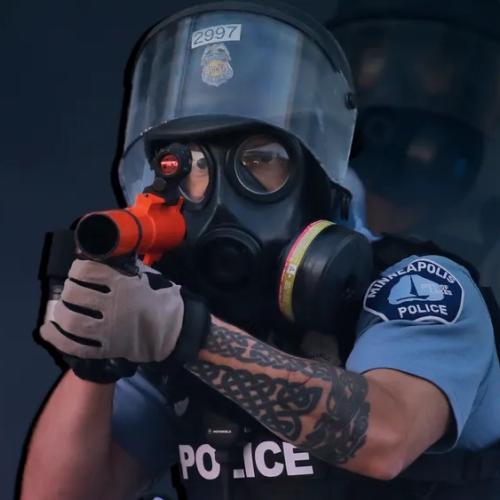
The nationwide anti-police brutality protests sparked by the killing of George Floyd in the US have been marked by widespread incidents of police violence, including punching, kicking, gassing, pepper-spraying and driving vehicles at often peaceful protesters in states across the country. The actions have left thousands of protesters in jail and injured many others, leaving some with life-threatening injuries. From Minnesota to New York, Texas, California, Washington DC and many places beyond, from small towns to big cities, police officers have demonstrated just how problematic law enforcement is in the US, drawing condemnation from international groups as well as domestic civil rights organizations. Numerous incidents of police violence have been exposed in disturbing videos and press accounts in recent days. Officers in a police SUV drove at a crowd of protesters in Brooklyn. A police officer was caught on camera violently shoving a woman to the ground during a demonstration. The woman, Dounya Zayer, was taken to hospital and said she suffered a seizure and concussion. An officer yanked a facemask from an African American man who was standing with his hands in the air, then pepper-sprayed him in the face. In Buffalo ... two officers shoved a 75-year-old man to the ground. A video showed the man hitting his head on the ground, causing his blood to spill on the sidewalk. He is now gravely ill in hospital. Frequently journalists have been met with the same aggressive policing as demonstrators. Police attacked journalists at least 140 times in the last four days of May. In most cases ... no action has been brought against officers or police departments.
Note: While some policemen are standing with protestors, as reported in this ABC News article, this revealing article shows how police are trained to be violent. For more along these lines, see concise summaries of deeply revealing news articles on police corruption from reliable major media sources.
Allegations by FBI Special Agent Steve Friend contained in a whistleblower complaint filed late Wednesday with the Department of Justice inspector general reveal a politicized Washington, DC, FBI field office cooking the books to exaggerate the threat of domestic terrorism, and using an “overzealous” January 6 investigation to harass conservative Americans and violate their constitutional rights. Friend, 37, a respected 12-year veteran of the FBI and a SWAT team member, was suspended Monday, stripped of his gun and badge, and escorted out of the FBI field office in Daytona Beach, Fla., after complaining to his supervisors about the violations. He was declared absent without leave last month for refusing to participate in SWAT raids that he believed violated FBI policy and were a use of excessive force against Jan. 6 subjects accused of misdemeanor offenses. “I have an oath to uphold the Constitution,” he told supervisors when he asserted his conscientious objection to joining an Aug. 24 raid on a J6 subject. “I have a moral objection and want to be considered a conscientious objector.” In his whistleblower complaint to DOJ Inspector General Michael Horowitz ... Friend lays out multiple violations of FBI policy involving J6 investigations in which he was involved. He says he was removed from active investigations into child sexual exploitation and human trafficking to work on J6 cases sent from DC. As a result, he believes his child exploitation investigations were harmed.
Note: Read how Facebook is silencing activity related to this whistleblower. Read also Matt Taibbi’s reporting on this important case. For more along these lines, see concise summaries of deeply revealing news articles on government corruption from reliable major media sources.
Right up until his death in 2018, Ferik Duka dreamed of seeing his three eldest sons, Shain, Dritan, and Eljvir, freed from prison. In 2009, the three brothers were sentenced to life for their role in an alleged plot to attack the Fort Dix military base in New Jersey. The convictions followed a terrorism sting ... that ran for over a year and involved multiple government informants. The investigation into the “Fort Dix Five,” as the case became known, was marred by outrageous law enforcement and legal abuses, documented in a 2015 investigation and documentary by The Intercept. Their case was just one of many in which zealous FBI officials and prosecutors, operating in the heated atmosphere of post-9/11 America, branded individuals who posed no appreciable threat to the country as enemies of the state. Many of them, like the Duka brothers, were given long prison sentences or otherwise had their lives ruined after being convicted on material support for terrorism charges. “There hasn’t been any reckoning with the legacy of this era,” said Ramzi Kassem, a ... Law professor. Kassem said, “It is alarming when you look across these cases and see an overrepresentation of suspects who were mentally deficient, marginalized, or otherwise vulnerable. Informants proposed so-called terrorism plots, funded them, provided means of execution, coaching, and even coaxed the targets of stings over prolonged periods of time in order to enable prosecutors to paint their conduct as criminally punishable.”
Note: Read more about terrorism plots hatched by the FBI. For more along these lines, see concise summaries of deeply revealing news articles on government corruption and terrorism from reliable major media sources.
I consider myself a lay historian. But for all my study, I never read a page of any school history book about how, in 1921, a mob of white people burned down a place called Black Wall Street, killed as many as 300 of its Black citizens and displaced thousands of Black Americans who lived in Tulsa, Okla. My experience was common: History was mostly written by white people about white people like me, while the history of Black people — including the horrors of Tulsa — was too often left out. Until relatively recently, the entertainment industry, which helps shape what is history and what is forgotten, did the same. That includes projects of mine. I knew about the attack on Fort Sumter, Custer’s last stand and Pearl Harbor but did not know of the Tulsa massacre until last year, thanks to an article in The New York Times. The truth about Tulsa, and the repeated violence by some white Americans against Black Americans, was systematically ignored. Our predominantly white schools didn’t teach it, our mass appeal works of historical fiction didn’t enlighten us, and my chosen industry didn’t take on the subject in films and shows until recently. It seems white educators and school administrators (if they even knew of the Tulsa massacre, for some surely did not) omitted the volatile subject for the sake of the status quo, placing white feelings over Black experience — literally Black lives in this case. Should our schools now teach the truth about Tulsa? Yes, and they should also stop the battle to whitewash curriculums.
Note: The above was written by renowned actor Tom Hanks. For more along these lines, see concise summaries of deeply revealing news articles on civil liberties from reliable major media sources.
Christopher David had watched in horror as videos surfaced of federal officers in camouflage throwing protesters into unmarked vans in Portland. The 53-year-old Portland resident had heard the stories: protesters injured, gassed, sprayed with chemicals that tugged at their nostrils and burned their eyes. David, a graduate of the U.S. Naval Academy and former member of the Navys Civil Engineer Corps, said he wanted to know what the officers involved thought of the oath they had sworn to protect and defend the Constitution. So, he said, on Saturday evening, he headed to downtown Portland to ask them. He asked one woman when the feds would show up, but she said it was also her first protest since the Department of Homeland Security deployed tactical units from U.S. Immigration and Customs Enforcement and U.S. Customs and Border Protection to bolster protections for federal buildings. Just as he was about to leave, David said, the federal officers emerged. Why are you not honoring your oath? he bellowed. Why are you not honoring your oath to the Constitution? An officer trained his weapon on Davids chest as several agents pushed him, sending David stumbling backward. But he regained his center and tried again. Another agent raised his baton and began to beat David, who stood unwavering with his arms at his sides. Then another officer unloaded a canister of chemical irritant spray into Davids face. At the hospital, he said, he learned his right hand had been broken in two places.
Note: For more along these lines, see concise summaries of deeply revealing news articles on government corruption and the erosion of civil liberties from reliable major media sources.
America in the summer of 1919 ran red with blood from racial violence, and yet today, 100 years later, not many people know it even happened. Hundreds of African American men, women and children were burned alive, shot, hanged or beaten to death by white mobs. Thousands saw their homes and businesses burned to the ground and were driven out, many never to return. It was branded "Red Summer" because of the bloodshed and amounted to some of the worst white-on-black violence in U.S. history." There are no national observances marking Red Summer. History textbooks ignore it, and most museums don't acknowledge it. The reason: Red Summer contradicts the post-World War I-era notion that America was making the world safe for democracy, historians say. "Ethnic cleansing was the goal of the white rioters," said William Tuttle, a retired professor of American studies at the University of Kansas. "They wanted to kill as many black people as possible and to terrorize the rest until they were willing to leave and live someplace else." The violence didn't start or end in 1919. Some count the era of Red Summer as beginning with the deaths of more than two dozen African Americans in East St. Louis, Illinois, in 1917 and extending through the Rosewood Massacre of 1923, when a black town in Florida was destroyed. All told, at least 1,122 Americans were killed in racial violence over those six years.
Note: For more along these lines, see concise summaries of deeply revealing news articles on civil liberties from reliable major media sources.
At least 500 Native American, Alaska Native and Native Hawaiian children died while attending Indian boarding schools run or supported by the U.S. government, a highly anticipated Interior Department report said Wednesday. The report identified over 400 schools and more than 50 gravesites and said more gravesites would likely be found. The report is the first time in U.S. history that the government has attempted to comprehensively research and acknowledge the magnitude of the horrors it inflicted on Native American children for decades. But it falls well short of some independent estimates of deaths and does not address how the children died or who was responsible. The report also sheds little new light on the physical and sexual abuse generations of Indigenous children endured at the schools, which were open for more than 150 years, starting in the early 1800s. The report identified more than 500 child deaths after examining records for 19 of the facilities, a small share of the total number of schools identified. The number is significantly less than some estimates, which are in the tens of thousands. Preston S. McBride, an Indian boarding school historian and a Comanche descendent ... has found more than 1,000 student deaths at the four former boarding schools he has studied, and estimates the overall number of deaths could be as high as 40,000. “Basically every school had a cemetery,” he said. “There are deaths at or deaths because of virtually every single boarding school.”
Note: Canada has been investigating its own residential schools. What happened at these schools was akin to "cultural genocide," according to a 2015 report from Canada's Truth and Reconciliation Commission. For more along these lines, see concise summaries of deeply revealing news articles on government corruption from reliable major media sources.
The Trump Department of Justice has asked Congress to craft legislation allowing chief judges to indefinitely hold people without trial and suspend other constitutionally-protected rights during coronavirus and other emergencies, according to a report by Politico. The DOJ has requested Congress allow any chief judge of a district court to pause court proceedings whenever the district court is fully or partially closed by virtue of any natural disaster, civil disobedience, or other emergency situation, according to draft language obtained by Politico. This would be applicable to any statutes or rules of procedure otherwise affecting pre-arrest, post-arrest, pre-trial, trial, and post-trial procedures in criminal and juvenile proceedings and all civil processes and proceedings. But the Constitution grants citizens habeas corpus which gives arrestees the right to appear in front of a judge and ask to be released before trial. Enacting legislation like the DOJ wants would essentially suspend habeas corpus indefinitely until the emergency ended. Further, DOJ asked Congress to suspend the statute of limitations on criminal investigations and civil proceedings during the emergency until a year after it ended. That means you could be arrested and never brought before a judge until they decide that the emergency or the civil disobedience is over. The DOJ ... also asked Congress to pass a law saying that immigrants who test positive for COVID-19 cannot qualify as asylum seekers.
Note: For more along these lines, see concise summaries of deeply revealing news articles on the coronavirus pandemic and the erosion of civil liberties from reliable major media sources.
California has prepared for worst case scenarios as the coronavirus pandemic heightens, including the possibility of enacting martial law. Governor Gavin Newsom said during a press conference on Tuesday he would consider implementing martial law if it was necessary to curb the novel virus. We have the ability to do martial law ... if we feel the necessity, he said. Issuing martial law would be an unprecedented move rarely used by officials in US history. If enacted, it would temporarily replace civil rule with military authority. The precedent for martial law in the US states certain civil liberties may be suspended, such as the right to be free from unreasonable searches and seizures, freedom of association, and freedom of movement, according to a legal journal. The president and Congress have the power to enact martial law for the entire country. State governors also have the power to enact martial law if its in their states constitution. Previous examples of martial law used include after World War II, specifically following the bombing of Pearl Harbour, when the state of Hawaii was held under martial law from 1941 to 1944. President Abraham Lincoln also used martial law during the Civil War to temporarily suspend habeas corpus, which is the right to a trial before imprisonment. California considering the possibility of using martial law on Tuesday comes just two days after the governor said he had no current plans for the measure.
Note: For more along these lines, see concise summaries of deeply revealing news articles on the coronavirus pandemic and the erosion of civil liberties from reliable major media sources.
Principled insiders have been busy in recent years blowing the whistle on wrongdoing from Big Pharma to Wall Street to Washington. Without whistleblowers, wed probably never have heard about the lead-laced water in Flint, Mich., Jeffrey Epsteins under-the-table funding of MIT, fraud at Guantanamo, corner-cutting at Boeing and the FAA, or the dubious dealings by President Trump in Ukraine that the House has put at the center of an impeachment inquiry. But ... it has become harder than ever to speak truth to power. What has led us here? A rise in institutional corruption and normalized fraud. Healthy organizations tend to self-correct, fixing problems long before they explode in public. Where they dont, healthy governments intervene via independent regulators. Whistleblowing only becomes necessary when organizations become more interested in silence and loyalty than in ethics or public welfare, or when government watchdogs have been muzzled or euthanized. Anti-whistleblower pressure intensified with the Obama administrations implementation of Insider Threat programs throughout government. These programs, a response to the WikiLeaks disclosures, frequently portray lawful disclosures by public employees as criminal acts and lump legitimate whistleblowers together with spies and criminals. Despite these barriers, whistleblowers keep coming forward, because the voice of the individual conscience grows stronger as fraud becomes normalized.
Note: For more along these lines, see concise summaries of deeply revealing news articles on government corruption from reliable major media sources.
The FBI spends "every day, all day long" interrogating people over their Facebook posts. At least, that's what agents told Stillwater, Oklahoma, resident Rolla Abdeljawad when they showed up at her house to ask her about her social media activity. Three FBI agents came to Abdeljawad's house and said that they had been given "screenshots" of her posts by Facebook. Her lawyer Hassan Shibly posted a video of the incident. "Facebook gave us a couple of screenshots of your account," one agent in a gray shirt said in the video. "So we no longer live in a free country and we can't say what we want?" replied Abdeljawad. "No, we totally do. That's why we're not here to arrest you or anything," a second agent in a red shirt added. "We do this every day, all day long. It's just an effort to keep everybody safe and make sure nobody has any ill will." Shibly says that he doesn't know which Facebook post caught the agents' attention, and that it was the first time he had heard of Facebook's parent company, Meta, preemptively reporting posts to law enforcement. [Abdeljawad] made multiple angry posts per day about the war in Gaza, referring to Israel as "Israhell." But none of the posts on her feed call for violence. Ironically, Abdeljawad had also posted a warning about exactly the kind of government monitoring she was later subjected to. "Don't fall for their games. Our community is being watched & they are just waiting for any reason to round us up," Abdeljawad wrote.
Note: For more along these lines, see concise summaries of deeply revealing news articles on government corruption and the erosion of civil liberties from reliable major media sources.
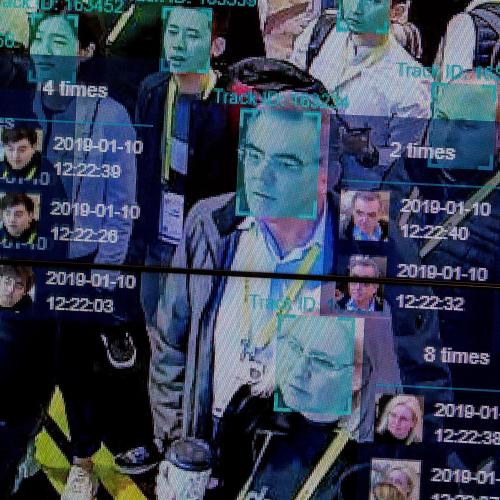
The Department of Homeland Security (DHS) is likely the single largest collector and consumer in the U.S. government of detailed, often intimate, information about Americans and foreigners alike. The department stores and analyzes this information using vast data systems to determine who can enter the country and who is subjected to intrusive inspections, including by parsing through travel records, social media data, non-immigrant visa applications, and other information to detect patterns of behavior that the department has determined are worthy of scrutiny. As we explain in a new Brennan Center report, these systems ... are too often deployed in discriminatory ways that violate Americans’ constitutional rights and civil liberties. It is past time for DHS to stop improvising how it designs and implements its automated systems, with inadequate mechanisms for evaluation and oversight, weak standards, and disproportionate impacts on marginalized communities and individuals. DHS must disclose additional information about its systems, including the policies that govern their operations and reports explaining how they are used. An independent body should undertake a rigorous investigation of DHS’s automated systems, evaluating whether they are useful and accurate, assessing how they function, and determining whether they contain sufficient safeguards to protect privacy, civil rights, and civil liberties.
Note: For more along these lines, see concise summaries of deeply revealing news articles on government corruption and the disappearance of privacy from reliable major media sources.
Canada has been dealt a somber reminder of one of the darkest chapters of its history over the past week. The remains of 215 children were found last month buried in unmarked graves at a former residential school, one of more than 150 institutions in a defunct system that for well over a century forcibly separated Indigenous children from their families to assimilate them into Canadian society. The school where the remains were found is in Kamloops. The institution, the biggest residential school in Canada, operated under the auspices of the Catholic Church from 1890 to 1969. The Canadian government then took over and oversaw the school until it closed in 1978. Enrollment peaked in the early 1950s at 500. There are official records of at least 51 children who died at the school from 1900 to 1971. The graves, which were discovered with ground-penetrating radar last month, are believed to be undocumented. Some of the children are believed to have been as young as 3. While the sheer number of children's remains found in Kamloops is shocking, it is just the tip of the iceberg, and the discovery is by no means an isolated incident. An estimated 150,000 First Nations and Inuit children were required to attend the state-funded residential schools from 1831 to 1996. Many never went home. In 2015, a Truth and Reconciliation Commission declared that the residential schools played a central role in Canada's "cultural genocide" of Indigenous people.
Note: The 2015 Truth and Reconciliation Commission report led to a $5 billion settlement between the government and surviving First Nation students. For more along these lines, see concise summaries of deeply revealing news articles on government corruption from reliable major media sources.
Detaining immigrant children has morphed into a surging industry in the U.S. that now reaps $1 billion annually a tenfold increase over the past decade. Health and Human Services grants for shelters, foster care and other child welfare services for detained unaccompanied and separated children soared from $74.5 million in 2007 to $958 million dollars in 2017. The agency is also reviewing a new round of proposals amid a growing effort by the White House to keep immigrant children in government custody. Currently, more than 11,800 children, from a few months old to 17, are housed in nearly 90 facilities in 15 states. By far the largest recipients of taxpayer money have been Southwest Key and Baptist Child & Family Services. From 2008 to date, Southwest Key has received $1.39 billion in grant funding to operate shelters; Baptist Child & Family Services has received $942 million. International Educational Services also was a big recipient, landing more than $72 million in the last fiscal year before folding amid a series of complaints about the conditions in its shelters. The recipients of the money run the gamut from nonprofits, religious organizations and for-profit entities. They are essentially government contractors for the Health and Human Services Department the federal agency that administers the program keeping immigrant children in custody. In a recently released report, the State Department decried the general principle of holding children in shelters, saying it makes them inherently vulnerable.
Note: For more along these lines, see concise summaries of deeply revealing government corruption news articles from reliable major media sources.
The indictment was damning enough: A former police chief of Biscayne Park and two officers charged with falsely pinning four burglaries on a teenager. But the accusations revealed in federal court last month left out far uglier details of past policing practices in tranquil Biscayne Park, a [suburb] of Miami. Records obtained by the Miami Herald suggest that during the tenure of former chief Raimundo Atesiano, the command staff pressured some officers into targeting random black people to clear cases. If they have burglaries that are open cases that are not solved yet, if you see anybody black walking through our streets and they have somewhat of a record, arrest them so we can pin them for all the burglaries, one cop, Anthony De La Torre, said in an internal probe ordered in 2014. They were basically doing this to have a 100% clearance rate for the city. In a report from that probe, four officers a third of the small force told an outside investigator they were under marching orders to file the bogus charges to improve the departments crime stats. Only De La Torre specifically mentioned targeting blacks, but former Biscayne Park village manager Heidi Shafran, who ordered the investigation after receiving a string of letters from disgruntled officers, said the message seemed clear for cops on the street. The federal case doesnt raise allegations of racial profiling, but records show the false charges were filed against a black Haitian-American teen identified only as T.D. in the indictment.
Note: For more along these lines, see concise summaries of deeply revealing news articles on police corruption and the erosion of civil liberties.
The business of housing, transporting and watching over migrant children detained along the southwest border is not a multimillion-dollar business. Its a billion-dollar one. Southwest Key Programs has won at least $955 million in federal contracts since 2015 to run shelters and provide other services to immigrant children in federal custody. Its shelter for migrant boys at a former Walmart Supercenter in South Texas has been the focus of nationwide scrutiny, but Southwest Key is but one player in the lucrative, secretive world of the migrant-shelter business. About a dozen contractors operate more than 30 facilities in Texas alone, with numerous others contracted for about 100 shelters in 16 other states. Trumps order ... calling for migrant families to be detained together likely means millions more in contracts. A small network of private prison companies already is operating family detention centers in Texas and Pennsylvania, and those facilities are likely to expand. Defense contractors and security firms are also building a presence in the system, including General Dynamics ... and MVM Inc.. In Harlingen, [Texas] one recent morning, the federal courthouse that hears immigration cases was packed. Teenagers who had been apprehended crossing the border sat in the courtrooms. In the lobby, a group of men and women ... patiently waited for the hearings to end. They were there for the migrant youth. But they were neither relatives nor lawyers. They were contractors.
Note: What this article doesn't include is the possibility that some of these children are being fed into secret mind control programs and possibly even clandestinely sold into sex trafficking. For more on this, read this essay . For more along these lines, see concise summaries of deeply revealing government corruption news articles from reliable major media sources.
The National Memorial for Peace and Justice, which opens on Thursday, is a place unlike any other in the United States. Together with a new Legacy Museum which also opens this week, it addresses head on a subject that has been marked by a booming silence until now the enforcement of white supremacy in America through racial terrorism in the form of lynching, as well as its other guises: slavery, segregation and modern mass incarceration. The memorial records and honors the more than 4,000 people of color ... who lost their lives to terror lynching. [It] sits audaciously atop a hill overlooking the heart of Montgomery. From its grounds you look down on the state capitol, the legislative beating heart of Alabama that acted as the first capital of the Confederacy and presides over a state constitution that to this day outlaws white and black kids going to school together: in 2004 and 2012 Alabamans held referendums on whether to remove the racist ban; both times the overwhelmingly white majority voted to keep it. [Equal Justice Initiative] has identified more than 4,384 lynchings by white people of people of colour [from] 1877 to 1950. They spanned 800 counties. Huge crowds often turned out: 10,000 to watch Henry Smith, 17, tortured and burned on a 10ft-high stage in Paris, Texas in 1893; 20,000 at the burning alive of Willy Brown in Omaha, Nebraska in 1919. Such was the communal complicity that sometimes entire white communities would attend to a man, woman and child.
Note: For more along these lines, see concise summaries of deeply revealing civil liberties news articles from reliable major media sources.
Important Note: Explore our full index to revealing excerpts of key major media news articles on several dozen engaging topics. And don't miss amazing excerpts from 20 of the most revealing news articles ever published.