



























Civil Liberties News Articles
Below are key excerpts of revealing news articles on the erosion of our civil liberties from reliable news media sources. If any link fails to function, a paywall blocks full access, or the article is no longer available, try these digital tools.

Pop quiz: Name a state residential school where children were enrolled in medical experiments over an almost 20-year period, in which they were unknowingly fed a steady diet of radioactive isotopes, subjected to regular blood draws, and placed in solitary confinement if they refused to cooperate. Answer: the Walter E. Fernald State School in Waltham [Mass.} during the mid 20th century. Unfortunately, as Allen Hornblum, Judith Newman, and Gregory Dober painfully describe in their chilling new book, Against Their Will: The Secret History of Medical Experimentation on Children in Cold War America, Fernald was not the only institution in the country, or even in the state, where children were conscripted into sometimes deadly medical experiments. These were conducted by ambitious physicians and scientists whose belief in what they were trying to accomplish often blinded them to the potentially horrific consequences of their actions. Against Their Will opens with an overview of the eugenics movement in the United States, which found sympathizers among many luminaries of American medicine in the 19th and early 20th centuries. With its disdain for the disabled, who were considered genetically inferior, the movement paved the way for use of defective children in research. The book then provides multiple examples of medical experiments perpetrated on developmentally delayed and physically disabled children at multiple institutions across the country over the course of decades, often reading like case studies straight out of the 1947 Nazi doctors trial.
Note: For a long list of verifiable incidents where unknowing citizens were used as guinea pigs on a massive scale, click here.
The Army is blocking all access to The Guardian newspaper's reports about the National Security Agency's sweeping collection of data about Americans' email and phone communications, an Army spokesman said Thursday. The Monterey (Calif.) Herald reported that employees at the Presidio of Monterey, an Army public affairs base about 100 miles south of San Francisco, were unable to gain access to The Guardian's articles on former NSA contractor Edward Snowden and his professed leaks of classified information about the intelligence programs. Late Thursday, an Army spokesman told The Herald by email that the newspaper's NSA reports were, in fact, being blocked across the entire Army. He wrote that it's routine for the Defense Department to take "network hygiene" action to prevent disclosure of classified information, The Herald reported. "We make every effort to balance the need to preserve information access with operational security," the newspaper quoted the spokesman as saying. "However there are strict policies and directives in place regarding protecting and handling classified information."
Note: To read the full story in the Monterey Herald, click here. For the Guardian's coverage of this, click here. Does the military have the right to censor its members' access to information?
Russ Tice, a former intelligence analyst and Bush-era NSA whistleblower, claimed Wednesday that the intelligence community has ordered surveillance on a wide range of groups and individuals, including high-ranking military officials, lawmakers and diplomats. They went after and I know this because I had my hands literally on the paperwork for these sort of things they went after high-ranking military officers. They went after members of Congress, both Senate and the House, especially on the intelligence committees and on the armed services committees," [said] Tice. But they went after other ones, too. They went after lawyers and law firms. They went after judges. One of the judges is now sitting on the Supreme Court. Two are former FISA court judges. They went after State Department officials. They went after people in the executive service that were part of the White House. Then Tice dropped the bombshell about Obama. "In summer of 2004, one of the papers that I held in my hand was to wiretap a bunch of numbers associated with a 40-something-year-old wannabe senator for Illinois ... thats the president of the United States now. FBI whistleblower Sibel Edmonds and Tice agreed that such wide-ranging surveillance of officials could provide the intelligence agencies with unthinkable power to blackmail their opponents. I was worried that the intelligence community now has sway over what is going on, Tice said. Tice first blew the whistle on ... domestic spying across multiple agencies in 2005.
Note: Listen to Tice's shocking revelations in this interview. For more along these lines, see concise summaries of deeply revealing news articles about corruption in government and throughout intelligence agencies.
At various points over the past two years, Internal Revenue Service officials targeted nonprofit groups that criticized the government and sought to educate Americans about the U.S. Constitution, according to documents in an audit conducted by the agency's inspector general. The documents, obtained by The Washington Post from a congressional aide with knowledge of the findings, show that on June 29, 2011, IRS staffers held a briefing with senior agency official Lois G. Lerner in which they described giving special attention to instances where statements in the case file criticize how the country is being run. Six months later, the IRS applied a new political test to groups that applied for tax-exempt status as social welfare groups. On Jan. 15, 2012 the agency decided to target "political action type organizations involved in limiting/expanding Government, educating on the Constitution and Bill of Rights, social economic reform movement," according to the appendix in the IG report, which ... has yet to be released. The new revelations are likely to intensify criticism of the IRS, which has been under fire since agency officials acknowledged they had deliberately targeted groups with "tea party" or "patriot" in their name for heightened scrutiny. Sen. Susan Collins ... described the practice as absolutely chilling and called on President Obama to condemn the effort.
Note: For more along these lines, see concise summaries of deeply revealing news articles on government corruption and the erosion of civil liberties.
One of the major governmental abuses denounced by the 1976 final report of the Church Committee was the FBI's domestic counter intelligence programs (COINTELPRO). Under that program, the FBI targeted political groups and individuals it deemed subversive and dangerous ... and infiltrated them with agents who, among other things, attempted to manipulate members into agreeing to commit criminal acts so that the FBI could arrest and prosecute them. What made the program so controversial was that the FBI was attempting to create and encourage crimes rather than find actual criminals - all in order to punish those whose constitutionally protected political activism the US government found threatening. Over the past decade, US Muslims have been routinely targeted with precisely this same tactic of preemptive or anticipatory prosecution. It's all designed to take people engaged in political and religious advocacy which the US government dislikes ... and use paid informants to trick them into saying just enough to turn them into criminals who are then prosecuted and imprisoned for decades. The same pattern repeats itself over and over. The FBI ensnares some random Muslim in a garden-variety criminal investigation involving financial fraud or drugs. Rather than prosecute him, the FBI puts the Muslim criminal suspect on its payroll, sending him into Muslim communities and mosques in order not only to spy on American Muslims, but to befriend them and then actively manipulate them into saying just enough to make their prosecution possible.
Note: For deeply revealing reports from reliable major media sources on illegal activities of intelligence agencies, click here.
It's beyond dispute that Jorge Mario Bergoglio, [the new Pope], failed to openly confront the 1976-1983 military junta as it kidnapped and killed thousands of people in a "dirty war" to eliminate leftist opponents. But human rights activists differ on how much responsibility Pope Francis personally deserves for the Argentine church's dark history of supporting the murderous dictatorship. Some leading Argentine human rights activists agree that Bergoglio, now 76, doesn't deserve to be lumped together with other church figures who were closely aligned with the dictatorship. "Perhaps he didn't have the courage of other priests, but he never collaborated with the dictatorship," Adolfo Perez Esquivel, who won the 1980 Nobel Peace Prize for documenting the junta's atrocities, said. But others say Bergoglio's rise through the Argentine church since then has put him in many positions of power where he could have done more to atone for the sins of Catholic officials who did actively conspire with the dictators. Some priests even worked inside torture centers, and blessed those doing the killing. Bergoglio twice invoked his right under Argentine law to refuse to appear in open court in trials involving torture and murder inside the feared Navy Mechanics School and the theft of babies from detainees.
Note: An entire edition of Democracy Now! was devoted to the record of Bergoglio, including an interview with the Argentine journalist Horacio Verbitsky. For more analysis, click here, here and here.
The Obama administration is drawing up plans to give all U.S. spy agencies full access to a massive database that contains financial data on American citizens and others who bank in the country, according to a Treasury Department document. The proposed plan represents a major step by U.S. intelligence agencies to spot and track down [targeted persons] by bringing together financial databanks, criminal records and military intelligence. Financial institutions that operate in the United States are required by law to file reports of "suspicious customer activity," such as large money transfers or unusually structured bank accounts, to Treasury's Financial Crimes Enforcement Network (FinCEN). The Federal Bureau of Investigation already has full access to the database. However, intelligence agencies, such as the Central Intelligence Agency and the National Security Agency, currently have to make case-by-case requests for information to FinCEN. The Treasury plan would give spy agencies the ability to analyze more raw financial data than they have ever had before. Financial institutions file more than 15 million "suspicious activity reports" every year, according to Treasury. Banks, for instance, are required to report all personal cash transactions exceeding $10,000.
Note: For deeply revealing reports from reliable major media sources on the games intelligence agencies play, click here.
Commencing immediately upon the 9/11 attack, the US government ... has spent 12 straight years inventing and implementing new theories of government power in the name of Terrorism. Every year since 9/11 has ushered in increased authorities of exactly the type Americans are inculcated to believe only exist in those other, non-free societies: ubiquitous surveillance, impenetrable secrecy, and the power to imprison and even kill without charges or due process. The Obama administration has already exercised the power to target even its own citizens for execution far from any battlefield. [This] has prompted almost no institutional resistance from the structures designed to check executive abuses: courts, the media, and Congress. Last week's 13-hour filibuster of John Brennan's confirmation as CIA director by GOP Sen. Rand Paul was one of the first ... Congressional efforts to dramatize and oppose just how radical these Terrorism-justified powers have become. For the first time since the 9/11 attack, even lowly cable news shows were forced ... to extensively discuss the government's extremist theories of power. All of this put Democrats ... in a very uncomfortable position. The politician who took such a unique stand in defense of these principles was not merely a Republican but a leading member of its dreaded Tea Party wing. Some Democrats, to their credit, publicly supported Paul. But most Democratic Senators ran away as fast as possible from having anything to do with the debate. Paul was doing nothing more than voicing concerns that have long been voiced by leading civil liberties groups such as the ACLU. But almost without exception, progressives who defend Obama's Terrorism policies steadfastly ignore the fact that they are embracing policies that are vehemently denounced by the ACLU.
Note: For deeply revealing reports from reliable major media sources on the loss of civil liberties in the US, click here.
Attorney General Eric Holder has said in a letter to Sen. Rand Paul that the president could in an "entirely hypothetical" situation authorize the military to use lethal force within U.S. territory. The letter to Paul came in response to three inquiries the Kentucky Republican sent to John Brennan, President Obama's nominee for CIA director. Paul's letters asked if it was legal for the U.S. government to use lethal force, including in the form of drone strikes, on Americans inside the country. Here's Holder's response, in part: "As members of this Administration have previously indicated, the U.S. government has not carried out drone strikes in the United States and has no intention of doing so. The question you have posed is therefore entirely hypothetical, unlikely to occur, and one we hope no President will ever have to confront. It is possible, I suppose, to imagine an extraordinary circumstance in which it would be necessary and appropriate for the President to authorize the military to use lethal force within the territory of the United States. For example, the President could conceivably have no choice but to authorize the military to use such force if necessary to protect the homeland in the circumstances of a catastrophic attack like the ones suffered on December 7, 1941, and September 11, 2001."
Note: For deeply revealing reports from reliable major media sources on the loss of civil liberties in the US, click here.
The Federal Bureau of Investigation has a track record of attacking the undesirables of the time. In the early part of the 20th century, immigrants from Italy were the focus; in the 1940s, it was Japanese-Americans; in the 1950s, it was Americans who questioned U.S. foreign policy; in the 1960s, civil rights activists. Today, it's ... the Arab. It's the South Asian. And often, the FBI uses entrapment to create a terror case out of thin air and then claim to have foiled it. San Jose resident Matthew Llaneza, who converted to Islam in 2011, is accused of attempting to bomb a bank building in Oakland. However, many feel that the FBI used entrapment, which, in criminal law, is a legal defense. It is the act by law enforcement officers of inducing or encouraging a person to commit a crime when the potential criminal is not otherwise predisposed to committing the crime. Over the past several years, the FBI has repeatedly manufactured terror plots by targeting vulnerable members of the Arab, South Asian and Muslim communities. The target is usually an individual or a small group of people with a troubled past, psychological issues or financial problems. Llaneza's is a classic case of entrapment. [It] closely follows the pattern. [He] has a history of psychological problems. This presumed inability to make sound judgment is perfect for entrapment. His bombing plot seems to first emerge in a conversation with law enforcement, and his history of mental illness indicates he didn't have the capacity to commit acts of terror on his own.
Note: For deeply revealing reports from reliable major media sources on the games intelligence agencies play, click here.
A confidential Justice Department memo concludes that the U.S. government can order the killing of American citizens if they are believed to be senior operational leaders of al-Qaida or an associated force -- even if there is no intelligence indicating they are engaged in an active plot to attack the U.S. The 16-page memo ... provides new details about the legal reasoning behind one of the Obama administrations most secretive and controversial polices: its dramatically increased use of drone strikes against al-Qaida suspects abroad, including those aimed at American citizens. In March, Attorney General Eric Holder specifically endorsed the constitutionality of targeted killings of Americans, saying they could be justified if government officials determine the target poses an imminent threat of violent attack. But the confidential Justice Department white paper introduces a ... broader concept of imminence than actual intelligence about any ongoing plot against the U.S. homeland. The condition that an operational leader present an imminent threat of violent attack against the United States does not require the United States to have clear evidence that a specific attack on U.S. persons and interests will take place in the immediate future, the memo states. Instead, it says, an informed, high-level official of the U.S. government may determine that the targeted American has been recently involved in activities posing a threat of a violent attack and there is no evidence suggesting that he has renounced or abandoned such activities. The memo does not define recently or activities.
Note: To read the entire 'white paper' on drone strikes on Americans, click here. For detailed analysis by a distinguished lawyer, click here.
Britain's largest police force stole the identities of an estimated 80 dead children and issued fake passports in their names for use by undercover police officers. The Metropolitan police secretly authorised the practice for covert officers infiltrating protest groups without consulting or informing the children's parents. Over three decades generations of police officers trawled through national birth and death records in search of suitable matches. Undercover officers created aliases based on the details of the dead children and were issued with accompanying identity records such as driving licences and national insurance numbers. Some of the police officers spent up to 10 years pretending to be people who had died. The technique of using dead children as aliases has remained classified intelligence for several decades, although it was fictionalised in Frederick Forsyth's novel The Day of the Jackal. As a result, police have internally nicknamed the process of searching for suitable identities as the "jackal run". One former undercover agent compared an operation on which he was deployed to the methods used by the Stasi. The practice was introduced 40 years ago by police to lend credibility to the backstory of covert operatives spying on protesters, and to guard against the possibility that campaigners would discover their true identities. Since then dozens of SDS [Special Demonstration Squad] officers, including those who posed as anti-capitalists, animal rights activists and violent far-right campaigners, have used the identities of dead children.
Note: For deeply revealing reports from reliable major media sources on police corruption, click here.
In December 2010, the hacktivist collective Anonymous voiced their displeasure with PayPal, over that company's part in the banking blockade of Wikileaks. A reported 10,000 protesters around the world took to the internet with a protest method known as DDoS (distributed denial of service) the functional equivalent of repeatedly hitting the refresh button on a computer. With enough people refreshing enough times, the site is flooded with traffic, slowed, or even temporarily knocked offline. No damage is done to the site or its backing computer system; and when the protest is over, the site resumes business as usual. This is not "hacking". It is protest, and it is speech. Or it was until the United States government decided to serve 42 warrants and indict 14 protesters. While protest charges have typically been seen as tantamount to nuisance crimes, like trespassing or loitering, these were different. The 14 PayPal defendants, some of whom were teenagers when the protest occurred, find themselves looking at 15 years in federal prison for exercising their free speech rights; for redressing their grievances to PayPal, a major corporation; for standing up for what they believed was right. Instead of being handed a $50 fine, as one would face for traditional protest crimes such as a sit-in, the PayPal defendants' freedoms are in real jeopardy. Since the PayPal prosecution, there have been no DDoS protests on that scale. Speech has been chilled. Supreme court Justice William O Douglas said: "Restriction of free thought and free speech is the most dangerous of all subversions. It is the one un-American act that could most easily defeat us."
Note: For deeply revealing reports from reliable major media sources on civil liberties, click here.
With the importation of what will be tens of thousands of drones, by both US military and by commercial interests, into US airspace, with a specific mandate to engage in surveillance and with the capacity for weaponization which is due to begin in earnest at the start of the new year it means that the police state is now officially here. In February of this year, Congress passed the FAA Reauthorization Act, with its provision to deploy fleets of drones domestically. Jennifer Lynch, an attorney at the Electronic Frontier Foundation, notes that this followed a major lobbying effort, "a huge push by the defense sector" to promote the use of drones in American skies: 30,000 of them are expected to be in use by 2020, some as small as hummingbirds. Others will be as big as passenger planes. Business-friendly media stress their planned abundant use by corporations: police in Seattle have already deployed them. An unclassified US Air Force document reported by CBS News expands on this unprecedented and unconstitutional step one that formally brings the military into the role of controlling domestic populations on US soil. This document accompanies a major federal push for drone deployment this year in the United States, accompanied by federal policies to encourage law enforcement agencies to obtain and use them locally, as well as by federal support for their commercial deployment. That is to say: now HSBC, Chase, Halliburton etc can have their very own fleets of domestic surveillance drones.
Note: For deeply revealing reports from reliable major media sources on civil liberties, click here.
In Strasbourg, France, a 17-judge panel of the European Court of Human Rights ruled unanimously on Thursday that U.S. intelligence did in fact kidnap a German citizen in Macedonia. The court said he was locked in a hotel room for 23 days, then handed over to a C.I.A. rendition team at an airport, where he was severely beaten, sodomized, shackled and hooded. Later he was sent to Afghanistan and illegally detained for months. The German citizen, Khaled el-Masri, had no connection to terrorism, unless you count the fact that U.S. officials were seeking an Al Qaeda operative with a similar name. The court ordered Macedonia to pay Mr. Masri $78,000 in damages. He has been refused a day in American courts on flimsy claims of national secrets (that the names of the men who broke the law brutalizing him might be revealed). No official has been held accountable for his illegal detention and torture or for that matter for the similar beastly treatment of other prisoners. The detention camp in Guantanamo Bay remains open, an indelible stain on the American justice system. There is no plausible reason to keep the prison open. There has been no official accounting of the Bush administrations detention policies, and perhaps there never will be because in 2009, when he took office, President Obama decided to sweep that whole period of lawlessness and brutality under the rug. Disclosure did not suit his political agenda. He wanted, we were all told ad nauseam, to look forward and not back. The torturers, and the men who gave orders to torture, have been absolved of responsibility.
Note: For deeply revealing reports from reliable major media sources on illegal activities of intelligence agencies, click here.
Most of the world's dictators share a common fear, and it's not of the United States, NATO, the United Nations or any outside entity. No, the force that most threatens them is social media. Originally designed as enhanced online chat forums for young Americans, Facebook, Twitter, blogs and the rest have spread around the world and are now being used as cudgels against authoritarian leaders in places like Vietnam, Russia, Belarus and Bahrain. In those states and so many others, the leaders are attacking tweeters and bloggers as if they were armed revolutionaries. And the repression is spreading. In India ... a 21-year-old medical student posted a mildly critical comment about a Hindu political figure who'd just died. Within 24 hours, police arrested her and a friend who had "liked" the student's Facebook post and charged them with engaging in hateful, offensive speech -- this in one of the world's strongest democracies. Recently, Ecuador's Supreme Court turned down an extradition request from Belarus for a blogger who fled there after the government charged him with fraud. Alexander Barankov had been blogging about widespread government corruption. Iran, not surprisingly, is even tougher. Bloggers are given long prison terms or sentenced to death, charged with "enmity against God" and subverting national security. But the sad truth is, the dictators whose people are the most repressed -- locked in abject poverty -- don't have to worry about the social-media problem.
For several decades, the US government - in annual "human rights" reports issued by the State Department (reports mandated by the US Congress) - has formally condemned nations around the globe for the practice of indefinite detention: imprisoning people without charges or any fixed sentence. [The] 2011 report condemned numerous nations for indefinite detention, including Libya ("abuse and lack of review in detention"), Uzbekistan ("arbitrary arrest and detention"), Syria ("arbitrary arrest and detention"), and Iran ("Authorities held detainees, at times incommunicado, often for weeks or months without charge or trial"). In Afghanistan and Iraq, the US government is engaged in a fierce and protracted battle over the fundamental right to be free of indefinite detention. Specifically, the US is demanding that the governments of those two nations cease extending this right to their citizens. The US has long been demanding that the Afghan government continue the American practice of indefinite detention without charges, and still presses this demand even after the top Afghan court in September ruled that such detentions violate Afghan law. Human rights workers in Afghanistan have long pointed out that America's practice of imprisoning Afghans without charges is a major source of anti-American sentiment in the country.
Note: For deeply revealing reports from reliable major media sources on war crimes carried out by the US in its illegal wars of aggression in the Middle East, Asia and Africa, click here.
At Yale University, you can be prevented from putting an F. Scott Fitzgerald quote on your T-shirt. At Tufts, you can be censured for quoting certain passages from the Quran. Welcome to the most authoritarian institution in America: the modern university"a bizarre, parallel dimension," as Greg Lukianoff, president of the Foundation for Individual Rights in Education [FIRE], calls it. In his new book, Unlearning Liberty: Campus Censorship and the End of American Debate, Mr. Lukianoff notes that baby-boom Americans who remember the student protests of the 1960s tend to assume that U.S. colleges are still some of the freest places on earth. But that idealized university no longer exists. It was wiped out in the 1990s. Today, university bureaucrats suppress debate with anti-harassment policies that function as de facto speech codes. FIRE maintains a database of such policies on its website, and Mr. Lukianoff's book offers an eye-opening sampling. What they share is a view of "harassment" so broad and so removed from its legal definition that, Mr. Lukianoff says, "literally every student on campus is already guilty." Conservatives and libertarians are especially vulnerable to such charges of harassment.
Note: For deeply revealing reports from reliable major media sources on civil liberties, click here.
Colleges and universities are supposed to be bastions of unbridled inquiry and expression, but they probably do as much to repress free speech as any other institution in young peoples lives. Since the 1980s ... colleges have enacted stringent speech codes. From protests and rallies to displays of posters and flags, students have been severely constrained in their ability to demonstrate their beliefs. The speech codes are at times intended to enforce civility, but they often backfire, suppressing free expression instead of allowing for open debate of controversial issues. In a study of 392 campus speech codes last year, the Foundation for Individual Rights in Education ... found that 65 percent of the colleges had policies that in [their] view violated the Constitutions guarantee of the right to free speech. Some elite colleges in particular have Orwellian speech codes that are so vague and broad that they would never pass constitutional muster at state-financed universities. A 2010 study by the American Association of Colleges and Universities of 24,000 college students and 9,000 faculty and staff members found that only 35.6 percent of the students and only 18.5 percent of the faculty and staff strongly agreed that it was safe to hold unpopular positions on campus. Colleges have promulgated speech codes that are not only absurd in their results but also detrimental to the ideals of free inquiry. Students cant learn how to navigate democracy and engage with their fellow citizens if they are forced to think twice before they speak their mind.
Note: For deeply revealing reports from reliable major media sources on civil liberties, click here.
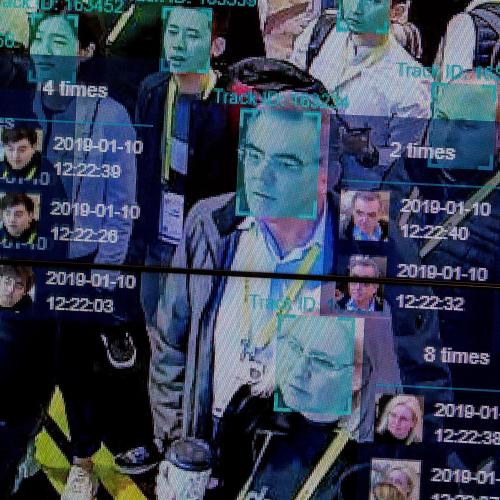
Last week, New York Mayor Michael Bloomberg joined NYPD Commissioner Ray Kelly to unveil a major new police surveillance infrastructure, developed by Microsoft. The Domain Awareness System links existing police databases with live video feeds, including cameras using vehicle license plate recognition software. No mention was made of whether the system plans to use or already uses facial recognition software. But, at present, there is no law to prevent US government and law enforcement agencies from building facial recognition databases. And we know from industry newsletters that the US military, law enforcement, and the department of homeland security are betting heavily on facial recognition technology. As PC World notes, Facebook itself is a market leader in the technology but military and security agencies are close behind. According to Homeland Security Newswire, billions of dollars are being invested in the development and manufacture of various biometric technologies capable of detecting and identifying anyone, anywhere in the world via iris-scanning systems, already in use; foot-scanning technology (really); voice pattern ID software, and so on. What is very obvious is that this technology will not be applied merely to people under arrest, or to people under surveillance in accordance with the fourth amendment. No, the "targets" here [include] everyone. In the name of "national security", the capacity is being built to identify, track and document any citizen constantly and continuously.
Note: For deeply revealing reports from reliable major media sources on civil liberties, click here.
Important Note: Explore our full index to revealing excerpts of key major media news articles on several dozen engaging topics. And don't miss amazing excerpts from 20 of the most revealing news articles ever published.



