





































Civil Liberties News Articles
Below are key excerpts of revealing news articles on the erosion of our civil liberties from reliable news media sources. If any link fails to function, a paywall blocks full access, or the article is no longer available, try these digital tools.

The National Security Agency (NSA) is developing a tool that George Orwell's Thought Police might have found useful: an artificial intelligence system designed to gain insight into what people are thinking. The device will be able to respond almost instantaneously to complex questions posed by intelligence analysts. As more and more data is collectedthrough phone calls, credit card receipts, social networks like Facebook and MySpace, GPS tracks, cell phone geolocation, Internet searches, Amazon book purchases, even E-Z Pass toll records - it may one day be possible to know not just where people are and what they are doing, but what and how they think. The system is so potentially intrusive that at least one researcher has quit, citing concerns over the dangers in placing such a powerful weapon in the hands of a top-secret agency with little accountability. Known as Aquaint, which stands for "Advanced QUestion Answering for INTelligence," the project was run for many years by John Prange, an NSA scientist at the Advanced Research and Development Activity. A supersmart search engine, capable of answering complex questions ... would be very useful for the public. But that same capability in the hands of an agency like the NSA - absolutely secret, often above the law, resistant to oversight, and with access to petabytes of private information about Americans - could be a privacy and civil liberties nightmare. "We must not forget that the ultimate goal is to transfer research results into operational use," said ... Prange.
Note: Watch a highly revealing PBS Nova documentary providing virtual proof that the NSA could have stopped 9/11 but chose not to. For more along these lines, see concise summaries of deeply revealing news articles on intelligence agency corruption and the disappearance of privacy.
Widespread civil violence inside the United States would force the defense establishment to reorient priorities in extremis to defend basic domestic order and human security. Deliberate employment of weapons of mass destruction or other catastrophic capabilities, unforeseen economic collapse, loss of functioning political and legal order, purposeful domestic resistance or insurgency, pervasive public health emergencies, and catastrophic natural and human disasters are all paths to disruptive domestic shock. An American government and defense establishment lulled into complacency by a long-secure domestic order would be forced to rapidly divest some or most external security commitments in order to address rapidly expanding human insecurity at home. Already predisposed to defer to the primacy of civilian authorities in instances of domestic security and divest all but the most extreme demands in areas like civil support and consequence management, DoD might be forced by circumstances to put its broad resources at the disposal of civil authorities to contain and reverse violent threats to domestic tranquility. Under the most extreme circumstances, this might include use of military force against hostile groups inside the United States. Further, DoD would be, by necessity, an essential enabling hub for the continuity of political authority in a multi-state or nationwide civil conflict or disturbance.
Note: For an analysis which deconstructs the opaque military jargon in which this revealing strategic document is written, click here. Use of military forces to maintain domestic order has been forbidden since 1878 by the Posse Comitatus Act. The Pentagon appears to be planning to abrogate this key support of civil liberties.
The Justice Department's former top criminal prosecutor says the U.S. government's terror watch list likely has caused thousands of innocent Americans to be questioned, searched or otherwise hassled. Former Assistant Attorney General Jim Robinson would know: he is one of them. Robinson joined [with] the American Civil Liberties Union on Monday to urge fixing the list that's supposed to identify suspected terrorists. "It's a pain in the neck, and significantly interferes with my travel arrangements," said Robinson, the head of the Justice Department's criminal division during the Clinton administration. He believes his name matches that of someone who was put on the list in early 2005, and is routinely delayed while flying despite having his own government top-secret security clearances renewed last year. He [said] "I expect my story is similar to hundreds of thousands of people who are on this list who find themselves inconvenienced." [The watch list] was created after the Sept. 11, 2001 attacks to consolidate 12 existing lists. Audits of the watch list over the last several years ... have concluded that it has mistakenly flagged innocent people whose names are similar to those on it. More than 30,000 airline passengers had asked the Homeland Security Department to clear their names from the list as of October 2006. The ACLU predicted the watch list would include 1 million names as early as Monday. The civil liberties group reached that number by citing the 700,000 records on the watch list as of last September and adding 20,000 names each month, as forecast by the Justice Department's inspector general.
Note: For many disturbing reports on threats to civil liberties, click here.
Nearly 40 years ago, the FBI was roundly criticized for investigating Americans without evidence [that] they had broken any laws. Now, critics fear the FBI may be gearing up to do it again. Tentative Justice Department guidelines, to be released later this summer, would let agents investigate people whose backgrounds -- and potentially their race or ethnicity -- match the traits of terrorists. Such profiling ... echoes the FBI's now-defunct COINTELPRO, an operation under Director J. Edgar Hoover in the 1950s and 1960s to monitor and disrupt groups with communist and socialist ties. Before it was shut down in 1971, the domestic spying operation -- formally known as Counterintelligence Programs -- had expanded to include civil rights groups, anti-war activists, ... state legislators and journalists. Among the FBI's targets were Martin Luther King Jr., Malcolm X, and John Lennon, along with members of black [political] groups ... and student protesters. The new proposal to allow investigations of Americans with no evidence of wrongdoing is "COINTELPRO for the 21st century," said Barry Steinhardt of the American Civil Liberties Union. "But this is much more insidious because it could involve more people. In the days of COINTELPRO, they were watching only a few people. Now they could be watching everyone."
Note: For many disturbing reports on threats to civil liberties, click here.
The two-star general who led an Army investigation into the horrific detainee abuse at Abu Ghraib has accused the Bush administration of war crimes and is calling for accountability. In his 2004 report on Abu Ghraib, then-Major General Anthony Taguba concluded that "numerous incidents of sadistic, blatant, and wanton criminal abuses were inflicted on several detainees." He called the abuse "systemic and illegal." And, as Seymour M. Hersh reported in The New Yorker, he was rewarded for his honesty by being forced into retirement. Now, in a preface to a Physicians for Human Rights report based on medical examinations of former detainees, Taguba adds an epilogue to his own investigation. The new report, he writes, "tells the largely untold human story of what happened to detainees in our custody when the Commander-in-Chief and those under him authorized a systematic regime of torture. This story is not only written in words: It is scrawled for the rest of these individual's lives on their bodies and minds. The profiles of these eleven former detainees, none of whom were ever charged with a crime or told why they were detained, are tragic and brutal rebuttals to those who claim that torture is ever justified. In order for these individuals to suffer the wanton cruelty to which they were subjected, a government policy was promulgated to the field whereby the Geneva Conventions and the Uniform Code of Military Justice were disregarded. The UN Convention Against Torture was indiscriminately ignored. There is no longer any doubt as to whether the current administration has committed war crimes."
Note: For many revealing reports on the brutal realities of the Iraq and Afghanistan wars, click here.
The framework under which detainees were imprisoned for years without charges at Guantanamo and in many cases abused in Afghanistan wasn't the product of American military policy or the fault of a few rogue soldiers. It was largely the work of five White House, Pentagon and Justice Department lawyers who, following the orders of President Bush and Vice President Dick Cheney, reinterpreted or tossed out the U.S. and international laws that govern the treatment of prisoners in wartime, according to former U.S. defense and Bush administration officials. The Supreme Court now has struck down many of their legal interpretations. The quintet of lawyers, who called themselves the War Council," drafted legal opinions that circumvented the military's code of justice, the federal court system and America's international treaties in order to prevent anyone ... from being held accountable for activities that at other times have been considered war crimes. The international conventions ... to which [the US is] a party, were abandoned in secret meetings among the five men in one another's offices: ... David Addington, the ... longtime legal adviser and now chief of staff to Cheney [whose] primary motive, according to several former administration and defense officials, was to push for an expansion of presidential power that Congress or the courts couldn't check; Alberto Gonzales, first the White House counsel and then the attorney general; William J. Haynes II, the former Pentagon general counsel; former Justice Department lawyer John Yoo, [and] Timothy E. Flanigan, a former deputy to Gonzales.
Note: Virtually no major media other than the Herald picked up this key story.
In dozens of top-secret talks and meetings in the White House, the most senior Bush administration officials discussed and approved specific details of how high-value al Qaeda suspects would be interrogated by the Central Intelligence Agency, sources tell ABC News. The so-called Principals who participated in the meetings also approved the use of "combined" interrogation techniques -- using different techniques during interrogations, instead of using one method at a time -- on [captives] who proved difficult to break, sources said. The high-level discussions about these "enhanced interrogation techniques" were so detailed, these sources said, some of the interrogation sessions were almost choreographed -- down to the number of times CIA agents could use a specific tactic. The advisers were members of the National Security Council's Principals Committee, a select group of senior officials who met frequently to advise President Bush on issues of national security policy. At the time, the Principals Committee included Vice President Cheney, former National Security Advisor Condoleezza Rice, Defense Secretary Donald Rumsfeld and Secretary of State Colin Powell, as well as CIA Director George Tenet and Attorney General John Ashcroft. Rice chaired the meetings, which took place in the White House Situation Room and were typically attended by most of the principals or their deputies. According to multiple sources, it was members of the Principals Committee that not only discussed specific plans and specific interrogation methods, but approved them. The Principals also approved interrogations that combined different methods, pushing the limits of international law and even the Justice Department's own legal approval in the [infamous] 2002 memo.
If you hear mysterious voices in your head the next time you stroll down the street, they may be trying to sell you something. That was the case recently in New York when people walking beneath a billboard for the A&E show "Paranormal State" suddenly heard a woman's disembodied voice whisper: "Who's there? Who's there?" and "It's not your imagination." The creepy effect was caused by technology called Audio Spotlight that projects sound in a focused beam so only people in a certain spot can hear it. "The idea of directing sound was a real uphill battle when we first started, but all of a sudden people are coming to us saying, 'We have to have directional sound. We don't want all this noise in our store,' " said Woody Norris, founder of American Technology Corp. in San Diego. Norris said he has sold many units for use with video screens in checkout lines in ... grocery stores so audio can reach waiting customers without constantly bombarding store workers. While some of the advertising applications are recent, directed sound is often used in museums and other places where sound must be focused on people standing in front of an exhibit or display without disturbing those around them. Smithsonian museums in Washington have used [such] systems [as have] the New York Public Library, the Boston Museum of Fine Arts and ... the observation deck of the Seattle Space Needle. Directed-sound devices ... use narrow beams of ultrasound waves that can't be heard by human ears. The beam distorts air as it passes through, generating sound people can hear along its length.
Note: It's not hard to imagine non-advertising uses for this invasive technology. Could it possibly be used to influence people's thinking in ways other than advertising?
Since 9/11, and seemingly without the notice of most Americans, the federal government has assumed the authority to institute martial law, arrest a wide swath of dissidents (citizen and noncitizen alike), and detain people without legal or constitutional recourse in the event of "an emergency influx of immigrants in the U.S., or to support the rapid development of new programs." Beginning in 1999, the government has entered into a series of single-bid contracts with Halliburton subsidiary Kellogg, Brown and Root (KBR) to build detention camps at undisclosed locations within the United States. The government has also contracted with several companies to build thousands of railcars, some reportedly equipped with shackles, ostensibly to transport detainees. According to diplomat and author Peter Dale Scott, the KBR contract is part of a Homeland Security plan titled ENDGAME, which sets as its goal the removal of "all removable aliens" and "potential terrorists." What kind of "new programs" require the construction and refurbishment of detention facilities in nearly every state of the union with the capacity to house perhaps millions of people? The 2007 National Defense Authorization Act (NDAA) ... gives the executive the power to invoke martial law. The Military Commissions Act of 2006 ... allows for the indefinite imprisonment of anyone who ... speaks out against the government's policies. The law calls for secret trials for citizens and noncitizens alike. What could the government be contemplating that leads it to make contingency plans to detain without recourse millions of its own citizens?
Note: This important warning from former U.S. Congressman Dan Hamburg and Lewis Seiler should be read in its entirety. For more chilling reports on serious threats to our civil liberties, click here.
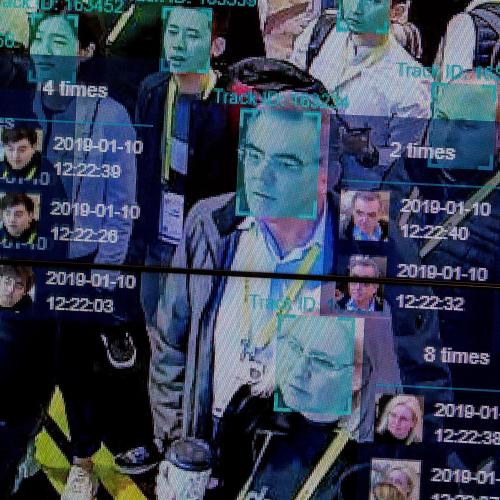
The FBI is embarking on a $1 billion effort to build the world's largest computer database of peoples' physical characteristics, a project that would give the government unprecedented abilities to identify individuals in the United States and abroad. Digital images of faces, fingerprints and palm patterns are already flowing into FBI systems. Next month, the FBI intends to award a 10-year contract that would significantly expand the amount and kinds of biometric information it receives. And in the coming years, law enforcement authorities around the world will be able to rely on iris patterns, face-shape data, scars and perhaps even the unique ways people walk and talk, to ... identify [people]. The increasing use of biometrics for identification is raising questions about the ability of Americans to avoid unwanted scrutiny. It is drawing criticism from those who worry that people's bodies will become de facto national identification cards. "It's going to be an essential component of tracking," said Barry Steinhardt, director of the Technology and Liberty Project of the American Civil Liberties Union. "It's enabling the Always On Surveillance Society." The FBI's biometric database ... communicates with the Terrorist Screening Center's database of suspects and the National Crime Information Center database, which is the FBI's master criminal database of felons, fugitives and terrorism suspects. At the West Virginia University Center for Identification Technology Research (CITeR) ... researchers are working on capturing images of people's irises at distances of up to 15 feet, and of faces from as far away as 200 yards. Soon, those researchers will do biometric research for the FBI. Covert iris- and face-image capture is several years away, but it is of great interest to government agencies.
Note: For many important major-media reports on threats to privacy, click here.
For at least a year before the 2004 Republican National Convention, teams of undercover New York City police officers traveled to cities across the country, Canada and Europe to conduct covert observations of people who planned to protest at the convention, according to police records and interviews. From Albuquerque to Montreal, San Francisco to Miami, undercover New York police officers attended meetings of political groups, posing as sympathizers or fellow activists. They made friends, shared meals, swapped e-mail messages and then filed daily reports with the departments Intelligence Division. In hundreds of reports stamped N.Y.P.D. Secret, the Intelligence Division chronicled the views and plans of people who had no apparent intention of breaking the law. These included members of street theater companies, church groups and antiwar organizations. Three New York City elected officials were cited in the reports. In at least some cases, intelligence on what appeared to be lawful activity was shared with police departments in other cities. In addition to sharing information with other police departments, New York undercover officers were active themselves in at least 15 places outside New York including California, Connecticut, Florida, Georgia, Illinois, Massachusetts, Michigan, Montreal, New Hampshire, New Mexico, Oregon, Tennessee, Texas and Washington, D.C. and in Europe. To date, as the boundaries of the departments expanded powers continue to be debated, police officials have provided only glimpses of its intelligence-gathering.
The Justice Department's inspector general revealed on March 9 that the FBI has been systematically abusing one of the most controversial provisions of the USA Patriot Act: the expanded power to issue "national security letters." It no doubt surprised most Americans to learn that between 2003 and 2005 the FBI issued more than 140,000 specific demands under this provision. It did not, however, come as any surprise to me. Three years ago, I received a national security letter (NSL) in my capacity as the president of a small Internet access and consulting business. The letter ordered me to provide sensitive information about one of my clients. There was no indication that a judge had reviewed or approved the letter, and it turned out that none had. The letter came with a gag provision that prohibited me from telling anyone, including my client, that the FBI was seeking this information. Based on the context of the demand -- a context that the FBI still won't let me discuss publicly -- I suspected that the FBI was abusing its power. Living under the gag order has been stressful and surreal. Under the threat of criminal prosecution, I must hide all aspects of my involvement in the case -- including the mere fact that I received an NSL -- from my colleagues, my family and my friends. When I meet with my attorneys I cannot tell my girlfriend where I am going or where I have been. I hide any papers related to the case in a place where she will not look. When clients and friends ask me whether I am the one challenging the constitutionality of the NSL statute, I have no choice but to look them in the eye and lie. At some point -- a point we passed long ago -- the secrecy itself becomes a threat to our democracy.
Patients were put in isolation, tied down or drugged, and subjected to hours and hours of taped recordings meant to brainwash them at the behest of the Central Intelligence Agency. They were subjected to massive electroshocks, experimental drugs and LSD, most of them unwilling and unknowingly part of the U.S. spy agency's experimentation. Now it's time for the federal government to compensate those victims, lawyer Alan Stein argued. Mr. Stein is seeking court approval for a class-action lawsuit on behalf of his client, Janine Huard, one of the hundreds of patients of Ewen Cameron to be subjected to the Cold War-era experiments. "She never knew ... that she was being used by Dr. Cameron and his staff as a guinea pig," Mr. Stein told the court. The CIA ... recruited Dr. Cameron to experiment with mind-control techniques beginning in 1950. The experiments ... were jointly funded by the CIA and the Canadian government. They were part of a larger CIA program called MK-ULTRA, which also saw LSD administered to U.S. prison inmates and patrons of brothels without their knowledge. Ms. Huard was one of nine Canadian victims who received nearly $67,000 (U.S.) from the CIA in 1988 to compensate her for her suffering. But her claim for compensation from the federal government ... was rejected three times. In 1994, 77 patients were awarded $100,000 each from the federal government, but more than 250 others were denied compensation because they were not "totally depatterned."
Note: What this article fails to mention is that Dr. Cameron was also the president of both the American Psychicatric Association and the World Psychiatric Association. For more reliable information, click here.
Atty. Gen. John Ashcroft's announced desire for camps for U.S. citizens he deems to be "enemy combatants" has moved him from merely being a political embarrassment to being a constitutional menace. Ashcroft's plan, disclosed last week but little publicized, would allow him to order the indefinite incarceration of U.S. citizens and summarily strip them of their constitutional rights and access to the courts by declaring them enemy combatants. Ashcroft hopes to use his self-made "enemy combatant" stamp for any citizen whom he deems to be part of a wider terrorist conspiracy. Aides have indicated that a "high-level committee" will recommend which citizens are to be stripped of their constitutional rights and sent to Ashcroft's new camps. Few would have imagined any attorney general seeking to reestablish such camps for citizens. We have learned from painful experience that unchecked authority, once tasted, easily becomes insatiable. We are only now getting a full vision of Ashcroft's America. Ashcroft seems to dream of a country secured from itself, neatly contained and controlled by his judgment of loyalty. For more than 200 years, security and liberty have been viewed as coexistent values. Ashcroft and his aides appear to view this relationship as lineal, where security must precede liberty. Every generation has its test of principle in which people of good faith can no longer remain silent in the face of authoritarian ambition. If we cannot join together to fight the abomination of American camps, we have already lost what we are defending.
Note: If the above link fails, click here. This aritcle was written by Jonathan Turley, a professor of constitutional law at George Washington University. Though Ashcroft resigned, the laws he crafted remain in place.
The American criminal justice system relies too heavily on imprisoning people and needs to consider more effective alternatives, according to a study released Wednesday by the American Bar Assn., the nation's largest lawyers' organization. "For more than 20 years, we've gotten tougher on crime," said Dennis W. Archer, a former Detroit mayor and the group's current president. "We can no longer sit by as more and more people particularly in minority communities are sent away for longer and longer periods of time while we make it more and more difficult for them to return to society after they serve their time. The system is broken. We need to fix it." Both the number of incarcerated Americans and the cost of locking them up are massive, the report said, and have been escalating significantly in recent years. Between 1974 and 2002, the number of inmates in federal and state prisons rose six-fold. By 2002, 476 out of every 100,000 Americans were imprisoned. In 1982, the states and federal government spent $9 billion on jails and prisons. By 1999, the figure had risen to $49 billion. Based on trends, a black male born in 2001 has a 1 in 3 chance of being imprisoned during his lifetime, while the chances for a Latino male are 1 in 6, and for a white male, 1 in 17. The report contains numerous reform proposals. Among them: the repeal of mandatory minimum sentencing laws; more funding for substance abuse and mental health programs; assistance for prisoners reentering society; [and] task forces to study racial and ethnic disparities in the criminal justice system.
Note: If above link fails, click here. The prison-industrial complex attracts huge profits and strongly supports laws like "three strikes" where third time offenders are automatically imprisoned for life, even for petty crime.
The military, technological, security and political classes in this country appear united in their desire to make robot dogs part of our future, and we should all be worried. On 1 February ... the Department of Homeland Security (DHS) issued a press release titled “Robot Dogs Take Another Step Towards Deployment at the Border”. DHS dressed up their statement with the kind of adorable language made to warm the hearts of dog lovers everywhere. A picture of the “four-legged ground drone” accompanied the release. These particular robot dogs are made by Ghost Robotics, which claims that its 100lb machine was “bred” to scale “all types of natural terrain including sand, rocks and hills, as well as human-built environments, like stairs”. Each robot dog is outfitted with a bevy of sensors and able to transmit real-time video and information feeds. A testing and evaluation program is under way in El Paso, Texas. As the Electronic Frontier Foundation notes, “people who live along the border are some of the most heavily surveilled people in the United States. A massive amalgamation of federal, state and local law enforcement and national security agencies are flying drones, putting up cameras and just generally attempting to negate civil liberties – capturing the general goings-on of people who live and work in proximity to the border.” Then there’s the question of lethal force. These specific ground drones may not be armed, but Ghost Robotics is already infamous for the combination of robot dog and robot rifle.
Note: Singapore used robot dogs to enforce pandemic distancing measures. For more along these lines, see concise summaries of deeply revealing news articles on government corruption and the disappearance from reliable major media sources.
By March 2017, the fight over the construction of the Dakota Access pipeline had been underway for months. Law enforcement was ... discussing plans with Energy Transfer, the parent company of the Dakota Access pipeline. Throughout much of the uprising against the pipeline, the National Sheriffs’ Association talked routinely with TigerSwan, Energy Transfer’s lead security firm on the project, working hand in hand to craft pro-pipeline messaging. Documents, released by the North Dakota Private Investigation and Security Board, reveal how TigerSwan and the sheriffs’ group worked together to twist the story in the media so that it aligned with the oil company’s interests, seeking to pollute the public’s perception of the water protectors. The private security firm pushed for the purchase, by Energy Transfer, of hundreds of thousands of dollars worth of radios for the cops. TigerSwan also placed an order for a catalog of so-called less-lethal weapons for police use, including tear gas. Off the Record Strategies, the public relations firm working for the National Sheriffs' Association, coordinated with the opposition research firm Delve to track activists' social media pages, arrest records, and funding sources. The companies sought to paint the protesters as violent, professional, billionaire-funded, out-of-state agitators whose camps represented the true ecological disaster, as well as to identify movement infighting that might be exploited.
Note: Read how TigerSwan treated water protectors as terrorists. For more along these lines, see concise summaries of deeply revealing news articles on corporate corruption and the erosion of civil liberties from reliable major media sources.
The Department of Homeland Security launched a failed operation that ensnared hundreds, if not thousands, of U.S. protesters in what new documents show was as a sweeping, power-hungry effort before the 2020 election to bolster President Donald Trump’s spurious claims about a “terrorist organization” he accused his Democratic rivals of supporting. An internal investigative report, made public this month by Sen. Ron Wyden ... details the findings of DHS lawyers concerning a previously undisclosed effort by Trump’s acting secretary of homeland security, Chad Wolf, to amass secret dossiers on Americans in Portland attending anti-racism protests in summer 2020 sparked by the police murder of ... George Floyd. The report describes attempts by top officials to link protesters to an imaginary terrorist plot in an apparent effort to boost Trump’s reelection odds, raising concerns now about the ability of a sitting president to co-opt billions of dollars’ worth of domestic intelligence assets for their own political gain. DHS analysts recounted orders to generate evidence of financial ties between protesters in custody; an effort that, had they not failed, would have seemingly served to legitimize President Trump’s false claims about “Antifa.” The report describes the dossiers generated by DHS as having detailed the past whereabouts and the “friends and followers of the subjects, as well as their ... First Amendment speech activity.”
Note: Read about the FBI's use of entrapment to manufacture terrorist plots. For more along these lines, see concise summaries of deeply revealing news articles on government corruption and the erosion of civil liberties from reliable major media sources.
On April 17, 2018, Terry Albury appeared in a federal court in Minneapolis, where he pleaded guilty to charges of leaking classified information to the press. The allegations — that Albury downloaded, printed and photographed internal F.B.I. documents on his office computer, sending some of them electronically to a journalist and saving others on external devices found in his home — resulted from a 17-month-long internal investigation by the F.B.I., prompted by two Freedom of Information Act requests by a news organization ... in March 2016. Nine months after these FOIA requests were made, a trove of internal F.B.I. documents shedding new light on the vast and largely unrestricted power of the post-9/11 F.B.I. was posted on the investigative-journalism site The Intercept. The cache included hundreds of pages of unredacted policy manuals, including the F.B.I.’s byzantine rule book, the Domestic Investigations and Operations Guide, exposing the hidden loopholes that allowed agents to violate the bureau’s own rules against racial and religious profiling and domestic spying as they pursued the domestic war on terror. In October 2018, he was sentenced to four years in prison. Albury says he felt a moral imperative to make his disclosures, motivated by his belief that the bureau had been so fundamentally transformed by Sept. 11 that its own agents were compelled to commit civil and human rights violations.
Note: Listen to Albury talk about his experiences in this podcast. For more along these lines, see concise summaries of deeply revealing news articles on government corruption and the erosion of civil liberties from reliable major media sources.
The intimidation, disempowerment and humiliation of the “other” to maintain entitled rights has been a recurring narrative since the arrival of European colonizers in America. This is a lens through which to understand the significance of the ... 1921 Tulsa Race Massacre, among the worst acts of violence in US history. Between 31 May-1 June, white residents, peace officers, and soldiers attacked the historical Greenwood district of Tulsa, Oklahoma, known as the “Black Wall Street”, killing an estimated 300 residents, displacing upwards of 1,000 more, and inflicting irrevocable economic damage to a thriving business district created by and for Black Americans. As Blacks were recklessly and wantonly raped, murdered and driven from hard-earned homes and businesses, the cover-up by local and state government representatives was chillingly efficient. A century later, thanks to the last three survivors of the Tulsa Massacre and the descendants of those who were killed or survived the violence, the full horror may finally be understood. White Americans in the south and the north saw Black strivers as an existential threat. They seized upon any reason, no matter how flimsy the excuse, to lay waste to their neighbourhoods and communities through physical attacks.
Note: For more along these lines, see concise summaries of deeply revealing news articles on civil liberties and terrorism from reliable major media sources.
Important Note: Explore our full index to revealing excerpts of key major media news articles on several dozen engaging topics. And don't miss amazing excerpts from 20 of the most revealing news articles ever published.