



















Civil Liberties News Articles
Below are key excerpts of revealing news articles on the erosion of our civil liberties from reliable news media sources. If any link fails to function, a paywall blocks full access, or the article is no longer available, try these digital tools.

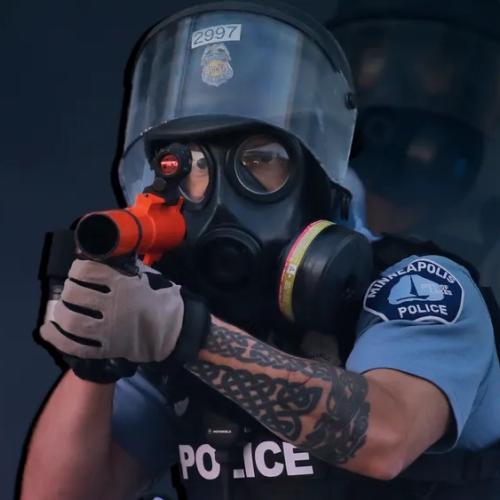
Dozens of journalists covering anti-racism protests that have rocked the US have reported being targeted by security forces using tear gas, rubber bullets and pepper spray. In many cases, they said it was despite showing clear press credentials. The arrest of a CNN news crew live on air on Friday in Minneapolis, where unarmed black man George Floyd died at the hands of police, first drew global attention to how law enforcement authorities in the city were treating reporters. On Tuesday, Australian Prime Minister Scott Morrison asked his embassy in Washington to investigate the use of force by police against an Australian news crew as officers dispersed protesters there. It comes after dozens of attacks on journalists and media crews across the country over the weekend were reported on social media. In total the US Press Freedom Tracker, a non-profit project, says it is investigating more than 100 "press freedom violations" at protests. About 90 cases involve attacks. On Saturday night, two members of a TV crew from Reuters news agency were shot at with rubber bullets while police dispersed protesters in Minneapolis. In Washington DC, near the White House, a riot police officer charged his shield at a BBC cameraman on Sunday evening. On Friday night, Linda Tirado, a freelance photojournalist and activist, was struck in her left eye by a projectile that appeared to come from the direction of police in Minneapolis. She has been permanently blinded in that eye.
Note: For more along these lines, see concise summaries of deeply revealing news articles on police corruption and the erosion of civil liberties from reliable major media sources.
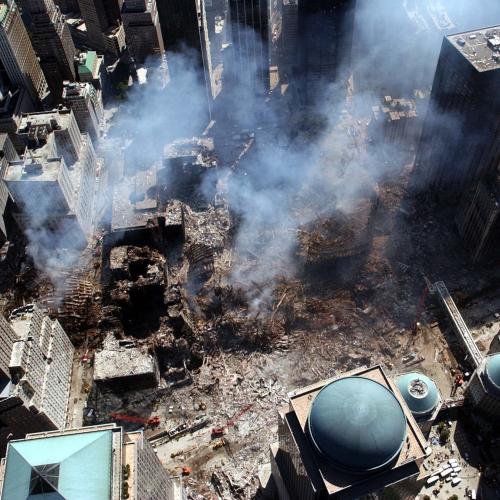
My adulthood has been punctuated by severe national emergencies. The first my generation experienced was the terrorist attack on September 11, 2001. The government quickly responded by attempting to achieve two things: one, expanding executive power, and two, transferring public wealth into private corporations. The second national emergency my generation experienced was the 2008 housing bubble collapse and subsequent recession. Again the federal government ... sought to exploit the crisis to move vast wealth from the public treasury into private bank accounts. A staggering $14tn was transferred from taxpayers to private hands. [The] latest iteration is the Covid-19 pandemic. Once again, the federal government appears poised to exploit this emergency to expand executive power and move wealth from the public treasury into private bank accounts. As we witnessed with the authoritarian reactions to 9/11, emergency violations of civil liberties are not easily rolled back, and often aggregate over time. In the wake of 9/11, Congress passed the National Defense Authorization Act, which gave sweeping powers to the executive branch. In 2012, Obama signed an expanded version into law, which gave the president the power to hold individuals, including US citizens, in military detention indefinitely, which means for life. We must reject such authoritarian measures wholly.
Note: For more along these lines, see concise summaries of deeply revealing news articles on government corruption and the erosion of civil liberties from reliable major media sources.
The FBI opened a domestic terrorism investigation into a civil rights group in California, labeling the activists extremists after they protested against neo-Nazis in 2016. Federal authorities ran a surveillance operation on By Any Means Necessary (Bamn), spying on [the] groups movements in an inquiry that came after one of Bamns members was stabbed at the white supremacist rally. The FBIs Bamn files reveal: The FBI investigated Bamn for potential conspiracy against the rights of the Ku Klux Klan and white supremacists. The FBI considered the KKK as victims and the leftist protesters as potential terror threats, and downplayed the threats of the Klan. The FBI ... cited Bamns advocacy against rape and sexual assault and police brutality as evidence in the terrorism inquiry. The FBIs 46-page report ... presented an astonishing description of the KKK, said Mike German, a former FBI agent. The FBI launched its terrorism investigation and surveillance of Bamn after white supremacists armed with knives faced off with hundreds of counter-protesters, including Bamn activists, at a June 2016 neo-Nazi rally in Sacramento. Although numerous neo-Nazis were suspected of stabbing at least seven anti-fascists in the melee... the FBI chose to launch a inquiry into the activities of the leftwing protesters. California law enforcement subsequently worked with the neo-Nazis to identify counter-protesters, pursued charges against stabbing victims and other anti-fascists, and decided not to prosecute any men on the far-right for the stabbings. In a redacted October 2016 document, the FBI labeled its Bamn investigation a DT [domestic terrorism] ANARCHIST EXTREMISM case.
Note: Why was Newsweek the only major media outlet in the U.S. to write an article on this mind-boggling story? The article states, "Yvette Felarca, a Berkeley teacher and member of BAMN, was stabbed at the rally. Felcara has now been charged with assault and rioting. Police also wanted to bring six charges againstCedric OBannon, an independent journalist at the rally who was stabbed by a pole while filming." For more along these lines, see concise summaries of deeply revealing news articles on intelligence agency corruption from reliable major media sources.
When a judge acquitted a white St. Louis police officer in September 2017 for fatally shooting a young black man, the citys police braced for massive protests. But St. Louis Metropolitan Police Department Officer Dustin Boone wasnt just prepared for the unrest - he was pumped. Its gonna get IGNORANT tonight!! he texted on Sept. 15, 2017, the day of the verdict. Its gonna be a lot of fun beating the hell out of these s---heads once the sun goes down and nobody can tell us apart!!!! Two days later, prosecutors say, thats exactly what Boone did to one black protester. Boone, 35, and two other officers, Randy Hays, 31, and Christopher Myers, 27, threw a man to the ground and viciously kicked him and beat him with a riot baton, even though he was complying with their instructions. But the three police officers had no idea that the man was a 22-year police veteran working undercover, whom they beat so badly that he couldnt eat and lost 20 pounds. On Thursday, a federal grand jury indicted the three officers in the assault. They also indicted the men and another officer, Bailey Colletta, 25, for the attack. Prosecutors released text messages showing the officers bragging about assaulting protesters, with Hays even noting that going rogue does feel good. To protest leaders, the federal charges are a welcome measure of justice but also a sign of how far St. Louis still has to go.
Note: If the man beaten had not been a police officer, we would never have heard about this. How often does it happen to other protestors acting peacefully? For more along these lines, see concise summaries of deeply revealing news articles on police corruption and the erosion of civil liberties.
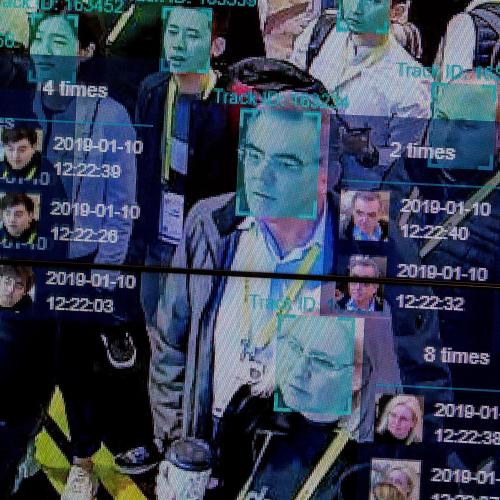
Police in the U.S. recently combined two existing dystopian technologies in a brand new way to violate civil liberties. A police force in California recently employed the new practice of taking a DNA sample from a crime scene, running this through a service provided by US company Parabon NanoLabs that guesses what the perpetrators face looked like, and plugging this rendered image into face recognition software to build a suspect list. Parabon NanoLabs ... alleges it can create an image of the suspect’s face from their DNA. Parabon NanoLabs claim to have built this system by training machine learning models on the DNA data of thousands of volunteers with 3D scans of their faces. The process is yet to be independently audited, and scientists have affirmed that predicting face shapes—particularly from DNA samples—is not possible. But this has not stopped law enforcement officers from seeking to use it, or from running these fabricated images through face recognition software. Simply put: police are using DNA to create a hypothetical and not at all accurate face, then using that face as a clue on which to base investigations into crimes. This ... threatens the rights, freedom, or even the life of whoever is unlucky enough to look a little bit like that artificial face. These technologies, and their reckless use by police forces, are an inherent threat to our individual privacy, free expression, information security, and social justice.
Note: Law enforcement officers in many U.S. states are not required to reveal that they used face recognition technology to identify suspects. For more along these lines, see concise summaries of important news articles on police corruption and the erosion of civil liberties from reliable major media sources.
In March 2003, the newly christened Department of Homeland Security, or DHS, opened its doors. The department took everything from immigration enforcement and counterterrorism to airport security and disaster response under one gargantuan bureaucracy. Despite these wide-ranging missions, the department's unifying logic in the post 9/11 era has been to wage the so-called war on terror at home. The result has been systemic abuse of minority communities, a dangerous militarization of American life, and a massive waste of money that sapped resources from addressing the real threats to our homeland. DHS agencies have militarized U.S. streets, sending officers in tactical gear to respond to civilian protests and conducting surveillance of U.S. citizens engaged in constitutionally protected activities. There are stories of DHS drones surveilling Indigenous water and land protectors and DHS forces spying on Black Lives Matter protesters. DHS even monitored journalists who reported on the department's tactics. None of these abuses have come cheap. Since its founding in 2003, the U.S. has spent $1.4 trillion on the agency. That's more than seven times what the government spent over the same period on the Centers for Disease Control and Prevention (CDC), including the CDC's COVID-19 pandemic response—and more than five times more than on the Environmental Protection Agency. The [DHS] was supposed to be about making the U.S. safer. But it has failed.
Note: A thorough investigation reveals details on the DHS "Disinformation Governance Board," an unsuccessful effort in 2022 to police online speech it considers inaccurate and dangerous. Now, the DHS board and its key subcommittees are undergoing sweeping changes as public concern grows over social media censorship and government overreach.
The US government’s new mobile app for migrants to apply for asylum at the US-Mexico border is blocking many Black people from being able to file their claims because of facial recognition bias in the tech, immigration advocates say. The app, CBP One, is failing to register many people with darker skin tones, effectively barring them from their right to request entry into the US. People who have made their way to the south-west border from Haiti and African countries, in particular, are falling victim to apparent algorithm bias in the technology that the app relies on. The government announced in early January that the new CBP One mobile app would be the only way migrants arriving at the border can apply for asylum and exemption from Title 42 restrictions. Racial bias in face recognition technology has long been a problem. Increasingly used by law enforcement and government agencies to fill databases with biometric information including fingerprints and iris scans, a 2020 report by Harvard University called it the “least accurate” identifier, especially among darker-skinned women with whom the error rate is higher than 30%. Emmanuella Camille, a staff attorney with the Haitian Bridge Alliance ... said the CBP One app has helped “lighter-skin toned people from other nations” obtain their asylum appointments “but not Haitians” and other Black applicants. Besides the face recognition technology not registering them ... many asylum seekers have outdated cellphones – if they have cellphones at all – that don’t support the CBP One app.
Note: For more along these lines, see concise summaries of deeply revealing news articles on government corruption and the erosion of civil liberties from reliable major media sources.
The power of the president is enormous. As Mr. Trump stated in March, "I have the right to do a lot of things that people don't even know about." What the president appears to have been referring to are his presidential emergency action documents, often referred to as PEADs. "Even though I've had security clearances for the better part of 50 years and been in and out of national security matters during that half-century, I had never heard of these 'secret powers,'" said former Senator Gary Hart. Ted Koppel asked, "Do you know what they are, now that you've heard of them?" "Only vaguely, due to research done at the Brennan Center for Justice," Hart said. "What these secret powers are, apparently, based on the research, is suspension of the Constitution, basically." The Brennan Center research that Senator Hart referred to has been spearheaded by Elizabeth Goitein. Goitein says what little we do know about PEADs comes from references to them in other documents, some of which are now declassified. "They originated in the Eisenhower administration," Goitein said. "But since then ... no presidential emergency action document has even been released, or even leaked. Not even Congress has access to them. Congress is not aware of these documents, and from public sources we know that at least in the past these documents have purported to do things that are not permitted by the Constitution things like martial law and the suspension of habeas corpus and the roundup and detention of people not suspected of any crime."
Note: For more along these lines, see concise summaries of deeply revealing news articles on government corruption from reliable major media sources.
The Netherlands has tried to adopt an "intelligent lockdown", but the infection is spreading rapidly and it has one of the world's highest mortality rates from the pandemic. Having shunned the stricter measures of neighbouring states the government has pursued an "intelligent" or "targeted" lockdown. It wants to cushion the social, economic and psychological costs of social isolation and make the eventual return to normality more manageable. [The] local florist, ironmonger, delicatessen, bakery and toy store are still serving customers. Posters on the door and sticky tape on the floor encourage people to give each other space. Only those businesses that require touching, like hairdressers, beauticians and red light brothels, have been forced to cease trading. Schools, nurseries and universities are closed. Bars, restaurants and cannabis cafes are shut, although they seem to be doing a roaring trade in takeaways. "We think we're cool-headed," explained Dr Louise van Schaik of the Clingendael Institute of International Relations. "We don't want to overreact, to lock up everybody in their houses." People have been advised to stay at home, but you can go out if you are unable to work from home ... as long as you maintain 1.5m (5ft) social distance. It helps that the Dutch appear to be broadly compliant. One survey suggested 99% of people kept their distance. Dutch public health agency RIVM has launched a study to see how far antibodies created when people are exposed remain effective in preventing re-infection. "It's kind of like creating your own internal vaccine, by being exposed to it and then letting your body generate those antibodies naturally," Prof Aura Timen from the RIVM told the BBC.
Note: On 3/28, the Netherlands had over six times as many deaths as California with 639 compared to California's 104. Yet 15 days later (4/12), California had risen 608% to 633, whilethe Netherlandshas gone up only 428%to 2,737. This is quite interesting considering that California has been in lockdown since 3/19. You can verify this by going tothis linkof archived statistics on the virus and clicking on the dates in question. For more along these lines, see concise summaries of deeply revealing news articles on the coronavirus from reliable major media sources.
In Hungary, the prime minister can now rule by decree. In Britain, ministers have what a critic called eye-watering power to detain people and close borders. Israels prime minister has shut down courts and begun an intrusive surveillance of citizens. Chile has sent the military to public squares once occupied by protesters. Bolivia has postponed elections. As the coronavirus pandemic brings the world to a juddering halt and anxious citizens demand action, leaders across the globe are invoking executive powers and seizing virtually dictatorial authority with scant resistance. Critics say some governments are using the public health crisis as cover to seize new powers that have little to do with the outbreak, with few safeguards to ensure that their new authority will not be abused. The laws are taking swift hold across a broad range of political systems in authoritarian states like Jordan, faltering democracies like Hungary, and traditional democracies like Britain. And there are few sunset provisions to ensure that the powers will be rescinded once the threat passes. We could have a parallel epidemic of authoritarian and repressive measures following close if not on the heels of a health epidemic, said Fionnuala Ni Aolain, the United Nations Special Rapporteur on counterterrorism and human rights. As the new laws broaden state surveillance, allow governments to detain people indefinitely and infringe on freedoms of assembly and expression, they could also shape civic life, politics and economies for decades to come.
Note: For more along these lines, see concise summaries of deeply revealing news articles on the coronavirus pandemic and the erosion of civil liberties from reliable major media sources.
Crystal Mason, the woman who became the poster child for voter suppression when she was sentenced to five years for casting a ballot in Texas, has gone into federal prison. Masons crime was to cast a ballot in the 2016 presidential election. An African American woman, she had been encouraged by her mother to do her civic duty and vote. When she turned up to the polling station her name was not on the register, so she cast a provisional ballot that was never counted. She did not read the small print of the form that said that anyone who has been convicted of a felony as she had, having previously been convicted of tax fraud was prohibited from voting under Texas law. For casting a vote that was not counted, she will now serve 10 months in the federal system. While locked up it is likely that her final appeals in state court will be exhausted, which means she could be passed at the end of the 10 months directly to state custody for a further five years. Her lawyer, Alison Grinter, said she was dismayed to see Mason ripped from her family. This is an act of voter intimidation, not the will of a free people. Grinter added: Texas ... has one of the most strict voter ID laws in the country. Fort Worth ... has been particularly hardline, not only prosecuting Mason but also going after a Hispanic woman, Rosa Ortega, for mistakenly voting as a non-US citizen. Ortega, 37, who had permanent resident status in the US having come to the country as an infant, was sentenced to eight years in prison to be followed by deportation.
Note: For more along these lines, see concise summaries of deeply revealing news articles on corruption in elections and in the judicial system.
The Justice Department was caught in another high-profile travesty last month. On Dec. 20, federal judge Gloria Navarro declared a mistrial in the case against Nevada rancher Cliven Bundy and others after prosecutors were caught withholding massive amounts of evidence undermining federal charges. Bundy, a 71-year old Nevadan rancher, and his sons and supporters were involved in an armed standoff with the Bureau of Land Management (BLM) ... stemming from decades of unpaid cattle grazing fees and restrictions. The Bundys have long claimed the feds were on a vendetta against them, and 3,300 pages of documents the Justice Department wrongfully concealed from their lawyers provides smoking guns that buttress their case. A whistleblowing memo by BLM chief investigator Larry Wooten charges that BLM chose "the most intrusive, oppressive, large scale and militaristic trespass cattle (seizure) possible" against Bundy. The feds charged the Bundys with conspiracy in large part because the ranchers summoned militia to defend them after they claimed that FBI snipers had surrounded their ranch. Justice Department lawyers scoffed at this claim in prior trials ... but newly-released documents confirm that snipers were in place prior to the Bundys call for help. The feds also belatedly turned over multiple threat assessments which revealed that the Bundys were not violent or dangerous, including an FBI analysis that concluded that BLM was "trying to provoke a conflict" with the Bundys.
Note: For more along these lines, see concise summaries of deeply revealing news articles on corruption in government and in the judicial system.
The 13th Amendment to the United States Constitution did not end slavery. In fact, it is the first time the word "slavery" was ever mentioned in the Constitution and it is in this amendment where it is ... given the constitutional protection that has maintained the practice of American slavery in various forms to this very day. It is why, right now, the largest prison strike in American history is about to enter its third week - the men and women inside of those prisons are effectively slaves. Their free or nearly free labor represents, according to Alice Speri, a $2 billion a year industry that employs nearly 900,000 prisoners while paying them a few cents an hour in some states, and nothing at all in others. In addition to work for private companies, prisoners also cook, clean, and work on maintenance and construction in the prisons themselves forcing officials to pay staff to carry out those tasks in response to work stoppages. They cannot run these facilities without us, organizers wrote ahead of the strike. We will not only demand the end to prison slavery, we will end it ourselves by ceasing to be slaves. The entire 13th Amendment ... is just 47 words long. About a third of those words aren't about ending slavery, but are shockingly about how and when slavery could receive a wink and a nod to continue. In essence, the 13th Amendment both banned and justified slavery in one fell swoop. Slavery is legal in prisons.
Note: It's strange to note that very few major media have given any coverage to this important story. For more along these lines, see concise summaries of deeply revealing news articles on corruption in government and in the prison system.
Federal drug agents regularly mine Americans travel information to profile people who might be ferrying money for narcotics traffickers - though they almost never use what they learn to make arrests or build criminal cases. Instead, that targeting has helped the Drug Enforcement Administration seize a small fortune in cash. The DEA surveillance is separate from the vast and widely-known anti-terrorism apparatus. DEA units assigned to patrol 15 of the nations busiest airports seized more than $209 million in cash from at least 5,200 people over the past decade They count on this as part of the budget, said Louis Weiss, a former [DEA group] supervisor. Basically, youve got to feed the monster. Federal law gives the government broad powers to seize cash and other assets if agents have evidence that they are linked to crime. That process, commonly known as asset forfeiture, has come under fire ... after complaints that police were using the law as a way to raise money rather than to protect the public or prevent crime. Court records show agents and informants flagged travelers for questioning based on whether they were traveling with one-way tickets, had paid in cash, had listed a non-working phone number on the reservation or had checked luggage. Agents said Zane Young fit that profile when they ... seized $36,000 from his bags. Youngs lawyer, Thomas Baker, said in a court filing that the drug agencys profile was vague, ambiguous, overbroad, and can be manipulated to include just about anyone.
Note: Read about how the DEA stole a young man's life savings without ever charging him with a crime. For more along these lines, see concise summaries of deeply revealing news articles on government corruption and the erosion of civil liberties.
For more than a decade, professional snoops have been able to search troves of ... addresses, DMV records, photographs of a persons car - and condense them into comprehensive reports costing as little as $10. Now they can combine that information with the kinds of things marketers know about you, such as which politicians you donate to, what you spend on groceries, and whether its weird that you ate in last night, to create a portrait of your life and predict your behavior. IDI, a year-old company in the so-called data-fusion business, is the first to centralize and weaponize all that information for its customers. Chief Executive Officer Derek Dubner says the system isnt waiting for requests from clients - its already built a profile on every American adult, including young people who wouldnt be swept up in conventional databases, which only index transactions. These personal profiles include all known addresses, phone numbers, and e-mail addresses; every piece of property ever bought or sold, plus related mortgages; past and present vehicles owned; criminal citations, from speeding tickets on up; voter registration; hunting permits; and names and phone numbers of neighbors. The reports also include photos of cars taken by private companies using automated license plate readers - billions of snapshots tagged with GPS coordinates and time stamps to help PIs surveil people or bust alibis. IDI also runs two coupon websites ... that collect purchasing and behavioral data.
Note: For more along these lines, see concise summaries of deeply revealing news articles on corporate corruption and the erosion of privacy.
Tailyn Wang was two months pregnant when federal police officers broke into her house in Mexico City, ripped off her nightgown and threw her to the ground. They groped her breasts while punching and kicking her in front of her terrified children, before taking her blindfolded to a police base without an arrest warrant. Wang is one of scores of innocent women illegally arrested and tortured by Mexican security services looking to boost arrest figures to justify the war on drugs, according to damning new research by Amnesty International. Of the 100 women interviewed for the report, 72 said they were sexually abused during or soon after the arrest. Ten of the women were pregnant when arrested; eight subsequently suffered a miscarriage. The vast majority were young, poor, single mothers. Most spend years in prison awaiting trial, without access to adequate healthcare or legal advice. Wang, who has reported the torture to judges, prosecutors, doctors, and the National Commission for Human Rights, was falsely accused by an acquaintance, a local police officer, after he was also tortured. Reports of torture have increased exponentially in Mexico since former President Felipe Caldern first deployed tens of thousands of armed forces on the streets to combat warring drug cartels and organised crime. The navy, which has been deployed in some of the most violent states ... appears to have a particularly serious torture problem. Among the women interviewed by Amnesty, eight out of the ten arrested by the navy were raped.
Note: For more along these lines, see concise summaries of deeply revealing police corruption and sexual abuse scandal news articles from reliable major media sources.
The Justice Department has announced that it is resuming a controversial practice that allows local police departments to funnel a large portion of assets seized from citizens into their own coffers under federal law. The "Equitable Sharing Program" gives police the option of prosecuting some asset forfeiture cases under federal instead of state law. Federal forfeiture policies are more permissive than many state policies, allowing police to keep up to 80 percent of assets they seize. Asset forfeiture is a contentious practice that lets police seize and keep cash and property from people who are never convicted of wrongdoing - and in many cases, never charged. Use of the practice has exploded in recent years, prompting concern that, in some cases, police are motivated more by profit and less by justice. A wide-ranging Washington Post investigation in 2014 found that police had seized $2.5 billion in cash alone without warrants or indictments since 2001. In response, then-Attorney General Eric Holder announced new restrictions on some federal asset forfeiture practices. Asset forfeiture is fast growing - in 2014, for instance, federal authorities seized more than $5 billion in assets. That's more than the value of assets lost in every single burglary that year. Reformers had hoped that the suspension of the program in December was a signal that the Justice Department was looking for ways to rein in the practice. But that no longer appears to be the case.
Note: Some police decide what property to seize based on departmental "wish lists". For more along these lines, see concise summaries of deeply revealing news articles about government corruption and the erosion of civil liberties.
Federal prosecutors declined to bring charges against law enforcement officers in the United States facing allegations of civil rights violations in 96 percent of such cases between 1995 and 2015, according to an investigation by the Pittsburgh Tribune-Review newspaper. The newspaper examined nearly 3 million U.S. Justice Department records related to how the department's 94 U.S. attorney's offices across the country ... handled civil rights cases against officers. The data included cases referred to the Justice Department by the Federal Bureau of Investigation and other agencies. Overall, prosecutors turned down 12,703 potential civil rights violations out of 13,233 total complaints. By contrast, prosecutors rejected only about 23 percent of referrals in all other types of criminal cases. The findings could bolster arguments by activists, such as those involved in the Black Lives Matter movement, who claim police officers are rarely held criminally responsible for their misconduct. The report comes just days after the U.S. attorney in Manhattan, Preet Bharara, announced he would not press charges against a white officer who killed an unarmed black teenager inside his own apartment in 2012. The most common reasons that prosecutors cited for declining to bring civil rights cases against officers were weak or insufficient evidence, lack of criminal intent and orders from the Justice Department.
Note: For more along these lines, see concise summaries of deeply revealing news articles about government corruption and the erosion of civil liberties.
In April 2012, a Kansas SWAT team raided the home of Robert and Addie Harte, their 7-year-old daughter and their 13-year-old son. The couple, both former CIA analysts, awoke to pounding at the door. The family was then held at gunpoint for more than two hours while the police searched their home. They found no evidence of any criminal activity. The investigation leading to the raid began ... when Robert Harte and his son went to a gardening store to purchase supplies to grow hydroponic tomatoes. The Johnson County Sheriffs Department began [sending] deputies out to sort through the familys garbage. The deputies repeatedly found saturated plant material that they thought could possibly be marijuana. On two occasions, a drug testing field kit inexplicably indicated the presence of THC, the active drug in marijuana. Lab tests would later reveal that the saturated plant material was actually loose-leaf tea. Why did the field tests come up positive for pot? These tests come up positive whenever the police need them to. The tests [can] be manipulated to generate positive results. The Hartes wanted to know what happened. They spent more than $25,000 in legal fees just to learn why the sheriff had sent a SWAT team into their home. Once they finally had that information, the Hartes filed a lawsuit. U.S. District Court Judge John W. Lungstrum dismissed every one of the Hartess claims, [and] ruled that the police were under no obligation to know that drug testing field kits are inaccurate.
Note: A detailed report by forensics expert John Kelly and former FBI chief scientist Dr. Frederick Whitehurst reveals "a drug testing regime of fraudulent forensics used by police, prosecutors, and judges." And recently the FBI was found to have faked an entire branch of forensic science. For more along these lines, see concise summaries of deeply revealing news articles about government corruption and the erosion of civil liberties.
On the day of the mass shooting in San Bernardino, Calif., the city's SWAT team was training for an active shooter situation just minutes away from the scene of the massacre. "We were just working through scenarios when this call went out," says Lt. Travis Walker, the SWAT team commander. Walker was running his officers through scenarios with volunteers playing the role of shooters. "We'd just finished a training scenario that involved multiple shooters at multiple locations within a small confined area," he says. And then they were off to the scene of a real-life multiple-shooter attack. They didn't get there in time to stop it, but the suspects were killed in a shootout later in the day. Walker and his team were there for that, too, using armored vehicles to get close. That scene was meaningful because those were the very same kind of armored vehicles that for the past year or so have become a symbol of what some people call police militarization.
Important Note: So "by coincidence" a team was training for a terrorist event the very day of this shooting not far from the scene. The very same "coincidence" happened in the recent Paris shootings, on the day of 9/11 where a team was training in DC for an attack where a plane would hit a government building, and the London bombings where a team was training for a subway terrorist attack that very morning at the same stations where the bombings occurred. Could all four be just coincidences? Might this have been another false flag operation to promote fear and the militarization agenda? Read also solid evidence that ISIS was a creation of intelligence services, including a confession by a USAF General that "we helped build ISIS."
Important Note: Explore our full index to revealing excerpts of key major media news articles on several dozen engaging topics. And don't miss amazing excerpts from 20 of the most revealing news articles ever published.