






































Corporate Corruption News Articles
Below are key excerpts of revealing news articles on corporate corruption from reliable news media sources. If any link fails to function, a paywall blocks full access, or the article is no longer available, try these digital tools.

Extremely high radiation levels have been recorded inside a damaged reactor at the Fukushima Daiichi nuclear power station, almost six years after the plant suffered a triple meltdown. Tokyo Electric Power (Tepco) said atmospheric readings as high as 530 sieverts an hour had been recorded inside the containment vessel of reactor No 2, one of three reactors that experienced a meltdown when the plant was crippled. Even if a 30-percent margin of error is taken into account, the recent reading, described by some experts as unimaginable, is far higher than the previous record of 73 sieverts an hour detected by sensors in 2012. A single dose of one sievert is enough to cause radiation sickness and nausea; 5 sieverts would kill half those exposed to it within a month, and a single dose of 10 sieverts would prove fatal within weeks. Quantities of melted fuel are believed to have accumulated at the bottom of the damaged reactors containment vessels, but dangerously high radiation has prevented engineers from accurately gauging the state of the fuel deposits. The extraordinary radiation readings highlight the scale of the task confronting thousands of workers, as pressure builds on Tepco to begin decommissioning the plant a process that is expected to take about four decades. In December, the government said the estimated cost of decommissioning the plant and decontaminating the surrounding area ... had risen to 21.5tn yen (150bn), nearly double an estimate released in 2013.
Note: For more along these lines, see concise summaries of deeply revealing nuclear power news articles from reliable major media sources.
A wide-ranging investigation into generic drug prices took its most significant turn yet on Thursday, as state attorneys general accused two industry leaders, Teva Pharmaceuticals and Mylan, and four smaller companies of engaging in brazen price-fixing schemes - and promised that more charges were coming. A civil complaint filed by 20 states accuses the companies of conspiring to artificially inflate prices on an antibiotic and a diabetes drug, with executives coordinating through informal industry gatherings and personal calls and text messages. Officials said the case was a small example of broader problems in the drug business. We believe that this is just the tip of the iceberg, George C. Jepsen, Connecticuts attorney general, whose office started the inquiry that led to the charges, said. I stress that our investigation is continuing, and it goes way beyond the two drugs in this lawsuit, and it involves many more companies than are in this lawsuit. The complaint on Thursday describes a cozy industry culture defined by regular dinners and social outings, and argues that those events often cross the line to violate antitrust rules. Generic drug makers hoping to begin selling a new drug first seek out rivals, the suit says, in hopes of reaching an agreement on how to maintain market share and avoid competing on price. These agreements had the effect of artificially maintaining high prices for a large number of generic drugs and creating an appearance of competition when in fact none existed, the lawsuit says.
Note: A separate anti-trust investigation into Mylan was recently launched in New York over price-fixing on public school EpiPen contracts. For more along these lines, see concise summaries of deeply revealing Big Pharma corruption news articles from reliable major media sources.
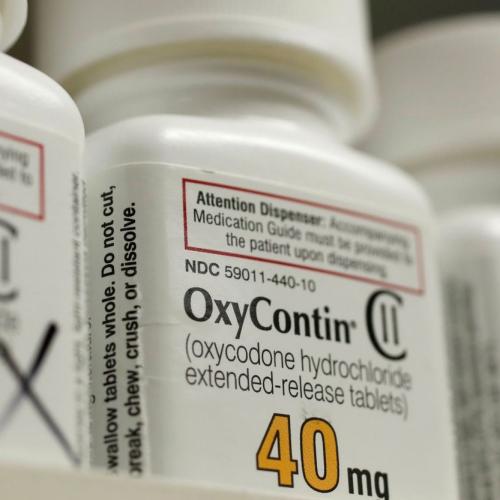
A former top Drug Enforcement Administration (DEA) official has accused Congress of putting pharmaceutical company profits ahead of public health in the battle to combat the USs prescription opioid epidemic. Joseph Rannazzisi, head of the DEA office responsible for preventing prescription medicine abuse until last year, said drug companies and their lobbyists have a stranglehold on Congress to protect a $9bn a year trade in opioid painkillers claiming the lives of nearly 19,000 people a year. Rannazzisi ... said the drug industry engineered recent legislation limiting the DEAs powers to act against pharmacies endangering lives by dispensing disproportionately large numbers of opioids. He also accused lobbyists ... of whipping up opposition to new guidelines for doctors intended to reduce the prescribing of the painkillers. Charges that Congress is too beholden to pharmaceutical companies have been levelled for years. But ... the influence on opioid policies is particularly disturbing because so many lives are being lost. Industry groups have spent hundreds of millions of dollars in lobbying to stave off measures to reduce prescriptions and therefore sales of opioid painkillers. Among the most influential drug industry groups is the Pain Care Forum, co-founded by a top executive of Purdue Pharma the manufacturer of the opioid which unleashed the addiction epidemic, OxyContin. It spent $740m lobbying Congress and state legislatures over the past decade.
Note: See also a Washington Post article for more. For more, see concise summaries of deeply revealing news articles on government corruption and Big Pharma profiteering.
Genetic modification in the United States and Canada has not accelerated increases in crop yields or led to an overall reduction in the use of chemical pesticides. The promise of genetic modification was twofold: By making crops immune to the effects of weedkillers and inherently resistant to many pests, they would grow so robustly that they would become indispensable to feeding the worlds growing population, while also requiring fewer applications of sprayed pesticides. Twenty years ago, Europe largely rejected genetic modification at the same time the United States and Canada were embracing it. Comparing results on the two continents ... shows how the technology has fallen short of the promise. The United States and Canada have gained no discernible advantage in yields - food per acre - when measured against Western Europe. Also, a recent National Academy of Sciences report found that there was little evidence that the introduction of genetically modified crops in the United States had led to yield gains beyond those seen in conventional crops. At the same time, herbicide use has increased in the United States. And the United States has fallen behind Europes biggest producer, France, in reducing the overall use of pesticides, which includes both herbicides and insecticides. Pesticides are toxic by design ... and have been linked to developmental delays and cancer. The same companies make and sell both the genetically modified plants and the poisons.
Note: Explore over 40 scientific studies that have demonstrated the health dangers of GM foods. For more along these lines, see concise summaries of deeply revealing news articles on food system corruption and the GMO controversy.
A group of computer security experts say they figured out how to hack the keyless entry systems used on millions of cars, meaning that thieves could in theory break and steal items without leaving a broken window. Remote entry systems on millions of cars made by Volkswagen since 1995 can be cloned to permit unauthorized access to the car's interior. Another system used by other brands including Ford, General Motor's Opel and Chevrolet and Renault can also be defeated. In a paper to be delivered Friday at the Usenix security conference in Austin, Texas, the authors say a thief could use commonly available equipment to intercept entry codes as they are transmitted by radio frequency, and then use that information to clone another remote so the car could be opened. The paper leaves out key details on how to perform the hack but says the codes can be intercepted with commercially available equipment. "It is unclear whether such attacks ... are currently carried out in the wild by criminals," the report says. "However, there have been various media reports about unexplained theft from locked vehicles in the last years." The report did not establish the exact number of cars that use the vulnerable systems. The report authors said that insurance companies might have to accept that car theft scenarios that would otherwise be considered insurance fraud have a higher probability of being genuine. The only surefire countermeasure, they said, would be to stop using the remote and fall back on the mechanical lock using the conventional metal key.
Note: In 2013, Volkswagen blocked the release of an academic paper describing the vulnerability of its ignition systems to hacking. For more along these lines, see concise summaries of deeply revealing corporate news articles from reliable major media sources.
Physician influence can be bought for as little as a $20 meal, UCSF researchers have found. A study published Monday in JAMA Internal Medicine ... found that doctors who received just one meal averaging $20 were up to twice as likely to prescribe brand-name drugs being promoted than doctors who did not receive any free food. Gifts from pharmaceutical companies to doctors ... have come under scrutiny in recent years for concerns that the money spent by drugmakers directly influences what physicians write on their prescriptions pads. Some doctors deny theyre influenced by money, but a growing number of studies show that financial ties can affect their professional behavior. The UCSF researchers looked at ... the routine briefings many doctors and their staff receive from drug reps during lunches in their offices. The study found that the effect increased as doctors got more meals. Those who received multiple meals were up to three times as likely to prescribe the promoted brand-name drug. Higher-cost meals were associated with greater influence. Doctors who received four or more meals to promote Allergans Bystolic to treat hypertension prescribed the drug at 5.4 times the rate of physicians who received no meals. For Pfizers depression drug Pristiq, that rate was 3.4 times higher. UCSF researchers said that their studies show the buying power of drug makers decreases the use of cheaper, generic drugs and raises costs for patients as well as the health care system.
Note: For more along these lines, see concise summaries of deeply revealing big Pharma profiteering news articles from reliable major media sources.
Nightmare stories of nurses giving potent drugs meant for one patient to another and surgeons removing the wrong body parts have dominated recent headlines about medical care. Lest you assume those cases are the exceptions, a new study by patient-safety researchers provides some context. Their analysis, published in the BMJ ... shows that “medical errors” in hospitals and other health-care facilities are incredibly common and may now be the third-leading cause of death in the United States — claiming 251,000 lives every year, more than respiratory disease, accidents, stroke and Alzheimer’s. Martin Makary, a professor of surgery at the Johns Hopkins University School of Medicine ... led the research. Makary’s research involves a ... comprehensive analysis of four large studies, including ones by the Health and Human Services Department’s Office of the Inspector General and the Agency for Healthcare Research and Quality that took place between 2000 to 2008. His calculation of 251,000 deaths equates to nearly 700 deaths a day — about 9.5 percent of all deaths annually in the United States. Although all providers extol patient safety and highlight the various safety committees and protocols they have in place, few provide the public with specifics on actual cases of harm due to mistakes. Moreover, the Centers for Disease Control and Prevention doesn’t require reporting of errors in the data it collects about deaths through billing codes, making it hard to see what’s going on at the national level.
Note: Read lots more about this disturbing fact. For more along these lines, see concise summaries of deeply revealing news articles on corporate corruption and health from reliable major media sources.
The U.S. lambastes and strong-arms countries that help drug lords and millionaire investors hide their money from tax collectors. Critics say it should look closer to home. America itself is emerging as a top tax haven alongside the likes of Switzerland, the Cayman Islands and Panama. And states such as Delaware, Nevada, South Dakota and Wyoming, in particular, are competing with each other to provide foreigners with the secrecy they crave. "There's a big neon sign saying the U.S. is open to tax cheats," says John Christensen, executive director of the Tax Justice Network. America's openness to foreign tax evaders is coming under new scrutiny after the leak this week of 11.5 million confidential documents from a Panamanian law firm, [which] show how some of the world's richest people hide assets in shell companies to avoid paying taxes. Christensen's group, which campaigns for a global crackdown on tax evaders, says the United States ranks third in the world in financial secrecy, behind Switzerland and Hong Kong but ahead of notorious tax havens such as the Cayman Islands and Luxembourg. Under a 2010 law, passed after it was learned that the Swiss bank UBS helped thousands of Americans evade U.S. taxes, the United States demands that banks and other financial institutions disclose information on Americans abroad to make sure they pay their U.S. taxes. But ... American banks don't even collect the kind of information foreign countries would need to identify tax dodgers.
Note: A 2015 Guardian newspaper article further describes how the US helps the super-rich hide assets. For more along these lines, see concise summaries of deeply revealing financial industry corruption news articles from reliable major media sources.
The world is awash in glyphosate, the active ingredient in the herbicide Roundup, produced by Monsanto. It has now become the most heavily-used agricultural chemical in the history of the world. A study published Tuesday ... reveals that Americans have applied 1.8 million tons of glyphosate since its introduction in 1974. Worldwide, 9.4 million tons of the chemical have been sprayed onto fields. Thats ... enough to spray nearly half a pound of Roundup on every cultivated acre of land in the world. And its troubling, considering that in March 2015 the World Health Organizations International Agency for Research on Cancer unanimously determined that glyphosate is probably carcinogenic to humans. Research has also shown that glyphosate is an endocrine disruptor, meaning that it interferes with the proper functioning and production of hormones, in human cell lines. The mass-spraying of glyphosate has [also] led to the explosion of resistant weeds, which have evolved to survive despite being sprayed. Already, weeds resistant to the herbicide are found on half of all American farmers fields. Glyphosate was once only used on a small-scale. However, in the 1990s, Monsanto began introducing genetically modified crops that were resistant to the herbicides, such as Roundup Ready corn and soybeans. Since then, its use has skyrocketed. At the same time, the U.S. Environmental Protection Agency has relaxed its rules. Fifty times more glyphosate is allowed on corn grain now than in 1996.
Note: The negative health impacts of Monsanto's Roundup are well known. Major lawsuits are building over Monsanto's lies to regulators and the public about the safety of glyphosate. For more along these lines, see concise summaries of deeply revealing GMO news articles from reliable major media sources.
On Page 5 of a credit card contract used by American Express ... is a clause that most customers probably miss. If cardholders have a problem with their account, American Express explains, the company may elect to resolve any claim by individual arbitration. Those nine words are at the center of a far-reaching power play orchestrated by American corporations. By inserting individual arbitration clauses into a soaring number of consumer and employment contracts, companies like American Express devised a way to circumvent the courts and bar people from joining together in class-action lawsuits, realistically the only tool citizens have to fight illegal or deceitful business practices. It has become increasingly difficult to apply for a credit card, use a cellphone, get cable or Internet service, or shop online without agreeing to private arbitration. The same applies to getting a job, renting a car or placing a relative in a nursing home. By banning class actions, companies have essentially disabled consumer challenges to ... predatory lending, wage theft and discrimination. This is among the most profound shifts in our legal history, William G. Young, a federal judge ... said in an interview. Ominously, business has a good chance of opting out of the legal system altogether and misbehaving without reproach. Thousands of cases brought by single plaintiffs over fraud, wrongful death and rape are now being decided behind closed doors. And the rules of arbitration largely favor companies.
Note: For more along these lines, see concise summaries of deeply revealing news articles about corruption in financial industry and throughout the corporate world.
A new report provides data illustrating just how big a budgetary issue tax avoidance has become. The analysis released Tuesday comes from ... Citizens for Tax Justice and U.S. Public Interest Research Group. The groups find that almost 72 percent of Fortune 500 companies are operating subsidiaries in so-called tax haven countries like Bermuda and the Cayman Islands. In all, those firms are holding more than $2.1 trillion in accumulated profits offshore for tax purposes. The report says that among the U.S.-based firms with the biggest overseas cash holdings are major financial firms such as Citigroup and Bank of America, which were bailed out by taxpayers after the 2008 financial crisis. Also on the list are tech giants such as Microsoft - which International Business Times last year reported was keeping $92 billion offshore. Assuming a tax rate of just 6 percent on those profits - far less than the official U.S. corporate tax rate and less than Trumps proposed repatriation rate - the groups estimate that the firms would collectively owe $620 billion in additional federal taxes if they werent able to shelter their cash in tax havens. For comparison, thats more than the federal governments entire projected budget deficit for 2015.
Note: For more along these lines, see concise summaries of deeply revealing corporate corruption news articles from reliable major media sources.
The head of a US pharmaceutical company has defended his company's decision to raise the price of a 62-year-old medication used by Aids patients by over 5,000%. Turing Pharmaceuticals acquired the rights to Daraprim in August. After Turing's acquisition, a dose of Daraprim in the US increased from $13.50 (8.70) to $750. The pill costs about $1 to produce, but [CEO Martin] Mr Shkreli, a former hedge fund manager, said that does not include other costs like marketing and distribution, which have increased dramatically in recent years. "We needed to turn a profit on this drug," Mr Shkreli told Bloomberg TV. "The companies before us were actually giving it away almost." He says the practice is not out of line with the rest of the industry. "Daraprim is still underpriced relative to its peers," he told Bloomberg TV. The Infectious Diseases Society of America, the HIV Medicine Association and other health care providers wrote an open letter to Turing, urging the company to reconsider.
Note: Following public outcry, Martin Shkreli now says that Daraprim's price will not increase by 5000%, but the fact that this would even be consider shows how rampant corruption is in the industry. For more along these lines, see concise summaries of deeply revealing big pharma corruption news articles from reliable major media sources.
Risperdal is a billion-dollar antipsychotic medicine with real benefits and a few unfortunate side effects. It can cause strokes among the elderly. And it can cause boys to grow large, pendulous breasts; one boy developed a 46DD bust. Yet Johnson & Johnson marketed Risperdal aggressively to the elderly and to boys while allegedly manipulating and hiding the data about breast development. J&J got caught, pleaded guilty to a crime and has paid more than $2 billion in penalties and settlements. But that pales next to some $30 billion in sales of Risperdal around the world. In 1994, J&J released Risperdal. The Food and Drug Administration said it ... was effective primarily for schizophrenia in adults. Thats a small market. So J&J reinvented Risperdal as a drug for a broad range of problems, targeting everyone from seniors with dementia to children with autism. The company also turned to corporate welfare: It paid doctors and others consulting fees and successfully lobbied for Texas to adopt Risperdal in place of generics. Even though Risperdal wasnt approved for the elderly, J&J formed a sales force called ElderCare. The F.D.A. protested and noted that there were an excess number of deaths among the elderly who took the drug. At the same time, J&J ... began peddling the drug to pediatricians, so that by 2000, more than one-fifth of Risperdal was going to children and adolescents. In 2003, the company had a back to school marketing campaign for Risperdal. By 2004 Risperdal was a $3-billion-a-year drug.
Note: For more, see this NY Times article and this one. For more along these lines, see concise summaries of deeply revealing big pharma corruption news articles from reliable major media sources.
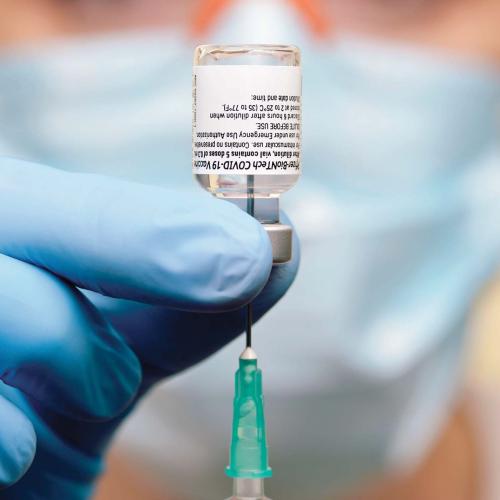
Since HPV vaccines were introduced seven years ago, it has been assumed that they would prevent cervical cancer. But the vaccines have never been shown to prevent any cancer. It has also been assumed for seven years that the vaccine is safe. Yet there have been thousands of adverse event reports. The CDC itself admits there are three times as many adverse events for the HPV vaccine Gardasil as there are for all other vaccines combined. Compared to all other vaccines in the U.S. schedule, Gardasil alone is associated with 61 percent of all serious adverse events, including 63.8 percent of all deaths and 81.2 percent of all permanent disabilities in females under 30 years of age. Japan, India and France have removed HPV vaccines from their recommended list due to safety and efficacy concerns. The Health, Welfare and Labor Ministry of Japan also conducted a national investigation regarding post HPV vaccine injuries, [which] concluded that the harm experienced by women taking the vaccine is overwhelmingly greater than any expected benefits. Prompted by medical reports of post-HPV vaccination arrhythmia and motor neuron disabilities in children in Denmark, the European Medicines Agency is conducting an investigation of HPV injection adverse events. Lawsuits for HPV injuries and deaths have also been filed in Spain, France and Columbia.
Note: Read an article showing that several countries have filed lawsuits claiming damage from the HPV vaccine. For more along these lines, see concise summaries of deeply revealing vaccine controversy news articles from reliable major media sources.
The prison phone business is a wildly complex, fiercely secretive and enormously lucrative industry. Over the last decade, [this] business has become a scandalous industry, characterized by lawsuits, exorbitant fees, high phone rates and monopolistic relationships between public jails and private companies that openly offer kickbacks to local sheriffs. "This is about shifting the cost of the police state onto the backs of the poor people being policed," says Paul Wright, executive director of Human Rights Defense Center. [There are] an estimated 2.2 million inmates currently behind bars in America. If you've ever tried to call an inmate, there's a good chance you've heard of Securus, or its main competitor, Global Tel*Link (GTL). The two companies reportedly make up about 80 percent of the prison phone business, which drives about $1.2 billion per year in revenues. In the last few years, Securus, especially, has emerged into one of the largest, if not most secretive, prison technology companies in the business. The company employs 1,000 associates in 46 states, contracts with 2,600 jails and prisons across North America, and provides service to more than 1 million inmates and their families. Securus earned $114.6 million in profits 2014, on revenues of about $404 million. When companies like Securus send proposals to jails and prisons around the country, they offer a percentage of the call rate back to the sheriff's office. It's typical for commissions to range anywhere from 40 percent and 80 percent.
Note: Read more in this Huffington Post article. For more along these lines, see concise summaries of deeply revealing news articles on prisons corruption from reliable major media sources.
The May 20 settlement between the Justice Department and five giant banks reveals the appalling weakness of modern antitrust. The banks had engaged in the biggest price-fixing conspiracy in modern history. It was a "brazen display of collusion" that went on for years, said Attorney General Loretta Lynch. But there will be no trial [and] no executive will go to jail. The fines ... will be treated by the banks as costs of doing business. America used to have antitrust laws that permanently stopped corporations from monopolizing markets. No longer. The result has been higher prices for the many, and higher profits for the few. It's a hidden upward redistribution from the majority of Americans to corporate executives and wealthy shareholders. Similar upward distributions are occurring elsewhere in the economy. The four largest food companies control 82 percent of beef packing, 85 percent of soybean processing, 63 percent of pork packing, and 53 percent of chicken processing. Monsanto alone owns the key genetic traits to more than 90 percent of the soybeans planted by farmers in the United States, and 80 percent of the corn. Big Agribusiness wants to keep it this way. The list goes on, industry after industry, across the economy. Antitrust has been ambushed by the giant companies it was designed to contain. The market is rigged. And unless government unrigs it through bold antitrust action to restore competition, the upward distributions hidden inside the "free market" will become even larger.
Note: The above article was written by former US Secretary of Labor and current professor of public policy at UC Berkeley Robert Reich. For more along these lines, see concise summaries of deeply revealing news articles about the systemically corrupt financial industry and the income inequality that this contributes to.
Within hours of Superstorm Sandy slamming the East Coast two years ago, Americans opened their wallets to help donating millions to the first charity that came to mind: the American Red Cross. In the months after the disaster, the Red Cross touted its success in delivering food, clothes and shelter to tens of thousands of people left homeless by the storm. The venerable charity's track record in dealing with the megastorm is now being challenged. Multiple internal documents obtained by NPR and ProPublica along with interviews with top Red Cross officials ... depict an organization so consumed with public relations that it hindered the charity's ability to provide disaster services. Among NPR and ProPublica's findings: The Red Cross national headquarters in Washington "diverted assets for public relations purposes." A former Red Cross official managing the Sandy effort says 40 percent of available trucks were assigned to serve as backdrops for news conferences. Distribution of relief was "politically driven instead of [Red Cross] planned." Relief organizers were ordered to produce 200,000 additional meals one day to drive up numbers. They did it at extraordinary cost, even though there was no one to deliver them to and most went to waste. It wasn't just Sandy. When Isaac hit Mississippi and Louisiana earlier in 2012 ... one Red Cross official had 80 trucks drive around empty or largely empty "just to be seen," as one of the drivers recalls.
Note: The above story follows up on this Salon/ProPublica article, where the Red Cross called its spending habits a "trade secret". For more along these lines, see concise summaries of deeply revealing stories about corporate corruption from reliable sources.
Did Merck use false pretenses to monopolize the market for mumps vaccines? A pair of lawsuits one of which is filed by former employees and the other by doctors make this allegation and a federal judge is allowing both claims to proceed. The former employees virologists who filed a whistleblower lawsuit four years ago charge Merck knew its vaccine was less effective than the purported 95% efficacy level. And they alleged that senior management was aware, complicit and in charge of testing that concealed the actual effectiveness. They claim to have witnessed fIrsthand what they describe as improper testing and data falsification in which Merck engaged in order to conceal what the drug maker knew about the vaccines diminished efficacy. In fact, their Merck superiors and senior management pressured them to participate in the fraud and subsequent cover up when they objected to and tried to stop it, according to their lawsuit. The feds declined to join the lawsuit, which was unsealed two years ago. Shortly afterwards, the physicians subsequently filed the other lawsuit charge the vaccine was mislabeled and was not the product for which the government or other purchasers paid, which meant that Merck violated the False Claims Act. Both lawsuits note that Merck held an exclusive license to sell a mumps vaccine and its actions discouraged competition. The ultimate victims here are the millions of children who, every year, are being injected with a mumps vaccine that is not providing them with an adequate level of protection, the lawsuit filed by the virologists states. Meanwhile, the mumps vaccine was ringing the register at Merck, which reported that sales reached $621 million last year.
Note: Read a CBS News article which shows how Merck literally created a hit list for doctors who opposed use of the deadly drug Vioxx, which was responsible for thousands of deaths. A second CBS article shows how Merck created a fake medical journal to support Vioxx and harassed reporters revealing the truth. For more along these lines, see concise summaries of deeply revealing health corruption news articles from reliable major media sources.
Just weeks before Blackwater guards fatally shot 17 civilians at Baghdads Nisour Square in 2007, the State Department began investigating the security contractors operations in Iraq. But the inquiry was abandoned after Blackwaters top manager there issued a threat: that he could kill the governments chief investigator and no one could or would do anything about it as we were in Iraq. American Embassy officials in Baghdad sided with Blackwater rather than the State Department investigators as a dispute over the probe escalated in August 2007, the previously undisclosed documents show. The officials told the investigators that they had disrupted the embassys relationship with the security contractor and ordered them to leave the country. After returning to Washington, the chief investigator wrote a scathing report to State Department officials documenting misconduct by Blackwater employees and warning that lax oversight of the company, which had a contract worth more than $1 billion to protect American diplomats, had created an environment full of liability and negligence. The management structures in place to manage and monitor our contracts in Iraq have become subservient to the contractors themselves, the investigator, Jean C. Richter, wrote in an Aug. 31, 2007, memo to State Department officials. Blackwater contractors saw themselves as above the law, he said, adding that the hands off management resulted in a situation in which the contractors, instead of Department officials, are in command and in control.
Note: For more on this, see concise summaries of deeply revealing war crimes news articles from reliable major media sources.
Nearly half of American adults believe the federal government, corporations or both are involved in at least one conspiracy to cover up health information, a new survey finds. Conspiracy theories on everything from cancer cures to cellphones to vaccines are well known and accepted by sizable segments of the population, according to a research letter published this week in JAMA Internal Medicine. The findings reflect "a very low level of trust" in government and business, especially in pharmaceutical companies, says study co-author Eric Oliver, a professor of political science at the University of Chicago. The online survey of 1,351 adults found: 37% agree the Food and Drug Administration is keeping "natural cures for cancer and other diseases" away from the public because of "pressure from drug companies." 20% believe health officials are hiding evidence that cellphones cause cancer. 20% believe doctors and health officials push child vaccines even though they "know these vaccines cause autism and other psychological disorders." Smaller numbers endorse theories involving fluoride, genetically modified foods and the deliberate infection of African Americans with HIV. 49% believe at least one of the theories and 18% believe at least three. The beliefs also go along with certain health behaviors, the survey found. Those who believe at least three health conspiracy theories are less likely to use sunscreen, get flu shots or get check-ups and are more likely to use herbal remedies and eat organic foods.
Note: For an intriguing list of 10 major health cover-ups with evidence to back it up, click here.
Important Note: Explore our full index to revealing excerpts of key major media news articles on several dozen engaging topics. And don't miss amazing excerpts from 20 of the most revealing news articles ever published.