


























Corporate Corruption News Articles
Below are key excerpts of revealing news articles on corporate corruption from reliable news media sources. If any link fails to function, a paywall blocks full access, or the article is no longer available, try these digital tools.

Marcia Angell [is] a faculty member at the Harvard Medical School [and one of the] former editors of The New England Journal of Medicine. Her new book, "The Truth About the Drug Companies," is a sober, clear-eyed attack on the excesses of drug company power. How does the drug industry deceive us? It plies attending physicians with expense-paid junkets to St. Croix and Key West, Fla., where they are given honoraria and consulting fees to listen to promotional presentations. It promotes new or little-known diseases such as "social anxiety disorder" and "premenstrual dysphoric disorder" as a way of selling the drugs that treat them. It sets up phony front groups disguised as "patient advocacy organizations." It hires ghostwriters to produce misleading scientific articles and then pays academic physicians to sign on as authors. It sends paid lackeys and shills out onto the academic lecture circuit to ''educate" doctors about a drug's unapproved uses. It hires multinational PR firms to trumpet dubious studies as scientific breakthroughs while burying the studies that are likely to harm sales. It buys up the results of publicly funded research. It maintains a political chokehold on the American public by donating more money to political campaigns than any other industry in the country. For many years the drug industry has reaped the highest profit margins of any industry in America. In 2002, the top 10 American drug companies had profit margins of 17 percent; Pfizer, the largest, had profit margins of 26 percent. So staggeringly profitable is the drug industry that in 2002 the combined profits for the top 10 drug companies in the Fortune 500 were greater than those of all the other 490 companies combined.
Note: For an excellent 10-page summary of this revealing book written by the esteemed author, click here. For additional reliable information on the health cover-up, click here.
The Carlyle Group [is] an investment house famous as one of the most well-connected companies anywhere. Former president George H.W. Bush is a Carlyle adviser. Former British prime minister John Major heads its European arm. Former secretary of state James Baker is senior counselor, former White House budget chief Richard Darman is a partner, former SEC chairman Arthur Levitt is senior adviser -- the list goes on. Those associations have brought Carlyle enormous success. The Washington-based merchant bank controls nearly $14 billion in investments, making it the largest private equity manager in the world. It buys and sells whole companies the way some firms trade shares of stock. But the connections also have cost Carlyle. It has developed a reputation as the CIA of the business world -- omnipresent, powerful, a little sinister. Media outlets from the Village Voice to BusinessWeek have depicted Carlyle as manipulating the levers of government from shadowy back rooms. Congresswoman Cynthia McKinney (D-Ga.) even suggested that Carlyle's and Bush's ties to the Middle East made them somehow complicitous in the Sept. 11 terror attacks. It didn't help that as the World Trade Center burned on Sept. 11, 2001, the news interrupted a Carlyle business conference at the Ritz-Carlton Hotel here attended by a brother of Osama bin Laden. Former president Bush, a fellow investor, had been with him at the conference the previous day. Bush['s] primary function is to give speeches for Carlyle that attract wealthy foreigners in places where the former president is especially revered, such as Asia. The company has rewarded its faithful with a 36 percent average annual rate of return.
Note: If the above link fails, click here. To understand the amazingly powerful role of this low-profile, yet extremely wealthy and influential group, click here to view free a 48-minute documentary shown on Dutch national TV which clearly depicts the depths of corruption and deceit at the highest levels of government. You will be thankful that you watched this highly educational film.
Outside this country, there is a widespread belief that U.S. military deployments in Central Asia mostly are about oil. An article in the Guardian of London headlined, "A pro-western regime in Kabul should give the U.S. an Afghan route for Caspian oil," foreshadowed the kind of skeptical coverage the U.S. war now receives in many countries. Author George Monbiot ... wrote that the U.S. oil company Unocal Corp. had been negotiating with the Taliban since 1995 to build "oil and gas pipelines from Turkmenistan, through Afghanistan and into Pakistani ports on the Arabian sea." Unocal pulled out of the deal after the 1998 terrorist attacks on U.S. embassies in Kenya and Tanzania were linked to terrorists based in Afghanistan. The terrorist acts of Sept. 11, though tragic, provided the Bush administration a [pretext] to invade Afghanistan, oust the recalcitrant Taliban and, coincidentally, smooth the way for the pipeline. To make things even smoother, the U.S. engineered the rise to power of two former Unocal employees: Hamid Karzai, the new interim president of Afghanistan, and Zalmay Khalizad, the Bush administration's Afghanistan envoy. [Uri] Averny, a former member of the Israeli Knesset ... argues that the war on terrorism provides a perfect pretext for America's imperial interests. "If one looks at the map of the big American bases created for the war, one is struck by the fact that they are completely identical to the route of the projected oil pipeline to the Indian Ocean." No wonder the rest of the world is a bit skeptical about our war on evildoers.
Note: Why do so few people know that these two top officials of Afghanistan were once paid by an American oil company? For important reports from major media sources on the realities of the "war on terror," click here.
A recent Cochrane Evidence Synthesis and Methods article examines internal pharma industry documents, primarily obtained through litigation. The study finds that the pharmaceutical industry employs numerous ghost management strategies to corrupt research, circumvent and undermine regulations, manipulate consumers, and protect its interests. The authors write: “The scientific literature using internal documents confirmed widespread corporate influence in the pharmaceutical sector. While the academic literature used internal documents related to only a handful of products, our research results, based on ghostmanagement categories, demonstrate the extent of corporate influence in every interstice of pharmaceutical markets, particularly in clinical research and clinical practice.” Analysis of the articles revealed several common ghost management strategies the pharmaceutical industry utilizes. Ghost management is a system of behind-the-scenes processes by which the industry corrupts researchers, clinicians, and regulatory agencies with gifts and bribes and determines what research will be funded, what scientific journals can publish, and how physicians, etc., will present their product. The present research reveals eight broad categories of ghost management: scientific capture, professional capture, regulatory capture, media capture, market capture, technological capture, civil society capture, and others. Scientific capture was the most commonly analyzed ghost management strategy.
Note: For more along these lines, see concise summaries of deeply revealing news articles on Big Pharma corruption from reliable major media sources.
Every five years, top officials of the Food and Drug Administration go behind closed doors to negotiate the terms of its core budget – about $3 billion this year. But the F.D.A. is not at the table with members of Congress or with White House officials. Instead, it's in dozens of meetings with representatives of the giant pharmaceutical companies whose products the agency regulates. The negotiations are a piece of the "user fee" program in which drug, device and biotech companies make payments to the agency partly to seek product approvals. The fees ... make up nearly half of the F.D.A.'s budget, financing 6,500 jobs at the agency. The pharmaceutical industry funding alone has become so dominant that last year it accounted for three-quarters – or $1.1 billion – of the agency's drug division budget. Advocates for patients and doctors say the agreements have enabled the industry to weaken the approval process meant to ensure that drugs are safe and effective. "It's kind of like a devil's bargain," said Dr. Joseph Ross, a professor at the Yale School of Medicine who has studied F.D.A. policies, "that I think is not in the best interest of the agency, because it turns this every-five-year cycle into the F.D.A. essentially asking industry, 'What can we do to secure this money?'" Senator Bernie Sanders ... suggested that the pharmaceutical companies' tendency to charge "outrageous" prices was related to their significant role in funding and advancing policy goals of the F.D.A.'s drug division.
Note: A revealing interview of a top cardiologist illuminates the history of how Big Pharma has corrupted science and greatly damaged public health. For more along these lines, see concise summaries of news articles on big Pharma corruption from reliable major media sources.
The International Federation of Health Plans, a group representing the C.E.O.s of health insurers worldwide, publishes a guide every few years on the international cost for common medical services. Its newest report, on 2017 prices, came out this month. Every time, the upshot is vivid and similar: For almost everything on the list, there is a large divergence between the United States and everyone else. Patients and insurance companies in the United States pay higher prices for medications, imaging tests, basic health visits and common operations. Those high prices make health care in the U.S. extremely expensive, and they also finance a robust and politically powerful health care industry, which means lowering prices will always be hard. For a typical angioplasty, a procedure that opens a blocked blood vessel to the heart, the average U.S. price is $32,200, compared with $6,400 in the Netherlands, or $7,400 in Switzerland, the survey finds. A typical M.R.I. scan costs $1,420 in the United States, but around $450 in Britain. An injection of Herceptin, an important breast cancer treatment, costs $211 in the United States, compared with $44 in South Africa. These examples aren’t outliers. Researchers at Harvard conducted an exhaustive study last year of things that make health systems in developed countries different from one another. The clear finding of those researchers was that it’s this huge gap in prices ... that helps explain why the United States is such an expensive place to be sick.
Note: For more along these lines, see concise summaries of deeply revealing news articles on health from reliable major media sources.
A new EWG peer-reviewed study has found chlormequat, a little-known pesticide, in four out of five, or 80 percent, of people tested. The groundbreaking analysis of chlormequat in the bodies of people in the U.S. rings alarm bells, because the chemical is linked to reproductive and developmental problems in animal studies, suggesting the potential for similar harm to humans. EWG’s research, published February 15 in the Journal of Exposure Science and Environmental Epidemiology, tested for the presence of chlormequat in urine collected from 96 people between 2017 and 2023. The chemical was found in the urine of 77 of them. We detected the chemical in 92 percent of oat-based foods purchased in May 2023, including Quaker Oats and Cheerios. The fact that so many people are exposed raises concerns about its potential impact on public health, since animal studies link chlormequat to reduced fertility, harm to the reproductive system and altered fetal growth. Environmental Protection Agency regulations allow the chemical to be used on ornamental plants only – not food crops – grown in the U.S. But its use is permitted on imported oats and other foods sold here. Many oats and oat products consumed in the U.S. come from Canada. Chlormequat was not allowed on oats sold in the U.S. before 2018, when the Trump EPA gave first-time approval for some amount of the chemical on imported oats. The same administration in 2020 increased the allowable level.
Note: For more along these lines, see concise summaries of deeply revealing news articles on health and food system corruption from reliable major media sources.
Sixty percent of US physicians serving as panel and task force members for the American Psychiatric Association’s official manual of psychiatric disorders received payments from industry totalling $14.24m, finds a study published by The BMJ. Because of the enormous influence of diagnostic and treatment guidelines, the researchers say their findings “raise questions about the editorial independence of this diagnostic manual.” Often referred to as the ‘bible’ of psychiatric disorders, the Diagnostic and Statistical Manual of Mental Disorders, fifth edition, text revision (DSM-5-TR) is the latest edition of the guide that doctors use to diagnose and treat patients. It is thus critical that authors of this psychiatric taxonomy should be free of industry ties. But until the development of Open Payments ... it wasn't possible to determine the amount of monies received by authors of diagnostic and clinical practice guidelines. Their analysis included 92 physicians based in the US who served as members of either a panel (86) or task force (6) on the DSM-5-TR from 2016-19. Of these 92 individuals, 55 (60%) received payments from industry. Collectively, these panel members received a total of $14.24m (£11.21m; €12.96m). The most common types of payment were for food and beverages (91%), followed by travel (69%) and consulting (69%). The greatest proportion of compensation by category of payment was for research funding (70%). To ensure unbiased, evidence based mental health practice, there should be a rebuttable presumption of prohibiting financial conflicts of interest among the panel and task force members.
Note: A recent study found that 80% of the global population will be treated for mental illness at some point in their lives, and that their lives are worse in many ways after receiving diagnosis and treatment. For more along these lines, see concise summaries of deeply revealing news articles on health and Big Pharma profiteering from reliable major media sources.
Pesticides used in our homes, gardens and lawns and sprayed on foods we eat are contributing to a dramatic decline in sperm count among men worldwide, according to a new analysis of studies over the last 50 years. “Over the course of 50 years, sperm concentration has fallen about 50% around the world,” said senior study author Melissa Perry. “While there are likely many more contributing causes, our study demonstrates a strong association between two common insecticides —organophosphates and N-methyl carbamates — and the decline of sperm concentration.” Organophosphates are the main components of nerve gas, herbicides, pesticides and insecticides and are also used to create plastics and solvents. They are widely used in agriculture on the crops we eat. We use them in structural applications within homes and buildings. N-methyl carbamates are structurally and operationally similar to organophosphates, killing insects by damaging their brains and nervous systems. The study, published ... in the journal Environmental Health Perspectives, examined 25 studies around the world on the two chemicals. Those studies looked at 42 different levels of impact among 1,774 men in 21 different study populations. Men who were more highly exposed to the pesticides, such as those who work in agriculture, had significantly less sperm concentration than men who had the least exposure to organophosphates and N-methyl carbamates, the study found.
Note: For more along these lines, see concise summaries of deeply revealing news articles on health and food system corruption from reliable major media sources.
The “Twitter files” revealed an FBI operation to monitor and censor social media content. Dozens of FBI employees worked on the identification and removal of material on a wide range of subjects and that Twitter largely carried out their requests. Nor was it just the FBI, apparently. Emails reveal FBI figures like a San Francisco assistant special agent in charge asking Twitter executives to “invite an OGA” (or “Other Government Organization”) to an upcoming meeting. A week later, Stacia Cardille, a senior Twitter legal executive, indicated the OGA was the CIA, an agency under strict limits regarding domestic activities. Twitter’s own ranks included dozens of ex-FBI agents and executives. The dozens of disclosed emails ... do not include still-undisclosed but apparent government coordination with Facebook and other social media companies. Much of that work apparently was done through the multi-agency Foreign Influence Task Force (FITF), which operated secretly it seems to censor citizens. This is a First Amendment violation. The Twitter files have substantiated long-standing concerns over “censorship by surrogate” or proxy. As with other amendments like the Fourth Amendment, which protects against unreasonable searches or seizures, the government cannot use private agents to do indirectly what it cannot do directly. Just as a police officer cannot direct a security guard to break into an apartment and conduct a search, the FBI cannot use Twitter to censor Americans.
Note: For more along these lines, see concise summaries of deeply revealing news articles on government corruption and media manipulation from reliable sources.
Television ads for drugs are filled with glowing images of people living their best lives, all thanks to that new med they've been prescribed. But drugs being touted on TV often have little to no benefit compared to other treatments, a new study published online Jan. 13 in JAMA Network Open finds. Fewer than one-third of drugs commonly advertised in the United States are highly rated first-line therapies, based on regulatory reviews from three different health agencies, the researchers said. Further, medications categorized as "low benefit" accounted for nearly $16 billion of the $22 billion in TV ad spending during the six-year study period, the results showed. "Proponents of direct-to-consumer pharmaceutical advertising often argue that these ads have high public health value by encouraging uptake of the most therapeutically beneficial therapies. Our study pushes back against this argument," said lead researcher Neeraj Patel. "The U.S. is one of only two high-income countries in the world that widely permits direct-to-consumer advertising of prescription drugs," Patel said. "And there's been a ton of empirical research over the past two decades that has suggested that this type of advertising can be misleading, lead to inappropriate prescribing, and inflate health care costs." In the meantime, people should have frank discussions with their doctor about any drug that's caught their eye on TV, focusing on the real risks and benefits, Patel said.
Note: This profoundly eye-opening interview of a top cardiologist reveals without doubt how big Pharma has corrupted science and greatly damaged public health. For more along these lines, see concise summaries of deeply revealing news articles on big Pharma corruption from reliable major media sources.
A large number of ex-officers from the FBI, CIA, NSC, and State Department have taken positions at Facebook, Twitter, and Google. The revelation comes amid fears the FBI operated control over Twitter censorship and the Hunter Biden laptop story. The Twitter files have revealed the close relationship with the FBI, how the Bureau regularly demanded accounts and tweets be banned and suspicious contact before the Hunter laptop story was censored. The documents detailed how so many former FBI agents joined Twitter's ranks over the past few years that they created their own private Slack channel. A report by Mint Press' Alan MacLeod identified dozens of Twitter employees, who had previously held positions at the Bureau. He also found that former CIA agents made up some of the top ranks in almost every politically-sensitive department at Meta, the parent company of Facebook, Instagram, and WhatsApp. And in another report, MacLeod detailed the extent to which former CIA agents started working at Google. DailyMail.com has now been able to track down nine former CIA agents who are working, or have worked, at Meta, including Aaron Berman, the senior policy manager for misinformation at the company who had previously written the president's daily briefings. Six others have worked for other intelligence agencies before joining the social media giant, many of whom have posted recently about Facebook's efforts to tamp down on so-called 'covert influence operations.'
Note: Explore a deeper analysis on the ex-CIA agents at Facebook and at Google. Additionally, read how Big Tech censors social media on behalf of corporate and government interests. For more along these lines, see concise summaries of deeply revealing news articles on intelligence agency corruption and media manipulation from reliable sources.
While Facebook has long sought to portray itself as a "town square" that allows people from across the world to connect, a deeper look into its apparently military origins and continual military connections reveals that the world's largest social network was always intended to act as a surveillance tool to identify and target domestic dissent. LifeLog was one of several controversial post-9/11 surveillance programs pursued by the Pentagon’s Defense Advanced Research Projects Agency (DARPA) that threatened to destroy privacy and civil liberties in the United States. LifeLog sought to .. build a digital record of "everything an individual says, sees, or does." In 2015, [DARPA architect Douglas] Gage told VICE that "Facebook is the real face of pseudo-LifeLog." He tellingly added, “We have ended up providing the same kind of detailed personal information without arousing the kind of opposition that LifeLog provoked.” A few months into Facebook's launch, in June 2004, Facebook cofounders Mark Zuckerberg and Dustin Moskovitz [had] its first outside investor, Peter Thiel. Thiel, in coordination with the CIA, was actively trying to resurrect controversial DARPA programs. Thiel formally acquired $500,000 worth of Facebook shares and was added its board. Thiel's longstanding symbiotic relationship with Facebook cofounders extends to his company Palantir, as the data that Facebook users make public invariably winds up in Palantir's databases and helps drive the surveillance engine Palantir runs for a handful of US police departments, the military, and the intelligence community.
Note: Consider reading the full article by investigative reporter Whitney Webb to explore the scope of Facebook's military origins and the rise of mass surveillance. Read more about the relationship between the national security state and Google, Facebook, TikTok, and the entertainment industry. For more along these lines, see concise summaries of deeply revealing news articles on intelligence agency corruption and media manipulation from reliable sources.
European criticism of the World Health Organization's handling of the H1N1 pandemic intensified ... with the release of two reports that accused the agency of exaggerating the threat posed by the virus and failing to disclose possible influence by the pharmaceutical industry on its recommendations for how countries should respond. The WHO's response caused widespread, unnecessary fear and prompted countries around the world to waste millions of dollars. At the same time, the Geneva-based arm of the United Nations relied on advice from experts with ties to drug makers in developing the guidelines it used to encourage countries to stockpile millions of doses of antiviral medications. The first report ... came from the Social, Health and Family Affairs Committee of the Parliamentary Assembly of the Council of Europe, which launched an investigation in response to allegations that the WHO's response to the pandemic was influenced by drug companies that make antiviral drugs and vaccines. The second report, a joint investigation by the [British Medical Journal] and the Bureau of Investigative Journalism ... criticized 2004 guidelines the WHO developed based in part on the advice of three experts who received consulting fees from the two leading manufacturers of antiviral drugs used against the virus, Roche and GlaxoSmithKline.
Note:Explore extensive, eye-opening coverage from reliable sources revealing how the swine and avian flu "pandemics" were designed for corporate profit.
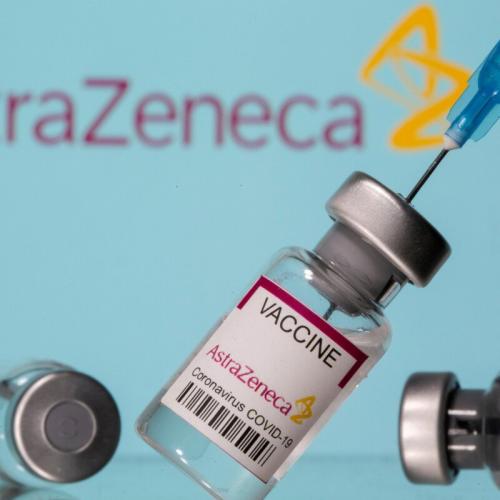
Victims who suffered life-changing injuries from the Oxford-AstraZeneca Covid vaccine say they have faced censorship on social media when trying to discuss their symptoms. The UK-based pharmaceutical giant is being sued in the High Court in a test case by a father-of-two who suffered a significant permanent brain injury as a result of a blood clot after receiving the jab in spring 2021. A second claim is also being brought by the widower and two young children of a woman who died after having the jab. Some who have experienced serious adverse reactions from the AstraZeneca vaccine ... have been given “warnings” on social media websites such as Facebook when trying to talk to one another about their experiences. They say they are being forced to “self censor” and speak in code to avoid having their support groups shut down. In one instance, YouTube attempted to censor a video of testimony given by lawyers to the Covid Inquiry about vaccines, flagging the clip as a violation of its “medical misinformation policy”. UK CV Family, a private Facebook group with 1.2k members for people left injured or bereaved from Covid vaccines, was started in November 2021 by Charlet Crichton after she suffered an adverse reaction from the AstraZeneca jab. Facebook blocked Ms Crichton from commenting at one stage “to prevent misuse” and there were occasions where her account was temporarily banned because her “activity didn’t follow our community standards”.
Note: For more along these lines, see concise summaries of deeply revealing news articles on government COVID vaccines and media manipulation from reliable sources.
OpenAI was created as a non-profit-making charitable trust, the purpose of which was to develop artificial general intelligence, or AGI, which, roughly speaking, is a machine that can accomplish, or surpass, any intellectual task humans can perform. It would do so, however, in an ethical fashion to benefit “humanity as a whole”. Two years ago, a group of OpenAI researchers left to start a new organisation, Anthropic, fearful of the pace of AI development at their old company. One later told a reporter that “there was a 20% chance that a rogue AI would destroy humanity within the next decade”. One may wonder about the psychology of continuing to create machines that one believes may extinguish human life. The problem we face is not that machines may one day exercise power over humans. That is speculation unwarranted by current developments. It is rather that we already live in societies in which power is exercised by a few to the detriment of the majority, and that technology provides a means of consolidating that power. For those who hold social, political and economic power, it makes sense to project problems as technological rather than social and as lying in the future rather than in the present. There are few tools useful to humans that cannot also cause harm. But they rarely cause harm by themselves; they do so, rather, through the ways in which they are exploited by humans, especially those with power.
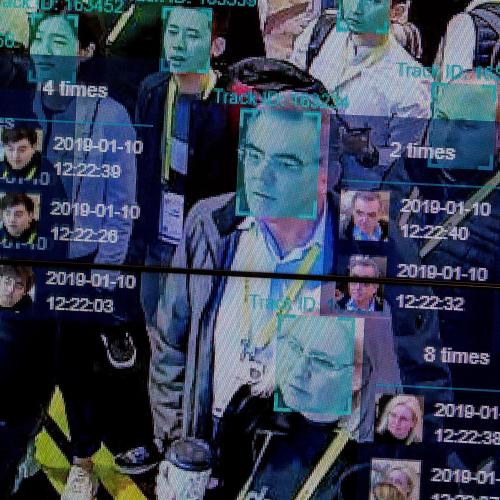
Note: Read how AI is already being used for war, mass surveillance, and questionable facial recognition technology.
Silicon Valley techies are pretty sanguine about commercial surveillance. But they are much less cool about government spying. Government employees and contractors are pretty cool with state surveillance. But they are far less cool with commercial surveillance. What are they both missing? That American surveillance is a public-private partnership: a symbiosis between a concentrated tech sector that has the means, motive, and opportunity to spy on every person in the world and a state that loves surveillance as much as it hates checks and balances. The tech sector has powerful allies in government: cops and spies. No government agency could ever hope to match the efficiency and scale of commercial surveillance. Meanwhile, the private sector relies on cops and spies to go to bat for them, lobbying against new privacy laws and for lax enforcement of existing ones. Think of Amazon’s Ring cameras, which have blanketed entire neighborhoods in CCTV surveillance, which Ring shares with law enforcement agencies, sometimes without the consent or knowledge of the cameras’ owners. Ring marketing recruits cops as street teams, showering them with freebies to distribute to local homeowners. Google ... has managed to play both sides of the culture war with its location surveillance, thanks to the “reverse warrants” that cops have used to identify all the participants at both Black Lives Matter protests and the January 6 coup. Distinguishing between state and private surveillance is a fool’s errand.
Note: For more along these lines, see concise summaries of deeply revealing news articles on the disappearance of privacy from reliable major media sources.
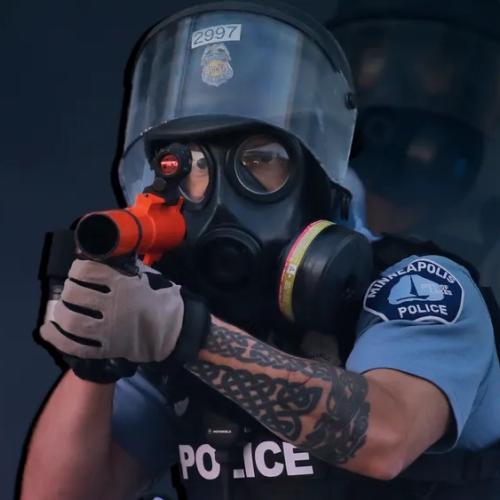
From Virginia to Florida, law enforcement all over the US are increasingly using tools called reverse search warrants – including geofence location warrants and keyword search warrants – to come up with a list of suspects who may have committed particular crimes. While the former is used by law enforcement to get tech companies to identify all the devices that were near a certain place at a certain time, the latter is used to get information on everyone who’s searched for a particular keyword or phrase. It’s a practice public defenders, privacy advocates and many lawmakers have criticised, arguing it violates fourth amendment protections against unreasonable searches. Unlike reverse search warrants, other warrants and subpoenas target a specific person that law enforcement has established there is probable cause to believe has committed a specific crime. But geofence warrants are sweeping in nature and are often used to compile a suspect list to further investigate. Google broke out how many geofence warrants it received for the first time in 2021. The company revealed it received nearly 21,000 geofence warrants between 2018 and 2020. The tech giant did not specify how many of those requests it complied with but did share that in the second half of 2020, it responded to 82% of all government requests for data in the US with some level of information. Apple has taken steps to publish its own numbers. In the first half of 2022 the company fielded a total of 13 geofence warrants and complied with none.
Note: The legal world is struggling to keep up with the rise of tech firms building ever more sophisticated means of surveilling people and their devices. For more along these lines, see concise summaries of deeply revealing news articles on police corruption and the disappearance of privacy from reliable major media sources.
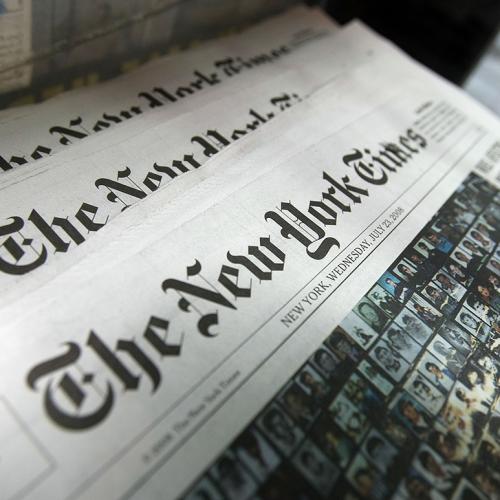
The New York Times tried to block a web crawler that was affiliated with the famous Internet Archive. The Internet Archive’s Wayback Machine has long been used to compare webpages as they are updated over time, clearly delineating the differences between two iterations of any given page. Several years ago, the archive added a feature called “Changes” that lets users compare two archived versions of a website from different dates or times on a single display. The tool can be used to uncover changes in news stories that have been made without any accompanying editorial notes, so-called stealth edits. The Times has, in the past, faced public criticisms over some of its stealth edits. In a notorious 2016 incident, the paper revised an article about then-Democratic presidential candidate Sen. Bernie Sanders, I-Vt. ... drastically after publication — changing the tone from one of praise to skepticism. More recently, the Times stealth-edited an article that originally listed “death” as one of six ways “you can still cancel your federal student loan debt.” Following the edit, the “death” section title was changed to a more opaque heading of “debt won’t carry on.” A service called NewsDiffs — which provides a similar comparative service but focuses on news outlets such as the New York Times, CNN, the Washington Post, and others — has also chronicled a long list of significant examples of articles that have undergone stealth edits, though the service appears to not have been updated in several years.
Note: The manipulation of media coverage for Bernie Sanders' campaign was widespread, as discussed in an WantToKnow.info interview with media activist Tony Brasunas. For more along these lines, see concise summaries of deeply revealing news articles on corporate corruption and media manipulation from reliable sources.
Researchers from Johns Hopkins University recently published an article in JAMA that highlights rising concern around the effects of direct-to-consumer advertising (DTC) on health care. Their work shows that DTC advertising might have direct harm on patients. They studied drug characteristics and total advertising expenditures for the 150 top-selling branded prescription drugs in the United States, finding that total promotional spending by the manufacturer was associated with a significantly lower added clinical benefit for the drug. In fact, companies spent nearly 15% more on DTC advertising for drugs that had demonstrated lower added benefit. Even more troubling, each 1.5% increase in spending was associated with a 10% increase in sales. Simply put, pharmaceutical companies spent more money on DTC advertising when medical research found that the drug was less effective, and this spending directly led to more sales for those inferior drugs. The U.S. is one of only two countries in the world that still allows direct-to-consumer advertising. Aside from increased pressure on providers to prescribe particular drugs which may not be the best option, there are other downsides to DTC. The data show that DTC advertising leads to increased drug costs overall, adding to the already skyrocketing costs of medical care in America. Additionally, DTC advertising tends to reduce use of generic medications, which are often equally effective but significantly cheaper for patients.
Note: This profoundly eye-opening interview of a top cardiologist reveals without doubt how big Pharma has corrupted science and greatly damaged public health. For more along these lines, see concise summaries of deeply revealing news articles on big Pharma corruption from reliable major media sources.
Important Note: Explore our full index to revealing excerpts of key major media news articles on several dozen engaging topics. And don't miss amazing excerpts from 20 of the most revealing news articles ever published.