












































Corporate Corruption News Articles
Below are key excerpts of revealing news articles on corporate corruption from reliable news media sources. If any link fails to function, a paywall blocks full access, or the article is no longer available, try these digital tools.

A Vietnamese doctor who has treated dozens of victims of avian flu claims the drug being stockpiled around the world to combat a pandemic is 'useless' against the virus. Dr Nguyen Tuong Van runs the intensive care unit at the Centre for Tropical Diseases in Hanoi and has treated 41 victims of H5N1. Van followed World Health Organisation (WHO) guidelines and gave her patients Tamiflu, but concluded it had no effect. 'We place no importance on using this drug on our patients,' she said. 'Tamiflu is really only meant for treating ordinary type A flu. It was not designed to combat H5N1 . . . (Tamiflu) is useless.' Roche, the company that makes Tamiflu, has sold stockpiles of the drug to 40 countries and insists there is clear evidence it will protect against a future flu virus. However, it stresses the drug must be given within 48 hours to be effective. The WHO admitted Tamiflu had not been widely successful in humans. 'However, we believe in many Asian countries it hasn't been used until late in the illness,' a spokesman said.
Note: Yet hundreds of millions of dollars are being spent to stockpile this drug. It's quite interesting that the former chairman of the board of directors of the company that made Tamiflu is current Secretary of Defense Donald Rumsfeld. Mr. Rumsfeld has had over $5 million in stock gains from the sales of this drug. To read about this and lots more: http://www.WantToKnow.info/avianflu
California refiners are simply cashing in on a system that allows a handful of players to keep prices high by carefully controlling supplies. The result is a kind of miracle market in which profits abound, outsiders can't compete and a dwindling cadre of gas station operators has little choice but go along. Refiners "not only control how much supply is in the marketplace, they control who gets it and at what price," said Dennis DeCota, executive director of the California Service Station and Automotive Repair Assn. The recent history of California's fuel industry is a textbook case of how a once-competitive business can become skewed to the advantage of a few, all with the federal government's blessing. Refiners acknowledge their California businesses have become the most profitable in the nation. The rest of the country isn't far behind. Characteristics once unique to California specialty fuels, a refinery shortage, the growing dominance of a few companies have begun to plague other gasoline markets.
ENRON: The Smartest Guys in the Room [is] the inside story of one of historys greatest business scandals, in which top executives of Americas seventh largest company walked away with over one billion dollars while investors and employees lost everything. Based on the best-selling book ... this tale of greed, hubris and betrayal reveals the outrageous personal excesses of the Enron hierarchy and the moral vacuum that led CEO Ken Lay - along with other players including accounting firm Arthur Andersen, Chief Operating Officer Jeffrey Skilling and Chief Financial Officer Andy Fastow - to manipulate securities trading, bluff the balance sheets and deceive investors. By 2000, the company has grown into the largest natural gas merchant in North America, eventually branching out into trading other commodities. Jeff Skilling is named CEO, and the company stock skyrockets. Meanwhile, Skillings black box accounting results in declared earnings of 53 million dollars for a collapsing deal that doesnt profit a cent. And Enrons West Coast power desk has its most profitable month ever as California citizens become casualties of Enrons scheme to artificially increase demand for electricity, resulting in rolling blackouts and two deaths. When Enrons sleight of hand accounting and unethical trading eventually meet the realities of balance sheets that dont balance and products that dont exist, unwitting employees who have anchored their financial futures to the Enron ship watch in horror as water rushes in overhead.
Note: Watch this revealing documentary on this webpage. Enron was American's seventh-largest public company and controlled 25 percent of the nation's energy before it failed in 2002. Its stock plummeted from $90 a share to 9 cents a share in a matter of months after fraud was uncovered. For more along these lines, see concise summaries of deeply revealing corporate corruption news articles from reliable major media sources.
No one foresaw ... the shocking extent to which the internet would change the terms of trade between corporations and society. One of the world's largest drug companies [was] the first victim. Britain's GlaxoSmithKline, the world's second-largest pharma, denied any wrongdoing, but agreed to pay $2.5m ... for concealing evidence of its antidepressant Seroxat's potential for harming children, while doing them no measurable good. Infinitely more frightening ... this pharma had the backing of institutions that we, the public, rely on to protect us from poisoning by prescription. The Royal College of Psychiatrists had insisted only a year earlier that 'there is no evidence that antidepressant drugs can cause dependence syndromes'. It was really the internet that allowed public health activists to do an end run around GSK's and the medical authorities' denials of the drug's risks. An explosion of websites dedicated to vivid accounts of antidepressant reactions told these campaigners about hundreds of thousands affected by a problem that officially did not exist. Health activists in Britain and America have uncovered the core of pharma might. In both countries, clinical drug tests are paid for by the pharmas, who tweak the trials' design for the best possible results. Until recently, only the most favourable findings got published in the 20,000-odd biomedical journals, many of them dependent on pharmas for funding. The drugs are approved for marketing by regulators, whose salaries are mostly financed by the subjects of their evaluations. The medicines are then prescribed by doctors routinely courted with pharma gifts ... meant to persuade them to change their prescribing habits.
Note: For a two-page summary with lots more reliable information on major health cover-ups by a doctor who was editor-in-chief of one of the most pretigious medical journals in the world, click here.
The Bilderberg group, an elite coterie of Western thinkers and power-brokers, has been accused of fixing the fate of the world behind closed doors. As the organisation marks its 50th anniversary, rumours are more rife than ever. On Thursday the Bilderberg group marks its 50th anniversary with the start of its yearly meeting. For four days some of the West's chief political movers, business leaders, bankers, industrialists and strategic thinkers will hunker down in a five-star hotel in northern Italy to talk about global issues. What sets Bilderberg apart from other high-powered get-togethers, such as the annual World Economic Forum (WEF), is its mystique. Not a word of what is said at Bilderberg meetings can be breathed outside. No reporters are invited in and while confidential minutes of meetings are taken, names are not noted. A former journalist, Mr Gosling runs a campaign against the group from his home in Bristol, UK." One of the first places I heard about the determination of US forces to attack Iraq was from leaks that came out of the 2002 Bilderberg meeting," says Mr Gosling.
Generic drugs are just as safe and effective as their brand-name counterparts but they cost only a fraction as much. That is because companies that produce the generic versions simply copy the formula developed by the drugs inventor years before. While your drugstore charges you less for a generic drug than a brand name version, that price difference is nothing compared to the markup most druggists place on the generics. Your pharmacy most likely paid a wholesale price of only pennies for that generic medicine. They then charge you a markup of 3,000%, 4,000%, even 5,000% or more, pocketing most of your savings. Whos paying sky-high prices? People who can least afford to get ripped offthe elderly, the unemployed, and everybody who has to pay for their prescription medicine out of their own pocket. At CVS the cost of generic Prozac is marked up at least 56 times what the drug cost wholesale. It is a 5,594% markup. And in our survey of more than a dozen popular generic drugs, CVS leads the pack with average markups of 1,436% Walgreens is not far behind at 1,341% and Rite Aid markups on generics average 1,183%. [WXYZ reporter] Steve Wilson took the issue to Kurt Proctor, Vice President of the Association of Chain Drug Stores. "Explain to me why its necessary to take an 82 cent product and mark it up to $46.69? You have to mark it up 5,500% to meet your costs to make a profit? This is really about greed, isnt it?" asked Wilson. "Its not about greed," responded Proctor. "Thats not accurate at all. Thats a misleading statement. What I hope you will focus on is making sure people use their medications correctly."
Note: This important exposure of price-gouging by pharmacies is still available at Web Archive (click on the link above for the complete article, which is well worth reading in its entirety), but for some reason has been taken down at WXYZ's website. Could it be someone doesn't want us to know about this?
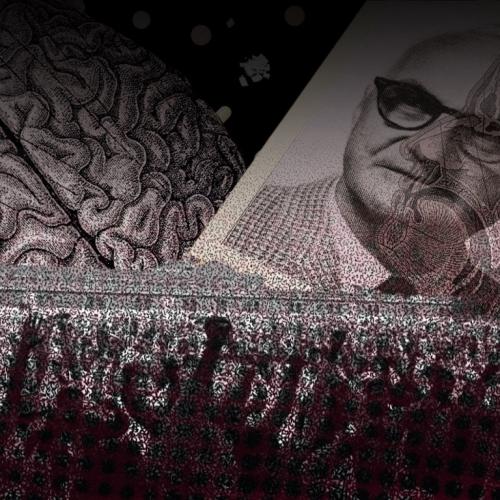
For decades, priests in this country abused children in parish after parish while their superiors covered it all up. Now it turns out the orders for this cover up were written in Rome at the highest levels of the Vatican. [A] confidential Vatican document, obtained by CBS News, lays out a church policy that calls for absolute secrecy when it comes to sexual abuse by priests anyone who speaks out could be thrown out of the church. The policy was written in 1962 by Cardinal Alfredo Ottaviani. The document, once "stored in the secret archives" of the Vatican, focuses on crimes initiated as part of the confessional relationship. Bishops are instructed to pursue these cases "in the most secretive way ... restrained by a perpetual silence ... and everyone (including the alleged victim) ... is to observe the strictest secret, which is commonly regarded as a secret of the Holy Office ... under the penalty of excommunication." Larry Drivon, a lawyer who represents alleged victims, said, This document is significant because it's a blueprint for deception. It's an instruction manual on how to deceive and how to protect pedophiles ... and exactly how to avoid the truth coming out." Richard Sipe, a former priest who has written about sex abuse and secrecy in the church, said the document sends a chilling message. You keep it secret at all costs, Sipe said. It's happened in every diocese in this country. According to church records, the document was a bedrock of Catholic sex abuse policy until America's bishops met last summer and drafted new policies to address the crisis in the church.
The Middle Ages had the Knights Templar. The 18th century had the Masons and the Illuminati. Our modern age has golf-playing businessmen. [Jon] Ronson, a 35-year-old British writer, humorist and documentarian, kept reading and hearing about the "tiny elite [that] rules the world from inside a secret room" -- so he decided to go in search of it. He met with extremists of many stripes: Ku Klux Klansmen with a PR bent, Muslim rabble-rousers ... and others convinced that a New World Order meant the end of the world. He sought out the industrialists of groups such as the Bilderberg Group and Bohemian Grove. He wrote about his experiences in "Them." Ronson's extremists seem rather normal. Some are very much aware of how their views marginalize them. The people of "Them" are people who are all too human -- even if they would deny others their humanity. As the saying goes, just because you're paranoid doesn't mean someone's not out to get you. Ronson doesn't deny that many of the extremists in "Them" are, well, extreme. Many have put together half-baked theories that blame the troubles of the world on wealthy businessmen, usually a code word for Jews. Ronson, who's Jewish himself, sometimes found it awkward to listen to their views. Conspiracy theorists tend to be fearful, less educated, less tied in to the power structure. Meanwhile, the leaders of corporations and countries do meet as part of conferences sponsored by organizations such as the Trilateral Commission and the Bilderberg Group. While researching a Bilderberg Group meeting, [Ronson] was chased through parts of Portugal by shadowy security men. He found out just how thin the membrane between "us" and "them" may be.
Note: Them is by far the most balanced, entertaining book you are likely to find on conspiracy theorists. It pokes a lot of fun both at the conspiracy theorists and at the powerful secret groups which he finds to be deluded almost as much as the conspiracy theorists themselves.
It's been a mystery in Washington for weeks. Just before President Bush signed the homeland security bill into law an unknown member of Congress inserted a provision into the legislation that blocks lawsuits against the maker of a controversial vaccine preservative called "thimerosal," used in vaccines that are given to children. Drug giant Eli Lilly and Company makes thimerosal. It's the mercury in the preservative that many parents say causes autism in thousands of children. But nobody in Congress would admit to adding the provision, reports CBS News Correspondent Jim Acosta until now. House Majority Leader Dick Armey tells CBS News he did it to keep vaccine-makers from going out of business under the weight of mounting lawsuits. "I did it and I'm proud of it," says Armey, R-Texas. "It's a matter of national security," Armey says. Because Armey is retiring at the end of the year, some say the outgoing majority leader is the perfect fall guy to take the heat and shield the White House from embarrassment.
Note: A Reuters article reports that the former head of the US's CDC was later named president of Merck's vaccine division with accompanying high salary. Could this be payoff for her support in suppressing studies that cast doubt on vaccines?
Tucked away on the Toyota stand you will find a cheeky little coup that looks sporty but whose raison dtre is fuel economy, the lowest exhaust emissions and ease of recycling. The ES3 the initials stand for Eco Spirit achieves 104mpg in the official European fuel consumption tests, a record for a four-seat car. Some months ago I drove this prototype and not only is it even more economical than the special 3 litre (three litres of fuel for every 100km travelled, or 94mpg) versions of the Audi A2 and VW Lupo that sell in Germany, but the Toyota is more lively and responsive and would be very acceptable as an everyday car. The ES3 has a 1.4 litre turbocharged diesel engine and CVT (continuously variable transmission).
Note: So what happened to this amazing car? Why haven't we heard anything about it since the article was published in 2002? Read the revealing WantToKnow.info article at this link to learn how this amazing car, which was the talk of the fuel economy car industry in 2002, eventually disappeared. And for an excellent essay which provides key information on this topic, including a detailed list of suppressed inventions which greatly improve gasoline mileage reported over the years in respected magazines, click here.
German computer experts are working round the clock to unlock the truth behind an unexplained surge in financial transactions made just before two hijacked planes crashed into New York's World Trade Center Sept. 11. Were criminals responsible for the sharp rise in credit card transactions that moved through some computer systems at the WTC shortly before the planes hit the twin towers? Or was it coincidence that unusually large sums of money, perhaps more than $100 million, were rushed through the computers as the disaster unfolded? A world leader in retrieving data, German-based firm Convar is trying to answer those questions. Using a pioneering laser scanning technology to find data on damaged computer hard drives and main frames found in the rubble of the World Trade Center and other nearby collapsed buildings, Convar has recovered information from 32 computers that support assumptions of dirty doomsday dealings. "The suspicion is that inside information about the attack was used to send financial transaction commands and authorizations in the belief that amid all the chaos the criminals would have, at the very least, a good head start,'' said Convar director Peter Henschel. "Not only the volume but the size of the transactions was far higher than usual for a day like that. There is a suspicion that these were possibly planned to take advantage of the chaos.''
Note: For a CNN article on this most bizarre news, click here. A German news broadcast from March 11, 2002 at this link reveals that the results are being kept secret. But why? And why hasn't there been any follow-up news on this astounding information? Could it be that key government insiders knew there was going to be an attack? For lots more reliable, verifiable information on 9/11 raising serious questions, click here.
A monkey virus linked to human cancers may have contaminated the oral polio vaccine for years after the U.S. government ordered manufacturers to remove it. The Chronicle reported last week that the simian virus SV40 had contaminated early polio vaccine given to millions of Americans. When health officials discovered in 1961 that SV40 caused malignant tumors in lab animals, they ordered the virus eliminated from all future vaccine. But internal memos from Lederle Laboratories, the chief producer of polio vaccine in the United States, indicate SV40 may not have been completely removed. According to one memo, SV40 was found in three of 15 lots of the oral vaccine seven months after the federal directive was issued in March 1961. Lederle released the contaminated vaccine to the public anyway, the memo shows. Scientists discovered SV40 in the Salk polio vaccine in 1960. By then as many as 30 million Americans had been given injections of the SV40-tainted polio vaccine, which was first licensed in 1955. In recent years more than 60 scientific studies have found SV40 in rare human brain, bone and lung-related cancers, the same kinds of tumors the virus caused in laboratory animals. Some scientists believe SV40 may play a role in causing those cancers. The Lederle documents, which were obtained by Philadelphia attorney Stanley Kops in litigation not related to SV40, raise the possibility the virus might have been transmitted by contaminated oral vaccine, licensed for production in 1962.
Note: There are numerous major problems with how vaccines are monitored and developed, yet the media largely fails to address this major issue. For many powerful reports from reliable sources on the dangers of vaccines, click here. For lots more, click here and here.
Joseph Stiglitz, ex-chief economist of the World Bank, ... was in Washington for the big confab of the World Bank and International Monetary Fund. From sources unnamable (not Stiglitz), we obtained a cache of documents marked, 'confidential' and 'restricted'. Stiglitz helped translate one, a 'country assistance strategy'. There's an assistance strategy for every poorer nation, designed, says the World Bank, after careful in-country investigation. But according to insider Stiglitz, the Bank's 'investigation' involves little more than close inspection of five-star hotels. It concludes with a meeting with a begging finance minister, who is handed a 'restructuring agreement' pre-drafted for 'voluntary' signature. The Bank hands every minister the same four-step programme. Step One is privatisation. Stiglitz said that rather than objecting to the sell-offs of state industries, some politicians - using the World Bank's demands to silence local critics - happily flogged their electricity and water companies. After privatisation, Step Two is capital market liberalisation. Stiglitz calls this the 'hot money' cycle. Cash comes in for speculation in real estate and currency, then flees at the first whiff of trouble. A nation's reserves can drain in days. And when that happens, to seduce speculators into returning a nation's own capital funds, the IMF demands these nations raise interest rates to 30%, 50% and 80%. Step Three: market-based pricing - a fancy term for raising prices on food, water and cooking gas. Step Four: free trade. This is free trade by the rules of the World Trade Organisation and the World Bank, which Stiglitz likens to the Opium Wars. 'That too was about "opening markets",' he said.
Note: For an essay by John Perkins, an insider who was directly involved in these severe manipulations, click here. For deeply revealing reports from reliable major media sources on government collusion in financial corruption, click here.
We're giving more and more psychiatric drugs to children. What medicine and psychiatry have done is to take essentially behavioral problems - problems of conflict between adults and children - and redefine them as medical problems. I believe that there is no scientific reason or justification for giving psychoactive agents to children. Take a healthy animal, like a chimpanzee, who wants to groom its neighbor, wants to play, socialize, wants to explore, and particularly would like to escape - that's a normal animal. If you give the animal a stimulant drug, it loses all its spontaneous behavior. And instead, obsessive narrow behavior is enforced. These drugs make good caged animals. Now, if you get all that same behavior in a child, if you crush a child's desire to socialize, to play, to escape, to be full of stuff like kids are, and instead you enforce a narrow obsessive focus, teachers will see this universally as improved behavior. Parents have also been lied to: flat-out lied to. They've been told that children have a neurobiological disorder. On what basis? Physicians and the public grabbed on to what is essentially a PR campaign ... that if you have a mental disturbance, it's biochemical. Now they run into problems. Because the next drug that comes along affects a different neurotransmitter, and then the next one affects a different neurotransmitter. And they're all working, because they all cause certain disabilities of the brain that some people experience as an improvement.
Note: Learn about Dr. Breggin’s key role in stopping lobotomies and much more in this informative interview. For more along these lines, see concise summaries of deeply revealing news articles on Big Pharma corruption from reliable major media sources.
Do drugs really stop working after the date stamped on the bottle? Fifteen years ago, the U.S. military decided to find out. Sitting on a $1 billion stockpile of drugs and facing the daunting process of destroying and replacing its supply every two to three years, the military began a testing program to see if it could extend the life of its inventory. The testing, conducted by the U.S. Food and Drug Administration, ultimately covered more than 100 drugs, prescription and over-the-counter. The results ... show that about 90% of them were safe and effective far past their original expiration date, at least one for 15 years past it. The program's returns have been huge. The military from 1993 through 1998 spent about $3.9 million on testing and saved $263.4 million on drug expense. In light of these results, a former director of the testing program, Francis Flaherty, says he has concluded that expiration dates put on by manufacturers typically have no bearing on whether a drug is usable for longer. "Manufacturers put expiration dates on for marketing, rather than scientific, reasons," says Mr. Flaherty, a pharmacist at the FDA until his retirement last year. "They want turnover." Joel Davis, a former FDA expiration-date compliance chief, says that with a handful of exceptions - notably nitroglycerin, insulin and some liquid antibiotics - most drugs are probably as durable as those the agency has tested for the military. "Most drugs degrade very slowly," he says. "In all likelihood, you can take a product you have at home and keep it for many years." Drug-industry officials ... acknowledge that expiration dates have a commercial dimension.
Note: As the Wall Street Journal charges to view this article at the above link, you can view it free here. For lots more on how the pharmaceutical industry cares more about profits than your health, click here.
Henry Ford [is] convinced that if Congress will complete and lease to him the water-power developments [at Muscle Shoals], he can make this whole section of the South more prosperous. Thomas A. Edison indorsed Mr. Fords views. He is very earnest in his support of Fords [proposal] to finance Muscle Shoals by an issue of currency ... directly by the Government. "If our nation can issue a dollar bond, it can issue a dollar bill," said Mr. Edison. "[When Congress authorizes] an issue of bonds, it must go out to the money brokers. We then must pay interest to the money brokers for the use of our own money. In all our great bond issues, the interest is always greater than the principal. All of the great public works cost more than twice the actual cost on that account. The difference between the bond and the bill is that the bond lets the money brokers collect twice the amount of the bond ... whereas the currency pays nobody but those who directly contribute. Both are promises to pay: but one promise fattens the usurer, and the other helps the people. It is the money broker, the money profiteer, the private banker, that I oppose. It is a terrible situation when the Government ... must go into debt and submit to ruinous interest charges at the hands of men who control the [issuance of currency]. The people must pay any way: why should they be compelled to pay twice as the bond system compels them? [If] Government will adopt this policy of increasing its national wealth without contributing to the interest collector ... you will see an era of progress and prosperity in this country such as could never have come otherwise. Mr. Edison reiterated his belief [that if] the currency method is tried in raising money for public improvements, the country will never go back to the borrow method.
Note: If the above link fails, you can read the a copy of the full, fascinating article at this link or this one. The entire article contains lots of amazing revelations of how big bankers keep us in debt. How fascinating that Ford and Edison, both ultra-wealthy businessmen, here are arguing strongly against the privately owned Federal Reserve system through which private bankers print US money and charge interest on it, and for the US government printing its own money. This would avoid US citizens having to pay the big bankers all of the interest on much of the national debt. For lots of evidence to support this way of thinking, click here.
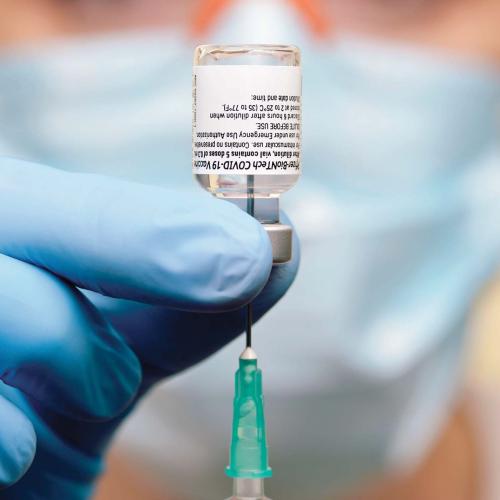
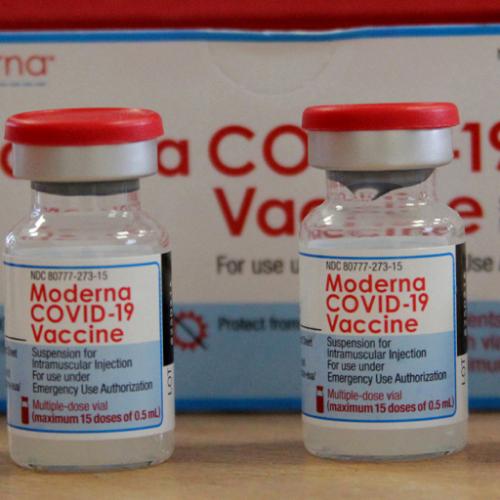
The cost of vaccinating the world against COVID-19 could be at least five times cheaper if pharmaceutical companies weren’t profiteering from their monopolies on COVID-19 vaccines, campaigners from The People’s Vaccine Alliance said today. New analysis by the Alliance shows that the firms Pfizer/BioNTech and Moderna are charging governments as much as $41 billion above the estimated cost of production. Colombia, for example, has potentially overpaid by as much as $375 million for its doses of the Pfizer/BioNTech and Moderna vaccines, in comparison to the estimated cost price. Despite a rapid rise in COVID cases and deaths across the developing world, Pfizer/BioNTech and Moderna have sold over 90 percent of their vaccines so far to rich countries, charging up to 24 times the potential cost of production. Neither company have agreed to fully transfer vaccine technology and know-how with any capable producers in developing countries, a move that could increase global supply, drive down prices and save millions of lives. Analysis of production techniques for the leading mRNA type vaccines produced by Pfizer/BioNTech and Moderna which were only developed thanks to public funding to the tune of $8.3 billion suggest these vaccines could be made for as little as $1.20 a dose. Yet COVAX, the scheme set up to help countries get access to COVID vaccines, has been paying, on average, nearly five times more.
Note: For more along these lines, see concise summaries of deeply revealing news articles on Big Pharma profiteering and coronavirus vaccines from reliable major media sources.
YouTube has banned any coronavirus-related content that directly contradicts World Health Organization (WHO) advice. The Google-owned service says it will remove anything it deems "medically unsubstantiated". Chief executive Susan Wojcicki said the media giant wanted to stamp out "misinformation on the platform". The move follows YouTube banning conspiracy theories falsely linking Covid-19 to 5G networks. Mrs Wojcicki made the remarks on Wednesday during her first interview since the global coronavirus lockdown began. "So people saying, Take vitamin C, take turmeric, well cure you, those are the examples of things that would be a violation of our policy, she told CNN. Anything that would go against World Health Organization recommendations would be a violation of our policy. Last week, Facebook announced users who had read, watched or shared false Covid-19 information would receive a pop-up alert urging them to visit the WHO's website. Facebook-owned messaging service WhatsApp, meanwhile, stopped users forwarding messages already shared more than four times by the wider community to more than one chat at a time. It comes as some of the UK's largest news publishers, including Daily Telegraph and the Guardian, criticised Google for failing to be transparent about its approach to filtering adverts alongside coronavirus-related content, according to the Financial Times.
Note: So now anything posted by those not deemed to be "experts" will be banned. Whatever happened to free speech? Watch YouTube's CEO spell this out in this video. More excellent, little-known information here in an interview with a respected MD whose video was banned. And how can BBC state links between 5G and Covid-19 are false, when that has yet to be established? Is it just a coincidence this CNBC article states China's 5G networks went online just weeks before the coronavirus outbreak? See also concise summaries of revealing coronavirus news articles.
Two former Merck & Co Inc scientists accusing the drugmaker of falsifying tests of its exclusive mumps vaccine said in a court filing on Monday that Merck is refusing to respond to questions about the efficacy of the vaccine. Attorneys at Constantine Cannon, who represent the scientists, asked U.S. Magistrate Judge Lynne Sitarski of the Eastern District of Pennsylvania to compel Merck to respond to their discovery request, which asks the company to give the efficacy of the vaccine as a percentage. Instead of answering the question ... Merck has been consistently evasive, using cut-and-paste answers saying it cannot run a new clinical trial to determine the current efficacy, and providing only data from 50 years ago. The two scientists, Stephen Krahling and Joan Wlochowski, filed their whistleblower lawsuit in 2010 claiming Merck, the only company licensed by the Food and Drug Administration to sell a mumps vaccine in the United States, skewed tests of the vaccine by adding animal antibodies to blood samples. As a result, they said, Merck was able to produce test results showing that the vaccine was 95 percent effective, even though more accurate tests would have shown a lower success rate. The plaintiffs said these false results kept competitors from trying to produce their own mumps vaccines, since they were unable to match the effectiveness Merck claimed. The case is United States ex rel Krahling et al v. Merck & Co Inc, U.S. District Court, Eastern District of Pennsylvania, No. 10-4374.
Note: Why didn't this get reported widely? A search reveals no major media other than Reuters and WSJ covered this. This article in a local paper states the two whistleblowers were threatened by Merck with jail if they went public with this. It also says all students in a Syracuse University mumps outbreak had been properly vaccinated. This excellent article gives a 2019 update and reveals how the vaccines caused injury in a very high percentage of cases. For more, see concise summaries of deeply revealing news articles on vaccines from reliable major media sources.
Pfizer expects to sell $15 billion worth of Covid-19 vaccines in 2021. That would make it the second-highest revenue-generating drug anytime, anywhere, according to industry reports. The maker of the first Covid-19 vaccine to be approved for use in advanced markets has released its earning forecasts for 2021 today. Pfizer expects to earn between $59 billion and $61 billion - up from $42 billion it made in 2020. Sales of the vaccine are set to bring in about a fourth of Pfizer's total revenue this year. That would be nearly as much as its three best-selling products combined. The company is expecting profit margins for the vaccine to be between 25% and 30% which means profits from the vaccine could be around $4 billion. All of Pfizer's costs and profits from the vaccine are split evenly with BioNTech, the biotech company that helped develop the treatment. There are is only one drug in the world that sells more - Humira, a prescription medication for arthritis. Pfizer plans on selling 2 billion doses of the vaccine this year, but that demand should subside in coming years so the revenue of Covid-19 vaccine won't be stable, Pfizer's CEO Albert Bourla said on an call with analysts and investors. The company expects to continue profiting from it by selling booster doses, including ones required to shield against new variants of the virus, Bourla said. Further, Pfizer is pursuing more avenues to employ the mRNA technology underlying the vaccine, including a flu vaccine and other therapeutic applications.
Note: Read more in this revealing Reuters article. For more along these lines, see concise summaries of deeply revealing news articles on coronavirus vaccines and Big Pharma profiteering from reliable major media sources.
Important Note: Explore our full index to revealing excerpts of key major media news articles on several dozen engaging topics. And don't miss amazing excerpts from 20 of the most revealing news articles ever published.



