








































Corporate Corruption News Articles
Below are key excerpts of revealing news articles on corporate corruption from reliable news media sources. If any link fails to function, a paywall blocks full access, or the article is no longer available, try these digital tools.

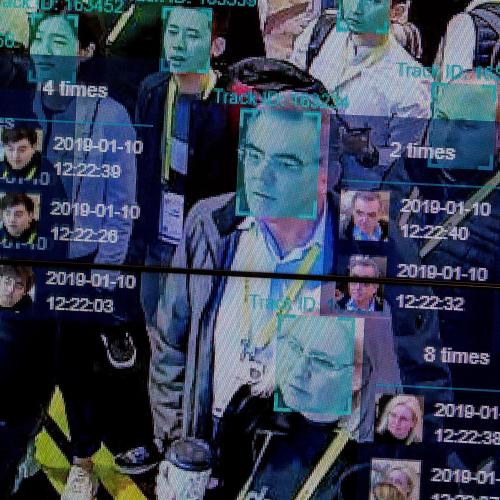
The US government’s new mobile app for migrants to apply for asylum at the US-Mexico border is blocking many Black people from being able to file their claims because of facial recognition bias in the tech, immigration advocates say. The app, CBP One, is failing to register many people with darker skin tones, effectively barring them from their right to request entry into the US. People who have made their way to the south-west border from Haiti and African countries, in particular, are falling victim to apparent algorithm bias in the technology that the app relies on. The government announced in early January that the new CBP One mobile app would be the only way migrants arriving at the border can apply for asylum and exemption from Title 42 restrictions. Racial bias in face recognition technology has long been a problem. Increasingly used by law enforcement and government agencies to fill databases with biometric information including fingerprints and iris scans, a 2020 report by Harvard University called it the “least accurate” identifier, especially among darker-skinned women with whom the error rate is higher than 30%. Emmanuella Camille, a staff attorney with the Haitian Bridge Alliance ... said the CBP One app has helped “lighter-skin toned people from other nations” obtain their asylum appointments “but not Haitians” and other Black applicants. Besides the face recognition technology not registering them ... many asylum seekers have outdated cellphones – if they have cellphones at all – that don’t support the CBP One app.
Note: For more along these lines, see concise summaries of deeply revealing news articles on government corruption and the erosion of civil liberties from reliable major media sources.
Big pharma spends more money on advertising for drugs that have lower health benefits for patients, according to a study published in JAMA on Tuesday, shedding new light on the almost uniquely American practice amid fierce debate over whether direct-to-consumer prescription drug ads should be banned. The proportion of advertising spending allocated to direct-to-consumer ads was an average of 14.3 percentage points higher for drugs with a low added benefit compared to those with a high added benefit, according to the peer-reviewed analysis of the 150 best-selling branded prescription drugs. Manufacturers of the top six best-selling drugs spent the bulk of their promotional budgets—more than 90%—targeting consumers directly rather than clinicians for a range of treatment options for conditions including HIV, multiple sclerosis and numerous cancers. The findings could suggest pharma firms are aiming promotional dollars directly towards consumers ... as part of a “strategy to drive patient demand for drugs that clinicians would be less likely to prescribe,” said the study’s lead author Michael DiStefano. Just two countries in the world allow drug makers to market prescription medications directly to consumers: the U.S. and New Zealand. Most countries prohibit directly advertising prescription medications to the public, something the WHO says influences both people and, indirectly, the medical professionals treating them, making it “harder to make decisions on evidence based medicine.”
Note: For more along these lines, see concise summaries of deeply revealing news articles on pharmaceutical corruption and media manipulation from reliable sources.
After an exhaustive historical investigation into the barrels of DDT waste reportedly dumped decades ago near Catalina Island, federal regulators concluded that the toxic pollution in the deep ocean could be far worse ... than what scientists anticipated. In internal memos made public recently, officials from the U.S. Environmental Protection Agency determined that acid waste from the nation’s largest manufacturer of DDT — a pesticide so powerful it poisoned birds and fish — had not been contained in hundreds of thousands of sealed barrels. Most of the waste, according to newly unearthed information, had been poured directly into the ocean from massive tank barges. Other chemicals — as well as millions of tons of oil drilling waste — had also been dumped decades ago in more than a dozen areas off the Southern California coast. “That’s pretty jaw-dropping in terms of the volumes and quantities of various contaminants that were dispersed in the ocean,” said John Chesnutt ... who has been leading the EPA’s technical team on the investigation. “This also begs the question: So what’s in the barrels? There’s still so much we don’t know.” These revelations build on much-needed research into DDT’s toxic — and insidious — legacy in California. As many as half a million barrels of DDT waste have not been accounted for in the deep ocean. Women face greater risk of obesity, earlier menstruation and possibly breast cancer if their grandmothers were exposed to DDT during pregnancy, researchers say.
Note: Back in 2020, LA Times wrote an excellent investigative piece on the history and background of this unsettling issue. Consider watching a brief and shocking video of how the US government made the public believe DDT was so safe you could eat it and spray it on children. For more along these lines, see concise summaries of deeply revealing news articles on health from reliable major media sources.
Investment bankers have pressed health care companies on the front lines of fighting the novel coronavirus, including drug firms developing experimental treatments and medical supply firms, to consider ways that they can profit from the crisis. The largest voices in the health care industry stand to gain from billions of dollars in emergency spending on the pandemic, as do the bankers and investors who invest in health care companies. Over the past few weeks, investment bankers have been candid on investor calls and during health care conferences about the opportunity to raise drug prices. Executives joked about using the attention on Covid-19 to dodge public pressure on the opioid crisis. Health and Human Services Secretary Alex Azar previously served as president of the U.S. division of drug giant Eli Lilly and on the board of the Biotechnology Innovation Organization, a drug lobby group. During a congressional hearing ... Azar rejected the notion that any vaccine or treatment for Covid-19 should be set at an affordable price. “We can’t control that price because we need the private sector to invest,” said Azar. “The priority is to get vaccines and therapeutics. Price controls won’t get us there.” The initial $8.3 billion coronavirus spending bill passed in early March ... contained a provision that prevents the government from delaying the introduction of any new pharmaceutical to address the crisis over affordability concerns. The legislative text was shaped, according to reports, by industry lobbyists.
Note: For more along these lines, see concise summaries of deeply revealing news articles on the coronavirus pandemic and Big Pharma profiteering from reliable major media sources.
In 2013, the European Union called for a temporary suspension of the most commonly used neonicotinoid-based products on flowering plants, citing the danger posed to bees — an effort that resulted in a permanent ban in 2018. In the U.S., however, industry dug in, seeking not only to discredit the research but to cast pesticide companies as a solution to the problem. Lobbying documents and emails ... show a sophisticated effort over the last decade by the pesticide industry to obstruct any effort to restrict the use of neonicotinoids. Bayer and Syngenta, the largest manufacturers of neonics, and Monsanto, one of the leading producers of seeds pretreated with neonics, cultivated ties with prominent academics ... and other scientists who had once called for a greater focus on the threat posed by pesticides. A study published in peer-reviewed journal PLOS One found that the American landscape has become 48 times more toxic to insects since the 1990s, a shift largely fueled by the rising application of neonics. “Generally, we see the U.S. waiting longer than the EU to take action on a variety of pesticides and other chemicals,” said [Willa] Childress ... with Pesticide Action Network North America. Part of the divergence, Childress continued, stems from a regulatory system in the U.S. that assumes chemical products are generally safe until proven hazardous. In contrast, the EU tends to use the “precautionary principle,” removing products that may cause harm.
Note: Merchants of Poison: How Monsanto Sold the World on a Toxic Pesticide is a recent and comprehensive analysis of documents released in litigation against Monsanto and their dangerous use of glyphosate. These revealing documents expose years of pesticide industry disinformation, attacks on scientists and journalists, and Monsanto’s deep influence on US regulatory agencies to manipulate science and prioritize profits over public health. For more along these lines, see concise summaries of deeply revealing news articles on corruption in science and in the food system from reliable major media sources.
More than 12 million pounds of medically important antibiotics sold in this country are not for use in humans; they're for livestock. And the antibiotics are driving the spread of drug-resistant bacteria in the animals that can get passed on to us through food. Yet it's almost impossible to get on the farms to conduct inspections and stop infection outbreaks from spreading, even for public health officials. In 2015, Washington state epidemiologist Scott Lindquist investigated an outbreak of antibiotic resistant salmonella tied to roaster pigs. The salmonella was resistant to antibiotics. Lindquist traced the cause of the outbreak to a slaughterhouse. "We come in and we find the bacteria, essentially everywhere," [said Lindquist]. "So I want to go back to the farms and I wanna sample the pigs at the farm." But to his surprise, Lindquist, who was conducting the investigation, was flatly turned down. Thwarted, he says, by the National Pork Producers Council, the lead lobbying group for the $23 billion pork industry. They sent Lindquist a letter denying him access to the farms. Even federal inspectors have trouble getting on farms. They are not allowed on a farm to look for bacteria that make people sick without the farmer's permission. Farmers started using antibiotics decades ago ... to make animals grow faster with less food. In 2017, the Food and Drug Administration told farmers to stop using antibiotics in animals for growth purposes, but ... they are permitted to use them for disease prevention, and there are no reporting requirements.
Note: For lots more, see this informative article. For more along these lines, see concise summaries of deeply revealing news articles on food system corruption from reliable major media sources.
Monsanto operated a fusion center to monitor and discredit journalists and activists, and targeted a reporter who wrote a critical book on the company, documents reveal. The records reviewed by the Guardian show Monsanto adopted a multi-pronged strategy to target Carey Gillam, a Reuters journalist who investigated the companys weedkiller and its links to cancer. Monsanto, now owned by the German pharmaceutical corporation Bayer, also monitored a not-for-profit food research organization through its intelligence fusion center, a term that the FBI and other law enforcement agencies use for operations focused on surveillance and terrorism. The documents, mostly from 2015 to 2017, were disclosed as part of an ongoing court battle on the health hazards of the companys Roundup weedkiller. Monsanto planned a series of actions to attack a book authored by Gillam prior to its release, including ... directing industry and farmer customers on how to post negative reviews. Monsanto paid Google to promote search results for Monsanto Glyphosate Carey Gillam that criticized her work. Monsanto fusion center officials wrote a lengthy report about singer Neil Youngs anti-Monsanto advocacy. The internal records dont offer significant detail on the activities or scope of the fusion center, but ... government fusion centers have increasingly raised privacy concerns surrounding the way law enforcement agencies collect data, surveil citizens and share information.
Note: For more along these lines, see concise summaries of deeply revealing news articles on corporate corruption and media manipulation from reliable major media sources.
For almost 17 years, states and counties around the country have conducted elections on machines that have been repeatedly shown to be vulnerable to hacking, errors and breakdowns, and that leave behind no proof that the votes counted actually match the votes that were cast. Now ... states and counties across the country are working to replace these outdated machines with new ones. The purchases replace machines from the turn of the century that raise serious security concerns. But the same companies that made and sold those machines are behind the new generation of technology, and a history of distrust between election security advocates and voting machine vendors has led to a bitter debate over the viability of the new voting equipment. The draw of the new machines, called ballot-marking devices (BMD), is the promise of a paper ballot. But there are concerns with the integrity of the paper trail a BMD would create at every stage. Many BMD models on the market print a sort of two-in-one ballot with one section to be read by machines and another to be read by humans. Barcodes or QR codes that represent a voters choices are printed on the ballot along with plain text showing, presumably, the same information in a way people can understand. When the ballot is scanned, it is the barcode that is scanned and counted, not the text that voters can read. If a barcode is printed that represents a different choice, or the scanners were hacked, voters would not know the difference.
Note: Computer scientists have shown nearly every make and model of electronic voting machine to be vulnerable to hacking. For more along these lines, see concise summaries of deeply revealing elections corruption news articles from reliable major media sources.
Drug makers and other healthcare companies spent almost $30 billion in a single year to influence the medical choices made by Americans and steer them toward treatments that were newer, vastly more expensive and sometimes riskier than their tried-and-true alternatives, new research shows. The 2016 expenditures paid for TV commercials, sponsorships of patients' groups, promotional meetings for doctors, free drug samples and perks for prescribers. The amount represents a 70% increase since 1997, when drug companies began making direct appeals to American consumers. The study ... offers the most comprehensive accounting of healthcare marketing efforts to date. It traces broad shifts in the media and regulatory environment in which health companies operate, as well as the drugs and services – including erectile dysfunction pills, DNA testing kits and robotic surgery services – they are keen to sell. While lawmakers and regulators have tried to counter the impact of healthcare marketing in recent years, the reforms have had little effect on an industry that accounts for nearly 18% of the country's gross domestic product. The drug industry has increasingly turned to a more indirect approach in its marketing: sponsoring disease-awareness campaigns. Such campaigns, in which a company sponsors ads that do not name a particular medication, rose from 44 in 1997 to 401 in 2016, with an attendant spending increase from $177 million to $430 million.
Note: The pharmaceutical industry provides 75% of television advertising revenue when many countries do not allow drug advertising. For more along these lines, see concise summaries of deeply revealing news articles on Big Pharma profiteering from reliable major media sources.
In October, when Ronan Farrow published his first article in The New Yorker on the alleged transgressions of Harvey Weinstein, people in the media and entertainment industries wondered how NBC had missed the story. After all, Mr. Farrow had spent months gathering material on the mogul when he was with NBC News. Now a producer who worked closely with Mr. Farrow has accused the network of putting a stop to the reporting, saying the order came from the very highest levels of NBC. Rich McHugh, the producer, who recently left his job in the investigative unit of NBC News, is the first person affiliated with NBC to publicly charge that the network impeded his and Mr. Farrows efforts to nail down the story of Mr. Weinsteins alleged sexual misconduct. He called the networks handling of the matter a massive breach of journalistic integrity. Three days before Ronan and I were going to head to L.A. to interview a woman with a credible rape allegation against Harvey Weinstein, I was ordered to stop, not to interview this woman, Mr. McHugh said. And to stand down on the story altogether. There was a point in our reporting where I felt there were obstacles to us reporting this externally, and there were obstacles to us reporting this internally, the producer said. Externally, I had Weinstein associates calling me repeatedly. I knew that Weinstein was calling NBC executives directly. One time it even happened when we were in the room.
Note: NBC's chief executive stepped down amid sexual harassment claims 10 days after this article came out. For more along these lines, see concise summaries of deeply revealing news articles on media corruption and sexual abuse scandals.
CEOs at the 350 largest U.S. companies received 312 times as much in compensation as typical employees in 2017, according to a study released Thursday. The average chief executive received $18.9 million last year, a 17.6 percent increase from 2016, as the wages of a typical worker rose just 0.3 percent, according to research by the Economic Policy Institute, a Washington-based think tank. The highest CEO-to-worker pay ratio ever recorded is 344-to-1, in 2000. In 1965, it was 20-to-1. In 1989, it was 58-to-1. "CEO compensation has grown far faster than stock prices or corporate profits," EPI said in an online summary of the findings. "CEO compensation rose by 979 percent [based on stock options granted] or 1,070 percent [based on stock options realized] between 1978 and 2017. ... Higher CEO pay does not reflect correspondingly higher output or better firm performance. Exorbitant CEO pay therefore means that the fruits of economic growth are not going to ordinary workers."
Note: For more along these lines, see concise summaries of deeply revealing income inequality news articles from reliable major media sources.
Google wants to know where you go so badly that it records your movements even when you explicitly tell it not to. An Associated Press investigation found that many Google services on Android devices and iPhones store your location data even if you've used privacy settings that say they will prevent it from doing so. Computer-science researchers at Princeton confirmed these findings at the AP's request. Storing your minute-by-minute travels carries privacy risks. So the company will let you "pause" a setting called Location History. Google's support page on the subject states: "You can turn off Location History at any time. With Location History off, the places you go are no longer stored." That isn't true. Even with Location History paused, some Google apps automatically store time-stamped location data without asking. For example, Google stores a snapshot of where you are when you merely open its Maps app. And some searches that have nothing to do with location, like "chocolate chip cookies," or "kids science kits," pinpoint your precise latitude and longitude - accurate to the square foot - and save it to your Google account. Since 2014, Google has let advertisers track the effectiveness of online ads at driving foot traffic, a feature that Google has said relies on user location histories. The company is pushing further into such location-aware tracking to drive ad revenue, which rose 20 percent last year to $95.4 billion.
Note: This article instructs you how to effectively delete Google's tracking of your movements. For more along these lines, see concise summaries of deeply revealing news articles on corporate corruption and the disappearance of privacy.
Just days after Google, Facebook and Apple purged videos and podcasts from the right-wing conspiracy site Infowars from their sites, the Infowars app has become one of the hottest in the country. On Wednesday, Infowars was the No. 1 overall trending app on the Google Play store. Among news apps, Infowars was No. 3 on Apple and No. 5 on Google, above all mainstream news organizations. The Infowars app, which includes news articles and the shows of the conspiracy theorist Alex Jones, had likely been downloaded a few hundred to a few thousand times a day on average after its introduction last month, said Randy Nelson ... at Sensor Tower, which tracks app data. Now, it is likely getting 30,000 to 40,000 downloads a day, Mr. Nelson estimated. This is such a niche app with niche content, that for it to make that sort of jump means it has become very interesting to a much broader audience, said Jonathan Kay, a co-founder of Apptopia, an app analytics firm. Essentially, its gone from being niche to being mainstream. Mr. Jones has achieved infamy and financial success for spreading lies. Many of his most outlandish claims are made during his show, which runs live for four hours each weekday and is streamed and rebroadcast across the internet. YouTube, Facebook, Spotify and Apples podcasts service were all important distribution points for the show.
Note: How many other conspiracy websites will be shut down for "spreading lies"? What happened to freedom of speech? Will the major media be shut down for "spreading lies" of it own? For more along these lines, see concise summaries of deeply revealing media manipulation news articles from reliable major sources.
One of the countrys largest voting machine makers has admitted in a letter to a U.S. senator that some of its past election-management systems had remote-access software preinstalled, despite past denials that any of its systems were equipped with such software. Election Systems and Software (ES&S) told Democratic Senator Ron Wyden ... that the company provided election equipment with remote connection software to an unspecified number of states from 2000 to 2006. ES&S provided pcAnywhere remote connection software on the [Election-Management System] workstation to a small number of customers between 2000 and 2006, wrote Tom Burt, ES&S president. The election-management system is used to count official election results and sometimes to program voting machines. PcAnywhere was the name of the remote-access software made by Symantec. In 2012, Symantec told all of its customers to disable or to uninstall the software after admitting it had been hacked in 2006, at the same time that ES&S was selling election-management systems with pcAnywhere preinstalled. ES&S would not say how many systems were sold with the software from 2000 to 2006 but stressed the company stopped using it in 2007, after it was prohibited by the Election Assistance Commission. A computer science professor at Carnegie Mellon University discovered in 2011 that the technology was pre-installed on an election-management system that was sold to a Pennsylvania county.
Note: For more on this threat to democracy, see this excellent essay. For more along these lines, see concise summaries of deeply revealing elections corruption news articles from reliable major media sources. Then explore the excellent, reliable resources provided in our Elections Information Center.
At the age of 46, DeWayne Johnson is not ready to die. But with cancer spread through most of his body, doctors say he probably has just months to live. Now Johnson, a husband and father of three in California, hopes to survive long enough to make Monsanto take the blame for his fate. Johnson will become the first person to take the global seed and chemical company to trial on allegations that it has spent decades hiding the cancer-causing dangers of its popular Roundup herbicide products and his case has just received a major boost. Last week Judge Curtis Karnow issued an order clearing the way for jurors to consider not just scientific evidence related to what caused Johnsons cancer, but allegations that Monsanto suppressed evidence of the risks of its weed killing products. The internal correspondence noted by Johnson could support a jury finding that Monsanto has long been aware of the risk that its glyphosate-based herbicides are carcinogenic ... but has continuously sought to influence the scientific literature to prevent its internal concerns from reaching the public sphere and to bolster its defenses in products liability actions, Karnow wrote. Johnsons case ... is at the forefront of a legal fight against Monsanto. Some 4,000 plaintiffs have sued Monsanto alleging exposure to Roundup caused them, or their loved ones, to develop non-Hodgkin lymphoma (NHL).
Note: As major lawsuits like this one against Monsanto begin to unfold, the EPA continues to use industry studies to declare Roundup safe while ignoring independent scientists. A recent independent study published in a scientific journal found a link between glyphosate and gluten intolerance. Internal FDA emails suggest that the food supply contains far more glyphosate than government reports indicate. For more along these lines, see concise summaries of deeply revealing news articles on food system corruption and health.
[Here's] how much of your information ... Facebook and Google store about you. Google stores your location ... every time you turn on your phone. You can see a timeline of where youve been from the very first day you started using Google on your phone. Google stores search history across all your devices. Even if you delete your search history and phone history on one device, it may still have data saved from other devices. Google creates an advertisement profile based on your information, including your location, gender, age, hobbies, career, interests, relationship status, possible weight ... and income. Google offers an option to download all of the data it stores about you. Ive requested to download it and the file is 5.5GB big, which is roughly 3m Word documents. Facebook offers a similar option to download all your information. Mine was roughly 600MB, which is roughly 400,000 Word documents. Facebook also stores what it thinks you might be interested in based off the things youve liked and what you and your friends talk about. The data they collect includes tracking where you are, what applications you have installed, when you use them, what you use them for, access to your webcam and microphone at any time, your contacts, your emails, your calendar, your call history, the messages you send and receive, the files you download, the games you play, your photos and videos, your music, your search history, your browsing history, even what radio stations you listen to.
Note: For more along these lines, see concise summaries of deeply revealing news articles on corporate corruption and the disappearance of privacy.
Sitting in a hotel bar, Alexander Nix, who runs the political data firm Cambridge Analytica, had a few ideas for a prospective client looking for help in a foreign election. The firm could send an attractive woman to seduce a rival candidate and secretly videotape the encounter, Mr. Nix said, or send someone posing as a wealthy land developer to pass a bribe. We have a long history of working behind the scenes, Mr. Nix said. The prospective client, though, was actually a reporter. The encounter was secretly filmed as part of a monthslong investigation into Cambridge Analytica, the data firm with ties to President Trumps 2016 campaign. The results of Channel 4s work were broadcast ... days after reports ... that the firm had harvested the data from more than 50 million Facebook profiles in its bid to develop techniques for predicting the behavior of individual American voters. Less noticed has been the work that Cambridge Analytica and its parent company, the SCL Group, have done outside the United States. Many of our clients dont want to be seen to be working with a foreign company, he told the Channel 4 reporter. We can set up fake IDs and websites. Mr. Nix ... boasted that Cambridge Analytica employs front companies and former spies on behalf of political clients. The information that is uncovered ... is then put into the bloodstream to the internet, said Mark Turnbull, another Cambridge executive. Then watch it grow, he added. It has to happen without anyone thinking, Thats propaganda.
Note: Watch an astounding video revealing how Cambridge Analytica has successfully manipulated national elections around the world using sleazy tactics like pretty women to entrap candidates and offering major bribes while recording the exchange. And here is a video featuring the whistleblower who exposed this.
A reputable-sounding nonprofit organization released a report attacking the organic food industry in April 2014. The 30-page report by Academics Review, described as a non-profit led by independent academic experts in agriculture and food sciences, found that consumers were being duped into spending more money for organic food. The [group's] press release ends on this note: Academics Review has no conflicts-of-interest associated with this publication, and all associated costs for which were paid for using our general funds without any specific donor influence or direction. What was not mentioned in the report, the news release or on the website: Executives for Monsanto Co., the worlds leading purveyor of agrichemicals and genetically engineered seeds, along with key Monsanto allies, engaged in fund raising for Academics Review, collaborated on strategy and even discussed plans to hide industry funding, according to emails obtained by U.S. Right to Know. Jay Byrne, former head of communications at Monsanto ... offered to act as a commercial vehicle to help find corporate funding for Academics Review. In March 2016, Monica Eng reported ... on documents showing that Monsanto paid Professor Bruce Chassy more than $57,000 over a 23-month period to travel, write and speak about GMOs - money that was not disclosed to the public. The money was part of at least $5.1 million in undisclosed money Monsanto sent through the University of Illinois Foundation.
Note: Monsanto has reportedly pushed fake science in other circumstances as well. Major lawsuits are beginning to unfold over Monsanto's lies to regulators and the public on the dangers of its products, most notably Roundup. Yet the EPA continues to use industry studies to declare Roundup safe while ignoring independent scientists. For more along these lines, see concise summaries of deeply revealing news articles on food system corruption and health.
Regulators have approved the first drug with a sensor that alerts doctors when the medication has been taken. The digital pill combines two existing products: the former blockbuster psychiatric medication Abilify - long used to treat schizophrenia and bipolar disorder - with a sensor tracking system first approved in 2012. Experts say the technology could be a useful tool, but it will also change how doctors relate to their patients as theyre able to see whether they are following instructions. The pill has not yet been shown to actually improve patients medication compliance, a feature insurers are likely to insist on before paying for the pill. Additionally, patients must be willing to allow their doctors and caregivers to access the digital information. The technology carries risks for patient privacy, too, if there are breaches of medical data or unauthorized use as a surveillance tool, said James Giordano, a professor of neurology at Georgetown University Medical Center. Could this type of device be used for real-time surveillance? The answer is of course it could, said Giordano. The new pill, Abilify MyCite, is embedded with a digital sensor that is activated by stomach fluids, sending a signal to a patch worn by the patient and notifying a digital smartphone app that the medication has been taken.
Note: In 2010, it was quietly reported that Novartis AG would be seeking regulatory approval for such "chip-in-a-pill technology". For more along these lines, see concise summaries of deeply revealing news articles on microchip implants and the disappearance of privacy.
One of Washington's most prominent lobbying firms is on the verge of shuttering after becoming ensnared by special counsel Robert Mueller's investigation. Kimberley Fritts, the chief executive of the Podesta Group, told employees during a Thursday staff meeting that the firm would cease to exist at the end of the year. The developments come after the Podesta Group was tied last week to Mueller's indictments of Paul Manafort and Rick Gates, who pleaded not guilty after being charged with failing to file as foreign agents relating to a decade of work they did for ... a pro-Russia political party in the Ukraine. Mueller's special investigation team has also interviewed multiple people from the Podesta Group, which was recruited by Manafort and Gates to work along with another firm. Talk of potentially closing the Podesta Group marks a dramatic downfall of one of K Street's most iconic and well-connected firms. In its heyday, Podesta Group was the largest non-law firm lobbying organization in Washington. Tony Podesta, the firm's founder and chairman, helped fuel the company with work for foreign governments. He and his brother, John, founded the company almost three decades ago. John Podesta chaired Hillary Clinton's 2016 presidential campaign. He left the firm in 1993. Mueller is looking into whether the Podesta Group properly identified to federal authorities its foreign advocacy for ... a Brussels-based non-profit group that federal prosecutors have called a mouthpiece for pro-Russian Ukrainian politicians.
Note: The Podesta brothers were deeply implicated in the Pizzagate affair. Though many believe Pizzagate was just a "conspiracy theory," our careful research shows powerful evidence that the Podestas were indeed involved in a child sex abuse ring. Could it be that behind the curtains, some are taking action against the Podestas for their involvement in these child abuse rings? For some intriguing, yet difficult to verify evidence along these lines, see this webpage.
Important Note: Explore our full index to revealing excerpts of key major media news articles on several dozen engaging topics. And don't miss amazing excerpts from 20 of the most revealing news articles ever published.