































Corporate Corruption News Articles
Below are key excerpts of revealing news articles on corporate corruption from reliable news media sources. If any link fails to function, a paywall blocks full access, or the article is no longer available, try these digital tools.

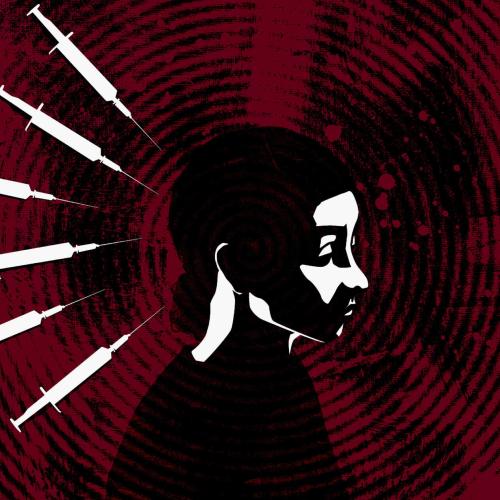
A young TikTok user has long, wavy hair. She's slim and wants you to know exactly why: she's using Wegovy, a prescription drug originally developed to treat diabetes that's become a popular drug for weight loss. In one clip, she picks up the medication from a pharmacy ... then demonstrates in a following clip how she injects it into her leg. She's what's called a patient influencer. They have no medical training and claim that they're simply sharing their personal experiences with their TikTok and Instagram followers. But in this ... unregulated arena, it's gotten harder to tell when influencing crosses legal and ethical lines. Many patient influencers offer prescription drug advice to their followers without always revealing their relationships with drug companies, according to Erin Willis ... who authored a study about patient influencers. A patient influencer can expect to earn anywhere from "the low hundreds to a few thousand dollars" per social media post. Part of what makes patient influencers effective is that they often push messaging further than what would be allowed on media like TV, where ads are far more closely scrutinized by regulators like the FDA and Federal Trade Commission. Willis calls patient influencing "an interactive form of advertising" that's "difficult to regulate, if it's been regulated at all". Studies find [direct-to-consumer] ads lead to doctors prescribing them more – driving the market for these ads to nearly $7bn last year, industry statistics show.
Note: This controversial marketing tactic is only legal in the United States and New Zealand. Read more about how these tactics are quickly becoming the "wild west of pharma advertising," especially when the FDA’s social media guidance hasn’t been updated since 2014. For more along these lines, see concise summaries of deeply revealing news articles on Big Pharma corruption from reliable major media sources.
The situation for India’s more than 260 million agricultural workers is dire. Nearly 30 people in the farming sector die by suicide daily, according to the most recent figures available, typically due to overwhelming debt. Indeed in 2020, more than 10,000 people in the agricultural sector ended their own lives, according to government data. India’s economic backbone – its farmers and their families – is in collapse. They face crushing pressures: insurmountable debt, environmental degradation, and extreme rates of cancer linked to exposure to pesticides. This strain is compounded by climate change and extreme weather – from ground water depletion to water shortages and crop damage due to rising temperatures – effects which have been tied to increasing suicides in India. Many are subsistence farmers who are drowning in the volatility caused by the Green Revolution which began in the 1960s as a way of industrializing the agriculture sector with high yielding seeds, mechanized tools and pesticides. In some cases, farmers cannot work their land due to illness linked to the revolution’s pesticides and fertilizers. They are dealing with deep-rooted battles against multinational corporations. And all the while having to take out loans each year to make the agricultural cycle possible. And then, when farmers are unable to get loans from legitimate banks, illegal moneylenders ... step in, charging exorbitant interest rates and creating an inescapable debt-trap for farmers, in some instances pushing them to suicide.
Note: Watch a compelling talk by food sovereignty advocate Vandana Shiva, who explains how the "Green Revolution" doesn't bring any gain in food security, and has done more harm than good in India. For more along these lines, see concise summaries of deeply revealing news articles on food system corruption from reliable major media sources.
As the 2018 elections approach, the American intelligence community is issuing increasingly dire warnings about potential interference from Russia and other countries. D.H.S. has now conducted remote-scanning and on-site assessments of state and county election systems. These [measures] don't address core vulnerabilities in voting machines or the systems used to program them. And they ignore the fact that many voting machines that elections officials insist are disconnected from the internet – and therefore beyond the reach of hackers – are in fact accessible by way of the modems they use to transmit vote totals on election night. Add to this the fact that states don't conduct robust postelection audits ... and there's a good chance we simply won't know if someone has altered the digital votes in the next election. How did our election system get so vulnerable, and why haven't officials tried harder to fix it? The answer, ultimately, comes down to politics and money: The voting machines are made by well-connected private companies that wield immense control over their proprietary software, often fighting vigorously in court to prevent anyone from examining it when things go awry. The stakes are high. But the focus on Russia, or any would-be election manipulators, ignores the underlying issue – the myriad vulnerabilities that riddle the system and the ill-considered decisions that got us here.
Note: Why is it that the U.S. government is not allowed to have oversight over the companies that build and maintain voting machines and databases? What if one or more of them is bought off by a foreign or event domestic interest? Isn't this crazy? The major media have severely neglected reporting on elections manipulations that have been going on for many decades. For undeniable evidence of this, see our Elections Information Center.
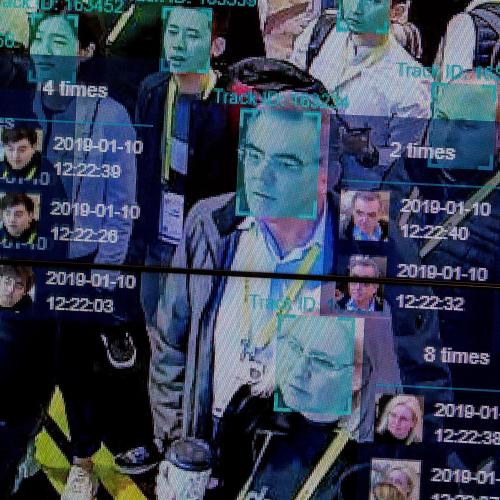
Facebook wants to get up close and personal with its users after a patent was revealed detailing a desire to secretly watch users through their webcam or smartphone camera, spying on your mood in order to sell you tailored content or advertisements. The purpose behind the invasive idea is to analyse people through the camera in real time while they browse online and if it recognises you looking happy, bored or sad, it would deliver an advert fitting your emotion. If you were forlorn, for example, it would be able to serve an ad to perk you up, or know what products you had previously looked at online and put them under your nose at just the right time. The social network has filed several patents over the years on emotion-based technology but this, based on 'passive imaging data' is perhaps the most unnerving, considering it would take control of cameras that weren't even switched on by the user. As described by CB Insights: "This patent proposes capturing images of the user through smartphone or laptop cameras, even when the user is not actively using the camera. By visually tracking a user's facial expression, Facebook aims to monitor the user's emotional reactions to different types of content." Other patents listed by Facebook include a text messaging platform to detect a user's mood by measuring how hard and fast they were typing, then augment the message format, such as adding emojis or changing the font size, to match their emotion.
Note: For more along these lines, see concise summaries of deeply revealing news articles on corporate corruption and the disappearance of privacy.
Wells Fargo Bank, one of the nation's largest banks, has been hit with $185 million in civil penalties for secretly opening millions of unauthorized deposit and credit card accounts that harmed customers, federal and state officials said Thursday. Employees of Wells Fargo (WFC) boosted sales figures by covertly opening the accounts and funding them by transferring money from customers' authorized accounts without permission, the Consumer Financial Protection Bureau, Office of the Comptroller of the Currency and Los Angeles city officials said. An analysis by the San Francisco-headquartered bank found that its employees opened more than two million deposit and credit card accounts that may not have been authorized by consumers. Many of the transfers ran up fees or other charges for the customers, even as they helped employees make incentive goals. The bank agreed to pay full restitution to all victims and a $100 million fine to the Consumer Financial Protection Bureau's civil penalty fund - the largest in the regulator's five-year operating history. Wells Fargo will pay a separate $35 million penalty to the Office of the Comptroller of the Currency. Additionally, Wells Fargo said it terminated approximately 5,300 employees and managers over a five-year period for their involvement with the unauthorized accounts.
Note: No Wells Fargo executives have been held responsible for this bank's institutionalized breach of customer trust. Do you think these actions were taken without approval from at least one executive? For more along these lines, see concise summaries of deeply revealing banking corruption news articles from reliable major media sources.
Iceland ... has just sentenced five senior bankers and one prominent investor to prison for crimes relating to the economic meltdown in 2008. The nation that gambled so heavily on the markets and lost so disastrously in the consequent crash has [now] sent 26 financiers to jail for combined sentences of 74 years. The authorities pursued bank bosses, chief executives, civil servants and corporate raiders for crimes ranging from insider trading to fraud, money laundering, misleading markets, breach of duties and lying to the authorities. Meanwhile the economy that collapsed so spectacularly has rebounded after letting banks go bust, imposing capital controls and protecting its own citizens over all other losers. This determination to hold people to account for actions that caused intense financial misery contrasts strongly with Britain, most of the rest of Europe and the United States. Britain never bothered holding a proper inquiry into the financial meltdown that still heavily impacts on public finances. In New York, a couple of minor British bankers have just been convicted of manipulating inter-bank lending rates. In London, the massive HSBC is playing political games ... to stave off regulatory pressures. This is the bank, remember, fined 1.2bn after a US investigation found it was laundering money for gangsters and rogue nations, then discovered to be helping wealthy clients evade tax in dozens of countries. Its former boss became a government minister and then chairman of the British Museum.
Note: So the one nation that jailed its big bankers and let banks go bust is doing very well. Why are so exceedingly few bankers in other countries being jailed for crimes involving trillions of dollars and bankrupting millions of citizens? For more along these lines, see concise summaries of deeply revealing news articles about corruption in government and in the financial industry.
Peer review is supposed to be the pride of the rigorous academic publishing process. But increasingly journals are finding out that those supposedly authoritative checks are being rigged. In the latest episode of the fake peer review phenomenon, one of the worlds largest academic publishers, Springer, has retracted 64 articles from 10 of its journals after discovering that their reviews were linked to fake e-mail addresses. The announcement comes nine months after 43 studies were retracted by BioMed Central (one of Springers imprints) for the same reason. Retraction Watch co-founder Ivan Oransky ... said he didnt know of any instances of retractions for faked peer reviews before 2012. In a report for the journal Nature last fall, Oransky and his colleagues told the story of a ... researcher who wrote peer reviews for 28 of his own papers. Investigations ... have also uncovered a number of services selling names and contact information for made-up experts guaranteed to give an expedited, positive review. In a statement on its Web site in February, the Committee on Publication Ethics (COPE) detailed these agencies systematic, inappropriate attempts to manipulate the process. COPEs chair Ginny Barbour wrote in December, The uncovering of companies systematically manipulating publications, by the use of fake reviewers and more, offers an alarming glimpse into what can happen if reward systems are implemented with no thought or oversight.
Note: The editor of a top medical journal recently suggested that half all of scientific literature may simply be untrue. For more along these lines, see concise summaries of deeply revealing news articles about corruption in science.
A safe that tallies the cash that is placed in it. A sniper rifle equipped with advanced computer technology for improved accuracy. A car that lets you stream music from the Internet. All of these innovations sound great, until you learn the risks that this type of connectivity carries. Recently, two security researchers, sitting on a couch and armed only with laptops, remotely took over a Chrysler Jeep Cherokee speeding along the highway ... while a Wired reporter was driving. A hacked car is a high-profile example of what can go wrong with the coming Internet of Things objects equipped with software and connected to digital networks. The selling point ... is added convenience and better safety. In reality, it is a ... train wreck in privacy and security. That smart safe? Hackers can empty it with a single USB stick while erasing all [evidence] of their crime. That high-tech rifle? Researchers managed to remotely manipulate its target selection without the shooters knowing. The Internet of Things is also a privacy nightmare. Databases that already have too much information about us will now be bursting with data on the places weve driven, the food weve purchased and more. Last week, at Def Con, the annual information security conference, researchers set up an Internet of Things Village to show how they could hack everyday objects like baby monitors, thermostats and security cameras. Connecting everyday objects introduces new risks if done at mass scale. Once a hacker is in - she's in everywhere.
Note: Read how a hacked vehicle may have resulted in journalist Michael Hastings' death in 2013. The networked computerization of everyday objects means that these objects can spy on you, accelerating the disappearance of privacy in the name of convenience. What will happen when the "internet of things" expands to include microchip implants in people?
Five of the worlds largest banks have agreed to pay more than $5 billion in fines to settle charges made by regulatory agencies and the Justice Department that the banks had acted in concert to manipulate international interest and foreign currency exchange rates. Attorney General Loretta E. Lynch said the banks had engaged in brazenly illegal behavior on a near-daily basis. The scale of the price-fixing scandal is hard to grasp. It touched ... almost every company and individual in the financial markets. By tweaking global benchmarks used to set foreign exchange and interest rates for a staggering number of transactions a day, the banks over several years bilked billions of dollars of extra profits by altering rates in their favor. Critics complained that the Justice Department had failed to prosecute any additional individuals. Wall Street watchdog group Better Markets called it a slap on the wrist, and Sen. Elizabeth Warren (D-Mass.) said in an e-mail: Thats not accountability for Wall Street. Its business as usual, and it stinks. Barclays, along with JPMorgan Chase, Royal Bank of Scotland Group and Citigroup, will plead guilty to conspiring to manipulate the price of U.S. currency and euros, authorities said. JPMorgan Chase said it had agreed to plead guilty to a single antitrust violation and pay a fine of $550 million. Under the resolution with the Fed, the firm will pay a fine of $342 million. The bank said it had previously set aside reserves for these settlements.
Note: When it comes to international banking, it appears that almost everything is rigged. For more along these lines, see concise summaries of deeply revealing news articles about the systemically corrupt financial industry.
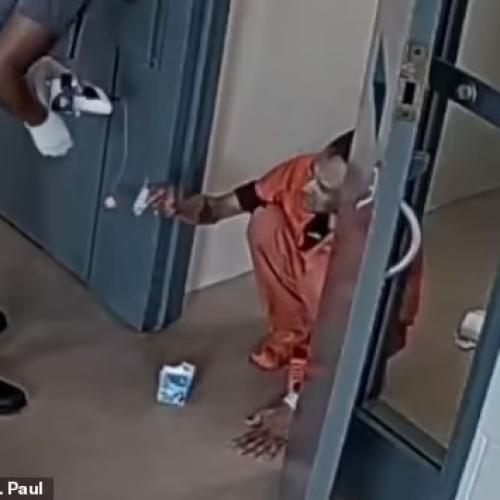
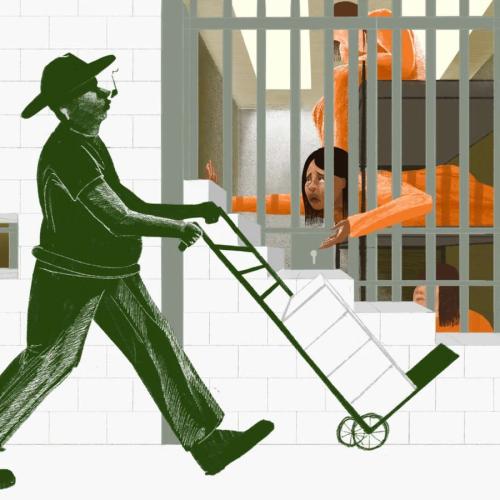
Several industries have become notorious for the millions they spend on influencing legislation. But one has managed to quickly build influence with comparatively little scrutiny: Private prisons. The two largest for-profit prison companies in the United States GEO and Corrections Corporation of America and their associates have funneled more than $10 million to candidates since 1989 and have spent nearly $25 million on lobbying efforts. Meanwhile, these private companies have seen their revenue and market share soar. They now rake in a combined $3.3 billion in annual revenue and the private federal prison population more than doubled between 2000 and 2010. A report by the Justice Policy Institute ... identified the private-prison industrys three-pronged approach to increase profits through political influence: lobbying, direct campaign contributions, and building relationships and networks. Private-prison companies have indirectly supported policies that put more Americans and immigrants behind bars ... by donating to politicians who support them. With the growing influence of the prison lobby, the nation is, in effect, commoditizing human bodies for an industry in militant pursuit of profit. For instance, privatization created the atmosphere that made the Kids For Cash scandal possible, in which two Pennsylvania judges received $2.6 million in kickbacks from for-profit juvenile detention centers for sending more kids to the facilities and with unusually long sentences.
Note: The "Cash for Kids" scandal mentioned in the article above resulted in the unlawful incarceration of thousands of kids. Few are aware that violent crime rates have dropped to 1/3 of what they were in 1993, yet prison spending continues to skyrocket. For more along these lines, see concise summaries of deeply revealing news articles on corruption in government and in the prison industry.
Global gold prices may have been manipulated on 50 per cent of occasions between January 2010 and December 2013, according to analysis by Fideres, a consultancy. The findings come amid a probe by German and UK regulators into alleged manipulation of the gold price, which is set twice a day by Deutsche Bank, HSBC, Barclays, Bank of Nova Scotia and Socit Gnrale in a process known as the London gold fixing. Fideres research found the gold price frequently climbs (or falls) once a twice-daily conference call between the five banks begins, peaks (or troughs) almost exactly as the call ends and then experiences a sharp reversal, a pattern it alleged may be evidence of collusive behaviour. [This] is indicative of panel banks pushing the gold price upwards on the basis of a strategy that was likely predetermined before the start of the call in order to benefit their existing positions or pending orders, Fideres concluded. The behaviour of the gold price is very suspicious in 50 per cent of cases. This is not something you would expect to see if you take into account normal market factors, said Alberto Thomas, a partner at Fideres. Alasdair Macleod, head of research at GoldMoney, a dealer in physical gold, added: When the banks fix the price, the advantage they have is that they know what orders they have in the pocket. BaFin, the German regulator, has launched an investigation into gold-price manipulation and demanded documents from Deutsche Bank. The UKs Financial Conduct Authority is also examining how the price of gold and other precious metals is set as part of a wider probe into benchmark manipulation following findings of wrongdoing with respect to Libor and similar allegations with respect to the foreign exchange market.
Important Note: The above article was removed from the Financial Times website just two days after it was posted. How strange. To read the full article on another website, click here. And for a BBC article which shows how the Rothschilds fixed gold prices in the past, click here. For more on financial corruption, see the deeply revealing reports from reliable major media sources available here.
One could slash private debt by 100pc of GDP, boost growth, stabilize prices, and dethrone bankers all at the same time. It could be done cleanly and painlessly, by legislative command, far more quickly than anybody imagined. The conjuring trick is to replace our system of private bank-created money -- roughly 97pc of the money supply -- with state-created money. Specifically, it means an assault on "fractional reserve banking". If lenders are forced to put up 100pc reserve backing for deposits, they lose the exorbitant privilege of creating money out of thin air. The nation regains sovereign control over the money supply. There are no more bank runs, and fewer boom-bust credit cycles. That at least is the argument [in] the IMF study, by Jaromir Benes and Michael Kumhof, which came out in August and has begun to acquire a cult following around the world. Entitled "The Chicago Plan Revisited", it revives the scheme first put forward by professors Henry Simons and Irving Fisher in 1936 during the ferment of creative thinking in the late Depression. Benes and Kumhof argue that credit-cycle trauma - caused by private money creation - dates deep into history. The original authors of the Chicago Plan were responding to the Great Depression. They believed it was possible to prevent the social havoc caused by wild swings from boom to bust, and to do so without crimping economic dynamism. The benign side-effect of their proposals would be a switch from national debt to national surplus.
Note: This article is an incredible breakthrough in real reporting on the banking sector. It is most highly recommended to read the entire article and then explore our powerful Banking Corruption Information Center.
Dr. Ben Goldacre is no slouch when it comes to rooting out the flaws in scientific studies, analyzing clinical trial data and recognizing when it's been manipulated or fudged. But even Goldacre has been fooled by bad science. In ... his forthcoming book, Bad Pharma: How Drug Companies Mislead Doctors and Harm Patients, ... Goldacre describes how he ended up prescribing the antidepressant reboxetine to his patients based on insufficient data. The research overwhelmingly finds the drug to be ineffective, but it was still approved in the U.K. In order to get approval of the drug in Europe, the manufacturer had simply not published its negative data. Seven trials had been conducted comparing reboxetine against a placebo. Only one, conducted in 254 patients, had a neat, positive result, and that one was published in an academic journal, for doctors and researchers to read. But six more trials were conducted, in almost 10 times as many patients. All of them showed that reboxetine was no better than a dummy sugar pill. None of these trials was published. I had no idea they existed. It got worse. The trials comparing reboxetine against other drugs showed exactly the same picture: three small studies, 507 patients in total, showed that reboxetine was just as good as any other drug. They were all published. But 1,657 patients' worth of data was left unpublished, and this unpublished data showed that patients on reboxetine did worse than those on other drugs.
Note: For deeply revealing reports from reliable major media sources on pharmaceutical corruption, click here.
French scientists said on [September 19] that rats fed on Monsanto's genetically modified corn or exposed to its top-selling weedkiller suffered tumors and multiple organ damage. Gilles-Eric Seralini of the University of Caen and colleagues said rats fed on a diet containing NK603 - a seed variety made tolerant to dousings of Monsanto's Roundup weedkiller - or given water with Roundup at levels permitted in the United States, died earlier than those on a standard diet. The animals on the GM diet suffered mammary tumors, as well as severe liver and kidney damage. The study was published in the peer-reviewed journal Food and Chemical Toxicology and presented at a news conference in London. The researchers said 50 percent of males and 70 percent of females died prematurely, compared with only 30 percent and 20 percent in the control group. GMOs are deeply unpopular in Europe and many other countries, but dominate key crops in the United States after Monsanto in 1996 introduced a soybean genetically altered to tolerate Monsanto's Roundup weed killer. Seralini was part of a team that has voiced previous safety concerns based on a shorter rat study in a scientific paper published in 2009. This new study takes things a step further by tracking the animals throughout their two-year lifespan. Seralini believes his latest lifetime rat tests give a more realistic and authoritative view of risks than the 90-day feeding trials that form the basis of GM crop approvals, since three months is only the equivalent of early adulthood in rats.
Note: For alarming photos and more from the above long-term study on the dangers of GM food, click here. For an incisive, powerful 13-minute video revealing the disturbing results of this first long-term scientific study on GMOs, click here. For an excellent article and a great two-minute video clearly explaining the major dangers of GM food, click here. For a powerful summary of the health risks from GM foods, click here.
Executives with Europe's biggest bank, HSBC, were subjected to a humiliating onslaught from US senators on Tuesday over revelations that staff at its global subsidiaries laundered billions of dollars for drug cartels, terrorists and pariah states. HSBC's subsidiaries transported billions of dollars of cash in armoured vehicles, cleared suspicious travellers' cheques worth billions, and allowed Mexican drug lords buy to planes with money laundered through Cayman Islands accounts. Other subsidiaries moved money from Iran, Syria and other countries on US sanctions lists, and helped a Saudi bank linked to al-Qaida to shift money to the US. The committee had released a damning report on Monday, which detailed a collapse in HSBC's compliance standards. Executives at the bank [were] consistently warned of problems. HSBC's Mexican operations moved $7bn into the bank's US operations, and according to its own staff, much of that money was tied to drug traffickers. Leigh Winchell, assistant director for investigative programs at US immigration & customs enforcement ... said 47,000 people had lost their lives since 2006 as a result of Mexican drug traffickers. The senators highlighted testimony from Leopoldo Barroso, a former HSBC anti money-laundering director, who told company officials in an exit interview that he was concerned about "allegations of 60% to 70% of laundered proceeds in Mexico" going through HSBC's affiliate.
Note: HSBC may have been founded to service the international drug trade. They eventually settled this case for $1.92 billion. The corrupt bankers were not criminally prosecuted. Settlements like this often amount to "cash for secrecy" deals that are ultimately profitable for banks. For more along these lines, see concise summaries of deeply revealing banking corruption news articles from reliable major media sources.
The New York Times has published several terrifying reports about New Jerseys system of halfway houses privately run adjuncts to the regular system of prisons. The horrors described are part of a broader pattern in which essential functions of government are being both privatized and degraded. So whats really behind the drive to privatize prisons? One answer is that privatization can serve as a stealth form of government borrowing, in which governments avoid recording upfront expenses (or even raise money by selling existing facilities) while raising their long-run costs in ways taxpayers cant see. Another answer is that privatization is a way of getting rid of public employees. But the main answer, surely, is to follow the money. As more and more government functions get privatized, states become pay-to-play paradises, in which both political contributions and contracts for friends and relatives become a quid pro quo for getting government business. One thing the companies that make up the prison-industrial complex are definitely not doing is competing in a free market. They are, instead, living off government contracts. And ... despite many promises that prison privatization will lead to big cost savings, such savings as a comprehensive study by the Bureau of Justice Assistance, part of the U.S. Department of Justice, concluded have simply not materialized. A corrupt nexus of privatization and patronage [is] undermining government across much of our nation.
Note: Few are aware that violent crime rates have dropped to 1/3 of what they were in 1993, yet prison spending continues to skyrocket. Is something wrong with this picture? For key major media new articles exposing more on corruption within the "prison-industrial complex," click here.
On the third Wednesday of every month, the nine members of an elite Wall Street society gather in Midtown Manhattan. The men share a common goal: to protect the interests of big banks in the vast market for derivatives, one of the most profitable and controversial fields in finance. They also share a common secret: The details of their meetings, even their identities, have been strictly confidential. Drawn from giants like JPMorgan Chase, Goldman Sachs and Morgan Stanley, the bankers form a powerful committee that helps oversee trading in derivatives, instruments which, like insurance, are used to hedge risk. In theory, this group exists to safeguard the integrity of the multitrillion-dollar market. In practice, it also defends the dominance of the big banks. The banks in this group ... have fought to block other banks from entering the market, and they are also trying to thwart efforts to make full information on prices and fees freely available. Banks influence over this market, and over clearinghouses like the one this select group advises, has costly implications for businesses large and small. The size and reach of this market has grown rapidly over the past two decades. Pension funds today use derivatives to hedge investments. States and cities use them to try to hold down borrowing costs. Airlines use them to secure steady fuel prices. Food companies use them to lock in prices of commodities like wheat or beef.
Note: To explore highly revealing news articles on the powerful secret societies which without doubt back these top bankers, click here. For a treasure trove of reports from reliable sources detailing the amazing control of major banks over government and society, click here.
It's a perfect storm. I'm talking about the dangers facing our democracy. First, income in America is now more concentrated in fewer hands than it has been in 80 years. Almost a quarter of total income generated in the United States is going to the top 1 percent of Americans. The top one-tenth of 1 percent of Americans now earn as much as the bottom 120 million of us. Who are these people? They're top executives of big corporations and Wall Street, hedge-fund managers and private equity managers. Hundreds of millions of dollars are pouring into advertisements for and against candidates - without a trace of where the dollars are coming from. They're laundered through a handful of groups. Most Americans are in trouble. Their jobs, incomes, savings and even homes are on the line. They need a government that's working for them, not for the privileged and the powerful. Yet their state and local taxes are rising. And their services are being cut. There's no jobs bill to speak of. Washington says nothing can be done. There's no money left. No money? The marginal income tax rate on the very rich is the lowest it has been in more than 80 years. Under President Dwight Eisenhower ... it was 91 percent. Now it's 36 percent. We're losing our democracy to a different system. It's called plutocracy.
Note: As the Democrats and Republicans duke it out, the ultra-rich laugh all the way to the bank. What if instead of fighting each other, we worked together to expose the manipulations of the ultra-rich? Whether you are on the left or right of the political spectrum, this incisive article by former US Sect. of Labor Robert Reich is well worth reading in its entirety. For more in income inequality, click here.
An Australian researcher claims the swine flu, which has killed at least 64 people so far, might not be a mutation that occurred naturally but a man-made product of genetic experiments accidently leaked from a laboratory -- a theory the World Health Organization is taking very seriously. Adrian Gibbs, a scientist on the team that was behind the development of Tamiflu, says in a report he is submitting today that swine flu might have been created using eggs to grow viruses and make new vaccines, and could have been accidently leaked to the general public. "It might be some sort of simple error that's not being recognized," Gibbs said on ABC's "Good Morning America." In an interview with Bloomberg Television, Gibbs admitted there are other ways to explain swine flu's origin. "One of the simplest explanations if that it's a laboratory escape, but there are lots of others," he said. Regardless of the validity of Gibb's claims, he and several experts say that just bringing the idea of laboratory security to the public's attention is important. "There are lives at risk," Gibbs said. "The sooner this idea gets out, the better."
Note: What would cause one of the developers of Tamiflu to make such a statement? If you read between the lines, there is much more here than meets the eye. For lots more on this intriguing development, click here.
There's a $700 trillion elephant in the room and it's time we found out how much it really weighs on the economy. Derivative contracts total about three-quarters of a quadrillion dollars in "notional" amounts, according to the Bank for International Settlements. These contracts are tallied in notional values because no one really can say how much they are worth. But valuing them correctly is exactly what we should be doing because these comprise the viral disease that has infected the financial markets and the economies of the world. Try as we might to salvage the residential real estate market, it's at best worth $23 trillion in the U.S. We're struggling to save the stock market, but that's valued at less than $15 trillion. And we hope to keep the entire U.S. economy from collapsing, yet gross domestic product stands at $14.2 trillion. Compare any of these to the derivatives market and you can easily see that we are just closing the windows as a tsunami crashes to shore. The total value of all the stock markets in the world amounts to less than $50 trillion, according to the World Federation of Exchanges. To be sure, the derivatives market is international. But much of the trouble we're in began with contracts "derived" from the values associated with U.S. residential real estate market. These contracts were engineered based on the various assumptions tied to those values. Few know what derivatives are worth. I spoke with one derivatives trader who manages billions of dollars and she said she couldn't even value her portfolio because "no one knows anymore who is on the other side of the trade."
Note: Banks and financial firms deemed "too big to fail" were bailed out worldwide at taxpayers' expense. But what will happen if losses in the derivatives market skyrocket? No government in the world has the resources to save financial corporations from a collapse in their derivatives trading. For a treasure trove of reports from reliable sources detailing the amazing control of major banks over government and society, click here.
Important Note: Explore our full index to revealing excerpts of key major media news articles on several dozen engaging topics. And don't miss amazing excerpts from 20 of the most revealing news articles ever published.