









































Corporate Corruption News Articles
Below are key excerpts of revealing news articles on corporate corruption from reliable news media sources. If any link fails to function, a paywall blocks full access, or the article is no longer available, try these digital tools.

If you have ever wondered why the cost of prescription drugs in the United States are the highest in the world or why it's illegal to import cheaper drugs from Canada or Mexico, you need look no further than the pharmaceutical lobby and its influence in Washington, D.C. Congressmen are outnumbered two to one by lobbyists for an industry that spends roughly a $100 million a year in campaign contributions and lobbying expenses to protect its profits. One reason [drug company] profits have exceeded Wall Street expectations is the Medicare prescription drug bill ... passed three-and-a-half years ago. The unorthodox roll call on one of the most expensive bills ever placed before the House of Representatives began in the middle of the night. The only witnesses were congressional staffers, hundreds of lobbyists, and U.S. Representatives like Dan Burton, R-Ind., and Walter Jones, R-N.C. "The pharmaceutical lobbyists wrote the bill," says Jones. Why did the vote finally take place at 3 a.m.? "They didn't want on national television in primetime," according to Burton. "I've been in politics for 22 years," says Jones, "and it was the ugliest night I have ever seen." Jones says the arm-twisting was horrible. It certainly wasn't ugly for the drug lobby which ... has been a source of lucrative employment opportunities for congressmen when they leave office. In all, at least 15 congressional staffers, congressmen and federal officials left to go to work for the pharmaceutical industry, whose profits were increased by several billion dollars. "They have unlimited resources," Burton says. "And when they push real hard to get something accomplished in the Congress of the United States, they can get it done."
Note: This article also states that the Medicare prescription bill "was the largest entitlement program in more than 40 years, and the debate broke down along party lines." Usually Republicans are against entitlement programs while Democrats support them. Why was it the opposite in this case? Could it be that big industry made huge profits from the passage of this bill? For lots more, click here.
The US Defence Secretary has made more than $5m (2.9m) in capital gains from selling shares in the biotechnology firm that discovered and developed Tamiflu, the drug being bought in massive amounts by Governments to treat a possible human pandemic of the disease. More than 60 countries have so far ordered large stocks of the antiviral medication - the only oral medicine believed to be effective against the deadly H5N1 strain of the disease - to try to protect their people. The United Nations estimates that a pandemic could kill 150 million people worldwide. The drug was developed by a Californian biotech company, Gilead Sciences. Mr Rumsfeld was on the board of Gilead from 1988 to 2001, and was its chairman from 1997. He then left to join the Bush administration, but retained a huge shareholding. The 2005 report showed that, in all, he owned shares worth up to $95.9m, from which he got an income of up to $13m. The firm made a loss in 2003, the year before concern about bird flu started. Then revenues from Tamiflu almost quadrupled, to $44.6m, helping put the company well into the black. Sales almost quadrupled again, to $161.6m last year.
Note: If the above link fails, click here. With both the avian flu and swine flu, top drug companies raked in billions of dollars from sales of medications and vaccines, most of which went unused and have now expired. For many more strange coincidences and facts around the avian and swine flu scares, take a look at our summary of eye-opening news articles available here.
During the West Coast Power crisis homes went dark and streetlights were out ... causing injuries and accidents. But the danger didn't stop Enron's energy traders from having a good laugh. CBS ... reports on the Enron scheme, as caught on new audio tape. The traders and plant operator laugh and plot in a display that seems to prove the theory that years before the energy crisis, Enron manipulated markets. "They had to do a rolling blackout through the town and there was a red light there he didn't see," one Enron trader says on tape. "That's beautiful," a second voice responds. Enron secretly shut power plants down so they could cause, and then cash in on, the crisis. Enron also pulled power out of states like California, causing emergency conditions to worsen. "Sorry California," an Enron trader says. "I'm bringing all our power out of state today." Plant operators were coached on how to lie to officials. "We want you guys to get a little creative..." one voice says on the tape, "and come up with a reason to go down. Just call 'em, Hey guyswe're coming down." The plant operator replies, "OK, so we're just comin' down for some maintenance?" "Right," the trader says. "And that's cool?" the plant operator asks. "Hopefully," the trader responds, to which the men are heard laughing. Enron also pulled power out of states like California, causing emergency conditions to worsen. The "shut downs" and "pull outs" triggered sky high power prices. "We're just making money hand over fist!" one voice is heard saying on the tape. And when states complained, the guys at Enron seemed to have a response. "Get a f****** clue," one says. "Yeah," another chimes in. "Leave us alone. Let us make a little bit of money."
Note: For an eye-opening two-minute video clip on CBS, watch "Enron Schemers on Tape" at this link. MSNBC also published a revealing article on this. And a New York Times article states "Company officials had long denied that they illegally shut down plants to create artificial shortages. Two months after the recording showed how the Nevada plant was shut down, [Enron CEO Kenneth] Lay called any claims of market manipulation 'conspiracy theories.'" For lots more reliable information on the energy cover-up, click here.
In late 1986, four executives of the Monsanto Company, the leader in agricultural biotechnology, paid a visit to Vice President George Bush at the White House. In the weeks and months that followed, the White House complied, working behind the scenes, to help Monsanto long a political power with deep connections in Washington get the regulations that it wanted. It was an outcome that would be repeated, again and again, through three administrations. What Monsanto wished for from Washington, Monsanto and, by extension, the biotechnology industry got. Even longtime Washington hands said that the control this nascent industry exerted over its own regulatory destiny through the Environmental Protection Agency, the Agriculture Department and ultimately the Food and Drug Administration was astonishing. Dr. Louis J. Pribyl, one of 17 government scientists working on a policy for genetically engineered food, ... knew from studies that toxins could be unintentionally created when new genes were introduced into a plant's cells. The government was dismissing that risk and any other possible risk as no different from those of conventionally derived food. That meant biotechnology companies would not need government approval to sell the foods they were developing. "This is the industry's pet idea, namely that there are no unintended effects that will raise the F.D.A.'s level of concern," Dr. Pribyl wrote in a fiery memo to the F.D.A. scientist overseeing the policy's development. "But time and time again, there is no data to back up their contention."
Note: For a powerful essay showing the grave risks and dangers of GMOs, click here. Explore over 40 scientific studies that have demonstrated the health dangers of GM foods. For deeply revealing reports from reliable major media sources on genetically modified foods, click here.
For seven generations, one European family has dominated an incredible part of all that money can buy. From its London and Paris banks, the family's millions have been sent forth to ... business enterprises on six continents. Some of its stately dwellings are the kind of mansions that mere San Simeons hoped to imitate. This ancient and unusual banking dynasty shields itself from the curious eye of the public, but the map and history of Europe have been changed by its action and etched with its name: the House of Rothschild. Seldom unimaginative in the use of their money, Rothschild gold has powered the ambitions of prime ministers, princes and popes. It has financed wars and reparations treaties, changed the course of politics and bailed out armies and nations. The Rothschilds strung railroads across the Continent, gained control of the Suez Canal [and] carved diamond mines in the African veld. The British Rothschilds [are still] the world's most important bullion dealers. No modern family ... has been so important for so long in European business. Newer dynasties such as the Rockefellers and the Fords have made more millions, but ... ledgers cannot reflect the Rothschild lands, their possessions and influence accumulated over the generations, their priceless collections of art. Today, the legend is very much aliveand being added to. The Rothschilds are striking out in many new directions behind a silver curtain of discretion. Rather than run companies by themselves, the Rothschilds often prefer to start or join syndicates, placing their men on boards to exert maximum influence with minimum investment risk. [They rely on] a far spreading network of agents, who seldom even admit that they are employed by the Rothschilds.
Note: To read the full, fascinating article, click here. The major media have very rarely exposed the power and wealth of the Rothschilds as in this article. Note that the article was written less than a month after the assassination of John F. Kennedy. Could it be because of some anger at the elite who killed Kennedy that this highly revealing article was actually published? For more on secret societies which command huge hidden power, see the deeply revealing reports from reliable major media sources available here.
When I began my journalism career in Chicago in the 1980s, there were still some old crusty working-class guys around the newsroom. Now we’re not only a college-dominated profession; we’re an elite-college-dominated profession. Only 0.8 percent of college students graduate from the super-elite 12 schools (the Ivy League colleges, plus Stanford, M.I.T., Duke and the University of Chicago). A 2018 study found that more than 50 percent of the staff writers at the beloved New York Times and The Wall Street Journal attended one of the 29 most elite universities in the nation. Members of our class also segregate ourselves into a few booming metro areas. In 2020, Biden won only 500 or so counties, but together they are responsible for 71 percent of the American economy. Trump won over 2,500 counties, responsible for only 29 percent. Like all elites, we use language and mores as tools to recognize one another and exclude others. Using words like “problematic,” “cisgender,” “Latinx” and “intersectional” is a sure sign that you’ve got cultural capital. Meanwhile, members of the less-educated classes have to walk on eggshells because they never know when we’ve changed the usage rules so that something that was sayable five years ago now gets you fired. Does this mean that I think the people in my class are vicious and evil? No. Most of us are earnest, kind and public-spirited. But we take for granted and benefit from systems that have become oppressive.
Note: Watch an excellent interview of journalist Batya Ungar-Sargon discussing how journalism has shifted from being a working class trade that held the powerful accountable to an elite industry that serves the upper class. She articulates that mainstream news has abandoned and divided the working class by creating a culture war around identity and race. Elites shaping the news industry benefit from this political polarization, which hides the tragic reality of income inequality that affect all races across political lines.
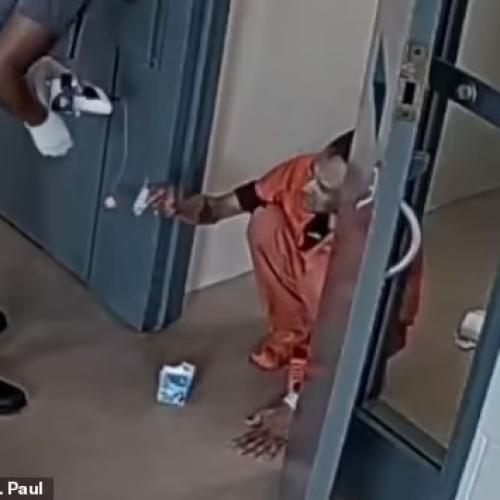
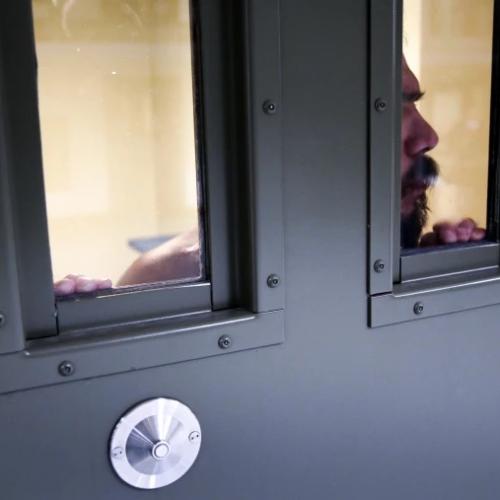
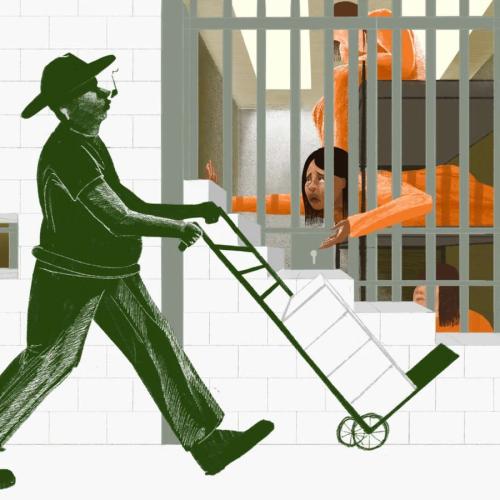
Unmarked trucks packed with prison-raised cattle roll out of the Louisiana State Penitentiary, where men are sentenced to hard labor and forced to work, for pennies an hour or sometimes nothing at all. They are among America’s most vulnerable laborers. If they refuse to work, some can jeopardize their chances of parole or face punishment like being sent to solitary confinement. The goods ... prisoners produce wind up in the supply chains of a dizzying array of products found in most American kitchens, from Frosted Flakes cereal and Ball Park hot dogs to Gold Medal flour, Coca-Cola and Riceland rice. They are on the shelves of virtually every supermarket in the country, including Kroger, Target, Aldi and Whole Foods. It’s completely legal. Enshrined in the Constitution by the 13th Amendment, slavery and involuntary servitude are banned – except as punishment for a crime. With about 2 million people locked up, U.S. prison labor from all sectors has morphed into a multibillion-dollar empire. Almost all of the country’s state and federal adult prisons have some sort of work program, employing around 800,000 people. Altogether, labor tied specifically to goods and services produced through state prison industries brought in more than $2 billion in 2021. “Slavery has not been abolished,” said Curtis Davis, who spent more than 25 years at [Louisiana's Angola] penitentiary. “It is still operating in present tense,” he said. “Nothing has changed.”
Note: For more along these lines, see concise summaries of deeply revealing news articles on corruption in prisons and in the food system from reliable major media sources.
An early magazine advertisement for Merck's breakthrough asthma and allergy medicine, Singulair, featured a happy child, hanging upside-down from a tree. Asthmatic kids could now breathe easier, the text assured, and side effects were "usually mild" and "similar to a sugar pill." When the drug launched in 1998, its label said the drug's distribution in the brain was "minimal," with no mention of psychiatric side effects. Merck's early safety claims later faced intense scrutiny amid reports over two decades that patients, including many children, had died by suicide or experienced neuropsychiatric problems after taking the drug. The FDA in 2020 ordered its most serious warning, known as a "black box," on Singulair's label. And Merck now faces a raft of lawsuits alleging it knew from its early research that the drug could impact the brain and that it minimized the potential for psychiatric problems in statements to regulators. The lawsuits cite the research of Julia Marschallinger, a cell biologist who has studied the drug along with colleagues at the Institute of Molecular Regenerative Medicine in Austria. That team found in 2015 that the drug's distribution into the brain was more significant than its label described. In its original patent for Singulair, Merck cited other applications for the drug, beyond asthma and allergies, including as a treatment for "cerebral spasm," a neurological condition. Lawsuits filed against Merck cite this 1996 patent as evidence of Merck's knowledge of the drug's potential brain impacts.
Note: Read more about Singulair and its dangers to human health, along with the tremendous financial conflicts of interests resulting in the FDA protecting the pharmaceutical industry first, and the health of the people second. For more along these lines, see concise summaries of deeply revealing news articles on pharmaceutical industry corruption from reliable major media sources.
There’s a hidden ingredient used as a whitener in an array of foods. It’s called titanium dioxide, and while commonly used in the US, it’s being banned in the EU as a possible carcinogen. The additive, also known as E171, joins a host of other chemicals that are banned in foods in the European Union but allowed in the US. These include Azodicarbonamide, a whitening agent found in food such as breads, bagels, pizza, and pastries in the US, which has been banned in the EU for more than a decade. The additive has been linked to asthma and respiratory issues in exposed workers and, when baked, to cancer in mice studies. The Food and Drug Administration classifies these food chemicals, and many others prohibited by the EU, as “generally recognized as safe”. Chemical safety processes in the EU and US work in starkly different ways. Where European policy tends to take a precautionary approach – trying to prevent harm before it happens – the US is usually more reactive. And while the EU has consistently updated its methods and processes for evaluating new chemicals, some experts say the US system, set up more than half a century ago, needs updating. In the case of additives like titanium dioxide, manufacturers petition the FDA for its approval by submitting evidence that the substance is safe for its intended use. The FDA evaluates the application, and will authorize the additive if it concludes the data provided demonstrates that the substance is safe to use.
Note: Unlike other countries, the U.S. is known to raise objections to the regulation of toxic chemicals in our food, with its regulatory agencies having deep financial ties to powerful food and agrichemical industries. For more along these lines, see concise summaries of deeply revealing news articles on food system corruption from reliable major media sources.
The end of humankind? It may be coming sooner than we think, thanks to hormone-disrupting chemicals that are decimating fertility at an alarming rate around the globe. A new book called Countdown, by Shanna Swan, an environmental and reproductive epidemiologist ... finds that sperm counts have dropped almost 60% since 1973. Following the trajectory we are on, Swan’s research suggests sperm counts could reach zero by 2045. Zero. Let that sink in. That would mean no babies. No reproduction. No more humans. Forgive me for asking: why isn’t the UN calling an emergency meeting on this right now? The chemicals to blame for this crisis are found in everything from plastic containers and food wrapping, to waterproof clothes and fragrances in cleaning products, to soaps and shampoos, to electronics and carpeting. Some of them, called PFAS, are known as “forever chemicals”, because they don’t breakdown in the environment or the human body. They just accumulate and accumulate – doing more and more damage. Swan’s book is staggering in its findings. “In some parts of the world, the average twentysomething woman today is less fertile than her grandmother was at 35,” Swan writes. In addition to that, Swan finds that, on average, a man today will have half of the sperm his grandfather had. Given everything we know about these chemicals, why isn’t more being done? Right now, there is a paltry patchwork of inadequate legislation responding to this threat.
Note: For more along these lines, see concise summaries of deeply revealing news articles on corporate corruption and health from reliable major media sources.
Alexandria Ocasio-Cortez and fellow congresswoman-elect Rashida Tlaib have criticized a Bipartisan Orientation Program for congressional freshman as a glorified corporate lobbyist event. The pair railed against this week's three-day program - hosted by the Harvard Kennedy School Institute of Politics - in a series of tweets. Tlaib [tweeted]: Gary Cohen, former CEO Goldman Sachs addressing new members of Congress today: 'You guys are way over your head, you don't know how the game is played.'" [To which she responded,] "No Gary, YOU don't know what's cominga revolutionary Congress that puts people over profits." The event was billed as an opportunity for representatives-elect to forge bipartisan relationships and learn practical skills of lawmaking. Organizers wrote online the event is nationally recognized as the preeminent educational and preparatory program for newly-elected members of congress. A press release ... lists certain speakers from the private sector, including Cohen, General Motors chairman and CEO Mary Barra and Johnson & Johnson chairman and CEO Alex Gorsky. Ocasio-Cortez [tweeted] our 'bipartisan' Congressional orientation is co-hosted by a corporate lobbyist group. Other members have quietly expressed to me their concern that this wasnt told to us in advance. Lobbyists are here. Goldman Sachs is here. Wheres labor? Activists? Frontline community leaders?
Note: For more along these lines, see concise summaries of deeply revealing news articles on corruption in government and in the corporate world.
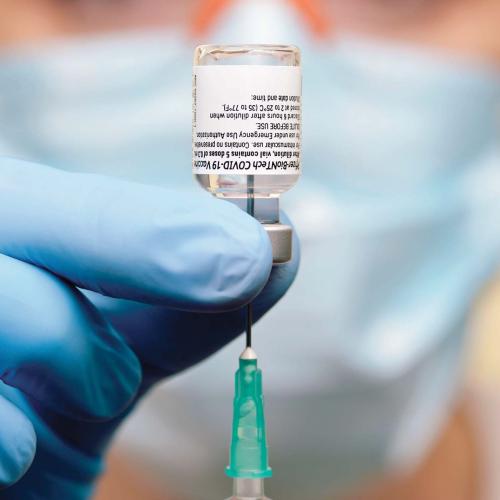
In autumn 2020 Pfizer's chairman and chief executive, Albert Bourla, released an open letter to the billions of people around the world who were investing their hopes in a safe and effective covid-19 vaccine to end the pandemic. "As I've said before, we are operating at the speed of science," Bourla wrote, explaining to the public when they could expect a Pfizer vaccine to be authorised in the United States. But, for researchers who were testing Pfizer's vaccine at several sites in Texas during that autumn, speed may have come at the cost of data integrity and patient safety. A regional director who was employed at the research organisation Ventavia Research Group has told The BMJ that the company falsified data, unblinded patients, employed inadequately trained vaccinators, and was slow to follow up on adverse events reported in Pfizer's pivotal phase III trial. Staff who conducted quality control checks were overwhelmed by the volume of problems they were finding. After repeatedly notifying Ventavia of these problems, the regional director, Brook Jackson, emailed a complaint to the US Food and Drug Administration (FDA). Ventavia fired her later the same day. Jackson has provided The BMJ with dozens of internal company documents, photos, audio recordings, and emails. Jackson has told The BMJ that, during the two weeks she was employed at Ventavia in September 2020, she repeatedly informed her superiors of poor laboratory management, patient safety concerns, and data integrity issues.
Note: Yet every major media proudly announces "brought to you by Pfizer." Learn about Brianne Dressen, Ph.D., a volunteer for early COVID vaccines clinical trials who ended up with serious adverse effects the evening of the shot and was later hospitalized, yet then the study sponsors did not follow up with her. For more along these lines, see concise summaries of deeply revealing news articles on coronavirus vaccines and Big Pharma corruption from reliable major media sources.
Google's YouTube has ratcheted up censorship to a new level by removing two videos from a U.S. Senate committee. They were from a Dec. 8 Committee on Homeland Security and Governmental Affairs hearing on early treatment of Covid-19. One was a 30-minute summary; the other was the opening statement of critical-care specialist Pierre Kory. Dr. Kory is part of a world-renowned group of physicians who developed a groundbreaking use of corticosteroids to treat hospitalized Covid patients. His testimony at a May Senate hearing helped doctors rethink treatment protocols and saved lives. At the December hearing, he presented evidence regarding the use of ivermectin, a cheap and widely available drug that treats tropical diseases caused by parasites, for prevention and early treatment of Covid-19. He described a just-published study from Argentina in which about 800 health-care workers received ivermectin and 400 didn't. Not one of the 800 contracted Covid-19; 58% of the 400 did. Before being removed from YouTube and other websites, Dr. Kory's opening statement had been viewed by more than eight million people. Unfortunately, government health agencies don't share that interest in early treatment. A year into the pandemic, NIH treatment guidelines for Covid patients are to go home, isolate yourself and do nothing other than monitor your illness. The censors at YouTube have decided for all of us that the American public shouldn't be able to hear what senators heard.
Note: You can access the entire article free of charge on this webpage. Can it be any more blatant that facebook is in cahoots with big Pharma in not wanting cheap, effective treatments for COVID-19? Watch an excellent, eye-opening 14-minute interview with a facebook insider revealing how censorship works. Read about how Silicon Valley is shutting down even live streams by legitimate journalists. For more along these lines, see concise summaries of deeply revealing news articles on the coronavirus and media manipulation from reliable major media sources.
ABC News' Amy Robach, best known as co-anchor of 20/20, claimed that ABC killed her story about convicted pedophile Jeffrey Epstein's sex trafficking of minors three years ago in sensational hot microphone footage leaked Tuesday. In the footage, reportedly taken in August and published online Tuesday by the right-wing activist group Project Veritas, Robach, 46, says: "I've had this story for three years. I've had this interview with [Epstein accuser] Virginia Roberts. We would not put it on the air. First of all I was told, 'Who is Jeffrey Epstein? No one knows who that is. This is a stupid story.'" "Then the palace found out we had her whole allegations about Prince Andrew and threatened us in a million different ways," Robach continues, referring to the British royal that Roberts alleged in a 2015 court filing Epstein trafficked her to when she was 17. "[Roberts] told me everything," Robach says in the clip. "She had pictures. She had everything. She was in hiding for 12 years. We convinced her to come out. We convinced her to talk to us. It was unbelievable what we had. Clinton. Everything." Epstein was arrested on federal charges of sex trafficking of minors and conspiracy to sex traffic minors in July. He was found dead in his New York prison cell in August. Epstein's death has been ruled suicide by hanging, however, Epstein's family believe he was murdered. A private pathologist hired by the Epstein estate said last week that Epstein's autopsy showed injuries more consistent with "homicidal strangulation" than suicide.
Note: Watch the incredible interview of this revelation. For more along these lines, see concise summaries of deeply revealing news articles on Jeffrey Epstein from reliable major media sources.
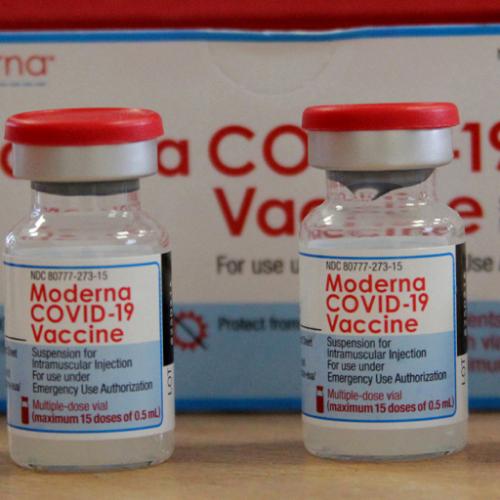
Finances at the vaccine manufacturer Moderna began to fall almost as quickly as they had risen, as most Americans resisted getting yet another COVID booster shot. In a September call aimed at shoring up investors, Moderna’s then-chief commercial officer, Arpa Garay, attributed some of the hesitancy pummeling Moderna's numbers to uninformed vaccine skeptics. What Garay hinted at during the call, but didn’t disclose, was that Moderna already had a sprawling media operation in place aimed at identifying and responding to critics of vaccine policy and the drug industry. Internal company reports and communications ... show that Moderna has worked with former law enforcement and public health officials and a drug industry-funded non-governmental organization called The Public Good Projects (PGP) to confront the “root cause of vaccine hesitancy” by rapidly identifying and “shutting down misinformation.” Part of this effort includes providing talking points to some 45,000 healthcare professionals “on how to respond when vaccine misinformation goes mainstream.” PGP routinely sent Excel lists of accounts to amplify on Twitter and others to de-platform, including populist voices such as ZeroHedge. The messages also suggested emerging narratives to remove from the platform. The growing network these efforts rely on shows the growth of what has been called the censorship industrial complex.
Note: Learn more about Moderna's misinformation department. For more along these lines, see concise summaries of deeply revealing news articles on pharmaceutical industry corruption and media manipulation from reliable sources.
The Moderna misinformation reports, reported here for the first time, reveal what the pharmaceutical company is willing to do to shape public discourse around its marquee product. The mRNA COVID-19 vaccine catapulted the company to a $100 billion valuation. Behind the scenes, the marketing arm of the company has been working with former law enforcement officials and public health officials to monitor and influence vaccine policy. Key to this is a drug industry-funded NGO called Public Good Projects. PGP works closely with social media platforms, government agencies and news websites to confront the “root cause of vaccine hesitancy” by rapidly identifying and “shutting down misinformation.” A network of 45,000 healthcare professionals are given talking points “and advice on how to respond when vaccine misinformation goes mainstream”, according to an email from Moderna. An official training programme, developed by Moderna and PGP, alongside the American Board of Internal Medicine, [helps] healthcare workers identify medical misinformation. The online course, called the “Infodemic Training Program”, represents an official partnership between biopharma and the NGO world. Meanwhile, Moderna also retains Talkwalker which uses its “Blue Silk” artificial intelligence to monitor vaccine-related conversations across 150 million websites in nearly 200 countries. Claims are automatically deemed “misinformation” if they encourage vaccine hesitancy. As the pandemic abates, Moderna is, if anything, ratcheting up its surveillance operation.
Note: Strategies to silence and censor those who challenge mainstream narratives enable COVID vaccine pharmaceutical giants to downplay the significant, emerging health risks associated with the COVID shots. For more along these lines, see concise summaries of deeply revealing news articles on corporate corruption and the disappearance of privacy from reliable major media sources.
So-called “forever chemicals” have been found in 45% of the nation’s tap water, according to a recent government study, but is your tap water affected? If you’re wondering whether or not your tap water might contain synthetic chemicals known as PFAS, nonprofit Environmental Working Group created an interactive map using official records and data from public drinking water systems to show where forever chemicals were found to be above and below the advised maximum concentration level, 4 parts per trillion (PPT). EWG notes that while researchers used the highest quality data available, contamination levels are based on a single point in time and may not reflect changes to the water system or treatment efforts. PFAS is an umbrella term for thousands of chemicals that are used to make nonstick pans, food packaging, fire-fighting foams, to-go boxes, furniture, rugs, clothing and more. The chemicals are so ubiquitous it would be nearly impossible for most Americans to rid their home of them. The chemicals are both extremely common and potentially dangerous. Described as “forever chemicals” because they don’t degrade naturally in the environment, PFAS have been linked to a variety of health problems, including liver and immune-system damage. Studies of lab animals have found potential links between PFAS chemicals and some cancers, including kidney and testicular, plus issues such as high blood pressure and low birth weight.
Note: For more along these lines, see concise summaries of deeply revealing news articles on corporate corruption and health from reliable major media sources.
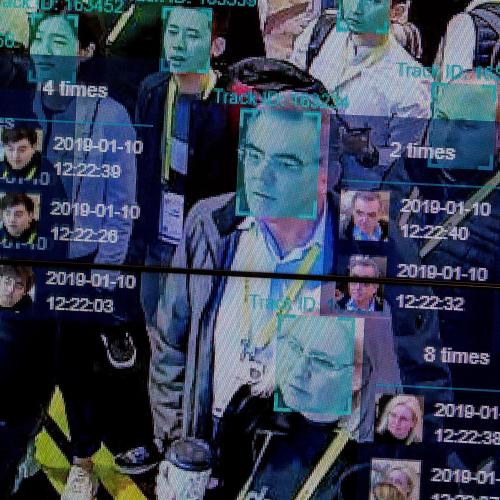
A controversial facial recognition database, used by police departments across the nation, was built in part with 30 billion photos the company scraped from Facebook and other social media users without their permission. The company, Clearview AI, boasts of its potential for identifying rioters at the January 6 attack on the Capitol, saving children being abused or exploited, and helping exonerate people wrongfully accused of crimes. But critics point to privacy violations and wrongful arrests fueled by faulty identifications made by facial recognition, including cases in Detroit and New Orleans, as cause for concern over the technology. Once a photo has been scraped by Clearview AI, biometric face prints are made and cross-referenced in the database, tying the individuals to their social media profiles and other identifying information forever — and people in the photos have little recourse to try to remove themselves. CNN reported Clearview AI last year claimed the company's clients include "more than 3,100 US agencies, including the FBI and Department of Homeland Security." BBC reported Miami Police acknowledged they use the technology for all kinds of crimes, from shoplifting to murder. The risk of being included in what is functionally a "perpetual police line-up" applies to everyone, including people who think they have nothing to hide, [said] Matthew Guariglia, a senior policy analyst for the international non-profit digital rights group Electronic Frontier Fund.
Note: Read about the rising concerns of the use of Clearview AI technology in Ukraine, with claims to help reunite families, identify Russian operatives, and fight misinformation. For more along these lines, see concise summaries of deeply revealing news articles on corporate corruption and the disappearance of privacy from reliable major media sources.
No single person has come to more represent the big questions about drug safety that emerged following the withdrawal of Merck's painkiller Vioxx than the Food and Drug Administration's David Graham. And now that a Texas jury has awarded the widow of one Vioxx patient $253 million, Graham, who works in the FDA's Office of Drug Safety, is more critical than ever. Of the drug, and his employer, for whom he doesn't speak. "If the judgment is that there's blood on Merck's hands," Graham says, "there's blood on the FDA's hands as well." Graham has estimated that Vioxx killed some 60,000 patients - as many people, he points out, as died in the Vietnam War. He says that fundamental problems at the FDA led to those deaths. "People should turn to Congress and demand a drug safety system that is free from corporate influence - and a distinct center for drug safety." In Graham's eyes, the problem at the FDA is that the same scientists who approve drugs are the ones charged with deciding whether or not they are safe enough to remain on the market when problems crop up. Graham says that he thinks there should be formal, periodic reviews of the safety of new medicines - and that the FDA should release documents that explain its reasoning. "The FDA does not think anything it did is a mistake," he says. "[Yet] none of its decisions are evidence-based." "Today Merck was on trial, and a judgment was rendered," he says. "But when will the public hold the FDA accountable for its role, its complicity, in this catastrophe?"
Note: Learn how Merck blatantly altered the death numbers in their drug trials in this Seattle Times article. This article persuasively argues the actual death numbers were around 500,000. WTK founder Fred Burks had a shocking encounter where he learned about intense corruption at the FDA. For more along these lines, see concise summaries of deeply revealing news articles on Big Pharma corruption from reliable major media sources.
The CEO of the biggest power company in the US had a problem. A Democratic state senator was proposing a law that could cut into Florida Power & Light’s (FPL) profits. Landlords would be able to sell cheap rooftop solar power directly to their tenants – bypassing FPL and its monopoly on electricity. “I want you to make his life a living hell ... seriously,” FPL’s CEO Eric Silagy wrote in a 2019 email to two of his vice-presidents about state Senator José Javier Rodríguez, who proposed the legislation. Within minutes, one of them forwarded the directive to the CEO of Matrix, LLC, a powerful but little-known political consulting firm that has operated behind the scenes in at least eight states. Rodríguez was ousted from office in the next election. Matrix employees spent heavily on political advertisements for a candidate with the same last name as Rodríguez, who split the vote. That candidate later admitted he was bribed to run. Hundreds of pages of internal documents – which are only coming to light now because Matrix’s founders are locked in an epic feud – detail the firm’s secret work to help power companies like FPL protect their profits and fight the transition to cleaner forms of energy. The Matrix saga illustrates the political obstacles policymakers and experts face as they attempt to cut climate pollution from the power sector. Matrix affiliated groups have also worked to advance power companies’ interests in Arizona, Louisiana, Mississippi, Georgia, and in front of the Environmental Protection Agency, public records show.
Note: A telling analysis shows a 235% profit jump for big oil funded by us at the gas pumps. For more along these lines, see concise summaries of deeply revealing news articles on corporate corruption and the energy industry from reliable major media sources.
Important Note: Explore our full index to revealing excerpts of key major media news articles on several dozen engaging topics. And don't miss amazing excerpts from 20 of the most revealing news articles ever published.



