



































Financial Media Articles
Below are key excerpts of revealing news articles on financial corruption from reliable news media sources. If any link fails to function, a paywall blocks full access, or the article is no longer available, try these digital tools.
For further exploration, delve into our comprehensive Banking Corruption Information Center.

When Rafael Correa entered Ecuador’s presidency in 2007, the nation faced an opportunity and a challenge. Ecuador’s economy depended on oil, and global crude prices were near a record high. Much of the oil was extracted by foreign companies ... as prices surged more wealth began flowing overseas. Soon after taking office, Correa increased a recently enacted windfall tax on oil companies. The idea was to use the tax as leverage to extract better terms from the companies. Within months, two oil companies working as partners—the independent Anglo-French firm Perenco and Burlington Resources, a subsidiary of ConocoPhillips—ceased paying the tax and sued the government through a system of international tribunals known as investor state dispute settlements, or ISDS. The system allows foreign investors to sue governments before tribunals outside the jurisdiction of national courts. Perenco and Burlington [convinced] arbitrators in two separate tribunals to award the companies more than $800 million. Critics say the ISDS system gives corporations an exclusive, parallel justice system that elevates foreign interests above human rights and environmental concerns. The vast majority of cases have been brought by companies based in North America or Europe against governments in Latin America, Africa and Asia, prompting many critics to liken the ISDS system to a form of market-based colonialism that continues to extract wealth from the Global South.
Note: According to the analysis in the article, fossil fuel companies and investors filed one in five of 1,720 claims since the 1970s, and "have been awarded at least $82.8 billion in compensation from governments." For more along these lines, see concise summaries of deeply revealing news articles on corporate corruption and income inequality from reliable major media sources.
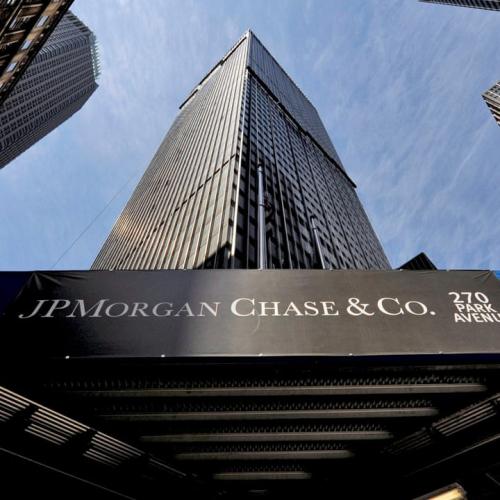
JPMorgan Chase told US authorities it processed more than $1bn for Jeffrey Epstein over 16 years. JPMorgan reported the transactions as suspicious to the US treasury department following Epstein’s suicide in 2019, Mimi Liu, a lawyer for the territory, said at a hearing concerning its lawsuit against the largest US bank. Epstein had been a JPMorgan client from 1998 to 2013, when the bank dropped him. The disgraced financier had been awaiting trial on sex trafficking charges at the time of his death. The US Virgin Islands, where Epstein owned two private islands, is suing JPMorgan for at least $190m and likely much more, saying it ignored red flags that Epstein was running a sex-trafficking operation because he was a lucrative client. Liu mentioned the $1bn amount, which had not been previously disclosed, in arguing that the US district judge Jed Rakoff in Manhattan should find before the case goes to trial that the bank participated in Epstein’s sex trafficking. She said no reasonable juror could find that JPMorgan was in the dark about its jet-setting client. “JPMorgan was a full service bank for Jeffrey Epstein’s sex trafficking,” Liu said. Felicia Ellsworth, a lawyer for JPMorgan, said it was not appropriate for the judge to determine the question of the bank’s knowledge before trial because current and former employees have testified that they were unaware of Epstein’s sex trafficking. In June, Rakoff preliminarily approved JPMorgan’s $290m settlement with women who say Epstein abused them.
Note: For more along these lines, see concise summaries of deeply revealing news articles on financial system corruption and Jeffrey Epstein from reliable major media sources.
Carbon credit speculators could lose billions as scientific evidence shows many offsets they have bought have no environmental worth and have become stranded assets. Amid growing evidence that huge numbers of carbon credits do nothing to mitigate global heating and can sometimes be linked to alleged human rights concerns, there is a growing pile of carbon credits ... that are unused in the unregulated voluntary market, according to market analysis. Many of the largest companies in the world have used carbon credits for their sustainability efforts from the unregulated voluntary market, which grew to $2bn (£1.6bn) in size in 2021 and saw prices for many carbon credits rise above $20 per offset. The credits are often generated on the basis they are contributing to climate change mitigation such as stopping tropical deforestation, tree planting and creating renewable energy projects. A new study in the journal Science has found that millions of forest carbon credits approved by Verra, the world’s leading certifier, are largely worthless and could make global heating worse if used for offsetting. The analysis ... found that 18 big forest offsetting projects had produced millions of carbon credits based on calculations that greatly inflated their conservation impact. The schemes, which generate credits by avoiding hypothetical deforestation, were found not to reduce forest loss or to reduce it by only small amounts, far less than the huge areas they were claiming to protect, rendering the credits largely hot air.
Note: For more along these lines, see concise summaries of deeply revealing news articles on financial industry corruption and climate change from reliable major media sources.
The pressure to repay debts is forcing poor nations to continue investing in fossil fuel projects to make their repayments on what are usually loans from richer nations and financial institutions, according to new analysis from the anti-debt campaigners Debt Justice and partners in affected countries. The group is calling for creditors to cancel all debts for countries facing crisis – and especially those linked to fossil fuel projects. “High debt levels are a major barrier to phasing out fossil fuels for many global south countries,” said Tess Woolfenden, a senior policy officer at Debt Justice. “Many countries are trapped exploiting fossil fuels to generate revenue to repay debt while, at the same time, fossil fuel projects often do not generate the revenues expected and can leave countries further indebted than when they started. This toxic trap must end.” According to the report, the debt owed by global south countries has increased by 150% since 2011 and 54 countries are in a debt crisis, having to spend five times more on repayments than on addressing the climate crisis. Sharda Ganga, the director of the Surinamese civil society group Projekta, said ... “The reality is that this is the new form of colonialism – we have exchanged one ruler for the rule of our creditors who basically already own what is ours. The difference is this time we signed the deal ourselves.”
Note: For more along these lines, see concise summaries of deeply revealing news articles on government corruption and income inequality from reliable major media sources.
Progressives are confused and distressed over the choice by many of our allies to devalue decentralization in the technology space, and even to portray it as worse than Big Tech alternatives. In recent months, a number of progressive commentators have attacked the very idea of decentralization, arguing that it’s a distraction from other political goals. This has also led to progressives making crypto a favorite target and, bizarrely, taking the positions of big banks, which are notoriously monopolistic. To us, the more pressing concern is legacy tech platforms—and their ongoing capture of user data. Decentralizing technology will prove crucial in ensuring that the world isn’t run by a handful of unelected technologists. Crypto is an exception to so much technology because it runs on blockchain and no single person or corporation can control it. We value a world where power is dispersed to the people, where no one is so powerful that they can dictate terms to the rest of us. A blockchain allows everyone to own their own data, to control their own information, and to port that information and data to another system at their discretion. It also allows for people to exchange both data and money in a peer-to-peer manner, without permission from expensive, bureaucratic, and—in many cases—unnecessary intermediaries. Migrants also use crypto to send money to their home countries, and this activity alone will become increasingly important as political and climate migration continues to accelerate.
Note: The US government financially attacked Wikileaks in 2010 after the organization published documentation of US military war crimes. This attack would have ended Wikileaks, but the organization instead embraced bitcoin and survived for several more years. For more along these lines, see concise summaries of deeply revealing news articles on financial system corruption from reliable major media sources.
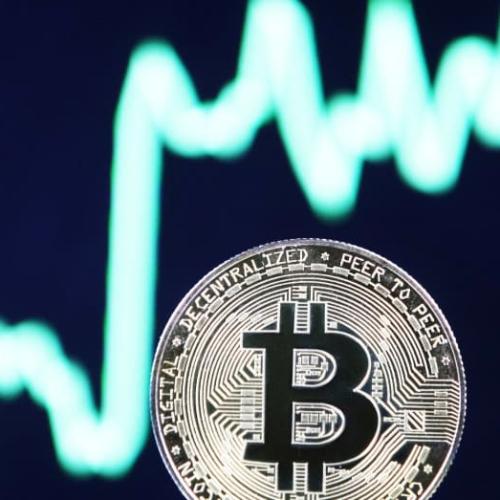
In a recent discussion on the implications of blockchain technology and its democratization of finance, Roundtable anchor, Rob Nelson and Jordan Fried, CEO of Immutable Holdings explored the depth and magnitude of the possible changes ahead. Jordan Fried ... discussed the roots of Bitcoin, stating it was a direct protest against institutions like BlackRock and the financial systems that seemed to work only for the wealthy. Recalling the 2008 financial crisis, Fried expressed the sentiments of many who wondered why banks were bailed out while average individuals suffered. Bitcoin arose from this frustration, offering a transparent financial system unlike anything before. Expanding on this, Fried emphasized the transparency of Bitcoin in comparison to traditional currencies. In Bitcoin's blockchain, every transaction is traceable, unlike the ambiguous dealings within the current banking system. Contrary to common misconceptions ... only a fraction of crime occurs in crypto, as compared to the US dollar. Most financial crimes, including money laundering, are committed in US dollars. Rob Nelson humorously highlighted the recurring financial scandals of banks like Wells Fargo, suggesting that these financial giants often factor in their fines as just another "cost of doing business." In this evolving era of blockchain and cryptocurrency, one thing is clear: the potential impact on the financial world is vast. The very essence of how we view and interact with money is on the cusp of profound change.
Note: Explore more positive stories like this in our comprehensive inspiring news articles archive focused on solutions and bridging divides.
The IMF and other neoliberal institutions in Ukraine are saying that there are quite a few jobs being created there. But the people I speak to can’t find jobs. On top of that, there are those 12 million people who are abroad. Where will there be jobs for them? There is a lot of talk about the Marshall Plan. But the main lessons from the Marshall Plan I did not see reflected in these recovery plans. First of all, there was the write-off of debts. Second of all, there were grants given to countries, and states were allowed to act as investors and were allowed to directly buy food for families or buy supplies for industries. This is not the case in Ukraine. In reality, a big part of the financial assistance given to Ukraine is in the form of debt. The help supposedly given by the IMF of $15 billion ... is actually $15 billion of debt. And because it’s debt, the interest rate on this debt will be something like 7 or 8 percent. What the European Union is doing with Ukraine is what they did with Greece after 2010. The European Union made an agreement in 2010 with the IMF to gather money to give to the Greek government with very strong and brutal conditionalities. And that’s exactly what [is happening] with the type of assistance given to Ukraine. The debt trap for Ukraine is very dangerous. With the new financial assistance given to Ukraine, in the next ten years, the debt will increase by something like $40 billion. Essentially, from $132 to $170 billion. And the creditors know perfectly that it will be impossible for Ukraine to pay back all this debt.
Note: For more along these lines, see concise summaries of deeply revealing news articles on war and banking corruption from reliable major media sources.
In 1998, Jeffrey Epstein purchased Little Saint James in the US Virgin Islands and began trafficking girls as young as 14 into "sexual servitude" at the secluded island. The same year, he opened his first account with JPMorgan Chase, the start of a lucrative partnership for the Wall Street giant that would continue for years after the late financier had been "red flagged" by the bank as a child sex offender. To keep his illicit sex-trafficking scheme running, Epstein needed access to large amounts of cash to pay off recruiters and attempt to silence victims. JPMorgan is alleged to have "pulled the levers" through which Epstein paid his network of enablers, according to a lawsuit filed by the US Virgin Islands (USVI) Attorney General in a US court. The lawsuit claims that JPMorgan concealed wire and cash transactions that were part of a "criminal enterprise" whose currency was vulnerable and desperate women and girls, groomed and recruited over decades by Epstein and his chief lieutenant Ghislaine Maxwell. In separate lawsuits, several survivors of Epstein's abuse sued JPMorgan and Deutsche Bank accusing them of actively enabling his abuse. The sprawling US Virgin Islands legal action is still pending. It has already drawn in some of the world's wealthiest individuals including billionaire JPMorgan CEO Jamie Dimon, Tesla CEO and Twitter owner Elon Musk, Google's co-founders Larry Page and Sergey Brin, and Microsoft co-founder Bill Gates. All have denied any involvement in Epstein's offending.
Note: One Nation Under Blackmail is a new book by Whitney Webb, an investigative journalist who explores the deep ties between Jeffrey Epstein and US and Israeli Intelligence criminal networks. For more along these lines, see concise summaries of news articles on Jeffrey Epstein's child sex ring from reliable major media sources.
JPMorgan Chase reached a tentative settlement with sexual abuse victims of Jeffrey Epstein, the deceased financier, after weeks of embarrassing disclosures about the bank's longstanding relationship with him. David Boies, one of the lead lawyers for the victims, said the bank was prepared to pay $290 million to resolve the lawsuit. The proposed deal would settle a lawsuit filed ... on behalf of victims who were sexually abused by Mr. Epstein over a roughly 15-year period when they were teenage girls and young women. The number of victims could potentially rise to more than 100. JPMorgan still faces a related lawsuit by the government of the U.S. Virgin Islands. That suit remains the biggest outstanding Epstein-related case after years of lawsuits against Mr. Epstein's estate and Ghislaine Maxwell's conviction in 2021 in Manhattan federal court for helping Mr. Epstein engage in sex trafficking. The lawsuit filed by the victims claimed that JPMorgan ignored repeated warnings that Mr. Epstein had been trafficking teenage girls and young women for sex, even after he registered as a sex offender and pleaded guilty in a 2008 Florida case to soliciting prostitution from a teenage girl. The complaint said the bank had overlooked red flags in Mr. Epstein's activity because it valued him as a wealthy client who had access to dozens of even wealthier people. Legal documents revealed that after designating Mr. Epstein a "high risk client" in 2006, the bank kept him on as a customer.
Note: One Nation Under Blackmail is a new book by Whitney Webb, an investigative journalist who explores the deep ties between Jeffrey Epstein and US and Israeli Intelligence criminal networks. For more along these lines, see concise summaries of news articles on Jeffrey Epstein's child sex ring from reliable major media sources.
JPMorgan Chase & Co. had ties to Jeffrey Epstein that ran deeper than the bank has acknowledged and extended years beyond when it decided to close the convicted sex offender’s accounts. Mary Erdoes, a top lieutenant to Chief Executive Jamie Dimon, made two trips to Epstein’s townhouse on Manhattan’s Upper East Side, in 2011 and 2013, when Epstein still was a client of the bank, said the people familiar with the matter. She exchanged dozens of emails with him and discussed sharing with him fees related to a charitable fund the bank was considering launching. John Duffy, who ran JPMorgan’s U.S. private bank for the ultrarich, went to Epstein’s townhouse for a meeting in April 2013, the people said. One month later, the private bank renewed an authorization allowing Epstein to borrow money against his accounts despite repeated warnings from compliance staffers about his unusual banking practices. Justin Nelson, one of Epstein’s bankers at JPMorgan, had about a half-dozen meetings at Epstein’s townhouse between 2014 and 2017. He also traveled to Epstein’s ranch in New Mexico in 2016. Epstein was convicted of soliciting a minor for prostitution in 2008 and forced to register as a sex offender. The new details show that JPMorgan was treating Epstein like a star client after his first conviction and despite repeated warnings from its own employees. And after JPMorgan closed Epstein’s accounts, bankers kept meeting with him for years.
Note: One Nation Under Blackmail is a new book by Whitney Webb, an investigative journalist who explores the deep ties between Jeffrey Epstein and US and Israeli Intelligence criminal networks. Epstein had many concerning associations, including with Noam Chomsky as reported in Webb's most recent article. For more along these lines, see concise summaries of deeply revealing news articles on banking corruption and Jeffrey Epstein's crime ring from reliable major media sources.
In recent months, the Pentagon has moved to provide loans, guarantees, and other financial instruments to technology companies it considers crucial to national security — a step beyond the grants and contracts it normally employs. So when Silicon Valley Bank threatened to fail in March following a bank run, the defense agency advocated for government intervention to insure the investments. The Pentagon had even scrambled to prepare multiple plans to get cash to affected companies if necessary, reporting by Defense One revealed. Their interest in Silicon Valley Bank stems from the Pentagon’s brand-new office, the Office of Strategic Capital. The secretary of defense established the OSC in December specifically to counteract the investment power of adversaries like China in U.S. technologies, and to secure separate funding for companies whose products are considered vital to national security. The national security argument for bailout, notably, found an influential friend in the Senate. As the Biden administration intervened to protect Silicon Valley Bank depositors on March 12, Sen. Mark Warner, D-Va., who chairs the powerful Senate Intelligence Committee and also sits on the Banking Committee, issued a press release warning that the bank run posed a national security risk. Warner — the only member of Congress to have publicly tied SVB to national security — has received significant contributions from the financial sector. Since 2012, Warner has received over $21,000 from Silicon Valley Bank’s super PAC.
Note: Many tech startups with funds in Silicon Valley Bank were working on projects with defense and national security applications. Explore revealing news articles on the rising concerns of the emerging technologies that the Defense Department is investing in, given their recent request for $17.8 billion to research and develop artificial intelligence, autonomy, directed energy weapons, cybersecurity, 5G technology, and more.
A US Virgin Islands investigations into the sex trafficker Jeffrey Epstein’s ties to an American bank issued subpoenas to four wealthy business leaders on Friday, extending its reach into the highest echelons of tech, hospitality and finance. The subpoenas issued to the Google co-founder Sergey Brin, Hyatt Hotels chairperson Thomas Pritzker, American-Canadian businessman Mortimer Zuckerman and former CAA talent agency chairperson Michael Ovitz are crafted to gather more information about Epstein’s relationship with JPMorgan Chase. The Virgin Islands’ lawsuit against JP Morgan, the world’s largest bank in terms of assets, alleges that the institution “facilitated and concealed wire and cash transactions that raised suspicion of – and were in fact part of – a criminal enterprise whose currency was the sexual servitude of dozens of women and girls in and beyond the Virgin Islands”. “Human trafficking was the principal business of the accounts Epstein maintained at JP Morgan,” it said. The disgraced financier ... owned two private islands – Little Saint James, or “Epstein Island”, and Great Saint James – in the American territory, and authorities there have secured a $105m settlement from his estate. The demand for any communications and documents related to the bank and Epstein from four of the wealthiest people in the US comes days after it was reported that Jamie Dimon, JP Morgan’s chairperson and chief executive, is expected to be deposed in the case.
Note: For more along these lines, see concise summaries of deeply revealing news articles on Jeffrey Epstein's child sex trafficking ring from reliable major media sources.
Public banks are typically operated by government or tribal authorities and, in theory, would be chartered to achieve social good and invest in communities. Only two public banks currently operate in the United States: the Bank of North Dakota, founded in 1919, and the Territorial Bank of American Samoa, founded in 2018. Organizations pushing for a public banking option exist in 37 states, according to the Public Banking Institute. In contrast to private banks, which are responsible to their shareholders, public banks are responsible to their boards and are chartered to invest in public needs. The Bank of North Dakota, for instance, is chartered to offer a “revolving loan fund” to farmers, and profits from loans are directed back into the fund to keep interest rates low. The modern movement to invest in public banks grew out of the 2008 financial crisis and was galvanized during the pandemic, fueled by a populist distrust of the banking and finance sectors. In October 2020, Representatives Alexandria Ocasio-Cortez and Rashida Tlaib introduced the federal Public Banking Act, which would allow state and local governments across the country to create public banks. In the first two months of 2021 there were sixteen bills across the country designed to pave the way for public banks. Supporters of public banks are hoping that any deposits from state and local governments can be used to fund community-based projects that have trouble getting funded by private banks.
Note: Explore more positive stories like this in our comprehensive inspiring news articles archive focused on solutions and bridging divides.
A pair of attorneys defending FTX founder Sam Bankman-Fried against one of the biggest white-collar prosecutions in decades are veterans of high-profile cases, including ones involving drug lord “El Chapo” and disgraced socialite Ghislaine Maxwell. Mark Cohen and Christian Everdell, former federal prosecutors who are now partners in the New York-based boutique firm Cohen & Gresser ... are up against hard-charging Justice Department lawyers who moved quickly to indict Mr. Bankman-Fried after FTX’s collapse and secured two of his former top lieutenants as cooperating witnesses. The Manhattan U.S. attorney’s office this past month charged Mr. Bankman-Fried with stealing billions of dollars from FTX customers while misleading investors and lenders connected to his crypto-trading firm Alameda Research. He faces charges of fraud, conspiracy, money laundering and campaign-finance violations and pleaded not guilty last week. Messrs. Cohen, 59 years old, and Everdell, 48, have already navigated their client through a thorny extradition from the Bahamas, where Mr. Bankman-Fried had been jailed after the Justice Department requested that local police arrest him. The two lawyers worked with local counsel to secure his transfer to U.S. custody while negotiating with federal prosecutors his pretrial release under a $250 million bond. They are now tasked with combing through voluminous and technical discovery, including documents relating to FTX investors, debtors and political campaigns.
Note: For more along these lines, see concise summaries of deeply revealing news articles on financial industry corruption from reliable major media sources.
The former attorney general for the Virgin Islands, who recently secured a $105 million settlement from the estate of Jeffrey Epstein, was recently fired following months of friction between her and the U.S. territory’s governor over the handling of the investigation into the disgraced financier, according to people briefed on the matter. Denise N. George, the former official, was dismissed by Albert Bryan Jr., the governor of the Virgin Islands, on New Year’s Eve, four days after her office sued JPMorgan Chase in federal court in Manhattan for its dealings with Mr. Epstein, who died of an apparent suicide in 2019 while in federal custody. The timing of Ms. George’s firing fueled media speculation in the Virgin Islands and beyond that the suit against JPMorgan was the immediate cause. In late December, Ms. George’s office sued JPMorgan in federal court in Manhattan, claiming that bank was derelict in providing banking services to Mr. Epstein during the time he was charged with sexually abusing teenage girls and young women at Little St. James and elsewhere in the U.S. The lawsuit accused JPMorgan of facilitating and concealing wire and cash transactions that should have raised suspicions that Mr. Epstein was engaging in the sexual trafficking of teen girls and young women. The lawsuit contends the bank essentially turned a “blind eye” to Mr. Epstein’s conduct because it was profitable. JPMorgan, the largest U.S. bank by assets, was Mr. Epstein’s primary banker from the late 1990s to 2013.
Note: For more along these lines, see concise summaries of deeply revealing news articles on banking corruption and Jeffrey Epstein's sex trafficking ring from reliable major media sources.
The government of the U.S. Virgin Islands alleges in a lawsuit filed this week that JPMorgan Chase "turned a blind eye" to evidence that disgraced financier Jeffrey Epstein used the bank to facilitate sex-trafficking activities on Little St. James, the private island he owned in the territory until his 2019 suicide. In a more than 100-page complaint filed by U.S.V.I. Attorney General Denise George in the Southern District of New York in Manhattan on Tuesday, the territory alleges that JPMorgan failed to report Epstein's suspicious activities and provided the financier with services reserved for high-wealth clients after his 2008 conviction for soliciting a minor for prostitution in Palm Beach, Fla. The complaint says the territory's Department of Justice investigation "revealed that JP Morgan knowingly, negligently, and unlawfully provided and pulled the levers through which recruiters and victims were paid and was indispensable to the operation and concealment of the Epstein trafficking enterprise." It accused the bank of ignoring evidence for "more than a decade because of Epstein's own financial footprint, and because of the deals and clients that Epstein brought and promised to bring to the bank." "These decisions were advocated and approved at the senior levels of JP Morgan," it said. The bank allegedly "facilitated and concealed wire and cash transactions that raised suspicion of — and were in fact part of — a criminal enterprise whose currency was the sexual servitude of dozens of women and girls," according to the complaint.
Note: Just days after filing the lawsuit against JP Morgan Chase, the district attorney of US Virgin Islands was fired. For more along these lines, see concise summaries of deeply revealing news articles on Jeffrey Epstein's sex trafficking ring from reliable major media sources.
Federal regulators fined Wells Fargo a record $1.7 billion on Tuesday for “widespread mismanagement” over multiple years that harmed over 16 million consumer accounts. Wells Fargo’s “illegal activity” included repeatedly misapplying loan payments, wrongfully foreclosing on homes, illegally repossessing vehicles, incorrectly assessing fees and interest and charging surprise overdraft fees. The CFPB ordered Wells Fargo to pay the $1.7 billion civil penalty in addition to more than $2 billion to compensate consumers for a range of “illegal activity.” CFPB officials say this is the largest penalty imposed by the agency. The misconduct described by the CFPB echoes previously reported revelations that have emerged about Wells Fargo since 2016 when the bank’s fake-accounts scandal created a national firestorm. “Wells Fargo’s rinse-repeat cycle of violating the law has harmed millions of American families,” Rohit Chopra, the CFPB’s director, said in a statement. Chopra noted that the settlement does not provide immunity for individuals at Wells Fargo, and the agency recognizes the $3.7 billion in fines and restitution will not fix the bank’s problems. Although Chopra credited Wells Fargo with making some progress, he said it’s not clear “they are making rapid enough progress” and said the agency is concerned that the bank’s product launches, growth initiatives and profit-boosting efforts have “delayed needed reform.”
Note: In 2016, Wells Fargo was caught opening millions of fake accounts in its customers' names. For more along these lines, see concise summaries of deeply revealing news articles on financial system corruption from reliable major media sources.
Among the many surprising assets uncovered in the bankruptcy of the cryptocurrency exchange FTX is a relatively tiny one that could raise big concerns: a stake in one of the country’s smallest banks. The bank, Farmington State Bank in Washington State, has a single branch and, until this year, just three employees. It did not offer online banking or even a credit card. The tiny bank’s connection to the collapse of FTX is raising new questions about the exchange and its operations. The ties between FTX and Farmington State Bank began in March when Alameda Research, a small trading firm and sister to FTX, invested $11.5 million in the bank’s parent company, FBH. At the time, Farmington was the nation’s 26th-smallest bank out of 4,800. Its net worth was $5.7 million. FTX is a now bankrupt company that was one of the world’s largest cryptocurrency exchanges. A judge allowed the law firm Sullivan & Cromwell to continue advising FTX on bankruptcy. It’s unclear how FTX was allowed to buy a stake in a U.S.-licensed bank, which would need to be approved by federal regulators. Banking veterans say it’s hard to believe that regulators would have knowingly allowed FTX to gain control of a U.S. bank. “The fact that an offshore hedge fund that was basically a crypto firm was buying a stake in a tiny bank for multiples of its stated book value should have raised massive red flags for the F.D.I.C., state regulators and the Federal Reserve,” said Camden Fine, a bank industry consultant.
Note: An in-depth investigation by Whitney Webb and Ed Berger further unearths the mysterious connections between FTX and Farmington State Bank. Extending far beyond Sam Bankman-Fried and FTX, they make a case for a deeper criminal network at play, with troubling connections to this bank. Incidentally, the firm Sullivan & Cromwell has old connections with the CIA. For more along these lines, see concise summaries of deeply revealing news articles on financial industry corruption from reliable major media sources.
Many of the world’s largest asset managers and state pension funds are passively investing in companies that have allegedly engaged in the repression of Uyghur Muslims in China, according to a new report. The report, by UK-based group Hong Kong Watch and the Helena Kennedy Centre for International Justice at Sheffield Hallam University, found that three major stock indexes provided by MSCI include at least 13 companies that have allegedly used forced labour or been involved in the construction of the surveillance state in China’s Xinjiang region. In recent years, China has come under increased scrutiny over what the UN has called “serious human rights violations” against Uyghur Muslims in the region, including systemic discrimination, mass arbitrary detention, torture, and sexual and gender-based violence. The report includes a list of major asset managers, including BlackRock, HSBC and Deutsche Bank among others, exposed to index funds that include companies accused of engaging in labour transfers and the construction of repressive infrastructure in the region. It found public pension funds across the UK, Canada and the US and funds in New Zealand and Japan exposed by the investments. “So many people’s pensions, retirement funds and savings are invested passively because, as average consumers, we don’t have time to investigate each and every investment,” said Laura Murphy, one of the report’s authors and professor of human rights and contemporary slavery at Sheffield Hallam University.
Note: Read an eye-opening article about the shocking human rights violations happening to the Uyghur people under the auspices of the Chinese government. For more along these lines, see concise summaries of deeply revealing news articles on financial system corruption from reliable major media sources.
A former Vatican financial auditor has filed suit against the Vatican Secretariat of State, demanding the Catholic Church pay for damage to his reputation that he alleges followed his unceremonious firing in 2017. Libero Milone was hired in 2015 by Pope Francis to look into the notoriously convoluted and troubled finances of Vatican departments, as part of continuing financial reforms begun by Pope Benedict XVI. Only two years later, the Vatican announced that Milone had resigned in the face of accusations of embezzlement and of spying. Cardinal Angelo Becciu told reporters that the auditor “went against all rules and was spying on the private lives of his superiors and staff, myself included.” Milone called the cardinal “a liar.” Now, Milone says, he is ready to share proof of the financial mismanagement he said he witnessed at Vatican-owned hospitals and in the church bureaucracy. Milone framed his firing as a battle between “the Middle Ages and modernity” and called out “the small mafia at the Vatican” that was offended by his findings of lapses in the Catholic institution’s finances, including “many cases of rule violations, improper predisposition of accounting records, incorrect registrations.” He said he has proof that several other Vatican offices concealed transactions or obstructed auditors’ attempts to see real estate and investment portfolios. He also pointed to significant anomalies in the management of funds at the troubled Catholic pediatric hospital Bambino Gesù.
Note: In 2012, leaked documents revealed that the Vatican Bank was used for money laundering. For more along these lines, see concise summaries of deeply revealing news articles on financial corruption from reliable major media sources.
The Federal Reserve, far from the independent institution it often touts itself as, is under intense pressure at all times from massive commercial banks and other financial institutions advocating for favorable regulations, according to federal lobbying disclosures reviewed by The Intercept, as well as interviews with former Fed and other finance employees. The Federal Reserve has come under scrutiny in recent months for its aggressive interest rate hikes. The Fed’s own research has warned that its aggressive policy mirrors a similar one that caused a “severe recession” under Paul Volcker in the 1980s. Even the United Nations ... recently warned that the Fed’s rate hikes risk “inflicting worse damage than the financial crisis in 2008 and the COVID-19 shock in 2020.” Besides setting monetary policy, the Fed is also tasked with regulating commercial banks. The intense lobbying the Fed is subjected to is targeted at these banking regulations. Paid lobbyists make their case on behalf of massive financial corporations in the same fashion as K Street lobbyists hawking their wares to members of Congress. In 2022 alone, over 120 groups reported lobbying the Fed on issues ranging from credit card fees to cryptocurrency to sprawling monetary policy initiatives such as mortgage finance. Postings on the Federal Reserve website in the past year record meetings with Discover Financial, Student Loan Servicing Alliance, National Bankers Association, Capital One, JPMorgan Chase, Morgan Stanley, and Goldman Sachs.
Note: For more along these lines, see concise summaries of deeply revealing news articles on financial system corruption from reliable major media sources.
Thousands of officials across the government’s executive branch reported owning or trading stocks that stood to rise or fall with decisions their agencies made, a Wall Street Journal investigation has found. More than 2,600 officials at agencies from the Commerce Department to the Treasury Department, during both Republican and Democratic administrations, disclosed stock investments in companies while those same companies were lobbying their agencies for favorable policies. That amounts to more than one in five senior federal employees across 50 federal agencies reviewed by the Journal. A top official at the Environmental Protection Agency reported purchases of oil and gas stocks. The Food and Drug Administration improperly let an official own dozens of food and drug stocks on its no-buy list. A Defense Department official bought stock in a defense company five times before it won new business from the Pentagon. The Journal obtained and analyzed more than 31,000 financial-disclosure forms for about 12,000 senior career employees, political staff and presidential appointees. The review spans 2016 through 2021 and includes data on about 850,000 financial assets and more than 315,000 trades. More than five dozen officials at five agencies, including the Federal Trade Commission and the Justice Department, reported trading stock in companies shortly before their departments announced enforcement actions, such as charges and settlements, against those companies.
Note: You can read the entire article free of charge on this webpage. For more along these lines, see concise summaries of deeply revealing news articles on government corruption from reliable major media sources.
Russia's war on Ukraine has wreaked havoc on global commodity markets, driving up energy and food prices and exacerbating hunger emergencies around the world. But while disastrous for the global poor ... the chaos has been a major boon for Wall Street giants. "The 100 biggest banks by revenue are set to make $18 billion from commodities trading in 2022," Bloomberg reported Friday. "The prediction is the latest evidence that the wild swings in energy prices triggered by the war in Ukraine are delivering a boon to commodity traders, even as they push European nations into crisis," Bloomberg added. "Vali, an analytics firm that tracks trading business, compiled data that includes the leading five banks in commodity trading: Macquarie Group Ltd., Goldman Sachs Group Inc., JPMorgan Chase & Co., Citigroup Inc., and Morgan Stanley." "People's misery makes capitalists' superprofit," Salvatore De Rosa, a researcher at the Lund University Center for Sustainability Studies. The World Food Program estimates that "as many as 828 million people go to bed hungry every night" and ... "those facing acute food insecurity has soared—from 135 million to 345 million—since 2019." "It's too easy to say the war in Ukraine has unbalanced all these markets, [or that] supply chains and the ports are shot, and that there's a supply and demand reason for these prices going up," [Michael] Greenberger added. "My own best guess is anywhere from 10% to 25% of the price, at least, is dictated by deregulated speculative activity."
Note: For more along these lines, see concise news summaries revealing banking corruption from reliable major media sources. You can also visit our Banking Information Center to further explore corruption in the financial industry.
Tech billionaires are buying up luxurious bunkers and hiring military security to survive a societal collapse they helped create, but like everything they do, it has unintended consequences. Their extreme wealth and privilege ... make them obsessed with insulating themselves from the very real and present danger of climate change, rising sea levels, mass migrations, global pandemics, nativist panic and resource depletion. For them, the future of technology is about only one thing: escape from the rest of us. What, if anything, could we do to resist it? A former president of the American chamber of commerce in Latvia ... JC Cole had witnessed the fall of the Soviet empire, as well as what it took to rebuild a working society almost from scratch. He believed the best way to cope with the impending disaster was to change the way we treat one another, the economy, and the planet right now. JC’s real passion wasn’t just to build a few isolated, militarised retreat facilities for millionaires, but to prototype locally owned sustainable farms that can be modelled by others and ultimately help restore regional food security in America. Investors not only get a maximum security compound in which to ride out the coming plague, solar storm, or electric grid collapse. They also get a stake in a potentially profitable network of local farm franchises that could reduce the probability of a catastrophic event. His business would do its best to ensure there are as few hungry children at the gate as possible when the time comes to lock down.
Note: Read about a Cold War U.S. government missile silo that was transformed into a luxury bunker to prepare for the apocalypse in this previously reported news article. You might also consider exploring revealing news articles on food system corruption impacting our economy and environment.
The biggest thing the federal government now does with businesses is subsidize them. The Clean Air Act of 1970 authorized the government to regulate air pollution. The Inflation Reduction Act, which Joe Biden signed into law ... allocates more than $300bn to energy and climate reform, including $30bn in subsidies for manufacturers of solar panels and wind turbines. Notice the difference? This shift from regulation to subsidy has characterized every recent administration. Today it’s politically difficult, if not impossible, for government to demand that corporations (and their shareholders) bear the costs of public goods. Spending by corporations on lobbying increased from $1.44bn in 1999 to $3.77bn in 2021 and is on track to exceed $4bn this year. This tidal wave of corporate money has occurred at the same time large American corporations have globalized ... demanding government subsidies in return for creating jobs and doing their cutting-edge research in America. The question [is] whether the government should subsidize certain industries that generate large social benefits in the form of new technologies. I argued that the government was already engaged in a hidden industrial policy, disguised, for example, as grants to the aerospace and telecom industries by the Department of Defense and to the pharmaceutical industry by the National Institutes of Health. It would be far better to do industrial policy in the open, so that the public could assess what it was paying for and what it was getting in return.
Note: This article was written by former U.S. Secretary of Labor Robert Reich. For more revealing information on the government sponsoring corporate, financial interests without public input, see concise summaries of news articles on corporate corruption, and corruption in government and the financial industry.
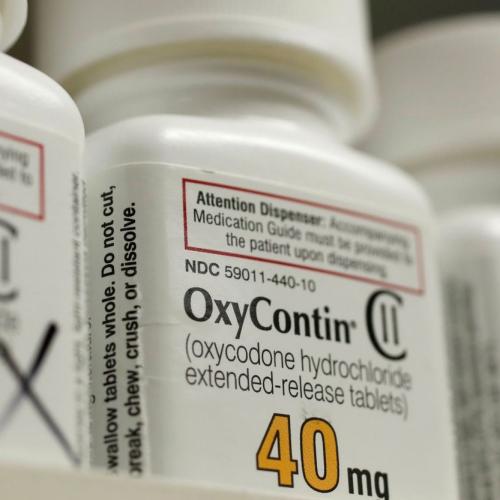
Whether dodging taxes or legal peril, wealthy Americans often succeed in concealing assets from the government by hiding their money in offshore bank accounts. Research from the IRS and a group of economists last year found that the top 1% of earners in the U.S. neglect to report 20% of their income — and that random audits almost never detect offshore accounts. Tax havens like Switzerland or the Cayman Islands have traditionally offered Americans a place to hide their assets because they fiercely guard financial privacy and have minimal to no taxes. Often, they also have laws that inhibit scrutiny from foreign tax officials. Prior to his latest book, [author Patrick Radden] Keefe published "Empire of Pain," which chronicled the billionaire Sackler family's connection to the nation's opioid epidemic. The Sacklers, the notorious family that owned the now bankrupt Purdue Pharma, reportedly have much of their wealth hidden in offshore accounts. An audit commissioned by Purdue showed the family withdrew more than $10 billion from their company during the opioid crisis, CNN reported in October 2020. They began drawing especially large amounts of money from the firm after paying $600 million in a 2007 plea deal with the Justice Department for misleading physicians and consumers about the opioid OxyContin, CNN reported. “The kind of sophistication of the whole industry of financial dissimulation ... such that nobody can put their hands on the money, is really interesting.” Keefe told Yahoo Finance.
Note: A 2015 Guardian newspaper article further describes how the US helps the super-rich hide assets. For more along these lines, see concise summaries of financial industry corruption news articles from reliable major media sources.
Some of the nation's largest retailers have been using soaring inflation rates as an excuse to raise prices and rake in billions of dollars in additional profit, a corporate watchdog group charged. The new figures comes as companies enjoy their most profitable year since the 1950s. Pre-tax profits last year soared 25% from 2020, far outpacing the increase in consumer prices. The report highlights an ongoing debate about the causes of inflation, with some consumer advocates arguing that corporations are using inflation as a justification for passing on even higher price hikes to consumers. Accountable.US said it examined the financial statements of the nation's top 10 retailers over the past two years — including Lowe's and Target — and found that they collectively increased their profits by $24.6 million for a grand total of $99 billion. The report notes, among other examples, that Lowe's recorded $8.4 billion in profit in its most recent quarter as it touted its "new pricing strategies." TJX, parent company of TJ Maxx, Marshalls and Home Goods, saw last year's profits soar to $3.3 billion as the CEO spoke about the company's "aggressive" price increases. "It's time corporations finally help shoulder the burden average Americans have taken on throughout the health crisis," [Accountable.US President Kyle] Herrig said. "Corporations can start by stabilizing prices for consumers instead of pursuing even higher profits — on top of finally paying their fair share in taxes."
Note: Just like big Pharma with COVID, the major corporations are profiting hugely from our misery. Here's another revealing report shows major food producing corporations marking up prices while raking in huge profits. You might also explore key excerpts of news articles on corporate corruption from reliable media sources.
The audit rate for Americans earning more than $5 million a year plunged to just over 2% in 2019 from over 16% in 2010, according to a recent report from the Government Accountability Office, a federal watchdog. The report estimated that taxpayers underreported their income tax by a combined $245 billion a year between 2011 and 2013, and said that "taxpayers are more likely to voluntarily comply with the tax laws if they believe their return may be audited." The main reason for the decline, according to the report, is a lack of IRS funding. In fiscal year 2021, the agency's budget was $11.9 billion – $200 million less than its 2010 budget. The IRS also has seen its staffing levels fall to the same levels as 1973. The decline in funding and auditors means that taxpayers, and especially the top earners, are far less likely to get caught underpaying their taxes than a decade ago. Overall audit rates for American taxpayers fell to 0.2% in 2019 from 0.9% in 2010. The wealthy are still audited at a higher rate than the general taxpayer population. Yet their audit rates have declined at a much higher rate. The audit rate for taxpayers earning between $5 million and $10 million fell to 1.4% from 13.5%. Those earning more than $10 million saw their audit rate fall to 3.9% in 2019 from 21.2% in 2010, while audit rates for $10 million-plus earners ticked up slightly for the 2017 and 2018 tax years due to a Treasury Department mandate to impose audit rates of at least 8% on those making $10 million or more.
Note: For more along these lines, see key news articles on the financial industry from reliable major media sources.
Suffering from U.S. and EU sanctions, Russia made a surprise move—its central bank fixed the price of 5,000 rubles to a gram of gold. Few Western investors or executives noticed. Then, Russia ... announced that it would require payment for oil, natural gas and other of its significant exports in rubles. “What the Russians did was a genius,” explains Jack Bouroudjian, former president of Commerce Bank in Chicago. “It forces people to go to the Russian central bank and pay gold to get rubles to make the transactions.” The ruble had been trading in the range of 70 to 80 for a U.S. dollar. After the sanctions, it plummeted to 120. “Now the ruble basically recovered, trading 80 rubles to the dollar. And it’s because of the way they pegged the ruble to gold.” U.S. companies that have either international suppliers or customers could be jolted by Russia’s golden move. Overseas business partners may need to barter gold for rubles to pay for inputs, like energy, minerals or fertilizers, and therefore demand that their U.S. counterparts pay in rubles or bullion. Additionally, American firms may need to acquire a stack of rubles to pay for their own inputs for foreign-based factories, warehouses or raw materials. Russia isn’t alone in its desire. “China has been explicit” in its desire to displace the dollar and make the yuan more central. China is taking preliminary measures to defend their state-owned assets against financial sanctions similar to those the U.S. launched against Russia.
Note: For more along these lines, see concise summaries of deeply revealing news articles on government corruption from reliable major media sources.
I participated in an online forum called US CBDC—A Disaster in the making? We had a very productive discussion about the policy aspect of central bank digital currencies (CBDCs). I believe that the Fed should not launch a CBDC. Ever. And I think that Congress should amend the Federal Reserve Act, just to be on the safe side. I want to distinguish between a wholesale CBDC and retail CBDC. With a wholesale CBDC, banks can electronically transact with each other using a liability of the central bank. That is essentially what banks do now. But retail CBDCs are another animal altogether. Retail CBDCs allow members of the general public to make electronic payments of all kinds with a liability of the central bank. This feature–making electronic transactions using a liability of the Federal Reserve–is central to why Congress should make sure that the Fed never issues a retail CBDC. The problem is that the federal government, not privately owned commercial banks, would be responsible for issuing deposits. And while this fact might seem like a feature instead of bug, it’s a major problem for anything that resembles a free society. The problem is that there is no limit to the level of control that the government could exert over people if money is purely electronic and provided directly by the government. A CBDC would give federal officials full control over the money going into–and coming out of–every person’s account. This level of government control is not compatible with economic or political freedom.
Note: The above was written by Norbert Michel, Vice President and Director of the Cato Institute's Center for Monetary and Financial Alternatives. For more along these lines, see concise summaries of deeply revealing news articles on financial system corruption from reliable major media sources.
The fallout from a huge leak of Credit Suisse banking data threatened to damage Switzerland’s entire financial sector on Monday after the European parliament’s main political grouping raised the prospect of adding the country to a money-laundering blacklist. The European People’s party (EPP), the largest political grouping of the European parliament, called for the EU to review its relationship with Switzerland and consider whether it should be added to its list of countries associated with a high risk of financial crime. Experts said that such a move would be a disaster for Switzerland’s financial sector, which would face the kind of enhanced due diligence applied to transactions linked to rogue nations including Iran, Myanmar, Syria and North Korea. The EPP released the proposal after media outlets including the Guardian, Süddeutsche Zeitung, the Organized Crime and Corruption Reporting Project (OCCRP), and Le Monde revealed how a massive leak of Credit Suisse data had uncovered apparently widespread failures of due diligence by the bank. The investigation, called Suisse secrets, identified clients of the Swiss bank who had been involved in torture, drug trafficking, money laundering, corruption and other serious crimes. The country’s addition to the EU high-risk third countries list would mean regulated professions, such as bankers, lawyers and accountants, would be required to conduct enhanced due diligence on any transaction or commercial relationship with a person or company in the country.
Note: For more along these lines, see concise summaries of deeply revealing news articles on financial system corruption from reliable major media sources.
Over the past two years, as the Federal Reserve fought to rescue the economy from the clutches of the coronavirus, the central bank’s emergency remedies increased the nation’s money supply by an astonishing 40 percent That was almost four times as much new money as had been created during the two years that preceded the pandemic. To some Fed critics, [that] explains why the United States is experiencing its highest inflation since 1982. All that money chasing after limited supplies of goods such as cars, computers and furniture is inevitably bidding up prices, they say. The Fed agreed with that view the last time the United States had a serious inflation problem. In 1979, then-Fed Chair Paul Volcker clapped a lid on the money supply and drove inflation from a peak of 14.8 percent to 2.5 percent three years later, at the cost of two punishing recessions. But the current Fed chair, Jerome H. Powell, has dismissed claims that the Fed’s money-printing is fueling today’s price spiral. Like his most recent predecessors, dating to Alan Greenspan, Powell says that financial innovations mean there no longer is a link between the amount of money circulating in the economy and rising prices. The Fed’s broadest measure of the money supply, called M2, is more than $21.6 trillion today, up from $15.5 trillion in February 2020.
Note: For more along these lines, see concise summaries of deeply revealing news articles on banking corruption from reliable major media sources.
Remember the “carried interest” loophole that lets hedge fund executives and private equity managers – among the wealthiest people in America – pay a tax rate no higher than most Americans? It’s a pure scam. They get the tax break even though they invest other peoples’ money rather than risk their own. Barack Obama promised to get rid of the loophole. He failed. So, remarkably, did Donald Trump. Now that Democrats are trying to find ways to finance President Biden’s Build Back Better package, you might think that the carried interest loophole would be high on their list. After all, closing it could raise $180bn over 10 years. Think again. The loophole – which treats the earnings of private equity managers and venture capitalists as capital gains, taxed at a top rate of just 20%, instead of income, whose top tax rate is 37% – remains as big as ever. Bigger. Influential Democrats, such as House ways and means committee chair Richard Neal, argue that closing the loophole would hobble the private equity industry, and, by extension, the US economy. The truth is there’s zero economic justification for retaining this loophole. The sole reason the loophole survives even during Democratic Congresses, is fierce lobbying by the private equity industry – and the dependence of too many Democrats on campaign funding from the partners of private equity and hedge funds. The private equity industry ... has contributed hundreds of millions of dollars to congressional campaigns.
Note: For more along these lines, see concise summaries of deeply revealing news articles on government corruption from reliable major media sources.
A massive trove of private financial records shared with The Washington Post exposes vast reaches of the secretive offshore system used to hide billions of dollars from tax authorities, creditors, criminal investigators and — in 14 cases involving current country leaders — citizens around the world. The revelations include more than $100 million spent by King Abdullah II of Jordan on luxury homes in Malibu, Calif., and other locations; millions of dollars in property and cash secretly owned by the leaders of the Czech Republic, Kenya, Ecuador and other countries; and a waterfront home in Monaco acquired by a Russian woman who gained considerable wealth after she reportedly had a child with Russian President Vladimir Putin. Other disclosures hit closer to home for U.S. officials. The files provide substantial new evidence, for example, that South Dakota now rivals notoriously opaque jurisdictions in Europe and the Caribbean in financial secrecy. Tens of millions of dollars from outside the United States are now sheltered by trust companies in Sioux Falls, some of it tied to people and companies accused of human rights abuses and other wrongdoing. The trove, dubbed the Pandora Papers, exceeds the dimensions of the leak that was at the center of the Panama Papers investigation five years ago. That data was drawn from a single law firm, but the new material encompasses records from 14 separate financial-services entities.
Note: Some have suggested that the CIA was responsible for the earlier Panama Papers leak. For more along these lines, see concise summaries of deeply revealing news articles on financial industry corruption from reliable major media sources.
The secret wealth and dealings of world leaders, politicians and billionaires has been exposed in one of the biggest leaks of financial documents. Some 35 current and former leaders and more than 300 public officials are featured in the files from offshore companies, dubbed the Pandora Papers. They reveal the King of Jordan secretly amassed £70m of UK and US property. They also show how ex-UK PM Tony Blair and his wife saved £312,000 in stamp duty when they bought a London office. The couple bought an offshore firm that owned the building. The leak also links Russian President Vladimir Putin to secret assets in Monaco, and shows the Czech Prime Minister Andrej Babis - facing an election later this week - failed to declare an offshore investment company used to purchase two villas for £12m in the south of France. It is the latest in a string of leaks over the past seven years, following the FinCen Files, the Paradise Papers, the Panama Papers and LuxLeaks. The examination of the files is the largest organised by the International Consortium of Investigative Journalists (ICIJ), with more than 650 reporters taking part. Some figures are facing allegations of corruption, money laundering and global tax avoidance. But one of the biggest revelations is how prominent and wealthy people have been legally setting up companies to secretly buy property in the UK. The documents reveal the owners of some of the 95,000 offshore firms behind the purchases.
Note: Read about the Panama Papers leak that previously shed light on the tax havens of the elite. For more along these lines, see concise summaries of deeply revealing news articles on financial corruption and income inequality from reliable major media sources.
Pension funds, investment firms and Wall Street banks are snapping up family homes in Europe and the United States at a rapid pace as prices rocket higher. At the same time, the soaring cost of home ownership means that growing numbers of younger Americans and Brits renting rather than buying houses as they start families. Some of them may find their next landlord is based on Wall Street or in London's financial district. Analysts argue that this will improve standards in the rental sector. But some tenants who rent from corporate landlords dispute this, alleging substandard services and excessive rent increases. If investors are hoovering up existing properties that would otherwise have been sold to individuals, that could squeeze out first-time buyers. Household incomes in the United States and United Kingdom have not kept pace with rising home values in recent years, a trend made worse by the pandemic, which has sent average house prices in both markets to record highs. Invitation Homes, America's biggest single-family home leasing company with some 81,000 houses, is currently facing two lawsuits brought by tenants in California and Maryland who claim that the company's late rent fees constitute illegal penalties under state laws. Current and former tenants of the company ... painted a picture of an uncaring landlord, slow to make repairs and quick to threaten eviction when rent payments are overdue or withheld because of unresolved maintenance issues.
Note: For more along these lines, see concise summaries of deeply revealing news articles on financial industry corruption and income inequality from reliable major media sources.
It’s only when the tide goes out that you learn who’s been swimming naked,” the billionaire investor Warren Buffett has famously said. During the crash of 2008, the whole world learned just how dangerously nude Wall Street was. Now it may be happening again — this time not with residential mortgage-backed securities, based on loans for homes, but commercial mortgage-backed securities, or CMBS, based on loans for businesses. John M. Griffin and Alex Priest are, respectively, a prominent professor of finance and a Ph.D. candidate at the McCombs School of Business at the University of Texas at Austin. In a study released last November, they sampled almost 40,000 CMBS loans with a market capitalization of $650 billion underwritten from the beginning of 2013 to the end of 2019. “Overall,” they write, “actual net operating income falls short of underwritten income by 5% or more in 28% of loans.” This was just the average, however: Some originators — including an unusual company called Ladder Capital as well as the Swiss bank UBS, Goldman Sachs, Citigroup, and Morgan Stanley — were significantly worse, “having more than 35% of their loans exhibiting 5% or greater income overstatement.” With almost every lender, including Ladder, the overstatement increased as time went on. These income overstatements might cause defaults under any circumstances. But it has been particularly dangerous in a severe economic downturn like the one caused by the coronavirus pandemic.
Note: For more along these lines, see concise summaries of deeply revealing news articles on financial industry corruption from reliable major media sources.
By the time Natalie Mayflower Sours Edwards stood before Judge Gregory Woods in a courtroom in Lower Manhattan last month, she had lost her job, her car, her home and had spent nearly three years on supervised release, awaiting a likely prison sentence. Her family had come to watch the hearing, and so had the BuzzFeed reporter, Jason Leopold, to whom she had leaked more than 2,000 sensitive government documents. She explained how she had tried to go through proper whistleblower channels when she witnessed corruption within the Treasury Department and did not hide that she had also gone to the press. “I could not stand by aimlessly,” she said, “as this would have been a violation of my oath of office, which is also a federal crime.” She was sentenced to six months in federal prison. On Oct. 29, 2017, BuzzFeed published the first in a series of scoops by Leopold, based on leaks from Edwards — then a senior official in the Treasury Department's division of financial crimes, known as FinCEN. The story revealed the existence of 13 suspicious wire transfers involving offshore companies connected to Donald Trump’s former campaign manager Paul Manafort, totaling more than $3 million. At her sentencing, Judge Woods described Edwards’s leaks as “intentional” and “reckless.” But [Mark] Schoofs, of BuzzFeed, recently called upon Biden to pardon Edwards, who “did more to bring transparency to the global financial system than almost anyone else in recent memory,” he wrote in the New York Times.
Note: For more along these lines, see concise summaries of deeply revealing news articles on corruption in government and in the financial industry from reliable major media sources.
Growing rapidly within the socially responsible investing landscape is the world of so-called impact investing, which deploys your money more directly toward solving societal problems. Largely executed through direct investing platforms, this approach addresses specific problems, such as alleviating poverty in certain communities or reducing pollution. These investments are designed to generate specific, positive and measurable environmental, social and/or good governance outcomes, oftentimes with market-rate financial returns, said Michael Kramer, managing partner of Natural Investments in Kona, Hawaii. Furthermore, outcomes can have a local or a societal focus. "It's very solution focused, very proactive – often investing in innovations, and supporting social entrepreneurs and socially focused start-ups," he said. Retail investors do have some opportunities to participate in impact investing, along with their accredited counterparts. Two of the most accessible, according to Kramer, are direct debt – i.e., investing in certificates of deposit and other loan instruments sponsored by socially focused lending institutions, such as community development financial institutions (privately owned banks that invest in struggling communities) – and peer-to-peer micro-lending platforms such as Kiva, which enable individuals to invest directly in small businesses worldwide. Another option for the retail market is to use Calvert Impact Capital's Community Investment Notes instead of traditional CDs.
Note: Explore a treasure trove of concise summaries of incredibly inspiring news articles which will inspire you to make a difference.
Global banks faced a fresh scandal about dirty money on Monday as they sought to limit the fallout from a cache of leaked documents showing they transferred more than $2 trillion in suspect funds over nearly two decades. Britain-based HSBC Holdings Plc, Standard Chartered Plc and Barclays Plc, Germany's Deutsche Bank AG and Commerzbank AG, and U.S.-headquartered JPMorgan Chase & Co and Bank of New York Mellon Corp were among the lenders named in the report by the International Consortium of Investigative Journalists and based on leaked documents. The report was based on 2,100 leaked suspicious activity reports (SARs), covering transactions between 1999 and 2017, filed by banks and other financial firms with the U.S. Department of Treasury's Financial Crimes Enforcement Network (FinCEN). Banks are required to file an SAR whenever handling funds that cause grounds for suspicion of criminal activity. The reports revealed broader problems with the monitoring system at the heart of global policing of money laundering and other criminal activity. Investors worried about the potential fallout for global banks, many of which have faced hefty fines in the past for lapses in controls and spent billions of dollars to bolster compliance. "It confirms what we already knew: that there are huge amounts of SARs being filed with relatively low numbers of cases brought through to prosecution, said Etelka Bogardi, a Hong Kong-based financial services partner at Norton Rose Fulbright. "It also brings out the point that managing financial crime risk goes beyond making SARs," Bogardi said.
Note: The original ICIJ report is titled Global banks defy U.S. crackdowns by serving oligarchs, criminals and terrorists. Compare with the title of the New York Times article on this, Banks Suspected Illegal Activity, but Processed Big Transactions Anyway. A search on this topic shows that headlines of almost all major media have watered this down, likely to not upset the big banks. For more along these lines, see concise summaries of deeply revealing news articles on financial industry corruption from reliable major media sources.
The son of a federal judge was killed and her husband injured when a gunman opened fire at their family home in New Jersey on Sunday night. New Jersey U.S. District Court Judge Esther Salas' 20-year-old son Daniel Anderl was killed in the attack in North Brunswick, New Jersey, by a suspect dressed in a FedEx uniform. Salas was not injured in the shooting. North Brunswick Mayor Francis Womack told ABC News that Anderl died after being "shot through the heart." Womack said Salas received threats "from time to time" in the past but she is not believed to have received any recently. On July 15, four days before the shooting, Salas was assigned to the ongoing lawsuit brought by Deutsche Bank investors who claim the company made false and misleading statements about its anti-money laundering policies. The suit also alleged the bank failed to properly monitor "high-risk" customers, including convicted sex offender Jeffrey Epstein. Salas was nominated by President Barack Obama and was confirmed in 2011 having previously served as a U.S. Magistrate Judge in New Jersey. Her most high-profile case in recent years was the sentencing of Real Housewives of New Jersey reality TV stars Teresa and Joe Giudice for financial fraud charges. Salas allowed the pair to serve their time consecutively so one could raise their four children while the other was in jail.
Note: Media reports say the killer was Den Hollander, whose resume on his website states he once worked for Kroll Associates Russia. This Washington Post article states, "The French equivalent of the FBI ... suspected that Kroll's Paris operation was a CIA front." This New Yorker article states Kroll "has hired plenty of graduates of the C.I.A. and other secret services, such as M.I.6 and the Mossad." Is it just a coincidence these murder took place just days after Judge Salas was assigned to the Epstein case? Much more on this available here by crack reporter Whitney Webb.
Deutsche Bank (DBK.DE) has agreed to pay $150m (119m) over compliance failings in part linked to dealings with Jeffrey Epstein. New Yorks Department of Financial Services said in a statement on Tuesday it had imposed the penalty on Deutsche Banks New York branch for significant compliance failures in connection with the Banks relationship with Jeffrey Epstein, the accused child sex trafficker who died in police custody last year. The penalty also covers anti-money laundering failings linked to Danske Bank Estonia and Middle Eastern bank FBME. Epstein, who is believed to have been a billionaire, became a client of Deutsche Banks in 2013, five years after he pleaded guilty to procuring for prostitution a girl below age 18 in Florida. Despite coverage of the settlement and subsequent allegations against Epstein, investigators found Deutsche Bank failed to properly monitor his account. Hundreds of transactions totalling millions of dollars that raised red flags were missed, the New York Department of Financial Services said. These included payments to Epsteins alleged co-conspirators, settlement payments with victims totalling $7m, payments to Russian models, payments for womens school tuition and expenses, and payments to numerous women with Eastern European surnames that were consistent with public allegations of prior wrongdoing. Repeated suspicious cash withdrawals by Epstein totally over $800,000 over four years also failed to raise concerns.
Note: 60 Minutes Australia has produced an excellent segment on Jeffrey Epstein and his recently arrested sidekick Ghislaine Maxwell. How did Epstein get away with sexually abusing hundreds of teenage girls for decades? The government and multiple police departments knew what was happening, yet key officials in high positions of power protected him. For more along these lines, see concise summaries of deeply revealing news articles on Jeffrey Epstein and financial industry corruption from reliable major media sources.
On June 30, the U.S. Senate Banking Committee will hold a virtual hearing titled “The Digitization of Money and Payments.” The Senate Banking Committee is chaired by Senator Mike Crapo (R-ID) and the ranking member is Senator Sherrod Brown (D-OH). The hearing can be viewed ... here. J. Christopher Giancarlo, Senior Counsel at Willkie Farr and Gallagher ... has been busy splicing and dicing the technical details of a futuristic ‘Digital Dollar,’ one that is informed by distributed ledger technology and ‘tokenized’ so as to represent the physical cash we have today in digital form. Giancarlo’s new think tank, the Digital Dollar Project, zooms in on the criticality of holding ‘tokenized’ or digital bearer instruments, just like cash, vs. account-based systems. This idea crossed paths in the last hearing with a concept called FedAccounts, where Morgan Ricks ... presented the idea that the Federal Reserve should operate as a retail bank and offer digital dollars. The idea presented by Ricks focuses on the idea of ‘Bank Accounts for All,’ a bill from ... Senator Sherrod Brown. Although the Digital Dollar surfaced in a draft of the CARES Act originally reported by NPR on March 23, the bill that was introduced in the House and the final CARES Act made no mention of a Digital Dollar. However, the next day, Brown introduced S. 3571, the Banking For All Act, where the idea of a Digital Dollar and FedAccounts (seen in the draft of the CARES Act) were included in his legislation.
Note: Some elites and bankers would like to make all money digital so that they can track every transaction, as is already happening in China. This would also give those in power the ability to cut off those who go against their agenda from access to their funds. For more along these lines, see concise summaries of deeply revealing news articles on banking corruption from reliable major media sources.
The Internal Revenue Service is letting hundreds of thousands of high-income individuals duck tax obligations, according to a government watchdog report. The Treasury inspector general for tax administration found that 879,415 high-income individuals who didnt file returns cumulatively failed to pay $45.7 billion in taxes from 2014 to 2016 and that the agency hasnt tried to collect from many of those taxpayers. The IRS didnt input 326,579 of the cases into its enforcement system, and it closed 42,601 of the cases without ever working on them. In addition, the remaining 510,235 high-income nonfilers, totaling estimated tax due of $24.9 billion, are sitting in one of the Collection functions inventory streams and will likely not be pursued as resources decline, the report, released Monday, found. The report defines high-income taxpayers as those earning at least $100,000. The IRS didnt immediately respond to a request for comment, but agency management in the report agreed with a recommendation to prioritize collecting from people who didnt file tax returns.
Note: For more along these lines, see concise summaries of deeply revealing news articles on government corruption from reliable major media sources.
When the Federal Reserve needed Wall Street’s help with its pandemic rescue mission, it went straight to Larry Fink. The BlackRock cofounder, chairman, and chief executive officer has become one of the industry’s most important government whisperers. The company’s new assignment is a much bigger version of one it took on after the 2008 financial crisis, when the Federal Reserve enlisted it to dispose of toxic mortgage securities. This time it will help the Fed prop up the entire corporate bond market by purchasing, on the central bank’s behalf, what could become a $750 billion portfolio of debt. One part of the Fed’s plan is to buy bond exchange-traded funds. BlackRock itself runs ETFs under the iShares brand, and could end up buying funds it manages. “BlackRock is acting as a fiduciary to the Federal Reserve Bank of New York,” says a spokesman for the company. “As such, BlackRock will execute this mandate at the sole discretion of the bank.” The arrangement is bringing new attention to the company’s scale and ubiquity. “It’s impossible to think of BlackRock without thinking of them as a fourth branch of government,” says William Birdthistle, a professor at the Chicago-Kent College of Law. BlackRock’s growth raises questions over how big and useful a company can become before its size poses a risk. And then there are the potential conflicts. One arm of BlackRock knows what the Fed is buying, while other parts of the business participating in credit markets could benefit from that knowledge.
Note: Watch an excellent documentary showing how BlackRock, Vanguard, and several other institutions are the largest shareholders in almost every major corporation you can think of. For more along these lines, see concise summaries of deeply revealing news articles on corruption in government and in the financial industry from reliable major media sources.
Americas billionaires saw their fortunes soar by $434 billion during the U.S. lockdown between mid-March and mid-May, according to a new report. Amazons Jeff Bezos and Facebooks Mark Zuckerberg had the biggest gains, with Bezos adding $34.6 billion to his wealth and Zuckerberg adding $25 billion. The billionaire gains highlight how the coronavirus pandemic has rewarded the largest and most tech-focused companies, even as the economy and labor force grapples with the worst economic crisis in recent history. According to the report, the net worth of Americas billionaires grew 15% during the two-month period, to $3.382 trillion from $2.948 trillion. The biggest gains were at the top of the billionaire pyramid, with the richest five billionaires -- Bezos, Bill Gates, Zuckerberg, Warren Buffett, and Larry Ellison -- seeing combined wealth gains of $76 billion. Elon Musk had among the largest percentage gain of billionaires during the two months, seeing his net worth jump by 48% in the two months to $36 billion. Zuckerberg was close behind, seeing his wealth surge by 46% in the two months, to $80 billion. Bezos wealth increased by 31% to $147 billion. Because the study timeline captures the stock market bottom and quick rebound, it creates a slightly sunnier picture for billionaires than the full year. For the year, Buffetts wealth has declined by $20 billion, according to the Bloomberg Billionaires Index, while Gates is down by $4.3 billion. For the year, Jeff Bezos has gained $35.5 billion while Zuckerberg is up by $9 billion.
Note: For more along these lines, see concise summaries of deeply revealing news articles on the coronavirus from reliable major media sources.
Stimulus checks are right now being sent to millions of Americans in a desperate bid to offset the economic devastation caused by the coronavirus pandemic. The stimulus checks are being wired to eligible people's bank accounts with some 50 million to 70 million of them expected to appear in accounts tomorrow. However, Congress did not exempt the CARES Act stimulus checks from private debt collection and Bank of America, Citibank, and U.S. Bank have not ruled out using payments to offset outstanding debts. The Treasury Department last week appeared to green light banks to take advantage of the coronavirus crisis to collect prior debt, it has been reported by The American Prospect magazine, citing leaked audio from a meeting with bank officials. Bank of America, Citibank, and U.S. Bank failed to clarify their position on whether stimulus checks would be used to pay off outstanding debts, with JPMorgan Chase confirming it would return the money to the government so the recipient can get the full benefit of the stimulus and Wells Fargo promising it won't use the stimulus checks to pay down negative balances. The report has caused frustration among the progressive financial community. "Money should be harder to seize," Neeraj Agrawal of cryptocurrency policy think tank Coincentre said. An early draft stimulus bill put together by the U.S. Democratic Party did include a provision for a so-called digital dollar that would have allowed the stimulus checks to bypass bank accounts ... but it was cut from the final bill.
Note: For more along these lines, see concise summaries of deeply revealing news articles on financial industry corruption and the coronavirus pandemic from reliable major media sources.
Amid a humanitarian crisis compounded by mass layoffs and collapsing economic activity, the last course our legislators should be following is the one they appear to be on right now: bailing out shareholders and executives who, while enriching themselves, spent the past decade pushing business corporations to the edge of insolvency. The $500bn dollars of public money that Congresss relief bill provides will be used for a corporate bailout, with the only oversight in the hands of an independent council similar to the one used in the 2008 financial crisis. While that body was able to report misuses of taxpayer money, it could do nothing to stop them. As currently structured, there is nothing to keep this bailout from, like its predecessor, putting cash directly into the hands of those at the top rather than into the hands of workers. Without strong regulation and accountability, asking corporations to preserve jobs with these funds will be nothing more than a simple suggestion, leaving millions of everyday Americans in financial peril. If not properly managed, this economic disaster has the potential to be the worst in American history. Our country cannot allow a small number of executives and shareholders to profit from taxpayer funds that we have injected into these corporations for reasons of pure emergency. We need to stop this rot at the core of our economic system and realign the priorities of government with those of workers and consumers.
Note: For more along these lines, see concise summaries of deeply revealing news articles on government corruption and the coronavirus pandemic from reliable major media sources.
Our government, in order to save millions of small businesses that face financial ruin caused by forced closings and shelter-in-place orders, has approved $350bn to aid those flailing businesses. In order to get this money to as many businesses as fast as possible, the government decides to ... lean on the already established Small Business Administration (SBA) and its vast network of member banks. They do this with the Paycheck Protection Program (PPP), which was part of a $2.2tn stimulus bill. Just loan these desperate small businesses money, the government tells these banks. Well guarantee it, and even forgive it. Some banks particularly smaller, independent banks ... were the first to process loan applications for their struggling small business customers last Friday when the SBA opened their loan window. And then theres Bank of America, Wells Fargo and other large banks like JPMorgan Chase and Citigroup who have all said not so fast. These banks last week, at such a critical moment, gathered together and decided to slow things down. They limited loans only to customers and credit card holders. They came up with new lending requirements and asked for more documentation over and above SBA guidelines. They capped the amount of loans they would make. Choosing to only favor customers over everyone else, requiring excessive documentation or capping loans was a bad and misguided decision. Not being more proactive in the weeks they had to prepare was poor planning.
Note: For more along these lines, see concise summaries of deeply revealing news articles on financial industry corruption and the coronavirus pandemic from reliable major media sources.
The economic debate of the day centers on whether the cure of an economic shutdown is worse than the disease of the virus. Similarly, we need to ask if the cure of the Federal Reserve getting so deeply into corporate bonds, asset-backed securities, commercial paper, and exchange-traded funds is worse than the disease seizing financial markets. It may be. In just these past few weeks, the Fed has cut rates by 150 basis points to near zero and run through its entire 2008 crisis handbook. That wasnt enough to calm markets, though so the central bank also announced $1 trillion a day in repurchase agreements and unlimited quantitative easing, which includes a hard-to-understand $625 billion of bond buying a week going forward. At this rate, the Fed will own two-thirds of the Treasury market in a year. But its the alphabet soup of new programs that deserve special consideration, as they could have profound long-term consequences. The federal government is nationalizing large swaths of the financial markets. The Fed is providing the money to do it. If these acronym programs were abused ... they might indeed force markets higher than valuation warrants. But it would come with a heavy price. Investors would be deprived of the necessary market signals that freely traded capital markets offer to aid in the efficient allocation of capital. Malinvestment would be rampant. It also could force private sector players to leave as the governments heavy hand makes operating in controlled markets uneconomic.
Note: For more along these lines, see concise summaries of deeply revealing news articles on the coronavirus pandemic and financial industry corruption from reliable major media sources.
How was Congress able to come up with $2 trillion so quickly? Where is the money coming from? On Friday, the House of Representatives, led by Speaker Nancy Pelosi ... waved away that question, preparing to rubber-stamp a $2 trillion Senate package aimed at staving off economic collapse. The details of the legislation particularly the $500 billion, strings-optional corporate slush fund may be shameful ... but the moment is instructive ... as it became clear that concerns about deficits and revenue had evaporated. Congress has ignored millions of people who have existed in a state of crisis for decades. The people of Flint, Michigan, (and elsewhere) still do not have safe drinking water. Millions of kids go hungry each day. There has been no multitrillion-dollar spending bill to combat these and other domestic emergencies. Instead, lawmakers have deprived communities of critical investments that could have attenuated their emergencies, often hiding behind the excuse that there isnt enough money in the budget to deal with problems like these. Congress is doing now what it could always have done. Uncle Sam cant run out of dollars. The U.S. government is the issuer of our currency the U.S. dollar which means that ... it can never find itself in a situation in which it has bills coming due that it cant afford to pay. If the votes are there, the money can always be made available. When all of this is behind us, to the extent that it ever can be, lets not forget what weve learned.
Note: The entire article at the link above raises important questions about why Congress hasn't made more money available in the past for much needed support of a variety of important programs. The author, Stephanie Kelton, served as the chief economist for Democrats on the U.S. Senate Budget Committee. For more along these lines, see concise summaries of deeply revealing news articles on banking and financial corruption from reliable major media sources. Then explore the excellent, reliable resources provided in our Banking Corruption Information Center.
When this public health crisis first morphed into a financial one as well, the Federal Reserve sprang into action, pouring trillions of dollars into the financial system in less than a week; providing short-term loans to banks; slashing a key interest rate virtually to zero; announcing that the Fed would begin buying $700 billion worth of U.S. government bonds and mortgage-backed securities. The Fed gave itself the authority to purchase up to $1 trillion in commercial paper to support the flow of credit. An eight-second video from 2009 [shows] Ben Bernanke, the Fed chair at the time, explaining how the central bank comes up with the money to pull off these trillion-dollar maneuvers. “It’s not tax money,” Mr. Bernanke explained on “60 Minutes.” “We simply use the computer to mark up the size of the account.” Heads exploded. Many people replying to the tweet complained that we’re ... coming to the rescue of Wall Street instead of Main Street. “If the Fed can do this for the banks,” they wondered, “why can’t we find the money to pay for programs that would improve life for everyday Americans?” When called upon, the same computer that works for large banks is there for Main Street as well. But the Federal Reserve needs specific instructions before typing up dollars for the rest of us. Those instructions come in the form of legislation: When a bill becomes a law, the government is, in essence, telling the Fed how many dollars it is ordering up.
Note: For more along these lines, see concise summaries of deeply revealing news articles on banking corruption and the coronavirus pandemic from reliable major media sources.
The Federal Reserve moved with unprecedented force and speed Friday to pump huge amounts of cash into the financial system to ease disruptions that have escalated since the viral outbreak. The New York Federal Reserve Bank said it will offer $1 trillion of overnight loans a day through the end of this month to large banks. That is in addition to $1 trillion in 14-day loans it is offering every week. Wall Street analysts say the huge number is intended to calm markets by demonstrating that the Feds ability to lend short-term is nearly unlimited. The Fed is also buying Treasury bonds at a furious pace, and will soon run through the $500 billion in purchases it announced on Sunday. It is also accelerating its purchases of mortgage-backed securities. Most analysts expect they will buy more. All the Feds emergency steps are intended to pump cash into a financial system that has seen a spike in demand for dollars. Steven Friedman, a former economist at the New York Fed, [said] The Fed is trying to play the role of shock absorber. Theyve effectively thrown the kitchen sink at the markets and the economy, said Gennadiy Goldberg, senior U.S. rates strategist for TD Securities. Also Friday, the Fed said it would expand its currency exchanges with five central banks. The Fed provides dollars to overseas central banks because some business is conducted overseas in dollars and foreign banks also provide dollar-denominated loans to their customers.
Note: Take $1 trillion and divide it by the U.S. population of 330 million and you find that this amount is equivalent to $3,000 for every man, woman, and child in the US. And that is what the Fed is lending every day. Where is all this money coming from, and why is it going to the banks? For more along these lines, see concise summaries of deeply revealing news articles on the coronavirus from reliable major media sources. Then explore the excellent, reliable resources provided in our Banking Information Center.
Investment bankers have pressed health care companies on the front lines of fighting the novel coronavirus, including drug firms developing experimental treatments and medical supply firms, to consider ways that they can profit from the crisis. The largest voices in the health care industry stand to gain from billions of dollars in emergency spending on the pandemic, as do the bankers and investors who invest in health care companies. Over the past few weeks, investment bankers have been candid on investor calls and during health care conferences about the opportunity to raise drug prices. Executives joked about using the attention on Covid-19 to dodge public pressure on the opioid crisis. Health and Human Services Secretary Alex Azar previously served as president of the U.S. division of drug giant Eli Lilly and on the board of the Biotechnology Innovation Organization, a drug lobby group. During a congressional hearing ... Azar rejected the notion that any vaccine or treatment for Covid-19 should be set at an affordable price. “We can’t control that price because we need the private sector to invest,” said Azar. “The priority is to get vaccines and therapeutics. Price controls won’t get us there.” The initial $8.3 billion coronavirus spending bill passed in early March ... contained a provision that prevents the government from delaying the introduction of any new pharmaceutical to address the crisis over affordability concerns. The legislative text was shaped, according to reports, by industry lobbyists.
Note: For more along these lines, see concise summaries of deeply revealing news articles on the coronavirus pandemic and Big Pharma profiteering from reliable major media sources.
The criminal justice system has given up all pretense that the crimes of the wealthy are worth taking seriously. In January 2019, white-collar prosecutions fell to their lowest level since researchers started tracking them in 1998. Since 2015, criminal penalties levied by the Justice Department have fallen from $3.6 billion to roughly $110 million. Illicit profits seized by the Securities and Exchange Commission have reportedly dropped by more than half. In 2018, a year when nearly 19,000 people were sentenced in federal court for drug crimes alone, prosecutors convicted just 37 corporate criminals. Tax evasion ... siphons up to 10,000 times more money out of the U.S. economy every year than bank robberies. In 2017, researchers estimated that fraud by Americas largest corporations cost Americans up to $360 billion annually between 1996 and 2004. Thats roughly two decades worth of street crime every single year. Over the last four decades, the agencies responsible for investigating elite and white-collar crime ... have seen their enforcement divisions starved into irrelevance. More than a third of the FBI investigators who patrol Wall Street were reassigned between 2001 and 2008. Even though auditing millionaires and billionaires is one of the most cost-effective government activities imaginablean independent report estimated in 2014 that it yielded up to $4,545 in recovered revenue per hour of staff timethe IRS investigated the returns of just 3 percent of American millionaires in 2017.
Note: For more along these lines, see concise summaries of deeply revealing news articles on government corruption and income inequality from reliable major media sources.
Federal regulators have slapped former Wells Fargo CEO John Stumpf with a $17.5 million fine for his role in the banks sales practices scandal. Stumpf also accepted a lifetime ban from the banking industry. Along with its fine against Stumpf, the Office of the Comptroller of the Currency announced Thursday it is suing five other former Wells Fargo executives for a combined total of $37.5 million. This is the first time regulators have punitively punished individual executives for Wells Fargos wrongdoing. The San Francisco-based bank has paid hundreds of millions of dollars in fines and penalties for encouraging employees to open up millions of fake accounts in order to meet unrealistic sales goals. As part of their settlements and lawsuits against these Wells executives, regulators seek to ban all of them from ever working in the banking industry again. The root cause of the sales practices misconduct problem was the Community Banks business model, which imposed intentionally unreasonable sales goals and unreasonable pressure on its employees to meet those goals and fostered an atmosphere that perpetuated improper and illegal conduct, the OCC said in its complaint. Community Bank management intimidated and badgered employees to meet unattainable sales goals year after year, including by monitoring employees daily or hourly and reporting their sales performance to their managers, subjecting employees to hazing-like abuse, and ... terminating employees for failure to meet the goals.
Note: Though it's great that someone has finally been fined at Wells Fargo, a small time robber gets locked up in jail for years. Why aren't these people who were the cause of huge white collar crime being jailed? For more along these lines, see concise summaries of deeply revealing news articles on financial industry corruption from reliable major media sources.
Wells Fargo has agreed to pay $3 billion to settle criminal charges and a civil action stemming from its widespread mistreatment of customers in its community bank over a 14-year period, the Justice Department announced on Friday. From 2002 to 2016, employees used fraud to meet impossible sales goals. They opened millions of accounts in customers names without their knowledge, signed unwitting account holders up for credit cards and bill payment programs, created fake personal identification numbers, forged signatures and even secretly transferred customers money. In court papers, prosecutors described a pressure-cooker environment at the bank, where low-level employees were squeezed tighter and tighter each year by sales goals that senior executives methodically raised, ignoring signs that they were unrealistic. Part of Fridays deal ... is a deferred prosecution agreement, a pact that could expose the bank to charges if it engages in new criminal activity. During the final five years of abuse, the bank quietly fired thousands of employees for falsifying records in response to customer complaints. The practices covered by the settlement ... are not the only misbehavior the bank has revealed since 2016. The bank has also admitted it charged mortgage customers unnecessary fees and forced auto loan borrowers to buy insurance they did not need. The mortgage and auto loan claims are not part of Fridays deal. Wells Fargos profits last year totaled nearly $20 billion.
Note: For more along these lines, see concise summaries of deeply revealing news articles on financial industry corruption from reliable major media sources.
40 years ago, a worn-out white Gulfstream II jet descended over Fort Lauderdale, Fla., carrying a regal but sickly passenger almost no one was expecting. Aboard were a Republican political operative, a retinue of Iranian military officers ... and Mohammed Reza Pahlavi, the newly deposed shah of Iran. The only one waiting to receive the deposed monarch was a senior executive of Chase Manhattan Bank, which had not only lobbied the White House to admit the former shah but had arranged visas for his entourage. Less than two weeks later, on Nov. 4, 1979, vowing revenge for the admission of the shah to the United States, revolutionary Iranian students seized the American Embassy in Tehran and then held more than 50 Americans and Washington hostage for 444 days. The shah, Washingtons closest ally in the Persian Gulf, had fled Tehran in January 1979. The shah sought refuge in America. But President Jimmy Carter ... refused him entry for the first 10 months of his exile. Chase Manhattan Bank and its well-connected chairman worked behind the scenes to persuade the Carter administration to admit the shah, one of the banks most profitable clients. For Mr. Carter, for the United States and for the Middle East it was an incendiary decision. The ensuing hostage crisis enabled Ayatollah Ruhollah Khomeini to consolidate his theocratic rule, started a four-decade conflict between Washington and Tehran ... and helped Ronald Reagan take the White House.
Note: More information is available in this 1991 New York Times article and this article. For more along these lines, see concise summaries of deeply revealing news articles on government corruption from reliable major media sources.
In Homewreckers, his new book about the aftermath of the 2008 financial crisis, [Aaron] Glantz skillfully tells a bigger story about American housing thats tortuous, confounding and ultimately enraging. Along with Race for Profit: How Banks and the Real Estate Industry Undermined Black Homeownership, by Keeanga-Yamahtta Taylor, Homewreckers shows what happens when private speculators get buoyed by government largess while non-tycoons are largely left to fend for themselves. After the housing bubble burst, the government was desperate to get lending banks off its books, and so it offered a sweet deal to prospective buyers of the banks: Those private investors could keep the gains on any loans held by the bank, but if the loans lost money, the government would bear most of the cost. It was like a mutant version of the subprime bubble that led to the financial crisis: Rather than renegotiate the loans, the new owners of these lending banks found there was more money to be made in foreclosing on the properties and becoming a class of landlord that had never been seen before, charging rent and fees to tenants not infrequently the previous owners who were foreclosed on while hoarding the equity for themselves. Corporate landlords ... are also more likely to buy properties in neighborhoods with large concentrations of African-American and Latino residents, who end up paying higher and higher rents that ultimately transfer wealth from their communities to investors far away.
Note: For more along these lines, see concise summaries of deeply revealing news articles on financial industry corruption from reliable major media sources.
More than 10 years after the housing crash that devastated the economy, people are still debating just what happened. Although the economy and the housing market have made a comeback, homeownership remains low. Aaron Glantz, a prize-winning investigative journalist ... set out to explain why, in "Homewreckers: How a Gang of Wall Street Kingpins, Hedge Fund Magnates, Crooked Banks, and Vulture Capitalists Suckered Millions Out of Their Homes and Demolished the American Dream." Eight million Americans lost their homes in the bust. Where did those homes go? Those houses didnt just disappear. Who won, when everyone else lost? The people who won - a small group of businessmen who pounced to seize thousands of homes and made billions of dollars - theyre the homewreckers. But even though the housing bust is over, the nations homeownership rate is at its lowest in 50 years, and continues to go down. It helps explain why people feel so uneasy. As long as the unemployment rate is low and people have jobs and they can afford rents, the financial market is secure. If people lose their jobs, whats going to happen? We could be back in another housing bust. Right now theres a real crisis of affordability. People think we dont have enough inventory because we havent built enough houses. Only 10 years ago, our country was awash in real estate. We have to ask ourselves if we really have a housing shortage, or if we have rigged the market so it only benefits a few of the players.
Note: For more along these lines, see concise summaries of deeply revealing news articles on income inequality from reliable major media sources.
The Standing Rock movement in 2016 brought together Indigenous activists from across the nation to fight against the Dakota Access Pipeline. One of the demands of this movement included divestment from Wells Fargo, a bank that was funding development of the pipeline. This brought into the spotlight ... big for-profit banks that the government uses to invest public money into Wall Street, rather than local communities. Some of those investments include the fossil fuel industry, private prisons, immigrant detention centers, and more. The divestment movement is mostly about getting those government investments ... out of the big banks. The question then becomes where to put them. Some ... say the answer is public banking. In September, the California State Legislature passed Assembly Bill 857, a law that would allow a regulatory framework for public banking in the state. This would allow the establishment of banks that hold the governments money and include socially responsible charters. Debbie Notkin, who works with the California Public Banking Alliance, says that by law, all corporations, which includes private banks, are legally obligated to maximize profit. Public banks are not held to this expectation, however, and are instead mandated to serve their communities. Community investments have unlimited possibilities, including affordable housing, saving people from foreclosure, making student loans more affordable, and creating more infrastructure to defend against the effects of climate change.
Note: Ellen Brown is a dedicated researcher who has promoted public banks for years. Check out her excellent work on her website at https://ellenbrown.com. Explore a treasure trove of concise summaries of incredibly inspiring news articles which will inspire you to make a difference.
As they set national policy on important issues such as climate change, tech monopolies, medical debt and income inequality, US senators have glaring conflicts of interest, an investigation by news website Sludge and the Guardian can reveal. An analysis of personal financial disclosure data as of 16 August has found that 51 senators and their spouses have as much as $96m personally invested in corporate stocks in five key sectors: communications/electronics; defense; energy and natural resources; finance, insurance and real estate; and health. Overall, the senators are invested in 338 companies. The median stock investment range in the five sectors for the 51 senators is between $100,000 and $365,000, while the average range of the investments is between $551,000 and nearly $1,874,000. Not only are the senators far wealthier than most of their constituents, but theyre in a prime position to increase their wealth via policymaking. Its not illegal for members of Congress to have personal financial stakes in the industries on which they legislate. But such investments raise questions about lawmakers motivations. Some senators want to do away with these perceived conflicts of interest. Senator Elizabeth Warren introduced anti-corruption legislation in August 2018 that included a ban on members of Congress, senior congressional staff, cabinet secretaries, White House staff, federal judges and other officials from owning ... securities while in office.
Note: For more along these lines, see concise summaries of deeply revealing news articles on government corruption from reliable major media sources.
A Danish bank has launched the worlds first negative interest rate mortgage handing out loans to homeowners where the charge is minus 0.5% a year. Negative interest rates effectively mean that a bank pays a borrower to take money off their hands, so they pay back less than they have been loaned. Jyske Bank, Denmarks third largest, has begun offering borrowers a 10-year deal at -0.5%, while another Danish bank, Nordea, says it will begin offering 20-year fixed-rate deals at 0% and a 30-year mortgage at 0.5%. Under its negative mortgage, Jyske said borrowers will make a monthly repayment as usual but the amount still outstanding will be reduced each month by more than the borrower has paid. The mortgage is possible because Denmark, as well as Sweden and Switzerland, has seen rates in money markets drop to levels that turn banking upside-down. Hegh said Jyske Bank is able to go into money markets and borrow from institutional investors at a negative rate, and is simply passing this on to its customers. In Denmark, interest rates on savings deposited in Jyske ... have already fallen to zero. In reality, the Jyske mortgage borrower in Denmark is likely to end up paying back a little more than they borrowed, as there are still fees and charges to pay to compensate the bank for arranging the deal, even when the nominal rate is negative.
Note: Explore a treasure trove of concise summaries of incredibly inspiring news articles which will inspire you to make a difference.
Two summers ago, the head of Britains Financial Conduct Authority, Andrew Bailey, made news when he announced that LIBOR the leading benchmark for setting global interest rates had a sustainability issue. The rate is supposed to measure the rate at which banks borrow from each other, but Bailey said it wasnt based on real borrowing. LIBOR, the London Interbank Offered Rate, helps set rates for hundreds of trillions of dollars worth of financial instruments. If Bailey was right, it meant a sizable portion of global economic activity rested on magical thinking. A secondary concern involved manipulation. If banks were inventing numbers to submit to the LIBOR committee, could they not also be manipulating rates to line pockets? The possibility ... seemed to exist that the worlds major investors including localities and pension funds were being systematically ripped off. A class of investors and retirement funds including Putnam Bank and the Hawaii Sheet Metal Workers Pension Fund did recently bring an antitrust suit alleging just such a scheme. The July 1 complaint is an amended version of a class action suit originally filed earlier this year. The action against JP Morgan Chase, Bank of America, Citigroup, Barclays, and numerous other banks uses both documentary evidence and data to argue that banks have been purposefully depressing interest rates. The idea would be to lower payouts to investors who are contractually due to receive LIBOR, while lessening costs for LIBOR borrowers.
Note: For more along these lines, see concise summaries of deeply revealing news articles on financial industry corruption from reliable major media sources.
The Federal Reserve recently reported that about half of Americans have virtually no wealth at all, with four in 10 unable to afford a $400 emergency expense. That means that if their car breaks down or their child gets sick, they have to charge those expenses to a credit card. And when they do that, they get ripped off big time. Despite the fact that banks can borrow money from the Fed at less than 2.5%, the median credit card interest rate ... is now over 21%. Last year, Wall Street banks made $113 billion in credit card interest alone, up by nearly 50% in just five years. In other words, while working class Americans pay outrageously high interest rates, Wall Street banks get rich. And if you live in a low-income community without a bank or cannot get a credit card, what do you do when you need to borrow money? You may have to turn to a predatory payday lender where the average interest rate on an annual basis is a jaw-dropping 391%. When banks and payday lenders charge these unconscionably high interest rates, they are not engaged in the business of making credit available. They are involved in extortion. We need a national usury law that caps interest rates ... at 15%. And that's exactly what the legislation I introduced with Representative Alexandria Ocasio-Cortez would do. Under our Loan Shark Prevention Act, we would make sure that no bank or store in America could charge an interest rate higher than 15%. 88% of Americans support a cap on credit card interest rates.
Note: The above was written by Senator Bernie Sanders. For more along these lines, see concise summaries of deeply revealing news articles on financial industry corruption and income inequality.
In his annual letter to shareholders, distributed last week, JPMorgan Chase CEO Jamie Dimon took aim at socialism, warning it would be a disaster for our country, because it produces stagnation, corruption and often worse. Dimon should know. He was at the helm when JPMorgan received a $25bn socialist-like bailout in 2008, after it and other Wall Street banks almost tanked because of their reckless loans. Dimon subsequently agreed to pay the government $13bn to settle charges that the bank overstated the quality of mortgages it was selling. According to the Justice Department, JPMorgan acknowledged it had regularly and knowingly sold mortgages that should have never been sold. To state it another way, Dimon and other Wall Street CEOs helped trigger the 2008 financial crisis when the dangerous and irresponsible loans their banks were peddling on which they made big money finally went bust. But instead of letting the market punish the banks (which is what capitalism is supposed to do) the government bailed them out and eventually levied paltry fines which the banks treated as the cost of doing business. Call it socialism for rich bankers. Americas five biggest banks, including Dimons, now control 46% of all deposits, up from 12% in the early 1990s. But, of course, Dimon isnt really ... concerned about socialism. Dimons real concern is that America may end the kind of socialism he and other denizens of the Street depend on bailouts, regulatory loopholes, and tax breaks.
Note: The above was written by former US secretary of labor Robert Reich. For more along these lines, see concise summaries of deeply revealing financial industry corruption news articles from reliable major media sources.
American billionaires are calling for changes to the system that enabled them to get rich. Warren Buffett, Jamie Dimon, Ray Dalio, Bill Gates and a list of others say that capitalism in its current form simply doesnt work for the rest of the United States. Some of their remedies involve higher taxes. Hedge fund titan Ray Dalio is the most recent to criticize the current economic system. On Monday, the Bridgewater founder told CNBC that while it doesnt need to be destroyed, capitalism does need to present an equal opportunity, which Dalio said he received through public education. The issue chafing billionaires and politicians alike is a growing income gap. The inequality between rich and poor Americans is as high as it was in late 1930s, Dalio pointed out in a paper posted online. The wealth of the top 1 percent of the population is now more than that of the bottom 90 percent of the population combined. Dalio called growing inequality and lack of investment in public education an existential risk for the U.S. Berkshire Hathaway CEO Warren Buffett - third on Forbes 2019 billionaires list - has repeatedly said the wealthy should be taxed more. In 2006, the CEO committed to give all of his Berkshire Hathaway stock to philanthropic foundations. He and Bill and Melinda Gates have asked hundreds of wealthy Americans to pledge at least 50 percent of their wealth to charity in the so-called the Giving Pledge. There are now 190 people signed on, including Facebook CEO Mark Zuckerberg and Netflix CEO Reed Hastings.
Note: For more along these lines, see concise summaries of deeply revealing financial industry corruption news articles from reliable major media sources.
Opening unauthorized bank accounts. Cheating customers on mortgages and car loans. If you can dream up a financial scam, theres a good chance that Wells Fargo ran it on its customers in recent years. After years of pressure, the company finally parted ways with its second chief executive in three years. But this isnt real accountability. When a criminal on the street steals money from your wallet, they go to jail. When small-business owners cheat their customers, they go to jail. But when corporate executives at big companies oversee huge frauds that hurt tens of thousands of people, they often get to walk away with multimillion-dollar payouts. Too often, prosecutors dont even try to hold top executives criminally accountable. They claim its too hard to prove that the people at the top knew about the corporate misconduct. This culture of complicity warps the incentives for corporate leaders. The executives know that, at worst, the company will get hit with a fine and the money will come out of their shareholders pockets, not their own. It doesnt have to be this way. With sustained resources and a commitment to enforcing the law, we can bring more cases under existing rules. Beyond that, we should enact the Ending Too Big To Jail Act, which I introduced last year. That bill would make it easier to hold executives at big banks accountable for scams by requiring them to certify that they conducted a due diligence inquiry and found that no illegal conduct was occurring on their watch.
Note: The above was written by US Senator Elizabeth Warren. For more along these lines, see concise summaries of deeply revealing financial industry corruption news articles from reliable major media sources.
Despite being the taxpayers greatest investment - more than $700 billion a year - the Department of Defense has remained an organizational black box throughout its history. Its repelled generations of official inquiries, the latest being an audit three decades in the making, mainly by scrambling its accounting into such a mess that it may never be untangled. Ahead of misappropriation, fraud, theft, overruns, contracting corruption and other abuses that are almost certainly still going on, the Pentagons first problem is its books. Its the worlds largest producer of wrong numbers. At the tail end of last year, the Department of Defense finally completed an audit. At a cost of $400 million, some 1,200 auditors charged into the jungle of military finance, but returned in defeat. They were unable to pass the Pentagon or flunk it. They could only offer no opinion, explaining the militarys empire of hundreds of acronymic accounting silos was too illogical to penetrate. Twenty-nine years ago, in 1990, Congress ordered all government agencies to begin producing audited financial statements. In 2011, [the Pentagon] finally agreed to be ready by 2017, which turned into 2018. If and when the defense review is ever completed, were likely to find ... the militarys losses and liabilities hidden in Enron-like special-purpose vehicles, assets systematically overvalued, monies Congress approved for X feloniously diverted to Program Y, contractors paid twice, parts bought twice, repairs done unnecessarily and at great expense, and so on.
Note: Read more about the Pentagon's massive accounting fraud in this article. Read a 2017 article documenting an investigation which found $21 Trillion unaccounted for in government coffers. Then read summaries of several major media articles showing the Pentagon's blatant lies and disregard for accounting. For more along these lines, see concise summaries of deeply revealing news articles on military corruption from reliable major media sources.
The United States and key ally Saudi Arabia saw their lobbying efforts pay off on Friday after the European Commission's proposed dirty money blacklist - which included the oil-rich kingdom and several American territories - fizzled. "The Americans fell on us like a tonne of bricks," an anonymous Brussels official [said]. The effort "to protect the integrity of the E.U. financial system," the commission said last month, included blacklisting 23 territories that had "strategic deficiencies in their anti-money laundering and counter-terrorist financing frameworks." They included American Samoa, Guam, the U.S. Virgin Islands, and Puerto Rico as well as Saudi Arabia. However, as the Wall Street Journal reported Friday, "European governments, under pressure from Washington and Riyadh, have refused to endorse" the list. "The rejection of the governments is a farce at the expense of security," declared Sven Giegold, Member of the European Parliament (MEP) from Germany. "Governments must ask themselves whether they are on the side of autocrats or their citizens!" As Politico reported, the list, which would need the backing of the European Parliament and Council of the E.U. to go into effect, "is politically sensitive because it has teeth. E.U. banks that handle payments connected to the blacklisted countries and territories would have to conduct 'enhanced due diligence' on any cash that moves to and from the E.U. and the blacklisted jurisdictions."
Note: For more along these lines, see concise summaries of deeply revealing news articles on corruption in government and in the financial industry.
A national inquiry into Australia's scandal-plagued financial sector has proposed sweeping changes in an attempt to end rampant industry misconduct. The Royal Commission spent 12 months investigating wrongdoing by some of the nation's biggest institutions. Prominent scandals included the charging of fees for no service - sometimes to dead customers. The government said it would act on all 76 recommendations made by the inquiry. The Royal Commission - Australia's highest form of public inquiry - came after a decade of scandals that shook confidence in the country's largest industry. After the report was made public on Monday, Treasurer Josh Frydenberg said the public had paid an "immense" price for the misconduct. "It's a scathing assessment of conduct driven by greed and behaviour that was in breach of existing law and fell well below community expectations," he said. The Royal Commission received more than 10,000 public submissions. It interviewed over 130 witnesses in public hearings. The report made 76 recommendations for reform, including: More than 20 unidentified cases to be referred on to regulators, resulting in possible criminal or civil prosecutions; There should be an overhaul of the sector's sales culture to reduce conflicts of interest; Regulators need to more regularly prosecute breaches, or lose some of their powers. The government has been criticised for initially resisting the probe, which it later described as "regrettable but necessary" action to restore public trust.
Note: For more along these lines, see concise summaries of deeply revealing banking corruption news articles from reliable major media sources.
Early support from deep-pocketed financial executives could give Democrats seeking to break out of the pack an important fundraising boost. But any association with bankers also opens presidential hopefuls to sharp attacks from an ascendant left. And its left senior executives on Wall Street flailing over what to do. Im a socially liberal, fiscally conservative centrist who would love to vote for a rational Democrat and get Trump out of the White House, said the CEO of one of the nations largest banks, who, like a dozen other executives interviewed for this story, declined to be identified. After mentioning Bloomberg, Wall Street executives who want Trump out list a consistent roster of appealing nominees that includes former Vice President Joe Biden and Sens. Cory Booker of New Jersey, Kirsten Gillibrand of New York and Kamala Harris of California. Bankers biggest fear: The nomination goes to an anti-Wall Street crusader like Sen. Elizabeth Warren (D-Mass.) or Sanders. It cant be Warren and it cant be Sanders, said the CEO of another giant bank. It has to be someone centrist and someone who can win. Clearly, they're not afraid that Senator Professor Warren or Bernie Sanders "can't win," but, rather, they're struck into incoherence that one of them can. Somewhere in the gated community holding their souls, they know that there still is a considerable reckoning out there for what they did throughout the Aughts, and that scares them to death. And now, there are popular vehicles through which that reckoning can be wrought. The universe may be shopping for new masters.
Note: Trump promised to drain the swamp of corrupt bankers, only to then appoint many of them to key positions in his administration. For more along these lines, see concise summaries of deeply revealing news articles on financial corruption from reliable major media sources. Then explore the excellent, reliable resources provided in our Banking Corruption Information Center.
Michaela Christian lost a long battle with Wells Fargo in 2013 to save her Las Vegas home, a defeat she says changed the course of her life. When the bank refused to modify her mortgage, Christian moved in with a friend and scrambled to rebuild her life. Five years later, Wells Fargo admits it made a mistake. It is a mistake the giant bank admits it made nearly 900 times over several years, pushing hundreds of distressed homeowners into foreclosure. Christian said when she learned of Wells Fargos error, I was sick to my stomach. They destroyed me and destroyed my everything. Wells Fargo says an internal review found that the bank denied help to hundreds of homeowners after fees charged by foreclosure attorneys were improperly used when the bank determined whom to offer mortgage help. The computer error began in 2010 and was not corrected until last April, the bank said. Wells Fargos admission is part of a cascade of lapses that increased scrutiny of the San Francisco-based bank. Over the past two years, the bank paid more than $1 billion in fines after admitting it opened millions of bogus accounts customers didnt want and then found itself in more trouble after improperly repossessing thousands of cars. Critics have also jumped on Wells Fargos decision to cut 26,000 jobs while it reaps the benefits of a corporate tax cut that is expected to boost its profits $3.7 billion this year.
Note: For more along these lines, see concise summaries of deeply revealing news articles on financial corruption from reliable major media sources. Then explore the excellent, reliable resources provided in our Banking Corruption Fact and Information Center.
Deutsche Bank's head office and other locations in Frankfurt were raided by 170 police officers and tax investigators on Thursday. The German bank is suspected of helping clients to set up offshore companies in tax havens, prosecutors said. Investigators are also looking at whether Deutsche Bank failed to report suspicious transactions. Both the lender and prosecutors said the probe is related to the Panama Papers, a 2016 investigation into money laundering networks and shell companies set up by Panama-based law firm Mossack Fonseca. The investigation is yet another headache for Deutsche Bank. The lender struck a $7.2 billion deal with the US government in January 2017 to settle claims that it packaged and sold toxic mortgages. It was fined $630 million the same month over a Russian money laundering scheme. In September, Deutsche Bank was ordered by German regulators to tighten its controls. Other European lenders have also come under scrutiny for potential money laundering. HSBC (HBCYF) and ING (ING) have both settled money-laundering allegations in recent years. Danske Bank (DNKEY), the largest bank in Denmark, said in September that an internal investigation had uncovered a large number of suspicious accounts and transactions at its branch in Estonia. [Former US Treasury] Jimmy Gurul ... said that stronger deterrents are needed. "Even in the most egregious cases, banks are often only required to pay a monetary penalty for engaging in criminal activity," he said.
Note: For lots more on the shady dealings of this bank, read this New Yorker article. For more along these lines, see concise summaries of deeply revealing financial industry corruption news articles from reliable major media sources.
On November 15, Ernst & Young and other private firms that were hired to audit the Pentagon announced that they could not complete the job. Congress had ordered an independent audit of the Department of Defense, the governments largest single cost center - the Pentagon receives two of every three federal tax dollars collected - after the Pentagon failed for decades to audit itself. The firms concluded, however ... that a reliable audit was simply impossible. Now, a Nation investigation has uncovered an explanation for the Pentagons foot-dragging: For decades, the DoDs leaders and accountants have been perpetrating a gigantic, unconstitutional accounting fraud, deliberately cooking the books to mislead the Congress and drive the DoDs budgets ever higher, regardless of military necessity. DoD has literally been making up numbers in its annual financial reports to Congress - representing trillions of dollars worth of seemingly nonexistent transactions - knowing that Congress would rely on those misleading reports. When the DoD submits its annual budget requests to Congress, it sends along the prior years financial reports, which contain fabricated numbers. The fabricated numbers disguise the fact that the DoD does not always spend all of the money Congress allocates in a given year. However, instead of returning such unspent funds to the US Treasury, as the law requires, the Pentagon sometimes launders and shifts such moneys to other parts of the DoDs budget.
Note: Other than the above article, and weak Bloomberg and Reuters articles, the major media blatantly failed to report on the Pentagon's outrageous accounting failure. CNN posted one article not about the problem, but how the Pentagon claims they are fixing the problem. This demonstrates the military-industrial complex's strangle hold over media reporting. To understand just how serious and deep this problem is, see our carefully researched article using reliable sources to show how trillions are missing and reveal rampant deception and outright lying on the part of the Pentagon.
For a long time entrepreneurs, investors and advocates of sustainable investing have spoken longingly about the $2 trillion of institutional investor dollars that have been reputed to be sitting skeptically on the sidelines, teasing everyone with the prospect of finally putting their sizeable investment muscle to work to scale the sector. Throughout this period, institutional investors have argued that they have withheld their dollars over sound investment concerns with the sector. For a number of years, innovative entrepreneurs in growth sectors like food, energy, water and waster have been doing the heavy lifting to demonstrate that some of these smaller-scale projects can provide attractive investment returns for those investors willing to step in and pioneer these structures. Institutional investors are taking notice. Now a new investor survey and report issued by Bright Harbor Advisors, a private fund advisor, provides some compelling evidence that institutional investors are warming to sustainable investing. 81% now have some type of sustainability, impact, or ESG [Environment, Social, and Governance] mandate as part of their formal investment policy. And an increasing number are allocating internal resources to implement these policies. About a third of respondents have someone on their team dedicated to the space and nearly 20% have sustainable private fund managers in a dedicated investment bucket.
Note: See this Forbes article for more on these inspiring shifts in investing. Explore a treasure trove of concise summaries of incredibly inspiring news articles which will inspire you to make a difference.
After the financial crisis 10 years ago, unhappy customers were expected to flee the megabanks for smaller competitors. It didnt happen. And the big banks became even more entrenched. Now another wave of alternative banks are at it again. Chime, the biggest new name to pop up, has opened two million fee-free online checking accounts and is adding more customers each month than Wells Fargo or Citibank. Venture capitalists are pouring money into American start-ups that are offering basic banking services known as neo-banks or challenger banks. In 2018 so far, American neo-banks have gotten ... 10 times as much funding as they did in 2015. In consumer banking, you have what is one of the largest industries in the United States, in terms of profits, and at the same time one of the least disrupted industries, and the most unpopular with consumers, said Andrei Cherny, the founder of Aspiration, a neo-bank that has attracted nearly a million customers. Those three things create a perfect storm for disruption. The banks are struggling to adapt because they have built an expensive infrastructure of local branches and have become increasingly reliant on revenue from fees. Surveys have shown that a wide array of fees, for everything from A.T.M. use to checking account maintenance, have been steadily rising in recent years. The big banks have also held on to the interest payments they get rather than passing them along to depositors.
Note: For more along these lines, see concise summaries of deeply revealing banking corruption news articles from reliable major media sources.
By the time Lehman Brothers filed for the largest bankruptcy in American history on Sept. 15, 2008, the country had been navigating stormy global financial waters for more than a year. Throughout the mess, the Federal Reserve and the U.S. Treasury had been permitting the largest banks in the country to funnel as much cash as they wanted to their shareholders ― even as it became clear those same banks could not pay their debts. Ben Bernanke, Hank Paulson and Timothy Geithner ... didnt really rescue the banking system. They transformed it into an unaccountable criminal syndicate. Since the crash, the biggest Wall Street banks have been caught laundering drug money, violating U.S. sanctions against Iran and Cuba, bribing foreign government officials, making illegal campaign contributions to a state regulator and manipulating the market for U.S. government debt. Citibank, JPMorgan, Royal Bank of Scotland, Barclays and UBS even pleaded guilty to felonies for manipulating currency markets. Not a single human being has served a day in jail for any of it. As a percentage of each familys overall wealth, the poorer you were, the more you lost in the crash. The top 1 percent of U.S. households ultimately captured more than half of the economic gains over the course of the Obama years, while the bottom 99 percent never recovered their losses from the crash. The result has been a predictable and terrifying resurgence of authoritarian politics unseen since the Second World War.
Note: For more along these lines, see concise summaries of deeply revealing news articles on financial industry corruption and income inequality.
On Saturday, September 13th, 2008, the world was about to end. The New York Federal Reserve was a zoo. The crowd included future Treasury Secretary Timothy Geithner, then-Treasury Secretary (and former Goldman Sachs CEO) Hank Paulson, the representatives of multiple regulatory offices, and the CEOs of virtually every major bank in New York. In the twin collapses of top-five investment bank Lehman Brothers and insurance giant AIG, Wall Street saw a civilization-imperiling ball of debt hurtling its way. The legend of that meeting ... is that the tough-minded bank honchos found a way to scrape up just enough cash to steer the debt-comet off course. The plan included a federal bailout of incompetent AIG, along with key mergers Bank of America buying Merrill, Barclays swallowing the sinking hull of Lehman, etc. The legend is bull. Accurate chronicles of the crisis period [include] the just-released Financial Exposure by Elise Bean of the Senate Permanent Subcommittee on Investigations. The crisis response dramatically accelerated two huge problems. First, we made Too Big To Fail worse by making the companies even bigger and more dangerous through ... state-aided mergers. In the next crisis, letting losers lose will be even more unimaginable. Secondly, an already-serious economic inequality issue became formalized. The people responsible for the crisis werent just saved, but made beneficiaries of another decade of massive unearned profits.
Note: For more along these lines, see concise summaries of deeply revealing news articles on financial industry corruption and income inequality.
All over the western world banks are shutting down cash machines and branches. They are trying to push you into using their digital payments and digital banking infrastructure. Financial institutions ... are trying to nudge us towards a cashless society and digital banking. The true motive is corporate profit. Payments companies such as Visa and Mastercard want to increase the volume of digital payments services they sell, while banks want to cut costs. The nudge requires two parts. First, they must increase the inconvenience of cash. Second, they must vigorously promote the alternative. But a cashless society is not in your interest. It is in the interest of banks and payments companies. Their job is to make you believe that it is in your interest too, and they are succeeding in doing that. The recent Visa chaos, during which millions of people who have become dependent on digital payment suddenly found themselves stranded when the monopolistic payment network crashed, was a temporary setback. Digital systems may be convenient, but they often come with central points of failure. Cash, on the other hand, does not crash. It does not rely on external data centres, and is not subject to remote control or remote monitoring. The cash system allows for an unmonitored off the grid space. This is also the reason why financial institutions and financial technology companies want to get rid of it. Cash transactions are outside the net that such institutions cast to harvest fees and data.
Note: For more on this questionable trend, see this article and this one in the UK's Guardian. For more along these lines, see concise summaries of deeply revealing news articles on financial industry corruption and the disappearance of privacy.
The Los Angeles City Council is preparing to ask voters if they want to create a publicly owned bank, something no city or state in the United States has done in nearly a century. Council members voted Tuesday to start the process of putting a measure on the Nov. 6 ballot that would allow for the creation of such a bank by amending the city charter. The move is an early step in council President Herb Wessons plan to create a public bank, which he said could offer accounts to scores of city cannabis businesses that are shunned by commercial banks because of federal drug laws. It also could help finance affordable housing, he said. David Jette, legislative director of advocacy group Public Bank L.A., said putting the issue to a citywide vote could be a make-or-break moment for public banking, an idea that has gained steam since the financial crisis and lately seen an influx of support from the cannabis industry. Los Angeles, Oakland, San Francisco and the state of California are all in the process of studying whether they can or should start public banks, in part to serve cannabis businesses. For now, though, the U.S. has just one public bank: the Bank of North Dakota, established in 1919. Were cautiously ecstatic, Jette said after Tuesdays vote. This will be a referendum on the idea of public banking. I think this is an existential vote for our entire national movement.
Note: The measure was approved and will be on the November ballot for LA voters. For more, see this excellent webpage. Read a revealing article on how the Bank of North Dakota allowed the state to sail through the 2008 financial crisis while all other 49 states suffered. Explore a treasure trove of concise summaries of incredibly inspiring news articles which will inspire you to make a difference.
The Houses bipartisan vote Tuesday to weaken Dodd-Frank, the banking and consumer reform legislation passed in the wake of the 2008 financial collapse and recession ... dramatically shrinks the number of institutions deemed important to the financial system and therefore subject to strict oversight. It raises the threshold automatically triggering such measures from $50 billion to $250 billion in assets. Small banks, defined as under $10 billion in assets, would also be exempt from the Volcker Rule, which prohibits certain risky investments of customers money. And an estimated 85 percent of banks would also be excused from reporting requirements meant to detect discrimination in home mortgage lending. Supporters of the regulatory retreat would have the public believe that Dodd-Frank constitutes a crushing burden on a struggling financial industry. Meanwhile, on the very day that the House approved the rollback, the Federal Deposit Insurance Corp. reported that the commercial banks and savings institutions it covers made $56 billion in the first quarter of the year, a 27.5 percent increase from a year earlier. Congress ... likely motivation is another figure: the $1.1 billion in contributions to federal campaigns attributed to financial institutions in the last two-year election cycle, according to the Center for Responsive Politics, more than any other sector spent. That haul favored Republicans only modestly, with 46 percent going to Democrats. Judging by this weeks vote, it was money well spent.
Note: For more along these lines, see concise summaries of deeply revealing news articles on corruption in government and in the financial industry.
On Thursday, the Wall Street Journal reported that Wells Fargo recently discovered that employees were improperly altering the documents of business borrowers, adding information to the accounts without the consent or notifying the clients. The latest issue comes only a week after news came out that Wells Fargo admitted it had improperly collected fees on a Tennessee public pension fund. Improper fees could be a widespread problem in its pension fund business. The banks wealth management unit is also under investigation for pressuring clients into rolling over their low-cost 401(k) accounts into more expensive alternatives. Wells Fargo has regularly said its problems are in the past, without spending the money it should to actually put those problems in the past. Wells Fargo, like other banks, doesnt break out what it spends on compliance, and says its generally spending more, but in its most recent quarter its hard to see where. In February, the Federal Reserve sanctioned Wells Fargo for not having proper risk controls in place. The bank has since told shareholders it plans to cut costs, not raise them in order to improve compliance. The most recent problem ... appears to have come as Wells Fargo raced to comply with an order from regulators that it collect information on more than 100,000 accounts that it was supposed to have. It appears employees improperly altered the files, potentially adding false information, as part this regulatory review, once again showing a lack of oversight.
Note: Last year, it was reported that a Wells Fargo insurance scam defrauded 570,000 customers. The year before, this bank was caught opening millions of fake accounts using stolen customer identities. Wells Fargo fires employees and pays fines whenever these crimes are uncovered. But no bank executives are criminally prosecuted. And new problems continue coming to light. For more along these lines, see concise summaries of deeply revealing financial industry corruption news articles from reliable major media sources.
The nation's six big Wall Street banks posted record, or near record, profits in the first quarter. While higher interest rates allowed banks to earn more from lending in the first quarter, the main boost ... came from the billions of dollars they saved in taxes under the tax law Trump signed in December. Combined, the six banks saved at least $3.59 billion last quarter, according to an Associated Press estimate, using the bank's tax rates going back to 2015. Before the change in tax law, the maximum U.S. corporate income tax rate was 35 percent, not including what companies paid in state income taxes. Banks historically paid some of the highest taxes among the major industries, due to their U.S.-centric business models. Before the Trump tax cuts, these banks paid between 28 to 31 percent of their income each year in corporate taxes. The results released over the past week show how sharply those rates have dropped. JPMorgan Chase said it had a first-quarter tax rate of 18.3 percent, Goldman Sachs paid just 17.2 percent in taxes, and ... Citigroup, had a tax rate of 23.7 percent. This is just one quarter's results. Bank executives at the big six firms have estimated that their full-year tax rates will be something closer to 20 percent to 22 percent. The AP's calculations are roughly in line with what Wall Street analysts predicted. Bank industry analyst Mike Mayo ... estimated that that the big U.S. banks combined would save roughly $19 billion in taxes for the full year.
Note: For more along these lines, see concise summaries of deeply revealing news articles on corruption in government and in the financial industry.
An epic throw-down happened Thursday on Capitol Hill. The topic: the Consumer Financial Protection Bureau, the agency created in the wake of the 2007-08 financial crisis. The Trump administration's acting director, Mick Mulvaney ... believes the bureau's powers are excessive. Sen. Elizabeth Warren ... led the creation of the bureau to protect consumers from abuses by everything from big banks to student loan providers to fly-by-night loan sharks. Mulvaney ... calls the bureau Warren's "baby." But Democrats say that over the past five months, he has done a terrible job of taking care of it. Back when he was a Republican congressman, Mulvaney sponsored legislation that would have abolished the bureau. Since its creation, the bureau has returned a total of $12 billion to consumers by clawing back money from companies that cheated them. Thursday's hearing was part of Mulvaney's mandated semiannual report to Congress on the activities of the CFPB. In a hearing ... New York Democrat Carolyn Maloney said the bureau used to bring several enforcement actions a month against financial companies. She pressed Mulvaney: "So let me ask you how many enforcement actions has the bureau initiated since you took over?" Mulvaney: "We have initiated none since I've been there." Mulvaney ... is asking lawmakers to put the bureau's budget under the control of Congress. The bureau ... is funded by the Federal Reserve instead of by Congress, a move designed to shield it from political influence.
Note: In 2016, Wells Fargo paid a $100 million fine to the Consumer Financial Protection Bureau after getting caught ripping off millions of customers. For more along these lines, see concise summaries of deeply revealing news articles on corruption in government and in the financial industry.
Australia's financial intelligence czar Nicole Rose says she is shocked at the depth of money laundering in the economy involving organised crime, child exploitation and drug importation. "I thought coming from the Australian Criminal Intelligence Commission that I had a pretty good handle on serious and organised crime," she [said]. "I didn't appreciate the depth and breadth of involvement with private entities and banks. I didn't appreciate how many industries it does actually touch. There's a misperception that money laundering is a victimless white collar crime. It has a massive impact on everyday life whether that's child exploitation, serious and organised crime or drug importation. It all involves money laundering." A career public servant specialising in anti-terrorism strategy, Ms Rose was appointed chief executive of the Australian Transactions Reports & Analysis Centre (AUSTRAC) in November last year. Ms Rose, a former deputy head of the Australian Criminal Intelligence Commission, inherited AUSTRAC's high stakes case against the Commonwealth Bank which is fighting almost 54,000 allegations that it broke anti-money laundering and anti-terrorism financing laws. While not commenting directly on the CBA case, Ms Rose said she was confident that all Australian banks are now aware of the money laundering risk. However, Ms Rose was uncertain when the $10,000 reporting threshold on cash transactions would be extended from financial institutions to other high-risk sectors.
Note: Explore an eye-opening article by Fiona Barnett, which claims the Watergate break in's real purpose was steal a list of high level political pedophiles from both parties. As reported in this Sydney Morning Herald article, Ms. Barnett testified to Australia's Royal Commission into Institutional Responses to Child Sexual Abuse on being a victim of a high level pedophile ring. More on this is available in this article from the UK's Daily Mail.
Next week marks the 10th anniversary of the run on Bear Stearns, the investment bank that collapsed under the weight of toxic subprime mortgages ... leading to the biggest economic crisis in nearly a century. That seems like a terrible political backdrop for the Senate to pass a bill that deregulates the banking sector. But that's exactly what's about to happen. The Economic Growth, Regulatory Relief and Consumer Protection Act, which pro-regulation groups have called the "Bank Lobbyist Act," advanced in the Senate this week. The ... Congressional Budget Office stated [that the] legislation would increase the risk of another [financial crisis] happening. The bill ... rolls back key pieces of the Dodd-Frank Act and includes giveaways to large institutions of the same size and scope as the ones that crashed the economy in 2008. The most important measure in the legislation raises the threshold for enhanced regulatory supervision by the Federal Reserve from $50 billion to $250 billion. The beneficiaries, 25 of the top 38 banks in America, could be called "stadium banks:" not big enough to count as Wall Street mega-banks, but big enough to have a sports stadium named after them. Nearly all giant foreign banks with operations in the U.S. could enjoy the same weaker rules. Why would more than one-third of the Senate Democratic caucus provide the margin of victory on [this] bill. The answer is simple: money. The top three recipients of campaign donations from commercial banks since 2017 are Democrats. This whole process reveals that bipartisanship usually arrives in Washington at the barrel of a money cannon.
Note: For more along these lines, see concise summaries of deeply revealing news articles on corruption in government and in the financial industry.
Fifty years after the federal Fair Housing Act banned racial discrimination in lending, African Americans and Latinos continue to be routinely denied conventional mortgage loans at rates far higher than their white counterparts. This modern-day redlining persisted in 61 metro areas even when controlling for applicants' income, loan amount and neighborhood, according to millions of ... records analyzed by Reveal from The Center for Investigative Reporting. Lenders and their trade organizations do not dispute the fact that they turn away people of color at rates far greater than whites, [and] singled out the three-digit credit score ... as especially important in lending decisions. Reveal's analysis included all records publicly available under the Home Mortgage Disclosure Act. Credit score was not included because that information is not publicly available. That's because lenders have deflected attempts to force them to report that data to the government. America's largest bank, JPMorgan Chase & Co., has argued that the data should remain closed off even to academics. At the same time, studies have found proprietary credit score algorithms to have a discriminatory impact on borrowers of color. The "decades-old credit scoring model" currently used "does not take into account consumer data on ... bill payments," Republican Sen. Tim Scott of South Carolina wrote in August. "This exclusion disproportionately hurts African-Americans, Latinos, and young people who are otherwise creditworthy."
Note: For more along these lines, see concise summaries of deeply revealing news articles on financial industry corruption and civil liberties.
The Trump administration has waived part of the punishment for five megabanks whose affiliates were convicted and fined for manipulating global interest rates. One of the Trump administration waivers was granted to Deutsche Bank - which is owed at least $130 million by President Donald Trump ... and has also been fined for its role in a Russian money laundering scheme. The waivers were issued in a little-noticed announcement published in the Federal Register. Under laws designed to protect retirement savings, financial firms whose affiliates have been convicted of violating securities statutes are effectively barred from ... managing those savings. However, that punishment can be avoided if the firms manage to secure a special exemption from the U.S. Department of Labor. In late 2016, the Obama administration extended ... one-year waivers to five banks - Citigroup, JPMorgan, Barclays, UBS and Deutsche Bank. Late last month, the Trump administration issued new, longer waivers for those same banks. Leading up to the new waiver for Deustche Bank, Trumps financial relationship with the firm has prompted allegations of a conflict of interest. In 2016, the Wall Street Journal reported Trump and his companies have received at least $2.5 billion in loans from Deutsche Bank and co-lenders. In 2015, Deutsche Bank pled guilty in the U.S. to wire fraud for its role in the [LIBOR] scandal. Less than two years later ... Deutsche Bank agreed to a $7.2 billion settlement with the Justice Department for misleading investors.
Note: The megabanks again get away with huge manipulations resulting in financial losses for many millions, yet hardly any media focuses on how these banks hardly get a slap on the wrist for their huge criminal offenses. For more along these lines, see concise summaries of deeply revealing news articles on corruption in government and in the financial industry.
The US government has imposed sanctions on the Israeli billionaire Dan Gertler, whose African business dealings were exposed in the Paradise Papers, over hundreds of millions of dollars worth of opaque and corrupt mining and oil deals in the Democratic Republic of the Congo. In a strongly worded statement, the US president ... placed sanctions on 13 people and companies associated with them, declaring a state of national emergency with respect to serious human rights abuse and corruption around the world. In November, the Paradise Papers investigation unveiled new details of Gertlers mining deals in strife-torn but resource-rich DRC, in particular over a $45m loan in shares to one of his companies from the worlds biggest miner, Glencore. In imposing sanctions on Gertler, the US Office of Foreign Assets Control (OFAC) said the Israeli billionaires corrupt dealings had deprived the state coffers of DRC of ... more than $1.36bn in revenues from the underpricing of mining assets that were sold to offshore companies linked to Gertler. Gertlers involvement in the DRC spans nearly two decades. He was cited by a 2001 UN investigation that said he had given the DRCs then-president $20m to buy weapons to equip his army against rebel groups in exchange for a monopoly on the countrys diamonds, and a 2013 Africa Progress Panel report said a string of mining deals struck by companies linked to him had deprived the country of more than $1.3bn in potential revenue.
Note: Gertler had close ties with Mark Rich, who was once on the FBI's 10 most wanted list only to later be pardoned by Bill Clinton. This revealing article on Gertler in the UK's Guardian shows corruption and abuse leading to very high places. For more along these lines, see concise summaries of deeply revealing news articles on corruption in government and in the corporate world.
The United States imposed sanctions on 52 people and entities Thursday for alleged human rights violations and corruption, a list that included Maung Maung Soe, a top Burmese general cited for an ongoing deadly crackdown on the Rohingya, a Muslim ethnic group. Maj. Gen. Maung Maung Soe was the chief of the Burmese Armys Western Command during a crackdown that survivors say involved government soldiers stabbing babies, cutting off the heads of boys, gang-raping girls and burning entire families to death. Maj. Gen. Maung Maung Soe is the first high-level Burmese military official to be named in sanctions. Today, the United States is taking a strong stand against human rights abuse and corruption globally by shutting these bad actors out of the U.S. financial system, said Steven Mnuchin, the Treasury secretary. Among others penalized on Thursday was Yahya Jammeh, former president of Gambia. Mr. Jammeh created a terror and assassination squad ... that he used to intimidate, interrogate and kill people who threatened him. Benjamin Bol Mel of South Sudan, Dan Gertler, who did business in the Democratic Republic of Congo, and Mukhtar Hamid Shah of Pakistan were also on the list. The sanctions freeze any assets the individuals or entities hold in the United States and also prevent them from using any American financial institution.
Note: Importantly, billionaire Israeli mine kingpin Dan Gertler is on this list. This revealing article on Gertler in the UK's Guardian shows corruption and abuse leading to very high places. For more along these lines, see concise summaries of deeply revealing news articles on corruption in government and in the corporate world.
Earlier this year, a Michigan State University economist, working with graduate students and a former government official, found $21 trillion in unauthorized spending in the departments of Defense and Housing and Urban Development for the years 1998-2015. The work of Mark Skidmore and his team, which included digging into government websites and repeated queries to U.S. agencies that went unanswered, coincided with the Office of Inspector General, at one point, disabling the links to all key documents showing the unsupported spending. Now, the Department of Defense has announced it will conduct the first department-wide, independent financial audit in its history. The Defense Department did not say specifically what led to the audit. But the announcement came four days after Skidmore discussed his teams findings on USAWatchdog, a news outlet run by former CNN and ABC News correspondent Greg Hunter. Skidmore got involved last spring when he heard Catherine Austin Fitts, former assistant secretary of Housing and Urban Development, refer to a report which indicated the Army had $6.5 trillion in unsupported adjustments, or spending, in fiscal 2015. Given the Armys $122 billion budget, that meant unsupported adjustments were 54 times spending authorized by Congress. Typically, such adjustments in public budgets are only a small fraction of authorized spending. Skidmore thought Fitts had made a mistake. Maybe she meant $6.5 billion and not $6.5 trillion, he said. So I found the report myself and sure enough it was $6.5 trillion.
Note: Explore this webpage for additional background on this story. See also a detailed analysis of these missing trillions, which amount to $65,000 per man, woman, and child in the US. And don't miss this highly revealing interview with Prof. Mark Skidmore of Michigan State with even more startling news. Why isn't the major media reporting this huge news?
On July 26, 2016, the Office of the Inspector General (OIG) issued a report “Army General Fund Adjustments Not Adequately Documented or Supported”. The report indicates that for fiscal year 2015 the Army failed to provide adequate support for $6.5 trillion. Given that the entire Army budget in fiscal year 2015 was $120 billion, unsupported adjustments were 54 times the level of spending authorized by Congress. An appendix to the July 2016 report shows $2 trillion in changes to the Army General Fund balance sheet due to unsupported adjustments. On the asset side, there is $794 billion increase in the Army's Fund Balance with the U.S. Treasury. There is also an increase of $929 billion in the Army's Accounts Payable. What is the source of the additional $794 billion in the Army's Fund Balance? The July 2016 report is not the only such report of unsubstantiated adjustments. Mark Skidmore and Catherine Austin Fitts, former Assistant Secretary of Housing and Urban Development, conducted a search of government websites and found similar reports dating back to 1998. While the documents are incomplete, original government sources indicate $21 trillion in unsupported adjustments have been reported for the Department of Defense and the Department of Housing and Urban Development for the years 1998-2015. [And why] after Mark Skidmore began inquiring about OIG-reported unsubstantiated adjustments, [was] the OIG's webpage, which documented, albeit in a highly incomplete manner, these unsupported "accounting adjustments," ... mysteriously taken down?
Note: Explore this webpage for a brief background to this astounding news. See also a detailed analysis of these missing trillions, which amount to $65,000 per man, woman, and child in the US. And don't miss this highly revealing interview with Prof. Mark Skidmore of Michigan State with even more startling news.
BlackRock Inc. and Vanguard Group — already the world’s largest money managers — are less than a decade from managing a total of US$20 trillion, according to Bloomberg News calculations. Amassing that sum will likely upend the asset management industry, intensify their ownership of the largest U.S. companies and test the twin pillars of market efficiency and corporate governance. Vanguard founder Jack Bogle, widely regarded as the father of the index fund, is raising the prospect that too much money is in too few hands, with BlackRock, Vanguard and State Street Corp. together owning significant stakes in the biggest U.S. companies. “That’s about 20 per cent owned by this oligopoly of three,” Bogle said. “It is too bad that there aren’t more people in the index-fund business.” Vanguard is poised to parlay its US$4.7 trillion of assets into more than US$10 trillion by 2023, while BlackRock may hit that mark two years later, up from almost US$6 trillion today, according to Bloomberg News projections based on the companies’ most recent five-year average annual growth rates in assets. BlackRock and Vanguard’s dominance raises questions about competition and governance.
Note: This empire directly benefits from relaxation of financial regulations. For more along these lines, see concise summaries of deeply revealing news articles on financial industry corruption from reliable major media sources.
Few people realize that the loans they take out to pay for their education could eventually derail their careers. But in 19 states, government agencies can seize state-issued professional licenses from residents who default on their educational debts. Another state, South Dakota, suspends drivers licenses, making it nearly impossible for people to get to work. Firefighters, nurses, teachers, lawyers, massage therapists, barbers, psychologists and real estate brokers have all had their credentials suspended or revoked. Determining the number of people who have lost their licenses is impossible because many state agencies and licensing boards dont track the information. Public records requests by The New York Times identified at least 8,700 cases in which licenses were taken away or put at risk of suspension in recent years, although that tally almost certainly understates the true number. With student debt levels soaring the loans are now the largest source of household debt outside of mortgages so are defaults. Lenders have always pursued delinquent borrowers: by filing lawsuits, garnishing their wages, putting liens on their property and seizing tax refunds. Blocking licenses is a more aggressive weapon, and states are using it on behalf of themselves and the federal government. Tennessee is one of the most aggressive states at revoking licenses. From 2012 to 2017, officials reported more than 5,400 people to professional licensing agencies. Many - nobody knows how many - lost their licenses. Some ... lost their careers.
Note: For more along these lines, see concise summaries of deeply revealing news articles on corruption in government and in the financial industry.
One of Washington's most prominent lobbying firms is on the verge of shuttering after becoming ensnared by special counsel Robert Mueller's investigation. Kimberley Fritts, the chief executive of the Podesta Group, told employees during a Thursday staff meeting that the firm would cease to exist at the end of the year. The developments come after the Podesta Group was tied last week to Mueller's indictments of Paul Manafort and Rick Gates, who pleaded not guilty after being charged with failing to file as foreign agents relating to a decade of work they did for ... a pro-Russia political party in the Ukraine. Mueller's special investigation team has also interviewed multiple people from the Podesta Group, which was recruited by Manafort and Gates to work along with another firm. Talk of potentially closing the Podesta Group marks a dramatic downfall of one of K Street's most iconic and well-connected firms. In its heyday, Podesta Group was the largest non-law firm lobbying organization in Washington. Tony Podesta, the firm's founder and chairman, helped fuel the company with work for foreign governments. He and his brother, John, founded the company almost three decades ago. John Podesta chaired Hillary Clinton's 2016 presidential campaign. He left the firm in 1993. Mueller is looking into whether the Podesta Group properly identified to federal authorities its foreign advocacy for ... a Brussels-based non-profit group that federal prosecutors have called a mouthpiece for pro-Russian Ukrainian politicians.
Note: The Podesta brothers were deeply implicated in the Pizzagate affair. Though many believe Pizzagate was just a "conspiracy theory," our careful research shows powerful evidence that the Podestas were indeed involved in a child sex abuse ring. Could it be that behind the curtains, some are taking action against the Podestas for their involvement in these child abuse rings? For some intriguing, yet difficult to verify evidence along these lines, see this webpage.
Its called the Paradise Papers: the latest in a series of leaks made public by the International Consortium of Investigative Journalists shedding light on the trillions of dollars that move through offshore tax havens. The core of the leak, totaling more than 13.4 million documents, focuses on the Bermudan law firm Appleby, a 119-year old company that caters to blue chip corporations and very wealthy people. As with the Panama Papers, the Paradise Papers leak came through ... the German newspaper Sddeutsche Zeitung and was then shared with I.C.I.J., a Washington-based group that won the Pulitzer Prize for reporting on the millions of records of a Panamanian law firm. The release of that trove of documents led to the resignation of one prime minister last year. This week, The New York Times is publishing articles on the Paradise Papers that were reported in cooperation with our I.C.I.J. partners. The predominantly elite clients of Appleby contrast with those of Mossack Fonseca - the company whose leaked records became the Panama Papers - which appeared to be less discriminating in the business it took on. Americans - companies and people - dominate the list of clients. Past disclosures, such as the 2013 Offshore Leaks from two offshore incorporators in Singapore and the British Virgin Islands, the 2015 Swiss Leaks from a private Swiss bank owned by the British bank HSBC and another leak in 2016 from the Bahamas were dominated by clients not from the United States.
Note: A directory of several New York Times articles detailing specific revelations from the Paradise Papers is available at the link above. In the US, many large companies pay little or no federal taxes, and former tax lobbyists now write the rules on tax dodging. For more along these lines, see concise summaries of deeply revealing news articles on corruption in government and in the financial industry.
Two Playboy Playmates and a third woman have filed a lawsuit seeking $27 million, alleging a former fund manager for billionaire George Soros raped and beat them in a New York City penthouse described as a dungeon. The three plaintiffs, who were not identified, claim portfolio manager Howie Rubin beat them to the point they needed extensive medical attention, the New York Post reported, citing a lawsuit filed in federal court. Im going to rape you like I rape my daughter, Rubin, a former Bear Stearns trader, yelled out during one of the attacks, according to the lawsuit. It states that Rubin rented out the $8 million penthouse in Manhattan and paid women $2,000 to $5,000 for brutal sex sessions in a side room with ropes, chains and sex toys. The New York Post said it reached out to Rubin, but he declined to comment. John Balestriere, the lawyer who filed the suit, said Rubin gagged, tied up and abused women in the penthouse. Balestriere alleged Rubin punched one woman in the head. In another encounter, Rubin is accused of beating a womans breasts so badly that her right implant flipped, the lawsuit stated. The suit alleges the woman was paid $20,000 by Rubin to repair the damage. The New York Post report also said Rubin had the women sign non-disclosure agreements. Rubin collaborated with two female fixers and a lawyer who sought to cover up his sexual misconduct and criminal abuse of women and to serve as a cover for his wide-ranging human trafficking scheme, Balestriere added.
Note: The NY Post article is available here. This may be related to Pizzagate sex abuse rings. For evidence this may be the case, read this speculative article. For more along these lines, see concise summaries of deeply revealing sexual abuse scandal news articles from reliable major media sources.
The journalist who led the Panama Papers investigation into corruption in Malta was killed. Daphne Caruana Galizia died on Monday afternoon when her car ... was destroyed by a powerful explosive device. A blogger whose posts often attracted more readers than the combined circulation of the countrys newspapers, Caruana Galizia was recently described by the Politico website as a one-woman WikiLeaks. Her most recent revelations pointed the finger at Maltas prime minister, Joseph Muscat, and two of his closest aides, connecting offshore companies linked to the three men with the sale of Maltese passports and payments from the government of Azerbaijan. Caruana Galizia filed a police report 15 days ago to say that she had been receiving death threats. The journalist posted her final blog on her Running Commentary website at 2.35pm on Monday, and the explosion ... was reported to police just after 3pm. Caruana Galizia ... set her sights on a wide range of targets, from banks facilitating money laundering to links between Maltas online gaming industry and the Mafia. Over the last two years, her reporting had largely focused on revelations from the Panama Papers, a cache of 11.5m documents leaked from the internal database of the worlds fourth largest offshore law firm, Mossack Fonseca. Her family have filed a court application demanding a change of inquiring magistrate. Investigations into the case are being led by Consuelo Scerri Herrera. But Herrera had come under criticism by Galizia in her blog.
Note: The release of the Panama Papers exposed tax-dodging elites in many countries. There is speculative evidence that the CIA had a hand in releasing these documents. For more along these lines, see concise summaries of deeply revealing financial industry corruption news articles from reliable major media sources.
Wells Fargo & Co. executives and directors accused of steering the bank into the worst scandal of its modern history were ordered to defend a lawsuit accusing them of profiting from the creation of millions of fake customer accounts. A San Francisco federal judge ruled this week that shareholders can proceed with a suit alleging the companys top brass repeatedly and brazenly failed to serve Wells Fargos best interests. He found the complaint properly laid out evidence showing that executives and directors made false statements about the scheme in the banks filings to the Securities and Exchange Commission. The ruling came a day after Sen. Elizabeth Warren ... attacked Wells Fargo Chief Executive Officer Tim Sloan while he testified before Congress. You should be fired, Warren said. You enabled this fake account scam, you got rich off it, and you tried to cover it up. Last month, U.S. District Judge Jon Tigar ... dismissed insider trading claims under California law against Sloan and Wells Fargo Chief Risk Officer Michael Loughlin, as well as former CEO John Stumpf and former head of community banking Carrie Tolstedt. An independent probe commissioned by the bank concluded in April that senior bank managers failed to heed warnings of spreading sales abuses for more than a decade, treating thousands of fired employees as rogues, and then downplayed the mounting terminations as the board began raising questions.
Note: Read more about the massive fraud perpetrated by Wells Fargo. Steve Glazer, chairman of the California Senate Banking and Financial Institutions Committee, recently compared this bank's actions with the behavior of Enron when its culture of corruption initially came to light. For more along these lines, see concise summaries of deeply revealing banking corruption news articles from reliable major media sources.
In 2009, shortly after the housing market crashed and the markets melted down, the owners of a small community bank in New York Citys Chinatown discovered fraud within their loan department. The banks owners, the Chinese-American Sung family ... reported the fraud to their regulators. But two-and-a-half years later, the bank was accused of mortgage fraud by the Manhattan District Attorneys Office making Abacus Federal Savings the only U.S. bank to be prosecuted in relation to the financial collapse and the first bank indicted in New York since 1991. Why did Abacus face charges, while the biggest banks on Wall Street all avoided prosecution for fraud? Thats the question at the heart of [the new documentary film] Abacus: Small Enough to Jail. Abacus chronicles the Sung familys quest to clear their names, the district attorneys case against the bank and how 19 of the banks ex-employees, largely immigrants, were treated by the justice system. When 12 ex-employees of the bank who refused to plead guilty were arraigned, [they were] handcuffed to each other, and in the words of one of their attorneys, herded like cattle down courthouse hallways. Reporters ... were treated to this extraordinary photo opportunity, this almost Stalinist looking chain gang of Asian Americans, says journalist Matt Taibbi. I had never seen that in my entire time at the DAs office, says Chanterelle Sung, whose father, Thomas, is the banks founder. She had worked at the office as a prosecutor for seven years.
Note: You can watch the PBS special on this strange story on this webpage. A transcript of this documentary is available here. For more along these lines, see concise summaries of deeply revealing news articles on corruption in government and in the financial industry.
Wells Fargos admission that its employees created up to 3.5 million fraudulent accounts suggests a reckless, out-of-control culture. But the San Francisco banking giant seems to have a split personality of sorts. While branch employees aggressively pressured consumers ... commercial bankers adopted a relatively stingy approach to lending money to companies. That strategy allowed Wells Fargo to avoid the same kind of bad commercial loans that wiped out many banks during the financial crisis a decade ago. Had Wells Fargo applied the same due diligence to consumer banking as it did to commercial banking, the company might have avoided its current troubles. How do we reconcile these reckless/conservative sides of Wells Fargo? For one thing, federal regulators were not exactly keeping a close watch over Wells Fargos consumer business. Over the past two decades, the Office of the Comptroller of the Currency, which is charged with protecting consumers, issued just 448 enforcement actions against Wells Fargo, even as the banks total assets have soared from nearly $200 billion in 1998 ... to $1.85 trillion today. The sheer size ... of the bank allows different divisions to essentially act like separate companies. That means community and commercial operations can boast completely different strategies and methods of compensating employees. In Wells Fargos case, branch employees would receive more pay if they hit aggressive sales goals, prompting them to open fraudulent accounts.
Note: Read more about the massive fraud perpetrated by Wells Fargo. Steve Glazer, chairman of the California Senate Banking and Financial Institutions Committee, recently compared this bank's actions with the behavior of Enron when its culture of corruption initially came to light. For more along these lines, see concise summaries of deeply revealing banking corruption news articles from reliable major media sources.
In the summer of 2012, a subcommittee of the U.S. Senate released a report. [After] looking into the London-based banking group HSBC, [investigators] discovered that ... the bank had laundered billions of dollars for Mexican drug cartels, and violated sanctions. No criminal charges were filed, and no executives or employees were prosecuted. Instead, HSBC pledged to clean up its institutional culture, and to pay a fine of nearly two billion dollars: the equivalent of four weeks profit for the bank. In the years since the mortgage crisis of 2008 ... corporate executives have essentially been granted immunity. As recently as 2006, when Enron imploded, such titans as Jeffrey Skilling and Kenneth Lay were convicted of conspiracy and fraud. Something has changed in the past decade, however, and federal prosecutions of white-collar crime are now at a twenty-year low. As Jesse Eisinger, a reporter for ProPublica, explains in a new book ... a financial crisis has traditionally been followed by a legal crackdown, because a market contraction reveals all the wishful accounting and outright fraud that were hidden when the going was good. After the mortgage crisis, people in Washington and on Wall Street expected prosecutions. Eisinger reels off a list of potential candidates for criminal charges: Countrywide, Washington Mutual, Lehman Brothers, Citigroup, A.I.G., Bank of America, Merrill Lynch, Morgan Stanley. Although fines were paid ... there were no indictments, no trials, no jail time.
Note: For more along these lines, see concise summaries of deeply revealing news articles on corruption in government and in the financial industry.
Wells Fargo acknowledged Friday that for six years about 570,000 of its customers were charged for auto insurance they didnt need, potentially driving some to default on their loan and have their cars repossessed. The San Francisco bank said it would start refunding about $80 million, or about $140 each, to customers next month. The revelation quickly sparked a backlash from lawmakers still angry after Wells Fargo admitted last year that thousands of its employees had created millions of fake credit card and bank accounts for customers without their knowledge. No wonder so many hard-working Americans believe the system is rigged against them in Wall Streets favor, Sen. Sherrod Brown, the ranking Democrat on the Banking Committee, said in a statement. Sen. Elizabeth Warren ... renewed her call for the Federal Reserve to force Wells Fargos board of directors to resign. There are surely deep ... problems at a bank when it opens millions of fake customer accounts and charges nearly a million customers for a financial product they dont need, Warren said in a statement. The Wells Fargo Board is ultimately responsible for that failure. Wells Fargo said the most recent scandal is centered on its auto lending business. Customers loan contracts require them to maintain auto insurance and allow the bank to buy it for them if there is no evidence that the customers have a policy, the bank said. But ... customers were being charged for auto insurance premiums even though they already had another policy.
Note: Read more about the massive fraud perpetrated by Wells Fargo. Steve Glazer, chairman of the California Senate Banking and Financial Institutions Committee, recently compared this bank's actions with the behavior of Enron when its culture of corruption initially came to light. For more along these lines, see concise summaries of deeply revealing banking corruption news articles from reliable major media sources.
In August 2012, [the US] unilaterally changed the terms of the bailout of Fannie Mae and Freddie Mac. The government originally insisted on a 10 percent annual dividend in exchange for what ultimately became a $187 billion rescue. In 2012, the government quietly changed that 10 percent deal to one in which the state simply seized all profits. The press paid almost no attention to this event, [even though] it was one of the most important decisions of the bailout era. Fannie Mae and Freddie Mac were two of the biggest companies on earth, and held about $5 trillion in mortgage debt. They had gone bust during the crash years. But by the summer of 2012 ... they were about to start making [enormous piles of] money again. The government has always insisted it didn't know this. Officials have insisted that they needed 100 percent of Fannie and Freddie's profits because ... Fannie and Freddie would otherwise be unable to pay back what they owed. But documents just released in a court case show that the government privately believed just the opposite before it made its historic decision. [One key document] concluded that the government would end up getting more through the "revenue sweep" than it would ... if "the 10% [dividend] was still in effect." The documents that came out this week were released in a lawsuit brought by Fannie and Freddie shareholders who believe that the government stole billions of dollars in profits from them.
Note: For more along these lines, see concise summaries of deeply revealing news articles on corruption in government and in the financial industry.
Among politicians, college administrators, educators, parents and students, college affordability seems to be seen as a purely financial issue. The roots of the current student debt crisis are neither economic nor financial in origin, but predominantly social. In 2012, more than 44 million Americans were still paying off student loans. And the average graduate in 2016 left college with more than $37,000 in student loan debt. Student loan debt has become the second-largest type of personal debt among Americans. From 1995 to 2015, tuition and fees at 310 national universities ... rose considerably, increasing by nearly 180 percent at private schools and more than 225 percent at public schools. During the 19th century, college education in the United States was offered largely for free. College education was considered a public good. Students who received such an education would put it to use in the betterment of society. The perception of higher education changed dramatically [as] private colleges began to attract more students from upper-class families. In 1927, John D. Rockefeller began campaigning for charging students the full cost it took to educate them. Further, he suggested that students could shoulder such costs through student loans. Tuition - and student loans - thus became commonly accepted aspects of the economics of higher education. If the United States is looking for alternatives to what some would call a failing funding model for college affordability, the solution may lie in looking further back than the current system.
Note: According to former US Secretary of Labor Robert Reich, the sharply increasing cost of a college education serves to redistribute wealth from the poor to the rich. For more along these lines, see concise summaries of deeply revealing income inequality news articles from reliable major media sources.
As president, Barack Obama oversaw a civil rights renaissance. But his failure to prosecute Wall Street executives for causing the collapse of the housing market ushered in an era of populist rage ... according to Jesse Eisingers new book, The Chickenshit Club. If they had, the history of the country would be different, Eisinger, a veteran financial reporter at ProPublica whose investigation on shady crisis-era Wall Street practices won a Pulitzer Prize, [said]. There would be a sense of accountability after the crisis, the reforms would be tougher. The book traces Department of Justice impotence on corporate crime back two decades. Changes to the way the Justice Department treated white collar crime came into sharp relief after the 2007 financial crisis. [A] Corporate Fraud Task Force [created in] 2002 boasted nearly 1,300 fraud convictions by the time Obama replaced it in 2009 with the Financial Fraud Enforcement Task Force. The new entity [lacked] the focus or prosecutorial muscle of its predecessor. The first stages of a corporate criminal probe are typically carried out by a law firm hired by the company under investigation. The great secret to corporate criminal prosecution is that we have privatized and outsourced it to the companies themselves, Eisinger said. The company is going to be studiously incurious about following investigative threads that might lead to the CEO or board rooms. Instead, they point the finger at a middle manager or someone expendable, and thats the person who gets indicted by the general government.
Note: The revolving door between Washington and Wall Street leads to corruption in government and in the financial industry.
The Federal Reserves little-known role housing the assets of other central banks comes with a unique benefit to the United States: It serves as a source of foreign intelligence for Washington. Senior officials from the U.S. Treasury and other government departments have turned to these otherwise confidential accounts several times a year to analyze the asset holdings of the central banks of Russia, China, Iraq, Turkey, Yemen, Libya and others, according to more than a dozen current and former senior Fed and Treasury officials. The U.S. central bank keeps a tight lid on information contained in these accounts. But according to the officials interviewed by Reuters, U.S. authorities regularly use a need to know confidentiality exception in the Feds service contracts with foreign central banks. Some 250 foreign central banks and governments keep $3.3 trillion of their assets at the Federal Reserve Bank of New York, about half of the worlds official dollar reserves, using a service advertised in a 2015 slide presentation as safe and confidential. Other major central banks and some commercial banks offer similar services. But only the Fed offers direct access to U.S. debt markets and to the worlds reserve currency, the dollar. In all, the people interviewed by Reuters identified seven instances in the last 15 years in which the accounts gave U.S. authorities insights into the actions of foreign counterparts or market movements, at times leading to a specific U.S. response.
Note: It's quite telling that no other major media picked up this important piece. For more along these lines, see concise summaries of deeply revealing news articles on financial industry corruption and the disappearance of privacy.
Tax records are invaluable for the study of economic inequality. Graphs published on the World Wealth and Income Database, for example, show just how ... this information can inform the public debate. The top 1% income share is now closely scrutinised by journalists and policymakers. But if the rich dodge taxes more than others, tax records will underestimate inequality. The key data source used in rich countries to study tax evasion is random tax audits but these audits do not capture tax evasion by the very wealthy. In our recent study, however, we exploited a massive trove of data leaked from HSBC Switzerland, the so-called HSBC files, to fill this gap. We also made use of the Panama Papers, which last year revealed the identity of the shareholders of shell companies created by the Panamanian firm Mossack Fonseca. Just as with HSBC, this leak is valuable as it can be seen as a random event and involves a prominent provider of offshore financial services. We combined random audits with these new sources of information to shed light on who really evades taxes. The higher one moves up the wealth distribution, the higher the probability of hiding assets. So what are the consequences for inequality? At the very top of the pyramid, it is much greater than previously estimated. In Norway, where the available wealth data is particularly detailed, the super-wealthy appear to be 30% wealthier than previously though. The share of wealth owned by the top 0.1% increases from 8% to 10%.
Note: For more along these lines, see concise summaries of deeply revealing news articles on income inequality and financial industry corruption.
Michael Horowitz, chairman of the Council of the Inspectors General on Integrity and Efficiency, was at a hockey game when he began getting calls from other inspectors general in federal agencies. The inspectors ... were furious. Trump aides had let them know they might be replaced; for the first time ever, a president might fire them en masse. The administration later backed down. But it has continued to undermine the inspectors role by failing to hire for open positions and planning to slash the offices budgets. Every major federal agency and program has an inspector general ... whose staff investigates cases of wasteful spending, criminal activity, employee misconduct and plain bad management. These are watchdogs with real teeth. Today nearly one-quarter of inspector general offices have either an acting director or no director at all, including the offices at the C.I.A., the National Security Agency, the Department of Defense and the Social Security Administration. Acting directors can be reluctant to make extensive changes ... particularly if they hope to be nominated for a permanent appointment. The inspectors offices are deeply affected by the current federal hiring freeze and would be further harmed by the administrations proposed budget cuts. The budget takes unexplained specific aim at the Office of the Special Inspector General for the Troubled Asset Relief Program, created in part to monitor the $700 billion taxpayer bailout for big banks.
Note: A New York Times article from 2015 states that, "at least 20 investigations across the government that have been slowed, stymied or sometimes closed because of a long-simmering dispute between the Obama administration and its own watchdogs." For more along these lines, see concise summaries of deeply revealing government corruption news articles from reliable major media sources.
The White House disclosed Wednesday evening that it has granted ethics waivers to 17 specific appointees who work for President Donald Trump and Vice President Mike Pence, including four former lobbyists. The waivers exempt the appointees from certain portions of ethics rules aimed at barring potential conflicts of interest. In addition, a blanket waiver was given to all executive office appointees to interact with news organisations. Three of the former lobbyists given waivers to work in the White House serve as staffers to the National Economic Council, headed by former Goldman Sachs executive Gary Cohn. (Cohn himself did not need a waiver because he recuses himself from participating in matters specific to Goldman Sachs, according to a White House official.) His aides that received ethics exemptions include Michael Catanzaro, a domestic energy and environmental policy adviser. Catanzaro was granted permission to work on ... matters of interest to his former energy sector clients, including emissions regulations, clear air standards and renewable fuel standards. Shahira Knight, a White House adviser on tax and retirement policy, received a waiver to participate in a range of tax and financial policy matters. Knight, a former tax lobbyist, served as vice president of Fidelity Investments' public affairs and policy group. Trump's predecessors also issued ethics waivers to appointees who had potential conflicts of interest. The Obama administration handed out at least 66 such exemptions.
Note: Despite the White House's assurances to the contrary, the NEC's Gary Cohn is reportedly spearheading a plan to sell US infrastructure to large financial firms, including his former employer Goldman Sachs. For more along these lines, see concise summaries of deeply revealing government corruption news articles from reliable major media sources.
President Donald Trump's administration this week touted an infrastructure plan that would sell off public assets to private financial firms. Leading the White House privatization initiative is Gary Cohn, the former president of Goldman Sachs, who received a $285 million dollar payout upon ... taking a job as the director of Trumps National Economic Council. As Cohn has led the infrastructure privatization initiative from that perch, Goldman Sachs declared that it continues to look at new business initiatives that revolve around taking ownership of public assets, according to Securities and Exchange Commission documents. Cohn is spearheading the administrations infrastructure policy despite a White House official telling Bloomberg News in February that he will recuse himself from participating in any matter directly involving his former employer. That pledge seemed at the time to show that Cohn was following ethics rules ... enacted in January. Those rules require federal officials to sign an ethics pledge in which they agree to wait two years before they participate in any particular matter involving specific parties that is directly and substantially related to my former employer. Those rules, however, empower Trump to waive the restrictions whenever he wants. Whether or not Cohn has received such a waiver remains secret: the administration has not released a list of waivers, and has moved to block federal agencies from disclosing such waivers to federal ethics regulators.
Note: For more along these lines, see concise summaries of deeply revealing news articles on corruption in government and in the financial industry.
Wells Fargo branches across the country deliberately targeted undocumented immigrants to open savings and checking accounts in order to meet aggressive sales goals, according to court documents. In sworn declarations obtained by ... attorney Joseph Cotchett, former employees describe a scheme in which Spanish-speaking colleagues would visit places they knew were frequented by immigrants (including construction sites and a 7-Eleven), drive them to a branch and persuade them to open an account. Some employees would give the immigrants $10 apiece to start an account. The alleged scheme ... raises fresh questions about whether bank employees merely deceived customers by opening accounts in their names - or further crossed a line. Under federal law, banks must verify the identities of customers. Given Wells Fargos well-documented rush to hit sales goals, experts say its quite possible that employees did not follow procedures. In any case, targeting immigrants to hit sales goals should have raised red flags. The documents were filed Wednesday as part of a shareholder lawsuit filed ... in San Francisco Superior Court against Wells Fargos top executives. Last year, the San Francisco banking giant admitted that thousands of employees created up to 2 million fraudulent accounts in the names of real consumers without their consent. Wells Fargo ultimately fired CEO John Stumpf and paid $185 million in fines.
Note: Read more about the massive fraud perpetrated by Wells Fargo. For more along these lines, see concise summaries of deeply revealing banking corruption news articles from reliable major media sources.
Spains National Court is summoning the former heads of Spains central bank and the stock market watchdog to be questioned for failing to stop the disastrous flotation of a savings bank that had to be bailed out. Eight officials, including former Bank of Spain governor Miguel Angel Fernandez Ordonez and Julio Seguro, the former president of market regulator CNMV, allegedly failed to stop Bankias listing in 2011 despite repeated warnings the bank was unviable, according to an investigation led by the courts magistrates. Created by merging the assets of seven struggling Spanish banks, Bankia offered shares in an initial public offering in July 2011 and initially reported a profit for the year of 309 million euro ($327 million.) Months later, it amended its statements to show a 3 billion euro loss. The lender was nationalized in 2012 after a rescue that cost Spanish taxpayers around 22 billion euros ($23 billion). Former International Monetary Fund chief Rodrigo Rato stepped down as chairman of Bankia at the time of the IPO. Rato since has been investigated in separate, but related cases of alleged corruption. Internal central bank reports made clear the savings banks severe and growing problems of profitability, liquidity and solvency, a court order issued Monday stated.
Note: For more along these lines, see concise summaries of deeply revealing news articles on corruption in government and in the financial industry.
Trump Takes Aim At Dodd-Frank, Investor Protections Rule In Executive Action
February 3, 2017, NPR
http://www.npr.org/2017/02/03/513224023/trump-to-take-aim-at-dodd-frank-investor...
President Trump signed two directives on Friday, ordering a review of financial industry regulations known as Dodd-Frank and halting implementation of a rule that requires financial advisers to act in the best interests of their clients, according to a senior administration official who briefed reporters on condition of anonymity. Trump himself made his intentions clear. "Dodd-Frank is a disaster," Trump said. "We're going to be doing a big number on Dodd-Frank." These executive actions are the start of a Trump administration effort to reverse or revise financial regulations put in place by the Obama administration. [One] directive will instruct the Treasury secretary to meet with the agencies that oversee the law to identify possible changes. It isn't clear yet how long the review would take, but the official says every aspect of the law will be considered. A second directive would call on the Department of Labor to defer implementation of an Obama-era rule, known as the Fiduciary Rule, requiring financial advisers to act in the best interests of their clients in retirement planning. The deadline for implementation was supposed to be April. Backers of the rule say it will prevent advisers from gouging customers by selling them inappropriate, high-fee products. This rule has been heavily lobbied. Dodd-Frank, passed in 2010, [was intended] to implement comprehensive safeguards to monitor and regulate financial institutions so their potential failures would not pose a risk to the entire economy.
Note: For more along these lines, see concise summaries of deeply revealing news articles about corruption in government and in the financial industry.
Donald Trump, the man who positioned himself as the common man's shield against Wall Street, signed a series of orders today calling for reviews or rollbacks of financial regulations. Before he ordered a review of both the Dodd-Frank Act and the fiduciary rule requiring investment advisors to act in their clients' interests, [Trump met] with leading CEOs, including JPMorgan's Jamie Dimon, Blackstone's Steve Schwarzman, and BlackRock's Larry Fink. Former Goldman honcho Gary Cohn [is] Trump's chief economic advisor. It would be hard to put together a group of people less sympathetic to the non-wealthy. The two primary disasters in American history this century ... have been 9/11 and the 2008 financial crisis, which cost 8.7 million people their jobs and may have destroyed as much as 45 percent of the world's wealth. The response to 9/11 we know: major military actions all over the world, plus a radical reshaping of our legal structure, with voters embracing warrantless surveillance, a suspension of habeas corpus, even torture. But the crisis response? Basically, we gave trillions of dollars to bail out the very actors who caused the mess. Now ... we've triumphantly put those same actors back in charge. These egomaniacal Wall Street titans want ... to get rid of the fiduciary rule, because they don't think it's anyone's business if they choose to bet against their clients (as Cohn's Goldman famously did), or overcharge them, or otherwise screw them.
Note: For more along these lines, see concise summaries of deeply revealing news articles about corruption in government and in the financial industry.
San Franciscos Wells Fargo set up an incentivized system of rewards and punishments for its staff at every level that led to the creation of phony accounts and illicit fees being charged to millions of customers. Yet Wells Fargo ... refused to appear before my state Senate committee last month and has sidestepped federal regulators and inquiries. The last company to conduct itself in such a way before a California legislative committee was Enron. These criminal activities affected up to 2 million accounts - nearly 900,000 in California alone. The financial cost to consumers was in the millions of dollars, and the loss in trust is untold. Wells Fargo knew it had a problem - firing more than 1,000 employees a year for five years is testament to that. Yet, it took no effective steps to stop the fraud. These werent just low-level employees. After my staff pressed them, Wells now says that of the 5,300 staff fired for unethical sales practices, 480 were bank branch managers or higher. An untold number of managers continue to work at the bank despite the fact that they engaged in fraudulent behavior. Wells Fargo has begun to make amends by entering into a settlement agreement with local and federal regulators, paying $185 million in fines. It also has retained an outside accounting firm to audit accounts to identify and fully reimburse every customer for any fees associated with an unauthorized account. Wells Fargo must come clean on how pervasive this scheme was.
Note: The above was written by Steve Glazer, chairman of the California Senate Banking and Financial Institutions Committee. Read more about the massive fraud perpetrated by Wells Fargo. For more along these lines, see concise summaries of deeply revealing banking corruption news articles from reliable major media sources.
When it comes to global warming, we know that the real problem is not just fossil fuels it is the logic of endless growth. If we dont keep the global economy growing by at least 3% per year, it plunges into crisis. This ... makes little sense given the limits of our finite planet. Climate change is the most obvious symptom of this contradiction, but were also seeing it in the form of deforestation, desertification and mass extinction. Our economic system is incompatible with life on this planet. Debt is the reason the economy has to grow in the first place. Because debt always comes with interest, it grows exponentially. Without growth, debt piles up and eventually triggers an economic crisis. The global economic system runs on money that is itself debt. Instead of letting commercial banks create money by lending it into existence, we could have the state create the money and then spend it into existence. [In] the 1930s ... a group of economists in Chicago proposed [this] as a way of curbing the reckless lending that led to the Great Depression. The Chicago Plan, as it was called, made headlines again in 2012 when progressive IMF economists put it forward as a strategy for preventing the global financial crisis from recurring. This idea is already beginning to gain traction: in the UK, the campaigning group Positive Money has generated momentum around it. The idea has its enemies, of course. If we shift to a positive money system, big banks will no longer have the power to literally make money out of nothing.
Note: For more along these lines, see concise summaries of deeply revealing news articles on financial industry corruption and global warming.
Mexican immigrants who speak little English. Older adults with memory problems. College students opening their first bank accounts. Small-business owners with several lines of credit. These were some of the customers whom bankers at Wells Fargo, trying to meet steep sales goals and avoid being fired, targeted for unauthorized or unnecessary accounts, according to legal filings and statements from former bank employees. The analogy I use was that it was like lions hunting zebras, said Kevin Pham, a former Wells Fargo employee in San Jose, Calif., who saw it happening at the branch where he worked. They would look for the weakest, the ones that would put up the least resistance. Wells Fargo would like to close the chapter on the sham account scandal. But lawmakers and regulators say they will not let it go that quickly, and emerging evidence that some victims were among the banks most vulnerable customers has given them fresh ammunition. This week, three members of the Board of Supervisors in San Francisco, Wells Fargos hometown, introduced a resolution calling on the city to cut all financial ties with the bank. They cited both the recent scandal and past cases particularly the $175 million that Wells Fargo paid in 2012 to settle accusations that its mortgage brokers had discriminated against black and Hispanic borrowers. Current and former Wells Fargo employees say the problems continued well into this year.
Note: For more along these lines, see concise summaries of deeply revealing banking corruption news articles.
Hillary Clinton took nearly every precaution to ensure voters would never know what she told investment bankers, lobbyists and corporate executives in dozens of closed-door paid speeches before running for president. Turns out, the Democratic presidential nominee had good reason to do so. She is ... happy to cut backroom deals with corporate interests and curry favor with Wall Street for campaign dollars. The WikiLeaks organization on Friday posted ... emails obtained in a hack of the Clinton campaign chairmans personal email account. Among the documents posted online was an internal review of the speeches conducted by campaign aides to survey the political damage her remarks could cause if they ever became public. In what aides calculated were the most damaging passages, she reflects on the necessity of unsavory political dealing. To investment bankers from Goldman Sachs and BlackRock, Clinton admits that shes kind of far removed from the middle-class upbringing that she frequently touts on the campaign trail. And in speeches to some of the countrys biggest banks, she highlighted her long ties to Wall Street ... saying that she views the financial industry as a partner in government regulation. In an effort to keep those speeches private, strongly worded contracts prohibited unauthorized recordings, reporters were banned and, in some cases, blog posts about her remarks pulled off websites.
Note: BBC has an article listing 11 intriguing revelations from the recent Wikileaks release. The emails also showed discussion of the Clinton campaign's interest in "elevating" Trump and other 'extreme' Republican candidates to make the party's eventual nominee 'unpalatable'. In 2013 alone, Clinton received $2.3 million for delivering these speeches. For more along these lines, see concise summaries of deeply revealing news articles on corruption in government and in the financial industry.
Following widespread outrage and a blistering Senate Banking Committee hearing last week, Wells Fargo CEO John Stumpf has said hell forfeit his outstanding stock awards of about $41 million. Wells Fargos former retail-banking head, Carrie Tolstedt, has agreed to forfeit outstanding stock awards of about $19 million. The givebacks are being done in response to charges that the bank opened some 2 million fraudulent deposit and credit card accounts in its customers names. Wells Fargo had already agreed to pay $185 million to settle those charges with regulators, but, clearly, that wasnt enough. The public is worn out by Wall Streets bad behavior - and its also tired of watching low-level employees be scapegoated while top executives get off scot-free. Wells had fired more than 5,000 employees connected to the illegal sales practices, but done nothing to punish senior executives. No one is buying the story that a scandal this large was the work of rogue employees at the bottom of the totem pole. Part of the reason for the alleged unauthorized accounts was employees were pressured to meet unachievable sales goals. Wells has also pledged to end the controversial sales goal program for employees in the retail banking division. The financial meltdown of 2008 ... resulted out of extreme complexity - most politicians and citizens cant parse a credit default swap. Opening a bank account in someone elses name without their permission, however, is a wrong that everyone can understand.
Note: For more along these lines, see concise summaries of deeply revealing banking corruption news articles from reliable major media sources.
Like a lot of other Americans, Sen. Elizabeth Warren wants to know why the Department of Justice hasnt criminally prosecuted any of the major players responsible for the 2008 financial crisis. On Thursday, Warren released two highly provocative letters demanding some explanations. One is to DOJ Inspector General Michael Horowitz, requesting a review of how federal law enforcement managed to whiff on all 11 substantive criminal referrals submitted by the Financial Crisis Inquiry Commission (FCIC), a panel set up to examine the causes of the 2008 meltdown. The other is to FBI Director James Comey, asking him to release all FBI investigations and deliberations related to those referrals. The FCICs criminal referrals ... have never been made public. But Warrens staff reviewed thousands of other documents released in March ... and found descriptions and records of them. They detail potential violations of securities laws by 14 different financial institutions: most of Americas largest banks. And the FCIC named names, specifying nine top-level executives who should be investigated on criminal charges: CEO Daniel Mudd and CFO Stephen Swad of Fannie Mae; CEO Martin Sullivan and CFO Stephen Bensinger of AIG; CEO Stan ONeal and CFO Jeffrey Edwards of Merrill Lynch; and CEO Chuck Prince, CFO Gary Crittenden, and Board Chairman Robert Rubin of Citigroup. None of the 14 financial firms listed in the referrals were criminally indicted or brought to trial, Warren writes. Only five of the 14 even paid fines.
Note: For more along these lines, see concise summaries of deeply revealing news articles about corruption in government and in the financial industry.
When Wells Fargo was hit last week with $185 million in fines after thousands of its employees were caught setting up fake accounts customers didn't ask for, regulators heralded the settlement as a breakthrough. But the fines being levied against Wells Fargo pale in comparison to the bank's yearly profit - more than $20 billion in 2015. It is also less than the more than $200 million that the stock in the company held by company's chief executive, John G. Stumpf is worth. The fines also are not that much more than the $125 million one of its top executives, Carrie Tolstedt, will walk away with when she retires this year. "There are two possibilities: Customer abuse was part of business model, in which case lots of high ranking people need to go to prison," said Bart Naylor, a financial policy advocate. "Or the bank is too big to manage, and folks high up dont even know that laws are being broken a few levels down." The magnitude of the fraud described by regulators should be thoroughly investigated, five Democratic lawmakers said in a letter to the head of the Senate Banking Committee, Richard Shelby (R-Ala.), asking for a hearing on the case. The lawmakers, including Sen. Robert Menendez of New Jersey, said Wells Fargo's CEO, John G. Stumpf, should be called to testify. "It is difficult to believe a large-scale, coordinated [scheme] like this took place without knowledge of some higher ups," Menendez said in an interview.
Note: For more along these lines, see concise summaries of deeply revealing banking corruption news articles from reliable major media sources.
Wells Fargo Bank, one of the nation's largest banks, has been hit with $185 million in civil penalties for secretly opening millions of unauthorized deposit and credit card accounts that harmed customers, federal and state officials said Thursday. Employees of Wells Fargo (WFC) boosted sales figures by covertly opening the accounts and funding them by transferring money from customers' authorized accounts without permission, the Consumer Financial Protection Bureau, Office of the Comptroller of the Currency and Los Angeles city officials said. An analysis by the San Francisco-headquartered bank found that its employees opened more than two million deposit and credit card accounts that may not have been authorized by consumers. Many of the transfers ran up fees or other charges for the customers, even as they helped employees make incentive goals. The bank agreed to pay full restitution to all victims and a $100 million fine to the Consumer Financial Protection Bureau's civil penalty fund - the largest in the regulator's five-year operating history. Wells Fargo will pay a separate $35 million penalty to the Office of the Comptroller of the Currency. Additionally, Wells Fargo said it terminated approximately 5,300 employees and managers over a five-year period for their involvement with the unauthorized accounts.
Note: No Wells Fargo executives have been held responsible for this bank's institutionalized breach of customer trust. Do you think these actions were taken without approval from at least one executive? For more along these lines, see concise summaries of deeply revealing banking corruption news articles from reliable major media sources.
Wells Fargo fired about 5,300 employees over the past several years for opening more than 2 million checking, savings, credit or debit card accounts without customers knowledge or consent. The big question: Why wasnt Wells Fargo chief executive John Stumpf one of them? Its hard to believe that thousands of employees could have created over a million fake accounts without anyone in senior management knowing about it, Sen. Elizabeth Warren, D-Mass., wrote in an emailed response. Its one or the other: Either individuals in senior management knew about this fraud and should be held personally accountable, or they didnt know about it and a bank as big as Wells Fargo is simply too big to manage. On Thursday, Wells settled a lawsuit and potential lawsuits by agreeing to clean up the mess, refund fees paid by customers on accounts they did not authorize and pay fines and penalties. Those included $100 million to the Consumer Financial Protection Bureau, $35 million to the Office of the Comptroller of the Currency and $50 million to the city and county of Los Angeles. FBR analyst Paul Miller called those fines a rounding error for Wells, which earns about $5 billion per quarter. Los Angeles City Attorney Mike Feuer opened an investigation into Wells after the Los Angeles Times reported in 2013 that ... employees have opened unneeded accounts for customers, ordered credit cards without customers permission and forged client signatures on paperwork." His office filed a lawsuit against Wells Fargo in 2015.
Note: For more along these lines, see concise summaries of deeply revealing banking corruption news articles from reliable major media sources.
A whistle-blower who once worked for Monsanto walked away with a handsome payout for alerting regulators to accounting improprieties within the company, according to Reuters. Regulators will reportedly award the former executive with $22 million in connection with the $80 million settlement agreement Monsanto made with the S.E.C. over an incentive program the company ran to promote its trademark weed killer, Roundup. The $22 million payout is the second-highest sum the S.E.C. has given so far to a whistle-blower, behind a $30 million award paid in September 2014. The regulatory agency enacted a program to sweeten the idea of reporting impropriety in 2011, as part of the Dodd-Frank reforms. With between 10 and 30 percent of penalties or settlement agreements made with the government on the line, Wall Streeters and company insiders have all but lined up to tip off the S.E.C. Between September 2014 and September 2015 alone, the agency says 4,000 people forked over information, and more than 30 of them have pocketed a collective $85 million over the last five years.
Note: Monsanto lied to regulators and investors about RoundUp's profitability for three years. Major lawsuits are beginning to unfold over Monsanto's lies on the dangers of Roundup. Yet the EPA continues to use industry studies to declare Roundup safe while ignoring independent scientists. For more along these lines, see concise summaries of deeply revealing news articles on food system corruption and health.
A former Monsanto executive who tipped the U.S. Securities and Exchange Commission to accounting improprieties involving the company's top-selling Roundup product has been awarded more than $22 million from the agency's whistleblower program. The award of $22,437,800 was tied to an $80 million settlement between the SEC and Monsanto in February, according to the [executive's] lawyer, Stuart Meissner in New York. It is the agency's second largest under the program. The Dodd Frank financial reform law empowered the SEC to award money to whistleblowers who give information to the agency which leads to a fine. Awards to 33 whistleblowers by the SEC's program have now surpassed a total of $107 million since the agency launched the program in 2011, the agency said. Monsanto's $80 million SEC settlement followed allegations that the company misstated its earnings in connection with Roundup, a popular weed killer. The SEC's case against Monsanto revolved around a corporate rebate program designed to boost Roundup sales. The SEC had said that Monsanto lacked sufficient internal controls to account for millions of dollars in rebates that it offered to retailers and distributors. It ultimately booked a sizeable amount of revenue, but then failed to recognize the costs of the rebate programs on its books. That led the St. Louis-based agriculture company to "materially" misstate its consolidated earnings for a three-year period. The award represents more than 28 percent of the total penalty and nearly the 30 percent maximum allowed under the SEC's bounty program.
Note: The above shows that Monsanto has been lying to their investors about how profitable Roundup is while major lawsuits build over the connection between Roundup and cancer. For more along these lines, see concise summaries of deeply revealing corporate corruption news articles from reliable major media sources.
UBS, the world's largest wealth manager, is facing embarrassment over fresh revelations going back to the tax investigation that led to the collapse of Swiss banking secrecy. Two significant events are looming before UBS. The first is the possibility of a public trial in France, featuring UBS whistleblower Bradley Birkenfeld, concerning historic tax evasion allegedly orchestrated by the bank. The other is the publication ... of Birkenfeld's scathing new book, Lucifer's Banker, which covers his time at UBS. The tax evasion controversy, which was first highlighted in 2005, subsequently involved the US Department of Justice, the State Department and Internal Revenue Service. It was prompted by disclosures made by Birkenfeld that UBS had helped wealthy US citizens evade taxes. In 2009, UBS paid $780m (588m, 693m) to US authorities to avoid prosecution. Birkenfeld served 31 months in prison for one count of conspiracy to abet tax evasion by one of his clients. After he was released he was paid a record $104m by the IRS for helping recover unpaid taxes. However, Birkenfeld has since said that he was systematically prevented from giving testimony in open court but this may be about to change thanks to the French authorities. Birkenfeld claims the UBS coverup stretches to the highest levels of the US establishment. He promises four big names will be exposed in his book, [and] claims there was a glaring conflict of interest involving then Senator Barack Obama, which essentially placed him on the UBS payroll.
Note: Read a New York Times article on how this courageous whistleblower managed to beat the system.As a result of Birkenfeld's disclosures, Obama's suspicious ties with UBS were reported in 2010. For more along these lines, see concise summaries of deeply revealing news articles on corruption in government and in the financial industry.
Three senior Irish bankers were jailed on Friday for up to three-and-a-half years for conspiring to defraud investors in the most prominent prosecution arising from the 2008 banking crisis. The trio will be among the first senior bankers globally to be jailed for their role in the collapse of a bank during the crisis. The crash thrust Ireland into a three-year sovereign bailout in 2010. It could take another 15 years to recover the funds pumped into the banks still operating. Former Irish Life and Permanent Chief Executive Denis Casey was sentenced to two years and nine months. Willie McAteer, former finance director at the failed Anglo Irish Bank, and John Bowe, its ex-head of capital markets, were given sentences of 42 months and 24 months respectively. All three were convicted of conspiring together and with others to mislead investors, depositors and lenders by setting up a 7.2-billion-euro circular transaction scheme between March and September 2008 to bolster Anglo's balance sheet. "They manufactured 7.2 billion euros in deposits by obvious sham transactions," Judge Martin Nolan told the court. No senior industry executives in [the US or UK] have been sent to jail.
Note: Iceland allowed big banks to fail and in 2015 sent 26 bankers to jail for their role in the 2008 financial crisis. It's economy is in good shape. For more along these lines, see concise summaries of deeply revealing news articles about corruption in government and in the financial industry.
Robert Mazur was a federal agent. He infiltrated Pablo Escobar’s Colombian drug cartel for two years in the mid-1980s by pretending to be Robert Musella, a money-laundering, mob-connected businessman. “My role was to come across to the cartel as a credible money launderer,” Mazur said. As an undercover operative, he was working with the Bank of Credit and Commerce International, a Luxembourg-based bank with branches in more than 70 countries, in order to launder the cartel’s money. BCCI was known to have accounts of drug operatives, terrorists, dirty bankers and others who want to hide money. At one point, he was out at a social event in Miami with a senior bank officer at BCCI who asked him point blank, “You know who the biggest money launderer in the world is? It’s the Federal Reserve, of course.” That sounds like a crazy allegation, but Mazur said the banker connected the dots for him: In Colombia, it’s illegal for anyone to have a U.S. dollar account. But at the state-run Bank of the Republic there is a window they call the “sinister window” or the “anonymous window.” There, you can trade in as much U.S. currency as you want. The central bank exchanges it for Colombian pesos at a high rate immediately. Mazur recalls the banker asking: “What do you think happens with that cash? It gets put on pallets, they shrink-wrap it and they’re sending hundreds of millions of dollars back to the Federal Reserve. Why didn’t anyone ... ask where this money was coming from?”
Note: For more along these lines, see concise summaries of deeply revealing news articles on financial system corruption from reliable major media sources.
Eric Holder has long insisted that he tried really hard when he was attorney general to make criminal cases against big banks in the wake of the 2007 financial crisis. [Yet Holder] held his department back [according to] a new, thoroughly-documented report from the House Financial Services Committee. Prosecutors in 2012 wanted to criminally charge the global bank HSBC for facilitating money laundering for Mexican drug lords and terrorist groups. But Holder said no. In September 2012, the Justice Departments Asset Forfeiture and Money Laundering Section (AFMLS) formally recommended that HSBC be prosecuted for its numerous financial crimes. From 2006 to 2010, HSBC failed to monitor billions of dollars of U.S. dollar purchases with drug trafficking proceeds in Mexico. It also conducted business going back to the mid-1990s on behalf of customers in Cuba, Iran, Libya, Sudan, and Burma, while they were under sanctions. Such transactions were banned by U.S. law. AFMLS Chief Jennifer Shasky wanted to seek a guilty plea for violations of the Bank Secrecy Act. On November 7, Holder presented HSBC with a take it or leave it offer of a deferred prosecution agreement, which would involve a cash settlement and future monitoring of HSBC. No guilty plea was required. HSBC [then] successfully negotiated to have individual executives immunized from prosecution. Lack of desire at the highest levels of the Justice Department was ... the primary reason that no prosecutions took place.
Note: While attorney general of the United States, Eric Holder consistently refused to prosecute Wall Street. For more along these lines, see concise summaries of deeply revealing news articles about corruption in government and in the financial industry.
The fast rise of Sen. Elizabeth Warren within the Democratic Party has coincided with another phenomenon: the continual use by elite-media journalists of anonymous sources in articles that either criticize Warren directly or warn other politicians about the dangers of embracing ... the policies she advocates. That journalistic trend manifested itself most recently on Monday, in a piece by Ben White in Politico that quoted fully five anonymous sources - including one top Democratic donor, one moderate Washington Democrat and one prominent hedge fund manager - to the effect that Hillary Clinton would be making a major misstep by selecting Warren as her running mate. Warren is an expert in bankruptcy and predatory lending and a leading critic of the financial industry. Is the top Democratic donor Politico quoted a self-interested executive at Citigroup or Goldman Sachs fearful that Warren would influence policy decisions? Well never know. Journalists in this way let powerful individuals take potshots without any fear of accountability and without the reader being able to discern what conflicts of interest might be involved. And when it comes to Warren in particular, pretty much any administration official or political strategist interested in advancing a narrative gets the anonymous treatment. The Intercept in short order compiled a list of 15 other articles and political newsletters over the last few years of the anonymously sourced, anti-Warren genre.
Note: The complete list of examples of anti-Warren propaganda articles is available at the link above. For more along these lines, see concise summaries of deeply revealing media manipulation news articles.
It was July 1974. William Simon, newly appointed U.S. Treasury secretary, and his deputy, Gerry Parsky, stepped onto an 8 a.m. flight. [Simon's] mission, kept in strict confidence within President Richard Nixon's inner circle, would take place during a four-day layover in the coastal city of Jeddah, Saudi Arabia. The goal: persuade a hostile kingdom to finance America's widening deficit with its newfound petrodollar wealth. The United States would buy oil from Saudi Arabia and provide the kingdom military aid and equipment. In return, the Saudis would plow billions of their petrodollar revenue back into Treasuries and finance America's spending. At the end of months of negotiations, there remained one small, yet crucial, catch: King Faisal bin Abdulaziz Al Saud demanded the country's Treasury purchases stay "strictly secret." With a handful of Treasury and Federal Reserve officials, the secret was kept for more than four decades. In response to a Freedom-of-Information-Act request submitted by Bloomberg News, the Treasury broke out Saudi Arabia's holdings for the first time this month. The $117 billion trove makes the kingdom one of America's largest foreign creditors. A former Treasury official ... says the official figure vastly understates Saudi Arabia's investments in U.S. government debt, which may be double or more. In April, Saudi Arabia warned it would start selling as much as $750 billion in Treasuries and other assets if Congress passes a bill allowing the kingdom to be held liable in U.S. courts for the Sept. 11 terrorist attacks.
Note: In May, the Senate approved a bill that allows victims of 9/11 and their families to pursue lawsuits against Saudi Arabia for its role in the Sept. 11 attacks. Several prominent figures are currently pushing for the declassification of hidden 9/11 report pages which reportedly shed further light on Saudi support for terrorism. For more along these lines, see concise summaries of deeply revealing government secrecy news articles from reliable major media sources.
CEOs at the biggest companies got a 4.5 percent pay raise last year. That's almost double the typical American worker's, and a lot more than investors earned from owning their stocks - a big fat zero. The typical chief executive in the Standard & Poor's 500 index made $10.8 million, including bonuses, stock awards and other compensation, according to a study by executive data firm Equilar for The Associated Press. That's up from the median of $10.3 million the same group of CEOs made a year earlier. The raise alone for median CEO pay last year, $468,449, is more than 10 times what the typical U.S. worker makes in a year. The median full-time worker earned $809 weekly in 2015, up from $791 in 2014. "With inflation running at less than 2 percent, why?" asks Charles Elson, director of the John L. Weinberg Center for Corporate Governance at the University of Delaware. The answer is complicated. CEO pay packages now hinge on multiple layers of sometimes esoteric measurements of performance. That's a result of corporate boards attempting to respond to years of criticism ... from Main Street America, regulators and even candidates on the presidential trail this year. One bright spot, experts say, is the rise in the number of companies that tie CEO pay to how well their stocks perform. "There's progress generally in aligning compensation with shareholder returns," says Stu Dalheim, vice president of governance and advocacy at Calvert Investments. "But I don't think this compensation is sustainable."
Note: For more along these lines, see concise summaries of deeply revealing income inequality news articles from reliable major media sources.
Say the name Bernie Madoff, and chances are everyone will immediately remember the Ponzi scheme that bilked investors of $64 billion. What likely wont spring to mind is JPMorgan Chases role in the more than decadelong fraud. And the link is all the more egregious, Helen Davis Chaitman, an attorney who represents 1,600 of Madoffs victims, and Lance Gotthoffer write in JPMadoff: The Unholy Alliance Between Americas Biggest Bank and Americas Biggest Crook, because the federal government has failed to prosecute any of the bankers involved. Madoff trustee Irving Picard laid out JPMorgans involvement in a complaint, which was turned into a list of stipulations the government entered as part of a deferred prosecution agreement with JPMorgan. The stipulations outline two violations of the Bank Secrecy Act, under which banks are responsible for alerting authorities to suspected illegal activity by customers. JPMorgan, the worlds sixth-largest bank by total assets, pleaded ignorance of wrongdoing but accepted the stipulations and paid a $1.7 billion fine. [When] Madoff began kiting checks ... Bankers Trust Co. spotted the illegal activity and closed Madoffs account. Thats when Madoff moved his business to JPMorgan, depositing $150 billion from 1986 through 2008. JPMorgan handled only Madoffs illegal investment advisory business, not the successful stock trading business that employed 190 of Madoffs 200 employees. And though the bank was prosecuted, none of the bankers involved with Madoffs account were.
Note: JP Morgan Chase's role in the Madoff scandal is outrageous, but it is relatively minor in comparison to the massive securities fraud and cover-up perpetrated by this and other corrupt financial institutions.
The Federal Reserve's monetary policies "probably" fueled wealth inequality in the U.S. during the aftermath of the Great Recession, according to a former regional Fed bank president. Narayana Kocherlakota, who until this year headed the Federal Reserve Bank of Minneapolis ... wrote in a candid op-ed Wednesday that "it's not surprising that poorer American families got the impression that the Fed did more to help banks during the financial crisis and associated recession than it did to help them. The wealth of the typical family in the bottom three-quarters of the distribution declined by a lot more than that of the typical family in the top 10th [between 2007 and 2010]," Kocherlakota wrote. "This was partly the result of leverage: The poorer families tended to have more debt for each dollar in assets, so any decline in assets translated into a much larger percentage decrease in net worth." So as housing prices collapsed in the late 2000s, poorer families were left with large pools of debt and significantly diminished assets, while more wealthy families suffered less drastic blows even though they largely had greater exposure to high-value assets. The Fed's policies, then, appeared to more dramatically affect the fortunes of lower-income Americans than the nation's richest households. Kocherlakota thinks the Fed could have done more. Suggesting that the Fed's moves inherently contributed to rising income inequality in the U.S., though, is a surprising stance for a former regional bank president to take.
Note: For more along these lines, see concise summaries of deeply revealing income inequality news articles from reliable major media sources.
The Panama Papers affair has widened, with a huge database of documents relating to more than 200,000 offshore accounts posted online. The papers belonged to Panama-based law firm Mossack Fonseca and were leaked by a source simply known as "John Doe". The documents have revealed the hidden assets of hundreds of politicians, officials, current and former national leaders, celebrities and sports stars. They list more than 200,000 shell companies, foundations and trusts set up ... around the world. Offshore companies are not illegal but their function is often to conceal both the origin and the owners of money, and to avoid tax payments. 11.5 million documents [were] originally given to the German newspaper, Sueddeutsche Zeitung. The paper allowed the ICIJ to have access. Hundreds of journalists ... then worked on the data. Their reporting was published last month. On Monday, 300 economists signed a letter urging world leaders to end tax havens, saying they only benefited rich individuals and multinational corporations, while boosting inequality. Last week, "John Doe" issued an 1,800-word statement, citing "income equality" as his motive [for leaking the documents]. He said: "Banks, financial regulators and tax authorities have failed. Decisions have been made that have spared the wealthy while focusing instead on reining in middle- and low-income citizens." He revealed he had never worked for a spy agency or a government and offered to help law authorities make prosecutions in return for immunity.
Note: Explore an excellent webpage on how to use this database of the Panama Papers. For more along these lines, see concise summaries of deeply revealing news articles about financial industry corruption and income inequality.
The secret tax-dodging strategies of the global elite in China, Russia, Brazil, the U.K., and beyond were exposed in speculator fashion by the recent Panama Papers investigation, fueling a worldwide demand for a crackdown on tax avoidance. But there is little appetite in Congress for taking on powerful tax dodgers in the U.S., where the practice has become commonplace ... especially given that some of the largest companies paying little to no federal taxes are among the biggest campaign contributors in the country. But theres another reason to remain skeptical that Congress will move aggressively on tax avoidance: Former tax lobbyists now run the tax-writing committees. Many have stints in and out of government and the lobbying profession, a phenomenon known as the reverse revolving door. In other words, the lobbyists that help special interest groups and wealthy individuals minimize their tax bills are not only everywhere on K Street, theyre literally managing the bodies that create tax law. Barbara Angus, the chief tax counsel of the House Ways and Means Committee ... previously helped lobby lawmakers on tax policy on behalf of clients such as General Electric, HSBC, and Microsoft. Mike Evans became chief counsel for the Senate Finance Committee in 2014 after leaving his job as a lobbyist for ... JP Morgan, Peabody Energy, Brown-Forman, BNSF Railway, and other corporate clients. Verizon, Boeing, and General Electric, to name a few, paid no federal income taxes in recent years.
Note: The US ranks third in the world in financial secrecy. A 2015 Guardian newspaper article further describes how the US helps the super-rich hide assets. For more along these lines, see concise summaries of deeply revealing news articles on corruption in government and in the financial industry.
There arent many things upon which Hillary Clinton and Donald Trump agree. But the candidates for president share an affinity for the same ... office building in Wilmington. Famous for helping tens of thousands of companies avoid hundreds of millions of dollars in tax ... 1209 North Orange is home to Apple, American Airlines, Coca-Cola, Walmart and dozens of other companies. Being registered in Delaware lets companies take advantage of strict corporate secrecy rules, business-friendly courts and the Delaware loophole, which ... is said to have cost other states more than $9bn in lost taxes over the past decade. Both ... Hillary Clinton and Donald Trump have companies registered at 1209 North Orange, and have refused to explain why. Clinton, who has repeatedly promised that as president she will crack down on outrageous tax havens and loopholes, [has] collected more than $16m in public speaking fees and book royalties in 2014 through the doors of 1209. Bill Clinton set up WJC LLC, a vehicle to collect his consultation fees, at the same address in 2008. The Clintons companies share the office with several of Trumps companies. They include Trump International Management Corp and several companies that form part of ... a Trump partnership to develop more than $1bn worth of luxury condos on the west side of Manhattan. Of the 515 companies on Trumps official Federal Election Commission (FEC) filing, 378 are registered in Delaware.
Note: The above article adds to the evidence that the US, which ranks third in the world in financial secrecy, is a one-party state. For more along these lines, see concise summaries of deeply revealing news articles on corruption in government and in the financial industry.
Its not easy for outsiders to sort through all the competing claims about Brazils political crisis and the ongoing effort to oust its president, Dilma Rousseff. Brazilian oligarchs and their media organs are trying to install [current Vice President Michel Temer] as president. The New York Timess Brazil bureau chief, Simon Romero, interviewed Temer this week. His excellent article begins: "One recent poll found that only 2 percent of Brazilians would vote for him. He is under scrutiny over ... a colossal graft scandal. Michel Temer, Brazils vice president, is preparing to take the helm of Brazil next month if the Senate decides to put President Dilma Rousseff on trial." The real plan behind Rousseffs impeachment is ... protecting corruption, not punishing it. Who is going to take over Brazils economy and finances once Dilmas election victory is nullified? Temers leading choice to run the central bank is the chair of Goldman Sachs in Brazil, Paulo Leme. Today, Reuters reported that Murilo Portugal, the head of Brazils most powerful banking industry lobby - and a long-time IMF official - has emerged as a strong candidate to become finance minister if Temer takes power. Temer also vowed that he would embrace austerity for Brazils already-suffering population. Brazilian financial and media elites are pretending that corruption is the reason for removing the twice-elected president of the country as they conspire to ... literally [hand] control over the Brazilian economy (the worlds seventh largest) to Goldman Sachs and bank industry lobbyists.
Note: For more along these lines, see concise summaries of deeply revealing news articles on corruption in government and in the financial industry.
The federal government has been quietly fighting to keep a lid on an 11,000-document cache of government communications relating to financial policy. The Obama administration ... insisted that their release would negatively impact global financial markets. Unsealing some of these materials last week, a federal judge named Margaret Sweeney said the government's sole motivation was avoiding embarrassment. So what's so embarrassing? A sordid history of the government's seizure of mortgage giants Fannie Mae and Freddie Mac, also known as the government-sponsored enterprises, or GSEs. Bailout-era Fannie and Freddie was turned into a kind of garbage facility for other Wall Street institutions, buying up toxic mortgages that private banks were suddenly desperate to unload. Even after the state took over the companies ... Fannie and Freddie continued to buy as much as $40 billion in bad assets per month from the private sector. Fannie and Freddie weren't just bailed out, they were themselves a bailout, used to sponge up the sins of private firms. The government ended up pumping about $187 billion into the companies. Within a few years ... Fannie and Freddie started to make money again. The GSEs went on to pay the government $228 billion over the next three years, or $40 billion more than they owed, [but] none of that money went to paying off Fannie and Freddie's debt. This ... prompted a series of lawsuits. In these suits, the government's pleas for secrecy were so extreme that it asked for, and received, "attorneys' eyes only" status for the documents in question.
Note: Why is no other media covering this important news? For more along these lines, see concise summaries of deeply revealing news articles on corruption in government and in the financial industry.
The top 50 U.S. companies have stored $1.4 trillion in tax havens, Oxfam America reported Thursday. Oxfam released its new report, Broken at the Top, ahead of Tax Day in the U.S. and shortly after of the Panama Papers leak to show the extent to which major corporations such as Pfizer, Walmart, Goldman Sachs, Alphabet, Disney and Coca-Cola keep money in offshore funds. The use of over 1,600 subsidiaries lowered their global tax rate on $4 trillion of profit to an average of 26.5%, compared to the statutory minimum of 35%, according to Oxfam. Additionally, for every dollar of taxes these companies paid, they collectively received $27 in federal loans, loan guarantees and bailouts - footed by American taxpayers. The vast sums large companies stash in tax havens should be fighting poverty and rebuilding Americas infrastructure, not hidden offshore in Panama, Bahamas, or the Cayman Islands, Oxfam America president Raymond Offenheiser said in a statement.
Note: For more along these lines, see concise summaries of deeply revealing news articles on corporate corruption and income inequality from reliable major media sources.
Bradley Birkenfeld is the most significant financial whistleblower of all time, so you might think he'd be cheering on the disclosures in the new Panama Papers leaks. [He] was a banker working at UBS in Switzerland when he approached the U.S. government with information on massive amounts of tax evasion by Americans with secret accounts in Switzerland. By the end of his whistleblowing career, Birkenfeld had served more than two years in a U.S. federal prison, been awarded $104 million by the IRS for his information and shattered the foundations of more than a century of Swiss banking secrecy. In an exclusive interview Tuesday from Munich, Birkenfeld said he doesn't think the source of the 11 million documents stolen from [Panama City-based law firm Mossack Fonseca] should automatically be considered a whistleblower like himself. Instead, he said, the hacking ... could have been done by a U.S. intelligence agency. "The CIA I'm sure is behind this, in my opinion," Birkenfeld said, [pointing] to the fact that the political uproar created by the disclosures have mainly impacted countries with tense relationships with the United States. "If you've got NSA and CIA spying on foreign governments they can certainly get into a law firm like this," Birkenfeld said. "They selectively bring the information to the public domain that doesn't hurt the U.S.. That's wrong. And there's something seriously sinister here behind this."
Note: See this article for more. Read concise summaries of deeply revealing news articles about corruption in banking and in the intelligence community.
A USA Today analysis of more than 1,000 American-based companies registered by Mossack Fonseca, the law firm at the heart of the Panama Papers leak, casts the United States openly into an uncomfortable role: an offshore haven of corporate secrecy for wealthy business operations across the globe. Both Nevada and Wyoming have become secretive havens much like Bermuda and Switzerland have long been. And at least 150 companies set up by Mossack Fonseca in those states have ties to major corruption scandals in Brazil and Argentina. The corporate records of 1,000-plus Nevada business entities linked to the Panamanian law firm reveal layers of secretive ownership, with few having humans' names behind them, and most tracing back to a tiny number of overseas addresses. For about 700 of the American shell companies, the corporate officers are business entities rather than people, meaning no individual is linked to the Nevada firm in state records. Matthew Gardner, executive director of the Institute on Taxation and Economic Policy, [said], We should be thinking about this as a very American problem, and a problem that arguably is worse here in the states than it is in Panama. In Wyoming, where Mossack Fonseca has also registered about two dozen companies, corporations are even harder to trace. Mossack Fonseca defended its practices and said incorporating companies in different jurisdictions is the normal activity of lawyers and agents around the world.
Note: A 2015 Guardian newspaper article further describes how the US helps the super-rich hide assets. For more along these lines, see concise summaries of deeply revealing financial industry corruption news articles from reliable major media sources.
The U.S. lambastes and strong-arms countries that help drug lords and millionaire investors hide their money from tax collectors. Critics say it should look closer to home. America itself is emerging as a top tax haven alongside the likes of Switzerland, the Cayman Islands and Panama. And states such as Delaware, Nevada, South Dakota and Wyoming, in particular, are competing with each other to provide foreigners with the secrecy they crave. "There's a big neon sign saying the U.S. is open to tax cheats," says John Christensen, executive director of the Tax Justice Network. America's openness to foreign tax evaders is coming under new scrutiny after the leak this week of 11.5 million confidential documents from a Panamanian law firm, [which] show how some of the world's richest people hide assets in shell companies to avoid paying taxes. Christensen's group, which campaigns for a global crackdown on tax evaders, says the United States ranks third in the world in financial secrecy, behind Switzerland and Hong Kong but ahead of notorious tax havens such as the Cayman Islands and Luxembourg. Under a 2010 law, passed after it was learned that the Swiss bank UBS helped thousands of Americans evade U.S. taxes, the United States demands that banks and other financial institutions disclose information on Americans abroad to make sure they pay their U.S. taxes. But ... American banks don't even collect the kind of information foreign countries would need to identify tax dodgers.
Note: A 2015 Guardian newspaper article further describes how the US helps the super-rich hide assets. For more along these lines, see concise summaries of deeply revealing financial industry corruption news articles from reliable major media sources.
Eleven million documents were leaked from one of the world's most secretive companies, Panamanian law firm Mossack Fonseca. They show how Mossack Fonseca has helped clients launder money, dodge sanctions and avoid tax. 12 current or former heads of state and at least 60 people linked to current or former world leaders [are included] in the data. They include the Icelandic Prime Minister, Sigmundur David Gunnlaugson, [as well as] reveal a suspected billion-dollar money laundering ring involving close associates of Russian President Vladimir Putin. 107 media organisations - including UK newspaper the Guardian - in 76 countries ... have been analysing the documents, [which] shed light on how Mossack Fonseca offered financial services designed to help business clients hide their wealth. One wealthy client, US millionaire ... Marianna Olszewski, was offered fake ownership records to hide money. This is in direct breach of international regulations designed to stop money-laundering and tax evasion. An email from a Mossack executive to Ms Olszewski in January 2009 explains how she could deceive the bank: "We may use a natural person who will act as the beneficial owner ... and therefore his name will be disclosed to the bank. Since this is a very sensitive matter, fees are quite high." The data also contain secret offshore companies linked to the families and associates of Egypt's former President, Hosni Mubarak, former Libyan leader Muammar Gaddafi and Syria's President Bashar al-Assad.
Note: There are conflicting reports on this release. Some like this NBC News article state there is a dearth of US names, while others like this USA Today article give US names. Explore evidence in this article that the Panama Papers may have been deliberately released with political objectives in mind. For more along these lines, see concise summaries of deeply revealing financial industry corruption news articles from reliable major media sources.
The pernicious influence of "economic hit men" has spread around the globe. John Perkins revealed his first-hand experience of this violent and coercive phenomenon. Now, in The New Confessions of an Economic Hit Man, he brings this story of greed and corruption up to date. The treacherous cancer beneath the surface, which was revealed in the original Confessions of an Economic Hit Man, has ... spread from the economically developing countries to the United States and the rest of the world; it attacks the very foundations of democracy and the planet's life-support systems. Although this cancer has spread widely and deeply, most people still aren't aware of it; yet all of us are impacted by the collapse it has caused. It has become the dominant system of economics, government, and society today, [and] created a "death economy" - one based on wars or the threat of war, debt, and the rape of the earth's resources. Although the death economy is built on a form of capitalism, it is important to note that the word capitalism ... includes local farmers' markets as well as this very dangerous form of global corporate capitalism, controlled by the corporatocracy. Despite all the bad news and the attempts of modern-day robber barons to steal our democracy and our planet ... when enough of us perceive the true workings of this EHM system, we will take the individual and collective actions necessary to control the cancer and restore our health.
Note: Read a revealing seven-page summary of Economic Hit Man and spread the word!
A U.S. watchdog agency is preparing to investigate whether the Federal Reserve and other regulators are too soft on the banks they are meant to police. Ranking representatives Maxine Waters of the House Financial Services Committee and Al Green of the Subcommittee on Oversight and Investigations asked the Government Accountability Office on Oct. 8 to launch the "evaluation of regulatory capture" and to focus on the New York Fed. The GAO said it has begun planning its approach. The probe, which had not been previously reported or made public, is the first by an outside agency into the perception that government regulators are "captured" by and too deferential toward the bankers they supervise, so that Wall Street benefits at the public's expense. Such perceptions have dogged the U.S. central bank since it failed to head off the 2007-2009 financial crisis. While the GAO has not yet determined the full scope of the investigation, the other main agencies that embed supervisors inside financial institutions are the Federal Deposit Insurance Corporation and the Office of the Comptroller of the Currency. In their letter, Waters and Green said they are particularly concerned about the New York Fed and reports of a "revolving door" between it and banks and "a reluctance to challenge" the firms.
Note: Are Goldman Sachs' suspicious ties to the New York Fed and the revolving door between Congress and Wall Street finally beginning to get serious attention? For more along these lines, see concise summaries of deeply revealing news articles about corruption in government and in the financial industry.
Morgan Stanley will pay $3.2 billion in a settlement over bank practices that contributed to the 2008 financial crisis, including misrepresentations about the value of mortgage-backed securities, authorities announced Thursday. The nationwide settlement, negotiated by the working group appointed by President Barack Obama in 2012, says the bank acknowledges that it increased the acceptable risk levels for mortgage loans pooled and sold to investors without telling them. Loans with material defects were included, packaged into the securities and sold. The Justice Department said the $2.6 billion federal penalty to resolve claims about the bank's marketing, sale and issuance of those securities is the largest piece of settlements with the working group that have totaled approximately $5 billion. "Our work is far from over," said New York Attorney General Eric Schneiderman, who co-chairs the group. "Communities across the country have not gotten back to where they were before the crash." Total settlements so far are about $64 billion, Schneiderman said. The working group previously reached major settlements with Citigroup for $7 billion, JPMorgan for $13 billion and Bank of America for $16.65 billion. The New York-based investment bank reported a fourth-quarter profit of $908 million.
Note: Since the bailout in 2008, the percentage of US banking assets held by the big banks has almost doubled. For more along these lines, see concise summaries of deeply revealing news articles about corruption in government and in the financial industry.
If you want an example of how bizarre U.S. tax laws can be - and how companies can game the system - look no further than the recently announced deal for Johnson Controls Inc. of Milwaukee to desert our country by combining with a previous corporate deserter, Tyco International PLC. Tyco is run out of Princeton, N.J., but for tax purposes it is based in Ireland, where the combined Johnson Controls PLC will be based. This [is] an especially aggressive transaction that, among other things, will let Johnson game the tax system by handing its shareholders about $3.9 billion in cash in order to get tax-free access to $8.1 billion in cash currently held overseas. Under our tax laws, if a U.S. company combines with a foreign company (or a nominally foreign company such as Tyco), it can play a variety of tax games, provided that the shareholders of the U.S. company own more than 60 percent but less than 80 percent of the stock in the new, combined company. However, the company can play far more games ... if the shareholders of the U.S. company own more than 50 percent of the combined company but less than 60 percent. By being in [this] sweet spot, Johnson PLC can get its hands on its offshore cash directly, instead of having to leap through various hoops. [Who knows] why its legal for Johnson to buy in a chunk of its shares to make the numbers work - but apparently, it is. So there you have it. Johnson, a vendor to the taxpayer-rescued U.S. auto industry, repays us by doing ... a mega-desertion.
Note: Under current US laws, in what the Washington Post calls a "corporate predator state", profitable multinationals often pay no US taxes at all. For more along these lines, see concise summaries of deeply revealing corporate corruption news articles from reliable major media sources.
Massachusetts Senator Elizabeth Warren issued a stinging broadside against federal prosecutors on Friday, charging U.S. courts with throwing the book at mixed-up teenagers, while letting wealthy corporate executives who commit much larger and sometimes deadly crimes off with essentially no chance of punishment. In a new report, Sen. Warrens office makes the case that CEOs and other top executives simply dont face the same legal consequences as ordinary Americans, releasing a list of what it claims are 20 examples of corporate criminal and civil cases that prosecutors failed to pursue to the full extent of the law last year. Among the cases: scandals ranging from General Motors years long cover up of ignition switch problems to currency manipulation by large banks (including Citigroup and J.P. Morgan), to a mine explosion that killed 29 people - the only instance of misconduct which led to a conviction of a corporate executive. Such selective application of the law undermines the governments moral authority: If justice means a prison sentence for a teenager who steals a car, but it means nothing more than a sideways glance at a CEO who quietly engineers the theft of billions of dollars, then the promise of equal justice under the law has turned into a lie, Warren charges in the report. Its not just a problem in the U.S. This week, U.K. prosecutors, after winning an initial conviction in their quest to prosecute bankers accused of fixing LIBOR - a key benchmark central to financial markets - failed to secure any further wins.
Note: Senator Elizabeth Warren was called "the champion of Main Street versus Wall Street" by the Boston Globe in 2014. For more along these lines, see concise summaries of deeply revealing news articles about corruption in government and in the corporate world.
I just released a report examining 20 of the worst federal enforcement failures in 2015. Its conclusion: Corporate criminals routinely escape meaningful prosecution for their misconduct. In a single year, in case after case, across many sectors of the economy, federal agencies caught big companies breaking the law - defrauding taxpayers, covering up deadly safety problems, even precipitating the financial collapse in 2008 - and let them off the hook with barely a slap on the wrist. Often, companies paid meager fines, which some will try to write off as a tax deduction. Justice cannot mean a prison sentence for a teenager who steals a car, but nothing more than a sideways glance at a C.E.O. who quietly engineers the theft of billions of dollars. Last year, five of the worlds biggest banks, including JPMorgan Chase, pleaded guilty to criminal charges that they rigged the price of billions of dollars worth of foreign currencies. No corporation can break the law unless people in that corporation also broke the law, but no one from any of those banks has been charged. The Securities and Exchange Commission ... is far behind on issuing congressionally mandated rules to avoid the next financial crisis. It has repeatedly granted waivers so that lawbreaking companies can continue to enjoy special privileges, while the Justice Department has dodged one opportunity after another to impose meaningful accountability on big corporations and their executives.
Note: Senator Elizabeth Warren was called "the champion of Main Street versus Wall Street" by the Boston Globe in 2014. For more along these lines, see concise summaries of deeply revealing news articles about corruption in government and in the corporate world.
The world is undergoing a populist revival. From the revolt against austerity led by the Syriza Party in Greece and the Podemos Party in Spain, to Jeremy Corbyn's surprise victory as Labour leader in the UK, to Donald Trump's ascendancy in the Republican polls, to Bernie Sanders' surprisingly strong challenge to Hillary Clinton - contenders with their fingers on the popular pulse are surging ahead of their establishment rivals. What Sanders is proposing ... is a real financial revolution, a fundamental change in the system itself. Banks today have usurped the power to create the national money supply. As the Bank of England recently acknowledged, banks create money whenever they make loans. Banks determine who gets the money and on what terms. How can banking be made to serve the needs of the people and the economy, while preserving the more functional aspects of today's highly sophisticated global banking system? We could have a system of publicly-owned banks that were locally controlled, operating independently to serve the needs of their own communities. Making these banks public institutions would differ from the current system only in that the banks would have a mandate to serve the public interest, and the profits would be returned to the local government for public use.
Note: Why is the only US presidential candidate talking seriously about bank reform being given little attention by mainstream media? For more along these lines, see concise summaries of deeply revealing news articles about corruption in government and in the financial industry.
The global financial system has become dangerously unstable and faces an avalanche of bankruptcies that will test social and political stability, a leading monetary theorist has warned. "The situation is worse than it was in 2007. Our macroeconomic ammunition to fight downturns is essentially all used up," said William White, the Swiss-based chairman of the OECD's review committee and former chief economist of the Bank for International Settlements (BIS). "It will become obvious in the next recession that many of these debts will never be serviced or repaid, and this will be uncomfortable for a lot of people who think they own assets that are worth something," he told The Telegraph on the eve of the World Economic Forum in Davos. The warnings have special resonance since Mr White was one of the very few voices in the central banking fraternity who stated loudly and clearly between 2005 and 2008 that Western finance was riding for a fall, and that the global economy was susceptible to a violent crisis. Combined public and private debt has surged to all-time highs to 185pc of GDP in emerging markets and to 265pc of GDP in the OECD club, both up by 35 percentage points since the top of the last credit cycle in 2007. Mr White, who is also chief author of G30's recent report on the post-crisis future of central banking, said it is impossible know what the trigger will be for the next crisis since the global system has lost its anchor and is inherently prone to breakdown.
Note: Since the bailout in 2008, the percentage of US banking assets held by the big banks has almost doubled. Will big banks move to avert the next financial crisis when crisis has proven so profitable for them? For more along these lines, see concise summaries of deeply revealing news articles about corruption in government and in the financial industry.
Goldman Sachs will pay about $5 billion to resolve state and federal investigations into its handling of mortgage-backed securities in the years leading up to the 2008 financial crisis, the bank said today. The agreement will settle "actual and potential civil claims" by the U.S. Justice Department and the attorneys general of New York and Illinois, as well as the Federal Home Loan Banks of Chicago and Seattle and the National Credit Union Administration. Goldman said the settlement, an agreement in principle, has not yet been finalized by the parties involved. If it is, it will reduce earnings for the last three months of 2013 by $1.5 billion. Ever since the subprime mortgage crisis upended the global financial system, authorities have been investigating a number of large financial institutions and their sale of mortgage-backed securities. The investigations have centered on whether the banks misrepresented the real value of the assets. Regulators have already won large multibillion-dollar settlements from several large banks, including JPMorgan Chase, Bank of America and Citigroup. Last May, Goldman announced it was negotiating with federal and state authorities to resolve claims against it.
Note: Yet no individual goes to jail for their actions which costs taxpayers billions of dollars. Once again, those who commit white collar crimes go free.And since the bailout in 2008, the percentage of US banking assets held by the big banks has almost doubled. Could this possibly have been planned? For more along these lines, see concise summaries of deeply revealing news articles about corruption in government and in the financial industry.
Robert Reich, former secretary of labor under President Bill Clinton and a professor of public policy at University of California, Berkeley, spent years warning of twin demons: Technology and globalization. Machines displaced ... workers whose routine jobs could be automated, and globalization meant the flight of manufacturing and service jobs to factories and call centers in emerging countries. The result was ever-widening inequality. In his latest book, Saving Capitalism: For the Many, Not the Few, hes changed his tune. While those two factors still play a role in growing inequality, he cites a new culprit: the increasing concentration of political power in a corporate and financial elite that has been able to influence the rules by which the economy runs. [Reich explains], "Capitalism is based on trust. Its impossible to have a system that works well and is based on billions of transactions if people dont trust that others are going to fulfill their obligations, or they fear someone will take advantage of them or exploit them. Thats when a system moves from production to protection. Economists have been documenting inequality using various measures, but I havent seen much documentation of this issue of power. Political scientists and economists are [reluctant] to get into this field. Economists look at market power and monopolies, but the other areas Ive talked about - this vicious cycle of compounded wealth and power that changes the rules of the game - economists are really not taking it on."
Note: Read how the market is rigged to grow inequality in this summary of a Robert Reich essay that recently appeared in Newsweek. For more along these lines, see concise summaries of deeply revealing income inequality news articles from reliable major media sources.
The very richest Americans have financed a sophisticated and astonishingly effective apparatus for shielding their fortunes. Some call it the income defense industry, consisting of a high-priced phalanx of lawyers, estate planners, lobbyists and anti-tax activists. All are among a small group providing much of the early cash for the 2016 presidential campaign. Operating largely out of public view - in tax court, through arcane legislative provisions and in private negotiations with the Internal Revenue Service - the wealthy have used their influence to steadily whittle away at the governments ability to tax them. The effect has been to create a kind of private tax system, catering to only several thousand Americans. Two decades ago ... the 400 highest-earning taxpayers in America paid nearly 27 percent of their income in federal taxes, according to I.R.S. data. By 2012 ... that figure had fallen to less than 17 percent, which is just slightly more than the typical family making $100,000 annually. Some of the biggest current tax battles are being waged by some of the most generous supporters of 2016 candidates. Whatever tax rates Congress sets, the actual rates paid by the ultra-wealthy tend to fall over time as they exploit their numerous advantages.
Note: The IRS now conducts only half as many audits of the super-rich as it did five years ago. Over half of the money contributed so far to 2016 US presidential candidates has come from just 158 families. For more along these lines, see concise summaries of deeply revealing news articles on government corruption and income inequality from reliable major media sources.
Seven years ago, the Federal Reserve and the Treasury Department bailed out the largest financial institutions in this country because they were considered too big to fail. But almost every one is bigger today than it was before the bailout. If any were to fail again, taxpayers could be on the hook for another bailout. To rein in Wall Street, we should begin by reforming the Federal Reserve, which oversees financial institutions. Unfortunately, an institution that was created to serve all Americans has been hijacked by the very bankers it regulates. What went wrong at the Fed? The chief executives of some of the largest banks in America are allowed to serve on its boards. During the Wall Street crisis of 2007, Jamie Dimon, the chief executive and chairman of JPMorgan Chase, served on the New York Feds board of directors while his bank received more than $390 billion in financial assistance from the Fed. Next year, four of the 12 presidents at the regional Federal Reserve Banks will be former executives from one firm: Goldman Sachs. We would not tolerate the head of Exxon Mobil running the Environmental Protection Agency. And we should not allow big bank executives to serve on the boards of the main agency in charge of regulating financial institutions. Financial reforms must not stop with the central bank. We must reinstate Glass-Steagall and break up the too-big-to-fail financial institutions. The sad reality is that the Federal Reserve doesnt regulate Wall Street; Wall Street regulates the Fed.
Note: After the bailout in 2008, the percentage of US banking assets held by the big banks has almost doubled. Could this possibly have been planned? And why is the only US presidential candidate talking seriously about bank reform being given little attention by mainstream media? For more along these lines, see concise summaries of deeply revealing news articles about corruption in government and in the financial industry.
In May 2009 Congress created a special commission to examine the causes of the financial crisis. Some commission members sought to block consideration of any historical account that might support efforts to rein in runaway bankers. One ... wrote [that] it was important that what they said not undermine the ability of the new House G.O.P. to modify or repeal Dodd-Frank, the financial regulations introduced in 2010. Never mind what really happened; the party line, literally, required telling stories that would help Wall Street do it all over again. Which brings me to a new movie the enemies of financial regulation really, really dont want you to see. The Big Short is based on the Michael Lewis book of the same name, one of the few real best-sellers to emerge from the financial crisis. It does a terrific job of making Wall Street skulduggery entertaining. Many influential, seemingly authoritative players, from Alan Greenspan on down, insisted not only that there was no bubble but that no bubble was even possible. And the bubble whose existence they denied really was inflated largely via opaque financial schemes that in many cases amounted to outright fraud - and it is an outrage that basically nobody ended up being punished for those sins aside from innocent bystanders, namely the millions of workers who lost their jobs and the millions of families that lost their homes. While the movie gets the essentials of the financial crisis right, the true story of what happened is deeply inconvenient to some very rich and powerful people.
Note: For more along these lines, see concise summaries of deeply revealing news articles about corruption in government and in the financial industry.
Martin Shkreli ... gained notoriety in August when, as CEO of Turing Pharmaceuticals, he acquired a drug to treat parasitic infections, especially in pregnant women and AIDS patients, and proceeded to hike the price to from $13.50 to $750 per pill. He resigned from Turing Friday after being arrested on unrelated charges of securities fraud at a hedge fund. Shkreli was no doubt a first-class tool. But to focus exclusively on shaming Shkreli risks missing the larger problem, that the American health care system allows opportunists like him to [exploit] the lack of transparency on how drugs are priced in the United States. His price gouging was perfectly legal and even justified under the market-based system that underpins the health care industry. Theres no law that he has to be ethical, said [Dr. Jeffrey] Lobosky, author of It's Enough To Make You Sick. His job is not to make drugs available and save patients. His responsibility is to make a profit for his shareholders. On paper, Turing is a drug company, but it more closely resembles a private-equity firm: it buys undervalued assets - older drugs already approved by federal regulators - and makes money by charging more than what it paid. Many firms make drugs that are mere copies of others and offer no real therapeutic value, Lobosky said.
Note: The unrepentant profiteering of big pharma and financial industry corruption go hand-in-hand.
Martin Shkreli, the 32-year-old former hedge fund manager notorious for jacking up the price of an obscure but critical drug, was arrested Thursday on securities fraud charges. The charges are unrelated to Shkrelis leadership of Turing Pharmaceuticals. Instead, the charges brought by the U.S. attorney for the Eastern District of New York are related to Shkrelis time at Retrophin, another bio-pharmaceutical company he founded, and his time at MSMB Capital Management, a hedge fund. Federal prosecutors alleged that for five years, Shkreli lied to investors in two hedge funds and bio-pharmaceutical company Retrophin, all of which he founded. After losing money on stock bets he made through one hedge fund, Shkreli allegedly started another and used his new investors money to pay off those who had lost money on the first fund. Then, as pressure was building, Shkreli started Retrophin, which was publicly traded, and used cash and stock from that company to settle with other disgruntled investors. Shkreli engaged in multiple schemes to ensnare investors through a web of lies and deceit, U.S. Attorney Robert L. Capers told reporters. His plots were matched only by efforts to conceal the fraud, which led him to operate his companies ... as a Ponzi scheme. At his arraignment Thursday afternoon, Shkreli pleaded not guilty. He was released on $5 million bond.
Note: The unrepentant profiteering of big pharma and financial industry corruption seem to go hand-in-hand for Martin Shkreli.
Iceland ... has just sentenced five senior bankers and one prominent investor to prison for crimes relating to the economic meltdown in 2008. The nation that gambled so heavily on the markets and lost so disastrously in the consequent crash has [now] sent 26 financiers to jail for combined sentences of 74 years. The authorities pursued bank bosses, chief executives, civil servants and corporate raiders for crimes ranging from insider trading to fraud, money laundering, misleading markets, breach of duties and lying to the authorities. Meanwhile the economy that collapsed so spectacularly has rebounded after letting banks go bust, imposing capital controls and protecting its own citizens over all other losers. This determination to hold people to account for actions that caused intense financial misery contrasts strongly with Britain, most of the rest of Europe and the United States. Britain never bothered holding a proper inquiry into the financial meltdown that still heavily impacts on public finances. In New York, a couple of minor British bankers have just been convicted of manipulating inter-bank lending rates. In London, the massive HSBC is playing political games ... to stave off regulatory pressures. This is the bank, remember, fined 1.2bn after a US investigation found it was laundering money for gangsters and rogue nations, then discovered to be helping wealthy clients evade tax in dozens of countries. Its former boss became a government minister and then chairman of the British Museum.
Note: So the one nation that jailed its big bankers and let banks go bust is doing very well. Why are so exceedingly few bankers in other countries being jailed for crimes involving trillions of dollars and bankrupting millions of citizens? For more along these lines, see concise summaries of deeply revealing news articles about corruption in government and in the financial industry.
The Vatican announced Monday that two members of a commission set up by Pope Francis to study financial operations at the Holy See had been arrested on suspicion of leaking confidential documents to journalists. The arrests came days before the publication of two books - Avarizia, or Avarice, by Emiliano Fittipaldi, and Merchants in the Temple, by Gianluigi Nuzzi. Both books claim to offer glimpses of the turmoil surrounding Francis as he pursues his reforms of Vatican finances, the operations of the Curia and the Vatican bank. Those institutions had long been plagued by scandal and corruption that contributed to the resignation in 2013 of Francis predecessor, Pope Benedict XVI, the first pope to step down in nearly 600 years. Divulging confidential documents has been considered a crime in the Vatican since July 2013, after the leak of a cache of Vatican documents ... which Mr. Nuzzi published. Besides reporting on the churchs vast financial holdings, Mr. Fittipaldi said he had also discovered that money given to the church for the poor was used for other purposes. Mr. Nuzzis book ... suggests that the Vaticans finances were in such chaos that Benedict had no choice but to resign. I am certainly surprised that the Vatican responds to the imminent publication of a book with handcuffs, Mr. Nuzzi said ... particularly when handcuffs arent used to stop the thieves in the Vatican.
Note: In 2012, leaked documents revealed that the Vatican Bank was used for money laundering. For more along these lines, see concise summaries of deeply revealing news articles about corruption in government and in the financial industry.
The US has overtaken Singapore, Luxembourg and the Cayman Islands as an attractive haven for super-rich individuals and businesses looking to shelter assets behind a veil of secrecy, according to a study by the Tax Justice Network (TJN). The US is ranked third, behind Switzerland and Hong Kong, in the financial secrecy index, produced every two years by TJN. But the study noted that if Britain and its affiliated tax havens such as Jersey were treated as one unit it would top the list. Though the US has been a pioneer in defending itself from foreign secrecy jurisdictions it provides little information in return to other countries, making it a formidable, harmful and irresponsible secrecy jurisdiction, the TJN report said. The scale of hidden offshore wealth around the world is difficult to assess. The economist Gabriel Zucman has put it at $7.6tn, while the TJNs James Henry, a former chief economist at consultancy McKinsey, estimated three years ago it could be more than $21tn. The US states of Delaware, Wyoming and Nevada have for decades been operating as onshore secrecy havens, specialising in setting up shell companies catering to overseas individuals and companies seeking to hide assets. The US has not seriously addressed its own role in attracting illicit financial flows and supporting tax evasion, the TJN report found. Like the US, Britain too remains a central player in the vast financial secrecy industry despite championing corporate transparency on the international stage.
Note: For more along these lines, see concise summaries of deeply revealing news articles about corruption in government and in the financial industry.
On Page 5 of a credit card contract used by American Express ... is a clause that most customers probably miss. If cardholders have a problem with their account, American Express explains, the company may elect to resolve any claim by individual arbitration. Those nine words are at the center of a far-reaching power play orchestrated by American corporations. By inserting individual arbitration clauses into a soaring number of consumer and employment contracts, companies like American Express devised a way to circumvent the courts and bar people from joining together in class-action lawsuits, realistically the only tool citizens have to fight illegal or deceitful business practices. It has become increasingly difficult to apply for a credit card, use a cellphone, get cable or Internet service, or shop online without agreeing to private arbitration. The same applies to getting a job, renting a car or placing a relative in a nursing home. By banning class actions, companies have essentially disabled consumer challenges to ... predatory lending, wage theft and discrimination. This is among the most profound shifts in our legal history, William G. Young, a federal judge ... said in an interview. Ominously, business has a good chance of opting out of the legal system altogether and misbehaving without reproach. Thousands of cases brought by single plaintiffs over fraud, wrongful death and rape are now being decided behind closed doors. And the rules of arbitration largely favor companies.
Note: For more along these lines, see concise summaries of deeply revealing news articles about corruption in financial industry and throughout the corporate world.
According to the New York Department of Financial Services, a banking regulator, Goldman hired Rohit Bansal from the Federal Reserve Bank of New York in May 2014, "in large part for the regulatory experience and knowledge he had gained while working at the New York Fed." Goldman hired Bansal despite the fact that he had been forced to resign from the Fed for breaking the rules there. Once at Goldman, Bansal was instructed to work on a bank that he had supervised while at the Fed, despite explicit prohibitions against him doing so, NYDFS said. Bansal later used confidential information, some of which he obtained from his prior employment at the NY Fed and some of which he obtained from from a former NY Fed colleague, in his work on the bank. To resolve the matter, Goldman has agreed to pay $50 million and accept a three-year "voluntary abstention" from accepting new consulting engagements of NYDFS regulated entities. Goldman also agreed to admit that a former employee engaged in the criminal theft of confidential information and that Goldman management "failed to effectively supervise its employee to prevent this theft from occurring," NYDFS said. In September 2014, for example, Bansal attended the birthday dinner of a former Fed colleague at Peter Luger's. Immediately after the dinner, Bansal emailed his boss at Goldman "divulging confidential information concerning the regulated entity, specifically, the relevant component of the upcoming examination rating," NYDFS said.
Note: For more along these lines, see concise summaries of deeply revealing news articles about corruption in government and in the financial industry.
A former Goldman Sachs banker suspected of taking confidential documents from a source inside the government has agreed to plead guilty, a rare criminal action on Wall Street, where Goldman itself is facing an array of regulatory penalties over the leak. The banker and his source, who at the time of the leak was an employee at the Federal Reserve Bank of New York, one of Goldmans regulators, will accept a plea deal from federal prosecutors that could send them to prison for up to a year. Under a tentative deal ... Goldman would pay a fine of $50 million. For Goldman and the New York Fed, the case is likely to give new life to an embarrassing episode that illustrated the blurred lines between their institutions. Perhaps more than any other bank, Goldman swaps employees with the government, earning it the nickname Government Sachs. While the so-called revolving door is common on Wall Street, the investigation [affirms] the publics concerns that regulators and bankers, when intermingled, occasionally form unholy alliances. The Goldman banker, Rohit Bansal, previously spent seven years as a regulator at the New York Fed.
Note: For more along these lines, see concise summaries of deeply revealing news articles about corruption in government and in the financial industry.
While British and American bankers who brought the world's economy to its knees in 2008 have barely faced the consequences for their actions, in Iceland, it's a different story. The Nordic nation, which was one of the worst affected by the 2008 financial crisis, has sentenced 26 bankers to a combined 74 years in prison. In two separate rulings last week, the Supreme Court of Iceland and Reykjavik District Court sentenced six top managers of two national banks for crimes committed in the lead up to the banking sector's collapse, bringing the total number of people who have faced the music for their roles in the crash to 26. At the moment the maximum penalty for white collar crime in Iceland is six years. Iceland deregulated its financial sector in 2001, and manipulation of the markets by bankers led to a system-wide meltdown when the global economy tanked in 2008. Iceland's economy is now in comparatively [good] health since the country was forced to borrow heavily from the International Monetary Fund seven years ago. As Iceland's president Olafur Ragnar Grimsson said when asked how the country recovered so quickly: "We were wise enough not to follow the traditional prevailing orthodoxies of the Western financial world in the last 30 years. We introduced currency controls, we let the banks fail, we provided support for the poor, and we didnt introduce austerity measures like youre seeing in Europe." In the US and the UK, of course, we just bailed them out.
Note: According to the New York Times, the lines between Washington and Wall Street are blurred. Will US officials ever get serious about about financial industry corruption?
Giant Wall Street banks continue to threaten the well-being of millions of Americans. Back in 2000, before they almost ruined the economy and had to be bailed out, the five biggest banks on Wall Street held about 25 percent of the nation's banking assets. Now they hold more than 45 percent. In 2012, JPMorgan Chase, the largest bank on Wall Street, lost $6.2 billion betting on credit default swaps - and then publicly lied about the losses. It later came out that the bank paid illegal bribes to get the business in the first place. In May, the Justice Department announced a settlement of the biggest criminal price-fixing conspiracy in modern history, in which the biggest banks manipulated the $5.3 trillion-a-day currency market in a "brazen display of collusion," according to Attorney General Loretta Lynch. Wall Street's investment bankers, key traders, top executives, and hedge-fund and private-equity managers wield extraordinary power. They're major sources of campaign contributions to both parties. In addition, a lucrative revolving door connects the Street to Washington. Key members of Congress, especially those involved with enacting financial laws or overseeing financial regulators, have fat paychecks waiting for them on Wall Street when they retire. Which helps explain why no Wall Street executive has been indicted for the fraudulent behavior that led up to the 2008 crash. Or for the criminal price-fixing scheme settled in May. Or for other excesses since then.
Note: Does it at all seem strange that after the bailout in 2008, the percentage of US banking assets held by the big banks has almost doubled? Could this possibly have been planned? For more along these lines, see concise summaries of deeply revealing financial industry corruption news articles from reliable major media sources.
The integrity of research and expert opinions in Washington came into question last week, prompting the resignation of Robert Litan, an economist, from his position as a nonresident fellow at the Brookings Institution. Senator Elizabeth Warren raised the issue of a conflict of interest in Mr. Litans testimony before a Senate committee. The testimony was based on a paper Mr. Litan had prepared for the Capital Group, a mutual fund company. Mr. Litan disclosed that the Capital Group, which has a stake in the debate, had funded his paper, but he did not disclose that it had also commissioned it. At stake is the integrity of the research process and the trust the nation puts in experts, who advise governments and testify in Congress. Had [Litan's] conclusions not pleased the Capital Group, it would probably have found a more compliant expert. And the reputation of not being cooperative would have haunted Mr. Litans career as a consultant. The practice of bending an opinion for money is so widespread as to be the norm. By shedding light on how funding of research can affect its content, Senator Warren increased the reputational penalty for experts who bend to special interests. But we need two more changes. Congressional testimony and policy papers should be posted online at least two weeks in advance of a hearing and open for comments. And all expert witnesses should be disclosed to the public, with a time delay if needed for confidentiality.
Note: Read more about how big money buys off institutions democracy depends on. Then see these concise summaries of deeply revealing corporate corruption news articles from reliable major media sources.
Former Federal Reserve Chairman Ben Bernanke says some Wall Street executives should have gone to jail for their roles in the financial crisis that gripped the country in 2008 and triggered the Great Recession. Billions of dollars in fines have been levied against major banks and brokerage firms in the wake of the economic meltdown that was in large part triggered by reckless lending and shady securities dealings that blew up a housing bubble. But in an interview with USA Today published Sunday, Bernanke said he thinks that in addition to the corporations, individuals should have been held more accountable. "It would have been my preference to have more investigations of individual actions because obviously everything that went wrong or was illegal was done by some individual, not by an abstract firm," Bernanke said. Asked if someone should have gone to jail, the former Fed chairman replied, "Yeah, I think so." He did not, however, name any individual he thought should have been prosecuted and noted that the Federal Reserve is not a law-enforcement agency. Bernanke is promoting his new 600-page memoir, "The Courage to Act: A Memoir of a Crisis and Its Aftermath."
Note: For more along these lines, see concise summaries of deeply revealing news articles about the US government's massive bank bailout of the corrupt financial industry.
Sen. Elizabeth Warren, stepping up her crusade against the power of wealthy interests, accused a Brookings Institution scholar of writing a research paper to benefit his corporate patrons. Warrens charge prompted a swift response, with Brookings seeking and receiving the resignation of the economist, Robert Litan, whose report criticized a Warren-backed consumer-protection rule targeting the financial services industry. Warren leveled her criticisms in letters sent Tuesday to Brookings leaders and the Obama administration, citing the $85,000 combined fee that Litan and a co-author received from [Capital Group, a leading mutual fund manager]. Warren called the report highly compensated and editorially compromised work on behalf of an industry player seeking a specific conclusion. Her complaint pointed to a relatively new form of influence peddling in the nations capital, with industry groups and even foreign governments paying think tanks and scholars for research papers that support lobbying goals. Brookings over the past decade has embarked on aggressive fundraising drives to pay for major expansions. Investigations last year by The Washington Post, the New York Times and others found that donors had gained the ability to influence Brookingss events and research agenda.
Note: Read about how big money buys off institutions democracy depends on. For more along these lines, see concise summaries of deeply revealing corporate corruption news articles from reliable major media sources.
A little-noticed report on candidates for an open spot on the Securities and Exchange Commission (SEC) reaffirms that the reformist wing of the Democratic Party is winning the tactical battle over financial regulatory personnel. Luis Aguilar, one of three Democratic SEC commissioners on the five-member panel, announced he would step down in May. Initially, the White House floated as a replacement Keir Gumbs, who has passed ... from SEC staff to the white-collar corporate law firm Covington & Burling. Covington & Burling counts most major U.S. banks among its clients, and is the home of former Attorney General Eric Holder and several of his top deputies. While at Covington, Gumbs allegedly gave CEOs tutorials on how to avoid disclosing their corporate political spending. He also represented the American Petroleum Institute before the SEC. Months of criticism of both Gumbs and the SECs bank-friendly practices created a delay, with the White House agreeing to vet additional candidates. The Obama administration, despite a clear preference for moderates with Wall Street ties for financial regulatory positions, now must consider a far broader range of personnel. By forming a united front, [party reformers make] it more difficult for future Democratic administrations to use Wall Street as a policymaker talent pool. This significantly changes the landscape of the party, regardless of individual candidate views or the desires of Wall Street-aligned donors.
Note: According to the New York Times, the lines between Washington and Wall Street are blurred. Are government officials finally getting serious about about financial industry corruption?
Former City trader Tom Hayes has been found guilty at a London court of rigging global Libor interest rates. He was sentenced to 14 years in prison for conspiracy to defraud. The 35-year old is the first individual to face a jury trial for manipulating the rate, which is used as a benchmark for trillions of pounds of global borrowing and lending. Many of the world's leading banks have paid heavy financial penalties for tampering with the key benchmark. The case was brought by the Serious Fraud Office, which said Hayes set up a network of brokers and traders spanning 10 financial institutions and cajoled or bribed them to help rig Libor rates for profit. During the trial, jurors were told that Hayes promised to pay a broker up to $100,000 to keep the Libor rate "as low as possible". Defence barrister Neil Hawes asked the judge to take into account the prevalence of Libor manipulation at the time, and also that ... managers and senior managers at Hayes' bank knew of, and in some cases condoned, Libor manipulation. Hayes ... rigged the Libor rates daily for nearly four years while working in Tokyo for UBS, then Citigroup, from 2006 until 2010. Rigging even minor movements in the rate can result in bumper profits for a trader manipulating the rates, or the rate can be moved simply to make a bank look more creditworthy.
Note: Why aren't we hearing about the many other high-level bankers who rigged the Libor rate? For more along these lines, see concise summaries of deeply revealing news articles about the systemically corrupt financial industry.
Tired of sharing a single bathroom with his teenage son, Sean Rosas hatched a plan. But ... renovating their broken-down bathroom ... would cost more than what Rosas, the director of volunteer services at a nonprofit, had on hand. Thats when Rosas, 43, stumbled on Lending Club, a website that matches borrowers directly with individual lenders. If you need a loan, the site pulls up your credit score, vets your application within minutes and assigns an interest rate. If enough people sign up to lend, you can get the money in days. More than 250 people chose to back Rosas, giving him a three-year, $16,000 loan at 8.9% annual interest. Rosas, who has made every monthly payment so far, is thrilled with his deal. It was a much more human experience than if I had gone to a faceless bank, he says. Peer-to-peer has grown partly as a response to the recession; when credit was tight, traditional banks pulled back on lending, and consumers needed alternatives. Compared with a traditional loan application, Lending Club is blissfully easy. To qualify, borrowers need only an active bank account, a minimum FICO credit score of 660 ... and at least three years of credit history. What lenders are really doing is investing: theyre putting their money in notes backed by the prospective repayment of loans. The sizes of the loans range from $1,000 to $35,000. Investors can buy notes in increments as small as $25. Since its founding in 2006, Lending Club has delivered investors an average annual return of 7.79%appealing at a time when three-year Treasury bonds average 1%.
Note: Curious about emerging alternatives to traditional banking? Learn more about the inspiring microcredit movement.
The Ex-Im Bank is little more than a fund for corporate welfare. Taxpayers should not be forced to support welfare for some of the world's largest companies. While it began as a New Deal-era program with good intentions, the Ex-Im Bank has become a slush fund for a handful of well-connected megacorporations. Efforts to reform the bank, including one by [then-Rep. Dennis] Kucinich in 2002, have ended in disappointment. The bank has also failed to comply with reforms that are on the books. Additionally, House Oversight and Government Reform Committee investigations have uncovered that the bank is rampant with potential fraud and abuse. The bank's inspector general is investigating 31 cases, with one indictment and more possible. Today, Ex-Im funds support only 2% of U.S. exports. The vast majority of exporters find their funding elsewhere. Presidential candidates on both sides rightly oppose the bank. Sen. Bernie Sanders, I-Vt., and nearly every Republican candidate want it to expire. But now that the environment is right to let the bank wind down, lobbyists for Boeing and other favored companies are trying to sway Congress with "Chicken Little" tales of woe and the unstated understanding that campaign dollars will flow to those who tow the Big Business line. Reforms are no longer enough to rescue ... Ex-Im Bank. It's time to let it expire.
Note: The above was written by former Ohio Rep. Dennis Kucinich and current Ohio Rep. and member of the House Oversight and Government Reform Committee Jim Jordan. For more along these lines, see concise summaries of deeply revealing news articles about corruption in government and in the financial industry.
A court has heard that manipulating Libor rates was so commonplace an offer of a Mars bar could get it changed. Tom Hayes, who worked for UBS and Citigroup ... is the first person to face a jury trial for manipulating the key interest rate, used to set trillions of pounds of investments. The court was shown ... transcripts of exchanges between traders using UBS's internal messaging system. The conversations all related to moving Libor rates, said Mr Hayes, to assist the traders' and banks' commercial interests, something he said he found it hard to see as wrong. In one chat, Mr Hayes suggests the market is rife with dealers attempting to influence rates: "Very, very hard to price stuff with the fixes so manipulated and inconsistent." His correspondent replies: "The fixes are manipulated?" "Yes, of course they are," says Mr Hayes. "Just give the cash desk a Mars bar and they'll set wherever you want." He has alleged throughout his trial that ... senior managers, even the chief executive of the bank, knew all about it. He said he was "shocked" when his manager phoned him asking him not to mention Libor rate-setting in any emails. The court was also shown an email exchange between senior management appearing to show they had reservations about Mr Hayes. "Personally I find it embarrassing when he calls up his mates to ask for favours on high/low fixings. What's the legal risk to UBS asking others to manipulate rates?" The Libor scandal has seen a number of the world's leading banks fined for manipulating rates.
Note: For more along these lines, see concise summaries of deeply revealing news articles about the systemically corrupt financial industry.
Eric Holder has gone back to work for his old firm, the white-collar defense heavyweight Covington & Burling. Holder will reassume his lucrative partnership (he made $2.5 million the last year he worked there) and take his seat in an office that reportedly was kept empty for him in his absence. At issue is the extraordinary run Holder just completed as one of history's great double agents. For six years, while brilliantly disguised as the attorney general of the United States, he was actually working deep undercover ... as the best defense lawyer Wall Street ever had. After six years of letting one banker after another skate on monstrous cases of fraud, tax evasion, market manipulation, money laundering, bribery and other offenses [by] handing out soft-touch settlements to practically every Too Big to Fail bank in the world, [Holder] returns to a firm that represents many of those same companies: Morgan Stanley, Wells Fargo, Chase, Bank of America and Citigroup, to name a few. Going by the massive rises in share price observed after he handed out these deals, his service was certainly worth many billions of dollars to Wall Street. Now he will presumably collect assloads of money from those very same bankers. It's one of the biggest quid pro quo deals in the history of government service. Holder ... institutionalized a radical dualistic approach to criminal justice, essentially creating a system of indulgences wherein the world's richest companies paid cash for their sins and escaped the sterner punishments the law dictated.
Note: The revolving door between Wall Street and government officials is well known. But in Holder's case, the corporate door remained wide open throughout his time as a public servant. For more along these lines, see concise summaries of deeply revealing news articles about corruption in government and in the corporate world.
JPMorgan Chase has agreed to pay at least $125 million to settle probes by U.S. state and federal authorities that the bank sought to improperly collect and sell consumer credit card debt. The settlement also includes about $50 million in restitution. The nation's largest bank has been accused of ... going after consumers for debts they may not have owed and for providing inaccurate information to debt buyers. The U.S. Consumer Financial Protection Bureau (CFPB), 47 states and the District of Columbia are expected to announce the settlements as soon as Wednesday. Mississippi and California are not expected to settle at the same time. Both have lawsuits pending against JPMorgan over debt collection practices. California Attorney General Kamala Harris sued in 2013, claiming the bank engaged in fraudulent and unlawful debt collection practices against 100,000 California credit card borrowers over some three years. The state claims the bank flooded state courts with questionable lawsuits, filing thousands every month, including 469 such lawsuits in one day alone. Mississippi Attorney General Jim Hood's lawsuit filed a similar lawsuit against JPMorgan in 2013. In September 2013, the U.S. Consumer Financial Protection Bureau ordered JPMorgan to refund $309 million to about 2 million customers for illegal credit card practices, including charging consumers for credit card monitoring services they did not receive.
Note: Read how JPMorgan Chase uses settlements like the ones described above to hide criminal wrongdoing while actually making money in "The $9 Billion Witness". For more along these lines, see concise summaries of deeply revealing news articles about the systemically corrupt financial industry.
The rising crescendo of bickering and acrimony within Europe might seem to outsiders to be the inevitable result of the bitter endgame playing out between Greece and its creditors. In fact, European leaders are finally beginning to reveal the true nature of the ongoing debt dispute: it is about power and democracy much more than money and economics. Of course, the economics behind the programme that the "troika" (the European Commission, the European Central Bank, and the International Monetary Fund) foisted on Greece five years ago has been abysmal, resulting in a 25% decline in the country's GDP. I can think of no depression, ever, that has been so deliberate and had such catastrophic consequences: It is startling that the troika has refused to accept responsibility for any of this or admit how bad its forecasts and models have been. But what is even more surprising is ... the troika is still demanding that Greece achieve a primary budget surplus (excluding interest payments) of 3.5% of GDP by 2018. Economists around the world have condemned that target as punitive, because aiming for it will inevitably result in a deeper downturn. Indeed, even if Greece's debt is restructured beyond anything imaginable, the country will remain in depression if voters there commit to the troika's target. Almost none of the huge amount of money loaned to Greece has actually gone there. It has gone to pay out private-sector creditors – including German and French banks. Greece has gotten but a pittance, but it has paid a high price to preserve these countries' banking systems.
Note: Joseph E. Stiglitz, a Nobel laureate in economics, is a professor at Columbia University. Note that as a result of the troika's austerity measures instituted five years ago, Greece’s rate of youth unemployment now exceeds 60%. For more along these lines, see concise summaries of deeply revealing news articles on government corruption from reliable major media sources.
Fifteen years ago, greedy traders plunged California into the energy crisis with its first supplier-caused blackout. That crisis almost bankrupted California. From 2000 through 2001, California overpaid for electricity by at least $20 billion. To prevent the utilities from going bankrupt and to keep the lights on, the state paid those overcharges by selling bonds. We will pay the costs of that fraud in our utility bills every month until 2022. In 2000, the PUC issued more than 120 subpoenas for information from all energy companies in the California market. But the Federal Energy Regulatory Commission stymied Californias efforts to obtain critical information that would prove the energy sellers collusion. Those sellers, and the Wall Street banks that backed them and bet on them, ran to the FERC to quash Californias subpoenas. The federal commission accommodated the conspirators then, and continues to do their bidding now. California took the federal commission to court and, starting in 2004, the courts sided with California. FERC had to be ordered repeatedly by the U.S. Court of Appeals for the Ninth Circuit to allow California to obtain and present evidence. At least two market-manipulation cases brought by California are still pending before the federal commission and havent yet been settled by the state PUC. Winning these cases could mean billions of dollars for California families and businesses.
Note: The above was written by Loretta M. Lynch, former president of the California Public Utilities Commission. Read undeniable proof that greedy traders caused the crisis in this CBS article. For more along these lines, see concise summaries of deeply revealing news articles about corruption in government and in the corporate world.
Six years ago ... Iceland made the shocking decision to let its banks go bust. Iceland also allowed bankers to be prosecuted as criminals in contrast to the US and Europe, where ... chief executives escaped punishment. While the UK government nationalised Lloyds and RBS with tax-payers money and the US government bought stakes in its key banks, Iceland ... said it would shore up domestic bank accounts. Everyone else was left to fight over the remaining cash. It also imposed capital controls restricting what ordinary people could do with their money. The plan worked. Iceland took a huge financial hit, just like every other country caught in the crisis. This year the International Monetary Fund declared that Iceland had achieved economic recovery 'without compromising its welfare model' of universal healthcare and education. Other measures of progress like the countrys unemployment rate, compare ... well with countries like the US. Rather than maintaining the value of the krona artificially, Iceland chose to accept inflation. This pushed prices higher at home but helped exports abroad in contrast to many countries in the EU, which are now fighting deflation. This year, Iceland will become the first European country that hit crisis in 2008 to beat its pre-crisis peak of economic output.
Note: Iceland's plan to retake control of its money supply from the banks was labelled "Radical" by mainstream economists. Now we learn that their plan rooted out financial industry corruption and successfully got their economy back on track.
The May 20 settlement between the Justice Department and five giant banks reveals the appalling weakness of modern antitrust. The banks had engaged in the biggest price-fixing conspiracy in modern history. It was a "brazen display of collusion" that went on for years, said Attorney General Loretta Lynch. But there will be no trial [and] no executive will go to jail. The fines ... will be treated by the banks as costs of doing business. America used to have antitrust laws that permanently stopped corporations from monopolizing markets. No longer. The result has been higher prices for the many, and higher profits for the few. It's a hidden upward redistribution from the majority of Americans to corporate executives and wealthy shareholders. Similar upward distributions are occurring elsewhere in the economy. The four largest food companies control 82 percent of beef packing, 85 percent of soybean processing, 63 percent of pork packing, and 53 percent of chicken processing. Monsanto alone owns the key genetic traits to more than 90 percent of the soybeans planted by farmers in the United States, and 80 percent of the corn. Big Agribusiness wants to keep it this way. The list goes on, industry after industry, across the economy. Antitrust has been ambushed by the giant companies it was designed to contain. The market is rigged. And unless government unrigs it through bold antitrust action to restore competition, the upward distributions hidden inside the "free market" will become even larger.
Note: The above article was written by former US Secretary of Labor and current professor of public policy at UC Berkeley Robert Reich. For more along these lines, see concise summaries of deeply revealing news articles about the systemically corrupt financial industry and the income inequality that this contributes to.
Since the 2008 banking crisis led to multibillion-pound bailouts, some bankers have ended up behind bars. However, to many, the list seems short when compared with the $235bn of fines that Reuters calculates have been imposed on 20 major banks in the past seven years for market rigging, sanctions busting, money laundering and mis-selling mortgage bonds in the runup to the 2008 crisis. Robert Jenkins, a former Bank of England policymaker [says] one reason regulators backed away from proceedings against individuals is fear. This dates back to 2002, when accountancy firm Arthur Andersen was convicted of destroying documents related to its audits of Enron. The prosecution was overturned in 2005, too late to save what had been one of the worlds biggest accountants from collapse. There was, Jenkins said, fear by the US authorities of a banking version of Arthur Andersen at a time of financial fragility. But he lists other problems, [such as] lobbying by bankers and the naivete of regulators. Jenkins added the banks should ... face the threat of being broken up: When it comes to the systematic wrongdoing on their watch, either the senior executives knew, did not know or cannot be expected to know. If they knew they are complicit. If they did not know they are incompetent. And if the banks are so large and complex that they cannot be expected to know, then they are a walking argument for breaking up the banks.
Note: After the bailout in 2008, the percentage of US banking assets held by the big banks has almost doubled. Could this possibly have been planned? For more along these lines, see concise summaries of deeply revealing news articles about corruption in government and in the financial industry.
Twenty of the world's biggest banks have paid more than $235 billion in fines and compensation in the last seven years for a litany of misdeeds. The scale of the payouts, equivalent to the annual economy of Greece or Portugal, has hampered banks' efforts to rebuild capital, reduced dividends for investors and cut the amount firms are able to lend. The misconduct bill is expected to rise by tens of billions more dollars, and many politicians, regulators and industry observers said more needs to be done. Mark Taylor, dean of the business school at the University of Warwick in central England [says] bonuses are too high, there is little threat of jail for wrongdoers and bosses are not held responsible. "The problem is the incentives for cheating markets is massive. If you can shift a rate fractionally you can make millions and millions of dollars for your bank and then for bonuses. "Once senior executives feel they are personally at risk if the culture doesn't change, and individual traders feel they are at risk of being put in prison, then you'll get a culture change," he said. Despite the scale of fines and compensation paid by banks, relatively few individuals have been punished. Data compiled by Reuters ... showed U.S. banks have paid $140 billion in litigation and compensation for mortgage related issues since 2008. Bank of America has paid out twice as much as any other bank in settlements and compensation, with a bill of almost $80 billion.
Note: Big bank settlements often amount to "cash for secrecy" deals that are ultimately profitable for banks. For more along these lines, see concise summaries of deeply revealing news articles about corruption in government and in the financial industry.
Five of the worlds largest banks have agreed to pay more than $5 billion in fines to settle charges made by regulatory agencies and the Justice Department that the banks had acted in concert to manipulate international interest and foreign currency exchange rates. Attorney General Loretta E. Lynch said the banks had engaged in brazenly illegal behavior on a near-daily basis. The scale of the price-fixing scandal is hard to grasp. It touched ... almost every company and individual in the financial markets. By tweaking global benchmarks used to set foreign exchange and interest rates for a staggering number of transactions a day, the banks over several years bilked billions of dollars of extra profits by altering rates in their favor. Critics complained that the Justice Department had failed to prosecute any additional individuals. Wall Street watchdog group Better Markets called it a slap on the wrist, and Sen. Elizabeth Warren (D-Mass.) said in an e-mail: Thats not accountability for Wall Street. Its business as usual, and it stinks. Barclays, along with JPMorgan Chase, Royal Bank of Scotland Group and Citigroup, will plead guilty to conspiring to manipulate the price of U.S. currency and euros, authorities said. JPMorgan Chase said it had agreed to plead guilty to a single antitrust violation and pay a fine of $550 million. Under the resolution with the Fed, the firm will pay a fine of $342 million. The bank said it had previously set aside reserves for these settlements.
Note: When it comes to international banking, it appears that almost everything is rigged. For more along these lines, see concise summaries of deeply revealing news articles about the systemically corrupt financial industry.
Illegal and unethical behaviour on Wall Street and in the City of London isn't just the work of a few bad apples - it's commonplace, according to new research. More than one in five financial services employees in America and the UK have seen their co-workers breaking the law or engaging in misconduct, a survey of more than 1,200 workers has found. Many feel under pressure to break the rules, believing it is a necessary part of getting ahead. Those at the top of the food chain are even more likely to have seen misconduct, with over a third of those earning more than $500,000 a year say they "have witnessed or have first hand knowledge of wrongdoing in the workplace". The University of Notre Dame and law firm Labaton Sucharow, which published the report, said it showed that bankers had failed to improve behaviour, despite billions of dollars in fines, and new regulations threatening jail. "Despite the headline-making consequences of corporate misconduct, our survey reveals that attitudes toward corruption within the industry have not changed for the better," the report's authors said. The researchers ... interviewed 1,223 banking and financial services workers. The research comes the day before five banks are expecting fines worth more than $6bn related to foreign exchange manipulation. Those questioned in the survey were also asked about whistleblowing practices, and 16pc said that corporate policies barred them from reporting illegal activity to authorities.
Note: For more along these lines, see concise summaries of deeply revealing banking corruption news articles from reliable major media sources.
Rocco Galati has taken on a case for a group called the Committee for Monetary and Economic Reform, or COMER, which wants the central bank to return to the practice of lending federal and provincial governments interest-free money for infrastructure. "They felt it was important in the face of the financial sector meltdown in 2008, the banking meltdown, and the drastic reduction and elimination of human capital infrastructure such as health care, universities and basically the stuff that the Bank of Canada from 1938 to 1974 funded," Galati, [a Toronto lawyer], said. The Bank of Canada was set up in 1935 in the wake of the Great Depression to provide a means for settling international accounts and to provide interest-free loans to government to finance infrastructure investments. But in 1974, the central bank stopped providing interest-free loans to government so it could join the Bank for International Settlements, a kind of central bank of central banks. Galati argues that from then on private banks became government's lender, contravening the act that established the central bank. He has launched legal action, beginning in 2011, to rule on the constitutionality of the central bank's current role. His argument is that private banks are dictating the terms of Canadian debt, usurping the role of the Bank of Canada. "My hope is that the court declare that the government is bound by the legislation and cannot simply hand over that decision-making to foreign private bankers," Galati said.
Note: Don't miss the excellent video on this case at the link above. For more along these lines, see concise summaries of deeply revealing news articles about corruption in government and in the financial industry.
Currently, about 9 percent or $270 billion of Americas $3 trillion public pension fund assets are invested in private equity firms. With the financial industrys standard 2 percent management fee, that quarter-trillion dollars generates roughly $5.4 billion in annual management fees for the private equity industry and thats not including additional performance fees paid on investment returns. Public officials are overseeing this enormous payout to Wall Street at the very moment many of those same officials are demanding big cuts to retirees promised pension benefits. With billions of public worker and taxpayer dollars put at risk in the highest-cost, most opaque investment schemes ever devised by Wall Street for a decade now, investigations that hold Wall Street profiteers accountable are long, long overdue, said former Securities and Exchange Commission attorney Ted Siedle. In a 2014 speech, the SECs top examiner, Andrew Bowden, sounded the alarm about undisclosed fees in the private equity industry, saying the agency had discovered violations of law or material weaknesses in controls over 50 percent of the time at firms it had evaluated. To date, however, the SEC has taken few actions to crack down on the practices, but some states are starting to step up their oversight.
Note: For more along these lines, see concise summaries of deeply revealing news articles about corruption in government and in the financial industry.
A senior HSBC executive has privately admitted that the bank is cast-iron certain to have another major regulatory breach in the future. Global head of sanctions Lee Hale ... was meeting with independent lawyers monitoring HSBC as part of a controversial 2012 deal with the US Department of Justice, in which the bank avoided prosecution over sanctions-busting and money-laundering in its Mexican branch in exchange for paying a $1.9bn fine and receiving additional regulatory scrutiny for a period of five years. The deferred prosecution agreement was signed by the then US attorney for the eastern district of New York, Loretta Lynch. During a long exchange about HSBCs new policy on sanctions and internal breaches of company rules, Hale told the regulator that given the size and scale of HSBC, in his view it is a cast-iron certain[ty] this will happen, at some point in the future were going to have some big breach, some regulatory breach. He added: I hope it doesnt happen, but it is likely. The recorded monitor discussions also touched on problems in the banks US compliance team. Hale said: The internal audit team have done a US review and its not great in terms of what theyve found. The findings, according to Hale, prompted the bank to terminate the employment of one of the banks senior compliance executives in New York, a former sanctions official at the US Treasury. In 2012, a US Senate report noted that a high turnover of compliance staff at the banks US subsidiary had made reforms difficult to implement.
Note: Read lots more on HSBC's sweetheart deal with U.S. officials in a Rolling Stone article by Matt Taibbi. Is it even possible to root out corruption in a bank founded to service the international drug trade? For more along these lines, see concise summaries of deeply revealing news articles about systemic corruption in government and the financial industry.
Iceland's government is considering a revolutionary monetary proposal - removing the power of commercial banks to create money and handing it to the central bank. The proposal, which would be a turnaround in the history of modern finance, was part of a report written by a lawmaker from the ruling centrist Progress Party, Frosti Sigurjonsson, entitled "A better monetary system for Iceland". In Iceland, as in other modern market economies, the central bank controls the creation of banknotes and coins but not the creation of all money, which occurs as soon as a commercial bank offers a line of credit. The central bank can only try to influence the money supply with its monetary policy tools. Under the so-called Sovereign Money proposal, the country's central bank would become the only creator of money. "Crucially, the power to create money is kept separate from the power to decide how that new money is used," Mr Sigurjonsson wrote in the proposal. "As with the state budget, the parliament will debate the government's proposal for allocation of new money," he wrote. Banks would continue to manage accounts and payments, and would serve as intermediaries between savers and lenders. Mr Sigurjonsson, a businessman and economist, was one of the masterminds behind Iceland's household debt relief programme launched in May 2014 and aimed at helping the many Icelanders whose finances were strangled by inflation-indexed mortgages signed before the 2008 financial crisis.
Note: Iceland so far has been the only country to really challenge the banksters. For more on this, see this article. Will Iceland's proposed new monetary policy help check the power of the corrupt financial industry?
Big Wall Street banks are so upset with U.S. Democratic Senator Elizabeth Warren's call for them to be broken up that some have discussed withholding campaign donations to Senate Democrats in symbolic protest. Representatives from Citigroup, JPMorgan, Goldman Sachs and Bank of America, have met to discuss ways to urge Democrats, including Warren and Ohio Senator Sherrod Brown, to soften their party's tone toward Wall Street. Citigroup has decided to withhold donations for now to the Democratic Senatorial Campaign Committee over concerns that Senate Democrats could give Warren and lawmakers who share her views more power, sources inside the bank told Reuters. The Massachusetts senator's economic populism and take-no-prisoners approach has won her a strong following. Warren, a former Harvard Law professor who joined the Senate Banking Committee after taking office in 2013, has accused big banks and other financial firms of unfair dealings that harm the middle class and help the rich grow richer. In a Dec. 12 speech, she mentioned Citi several times as an example of a bank that had grown too large, saying it should have been broken apart by the Dodd-Frank financial reform law. In January, Warren angered Wall Street when she successfully blocked the nomination of a banker Antonio Weiss to a top post at the Treasury Department. She argued that as a regulator he would likely be too deferential to his former Wall Street colleagues.
Note: Read Sen. Warren's response in this Boston Globe article. For more along these lines, see concise summaries of deeply revealing news articles about the systemically corrupt banking industry.
The stock market is rigged. With stock prices rushing far ahead of economic reality over the last six or so years, more experts in the financial markets are coming to the same conclusion. Ed Yardeni, a longtime Wall Street guru ... said flat out last week that the market was being propped up. These markets are all rigged, and I dont say that critically. I just say that factually, he asserted on CNBC. Yardenis claim is the most basic one: that the Federal Reserve wont do anything that will upset Wall Street and, in fact, is doing all it can to help the stock market. The Bank of Japan [has been] aggressively purchasing stock funds. The benefits, Japans central bank believes, will then trickle down to the rest of the economy. One American exchange has made intervention in rigging foreign governments easier and cheaper to accomplish. CME Group, the Chicago exchange that trades options and commodities, had an incentive program under which foreign central banks could buy stock market derivatives like the Standard & Poors futures contracts at a discount. S&P futures contracts are the vehicle of choice for rigging the market. Theres another kind of market rigging ... being done by companies themselves. Since corporate profits and revenues arent growing enough to justify current high stock prices, companies have been aggressively buying back massive quantities of their own shares. By doing this, companies reduce the number of their shares owned by the public [to boost] the calculation of profit-per-shares. Todays markets arent fair [and] stock prices are artificially inflated.
Note: Don't forget that Bernie Madoff was once the head of the NASDAQ exchange. When it comes to international banking, it appears that almost everything is rigged. For more along these lines, see concise summaries of deeply revealing news articles about the systemically corrupt financial industry.
"God's Bankers" provides an exhaustive history of financial machinations at the center of the church in Rome. The final unification of Italy in 1870 ... deprived the church of its lands and feudal income, leading to several decades of acute financial insecurity. Popes of this period ... publicly denounced lending money at interest (usury) while at the same time accepting massive loans from the Rothschilds and making their own interest-bearing loans to Italian Catholics. Beginning with Bernardino Nogara, appointed by Pius XI in 1929, the church also empowered a series of often shady financial advisers to engage in financial wheeling and dealing around the globe. "So long as the balance sheets showed surpluses," [author of God's Bankers Gerald] Posner writes, "Pius and his chief advisers were pleased." That pattern would continue through the rest of the 20th century. The American archbishop Paul Marcinkus, [who] ran the Vatican Bank from 1971 to 1989 ... ended up implicated in several sensational scandals. The biggest by far was the collapse of Italy's largest private bank, Banco Ambrosiano, in 1982 - an event preceded by mob hits on a string of investigators looking into corruption in the Italian banking industry. Marcinkus ... also served as a spy for the State Department, providing the American government with "personal details" about John Paul II, and even encouraging the pope "at the behest of embassy officials" to publicly endorse American positions on a broad range of political issues.
Note: The Vatican Bank was implicated in a scheme to smuggle tens of millions of euros out of Switzerland in 2013, and was used to launder money for the mafia as recently as 2012. For more along these lines, see concise summaries of deeply revealing financial industry corruption news articles from reliable major media sources.
U.S. authorities are investigating major banks over potential manipulation of the precious metals market, the latest development in a series of probes related to major financial benchmarks. HSBC is among at least 10 major banks being investigated by U.S. authorities for possible rigging of the price-setting process for gold, silver, platinum and palladium, The Wall Street Journal reported late Monday. The report said other banks being scrutinized include: Goldman Sachs; JPMorgan Chase; Britain-based Barclays; Swiss banking giants UBS and Credit Suisse; Bank of Nova Scotia; Germany-based Deutsche Bank; France-based Socit Gnrale; and South Africa-based Standard Bank Group. U.S. authorities declined to comment. Goldman Sachs, HSBC, Deutsche Bank and Barclays, HSBC, UBS and Bank of Nova Scotia have been named as defendants in various putative class-action lawsuits in U.S. federal courts over suspected manipulation of precious metals pricing. The complaints contend that bank traders conspired to manipulate the price of metal derivatives in a bid to reap profits on proprietary trades. The new U.S. investigations follow separate bank probes launched earlier over suspected manipulation of the $5.3-billion-a-day foreign exchange currency trading market, along with rigging of the London Interbank Offered Rate (Libor), which is used to set rates on billions of dollars in loans, credit cards and mortgages.
Note: When it comes to international banking, it appears that almost everything is rigged. For more along these lines, see concise summaries of deeply revealing news articles about the systemically corrupt financial industry.
A senior writer at the Daily Telegraph has dramatically quit the newspaper after accusing its owners, the Barclay Brothers, of suppressing reports about the HSBC scandal out of fear of losing advertising revenue. Peter Oborne, the papers chief political commentator and an award-winning author, announced his resignation [and] accused the Telegraph of committing a fraud on readers. Mr Oborne detailed a series of investigations about HSBC, and other financial scandals, which he said executives at the newspaper had closed down. Mr Oborne wrote: From the start of 2013 onwards stories critical of HSBC were discouraged [because] HSBC [had] suspended its advertising with the Telegraph. Its account ... was extremely valuable. HSBC, as one former Telegraph executive told me, is the advertiser you literally cannot afford to offend. Winning back the HSBC advertising account became an urgent priority. It was eventually restored after approximately 12 months. Executives say that Murdoch MacLennan [chief executive of Telegraph Media Group] was determined not to allow any criticism of the international bank. As a result of a 2012 investigation into accounts held by HSBC in Jersey, he claimed: Reporters were ordered to destroy all emails, reports and documents related to the HSBC investigation. I [resigned] as a matter of conscience. The past few years have seen the rise of shadowy executives who determine what truths can and what truths cant be conveyed across the mainstream media."
Note: Oborne's online resignation provides a unique window into some of the ways that big money is used to manipulate the media. Read lots more on HSBC's empire of corruption in a Rolling Stone article by Matt Taibbi. HSBC was founded to service the international drug trade in the 19th century, and launders money for mobsters and terrorists on a massive scale.
One man's story in particular highlights just about everything that can go wrong when you give evidence against your bosses in America: former Countrywide/Bank of America whistleblower Michael Winston. Two years ago this month, Winston was being celebrated in the news as a hero. He'd blown the whistle on Countrywide Financial, the bent mortgage lender that ... nearly blew up the global economy. Today, Winston [has] spent over a million dollars fighting Countrywide (and the firm that acquired it, Bank of America) in court. At first, that fight proved a good gamble, as a jury granted him a multi-million-dollar award for retaliation and wrongful termination. But after Winston won that case, an appellate judge not only wiped out that jury verdict, but allowed Bank of America to counterattack him. The bank eventually beat him for nearly $98,000 in court costs. That single transaction means a good guy in the crisis drama, Winston, had by the end of 2014 paid a larger individual penalty than virtually every wrongdoer connected with the financial collapse of 2008. When Winston protested his preposterous punishment on the grounds that a trillion-dollar company recouping legal fees from an unemployed whistleblower was unreasonable and unnecessary, a California Superior Court judge denied his argument get this on the grounds that Winston failed to prove a disparity in resources between himself and Bank of America! Four years later, we're still waiting for the first criminal conviction against any individual for crisis-era corruption. There's been no significant reform. What we've seen instead is a series of cash deals with the most corrupt companies.
Note: Countrywide bought political influence to more effectively defraud institutional investors and taxpayers. Thanks to Winston, they were caught and proven guilty. But Bank of America purchased Countrywide, and has been paying off officials in secret deals to continue skirting the law without admitting wrongdoing. And Michael Winston now has to pay Bank of America for their trouble.
A scandal implicating HSBC in alleged tax evasion widened further Wednesday, as Swiss prosecutors raided the Geneva headquarters of its private bank in Switzerland. The raid, in connection with an investigation into aggravated money-laundering, marks the latest twist in a saga that dates back 10 years. Materials leaked to the International Consortium of Investigative Journalists ... indicated that HSBC aggressively marketed schemes suitable for tax evasion to rich clients across the world. The materials come from a stash of files stolen from HSBC by Herv Falciani, a former employee and whistleblower. Falciani was indicted in Switzerland in December for industrial espionage and for breaking the law on banking secrecy. Falcianis files have already led to criminal investigations in France, Belgium and Argentina. The Swiss authorities action Wednesday, however, is the first to suggest that they regard tax evasion itself as a bigger crime than exposing it. [HSBC has also recently] been found guilty of manipulating benchmark interest and foreign exchange rates, [and] desperately needs to be able to prove that it has not aided or abetted tax evasion or money-laundering since December 2012. That was when it signed a deferred prosecution agreement with the U.S. after admitting to helping Iran get round sanctions and laundering the profits of Mexican drug trafficking gangs. Any evidence that it has broken that DPA could lead to it losing its all-important license to bank in the U.S., destroying its status as a global bank overnight.
Note: Read lots more on HSBC's sweetheart deal with U.S. officials in a Rolling Stone article by Matt Taibbi. US Senator Elizabeth Warren is working hard to bring justice in this case. For more along these lines, see concise summaries of deeply revealing news articles about systemic corruption in government and the financial industry.
Iceland's government appointed a special prosecutor to investigate its bankers after the world's financial systems were rocked by the discovery of huge debts and widespread poor corporate governance. "This ... sends a strong message that will wake up discussion," special prosecutor Olafur Hauksson told Reuters. "It shows that these financial cases may be hard, but they can also produce results." The country's efforts contrast with the United States and particularly Europe, where though some banks have been fined, few executives have been tried and voters suffering post-crisis austerity conditions feel bankers got off lightly. Iceland struggled initially to appoint a special prosecutor. Hauksson ... was encouraged to put in for the job after the initial advertisement drew no applications. Icelandic lower courts have convicted the chief executives of all three of its largest banks for their responsibility in [the] crisis. They also convicted former chief executives of two other major banks, Glitnir and Landsbanki, for charges ranging from fraud and market manipulation. Many Icelanders have been frustrated that justice has been slow. The prosecutors' office has been hit by budget cuts since it was set up. But Hauksson believes the existing rulings mean there is less chance of similar scandals in the future. "There is some indication that the banks are more cautious," he said. Asked whether he would take the job again ... Hauksson replied, laughing: "Yes. And I'd probably be the only applicant again."
Note: For more along these lines, see concise summaries of deeply revealing financial industry corruption news articles from reliable major media sources.
HSBCs Swiss banking arm helped wealthy customers dodge taxes and conceal millions of dollars of assets, doling out bundles of untraceable cash and advising clients on how to circumvent domestic tax authorities, according to a huge cache of leaked secret bank account files. HSBC was headed during the period covered in the files by Stephen Green now Lord Green who served as the global banks chief executive, then group chairman until 2010 when he left to become a trade minister in the House of Lords for David Camerons new government. The files show how HSBC in Switzerland keenly marketed tax avoidance strategies to its wealthy clients. The bank proactively contacted clients in 2005 to suggest ways to avoid a new tax levied on the Swiss savings accounts of EU citizens, a measure brought in through a treaty between Switzerland and the EU to tackle secret offshore accounts. The documents also show HSBCs Swiss subsidiary providing banking services to relatives of dictators, people implicated in African corruption scandals, arms industry figures and others. HSBC is already facing criminal investigations and charges in France, Belgium, the US and Argentina as a result of the leak of the files, but no legal action has been taken against it in Britain.
Note: Read lots more excellent information in a Rolling Stone article by Matt Taibbi. US Senator Elizabeth Warren is working hard to bring justice in this case. HSBC was founded to service the international drug trade following the 19th century opium war, and continues to launder money for drug cartels and terrorists on a massive scale. Now we learn that HSBC also provides financial services related to conflict diamonds, weapons trafficking, political corruption, and other organized criminal activities. Perhaps these criminal bankers are tolerated because the global economy might collapse without their cash.
The middle class can't be saved unless Wall Street is tamed. Yet most presidential aspirants don't want to talk about taming the Street because Wall Street is one of their largest sources of campaign money. Six years ago ... the financial collapse crippled the middle class and poor, consuming the savings of millions of average Americans and causing 23 million to lose their jobs, 9.3 million to lose their health insurance and some 1 million to lose their homes. A repeat performance is not unlikely. Wall Street's biggest banks are much larger now than they were then. Five of them hold about 45 percent of America's banking assets. In 2000, they held 25 percent. Meanwhile, the Street's lobbyists have gotten Congress to repeal a provision of Dodd-Frank curbing excessive speculation by the big banks. The language was drafted by Citigroup and personally pushed by Jamie Dimon, CEO of JPMorgan Chase. It's nice that presidential aspirants are talking about rebuilding America's middle class. But to be credible, the candidates have to [propose] to limit the size of the biggest Wall Street banks, to resurrect the Glass-Steagall Act (which used to separate investment banking from commercial banking), to define insider trading the way most other countries do (using information any reasonable person would know is unavailable to most investors), and to close the revolving door between the Street and the U.S. Treasury. It also means not depending on the Street to finance their campaigns.
Note: For more along these lines, see concise summaries of deeply revealing news articles about corruption in government and the financial industry.
According to public disclosures, by giving just 12 speeches to Wall Street banks, private equity firms, and other financial corporations, [Hillary] Clinton made $2,935,000 from 2013 to 2015. Clintons most lucrative year was 2013, right after stepping down as secretary of state. That year, she made $2.3 million for three speeches to Goldman Sachs and individual speeches to Deutsche Bank, Morgan Stanley, Fidelity Investments, Apollo Management Holdings, UBS, Bank of America, and Golden Tree Asset Managers. To put these numbers into perspective, compare them to lifetime earnings of the median American worker. In 2011, the Census Bureau estimated, that across all majors, a bachelors degree holder can expect to earn about $2.4 million over his or her work life. A Pew Research analysis published the same year estimated that a typical high school graduate can expect to make just $770,000 over the course of his or her lifetime. This means that in one year - 2013 - Hillary Clinton earned almost as much from 10 lectures to financial firms as most bachelors degree-holding Americans earn in their lifetimes and nearly four times what someone who holds only a high school diploma could expect to make. The Associated Press notes that during Hillary Clintons time as secretary of state, Bill Clinton earned $17 million in talks to ... financial firms.
Note: For more along these lines, see concise summaries of deeply revealing news articles about corruption in government and in the financial industry.
Imagine a lender demanding that you miss a payment. That is the situation described in a recent article in The Wall Street Journal. In 2013, GSO Capital Partners ... refused to renew a $122.3 million loan to the Spanish gambling company Codere unless it delayed paying interest on other existing debt. Why? It turns out that GSO had placed a bet that Coderes existing debt would not be paid on time. When, lo and behold, the payment was late, GSO collected on its bet. The bet in this scenario was a credit default swap. Credit default swaps, a type of derivative, can be used to hedge against losses on bonds that investors own, or to speculate on how the underlying companies will perform. The Dodd-Frank financial reform law was supposed to curb speculation in swaps. But ... hedge funds are increasingly using swaps to wager on whether weak firms will live or die. RadioShack ... is one of several prominent examples. In December, RadioShacks total debt came to about $1.4 billion, but swaps outstanding on the performance of the debt totaled $23.5 billion. Similarly, J.C. Penney ... had total debt of some $8.7 billion, but swaps outstanding on the debt totaled $19.3 billion. Last month, Congress repealed an anti-speculation provision of Dodd-Frank that would have prevented federally insured banks from conducting several types of swap transactions. In addition, the Federal Reserve recently gave the banks two extra years to meet [another important] Dodd-Frank provision. Sooner or later, poorly regulated credit derivatives will again play a role in damaging the economy.
Note: Derivatives trading in the shadow banking system has produced a speculative bubble, valued at nearly a quadrillion dollars, that has been described as a financial time bomb.
Nicholas and Jill Woodman ... will receive a huge tax deduction for their [charitable] donation of 5.8 million shares of company stock to a donor-advised fund. But theres no guarantee that one dollar of their October donation will ever be spent [on charity]. Donors gets an immediate, one-time tax break by depositing their money or assets in a donor-advised fund. They can advise the institution holding their money where and when to spend it on their timetable. Boston College Law School Professor Ray Madoff points out, It is like money-laundering." There was $54 billion under management in donor-advised funds in 2013. Top financial houses like Fidelity, Schwab and Vanguard have fully embraced donor-advised funds. Fidelity Charitable, with $13.2 billion worth of assets under management, is now the nations second-largest charity. Even though organizations like Fidelity Charitable, Schwab Charitable and Vanguard Charitable were founded by their financial house namesakes, they are separate 501(c)3 charities. But while Fidelity Charitable is independent from the financial institution, roughly two-thirds of the money in the charitable arm is invested in Fidelity mutual funds. Madoff said that because investment advisers can charge a fee for managing the money in these accounts, they have a natural incentive to keep the money in these accounts growing and not leaving.
Note: For more along these lines, see these concise summaries of deeply revealing articles about widespread corruption in government and banking and finance.
A report released on Wednesday by the Pew Research Center found that the wealth gap between the countrys top 20 percent of earners and the rest of America had stretched to its widest point in at least three decades. Last year, the median net worth of upper-income families reached $639,400, nearly seven times as much of those in the middle, and nearly 70 times the level of those at the bottom. There has been growing attention to the issue of income inequality. But while income and wealth are related ... the wealth gap zeros in on a different aspect of financial well-being: how much money and other assets you have accumulated over time. The Great Recession destroyed a significant amount of middle-income and lower-income families wealth, and the economic recovery has yet to be felt for them, the report concluded. The median household net worth last year for those in the middle was $96,500, only slightly above the $94,300 mark it hit in 1983 (after being adjusted for inflation). A poor household actually had a higher median net worth 30 years ago ($11,400 in 1983) than it counted last year ($9,300). Compare those results with the top fifth of income earners. In 1983, when the Fed began collecting the data, that group had a median wealth of $318,000; in 2013 it owned more than twice that.
Note: For more along these lines, see concise summaries of deeply revealing income inequality news articles from reliable major media sources.
The Securities and Exchange Act of 1934 banned insider trading but left it up to the Securities and Exchange Commission and the courts to define it. Which they have -- in recent decades so broadly that confidential information [is now Wall Street's] "coin of the realm." If a CEO tells his golf buddy that his company is being taken over, and his buddy makes a killing on that information, no problem. If his buddy leaks the information to a hedge fund manager and doesn't say where it came from, the hedge fund manager can also use the information to make a bundle. CEOs and other top executives ... routinely use their own inside knowledge of when their companies will buy back large numbers of shares from the public -- thereby pumping up share prices -- in order to time their own personal stock transactions. That didn't used to be legal. Until 1981, the Securities and Exchange Commission required companies to publicly disclose the amount and timing of their buybacks. But Ronald Reagan's SEC removed those restrictions. Then, George W. Bush's SEC allowed top executives, even though technically company "insiders" ... to quietly cash in their stock options without public disclosure. Now it's normal practice. Many CEOs are making vast fortunes not because they're good at managing their corporations but because they're good at using insider information.
Note: Is the trend to relax the rules on insider trading related to the revolving door between big banks and government? For more along these lines, see these concise summaries of deeply revealing articles about widespread corruption in government and banking and finance.
Congress has passed, and President Obama has said he would sign, a budget bill that allows banks to use your savings when they make giant financial bets called derivatives. Again. And because those savings are insured by the federal government, you, the taxpayer, would be on the hook if those bets go south. Again. This isnt arcane financial stuff we can ignore. These are the exact financial mechanisms that led to the global crisis just six (short!) years ago. The Dodd-Frank reform law that was passed in the wake of that crisis forbade this from ever happening. People in the personal finance field love to talk about how if we could just get more Americans to save, if we could just get more Americans to learn the basics of the stock market, if we could just convince Americans to forego that latte at Starbucks, if we could just put Americans on a budget, then things would be OK. But how is any of that supposed to work when banks can use peoples savings to play the roulette wheel that is the stock market and then when they lose, they just order another cup of coffee and use the federal budget to make sure that the losses fall not on them but on the people who just tried to save a little money in the first place? This one is only on workers if they say nothing and fail to educate themselves on what is being plundered from their futures. The powers that be are counting on you not to pay attention, or to feel so impotent that you just give up.
Note: Read how literally hundreds of trillions of dollars are being recklessly gambled by the banks using our savings and retirement. For more along these lines, see these concise summaries of deeply revealing articles about widespread corruption in government and banking and finance.
Congressional liberals rebelled Wednesday against a must-pass spending bill that would ... roll back critical limits on Wall Street and sharply increase the influence of wealthy campaign donors. Sen. Elizabeth Warren (D-Mass.), a popular figure on the left, led the insurrection with a speech on the Senate floor, calling the $1.01 trillion spending bill the worst of government for the rich and powerful. Meanwhile, White House press secretary Josh Earnest said, I dont think the vast majority of Democrats or even Republicans are going to look too kindly on a Congress thats ready to go back and start doing the bidding of Wall Street interests again. On the Senate floor, Warren said the changes in the spending bill would let derivatives traders on Wall Street gamble with taxpayer money and get bailed out by the government when their risky bets threaten to blow up our financial system. She added: These are the same banks that nearly broke the economy in 2008 and destroyed millions of jobs. Rep. Chris Van Hollen (D-Md.), who opposed the 2013 bill, said he would vote against the new spending measure in its current form. The change to Dodd-Frank coupled with the campaign finance provision makes for a toxic blend, he said. Van Hollen was one of the few Democrats willing to risk a government shutdown by blocking the bill. Pressed by reporters, even Warren would not make that commitment.
Note: For more along these lines, see these concise summaries of deeply revealing articles about widespread corruption in government and banking and finance.
Goldman Sachs and HSBC are among four platinum and palladium dealers to be sued in New York for allegedly fixing the price of the metals. The four companies are said to have rigged prices for eight years. BASF and Standard bank were also sued in the first lawsuit of its kind in the US. The four defendants declined to comment. Modern Settings, a Florida-based maker of jewellery and police badges, said purchasers lost millions of dollars. The Florida company filed the complaint in Manhattan federal court. The companies were accused of having conspired since 2007 to rig the twice-daily platinum and palladium fixings. It is alleged that the companies illegally shared customer data and then used that information to engage in front running ... a form of market manipulation in which traders profit by using information about their clients' trading intentions. Traders will often know how a particular client order will affect the market and can place their own trades ahead of that order to benefit. The four companies in this case are also accused of manufacturing "spoof" orders. Goldman, HSBC and Standard Bank declined to comment. International regulators have tightened scrutiny of pricing benchmarks in recent years. The tighter regulation comes after a currency trading scandal and the Libor scandal, which fixed a benchmark interest rate.
Note: For more along these lines, see these concise summaries of deeply revealing articles about widespread corruption in banking and finance. For additional information, see the excellent, reliable resources provided in our Banking Corruption Information Center.
The former chief executive of Landsbanki of Iceland was sentenced to prison on Wednesday, the third of the top executives of the countrys three largest banks that the government has successfully prosecuted and jailed for misconduct during the financial crisis. Iceland was one of the countries hardest hit by the financial crisis and was forced to nationalize its three largest lenders in 2008. Mr. Arnason is the third former chief executive of an Icelandic bank to be ordered jailed for misdeeds in the run-up to the nationalization of Landsbanki and two other of the island nations biggest lenders. Kaputhing, at one time Icelands largest lender, saw its chief executive, Hreidar Mar Sigurdsson, and its chairman, Sigurdur Einarsson, convicted of market manipulation last year. Mr. Sigurdsson was sentenced to five and a half years in prison, while Mr. Einarsson was sentenced to five years in prison. Larus Welding, the former chief executive of Glitnir, the first of the banks to be nationalized, was convicted of fraud in 2012. The Icelandic lenders expanded beyond their borders during the boom years, only to collapse under a mountain of debt as financial conditions worsened in 2008. After the banks were nationalized, Icelands government restructured them, purging their management and refusing to bail out foreign bondholders who held tens of billions of dollars of the banks debt. A special prosecutor, Olafur Hauksson, was appointed to investigate the actions of bank executives in the run-up to the financial crisis.
Note: So the one nation that jailed its big bankers and let banks go bust is doing very well. Why are so exceedingly few bankers in other countries being jailed for crimes involving trillions of dollars and bankrupting millions of citizens? For more along these lines, see concise summaries of deeply revealing news articles about corruption in government and in the financial industry.
The Federal Reserve's Board of Governors and the New York Fed have been responsible for supervising Wall Street banks. After the 2008 crisis and the regulatory lapses it revealed, Congress gave the Fed even more oversight authority. Two recent reports highlight that the Fed isnt very good at supervising certain banks. In September, Carmen Segarra, a former bank examiner at the Federal Reserve Bank of New York, released secret recordings she had made of meetings at the New York Fed in 2012. The recordings revealed that New York Fed employees had identified concerns with a proposed Goldman Sachs deal. The New York Fed didnt attempt to make Goldman address these concerns. The recordings also showed Ms. Segarras superiors pressuring her to soften her finding that Goldman did not comply with federal regulations on conflicts of interest. An October report from the Feds Office of Inspector General provided additional confirmation that the Fed is failing to oversee the big banks. The report found that the New York Fed had failed to examine J.P. Morgan Chases Chief Investment Office despite a recommendation to do so in 2009. The report concluded that the New York Fed needed to improve its supervision of the biggest, most complex banks. Were all counting on the Fed to monitor the big banks and stop them from taking on too much risk, but evidence is mounting that this faith in the Fed is misplaced.
Note: If the above link fails, click here. For more along these lines, see these concise summaries of deeply revealing articles about widespread corruption in government and banking and finance. For additional information, see the excellent, reliable resources provided in our Banking Corruption Information Center.
From his desk in Lower Manhattan, a banker at Goldman Sachs thumbed through confidential documents courtesy of a source inside the United States government. The banker came to Goldman through the so-called revolving door ... that connects financial regulators to Wall Street. He joined in July after spending seven years as a regulator at the Federal Reserve Bank of New York, the governments front line in overseeing the financial industry. He received the confidential information, lawyers briefed on the matter suspect, from a former colleague who was still working at the New York Fed. The previously unreported leak, recounted in interviews with the lawyers briefed on the matter who spoke anonymously ... illustrates the blurred lines between Wall Street and the government. When Goldman hired the former New York Fed regulator, who is 29, it assigned him to advise the same type of banks that he once policed. And the banker obtained confidential information [that] provided Goldman a window into the New York Feds private insights. The emergence of the leak comes as questions mount about a perceived coziness between the New York Fed and Wall Street banks Goldman in particular. Revelations from a former New York Fed employee, Carmen Segarra, recently stoked that debate. Ms. Segarra released taped conversations suggesting that her supervisors went soft on Goldman. The new accounts of a regulator and a banker actually sharing confidential documents violating a cardinal rule of the regulatory world suggest that ... Goldman, perhaps more than any other Wall Street bank, appears to be entwined with the New York Fed.
Note: For more along these lines, see these concise summaries of deeply revealing articles about widespread corruption in government and banking and finance. For additional information, see the excellent, reliable resources provided in our Banking Corruption Information Center.
[Alayne] Fleischmann is the central witness in one of the biggest cases of white-collar crime in American history, possessing secrets that JPMorgan Chase CEO Jamie Dimon late last year paid $9 billion ... to keep the public from hearing. In 2006, as a deal manager at the gigantic bank, Fleischmann first witnessed, then tried to stop, what she describes as "massive criminal securities fraud." This past year she watched as Holder's Justice Department struck a series of historic settlement deals with Chase, Citigroup and Bank of America. The root bargain in these deals was cash for secrecy. The idea that Holder had cracked down on Chase was ... fiction. The settlement, says Kelleher, "was ... crafted to bypass the court system. The DOJ and JP-Morgan were trying to avoid disclosure of their dirty deeds." Chase emerged with barely a scratch. The settlement put you, me and every other American taxpayer on the hook. Chase was allowed to treat some $7 billion of the settlement as a tax write-off. The bank's share price soared six percent on news of the settlement. Chase actually made money from the deal. What's more, to defray the cost of this and other fines, Chase last year laid off 7,500 lower-level employees. But no one made out better than [Chase CEO Jamie] Dimon. The board awarded [him] a 74 percent raise. The people who stole all those billions are still in place. And the bank is more untouchable than ever. Mary Jo White and Andrew Ceresny, who represented Chase for some of this case, have since been named to the two top jobs at the SEC.
Note: Read this entire, fascinating article to understand just how corrupt both the banks and our government are. For more along these lines, see these concise summaries of deeply revealing articles about widespread corruption in government and banking and finance. For additional information, see the excellent, reliable resources provided in our Banking Corruption Information Center.
At the Justice Department, senior officials like to congratulate themselves on the headline-making, big bucks settlements they have imposed upon banks and lenders. Those settlement figures are not quite what they seem, because settlements can be deducted from tax liabilities. For nearly every dollar a bank or lender has pledged to pay ... up to 35 cents will find its way back into bank coffers. Under Attorney General Eric Holder, whose agency has not prosecuted a single major bank or executive in the aftermath of the 2008 meltdown, the Justice Department has [allowed] windfall tax deductions [to be] set against the civil settlements imposed. [These may] total more than $44 billion. Astonishingly, for an economic crisis estimated to have cost the U.S. economy anywhere from $6 trillion to $14 trillion in lost output and value if not twice that, according to a September 2013 study by the Dallas Federal Reserve bank tracking the settlements and the deductions against taxes via government websites is almost impossible. Theres [a] self-serving reason for the Justice Department to hike civil settlement payments while allowing for most of the sum to be tax-deductible. The agency receives a cut of up to 3 percent of its share of the total settlements for its Working Capital Fund, a slush fund common across major government agencies. The Justice Departments slush fund ... signals an institutional interest in getting big numbers.
Note: For more along these lines, see these concise summaries of deeply revealing articles about widespread corruption in government and banking and finance.
For almost 40 years, Carole Hinders has dished out Mexican specialties at her modest cash-only restaurant. She deposited the earnings at a small bank branch a block away until last year, when two tax agents knocked on her door and informed her that they had seized her checking account. She has not been charged with any crime. The money was seized solely because she had deposited less than $10,000 at a time. Using a law designed to catch drug traffickers ... the government has gone after run-of-the-mill business owners and wage earners without so much as an allegation that they have committed serious crimes. The government can take the money without ever filing a criminal complaint. Richard Weber, the chief of Criminal Investigation at the I.R.S., said in a written statement ... that making deposits under $10,000 to evade reporting requirements, called structuring, is ... a crime. The Institute for Justice, a Washington-based public interest law firm ... analyzed structuring data from the I.R.S., which made 639 seizures in 2012, up from 114 in 2005. Only one in five was prosecuted as a criminal structuring case. Law enforcement agencies get to keep a share of whatever is forfeited. This incentive has led to the creation of a law enforcement dragnet, with more than 100 multiagency task forces combing through bank reports, looking for accounts to seize. There are often legitimate business reasons for keeping deposits below $10,000, said Larry Salzman, a lawyer with the Institute for Justice. For example, he said, a grocery store owner in Fraser, Mich., had an insurance policy that covered only up to $10,000 cash.
Note: For more along these lines, see concise summaries of deeply revealing civil liberties news articles.
The European Commission on Tuesday fined four major financial institutions 93.9 million euros, or about $120 million, over two types of activity that it deemed as cartel behavior. In one case, the European Commission fined JPMorgan Chase 61.7 million euros for manipulating the Swiss franc Libor benchmark interest rate in an illegal bilateral cartel with the Royal Bank of Scotland. Interest-rate derivatives such as forward rate agreements, swaps, futures and options are financial products intended to help manage interest-rate fluctuations. In December 2013, the European Union fined several global financial institutions a combined 1.7 billion to settle charges that they colluded to fix benchmark interest rates. Regulators accused R.B.S. and JPMorgan of trying to distort the process used to price interest rate derivatives. In a separate settlement also announced on Tuesday, the European Commission said R.B.S., UBS, JPMorgan and Credit Suisse, operated a cartel on bid-ask spreads of Swiss franc interest-rate derivatives, imposing fines worth a total of 32.4 million. from May to September 2007, R.B.S., UBS, JPMorgan and Credit Suisse agreed to quote to clients wider, fixed bid-ask spreads on certain categories of franc interest-rate derivatives. The banks maintained narrower spreads for trades among themselves. The aim was to lower the banks transaction costs and continue the flow of trades between themselves while preventing others from participating on the same terms in the franc derivatives market. Global financial institutions have paid more than $6 billion in fines over manipulating benchmark rates.
Note: For more along these lines, see the excellent, reliable resources provided in our Banking Corruption Information Center.
Front companies in the UK are at the heart of an investigation into ... a conspiracy to make $20bn (12.5bn) of dirty money look legitimate. The funds are believed to have come from major criminals and corrupt officials around the world. An investigation by The Independent and the Organised Crime and Corruption Reporting Project, an NGO, has identified dozens of ... front companies in the UK which carried out massive phoney business deals between themselves. These front companies then sued each other in courts in Moldova, demanding the repayment of hundreds of millions of pounds of loans. A judge in Moldova ... would rule in favour of the claimant company, which would then receive the cash from the other front firm with an all-important signed court document ordering the debt to be paid. But rather than being transferred from one legitimate British company to another, the funds were being routed from Russia, where gangs from around the world go to launder money from corruption, drug dealing, prostitution and people smuggling. Their tainted money would first be put into the UK front companies accounts in Moldova before being transferred to another bank in Latvia. This final stage adds to the dirty moneys clean appearance. The UK bank accounts involved include ones at UBS in London, HSBC, RBS, NatWest and Citibank.
Note: Here is a diagram of this complex international money laundering scam. For more along these lines, see these concise summaries of deeply revealing articles about widespread corruption in government and banking and finance.
Did anyone ever doubt that the New York Fed was in hock to Wall Street? Or that Fed bank examiners ... might fear alienating the powerful financiers on whom they depend for information or future jobs? Its one thing to know and another to hear in painful, crackling detail how the Feds financial cops slip on their velvet gloves to deal with Goldman Sachs. Or how Segarra, one of a group of examiners brought in after the financial crisis to keep a closer watch on the till, was fired, perhaps for doing her job. Consider one of the shady deals highlighted on the secret tapes of New York Fed meetings, which Segarra made with a spy recorder before she was let go and which were made public on Sept. 26. The Fed employees, who work inside the banks they examine (yes, its literally an inside job), knew the deal was dodgy. Numerous experts believe that the size of the financial sector is slowing growth in the real economy by sucking the monetary oxygen out of the room. Banks dont want to lend; they want to trade, often via esoteric deals that do almost nothing for anyone outside Wall Street. This disconnect between the real economy and finance is now being closely studied by policymakers and academics. Adair Turner, a former British banking regulator, thinks that only about 15% of U.K. financial flows go to the real economy; the rest stay within the financial system, propping up existing corporate assets, supporting trading and enabling $40 million briefcase-watching fees. If the New York Fed really wants to redeem itself, it might consider commissioning a similar study to look at Wall Streets contribution to the U.S. economy.
Note: For more along these lines, see concise summaries of deeply revealing financial news articles from reliable major media sources. For more along these lines, see the excellent, reliable resources provided in our Banking Corruption Information Center.
Sen. Elizabeth Warren, a Democrat from Massachusetts, says newly released recordings of conversations between Federal Reserve officials show that the same kind of cozy relationships that led to the 2008 financial crisis still dominate Wall Street. "You really do, for a moment, get to be the fly on the wall that watches all of it, and there it is to be exposed to everyone: the cozy relationship, the fact that the Fed is more concerned about its relationship with a too-big-to-fail bank than it is with protecting the American public," Warren says. The recordings don't reveal anything outright illegal. Instead, they reveal Fed officials discussing "legal but shady" transactions and then wringing their hands over how to delicately bring them up with the bank. Warren, who before coming into office led an effort to create the U.S. Consumer Financial Protection Bureau, says that trepidation is another thing wrong with regulators today. "The fact that Goldman could mount a legal defense here is not really the point of these tapes. The point of these tapes is that the regulators are backing off long before anyone's in court making a legal argument about whether or not they came right up to the line or they crossed over the line." The bottom line, Warren says, is that the United States needs regulators "who understand that they work for the American people, not for the big banks."
Note: For more on this, see concise summaries of deeply revealing financial corruption news articles from reliable major media sources.
U.S. Senator Elizabeth Warren called for congressional hearings into allegations that the Federal Reserve Bank of New York has been too deferential to the firms it regulates. A radio program about the regional Fed bank raised disturbing issues. Its our job to make sure our financial regulators are doing their jobs, Warren, a Massachusetts Democrat and member of the Senate Banking Committee, said in a statement yesterday. The program This American Life released the transcript of a broadcast that includes excerpts of conversations it said were secretly recorded by Carmen Segarra, a former New York Fed bank examiner who was fired in 2012, with some of her colleagues and her supervisor. In the transcript, Segarra described how she felt that her Fed colleagues were afraid of Goldman Sachs Group Inc. and handled it with kid gloves. Senator Sherrod Brown, an Ohio Democrat whos also on the banking committee, backed Warrens call for a probe. Segarra sued the New York Fed last October, alleging she was fired in May 2012 after refusing to change her findings on the conflict-of-interest policy. In 2009, New York Fed President William C. Dudley commissioned a probe into his own institutions practices by David Beim, a finance professor at Columbia Business School. In a report submitted that year and released by the Financial Crisis Inquiry Commission in 2011, Beim wrote that a number of people he interviewed at the reserve bank believe that supervisors paid excessive deference to banks and as a result they were less aggressive in finding issues or in following up on them in a forceful way.
Note: Listen to these revealing recordings and more. For more on this, see concise summaries of deeply revealing financial corruption news articles from reliable major media sources.
Helen Davis Chaitman, the lead attorney for Madoffs victims and the author of The Law of Lender Liability, and Lance Gotthoffer, one of our nations premier litigators, are blowing the whistle on JPMorgan Chase big time. Their explosive ... book [is titled], JPMadoff: The Unholy Alliance Between Americas Biggest Bank and Americas Biggest Crook. This book is ... about the incestuous relationship between so-called U.S. federal prosecutors, politicians for whom they worked, and the flow of Wall Street money to those politicians. JPMC knew, for 20 years, that Madoff was conducting illegal transactions in his account at the Bank. JPMC had a unique window into Madoffs crimes. And they said nothing to federal authorities ... in clear violation of our banking laws. In 1994 a JPMC officer wrote a memo analyzing the check kiting and calling it outrageous. But what he thought was outrageous was not that Madoff [was] violating the law, but that [he was] being paid interest by the Bank on uncleared funds. As a result, JPMC allowed the transactions to continue but required Levy and Madoff to pay back the interest the Bank had paid them on uncleared funds. In January 2014, JPMC paid over $3 billion to settle civil and criminal charges that it violated the law in its dealings with Madoff. They [had] waited until after Madoff confessed and was arrested to report to United States law enforcement that Madoff might have been operating illegally.
Note: JP Morgan Chase's role in the Madoff scandal is outrageous, but it is relatively minor in comparison to the massive securities fraud and cover-up perpetrated by this and other big banks in cooperation with corrupt government officials. For more along these lines, see concise summaries of deeply revealing financial industry corruption news articles from reliable major media sources.
Senator Elizabeth Warren ... believes the most important [problem] to solve is how to get the American economy working for someone other than billionaires. It's a message she's been taking all over the country, and she isn't afraid to call banks, credit card companies and some employers cheats and tricksters. "The biggest financial institutions figured out they could make a lot of money by cheating people on mortgages, credit cards and payday loans," she told a packed auditorium at the Graduate Center of the City University of New York, where she spoke alongside New York Times columnist Paul Krugman. The biggest applause of the night was on three issues that come up frequently in Warren's speeches. 1) Financial regulation: Warren was the driving force behind the creation of the Consumer Financial Protection Bureau after the 2008 financial crisis. The agency has returned billions of dollars to Americans who were wronged. 2) Reducing student loans: Last summer Warren made headlines for arguing that student loans should have the same interest rates that banks get when they borrow money from the Federal Reserve. As she likes to remind people, "Student loans issued from 2007 to 2012 are on target to produce $66 billion in profit for the United States government." 3) Raising the minimum wage: "No one should work full time and still live in poverty," Warren said. Her other big push is for basic worker rights.
Note: For more on this, see concise summaries of deeply revealing income inequality news articles from reliable major media sources.
Nigeria's president has formally launched a national electronic identity card, which all Nigerians will have to have by 2019 if they want to vote ... the first biometric card which can also be used to make electronic payments. MasterCard is providing the prepaid payment element and it hopes millions of Nigerians without bank accounts will now gain access to financial services. An attempt to introduce national ID cards in Nigeria 10 years ago failed. Analysts blame corruption for its failure. MasterCard said combining an identity card with a payment card for those aged 16 and over was a significant move. "It breaks down one of the most significant barriers to financial inclusion - proof of identity," MasterCard's Daniel Monehin said in a statement. The new cards show a person's photograph, name, age and unique ID number - and 10 fingerprints and an iris are scanned during enrolment. These details are intended to ensure that there are no duplicates on the system. During the pilot phase, which began registering names last October, 13 million MasterCard-branded ID cards will be issued. There are enrolment centres in all 36 states and there is no fee to get the card, though people will be charged in the event that it needs to be replaced. The Nigerian Identity Management Commission (NIMC), which is behind the rollout, is trying to integrate several government databases including those for driving licences, voter registration, health insurance, taxes and pensions.
Note: This identification scheme is underwritten by a major financial services company, and directly connects a citizen's political identity, financial identity, and biological identity to a centralized electronic database. To understand some of the dangers of this, see concise summaries of deeply revealing microchip implant news articles from reliable major media sources.
Goldman Sachs is paying its largest bill yet to resolve a government lawsuit related to the financial crisis. The bank said ... that it had agreed to buy back $3.15 billion in mortgage bonds from Fannie Mae and Freddie Mac to end a lawsuit filed in 2011 by the Federal Housing Finance Agency, the federal regulator that oversees the two mortgage companies. The agency had accused Goldman of unloading low-quality mortgage bonds onto Fannie Mae and Freddie Mac in the run-up to the financial crisis. It estimates that Goldman is paying $1.2 billion more than the bonds are now worth. Most of the other 18 banks that faced similar suits from the housing agency have already reached settlements. The previous settlements have included penalties, which Goldman avoided. But Goldman had been hoping to avoid settling the suit altogether, contending as recently as last month that many of the governments claims should be dismissed. The $1.2 billion figure carries a sting because it is double the $550 million payment that Goldman made in 2010 to settle the most prominent crisis-era case it has faced the so-called Abacus case. Since then, Goldman has largely avoided the billion-dollar penalties paid by other banks for wrongdoing before the 2008 crisis. This week, Bank of America reached a $16.65 billion settlement with the Justice Department related to the banks handling of shoddy mortgages. In a separate deal this year, Bank of America agreed to pay $9.5 billion to settle its part of the housing finance agencys lawsuit. Some of that money was a penalty and the rest was used to buy back mortgage bonds.
Note: For more on this, see concise summaries of deeply revealing financial corruption news articles from reliable major media sources.
JUDY WOODRUFF: We should start praying. I wouldnt be surprised if half of these loans went down thats what a trader at Citigroup wrote in an e-mail in 2007, after reviewing thousands of mortgages bought and sold by the bank. Today, the Justice Department cited those very words as it announced a $7 billion settlement with the bank. The government said Citi committed egregious misconduct in the lead-up to the financial crisis. Of the $7 billion, Citigroup will pay $4 billion to the Justice Department. More than $2.5 billion is set aside for whats described as consumer relief. Tony West is associate attorney general. And he was the governments lead negotiator in this case. Lay out for us, what was this egregious conduct and how many people at Citigroup were engaged in it? TONY WEST: Citibank packaged securities, packaged loans, mortgage loans into these securities, which they sold to investors. What they didnt tell investors was what the actual quality of those loans were. And so you had these mortgage bond deals that had quality that was far less than what Citi was representing to investors that they were. JUDY WOODRUFF: And how many people knew about this, and did the knowledge go all the way to the top? TONY WEST: We know from the evidence that bankers were warned that the quality of the loans that they were packaging into these securities wasnt what they were telling investors they were, but they ignored those warning signs. They ignored that due diligence. Certainly enough ... bankers knew that we felt that we could demand a very high, in fact, an historically high, penalty from Citibank.
Note: For more on this, see concise summaries of deeply revealing financial corruption news articles from reliable major media sources.
WikiLeaks has published what it calls "the secret draft text for the Trade in Services Agreement (TISA) Financial Services Annex," apparently covering 50 countries and most of the world's trade in services. "The draft Financial Services Annex sets rules which would assist the expansion of financial multinationals mainly headquartered in New York, London, Paris and Frankfurt into other nations by preventing regulatory barriers," the website says in a statement. The draft deal is seen as a way to prevent more regulation of financial services, despite calls for tighter regulatory measures that followed the 2007-08 world financial crisis. That market meltdown set the world's biggest banks up against critics who said governments needed to rein them in. The last round of TISA talks took place April 28 to May 2 in Geneva. WikiLeaks also [stated] that the U.S. is "particularly keen on boosting cross-border data flow" and that this would include personal and financial data. During his teleconference, [Assange] urged U.S. Attorney General Eric Holder to end a four-year-long grand jury investigation of Assange and WikiLeaks. "National security reporters are required by their profession to have intimate interactions in order to assess and verify and investigate the nature of the material that they are dealing with," he said. "So I call on Eric Holder today to immediately drop the ongoing national security investigation against WikiLeaks or resign."
Note: Why is this important release getting so little news coverage? For more on this, see concise summaries of deeply revealing government corruption news articles from reliable major media sources.
There is often a tip. Before many big mergers and acquisitions, word leaks out to select investors who seek to covertly trade on the information. Stocks and options move in unusual ways that aren't immediately clear. Then news of the deals crosses the ticker, surprising everyone except for those already in the know. Sometimes the investor is found out and is prosecuted, sometimes not. That's what everyone suspects, though until now the evidence has been largely anecdotal. Now, a groundbreaking new study finally puts what we've instinctively thought into hard numbers and the truth is worse than we imagined. A quarter of all public company deals may involve some kind of insider trading, according to the study by two professors at the Stern School of Business at New York University and one professor from McGill University. The study, perhaps the most detailed and exhaustive of its kind, examined hundreds of transactions from 1996 through the end of 2012. The professors examined stock option movements when an investor buys an option to acquire a stock in the future at a set price as a way of determining whether unusual activity took place in the 30 days before a deal's announcement. The professors are so confident in their findings of pervasive insider trading that they determined statistically that the odds of the trading "arising out of chance" were "about three in a trillion." But, the professors conclude, the Securities and Exchange Commission litigated only "about 4.7 percent of the 1,859 ... deals included in our sample."
Note: For more on this, see concise summaries of deeply revealing financial corruption news articles from reliable major media sources.
The head of the International Monetary Fund, Christine Lagarde, told an audience in London that six years on from the deep financial crisis that engulfed the global economy, banks were resisting reform and still too focused on excessive risk taking to secure their bonuses at the expense of public trust. She said: "The behaviour of the financial sector has not changed fundamentally in a number of dimensions since the crisis. The industry still prizes short-term profit over long-term prudence, today's bonus over tomorrow's relationship. Some prominent firms have even been mired in scandals that violate the most basic ethical norms - Libor and foreign exchange rigging, money laundering, illegal foreclosure." Lagarde warned the too-big-to-fail problem among some of the world's largest financial institutions was still unresolved and remained a major source of systematic risk, with implicit subsidies of $70bn (42bn) in the US, and up to $300bn in the eurozone. Lagarde said international progress to reform the financial system was too slow. Lagarde told [the] conference that rising inequality was also a barrier to growth, and could undermine democracy and human rights. The issue has risen up the agenda in recent months with the publication of the French economist Thomas Piketty's book, Capital in the Twenty-First Century. "One of the leading economic stories of our time is rising income inequality, and the dark shadow it casts across the global economy," Lagarde said.
Note: For more on financial corruption, see the deeply revealing reports from reliable major media sources available here.
European economies, France in particular, get very bad press in America. Our political discourse is dominated by reverse Robin-Hoodism the belief that economic success depends on being nice to the rich, who wont create jobs if they are heavily taxed, and nasty to ordinary workers, who wont accept jobs unless they have no alternative. And according to this ideology, Europe with its high taxes and generous welfare states does everything wrong. So Europes economic system must be collapsing, and a lot of reporting simply states the postulated collapse as a fact. The reality, however, is very different. Yes, Southern Europe is experiencing an economic crisis thanks to [a money muddle caused by Europe's premature adoption of a single currency]. But Northern European nations, France included, have done far better [than America]. French adults in their prime working years (25 to 54) are substantially more likely to have jobs than their U.S. counterparts. Frances prime-age employment rate overtook Americas early in the Bush administration. Other European nations with big welfare states, like Sweden and the Netherlands, do even better. On the core issue of providing jobs for people who really should be working, at this point old Europe is beating us hands down despite social benefits and regulations that, according to free-market ideologues, should be hugely job-destroying.
Note: For more on the collusion of the US government with financial corporations to maintain their profitability, see the deeply revealing reports from reliable major media sources available here.
Credit Suisse has agreed to pay a $2.5 billion fine to authorities in the United States for helping Americans evade taxes, after becoming the largest bank in 20 years to plead guilty to a U.S. criminal charge. Switzerland's second largest bank escaped what could have been the worst outcome for its business - its top management stayed in place and it will not have to hand over client data, protected by Swiss secrecy laws. And the New York state bank regulator decided not to revoke the bank's license in the state. U.S. prosecutors said the bank helped clients deceive U.S. tax authorities by concealing assets in illegal, undeclared bank accounts, in a conspiracy that spanned decades, and in one case began more than a century ago. The Justice Department has not often pursued such convictions of financial companies, especially large ones that could become destabilized following an indictment. Credit Suisse will pay the penalties to the U.S. Department of Justice, the Internal Revenue Service, the Federal Reserve and New York's banking regulator, the New York State Department of Financial Services. It had already paid just under $200 million to the Securities and Exchange Commission. Some analysts said clients and counterparties could pull their business due to the guilty plea. The United States has been trying to wrest client data from Swiss banks in a long-standing fight with Switzerland and its bank secrecy laws. The standoff has already forced Wegelin & Co, the oldest Swiss private bank, to close shop after a guilty plea to charges of helping U.S. clients evade taxes.
Note: For more on financial corruption, see the deeply revealing reports from reliable major media sources available here.
Elizabeth Warren is cast as many things: a populist, a left-winger, the paladin against the bankers and the rich, the Democrats alternative to Hillary Clinton, the policy wonk with a heart. The senior senator from Massachusetts is certainly a populist and her heart is with those foreclosed upon and exploited by shady financial practices. But she is not nearly as left-wing as many say she can offer a strong defense of capitalism thats usually overlooked. She is, above all, a lawyer who knows how to make arguments. From the time she first came to public attention, Warren has been challenging conservative presumptions embedded so deeply in our discourse that we barely notice them. Where others equivocate, she fights back with common sense. Since the Reagan era, Democrats have been so determined to show how pro-market and pro-business they are that theyve shied away from pointing out that markets could not exist without government, that the well-off depend on the state to keep their wealth secure and that participants in the economy rely on government to keep the marketplace on the level and to temper the business cycles gyrations. Warren doesnt back away from any of these facts. In her new book, A Fighting Chance, she recalls the answer she gave to a voter during a living-room gathering in Andover, Mass., that quickly went viral. There is nobody in this country who got rich on his own, she said. Nobody. You built a factory out there? Good for you. But I want to be clear: You moved your goods to market on the roads the rest of us paid for. You hired workers the rest of us paid to educate."
Note: For more on financial corruption, see the deeply revealing reports from reliable major media sources available here.
It was born in the late 19th century when a handful of London bullion dealers agreed to meet daily under a cloud of cigar smoke to set the price for the devils metal. But now, after 117 years of operation, the London silver fix an integral part of the citys $1.6tn-a-year silver market is on its deathbed. The three banks that arrange silvers global benchmark said on [May 14] that prices would be fixed for the final time at noon on August 14. The move comes on the heels of increased scrutiny by European and US regulators into precious metals price-setting following the Libor scandal and probe into possible forex market abuse. Deutsche Bank last month resigned its seats on the silver and gold fixes, after failing to find buyers, leaving just HSBC and Bank of Nova Scotia on the silver fix. The three banks said there would be discussions to explore whether the market wishes to develop an alternative to the benchmark. The regulatory attention has removed the lustre from the once-prestigious precious metals fixes, while legal action in the US has been an additional deterrent for potential new members. US lawyers have filed at least 20 class lawsuits alleging manipulation by the banks responsible for the gold fix. The demise of the silver fix will raise questions about the future of the other precious metals benchmarks platinum, palladium and, especially, gold. Following Deutsche Banks withdrawal, the gold fix can continue to operate effectively with four member banks, but critics say the process is old-fashioned and opaque, and needs to be overhauled.
Note: For more on financial corruption, see the deeply revealing reports from reliable major media sources available here.
The 25 highest-paid hedge fund managers ... made a combined $21 billion in 2013. In particular, lets think about how their good fortune refutes several popular myths about income inequality in America. Apologists for soaring inequality almost always try to disguise the gigantic incomes of the truly rich by hiding them in a crowd of the merely affluent. Instead of talking about the 1 percent or the 0.1 percent, they talk about the rising incomes of college graduates. The goal of this misdirection is to soften the picture, to make it seem as if were talking about ordinary white-collar professionals who get ahead through education and hard work. But many Americans are well-educated and work hard. The vast gulf that now exists between the upper-middle-class and the truly rich didnt emerge until the Reagan years. Second, ignore the rhetoric about job creators and all that. Conservatives want you to believe that the big rewards in modern America go to innovators and entrepreneurs, people who build businesses and push technology forward. But thats not what those hedge fund managers do for a living; theyre in the business of financial speculation. Once upon a time, you might have been able to argue with a straight face that all this wheeling and dealing was productive, that the financial elite was actually providing services to society commensurate with its rewards. But, at this point, the evidence suggests that hedge funds are a bad deal for everyone except their managers; they dont deliver high enough returns to justify those huge fees, and theyre a major source of economic instability. Were still living in the shadow of a crisis brought on by a runaway financial industry.
Note: For more on financial corruption, see the deeply revealing reports from reliable major media sources available here.
More Americans than ever believe the economy is rigged in favor of Wall Street and big business and their enablers in Washington. Were five years into a so-called recovery thats been a bonanza for the rich but a bust for the middle class. The game is rigged and the American people know that. They get it right down to their toes, says Senator Elizabeth Warren. Which is fueling a new populism on both the left and the right. While still far apart, neo-populists on both sides are bending toward one another and against the establishment. And its not only the rhetoric thats converging. Populists on the right and left are also coming together around six principles: 1. Cut the biggest Wall Street banks down to a size where theyre no longer too big to fail. 2. Resurrect the Glass-Steagall Act, separating investment from commercial banking and thereby preventing companies from gambling with their depositors money. 3. End corporate welfare including subsidies to big oil, big agribusiness, big pharma, Wall Street, and the Ex-Im Bank. 5. Scale back American interventions overseas. 6. Oppose trade agreements crafted by big corporations. Two decades ago Democrats and Republicans enacted the North American Free Trade Agreement. Since then populists in both parties have mounted increasing opposition to such agreements. Left and right-wing populists remain deeply divided over the role of government. Even so, the major fault line in American politics seems to be shifting, from Democrat versus Republican, to populist versus establishment those who think the game is rigged versus those who do the rigging.
Note: For more on financial corruption, see the deeply revealing reports from reliable major media sources available here.
In fall 2009, Secretary Timothy Geithner invited people working on TARP oversight to a meeting. After we had listened to the secretary go on and on about his departments cheery projections for recovery, I finally interrupted with a question about a new topic. Why, I asked, had Treasurys response to the flood of foreclosures been so small? The Congressional Oversight Panel had been sharply critical of Treasurys foreclosure plan. We thought that the program was poorly designed and poorly managed and provided little permanent help, and we worried that it would reach too few people to make any real difference. The secretary ... quickly launched into a general discussion of his approach to dealing with foreclosures, rehashing the plan that the Congressional Oversight Panel had already reviewed. Next, he explained why Treasurys efforts were perfectly adequate. Then he hit his key point: The banks could manage only so many foreclosures at a time, and Treasury wanted to slow down the pace so the banks wouldnt be overwhelmed. And this was where the new foreclosure program came in: It was just big enough to foam the runway for them. There it was: The Treasury foreclosure program was intended to foam the runway to protect against a crash landing by the banks. Millions of people were getting tossed out on the street, but the secretary of the Treasury believed the governments most important job was to provide a soft landing for the tender fannies of the banks.
Note: Adapted from A Fighting Chance by Elizabeth Warren. For more on the government's collusion with the big banks before, during and after the 2008 financial crisis brought about by fraudulent mortgage sales, see the deeply revealing reports from reliable major media sources available here.
The US is dominated by a rich and powerful elite. So concludes a recent study by Princeton University Prof Martin Gilens and Northwestern University Prof Benjamin I Page. Multivariate analysis indicates that economic elites and organised groups representing business interests have substantial independent impacts on US government policy, while average citizens and mass-based interest groups have little or no independent influence. In English: the wealthy few move policy, while the average American has little power. The two professors came to this conclusion after reviewing answers to 1,779 survey questions asked between 1981 and 2002 on public policy issues. They broke the responses down by income level, and then determined how often certain income levels and organised interest groups saw their policy preferences enacted. "A proposed policy change with low support among economically elite Americans (one-out-of-five in favour) is adopted only about 18% of the time," they write, "while a proposed change with high support (four-out-of-five in favour) is adopted about 45% of the time." When a majority of citizens disagrees with economic elites and/or with organised interests, they generally lose. Moreover, because of the strong status quo bias built into the US political system, even when fairly large majorities of Americans favour policy change, they generally do not get it. They conclude: "We believe that if policymaking is dominated by powerful business organisations and a small number of affluent Americans, then America's claims to being a democratic society are seriously threatened."
Note: For more on the antidemocratic impacts of income inequality, see the deeply revealing reports from reliable major media sources available here.
A big puzzle looms over the U.S. economy: Only 63.2% of Americans 16 or older are participating in the labor force, which ... is down substantially since 2000. As recently as the late 1990s, the U.S. was a nation in which employment, job creation and labor force participation went hand in hand. That is no longer the case. The unemployment rate, the figure that dominates reporting on the economy, is the fraction of the labor force (those working or seeking work) that is unemployed. This rate has declined slowly since the end of the Great Recession. What hasn't recovered over that same period is the labor force participation rate, which today stands roughly where it did in 1977. Labor force participation rates increased from the mid-1960s through the 1990s, driven by more women entering the workforce, baby boomers entering prime working years in the 1970s and 1980s, and increasing pay for skilled laborers. But over the past decade, these trends have leveled off. At the same time, the participation rate has fallen, particularly in the aftermath of the recession. The drop is a function of various factors, including simple discouragement, poor work incentives created by public policies, inadequate schooling and training, and a greater propensity to seek disability insurance. Globalization and technological change have also reduced employment and wage growth for low-skilled workerswhich raises questions about whether current policy is focused enough on helping workers to achieve the skills necessary to work productively and earn decent incomes.
Note: For more on the devastating impact of financial power and government policy on US workers, see the deeply revealing reports from reliable major media sources available here.
On June 29, 2009, upon conviction of running a Ponzi scheme that bamboozled investors of at least $18 billion, Bernie Madoff was sentenced to 150 years in federal prison. The sentence ... came at a time of public anger against bankers, [and] was almost unanimously hailed: Finally, at least one corrupt financier had gotten his comeuppance. The judge called Madoffs crimes extraordinarily evil. By Vietnamese standards, Madoff got off easy. In the past five months, at least three Vietnamese bankers have been sentenced to death though their crimes amount to just 1 percent of Madoffs haul. a 57-year-old director of a Vietnam Development Bank was sentenced to death after he and 12 others approved counterfeit loans in the amount of $89 million. For inking those contracts, he got a BMW, a diamond ring, and $5.5 million. His death sentence follows similar punishments meted out to two other bankers: One was sent to death row in November for his part in a $25 million scam, and the other, banker Duong Chi Dung, got his in December. The sentences offer a sharp contrast between how the West handles financial crimes prison terms, sometimes just a fine and how some East Asian countries do it. What warrants death in Vietnam would only be years in prison or no prison at all in the United States.
Note: An interactive map of global corruption is available online from Transparency International. For more along these lines, see these concise summaries of deeply revealing articles about widespread corruption in government and banking and finance.
A Canadian who works on Wall Street is emerging in some quarters as a hero for revealing the inner workings of high frequency traders who critics have accused of rigging the stock market and taking investors for billions. Brad Katsuyama now runs IEX the Investors Exchange a new Wall Street trading platform he founded. But it was in his former capacity as the head trader in New York for RBC Capital Markets that he caught the attention of popular financial writer Michael Lewis. Katsuyama gets star billing in Lewiss new book, Flash Boys: A Wall Street Revolt. Katsuyama told Lewis that he had uncovered the methods high frequency traders use to get what he considers to be an unfair advantage over other investors. Katsuyama noticed that when he would send a large stock order to the market, it would only be partially filled, and then he would have to pay a higher price for the rest of the order. When he investigated, he found that his orders travelled along fibre-optic lines and hit the closest exchange first, where high frequency traders would use their speed advantage to buy the shares he wanted and then sell them to him at a slightly higher price all in milliseconds. "They are able to identify your desire to buy shares in Microsoft and buy them in front of you and sell them back to you at a higher price," Lewis told 60 Minutes. The United States stock market, the most iconic market in global capitalism, is rigged. The main thrust of Lewiss new book is that high-frequency traders use their speed advantage in predatory ways that end up cheating market participants small and large.
Note: For more on financial corruption, see the deeply revealing reports from reliable major media sources available here.
In the last two weeks, the New York attorney general and the Commodities Futures Trading Commission in Washington have both launched investigations into high-frequency computerized stock trading that now controls more than half the market. The probes were announced just ahead of a much anticipated book on the subject by best-selling author Michael Lewis called Flash Boys. In it, Lewis argues that the stock market is now rigged to benefit a group of insiders that have made tens of billions of dollars exploiting computerized trading. The story is told through an unlikely cast of characters who figured out what was going on and have devised a plan to correct it. It could have a huge impact on Wall Street. Tonight, Michael Lewis talks about it for the first time. Steve Kroft: What's the headline here? Michael Lewis: Stock market's rigged. The United States stock market, the most iconic market in global capitalism is rigged. Steve Kroft: By whom? Michael Lewis: By a combination of these stock exchanges, the big Wall Street banks and high-frequency traders. Steve Kroft: Who are the victims? Michael Lewis: Everybody who has an investment in the stock market. If it wasn't complicated, it wouldn't be allowed to happen. The complexity disguises what is happening. If it's so complicated you can't understand it, then you can't question it. Steve Kroft: And this is all being done by computers? Michael Lewis: All being done by computers. It's too fast to be done by humans. Humans have been completely removed from the marketplace. The insiders are able to move faster than you.
Note: For an amazing story of greed and manipulation exposed on Wall Street, see the New York Times article on Flash Boys at this link.
In the 1930s, Henry Ford is supposed to have remarked that it was a good thing that most Americans didn't know how banking really works, because if they did, "there'd be a revolution before tomorrow morning". Last week, something remarkable happened. The Bank of England let the cat out of the bag. In a paper called "Money Creation in the Modern Economy", co-authored by three economists from the Bank's Monetary Analysis Directorate, they stated outright that most common assumptions of how banking works are simply wrong, and that the kind of populist, heterodox positions more ordinarily associated with groups such as Occupy Wall Street are correct. It's [an incorrect] understanding that allows us to continue to talk about money as if it were a limited resource like bauxite or petroleum, to say "there's just not enough money" to fund social programmes, to speak of the immorality of government debt or of public spending "crowding out" the private sector. To quote from its own initial summary: "Rather than banks receiving deposits when households save and then lending them out, bank lending creates deposits" When banks make loans, they create money. This is because money is really just an IOU. The role of the central bank is to preside over a legal order that effectively grants banks the exclusive right to create IOUs of a certain kind, ones that the government will recognise as legal tender by its willingness to accept them in payment of taxes. There's really no limit on how much banks could create. The Bank's job is to actually run the system, and of late, the system has not been running especially well.
Note: For more along these lines, see the excellent, reliable resources provided in our Banking Corruption Information Center.
China has allowed direct domestic trading of the yuan against the New Zealand dollar to encourage such trading as it internationalizes the Chinese currency. The move ... comes after China doubled the yuan's trading band over the weekend in a milestone step that gives investors more freedom to set the value of the tightly controlled currency. The move was seen as promoting trade between the two countries, which rose 25.2 percent to NZ$18.2 billion ($15.71 billion) in 2013. As part of China's sweeping plans to overhaul its maturing economy and let market forces drive a host of industries, the government wants to gradually relax its hold over the yuan and turn it into a global reserve currency that one day rivals the dollar. The government's wish to promote international use of the yuan is partly driven by its concern that China is too vulnerable to the fluctuating value of the dollar. China is home to the world's largest foreign exchange reserves, worth $3.82 trillion at the end of last year. About a third is invested in U.S. government bonds. To promote international use of the yuan, China has signed a series of currency swaps with foreign governments in order to increase the overseas circulation of the Chinese currency. The New Zealand dollar is the 10th foreign currency that can be directly traded against the yuan in China.
Note: The US dollar's role as a global currency is gradually fading.
The Consumer Financial Protection Bureau (CFPB), the watchdog agency conceived of and established by Sen. Elizabeth Warren (D-Mass.) in the wake of the financial crisis, ... has issued dozens of protections shielding consumers from shady practices by mortgage lenders, student loan servicers, and credit card companies. Here are ten things the CFPB, which was created in 2011, has done to protect the little guy: 1. Mortgage lenders can no longer push you into a high-priced loan. 2. New homeowners are less likely to be hit by foreclosure. 3. If you are are delinquent on your mortgage payments, loan servicers have to try harder to help you avoid foreclosure. 4. Millions of Americans get a low-cost home loan counselor. 5. Borrowers with high-cost mortgages get an outside eye. 6. Fly-by-night financial players will be held accountable. 7. Folks scammed by credit card companies get refunds. 8. Student lenders face scrutiny. 9. Service members get extra protection. 10. Consumers get a help center: If your bank or lender does anything you think is unfair, the bureau has a division dedicated to fielding consumer complaints. The agency promises to work with companies to try to fix consumers' problems.
Note: For more on financial corruption, see the deeply revealing reports from reliable major media sources available here.
Four years after President Obama promised to crack down on mortgage fraud, his administration has quietly made the crime its lowest priority and has closed hundreds of cases after little or no investigation, the Justice Departments internal watchdog said on [March 13]. The report by the departments inspector general undercuts the presidents contentions that the government is holding people responsible for the collapse of the financial and housing markets. The administration has been criticized, in particular, for not pursuing large banks and their executives. The inspector generals report ... shows that the F.B.I. considered mortgage fraud to be its lowest-ranked national criminal priority. In several large cities, including New York and Los Angeles, F.B.I. agents either ranked mortgage fraud as a low priority or did not rank it at all. The F.B.I. received $196 million from the 2009 to 2011 fiscal years to investigate mortgage fraud, the report said, but the number of pending cases and agents investigating them dropped in 2011. Mortgage fraud was one of the causes of the 2008 financial collapse. Mortgage brokers and lenders falsified documents, sometimes to make mortgages look safer, other times to make the property look more valuable.
Note: For more on government collusion with the banking industry, see the deeply revealing reports from reliable major media sources available here.
The Roman Catholic Church is enjoying some of its best press in decades. But, says a new documentary by PBS "Frontline," Secrets of the Vatican, the morally wrenching controversies that threatened to destroy the church's credibility, starting about the time Pope John Paul II died in 2005, have not fully subsided. "Secrets of the Vatican" ... takes an unsparing look at the state of the church Pope Francis inherited from his predecessor, Pope Benedict XVI. 2012 was an annus horribilis for [Benedict], Antony Thomas, the ... director of the film [said]. A horrible year on many fronts, not just with mounting evidence of financial impropriety at the Vatican bank, but also with incidents of sexual abuse by clergy spreading to more than 20 countries and, further, exposure of church hypocrisy about homosexuality. At the same time, reports emerged from Rome of a gay mafia inside the church that included some of its top officials, who were unafraid to wield political power and at the same time live an openly promiscuous gay lifestyle. There was a lot that came to light, including a man who was, as it were, providing choirboys as rent boys, Thomas said. "Secrets of the Vatican" also looks at the connection between the churchs requirement that its clergy must remain celibate and the high number of sexual abuse incidents among its ranks. Thomas said the films specificity about the nature of sexual abuses was necessary - because its still an overwhelming concern.
Note: Watch this incredibly revealing documentary on the PBS website.A primary insight is that Pope Benedict really did not step down from the papacy so much as flee the job.Then watch an excellent segment by Australia's "60-Minutes" team "Spies, Lords and Predators" on a pedophile ring in the UK which leads directly to the highest levels of government. A suppressed documentary, "Conspiracy of Silence," goes even deeper into this topic in the US. For more, see concise summaries of sexual abuse scandal news articles.
Global gold prices may have been manipulated on 50 per cent of occasions between January 2010 and December 2013, according to analysis by Fideres, a consultancy. The findings come amid a probe by German and UK regulators into alleged manipulation of the gold price, which is set twice a day by Deutsche Bank, HSBC, Barclays, Bank of Nova Scotia and Socit Gnrale in a process known as the London gold fixing. Fideres research found the gold price frequently climbs (or falls) once a twice-daily conference call between the five banks begins, peaks (or troughs) almost exactly as the call ends and then experiences a sharp reversal, a pattern it alleged may be evidence of collusive behaviour. [This] is indicative of panel banks pushing the gold price upwards on the basis of a strategy that was likely predetermined before the start of the call in order to benefit their existing positions or pending orders, Fideres concluded. The behaviour of the gold price is very suspicious in 50 per cent of cases. This is not something you would expect to see if you take into account normal market factors, said Alberto Thomas, a partner at Fideres. Alasdair Macleod, head of research at GoldMoney, a dealer in physical gold, added: When the banks fix the price, the advantage they have is that they know what orders they have in the pocket. BaFin, the German regulator, has launched an investigation into gold-price manipulation and demanded documents from Deutsche Bank. The UKs Financial Conduct Authority is also examining how the price of gold and other precious metals is set as part of a wider probe into benchmark manipulation following findings of wrongdoing with respect to Libor and similar allegations with respect to the foreign exchange market.
Important Note: The above article was removed from the Financial Times website just two days after it was posted. How strange. To read the full article on another website, click here. And for a BBC article which shows how the Rothschilds fixed gold prices in the past, click here. For more on financial corruption, see the deeply revealing reports from reliable major media sources available here.
The US Federal Reserve knew about Libor rigging three years before the financial scandal exploded but did not take any firm action, documents have revealed. According to newly published transcripts of the central banks meetings in the run-up to and immediate aftermath of the collapse of Lehman Brothers, a senior Fed official first flagged the issue at a policy meeting in April 2008. William Dudley expressed fears that banks were being dishonest in the way they were calculating the London interbank offered rate a global benchmark interest rate used as the basis for trillions of pounds of loans and financial contracts. Three years after his remarks, it emerged that traders at more than a dozen banks, including Lloyds, Royal Bank of Scotland and Barclays, had routinely been trying to fix the official Libor rate in order to boost their own bonuses and profits. The transcript of the Feds April 2008 meeting raises questions about why the central bank did not move to properly tackle the scandal. There was no official regulator for Libor at the time, and officials at the US Federal Reserve tried to blame British authorities for allowing the benchmark interest rate to get out of control in the first place. The Fed declined to comment on the transcripts or why it had not taken firm action..
Note: For more on government collusion with the biggest banks, see the deeply revealing reports from reliable major media sources available here.
Recently, our nations financial chieftains have been feeling a little unloved. Venture capitalists are comparing the persecution of the rich to the plight of Jews at Kristallnacht, Wall Street titans are saying that theyre sick of being beaten up, and this week, a billionaire investor, Wilbur Ross, proclaimed that the 1 percent is being picked on for political reasons. Ross's statement seemed particularly odd, because two years ago, I met Ross at an event that might single-handedly explain why the rest of the country still hates financial tycoons the annual black-tie induction ceremony of a secret Wall Street fraternity called Kappa Beta Phi. It was January 2012, and Ross, ... the leader (or Grand Swipe) of the fraternity, was preparing to invite 21 new members neophytes, as the group called them to join its exclusive ranks. Id heard whisperings about the existence of Kappa Beta Phi. It was a secret fraternity, founded at the beginning of the Great Depression, that functioned as a sort of one-percenters Friars Club. Each year, the groups dinner features comedy skits, musical acts in drag, and off-color jokes, and its groups privacy mantra is What happens at the St. Regis stays at the St. Regis. For eight decades, it worked. No outsider in living memory had witnessed the entire proceedings firsthand. The first and most obvious conclusion was that the upper ranks of finance are composed of people who have completely divorced themselves from reality. No self-aware and socially conscious Wall Street executive would have agreed to be part of a group whose tacit mission is to make light of the financial sectors foibles. Not when those foibles had resulted in real harm to millions of people in the form of foreclosures, wrecked 401(k)s, and a devastating unemployment crisis.
Note: This article is adapted from Kevin Rooses new book Young Money. For more on secret societies, see the deeply revealing reports from reliable major media sources available here.
The deal was announced quietly, just before the holidays. The U.S. Justice Department granted a total walk to executives of the British-based bank HSBC for the largest drug-and-terrorism money-laundering case ever. They issued a fine $1.9 billion, or about five weeks' profit but they didn't extract so much as one dollar or one day in jail from any individual, despite a decade of stupefying abuses. For at least half a decade, the storied British colonial banking power helped to wash hundreds of millions of dollars for drug mobs, including Mexico's Sinaloa drug cartel, suspected in tens of thousands of murders just in the past 10 years. The bank also ... aided countless common tax cheats in hiding their cash. That nobody from the bank went to jail or paid a dollar in individual fines is nothing new in this era of financial crisis. What is different about this settlement is that the Justice Department, for the first time, admitted why it decided to go soft on this particular kind of criminal. It was worried that anything more than a wrist slap for HSBC might undermine the world economy. "Had the U.S. authorities decided to press criminal charges," said Assistant Attorney General Lanny Breuer at a press conference to announce the settlement, "HSBC would almost certainly have lost its banking license in the U.S., the future of the institution would have been under threat and the entire banking system would have been destabilized."
Note: For more on the collusion of government with the biggest, most corrupt banks, see the deeply revealing reports from reliable major media sources available here.
It's 1999, the tail end of the Clinton years. Most observers on the Hill thought the Financial Services Modernization Act of 1999 also known as the Gramm-Leach-Bliley Act was just the latest and boldest in a long line of deregulatory handouts to Wall Street that had begun in the Reagan years. Wall Street had spent much of that era arguing that America's banks needed to become bigger and badder, in order to compete globally with the German and Japanese-style financial giants. Bank lobbyists were pushing a new law designed to wipe out 60-plus years of bedrock financial regulation. The key was repealing or "modifying," as bill proponents put it the famed Glass-Steagall Act separating bankers and broker. Now, commercial banks would be allowed to merge with investment banks and insurance companies, creating financial megafirms potentially far more powerful than had ever existed in America. The [bill] additionally legalized new forms of monopoly, allowing banks to merge with heavy industry. A tiny provision in the bill also permitted commercial banks to delve into any activity that is "complementary to a financial activity and does not pose a substantial risk to the safety or soundness of depository institutions or the financial system generally." Today, banks like Morgan Stanley, JPMorgan Chase and Goldman Sachs own oil tankers, run airports and control huge quantities of coal, natural gas, heating oil, electric power and precious metals. They likewise can now be found exerting direct control over the supply of a whole galaxy of raw materials crucial to world industry and to society in general, including everything from food products to metals like zinc, copper, tin, nickel and ... aluminum.
Note: For more on government collusion with the biggest banks, see the deeply revealing reports from reliable major media sources available here.
The Bank of England has been dragged into the mounting controversy over allegations of price fixing in the 3tn-a-day foreign exchange markets after it emerged that a group of traders had told the Bank they were exchanging information about their clients' position. The latest twist in the unfolding saga ... puts the focus on a meeting between key officials at the central bank and leading foreign exchange dealers in April 2012, when they discussed the way they handled trades ahead of the crucial setting of a benchmark in the prices of major currencies. This benchmark is used to price a wide variety of financial products and is the subject of regulators' attention amid allegations that traders at rival banks were sharing information about their orders from clients to manipulate the price. The Bank of England has previously released brief details of the April 2012 meeting, but Bloomberg reported that a senior trader who attended the meeting had made notes showing that officials did not believe it was improper to share customer orders. There had been a 15-minute conversation on currency benchmarks during which traders said they used chatrooms ... to trade ahead of the volatile period when the benchmarks were set. The Bank would not provide any additional information. Martin Wheatley, chief executive of the FCA, told MPs on the Treasury select committee ... that the allegations were "every bit as bad" as those surrounding Libor. The chairman of that committee ... said the allegations were "extremely serious". The scrutiny of the foreign exchange markets has put a fresh focus on dealers leaving banks. More than 20 traders at banks around the world are said to have been suspended or left roles in connection with the forex investigations.
Note: For more on huge financial manipulations and corruption, see the deeply revealing reports from reliable major media sources available here.
New York states top financial regulator has demanded documents from more than a dozen banks including Barclays, Deutsche, Goldman Sachs and RBS as a probe widened into trading practices in the $5.3tn-a-day global foreign exchange markets. Benjamin Lawsky, New York's financial services superintendent, made the move following the banks decision to fire or suspend at least 20 traders following reports that employees at some firms had shared information about their currency positions with counterparts at other companies. Lawskys move marks the latest escalation in a global investigation by regulators into the manipulation of benchmark rates. The currency probe comes as regulators are still investigating the manipulation of the Libor lending rate by traders at some of the worlds biggest banks. The Wall Street Journal reported that Goldman Sachs Steven Cho, formerly global head of spot and forward foreign exchange trading for major currencies, was retiring from the bank. His departure came a day after Citigroup announced that Anil Prasad, its global head of foreign exchange, was leaving the company. It is not know if his retirement is in any way linked to any investigation. Prasads exit comes a month after Rohan Ramchandani, formerly Citis head of European spot foreign exchange trading, was fired. Ramchandani had been a member of the Bank of Englands foreign exchange joint standing committee.
Note: For more on financial corruption, see the deeply revealing reports from reliable major media sources available here.
Iceland let its banks fail in 2008 because they proved too big to save. Now, the island is finding crisis-management decisions made half a decade ago have put it on a trajectory thats turned 2 percent unemployment into a realistic goal. While the euro area grapples with record joblessness, led by more than 25 percent in Greece and Spain, only about 4 percent of Icelands labor force is without work. Prime Minister Sigmundur D. Gunnlaugsson says even thats too high. The islands sudden economic meltdown in October 2008 made international headlines as a debt-fueled banking boom ended in a matter of weeks when funding markets froze. Policy makers overseeing the $14 billion economy refused to back the banks, which subsequently defaulted on $85 billion. The governments decision to protect state finances left it with the means to continue social support programs that shielded Icelanders from penury during the worst financial crisis in six decades. Of creditor claims against the banks, Gunnlaugsson says this is not public debt and never will be. Successive Icelandic governments have forced banks to write off mortgage debts to help households. The governments 2014 budget sets aside about 43 percent of its spending for the Welfare Ministry, a level that is largely unchanged since before the crisis. Inflation, which peaked at 19 percent in January 2009, ... was 4.2 percent in December. To support households, Gunnlaugsson in November unveiled a plan to provide as much as 7 percent of gross domestic product in mortgage debt relief. The government intends to finance the plan, which the OECD has criticized as being too blunt, partly by raising taxes on banks.
Note: Why is Iceland's major success in letting banks fail getting so little press coverage? For a possible answer, click here. For more on government responses to the banking crisis and their impacts on people, see the deeply revealing reports from reliable major media sources available here.
Federal prosecutors are trying to thwart the easy access that predatory lenders and dubious online merchants have to Americans bank accounts by going after banks that fail to meet their obligations as gatekeepers to the United States financial system. The Justice Department is weighing civil and criminal actions against dozens of banks, sending out subpoenas to more than 50 payment processors and the banks that do business with them, according to government officials. In the new initiative, called Operation Choke Point, the agency is scrutinizing banks both big and small over whether they, in exchange for handsome fees, enable businesses to illegally siphon billions of dollars from consumers checking accounts. The critical role played by banks largely plays out in the shadows because they typically do not deal directly with the Internet merchants. What they do is provide banking services to third-party payment processors, financial middlemen that, in turn, handle payments for their merchant customers. The new, more rigorous oversight could have a chilling effect on Internet payday lenders, which have migrated from storefronts to websites where they offer short-term loans at interest rates that often exceed 500 percent annually. As a growing number of states enact interest rate caps that effectively ban the loans, the lenders increasingly depend on the banks for their survival. With the banks help, the lenders that typically work with a third-party payment processor that has an account at the banks are able, authorities say, to automatically deduct payments from customers checking accounts even in states where the loans are illegal.
Note: For more on financial corruption, see the deeply revealing reports from reliable major media sources available here.
More than a dozen family members of China's top political and military leaders are making use of offshore companies based in the British Virgin Islands, leaked financial documents reveal. The brother-in-law of China's current president, Xi Jinping, as well as the son and son-in-law of former premier Wen Jiabao are among the political relations making use of the offshore havens, financial records show. The documents also disclose the central role of major Western banks and accountancy firms ... in the offshore world, acting as middlemen in the establishing of companies. The Hong Kong office of Credit Suisse, for example, established the BVI company Trend Gold Consultants for Wen Yunsong, the son of Wen Jiabao, during his father's premiership while PwC and UBS performed similar services for hundreds of other wealthy Chinese individuals. The disclosure of China's use of secretive financial structures is the latest revelation from "Offshore Secrets", a two-year reporting effort led by the International Consortium of Investigative Journalists (ICIJ), which obtained more than 200 gigabytes of leaked financial data from two companies in the British Virgin Islands, and shared the information with the Guardian and other international news outlets. In all, the ICIJ data reveals more than 21,000 clients from mainland China and Hong Kong have made use of offshore havens in the Caribbean. Between $1tn and $4tn in untraced assets have left China since 2000, according to estimates.
Note: Read the ICIJ's full report of the latest offshore links. For more on financial corruption, see the deeply revealing reports from reliable major media sources available here.
A Vatican monsignor already on trial for allegedly plotting to smuggle 20 million euros ($26 million) from Switzerland to Italy was arrested ... for allegedly using his Vatican bank accounts to launder money. Financial police in the southern Italian city of Salerno said Monsignor Nunzio Scarano, dubbed "Monsignor 500" for his purported favored banknotes, had transferred millions of euros in fictitious donations from offshore companies through his accounts at the Vatican's Institute for Religious Works. Acting on evidence provided by the Vatican bank, police said they seized 6.5 million euros in real estate and assets in Italian bank accounts Tuesday, including Scarano's luxurious Salerno apartment, filled with gilt-framed oil paintings, ceramic vases and other fancy antiques. Police said in all, 52 people were under investigation. The money involved in both the Swiss smuggling case and the Salerno money-laundering case originated with one of Italy's most important shipping families, the d'Amicos. Financial police said more than 5 million euros had been made available to Scarano by the D'Amicos via offshore companies. Scarano allegedly withdrew 555,248 euros from his Vatican account in cash in 2009 and brought it into Italy. Since he couldn't deposit it in an Italian bank without drawing suspicion, he selected 50 friends to accept 10,000 euros apiece in cash in exchange for a check or wire transfer in that same amount.
Note: For more on financial corruption, see the deeply revealing reports from reliable major media sources available here.
In my last year on Wall Street my bonus was $3.6 million and I was angry because it wasnt big enough. I was 30 years old, had no children to raise, no debts to pay, no philanthropic goal in mind. I wanted more money for exactly the same reason an alcoholic needs another drink: I was addicted. It was actually my absurdly wealthy bosses who helped me see the limitations of unlimited wealth. I was in a meeting with one of them, and a few other traders, and they were talking about the new hedge-fund regulations. Most everyone on Wall Street thought they were a bad idea. But isnt it better for the system as a whole? I asked. The room went quiet, and my boss shot me a withering look. I remember his saying, I dont have the brain capacity to think about the system as a whole. All Im concerned with is how this affects our company. I felt as if Id been punched in the gut. He was afraid of losing money, despite all that he had. From that moment on, I started to see Wall Street with new eyes. I noticed the vitriol that traders directed at the government for limiting bonuses after the crash. I heard the fury in their voices at the mention of higher taxes. These traders despised anything or anyone that threatened their bonuses. Wealth addiction was described by the late sociologist and playwright Philip Slater in a 1980 book, but addiction researchers have paid the concept little attention. Like alcoholics driving drunk, wealth addiction imperils everyone. Wealth addicts are, more than anybody, specifically responsible for the ever widening rift that is tearing apart our once great country.
Note: For more on financial corruption, see the deeply revealing reports from reliable major media sources available here.
Despite the hoopla over the approval of the Volcker rule, which restricts banks from making certain types of speculative investments, our financial system isn't much safer than it was before 2008. A major reason for the continued complexity and risk in the financial system is lobbying power. The Volcker rule as it stands now has been turned into Swiss cheese by bank lobbyists, who represent the second biggest corporate special-interest bloc after the health care complex, spending nearly half a billion dollars a year on lobbying, according to the nonprofit, nonpartisan Center for Responsive Politics. So while the rule limits federally insured banks from trading for its own sake, they are still allowed to hedge their portfolios, which opens up a lot of gray territory for trading. Certainly having more lenders rather than fewer would help other kinds of businesses, and having trading walled off from lending would encourage that. The fact that the five largest U.S. financial holding companies control 55% of industry assets--compared with 20% in 1990--keeps competition low and credit constrained. In the next two to five years, there will likely be another crisis or trading loss of the kind that reignites the debate over closing trading loopholes and creating a truly safer financial system. Right now, banks complain about rules that would require them to hold a mere 5% of their assets in high-quality, low-risk capital (known as Tier 1 capital), despite the fact that in any other industry, doing business with less than 50% of your own cash would be considered extreme.
Note: For more on government collusion with the biggest banks, see the deeply revealing reports from reliable major media sources available here.
On Dec. 23, 1913, President Woodrow Wilson signed the Owen Glass Act, creating the Federal Reserve. As we note its centennial, what has the Fed accomplished during the last 100 years? The stated original purposes were to protect the soundness of the dollar and banks and also to lessen the jarring ups and downs of the business cycle. Oops. Under the Feds supervision, boom and bust cycles have continued. Three of them have been severe: the Great Depression, the stagflationary period of 1974-82, and the current Great Recession. Bank failures have occurred in alarmingly high numbers. Depending on what measurements are used, the dollar has lost between 95 and 98 percent of its purchasing power. (Amazingly, the Feds official position today is that inflation is not high enough, so the erosion of the dollar continues as a matter of policy.) Having failed to achieve its original goals, the Fed also has had a miserable record in accomplishing later goals. The 1970 amendments to the Federal Reserve Act stipulated that the Fed should promote effectively the goals of maximum employment, stable prices, and moderate long-term interest rates. In baseball parlance, the Fed has been 0-for-three. So, what has the Fed accomplished during its century of existence? Well, it has become adept at bailing out mismanaged banks. In the aftermath of the 2008 financial crisis, the Fed orchestrated the big bailout of Wall Street. Politically, the Fed is repugnant. Its chairman is commonly referred to as the second most powerful person in the country. In a democratic republic, should the second most powerful policymaker be unelected?
Note: How remarkable for Forbes to publish an article chastising the Fed! The times are a changin'! For an essay by noted financial researcher Ellen Brown on this occasion, click here. For more on the collusion between government and the biggest banks, see the deeply revealing reports from reliable major media sources available here.
A major U.S. bank has agreed to a settlement for transferring funds on the behalf of financiers for the militant group Hezbollah, the Treasury Department announced on Tuesday. Concluding that HSBC's actions "were not the result of willful or reckless conduct," Treasury's Office of Foreign Assets Control accepted a $32,400 settlement from the bank. Everett Stern, a former HSBC compliance officer who complained to his supervisors about the Hezbollah-linked transactions, told HuffPost he was ... satisfied that the government was taking action. But, he added, "Where I am upset was those were a handful of transactions, and I saw hundreds of millions of dollars" being transferred. Stern said he hopes the government's enforcement actions against HSBC have not come to an end with the latest settlement. "They admit to financing terrorism and they get fined $32,000. Where if I were to do that, I would go to jail for life," he said. HSBC's fine is less than the $40,165.07 covered in the settlement agreement that the bank transferred between December 2010 and April 2011 on behalf of a development company that Treasury says serves as a front for some of Hezbollah's biggest financiers in Africa. In December 2012, the bank agreed to pay a $1.9 billion settlement for moving money that a 2012 Senate report found had likely helped drug cartels and a Saudi Arabian bank the CIA has linked to al Qaeda. No one at HSBC was criminally charged.
Note: For more along these lines, see concise summaries of deeply revealing news articles about corruption in government and in the financial industry.
An Icelandic court has sentenced four former Kaupthing bankers to jail for market abuses related to a large stake taken in the bank by a Qatari sheikh just before it went under in late 2008. Weeks before the country's top three banks collapsed under huge debts as the global credit crunch struck, Kaupthing announced that Sheikh Mohammed bin Khalifa bin Hamad Al Thani had bought 5 of its shares in a confidence-boosting move. A parliamentary commission later said the shares had been bought with a loan from Kaupthing itself. A Reykjavik district court sentenced Hreidar Mar Sigurdsson, Kaupthing's former chief executive, to five and a half years in prison while former chairman Sigurdur Einarsson received a five-year sentence. Magnus Gudmundsson, former chief executive of Kaupthing Luxembourg, was given a three-year sentence and Olafur Olafsson the bank's second largest shareholder at the time received three and a half years. None of the bankers, now based in London and Luxembourg, were present [at the sentencing].
Note: Yet not a single executive of US or multinational banks has been jailed for funneling billions of dollars into their own pockets and crashing the entire global economy. For more on this, click here. For more on financial corruption, see the deeply revealing reports from reliable major media sources available here.
The Trans-Pacific Partnership (TPP) free trade agreement is being negotiated in Singapore this week between Australia, New Zealand, the US, Peru, Chile, Mexico, Canada, Singapore, Brunei, Malaysia, Vietnam and Japan. The countries have a combined gross domestic product (GDP) of US$28,136bn on 2012 figures, which represents almost 40% of the worlds GDP. There have been many contentious issues around the TPP: critics are particularly concerned about the secrecy around the agreement given it has the capacity to change many local laws and regulations. The majority of public criticism has centred on arguments relating to intellectual property and the cost of medicines, though many have concerns about environmental issues including climate change, investment, e-commerce and labour laws. The US has been rigid in its demands for stronger intellectual property protection to champion the rights of its global giants such as IT companies and its film and music industries. The US position on [the] investor-state dispute settlement provision ... grants foreign companies the right to sue [a] government under international law. All countries accepted there needed to be agreement on privacy obligations with regard to information-sharing, apart from the US, which reserved its position on privacy. The US position has left people wondering whether the TPP will undermine privacy, particularly in the wake of the NSA revelations from the Snowden documents. There appear to be deep divisions on environment and climate change, with the US and Australia opposing any extension of the text on climate matters.
Note: For more on government corruption, see the deeply revealing reports from reliable major media sources available here.
The European Union has levied a record antitrust fine of 1.71 billion ($2.3 billion) on six European and U.S. banks and brokers for rigging benchmark interest rates. Deutsche Bank was hit with the single biggest penalty of 725.4 million for participating in illegal cartels to manipulate the Euro Interbank Offered Rate, or Euribor, and London interbank offered rate, or Libor. "What is shocking about the Libor and Euribor scandals is ... the collusion between banks who are supposed to be competing with each other," said Joaquin Almunia, Europe's top antitrust official. Other banks fined [were] Societe Generale (446 million), Royal Bank of Scotland (391 million), JP Morgan (79.9 million) and Citigroup (70 million). U.K.-based broker RP Martin was fined 247,000 for facilitating one infringement. EU investigators said the Euribor cartel operated for nearly three years between 2005 and 2008, as traders discussed submissions used to calculate the benchmark rate, and compared trading and pricing strategies. They also discovered illegal collusion in the setting of Libor in Japanese yen between 2007 and 2010. UBS and Barclays, [which] have already been fined by regulators in the U.K. and U.S. for Libor rigging, were spared further punishment because they cooperated with the European Commission investigation. They dodged new fines of 2.5 billion and 690 million respectively. The scandal broke in the middle of 2012 when Barclays admitted trying to manipulate Libor, which together with related rates is used to price trillions of dollars of financial products around the world.
Note: Notice that no one is going to jail and no one is being personally fined for these incredibly outrageous manipulations. For an analysis that argues the "record fines" are really just a "slap on the wrist" for the big banks, click here. For more on financial corruption, see the deeply revealing reports from reliable major media sources available here.
[The European Commission's] plans to create a single market incorporating Europe and the United States, progressing so nicely when hardly anyone knew, have been blown wide open. All over Europe people are asking why this is happening; why we were not consulted; for whom it is being done. The Commission insists that its Transatlantic Trade and Investment Partnership should include a toxic mechanism called investor-state dispute settlement. Where this has been forced into other trade agreements, it has allowed big corporations to sue governments before secretive arbitration panels composed of corporate lawyers, which bypass domestic courts and override the will of parliaments. This mechanism could threaten almost any means by which governments might seek to defend their citizens or protect the natural world. Already it is being used by mining companies to sue governments trying to keep them out of protected areas; by banks fighting financial regulation; by a nuclear company contesting Germany's decision to switch off atomic power. No longer able to keep this process quiet, the European commission has instead devised a strategy for lying to us. The message is that the trade deal is about "delivering growth and jobs" and will not "undermine regulation and existing levels of protection in areas like health, safety and the environment". Just one problem: it's not true. From the outset, the transatlantic partnership has been driven by corporations and their lobby groups, who boast of being able to "co-write" it.
Note: For more on government corruption, see the deeply revealing reports from reliable major media sources available here.
My first year on Wall Street, 1993, I was paid 14 times more than I earned the prior year and three times more than my father's best year. For that money, I helped my company create financial products that were disguised to look simple, but which required complex math to properly understand. That first year I was roundly applauded by my bosses, who told me I was clever, and to my surprise they gave me $20,000 bonus beyond my salary. When I did ask, rather naively, if this was all kosher, I would be assured multiple times that multiple lawyers and multiple managers had approved the sales. One senior trader, consoling me late at night, reminded me, You are playing in the big leagues now. If a customer wants a red suit, you sell them a red suit. If that customer is Japanese, you charge him twice what it costs. Being paid very well also helped ease any of my concerns. Feeling guilty, kid? Here take a big check. I was, for the first time in my life, feeling valued for my math skills. Ego and money are nice salves for any potential feeling of guilt. After a few years on Wall Street it was clear to me: you could make money by gaming anyone and everything. The more clever you were, the more ingenious your ability to exploit a flaw in a law or regulation, the more lauded and celebrated you became. Nobody seemed to be getting called out. No move was too audacious. Traders got more and more audacious, and corruption became more and more diffused through the system. By 2006 you could open up almost any major business, look at its inside workings, and find some wrongdoing.
Note: For more on financial corruption, see the deeply revealing reports from reliable major media sources available here.
Senator Elizabeth Warren, the champion of Main Street versus Wall Street, just got another boost to the presidential campaign she said she isnt running. It lies in the $13 billion deal that JP Morgan Chase reached with the US Justice Department. The settlement, which ends the governments probe into the banks risky mortgage business, reportedly represents the largest amount a single company has ever committed to pay Uncle Sam. Thats significant but so is the banks unusual admission that it failed to disclose the risks of buying its mortgage securities. Warren was a force in both aspects of JP Morgans day of reckoning. After the economic collapse of 2008 and before her election as senator Warren led the charge for Wall Street accountability while overseeing the government response to the banking crisis. As senator from Massachusetts, she ... isnt shy about acknowledging her role in achieving them. In September, Warren [said] that her lobbying of Mary Jo White, the newly installed chairwoman of the Securities and Exchange Commission, played a key role in getting government regulators to require more companies to admit wrongdoing, not just pay fines which is what happened in JP Morgans case. The JP Morgan headlines play out as the stock market surges and unemployment ticks up. The gap between Americas rich and poor is growing bigger. The divide creates an opening for a Democrat who speaks to the shrinking middle class, as well as to those already squeezed out of it. Warren could be that candidate, if she chooses.
Note: For more on financial corruption, see the deeply revealing reports from reliable major media sources available here.
When the fires from the 2007-08 financial crisis were still being fought, JPMorgan Chase looked like a winner. Not only was JPMorgan Chase able to scoop up former rivals Washington Mutual and Bear Stearns for bargain basement prices, but its stock value shot up by nearly 31 percent over the past 4 1/2 years. But this year has been a little less kind to JPMorgan Chase. On [November 20) JPMorgan Chase agreed to a $13 billion settlement with the federal government over selling toxic mortgage investments. It also admitted to wrongdoing in knowingly peddling the instruments. Both settlements are for the "incomplete information" JPMorgan Chase gave to the pension funds for their purchases of toxic securities during the years 2004 to 2008. Even for a colossus such as JPMorgan Chase, $13 billion is a lot of money - about half of its annual profit. Forcing JPMorgan to admit wrongdoing - a rare concession - may open the door to more headaches for the company, especially because the government is continuing a criminal probe into its mortgage prices. The scale of the devastation is still so enormous that the only question left for the Justice Department to answer is why no one from any of the big banks has yet to go to jail. Wall Street's wrongdoing was about more than a dollar cost - it was about the widespread human suffering that remains with us today. Jail time would be more than appropriate, but so far the banks have been able to pay their way out of it.
Note: Because JP Morgan Chase can write off $11 billion of the fine as tax deductible, the real fine is actually reduced by $4 billion to about $7 billion, just one-third of Chase's $21 billion profit in the year 2012. For more on financial fraud, see the deeply revealing reports from reliable major media sources available here.
Pope Francis's crusade against corruption has made him a target for Italy's all-powerful mafia clans, a leading anti-mob prosecutor has warned. Nicola Gratteri, who has battled Calabria's shadowy 'Ndrangheta mafia, said [that] Francis's attempt to bring transparency to the Vatican was making the white collar mobsters who do business with corrupt prelates "nervous and agitated". He told the Italian daily Il Fatto Quotidiano: "Pope Francis is dismantling centres of economic power in the Vatican. If the bosses could trip him up they wouldn't hesitate. I don't know if organised criminals are in a position to do something, but they are certainly thinking about it. They could be dangerous." Francis, who has called for "a poor church", has backed reform at the Vatican's bank, which has been suspected for years of being a channel for the laundering of mob profits. This week police impounded a luxury hotel on Rome's Janiculum hill formerly a monastery which the 'Ndrangheta allegedly purchased from a religious order. "The mafia that invests, that launders money, that therefore has the real power, is the mafia which has got rich for years from its connivance with the church," said Gratteri. "Priests continuously visit the houses of bosses for coffee, which gives the bosses strength and popular legitimacy," he said. A bishop in Locri in Calabria had excommunicated mobsters after they damaged fruit trees owned by the church, he said. "But before that episode, the bosses had killed thousands of people" without being sanctioned, he added.
Note: For more on secret societies, see the deeply revealing reports from reliable major media sources available here.
A group of Occupy Wall Street activists has bought almost $15m of Americans' personal debt over the last year as part of the Rolling Jubilee project to help people pay off their outstanding credit. Rolling Jubilee, set up by Occupy's Strike Debt group following the street protests that swept the world in 2011, launched on 15 November 2012. The group purchases personal debt cheaply from banks before "abolishing" it, freeing individuals from their bills. By purchasing the debt at knockdown prices the group has managed to free $14,734,569.87 of personal debt, mainly medical debt, spending only $400,000. "We thought that the ratio would be about 20 to 1," said Andrew Ross, a member of Strike Debt and professor of social and cultural analysis at New York University. "In fact we've been able to buy debt a lot more cheaply than that." The Rolling Jubilee project was mostly conceived as a "public education project", Ross said. "Our purpose in doing this, aside from helping some people along the way there's certainly many, many people who are very thankful that their debts are abolished our primary purpose was to spread information about the workings of this secondary debt market." The group has ... acquired the $14.7m in three separate purchases, most recently purchasing the value of $13.5m on medical debt owed by 2,693 people across 45 states and Puerto Rico, Rolling Jubilee said in a press release. No one should have to go into debt or bankruptcy because they get sick, said Laura Hanna, an organiser with the group. Hanna said 62% of all personal bankruptcies have medical debt as a contributing factor.
Note: For a treasure trove of great news articles which will inspire you to make a difference, click here.
I can only say: I'm sorry, America. As a former Federal Reserve official, I was responsible for executing the centerpiece program of the Fed's first plunge into the bond-buying experiment known as quantitative easing. The central bank continues to spin QE as a tool for helping Main Street. But I've come to recognize the program for what it really is: the greatest backdoor Wall Street bailout of all time. Where are we today? The Fed keeps buying roughly $85 billion in bonds a month, chronically delaying so much as a minor QE taper. Over five years, its bond purchases have come to more than $4 trillion. Amazingly, in a supposedly free-market nation, QE has become the largest financial-markets intervention by any government in world history. And the impact? Even by the Fed's sunniest calculations, aggressive QE over five years has generated only a few percentage points of U.S. growth. By contrast, experts outside the Fed, such as Mohammed El Erian at the Pimco investment firm, suggest that the Fed may have created and spent over $4 trillion for a total return of as little as 0.25% of GDP (i.e., a mere $40 billion bump in U.S. economic output). Both of those estimates indicate that QE isn't really working. Unless you're Wall Street. Having racked up hundreds of billions of dollars in opaque Fed subsidies, U.S. banks have seen their collective stock price triple since March 2009. The biggest ones have only become more of a cartel: 0.2% of them now control more than 70% of the U.S. bank assets. As for the rest of America, good luck.
Note: For more on government corruption, see the deeply revealing reports from reliable major media sources available here.
U.S. Senator Elizabeth Warren said the political system is still rigged by lobbyists and special interests who work to keep the public in the dark. Ive been in the Senate for nearly a year and believe as strongly as ever that the system is rigged for powerful interests and against working families, Warren said. Warren, a critic of Wall Street, rose to prominence by highlighting tricks and traps of credit-card disclosures and creating [the Consumer Financial Protection Bureau (CFPB)] as part of the 2010 Dodd-Frank Act. Warren said despite progress by the consumer bureau and confirmation of its director after a two-year delay, lobbyists for the financial industry continue to fight it and consumer groups shouldnt let down their guard. We all know that the fight isnt over and that the lobbyists are still working to undercut the agencys work, Warren said. She compared the CFPB to government agencies that test the safety of physical products like cribs and paint, and said the bureaus work on the safety of financial products will become just as valued by the public. You tell me: When was the last time you heard someone call for regulators to go easier on companies that want to use lead paint on our childrens toys or leave the safety switches off toasters? Warren asked. The CFPB was designed from the very beginning to cut out tricks and traps in consumer finance and add transparency to the marketplace.
Note: For an excellent video showing the courage and forthrightness of Elizabeth Warren, click here. For more on government corruption, see the deeply revealing reports from reliable major media sources available here.
The question in the background of Noam Scheiber's exploration of whether Elizabeth Warren could challenge Hillary Clinton in 2016 is whether, come 2015, Democrats will care very much about cracking down harder on Wall Street. An issue-based challenger needs two things to pose a serious threat to a front-runner. One is an issue that differentiates them from the front-runner. The other is for that issue to be foremost in the minds of voters. Scheiber points out that Warren's background isn't just Wall Street reform. It's protecting the middle class. The Two-Income Trap was a seminal book in defining the mounting pressures on working Americans. And Warren has long tried to protect that dimension of her work from being eclipsed by her unexpected turn as a finreg rockstar. But concern for the middle class doesn't, by and large, differentiate her from Clinton. Clinton, like Warren, believes in higher taxes on the rich and universal health care and higher-education costs and universal pre-k and so on. The danger for Clinton is if Warren is able to persuade Democrats that cracking down on Wall Street reform is the key to helping the middle class or -- perhaps more plausibly -- opposing inequality. On a policy level, that's a harder case to make. But on an emotional, who's-on-your-side level, it might work.
Note: For an excellent video showing the courage and forthrightness of Elizabeth Warren, click here. For more on government corruption, see the deeply revealing reports from reliable major media sources available here.
Federal Reserve Bank of New York President William Dudley said [that] any effort to reduce the threat to financial stability posed by massive financial firms also must include compelling banking executives to have more respect for the law and the broader impact on society of their actions. There is evidence of deep-seated cultural and ethical failures at many large financial institutions, Mr. Dudley said. Whether this is due to size and complexity, bad incentives or some other issues is difficult to judge, but it is another critical problem that needs to be addressed as regulators seek to deal with the problem of banks that are considered too big to fail, the official said. Mr. Dudley [added] that ending too big to fail and shifting the emphasis to longer-term sustainability will encourage the needed cultural shift necessary to restore public trust in the industry. His comments on banking issues come in the wake of last weeks decision by the Fed to stay the course on its $85-billion-a-month bond-buying program. Mr. Dudley has been a steadfast supporter of the aggressively easy-money policies pursued by the central bank.
Note: For more on the banking bailout, see the deeply revealing reports from reliable major media sources available here.
Rabobank Groep, the co-operative formed in 1898 to lend to Dutch farmers, was fined 774 million euros ($1.1 billion) and the chairman resigned as the scandal over the rigging of benchmark interest rates ensnared a fifth firm. The Utrecht, Netherlands-based lender entered into an agreement with the Justice Department to accept responsibility for manipulation of Libor and Euribor to avoid prosecution. The fines are the largest-ever against the bank and second-largest over manipulation of the London interbank offered rate. Global investigations into banks attempts to manipulate the benchmarks for profit have led to fines and settlements for Barclays, Royal Bank of Scotland, UBS and ICAP. Rabobank derivatives and money-market traders influenced the lenders submissions to benefit their positions linked to Libor and conspired with employees of other banks to rig rates from May 2005 to January 2011. More than 500 attempts were made by Rabobank to manipulate Libor, according to the regulator. Thirty current and former employees of the Dutch lender were involved, Rabobank executive board member Sipko Schat said today. Five of them were fired, he said, while 14 are still working for the bank. The lender is also clawing back 4.2 million euros in bonuses, Rabobank said in a statement. The manipulation directly affected the rates referenced by financial products held by and on behalf of companies and investors around the world, Valerie Parlave, Assistant Director in Charge of the FBIs Washington field office, said in a statement.
Note: For more on financial corruption, see the deeply revealing reports from reliable major media sources available here.
"The Hustle." That's the name of a program run by Countrywide, the slimy subprime lender purchased by Bank of America in 2008. Under the program, Countrywide brokers were paid bonuses to originate loans, firing them off to borrowers with less than stellar credit in an attempt to gin up quick profits. The loans were then sold to government-backed mortgage giants Fannie Mae and Freddie Mac, where they often went sour. This sounds like a fairly typical tale from the financial crisis: Most of the nation's largest banks have, in one way or another, been accused of formulating sloppy loans and dumping them off on the taxpayer or of selling toxic mortgage securities to unwitting customers. But there's a new twist to the old story: Yesterday, a jury found Bank of America guilty of fraud, the first time that a major U.S. bank has been held responsible by a U.S. court for actions tied to the financial crisis. The jury also held a former Countrywide manager liable for fraud. That we're still wondering whether the banks will face any consequences for their actions more than five years after the financial crisis began in earnest is a pretty damning indictment of the Obama administration's approach to the matter. Can lawmakers summon the will to actually take on Wall Street or are a few good headlines from DOJ all we can hope for? The Dodd-Frank financial reform law was a good opening effort and, despite its imperfections, will make some difference in reining Wall Street. But there is still a lot that the law either left unaddressed or up to the interpretation of regulators who are bombarded by missives from Wall Street lobbyists.
Note: For more on the collusion of big banks and banking regulators, see the deeply revealing reports from reliable major media sources available here.
[Banks] have rigged LIBOR, an interest rate used to peg contracts worth trillions. Its equivalent in the world of derivatives, ISDAfix, has also come under question. Commodities prices from crude oil to platinum have been the subject of allegations and inquiries. Now prices in global currency markets, where turnover is $5 trillion a day, are being scrutinised by authorities, who suspect bankers have tampered with those too. Switzerlands financial watchdog announced on October 4th that it was investigating a slew of banks it thinks have manipulated currencies. Britain and the European Union also have probes under way. Concerns reportedly centre around abnormal movements ahead of a widely-used daily snapshot of exchange rates, known as the 4pm London fix. It represents the average of prices agreed during 60 seconds trading, and is used as a reference rate to execute a much larger set of currency deals. Bankers, who are big participants in the market, have huge incentives to nudge the price of a given currency pairing ahead of the fix. With billions of dollars changing hands, a difference of a fraction of a cent can add a tidy sum to the bonus pool. If proven, the charge would amount to banks fleecing their clients. Banks know the big trades they are about to execute on others behalf, and are often themselves the counterparty. By moving the markets ahead of the fix, they could alter the rate to their profit and their clients loss. One suspected method is banging the close: submitting a quick succession of orders just as the benchmark is set, to distort its value.
Note: For more on financial corruption, see the deeply revealing reports from reliable major media sources available here.
Tax the rich and better target the multinationals: The IMF has set off shockwaves this week in Washington by suggesting countries fight budget deficits by raising taxes. Guardian of financial orthodoxy, the International Monetary Fund, which is holding its annual meetings with the World Bank this week in the US capital, typically calls for nations in difficulty to slash public spending to reduce their deficits. But in its Fiscal Monitor report, subtitled "Taxing Times", the Fund advanced the idea of taxing the highest-income people and their assets to reinforce the legitimacy of spending cuts and fight against growing income inequalities. "Scope seems to exist in many advanced economies to raise more revenue from the top of the income distribution," the IMF wrote, noting "steep cuts" in top rates since the early 1980s. According to IMF estimates, taxing the rich even at the same rates during the 1980s would reap fiscal revenues equal to 0.25 percent of economic output in the developed countries. "The gain could in some cases, such as that of the United States, be more significant," around 1.5 percent of gross domestic product, said the IMF report, which also singled out deficient taxation of multinational companies. In the US alone, legal loopholes deprive the Treasury of roughly $60 billion in receipts, the global lender said. The IMF managing director, Christine Lagarde, kept up the sales pitch for a more just fiscal policy. "It's clearly something finance ministers are interested in, it's something that is necessary for the right balance of public finances," said Lagarde, a former French finance minister.
Note: Yahoo! was the only major media in the US to pick up this eye-opening news, with the possible exception of a Forbes article which shows how afraid they are of this development. For more on financial corruption, see the deeply revealing reports from reliable major media sources available here.
Banking is heavily subsidized and is monopolized by Wall Street, which has effectively bought Congress. Banks have been bailed out by the government, when [they] would have gone bankrupt. The Federal Reserve blatantly manipulates interest rates in a way that serves Wall Street, lending trillions at near-zero interest and pushing rates so artificially low that local governments have lost billions in interest-rate swaps. State and municipal governments already have public lending programs. They exist because private banks are not lending in some sectors that need financing. Globally, public banks lend countercyclically, providing credit when and where other banks wont. Germany and Taiwan, which have strong public banking sectors, are among the most competitive banking markets in the world. In North Dakota, the only state with its own mini-Fed, the state-owned Bank of North Dakota routes its public lending programs through community banks. Its deposit base is almost entirely composed of the revenue of the state and state agencies. The North Dakota Bankers Association endorses the Bank of North Dakota, which has a mandate to support the local economy. North Dakota has more banks per capita than any other state, because they have not been forced to sell to their Wall Street competitors. Public banking is not a radical idea but has been practiced in the U.S. with excellent results for decades, and around the world for centuries.
Note: For more on financial corruption, see the deeply revealing reports from reliable major media sources available here.
An exotic bond scheme promoted by Wall Street as a way to build schools ... is really a financial scam. These "capital appreciation bonds" ... were part of AB1388, signed by then-Gov. Arnold Schwarzenegger in 2009. Unlike conventional bonds that have to be paid off on a regular basis, the bonds approved in AB1388 relaxed regulatory safeguards and allowed them to be paid back 25 to 40 years in the future. The problem is that from the time the bonds are issued until payment is due, interest accrues and compounds at exorbitant rates. This kind of bond has been outlawed by a number of states. Several grand jury investigations warned [California] school officials against these scams. According to a recent San Mateo County grand jury report, the bonds have been issued in California to raise more than $500 billion - but the estimated future repayment of that debt will total more than $2 trillion. School and community college districts issued 98 percent of all capital appreciation bonds. More than 200 California school and community college districts issuing these bonds will end up paying 10 to 20 times more than they borrowed, [and] payment will not be due until after the useful life of the school facilities built with the bond funds. State records show that Piper Jaffray has brokered 165 of such bonds since 2008, earning $31.4 million, and that Goldman Sachs earned $1.6 million on a single deal with the San Diego Unified School District.
Note: For more along these lines, see concise summaries of deeply revealing news articles about corruption in government and in the financial industry.
Investigative journalist Greg Palast has obtained a secret memo authored by then deputy Treasury secretary Larry Summers and his protg Timothy Geithner detailing their plans to roll back financial regulation. In the piece, titled "The Confidential Memo at the Heart of the Global Financial Crisis", [Palast] writes: "The Memo confirmed every conspiracy freak's fantasy: that in the late 1990s, the top U.S. Treasury officials secretly conspired with a small cabal of banker big-shots to rip apart financial regulation across the planet. When you see 26.3 percent unemployment in Spain, desperation and hunger in Greece, riots in Indonesia and Detroit in bankruptcy, go back to this End Game memo, the genesis of the blood and tears." [Palast:] This is really important right now because Larry Summers is President Obama's top choice to become head of a Federal Reserve Board. He would take Ben Bernanke's place. And what this memo is--they call it the "end game memo". Geithner calls it the "end game". And what's the game being played? The memo asks Summers to get back to the five biggest, most powerful bankers in the United States to act on and determine what our policy should be for world governance of the banking system. Basically, there were secret calls going between Larry Summers and the head of Bank of America, the head of Goldman Sachs, the head of Citibank and Merrill, the five big boys, to find out what should happen to the world financial policing order. And the answer was: smash it. Summers was holding secret meetings with the big bankers to come up with a scheme to eliminate financial regulation across the planet.
Note: Greg Palast is a New York Times-bestselling author and a freelance journalist for the British Broadcasting Corporation as well as the British newspaper The Observer. He is one of the few journalists uncovering the deepest layers of secrecy in our world. For a key past report of his on elections corruption, click here.
Richmond [CA] city officials took a giant leap forward for everyday people last week when they announced a program to purchase ailing residential mortgages and refinance them through a financial partnership and a bold new initiative that's already begun. To accomplish the task, the city said it will use its eminent domain powers in reverse: To save a home instead of condemn it. Much to the displeasure of the banking industry, the city sent offer letters to more than 600 homeowners whose mortgages are held by nongovernment lending institutions. The program offers to pay lenders the current market value of the property, not the higher value of the mortgage. Under the Richmond program, a bank that approved a $500,000 mortgage would be paid roughly 80 percent of its investment. Already, some lenders contend that such a law violates constitutionally protected property rights and sets a precedent that could open the floodgates for other cities in the same predicament. The mere exploration of similar programs in a half-dozen California cities and counties provoked a strong reaction from the banking industry. Financial experts have warned that the Richmond policy is certain to spawn legal challenges and a backlash from lenders who recalculate higher mortgages in Richmond to offset the risk of the city using a local law to claim a foreclosed property. That's interesting, because no measure was too extreme, no taxpayer sacrifice too great to come up with and fund a new financial model to bail out the bankers and brokerage firms in 2008. But that's what the federal government - and American taxpayers did.
Note: For more on financial corruption, see the deeply revealing reports from reliable major media sources available here.
JPMorgan Chase & Co. has agreed to pay federal regulators $410 million to settle allegations that the giant bank manipulated energy markets in California and Michigan. About $285 million of the settlement will go to the U.S. Treasury for civil penalties, and about $124 million will be refunded to California ratepayers. The remainder will be refunded to Michigan ratepayers. If this story sounds familiar, that's because it is. Californians who remember the Enron energy debacle of 2000-01 won't be surprised to learn that JPMorgan's traders have been accused of fraudulent behavior. Once again, the fraud was performed by manipulating the auction system that was developed by a quasi-state agency, the California Independent System Operator, to handle California's electricity needs. The Federal Energy Regulatory Commission found that JPMorgan engaged in 12 manipulative bidding strategies, which wound up forcing ratepayers to pay higher amounts than they should have - all because the bank wanted to find a cheap way to profit off of aging power plants in Southern California. JPMorgan used a variety of bait-and-switch strategies - duping Cal-ISO into paying exorbitant fees for running the plants at a low level, for instance, or manipulating the bidding system so that Cal-ISO was forced to pay rates that were many times higher than market rate. The fact that this kind of manipulation is still happening is upsetting. And while $410 million is a record settlement for the FERC, it's a drop in the bucket to JPMorgan, which reported $6.5 billion in quarterly profits this month.
Note: Remember Enron, which scammed millions and then went bankrupt, wiping out pensions of its many employees? To read CBS reports on how Enron purposely shut down power plants so they could cause and then cash in on the energy crisis, click here.
The tale of how the Obama economic team was recruited en masse from Robert Rubin acolytes who either facilitated Wall Streets pre-crash recklessness while in the Clinton administration or cashed in on it later (or, like Rubin, did both) never loses its power to shock. Michael Froman, Rubins chief of staff as Clinton Treasury secretary, not only served as the Obama transition teams personnel director but moonlighted as a Citigroup managing director while doing so. Obama essentially entrusted the repairing of the china shop to the bulls whod helped ransack it, [Jeff] Connaughton writes [in The Payoff: Why Wall Street Always Wins]. [In This Town Mark] Leibovich updates the story of the tacky prehistory of the Obama White House with its aftermaththe steady parade of Obama alumni who traded change we can believe in for cash on the barrelhead as soon as they left public service. The starry list includes, among many others, Peter Orszag (director of the White Houses Office of Management and Budget, now at Citi), Jake Siewert (the Treasury Department counselor turned chief flack for Goldman Sachs), and David Plouffe (the campaign manager and senior presidential adviser who did consulting for Boeing and General Electric). When I am president, Obama had said in 2008, I will start by closing the revolving door in the White House thats allowed people to use their administration job as a stepping-stone to further their lobbying careers. Puzzling over how so many colleagues have strayed from this credo, the former press secretary Robert Gibbs has theorized that either somehow we have all changed or, alternatively, maybe Washington changed us.
Note: For more on government corruption, see the deeply revealing reports from reliable major media sources available here.
Were coming up on the fifth anniversary of Wall Streets meltdown. Banks have rarely had it this good. Earnings for financials, the second-biggest group in the S&P 500 after technology, soared 26 percent last quarter, more than any other industry, analyst estimates show. Housing is back. The stock market is at an all-time high. Investors are finally wiring in cash. The 25 financial firms in the S&P 500 that have so far reported second-quarter results posted earnings totaling $31.6 billion, exceeding estimates of $29.1 billion, Bloomberg data show. Finance is on track to surpass tech again as the most profitable industry in the country. First-half revenue at the six biggest U.S. banks climbed for the first time in four years. Goldman Sachs, Morgan Stanley, Citigroup, JPMorgan Chase, Bank of America, and Wells Fargo reported $43.3 billion in total first-half profit, the most since 2007. The S&P 500 Financials Index is up 26 percent this year, compared with the S&P 500's 18 percent gain. Flush banks cannot sell their bonds fast enough: Almost 60 percent of high-grade debt sales in the U.S. this month are from banks, the biggest ratio in two years, according to Bloomberg. Banks are somehow making gigatons of money despite onerous new regulations and capital requirements, writes HuffPos Mark Gongloff. Why, its almost like theyre not telling the truth when they warn, repeatedly, that these new rules will destroy their profits and the economy.
Note: For more on financial corruption, see the deeply revealing reports from reliable major media sources available here.
Group of 20 nations, [which account] for almost 90 percent of the global economy, fully endorse the ambitious and comprehensive plan presented by the Organization for Economic Cooperation and Development to prevent the largest companies from using complicated ownership structures and transfer pricing to avoid paying taxes where they do most of their business. Strategies used at U.S. companies including Google, Apple and Yahoo! have been targeted in legislative hearings as governments look to improved tax collection to fill state coffers. Low tax rates paid by large multinational companies means smaller businesses and individuals are left with a disproportionately larger burden, OECD Secretary-General Angel Gurria told reporters yesterday. The OECD published its 40-page report as deficit-laden governments attempt to increase revenue collected from profitable enterprises. It follows hearings in the U.S. and U.K. that revealed how companies have avoided billions in taxes by attributing profits to mailbox subsidiaries in places like Bermuda and the Cayman Islands. Under current law, such offshore subsidiaries can take credit for profits arising from patents developed in countries like the U.S. and U.K. -- generally with cash the parent companies provided. Mountain View, California-based Google has avoided as much as $2 billion in worldwide income taxes annually by attributing profits to a subsidiary in Bermuda that holds the rights to its intellectual property for sales outside the U.S..
Note: For more on corporate corruption, see the deeply revealing reports from reliable major media sources available here.
CNBCs BRIAN SULLIVAN: Is there anyone else in the Senate that is a professor? ELIZABETH WARREN: I don't think so. ... We had the big crash in 2008. What does everyone say about it? They say too much concentration in financial services creates too big to fail. It puts us at bigger risk. And what's happened since 2008? The four biggest financial institutions are now 30% bigger than they were in 2008. The central premise behind a 21st century Glass-Steagall is to say if you want to get out there and take risks, go ahead and do it. But ... you can't get access to FDIC insured deposits when you do. That way ... at least one portion of our banking sector stays safe. From 1797 to 1933, the American banking system crashed about every 15 years. In 1933, we put good reforms in place, for which Glass-Steagall was the centerpiece, and from 1933 to the early 1980s, thats a 50 year period, we didnt have any of that none. We kept the system steady and secure. And it was only as we started deregulating, [you hit] the S&L crisis, and what did we do? We deregulated some more. And then you hit long-term capital management at the end of the 90s, and what did we do as a country? This country continued to deregulate more. And then we hit the big crash in 2008. You are not going to defend the proposition that regulation can never work, it did work. SULLIVAN: I didnt say regulation never worked, Senator. By far and away, and I agree, there were fewer bank failures in that time after Glass-Steagall. ELIZABETH WARREN: Fewer, as in, of the big ones, zero.
Note: Sen. Warren is one of the few bright lights in Congress. Watch this interview to see why. To read about later censorship of this interview by NBC, click here.
HSBC Holdings Plcs $1.9 billion agreement with the U.S. to resolve charges it enabled Latin American drug cartels to launder billions of dollars was approved by a federal judge. U.S. District Judge John Gleeson in Brooklyn, New York, signed off yesterday on a deferred-prosecution agreement. HSBC was accused of failing to monitor more than $670 billion in wire transfers and more than $9.4 billion in purchases of U.S. currency from HSBC Mexico, allowing for money laundering, prosecutors said. The bank also violated U.S. economic sanctions against Iran, Libya, Sudan, Burma and Cuba, according to a criminal information filed in the case. The bank, Europes largest, agreed to pay a $1.25 billion forfeiture and $665 million in civil penalties under the settlement, prosecutors announced in December. At a hearing the same month, Gleeson told prosecutors there had been publicized criticism of the agreement, which lets the bank and management avoid further criminal proceedings over the charges. Lack of proper controls allowed the Sinaloa drug cartel in Mexico and the Norte del Valle cartel in Colombia to move more than $881 million through HSBCs U.S. unit from 2006 to 2010, the government alleged in the case. The bank also cut resources for its anti-money-laundering programs to cut costs and increase profits, the government said in court filings. Under a deferred prosecution agreement, the U.S. allows a target to avoid charges.
Note: HSBC was founded to service the international drug trade, and is considered too big to criminally prosecute. Big bank settlements often amount to "cash for secrecy" deals that are ultimately profitable for banks. For more along these lines, see concise summaries of deeply revealing news articles about financial industry corruption.
A Vatican cleric, a spy, and a financier are accused of conspiring to smuggle 20 million ($26 million) out of Switzerland aboard a private jet. In fact, its the latest scandal to hit the Vatican bank, prompting Pope Francis to make sweeping management changes. The Holy See removed the banks longtime director and deputy director on July 1, three days after Monsignor Nunzio Scarano and two other men were arrested in connection with the alleged smuggling scheme. Perhaps the most colorful twist in the saga was the arrest on June 28 of Monsignor Scarano. The 61-year-old cleric, a former banker for Bank of America (BAC) in Italy, joined the priesthood in 1986 and most recently headed a Vatican financial department called APSA. Italian media outlets have dubbed him Don 500, because of a reported fondness for carrying large banknotes. John Thavis, a longtime Vatican correspondent for the Catholic News Service, says that while Scarano didnt work at the Vatican Bank, he had accounts there. His arrest appeared to confirm suspicions that the bank, which oversees about 7.1 billion in assets, continues to be used as an offshore haven, Thavis writes. Scarano is accused of conspiring with a member of Italys secret services and a financial broker to move 20 million from Switzerland to Italy. The latest scandal indicates that the bank may be irreformable, Vatican journalist Thavis writes.
Note: Could Pope Francis be serious in his efforts to reform the corrupt Vatican Bank? For more on financial scandals, see the deeply revealing reports from reliable major media sources available here.
It's long been suspected that ratings agencies like Moody's and Standard & Poor's helped trigger the meltdown. A new trove of embarrassing documents shows how they did it. Everybody else got plenty of blame: the greed-fattened banks, the sleeping regulators, the unscrupulous mortgage hucksters. But what about the ratings agencies? Thanks to a mountain of evidence gathered for a pair of major lawsuits by the San Diego-based law firm Robbins Geller Rudman & Dowd, ... we now know that the nation's two top ratings companies, Moody's and S&P, have for many years been shameless tools for the banks, willing to give just about anything a high rating in exchange for cash. In incriminating e-mail after incriminating e-mail, executives and analysts from these companies are caught admitting their entire business model is crooked. Ratings agencies are the glue that ostensibly holds the entire financial industry together. Their primary function is to help define what's safe to buy, and what isn't. But the financial crisis happened because AAA ratings stopped being something that had to be earned and turned into something that could be paid for. The Financial Crisis Inquiry Commission published a case study in 2011 of Moody's in particular and discovered that between 2000 and 2007, the agency gave nearly 45,000 mortgage-backed securities AAA ratings. One year Moody's doled out AAA ratings to 30 mortgage-backed securities every day, 83 percent of which were ultimately downgraded. "This crisis could not have happened without the rating agencies," the commission concluded.
Note: This is another great, well researched article by Rolling Stone's Matt Taibbi. Why isn't the major media coming up with anything near the quality of this man's work? For deeply revealing reports from reliable major media sources on financial corruption, click here.
Senior employees at U.K. banks may face a 10-year wait for bonuses under proposals put forward by a committee investigating the failures of the industry, which also recommended making reckless management of lenders a crime. The Parliamentary Commission on Banking Standards' ... proposal to introduce a criminal offence for mismanagement, which could see executives of failed firms facing jail time, was endorsed by Prime Minister David Cameron. The potential rewards for fleeting short-term success have sometimes been huge, but the penalties for failure, often manifest only later, have been much smaller or negligible, the authors of the report said. "Performance should be assessed using a range of measures rather than just return on equity, which creates perverse incentives, the committee said. "Taxpayers have bailed out the banks. The public have the sense that advantage has been taken of them, that bankers have received huge rewards, that some of those rewards have not been properly earned, and in some cases have been obtained through dishonesty, and that these huge rewards are excessive, bearing little or no relationship to the value of the work done. The committee recommended introducing an offence for reckless misconduct and potential prison time for bankers found responsible for the worst mismanagement, the first such sanctions."
Note: For a related article in the London Review of Books, which starts "the blame in Spain falls mainly on the banks as it does in Ireland, in Greece, in the US, and pretty much everywhere else too," click here. For more on financial corruption, see the deeply revealing reports from reliable major media sources available here.
The probe of Libor manipulation is proving to be the tip of the iceberg as inquiries into assets from derivatives to foreign exchange show that if theres a chance to rig benchmark rates in world markets, someone is usually willing to try. Singapores monetary authority last week censured 20 banks for attempting to fix interest rate levels in the island state and ordered them to set aside as much as $9.6 billion. Britains markets regulator is looking into the $4.7 trillion-a-day currency market after Bloomberg News reported that traders have manipulated key rates for more than a decade, citing five dealers. Its happened time and again: all of these markets have been influenced by major market-makers, which is a polite way of saying theyve been rigged, Charles Geisst, a finance professor at Manhattan College in Riverdale, New York, said. While the indexes under scrutiny are little known to the public, their influence extends to trillions of dollars in securities and derivatives. Barclays, UBS and Royal Bank of Scotland have been fined about $2.5 billion in the past year for distorting the London interbank offered rate, which is tied to $300 trillion worth of securities. Regulators are also probing ISDAfix, a measure used in the $370 trillion interest-rate swaps market, as well as how some oil products prices are set. Inquiries are broadening into the transparency of benchmarks whose levels can be determined by the same people whose income they affect. In the case of Libor, traders who stood to profit worked with bank employees responsible for submissions for the benchmark to rig the price.
Note: To read highly revealing major media articles showing just how crazy and unregulated the derivatives market is, click here. For deeply revealing reports from reliable major media sources on financial corruption, click here.
Six former Bank of America Corp. employees have alleged that the bank deliberately denied eligible home owners loan modifications and lied to them about the status of their mortgage payments and documents. The bank allegedly used these tactics to shepherd homeowners into foreclosure, as well as in-house loan modifications. Both yielded the bank more profits than the government-sponsored Home Affordable Modification Program, according to documents recently filed as part of a lawsuit in Massachusetts federal court. The former employees, who worked at Bank of America centers throughout the United States, said the bank rewarded customer service representatives who foreclosed on homes with cash bonuses and gift cards to retail stores such as Target Corp and Bed Bath & Beyond Inc. At the same time, the bank punished those who did not make the numbers or objected to its tactics with discipline, including firing. About twice a month, the bank cleaned out its HAMP backlog in an operation called "blitz," where it declined thousands of loan modification requests just because the documents were more than 60 months old, the court documents say. The testimony from the former employees also alleges the bank falsified information it gave the government, saying it had given out HAMP loan modifications when it had not. Borrowers filed the civil case against Bank of America in 2010 and are now seeking class certification.
Note: For deeply revealing reports from reliable major media sources on financial corruption, click here.
Traders at some of the worlds biggest banks manipulated benchmark foreign-exchange rates used to set the value of trillions of dollars of investments, according to five dealers with knowledge of the practice. Employees have been front-running client orders and rigging WM/Reuters rates by pushing through trades before and during the 60-second windows when the benchmarks are set, said the current and former traders, who requested anonymity because the practice is controversial. Dealers colluded with counterparts to boost chances of moving the rates, said two of the people, who worked in the industry for a total of more than 20 years. The behavior occurred daily in the spot foreign-exchange market and has been going on for at least a decade, affecting the value of funds and derivatives, the two traders said. The Financial Conduct Authority, Britains markets supervisor, is considering opening a probe into potential manipulation of the rates, according to a person briefed on the matter. The $4.7-trillion-a-day currency market, the biggest in the financial system, is one of the least regulated. The inherent conflict banks face between executing client orders and profiting from their own trades is exacerbated because most currency trading takes place away from exchanges. The WM/Reuters rates are used by fund managers to compute the day-to-day value of their holdings. While the rates arent followed by most investors, even small movements can affect the value of [the] $3.6 trillion in funds including pension and savings accounts that track global indexes.
Note: For deeply revealing reports from reliable major media sources on financial corruption, click here.
An estimated $750 million is missing from Angola's treasury [after] a deal with Russia facilitated by a Swiss bank and a shell company registered in Britain's Isle of Man, a report by a corruption watchdog group said. Russian and French arms dealers got away with $263 million, Angola's president reportedly stashed away more than $36 million, and three Angolan officials and a former Russian legislator got away with smaller amounts. Another $400 million is unaccounted for, according to Corruption Watch UK. The Angolan expos is the latest of a slew of reports on corruption, its cost to development, and how it is aided by bankers and shell companies that keep secret the identities of owners. Angola has long been accused of siphoning off payments from its massive oil production, worth about $40 billion in 2011 according to Revenue Watch. They enrich a small coterie surrounding President Jose Eduardo dos Santos, while nearly half the population lives below the poverty line. Dos Santos has ruled Angola for 33 years. The $750 million that disappeared from Angola was supposed to repay a $1.5 billion debt to Russia for help in its 27-year civil war. Angola paid with promissory notes on future oil shipments, but those notes went through shell companies that milked much of the money, the report said. Russian and French arms dealers took most of the money owed to Russia, the report said. The illegal transfer of capital from Africa has surpassed $50 billion a year.
Note: Global arms dealers work feverishly behind the scenes to enflame wars so that their huge profits keep rolling. Yet governments around the world seem reluctant to try to stop or even monitor this lucrative trade. Do you think there might be any collusion here?
Wall Street investors hungry for advance information on upcoming federal health-care decisions repeatedly held private discussions with Obama administration officials, including a top White House adviser helping to implement the Affordable Care Act. The private conversations show that the increasingly urgent race to acquire political intelligence goes beyond the communications with congressional staffers that have become the focus of heightened scrutiny in recent weeks. White House records show that Elizabeth Fowler, then a top health-policy adviser to President Obama, met with executives from half a dozen investment firms in 2011 and 2012. Among them was Kris Jenner, a stock picker with T. Rowe Price Investment Services who managed its $6 billion Health Sciences Fund. Separately, [Andrew Shin,] an official in the agency that oversees Medicare and Medicaid spoke in December with managers of hedge funds, pension plans and mutual funds in a conference call. That call and the White House meetings Fowler attended were arranged by political-intelligence firms, an expanding class of consultants in Washington that specialize in providing government information to Wall Street. Hedge fund executives and other investors are increasingly interested in the timing and nature of health-policy decisions in Washington because they directly affect the profits and stock prices of pharmaceutical, insurance, hospital and managed-care companies. Similar interest surrounds other industry sectors, such as defense, agriculture and energy, whose fortunes are especially dependent on government decisions.
Note: For deeply revealing reports from reliable major media sources on corporate and government corruption, click here and here.
[In 2012,] financial speculator Goldman Sachs, the archetypal villain of the global economic meltdown, bailed out by US taxpayers to the tune of $5.5bn ... made an estimated $400m from speculating on food. The World Bank estimated in 2010 that 44 million people were pushed into poverty because of high food prices, and that speculation is one of the main causes. Since Goldman led the drive to deregulate commodity markets in the 1990s ... they've been at the vanguard of creating and promoting complex commodity instruments, from which they've raked in huge profits. Wallace Turbeville, a former vice president and the inventor of commodity index funds, has been outing the company's methods. He says that in his time at Goldman, investment increased from $3bn in 2003 to $260bn in 2008, and commodity prices rose dramatically during the same period, increasing from 2006 to 2008 by an average of 71%. In 1996, speculators held 12% of the positions on the Chicago wheat market, with most of the market being made up of the legitimate users of food from farmers to producers. But the legitimate hedging element of commodity markets has virtually disappeared in the intervening years. By 2011, pure speculators made up a staggering 61% of the market. Of course, Goldman Sachs isn't the only player, but it is certainly the largest. For several years, it was hotly debated whether speculation in food commodities drives up prices. But the evidence now firmly says it does, and that there's little correlation between rising prices and actual supply and demand. There are now well over 100 studies which agree.
Note: For deeply revealing reports from reliable major media sources on financial corruption, click here.
One of the world's most respected economists has said Wall St is full of "crooks" and hasn't reformed its "pathological" culture since the financial crash. Professor Jeffrey Sachs told a high-powered audience at the Philadelphia Federal Reserve earlier this month that the lack of reform was down to a docile president, a docile White House and a docile regulatory system that absolutely cant find its voice. Sachs, from Columbia University, has twice been named one of Time magazines 100 Most Influential People in the World, and is an adviser to the World Bank and IMF. What has been revealed, in my view, is prima facie criminal behavior, he said. Its financial fraud on a very large extent. Theres also a tremendous amount of insider trading. We have a corrupt politics to the core, I am afraid to say, and . . . both parties are up to their neck in this. This has nothing to do with Democrats or Republicans." Sachs described an environment of Wall Street influencing politicians with growing campaign contributions. In the 2012 election cycle, political contributions by the securities and investment sector hit $271.5 million, compared with $176 million in 2008, according to the Center for Responsive Politics. I am going to put it very bluntly: I regard the moral environment as pathological. They have no responsibility to pay taxes; they have no responsibility to their clients; they have no responsibility to people, to counterparties in transactions, he said. They are tough, greedy, aggressive and feel absolutely out of control in a quite literal sense, and they have gamed the system to a remarkable extent.
Note: For deeply revealing reports from reliable major media sources on criminal practices of Wall Street corporations, click here.
Billionaire Dmitry Rybolovlev, Russias 14th-richest person, and his wife, Elena Rybolovleva, have been brawling for almost five years in at least seven countries over his $9.5 billion fortune. In a divorce complaint originated in Geneva in 2008, Rybolovleva accused her husband of using a multitude of third parties to create a network of offshore holding companies and trusts to place assets -- including about $500 million in art, $36 million in jewelry and an $80 million yacht -- beyond her reach. She has brought legal action against the 48-year-old Rybolovlev in the British Virgin Islands, England, Wales, the U.S., Cyprus, Singapore and Switzerland, and is seeking $6 billion. The suits provide a window into the offshore structures and secrecy jurisdictions the worlds richest people use to manage, preserve and conceal their assets. According to Tax Justice Network, a U.K.-based organization that campaigns for transparency in the financial system, wealthy individuals were hiding as much as $32 trillion offshore at the end of 2010. Fewer than 100,000 people own $9.8 trillion of offshore assets. More than 30 percent of the worlds 200 richest people, who have a $2.8 trillion collective net worth ...control part of their personal fortune through an offshore holding company or other domestic entity where the assets are held indirectly. These structures often hide assets from tax authorities or provide legal protection from government seizure and lawsuits.
Note: For deeply revealing reports from reliable major media sources on failure of governments to regulate great accumulations of wealth, click here.
Conspiracy theorists of the world, ... we skeptics owe you an apology. You were right. The world is a rigged game. The world's largest banks may be fixing the prices of, well, just about everything. You may have heard of the Libor scandal, in which ... perhaps as many as 16 ... banks have been manipulating global interest rates, in the process [manipulating] the prices of upward of $500 trillion ... worth of financial instruments. Now Libor may have a twin brother. Word has leaked out that the London-based firm ICAP, the world's largest broker of interest-rate swaps, is being investigated by American authorities for behavior that sounds eerily reminiscent of the Libor mess. Regulators are looking into whether or not a small group of brokers at ICAP may have worked with up to 15 of the world's largest banks to manipulate ISDAfix, a benchmark number used around the world to calculate the prices of interest-rate swaps. Interest-rate swaps are a tool used by big cities, major corporations and sovereign governments to manage their debt, and the scale of their use is almost unimaginably massive. [It's] a $379 trillion market, meaning that any manipulation would affect a pile of assets about 100 times the size of the United States federal budget. It should surprise no one that among the players implicated in this scheme to fix the prices of interest-rate swaps are the same megabanks including Barclays, UBS, Bank of America, JPMorgan Chase and the Royal Bank of Scotland that serve on the Libor panel that sets global interest rates.
Note: For deeply revealing reports from reliable major media sources on the criminal practices of the financial industry, click here.
Were now witnessing what happens when all of the economic gains go to the top. Four years into a so-called recovery and were still below recession levels in every important respect except the stock market. A measly 88,000 jobs were created in March, and total employment remains some 3 million below its pre-recession level. Labor-force participation is its lowest since 1979. The underlying problem is the vast middle class is running out of money. They cant borrow more and shouldnt, given what happened after the last borrowing binge. Real annual median household income keeps falling. Its down to $45,018, from $51,144 in 2010. All the gains from the recovery continue to go to the top. Widening inequality is not inevitable. If we wanted to reverse it and restore middle-class prosperity, we could. We could award tax cuts to companies that link the pay of their hourly workers to profits and productivity, and that keep the total pay of their top 5 executives within 20 times the pay of their median worker. And impose higher taxes on companies that dont. We could raise the minimum wage to half the average wage. We could increase public investment in education, including early-childhood. We could eliminate college loans and allow all students to repay the cost of their higher education with a 10 percent surcharge on the first 10 years of income from full-time employment. And we could pay for all this by adding additional tax brackets at the top and increasing the top marginal tax rate to what it was before 1981 at least 70 percent.
Note: For deeply revealing reports from reliable major media sources on the collapse of the global economy assisted by speculation and profiteering by financial corporations, click here.
Goldman Sachs paid its chief executive, Lloyd Blankfein, $21m last year and granted him a further $5m in bonus shares in January. The Wall Street bank handed Blankfein $13.3m (8.7m) in restricted shares and a $5.7m cash bonus on top of his $2m annual salary last year. His total 2012 pay was $9m more than in 2011, and the highest since the $68m he received in 2007, before the financial crisis struck. The payout, disclosed in a filing with the US regulator the Securities and Exchange Commission (SEC), makes Blankfein, 58, the world's best paid banker. Blankfein's top four lieutenants collected a total of $72m in annual pay, bonuses and share options last year. Goldman paid its bankers an average of $400,000 last year, $30,000 more than in 2011. The total pay, bonuses and perks bill to its 32,400 staff came in at $13bn. The payroll figures come after the bank ... reported a near-doubling of full year net profits to $7.5bn. The payouts come despite a senior employee attacking it as "morally bankrupt" and revealing that senior Goldman bankers describe clients as "muppets".
Note: For an excellent four-minute video clip of Sen. Elizabeth Warren questioning government bank regulators and showing without doubt they are protecting the banks rather than consumers, click here. For deeply revealing reports from reliable major media sources on financial corruption, click here.
Europe needs to recapitalise, restructure or shut down its banks as part of a vital clean-up of the industry, International Monetary Fund managing director Christine Lagarde said as she warned that the threat from worlds biggest lenders was more dangerous than ever. Speaking in New York ahead of next weeks IMF Spring meeting, Ms Lagarde launched a broadside against the financial services industry for resisting urgent reform. In too many cases from the United States in 2008 to Cyprus today we have seen what happens when a banking sector chooses the quick buck ..., backing a business model that ultimately destabilizes the economy. We simply cannot have pre-crisis banking in a post-crisis world. We need reform, even in the face of intense pushback from an industry sometimes reluctant to abandon lucrative lines of business. Almost five years since Lehman Brothers collapsed, she claimed: The 'oversize banking model of too-big-to-fail is more dangerous than ever. We must get to the root of the problem with comprehensive and clear regulation. Regulators have forced banks to increase significantly their loss-absorbing capital buffers since the crisis, but are still working on "resolution" mechanisms that will allow giant lenders to fail without hitting the taxpayer and threatening financial stability. Regulators must also work together, she added, amid evidence that some countries are caving into pressure from the banking lobby.
Note: For deeply revealing reports from reliable major media sources on financial corruption, click here.
The world's biggest banks won a major victory on [March 29] when a U.S. judge dismissed a "substantial portion" of the claims in private lawsuits accusing them of rigging global benchmark interest rates. The 16 banks had faced claims totaling billions of dollars in the case. The banks include: Bank of America, Citigroup, Credit Suisse, Deutsche Bank, HSBC Holdings, JPMorgan Chase, [and others]. They had been accused by a diverse body of private plaintiffs, ranging from bondholders to the city of Baltimore, of conspiring to manipulate the London Interbank Offered Rate (Libor), a key benchmark at the heart of more than $550 trillion in financial products. In a significant setback for the plaintiffs, U.S. District Judge Naomi Reice Buchwald in Manhattan granted the banks' motion to dismiss federal antitrust claims and partially dismissed the plaintiffs' claims of commodities manipulation. She also dismissed racketeering and state-law claims. Buchwald did allow a portion of the lawsuit to continue that claims the banks' alleged manipulation of Libor harmed traders who bet on interest rates. Small movements in those rates can mean sizable gains or losses for those gambling on which way the rates move. Buchwald's decision may make it more likely that banks will talk settlement with a significant win in their pocket. The decision also could cast doubt on some of the highest analyst projections about potential Libor damages, and quell some concerns that the banks have not reserved enough for litigation expenses.
Note: For deeply revealing reports from reliable major media sources on criminal operations of the financial industry, click here.
Bipartisan agreement in Washington usually means citizens should hold on to their wallets or get ready for another threat to peace. Beneath all the partisan bickering, bipartisan majorities are solid for a trade policy run by and for multinationals, a health-care system serving insurance and drug companies, an energy policy for Big Oil and King Coal, and finance favoring banks that are too big to fail. Economist James Galbraith calls this the predator state, one in which large corporate interests rig the rules to protect their subsidies, tax dodges and monopolies. This isnt the free market; its a rigged market. Wall Street is a classic example. The attorney general announces that some banks are too big to prosecute. Despite what the FBI called an epidemic of fraud, not one head of a big bank has gone to jail or paid a major personal fine. Bloomberg News estimated that the subsidy they are provided by being too big to fail adds up to an estimated $83 billion a year. Corporate welfare is, of course, offensive to progressives. But true conservatives are or should be offended by corporate welfare as well. Conservative economists Raghuram Rajan and Luigi Zingales argue that it is time to save capitalism from the capitalists, urging conservatives to support strong measures to break up monopolies, cartels and the predatory use of political power to distort competition. Here is where left and right meet, not in a bipartisan big-money fix, but in an odd bedfellows campaign to clean out Washington. For that to happen, small businesses and community banks will have to develop an independent voice in our politics.
Note: For deeply revealing reports from reliable major media sources on the collusion between the US government and corrupt financial corporations, click here.
Whatever the final outcome in the Cyprus crisis ... the island nation will have to maintain fairly draconian controls on the movement of capital in and out of the country. It will mark the end of an era for Cyprus, which has in effect spent the past decade advertising itself as a place where wealthy individuals who want to avoid taxes and scrutiny can safely park their money, no questions asked. But it may also mark at least the beginning of the end for something much bigger: the era when unrestricted movement of capital was taken as a desirable norm around the world. [With] the rise of free-market ideology, the assumption [is] that if financial markets want to move money across borders, there must be a good reason, and bureaucrats shouldnt stand in their way. But the truth, hard as it may be for ideologues to accept, is that unrestricted movement of capital is looking more and more like a failed experiment. Its hard to imagine now, but for more than three decades after World War II financial crises of the kind weve lately become so familiar with hardly ever happened. Since 1980, however, the roster has been impressive: Mexico, Brazil, Argentina and Chile in 1982. Sweden and Finland in 1991. Mexico again in 1995. Thailand, Malaysia, Indonesia and Korea in 1998. Argentina again in 2002. And, of course, the more recent run of disasters: Iceland, Ireland, Greece, Portugal, Spain, Italy, Cyprus. The best predictor of crisis is large inflows of foreign money: in all but a couple of the cases ... the foundation for crisis was laid by a rush of foreign investors into a country, followed by a sudden rush out.
Note: For deeply revealing reports from reliable major media sources on the collusion between the US government and corrupt financial corporations, click here.
Over the last two years, President Obama and Congress have put the country on track to reduce projected federal budget deficits by nearly $4 trillion. Yet when that process began, in early 2011, only about 12% of Americans in Gallup polls cited federal debt as the nation's most important problem. Two to three times as many cited unemployment and jobs as the biggest challenge facing the country. So why did policymakers focus so intently on the deficit issue? One reason may be that the small minority that saw the deficit as the nation's priority had more clout than the majority that didn't. We recently conducted a survey of top wealth-holders (with an average net worth of $14 million) in the Chicago area, one of the first studies to systematically examine the political attitudes of wealthy Americans. Our research found that the biggest concern of this top 1% of wealth-holders was curbing budget deficits and government spending. When surveyed, they ranked those things as priorities three times as often as they did unemployment and far more often than any other issue. Our Survey of Economically Successful Americans [found that] two-thirds of the respondents had contributed money (averaging $4,633) in the most recent presidential election, and fully one-fifth of them "bundled" contributions from others. About half recently initiated contact with a U.S. senator or representative, and nearly half (44%) of those contacts concerned matters of relatively narrow economic self-interest rather than broader national concerns. This kind of access to elected officials suggests an outsized influence in Washington.
Note: For deeply revealing reports from reliable major media sources on the collusion between the US government and corrupt financial corporations, click here.
Europes decision to force depositors in Cypriot banks to share in the cost of the latest euro zone bailout has sparked outrage in Cyprus and fears that a run on deposits over the weekend might spread to larger countries at risk like Spain and Italy. Under an emergency deal reached early Saturday in Brussels, a one-time tax of 9.9 percent is to be levied on Cypriot bank deposits of more than 100,000 euros, or $130,000, effective [March 19]. That will hit wealthy depositors mostly Russians who have put vast sums into Cypruss banks in recent years. But smaller deposits will also be taxed, at 6.75 percent, meaning that the banks will be confiscating money directly from retirees and ordinary workers to help pay the tab for the 10 billion euro bailout or $13 billion. Most of the 10 billion euros will go to bail out Cypriot banks, which took a blow when their substantial holdings of Greek government bonds were written down as part of that countrys second bailout. The islands banks are also laden with loans made to Greek companies and individuals, which have turned sour as Greece endures its fourth year of economic and financial crisis. The "deposit tax", which is expected to raise 5.8 billion euros, was part of a bailout agreement ... among finance ministers from euro countries and representatives of the International Monetary Fund and the European Central Bank. The Cypriot bailout follows those for Greece, Portugal, Ireland and the Spanish banking sector and is the first where bank depositors will be touched.
Note: What gives anyone the right to seize the deposits of ordinary bank account holders? Is this the first step towards establishing a precedent for governments to seize anything they want from ordinary citizens? For a report indicating that the Cypriot people may not take this attack lying down, click here.
Are banks too big to jail? If there was any doubt about the answer to that question, Eric H. Holder Jr., the nations attorney general, last week blurted out what weve all known to be true but few inside the Obama administration have said aloud: Yes, they are. I am concerned that the size of some of these institutions becomes so large that it does become difficult for us to prosecute them when we are hit with indications that if we do prosecute if we do bring a criminal charge it will have a negative impact on the national economy, perhaps even the world economy, Mr. Holder told the Senate Judiciary Committee. I think that is a function of the fact that some of these institutions have become too large. Mr. Holder continued, acknowledging that the size of banks has an inhibiting influence. To put this in the proper perspective, Mr. Holder said, for the first time, that he has not pursued prosecutions of big banks out of fear that an indictment could jeopardize the financial system. Does this mean that our banks are still too big to fail? Should we prosecute corporations? Should the size of an institution or its systemic importance influence the decision of prosecutors? It has been almost five years since the financial crisis, but the big banks are still too big to fail, [Senator Elizabeth] Warren, a Democrat, said in a statement. Attorney General Holders testimony that the biggest banks are too-big-to-jail shows once again that it is past time to end too-big-to-fail.
Note: For deeply revealing reports from reliable major media sources on the collusion between government and finance, click here.
Elizabeth Warren has a question: How much money does a bank have to launder before people go to jail? Warren ... posed that question numerous times to financial regulators at a Senate Banking Committee hearing [on] banks and money laundering. In December, U.S. Justice Department officials announced that HSBC, Europes largest bank, would pay a $1.92 billion fine after laundering $881 million for drug cartels in Mexico and Colombia. The two regulators, Under Secretary for Terrorism and Financial Intelligence David S. Cohen and Federal Reserve Governor Jerome H. Powell, deflected Warrens questions, saying that criminal prosecutions are for the Justice Department to decide. An exasperated Warren said, as she wrapped up her questioning, If youre caught with an ounce of cocaine, the chances are good youre going to jail. If it happens repeatedly, you may go to jail for the rest of your life. But evidently, if you launder nearly a billion dollars for drug cartels and violate our international sanctions, your company pays a fine and you go home and sleep in your own bed at night every single individual associated with this and I just think thats fundamentally wrong.
Note: For deeply revealing reports from reliable major media sources on the collusion between government and finance, click here.
On Friday at midnight, the sequester kicked in, triggering $85 billion in deep, dumb budget cuts that sent nonessential personnel such as air traffic controllers packing. Not to worry, though: Wall Streets day was pretty much like any other. Billions of dollars in profits were made off of trillions of dollars in financial transactions. And the vast majority of those transactions were conducted tax-free. We dont need a team of policymakers to tell us this isnt good policy, or that it needs changing. Policymakers propose exactly that: a change. Sens. Tom Harkin (D-Iowa) and Sheldon Whitehouse (D-R.I.), along with Rep. Pete DeFazio (D-Ore.), unveiled a bill that would place a light tax on all financial transactions three pennies on every $100 traded. Its so small, Wall Street could easily afford it and the average E-Trade investor would barely notice it. This insignificant tax raises a significant amount of revenue $352 billion over the next 10 years, or enough to refund about one-third of what the sequester will slash from the federal budget. The high-frequency traders that now dominate our markets would be hardest-hit by the tax. Analysts fear that such mass trading strategies could lead to disaster if markets behave unexpectedly. The new tax would discourage these kinds of trades, which would be a good thing. Europe, at least, seems to agree. Eleven nations, led by the conservative German government, are on track to start collecting the tax by January 2014. Expected revenues: $50 billion per year.
Note: For deeply revealing reports from reliable major media sources on financial corruption, click here.
Many people became rightfully upset about bailouts given to big banks during the mortgage crisis. But it turns out that they are still going on, if more quietly, through the back door. The existence of one such secret deal, struck in July between the Federal Reserve Bank of New York and Bank of America, came to light just last week in court filings. Not only do the filings show the New York Fed helping to thwart another institutions fraud case against the bank, they also reveal that the New York Fed agreed to give away what may be billions of dollars in potential legal claims. The New York Fed said in a court filing that in July it had released Bank of America from all legal claims arising from losses in some mortgage-backed securities the Fed received when the government bailed out the American International Group in 2008. One surprise in the filing, which was part of a case brought by A.I.G., was that the New York Fed let Bank of America off the hook even as A.I.G. was seeking to recover $7 billion in losses on those very mortgage securities. What did the New York Fed get from Bank of America in this settlement? Some $43 million, it seems, from a small dispute the New York Fed had with the bank on two of the mortgage securities. At the same time, and for no compensation, it released Bank of America from all other legal claims. For zero compensation, the New York Fed released Bank of America from what may be sizable legal claims, knowing that A.I.G. was trying to recover on those claims.
Note: For deeply revealing reports from reliable major media sources on the collusion between regulators and financial corporations, click here.
After campaigning last year as an outspoken consumer advocate and Wall Street critic, Senator Elizabeth Warren was surprisingly quiet during her first month on Capitol Hill. But that changed on [Feb. 14] at the Massachusetts senior senators first hearing, when she rebuked federal regulators for settling civil cases with big banks instead of taking them to trial. Looking at the seven regulators arrayed before the Senate Banking Committee, and noting that she had often sat at the same witness table before becoming a senator, she used her new power to question why the federal government has not been more aggressive. The question I really want to ask is about how tough you are about how much leverage you really have, Warren said. Tell me a little bit about the last few times youve taken the biggest financial institutions on Wall Street all the way to trial. None of the witnesses representing the Securities and Exchange Commission, the Commodity Futures Trading Commission and others offered a response. Warren seized the hearing to chide regulators for not taking legal stands against Wall Street, saying that the threat of trial is an important tool in keeping big banks in line, despite the vast resources required to do so. If a party is unwilling to go to trial either because theyre too timid or they lack resources the consequence is they have a lot less leverage, Warren said. If [banks] can break the law and drag in billions in profits and then turn around and settle paying out of those profits, they dont have that much incentive to follow the law.
Note: For deeply revealing reports from reliable major media sources on the corrupt regulation of financial activities, click here.
The "who knew?" defense [was] thrown down by financial institutions and their senior executives to ward off accusations that they were somehow responsible for the disaster that befell the country. That defense is now crumbling by the day, thanks in part to their own employees' admissions. Citing internal e-mails, California joined the federal government and 15 other states this week in filing multibillion-dollar civil fraud lawsuits against the nation's leading credit ratings agency, Standard & Poor's, for allegedly deliberately "downplaying and disregarding the true extent of the credit risks" of the financial instruments it had rated as rock-solid. S&P says the charges are "without factual or legal merit," while adding that it, "like everyone else, did not predict the speed and severity of the coming crisis and how credit quality would ultimately be affected." Stack that up against an S&P executive who warned in an internal memo in December 2006, "This market is a wildly spinning top which is going to end badly." Or the 2007 e-mail from an analyst that read, "Job's going great, aside from the fact that the MBS (residential mortgage-backed securities) is crashing." Foreknowledge seemed to be apparent at JPMorgan Chase and Morgan Stanley as well. Internal documents in a lawsuit filed by Dexia SA, a French-Belgian bank, alleging "egregious fraud" by JPMorgan in the sale of $1.7 billion of mortgage-backed bonds, suggested executives at JPMorgan, Bear Stearns and Washington Mutual ... intentionally covered up the unworthiness of the securities they were selling.
Note: For deeply revealing reports from reliable major media sources on the criminal practices of the financial industry, click here.
The global investigation into interest-rate manipulation has emboldened prosecutors to crack down on banks, and the settlement with the Royal Bank of Scotland on [Feb. 6] underscored that strategy. As part of the $612 million deal that American and British authorities reached with R.B.S., the banks Japanese unit was required to plead guilty to criminal wrongdoing, echoing an earlier action taken against a subsidiary of UBS. The cases announced so far give other banks some idea of what to expect. Three questions come into play: how much it will cost, whether a guilty plea will be required and whether embarrassing e-mails will be released. The winners in all this may be the lawyers and other advisers. The trove of internal e-mails and employee interviews, filed as part of a lawsuit by one of the investors in the securities, offers a fresh glimpse into Wall Streets mortgage machine, which churned out billions of dollars of securities that later imploded. The documents reveal that JPMorgan, as well as two firms the bank acquired during the credit crisis, Washington Mutual and Bear Stearns, flouted quality controls and ignored problems, sometimes hiding them entirely, in a quest for profit.
Note: For deeply revealing reports from reliable major media sources on the criminal practices of the financial industry, click here.
Insiders have been pulling out of stocks just as small investors are getting in. Selling by corporate executives has surged recently as the Dow Jones Industrial Average hit 14,000 and retail investors flooded into stocks. The amount of insider selling has usually preceded market selloffs. "In almost perfect coordination with an equity market that was rushing toward new all-time highs, insider sentiment has weakened sharply falling to its lowest level since late March 2012," wrote David Coleman of the Vickers Weekly Insider report, one of the longest researchers of executive buying and selling on Wall Street. "Insiders are waving the cautionary flag in an increasingly aggressive manner." There have been more than nine insider sales for every one buy over the past week among NYSE stocks, according to Vickers. The last time executives sold their company's stock this aggressively was in early 2012, just before the S&P 500 went on to correct by 10 percent to its low for the year. "Insiders know more than the vast majority of market participants," said Enis Taner, global macro editor for RiskReversal.com. "And they're usually right over a long period of time." "Insiders (are) showing a remarkable ability of late to identify both market peaks and troughs," states the Vickers report. For selling to be big enough that firms like Vickers raise a bearish flag, the bulls may want to take heed.
Note: For more on this, click here.
The federal government is ... going after Wall Street's biggest credit rating firm for its role in pumping up the housing bubble. The Justice Department filed a lawsuit [on Feb. 4] against Standard & Poor's Corp. The suit accuses the company's analysts of issuing glowing reviews on troubled mortgage securities whose subsequent failure helped cause the worst financial crisis since the Great Depression. The action marks the first federal crackdown against a major credit rater, and it signals an untested legal tack after limited success in holding the nation's banks accountable for the part they played in the crisis. The government selected Los Angeles as the venue to file the lawsuit in part because it was one of the regions hardest hit when the bottom fell out of the housing market. Hundreds of thousands of California residents lost their homes to foreclosure, and others saw their wealth evaporate as properties plummeted in value. In addition to the Justice Department, several state attorneys general are investigating the ratings agency. States such as California and New York are expected to pursue their own investigations and legal action, people familiar with the matter said. The federal action does not involve any criminal allegations. Critics have complained that the government has yet to send any senior bankers or Wall Street executives to jail for potential illegal behavior that led to the crisis. But civil actions typically require a much lower burden of proof.
Note: For deeply revealing reports from reliable major media sources on the criminal practices of the financial industry, click here.
Federal authorities are scrutinizing private consultants hired to clean up financial misdeeds like money laundering and foreclosure abuses, taking aim at an industry that is paid billions of dollars by the same banks it is expected to police. The consultants operate with scant supervision and produce mixed results, according to government documents and interviews with prosecutors and regulators. In one case, the consulting firms enabled the wrongdoing. The deficiencies, officials say, can leave consumers vulnerable and allow tainted money to flow through the financial system. The pitfalls were exposed last month when federal regulators halted a broad effort to help millions of homeowners in foreclosure. The regulators reached an $8.5 billion settlement with banks, scuttling a flawed foreclosure review run by eight consulting firms. In the end, borrowers hurt by shoddy practices are likely to receive less money than they deserve, regulators said. Critics concede that regulators have little choice but to hire outsiders for certain responsibilities after they find problems at the banks. The government does not have the resources to ensure that banks follow the rules. Some banks that work with consultants continue to run afoul of the law. At other times, consultants underestimate the extent of the misdeeds or facilitate them, preventing regulators from holding institutions accountable.
Note: For deeply revealing reports from reliable major media sources on the criminal practices of the financial industry, click here.
Conscious Capitalism Inc. [is] an organization that came to public attention ... with the publication of a book with the same title and the controversial comments made by its author, Whole Foods Market CEO John Mackey. Not the capitalism that's been "hijacked by the 'story-of-me,' " explained the organization's CEO, Doug Rauch. "It should be the story of us. "Us" as in employees, customers, investors, surrounding communities, the environment - also known as "stakeholders" - to whom business leaders owe an obligation over and above the bottom line and mere shareholder value. These are not new ideas - they've been expressed by a number of business leaders, including Nobel Peace Prize-winner Muhammad Yunus, founder of the microlending Grameen Bank ... and pushed by organizations like San Francisco's Business for Social Responsibility. Still, Conscious Capitalism - registered trademark - has rounded up a number of corporate chieftains in addition to Mackey, including those running Patagonia, The Container Store, Southwest Airlines, Motley Fool, Zappos, Herman Miller, Gibson Guitars and Nordstrom. POSCO, the giant South Korean steel company, is a major financial contributor. Up to now, the 6-year-old nonprofit has been operating mostly under the radar, but with a $1 million annual budget - funded by individual and corporate contributions and revenue from conferences - Conscious Capitalism appears ready to spread its wings.
Since 2008, oil production in the United States has surged ... 28 percent as the controversial practice of fracking unlocks new supplies in North Dakota and Texas. At the same time, use of oil and petroleum products has fallen 4 percent, as Americans switch to more efficient cars. In theory at least, both of those factors should have pushed the price of crude down. Instead, it's gone up. Since bottoming out during the financial crisis, oil futures traded on the New York Mercantile Exchange have nearly tripled in value, climbing from $33.87 per barrel in December 2008 to roughly $95 this month. Oil still costs substantially more now than it did in 2007, before the recession began. The high price illustrates a brutal truth of today's interconnected world - oil is a global commodity, bought and sold in a global marketplace. Even while demand falls in the United States, it's growing in countries such as China and India. Critics say the price paradox undercuts the oil industry's efforts to drill in more of America's public lands and coastal waters. "It really debunks the myth of 'Drill, baby, drill,' that if we just produce more oil, prices will stay low or go lower," said Michael Marx, director of the Sierra Club's Beyond Oil campaign. Will all that extra petroleum finally mean lower prices? "It's a difficult question to answer, because there's not a one-for-one (relationship) between an increase in production and a decrease in prices," said Doug MacIntyre, director of the Energy Information Administration's office of petroleum statistics. "There are so many other factors."
Note: Though the author refers to "so many other factors," he doesn't even mention greed and corruption which almost everyone knows are rampant. When will the media focus their attention on these fundamental challenges of our world?
PBS' Frontline program on [January 22] broadcast a new one-hour report on one of the greatest and most shameful failings of the Obama administration: the lack of even a single arrest or prosecution of any senior Wall Street banker for the systemic fraud that precipitated the 2008 financial crisis: a crisis from which millions of people around the world are still suffering. What this program particularly demonstrated was that the Obama justice department, in particular the Chief of its Criminal Division, Lanny Breuer, never even tried to hold the high-level criminals accountable. What Obama justice officials did instead is exactly what they did in the face of high-level Bush era crimes of torture and warrantless eavesdropping: namely, acted to protect the most powerful factions in the society in the face of overwhelming evidence of serious criminality. Worst of all, Obama justice officials both shielded and feted these Wall Street oligarchs ... as they simultaneously prosecuted and imprisoned powerless Americans for far more trivial transgressions. As Harvard law professor Larry Lessig put it two weeks ago when expressing anger over the DOJ's persecution of Aaron Swartz: "we live in a world where the architects of the financial crisis regularly dine at the White House." As [documented in the] 2011 book on America's two-tiered justice system, With Liberty and Justice for Some: How the Law Is Used to Destroy Equality and Protect the Powerful, the evidence that felonies were committed by Wall Street is overwhelming.
Note: To watch this highly revealing PBS documentary, click here or here. For deeply revealing reports from reliable major media sources on the collusion between government 'regulators' and the financial powers they 'regulate', click here.
Pressing ahead where others have balked, 11 European countries received the green light ... to plan a financial transaction tax that could generate billions of dollars in revenue for cash-strapped governments. Led by Germany and France, the European Unions two heavyweights, the nations will now work out how to introduce a levy on the buying and selling of stocks and bonds and on the use of complex financial instruments known as derivatives. Advocates say such a tax is not only necessary to help discourage risky transactions like those that precipitated the 2008 global financial meltdown but also a fair way to make financial institutions pay to help clean up the leftover mess. The U.S., at the urging of Wall Street, has opposed a financial transaction tax; so has Britain, which is home to Europes largest financial trading hub. Hesitation in London as well as some other European capitals stalled a proposal, made in September 2011, to charge a unified financial transaction tax across the 27-nation EU. The 11 countries, all of which share the euro as their currency, decided to forge ahead on their own, deepening integration among a subset of EU members that together account for more than half of the regions economic output. EU-wide, officials had estimated that a levy of just 0.1% on trades of stocks and bonds and 0.01% on derivatives could bring in $75 billion a year.
Note: For deeply revealing reports from reliable major media sources on the profiteering of an unregulated financial industry, click here.
Peer-to-peer lending most immediately brings to mind the largely feel-good act of extending small-time money to small businesses and individuals with quirky projectsa curiosity at best and no threat to the lending hegemony of big banks. Whats less appreciated is how successful peer-to-peer lending platforms such as Prosper and Lending Club have been in connecting wholesale numbers of individual lenders and borrowers. Renaud Laplanche is the founder and chief executive officer of Lending Club, which has been at least doubling its loan originations every year since it started in June 2007 at the onset of the financial crisis. He says he came up with the idea when he realized he was paying 18 percent on his credit-card debt while the issuing bank was paying out 2 percent to depositors. Lending Club mitigates riskits default rate has remained in the low single digits throughout the financial crisisby serving prime and superprime borrowers and turning down 90 percent of loan applications. Prosper, perhaps Lending Clubs main rival, has similarly posted nice risk-adjusted returns across its loan portfolio. Its management and board are studded with venture capitalists and Wall Street names. The value proposition to borrowers, obviously, is access not just to capital that the banks arent willing to lend them, but capital at a lower cost should they make the grade.
If you've ever suspected politics is increasingly being run in the interests of big business, ... Jeffrey Sachs, a highly respected economist from Columbia University, agrees with you - at least in respect of the United States. In his book, The Price of Civilization: Reawakening American Virtue and Prosperity, he says the US economy is caught in a feedback loop. ''Corporate wealth translates into political power through campaign financing, corporate lobbying and the revolving door of jobs between government and industry; and political power translates into further wealth through tax cuts, deregulation and sweetheart contracts between government and industry. Wealth begets power, and power begets wealth,'' he says. Sachs says four key sectors of US business exemplify this feedback loop and the takeover of political power in America by the ''corporatocracy''. First is the well-known military-industrial complex. Second is the Wall Street-Washington complex, which has steered the financial system towards control by a few politically powerful Wall Street firms, notably Goldman Sachs, JPMorgan Chase, Citigroup, Morgan Stanley and a handful of other financial firms. Third is the Big Oil-transport-military complex, which has put the US on the trajectory of heavy oil-imports dependence and a deepening military trap in the Middle East, he says. Fourth is the healthcare industry, America's largest industry, absorbing no less than 17 per cent of US gross domestic product.
Note: For deeply revealing reports from reliable major media sources on corporate and government corruption, click here and here.
Four years after the country let its debt-ridden banks fail, and as the country's growth looks set to far outpace the eurozone, [Iceland's president Olafur Ragnar Grimsson] said the decision not to save the banks was "the most difficult I ever had to make," but maintained it was the right one. "Allowing the banks to fail is one of the fundamental reasons Iceland is now in a strong recovery with respect to other European countries," he said. Now, according to Grimsson, "Iceland is better placed to benefit by maintaining our present position, rather than to let the EU speak on our behalf." The 69-year-old president pointed to Norway and Greenland -- two other Arctic economies and non-European Union members -- as role models. However, Grimsson said he was not sure whether Iceland's strategy with its banks could have been replicated by other countries with similar problems, such as Ireland. "Being part of the eurozone, they couldn't devalue their currency. But they could have adopted our policy with respect to the banks," he said. The Icelandic krona fell sharply as a result of the financial collapse, helping the country recover by increasing demand for exports. "There are still scars," Grimsson said, "but on the whole, the will of the Icelandic people has enabled us to recover and move confidently towards the future."
Note: Watch a great video interview of Iceland's president discussing this matter. Iceland has gone through tremendous transformation that has greatly supported both the people and the economy of this nation. Why is this getting so little press coverage?
Syracuse University art professor Thomas Gokey earned his Master of Fine Arts degree five years ago, but remains chained to his alma mater by $49,983 of debt. Soon after he graduated, the grim prospect of indefinite payments inspired its own art piece. Gokey put his debt up for sale in reconstituted squares of shredded money from the Federal Reserve. This year, together with the activist group Strike Debt, he helped organize a bold "People's Bailout" called the Rolling Jubilee, which has raised over $465,000. Bringing that money to the marketplace where collections companies buy and sell debt for pennies on the dollar, Strike Debt intends to purchase about $9 million of Americans' medical and educational debtand then cancel it. Strike Debt, which grew out of Occupy Wall Street, wants to foment conversation about the debt we rack up in pursuit of basic needs, and the industries that profit from that debt. Gokey is currently on a year-long unpaid leave from teaching to help organize the Rolling Jubilee and upcoming Strike Debt projects. Thomas Gokey: Since I'm an educator, I'm thinking about the ways in which my students and I seem to be getting taken advantage of. We look at how much it's costing each one of my students to take one of my classes, and how much I'm getting paid to teach the class. And we look at each other and think, why don't we just go hold our classes at the public library? Somebody's obviously making money off both of us, so can't we cut out that middleman and focus on education?
Note: For deeply revealing reports from reliable major media sources on income inequality, click here.
To land a high-profile ambassadorship, it helps to have raised a ton of money for a successful presidential candidate and know how to throw a good party. Thats one reason why President Obama is considering Vogue editor-in-chief Anna Wintour as the next U.S. ambassador to the Court of St. Jamess in the U.K. Wintour raised more than $500,000 for Obama and inspired the Runway to Win fashion line that brought in upwards of $40 million for his campaign. But thats just the price of admission. The funds embassies receive from the U.S. Department of State dont begin to cover the high costs of the frequent parties and dinners ambassadors are expected to host. Some wind up paying more than $1 million a year out of their own pockets, according to one of the presidents top donors who requested anonymity. This is why the high-profile postings to places like France and Italy typically go to wealthy donors, rather than career diplomats. The current ambassador to the U.K., Louis Susman, a former Chicago investment banker, holds three to four social events a week, says an embassy spokeswoman, who declined to give a cost estimate for these soirees. In exchange, appointees get perksbeginning with the sought-after title of ambassador. In some Western European countries, they live in sprawling estates such as Londons Winfield House. Its 12-and-a-half acres of private gardens are exceeded only by those of Buckingham Palace. The ambassador to Italy can avail himself of a three-story, 5,000-bottle wine cellar at the Villa Taverna in Rome.
Note: For deeply revealing reports from reliable major media sources on government corruption, click here.
The US is the world's largest prison state, imprisoning more of its citizens than any nation on earth, both in absolute numbers and proportionally. It imprisons people for longer periods of time, more mercilessly, and for more trivial transgressions than any nation in the west. This sprawling penal state has been constructed over decades, by both political parties, and it punishes the poor and racial minorities at overwhelmingly disproportionate rates. But not everyone is subjected to that system of penal harshness. It all changes radically when the nation's most powerful actors are caught breaking the law. With few exceptions, they are gifted not merely with leniency, but full-scale immunity from criminal punishment. Thus have the most egregious crimes of the last decade been fully shielded from prosecution when committed by those with the greatest political and economic power: the construction of a worldwide torture regime, spying on Americans' communications without the warrants required by criminal law by government agencies and the telecom industry, an aggressive war launched on false pretenses, and massive, systemic financial fraud in the banking and credit industry that triggered the 2008 financial crisis. This two-tiered justice system was the subject of [the] book, With Liberty and Justice for Some. On Tuesday, not only did the US Justice Department announce that HSBC would not be criminally prosecuted, but outright claimed that the reason is that they are too important, too instrumental to subject them to such disruptions.
Note: For deeply revealing reports from reliable major media sources on government corruption, click here.
It is a dark day for the rule of law. Federal and state authorities have chosen not to indict HSBC, the London-based bank, on charges of vast and prolonged money laundering, for fear that criminal prosecution would topple the bank and, in the process, endanger the financial system. They also have not charged any top HSBC banker in the case, though it boggles the mind that a bank could launder money as HSBC did without anyone in a position of authority making culpable decisions. Clearly, the government has bought into the notion that too big to fail is too big to jail. When prosecutors choose not to prosecute to the full extent of the law in a case as egregious as this, the law itself is diminished. The deterrence that comes from the threat of criminal prosecution is weakened, if not lost. In the HSBC case, prosecutors may want the public to focus on the $1.92 billion settlement. But even large financial settlements are small compared with the size of international major banks. More important, once criminal sanctions are considered off limits, penalties and forfeitures become just another cost of doing business, a risk factor to consider on the road to profits. If banks operating at the center of the global economy cannot be held fully accountable, the solution is to reduce their size by breaking them up and restricting their activities not shield them and their leaders from prosecution for illegal activities.
Note: For deeply revealing reports from reliable major media sources on government collusion with financial corruption, click here.
State and federal authorities decided against indicting HSBC in a money-laundering case over concerns that criminal charges could jeopardize one of the worlds largest banks and ultimately destabilize the global financial system. Instead, HSBC announced ... that it had agreed to a record $1.92 billion settlement with authorities. The bank, which is based in Britain, faces accusations that it transferred billions of dollars for nations like Iran and enabled Mexican drug cartels to move money illegally through its American subsidiaries. The case, officials say, will claim violations of the Bank Secrecy Act and Trading with the Enemy Act. While the settlement with HSBC is a major victory for the government, the case raises questions about whether certain financial institutions, having grown so large and interconnected, are too big to indict. Four years after the failure of Lehman Brothers nearly toppled the financial system, regulators are still wary that a single institution could undermine the recovery of the industry and the economy. But the threat of criminal prosecution acts as a powerful deterrent. If authorities signal such actions are remote for big banks, the threat could lose its sting.
Note: For deeply revealing reports from reliable major media sources on government collusion with financial corruption, click here.
A German man committed to a high-security psychiatric hospital after being accused of fabricating a story of money-laundering activities at a major bank is to have his case reviewed after evidence has emerged proving the validity of his claims. Gustl Mollath, 56, was submitted to the secure unit of a psychiatric hospital seven years ago after court experts diagnosed him with paranoid personality disorder following his claims that staff at the Hypo Vereinsbank (HVB) including his wife, then an assets consultant at HVB had been illegally smuggling large sums of money into Switzerland. Mollath was tried in 2006 after his ex-wife accused him of causing her physical harm. He denied the charges, claiming she was trying to sully his name in the light of the evidence he allegedly had against her. He was admitted to the clinic, where he has remained against his will ever since. But recent evidence brought to the attention of state prosecutors shows that money-laundering activities were indeed practiced over several years by members of staff at the Munich-based bank, the sixth-largest private financial institute in Germany. A number of employees, including Mollath's wife, were subsequently sacked following the bank's investigation. The "Mollath affair", as it has been dubbed by the German media, has taken on such political dimensions that it now threatens to bring down the government of Bavaria.
Note: For deeply revealing reports from reliable major media sources on financial corruption, click here.
A scathing new report released [on November 28] details how high-level political interference and institutional failures thwarted efforts to probe the 2010 collapse of Afghanistans largest bank, recover hundreds of millions of dollars from fraudulent loans and prosecute the influential Afghans who profited from a massive scheme to use depositors money as a private piggy bank. Without naming names, an independent anti-corruption committee of Afghan and international experts painted a damning portrait of foot-dragging, incompetence and blatant political manipulation involving virtually every agency that was supposed to either investigate why the Kabul Bank failed or take legal action against those responsible for looting it of more than $900 million. Kabul Bank was nothing but a fraud perpetrated against depositors, and ultimately all Afghans, the report says. Both the flagrant crimes and the repeated failures to pursue them, it said, reflect an array of larger, worrisome problems that permeate Afghan society and institutions, including incapacity, nepotism, entitlement and political interference. Over and over, the report says, supposedly independent bodies such as the attorney generals office deferred to higher political wishes. Earlier this year, about 20 bank associates were indicted on charges including money laundering and using false documents or fictitious account names. The report quotes sources as saying that a high-level committee, meaning a group of powerful officials, decided which former bank associates would be charged with a crime and that prosecutors were told to construct indictments to conform to the decisions.
Note: For deeply revealing reports from reliable major media sources on financial corruption, click here.
When the people of Greece saw their democratically elected Prime Minister George Papandreou forced out of office in November of 2011 and replaced by an unelected Conservative technocrat, Lucas Papademos, most were unaware of the bigger picture of what was happening. Most of us in the United States were [equally] ignorant when, in 2008, [Congress] voted yes at the behest of Bush's Treasury Secretary Henry Paulsen and jammed through the biggest bailout of Wall Street in our nations history. But now, as the Bank of England ... announces that former investment banker Mark Carney will be its new chief, we cant afford to ignore whats happening around the world. Steadily and stealthily Goldman Sachs is carrying out a global coup detat. Theres one tie that binds Lucas Papademos in Greece, Henry Paulsen [and Timothy Geithner] in the United States, and Mark Carney in the U.K., and thats Goldman Sachs. All were former bankers and executives at the Wall Street giant, all assumed prominent positions of power, and all played a hand after the global financial meltdown of 2007-08, thus making sure Goldman Sachs weathered the storm and made significant profits in the process. As Europe descends [into] economic crisis, Goldman Sachs's people are managing the demise of the continent. As the British newspaper The Independent reported earlier this year, the Conservative technocrats currently steering or who have steered post-crash fiscal policy in Greece, Germany, Italy, Belgium, France, and now the UK, all hail from Goldman Sachs. In fact, the head of the European Central Bank itself, Mario Draghi, was the former managing director of Goldman Sachs International.
Note: Once again truth-out.org carries this important article and vital information which no major media has covered. Strangely, the entire website went down for a while not long after the article was published. If the article cannot be found at the link above, click here. For deeply revealing reports from reliable major media sources on financial corruption, click here.
Move over, adulterous generals. It might be time to make way for a new sexual rats' nest at America's top financial police agency, the SEC. In a salacious 77-page complaint ... David Weber, the former chief investigator for the SEC Inspector General's office, accuses the SEC of retaliating against Weber for coming forward as a whistleblower. According to this lawsuit, Weber was made a target of [retaliation] after he came forward with concerns that his bosses may have been spending more time copulating than they were investigating the SEC. Weber claims that in recent years, while the SEC Inspector General's office has been attempting to investigate the agency's seemingly-negligent responses in such matters as the Bernie Madoff case and the less-well-known (but nearly as disturbing) Stanford Financial Ponzi scandal, two of the IG office's senior officials former Inspector General David Kotz and his successor, Noelle Maloney were sleeping together. Weber also claims that Kotz was also having an affair with a lawyer representing a key group of Stanford victims, a Dr. Gaytri Kachroo. Weber claims that Maloney last year refused to meet with Kachroo as part of the Stanford investigation. By then, Kotz had stepped down as SEC IG and Maloney had replaced him as Acting IG. Weber was fired on October 31st. Apparently he has decided not to take the firing quietly. "When David Weber began to uncover the depth of dysfunction at the SEC, they fired him," his attorney Cary Hansel said. "He has no intention of being silenced by threats and false allegations."
Note: We don't normally use Rolling Stone as a source, but this important story has not been covered elsewhere in the major media.
The system of so-called "shadow banking" ... grew to a new high of $67 trillion globally last year, a top regulatory group said, calling for tighter control of the sector. A report by the Financial Stability Board (FSB) [states] that shadow banking is set to thrive, beyond the reach of a regulatory net tightening around traditional banks and banking activities. The FSB, a task force from the world's top 20 economies, also called for greater regulatory control of shadow banking. The study by the FSB said shadow banking around the world more than doubled to $62 trillion in the five years to 2007 before the crisis struck. But the size of the total system had grown to $67 trillion in 2011 more than the total economic output of all the countries in the study. The multitrillion-dollar activities of hedge funds and private equity companies are often cited as examples of shadow banking. But the term also covers investment funds, money market funds and even cash-rich firms that lend government bonds to banks, which in turn use them as security when taking credit from the European Central Bank. The United States had the largest shadow banking system, said the FSB, with assets of $23 trillion in 2011, followed by the euro area with $22 trillion and the United Kingdom at $9 trillion.
Note: That's $10,000 for every man, woman, and child on the planet. Do you think the bankers are somehow manipulating the system? For deeply revealing reports from reliable major media sources on financial corruption, click here.
Britains biggest bank is at the centre of a major ... investigation after it opened offshore accounts in Jersey for serious criminals living in this country. Tax authorities have obtained details of every British client of HSBC in Jersey after a whistleblower secretly provided a detailed list of names, addresses and account balances earlier this week. Among those identified on the list are Daniel Bayes, a drug dealer who is now in Venezuela; Michael Lee, who was convicted of possessing more than 300 weapons at his house in Devon; three bankers facing major fraud allegations and a man once dubbed Londons number two computer crook. The disclosures raise serious questions about HSBCs procedures in Jersey, with the bank already preparing to pay fines of around $1.5 billion in America for breaking money laundering rules. The bank is legally obliged to report to the authorities any suspicions about the source of money deposited in its accounts. The list identifies 4,388 people holding 699 million in offshore current accounts and they are also likely to have billions of pounds more in investment schemes. Several celebrities and other well-known figures are understood to be identified in the client data. The HSBC Jersey client list is understood to be heavily dominated by senior figures in the City. Dozens of bankers are understood to have deposited six-figure sums offshore with some institutions said to have clusters of employees taking advantage of the accounts. Doctors, mining and oil executives and oil workers are also heavily represented in the list.
Note: For deeply revealing reports from reliable major media sources on financial corruption and criminality, click here.
The Occupy movement received vindication from an unlikely source tonight, as a senior executive at the Bank of England credited it with stirring a reformation of finance. Andrew Haldane, executive director of financial stability, said Occupy protesters had been both loud and persuasive, and had attracted public support because they are right. Some have suggested that Occupys voice has been loud but vague, long on problems, short on solutions. Others have argued that the fault-lines in the global financial system, which chasmed during the crisis, are essentially unaltered, that reform has failed, Mr Haldane said. I wish to argue that both are wrong that Occupys voice has been both loud and persuasive and that policymakers have listened and are acting in ways which will close those fault-lines. In fact, I want to argue that we are in the early stages of a reformation of finance, a reformation which Occupy has helped stir. Speaking at an Occupy Economics event in central London, Mr Haldane said that Occupy had been successful in its efforts to popularise the problems of the global financial system for one very simple reason: they are right. He added that protesters ... touched a moral nerve in pointing to growing inequities in the allocation of wealth. Mr Haldane ended with a direct appeal to activists to continue putting pressure on governments and regulators. He said: You have put the arguments. You have helped win the debate. And policymakers, like me, will need your continuing support in delivering that radical change.
Note: For deeply revealing reports from reliable major media sources on financial corruption, click here.
Spire Law Group's national home owners' lawsuit [is] the largest money laundering and racketeering lawsuit in United States history, identifying $43 trillion of laundered money. [In] the federal lawsuit now [pending] in the United States District Court in Brooklyn, New York ... plaintiffs now establish the location of the $43 trillion of laundered money in a racketeering enterprise. [The] mass tort action [seeks] to halt all foreclosures nationwide pending the return of the $43 trillion, an audit of the Fed and audits of all the "bailout programs." The epicenter of this laundering and racketeering enterprise has been and continues to be Wall Street and continues to involve the very "Banksters" located there who have repeatedly asked in the past to be "bailed out" and to be "bailed out" in the future. The Havens for the money laundering schemes ... are located in such venues as Switzerland, the Isle of Man, Luxembourg, Malaysia, Cypress and [other entities] identified in both the United Nations and the U.S. Senate's recent reports on international money laundering. The case further alleges that through these obscure foreign companies, Bank of America, J.P. Morgan, Wells Fargo Bank, Citibank, Citigroup, One West Bank, and numerous other federally chartered banks stole trillions of dollars of home owners' and taxpayers' money during the last decade and then laundered it through offshore companies.
Note: CNBC also reported this astonishing news. Yet within hours the original page for the article was taken down, and CNBC senior vice president Kevin Krim received news that his children were killed under very suspicious circumstances. Could this have been a strong warning? For more in this, click here. For deeply revealing reports from reliable major media sources on financial corruption, click here.
A huge but little-known trade agreement could transform America's foreign relations. The Trans-Pacific Partnership [could] be the most significant foreign and domestic policy initiative of the Obama administration. More than any other policy, the trends the TPP represents could restructure American foreign relations, and potentially the economy itself. On the core question of these trade agreements, the parties basically agree. The Trans-Pacific Partnership ... would be the largest one since the 1995 World Trade Organization. It would link Australia, Brunei, Chile, Malaysia, New Zealand, Peru, Singapore, Vietnam, Mexico and Canada into a free trade zone similar to that of NAFTA. The subject matter being negotiated extends far beyond traditional trade matters. TPPs 29 chapters would set binding rules on everything from service-sector regulation, investment, patents and copyrights, government procurement, financial regulation, and labor and environmental standards, as well as trade in industrial goods and agriculture. As with other such agreements, Congress must vote to approve it, most likely under a Fast Track provision that prohibits any amendments and limits debate. The public has no access to the text [of the agreement]. Congress has extremely limited access. Trade, though constitutionally a congressional prerogative, is now firmly in the hands of the executive branch. And trade negotiations have become a venue for rewriting wide swaths of domestic non-trade policy traditionally determined by Congress and state legislatures.
Note: For deeply revealing reports from reliable major media sources on government corruption, click here.
One could slash private debt by 100pc of GDP, boost growth, stabilize prices, and dethrone bankers all at the same time. It could be done cleanly and painlessly, by legislative command, far more quickly than anybody imagined. The conjuring trick is to replace our system of private bank-created money -- roughly 97pc of the money supply -- with state-created money. Specifically, it means an assault on "fractional reserve banking". If lenders are forced to put up 100pc reserve backing for deposits, they lose the exorbitant privilege of creating money out of thin air. The nation regains sovereign control over the money supply. There are no more bank runs, and fewer boom-bust credit cycles. That at least is the argument [in] the IMF study, by Jaromir Benes and Michael Kumhof, which came out in August and has begun to acquire a cult following around the world. Entitled "The Chicago Plan Revisited", it revives the scheme first put forward by professors Henry Simons and Irving Fisher in 1936 during the ferment of creative thinking in the late Depression. Benes and Kumhof argue that credit-cycle trauma - caused by private money creation - dates deep into history. The original authors of the Chicago Plan were responding to the Great Depression. They believed it was possible to prevent the social havoc caused by wild swings from boom to bust, and to do so without crimping economic dynamism. The benign side-effect of their proposals would be a switch from national debt to national surplus.
Note: This article is an incredible breakthrough in real reporting on the banking sector. It is most highly recommended to read the entire article and then explore our powerful Banking Corruption Information Center.
Branko Milanovic is an economist at the World Bank. He first became interested in income inequality studying for his PhD in the 1980s in his native Yugoslavia, where he discovered it was officially viewed as a "sensitive" subject which meant one the ruling regime didn't want its scholars to look at too closely. But when Milanovic moved to Washington, he discovered a curious thing. Americans were happy to celebrate their super-rich and, at least sometimes, worry about their poor. But putting those two conversations together and talking about economic inequality was pretty much taboo. "I was once told by the head of a prestigious think tank in Washington, D.C., that the think tank's board was very unlikely to fund any work that had income or wealth inequality in its title," Milanovic ... explained in a recent book. "Yes, they would finance anything to do with poverty alleviation, but inequality was an altogether different matter." "Why?" he asked. "Because 'my' concern with the poverty of some people actually projects me in a very nice, warm glow: I am ready to use my money to help them. Charity is a good thing; a lot of egos are boosted by it and many ethical points earned even when only tiny amounts are given to the poor. But inequality is different: Every mention of it raises in fact the issue of the appropriateness or legitimacy of my income." When the discussion shifts from celebratory to analytical, the super-elite get nervous.
Note: Excerpted from Plutocrats: The Rise of the New Global Super-Rich and the Fall of Everyone Else by Chrystia Freeland. For revealing major media articles showing the stark gap between the uber-rich and the rest of us, click here.
Journalist Chrystia Freeland has spent years reporting on the people who've reached the pinnacle of the business world. For her new book, Plutocrats: The Rise of the New Global Super-Rich and the Fall of Everyone Else, she traveled the world, interviewing the multimillionaires and billionaires who make up the world's elite super-rich. Those at the very top, Freeland says, have told her that American workers are the most overpaid in the world, and that they need to be more productive if they want to have better lives. "It is a sense of, you know, 'I deserve this,' " she says. "I do think that there is both a very powerful sense of entitlement and a kind of bubble of wealth which makes it hard for the people at the very top to understand the travails of the middle class." How are the super-rich ... different from the super-rich of the past say, 1955? Well, there are many more of them, and they're a lot richer than they used to be. "One of the things which is really astonishing is how much bigger the gap is than it was before," she says. "In the 1950s, America was relatively egalitarian, much more so than compared to now." CEOs earn exponentially more now, compared with their workers, than they did 60 years ago. Freeland says she's worried about what she calls an inevitable human temptation that people who've benefited from a mobile society, like America, will get to the top and then rig the rules to benefit themselves." You don't do this in a kind of chortling, smoking your cigar, conspiratorial thinking way," she says. "You do it by persuading yourself that what is in your own personal self-interest is in the interests of everybody else.
Note: For a fascinating excerpt from this book, click here. For revealing major media articles showing the stark gap between the uber-rich and the rest of us, click here.
In the early 14th century, Venice was one of the richest cities in Europe. By 1500, Venices population was smaller than it had been in 1330. In the 17th and 18th centuries, as the rest of Europe grew, the city continued to shrink. The story of Venices rise and fall is told by the scholars Daron Acemoglu and James A. Robinson, in their book Why Nations Fail: The Origins of Power, Prosperity, and Poverty, as an illustration of their thesis that what separates successful states from failed ones is whether their governing institutions are inclusive or extractive. Extractive states are controlled by ruling elites whose objective is to extract as much wealth as they can from the rest of society. Inclusive states give everyone access to economic opportunity; often, greater inclusiveness creates more prosperity, which creates an incentive for ever greater inclusiveness. The history of the United States can be read as one such virtuous circle. But as the story of Venice shows, virtuous circles can be broken. Elites that have prospered from inclusive systems can be tempted to pull up the ladder they climbed to the top. Eventually, their societies become extractive and their economies languish. That ... is the danger America faces today, as the 1 percent pulls away from everyone else and pursues an economic, political and social agenda that will increase that gap even further ultimately destroying the open system that made America rich and allowed its 1 percent to thrive in the first place.
Note: The author of this article, Chrystia Freeland, wrote the book Plutocrats: The Rise of the New Global Super-Rich and the Fall of Everyone Else, from which this essay is adapted. For deeply revealing reports from reliable major media sources on income inequality, click here.
The U.S. government filed a civil mortgage fraud lawsuit on [October 9] against Wells Fargo & Co, the latest legal volley against big banks for their lending during the housing boom. The complaint, brought by the U.S. Attorney in Manhattan, seeks damages and civil penalties from Wells Fargo for more than 10 years of alleged misconduct related to government-insured Federal Housing Administration loans. The lawsuit alleges the FHA paid hundreds of millions of dollars on insurance claims on thousands of defaulted mortgages as a result of false certifications by Wells Fargo, the fourth-biggest U.S. bank as measured by assets. "As the complaint alleges, yet another major bank has engaged in a longstanding and reckless trifecta of deficient training, deficient underwriting and deficient disclosure, all while relying on the convenient backstop of government insurance," said Manhattan U.S. Attorney Preet Bharara. Bharara's office has brought similar cases in the past few years, including one against Citigroup Inc unit CitiMortgage Inc, which settled the case for $158.3 million in February, and against Deutsche Bank, which paid $202.3 million in May to resolve its case. The U.S. Attorney's office in Brooklyn brought the biggest such case, against Bank of America Corp's Countrywide unit, which agreed in February to pay $1 billion to resolve the allegations.
Note: For deeply revealing reports from reliable major media sources on financial corruption, click here.
Most companies in the Standard & Poors 500-stock index pay their CEOs annual bonuses that are conditional on meeting specific goals. Yet companies often find ways to lower or reset the performance benchmarks to ensure that their CEOs get at least a portion of their bonus. The practice, which has become more frequent since the 2007 economic downturn, risks turning bonus plans into a meaningless exercise, says Carol Bowie, head of Americas research at ISS Governance. Bonus plans are not simply a mechanism to deliver pay, she says, but they should be designed to focus executives on the kinds of operational metrics that are going to deliver value. Companies often justify moving the goal posts as a way to protect executives from events out of their controlbad luck, such as a hurricane or rising fuel costs. Yet CEOs also benefit financially when good luck strikes. Departing from a bonus plan only works if a board is willing to use it on the upside and the downside, says Blair Jones of Semler Brossy Consulting Group. If its only used for the downside, it calls into question the process. Several studies of U.S. CEO pay have confirmed the lopsided practice. One study, from researchers at Claremont Graduate University and Washington University in St. Louis, found that executives lost far less pay for bad luck than they gained for good luck.
Note: For deeply revealing reports from reliable major media sources on financial corruption, click here.
Few countries blew up more spectacularly than Iceland in the 2008 financial crisis. The local stock market plunged 90 percent; unemployment rose ninefold; inflation shot to more than 18 percent; the countrys biggest banks all failed. Since then, Iceland has turned in a pretty impressive performance. It has repaid International Monetary Fund rescue loans ahead of schedule. Growth this year will be about 2.5 percent, better than most developed economies. Unemployment has fallen by half. Icelands approach was the polar opposite of the U.S. and Europe, which rescued their banks and did little to aid indebted homeowners. Nothing distinguishes Iceland as much as its aid to consumers. To homeowners with negative equity, the country offered write-offs that would wipe out debt above 110 percent of the property value. The government also provided means-tested subsidies to reduce mortgage-interest expenses: Those with lower earnings, less home equity and children were granted the most generous support. In June 2010, the nations Supreme Court gave debtors another break: Bank loans that were indexed to foreign currencies were declared illegal. Because the Icelandic krona plunged 80 percent during the crisis, the cost of repaying foreign debt more than doubled. The ruling let consumers repay the banks as if the loans were in krona. These policies helped consumers erase debt equal to 13 percent of Icelands $14 billion economy. Now, consumers have money to spend on other things.
Note: For deeply revealing reports from reliable major media sources on the collusion of most major governments with the financial sector whose profiteering contributed to the global economic crisis, click here.
Federal and state authorities are investigating [several] major American banks for failing to monitor cash transactions in and out of their branches, a lapse that may have enabled drug dealers and terrorists to launder tainted money. Regulators, led by the Office of the Comptroller of the Currency, are close to taking action against JPMorgan Chase for insufficient safeguards. The agency is also scrutinizing several other Wall Street giants, including Bank of America. In addition to the comptroller, prosecutors from the Justice Department and the Manhattan district attorneys office are investigating several financial institutions in the United States. The surge in investigations, compliance experts say, is coming now because authorities were previously inundated with problems stemming from the 2008 financial turmoil. Until now, investigators have primarily focused on financial transactions at European banks. The authorities accused several foreign banks of flouting American law by transferring billions of dollars on behalf of sanctioned nations. As the investigation shifts to American shores, the Justice Department and the Manhattan district attorneys office are moving beyond those violations to focus on money-laundering, in which criminals around the globe try to hide illicit funds in United States bank accounts.
Note: For deeply revealing reports from reliable major media sources on financial corruption, click here.
Former President Jimmy Carter issued a blistering indictment of the U.S. electoral process ..., saying it is shot through with "financial corruption" that threatens American democracy. Carter said "we have one of the worst election processes in the world right in the United States of America, and it's almost entirely because of the excessive influx of money." The 39th president lamented a recent U.S. Supreme Court decision that allows unlimited contributions to third-party groups that don't have to disclose their donors. The dynamic is fed, Carter said, by an income tax code that exacerbates the gap between the wealthiest Americans and the rest of the electorate, allowing the rich even greater influence over public discourse and electioneering. He added that he hopes the "Supreme Court will reverse that stupid ruling," referring to the case known as Citizens United. He said the United States should return to publicly financed elections for president. The system technically is still in place, but it is voluntary and both President Barack Obama and Republican challenger Mitt Romney have chosen to bypass the taxpayer money because they can amass far more on their own. "You know how much I raised to run against Gerald Ford? Zero," Carter said, referring to his 1976 general election opponent. "You know how much I raised to run against Ronald Reagan? Zero. You know how much will be raised this year by all presidential, Senate and House campaigns? $6 billion. That's 6,000 millions."
Note: For deeply revealing reports from reliable major media sources on our dysfunctional electoral system, click here.
Attorneys for jailed former Swiss banker Bradley Birkenfeld announced [on September 11] that the IRS will pay him $104 million as a whistleblower reward for information he turned over to the US government. The information Birkenfeld revealed detailed the inner workings of the secretive private wealth management division of the Swiss bank UBS, where the American-born Birkenfeld helped his US clients evade taxes by hiding wealth overseas. Tuesday's announcement represents an astonishing turn of fortune for Birkenfeld, who was released from federal prison in August after serving 31 months on charges relating to his efforts to help a wealthy client avoid taxes. Birkenfeld attorney Stephen Kohn said the information the former Swiss banker turned over to the IRS led directly to the $780 million fine paid to the US by his former employer, UBS, as well as leading over 35,000 taxpayers to participate in amnesty programs to voluntarily repatriate their illegal offshore accounts. That resulted in the collection of over $5 billion dollars in back taxes, fines and penalties that otherwise would have remained outside the reach of the government. Birkenfeld's disclosures also led to the first cracks in the legendarily secretive Swiss banking system, and ultimately the Swiss government changed its tax treaty with the United States. UBS turned over the names of more than than 4,900 U.S. taxpayers who held illegal offshore accounts. Investigations into those accounts are ongoing.
Note: For deeply revealing reports from reliable major media sources on the collusion between financial corporations and government regulators, click here.
When the Justice Department recently closed its criminal investigation of Goldman Sachs, it became all but certain that no major American banks or their top executives would ever face criminal charges for their role in the financial crisis. Justice officials and even President Obama have defended the lack of prosecutions, saying that even though greed and other moral lapses were evident in the run-up to the crisis, the conduct was not necessarily illegal. But that characterization of the financial industry's actions has always defied common sense - and all the more so now that a fuller picture is emerging of the range of banks' reckless and lawless activities, including interest-rate rigging, money laundering, securities fraud and excessive speculation. The financial crisis, fomented over years by big banks and presided over by executives, involved reckless lending, heedless securitizations, exorbitant paydays and illusory profits, all of which led to government bailouts and economic calamity. Is it plausible that none of that broke the law and that none of the people in positions of power and authority knew what was going on? The statute of limitations, generally five years for securities fraud and most other federal offenses, is running out, precluding the possibility of bringing many new suits dating from the bubble years. The result is a public perception that the big banks and their leaders will never have to answer fully for the crisis. The shameless pursuit of Wall Street campaign donations by both political parties strengthens this perception, and further undermines confidence in the rule of law.
Note: For deeply revealing reports from reliable major media sources on the collusion between government and the big banks, click here.
For the last year, whistle-blowers deep inside corporate America have been dishing dirt on their employers under a U.S. Securities and Exchange Commission program that could give them a cut of multimillion-dollar penalties won by financial regulators. A new bounty program has been an intelligence boon to the securities industry regulator, which has struggled to redeem itself after failing to stop Bernard Madoff's epic Ponzi scheme and rein in Wall Street before the 2008 financial crisis. Motivated by cash and the chance to rat out wrongdoers, tipsters are dropping more than names. Whistle-blowers and their attorneys are turning over boxes of documents, copies of emails and even audio recordings of alleged fraud or illegal overseas bribery. "We are getting very, very high-quality information from whistle-blowers," said Sean McKessy, director of the SEC's whistle-blower office. In the program's first year, 2,870 tips or about eight a day rolled in as of Aug. 12. And on Tuesday, one of them finally led to the agency's first payout: $50,000 to an informant who alerted regulators to an investment fraud. They declined to specify the case, careful to avoid identifying the whistle-blower. Some say shielding identities could pose a challenge for publicizing the program, but the anonymity probably will yield more information. The flood of new information doesn't necessarily mean the SEC will be more effective. In the case of Madoff, one whistle-blower repeatedly sounded the alarm years before the scheme blew up to no avail.
Note: For deeply revealing reports from reliable major media sources on the collusion between government and the big banks, click here.
"I believe that banking institutions are more dangerous to our liberties than standing armies." - Thomas Jefferson, 1816. When Thomas Jefferson spoke those words, banks were local and very small compared with the financial behemoths of today. Banks are more dangerous now than in Jefferson's time, and they are totally out of control. During the Depression of the 1930s, President Franklin Roosevelt referred to banks as the "money changers in the temple of our civilization," and little has been done since. It is well past the time that people on Wall Street live by the rule of law - not just pay fines - and some executives go to jail for their conduct. In 2008, the much-publicized Troubled Assets Relief Program bailed out banks and Wall Street to the tune of $700 billion with taxpayer money. While the banks were bailed out of the trouble they caused, they continued to pay out enormous executive bonuses with taxpayers' money in multimillion-dollar year-end gifts. JPMorgan received $25 billion from the government in 2008 and gave out nearly $9 billion in bonus money that year. When the derivative-driven housing market collapsed in 2008, Citigroup and Bank of America, the major banks in that market, and eight other top Wall Street firms got $1.2 trillion in then-secret loans of taxpayer money from the Federal Reserve. The Fed even went to court in an attempt to hide the identities of those banks from the public. Regulating the banks and bringing the rule of law to Wall Street banks is necessary now. Sending a few Wall Street banksters to jail would stop some of the abuse as well.
Note: For deeply revealing reports from reliable major media sources on the corrupt relationship between government and the financial sector, click here.
Money laundering. Price fixing. Bid rigging. Securities fraud. Talking about the mob? No, unfortunately. Wall Street. These days, the business sections of newspapers read like rap sheets. GE Capital, JPMorgan Chase, UBS, Wells Fargo and Bank of America tied to a bid-rigging scheme to bilk cities and towns out of interest earnings. ING Direct, HSBC and Standard Chartered Bank facing charges of money laundering. Barclays caught manipulating a key interest rate, costing savers and investors dearly, with a raft of other big banks also under investigation. Not to speak of the unprecedented wrongdoing that precipitated the financial crisis of 2008. Yet, it's clear that the unrepentant and the unreformed are still all too present within our banking system. A June survey of 500 senior financial services executives in the United States and Britain turned up stunning results. Some 24 percent said that they believed that financial services professionals may need to engage in illegal or unethical conduct to succeed, 26 percent said that they had observed or had firsthand knowledge of wrongdoing in the workplace, and 16 percent said they would engage in insider trading if they could get away with it. That too much of Wall Street remains unchanged is not surprising. Simply stated, the banks and their leaders have paid no real economic, legal or political price for their wrongdoing and thus have not felt compelled to change.
Note: The author of this article, Phil Angelides, is a former state treasurer of California and the chairman of the Financial Crisis Inquiry Commission. For deeply revealing reports from reliable major media sources on the corrupt relationship between government and the financial sector, click here.
Once again John Paulson is choosing to heavily invest in gold and fellow billionaire George Soros is making a similar bet. Paulson & Co. and Soros Fund Management bumped up exposure to SPDR Gold Trust to 21.8 million shares and 884,000 shares, respectively. The decision by Soros is an interesting one. In 2010, Soros called gold the ultimate bubble during an appearance on Reuters television. Paulson & Co. now has 44 percent of its $24 billion fund exposed to bullion. Peter Sorrentino, a senior portfolio manager at Huntington Funds, ... said consumers should not rush out and buy gold. Historically these moves span roughly a decade and while the last phase is typically the most explosive, the risk is getting out before it rolls over. Sorrentino said ... the fundamentals behind gold such as available supply coming to market and end demand have not changed in any material way. In fact, gold purchase by central banks in the pacific rim, India and Russia have reached new highs. So from an investor psychology and supply/demand perspective, this looks like every cycle before it during the last decade. But, despite big bets by two of the nations billionaires, he continued, There is an old saying among Wall Street traders; Its said with a whisper and not with a shout, when the widows and orphans get in, its time to get out.
Note: A Fox News report also shows unusually high purchases of gold from central banks, mostly those of developing nations. Yet the price of gold has remained relatively stable in the last 10 months (between $1,550 and $1,800/oz) after rising from around $250/oz in 2002 up to $1,900/oz in August of 2011. Could these purchases be indicators of rocky financial times in the near future? A gold dealer informed WTK founder Fred Burks that gold prices tend to stabilize in election years, which you can verify using the charts at this link.
On [August 9] the Department of Justice announced it will not prosecute Goldman Sachs or any of its employees in a financial-fraud probe. Despite the Obama administrations promises to clean up Wall Street in the wake of Americas worst financial crisis, there has not been a single criminal charge filed by the federal government against any top executive of the elite financial institutions. Why is that? In a word: cronyism. Take Goldman Sachs, for example. In 2008, Goldman Sachs employees were among Barack Obamas top campaign contributors, giving a combined $1,013,091. [Attorney General] Eric Holders former law firm, Covington & Burling, also counts Goldman Sachs as one of its clients. Furthermore, in April 2011, when the Senate Permanent Subcommittee on Investigations issued a scathing report detailing Goldmans suspicious Abacus deal, several Goldman executives and their families began flooding Obama campaign coffers with donations, some giving the maximum $35,800. The individuals the DOJs Financial Fraud Enforcement Task Force has placed in its prosecutorial crosshairs seem shockingly small compared with the Wall Street titans the Obama administration promised to bring to justice. To be sure, financial fraud of any kind is wrong and should be prosecuted. But locking up pygmies is hardly the kind of financial-fraud crackdown Americans expected in the wake of the largest financial crisis in U.S. history. Increasingly, there appear to be two sets of rules: one for the average citizen, and another for the connected cronies who rule the inside game.
Note: For deeply revealing reports from reliable major media sources on financial corporations' control over government, see our Banking Bailout archive here.
How much is democracy worth to you? If youre like most people, its priceless. But for the hedge funds and insurance companies on Wall Street, it does have a price tag: approximately $4.2 billion. Thats how much the Finance, Insurance, and Real Estate (F.I.R.E.) sector has invested in political influence through campaign contributions and lobbying since 2006. That comes to $1,331 a minute spent on political power. The new report is called Meet the F.I.R.E. Sector: How Wall Street Is Burning Democracy. It was developed by Elect Democracy, a nonpartisan effort ... to expose and challenge the impact of corporate money in U.S. politics. The report ... analyzes exactly how Wall Street has secured ... industry-loyal voting practices in Congress: by shoveling stacks of campaign cash in the direction of Congressional hopefuls from both major political parties. That money lets these industries get what they want in Washington. The F.I.R.E. sector contributed $879 million to members of Congress since 2006, and took positions on 383 bills during the 112th Congress. For instance, they supported Free Trade Agreements with Korea, Panama, and Colombia in 2007, and backed the bailout in 2008. Bills they opposed include the Dodd-Frank Wall Street Reform and Consumer Protection Act of 2009, the Limited Homeowner and Investor Loss in Foreclosure Act of 2010, and the Stop Student Loan Interest Rate Hike Act of 2011. At every turn, the F.I.R.E. sector demands special treatment for Wall Street while consumers, homeowners, and students get stuck with the bills.
Note: Though not a major media source, Yes! Magazine is one of the very few media working towards positive, sustainable solutions to the problems of our world. For deeply revealing reports from reliable major media sources on the corrupt relationship between government and the financial sector, click here.
Who's buying our democracy? Wall Street financiers, the Koch brothers, and casino magnates Sheldon Adelson and Steve Wynn, among others. And they're doing much of it in secret. It's a perfect storm - the combination of three waves that are about to drown government as we know it. The first is the greatest concentration of wealth in America in more than a century. The 400 richest Americans are richer than the bottom 150 million Americans put together. The trend started 30 years ago, and it's related to globalization and technological changes that have stymied wage growth for most people, "trickle-down economics," ... tax cuts and the steady decline in the bargaining power of organized labor. The second is the wave of unlimited political contributions, courtesy of ... one of the worst decisions in Supreme Court history, Citizens United vs. Federal Election Commission, the 2010 ruling that held that corporations are people under the First Amendment, [meaning] that virtually any billionaire can contribute as much to a political campaign as he wants. The third is complete secrecy about who's contributing how much to whom. Political fronts posing as charitable, nonprofit "social welfare" organizations ... don't have to disclose their donors. As a result, outfits like the Chamber of Commerce and Karl Rove's Crossroads GPS are taking in hundreds of millions from corporations that don't even tell their own shareholders what political payments they're making. Separately, any one of these three would be bad enough. Put the three together, and our democracy is being sold down the drain.
Note: The author of this article, Robert Reich, is a professor of public policy at UC Berkeley and former U.S. secretary of labor, and author of the newly released Beyond Outrage: What Has Gone Wrong With Our Economy and Our Democracy, and How to Fix It.
Kevin Ferry: There are Libor subpoenas raining down on the New York branches of these foreign banks today. So I think you really have to watch it. The [British Bankers' Association] is now saying they are going to go into overhaul mode. So as if we dont have enough things going on, youre going to start opening up a Pandoras Box here in the Libor sector of the market. I think what theyre going to do ... is basically put the old system in a coma, and work to devise something thats a little bit better, and its going to be tricky. Doug Dachille: So what are they going to do with the euro/dollar futures and all the outstanding notion of principal of contracts linked to Libor? I mean is everybody going to convert their Libor interest rate swaps to cost of fund funds or Fed fund basis swaps or some other index? KF: Are you asking me? Ive asked that question as high as I could ask it and I get blank stares. DD: Its not clear that every bank has exactly the same Libor exposure, so its not clear that that cartel, in setting Libor and manipulating it, actually is as powerful as the cartel that manages oil prices. Yet I dont hear any outrage of people routinely trading commodity derivatives and commodity futures, as much as I hear the outrage over euro/dollar futures and Libor-based interest rate swaps. Everybody assumes thats what goes on when you trade commodity futures, but nobody ever really thought that was going on when you were trading euro/dollar futures.
Note: The text above is an excerpt from a CNBC news video. Click on the link above for the full report. For deeply revealing reports from reliable major media sources on corruption in the financial sector, click here.
Frances parliament passed President Francois Hollandes revised 2012 budget, including a 0.2 percent transaction tax on share purchases that takes effect today. The bills passage into law marks the first step toward fiscal reform and a move toward justice, Finance Minister Pierre Moscovici said in a statement. With the vote, France becomes the first European country to impose a transaction tax on share purchases. The Hollande government is doubling the levy to 0.2 percent from the 0.1 percent tax initially advocated by former President Nicolas Sarkozy. Many institutional investors may escape the tax using so-called contracts for difference, or CFDs, offered by prime brokers that let them bet on a stocks gain or loss with owning the shares. The transaction tax, aimed at curbing market speculation, will be paid on the purchase of 109 French stocks with market values of more than 1 billion euros ($1.2 billion), including Pernod Ricard SA and Vivendi SA. The new budget law will be applied to transactions resulting in a transfer of property of companies trading in Paris, regardless of where the buyer or seller is based, and may be expanded next year along with some European partners. France estimated that the doubling of the tax will bring in an additional 170 million euros in 2012 and 500 million euros next year. The state will start collecting the tax in November, Budget Minister Jerome Cahuzacs press office said. The government estimated that the doubling of the tax will cut the volume of stock purchases to 800 billion euros from 1.05 trillion euros with a 0.1 percent levy and 1.3 trillion euros with no transaction tax.
Note: This exciting news is one of the most underreported events of the year. A universal FTT would stop much of the craziness in the derivatives market. The EU is also seriously considering implementing an FTT. Click here for more.
Former Citigroup Chairman & CEO Sanford I. Weill, the man who invented the financial supermarket, called for the breakup of big banks in an interview on CNBC Wednesday. What we should probably do is go and split up investment banking from banking, have banks be deposit takers, have banks make commercial loans and real estate loans, have banks do something thats not going to risk the taxpayer dollars, thats not too big to fail, Weill told CNBCs Squawk Box. He added: If they want to hedge what theyre doing with their investments, let them do it in a way thats going to be mark-to-market so theyre never going to be hit. He essentially called for the return of the GlassSteagall Act, which imposed banking reforms that split banks from other financial institutions such as insurance companies. He said banks should be split off entirely from investment banks, and they should operate with a leverage ratio of 12 times to 15 times of what they have on their balance sheets. Banks should also be completely transparent, Weill said, with everything on balance sheet. There should be no such thing as off balance sheet, he said.
Note: For deeply revealing and reliable major media reports on corruption and criminality in the operations and regulation of the financial sector, click here.
The former head of Anglo Irish Bank, Sean FitzPatrick, has been arrested by Irish police in connection with alleged financial irregularities at the bank. He is the third former senior executive from Anglo Irish Bank to appear in court within the past 24 hours. All three men face 16 charges in relation to an alleged failed attempt to prop up Anglo's share price after a stock market collapse. Anglo was nationalised at a cost of about 30bn euros (23.4bn) to Irish taxpayers. Anglo was badly exposed by the bursting of the Irish property bubble and suffered the largest corporate loss in the history of the Republic of Ireland. It is the third time Mr FitzPatrick has been arrested as part of the three-and-a-half year long investigation into the collapse of Anglo Irish Bank. Willie McAteer - the second in command at the bank before his resignation in January 2009 - appeared in court alongside Pat Whelan, a former head of lending and operations at the bank. The former bank is being wound down and is currently being run by the Irish Bank Resolution Corporation Limited (IBRC).
Note: For deeply revealing and reliable major media reports on corruption and criminality in the operations and regulation of the financial sector, click here.
Executives with Europe's biggest bank, HSBC, were subjected to a humiliating onslaught from US senators on Tuesday over revelations that staff at its global subsidiaries laundered billions of dollars for drug cartels, terrorists and pariah states. HSBC's subsidiaries transported billions of dollars of cash in armoured vehicles, cleared suspicious travellers' cheques worth billions, and allowed Mexican drug lords buy to planes with money laundered through Cayman Islands accounts. Other subsidiaries moved money from Iran, Syria and other countries on US sanctions lists, and helped a Saudi bank linked to al-Qaida to shift money to the US. The committee had released a damning report on Monday, which detailed a collapse in HSBC's compliance standards. Executives at the bank [were] consistently warned of problems. HSBC's Mexican operations moved $7bn into the bank's US operations, and according to its own staff, much of that money was tied to drug traffickers. Leigh Winchell, assistant director for investigative programs at US immigration & customs enforcement ... said 47,000 people had lost their lives since 2006 as a result of Mexican drug traffickers. The senators highlighted testimony from Leopoldo Barroso, a former HSBC anti money-laundering director, who told company officials in an exit interview that he was concerned about "allegations of 60% to 70% of laundered proceeds in Mexico" going through HSBC's affiliate.
Note: HSBC may have been founded to service the international drug trade. They eventually settled this case for $1.92 billion. The corrupt bankers were not criminally prosecuted. Settlements like this often amount to "cash for secrecy" deals that are ultimately profitable for banks. For more along these lines, see concise summaries of deeply revealing banking corruption news articles from reliable major media sources.
The global bank HSBC has been used by Mexican drug cartels looking to get cash back into the United States, by Saudi Arabian banks that needed access to dollars despite their terrorist ties and by Iranians who wanted to circumvent United States sanctions, a Senate report says. The 335-page report released [on July 16] also says that executives at HSBC and regulators at the Office of the Comptroller of the Currency ignored warning signs and failed to stop the illegal behavior at many points between 2001 and 2010. The problems at HSBC, Europe's largest financial institution, [are] indicators of a broader problem of illegal money flowing through international financial institutions into the United States. The report on HSBC is the latest of several scandals that have recently rocked global banks and highlighted the inability of regulators to catch what is claimed to be widespread wrongdoing in the financial industry. The British bank Barclays recently admitted that its traders tried to manipulate a crucial global interest rate, and multiple major banks are under investigation. JPMorgan Chase disclosed last week that its employees may have tried to hide trades that are likely to cost the bank billions of dollars. The Office of the Comptroller of the Currency has come under particularly harsh criticism for showing too much deference to the banks it regulates.
Note: For deeply revealing reports from reliable major media sources on regulatory and financial corruption and criminality, click here. For our highly revealing Banking Corruption Information Center, click here.
Regulators on both sides of the Atlantic failed to act on clear warnings that the Libor interest rate was being falsely reported by banks during the financial crisis, it emerged last night. A cache of documents released yesterday by the New York Federal Reserve showed that US officials had evidence from April 2008 that Barclays was knowingly posting false reports about the rate at which it could borrow in order to assuage market concerns about its solvency. An unnamed Barclays employee told a New York Fed analyst, Fabiola Ravazzolo, on 11 April 2008: "So we know that we're not posting, um, an honest Libor." He said Barclays started under-reporting Libor because graphs showing the relatively high rates at which the bank had to borrow attracted "unwanted attention" and the "share price went down". The verbatim note of the call released by the Fed represents the starkest evidence yet that Libor-fiddling was discussed in high regulatory circles years before Barclays' recent 290m fine. The New York Fed said that, immediately after the call, Ms Ravazzolo informed her superiors of the information, who then passed on her concerns to Tim Geithner, who was head of the New York Fed at the time. Mr Geithner investigated and drew up a six-point proposal for ensuring the integrity of Libor which he presented to the British Bankers Association, which is responsible for producing the Libor rate daily. Mr Geithner, who is now US Treasury Secretary, also forwarded the six-point plan to the Governor of the Bank of England, Sir Mervyn King.
Note: For deeply revealing reports from reliable major media sources on regulatory and financial corruption and criminality, click here. For our highly revealing Banking Corruption Information Center, click here.
Just when you thought Wall Street couldn't sink any lower - when its excesses are still causing hardship to millions of Americans and its myriad abuses of public trust have already spread a miasma of cynicism over the entire economic system - an even deeper level of public-be-damned greed and corruption is revealed. Libor is the benchmark for trillions of dollars of loans worldwide - mortgage loans, small-business loans, personal loans. It's compiled by averaging the rates at which the major banks say they borrow. So far, the scandal has been limited to Barclays, a big, London bank that just paid $453 million to U.S. and British bank regulators, whose top executives have been forced to resign, and whose traders' e-mails give a chilling picture of how easily they got their colleagues to rig interest rates in order to make big bucks. But Wall Street has almost surely been involved in the same practice, including the usual suspects - JPMorgan Chase, Citigroup and Bank of America - because every major bank participates in setting the Libor rate, and Barclays couldn't have rigged it without their witting involvement. In fact, Barclays' defense has been that every major bank was fixing Libor in the same way, and for the same reason. And Barclays is "cooperating" (i.e., providing damning evidence about other big banks) with the Justice Department and other regulators in order to avoid steeper penalties or criminal prosecutions, so the fireworks have just begun.
Note: The author of this article, Robert Reich, is former U.S. secretary of labor, professor of public policy at UC Berkeley and the author of Aftershock: The Next Economy and America's Future. He blogs at www.robertreich.org.
Wells Fargo & Co.'s settlement of allegations that it overcharged minorities for home loans and wrongly steered them into subprime mortgages requires the bank to pay $125 million in damages, including about $10 million to African Americans and Latinos in the Los Angeles area. The settlement ... also requires the San Francisco company, by far the nation's largest home lender, to provide $50 million in down-payment assistance to residents of areas where the alleged discrimination had a significant effect. The $175-million total is the second-largest fair-lending settlement by the civil rights arm of the Justice Department. The largest, reached in December, requires Bank of America Corp. to pay $335 million to settle claims against Countrywide Financial Corp., the aggressive Calabasas lender it acquired in 2008. Another former Wells Fargo unit the now-defunct subprime storefront lender Wells Fargo Financial Inc. was the target of a separate investigation by the Federal Reserve. Wells Fargo agreed last year to pay $85 million to settle allegations that Wells Fargo Financial employees improperly pushed borrowers into more expensive subprime loans and exaggerated income information on mortgage applications. The agreement covers lending from 2004 through 2009 in the wholesale section of Wells Fargo Home Mortgage, which made loans of all kinds, including prime and subprime mortgages, through independent brokers.
Note: For key investigative reports on the criminality and corruption in the financial industry and biggest banks, click here.
Motorists may have been paying too much for their petrol because banks and other traders are likely to have tried to manipulate oil prices in the same way they rigged interest rates, an official report has warned. Concerns are growing about the reliability of oil prices, after a report for the G20 found the market is wide open to manipulation or distortion. Traders from banks, oil companies or hedge funds have an incentive to distort the market and are likely to try to report false prices, it said. Petrol retailers use oil price benchmarks to decide how much to pay for future supplies. The rate is calculated by data companies based on submissions from firms which trade oil on a daily basis such as banks, hedge funds and energy companies. However, like Libor ... the market is unregulated and relies on the honesty of the firms to submit accurate data about all their trades. This is one of the major concerns raised in the G20 report, published last month by the International Organisation of Securities Commissions (IOSCO). In the study for global finance ministers, including George Osborne, the regulator warns that traders have opportunities to influence oil prices for their own profit. It points out that the whole market is voluntary, meaning banks and energy companies can choose which trades to make public. IOSCO says this creates opportunity for a trader to submit a partial picture in order to influence the [price] to the traders advantage.
Note: For deeply revealing reports from reliable major media sources on regulatory and financial corruption and criminality, click here.
JPMorgan Chase said Friday that its traders may have tried to conceal the losses from a soured bet that has embarrassed the bank and cost it almost $6 billion far more than its CEO first suggested. The bank said an internal investigation had uncovered evidence that led executives to question the integrity of the values, or marks, that traders assigned to their trades. JPMorgan also said that it planned to revoke two years worth of pay from some of the senior managers involved in the bad bet, and that it had closed the division of the bank responsible for the mistake. This has shaken our company to the core, CEO Jamie Dimon said. The bank said the loss, which Dimon estimated at $2 billion when he disclosed it in May, had grown to $5.8 billion. The investigation, which covered more than a million emails and tens of thousands of voice messages, suggested traders were trying to make losses look smaller, the bank said. The revelation could expose JPMorgan to civil fraud charges. If regulators decide that employee deceptions caused JPMorgan to report inaccurate financial details, they could pursue charges against the employees, the bank or both. JPMorgan could not necessarily hide behind the actions of its employees. Regulators could decide that its oversight or risk management contributed to the problematic statements.
Note: Yet will anyone go to jail for these shady activities? For key investigative reports on the criminality and corruption in the financial industry and biggest banks, click here.
Once more the big banks are exposed in systematic fraudulent activity. When Barclays agreed to a $450 million fine for trying to rig the Libor, its CEO offered the classic excuse: Everyone does it. Once more the question remains: Will CEOs and CFOs, as well as traders, be prosecuted? Or will they depart with their multimillion dollar rewards intact, leaving shareholders to pay the tab for the hundreds of millions in fines? The Barclays settlement exposed that traders colluded to try to fix the Libor rate. This is the rate used as the basis for exotic derivatives as well as mortgages, credit card and personal loan rates. Almost everyone is affected. Fixing the rate even a few hundredths of a percentage point could make Barclays millions on any single day money taken out of the pockets of consumers and investors. Once more the banks were rigging the rules; once more their customers were their mark. The collusion was systematic and routine. Investigations are underway not only in the United Kingdom but also in the United States, Canada and the European Union. Those named in the probes are all the usual suspects: JPMorgan Chase, Citibank, UBS, Deutsche Bank, HSBC, UBS and others. This wasnt rogue trading, ... it was more like a cartel. The Economist writes that what has been revealed here is the rotten heart of finance, a culture of casual dishonesty.
Note: For key investigative reports on the criminality and corruption in the financial industry and biggest banks, click here.
The rapidly spreading scandal of LIBOR (the London inter-bank offered rate) ... is beginning to assume global significance. The number that the traders were toying with determines the prices that people and corporations around the world pay for loans or receive for their savings. It is used as a benchmark to set payments on about $800 trillion-worth of financial instruments, ranging from complex interest-rate derivatives to simple mortgages. The number determines the global flow of billions of dollars each year. Yet it turns out to have been flawed. Over the past week damning evidence has emerged, in documents detailing a settlement between Barclays and regulators in America and Britain, that employees at the bank and at several other unnamed banks tried to rig the number time and again over a period of at least five years. And worse is likely to emerge. Investigations by regulators in several countries, including Canada, America, Japan, the EU, Switzerland and Britain, are looking into allegations that LIBOR and similar rates were rigged by large numbers of banks. As many as 20 big banks have been named in various investigations or lawsuits alleging that LIBOR was rigged. The scandal also corrodes further what little remains of public trust in banks and those who run them.
Note: For key investigative reports on the criminality and corruption in the financial industry and biggest banks, click here.
The Libor scandal has confirmed what many of us have known for some time: There is something smelly in the London financial world and the stench is now overwhelming. The Financial Services Authority report [made it] clear just how widespread, how blatant was the fixing of the benchmark interest rate Libor and Euribor by Barclays. Brazen is the only word for it. The emails and phone calls reveal that on dozens of occasions those who stood to gain by the decisions asked for favors (and got them) from those who helped set the interest rates. And all the time the world believed Libor was somehow a barometer of what banks were lending to each other. It wasn't. It was the rate at which a bank was prepared to corrupt the money markets for its own narrow, venal gain. It is the way the traders, the rate submitters -- everyone involved in this cesspit -- [were] running to do wrong which makes it so egregious. With one or two feeble exceptions, no one ever seemed to stop and say "this is against the rules." Or, heaven forbid, "this is wrong." I have no doubt that Barclays wasn't the only one up to this. The FSA report makes it clear that other traders were putting pressure on their rate setters too. Libor and its cousin Euribor are the rates used to determine hundreds of trillions of dollars worth of highly specialized financial contracts called derivatives. Businesses and household loans are set by this benchmark. It is the backbone of the financial world and now it has been proven to be bent and crooked.
Note: For an incredibly incisive interview between Eliot Spitzer, Matt Taibbi, and a top banking expert on how the LIBOR scandal undermines the integrity of all banking, click here. For astounding news on the $700 trillion derivatives bubble, click here. For a treasure trove of reliable reports on the criminality and corruption within the financial and banking industries, click here.
The former Countrywide Financial Corp., whose subprime loans helped start the nation's foreclosure crisis, made hundreds of discount loans to buy influence with members of Congress, congressional staff, top government officials and executives of troubled mortgage giant Fannie Mae, according to a House report. The report ... said the discounts from January 1996 to June 2008 were not only aimed at gaining influence for the company but to help mortgage giant Fannie Mae. Countrywide's business depended largely on Fannie, which ... was responsible for purchasing a large volume of Countrywide's subprime mortgages. "Documents and testimony obtained by the committee show the VIP loan program was a tool used by Countrywide to build goodwill with lawmakers and other individuals positioned to benefit the company," the report said. "In the years that led up to the 2007 housing market decline, Countrywide VIPs were positioned to affect dozens of pieces of legislation that would have reformed Fannie" and its rival Freddie Mac, the committee said. The Justice Department has not prosecuted any Countrywide official, but the House committee's report said documents and testimony show that Mozilo and company lobbyists "may have skirted the federal bribery statute by keeping conversations about discounts and other forms of preferential treatment internal. Rather than making quid pro quo arrangements with lawmakers and staff, Countrywide used the VIP loan program to cast a wide net of influence."
Note: For a treasure trove of reliable reports on the criminality and corruption within the financial and banking industries, click here.
For years, the ratings agencies have contended that the grades they assign debt securities are independent opinions and therefore entitled to First Amendment protections, like those afforded journalists. But newly released documents in a class-action case ... cast doubt on the independence of the two largest agencies, Moodys Investors Service and Standard & Poors. The case, filed in 2008 by a group of 15 institutional investors against Morgan Stanley and the two agencies, involves a British-based debt issuer called Cheyne Finance. Cheyne collapsed in August 2007 under a load of troubled mortgage securities. Even though Cheynes portfolio was bulging with residential mortgage securities, some of its debt received the agencies highest ratings, a grade equal to that assigned to United States Treasury securities. When the primary analyst at S.& P. notified Morgan Stanley that some of the Cheyne securities would most likely receive a BBB rating, not the A grade that the firm had wanted, the agency received a blistering e-mail from a Morgan Stanley executive. S.& P. subsequently raised the grade to A. After the institutions that bought Cheynes debt sued Morgan Stanley and the ratings agencies, Moodys and S.& P. immediately mounted a First Amendment defense. But Shira A. Scheindlin, the federal judge overseeing the matter ... argued that the ratings were not opinions but were misrepresentations that were possibly a result of fraud or negligence.
Note: For deeply revealing reports from reliable major media sources on financial corruption, click here.
The Deputy Governor of the Bank of England encouraged Barclays to try to lower interest rates after coming under pressure from senior members of the last Labour government, documents have disclosed. A memo published by Barclays suggested that Paul Tucker gave a hint to Bob Diamond, the banks chief executive, in 2008 that the rate it was claiming to be paying to borrow money from other banks could be lowered. His suggestion followed questions from senior figures within Whitehall about why Barclays was having to pay so much interest on its borrowings, the memo states. Barclays and other banks have been accused of artificially manipulating the Libor rate, which is used to set the borrowing costs for millions of consumers, businesses and investors, by falsely stating how much they were paying to borrow money. The bank claimed yesterday that one of its most senior executives cut the Libor rate only at the height of the credit crisis after intervention from the Bank of England. The memo, written on Oct 29, 2008, by Mr Diamond and circulated to two other senior bank officials, said: Mr Tucker reiterated that he had received calls from a number of senior figures within Whitehall to question why Barclays was always toward the top end of the Libor pricing. Government sources suggested that Baroness Vadera, one of Gordon Browns closest colleagues, was responsible for the contact with the Bank of England.
Note: For deeply revealing and reliable major media reports on corruption and criminality in the operations and regulation of the financial sector, click here.
The Barclays Libor scandal may have shocked the British public, but Joseph Stiglitz saw it coming decades ago. And he's convinced that jailing bankers is the best way to curb market abuses. [Former World Bank Chief Economist] Stiglitz wrote a series of papers in the 1970s and 1980s explaining how when some individuals have access to privileged knowledge that others don't, free markets yield bad outcomes for wider society. That insight (known as the theory of "asymmetric information") won Stiglitz the Nobel Prize for economics in 2001. And he has leveraged those credentials relentlessly ever since to batter at the walls of "free market fundamentalism". It is a crusade that [includes] his new book The Price of Inequality. When traders working for Barclays rigged the Libor interest rate and flogged toxic financial derivatives using their privileged position in the financial system to make profits at the expense of their customers they were unwittingly proving Stiglitz right. "It's a textbook illustration," Stiglitz said. "Where there are these asymmetries a lot of these activities are directed at rent seeking [appropriating resources from someone else rather than creating new wealth]. That was one of my original points. It wasn't about productivity, it was taking advantage." He argues that breaking the economic and political power that has been amassed by the financial sector in recent decades, especially in the US and the UK, is essential if we are to build a more just and prosperous society. The first step, he says, is sending some bankers to jail.
Note: For key investigative reports on the criminality and corruption in the financial industry and biggest banks, click here.
An anonymous insider from one of Britain's biggest lenders ... explains how he and his colleagues helped manipulate the UK's bank borrowing rate. Neither the insider nor the bank can be identified for legal reasons. It was during a weekly economic briefing at the bank in early 2008 that I first heard the phrase. A sterling swaps trader told the assembled economists and managers that "Libor was dislocated with itself". What the trader told us was that the bank could not be seen to be borrowing at high rates, so we were putting in low Libor submissions, the same as everyone. How could we do that? Easy. The British Bankers' Association, which compiled Libor, asked for a rate submission but there were no checks. The trader said there was a general acceptance that you lowered the price a few basis points each day. According to the trader, "everyone knew" and "everyone was doing it". There was no implication of illegality. After all, there were 20 to 30 people in the room from management to economists, structuring teams to salespeople and more on the teleconference dial-in from across the country. The discussion was so open the behaviour seemed above board. In no sense was this a clandestine gathering. Libor had dislocated with itself for a very good reason to hide the true issues within the bank.
Note: For an incredibly incisive interview between Eliot Spitzer, Matt Taibbi, and a top banking expert on how the LIBOR scandal undermines the integrity of all banking, click here. For a treasure trove of reliable reports on the criminality and corruption within the financial and banking industries, click here.
Wall Street has already watered down or delayed most of Dodd-Frank [financial reform act]. Now it wants to create a giant loophole, exempting its foreign branches from the law. Yet the overseas branches of Wall Street banks are where the banks have done some of their wilder betting. Four years ago, bad bets by American International Group's London office nearly unraveled the U.S. financial system. When the Commodity Futures Trading Commission, the main regulator of derivatives (bets on bets), recently proposed extending Dodd-Frank to the foreign branches of Wall Street banks, the banks screamed. "If JPMorgan overseas operates under different rules than our foreign competitors," warned Jamie Dimon, chairman and CEO of JPMorgan, Wall Street will lose financial business to the banks of nations with fewer regulations, allowing "Deutsche Bank to make the better deal." This is the same Jamie Dimon who chose London as the place to make highly risky derivatives trades that have lost the firm upward of $2 billion so far - and could leave American taxpayers holding the bag if JPMorgan's exposure to tottering European banks gets much worse. JPMorgan's risky betting in London is added proof that unless the overseas operations of Wall Street banks are covered by U.S. regulations, giant banks will hide irresponsible bets overseas. Squadrons of Wall Street lawyers and lobbyists have been pressing all the agencies charged with implementing Dodd-Frank to go easy on the Street.
Note: The author of this article, Robert Reich, is former U.S. secretary of labor, professor of public policy at UC Berkeley and the author of Aftershock: The Next Economy and America's Future. He blogs at www.robertreich.org.
A scandal over the rigging of key interest rates could plunge the global banking industry into a legal morass for years, analysts said. The head of the Bank of England said there needed to be "real change" in the industry's culture. Referring to what he called the "deceitful manipulation" of rates, Mervyn King told a news conference [that] the London Interbank Offer Rate (LIBOR) should be reformed to reflect actual market transactions. U.S. and British authorities fined Barclays $453 million on Wednesday for manipulating LIBOR, which underpins some $360 trillion of loans and financial contracts around the world - and analysts forecast more banks would soon be named for collusion. Others predicted Barclays and other banks could face billions in costs from litigation, especially in the United States, in much the same way that oil major BP ran into drawn-out legal rows over its oil spill. Barclays was the first bank to settle in an investigation which is looking at other large financial institutions in Europe, Japan and North America.
Note: This article states that LIBOR underpins some $360 trillion of loans and financial contracts around the world. That's $50,000 for every man, woman, and child on this planet. And it is being hugely manipulated. For more vitally important information on this, learn about the huge amounts of derivatives being manipulated at this link and explore the excellent, reliable information in our Banking Corruption Information Center available here.
The World Bank is a place where whistle-blowers are shunned, persecuted and bootednot always in that order. Consider John Kim, a top staffer in the banks IT department, who in 2007 leaked damaging documents ... after he determined that there were no internal institutional avenues to honestly deal with wrongdoing. Sometimes you have to betray your country in order to save it, Kim says. In return bank investigators probed his phone records and e-mails, and allegedly hacked into his personal AOL account. After determining he was behind the leaks the bank put him on administrative leave for two years before firing him on Christmas Eve 2010. With nowhere to turn Kim was guided into the offices of the Washington, D.C.-based Government Accountability Projectthe only game in town for public-sector leakers. [They] helped Kim file an internal case for wrongful termination (World Bank staffers have no recourse to U.S. courts) and in a landmark ruling a five-judge tribunal eventually ordered the bank to reinstate him last May. Despite the decision, the bank retired him in September after 29 years of service.
Note: For the video of another major World Bank whistleblower, Karen Hudes, click here. For deeply revealing reports from reliable major media sources on financial corruption, click here.
Five of the biggest banks in the United States are putting finishing touches on plans for going out of business as part of government-mandated contingency planning that could push them to untangle their complex operations. The plans, known as living wills, are due to regulators no later than July 1 under provisions of the Dodd-Frank financial reform law designed to end too-big-to-fail bailouts by the government. The living wills could be as long as 4,000 pages. Since the law allows regulators to go so far as to order a bank to divest subsidiaries if it cannot plan an orderly resolution in bankruptcy, the deadline is pushing even healthy institutions to start a multi-year process to untangle their complex global operations, according to industry consultants. JPMorgan Chase, Bank of America, Citigroup, Goldman Sachs and Morgan Stanley are among those submitting the first liquidation scenarios to regulators at the Federal Reserve and the Federal Deposit Insurance Corp. The liquidation plans are coming amid renewed questions about the safety of big banks following JPMorgan's stunning announcement last month that a trading debacle has cost it more than $2 billion.
Note: For other key major media articles showing blatant financial corruption, click here. For more vitally important information on banking manipulations, explore the excellent, reliable information in our Banking Corruption Information Center available here.
The Trans-Pacific Partnership (TPP) may soon be an acronym as recognizable as NAFTA but this free trade venture could have much more economic strength and impact than its North American predecessor. The Trans-Pacific Partnership is a free trade deal aimed at further expanding the flow of goods, services and capital across borders. Its four founding members New Zealand, Chile, Singapore and Brunei soon caught the attention of five other nations: the United States, Australia, Peru, Vietnam and Malaysia, who joined in 2008. The nine partners currently have a combined GDP of more than $17 trillion. Canada and Mexico are now being considered for membership, subject to the approval of the nine countries already involved. Add to this the possibility that Japan could join the TPP, despite mounting protests in that country, and the economic and political traction of the group increases. In fact, the TPP could become the world's largest free-trade zone. "It's really a trade agreement for the one per cent and their corporate interests," said Maude Barlow, the National Chairperson of the Council of Canadians, which opposed and continues to criticize NAFTA. "This is not going to be a good deal for Canadians."
Note: A later Toronto Star article reveals that the agreements of the TPP are secret.
When Jamie Dimon, CEO of JPMorgan Chase Bank, appeared before the Senate Banking Committee on June 13, he was wearing cufflinks bearing the presidential seal. Was Dimon trying to send any particular message by wearing the presidential cufflinks? asked CNBC editor John Carney. Was he . . . subtly hinting that hes really the guy in charge? The groveling of the Senators was so obvious that Jon Stewart did a spoof news clip on it. JPMorgan Chase is the biggest campaign donor to many of the members of the Banking Committee. Financial analysts Jim Willie and Rob Kirby think it may be something far larger, deeper, and more ominous. They contend that the $3 billion-plus losses in London hedging transactions that were the subject of the hearing can be traced, not to European sovereign debt (as alleged), but to the record-low interest rates maintained on U.S. government bonds. The national debt is growing at $1.5 trillion per year. Ultra-low interest rates must be maintained to prevent the debt from overwhelming the government budget. Near-zero rates also need to be maintained because even a moderate rise would cause multi-trillion dollar derivative losses for the banks, and would remove the banks chief income stream, the arbitrage afforded by borrowing at 0% and investing at higher rates. The low rates are maintained by interest rate swaps, called by Willie a derivative tool which controls the bond market in a devious artificial manner.
Note: We don't usually use alternet.org as a reliable source, but because the major media failed to ask the hard, very important questions posed in this article, we've included it here. For powerful reports on financial corruption, click here.
When JPMorgan Chase CEO Jamie Dimon testified in the U.S. House today, he presented himself as a champion of free-market capitalism in opposition to an overweening government. His position would be more convincing if his bank weren't such a beneficiary of corporate welfare. JPMorgan receives a government subsidy worth about $14 billion a year, according to research published by the International Monetary Fund. The money helps the bank pay big salaries and bonuses. More important, it distorts markets, fueling crises such as the recent subprime-lending disaster and the sovereign-debt debacle that is now threatening to destroy the euro and sink the global economy. In recent decades, governments and central banks around the world have developed a consistent pattern of behavior when trouble strikes banks that are large or interconnected enough to threaten the broader economy: They step in to ensure that all the bank's creditors, not just depositors, are paid in full. With each new banking crisis, the value of the implicit subsidy grows. JPMorgan's share of the subsidy is $14 billion a year, or about 77% of its net income for the past four quarters. In other words, U.S. taxpayers helped foot the bill for the multibillion-dollar trading loss that is the focus of today's hearing. When Dimon pushes back against capital requirements or the Volcker rule, it's worth remembering that he's pushing for a form of corporate welfare that, left unchecked, could lead to a crisis too big for the government to contain.
Note: For more vitally important information on this, explore the excellent, reliable information in our Banking Corruption Information Center available here. For other key major media articles showing blatant financial corruption, click here.
There's been a lot of speculation about the cufflinks [JPMorgan Chase CEO] Jamie Dimon wore during [his Congressional] testimony. They caught the eye of folks because they seemed to bear some sort of official government stamp. As it turns out, they were emblazoned with the seal of the President of the United States. CNN's Lizzie O'Leary first confirmed the story last night over Twitter. They were, in fact, a gift from a resident of the White House. But people close to the JPMorgan Chase CEO won't say which president gave them to him. Dimon's got a bunch of official U.S. government cufflinks. Search for images of him and you'll see FBI cufflinks, for example. Was Dimon trying to send any particular message by wearing the presidential cufflinks? Was he, for instance, trying to remind the Democrats he supported Obama? Or subtly hinting that he's really the guy in charge?
Note: For powerful reports on financial corruption, click here.
The average American family's net worth dropped almost 40% between 2007 and 2010, according to a triennial study released [on June 11] by the Federal Reserve. The stunning drop in median net worth -- from $126,400 in 2007 to $77,300 in 2010 -- indicates that the recession wiped away 18 years of savings and investment by families. The results ... highlight the marked deterioration in household finances brought on by the financial crisis and ensuing recession. Much of the drop off in net worth -- to levels not seen since 1992 -- was attributable to a sharp decline in housing values, the Fed said. In 2007, the median homeowner had a net worth of $246,000. Three years later that number had fallen to $174,500, a loss of more than $70,000 on average. Making matters worse, income levels also fell during the tumultuous three-year period, with median pre-tax income falling 7.7% as earnings from capital gains all but disappeared. The loss of income and net worth appears to have impacted savings rates, as the number of Americans who said they saved in the prior year fell from 56.4% in 2007 to 52.0% in 2010 -- the lowest level recorded since the early 1990s. Families in the top 10% of income actually saw their net worth increase over the period, rising from a median of $1.17 million in 2007 to $1.19 million in 2010. Middle-class families who ranked in the 40th to 60th percentile of income earners reported that their median net worth fell from $92,300 to $65,900 over the same time period.
Note: What this article fails to emphasize sufficiently is that while most people have lost vast amounts of wealth, the wealthiest 1% has grown incredibly richer even through the recession. Is something wrong here? For key reports from reliable sources on wealth inequality, click here.
Slashing spending while the economy is deeply depressed is a self-defeating strategy, because it just deepens the depression. So why is Britain doing exactly what it shouldnt? Unlike the governments of, say, Spain or California, the British government can borrow freely, at historically low interest rates. So why is that government sharply reducing investment and eliminating hundreds of thousands of public-sector jobs, rather than waiting until the economy is stronger? The great American economist Irving Fisher explained it all the way back in 1933, summarizing what he called debt deflation with the pithy slogan the more the debtors pay, the more they owe. Recent events, above all the austerity death spiral in Europe, have dramatically illustrated the truth of Fishers insight. So why have so many politicians insisted on pursuing austerity in [the] slump? And why wont they change course even as experience confirms the lessons of theory and history? When you push austerians ... they almost always retreat to assertions along the lines of: But its essential that we shrink the size of the state. These assertions often go along with claims that the economic crisis itself demonstrates the need to shrink government. So the austerity drive in Britain isnt really about debt and deficits at all; its about using deficit panic as an excuse to dismantle social programs. And this is, of course, exactly the same thing that has been happening in America.
Note: For lots more on the devastating impacts created by the corruption of governments and financial corporations, click here.
As if they weren't already well-connected enough, the world's two greatest dynasties joined forces yesterday as Europe's Rothschild banking clan bought a stake in the Rockefeller group's wealth and asset management business to gain a foothold in the US. The patriarchs of the two families 96-year-old David Rockefeller and Jacob Rothschild, 76 cemented a five-decade acquaintance as the younger man's London-based 2bn RIT Capital investment trust bought a 37 per cent stake in the American's business. In addition to bringing together the two doyens, the deal will considerably expand the vast networks of both families. To give a taste: Lord Rothschild's son, Nat Rothschild, is a well-known entrepreneur with stakes in a range of companies such as Genel, the Kurdistan-focused oil producer ... and Bumi, the Indonesian mining group. He was also linked with George Osborne and Peter Mandelson at a notorious party on an oligarch's yacht off Corfu in 2008. Lord Rothschild's niece Kate is married to Ben Goldsmith, brother of Conservative MP Zac Goldsmith and Jemima Khan and son of the late billionaire business tycoon Sir James Goldsmith. On the Rockefeller side, for starters, David's granddaughter Ariana is a successful fashion designer who married the construction heir Matthew Bucklin in 2010. The Rothschilds bought the stake in Rockefeller from French banking group Socit Gnrale for an undisclosed sum.
The Rothschild and Rockefeller families have teamed up to buy assets from banks and other distressed sellers in a union between two of the best-known names in financial history. RIT Capital Partners, which is chaired by Lord Rothschild, has taken a 37pc stake in Rockefeller Financial Services, the familys wealth advisory and asset management wing. It has snapped up the holding from French bank Socit Gnrale for less than 100m. The transatlantic alliance cements a five-decade acquaintance between the now ennobled Jacob Rothschild, 76, and David Rockefeller, 96, the grandson of the ruthlessly acquisitive American oilman and philanthropist John D Rockefeller. The two patricians now plan to capitalise on their family names to buy other asset managers or their portfolios, using their networks of top-notch contacts to ensure they get a seat at the table for any deal. The Rockefeller group goes back to 1882, set up to invest the family money made by John D Rockefellers Standard Oil, the forerunner for todays Exxon Corporation, which he built with a Darwinian aggression. Do you know the only thing that gives me pleasure? Its to see my dividends coming in, he once said. The Rothschild banking dynasty has its roots in the 18th century when Mayer Amschel Rothschild set up a business in Frankfurt. That sprang to fame in 1815 when it bought government bonds in anticipation of Napoleons defeat at Waterloo.
Note: Why is that these two hugely wealthy families get so little press coverage? Could it be that their wealth and influence exerts control over the major media? For more on secret societies which command huge hidden power, see the deeply revealing reports from reliable major media sources available here.
Political gridlock. High national debt. Rock-bottom bond rates. An aging population. Warnings about more downgrades. Sound like the United States? Indeed. But those characteristics also describe Japan -- the country that fiscal experts often point to as a cautionary tale about the risk of carrying too much national debt for too long. Ever since a stock market crash and banking crisis more than 20 years ago, Japan has suffered from anemic growth for much of that time and its debt has soared. The country's debt is projected to be 239% of the size of its economy by the end of this year. U.S. gross debt, by contrast, is a little over 100% of GDP. On almost every economic and demographic measure, U.S. fiscal problems are still less urgent than the ones facing Japan today, said Nariman Behravesh, chief economist at IHS Global Insight. In his view, the biggest debt-related problem facing Americans today is gridlock in Washington. "We have a political crisis in the United States," he said. There are plenty of ideas for how Washington could curb the growth in debt without undermining the economy. For example, lawmakers could phase in tax increases and spending cuts over time. They could agree on a credible plan that puts off serious fiscal restraint until the economy is stronger. What's missing though is political cooperation. But, Behravesh said, "If we're careful, we can resolve this sensibly."
Note: For an alternative analysis by Paul Craig Roberts, click here. He notes that "Unlike Japan, whose national debt is the largest of all, Americans do not own their own public debt. Much of US debt is owned abroad, especially by China, Japan, and OPEC, the oil exporting countries. This places the US economy in foreign hands." Roberts is a former Assistant Secretary of the US Treasury, Associate Editor of the Wall Street Journal, columnist for Business Week, and professor of economics.
Wall Street bankers could have averted the global financial crisis, so why didn't they? In this exclusive extract from his book Inside Job: The Financiers Who Pulled Off the Heist of the Century, Charles Ferguson argues that they should be prosecuted: The Securities and Exchanges Commission has been deservedly criticised for not following up on years of complaints about [Bernard L.] Madoff. But not a single bank that had suspicions about Madoff made such a call. Instead, they assumed he was probably a crook, but either just left him alone or were happy to make money from him. It is no exaggeration to say that since the 1980s, much of the global financial sector has become criminalised, creating an industry culture that tolerates or even encourages systematic fraud. The behaviour that caused the mortgage bubble and financial crisis of 2008 was a natural outcome and continuation of this pattern, rather than some kind of economic accident. This behaviour is criminal. We are talking about deliberate concealment of financial transactions that aided terrorism, nuclear weapons proliferation and large-scale tax evasion; assisting in major financial frauds and in concealment of criminal assets; and committing frauds that substantially worsened the worst financial bubbles and crises since the Depression. And yet none of this conduct has been punished in any significant way.
Note: For lots more from reliable sources on corruption and criminality in the finance industry, click here.
Congress gets into the JPMorgan Chase affair Tuesday with the first in a series of hearings into how a federally insured bank incurred [huge] losses on the kind of risky bets some, mistakenly, thought were a thing of the past. The losses, as suspected, look to be far higher than the $2 billion initially estimated. As of Friday, the number was $5 billion. What did CEO Jamie Dimon know, and when did he know it? "Dimon personally approved the concept behind the disastrous trades," according to the Wall Street Journal. Reportedly, similar trades, involving credit derivatives, date to 2006, ramping up with ever bigger bets as risk controls were eased in 2011.On the one hand, JPMorgan and other U.S. corporations are banking record profits and ever-growing piles of cash - $2 trillion at last count. On the other, U.S. unemployment remains unacceptably high, people are still losing their homes, small businesses are screaming for credit, local governments are cutting services left and right, and the nation's infrastructure is crumbling. Tons of money [are] sloshing around, courtesy of the Federal Reserve, but banks and corporations ... are hoarding it.
Note: For lots more from reliable sources on corruption and criminality in the finance industry, click here.
Jamie Dimon was reelected chairman and CEO of JPMorgan Chase yesterday afternoon. He got to keep his $23 million pay package, too. This means that at ... three of the top five bank holding companies dominating U.S. derivatives exposure, loans, assets, and deposits, the same man holds the chairman and CEO positions - at Goldman Sachs, Wells Fargo, and JPM Chase. At the shareholders meeting there was no mention of the details behind the mistake that cost the bank $2 billion, just that it should never have happened. The fact that after a formal announcement, a friendly Meet the Press chat, and a face-to-face with the firm's shareholders, Dimon can still call it a mistaken hedge is ludicrous. It was a directional bet on the health of North American corporate bonds that the firm got wrong, enacted via the synthetic derivatives market, to worsen the blow. To the extent that it's betting wrong, it's a mistake, but it's not a hedge. Included in the proxy materials in the shareholder package that went out before the vote was ... a wealth of negativity about regulations. The letter stressed that ... two regulations would actively hurt the bank's competitive ability, the Volker Rule and the derivatives rules. JPM Chase holds nearly $70 trillion of derivatives exposure on $1.8 trillion of assets. Bank chairmen, like Jamie Dimon ... claim that regulation is too complex, too anti-competitive, and too un-American (putting U.S. banks at a disadvantage against other global banks). [Yet] pretending that it's okay to allow dormant volcanoes of risk to remain embedded in big bank balance sheets, supported by customer money and taxpayer guarantees is not sensible.
Note: For a treasure trove of revealing reports from reliable sources on the criminality and corruption of major financial corporations and their "regulators" in government, click here. For disturbing news articles on the derivatives market time bomb, click here.
Goldman Sachs and Merrill Lynch employees discussed helping naked short-sales by market-maker clients in e-mails the banks sought to keep secret, including one in which a Merrill official told another to ignore compliance rules, Overstock.com ... said in a court filing. The online retailer accused Merrill, now part of Bank of America and Goldman Sachs of manipulating its stock from 2005 to 2007, causing its shares to fall. Lawyers for Overstock ... asked a judge to make public e-mails sent in 2005 and 2006 that it said reflect business decisions to put profits and corporate ambition over compliance at Goldman Sachs and Merrill. The banks decisions to intentionally fail to deliver Overstock shares caused large-scale naked short selling of the companys stock, according to the filing. Four media organizations, including Bloomberg, the New York Times, Wenner Media and The Economist, intervened in the Overstock case and joined the companys request to unseal court files. Bloomberg News obtained a copy of the filing describing the e-mails.
Note: For more on this from reporter Matt Taibbi, click here.
What strikes Phil Angelides the most about the $2 billion (and counting) loss sustained by JPMorgan Chase on a big trade gone bad, is how little has changed since the financial crash of 2008. "The big banks continue to be casinos," said the chairman of the government-appointed Financial Crisis Inquiry Commission, which laid out how such trades, referred to in some quarters as "bets," contributed to the crash that the country is still struggling to pull itself out of. "It has to be stopped," he said. Trouble is - as Angelides, the former California state treasurer, and others point out - no one is stopping them. Jamie Dimon, JPMorgan's CEO, dismissed initial concerns about the trades last month as a "complete tempest in a teapot." His main concern, he told analysts, was how the affair "plays right into the hands of a bunch of pundits out there." Dimon was referring to those who have been pushing for regulations to prevent federally insured banks like JPMorgan from indulging in such trades in the first place. "They've been fighting a ferocious rear-guard, no-holds-barred action," said Angelides, referring to the army of lobbyists hired and millions of dollars spent to beat back the regulations. The Securities and Exchange Commission is investigating the trades, which involved the use of complex financial instruments called credit default swaps as a hedge against the value of U.S. bonds.
Note: For a most excellent two-minute video of former U.S. Labor Secretary Robert Reich presenting five of the most urgent problems with the economy and an easy solution all in two minutes, click here. For an enlightening five-minute TED talks video further showing how the rich getting richer while they pay increasingly less taxes is at the root of most economic woes, click here. For a treasure trove of revealing reports from reliable sources on the criminality and corruption of major financial corporations and their "regulators" in government, click here.
The $2 billion trading loss that JPMorgan Chase disclosed late on Thursday provided ample ammunition for supporters of the Volcker Rule, which would restrict government-backed banks' ability to conduct proprietary trading. But it also prompted a fair amount of finger-wagging toward the company, given JPMorgan's stance as one of the rule's fiercest opponents. JPMorgan has been among the most outspoken detractors of the proposed financial regulation that is making its way through Washington. The firm has laid bare its feelings about the Volcker Rule several times, including in a Feb. 13 comment letter to the Federal Reserve. In that document, JPMorgan argued that the proposal would restrict its efforts to rein in risk-taking and would harm the firm's ability to compete against foreign rivals that did not face the same restrictions. In the letter, JPMorgan specifically mentions its chief investment office, the trading group which caused the $2 billion trading loss. JPMorgan also happens to run one of the most active and best-financed lobbying operations within the commercial banking industry. In the first four months of 2012, the firm has spent $1.92 million, barely trailing Wells Fargo in terms of banks' lobbying expenses. Last year, JPMorgan spent $7.62 million; two years ago, it spent $7.41 million, the most in its industry. And JPMorgan's chief, Jamie Dimon has been among the most frequent visitors to Washington to press his case.
Note: For lots more from major media sources on the corruption of major financial corporations, click here.
Protesters enraged about the country's economic miasma disrupted Wells Fargo's annual summit [on April 24], as shareholders celebrated the bank's record profit and awarded its chief executive a pay package of nearly $20 million. Hundreds of activists - including union members, Occupy activists and people whose homes have been foreclosed - surrounded the Merchants Exchange Building in downtown San Francisco, where about 250 shareholders gathered on the 15th floor to hear details of the bank's 28 percent profit increase last year. Fifteen protesters, allowed into the meeting because they own stock in Wells Fargo, shouted over CEO John Stumpf as he presented a PowerPoint slide show about the bank's $15.9 billion profit last year. Police escorted out the protesters, who were cited for disrupting the meeting and released. It was the bank's involvement in foreclosures ... that brought hundreds of protesters to the meeting. Some came from as far away as Minnesota. They filled the air with lively chants, led by people using loudspeakers set up on a flatbed truck alongside an 8-foot-high, inflated rat smoking a cigar. A protester-built, 10-foot-high mockup of Wells Fargo's signature stagecoach stood in the street, covered with slogans denouncing the bank.
Note: For key reports from reliable sources on Occupy and other protests against the criminal profiteering of banks and other financial corporations, click here.
The Rothschild dynasty is to merge its British and French banking operations to secure long-term control of the business and to boost the firm's financial strength ahead of the introduction of tougher capital requirements for banks. The 200-year-old banks will be reunited under a single shareholding that will bring together the fortunes of the French and English sides of the renowned family as they attempt to safeguard the business against the effects of new regulation and the fallout from the global financial crisis. Paris Orleans, the Rothschild Group's Paris-based holding company, will convert into a French limited partnership, securing the families' control of the bank against potential takeovers. The new partnership will then buy out minority investors in NM Rothschild & Sons, the UK business, as well as outstanding minority interests in the French operations. Paris Orleans has a market value of more than 500m (415m) and is about 30pc owned by outside investors. The Rothschild Group employs 3,000 people in 42 countries and is one of the world's leading independent investment banks, advising some of the largest international companies on capital raisings and mergers and acquisitions. The bank also remains a player in the private equity industry and operates several merchant banking operations that invest directly in business across Europe and the rest of the world.
Note: Why is that these two hugely wealthy families get so little press coverage? Could it be that their wealth and influence exerts control over the major media? For more on secret societies which command huge hidden power, see the deeply revealing reports from reliable major media sources available here.
The biggest forum for sex trafficking of under-age girls in the United States appears to be a Web site called Backpage.com. This emporium for girls and women some under age or forced into prostitution is in turn owned by an opaque private company called Village Voice Media. Until now it has been unclear who the ultimate owners are. The owners turn out to include private equity financiers, including Goldman Sachs with a 16 percent stake. Goldman Sachs was mortified when I began inquiring last week about its stake. It began working frantically to unload its shares. Backpage has 70 percent of the market for prostitution ads. Village Voice Media makes some effort to screen out ads placed by traffickers and to alert authorities to abuses, but neither law enforcement officials nor antitrafficking organizations are much impressed. A Goldman managing director, Scott L. Lebovitz, sat on the Village Voice Media board for many years. Goldman says he stepped down in early 2010. The two biggest owners are Jim Larkin and Michael Lacey, the managers of the company, and they seem to own about half of the shares. The best known of the other owners is Goldman Sachs, which invested in the company in 2000 (before Backpage became a part of Village Voice Media in a 2006 merger). That said, for more than six years Goldman has held a significant stake in a company notorious for ties to sex trafficking, and it sat on the companys board for four of those years. Theres no indication that Goldman or anyone else ever used its ownership to urge Village Voice Media to drop escort ads or verify ages.
Note: For an abundance or major media articles revealing massive sex scandals implication top authorities, click here.
Brothers at the helm of a company that helped build Hong Kong's skyline and the man who once was the city's number two official were arrested in an investigation of a bribery case [that] has shocked the former British colony. Thomas Kwok, 60, and Raymond Kwok, 58, and their families control Sun Hung Kai Properties, which built the city's three tallest skyscrapers. The billionaires were taken into custody by the city's Independent Commission Against Corruption [ICAC]. According to local media, the ICAC also arrested Rafael Hui, 64, who was Hong Kong's Chief Secretary from 2005 to 2007, and a former advisor to Sun Hung Kai. In a city where property is king, the sight of local royalty being taken into the ICAC headquarters riveted Hong Kong media, and comes at a time where the city's reputation for transparency has been tainted by a number of scandals. The Kwok brothers and their family are the 27th richest in the world, with an estimated wealth of $18.3 billion, according to Forbes magazine. The family has controlling interest of Sun Hung Kai Properties, the world's second largest property developer by market capitalization.
Note: This is stunning news! The fact that two of the richest people in world were arrested is unprecedented. Could this be a part of the prediction of David Wilcock and others coming true about major arrests? To see a verifiable list of literally hundreds of high level resignations from financial firms in the last few months, click here. A recent Fiscal Times article at this link also dives further into this question.
The Vatican has launched a rare criminal investigation to uncover who is behind leaks of highly sensitive documents that allege corruption and financial mismanagement in Vatican City. The documents also shed light on purported infighting over the Vatican Bank's compliance with international money-laundering regulations. A television show in late January on an independent network first revealed letters addressed last year to Pope Benedict XVI from the then-deputy governor of Vatican City, Archbishop Carlo Maria Vigano. Vigano complained of corruption within the church and protested orders to remove him from his post and send him to be the papal nuncio, or ambassador, to Washington. Under Vigano's watch, the Holy See balance sheet went from $10 million in the red to almost $45 million in the black in just 12 months. By being kicked upstairs, Vigano wrote, his efforts to clean up the Vatican would be stopped and would also tarnish the pontiff's image by bringing into question his resolve to establish transparency inside the Vatican. Italian authorities are investigating the origin of $33 million in Vatican funds deposited in Italian banks. The Italian media have reported that JP Morgan Chase is closing the Vatican Bank's account with its Milan branch because it felt the Holy See had failed to provide sufficient data on money transfers.
Note: The fact that JP Morgan is closing it's Vatican accounts is a major sign of the intense changes happening behind the scenes.
Question: A group proposing a change in monetary policy based on the writings of Stephen Zarlenga (monetary.org) [argues] that the government should print the money, not the Fed or any other private body. H.R. 2990 proposed by Dennis Kucinich is based on these ideas. Are they reasonable to you? Paul Solman: As the Treasury borrows more and more money by issuing bonds and selling them to all comers, it commits itself, "with the full faith and credit" of the United States, to pay back its creditors in full. That means it will either raise taxes in the future or -- and this is the relevant point -- get the Fed to create more money by purchasing bonds on the open market. This is called "monetizing the debt." There's a legitimate case that the Fed has too much power, is insufficiently beholden to the people in what's supposed to be a democracy, since no one on the Fed is chosen by popular election and private bankers are heavily represented on its board. This has long been the argument of financial journalist William Greider, author of a major book on the Fed, "The Secrets of the Temple." Greider: "The idea of giving the Federal Reserve still greater power [is] dangerous. First of all it rewards failure. But secondly, it puts them in the position as arbiter of who shall fail and who shall succeed. It asks to be able to choose what are the 30 or 40 or 50 banks and industrial firms that it regards as systemic risks for the society and ... it will protect those from failure. The government stands behind them and the rest of us are on our own."
Note: If you look at the top of any U.S. currency bill, you will see the words "Federal Reserve Note." Thus, though U.S. dollars are printed by the Treasury, they are issued and controlled by the Federal Reserve, which is privately owned, though subject to minimal federal oversight. To see just how much control the Federal Reserve has over the issuance of U.S. currency, see their webpage at this link. For lots more on hidden manipulations of the Federal Reserve, click here.
We have finally reached the point in our financial history where even bankers hate bankers. Last week, the Federal Reserve Bank of Dallas issued its 2011 annual report with a 34-page essay, "Why We Must End Too Big To FailNow." The report [dubs the nation's largest banks] "a clear and present danger to the U.S. economy." It begins with a letter from regional Fed president Richard Fisher. "More than half of banking industry assets are on the books of just five institutions," he complains. "They were a primary culprit in magnifying the financial crisis, and their presence continues to play an important role in prolonging our economic malaise." This is a member of the Federal Reserve itself an institution that bears responsibility for our banking system devolving into an untenable oligarchy that buys off politicians, captures regulators and eats up our money. This is a member of the establishment saying Too-Big-To-Fail, or TBTF, must die. "The term TBTF disguised the fact that commercial banks holding roughly one-third of the assets in the banking system did essentially fail, surviving only with extraordinary government assistance," the essay reads. Their executives paid themselves fortunes to execute failed mergers and acquisitions and accumulate unimaginable piles of toxic debts. We saved them to save the financial system. But now we must break them up so they don't put us in this ridiculous situation again.
Note: For lots more from major media sources on the criminal practices of the biggest banks and financial firms and the collusion of government agencies, see our "Banking Bailout" newsarticles.
JP Morgan Chase is closing the Vatican bank's account with an Italian branch of the U.S. banking giant because of concerns about a lack of transparency at the Holy See's financial institution, Italian newspapers reported. The move is a blow to the Vatican's drive to have its bank included in Europe's "white list" of states that comply with international standards against tax fraud and money-laundering. The bank, formally known as the Institute for Works of Religion (IOR), enacted major reforms last year in an attempt to get Europe's seal of approval and put behind it scandals that have included accusations of money laundering and fraud. The IOR, founded in 1942 by Pope Pius XII, handles financial activities for the Vatican, for orders of priests and nuns, and for other Roman Catholic religious institutions. The IOR was entangled in the collapse 30 years ago of Banco Ambrosiano, with its lurid allegations about money-laundering, freemasons, mafiosi and the mysterious death of Ambrosiano chairman Roberto Calvi - "God's banker". The IOR then held a small stake in the Ambrosiano, at the time Italy's largest private bank and investigators alleged that it was partly responsible for the Ambrosiano's fraudulent bankruptcy. Several investigations have failed to determine whether Calvi, who was found hanging under Blackfriars Bridge near London's financial district, killed himself or was murdered. The IOR denied any role in the Ambrosiano collapse but paid $250 million to creditors in what it called a "goodwill gesture".
Note: The fact that JP Morgan is closing it's Vatican accounts is a major sign of the intense changes happening behind the scenes.
Today is my last day at Goldman Sachs. Over the course of my career I have had the privilege of advising two of the largest hedge funds on the planet [and] five of the largest asset managers in the United States. My clients have a total asset base of more than a trillion dollars. After almost 12 years at the firm ... I believe I have worked here long enough to understand ... its culture, its people and its identity. And I can honestly say that the environment now is as toxic and destructive as I have ever seen it. To put the problem in the simplest terms, the interests of the client continue to be sidelined in the way the firm operates and thinks about making money. Today, if you make enough money for the firm (and are not currently an ax murderer) you will be promoted into a position of influence. What are three quick ways to become a leader? a) Execute on the firm's "axes," which is Goldman-speak for persuading your clients to invest in the stocks or other products that we are trying to get rid of because they are not seen as having a lot of potential profit. b) "Hunt Elephants." In English: get your clients -- some of whom are sophisticated, and some of whom aren't -- to trade whatever will bring the biggest profit to Goldman. c) Find yourself sitting in a seat where your job is to trade any illiquid, opaque product with a three-letter acronym. I attend derivatives sales meetings where not one single minute is spent asking questions about how we can help clients. It's purely about how we can make the most possible money off of them.
Note: The author of this article, Greg Smith, was a Goldman Sachs executive director and head of the firms United States equity derivatives business in Europe, the Middle East and Africa. For an excellent compilation of news articles and government documents showing the huge risk of the derivatives bubble being manipulate by Goldman Sachs and others, click here.
Three top executives of MF Global Holdings Ltd. when it collapsed could get bonuses of as much as several hundred thousand dollars each under a plan by a trustee overseeing the securities firm's bankruptcy case. Louis Freeh, the former Federal Bureau of Investigation director now in charge of unwinding what is left of the New York company, is expected to ask a bankruptcy-court judge as soon as this month to approve performance-related payouts for the chief operating officer, finance chief and general counsel at MF Global. Under the expected pay plan, the three executives and as many as 20 other MF Global employees working for Mr. Freeh would get the bonuses only if they hit specified targets such as increasing the value of MF Global's estate for creditors. The bonus plan could face fierce resistance. One reason: Criminal and civil investigators are scrutinizing the role of top executives and others at MF Global in money transfers that resulted in a $1.6 billion shortfall in customer accounts. So far, many hedge funds, farmers and other investors who bought and sold through MF Global have gotten about 72 cents out of every $1 held by the firm when it collapsed. Hopes for additional recoveries have dimmed as the probe grinds on. Neal Wolkoff, a former executive at the New York Mercantile Exchange who now works as a consultant, said it "is shocking" that Messrs. Abelow and Steenkamp still work at MF Global and could earn bonuses "because it represents a conflict of interest."
Note: For an abundance of major media articles revealing major financial manipulations, click here.
The Vatican has for the first time appeared on the U.S. State Departments list of money-laundering centres. It was added to the list because it was considered vulnerable to money-laundering. To be considered a jurisdiction of concern merely indicates that there is a vulnerability to a financial system by money launderers. With the large volumes of international currency that goes through the Holy See, it is a system that makes it vulnerable as a potential money-laundering center, Susan Pittman of the State Departments Bureau of International Narcotics and Law Enforcement, told Reuters. The Vatican Bank, founded in 1942 by Pope Pius XII, has been in the spotlight since September 2010 when Italian investigators froze 23 million euros ($33 million) in funds in Italian banks after opening an investigation into possible money-laundering. The bank said it did nothing wrong and was just transferring funds between its own accounts. The money was released in June 2011 but the investigation is continuing. Two months ago, Italian newspapers published leaked internal letters which appeared to show a conflict among top Vatican officials about just how transparent the bank should be about dealings that took place before it enacted its new laws. The Vatican Bank was formally known as the Institute for Works of Religion (IOR) and was entangled in the collapse 30 years ago of Banco Ambrosiano, with its lurid allegations about money-laundering, freemasons, mafiosi and the mysterious death of Ambrosiano chairman Roberto Calvi - Gods banker.
Note: For more on the Vatican money-laundering scandal, click here. For speculation on the role of secret societies in all of this, click here.
The current surge in gas prices has almost nothing to do with energy policy. It doesn't even have much to do with global supply and demand. It has most to do with America's continuing failure to adequately regulate Wall Street. Oil supplies aren't being squeezed. Over 80 percent of America's energy needs are now being satisfied by domestic supplies. In fact, we're starting to become an energy exporter. Demand for oil isn't rising. Oil demand in the U.S. is down compared to last year at this time. The American economy is showing only the faintest signs of recovery. Meanwhile, global demand is still moderate. Europe's debt crisis hasn't gone away. China's growth continues to slow. But Wall Street is betting on higher oil prices. Hedge-fund managers and traders assume that mounting tensions in the Middle East will hobble supplies later this year. Wall Street speculators also assume global demand for oil will rise in the coming year. These are just expectations, not today's realities. But they're pushing up oil prices just the same, because Wall Street firms and other big financial players now dominate oil trading. Where there's money to be made, Wall Street will find a way of making it. And when it comes to oil, so much money is at stake that gigantic sums can be made if the bets pay off. Speculators figure they can hedge against bad bets. Financial speculators historically accounted for about 30 percent of oil contracts, producers and end users for about 70 percent. But today speculators account for 64 percent of all contracts.
Note: This article was written by Robert Reich, former U.S. Secretary of Labor, professor of public policy at the University of California at Berkeley and the author of Aftershock: The Next Economy and America's Future. He blogs at www.robertreich.org. For lots more reliable information from the major media on energy manipulations, click here.
Icelanders who pelted parliament with rocks in 2009 demanding their leaders and bankers answer for the countrys economic and financial collapse are reaping the benefits of their anger. Since the end of 2008, the islands banks have forgiven loans equivalent to 13 percent of gross domestic product, easing the debt burdens of more than a quarter of the population, according to a report published this month by the Icelandic Financial Services Association. You could safely say that Iceland holds the world record in household debt relief, said Lars Christensen, chief emerging markets economist at Danske Bank A/S in Copenhagen. Iceland followed the textbook example of what is required in a crisis. Any economist would agree with that. Most polls now show Icelanders dont want to join the European Union, where the debt crisis is in its third year. The islands households were helped by an agreement between the government and the banks, which are still partly controlled by the state, to forgive debt exceeding 110 percent of home values. On top of that, a Supreme Court ruling in June 2010 found loans indexed to foreign currencies were illegal, meaning households no longer need to cover krona losses.
Note: The amazing story of the Icelandic people demanding bank reform is one of the most underreported stories in recent years. Why isn't this all over the news? To see what top journalists say about news censorship, click here. For blatant manipulations of the big banks reported in the major media, click here.
A "strictly confidential" report on Greece's debt projections prepared for eurozone finance ministers reveals Athens' rescue programme is way off track. The ... debt sustainability analysis ... found that even under the most optimistic scenario, the austerity measures being imposed on Athens risk a recession so deep that Greece will not be able to climb out of the debt hole over the course of a new three-year, 170bn bail-out. It warned that two of the new bail-out's main principles might be self-defeating. Forcing austerity on Greece could cause debt levels to rise by severely weakening the economy. The report made clear why the fight over the new Greek bail-out has been so intense. A German-led group of creditor countries -- including the Netherlands and Finland -- has expressed extreme reluctance to go through with the deal since they received the report. A "tailored downside scenario" in the report suggests Greek debt could fall far more slowly than hoped, to only 160 per cent of economic output by 2020 -- well below the target of 120 per cent set by the International Monetary Fund. Under such a scenario, Greece would need about 245bn in bail-out aid, far more than the 170bn under the "baseline" projections eurozone ministers were using in all-night negotiations in Brussels on Monday.
Note: For key reports from major media sources exposing the interests served by the imposition of austerity on Greece and other countries, click here.
The Italian police ... arrested eight people on charges related to the seizure of $6 trillion in fake United States Treasury bonds, in a mysterious scheme that stretched from Hong Kong to Switzerland to the southern Italian region of Basilicata. The value of the seized bonds is in the neighborhood of half of the United States entire public debt of $15.36 trillion, but only the uninitiated would have accepted them as real securities. Rather than counterfeit, they were what officials call fictitious, printed in 6,000 units of $1 billion each, a denomination that does not exist and the equivalent of $3 bills. The United States Embassy in Rome said its experts had examined the bonds, which bore the date 1934, and determined that they were fictitious and apparently part of a scheme intended to defraud Swiss banks. According to the Federal Reserve, such fictitious instrument fraud is increasingly common, and unwitting investors have been cheated of nearly $10 billion in recent years. In a common ploy, criminals present fictitious financial instruments such as Federal Reserve notes, standby letters of credit, prime bank guarantees or prime bank notes in order to fraudulently collateralize loans, the Federal Reserve says on its Web site. In 2009, Italian police seized phony United States Treasury bonds with a face value of $250 billion.
Note: There is a major problem with the claim that these are fake. If you were a counterfeiter and wanted to fake bonds, you would have to be out of your mind to fake them in denominations of $1 billion. As reported here, no one would ever dream of cashing them. For excellent research by David Wilcock suggesting that the bonds are real, and that this may be part of a huge, hidden manipulation, click here.
A report this week showing rampant foreclosure abuse in San Francisco reflects similar levels of lender fraud and faulty documentation across the United States, say experts and officials who have done studies in other parts of the country. The audit of almost 400 foreclosures in San Francisco found that 84 percent of them appeared to be illegal, according to the study released by the California city. "The audit in San Francisco is the most detailed and comprehensive that has been done - but it's likely those numbers are comparable nationally," Diane Thompson, an attorney at the National Consumer Law Center, told Reuters. Across the country from California, Jeff Thingpen, register of deeds in Guildford County, North Carolina, examined 6,100 mortgage documents last year, from loan notes to foreclosure paperwork. Of those documents, created between January 2008 and December 2010, 4,500 showed signature irregularities, a telltale sign of the illegal practice of "robosigning" documents. Robosigning involves the use of bogus documents to force foreclosures without lenders having to scrutinize all the paperwork involved with mortgages. The practice was at the heart of the foreclosure scandal that led to a $25 billion settlement between the U.S. government and five major banks last week.
Note: For lots more from major media sources on the illegal foreclosures made by the biggest banks and financial firms, the collusion of government agencies, and more, see our "Banking Bailout" news articles.
[A] report from San Francisco auditors [shows] that 84 percent of foreclosures examined contained at least one violation of the law by the foreclosing party. The report is only the latest in a series of incidents involving bad actors in the foreclosure crisis. In fact, problems have been so rampant that banks now require many buyers of foreclosed homes to sign contracts absolving the bank of liability should irregularities appear with the original foreclosure. In light of these negligent practices, the $26 billion settlement last week between the U.S. Department of Justice, state attorneys general and the major banks raises as many questions as answers. For instance: If a house is illegally foreclosed upon and subsequently sold by the bank, who owns the home? The new buyer or the original owner? Untangling this mess might require new consumer protections, not just a payout from the banks accused of wrongdoing. The best way to prevent foreclosure problems, however, has always been to prevent foreclosures in the first place. Offering families facing foreclosure the same bankruptcy protections enjoyed by business speculators is one place to start. As it stands today, a single family that buys a home in a housing development is treated differently in bankruptcy court than a businessman who bought 10 units in the same project. If and when the housing bubble bursts, the underwater speculator is able to seek bankruptcy relief on all 10 units, while the owner of the single home is left out in the cold.
Note: For lots more from reliable sources on the impacts of the financial crisis on homeowners, click here.
Nathaniel Rothschild, scion of the banking dynasty and friend of seemingly everyone in the spheres of finance, business and politics, ... has lost his libel case against the Daily Mail, which he sued for "substantial damages" over its account of his and [Lord] Mandelson's extraordinary trip to Russia in January 2005. Mr Rothschild claimed he was subjected to "sustained and unjustified" attacks in the May 2010 article, which portrayed him as a "puppet master", dangling his friend Lord Mandelson in front of the Russian oligarch Oleg Deripaska to ease the passage of colossal business deals. It began on Mr Rothschild's private jet from the World Economic Forum in Davos to Moscow, where they met Mr Deripaska, the aluminium plant manager who became the richest oligarch of them all, and continued on Mr Deripaska's private jet to his chalet in Siberia. The judge rejected the notion that Mr Rothschild and Mr Mandelson had flown out as friends, not business associates, and said Mr Rothschild's behaviour had in part been "inappropriate". "That conduct foreseeably brought Lord Mandelson's public office and personal integrity into disrepute," the judge said. That leading politicians, bankers and businessmen associate with each other in fashions that blur the boundaries between work and pleasure is a secret too great to be maintained with any success, but it doesn't make the details, on the rare occasions they actually emerge, any more palatable.
Note: For lots more from major media sources on corporate and government corruption, click here and here.
European Union diplomats and the European Parliament agreed ... to overhaul regulation of the roughly $700 trillion derivatives market, a move that will make it easier to control one of the most opaque areas of finance. Under new EU laws, banks, hedge funds and other buyers and sellers of derivatives will be encouraged to move away from the unregulated 'over-the-counter' market, which accounts for almost 95 percent of all trades. In the past, it has been common for multi-million-euro contracts to be recorded by no more than a fax, with only the parties involved aware of the details. This will change under the new law, which would standardise most trading so it happens on open exchanges. Settlement of such deals will be cleared centrally, making them easier to monitor. Those that do not shift to exchanges or a central counterparty such as LCH Clearnet in London, which acts as an intermediary between buyer and seller, will face higher capital charges to reflect the extra risk. Crucially, the new rules mean that all deals must be recorded, whether conducted on or off an exchange. Supervisors hope that will make it easier to monitor the market and intervene, if necessary, to avoid a repeat of the chaos surrounding the 2008 collapse of Lehman Brothers, where it proved difficult to assess exposure to derivatives. By forcing increased transparency, the rules are likely to challenge the half a dozen or so large banks that dominate the market now.
Note: For key reports on the grave risks posed by the unregulated derivatives market, click here.
A growing number of states are seeking shiny new currencies made of silver and gold. Worried that the Federal Reserve and the U.S. dollar are on the brink of collapse, lawmakers from 13 states, including Minnesota, Tennessee, Iowa, South Carolina and Georgia, are seeking approval from their state governments to either issue their own alternative currency or explore it as an option. Just three years ago, only three states had similar proposals in place. Unlike individual communities, which are allowed to create their own currency -- as long as it is easily distinguishable from U.S. dollars -- the Constitution bans states from printing their own paper money or issuing their own currency. But it allows the states to make "gold and silver Coin a Tender in Payment of Debts." And since gold has grown exponentially more valuable, while the U.S. dollar continues to lose ground, the notion has become increasingly appealing to state lawmakers, he said. The states' proposals have been gaining steam among Tea Partyers and Republicans, many of whom also endorse a nationwide return to the gold standard, which would require the U.S. dollar to be backed by gold reserves.
More than 600,000 U.S. consumers have moved their money from big banks to community banks or credit unions, thanks to the much-publicized Bank Transfer Day last fall, according to an analysis released by Javelin Strategy & Research. The grassroots campaign to get people to shift out of big banks capitalized on the nationwide Occupy Wall Street movement, and picked up further momentum from a Bank of America plan in September to charge customers a $5 per month debit card fee. "It was a meaningful movement of people from big banks into small community banks and credit unions ..." said Jim Van Dyke, founder of Javelin. Historically, people don't switch banks easily, even if they are unhappy, Van Dyke says. Consumers have strong ties to their banks because of direct deposit, automated bill payments and habit -- making change more complex than simply going someplace else. "Individuals are really resistant to moving their money out of banks," Van Dyke says. Overall, about 5.6 million people moved their bank accounts in the last quarter of 2011, Javelin says. Account changes attributed to Bank Transfer Day represented about 11 percent of total moves.
Note: As the article mentions, people rarely change banks, so the fact that 6 million changed banks in three months is quite impressive!
I am not here to cheer you up. The situation is about as serious and difficult as Ive experienced in my career, [George] Soros tells Newsweek. We are facing an extremely difficult time, comparable in many ways to the 1930s, the Great Depression. We are facing now a general retrenchment in the developed world, which threatens to put us in a decade of more stagnation, or worse. The best-case scenario is a deflationary environment. The worst-case scenario is a collapse of the financial system. Soros draws on his past to argue that the global economic crisis is as significant, and unpredictable, as the end of Communism. To Soros, the spectacular debunking of the credo of efficient markets the notion that markets are rational and can regulate themselves to avert disaster is comparable to the collapse of Marxism as a political system. Understanding, he says, is key. Unrestrained competition can drive people into actions that they would otherwise regret. The tragedy of our current situation is the unintended consequence of imperfect understanding. A lot of the evil in the world is actually not intentional. A lot of people in the financial system did a lot of damage without intending to. Still, Soros believes the West is struggling to cope with the consequences of evil in the financial world just as former Eastern bloc countries struggled with it politically. Is he really saying that the financial whizzes behind our economic meltdown were not just wrong, but evil? Thats correct.
Note: For lots more from major media sources on the criminal practices of the biggest banks and financial firms and the collusion of government agencies, see our "Banking Bailout" newsarticles.
The corporate barbarians are through the gate of American democracy. Not satisfied with their all-pervasive influence on our culture, economy and legislative processes, they want more. They want it all. Two years ago, the United States supreme court betrayed our Constitution. In its now infamous decision in the Citizens United case, five justices declared that corporations must be treated as if they are actual people under the Constitution when it comes to spending money to influence our elections, allowing them for the first time to draw on the corporate checkbook in any amount and at any time to run ads explicitly for or against specific candidates. What's next a corporate right to vote? When the supreme court says ... that corporations are people, that writing checks from the company's bank account is constitutionally-protected speech and that attempts by the federal government and states to impose reasonable restrictions on campaign ads are unconstitutional, our democracy is in grave danger. Corporations are not people with constitutional rights equal to flesh-and-blood human beings. Corporations are subject to regulation by the people.
Note: For key reports on the overpowering influence of corporate money on the US political system, click here and here.
It was a slow-moving Occupy Wall Street protest, but it was an effective one. A dozen senior citizens calling themselves the wild old women succeeded in closing a Bank of America branch in Bernal Heights Thursday. The women, aged 69 to 82, who live at the senior home up Mission street from the Bernal Heights Bank of America branch, decided to hold their own protest by doing what they called a run on the bank. Tita Caldwell, 80, who led the charge of women with walkers and wheelchairs, said that theyre demanding the bank lower fees, pay higher taxes, and stop foreclosing on, and evicting, homeowners. Were upset about what the banks are doing, particularly in our neighborhood and neighboring areas, in evicting people and foreclosing on their homes, said Caldwell. Were upset because the banks are raising their rates because it really affects seniors who are on a fixed income. As they arrived, Bank of America closed and locked its doors, to the surprise and delight of the elderly protestors, who said that they had no intention of storming the bank. The women waved signs, but didnt march or chant, with one woman on supplemental oxygen adding that the group was too old for that.
The stunning reality is that five years into the financial meltdown, it's business as usual on Wall Street - outlandish rewards for insiders with downside for almost everyone else. Occupy Wall Street protesters are right - something is wrong - but they're not sure what. Let's revisit the latest debacle - the implosion of yet another Wall Street darling, MF Global. The fallout of its bad bets on European bonds is hitting home hard, even in rural America, where many of its agricultural customers work. As the eighth-largest bankruptcy filing in U.S. history, MF Global represents just about everything that is wrong on Wall Street. 1. The cult of a Wall Street superstar. 2. Gambling disguised as investing. 3. The bail-me-out syndrome. 4. Enormous conflicts of interest. 5. Leverage on a grand scale. 6. Failure of regulators and the reform law. 7. Misappropriation of client funds. 8. Worthless rating agencies. 9. Golden parachutes soaring high. 10. Breakdown of morality. Wall Street will keep sucking huge sums out of our economy and putting 100 percent of us at risk unless the rules change. Most important, we must stop gambling and start investing again to build valuable companies. The next crisis will make 2008 look like a warm-up. Imagine how big the Occupy camps will be if that happens.
Note: For a treasure trove of reports from reliable sources which provide detailed information on all the problematic dimensions of Wall Street's operations described in the article above, click here.
Wall Street is its own worst enemy. It's busily shredding new regulations and making the public more distrustful than ever. The Street's biggest lobbying groups have just filed a lawsuit against the Commodities Futures Trading Commission, seeking to overturn its new rule limiting speculative trading in food, oil and other commodities. The Street makes bundles from these bets, but they have raised costs for consumers. In other words, a small portion of what you and I pay for food and energy has been going into the pockets of Wall Street. Just another redistribution from the middle class and the poor to the top. The Street argues that the commission's cost-benefit analysis wasn't adequate. Putting the question into the laps of federal judges gives the Street a huge tactical advantage because the Street has almost an infinite amount of money to hire so-called "experts" who will say benefits have been exaggerated and costs underestimated. But when it comes to regulating Wall Street, one big cost doesn't make it into any individual weighing: the public's mounting distrust of the entire economic system, generated by the Street's repeated abuse of the public's trust. Wall Street's shenanigans have convinced a large portion of America that the economic game is rigged. Wall Street has blanketed America in a miasma of cynicism.
Note: The author of this analysis, Robert Reich, is a former U.S. secretary of labor, is professor of public policy at UC Berkeley and the author of Aftershock: The Next Economy and America's Future. He blogs at www.robertreich.org.
Regulators and the world's $700 trillion derivatives industry are closely watching a legal battle that began in Britain ... and which will fuel a sea change in swaps payouts. Four cases, including one involving a unit of collapsed U.S. bank Lehman Brothers, are being presented in a five-day hearing at the UK Court of Appeal. All revolve around payouts under the derivatives industry's "master agreement", a framework contract. A bank that trades swaps with another bank typically has one master agreement which sets the terms for millions of transactions between them. The master agreement ... covers around 90 percent of off-exchange derivatives transactions. Under the agreement, Lehman's bankruptcy is considered a default. However, in the four cases before the court this week, the other party in the contracts elected not to terminate them because they would have had to pay out to the defunct bank.
Note: Like most reporting in the major media, this article trivializes the massive size of the derivatives market. $700 trillion is equivalent to $100,000 for every man, woman, and child in the world! Do you think the financial industry is out of control? For lots more powerful, reliable information on major banking manipulations, click here. For a powerful analysis of just how crazy things have gotten and with some rays of hope by researcher David Wilcock, click here.
No one could have known that when a Tunisian fruit vendor set himself on fire in a public square in a town barely on a map, he would spark protests that would bring down dictators in Tunisia, Egypt and Libya and rattle regimes in Syria, Yemen and Bahrain. Or that that spirit of dissent would spur Mexicans to rise up against the terror of drug cartels, Greeks to march against unaccountable leaders, Americans to occupy public spaces to protest income inequality, and Russians to marshal themselves against a corrupt autocracy. Protests have now occurred in countries whose populations total at least 3 billion people, and the word protest has appeared in newspapers and online exponentially more this past year than at any other time in history. Everywhere, it seems, people said they'd had enough. They dissented; they demanded; they did not despair, even when the answers came back in a cloud of tear gas or a hail of bullets. The root of the word democracy is demos, "the people," and the meaning of democracy is "the people rule." And they did, if not at the ballot box, then in the streets. Protest is in some ways the source code for democracy and evidence of the lack of it. For steering the planet on a more democratic though sometimes more dangerous path for the 21st century, the Protester is TIME's 2011 Person of the Year.
Note: For a treasure trove of reports from major media sources that explain why protestors worldwide have been occupying their cities, click here.
At a packed City Council meeting ... Los Angeles lawmakers Tuesday called for more regulations on how much corporations can spend on political campaigns. The vote in support of state and federal legislation that would end so-called "corporate personhood is largely symbolic. The council resolution includes support for a constitutional amendment that would assert that corporations are not entitled to constitutional rights, and that spending money is not a form of free speech. City Council President Eric Garcetti, the resolution's sponsor, said such actions are necessary because big special interest money is behind much of the gridlock in Washington. He blamed a 2010 U.S. Supreme Court decision, Citizens United vs. the Federal Election Commission, which rolled back legal restrictions on corporate spending on the grounds that political speech by a business entity should receive the same 1st Amendment protections that people do. It allows corporations and other groups to spend unlimited money on behalf of candidates. Councilman Richard Alarcon, who also supported the resolution, said corporations are trying to take over every aspect of our lives. Corporations are at the wheel of America, Alarcon said. And they are driving us to destruction.
Note: Why was this key decision only reported in a blog and hardly covered by the media elsewhere? To understand how the media controls public debate, as reported by top journalists, click here.
The OCCs quarterly report on trading revenues and bank derivatives activities is based on Call Report information provided by all insured U.S. commercial banks and trust companies, reports filed by U.S. financial holding companies, and other published data. The notional amount of derivatives held by insured U.S. commercial banks decreased $1.4 trillion, or 0.6%, from the second quarter of 2011 to $248 trillion. Notional derivatives are 5.7% higher than at the same time last year. Derivatives activity in the U.S. banking system continues to be dominated by a small group of large financial institutions. The five banks with the most derivatives activity hold 96% of all derivatives. Insured commercial banks have more limited legal authorities than do their holding companies.
Note: Graphs in this OCC report (pg. 25 & 26) show that five U.S. banks, JPMorgan Chase, Citibank, BofA, Goldman Sachs, and Morgan Stanley, hold $235 of the $248 trillion above, while their holding companies control an additional $311 of the $326 trillion in derivatives held by holding companies. So these five banks and their holding companies combined hold $546 trillion in derivatives, 95% of the U.S. derivatives market, nearly 80% of the global market, and equivalent to over $75,000 for every person on the planet. If the above link fails, click here. For quarterly derivative reports by the OCC going back to 1995, click here.
Treasury Secretary Henry Paulson stepped off the elevator into the Third Avenue offices of hedge fund Eton Park Capital Management LP in Manhattan. It was July 21, 2008, and market fears were mounting. Amid tumbling home prices and near-record foreclosures, attention was focused on a new source of contagion: Fannie Mae and Freddie Mac, which together had more than $5 trillion in mortgage-backed securities and other debt outstanding. Around the conference room table were a dozen or so hedge-fund managers and other Wall Street executives -- at least five of them alumni of Goldman Sachs Group Inc., of which Paulson was chief executive officer and chairman from 1999 to 2006. After a perfunctory discussion of the market turmoil ... the discussion turned to Fannie Mae and Freddie Mac. The secretary [desribed] a possible scenario for placing Fannie and Freddie into conservatorship -- a government seizure designed to allow the firms to continue operations despite heavy losses in the mortgage markets. Paulson explained that under this scenario, the common stock of the two government-sponsored enterprises, or GSEs, would be effectively wiped out. So too would the various classes of preferred stock, he said ... leaving little doubt that the Treasury Department would carry out the plan. The managers attending the meeting were thus given a choice opportunity to trade on that information.
Note: For a treasure trove of reports from reliable sources on corruption and collusion between government officials and the largest financial firms, click here.
It ought to be illegal for members of Congress to buy and sell based on inside information ... but it is not illegal because Congress has exempted itself from insider-trading laws. In 2006, when Rep. Louise Slaughter, D-N.Y., introduced the Stop Trading on Congressional Knowledge - or STOCK - Act to prohibit members of Congress and their staff from trading stocks based on nonpublic information, her bill attracted only 14 co-sponsors. Peter Schweizer, a fellow at Stanford's Hoover Institution, believes that some in Congress see the public trust as a "venture opportunity" that allows them to leverage information not available to the general public. Slaughter's STOCK Act would not stop members or staffers from dabbling in the markets. The legislation, however, would make Capitol Hill insiders subject to prosecution if they buy or sell securities based on nonpublic information. It also would cut into K Street's latest boutique business practice - "political intelligence" - that allows lobbyists to gather inside financial information which they can give to hedge-fund clients.
Note: Congress exempts itself from all kinds of laws which apply to the remainder of US citizens. If you don't believe this, read the Time magazine article at this link. It's time for a change.
The Federal Reserve and the big banks fought for more than two years to keep details of the largest bailout in U.S. history a secret. Now, the rest of the world can see what it was missing. The Fed didnt tell anyone which banks were in trouble so deep they required a combined $1.2 trillion on Dec. 5, 2008, their single neediest day. Bankers didnt mention that they took tens of billions of dollars in emergency loans at the same time they were assuring investors their firms were healthy. And no one calculated until now that banks reaped an estimated $13 billion of income by taking advantage of the Feds below-market rates. Saved by the bailout, bankers lobbied against government regulations, a job made easier by the Fed, which never disclosed the details of the rescue to lawmakers even as Congress doled out more money and debated new rules aimed at preventing the next collapse. Details suggest taxpayers paid a price beyond dollars as the secret funding helped preserve a broken status quo and enabled the biggest banks to grow even bigger. When you see the dollars the banks got, its hard to make the case these were successful institutions, says Sherrod Brown, a Democratic Senator from Ohio who in 2010 introduced an unsuccessful bill to limit bank size. This is an issue that can unite the Tea Party and Occupy Wall Street.
Note: For a treasure trove of reports from reliable sources on corruption and collusion between government officials and the largest financial firms, click here.
The violent police assaults across the US are no coincidence. Occupy has touched the third rail of our political class's venality. US citizens of all political persuasions are still reeling from images of unparallelled police brutality in a coordinated crackdown against peaceful OWS protesters in cities across the nation this past week. But just when Americans thought we had the picture was this crazy police and mayoral overkill, on a municipal level, in many different cities? the picture darkened. The New York Times reported that "New York cops have arrested, punched, whacked, shoved to the ground and tossed a barrier at reporters and photographers" covering protests. In New York, a state supreme court justice and a New York City council member were beaten up; in Berkeley, California, one of our greatest national poets, Robert Hass, was beaten with batons. The Mayor of Oakland acknowledged that the Department of Homeland Security had participated in an 18-city mayor conference call advising mayors on "how to suppress" Occupy protests. I noticed that rightwing pundits and politicians on the TV shows on which I was appearing were all on-message against OWS. Journalist Chris Hayes reported on a leaked memo that revealed lobbyists vying for an $850,000 contract to smear Occupy. Message coordination of this kind is impossible without a full-court press at the top. As the puzzle pieces fit together, they began to show coordination against OWS at the highest national levels.
Note: For key reports from reliable sources on the reasons why people nationwide are occupying their city centers in protest against the collusion between powerful corporate and government elites, click here.
A cross-section of 13 news organizations in New York City lodged complaints ... about the New York Police Departments treatment of journalists covering the Occupy Wall Street movement. Separately, ten press clubs, unions and other groups that represent journalists called for an investigation and said they had formed a coalition to monitor police behavior going forward. [The] actions were prompted by a rash of incidents on Nov. 15, when police officers impeded and even arrested reporters during and after the evictions of Occupy Wall Street protesters from Zuccotti Park, the birthplace of the two-month-old movement. The news organizations said in a joint letter to the Police Department that officers had clearly violated their own procedures by threatening, arresting and injuring reporters and photographers. The letter said there were numerous inappropriate, if not unconstitutional, actions and abuses by the police against both credentialed and noncredentialed journalists in the last few days. The letter was written by George Freeman, vice president and assistant general counsel for The New York Times Company, and signed by representatives for The Associated Press, The New York Post, The Daily News, Thomson Reuters, Dow Jones & Company, and three local television stations, WABC, WCBS and WNBC. It was also signed by representatives for the National Press Photographers Association, New York Press Photographers Association, Reporters Committee for Freedom of the Press, and the New York Press Club.
Note: For key reports from reliable sources on the reasons why people nationwide are occupying their city centers in protest against the collusion between powerful corporate and government elites, click here.
A retired New York Supreme Court judge has claimed she was manhandled by a policeman after watching him beat a woman at the Zuccotti Park raids. Karen Smith was working as a legal observer when she saw a distressed woman pushed to the ground and beaten by an officer, she said. When she demanded he [stop], the unidentified cop pushed her against a wall and threatened her with arrest. Ms Smith had attended the raids ... to note down the names of people arrested as the Occupy Wall Street camp was cleared. She was wearing a fluorescent green baseball cap bearing the words 'National Lawyers Guild Legal Observer' to show she was not taking part in the protests. Ms Smith, who was also carrying a pad and pen, said the incident happened at around 1.30am on Tuesday at Dey Street and Broadway Street in New York City. Speaking to Democracy Now, she described the scene as a paramilitary operation if there ever was one. It was what we call a stealth eviction, she added. Ms Smith explained her son had participated in Occupy Wall Street and she had been very concerned about his safety.
Note: We don't normally use the UK's Daily Mail as a reliable source, but as no other major media are reporting this story, we felt it warranted inclusion. The judge gives her own testimony in a video near the bottom of the article.
As video spread of an officer in riot gear blasting pepper spray into the faces of seated protesters at a northern California university, outrage came quickly -- followed almost as quickly by defense from police and calls for the chancellor's resignation. In the video, an officer dispassionately pepper-sprays a line of several sitting protesters who flinch and cover their faces but remain passive with their arms interlocked as onlookers shriek and scream out for the officer to stop. As the images were circulated widely on YouTube, Facebook and Twitter on Saturday, the university's faculty association called on [UC Davis Chancellor Linda] Katehi to resign, saying in a letter there had been a "gross failure of leadership." The protest was held in support of the overall Occupy Wall Street movement and in solidarity with protesters at the University of California, Berkeley. Images of police actions have served to galvanize support during the Occupy Wall Street movement, from the clash between protesters and police in Oakland last month that left an Iraq War veteran with serious injuries to more recent skirmishes in New York City, San Diego, Denver and Portland, Ore. Some of the most notorious instances went viral online, including the use of pepper spray on an 84-year-old activist in Seattle and a group of women in New York.
Note: For a one-minute video of this disturbing action, click here. For an eight-minute video showing how students eventually drive the police out after this, click here.
A well-known Washington lobbying firm with links to the financial industry has proposed an $850,000 plan to take on Occupy Wall Street and politicians who might express sympathy for the protests, according to a memo obtained by [MSNBC]. The proposal was written on the letterhead of the lobbying firm Clark Lytle Geduldig & Cranford and addressed to one of CLGCs clients, the American Bankers Association. CLGCs memo proposes that the ABA pay CLGC $850,000 to conduct opposition research on Occupy Wall Street in order to construct negative narratives about the protests and allied politicians. Two of the memos authors, partners Sam Geduldig and Jay Cranford, previously worked for House Speaker John Boehner, R-Ohio. The memo outlines a 60-day plan to conduct surveys and research on OWS and its supporters so that Wall Street companies will be prepared to conduct a media campaign in response to OWS. Wall Street companies likely will not be the best spokespeople for their own cause, according to the memo. A big challenge is to demonstrate that these companies still have political strength and that making them a political target will carry a severe political cost.
Note: For key reports from reliable sources on the reasons why people nationwide are occupying their city centers in protest against the collusion between powerful corporate and government elites, click here.
The ascension of Mario Monti to the Italian prime ministership is remarkable for more reasons than it is possible to count. By imposing rule by unelected technocrats, [Italy] has suspended the normal rules of democracy, and maybe democracy itself. And by putting a senior adviser at Goldman Sachs in charge of a Western nation, it has taken to new heights the political power of an investment bank that you might have thought was prohibitively politically toxic. The European Central Bank ... is under ex-Goldman management, and the investment bank's alumni hold sway in the corridors of power in almost every European nation, as they have done in the US throughout the financial crisis. Even before the upheaval in Italy, there was no sign of Goldman Sachs living down its nickname as "the Vampire Squid", and now that its tentacles reach to the top of the eurozone, sceptical voices are raising questions over its influence. Simon Johnson, the former International Monetary Fund economist, in his book 13 Bankers: The Wall Street Takeover and the Next Financial Meltdown, argued that Goldman Sachs and the other large banks had become so close to government in the run-up to the financial crisis that the US was effectively an oligarchy. At least European politicians aren't "bought and paid for" by corporations, as in the US, he says. "Instead what you have in Europe is a shared world-view among the policy elite and the bankers, a shared set of goals and mutual reinforcement of illusions." This is The Goldman Sachs Project. Put simply, it is to hug governments close.
Note: For revealing major media articles on key secret societies which manipulate global politics, click here. For deeply revealing reports from reliable major media sources on financial corruption, click here.
A retired Philadelphia police captain has been arrested in New York at an Occupy Wall Street demonstration. Ray Lewis retired from the Philadelphia Police Department in 2004. It was Philadelphia police who confirmed Lewis' arrest in New York on Thursday morning. Any additional details, they said, would have to come from NYPD. First news of the arrest was broadcast over Twitter around 9:15 a.m. by the protest group ... stating, "Philly Police Captain (Retired) has just been ARRESTED!" The group then tweeted, "The arrested retired police captain's name is Captain Ray Lewis. Immense cheers and music as he is taken away." Video posted to YouTube by RT America and linked to by Occupy Wall Street appears to show Lewis' arrest. There were messages online stating that Lewis had joined the protesters, including a photo of him holding a sign that read "NYPD Don't Be Wall Street Mercenaries," and talking with a helmeted New York police officer at Zuccotti Park.
Note: For a four-minute video interview with Officer Lewis, click here. For a treasure trove of reports from reliable sources on the reasons why protestors worldwide are occupying their city centers to protest against the "1 percent", click here.
After an increase of only 3% in the second half of 2010, total notional amounts outstanding of over-the-counter (OTC) derivatives rose by 18% in the first half of 2011, reaching $708 trillion by the end of June 2011.
Note: The Bank for International Settlements (BIS) is an intergovernmental organization of central banks which "fosters international monetary and financial cooperation and serves as a bank for central banks." It is not accountable to any national government. Their accounting shows a total global derivatives market controlled by the banks of over $700 trillion. That's $100,000 for every man, woman, and child on the planet. As reported in Reuters, the derivatives market is largely unregulated. Do you think there is any manipulation going on here? BIS helps the bankers to work together to keep their hidden power.
JPMorgan Chase & Co. and Goldman Sachs Group Inc., among the world's biggest traders of credit derivatives, disclosed to shareholders that they have sold protection on more than $5 trillion of debt globally. Just don't ask them how much of that was issued by Greece, Italy, Ireland, Portugal and Spain, known as the GIIPS. As concerns mount that those countries may not be creditworthy, investors are being kept in the dark about how much risk U.S. banks face from a default. Firms including Goldman Sachs and JPMorgan don't provide a full picture of potential losses and gains in such a scenario, giving only net numbers or excluding some derivatives altogether. Goldman Sachs discloses only what it calls funded exposure to GIIPS debt -- $4.16 billion before hedges and $2.46 billion after, as of Sept. 30. Those amounts exclude commitments or contingent payments, such as credit-default swaps. JPMorgan said ... its net exposure was no more than $1.5 billion, with a portion coming from debt and equity securities. The company didn't disclose gross numbers or how much of the $1.5 billion came from swaps, leaving investors wondering whether the notional value of CDS sold could be as high as $150 billion.
Note: For a treasure trove of reports from reliable sources on the reasons why protestors worldwide are occupying their city centers to protest against the "1 percent", click here.
Lazy people on social services, a spree of borrowed money. That's how the Greek people are being portrayed. But like Wall Street, the streets of Athens are like a crime scene. The Greek people [are] victims of a fraud and cover-up. Greg Palast is a renowned investigative reporter and author of the new book Vultures' Picnic: In Pursuit of Petroleum Pigs, Power Pirates, and High-Finance Carnivores. Greg, how is it that a bank can lend money to a country that has an economy smaller than Dallas, at a level that is this big? Palast: Greece is a crime scene. Goldman Sachs, beginning in 2001 [or] 2002 ... cut a deal to secretly take euros out of the Greek treasury, convert them to yen, convert them back to euros. This is through some fancy derivative action. Goldman takes a multi-billion dollar loss. The Greek government gets a gain. There's no deficit in the Greek treasury. It's only 3%. The Greek economy looks good. Goldman doesn't take billions of dollars in losses. It's a fraud. They've cut a secret deal to get that money back and then some. Goldman charged about $300, $400 million to pull off this scam.
Note: For lots more from reliable sources on the chicaneries of central banks and financial corporations, click here. For other powerful reporting by journalist Greg Palast, click here.
The same insider trading that can land a regular citizen in jail is perfectly legal for members of Congress. Steve Kroft reports on how America's lawmakers can legally make tidy profits on information only they know, simply because they won't pass a law against themselves. Among the revelations in Kroft's report: Members of Congress have bought stock in companies while laws that could affect those companies were being debated in the House or Senate. At least one representative made significant stock purchases the day after he and other members of Congress attended a secret meeting in September 2008, where the Fed chair and the treasury secretary informed them of the imminent global economic meltdown. The meeting was so confidential that cell phones and other digital devices were confiscated before it began. Efforts to make such insider trading off limits to Washington's lawmakers have never been able to get traction. Former Rep. Brian Baird says he spent half of his 12 years in Congress trying to get co-sponsors for a bill that would ban insider trading in Congress and also set some rules up to govern conflicts of interest. In 2004, he and Rep. Louise Slaughter introduced the "Stock Act" to stop the insider trading. How far did they get? "We didn't get anywhere. Just flat died," he tells Kroft.
Note: To better understand how the US Congress protects itself in insider trading, read this NPR article and this one from the Intercept.
As a result of Bank Transfer Day, in which consumers were encouraged to switch to credit unions, 54 percent of credit unions reported an increase in share growth, according to a survey from the National Association of Federal Credit Unions sent to 10,000 respondents. At least 650,000 people have switched to credit unions since Sept. 29, according to the Credit Union National Association. About 80 percent of credit unions offer at least one free checking account with no minimum balance requirement and no monthly or activity fee, according to Moebs Services. About 64 percent of the largest U.S. banks offer the same. Credit unions can help consumers save money because they are non-profit, and can pay higher interest rates on savings accounts, and offer lower loan and credit card rates. The National Association of Federal Credit Unions ... has a web tool that allows people to search by address, credit union name or company/affiliation. The site had the highest traffic ever on Saturday, Bank Transfer Day. In October visits to the website were more than five times its monthly average. Visitors to the website last month increased by more than 700 percent compared to October 2010.
Note: To find a good credit union near you, click here. For key reports from reliable sources showing that the biggest banks have too much power, click here and here.
Why give our money to Bank of America, only to have it lend us our own money at high interest rates or with ridiculous fees? We could hold onto our money, save quite a bit in fees, and lend it back to ourselves and to the businesses and people ... at more affordable rates. In 2008, Ellen Brown authored The Web of Debt, an analysis of the U.S. banking system that now is even more pertinent in light of the Occupy Wall Street movement. The thesis is that the power to create money has been usurped by a private international banking cartel [the Federal Reserve], which issues our money as debt and lends it back to us at interest. The cartel makes it appear that governments are creating our money, and governments get blamed when things go wrong; but they are just pawns of the cartel. We ... can regain our government and our republic only by reclaiming the power to create our own money. We can use the same credit system that private banks use, but administer it as a public utility - that is, monitored and overseen by public servants on the model of libraries and courts. To be a sustainable system, profits need to be returned to the community rather than siphoned off into private coffers.
Note: Few people realize that money in the U.S. is created by an entity privately owned by the largest banks – the Federal Reserve. For lots more important information on this, click here. For lots more from major media sources on the collusion between financial interests and government, click here.
It's the dark heart of Britain, the place where democracy goes to die, immensely powerful, equally unaccountable. But I doubt that one in 10 British people has any idea of what the Corporation of the City of London is and how it works. As Nicholas Shaxson explains in his fascinating book Treasure Islands, the Corporation exists outside many of the laws and democratic controls which govern the rest of the United Kingdom. The City of London is the only part of Britain over which parliament has no authority. This is ... an official old boys' network. In one respect at least the Corporation acts as the superior body: it imposes on the House of Commons a figure called the remembrancer: an official lobbyist who sits behind the Speaker's chair and ensures that, whatever our elected representatives might think, the City's rights and privileges are protected. The mayor of London's mandate stops at the boundaries of the Square Mile. The City has exploited this remarkable position to establish itself as a kind of offshore state, a secrecy jurisdiction which controls the network of tax havens housed in the UK's crown dependencies and overseas territories. This autonomous state within our borders is in a position to launder the ill-gotten cash of oligarchs, kleptocrats, gangsters and drug barons. It has also made the effective regulation of global finance almost impossible.
Note: To understand how democracy is easily circumvented, read this full article. For lots more from reliable sources on the hidden background to the control over governments held by financial powers, click here.
Citigroup had to pay a $285 million fine to settle a case in which, with one hand, Citibank sold a package of toxic mortgage-backed securities to unsuspecting customers securities that it knew were likely to go bust and, with the other hand, shorted the same securities that is, bet millions of dollars that they would go bust. It doesnt get any more immoral than this. James Stewart, a business columnist for The [New York] Times, noted that Citigroups flimflam made Goldman Sachs mortgage traders look like Boy Scouts. This gets to the core of why all the anti-Wall Street groups around the globe are resonating. Our financial industry has grown so large and rich it has corrupted our real institutions through political donations. Our Congress today is a forum for legalized bribery. One consumer group using information from Opensecrets.org calculates that the financial services industry, including real estate, spent $2.3 billion on federal campaign contributions from 1990 to 2010, which was more than the health care, energy, defense, agriculture and transportation industries combined. Why are there 61 members on the House Committee on Financial Services? So many congressmen want to be in a position to sell votes to Wall Street.
Note: For lots more from major media sources on the collusion between financial interests and government, click here.
Former President Teddy Roosevelt returned to Harvard for his 30th reunion and graduation in 1910, and as he entered the proceedings all his classmates ... turned their backs on him in unison. TRs latest biographer Edmund Morris believes this shocking snub in public of a former President was due to TRs strong belief in regulating Wall Street, breaking up monopolies and not allowing a few wealthy men run the nation. Think of that extraordinary event; some 22 years before TRs 5th cousin Franklin Delano Roosevelt was called a traitor to his class, Teddy was getting the same treatment. The Gilded Age was followed by the Progressive Era of tough laws and court actions against Robber Barons who controlled state legislatures and Congress with their anti-trust legislation. Then came the Roaring Twenties and the Crash, followed by the Great Depression and then the New Deal which created the blessed Glass-Steagall Act which separated investment banking from commercial banking, plus the WPA and other ... work programs that gave the unemployed a reason for living and put food in their mouths. Both Roosevelts ... stabilized the financial industry to help finance American industry. Once again, the wealthy ... want to cut social programs to the retired and the middle class, while holding onto all their gains, even in death if the estate tax is deep sixed.
Note: For lots more from major media sources on the collusion between financial interests and government, click here.
Wall Street's total price tag on settlements with U.S. securities regulators for allegedly misleading investors about mortgage bonds churned out ahead of the financial crisis surged past $1 billion with a deal by Citigroup Inc. to pay $285 million ... to end civil-fraud charges by the Securities and Exchange Commission. The SEC claimed Citigroup sold slices of the $1 billion mortgage-bond deal without disclosing to investors that the bank was shorting $500 million of the deal, or betting its assets would lose value. Several Wall Street firms have settled similar claims by the SEC, which has generally stuck to the strategy used by the agency to get a $550 million settlement last year with Goldman Sachs Group Inc.. And the SEC's investigation of the Wall Street mortgage machine isn't over yet. Lorin Reisner, deputy enforcement director at the SEC, said civil mortgage-related cases against Goldman, J.P. Morgan Chase & Co., Countrywide Financial Corp., New Century Financial Corp. and other companies "read like an index to unlawful conduct in connection with the financial crisis." The SEC has collected a total of $1.03 billion through mortgage-bond-deal settlements. In addition to Citigroup, the total includes Goldman, J.P. Morgan, Royal Bank of Canada, Wells Fargo & Co. and Credit Suisse Group AG.
Note: For lots more from major media sources on the illegal profiteering of major financial corporations, click here.
We are the 99 percent! The chant thunders through the streets, from Wall Street in New York City, where the Occupy movement began, to K Street in Washington, where high-paid lobbyists influence government, to streets in cities and small towns all across the nation. In hundreds of Occupations, ordinary people have been moved to fill parks and streets and squares with signs, tents, impromptu soup kitchens, intense conversations and lengthy meetings. Whats going on? All share a common heart, a revulsion against an economy and a politics that increasingly say, You dont count, except as something to exploit. Your voice is drowned out by money, your labor is expendable, your needs must be sacrificed to the gods of profit. The Occupy movement demonstrates a very different model of organizing: emergent, decentralized, without a command and control structure. At its essence, the message of the Occupations is simply this: Here in the face of power we will sit and create a new society, in which you do count. Your voice carries weight, your contributions have value, whoever you may be. We say that love and care are the true foundations for the society we want to live in. Well stand with the poor and sleep with the homeless if thats what it takes to get justice. Well build a new world.
Note: Find your nearest occupation at: http://www.occupytogether.org/ . For lots more from major media sources on the reasons why people worldwide are occupying the financial centers of their cities, check out our "Banking Bailout" news articles.
Bank of America Corp., hit by a credit downgrade last month, has moved derivatives from its Merrill Lynch unit to a subsidiary flush with insured deposits. Derivatives are financial instruments used to hedge risks or for speculation. Theyre derived from stocks, bonds, loans, currencies and commodities, or linked to specific events such as changes in the weather or interest rates. Keeping such deals separate from FDIC-insured savings has been a cornerstone of U.S. regulation for decades, including last years Dodd-Frank overhaul of Wall Street regulation. Three years after taxpayers rescued some of the biggest U.S. lenders, regulators are grappling with how to protect FDIC-insured bank accounts from risks generated by investment-banking operations. The concern is that there is always an enormous temptation to dump the losers on the insured institution, said William Black, professor of economics and law at the University of Missouri-Kansas City and a former bank regulator. We should have fairly tight restrictions on that. Bank of Americas holding company -- the parent of both the retail bank and the Merrill Lynch securities unit -- held almost $75 trillion of derivatives at the end of June. That compares with JPMorgans deposit-taking entity, JPMorgan Chase Bank NA, which contained 99 percent of the New York-based firms $79 trillion of notional derivatives.
Note: Remember that the GDP of the entire world is estimated at around $60 trillion, less than JPMorgan or BofA own in derivatives. For an excellent article laying out the incredible risk this creates of a major economic collapse, click here. For more on the high risk and cost to taxpayers of BofA moving its massive amount of derivatives to its subsidiary, click here. For lots more from major media sources on the illegal profiteering of major financial corporations enabled by lax government regulation, click here.
The Occupy Wall Street protest against income disparity spread across Western Europe, Asia, the U.S. and Canada today. Rome's demonstration turned violent, contrasting with peaceful events elsewhere. The rallies started last month in New York's financial district, where people have been staying in lower Manhattan's Zuccotti Park. They widened to 1,500 cities today, including Sydney and Toronto, the organizers said, in a global day of action against Wall Street greed. Protesters say they represent the 99 percent, a nod to a study by Nobel Prize-winning economist Joseph Stiglitz showing the top 1 percent of Americans control 40 percent of U.S. wealth. In Berlin, 6,000 took to the streets and 1,500 gathered in Cologne, ZDF television said. In Frankfurt, 5,000 marched by the European Central Bank headquarters. In New York, demonstrators marched past a JPMorgan Chase & Co. branch urging clients to transfer accounts to a financial institution that supports the 99 percent. They distributed fliers with a list of community banks and credit unions. New York police arrested 24 at a Citigroup Inc. bank branch and 6,000 gathered in Times Square. About 1,000 people gathered in Toronto's financial district carrying signs saying Nationalize the Banks. Demonstrations turned violent in Italy, where the unemployment rate for 15-to-24-year-olds was 27.6 percent in August.
Note: For lots more on the reasons why people all over the world are occupying their city centers, check out our "Banking Bailout" news articles.
Critics of the growing Occupy Wall Street movement complain that the protesters dont have a policy agenda and, therefore, dont stand for anything. They're wrong. The key isnt what protesters are for but rather what theyre against -- the gaping inequality that has poisoned our economy, our politics and our nation. In America today, 400 people have more wealth than the bottom 150 million combined. Thats not because 150 million Americans are pathetically lazy or even unlucky. In fact, Americans have been working harder than ever -- productivity has risen in the last several decades. Big business profits and CEO bonuses have also gone up. Worker salaries, however, have declined. Most of the Occupy Wall Street protesters [want] an end to the crony capitalist system now in place, that makes it easier for the rich and powerful to get even more rich and powerful while making it increasingly hard for the rest of us to get by. The question is not how Occupy Wall Street protesters can find that gross discrepancy immoral. The question is why every one of us isnt protesting with them. According to polls, most Americans support the 99% movement, even if theyre not taking to the streets.
Note: For lots more on the reasons why people all over the world are occupying their city centers, check out our "Banking Bailout" news articles.
Authorities granted protesters a four-month extension to continue occupying Freedom Plaza in D.C.. A deadline for protesters with the October 2011/Stop the Machine demonstration to pack up and leave Freedom Plaza came and went Monday afternoon. The protesters were given until 2 p.m. to break down their stage and other equipment after their original four-day permit expired Sunday. While the protesters cleaned the space and took down the stage where they led rallies, made speeches and played music, they didn't leave. At about 2 p.m. Monday, Park Police went to Freedom Plaza and requested a private meeting with protest organizers. They met at National Park Service headquarters about 4 pm. Before leaving Freedom Plaza, the organizers told the crowd they'd stay until they're ready to leave. The organizers returned to a round of applause when they told demonstrators that authorities offered the four-month extension. Park Police realized it was not in their best interests to shut the demonstrators down or make arrests, organizers said, and asked if demonstrators needed to be arrested to make their point. The organizers replied that they dont need to be arrested over a permit issue and want their issues addressed.
Note: For lots more on the reasons why people all over the world are occupying their city centers, check out our "Banking Bailout" news articles.
The Occupy Wall Street movement has the potential to turn into a political firestorm. We have become so divided as a nation that it is very difficult to prognosticate if anything good will come out of these protests from a political perspective. Lets examine a number of issues that have been raised by Occupy Wall Street, the Tea Party and liberals and libertarians and see where there is agreement. Get Corporate Money Out Of Politics This is the issue that really kick started Occupy Wall Street. Americans are sick and tired of mega-corporations and Wall Street banks being in bed with our politicians in Washington D.C. End the Federal Reserve The Federal Reserve is directly responsible for the Too Big To Fail banking cartel, the U.S. debt, the perpetual deficits, and ... the Fed has also robbed the poor and working class blind as a result of their inflationary policies. End The Wars The American people are fed up with these conflicts, and even large percentages of the military believe that the wars in both Iraq and Afghanistan were not worth fighting in the first place. It is time for our troops to come home. End The Drug War - The drug war is an absolute failed policy. The U.S. incarcerates a higher percentage of its population than any country on Earth, yet we call ourselves The Home of the Free. Repeal The Patriot Act The assault on our civil liberties in the wake of 9/11 has been swift and draconian. These are the types of things that go on in totalitarian states, and now, apparently the United States as well.
Note: For lots more from major media sources on the reasons why people worldwide are occupying the financial centers of their cities, check out our "Banking Bailout" news articles.
Britain's tax authorities have given Goldman Sachs an unusual and generous Christmas present, leaked documents reveal. In a secret London meeting last December with the head of Revenue, the wealthy Wall Street banking firm was forgiven 10m interest on a failed tax avoidance scheme. HM Revenue and Customs sources admit privately that the interest-free deal is "a cock-up" by officials, but refuse to say who was responsible. Documents leaked to Private Eye magazine and published in full by the Guardian record that Britain's top tax official, HMRC's permanent secretary Dave Hartnett, personally shook hands on a secret settlement last December. Hartnett also refused to give the facts about Goldman Sachs to MP Jesse Norman on the Treasury committee last month, claiming disclosure would be illegal. He also refuses to brief ministers on the details. The 10m Christmas gift for Goldman was the culmination of a prolonged attempt by the US firm to avoid paying national insurance on huge bonuses for its bankers working in London. The sum was pocket change to Goldman, whose employees received $15.3bn (9.5bn) in pay and bonuses last year.
Note: For lots more from reliable sources on corporate and government corruption, click here and here.
When the Occupy Wall Street protests began three weeks ago, most news organizations were derisive if they deigned to mention the events at all. For example, nine days into the protests, National Public Radio had provided no coverage whatsoever. It is, therefore, a testament to the passion of those involved that the protests not only continued but grew, eventually becoming too big to ignore. Occupy Wall Street is starting to look like an important event that might even eventually be seen as a turning point. The protesters indictment of Wall Street as a destructive force, economically and politically, is completely right. Bankers took advantage of deregulation to run wild (and pay themselves princely sums), inflating huge bubbles through reckless lending. The bubbles burst but bankers were bailed out by taxpayers, with remarkably few strings attached, even as ordinary workers continued to suffer the consequences of the bankers sins. Bankers showed their gratitude by turning on the people who had saved them, throwing their support and the wealth they still possessed thanks to the bailouts behind politicians who promised to keep their taxes low and dismantle the mild regulations erected in the aftermath of the crisis. Given this history, how can you not applaud the protesters for finally taking a stand?
Note: For insights into the reasons why people have decided they must occupy their cities in protest of the predations of financial corporations, check out our extensive "Banking Bailout" news articles.
The world is facing the worst financial crisis since at least the 1930s if not ever, the Governor of the Bank of England said last night. Sir Mervyn King was speaking after the decision by the Banks Monetary Policy Committee to put 75billion of newly created money into the economy in a desperate effort to stave off a new credit crisis and a UK recession. Economists said the Banks decision to resume its quantitative easing [QE] showed it was increasingly fearful for the economy, and predicted more such moves ahead. Sir Mervyn said the Bank had been driven by growing signs of a global economic disaster. This is the most serious financial crisis weve seen, at least since the 1930s, if not ever. Were having to deal with very unusual circumstances, but to act calmly to this and to do the right thing. Announcing its decision, the Bank said that the eurozone debt crisis was creating severe strains in bank funding markets and financial markets. Financial experts said the committees actions would be a Titanic disaster for pensioners, savers and workers approaching retirement. Under QE, the Bank electronically creates new money which it then uses to buy assets such as government bonds, or gilts, from banks. By increasing the demand for gilts, QE pushes down the interest rate yields paid to holders of these and other bonds. Critics of the policy say it pushes up inflation and drives down sterling.
Note: For lots more on the global financial crisis from reliable sources, click here.
Yes, there are a wide array of complaints, demands, and goals from the Wall Street protesters: the collapsing environment, labor standards, housing policy, government corruption, ... and so on. Different people have been affected by different aspects of the same system -- and they believe they are symptoms of the same core problem. I witnessed [many cogent conversations] as I strolled by Occupy Wall Street's many teach-ins this morning. There were young people teaching one another about, among other things, how the economy works, ... the history of centralized interest-bearing currency, the creation and growth of the derivatives industry, and about the Obama administration deciding to settle with, rather than investigate and prosecute the investment banking industry for housing fraud. Anyone who says he has no idea what these folks are protesting is not being truthful. We all know that there are investment bankers working on Wall Street getting richer while things for most of the rest of us are getting tougher. Occupy Wall Street is meant more as a way of life that spreads through contagion, creates as many questions as it answers, aims to force a reconsideration of the way the nation does business and offers hope to those of us who previously felt alone in our belief that the current economic system is broken.
Note: For insights into the reasons why people have decided they must occupy their cities in protest of the predations of financial corporations, check out our extensive "Banking Bailout" news articles.
It began as the brainchild of activists across the border in Canada when an anti-consumerism magazine put out a call in July for supporters to occupy Wall Street. Now, three weeks after a few hundred people heeded that initial call and rolled out their sleeping bags in a park in New York's financial district, they are being joined by supporters in cities across the US and beyond. Protesters against corporate greed, unemployment and the political corruption that they say Wall Street represents have taken to the streets in Boston, Los Angeles, St Louis and Kansas City. The core group, Occupy Wall Street, claims people will take part in demonstrations in as many as 147 US cities this month, while the website occupytogether.org lists 47 US states as being involved. Around the world, protests in Canada, the UK, Germany and Sweden are also planned, they say. The speed of the leaderless movement's growth has taken many by surprise. The movement, which organisers say has its roots in the Arab spring and in Madrid's Puerta del Sol protests, has been galvanised by recent media attention. Last week, the Guardian reported that a NYPD police officer had been filmed spraying four women protesters with pepper spray. On Saturday, a peaceful march on Brooklyn bridge intended as a call to the other four boroughs of New York to join in resulted in 700 arrests. Some protesters claim the police trapped them.
Note: For insights into the reasons why people have decided they must occupy their cities in protest of the predations of financial corporations, check out our extensive "Banking Bailout" news articles.
Occupy Wall Street, the growing, decentralized protest movement thats clashing with police in New York City, spreading across the country, and grabbing headlines across the world ... is also, somewhat unusually, a protest movement without clear demands, an identifiable leadership, or an evident organizational structure. Decisions are made by the NYC General Assembly, which Nathan Schneider describes as a horizontal, autonomous, leaderless, modified-consensus-based system with roots in anarchist thought, and thus far, the General Assembly has decided against yoking the movement to a particular set of goals, or even a particular ideology. Which is all to say that its important to try and understand the movement on its own terms, rather than the terms most of us are used to. Here are five places to start: - The ... Occupy Wall Street blog, and in particular, the blogs forums. Here, for instance, is the movements Declaration of the Occupation of New York City. - Nathan Schneiders Occupy Wall Street FAQ. Id perhaps recommend this as the single best place to start. - Understanding the theory behind Occupy Wall Streets approach, by Mike Konczal. Also see his post, 15 definitions of freedom from Occupy Wall Street.
Note: For lots more on the reasons why people all over the world are occupying their city centers, check out our "Banking Bailout" news articles.
Their complaints range from corruption to lack of affordable housing and joblessness, common grievances the world over. But from South Asia to the heartland of Europe and now even to Wall Street, these protesters share something else: wariness, even contempt, toward traditional politicians and the democratic political process they preside over. They are taking to the streets, in part, because they have little faith in the ballot box. Economics have been one driving force, with growing income inequality, high unemployment and recession-driven cuts in social spending breeding widespread malaise. Alienation runs especially deep in Europe, with boycotts and strikes. The protest movements in democracies are not altogether unlike those that have rocked authoritarian governments this year, toppling longtime leaders in Tunisia, Egypt and Libya. Protesters have created their own political space online that is chilly, sometimes openly hostile, toward traditional institutions of the elite. Youre looking at a generation of 20- and 30-year-olds who are used to self-organizing, said Yochai Benkler, a director of the Berkman Center for Internet and Society at Harvard University. They believe life can be more participatory, more decentralized, less dependent on the traditional models of organization, either in the state or the big company. Those were the dominant ways of doing things in the industrial economy, and they arent anymore.
Note: For key insights from major media sources into the reasons why so many are protesting worldwide, click here.
Ministers from the world's richest nations are reportedly on the way to agreeing [to] a deal for troubled eurozone countries. But one independent market trader - Alessio Rastani - told the BBC the plan "won't work" and that people should be trying to make money from a market crash. Trader Alessio Rastani: I'm fairly confident the Euro is going to crash, and it's going to fall pretty hard because markets are ruled right now by fear. Investors and the big money, the smart money ... don't buy this rescue plan. They know the stock market is finished. They don't really care. They're moving their money away to safer assets like treasury bonds, 30-year bonds, and the U.S. dollar. For most traders, we dont really care that much how they're going to fix the economy. Our job is to make money from it. And personally, Ive been dreaming of this moment for three years. I go to bed every night [and] I dream of another recession. When the market crashes if you have the right plan set up, you can make a lot of money from this. Be prepared, and act now. The biggest risk people can take right now is not acting. This economic crisis is like a cancer. In less than 12 months, my prediction is that the savings of millions people is going to vanish, and this is just the beginning. This is not a time right now for wishful thinking that governments are going to sort things out. The governments dont rule the world, Goldman Sachs rules the world.
Note: Part of the text above is not listed in the text at the link above, but in the BBC video on that page. The video is a must watch for one expert's important view on an impending future economic collapse. For lots more excellent information showing the incredible power of Goldman Sachs and more on this important topic, click here. For deeply revealing reports from reliable major media sources on financial corruption, click here.
An independent trader, appearing on BBC News, reveal[ed] that he thinks banks and hedge funds believe the stock market 'is toast'. Alessio Rastani said that Goldman Sachs rules the world, not governments, and that Goldman Sachs don't care about this rescue package because they know the stock market is finished and they don't really care about the Euro. US Treasury Secretary Tim Geithner said over the weekend: "Sovereign and banking stresses in Europe are the most serious risk now confronting the world economy. Decisions cannot wait until the crisis gets more severe." He has proposed the so-called Geithner plan which will leverage the EU's 440bn bail-out fund (EFSF) from 440bn to 2 trillion to cope with Italy and Spain. But according to Mr Rastani it may already be too late as: In less than twelve months, my prediction is, the savings of millions of people are going to vanish.
Note: To watch the full BBC video of this most unusual interview, click here. For lots more on the fraudulent practices of major financial firms, click here.
Why are people occupying Wall Street? Why has the occupation despite the latest police crackdown sent out sparks across America, within days, inspiring hundreds of people to send pizzas, money, equipment and, now, to start their own movements called OccupyChicago, OccupyFlorida, in OccupyDenver or OccupyLA? We are watching the beginnings of the defiant self-assertion of a new generation of Americans, a generation who are looking forward to finishing their education with no jobs, no future, but still saddled with enormous and unforgivable debt. Is it really surprising they would like to have a word with the financial magnates who stole their future? Just as in Europe, we are seeing the results of colossal social failure. The occupiers are the very sort of people, brimming with ideas, whose energies a healthy society would be marshaling to improve life for everyone. Instead, they are using it to envision ways to bring the whole system down. But the ultimate failure here is of imagination. If the occupiers finally manage to break the 30-year stranglehold that has been placed on the human imagination ... everything will once again be on the table and the occupiers of Wall Street and other cities around the US will have done us the greatest favour anyone possibly can.
Note: A post on the JP Morgan Chase website confirms an unprecedented $4.6 million gift to the New York City Police Foundation. The money was donated ostensibly as a "gift ... to strengthen security in the Big Apple." Now why would this huge bank be donating millions for security in New York City? For key insights from major media sources into the reasons why so many are protesting worldwide, click here.
The American banking sector apparently is going to be vastly different when it finally emerges from the financial crisis that took hold more than three years ago. It is going to be significantly smaller, and the domination of a relative handful of behemoth institutions is going to increase. At the end of June, there were 7,522 commercial banks, down from 8,542 on Dec. 31, 2007. That is a decline of nearly 12 percent in just three and a half years. Of the more than 1,000 banks that disappeared, about 370 failed. But the rest of the decrease came through mergers and acquisitions as a decades-long pattern of consolidation continued. Most banks in the United States still are fairly small. The median size of a bank at the end of June, according to an analysis of statistics from the Federal Deposit Insurance Corp. was about $155 million in assets. Thats about an 18 percent increase since the end of 2007. But those numbers seriously skew the nature of the industry. Of the more than $13.6 trillion in assets held by banks at the end of June, nearly $9.4 trillion is in the hands of just 37 institutions, each with more than $50 billion in assets. And of that, $5.5 trillion is held by just four banks: JPMorgan Chase, Bank of America, Citibank and Wells Fargo. Each of those have more than $1 trillion in assets. In other words, the U.S. banking industry resembles a tall cake, with a very thick layer of icing on top.
Note: To learn how these same four banks and their holding companies hold over 90% of the $700 trillion derivatives market, click here. For many revealing reports from reliable sources on the concentration and centralization of financial power by a few megabanks, click here.
What if we stood up for Main Street? Corporations and elected officials are making decisions that are impacting our lives, and we are at their mercy. Americans, many [of] whose lives have been destroyed by the 2008 subprime mortgage market disaster, resent the lack of accountability on the part of Wall Street for its role in this scandal. Few have been indicted for the market collapse and resulting meltdown of the global economy. After the federal government bailed out the financial institutions, it is back to business as usual. Corporate profits are accumulating and bonuses are raining down on the very players who created the bubble and crash in the first place. On the other hand, the taxpayers who bailed out Wall Street aren't doing so well. Instead of bonuses, we are suffering from unemployment and underemployment of epic proportions. Homeowners continue to lose their homes to foreclosure, and homelessness is on the rise. Public services, public safety and public welfare funding is being cut back or cut out. Public education has been decimated. American corporations have lost all sense of responsibility for U.S. citizens. While the U.S. economy fights to survive, corporations have turned their backs on those whose tax dollars kept our ship of state from sinking. Sending jobs overseas might improve corporate profit margins, but at what expense to the workforce and U.S. economy? These decisions have devastated American workers' lives. So, what needs to be done? What if we begin to stand up for Main Street?
Note: For a treasure trove of reports detailing the criminal collusion between the federal government and Wall Street financial corporations, click here.
Citigroup Inc. and Bank of America Corp. were the reigning champions of finance in 2006 as home prices peaked, leading the 10 biggest U.S. banks and brokerage firms to their best year ever with $104 billion of profits. By 2008, the housing markets collapse forced those companies to take more than six times as much, $669 billion, in emergency loans from the U.S. Federal Reserve. The loans dwarfed the $160 billion in public bailouts the top 10 got from the U.S. Treasury, yet until now the full amounts have remained secret. Fed Chairman Ben S. Bernankes [actions] included lending banks and other companies as much as $1.2 trillion of public money, about the same amount U.S. homeowners currently owe on 6.5 million delinquent and foreclosed mortgages. The largest borrower, Morgan Stanley, got as much as $107.3 billion, while Citigroup took $99.5 billion and Bank of America $91.4 billion, according to a Bloomberg News compilation of data obtained through Freedom of Information Act requests, months of litigation and an act of Congress. It wasnt just American finance. Almost half of the Feds top 30 borrowers, measured by peak balances, were European firms. Data gleaned [under the Freedom of Information Act] make clear for the first time how deeply the worlds largest banks depended on the U.S. central bank to stave off cash shortfalls. Even as the firms asserted in news releases or earnings calls that they had ample cash, they drew Fed funding in secret.
Note: For a treasure trove of information from reliable sources on the government transfer of public assets to private banks and financial corporations, click here.
The SEC has violated federal law by destroying the records of thousands of enforcement cases in which it decided not to file charges against or conduct full-blown investigations of Wall Street firms and others initially suspected of wrongdoing, a former agency official has alleged. The purged records involve major firms such as Goldman Sachs, Citigroup, Bank of America, Morgan Stanley and hedge-fund manager SAC Capital. At issue were suspicions of actions such as insider trading, financial fraud and market manipulation. A file closed in 2002 involved Lehman Brothers, the investment bank whose collapse fueled the financial meltdown of 2008, according to the former official. A file closed in 2009 involved suspected insider trading in securities related to American International Group, the insurance giant bailed out by the government at the height of the financial crisis. The allegations were leveled in a July letter to Sen. Charles E. Grassley (R-Iowa) from Gary J. Aguirre, a former SEC enforcement lawyer now representing a current SEC enforcement lawyer, Darcy Flynn. Flynn last year began managing SEC enforcement records and became concerned that records that were supposed to be preserved under federal law were being purged as a matter of SEC policy, Aguirre wrote.
Note: For more on this important news by Rolling Stone's Matt Taibbi, click here. For lots more from reliable sources on the criminal practices of Wall Street corporations which led to global economic recession and massive government bailouts, click here.
Investors are pouring into farmland in the U.S. and parts of Europe, Latin America and Africa as global food prices soar. A fund controlled by George Soros, the billionaire hedge-fund manager, owns 23.4 percent of South American farmland venture Adecoagro SA. Hedge funds Ospraie Management LLC and Passport Capital LLC as well as Harvard University's endowment are also betting on farming. TIAA-CREF, the $466 billion financial services giant, has $2 billion invested in some 600,000 acres (240,000 hectares) of farmland in Australia, Brazil and North America and wants to double the size of its investment. The growth in demand for food, spurred by the rising middle classes in China, India and other emerging markets, shows no signs of abating. Food prices in June, as measured by a United Nations index of 55 food commodities, were just slightly below their peak in February. The UN's Food and Agriculture Organization said in a June report that it expects food costs to remain high through 2012. So many investors have rushed to capitalize on food prices in the past three years that they may be creating a farmland bubble. The Federal Reserve Bank of Kansas City, which covers Colorado, Kansas, Nebraska and other agricultural states, said in May that farmland prices had surged 20 percent in the first quarter compared with a year earlier.
Note: This news is further clear evidence that the rapid increases in food prices is another ploy to funnel money from the pockets of the public into the uber wealthy.
The insurer AIG is suing Bank of America to recover more than $10 billion of losses from a "massive fraud" on mortgage debt, deepening the morass of litigation faced by the largest U.S. bank. American International Group Inc, still largely owned by taxpayers after $182.3-billion of government bailouts, is the latest of a growing number of investors filing lawsuits to hold banks responsible for losses on soured mortgages that contributed to the financial crisis. The AIG complaint accuses Bank of America and its Countrywide and Merrill Lynch units of misrepresenting the quality of mortgages placed in securities and sold to investors. "Defendants were engaged in a massive scheme to manipulate and deceive investors, like AIG, who had no alternative but to rely on the lies and omissions made," said the complaint, being filed in the New York State Supreme Court in Manhattan. Bank of America bought Countrywide for $2.5 billion in July 2008 and acquired Merrill six months later. The Countrywide acquisition is almost universally considered a disaster because of the costs of litigation and writing down bad loans.
Note: For lots more from reliable sources on the government bailout of major banks and Wall Street corporations, click here.
By some measures, the United States is even more deeply in hock than Greece. Greeces debt-to-GDP ratio is 143%. Americas is officially 97%. But the $14.3 trillion national debt, stacked up against a $14.7 trillion economy, doesnt tell the whole story. [It] doesnt count the black box of bailouts. We know how much the Federal Reserve doled out in emergency loans: $16.1 trillion between Dec. 1, 2007, and July 21, 2010. We know that because yesterday the Government Accountability Office completed its first-ever audit of the Fed, made possible largely through the persistence of Rep. Ron Paul (R.-Tex.) making that audit, however incomplete, the law. What we dont know is how much of that has been paid back. We have literally injected about $5.3 trillion, said Dr. Paul earlier this month during his questioning of Fed chief Ben Bernanke, and I dont think we got very much for it. The national debt went up $5.1 trillion. Bernanke did not challenge those figures. Even now, Americans are turning to their credit cards to pay for groceries and gas. According to First Data Corp., the volume of gasoline purchases put on credit cards jumped 39% over the last 12 months. You dont want to be the average American in a default scenario, whenever it arrives. Ray Dalio, the head of Bridgewater Associates, the worlds biggest hedge fund, puts that day in late 2012 or early 2013.
Note: A careful Internet search reveals that no one in the major media except this Forbes blog even mentioned the astonishing results of the first ever audit of the Federal reserve - $16 trillion in secret loans. To understand how the media is controlled from reporting vitally important information like this, click here. For another revealing article showing what is happening from a historical perspective and its relationship to gold prices, click here. For an article detailing who received these trillions and links to the official GAO report, click here. For critical information on the financial system kept hidden from the public, click here.
The first top-to-bottom audit of the Federal Reserve uncovered eye-popping new details about how the U.S. provided a whopping $16 trillion in secret loans to bail out American and foreign banks and businesses during the worst economic crisis since the Great Depression. Among the [Government Accountability Office] investigation's key findings is that the Fed unilaterally provided trillions of dollars in financial assistance to foreign banks and corporations from South Korea to Scotland, according to the GAO report. The [report] also determined that the Fed lacks a comprehensive system to deal with conflicts of interest, despite the serious potential for abuse. In fact, according to the report, the Fed provided conflict of interest waivers to employees and private contractors so they could keep investments in the same financial institutions and corporations that were given emergency loans. For example, the CEO of JP Morgan Chase served on the New York Fed's board of directors at the same time that his bank received more than $390 billion in financial assistance from the Fed. The investigation also revealed that the Fed outsourced most of its emergency lending programs to private contractors, many of which also were recipients of extremely low-interest and then-secret loans.
Note: We don't normally use the website of a member of the U.S. Senate as a source, but as amazingly none of the media covered this vitally important story other than one blog on Forbes, we are publishing this here. The GAO report to back up these claims is available for all to see at this link. For how the media is so controlled, don't miss the powerful two-page summary with reports by many award-winning journalists at this link. For another good article on the Fed's manipulations, click here.
After giving a nearly six-month tryout for the Internet talk show host Cenk Uygur, the cable news channel MSNBC is preparing to instead hand its 6 p.m. time slot to the Rev. Al Sharpton. Cenk Uygur said MSNBC's management decided that they did not care for his aggressive style. Mr. Uygur, who had been made a paid contributor to MSNBC months earlier, was handed 6 p.m., a big coup given that he had earlier campaigned to have his progressive Web show The Young Turks picked up by MSNBC. Mr. Uygur, who by most accounts was well liked within MSNBC, said in an interview that he turned down the new contract because he felt [MSNBC President Phil] Griffin had been the recipient of political pressure. In April, he said, Mr. Griffin called me into his office and said that hed been talking to people in Washington, and that they did not like my tone. He said he guessed Mr. Griffin was referring to White House officials, though he had no evidence for the assertion. He also said that Mr. Griffin said the channel was part of the establishment, and that you need to act like it.
Note: To understand why Uygur was forced out by powerful forces behind the scenes, watch the amazing 10-minute video of him exposing the blatant corruption of the bankers at this link. For an interview of MSNBC's Keith Olbermann on Uygur's resignation, click here.
With the first anniversary of the Dodd-Frank financial reform law on July 21, ... what has it accomplished? Consumer advocates, many congressional Democrats and some economists say banks are still too big, the derivatives market remains untamed and opaque, and regulators have been slow to write hundreds of rules. Rules forcing most derivatives trades to be processed through clearinghouses, and backed by collateral, should ... be accepted globally to avoid regulatory arbitrage, in which trading firms move to countries with the least intrusive, and lowest cost, oversight. Less than three years ago, the financial system almost buckled under the weight of worthless mortgages, and the country narrowly avoided another Great Depression. Regulators had been blind to the credit boom and bust; banks took huge risks that exploited regulatory gaps. Today, the economy remains weak ... because of the lingering fallout of the financial crisis. Dodd-Frank isnt perfect, but already its influence on the financial system has been positive, in ways big and small. Accounting is more transparent; off-balance-sheet assets are largely a thing of the past. [Yet] with the top 10 U.S. banks holding 77 percent of the industrys domestic assets, compared with 55 percent in 2002, too-big-to-fail is an even bigger worry today. Thomas M. Hoenig, the Kansas City Federal Reserve president, has said that the incentives for risk-taking that existed before the crisis all remain in place.
Note: For many of the most informative reports from major media sources on the financial meltdown and government bailout of the biggest banks, click here.
The New York Fed is refusing to tell investigators how many billions of dollars it shipped to Iraq during the early days of the US invasion there, the special inspector general for Iraq reconstruction told CNBC [on June 21]. The Fed's lack of disclosure is making it difficult for the inspector general to follow the paper trail of billions of dollars that went missing in the chaotic rush to finance the Iraq occupation, and to determine how much of that money was stolen. The New York Fed will not reveal details, the inspector general said, because the money initially came from an account at the Fed that was held on behalf of the people of Iraq and financed by cash from the Oil-for-Food program. Without authorization from the account holder, the Iraqi government itself, the inspector general's office was told it can't receive information about the account. The problem is that critics of the Iraqi government believe highly placed officials there are among the people who may have made off with the money in the first place. And some think that will make it highly unlikely the Iraqis will sign off on revealing the total dollar amount. It was one of the largest shipments of cash in history. And the inspector general says that if the money was stolen, that would represent the largest heist in history.
Note: For lots more from reliable sources on government corruption, click here.
The United States and Switzerland are in advanced talks on a multibillion-dollar deal that would let several Swiss and European banks join a common settlement and avoid potential U.S. prosecution for helping wealthy Americans dodge taxes. As part of the agreement under discussion, known as a global resolution, U.S. government agencies would invite the banks to pay a fine, exit their undeclared offshore banking businesses for Americans, and turn over client names to the Internal Revenue Service (IRS) and the Justice Department. In exchange, the agencies would drop an ongoing investigation into the banks. It could not immediately be determined which banks could be invited to participate in the global resolution. The fines involved could collectively total several billion dollars, they said. Banks that "opt out" of the deal could face heightened scrutiny from U.S. authorities, including a possible legal summons for client names from the IRS and tougher scrutiny by the Justice Department. A resolution would signal another strong blow to the Swiss tradition of client confidentiality, whose laws date to 1934 but whose tradition goes back centuries.
Note: For lots more on government corruption from reliable sources, click here.
The secretive Bilderberg Group ... is bringing together the world's financial and political elite this week. Conspiracy theories abound. It's only recently that the media has picked up on the Bilderbergers. Meetings are closed to the public and the media, and no press releases are issued. In the manner of a James Bond plot, up to 150 leading politicians and business people are to gather in a ski resort in Switzerland for four days of discussion about the future of the world. Meetings often feature future political leaders shortly before they become household names. Under the group's leadership of former US Secretary of State Henry Kissinger and one-time EU vice president, Viscount Davignon, the aim is purportedly to allow Western elites to share ideas. But conspiracy theorists have accused it of everything from deliberately engineering the credit crunch to planning to kill 80% of the world population. Denis Healey, co-founder of the group, told the journalist Jon Ronson in his book Them that ... "The confidentiality enabled people to speak honestly without fear of repercussions." Secret cabals extend beyond the Bilderberg Group. The Illuminati ... is alleged to be an all powerful secret society. The Freemasons [is another] secret fraternity society. The conspiracy theorists may get overexcited, but they have a point, says Prof Andrew Kakabadse. The group has genuine power that far outranks the World Economic Forum, which meets in Davos, he argues. And with no transparency, it is easy to see why people are worried about its influence. The theme at Bilderberg is to bolster a consensus around free market Western capitalism and its interests around the globe, he says. "There's a very strong move to have a One World government in the mould of free market Western capitalism."
Note: Why is there so little reporting on this influential group in the major media? Thankfully, the alternative media has had some good articles. And a Google search can be highly informative. For many other revealing news articles from major media sources on powerful secret societies, click here. And for reliable information covering the big picture of how and why these secret societies are using government-sponsored mind control programs to achieve their agenda, click here.
Months after Bank of America wrongly foreclosed on a house Warren and Maureen Nyerges had already paid for, they were still fighting to get reimbursed for the court battle. So on Friday, their attorney showed up at a branch office in Naples with a moving truck and sheriff's deputies who had a judge's permission to seize the furniture if necessary. An hour later, the bank had written a check for $5,772.88. "The branch manager was visibly shaken," attorney Todd Allen said Monday, recalling the visit to the bank last week. "At that point I was willing to take the desk and the chair he was sitting in." After the moving company and sheriff's deputies get their share, the Nyerges should receive the rest of the money this week, ending a bizarre saga that started when they paid Bank of America $165,000 cash for a 2,700-square-foot (250 meter) foreclosed home in Naples in 2009. About four months later, a process server knocked on their door and handed Warren Nyerges a notice of foreclosure. That started 18 months of frustrating phone calls, paperwork and court hearings. Whenever Nyerges called the bank, representatives told him to "come up to date" with his payments. When he called 25 different law firms, no attorney would take the case. When he went to court, the lawyers for the bank filed incorrect motions and were woefully unprepared for the hearings.
Note: For a great two-minute video on this most unusual happening, click here.
The more aggressively a bank lobbied before the financial crisis, the worse its loans performed during the economic downturn -- and the more bailout dollars it received, according to a study published by the National Bureau of Economic Research this week. The report, titled "A Fistful of Dollars: Lobbying and the Financial Crisis," said that banks' lobbying efforts may be motivated by short-term profit gains, which can have devastating effects on the economy. "Overall, our findings suggest that the political influence of the financial industry played a role in the accumulation of risks, and hence, contributed to the financial crisis," said the report, written by three economists from the International Monetary Fund. Data collected by the three authors -- Deniz Igan, Prachi Mishra and Thierry Tressel -- show that the most aggressive lobbiers in the financial industry from 2000 to 2007 also made the most toxic mortgage loans. They securitized a greater portion of debt to pass the home loans onto investors and their stock prices correlated more closely to the downturn and ensuing bailout. The banks' loans also suffered from higher delinquencies during the downturn.
Note: If the above link fails, click here. For lots more from reliable sources on corruption in the government bailouts of the biggest banks, click here.
In November 2009, Attorney General Eric Holder vowed before television cameras to prosecute those responsible for the market collapse a year earlier, saying the U.S. would be relentless in pursuing corporate criminals. In the 18 months since, no senior Wall Street executive has been criminally charged. Prosecutions of three categories of crime that could be linked to the causes of the crisis -- corporate, securities and bank fraud -- declined last fiscal year by 39 percent from 2003, the period after the accounting scandals at Enron Corp. and WorldCom Inc., Justice Department records show. You need a massive prosecutorial effort, said Solomon Wisenberg, a white-collar defense attorney at Barnes & Thornburg LLP in Washington and a former federal prosecutor. I don't see evidence that it's happening." The seizing up of credit markets led to the collapse of Bear Stearns and Lehman Brothers Holdings Inc. and sparked the worst economic slump in the U.S. since the Great Depression. Much of the blame belongs to banks that profited from selling products that imploded with the housing market.
Note: For undeniable evidence of fraud at the highest levels of Wall Street, click here.
The New York Attorney General's office has been requesting information from Bank of America, Goldman Sachs and Morgan Stanley on how they created and structured mortgage bonds at the height of the credit boom. That investigation has reignited questions about why, nearly three years after the financial crisis, no Wall Streeter has yet to face criminal charges directly related to the mortgage bonds and other toxic deals that lead to the financial crisis. No one really knows the answer, but there are a number of theories out there. Here are the best ones: Theory No. 1: Prosecutors have been told to back off. In mid-April, the New York Times did a large investigative piece that found a number of instances where prosecutors were told not to pursue Wall Street. Theory No. 2: Wall Street is innocent. It may seem like the most bizarre answer, but it is getting some traction. No one is really saying that Wall Street didn't do anything wrong. It's clear that setting up risky mortgage bonds to sell to investors and then betting against them yourself is wrong. But is it illegal? It's not quite clear. Theory No. 3: The cases are still in the works. There seems to be some evidence that prosecutors are starting to be more aggressive in pursuing cases. It's not clear what part of the mortgage process, or what potential wrong doing, the NY AG Eric Schneiderman is investigating. The truth is that Wall Streeters rarely go to jail. Yes, other bubbles and financial crises have resulted in numerous convictions, but generally not of Wall Streeters.
Note: Remember that Elliot Spitzer probably got taken down for going after Wall Street. Now his successor, Eric Schneiderman, is doing the same thing. For an excellent article on this brave man, click here.
A French writer who claims Dominique Strauss-Kahn sexually assaulted her nine years ago is to file an official complaint, her lawyer has announced. Tristane Banon previously described the attack, which happened when she was in her early 20s, in a television programme in 2007. The 62-year-old head of the International Monetary Fund who was widely tipped to be France's next president was refused bail by the judge, Melissa Jackson, who ruled he might attempt to flee the US. Across France, after the shock of Strauss-Kahn's arrest, came speculation ... and conspiracy theories. For some ... the story was so extraordinary it smacked of a set-up. Only three weeks ago, Strauss-Kahn evoked such a possibility in an interview with French newspaper Libration when he said he thought he was under surveillance and named the three principal difficulties he foresaw if he was to stand for the presidential elections. "Money, women and the fact I am Jewish." He said he could see himself becoming the victim of a honey trap: "a woman raped in a car park and who's been promised 500,000 or a million euros to invent such a story ...".
Note: For further reasons to suspect that the charges against Strauss-Kahn are politically-motivated, whether true or not, click here.
The past three years have been a disaster for most Western economies. The United States has mass long-term unemployment for the first time since the 1930s. Meanwhile, Europes single currency is coming apart at the seams. How did it all go so wrong? The fact is that what were experiencing right now is a top-down disaster. The policies that got us into this mess ... were, with few exceptions, policies championed by small groups of influential people in many cases, the same people now lecturing the rest of us on the need to get serious. And by trying to shift the blame to the general populace, elites are ducking some much-needed reflection on their own catastrophic mistakes. What happened to the budget surplus the federal government had in 2000? First, there were the Bush tax cuts, which added roughly $2 trillion to the national debt over the last decade. Second, there were the wars in Iraq and Afghanistan, which added an additional $1.1 trillion or so. And third was the Great Recession, which led both to a collapse in revenue and to a sharp rise in spending on unemployment insurance and other safety-net programs. So who was responsible for these budget busters? It wasnt the man in the street. We need to place the blame where it belongs, to chasten our policy elites. Otherwise, theyll do even more damage in the years ahead.
Note: For highly revealing major articles exposing secret gatherings of the global elite and their activities, click here.
Goldman Sachs is bracing itself for what may be the most contentious annual meeting in the embattled investment bank's 142-year history. Angry shareholders, including a coalition of religious groups, are planning to call on Goldman's executives to justify the combined $69.6m (42.4m) payday its top five executives received in 2010 and to answer questions about allegations that the bank misled clients and lied to Congress. The meeting comes amid mounting pressure on the bank. Earlier this week Eric Holder, the US attorney-general, confirmed that the justice department was investigating Goldman's role in the financial crisis following a withering report on the bank's role led by senators Carl Levin and Tom Coburn. The 650-page report "Wall Street and the Financial Crisis: Anatomy of a Financial Collapse," gave Goldman its own section titled "Failing to Manage Conflicts of Interest: A Case Study of Goldman Sachs." In July the bank paid $500m to settle charges brought by financial regulator the Securities and Exchange Commission (SEC) that it misled customers over complex sub-prime mortgage products it sold in 2007. The spotlight on executive pay could not come at a more sensitive moment for the bank. The bank's top five executives received cash and stock last year that was 13 times greater than the year before. Goldman's 2010 net revenues fell 13% and profits fell 37%. Goldman paid Blankfein close to $19m in compensation for 2010, almost double his award for the previous year.
Note: For lots more on the financial chicanery of Goldman Sachs and other major financial corporations that led to the global economic crisis and massive taxpayer bailouts of the firms, click here.
A Senate panel has concluded that Goldman Sachs Group Inc. profited from the financial crisis by betting billions against the subprime mortgage market, then deceived investors and Congress about the firm's conduct. Some of the findings in the report by the Senate's Permanent Subcommittee on Investigations will be referred to the Justice Department and the Securities and Exchange Commission for possible criminal or civil action, said Sen. Carl Levin (D-Mich.), the panel's chairman. The giant investment bank was just one focus of the subcommittee's probe into Wall Street's role in the financial crisis. The 639-page report based on internal memos, emails and interviews with employees of financial firms and regulators casts broad blame, saying the crisis was caused by "conflicts of interest, heedless risk-taking and failures of federal oversight." Among the culprits cited by the panel are Washington Mutual, a major mortgage lender that failed in 2008, as well as the Office of Thrift Supervision, a federal bank regulator, and credit rating firms. Asked if he was disappointed that no Wall Street figures had gone to jail in connection with the crisis, Levin responded, "There's still time."
Note: For many key reports from major media sources illuminating how major financial corporations knowingly brought about the global financial crisis and profited from it, click here.
Analysts who reviewed complex mortgage bonds that ultimately collapsed and ruined the U.S. housing market were threatened with firing if they lost lucrative business, prompting faulty ratings on trillions of dollars worth of junk mortgage bonds, a Senate report said [on April 13]. The 639-page report by the Senate Permanent Subcommittee on Investigations confirms much of what McClatchy Newspapers first reported about mismanagement by credit ratings agencies in 2009. Credit rating agencies are supposed to provide independent assessments on the quality of debt being issued by companies or governments. Traditionally, investments rated AAA had a probability of failure of less than 1 percent. But in collusion with Wall Street investment banks, the Senate report concludes, the top two ratings agencies - Moody's Investors Service and Standard & Poor's - effectively cashed in on the housing boom by ignoring mounting evidence of problems in the housing market. Profits at both companies soared, with revenues at market leader Moody's more than tripling in five years. Then the bottom fell out of the housing market, and Moody's stock lost 70 percent of its value; it has yet to fully recover. More than 90 percent of AAA ratings given in 2006 and 2007 to pools of mortgage-backed securities were downgraded to junk status.
Note: For many key reports from major media sources illuminating how major financial corporations knowingly brought about the global financial crisis and profited from it, click here.
Christy Mack, the wife of Morgan Stanley Chairman John Mack, and Susan Karches, the widow of the company's former investment-banking division president, Peter Karches, are among the chief investors in a company that received $220 million in low-interest loans. The funds came from a federal bailout program that "virtually guaranteed them millions in risk-free income," according to the article ... "The Real Housewives of Wall Street," which appears in [Rolling Stone]. In 2009, Christy Mack and Susan Karches launched Waterfall TALF Opportunity, a company with a Cayman Islands address, although the two women did not seem "to have any experience whatsoever in finance." TALF stands for "Term Asset-Backed Securities Loan Facility." The federal aid they received "falls under a broader category of bailout initiatives designed" by Federal Reserve chief Ben Bernanke and Treasury Secretary Timothy Geithner. With an initial upfront investment of $15 million, Waterfall TALF received $220 million in cash from the Fed, most of which it used to purchase "student loans and commercial mortgages." The loans were set up so that the investors "would keep 100% of any gains on the deal while the Fed and the Treasury (read: the taxpayer) would eat 90% of the losses."
Note: We don't usually quote the New York Daily News, but as they were the only major media to report this important story, we've included it here. Why are the major media silent on this powerful information uncovered by U.S. Senator Bernie Sanders? For the full story on this, click here. For lots more from reliable sources on corruption in the government bailouts of the biggest banks, click here.
Do you know who really owns your mortgage? That question has become a nightmare for many homeowners since the invention of mortgage-backed securities. Yes, those were the exotic investments that sparked the financial collapse in this country. And they're still causing problems. As it turns out, Wall Street cut corners when it bundled homeowners' mortgages into securities that were traded from investor to investor. Now that banks are foreclosing on people, they're finding that the legal documents behind many mortgages are missing. So, what do the banks do? Some companies appear to be resorting to forgery and phony paperwork in what looks like a nationwide epidemic. Even if you're not at risk of foreclosure, there could be legal ramifications for a homeowner if the chain of title has been lost.
Note: Don't miss at the link above the most excellent, six-minute CBS video explaining more on this blatant deception and manipulation by many banks. You have to put up with a one-minute commercial shortly after the video starts. For lots more from reliable sources on the criminal practices of mortgage lenders, click here.
During a 22-month investigation by agents from the US Drug Enforcement Administration, the Internal Revenue Service and others [beginning in 2006], it emerged [that drug cartels had laundered huge sums of money] through one of the biggest banks in the United States: Wachovia, now part of the giant Wells Fargo. In March 2010, Wachovia settled the biggest action brought under the US bank secrecy act, through the US district court in Miami. Now that the year's "deferred prosecution" has expired, the bank is in effect in the clear. The bank was sanctioned for failing to apply the proper anti-laundering strictures to the transfer of $378.4bn a sum equivalent to one-third of Mexico's gross national product into dollar accounts from ... currency exchange houses with which the bank did business. [The case demonstrates] the role of the "legal" banking sector in swilling hundreds of billions of dollars the blood money from the murderous drug trade in Mexico and other places in the world around their global operations, now bailed out by the taxpayer. At the height of the 2008 banking crisis, Antonio Maria Costa, then head of the United Nations office on drugs and crime, said he had evidence to suggest the proceeds from drugs and crime were "the only liquid investment capital" available to banks on the brink of collapse. "Inter-bank loans were funded by money that originated from the drugs trade," he said. "There were signs that some banks were rescued that way."
Note: For lots more from reliable sources on the illegal activities routinely engaged in by the largest banks and financial corporations, click here.
It's bizarre but, it turns out, Wall Street cut corners when it created those mortgage-backed investments that triggered the financial collapse. Now that banks want to evict people, they're unwinding these exotic investments to find, that often, the legal documents behind the mortgages aren't there. Caught in a jam of their own making, some companies appear to be resorting to forgery and phony paperwork to throw people - down on their luck - out of their homes. This past January in Los Angeles, 37,000 homeowners facing foreclosure showed up to an event to beg their bank for lower payments on their mortgage. In February in Miami, 12,000 people showed up to a similar event. For many that's when the real surprise comes in: these same banks have fouled up all of their own paperwork to a historic degree. There were a million foreclosures last year. And there will be another million this year - those lawsuits are forcing open those bundled, mortgage-backed securities that Wall Street cooked up in the mid 2000s, and exposing a lack of ownership documents all across the country. Banks are defensive because all 50 state attorneys general want to punish them: the states are seeking about $20 billion in damages for what they say is the irresponsible, perhaps criminal way, that some mortgage companies handled what is, for most folks, the most important investment of their lives.
Note: To watch the amazing 14-minute video of this article, click here. Learn how banks paid a company which hired people off the streets to pretend they were bank vice presidents and sign thousands of documents fraudulently. For lots more from reliable sources on the criminal practices of mortgage lenders, click here.
Dexia SA (DEXB), based in Brussels and Paris, borrowed as much as $33.5 billion through its New York branch from the Feds discount window lending program, according to Fed documents released yesterday in response to a Freedom of Information Act request. Dublin-based Depfa Bank Plc, taken over in 2007 by a German real-estate lender later seized by the German government, drew $24.5 billion. The biggest borrowers from the ... discount window as the program reached its crisis-era peak were foreign banks, accounting for at least 70 percent of the $110.7 billion borrowed during the week in October 2008 when use of the program surged to a record. The disclosures may stoke a reexamination of the risks posed to U.S. taxpayers by the central banks role in global financial markets. Separate data disclosed in December on temporary emergency-lending programs set up by the Fed also showed big foreign banks as borrowers. Six European banks were among the top 11 companies that sold the most debt overall -- a combined $274.1 billion -- to the Commercial Paper Funding Facility. Those programs also loaned hundreds of billions of dollars to the biggest U.S. banks, including JPMorgan Chase & Co., Bank of America Corp., Citigroup Inc. and Morgan Stanley.
Note: For a treasure trove of reports from reliable sources on the bailout of banks worldwide by the US taxpayer, click here.
General Electric, the nations largest corporation, had a very good year in 2010. The company reported worldwide profits of $14.2 billion, and said $5.1 billion of the total came from its operations in the United States. Its American tax bill? None. In fact, G.E. claimed a tax benefit of $3.2 billion. That may be hard to fathom for the millions of American business owners and households now preparing their own returns, but low taxes are nothing new for G.E. The company has been cutting the percentage of its American profits paid to the Internal Revenue Service for years, resulting in a far lower rate than at most multinational companies. Its extraordinary success is based on an aggressive strategy that mixes fierce lobbying for tax breaks and innovative accounting that enables it to concentrate its profits offshore. G.E.s giant tax department, led by a bow-tied former Treasury official named John Samuels, is often referred to as the worlds best tax law firm. Indeed, the companys slogan Imagination at Work fits this department well. The team includes former officials not just from the Treasury, but also from the I.R.S. and virtually all the tax-writing committees in Congress. While General Electric is one of the most skilled at reducing its tax burden, many other companies have become better at this as well.
Note: For key reports from major media sources on corporate and government corruption, click here and here.
The Federal Reserve will disclose details of emergency loans it made to banks in 2008, after the U.S. Supreme Court rejected an industry appeal that aimed to shield the records from public view. The justices ... left intact a court order that gives the Fed five days to release the records, sought by Bloomberg News' parent company, Bloomberg. The order marks the first time a court has forced the Fed to reveal the names of banks that borrowed from its oldest lending program, the 98-year-old discount window. "I can't recall that the Fed was ever sued and forced to release information" in its 98-year history, said Allan H. Meltzer, the author of three books on the U.S central bank and a professor at Carnegie Mellon University in Pittsburgh. The disclosures, together with details of six bailout programs released by the central bank in December under a congressional mandate, would give taxpayers insight into the Fed's unprecedented $3.5 trillion effort to stem the 2008 financial panic. Under the trial judge's order, the Fed must reveal 231 pages of documents related to borrowers in April and May 2008, along with loan amounts. News Corp.'s Fox News is pressing a bid for 6,186 pages of similar information on loans made from August 2007 to November 2008.
Note: For a treasure trove of reports from major media sources on the hidden activities of the Fed and the biggest Wall Street and international banks, click here.
Anonymous, an online hacker group, released a string of e-mails last week that purportedly show mortgage document fraud at Bank of America. Many people yawned. After all, there have been well-documented cases of mortgage fraud and illegal foreclosures, and little has been done to punish Bank of America or any of the banks for their behavior. But just because the federal government has been slow to act on the mortgage crisis doesn't mean that these e-mails are any less valuable. The e-mails are a chain showing requests for Balboa Insurance employees to remove document tracking numbers from the system of record. Balboa Insurance became a division of Bank of America after the bank bought the bankrupt home loan company Countrywide Financial. The idea suggested in the e-mails was to misplace individual documents away from matching loans. This would make it harder for federal auditors to investigate individual loans. It would also make it far more difficult for individual homeowners to dispute or question bank action on their loans - and therefore obtain mortgage modifications or a stay on bank foreclosure. The Anonymous e-mails are serious indeed. They're a snapshot into why the mortgage mess spiraled out of control. While they don't tell the whole story, they point to the need for further investigation and possible action on behalf of the federal government. When people are losing their homes, the banks shouldn't be allowed to get away with deception.
Note: For a treasure trove of reports by major media sources on the collusion between government and banks against the public interest, click here.
"The facts in the report speak for themselves, but the principles it describes could apply to funds throughout the United States and overseas." That's attorney Philip Khinda, talking about the 75-page report he delivered last week to the California Public Employees' Retirement System on dealings involving former senior executives and board members with so-called placement agents, and how the latter got tens of millions of dollars in questionable fees for their services. The report is the culmination of a 17-month investigation headed by Khinda, a partner at the Washington law firm Steptoe & Johnson, which was hired by CalPERS for the job. Citing the $800 million a year CalPERS was paying out in fees, the report concludes that "the excessive nature created an environment in which external managers were willing and able to pay fees at a level that bore little or no relationship to the services apparently provided by the placement agents ... Many of the abuses relating to placement agent arrangements were, in a sense, a symptom of a larger problem." That larger problem applies, in part, to funds throughout the United States and overseas, ranging from other public pension funds to sovereign wealth funds investing in the United States. With the amount of money at stake, the fat fees involved, and the various middlemen looking for a piece, events similar to what transpired at CalPERS could just as easily appear elsewhere.
Note: For a treasure trove of reports by major media sources on the collusion between government and financial corporations against the public interest, click here.
This week, the Michigan legislature passed and the governor signed into law a bill that would permit Governor Rick Snyder to push aside elected city officials and replace them with emergency financial managers in any municipality or school district facing financial difficulties. The law would include virtually every town and city in the state as those cities that arent bankrupt already soon will be once the governors proposed budget which cuts billions in aid to municipalities and school districts is approved by the legislature. One of the most shocking, Draconian, democracy-destroying measures in the history of this country has became law and the nation has seemingly slept through it. The new law, described by one of the GOP legislators sponsoring the bill as financial martial law, empowers the governors appointees [referred to as Emergency Financial Managers] to fire duly elected local officials, cancel labor contracts and even dissolve entire communities and school districts. This is about so much more than collective bargaining agreements and unions. This law gives an appointee of the governor which, by the way, may be a corporation the authority to dismiss any or all of a municipalitys elected government officials.
Note: For a treasure trove of reports by major media sources on the collusion between government and financial powers against the public interest, click here.
Representative Ron Paul, a persistent critic of the Federal Reserve, [has] renewed his uphill fight to abolish the U.S. central bank, warning it is on track to create an inflation that will hit lower-income Americans especially hard. The Texas lawmaker has long championed dismantling the Fed, but at a hearing on [March 17] slammed its $600 billion bond buying program, which he said was creating inflation and undercutting the dollar. This week he introduced legislation abolishing the Fed. Congress considered curbing Fed regulatory powers in legislation passed last year but backed away, ultimately delegating more authority to the central bank to police the financial system. Paul's criticism of the Fed and its bond buying program has struck a chord with Republicans, particularly Tea Party activists. Other GOP lawmakers have introduced a measure that would strip the Fed of its full employment mandate and require it to concentrate exclusively on inflation. Rising energy and commodity prices have stirred inflation worries around the world and criticism that the Fed's vast expansion of bank reserves to buy Treasuries has stoked price rises.
Note: To understand why Rep. Paul is questioning the usefulness of the Fed, see reliable information on Fed manipulations at this link.
Michigan lawmakers are on the verge of approving a bill that would enable the governor to appoint "emergency managers" -- officials with unilateral power to make sweeping changes to cities facing financial troubles. Under the legislation ... the governor could declare a "financial emergency" in towns or school districts. He could then appoint a manager to fire local elected officials, break contracts, seize and sell assets, eliminate services - and even eliminate whole cities or school districts without any public input. The measure passed in the state Senate this week; the House passed its own version earlier. Republican Gov. Rick Snyder has said he will sign the bill into law. U.S. Rep. John Conyers, a Democrat who represents Detroit, said in a statement that in a given city, the governor's new "financial czar" could "force a municipality into bankruptcy, a power that will surely be used to extract further concessions from hardworking public sector workers." He said the legislation raises "serious constitutional concerns."
Note: The bill was made law. For more, click here. For a treasure trove of reports from major media sources exposing the control exerted by financial powers on government officials, click here.
What's wrong with this picture: Years have passed since Wall Street's financial meltdown. Due to the crisis, the economy tanked, the mortgage market has yet to recover, and millions of jobs were lost. Many of those jobs losses will be permanent. The only person who went to jail for any of this was Bernie Madoff. When he accepted his Academy Award for the documentary "Inside Job," Berkeley filmmaker Charles Ferguson reminded Americans that the lack of criminal prosecutions for the financial crisis is, simply, "wrong." No matter what kinds of logical, legal explanations that the Justice Department has trotted out to explain why all of these senior financial executives are too big to jail, it's outrageous that there has not been and will not be any comeuppance for the men who plunged the American economy into chaos. The fact that some of these executives have or will receive some financial punishment in civil court is of little consequence - if ruining the economy isn't worth a little jail time, then what is? The Obama administration has not made it a priority to prosecute financial executives. Its reticence to punish was prominently on display last month, when the Justice Department decided not to prosecute Angelo Mozilo, the former CEO of Countrywide Financial. Mozilo left an e-mail trail detailing his feelings about Countrywide's "toxic" mortgage products and negotiated a $67.5 million payout in a civil suit that was brought against him by the Securities and Exchange Commission. If the feds don't go after him, it's unlikely that they'll go after anyone else. It's a bitter contrast to the 1980s savings-and-loan crisis, when the federal government threw enormous resources at criminal prosecutions and sent even well-connected executives, like Charles Keating, to jail.
Note: For other highly revealing major media articles showing just how much control big bankers have over government, click here.
In the past six months, the value of [silver] has increased nearly 80 percent, to more than $34 an ounce. [This] is reminiscent of ... the Hunt Brothers. When the Hunts started buying silver in 1973, the price of the metal was $1.95 an ounce. By early 1980, the brothers had driven the price up to $54 an ounce before the Federal Reserve intervened, changed the rules on speculative silver investments and the price plunged. When JPMorgan Chase bought Bear Stearns in March 2008, it inherited Bear Stearns large bet that the price of silver would fall. The international bank HSBC got into the market heavily on the bear side as well. These actions artificially depressed the price of silver dramatically downward, according to a class-action lawsuit ... filed against both banks in November. The conspiracy and scheme was enormously successful, netting the defendants substantial illegal profits in the billions of dollars between June 2008 and March 2010, according to the suit. In November 2009, [Andrew Maguire] ... a former employee of Goldman Sachs and a 40-year industry veteran, [related] tales of how the silver traders at JPMorgan were bragging about all the money they were making as a result of the manipulation, which entailed flooding the market with short positions every time the price of silver started to creep upward. In March 2010, Maguire released his e-mails publicly. Then came the cloak and dagger element: [On March 26th] Maguire was involved in a bizarre car accident in London. The Commodity Futures Trading Commissions investigation is still unresolved, and at least one commissioner Bart Chilton after interviewing more than 32 people and reviewing more than 40,000 documents, [says] there has been enough investigating and not enough prosecuting. Chilton said ... that one participant in the silver market still controlled 35 percent of the silver market.
Note: Gold and silver have been intensely manipulated for many years. The price of gold has risen 500% in the last 10 years, while silver prices have rocketed 700% in the last eight years. Yet the media consistently underreports this amazing news. Few media gave more than a passing mention to gold passing the $1,000 mark in 2008, which was a historic event. Read the full article to understand this important topic. For lots more quality information on this from a former US assistant secretary for HUD, click here.
Charles Ferguson's film Inside Job ... explains why so little has been done to reform the financial world or bring criminal prosecutions against the main protagonists [of the financial crash that began in 2008]. His villainous lineup includes bankers, politicians (many of whom were previously bankers), regulators, the credit ratings agencies and academics. In Inside Job, the name that keeps cropping up is Larry Summers, a friend of President Bill Clinton and more recently Barack Obama. Summers exemplifies the links between cheerleaders in academia, Wall Street, supine regulators and an ignorant Capitol Hill that Ferguson stresses were at the root of the problem. Still, no matter how much it is explained, the general public is not going to understand. How does one go into battle yelling slogans about credit default swaps? The bankers know ignorance is their trump card. Maybe Inside Job will make us more savvy in time for the next crash.
Note: For a treasure trove of reports from reliable souces on the criminality of the major financial firms, regulatory agencies and politicians which led to the global financial crisis and Greater Depression, click here.
The International Monetary Fund issued a report Thursday on a possible replacement for the dollar as the world's reserve currency. The IMF said Special Drawing Rights, or SDRs, could help stabilize the global financial system. SDRs represent potential claims on the currencies of IMF members. They were created by the IMF in 1969 and can be converted into whatever currency a borrower requires at exchange rates based on a weighted basket of international currencies. The IMF typically lends countries funds denominated in SDRs While they are not a tangible currency, some economists argue that SDRs could be used as a less volatile alternative to the U.S. dollar. The goal is to have a reserve asset for central banks that better reflects the global economy since the dollar is vulnerable to swings in the domestic economy and changes in U.S. policy. In addition to serving as a reserve currency, the IMF also proposed creating SDR-denominated bonds, which could reduce central banks' dependence on U.S. Treasuries. The Fund also suggested that certain assets, such as oil and gold, which are traded in U.S. dollars, could be priced using SDRs. Fred Bergsten, director of the Peterson Institute for International Economics, said at a conference in Washington that IMF member nations should agree to create $2 trillion worth of SDRs over the next few years.
J.P. Morgan Chase & Co. ignored or dismissed warning signs about the Madoff fraud even as it earned hundreds of millions of dollars from its relationship with his firm, according to a lawsuit unsealed [on February 3]. The $6.4 billion lawsuit ... claims that bankers at J.P. Morgan discussed the possibility that Bernard Madoff was operating a Ponzi scheme, worried that a firm of such size was audited by a storefront accountant and called his returns "too good to be true." "While numerous financial institutions enabled Madoff's fraud, JPMC was at the very center of that fraud, and thoroughly complicit in it," according to the 115-page lawsuit, filed under seal in December by Irving Picard, the trustee seeking to recover money for Mr. Madoff's victims. The complaint seeks the return of nearly $1 billion in J.P. Morgan's profits and fees, and $5.4 billion in damages. It goes into great detail about the bank's alleged efforts, starting in about 2006, to make money by offering products tied to Mr. Madoff through investment funds that fed money to him. The lawsuit offers a detailed account of the more than two decade relationship between J.P. Morgan and Mr. Madoff. The lawsuit claims that the bank didn't pay attention to billions of dollars passing through the Madoff firm's main J.P. Morgan account, much of it by hand-written check, or to discrepancies in the account balance and unreported obligations.
Note: For lots more from major media sources on the criminal practices of the biggest financial institutions, click here.
Zero-percent financing deals sound tempting when you are making a big purchase. But they can have costly consequences. Justin Miller financed a new Tempur-Pedic bed through Citibank. Miller said the deal was a credit plan offering 12 months interest free. Even though he had the cash, he decided to finance $5,600. But after Miller made the last payment, he received a bill from Citibank for $1,332.70. A years worth of interest Citibank calculated at 25 percent. I thought this is crazy, either this is some kind of joke or some kind of scam, Miller said. But according to the statement, the plan expired December 2nd. Millers payment was due four days later, after the interest free deal expired on December 6th. The statement due date was different from what they call the plan due date, Miller said. In fact Miller believes the due date was intentional to fool customers into making their last payment after the interest rate expires. Jose Quinonez with Mission Asset Fund said its a common practice. Quinonez adds banks rarely go out of their way to tell customers about expiration dates on interest-free deals. My recommendation to people is to make sure to pay off the whole balance completely in full by the 11th month, not wait till the 12th month to pay it off, he said. Citibank refused to discuss the specifics of Millers case, but it told CBS 5 ConsumerWatch the terms of the deal are clearly explained in the seven page contract.
When it comes to paychecks, Wall Street's law of gravity is back in full force: What goes down must come back up. In 2010, total compensation and benefits at publicly traded Wall Street banks and securities firms hit a record of $135 billion, according to an analysis by The Wall Street Journal. The total is up 5.7% from $128 billion in combined compensation and benefits by the same companies in 2009. At 25 large financial firms that have reported full-year results, revenue rose to $417 billion, another all-time high. "Things are shifting back to where they were before," said J. Robert Brown, a law professor at the University of Denver who studies compensation and corporate-governance issues. Buried in the numbers, though, are signs of how Wall Street's pay culture is bending in response to pressure from regulators and shareholders. Last year, deferred compensation made up as much as half of total pay, up from about a third previously, estimates Alan Johnson, managing director of Johnson Associates Inc., a New York pay consultant. Banks and securities firms are deferring a larger percentage of compensation than they used to, trying to counter criticism that yearly cash bonuses encourage unwise risk-taking by executives, traders and other employees aiming for a big payday.
Note: For the NY State Comptroller's analysis of Wall Street bonuses in 2010, click here and here.
"We certainly applaud the efforts of the commission," said White House press secretary Robert Gibbs, referring to the Financial Crisis Inquiry Report. "Frankly, I'm not sure much has changed," said one of commissioners, Byron Georgiou. "The concentration of assets in the nation's 10 biggest banks is bigger now than it was five years ago, from 58 percent in 2006 to 63 percent now." Referring to executives who remain at the head of those banks that almost ran aground, Georgiou said ... "Either they knew and didn't want to tell us, or they really didn't know. Either way, they put their institutions at risk." And have yet to be held accountable. Commissioner Brooksley Born can enjoy a certain sense of vindication. Not only had "over-the-counter derivatives contributed significantly to this crisis," ... but the enactment of legislation in 2000 to ban their regulation "was a key turning point in the march toward the financial crisis." As head of the Commodity Futures Trading Commission in the 1990s, Born was aware of the damage the largely unregulated instruments had already caused. Born suggested some more regulation. [She] was squashed like a bug by Clinton administration heavyweights, including Lawrence Summers and Robert Rubin, [and] Federal Reserve Chairman Alan Greenspan. One of the results: The Commodity Futures Modernization Act of 2000 eliminated government oversight of the OTC market. As the report documents, the use of such derivatives ... helped bring the entire financial system to its knees. Born hasn't seen much change in terms of accountability. One thing the report makes clear ... is just how preposterous were the "Who knew?" and "Who could have predicted?" statements offered up by chief executives and top government officials.
Note: So the 10 biggest banks now control 63% of total U.S. bank assets. The total for these banking assets as of the second quarter of 2010 were calculated at $13.22 trillion. Yet four of these megabanks also control an astounding 95% of the $574 trillion derivatives market, a sum over 40 times the amount of bank assets! Do you think there might be a problem with a derivatives bubble?
How might you compensate management for a year in which profits plunged, you spent $550 million of shareholder money to settle a fraud investigation and your stock ended up more or less exactly where it started? You might be tempted to nix raises or withhold bonuses to send a responsible message about linking pay to performance. But if so, you wouldn't be Goldman Sachs. It just had the year described above and responded by tripling everyone's base salary while boosting bonuses by 40%. Is this a great country or what? Goldman said in a filing [on January 28] that CEO Lloyd Blankfein will make $2 million this year, and his top lieutenants will each make $1.85 million. Top Goldman brass had been making $600,000 annually in salary since the firm's 1999 initial public offering. All 470 of Goldman's partners will get higher salaries. The top five officers will also get $12.6 million each in bonuses. That's up from $9 million each last year. That may seem like a high price to pay for a pretty lousy year and one that ended with a Fed-inspired reminder that Goldman, just in case anyone forgot, took billions upon billions of dollars in bailout loans in 2008 and 2009.
Note: For key articles from reliable sources detailing the outrageous compensation awarded to the highest officers of Wall Street financial corporations after they were bailed out by the government, click here.
Just under three years ago, people in the village of Gumbi in western Malawi went unexpectedly hungry. Not like Europeans do if they miss a meal or two, but that deep, gnawing hunger that prevents sleep and dulls the senses when there has been no food for weeks. Oddly, there had been no drought, the usual cause of malnutrition and hunger in southern Africa, and there was plenty of food in the markets. For no obvious reason the price of staple foods such as maize and rice nearly doubled in a few months. Unusually, too, there was no evidence that the local merchants were hoarding food. It was the same story in 100 other developing countries. There were food riots in more than 20 countries and governments had to ban food exports and subsidise staples heavily. A new theory is emerging among traders and economists. The same banks, hedge funds and financiers whose speculation on the global money markets caused the sub-prime mortgage crisis are ... taking advantage of the deregulation of global commodity markets [to make] billions from speculating on food and causing misery around the world. As food prices soar again to beyond 2008 levels, it becomes clear that everyone is now being affected. Food prices are now rising by up to 10% a year in Britain and Europe. What is more, says the UN, prices can be expected to rise at least 40% in the next decade.
Note: Remember that speculation is behind almost all of the economic bubbles and busts. The price of oil spiked a couple years ago almost purely because of speculators, while the oil companies raked in record profits. It looks like the speculators are now driving food prices as high as they can. For a treasure trove of reports from reliable sources investigating the many different strategies used by financial corporations to enrich themselves at the expense of common people, click here.
Julian Assange, the WikiLeaks founder, today pledged to make public the confidential tax details of 2,000 wealthy and prominent individuals, after being passed the data by a Swiss banker who claims the information potentially reveals instances of money-laundering and large-scale illegal tax evasion. Rudolf Elmer, formerly a senior executive at the Swiss bank Julius Baer, based in the Cayman islands, said he was handing the data to WikiLeaks as part of an attempt "to educate society" about the amount of potential tax revenues lost thanks to offshore schemes and money-laundering. "As [a] banker, I have the right to stand up if something is wrong," he said. "I am against the system. I know how the system works and I know the day-to-day business. I want to let society know how this system works because it's damaging our society," he said. Elmer will appear in a Swiss court on Wednesday charged with breaking Swiss banking secrecy laws, forging documents and sending threatening messages to two officials at his former employer. He denies the charges. Assange ... said he would pass the information to the Serious Fraud Office(SFO), examine it to ensure sources were protected, and then release it on the WikiLeaks site, potentially within "a couple of weeks".
Note: For lots more from reliable sources on how the rich cheat the rest with help from lax regulations, click here.
Two of the US's biggest mortgage lenders have had mortgage foreclosures cancelled in a case that could affect other banks. The Supreme Court in Massachusetts ruled against US Bancorp and Wells Fargo in a widely watched case. Backing a lower court ruling made in 2009, it said two foreclosure sales were invalid because the banks did not prove that they owned them at the time. The decision is among the earliest to address the validity of foreclosures done without proper documentation - so-called robo-loans because they were carried out by people who were unqualified and who often did not check a single line in the paperwork. Marty Mosby, an analyst at Guggenheim Securities said: "A ruling like this will slow down the foreclosure process. They're going to have to be really precise and get everything in order. It doesn't leave a lot of wiggle room." The case also applies retrospectively to people who have already been foreclosed. Glenn Russell, a lawyer for one of the couples in the case said: "I'm ecstatic. The fact the decision applies retroactively could mean thousands of homeowners can seek recovery for homes wrongfully foreclosed upon." Analysts said the decision may also threaten banks' ability to package mortgages into securities, and may raise the spectre that loans transferred improperly will need to be bought back.
Note: For lots more from major media sources on the criminal profiteering by the largest banks and Wall Street financial firms, click here.
In between Chase Manhattan Bank and Vinny, who will break your legs if you don't repay your loan, lie new and novel online lenders that act more like dating services than banks. They match people wanting money with others who have money to lend. The two biggest such 'peer-to-peer' lenders, LendingClub.com and Prosper.com, offer borrowers lower rates than banks, and offer investors a better return than they could get from putting their money in a CD. Both companies are headquartered in the San Francisco Bay area, and both are licensed in most states. Rates and rules for the two are similar. While investors' money does not enjoy the FDIC protection it would have at a bank, it enjoys a better than 10% return. Plus, lenders can diversify their risk by dividing their investment, if they want, across hundreds of different loan accounts in increments as small as $25. At LendingClub, a borrower with a good credit rating can expect to pay an interest rate five percentage points lower than at a bank. Since its start in 2007, LendingClub has funded nearly $204 million worth of loans and has paid over $15.6 million to its investors.
Note: For those who want to borrow or loan money free of the banks with excellent rates, check out www.lendingclub.com/ and www.prosper.com.
Take a book of just 13 pages, written by a relatively obscure 93-year-old man, which contains no sex, no jokes, no fine writing and no startlingly original message. A publishing disaster? No, a publishing phenomenon. Indignez vous! (Cry out!), a slim pamphlet by a wartime French resistance hero, Stphane Hessel, is smashing all publishing records in France. The book urges the French, and everyone else, to recapture the wartime spirit of resistance to the Nazis by rejecting the "insolent, selfish" power of money and markets and by defending the social "values of modern democracy". The book, which costs 3, has sold 600,000 copies in three months and another 200,000 have just been printed. Its original print run was 8,000. In the run-up to Christmas, Mr Hessel's call for a "peaceful insurrection" not only topped the French bestsellers list, it sold eight times more copies than the second most popular book. Mr Hessel, who survived Nazi concentration camps to become a French diplomat, said he was "profoundly touched" by the success of his book. Just as he "cried out" against Nazism in the 1940s, he said, young people today should "cry out against the complicity between politicians and economic and financial powers" and "defend our democratic rights acquired over two centuries".
Note: For lots more from major media sources on the "complicity between politicians and economic and financial powers", click here.
America's big businesses are less and less American. They're going abroad for sales and employees. That's one reason they've showed record-breaking profits in 2010 while creating almost no American jobs. Consider one of the most popular products for Christmas gifts of all time - Apple's iPhone. Researchers from the Asian Development Bank Institute have dissected an iPhone, whose wholesale price is around $179, to determine where the money actually goes. Only about $11 of that iPhone goes to American workers, mostly researchers and designers. Even old-tech American companies made big money abroad in 2010 - and created scads of jobs there. General Motors, for example, is now turning a nice profit, and American investors are bullish about its future. That doesn't mean GM will be creating lots more blue-collar jobs in America, though. 2010 was a banner year for GM's foreign sales - already two-thirds of its total sales, and rising. In October, GM became the first automaker to sell more than 2 million cars a year in China. The company is now making more cars in China than in the United States. Meanwhile, back home in the United States, GM has slashed its labor costs. New hires are brought in at roughly half the wages and benefits of former GM employees, under a two-tier wage structure accepted by the United Auto Workers. Almost all of GM's U.S. suppliers have also cut their payrolls.
Note: Robert Reich, former U.S. secretary of labor, is professor of public policy at UC Berkeley and the author of the new book Aftershock: The Next Economy and America's Future. He blogs at www.robertreich.org.
Excerpts from complaint by New York State Attorney General (and Governor-Elect) Andrew Cuomo: E&Y [Ernst and Young] substantially assisted Lehman Brothers Holdings Inc., now bankrupt, to engage in a massive accounting fraud, involving the surreptitious removal of tens of billions of dollars of securities from Lehmans balance sheet in order to create a false impression of Lehmans liquidity, thereby defrauding the investing public. As the financial crisis deepened in 2007 and 2008 and Lehmans liquidity problems intensified, E&Y ... assisted Lehman in defrauding the public about the Companys deteriorating financial condition, particularly its leverage. As the public auditor for Lehman, E&Y had the absolute obligation to ensure that Lehmans financial statements ... did not mislead the public. Instead of fulfilling this obligation ... E&Y sat by silently while Lehman deceived the public by concealing [fraulent] transactions and misrepresenting the Companys leverage. By doing so, E&Y directly facilitated a major accounting fraud, and helped Lehman mislead the public as to its true financial condition. E&Y, which reaped over $150 million in fees from Lehman, must be held accountable for its role in this fraud.
Note: For key reports from reliable sources detailing the fraud that led to the financial crisis and bailout of Wall Street by taxpayers, click here.
More than 100 American cities could go bust next year as the debt crisis that has taken down banks and countries threatens next to spark a municipal meltdown, a leading analyst has warned. Meredith Whitney, the US research analyst who correctly predicted the global credit crunch, described local and state debt as the biggest problem facing the US economy, and one that could derail its recovery. "Next to housing this is the single most important issue in the US and certainly the biggest threat to the US economy," Whitney [said]. "There's not a doubt on my mind that you will see a spate of municipal bond defaults. You can see fifty to a hundred sizeable defaults more. This will amount to hundreds of billions of dollars' worth of defaults." American cities and states have debts in total of as much as $2tn. US states have spent nearly half a trillion dollars more than they have collected in taxes, and face a $1tn hole in their pension funds, said the CBS programme, apocalyptically titled The Day of Reckoning.
Note: For a treasure trove of reports from major media sources on the dire impacts of the financial crisis and government bailout of financial capitalists at taxpayers' expense, click here.
There is [a] financial crisis looming involving state and local governments. In the two years since the "great recession" wrecked their economies and shriveled their income, the states have collectively spent nearly a half a trillion dollars more than they collected in taxes. There is also a trillion-dollar hole in their public pension funds. The states have been getting by on billions of dollars in federal stimulus funds, but the day of reckoning is at hand. The debt crisis [could] cost a million public employees their jobs and require another big bailout package that no one in Washington wants to talk about. "The most alarming thing about the state issue is the level of complacency," Meredith Whitney, one of the most respected financial analysts on Wall Street. "It has tentacles as wide as anything I've seen. I think next to housing this is the single most important issue in the United States, and certainly the largest threat to the U.S. economy," she [said]. California, which faces a $19 billion budget deficit next year, has a credit rating approaching junk status. It now spends more money on public employee pensions than it does on the state university system, which had to increase its tuition by 32 percent. Arizona is so desperate it sold off the state capitol, Supreme Court building and legislative chambers to a group of investors and now leases the buildings from their new owner. The state also eliminated Medicaid funding for most organ transplants.
Note: For key reports from major media sources on the devastating consequences for Main Street of the criminal bailout of Wall Street, click here.
The incoming Republican chairman of the House Financial Services Committee is facing fire for recently saying that Washington and banking regulators should "serve" the banks. Rep. Spencer Bachus (R-Ala.), who recently beat back a challenge from Ed Royce of Fullerton to win the chairmanship of the powerful committee, made the comments in an interview with the Birmingham News. "In Washington, the view is that the banks are to be regulated, and my view is that Washington and the regulators are there to serve the banks," Bachus said. The Democratic Congressional Campaign Committee quickly dubbed him "Big Bank Bachus" and highlighted the more than $1 million in campaign contributions he has received from Wall Street over the years. Outgoing Financial Services Committee Chairman Barney Frank (D-Mass.) jumped into the fray. He slammed Bachus' intentions to scale back the recently enacted financial reform law, including trying to limit the powers of the new Consumer Financial Protection Bureau, saying the comments showed "a seriously flawed view of the relationship that should exist between financial institutions and those who set the rules governing safety and soundness. His view of the role of regulation, expressed before he clarified his genuine belief, explains why he is so opposed to an independent consumer financial protection bureau, and why he wants to weaken restraints on speculation by banks with depositors money, Frank said.
Note: For more along these lines, see these concise summaries of deeply revealing articles about widespread corruption in government and banking and finance. For additional information, see the excellent, reliable resources provided in our Banking Corruption Information Center.
On the third Wednesday of every month, the nine members of an elite Wall Street society gather in Midtown Manhattan. The men share a common goal: to protect the interests of big banks in the vast market for derivatives, one of the most profitable and controversial fields in finance. They also share a common secret: The details of their meetings, even their identities, have been strictly confidential. Drawn from giants like JPMorgan Chase, Goldman Sachs and Morgan Stanley, the bankers form a powerful committee that helps oversee trading in derivatives, instruments which, like insurance, are used to hedge risk. In theory, this group exists to safeguard the integrity of the multitrillion-dollar market. In practice, it also defends the dominance of the big banks. The banks in this group ... have fought to block other banks from entering the market, and they are also trying to thwart efforts to make full information on prices and fees freely available. Banks influence over this market, and over clearinghouses like the one this select group advises, has costly implications for businesses large and small. The size and reach of this market has grown rapidly over the past two decades. Pension funds today use derivatives to hedge investments. States and cities use them to try to hold down borrowing costs. Airlines use them to secure steady fuel prices. Food companies use them to lock in prices of commodities like wheat or beef.
Note: To explore highly revealing news articles on the powerful secret societies which without doubt back these top bankers, click here. For a treasure trove of reports from reliable sources detailing the amazing control of major banks over government and society, click here.
Stricken Allied Irish Banks is preparing to hand out 40m (34m) of bonuses next week despite being on the brink of receiving another emergency bailout from the Irish government. As many as 2,400 bankers in its Dublin capital markets division are to receive the payments on 17 December under agreements struck with the bank in 2008. The bank, 19% owned by Ireland's taxpayers but expected to reach 95% state-ownership, had originally been blocked from making the payments under one of the government's bailout programmes. But legal action by a trader, John Foy, over a deferred 161,000 bonus awarded in 2008 has led the bank to conclude it will need to pay bonuses to many of the staff to whom they were awarded for that year. The bonuses are being handed out at a time when the government is instigating four years of tax rises and brutal cuts to benefits. Bankers are receiving much of the blame for forcing Ireland to take international assistance and implement the austerity budgetary measures.
Note: For lots more from reliable sources on the worldwide bailout by taxpayers of failed banks, click here.
Bank of America will pay $137.3 million to settle allegations that it defrauded schools, hospitals and dozens of other state and local government organizations, federal officials said [on December 7]. The settlement stems from a long-running investigation into misconduct in the municipal bond business that raises money for localities to pay for public services. Bank of America is accused of depriving local organizations of millions of dollars by engaging in illegal behavior when investing the proceeds of municipal bond sales. The bank is paying $107.8 million to these organizations in restitution, $25 million to the Internal Revenue Service for abuses related to the tax-free status of municipal bonds and $4.5 million to state attorneys general for costs related to their investigations. A number of bankers and other professionals from a variety of financial firms have pleaded guilty in the probe, which centered on companies conspiring to win municipal securities business in violation of statutes requiring fair competition. The banking giant is accused of taking part in a conspiracy in which it and other banks paid kickbacks to win the business of municipalities seeking to invest the proceeds of bond sales before the money is ready to be spent.
Note: For key reports on financial fraud from reliable sources, click here.
There's a brief scene in "Inside Job," the locally produced documentary on the Great Financial Meltdown, in which a colleague of the head of the Commodity Futures Trading Commission in 1997 describes how "blood drained from her face" after receiving a phoned-in tongue-lashing from deputy Treasury Secretary Larry Summers. The target of Summers' wrath was Brooksley Born, ... the first female president of the Stanford Law Review and a recognized legal expert in the area of complex financial instruments. Her crime: Born had the temerity to push for regulation of the increasingly wild trading in derivatives, which, as we learned a decade later, helped bring the U.S. economy, and much of the world's, to its knees. Summers, with 13 bankers in his office, told Born to get off it "in a very grueling fashion," said the colleague. The story is told in much more detail in All the Devils are Here, the latest, but eminently worthwhile, book on the roots of the crisis, by Bethany McLean and ... Joe Nocera. It makes for dispiriting, even appalling, reading. Responding to growing evidence of manipulation and fraud in unregulated derivatives trading - "the hippopotamus under the rug," as Born and others referred to it - Born suggested the commission should perhaps be given some sort of oversight. She had a 33-page policy paper drawn up, full of questions and suggestions, like, for example, whether establishing a public exchange for derivatives might not be a bad idea. Responding to the policy paper, Summers, "screaming at her," according to the book, told Born the bankers sitting in his office "threatened to move their derivatives business to London," if she didn't stop.
Note: For key reports on financial fraud from reliable sources, click here.
Before Alex Taguchi proposed to high school flame Jenny Lee, the 26-year-old decided to liquidate about $11,000 in credit card debt, provided he could find a payment plan affordable on his salary as a software support specialist. His bank offered him a debt consolidation loan at 16.5 percent, but the Mountain View man decided to get a quote from a new online financial service that matches borrowers with lenders to give each better deals than are otherwise generally available. Today Taguchi is paying $380 a month on a three-year, 13.88 percent note issued through Lending Club.com, one of two Bay Area firms pioneering a new industry called peer-to-peer lending. The other is Prosper.com. Lending Club of Redwood City and Prosper of San Francisco have figured out how to perform [the] two-fisted function, of taking money in the one hand and lending it with the other, in a way that allows aspiring borrowers to specify how much they want, and for what purpose, and also gives them an overall risk profile - comparable, say, to a search engine ranking. These two online lending rivals then give potential investors the option to fund some of these loans at fixed rates and fixed terms - and interest levels designed to compete with bonds, stocks and other financial instruments.
Note: This exciting development may eventually change the face of banking, allowing us to lend to and borrow from each other directly without the need of intermediary bankers.
New disclosures show the Federal Reserve rushed trillions of dollars in emergency aid not just to Wall Street but also to ... foreign-owned banks in 2008 and 2009. The central bank's aid programs also supported U.S. subsidiaries of banks based in East Asia, Europe and Canada. The biggest users of the Fed lending programs were some of the world's largest banks, including Citigroup, Bank of America, Goldman Sachs, Swiss-based UBS and Britain's Barclays, according to more than 21,000 loan records released [December 1] under new financial regulatory legislation. The data reveal banks turning to the Fed for help almost daily in the fall of 2008 as the central bank lowered lending standards and extended relief to all kinds of institutions it had never assisted before. The extent of the lending to major banks - and the generous terms of some of those deals - heighten the political peril for a central bank that is already under the gun for a wide range of actions, including a recent decision to try to stimulate the economy by buying $600 billion in U.S. bonds. "The American people are finally learning the incredible and jaw-dropping details of the Fed's multitrillion-dollar bailout of Wall Street and corporate America," said Sen. Bernard Sanders (I-Vt.), a longtime Fed critic whose provision in the Wall Street regulatory overhaul required the new disclosures. "Perhaps most surprising is the huge sum that went to bail out foreign private banks and corporations." The Fed launched emergency programs totaling $3.3 trillion in aid, a figure reached by adding up the peak amount of lending in each program.
Note: The figure of $3.3 trillion cited in this article was simply the peak amount lent at one moment in time; the total amount lent by the Fed over the years covered by the data exceeded $20 trillion. For analysis of this data release, click here.
As a result of an amendment that I was able to include in the Wall Street reform bill, we have begun to lift the veil of secrecy at the Fed. It is unfortunate that it took this long, and it is a shame that the biggest banks in America and Mr. Bernanke fought to keep this secret from the American public every step of the way. But, the details on this bailout are now on the Federal Reserve's website. This is a major victory for the American taxpayer and for transparency in government. After years of stonewalling by the Fed, the American people are finally learning the incredible and jaw-dropping details of the Fed's multi-trillion-dollar bailout of Wall Street and corporate America. What have we learned so far from the disclosure of more than 21,000 transactions? We have learned that the $700 billion Wall Street bailout signed into law by President George W. Bush turned out to be pocket change compared to the trillions and trillions of dollars in near-zero interest loans and other financial arrangements the Federal Reserve doled out to every major financial institution in this country.
Note: The author is Senator Bernie Sanders (I-VT). For key reports from reliable sources on the massive federal bailout of the biggest banks and financial firms, click here.
Mr. SANDERS. Mr. President, there is a war going on in this country, and I am not referring to the wars in Iraq or Afghanistan. I am talking about a war being waged by some of the wealthiest and most powerful people in this country against the working families of the United States of America, against the disappearing and shrinking middle class of our country. The reality is, many of the Nation's billionaires are on the warpath. They want more, more, more. Their greed has no end, and apparently there is very little concern for our country or for the people of this country if it gets in the way of the accumulation of more and more wealth and more and more power. The percentage of income going to the top 1 percent has nearly tripled since the 1970s. In the mid-1970s, the top 1 percent earned about 8 percent of all income. In the 1980s, that figure jumped to 14 percent. In the late 1990s, that 1 percent earned about 19 percent. And today, as the middle class collapses, the top 1 percent earns 23 1/2 percent of all income--more than the bottom 50 percent. Today, if you can believe it, the top one-tenth of 1 percent earns about 12 cents of every dollar earned in America.
Note: To see a video of this amazing speech by courageous Senator Bernie Sanders (Independent), click here.
The class war that no one wants to talk about continues unabated. Even as millions of out-of-work and otherwise struggling Americans are tightening their belts for the holidays, the nations elite are lacing up their dancing shoes and partying like royalty as the millions and billions keep rolling in. Recessions are for the little people, not for the corporate chiefs and the titans of Wall Street who are at the heart of the American aristocracy. They have waged economic warfare against everybody else and are winning big time. The ranks of the poor may be swelling and families forced out of their foreclosed homes may be enduring a nightmarish holiday season, but American companies have just experienced their most profitable quarter ever. The corporate fat cats are becoming alarmingly rotund. Their profits have surged over the past seven quarters at a pace that is among the fastest ever seen, and they can barely contain their glee. On the same day that The Times ran its article about [record corporate] profits, it ran a piece on the front page that carried the headline: With a Swagger, Wallets Out, Wall Street Dares to Celebrate. Anyone who thinks there is something beneficial in this vast disconnect between the fortunes of the American elite and those of the struggling masses is just silly. Its not even good for the elite. The rich may think that the public wont ever turn against them. But to hold that belief, you have to ignore the turbulent history of the 1930s.
Note: For many reports from reliable souces on corporate profiteering, click here.
The nations workers may be struggling, but American companies just had their best quarter ever. American businesses earned profits at an annual rate of $1.659 trillion in the third quarter, according to a Commerce Department report. That is the highest figure recorded since the government began keeping track over 60 years ago. The next-highest annual corporate profits level on record was in the third quarter of 2006, when they were $1.655 trillion. Corporate profits have been doing extremely well for a while. Since their cyclical low in the fourth quarter of 2008, profits have grown for seven consecutive quarters, at some of the fastest rates in history. As a share of gross domestic product, corporate profits also have been increasing, and they now represent 11.2 percent of total output. That is the highest share since the fourth quarter of 2006, when they accounted for 11.7 percent of output.
Note: Long-term unemployment is at a record high, yet corporations are raking in record profits. With record profits, why aren't corporations hiring more new employees? For many reports from reliable souces on corporate profiteering, click here.
Ben Bernanke has had his hands full since his first day on the job as Federal Reserve chairman nearly five years ago. It's about to get even tougher. His harshest critic on Capitol Hill, Rep. Ron Paul of Texas, is about to become one of his overseers. Paul, who would like to abolish the Fed and the nation's current monetary system, will become the chairman of the House Subcommittee on Domestic Monetary Policy. Paul doesn't think he'll be able to move his proposal to eliminate the Fed. But he said he does intend to use his new position as "a mini-bully pulpit" to criticize Fed policy and call more attention to what he sees as its negative consequences. And Paul vows to try again to authorize Congressional audits of the Fed's decisions on the economy, a proposal that passed the House last year but was essentially gutted from the final version of the financial regulatory overhaul legislation. Paul argues the Fed is making a serious mistake by pumping more money into the economy to try to spur more spending and growth. He predicts it will only lead to further declines in value of the dollar, inflation and higher interest rates rather than the lower rates the Fed is shooting for. Paul thinks that will bring about another economic crisis.
Note: To understand why Congressman Ron Paul wants to eliminate the Federal Reserve, click here.
Somebody owes us $20 trillion. "Inside Job," a riveting, eye-opening, infuriating documentary about the financial collapse of 2008, coolly presents a prosecutor's brief against the culprits who engineered the greatest economic crisis since the Great Depression. They occupy both sides of the legislative aisle, corporate boardrooms, Ivy League faculty lounges and bank headquarters. They made money — sometimes obscene amounts of it — while rigging a monetary meltdown that left middle-class taxpayers holding the bag, and thousands of less-fortunate former homeowners holding cardboard signs beside freeway on-ramps. This is no dry economics lesson; it is a vital wakeup call. The presentation is articulate and rigorously factual, presented in six chapters, from "How We Got There" to "Accountability." The financial earthquake was not only entirely avoidable, but was utterly predictable given the steady erosion of scrutiny of financial markets here and abroad. Reducing state monitoring under the Reagan administration set the stage for the savings-and-loan crisis and the collapse of the junk-bond market. But that was a luau compared with what lay ahead. Successive administrations, Democratic and Republican alike, heeded advisers pushing for further deregulation, leading to WorldCom, Enron, the dot-com bubble and the 2008 panic. Many of those laissez-faire advocates were prominent academics receiving sizable consulting fees to testify in antitrust cases and in Congress on Wall Street's behalf.
Note: For lots more from reliable sources on the long history of criminal and corrupt practices of major financial powers and regulatory bodies, click here.
When discussing reserve currency alternatives to the US dollar, conversation almost inevitably returns to the International Monetary Funds synthetic reserve asset, the Special Drawing Right (SDR). However, the SDR basket of currencies is noticeably antiquated in its design, including only the currencies of industrialized nations. This week, foreign exchange manager Overlay Asset Management [OAM] has announced a currency basket its launching in order to offer a more up-to-date virtual world reserve currency. According to the Financial Times: [OAMs] Wealth Preservation Currency Index consists of the currencies of the worlds 15 largest economies, weighted by their gross domestic product, adjusted for purchasing power parity. Overlays rationale is that investment portfolios are often heavily exposed to the dollar, but many investors have doubts as to whether the greenback can retain its value and remain the worlds primary reserve currency. The global currency war as many are calling it continues to heat up, with no obvious resolution in sight. While it wouldnt be a simple, quick, or painless process to replace the US dollar as reserve currency, it seems inevitable that calls for just such action are bound to increase, especially if currently loose US monetary policy ... continues unabated.
Note: You can read more details in Financial Times coverage of how a new world currency index has launched.
"Inside Job," as the movie title implies, sees the 2008 financial meltdown, its causes and ongoing catastrophic consequences, as the work of crooks. Crooks as in members of the financial services industry. Aided and abetted by ... administrations of both political stripes, ratings agencies and regulators, all of whom were committed to an ideology that enabled larceny on a grand scale. The documentary, written, produced and directed by Bay Area high-tech entrepreneur turned filmmaker Charles Ferguson, opened in Bay Area cinemas [on October 22]. Even if you've read through the growing pile of books, congressional hearings and material generated by the Financial Crisis Inquiry Commission, it has plenty to remind you why you are furious, all over again. If further proof is needed, the film effectively demolishes the "who knew?" argument proffered by Goldman Sachs Group CEO Lloyd Blankfein and his peers. And it makes a convincing case that much of the obscenely compensated financial services industry has been rotten to the core for decades, but is yet to be held truly accountable for activities, both immoral and illegal.
Note: For lots more from reliable sources on the criminal practices of the largest financial corporations and regulatory agencies which led to the current economic crisis, click here.
As George H. Painter was preparing to retire recently as one of two administrative law judges presiding over investor complaints at the Commodity Futures Trading Commission, he issued an extraordinary request: Please don't assign my pending cases to the other judge. [The CFTC oversees trading of the nation's most important commodities, including oil, gold and cotton.] Painter said Judge Bruce Levine ... had a secret agreement with a former Republican chairwoman of the agency to stand in the way of investors filing complaints with the agency. "On Judge Levine's first week on the job, nearly twenty years ago, he came into my office and stated that he had promised Wendy Gramm, then Chairwoman of the Commission, that we would never rule in a complainant's favor," Painter wrote. "A review of his rulings will confirm that he fulfilled his vow. Judge Levine ... forces pro se complainants to run a hostile procedural gauntlet until they lose hope, and either withdraw their complaint or settle for a pittance, regardless of the merits of the case." Levine was the subject of a story 10 years ago in the Wall Street Journal, which said that except in a handful of cases in which defunct firms failed to defend themselves, Levine had never ruled in favor of an investor. Gramm [wife of former senator Phil Gramm (R-Tex.)], was head of the CFTC just before president Bill Clinton took office. She has been criticized by Democrats for helping firms such as Goldman Sachs and Enron gain influence over the commodity markets. After leaving the CFTC, she joined Enron's board.
Note: For lots more from reliable sources on government corruption, click here.
Compensation on Wall Street is on pace to break a record high for a second consecutive year, as more than three dozen top banks and securities firms will pay $144 billion in salary and benefits ... a 4% increase from the $139 billion paid out in 2009. Compensation was expected to rise at 26 of the 35 firms. Overall, Wall Street is expected to pay 32.1% of its revenue to employees, the same as last year, but below the 36% in 2007. Profits, which were depressed by losses in the past two years, have bounced back from the 2008 crisis. But the estimated 2010 profit of $61.3 billion for the firms surveyed still falls about 20% short from the record $82 billion in 2006. Over that same period, compensation across the firms in the survey increased 23%. "Until focus of these institutions changes from revenue generation to long-term shareholder value, we will see these outrageous pay packages and compensation levels," said Charles Elson, director of the Weinberg Center for Corporate Governance.
Note: For many key reports from reliable sources on Wall Street's profiteering, click here.
Chris Miller nearly doubled his $3,500 stock investment in a renewable-energy firm in 2008. It was a perfectly legal bet, but he's no ordinary investor. Mr. Miller is the top energy-policy adviser to Nevada Democrat and Senate Majority Leader Harry Reid, who helped pass legislation that wound up benefiting the firm. Mr. Miller isn't the only Congressional staffer making such stock bets. At least 72 aides on both sides of the aisle traded shares of companies that their bosses help oversee, according to a Wall Street Journal analysis of more than 3,000 disclosure forms covering trading activity by Capitol Hill staffers for 2008 and 2009. The Journal analysis showed that an aide to a Republican member of the Senate Banking Committee bought Bank of America Corp. stock before results of last year's government stress tests eased investor concerns about the health of the banking industry. A top aide to the House Speaker profited by trading shares of Freddie Mac and Fannie Mae in a brokerage account with her husband two days before the government authorized emergency funding for the companies. The aides identified by the Journal say they didn't profit by making trades based on any information gathered in the halls of Congress. Even if they had done so, it would be legal, because insider-trading laws don't apply to Congress. Unlike many Executive Branch employees, lawmakers and aides don't have restrictions on their stock holdings and ownership interests in companies they oversee.
Note: Why is Congress exempt from so many of its own laws? Who is willing to start a movement to stop this? For lots more on government corruption from major media sources, click here.
A mushrooming crisis over potential flaws in foreclosure documents is threatening to throw the real estate industry into chaos as Bank of America [today] became the first bank to stop taking back tens of thousands of foreclosed homes in all 50 states. The move ... adds to growing concerns that mortgage lenders have been evicting homeowners using flawed court papers, without verifying the information in them. Bank of America Corp., the nations largest bank, said [its decision] applies to homes that the bank takes back itself and those that it transfers to investors such as mortgage giants Fannie Mae and Freddie Mac. The bank did so in reaction to mounting pressure from public officials inquiring about the accuracy of foreclosure documents. A document obtained last week by The Associated Press showed a Bank of America official acknowledging in a legal proceeding that she signed thousands of foreclosure documents a month and typically didnt read them. The official, Renee Hertzler, said in a February deposition that she signed up to 8,000 such documents a month.
Note: For any who might be facing home foreclosure, don't miss the CNN News clip with important advice from a courageous congresswoman available here. For many key reports from reliable sources on the corrupt practices of major banks, click here.
For months, companies have been sitting on the sidelines with record piles of cash. Now they're starting to deploy some of that money - not to hire workers or build factories, but to prop up their share prices. Sitting on these unprecedented levels of cash, U.S. companies are buying back their own stock in droves. So far this year, firms have announced they will purchase $273 billion of their own shares, more than five times as much compared with this time last year, according to Birinyi Associates, a stock market research firm. But the rise in buybacks signals that many companies [do not plan to] spend their cash on the job-generating activities that could produce economic growth. "They don't know what they want to do with all the cash they're sitting on," said Zachary Karabell, president of RiverTwice Research. Historically low interest rates are also prompting some companies to borrow to repurchase shares. Microsoft, for instance, borrowed $4.75 billion last month by issuing new bonds at rock-bottom interest rates and announced it would use some of that money to buy back shares. The company already has nearly $37 billion in cash. A share buyback is a quick way to make a stock more attractive to Wall Street. It improves a closely watched metric known as earnings per share, which divides a company's profit by the total number of shares on the market. Such a move can produce a sudden burst of interest in a stock, improving its price.
Note: For lots more from reliable sources on the massive profiteering by corporate recipients of government financial largesse, click here.
The world's wealthiest people have responded to economic worries by buying gold by the bar -- and sometimes by the ton -- and by moving assets out of the financial system, bankers catering to the very rich said [today]. Fears of a double-dip downturn have boosted the appetite for physical bullion as well as for mining company shares and exchange-traded funds, UBS executive Josef Stadler told the Reuters Global Private Banking Summit. "They don't only buy ETFs or futures; they buy physical gold," said Stadler, who runs the Swiss bank's services for clients with assets of at least $50 million to invest. UBS is recommending top-tier clients hold 7-10 percent of their assets in precious metals like gold, which is on course for its tenth consecutive yearly gain and traded at around $1,314.50 an ounce [today], near the record level reached last week. Julius Baer's chief investment officer for Asia is also recommending that wealthy investors park some of their assets in gold as a defensive stance following a string of lackluster U.S. data and amid concerns about currency weakness.
Note: Gold has increased from under $300/oz at the time of 9/11 to over $1,300 in Oct. 2010. Is it a bubble, or a sign that our economy could be collapsing?
U.S. companies are rebounding quickly from the recession and posting near-historic profits, the result of aggressively re-tooling their operations to cope with lower revenue and an uncertain outlook. An analysis by The Wall Street Journal found that companies in the Standard & Poor's 500-stock index posted second-quarter profits of $189 billion, up 38% from a year earlier and their sixth-highest quarterly total ever, without adjustment for inflation. For all U.S. companies, the Commerce Department estimates second-quarter after-tax profits rose to an annual rate of $1.208 trillion, up 3.9% from the first quarter and up 26.5% from a year earlier. That annual rate is the highest on record, though it doesn't account for inflation. As a percentage of national income, after-tax profits were the third-highest since 1947, surpassed only by two quarters in 2006, near the peak of the last economic expansion. The data indicate that big companies are recovering from the downturn faster and more strongly than the overall economy, helping send stock prices higher this year. To achieve that performance, companies laid off hundreds of thousands of workers, closed less-profitable units, shifted work to cheaper regions and streamlined processes. Despite the hefty profits, executives aren't expected to boost spending on new employees, products and equipment anytime soon. "We've focused on permanent changes that won't have to be undone as sales improve," said John Riccitiello, chief executive of Electronic Arts.
Note: For highly revealing reports on income inequality, click here.
Italian authorities froze nearly 20 million belonging to the Vaticans bank on [September 21] in an unprecedented investigation into alleged money-laundering by the Holy See. It was the first time that such action has been taken against the bank, which is formally known as the IOR or Institute for Religious Works. Prosecutors placed the banks director-general and its chairman under investigation in connection with two allegedly suspicious transactions which may have breached Italys anti-money laundering laws. Investigators have spent more than a year scrutinising millions of euros of Vatican bank transactions to see if they violated regulations. The Vatican banks chairman, Ettore Gotti Tedeschi ... was placed under investigation. He is not being investigated for laundering money but for omitting to disclose key information. The Vatican expressed the utmost confidence in the banks senior executives, including Mr Gotti Tedeschi. A member of the conservative religious movement Opus Dei, he has spoken out on the need for more morality in financing. Mr Gotti Tedeschi is a close adviser to Italys finance minister, Giulio Tremonti. The IOR manages the Vaticans finances as well as the accounts of Catholic organisations and religious orders.
Note: This unprecedented case shows that big things are happening behind the scenes. There is much more here than catches the eye.
"The Conehead economy" [is] the idea that if the economy were a person, its growth over the past few decades would've turned it from a normal-looking individual into a conehead. Jacob Hacker and Paul Pierson get at this idea slightly differently [in their book Winner-Take-All Politics]. They've got a table showing how incomes would look if growth had been equally shared from 1979 to 2006 -- much as it was in the decades before 1979. If growth had been equally shared, the middle quintile would be making $64,395 today. Instead, they're making $52,100. That's a 23 percent raise those folks didn't get -- and that I'm sure they would've noticed. The top 1 percent ... made, on average, $1,200,300 in 2006. If growth had been equally shared in the three decades before that, however, their incomes would've been cut by more than half, down to $506,002. That's real, serious money we're talking about. The top 1 percent now accounts for 23.5 percent of the national income if you include capital gains. In 1979, they only had 9.8 percent of the nation's earnings. During that same period, tax rates on the richest Americans have actually dropped. So as the economy went one way -- toward more money going to the rich -- the tax system went the other.
Note: For lots more on income inequality from reliable sources, click here.
An intelligence analyst named Eitan Arusy [at the district attorney's office in Manhattan] began studying a slim lead. Suspicious money was flowing to and from an Iranian nonprofit. Mr. Arusy's probe, later merged with a Justice Department inquiry, ultimately widened to some of Europe's vaunted banks, helping spark a global inquiry that found they actively evaded U.S. law in aiding sanctioned countries, banks or other enterprises move some $2 billion undetected. Nine banks have been caught up in the probe. These weren't rogue operations. The investigators discovered that the banks ran dedicated units to systematically aid the undetected transfer of money through the U.S. banking system. They did that by removing identifying coding on fund transfers so they could evade automated U.S. bank computer systems designed to spot money flowing from a sanctioned state. The far-reaching inquiry started small. Mr. Arusy arrived at the district attorney's office in 2005 to help ferret out illegal financing tied to the Middle East. Though the office prosecutes everyday crime, it carved out a role infiltrating crimes tied to the city's financial markets and institutions. Its expertise dates to the 1990s, when it led the investigation of Bank of Credit & Commerce International, or BCCI, which collapsed in a fraud and money-laundering scandal.
Note: For a treasure trove of articles from reliable sources revealing the criminality of many major financial corporations, click here.
Fidel Castro is showcasing a theory long popular both among the far left and far right: that the shadowy Bilderberg Group has become a kind of global government, controlling not only international politics and economics, but even culture. The 84-year-old former Cuban president published an article [on August 18 to quote] from a 2006 book by Lithuanian-born writer Daniel Estulin. Estulin's work, The True Story of the Bilderberg Group, argues that the international group largely runs the world. It has held a secretive annual forum of prominent politicians, thinkers and businessmen since it was founded in 1954 at the Bilderberg Hotel in Holland. Estulin's book, as quoted by Castro, described "sinister cliques and the Bilderberg lobbyists" manipulating the public "to install a world government that knows no borders and is not accountable to anyone but its own self." The prominence of the group is what alarms critics. It often includes members of the Rockefeller family, Henry Kissinger, senior U.S. and European officials and major international business and media executives. Castro -- who had an inside seat to the Cold War -- has long expressed suspicions of back-room plots. He has raised questions about whether the Sept. 11 attacks were orchestrated by the U.S. government to stoke military budgets and, more recently suggested that Washington was behind the March sinking of a South Korean ship blamed on North Korea.
Note: For lots more on secret societies like the Bildergroup, click here.
[An] IMF paper [that] first came out in April, 2010, [a]uthored by Reza Moghadam, director of the IMFs strategy, policy and review department, ... discusses how the IMF sees the International Monetary System evolving after the financial crisis. In the eyes of the IMF ... the best way to ensure the stability of the international monetary system (post crisis) is actually by launching a global currency. And that, the IMF says, is largely because [sovereign nations] cannot be trusted to redistribute surplus reserves, or battle their deficits, themselves. The ongoing buildup of such imbalances, meanwhile, only makes the system increasingly vulnerable to shocks. Its also a process thats ultimately unsustainable for all, says the IMF. All in all, the IMF believes there has simply been too much reserve hoarding going on. A global currency makes the most sense, the paper concludes especially since the SDR [Special Drawing Rights] is currently just an accounting tool that draws on the freely usable currencies of member states, not an actual currency itself.
Note: For key news articles on the global financial crisis to which this IMF report is responding, click here.
AT&T Inc. and Verizon Wireless, the biggest U.S. mobile carriers, are planning a venture to displace credit and debit cards with smartphones, posing a new threat to Visa Inc. and MasterCard Inc., three people with direct knowledge of the plan said. The trial would be the carriers biggest effort to spur mobile payments in the U.S. and supplant more than 1 billion plastic cards in American wallets. Smartphones have encroached on tasks ranging from Web browsing to street navigation and now may help the phone companies compete with San Francisco-based Visa and MasterCard, the worlds biggest payments networks. The service, similar to those already available in Japan, Turkey and the U.K., would use contactless technology to complete purchases in stores. Theyd be processed through Discovers payments network, currently the fourth-biggest behind Visa, MasterCard and American Express Co. Barclays would be the bank helping to manage the accounts, said the people, who requested anonymity because of confidentiality agreements. Retailers may be eager to help another network after years of fighting over transaction fees set by Visa and MasterCard.
Goldman Sachs sent $4.3 billion in federal tax money to 32 entities, including many overseas banks, hedge funds and pensions, according to information made public [on July 23]. Goldman Sachs disclosed the list of companies to the Senate Finance Committee after a threat of subpoena from Sen. Chuck Grassley, R-Ia. Goldman Sachs received $5.55 billion from the government in fall of 2008 as payment for then-worthless securities it held in AIG. Goldman had already hedged its risk that the securities would go bad. It had entered into agreements to spread the risk with the 32 entities named in Friday's report. Overall, Goldman Sachs received a $12.9 billion payout from the government's bailout of AIG, which was at one time the world's largest insurance company. Goldman Sachs also revealed to the Senate Finance Committee that it would have received $2.3 billion if AIG had gone under. Other large financial institutions, such as Citibank, JPMorgan Chase and Morgan Stanley, sold Goldman Sachs protection in the case of AIG's collapse. Those institutions did not have to pay Goldman Sachs after the government stepped in with tax money. Shouldn't Goldman Sachs be expected to collect from those institutions "before they collect the taxpayers' dollars?" Grassley asked. "It's a little bit like a farmer, if you got crop insurance, you shouldn't be getting disaster aid."
Note: For lots more from reliable sources on the Wall Street bailout by taxpayers, click here.
The head of Chinas largest credit rating agency has slammed his western counterparts for causing the global financial crisis and said that as the worlds largest creditor nation China should have a bigger say in how governments and their debt are rated. The western rating agencies are politicised and highly ideological and they do not adhere to objective standards, Guan Jianzhong, chairman of Dagong Global Credit Rating, told the Financial Times. China is the biggest creditor nation in the world and with the rise and national rejuvenation of China we should have our say in how the credit risks of states are judged. On the corporate side, Mr Guan argues Moodys Investors Service, Standard & Poors and Fitch Ratings the three companies that dominate the global credit rating industry have become too close to the clients they are supposed to be objectively assessing. He specifically criticised the practice of rating shopping by companies who offer their business to the agency that provides the most favourable rating. In the aftermath of the financial crisis rating shopping has been one of the key complaints from western regulators , who have heavily criticised the big three agencies for handing top ratings to mortgage-linked securities that turned toxic when the US housing market collapsed in 2007.
Note: For key news articles on the global financial crisis, click here.
This is the story of how some of the richest people in the world Goldman, Deutsche Bank, the traders at Merrill Lynch, and more have caused the starvation of some of the poorest people in the world. At the end of 2006, food prices across the world started to rise, suddenly and stratospherically. Within a year, the price of wheat had shot up by 80 per cent, maize by 90 per cent, rice by 320 per cent. In a global jolt of hunger, 200 million people mostly children couldn't afford to get food any more, and sank into malnutrition or starvation. There were riots in more than 30 countries, and at least one government was violently overthrown. Then, in spring 2008, prices just as mysteriously fell back to their previous level. Jean Ziegler, the UN Special Rapporteur on the Right to Food, calls it "a silent mass murder", entirely due to "man-made actions." Through the 1990s, Goldman Sachs and others lobbied hard and the regulations [controlling agricultural futures contracts] were abolished. Suddenly, these contracts were turned into "derivatives" that could be bought and sold among traders who had nothing to do with agriculture. A market in "food speculation" was born. The speculators drove the price through the roof.
Note: Some researchers speculate that the global elite are aware that alternative energies will eventually replace oil, which has been a prime means of control and underlying cause of many wars in recent decades. So as a replacement for oil, the elite and their secret societies are increasingly targeting control of the world's food supply through terminator crops which produce no seed, and through the patenting of seeds.
A 2004 study of the results of stock trading by United States Senators during the 1990s found that Senators on average beat the market by 12% a year. In sharp contrast, U.S. households on average underperformed the market by 1.4% a year and even corporate insiders on average beat the market by only about 6% a year during that period. A reasonable inference is that some Senators had access to and were using material nonpublic information about the companies in whose stock they trade. Under current law, it is unlikely that Members of Congress can be held liable for insider trading. The proposed Stop Trading on Congressional Knowledge Act addresses that problem by instructing the Securities and Exchange Commission to adopt rules intended to prohibit such trading. This article analyzes present law to determine whether Members of Congress, Congressional employees, and other federal government employees can be held liable for trading on the basis of material nonpublic information. It argues that there is no public policy rationale for permitting such trading and that doing so creates perverse legislative incentives and opens the door to corruption. The article explains that the Speech or Debate Clause of the U.S. Constitution is no barrier to legislative and regulatory restrictions on Congressional insider trading.
Note: Do you think that these highly successful investors in the US Senate might have a vested interest in protecting the existing financial and legal structure that makes their profits possible and protects them from criminal charges?
Wachovia [Bank] ... made a habit of helping move money for Mexican drug smugglers. San Francisco's Wells Fargo & Co., which bought Wachovia in 2008, has admitted in court that its unit failed to monitor and report suspected money laundering by narcotics traffickers - including the cash used to buy four planes that shipped a total of 22 tons of cocaine. The admission ... sheds light on the largely undocumented role of U.S. banks in contributing to the violent drug trade that has convulsed Mexico for the past four years. Wachovia admitted it didn't do enough to spot illicit funds in handling $378.4 billion for Mexican currency exchange houses from 2004 to 2007. That's the largest violation of the Bank Secrecy Act, an anti-money-laundering law, in U.S. history - a sum equal to one-third of Mexico's current gross domestic product. "Wachovia's blatant disregard for our banking laws gave international cocaine cartels a virtual carte blanche to finance their operations," said Jeffrey Sloman, the federal prosecutor who handled the case. "It's the banks laundering money for the cartels that finances the tragedy," said Martin Woods, director of Wachovia's anti-money-laundering unit in London from 2006 to 2009. Woods says he quit the bank in disgust after executives ignored his documentation that drug dealers were funneling money through Wachovia's branch network. "If you don't see the correlation between the money laundering by banks and the 22,000 people killed in Mexico, you're missing the point," he said.
Note: For abundant reports from reliable sources on the many dubious ways in which major financial firms make their profits, click here.
The chief executive of Goldman Sachs Canada has been named a special adviser to the head of Canada's central bank. The Bank of Canada said [on June 29] that Timothy Hodgson will advise central bank head Mark Carney, a former Goldman Sachs executive, on financial reform. Carney says Hodgson is one of Canada's top investment bankers. Hodgson is leaving Goldman Sachs. The company has come under sharp criticism over civil fraud charges brought by the U.S. Securities and Exchange Commission and because of the high pay its executives and traders received during the financial crisis. Hodgson joined Goldman Sachs in 1990 and became CEO of its Canadian operations in 2005.
Note: So Canada's central bank head, a former Goldman Sachs exec, will now be advised by the chief executive of Goldman Sachs Canada. Hmmmmm.
*Lulu Maxwell, 17, Grade 12, Rosedale Heights: Maxwell and a friend were hanging around near Queen and Dufferin Sts. at a convergence centre for protesters on Sunday afternoon when police started making arrests. My friend was blowing bubbles and I was scribbling peace signs on the sidewalk. Within minutes, her friend was grabbed and Lulu was put up against a wall. Her backpack was searched and Lulu says an officer said she could be charged with possession of dangerous weapons because I had eyewash solution in my backpack. She was taken to the detention centre and almost 12 hours after her arrest was allowed to call her parents. She was released, without charges being laid, at 5 a. m. *Erin Boynton, 24, London, Ont. She was arrested at The Esplanade early Sunday morning after police boxed dozens of protesters in. I was with a protest marching peacefully down Yonge from Dundas Square, she said. When the cops came at us, many people scattered and those who were left in front of the (Novotel) got arrested. She said police came from all sides and squished us in. They didnt give us a warning to leave. just announced that we are arresting all of you. She said a lot of people at the detention centre were innocent bystanders. The police violated all our rights . . . there was police brutality. Quite frankly, it was quite disgusting. Boynton wasnt charged.
Note: For lots more from major media sources on mounting threats to civil liberties, click here.
My city feels like a crime scene and the criminals are all melting into the night, fleeing the scene. No, Im not talking about the kids in black who smashed windows and burned cop cars on Saturday. Im talking about the heads of state who, on Sunday night, smashed social safety nets and burned good jobs in the middle of a recession. Faced with the effects of a crisis created by the worlds wealthiest and most privileged strata, they decided to stick the poorest and most vulnerable people in their countries with the bill. How else can we interpret the G20s final communiqu, which includes not even a measly tax on banks or financial transactions, yet instructs governments to slash their deficits in half by 2013. This is a huge and shocking cut, and we should be very clear who will pay the price: students who will see their public educations further deteriorate as their fees go up; pensioners who will lose hard-earned benefits; public-sector workers whose jobs will be eliminated. And the list goes on. These types of cuts have already begun in many G20 countries including Canada, and they are about to get a lot worse. But there is nothing to say that citizens of G20 countries need to take orders from this hand-picked club. Already, workers, pensioners and students have taken to the streets against austerity measures in Italy, Germany, France, Spain and Greece, often marching under the slogan: We wont pay for your crisis. And they have plenty of suggestions for how to raise revenues to meet their respective budget shortfalls. Many are calling for a financial transaction tax that would slow down hot money and raise new money for social programs.
Note: This report from Toronto is by Naomi Klein, the author of The Shock Doctrine: The Rise of Disaster Capitalism. For powerful evidence that the violence at the recent G20 meeting was largely instigated by undercover police, click here.
Police forces in charge of security at the G20 summit in Toronto have been granted special powers for the duration of the summit. The new powers took effect [on June 21] and apply along the border of the G20 security fence that encircles a portion of the downtown core. This area the so-called red zone includes the Metro Toronto Convention Centre, where delegates will meet. Under the new regulations, anyone who comes within five metres of the security area is obliged to give police their name and state the purpose of their visit on request. Anyone who fails to provide identification or explain why they are near the security zone can be searched and arrested. The new powers are designed specifically for the G20, CBC's Colin Butler reported Friday. Ontario's cabinet quietly passed the new rules on June 2 without legislature debate. Civil liberties groups are concerned about the new regulations. Anyone who refuses to identify themselves or refuses to provide a reason for their visit can be fined up to $500 and face up to two months in jail. The regulation also says that if someone has a dispute with an officer and it goes to court "the police officer's statement under oath is considered conclusive evidence under the act."
The host city for this weekend's Group of 20 summit is preparing for an invasion of world leaders, police and protesters by shutting its doors. The Toronto Blue Jays baseball team is leaving town, the Royal Alexandra Theatre is closing for the first time in more than a century, and thousands of bankers and money managers such as David Cockfield are working from home. "People coming to cover the G-20 are going to find Toronto just empty, with wind blowing through the downtown canyons, asking 'Where are all the people?' " said Cockfield, a portfolio manager at MacNicol & Associates Asset Management. A 12-block section of Toronto's financial district already is surrounded by 10-foot-high chain-link fences and concrete barriers, part of the largest security operation ever in Canada with 20,000 police and security guards.
Note: What does it say about world government when a whole city has to close doors simply because the world's leaders are meeting there?
Bank of America Corp. and other banks are preparing new fees on basic banking services as they try to replace revenue lost to regulatory rules, in a push that is expected to spell an end to free checking accounts for many Americans. Free checking accounts, which have been widely available for more than a decade, have been a boon to middle-class consumers and attracted low-income customers to the banking system for the first time. Customers will likely be required to pay new monthly maintenance fees on the most basic accounts that don't generate a lot of activity. To avoid a fee, customers will have to maintain certain account balances or frequently use other banking services, such as credit and debit cards, automated teller machines and online accounts. Some consumer advocates warn the new fees will whack consumers who now manage their bank accounts to avoid such charges. The transformation of checking accounts comes at a time when banks are bouncing back from the steepest financial losses in a generation and are facing new regulations. To accelerate that recovery and recoup losses from new banking rules, financial institutions are increasingly leaning on customers who don't now generate enough revenue for the bank.
Note: Why hasn't the federal government protected consumers from this sort of response by the banking industry to new regulations imposed after the massive taxpayer bailout of these failing corporations?
Ordinary citizens can only guess at the goings-on at the annual meeting of the secretive Bilderberg Group, a media-barred pow-wow of the global elite that in the past has reportedly attracted former US President Bill Clinton, Tony Blair and David Cameron, and US treasury secretary Timothy Geithner. The heavyweight weekend retreat kicked off yesterday with hordes of police security and a gag order for employees at the luxury Dolce. None of the illustrious guests posed for photos or spouted prepared statements for the media. Instead, activists, journalists and bloggers attempted to stake out positions in the surrounding hills to catch glimpses of this year's participants, guerrilla-warrior style. The cloak-and-dagger theorists scored a point this week when ... Daniel Estulin addressed the European Parliament on the invitation of an Italian member, Mario Borghezio. Mr Estulin, an investigative journalist who has written two best-selling books on the subject, contends that "the Bilderberg Club" is not a classic conspiracy but a potentially dangerous meeting of minds with a common goal: to centralise global economic power to benefit corporations. He defined it as "a virtual spider web of interlocking financial, political and industrial interests". "It isn't a secret society," he said. "No matter how powerful they are, no group sits around a table holding hands and deciding the world's future. It is an ideology."
Note: Why is there so little reporting on this influential group in the major media? Thankfully, the alternative media has had some good articles. And a Google search can be highly informative. For many other revealing news articles from major media sources on powerful secret societies, click here. And for reliable information covering the big picture of how and why these secret societies are using government-sponsored mind control programs to achieve their agenda, click here.
Inside the humdrum offices of a tiny trading firm called Tradeworx, workers ... tend high-speed computers that typically buy and sell 80 million shares a day. But on the afternoon of May 6, as the stock market began to plunge in the flash crash, someone here walked up to one of those computers and typed the command HF STOP: sell everything and shutdown. Across the country, several of Tradeworxs counterparts did the same. In a blink, some of the most powerful players in the stock market high-frequency traders went dark. The result sent chills through the financial world. After the brief 1,000-point plunge in the stock market that day, the growing role of high-frequency traders in the nations financial markets is drawing new scrutiny. Over the last decade, these high-tech operators have become sort of a shadow Wall Street from New Jersey to Kansas City, from Texas to Chicago. Depending on whose estimates you believe, high-frequency traders account for 40 to 70 percent of all trading on every stock market in the country. Some of the biggest players trade more than a billion shares a day. These are short-term bets. Very short. The founder of Tradebot, in Kansas City, Mo., told students in 2008 that his firm typically held stocks for 11 seconds. Tradebot, one of the biggest high-frequency traders around, had not had a losing day in four years, he said.
Note: For key reports on the dubious practices which underlay the financial crisis and the impoverishment of the public treasury, click here.
G.D.P. is an index of a countrys entire economic output a tally of, among many other things, manufacturers shipments, farmers harvests, retail sales and construction spending. Its a figure that compresses the immensity of a national economy into a single data point of surpassing density. The conventional feeling about G.D.P. is that the more it grows, the better a country and its citizens are doing. [But] it has been a difficult few years for G.D.P. For decades, academics and gadflies have been critical of the measure, suggesting that it is an inaccurate and misleading gauge of prosperity. What has changed more recently is that G.D.P. has been actively challenged by a variety of world leaders, especially in Europe, as well as by a number of international groups, like the Organization for Economic Cooperation and Development. The G.D.P. ... has not only failed to capture the well-being of a 21st-century society but has also skewed global political objectives toward the single-minded pursuit of economic growth. Which indicators are the most suitable replacements for, or most suitable enhancements to, G.D.P. Should they measure educational attainment or employment? Should they account for carbon emissions or happiness?
Note: Which is more important, the economic prosperity of a people, or the well being and level of happiness?
More than a year and a half after Iceland's major banks failed, all but sinking the country's economy, police have begun rounding up a number of top bankers while other former executives and owners face a $US2 billion ($2.24 billion) lawsuit. Since Iceland's three largest banks - Kaupthing, Landsbanki and Glitnir - collapsed in late 2008, their former executives and owners have largely been living untroubled lives abroad. But the publication last month of a parliamentary inquiry into the island nation's profound financial and economic crisis signalled a turning of the tide, laying much of the blame for the downfall on the former bank heads who had taken "inappropriate loans from the banks" they worked for. Overnight, the administrators of Glitnir's liquidation announced they had filed a $US2 billion lawsuit in a New York court against former large shareholders and executives for alleged fraud. "I think this lawsuit is without precedence in Iceland," Steinunn Gudbjartsdottir, who chairs Glitnir's so-called winding-up board, told reporters in Reykjavik. The bank also said it was "taking action against its former auditors PricewaterhouseCoopers (PwC) for facilitating and helping to conceal the fraudulent transactions engineered by [its principal shareholder] and his associates, which ultimately led to the bank's collapse in October 2008."
Note: Yet American and British bankers who played a major role in the economic collapse are getting record pay. For an incisive article in Rolling Stone titled "Why Isn't Wall Street in Jail?" click here. For key reports on financial fraud from major media sources, click here.
Even the worlds most savvy stock-market giants (e.g., Warren E. Buffett) have warned over the past decade that derivatives are the fiscal equivalent of a weapon of mass destruction. And the consequences of such an explosion would make the recent global financial and economic crisis seem like penny ante. But generously lubricated lobbyists for the unrestricted, unsupervised derivatives markets tell congressional committees and government regulators to butt out. While banks all over the world were imploding and some $50 trillion vanished in global stock markets, the derivatives market grew by an estimated 65 percent, according the Bank for International Settlements. BIS convenes the worlds 57 most powerful central bankers in Basel, Switzerland, for periodic secret meetings. Occasionally, they issue a cry of alarm. This time, derivatives had soared from $414.8 trillion at the end of 2006 to $683.7 trillion in mid-2008 - 18 months time. The derivatives market is now estimated at $700 trillion. Whats so difficult to understand about derivatives? Essentially, they are bets for or against the house - red or black at the roulette wheel. Or betting for or against the weather in situations in which the weather is critical (e.g., vineyards). Forwards, futures, options and swaps form the panoply of derivatives. Credit derivatives are based on loans, bonds or other forms of credit. Over-the-counter (OTC) derivatives are contracts that are traded and privately negotiated directly between two parties, outside of a regular exchange. All of this is unregulated.
Note: Though not from one of the top U.S. newspapers, this incisive article lays bare severe market manipulations that greatly endanger our world. The entire article is highly recommended. $700 trillion is equivalent to $100,000 for every man, woman, and child in the world! Do you think the financial industry is out of control? For lots more powerful, reliable information on major banking manipulations, click here. For a powerful analysis describing just how crazy things have gotten and giving some rays of hope by researcher David Wilcock, click here.
A day after a harrowing plunge in the stock market, federal regulators were still unable on Friday [May 7] to answer the one question on every investors mind: What caused that near panic on Wall Street? The cause or causes of the markets wild swing remained elusive, leaving what amounts to a $1 trillion question mark hanging over the worlds largest, and most celebrated, stock market. The initial focus of the investigations appeared to center on the way a growing number of high-speed trading networks interact with one another and with venerable exchanges like the New York Stock Exchange. Most investors are unaware that these competing systems have fractured the traditional marketplace and have displaced exchanges like the Big Board as the dominant force in stock trading. In a joint statement issued after the close of trading, the S.E.C. and the Commodity Futures Trading Commission said they were ... looking particularly closely at how different trading rules on different exchanges, which temporarily halted trading on some markets while activity in the same stocks continued on other markets, might have contributed to the problem. The pressure in the less-liquid markets was amplified by the computer-driven trades, which led still other traders to pull back.
Note: For more information on the impact of the new high-speed computer-driven trading methods, click here.
Some of the world's biggest, most profitable corporations enjoy a far lower tax rate than you do – that is, if they pay taxes at all. The most egregious example is General Electric. Last year the conglomerate generated $10.3 billion in pretax income, but ended up owing nothing to Uncle Sam. In fact, it recorded a tax benefit of $1.1 billion. How did this happen? It's complicated. GE in effect consists of two divisions: General Electric Capital and everything else. The everything else – maker of engines, power plants, TV shows and the like – would have paid a 22% tax rate if it was a standalone company. It's GE Capital that keeps the overall tax bill so low. Over the last two years, GE Capital has displayed an uncanny ability to lose lots of money in the U.S. (posting a $6.5 billion loss in 2009), and make lots of money overseas (a $4.3 billion gain). Not only do the U.S. losses balance out the overseas gains, but GE can defer taxes on that overseas income indefinitely. It's the tax benefit of overseas operations that is the biggest reason why multinationals end up with lower tax rates than the rest of us.
Note: Forbes later changed the title of this article to a more innocuous "What The Top U.S. Companies Pay In Taxes." Can you believe that GE not only pays no taxes, they actually get credit from the US government? They ship US jobs overseas and then reap huge tax benefits as a result. What's wrong with this picture? For a wealth of media news articles on the hidden manipulations of major financial corporations, click here.
On top of everything Lehman Brothers did before it collapsed in 2008, nearly toppling the financial system, it now seems that it was aggressively massaging its books. A new report on the Lehman collapse, released last week ... would leave anyone dumbstruck by the firms audacity and reminded of the crying need for adult supervision of Wall Street. The 2,200-page report [finds that] Lehman engaged in transactions that let it temporarily shift troubled assets off its books and in so doing, hide its reliance on borrowed money. The maneuvers ... made the firm appear healthier than it was. [The author, Anton R. Valukas, a former federal prosecutor,] wrote that Richard S. Fuld Jr., Lehmans former chief executive, was at least grossly negligent, and that Lehman executives engaged in actionable balance sheet manipulation. According to the report, rating agencies, government regulators and Lehmans board of directors had no clue about the gimmicks. The result is that we were all blindsided. And we could be blindsided again. Congress is not even close to passing meaningful regulatory reform. The surviving banks have only gotten bigger and more politically powerful. If the Valukas report is not a wake-up call, what would be?
Note: The Lehman report is described in detail here. For revealing information showing how the US Treasury Department continues to fight against a much-needed audit of the Federal Reserve, click here. For a great collection of revealing reports from reliable sources on the hidden realities behind the financial crisis and government bailouts of the biggest financial corporations, click here.
The [IRS] reports that the nation's 400 highest-earning households reported an average income of $345 million in 2007 up 31% from 2006 and that their average tax bill fell to a 15-year low. Bloomberg writes that the elite 400's average income more than doubled that year from $131.1 million in 2001, the year Congress adopted tax cuts urged by then-President George W. Bush. Each household in the top 400 of earners paid an average tax rate of 16.6 percent, the lowest since the agency began tracking the data in 1992. Their average effective tax rate was about half the 29.4 percent in 1993, the first year of President Bill Clinton's administration. The top 400 earners received a total $138 billion in 2007, up from $105.3 billion a year earlier. On an inflation-adjusted basis, their average income grew almost fivefold since 1992. Almost three-quarters of the highest earners' income was in capital gains and dividends taxed at a 15 percent rate set as part of Bush-backed tax cuts in 2003.
Note: For key reports from major media sources on income inequality, click here. And for a powerful summary of 10 top corporations which avoided taxes in most egregious ways, see the excellent list compiled by independent U.S. Senator Bernie Sanders at this link.
Bailouts and bonuses have many Americans frustrated with big banks. Some consumers think these giant institutions have lost touch with customers and basic good business practices. They're so fed up that they're holding these behemoths accountable by moving their money to community banks. Arianna Huffington of the Huffington Post is spearheading a campaign called Move Your Money, which encourages people to move from the banking giants to smaller community banks. "There's a lot of anger about the way banks have acted," says Huffington. "It's a total lack of empathy and concern." The group's Facebook page has more than 27,000 fans. "I think it's already an enormous success," says Huffington. "The fact that people are considering it; the fact that people are doing it; the fact that people are feeling empowered."
Note: Please consider going local and supporting credit unions and community banks. For information on moving your checking and savings accounts from profit oriented banks to membership run credit unions, click here and here.
Embroiled in its debt crisis and looking for any avenue to bolster tax receipts [Greece] has done the unthinkable it has made [cash, in euros] illegal for transactions over 1,500 euros. Of course, larger credit- or debit-based electronic transactions over 1,500 will still be denominated in euros. However, electronic transactions clearly require infrastructure and limit personal freedom. From Reuters: From 1. Jan. 2011, every transaction above 1,500 euros between natural persons and businesses, or between businesses, will not be considered legal if it is done in cash. Transactions will have to be done through debit or credit cards. It seems wrong for the Greek state to dictate how cash euros can be used. In fact, its surprising that the EU-endorsed plan would allow Greece to control euro usage at that level. Despite the fact that the reform bill is a piece of an approved EU plan to help improve Greek tax revenue and reduce deficit, it seems to go too far in curtailing personal liberty. How much is a government willing to punish its own citizens for using too much of their own legal tender in an otherwise legal transaction?
Note: What gives any government the right to limit cash transactions? And why is the EU approving this unusual measure? Could this be part of a hidden agenda to push the public towards a cashless society?
Mark Pittman, an investigative reporter for Bloomberg News ... filed a Freedom of Information Act request with the Federal Reserve Board, seeking the details of its unprecedented efforts to funnel money to the collapsing banks of Wall Street. That was in September 2008. Just more than a year later, Mr. Pittman ... died unexpectedly at age 52. But his cause has persevered. It is now known as Bloomberg L.P. v. Board of Governors of the Federal Reserve, an attempt to unlock the vault of the largest Wall Street rescue plan in decades or, as the legal briefs put it, to break down a wall of secrecy that the Fed has kept in place for nearly two years in its controversial use of public money to prop up financial institutions. The Federal Reserve has wrapped itself in secrecy since the turn of the 20th century, when a select group of financiers met at the private Jekyll Island Club off the eastern coast of Georgia and, forgoing last names to preserve their anonymity among the staff, drafted legislation to create a central bank. Its secrecy, of course, persists today, with Ben S. Bernanke, the Federal Reserve chairman, refusing to tell even Congress which banks received government money under the bailout. There is also a heated battle to force the Fed to disclose its role in the controversial attempt to save the insurance giant American International Group.
Note: Isn't it interesting that Pittman died at age 52 while trying to expose manipulations of the big bankers? For a one-minute video proving the existence of a secret weapon which can cause an undetectable heart attack, click here. For a concise, excellent background on the hidden role of the Federal Reserve, click here.
If you want to encourage the kind of conspiracy theories that have prospered in the wake of last years financial crisis those that describe a secret cabal of elites running the world try doing the following: Have a group of 30 high-powered economists, government officials and bankers meet under the auspices of an international group that shares ideas on how to run the global financial architecture. Have your Board of Trustees led by an influential former Federal Reserve chairman whos now working as a senior advisor to the president of the United States. Name the former vice chairman of bailout behemoth AIG as the groups Chairman and CEO (It helps that he [is] former governor of the Bank of Israel). Ensure that membership includes the likes of these: A former Treasury Secretary and president of Harvard who also now works as a top presidential economic advisor; Citigroups senior vice chairman; a former IMF deputy managing director and the current governor of the Bank of Israel; and top representatives of the worlds four most important central banks. Hold two days of closed-door meetings at the New York Fed. Do not publicize a list of attendees and leave everyone guessing about the agenda. These were the circumstances surrounding Fridays start to the 62nd plenary meetings of the Group of 30, whose formal name is The Consultative Group on International Economic and Monetary Affairs, Inc.
Note: The article interestingly then goes on to claim that this secret meeting of the world's top bankers is not really anything to worry about, that they are really working for the public good. If so, why not have the meeting open and widely covered by the press? For many other revealing articles from major media reports on secret societies and secret meetings of the most rich and powerful people in our world, click here.
Twice a year, the chairmen and chief executives of Europe's biggest banks gather in secret. They meet under the auspices of a hush-hush club formed after World War II, whose operations are so mysterious that even the grandees who attend it seem unclear what it's really called. One bank supremo told me its name was the Instituts d'Etudes Financieres ... another that it went by the moniker IIEB. Either way, what I can tell you is that it attracts a pretty high calibre of banker - and that its last meeting was just a few weeks ago at the plush London hotel, Claridges, where the main item on the agenda was the topical question of bankers' bonuses. Present were ... Stephen Green of HSBC, Philip Hampton of RBS, Marcus Agius of Barclays and David Mayhew of JP Morgan Cazenove, and their counterparts from Germany, Italy, France and so on. Now, let's be clear: the idea that banks would ever collude to solve a mutual problem would be an outrageous and unwarranted slur. That said, they would dearly love a collective agreement to cease hostilities on bankers' pay, because they know there is a one-to-one correlation between each million pound bonus they pay and damage to their reputations. But although they explored whether they could reach an entente on capping bankers' pay, they abandoned the ambition as a hopeless cause. Why? Because they can't get the Americans into the room. So what is the going rate for RBS's top profit generators? Last year, when the bonus pool was 900m [over $1.3 billion] for the investment bank, several hundred of its executives earned more than a million pounds each. [This year] quite a number of its top traders will be expecting $10m plus.
Note: You can bet that the money for this year's bonuses is coming out of taxpayers' pockets through the huge bailouts. So here is yet another secret meeting of the world's top bankers not being reported in the major media except for this BBC blog. For many other revealing articles from major media reports on secret societies and secret meetings of the most rich and powerful people in our world, click here.
Goldman Sachs defended a range of trading practices currently under regulatory scrutiny, including dark pools and short selling, in a report to the Securities and Exchange Commission and a series of postings on its Web site. In defending dark pools, private venues where large blocks of securities are traded anonymously, Goldman said they are simply the result of technology improving on the kind of non-displayed liquidity that has always existed in the market. Dark pools have been criticized by lawmakers and targeted by regulators seeking a better idea of how much trading takes place away from exchanges. While it reiterated its support for regulation of abusive, or "naked" short selling, Goldman said further regulation isn't necessary and could actually hurt the market. As for high-frequency trading, SEC Chairman Mary Schapiro at a Securities Industry and Financial Markets Association conference ... reiterated that she has asked SEC staff to propose ways the agency can collect more information about high frequency traders, noting that lightning speed trading now represents more than 50% of trading volume.
Note: To read this article without a subscription to the WSJ, click here. Is it a surprise that Goldman Sachs wants to keep its secret deals hidden? Full transparency for the banks would almost certainly reveal major manipulations.
The Obama administration [has said] that the federal budget deficit for the fiscal year that just ended was $1.4 trillion, nearly a trillion dollars greater than the year before and the largest shortfall relative to the size of the economy since 1945. The shortfall for the fiscal year 2009, which ended Sept. 30, translates to 10 percent of the economy, according to a joint statement from the Treasury secretary, Timothy F. Geithner, and the director of the Office of Management and Budget, Peter R. Orszag. For the 2008 fiscal year, the deficit of $459 billion was 3.2 percent of the economy, as measured by the gross domestic product. At 10 percent of the gross domestic product, the 2009 deficit is the highest since the end of World War II, when it was 21.5 percent. The overall national debt, which is the accumulation of annual deficits, is nearly $12 trillion, and projected deficits for the next decade will add an estimated $9 trillion more. Administration officials say two-thirds of that is due to Bush administration policies.
Note: The current debt of $12 trillion equals $40,000 for every man, woman, and child in the U.S. Most of the increased deficit is due to the government bailout of the biggest Wall Street banks and investment houses. For lots more on the realities of the Wall Street bailout, click here.
No one, including himself, would argue that Bradley Birkenfeld, 44, is a saint. But at the same time, almost no one in the U.S. government would deny that Birkenfeld was absolutely essential to its landmark tax-evasion case against Swiss banking giant UBS. The former UBS employee turned whistle-blower exposed the previously hidden world of offshore tax shelters, which cheats the Treasury out of about $100 billion a year. Thanks to his insider information, UBS was fined $780 million, and it promised to "exit entirely" from the U.S. tax-shelter business and to provide the names of thousands of American tax dodgers, from which hundreds of millions of dollars still might be collected. It also led to new tax treaties with the Swiss that should provide unprecedented tax information in civil cases and better access to such data in criminal cases. Considering Birkenfeld's help, many observers wonder why the Justice Department decided to arrest and prosecute him. Many critics believe the decision to prosecute Birkenfeld, whom some consider the most important whistle-blower in years, sends the worst possible message to other financial-industry insiders who might be considering coming forward. The Government Accountability Project (GAP), a Washington watchdog organization that has extensive whistle-blower experience, says a chilling effect is already apparent: a senior executive at a European bank that offers similar U.S. tax shelters is having second thoughts about going public because of the Birkenfeld case.
Note: For lots more, including Obama's tight ties with UBS, see the New York Daily News article here.
In the most profound financial change in recent Middle East history, Gulf Arabs are planning – along with China, Russia, Japan and France – to end dollar dealings for oil, moving instead to a basket of currencies including the Japanese yen and Chinese yuan, the euro, gold and a new, unified currency planned for nations in the Gulf Co-operation Council, including Saudi Arabia, Abu Dhabi, Kuwait and Qatar. Secret meetings have already been held by finance ministers and central bank governors in Russia, China, Japan and Brazil to work on the scheme, which will mean that oil will no longer be priced in dollars. The plans, confirmed to The Independent by both Gulf Arab and Chinese banking sources in Hong Kong, may help to explain the sudden rise in gold prices, but it also augurs an extraordinary transition from dollar markets. The Americans ... are sure to fight this international cabal which will include hitherto loyal allies Japan and the Gulf Arabs. Against the background to these currency meetings, Sun Bigan, China's former special envoy to the Middle East, has warned there is a risk of deepening divisions between China and the US over influence and oil in the Middle East. "Bilateral quarrels and clashes are unavoidable," he told the Asia and Africa Review. "We cannot lower vigilance against hostility in the Middle East over energy interests and security." This sounds like a dangerous prediction of a future economic war between the US and China over Middle East oil – yet again turning the region's conflicts into a battle for great power supremacy.
Note: The publication of this article caused the value of the dollar to fall and the price of gold to rise worldwide. For important ideas on how to reform the role of money in the world, click here.
Two weeks before his movie "Capitalism: A Love Story" opens nationwide, filmmaker Michael Moore swept through San Francisco ... with a rally, a Commonwealth Club appearance and an unlikely new antagonist: Democrats. When Moore criticized Sen. Chris Dodd, D-Conn., this week on NBC's "The Jay Leno Show" for getting "sweetheart loans" from a mortgage company he was charged with overseeing, Moore said he got a call from a top Democratic Party official telling him to "back off." But Moore, a longtime supporter of a single-payer health plan, didn't back off. In an interview with The Chronicle, he chided House Speaker Nancy Pelosi for not being aggressive enough in pushing health care reform and ripped President Obama's financial team as "the foxes guarding the henhouse." There is plenty of conservative-bashing in the film, which focuses on capitalism as the "evil" at the root of the financial crisis, but the film also refers to Democratic leaders as the "deliverymen" of the government bailouts for financially troubled Wall Street firms. In his new film, Moore focuses on the investment house Goldman Sachs as a main beneficiary of capitalism's largesse. He notes that Treasury Secretary Timothy Geithner and senior White House economic adviser Lawrence Summers are proteges of Robert Rubin, longtime Goldman executive and President Bill Clinton's Treasury secretary. "The fact that Geithner and Summers are part of this administration makes everything that happens open to question and needs our vigilance," Moore said, "because, literally now, the foxes are guarding the henhouse."
Note: For a review of Michael Moore's new film, "Capitalism: a Love Story," click here.
Any time corporate executives and directors are heavily selling their company's stock there's reason for concern. And lately they've been doing just that. The last time insider selling was as high as it is now was in the period from late 2006 to late 2007. It was right after that insider-selling surge that the stock market began its long painful decline, says Charles Biderman, CEO of TrimTabs, an independent institutional research firm. Biderman believes that insider trades shoot higher when there's a disconnect between broad market opinions and what business executives feel in their gut. "When [insiders think] things are going better than most people think, they buy stock," he says. "When things are going worse than people think, they sell." That's to say, insiders have no crystal ball but they often have access to up-to-the-minute sales data as well as firsthand impressions from their sales managers and that gives them an inside track on what's happening in the economy. When this special access leads them to be big sellers of their stock, well, it's a vote of no confidence in their employer's near-term future. Biderman has measured the ratio of insider selling to buying since 2004, and says historically the ratio is 7 to 1. (Insiders almost always sell more than they buy because they receive stock as part of their compensation.) Right now the ratio is 30, one of the highest he's recorded. November 2007 is the last time the ratio even came close, at 24.
Note: According to the New York Times, insider trading levels are at the "highest levels since the firm started keeping numbers in 2004." Why does this Time article state they were higher in 2006 to 2007? For a treasure trove of revealing reports from reliable sources on the realities of the Wall Street bailout, click here.
PAUL SOLMAN, NewsHour economics correspondent: As the Federal Reserve moved rapidly and radically last year to prevent what it feared was an economic meltdown, it bailed out some institutions, but not others, forced mergers, [and] created hundreds of billions of dollars. The net result: increased suspicion of the Fed itself. That's nothing new. The 1913 act of Congress that established America's central bank was ... a compromise between government ... and private banking interests, which owned the 12 regional Fed branches. [All along,] some Americans have been suspicious of the Fed for operating above politics, too close to bankers, and behind closed doors. Simply Google "Federal Reserve." You encounter everything from skepticism to fear of conspiracy. NARRATOR: With the power to regulate the money supply is also the power to bring entire economies and societies to its knees. DONALD KOHN, Federal Reserve vice chairman: We bring information to bear from the private sector, from foreign governments and foreign central banks that they tell us in confidence about what's going on in their businesses. WILLIAM GREIDER, author, "Secrets of the Temple": You could say, "We have to have our meetings in secret because things will be said that are national security secrets, but we'll vet the transcript and release it four weeks later." Why not do that? SOLMAN: A House bill ... would give the Government Accountability Office the right to audit the Fed's interest rate decisions. Chairman Bernanke opposes it as compromising the Fed's independence.
Note: If you look at the top of any U.S. currency, you will see the words "Federal Reserve Note." U.S. dollars are issued and controlled by the Federal Reserve, which is privately owned, though subject to minimal federal oversight. To see just how much control the Federal Reserve has over the issuance of U.S. currency, see their webpage at this link. For lots more on hidden manipulations of the Federal Reserve, click here.
The Obama administration's plan to increase the powers of the Federal Reserve, says one critic, is like giving a teenager "a bigger, faster car right after he crashed the family station wagon." Broadening the Fed's responsibilities won't help. Instead, we should think of how best to dismantle an overextended Fed. The Fed has been incapacitated by its transformation into an omnibus enterprise with responsibilities ranging from boots-on-the-ground regulation to high-level monetary policy. The Federal Reserve Act of 1913, which created the Federal Reserve System, did so to forestall financial panics rather than pursue macroeconomic policies. The gold standard defined monetary policy. The Fed was merely meant to "provide an elastic currency" by serving as lender of last resort in times of crisis. The Act also assigned the Fed routine responsibilities for maintaining and improving the financial system – examining banks, issuing currency notes, and helping clear checks. The adoption of Keynesian and monetarist ideas by central bankers and elected officials subsequently cast the Fed in a proactive macroeconomic role. In 1977, an amendment to the 1913 Act explicitly charged the Fed with promoting "maximum" employment and "stable" prices. The Bank Holding Company Act of 1956 gave the Fed responsibility over holding companies designed to circumvent restrictions placed on individual banks. Congress further tasked the Fed with enforcing consumer-protection and fair-lending rules. While the record of the Fed's monetary policy has been mixed, its supervision of financial institutions has been a predictable and comprehensive failure. The Fed's excessively broad mandate also has thwarted accountability.
Note: The bill to audit the Fed (HR 1207) in the US Congress now has 276 co-signers -- more than 50% of all members. Yet the media is hardly reporting on this. Contact your Congressional representatives now at this link.
JUDGE ANDREW NAPOLITANO, HOST: Despite growing pressure from the House and ordinary people, the Senate decided not to increase scrutiny on the Federal Reserve. They actually blocked a bid on procedural grounds to have the Government Accountability Office audit the Federal Reserve and issue a report. Here is Republican Senator Jim DeMint. Senator DeMint, ... Why should the Federal Reserve be audited? DEMINT: Well, the value of our dollar, our whole economic system, rides on [this] unelected, secret agency called the Federal Reserve. We're not sure what they're doing right now. And Ron Paul in the House with over half of the House signing up as cosponsors, and me and Bernie Sanders in the Senate are pushing the idea of a complete audit of the Federal Reserve, because frankly, a lot of us here in this country and around the world, are concerned that we're going to destroy the American dollar and the worldwide reserve currency. NAPOLITANO: How is it that legislation that has more than half the members of the House behind it and is proposed by a staunch conservative Republican like you and then independent socialists like Bernie Sanders is stopped on the floor of the Senate cold before you can even formally introduce it, before you can make a speech in favor of it? DEMINT: Well, if we could get the Federal Reserve under control, it would make it more difficult for the Obama administration, I think, to carry out the continued spending and growing of debt. Because one thing we're concerned about is the Federal Reserve ... will do what we call monetize the debt, basically print money, buy our own debt as a country, and devalue the dollar that way.
Note: For two powerful, short videos revealing efforts to expose the intriguing secrets of the Federal Reserve, click here and here. If you care about the financial health of the U.S. and its implications in our world, these are both must watch videos.
The Mondragn Cooperative Corporation (MCC), the largest consortium of worker-owned companies, has developed a different way of doing businessa way that puts workers, not shareholders, first. Heres how it played out when one of the Mondragn cooperatives fell on hard times. The worker/owners and the managers met to review their options. After three days of meetings, the worker/owners agreed that 20 percent of the workforce would leave their jobs for a year, during which they would continue to receive 80 percent of their pay and, if they wished, free training for other work. This group would be chosen by lottery, and if the company was still in trouble a year later, the first group would return to work and a second would take a year off. The result? The solution worked and the company thrives to this day. The central importance of workers permeates every aspect of the Mondragn Cooperatives. Even though the MCC businesses are affected by the global financial crisis, there is no unemployment within the MCC businesses. People are moved around to other jobs, or hours are cut without cutting pay. The wages for unworked hours are to be repaid through extra hours worked later in the year. Contrary to what some advocates of top-down management say, this worker-centered focus hasnt been an obstacle to growth. Founded in 1956 by Father Don Jose Arizmendi, a Basque Catholic priest, the Mondragn cooperatives today comprise more than 100 cooperatives, as well as more than 100 subsidiaries that MCC has purchased and hopes to convert. Altogether, MCC companies employ more than 100,000 worker/owners and in 2007 generated revenues of more than $24 billion.
Ever since two middle-aged men with Japanese passports were caught in Italy this month trying to smuggle a purported $134.5 billion in United States government bearer bonds into Switzerland, the Internet has been abuzz with theories. In all, the Italian financial police and customs guards confiscated 249 paper bonds, each supposedly worth $500 million, and 10 bonds with a face value of $1 billion each. After reports of the seizure began to trickle out of Italy, the blogosphere sprang into action, the ponderings fueled by suspicions that the mainstream media was willfully ignoring the tale. The story took on greater life after Italian authorities who have refused to talk about the scandal declined to declare the bonds fakes until they were examined by Washington. Col. Rodolfo Mecarelli, the provincial commander of the financial police in Como, said the investigations were focused on understanding who these men were and where they were from. Also unknown are the whereabouts of the two men, who were released after being stopped in early June. The men were questioned, but not arrested, said Naoki Oyakawa, an official at the Japanese consulate in Milan. He said the two men had valid Japanese passports, but he would not elaborate further on their identities. We dont know where they are now, he said. We have had no contact with the two men. They have not asked us for our help. What the bonds were for remains unclear. Its not the sort of thing that you can just go into a bank and convert, said Colonel Mecarelli. But they may have been useful to guarantee business deals among people who dont use cash. Agencies that deal with financial crimes, including Europol, declined to comment while the Italian investigation was still under way.
Note: Although this dismissive article asserts that the bonds seized are fakes, many odd circumstances remain unexplained, including the "unknown" identity of the smugglers and why they would smuggle fake securities. The US, Italian and Japanese authorities and mainstream media again have failed to report something of potential significance.
President Barack Obama's proposal for a regulatory overhaul of the financial industry vastly expands the reach of the Federal Reserve, yet fails to make policy-makers more accountable for their actions. Critics argue that the new legislation fundamentally misses the problems that led to the financial crisis. It was a lack of enforcement by supervisors, they say, not insufficient rules, that fostered a cowboy culture of rampant risk-taking on Wall Street. "Obama is letting the Fed and everyone else off the hook by saying that the problem was with the regulations and not the regulators," said Dean Baker, co-director of the Center for Economic Policy Research in Washington. "If regulators know that even if they totally fail on the job, they will face no career consequences, then at some future point, when there is a choice between confronting the financial industry or just going along, the regulators will just go along," said Baker. Some feel uncomfortable with a broader role for the Fed primarily because of the Fed's closeness to the banking sector. The Fed is not technically a public entity. Each of the Fed's 12 branches are overseen by a nine-member board of directors, two-thirds of whom are elected by the bankers in the district. "The Federal Reserve has massive conflicts of interest that make it ill-suited for its present regulatory functions and certainly for an expanded regulatory reach," said Robert Auerbach, a professor of public affairs at the University of Texas at Austin. "The officials leading the Fed today preside over an organization that is run in substantial part by the bankers they regulate."
Note: For empowering insight into the historic roots of the Federal Reserve's unaccountability, click here.
The Federal Reserve's balance sheet is so out of whack that the central bank would be shut down if subjected to a conventional audit, Jim Grant, editor of Grant's Interest Rate Observer, told CNBC. With $45 billion in capital and $2.1 trillion in assets, the central bank would not withstand the scrutiny normally afforded other institutions, Grant said. "If the Fed examiners were set upon the Fed's own documents ... to pass judgment on the Fed's capacity to survive the difficulties it faces in credit, it would shut this institution down," he said. "The Fed is undercapitalized in a way that Citicorp is undercapitalized." Grant said he would support legislation currently making its way through Congress calling for an audit of the Fed. Moreover, he criticized the way the Fed has managed the financial crisis, saying the central bank's target rate should not be around zero. "I think zero is the wrong rate for almost any economy," Grant said, adding the Fed has "embarked on a vast experiment in moral hazard. Interest rates are the traffic signals in a market economy, and everything's green. ... You have to wonder whether these interest rates are the right clearing rate or rather they are the imposition of a central bank." Amid a disparity between analysts predicting there will be no rate hikes soon and the fed funds futures indicating tightening by the end of the year, Grant said he thinks the Fed indeed will begin raising rates as inflation creeps into the picture. Fed funds futures have fully priced in as much as a half-point rise in the target rate from its current range of zero to 0.25 percent. "If the hairs on the back of your neck stand up when there's too much unanimity of opinion, then one begins to worry about this," he said. "The Fed proverbially has been late."
Note: For an astonishing five-minute video clip of a Congressional hearing where the Inspector General of the Fed acknowledges she knows almost nothing about trillions of dollars missing from the Fed, click here. For many more important reports shedding light on the hidden realities of the economic crisis, click here.
A Bay Area couple has successfully blocked their lender from taking their home. A federal judge in San Jose brought the foreclosure process to a stop after the couple invoked a three-word strategy first outlined last month by 7 On Your Side's Michael Finney. A home could be saved with three words: "produce the note." Facing foreclosure, owners Isabel and Richard Caporale are using a novel legal strategy to hang on to their home. The couple went to federal court and basically said just three words. "They claim they have it, but I have no proof that they have this note, and you would think by now it's been almost three months," says attorney Marc Voisenat. The "they" Voisenat is referring to is the loan servicing company and "the note" is the legal document proving money is owed. Without it, the strategy goes, money can't be collected and there can be no foreclosure. On Thursday, a federal judge agreed, stopping the foreclosure in its tracks and for now, the Caporales can stay in their home. "It's wonderful because I'm almost positive the next time we come back to court the house will be ours," says Isabel Caporale. Thousands could use this strategy and it all comes down to sloppy paperwork. Mortgages are chopped up, bundled and resold around the world as complicated financial vehicles. Often the paperwork doesn't follow the loan and if there's no paperwork and no proof, the foreclosure is a no-go. "We've never seen a company produce the original note yet," says Attorney Chris Hoyer. Hoyer set up a website offering consumers advice and paperwork to pursue a "produce the note" strategy. In Florida "produce the note" is gaining momentum as a safety net for homeowners.
Note: For more information on how to use this strategy, see the Consumer Warning Network's excellent information available here. More information is also available in this article.
Even if you don't dig on swine, it has become impossible to avoid them. If you're not pummeled by television reports about Wall Street oinkers, you're bombarded by talk-radio rants about congressional pork and newspaper dispatches about swine flu. They are each part of what might be called piggish capitalism - an economic theory that mixes subsidization, consolidation and deregulation - and it endangers us all. In 1999 ... President Bill Clinton signed a landmark deregulation measure that "ushered in an era of aggressive bank mergers," as Reuters reports. The result was what critics like Rep. John Dingell, D-Mich., predicted at the time: Wall Street created "a group of institutions which are too big to fail" and that "taxpayers are going to be called upon to cure." Mass producing mortgage-backed securities that were quickly infected with subprime mutations, these financial factory farms became so enormous and unregulated that they spread toxic assets throughout the entire economy. And when losses mounted, the government made banks whole with trillion-dollar bailouts. Incredibly, our government hasn't learned from these crises. Regulation-wise ...new financial rules have yet to move in Congress. Additionally, the much-vaunted bank "stress tests" have been shrouded in secrecy, which experts say created the potential for rampant insider trading. Meanwhile, the White House seems loath to break up financial firms, preferring instead another bank bailout - even as analysts warn that such bailouts fuel merger mania. Pigs may, in fact, be the smartest domestic animal. But when charged with managing capitalism, they clearly have trouble comprehending the simplest lessons.
Note: For a clear example of the lack of concern about trillions of dollars unaccounted for by the Federal Reserve, listen to a five-minute video testimony of the inspector general of the Fed being question by a Congressman at this link. Then learn more about the major manipulations of the Fed on our highly banking and financial revealing summary available here.
Gillian Tett [is the author of] Fool's Gold: How the Bold Dream of a Small Tribe at J.P. Morgan Was Corrupted by Wall Street Greed and Unleashed a Catastrophe. Tett is a respected business journalist at the Financial Times. Tett successfully pieces together the colorful backstory of the bank's work to win acceptance in the market for its brainchild, turning credit derivatives "from a cottage industry into a mass-production business." With the benefit of hindsight, we know that while these inventions were intended to control risk, they amplified it instead. This novel idea turned noxious when applied broadly to residential mortgages, a game that the rest of Wall Street later entered into with gusto. We learn in deep detail about not only how collateralized debt obligations are assembled but also their many iterations. Perhaps it's noteworthy that Tett's book begins when JPMorgan had the face-value equivalent of $1.7 trillion in derivatives on its books. Today that number has jumped to a mind-boggling $87 trillion. Part of that portfolio includes almost $8.4 trillion in credit derivatives, more than Bank of America's (BAC), Citi's, and Goldman Sachs' (GS) holdings combined.
Note: So JP Morgan has $87 trillion in derivatives, a mass market it helped to create. That is greater than the GDP for the entire world! To verify this, click here. For a New York Times review of this revealing book, click here.
Something strange is afoot when Popbitch provider of a weekly email beloved of students, stuffed full of celebrity tittle-tattle and links to the silliest miscellany of the web breaks off from such glorious trivia to encourage readers to support GoldmanSachs666.com, a deadly serious website measuring the political tentacles of the mighty investment bank. The credit-market catastrophe that has plunged the world into recession is everywhere stirring new ways of thinking about how banking relates to the wider world, but nowhere more so than among a generation coming into political consciousness in these searing times. Something is brewing, some argue, that could make the "regulatory-financial complex" something to rail against in the same way that the military-industrial complex was in the Cold War. This should worry Goldman Sachs. More so than any other firm, it exists at the intersection of politics and high finance. "It was listening to the news coming out of AIG that got me fired up," says Mike Morgan, founder of GoldmanSachs666.com. "While politicians were screaming about $165m paid out to AIG executives in bonuses, $180bn was walking out the door." The Federal Reserve and the then-treasury secretary, Hank Paulson, decided to funnel public funds to AIG, and its counterparties were paid in full. You don't have to scratch far into the internet to find conspiracy theories: Mr Paulson was chief executive of Goldman before going into government; he appointed Edward Liddy, formerly of Goldman, to run AIG; Goldman was AIG's biggest counterparty, receiving $12.9bn from AIG after the bailout.
Note: For lots more on the Wall Street bailout, click here.
The pressures were already immense when David B. Kellermann was promoted to the top financial position at the mortgage giant Freddie Mac last September. Mr. Kellermann's boss and other top executives were ousted when the Treasury secretary seized Freddie Mac and its sibling company, Fannie Mae; others left on their own and were not replaced. Early on Wednesday, Mr. Kellermann went to the basement of his brick home and hanged himself, according to people familiar with the situation who were not authorized to speak. His body was removed five hours later, through a throng of neighbors, television crews and others. "David was such an honest and humble person," said Tim Bitsberger, Freddie Mac"s treasurer until he left in December. "It just doesn't make sense," Mr. Bitsberger said. The roots and causes of suicide are often unclear. It is not known if Mr. Kellermann succumbed to the pressures of his job. But in the aftermath of his death, it is plain that at Freddie Mac, as at many of the companies in the center of this economic storm, there are forces so strong they can overwhelm almost anyone. Mr. Kellermann ... was at the intersection of some of the most difficult issues facing the company. Mr. Kellermann was also working in a poisonous political atmosphere. He was recently involved in tense conversations with the company's federal regulator over its routine financial disclosures. Freddie Mac executives wanted to emphasize to investors that they believed the company was being run to benefit the government, rather than shareholders.
Note: For a revealing archive of reports on the hidden realities underlying the Wall Street bailout, click here.
While American consumers have been struggling, credit card companies have been enjoying a field day. Not only are most of them receiving federal bailout money, but they've been jacking up interest rates (there were rate hikes on nearly 25 percent of accounts between 2007 and 2008) and switching the terms of agreements with consumers. Why the rush to gouge consumers in the depths of a recession? In July 2010, the Federal Reserve will impose new, consumer-friendly disclosure and administrative restrictions on the credit card industry. Scrambling to get ahead of the deadline, the card companies have been raising interest rates, slicing credit lines and, in too many cases, simply dumping customers with little rhyme or reason. Defaults and delinquencies have skyrocketed - and consumers are livid. "It's off the charts in terms of their ire about paying higher interest rates, particularly when their money, as they see it, is being given to the banks to prop them up," said Rep. Jackie Speier, D-Hillsborough. Speier's staff says her office has been "flooded" with calls from furious constituents. Speier is ... a co-sponsor of HR627, better known as "The Credit Cardholders' Bill of Rights." The bill - which has the support of the Obama administration - would prevent card issuers from raising interest rates without advance notice and end the practice of "double-cycle billing" so that consumers do not have to pay interest on debts they've already paid.
Note: For a highly revealing archive of reports on the hidden realities underlying the Wall Street bailout, click here.
Chrysler turned down additional government funding this month because executives at the troubled auto manufacturer could not agree to new government-mandated limits on executive pay, according to a source familiar with the matter. An official with Chrysler Financial told CNN that the loan was turned down because the company "has determined that it has adequate private capital funding to cover the short-term needs of our dealers and customers and as such, no additional TARP funding is necessary at this time." The official also said that company executives "have not been presented with any new demands with regard to executive compensation." Chrysler already borrowed $1.5 billion from the Treasury under the Troubled Asset Relief Program, or TARP, but those loans were made under less strict regulations pertaining to executive compensation. The Washington Post, which first reported the story online Monday, said the amount of the loan Chrysler rejected was $750 million. A Treasury department spokesman declined to confirm the loan rejection, but told CNN that the administration's Auto Task Force continues to monitor the financing situations for Chrysler and General Motors. "This is an issue that Chrysler and its stakeholders will need to address as part of this process," the spokesman said.
Note: The reason many banks are giving back government loans is very likely also because of executive pay limits. The limits were reported in a NY Times article on Feb. 14, 2009. Not long after came the first news that banks were considering returning the bailout money. Do you think these top execs are more interested in their own paychecks or the health of the company? For a highly revealing archive of reports on the hidden realities underlying the Wall Street bailout, click here.
U.S. taxpayers need to know the risks behind the Federal Reserves $2 trillion in lending to financial institutions because the public is now an involuntary investor in the nations banks, according to a court filing by Bloomberg LP. The Fed refuses to name the borrowers, the amounts of loans or assets banks put up as collateral under 11 programs, arguing that doing so might set off a run by depositors and unsettle shareholders. The largest U.S. banks have tapped more than $125 billion in government aid under the Troubled Asset Relief Program in the past seven months. Assets, including loans and securities, on the Fed balance sheet totaled $2.09 trillion as of April 9. Banks oppose any release of information because that might signal weakness and spur short-selling or a run by depositors, the Fed argued in its March 4 response. The release of the information can fuel market speculation and rumors, including a drop in stock price and a run on the bank, the Fed said. Bloomberg replied yesterday that these speculative injuries relate only to the reactions of customers, shareholders and other members of the public, not to competitors use of the borrowers proprietary information to their advantage, the exception to disclosure under the FOIA law. Government loans, spending or guarantees to rescue the U.S. financial system total more than $12.8 trillion since the international credit crisis began in August 2007, according to data compiled by Bloomberg as of March 31. The total includes about $2 trillion on the Feds balance sheet.
Note: For an extensive archive of key reports on the hidden realities of the Wall Street bailout, click here.
A small but growing number of cash-strapped communities are printing their own money. Borrowing from a Depression-era idea, they are aiming to help consumers make ends meet and support struggling local businesses. Businesses and individuals form a network to print currency. Shoppers buy it at a discount say, 95 cents for $1 value and spend the full value at stores that accept the currency. Workers with dwindling wages are paying for groceries, yoga classes and fuel with Detroit Cheers, Ithaca Hours in New York, Plenty in North Carolina or BerkShares in Massachusetts. Ed Collom, a University of Southern Maine sociologist who has studied local currencies, says they encourage people to buy locally. Merchants, hurting because customers have cut back on spending, benefit as consumers spend the local cash. Jackie Smith of South Bend, Ind., who is working to launch a local currency, [said] "It reinforces the message that having more control of the economy in local hands can help you cushion yourself from the blows of the marketplace." During the Depression, local governments, businesses and individuals issued currency, known as scrip, to keep commerce flowing when bank closings led to a cash shortage. Pittsboro, N.C., is reviving the Plenty, a defunct local currency created in 2002. It is being printed in denominations of $1, $5, $20 and $50. A local bank will exchange $9 for $10 worth of Plenty. "We're a wiped-out small town in America," says Lyle Estill, president of Piedmont Biofuels, which accepts the Plenty. "This will strengthen the local economy. ... The nice thing about the Plenty is that it can't leave here."
Note: For a treasure trove of great news articles which will inspire you to make a difference, click here.
During World War I, Americans were exhorted to buy Liberty Bonds to help their soldiers on the front. Now, it seems, they will be asked to come to the aid of their banks with the added inducement of possibly making some money for themselves. As part of its sweeping plan to purge banks of troublesome assets, the Obama administration is encouraging several large investment companies to create the financial-crisis equivalent of war bonds: bailout funds. The idea is that these investments, akin to mutual funds that buy stocks and bonds, would give ordinary Americans a chance to profit from the bailouts that are being financed by their tax dollars. But there is another, deeply political motivation as well: to quiet accusations that all of these giant bailouts will benefit only Wall Street plutocrats. If, as some analysts suspect, the banks assets are worth even less than believed, the funds investors could suffer significant losses. Nonetheless, the administration and executives in the financial industry are pushing to establish the investment funds, in part to counter swelling hostility against the financial industry. The embrace of smaller investors underscores the concern in Washington and on Wall Street that Americans anger could imperil further efforts to stimulate the economy with vast amounts of government spending. Many Americans say they believe the bailout programs ... will benefit only a golden few, including some of the institutions that helped push the economy to the brink. Critics like Joseph E. Stiglitz, a Nobel Prize-winning economist, argue that the bailouts merely privatize profits and socialize losses.
Note: For a powerfully revealing archive of reports from reliable sources on the hidden realities of the financial bailout, click here.
The Federal Deposit Insurance Corporation was set up 76 years ago with the important but simple job of insuring bank deposits. Now, because of what could politely be called mission creep, its elbowing its way into the middle of the financial mess as an enabler of enormous leverage. In the fine print of Treasury Secretary Timothy F. Geithners plan to lend as much as $1 trillion to private investors to help them buy toxic assets from our nations banks, youll find some details of how the F.D.I.C is trying to stabilize the system by adding more risk, not less, to the system. Its going to be insuring 85 percent of the debt, provided by the Treasury, that private investors will use to subsidize their acquisitions of toxic assets. These loans, while controversial, were given a warm welcome by the market when they were first announced. And why not? The terms are hard to beat. They are, for example, nonrecourse, which means that if an investor loses money, he owes taxpayers nothing. Its the closest thing to risk-free investing with leverage! around. But, as weve learned the hard way these last couple of years, risk-free investing is an oxymoron. So where did the risk go this time? To the F.D.I.C., and ultimately, to us taxpayers. A close reading of the F.D.I.C.s statute suggests the agency is using a unique some might call it plain wrong reading of its own rule book to accomplish this high-wire act. Somehow, in the name of solving the financial crisis, the F.D.I.C. has seemingly been given a blank check, with virtually no oversight by Congress.
Note: For a powerfully revealing archive of reports from reliable sources on the hidden realities of the financial bailout, click here.
President Obama must stop the bailouts and start the prosecutions. It's time to focus on anti-poverty programs to protect the growing unemployed from hunger and homelessness. Stealth payments to billionaire bondholders must cease immediately. Since the mid-1970s, average Americans' wages have stayed flat when adjusted for inflation. Productivity rose, profits rose, but not wages. To compensate for stagnant wages and the desire to consume more each year, Americans worked more, retired later, spouses went to work, and many burned savings. Then they started borrowing. Debt became America's growth industry. The scheme collapsed because Americans' wages weren't sufficient to pay the interest on existing debts. The administration and the banks keep talking about a credit crisis, but there isn't one. Banks are lending. If you want a mortgage and can afford to pay it back, you can borrow at low rates today. But most Americans don't want more debt because it is a debilitating path to poverty. The average American family already pays 14 percent of annual income in interest to banks. To fix this fake crisis, there are fake discussions about what the government must do. The endlessly recycled plan to buy "troubled" assets isn't to get banks lending again, because they haven't stopped lending. The plan seeks for taxpayers to buy worthless assets at high prices to absorb rich investors' losses. That's it. It keeps coming back as a different plan, but with that same goal. There is no goal beyond that one goal: keep rich people from taking losses.
Note: For an extensive archive of key reports on the hidden realities of the Wall Street bailout, click here.
The Obama administrations proposals to reform financial regulation sound ambitious enough as they aim to bring companies like A.I.G. under a broader umbrella of government rule-making and scrutiny. But there is a big hole in these proposals, as there has already been in the governments approach to bailing out failing financial companies. Even as they focus on firms deemed too big to fail, the new proposals immunize the creditors and counterparties of such firms by protecting them from their own lending and trading mistakes. This pattern has been evident for months, with the government aiding creditors and counterparties every step of the way. Yet this has not been explained openly to the American public. In truth, its not the shareholders of the American International Group who benefited most from its bailout; they were mostly wiped out. The great beneficiaries have been the creditors and counterparties at the other end of A.I.G.s derivatives deals firms like Goldman Sachs, Merrill Lynch, Deutsche Bank, Socit Gnrale, Barclays and UBS. These firms engaged in deals that A.I.G. could not make good on. The bailout, and the regulatory regime outlined by Timothy F. Geithner, the Treasury secretary, would give firms like these every incentive to make similar deals down the road. In both the bailouts and in the new proposals, the government is effectively neutralizing creditors as a force for financial safety. This suggests a scary possibility that the next regulatory regime could end up even worse than the last.
Note: For a powerfully revealing archive of reports from reliable sources on the hidden realities of the financial bailout, click here.
Fannie Mae and Freddie Mac, the two troubled companies at the heart of the nations mortgage market, are set to pay their employees retention bonuses totaling $210 million, despite calls from lawmakers to cancel the payments. The bonuses, which were made public on Friday, were defended by the companies federal regulator, James B. Lockhart, who said he intended to let them proceed. In a letter sent last week to Senator Charles E. Grassley, an Iowa Republican, Mr. Lockhart disclosed that 7,600 Fannie and Freddie workers were scheduled to receive payouts aimed at retaining those employees most critical to keep and difficult to replace. Under the plan, 213 employees will receive retention bonuses worth more than $100,000 this year, and one Freddie Mac executive will receive $1.3 million. Those figures drew sharp rebukes from Mr. Grassley and other lawmakers, who noted that Fannie and Freddie had received pledges of $400 billion from taxpayers to offset huge losses since they were seized by the government in September. Similar bonuses paid by the American International Group, which was also bailed out by taxpayers, incited fiery attacks from the White House and legislators when they were revealed last month. Its hard to see any common sense in management decisions that award hundreds of millions in bonuses when their organizations lost more than $100 billion in a year, Mr. Grassley said in a statement. Its an insult that the bonuses were made with an infusion of cash from taxpayers.
Note: For many revealing reports on the realities behind the Wall Street bailouts, click here.
Lawrence H. Summers, the top economic adviser to President Obama, earned more than $5 million last year from the hedge fund D. E. Shaw and collected $2.7 million in speaking fees from Wall Street companies that received government bailout money, the White House disclosed. Mr. Summers, the director of the National Economic Council, wields important influence over Mr. Obamas policy decisions for the troubled financial industry, including firms from which he recently received payments. Last year, he reported making 40 paid appearances, including a $135,000 speech to the investment firm Goldman Sachs, in addition to his earnings from the hedge fund, a sector the administration is trying to regulate. Mr. Summerss role at the White House includes advising Mr. Obama on whether and how to tighten regulation of hedge funds, which engage in highly sophisticated financial trading that many analysts have said contributed to the economic collapse. Mr. Summers ... appeared before large Wall Street companies like Citigroup ($45,000), J. P. Morgan ($67,500) and the now defunct Lehman Brothers ($67,500), according to his disclosure report. While Mr. Obama campaigned on a pledge to restrict lobbyists from working in the White House, a step intended to reduce any influence between the administration and corporations, the ban did not apply to former executives like Mr. Summers, who was not a registered lobbyist. In 2006, he became a managing director of D. E. Shaw, a firm that manages about $30 billion in assets, making it one of the biggest hedge funds in the world.
Note: For many revealing reports on the realities behind the Wall Street bailouts, click here.
BILL MOYERS: For months now, revelations of the wholesale greed and blatant transgressions of Wall Street have reminded us that "The Best Way to Rob a Bank Is to Own One." In fact, the man you're about to meet wrote a book with just that title. Bill Black, ... what's your definition of fraud? WILLIAM K. BLACK: Fraud is deceit. And the essence of fraud is, "I create trust in you, and then I betray that trust, and get you to give me something of value." And as a result, there's no more effective acid against trust than fraud, especially fraud by top elites, and that's what we have. Well, The way that you do it is to make really bad loans, because they pay better. Then you grow extremely rapidly, in other words, you're a Ponzi-like scheme. And the third thing you do is we call it leverage. That just means borrowing a lot of money, and the combination creates a situation where you have guaranteed record profits in the early years. That makes you rich, through the bonuses that modern executive compensation has produced. It also makes it inevitable that there's going to be a disaster down the road. BILL MOYERS: So you're ... saying that CEOs of some of these banks and mortgage firms in order to increase their own personal income, deliberately set out to make bad loans? WILLIAM K. BLACK: Yes. BILL MOYERS: If I wanted to go looking for the parties to this, with a good bird dog, where would you send me? WILLIAM K. BLACK: Well, that's exactly what hasn't happened. We haven't looked, all right? You'd look at the specialty lenders. The lenders that did almost all of their work in the sub-prime and what's called Alt-A, liars' loans.
Note: William K. Black is the former senior regulator who cracked down on banks during the savings and loan crisis of the 1980s. He is now an Associate Professor of Economics and Law at the University of Missouri. The video of this fascinating interview is available here. For a powerfully revealing archive of reports from reliable sources on the hidden realities of the financial bailout, click here.
The world is a step closer to a global currency, backed by a global central bank, running monetary policy for all humanity. A single clause in Point 19 of the communiqu issued by the G20 leaders amounts to revolution in the global financial order. "We have agreed to support a general SDR allocation which will inject $250bn (170bn) into the world economy and increase global liquidity," it said. SDRs are Special Drawing Rights, a synthetic paper currency issued by the International Monetary Fund that has lain dormant for half a century.In effect, the G20 leaders have activated the IMF's power to create money and begin global "quantitative easing". In doing so, they are putting a de facto world currency into play. It is outside the control of any sovereign body. Conspiracy theorists will love it. There is now a world currency in waiting. In time, SDRs are likely evolve into a parking place for the foreign holdings of central banks, led by the People's Bank of China. Beijing's moves this week to offer $95bn in yuan currency swaps to developing economies show how fast China aims to break dollar dependence.
Note: For an extensive archive of key reports on the hidden realities of the Wall Street bailout, click here.
A once-obscure accounting rule that infuriated banks ... was changed Thursday to give banks more discretion in reporting the value of mortgage securities. The change seems likely to allow banks to report higher profits by assuming that the securities are worth more than anyone is now willing to pay for them. But critics objected that the change could further damage the credibility of financial institutions by enabling them to avoid recognizing losses from bad loans they have made. Critics also said that since the rules were changed under heavy political pressure, the move compromised the independence of the organization that did it, the Financial Accounting Standards Board. During the financial crisis, the market prices of many securities, particularly those backed by subprime home mortgages, have plunged to fractions of their original prices. That has forced banks to report hundreds of billions of dollars in losses over the last year, because some of those securities must be reported at market value each three months, with the bank showing a profit or loss based on the change. At first FASB ... resisted making changes, but that changed within a few days of a Congressional hearing at which legislators from both parties demanded the board act. There is a perception that we are yielding to political pressure, one board member, Lawrence W. Smith, said as he voted for the changes. A group headed by two former chairmen of the Securities and Exchange Commission, one who served under President Bill Clinton and one who was appointed by President George W. Bush, said that it feared that politicization of accounting standards would destroy the credibility of the board.
Note: For many revealing reports on the realities behind the Wall Street bailouts, click here.
The Obama administrations $500 billion or more proposal to deal with Americas ailing banks has been described by some in the financial markets as a win-win-win proposal. Actually, it is a win-win-lose proposal: the banks win, investors win and taxpayers lose. Treasury hopes to get us out of the mess by replicating the flawed system that the private sector used to bring the world crashing down, with a proposal marked by overleveraging in the public sector, excessive complexity, poor incentives and a lack of transparency. In theory, the administrations plan is based on letting the market determine the prices of the banks toxic assets including outstanding house loans and securities based on those loans. The reality, though, is that the market will not be pricing the toxic assets themselves, but options on those assets. The two have little to do with each other. The government plan in effect involves insuring almost all losses. Since the private investors are spared most losses, then they primarily value their potential gains. This is exactly the same as being given an option. Under the plan by Treasury Secretary Timothy Geithner, the government would provide about 92 percent of the money to buy the asset but would stand to receive only 50 percent of any gains, and would absorb almost all of the losses. Some partnership! What the Obama administration is doing is far worse than nationalization: it is ersatz capitalism, the privatizing of gains and the socializing of losses. It is a partnership in which one partner robs the other.
Note: The author of this analysis, Joseph E. Stiglitz, is a professor of economics at Columbia University. He was chairman of the Council of Economic Advisers from 1995 to 1997, and was awarded the Nobel prize in economics in 2001. For many revealing reports on the realities behind the Wall Street bailouts, click here.
Members of Congress and the New York State attorney general demanded detailed information Thursday on how tens of billions of taxpayer dollars flowed through the American International Group during its crisis last fall and ended up in the coffers of several dozen big banks, shielding them from losses. The new inquiries shine a spotlight on a question that is exponentially bigger, in dollars, than the $165 million in bonuses that A.I.G. paid out this month, but which has been overshadowed until now by the uproar over the bonuses. We would like to know if the A.I.G. counterparty payments, as made, were in the best interests of the taxpayers who provided the funding, said Representative Elijah E. Cummings, Democrat of Maryland, in a letter to Neil M. Barofsky, the special inspector general for the Troubled Asset Relief Program. The banks and investment firms that ended up with A.I.G.s bailout money last fall were, in many cases, counterparties to derivatives contracts it had sold, known as credit-default swaps, which guaranteed the value of assets in their investment portfolios. They included Wall Street firms, like Goldman Sachs, JPMorgan Chase and Merrill Lynch, that have successfully resisted efforts to regulate credit derivatives in the past. In several hearings this month, members of Congress said they believed the derivatives had often been used to speculate, not to manage risk. They have expressed outrage that A.I.G.s trading partners got 100 cents on the dollar for their money-losing trades when ordinary Americans paying for the bailout have suffered big losses in their 401(k) accounts and other investments.
Note: For many revealing reports on the realities behind the Wall Street bailouts, click here.
The Internal Revenue Service is not living up to its pledge to crack down on wealthy tax cheats, an IRS watchdog group says, citing a drop in audits of millionaires last year. Those with incomes of $1 million and above had a 5.6 percent chance of getting audited in fiscal year 2008, which ended last September, down from 6.8 percent the previous year, according to IRS figures. The actual number of millionaires audited fell from 23,200 to 21,874; the number of millionaires filing tax returns grew from 339,138 to 392,776. "In the face of growing federal deficits and public calls to lower the tax gap the amount of taxes due but not reported and paid the drop in millionaire audits is surprising," said the Syracuse University-based Transactional Records Access Clearinghouse in a report Monday. It said the significant drop in audits of richer Americans contrasted with IRS statements last year that it was making strong progress in enforcement, especially of those with incomes of more than $1 million. The TRAC report said focus on high earner returns is critical because of the huge rewards. Among those millionaire audit cases where additional taxes were recommended, the average was $198,000 after face-to-face audits and $137,000 for audits done through correspondence. In total, the IRS collected $56.4 billion in enforcement revenues last year, down from $59.2 billion in 2007 and the first decline in collections in a decade.
Note: The highly important statistic only mentioned in passing here is "the number of millionaires filing tax returns grew from 339,138 to 392,776." That's an over-15% increase in the number of millionaires in one year, while most everyone else seems to be losing money. Hmmmm. Makes you wonder.
There must be a criminal investigation of the AIG debacle, and it looks as if New York's top lawman is on the case. The collusion to save this toxic company in order to salvage the rogue financiers who conspired to enrich themselves by impoverishing millions is being revealed as the greatest financial scandal in U.S. history. Instead of taking bonuses, the culprits should be taking perp walks. The real culprits are the AIG leaders who, as New York Attorney General Andrew Cuomo revealed Tuesday, signed those bonus contracts a year ago to reward the very people "principally responsible for the firm's meltdown." As Cuomo noted in a letter to Rep. Barney Frank: "The contracts shockingly contain a provision that required most individuals' bonuses to be 100 percent of their 2007 bonuses. Eleven of the individuals who received 'retention' bonuses of $1 million or more are no longer working at AIG, including one who received $4.6 million." But the $165 million in taxpayer funds used to reward them is but a sideshow in a far larger drama of moral decay swirling around the banking bailout. It should not distract from the many billions, not paltry millions, of our dollars being diverted to reward the very folks who brought us such misery. Consider the $12.8 billion of the $170 billion that taxpayers gave AIG in bailout funds that AIG then secretly diverted to Goldman Sachs, a company that evidently has a lock on both the Treasury Department and the Federal Reserve no matter which political party is in power.
Note: For an excellent analysis of "the real AIG conspiracy", click here. For lots more on the hidden realities of the Wall Street bailout, click here.
The Federal Reserve announced Wednesday it will spend up to $300 billion over the next six months to buy long-term government bonds, a new step aimed at lifting the country out of recession by lowering rates on mortgages and other consumer debt. Fed purchases should boost Treasury prices and drive down their rates. That would ripple through and lower rates on other kinds of debt. The last time the Fed set out to influence long-term interest rates was during the 1960s. The Fed also said it will buy more mortgage-backed securities guaranteed by Fannie Mae and Freddie Mac to help that battered market. The central bank will buy an additional $750 billion, bringing its total purchases of these securities to $1.25 trillion. It also will boost its purchase of Fannie and Freddie debt to $200 billion. Pimco's Bill Gross tells CNBC that the move has expanded the Feds balance sheet by perhaps 50 percent, up to $3 trillion. In addition, the Fed said a $1 trillion program to jump-start consumer and small business lending could be expanded to include other financial assets. Across the Atlantic, the Bank of England last week began buying government bonds from financial institutions as it turned to other ways to help revive Britain's moribund economy. The Bank of England, like the Fed, already had lowered its key interest rate to a record low of 0.5 percent. Finance leaders from top economies have discussed coordinating actions from their governments and central banks to provide a more potent punch against the global financial crisis.
Note: The Fed is now buying long-term Treasury bonds because it cannot directly lower interest rates any further. Isn't this just a hidden form of increasing the money supply, with the risk of further devaluing the dollar and eventually causing high inflation? For lots more on the hidden realities of the Wall Street bailout, click here
Eliot Spitzer must miss his glory days when he was the scourge of Wall Street as New Yorks attorney general. With the bonus battle exploding at the American International Group, Mr. Spitzer has jumped into the fray and dismissed the bonus scandal, arguing that it is obscuring the real disgrace at A.I.G. Why are A.I.G.s counterparties getting paid back in full, to the tune of tens of billions of taxpayer dollars? he asks in an article on Slate. Mr. Spitzer notes that A.I.G.s trading parties were all the big banks including Goldman Sachs, many of which received billions of dollars from the governments Troubled Asset Relief Program. So now we know for sure what we already surmised: The A.I.G. bailout has been a way to hide an enormous second round of cash to the same group that had received TARP money already, he writes. It all appears, once again, to be the same insiders protecting themselves against sharing the pain and risk of their own bad adventure, Mr. Spitzer writes. Recounting how the economic crisis is affecting workers, with tax increases, pay cuts and layoffs, Mr. Spitzer asks: Why cant Wall Street royalty shoulder some of the burden? Why did Goldman have to get back 100 cents on the dollar? Didnt we already give Goldman a $25 billion capital infusion, and arent they sitting on more than $100 billion in cash? What is the deeper relationship between Goldman and A.I.G.?
Note: For the article written in 2008 by former NY Governor Spitzer which likely caused him to be targeted for a takedown just weeks later, click here. For lots more on the hidden realities of the Wall Street bailout, click here.
The Federal Reserve has no option but to start buying Treasurys as the government's needs for financing are huge, but the government bond market is a disaster in the making, Marc Faber, editor and publisher of The Gloom, Boom & Doom Report, told CNBC. "Other central banks have done it already around the world but basically what it amounts to is money printing and in fact I don't think that it will help the bond market at all in the long run," Faber told CNBC. "Yields have already backed up pretty substantially and I tell you, I think the US government bond market is a disaster waiting to happen for the simple reason that the requirements of the government to cover its fiscal deficit will be very, very high," Faber said. "The Federal Reserve will have to buy Treasurys, otherwise yields will go up substantially," he said, adding that as their reserves were dwindling, foreign investors were likely to scale down their purchases. But there will be a time when the Federal Reserve will have to increase interest rates to fight inflation, and it will be reluctant to do so because the cost of servicing government debt will rise substantially. "So we'll go into high inflation rates one day," Faber said. The stock market ... outlook is bleak, he added. "I think we may still have a rally ... until about the end of April and probably then a total collapse in the second half of the year sometimes, when it becomes clear that the economy is a total disaster," Faber said.
Note: For lots more on the hidden realities of the Wall Street bailout, click here
The American International Group, which has received more than $170 billion in taxpayer bailout money from the Treasury and Federal Reserve, plans to pay about $165 million in bonuses by Sunday to executives in the same business unit that brought the company to the brink of collapse last year. Treasury Secretary Timothy F. Geithner told the firm they were unacceptable and demanded they be renegotiated, a senior administration official said. But the bonuses will go forward because lawyers said the firm was contractually obligated to pay them. The payments to A.I.G.s financial products unit are in addition to $121 million in previously scheduled bonuses for the companys senior executives and 6,400 employees across the sprawling corporation. The payment of so much money at a company at the heart of the financial collapse that sent the broader economy into a tailspin almost certainly will fuel a popular backlash against the governments efforts to prop up Wall Street. A.I.G., nearly 80 percent of which is now owned by the government, defended its bonuses, arguing that they were promised last year before the crisis and cannot be legally canceled. Of all the financial institutions that have been propped up by taxpayer dollars, none has received more money than A.I.G.. The bonuses will be paid to executives at A.I.G.s financial products division, the unit that wrote trillions of dollars worth of credit-default swaps that protected investors from defaults on bonds backed in many cases by subprime mortgages. Seven executives at the financial products unit were entitled to receive more than $3 million in bonuses.
Note: For many revelations of the amazing realities of the Wall Street bailout, click here.
Financial institutions that are getting government bailout funds have been told to put off evictions and modify mortgages for distressed homeowners. They must let shareholders vote on executive pay packages. They must slash dividends, cancel employee training and morale-building exercises, and withdraw job offers to foreign citizens. As public outrage swells over the rapidly growing cost of bailing out financial institutions, the Obama administration and lawmakers are attaching more and more strings to rescue funds. The conditions are necessary to prevent Wall Street executives from paying lavish bonuses and buying corporate jets, some experts say. Some bankers say the conditions have become so onerous that they want to return the bailout money. The list includes small banks ... as well as giants like Goldman Sachs and Wells Fargo. They say they plan to return the money as quickly as possible or as soon as regulators set up a process to accept the refunds. A senior Treasury official involved in the bailout effort said the administration was carefully trying not to do anything that could harm the banks and was giving financial incentives to modify mortgages. But by keeping weak banks operating, the markets continue to sink and taxpayer costs are mounting, outside experts said. The current policy is likely to result in weaker banks, Mr. Seidman said. And keeping insolvent banks in operation does not benefit the system.
Note: Could it be that that the main reason top bank executives are now talking about giving money back is that don't want to give up their lavish bonuses and corporate jets? What about all the talk about how the whole world would go to pot if they didn't get this bailout money? Somehow this is not surprising.
Five of America's largest banks, most of which have received $145 billion in taxpayer bailout dollars, still face potentially catastrophic losses from exotic investments if economic conditions substantially worsen, their latest financial reports show. Citibank, Bank of America, HSBC Bank USA, Wells Fargo Bank and J.P. Morgan Chase reported that their "current" net loss risks from derivatives insurance-like bets tied to a loan or other underlying asset surged to $587 billion as of Dec. 31 ... a jump of 49 percent in just 90 days. The banks' potentially huge losses ... shed new light on the hurdles that President Barack Obama's economic team must overcome to save institutions it deems too big to fail. While the potential loss totals include risks reported by Wachovia Bank, which Wells Fargo agreed to acquire in October, they don't reflect another Pandora's Box: the impact of Bank of America's Jan. 1 acquisition of tottering investment bank Merrill Lynch, a major derivatives dealer. The risks of these off-balance sheet investments, once thought minimal, have risen sharply. Fears are rising that a spate of corporate bankruptcies could deliver a new, crippling blow to major banks. Because of the trading in derivatives, corporate bankruptcies could cause a chain reaction that deprives the banks of hundreds of billions of dollars in insurance they bought on risky debt or forces them to shell out huge sums to cover debt they guaranteed. The biggest concerns are the banks' holdings of contracts known as credit-default swaps.
Note: For many powerful revelations from major media sources of the Wall Street bailout, click here.
A silent $1 trillion "Run on Britain" by foreign investors was revealed yesterday in the latest statistical releases from the Bank of England. The external liabilities of banks operating in the UK that is monies held in the UK on behalf of foreign investors fell by $1 trillion (700bn) between the spring and the end of 2008, representing a huge loss of funds and of confidence in the City of London. Some $597.5bn was lost to the banks in the last quarter of last year alone, after a ... massive $682.5bn haemorrhaged in the second quarter of 2008 a record. About 15 per cent of the monies held by foreigners in the UK were withdrawn over the period. This is by far the largest withdrawal of foreign funds from the UK in recent decades about 10 times what might flow out during a "normal" quarter. The revelation will fuel fears that the UK's reputation as a safe place to hold funds is being fatally compromised by the acute crisis in the banking system and a general trend to financial protectionism internationally. The slide in sterling it has shed a quarter of its value since mid-2007 has been both cause and effect of the run on London, seemingly becoming a self-fulfilling phenomenon. The danger is that the heavy depreciation of the pound could become a rout if confidence completely evaporates. Paranoia that the UK could follow Iceland into effective national insolvency and jibes about "Reykjavik on Thames" will find an unwelcome substantiation in these statistics.
Note: For many deep revelations of the realities of the world financial crisis from reliable sources, click here.
There's a $700 trillion elephant in the room and it's time we found out how much it really weighs on the economy. Derivative contracts total about three-quarters of a quadrillion dollars in "notional" amounts, according to the Bank for International Settlements. These contracts are tallied in notional values because no one really can say how much they are worth. But valuing them correctly is exactly what we should be doing because these comprise the viral disease that has infected the financial markets and the economies of the world. Try as we might to salvage the residential real estate market, it's at best worth $23 trillion in the U.S. We're struggling to save the stock market, but that's valued at less than $15 trillion. And we hope to keep the entire U.S. economy from collapsing, yet gross domestic product stands at $14.2 trillion. Compare any of these to the derivatives market and you can easily see that we are just closing the windows as a tsunami crashes to shore. The total value of all the stock markets in the world amounts to less than $50 trillion, according to the World Federation of Exchanges. To be sure, the derivatives market is international. But much of the trouble we're in began with contracts "derived" from the values associated with U.S. residential real estate market. These contracts were engineered based on the various assumptions tied to those values. Few know what derivatives are worth. I spoke with one derivatives trader who manages billions of dollars and she said she couldn't even value her portfolio because "no one knows anymore who is on the other side of the trade."
Note: Banks and financial firms deemed "too big to fail" were bailed out worldwide at taxpayers' expense. But what will happen if losses in the derivatives market skyrocket? No government in the world has the resources to save financial corporations from a collapse in their derivatives trading. For a treasure trove of reports from reliable sources detailing the amazing control of major banks over government and society, click here.
With economic activity contracting in 2009's first quarter at the same rate as in 2008's fourth quarter, a nasty U-shaped recession could turn into a more severe L-shaped near-depression (or stag-deflation). The scale and speed of synchronized global economic contraction is really unprecedented (at least since the Great Depression), with a free fall of GDP, income, consumption, industrial production, employment, exports, imports, residential investment and, more ominously, capital expenditures around the world. And now many emerging-market economies are on the verge of a fully fledged financial crisis, starting with emerging Europe. In the meantime, the massacre in financial markets and among financial firms is continuing. The debate on "bank nationalization" is borderline surreal, with the U.S. government having already committed--between guarantees, investment, recapitalization and liquidity provision--about $9 trillion of government financial resources to the financial system (and having already spent $2 trillion of this staggering $9 trillion figure). Thus, the U.S. financial system is de facto nationalized, as the Federal Reserve has become the lender of first and only resort rather than the lender of last resort, and the U.S. Treasury is the spender and guarantor of first and only resort. And even with the $2 trillion of government support, most of these financial institutions are insolvent, as delinquency and charge-off rates are now rising at a rate ... that means expected credit losses for U.S. financial firms will peak at $3.6 trillion. So, in simple words, the U.S. financial system is effectively insolvent.
Note: The author of this insightful analysis, Nouriel Roubini, has a very informative blog, available here.
Federal Deposit Insurance Corp. Chairman Sheila Bair said the fund it uses to protect customer deposits at U.S. banks could dry up amid a surge in bank failures, as she responded to an industry outcry against new fees approved by the agency. Without these assessments, the deposit insurance fund could become insolvent this year, Bair wrote in a March 2 letter to the industry. A large number of bank failures may occur through 2010 because of rapidly deteriorating economic conditions. The fund, which lost $33.5 billion in 2008, was drained by 25 bank failures last year. Sixteen banks have failed so far this year, further straining the fund. Smaller banks are outraged over the one-time fee ... Camden Fine, president of the Independent Community Bankers of America, said yesterday. The agency, which has released the change for 30 days of public comment, could modify the assessment to shift the burden to the large banks that caused this train wreck, Fine said. Community bankers are feeling like they are paying for the incompetence and greed of Wall Street, he said. Consumers should watch this issue closely, said Edmund Mierzwinski, consumer program director at U.S. PIRG, a Boston- based consumer-watchdog group. I wouldnt take their money out of the bank yet, Mierzwinski said. If the FDIC is saying that there is this serious problem, then we should all be concerned. I think there is a chance the FDIC is going to have to ask taxpayers for money in the future.
Note: For lots more on the financial crisis from reliable sources, click here.
Public pension funds across the U.S. are hiding the size of a crisis thats been looming for years. Retirement plans play accounting games with numbers, giving the illusion that the funds are healthy. The paper alchemy gives governors and legislators the easy choice to contribute too little or nothing to the funds, year after year. The misleading numbers posted by retirement fund administrators help mask this reality: Public pensions in the U.S. had total liabilities of $2.9 trillion as of Dec. 16, according to the Center for Retirement Research at Boston College. Their total assets are about 30 percent less than that, at $2 trillion. With stock market losses this year, public pensions in the U.S. are now underfunded by more than $1 trillion. That lack of funds explains why dozens of retirement plans in the U.S. have issued more than $50 billion in pension obligation bonds during the past 25 years -- more than half of them since 1997 -- public records show. The quick fix for pension funds becomes a future albatross for taxpayers. The public gets nothing from pension bonds -- other than a chance to at least temporarily avoid paying for higher pension fund contributions. Pension bonds portend the possibility of steep tax increases. By law, states must guarantee public pension fund debts. What appears to be a riskless strategy is actually very risky, says David Zion, director of accounting research for New York-based Credit Suisse Holdings USA Inc. If the returns on the pension bond-financed assets dont exceed the cost of servicing the debt, the taxpayers bear the brunt.
Note: The risks to pension funds may require yet another huge public bailout. Where will the money come from? For lots more on the realities of the Wall Street bailout, click here.
Gold rose to its highest [price] in almost seven months in London as investors bought the precious metal to preserve their wealth on speculation the global economy will deteriorate. Bullion has climbed 33 percent since October as governments lowered interest rates and spent trillions of dollars to combat the recession. The very big uncertainties in the stock market and economy are driving investors into gold and precious metals, said Peter Fertig, owner of Quantitative Commodity Research Ltd. in Hainburg, Germany. Gold for immediate delivery rose as much as $25.40, or 2.7 percent, to $967.15 an ounce, the highest since July 22. April futures gained $22.10, or 2.4 percent, to $964.40. Some investors are buying precious metals on speculation government stimulus packages [and bank bailouts] will spur inflation, Fertig said. Treasury Secretary Timothy Geithner last week pledged as much as $2 trillion in financing for programs aimed at spurring new lending. The Treasury will likely borrow a record $2.5 trillion this fiscal year ending Sept. 30, according to Goldman Sachs Group Inc. Investors have been aggressively adding physical gold to their portfolios as concerns about counterparty risk increase, ETF Securities wrote in a report. Investors are hedging against the risk of currency depreciation and longer term inflation risks as government debt projections balloon. Gold has become, for all intents, the worlds second reserve currency, Dennis Gartman, an economist and the editor of the ... Gartman Letter, said.
Note: For many revealing reports on the realities of government bailouts of banks worldwide, click here.
Buried deep inside the ... economic stimulus bill ... is some bitter medicine for companies that have received financial bailout funds. Over staunch objections from the Obama administration, Senate Democrats inserted a provision that would impose restrictions on executive bonuses at financial institutions that are much tougher than those proposed 10 days ago by the Treasury Department. The provisions would prohibit cash bonuses and almost all other incentive compensation for the five most-senior officers and the 20 highest-paid executives at large companies that receive money under TARP. The restriction with the most bite would bar top executives from receiving bonuses that exceed one-third of their annual pay. The provision, written by Sen. Chris Dodd, D-Conn., highlighted the growing wrath ... over the lavish compensation that top Wall Street firms and big banks awarded to senior executives at the same time that many of the companies, teetering on the brink of insolvency, received taxpayer-paid bailouts. "The decisions of certain Wall Street executives to enrich themselves at the expense of taxpayers have seriously undermined public confidence," Dodd said Friday. "These tough new rules will help ensure that taxpayer dollars no longer effectively subsidize lavish Wall Street bonuses." Top economic advisers to President Obama adamantly opposed the pay restrictions, according to congressional officials.
Note: For powerfully revealing reports on the realities of the Wall Street bailout, click here.
The nation's new intelligence chief [has warned] that the global economic crisis is the most serious security peril facing the United States, threatening to topple governments [and] trigger waves of refugees. The economic collapse "already looms as the most serious one in decades, if not in centuries," said Dennis C. Blair, director of national intelligence, in [testimony before the Senate Intelligence Committee]. Blair's focus on the economic meltdown represents a sharp contrast from the testimony of his predecessors in recent years, who devoted most of their attention in the annual threat assessment hearing to the issues of terrorism and the wars in Afghanistan and Iraq. "Time is probably our greatest threat," Blair said. "The longer it takes for the recovery to begin, the greater the likelihood of serious damage to U.S. strategic interests." He said that one-quarter of the world's nations had already experienced low-level instability attributed to the economic downturn, including shifts in power. He cited anti-government demonstrations in Europe and Russia, and he warned that much of Latin America and the former Soviet satellite states lacked sufficient cash to cope with the spreading crisis. "Countries will not be able to export their way out of this one because of the global nature" of the crisis, Blair said. U.S. intelligence analysts fear there could be a backlash against American efforts to promote free markets because the crisis was triggered by the United States. "We're generally held to be responsible," Blair said.
Note: For the complete text of Blair's testimony, click here. For an excellent analysis, click here. For more on the realities behind the economic crisis, click here.
What allowed some people to see the financial crash coming while so many others missed its gathering force? I put that question recently to Nouriel Roubini, who has come to be known as "Dr. Doom" because of his insistent warnings starting in 2006 that we were heading into a global firestorm. Roubini gave two kinds of answers. The first involves standard number-crunching of the sort that economists routinely do -- and that Roubini just did better and sooner. It's his second answer that's more interesting, because it goes to the heart of what we should take away from this crisis: Roubini decided to discard the assumption of market rationality that underlies most economics and to embrace the psychological insights of what's known as "behavioral economics." Everyone else had those same numbers. Why did Roubini act? The answer is that he decided to trust his gut, which told him there was trouble ahead, rather than Wall Street's "wisdom of the crowd," which -- as reflected in stock prices -- said everything was rosy. He concluded that the markets were not pricing in the degree of risk that was actually present in housing. "The rational man theory of economics has not worked," Roubini said last month at a session of the World Economic Forum at Davos. That's why he and other prominent economists are paying more attention to behavioral economics, which starts from the premise that economic decisions, like other aspects of human behavior, are influenced by irrational psychological factors.
Note: To visit Nouriel Roubini's highly informative blog, click here. For lots more on the financial crisis and bailout, click here.
The U.S. Treasury looks to have overpaid financial institutions to the tune of $78 billion in carrying out capital injections last year, the head of a congressional oversight panel for the government's $700 billion bailout program told lawmakers. Elizabeth Warren, a Harvard law professor, said her group estimated the Treasury paid $254 billion in 2008 in return for stocks and warrants worth about $176 billion under the Troubled Asset Relief Program, or TARP. Warren said the Treasury, under then-Secretary Henry Paulson, misled the public about how it would price them. "Treasury simply did not do what it said it was doing ... They described the program one way, and they priced it another," Warren said at a hearing before the Senate Banking Committee. She added that Paulson "was not entirely candid" in describing TARP's bank capital injection program. Neil Barofsky, another watchdog for the TARP program, told the Senate committee his office is turning to criminal investigations. "That's going to be a large focus of my office," he said. Warren told the banking committee that after three months on the job, her panel is still not getting enough answers from Treasury. She described the bailout as "an opaque process at best." Barofsky raised concerns about potential fraud in one of several programs funded by bailout money -- the Federal Reserve's Term Asset-Backed Loan Facility (TALF).
Note: Was the overpayment by Treasury to Wall Street banks for nearly-worthless assets they created a mistake? Or was it the real, hidden purpose of TARP to pay the banks more for the assets than they are worth? For many revealing reports from reliable sources on the realities behind the Wall Street bailout, click here.
Will President Obama's new plan to rein in executive compensation at companies receiving taxpayer money be more successful than previous attempts? Not if history is any guide. Since at least 1984, Congress and accounting authorities have enacted measures designed in whole or part to stem runaway pay. Yet compensation for top executives has continued to climb in both dollar terms and as a multiple of average worker pay. In 1992, the average chief executive earned $5 million, or 126 times the average hourly worker. By 2007, the average CEO was earning $12.3 million, or 275 times the average worker. No matter what Congress cooks up, it seems like executives, companies and their consultants find a way over, under or through the rules. "It's like putting up a dam for a river. The water tries very hard to find a way around it," says John Olson, a partner with Gibson Dunn & Crutcher who advises corporate boards on compensation and other matters. Obama's plan will apply only to companies taking bailout money in the future and has escape hatches of its own. "You can try all these different reforms," [says Corey Rosen, executive director of the National Center for Employee Ownership,] but none will be truly effective "unless the board of directors, the media and public stop thinking of executives as superstars and that if we just get the right CEO, everything will be OK."
Note: For many revealing reports from reliable sources on the realities behind the Wall Street bailout, click here.
Executives at Goldman Sachs Group Inc., JPMorgan Chase & Co. and hundreds of financial institutions receiving federal aid arent likely to be affected by pay restrictions announced yesterday by President Barack Obama. The rules, created in response to growing public anger about the record bonuses the financial industry doled out last year, will apply only to top executives at companies that need exceptional assistance in the future. The limits arent retroactive, meaning firms that have already taken government money wont be subject to the restrictions unless they have to come back for more. Pay caps may provide the political cover the administration needs to deliver additional infusions of capital into the financial sector. Obama ... is not proposing to go back and get that $18.4 billion in bonuses back, Laura Thatcher, head of law firm Alston & Birds executive compensation practice in Atlanta, said of the cash bonuses New York banks paid last year, the sixth-biggest haul in history. Right now, we have not clamped down on pay at banks. In addition, some executives may be compensated for the potential reduced salaries with restricted stock grants, which may result in huge paydays after the bank repays the government assistance with interest. Theyre just allowing companies to defer compensation, said Graef Crystal, a former compensation consultant. The restrictions are a joke, he said, because if the government is paid pack, you can be sure that the stock will have risen hugely.
Note: For many revealing reports from reliable sources on the realities behind the Wall Street bailout, click here.
The financial analyst who nine years ago discovered Bernard Madoff's multi-billion dollar ... fraud scheme today lambasted US securities officials who ignored his warnings, calling for a shakeup of the US securities and exchange commission's structure. Harry Markopolos, a Massachusetts financial analyst who since 2000 several times sought to alert the SEC to Madoff's fraud, told a House of Representatives committee that the agency should replace its lawyer-heavy enforcement staff with senior securities professionals who have years of industry experience and can understand cutting-edge financial instruments used by hedge fund traders. He said regulators should give fraud investigators a pay incentive to unearth large fraud, and eliminate the turf wars that he said kept New York-based regulators from heeding tips he fed to the Boston office. Markopolos discovered Madoff's alleged malfeasance in May 2000, after he became suspicious of his years-long record of success in all market conditions. Markopolos said it took him about five minutes perusing Madoff's marketing materials to suspect fraud, and another roughly four hours to develop mathematical models to prove it. He eventually delivered a detailed case to securities regulators in Boston and followed up several times over the next eight years as he continued to gather evidence. He said that important SEC officials in New York and Boston brushed his reports aside. In testimony before members of the House financial services committee, Markopolos described "an abject failure by the regulatory agencies we entrust as our watchdog".
Note: For more on financial corruption, see the deeply revealing reports from reliable major media sources available here.
Marcy Kaptur of Ohio is the longest-serving Democratic congresswoman in U.S. history. Her district, stretching along the shore of Lake Erie from west of Cleveland to Toledo, faces an epidemic of home foreclosures and 11.5 percent unemployment. Now, she is recommending a radical foreclosure solution from the floor of the U.S. Congress: "So I say to the American people, you be squatters in your own homes. Don't you leave." She criticizes the bailout's failure to protect homeowners facing foreclosure. These mortgages were made, then bundled into securities and sold and resold repeatedly, by the very Wall Street banks that are now benefiting from [a government bailout]. The banks foreclosing on families very often can't locate the actual loan note that binds the homeowner to the bad loan. "Produce the note," Kaptur recommends [to] those facing foreclosure demands of the banks. "[P]ossession is nine-tenths of the law," Rep. Kaptur [said]. "Therefore, stay in your property. Get proper legal representation ... [if] Wall Street cannot produce the deed nor the mortgage audit trail ... you should stay in your home. It is your castle. It's more than a piece of property. ... If you look at the bad paper, if you look at where there's trouble, 95 to 98 percent of the paper really has moved to five institutions: JPMorgan Chase, Bank of America, Wachovia, Citigroup and HSBC. They have this country held by the neck."
Note: Why is it that with the trillions of dollars given by the U.S. government to prop up banks who used shady loan practices, so few homeowners facing foreclosure have received any assistance? For many revealing reports on the realities of the Wall Street bailout, click here.
BusinessWeek says Paulson/Bush & Co. wasted $350 billion in TARP money ... the Congressional Budget Office and GOP say Obama & Co. will waste another $800 billion on "non-stimulus" programs ... Nobel economist [Joseph Stiglitz] calls [the Bad Bank] plan "cash for trash" ... Warning, you are entering a bizarre space-time continuum ... where Wall Street makes random quantum leaps between metaphoric realities. In the "Lost" television series we're transported into a parallel reality, a perfect metaphor for today's global economic meltdown, which is misunderstood and grossly mismanaged. Wall Street crashed ... on the "Lost Island ... of Manhattan," the former center of world banking. The collateral damage has been enormous: Freddie Mac, Fannie Mae, Lehman Brothers, Bear Stearns, global trade, Iceland. [Wall Street's] clueless leaders ... are "Lost" with no bottom, no recovery, no strategy in sight. A new president, a secretive Fed and an old Congress are throwing around taxpayer trillions like free candy ... on top of Bush's "$10 Trillion Hangover" ...after a clueless Wall Street wrote off trillions in toxic debt, then wasted $350 billion in TARP bailout money, buying $50 million private jets, attending golf outings at exclusive resorts, spending millions on CEO's office renovations and paying $18 billion in year-end bonuses. Hope masks denial: Even President Obama's consultant [Warren] Buffett acknowledges that the proposed stimulus plan "might not work." The stimulus might not work? What if this last bullet is a blank? Should you prepare for the worst-case scenario?
Note: For many revealing reports on the realities of the Wall Street bailout, click here.
Government officials seeking to revamp the U.S. financial bailout have discussed spending another $1 trillion to $2 trillion to help restore banks to health, according to people familiar with the matter. President Barack Obama's new administration is wrestling with how to stem the continuing loss of confidence in the financial system, as it divides up the remaining $350 billion from the $700 billion Troubled Asset Relief Program launched last fall. The potential size of rescue efforts being discussed suggests the administration may need to ask Congress for more funds. The administration is expected to take a series of steps, including relieving banks of bad loans and distressed securities. The so-called "bad bank" that would buy these assets could be seeded with $100 billion to $200 billion from the TARP funds, with the rest of the money -- as much as $1 trillion to $2 trillion -- raised by selling government-backed debt or borrowing from the Federal Reserve. The administration is also seeking more effective ways to pump money into banks, and is considering buying common shares in the banks. Government purchases so far have been of preferred shares, in an effort to both protect taxpayers and avoid diluting existing shareholders' stakes. Given the weakened state of the banking industry, with bank share prices low and their capital needs high, economists say the government probably can't avoid owning at least some banks for a temporary period.
Note: Note that the U.S. government has to borrow from the Federal Reserve, which most people don't realize is privately owned by the richest banks. For more on this, click here. The $2 trillion of taxpayer money for Wall Street's toxic assets revealed here is in addition to over $7 trillion already committed according to CNN and others. Wouldn't government debt of this magnitude threaten a broad range of government services and risk seriously weakening the dollar? For many other revealing reports on the Wall Street bailout, click here.
By almost any measure, 2008 was a complete disaster for Wall Street except, that is, when the bonuses arrived. Despite crippling losses, multibillion-dollar bailouts and the passing of some of the most prominent names in the business, employees at financial companies in New York, the now-diminished world capital of capital, collected an estimated $18.4 billion in bonuses for the year. That was the sixth-largest haul on record, according to a report released Wednesday by the New York State comptroller. Some bankers took home millions last year even as their employers lost billions. The comptrollers estimate, a closely watched guidepost of the annual December-January bonus season, is based largely on personal income tax collections. It excludes stock option awards that could push the figures even higher. The state comptroller, Thomas P. DiNapoli, said it was unclear if banks had used taxpayer money for the bonuses, a possibility that strikes corporate governance experts, and indeed many ordinary Americans, as outrageous. He urged the Obama administration to examine the issue closely. The issue of transparency is a significant one, and there needs to be an accounting about whether there was any taxpayer money used to pay bonuses or to pay for corporate jets or dividends or anything else, Mr. DiNapoli said in an interview.
Note: For many reports from reliable sources on the realities of the Wall Street bailout, click here.
The United Nations' crime and drug watchdog has indications that money made in illicit drug trade has been used to keep banks afloat in the global financial crisis, its head was quoted as saying on Sunday. Vienna-based UNODC Executive Director Antonio Maria Costa said in an interview released by Austrian weekly Profil that drug money often became the only available capital when the crisis spiralled out of control last year. "In many instances, drug money is currently the only liquid investment capital," Costa was quoted as saying by Profil. "In the second half of 2008, liquidity was the banking system's main problem and hence liquid capital became an important factor." The United Nations Office on Drugs and Crime had found evidence that "interbank loans were funded by money that originated from drug trade and other illegal activities," Costa was quoted as saying. There were "signs that some banks were rescued in that way." Profil said Costa declined to identify countries or banks which may have received drug money and gave no indication how much cash might be involved.
Note:. For powerful evidence that corporations and even rogue elements of government are involved in the huge amounts of cash generated in the drug trade, click here. For lots more on corporate corruption, click here.
Every patriot should be concerned about the intensifying efforts to supplant democracy with something far more authoritarian. Call it American czarism. Czars - i.e., policymakers granted extralegal, cross-agency powers - have become increasingly prevalent in our government over the past century. Until now, this slow lurch toward czarism has primarily reflected the ancient, almost innate human desire for power and paternalistic leadership. In recent years, this culture of "presidentialism," as Vanderbilt Professor Dana Nelson calls it, has justified the Patriot Act, warrantless wiretaps and a radical theory of the "unitary executive" that aims to provide a jurisprudential rationale for total White House supremacy over all government. But only in the past three months has American czarism metastasized from a troubling slow-growth tumor to a potentially deadly cancer. In October, Congress relinquished its most basic oversight powers and gave Treasury Secretary Henry Paulson sole authority to dole out billions of bailout dollars to Wall Street. At the same time, it did nothing when Federal Reserve chairman Ben Bernanke used fiats to commit $5 trillion worth of new money, loan guarantees and loosened lending requirements ... all while he refused to tell the public who is receiving the largesse. Indeed, the Economist magazine's prediction that the "economic crisis may increase the attractiveness of the Chinese model of authoritarian capitalism" is coming true right here at home, as we seem ever more intent on replicating - rather than resisting - that model.
Note: For many revealing reports on the realities underlying the Wall Street bailout, click here.
Bernie Madoff's investment fund may never have executed a single trade, industry officials say, suggesting detailed statements mailed to investors each month may have been an elaborate mirage in a $50 billion fraud. An industry-run regulator for brokerage firms said ... there was no record of Madoff's investment fund placing trades through his brokerage operation. That means Madoff either placed trades through other brokerage firms, a move industry officials consider unlikely, or he was not executing trades at all. 'Our exams showed no evidence of trading on behalf of the investment advisor, no evidence of any customer statements being generated by the broker-dealer,' said Herb Perone, spokesman for the Financial Industry Regulatory Authority. Each month, Madoff sent out elaborate statements of trades conducted by his broker-dealer. There also appear to be discrepancies between monthly statements sent to investors and the actual prices at which the stocks traded on Wall Street. To some, the numbers did not add up. About 10 years ago, Harry Markopolos, then chief investment officer at Rampart Investment Management Co in Boston, asked risk management consultant Daniel diBartolomeo to run Madoff's numbers after Markopolos tried to emulate Madoff's strategy. DiBartolomeo ran regression analyses and various calculations, but failed to reconcile them. For a decade, Markopolos raised the issue with the U.S. Securities and Exchange Commission, which has come under fire in Congress in recent weeks for failing to act on Markopolos's warnings.
Note: For lots more on corporate corruption from reliable, verifiable sources, click here.
The deep river of private money that helped knit together the global economy has abruptly dried up, new government figures show. As the global financial crisis grew more severe this summer, foreigners sold almost $90 billion of U.S. securities the greatest quarterly fire sale by overseas investors since the government began keeping track in 1960. U.S. investors also are retrenching; they unloaded about $85 billion worth of foreign holdings in the quarter, says the Commerce Department's Bureau of Economic Analysis. "We've had a global panic. Everyone is pulling their money home," says economist Adam Posen of the Peterson Institute in Washington, D.C. That's bad for economic growth in the U.S. because it threatens to starve capital-hungry companies and entrepreneurs. But it's especially serious for emerging-market countries that rely heavily on outside financing. Capital flows into countries such as South Korea, Turkey and Brazil were evaporating even before the mid-September Lehman Bros. bankruptcy made things worse. The reversal of private capital flows signals an abrupt end to a nearly two-decades-long era of financial globalization, says economist Brad Setser of the Council on Foreign Relations. Private flows into and out of the U.S. for purchases of stocks, corporate bonds and federal agency bonds have dropped from around 18% of economic output to near zero "in a remarkably short period of time," Setser says.
Note: For many revealing reports on the realities of the Wall Street bailout, click here.
With President-elect Barack Obama and congressional Democrats considering a massive spending package aimed at pulling the nation out of recession, the national debt is projected to jump by as much as $2 trillion this year, an unprecedented increase that could test the world's appetite for financing U.S. government spending. For now, investors are frantically stuffing money into the relative safety of the U.S. Treasury, which has come to serve as the world's mattress in troubled times. Interest rates on Treasury bills have plummeted to historic lows, with some short-term investors literally giving the government money for free. But about 40 percent of the debt held by private investors will mature in a year or less, according to Treasury officials. When those loans come due, the Treasury will have to borrow more money to repay them, even as it launches perhaps the most aggressive expansion of U.S. debt in modern history. With the government planning to roll over its short-term loans into more stable, long-term securities, experts say investors are likely to demand a greater return on their money, saddling taxpayers with huge new interest payments for years to come. Some analysts also worry that foreign investors, the largest U.S. creditors, may prove unable to absorb the skyrocketing debt, undermining confidence in the United States as the bedrock of the global financial system.
Note: For many revealing reports on the realities of the Wall Street bailout and its impacts on the national debt, click here.
After receiving billions in aid from U.S. taxpayers, the nation's largest banks say they can't track exactly how they're spending it. Some won't even talk about it. "We're choosing not to disclose that," said Kevin Heine, spokesman for Bank of New York Mellon, which received about $3 billion. The Associated Press contacted 21 banks that received at least $1 billion in government money and asked four questions: How much has been spent? What was it spent on? How much is being held in savings, and what's the plan for the rest? None of the banks provided specific answers. Some banks said they simply didn't know where the money was going. There has been no accounting of how banks spend that money. The answers highlight the secrecy surrounding the Troubled Asset Relief Program, which earmarked $700 billion ... to help rescue the financial industry. Lawmakers summoned bank executives to Capitol Hill last month and implored them ... not to hoard it or spend it on corporate bonuses, junkets or to buy other banks. But there is no process in place to make sure that's happening and there are no consequences for banks that don't comply. Meanwhile, banks that are getting taxpayer bailouts awarded their top executives nearly $1.6 billion in salaries, bonuses, and other benefits last year. Congress attached nearly no strings to the $700 billion bailout in October. And the Treasury Department, which doles out the money, never asked banks how it would be spent. No bank provided even the most basic accounting for the federal money. Most banks wouldn't say why they were keeping the details secret.
Note: Explore key information that the bankers don't want you to know on the Federal Reserve, which is neither federal, nor a reserve. For more along these lines, see concise summaries of deeply revealing news articles on the banking bailout from reliable major media sources. Then explore the excellent, reliable resources suggesting major corruption provided in our Banking Information Center.
Banks that are getting taxpayer bailouts awarded their top executives nearly $1.6 billion in salaries, bonuses, and other benefits last year, an Associated Press analysis reveals. The rewards came even at banks where poor results last year foretold the economic crisis that sent them to Washington for a government rescue. Some trimmed their executive compensation due to lagging bank performance, but still forked over multimillion-dollar executive pay packages. Benefits included cash bonuses, stock options, personal use of company jets and chauffeurs, home security, country club memberships and professional money management. The total amount given to nearly 600 executives would cover bailout costs for many of the 116 banks that have so far accepted tax dollars to boost their bottom lines. The AP compiled total compensation based on annual reports that the banks file with the Securities and Exchange Commission. The 116 banks have so far received $188 billion in taxpayer help. Among the findings: Lloyd Blankfein, president and chief executive officer of Goldman Sachs, took home nearly $54 million in compensation last year. The company's top five executives received a total of $242 million. The New York-based company on Dec. 16 reported its first quarterly loss since it went public in 1999. It received $10 billion in taxpayer money on Oct. 28. John A. Thain, chief executive officer of Merrill Lynch, topped all corporate bank bosses with $83 million in earnings last year. Like Goldman, Merrill got $10 billion from taxpayers on Oct. 28.
Note: For many reports on the realities of the Wall Street bailout from reliable sources, click here.
The revelation that Bernard Madoff brilliant investor (or so almost everyone thought), philanthropist, pillar of the community was a phony has shocked the world, and understandably so. The scale of his alleged $50 billion Ponzi scheme is hard to comprehend. Yet ... how different, really, is Mr. Madoffs tale from the story of the investment industry as a whole? The financial services industry has claimed an ever-growing share of the nations income over the past generation, making the people who run the industry incredibly rich. Yet, at this point, it looks as if much of the industry has been destroying value, not creating it. And its not just a matter of money: the vast riches achieved by those who managed other peoples money have had a corrupting effect on our society as a whole. Last year, the average salary of employees in securities, commodity contracts, and investments was more than four times the average salary in the rest of the economy. Earning a million dollars was nothing special, and even incomes of $20 million or more were fairly common. The incomes of the richest Americans have exploded over the past generation, even as wages of ordinary workers have stagnated. High pay on Wall Street was a major cause of that divergence. Wall Street’s ill-gotten gains corrupted and continue to corrupt politics, in a nicely bipartisan way. From Bush administration officials ... who looked the other way as evidence of financial fraud mounted, to Democrats who still haven’t closed the outrageous tax loophole that benefits executives at hedge funds and private equity firms ... politicians have walked when money talked. The pay system on Wall Street lavishly rewards the appearance of profit, even if that appearance later turns out to have been an illusion.
Note: This entire, penetrating article is well worth a read at the link above. For many revealing reports from reliable sources on the realities of the Wall Street bailout, click here.
The foreign nonunion auto companies located in the South have a plan to reduce wages and benefits at their factories in the United States. And to do it, they need to destroy the United Auto Workers. Last week, Senate Republicans from some Southern states went to work trying to do just that, on the foreign car companies' behalf. [Republican] representatives from states that subsidize companies such as Honda, Volkswagen, Toyota and Nissan first tried to force the UAW to take reductions in wages and benefits as a condition for supporting the auto industry bailout bill. When the UAW refused, those senators torpedoed the bill. They claimed that they couldn't support the bill without specifics about how wages would be "restructured." They didn't, however, require such specificity when it came to bailing out the financial sector. Their grandstanding, and the government's generally lackluster response to the auto crisis, highlight many of the problems that have caused our current economic mess: the lack of concern about manufacturing, the privileged way our government treats the financial sector, and political support given to companies that attempt to slash worker's wages. When one compares how the auto industry and the financial sector are being treated by Congress, the double standard is staggering. At Goldman Sachs ... employee compensation made up 71% of total operating expenses in 2007. In the auto industry, by contrast, autoworker compensation makes up less than 10% of the cost of manufacturing a car. Hundreds of billions were given to the financial-services industry with barely a question about compensation; the auto bailout, however, was sunk on this issue alone.
Note: For highly revealing reports from reliable sources on the realities of the Wall Street bailout, click here.
Bernard Madoff, accused of the largest fraud in U.S. history, will be allowed to remain in his $7 million Park Avenue apartment instead of being sent to jail, under terms of an agreement announced today by federal prosecutors. Madoff was unable to meet the bond conditions set last week by a federal magistrate which required him to get four people to sign his personal recognizance bond. According to the U.S. Attorney's office, only Madoff's wife and brothers were willing to sign the document. But instead of ordering him held in jail, prosecutors agreed to home detention with electronic monitoring. Madoff and his luxury apartment on Manhattan's upper east side will be fitted with an electronic monitoring device by the court's pre-trial services and Madoff will be under a curfew of between 7 p.m. through 9 a.m. Madoff's wife agreed to post the mansions in her name in Palm Beach, Florida and in Montauk on New York's Long Island. The Securities and Exchange Commission chairman said today the agency has found "no evidence of wrongdoing by any SEC personnel" in connection with Madoff's alleged $50 billion Ponzi scheme and that the SEC intends to get to the bottom of where it may have gone wrong. "I was very concerned to learn this week that credible allegations about Mr. Madoff had been made over nearly a decade and yet never referred to the commission for action," Commissioner Christopher Cox said at a press conference. Yesterday, Cox acknowledged what amounted to a generational failure on the part of the SEC to discover any hint of Madoff's scheme, despite allegations dating back to 1999.
Note: Why is the criminal responsible for the largest single banking scandal in history given house arrest rather than jail before his trial? Isn't it remarkable that the hands-off treatment Madoff received over the years from the SEC seems to be continuing from the Federal prosecutors? For more on Wall Street corruption, click here.
Congress wanted to guarantee that the $700 billion financial bailout would limit the eye-popping pay of Wall Street executives, so lawmakers included a mechanism for reviewing executive compensation and penalizing firms that break the rules. But at the last minute, the Bush administration insisted on a one-sentence change to the provision. The change stipulated that the penalty would apply only to firms that received bailout funds by selling troubled assets to the government in an auction, which was the way the Treasury Department had said it planned to use the money. Now, however, the small change looks more like a giant loophole, according to lawmakers and legal experts. In a reversal, the Bush administration has not used auctions for any of the $335 billion committed so far from the rescue package, nor does it plan to use them in the future. Lawmakers and legal experts say the change has effectively repealed the only enforcement mechanism in the law dealing with lavish pay for top executives. "The flimsy executive-compensation restrictions in the original bill are now all but gone," said Sen. Charles E. Grassley (Iowa), ranking Republican on of the Senate Finance Committee. Senators on the Finance Committee have expressed concern to Paulson and are now considering whether they should amend the law to apply the enforcement mechanism to all firms participating in the bailout.
Note: For a treasure trove of reliable reports exposing the realities of the Wall Street bailout, click here.
Most of us take for granted that those rectangular green slips of paper we keep in our wallets are inviolable: the physical embodiment of value. But alternative forms of money have a long history and appear to be growing in popularity. It's not merely barter or primitive means of exchange like seashells or beads. Beneath the financial radar, in hip U.S. towns or South African townships, in shops, markets and even banks, people throughout the world are exchanging goods and services via thousands of currency types that look nothing like official tender. Alternative means of trade often surface during tough economic times. "When money gets dried up and there are still needs to be met in society, people come up with creative ways to meet those needs," says Peter North, a senior lecturer in geography at the University of Liverpool and the author of [a book] on the subject. He refers to the "scrips" issued in the U.S. and Europe during the Great Depression that kept money flowing and the massive barter exchanges involving millions of people that emerged amid runaway inflation in Argentina in 2000. "People were kept from starving [this way]," he says. Closer to home, "Ithaca Hours," with a livable hourly wage as the standard, were launched during the 1991 recession to sustain the economy in Ithaca, N.Y., and stem the loss of jobs. Hours, which are legal and taxable, circulate within the community, moving from local shop to local artisan and back, rather than leaking out into the larger monetary system. The logo on the Hour reads "In Ithaca We Trust." Alternative (or "complementary") currencies range from quaint to robust, simple to high tech.
Note: Read the entire article at the link above to learn about the great range of uses and benefits provided by alternative currencies.
The Federal Reserve refused a request by Bloomberg News to disclose the recipients of more than $2 trillion of emergency loans from U.S. taxpayers and the assets the central bank is accepting as collateral. Bloomberg filed suit Nov. 7 under the U.S. Freedom of Information Act requesting details about the terms of 11 Fed lending programs, most created during the deepest financial crisis since the Great Depression. The Fed responded Dec. 8, saying its allowed to withhold internal memos as well as information about trade secrets and commercial information. If they told us what they held, we would know the potential losses that the government may take and thats what they dont want us to know, said Carlos Mendez, a senior managing director at New York-based ICP Capital LLC. The Fed stepped into a rescue role that was the original purpose of the Treasurys $700 billion Troubled Asset Relief Program. The central bank loans dont have the oversight safeguards that Congress imposed upon the TARP. Total Fed lending exceeded $2 trillion for the first time Nov. 6. It rose by 138 percent, or $1.23 trillion, in the 12 weeks since Sept. 14, when central bank governors relaxed collateral standards to accept securities that werent rated AAA. There has to be something they can tell the public because we have a right to know what they are doing, said Lucy Dalglish, executive director of the Arlington, Virginia-based Reporters Committee for Freedom of the Press.
AIG, the huge insurance company, has so far gotten $173 billion worth of federal aid, because traders at one small division made bets on exotic securities that were so calamitous they threatened to bring down the whole company. So far, the amount of money the feds have pledged to this one firm equals nearly one-third of the nations defense budget. General Motors, Americas biggest automaker, has asked for a $10 billion federal loan, equal to one-seventeenth of what AIG has gotten and Congress has said no. There were no rogue traders at GM, and the companys problems have intensified in plain view, over several months, instead of coming from out of nowhere in a single, cataclysmic episode. Make sense? Doesnt to me. So maybe if we look at each company a bit more closely, it will be clearer why the government favors companies like AIG over ones like GM. Does have AIG have friends in high places? You could say that. Treasury Secretary Henry Paulson and Federal Reserve Chairman Ben Bernanke both support the AIG bailout, and theyve steered money to the company without Congressional approval. GMs most important friends in Washington have been the Michigan Congressional delegation, which obviously doesnt have the clout it used to. Paulson has actually argued against using part of the huge $700 billion financial bailout fund to help the automakers, because they cant pass a viability test proving theyll stay in business long enough to pay back the loans. But AIG hasnt passed a viability test either, and without federal help theres little doubt it would be in bankruptcy.
Note: At least someone is asking the right questions! For many highly revealing reports from reliable sources on the realities of the Wall Street bailout, click here.
Shock and panic spread through the country clubs of Palm Beach and Long Island after Bernard L Madoff, a trading powerbroker for over four decades, allegedly confessed to a massive fraud that will cost his wealthy investors at least $50 billion, perhaps the largest swindle in Wall Street history. Mr Madoff, 70, a former Nasdaq stock chairman, was apparently turned in by his two sons and arrested on Thursday morning at his Manhattan apartment by the FBI. The FBI claims that three senior employees of Mr Madoff's investment firm - once a towering presence on Wall Street - turned up at his apartment on Wednesday to ask questions about the company's solvency. Two of them are believed to be his sons, Andrew and Mark, who have worked for their father for two decades. Mr Madoff told them that he was "finished", that he had "absolutely nothing", and that "it's all just one big lie". He said the investment arm of his firm was "basically a giant Ponzi scheme," and that it had been insolvent for years. A Ponzi scheme, named after the swindler Charles Ponzi, is a fraudulent investment operation that pays abnormally high returns to investors paid from money put into the scheme by subsequent investors, rather from real profits generated by share trading. The FBI complaint states that Mr Madoff told his sons he believed the losses from his scheme could exceed $50 billion. If that is the case, his fraud would be far greater than past Ponzi schemes and easily the greatest swindle perpetrated by one man.
Note: If a former Nasdaq chairman was committing this kind of blatant fraud while still the chairman of Nasdaq, what does it say about the level of corruption on Wall Street? For a treasure trove of reports from reliable sources exposing the realities of the Wall Street corruption, click here.
Jim Rogers, one of the world's most prominent international investors, ... called most of the largest U.S. banks "totally bankrupt," and said government efforts to fix the sector are wrongheaded. Co-founder with George Soros of the Quantum Fund, [Rogers] said the government's $700 billion rescue package for the sector doesn't address how banks manage their balance sheets, and instead rewards weaker lenders with new capital. "Without giving specific names, most of the significant American banks, the larger banks, are bankrupt, totally bankrupt," said Rogers. "What is outrageous economically and is outrageous morally is that normally in times like this, people who are competent and who saw it coming and who kept their powder dry go and take over the assets from the incompetent," he said. "What's happening this time is that the government is taking the assets from the competent people and giving them to the incompetent people and saying, now you can compete with the competent people. It is horrible economics." While not saying how long the U.S. economic recession will last, he said conditions could ultimately mirror those of Japan in the 1990s. "The way things are going, we're going to have a lost decade too, just like the 1970s," he said. "Governments are making mistakes," he said. "They're saying to all the banks, you don't have to tell us your situation. You can continue to use your balance sheet that is phony.... All these guys are bankrupt, they're still worrying about their bonuses, they're still trying to pay their dividends, and the whole system is weakened."
Note: For a treasure trove of reliable reports exposing the realities of the Wall Street bailout, click here.
Outraged and determined Chicago factory workers who were abruptly laid off this week have occupied their former workplace and say they won't leave until they get the severance and vacation pay they say they're owed. The employees say they received three days notice their plant was closing. In the second day of a sit-in on the factory floor Saturday, about 250 union workers occupied the building in shifts while union leaders outside criticized a Wall Street bailout they say is leaving laborers behind. Leah Fried, an organizer with the United Electrical Workers, said the Chicago-based vinyl window manufacturer failed to give its 300 employees the 60 days' notice required by law before shutting. She said the company can't pay employees because its creditor, Charlotte, N.C.-based Bank of America, won't let them. Bank of America received $25 billion from the government's financial bailout package. The company said in a statement to news outlets Saturday that it isn't responsible for Republic's financial obligations to its employees. "Across cultures, religions, union and nonunion, we all say this bailout was a shame," said Richard Berg, president of Teamsters Local 743. "If this bailout should go to anything, it should go to the workers of this country." Outside the plant, protesters wore stickers and carried signs that said, "You got bailed out, we got sold out."
Note: For many revealing reports on the Wall Street bailout from major media sources, click here.
The Bush administration has failed to adequately oversee its $700 billion bailout program and must move rapidly to guarantee that banks are complying with the plan's limits on conflicts of interest and lavish executive compensation, congressional investigators said yesterday. The new report by the Government Accountability Office, the nonpartisan investigative arm of Congress, said the Treasury Department has yet to impose necessary safeguards or decide how to determine whether the program is achieving its goals. The auditors said it was too soon for them to tell whether the bailout was working. "The rapid pace of implementation and evolving nature of the program have hampered efforts to put a comprehensive system of internal control in place," the report said. "Until such a system is fully developed and implemented, there is heightened risk that the interests of the government and taxpayers may not be adequately protected and that the program objectives may not be achieved in an efficient and effective manner." So far, the rescue package has provided at least $150 billion in capital infusions to 52 financial institutions, the auditors said. They added that no applications for funding were denied by the Treasury. The congressional auditors urged Treasury officials to determine how each bank receiving bailout money is using the money and whether they are using it in a way consistent with the intent of the law. Several congressional leaders have criticized financial firms for hoarding the money instead of using it to lend to borrowers.
Note: For many revealing reports on the Wall Street bailout from reliable sources, click here.
The Bush administration backed off proposed crackdowns on no-money-down, interest-only mortgages years before the economy collapsed, buckling to pressure from some of the same banks that have now failed. It ignored remarkably prescient warnings that foretold the financial meltdown, according to an Associated Press review of regulatory documents. "Expect fallout, expect foreclosures, expect horror stories," California mortgage lender Paris Welch wrote to U.S. regulators in January 2006, about one year before the housing implosion cost her a job. Bowing to aggressive lobbying - along with assurances from banks that the troubled mortgages were OK - regulators delayed action for nearly one year. By the time new rules were released late in 2006, the toughest of the proposed provisions were gone and the meltdown was under way. The administration's blind eye to the impending crisis is emblematic of its governing philosophy, which trusted market forces and discounted the value of government intervention in the economy. Its belief ironically has ushered in the most massive government intervention since the 1930s. Many of the banks that fought to undermine the proposals by some regulators are now either out of business or accepting billions in federal aid to recover from a mortgage crisis they insisted would never come. In 2005, faced with ominous signs the housing market was in jeopardy, bank regulators proposed new guidelines for banks writing risky loans. Those proposals all were stripped from the final rules.
Note: For many revealing reports on the Wall Street bailout from reliable sources, click here.
The U.S. credit-card industry may pull back well over $2 trillion of lines over the next 18 months due to risk aversion and regulatory changes, leading to sharp declines in consumer spending, prominent banking analyst Meredith Whitney said. The credit card is the second key source of consumer liquidity, the first being jobs, the Oppenheimer & Co analyst noted. "In other words, we expect available consumer liquidity in the form of credit-card lines to decline by 45 percent." Closing millions of accounts, cutting credit lines and raising interest rates are just some of the moves credit card issuers are using to try to inoculate themselves from a tsunami of expected consumer defaults. A consolidated U.S. lending market that is pulling back on credit is also posing a risk to the overall consumer liquidity, Whitney said. Mortgages and credit cards are now dominated by five players who are all pulling back liquidity, making reductions in consumer liquidity seem unavoidable, she said. "We are now beginning to see evidence of broad-based declines in overall consumer liquidity. Already, we have witnessed the entire mortgage market hit a wall, and we believe it will, for the first time ever, show actual shrinkage over the next few months," she wrote. "In a country that offers hundreds of cereal and soda pop choices, the banking industry has become one that offers very few choices", Whitney wrote in a note dated November 30. "Pulling credit when job losses are increasing by over 50 percent year-over-year in most key states is a dangerous and unprecedented combination, in our view," the analyst said.
Note: This article, in pointing out that the banking industry offers few choices for consumers, fails to mention that the industry is rapidly becoming extremely concentrated, with major bank failures and takeovers accelerating due to the financial crisis on Wall Street. And the bailout from the Fed and Treasury has encouraged this concentration through huge tax breaks and risk protections. For many revealing reports on the Wall Street bailout from reliable sources, click here.
With its decision last week to pump an additional $1 trillion into the financial crisis, the government eliminated any doubt that [it has] no hesitation in pledging to spend previously almost unimaginable sums of money and running up federal budget deficits on a scale not seen since World War II. Indeed, analysts warn that the nation's next financial crisis could come from the staggering cost of battling the current one. Just last week, new initiatives added $600 billion to lower mortgage rates, $200 billion to stimulate consumer loans and nearly $300 billion to steady Citigroup, the banking conglomerate. That pushed the potential long-term cost of the government's varied economic rescue initiatives, including direct loans and loan guarantees, to an estimated total of $8.5 trillion -- half of the entire economic output of the U.S. this year. The spending already has had a dramatic effect on the federal budget deficit, which soared to a record $455 billion last year and began the 2009 fiscal year with an amazing $237-billion deficit for October alone. Analysts say next year's budget deficit could easily bust the $1-trillion barrier. "I didn't think we'd see that for a long time," said Maya MacGuineas, president of the Committee for a Responsible Federal Budget. "There's a huge risk of another economic crisis, a debt crisis, once we get on the other side of this one." Once the financial crisis eases, higher interest rates and soaring inflation will be risks.
Note: For many revealing reports on the Wall Street bailout from reliable sources, click here.
I spent Sunday afternoon brooding over a [New York Times] front-page article, entitled ["Citigroup Saw No Red Flags Even as It Made Bolder Bets]. In searing detail it exposed ... how some of our countrys best-paid bankers were overrated dopes who had no idea what they were selling, or greedy cynics who did know and turned a blind eye. But it wasnt only the bankers. This financial meltdown involved a broad national breakdown in personal responsibility, government regulation and financial ethics. So many people were in on it: People who had no business buying a home, with nothing down and nothing to pay for two years; people who had no business pushing such mortgages, but made fortunes doing so; people who had no business bundling those loans into securities and selling them to third parties, as if they were AAA bonds, but made fortunes doing so; people who had no business rating those loans as AAA, but made fortunes doing so; and people who had no business buying those bonds and putting them on their balance sheets so they could earn a little better yield, but made fortunes doing so. Citigroup was involved in, and made money from, almost every link in that chain. And the banks executives, including ...the former Treasury Secretary Robert Rubin, were ... so ensnared by the cronyism between the banks risk managers and risk takers (and so bought off by their bonuses) that they had no interest in stopping it. These are the people whom taxpayers bailed out on Monday to the tune of what could be more than $300 billion.
Note: For many revealing reports on the Wall Street bailout from major media sources, click here.
The government's financial bailout will be the most expensive single expenditure in American history, potentially costing around $7.5 trillion -- or half the value of all the goods and services produced in the United States last year. In comparison, the total U.S. cost of World War II adjusted for inflation was $3.6 trillion. The bailout will cost more than the total combined costs in today's dollars of the Marshall Plan, the Louisiana Purchase, the Korean War, the Vietnam War and the entire historical budget of NASA, including the moon landing, according to data compiled by Bianco Research. It remains to be seen whether the government's multipronged approach to bail out banks, stimulate spending and buy up mortgages will revive the economy, but as the tab continues to grow so does concern over where the government will find the money. Monday the government guaranteed an additional $306 billion to bail out Citigroup, and today Treasury Secretary Henry Paulson pledged $800 billion to make credit more available to consumers and small businesses, and to buy up mortgages from Fannie Mae and Freddie Mac. Congress last month allocated $700 billion for an emergency bailout of some of Wall Street's most storied firms by purchasing their troubled assets. The funds allocated through the Troubled Assets Relief Program are but a small part of the government's overall bailout spending. Bailout programs also include a Federal Reserve plan to buy as much as $2.4 trillion in short-term notes called commercial paper that began Oct. 27, and an FDIC plan to spend $1.4 trillion to guarantee bank-to-bank loans that commenced Oct. 14, according to Bloomberg News, which first compiled the total cost of the bailout.
Note: $7.5 trillion amounts to about $25,000 for every person in the U.S. What's going on here? For many revealing reports on the realities of the Wall Street bailout, click here.
The bailouts keep coming, and they seem to be getting worse for taxpayers. The deal worked out over the weekend to prevent the collapse of Citigroup "is a terrible deal for taxpayers," says Campbell Harvey, a Duke University global finance professor. "Some intervention was necessary. But the terms of the intervention basically shafted the U.S. taxpayer." Under the deal, the U.S. government will invest $20 billion in Citigroup preferred stock (on top of its previous $25 billion capital injection from the Troubled Asset Relief Program) and guarantee up to $306 billion in mortgage and other assets. Citigroup would absorb the first $29 billion in losses on that asset pool. Losses exceeding $29 billion would be shared 90 percent by the government and 10 percent by Citigroup. What do taxpayers get for taking on this risk? Citigroup will pay an 8 percent dividend on the preferred stock or $560 million a year. By comparison, when Warren Buffett's Berkshire Hathaway recently invested $5 billion in Goldman Sachs and $3 billion in General Electric, it got preferred stock that pays a 10 percent dividend. The government also gets warrants to purchase about $2.7 billion worth of Citigroup common stock at $10.61 per share. Citigroup's shares closed at $5.95 per share Monday, up $2.18 from Friday. For the warrants to become profitable, the common shares would have to nearly double.
Note: The answer to the question of what taxpayers get should be essentially nothing. Only Citigroup shareholders will see the benefits mentioned, and very few taxpayers are shareholders. Money is being thrown around like never before. For many revealing reports on the realities of the Wall Street bailout, click here.
The U.S. government is prepared to provide more than $7.76 trillion on behalf of American taxpayers after guaranteeing $306 billion of Citigroup Inc. debt yesterday. The unprecedented pledge of funds includes $3.18 trillion already tapped by financial institutions in the biggest response to an economic emergency since the New Deal of the 1930s, according to data compiled by Bloomberg. The commitment dwarfs the plan approved by lawmakers, the Treasury Departments $700 billion Troubled Asset Relief Program. Federal Reserve lending last week was 1,900 times the weekly average for the three years before the crisis. When Congress approved the TARP on Oct. 3, Fed Chairman Ben S. Bernanke and Treasury Secretary Henry Paulson acknowledged the need for transparency and oversight. Now, as regulators commit far more money while refusing to disclose loan recipients or reveal the collateral they are taking in return, some Congress members are calling for the Fed to be reined in. Whether its lending or spending, its tax dollars that are going out the window and we end up holding collateral we dont know anything about, said Congressman Scott Garrett, a New Jersey Republican who serves on the House Financial Services Committee. The time has come that we consider what sort of limitations we should be placing on the Fed so that authority returns to elected officials as opposed to appointed ones.
Note: How is it possible that trillions of taxpayer dollars are being thrown around, yet Congress is not being told where the money is going? For revealing information on how the Fed manipulates government, click here.
The credit bubble has burst. The economy is tanking. Investors in the U.S. stock market have lost more than $9 trillion since its peak a year ago. But in industries at the center of the crisis, plenty of top officials managed to emerge with substantial fortunes. Fifteen corporate chieftains of large home-building and financial-services firms each reaped more than $100 million in cash compensation and proceeds from stock sales during the past five years, according to a Wall Street Journal analysis. Four of those executives, including the heads of Lehman Brothers Holdings Inc. and Bear Stearns Cos., ran companies that have filed for bankruptcy protection or seen their share prices fall more than 90% from their peak. The study ... showed that top executives and directors of the firms cashed out a total of more than $21 billion during the period. The issue of compensation and other rewards for corporate executives is front-and-center in the wake of the financial meltdown. In the tech bubble of the late 1990s, more than 50 individuals each made more than $100 million from selling shares just prior to the crash. Many had just founded companies that had never turned a profit. "The system tends to reward people for participating in bubbles," says Roy C. Smith, a finance professor at New York University's business school.
Note: For many revealing reports on the Wall Street bailout from reliable sources, click here.
Given the speed at which the federal government is throwing money at the financial crisis, the average taxpayer, never mind member of Congress, might not be faulted for losing track. CNBC, however, has been paying very close attention and keeping a running tally of actual spending as well as the commitments involved. Try $4.28 trillion dollars. That's $4,284,500,000,000 and more than what was spent on WW II, if adjusted for inflation, based on our computations from a variety of estimates and sources. Not only is it an astronomical amount of money, it's a complicated cocktail of budgeted dollars, actual spending, guarantees, loans, swaps and other market mechanisms by the Federal Reserve, the Treasury and other offices of government taken over roughly the last year, based on government data and news releases. Strictly speaking, not every cent is a direct result of what's called the financial crisis, but it is arguably related to it. Some 68-percent of the sum falls under the Federal Reserve's umbrella, while another 16 percent is the under the Troubled Asset Relief Program, TARP, as defined under the Emergency Economic Stabilization Act, signed into law in early October. The TARP alone is bigger than virtually any other US government endeavor dating back to the Louisiana Purchase.
Note: That's over $10,000 per man, woman, and child in the U.S. Click on the link above to view a highly informative slideshow, the "Biggest Budget Items in US History," comparing the Wall Street bailout to famous historic government expenditures, and a chart, the "Financial Crisis Balance Sheet," detailing the many components of the bailout. For many key articles revealing the hidden realities of the bailout, click here.
The more details emerge, the clearer it becomes that Washington's handling of the Wall Street bail-out is not merely incompetent: it is borderline criminal. In a moment of high panic in September, the US treasury pushed through a radical change in how bank mergers are taxed - a change long sought by the industry. Despite the fact that this move will deprive the government of as much as $140bn in tax revenue, legislators found out only after the fact. According to the Washington Post, more than a dozen tax attorneys agree that "[the] treasury had no authority to issue the [tax change] notice". Of equally dubious legality are the equity deals the treasury has negotiated with many of the banks. According to Congressman Barney Frank, one of the architects of the legislation that enables the deals: "Any use of these funds for any purpose other than lending - for bonuses, for severance pay, for dividends, for acquisitions of other institutions ... is a violation of the act." Yet this is exactly how the funds are being used. Then there is the nearly $2 trillion that America's central bank, the Federal Reserve, has handed out in emergency loans. Incredibly, the Fed will not reveal which corporations have received these loans or what it has accepted as collateral. Bloomberg news service believes this secrecy violates the law and has filed a federal suit demanding full disclosure. Yet the Democrats are either openly defending the administration or refusing to intervene. Obama owes it to the people who elected him to call this what it is: an attempt to undermine the electoral process by stealth.
Note: For many key articles revealing the hidden realities of the bailout, click here.
Henry Paulson's speech Wednesday made it pretty clear: The Treasury secretary has seized control of the financial system. "He is absolutely the most powerful person in the country. Maybe the world," says Wall Street accounting expert Robert Willens. The most telling line in his speech came when Paulson was explaining why he did a 180-degree turn with money approved by Congress under the $700 billion bailout bill. Instead of using it to buy troubled mortgage assets from banks, as clearly envisioned, he scrapped that idea and used it to make equity investments in banks. "In consultation with the Federal Reserve, I determined that the most timely, effective step to improve credit market conditions was to strengthen bank balance sheets quickly through direct purchases of equity in banks," he said. If Paulson bothered consulting with President Bush, he didn't mention it. In fact, he didn't even mention the president until the tail end of his speech, when he talked about the global summit Bush is hosting this weekend. I can understand why Paulson wants to distance himself from an unpopular president, especially one who has little facility for complex financial matters. But Bush is [the] president and even President-elect Barack Obama knows there can be only one president at a time. And his last name is not Paulson. In September, when Paulson asked for a $700 billion blank check from Congress to fix the financial markets, he got a lot of blowback. By the time Congress was done with his proposal, it had grown from 2 1/2 pages to more than 450. Yet it now appears that Paulson got the blank check he wanted.
Note: Why doesn't Congress have some say in what is done with this $700 billion? That's over $3,000 for every taxpayer in the U.S. which is being spent with practically no accountability. Is this what democracy looks like? For many key articles revealing the hidden realities of the bailout, click here.
So you thought Barack Obama's victory signaled the death of Reaganomics? Wrong, wrong: Reaganomics is very much alive. In a subtle, bloodless coup, the Reaganomics ideology magically pulled victory out of the jaws of defeat in the meltdown. The magic happened fast and quietly, in the shadows, while you were in a trance, distracted by the election drama. Recently Naomi Klein, author of The Shock Doctrine: The Rise of Disaster Capitalism, framed the issue perfectly: "Has the Treasury partially nationalized the private banks, as we have been told? Or is it the other way around?" The question was rhetorical, the answer painfully clear. In a few weeks Wall Street did the old bait and switch, emerging from an economic and market disaster with new powers, in total control of America. And thanks to Treasury Secretary Henry Paulson's brilliant bailout coup, Reaganomics is now the new "sleeper cell" quietly hidden inside the Obama White House and America's Treasury, where it will be for a long time to come. Listen closely folks: You and your government are and will continue being conned out of trillions. Klein further exposed this insanity in a recent Rolling Stone article, "The New Trough: The Wall Street bailout looks a lot like Iraq, a 'free-fraud zone' where private contractors cash in on the mess they helped create." Paulson's privatization, outsourcing and management of the $700 billion bailout has the exact same Reaganomics ideological, strategic and deceptive footprints that President George W. Bush and former Defense Secretary Donald Rumsfeld used to privatize, outsource and mismanage the costly Iraq War blunder.
Note: For the powerfully revealing article by Naomi Klein mentioned in the article above, click here. Speaking on Tulsa Oklahomas 1170 KFAQ, Senator James Inhofe of Oklahoma (Republican) has revealed that Treasury Secretary Henry Paulson was the source of the threat of martial law in the US if the $700 billion bailout bill was not passed that was exposed on the House floor by Rep. Brad Sherman. For many key articles revealing the hidden realities of the bailout, click here.
The hot-button issues of CEO pay and the Wall Street bailout may soon collide with the real world of Wall Street bonuses, taxpayer and shareholder anger over the financial crisis, and a Treasury secretary with deep roots on Wall Street. And that collision could be loud and ugly. Though what's commonly known as the Wall Street bailout package includes modest restrictions on CEO pay, it hardly prevents participating financial firms from paying bonuses to top executives and others. And in an environment of beaten-down stock prices, rising layoffs, recession and huge government bailouts, experts and legislators say big end-of-year bonuses will cause a firestorm of public outrage and likely provoke a Congressional backlash. "The corporate community doesn't seem to get it," says a seething Nell Minow, founder of the Corporate Library, which focuses on corporate governance issues. "If the corporate leaders don't come to the American people with some accountability, they are going to find themselves in a world of pain. Congress will set CEO pay." "People are going to be demanding that someone go to jail," say Rep. Peter DeFazio (D.-Ore), who says his constituents have applauded him for voting against the legislation. "It will require Democrats to revisit restrictions [on CEO pay]. " DeFazio says he would also recommend Congress "empower a division in the FBI and Justice Department to investigate the fraud and misdeeds that went on."
Note: For many revealing reports on the realities of the Wall Street bailout, click here.
Chase recently received $25 billion in federal funding. What effect will that have on the business side and will it change our strategic lending policy? It was Oct. 17, just four days after JPMorgan Chases chief executive, Jamie Dimon, agreed to take a $25 billion capital injection courtesy of the United States government, when a JPMorgan employee asked that question [during] an employee-only conference call. The JPMorgan executive who was moderating the employee conference call didnt hesitate to answer. What we ... think it will help us do is perhaps be a little bit more active on the acquisition side or opportunistic side for some banks who are still struggling. I think there are going to be some great opportunities for us to grow in this environment, and I think we have an opportunity to use that $25 billion in that way. Read that answer as many times as you want you are not going to find a single word in there about making loans to help the American economy. On the contrary: It is starting to appear as if one of Treasurys key rationales for the recapitalization program namely, that it will cause banks to start lending again is a fig leaf, Treasurys version of the weapons of mass destruction. In fact, Treasury wants banks to acquire each other and is using its power to inject capital to force a new and wrenching round of bank consolidation. Treasury would even funnel some of the bailout money to help banks buy other banks. And, in an almost unnoticed move, it recently put in place a new tax break, worth billions to the banking industry, that has only one purpose: to encourage bank mergers. As a tax expert, Robert Willens, put it: It couldnt be clearer if they had taken out an ad.
Note: Was the real purpose of the "bailout" to strengthen the biggest banks by enabling them to gobble up the smaller ones at the public's expense? No wonder the legislation was rushed through without discussion! For lots more highly revealing reports on the Wall Street bailout, click here.
Despite the Wall Street meltdown, the nation's biggest banks are preparing to pay their workers as much as last year or more, including bonuses tied to personal and company performance. So far this year, nine of the largest U.S. banks, including some that have cut thousands of jobs, have seen total costs for salaries, benefits and bonuses grow by an average of 3 percent from a year ago, according to an Associated Press review. "Taxpayers have lost their life savings, and now they are being asked to bail out corporations," New York Attorney General Andrew Cuomo said of the AP findings. "It's adding insult to injury to continue to pay outsized bonuses and exorbitant compensation." That there is a rise in pay, or at least not a pronounced dropoff, from 2007 is surprising because many of the same companies were doing some of their best business ever, at least in the first half of last year. In 2008, each quarter has been weaker than the last. "There are, of course, expectations that the payouts should be going down," David Schmidt, a senior compensation consultant at James F. Reda & Associates. "But we haven't seen that show up yet." Some banks are setting aside large amounts. At Citigroup, which has cut 23,000 jobs this year amid the crisis, pay expenses for the first nine months of this year came to $25.9 billion, 4 percent more than the same period last year. Typically, about 60 percent of Wall Street pay goes to salary and benefits, while about 40 percent goes to end-of-the-year cash and stock bonuses that hinge on performance, both for the individual and the company.
Note: For lots more on the Wall Street bailout, click here.
Executives and employees at the major credit ratings agencies were often aware of problems in the AAA grades awarded to thousands of mortgage-related securities whose downgrades helped plunge the nation into a financial meltdown. The companies Standard & Poor, Moodys and Fitch, Inc. made enormous profits as they evaluated a ballooning number of mortgage-backed bonds, many of which were given top marks as long as housing prices went up. The story of the credit rating agencies is a story of colossal failure, said Rep. Henry Waxman, chairman of the House Oversight and Government Reform Committee. The California Democrat said, Millions of investors rely on them for independent, objective assessments. The rating agencies broke this bond of trust, and federal regulators ignored the warning signs and did nothing to protect the public. The result is that our entire financial system is now at risk. The companies are important because their high assessments assured investors that their money should be safe. The inflated ratings awarded to securities backed up by subprime loans led investors to buy them in enormous numbers. But now, most of these securities have been downgraded and the market for them has largely evaporated, contributing to the current crisis. The panel also heard former ratings agency executives say theres an inherent conflict of interest in the industry because theyre paid by bond issuers instead of investors who trust their ratings to make smart investments.
Note: For many reports on corporate corruption from reliable sources, click here.
Sorry to pop your bubble folks, but it no longer matters who's president. Why? The real "game changer" already happened. Democracy has been replaced by Wall Street's new "disaster capitalism." That's the big game-changer historians will remember about 2008, masterminded by Wall Street's ultimate "Trojan Horse," Hank Paulson. Congress simply handed over voting power and the keys to trillions in the Treasury to Wall Street's new "Disaster Capitalists" who now control "democracy." We let it happen. In one generation America has been transformed from a democracy into a strange new form of government, "Disaster Capitalism." Three decades of influence peddling in Washington ... accelerated under Reaganomics and went into hyperspeed under Bushonomics, both totally committed to a new disaster capitalism run privately by Wall Street and Corporate America. No-bid contracts in wars and hurricanes. A housing-credit bubble -- while secretly planning for a meltdown. Finally, the coup de grace: Along came the housing-credit crisis, as planned. Press and public saw a negative, a crisis. Disaster capitalists saw a huge opportunity. Yes, opportunity for big bucks and control of America. This end game was planned for years in secret war rooms on Wall Street, in Corporate America, in Washington and the Forbes 400. Naomi Klein summarizes the game in Shock Doctrine: the Rise of Disaster Capitalism. This "new economy" generates enormous profits feeding off other peoples' misery: Wars, terror attacks, natural catastrophes, poverty, trade sanctions, subprime housing meltdowns and all kinds of economic, financial and political disasters.
Note: The author of this highly critical commentary, Paul B. Farrell, is a well-known writer on finance and investment and a long-time columnist at The Wall Street Journal's sister-site MarketWatch.
In a step that could accelerate a shakeout of the nations banks, the Treasury Department hopes to spur a new round of mergers by steering some of the money in its $250 billion rescue package to banks that are willing to buy weaker rivals, according to government officials. As the Treasury embarks on its unprecedented recapitalization, it is becoming clear that the government wants not only to stabilize the industry, but also to reshape it. Two senior officials said the selection criteria would include banks that need more capital to finance acquisitions. Treasury doesnt want to prop up weak banks, said an official who spoke on condition of anonymity, because of the sensitivity of the matter. One purpose of this plan is to drive consolidation. With bankers traumatized by the credit crisis and the loss of investor confidence, officials said, there are plenty of banks open to selling themselves. The hurdle is a lack of well-capitalized buyers. Stable national players like Bank of America, JPMorgan Chase, and Wells Fargo are already digesting acquisitions. A second group of so-called super-regional banks are well positioned to take over their competitors, officials said, but have been reluctant to undertake or unable to complete deals. By offering capital at a favorable rate, the government may encourage them to expand.
Note: So the U.S. government is using billions of taxpayer dollars to support megamergers which create less competition and more monopolistic conditions. Hmmmm. Is that what the taxpayers really want? For lots more highly revealing reports on the Wall Street bailout, click here.
The Federal Bureau of Investigation is struggling to find enough agents and resources to investigate criminal wrongdoing tied to the countrys economic crisis, according to current and former bureau officials. The bureau slashed its criminal investigative work force to expand its national security role after the Sept. 11 attacks, shifting more than 1,800 agents, or nearly one-third of all agents in criminal programs, to terrorism and intelligence duties. The cutbacks have left the bureau seriously exposed in investigating areas like white-collar crime, which has taken on urgent importance in recent weeks because of the nations economic woes. So depleted are the ranks of the F.B.I.s white-collar investigators that executives in the private sector say they have had difficulty attracting the bureaus attention in cases involving possible frauds of millions of dollars. Since 2004, F.B.I. officials have warned that mortgage fraud posed a looming threat, and the bureau has repeatedly asked the Bush administration for more money to replenish the ranks of agents handling nonterrorism investigations. But each year, the requests have been denied, with no new agents approved for financial crimes, as policy makers focused on counterterrorism. According to previously undisclosed internal F.B.I. data, the cutbacks have been particularly severe in staffing for investigations into white-collar crimes like mortgage fraud, with a loss of 625 agents, or 36 percent of its 2001 levels.
Note: How fortunate for the financial fraudsters that the FBI doesn't have the resources to investigate them! Was it just a coincidence that first the "war on terror" and then the Wall Street bailout both have resulted in trillions of dollars going to a few well-positioned corporations? For more on government corruption from reliable sources, click here.
"Nothing," [famed economist] Anna Schwartz says, "seems to have quieted the fears of either the investors in the securities markets or the lenders and would-be borrowers in the credit market." The credit markets remain frozen, the stock market continues to get hammered, and deep recession now seems a certainty -- if not a reality already. [Recently, according to Schwarz, Secretary of the Treasury Hank Paulson has] shifted from trying to save the banking system to trying to save banks. These are not, Ms. Schwartz argues, the same thing. In fact, by keeping otherwise insolvent banks afloat, the Federal Reserve and the Treasury have actually prolonged the crisis. "They should not be recapitalizing firms that should be shut down." Rather, "firms that made wrong decisions should fail," she says bluntly. "You shouldn't rescue them. Everything works much better when wrong decisions are punished and good decisions make you rich." How did we get into this mess in the first place? As in the 1920s, the current "disturbance" started with a "mania." But manias always have a cause. "In every case, it was expansive monetary policy that generated the boom in an asset. The particular asset varied from one boom to another. But the basic underlying propagator was too-easy monetary policy and too-low interest ratest. And then of course if monetary policy tightens, the boom collapses." Today's crisis isn't a replay of the problem in the 1930s, but our central bankers have responded by using the tools they should have used then. They are fighting the last war. The result, she argues, has been failure.
Note: Anna Schwarz and Nobel-winner Milton Friedman authored A Monetary History of the United States. It's the definitive account of how misguided monetary policy turned the stock-market crash of 1929 into the Great Depression. The excellent article above mentions that Fed Reserve Chairman Bernanke once said "I would like to say to Milton and Anna: Regarding the Great Depression. You're right, we did it. We're very sorry. We won't do it again." Top bankers and their cronies have been aware of what causes the boom/bust cycle for over 100 years and taken full advantage of it. Try to find one top banker who lost significant money in any bust cycle.
All of the combined profits that major banks earned in recent years have vanished. Since mid-2007, when the credit crisis erupted, the countrys nine largest banks have written down the value of their troubled assets by a combined $323 billion. The problems that began with home mortgages, analysts say, are migrating to auto, credit card and commercial real estate loans. The deepening red ink underscores a crucial question about the governments plan: Will lenders deploy their new-found capital quickly, as the Treasury hopes, and unlock the flow of credit through the economy? Or will they hoard the money to protect themselves? John A. Thain, the chief executive of Merrill Lynch, said on Thursday that banks were unlikely to act swiftly. We will have the opportunity to redeploy that, Mr. Thain said of the new capital. But at least for the next quarter, its just going to be a cushion." For every dollar the banks earned during the industrys most prosperous years, they have now wiped out $1.06. [Treasury Secretary Henry M.] Paulson unveiled plans to provide $125 billion to nine banks on terms that were more favorable than they would have received in the marketplace. The government, however, has offered no written requirements about how or when the banks must use the money. There is no express statutory requirement that says you must make this amount of loans, said John C. Dugan, the comptroller of the currency. The banks could use the money from the government for any number of things. Some analysts say the banks may use it to acquire weaker competitors. Others say they might use it to avoid painful cost-cutting. And still others say the banks may sit on the capital.
Note: With no requirements placed on how the bailout money is to be used, what is to stop the banks from using taxpayers's money to inflate the bonuses to top executives, or to increase political campaign contributions to Congress members in return for future favorable legislation?
The World Bank Group's computer network one of the largest repositories of sensitive data about the economies of every nation has been raided repeatedly by outsiders for more than a year, FOX News has learned. It is still not known how much information was stolen. But sources inside the bank confirm that servers in the institution's highly-restricted treasury unit were deeply penetrated with spy software last April. Invaders also had full access to the rest of the bank's network for nearly a month in June and July. In total, at least six major intrusions two of them using the same group of IP addresses originating from China have been detected at the World Bank since the summer of 2007, with the most recent breach occurring just last month. In a frantic midnight e-mail to colleagues, the bank's senior technology manager referred to the situation as an "unprecedented crisis." In fact, it may be the worst security breach ever at a global financial institution. The crisis comes at an awkward moment for World Bank president Robert Zoellick. This weekend, the bank holds its annual series of meetings in Washington and just in advance of those sessions, Zoellick called for a radical revamping of multilateral organizations in light of the global economic meltdown. Zoellick is positioning himself and the bank as an institution that can help chart a new path toward global financial stability. But that reputation ... depends on the bank's stable information infrastructure. The fact that the information vaults of the World Bank have been repeatedly pried open won't help Zoellick's case.
Note: For analysis of the role of banks and financial corporations in today's world, click here.
Battered by outrage over the $440,000 it spent on a luxury retreat less than a week after the federal government loaned it $85 billion dollars, the giant AIG Insurance Company says it has called off plans to hold a second retreat next week at the exclusive Ritz-Carlton Resort in Half Moon Bay, California. The Ritz-Carlton outing, like the earlier one, was to reward top independent insurance agents, which the company called a "standard industry practice." "I am somewhat relieved to hear that AIG has canceled their Ritz-Carlton conference, which was nothing less than a slap in the face of the American people," said Rep. Elijah Cummings (D-MD). "I cannot fathom how in the same day -- the very same day -- that AIG asked the government for another $37.8 billion loan, the company would even consider moving forward with plans to host another large conference at another luxury resort." Critics ... have denounced AIG for holding an expensive retreat at a time of economic crisis. The criticism has been "demoralizing" within AIG said Nicholas Ashooh, a spokesperson for AIG, "but we have to recognize that we're in a different environment and we have to adjust to that." AIG says it has instructed its worldwide managers to re-scrutinize how money is being spent. "We're certainly reviewing all our expenditures in light of financial circumstances and the fact that taxpayer dollars are helping to support AIG as we get through this difficult credit crisis," said Ashooh.
Note: For many reports of corporate corruption from reliable sources, click here.
An outraged sheriff in Illinois who refuses to evict ... renters from foreclosed homes criticized mortgage companies ... and said the law should protect victims of the mortgage meltdown. Sheriff Thomas J. Dart said earlier he is suspending foreclosure evictions in Cook County, which includes the city of Chicago. The county had been on track to reach a record number of evictions, many because of mortgage foreclosures. "Many good tenants are suffering because building owners have fallen behind on their mortgage payments," he said Thursday on CNN's "American Morning." "These poor people are seeing everything they own put out on the street. ... They've paid their bills, paid them on time. Here we are with a battering ram at the front door going to throw them out. It's gotten insane," he said. Mortgage companies are supposed to identify a building's occupants before asking for an eviction, but sheriff's deputies routinely find that the mortgage companies have not done so, Dart said. "This is an example where the banking industry has not done any of the work they should do. It's a piece of paper to them," Dart said. "These mortgage companies ... don't care who's in the building," Dart said. "They simply want their money and don't care who gets hurt along the way. "On top of it all, they want taxpayers to fund their investigative work for them. We're not going to do their jobs for them anymore. We're just not going to evict innocent tenants. It stops today. When you're blindly sending me out to houses where I'm coming across innocent tenant after innocent tenant, I can't keep doing this and have a good conscience about it."
Note: For many reports of corporate corruption from reliable sources, click here.
Less than a week after the federal government committed $85 billion to bail out AIG, executives of the giant AIG insurance company headed for a week-long retreat at a luxury resort and spa, the St. Regis Resort in Monarch Beach, California, Congressional investigators revealed today. "Rooms at this resort can cost over $1,000 a night," Congressman Henry Waxman (D-CA) said. AIG documents obtained by Waxman's investigators show the company paid more than $440,000 for the retreat, including nearly $200,000 for rooms, $150,000 for meals and $23,000 in spa charges. "They're getting their pedicures and their manicures and the American people are paying for that," said Cong. Elijah Cummings (D-MD). Appearing before the committee, Martin Sullivan, the AIG CEO until June, said the company was overwhelmed by a "financial global tsunami," and that "no simple or single cause" was to blame. "I am heartbroken at what has happened," Sullivan said. Robert Willumstad, the CEO from June to September, 2008, maintained AIG was a victim of a "crisis in confidence" and an "unprecedented global catastrophe." But Congressional investigators raised questions of "mismanagement" and whether AIG executives sought to "cook the books" and hide negative information from outside auditors. Waxman also said there is evidence the two men changed the bonus schedule once the company began to post losses, so that executives under the "Senior Partners Plan" would continue to make multi-million dollar salaries. Sullivan was given a $15 million "golden parachute" payment after being replaced as CEO in June.
Note: For lots more on corporate corruption from reliable sources, click here.
Treasury Secretary Paulson's edict to create a $700 billion fund to buy worthless mortgage securities from agitated wealthy bond investors is nothing short of a final step on the path to the end of the republic. The secretary claims he can only be effective if his decisions are beyond judicial review. Our government and its owners appear to be testing how much the American public will tolerate. A few years ago, no one could have imagined that the silent majority would quietly accept thefts of this magnitude from a government that stopped tiny payments to single mothers with poor children in the name of welfare reform because the program's $10 billion cost was breaking the federal budget. If the public allows this theft, then it will signal to powerful forces that they can essentially do anything, because the American public has become so mushy-headed that it will stand up for nothing. When power discovers that those from whom it would exact payment are powerless, its viciousness increases infinitely. Our enemy has revealed itself, and it is our own government. Because the American public has not been introduced to methods for controlling its government for generations, I will suggest one called a general strike. This fundamental democratic power is where everyone decides to send a message to the government by not going to work, to school, shopping, nowhere. This is the critical time when charlatans among us will promise they can save us from the inevitable if we only allow them the power they need to save us. They are lying.
Note: This article's author Sean Olender is an attorney in San Mateo, California. Mr. Oleander predicted the bailout of Fannie Mae and Freddie Mac months before it happened based on clearly disempowering moves by the government. To see his prescient article on this from Feb. 2008, click here.
The market was 500 trades away from Armageddon on Thursday [September 18], traders inside two large custodial banks tell The Post. Had the Treasury and Fed not quickly stepped into the fray that morning with a quick $105 billion injection of liquidity, the Dow could have collapsed. According to traders, who spoke on the condition of anonymity, money market funds were inundated with $500 billion in sell orders prior to the opening. The Fed's dramatic $105 billion liquidity injection on Thursday (pre-market) was just enough to keep key institutional accounts from following through on the sell orders and starting a stampede of cash that could have brought large tracts of the US economy to a halt. Cracks started to show in money market accounts late Tuesday when shares in one fund, the Reserve Primary Fund - which touted itself as super safe - fell below the golden $1 a share level. By Wednesday, banks sensed a run on their accounts. They started stockpiling cash in anticipation of withdrawals. Banks, which usually keep an average of $2 billion in excess reserves earmarked for withdrawals, pumped that up to an astounding $90 billion, Lou Crandall, chief economist at Wrighton ICAP, told The [Wall Street] Journal. And for good reason. By the close of business on Wednesday, $144.5 billion - a record - had been withdrawn. How much money was taken out of money market funds the prior week? Roughly $7.1 billion, according to AMG Data Services. By Thursday, that level ... had grown to $100 billion.
Note: For insight into the banking and financial powers that runs today's governments, click here.
Regulators had long classified a private Swiss energy conglomerate called Vitol as a trader that primarily helped industrial firms that needed oil to run their businesses. But when the Commodity Futures Trading Commission examined Vitol's books last month, it found that the firm was in fact more of a speculator, holding oil contracts as a profit-making investment rather than a means of lining up the actual delivery of fuel. Even more surprising to the commodities markets was the massive size of Vitol's portfolio -- at one point in July, the firm held 11 percent of all the oil contracts on the regulated New York Mercantile Exchange. The discovery revealed how an individual financial player had gained enormous sway over the oil market without the knowledge of regulators. Other CFTC data showed that a significant amount of trading activity was concentrated in the hands of just a few speculators. The CFTC ... now reports that financial firms speculating for their clients or for themselves account for about 81 percent of the oil contracts on NYMEX, a far bigger share than had previously been stated by the agency. That figure may rise in coming weeks as the CFTC checks the status of other big traders. Some lawmakers have blamed these firms for the volatility of oil prices, including the tremendous run-up that peaked earlier in the summer. "It is now evident that speculators in the energy futures markets play a much larger role than previously thought, and it is now even harder to accept the agency's laughable assertion that excessive speculation has not contributed to rising energy prices," said Rep. John D. Dingell (D-Mich.).
The deepening toll from the global financial crisis could trigger the failure of a large US bank within months, a respected former chief economist of the International Monetary Fund claimed today, fuelling another battering for banking shares. Professor Kenneth Rogoff, a leading academic economist, said there was yet worse news to come from the worldwide credit crunch and financial turmoil, particularly in the United States, and that a high-profile casualty among American banks was highly likely. The US is not out of the woods. I think the financial crisis is at the halfway point, perhaps. I would even go further to say the worst is to come, Prof Rogoff said at a conference in Singapore. In an ominous warning, he added: Were not just going to see mid-sized banks go under in the next few months, were going to see a whopper, were going to see a big one one of the big investment banks or big banks". Professor Rogoff, who was chief economist at the IMF from 2001 to 2004, predicted that the crisis would foster a new wave of consolidation in the US financial sector before it was over, with mergers between large institutions. He also suggested that Fannie Mae and Freddie Mac, the struggling US secondary mortgage lending giants, were likely to cease to exist in their present form within a few years. His prediction over the fate of Fannie and Freddie came after investors dumped the two groups shares on Monday after reports suggested that the US Treasury may have no choice but to effectively nationalise them.
Note: For revealing reports on banking and financial corruption from reliable sources, click here.
Sovereign wealth funds, the massive investment pools run by foreign governments, are now among the biggest speculators in the trading of oil and other vital goods like corn and cotton in the United States, according to interviews with brokers who handle their investments at leading Wall Street banks, veteran traders and congressional investigators. Some lawmakers say the unregulated activity of sovereign wealth funds and other speculators such as hedge funds has contributed to the dramatic swing in oil prices in recent months. The agency regulating the market said it had not picked up on this activity by sovereign wealth funds. In a June letter, the Commodity Futures Trading Commission told lawmakers that its monitoring showed that these funds were not a significant factor in commodity trading. But the CFTC is not detecting the growing influence of foreign funds because they invest through Wall Street brokers known as "swap dealers" who often operate on unregulated markets. For this reason, the extent of their activities may be known only to the swap dealers at investment banks such as Goldman Sachs, Lehman Brothers and Morgan Stanley, which handle such transactions. The foreign funds involved in commodity trading are ... mainly from countries ... in Asia that do not already make money from producing oil. While it is difficult to quantify how large foreign funds have become, they now represent 12 percent or more of the overall commodity business for some of the largest investment banks, said an industry veteran who spoke on condition of anonymity.
Note: For many revealing reports on corporate corruption from reliable, verifiable sources, click here.
Eleven years after the last major effort to balance the federal government's books, advocates of fiscal integrity are seeking to make a comeback. Most notable is Pete Peterson, a son of Greek immigrants and Wall Street chieftain who has vowed to invest $1 billion of his personal fortune to alert Americans that their government is going broke. He has lured former U.S. comptroller general David Walker to his fledgling Peter G. Peterson Foundation, which will finance advertising, lobbying and grass-roots efforts designed to pressure the next president and Congress. The situation has gotten much worse since past presidents and Congress negotiated deficit-reduction deals in 1990, 1993 and 1997. The federal deficit is estimated at $357 billion. The national debt, as calculated by the Treasury Department, is more than $9.3 trillion. Future liabilities, from government pensions to elderly entitlements, bring the total to $53 trillion $175,000 per person, according to Peterson and Walker. Both men say a comprehensive fix will need to include overhauls of the nation's health care and tax systems. At the core of the effort is Peterson, 82, a founder of the Concord Coalition fiscal watchdog group, who has preached the danger of federal budget deficits for decades. He and Walker spoke Tuesday at a House Budget Committee hearing and met privately with congressional backers of balanced budgets. Peterson is retiring this year as senior chairman of the Blackstone Group, which he co-founded. [He is a] former secretary of Commerce in the Nixon administration and chairman of Lehman Brothers.
Hedge funds and big Wall Street banks are taking advantage of loopholes in federal trading limits to buy massive amounts of oil contracts, ... helping to push oil prices to record highs. The federal agency that oversees oil trading, the Commodity Futures Trading Commission, has exempted these firms from rules that limit speculative buying. The CFTC has also waived regulations over the past decade on U.S. investors who trade commodities on some overseas markets, freeing those investors to accumulate large quantities of the future oil supply by making purchases on lightly regulated foreign exchanges. Over the past five years, investors have become such a force on commodity markets that their appetite for oil contracts has been equal to China's increase in demand over the same period, said Michael Masters, a hedge fund manager who testified before Congress on the subject last month. The commodity markets, he added, were never intended for such large financial players. Commodities have become especially enticing to investors as the credit crisis has roiled other investment opportunities such as stocks and debt-related securities. The recent flood of investment money has transformed the markets for oil, as well as uranium, wheat, cotton and other goods, into a volatile realm that some insiders call the Wild West of Wall Street. Michael Greenberger, a professor at the University of Maryland and former CFTC commissioner, said there were loopholes the agency could close without much effort. "There's smoke here, and the CFTC hasn't wanted to look if there's a fire," he said. "But these are dark markets. They don't even know who's doing the trading."
Note: For revealing reports on financial corruption and criminality from major media sources, click here.
One afternoon in April, six dozen wealthy Americans were entertained at a luncheon party in Midtown Manhattan, along with a special guest from Paris: Henri Loyrette, the director of the Louvre. The host of the exclusive gathering was the Swiss bank UBS, whose elite private bankers built a lucrative business in recent years by discreetly tending the fortunes of American millionaires and billionaires. But now, as the federal authorities intensify an investigation into offshore bank accounts, the secrets of this rarefied world are being dragged into the open and UBSs privileged clients are running scared. Under pressure from the authorities, UBS is considering whether to divulge the names of up to 20,000 of its well-heeled American clients, according to people close to the inquiry, a step that would have once been unthinkable to Swiss bankers, whose traditions of secrecy date to the Middle Ages. Federal investigators believe some of the clients may have used offshore accounts at UBS to hide as much as $20 billion in assets from the Internal Revenue Service. Doing so may have enabled these people to dodge at least $300 million in federal taxes on income from those assets, according to a government official connected with the investigation. The case could turn into an embarrassment for Marcel Rohner, the chief executive of UBS and the former head of its private bank, as well as for Phil Gramm, the former Republican senator from Texas who is now the vice chairman of UBS Securities, the Swiss banks investment banking arm. It also comes at a difficult time for UBS, which is reeling from $37 billion in bad investments, many of them linked to risky American mortgages.
Note: For an illuminating overview of the secret world of banking and finance, click here.
Attorney General Michael B. Mukasey rejected ... the idea of creating a national task force to combat the countrys mortgage fraud crisis, calling the problem a localized one akin to white-collar street crimes. He gave his most definitive answer ... in a briefing for reporters, saying that he did not think that the kind of national task force created at the Justice Department in 2002 to investigate the collapse of Enron was the proper response to the current crisis. Some critics have called for the same sort of broad federal law enforcement response seen in the Enron case and a wave of other corporate scandals earlier this decade, or in the collapse of the savings and loan industry in the 1980s and 1990s. This is disappointing, Representative Barney Frank, the Massachusetts Democrat who leads the House financial services committee, said. Calling the mortgage crisis worse than Enron, Mr. Frank said Enron didnt cause a worldwide recession. This has more innocent victims. Mr. Frank noted that a $2.4 billion bill to prevent mortgage foreclosure, which has already passed the House, includes a provision backed by Republicans to provide an additional $300 million for law enforcement officials to fight mortgage fraud. He questioned how that money could be spent without a more centralized effort. The Federal Bureau of Investigation is investigating 19 major corporate fraud cases related to the mortgage crisis. The targets of most of those investigations have not been disclosed. In addition, the F.B.I. has 1,380 small mortgage fraud investigations now open in field offices around the country.
Note: For many powerful reports on government corruption, click here.
[News anchor LOU DOBBS:] Open borders advocates are refusing to acknowledge rising evidence of plans for a NAFTA superhighway. Many in the mainstream media absolutely refuse to acknowledge the reality. The plans could be a major step toward that North American Union of the United States, Canada and Mexico. BILL TUCKER, CNN Correspondent: There is no NAFTA superhighway. Not officially. In Texas planning a development is under way for what are officially called transportation corridors. The Trans Texas Corridor, I-69, a combination of rail lines, utility lines, car and truck lanes, [is planned] to be as wide as three football fields laid end to end. It will be financed by a private foreign company ... who will then own the lease on the road and the revenue generated by the tolls. Texas may use eminent domain to lay claim to some of the land needed to build it. For an imaginary road there's a lot of money and effort involved [and] some very real opposition. TERRI HALL, TEXASTURF.ORG: There's just no doubt that this is happening. We've been to the public hearings. We've seen the presentations. We've seen the documents. We waded through them and there's a whole lot more groups besides just ours. And we've got Farm Bureau, Sierra Club, a whole host of groups from the left and the right. TUCKER: In Kansas a resolution opposing the superhighway overwhelmingly passed the State House.
Note: To watch a video of this Lou Dobbs Tonight segment, click here.
David Rothkopf's Superclass [can be viewed] as a map of how the world really works. Rothkopf, a former managing director of Kissinger Associates and an international trade official in the Clinton Administration, has identified roughly 6,000 individuals who have "the ability to regularly influence the lives of millions of people in multiple countries worldwide" ... with a growing allegiance ... to each other rather than to any particular nation. Rothkopf [cites] the Pareto principle of distribution, or the "80/20 rule," whereby 20 percent of the causes of anything are responsible for 80 percent of the consequences. That means 20 percent of the money-makers make 80 percent of the money and 20 percent of the politicians make 80 percent of the important decisions. That 20 percent belongs to the superclass. Superclass ... is as much about who is not part of the superclass as who is. As I read Rothkopf's chronicles of elite gatherings -- Davos, Bilderberg, the Bohemian Grove (all male), Fathers and Sons (all male) -- I was repeatedly struck by the near absence of women. When Rothkopf summarizes "how to become a member of the superclass," his first rule is "be born a man." Only 6 percent of the superclass is female. Superclass is written in part as a consciousness-raising exercise for members of the superclass themselves. Rothkopf worries that "the world they are making" is deeply unequal and ultimately unstable. But it's likely to take more than exhortation. In the words of former Navy Secretary John Lehman, "Power corrupts. Absolute power is kind of neat." Why would the superclass want to give it up?
Note: The website www.theyrule.net allows visitors to trace the connections between individuals who serve on the boards of top corporations, universities, think thanks, foundations and other elite institutions. For lots more on secret societies, click here.
Who rules the world? The rise of nation states produced national ruling classes. It would be odd if the current integration of the world economy did not produce new global elites business people and financiers who run global companies and global politicians who steer supra-national organisations such as the European Union (EU) and the International Monetary Fund. David Rothkopf, a visiting scholar at the Carnegie Endowment for International Peace, argues that these elites constitute nothing less than a new global superclass. They have all the clubby characteristics of the old national ruling classes, but with the vital difference that they operate on the global stage, far from mere national electorates. They attend the same universities. They are groomed in a handful of world-spanning institutions such as Goldman Sachs. They belong to the same clubs the Council on Foreign Relations in New York is a particular favourite and sit on each other's boards of directors. Many of them shuttle between the public and private sectors. They meet at global events such as the World Economic Forum at Davos and the Trilateral Commission or for the crme de la crme the Bilderberg meetings or the Bohemian Grove seminars that take place every July in California. Mr Rothkopf is anything but a crank, and he is right when he says that, these days, the most influential people around the world are also the most global people. He is also admirably ambivalent about his subject. He worries about surging inequality the richest 1% of humans own 40% of the planet's wealth and about the rumbling backlash against so much unaccountable power.
Note: For reliable, verifiable information the secret societies of which the global elite are a part, click here. Superclass: The Global Power Elite and the World They Are Making by David Rothkopf is available here.
For House Speaker Nancy Pelosi, the connection between the Iraq conflict and the U.S. economic downturn is simple: "The president has taken us into a failed war," [she] said recently. "He's taken us deeply into debt, and that debt is taking us into recession." Joseph E. Stiglitz, a Nobel Prize-winning economist who wrote the new book The Three Trillion Dollar War, contends that the connection is real. Even with a growing energy demand from China, the United States and elsewhere, oil traders anticipated before the war that the price of oil would remain about $25 a barrel. Instead, it has soared to more than $100 a barrel. Iraqi oil production has not risen with demand, in part because investment in the Middle East has been stunted by war-related unrest. Those price increases are self-perpetuating, Stiglitz argues. Oil-rich Persian Gulf states are so awash in money that they are not sure what to do with it all. That cash, through state-owned sovereign wealth funds, has flowed into stocks, bonds and other investments, creating incentives for lenders to offer low-interest loans, many of which have now gone sour. But that is only one factor, by Stiglitz's accounting. The federal government has sunk deeply into debt, first with tax cuts, then with accelerating war expenditures that have easily topped half a trillion dollars. So the Federal Reserve Board used low interest rates and the free flow of money to keep the economy growing. Cheap credit sparked rash loans, a housing bubble and the current crisis. "The war played a very important role," Stiglitz said. The analysis is politically powerful because people believe it. A CNN poll last month found that 71 percent of Americans say government spending in Iraq is a factor in the economic downturn.
Note: For a powerful personal account of the economic underpinnings of modern war by a US Marine Corps general, click here.
[In] speaking [with New York Federal Reserve Bank president Timothy] Geithner while I was doing the research for my recently published book Superclass, he sketched in fascinating detail how the world's power elite rallies when the markets quake. Recalling an earlier crisis in global securities markets that he helped to manage, Geithner said the Fed brought together the leaders of the world's 14 major financial firms, from five countries, representing 95 percent of all the activity in global markets. The Swiss were there, the Germans were there, the British were there. Goldman Sachs chairman and CEO Lloyd Blankfein "jokingly called them 'the 14 families,' like in 'The Godfather'," says Geithner. "And we said to them, 'You guys have got to fix this problem. Tell us how you are going to fix it and we will work out some basic regime.' You ... need a critical mass of the right players. It is a much more concentrated world." Geithner's description of the financial elite in crisis mode came many months before the recent meltdown of Bear Stearns, yet foreshadowed [it] in an uncanny way. The people ... described by Geithner, plus a few thousand more like them, not only in business and finance, but also politics, the arts, the nonprofit world and other realms, are part of a new global elite that has emerged over the past several decades. I call it the "superclass." They have vastly more power than any other group on the planet. Each of the members is set apart by his ability to regularly influence the lives of millions of people in multiple countries worldwide. Each actively exercises this power, and often amplifies it through the development of relationships with other superclass members.
Note: For many revealing stories from reliable sources on secret societies of the world's most powerful people, click here.
An internal JPMorgan Chase memo entitled "Zippy Cheats & Tricks" offers a peek into just the sort of dubious lending tactics that underpinned the U.S. housing market's deepening downward spiral. The memo outlines step-by-step instructions on how to beef up mortgage applicants' stated incomes in order to help them qualify for home loans. They read as follows: "1. Make sure you input all income in base income. DO NOT break it down by overtime, commissions or bonus. 2. If your borrower is getting a gift, add it to a bank account along with the rest of the assets. Be sure to remove any mention of gift funds. 3. If you do not get (the desired results), try resubmitting with slightly higher income. Inch it up $500 to see if you can get the findings you want. Do the same for assets." In the context of a broader housing debacle, the memo [provides] some clues into just what lengths bankers went to [to] push loans through the system. Over the past six months, rising defaults on home loans have not only battered the mortgage sector, threatening recession, but also sent the banking industry into a tailspin. Many large banks repackaged mortgages and held them on their balance sheets as complex derivatives securities, essentially bonds backed by other types of loans. The conclusion of the JPMorgan memo, written in bright purple letters, certainly hints at a credit system gone awry: "It's super easy! Give it a try!" it reads. "If you get stuck, call me ... I am happy to help!"
Note: Though this highly revealing news was reported by the venerable Reuters news agency, why did no major media pick it up? For numerous reports of financial corruption from verifiable sources, click here.
The sad saga of [Eliot] Spitzer should concern every American. The web of snooping in which federal investigators and regulators are now able to ensnare any person who engages in any form of financial transaction has become so complex and pervasive that almost no person anywhere in the world can escape its clutches. The seeds of this modern-day Orwellian financial web were sown in the late 1960s and early 1970s when such expansive federal laws as the Bank Secrecy Act were enacted. Designed as tools to ferret out organized crime figures, major drug traffickers and international money launderers, this family of far-reaching regulatory-cum-criminal laws initially was used largely as intended. Many of the Suspicious Activity Reports (or SARs) required by the Bank Secrecy Act of 1970, for example, were largely ignored by investigators and prosecutors, who viewed them as burdensome and difficult to catalog and utilize. Two events have conspired to change all that. First, the advent of digital technology has elevated dramatically the ability of the government to gather, analyze, manipulate, retrieve and disseminate the SAR data. The second factor ... was, of course, the events of 9/11 and the ensuing USA Patriot Act. These two things institutionalized fear as the driving force in virtually all federal policies, including those relating to financial reporting. [A section of] the Patriot Act has been interpreted by banking examiners to require banks to profile their customers and the full range of their transactions, regardless of amount. These know your customer regulations are among the most insidious of this entire class of invasive federal laws and regulations.
Note: This informative article is by former US Congressman Bob Barr, who has become a crusader against the excesses of the PATRIOT Act.
When Congress passed the Patriot Act in the aftermath of the 9/11 attacks, law-enforcement agencies hailed it as a powerful tool to help track down the confederates of Osama bin Laden. No one expected it would end up helping to snag the likes of Eliot Spitzer. In the fine print were provisions that gave the Treasury Department authority to demand more information from banks about their customers' financial transactions. But Treasury went further. It issued stringent new regulations that required banks themselves to look for unusual transactions (such as odd patterns of cash withdrawals or wire transfers) and submit SARsSuspicious Activity Reportsto the government. Facing potentially stiff penalties if they didn't comply, banks and other financial institutions installed sophisticated software to detect anomalies among millions of daily transactions. They began ranking the risk levels of their customers ... based on complex formulas that included ... whether an account holder was a "politically exposed person" [PEP]. At first focused on potentially crooked foreign officials, the PEP lists expanded to include many U.S. politicians and public officials who were conceivably vulnerable to corruption. Federal prosecutors around the country routinely scour the SARs for potential leads. One of those leads led to Spitzer. Last summer New York's North Fork Bank, where Spitzer had an account, filed a SAR about unusual money transfers he had made. The governor called attention to himself by asking the bank to transfer money in someone else's name. The SAR was not itself evidence that Spitzer had committed a crime. But it made the Feds curious enough to follow the money.
Note: This story provides useful information about how the PATRIOT Act has been applied since its passage. The reasons for the investigation of Eliot Spitzer, leading to his resignation, may not have been so simple, however, given his many powerful enemies in government and on Wall Street.
Hillary Rodham Clinton and Barack Obama, who are running for president as economic populists, are benefiting handsomely from Wall Street donations, easily surpassing Republican John McCain in campaign contributions from the troubled financial services sector. It is part of a broader fundraising shift toward Democrats, compared to past campaigns when Republicans were the favorites of Wall Street. The flow of campaign cash is a measure of how open-fisted banks and other financial institutions have been to politicians of both parties. Concern is rising that "no matter who the Democratic nominee is and who wins in November, Wall Street will have a friend in the White House," said Massie Ritsch of the nonprofit Center for Responsive Politics, which tracks campaign donations. "The door will be open to these big banks." Sen. Clinton of New York is leading the way, bringing in at least $6.29 million from the securities and investment industry, compared with $6.03 million for Sen. Obama of Illinois and $2.59 million for McCain. Those figures include donations from the investment companies' employees and political action committees. The candidates' receipts reflect a broader trend that demonstrates how money follows power in Washington. It suggests that the nation's money managers are betting heavily that either Clinton or Obama will capture the White House and that Democrats will retain control of Congress. "What that Wall Street money means is that few people in Washington, including the leading presidential candidates, say a thing when the government moves to bail out Wall Street before it helps homeowners," said David Sirota, a liberal activist and former congressional aide.
Note: For more insight into the relationship between big finance and big government, click here.
As feared, foreign bond holders have begun to exercise a collective vote of no confidence in the devaluation policies of the US government. The Federal Reserve faces a potential veto of its rescue measures. Asian, Mid East and European investors stood aside at last week's auction of 10-year US Treasury notes. "It was a disaster," said Ray Attrill from 4castweb. "We may be close to the point where the uglier consequences of benign neglect towards the currency are revealed." The share of foreign buyers ("indirect bidders") plummeted to 5.8pc, from an average 25pc over the last eight weeks. On the Richter Scale of unfolding dramas, this matches the death of Bear Stearns. Rightly or wrongly, a view has taken hold that Washington is cynically debasing the coinage, hoping to export its day of reckoning through beggar-thy-neighbour policies. But even if you think the Fed has no choice other than to take dramatic action, the critics are also right in warning that this comes at a serious cost and it may backfire. The imminent risk is that global flight from US Treasury and agency debt drives up long-term rates, the key funding instrument for mortgages and corporations. The effect could outweigh Fed easing. Overall credit conditions could tighten into a slump (like 1930). It's the stuff of bad dreams. As the Wall Street Journal wrote this weekend, the entire country is facing a "margin call". The US has come to depend on $800bn inflows of cheap foreign capital each year to cover shopping bills. As of June 2007, foreigners owned $6,007bn of long-term US debt. [Most] likely, the twin crash in the dollar and US agency debt reflects a broad exodus by global wealth managers, afraid that America is spinning out of control.
Note: Why is the U.S. media not reporting important information like this? And why was the fact that gold broke $1,000 for the first time ever in mid-March not reported widely in the media?
What are the consequences of a world in which regulators rescue even the financial institutions whose recklessness and greed helped create the titanic credit mess we are in? Will the consequences be an even weaker currency, rampant inflation, a continuation of the slow bleed that we have witnessed at banks and brokerage firms for the past year? Or all of the above? Stick around, because well soon find out. And its not going to be pretty. Agreeing to guarantee a 28-day credit line to Bear Stearns, by way of JPMorgan Chase, the Federal Reserve Bank of New York conceded last Friday that no sizable firm with a book of mortgage securities or loans out to mortgage issuers could be allowed to fail right now. It was the most explicit sign yet of the Feds Rescues R Us doctrine that already helped to force the marriage of Bank of America and Countrywide. But why save Bear Stearns? Why not set an example of Bear Stearns, the guys who have this record of dog-eat-dog, were brass knuckles, were tough? asked William A. Fleckenstein, president of Fleckenstein Capital in Issaquah, Wash., and co-author with Fred Sheehan of Greenspans Bubbles: The Age of Ignorance at the Federal Reserve. After years of never allowing any of our financial institutions to fail, they have become so enormous that nobody will be allowed to sink beneath the waves. Otherwise, a tsunami would swamp the hedge funds, banks and other brokerage firms that remain afloat. If Bear Stearns failed, for example, it would result in a wholesale dumping of mortgage securities and other assets onto a market that is frozen and where buyers are in hiding. This fire sale would force surviving institutions carrying the same types of securities on their books to mark down their positions, generating more margin calls and creating more failures.
Note: This excellent article should be read in its entirety by anyone who wants to understand the impending financial meltdown and the government's response to it.
Last week, it was a $200 billion cash-for-bond swap for the banks. This week, it was a $200 billion bond-for-bond swap for the big investment houses. If they keep this up, pretty soon you'll be able to walk into any Federal Reserve bank and hock that diamond brooch you inherited from Aunt Mildred. Forget all that nonsense about the Bernanke Fed being too timid or behind the curve. In the face of what is turning into the most serious financial market crisis since the Great Depression, the Fed has been more aggressive and more creative in using its limitless balance sheet -- in effect, its ability to print money -- than at any time in history. We can argue till the cows come home about whether this is a bailout for Wall Street. It is -- but only to the extent that it is also a bailout for all of us, meant to prevent a financial and economic meltdown that drags everyone down with it. In broad strokes, we're going through a massive "de-leveraging" of the economy, wringing out trillions of dollars of debt that had artificially driven up the price of real estate and financial assets, and, more generally, allowed Americans to live beyond their means. Fed officials warn that this de-leveraging is nowhere near finished. It's anyone's guess how long this credit crunch will last, but the chances are that we'll have several more market meltdowns and Fed rescues before it's over, probably in the fall. Until then, the dollar will continue to get hammered and stocks will continue their fitful decline. And if the last two financially induced recessions are any guide, it will be well into 2009 before the economy hits bottom, followed by a couple of years of slow growth and "jobless" recovery.
Note: The title of this article is quite revealing. A bailout for the big banks is considered to be a bailout for everyone. If you believe this, we most highly encourage you to read our powerful two-page summary of the banking cover-up available here.
"In our view, however, derivatives are financial weapons of mass destruction, carrying dangers that, while now latent, are potentially lethal." That warning was in [Warren] Buffett's 2002 letter to Berkshire shareholders. He saw a future that many others chose to ignore. Wall Street didn't listen to Buffett. Derivatives grew into a massive bubble, from about $100 trillion to $516 trillion by 2007. Despite Buffett's clear warnings, a massive new derivatives bubble is driving the domestic and global economies, a bubble that continues growing today parallel with the subprime-credit meltdown triggering a bear-recession. Data on the five-fold growth of derivatives to $516 trillion in five years comes from the most recent survey by the Bank of International Settlements, the world's clearinghouse for central banks in Basel, Switzerland. Keep in mind that while the $516 trillion "notional" value (maximum in case of a meltdown) of the deals is a good measure of the market's size, the 2007 BIS study notes that the $11 trillion "gross market values provides a more accurate measure of the scale of financial risk transfer taking place in derivatives markets." The fact is, derivatives have become the world's biggest "black market," exceeding the illicit traffic in stuff like arms, drugs, alcohol, gambling, cigarettes, stolen art and pirated movies. Why? Because like all black markets, derivatives are a perfect way of getting rich while avoiding taxes and government regulations. And in today's slowdown, plus a volatile global market, Wall Street knows derivatives remain a lucrative business.
Note: $516 trillion is equivalent to $75,000 for every man, woman, and child in the world! Do you think the financial industry is out of control? For lots more powerful, reliable information on major banking manipulations, click here. For a powerful analysis describing just how crazy things have gotten and giving some rays of hope by researcher David Wilcock, click here.
The Bush Administration was wrong about the benefits of the war and it was wrong about the costs of the war. The president and his advisers [forecast] a quick, inexpensive conflict. Instead, we have a war that is costing more than anyone could have imagined. The cost of direct US military operations - not even including long-term costs such as taking care of wounded veterans - already exceeds the cost of the 12-year war in Vietnam and is more than double the cost of the Korean War. And, even in the best case scenario, these costs are projected to be almost ten times the cost of the first Gulf War, almost a third more than the cost of the Vietnam War, and twice that of the First World War. The only war in our history which cost more was the Second World War, when 16.3 million U.S. troops fought in a campaign lasting four years, at a total cost (in 2007 dollars, after adjusting for inflation) of about $5 trillion. Most Americans have yet to feel these costs. The price in blood has been paid by our voluntary military and by hired contractors. The price in treasure has, in a sense, been financed entirely by borrowing. Taxes have not been raised to pay for it - in fact, taxes on the rich have actually fallen. Deficit spending gives the illusion that the laws of economics can be repealed, that we can have both guns and butter. But of course the laws are not repealed. The costs of the war are real even if they have been deferred, possibly to another generation. From the unhealthy brew of emergency funding, multiple sets of books, and chronic underestimates of the resources required to prosecute the war, we have attempted to identify how much we have been spending - and how much we will, in the end, likely have to spend. The figure we arrive at is more than $3 trillion. Our calculations are based on conservative assumptions.
Note: For many reports from major media sources which reveal massive war profiteering, click here.
Several years ago, state attorneys general and others involved in consumer protection began to notice a marked increase in a range of predatory lending practices by mortgage lenders. Some were misrepresenting the terms of loans, making loans without regard to consumers' ability to repay, making loans with deceptive "teaser" rates that later ballooned astronomically, packing loans with undisclosed charges and fees, or even paying illegal kickbacks. In addition, the widespread nature of these practices, if left unchecked, threatened our financial markets. Even though predatory lending was becoming a national problem, the Bush administration looked the other way and did nothing to protect American homeowners. In fact, the government chose instead to align itself with the banks that were victimizing consumers. Predatory lending was widely understood to present a looming national crisis. Individually, and together, state attorneys general of both parties brought litigation or entered into settlements with many subprime lenders that were engaged in predatory lending practices. Several state legislatures, including New York's, enacted laws aimed at curbing such practices. When history tells the story of the subprime lending crisis and recounts its devastating effects on the lives of so many innocent homeowners, the Bush administration will not be judged favorably. The tale is still unfolding, but when the dust settles, it will be judged as a willing accomplice to the lenders who went to any lengths in their quest for profits. So willing, in fact, that it used the power of the federal government in an unprecedented assault on state legislatures, as well as on state attorneys general and anyone else on the side of consumers.
Note: Isn't it interesting that just weeks after former New York Governor Eliot Spitzer wrote this highly revealing article his sexual affairs were exposed, leading to his resignation!
Congress is about to sell us the biggest fraud in American history. It's been highly touted as an economic stimulus bill that will help millions of Americans. As part of the bill, Congress is set to rush through an increase in the mortgage loan limits for Fannie Mae and Freddie Mac (and Federal Housing Administration insurance, too) - from $417,000 to $729,750 - the first step toward a massive financial disaster in which taxpayers will end up paying through the nose. Now, thanks to Congress, junk bond investors will be able to pawn off their bad debt to Fannie and Freddie. This shift will certainly doom Fannie Mae and Freddie Mac, so don't be surprised if we, the taxpayers, have to bail out poor Fannie and Freddie - to the tune of more than $1 trillion. The irony here is that the collapse in housing prices could make Fannie insolvent even without raising the loan limit. Increasing Fannie's limit is like going on a spending spree with your credit cards because you know you are going to file for bankruptcy in a few months. Only here the taxpayer is left holding the bag. Our children will pay interest on this debt in perpetuity. It is our debt. It is inescapable. In the coming months, Fannie and Freddie will buy up mortgages based on old, fraudulent appraisals and on loans with bogus inflated incomes. Unfortunately, many of these loans will still default. Expansion of Fannie and Freddie's reckless lending is exactly what Congress wants because it's plausibly deniable. Teary-eyed lawmakers can take to the airwaves a year from now and declare: "We had no idea Fannie could go under, but we can't cut and run now. Those same lawmakers won't mention the fact that they get paid far more by real estate lobbyists than they do from our Treasury.
Note: The author wrote this article seven months before the collapse of Fannie Mae and eight months before the huge banking bailout. For more news articles suggestion major manipulations to transfer public tax monies to the banking sector, click here.
The gold reserves of the United States have not been fully and independently audited for half a century. Now there is proof that those gold reserves and those of other Western nations are being used for the surreptitious manipulation of the international currency, commodity, equity, and bond markets. The Federal Reserves general counsel, J. Virgil Mattingly, acknowledged as much when he told the Federal Open Market Committee on January 31, 1995, that the Treasury Departments Exchange Stabilization Fund had undertaken gold swaps. Federal Reserve Chairman Alan Greenspan acknowledged as much in testimony to Congress on July 24, 1998, when he said that central banks stand ready to lease gold in increasing quantities should the price rise. Since last May the U.S. Treasury Departments weekly report of the governments international reserve position has cited loans and swaps from the U.S. gold reserves. Since 2004 four major international investment houses Sprott Asset Management, Cheuvreux, Citigroup, and Redburn Partners have issued reports stating that Western central banks have been manipulating the gold market. The objective of this manipulation is to conceal the mismanagement of the U.S. dollar so that it might retain its function as the worlds reserve currency. But to suppress the price of gold is to disable the barometer of the international financial system so that all markets may be more easily manipulated. This manipulation has been a primary cause of the catastrophic excesses in the markets that now threaten the whole world.
Note: Did you notice that for the first time in history gold passed the $1,000 per ounce mark on March 13, 2008? Why did the major media practically ignore this huge milestone? Gold rose 32% in 2007 and continues to rise, yet the media is giving very little attention to this. Some newspapers which regularly listed the price of gold in their business section are no longer doing so. Why? For more, click here.
For a few days an obscene proportion of the world's wealth and clout will be concentrated in one normally obscure Alpine town, [Davos, Switzerland]. Some 27 heads of state or government; 113 cabinet ministers; hundreds of chief executives, bankers, sovereign wealth fund managers, economists and the media: about 2,500 participants in all. So who's coming and what will they be chattering about? The official co-chairs of the Forum are mostly well-known names: Tony Blair, of JP Morgan; James Dimon, chairman and CEO of JP Morgan; KV Kamath, MD and CEO of India's ICICI Bank; Henry Kissinger, chairman of Kissinger Associates; Indra K Noovi, chairman and CEO of PepsiCo; David J O'Reilly, chairman and CEO of Chevron Corporation; and Wang Jianzhou, CEO of China Mobile Communications Corporation. The prominent role allotted to Mr Wang, while not entirely novel, is nonetheless significant. In 2008, for the first time, China will contribute more to the growth of the world economy than the United States. Double-digit growth in China should still just be possible this year, and it alone seems to stand between the world and a full-blown recession. Sovereign wealth funds (SWFs) from China and elsewhere have already been busy re-capitalising the West's stricken banks. The recycling of trillions of dollars of trade surpluses and petro dollars means that such deals will become more prevalent.
Note: Yet these meetings are kept largely secret. Why isn't the media giving lots more coverage to this gathering of some of the most powerful people on the planet? For other reliable, verifiable reports on secret meetings of the power elite of the world, click here.
BILL MOYERS: Why do some of the most powerful and privileged people in the country get a free lunch you pay for? You'll find some of the answers [in]: Free Lunch: How the Wealthiest Americans Enrich Themselves at Government Expense (and Stick You with the Bill). The theme of the book as I read it is that not that the rich are getting richer but that they've got the government rigging the rules to help them do it. DAVID CAY JOHNSTON: That's exactly right. And they're doing it in a way that I think is very crucial for people to understand. They're doing it by taking from those with less to give to those with more. We gave $100 million dollars to Warren Buffett's company last year, a gift from the taxpayers. We make gifts all over the place to rich people. Donald Trump benefits from a tax specifically levied by the State of New Jersey for the poor. Part of the casino winnings tax in New Jersey is dedicated to help the poor. But $89 million of it is being diverted to subsidize Donald Trump's casino's building retail space. George Steinbrenner, like almost every owner of a major sports franchise, gets enormous public subsidies. The major sports franchises [make] 100 percent of their profits from subsidies. In fact, if it weren't for these subsidies, the baseball, football, hockey, and basketball enterprises as a whole would be losing hundreds of millions of dollars a year. George Bush owes almost his entire fortune to a tax increase that was funneled into his pocket and into the use of eminent domain laws to essentially legally cheat other people out of their land for less than it was worth to enrich him and his fellow investors.
Note: Watch part of this amazingly revealing interview online at this link. Johnston is a prolific writer with the NY Times; to see a list of his many articles there, click here. For deeply revealing reports from reliable major media sources on financial corruption, click here.
Wall Street's five biggest firms are paying a record $39 billion in bonuses for 2007. It was a year when three of the firms suffered their worst quarterly losses in history and shareholders lost over $80 billion. Goldman Sachs, Morgan Stanley, Merrill Lynch, Lehman Brothers and Bear Stearns together awarded $65.6 billion in compensation and benefits last year to their 186,000 employees. That means year-end bonuses, at 60% of the total, exceeded the $36 billion distributed in 2006 when the industry reported all-time high profits. The firms have said they are eliminating at least 6,200 jobs amid mounting losses from the subprime mortgage mess. The payouts come as the economy slows, with unemployment rising, retail sales declining and new home foreclosures surging to a record. The industry's bonuses are larger than the gross domestic products of Sri Lanka, Lebanon or Bulgaria, and the average bonus of $219,198 is more than four times higher than the median U.S. household income in 2006, according to Census Bureau data. Shareholders in the securities industry endured their worst year since 2002, as Merrill and Bear Stearns slumped more than 40% and the CEOs at both firms gave up their jobs. Morgan Stanley fell 21% and Lehman dropped 16%. Only Goldman rose, gaining 7.9%.
Note: For lots more on escalating income inequality, click here.
The market for derivatives grew at the fastest pace in at least nine years to $516 trillion in the first half of 2007, the Bank for International Settlements said. Credit-default swaps, contracts designed to protect investors against default and used to speculate on credit quality, led the increase, expanding 49 percent to cover a notional $43 trillion of debt in the six months ended June 30, the BIS said in a report published late yesterday. Derivatives of debt, currencies, commodities, stocks and interest rates rose 25 percent from the previous six months, the biggest jump since the Basel, Switzerland-based bank began compiling the data. Investors have been turning to credit derivatives as a way to speculate on a growing risk of defaults amid record U.S. mortgage foreclosures. The money at risk through credit-default swaps increased 145 percent from last year to $721 billion, the report said. The amount at stake in the entire derivatives market is $11.1 trillion, according to the BIS, which was formed in 1930 to monitor financial markets and regulate banks. Derivatives are financial instruments derived from stocks, bonds, loans, currencies and commodities, or linked to specific events like changes in interest rates or the weather. The report is based on contracts traded outside of exchanges in over-the- counter market.
Note: Like most reporting in the major media, this article trivializes the massive size of the derivatives market. $516 trillion is equivalent to $75,000 for every man, woman, and child in the world! Do you think the financial industry is out of control? For lots more powerful, reliable information on major banking manipulations, click here. For a powerful analysis describing just how crazy things have gotten and giving some rays of hope by researcher David Wilcock, click here.
As record numbers of homeowners default on their mortgages, questionable practices among lenders are coming to light in bankruptcy courts, leading some legal specialists to contend that companies instigating foreclosures may be taking advantage of imperiled borrowers. Because there is little oversight of foreclosure practices and the fees that are charged, bankruptcy specialists fear that some consumers may be losing their homes unnecessarily or that mortgage servicers, who collect loan payments, are profiting from foreclosures. Bankruptcy specialists say lenders and loan servicers often do not comply with even the most basic legal requirements, like correctly computing the amount a borrower owes on a foreclosed loan or providing proof of holding the mortgage note in question. Regulators need to look beyond their current, myopic focus on loan origination and consider how servicers calculation and collection practices leave families vulnerable to foreclosure, said Katherine M. Porter, associate professor of law at the University of Iowa. In an analysis of foreclosures in Chapter 13 bankruptcy, the program intended to help troubled borrowers save their homes, Ms. Porter found that questionable fees had been added to almost half of the loans she examined, and many of the charges were identified only vaguely. Collectively they could raise millions of dollars for loan servicers at a time when the other side of the business, mortgage origination, has faltered. In one example, Ms. Porter found that a lender had filed a claim stating that the borrower owed more than $1 million. But after the loan history was scrutinized, the balance turned out to be $60,000. And a judge in Louisiana is considering an award for sanctions against Wells Fargo in a case in which the bank assessed improper fees and charges that added more than $24,000 to a borrowers loan.
A wave of foreclosures and evictions is about to sweep the United States in the wake of the sub-prime mortgage lending crisis. This could destabilise the US housing market and may also lead to further turmoil in financial institutions, who collectively own $1 trillion (480.6bn) worth of sub-prime debt. Cleveland, Ohio, is an industrial city on the banks of Lake Erie in the US "rust belt". It is the sub-prime capital of the United States. One in ten homes in the city is now vacant, and whole neighbourhoods have been blighted by foreclosed, vandalized and boarded-up homes. Cleveland is facing a rising crime wave, and the cost of demolishing the vacant houses alone will cost the city $100m of its tax base. According to Jim Rokakis, the County Treasurer for Cleveland's Cuyahoga County, "Wall Street strategies that made the cycle of no-money-down, no-questions-asked lending possible have sucked the life out of my city". As the credit crunch continues to bite "families all over the country continue to lose homes in record numbers, stripping families of their wealth and destroying entire neighbourhoods," says Michael Calhoun of the Center for Responsible Lending, which tracks these issues. There have already been 1.7 million foreclosure proceedings in the US in the first eight months of 2007, and up to 2 million families are expected to lose their homes over the next two years, according to estimates by the US Congress's Joint Economic Committee. Many of these mortgages were sold by unscrupulous and little regulated mortgage brokers, who received handsome commissions for selling expensive and unsuitable products. Some customers were not told that their interest rates would go up sharply after two years; others were promised they could refinance their home before higher rates took effect. Others found that when they had difficulties paying, huge unexplained fees were added to their bills, putting them further in debt.
In a major legal action alleging misdeeds in the mortgage business, New York's attorney general [Andrew Cuomo] has accused appraisers of helping fuel the nation's foreclosure crisis by pumping up home values at the behest of lenders and other real estate professionals. The lawsuit said that First American eAppraiseIT, a subsidiary of Fortune 500 company First American Corp., caved in to pressure from Washington Mutual to rely on "proven appraisers" who were willing to inflate home prices. Washington Mutual profited from the artificially high appraisals because they allowed the company to close more home loans at greater values, the lawsuit said. First American, a provider of business information, title insurance and related services, wanted to win more business from Washington Mutual, the suit said. The lawsuit comes in the midst of the nation's subprime lending crisis, which industry experts say could cause up to 2 million homes to be lost to foreclosure over the next couple of years. Most subprime foreclosures are caused by a confluence of two factors: mortgage payments that rise when adjustable loans reset, and home prices that are lower than the amount owed on the mortgage. A moribund real estate market has caused prices to flatten or fall. But if home prices were artificially high to begin with - which would be the case if appraisers inflated values, as the lawsuit alleged - the likelihood increases of homeowners owing more on the mortgage than their properties are worth. Cuomo said fraudulent appraisal practices were pervasive in the industry. At a news conference announcing the lawsuit, he said lenders, mortgage brokers, real estate agents and others frequently pressured appraisers to "come in with the right number, the number that justifies the transaction" so that everyone in the chain would receive commissions.
One year ago, a 32-year-old trader at a giant hedge fund named Amaranth held huge sway over the price the country paid for natural gas. Trading on unregulated commodity exchanges, he made risky bets that led to the fund's collapse -- and, according to a congressional investigation, higher gas bills for homeowners. But as another winter approaches, lawmakers and federal regulators have yet to set up a system to prevent another big fund from cornering a vital commodity market. Called by some insiders the Wild West of Wall Street, commodity trading is a world where many goods that are key to national security or public consumption, such as oil, pork bellies or uranium, are traded with almost no oversight. Part of the problem is that the regulator, the federal Commodity Futures Trading Commission, has had a hard time keeping up with the sector it oversees. Commodity trading has exploded in complexity and popularity, growing six-fold in trading volume since 2000 -- the year that a handful of giant energy companies, including Enron, successfully lobbied to get Congress to exempt energy markets from government regulation. Meanwhile CFTC's staffing has dropped to its lowest level in the agency's 33-year history. Its computer systems that monitor trades are outdated. Its leadership has seen frequent turnover. "We are facing flat budgets and exponential growth in the industry," said CFTC Acting Chairman Walter Lukken. "Over the long term this type of budgetary situation is not sustainable." Commodities markets also have become complex with many trading futures contracts as well as financial tools called derivatives and swaps, whose value is based on the risk of futures contracts. Gathering data on these products has been a challenge for the CFTC. The evolution of the markets has led to some tension between the CFTC and the Federal Energy Regulatory Commission.
Note: For more revealing major media reports of unregulated financial corruption and its impact, click here.
The Shock Doctrine is [Naomi] Kleins ambitious look at the economic history of the last 50 years and the rise of free-market fundamentalism around the world. Disaster capitalism, as she calls it, is a violent system that ... requires terror to do its job. Extreme capitalism loves a blank slate, often finding its opening after crises or shocks. Klein compares radical capitalist economic policy to shock therapy administered by psychiatrists. She interviews Gail Kastner, a victim of covert C.I.A. experiments in interrogation techniques that were carried out by the scientist Ewen Cameron in the 1950s. His idea was to use electroshock therapy to break down patients. Once complete depatterning had been achieved, the patients could be reprogrammed. For Klein the larger lessons are clear: Countries are shocked by wars, terror attacks, coups dtat and natural disasters. Then they are shocked again by corporations and politicians who exploit the fear and disorientation of this first shock to push through economic shock therapy. People who dare to resist are shocked for a third time, by police, soldiers and prison interrogators. Klein offers an account of Milton Friedman she calls him the other doctor shock. In the 1950s, as Cameron was conducting his experiments, the Chicago School was developing the ideas that [dominate capitalist planning today]. She quotes the Chilean economist Orlando Letelier on the inner harmony between the terror of the Pinochet regime and its free-market policies. Letelier said that Milton Friedman shared responsibility for the regimes crimes, rejecting his argument that he was only offering technical advice. Letelier was killed in 1976 by a car bomb planted in Washington [DC]. For Klein, he was another victim of the Chicago Boys who wanted to impose free-market capitalism on the region. In the Southern Cone, where contemporary capitalism was born, the war on terror was a war against all obstacles to the new order, she writes.
Note: For highly revealing, verifiable information on government mind control programs, click here.
[Naomi Klein in her new book The Shock Doctrine] argues persuasively that over the last 40 years, no single thinker has shaped the economic and political policies of corporate CEOs, military dictators, presidents, prime ministers and bankers more than [Milton] Friedman. His thesis was simple: The job of governments is to facilitate the free flow of capital across national borders by removing any impediments to trade [and establishing] a drastic regimen of market deregulation, free trade treaties, spending cuts to social programs, the breaking of labour unions and mass privatization of publicly owned resources and industries ... chiefly through the careful manipulation of collective crises such as wars, military coups, natural disasters and economic recessions and depressions. For Friedman's ideas to be implemented, a nation's existing economy and civic society must first be reduced to a state of tabula rasa before being rebuilt according to the [Chicago School] model. [Klein contends] that this capitalist doctrine also has its roots in a series of mind-control experiments performed on often unwilling patients by psychiatrist Ewan Cameron, working out of McGill University in the late 1950s. He imposed a sustained regimen of sensory deprivation, isolation, enforced sleep and a cocktail of LSD, PCP, insulin and barbiturates [and] a barrage of electroshock therapy. The CIA, which paid for Cameron's experiments, modified these techniques for use in prisoner-interrogation sessions. The results were so good that the CIA taught the methods to the Latin American security forces in charge of reprogramming anyone who dared resist the devastating free market "reforms" that swept through South and Central America after Augusto Pinochet's successful, Chicago-School inspired (and CIA-sponsored) coup of populist leader Salvador Allende in 1973.
Special Note: For an incredibly revealing interview on the role of the Milton Friedman and the Chicago school of economists in promoting radical change against democracy by using states of public shock to push through unwanted changes, don't miss the powerful talk with Naomi Klein available here.
At the big Red Cross shelter in Baton Rouge, Louisiana ... the news ... was that the Republican Congressman Richard Baker had told a group of lobbyists, "We finally cleaned up public housing in New Orleans. We couldn't do it, but God did." Joseph Canizaro, one of New Orleans' wealthiest developers, had just expressed a similar sentiment: "I think we have a clean sheet to start again. And with that clean sheet we have some very big opportunities." All that week Baton Rouge had been crawling with corporate lobbyists helping to lock in those big opportunities: lower taxes, fewer regulations, cheaper workers and a "smaller, safer city" - which in practice meant plans to level the public housing projects. One of those who saw opportunity in the floodwaters of New Orleans was the late Milton Friedman, grand guru of unfettered capitalism and credited with writing the rulebook for the contemporary, hyper-mobile global economy. "Most New Orleans schools are in ruins," Friedman observed, "as are the homes of the children who have attended them. The children are now scattered all over the country. This is a tragedy. It is also an opportunity." Friedman's radical idea was that instead of spending a portion of the billions of dollars in reconstruction money on rebuilding and improving New Orleans' existing public school system, the government should provide families with vouchers, which they could spend at private institutions. In sharp contrast to the glacial pace with which the levees were repaired and the electricity grid brought back online, the auctioning-off of New Orleans' school system took place with military speed and precision. Within 19 months, with most of the city's poor residents still in exile, New Orleans' public school system had been almost completely replaced by privately run charter schools.
Jessica ... lives what some might consider the perfect alternative lifestyle. She makes enough money to pay for rent and food (from the farmer's market) by teaching classes at the Solar Living Institute and selling her self-published zine about alternative fuel. She grows much of her own food and raises chickens and bees in her backyard. As a child, her family life centered around growing food and cooking meals together. Her parents never emphasized money. She hasn't strayed far from her upbringing. When asked about her views on money, she said: "It's better to be happy than to worry about your credit card bill or working a lot." One of the key points of being happy, for Jessica, is to bank at Cooperative Center Federal Credit Union. Jessica's made it a point to convert her friends to using credit unions, which are nonprofit banks. "I say to people: So you shop at a farmer's market. You use alternative fuel or bike or take public transportation. But you still bank at Bank of America?" She laughed at the paradox of the small-is-beautiful crowd supporting a global corporation. "With banks, it's a business and all your money goes to make someone you don't know rich -- but with credit unions, all the money goes back into the community," Jessica explained. "It's people banding together to share the abundance." Credit unions -- also called cooperative banks or people's banks -- have origins in Europe. They were first started by German farmers in the 1860s who felt private banks were charging unfair fees. These rural people pooled money together in order to make loans within their tight-knit community. In North America, the idea of credit unions was first embraced by Canadians. These days in the United States, there are over 8,000 credit unions; 536 of them are in California.
Note: To locate a credit union near you (in the United States), click here.
Aaron Russo, who managed Bette Midler and went on to produce such films as "Trading Places," has died. He was 64. Russo died from cancer before dawn on Friday, surrounded by family at Cedars-Sinai Medical Center, said Heidi Gregg. Russo had been battling the disease for nearly six years. "He was my best friend for 27 years," said Gregg. "Aaron was a freedom fighter, a film maker and a lover of life." Russo ... began promoting rock and roll shows at a local theater while still in high school. He later ... promoted some of the most successful rock acts of the 1960s including Janis Joplin and The Grateful Dead. In the 1970s, Russo managed Bette Midler, producing the Tony award winning "Clams on the Half-Shell Revue" starring the singer. Russo eventually turned to producing feature films including "The Rose" which starred Midler in 1979 as a self destructive rock star, and later "Trading Places" in 1983 which starred Eddie Murphy and Dan Aykroyd. Russo was also a long time political activist. In 2006, Russo finished work on a documentary titled "America: Freedom to Fascism," which was billed as an expose of the Internal Revenue Service. "He was an absolutely amazing man," said Ilona Urban, his press secretary. "He was pointed and once he knew there was a direction to go, you couldn't get him to turn left or right. He was very committed."
Note: Aaron Russo was one of the few respected film makers who dared to reveal some of the major cover-ups going on behind the scenes in the world of banking and more. To view his highly popular, five-star-rated2006 documentary on this topic, America: From Freedom to Fascism, click here.
The US government is on a burning platform of unsustainable policies and practices with fiscal deficits, chronic healthcare underfunding, immigration and overseas military commitments threatening a crisis if action is not taken soon, the countrys top government inspector has warned. David Walker, comptroller general of the US, issued the unusually downbeat assessment of his countrys future in a report that lays out what he called chilling long-term simulations. These include dramatic tax rises, slashed government services and the large-scale dumping by foreign governments of holdings of US debt. Drawing parallels with the end of the Roman empire, Mr Walker warned there were striking similarities between Americas current situation and the factors that brought down Rome, including declining moral values and political civility at home, an over-confident and over-extended military in foreign lands and fiscal irresponsibility by the central government. In my view, its time to learn from history. Mr Walkers views carry weight because he is a non-partisan figure in charge of the Government Accountability Office, often described as the investigative arm of the US Congress. In an interview with the Financial Times, Mr Walker said he had mentioned some of the issues before but now wanted to turn up the volume. Some of them were too sensitive for others in government to have their name associated with. Im trying to sound an alarm and issue a wake-up call, he said. As comptroller general Ive got an ability to look longer-range and take on issues that others may be hesitant, and in many cases may not be in a position, to take on."
In November 1934, federal investigators uncovered an amazing plot involving some two dozen senior businessmen, a good many of them Wall Street financiers, to topple the government of the United States and install a fascist dictatorship. An alert FDR shut it down but stopped short of retaliatory measures against the plotters. A key element of the plot involved [Smedley Butler], a retired prominent general who was to have raised a private army of 500,000 men from unemployed veterans and who blew the whistle when he learned more of what the plot entailed. The plot was heavily funded and well developed and had strong links with fascist forces abroad. A story in the New York Times and several other newspapers reported on it, and a special Congressional committee was created to conduct an investigation. The records of this committee were scrubbed and sealed away in the National Archives, where they have only recently been made available. The Congressional committee kept the names of many of the participants under wraps and no criminal action was ever brought against them. But a few names have leaked out. And one is Prescott Bush, the grandfather of the incumbent president. Prescott Bush was ... deep into the business of the Hamburg-America Lines, and had tight relations throughout this period with the new Government that had come to power in Germany a year earlier under Chancellor Adolph Hitler. It appears that Bush was to have formed a key liaison for the group with the new German government. The role of the most powerful political dynastic family in the nation’s history in this whole affair is shocking.
Note: You can listen to the highly revealing BBC Radio broadcast on Bush/Nazi ties by clicking here. And to watch an eye-opening History Channel documentary on the coup plot, click here. U.S. Marine Corps General Smedley Butler was the author of the landmark book "War is a Racket," summarized here.
The United States and the European Union have signed up to a new transatlantic economic partnership at a summit in Washington. The pact is designed to boost trade and investment by harmonising regulatory standards, laying the basis for a US-EU single market. The two sides agreed to set up an "economic council" to push ahead with regulatory convergence in nearly 40 areas, including intellectual property, financial services, business takeovers and the motor industry. The aim is to increase trade and lower costs. Some reports suggest that incompatible regulations in the world's two richest regions add 10% to the cost of developing and producing new cars.
Note: Why is this important news getting such minimal press coverage?
The U.S. current-account deficit is the broadest measure of America's activity in international trade and global finance. It totaled $857 billion last year, the Commerce Department reported last week. For the fifth year in a row, the nation's current-account deficit set a record. As Federal Reserve Chairman Ben Bernanke testified last year before Congress: "The immediate implication [of the nation's soaring current-account deficit] is that the U.S. economy is consuming more than it's producing, and the difference is being made up by imports from abroad, which in turn is being financed by borrowing from abroad." Last year's current-account deficit meant that Americans effectively borrowed $3.3 billion every single working day to fund the gap between their spending and their income. The accumulation of ever larger current-account deficits over the past quarter century has played an indispensable role in transforming the United States from the world's largest creditor nation into the planet's biggest debtor nation. Specifically, in 1982, America's net international investment position was a positive $236 billion. That meant that foreigners owed us nearly a quarter of a trillion dollars more than we owed them. At the end of 2005 (the latest year for which data are available), the net international investment position of the United States was a negative $2.55 trillion. In other words, we owed foreigners more than $2.5 trillion than they owed us. Since 1994 alone, America's net international investment position has deteriorated by more than $2.4 trillion.
Note: The Washington Times was the only media source to report on this highly important story. Why? For a possible answer, click here. For more underreported, yet massive government corruption, click here.
The three top auditors overseeing work in Iraq told a House committee their review of $57 billion in Iraq contracts found that ... about $10 billion has been squandered by the U.S. government on Iraq reconstruction aid because of contractor overcharges and unsupported expenses. Of the $10 billion in overpriced contracts or undocumented costs, more than $2.7 billion were charged by Halliburton Co., the oil-field services company once headed by Vice President Dick Cheney. Federal investigators warned Thursday that significantly more taxpayer money is at risk. More than one in six dollars charged by U.S. contractors were questionable or unsupported, nearly triple the amount of waste the Government Accountability Office estimated last fall. "There is no accountability," said David M. Walker, who heads the auditing arm of Congress. "Organizations charged with overseeing contracts are not held accountable. Contractors are not held accountable. The individuals responsible are not held accountable." The investigators urged the Pentagon to reconsider its growing reliance on outside contractors. Layers of subcontractors, poor documentation and lack of strong contract management are rampant. Walker complained that GAO investigators have difficulty getting basic detail about reconstruction contracts such as expenses and subcontractors involved because many Pentagon divisions fail to consistently track or fully report them. Noting that auditors still have $300 billion of Iraq spending to review, Waxman said the total amount of waste, fraud and abuse "could be astronomical."
Note: To understand how so much money can go missing, read what a top U.S. general has to say here. And for major media articles claiming hundreds of billions of dollars are missing, click here.
The Secretary of the Treasury ... is required annually to submit financial statements for the U.S. government to the President and the Congress. GAO is required to audit these statements. Certain material weaknesses in financial reporting and other limitations on the scope of our work resulted in conditions that continued to prevent us from expressing an opinion on the accompanying consolidated financial statements for the fiscal years ended September 30, 2006 and 2005. The federal government did not maintain effective internal control over financial reporting. While we are unable to express an opinion ... the following key items deserve emphasis. The U.S. governments total reported liabilities, net social insurance commitments, and other fiscal exposures continue to grow and now total approximately $50 trillion, representing approximately four times the Nations total output (GDP) in fiscal year 2006, up from about $20 trillion, or two times GDP in fiscal year 2000. The retirement of thebaby boom generation is [also] closer to becoming a reality with the first wave of boomers eligible for early retirement under Social Security in 2008. It seems clear that the nations current fiscal path is unsustainable and that tough choices by the President and the Congress are necessary in order to address the nations large and growing long-term fiscal imbalance. Other material weaknesses were the federal governments inability to: determine the full extent to which improper payments exist; identify and resolve information security control weaknesses; and effectively manage its tax collection activities.
Note: The full 172-page report is available here. Why didn't any of the media cover this eye-opening report? Is the fact that the national debt has risen 150% since 2000 not news? For a possible answer, click here. To learn of the trillions of unaccounted for dollars in the military, click here.
Stock sales by America's corporate leaders exceeded purchases last month by the widest ratio in nearly 20 years. Executives sold $63.18 of shares for every $1 they bought in November, the largest ratio since at least January 1987. U.S. securities laws require company executives and directors to disclose stock purchases or sales within two business days. Insiders sold $8.4 billion in shares last month, according to data compiled from SEC filings. Buying was ... $133 million. The overall insider-selling amount was the fifth-highest since 1987. Selling peaked at $13.9 billion in March 2000. The data have "value for investors," said Wayne Reisner at Carret Asset Management in New York. "It's people who are very familiar with their company and their stock." Insiders executed 6.34 sales transactions for each purchase transaction in the eight weeks ended Dec. 1. That's up from 2.45 in the period ended Aug. 4 and above the ratio of 2.25 he considers neutral for the market. Microsoft ranked first among U.S. companies, with $594.2 million in sales by insiders in November. Seagate Technology and DreamWorks Animation SKG Inc. ranked second and third, at $311.8 million and $224.2 million, respectively. Google Inc. was fourth, at $182.1 million.
Note: Isn't it interesting that the NASDAQ stock index reached it's all-time high in March 2000, the exact month executive stock selling hit its record, and just prior to the huge NASDAQ crash. Is it possible that corporate executives knew something the rest of us didn't?
The richest 2 percent of adults still own more than half of the world's household wealth, perpetuating a yawning global gap between rich and poor, according to research published Tuesday. The report from the Helsinki-based World Institute for Development Economics Research shows that in 2000 the richest 1 percent of adults - most of whom live in Europe or the United States - owned 40 percent of global assets. The richest 10 percent of adults accounted for 85 percent of assets. By contrast, the bottom 50 percent of the world's adult population owned barely 1 percent of the world's wealth. "Income inequality has been rising for the past 20 to 25 years, and we think that is true for inequality in the distribution of wealth," said James Davies, a professor of economics at the University of Western Ontario, one of the report's authors. But ... there are some hopeful signs: China and India, which are developing rapidly, are gaining wealth, and in countries such as Bangladesh, the spread of microcredit institutions is helping people increase their personal wealth.
Note: If you are interested in a secure vehicle in which to place your investments which helps to directly pull families out of poverty in a big way through microcredit and microloans, click here.
The most important--and unfortunately the least debated--issue in politics today is our society's steady drift toward a class-based system, the likes of which we have not seen since the 19th century. America's top tier has grown infinitely richer and more removed over the past 25 years. Few among them send their children to public schools; fewer still send their loved ones to fight our wars. They own most of our stocks, making the stock market an unreliable indicator of the economic health of working people. The top 1% now takes in an astounding 16% of national income, up from 8% in 1980. The tax codes protect them, just as they protect corporate America, through a vast system of loopholes. Incestuous corporate boards regularly approve compensation packages for chief executives and others that are out of logic's range. As this newspaper has reported, the average CEO of a sizeable corporation makes more than $10 million a year, while the minimum wage for workers amounts to about $10,000 a year, and has not been raised in nearly a decade. When I graduated from college in the 1960s, the average CEO made 20 times what the average worker made. Today, that CEO makes 400 times as much. Trickle-down economics didn't happen. Wages and salaries are at all-time lows as a percentage of the national wealth. This ever-widening divide is too often ignored or downplayed by its beneficiaries. A sense of entitlement has set in among elites, bordering on hubris.
Note: For some reason the Wall Street Journal has removed this article. You can read it on the website of the article's author at this link.
U..S. non-farm payrolls dataarguably the most closely watched indicator in the world's largest economyare revised so often and by so much that they can't be trusted, some strategists argued yesterday. Their comments come after Friday's report for October showed huge upward revisions for job creation in August and September. And last month, the Bureau of Labour Statistics said 810,000 more jobs were created between March, 2005, and March, 2006, than originally thoughtthe biggest revision ever made to the data. "How can you trust a non-farm payroll report that shows such massive revisionswe have never seen this before to such an extent," David Rosenberg, North American economist at Merrill Lynch & Co., railed in a note to clients. The U.S. reportwhich measures the creation of non-agricultural jobsis usually released on the first Friday of the month and provides the earliest economic snapshot of the previous month. It tends to be one of the top market-moving indicators, influencing stocks, bonds and currency markets in the U.S. and beyond. "We find it utterly comical and at times almost contemptible that some in our business still wish to trade pending this report," [investment guru] Dennis Gartman wrote in his newsletter yesterday. "Such is nonsense, for the report itself is nonsense."
Bangladeshi microcredit pioneer Muhammad Yunus and his Grameen Bank were awarded the Nobel Peace Prize on Friday for their work in advancing economic and social opportunities for the poor, particularly women. The economist and the bank he founded will share the prize. They were cited for their efforts to help "create economic and social development from below" ... by using innovative economic programs such as microcredit lending. Grameen Bank has been instrumental in helping millions of poor ... improve their standard of living by letting them borrow small sums to start businesses. Loans go toward buying items such as cows to start a dairy, chickens for an egg business, or mobile phones to start businesses where villagers who have no access to phones pay a small fee to make calls. "Every single individual on earth has both the potential and the right to live a decent life. Across cultures and civilizations, Yunus and Grameen Bank have shown that even the poorest of the poor can work to bring about their own development," the Nobel Committee said in its citation. Microcredit is the extension of small loans, typically US$50 to US$100, to entrepreneurs too poor to qualify for traditional bank loans. The bank claims to have 6.6 million borrowers, 97 percent of whom are women, and provides services in more than 70,000 villages in Bangladesh.
Note: If the above CNN link does not work, click here. To make a real difference in the world and to help reduce poverty in a dramatic way, see our empowering summary of this inspiring worldwide movement.
A new congressional analysis shows the Iraq war is now costing taxpayers almost $2 billion a week -- nearly twice as much as in the first year of the conflict three years ago and 20 percent more than last year -- as the Pentagon spends more on establishing regional bases. The total cost of military operations at home and abroad since 2001...will top half a trillion dollars. The spike in operating costs -- including a 20 percent increase over last year in Afghanistan, where the mission now costs about $370 million a week -- comes even though troop levels in both countries have remained stable. [A] major factor...is "the building of more extensive infrastructure to support troops and equipment in and around Iraq and Afghanistan," according to the report. Based on Defense Department data, the report suggests that the construction of so-called semi-permanent support bases has picked up in recent months, making it increasingly clear that the US military will have a presence in both countries for years to come. The United States maintains it is not building permanent military bases in Iraq or Afghanistan. "You would expect [operating costs] to level off if you have the same level of people," said the report's principal author, Amy Belasco, a national defense specialist at the Congressional Research Service. "It's a bit mysterious." The Pentagon has not provided Congress with a detailed accounting of all the war funds, making it impossible to conduct a full, independent estimate.
Note: Many hundreds of billions of dollars have been reported missing by top media sources. Do you think it's possible there might be some corruption going on here?
Public kept in dark as business leads talks about North American integration. Away from the spotlight, from Sept. 12 to 14, in Banff Springs, Minister of Public Safety Stockwell Day and Defence Minister Gordon O'Connor met with U.S. and Mexican government officials and business leaders to discuss North American integration at the second North American Forum. The guest list included such prominent figures as U.S. Defence Secretary Donald Rumsfeld, Mexican Secretary of Public Security Eduardo Medina Mora and Canadian Forces chief General Rick Hillier. The event was chaired by former U.S. secretary of state George Schultz, former Alberta premier, Peter Lougheed and former Mexican finance minister Pedro Aspe. Organizers did not alert the media about the event. Our government ... refuses to release any information about the content of the discussions or the actors involved. The event was organized by the Canadian Council of Chief Executives. The media have paid little attention to this far-reaching agreement, so Canadians are unaware that a dozen working groups are currently "harmonizing" Canadian and U.S. regulations on everything from food to drugs to the environment and even more contentious issues like foreign policy. This process ... is about priming North America for better business by weakening the impacts of such perceived obstacles as environmental standards and labour rights. This is why the public has been kept in the dark while the business elite has played a leading role in designing the blueprint for this more integrated North America.
Note: If the above link fails, click here. Why has the U.S. media not covered this key topic? For a second article discussing this secret meeting on a top Canadian TV website, click here. To learn about other secret meetings of the power elite, click here
With its dollar hoard rising at $17 billion a month and about to pass the $1 trillion mark, Beijing is finding out that it is possible to have too much money. Beijing's growing dollar hoard represents the most dangerous imbalance in today's global economy. The United States is both importing heavily from China and borrowing heavily from the country to finance those purchases, pushing the dollar down and putting the two economic superpowers on a collision course.
So many super-rich Americans evade taxes using offshore accounts that law enforcement cannot control the growing misconduct, according to a Senate report that provides the most detailed look ever at high-level tax schemes. Cheating now equals about 7 cents out of each dollar paid by honest taxpayers, as much as $70 billion a year, the report estimated. "The universe of offshore tax cheating has become so large that no one, not even the United States government, could go after all of it," said Sen. Carl Levin, D-Mich., whose staff ran the investigation. The report details how the Quellos Group, a tax shelter boutique based in Seattle, "concocted a tax shelter" using $9.6 billion "worth of fake securities transactions that were used to generate billions of dollars of fake capital losses." When investigators asked for trading records, Levin said, they were first told the trades were private, over-the-counter transactions. He said investigators asked for trading tickets or other evidence of who owned the $9.6 billion worth of stock and were told the stocks were never owned by the parties involved. "They just wrote down numbers on paper and claimed losses," he said. "It was just like fantasy baseball, except the taxes not paid were for real."
Note: Up to $70 billion is lost to the U.S. Treasury each year, yet law enforcement "cannot control" the problem. Hmmmm. If just $10 million were directed to stop the losses, I suspect things might change and the investment would be paid back many fold. Could pressure from high places be preventing such an investigation?
The average American house size has more than doubled since the 1950s; it now stands at 2,349 square feet. Whether it's a McMansion in a wealthy neighborhood, or a bigger, cheaper house in the exurbs, the move toward ever large homes has been accelerating for years. Consider: Back in the 1950s and '60s, people thought it was normal for a family to have one bathroom, or for two or three growing boys to share a bedroom. Well-off people summered in tiny beach cottages. Now, many of those cottages have been replaced with bigger houses. Six-room apartments in cities like New York or Chicago have been combined. Is it wealth? Is it greed? Or are there more subtle things going on? "Big picture is, they are fueling the local economy," says Pat Trunzo, a local builder. Trunzo says there's a different mindset among the wealthy today, compared to when his father started the family business. "Most of the big houses were visible from the road," he says. Now ... the wealthy "want their own private little enclave. And they don't even want the general public to know that they are there." For Trunzo, it's just a bit strange. But for John Stilgoe, a professor ... at Harvard University, it's emblematic. "The big house represents the atomizing of the American family," he says. "Each person not only has his or her own television - each person has his or her own bathroom. The family members rarely have to interact. And the notion of compromise is simply out one of the very many windows these houses sport."
Note: The year after this article was published, big banks were profiting immensely from record numbers of home foreclosures. The year after that, Wall Street was given a massive taxpayer-funded bailout.
Under a secret Bush administration program initiated weeks after the Sept. 11 attacks, counterterrorism officials have gained access to financial records from a vast international database and examined banking transactions involving thousands of Americans and others in the United States. The program, run out of the Central Intelligence Agency and overseen by the Treasury Department ... is a significant departure from typical practice in how the government acquires Americans' financial records. Treasury officials did not seek individual court-approved warrants or subpoenas to examine specific transactions, instead relying on broad administrative subpoenas for millions of records. That access to large amounts of confidential data was highly unusual, several officials said, and stirred concerns inside the administration about legal and privacy issues. "The capability here is awesome or, depending on where you're sitting, troubling," said one former senior counterterrorism official who considers the program valuable. While tight controls are in place, the official added, "the potential for abuse is enormous." The program is separate from the National Security Agency's efforts to eavesdrop without warrants and collect domestic phone records, operations that have provoked fierce public debate and spurred lawsuits against the government and telecommunications companies.
Note: For more along these lines, see concise summaries of deeply revealing news articles on intelligence agency corruption and the disappearance of privacy.
Imagine the dilemma of having so much cash in your bank account that you didn't know what to do with it. This pipe dream for the average American is now reality for the country's biggest corporations. The industrial companies that make up the Standard & Poor's 500 index...have a staggering $643 billion in cash and equivalents. "We're in a time that is out of whack with all historical numbers," said Howard Silverblatt, equity market analyst at Standard & Poor's. "People are demanding why corporations need so much cash, what are they going to do with it?" Companies began propping up their reserves through 16 straight quarters of double-digit profit growth. Leading the pack with the most cash is Exxon Mobil Corp., which has about $36.55 billion on its balance sheet. That amount is nearly equal to its 2005 profit of $36.13 billion, the highest ever for a U.S. company. Some results of the cash riches: An unprecedented $500 billion of stock buybacks. Last year, ExxonMobil spent $18.2 billion buying its shares. One of the biggest avenues in which companies have spent this excess money has been through mergers and acquisitions. Some 75.4 percent of all deals under $1 billion so far this year were done purely with cash.
Note: A Google search reveals that though this Associated Press article was widely picked up by medium-sized newspapers in the U.S., none of the top 10 papers picked it up. The Seattle newspaper above also removed the word "huge" from the title after it was published. $36 billion means that more than $100 for every man, woman, and child in the U.S. went into ExxonMobil profits last year, and another $100 for each person went into their cash reserves. If ExxonMobil and other oil companies have so much extra cash, why are gas prices so high? It's also quite interesting that the advertisements of these mega-corporations continually invite us to go into debt buying their products, while their profits and cash reserves grow ever higher.
President George W. Bush has bestowed on his intelligence czar, John Negroponte, broad authority, in the name of national security, to excuse publicly traded companies from their usual accounting and securities-disclosure obligations. Notice of the development came in a brief entry in the Federal Register, dated May 5, 2006, that was opaque to the untrained eye. Unbeknownst to almost all of Washington and the financial world, Bush and every other President since Jimmy Carter have had the authority to exempt companies working on certain top-secret defense projects from portions of the 1934 Securities Exchange Act. Administration officials told BusinessWeek that they believe this is the first time a President has ever delegated the authority to someone outside the Oval Office. It couldn't be immediately determined whether any company has received a waiver under this provision. The timing of Bush's move is intriguing. On the same day the President signed the memo, Porter Goss resigned as director of the Central Intelligence Agency. Only six days later ... USA Today reported that the National Security Agency had obtained millions of calling records of ordinary citizens provided by three major U.S. phone companies. Negroponte oversees both the CIA and NSA in his role as the administration's top intelligence official. In addition to refusing to explain why Bush decided to delegate this authority to Negroponte, the White House declined to say whether Bush or any other President has ever exercised the authority and allowed a company to avoid standard securities disclosure and accounting requirements.
Note: For many revealing reports on government secrecy from major media sources, click here.
GAO is required by law to annually audit the consolidated financial statements of the U.S. government. Until the problems discussed in GAO's audit report on the U.S. government's consolidated financial statements are adequately addressed, they will continue to...hinder the federal government from having reliable financial information to operate in an economical, efficient, and effective manner. For the ninth consecutive year, certain material weaknesses in internal control and in selected accounting and financial reporting practices resulted in conditions that continued to prevent GAO from being able to provide the Congress and American people an opinion as to whether the consolidated financial statements of the U.S. government are fairly stated in conformity with U.S. generally accepted accounting principles. Major impediments to an opinion on the consolidated financial statements continued to be (1) serious financial management problems at the Department of Defense. The federal government's fiscal exposures now total more than $46 trillion, representing close to four times gross domestic product (GDP) in fiscal year 2005 and up from about $20 trillion or two times GDP in 2000.
Note:For the official .pdf version on the GAO website click here. Why didn't this become headline news? Why isn't anyone being assigned to seriously investigate these continually unresolved core issues and report to the public that the largest, most powerful country in the world is a long way from being able to track its own finances. For lots more major media articles on major government corruption, click here. You can help to build a better world by sharing this vital information with your friends and colleagues and contacting members of the media and your government representatives asking them to address this pervasive problem. Thanks for caring.
For the ninth consecutive year, certain material weaknesses in internal control and in selected accounting and financial reporting practices resulted in conditions that continued to prevent GAO from being able to provide the Congress and American people an opinion as to whether the consolidated financial statements of the U.S. government are fairly stated in conformity with U.S. generally accepted accounting principles. Until the problems discussed in GAO's audit report on the U.S. government's consolidated financial statements are adequately addressed, they will...hinder the federal government from having reliable financial information to operate in an economical, efficient, and effective manner. The cost to operate the federal government--increased to $760 billion in fiscal year 2005 from $616 billion in fiscal year 2004. This represents an increase of about $144 billion or 23 percent. The federal government's gross debt was about $8 trillion as of September 30, 2005. The federal government's fiscal exposures now total more than $46 trillion, representing close to four times gross domestic product (GDP) in fiscal year 2005 and up from about $20 trillion...in 2000.
Note: For the full 20-page GAO report on the sad state of U.S. government finances, click here. For the text-only version, click here. The GAO is one of the few branches of government which works hard to prevent corruption. Why didn't this devastating report get any press coverage? Why does the media fail to inform the public that the Pentagon cannot account for literally trillions of dollars? (see CBS article on this) For possible answers, see our highly informative mass media summary.
In his 18 years as chairman of the Federal Reserve, Greenspan has occasionally drawn criticism, but no one disputes his technical prowess or sniffs at his track record of low inflation and steady, almost uninterrupted growth. Enter Ben S. Bernanke, President Bush's nominee to take Greenspan's place. The former Princeton economics professor is currently the chairman of the president's Council of Economic Advisers. The following are excerpts from [a speech] by Ben S. Bernanke. "On Milton Friedman's Ninetieth Birthday," Nov. 8, 2002: "I first read 'A Monetary History of the United States' early in my graduate school years at M.I.T. I was hooked, and I have been a student of monetary economics and economic history ever since. Friedman and [his co-author Anna J.] Schwartz made the case that the economic collapse of 1929-33 was the product of the nation's monetary mechanism gone wrong. What I take from their work is the idea that monetary forces, particularly if unleashed in a destabilizing direction, can be extremely powerful. "I would like to say to Milton and Anna: Regarding the Great Depression. You're right, we did it. We're very sorry. But thanks to you, we won't do it again."
Note: The chairman of the Federal Reserve Board admits here that the Federal Reserve caused the Great Depression. The Federal Reserve is owned by powerful private banks. It was created in 1913 largely in secrecy and fought by many who understood the dangers involved. For more reliable information on this, click here.
They're tax havens: 70 mostly tiny nations that offer no-tax or low-tax status to the wealthy so they can stash their money. Usually, the process is so secret that it draws little attention. But the sums - and lost tax revenues - are growing so large that the havens are getting new and unaccustomed scrutiny. There are about 3 million shell companies (set up largely to duck taxes) in offshore tax havens, Komisar reckons. These tiny tax havens hold 31 percent of total world assets and 26 percent of the stock of US multinationals.
ENRON: The Smartest Guys in the Room [is] the inside story of one of historys greatest business scandals, in which top executives of Americas seventh largest company walked away with over one billion dollars while investors and employees lost everything. Based on the best-selling book ... this tale of greed, hubris and betrayal reveals the outrageous personal excesses of the Enron hierarchy and the moral vacuum that led CEO Ken Lay - along with other players including accounting firm Arthur Andersen, Chief Operating Officer Jeffrey Skilling and Chief Financial Officer Andy Fastow - to manipulate securities trading, bluff the balance sheets and deceive investors. By 2000, the company has grown into the largest natural gas merchant in North America, eventually branching out into trading other commodities. Jeff Skilling is named CEO, and the company stock skyrockets. Meanwhile, Skillings black box accounting results in declared earnings of 53 million dollars for a collapsing deal that doesnt profit a cent. And Enrons West Coast power desk has its most profitable month ever as California citizens become casualties of Enrons scheme to artificially increase demand for electricity, resulting in rolling blackouts and two deaths. When Enrons sleight of hand accounting and unethical trading eventually meet the realities of balance sheets that dont balance and products that dont exist, unwitting employees who have anchored their financial futures to the Enron ship watch in horror as water rushes in overhead.
Note: Watch this revealing documentary on this webpage. Enron was American's seventh-largest public company and controlled 25 percent of the nation's energy before it failed in 2002. Its stock plummeted from $90 a share to 9 cents a share in a matter of months after fraud was uncovered. For more along these lines, see concise summaries of deeply revealing corporate corruption news articles from reliable major media sources.
George Bush's grandfather, the late US senator Prescott Bush, was a director and shareholder of companies that profited from their involvement with the financial backers of Nazi Germany. Newly discovered files in the US National Archives [confirm] that a firm of which Prescott Bush was a director was involved with the financial architects of Nazism. His business dealings ... continued until his company's assets were seized in 1942 under the Trading with the Enemy Act. There has been a steady internet chatter about the "Bush/Nazi" connection, much of it inaccurate and unfair. But the new documents, many of which were only declassified last year, show that even after America had entered the war ... he worked for and profited from companies closely involved with the very German businesses that financed Hitler's rise to power. Remarkably, little of Bush's dealings with Germany has received public scrutiny, partly because of the secret status of the documentation involving him. But now [a] multibillion dollar legal action for damages by two Holocaust survivors against the Bush family, and the imminent publication of three books on the subject are threatening to make Prescott Bush's business history an uncomfortable issue for his grandson. Three sets of archives spell out Prescott Bush's involvement. All three are readily available, thanks to the efficient US archive system. Like his son, George, and grandson, George W, he went to Yale where he was, again like his descendants, a member of the secretive and influential Skull and Bones student society.
The effective tax rate for America's largest and most profitable corporations has sharply declined in recent years, and one third of such companies paid zero taxes -- or less -- in at least one of the last three years. In 2003 alone, 46 of the 275 companies...paid no taxes at all in 2003, despite reporting a total of $42.6 billion in pre-tax profits. Indeed, these companies received $5.4 billion in tax rebates that year. Half of the "tax-break dollars" over the three-year period went to just 25 companies. All told, 82 companies paid zero or negative taxes in at least one of the last three years and 28, including Boeing, paid negative taxes for the entire period. The largest beneficiaries were some of the most profitable companies: General Electric, SBC Communications, Citigroup, IBM and Microsoft. Of the 10 most profitable U.S.-based companies on the Forbes 2000, only Wal-Mart and Freddie Mac do not appear on the study's list of top 25 tax break beneficiaries. At the same time, IRS data indicates that the overall share of federal taxes paid by corporations in now less than 10 percent, down from nearly 13 percent in 1997. This trend occurred against a backdrop of rising corporate earnings. The study attributes the trend to the widening availability of offshore tax shelters and other lawful avoidance techniques.
The Defense Department spent an estimated $100 million for airline tickets that were not used over a six-year period and failed to seek refunds even though the tickets were reimbursable, congressional investigators say. The GAO estimated that between 1997 and 2003, the Defense Department bought at least $100 million in tickets that were not used or used only partially by a passenger who did not complete all legs of a flight. The waste went undetected because the department relied on individuals to report the unused tickets. They did not do so. "The millions of dollars wasted on unused airline tickets provides another example of why DOD financial management is one of our high-risk areas, with DOD highly vulnerable to fraud, waste and abuse," the GAO said. Two of the three lawmakers who asked for the study were Republicans, and both were highly critical of the Pentagon's lack of financial control. Sen. Charles Grassley, R-Iowa, said, "It's outrageous that the Defense Department would be sending additional federal tax dollars to the airlines by way of unused passenger tickets." While one GAO report focused on the unused tickets, the second investigation found potential fraud. It said the department paid travelers for tickets the department already bought and reimbursed employees for tickets that had not been authorized. It is a crime for a government employee knowingly to request reimbursement for goods and services he or she did not buy. To demonstrate how easy it was to have the Pentagon pay for airline travel, the investigators posed as Defense employees, had the department generate a ticket and showed up at the ticket counter to pick up a boarding pass.
Note:To read this astonishing article on the New York Times website, click here.
Queuing to get into one nightclub in Spain could soon be a thing of the past for regular customers thanks to a tiny computer chip implanted under their skin. The technology, known as a VeriChip, also means nightclubbers can leave their cash and cards at home and buy drinks using a scanner. The bill can then be paid later. Clubbers who want to join the scheme at Baja Beach Club in Barcelona pay 125 euros (about US $150) for the VeriChip -- about the size of a grain of rice -- to be implanted in their body. Then when they pass through a scanner the chip is activated and it emits a signal containing the individual's number, which is then transmitted to a secure data storage site. The club's director, Conrad Chase, said he began using the VeriChip, made by Applied Digital Solutions, in March 2004 because he needed something similar to a VIP card and wanted to provide his customers with better service. He said 10 of the club's regular customers, including himself, have been implanted with the chip, and predicted more would follow. "I know many people who want to be implanted," said Chase. "Almost everybody now has a piercing, tattoos or silicone. Why not get the chip and be original?" Chase said VeriChip could also boost security by speeding up checks at airports, for example. He denied the scheme had any drawbacks. The VeriChip is an in-house debit card and contains no personal information.
Note: Why is the media so upbeat about this? The article raises very few questions, yet seems to promote microchip implants in humans as the wave of the future for commerce.
The news that the bankers Rothschild are to withdraw from the gold market, in which they have been a major player for two centuries, has been hailed as the end of an era. In one sense, of course, it is. But in another way it marks out the continuation of an even older tradition - the ability of the family which has founded one of the world's largest private banking dynasties to sustain their secretive fortune, which industry insiders count not in billions but in trillions, and keep it within the family. Secrecy has been a hallmark of the Rothschilds from the outset. The Rothschilds created the world of banking as we know it today. [They] invented, or at any rate popularised, the government bond, which allowed investors, big and small, to buy bits of the debts of sovereign states by purchasing fixed-interest bearer bonds. It brought investment in railways, the industrial revolution and ventures like the Suez Canal. The Rothschilds got a cut of everything. They made billions in the 1980s from Margaret Thatcher's privatisations of state-owned industries on which they advised. In France after their bank was nationalised by the Socialist president Francois Mitterrand they slowly built a new business which, under Baron David de Rothschild, has risen to the top ranks of the merger and acquisition league tables. They have pulled out of retail fund management - into which they went with much fanfare only three years back - and now they are pulling out of oil and gold in favour of the higher-margin areas of private banking and wealth management
Note: For some reason this article was removed from the website of the Independent, which is why the above link takes you to a cached version of this revealing article. For more on financial corruption, see the deeply revealing reports from reliable major media sources available here.
NM Rothschild, one of the City's oldest merchant banks, has decided that profit takes precedence over history and is to withdraw from London's gold market. The move is part of Rothschild's plans to halt all commodities trading out of London as it becomes less profitable. Last year, the business generated just 2.2% of the bank's income, down from more than 8% five years earlier. Rothschild's departure will leave a big gap, not least because it hosts the twice-daily gold price fixing. Started in 1919, it is a prized and bizarre tradition. Every day at 1030 and 1500 local time, five representatives of investment banks meet in a small room at Rothschild's London headquarters on St Swithin's Lane. They are charged by the London Gold Market to agree a price for the bullion on offer. Each sits behind a desk and gets a phone and small Union Jack. In the centre is the chairperson, who for the past 85 years has come from Rothschild. A price is given and relayed via phone lines to customers. Then the haggling begins. When the price is right and buyers are matched with sellers, the flags are lowered and the price is fixed. While the whole process harks to a bygone age, the economics of the modern gold market are far less quaint. Many producers are no longer hedging their exposure to both currency and commodity price movements and that has taken a large chunk of business off the table. According to bank chairman David de Rothschild, "our income from commodities trading in London has fallen as a percentage of our total income in each of the past five years".
Note: For more on commodity price rigging, see the deeply revealing reports from reliable major media sources available here.
President Bush's grandfather was a director of a bank seized by the federal government because of its ties to a German industrialist who helped bankroll Adolf Hitler's rise to power, government documents show. Prescott Bush was one of seven directors of Union Banking Corp., a New York investment bank owned by a bank controlled by the Thyssen family, according to recently declassified National Archives documents reviewed by The Associated Press. Fritz Thyssen was an early financial supporter of Hitler. Reports of Bush's involvement with the seized bank have been circulating on the Internet for years and have been reported by some mainstream media. The newly declassified documents provide additional details about the Union Banking-Thyssen connection. Union Banking was owned by a Dutch bank, Bank voor Handel en Scheepvaardt N.V., which was "closely affiliated" with the German conglomerate United Steel Works, according to an Oct. 5, 1942, report from the federal Office of Alien Property Custodian. The Dutch bank and the steel firm were part of the business and financial empire of Thyssen and his brother, Heinrich Thyssen-Bornemisza, the report said. The 4,000 Union Banking shares owned by the Dutch bank were registered in the names of the seven U.S. directors, [including Prescott Bush and E. Roland Harriman, the bank chairman and brother of former New York Gov. W. Averell Harriman]. Both Harrimans and Bush were partners in the New York investment firm of Brown Brothers, Harriman and Co., which handled the financial transactions of the bank as well as other financial dealings with several other companies linked to Bank voor Handel.
The Department of Defense, already infamous for spending $640 for a toilet seat...couldn't account for more than a trillion dollars in financial transactions, not to mention dozens of tanks, missiles and planes. The nonpartisan General Accounting Office has raised the volume of its perennial complaints about the financial woes at Defense, which recently failed its seventh audit in as many years. "Overhauling DOD's financial management operations represent a challenge that goes far beyond financial accounting," GAO chief David Walker told lawmakers. Recent government reports suggest the Pentagon's money management woes have reached astronomical proportions. A GAO report found Defense inventory systems so lax that the U.S. Army lost track of 56 airplanes, 32 tanks, and 36 Javelin missile command launch-units. When military leaders were scrambling to find enough chemical and biological warfare suits to protect U.S. troops, the department was caught selling these suits as surplus on the Internet "for pennies on the dollar," a GAO official said. "We are overhauling our financial management system," said Dov Zakheim, the Pentagon's chief financial officer. "The Pentagon has failed to address financial problems that dwarf those of Enron," said Rep. Henry Waxman, D-Los Angeles. Gregory Kutz, director of GAO's financial management division [said] "I've been to Wal-Mart. They were able to tell me how many tubes of toothpaste were in Fairfax, Va. And DOD can't find its chem-bio suits." Opposition to defense spending is portrayed as unpatriotic. Legislators are often more concerned about winning Pentagon pork than controlling defense waste.
Note: You can read the GAO Report (Page 17 on missing planes). Page two states, "To date, no major part of DOD has yet been able to pass the test of an independent audit." For an intriguing Online Journal article exposing the deep role of the Pentagon's former CFO (Chief Financial Officer) Zakheim in this corruption, click here. Why wasn't and isn't this front page headlines? Why are newspaper editors keeping this most vital information from the public?
The rapidly growing trade in derivatives poses a "mega-catastrophic risk" for the economy and most shares are still "too expensive", ... investor Warren Buffett has warned. The derivatives market has exploded in recent years, with investment banks selling billions of dollars worth of these investments to clients as a way to off-load or manage market risk. But Mr Buffett argues that such highly complex financial instruments are time bombs and "financial weapons of mass destruction" that could harm not only their buyers and sellers, but the whole economic system. Derivatives are financial instruments that allow investors to speculate on the future price of, for example, commodities or shares - without buying the underlying investment. Outstanding derivatives contracts - excluding those traded on exchanges such as the International Petroleum Exchange - are worth close to $85 trillion, according to the International Swaps and Derivatives Association. Some derivatives contracts, Mr Buffett says, appear to have been devised by "madmen". He warns that derivatives can push companies onto a "spiral that can lead to a corporate meltdown", like the demise of the notorious hedge fund Long-Term Capital Management in 1998.
Note: Though written in 2003, this excellent article reveals the incredible risk of creating derivatives that have more value than the entire GDP of the world. The risk has increased tremendously since then.
Since 1973, Israel has cost the United States about $1.6 trillion. If divided by today's population, that is more than $5,700 per person. This is an estimate by Thomas Stauffer, a consulting economist in Washington. Mr. Stauffer has tallied the total cost to the US of its backing of Israel in its drawn-out, violent dispute with the Palestinians. The bill adds up to more than twice the cost of the Vietnam War. Israel is the largest recipient of US foreign aid. It has been getting $3 billion a year for years. Israel has been given $240 billion since 1973, Stauffer reckons. In addition, the US has given Egypt $117 billion and Jordan $22 billion in foreign aid in return for signing peace treaties with Israel. Stauffer wonders if Americans are aware of the full bill for supporting Israel since some costs, if not hidden, are little known. Other US help includes: Israel buys discounted, serviceable "excess" US military equipment. Stauffer says these discounts amount to "several billion dollars" over recent years. Israel uses roughly 40 percent of its $1.8 billion per year in military aid, ostensibly earmarked for purchase of US weapons, to buy Israeli-made hardware. It also has won the right to require the Defense Department or US defense contractors to buy Israeli-made equipment or subsystems, paying 50 to 60 cents on every defense dollar the US gives to Israel. US help ... has enabled Israel to become a major weapons supplier. Weapons make up almost half of Israel's manufactured exports. US defense contractors often resent the buy-Israel requirements and the extra competition subsidized by US taxpayers. Stauffer [has] been assisted in this research by a number of mostly retired military or diplomatic officials who do not go public for fear of being labeled anti-Semitic.
Note: Israel has a population of 6.5 million. Yearly foreign aid to Israel has generally varied between $2.5 to 3.0 billion for many years (it's difficult to locate these figures on U.S. government websites). If you do the math, U.S. taxpayers are giving every man, woman, and child, in Israel about $400/year -- over ten times the per capita rate paid to any other country. That's quite a tax break, especially considering they are not Americans.
Ever since [Bill Clinton's] late-September visit to Africa with Kevin Spacey and Chris Tucker on his new benefactors customized Boeing 727 the question of the day has been: Who in the world is Jeffrey Epstein? Its a life full of question marks. He comes with cash to burn, a fleet of airplanes, and a keen eye for the ladies. Epstein is said to run $15 billion for wealthy clients, yet aside from Limited founder Leslie Wexner, his client list is a closely held secret. Hes been linked to ... Ghislaine Maxwell, daughter of the mysteriously deceased media titan Robert Maxwell, yet he lives the life of a bachelor, logging 600 hours a year in his various planes. He owns what is said to be Manhattans largest private house yet runs his business from a 100-acre private island in St. Thomas. Most everyone on the Street has heard of him, but nobody seems to know what the hell he is up to. Which is just the way he likes it. He is an enthusiastic member of the Trilateral Commission and the Council on Foreign Relations. In 1982 ... he set up his own shop, J. Epstein and Co., ...which is where the mystery deepens. [He] immediately began collecting clients, [but only] those with $1 billionplus. From the get-go, his business was successful. But the conditions for investing with Epstein were steep: He would take total control of the billion dollars, charge a flat fee, and assume power of attorney to do whatever he thought was necessary to advance his clients financial cause. There are no analysts or portfolio managers, just twenty accountants to keep the wheels greased and a bevy of assistants many of them conspicuously attractive young women to organize his hectic life.
Note: For more along these lines, see concise summaries of deeply revealing news articles on Jeffrey Epstein from reliable major media sources. Watch an excellent segment by Australia's "60-Minutes" team "Spies, Lords and Predators" on a pedophile ring in the UK which leads directly to the highest levels of government. A second suppressed documentary, "Conspiracy of Silence," goes even deeper into this topic in the US.
On Sept. 10 [2001], Secretary of Defense Donald Rumsfeld declared war. Not on foreign terrorists, "the adversary's closer to home. It's the Pentagon bureaucracy." He said money wasted by the military poses a serious threat. Rumsfeld promised change but the next day Sept. 11 the world changed and in the rush to fund the war on terrorism, the war on waste seems to have been forgotten. Just last week President Bush announced, "my 2003 budget calls for more than $48 billion in new defense spending." More money for the Pentagon ... while its own auditors admit the military cannot account for 25 percent of what it spends. "According to some estimates we cannot track $2.3 trillion in transactions," Rumsfeld admitted. $2.3 trillion that's $8,000 for every man, woman and child in America. A former Marine turned whistle-blower is risking his job by speaking out ... about the millions he noticed were missing from one defense agency's balance sheets. Jim Minnery, Defense Finance and Accounting Service ... tried to follow the money trail, even crisscrossing the country looking for records. "The director looked at me and said 'Why do you care about this stuff?' It took me aback. My supervisor asking me why I care about doing a good job," said Minnery. He was reassigned and says officials then covered up the problem. The Pentagon's Inspector General "partially substantiated" several of Minnery's allegations.
Note: Watch the CBS video clip of this shocking admission. Another key clip is available here. Explore also other media articles revealing major government corruption. Even though originally not reported because of the trauma of 9/11, why wasn't this news broadcast far and wide later? Why isn't it making media headlines now? See also a revealing collection of news articles on military corruption.
Statement of Robert J Lieberman, Deputy Inspector General, Department of Defense, Before the Subcommittee on Governmental Efficiency, Financial Management and Intergovernmental Relations, House Committee on Government Reform of Defense Financial Management. The extensive DoD efforts to compile and audit the FY 2000 financial statements, for the Department as a whole and for the 10 subsidiary reporting entities like the Army, Navy and Air Force General Funds, could not overcome the impediments caused by poor systems and unreliable documentation of transactions and assets. Some examples of the problems in these year-end statements follow. Department-level accounting adjustment entries used to compile the financial statements were $4.4 trillion, with $1.1 trillion of those unsupported by reliable explanatory information and audit trails. This is an improvement from FY 1999, when $7.6 trillion of adjustments were made with $2.3 trillion unsupported, but remains a good indication of the need for wholesale changes to the financial data reporting systems. Accurate reporting of inventory and property remains a continuing challenge for each of the Military Departments and Defense Logistics Agency because of problems in logistics and other feeder systems. Although the DoD has put a full decade of effort into improving its financial reporting, it seems that everyone involved-the Congress, the Office of Management and Budget, the audit community, and DoD managers-have been unable to determine or clearly articulate exactly how much progress has been made.
Joseph Stiglitz, ex-chief economist of the World Bank, ... was in Washington for the big confab of the World Bank and International Monetary Fund. From sources unnamable (not Stiglitz), we obtained a cache of documents marked, 'confidential' and 'restricted'. Stiglitz helped translate one, a 'country assistance strategy'. There's an assistance strategy for every poorer nation, designed, says the World Bank, after careful in-country investigation. But according to insider Stiglitz, the Bank's 'investigation' involves little more than close inspection of five-star hotels. It concludes with a meeting with a begging finance minister, who is handed a 'restructuring agreement' pre-drafted for 'voluntary' signature. The Bank hands every minister the same four-step programme. Step One is privatisation. Stiglitz said that rather than objecting to the sell-offs of state industries, some politicians - using the World Bank's demands to silence local critics - happily flogged their electricity and water companies. After privatisation, Step Two is capital market liberalisation. Stiglitz calls this the 'hot money' cycle. Cash comes in for speculation in real estate and currency, then flees at the first whiff of trouble. A nation's reserves can drain in days. And when that happens, to seduce speculators into returning a nation's own capital funds, the IMF demands these nations raise interest rates to 30%, 50% and 80%. Step Three: market-based pricing - a fancy term for raising prices on food, water and cooking gas. Step Four: free trade. This is free trade by the rules of the World Trade Organisation and the World Bank, which Stiglitz likens to the Opium Wars. 'That too was about "opening markets",' he said.
Note: For an essay by John Perkins, an insider who was directly involved in these severe manipulations, click here. For deeply revealing reports from reliable major media sources on government collusion in financial corruption, click here.
GREG PALAST: Protesters say that what we have here is a conspiracy - the World Bank, IMF and World Trade Organisation don't help the poor of the world, they crush them. Well, the bosses are here today, let's ask them. Joseph Stiglitz was chief economist of the World Bank - he should know. He was in the meetings when the World Bank and IMF met to decide the fate of nations. JOSEPH STIGLITZ: They were making the countries worse off. They'll take a strong position on petty larceny and petty theft, but on grand larceny, they'll look the other way. PALAST: The insider says there's a "one-size-fits-all" plan. Every nation gets the same exact four-step programme to the free market paradise. Step one - freedom for hot money. Step two - freedom to increase prices. Step three - free trade for all. Step four, where it all begins, freedom to privatise everything. Insiders saw how it worked in Russia. JOSEPH STIGLITZ: That was the extreme case. You turned over these assets to these oligarchs at a time when the government didn't have enough money to pay pensions to old people. It turned over billions of dollars to a few oligarchs for a fraction of the value of those assets. When it comes to corruption in Russia, they were willing to turn the other way. The IMF and the US Treasury actually almost encouraged it.
Note: To watch the eight-minute video of this BBC clip, click here. For a powerful summary of John Perkins book describing this process in detail, click here. Perkins say he was hired to use the big international banks' money to corrupt dictators and enrich the coffers of the biggest multinational corporations.
Congress approved landmark legislation today that opens the door for a new era on Wall Street in which commercial banks, securities houses and insurers will find it easier and cheaper to enter one another's businesses. The measure, considered by many the most important banking legislation in 66 years, was approved in the Senate by a vote of 90 to 8 and in the House tonight by 362 to 57. The bill will now be sent to the president, who is expected to sign it, aides said. ''Today Congress voted to update the rules that have governed financial services since the Great Depression and replace them with a system for the 21st century,'' Treasury Secretary Lawrence H. Summers said. ''This historic legislation will better enable American companies to compete in the new economy.'' The decision to repeal the Glass-Steagall Act of 1933 provoked dire warnings from a handful of dissenters that the deregulation of Wall Street would someday wreak havoc on the nation's financial system. The original idea behind Glass-Steagall was that separation between bankers and brokers would reduce the potential conflicts of interest that were thought to have contributed to the speculative stock frenzy before the Depression. Consumer groups and civil rights advocates criticized the legislation for being a sop to the nation's biggest financial institutions. The opponents of the measure ... predicted that by unshackling banks and enabling them to move more freely into new kinds of financial activities, the new law could lead to an economic crisis down the road when the marketplace is no longer growing briskly.
Note: Clearly these critics of the elimination of Glass-Steagall have been proven right by the financial crisis which has unfolded less than 10 years later. Note the key role played by President Obama's top economic advisor, Larry Summers. If the players haven't changed, how likely is it that the game has?
Relax, everybody -- the White House counsel has "investigated" the case of the departing Sununu aide with no legal experience who was hired for $600,000 by a BCCI figure, and rendered this verdict: Nobody did anything wrong. Influence peddling? An attempt by intermediaries to obstruct justice? Forget it. Sununu's man agrees to give back the money; case closed. Much relieved, the Republican Justice Department hastily announces it accepts the predetermined result of the White House "inquiry" and will not investigate. To date, nobody has been asked a single question under oath. Let's see what Sheik Kamal Adham, the ex-Saudi spymaster at the center of the BCCI conspiracy, thought he would get by hiring the person closest to Bush's chief of staff. Since late spring, Plato Cacheris, Kamal's legitimate criminal defense lawyer, has been trying to get various prosecutors to ... come to a place of the sheik's choosing, where he cannot be arrested and extradited, to listen to an unsworn proffer of evidence that will deflect prosecution from him. Nothing doing, said Manhattan District Attorney Robert Morgenthau, the only lawman getting real results in the BCCI swindle; bring him in -- we'll get his story in front of a grand jury. Then Sununu's right-hand man departs the White House and is immediately retained, reportedly paid $136,000 in advance. Justice suddenly has a change of heart; though Ed Rogers' hand doesn't show, David Eisenberg, an assistant U.S. attorney, is dispatched from Washington to Cairo to meet Kamal on the sheik's terms.
Note: For more on the huge scandals of the powerful BCCI, click here. For lots more from reliable sources on government corruption, click here.
For seven generations, one European family has dominated an incredible part of all that money can buy. From its London and Paris banks, the family's millions have been sent forth to ... business enterprises on six continents. Some of its stately dwellings are the kind of mansions that mere San Simeons hoped to imitate. This ancient and unusual banking dynasty shields itself from the curious eye of the public, but the map and history of Europe have been changed by its action and etched with its name: the House of Rothschild. Seldom unimaginative in the use of their money, Rothschild gold has powered the ambitions of prime ministers, princes and popes. It has financed wars and reparations treaties, changed the course of politics and bailed out armies and nations. The Rothschilds strung railroads across the Continent, gained control of the Suez Canal [and] carved diamond mines in the African veld. The British Rothschilds [are still] the world's most important bullion dealers. No modern family ... has been so important for so long in European business. Newer dynasties such as the Rockefellers and the Fords have made more millions, but ... ledgers cannot reflect the Rothschild lands, their possessions and influence accumulated over the generations, their priceless collections of art. Today, the legend is very much aliveand being added to. The Rothschilds are striking out in many new directions behind a silver curtain of discretion. Rather than run companies by themselves, the Rothschilds often prefer to start or join syndicates, placing their men on boards to exert maximum influence with minimum investment risk. [They rely on] a far spreading network of agents, who seldom even admit that they are employed by the Rothschilds.
Note: To read the full, fascinating article, click here. The major media have very rarely exposed the power and wealth of the Rothschilds as in this article. Note that the article was written less than a month after the assassination of John F. Kennedy. Could it be because of some anger at the elite who killed Kennedy that this highly revealing article was actually published? For more on secret societies which command huge hidden power, see the deeply revealing reports from reliable major media sources available here.
One of the most astounding facts about our American life is that the wealth and property of the country and the control of the machinery of government are in the hands of less than 2 per cent of the inhabitants. A small group of excessively wealthy individuals, members of the Republican and Democratic Parties alike, have, through the exercise of powerful, sinister and, too often, unlawful influence, usurped the government and seized public property on such a wholesale scale that they have become ... virtual dictators. A small group of international bankers and money lenders, public utility exploiters and tariff beneficiaries have actually dictated nominations for offices up to the Presidency. They have placed the slickest, cleverest, and most cunning manipulators in official positions, even in the minor posts, where they could be of service when called upon by the invisible power which, utterly devoid of all humanity, seeks but to wallow in riches. So absolute is the power of America's secret dynastic rulers that they have, without hindrance, written the very platforms and pledges of political parties, and because of substantial contributions to campaign chests they have arrogated to themselves the right to dictate the governmental policies of the administration elected to office regardless of party. Woe to the public officials who dare to resent their dictatorship! If there be such public officials who will not submit to their imperious dictation, then the flood-gates of lying press propaganda are released, sweeping the unhappy public servant to an earthly as well as political grave, or compelling him to compromise with his conscience and become their subservient tool to the end of his term.
Note: John F. Hylan was Mayor of New York City from 1918 to 1925. New York has long been the US banking and financial headquarters, with the mayor's office about a half-mile from the New York Stock Exchange. The rest of this important article can be accessed at this link as well as the one above. It is interesting to note that this article was published not long after the Federal Reserve was created, turning over huge amounts of control of the U.S. economy to the most powerful bankers in the country. For more on this, click here.
Henry Ford [is] convinced that if Congress will complete and lease to him the water-power developments [at Muscle Shoals], he can make this whole section of the South more prosperous. Thomas A. Edison indorsed Mr. Fords views. He is very earnest in his support of Fords [proposal] to finance Muscle Shoals by an issue of currency ... directly by the Government. "If our nation can issue a dollar bond, it can issue a dollar bill," said Mr. Edison. "[When Congress authorizes] an issue of bonds, it must go out to the money brokers. We then must pay interest to the money brokers for the use of our own money. In all our great bond issues, the interest is always greater than the principal. All of the great public works cost more than twice the actual cost on that account. The difference between the bond and the bill is that the bond lets the money brokers collect twice the amount of the bond ... whereas the currency pays nobody but those who directly contribute. Both are promises to pay: but one promise fattens the usurer, and the other helps the people. It is the money broker, the money profiteer, the private banker, that I oppose. It is a terrible situation when the Government ... must go into debt and submit to ruinous interest charges at the hands of men who control the [issuance of currency]. The people must pay any way: why should they be compelled to pay twice as the bond system compels them? [If] Government will adopt this policy of increasing its national wealth without contributing to the interest collector ... you will see an era of progress and prosperity in this country such as could never have come otherwise. Mr. Edison reiterated his belief [that if] the currency method is tried in raising money for public improvements, the country will never go back to the borrow method.
Note: If the above link fails, you can read the a copy of the full, fascinating article at this link or this one. The entire article contains lots of amazing revelations of how big bankers keep us in debt. How fascinating that Ford and Edison, both ultra-wealthy businessmen, here are arguing strongly against the privately owned Federal Reserve system through which private bankers print US money and charge interest on it, and for the US government printing its own money. This would avoid US citizens having to pay the big bankers all of the interest on much of the national debt. For lots of evidence to support this way of thinking, click here.
A demand for an investigation of charges printed in the Congressional Record by Representative Oscar Callaway of Texas, a pacifist Democrat, that the J.P. Morgan interests, the steel shipbuilding, and powder interests had purchased control of twenty-five great newspapers to further the preparedness campaign, was made in the House today by Representative J. Hampton Moore, a Pennsylvania Republican. Mr. Callaways speech, as inserted in The Record charged: In March, 1915, the J.P. Morgan interests, the steel, shipbuilding and powder interests, and their subsidiary organizations got together twelve men high up in the newspaper world and employed them to select from the most influential papers in the United States in sufficient numbers of them to control generally the policy of the daily press of the United States. They found it was only necessary to purchase the control of twenty-five of the greatest newspapers. [An] editor was furnished for each paper to properly supervise and edit information regarding the questions of preparedness, militarism, financial policies and other things of national and international nature considered vital to the interests of the purchasers. The policy also included the suppression of everything in opposition to the wishes of the interests served."
Note: For more showing how the media is controlled by carefully selected people placed by big money and the power elite, click here and here. For a short video of Congressional testimony from the 1970s proving CIA media manipulation, click here. The full text of this revealing article is available free at this link.
Important Note: Explore our full index to key excerpts of revealing major media news articles on several dozen engaging topics. And don't miss amazing excerpts from 20 of the most revealing news articles ever published.



