















































Financial Media Articles
Below are key excerpts of revealing news articles on financial corruption from reliable news media sources. If any link fails to function, a paywall blocks full access, or the article is no longer available, try these digital tools.
For further exploration, delve into our comprehensive Banking Corruption Information Center.

The son of a federal judge was killed and her husband injured when a gunman opened fire at their family home in New Jersey on Sunday night. New Jersey U.S. District Court Judge Esther Salas' 20-year-old son Daniel Anderl was killed in the attack in North Brunswick, New Jersey, by a suspect dressed in a FedEx uniform. Salas was not injured in the shooting. North Brunswick Mayor Francis Womack told ABC News that Anderl died after being "shot through the heart." Womack said Salas received threats "from time to time" in the past but she is not believed to have received any recently. On July 15, four days before the shooting, Salas was assigned to the ongoing lawsuit brought by Deutsche Bank investors who claim the company made false and misleading statements about its anti-money laundering policies. The suit also alleged the bank failed to properly monitor "high-risk" customers, including convicted sex offender Jeffrey Epstein. Salas was nominated by President Barack Obama and was confirmed in 2011 having previously served as a U.S. Magistrate Judge in New Jersey. Her most high-profile case in recent years was the sentencing of Real Housewives of New Jersey reality TV stars Teresa and Joe Giudice for financial fraud charges. Salas allowed the pair to serve their time consecutively so one could raise their four children while the other was in jail.
Note: Media reports say the killer was Den Hollander, whose resume on his website states he once worked for Kroll Associates Russia. This Washington Post article states, "The French equivalent of the FBI ... suspected that Kroll's Paris operation was a CIA front." This New Yorker article states Kroll "has hired plenty of graduates of the C.I.A. and other secret services, such as M.I.6 and the Mossad." Is it just a coincidence these murder took place just days after Judge Salas was assigned to the Epstein case? Much more on this available here by crack reporter Whitney Webb.
Deutsche Bank (DBK.DE) has agreed to pay $150m (119m) over compliance failings in part linked to dealings with Jeffrey Epstein. New Yorks Department of Financial Services said in a statement on Tuesday it had imposed the penalty on Deutsche Banks New York branch for significant compliance failures in connection with the Banks relationship with Jeffrey Epstein, the accused child sex trafficker who died in police custody last year. The penalty also covers anti-money laundering failings linked to Danske Bank Estonia and Middle Eastern bank FBME. Epstein, who is believed to have been a billionaire, became a client of Deutsche Banks in 2013, five years after he pleaded guilty to procuring for prostitution a girl below age 18 in Florida. Despite coverage of the settlement and subsequent allegations against Epstein, investigators found Deutsche Bank failed to properly monitor his account. Hundreds of transactions totalling millions of dollars that raised red flags were missed, the New York Department of Financial Services said. These included payments to Epsteins alleged co-conspirators, settlement payments with victims totalling $7m, payments to Russian models, payments for womens school tuition and expenses, and payments to numerous women with Eastern European surnames that were consistent with public allegations of prior wrongdoing. Repeated suspicious cash withdrawals by Epstein totally over $800,000 over four years also failed to raise concerns.
Note: 60 Minutes Australia has produced an excellent segment on Jeffrey Epstein and his recently arrested sidekick Ghislaine Maxwell. How did Epstein get away with sexually abusing hundreds of teenage girls for decades? The government and multiple police departments knew what was happening, yet key officials in high positions of power protected him. For more along these lines, see concise summaries of deeply revealing news articles on Jeffrey Epstein and financial industry corruption from reliable major media sources.
On June 30, the U.S. Senate Banking Committee will hold a virtual hearing titled “The Digitization of Money and Payments.” The Senate Banking Committee is chaired by Senator Mike Crapo (R-ID) and the ranking member is Senator Sherrod Brown (D-OH). The hearing can be viewed ... here. J. Christopher Giancarlo, Senior Counsel at Willkie Farr and Gallagher ... has been busy splicing and dicing the technical details of a futuristic ‘Digital Dollar,’ one that is informed by distributed ledger technology and ‘tokenized’ so as to represent the physical cash we have today in digital form. Giancarlo’s new think tank, the Digital Dollar Project, zooms in on the criticality of holding ‘tokenized’ or digital bearer instruments, just like cash, vs. account-based systems. This idea crossed paths in the last hearing with a concept called FedAccounts, where Morgan Ricks ... presented the idea that the Federal Reserve should operate as a retail bank and offer digital dollars. The idea presented by Ricks focuses on the idea of ‘Bank Accounts for All,’ a bill from ... Senator Sherrod Brown. Although the Digital Dollar surfaced in a draft of the CARES Act originally reported by NPR on March 23, the bill that was introduced in the House and the final CARES Act made no mention of a Digital Dollar. However, the next day, Brown introduced S. 3571, the Banking For All Act, where the idea of a Digital Dollar and FedAccounts (seen in the draft of the CARES Act) were included in his legislation.
Note: Some elites and bankers would like to make all money digital so that they can track every transaction, as is already happening in China. This would also give those in power the ability to cut off those who go against their agenda from access to their funds. For more along these lines, see concise summaries of deeply revealing news articles on banking corruption from reliable major media sources.
The Internal Revenue Service is letting hundreds of thousands of high-income individuals duck tax obligations, according to a government watchdog report. The Treasury inspector general for tax administration found that 879,415 high-income individuals who didnt file returns cumulatively failed to pay $45.7 billion in taxes from 2014 to 2016 and that the agency hasnt tried to collect from many of those taxpayers. The IRS didnt input 326,579 of the cases into its enforcement system, and it closed 42,601 of the cases without ever working on them. In addition, the remaining 510,235 high-income nonfilers, totaling estimated tax due of $24.9 billion, are sitting in one of the Collection functions inventory streams and will likely not be pursued as resources decline, the report, released Monday, found. The report defines high-income taxpayers as those earning at least $100,000. The IRS didnt immediately respond to a request for comment, but agency management in the report agreed with a recommendation to prioritize collecting from people who didnt file tax returns.
Note: For more along these lines, see concise summaries of deeply revealing news articles on government corruption from reliable major media sources.
When the Federal Reserve needed Wall Street’s help with its pandemic rescue mission, it went straight to Larry Fink. The BlackRock cofounder, chairman, and chief executive officer has become one of the industry’s most important government whisperers. The company’s new assignment is a much bigger version of one it took on after the 2008 financial crisis, when the Federal Reserve enlisted it to dispose of toxic mortgage securities. This time it will help the Fed prop up the entire corporate bond market by purchasing, on the central bank’s behalf, what could become a $750 billion portfolio of debt. One part of the Fed’s plan is to buy bond exchange-traded funds. BlackRock itself runs ETFs under the iShares brand, and could end up buying funds it manages. “BlackRock is acting as a fiduciary to the Federal Reserve Bank of New York,” says a spokesman for the company. “As such, BlackRock will execute this mandate at the sole discretion of the bank.” The arrangement is bringing new attention to the company’s scale and ubiquity. “It’s impossible to think of BlackRock without thinking of them as a fourth branch of government,” says William Birdthistle, a professor at the Chicago-Kent College of Law. BlackRock’s growth raises questions over how big and useful a company can become before its size poses a risk. And then there are the potential conflicts. One arm of BlackRock knows what the Fed is buying, while other parts of the business participating in credit markets could benefit from that knowledge.
Note: Watch an excellent documentary showing how BlackRock, Vanguard, and several other institutions are the largest shareholders in almost every major corporation you can think of. For more along these lines, see concise summaries of deeply revealing news articles on corruption in government and in the financial industry from reliable major media sources.
Americas billionaires saw their fortunes soar by $434 billion during the U.S. lockdown between mid-March and mid-May, according to a new report. Amazons Jeff Bezos and Facebooks Mark Zuckerberg had the biggest gains, with Bezos adding $34.6 billion to his wealth and Zuckerberg adding $25 billion. The billionaire gains highlight how the coronavirus pandemic has rewarded the largest and most tech-focused companies, even as the economy and labor force grapples with the worst economic crisis in recent history. According to the report, the net worth of Americas billionaires grew 15% during the two-month period, to $3.382 trillion from $2.948 trillion. The biggest gains were at the top of the billionaire pyramid, with the richest five billionaires -- Bezos, Bill Gates, Zuckerberg, Warren Buffett, and Larry Ellison -- seeing combined wealth gains of $76 billion. Elon Musk had among the largest percentage gain of billionaires during the two months, seeing his net worth jump by 48% in the two months to $36 billion. Zuckerberg was close behind, seeing his wealth surge by 46% in the two months, to $80 billion. Bezos wealth increased by 31% to $147 billion. Because the study timeline captures the stock market bottom and quick rebound, it creates a slightly sunnier picture for billionaires than the full year. For the year, Buffetts wealth has declined by $20 billion, according to the Bloomberg Billionaires Index, while Gates is down by $4.3 billion. For the year, Jeff Bezos has gained $35.5 billion while Zuckerberg is up by $9 billion.
Note: For more along these lines, see concise summaries of deeply revealing news articles on the coronavirus from reliable major media sources.
Stimulus checks are right now being sent to millions of Americans in a desperate bid to offset the economic devastation caused by the coronavirus pandemic. The stimulus checks are being wired to eligible people's bank accounts with some 50 million to 70 million of them expected to appear in accounts tomorrow. However, Congress did not exempt the CARES Act stimulus checks from private debt collection and Bank of America, Citibank, and U.S. Bank have not ruled out using payments to offset outstanding debts. The Treasury Department last week appeared to green light banks to take advantage of the coronavirus crisis to collect prior debt, it has been reported by The American Prospect magazine, citing leaked audio from a meeting with bank officials. Bank of America, Citibank, and U.S. Bank failed to clarify their position on whether stimulus checks would be used to pay off outstanding debts, with JPMorgan Chase confirming it would return the money to the government so the recipient can get the full benefit of the stimulus and Wells Fargo promising it won't use the stimulus checks to pay down negative balances. The report has caused frustration among the progressive financial community. "Money should be harder to seize," Neeraj Agrawal of cryptocurrency policy think tank Coincentre said. An early draft stimulus bill put together by the U.S. Democratic Party did include a provision for a so-called digital dollar that would have allowed the stimulus checks to bypass bank accounts ... but it was cut from the final bill.
Note: For more along these lines, see concise summaries of deeply revealing news articles on financial industry corruption and the coronavirus pandemic from reliable major media sources.
Amid a humanitarian crisis compounded by mass layoffs and collapsing economic activity, the last course our legislators should be following is the one they appear to be on right now: bailing out shareholders and executives who, while enriching themselves, spent the past decade pushing business corporations to the edge of insolvency. The $500bn dollars of public money that Congresss relief bill provides will be used for a corporate bailout, with the only oversight in the hands of an independent council similar to the one used in the 2008 financial crisis. While that body was able to report misuses of taxpayer money, it could do nothing to stop them. As currently structured, there is nothing to keep this bailout from, like its predecessor, putting cash directly into the hands of those at the top rather than into the hands of workers. Without strong regulation and accountability, asking corporations to preserve jobs with these funds will be nothing more than a simple suggestion, leaving millions of everyday Americans in financial peril. If not properly managed, this economic disaster has the potential to be the worst in American history. Our country cannot allow a small number of executives and shareholders to profit from taxpayer funds that we have injected into these corporations for reasons of pure emergency. We need to stop this rot at the core of our economic system and realign the priorities of government with those of workers and consumers.
Note: For more along these lines, see concise summaries of deeply revealing news articles on government corruption and the coronavirus pandemic from reliable major media sources.
Our government, in order to save millions of small businesses that face financial ruin caused by forced closings and shelter-in-place orders, has approved $350bn to aid those flailing businesses. In order to get this money to as many businesses as fast as possible, the government decides to ... lean on the already established Small Business Administration (SBA) and its vast network of member banks. They do this with the Paycheck Protection Program (PPP), which was part of a $2.2tn stimulus bill. Just loan these desperate small businesses money, the government tells these banks. Well guarantee it, and even forgive it. Some banks particularly smaller, independent banks ... were the first to process loan applications for their struggling small business customers last Friday when the SBA opened their loan window. And then theres Bank of America, Wells Fargo and other large banks like JPMorgan Chase and Citigroup who have all said not so fast. These banks last week, at such a critical moment, gathered together and decided to slow things down. They limited loans only to customers and credit card holders. They came up with new lending requirements and asked for more documentation over and above SBA guidelines. They capped the amount of loans they would make. Choosing to only favor customers over everyone else, requiring excessive documentation or capping loans was a bad and misguided decision. Not being more proactive in the weeks they had to prepare was poor planning.
Note: For more along these lines, see concise summaries of deeply revealing news articles on financial industry corruption and the coronavirus pandemic from reliable major media sources.
The economic debate of the day centers on whether the cure of an economic shutdown is worse than the disease of the virus. Similarly, we need to ask if the cure of the Federal Reserve getting so deeply into corporate bonds, asset-backed securities, commercial paper, and exchange-traded funds is worse than the disease seizing financial markets. It may be. In just these past few weeks, the Fed has cut rates by 150 basis points to near zero and run through its entire 2008 crisis handbook. That wasnt enough to calm markets, though so the central bank also announced $1 trillion a day in repurchase agreements and unlimited quantitative easing, which includes a hard-to-understand $625 billion of bond buying a week going forward. At this rate, the Fed will own two-thirds of the Treasury market in a year. But its the alphabet soup of new programs that deserve special consideration, as they could have profound long-term consequences. The federal government is nationalizing large swaths of the financial markets. The Fed is providing the money to do it. If these acronym programs were abused ... they might indeed force markets higher than valuation warrants. But it would come with a heavy price. Investors would be deprived of the necessary market signals that freely traded capital markets offer to aid in the efficient allocation of capital. Malinvestment would be rampant. It also could force private sector players to leave as the governments heavy hand makes operating in controlled markets uneconomic.
Note: For more along these lines, see concise summaries of deeply revealing news articles on the coronavirus pandemic and financial industry corruption from reliable major media sources.
How was Congress able to come up with $2 trillion so quickly? Where is the money coming from? On Friday, the House of Representatives, led by Speaker Nancy Pelosi ... waved away that question, preparing to rubber-stamp a $2 trillion Senate package aimed at staving off economic collapse. The details of the legislation particularly the $500 billion, strings-optional corporate slush fund may be shameful ... but the moment is instructive ... as it became clear that concerns about deficits and revenue had evaporated. Congress has ignored millions of people who have existed in a state of crisis for decades. The people of Flint, Michigan, (and elsewhere) still do not have safe drinking water. Millions of kids go hungry each day. There has been no multitrillion-dollar spending bill to combat these and other domestic emergencies. Instead, lawmakers have deprived communities of critical investments that could have attenuated their emergencies, often hiding behind the excuse that there isnt enough money in the budget to deal with problems like these. Congress is doing now what it could always have done. Uncle Sam cant run out of dollars. The U.S. government is the issuer of our currency the U.S. dollar which means that ... it can never find itself in a situation in which it has bills coming due that it cant afford to pay. If the votes are there, the money can always be made available. When all of this is behind us, to the extent that it ever can be, lets not forget what weve learned.
Note: The entire article at the link above raises important questions about why Congress hasn't made more money available in the past for much needed support of a variety of important programs. The author, Stephanie Kelton, served as the chief economist for Democrats on the U.S. Senate Budget Committee. For more along these lines, see concise summaries of deeply revealing news articles on banking and financial corruption from reliable major media sources. Then explore the excellent, reliable resources provided in our Banking Corruption Information Center.
When this public health crisis first morphed into a financial one as well, the Federal Reserve sprang into action, pouring trillions of dollars into the financial system in less than a week; providing short-term loans to banks; slashing a key interest rate virtually to zero; announcing that the Fed would begin buying $700 billion worth of U.S. government bonds and mortgage-backed securities. The Fed gave itself the authority to purchase up to $1 trillion in commercial paper to support the flow of credit. An eight-second video from 2009 [shows] Ben Bernanke, the Fed chair at the time, explaining how the central bank comes up with the money to pull off these trillion-dollar maneuvers. “It’s not tax money,” Mr. Bernanke explained on “60 Minutes.” “We simply use the computer to mark up the size of the account.” Heads exploded. Many people replying to the tweet complained that we’re ... coming to the rescue of Wall Street instead of Main Street. “If the Fed can do this for the banks,” they wondered, “why can’t we find the money to pay for programs that would improve life for everyday Americans?” When called upon, the same computer that works for large banks is there for Main Street as well. But the Federal Reserve needs specific instructions before typing up dollars for the rest of us. Those instructions come in the form of legislation: When a bill becomes a law, the government is, in essence, telling the Fed how many dollars it is ordering up.
Note: For more along these lines, see concise summaries of deeply revealing news articles on banking corruption and the coronavirus pandemic from reliable major media sources.
The Federal Reserve moved with unprecedented force and speed Friday to pump huge amounts of cash into the financial system to ease disruptions that have escalated since the viral outbreak. The New York Federal Reserve Bank said it will offer $1 trillion of overnight loans a day through the end of this month to large banks. That is in addition to $1 trillion in 14-day loans it is offering every week. Wall Street analysts say the huge number is intended to calm markets by demonstrating that the Feds ability to lend short-term is nearly unlimited. The Fed is also buying Treasury bonds at a furious pace, and will soon run through the $500 billion in purchases it announced on Sunday. It is also accelerating its purchases of mortgage-backed securities. Most analysts expect they will buy more. All the Feds emergency steps are intended to pump cash into a financial system that has seen a spike in demand for dollars. Steven Friedman, a former economist at the New York Fed, [said] The Fed is trying to play the role of shock absorber. Theyve effectively thrown the kitchen sink at the markets and the economy, said Gennadiy Goldberg, senior U.S. rates strategist for TD Securities. Also Friday, the Fed said it would expand its currency exchanges with five central banks. The Fed provides dollars to overseas central banks because some business is conducted overseas in dollars and foreign banks also provide dollar-denominated loans to their customers.
Note: Take $1 trillion and divide it by the U.S. population of 330 million and you find that this amount is equivalent to $3,000 for every man, woman, and child in the US. And that is what the Fed is lending every day. Where is all this money coming from, and why is it going to the banks? For more along these lines, see concise summaries of deeply revealing news articles on the coronavirus from reliable major media sources. Then explore the excellent, reliable resources provided in our Banking Information Center.
Investment bankers have pressed health care companies on the front lines of fighting the novel coronavirus, including drug firms developing experimental treatments and medical supply firms, to consider ways that they can profit from the crisis. The largest voices in the health care industry stand to gain from billions of dollars in emergency spending on the pandemic, as do the bankers and investors who invest in health care companies. Over the past few weeks, investment bankers have been candid on investor calls and during health care conferences about the opportunity to raise drug prices. Executives joked about using the attention on Covid-19 to dodge public pressure on the opioid crisis. Health and Human Services Secretary Alex Azar previously served as president of the U.S. division of drug giant Eli Lilly and on the board of the Biotechnology Innovation Organization, a drug lobby group. During a congressional hearing ... Azar rejected the notion that any vaccine or treatment for Covid-19 should be set at an affordable price. “We can’t control that price because we need the private sector to invest,” said Azar. “The priority is to get vaccines and therapeutics. Price controls won’t get us there.” The initial $8.3 billion coronavirus spending bill passed in early March ... contained a provision that prevents the government from delaying the introduction of any new pharmaceutical to address the crisis over affordability concerns. The legislative text was shaped, according to reports, by industry lobbyists.
Note: For more along these lines, see concise summaries of deeply revealing news articles on the coronavirus pandemic and Big Pharma profiteering from reliable major media sources.
The criminal justice system has given up all pretense that the crimes of the wealthy are worth taking seriously. In January 2019, white-collar prosecutions fell to their lowest level since researchers started tracking them in 1998. Since 2015, criminal penalties levied by the Justice Department have fallen from $3.6 billion to roughly $110 million. Illicit profits seized by the Securities and Exchange Commission have reportedly dropped by more than half. In 2018, a year when nearly 19,000 people were sentenced in federal court for drug crimes alone, prosecutors convicted just 37 corporate criminals. Tax evasion ... siphons up to 10,000 times more money out of the U.S. economy every year than bank robberies. In 2017, researchers estimated that fraud by Americas largest corporations cost Americans up to $360 billion annually between 1996 and 2004. Thats roughly two decades worth of street crime every single year. Over the last four decades, the agencies responsible for investigating elite and white-collar crime ... have seen their enforcement divisions starved into irrelevance. More than a third of the FBI investigators who patrol Wall Street were reassigned between 2001 and 2008. Even though auditing millionaires and billionaires is one of the most cost-effective government activities imaginablean independent report estimated in 2014 that it yielded up to $4,545 in recovered revenue per hour of staff timethe IRS investigated the returns of just 3 percent of American millionaires in 2017.
Note: For more along these lines, see concise summaries of deeply revealing news articles on government corruption and income inequality from reliable major media sources.
Federal regulators have slapped former Wells Fargo CEO John Stumpf with a $17.5 million fine for his role in the banks sales practices scandal. Stumpf also accepted a lifetime ban from the banking industry. Along with its fine against Stumpf, the Office of the Comptroller of the Currency announced Thursday it is suing five other former Wells Fargo executives for a combined total of $37.5 million. This is the first time regulators have punitively punished individual executives for Wells Fargos wrongdoing. The San Francisco-based bank has paid hundreds of millions of dollars in fines and penalties for encouraging employees to open up millions of fake accounts in order to meet unrealistic sales goals. As part of their settlements and lawsuits against these Wells executives, regulators seek to ban all of them from ever working in the banking industry again. The root cause of the sales practices misconduct problem was the Community Banks business model, which imposed intentionally unreasonable sales goals and unreasonable pressure on its employees to meet those goals and fostered an atmosphere that perpetuated improper and illegal conduct, the OCC said in its complaint. Community Bank management intimidated and badgered employees to meet unattainable sales goals year after year, including by monitoring employees daily or hourly and reporting their sales performance to their managers, subjecting employees to hazing-like abuse, and ... terminating employees for failure to meet the goals.
Note: Though it's great that someone has finally been fined at Wells Fargo, a small time robber gets locked up in jail for years. Why aren't these people who were the cause of huge white collar crime being jailed? For more along these lines, see concise summaries of deeply revealing news articles on financial industry corruption from reliable major media sources.
Wells Fargo has agreed to pay $3 billion to settle criminal charges and a civil action stemming from its widespread mistreatment of customers in its community bank over a 14-year period, the Justice Department announced on Friday. From 2002 to 2016, employees used fraud to meet impossible sales goals. They opened millions of accounts in customers names without their knowledge, signed unwitting account holders up for credit cards and bill payment programs, created fake personal identification numbers, forged signatures and even secretly transferred customers money. In court papers, prosecutors described a pressure-cooker environment at the bank, where low-level employees were squeezed tighter and tighter each year by sales goals that senior executives methodically raised, ignoring signs that they were unrealistic. Part of Fridays deal ... is a deferred prosecution agreement, a pact that could expose the bank to charges if it engages in new criminal activity. During the final five years of abuse, the bank quietly fired thousands of employees for falsifying records in response to customer complaints. The practices covered by the settlement ... are not the only misbehavior the bank has revealed since 2016. The bank has also admitted it charged mortgage customers unnecessary fees and forced auto loan borrowers to buy insurance they did not need. The mortgage and auto loan claims are not part of Fridays deal. Wells Fargos profits last year totaled nearly $20 billion.
Note: For more along these lines, see concise summaries of deeply revealing news articles on financial industry corruption from reliable major media sources.
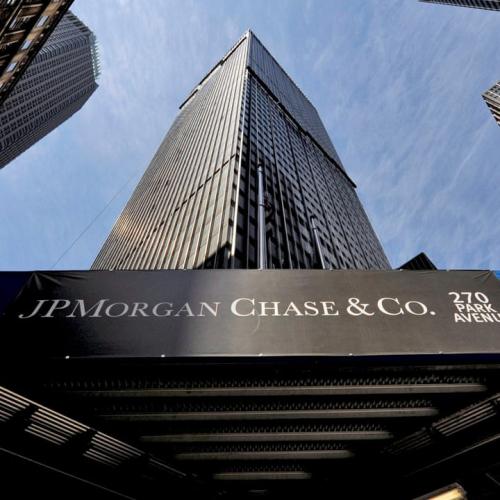
40 years ago, a worn-out white Gulfstream II jet descended over Fort Lauderdale, Fla., carrying a regal but sickly passenger almost no one was expecting. Aboard were a Republican political operative, a retinue of Iranian military officers ... and Mohammed Reza Pahlavi, the newly deposed shah of Iran. The only one waiting to receive the deposed monarch was a senior executive of Chase Manhattan Bank, which had not only lobbied the White House to admit the former shah but had arranged visas for his entourage. Less than two weeks later, on Nov. 4, 1979, vowing revenge for the admission of the shah to the United States, revolutionary Iranian students seized the American Embassy in Tehran and then held more than 50 Americans and Washington hostage for 444 days. The shah, Washingtons closest ally in the Persian Gulf, had fled Tehran in January 1979. The shah sought refuge in America. But President Jimmy Carter ... refused him entry for the first 10 months of his exile. Chase Manhattan Bank and its well-connected chairman worked behind the scenes to persuade the Carter administration to admit the shah, one of the banks most profitable clients. For Mr. Carter, for the United States and for the Middle East it was an incendiary decision. The ensuing hostage crisis enabled Ayatollah Ruhollah Khomeini to consolidate his theocratic rule, started a four-decade conflict between Washington and Tehran ... and helped Ronald Reagan take the White House.
Note: More information is available in this 1991 New York Times article and this article. For more along these lines, see concise summaries of deeply revealing news articles on government corruption from reliable major media sources.
In Homewreckers, his new book about the aftermath of the 2008 financial crisis, [Aaron] Glantz skillfully tells a bigger story about American housing thats tortuous, confounding and ultimately enraging. Along with Race for Profit: How Banks and the Real Estate Industry Undermined Black Homeownership, by Keeanga-Yamahtta Taylor, Homewreckers shows what happens when private speculators get buoyed by government largess while non-tycoons are largely left to fend for themselves. After the housing bubble burst, the government was desperate to get lending banks off its books, and so it offered a sweet deal to prospective buyers of the banks: Those private investors could keep the gains on any loans held by the bank, but if the loans lost money, the government would bear most of the cost. It was like a mutant version of the subprime bubble that led to the financial crisis: Rather than renegotiate the loans, the new owners of these lending banks found there was more money to be made in foreclosing on the properties and becoming a class of landlord that had never been seen before, charging rent and fees to tenants not infrequently the previous owners who were foreclosed on while hoarding the equity for themselves. Corporate landlords ... are also more likely to buy properties in neighborhoods with large concentrations of African-American and Latino residents, who end up paying higher and higher rents that ultimately transfer wealth from their communities to investors far away.
Note: For more along these lines, see concise summaries of deeply revealing news articles on financial industry corruption from reliable major media sources.
More than 10 years after the housing crash that devastated the economy, people are still debating just what happened. Although the economy and the housing market have made a comeback, homeownership remains low. Aaron Glantz, a prize-winning investigative journalist ... set out to explain why, in "Homewreckers: How a Gang of Wall Street Kingpins, Hedge Fund Magnates, Crooked Banks, and Vulture Capitalists Suckered Millions Out of Their Homes and Demolished the American Dream." Eight million Americans lost their homes in the bust. Where did those homes go? Those houses didnt just disappear. Who won, when everyone else lost? The people who won - a small group of businessmen who pounced to seize thousands of homes and made billions of dollars - theyre the homewreckers. But even though the housing bust is over, the nations homeownership rate is at its lowest in 50 years, and continues to go down. It helps explain why people feel so uneasy. As long as the unemployment rate is low and people have jobs and they can afford rents, the financial market is secure. If people lose their jobs, whats going to happen? We could be back in another housing bust. Right now theres a real crisis of affordability. People think we dont have enough inventory because we havent built enough houses. Only 10 years ago, our country was awash in real estate. We have to ask ourselves if we really have a housing shortage, or if we have rigged the market so it only benefits a few of the players.
Note: For more along these lines, see concise summaries of deeply revealing news articles on income inequality from reliable major media sources.
Important Note: Explore our full index to key excerpts of revealing major media news articles on several dozen engaging topics. And don't miss amazing excerpts from 20 of the most revealing news articles ever published.



