

























Global Warming News Articles
Below are key excerpts of revealing news articles on global warming from reliable news media sources. If any link fails to function, a paywall blocks full access, or the article is no longer available, try these digital tools.

There are 34 ingredients in M&Ms, and, according to Mars, the company that produces the candy, at least 30 countries – from Ivory Coast to New Zealand – are involved in supplying them. Each has its own supply chain that transforms the raw materials into ingredients – cocoa into cocoa liquor, cane into sugar, petroleum into blue food dye. The environmental impact of ultra-processed foods – like M&Ms – is less clear and is only now starting to come into focus. One reason they have been so difficult to assess is the very nature of UPFs: these industrially made foods include a huge number of ingredients and processes to put them together, making it nearly impossible to track. Since 1850, agricultural expansion has driven almost 90% of global deforestation, which has been responsible for 30% of global greenhouse gas emissions. Getting an exact measure of the environmental toll of UPFs is nearly impossible, given that, definitionally, UPFs consist of many ingredients and a high volume of opaque processes. Ingredients aren’t just mixed together like one would do to make a stew at home. Instead, these ingredients are chemically modified, some parts stripped away, and flavors, dyes or textures added in – and it’s unclear what the cost of these processes are because so many suppliers and components are involved. Another reason is that all UPFs (again, definitionally) are the creations of food companies that have little incentive to disclose their environmental footprint.
Note: For more along these lines, read our concise summaries of news articles on food system corruption and climate change.
The urban tree canopy in Denver is one of the sparsest in the country. In 2020, when Linda Appel Lipsius became executive director of the decades-old Denver Urban Gardens (DUG) network, which oversees more than 200 community vegetable gardens throughout six metro Denver counties, she wanted to continue increasing community access to fresh food—a longtime goal of the garden program. But she had another aim, too: increasing the city’s tree coverage. Appel Lipsius decided to build a system of food forests throughout the Denver area. These dense, layered plantings incorporate fruit-bearing trees with other perennials to mimic natural forests. Now, DUG oversees 26 food forests, with 600 or so fruit and nut trees and 600 berry bushes. While urban trees are recognized for their multiple benefits, including cooling and carbon drawdown, “there are not a lot of players in Denver, or even in most cities around the country, who are focused on food trees,” Appel Lipsius said. “We were able to step into this space to help build and bolster the canopy while adding food-producing perennials.” Neighbors are welcome to enter and harvest a wide assortment of fruits, nuts, and berries. Beyond providing fresh food in neighborhoods that need it most, these agroforests reduce the urban heat island effect, create pollinator habitat, and combat pollution and climate change by absorbing and filtering harmful gases.
Note: Explore more positive stories like this on healing the Earth.
Emerging in the 1950s, preppers were animated by a variety of often overlapping fears: some were troubled by the increasingly networked, and therefore fragile, nature of contemporary life. Early adopters ... went off-grid; hoarded provisions, firearms and ammunition, and sometimes constructed hidden bunkers. They championed individual fortitude over collective welfare. Not all of them are conservatives. Liberals make up about 15% of the prepping scene, according to one estimate, and their numbers appear to be growing. Some ... [are] steeped in the mutual aid framework of the anarchist philosopher Peter Kropotkin: a rejection of individualism and an emphasis on community building and mutual aid. The question is less whether we survive than how we maintain our humanity in the face of calamity, how we cope with loss, and how we use the time we have. Elizabeth Doerr, co-host of the Cramming for the Apocalypse podcast, agreed: “Researchers talk a lot about how your ability to survive a disaster or thrive post-disaster is contingent on really knowing your neighbors – because when they don’t see you, they’re gonna come check on you.” Rather than an effort to defend ... against a nightmare future, it’s a part of a commitment to living meaningfully in the present. Genuine prepping requires not only “outer resilience”, as [community organizer David] Baum puts it, but an inner kind as well. “Survival is not the goal,” he told me afterward. “The relationship and the wisdom and the love that one discovers by approaching nature with respect – that’s the goal.”
Note: For more along these lines, read our concise summaries of news articles on climate change and healing social division.
In the past few years, the number of rocket launches has spiked as commercial companies — especially SpaceX, founded by Elon Musk — and government agencies have lofted thousands of satellites into low-Earth orbit. And it is only the beginning. Satellites could eventually total one million, requiring an even greater number of space launches that could yield escalating levels of emissions. Scientists worry that more launches will scatter more pollutants in pristine layers of Earth’s atmosphere. And regulators across the globe, who assess some risks of space launches, do not set rules related to pollution. Experts say they do not want to limit the booming space economy. But they fear that ... we may understand the consequences of pollution from rockets and spacecraft only when it is too late. Already, studies show that the higher reaches of the atmosphere are laced with metals from spacecraft that disintegrate as they fall back to Earth. In a paper published in 2022, soot from rockets was shown to be nearly 500 times as efficient at heating the atmosphere as soot released from sources like airplanes closer to the surface. A separate study also published in 2022 found that if the rate of rocket launches increased by a factor of 10, their emissions could cause temperatures in parts of the stratosphere to rise as much as 2 degrees Celsius. This could begin to degrade the ozone over most of North America, all of Europe and a chunk of Asia.
Note: The risks posed by satellites expand beyond emissions. For more along these lines, see concise summaries of deeply revealing news articles on climate change from reliable major media sources.
China has reduced air pollution nearly as much in seven years as the US did in three decades, helping to bring down average global smog levels in the process. The amount of harmful particulates in the air in China fell 40% from 2013 to 2020, according to the University of Chicago’s Energy Policy Institute, which would add about two years to average life expectancy if sustained. While smog in large swathes of the country still significantly exceeds safe levels, its experience shows how quickly progress can be made, researchers including Professor Michael Greenstone said in a report. About 97% of the world’s population live in areas where air quality is usually worse than World Health Organization guidelines, according to the researchers. Smog reduces global life expectancy more than cigarette smoking, alcohol or poor sanitation. “China’s success in reducing pollution is a strong indication of the opportunities that could lie ahead for other nations if they were to impose strong pollution policies,” they said. Even in the US and Europe ... more than 90% of people live in areas that don’t meet WHO guidelines, which were tightened last year. China’s success, led by restrictions on car use and coal burning in major cities, has been rapid, with its 40% decline in seven years nearly equaling a 44% drop in US pollution over 30 years from 1970, after the landmark Clean Air Act was passed. Without China’s declines, the world would have seen average pollution levels increase since 2013 instead of drop.
Note: Explore a treasure trove of concise summaries of incredibly inspiring news articles which will inspire you to make a difference.
The UKs carbon dioxide emissions have fallen to their lowest level since the 19th century as coal use continues to plummet, analysis suggests. Emissions of the major greenhouse gas fell almost 6% year on year in 2016, after the use of coal for electricity more than halved to record lows, according to the Carbon Brief website, which reports on climate science and energy policy. The assessment suggests carbon emissions in 2016 were about 381m tonnes, putting the UKs carbon pollution at its lowest level ... since 1894. Carbon emissions in 2016 are about 36% below the reference year of 1990, against which legal targets to cut climate pollution are measured. Emissions of carbon dioxide from coal fell 50% in 2016 as use of the fossil fuel dropped by 52%, contributing to an overall drop in carbon output of 5.8% last year compared with 2015, Carbon Brief said. The assessment reveals that coal use has fallen by 74% in just a decade. UK coal demand is falling rapidly because of cheaper gas, a hike in carbon taxes on the highly polluting fuel, expansion of renewables, dropping demand for energy overall and the closure of Redcar steelworks in late 2015. While emissions from coal fell in 2016, carbon output from gas rose 12.5% because of increased use of the fuel to generate electricity although use of gas remains well below highs seen in the 2000s. Gas use for home and business heating has been falling for a decade, thanks to more insulation and efficient boilers.
Note: Explore a treasure trove of concise summaries of incredibly inspiring news articles which will inspire you to make a difference.
Donald Trumps administration has appeared to ban at least three Government agencies from speaking to journalists, providing documents to the public or even tweeting. Department of Agriculture, Department of Health and Human Services and Environmental Protection Agency staff are all reportedly subject to gagging orders. As well as the prohibition of social media posts ... the EPA has been ordered to freeze all grants, contracts and other agreements until further notice. A memo sent to EPA staff said there should be no press releases sent to external audiences and that no social media will be going out. The letter ... also says that a digital strategist will be drafted in to oversee the agencys social media and that existing, individually controlled social-media accounts may become more centrally controlled. Department of Health and Human Services (HHS) ... employees were told not to publish any new documents or correspondence in any public forum, including the Federal Register, and not to discuss any documents or rules with public officials until it is reviewed by the administration. Staff at the USDAs Agricultural Research Service received a memo on Monday telling them not to provide any documents to the public including press releases and social media. The email told employees, including about 2,000 staff scientists, that starting immediately and until further notice, they could not release any documents or post on social media.
Note: For more along these lines, see concise summaries of deeply revealing news articles on government corruption and mass media manipulation.
The New York attorney general has begun an investigation of Exxon Mobil to determine whether the company lied to the public about the risks of climate change or to investors about how such risks might hurt the oil business. The investigation focuses on whether statements the company made to investors about climate risks as recently as this year were consistent with the companys own long-running scientific research. The people said the inquiry would include a period of at least a decade during which Exxon Mobil funded outside groups that sought to undermine climate science, even as its in-house scientists were outlining the potential consequences and uncertainties to company executives. In a separate inquiry, Peabody Energy, the nations largest coal producer, [has] been under investigation by the attorney general for two years over whether it properly disclosed financial risks related to climate change. Some experts see the potential for a legal assault on fossil fuel companies similar to the lawsuits against tobacco companies [that] were found guilty of a massive 50-year scheme to defraud the public. Inside Climate News and The Los Angeles Times have reported that Exxon Mobil was well aware of the risks of climate change from its own scientific research, and used that research in its long-term planning for activities like drilling in the Arctic, even as it funded groups from the 1990s to the mid-2000s that denied serious climate risks.
Note: For those interested in the global warming debate, read this Forbes article and this one debunking it to see just how polarized and non-scientific both sides of the debate are. This CNN article states that Antarctica has been gaining ice at least since 1992. For more along these lines, see concise summaries of deeply revealing climate change news articles from reliable major media sources.
For years, politicians wanting to block legislation on climate change have bolstered their arguments by pointing to the work of a handful of scientists who claim that greenhouse gasses pose little risk to humanity. One of the names they invoke most often is Wei-Hock Soon, known as Willie, a scientist at the Harvard-Smithsonian Center for Astrophysics. He has often appeared on conservative news programs, testified before Congress and in state capitals, and starred at conferences of people who deny the risks of global warming. But newly released documents show the extent to which Dr. Soons work has been tied to funding he received from corporate interests. He has accepted more than $1.2 million in money from the fossil-fuel industry over the last decade while failing to disclose that conflict of interest in most of his scientific papers. At least 11 papers he has published since 2008 omitted such a disclosure, and in at least eight of those cases, he appears to have violated ethical guidelines of the journals that published his work. The documents show that Dr. Soon, in correspondence with his corporate funders, described many of his scientific papers as deliverables that he completed in exchange for their money. He used the same term to describe testimony he prepared for Congress. Dr. Soon has found a warm welcome among politicians in Washington and state capitals who try to block climate action. United States Senator James M. Inhofe, an Oklahoma Republican who claims that climate change is a global scientific hoax, has repeatedly cited Dr. Soons work over the years.
Note: One of Dr Soon's primary funding sources is Donors Trust, a secretive organization found to have orchestrated a vast climate denial conspiracy. For more along these lines, see concise summaries of deeply revealing science corruption news articles from reliable major media sources.
Sea ice surrounding Antarctica reached a new record high extent this year, covering more of the southern oceans than it has since scientists began a long-term satellite record to map sea ice extent in the late 1970s. The upward trend in the Antarctic, however, is only about a third of the magnitude of the rapid loss of sea ice in the Arctic Ocean. Claire Parkinson, a senior scientist at NASAs Goddard Space Flight Center, has referred to changes in sea ice coverage as a microcosm of global climate change. Just as the temperatures in some regions of the planet are colder than average, even in our warming world, Antarctic sea ice has been increasing and bucking the overall trend of ice loss. Since the late 1970s, the Arctic has lost an average of 20,800 square miles (53,900 square kilometers) of ice a year; the Antarctic has gained an average of 7,300 square miles (18,900 sq km). A warming climate changes weather patterns, said Walt Meier, a research scientist. Part of it is just the geography and geometry. With no northern barrier around the whole perimeter of the ice, the ice can easily expand if conditions are favorable, he said. Researchers are investigating a number of other possible explanations as well. Melting ice on the edges of the Antarctic continent could be leading to more fresh, just-above-freezing water, which makes refreezing into sea ice easier. Or changes in water circulation patterns, bringing colder waters up to the surface around the landmass, could help grow more ice.
Note: For more on this, see this intriguing article. For more, see concise summaries of deeply revealing climate change news articles from reliable major media sources.
Earth's protective ozone layer is beginning to recover, largely because of the phase-out since the 1980s of certain chemicals used in refrigerants and aerosol cans, a U.N. scientific panel reported [on September 10] in a rare piece of good news about the health of the planet. For the first time in 35 years, scientists were able to confirm a statistically significant and sustained increase in stratospheric ozone, which shields the planet from solar radiation that causes skin cancer, crop damage and other problems. From 2000 to 2013, ozone levels climbed 4 percent in the key mid-northern latitudes at about 30 miles up, said NASA scientist Paul A. Newman. He co-chaired the every-four-years ozone assessment by 300 scientists, released at the United Nations. "It's a victory for diplomacy and for science and for the fact that we were able to work together," said chemist Mario Molina. In 1974, Molina and F. Sherwood Rowland wrote a scientific study forecasting the ozone depletion problem. They won the 1995 Nobel Prize in chemistry for their work. The ozone layer had been thinning since the late 1970s. Man-made chlorofluorocarbons, called CFCs, released chlorine and bromine, which destroyed ozone molecules high in the air. After scientists raised the alarm, countries around the world agreed to a treaty in 1987 that phased out CFCs.
Note: For more on this, see concise summaries of deeply revealing global warming news articles from reliable major media sources.
The movement demanding that public interest institutions divest their holdings from fossil fuels is on a serious roll. Chapters have opened up in more than 100 US cities and states as well as on more than 300 campuses, where students are holding protests, debates and sit-ins to pressure their [universities] to rid their endowments of oil, gas and coal holdings. Some schools [in the UK], including University College London, ... already have active divestment campaigns. Four US colleges have announced their intention to divest their endowments from fossil fuel stocks and bonds and, in late April, 10 US cities made similar commitments, including San Francisco [and Seattle]. To quote the mission statement of the Fossil Free movement: "If it is wrong to wreck the climate, then it is wrong to profit from that wreckage. We believe that educational and religious institutions, city and state governments, and other institutions that serve the public good should divest from fossil fuels." An important target is missing from the list: the environmental organisations themselves. Some of the most powerful and wealthiest environmental organisations have long behaved as if they had a stake in the oil and gas industry. They led the climate movement down various dead ends: carbon trading, carbon offsets, natural gas as a "bridge fuel" what these policies all held in common is that they created the illusion of progress while allowing the fossil fuel companies to keep mining, drilling and fracking with abandon.
Note: For deeply revealing reports from reliable major media sources on global warming, click here.
Data collected for the years 2003 through 2010 indicate that melting ice raised sea levels worldwide by an average of 1.48 millimeters (0.06 inches) each year. The loss of ice from Greenland and Antarctica has already been measured using satellite data, but the new analysis revealed that melting ice elsewhere accounted for about 0.41 mm (0.016 inches) of the annual rise. Until now, satellite measurements from only selected places were used to extrapolate the overall ice loss outside Greenland and Antarctica. The new data confirmed that most of the melting happened on ice-covered Greenland and Antarctica. GRACE consists of two satellites that travel around the Earth together, picking up on changes in the Earth's gravitational field, which are linked to changes in mass. The researchers devised a way to separate out the changes in mass for ice-covered regions around the globe. Their results yielded two surprises: The melt rate for glaciers and ice caps outside Antarctica and Greenland made a smaller contribution to sea-level rise than had been estimated, and the melt rate in the Asian mountains, including the Himalayas, was dramatically lower: 4 billion tons annually versus up to 50 billion. "The Earth is losing an incredible amount of ice to the oceans annually, and these new results will help us answer important questions in terms of both sea rise and how the planet's cold regions are responding to global change," [said] study researcher John Wahr.
Note: If the rates above are correct and glacial melt continues at the same rate, in 100 years sea levels will have risen a total of 148 millimeters or about six inches. So even though massive amounts of glacial water are being added to the oceans, the overall sea level rise continues to be quite slow.
A Greenpeace investigation has identified a little-known, privately owned US oil company as the paymaster of global warming sceptics in the US and Europe. Greenpeace says that Koch Industries donated nearly $48m (31.8m) to climate opposition groups between 1997-2008. From 2005-2008, it donated $25m to groups opposed to climate change, nearly three times as much as higher-profile funders that time such as oil company ExxonMobil. Koch also spent $5.7m on political campaigns and $37m on direct lobbying to support fossil fuels. Greenpeace accuses the funded groups of "spreading inaccurate and misleading information" about climate science and clean energy companies. "The company's network of lobbyists, former executives and organisations has created a forceful stream of misinformation that Koch-funded entities produce and disseminate. The propaganda is then replicated, repackaged and echoed many times throughout the Koch-funded web of political front groups and thinktanks," said Greenpeace. The groups include many of the best-known conservative thinktanks in the US, like Americans for Prosperity, the Heritage Foundation, the Cato institute, the Manhattan Institute and the Foundation for research on economics and the environment.
Note: To read the complete Greenpeace investigative report, click here.
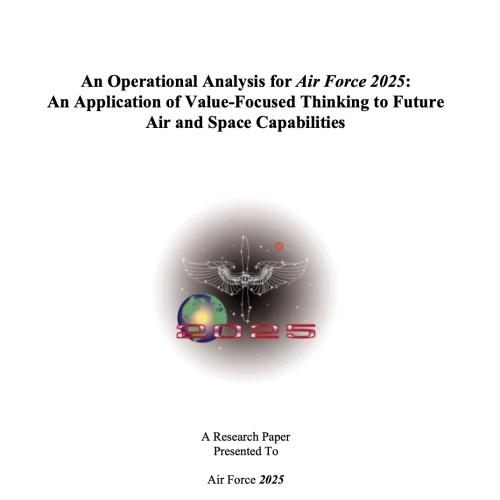
In 2025, US aerospace forces can own the weather by capitalizing on emerging technologies and focusing development of those technologies to war-fighting applications. Such a capability offers the war fighter tools to shape the battlespace in ways never before possible. Weather-modification is a force multiplier with tremendous power that could be exploited across the full spectrum of war-fighting environments. From enhancing friendly operations or disrupting those of the enemy via small-scale tailoring of natural weather patterns complete dominance of global communications and counter-space control, weather-modification offers war fighter a wide-range of possible options to defeat or coerce an adversary. But, while offensive weather modification efforts would certainly be undertaken by US forces with great caution and trepidation, it is clear that we cannot afford to allow an adversary to obtain an exclusive weather-modification capability.
Note: The above quote is taken from pages 6 and 35, the executive summary and conclusion of the above US Air Force study. For a highly revealing article suggesting elements within government have much more control over the weather than is thought, click here.
Each planting season, Claudia Bashian-Victoroff ventures out into Bole Woods. Laced throughout, weaving an intricate, microscopic web, are the mycorrhizal fungi she’s after — fungi that have spent 400 million years learning to live in symbiosis with plants, including the trees throughout Bole Woods and at least 80 percent of all species on the planet. Bashian-Victoroff doesn’t need much soil. A single spoonful can contain miles of fungal hyphae and filaments, engaged in an ancient evolutionary exchange with the trees to which they’ve bonded. The fungi gather up water and nutrients, and deliver them to the trees. In return, they receive carbohydrates developed through photosynthesis, which they fix into the soil as they grow. It’s a prosperous cycle, and Bashian-Victoroff is among a growing global community of researchers and conservationists taking advantage of this relationship to restore forests and other degraded ecosystems. Their goal: Promote the health of the soil beneath our feet and the plants it supports, sequester carbon and make agriculture more sustainable. Mycorrhizal fungi can be an important part of a broader suite of climate solutions, says Anne Polyakov, a fungal conservation and restoration scientist with the Society for the Protection of Underground Networks, or SPUN, which recently used machine learning to map the planet’s mycorrhizal networks in an effort to promote conservation.
Note: Explore more positive stories like this in on technology for good and healing the Earth.
When Anthony Myint and his wife Karen Leibowitz opened their San Francisco restaurant The Perennial in 2016, they had big ambitions: They wanted it to be the first carbon-neutral restaurant in the world, and they succeeded. From the recycled floor tiles and reclaimed lumber to the aquaponic herb garden and compostable paper menus, the culinary duo designed every part of the diner with the climate in mind. “We shifted the menus, reduced food waste, switched to renewable energy, started composting and bought carbon offsets,” Myint says. They were motivated by the knowledge that agriculture and food systems contribute nearly a third of greenhouse gas emissions worldwide. The Perennial’s menu championed sourdough loaves baked with perennial Kernza grains, and the chefs bought their steaks from regenerative ranches associated with the Marin Carbon Project, the country’s foremost center for regenerative farming. The more Myint learned about regenerative agriculture, the more he became convinced that this was the global solution he needed to champion. “It became clear to me that this is the future of food, similar to the way renewable energy is the future of energy,” he says. “The whole food system needs to gradually transition.” Zero Foodprint is asking restaurant customers and other participating businesses to give one percent of their sales to a pool that funds regenerative agriculture. More than 80 businesses have signed up.
Note: We've summarized a handful of stories about the power of regenerative agriculture practices to reverse and heal global ecological destruction. Explore more positive stories like this in our comprehensive inspiring news articles archive focused on solutions and bridging divides.
Carbon credit speculators could lose billions as scientific evidence shows many offsets they have bought have no environmental worth and have become stranded assets. Amid growing evidence that huge numbers of carbon credits do nothing to mitigate global heating and can sometimes be linked to alleged human rights concerns, there is a growing pile of carbon credits ... that are unused in the unregulated voluntary market, according to market analysis. Many of the largest companies in the world have used carbon credits for their sustainability efforts from the unregulated voluntary market, which grew to $2bn (£1.6bn) in size in 2021 and saw prices for many carbon credits rise above $20 per offset. The credits are often generated on the basis they are contributing to climate change mitigation such as stopping tropical deforestation, tree planting and creating renewable energy projects. A new study in the journal Science has found that millions of forest carbon credits approved by Verra, the world’s leading certifier, are largely worthless and could make global heating worse if used for offsetting. The analysis ... found that 18 big forest offsetting projects had produced millions of carbon credits based on calculations that greatly inflated their conservation impact. The schemes, which generate credits by avoiding hypothetical deforestation, were found not to reduce forest loss or to reduce it by only small amounts, far less than the huge areas they were claiming to protect, rendering the credits largely hot air.
Note: For more along these lines, see concise summaries of deeply revealing news articles on financial industry corruption and climate change from reliable major media sources.
The world is spending at least $1.8tn (£1.3tn) every year on subsidies driving the annihilation of wildlife and a rise in global heating, according to a new study, prompting warnings that humanity is financing its own extinction. From tax breaks for beef production in the Amazon to financial support for unsustainable groundwater pumping in the Middle East, billions of pounds of government spending and other subsidies are harming the environment, says the first cross-sector assessment for more than a decade. This government support, equivalent to 2% of global GDP, is directly working against the goals of the Paris agreement and draft targets on reversing biodiversity loss, the research on explicit subsidies found, effectively financing water pollution, land subsidence and deforestation with state money. The fossil fuel industry ($620bn), the agricultural sector ($520bn), water ($320bn) and forestry ($155bn) account for the majority of the $1.8tn, according to the report. No estimate for mining, believed to cause billions of dollars of damage to ecosystems every year, could be derived. Lack of transparency between governments and recipients means the true figure is likely to be much higher, as is the implicit cost of harmful subsidies. Last year, an International Monetary Fund report found the fossil fuel industry benefited from subsidies worth $5.9tn in 2020.
Note: For more along these lines, see concise summaries of deeply revealing news articles on government corruption and climate change from reliable major media sources.
For years, the Intergovernmental Panel on Climate Change, or IPCC, has claimed that human-caused climate change has accelerated sea level rise. But that claim is false. This does not mean that climate change isn’t happening. It is. It simply means that it has not caused the sea level to rise. Top scientists know this fact and have deliberately misrepresented it for years, deceiving the public. In September, I reported on one of the first global studies of sea level rise that used tide-gauge data, which is the only real-world data that goes back long enough, to the mid-19th Century, that would allow one to detect whether sea level rise had accelerated, decelerated, or remained steady. The only reliable long-term real-world data is tide gauge data, and they do not show acceleration. Since then, I exchanged over 50 emails with one of the world’s leading sea level rise scientists, Robert Kopp from Rutgers University, and heard back from IPCC, NASA, and NOAA, the National Oceanic and Atmospheric Administration. What I learned shocked me. For years, the world’s top scientists have known that they cannot prove there has been an acceleration of sea level rise, and yet they have told the public that they can. We’ve known since 2018 that 89% of the atoll islands that scientists and the media claimed would be destroyed by sea level rise had instead grown or stayed the same size. Sea level rise is not “observably accelerating” over time horizons that would show a trend. The only scientific basis for claiming it is accelerating is through modeling. The observable tide-gauge data do not show this.
Note: For more along these lines, read our concise summaries of news articles on climate change and corruption in science.
Important Note: Explore our full index to revealing excerpts of key major media news articles on several dozen engaging topics. And don't miss amazing excerpts from 20 of the most revealing news articles ever published.