






























































Government Corruption Media Articles
Below are key excerpts of revealing news articles on government corruption from reliable news media sources. If any link fails to function, a paywall blocks full access, or the article is no longer available, try these digital tools.

In its newly released 2023 Trafficking in Persons Report, the Biden administration provided a glaring, but largely unnoticed, admission that it has failed to implement a key provision of U.S. law aimed at preventing the recruitment and use of child soldiers. The report acknowledged that the administration has yet to finalize a congressionally mandated list of governments complicit in child soldier recruitment or use. With this list responsible for spurring urgently needed U.S. child soldier prevention efforts, its delay could have potentially severe consequences. Despite decades of concerted action to end the use of children as tools of war, the recruitment and use of child soldiers remains one of the most widespread abuses inflicted upon children in conflict, with the UN having verified the recruitment and use of 7,622 child soldiers last year — a 21 percent increase compared to 2021. Among those implicated in the use of child soldiers are security forces and armed groups led or supported by governments that rely heavily on U.S. defense cooperation to sustain their security operations. Somalia, for example, which recruited and used dozens of child soldiers in 2022, is among the most significant recipients of U.S. military aid in sub-Saharan Africa, with U.S. security assistance to and peacekeeping operations in the country amounting to roughly $3 billion over the past decade. The Biden administration can incentive governments implicated in the recruitment or use of child soldiers to put an end to these horrendous practices.
Note: For more along these lines, see concise summaries of deeply revealing news articles on war from reliable major media sources.
An advisory board to President Biden has recommended limiting the F.B.I.'s ability to use a controversial warrantless surveillance program to hunt for information about Americans, even as it urged lawmakers to renew the law that authorizes it. The panel, known as the President's Intelligence Advisory Board, suggested barring the bureau from searching a database of intercepted information when looking for evidence about Americans in criminal investigations that do not involve foreign intelligence. The board ... delivered the recommendation in a declassified 39-page report. It came as Congress was debating whether to extend the law authorizing the program, known as Section 702. Under Section 702, the government can collect – from American companies like Google and AT&T and without a warrant – the communications of targeted foreigners abroad, even when they are talking to or about Americans. The notion that Section 702 creates a backdoor to the Fourth Amendment by allowing the F.B.I. to read private communications to or from an American without a warrant in ordinary criminal contexts has raised particular alarm. But the board rejected as unjustified the more sweeping reform proposal: to require the government to obtain a court warrant before using Americans' identifiers to search the repository. Requiring a court order before doing so, the board said, would prevent intelligence agencies from discovering threats to the country in a timely manner.
Note: For more along these lines, see concise summaries of deeply revealing news articles on intelligence agency corruption and the disappearance of privacy from reliable major media sources.
Alan Davidson currently leads the National Telecommunications and Information Administration, or NTIA, the agency now crafting recommendations on how federal regulators can hold AI companies accountable. But for years, he worked as Google's chief lobbyist in Washington. NTIA's recommendations will help form the basis of the Biden administration's response to AI and machine learning. "People are warning that there are really serious downsides possible to AI, and I would want a hard-headed regulator to run down those concerns," said Jeff Hauser, the executive director of the Revolving Door Project, a watchdog focused on conflicts of interest in government. "Davidson is not likely, based on his CV, to be detached." Rapid advances in AI present a potential turning point for Silicon Valley's dominant tech firms. Notably, the first company to capture national attention with the launch of a new AI product was not a household name, like Google or Microsoft, but the independent research lab OpenAI, with its splashy launch of ChatGPT. Google reportedly sees the AI products it has in the pipeline as so pivotal to the company's future that Sergey Brin, the Google co-founder lately absorbed with outside projects, has returned to company headquarters to work directly with the team building its flagship AI system. "Google is the biggest player who cares about this issue," [said former Hill aide involved in antitrust policy]. "I cannot imagine Google doesn't view Alan Davidson as an asset to them."
Note: For more along these lines, see concise summaries of deeply revealing news articles on corruption in government and in the corporate world from reliable major media sources.
If you call 911 to report an emergency, the odds are increasing that a drone will be the first unit sent to respond. More than 1,500 departments across the country now use them, “mostly for search and rescue as well as to document crime scenes and chase suspects,” according to ... MIT Technology Review. Generally, police drones don’t carry weapons and are used primarily for video surveillance. It is possible for small drones to deliver chemical irritants like tear gas, however, a technology that police in Israel have used against Palestinians. In a report published on Thursday, American Civil Liberties Union Senior Policy Analyst Jay Stanley worries that these kinds of drone programs may normalize usage and “usher in an era of pervasive, suspicionless, mass aerial surveillance.” He notes far more invasive turns that police drone usage could take, including warrantless surveillance of specific people, crime “hotspots” or even whole neighborhoods or cities. Stanley wonders if drone usage won’t just ... “amplify the problems with the deeply broken U.S. criminal legal system.” Many of the cities using drones in policing are doing so from so-called “real-time crime centers.” These units function as centralized hubs to connect the various bits of surveillance and data that police collect from things like stationary cameras, drones, license plate readers and technology that listens for possible gunshots. Some centers can even integrate police body cameras and video from Ring doorbells.
Note: Police have been using military predator drones for domestic law enforcement since 2011. For more along these lines, see concise summaries of deeply revealing news articles on police corruption and the disappearance of privacy from reliable major media sources.
America's top infectious diseases adviser, Anthony Fauci, deliberately decided to downplay suspicions from scientists that Covid-19 came from a laboratory to protect his reputation and deflect from the risky coronavirus research his agency had funded, according to his boss, one of the most senior US health officials during the pandemic. In an exclusive interview, Robert Kadlec – former assistant secretary for preparedness and response at the US Department of Health – [said] that he, Dr Fauci and National Institutes of Health director Francis Collins privately discussed how to "turn down the temperature" on accusations against China in the early days of the pandemic. The National Institutes of Health and other US agencies funded 65 scientific projects at the Wuhan Institute of Virology over the past decade, many involving risky research on bat coronaviruses. "I think Tony Fauci was trying to protect his institution and his own reputation from the possibility that his agency was funding the Wuhan Institute of Virology researchers who, beyond the scope of the grants received from the National Institutes of Health, may have been working with People's Liberation Army researchers on defensive coronavirus vaccines," Dr Kadlec said. "We think vaccine research resulted in the pandemic – that vaccine research was the proximate cause." Dr Fauci has denied his agency funded gain-of-function research, but Dr Kadlec said this wasn't true.
Note: For more along these lines, see concise summaries of deeply revealing news articles on science corruption and the coronavirus from reliable major media sources.
An effort by United States lawmakers to prevent government agencies from domestically tracking citizens without a search warrant is facing opposition internally from one of its largest intelligence services. Officials at the National Security Agency (NSA) have approached lawmakers charged with its oversight about opposing an amendment that would prevent it from paying companies for location data instead of obtaining a warrant in court. Introduced by US representatives Warren Davidson and Sara Jacobs, the amendment ... would prohibit US military agencies from "purchasing data that would otherwise require a warrant, court order, or subpoena" to obtain. The ban would cover more than half of the US intelligence community, including the NSA, the Defense Intelligence Agency, and the newly formed National Space Intelligence Center, among others. A government report declassified by the Office of the Director of National Intelligence last month revealed that US intelligence agencies were avoiding judicial review by purchasing a "large amount" of "sensitive and intimate information" about Americans, including data that can be used to trace people's whereabouts over extended periods of time. The sensitivity of the data is such that "in the wrong hands," the report says, it could be used to "facilitate blackmail," among other undesirable outcomes. The report also acknowledges that some of the data being procured is protected under the US Constitution's Fourth Amendment.
Note: For more along these lines, see concise summaries of deeply revealing news articles on intelligence agency corruption and the disappearance of privacy from reliable major media sources.
Anthropologist Orisanmi Burton has blown the lid off a dark chapter in CIA history. Classified Agency files, recently obtained through Freedom of Information laws, expose shocking ties between the infamous MKULTRA program and nightmarish experiments on prisoners of color within the United States. Burton's findings expose MKULTRA's sinister mission to develop psychological warfare and behavioral manipulation tactics specifically aimed at people of color under the guise of "counterinsurgency." [In] 1968, the American Psychiatric Association's Diagnostic and Statistical Manual of Mental Disorders underwent an alarming update, adding "hostility" and "aggression" as prominent symptoms of schizophrenia. The implications were profound: civil rights activists daring to resist were at risk of being diagnosed and institutionalized. Prisoners refusing to bend to oppressive jail regimes could be conveniently labeled as "criminally insane." In August 2022, MintPress News revealed how Black Americans were disproportionately targeted by the CIA's monstrous mind control machinations. Many MKULTRA trials appeared to have been expressly conducted to gauge potentially varying reactions to psychedelic drugs in Black and White participants. The CIA had a specific – or greater – interest in the effect of certain substances on people of color, rather than the general civilian population. The CIA did indeed seek to determine optimal drugs for targeting Black Americans, if not other ethnic groups.
Note: The MKULTRA program was also used to create mind-controlled assassins. Government and business interests have a long history of experimenting on human beings. For more along these lines, see concise summaries of deeply revealing news articles on intelligence agency corruption and mind control from reliable major media sources.
Each year for the last 26 years – nearly his entire tenure in the US Congress – Earl Blumenauer has advocated for a law that would utterly transform US agriculture. Nearly every time, though, his proposals have been shut down. Even so, he persists. Blumenauer, a Democrat from Oregon, wants to see a version of US agriculture that centers people, animals and the environment, rather than the large-scale, energy-intensive commodity crop farms that currently receive billions of dollars in subsidies. Blumenauer’s newest plan, the Food and Farm Act, was introduced earlier this year, as an alternative to the farm bill – the package of food and agricultural policies passed every five years that is up for renewal this fall. His proposal would redirect billions of dollars away from subsidies for commodity farms towards programs that support small farmers, climate-friendly agriculture and increasing healthy food access. “Most of us don’t even know that the public dollars initially designed to protect farmers and keep supply managed to feed a hungry nation in the Great Depression are now reinforcing wealthy agribusiness corporations to grow commodities that are not even meant for human consumption,” said Joshua Newell, a policy analyst. Most of the farms excluded from subsidy payments are those using sustainable growing methods that preserve soil and benefit the climate. Blumenauer’s bill would ... ensure more funding goes toward sustainable farming practices.
Note: For more along these lines, see concise summaries of deeply revealing news articles on corruption in government and in the food system from reliable major media sources.
Swiss journalist Maurine Mercier found several United States citizens fighting in Ukraine under the guise of humanitarian work. These rudderless warriors are a symbol of a society addicted to warfare. They reflect the tensions that author and antiwar activist Norman Solomon unwinds in his brilliant new book, War Made Invisible, which examines the profound causes and costs of U.S. interventionism. Solomon’s book unveils the disturbing proximity between the ruling class and corporate media since the Vietnam War, revealing how the fourth estate sustains the assumptions that make intervention possible in Ukraine and elsewhere. “The essence of propaganda is repetition,” he argues. “The frequencies of certain assumptions blend into a kind of white noise,” conditioning U.S. people to support military operations they never see or truly understand. This was never clearer than during the 2003 invasion of Iraq. Indeed, across the media landscape, embedded intellectuals mobilized their pens to solidify public support for war. ABC, NBC, CBS and PBS all skewed their coverage. In many ways, militarism is a form of class warfare. “The fat profit margins from supplying the Pentagon and kindred agencies,” Solomon explains, exacerbate economic inequality while redirecting resources away from social programs. In effect, war is perpetual because it is profitable, enriching an elite firmly entrenched in the military-industrial complex.
Note: For more along these lines, see concise summaries of deeply revealing news articles on war from reliable major media sources.
When 23-year-old Mari walked out of the United States Immigration and Customs Enforcement (ICE) detention in 2022, she felt invisible. Her time inside ICE’s Stewart Detention Center in Lumpkin, Georgia, between December 2021 and January 2022, left a deep mark on her self-worth. A year and a half later, it continues to wake her up in the middle of the night, shivering and in tears. Mari is not her real name. We’re using it to protect her identity. She is one of five women who complained of being sexually assaulted by a male nurse who worked at Stewart. There is a pattern of sexual abuse complaints in ICE detention. Official records and testimonies obtained by Futuro Investigates ... show disturbing details of 308 sexual assault and sexual abuse complaints filed by immigrants detained in ICE facilities nationwide between 2015 and 2021. The data obtained by Futuro Investigates reveals a systemic pattern of abuse by detention officers, contractual guards, and ICE employees, accused of sexually assaulting the individuals they are meant to protect. According to the obtained data, more than half of all abuse allegations made in the past six years were directed against staff. At least five complaints in the records allege that ICE employees threatened them with deportation. Over the past two years, Futuro Investigates interviewed at least a dozen immigrants about their time in detention across the country. Read the original investigation here.
Note: For more along these lines, see concise summaries of deeply revealing news articles on government corruption and sexual abuse scandals from reliable major media sources.
Many of 4000 social media posts secretly censored by government during the height of the Covid-19 pandemic contained factual information and reasonable arguments rather than misinformation, new documents reveal. Digital posts released after Freedom of Information applications show the censored information shared facts such as the ineffectiveness of vaccines in preventing Covid-19 infection and transmission or argued against measures such as mask mandates and lockdowns. For instance, the then Coalition government sought the removal of an Instagram post in April 2021 that claimed "Covid-19 vaccine does not prevent Covid-19 infection or Covid-19 transmission". That statement clearly was accurate yet the official intervention via the Home Affairs Department claimed it breached Instagram's community guidelines because it was "potentially harmful information" that was "explicitly prohibited" by the platform. An April 2021 tweet was challenged because it claimed "Covid-19 was released or escaped from Wuhan laboratory in China and that it was funded by the US government". The Home Affairs Department claimed this was "explicitly prohibited" under Twitter's rules because it might "invoke a deliberate conspiracy by malicious and/or powerful forces", yet American intelligence agencies have found the most likely source of the virus was the Wuhan Institute of Virology, and it has been revealed that some work at the laboratory was funded by the US.
Note: The Journal of the American Medical Association (JAMA) recently published a study that tracked the spread of COVID-19 'misinformation' during the course of the pandemic. Despite significant evidence pointing to the likelihood that COVID leaked from a lab and the unprecedented collusion between the Biden administration and tech giants to remove politically unfavorable views on social media, this JAMA study stated that these claims were inaccurate. How do we stay open to debate, instead of silencing voices with legitimate concerns and labeling it as misinformation? For more along these lines, see concise summaries of deeply revealing news articles on government corruption and media manipulation from reliable sources.
The 2023 Farm Bill is projected to spend $700 billion over the next five years, with powerful industry lobbyists directing funds to enrich themselves at the expense of agricultural communities, human health, animal welfare, and environmental sustainability. It's far from its original intention: to help struggling farmers and hungry citizens during The Great Depression and Dustbowl. Most Americans have never heard of this massive omnibus bill, which Congress reauthorizes every five or so years. It shapes our food system–from subsidizing factory farms to funding food and nutrition programs, and it is why burgers are artificially cheap and salads cost more than they should. How did this happen? After World War II, to meet the needs of a booming U.S. population and a growing export market, the Farm Bill invested heavily in monocrops, including millions of acres of corn and soy, used to feed animals on industrialized farms. We subsidize the overproduction of fat-laden animal products and highly processed foods, making unhealthy food cheap and accessible. This contributes to heart disease and other chronic diet-related illnesses that cost our nation billions of dollars annually in preventable health care costs. Nine out of 10 U.S. adults do not consume nutritionists' recommended fruits and vegetables. The Farm Bill should invest in enterprises that act with integrity, not unethical profiteers who lobby for unconstitutional "ag-gag" laws that prevent free speech, transparency, and accountability.
Note: For more along these lines, see concise summaries of deeply revealing news articles on corruption in government and in the food system from reliable major media sources.
Key researchers who testified before the House subcommittee investigating the origin of Covid-19 virus last week misled Congress about the nature of a multimillion-dollar grant that was pending at the time they joined a critical conference [call] with Drs. Francis Collins and Anthony Fauci in February 2020. On the call, the scientists suggested they leaned toward a lab escape as the most likely scenario, but they made a U-turn later that day when they began drafting it. The paper eventually ran in Nature Medicine under the headline "The Proximal Origin of SARS-CoV-2." Fauci and Collins were kept in the loop on the preparation of the paper, and Fauci highlighted it to the public in order to dismiss the notion of a lab escape. House Republicans convened a hearing last week on the conference call and the resulting paper, and one of the major sources of contention was the extent to which Fauci and Collins held financial sway over the scientists, who also had a grant application pending before the NIH. Democrats repeatedly characterized the argument in terms of a "bribe" being paid in exchange for a paper that exonerated a lab in Wuhan, China, that the NIH had been funding to do the kind of risky research that could spark a pandemic. Rather than a bribe, though, the question is one of leverage. "I hate when politics is injected into science – but it's impossible not to, especially given the circumstance," [said scientist Kristian Anderson]. "We should be sensitive to that."
Note: For more along these lines, see concise summaries of deeply revealing news articles on science corruption and the coronavirus from reliable major media sources.
A fire broke out in the early hours of Friday morning causing extensive damage to a building housing the Kentucky Senator Rand Paul's Bowling Green law office. According to Bowling Green Fire Department spokeswoman Katie McKee, fire crews were alerted to the blaze on State Street at approximately 1:45 a.m., and upon arrival, they found a vicious blaze that required additional units. “We have just been working on this structure fire ever since,” McKee said of their efforts. Six fire teams were deployed to fight the flames, with firefighters utilizing aerials to combat the fire from above. The intensity of the blaze caused the roof of the building to collapse, and come sunrise, a plume of dense gray smoke billowed from the top of the building and clouded the sky. Authorities are still investigating the cause and origin of the fire.
Note: This fire happened immediately after Sen. Rand Paul announced that he was referring Anthony Fauci to the Department of Justice for prosecution for lying to Congress.
A new investigation reveals the extent of the CIA’s involvement in the war in Ukraine, where the agency operates clandestinely in what, under a formal declaration of war, would be the domain of the military. The author of the investigation [is] William Arkin, a national security reporter and senior editor at Newsweek, who says that the CIA has “got its hand in a little bit of everything” in Ukraine. "This might come as a surprise to some people, but, as my sources explained it to me, the reality is that Ukraine is not an ally of the United States," [said Arkin]. "We have no treaty obligations towards Ukraine. And the United States is not at war with Russia. So this is a particularly unique battlefield in which the CIA is playing an outsize role, but it is playing an outsize role because the Biden administration has been firm in saying that the U.S. military will not be involved in any direct way in the fighting or on the battlefield or, indeed, inside Ukraine." The CIA is no stranger to Ukraine. Clearly, in the post-World War II period, it was involved in developing right-wing groups within Ukraine that were opposing the Soviet Union, a lot of them former neo-Nazis. "I don’t see much movement or much interest even on the part of the U.S. government in Washington ... to find a peaceful resolution" [said Arkin]. "So, really, no one is playing that role. The United Nations is not playing that role. There is no neutral party that really is playing the role of trying to end the conflict between the two parties."
Note: For more along these lines, see concise summaries of deeply revealing news articles on intelligence agency corruption from reliable major media sources.
Though once confined to the realm of science fiction, the concept of supercomputers killing humans has now become a distinct possibility. In addition to developing a wide variety of "autonomous," or robotic combat devices, the major military powers are also rushing to create automated battlefield decision-making systems, or what might be called "robot generals." In wars in the not-too-distant future, such AI-powered systems could be deployed to deliver combat orders to American soldiers, dictating where, when, and how they kill enemy troops or take fire from their opponents. In its budget submission for 2023, for example, the Air Force requested $231 million to develop the Advanced Battlefield Management System (ABMS), a complex network of sensors and AI-enabled computers designed to ... provide pilots and ground forces with a menu of optimal attack options. As the technology advances, the system will be capable of sending "fire" instructions directly to "shooters," largely bypassing human control. The Air Force's ABMS is intended to ... connect all US combat forces, the Joint All-Domain Command-and-Control System (JADC2, pronounced "Jad-C-two"). "JADC2 intends to enable commanders to make better decisions by collecting data from numerous sensors, processing the data using artificial intelligence algorithms to identify targets, then recommending the optimal weapon ... to engage the target," the Congressional Research Service reported in 2022.
Note: Read about the emerging threat of killer robots on the battlefield. For more along these lines, see concise summaries of deeply revealing news articles on military corruption from reliable major media sources.
The IMF and other neoliberal institutions in Ukraine are saying that there are quite a few jobs being created there. But the people I speak to can’t find jobs. On top of that, there are those 12 million people who are abroad. Where will there be jobs for them? There is a lot of talk about the Marshall Plan. But the main lessons from the Marshall Plan I did not see reflected in these recovery plans. First of all, there was the write-off of debts. Second of all, there were grants given to countries, and states were allowed to act as investors and were allowed to directly buy food for families or buy supplies for industries. This is not the case in Ukraine. In reality, a big part of the financial assistance given to Ukraine is in the form of debt. The help supposedly given by the IMF of $15 billion ... is actually $15 billion of debt. And because it’s debt, the interest rate on this debt will be something like 7 or 8 percent. What the European Union is doing with Ukraine is what they did with Greece after 2010. The European Union made an agreement in 2010 with the IMF to gather money to give to the Greek government with very strong and brutal conditionalities. And that’s exactly what [is happening] with the type of assistance given to Ukraine. The debt trap for Ukraine is very dangerous. With the new financial assistance given to Ukraine, in the next ten years, the debt will increase by something like $40 billion. Essentially, from $132 to $170 billion. And the creditors know perfectly that it will be impossible for Ukraine to pay back all this debt.
Note: For more along these lines, see concise summaries of deeply revealing news articles on war and banking corruption from reliable major media sources.
House Republicans on the subcommittee probing the origin of the Covid-19 virus appear to have inadvertently released a trove of new documents related to their investigation that shed light on deliberations among the scientists who drafted a key paper in February and March of 2020. The paper, published in Nature Medicine on March 17, 2020, was titled “The Proximal Origin of SARS-CoV-2” and played a leading role in creating a public impression of a scientific consensus that the virus had emerged naturally in a Chinese “wet market.” The paper was the subject of a hearing on Capitol Hill on Tuesday, which coincided with the release of a report by the subcommittee devoted to the “Proximal Origin” paper. The scientists believed one thing in private — that lab escape was likely — while working to produce a paper saying the opposite in public. Much of Tuesday’s hearing focused on a critical few days in early February 2020, beginning with a conference call February 1 that included the eventual authors of the paper and Drs. Anthony Fauci, then head of the National Institute of Allergy and Infectious Diseases, and Francis Collins, then head of its parent agency, the National Institutes of Health. Later minutes showed that the consensus among the experts leaned toward a lab escape. Yet within days, they were circulating a draft — including to Fauci and Collins — that came to the opposite conclusion, the first draft of which had been finished the same day of the conference call.
Note: Read more about the leaked documents that reveal high level covid science manipulation. For more along these lines, see concise summaries of deeply revealing news articles on government corruption and the coronavirus from reliable major media sources.
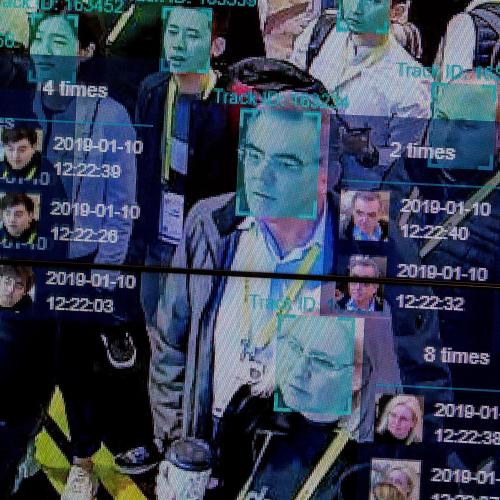
Palantir’s founding team, led by investor Peter Thiel and Alex Karp, wanted to create a company capable of using new data integration and data analytics technology — some of it developed to fight online payments fraud — to solve problems of law enforcement, national security, military tactics, and warfare. Palantir, founded in 2003, developed its tools fighting terrorism after September 11, and has done extensive work for government agencies and corporations though much of its work is secret. Palantir’s MetaConstellation platform allows the user to task ... satellites to answer a specific query. Imagine you want to know what is happening in a certain location and time in the Arctic. Click on a button and MetaConstelation will schedule the right combination of satellites to survey the designated area. The platform is able to integrate data from multiple and disparate sources — think satellites, drones, and open-source intelligence — while allowing a new level of decentralised decision-making. Just as a deep learning algorithm knows how to recognise a picture of a dog after some hours of supervised learning, the Palantir algorithms can become extraordinarily apt at identifying an enemy command and control centre. Alex Karp, Palantir’s CEO, has argued that “the power of advanced algorithmic warfare systems is now so great that it equates to having tactical nuclear weapons against an adversary with only conventional ones.”
Note: For more along these lines, see concise summaries of deeply revealing news articles on corporate corruption and the disappearance of privacy from reliable major media sources.
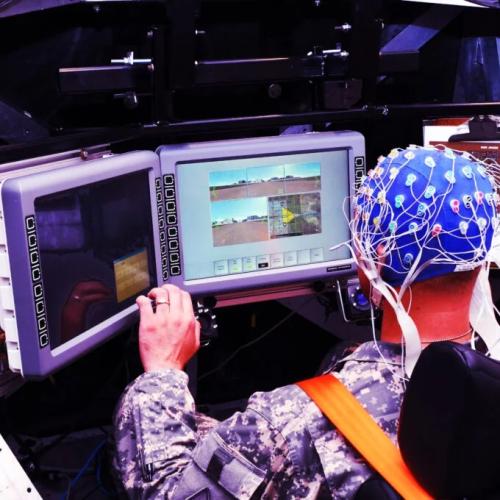
Weapons-grade robots and drones being utilized in combat isn't new. But AI software is, and it's enhancing – in some cases, to the extreme – the existing hardware, which has been modernizing warfare for the better part of a decade. Now, experts say, developments in AI have pushed us to a point where global forces now have no choice but to rethink military strategy – from the ground up. "It's realistic to expect that AI will be piloting an F-16 and will not be that far out," Nathan Michael, Chief Technology Officer of Shield AI, a company whose mission is "building the world's best AI pilot," says. We don't truly comprehend what we're creating. There are also fears that a comfortable reliance in the technology's precision and accuracy – referred to as automation bias – may come back to haunt, should the tech fail in a life or death situation. One major worry revolves around AI facial recognition software being used to enhance an autonomous robot or drone during a firefight. Right now, a human being behind the controls has to pull the proverbial trigger. Should that be taken away, militants could be misconstrued for civilians or allies at the hands of a machine. And remember when the fear of our most powerful weapons being turned against us was just something you saw in futuristic action movies? With AI, that's very possible. "There is a concern over cybersecurity in AI and the ability of either foreign governments or an independent actors to take over crucial elements of the military," [filmmaker Jesse Sweet] said.
Note: For more along these lines, see concise summaries of deeply revealing news articles on military corruption from reliable major media sources.
Important Note: Explore our full index to key excerpts of revealing major media news articles on several dozen engaging topics. And don't miss amazing excerpts from 20 of the most revealing news articles ever published.