





























Government Corruption News Articles
Below are key excerpts of revealing news articles on government corruption from reliable news media sources. If any link fails to function, a paywall blocks full access, or the article is no longer available, try these digital tools.

There are many reasons for women to think twice about reporting sexual assault. But one potential consequence looms especially large: They may also be prosecuted. This month, a retired police lieutenant in Memphis, Tenn., Cody Wilkerson, testified, as part of a lawsuit against the city, not only that police detectives sometimes neglected to investigate cases of sexual assault but also that he overheard the head of investigative services in the citys police department say, on his first day in charge: The first thing we need to do is start locking up more victims for false reporting. Its an alarming choice of priorities. In 2015 we wrote an article ... about Marie, an 18-year-old who reported being raped. Instead of interviewing her as a victim, [detectives] interrogated her as a suspect. Under pressure, Marie eventually recanted - and was charged with false reporting, punishable by up to a year in jail. More than two years later, the police in Colorado arrested a serial rapist - and discovered a photograph proving he had raped Marie. Cases like hers can be found around the country. In 1997, a legally blind woman reported being raped at knife point in Madison, Wis. That same year, a pregnant 16-year-old reported being raped in New York City. In 2004, a 19-year-old reported being sexually assaulted at gunpoint in Cranberry Township, Pa. In all three instances, the women were charged with lying. In all three instances, their reports turned out to be true. The men who raped them were later identified and convicted.
Note: For more along these lines, see concise summaries of deeply revealing news articles on judicial system corruption and sexual abuse scandals.
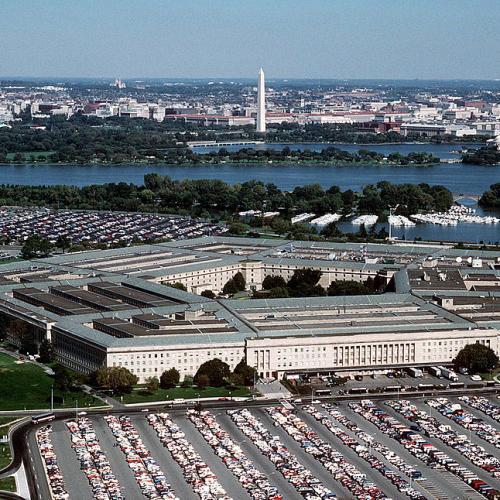
On Thursday, Donald Trump released a preliminary budget proposal that calls for a $52bn increase in military spending. But just last December, a Washington Post investigation found that the Pentagon had buried a report that outlines $125bn in waste at the Department of Defense. Although its required to by law, the DoD has never had an audit, something every American person, every company and every other government agency is subject to. The result is an astounding $10tn [that $10 trillion!] in taxpayer money that has gone unaccounted for since 1996. Over the last 20 years, the Pentagon has broken every promise to Congress about when an audit would be completed, the director of the Audit the Pentagon coalition, Rafael DeGennaro, told the Guardian. Meanwhile, Congress has more than doubled the Pentagons budget. Legislation in the early 1990s demanded that all government agencies had annual audits, but the Pentagon has exempted itself without consequence for 20 years now. In the meantime, the GAO and Office of the Inspector General (IG) have published an endless stream of reports documenting financial mismanagement: $500m in aid to Yemen lost here, $5.8bn in supplies lost there, $8,000 spent on helicopter gears that really cost $500. During this past election cycle, both the Democratic and Republican platforms called for the Pentagons audit. But despite broad support, the issue has remained stagnant in Washington.
Note: When every business in the country and every other branch of government is required to account for every dollar, how can the Pentagon get away with failing to account for literally trillions of dollars year after year? For more along these lines, see concise summaries of deeply revealing military corruption news articles from reliable major media sources.
The head of the police force investigating reports of child sexual abuse by [former U.K. Prime Minister] Sir Edward Heath reportedly believes in the allegations 120 per cent. Chief Constable Mike Veale, of Wiltshire Police, is reportedly convinced by testimony from alleged victims of the former Conservative Prime Minister because they have given similar accounts to investigators. Sir Edward, who was Prime Minister between 1970 and 1974, died in 2005. Wiltshire Police appealed for information about claims he was involved in abusing children after the Independent Police Complaints Commission began investigating whether a similar claim, made in the 1990s, had been handled properly. A retired senior officer alleged that Wiltshire Police deliberately caused a criminal prosecution to fail in 1994 after the defendant, a brothel owner, threatened to tell the press she supplied Sir Edward with underage boys for sex if the trial went ahead. But the trial was dropped because witnesses refused to testify, the IPCC said, and it found no evidence of wrongdoing.
Note: Watch an excellent segment by Australia's "60-Minutes" team "Spies, Lords and Predators" on a pedophile ring in the UK which leads to the highest levels of government. A second suppressed documentary, "Conspiracy of Silence," goes even deeper into this topic in the US. For more, see concise summaries of deeply revealing sexual abuse scandal news articles from reliable major media sources.
The CIA has accused Russia of interfering in the 2016 presidential election. But critics might point out the U.S. has done similar things. The U.S. has a long history of attempting to influence presidential elections in other countries it's done so as many as 81 times between 1946 and 2000, according to a database amassed by political scientist Dov Levin of Carnegie Mellon University. That number doesn't include military coups and regime change efforts following the election of candidates the U.S. didn't like, notably those in Iran, Guatemala and Chile. Levin defines intervention as "a costly act which is designed to determine the election results [in favor of] one of the two sides." These acts, carried out in secret two-thirds of the time, include funding the election campaigns of specific parties, disseminating misinformation or propaganda, training locals of only one side in various campaigning or get-out-the-vote techniques, helping one side design their campaign materials, making public pronouncements or threats in favor of or against a candidate, and providing or withdrawing foreign aid. The U.S. hasn't been the only one trying to interfere in other countries' elections. Russia attempted to sway 36 foreign elections from the end of World War II to the turn of the century meaning that, in total, at least one of the two great powers of the 20th century intervened in about 1 of every 9 competitive, national-level executive elections in that time period.
Note: For more along these lines, see concise summaries of deeply revealing elections corruption news articles from reliable major media sources.
The [FDA] amassed a stockpile of pistols, shotguns, and semiautomatic rifles, along with ample supplies of ammunition, liquid explosives, gun scopes, and suppressors. Between 2006 and 2014, [the Animal and Plant Health Inspection Service, an agency of the USDA] spent nearly $4.8 million to arm itself. And far from being an outlier, it is one of dozens of federal agencies that spends lavishly on guns, ammunition, and military-style equipment. A report issued this month by American Transparency ... chronicles the explosive - and expensive - trend toward militarizing federal agencies, most of which have no military responsibilities. Between 2006 and 2014, the report shows, 67 federal bureaus, departments, offices, and services spent at least $1.48 billion on ammunition and material one might expect to find in the hands of SWAT teams, Special Forces soldiers - or terrorists. The Internal Revenue Service, for example, now spends more than $1 million annually on firearms, ammunition, and military gear. Since 2006, the Department of Veterans Affairs ... has poured nearly $11.7 million into guns and ammo. Even the Smithsonian Institution and the Social Security Administration have each devoted hundreds of thousands of dollars to weaponry. There are now fewer US Marines than there are officers at federal administrative agencies with the authority to carry weapons and make arrests.
Note: The Washington Post in 2009 reported that military influence over US civilian authorities was quietly increasing, and the militarization of US police has been well-documented. For more along these lines, see concise summaries of deeply revealing news articles about government corruption and the erosion of civil liberties.
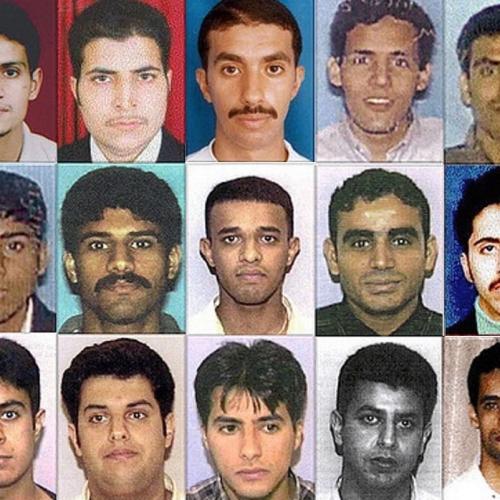
John Lehman, a member of the 9/11 commission, told CNN Thursday that the classified 28 pages of a congressional investigatory report into the attacks contains evidence that as many as six Saudi officials supported al Qaeda in the run-up to the attacks. Those individuals, he said, worked for the Saudi Embassy in the U.S., Saudi charities and [a] Saudi government-funded ... mosque. Lehman charged that evidence of Saudi involvement was never sufficiently investigated. The individuals had hard ties to the government and hard ties to the hijackers, with one driving the hijackers from San Diego to Phoenix when they failed out of their first flight school. Other commission members, including former federal prosecutor Richard Ben-Veniste, are echoing Lehman's call. Lehman urged the declassification of the 28 pages of the 9/11 Commission Report, part of a congressional panel investigating intelligence failures related to the 9/11 attacks. His statements that as many as six officials were implicated appear to contrast with comments made by other members of the commission. The commission's chair and vice chairs, former Republican New Jersey Gov. Tom Kean and former Democratic Rep. Lee Hamilton of Indiana, released a statement in April saying that "only one employee of the Saudi government was implicated in the plot investigation."
Note: Read more on the Saudi role in Sept. 11 and the hidden 9/11 report pages. For more along these lines, see concise summaries of deeply revealing 9/11 news articles from reliable major media sources. Then explore the excellent, reliable resources provided in our 9/11 Information Center.
Former House speaker Dennis Hastert, who less than a decade ago stood second in line to the presidency, was sentenced to 15 months in federal prison Wednesday for a bank fraud case linked to allegations he sexually abused teen boys more than 30 years ago. Federal Judge Thomas Durkin called Hastert, 74, a "serial child molester" and rejected a prosecutor's recommendation of six months in prison on a banking charge that carries a maximum five-year sentence. The court also fined Hastert $250,000 and sentenced him to two years of supervised release after leaving prison. Hastert must register as a sex offender. "Nothing is more disturbing than having 'serial child molester' and 'Speaker of the House' in the same sentence," Durkin said, [acknowledging] he could not sentence Hastert "for being a child molester" and that his sentence would "pale in comparison" to what the former lawmaker would have faced had he been convicted of state charges for sexual abuse of a child. Under current Illinois law, Hastert would have faced between three and seven years in state prison if convicted of a single count of sexual misconduct with a minor. The sentencing completes the spectacular fall of a former small-town high school coach who rose to lead Congress.
Note: Read an article on how the main men behind the impeachment of Bill Clinton, including Hastert, have all been caught having affairs. Watch an excellent segment by Australia's "60-Minutes" team "Spies, Lords and Predators" on a pedophile ring in the UK which leads directly to the highest levels of government. A second suppressed documentary, "Conspiracy of Silence," goes even deeper into this topic in the US. For more along these lines, see concise summaries of deeply revealing sexual abuse scandal news articles from reliable major media sources.
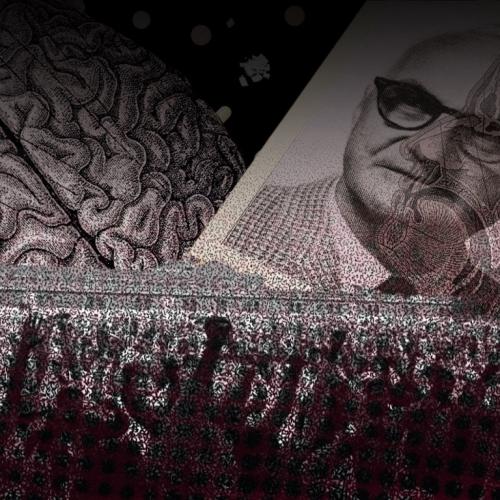
On the north side of Telegraph Hill is 225 Chestnut St., a swanky modernist building. From 1955 to 1965, this building was the site of Operation Midnight Climax - a top-secret mind-control program in which CIA agents used hookers to lure unsuspecting johns from North Beach bars to what they called the pad, then dosed the men with LSD and observed the X-rated goings-on through a two-way mirror. As John Marks notes in his 1977 book, The Search for the Manchurian Candidate: The CIA and Mind Control, the CIAs ... predecessor, the Office of Strategic Services, set up a truth drug program whose purpose was to discover a substance that would make subjects reveal their secrets. When the CIA was created in 1947, it ... authorized covert mind and behavior control programs. Drugs were given to people deemed expendable, including North Korean POWs, mental patients, prisoners, addicts and prostitutes. Before the programs were shot down, hundreds of scientists would work on them. [In] 1953, CIA director Allen Dulles approved a program for covert use of biological and chemical materials with an initial budget of $300,000. Its name: MKULTRA. CIA operatives began dosing people with acid in restaurants, bars and beaches. They also used other, more exotic drugs. And the agency began using the prostitutes to lure men of all sorts, not just marginal figures, back to the safe house. Because the agency destroyed most of MKULTRAs files, no one will ever know how many lives and minds [it] damaged or destroyed.
Note: Don't miss the entire, revealing article. For more on CIA mind control experiments, see the extensive documentation on this page. Then explore the excellent, reliable resources provided in our Mind Control Information Center.
Edgar Mitchell, one of just 12 human beings who walked on the moon, has died. Mitchell was 85. NASA Administrator Charles Bolden said in a statement, "He is one of the pioneers in space exploration on whose shoulders we now stand." On February 5, 1971 ... Mitchell became the sixth man to walk on the lunar surface. [He] found the trip to be a profound experience. "Looking at Earth from space and seeing it was a planet in isolation ... that was an experience of ecstasy, realizing that every molecule in our bodies is a system of matter created from a star hanging in space," Mitchell told the UK Telegraph in 2014. "The experience I had was called Samadhi in the ancient Sanskrit, a feeling of overwhelming joy at seeing the Earth from that perspective." Fascinated and frustrated by the relationship between religion and science, he was very public about seeking links between the known and unknown. He said he had conducted ESP experiments on the mission. He was also a believer in extraterrestrial activity, and was convinced UFOs had visited Earth. He told Bloomberg Business that the 1947 Roswell incident ... was covered up. "It's not just military. It's a cabal of organizations primarily for a profit motive," he told the publication. Mitchell also created the Institute of Noetic Sciences to research paranormal phenomena and consciousness. In addition, he was co-founder of the Association of Space Explorers, an organization for space travelers.
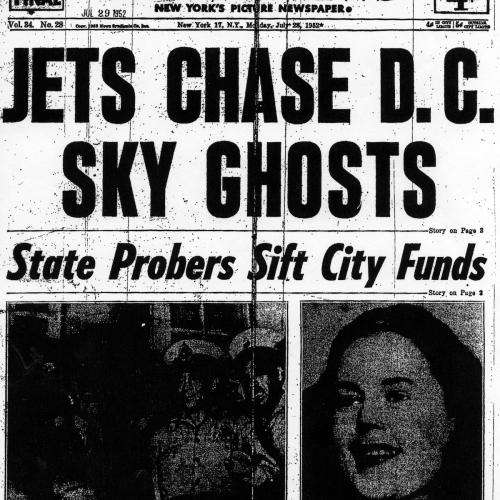
Note: Edgar Mitchell was one of the most prominent and credible voices calling for an end to secrecy about UFOs and extraterrestrial contact. Read one of the last, fascinating interviews with Mitchell in an article in the UK's Observer. For more along these lines, see his comments at this link and read concise summaries of deeply revealing UFO cover-up and disclosure news articles from reliable major media sources. Then explore the excellent, reliable resources provided in our UFO Information Center.
Senior CIA officials have for years intentionally deceived parts of the agency workforce by transmitting internal memos that contain false information. The practice is known by the term eyewash. Officials said there is no clear mechanism for labeling eyewash cables or distinguishing them from legitimate records being examined by the CIAs inspector general, turned over to Congress or declassified for historians. Senate investigators uncovered apparent cases of eyewashing as part of a multi-year probe of the CIAs interrogation program, according to officials who said that the Senate Intelligence Committee found glaring inconsistencies in CIA communications about classified operations, including drone strikes. Former CIA officials ... acknowledged that the internal mechanisms for managing eyewash cables were largely informal. Skeptics described the safeguards as inadequate. When you introduce falsehoods into the communications stream then you can destabilize the whole system of intelligence oversight and compliance with the law, said Steven Aftergood, a government secrecy expert at the Federation of American Scientists. It wasnt that long ago that we had a CIA executive director who was engaged in criminal activity - you dont want someone like him preparing eyewash cables, Aftergood said, referring to Kyle Dusty Foggo, the former No. 3 executive at the agency.
Note: Read more about the strange case of Kyle "Dusty" Foggo, the CIA executive convicted of fraud in connection with secret CIA prisons. For more along these lines, see concise summaries of deeply revealing Intelligence agency corruption news articles from reliable major media sources.
Iceland ... has just sentenced five senior bankers and one prominent investor to prison for crimes relating to the economic meltdown in 2008. The nation that gambled so heavily on the markets and lost so disastrously in the consequent crash has [now] sent 26 financiers to jail for combined sentences of 74 years. The authorities pursued bank bosses, chief executives, civil servants and corporate raiders for crimes ranging from insider trading to fraud, money laundering, misleading markets, breach of duties and lying to the authorities. Meanwhile the economy that collapsed so spectacularly has rebounded after letting banks go bust, imposing capital controls and protecting its own citizens over all other losers. This determination to hold people to account for actions that caused intense financial misery contrasts strongly with Britain, most of the rest of Europe and the United States. Britain never bothered holding a proper inquiry into the financial meltdown that still heavily impacts on public finances. In New York, a couple of minor British bankers have just been convicted of manipulating inter-bank lending rates. In London, the massive HSBC is playing political games ... to stave off regulatory pressures. This is the bank, remember, fined 1.2bn after a US investigation found it was laundering money for gangsters and rogue nations, then discovered to be helping wealthy clients evade tax in dozens of countries. Its former boss became a government minister and then chairman of the British Museum.
Note: So the one nation that jailed its big bankers and let banks go bust is doing very well. Why are so exceedingly few bankers in other countries being jailed for crimes involving trillions of dollars and bankrupting millions of citizens? For more along these lines, see concise summaries of deeply revealing news articles about corruption in government and in the financial industry.
The U.S. government secretly allowed radiation from a damaged reactor to be released into air over the San Fernando and Simi valleys in the wake of a major nuclear meltdown in Southern California more than 50 years ago fallout that nearby residents contend continues to cause serious health consequences and, in some cases, death. "Area Four," which is part of the once-secret Santa Susana Field Lab, [was] founded in 1947 to test experimental nuclear reactors and rocket systems. In 1959, Area Four was the site of one of the worst nuclear accidents in U.S. history. But the federal government still hasn't told the public that radiation was released into the atmosphere as a result of the partial nuclear meltdown. Now, whistleblowers ... have recounted how during and after that accident they were ordered to release dangerous radioactive gases into the air above Los Angeles and Ventura counties, often under cover of night, and how their bosses swore them to secrecy. For years starting in 1959, workers at Area Four were routinely instructed to release radioactive materials into the air above neighboring communities, through the exhaust stacks of nuclear reactors, open doors, and by burning radioactive waste. Radioactive contamination ... remains in the soil and water of Area Four and in some areas off-site. The fallout could be linked to illnesses, including cancer, among residents living nearby. In addition to the radiation, dozens of toxic chemicals, including TCE and Perchlorate, were also released ... from the 1950s to 80s.
Note: The government is lying, and people are dying. For lots more on this huge nuclear cover-up, see this NBC article and this one. You can also watch an eight-minute History Channel video on this disaster. The video states that the amount of radiation released during this accident was 240 times the amount released at Three Mile Island, making it one of the worst nuclear disasters in history, yet it was all kept secret. For more, see concise summaries of deeply revealing news articles on government corruption and nuclear power issues.
For the fearmongers in the West and their allies, its always the scariest time ever. In February, former CIA Deputy Director Michael Morrell, arguing for renewal of the Patriot Act, warned that the lone wolf terrorist threat to the United States has never been greater. In January, an anonymous senior aide to U.K. Prime Minister ... argued for a new snooper bill by saying that the terrorist threat has never been greater. In mid-2014, U.K. Prime Minister Cameron himself raised the threat level to severe and announced: Britain faces the greatest and deepest terror threat in the countrys history. Throughout the Bush years ... officials raised their color-coded terror alerts and issued similar warnings so many times that it became a running joke. Years later, the face of that joke, Homeland Security Secretary Tom Ridge, admitted he was pressured to issue warnings for political gain. Here we are 14 years after 9/11, and its still always the worst threat ever in all of history. If we always face the greatest threat ever, then one of two things is true: 1) fearmongers serially exaggerate the threat for self-interested reasons, or 2) the threat is always getting more severe, year after year which might mean we should evaluate the wisdom of terrorism policies that constantly make the problem worse. Whatever else is true, the people who should have the least credibility on the planet are [those] who have spent the last 15 years exploiting the terror threat in order to terrorize the American population into doing what they want.
Note: Read an excellent essay by a top US general exposing how war is a racket. For more along these lines, see concise summaries of deeply revealing news articles about corruption in the intelligence community and the manipulation of public perception.
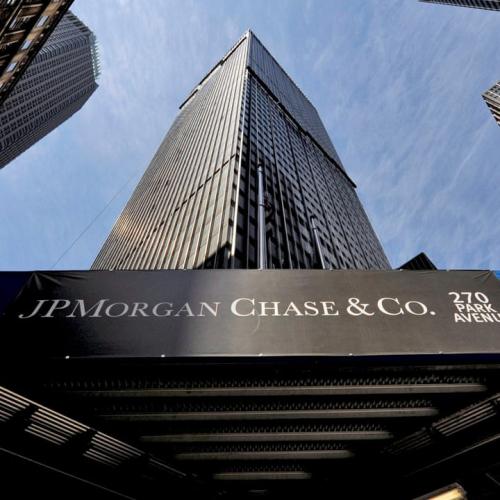
Five of the worlds largest banks have agreed to pay more than $5 billion in fines to settle charges made by regulatory agencies and the Justice Department that the banks had acted in concert to manipulate international interest and foreign currency exchange rates. Attorney General Loretta E. Lynch said the banks had engaged in brazenly illegal behavior on a near-daily basis. The scale of the price-fixing scandal is hard to grasp. It touched ... almost every company and individual in the financial markets. By tweaking global benchmarks used to set foreign exchange and interest rates for a staggering number of transactions a day, the banks over several years bilked billions of dollars of extra profits by altering rates in their favor. Critics complained that the Justice Department had failed to prosecute any additional individuals. Wall Street watchdog group Better Markets called it a slap on the wrist, and Sen. Elizabeth Warren (D-Mass.) said in an e-mail: Thats not accountability for Wall Street. Its business as usual, and it stinks. Barclays, along with JPMorgan Chase, Royal Bank of Scotland Group and Citigroup, will plead guilty to conspiring to manipulate the price of U.S. currency and euros, authorities said. JPMorgan Chase said it had agreed to plead guilty to a single antitrust violation and pay a fine of $550 million. Under the resolution with the Fed, the firm will pay a fine of $342 million. The bank said it had previously set aside reserves for these settlements.
Note: When it comes to international banking, it appears that almost everything is rigged. For more along these lines, see concise summaries of deeply revealing news articles about the systemically corrupt financial industry.
Meet Sam Tsemberis. He's all but solved chronic homelessness. His research, which commands the support of most scholars, has inspired policies across the nation. The results have been staggering. Late last month, Utah, the latest laboratory for Tsemberis's models, reported it has nearly eradicated chronic homelessness. Phoenix, an earlier test case, eliminated chronic homelessness among veterans. Then New Orleans housed every homeless veteran. Homelessness has long seemed one of the most intractable of social problems. For decades, the number of homeless from New York City to San Francisco surged and so did the costs. At one point around the turn of the millennium, New York was spending an annual $40,500 on every homeless person with mental issues. Tsemberis ... unfurled a model so simple children could grasp it, so cost-effective fiscal hawks loved it, so socially progressive liberals praised it. Give homes for the homeless, and you will solve chronic homelessness. Success begat success. The federal government tested the model on 734 homeless across 11 cities, finding the model dramatically reduced levels of addiction as well as shrank health related costs by half. "Adults who have experienced chronic homelessness may be successfully housed and can maintain their housing," the report declared. Utah's Gordon Walker, explain[s] how his state succeeded at eliminating homelessness and saved millions, "It was costing us in state services, health-care costs, jail time, police time, about $20,000 per person. Now, we spend $12,000 per person."
Note: Explore a treasure trove of concise summaries of incredibly inspiring news articles which will inspire you to make a difference.
Several industries have become notorious for the millions they spend on influencing legislation. But one has managed to quickly build influence with comparatively little scrutiny: Private prisons. The two largest for-profit prison companies in the United States GEO and Corrections Corporation of America and their associates have funneled more than $10 million to candidates since 1989 and have spent nearly $25 million on lobbying efforts. Meanwhile, these private companies have seen their revenue and market share soar. They now rake in a combined $3.3 billion in annual revenue and the private federal prison population more than doubled between 2000 and 2010. A report by the Justice Policy Institute ... identified the private-prison industrys three-pronged approach to increase profits through political influence: lobbying, direct campaign contributions, and building relationships and networks. Private-prison companies have indirectly supported policies that put more Americans and immigrants behind bars ... by donating to politicians who support them. With the growing influence of the prison lobby, the nation is, in effect, commoditizing human bodies for an industry in militant pursuit of profit. For instance, privatization created the atmosphere that made the Kids For Cash scandal possible, in which two Pennsylvania judges received $2.6 million in kickbacks from for-profit juvenile detention centers for sending more kids to the facilities and with unusually long sentences.
Note: The "Cash for Kids" scandal mentioned in the article above resulted in the unlawful incarceration of thousands of kids. Few are aware that violent crime rates have dropped to 1/3 of what they were in 1993, yet prison spending continues to skyrocket. For more along these lines, see concise summaries of deeply revealing news articles on corruption in government and in the prison industry.
The Justice Department and FBI have formally acknowledged that nearly every examiner in an elite FBI forensic unit gave flawed testimony in almost all trials in which they offered evidence against criminal defendants over more than a two-decade period before 2000. Of 28 examiners with the FBI Laboratorys microscopic hair comparison unit, 26 overstated forensic matches in ways that favored prosecutors in more than 95 percent of the 268 trials reviewed so far, according to the National Association of Criminal Defense Lawyers (NACDL) and the Innocence Project, which are assisting the government with the countrys largest post-conviction review of questioned forensic evidence. The cases include those of 32 defendants sentenced to death. Of those, 14 have been executed or died in prison, the groups said under an agreement with the government to release results after the review of the first 200 convictions. The admissions mark a watershed in one of the countrys largest forensic scandals, highlighting the failure of the nations courts for decades to keep bogus scientific information from juries, legal analysts said. The question now, they said, is how state authorities and the courts will respond to findings that confirm long-suspected problems with subjective, pattern-based forensic techniques like hair and bite-mark comparisons that have contributed to wrongful convictions in more than one-quarter of 329 DNA-exoneration cases since 1989.
Note: For more along these lines, see concise summaries of deeply revealing news articles on the threats to civil liberties posed by government corruption from reliable major media sources.
The Obama version of national security looks almost indistinguishable from the one he inherited. Critics tend to focus on Obama himself, but Tufts University political scientist Michael J. Glennon has a more pessimistic answer: Obama couldnt have changed policies much even if he tried. Our government no longer works that way. In a new book, National Security and Double Government, he catalogs the ways that the defence and national security apparatus is effectively self-governing, with virtually no accountability, transparency, or checks and balances of any kind. He uses the term double government: Theres the one we elect, and then theres the one behind it, steering huge swaths of policy almost unchecked. Elected officials end up serving as mere cover for the real decisions made by the bureaucracy. National Security and Double Government comes favorably blurbed by former members of the Defense Department, State Department, White House, and even the CIA. Glennon spoke with Ideas from his office. IDEAS: Where does the term double government come from? GLENNON: Walter Bagehot - the scholar who presided over the birth of The Economist magazine. IDEAS: What evidence exists for saying America has a double government? GLENNON: The documented evidence in the book is substantial there are 800 footnotes. I think the American people ... believe that when they vote for a president or member of Congress or succeed in bringing a case before the courts, that policy is going to change. Policy by and large in the national security realm is made by the concealed institutions.
Note: For more along these lines, see concise summaries of deeply revealing stories about questionable intelligence agency practices from reliable sources.
In March I received a call from the White House counsels office regarding a speech I had prepared for my boss at the State Department. The speech was about the impact ... of National Security Agency surveillance practices. The draft stated that if U.S. citizens disagree with congressional and executive branch determinations about the proper scope of signals intelligence activities, they have the opportunity to change the policy through our democratic process. But the White House counsels office told me that no, that wasnt true. I was instructed to amend the line. Some intelligence practices remain so secret, even from members of Congress, that there is no opportunity for our democracy to change them. Public debate about the bulk collection of U.S. citizens data by the NSA has focused largely on Section 215 of the Patriot Act. Based in part on classified facts that I am prohibited by law from publishing, I believe that Americans should be even more concerned about the collection and storage of their communications under Executive Order 12333 than under Section 215. Unlike Section 215, the executive order authorizes collection of the content of communications, not just metadata, even for U.S. persons. It does not require that the affected U.S. persons be suspected of wrongdoing and places no limits on the volume of communications by U.S. persons that may be collected and retained. None of the reforms that Obama announced earlier this year will affect such collection.
Note: The above was written by John Napier Tye, former section chief for Internet freedom in the State Departments Bureau of Democracy, Human Rights and Labor. A 2014 Washington Post investigation sheds more light on the NSA's legally dubious domestic mass surveillance program. For more along these lines, see concise summaries of deeply revealing news articles about intelligence agency corruption and the disappearance of privacy.
Less than two weeks after the 2011 raid that killed Osama bin Laden, a top Pentagon official ordered all photos of bin Laden's corpse be destroyed or turned over to the CIA. In an e-mail dated May 13, 2011, Adm. William McRaven, the U.S. Special Operations commander, wrote: "One particular item that I want to emphasize is photos; particularly UBLs remains. At this point all photos should have been turned over to the CIA; if you still have them destroy them immediately or get them to the (redacted)." Shortly after the raid in Pakistan, President Obama said he would not authorize the release of any images of the al-Qaeda leader's body. Days before the order to destroy the photos, watchdog group Judicial Watch and the Associated Press had separately filed a Freedom of Information Act request for photos, videos and documents regarding bin Laden during the raid. Typically, when a Freedom of Information Act request is filed to a government agency under the Federal Records Act, the agency is obliged to preserve the material sought even if the agency later denies the request.
Note: Why would a top military commander order all photos of bin Laden's dead body destroyed? Why would Obama prevent the release of any images of the body? For powerful evidence that the dead body was not, in fact, bin Laden's, click here and here. For other solid evidence that the official story of 9/11 is riddles with holes, see our 9/11 Information Center available here.
Important Note: Explore our full index to revealing excerpts of key major media news articles on several dozen engaging topics. And don't miss amazing excerpts from 20 of the most revealing news articles ever published.