












































Government Corruption News Articles
Below are key excerpts of revealing news articles on government corruption from reliable news media sources. If any link fails to function, a paywall blocks full access, or the article is no longer available, try these digital tools.

The Defense Department has launched 20 or more projects to build modern business-management systems since the late 1990s. At least five were subsequently killed as complete failures after billions of dollars were spent on them. With each failure, a pattern emerges: An off-the-shelf product with a proven track record in the private sector is chosen and then modified to the point where it doesn't work properly. The Pentagon is unable to account for itself, and thus for roughly half of all congressionally approved annual federal spending. Interviews with scores of current and former defense officials, contractors and Pentagon watchers, as well as a review of dozens of reports by oversight agencies, show that the Pentagon is continually thwarted by a lack of accountability for failures ... and an incentive to spend. All other federal agencies are audited annually ... and with rare exceptions, they pass every year. The Pentagon alone has never been audited, leaving roughly $8.5 trillion in taxpayer dollars unaccounted for since 1996. The Pentagon has for years kept lousy books with impunity. The 2009 law requiring the Defense Department to be audit-ready by 2017 provides for no penalties if it misses the deadline. From 1995 through 2002, Senator Charles Grassley pushed through an amendment to the annual defense appropriations bill requiring the Pentagon to account for its expenditures by following one seemingly simple procedure: match each payment to the expense it covered. The order was ignored, and Grassley gave up. There is no doubt that bad bookkeeping conceals movements of money that in some instances are illegal.
Note: See also this article on the Reuters website. This article sadly fails to state the obvious: Many military officers illegally rake in tons of money with false contracts which benefit those officers and contracting companies. They obviously don't want their accounts to be properly audited. For a revealing essay by a top U.S. general exposing major war manipulations, click here. For more on military corruption, see the deeply revealing reports from reliable major media sources available here.
Linda Woodford spent the last 15 years of her career inserting phony numbers in the U.S. Department of Defenses accounts. Every month ... the Navy would [dump] numbers on the Cleveland, Ohio, office of the Defense Finance and Accounting Service, the Pentagons main accounting agency. Using the data they received, Woodford and her fellow DFAS accountants there set about preparing monthly reports to square the Navys books with the U.S. Treasurys. And every month, they encountered the same problem. Numbers were missing. Numbers were clearly wrong. Numbers came with no explanation of how the money had been spent or which congressional appropriation it came from. Woodford and her colleagues were told by superiors to take unsubstantiated change actions - in other words, enter false numbers, commonly called plugs, to make the Navys totals match the Treasurys. And plugging isnt confined to DFAS. Former military service officials say record-keeping at the operational level throughout the services is rife with made-up numbers to cover lost or missing information. The Defense Departments 2012 budget totaled $565.8 billion. How much of that money is spent as intended is impossible to determine. The Pentagon is largely incapable of keeping track of its vast stores of weapons, ammunition and other supplies. It has amassed a backlog of more than half a trillion dollars in unaudited contracts with outside vendors; how much of that money paid for actual goods and services delivered isnt known.
Note: Could it be that the real reason the Pentagon is the only branch of US government that doesn't balance its books is that they don't want us to know where the money is going? For more along these lines, see concise summaries of deeply revealing military corruption news articles from reliable major media sources.
[Timothy] Jackson was convicted of shoplifting and sent to Angola prison in Louisiana. That was 16 years ago. Today he is still incarcerated in Angola, and will stay there for the rest of his natural life having been condemned to die in jail. All for the theft of a jacket, worth $159. Jackson, 53, is one of 3,281 prisoners in America serving life sentences with no chance of parole for non-violent crimes. Some, like him, were given the most extreme punishment short of execution for shoplifting; one was condemned to die in prison for siphoning petrol from a truck; another for stealing tools. It has been very hard for me, Jackson wrote to the American Civil Liberties Union (ACLU) as part of its new report on life without parole for non-violent offenders. The ACLU's report, A Living Death, chronicles the thousands of lives ruined and families destroyed by the modern phenomenon of sentencing people to die behind bars for non-violent offences. Most of those ... inmates held on life without parole sentences were given their punishments by the federal government. More than 2,000 of the 3,281 individuals tracked down on these sentences by the ACLU are being held in the federal system. Taxpayers pay an additional $1.8bn to keep the prisoners locked up for the rest of their lives. About 65% of the prisoners identified nationwide by the ACLU are African American. Of the prisoners serving life without parole for non-violent offences nationwide, the ACLU estimates that almost 80% were for drug-related crimes.
Note: For more along these lines, see concise summaries of deeply revealing news articles on judicial system corruption from reliable major media sources.
After contradictory stories emerged about an F.B.I. agents killing last month of a Chechen man in Orlando, Fla., who was being questioned over ties to the Boston Marathon bombing suspects, the bureau reassured the public that it would clear up the murky episode. But if such internal investigations are time-tested, their outcomes are also predictable: from 1993 to early 2011, F.B.I. agents fatally shot about 70 subjects and wounded about 80 others and every one of those episodes was deemed justified, according to interviews and internal F.B.I. records. The last two years have followed the same pattern: an F.B.I. spokesman said that since 2011, there had been no findings of improper intentional shootings. In most of the shootings, the F.B.I.s internal investigation was the only official inquiry. In the Orlando case, for example, there have been conflicting accounts about basic facts like whether the Chechen man, Ibragim Todashev, attacked an agent with a knife, was unarmed or was brandishing a metal pole. But Orlando homicide detectives are not independently investigating what happened. Occasionally, the F.B.I. does discipline an agent. A typical punishment involved adding letters of censure to agents files. Critics say the fact that for at least two decades no agent has been disciplined for any instance of deliberately shooting someone raises questions about the credibility of the bureaus internal investigations.
Note: For deeply revealing reports from reliable major media sources on the hidden realities of intelligence agencies, click here.
In an interview with ABC News/Yahoo! News last Friday, former U.S. Senator Mike Gravel (D-Alaska) said statements by U.S. Air Force nuclear missile launch officers regarding mysterious aerial objects interfering with the functionality of American ICBMs make clear that top government officials are lying to the public when they claim to have no knowledge of national security-related UFO incidents. Gravel first gained national recognition in 1971, by placing the still-classified Pentagon Papers which documented U.S. government malfeasance during the Vietnam War into the public record. Gravel said the revelations by former/retired Captains Robert Salas, Bruce Fenstermacher, and David Schindele, as well as retired Security Policeman Sgt. David Scott, are "the smoking gun of the whole issue" of government secrecy on UFOs. On September 27, 2010, Captain Salas co-hosted the "UFOs and Nukes" press conference with noted researcher Robert Hastings, during which seven USAF veterans revealed ongoing UFO activity at U.S. nuclear weapons sites during the Cold War era. That media event was extensively and favorably covered by hundreds of news organizations worldwide, including CNN, which streamed the proceedings live. The full-length video of the press conference appears at http://www.ufohastings.com. The latest testimony about UFOs knocking ICBMs offline was heard by Senator Gravel and five other former members of congress at the "Citizen Hearing on Disclosure" organized by Stephen Bassett at the National Press Club last week.
Note: For the thorough research of Capt. Salas into the event where UFOs disabled nuclear missiles, click here. Could UFOs disabling nuclear warheads be a message from extraterrestrial forces for us not to play with such dangerous toys? Hundreds of military and government witnesses have gone on record claiming a major cover-up around UFOs, including a former chief of the CIA, the former chiefs of defense of the UK and Canada (see video), and Edgar Mitchell, the sixth man to walk on the moon. Why is it that so few people are aware of this and other amazing and even inspiring facts around UFOs? For more, click here.
One could slash private debt by 100pc of GDP, boost growth, stabilize prices, and dethrone bankers all at the same time. It could be done cleanly and painlessly, by legislative command, far more quickly than anybody imagined. The conjuring trick is to replace our system of private bank-created money -- roughly 97pc of the money supply -- with state-created money. Specifically, it means an assault on "fractional reserve banking". If lenders are forced to put up 100pc reserve backing for deposits, they lose the exorbitant privilege of creating money out of thin air. The nation regains sovereign control over the money supply. There are no more bank runs, and fewer boom-bust credit cycles. That at least is the argument [in] the IMF study, by Jaromir Benes and Michael Kumhof, which came out in August and has begun to acquire a cult following around the world. Entitled "The Chicago Plan Revisited", it revives the scheme first put forward by professors Henry Simons and Irving Fisher in 1936 during the ferment of creative thinking in the late Depression. Benes and Kumhof argue that credit-cycle trauma - caused by private money creation - dates deep into history. The original authors of the Chicago Plan were responding to the Great Depression. They believed it was possible to prevent the social havoc caused by wild swings from boom to bust, and to do so without crimping economic dynamism. The benign side-effect of their proposals would be a switch from national debt to national surplus.
Note: This article is an incredible breakthrough in real reporting on the banking sector. It is most highly recommended to read the entire article and then explore our powerful Banking Corruption Information Center.
There is a national crisis of federal employees engaged in the child porn industry and a related epidemic at the state level. Two states, Vermont and Maine ... appear to be running state protected child trafficking rings with evidence of cops, judges, lawyers, clergy and government employees covering for each other. This kind of racketeering creates powerful, and extremely profitable, pedophile rings. Money drives the crime. It is estimated that a criminal willing to molest a child in front of a live webcam can earn $1,000 a night. In Kittery Maine, at the Danish Health Club, one bust yielded $6.1 million in door fees over a five year period with prostitutes earning $12 million. Pimps earnings were not reported. The door man was a retired police officer whose wife worked in back. Half of all global child porn is produced in America. Ten new images of children are posted daily. Estimates of the global profits from child porn range from $3-20 billion. The Department of Justice (DOJ)s Child Exploitation and Obscenities unit has been, by many accounts, totally disabled under US Attorney General Eric Holder. Mr. Holder even refused to prosecute his own Assistant United States Attorney caught doing child porn on DOJ computers. Child trafficking and porn are the fastest growing crimes in America. With billions being laundered in black money it makes solid economic sense for the IRS to focus on the child porn industry. Eric Holders Department of Justice has demonstrated they have no interest in prosecuting pedophiles, not even their own.
Note: For a suppressed Discovery Channel documentary providing powerful evidence of a child abuse ring that goes to the highest level in government, click here. For deeply revealing reports from reliable major media sources on institutional sexual abuse, click here.
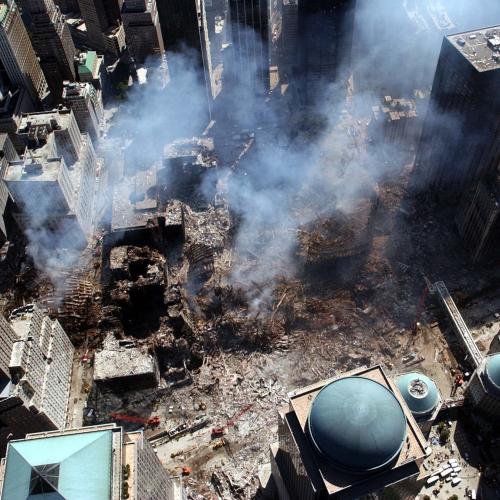
A Panel of 22 researchers into the history of 9/11 has uncovered evidence of fraud in the photographic images of Muslim hijackers prior to boarding the planes on 9/11. Court exhibits state that leader Mohamed Atta took a commuter flight from Portland, Maine, to connect to AA Flight 11 out of Boston, which hit the North Tower. The dubious images heighten the mystery of why Atta left Boston, where Flight 11 was to be hijacked, and risked the failure of his entire mission by driving to Portland September 10, staying overnight, and booking a tight connection back to Boston early September 11. The [9/11 Consensus] Panel's in-depth review shows the Portland story to be peppered with inconsistencies and revisions, placing the entire hijack theory in question. Similarly, at Washington's Dulles International Airport, five hijackers allegedly passed through security before flying AA Flight 77, carrying CNN correspondent Barbara Olson, into the Pentagon. Yet no images were released from the 300+ security cameras at Dulles that morning, nor were Arabic men reported in FBI interviews of airport staff. The Panel has produced 28 Consensus Points of "best evidence" regarding the official claims of 9/11 -- the trigger event for the Middle East wars of the last decade. Its investigations cover: explosives at the Twin Towers and Building WTC-7; the inadequate flying skills of the alleged Pentagon pilot; the missing debris from "Let's Roll" Flight 93; the [many] military drills coinciding on 9/11, and the allegedly absent political and military commanders.
Note: This article appears to have been removed from the MarketWatch website, though you can still read it using the Internet Archive. Don't miss the PBS special, "9/11 Explosive Evidence: Experts Speak Out", in which 40 whistle-blowing experts present evidence of controlled demolition at the World Trade Center. For many other major media articles which raise serious questions about the 9/11 official story, click here. For lots more verifiable evidence suggesting a major cover-up around 9/11, click here.
The New York Times has published several terrifying reports about New Jerseys system of halfway houses privately run adjuncts to the regular system of prisons. The horrors described are part of a broader pattern in which essential functions of government are being both privatized and degraded. So whats really behind the drive to privatize prisons? One answer is that privatization can serve as a stealth form of government borrowing, in which governments avoid recording upfront expenses (or even raise money by selling existing facilities) while raising their long-run costs in ways taxpayers cant see. Another answer is that privatization is a way of getting rid of public employees. But the main answer, surely, is to follow the money. As more and more government functions get privatized, states become pay-to-play paradises, in which both political contributions and contracts for friends and relatives become a quid pro quo for getting government business. One thing the companies that make up the prison-industrial complex are definitely not doing is competing in a free market. They are, instead, living off government contracts. And ... despite many promises that prison privatization will lead to big cost savings, such savings as a comprehensive study by the Bureau of Justice Assistance, part of the U.S. Department of Justice, concluded have simply not materialized. A corrupt nexus of privatization and patronage [is] undermining government across much of our nation.
Note: Few are aware that violent crime rates have dropped to 1/3 of what they were in 1993, yet prison spending continues to skyrocket. Is something wrong with this picture? For key major media new articles exposing more on corruption within the "prison-industrial complex," click here.
It is a day of infamy – 9/11. The official investigation concluded that intense heat from the crash and the jet fuel melted the support beams causing the [WTC] towers to collapse. But architect Richard Gage doesn't believe that. He is the founder of Architects and Engineers for 9/11 Truth. [Gage:] There is evidence to suggest that explosive demolitions have brought down all three World Trade Center skyscrapers. We have now 1,500 architects and engineers calling for a new investigation based on this evidence, including the third skyscraper that most people know nothing about. This is a 47-story skyscraper that collapses at free fall acceleration, straight down ... into its own footprint just like a controlled demolition. This is extraordinary evidence, along with the chemical evidence of high-tech nanothermite composite explosives or incendiaries found in the all the World Trade Center dust. The architects and engineers are highlighting the specific evidence in these three skyscrapers, because its so clear that they're explosive demolitions. We have [found] in all of this massive quantity of dust ... iron microspheres the size of the diameter of a human hair. Billions of them ... are found. These contain the evidence of ignited thermite. There is no other explanation for them. What the 1,500 architects and engineers that I represent are calling for is an investigation that is thorough that uses the scientific method [and] analyzes all of the evidence. Once this evidence is all analyzed, we'll let the chips fall where they may. We don't have conspiracy theories. What we want is a real investigation.
Note: The text above is taken from the video news report at the Fox News link above. To watch the symmetrical fall of the third World Trade Center building, click here. For lots more reliable, verifiable information questioning the 9/11 official story, see our 9/11 Information Center.
Federal agent John Dodson says what he was asked to do was beyond belief. He was intentionally letting guns go to Mexico. An Alcohol, Tobacco and Firearms [ATF] senior agent assigned to the Phoenix office in 2010, Dodson's job is to stop gun trafficking across the border. Instead, he says he was ordered to sit by and watch it happen. Investigators call the tactic letting guns "walk." In this case, walking into the hands of criminals who would use them in Mexico and the United States. Dodson's bosses say that never happened. Agent Dodson and other sources say the gun walking strategy was approved all the way up to the Justice Department. The idea was to see where the guns ended up, build a big case and take down a cartel. And it was all kept secret from Mexico. ATF named the case "Fast and Furious." Documents show the inevitable result: The guns that ATF let go began showing up at crime scenes in Mexico. And as ATF stood by watching thousands of weapons hit the streets. The Fast and Furious group supervisor noted the escalating Mexican violence. One e-mail noted, "958 killed in March 2010 ... most violent month since 2005." Dodson feels that ATF was partly to blame for the escalating violence. Senior agents including Dodson ... confronted their supervisors over and over. Their answer ... "If you're going to make an omelette, you've got to break some eggs." On Dec. 14, 2010, Border Patrol Agent Brian Terry was gunned down. Two assault rifles ATF had let go nearly a year before were found at Terry's murder. Dodson said, "I felt guilty. I mean it's crushing." Dodson said they never did take down a drug cartel. However, he said thousands of Fast and Furious weapons are still out there and will be claiming victims on both sides of the border for years to come.
Note: Could it be that there are those in high positions of power who want this violence to keep us in fear? The fear industry brings huge profits. For more powerful information on this, click here and here.
Shocking as it may seem, U.S. government doctors once thought it was fine to experiment on disabled people and prison inmates. Such experiments included giving hepatitis to mental patients in Connecticut, squirting a pandemic flu virus up the noses of prisoners in Maryland, and injecting cancer cells into chronically ill people at a New York hospital. Much of this horrific history is 40 to 80 years old, but it is the backdrop for a meeting in Washington this week by a presidential bioethics commission. The meeting was triggered by the government's apology last fall for federal doctors infecting prisoners and mental patients in Guatemala with syphilis 65 years ago. U.S. officials also acknowledged there had been dozens of similar experiments in the United States. Inevitably, they will be compared to the well-known Tuskegee syphilis study. In that episode, U.S. health officials tracked 600 black men in Alabama who already had syphilis but didn't give them adequate treatment even after penicillin became available. Though people in the studies were usually described as volunteers, historians and ethicists have questioned how well these people understood what was to be done to them and why, or whether they were coerced. In the last 15 years, two international studies sparked outrage. U.S.-funded doctors failed to give the AIDS drug AZT to all the HIV-infected pregnant women in a study in Uganda even though it would have protected their newborns. The other study, by Pfizer Inc., gave an antibiotic named Trovan to children with meningitis in Nigeria, although there were doubts about its effectiveness. Critics blamed the experiment for the deaths of 11 children and the disabling of scores of others. Pfizer settled a lawsuit with Nigerian officials for $75 million but admitted no wrongdoing.
Note: Though it appears these highly unethical studies have stopped in the US, the article points out that many drug companies are now doing their studies in countries where ethical codes are not strong. For an astounding list of government-sponsored programs where humans were used as guinea pigs, click here. For a two-page summary of solid evidence of government involvement in mind control programs, click here.
On the third Wednesday of every month, the nine members of an elite Wall Street society gather in Midtown Manhattan. The men share a common goal: to protect the interests of big banks in the vast market for derivatives, one of the most profitable and controversial fields in finance. They also share a common secret: The details of their meetings, even their identities, have been strictly confidential. Drawn from giants like JPMorgan Chase, Goldman Sachs and Morgan Stanley, the bankers form a powerful committee that helps oversee trading in derivatives, instruments which, like insurance, are used to hedge risk. In theory, this group exists to safeguard the integrity of the multitrillion-dollar market. In practice, it also defends the dominance of the big banks. The banks in this group ... have fought to block other banks from entering the market, and they are also trying to thwart efforts to make full information on prices and fees freely available. Banks influence over this market, and over clearinghouses like the one this select group advises, has costly implications for businesses large and small. The size and reach of this market has grown rapidly over the past two decades. Pension funds today use derivatives to hedge investments. States and cities use them to try to hold down borrowing costs. Airlines use them to secure steady fuel prices. Food companies use them to lock in prices of commodities like wheat or beef.
Note: To explore highly revealing news articles on the powerful secret societies which without doubt back these top bankers, click here. For a treasure trove of reports from reliable sources detailing the amazing control of major banks over government and society, click here.
It's a perfect storm. I'm talking about the dangers facing our democracy. First, income in America is now more concentrated in fewer hands than it has been in 80 years. Almost a quarter of total income generated in the United States is going to the top 1 percent of Americans. The top one-tenth of 1 percent of Americans now earn as much as the bottom 120 million of us. Who are these people? They're top executives of big corporations and Wall Street, hedge-fund managers and private equity managers. Hundreds of millions of dollars are pouring into advertisements for and against candidates - without a trace of where the dollars are coming from. They're laundered through a handful of groups. Most Americans are in trouble. Their jobs, incomes, savings and even homes are on the line. They need a government that's working for them, not for the privileged and the powerful. Yet their state and local taxes are rising. And their services are being cut. There's no jobs bill to speak of. Washington says nothing can be done. There's no money left. No money? The marginal income tax rate on the very rich is the lowest it has been in more than 80 years. Under President Dwight Eisenhower ... it was 91 percent. Now it's 36 percent. We're losing our democracy to a different system. It's called plutocracy.
Note: As the Democrats and Republicans duke it out, the ultra-rich laugh all the way to the bank. What if instead of fighting each other, we worked together to expose the manipulations of the ultra-rich? Whether you are on the left or right of the political spectrum, this incisive article by former US Sect. of Labor Robert Reich is well worth reading in its entirety. For more in income inequality, click here.
Germany is fighting to keep sealed the Adolf Eichmann files detailing the years the Holocaust chief logistical organiser spent on the run before he was captured by Mossad agents. Those hoping to have a 50-year secrecy order overturned believe the government is embarrassed by details within that may prove German and Vatican officials colluded in his escape and freedom. For the current papacy under the German pope, Benedict XVI, the 4,500 page Eichmann dossier could be the smoking gun that would shoot down his plans to canonize Pope Pius XII (1939-58), aka Hitlers Pope. The role of Pope Pius XII during World War II, his relationship with Nazism and his efforts (or lack of them) to save Jews from the gas chambers are hotly disputed. Even within the Jewish community there are strong opinions on both sides of the debate. In fact historys most savage mass murderers Adolf Eichmann, Dr Josef Mengele, better known as Auschwitzs Angel of Death, Franz Stangl, commandant of the Treblinka extermination camp escaped justice down the ratline that ran straight through the Vatican state in Rome. Senior members of the Roman Catholic hierarchy marinaded in virulent Judeophobia and obsessed by Bolshevism organised the escape of thousands of the most debauched, cruel monsters to a peaceful, prosperous retirement in Catholic South America.
Note: As mentioned by the initiator of the lawsuit to open the documents in this Associated Press story, "I think it's impossible that in Germany we are hiding documents about a convicted Nazi mass murderer today." Evidence suggests that these Nazis were purposely allowed to escape with the involvement of the Vatican, the CIA, and other groups. Josef Mengele is purported to have gone on to train the CIA in powerful mind control techniques he perfected using concentration camp inmates as guinea pigs. For more on this, click here.
The FDA has "certified" a 2009 letter sent anonymously by FDA staff to President Obama describing "systemic corruption and wrongdoing that permeates all levels of FDA." The FDA's official recognition of the letter means that lawyers who want to use it to demonstrate that the FDA isn't perfect won't have to go through weeks of tedious discovery demands to find someone at the FDA who can officially say, "Yup, we sent that." That's going to be a headache for drug companies who often defend their drugs in court by saying, "Hey, the FDA said this product was fine and we did everything they asked -- so it's not fair to hold us responsible." Plaintiffs' lawyers can now hold up the letter in court and argue that drug companies have been on notice that the FDA is riddled with politics, conflicts of interest and outright corruption, and is, as the letter says, "fundamentally broken." Written by a group of scientists on FDA letter head -- but with their names blacked out for fear of retaliation -- the letter describes a nightmare of bungling and self-dealing among higher-ups at the drug safety agency. It begs Obama to step in and reform the shop: "... many other FDA managers who have failed to protect the American public, who have violated laws, rules, and regulations, who have suppressed or altered scientific or technological findings and conclusions, who have abused their power and authority, and who have engaged in illegal retaliation against those who speak out, have not been held accountable and remain in place."
Note: The FDA actively persecutes whistle-blowers, placed a former Monsanto lobbyist in a high ranking position, and gives industrial food companies preferential treatment over small farmers. In recent years, FDA executives have been caught participating in medical industry corruption, including keeping important prescription drug safety information hidden from consumers.
Thousands of UFOs have been spotted in the last 20 years around the UK, according to newly released documents. More than 6,000 pages of reports describe people's experiences with unidentified flying objects between 1994 and 2000. Details have been released under a three-year project between the Ministry of Defence and The National Archives. The reports detail how objects of various shapes and sizes have been witnessed flying over a range of locations. Some drawings by witnesses have also been released. Included in the latest release is a letter from senior MoD official Ralph Noyes, in which he describes seeing a film of UFOs captured by RAF fighter pilots in 1956. Mr Noyes claims the footage was shown at a secret underground screening arranged for air defence staff at the MoD in 1970. Experts believe the records highlight how shapes of reported UFOs have changed over the last few decades. Many reports in this latest file describe aircraft as big, black and triangular in shape with lights along the edges, whereas the predominant form in the 1940s to 1950s was saucer or disc-shaped. The files are available to download for free for a month from the National Archives website.
Note: For a concise summary of key testimony on UFO sightings by highly-credible government and military officials, click here. For astonishing media reports revealing the existence of UFOs, click here.
Several financial giants that received federal bailout money in the last year paid out bonuses to employees in 2008 that greatly exceeded the amount of profit generated by the banks, according to a study on executive compensation released by New York State Attorney General Andrew Cuomo Thursday. Despite claims by bank executives that bonuses are tied to the company's performance, the report states that "there is no clear rhyme or reason to how the banks compensate or reward their employees." Cuomo's investigation "suggests a disconnect between compensation and bank performance that resulted in a 'heads I win, tails you lose' bonus system." According to the report: Goldman Sachs, which earned $2.3 billion last year and received $10 billion in TARP funding, paid out $4.8 billion in bonuses in 2008 - more than double their net income. Morgan Stanley, which earned $1.7 billion last year and received $10 billion in bailout funds, handed out $4.475 billion in bonuses, nearly three times their net income. JPMorgan Chase, which earned $5.6 billion in 2008 and received $25 billion from the government, paid out $8.69 billion in bonus money. Citigroup and Merrill Lynch lost a combined $54 billion last year. They received a total of $55 billion in bailouts and paid out $9 billion in combined bonuses. ($5.33 billion for Citigroup; $3.6 billion for Merrill Lynch, which was subsequently acquired by Bank of America.) Bonuses have been a hot-button issue surrounding these federally bailed out banks for months, with company executives facing heat from ... local officials like Cuomo angered by the exorbitant compensation plans for the same people widely seen as responsible for the country's financial crisis.
Note: Click here to read the full report. For lots more on the realities behind the taxpayer bailout of Wall Street, click here.
There's a $700 trillion elephant in the room and it's time we found out how much it really weighs on the economy. Derivative contracts total about three-quarters of a quadrillion dollars in "notional" amounts, according to the Bank for International Settlements. These contracts are tallied in notional values because no one really can say how much they are worth. But valuing them correctly is exactly what we should be doing because these comprise the viral disease that has infected the financial markets and the economies of the world. Try as we might to salvage the residential real estate market, it's at best worth $23 trillion in the U.S. We're struggling to save the stock market, but that's valued at less than $15 trillion. And we hope to keep the entire U.S. economy from collapsing, yet gross domestic product stands at $14.2 trillion. Compare any of these to the derivatives market and you can easily see that we are just closing the windows as a tsunami crashes to shore. The total value of all the stock markets in the world amounts to less than $50 trillion, according to the World Federation of Exchanges. To be sure, the derivatives market is international. But much of the trouble we're in began with contracts "derived" from the values associated with U.S. residential real estate market. These contracts were engineered based on the various assumptions tied to those values. Few know what derivatives are worth. I spoke with one derivatives trader who manages billions of dollars and she said she couldn't even value her portfolio because "no one knows anymore who is on the other side of the trade."
Note: Banks and financial firms deemed "too big to fail" were bailed out worldwide at taxpayers' expense. But what will happen if losses in the derivatives market skyrocket? No government in the world has the resources to save financial corporations from a collapse in their derivatives trading. For a treasure trove of reports from reliable sources detailing the amazing control of major banks over government and society, click here.
Former President Gerald Ford secretly advised the FBI that two of his fellow members on the Warren Commission doubted the FBI's conclusion that John F. Kennedy was shot from the sixth floor of the Texas School Book Depository in Dallas. The new details were included in 500 pages of the FBI's large file on Ford, released in part this past week in response to requests under the Freedom of Information Act that The Associated Press and others made on the day Ford died in December 2006. That Ford served as the FBI's eyes and ears inside the commission has been known for years. Long ago, the government released a 1963 FBI memo that said Ford ... had volunteered to keep the FBI informed about the panel's private deliberations, but only if that relationship remained confidential. The bureau agreed. It was also well-known Ford was an outspoken proponent of the bureau's conclusion that Lee Harvey Oswald killed Kennedy while acting alone. [Assistant FBI Director Cartha "Deke"] DeLoach wrote [a memorandum] on Dec. 17, 1963, to outline what Ford told him ... about the commission meeting the day before. "Two members of the commission brought up the fact that they still were not convinced that the President had been shot from the sixth floor window of the Texas Book Depository. ... These members failed to understand the trajectory of the slugs that killed the President. [Ford] stated he felt this point would be discussed further but, of course, would represent no problem." There was no explanation of what Ford meant by "no problem."
Note: For many revealing reports on major assassinations from major media sources, click here.
Important Note: Explore our full index to revealing excerpts of key major media news articles on several dozen engaging topics. And don't miss amazing excerpts from 20 of the most revealing news articles ever published.