
































Government Corruption News Articles
Below are key excerpts of revealing news articles on government corruption from reliable news media sources. If any link fails to function, a paywall blocks full access, or the article is no longer available, try these digital tools.

A whistleblower has come forward with an explosive new trove of documents. They describe the activities of an “anti-disinformation” group called the Cyber Threat Intelligence League, or CTIL, that officially began as the volunteer project of data scientists and defense and intelligence veterans but whose tactics over time appear to have been absorbed into ... those of the Department of Homeland Security (DHS). In 2019, US and UK military and intelligence contractors ... developed the sweeping censorship framework. CTIL ... partnered with [Cybersecurity and Infrastructure Security Agency] (CISA) in the spring of 2020. CTIL’s approach to “disinformation” went far beyond censorship. The group engaged in offensive operations to influence public opinion, discussing ways to promote “counter-messaging,” co-opt hashtags, dilute disfavored messaging, create sock puppet accounts, and infiltrate private invite-only groups. The ambitions of the 2020 pioneers of the Censorship Industrial Complex went far beyond simply urging Twitter to slap a warning label on Tweets, or to put individuals on blacklists. The [Adversarial Misinformation and Influence Tactics and Techniques] framework calls for discrediting individuals as a necessary prerequisite of demanding censorship against them. It calls for training influencers to spread messages. And it calls for trying to get banks to cut off financial services to individuals who organize rallies or events. [CTIL] laments that governments and corporate media no longer have full control of information. “For a long time, the ability to reach mass audiences belonged to the nation-state (e.g. in the USA via broadcast licensing through ABC, CBS and NBC). Now, however, control of informational instruments has been allowed to devolve to large technology companies who have been blissfully complacent and complicit in facilitating access to the public for information operators at a fraction of what it would have cost them by other means.”
Note: The extensive collusion between Big Tech and government officials to censor COVID information is barely beginning to come to light. For more along these lines, see concise summaries of deeply revealing news articles on military corruption and media manipulation from reliable sources.
This year marks the 60th anniversary of John F. Kennedy’s assassination. JFK: What the Doctors Saw [is] a documentary featuring previously unreleased footage — and the testimony of seven doctors who were there in the emergency room of Parkland Hospital trying to save the then-president’s life after he was shot as his motorcade passed through Dealey Plaza on Nov. 22, 1963. The film raises serious doubts about whether Lee Harvey Oswald acted alone in killing JFK (Oswald was shot to death two days later by local nightclub owner Jack Ruby as he was escorted through the Dallas Police building). “I became involved with the story because one of my personal physicians told me he was in the emergency room at Parkland Hospital when JFK was brought in,” Jacque Lueth, the film’s executive producer who interviewed the seven Parkland doctors, [said]. “He introduced me to six of the other doctors who were there that day and when I interviewed them, I began to realize their observations from Trauma Room 1 didn’t match the government story.” She adds, “Based upon my interviews with the doctors, Jim Jenkins and Robert Tanenbaum, and my own research, there’s no question in my mind there was a government cover-up.” The doctors in the film contend one of the bullets that hit JFK entered through his throat, meaning it was an entrance wound from the front — and that there were potentially two gunmen, with Oswald firing from the rear.
Note: Explore concise summaries of revealing news articles on the JFK assassination from reliable major media sources. For more along these lines, check out our JFK Assassination Information Center.
A federal appeals court on Thursday is tossing the Environmental Protection Agency’s (EPA) ban on a pesticide that has been linked to brain damage in children. The decision from the 8th Circuit Court of Appeals to send the rule back to the agency does not preclude the agency from reinstating the ban in the future. But it said the EPA needs to give greater consideration to whether there are cases where the pesticide, called chlorpyrifos, could be used safely. Chlorpyrifos has been used as an insecticide, protecting crops like soybeans, broccoli, cauliflower and fruit trees. The EPA banned chlorpyrifos for use in growing food in 2021. That came after a prior court ruling gave the agency just 60 days to either find a safe use for chlorpyrifos or ban it outright. The appeals court determined that this deadline contributed to a rushed decision from EPA that was ultimately “arbitrary and capricious.” The ruling comes from Judges Lavenski Smith, Raymond Gruender and David Stras, two of whom were appointed by former President George W. Bush and one of whom was appointed by former President Trump. The chlorpyrifos issue has ping-ponged between administrations. The Obama administration had proposed to ban its use on food, but the Trump administration reversed course and had proposed to allow some uses of the chemical.
Note: Did you know that chlorpyrifos was originally developed by Nazis during World War II for use as a nerve gas? Read more about the history and politics of chlorpyrifos, and how U.S. regulators relied on falsified data to allow its use for years. See other concise news articles we've summarized about the harms of chlorpyrifos.
The Biden administration likely infringed upon the First Amendment when it leaned on social media companies to remove false or misleading COVID-19 content, a federal court of appeals ruled Friday — narrowing a bombshell district court order that barred several officials and agencies from communicating with the platforms. The White House, surgeon general, Centers for Disease Control and Prevention and the FBI “likely coerced or significantly encouraged social-media platforms to moderate content” and in doing so, “likely violated the First Amendment,” the New Orleans-based Fifth US Circuit Court of Appeals determined. The three-judge panel, however, adjusted the scope of US District Judge Terry Doughty’s July 4 order ... removing officials from the National Institute of Allergy and Infectious Disease, the Cybersecurity and Infrastructure Security Agency and the State Department from the injunction. The Fifth Circuit vacated nine of the 10 provisions in Doughty’s order that prevented Biden administration officials from “urging, encouraging, pressuring” or “inducing” social media companies from removing content. Similarly, the appeals court determined that “following up with social-media companies” about content moderation, “requesting content reports from social-media companies” or asking platforms to “Be on The Lookout” for certain types of material does not violate individuals’ First Amendment rights.
Note: Many posts that were censored contained factual information on COVID-related issues. For more along these lines, see concise summaries of deeply revealing news articles on the coronavirus and media manipulation from reliable sources.
Missouri and Louisiana, joined by scientists and conservatives whose posts were censored, sued to protect their First Amendment rights. The issue in Missouri v. Biden [is] whether government officials can be held responsible for their censorship. Judge Terry Doughty ruled they can and his 155-page opinion describes disturbing coordination between the government and tech firms to suppress unpopular views, especially on Covid-19. White House officials and public-health agency leaders held biweekly meetings with tech companies over how to curb the spread of misinformation. Former White House director of digital strategy Rob Flaherty and Covid-19 adviser Andy Slavitt were in constant contact with social-media executives. Officials weren't merely flagging false statements. They were bullying companies to censor anything contradicting government guidance. On July 16, 2021, the President accused social-media companies of "killing people." Judge Doughty concludes from all this that "the public and private pressure from the White House apparently had its intended effect." All 12 people dubbed the "Disinformation Dozen" by the Center for Countering Digital Hate were censored, and pages, groups and accounts linked to them were removed. Some Covid claims flagged by the White House were ... scientifically debatable–for instance, that vaccines can cause Bell's palsy and multisystem inflammatory syndrome in children, and that Covid had a 99.96% survival rate.
Note: For more along these lines, see concise summaries of deeply revealing news articles on government corruption and media manipulation from reliable sources.
A federal judge on Tuesday blocked key Biden administration agencies and officials from meeting and communicating with social media companies about "protected speech," in an extraordinary preliminary injunction in an ongoing case. The injunction came in response to a lawsuit brought by Republican attorneys general in Louisiana and Missouri, who allege that government officials went too far in their efforts to encourage social media companies to address posts that they worried could contribute to vaccine hesitancy during the pandemic. Over the last five years, coordination and communication between government officials and [social media] companies increased. Public health officials also frequently communicated with the companies during the coronavirus pandemic. The injunction was a victory for the state attorneys general, who have accused the Biden administration of enabling a "sprawling federal 'Censorship Enterprise'" to encourage tech giants to remove politically unfavorable viewpoints and speakers. The judge, Terry A. Doughty, has yet to make a final ruling in the case, but in issuing the injunction, he signaled he is likely to ... find that the Biden administration ran afoul of the First Amendment. The state attorneys general have argued that starting in 2017 ... officials within the government began laying the groundwork for a "systemic and systematic campaign" to control speech on social media. These efforts accelerated in 2020 ... amid the response to the outbreak of the coronavirus pandemic.
Note: For more along these lines, see concise summaries of deeply revealing news articles on government corruption and media manipulation from reliable sources.
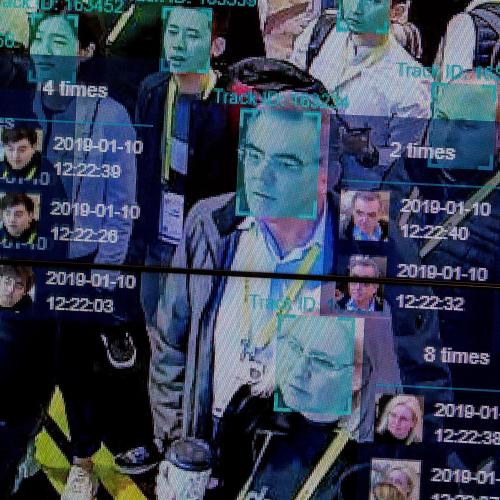
A young African American man, Randal Quran Reid, was pulled over by the state police in Georgia. He was arrested under warrants issued by Louisiana police for two cases of theft in New Orleans. The arrest warrants had been based solely on a facial recognition match, though that was never mentioned in any police document; the warrants claimed "a credible source" had identified Reid as the culprit. The facial recognition match was incorrect and Reid was released. Reid ... is not the only victim of a false facial recognition match. So far all those arrested in the US after a false match have been black. From surveillance to disinformation, we live in a world shaped by AI. The reason that Reid was wrongly incarcerated had less to do with artificial intelligence than with ... the humans that created the software and trained it. Too often when we talk of the "problem" of AI, we remove the human from the picture. We worry AI will "eliminate jobs" and make millions redundant, rather than recognise that the real decisions are made by governments and corporations and the humans that run them. We have come to view the machine as the agent and humans as victims of machine agency. Rather than seeing regulation as a means by which we can collectively shape our relationship to AI, it becomes something that is imposed from the top as a means of protecting humans from machines. It is not AI but our blindness to the way human societies are already deploying machine intelligence for political ends that should most worry us.
Note: For more along these lines, see concise summaries of deeply revealing news articles on police corruption and the disappearance of privacy from reliable major media sources.
The “Twitter files” revealed an FBI operation to monitor and censor social media content. Dozens of FBI employees worked on the identification and removal of material on a wide range of subjects and that Twitter largely carried out their requests. Nor was it just the FBI, apparently. Emails reveal FBI figures like a San Francisco assistant special agent in charge asking Twitter executives to “invite an OGA” (or “Other Government Organization”) to an upcoming meeting. A week later, Stacia Cardille, a senior Twitter legal executive, indicated the OGA was the CIA, an agency under strict limits regarding domestic activities. Twitter’s own ranks included dozens of ex-FBI agents and executives. The dozens of disclosed emails ... do not include still-undisclosed but apparent government coordination with Facebook and other social media companies. Much of that work apparently was done through the multi-agency Foreign Influence Task Force (FITF), which operated secretly it seems to censor citizens. This is a First Amendment violation. The Twitter files have substantiated long-standing concerns over “censorship by surrogate” or proxy. As with other amendments like the Fourth Amendment, which protects against unreasonable searches or seizures, the government cannot use private agents to do indirectly what it cannot do directly. Just as a police officer cannot direct a security guard to break into an apartment and conduct a search, the FBI cannot use Twitter to censor Americans.
Note: For more along these lines, see concise summaries of deeply revealing news articles on government corruption and media manipulation from reliable sources.
A large number of ex-officers from the FBI, CIA, NSC, and State Department have taken positions at Facebook, Twitter, and Google. The revelation comes amid fears the FBI operated control over Twitter censorship and the Hunter Biden laptop story. The Twitter files have revealed the close relationship with the FBI, how the Bureau regularly demanded accounts and tweets be banned and suspicious contact before the Hunter laptop story was censored. The documents detailed how so many former FBI agents joined Twitter's ranks over the past few years that they created their own private Slack channel. A report by Mint Press' Alan MacLeod identified dozens of Twitter employees, who had previously held positions at the Bureau. He also found that former CIA agents made up some of the top ranks in almost every politically-sensitive department at Meta, the parent company of Facebook, Instagram, and WhatsApp. And in another report, MacLeod detailed the extent to which former CIA agents started working at Google. DailyMail.com has now been able to track down nine former CIA agents who are working, or have worked, at Meta, including Aaron Berman, the senior policy manager for misinformation at the company who had previously written the president's daily briefings. Six others have worked for other intelligence agencies before joining the social media giant, many of whom have posted recently about Facebook's efforts to tamp down on so-called 'covert influence operations.'
Note: Explore a deeper analysis on the ex-CIA agents at Facebook and at Google. Additionally, read how Big Tech censors social media on behalf of corporate and government interests. For more along these lines, see concise summaries of deeply revealing news articles on intelligence agency corruption and media manipulation from reliable sources.
The Department of Homeland Security is quietly broadening its efforts to curb speech it considers dangerous, an investigation by The Intercept has found. The work, much of which remains unknown to the American public, came into clearer view earlier this year when DHS announced a new “Disinformation Governance Board”: a panel designed to police misinformation (false information spread unintentionally), disinformation (false information spread intentionally), and malinformation (factual information shared, typically out of context, with harmful intent) that allegedly threatens U.S. interests. While the board was widely ridiculed, immediately scaled back, and then shut down within a few months, other initiatives are underway as DHS pivots to monitoring social media now that its original mandate — the war on terror — has been wound down. Behind closed doors, and through pressure on private platforms, the U.S. government has used its power to try to shape online discourse. Discussions have ranged from the scale and scope of government intervention in online discourse to the mechanics of streamlining takedown requests for false or intentionally misleading information. There is also a formalized process for government officials to directly flag content on Facebook or Instagram and request that it be throttled or suppressed through a special Facebook portal that requires a government or law enforcement email to use. How disinformation is defined by the government has not been clearly articulated.
Note: The Department of Homeland Security's Disinformation Governance Board has been paused, not stopped. For more along these lines, see concise summaries of deeply revealing news articles on government corruption and media manipulation from reliable sources.
Tessa Jolls, president of the Center for Media Literacy, published a report last month entitled "Building Resiliency: Media Literacy as a Strategic Defense Strategy for the Transatlantic." It reads like a blueprint for indoctrinating students in corporatism and militarism under the auspices of media literacy education. The standard definition of media literacy used in American education is "the ability to access, analyze, evaluate, create and act using all forms of communication." In response to the post-2016 panic over fake news, there was a demand for more media literacy education in schools. This provided a window of opportunity for major media companies — which had long sought to enter the classroom to advertise their products and collect student data — to move rapidly toward indoctrinate students with corporate propaganda under the "media literacy" umbrella. The same military and intelligence communities now calling for "media literacy" have been producing and spreading fake news, at home and abroad, for at least 70 years. Jolla' report ignores that members of the same military and intelligence communities that she lauds have produced and spread fake news to U.S. citizens, from the time of Operation Mockingbird in the mid-20th century up through the present on various social media platforms. She also never discusses public efforts to disempower the military-industrial complex's ability to dictate truth. Real media literacy education empowers students to ... ask their own questions.
Note: For more along these lines, see concise summaries of deeply revealing news articles on government corruption and media manipulation from reliable sources.
While Facebook has long sought to portray itself as a "town square" that allows people from across the world to connect, a deeper look into its apparently military origins and continual military connections reveals that the world's largest social network was always intended to act as a surveillance tool to identify and target domestic dissent. LifeLog was one of several controversial post-9/11 surveillance programs pursued by the Pentagon’s Defense Advanced Research Projects Agency (DARPA) that threatened to destroy privacy and civil liberties in the United States. LifeLog sought to .. build a digital record of "everything an individual says, sees, or does." In 2015, [DARPA architect Douglas] Gage told VICE that "Facebook is the real face of pseudo-LifeLog." He tellingly added, “We have ended up providing the same kind of detailed personal information without arousing the kind of opposition that LifeLog provoked.” A few months into Facebook's launch, in June 2004, Facebook cofounders Mark Zuckerberg and Dustin Moskovitz [had] its first outside investor, Peter Thiel. Thiel, in coordination with the CIA, was actively trying to resurrect controversial DARPA programs. Thiel formally acquired $500,000 worth of Facebook shares and was added its board. Thiel's longstanding symbiotic relationship with Facebook cofounders extends to his company Palantir, as the data that Facebook users make public invariably winds up in Palantir's databases and helps drive the surveillance engine Palantir runs for a handful of US police departments, the military, and the intelligence community.
Note: Consider reading the full article by investigative reporter Whitney Webb to explore the scope of Facebook's military origins and the rise of mass surveillance. Read more about the relationship between the national security state and Google, Facebook, TikTok, and the entertainment industry. For more along these lines, see concise summaries of deeply revealing news articles on intelligence agency corruption and media manipulation from reliable sources.
This year, an estimated 18,000 American children will disappear, but their families will not be looking for them. Neighbors will not canvas the streets. Our Facebook feeds will not show their pictures. And after six months, the records of their existence may close entirely. This is the fate awaiting children who vanish while in the care and custody of Americas child-protection system. No matter the reason for falling off the grid, many of these boys and girls will resurface on the black market as child sex slaves. According to the FBI, more than half of trafficked children in America were in the care of social services when they disappeared. That is a damning statistic for a system whose sole purpose is to keep children safe. Withelma T Pettigrew, one of TIME magazines 100 most influential people, was one of those children in foster care who became a trafficking victim. T testified to Congress: I spent, for the most part, the first 18 years of my life in the foster-care system. Seven of those years, I was a child being sexually trafficked on the streets, Internet, strip clubs, massage parlors ... Traffickers, pimps, exploiters have no fear of punishment because they rely on the lack of attention that occurs when these young people go missing. The National Center for Missing and Exploited Children found that historically, many of these children were not being reported missing. To correct that, federal law enacted in 2014 required that state agencies must report a missing child to law enforcement within 24 hours.
Note: For more along these lines, see concise summaries of deeply revealing government corruption and sexual abuse scandals.
Amid questions about the safety of the HPV vaccine Gardasil, one of the lead researchers for the Merck drug is speaking out about its risks, benefits and aggressive marketing. Dr. Diane Harper says young girls and their parents should receive more complete warnings before receiving the vaccine to prevent cervical cancer. Dr. Harper helped design and carry out the Phase II and Phase III safety and effectiveness studies to get Gardasil approved, and authored many of the published, scholarly papers about it. She has been a paid speaker and consultant to Merck. It's highly unusual for a researcher to publicly criticize a medicine or vaccine she helped get approved. Dr. Harper joins a number of consumer watchdogs, vaccine safety advocates, and parents who question the vaccine's risk-versus-benefit profile. She says data available for Gardasil shows that ... there is no data showing that it remains effective beyond five years. This raises questions about the CDC's recommendation that the series of shots be given to girls as young as 11-years old. "If we vaccinate 11 year olds and the protection doesn't last... we've put them at harm from side effects, small but real, for no benefit," says Dr. Harper. "The benefit to public health is nothing, there is no reduction in cervical cancers, they are just postponed, unless the protection lasts for at least 15 years, and over 70% of all sexually active females of all ages are vaccinated." She also says that enough serious side effects have been reported after Gardasil use that the vaccine could prove riskier than the cervical cancer it purports to prevent. Cervical cancer is usually entirely curable when detected early through normal Pap screenings.
Note: For more on the dangers of vaccines, see the deeply revealing reports from reliable major media sources available here.
Western intelligence agencies are attempting to manipulate and control online discourse with extreme tactics of deception and reputation-destruction. Today, [The Intercept is] publishing [a document from GCHQ's previously secret unit, JTRIG, the Joint Threat Research Intelligence Group], entitled "The Art of Deception: Training for Online Covert Operations." Among the core self-identified purposes of JTRIG are two tactics: (1) to inject all sorts of false material onto the internet in order to destroy the reputation of its targets; and (2) to use social sciences and other techniques to manipulate online discourse and activism to generate outcomes it considers desirable. To see how extremist these programs are, just consider the tactics they boast of using to achieve those ends: "false flag operations" (posting material to the internet and falsely attributing it to someone else), fake victim blog posts (pretending to be a victim of the individual whose reputation they want to destroy), and posting "negative information" on various forums. Government plans to monitor and influence internet communications, and covertly infiltrate online communities in order to sow dissension and disseminate false information, have long been the source of speculation. Harvard Law Professor Cass Sunstein, a close Obama adviser and the White House's former head of the Office of Information and Regulatory Affairs, wrote a controversial paper in 2008 proposing that the US government employ teams of covert agents and pseudo-"independent" advocates to "cognitively infiltrate" online groups and websites, as well as other activist groups. Sunstein also proposed sending covert agents into "chat rooms, online social networks, or even real-space groups" which spread what he views as false and damaging "conspiracy theories" about the government.
Note: To see a guidebook developed by intelligence agencies full of charts and information on how to infiltrate and deceive the public, click here. The Intercept is a media source being funded by Pierre Omidyar and featuring Glenn Greenwald and other top reporters known for their independence. Note that Greenwald fails to mention that Sunstein's almost exclusive focus was on "conspiracy theories" advocated by the 9/11 truth movement. For more on his call for what amounts to a new COINTELPRO, see David Ray Griffin's book Cognitive Infiltration.
Half of all the money contributed so far to Democratic and Republican presidential candidates - $176 million - has come from just 158 families, along with the companies they own or control. Who are these people? According to the report, most of these big contributors live in exclusive neighborhoods where they have private security guards instead of public police officers, private health facilities rather than public parks and pools. Most send their kids and grand kids to elite private schools rather than public schools. They fly in private jets and get driven in private limousines rather than rely on public transportation. They don't have to worry about whether Social Security or Medicare will be there for them in their retirement because they've put away huge fortunes. It's doubtful that most of these 158 are contributing to these campaigns out of the goodness of their hearts. They're largely making investments, just the way they make other investments. And the success of these investments depends on whether their candidates get elected, and will lower their taxes even further, expand tax loopholes, shred health and safety and environmental regulations so their companies can make even more money, and cut Social Security and Medicare and programs for the poor - and thereby allow these 158 and others like them to secede even more from the rest of our society. These people are, after all, are living in their own separate society. They want to elect people who will represent them, not the rest of us.
Note: As the Democrats and Republicans duke it out, the ultra-rich laugh all the way to the bank. What if instead of fighting each other, we worked together to expose the manipulations of the ultra-rich? This essay was written by former US Secretary of Labor Robert Reich. For more along these lines, see concise summaries of deeply revealing income inequality news articles from reliable major media sources.
The Coalition for Mercury-free Drugs (CoMeD) exposes communications between Centers for Disease Control (CDC) personnel and vaccine researchers revealing U.S. officials apparently colluded in covering-up the decline in Denmark's autism rates following the removal of mercury from vaccines. Documents obtained via the Freedom of Information Act (FOIA) show that CDC officials were aware of Danish data indicating a connection between removing Thimerosal (49.55% mercury) and a decline in autism rates. Despite this knowledge, these officials allowed a 2003 article to be published in Pediatrics that excluded this information, misrepresented the decline as an increase, and led to the mistaken conclusion that Thimerosal in vaccines does not cause autism. In Denmark, Thimerosal, a controversial mercury compound used as a preservative in certain vaccines, was removed from all Danish vaccines in 1992. The well-publicized Danish study published in Pediatrics 2003 claimed that autism rates actually increased after Thimerosal was phased out. This study subsequently became a cornerstone for the notion that mercury does not cause autism. However, one of the FOIA documents obtained from CDC clearly indicates that this study omitted large amounts of data showing autism rates actually dropping after mercury was removed from Danish vaccines.
Note: For the complete text of the article, which has been taken down from the Sacramento Bee website, click here. Read about a key scientific study which showed that monkeys given standard human vaccines developed autism symptoms, at this link. And an MSNBC/Associated Press report shows that the FDA rejected limits on thimerosal and that "most doses of flu vaccine still contain thimerosal."
European criticism of the World Health Organization's handling of the H1N1 pandemic intensified ... with the release of two reports that accused the agency of exaggerating the threat posed by the virus and failing to disclose possible influence by the pharmaceutical industry on its recommendations for how countries should respond. The WHO's response caused widespread, unnecessary fear and prompted countries around the world to waste millions of dollars. At the same time, the Geneva-based arm of the United Nations relied on advice from experts with ties to drug makers in developing the guidelines it used to encourage countries to stockpile millions of doses of antiviral medications. The first report ... came from the Social, Health and Family Affairs Committee of the Parliamentary Assembly of the Council of Europe, which launched an investigation in response to allegations that the WHO's response to the pandemic was influenced by drug companies that make antiviral drugs and vaccines. The second report, a joint investigation by the [British Medical Journal] and the Bureau of Investigative Journalism ... criticized 2004 guidelines the WHO developed based in part on the advice of three experts who received consulting fees from the two leading manufacturers of antiviral drugs used against the virus, Roche and GlaxoSmithKline.
Note:Explore extensive, eye-opening coverage from reliable sources revealing how the swine and avian flu "pandemics" were designed for corporate profit.
Imagine a global spying network that can eavesdrop on every single phone call, fax or e-mail, anywhere on the planet. It sounds like science fiction, but it's true. Two of the chief protagonists - Britain and America - officially deny its existence. But the BBC has confirmation from the Australian Government that such a network really does exist. The base is linked directly to the headquarters of the US National Security Agency (NSA) at Fort Mead in Maryland, and it is also linked to a series of other listening posts scattered across the world, like Britain's own GCHQ. The power of the network, codenamed Echelon, is astounding. Every international telephone call, fax, e-mail, or radio transmission can be listened to by powerful computers capable of voice recognition. They home in on a long list of key words, or patterns of messages. The network is so secret that the British and American Governments refuse to admit that Echelon even exists. But another ally, Australia, has decided not to be so coy. The man who oversees Australia's security services, Inspector General of Intelligence and Security Bill Blick, has confirmed to the BBC that their Defence Signals Directorate (DSD) does form part of the network. Asked if they are then passed on to countries like Britain and America, he said: "They might be in certain circumstances." They are looking for evidence of international crime, like terrorism. But the system is so widespread all sorts of private communications, often of a sensitive commercial nature, are hoovered up and analysed.
Note that this is a 1999 article, long before the revelations of Edward Snowden. The capability to monitor all communications has existed for a long time. For a powerful, well documented 20-page paper in the Federal Communications Law Journal providing strong evidence that this program is unconstitutional, click here.
The Justice Department is investigating allegations that officers of a special Venezuelan anti-drug unit funded by the CIA smuggled more than 2,000 pounds of cocaine into the United States with the knowledge of CIA officials - despite protests by the Drug Enforcement Administration. That is a huge amount of cocaine. But it was hardly a first. The agency has never been above using individuals or organizations with known links to drug trafficking. Until recently, no DEA country attach overseas was allowed to initiate an investigation into a suspected drug trafficker ... without clearance from the local CIA station chief. CIA ties to international drug trafficking date to the Korean War. Nowhere, however, was the CIA more closely tied to drug traffic than it was in Pakistan during the Afghan War. As its principal conduit for arms and money to the Afghan guerrillas, the agency chose the Pakistan military's Inter-Services Intelligence Bureau. The ISI in turn steered the CIA's support toward [an Islamic fundamentalist who] received almost half of the agency's financial support during the war. But many of his commanders were also major heroin traffickers. Soon the trucks that delivered arms to the guerrillas in Afghanistan were coming back ... full of heroin. The heroin traffic blossomed in the shadows of a CIA-sustained guerrilla war. The conflict and its aftermath have given the world another Golden Triangle: the Golden Crescent, sweeping through Afghanistan, Pakistan and parts of the former Soviet Union. Many of those involved in the drug traffic are men who were once armed, trained and financed by the CIA.
Note: The entire article at the link above is highy revealing. Read more about the CIA's ongoing involvement with Afghan heroin trafficking. The Taliban banned opium production in 2000 reducing the yield by 90%. Yet shortly after the U.S. defeated the Taliban, Afghanistan quickly returned to supplying 75% of the world's heroin. Do you think the U.S. is serious about stopping the drug trade? For more along these lines, see concise summaries of deeply revealing intelligence agency corruption news articles from reliable major media sources.
Important Note: Explore our full index to revealing excerpts of key major media news articles on several dozen engaging topics. And don't miss amazing excerpts from 20 of the most revealing news articles ever published.



