





















































Health News Articles
Below are key excerpts of revealing news articles on health from reliable news media sources. If any link fails to function, a paywall blocks full access, or the article is no longer available, try these digital tools.
For further exploration, delve into our comprehensive Health and Food Corruption Information Center.

This week, life sciences company COMPASS Pathways announced that it has received Breakthrough Therapy designation from the United States Food and Drug Administration for its psilocybin therapy aimed at individuals with treatment-resistant depression. Psilocybin, the main active ingredient in psychedelic mushrooms ... can alter ones perception, thoughts and feelings or cause hallucinations. Researchers from Switzerland, the United Kingdom and the U.S. have been studying the therapy for many years. In fact, a study published in January found that the psychoactive compound helped revive emotional responsiveness in patients with treatment-resistant depression. Another showed that patients mental benefits after two psilocybin treatments lasted for weeks. COMPASS Pathways will begin running the first large-scale psilocybin clinical trial for treatment-resistant depression in Europe and North America within the next two years. "This is great news for patients, COMPASS executive chairman George Goldsmith said. We are excited to be taking this work forward with our clinical trial. The FDA will be working closely with us to expedite the development process and increase the chances of getting this treatment to people suffering with depression as quickly as possible. While treatments such as antidepressants and psychotherapy exist, those with severe, treatment-resistant depression ... have trouble finding help. Approximately 100 million around the globe are affected by such treatment-resistant depression.
Note: In 2017, the psychoactive drug MDMA similarly received a "Breakthrough Therapy" designation from the FDA for the promise it shows in treating PTSD. Articles like this suggest that the healing potentials of mind-altering drugs are gaining mainstream scientific credibility.
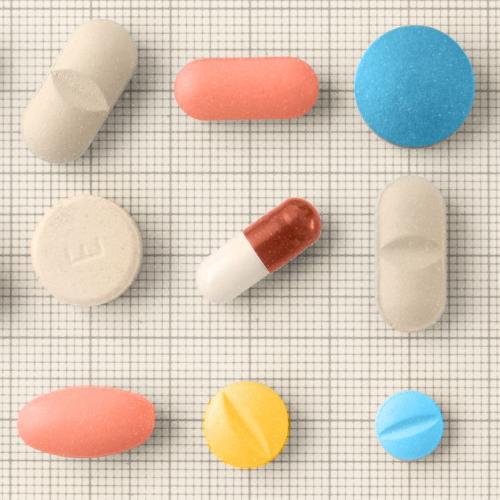
The medical community has been aware of the placebo effect the phenomenon in which a nontherapeutic treatment (like a sham pill) improves a patients physical condition for centuries. But Ted Kaptchuk, a professor of medicine at Harvard Medical School ... was tired of letting the people in his studies think they were taking a real therapy and then watching what happened. Instead, he wondered, what if he was honest? In 2009 the universitys teaching hospital ... launched the first open-label placebo, or so-called honest placebo, trial to date, starting with people who had [irritable bowel syndrome, or] IBS. Nearly twice as many people in the trial who knowingly received placebo pills reported experiencing adequate symptom relief, compared with the people who received no treatment. [Patients] taking the placebo also doubled their rates of improvement to a point that was about equal to the effects of two [common] IBS medications. Researchers are learning that placebo has nuance too. For instance, the effect appears to be stronger if people are told a medication is hard to get or expensive, and color may also matter, with people responding better to blue pills as sedatives and white pills for pain. More important to Kaptchuk than understanding why honest placebos work is figuring out how the gain in scientific knowledge could translate into clinical practice. Placebo has generally been denigrated in medicine, but I always wanted to figure out ways to ethically harness it, he says.
Note: A 2009 Scientific American article describes how the placebo effect reduced the size of tumors. For more along these lines, see concise summaries of deeply revealing health news articles from reliable major media sources.
The Newborn Genetic Screening test is required in all 50 states. Nearly every baby born in the United States gets a heel prick shortly after birth. Their newborn blood fills six spots on a special filter paper card. It is used to test baby for dozens of congenital disorders. Some states destroy the blood spots after a year, 12 states store them for at least 21 years. California, however, is one of a handful of states that stores the remaining blood spots for research indefinitely in a state-run biobank. The child's leftover blood spots become property of the state and may be sold to outside researchers without the parent's knowledge or consent. "I just didn't realize there was a repository of every baby born in the state. It's like fingerprints," new mom Soniya Sapre responded. In California ... you do have the right to ask the biobank to destroy the leftovers after the fact, though the agency's website states it "may not be able to comply with your request." You also have the right to find out if your child's blood spots have been used for research, but you would have to know they were being used in the first place and we've discovered that most parents don't. But researchers with the California Genetic Disease Screening Program aren't the only ones with access to samples stored in the biobank. Blood spots are given to outside researchers for $20 to $40 per spot. According to biobank records, the program sold about 16,000 blood spots over the past five years, totaling a little more than $700,000.
Note: For more along these lines, see concise summaries of deeply revealing news articles on government corruption and the disappearance of privacy.
MDMA - the active ingredient in the banned street drug ecstasy - is safe and enhances the treatment of post-traumatic stress disorder when administered during psychotherapy, according to a new clinical trial. The US Food and Drug Administration-approved ... study included just 26 patients, all of them veterans, firefighters and police officers who developed PTSD as a result of trauma in the line of duty. PTSD ... affects about 8 million American in any given year. Continuing symptoms, including flashbacks and frightening thoughts, may lead to substance abuse, unemployment, family disruption and even suicide. Up to 72% of veterans who receive psychotherapy retain their PTSD diagnosis and frequently drop out of their treatment programs. "We only included people who had received prior treatment but still had clinically significant PTSD," [Dr. Michael C. Mithoefer, lead author of the study] said. Participants received ... about 13 hours of non-drug psychotherapy plus two eight-hour sessions of MDMA-assisted psychotherapy. Participants were randomly assigned to receive MDMA (orally) in one dose of either 30, 75 or 125 milligrams for each of the two MDMA-assisted psychotherapy sessions. One month after the second MDMA session, 68% of patients in the two higher-dose groups no longer qualified for a diagnosis of PTSD. One year later, 67% of all participants no longer qualified for a diagnosis of PTSD. Those participants who still met the criteria for PTSD experienced a reduction in symptoms, the researchers noted.
Note: Watch an engaging interview with one of the participants of the study at the link above. Read more about how MDMA has been found to be effective for treating PTSD in a therapeutic context. Articles like this suggest that the healing potentials of mind-altering drugs are gaining mainstream scientific credibility.
In January 1993, David Reynard sued the NEC America Company, claiming that his wifes NEC phone caused her lethal brain tumor. After Reynard appeared on national TV, the story went viral. A week later, [Cellular Telecommunications and Internet Association president Tom] Wheeler announced that his industry would pay for a comprehensive research program. Cell phones were already safe, Wheeler told reporters; the new research would simply re-validate the findings of the existing studies. George Carlo seemed like a good bet to fulfill Wheelers mission. In 1995, Carlo began directing the industry-financed Wireless Technology Research project (WTR), whose eventual budget of $28.5 million made it the best-funded investigation of cell-phone safety to date. He and Wheeler would eventually clash bitterly over the ... findings, which Carlo presented to wireless-industry leaders on February 9, 1999. By that date, the WTR had commissioned more than 50 original studies and reviewed many more. Those studies raised serious questions about cell-phone safety. A livid Tom Wheeler began publicly trashing Carlo to the media. Wheelers tactics succeeded in dousing the controversy. In the years to come, the WTRs cautionary findings would be replicated by numerous other scientists ... leading the World Health Organization in 2011 to classify cell-phone radiation as a possible human carcinogen and the governments of Great Britain, France, and Israel to issue strong warnings on cell-phone use by children.
Note: Read the complete article above to learn how far the wireless industry has gone to hide the dangers of its products from the public. Also worthy of attention is a Harvard study titled "How the Federal Communications Commission Is Dominated by the Industries It Presumably Regulates". For more along these lines, see concise summaries of deeply revealing news articles on the risks and dangers of wireless technologies.
As tens of thousands of Americans die from prescription opioid overdoses each year, an exclusive analysis by CNN and researchers at Harvard University found that opioid manufacturers are paying physicians huge sums of money - and the more opioids a doctor prescribes, the more money he or she makes. The CNN/Harvard analysis looked at 2014 and 2015, during which time more than 811,000 doctors wrote prescriptions to Medicare patients. Of those, nearly half wrote at least one prescription for opioids. Fifty-four percent of those doctors - more than 200,000 physicians - received a payment from pharmaceutical companies that make opioids. Among doctors in the top 25th percentile of opioid prescribers by volume, 72% received payments. Among those in the top fifth percentile, 84% received payments. Among the very biggest prescribers ... 95% received payments. On average, doctors whose opioid prescription volume ranked among the top 5% nationally received twice as much money from the opioid manufacturers, compared with doctors whose prescription volume was in the median. Pharmaceutical company payments to doctors are not unique to opioids. Drug companies pay doctors billions of dollars for various services. In 2015, 48% of physicians received some pharmaceutical payment. The CNN and Harvard findings are in line with other studies suggesting that money from drug companies does influence a doctor's prescribing habits.
Note: From 1999 to 2015, over 183,000 people died from prescription opioid overdoses in the US. A CBS article titled, "Ex-DEA agent: Opioid crisis fueled by drug industry and Congress" describes major regulatory failures that contributed to this crisis. For more along these lines, see concise summaries of deeply revealing Big Pharma corruption news articles from reliable major media sources.
For decades, Don Anderson of Seattle has been taking the same drug to help control the temporary bouts of immobility and muscle weakness caused by a rare and frightening genetic illness called periodic paralysis. The drug Anderson has been taking all these years was originally approved in 1958 and used primarily to treat the eye disease glaucoma under the brand name Daranide. The price has been on a roller coaster in recent years zooming from a list price of $50 for a bottle of 100 pills in the early 2000s up to $13,650 in 2015, then plummeting back down to free, before skyrocketing back up to $15,001 after a new company, Strongbridge Biopharma, acquired the drug and relaunched it this spring. The zigzagging trajectory of the price of Daranide, now known as Keveyis, shows just how much freedom drug companies have in pricing therapies and what a big business opportunity selling extremely-rare-disease drugs has become. In 2016, after The Washington Post asked questions about the high price of the drug, Sun Pharmaceutical said it would give the drug away free. Late last year, Sun agreed to sell Keveyis to a biotech company, Strongbridge Biopharma. In April, Strongbridge relaunched the drug. In August, it jacked the list price ... to $15,001 for a bottle of 100 pills. In a PowerPoint presentation for investors, Strongbridge Biopharma estimated that the annual price of treatment for the drug, Keveyis, would range from $109,500 to $219,000.
Note: For more along these lines, see concise summaries of deeply revealing Big Pharma corruption news articles from reliable major media sources.
A recently-published Harvard University meta-analysis funded by the National Institutes of Health (NIH) has concluded that children who live in areas with highly fluoridated water have significantly lower IQ scores than those who live in low fluoride areas. The [32-page report] said: "A recent report from the U.S. National Research Council (NRC 2006) concluded that adverse effects of high fluoride concentrations in drinking water may be of concern. Fluoride may cause neurotoxicity in laboratory animals, including effects on learning and memory." Findings from our meta-analyses of 27 studies published over 22 years suggest an inverse association between high fluoride exposure and childrens intelligence. Fluoride may be a developmental neurotoxicant that affects brain development at exposures much below those that can cause toxicity in adults." Despite the evidence against it, fluoride is still added to 70 percent of U.S. public drinking water supplies. What is perhaps most surprising is that the harmful effects of fluoride have been known by conventional medical organizations for over half a century. For example, the Journal of the American Medical Association (JAMA) stated in their Sept. 18, 1943 issue that fluorides are general protoplasmic poisons. And, an editorial published in the Journal of the American Dental Association on Oct. 1, 1944, stated: "Drinking water containing as little as 1.2 ppm fluoride will cause developmental disturbances. The potentialities for harm outweigh those for good."
Note: You can find the original analysis on the Harvard website at this link. Another study with similar results is available here. For more along these lines, see concise summaries of deeply revealing health news articles from reliable major media sources.
Dont want to get a vaccine for yourself or your child? Prepare to face the consequences. In the last month, a Detroit mother went to jail because she refused to vaccinate her child. Fifty people lost their jobs at a group of Midwestern hospitals and clinics because they declined a flu shot. And an Oregon university has blocked students from registering for classes unless they have a meningitis shot. All states have some vaccine requirements for public educationno shots, no school. All but three states - Mississippi, West Virginia and California - allow parents to send their child to school without vaccines based on some kind of non-medical exemption. In 2013, more than 90 percent of American children had been vaccinated for chicken pox, hepatitis B, measles, mumps and rubella, according to the Centers for Disease Control and Prevention. However, a significant number of people ... hesitate when a doctor offers them a vaccine. A new study released on Monday found that 27 percent of the parents surveyed could be classified as moderately or highly hesitant around vaccines. That same study found these people may be particularly concerned with the purity of vaccines. Increasingly, parents who choose not to vaccinate are warned of harsh penalties. People who choose not to vaccinate themselves may also face serious consequences. Some states have laws guiding which vaccinations people working at hospitals or other health care facilities must have; more often, requirements may be enshrined in a facility's policy, not in law.
Note: Watch an excellent video of Emmy award winning reporter Sharyl Attkisson exposing how the government fired an vaccine expert who found links to autism. For more along these lines, see concise summaries of deeply revealing vaccine controversy news articles from reliable major media sources.
Why do Americans continue to pay the highest prices for medicine in the world? Lawmakers have sculpted specific policies, often not found in many other nations, that boost pharmaceutical industry profits. Meanwhile, the drug industry has spent $61 million on state elections and nearly $67 million on federal elections since 2010. Both parties have made pivotal decisions ... that have kept drug prices high. Insurance companies and pharmacy benefit managers, or PBMs, across the U.S., face at least nine class-action lawsuits alleging they attached arbitrary premiums to the prices of often less-expensive, generic prescription drugs. The plaintiffs also accuse the PBMs and insurers of imposing so-called gag clauses on pharmacies to keep pharmacists from telling consumers that they could save money by paying out of pocket. The system could be denying customers $120 billion in discounts and rebates. Should drugs developed at taxpayer expense be sold to Americans at sky high prices? In the past, the federal government passed a rule saying no but that rule was rescinded in 1995. If Americans were allowed to import lower-priced drugs from places like Canada, it would save government agencies alone $6 billion. But ... Americans are still prohibited from engaging in such importation. The federal government could [also] save billions of dollars a year by having Medicare use its huge market power to negotiate - or require - lower drug prices for the program's beneficiaries.
Note: For more along these lines, see concise summaries of deeply revealing news articles on Big Pharma profiteering and health.
Decades later, it's hard to grasp what the federal government did to hundreds of black men in rural Alabama. For 40 years starting in 1932, medical workers in the segregated South withheld treatment for unsuspecting men infected with a sexually transmitted disease simply so doctors could track the ravages of the horrid illness and dissect their bodies afterward. Finally exposed in 1972, the study ended and the men sued, resulting in a $9 million settlement. Twenty years ago this May, then President Bill Clinton apologized for the U.S. government. But it did not mark the end of the study's ugly legacy. Relatives of the men still struggle with the stigma of being linked to the experiment, what's commonly known as the "Tuskegee Syphilis Study." In 1929, government doctors ... recruited 600 black men into a health program with the promise of free medical checks, free food, free transportation and burial insurance. Health workers told syphilitic fathers, grandfathers, sons, brothers and uncles only that they had "bad blood." None of the men was asked to consent to take part in a medical study, [or] told that "bad blood" actually was a euphemism for syphilis. Instead, doctors purposely hid the study's purpose from the men, subjecting them ... to painful spinal taps and blood tests. Medical workers periodically provided men with pills and tonic that made them believe they were being treated, but they weren't. And doctors never provided them with penicillin after it became the standard treatment for syphilis in the mid-1940s.
Note: The "Tuskegee Syphilis Study" is one of many known cases of humans being used as guinea pigs by corrupt scientists.
The companies responsible for programming your phones are working hard to get you and your family to feel the need to check in constantly. Some programmers call it brain hacking and the tech world would probably prefer you didnt hear about it. Ramsay Brown studied neuroscience before co-founding Dopamine Labs. The company is named after the dopamine molecule in our brains that aids in the creation of desire and pleasure. Brown and his colleagues write computer code for apps ... designed to provoke a neurological response. The computer code he creates finds the best moment to give you ... rewards, which have no actual value, but Brown says trigger your brain to make you want more. When Brown says experiments, hes talking generally about the millions of computer calculations being used every moment by his company and others use to constantly tweak your online experience. "Youre part of a controlled set of experiments that are happening in real time across you and millions of other people," [said Brown]. "Youre guinea pigs ... pushing the button and sometimes getting the likes. And theyre doing this to keep you in there. You dont pay for Facebook. Advertisers pay for Facebook. You get to use it for free because your eyeballs are whats being sold there." While Brown is tapping into the power of dopamine, psychologist Larry Rosen and his team at California State University ... are researching the effect technology has on our anxiety levels. Their research suggests our phones are keeping us in a continual state of anxiety in which the only antidote is the phone.
Note: This new form of "brain hacking" adds to a vast arsenal of behavior modification technologies developed by government and industry. For more along these lines, see concise summaries of deeply revealing news articles on mind control and the disappearance of privacy.
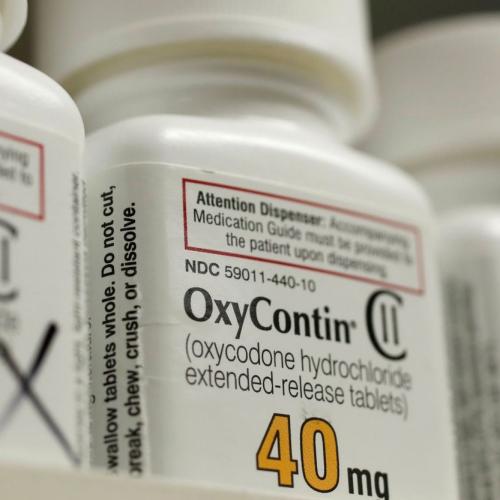
To combat an escalating opioid epidemic, the Drug Enforcement Administration trained its sights in 2011 on Mallinckrodt Pharmaceuticals, one of the nations largest manufacturers of the highly addictive generic painkiller oxycodone. It was the first time the DEA had targeted a manufacturer of opioids for alleged violations of laws designed to prevent diversion of legal narcotics to the black market. Ultimately, the DEA and federal prosecutors would contend that the company ignored its responsibility to report suspicious orders as 500 million of its pills ended up in Florida between 2008 and 2012. Investigators alleged in internal documents that the companys lack of due diligence could have resulted in nearly 44,000 federal violations and exposed it to $2.3 billion in fines. But six years later ... the government has taken no legal action against Mallinckrodt. Instead, the company has reached a tentative settlement. Under the proposal, which remains confidential, Mallinckrodt would agree to pay a $35 million fine and admit no wrongdoing. Mallinckrodts response was that everyone knew what was going on in Florida but they had no duty to report it, according to an internal summary of the case prepared by federal prosecutors. The Post reported in October that the DEAs civil and administrative enforcement efforts against the mammoth wholesale distributors that deliver painkillers to pharmacies stalled in the face of a stepped-up lobbying campaign by the drug industry.
Note: The city of Everett, Washington is currently suing Purdue Pharma, maker of the opioid pain medication OxyContin, for the company's alleged role in the diversion of its pills to black market buyers. For other reliable information on pharmaceutical involvement in the huge increase in opioid deaths, see Dr. Mercola's excellent article. For more along these lines, see concise summaries of deeply revealing pharmaceutical corruption news articles from reliable major media sources.
For years, state health officials kept secret a set of guidelines meant to inform the public about the risks associated with cell phone use and the best practices to avoid potential harm. On Thursday, the California Department of Public Health released the guidelines, which advise cell phone users to keep the devices away from their bodies, keep calls short and to use the speaker phone on lengthy calls. The guidelines were released only after a Sacramento Superior Court judge indicated she would order them to be disclosed, and after The Chronicle told the state it was publishing a news story about the case. The two-page suggestions ... are based on studies that suggest that long-term cell phone use may increase the risk of brain cancer and other health problems, according to the document, which includes a stamp saying it is a draft and not for public release. The guidelines detail the effect of electromagnetic fields, or EMFs, put out by cell phones. Cell phones, according to the guidelines, release about the same relatively weak EMFs as microwave ovens, but because they are used more frequently and kept close to the body, they can affect nearby cells and tissues. The guidelines suggest limiting cell phone use by children and teens to texting, important calls and emergencies. People can lower their exposure by using speaker phone or a headset and not sleeping with the device or carrying it in a pocket unless it is turned off.
Note: The medical community has long been aware that cell phone use negatively impacts human health. Despite the American Academy of Pediatrics urging the US to reassess cell phone safety standards for children in 2012, the Centers for Disease Control backed away from warning the public about the risks of cell phone radiation to kids. For more along these lines, see concise summaries of deeply revealing news articles on cell phone dangers from reliable major media sources.
Extremely high radiation levels have been recorded inside a damaged reactor at the Fukushima Daiichi nuclear power station, almost six years after the plant suffered a triple meltdown. Tokyo Electric Power (Tepco) said atmospheric readings as high as 530 sieverts an hour had been recorded inside the containment vessel of reactor No 2, one of three reactors that experienced a meltdown when the plant was crippled. Even if a 30-percent margin of error is taken into account, the recent reading, described by some experts as unimaginable, is far higher than the previous record of 73 sieverts an hour detected by sensors in 2012. A single dose of one sievert is enough to cause radiation sickness and nausea; 5 sieverts would kill half those exposed to it within a month, and a single dose of 10 sieverts would prove fatal within weeks. Quantities of melted fuel are believed to have accumulated at the bottom of the damaged reactors containment vessels, but dangerously high radiation has prevented engineers from accurately gauging the state of the fuel deposits. The extraordinary radiation readings highlight the scale of the task confronting thousands of workers, as pressure builds on Tepco to begin decommissioning the plant a process that is expected to take about four decades. In December, the government said the estimated cost of decommissioning the plant and decontaminating the surrounding area ... had risen to 21.5tn yen (150bn), nearly double an estimate released in 2013.
Note: For more along these lines, see concise summaries of deeply revealing nuclear power news articles from reliable major media sources.
A wide-ranging investigation into generic drug prices took its most significant turn yet on Thursday, as state attorneys general accused two industry leaders, Teva Pharmaceuticals and Mylan, and four smaller companies of engaging in brazen price-fixing schemes - and promised that more charges were coming. A civil complaint filed by 20 states accuses the companies of conspiring to artificially inflate prices on an antibiotic and a diabetes drug, with executives coordinating through informal industry gatherings and personal calls and text messages. Officials said the case was a small example of broader problems in the drug business. We believe that this is just the tip of the iceberg, George C. Jepsen, Connecticuts attorney general, whose office started the inquiry that led to the charges, said. I stress that our investigation is continuing, and it goes way beyond the two drugs in this lawsuit, and it involves many more companies than are in this lawsuit. The complaint on Thursday describes a cozy industry culture defined by regular dinners and social outings, and argues that those events often cross the line to violate antitrust rules. Generic drug makers hoping to begin selling a new drug first seek out rivals, the suit says, in hopes of reaching an agreement on how to maintain market share and avoid competing on price. These agreements had the effect of artificially maintaining high prices for a large number of generic drugs and creating an appearance of competition when in fact none existed, the lawsuit says.
Note: A separate anti-trust investigation into Mylan was recently launched in New York over price-fixing on public school EpiPen contracts. For more along these lines, see concise summaries of deeply revealing Big Pharma corruption news articles from reliable major media sources.
A former top Drug Enforcement Administration (DEA) official has accused Congress of putting pharmaceutical company profits ahead of public health in the battle to combat the USs prescription opioid epidemic. Joseph Rannazzisi, head of the DEA office responsible for preventing prescription medicine abuse until last year, said drug companies and their lobbyists have a stranglehold on Congress to protect a $9bn a year trade in opioid painkillers claiming the lives of nearly 19,000 people a year. Rannazzisi ... said the drug industry engineered recent legislation limiting the DEAs powers to act against pharmacies endangering lives by dispensing disproportionately large numbers of opioids. He also accused lobbyists ... of whipping up opposition to new guidelines for doctors intended to reduce the prescribing of the painkillers. Charges that Congress is too beholden to pharmaceutical companies have been levelled for years. But ... the influence on opioid policies is particularly disturbing because so many lives are being lost. Industry groups have spent hundreds of millions of dollars in lobbying to stave off measures to reduce prescriptions and therefore sales of opioid painkillers. Among the most influential drug industry groups is the Pain Care Forum, co-founded by a top executive of Purdue Pharma the manufacturer of the opioid which unleashed the addiction epidemic, OxyContin. It spent $740m lobbying Congress and state legislatures over the past decade.
Note: See also a Washington Post article for more. For more, see concise summaries of deeply revealing news articles on government corruption and Big Pharma profiteering.
Genetic modification in the United States and Canada has not accelerated increases in crop yields or led to an overall reduction in the use of chemical pesticides. The promise of genetic modification was twofold: By making crops immune to the effects of weedkillers and inherently resistant to many pests, they would grow so robustly that they would become indispensable to feeding the worlds growing population, while also requiring fewer applications of sprayed pesticides. Twenty years ago, Europe largely rejected genetic modification at the same time the United States and Canada were embracing it. Comparing results on the two continents ... shows how the technology has fallen short of the promise. The United States and Canada have gained no discernible advantage in yields - food per acre - when measured against Western Europe. Also, a recent National Academy of Sciences report found that there was little evidence that the introduction of genetically modified crops in the United States had led to yield gains beyond those seen in conventional crops. At the same time, herbicide use has increased in the United States. And the United States has fallen behind Europes biggest producer, France, in reducing the overall use of pesticides, which includes both herbicides and insecticides. Pesticides are toxic by design ... and have been linked to developmental delays and cancer. The same companies make and sell both the genetically modified plants and the poisons.
Note: Explore over 40 scientific studies that have demonstrated the health dangers of GM foods. For more along these lines, see concise summaries of deeply revealing news articles on food system corruption and the GMO controversy.
Medical regulators pledge that patient protection is their central mission. As part of that focus, their websites provide information to the public about doctors. But in most states, patients will have a difficult time finding out if their doctors have been disciplined for sexual abuse or other violations. No state provides complete and accurate information on every doctor. Some obstacles to that are intentional. They are the result of state laws that tie regulators hands, agreements negotiated with doctors attorneys, or concerns about harming a doctors practice. Maryland investigated Dr. Joshua R. Mitchell III in 2005 after a complaint that he had sexually violated a patient. The board learned that the Baltimore police sex-crimes unit had investigated a similar complaint from another patient. The medical board wrapped up its 2005 investigation with a private letter advising Mitchell to offer a chaperone during breast and pelvic exams. Then in January 2010, a patient reported Mitchell raped her. The boards website didnt provide any information to the public until May 2010. Illinois and Wyoming post only summaries of disciplinary actions, which may not detail violations. Arkansas and both of Oklahomas boards require the public to file requests for disciplinary orders, and Oklahoma requires a fee. In contrast: Maine not only posts orders but provides a phone number for patients to find out if non-disciplinary action has been taken against a doctor.
Note: For more along these lines, see concise summaries of deeply revealing news articles on sexual abuse scandals and health.
Physician influence can be bought for as little as a $20 meal, UCSF researchers have found. A study published Monday in JAMA Internal Medicine ... found that doctors who received just one meal averaging $20 were up to twice as likely to prescribe brand-name drugs being promoted than doctors who did not receive any free food. Gifts from pharmaceutical companies to doctors ... have come under scrutiny in recent years for concerns that the money spent by drugmakers directly influences what physicians write on their prescriptions pads. Some doctors deny theyre influenced by money, but a growing number of studies show that financial ties can affect their professional behavior. The UCSF researchers looked at ... the routine briefings many doctors and their staff receive from drug reps during lunches in their offices. The study found that the effect increased as doctors got more meals. Those who received multiple meals were up to three times as likely to prescribe the promoted brand-name drug. Higher-cost meals were associated with greater influence. Doctors who received four or more meals to promote Allergans Bystolic to treat hypertension prescribed the drug at 5.4 times the rate of physicians who received no meals. For Pfizers depression drug Pristiq, that rate was 3.4 times higher. UCSF researchers said that their studies show the buying power of drug makers decreases the use of cheaper, generic drugs and raises costs for patients as well as the health care system.
Note: For more along these lines, see concise summaries of deeply revealing big Pharma profiteering news articles from reliable major media sources.
Important Note: Explore our full index to revealing excerpts of key major media news articles on several dozen engaging topics. And don't miss amazing excerpts from 20 of the most revealing news articles ever published.