














































Health News Articles
Below are key excerpts of revealing news articles on health from reliable news media sources. If any link fails to function, a paywall blocks full access, or the article is no longer available, try these digital tools.
For further exploration, delve into our comprehensive Health and Food Corruption Information Center.

We have detonated the global economy to pursue a lockdown experiment that may not have worked, according to the latest evidence. World-class studies that suggest lockdown did not alter the pandemic’s course are mysteriously vanishing into internet obscurity on first contact with the official narrative. This is a scandal so overwhelming that there is only one good place to start: the evidence as it stands. In accordance with pro-lockdown theory, if stay at home orders worked, you might have expected to see daily deaths spike 3-4 weeks after such measures were implemented. But, in Britain, infections may have peaked a week before lockdown, according to Prof Carl Heneghan of Oxford University, with daily deaths in hospitals plateauing a fortnight after it was introduced. We are not an anomaly: peak dates across Europe also seem to confound the official theory. Don’t just take my word for it. A University of the East Anglia study posits that Europe's “stay-at-home policies” were not effective. A JP Morgan investigation suggests the virus “likely has its own dynamics” which are “unrelated to often inconsistent lockdown measures”. Nobel prize-winning bio-physicist Michael Levitt ... has claimed, sensationally, that the modelling that justified lockdown made the fatally incorrect assumption that Covid-19’s spread is continuously exponential.
Note: For more along these lines, see concise summaries of deeply revealing news articles on the coronavirus from reliable major media sources.
The number of recommended vaccines was only 23 doses of seven vaccines in 1983. By 2017, the CDCs recommended number skyrocketed to 69 doses of 16 vaccines – 50 doses given before age 6. Vaccination is not appropriate for every individual due to ones genetic disposition, autoimmune deficiency, allergy or other circumstance. Medical professionals would never claim that because a certain drug or therapy was approved for most people, everyone should be subject to it – but with vaccine injury, the clinical evidence does not seem to apply. Despite ... specific warnings on each vaccine insert, there is an unwillingness to acknowledge the risk for some individuals. While some claim vaccine injuries are rare, the CDC-funded Harvard Pilgrim Projects [found] that less than 1 percent are ever reported to VAERS, the Vaccine Adverse Events Reporting System. Taxpayers not liability-free pharmaceutical companies have paid patients $4 billion for their injuries or death through the Vaccine Injury Compensation Program since 1988. Most families that have experiences with vaccine reactions were never notified beforehand of [this] program. Certain ingredients in vaccinations, including chemicals, human, animal, and insect DNA and RNA, are abhorrent to some for religious or ethical reasons. Mandated vaccination should not force someone to compromise their beliefs. The American Medical Associations code of ethics affirms the right to both religious and philosophical exceptions for physicians themselves to not be vaccinated. The same standard should apply to their patients.
Note: See the highly revealing 6-page report on the US government's "Health Information Technology" website that states, "Adverse events from drugs and vaccines are common, but underreported. ... Fewer than 1% of vaccine adverse events are reported." A concise summary of this report can be found here. More valuable information is available here. For even more along these lines, see concise summaries of deeply revealing news articles on vaccines from reliable major media sources. Explore also the best website calling for responsibility in vaccination.
A monkey virus that contaminated polio vaccine given to tens of millions of Americans in the 1950s and '60s may be causing rare human cancers. For four decades, government officials have insisted that there is no evidence the simian virus called SV40 is harmful to humans. But in recent years, dozens of scientific studies have found the virus in a steadily increasing number of rare brain, bone and lung-related tumors - the same malignant cancer SV40 causes in lab animals. Even more troubling, the virus has been detected in tumors removed from people never inoculated with the contaminated vaccine, leading some to worry that those infected by the vaccine might be spreading SV40. By the end of 1996, dozens of scientists reported finding SV40 in a variety of bone cancers and a wide range of brain cancers, which had risen 30 percent over the previous 20 years. Then, Italian researchers reported finding SV40 in 45 percent of the seminal fluid samples and 23 percent of the blood samples they had taken from healthy donors. That meant SV40 could have been spreading through sexual activity, from mother to child, or by other means, which could explain how those never inoculated with the contaminated vaccine ... were being infected. Dr. James Goedert, the chief of the NCI's Viral Epidemiology Branch ... acknowledged that research is needed to resolve the question of whether SV40 is prevalent in the human population and, if so, how it might be spreading. But Goedert said he has no plans for such studies.
Note: A follow-up article one week later is titled “New documents show the monkey virus is present in more recent polio vaccine.” This BBC article further confirms these claims. And this video suggests that early vaccine creators knew they could cause cancer and that HIV may have been brought into the US through vaccines. For more along these lines, see concise summaries of deeply revealing news articles on vaccines from reliable major media sources.
The afternoon after Kelly Kerns' 2-month-old daughter Kaylee got several vaccines was "living hell," with the child screaming and arching her back, her mother said. 'I kept telling myself everybody gets vaccinated — this is OK,' she said. When Kaylee was 18 months old, her white-blonde hair began falling out and she stopped talking. Meanwhile, Kerns had twin boys — Andrew and Daniel. When they were 15 months old, they received three vaccines. A week later, they stopped talking. All three children have since been diagnosed as autistic. Flu vaccine sold in multidose vials still contains the preservative, and the government urges flu shots for pregnant women and young children even though not enough thimerosal-free ones are available, critics say. Finding answers is tough because autism, a little-understood developmental disorder, often is diagnosed at the very ages when children get vaccines. The stories are remarkably similar: A seemingly normal child gets a shot and days, weeks or months later, withdraws from the world, stops speaking, becomes upset at random stimulation such as a doorbell, and adopts compulsive behaviors like head-banging.
Note: MSNBC appears to have removed this article, though you can still find it on this webpage. Thimerosal has now been removed from childhood vaccines, however the government and drug industry continue to deny that there is any link between mercury in vaccines and autism. And mercury is still commonly used in flu and other vaccines in the U.S. A document hidden by drug companies for two years all but proves that a commonly used vaccine is responsible for the deaths of countless toddlers within 10 days of receiving the vaccine. This document is discussed on the US National Institutes of Health website at this link. An article going into depth on this vital information is available here.
Hundreds of articles in medical journals claiming to be written by academics or doctors have been penned by ghostwriters in the pay of drug companies, an Observer inquiry reveals. The journals, bibles of the profession, have huge influence on which drugs doctors prescribe and the treatment hospitals provide. But The Observer has uncovered evidence that many articles written by so-called independent academics may have been penned by writers working for agencies which receive huge sums from drug companies to plug their products. Estimates suggest that almost half of all articles published in journals are by ghostwriters. While doctors who have put their names to the papers can be paid handsomely for 'lending' their reputations, the ghostwriters remain hidden. In the United States a legal case brought against drug firm Pfizer turned up internal company documents showing that it employed a New York medical writing agency. One document analyses articles about the anti-depressant Zoloft. Some of the articles lacked only one thing: a doctor's name. In the margin the agency had put the initials TBD, which Healy assumes means 'to be determined'. Dr Richard Smith, editor of the British Journal of Medicine, admitted ghostwriting was a 'very big problem'. 'We are being hoodwinked by the drug companies. The articles come in with doctors' names on them and we often find some of them have little or no idea about what they have written,' he said.
Note: For more along these lines, see concise summaries of deeply revealing news articles on corruption in science from reliable major media sources.
Two weeks ago, with no outcomes data on COVID-19 booster shots for 5-to-11-year-olds, the Centers for Disease Control (CDC) vigorously recommended the booster for all 24 million American children in that age group. The CDC cited a small Pfizer study of 140 children that showed boosters elevated their antibody levels–an outcome known to be transitory. When that study concluded, a Pfizer spokesperson said it did not determine the efficacy of the booster in the 5-to-11-year-olds. But that didn't matter to the CDC. Seemingly hoping for a different answer, the agency put the matter before its own kangaroo court of curated experts, the Advisory Committee on Immunization Practices (ACIP). Committee members ... emphasized the importance of a universal booster message that applies to all age groups. Most remarkably, it didn't seem to matter to the CDC that 75.2 percent of children under age 11 already have natural immunity, according to a CDC study. Natural immunity is certainly much more prevalent today, given the ubiquity of the Omicron variant since February. CDC data from New York and California demonstrated that natural immunity was 2.8 times more effective in preventing hospitalization and 3.3 to 4.7 times more effective in preventing COVID infection compared to vaccination during the Delta wave. These findings are consistent with dozens of other clinical studies. Yet natural immunity has consistently and inexplicably been dismissed by the medical establishment.
Note: For more along these lines, see concise summaries of deeply revealing news articles on coronavirus vaccines from reliable major media sources.
Sweden's decision to eschew lockdown and leave pubs, restaurants, shopping centres and primary schools open throughout the pandemic generated furious discussion internationally. Millions of people across the world have been confined to their homes, watched businesses go under, and struggled to stay on top of their studies amid wave after wave of restrictions to prevent the spread of coronavirus. But for some 10 million Swedes, the eighteen months since the first local Covid-19 case was registered last February have been largely unremarkable. That is not to say the virus has not taken its toll - nearly 15,000 people have died in total, around 1,450 per million. But that death rate is lower than the average for the European Union as a whole (1,684), and well below those of France, Spain, Italy and the UK. Some now concede Sweden has not become the cautionary tale many predicted. "Many times I would have thought that the situation would have gone a different way, but it worked for Sweden," said Samir Bhatt, professor of Public Health at the University of Copenhagen, and one of the team at Imperial College who pushed the UK's lockdown strategy. “They achieved infection control; they managed to keep infections relatively low and they didn't have any health care collapse.” The real benefits of Sweden’s radical policy, however, can be seen in the economy, the psychological impact, and in schools. In the end, GDP shrank by just 2.8 per cent, significantly lower than the EU average of 6 per cent.
Note: For more along these lines, see concise summaries of deeply revealing news articles on the coronavirus from reliable major media sources.
Millions of Americans have lost their jobs. They've watched helplessly as their meager savings dwindled away, as they were confined to their homes–prohibited from interacting with friends, attending church, temple or music and sporting events due to restrictions enacted in response to the Covid-19 pandemic. This resulted in a profound impact on the mental health and emotional well-being of people–leading to a significant increase in cases of anxiety, depression and deaths by suicide. The CDC conducted a survey of 5,412 people between June 24 and 30 and the collected data on suicides is alarming. Roughly 25% percent of young adults between the ages of 18 and 24 say they've considered suicide because of the pandemic. About 30.9% of the respondents said that they "had symptoms of anxiety or depression" and about 26.3% reported trauma and stress-related disorders caused by the outbreak. Over 13% said that they have used alcohol, prescription and/or illegal drugs to deal with their pandemic-induced stress and anxiety. The amount of Americans reporting anxiety symptoms is triple the number of this time last year. The CDC reported that 11% of adults surveyed had seriously considered suicide in the past 30 days. The study showed "19% of Hispanics reported suicidal ideation" and "15% of Blacks reported suicidal thoughts." As it relates to young adults, Dr. Robert Redfield, director of the CDC, said, "We're seeing, sadly, far greater suicides now than we are deaths from [Covid-19]."
Note: What this article glaringly failed to mention is that the large majority of these tragic problems are not caused by the virus, but rather by the lockdown policies. For more along these lines, see concise summaries of deeply revealing news articles on the coronavirus from reliable major media sources.
Last year, the National Institute for Allergy and Infectious Diseases, the organization led by Dr. Fauci, funded scientists at the Wuhan Institute of Virology and other institutions for work on gain-of-function research on bat coronaviruses. Many scientists have criticized gain of function research, which involves manipulating viruses in the lab to explore their potential for infecting humans, because it creates a risk of starting a pandemic from accidental release. The work entailed risks that worried even seasoned researchers. More than 200 scientists called for the work to be halted. Dr. Fauci played an important role in promoting the work. In 2019, with the backing of NIAID, the National Institutes of Health committed $3.7 million over six years for research that included some gain-of-function work. The program followed another $3.7 million, 5-year project for collecting and studying bat coronaviruses ... bringing the total to $7.4 million. [One] phase of the project [included] gain-of-function research for the purpose of understanding how bat coronaviruses could mutate to attack humans. According to Richard Ebright, an infectious disease expert at Rutgers University, the project ... would enhance the ability of bat coronavirus to infect human cells and laboratory animals using techniques of genetic engineering. SARS-CoV-2, the virus now causing a global pandemic, is believed to have originated in bats. U.S. intelligence, after originally asserting that the coronavirus had occurred naturally, conceded last month that the pandemic may have originated in a leak from the Wuhan lab.
Note: Newsweek reported that in 2017, Anthony Fauci predicted a "surprise outbreak" during Trump's presidency. How could he have known this? This Washington Post article has the title "State Department cables warned of safety issues at Wuhan lab studying bat coronaviruses." For more along these lines, see concise summaries of deeply revealing news articles on government corruption and the coronavirus pandemic from reliable major media sources.
In January 2018, the U.S. Embassy in Beijing took the unusual step of repeatedly sending U.S. science diplomats to the Wuhan Institute of Virology (WIV), which had in 2015 become Chinas first laboratory to achieve the highest level of international bioresearch safety. WIV issued a news release in English about the last of these visits. Last week, WIV erased that statement from its website, though it remains archived on the Internet. What the U.S. officials learned during their visits concerned them so much that they dispatched two diplomatic cables ... back to Washington. The cables warned about safety and management weaknesses at the WIV lab and proposed more attention and help. The first cable ... warns that the labs work on bat coronaviruses and their potential human transmission represented a risk of a new SARS-like pandemic. Most importantly, the cable states, this finding strongly suggests that SARS-like coronaviruses from bats can be transmitted to humans to cause SARS-like diseases." The Chinese government, meanwhile, has put a total lockdown on information related to the virus origins ... while suppressing any attempts to examine whether [their] lab was involved. The Shanghai lab that published the novel coronavirus genome on Jan. 11 was quickly shut down by authorities for rectification. Several of the doctors and journalists who reported on the spread early on have disappeared. The Chinese researchers at WIV were receiving assistance from the Galveston National Laboratory at the University of Texas Medical Branch and other U.S. organizations.
Note: The entire article at the link above raises vitally important questions, as does this Newsweek article titled, "Dr. Fauci Backed Controversial Wuhan Lab With Millions of U.S. Dollars for Risky Coronavirus Research." For more along these lines, see concise summaries of deeply revealing news articles on government corruption and the coronavirus pandemic from reliable major media sources.
Bill Gates ... just called for a complete and utter shutdown and quarantining of the entire American nation. Despite urging from public health experts, Gates wrote in a Washington Post opinion piece, some states and counties havent shut down completely. This is a recipe for disaster. Because people can travel freely across state lines, so can the virus. The countrys leaders need to be clear: Shutdown anywhere means shutdown everywhere. Until the case numbers start to go down ... no one can continue business as usual or relax the shutdown. He then added that the impacts of the new coronavirus could linger another 18 months or so, until a vaccine was developed. For the peons of America, work isnt an option. Its food. Its survival. The fate of a hard-earned dream shouldnt rest with a globalist billionaire whos warning of dire coronavirus consequences to come all the while making hands-over-fist coronavirus money. Its a conflict of interest. WHO didnt announce the coronavirus as a pandemic until the very day after Gates ... made a very large donation to a cause that benefits WHO. In a 2017 piece titled, Meet the worlds most powerful doctor: Bill Gates, Politico wrote: Some billionaires are satisfied with buying themselves an island. Bill Gates got a United Nations health agency. Over the past decade, the worlds richest man has become the World Health Organizations second-biggest donor, second only to the United States. This largesse gives him outsized influence over its agenda. The result, say his critics, is that Gates priorities have become the WHOs.
Very Important Note: To understand how the coronavirus is being used to exert more control over humanity, don't miss this incredibly important video focused on how Bill Gates is using fear around the coronavirus to push through his agenda to vaccinate everyone on the planet and then require a "digital certificate" to ensure they've been vaccinated. For other reliable, verifiable informing demonstrating how Gates' vaccine agenda has already harmed hundreds of thousands of children read this excellent article by Robert F. Kennedy, Jr.
A study published in JAMA Pediatrics has given new life to a long-running debate: whether adding fluoride to drinking water is a prudent way to prevent tooth decay, or a potentially toxic mistake. The research, which focused on mother-child pairs from six Canadian cities, found that high fluoride exposure during pregnancy was correlated with lower IQ scores among young children, especially boys. Based on the current evidence, it is a reasonable recommendation to tell women to reduce their fluoride intake during pregnancy, says study co-author Christine Till. The U.S. began adding fluoride to some public water supplies in the 1940s, in an effort to strengthen teeth and prevent decay, and research on it has been accumulating in the subsequent decades. At high doses, fluoride can actually damage peoples teeth, according to the World Health Organization - and some research, much of it in animals, suggests its also tied to more serious side effects, including bone cancer and cognitive impairments. In part due to that controversy, more than 300 communities in North America have voted to end fluoridation programs over the past 20 years, according to the anti-fluoride activist group Fluoride Action Network. Today, about 66% of Americans and 39% of Canadians had access to fluoridated water. Drinking an extra milligram of fluoride per day - about a liter of properly fluoridated water, plus a mug of tea (which is itself a source of fluoride) - during pregnancy translated to an average 3.66-point IQ drop for boys, the [new] study shows.
Note: Did you know that the US lowered it's recommendation for fluoride in drinking water in 2015 to "reduce the risk of Americans getting too much exposure"? Another Time magazine article states that researchers found that "exposure to high levels of fluoride from drinking water can contribute to a seven-point drop in IQ on average." For more along these lines, see concise summaries of deeply revealing news articles on health from reliable major media sources.
WiFi is having a harmful and detrimental effect on men's sperm, a new study has revealed. According to a Japanese study, further evidence has shown electromagnetic (EM) waves from WiFi devices are contributing to the declining fertility rates in developed countries. The study is believed to be the first to trial a WiFi shield to help protect sperm from the effects of electromagnetic waves. Fifty-one male patients took part in the study. Sperm samples were taken from the men and were divided into three groups, one where samples were not exposed to electromagnetic waves from the WiFi router, one group who were protected by a small WiFi shield, and the last group who were exposed to the waves. [Researcher] Kumiko Nakata ... said sperm samples from participants were placed near a pocket WiFi router similar to how a mobile phone would be carried in a man's trousers. After two hours of being exposed to electromagnetic waves, the motility rate of the shield group was 44.9 per cent and the exposed group sat at just 26.4 per cent, compared to 53.3 per cent from the group not exposed to the waves. After 24 hours, the dead sperm rate of the group not exposed was 8.4 per cent, the shield group was 18.2 per cent, and the exposed group was 23.3 per cent. Nakata says the study strongly shows electromagnetic waves are killing human sperm and that WiFi devices are a contributing factor to declining fertility.
Note: For more along these lines, see concise summaries of deeply revealing news articles on the risks and dangers of wireless technologies .
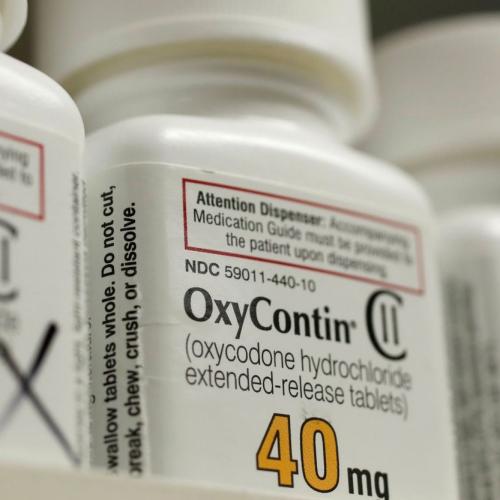
Pharmaceutical giant Purdue Pharma LP secretly pursued a plan, dubbed "Project Tango," to become "an end-to-end pain provider" by selling both opioids and drugs to treat opioid addiction, all while owners on the board - members of one of America's richest families - reaped more than $4 billion in opioid profits, according to a lawsuit newly unredacted. The suit says the company and its owners, the Sackler family ... engaged in a decade of deception to push their pharmaceuticals, namely the painkiller OxyContin, on doctors and patients, publicly denying what internal documents show they privately knew to be true: that the highly addictive drugs were resulting in overdoses and deaths. Purdue examined selling overdose antidotes, including Narcan, as "complementary" products to the same doctors to whom it sold its opioids, the lawsuit claims, and although the company maintained a ledger of doctors it suspected of inappropriate opioid prescriptions and other forms of abuse, dubbed "Region Zero," it continued to collect revenue from those doctors. The Sacklers paid themselves more than $4 billion in opioid profits between April 2008 and 2018. In 2017, there were 47,600 opioid-linked drug fatalities in the United States. The unredacted complaint also says consulting firm McKinsey & Co. played a crucial role in advising the company on how to push its product on doctors and boost its profits.
Note: Many doctors also profited from excessive prescribing of dangerous opioids. And according to a former DEA agent, Congress helped drug companies fuel the opioid epidemic. For more along these lines, see concise summaries of deeply revealing Big Pharma corruption news articles from reliable major media sources.
In order to get prescription drugs approved by the Food and Drug Administration, companies must conduct clinical trials to show that the drugs are safe and effective. But drug companies dont have direct access to human subjects, so theyve always contracted with academic researchers to conduct the trials on patients in teaching hospitals and clinics. Traditionally, they gave grants to the institutions for interested researchers to test their drugs, then waited for the results and hoped that their products looked good. That began to change in the 1980s, partly as a result of a new law that permitted researchers and their institutions, even if funded by the National Institutes of Health ... to patent their discoveries and license them exclusively to drug companies in return for royalties. That made them business partners, and the sponsors became intimately involved in all aspects of the clinical trials. Drug company involvement biases research in ways that are not always obvious, often by suppressing negative results. A review of 74 clinical trials of antidepressants, for example, found that 37 of 38 positive studies that is, studies that showed that a drug was effective were published. But 33 of 36 negative studies were either not published or published in a form that conveyed a positive outcome. Bias can also be introduced through the design of a clinical trial. Its often possible to make clinical trials come out the way you and your sponsors want. Disclosure is better than no disclosure, but it does not eliminate the conflict of interest.
Note: The above was written by Marcia Angell, former editor of The New England Journal of Medicine. For more, see this mercola.com article. Then see concise summaries of deeply revealing Big Parma corruption news articles from reliable major media sources.
The next big thing in cellular technology, 5G, will bring lightning-fast wireless Internet and thousands of antenna-topped poles to many neighborhoods where cell towers have long been banned. Wireless companies are asking Congress and state lawmakers to make it easier to install the poles by preempting local zoning laws that often restrict them, particularly near homes. The lobbying efforts have alarmed local officials across the country. They say they need to ensure that their communities do not end up with unsightly poles cluttering sidewalks, roadsides and the edges of front yards. They also are hearing from residents worried about possible long-term health risks. Until now, much of the cell equipment that emits radio-frequency energy has been housed on large towers typically kept hundreds of feet from homes. The new small cell technology uses far more antennas and transmitters that are smaller and lower-powered, but clustered closer together and lower to the ground. Over the next several years, [industry leaders] expect to deploy as many as 300,000 small cell sites nationwide about the same number of cell sites installed over the past 35 years. Under federal law, local governments may not reject a cell facility application for health reasons as long as the equipment meets FCC standards for radio-frequency radiation emissions. Some local officials say they are concerned those limits, which were set in 1996, could be outdated for wireless equipment closer to homes.
Note: The FCC is in the process of passing laws which prevent local governments from passing laws restricting access to 5G equipment, even though some studies are showing it is hazardous to human health. More here. Watch five minutes of US Senate testimony showing that the 5G industry has done zero studies on the health effects of this new technology. For more along these lines, see concise summaries of deeply revealing news articles on the risks and dangers of wireless technologies.
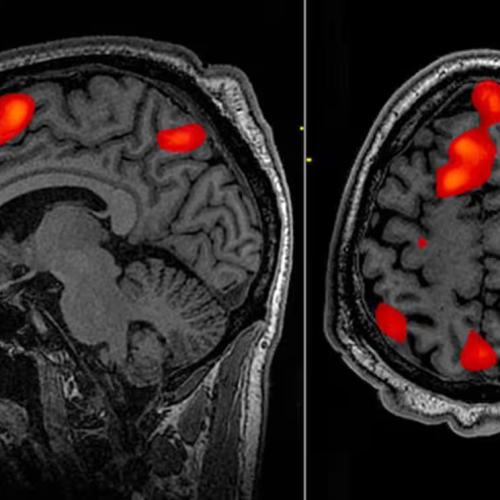
Is a cell tower going up in your neighborhood? Wireless carriers are installing millions of them across the country. Many are ... asking: Are there legitimate health concerns? That question is keeping John Hiestand up at night. Outside his bedroom window he can see a new pole where Verizon will soon install a next-generation cell tower. Its called a small cell or distributed antenna system. The industry says theyre safe. Many in Piedmont arent convinced including the Hiestands. However, according to federal law the city simply cant consider health concerns. Its outlined in a small section of the Telecommunications Act. If cities do consider health, cell companies can sue them. So, with few legal arguments to deny a tower, theyre popping up outside bedroom windows and school campuses, despite objections from across the country. The International Association of Firefighters ... began opposing cell towers on fire stations, after firefighters complained of health problems. These firefighters developed symptoms, says Dr. Gunnar Heuser. The symptoms included problems with memory, problems with intermittent confusion, problems with weakness, Heuser said. Heuser says their brain scans suggest even low-level RF can cause cell damage. We found abnormal brain function in all of the firefighters we examined, Heuser said. So, following lobbying by firefighters, [Piedmont officials] exempted fire stations from their bill, making them one place cell companies couldnt put a tower.
Note: Read an excellent article on the serious dangers of 5G wireless technology which is being rolled out. Watch five minutes of US Senate testimony showing that the 5G industry has done zero studies on the health effects of this new technology. France has recently banned WiFi in nursery schools. For more along these lines, see concise summaries of deeply revealing health news articles from reliable major media sources.
Stephen Ross spends most of his time helping people quit drugs. But early next year, he will begin administering MDMA in his ... medical research lab. MDMA, aka ecstasy, will still be an illegal drug. But its emerging as one of the most promising treatments for intractable post-traumatic stress disorder. Rick Doblin ... encountered MDMA for the first time [in 1982]. Two years later, he watched a patient suffering from PTSD undergo MDMA-assisted therapy. That completely persuaded me of its therapeutic potential, Doblin says. In 1985, Doblin learned that the DEA was moving to ban the drug ... and founded a nonprofit - the Multidisciplinary Association for Psychedelic Studies - to fight the prohibition. In 2000 [Doblin] met Michael Mithoefer, a therapist specializing in PTSD. Mithoefer had grown frustrated by the available treatments. Mithoefer and his wife and co-therapist, Annie, conducted the first MAPS-funded Phase II trial in 2004, which used MDMA to treat PTSD in victims of rape and childhood sexual abuse. These were patients with chronic cases that had proved resistant to other treatment methods. A second group, made up of veterans, firefighters and police officers, followed. Therapists refer to MDMA as an empathogen - something that enables patients to feel empathy not just for others but also for themselves. Of the 90 people who completed the 12-month follow-up after Phase II, 68% of them did not meet PTSD criteria, according to the study results MAPS submitted to the FDA. Of the remaining third, many had some reduction in symptoms.
Note: Read more about how MDMA has been found effective for treating PTSD in a therapeutic context. Articles like this suggest that the healing potentials of mind-altering drugs are gaining mainstream scientific credibility.
Researchers who have fought for years to get full data on Roche's flu medicine Tamiflu said on Thursday that governments who stockpile it are wasting billions of dollars on a drug whose effectiveness is in doubt. In a review of trial data on Tamiflu, and on GlaxoSmithKline's flu drug Relenza, scientists from the respected research network the Cochrane Review said that the medicines had few if any beneficial effects, but did have adverse side effects. "Remember, the idea of a drug is that the benefits should exceed the harms," Heneghan said. "So if you can't find any benefits, that accentuates the harm." Tamiflu sales hit almost $3 billion in 2009 - mostly due to its use in the H1N1 flu pandemic. The drug, one of a class of medicines known as neuraminidase inhibitors, is approved by regulators worldwide and is stockpiled in preparation for a potential global flu outbreak. It is also on the World Health Organization's "essential medicines" list. The United States has spent more than $1.3 billion buying a strategic reserve of antivirals including Tamiflu, while the British government has spent almost 424 million pounds ($703 million) on a stockpile of some 40 million Tamiflu doses. There was no evidence of a reduction in hospitalizations or in flu complications ... and Tamiflu also increased the risk of nausea and vomiting in adults by around 4 percent and in children by 5 percent.
Note: For more along these lines, see concise summaries of deeply revealing health corruption news articles from reliable major media sources. For more along these lines, see the excellent, reliable resources provided in our Health Information Center.
The first court award in a vaccine-autism claim is a big one. CBS News has learned the family of Hannah Poling will receive more than $1.5 million dollars for her life care, lost earnings, and pain and suffering for the first year alone. In addition to the first year, the family will receive more than $500,000 per year to pay for Hannah's care. Those familiar with the case believe the compensation could easily amount to $20 million over the child's lifetime. Hannah was described as normal, happy and precocious in her first 18 months. Then, in July 2000, she was vaccinated against nine diseases in one doctor's visit: measles, mumps, rubella, polio, varicella, diphtheria, pertussis, tetanus, and Haemophilus influenzae. Afterward, her health declined rapidly. She developed high fevers, stopped eating, didn't respond when spoken to, began showing signs of autism, and began having screaming fits. In acknowledging Hannah's injuries, the government said vaccines aggravated an unknown mitochondrial disorder Hannah had which didn't "cause" her autism, but "resulted" in it. It's unknown how many other children have similar undiagnosed mitochondrial disorder. All other autism "test cases" have been defeated at trial. Approximately 4,800 are awaiting disposition in federal vaccine court.
Note: A CBS affiliate reports that "since the late 1980s, the National Vaccine Injury Compensation Program (NVICP) has paid money for 83 cases involving autism." The article also mentions this has been kept quiet. For a powerful report by Robert F. Kennedy, Jr. showing blatant deception and cover up on the part of government and industry around a link between vaccines and autism, click here. For numerous revealing reports from major media sources on the link between vaccines and autism, click here.
Important Note: Explore our full index to revealing excerpts of key major media news articles on several dozen engaging topics. And don't miss amazing excerpts from 20 of the most revealing news articles ever published.