























































Inspirational News Articles
Below are key excerpts of some of the most inspiring news articles from reliable news media sources. If any link fails to function, a paywall blocks full access, or the article is no longer available, try these digital tools.
For further exploration, delve into our Inspiration Center.

Have you experienced being the target of intolerance? What causes you to be intolerant? Sitting in his book-filled Berkeley living room, Lewis Brown Griggs chewed over those questions and others with six other people via the Zoom conferencing app last month. Ranging in age from early 20s to early 70s, and hailing from Colorado, Virginia, Utah, Maryland and California, the group was brought together by Mismatch.org, a site that aims to mismatch people who are politically and geographically diverse for group chats with others of varying viewpoints. Its like a non-romantic dating service for civil discourse. Our nation has so many problems with division, said John Gable, Mismatch co-founder. We need to learn how to talk to people who are different than we are, how to listen to them and understand them as people. In an increasingly polarized country, Mismatch aims to help people across the political spectrum find common ground via structured conversations on topics like immigration, tax reform and climate change. Mismatch grew out of Living Room Conversations, another trans-partisan project that brings together folks of varying views to engage in discourse. But while Living Room Conversations hosts in-person groups ... Mismatch casts a wider net by seeking people nationwide to meet up via videoconferencing. It is about understanding each other as humans, [Gable] said. We may or may not find common ground, but we always find common humanity.
Note: Explore a treasure trove of concise summaries of incredibly inspiring news articles which will inspire you to make a difference.
Eman El-Husseini and Jess Salomon have a few people to thank for their marriage, including a drunk Italian guy at a comedy club and Saddam Hussein. Salomon is a Jew from Canada, El-Husseini from a Palestinian family that fled Kuwait in 1991, after the Iraqi invasion. Not many two-person comedy acts can credibly say they are a lesbian Palestinian-Jewish married couple. Its the only conflict you can bring up where everyone knows the reference, Salomon said. Even if youre in the middle of nowhere America, if I say Im Jewish and my wife is Palestinian, people are like Ooooh. The couple took different paths to comedy and have different styles: El-Husseini is louder, Salomon drier. But they are parlaying their marriage into a joint career. They have appeared together several times and are collaborating on a webcomic about their relationship. In one cartoon, El-Husseini encounters Christian missionaries and scares them away just by describing herself: Im Muslim ... and gay ... and my wife is Jewish, she says. Have a nice day, the missionaries respond. Stand-up was a natural fit for El-Husseini, who lived in Canada from 1991 until 2015. She was never interested in school, and couldnt sing or dance, but could tell jokes. She sees comedy as a great way to give Palestinian and Muslim women more representation. Salomon began her career as a lawyer at the Canadian Justice Ministry. She decided to take off a couple years and return to Montreal for a shot at stand-up. That was nearly a decade ago.
Note: Explore a treasure trove of concise summaries of incredibly inspiring news articles which will inspire you to make a difference.
Derek Black was the heir apparent to Americas white nationalist movement. He was the son of Don Black, the founder of the hate site Stormfront and the godson of David Duke, a former grand wizard of the KKK. The kingdom was Derek Blacks for the taking. One day, seemingly out of nowhere, he walked away from it all. In the new book Rising Out of Hatred by Washington Post investigative reporter Eli Saslow, the story of how Black came to leave it all behind is told. Saslow dives deep into Blacks transformation, which took place at a small liberal arts college. When members of the student body discovered a white nationalist living in their midst, many of them publicly shamed him. But a handful of students did the opposite, practicing a form of extreme acceptance. "When I first found [Derek Black], he was unequivocal that he did not want to be written about," [said Saslow]. "He naively thought he could leave it all behind. Meanwhile, white nationalism was seeing a rise in the political space. There were ... phrases he had helped popularize becoming mainstream. Derek felt increasingly culpable. He was haunted by it. Thats when he decided he needed to start talking about it more openly." Derek was on a campus that was ... social justice minded. Students were smart enough to be able to explain concepts like systematic oppression and privilege. But coming from people he respected, those ideas suddenly had real merit to him. He took time to engage and really think about it."
Note: Explore a treasure trove of concise summaries of incredibly inspiring news articles which will inspire you to make a difference.
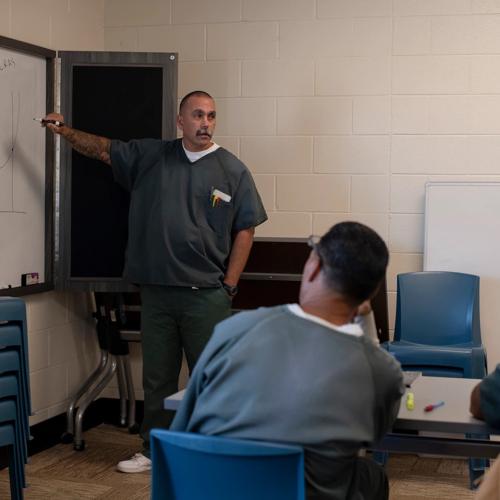
New research shows the meditative exercise improves mental health, reduces stress and can prevent reoffending. The power of yoga to change [a prisoner's] life is backed by two Swedish studies that found it may reduce reoffending. The new study, led by Professor Nra Kerekes at University West, Trollhtten, in Sweden, and published last week in Frontiers in Psychiatry, found that 10 weeks of regular yoga can lead to a significant reduction in obsessive-compulsive and paranoid thinking, which in turn, say researchers, can make reoffending less likely. This effect is specific to yoga, and not to exercise in general, they found. It can also lead to a decrease in somaticisation (mental distress leading to physical symptoms such as breathing problems, heart pains and stomach upsets). The study of 152 volunteers in nine medium- and high-security prisons in Sweden builds on a 2017 study of the same volunteers that showed that yoga improved stress levels, concentration, sleep quality, psychological and emotional wellbeing, as well as reducing aggression and antisocial behaviour. A Prison Service spokeswoman says: Research shows activities like this can make prisoners less likely to reoffend, keeping the public safer. She was unable to explain why, given this evidence, it wasnt government policy to make yoga available to all prisoners, but said it was up to individual prison governors to decide which activities to offer.
Note: Explore a treasure trove of concise summaries of incredibly inspiring news articles which will inspire you to make a difference.
There was a time at Lincoln, a school once known as a last resort for those who were expelled from the areas other high schools, when fights often ended in out-of-school suspensions or arrests. But Principal Jim Sporleder ... created an environment built on empathy and redemption through a framework called trauma-informed care, which acknowledges the presence of childhood trauma in addressing behavioral issues. The practices ... begin with the understanding that childhood trauma can cause adulthood struggles like lack of focus, alcoholism, drug abuse, depression, and suicide. At Lincoln ... the graduation rate increased by about 30 percent and suspensions decreased by almost 85 percent a year after implementing the framework. Sporleder first arrived at the school in April 2007. The building was in a constant state of chaos. Sporleder took a hard line by handing out ... three-day out-of-school suspensions. Then, in the spring of 2010, he attended a workshop ... on the impacts of stressful childhood experiences. Keynote speaker John Medina, a developmental molecular biologist, explained how toxic stress overfills the brain with cortisol, also known as the stress hormone. Sporleder suddenly understood that his students behavior wasnt completely in their control; their brains were affected by toxic stress. It just hit me like a bolt of lightning that my discipline was punitive and it was not teaching kids, he said. So he set out on a mission to bring trauma-informed care to his students.
Note: In the article above, students and educators share many personal success stories made possible by Lincoln's adoption of trauma-informed care. Explore a treasure trove of concise summaries of incredibly inspiring news articles which will inspire you to make a difference.
Dan Stevenson is neither a Buddhist nor a follower of any organized religion. The 11th Avenue resident in Oakland's Eastlake neighborhood was simply feeling hopeful in 2009 when he went to an Ace hardware store, purchased a 2-foot-high stone Buddha and installed it on a median strip in a residential area at 11th Avenue and 19th Street. He hoped that just maybe his small gesture would bring tranquility to a neighborhood marred by crime: dumping, graffiti, drug dealing, prostitution, robberies, aggravated assault and burglaries. What happened next was nothing short of stunning. Area residents began to leave offerings at the base of the Buddha: flowers, food, candles. A group of Vietnamese women in prayer robes began to gather at the statue to pray. And the neighborhood changed. People stopped dumping garbage. They stopped vandalizing walls with graffiti. And the drug dealers stopped using that area to deal. The prostitutes went away. I asked police to check their crime statistics for the block radius around the statue, and here's what they found: Since 2012, when worshipers began showing up for daily prayers, overall year-to-date crime has dropped by 82 percent. Robbery reports went from 14 to three, aggravated assaults from five to zero, burglaries from eight to four, narcotics from three to none, and prostitution from three to none. To this day, every morning at 7, worshipers ring a chime, clang a bell and play soft music as they chant morning prayers.
Note: Watch an inspiring 3-minute video of this transformation. Explore a treasure trove of concise summaries of incredibly inspiring news articles which will inspire you to make a difference.
Dan Stevenson is neither a Buddhist nor a follower of any organized religion. The 11th Avenue resident in Oakland's Eastlake neighborhood was simply feeling hopeful in 2009 when he went to an Ace hardware store, purchased a 2-foot-high stone Buddha and installed it on a median strip in a residential area at 11th Avenue and 19th Street. He hoped that just maybe his small gesture would bring tranquility to a neighborhood marred by crime. What happened next was nothing short of stunning. Area residents began to leave offerings at the base of the Buddha: flowers, food, candles. A group of Vietnamese women in prayer robes began to gather at the statue to pray. And the neighborhood changed. People stopped dumping garbage. They stopped vandalizing walls with graffiti. And the drug dealers stopped using that area to deal. The prostitutes went away. Since 2012, when worshipers began showing up for daily prayers, overall year-to-date crime has dropped by 82 percent. Robbery reports went from 14 to three, aggravated assaults from five to zero, burglaries from eight to four, narcotics from three to none, and prostitution from three to none. To this day, every morning at 7, worshipers ring a chime, clang a bell and play soft music as they chant morning prayers. The original statue is now part of an elaborate shrine that includes a wooden structure standing 10 feet tall and holding religious statues, portraits, food and fruit offerings surrounded by incense-scented air. On weekends, the worshipers include more than a dozen people: black folks, white folks, all folks, said Andy Blackwood, a neighborhood resident.
Note: Explore a treasure trove of concise summaries of incredibly inspiring news articles which will inspire you to make a difference.
Alan Turing, a British code-breaker during World War II who was later subjected to chemical castration for homosexual activity, has received a royal pardon nearly 60 years after he committed suicide. Turing was best known for developing the Bombe, a code-breaking machine that deciphered messages encoded by German machines. His work is considered by many to have saved thousands of lives and helped change the course of the war. "Dr. Turing deserves to be remembered and recognized for his fantastic contribution to the war effort and his legacy to science," British Justice Secretary Chris Grayling said. "A pardon from the Queen is a fitting tribute to an exceptional man." Turing's castration in 1952 -- after he was convicted of homosexual activity, which was illegal at the time -- is "a sentence we would now consider unjust and discriminatory and which has now been repealed," Grayling said. Two years after the castration, which Turing chose to avoid a custodial sentence, he ended his life at the age of 41 by eating an apple laced with cyanide. Supporters have long campaigned for Turing to receive greater recognition for his work and official acknowledgment that his punishment was wrong. An online petition in 2009 that drew tens of thousands of signatures succeeded in getting an apology from then-Prime Minister Gordon Brown for Turing's treatment by the justice system in the 1950s. Brown described the Turing sentence as "appalling." The German messages that Turing cracked at the British government's code-breaking headquarters in Bletchley Park provided the Allies with crucial information. Turing was considered a mathematical genius.
Note: For a treasure trove of great news articles which will inspire you to make a difference, click here.
By his own assessment, Dick Hoyt wasn't in racing shape the first time his teenage son Rick, a quadriplegic with cerebral palsy, asked if they could participate in a 5-mile fund-raising race – father pushing son in a wheelchair. "I said, 'Yeah, let's go down there and try it.' I had no idea what would happen, and nobody else did, either," Mr. Hoyt later recalled. "Most people expected us to go down to the corner and come back, but we ended up doing the whole thing." From those first racing steps, the two became legends in running circles and inspirational worldwide as they participated in more than 1,000 competitions, including dozens of marathons and multiple triathlons. Mr. Hoyt ... was 80 when he died of heart failure Wednesday. Though Mr. Hoyt and Rick posted a best time of 2:40:47 in the Marine Corps Marathon – a pace many marathoners will never touch running alone – the teaming of father and son was, for both, more important than all else. "When we're out there," Mr. Hoyt told the Globe in 1990, "there's nothing I feel I can't do with Rick." "Dick started this whole movement of duos, and Team Hoyt inspired thousands of people around the world," said longtime Boston Marathon race director Dave McGillivray. "He helped open the door to people believing in themselves, and the walls of intimidation crumbled." Most runners would be too intimidated to even try what Mr. Hoyt did over and over again – push a wheelchair carrying a boy, who became a grown man, up and down hills for 26.2 miles.
Note: Don't miss the profoundly inspiring and beautiful story and video of this dynamic duo available on this webpage. Explore a treasure trove of concise summaries of incredibly inspiring disabled persons news articles.
The coronavirus pandemic has inspired a grassroots movement that is connecting people who need help with donors who can offer financial assistance. So far, contributors have passed $13 million through more than 100,000 matches. Shelly Tygielski came up with the idea that she named Pandemic of Love. The mindfulness teacher in Fort Lauderdale, Florida, was looking for simple ways people in her community could take care of each other. "I posted the original video and the two links to signup forms on my social media feeds on March 14 and woke up the next morning and there were already 400 requests to get help and 500 to give help," Tygielski said. Tygielski shares her Pandemic of Love organization model with volunteers in other cities. These volunteers build teams to match applicants in their community and reach out to other communities when they need assistance. Maurico Martinez ... filled out the form to get help and received a text from an unknown number from California. "I got a text message from a lady named Simone in San Francisco, and she was willing to help me out, and 'what did I need, groceries, gasoline?' and could she send me some money?" Martinez told CNN. "She sent me a couple hundred dollars and I was so thankful and I wanted to pay her back. She said, 'No, this was Pandemic of Love,' and so then we started talking," Martinez recalled. "We started becoming friends ... and it was wonderful."
Note: Explore a treasure trove of concise summaries of incredibly inspiring news articles which will inspire you to make a difference.
Finlands much-lauded housing first approach ... has been in place for more than a decade. The idea is simple. To solve homelessness you start by giving someone a home, a permanent one with no strings attached. If they want to drink, they can; if they want to take drugs, thats fine too. Support services are made available to treat addiction, mental health and other problems, and to help people get back on their feet, from assisting with welfare paperwork to securing a job. The housing in Finland is a mix of designated standard apartments sprinkled through the community, and supported housing: apartment blocks with on-site services, built or renovated specifically for chronically homeless people. Formerly homeless residents ... pay rent from their own pockets or through the benefits afforded by Finlands relatively generous welfare state. The approach is working. As homelessness rises across Europe, Finlands numbers are falling. In 1987, there were around 18,000 homeless people. In 2017, there were 7,112 homeless people, of which only 415 were living on the streets or in emergency shelters. The vast majority (84 percent) were staying temporarily with friends or relatives. Between 2008 and 2015, the number of people experiencing long-term homelessness dropped by 35 percent. While its expensive to build, buy and rent housing for homeless people, as well as provide the vital support services, the architects of the policy say it pays for itself. Studies have found housing one long-term homeless person saves society around 15,000 ($17,000) a year ... due to a reduction in their use of services such as hospital emergency rooms, police and the criminal justice system.
Note: Explore a treasure trove of concise summaries of incredibly inspiring news articles which will inspire you to make a difference.
Nobel Peace Prize winner Kailash Satyarthi wants consumers to ask more questions. Satyarthi stars in the new documentary, "The Price of Free," in which he rescues child slaves in India who work in factories, some of which supply U.S. stores. He told CBS News, "For every product, consumers can ask this question to the brand or shopkeepers, 'How can you guarantee that they are truly made without child labor?' That can be the starting point ... When consumers start asking questions, then [stores] have to find answers." Satyarthi said consumers have the power to hold businesses accountable for their practices. "It would not be too difficult to write to president of a company and ask, 'How will you ensure that your products are made without child labor?'" he said. "This is their moral and legal responsibility to ensure that no child exploit or labor is engaged. Brands cannot just escape." Satyarthi began his work freeing child slaves in India in 1981 and says he has saved more than 85,000 children since then. He has expanded his work to reach children around the world who are touched by not just slavery, but also trafficking, sexual abuse and other types of violence. The children come from poor families who are told they will be paid and taken care of; instead, they become enslaved under poor working conditions. He said that beyond the rescues, his organizations make sure the children have the social and educational support they need through government services before they are released.
Note: Why have so few ever heard of this most amazing, courageous man who has risked his life countless times to rescue tens of thousands of children from slave labor? After surviving numerous beatings and the murder of two of his colleagues, Satyarthi won the Nobel Peace Prize in 2014 for creating a global network focused on fighting for the rights of over 100 million child workers worldwide and rescuing the many millions still held as slave labor in almost every country in the world. Don't miss the moving documentary on Sartyarthi and his work titled "The Price of Free."
Back in 2005, Jameel McGee says he was minding his own business when a police officer accused him of - and arrested him for - dealing drugs. "It was all made up," said McGee. Of course, a lot of accused men make that claim, but not many arresting officers agree. "I falsified the report," former Benton Harbor police officer Andrew Collins admitted. "Basically, at the start of that day, I was going to make sure I had another drug arrest." And in the end, he put an innocent guy in jail. "I lost everything," McGee said. "My only goal was to seek him when I got home and to hurt him." Eventually, that crooked cop was caught, and served a year and a half for falsifying many police reports, planting drugs and stealing. Of course McGee was exonerated, but he still spent four years in prison for a crime he didn't commit. Today both men are back in Benton Harbor, which is a small town. Last year, by sheer coincidence, they both ended up at faith-based employment agency Mosaic, where they now work side by side in the same caf. And it was in those cramped quarters that the bad cop and the wrongfully accused had no choice but to have it out." I said, 'Honestly, I have no explanation, all I can do is say I'm sorry,'" Collins explained. McGee says that was all it took. "That was pretty much what I needed to hear." Today they're not only cordial, they're friends. Such close friends, not long ago McGee actually told Collins he loved him. "And I just started weeping because he doesn't owe me that. I don't deserve that," Collins said.
Note: Don't miss the beautiful video of this story at the link above.
Nestled on a wide plateau surrounded by the Espinhaco Mountains in southeastern Brazil is the city of Belo Horizonte. The city of 2.5 million is an industrial and technological hub, which had historically led to stark socioeconomic divisions, including high rates of poverty. But while other similarly situated cities around the globe struggle to meet the basic needs of their residents, Belo Horizonte pioneered a food security system that has effectively eliminated hunger in the city. The entire program requires less than 2% of the city's annual budget. Building off Brazil's grassroots Movement for Ethics in Politics, in 1993 Belo Horizonte enacted a municipal law that established a citizen's right to food. Today, Belo Horizonte's food security system comprises 20 interconnected programs that approach food security in sustainable ways. When the novel coronavirus pandemic hit Brazil in February, Belo Horizonte was well-positioned to address at least one attendant issue of the pandemic: The city already had a substantial infrastructure for distributing fresh, healthy food at low or no-cost to the vast majority of its residents. As Brazil's COVID-19 cases skyrocketed and the need became greater, businesses, nonprofits, and individuals offered financial and distribution support to expand the existing food security network, including increasing the number of open-air markets and restaurants available to distribute food to those in need.
Note: Why hasn't this most inspiring news been reported widely in the major media? Explore a treasure trove of concise summaries of incredibly inspiring news articles which will inspire you to make a difference.
Wilma Rudolph outran poverty, polio, scarlet fever and the limits placed on black women by societal convention to win three gold medals in sprint events at the 1960 Olympics in Rome. By the time brain cancer caught Rudolph, leading to her death Saturday at age 54, she had achieved a stature that made her legend and her sport greater in the long run. The 20th of 22 children of a porter and a cleaning lady, Rudolph lost the use of her left leg after contracting polio and scarlet fever at age 4. Doctors told her parents she never would walk again without braces, but she refused to accept that prognosis and began to walk unassisted at age 9. It wasn't long before she was outrunning all the girls and boys in her neighborhood. At 16, already under the tutelage of Tennessee State University coach Ed Temple, Rudolph won a bronze medal on the 4 x 100-meter relay at the 1956 Olympics in Melbourne, Australia. Four years later, when she was the mother of a 2-year-old, Rudolph won the three golds despite running all three events with a sprained ankle. After being voted Associated Press female athlete of the year in 1960 and 1961 and the Sullivan Award as the nation's top amateur athlete in 1961, Rudolph retired at 21, a decision that reflects an era in which lack of financial incentives kept most Olympic careers short. She turned to a variety of humanitarian projects, including goodwill ambassador to West Africa, coaching at DePauw University and working for underprivileged children through the Wilma Rudolph Foundation.
Note: The remarkable woman once commented, "My doctors told me I would never walk again. My mother told me I would. I believed my mother."
Thanks to the internet and MOOC (massive open online courses) culture, it's not hard to find courses from prestigious universities such as Yale online for free or cheap. Counter to the Ivy League's legacy of exclusivity, MOOCs are designed to remove traditional education barriers: price and location. In fact, Yale offers access to a handful of recorded in-person courses such as African American History: From Emancipation to the Present via Open Yale Courses, a platform where anyone can access the lectures. However, lecture-listeners won't earn course credit, degrees, or a certificate of completion. If you're looking for a classroom-like educational experience with more structure, feedback, and peers, you'll want to turn to Coursera. The online learning platform features more than a dozen Yale courses that range in topic from economics to parenting to happiness. Coursera classes typically include video lectures, resources, community discussions, and quizzes. They're free to enroll in, but you'll have to pay a low fee (starting at $49) for features like graded homework assignments or certificates of completion, which can be added to a LinkedIn page. Based on the most popular course in Yale's history, [The Science of Well-Being] combines positive psychology with the real-life applications of behavioral science to increase your own happiness using concrete, productive habits. Read our full review of The Science of Well-Being course here.
Note: Explore a treasure trove of concise summaries of incredibly inspiring news articles which will inspire you to make a difference.
Dr Abhay Bang does not look like a pioneer. And yet ... this is the man who has revolutionised healthcare for the poorest people in India and who has overseen a programme that has sent infant mortality rates plummeting in one of the most poverty-stricken areas of the world. Medical experts now believe that Dr Bang's radical beliefs hold the key to tackling the myriad endemic health problems that blight the developing word. Instead of accepting the traditional hospital-based treatment model, Dr Bang has spent the last 26 years training up local volunteers in Gadchiroli, one of the most deprived districts in the Indian state of Maharashtra, to treat simple maladies at home. The World Health Organisation and Unicef have recently endorsed his approach to treating newborn babies and the programme is currently being rolled out to parts of Africa. In 1988, 121 newborn babies were dying out of every 1,000 births in the area. The newborn death rate in Gadchiroli has now fallen to 30 per 1,000 live births. Dr Bang's solution was simple: he trained a group of local women in the basics of neonatal care. They were taught how to diagnose pneumonia (using an abacus to count breaths), how to resuscitate children and how to administer some basic antibiotics. Instead of villagers having to walk for miles to get to the nearest hospital, these health visitors (called arogyadoots, which means "health messengers") went to where they were most needed.
Note: Explore a treasure trove of concise summaries of incredibly inspiring news articles which will inspire you to make a difference.
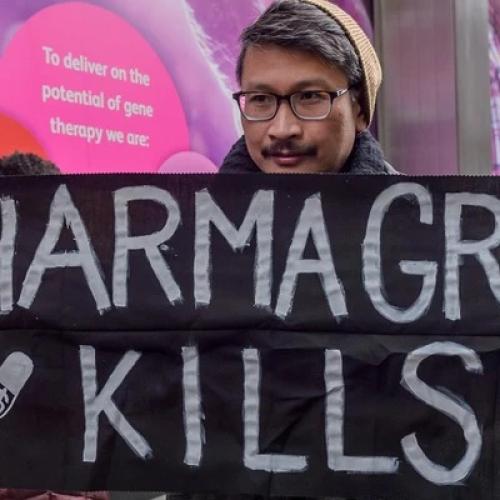
Celebrity investor Mark Cuban is receiving praise on social media after he launched a new company that provides patients access to affordable medications. Cuban launched the Mark Cuban Cost Plus Drug Company (MCCPDC), a direct-to-consumer online company that offers more than 100 generic medications at discounted prices. The investor said he aims to "be the low-cost provider of medications to patients." He continued: "If you don't have insurance or have a high deductible plan, you know that even the most basic medications can cost a fortune. Many people are spending crazy amounts of money each month just to stay healthy. No American should have to suffer or worse—because they can't afford basic prescription medications." The company's low costs are achieved by working directly with partners, which "allows us to only markup our costs by 15 percent," Cuban explained. Explaining the business model, Cuban cited the drug prescribed for hookworm, Albendazole, which can cost as much as $500 per course. "Our cost for Albendazole is $26.08 per course. We mark that price up by 15 percent so we can continue to run the company and invest in disrupting the pricing of as many drugs as we possibly can," he explained. "That makes the base price of the drug $30. Then we add on the actual cost, $3.00, that our pharmacy partners charge us to prepare and provide your prescription to you. "That makes the sales price on this website $33. Far, far lower than the pricing available in the marketplace."
Note: As big Pharma rakes in the huge profits, Marc Cuban has created a new company called CostPlus which brings many expensive drugs to you at a fraction of the price. Sadly, very few of the major media are reporting on this. Cuban says, “Everyone should have safe, affordable medicines with transparent prices.”
It was a small trial, just 18 rectal cancer patients, every one of whom took the same drug. But the results were astonishing. The cancer vanished in every single patient, undetectable by physical exam, endoscopy, PET scans or M.R.I. scans. Dr. Luis A. Diaz Jr. of Memorial Sloan Kettering Cancer Center, an author of a paper published Sunday in the New England Journal of Medicine describing the results ... said he knew of no other study in which a treatment completely obliterated a cancer in every patient. “I believe this is the first time this has happened in the history of cancer,” Dr. Diaz said. Dr. Alan P. Venook, a colorectal cancer specialist at the University of California, San Francisco, who was not involved with the study, said he also thought this was a first. A complete remission in every single patient is “unheard-of,” he said. These rectal cancer patients had faced grueling treatments — chemotherapy, radiation and, most likely, life-altering surgery that could result in bowel, urinary and sexual dysfunction. Some would need colostomy bags. They entered the study thinking that, when it was over, they would have to undergo those procedures because no one really expected their tumors to disappear. But they got a surprise: No further treatment was necessary. “There were a lot of happy tears,” said Dr. Andrea Cercek, an oncologist at Memorial Sloan Kettering Cancer Center and a co-author of the paper. Another surprise, Dr. Venook added, was that none of the patients had clinically significant complications.
Note: Will this amazing treatment be suppressed, like so many others before it? Explore a treasure trove of concise summaries of incredibly inspiring news articles which will inspire you to make a difference.
Scientists have developed new technology that can turn seawater into clean drinking water in less than 30 minutes. Researchers based in Australia used a metal-organic framework (MOF), a type of lattice-like crystal, to desalinate water. The hollow framework of pores separates the salty solute within the brackish water or even saltier seawater, in a process known as molecular sieving. Under dark conditions, the framework absorbs salts and other impurities in the water in 30 minutes. The MOF itself is then regenerated for reuse in just four minutes, using sunlight to remove the adsorbed salts. The light-responsive MOF was used to filter harmful particles from water and generate 139.5 litres of clean water per kilogram of MOF per day. Scientists say their technology is more energy-efficient than current desalination practices, including reverse osmosis, and could provide potable water for millions globally. Water scarcity is one of the largest global risks in the upcoming years, according to the World Economic Forum (WEF). Thermal desalination processes by evaporation using solar energy are widely used to produce fresh water, but can be highly energy intensive. 'Sunlight is the most abundant and renewable source of energy on Earth,' said Professor Huanting Wang ... at Monash University in Australia. 'Our development of a new adsorbent-based desalination process through the use of sunlight for regeneration provides an energy-efficient and environmentally-sustainable solution for desalination.'
Note: Explore a treasure trove of concise summaries of incredibly inspiring news articles which will inspire you to make a difference.
Important Note: Explore our full index to revealing excerpts of key major media news articles on several dozen engaging topics. And don't miss amazing excerpts from 20 of the most revealing news articles ever published.