


































Inspirational News Articles
Below are key excerpts of some of the most inspiring news articles from reliable news media sources. If any link fails to function, a paywall blocks full access, or the article is no longer available, try these digital tools.
For further exploration, delve into our Inspiration Center.

Every two years, the US Energy Information Administration (EIA), Americas official source for energy statistics, issues 10-year projections about how much solar, wind and conventional energy the future holds for the US. Every two years, since the mid-1990s, the EIAs projections turn out to be wrong. Last year, they proved spectacularly wrong. The Natural Resources Defense Council, an environmental advocacy group, and Statista recently teamed up to analyze the EIAs predictions for energy usage and production. They found that the EIAs 10-year estimates between 2006 to 2016 systematically understated the share of wind, solar and gas. Solar capacity, in particular, was a whopping 4,813% [or 48 times] more in 2016 than the EIA had predicted in 2006 it would be. The EIA regularly underestimates the growth in renewables but overestimates US fossil-fuel consumption. These estimates matter because they form the basis for actions by the Environmental Protection Agency and other federal agencies. The agencys projections bear little resemblance to market realities because they ignore publicly available evidence, argues the clean-energy non-profit Advanced Energy Economy. Michael Grunwald at Politico reports the EIA seems to base its projections on the assumption that renewable energy costs wont fall much, when in fact they keep plunging.
Note: Explore a treasure trove of concise summaries of incredibly inspiring news articles which will inspire you to make a difference.
When Erika Dudra moved to Beacon Hill two years ago, she didn't know any of her neighbors. Dudra soon discovered a Facebook group called Buy Nothing Beacon Hill North. The premise of the group was simple: Offer up something that you don't need, or ask for something you do need. She joined to get rid of a couch, but then started asking for baby things. As a result, "I have a 2-year-old now who basically cost me nothing," she said. When Dudra remarried ... she threw a "Buy Nothing wedding" with a donated dress, cake, decor, flowers, an American Sign Language interpreter for deaf relatives and a wedding photographer. To participants, Buy Nothing is about more than just fighting consumer culture, though. Today, all of Dudra's best friends are people she met on Buy Nothing. Since this network was started in 2013 ... members and volunteers have spread the Buy Nothing gospel to more than half a million people in 20 countries. Buy Nothing co-founder Liesl Clark likes to say the project is one-half internet giveaway group and one-half prehistoric Himalayan economics. Inspiration comes from high up in the Himalayas, where Clark has filmed archaeology documentaries for National Geographic and the PBS series "NOVA." In 2007, Clark visited a village in the Upper Mustang area of Nepal that didn't operate on currency. Instead, the village of Samdzong operated on a "gift economy" when a villager needed something, she or he would simply ask. Residents kept communal goats and sheep and took turns watching each other's fields.
Note: Watch an inspiring video on this great project.
Scientists in the U.S. and India have found an inexpensive treatment that could possibly save hundreds of thousands of newborns each year. And it turns out, the secret weapon was sitting in Asian kitchens all along: probiotic bacteria that are common in kimchi, pickles and other fermented vegetables. Feeding babies the microbes dramatically reduces the risk newborns will develop sepsis, scientists report ... in the journal Nature. Sepsis is a top killer of newborns worldwide. Each year more than 600,000 babies die of the blood infections. "All the sudden the baby stops being active. It stops crying and breastfeeding," says Dr. Pinaki Panigrahi, a pediatrician ... who led the study. For the past 20 years, Panigrahi has been working on a way to prevent sepsis. The tricky part, Panigrahi says, was figuring out the best strain of bacteria to protect against sepsis. "We screened more than 280 strains," Panigrahi says. "So it was a very methodical process." In the end, the one that seemed the most promising was a strain of lactobacillus plantarum. So Panigrahi and his team decided to move forward with a large-scale study. They were shocked by how well the bacteria worked. Babies who ate the microbes for a week ... had a dramatic reduction in their risk of death and sepsis. They dropped by 40 percent, from 9 percent to 5.4 percent. But that's not all. The probiotic also warded off several other types of infections, including those in the lungs. Respiratory infections dropped by about 30 percent. A course of the probiotic costs about $1 per baby.
Note: Explore a treasure trove of concise summaries of incredibly inspiring news articles which will inspire you to make a difference.
More than 120 countries approved the first-ever treaty to ban nuclear weapons Friday at a UN meeting boycotted by all nuclear-armed nations. To loud applause, Elayne Whyte Gomez, president of the UN conference that has been negotiating the legally binding treaty, announced the results of the historic vote 122 nations in favour, the Netherlands opposed, and Singapore abstaining. We have managed to sow the first seeds of a world free of nuclear weapons, Whyte Gomez said. We (are) ... saying to our children that, yes, it is possible to inherit a world free from nuclear weapons. The world has been waiting for this legal norm for 70 years, since atomic bombs were dropped on Hiroshima and Nagasaki in August 1945 at the end of World War II, she said. None of the nine countries known or believed to possess nuclear weapons the United States, Russia, Britain, China, France, India, Pakistan, North Korea and Israel is supporting the treaty. The treaty will be opened for signatures in September and come into force when 50 countries have ratified it, [Whyte Gomez] said, and its language leaves the door open for nuclear weapon states to become parties to the agreement. The treaty requires of all ratifying countries never under any circumstances to develop, test, produce, manufacture, otherwise acquire, possess or stockpile nuclear weapons or other nuclear explosive devices. It also bans any transfer or use of nuclear weapons or nuclear explosive devices - and the threat to use such weapons.
Note: Explore a treasure trove of concise summaries of incredibly inspiring news articles which will inspire you to make a difference.
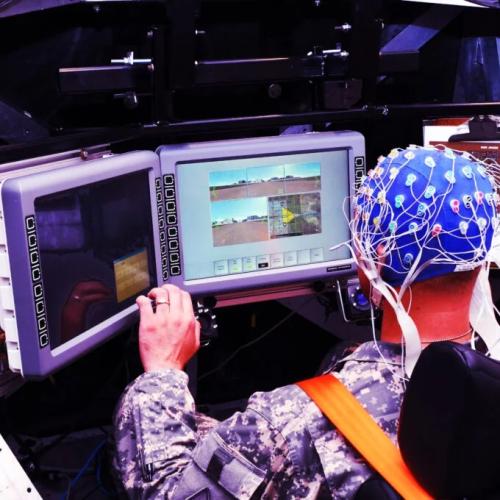
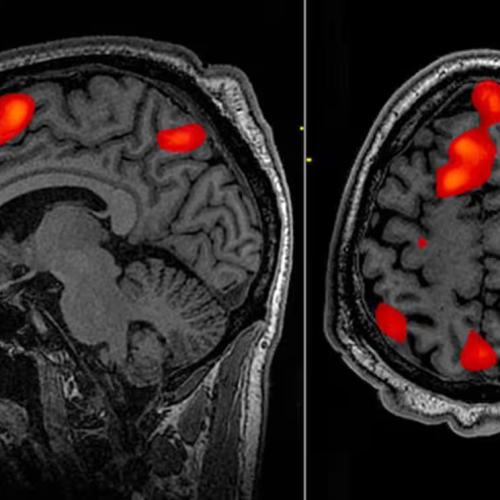
In 2014, the Office of Naval Research embarked on a four-year, $3.85 million research program to explore the phenomena it calls premonition and intuition. We have to understand what gives rise to this so-called sixth sense, says Peter Squire, a program officer in ONRs Expeditionary Maneuver Warfare and Combating Terrorism department. Todays Navy scientists place less emphasis on trying to understand the phenomena theoretically and more on using technology to examine the mysterious process, which Navy scientists assure the public is not based on superstition. If the researchers understand the process, there may be ways to accelerate it and possibly spread the powers of intuition throughout military units, says Dr. Squire. Because of the stigma of ESP and PK, the nomenclature has changed, allowing the Defense Department to distance itself from its remote-viewing past. Under the Perceptual Training Systems and Tools banner, extrasensory perception has a new name in the modern era: sensemaking. Since 1972, CIA and DoD research indicates that premonition, or precognition, appears to be weak in some, strong in others, and extraordinary in a rare few. Will the Navys contemporary work on sensemaking, the continuous effort to understand the connections among people, places, and events, finally unlock the mystery of ESP? Might technology available to todays defense scientists reveal hypotheses not available to scientists in an earlier age?
Note: The above was written by Annie Jacobson, journalist and author of the bestselling book, "Phenomena: The Secret History of the U.S. Government's Investigations into Extrasensory Perception and Psychokinesis." Learn more about government-sponsored research and work with ESP and remote viewing on this excellent web page.
Vitamin D supplements could spare more than three million people from colds or flu in the UK each year, researchers claim. The sunshine vitamin is vital for healthy bones, but also has a role in the immune system. The analysis, published in the British Medical Journal, argues food should be fortified with the vitamin. The immune system uses vitamin D to make antimicrobial weapons that puncture holes in bacteria and viruses. But as vitamin D is made in the skin while out in the sun, many people have low levels during winter. The researchers pooled data on 11,321 people from 25 separate trials to try to get a definitive answer. The team at Queen Mary University of London (QMUL) looked at respiratory tract infections - which covers a wide range of illnesses from a sniffle to flu to pneumonia. Overall, the study said one person would be spared infection for every 33 taking vitamin D supplements. That is more effective than flu vaccination, which needs to treat 40 to prevent one case. There were greater benefits for those taking pills daily or weekly - rather than in monthly super-doses - and in people who were deficient in the first place. One of the researchers, Prof Adrian Martineau, said: "Assuming a UK population of 65 million, and that 70% have at least one acute respiratory infection each year, then daily or weekly vitamin D supplements will mean 3.25 million fewer people would get at least one acute respiratory infection a year."
Note: Explore a treasure trove of concise summaries of incredibly inspiring news articles which will inspire you to make a difference.
The Maine Clean Elections Act, originally passed in 1996 and strengthened in 2015, gives candidates the option to finance campaigns with taxpayer dollars. Candidates who choose to run a publicly financed campaign dont need to spend time courting wealthy donors - in fact, theyre prohibited from raising private money. Instead, constituents show their support through $5 contributions to the Maine Clean Elections Fund made on behalf of a candidate. But that money doesnt go to the candidate - instead, it shows support and helps fund the public-financing program. Once candidates have raised the required number of donations, they receive a flat fee from the state, which can vary depending on the office being sought. During [State representative Joyce] McCreights first campaign, in 2014, the state gave her nearly $5,000 once shed collected 60 contributions. She won, and by the end of her first term, shed helped to write a bill that makes it easy for low-income people without insurance to get reproductive health [services]. The bill passed, and McCreight expects it to save the state $2.5 million a year. McCreights story ... was made possible by a network of activists who came together in 1995 to draft and support the Maine Clean Elections Act. The Clean Elections system has given Maine the most economically diverse legislature in the nation. About 14 percent of Maine legislators are working class: waitresses, cashiers, machinists. Only 2 percent of the U.S. Congress comes from similar backgrounds.
Note: Why is the major media not reporting this important and inspiring news? Explore a treasure trove of concise summaries of incredibly inspiring news articles which will inspire you to make a difference.
The closure of five prisons in as many years against the background of a falling crime rate, is the kind of news many governments would give their eye teeth for. The impact could have been even more dramatic if the government had adopted the recommendations of a prison service report published in July, which concluded that eight jails and three youth detention centres will be surplus to requirements by the year 2021. The official figures indicate that recorded crime has been falling for around a decade. Between 2014 and 2015, the most recent year for which statistics are available, recorded crime was down by nearly 5%, according to national statistics office CBS. In total, recorded crime has shrunk by 25% over the past eight years. Crime figures [have] been falling in nearly all western nations this century, but the decline in the Dutch prison population has been spectacular. In 2006 the Netherlands had the second highest number of inmates in Europe with 125 prisoners per 100,000 population. Only the UK, with 145, had a larger share. But by last year the Dutch were down to Scandinavian levels, with 69 out of every 100,000 citizens behind bars. The government says prison closures are inevitable because it costs too much to keep empty cells open. Official forecasts predict that the downward trend in crime will continue, though how far the fall reflects an actual drop in criminal behaviour remains a hotly contested issue.
Note: Few are aware that violent crime rates in the U.S. have dropped to 1/3 of what they were in 1993, yet prison spending continues to skyrocket. Explore a treasure trove of concise summaries of incredibly inspiring news articles which will inspire you to make a difference.
New research shows that human pollution of the atmosphere with acid is now almost back to the level that it was before the pollution started with industrialisation in the 1930s. The results come from studies of the Greenland ice sheet and are published in the scientific journal, Environmental Science and Technology. By drilling ice cores down through the kilometre-thick ice sheet, the researchers can analyse every single annual layer, which can tell us about ... pollutants in the atmosphere. Acid in the atmosphere can come from large volcanic eruptions and human-made emissions from industry. For many years, there has been a quest to solve the problem of measuring acidity in the porous annual layers of the ice and now scientists from the Niels Bohr Institute have succeeded [by employing] a Continuous Flow Analyses or CFA method. The CFA system can ... distinguish whether the emissions come from volcanic eruptions, large forest fires or industry. The researchers can therefore filter out both volcanic eruptions and forest fires in the assessment of industrial pollution and the new results are revolutionary. "We can see that the acid pollution in the atmosphere from industry has fallen dramatically since humanmade acid pollution took off in the 1930s and peaked in the 1960s and 70s. In the 1970s, both Europe and the United States adopted the 'The clean air act amendments', which required filters in factories, thus reducing acid emissions," explains [researcher] Helle Astrid Kjr.
Note: Explore a treasure trove of concise summaries of incredibly inspiring news articles which will inspire you to make a difference.
Veteran homelessness has dropped nearly in half since 2010, the U.S. Department of Housing and Urban Development (HUD) announced. On a given night in January, there were fewer than 40,000 homeless veterans, according to the countrys annual Point-in-Time count. That marked a 47 percent decrease since the same count was conducted six years prior. The success was due to the White Houses first-ever strategic plan to end veteran homelessness and a unique partnership between HUD and the Department of Veteran Affairs. Through the collaboration, HUD provides rental assistance to homeless veterans and the VA complements it with case management and clinical services. Since 2010, more than 360,000 veterans and their families have been permanently housed, rapidly rehoused or were spared from becoming homeless through HUD and VA programs. The dramatic decline in veteran homelessness reflects the power of partnerships in solving complex national problems on behalf of those who have served our nation, Robert A. McDonald, VA secretary, said in a statement. The men and women who have fought for this nation should not have to fight to keep a roof over their head. Numerous studies over the years have found that the concept of housing first, which touts providing housing to homeless people in need before addressing their health or economic issues, is effective and cost efficient.
Note: Explore a treasure trove of concise summaries of incredibly inspiring news articles which will inspire you to make a difference.
"Welcome to the Blockchain! Your voice is worth something," states a webpage of Steemit, the social network built on a blockchain that's now exploding with popularity. Steemit ... supports community building and social interaction through cryptocurrency rewards and a reputation or influence-based system, known as Steem Dollars and Steem Power. Ned Scott, CEO and co-founder of Steemit, told IBTimes: "If you think about the existing models - Facebook, Twitter, Instagram - these are platforms that invite people to come and do all this work so that their shareholders, who are not necessarily contributors make all this money. "Our platform is a cooperative version of a social network which is more intuitive, and a more shared, community-driven approach, and that's why our early user base is growing. We are completely open source." Steemit grew out of a long process set in motion by gifted developer and co-founder, Daniel Larimer. It evolved from the idea of a decentralised exchange ... to a later exploration of blockchain-based mutual aid and micro-insurance, with a forum added for users to interact and compare notes. It does away with traditional cryptocurrency barriers to entry, like having to go and buy coins at an exchange. Scott said everyone is rewarded one way or another. People who post content actually get rewarded [with Steem, a currency whose value] is split between tradability and reputation. Steem is currently the third most valuable cryptocurrency in the world.
Note: Unlike other social media platforms such as Facebook, Steemit is technically impossible to censor and is owned by everyone that uses it. Explore a treasure trove of concise summaries of incredibly inspiring news articles which will inspire you to make a difference.
Something strange is going on in medicine. Major diseases, like colon cancer, dementia and heart disease, are waning in wealthy countries, and improved diagnosis and treatment cannot fully explain it. Scientists marvel at this good news, a medical mystery of the best sort. The leading killers are still the leading killers - cancer, heart disease, stroke - but they are occurring later in life, and people in general are living longer in good health. Colon cancer is the latest conundrum. While the overall cancer death rate has been declining since the early 1990s, the plunge in colon cancer deaths is especially perplexing: The rate has fallen by nearly 50 percent since its peak in the 1980s. [Dr. Steven R. Cummings of the California Pacific Medical Center Research Institute], intrigued by the waning of disease, has a provocative idea for further investigation. He starts with two observations: Rates of disease after disease are dropping. Even the rate of all-cause mortality, which lumps together chronic diseases, is falling. And every one of those diseases at issue is linked to aging. Perhaps, he said, all these degenerative diseases share something in common, something inside aging cells themselves. The cellular process of aging may be changing, in humans favor. For too long, he said, researchers have looked under the lamppost at things they can measure. I want to look inside cells, Dr. Cummings said. Inside, there could be more clues to this happy mystery.
Note: Explore a treasure trove of concise summaries of incredibly inspiring news articles which will inspire you to make a difference.
The Chicago-based program Becoming A Man is the type that allows rival gang members to sit together, just days after one group killed a member of the other, and calmly talk about their issues, according to John Wolf, senior manager of the University of Chicagos Crime Lab. They were talking through ways of finding peace and ways of making sure it didnt escalate further, [Wolf said]. For the past few years, Wolf and his colleagues have been studying the impact of the Becoming A Man program, which targets at-risk male students in Chicago public schools. The program, run by the non-profit organization Youth Guidance, allows students to participate in weekly group sessions that teach them how to be more conscious of their decision-making processes. A recent two-year evaluation of the program showed that between 2013 and 2015, there was a 50 percent decline in violent crime arrests for the 2,000 participants as compared to a control group. The program does not tell students how to behave, or instruct them as to the right thing to do, instead [emphasizing] only that the students carefully consider their decisions instead of rushing to act. BAM says its approach is cost-effective: Every dollar invested in the program is projected to return up to $30 in societal gains as a result of crime reduction. Also, because the program increases graduation rates of participants by 19 percent, it will likely produce additional long-term economic gains.
Note: Explore a treasure trove of concise summaries of incredibly inspiring news articles which will inspire you to make a difference.
If you had asked me 20 years ago where I would be, I never would have imagined I would be a physician working at UCLA Health, one of the best medical centers in the country. For over 25 years, my physical disability threatened to define who I was and what others thought I could become. I contracted meningococcal disease at 8 years of age. The infection overwhelmed my body's defenses, and I became a triple amputee. The disease left me with just enough to survive and carry on: two full fingers of the left hand, the thumb and ring finger. The first few years were physically and emotionally grueling; I was in and out of the hospital for surgical procedures to make my lower limbs fit better into prosthetic legs. I couldn't walk for nearly three years. I grew so quickly, my prosthetic legs could not keep up. My father would give me piggyback rides from the car to our house. My mother, who became blind as a teen, learned how to help me dress and put on my prosthetic legs every morning for school. My younger brother, Tarring, would help bring things to me since my mobility was limited. And my older sister, Nellie, was and is my inspiration and role model. I have been extremely lucky to have a strong and resilient family. I was lucky to be in a place where I had great medical care and where I had a community of friends and schools that supported my recovery and believed in my ability to succeed despite my disability. But luck is only part of my success; it takes courage, determination, honesty and integrity to pursue your dreams.
Note: Dr. Kellie Lim, author of this article received her medical training from the David Geffen School of Medicine at the University of California, Los Angeles. After getting her medical degree, she completed her residency in pediatrics before pursuing fellowship training in allergy & immunology and pharmacology. Today, she works as an allergist-immunologist at UCLA Health. Explore a treasure trove of summaries of news articles on incredibly inspiring disabled persons.
Engineers have developed a turbine which has the potential to power a small town all the while being no bigger than your office desk. Designed by GE Global Research, the turbine could power 10,000 homes and according to researchers, could help to solve some of the world's growing energy challenges. But rather than steam, which is typically used to set turbines in motion, the new turbine uses carbon dioxide. 'This compact machine will allow us to do amazing things,' said Doug Hofer, lead engineer on the project. According to MIT Tech Review, the turbine is driven by 'supercritical carbon dioxide', which is kept under high pressure at temperatures of 700˚C. Under these conditions, the carbon dioxide enters a physical state between a gas and a liquid, enabling the turbine to harness its energy for super-efficient power generation - with the turbines transferring 50 per cent of the heat into electricity. It could help energy firms take waste gas and repurpose it for efficient and cleaner energy production. Waste heat produced from other power generation methods, such as solar or nuclear, could be used to melt salts, with the molten salts used to the carbon dioxide gas to a super-critical liquid - which may be much quicker than heating water for steam. Currently, the design of the turbine would enable up to 10,000 kilowatts of energy to be produced, but the turbines could be scaled up to generate 500 megawatts, enough to power a city.
Note: Explore a treasure trove of concise summaries of incredibly inspiring news articles which will inspire you to make a difference.
Finland has a history of producing the highest global test scores in the Western world, as well as a trophy case full of other recent No. 1 global rankings, including most literate nation. In Finland, children don't receive formal academic training until the age of 7. Until then, many are in day care and learn through play, songs, games and conversation. Most children walk or bike to school, even the youngest. School hours are short and homework is generally light. Unlike in the United States, where many schools are slashing recess, schoolchildren in Finland have a mandatory 15-minute outdoor free-play break every hour of every day. Fresh air, nature and regular physical activity breaks are considered engines of learning. One evening, I asked my son what he did for gym that day. They sent us into the woods with a map and compass and we had to find our way out, he said. In Finland teachers are the most trusted and admired professionals next to doctors. Our mission as adults is to protect our children from politicians, one Finnish childhood education professor told me. We also have an ethical and moral responsibility to tell businesspeople to stay out of our building. Skeptics might claim that the Finnish model would never work in America's inner-city schools. But what if the opposite is true? What if high-poverty students are the children most urgently in need of the benefits that, for example, American parents of means obtain for their children in private schools, things that Finland delivers on a national public scale.
Note: For more, read this informative article.
Shortly after they got married six years ago, Tommy's wife Renee just started hanging out with the livestock. Tommy warned her ... "Renee, don't name those cows." But she didn't listen. Then she started singing to them, too. And before long, the rancher's wife had turned into a rancher's worst nightmare - a vegan, who couldn't stomach so much as living with a cattle rancher anymore. "He was just going to get out of the business or our marriage was going to be over," Renee explained. Tommy agreed. "It wasn't working. And I said, 'I'm going to sell the whole herd.' She goes, 'Well, if you're going to sell the whole herd anyway, why don't you just sell 'em to me?' What Tommy didn't know was that Renee had been secretly posting a blog called "Vegan Journal of a Rancher's Wife." She attracted thousands of followers. Through those contacts, Renee was able to raise $30,000 - enough for a hostile takeover. And here's where this story gets good. After his wife raised the money, Tommy did something rare for a rancher, or any man for that matter - he put aside his ego and reconsidered a core belief. He stopped eating meat, liked how he felt, and now works for his wife and the Rowdy Girl Vegan Farm Animal Sanctuary. As best we can tell, it's the only cattle ranch conversion in the country. So now that he's changed for Renee, is there anything Tommy would change about his wife? "I can't think of a thing," he said. And there is everything you need to know, to stay married forever.
Note: Watch the touching video of this at the link above. Explore a treasure trove of concise summaries of incredibly inspiring news articles which will inspire you to make a difference.
Do you think a 13-year-old could change the world? Max Loughan could be the one to do it. When we interviewed him, Max was wearing his lab coat ... in his parent's old boiler room, which has been converted into a lab. He ponders the future often. "The future that I imagine is the future, frankly we all imagine." He wants to make the world a better place, and to do that, Max believes you need one single thing: "If you got energy, you have power, you have everything." So to solve this problem, a few months ago, Max took the matter into his own hands. He created an electromagnetic harvester out of a coffee can, some wire, two coils, and a spoon. "This cost me 14 bucks," Max said. The harvester conducts radio waves, thermal, and static energy, and turns it into electricity. "This wire takes energy from the air." And the inside the coffee can, "We turn it from AC to DC." We took the device outside, and wrapped Max's twin brother, Jack, in a string of L.E.D. lights. Max connects the lights to the harvester, and sure enough, they turned on. His device clearly works. A $14.00 invention was able to do that. So imagine this same harvester on a scale 20 times larger. "As cheesy as this sounds, from day one, on this planet that I knew I was put here for a reason," said Max. "And that reason is to invent, to bring the future."
Note: Don't miss this video of the most amazing 13-year-old who just may have solved the energy problems of our world!!! For more along these lines, see concise summaries of deeply revealing new energy technology news articles from reliable major media sources.
Animal communicators are people who can fully communicate with an animal just as they would with a normal human person. The communication is telepathic and 2-way. Animal communicators have most likely existed for a long time, probably in every single culture in the world. Anna Breytenbach is a professional animal communicator. Anna was summoned in the case of the black leopard who had been moved to a South African wild cat park. He was given the name Diabolo (similar to the Spanish word for devil) and ... snarled at anyone who went near. The owners of the park were afraid of approaching him. They summoned an animal communicator (Anna) for help. After communicating with the leopard, she learnt that one of the reasons for him being upset was that he thought something was expected of him. The other reason was that he was worried about what had happened to 2 young cubs at the last place he was being kept. When Anna relayed this to the park owner, [he] broke down and cried. He confirmed that they were indeed 2 young cubs at the previous place. He told Anna to reassure the black leopard that nothing would be expected of him here - and that the 2 young cubs were safe. This relieved the leopard to the point where he opened up and became friendly. His name was subsequently changed to something more fitting Spirit. There is no way Anna could possibly have known this information beforehand. She learnt it telepathically. She was told this by an animal!
Note: Watch videos of several animal communicators in action at the link above. Explore a treasure trove of concise summaries of incredibly inspiring news articles which will inspire you to make a difference.
In a study published in the January edition of the journal Mindfulness, psychologists ... asked 313 adults if they had helped anyone during the previous week. Eighty-five percent said they had by, say, listening to a friends problems, babysitting, donating to charity, or volunteering. This small study reveals a truth that is consistently demonstrated in many domains of research: We care deeply for one other, and ... would rather help our fellow beings than not. Even more, the science shows that refusing to help others can have debilitating, long-term mental and physical consequences for ourselves. Isolation hurts, physically; so does aggression. Every angry word we utter fries neurons and wears out our hearts. Heres an experiment you can perform right now: Think about something stressful that happened to you during the past week. Now scan your body: How does your chest, stomach, or neck feel? Then think about something good that happened during the same period, however small. Now what happens in your body? Did you feel any difference? The research predicts that the stressful memory caused you physical discomfort. Your tight chest and clenched stomach doesnt make the world a better place. So what can you do? Science has an answer, and it starts with counting ... the good things in life. That doesnt mean we ignore the bad. But all too often our negativity bias leads us to see only the bad, in other people as well as in ourselves. By counting the good things, we see reality more clearly.
Note: The new site Greater Good in Action offers concrete, research-tested practices for individuals to cultivate strengths like awe, gratitude, empathy, and compassion.
Important Note: Explore our full index to revealing excerpts of key major media news articles on several dozen engaging topics. And don't miss amazing excerpts from 20 of the most revealing news articles ever published.



