






























Inspirational News Articles
Below are key excerpts of some of the most inspiring news articles from reliable news media sources. If any link fails to function, a paywall blocks full access, or the article is no longer available, try these digital tools.
For further exploration, delve into our Inspiration Center.

Republican Mayor Richard Berry was driving around Albuquerque last year when he saw a man on a street corner holding a sign that read: Want a Job. Anything Helps. Throughout his administration, as part of a push to connect the homeless population to services, Berry had taken to driving through the city to talk to panhandlers about their lives. His citys poorest residents told him they didnt want to be on the streets begging for money, but they didnt know where else to go. Seeing that sign gave Berry an idea. The city could bring the work to them. Next month will be the first anniversary of Albuquerques Theres a Better Way program, which hires panhandlers for day jobs beautifying the city. The job pays $9 an hour, which is above minimum wage, and provides a lunch. At the end of the shift, the participants are offered overnight shelter as needed. In less than a year since its start, the program has given out 932 jobs clearing 69,601 pounds of litter and weeds from 196 city blocks. And more than 100 people have been connected to permanent employment. Berrys effort is a shift from the movement across the country to criminalize panhandling. A recent National Law Center on Homelessness & Poverty report found a noticeable increase, with 24 percent of cities banning it altogether and 76 percent banning it in particular areas. When panhandlers have been approached in Albuquerque with the offer of work, most have been eager for the opportunity to earn money, Berry said. They just needed a lift.
Note: Watch an inspiring video on this great program.
Geoengineering is a technological fix that leaves the economic and industrial system causing climate change untouched. The mindset behind geoengineering stands in sharp contrast to an emerging ecological, systems approach taking shape in the form of regenerative agriculture. More than a mere alternative strategy, regenerative agriculture represents a fundamental shift in our culture’s relationship to nature. Regenerative agriculture comprises an array of techniques that rebuild soil and, in the process, sequester carbon. Typically, it uses cover crops and perennials so that bare soil is never exposed, and grazes animals in ways that mimic animals in nature. It also offers ecological benefits far beyond carbon storage: it stops soil erosion, remineralises soil, protects the purity of groundwater and reduces damaging pesticide and fertiliser runoff. Yields from regenerative methods often exceed conventional yields. Likewise, since these methods build soil, crowd out weeds and retain moisture, fertiliser and herbicide inputs can be reduced or eliminated entirely, resulting in higher profits for farmers. No-till methods can sequester as much as a ton of carbon per acre annually. In the US alone, that could amount to nearly a quarter of current emissions. Ultimately, climate change challenges us to rethink our long-standing separation from nature. It is time to fall in love with the land, the soil, and the trees, to halt their destruction and to serve their restoration.
Note: Don't miss Kiss the Ground, a powerful documentary on the growing regenerative agriculture movement and its power to build global community, reverse the many environmental crises we face, and revive our connection to the natural world. Explore more positive stories like this in our comprehensive inspiring news articles archive focused on solutions and bridging divides.
Pedro Reyes says being Mexican is like living in an apartment where an upstairs neighbor has a leaking swimming pool. "Just what is leaking," says Reyes, "is hundreds of thousands of guns." Reyes believes art should address social issues like gun violence, even when they're difficult and controversial. "We have to be allowed to ask questions," he says. "If you are not allowed to ask questions, you are not free." Reyes also addresses the issue of gun violence in another way, by using guns themselves. His first project began in 2007 in the Mexican city of Culiacan. As part of a campaign to curb shootings, the city collected 1,527 guns. He used them to create art. "Those 1,527 guns were melted and made into the same number of shovels," he says. "So for every gun now, there's a shovel. And with every shovel, we planted a tree." Now Reyes is working on a new project. It is one that transforms guns into something more musical. An exhibition of the work is on display at the University of South Florida's Contemporary Art Museum. It's called "Disarm," and consists of guns that have been turned into musical instruments." To me at least," Pedigo says, "the concept is about taking weapons that are destructive in nature and chaotic and trying to make them for something else. So, instead of objects of destruction, they become objects of creation." That's exactly Reyes' point. Art, he says, is about transformation. "It's the same metal," he says, "but it is no longer a gun. It's now a flute or a guitar."
Note: Don't miss the pictures of Reyes' latest inspiring project at the link above.
Is it natural for humans to make war? Is organised violence between rival political groups an inevitable outcome of the human condition? New research suggests not. A study of tribal societies that live by hunting and foraging has found that war is an alien concept and not, as some academics have suggested, an innate feature of so-called primitive people. Douglas Fry and Patrik Sderberg of Abo Akademi University in Vasa, Finland, studied 148 violently lethal incidents documented by anthropologists working among 21 mobile bands of hunter-gatherer societies, which some scholars have suggested as a template for studying how humans lived for more than 99.9 per cent of human history, before the invention of agriculture about 10,000 years ago. They found that only a tiny minority of violent deaths come close to being defined as acts of war. Most the violence was perpetrated by one individual against another and usually involved personal grudges involving women or stealing. Only a tiny minority of cases involved more organised killing between rival bands of people, which could fall into the definition of war-like behaviour. Most of these involved only one of the 21 groups included in the study. In short they found that some of the most primitive peoples on Earth were actually quite peaceful compared to modern, developed nations. These findings imply that warfare was probably not very common before the advent of agriculture, when most if not all humans lived as nomadic foragers, Kirk Endicott, an anthropologist at Dartmouth College told the journal Science, where the study is published.
Note: For a treasure trove of great news articles which will inspire you to make a difference, click here.
The solution to stopping climate change might be buried on 10 acres in the Pauma Valley of California. “The idea is not just to produce food but to improve the soil,” says Alvarez, Solidarity Farm’s Climate Resilience Specialist. “We stopped using the plow to turn the soil, and we do a lot of composting and mulching to improve our soil health.” Solidarity Farm had used organic principles in the 10 years since its inception, but it pivoted to carbon farming after the extreme heat in the summer of 2017. Carbon farmers cultivate plants and trees in a way that maximizes carbon sequestration in the soil. Among the most important practices for carbon farmers are minimizing soil erosion by planting perennials and ground cover, which also lowers soil temperatures, and only working the land by hand or with low-tech solutions. “The soil has the capacity to store more carbon than all plants on the planet together,” Alvarez says. Solidarity Farms produces a diverse range of about 60 different fruits and vegetables, at least 70 percent of them perennial crops such as plums and pomegranates. Stacks of organic chicken manure in front of the vegetable beds wait to be distributed. The farmers enrich the soil with compost and mulch, while deterring pests with diverse crop rotation. According to soil tests, the Solidarity farmers have tripled the amount of carbon in the ground since 2018. “This equates to a drawdown of nearly 600 metric tons of CO2 per year, offsetting the emissions of 80 American households,” Alvarez says.
Note: Have you seen the groundbreaking and inspiring movie Kiss the Ground? In a time where we're told hopeless and divisive narratives about our current environmental challenges, people all over the world are reversing the damage from destroyed ecosystems, regenerating the world's soils, and creating abundant food supplies. Don't miss this powerful film on the growing regenerative agriculture movement and its power to revive global community and our connection to the natural world.
Last month, a small warehouse in the English city of Nottingham received the crucial final components for a project that leverages the power of used EV batteries to create a new kind of circular economy. Inside, city authorities have installed 40 two-way electric vehicle chargers that are connected to solar panels and a pioneering battery energy storage system, which will together power a number of on-site facilities and a fleet of 200 municipal vehicles. Each day Nottingham will send a combination of solar-generated energy — and whatever is left in the vehicles after the day’s use — from its storage devices into the national grid. What makes the project truly circular is the battery technology itself. Funded by the European Union’s Interreg North-West Europe Programme, the energy storage system, E-STOR, is made out of used EV batteries by the British company Connected Energy. After around a decade, an EV battery no longer provides sufficient performance for car journeys. However, they still can retain up to 80 percent of their original capacity, and with this great remaining power comes great reusability. “As the batteries degrade, they lose their usefulness for vehicles,” says Matthew Lumsden, chairman of Connected Energy. “But batteries can be used for so many other things, and to not do so results in waste and more mining of natural resources.” One study ... calculated that a second life battery system saved 450 tons of CO2 per MWh over its lifetime.
Note: Explore a treasure trove of concise summaries of incredibly inspiring news articles which will inspire you to make a difference.
Michigan is a battleground state, in every sense of the word. Here, purple doesn't mean moderate; it means the 50-50, Red/Blue split is a chasm. On a recent Saturday in Traverse City, Mich., people gathered – half of them Red, the other half Blue – brought together by Braver Angels, a not-for-profit attempting to narrow the divide. "I'm here out of concern for our country, and our democracy," said one attendee, Jane. Started in 2016, Braver Angels now holds sessions nationwide. It was shaped by Bill Doherty, who teaches relationships at the University of Minnesota. He's also a marriage counselor. Correspondent Martha Teichner asked Doherty, "Is it a proper analogy: Reds and Blues in America, and couples on the brink of divorce?" "There is an analogy to couples on the brink," Doherty replied. "A big difference is that divorce is not possible in America." In Traverse City, participants arrived uneasy at first, defensive. Task #1 at a Red/Blue workshop: stereotypes. Reds and Blues, seated in separate rooms, are asked to list what "they" call "you." Facilitators then ask each side if there's is a kernel of truth in those stereotypes. Tim said, "The passion for the pro-life cause sometimes seems not to hear women." And so it goes, for three hours, peeling back the onion of opinion, looking for common ground. No trying to change anybody's mind. Divided they were, but they showed up, because they wanted to know each other not by label, but by name. Braver Angels has held more than 2,000 workshops and is growing.
Note: Explore a treasure trove of concise summaries of incredibly inspiring news articles which will inspire you to make a difference.
For now, it’s only a gaping hole in the ground. But when construction is complete next April, the Lower Sioux—also known as part of the Mdewakanton Band of Dakota—will have a 20,000-square-foot manufacturing campus that will allow them to pioneer a green experiment, the first of its kind in the United States. They will have an integrated vertical operation to grow hemp, process it into insulation called hempcrete, and then build healthy homes with it. Right now, no one in the US does all three. Once the tribe makes this low-carbon material, they can begin to address a severe shortage of housing and jobs. Recapturing a slice of sovereignty would be a win for the Lower Sioux. They lost most of their lands in the 19th century, and the territory finally allotted to them two hours south of Minneapolis consists of just 1,743 acres of poor soil. That stands in contrast to the fertile black earth of the surrounding white-owned farmlands. Nearly half of the 1,124 enrolled members of the tribe need homes. “The idea of making homes that would last and be healthy was a no-brainer,” said Robert “Deuce” Larsen, the tribal council president. Leading the national charge on an integrated hempcrete operation is no mean feat, seeing that virtually no one in the community had experience with either farming or construction before the five-person team was assembled. Hemp can grow in a variety of climates. What’s more, hemp regenerates soil, sequesters carbon, and doesn’t require fertilizers.
Note: Explore more positive stories like this in our comprehensive inspiring news articles archive focused on solutions and bridging divides.
Scientific research has long established the healing powers of the outdoors, but now programs promoting regular visits to nature – known as green or nature prescriptions – are nourishing the health of people and parks across the globe. Green prescriptions were pioneered decades ago. In 1982, doctors in Japan began encouraging therapeutic so-called "forest bathing," or Shinrin-yoku, which is now available in 62 certified forest-therapy bases. In New Zealand, green prescriptions ... have become a formal part of the health care system. Canada last year launched its first nationwide green prescription program. Today, 4,000 green prescriptions have been written by over 10,000 physicians ... in all 10 provinces. The benefits of spending time in nature are as established as a centuries-old oak trunk, and include reduced stress and improved sleep, happiness, attention, memory and creativity. In one 2015 study, researchers in Canada found that adding 10 more trees to a city block improved perceived health and well-being as much as increasing people's income by $10,000 or making them seven years younger. Time in nature even impacts the very functioning of our bodies: a study by a professor at University College London found that contact with microbes in the environment strengthens our immune systems, improving the resilience of our skin, airways and guts.
Note: Read more about the fascinating "hope molecules" that get released when we exercise, which can act as a powerful antidepressant for improved mental health.
[Gabor] Maté was born in January 1944; in May of that year, the deportation of Hungary’s Jews to Auschwitz began. By the end of the Holocaust, 565,000 Hungarian Jews had been murdered, Maté’s maternal grandparents among them. When he was 11 months old, his mother sent him with a stranger to be cared for by his aunt. Maté says trauma, from the Greek for “wound”, “is not what happens to you; it is what happens inside you as a result of what happens to you. It is not the blow on the head, but the concussion I get.” That, he says, is the good news. “If my trauma was that my mother gave me to a stranger ... that will never not have happened. But if the wound was that I decided as a result that I wasn’t worthwhile as a human being, I wasn’t lovable, that’s a wound that can heal at any time.” There can be two types of wound, he says. “There’s the capital-T traumatic events,” which include things like being abused as a child and the loss of a parent. Then there are “small-T traumas”. “You can wound a kid not only by doing bad things to them, but by also not meeting their needs,” he says. Maté has a heightened level of compassion. For him, the real villain is our culture. Many of the plights of modern society are, he says, natural responses to an unhealthy culture. Take addiction. His view is that there is no such thing as an “addictive personality”. Nor is addiction a disease. His mantra is: “Don’t ask why the addiction, ask why the pain. Addiction is a normal response to trauma.”
Note: The Wisdom of Trauma is a powerful film that travels alongside Dr. Gabor Maté in his quest to discover the connection between illness, addiction, trauma, and society. Deeply touching and captivating in its diverse portrayal of real human stories, the film also provides a new vision of a trauma-informed society that seeks to “understand the sources from which troubling behaviors and diseases spring in the wounded human soul.” Anyone can watch this donation-optional film at the above link.
As a kid growing up in 1960s Chicago, Daryl Davis was shocked when his parents explained that White children were throwing rocks at him during a Cub Scouts parade because he was Black. This ... left a burning question in Davis’ mind: “How can you hate me if you do not know me?” A blues pianist, whose energetic style led him to perform with the likes of Chuck Berry, B.B. King, and Jerry Lee Lewis, Davis would commit his life to seeking out answers to that question, often with his music and his Christian faith as equalizers. But a performance ... in 1983 would leave its mark. He had been approached, after a set, by a member of the audience who told him he had never seen a Black man who could play like Jerry Lee Lewis. That began a conversation that would reveal a surprising truth: The man making the comment was a member of the Ku Klux Klan. This revelation sparked the beginning of a 30-year journey that for Davis involved sitting down with members of the Klan and other White supremacists, attending their rallies and cross burnings—all in a search for answers. By tackling prejudices head-on, Davis believes he succeeded in persuading more than 200 KKK members and other white supremacists to disavow their allegiances. Many became friends, including Scott Shepherd, a former Grand Dragon of the KKK in Tennessee. The two regularly travel together to help shine a light on white supremacy and address the spread of racism through dialogue and education.
Note: Davis' work reforming white supremacists is the subject of an inspiring documentary. Explore a treasure trove of concise summaries of incredibly inspiring news articles which will inspire you to make a difference.
There is a natural human bias toward bad news. The title of a 1998 article in the Journal of Personality and Social Psychology sums it up: Negative Information Weighs More Heavily on the Brain. Negative stimuli get our attention much more than positive stimuli which makes evolutionary sense for survival. Nice things are enjoyable; bad things can be deadly, so focus on them. And given that, in the news media, attention equals money, we can see the commercial reason for a lack of headlines such as Millions not going to bed hungry tonight. Frequently, however, the bad-news bias gives us a highly inaccurate picture of the world. For example, according to a 2013 survey, 67% of Americans think global poverty is on the rise, and 68% believe it is impossible to solve extreme poverty in the foreseeable future. Meanwhile, starvation-level poverty has decreased by 80% since 1970, according to economists at Columbia University and the Massachusetts Institute of Technology. The truth is that while there is plenty to worry about on any given day, the world is generally getting better. Fresh, comprehensive evidence of progress comes in the new Legatum Prosperity Index, based on data from 167 countries ... on 300 social and economic indicators of well-being. Across those dimensions, from 2009 to 2019, 148 of the 167 countries have seen net progress much of it dramatic, and especially so among the poorest countries in the world.
Note: Explore a treasure trove of concise summaries of incredibly inspiring news articles which will inspire you to make a difference.
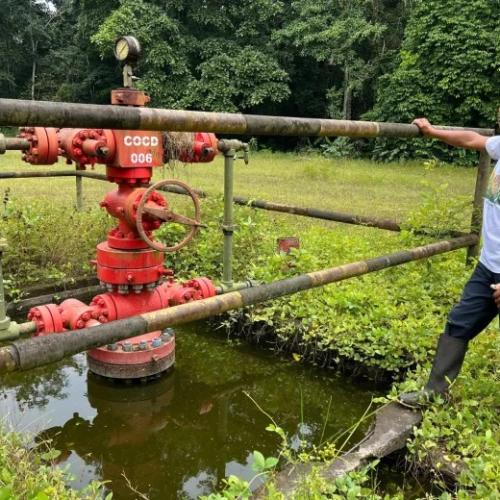
When wildfires burned across Northern California in October 2017, they killed at least 43 people and displaced another 100,000. The human toll alone was dire, but the fires also left behind a toxic mess. The charred detritus of paint, pesticides, cleaning products, electronics, pressure-treated wood, and propane tanks left a range of pollutants in the soilincluding arsenic, asbestos, copper, hexavalent chromium, lead, and zinc. In Sonoma County, a coalition of fire remediation experts, local businesses, and ecological activists mobilized to cleanse the foundations of burned-out buildings with mushrooms. The Fire Remediation Action Coalition placed more than 40 miles of wattlesstraw-filled, snakelike tubes designed to prevent erosioninoculated with oyster mushrooms around parking lots, along roads, and across hillsides. Their plan? The tubes would provide makeshift channels, diverting runoff from sensitive waterways. The mushrooms would do the rest. The volunteers, led by Sebastopol-based landscape professional Erik Ohlsen, are advocates for mycoremediation, an experimental bioremediation technique that uses mushrooms to clean up hazardous waste, harnessing their natural ability to use enzymes to break down foreign substances. Mushrooms [have been used to] clean up oil spills in the Amazon, boat fuel pollution in Denmark, contaminated soil in New Zealand, and polychlorinated biphenyls, more commonly known as PCBs, in Washington state’s Spokane River. Research suggests mushrooms can convert pesticides and herbicides to more innocuous compounds, remove heavy metals from brownfield sites, and break down plastic. They have even been used to remove and recover heavy metals from contaminated water. Research suggests mushrooms can convert pesticides and herbicides to more innocuous compounds, remove heavy metals from brownfield sites, and break down plastic.
Note: The stunningly beautiful documentary Fantastic Fungi takes you on an amazing journey through the wild and wonderful world of mushrooms. Explore a treasure trove of concise summaries of incredibly inspiring news articles which will inspire you to make a difference.
It takes discipline in the current media environment to find good news. But in the midst of government shutdowns, injustice at the border, and continuing climate chaos, quite a few victories for goodness and progress occurred. 1. The hole in the ozone layer could be fully closed over the Arctic by 2030 and the rest of the world by 2060. 2. Niger reported that, in the last three decades, it has seen the growth of 200 million trees, setting the record for the largest positive impact on the environment in African history. 3. Canada signed a treaty with the Tall Cree First Nation to create the largest protected coniferous forest in the world. 4. China, likely the worlds largest ivory consumer, banned ivory trade in 2017. 5. New York and Virginia became the first two U.S. states to enact laws requiring mental health education in schools. 6. South Africa, the country with the worlds largest population of people living with AIDS, announced a 44 percent decline in new HIV infections since 2012. 7. Paraguay has eliminated malaria, becoming the first country in the Americas to do so since Cuba in 1973. 8. Morocco passed landmark legislation criminalizing violence against women. 9. Tunisia passed a bill to give men and women equal inheritance rights. Its the first Arab nation to take such a step. 10. The majority of humanity is no longer poor or vulnerable to poverty. September marked a tipping point, where half the world can be classified as middle class.
Note: Don't miss more on these and other great success stories at the link above. Explore a treasure trove of concise summaries of incredibly inspiring news articles which will inspire you to make a difference.
[Guest Host Jeff Probst]: Was a World War II fighter pilot reincarnated in a little boy's body? Bruce [and Andrea] Leininger say yes. They are authors of Soul Survivor: The Reincarnation of a World War II Fighter Pilot. Their book describes how their son James had memories of a WWII pilot who was killed in battle more than 60 years ago. James is now 11 years old. Andrea, when did you first realize that ... James was having ideas or stories that he wanted to share about this? Andrea Leininger: [It] started about two weeks after James' second birthday. He had a -- a night terror, which he had never had before. And this first nightmare began a series of nightmares that started occurring every other night, every night. And after several months of this, he was having a nightmare and ... I was able to finally determine what he was saying. And he was saying, "airplane crash on fire, little man can't get out." Probst: Bruce, even at three, he was -- James was drawing pictures of an airplane crashing. Bruce Leininger: By the time he started drawing those pictures, he'd been talking about this ... for several months. And he essentially gave us three items of information over about a three month period. One, he gave us the name of the ship, which I verified through research on the Internet. "Natoma Bay." He gave us a name Natoma. About a month later, he gave us [the] name of a guy he said he flew with. When we asked him if there was anyone else in his ... dream that he could remember. Jack -- Jack Larson.
Note: Jack Larson was confirmed to be a member of the crew of the Natoma Bay, who when contacted, remembered the incident of the crash described by this boy. Watch an excellent, intriguing four-minute Fox News clip on this fascinating case.
Hidden away in a country renowned for its architectural beauty lies a massive hand-built place of worship many tourists never see. An entrance that looks like a mineshaft opens up to a maze carved inside the mountain holding the Damanhur Temples of Humankind in the Valchiusella Valley, about 30 miles north of Turin, [Italy]. Damanhur narrates the history of human potential through art. With at least nine rooms — some with 25-foot high ceilings — it looks as if the secret doors and passageways were built centuries ago. In truth, the unlikely temple is no ancient wonder and was built piecemeal by 150 people over a 15-year period beginning in 1978. The work was so secret, the Italian government never knew it was going on and never gave permission for it. The handcrafted structure is full of dramatic beauty, and each apparent dead end really leads into another mysterious hall. "You have to think that we did that without any engineer or architect," Ananas said. "Everything has been excavated by hand." At least as mysterious as the temple itself is the utopian society to which it belongs, The Federation of Damanhur. Damanhur, which means city of light, comprises 800 people who live in communal homes. Founded in 1975, the Federation of Damanhur thinks of itself as the builders of a new civilization that stands for peace and human potential. It prides itself on being an eco-society based on ethical and spiritual values. Falco, as the group's founder is known, said that he always dreamed of the elaborate temples. The group wanted the temple to be "a gift to humanity" once it was completed. Visitors to the halls of the temple have expressed awe, delight and intrigue.
Note: Learn the intriguing story and see breathtaking photos of the stunning beauty of these temples. Damanhur's visionary Falco died of cancer on June 23, 2013. Explore more on this great visionary. Watch an awesome video tour of Damanhur and the Temples of Humankind. And don't miss an intriguing 15-minute video of experiments done at Damanhur attaching plants to synthesizers to make angelic music.
Falling fertility rates mean nearly every country could have shrinking populations by the end of the century. And 23 nations - including Spain and Japan - are expected to see their populations halve by 2100. Countries will also age dramatically, with as many people turning 80 as there are being born. The fertility rate - the average number of children a woman gives birth to - is falling. If the number falls below approximately 2.1, then the size of the population starts to fall. In 1950, women were having an average of 4.7 children in their lifetime. Researchers at the University of Washington's Institute for Health Metrics and Evaluation showed the global fertility rate nearly halved to 2.4 in 2017 - and their study, published in the Lancet, projects it will fall below 1.7 by 2100. As a result, the researchers expect the number of people on the planet to peak at 9.7 billion around 2064, before falling down to 8.8 billion by the end of the century. "That's a pretty big thing; most of the world is transitioning into natural population decline," researcher Prof Christopher Murray told the BBC. "I think it's incredibly hard to think this through and recognise how big a thing this is; it's extraordinary, we'll have to reorganise societies." It is being driven by more women in education and work, as well as greater access to contraception, leading to women choosing to have fewer children. In many ways, falling fertility rates are a success story.
Note: For more on this inspiring news, see this hopeful information. Explore a treasure trove of concise summaries of incredibly inspiring news articles which will inspire you to make a difference.
Its being called the next big move by a New Zealand government seen by progressives around the world as a beacon in increasingly populist times: a national budget whose spending is dictated by what best encourages the well-being of citizens. That means that as the center-left government of Prime Minister Jacinda Ardern sets its priorities in the budget that will be unveiled on May 30, it is moving away from more traditional bottom-line measures like productivity and economic growth and instead focusing on goals like community and cultural connection and equity in well-being across generations. This budget is a game-changing event, said Richard Layard, a professor at the London School of Economics. As a major example of what that new framework will produce, Ms. Ardern unveiled on Sunday the biggest spending proposal to date in her coming budget: more than $200 million to bolster services for victims of domestic and sexual violence. It is the biggest single investment ever by a New Zealand government on the issue, Ms. Ardern said at an event showcasing the initiative, and will tackle one of the nations most disturbing, most shameful problems. Under New Zealands revised policy, all new spending must advance one of five government priorities: improving mental health, reducing child poverty, addressing the inequalities faced by indigenous Maori and Pacific islands people, thriving in a digital age, and transitioning to a low-emission, sustainable economy.
Note: Explore a treasure trove of concise summaries of incredibly inspiring news articles which will inspire you to make a difference.
A professional diver has revealed how she uses a little known technique to placate sharks so she can remove hooks from their mouths. Italian-born Cristina Zenato, 47, who is known as 'the shark dancer' is often filmed on the ocean floor with 8ft sharks playing around her and nestling into her knees. The conservationist, who lives on Grand Bahama, has perfected the technique of relaxing the sharks, which is part of her efforts to save them by removing hooks that are caught in their fins. She induces the 'tonic' state in the shark using a little-known technique of rubbing the ampullae of Lorenzini - the name given to hundreds of jelly-filled pores around the animal's nose and mouth. A 'tonic' state is where a shark enters a natural state of paralysis, often by being turned upside down, for up to 15 minutes. The pores act as electroreceptors detecting prey moving in the electromagnetic field around the shark - but also for some reason rubbing them turns 'Jaws' into a sleeping baby. This gives Cristina the time she needs to remove the hooks. 'The first time I put a shark to sleep was my second dive with them,' Cristina [said]. 'This big female swam straight into my lap. The most amazing thing was this 8ft shark just swimming into me and resting her head on me. 'I started crying into my mask because it was so amazing, so unique.' Over the years Cristina has collected more than 200 hooks that have been caught in sharks, and has built up so much trust she's been able to put her whole arm into a shark's mouth to pull out a hook.
Note: Don’t miss this awesome 3-minute video of Cristina removing hooks from the sharks who then snuggle her. Explore a treasure trove of concise summaries of incredibly inspiring news articles which will inspire you to make a difference.
On a summer morning in 2013, Octavian Mihai entered a softly lit room. He swallowed a capsule of psilocybin, an ingredient found in hallucinogenic mushrooms. Then he put on an eye mask and headphones and lay down on a couch. Mr. Mihai, who had just finished treatment for Stage 3 Hodgkins lymphoma, was participating in a study looking at whether the drug can reduce anxiety and depression in cancer patients. Throughout that eight-hour session, a psychiatrist and a social worker ... stayed by his side. The results from that study, and a similar small, controlled trial, were striking. About 80 percent of cancer patients showed clinically significant reductions in both psychological disorders, a response sustained some seven months after the single dose. Side effects were minimal. In both trials, the intensity of the mystical experience described by patients correlated with the degree to which their depression and anxiety decreased. Although cancer patients will not have access to therapeutically administered psilocybin anytime soon, the findings add vigor to applications to expand research in a multicenter trial with hundreds of participants. Psilocybin trials are underway in the United States and Europe for alcoholism, tobacco addiction and treatment-resistant depression. Other hallucinogens are also being studied for clinical application. This week, the Food and Drug Administration approved a large-scale trial investigating MDMA, the illegal party drug better known as Ecstasy, for post-traumatic stress disorder.
Note: See another article in the UK's Independent showing remarkable results from these studies. Learn more about the healing potentials of mind-altering drugs now being explored by the scientific community.
Important Note: Explore our full index to revealing excerpts of key major media news articles on several dozen engaging topics. And don't miss amazing excerpts from 20 of the most revealing news articles ever published.