



































Inspirational News Articles
Below are key excerpts of some of the most inspiring news articles from reliable news media sources. If any link fails to function, a paywall blocks full access, or the article is no longer available, try these digital tools.
For further exploration, delve into our Inspiration Center.

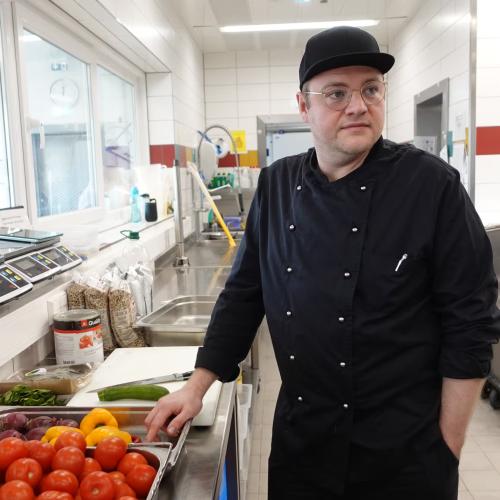
On Dutch ‘care farms,' aging folks tend to livestock, harvest vegetables and make their own decisions. Boerderij Op Aarde is one of hundreds of Dutch “care farms” operated by people facing an array of illnesses or challenges, either physical or mental. Today, there are roughly 1,350 care farms in the Netherlands. They provide meaningful work in agricultural settings with a simple philosophy: rather than design care around what people are no longer able to do, design it to leverage and emphasize what they can accomplish. Studies in Norway and the Netherlands found that people with dementia at care farms tended to move more and participate in higher-intensity activities than those in traditional care, which can help with mobility in daily life and have a positive impact on cognition. Dementia is often linked to social isolation, and care farms were found to boost social involvement. In traditional dementia care settings ... the focus tends to be on preventing risk. There’s often a fixed schedule of simple activities, like games or movies, and the only choice attendees are given is whether to participate or not. In the course of his research, [Jan] Hassink has spoken to countless people with dementia. Common to many of them is a desire to not only participate in society, but contribute to it. “We don’t focus on what’s missing, but what is still left,” says Arjan Monteny, cofounder of Boerderij Op Aarde, “what is still possible to develop in everybody."
Note: Explore more positive stories like this in our comprehensive inspiring news articles archive focused on solutions and bridging divides.
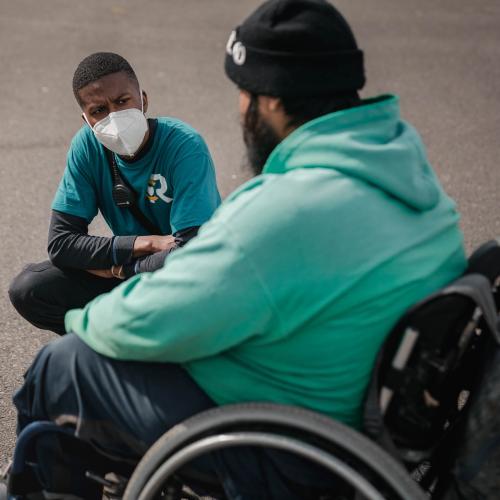
A violent week of fistfights at a Louisiana high school led to the arrests of at least 22 students last month. So a group of concerned fathers decided enough was enough. They formed a volunteer group, Dads on Duty, and began roaming the halls of Southwood High School in Shreveport to calm students, spread positivity and keep the peace. So far it's working. The group of about 40 fathers, wearing Dads on Duty T-shirts, patrol the campus every weekday on different shifts, working as community leaders and liaisons. Since they started the initiative, there's been no fighting at the school. "I immediately knew that [this violence] ... isn't the community that we're raising our babies in," said Michael LaFitte, [one] of the dads. The dads showed up at the school at 7:40 a.m., balancing their work schedules to patrol the campus in the morning, during lunch and after school. Shreveport has seen an uptick in violence and crime in recent months [as a consequence of] socioeconomic issues made worse by the lingering pandemic. The city's mayor, Adrian Perkins, credits the fathers with helping to combat violence involving local youth. He turned up at the school for a Dads on Duty shift when the fathers first started, and said he was impressed by their commitment. Dads on Duty has been working closely with the Caddo Parish School Board and local law enforcement, LaFitte said. The dads say their focus is not criminal justice - they let sheriff's deputies handle that - but an additional layer of parenting. "We are armed with love," LaFitte said.
Note: To further explore stories that help create the world we want to live in, check out our inspiring news articles collection and our Inspiration Center.
An inspiring discussion about racism between a white woman and black man ... has captured the attention of [millions]. Caroline Brock and Ernest Skelton share a special relationship. It all started with Skelton coming over to fix one of her appliances. People judge me before I even come in the door, so thats the reason why I ask, Is it OK for me to come in? said Skelton. The question caught Brock completely off guard. Over the weekend, Skelton went back over to Brocks home for second appliance repair appointment. Thats when Brock asked him a question that was a little more personal. How are you doing right now given the current climate? Brock wanted to know what the day-to-day life of a black man is like. Skelton opened up and told her some stories about how racism has affected him. He gets pulled over in his work vehicle at least half a dozen times a year. I dont even remember the last time I was pulled over, Brock said. Sometimes I have customers that need me after 5 oclock and I have to reschedule for another day. Im afraid that Ill wind up getting pulled over, and this time, I wont make it home," Skelton said. Brock asked Ernest if she could post their interaction on Facebook. He thought it would be a great idea. A few days later, they had more than 100,000 shares. In the comments ... a lot of white people say, Id love to have these conversations, but Im scared ... Im going to offend someone," Brock explained. But Skelton said he wasnt offended. If we want to change the world and make our country stronger, we have to be willing to step into the uncomfortableness," Brock said. The two hope that their interaction can inspire others to open up the conversation.
Note: Don't miss this highly inspiring and educational facebook post. This is how we change the world for the better. Explore a treasure trove of concise summaries of incredibly inspiring news articles which will inspire you to make a difference.
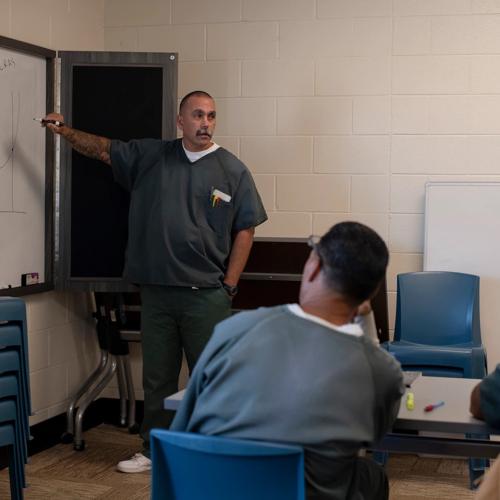
When we think about people who are behind bars for crimes simple or heinous, our minds take us to a place of judgment. We may view inmates as less than: less intelligent, less successful, less worthy of love and support. We may see them as “other.” The reality is, we may all be a few experiences away from potentially committing a crime. A video that poignantly highlights the dynamics that could lead to incarceration is called Step Inside the Circle. It begins with a group of 235 men in blue uniforms in a yard of a maximum-security prison. Barbed wire and guards surround them. They tower over a petite blond woman wearing a black and white t-shirt that says There Is No Shame. She carries a megaphone through which she invites them to step inside the circle if they have experienced verbal or physical abuse and neglect, if they lived in a home without feeling loved, if they had given up on themselves. One by one and then in multitudes, they join Fritzi Horstman as together they chant “There is no shame,” over and over. A group of them move indoors and sit in a circle of chairs with Horstman admitting her own wounds that led to criminal activity. That opened the door for the participants to describe the wounds they have carried for much of their lives. [The] men were visibly moved, some wiping their eyes, some providing brotherly support and admitted that they were breaking the code by being vulnerable. They discovered that it was a unifying experience and they felt less isolated as a result.
Note: Two short, incredibly inspiring documentaries show how these inmates' lives have been transformed. Don't miss "Step Inside the Circle" (7 min) and "Honor Yard" (8 min).
The ozone layer is continuing to heal and has the potential to fully recover, according to a new study. A scientific paper, published in Nature, heralds a rare success in the reversal of environmental damage and shows that orchestrated global action can make a difference. The ozone layer is a protective shield in the Earth’s stratosphere which absorbs most of the ultraviolet radiation reaching us from the sun. Antara Banerjee ... is lead author of the study. She told The Independent: “We found signs of climate changes in the southern hemisphere, specifically in the air circulation patterns. The challenge was showing that these changing air circulation patterns were due to the shrinking ozone hole following the implementation of the Montreal Protocol. The jet stream in the southern hemisphere was gradually shifting towards the south pole in the last decades of the 20th century due to ozone depletion. Our study found that movement has stopped since 2000 and might even be reversing. The pause in movement began around the same time that the ozone hole started to recover. The emissions of ozone-depleting substances that were responsible for the ozone hole - the CFCs from spray cans and refrigerants – started to decline around 2000, thanks to the Montreal Protocol.” Overall, it is good news for the fight against climate change. She added: “It shows that this international treaty has worked and we can reverse the damage that we’ve already done to our planet. That’s a lesson to us all.”
Note: The Nature study referenced above is available here. Explore a treasure trove of concise summaries of incredibly inspiring news articles which will inspire you to make a difference.
How giant African rats are helping uncover deadly land mines in Cambodia
September 10, 2019, PBS
https://www.pbs.org/newshour/show/how-giant-african-rats-are-helping-uncover...
From Angola to the former Yugoslavia, land mines are a lethal legacy of wars over long ago. Cambodia is among the most affected countries, with millions of buried explosives that kill and maim people each year. Now, an organization is deploying an unexpected ally to find mines: the giant pouch rat, whose sharp sense of smell can detect explosives. Mark Shukuru is head rat trainer in Cambodia for the Belgian non-profit APOPO. He is from Tanzania, where this species is also native, and he learned early that they have some of the most sensitive noses in the animal kingdom. Each comes out of a rigorous program in Tanzania that trains them to distinguish explosives from other scents. Each time they sniff out TNT buried in this test field, a trainer uses a clicker to make a distinct sound, and they get a treat. Since 2016, APOPO's hero rats have found roughly 500 anti-personnel mines and more than 350 unexploded bombs in Cambodia. They're the second animal to be deployed in mine clearance. Dogs were first. Animals can work much faster than humans, although, when the land is densely mined, metal detectors are considered more efficient. APOPO plans to bring in some 40 more rats to expand the force and replace retirees. Each animal works about eight years, and then lives out the rest of its days alongside fellow heroes, all working toward the day when they can broadcast to the world that Cambodia has destroyed the last unexploded bomb.
Note: Don't miss the cute video of these hero rats at work, available at the link above. Explore a treasure trove of concise summaries of incredibly inspiring news articles which will inspire you to make a difference.
A high school class in Hightstown, New Jersey, has found an impressive way to shed light on unsolved civil rights crimes from the 1950s and '60s. The AP class, studying US government, drafted a bill that would create a board to review, declassify, and release documents related to such cases. The students ... went to Washington, walked the halls of Senate office buildings and passed out folders with policy research and information about their bill, said former student Joshua Fayer. Their efforts caught the attention of Rep. Bobby Rush of Illinois, who introduced the bill - modeled after the JFK Assassination Records Act - in March 2017. Later Sens. Doug Jones of Alabama and Ted Cruz of Texas signed on. The House and Senate versions ... passed late last year, and President Trump signed the bill into law on January 8. Former student Jay Vainganker said the class was initially trying to solve unresolved hate crimes from the [civil rights] era. They filed public records requests for information from the FBI and Department of Justice, and they got back redacted responses from the government. In some cases, entire pages were redacted. That's when their focus changed, Vaingankar said. They decided to draft a bill that would make the government "a little bit more transparent." The Civil Rights Cold Case Records Collection Act creates "a board that would be authorized to look at these documents and see what should be redacted, what isn't relevant, what should be released," he said.
Note: Explore a treasure trove of concise summaries of incredibly inspiring news articles which will inspire you to make a difference.
While it is easy to be aware of all the bad things happening in the world, its harder to know about the good things. The silent miracle of human progress is too slow and too fragmented to ever qualify as news. Over the past 20 years, the proportion of people living in extreme poverty has almost halved. But in online polls, in most countries, fewer than 10% of people knew this. Our instinct to notice the bad more than the good is related to three things: the misremembering of the past; selective reporting by journalists and activists; and the feeling that as long as things are bad, its heartless to say they are getting better. Stories about gradual improvements rarely make the front page even when they occur on a dramatic scale and affect millions of people. And thanks to increasing press freedom and improving technology, we hear about more disasters than ever before. This improved reporting is itself a sign of human progress, but it creates the impression of the exact opposite. How can we help our brains to realise that things are getting better? Think of the world as a very sick premature baby in an incubator. After a week, she is improving, but ... her health is still critical. Does it make sense to say that the infants situation is improving? Yes. Does it make sense to say it is bad? Yes, absolutely. Does saying things are improving imply that everything is fine, and we should all not worry? Not at all: its both bad and better. That is how we must think about the current state of the world.
Note: Don't miss this awesome 5-minute video by author Hans Rosling showing the detailed statistics in a most entertaining way. For more see the many TED talks he gave.
When Salman Khan began posting videos on YouTube more than a decade ago, the Silicon Valley entrepreneur had no idea of the celebrity he would gain, nor the impact he would have. His online tutorials in math ... were made for friends and family struggling in school. But his audience quickly grew. Before long, Khan had quit his day job in finance to carry out a goal of delivering free Internet instruction to the world. His educational website was called Khan Academy. On Tuesday night, Khan ... was presented the fourth annual Visionary of the Year Award, an honor announced by The San Francisco Chronicle. Khan Academy today has more than 62 million registered users in nearly 200 countries. His voice, which still narrates many of the tutorials, is widely recognized, and students and parents often stop him on the street to thank him for providing an assist at school or work. Since its launch in 2008, Khan Academy has broadened its online course load to include nearly every school subject from science to art and from the kindergarten to college levels. Khans Mountain View nonprofit has grown from just him to more than 150 employees. Perhaps most impressive is that the schooling has remained entirely free. With the admirable mission of providing a world-class education to anyone anywhere, Khan has attracted financial support from well-heeled donors, including the Bill and Melinda Gates Foundation, Google and Bank of America.
Note: Explore a treasure trove of concise summaries of incredibly inspiring news articles which will inspire you to make a difference.
A few days after registration opened at Yale for Psyc 157, Psychology and the Good Life, roughly 300 people had signed up. Within [six] more days, about 1,200 students, or nearly one-fourth of Yale undergraduates, were enrolled. The course, taught by Laurie Santos ... tries to teach students how to lead a happier, more satisfying life in twice-weekly lectures. Students want to change, to be happier themselves, and to change the culture here on campus, Dr. Santos said in an interview. If we see good habits, things like students showing more gratitude, procrastinating less, increasing social connections, were actually seeding change in the schools culture. A 2013 report by the Yale College Council found that more than half of undergraduates sought mental health care from the university during their time there. A lot of us are anxious, stressed, unhappy, numb, said Alannah Maynez, 19, a freshman taking the course. The fact that a class like this has such large interest speaks to how tired students are of numbing their emotions - both positive and negative - so they can focus on their work. Psychology and the Good Life ... stands as the most popular course in Yales 316-year history. Dr. Santos has encouraged all students to enroll in the course on a pass-fail basis, tying into her argument that the things Yale undergraduates often connect with life satisfaction - a high grade, a prestigious internship, a good-paying job - do not increase happiness at all.
Note: Harvard, Stanford and other colleges are getting in on the action, too, as reported in this article.
Icelandic teenagers are saying no to drugs by getting high on life. For the last 20 years, the island country has seen a dramatic decrease in adolescent drug and alcohol abuse after the federal government made a concerted effort to offer teens a more natural high. The multifaceted approach includes state-sponsored recreational activities and after-school programs meant to enhance family ties and community bonds. [Dr. Harvey Milkman, the psychologist behind Iceland's strategy], says the results have been exceptional. Since 1998, for example, the number of 15- to 16-year-olds that self-reported to have been drunk within the last 30 days dropped from 43 to 5 per cent. In 1992, Milkman and his team opened up their laboratory, Project Self-Discovery, in Denver. The program used art, music, dance, poetry, and nature activities to reduce stress in lieu of drugs and alcohol. Once teens embraced these natural highs, their risk of drug use decreased dramatically. At the same time, rates of teenage substance use were exceptionally high in Iceland. Following Milkman's success in Denver, the Icelandic government reached out to him to put his research into practice on a national scale. Over the last 20 years, Milkman's research has helped inform what's now known as the Iceland approach. "The whole country of Iceland kind of bought into that idea of creating opportunities for the kids to feel good without taking drugs," [said Milkman].
Note: Explore a treasure trove of concise summaries of incredibly inspiring news articles which will inspire you to make a difference.
"Whos this black guy trying to make friends with the Ku Klux Klan? A raised eyebrow, a shake of the head. Such were the sentiments of Scott Shepherd, a former Klan grand dragon, when he first saw Daryl Davis, a piano-playing bluesman who travels the nation attempting to dispel racism from those who hate him most. It doesnt often work, but over the decades Davis, like a man on a quixotic pilgrimage, has collected more than two dozen Klan robes from those who have disavowed white supremacy. His unlikely story unfolds in Accidental Courtesy, a documentary by Matt Ornstein that follows Davis on an odd and lively quest to Confederate monuments, Klansmen houses, boogie joints, churches and a hot dog stand. How can you hate me when you dont even know me? Davis asks in the film, which opens in Los Angeles on Friday. Throughout my life I have been looking for an answer to that. The son of a foreign service officer, Davis spent part of his childhood overseas, far from the racism many African Americans learn early. His first encounter with bigotry came when he was a 10-year-old Cub Scout. Bottles and rocks were thrown at him as he marched in a parade. The bewildering incident was the seed of a mission that years later found him ... starting a conversation with Klan Imperial Wizard Roger Kelly. The two became close. When Kelly quit the Klan, he gave Davis his robe. Talking to Klansmen has worked for me, said Davis. I dont seek to convert them but if they spend time with me, they cant hate me.
Note: Watch an awesome video about this brave black man who all but ended the KKK in Maryland by making friends with their leaders. Explore a treasure trove of concise summaries of incredibly inspiring news articles which will inspire you to make a difference.
Life's been full of uncertainties for Reuben Nsemoh lately. Ever since he suffered a concussion in a soccer game, the suburban Atlanta teen's worried about why it's so hard for him to concentrate. He's fretted over whether he'll ever get to play his favorite sport. But the biggest stumper of all: how is it that he's suddenly speaking fluent Spanish? Nsemoh, a 16-year-old high school sophomore, ended up in [a] coma last month after another player kicked him in the head during a game. When he woke up, he did something he'd never done before: speak Spanish like a native. His parents said he could already speak some Spanish, but he was never fluent in it until his concussion. Slowly, his English is coming back, and he's starting to lose his Spanish fluency. Foreign accent syndrome is an extremely rare condition in which brain injuries change a person's speech patterns, giving them a different accent. The first known case was reported in 1941. Since then there have been a few dozen reported cases. Three years ago, police found a Navy vet unconscious in a Southern California motel. When he woke up, he had no memory of his previous life, and spoke only Swedish. In Australia, a former bus driver got in a serious car crash that left her with a broken back and jaw. When she woke up, she was left with something completely unexpected: a French accent. And earlier this year, a Texas woman who had surgery on her jaw, has sported a British accent ever since.
Note: Explore a treasure trove of concise summaries of incredibly inspiring news articles which will inspire you to make a difference.
Two dolphins have been recorded having a conversation for the first time after scientists developed an underwater microphone which could distinguish the animals' different "voices". Researchers have known for decades that the mammals had an advanced form of communication. But scientists have now shown that dolphins alter the volume and frequency of pulsed clicks to form individual "words" which they string together into sentences in much the same way that humans speak. Researchers at the Karadag Nature Reserve, in Feodosia, Ukraine, recorded two Black Sea bottlenose dolphins, called Yasha and Yana, talking to each other in a pool. Each dolphin would listen to a sentence of pulses without interruption, before replying. Lead researcher Dr Vyacheslav Ryabov, said: “Essentially, this exchange resembles a conversation between two people. “Each pulse represents a phoneme or a word of the dolphin's spoken language. “The analysis of numerous pulses registered in our experiments showed that the dolphins took turns in producing [sentences] and did not interrupt each other, which gives reason to believe that each of the dolphins listened to the other's pulses before producing its own. “This language exhibits all the design features present in the human spoken language. This indicates a high level of intelligence and consciousness in dolphins. Their language can be ostensibly considered a highly developed spoken language, akin to the human language.”
Note: Learn more about the amazing world of marine mammals.
He has restored eyesight to more than 100,000 people, perhaps more than any doctor in history. His patients ... stagger and grope their way to him along mountain trails from remote villages, hoping to go under his scalpel. A day after he operates to remove cataracts, he pulls off the bandages - and, lo! They can see clearly. At first tentatively, then jubilantly, they gaze about. A few hours later, they walk home, radiating an ineffable bliss. Dr. Sanduk Ruit, a Nepali ophthalmologist ... has pioneered a simple cataract microsurgery technique that costs only $25 per patient and is virtually always successful. Indeed, his Nepal method is now taught in United States medical schools. In the United States, cataract surgery is typically performed with complex machines. But these are unaffordable in poor countries, so Dr. Ruit [pioneered a] small-incision microsurgery to remove cataracts without sutures. At first, skeptics denounced or mocked his innovations. But then the American Journal of Ophthalmology published a study of a randomized trial finding that Dr. Ruits technique had exactly the same outcome (98 percent success at a six-month follow-up) as the Western machines. One difference was that Dr. Ruits method was much faster and cheaper. He founded the Tilganga Institute of Ophthalmology, which ... conducts eye surgery on 30,000 patients annually, [as well as] manufactures 450,000 tiny lenses a year for use in cataract surgery, keeping costs to $3 a lens compared to $200 in the West.
Note: Your direct donation to help this man can cure blindness for many people.Explore a treasure trove of concise summaries of incredibly inspiring news articles which will inspire you to make a difference.
Last August, a group of six young Indians took to the streets of Delhi with one simple aim: to feed the homeless. Overnight, they drove to restaurants, collected unsold food, re-packaged it and gave it to around 100 people sleeping rough in the capital. Friends, colleagues and strangers soon joined them on drives and their numbers began to swell. In less than a few months, a nationwide volunteer movement known as the Robin Hood Army (RHA) had emerged, on a mission to curb food waste and stamp out hunger. Founders Ghose and Anand Sinha, also 27, were inspired by Refood International, an organisation based in Portugal. Using a hyperlocal model, they collect excess food and give it to those who need it. But every community has their own Refood chapter, explains Ghose. I realised it was something that can be very easily done in India, where the need would be much more. The movement gained huge momentum after the launch of its social media campaign, and now boasts a 500-strong volunteer base spread out across 13 cities. In April, the group also began operations in neighbouring Pakistan. The Robin Hood Armys ideology revolves around decentralisation. Small teams, mostly young professionals, become responsible for specific areas; they scout for local restaurants, convince them to donate surplus food, identify clusters of people in need - such as the homeless and orphanages - and carry out weekly distributions.
Note: Explore a treasure trove of concise summaries of incredibly inspiring news articles which will inspire you to make a difference.
Citizens of one of the happiest countries on Earth are surprisingly comfortable contemplating a topic many prefer to avoid. Is that the key to joy? On a visit to Thimphu, the capital of Bhutan, I found myself sitting across from a man named Karma Ura, [confessing] something very personal. Not that long before, seemingly out of the blue, I had experienced some disturbing symptoms: shortness of breath, dizziness, numbness in my hands and feet. I feared I was having a heart attack. So I went to the doctor, who ran a series of tests and found... Nothing, said Ura. Even before I could complete my sentence, he knew that my fears were unfounded. I was not dying. I was having a panic attack. You need to think about death for five minutes every day, Ura replied. It will cure you. How? I said, dumbfounded. It is this thing, this fear of death ... is what is troubling you. But why would I want to think about something so depressing? Rich people in the West, they have not touched dead bodies, fresh wounds, rotten things. This is a problem. This is the human condition. We have to be ready for the moment we cease to exist. In Bhutanese culture, one is expected to think about death five times a day. The Bhutanese may be on to something. In a 2007 study, University of Kentucky psychologists [concluded] that death is a psychologically threatening fact, but when people contemplate it, apparently the automatic system begins to search for happy thoughts. Death is a part of life, whether we like it or not. Ignoring this essential truth comes with a ... cost.
Note: Explore a treasure trove of concise summaries of incredibly inspiring news articles which will inspire you to make a difference.
U.S. violent crimes including murders fell 4.4 percent in 2013 to their lowest number since the 1970s, continuing a decades-long downturn, the FBI said on Monday. The law enforcement agency's annual Crime in the United States report showed the country had an estimated 1.16 million violent crimes last year, the lowest number since 1.09 million were recorded in 1978. All types of violent crimes were lower, with murder and non-negligent manslaughter off 4.4 percent to 14,196, the lowest figure since 1968. Rape was down 6.3 percent and robbery fell 2.8 percent, the Federal Bureau of Investigation data showed. The violent crime rate last year was 367.9 for each 100,000 in population, down 5.1 percent from 2012. The rate has fallen every year since at least 1994, the earliest year for readily accessible FBI data, and the 2013 figure was about half the 1994 rate. Property crimes fell 4.1 percent ... the 11th straight yearly decline. In an analysis, the non-profit Pew Charitable Trusts said the drop in crime coincided with a decline in the prison population, with the number of U.S. prisoners down 6 percent in 2013 from its peak in 2008. Thirty-two of the 50 states have seen a drop in crime rates as the rate of imprisonment fell, Pew said. California notched the largest drop in imprisonment rate over the five-year period, at 15 percent, and crime was down 11 percent. The state has been under court order to reduce prison overcrowding, and voters last week approved an initiative that reduced sentences for some crimes.
Note: Why isn't this inspiring news being broadcast widely by the media? And why hasn't the FBI website updated their data on this since 2010? The police and media appear to consistently downplay the huge drop in violent crime since 1994. According to the FBI's own statistics, violent crime has currently dropped to 1/3 or less what it was in 1994. See the revealing FBI graphs and charts here, here, and here. Yet some of these charts have now been removed and mention of this huge decrease downplayed. The obvious reason is that a large decrease in crime might cause people to want to decrease police and FBI budgets. More here.
According to a new study published in the Journal of the American College of Cardiology, running five minutes per day can reduce an individuals risk of premature death by about three years. Researchers found that people who ran less than an hour per week also saw an increase in lifespan, not just a decrease in risk of premature death. The study took place over the course of 15 years, testing participants ranging in age from 18-100. Separate research found that running more than 20 miles per week could take years off an individuals life, providing further evidence that less can be more with regard to exercise. According to that research, individuals who exhibit consistent but moderate workout patterns are likely to live the longest.
Note: Explore a treasure trove of concise summaries of incredibly inspiring news articles which will inspire you to make a difference.
In a new study, researchers found that breast-cancer patients who had high levels of vitamin D were twice as likely to survive [as] women with low levels. They reviewed five studies that observed more than 4,440 women. “The study has implications for including vitamin D as an adjuvant to conventional breast cancer therapy,” study co-author Dr. Heather Hofflich, an associate professor of medicine at the University of California San Diego, said in a press release. The researchers recommend that vitamin D should be added to the various treatments given to women fighting breast cancer. The body naturally produces vitamin D when exposed to sunlight, but milk, fatty fish and other foods can also boost production. Patients could also take vitamin D supplements.
Note: This is huge news! Why isn't this exciting development getting more press coverage? Read numerous major media articles revealing potential cancer cures which have received little attention. And see an informative article with more on the Vitamin D connection.
Important Note: Explore our full index to revealing excerpts of key major media news articles on several dozen engaging topics. And don't miss amazing excerpts from 20 of the most revealing news articles ever published.