





































Media Articles
Below are key excerpts of revealing news articles from reliable news media sources. If any link fails to function, a paywall blocks full access, or the article is no longer available, try these digital tools.
For further exploration, delve into our comprehensive Information Centers.

When Rafael Correa entered Ecuador’s presidency in 2007, the nation faced an opportunity and a challenge. Ecuador’s economy depended on oil, and global crude prices were near a record high. Much of the oil was extracted by foreign companies ... as prices surged more wealth began flowing overseas. Soon after taking office, Correa increased a recently enacted windfall tax on oil companies. The idea was to use the tax as leverage to extract better terms from the companies. Within months, two oil companies working as partners—the independent Anglo-French firm Perenco and Burlington Resources, a subsidiary of ConocoPhillips—ceased paying the tax and sued the government through a system of international tribunals known as investor state dispute settlements, or ISDS. The system allows foreign investors to sue governments before tribunals outside the jurisdiction of national courts. Perenco and Burlington [convinced] arbitrators in two separate tribunals to award the companies more than $800 million. Critics say the ISDS system gives corporations an exclusive, parallel justice system that elevates foreign interests above human rights and environmental concerns. The vast majority of cases have been brought by companies based in North America or Europe against governments in Latin America, Africa and Asia, prompting many critics to liken the ISDS system to a form of market-based colonialism that continues to extract wealth from the Global South.
Note: According to the analysis in the article, fossil fuel companies and investors filed one in five of 1,720 claims since the 1970s, and "have been awarded at least $82.8 billion in compensation from governments." For more along these lines, see concise summaries of deeply revealing news articles on corporate corruption and income inequality from reliable major media sources.
Last December, the US Government enacted legislation mandating that all government agencies and contracting agencies having any evidence of unidentified anomalous phenomena (UAP), technologies of unknown origin (TUO), and non-human Intelligence (NHI) must turn the information over to the National Archives and Records Administration. This legislation is an extraordinary milestone in human history. It marked the first time a government stated it possessed records regarding the reality of UFOs/UAP. The world will now ask three fundamental questions: what are the facts about UFO/UAP, who are these beings, and how might we communicate with them? To begin answering these fundamental questions, the New Paradigm Institute (NPI) is collaborating with Ubiquity University to offer an Academic Certificate program leading to graduate degrees in Extraterrestrial Studies. NPI will offer a Certificate on “The History Law, Politics and Technology of UFO/UAP,” starting with two courses taught by Daniel Sheehan, President and General Counsel to NPI, and two courses taught by Richard Dolan, the premier UFO/UAP historian. Ubiquity’s Certificate in “ET Awareness and Communication” will be offered through its School of Science and Consciousness beginning in the fall of 2024. All courses are open to the public and available for anyone seeking advanced degrees in Extraterrestrial Studies.
Note: For more along these lines, see concise summaries of deeply revealing news articles on UFOs from reliable major media sources. Then explore the excellent, reliable resources provided in our UFO Information Center.
Boogying the night away produces meaningful improvements in one's body mass and waist circumference in people who are overweight or obese, a new study found. Dancing was also seen to improve blood pressure, insulin sensitivity, physical fitness, cognitive disorders, hypertension, cardiovascular ailments, diabetes, and mental health—in other words, all the root causes of the non-communicable diseases that kill most people in the West. The researchers believed that dance would be a more ideal form of exercise because it is sustainable—it's a sociable, entertaining way of exercising that participants will enjoy, rather than a drudgery they have to push themselves through. “Dance is effective on fat loss in people overweight and obese and has a significant improvement on body composition and morphology,” said Zhang Yaya, a Ph.D. student at Hunan University, China. To get their results, published in the journal PLoS ONE, the team studied data from 646 participants who were overweight and obese across ten different studies. They found that dance is very effective for improving body composition and showed that more creative dance types had the most pronounced body composition improvement when compared with traditional dance. Improvements were also found in overweight children and patients with Parkinson’s disease.
Note: Explore more positive stories like this in our comprehensive inspiring news articles archive focused on solutions and bridging divides.
When the bell rings at Jerusalem's Hand in Hand school, you hear something that's not common in Israel: the sound of young people's voices rising together in laughter and conversation in both Hebrew and Arabic. Israeli society is largely segregated. The separation begins at kindergarten, when Jewish and Arab children are sent to different schools and experience completely separate education "tracks" or systems. "Arabs go to Arab schools in their neighborhoods and Jews go to Jewish schools in the areas where they live," says Nour Younis, events manager for Hand in Hand. Hand in Hand [was] founded in 1998 by a group of parents who wanted their children to grow up differently. What began as two kindergarten classes in Jerusalem and Galilee has now become six campuses nationwide, with some 2,000 students. The school's eventual goal is to create a fifth track of education within the Israeli school system. Today there are four options: Arab schools and three Jewish tracks — secular, religious and ultra-Orthodox. The students at Hand in Hand campuses are around 60% Arab and 40% Jewish. There is a waiting list of Arab children who would like to attend. Since Oct. 7 ... this school has become a rare oasis of freedom for Palestinians who say they can be harassed or worse for expressing their anguish over the war. "For our students, this is a safe place, a safe environment," says [school vice principal Engie] Wattad.
Note: Explore more positive stories like this in our comprehensive inspiring news articles archive focused on solutions and bridging divides.
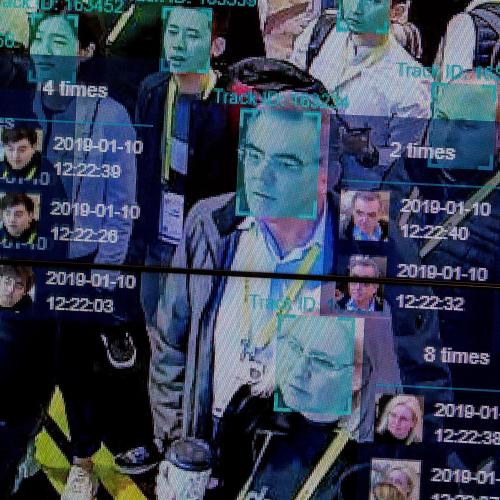
American Amara Majeed was accused of terrorism by the Sri Lankan police in 2019. Robert Williams was arrested outside his house in Detroit and detained in jail for 18 hours for allegedly stealing watches in 2020. Randal Reid spent six days in jail in 2022 for supposedly using stolen credit cards in a state he’d never even visited. In all three cases, the authorities had the wrong people. In all three, it was face recognition technology that told them they were right. Law enforcement officers in many U.S. states are not required to reveal that they used face recognition technology to identify suspects. Surveillance is predicated on the idea that people need to be tracked and their movements limited and controlled in a trade-off between privacy and security. The assumption that less privacy leads to more security is built in. That may be the case for some, but not for the people disproportionately targeted by face recognition technology. As of 2019, face recognition technology misidentified Black and Asian people at up to 100 times the rate of white people. In 2018 ... 28 members of the U.S. Congress ... were falsely matched with mug shots on file using Amazon’s Rekognition tool. Much early research into face recognition software was funded by the CIA for the purposes of border surveillance. More recently, private companies have adopted data harvesting techniques, including face recognition, as part of a long practice of leveraging personal data for profit.
Note: For more along these lines, see concise summaries of deeply revealing news articles on police corruption and the disappearance of privacy from reliable major media sources.
Mental health apps have become increasingly common over the past few years, particularly due to the rise in telehealth during the coronavirus pandemic. However, there's a problem: Data privacy is being compromised in the process. In 2023 the Federal Trade Commission ordered the mental health platform BetterHelp, which is owned by Teladoc (TDOC), to pay a $7.8 million fine to consumers for sharing their mental health data for advertising purposes with Facebook (META) and Snapchat (SNAP) after previously promising to keep the information private. Cerebral, a telehealth startup, admitted last year to exposing sensitive patient information to companies like Google (GOOG, GOOGL), Meta, TikTok, and other third-party advertisers. This info included patient names, birth dates, insurance information, and the patient's responses to mental health self-evaluations through the app. Overall, according to the Mozilla Foundation’s Privacy Not Included online buyer’s guide, only two out of the 27 mental health apps available to users met Mozilla's privacy and security standards in 2023. A December 2022 study of 578 mental health apps published in the Journal of the American Medical Association found that 44% shared data they collected with third parties. A February 2023 report from Duke University found that out of 37 different data brokers that researchers contacted ... firms “were ultimately willing and able to sell the requested mental health data.”
Note: For more along these lines, see concise summaries of deeply revealing news articles on health and the disappearance of privacy from reliable major media sources.
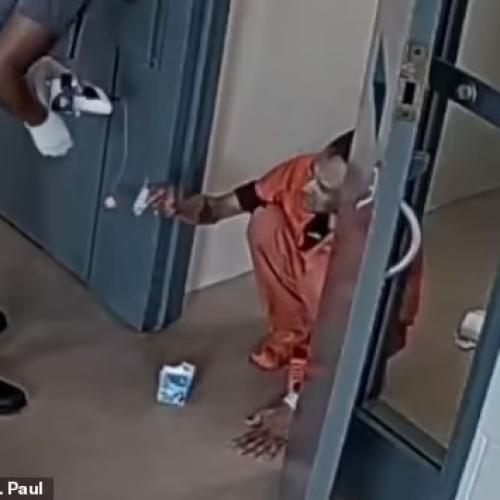
After poking and prodding [Doyle] Hamm with needles for almost 3 hours, prison officials gave up as Mr. Hamm lay strapped to a gurney in a pool of blood. They called off the execution because they were unsuccessful in gaining IV access to administer the lethal injection. This was a risk Mr. Hamm’s attorney had predicted given Hamm’s advanced cancer and long history of IV drug use. At the time, ADOC Commissioner Jeff Dunn did not provide details to reporters about what happened. “I wouldn’t characterize what we had tonight as a problem,” Dunn said. Hamm’s attorney later released photos and examination notes showing that prison employees had punctured Hamm’s bladder and an artery causing him to urinate blood. The state ... privately agreed to never try to execute Doyle Hamm again. Counternarratives about death row can be found in the 2023 book titled Ghosts Over the Boiler: Voices from Alabama’s Death Row. The book is a collection of writings previously published by Project Hope to Abolish the Death Penalty, or PHADP, the nation’s only nonprofit formed on and operated from death row. The organization ... has a goal to educate the public about capital punishment and the features of inequality that define it, while advocating for an end to the death penalty. All of the featured writers have been convicted of murder, although based on the rate of death row exonerations, some are likely wrongly convicted.
Note: The current system often puts innocent people to death. Over half of all wrongful convictions are the result of government misconduct. For more along these lines, see concise summaries of deeply revealing news articles on prison system corruption from reliable major media sources.
A Chinese researcher who first submitted the genetic sequence for the SARS-CoV-2 virus in late December 2019, around two weeks before China disclosed the deadly virus to outside scientists, was on the payroll of Anthony Fauci’s institute at the time, according to a grant awarded to EcoHealth Alliance, a nonprofit operated by Peter Daszak. The disclosures call into further question what officials at the National Institutes of Health (NIH) knew about research they were funding in China where the pandemic began. “The grant doesn't work on SARS-CoV-2,” Daszak [said], when the NIH was forced to review the grant in the summer of 2020. “Our organization has not actually published any data on SARS-CoV-2. We work on bat coronaviruses that are out there in the wild and trying to predict what the next one is.” NIH officials refused to respond to multiple requests to explain how much salary they provided to Dr. Lili Ren, a scientist at the Beijing-based Institute of Pathogen Biology, who wrote a letter in support of Daszak’s grant application to Fauci’s NIH institute. Ren first uploaded the COVID virus sequence to the NIH’s GenBank on December 28, 2019—two weeks before scientists celebrated China’s release of the genetic sequence on January 11, 2020. Fauci’s NIH grant also paid for Ren’s expenses, including travel to the United States to meet with Daszak as well as her collaborator Ralph Baric at the University of North Carolina.
Note: The author of Disinformation Chronicle on Substack is Paul Thacker, an American investigative journalist who served as an investigator in the US Senate, focusing on financial ties between doctors and pharmaceutical companies. For more along these lines, see concise summaries of deeply revealing news articles on COVID-19 from reliable major media sources.
Anything you purchase can be used against you. After the Jan. 6 Capitol clash, the Biden administration vastly expanded federal surveillance of average Americans. The Treasury Department’s Financial Crimes Enforcement Network (FinCEN) stretched its “suspicious behavior” definition, warning banks to track “‘extremism’ indicators that include ‘transportation charges, such as bus tickets, rental cars, or plane tickets, for travel to areas with no apparent purpose,’ or ‘the purchase of books (including religious texts),’” the House committee reported. If you bought a gun or ammo since 2021, Team Biden bureaucrats may have automatically classified you as a “potential active shooter.” FinCEN encouraged banks to use terms including “TRUMP” and “MAGA” for “identifying transactions on behalf of federal law enforcement,” the House Judiciary Committee reports. Rep. Jordan is seeking sworn testimony about the FBI’s “mass accumulation and use of Americans’ private information without legal process.” Jordan complained that the FBI “prepared an official report that broadly characterized certain political beliefs as indicative of domestic violent extremism.” The Canadian government used emergency decrees to freeze the bank accounts of anyone suspected of being tied to COVID “Freedom Convoy” protests in 2022.
Note: For more along these lines, see concise summaries of deeply revealing news articles on government corruption and the disappearance of privacy from reliable major media sources.
Top US officials quietly reviewed more than a dozen incidents of alleged gross violations of human rights by Israeli security forces since 2020, but have gone to great lengths to preserve continued access to US weapons for the units responsible for the alleged violations, contributing ... to the sense of impunity with which Israel has approached its war in Gaza. An estimated 24,000 Palestinians, mostly women and children, have been killed by Israeli forces since Hamas’s 7 October attack on Israel. Special mechanisms have been used over the last few years to shield Israel from US human rights laws, even as other allies’ military units who receive US support – including, sources say, Ukraine – have privately been sanctioned and faced consequences for committing human rights violations. Under the Leahy law ... a foreign military unit is granted US military assistance or training after it is vetted by the state department for any reported human rights violations. The law prohibits the Department of State and the Department of Defense from providing funds, assistance or training to foreign security force units where there is “credible information” that the forces have committed a gross violation of human rights. In the case of at least three countries – Israel, Ukraine and Egypt – the scale of foreign assistance is so great that US military assistance can be difficult to track, and the US often has no knowledge of where specific weapons end up or how they are used.
Note: Learn more about the dysfunctional nature of the US war machine in our comprehensive Military-Intelligence Corruption Information Center. For more, see concise summaries of deeply revealing news articles on military corruption from reliable major media sources.
Researchers have long known that any single antidepressant drug is little more effective than a placebo in the majority of trials, shown to be less effective than a placebo in some studies, and generally found to be “clinically negligible” with respect to depression remission, while often resulting in severe adverse effects; for example, resulting in a higher percentage of sexual dysfunction than depression remission. However, for nearly twenty years, psychiatry and Big Pharma have told us that while one antidepressant may not work for the majority of patients, in the “real world,” doctors provide patients who have been failed by their initial antidepressant with another antidepressant, and if that fails, still another; and that this real-world treatment is successful for nearly 70% of patients. The problem with this “nearly 70%” story is that the research that has been used to justify it, a 2006 report on the results of the Sequenced Treatment Alternatives to Relieve Depression (STAR*D), has long been disputed by researchers. Moreover, a recent reanalysis of previously undisclosed data reveals that STAR*D, owing to scientific misconduct that dramatically inflated remission rates, may go down in US medical history as one of its most harmful scandals. Even [STAR*D's] fabricated 67% depression remission rate should never have been celebrated. 85% of depressed individuals who go without somatic treatments spontaneously recover within 1 year.
Note: Read more important news articles we've summarized on medical and scientific corruption regarding antidepressants. For more along these lines, see concise summaries of deeply revealing news articles on Big Pharma corruption from reliable major media sources.
2023 was a year marked by devastating conflicts from Russia’s ongoing invasion of Ukraine to Hamas’s horrific terror attacks on Israel, from that country’s indiscriminate mass slaughter in Gaza to a devastating civil war in Sudan. And there’s a distinct risk of even worse to come this year. Still, there was one clear winner in this avalanche of violence, suffering, and war: the U.S. military-industrial complex. In December, President Biden signed a record authorization of $886 billion in “national defense” spending for 2024, including funds for the Pentagon proper and work on nuclear weapons at the Department of Energy. Add to that tens of billions of dollars more in likely emergency military aid for Ukraine and Israel, and such spending could well top $900 billion for the first time. Annual spending on the costly, dysfunctional F-35 combat aircraft alone is greater than the entire budget of the Centers for Disease Control and Prevention. In 2020, Lockheed Martin’s contracts with the Pentagon were worth more than the budgets of the State Department and the Agency for International Development combined, and its arms-related revenues continue to rival the government’s entire investment in diplomacy. One $13 billion aircraft carrier costs more than the annual budget of the Environmental Protection Agency. Before investing ever more tax dollars ... the military strategy of the United States in the current global environment should be seriously debated.
Note: Learn more about unaccountable military spending in our comprehensive Military-Intelligence Corruption Information Center. For more, see concise summaries of deeply revealing news articles on military corruption from reliable major media sources.
New York has paid out the most of any state in the US to people wrongly incarcerated, according to a new study. High Rise Financial ... analyzed data from the National Registry of Exonerations, a database on exonerated people in each state. New York state has paid out a total of $322m to those wrongfully incarcerated. The state has awarded 237 claims for wrongful imprisonment out of 326 exonerated people. Such payouts cost New York taxpayers $15.97 per person, also the largest per-capita payment out of any state, the study found. Texas, Connecticut, Maryland and Michigan were the other states in the top five that paid out the most to exonerated people. Texas paid out the second highest amount, awarding a total of $155m to 128 people out of 450 people exonerated. The most recent study comes as the amount of exoneration has steadily increased in recent years, according to Maurice Chammah, a journalist with the Marshall Project. Chammah added that getting compensation for a wrong conviction can be tough in some states. In Texas, where lawmakers have paid out large sums to exonerees, legislators have also placed “really harsh limits on accessing that money”. “You sometimes need to be declared actually innocent by a court in a way that is like a very high and difficult barrier to meet,” Chammah said. Overall, Chammah noted that such figures could prompt legislators to pass bills that could limit wrongful incarceration in the first place.
Note: For more along these lines, see concise summaries of deeply revealing news articles on corruption in the courts and in the prison system from reliable major media sources.
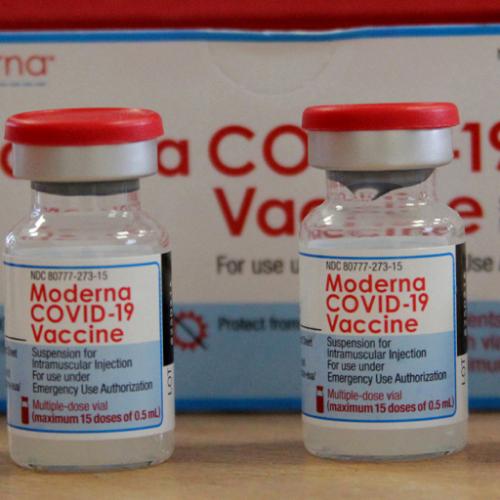
Finances at the vaccine manufacturer Moderna began to fall almost as quickly as they had risen, as most Americans resisted getting yet another COVID booster shot. In a September call aimed at shoring up investors, Moderna’s then-chief commercial officer, Arpa Garay, attributed some of the hesitancy pummeling Moderna's numbers to uninformed vaccine skeptics. What Garay hinted at during the call, but didn’t disclose, was that Moderna already had a sprawling media operation in place aimed at identifying and responding to critics of vaccine policy and the drug industry. Internal company reports and communications ... show that Moderna has worked with former law enforcement and public health officials and a drug industry-funded non-governmental organization called The Public Good Projects (PGP) to confront the “root cause of vaccine hesitancy” by rapidly identifying and “shutting down misinformation.” Part of this effort includes providing talking points to some 45,000 healthcare professionals “on how to respond when vaccine misinformation goes mainstream.” PGP routinely sent Excel lists of accounts to amplify on Twitter and others to de-platform, including populist voices such as ZeroHedge. The messages also suggested emerging narratives to remove from the platform. The growing network these efforts rely on shows the growth of what has been called the censorship industrial complex.
Note: Learn more about Moderna's misinformation department. For more along these lines, see concise summaries of deeply revealing news articles on pharmaceutical industry corruption and media manipulation from reliable sources.
Scientists have developed a new type of fuel cell that can provide endless power through electricity harvested from dirt. A team from Northwestern University in the US say the book-sized unit could be used to power sensors used in farming, as well as remote devices in the Internet of Things (IoT). The technology works by generating electricity from naturally-occurring bacteria within the soil, offering a sustainable and renewable alternative to toxic and flammable batteries. “These microbes are ubiquitous; they already live in soil everywhere,” said George Wells ... at Northwestern University. “We can use very simple engineered systems to capture their electricity. We’re not going to power entire cities with this energy. But we can capture minute amounts of energy to fuel practical, low-power applications.” The soil-based microbial fuel cell (MFC) is based on a 113-year-old technology first developed by British botanist Michael Cressé Potter, who was the first person to successfully generate electricity from microorganisms. It took until the 21st century for the first commercial applications to be proposed, with Foster’s Brewing using a prototype to convert the yeast in brewery wastewater into electricity. The latest fuel cell was tested in wet and dry conditions to power sensors measuring soil moisture and detecting touch, outlasting the power of similar technologies by 120 per cent.
Note: Explore more positive stories like this in our comprehensive inspiring news articles archive focused on solutions and bridging divides.
All billionaires’ wealth has grown three times faster than the rate of inflation since before the Covid pandemic, according to a new report. That means they’re 34% richer than they were in 2020, the anti-poverty charity Oxfam International has claimed. Meanwhile, the cost of living crisis for the majority of the global population has risen due to inflation, food prices around the world increasing by 21% to 50% between 2022 and 2023. The five richest men in the world have seen their personal wealth double in three years – all while five billion people around the world found themselves getting poorer. The richest 1% own 43% of all global financial assets, according to Oxfam’s findings. In the UK, the richest 1% own 33% of all financial assets. Seven out of 10 of the world’s biggest corporations also have a billionaire as CEO or principle shareholder. The worth of these companies exceeds the combined GDPs of all countries in Africa and Latin America. In the last three years, the poorest 60% (close to five billion people) around the world have lost money – a figure calculated from the UBS Global Wealth Report and the Credit Suisse Global Wealth Data book 2019. Average real wages for nearly 800 million workers have fallen across 52 countries in the same time frame the billionaires have been building on their personal wealth. Governments worldwide are making deliberate political choices that enable and encourage this distorted concentration of wealth.
Note: The COVID pandemic was extremely profitable for billionaires. At least 75 federal lawmakers were financially invested in COVID vaccines, treatments, and tests. For more along these lines, see concise summaries of deeply revealing news articles on income inequality from reliable major media sources.
India’s famous potholes actually saved a life on Friday. The ‘late’ Darshan Singh Brar was being transported to the Indian version of a wake after his untimely death from a chest infection at the age of 80. Family, relatives, and friends had already gathered for a banquet and cremation, when the ambulance he was being caried in received a nasty jolt from a pothole on the roads in Nising, in far-Northern India’ Haryana state. It was then that Mr. Brar’s grandson who was onboard the ambulance at the time noticed his hand moving. Checking his pulse and finding—to his great shock—there was one, he notified the driver to immediately turn toward the nearest hospital. He was declared alive and savable, and was referred to the Rawal Hospital in the city of Karnal. “It is a miracle. Now we are hoping that my grandfather recovers soon,” said Balwan Singh, another of Mr. Brar’s grandsons. “Everyone who had gathered to mourn his death congratulated us, and we requested them to have the food we had arranged. It is God’s grace that he is now breathing and we are hoping he will get better.” Doctors at Rawal Hospital said that the grandfather is breathing without the aid of a ventilator and his heartbeat has normalized. They can’t say for certain why the other hospital declared him dead, but speculated it may have been a technical error. The next time you are planning to go to town hall or the council about the potholes on your street, consider the story of Darshan Singh Brar.
Note: Explore more positive stories like this in our comprehensive inspiring news articles archive focused on solutions and bridging divides.
At the end of last year, a US government bill that would have mandated the controlled release of all classified documents and artifacts relating to UFOs was significantly watered down at the last minute so that it would get through Congress. Interest in unidentified aerial phenomena (UAPs), the new term for UFOs, reignited in June 2023 when ex-US intelligence agency whistleblower David Grusch told the Debrief website that during his official duties he had discovered the US had indeed been retrieving spacecraft of non-human origin for decades. The prospect of alien spacecraft raises serious issues that go beyond whether we’re alone in the universe. Lots of scientific work is under way not only to look for signs of extraterrestrial life, but more recently to ask what it would mean psychologically for us if aliens really do exist, and – potentially worse – if the authorities have been lying to us about what they know. What happens if [someone] uncovers irrefutable proof that non-human intelligences have visited or are visiting Earth? Physicist John Priestland ... found himself wondering what this would mean to us as individuals. “There are a lot of people who will be affected. There isn’t an entity out there, as far as I can see, that is putting people first,” he says. So he set up Unhidden, a charity dedicated to decreasing the stigma associated with discussing UAPs, non-human intelligences, and the possibility that evidence is being covered up by governments.
Note: Read the riveting testimonies of 60 government and military witnesses of UFO phenomenon, which include astronauts, generals, admirals, and other top government and military officials. For more along these lines, see concise summaries of deeply revealing news articles on UFO disclosure from reliable major media sources. Then explore the excellent, reliable resources provided in our UFO Information Center.
Over the past week thousands of pages of court documents relating to late paedophile Jeffrey Epstein, have been made public after US judge Loretta Preska ordered the release of filings in a lawsuit brought by Virginia Giuffre against Ghislaine Maxwell. The documents named scores of prominent figures including, Prince Andrew, Bill Clinton, Donald Trump and Victoria’s Secret boss Les Wexner. Being identified through the court documents does not mean that the individual was involved in or aware of any wrongdoing by Epstein. The final batch of documents, released on Tuesday, included depositions from Ms Giuffre, Maxwell and Epstein. In Epstein’s deposition, he was questioned about his campaign of abuse of young and underage girls. He pleaded the Fifth over 1,000 times. In Maxwell’s deposition, she was confronted with disturbing messages left for Epstein – one of which referenced what appeared to be code for procuring an underage Russian girl for Epstein. “She is two times eight years old. Not blond. Lessons are free and you can have your first today if you call,” it read.
Note: Read about the new evidence suggesting Epstein ran a sex blackmail operation for intelligence agencies. For more along these lines, see concise summaries of deeply revealing news articles on Jeffrey Epstein from reliable major media sources.
One of the more colorful conservative members of the U.S. House ... stands by recent remarks in which he said some of his fellow members were likely victims of blackmail. But Rep. Tim Burchett (R-Tenn.), who made the comments on a Dec. 21 podcast ... declined to elaborate on who he was talking about or give any other details. “You as a member of the media understand confidentiality, and I appreciate that, and I am going to keep that confidential unless those people tell me otherwise,” Burchett [said]. Asked if he was standing by his comments, Burchett said, “Sure. I’m not going to back up.” And when asked if he believed there were House members who had decided how to vote based on compromising material about them held by foreign powers, Burchett said, “Absolutely. And other powers. It doesn’t have to be foreign powers.” He said members may be on a trip or at a bar, meet someone and buy them a drink. “Next thing you know, you’re in a hotel room with them, naked. Next thing you know, you’re about to make a key vote, and what happens? Some well-dressed person comes up and whispers into your ear, ‘Hey, man, there’s tapes out on you. Were you in a motel room on whatever with whoever?’ And then you’re, like, ‘Uh-oh.’ And they say, ‘You really ought not be voting for this thing.’” Burchett’s remarks were the most lurid accusations since former Rep. Madison Cawthorn [alleged that he] had been invited by colleagues to orgies in Washington.
Note: For more along these lines, see concise summaries of deeply revealing news articles on government corruption from reliable major media sources.
Important Note: Explore our full index to key excerpts of revealing major media news articles on several dozen engaging topics. And don't miss amazing excerpts from 20 of the most revealing news articles ever published.