







































Media Articles
Below are key excerpts of revealing news articles from reliable news media sources. If any link fails to function, a paywall blocks full access, or the article is no longer available, try these digital tools.
For further exploration, delve into our comprehensive Information Centers.

During a Senate briefing last week, a federal counterterrorism official cited the October 7 Hamas attack while urging Congress to reauthorize a sprawling and controversial surveillance program repeatedly used to spy on U.S. citizens on U.S. soil. “As evidenced by the events of the past month, the terrorist threat landscape is highly dynamic and our country must preserve [counterterrorism] fundamentals to ensure constant vigilance,” said Director of the National Counterterrorism Center Christine Abizaid. She pointed to Section 702 of the Foreign Intelligence Surveillance Act, which enables the U.S. government to gather vast amounts of intelligence — including about U.S. citizens ... without first seeking a warrant. Section 702 “provides key indications and warning on terrorist plans and ... gives us strategic insight into foreign terrorists and their networks overseas,” Abizaid said. “I respectfully urge Congress to reauthorize this vital authority.” The controversial program is set to expire at the end of the year, and lawmakers sympathetic to the intelligence community are scrambling to protect it. Sean Vitka ... at the civil liberties group Demand Progress [said] that now is the time to enact lasting and dramatic oversight of the 702 authority. “The government has completely failed to demonstrate that any of the privacy protections reformers have called for would impair national security ... so now we’re seeing people grasping at straws trying to turn everything into an excuse for reauthorization,” Vitka said.
Note: For more along these lines, see concise summaries of deeply revealing news articles on government corruption and the disappearance of privacy from reliable major media sources.
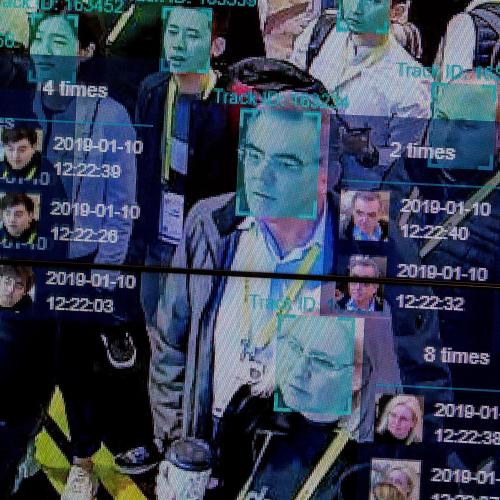
New Yorkers may have noticed an unwelcome guest hovering round their parties. In the lead-up to Labour Day weekend the New York Police Department (NYPD) said that it would use drones to look into complaints about festivities, including back-yard gatherings. Snooping police drones are an increasingly common sight in America. According to a recent survey by researchers at the Northwestern Pritzker School of Law, about a quarter of police forces now use them. Among the NYPD’s suppliers is Skydio, a Silicon Valley firm that uses artificial intelligence (AI) to make drones easy to fly. The NYPD is also buying from BRINC, another startup, which makes flying machines equipped with night-vision cameras that can smash through windows. Facial-recognition software is now used more widely across America, too, with around a tenth of police forces having access to the technology. A report released in September by America’s Government Accountability Office found that six federal law-enforcement agencies, including the FBI and the Secret Service, were together executing an average of 69 facial-recognition searches every day. Among the top vendors listed was Clearview AI. Surveillance capabilities may soon be further fortified by generative AI, of the type that powers ChatGPT, thanks to its ability to work with “unstructured” data such as images and video footage. The technology will let users “search the Earth for objects”, much as Google lets users search the internet.
Note: For more along these lines, see concise summaries of deeply revealing news articles on police corruption and the disappearance of privacy from reliable major media sources.
The morning of the Hamas attack, [Maoz] Inon's parents were at home in their community of Netiv HaAsara, a mere quarter-mile from Gaza. A Hamas fighter launched a rocket-propelled grenade that directly hit his parents' wooden house. Amid this sea of grief that he's cratered into, Inon says he feels no urge for revenge. "I was crying, and I'm still crying, for all the innocent victims from both sides that will die," he says. "And I'm crying for this 100 years of bloodshed, of cycle of death." Inon says that this cycle can seem endless, but he has hope. "It seems like there is no solution," he says, "but there is." Inon says he had something of a vision after this war began. "I saw an image of everyone crying," he recalls. He says we shouldn't have more weapons, build higher walls and create better security systems. "That's the old world, OK? You want to start a new world? We need to cry ... And then," he says, "we'll see the path for peace." In one of [political psychologist Oded Adomi] Leshem's research studies, he shows that Jewish Israelis and Palestinians consistently underestimate the other group's hope for peace. "This underestimation actually reduces one's own hope." Unlike conflict, which Leshem says is bloody but familiar to Israelis and Palestinians, hope is different. It's unfamiliar and unpredictable. "If we kind of accept this unpredictability," he says, "take the chance [on] this uncertain thing — which is called peace between the [Jordan] River and the [Mediterranean] Sea — then this is closely related to hope."
Note: For more along these lines, see concise summaries of deeply revealing news articles on war from reliable major media sources.
Tim Phillips, a veteran conflict-resolution expert, helped negotiate some of the most fraught conflicts in modern history — ceasefires of religious clashes in Northern Ireland and the establishment of what became South Africa's Truth and Reconciliation Commission after apartheid. Defusing an escalating situation ... first requires releasing a brain hijacked by defensive emotion. Phillips says it means saying to your opponent, for example: "I understand how important this is to you; I understand this is core to your identity and your community, and I respect your sacred values." It means reflecting your opponent's humanity back to them. A similar approach, he says, can help reduce toxic polarization. It's effective because in the heat of argument, people tend to demonize one another; counteracting that can neutralize assumptions of negative intent. Phillips says he's seen people emotionally disarm the opposition in a disagreement simply by recognizing their humanity. It can bring together fierce adversaries, and change history. Shirley Chisholm, the first Black congresswoman in the U.S., was battling for the Democratic presidential nomination with political rival ... George Wallace, a fierce segregationist. After he was shot in an attempted assassination, Chisholm visited him in the hospital and prayed at his bedside. "Wallace's daughter later said that that gesture of compassion completely changed her father," Phillips says. Wallace reportedly wept openly, and shifted his stance on racial segregation.
Note: Explore more positive stories like this in our comprehensive inspiring news articles archive focused on solutions and bridging divides.
A federal appeals court on Thursday is tossing the Environmental Protection Agency’s (EPA) ban on a pesticide that has been linked to brain damage in children. The decision from the 8th Circuit Court of Appeals to send the rule back to the agency does not preclude the agency from reinstating the ban in the future. But it said the EPA needs to give greater consideration to whether there are cases where the pesticide, called chlorpyrifos, could be used safely. Chlorpyrifos has been used as an insecticide, protecting crops like soybeans, broccoli, cauliflower and fruit trees. The EPA banned chlorpyrifos for use in growing food in 2021. That came after a prior court ruling gave the agency just 60 days to either find a safe use for chlorpyrifos or ban it outright. The appeals court determined that this deadline contributed to a rushed decision from EPA that was ultimately “arbitrary and capricious.” The ruling comes from Judges Lavenski Smith, Raymond Gruender and David Stras, two of whom were appointed by former President George W. Bush and one of whom was appointed by former President Trump. The chlorpyrifos issue has ping-ponged between administrations. The Obama administration had proposed to ban its use on food, but the Trump administration reversed course and had proposed to allow some uses of the chemical.
Note: Did you know that chlorpyrifos was originally developed by Nazis during World War II for use as a nerve gas? Read more about the history and politics of chlorpyrifos, and how U.S. regulators relied on falsified data to allow its use for years. See other concise news articles we've summarized about the harms of chlorpyrifos.
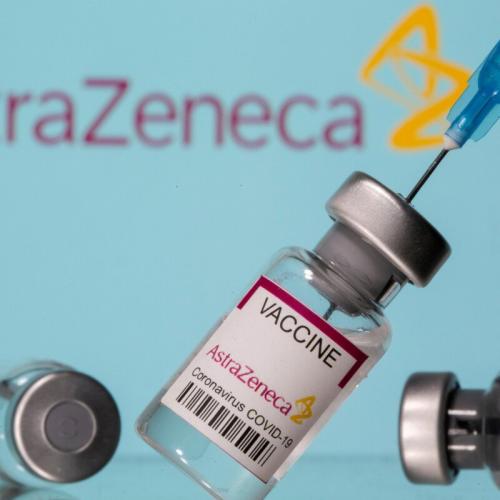
Nearly a quarter of Americans believe someone they know died from COVID-19 vaccine side effects, and even more say they might be willing to become plaintiffs in a class-action lawsuit against vaccine makers. The latest Rasmussen Reports national telephone and online survey finds that 24% of American Adults say they know someone personally who died from side effects of the COVID-19 vaccine. Sixty-nine percent (69%) don’t know anyone who died from being vaccinated against the virus. (To see survey question wording, click here.) Forty-two percent (42%) say that, if there was a major class-action lawsuit against pharmaceutical companies for vaccine side effects, they would be likely to join the lawsuit, including 24% who say it’s Very Likely they’d join such a lawsuit. Forty-seven percent (47%) aren’t likely to join a class-action lawsuit against vaccine makers, including 25% who say it’s Not At All Likely. Another 11% are not sure. The survey of 1,110 American Adults was conducted on October 26 and 29-30, 2023 by Rasmussen Reports. The margin of sampling error is +/- 3 percentage points with a 95% level of confidence. Nearly half (47%) say they know someone personally who died from the COVID-19 virus, while 49% don’t know anyone who died from the virus, which became a pandemic in the United States in 2020. Among those who say someone they know died from the COVID-19 virus, 41% also say they know someone who died from side effects of the COVID-19 vaccine.
Note: For more along these lines, see concise summaries of deeply revealing news articles on coronavirus vaccines from reliable major media sources.
The influential idea that in the past men were hunters and women were not isn’t supported by the available evidence. Women are physiologically better suited than men to endurance efforts such as running marathons. This advantage bears on questions about hunting because a prominent hypothesis contends that early humans are thought to have pursued prey on foot over long distances until the animals were exhausted. Furthermore, the fossil and archaeological records, as well as ethnographic studies of modern-day hunter-gatherers, indicate that women have a long history of hunting game. Females are ... dominating ultraendurance events such as the more than 260-mile Montane Spine foot race through England and Scotland, the 21-mile swim across the English Channel and the 4,300-mile Trans Am cycling race. In 2018 English runner Sophie Power ran the 105-mile Ultra-Trail du Mont-Blanc race in the Alps while still breastfeeding her three-month-old at rest stations. Observations of recent and contemporary foraging societies provide direct evidence of women participating in hunting. The most cited examples come from the Agta people of the Philippines. Agta women hunt while menstruating, pregnant and breastfeeding, and they have the same hunting success as Agta men. They are hardly alone. A recent study of ethnographic data spanning the past 100 years ... found that women from a wide range of cultures hunt animals for food.
Note: Explore more positive stories like this in our comprehensive inspiring news articles archive focused on solutions and bridging divides.
Male sperm count has fallen by more than 50% globally in the last 50 years, leaving researchers scrambling to understand why. Could it be pollution, PFAS and other potential toxins in our food and water, an increase in obesity and chronic disease, or even the ever-present mobile phone? A new study explored the role of cell phones and found men between the ages of 18 and 22 who said they used their phones more than 20 times a day had a 21% higher risk for a low overall sperm count. The men also had a 30% higher risk for a low sperm concentration. The study did not specify whether the men called or texted or used their phones to do both. Radiofrequency electromagnetic fields are greatly reduced when texting and highest when downloading large files, streaming audio or video, when only one or two bars are displayed, and when in a fast-moving bus, car or train, according to the California Department of Public Health. The agency recommends keeping the phone away from the body and head — use the speakerphone or headphones instead — and carry the phone in a backpack in a backpack, briefcase or purse. Studies in mice have found RF-EMF fields at levels similar to cell phones do lower male fertility and contribute to sperm death and changes in the tissue of the testes. Observational studies in humans have also found that frequent use of mobile phones was connected to a decline in sperm viability as well as an impact on how the sperm swam.
Note: For more along these lines, see concise summaries of deeply revealing news articles on health and the dangers of wireless technologies from reliable major media sources.
Anti-vaccine advocates have recently made allegations against the Pfizer COVID-19 vaccine in hopes that the charges may hurt the drug manufacturer. In a series of posts on X (formerly Twitter), Steve Kirsch expressed concern over reports that Pfizer's vaccine was contaminated, saying that the Food and Drug Administration (FDA) "is now at a crossroads." "Either they admit that they knew about the plasma contamination, and failed to disclose that to the public and to the outside committees, or they can claim that they didn't know about it in which case Pfizer is liable. But we have the Pfizer documents that were given to the FDA so we know what the FDA got," Kirsch wrote. "I seriously doubt there's any disclosure of SV40 contamination. That means we have an adulterated vaccine and the FDA has to remove it from the market until the adulteration is fixed. If the FDA doesn't do that, they should face criminal prosecution for endangering the public, and not following the law." (SV40 refers to simian virus 40.) In his posts, Kirsch also references an incident in Michigan where a judge ruled that the manufacturer of the COVID-19 medication Remdesivir was no longer protected by the federal Public Readiness and Emergency Preparedness (PREP) Act after a man filed a lawsuit against the manufacturer. The man filed the suit after suffering strokes and an amputation following treatment with the drug, Remdesivir, which was contaminated with glass particles.
Note: While the data is still being uncovered, read an in-depth, scientific investigation into vaccine contamination, including concerns that Pfizer hid this contamination from regulators. For more along these lines, see concise summaries of deeply revealing news articles on coronavirus vaccines from reliable major media sources.
Ever since Israel responded to Hamas’s atrocities with a vicious onslaught that has killed more than 8,000 Palestinians there has been an attempt to silence, intimidate and harass Palestinian sympathisers. Inevitably, it is Palestinians who suffer the brunt of a campaign to stigmatise even the most basic opposition to the mass slaughter of their people. Viet Thanh Nguyen, the son of refugees and a sympathiser with other displaced people, had a talk at the 92nd Street Y centre in New York postponed after he signed an open letter demanding an “end to the violence and destruction in Palestine”. What of the US Campaign for Palestinian Rights, whose longstanding conference in Houston was cancelled following the Orthodox Jewish Chamber of Commerce describing the event as “a conference for Hamas supporters”? The Hilton cited security concerns as the reason for the cancellation. The keynote speaker, Rashida Tlaib, the first ever elected Palestinian-American congresswoman, has been targeted by a Republican smear campaign, with an attempt to censure her for “antisemitic activity” and “sympathising with terrorist organisations” – all baseless attacks. Meanwhile, MSNBC reportedly stopped three of its Muslim broadcasters from presenting their shows, with no explanation. The broadcaster claimed any change in programming as “coincidental”. This intimidation has deadly consequences: it undermines public pressure on Israel’s western allies to stop the slaughter and end the occupation.
Note: For more along these lines, see concise summaries of deeply revealing news articles on war and media manipulation from reliable sources.
In the U.S. and the U.K. especially, lockdowns went from being regarded as something that only an authoritarian government would attempt to an example of “following the science.” But there was never any science behind lockdowns — not a single study had ever been undertaken to measure their efficacy in stopping a pandemic. One New York emergency-room doctor recalls that after the steady stream of COVID patients during March and April of 2020, “our ER was basically empty.” During the first two years of the pandemic — 2020 and 2021 — the U.S. had 19 percent more deaths than it normally saw in two years’ time. For Sweden — one of the few countries that had refused to lock down its society — it was just 4 percent. An analysis by Bloomberg found broadly similar results. In other words, for all the criticism Sweden shouldered from the world’s public health officials for refusing to institute lockdowns, it wound up seeing a lower overall death rate during the pandemic than most peer nations that shut down schools and public gatherings. The downsides of lockdowns and school closings were not being openly discussed in the mainstream media. Emily Oster, a Brown University economist … set up what she called the National COVID-19 School Response Dashboard, which eventually tracked 12 million kids in both public and private schools and continued to collect infection-rate data over the next nine months. Not once did the student rate hit one percent during any two-week span. Three CDC scientists acknowledged in the Journal of the American Medical Association: “As many schools have reopened for in-person instruction in some parts of the U.S. … there has been little evidence that schools have contributed meaningfully to increased community transmission.”
Note: For more along these lines, see concise summaries of deeply revealing news articles on COVID and government corruption from reliable major media sources.
The United Nations has warned that there was “clear evidence” that war crimes may have been committed in “the explosion of violence in Israel and Gaza”. Meanwhile, Wall Street is hoping for an explosion in profits. During third-quarter earnings calls this month, analysts from Morgan Stanley and TD Bank took note of this potential profit-making escalation in conflict and asked unusually blunt questions about the financial benefit of the war between Israel and Hamas. TD Cowen’s Cai von Rumohr, managing director and senior research analyst specializing in the aerospace industry, [asked] about the upside for General Dynamics, an aerospace and weapons company in which TD Asset Management holds over $16m in stock. The aerospace and weapons sector ... enjoyed a 7-percentage point jump in value in the immediate aftermath of Hamas’s 7 October attack on Israel and the beginning of Israel’s bombardment of Gaza. “Hamas has created additional demand, we have this $106bn request from the president,” said Von Rumohr, during General Dynamics’ earnings call on 25 October. “Can you give us some general color in terms of areas where you think you could see incremental acceleration in demand?” Aside from the callousness of casually discussing the financial benefits of far-off armed conflict, the comments raise questions about whether these major institutional shareholders of weapons stocks are abiding by their own human rights policies.
Note: For more along these lines, see concise summaries of deeply revealing news articles on war and corporate corruption from reliable major media sources.
The number of corporate prosecutions under President Joe Biden’s Department of Justice in 2022 hovered near the lowest level in decades, according to a new analysis published by the good government group Public Citizen. Federal prosecutors concluded just 99 criminal cases against corporations in 2022, the same number as Donald Trump’s DOJ during his second year, and only a modest increase from the 90 cases the agency brought in 2021. As a consequence, the pace of new prosecutions is at its lowest point since the start of the Clinton administration. “The light-touch approach to enforcement creates opportunities for corporate scofflaws to push the limits of what is legally allowed — risking our health and safety, our environment, our finances, and our communities — in their efforts to maximize profits,” the report warned. The slow pace of enforcement continues a two-decade decline that started after 2000, when there were three times as many corporate prosecutions as today. The Biden administration has also presided over a decline in deferred prosecution agreements and non-prosecution agreements, which the DOJ can use as an alternative to filing charges for corporate malfeasance. These more lenient agreements typically involve large multinational companies. In 2022, there were just 11. Biden’s DOJ has also expanded a policy that allows corporations to self-report misconduct in exchange for the government’s guarantee not to prosecute.
Note: For more along these lines, see concise summaries of deeply revealing news articles on government corruption from reliable major media sources.
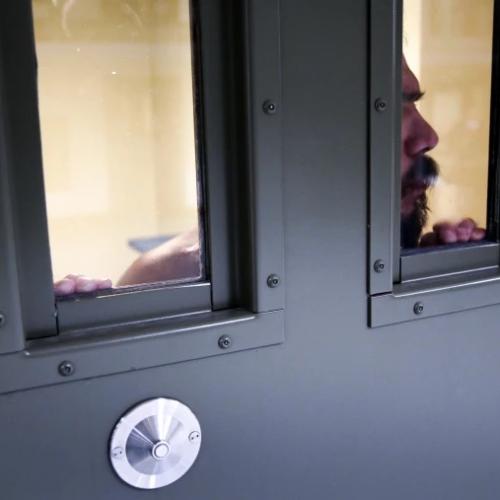
At a time when the US has narrowly skirted a recession, and people around the country are still struggling with the cost of living, a curious number of states have found billions of dollars for one thing: building prisons and jails. In September, Alabama announced that a new prison, currently under construction, would have a final cost of $1.082bn. The same month Indiana broke ground on a $1.2bn prison. Nebraska is spending $350m on a new prison, while some in Georgia are lobbying for $1.69bn for construction of a jail in Fulton county. The willingness to spend vast amounts of money on locking people up, particularly in states like Alabama, which has one of the highest poverty rates in the country, is staggering. It’s also wrong-headed, experts say. “Any money spent on caging human beings is not money well spent, period,” said Carmen Gutierrez ... at the University of North Carolina at Chapel Hill. “We have decades of research showing that incarceration does not improve public safety, and that it in fact harms individuals who themselves are incarcerated. It also harms their families and it harms the communities that they come from. So the damage outweighs any potential benefit.” The US has an incarceration rate of 664 people in every 100,000 ... far higher than other founding Nato countries. In Alabama, Georgia and other southern states about one in every 100 people is incarcerated in prisons, jails, immigration detention and juvenile justice facilities.
Note: For more along these lines, see concise summaries of deeply revealing news articles on prison system corruption from reliable major media sources.
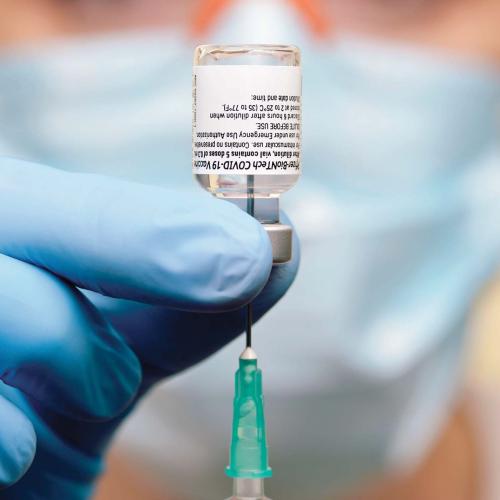
Pfizer-BioNTech delayed reporting vaccine-associated deaths among BNT162b2 clinical trial participants until after the U.S. Food and Drug Administration (FDA) issued an Emergency Use Authorization (EUA) for the product. The vaccine makers also failed to account for a large number of subjects who dropped out of the trial. Together, these strategies kept regulators and the public ignorant of a 3.7-fold increase in cardiac deaths among subjects who received the vaccine, according to analysis in the International Journal of Vaccine Theory, Practice, and Research. Investigators looked at each of the 38 deaths occurring between July 27, 2020, the start of phase 2/3 of the Pfizer-BioNTech vaccine trial, and March 13, 2021, the end date culminating in Pfizer-BioNTech’s 6-month interim report. This trial phase involved 44,060 subjects. Half received a dose of BNT162b2, half got a placebo. The trial was unusual because at week 20 after the FDA issued the EUA for the vaccine, trial subjects in the placebo group were allowed to switch to the vaccinated group and receive their first BNT162b2 shot. Of 20,794 unblinded placebo subjects in the Pfizer trial, 19,685 received at least one dose of BNT162b2. After 33 weeks the data revealed no significant difference between deaths in the vaccinated and placebo groups for the initial 20-week placebo-controlled portion of the trial. 79% of relevant deaths were not recorded in time to be included in Pfizer’s regulatory paperwork.
Note: Read our recent essay on Big Pharma corruption to further explore the significant harms associated with the COVID vaccine. For more along these lines, see concise summaries of deeply revealing news articles on Big Pharma corruption and coronavirus vaccines from reliable major media sources.
ManifestWorks [is] a unique program that guides people from homelessness, incarceration and foster care directly into entry-level jobs in film and TV. “When I started the ManifestWorks program, it was more than just learning the steps. It was really therapeutic for me,” says Leslie. “It was uplifting during a time when I was really not in a good place.” By the third week of classes, Leslie had secured her first gig as a production assistant. The same person who hired her brought her back for the next two years and seeded additional relationships that led to more work. Today, Leslie works in a sound department as a union member, has consistent work at a living wage and has been able to upgrade both her housing and her car. The nonprofit ManifestWorks has more than 270 alumni currently working in the film industry, and purposely recruits its students from populations that face barriers to success. According to ManifestWorks, 25 percent of foster care youth end up incarcerated within two years of turning 18, and unemployment impacts the formerly incarcerated at a rate 12 times higher than the national average. Some 71 percent of ManifestWorks’ trainees are on welfare when they start the program — after a year, that number drops to seven percent on average. And 92 percent of ManifestWorks alumni are employed full time with an average annual income of $62,000, up from the average of $12,500 when trainees first start.
Note: Explore more positive stories like this in our comprehensive inspiring news articles archive focused on solutions and bridging divides.
While the sad reality of violence and division dominates the media, countless grassroots organizations are working tirelessly to bring peace and reconciliation to the Israel-Palestine conflict. As the region continues to be ravaged by violence, Standing Together, Israel’s largest Arab-Jewish grassroots organization, brings together Jewish and Palestinian volunteers. They labor relentlessly to assist victims of continuous violence while also campaigning for peace, equality, social justice, and climate justice. Their message is clear: the future they envision is one of peace, Israeli and Palestinian independence, full equality, and environmental justice. The Parents Circle – Families Forum, which includes over 600 families who have lost loved ones in the conflict, is a symbol of reconciliation. This joint Israeli-Palestinian organization encourages conversation and reconciliation through education, public gatherings, and media participation, presenting a ray of hope for a future of coexistence. Integrated schools in Israel, where Jewish and Palestinian children attend classes together, serve as an example of a more inclusive future. Hand in Hand promotes understanding by bringing parents together for debate and shared study of Hebrew and Arabic. They are sowing seeds of oneness. Jerusalem Peacebuilders brings together Israelis, Palestinians, and Americans with the goal of developing tomorrow’s leaders. Their work highlights the futility of violent war and the critical need for nonviolence.
Note: Explore more positive stories like this in our comprehensive inspiring news articles archive focused on solutions and bridging divides.
While I was out of town on business, I got a call from my dad who told me my husband Woody had been found hanging—dead at age 37. Woody wasn’t depressed and he hadn’t had a history of depression nor any other mental illness. His doctor had prescribed the antidepressant Zoloft to take the edge off. In the following weeks, I started to investigate, to try and understand why my perfectly normal husband had decided to end his life. The only thing that made sense ... Zoloft. Figuring out Zoloft’s dangers completely altered my life’s trajectory, absorbing years of my time. Today, I sit on one of the Food and Drug Administration (FDA) advisory committees that reviews new drugs coming to market. I initially thought that what I was learning about Zoloft was just an isolated issue with antidepressants. But I soon realized it was part of a much bigger, systemic problem with our nation’s drug safety system. The pharmaceutical industry is driven by commercial interests, not public health, and this problem is compounded by a lack of transparency, conflicts of interests, manipulation of clinical trials, and undue corporate influence across the government. Marketing companies ghostwrite pharmaceutical studies for academics who sometimes barely read the papers that get submitted to medical journals, and drug makers then cite these ghostwritten studies as peer-reviewed proof of their products’ safety and efficacy. The revolving door between Big Pharma and the FDA spins faster than the one between the Pentagon and the defense industry.
Note: This guest essay is written by Kim Witczak, a globally renowned advocate for pharmaceutical drug safety and FDA reform. Antidepressants have been found to increase the risk of suicide in some patients. For more along these lines, see concise summaries of deeply revealing news articles on health and Big Pharma corruption from reliable major media sources.
Never in its 63 years of independence has Congo experienced a peaceful and democratic transfer of power. On June 30, 1960, after 75 years of Belgian rule, Congo became an independent country. At the helm as prime minister was Patrice Lumumba. On Aug. 18, 1960, Dwight D. Eisenhower became the first U.S. president known to order the assassination of a sitting foreign leader. During a National Security Council meeting, an official note taker ... recalled, President Eisenhower said “something — I can no longer remember his words— that came across to me as an order for the assassination of Lumumba.” The CIA’s top chemist procured a poison to kill Lumumba, flew it to Congo, and instructed the CIA station chief there, Larry Devlin, to put it in the prime minister’s food or toothpaste. But by that time, Lumumba had been removed from office and put under house arrest, so the plot fizzled. Lumumba was flown to the breakaway province of Katanga and shot dead ... by Congolese soldiers commanded by Belgian officers and answering to the separatist government. The CIA ... had blood on its hands for the death of Lumumba. It played a role in every event leading to his downfall. As part of what came to be known as “Project Wizard,” the CIA subsidized at least two opposition senators, and the agency received White House authorization to pay the president as well. CIA cash also paid for anti-Lumumba radio propaganda and street protests.
Note: Learn more about the rise of the CIA in our comprehensive Military-Intelligence Corruption Information Center. For more, see concise summaries of deeply revealing news articles on intelligence agency corruption from reliable major media sources.
A recent court ruling in Colorado highlighted how Google’s tracking of our locations and web searches helps police find suspects when they have few leads — but it’s also sweeping innocent people into investigations. Google says it has procedures to “protect the privacy of our users while supporting the important work of law enforcement.” But defense attorneys and civil liberties advocates say that Google is a gold mine for novel police methods that they call unconstitutional fishing expeditions. Even if you believe you have nothing to hide from law enforcement, relentless digital tracking of Americans risks our information falling into criminals’ hands, too. Law enforcement officials say that Google’s data on people’s locations and search histories helps solve crimes, including in the 2021 Capitol riot. In initial court-ordered warrants to Google, the company typically gives police information that isn’t connected to people’s identity. Only after they single out potentially suspicious data do the police go back for individually identifiable information. But defense lawyers and privacy advocates say the two types of broad warrants to Google turn normal police work upside down and threaten Americans’ rights. In a typical search warrant, police have a suspect in mind and ask for a judge’s approval to search their home, phone data and other potential evidence. In the large-scale search term and location warrants, police know a crime occurred but don’t know who might have committed it.
Note: Explore news articles we've summarized on the troubling nature of the use of location tracking by governments and corporations. For more along these lines, see concise summaries of deeply revealing news articles on police corruption and the disappearance of privacy from reliable major media sources.
Important Note: Explore our full index to key excerpts of revealing major media news articles on several dozen engaging topics. And don't miss amazing excerpts from 20 of the most revealing news articles ever published.