








































Media Articles
Below are key excerpts of revealing news articles from reliable news media sources. If any link fails to function, a paywall blocks full access, or the article is no longer available, try these digital tools.
For further exploration, delve into our comprehensive Information Centers.

Paul Landis was one of two Secret Service agents tasked with guarding first lady Jacqueline Kennedy on November 22, 1963—the day President John F. Kennedy was assassinated. In a new book, The Final Witness, to be published in October, Landis claims to have seen something that afternoon that he had never publicly admitted before. Landis was approximately 15 feet away when Kennedy was mortally wounded. Landis saw and did something that he has kept secret for six decades, he says now. He claims he spotted a bullet resting on the top of the back of the seat. He says he picked it up, put it in his pocket, and brought it into the hospital. Then, upon entering Trauma Room No. 1 (at that stage, he was the only nonmedical person in the room besides Mrs. Kennedy, and both stayed for only a short period), he insists, he placed the bullet on a white cotton blanket on the president’s stretcher. This secret, as it turns out, may upend key conclusions of the Warren Commission, the body created by President Lyndon Johnson to investigate the assassination. Landis ... never sat for an interview before the FBI and never testified before the commission. There have been endless theories surrounding the assassination, but not one of them considered that a Secret Service agent might have brought a fully intact bullet, found on top of the rear seat of the limousine, into Parkland Memorial Hospital and placed it on the president’s stretcher. Not one.
Note: For more along these lines, see concise summaries of revealing news articles on the Kennedy assassination from reliable major media sources. For deeper exploration, check out our comprehensive Information Center on John F. Kennedy's assassination, which challenge mainstream narratives about his assassination and the events leading up to it.
A half-dozen or so men gathered last month [at] one of Kyiv’s swankiest hotels to discuss the lucrative business of arming Ukrainian troops. The group included Ukrainian military and government officials, who are always in the market for explosive shells. The center of attention was their gregarious host, a Florida-based arms contractor named Marc Morales. And joining the group was a stout, bearded man who served both the buyers and sellers: Vladimir Koyfman, a chief sergeant in the Ukrainian military whom Mr. Morales pays to arrange meetings with his government contacts. The [Biden] administration has sent Ukraine more than $40 billion in security aid, including advanced weapons like HIMARS rockets and Patriot missiles. But the Pentagon also relies heavily on little-known arms dealers like Mr. Morales. The Pentagon has awarded his company about $1 billion in contracts, mostly for ammunition. And records show he has built a roughly $200 million side business selling to the Ukrainians directly. Mr. Morales’s competitors say that he has an unfair advantage. His ties to the Pentagon. Arms brokers from around the world are competing for a limited supply of Soviet-style arms, mostly from Eastern Europe, to then sell to Ukraine. With cash pouring in from Washington, Mr. Morales can afford to pay more than his competitors do, several Eastern European arms dealers complained. He then makes good on his American contracts and buys more ammunition on his own to sell to Ukraine directly.
Note: For more along these lines, see concise summaries of deeply revealing news articles on government corruption and war from reliable major media sources.
The Biden administration likely infringed upon the First Amendment when it leaned on social media companies to remove false or misleading COVID-19 content, a federal court of appeals ruled Friday — narrowing a bombshell district court order that barred several officials and agencies from communicating with the platforms. The White House, surgeon general, Centers for Disease Control and Prevention and the FBI “likely coerced or significantly encouraged social-media platforms to moderate content” and in doing so, “likely violated the First Amendment,” the New Orleans-based Fifth US Circuit Court of Appeals determined. The three-judge panel, however, adjusted the scope of US District Judge Terry Doughty’s July 4 order ... removing officials from the National Institute of Allergy and Infectious Disease, the Cybersecurity and Infrastructure Security Agency and the State Department from the injunction. The Fifth Circuit vacated nine of the 10 provisions in Doughty’s order that prevented Biden administration officials from “urging, encouraging, pressuring” or “inducing” social media companies from removing content. Similarly, the appeals court determined that “following up with social-media companies” about content moderation, “requesting content reports from social-media companies” or asking platforms to “Be on The Lookout” for certain types of material does not violate individuals’ First Amendment rights.
Note: Many posts that were censored contained factual information on COVID-related issues. For more along these lines, see concise summaries of deeply revealing news articles on the coronavirus and media manipulation from reliable sources.
The United States will continue in a decades long, post-9/11 state of emergency for at least another year. In a Thursday night declaration, President Joe Biden ensured the emergency will extend at least 23 years after coordinated attacks killed nearly 3,000 people in New York, Virginia and Pennsylvania. Biden penned his signature to a one-year extension of President George W. Bush’s Proclamation 7463, retaining broad powers over the organization of the military. The proclamation is officially titled “The National Emergency with Respect to Certain Terrorist Attacks.” Most emergencies are used to impose economic sanctions. But Proclamation 7463, along with the broad 2001 Authorization for Use of Military Force, gives the president the power to call up the National Guard, alter the size and shape of the military's top officers and hire or fire commissioned officers — even ordering them out of retirement if necessary. Biden has most recently cited the 2001 authorization to justify drone strikes against al-Shabab militants in Somalia in 2021. The National Emergencies Act, adopted in 1976, requires presidents to renew emergencies each year. Presidents Barack Obama and Donald Trump also extended the 9/11 state of emergency each year of their respective tenures. Trump used it in 2017 to fill a chronic shortage in Air Force pilots. So far, Biden has declared eight new emergencies, continued 34 from his predecessors and ended three.
Note: An article by The Atlantic explores the alarming scope of president’s emergency powers, stating that “the moment the president declares a “national emergency”—a decision that is entirely within his discretion—he is able to set aside many of the legal limits on his authority.” For more along these lines, see concise summaries of deeply revealing news articles on government corruption from reliable major media sources.
At the heart of America’s political and cultural turmoil is a crisis of trust. In the space of a generation, the people’s confidence in their leaders and their most important institutions to do the right thing has collapsed. The federal government, big business, the media, education, science and medicine, technology, religious institutions, law enforcement and others have seen a precipitous decline. Since 1979 Gallup has measured trust among the public in the most important American institutions. Its latest survey ... found that across the nine key institutions Gallup has tracked consistently, the proportion of Americans who said they had “a great deal or quite a lot of confidence” averaged out at 26%. That is the lowest figure ever recorded. Some institutions have forfeited more trust than others. In 1979 Gallup found that 51% of Americans had a great deal or quite a lot of confidence in newspapers. This year the number was 18%. The biggest factor driving mistrust ... is surely the widening cultural gap between the people who have led and thrived in our major institutions and the rest of the population. The past 20 years have seen the rapid emergence of a new elite—expensively educated, versed in progressive nostrums, increasingly distant from and disdainful of the rest of America and its values. This crowd comprises much of the nation’s permanent government classes, almost its entire academic establishment, most of the people who control its news and cultural output, and a good deal of its corporate elite.
Note: About half of Americans lost faith in the scientific community after this "new elite" repeatedly misled the public on issues related to the pandemic. For more along these lines, see concise summaries of deeply revealing news articles on the coronavirus and media manipulation from reliable sources.
In 2023, this country’s drone warfare program has entered its third decade with no end in sight. Despite the fact that the 22nd anniversary of 9/11 is approaching, policymakers have demonstrated no evidence of reflecting on the failures of drone warfare and how to stop it. Instead, the focus continues to be on simply shifting drone policy in minor ways within an ongoing violent system. Washington’s war on terror has inflicted disproportionate violence on communities across the globe, while using this form of asymmetrical warfare to further expand the space between the value placed on American lives and those of Muslims. Since the war on terror was launched, the London-based watchdog group Airwars has estimated that American air strikes have killed at least 22,679 civilians and possibly up to 48,308 of them. Such killings have been carried out for the most part by desensitized killers, who have been primed towards the dehumanization of the targets of those murderous machines. In the words of critic Saleh Sharief, “The detached nature of drone warfare has anonymized and dehumanized the enemy, greatly diminishing the necessary psychological barriers of killing.” While the use of drones in the war on terror began under President George W. Bush, it escalated dramatically under Obama. Then, in the Trump years, it rose yet again. Though the use of drones in Joe Biden’s first year in office was lower than Trump’s, what has remained consistent is the lack of ... accountability for the slaughter of civilians.
Note: A 2014 analysis found that attempts to kill 41 people with drones resulted in 1,147 deaths. For more along these lines, see concise summaries of deeply revealing news articles on military corruption from reliable major media sources.
The day after the U.S. government began routinely bombing faraway places, the lead editorial in the New York Times expressed some gratification. Nearly four weeks had passed since 9/11 ... and America had finally stepped up its “counterattack against terrorism” by launching airstrikes on al-Qaeda training camps and Taliban military targets in Afghanistan. The Project on Defense Alternatives concluded that American air strikes had killed more than 1,000 [Afghan] civilians during the last three months of 2001. By mid-spring 2002, the Guardian reported, “as many as 20,000 Afghans may have lost their lives as an indirect consequence of the U.S. intervention.” Under the “war on terror” rubric, open-ended warfare was well underway — “as if terror were a state and not a technique,” as Joan Didion wrote in 2003. “We had seen, most importantly, the insistent use of September 11 to justify the reconception of America’s correct role in the world as one of initiating and waging virtually perpetual war.” Unlike those killed on 9/11, the Iraqi dead were routinely off the American media radar screen, as were the psychological traumas suffered by Iraqis and the decimation of their country’s infrastructure. For the White House, the Pentagon, and Congress, the war on terror offered a political license to kill and displace people on a large scale in at least eight countries. The resulting carnage often included civilians. The dead and maimed had no names or faces that reached those who signed the orders and appropriated the funds.
Note: A 2021 report estimated that the War on Terror had "killed up to 929,000 people and cost over $8 trillion." For more along these lines, see concise summaries of deeply revealing news articles on military corruption from reliable major media sources.
Car makers Nissan and Kia can collect data on their drivers’ “sexual activity” and “sex lives” — and may sell the info to third-party advertisers, according to a shocking study by an internet privacy watchdog. The creepy collection of personal information by the two auto companies earned them failing grades from The Mozilla Foundation, maker of the Firefox web browser, which ran privacy checks on 25 car brands. The foundation said most car companies can comb through a variety of sources to glean personal information about drivers after they pair their smartphones with a vehicle’s connected services. “This invasive harvesting of information is collected via a web of sensors, microphones, cameras and the phones, apps, and connected services you use in your vehicle,” according to Mozilla Foundation. The car firms can then take that data and sell it to or share it with vendors, insurance companies and others. Of the 25 car brands that were reviewed, Nissan’s privacy policy “is probably the most ... messed up privacy policy we have ever read,” according to Mozilla Foundation. “They come right out and say they can collect and share your sexual activity, health diagnosis data, and genetic information and other sensitive personal information for targeted marketing purposes,” the foundation wrote. Mozilla Foundation also flagged other car companies such as Chrysler, Chevrolet, Toyota, Audi, Jeep, and Honda for “brazenly collecting deeply personal information from the moment they get into a car.”
Note: For more along these lines, see concise summaries of deeply revealing news articles on corporate corruption and the disappearance of privacy from reliable major media sources.
Gardening and community gardens can be ways for immigrant and refugee communities to supplement their pantries by growing their own food, especially culturally appropriate food that is not readily found in grocery stores. It also helps people send literal roots down into a new place while maintaining a connection with their homeland. The Arab American National Museum (AANM) has created a new heritage garden on its roof with donated seeds, cuttings, and plants from local Arab American community members around Dearborn, Michigan. These include plants with a connection to the Arab world, but also plants from Michigan that have become meaningful to the Arab American community here. Accompanying the plants in the garden are oral histories of those community members about what gardening means to them, collected by the museum’s community historian. In Ann Arbor, Michigan, Phimmasone Kym Owens ... said, ‘Why don’t I create a garden for refugees?’” In 2021, Owens reached out to Jewish Family Services of Washtenaw County. They formed a partnership to create an innovative refugee-to-refugee community garden program ... and to work with refugees and grow culturally appropriate vegetables. “What sold this as being different is giving autonomy to the clients,” Owens said. “So we had a vote. They voted [for] Freedom Garden. And that’s a name that says it all. The fact that they chose Freedom Garden says exactly what you know, being a refugee, what you want.”
Note: Explore more positive stories like this in our comprehensive inspiring news articles archive focused on solutions and bridging divides.
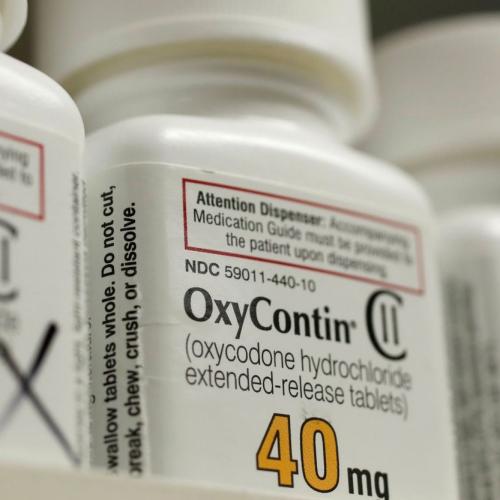
Every year, up to 9,000 people die in the US as a result of a prescription medication error. That figure doesn’t include the hundreds of thousands of patients who suffer adverse effects from taking the wrong medication or taking meds in the wrong way. Now, an investigative report from the Los Angeles Times reveals that pharmacies make an estimated 5 million errors every year in California alone, according to the state’s Board of Pharmacy. But even as pharmacy errors mount across the US, pharmaceutical lobbyists are pushing to keep reports of errors hidden from officials and the public. The problem, according to pharmacists and others, is most acute at big retail pharmacy chains such as CVS and Walgreens, where overworked staff are pushed to the limit to meet sales quotas, despite desperate staffing shortages. To combat the rising tide of pharmacy errors, the California State Board of Pharmacy is sponsoring a bill that would require pharmacies to report every error to a third party outside the government. The bill would also allow the pharmacist responsible for the store to increase staffing if the workload has become too overwhelming to keep patients safe. But the bill is opposed by the California Community Pharmacy Coalition, a lobbying group representing retail pharmacies, including the big chains. The coalition believes pharmacy staffing requirements are too strict and it does not want the pharmacy board to have access to the error reports.
Note: For more along these lines, see concise summaries of deeply revealing news articles on corporate corruption and Big Pharma profiteering from reliable major media sources.
The number of under-50s worldwide being diagnosed with cancer has risen by nearly 80% in three decades, according to the largest study of its kind. Global cases of early onset cancer increased from 1.82 million in 1990 to 3.26 million in 2019, while cancer deaths of adults in their 40s, 30s or younger grew by 27%. More than a million under-50s a year are now dying of cancer, the research reveals. The authors of the study, published in BMJ Oncology, say poor diets, alcohol and tobacco use, physical inactivity and obesity are likely to be among the factors. “Since 1990, the incidence and deaths of early onset cancers have substantially increased globally,” the report says. “Encouraging a healthy lifestyle, including a healthy diet, the restriction of tobacco and alcohol consumption and appropriate outdoor activity, could reduce the burden of early onset cancer.” Previous studies have suggested that the incidence of cancer in adults under the age of 50 has been rising in various parts of the world over the last few decades. The latest study, led by the University of Edinburgh in Scotland and Zhejiang University School of Medicine in Hangzhou, China, was the first of its kind to examine the issue on a global scale and the risk factors for younger adults. Based on the observed trends for the past three decades, the researchers estimate that the global number of new early onset cancer cases and associated deaths will rise by a further 31% and 21% respectively by 2030.
Note: This article strangely fails to mention the contamination of the food system and environment with cancer-causing chemicals as possible contributors to this trend. For more along these lines, see concise summaries of deeply revealing news articles on health from reliable major media sources.
The future of wearable technology, beyond now-standard accessories like smartwatches and fitness tracking rings, is ePANTS, according to the intelligence community. The federal government has shelled out at least $22 million in an effort to develop “smart” clothing that spies on the wearer and its surroundings. Similar to previous moonshot projects funded by military and intelligence agencies, the inspiration may have come from science fiction and superpowers, but the basic applications are on brand for the government: surveillance and data collection. Billed as the “largest single investment to develop Active Smart Textiles,” the SMART ePANTS — Smart Electrically Powered and Networked Textile Systems — program aims to develop clothing capable of recording audio, video, and geolocation data, the Office of the Director of National Intelligence announced in an August 22 press release. Garments slated for production include shirts, pants, socks, and underwear, all of which are intended to be washable. There is already evidence that private industry outside of the national security community are interested in smart clothing. Meta, Facebook’s parent company, is looking to hire a researcher “with broad knowledge in smart textiles and garment construction, integration of electronics into soft and flexible systems, and who can work with a team of researchers working in haptics, sensing, tracking, and materials science.”
Note: Smart objects have been called a "train wreck in privacy and security." For more along these lines, see concise summaries of deeply revealing news articles on intelligence agency corruption and the disappearance of privacy from reliable major media sources.
Ray, a man in his 50s, used to live in an emergency homeless shelter in Vancouver, Canada. Then he participated in a study that changed his life. The newly published, peer reviewed PNAS study, conducted by the charity Foundations for Social Change in partnership with the University of British Columbia, was fairly simple. It identified 50 people in the Vancouver area who had become homeless in the past two years. In spring 2018, it gave them each one lump sum of $7,500 (in Canadian dollars). And it told them to do whatever they wanted with the cash. Over the next year, the study followed up with the recipients periodically, asking how they were spending the money and what was happening in their lives. The recipients of the cash transfers did not increase spending on drugs, tobacco, and alcohol, but did increase spending on food, clothes, and rent. What’s more, they moved into stable housing faster and saved enough money to maintain financial security over the year of follow-up. “Counter to really harmful stereotypes, we saw that people made wise financial choices,” Claire Williams, the CEO of Foundations for Social Change, [said]. What’s more ... giving out the cash transfers in the Vancouver area actually saved the broader society money. Enabling 50 people to move into housing faster saved the shelter system $8,277 per person over the year, for a total savings of $413,850. That’s more than the value of the cash transfers, which means the transfers pay for themselves.
Note: Explore more positive stories like this in our comprehensive inspiring news articles archive focused on solutions and bridging divides.
A federal appeals court Friday revived a lawsuit by three doctors who say the Food and Drug Administration overstepped its authority in a campaign against treating COVID-19 with the anti-parasite drug ivermectin. Ivermectin ... has been championed by some conservatives as a treatment for COVID-19. The FDA has not approved ivermectin as a COVID-19 treatment. Friday’s ruling from a panel of three judges on the 5th U.S. Circuit Court of Appeal ... focused on various aspects of an FDA campaign against ivermectin as a COVID-19 treatment. The ruling acknowledged FDA’s receiving reports of some people requiring hospitalization after self-medicating with ivermectin intended for livestock. But the ruling said the campaign — which at times featured the slogan “You are not a horse!” — too often left out that the drug is sometimes prescribed for humans. The doctors can proceed with their lawsuit contending that the FDA’s campaign exceeded the agency’s authority under federal law, the ruling said. “FDA is not a physician. It has authority to inform, announce, and apprise—but not to endorse, denounce, or advise,” Judge Don Willett wrote. “The Doctors have plausibly alleged that FDA’s Posts fell on the wrong side of the line between telling about and telling to.” Drs. Robert L. Apter, Mary Talley Bowden and Paul E. Marik filed the lawsuit last year. All three said their reputations were harmed by the FDA campaign.
Note: Explore a comprehensive look into the benefits and uses of ivermectin, despite establishment media's concerted effort to discredit its efficacy and safety. For more along these lines, see concise summaries of deeply revealing news articles on government corruption and the coronavirus from reliable major media sources.
The United States is gunning for war with China. By cozying up to Taiwan and arming it to the teeth, President Joe Biden is undermining the “One China” policy which has been the cornerstone of U.S.-China relations since 1979. In March, U.S. Director of National Intelligence Avril Haines called China the “leading and most consequential threat to U.S. national security.” More than 90 percent of the most advanced microchips in the world are manufactured in Taiwan. The chips are used to power our smartphones, train artificial intelligence systems and guide missiles. The Trump administration imposed heavy tariffs on Chinese imports to cut off China’s access to the software technology and equipment required to build the advanced chips. Biden has maintained and dramatically expanded Trump’s coercive economic measures and imposed a blockade on advanced semiconductors. Biden has repeatedly stated that the United States would use military force to defend Taiwan if it is attacked by China. The Biden administration has provided Taiwan with $619 million worth of high-tech arms. China has not been at war with any country since 1979. By contrast, the United States has had only 16 years of peace in its 247 years. K.J. Noh, an activist scholar who writes about the geopolitics of the Asian continent ... described South Korea as key to the U.S.’s escalating war on China. “The United States has operational control over South Korean troops,” Noh said. The U.S. is also “weaponizing Taiwan into an imperial outpost for war.”
Note: For more along these lines, see concise summaries of deeply revealing news articles on government corruption from reliable major media sources.
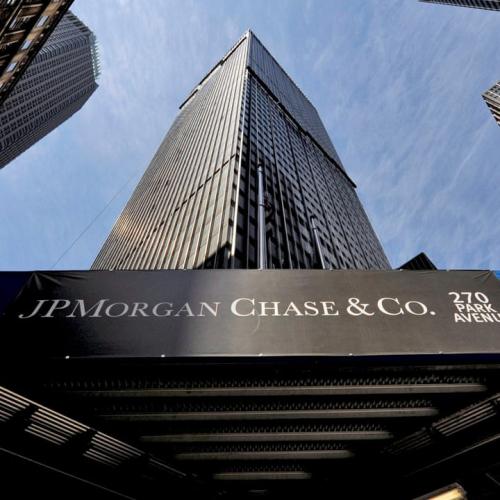
JPMorgan Chase told US authorities it processed more than $1bn for Jeffrey Epstein over 16 years. JPMorgan reported the transactions as suspicious to the US treasury department following Epstein’s suicide in 2019, Mimi Liu, a lawyer for the territory, said at a hearing concerning its lawsuit against the largest US bank. Epstein had been a JPMorgan client from 1998 to 2013, when the bank dropped him. The disgraced financier had been awaiting trial on sex trafficking charges at the time of his death. The US Virgin Islands, where Epstein owned two private islands, is suing JPMorgan for at least $190m and likely much more, saying it ignored red flags that Epstein was running a sex-trafficking operation because he was a lucrative client. Liu mentioned the $1bn amount, which had not been previously disclosed, in arguing that the US district judge Jed Rakoff in Manhattan should find before the case goes to trial that the bank participated in Epstein’s sex trafficking. She said no reasonable juror could find that JPMorgan was in the dark about its jet-setting client. “JPMorgan was a full service bank for Jeffrey Epstein’s sex trafficking,” Liu said. Felicia Ellsworth, a lawyer for JPMorgan, said it was not appropriate for the judge to determine the question of the bank’s knowledge before trial because current and former employees have testified that they were unaware of Epstein’s sex trafficking. In June, Rakoff preliminarily approved JPMorgan’s $290m settlement with women who say Epstein abused them.
Note: For more along these lines, see concise summaries of deeply revealing news articles on financial system corruption and Jeffrey Epstein from reliable major media sources.
Candid public discourse about the “war on terror” is long overdue. Hindsight offers an opportunity to take a fresh look at the official pronouncements and unheeded dissent that came soon after September 11, 2001. When the first U.S. missiles struck Afghanistan, a Gallup poll found that “90 percent of Americans approve of the United States taking such military action, while just 5 percent are opposed, and another 5 percent are unsure.” A frenzy for war had taken hold, despite the fact that none of the 9/11 hijackers were Afghans. In effect, the United States proceeded, with displaced rage, to inflict collective punishment on vast numbers of Afghan people. More than 20 years later, are we ready to face up to the human toll of the war on terror? Counting only the people killed directly in U.S. wars since 2001, researchers at the Costs of War project at Brown University have estimated those deaths at between 906,000 and 937,000. The study found that at least 364,000 of them were civilians who lost their lives “in the violence of the U.S. post-9/11 wars in Afghanistan, Pakistan, Iraq, Syria, Yemen and elsewhere.” Meanwhile, “several times as many more have been killed as a reverberating effect of the wars.” The estimated number of people directly and indirectly killed is 4.5 million. Labeled as a war on terror, open-ended U.S. warfare remains so routine that no one asks anymore when it might end.
Note: For more along these lines, see concise summaries of deeply revealing news articles on government corruption and war from reliable major media sources.
In response to a spate of coups by U.S.-trained military personnel in West Africa and the greater Sahel, Rep. Matt Gaetz, R-Fla., has authored an amendment to the 2024 defense spending bill to collect information on trainees who overthrow their governments. It would require the Pentagon for the first time to inform Congress about U.S.-mentored mutineers. “The Department of Defense, up until this point, has not kept data regarding the people they train who participate in coups to overthrow democratically elected — or any — governments,” said Gaetz. The Intercept has found that at least 15 officers who benefited from U.S. security assistance have been involved in 12 coups in West Africa and the greater Sahel during the war on terror. At least five leaders of the Niger coup in late July received American training. They, in turn, appointed five U.S.-trained members of the Nigerien security forces to serve as governors. The Intercept identified more than 70 other African military personnel involved in coups since 2001 who might have received U.S. training or assistance, but when provided with names, State Department spokespeople either failed to respond or replied, “We do not have the ability to provide records for these historical cases.” Gaetz’s proposed legislation ... would require the defense secretary to submit a report listing “the number of partner countries whose military forces have participated in security cooperation training or equipping programs or received security assistance training.”
Note: For more along these lines, see concise summaries of deeply revealing news articles on corruption in government and in the military from reliable major media sources.
A new peer-reviewed study released by a group of scientists in Taiwan has revealed an astonishingly strong link between severe depression, cognitive decline and exposure to the world’s most used herbicide, glyphosate. The study was fully published on Aug. 22 in the highly respected Elsevier Journal, Environmental Research. It was met with silence by the manufacturers of glyphosate-based herbicides such as Bayer/Monsanto, who produce the infamous weedkiller Roundup. The study authors stated that they: “Conducted analyses on existing data collected from 1532 adults of the 2013–2014 U.S. National Health and Nutrition Examination Survey (NHANES) to explore the possible relationship between glyphosate exposure and cognitive function, depressive symptoms, disability, and neurological medical conditions.” The proportion of individuals with detectable levels of glyphosate was 80.4%. The scientists concluded: “Our study provides important evidence of an association between urinary glyphosate levels and adverse neurological outcomes in a representative cohort of U.S. adult population. “Specifically, we observed lower cognitive function scores, greater odds of severe depressive symptoms, and increased risk of serious hearing difficulty in individuals with higher glyphosate exposure.” Some other recent independent studies ... suggest that both glyphosate alone and glyphosate-based herbicides such as Roundup are neurotoxins.
Note: A 2019 study found that glyphosate increases cancer risk by 41%. For more along these lines, see concise summaries of deeply revealing news articles on food system corruption and health from reliable major media sources.
The free, moneyless economy is flourishing in America. Roughly 250 million people were still visiting Craigslist worldwide each month in 2022, 27 years after the site was launched in 1995—and many of those Craigslist users are posting and sharing goods under the site’s popular “free stuff” section. About eight years after Craigslist was launched, Freecycle Network came online in 2003. More than 9 million Americans were still using Freecycle as of 2020, which I detailed in an article that year. And then there’s the relatively young Buy Nothing Project, which turned 10 years old in July of 2023. In addition to providing a digital space where people can request things they need, post things they’re giving away, and share gratitude, one of the B corp’s social benefit model goals is to encourage people to organize community and local events around buying nothing. Over the years, Buy Nothing has been gaining popularity—not through any marketing on the part of the organization but through word-of-mouth and organic growth. The Buy Nothing app, which has only been around for about two years, is ... zeroing in on 1 million users. Buy Nothing’s model varies from that of Craigslist’s “free stuff” and Freecycle in that it is focused on community groups, gatherings, and events organized by and for local communities. The idea is that a global reuse economy will emerge community by community. Buy Nothing exists ... “to build resilient communities where our true wealth is the connections forged between neighbors.”
Note: Explore more positive stories like this in our comprehensive inspiring news articles archive focused on solutions and bridging divides.
Important Note: Explore our full index to key excerpts of revealing major media news articles on several dozen engaging topics. And don't miss amazing excerpts from 20 of the most revealing news articles ever published.



