





























































Scientists Find Ways to Make Us Slaves - London Times
Dear friends,
The below article is a little scary, but if you are like me, I'd rather know than not know. The title says it all, "Scientists Find Ways to Make Us Slaves." The Oct. 17th article was sent to me with a link to one of Canada's largest newspapers, the Ottawa Citizen, though it was originally published in the London Times on Oct. 17th. However, at the London Times website, this disturbing article was quickly moved to the archives, where it now requires payment to view.
The article was also removed from the Ottawa Citizen website. It is truly a sad state of affairs when important news like this is published and then quickly disappears. Performing an extensive Internet search, I couldn't find any other newspapers that picked up this most important story. Yet, knowing the incredible capabilities of the military and intelligence services, this technology is very likely being actively pursued. As our mass media is not adequately covering this issue, please help to spread the news by forwarding this to those who might want to know what our military and intelligence services are secretly planning. By working together to take down the veils of secrecy, we can strengthen democracy and build a brighter future.
With very best wishes,
Fred
http://www.thetimes.co.uk/tto/archive/ - To view this article, you will need to pay 10 British pounds (about US$20). Click on this link and copy the title into their archive search engine.
Scientists Find Ways to Make Us Slaves
|
|
|
Lois Rogers |
|
The Times, London
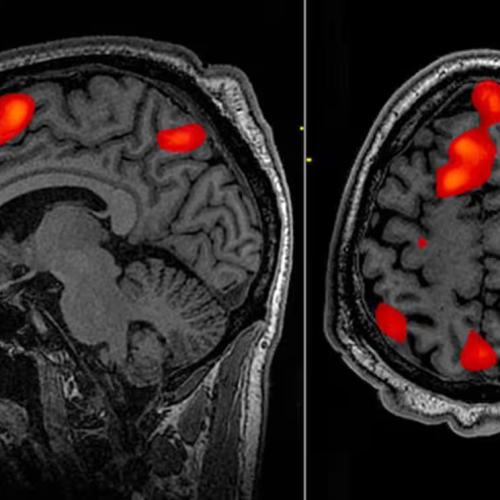
LONDON - Scientists have discovered a way of manipulating a gene that turns animals into drones that do not become bored with repetitive tasks. The experiments, conducted on monkeys, are the first to demonstrate that animal behaviour can be permanently changed, turning the subjects from aggressive to "compliant" creatures. The genes are identical in humans and although the discovery could help to treat depression and other types of mental illness, it will raise images of the Epsilon caste from Aldous Huxley's futuristic novel Brave New World. The experiments -- detailed in the journal Nature Neuroscience this month -- involved blocking the effect of a gene called D2 in a particular part of the brain. This cut off the link between the rhesus monkeys' motivation and reward. Instead of speeding up with the approach of a deadline or the prospect of a "treat," the monkeys in the experiment could be made to work just as enthusiastically for long periods. The scientists say the identical technique would apply to humans. "Most people are motivated to work hard and well only by the expectation of reward, whether it's a paycheque or a word of praise," said Barry Richmond, a government neurobiologist at the U.S. National Institute of Mental Health, who led the project. "We found we could remove that link and create a situation where repetitive, hard work would continue without any reward." The experiments involved getting rhesus monkeys to operate levers in response to colour changes on screens in front of them. Normally they work hardest and fastest with the fewest mistakes if they think a reward for the "work" is imminent. However, Mr. Richmond's team found that they could make the monkeys work their hardest and fastest all the time, without any complaint or sign of slacking, just by manipulating D2 so that they forgot about the expectation of reward. The original purpose of the research was to find ways of treating mental illness, but the technicalities of permanently altering human behaviour by gene manipulation are currently too complex, he said. However, he and other scientists acknowledge that methods of manipulating human physical and psychological traits are just around the corner, and the technology will emerge first as a lucrative add-on available from in vitro fertilization clinics. "There's no doubt we will be able to influence behaviour," said Julian Savulescu, a professor of ethics at Oxford University. "Genetically manipulating people to become slaves is not in their interests, but there are other changes that might be. We have to make choices about what makes a good life for an individual." In a presentation at a Royal Society meeting titled Designing Babies: What the Future Holds, Yuri Verlinsky, a scientist from the University of Chicago who is at the forefront of embryo manipulation, said: "As infertility customers are investing so much time, money and effort into having a baby, shouldn't they have a healthy one and what is to stop them picking a baby for its physical and psychological traits?" Gregory Stock, author of Redesigning Humans and an ethics specialist from the University of California, agrees. "I don't think these kind of interventions are exactly round the corner, they are a few years away, but I don't think they are going to be stopped by legislation," he said.
Your tax-deductible donations, however large or small, help greatly to support this important work. To
make a secure donation: https://www.WantToKnow.info/donationswtk Subscribe here to the WantToKnow.info email list (two messages a week) 



|