
























Nature of Reality News Articles
Below are key excerpts of revealing news articles on the mysterious nature of reality from reliable news media sources. If any link fails to function, a paywall blocks full access, or the article is no longer available, try these digital tools.

Archaeologists have uncovered what they believe to be the remains of a long-lost ancient Greek city, Helike. Classical texts suggest that all its inhabitants perished when the city sank beneath the waves after suffering a disastrous combination of earthquake and tidal wave. Some scholars have speculated that the catastrophe may well have been the source of Plato's story of Atlantis, a land that supposedly suffered a similar fate. During the summer, Greek and American researchers ... began digging 3m deep trenches within an area of modern orchards and vineyards of about one square mile. These revealed archaic walls, classical ceramic fragments and, perhaps most significantly, evidence that the ruins had been submerged beneath the sea. "We uncovered archaic walls buried in clay containing sea shells," said one of the researchers, Dr Steven Soter from the American Museum of Natural History.
Note: Here is solid evidence of ancient manmade structures that were submerged for a period under sea water, yet now are above sea level. The evidence suggests an ancient civilization from many thousands of years ago, yet most archeologists will not entertain this idea. For a powerful interview that questions the consensus of archeologists, click here. For a compilation of 10 mysteries that hint at ancient civilizations which have largely been ignored, click here.
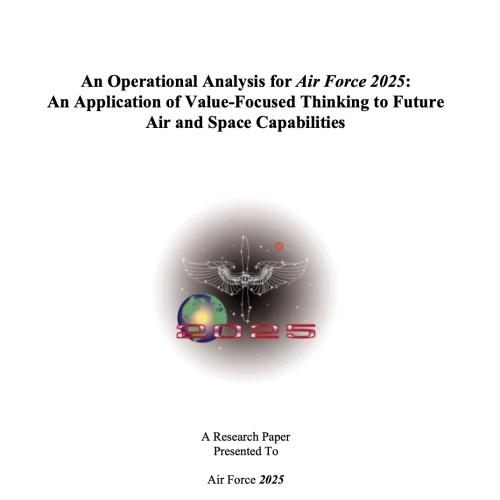
In 2025, US aerospace forces can own the weather by capitalizing on emerging technologies and focusing development of those technologies to war-fighting applications. Such a capability offers the war fighter tools to shape the battlespace in ways never before possible. Weather-modification is a force multiplier with tremendous power that could be exploited across the full spectrum of war-fighting environments. From enhancing friendly operations or disrupting those of the enemy via small-scale tailoring of natural weather patterns complete dominance of global communications and counter-space control, weather-modification offers war fighter a wide-range of possible options to defeat or coerce an adversary. But, while offensive weather modification efforts would certainly be undertaken by US forces with great caution and trepidation, it is clear that we cannot afford to allow an adversary to obtain an exclusive weather-modification capability.
Note: The above quote is taken from pages 6 and 35, the executive summary and conclusion of the above US Air Force study. For a highly revealing article suggesting elements within government have much more control over the weather than is thought, click here.
For 20 years, US intelligence agencies have been experimenting with ESP. It may have helped locate American hostages in Iran [and] mapped a secret Soviet nuclear facility. At the height of the Cold War, everyone was worried about keeping up with the Soviets. Reports that the Soviets were using psychics to spy on us prompted us to do the same to them. Now that the Cold War is over ... Congress has asked the CIA to review the 20-year $20 million program to see what we got out of it. ABC News has obtained a copy of that report which is critical of psychic spying, saying that, "continued use in intelligence gathering operations is not warranted". That negative conclusion has the caused psychic spies ... to speak publicly for the first time. Joe McMoneagle was an Army officer and for the past 17 years one of the intelligence community's most successful psychic spies. McMoneagle claims to be able to describe ... people, places, and things he's never seen before, hundreds, even thousands of miles away. ABC news was told that psychic spying was used in about 500 cases. One case where psychic spies say they played a critical role was in 1989. Charles Jordan was a US Customs agent gone bad, a dangerous fugitive who had eluded police for 2 years. The collective wisdom at the time was that he was probably in the Caribbean. [One psychic spy] started describing him in North Wyoming ... at a campground. Using this and other information, Jordan was finally caught.
Note: The original CIA link above now takes you back to the CIA Reading Room homepage. Here is an Internet Archive link that provides access to the declassified CIA document. Explore an excellent compilation of reliable material suggesting that remote viewing is very real.
The U.S. government conducted experiments with Bay Area researchers to determine whether extrasensory perception, telepathy, clairvoyance and precognition could be used as "psychic spy tools" against the Soviet Union and other countries, according to a newly released study of the project. Psychic spies were used to try to pinpoint the location of Moammar Gadhafi before the U.S. bombing of Libya in 1986 ... University of Oregon psychology Professor Ray Hyman, one of the authors of the study, said. Dale Graff, a former director of the Defense Intelligence Agency's ESP program, told ABC's "Nightline" that psychics had provided the name of the city and the building where the Red Brigades terrorist group was holding kidnapped Brig. Gen. James Dozier in Italy in 1981. Dozier was freed by Italian police after 42 days. News reports at the time said the police were assisted by an undisclosed number of U.S. State and Defense Department specialists. Hyman and UC-Davis statistician Jessica Utts were commissioned by the CIA to evaluate the psychic spying project, code-named "Stargate." The government spent $20 million over two decades on the project. Several of the psychics' powers were tested in the Bay Area before the spies were put to work ... Hyman said. Experiments here focused largely on "remote viewing," which involved psychic communication between a "sender" and a "viewer". The government psychics were accurate about 15 percent of the time in their remote viewing experiments.
Note: Explore an excellent compilation of reliable material suggesting that remote viewing is very real.
Cameron Macaulay was a typical six-year-old, always talking about his mum and family. He liked to draw pictures of his home too a long single-storey, white house standing in a bay. But it sent shivers down his mums spine because Cameron said it was somewhere they had never been, 160 miles away from where they lived. And he said the mother he was talking about was his old mum. Convinced he had lived a previous life Cameron worried his former family would be missing him. [He] said they were on the Isle Of Barra. Mum Norma, 42, said: Ever since Cameron could speak hes come up with tales of a childhood on Barra. He spoke about his former parents, how his dad died, and his brothers and sisters. Eventually we just had to take him there to see what we could find. It was an astonishing experience. Cameron wouldn't stop begging me to take him to Barra. It was constant. When we got to the island and DID land on a beach, just as Cameron had described, he turned to ... me and said, Now do you believe me? He got off the plane, threw his arms in the air and yelled Im back." The Macaulays booked into a hotel and began their search for clues to Camerons past. Norma said: We contacted the Heritage Centre and asked if they'd heard of a Robertson family who lived in a white house overlooking a bay." Next the family received a call from their hotel to confirm that a family called Robertson once had a white house on the bay. Norma explains: We didn't tell Cameron anything. We just drove towards where we were told the house was and waited to see what would happen. He recognised it immediately and was overjoyed. There were lots of nooks and crannies and Cameron knew every bit of the house — including the THREE toilets and the beach view from his bedroom window. In the garden, he took us to the ‘secret entrance' he'd been talking about for years. Now he knows we no longer think he was making things up. "
Note: If the above link fails, see this webpage. A powerful documentary on Cameron's story was broadcasted on the U.K.'s Channel Five.
Over the last few years, allegations of secret, exotic technologies have reinvigorated claims that the DOD may be concealing scientific breakthroughs from the American public. However, if the U.S. government, or some faction within it, hypothetically came across a groundbreaking development in energy production or applied physics ... such a revolution would likely be housed deep within the Department of Energy (DOE) rather than DOD. A DOE special investigative panel concluded in 1999 that the department is “a dysfunctional bureaucracy that has proven it is incapable of reforming itself.” More recently, the DOE signed a Memorandum of Understanding (MOU) with the Department of Defense to confirm and enhance the “the longstanding partnership between DOE and DOD on space-related research and technology development.” The MOU establishes joint working groups and promotes scientific exchange between the two departments in emerging and disruptive research fields such as advanced power and propulsion, artificial intelligence, quantum computing, next-generation communications, and autonomous or remotely piloted vehicles. The DOE also currently operates a Fusion Energy Sciences (FES) program, an Advanced Scientific Computing Research (ASCR) program, and a Nuclear Sciences program, the latter of which seeks to put together “a roadmap of matter that will help unlock the secrets of how the universe is put together.”
Note: Read our concise summaries of news articles on military corruption and the mysterious nature of reality.
Amber Miller accomplished two monumental feats this weekend. Days from her due date, the 27-year-old joined 45,000 other runners to participate in Sunday's Bank of America Chicago Marathon and then gave birth to a baby girl named June hours later. Miller, an avid runner, said she signed up for the 26.2-mile race before finding out she was pregnant. She said she never expected to finish the race. "I was having a conversation with my parents and said, 'You know what? I have no plans of actually finishing,'" she told reporters at Central DuPage Hospital this morning. "I was planning on running half, skipping to the end, then walking across the finish line." But Miller and her husband started running, and just kept going. They ran part of the race and walked the second half as her contractions started. It took the couple 6.5 hours to finish. She said she grabbed something to eat and the two headed to the hospital. "It was very interesting hearing people's reaction," Miller said about crowds watching an extremely pregnant woman among the runners. "I've been running up to this point anyway, so I'm used to it." At 7 pounds, 13 ounces, baby June entered the world at 10:29 p.m. Sunday, just hours after her parents crossed the finish line.
Professor John Lorber ... was not jesting totally when he addressed a conference of pediatricians with a paper entitled "Is your brain really necessary?" "There's a young student at this university," says Lorber, "who has an IQ of 126, has gained a first-class honors degree in mathematics, and is socially completely normal. And yet the boy has virtually no brain." The student's physician at the university noticed that the youth had a slightly larger than normal head, and so referred him to Lorber, simply out of interest. "When we did a brain scan on him," Lorber recalls, "we saw that instead of the normal 4.5-centimeter thickness of brain tissue between the ventricles and the cortical surface, there was just a thin layer of mantle measuring a millimeter or so. His cranium is filled mainly with cerebrospinal fluid." Startling as it may seem, this case is nothing new to the medical world. A substantial proportion of patients appear to escape functional impairment in spite of grossly abnormal brain structure. Lorber concludes from these observations that "there must be a tremendous amount of redundancy or spare capacity in the brain, just as there is with kidney and liver." He also contends that "the cortex probably is responsible for a great deal less than most people imagine. For hundreds of years neurologists have assumed that all that is dear to them is performed by the cortex, but it may well be that the deep structures in the brain carry out many of the functions assumed to be the sole province of the cortex."
Note: For more along these lines, see concise summaries of deeply revealing news articles on health and the mysterious nature of reality from reliable major media sources.
Professor Lord Martin Rees has revealed the "worst case scenario" for particle accelerators - and they could mean the end of Earth as we know it. He warns that if things went wrong, they could result in a black hole being formed, or the Earth being turned into a "hyperdense sphere". Particle accelerators like the Large Hadron Collider shoot particles at incredibly high speeds, smash them together, and observe the fallout. While they have led to massive breakthroughs ... they also carry a high risk, Rees says in his new book On The Future: Prospects for Humanity. "Maybe a black hole could form," he writes. "The second scary possibility is that the quarks would reassemble themselves into compressed objects called strangelets. Under some hypotheses a strangelet could, by contagion, convert anything else it encounters into a new form of matter, transforming the entire earth. Many of us are inclined to dismiss these risks as science fiction, but give the stakes they could not be ignored." Cern writes on their website "The LHC Safety Assessment Group (LSAG) reaffirms and extends the conclusions of the 2003 report that LHC collisions present no danger and that there are no reasons for concern. Whatever the LHC will do, nature has already done many times over during the lifetime of the Earth and other astronomical bodies."
Note: Why aren't any other media reporting on this vitally important topic? For more along these lines, see concise summaries of deeply revealing news articles on the nature of reality.
Children regularly survive near-death experiences, or NDEs, just like anyone else. But a new study published in the journal Psychology of Consciousness: Theory, Research, and Practice notes that very few researchers actually speak with this critical age group, despite the special insights it offers for experts exploring human consciousness. In their review, the authors noticed that children reported some similar “core features,” including tunnels, bright lights, and out-of-body sensations. They interviewed seven children who survived cardiac arrest in a pediatric intensive care unit (PICU) using arts- and play-based approaches, rather than the more direct questions used in most adult-based NDE interviews. Strikingly, however, the children’s self-reported NDE experiences did not include every hallmark found in adult descriptions of NDEs. For example, there are no life reviews or messages from loved ones present in children’s descriptions. Culture and religion also played little to no role in their responses, leading the authors to assert that a child’s NDE may be more “raw” ... than adult NDEs, and should be considered extremely valuable data for future research. Unlocking the secrets of NDEs could help us understand consciousness, but scientists need more data. Thankfully, as resuscitation techniques become ever more advanced, it’s likely that more and more people will experience these events instead of simply dying before they can share what happened to them.
Note: Our Substack investigation, How Consciousness Research Can Help Heal a Divided World, features fascinating examples and credible, scientific investigations into past-life memories in children. Explore more positive stories like this on near-death experiences.
A great deal of visual processing in the brain goes on well below our conscious awareness. Some studies have probed the unconscious depths of vision. One source of evidence comes from the neurological condition known as blindsight, which is caused by damage to areas of the brain involved in processing visual information. People with blindsight report that they are unable to see, either entirely or in a portion of their visual field. However, when asked to guess what is there, they can often do so with remarkable accuracy. The phenomenon of inattentional blindness seems to show you can see without the information crossing into your consciousness. Anyone can experience inattentional blindness. In this experiment, participants are shown a video of people playing basketball, and told to count the number of passes between the players wearing a white shirt. If you’ve never done this before, I urge to you stop reading now and watch the video. In many cases, people are so busy counting the passes that they completely miss a large gorilla walking across the middle of the scene and beating its chest, then walking off. The gorilla’s right there, in the centre of your visual field. Light from the gorilla enters your eyes, and is processed in the visual system, but somehow you missed it, because you weren’t paying attention to it. The question is: what makes some information conscious, rather than the information that stays unconscious?
Note: Meet the blind professional skateboarder who teaches blind people how to skateboard. Echolocation expert Daniel Kish is a blind man who has taught thousands of other blind people to "see" and navigate the world by interpreting echoes that activate the brain’s visual centers. Explore more positive stories like this on the mysterious nature of reality.
The question of how life first came into existence has exercised scientists and philosophers for millenia. Avi Loeb, director of the Institute for Theory and Computation at the Center for Astrophysics co-operated by Harvard University and the Smithsonian, [said] that with some creative thinking, it might be possible to find evidence that life started far, far earlier than the earliest evidence we have for it on Earth. “I would say one hundred million years after the Big Bang, there were pockets of enriched material that could have led to planets and life as we know it, potentially,” Loeb said. Loeb cited the Dragonfly mission, currently scheduled by NASA to launch in 2028 to explore Saturn’s largest moon, Titan (as well as Enceladus, which is Saturn’s sixth-largest moon, another candidate for life in our solar system is Jupiter’s moon, Europa). Loeb describes the Dragonfly mission as a fishing expedition. Literally: looking for alien fish. “You go there and you look for fish, and if there is something moving and alive, that would be amazing,” Loeb said. “Because not only would we realize that life exists elsewhere, but also that it could take very different forms. Of course, I would not recommend putting these fish in restaurants on Earth and eating them, because it might not be good for our stomachs. But you can imagine — I mean, we just don’t understand how life emerged on Earth with its complexity and definitely not in other liquids.”
Note: For more along these lines, see concise summaries of deeply revealing news articles on UFOs and the mysterious nature of reality from reliable major media sources.
An unidentified, technologically advanced population could be living secretly on Earth. That startling claim was made in a new paper by researchers at Harvard and Montana Technological University. They speculate that “unidentified anomalous phenomena” (UAP), another term for UFOs, could be living underground, on the moon or even walking among humans. The paper posits the possibility of “cryptoterrestrials” as an explanation for unidentified and unexplainable observations made worldwide each year. Here are the theories proposed in the paper: A “remnant form” of ancient civilization remains on Earth; An intelligent species evolved separately from humans and now stays hidden; Cryptoterrestrials traveled from another time period or planet; The unidentified creatures are of supernatural origin, likened to “earthbound angels.” The paper also suggests the idea of cryptoterrestrials living in or under sighting hotspots such as lakes and volcanoes. The researchers propose the influx of sightings in similar areas is due to entry/exit points for hidden societies deep in the Earth. Other possibilities for cryptoterrestrial settlements lie nearby, like on the moon. The paper delves into the government’s response to sightings, adding that many believers feel federal agencies are “deliberately downplaying the topic or at least obfuscating the extraordinary nature of many UAP-related events.”
Note: After being briefed by high-level military personnel, Rep. Tim Burchett believes non-human beings have underwater bases on Earth. In our new 23-minute video UFO Disclosure Explained: New Solutions for Humanity, civil rights advocate and leading attorney for the UFO disclosure movement Daniel Sheehan and WantToKnow.info Director Amber Yang explore how this topic will open the door to technologies and ideas that could transform how we address humanity’s greatest challenges. For more, explore the comprehensive resources provided in our UFO Information Center.
Plants make popping sounds that are undetectable to the human ear, according to recordings made in a new study — and they make more sounds when thirsty or under other kinds of stress. The research shakes up what most botanists thought they knew about the plant kingdom, which had been considered largely silent, and suggests the world around us is a cacophony of plant sounds, said study coauthor Lilach Hadany. To figure out whether plants actually were emitting sounds, Hadany and her team commissioned soundproofed acoustic boxes. The researchers placed tobacco and tomato plants in the boxes, rigged with ultrasonic microphones that record at frequencies between 20 and 250 kiloherz. (The maximum frequency that a human adult’s ear can detect is about 16 kilohertz.) Some of the plants had cut stems or had not been watered for five days, and others were untouched. The team found that the plants emitted sounds at a frequency of 40 to 80 kilohertz, and when condensed and translated into a frequency humans can hear, the noises were a bit similar to the pop of popcorn being made or bubble wrap bursting. A stressed plant emitted around 30 to 50 of these popping or clicking sounds per hour at seemingly random intervals, but unstressed plants emitted far fewer sounds — around one per hour. “When tomatoes are not stressed at all, they are very quiet,” Hadany said. The researchers don’t know exactly how the sounds are made.
Note: For more along these lines, see concise summaries of deeply revealing news articles on the mysterious nature of reality from reliable major media sources.
It had been more than a decade since B.T. had last seen anything. After suffering a traumatic accident as a young woman, doctors diagnosed her with cortical blindness, caused by damage to the visual processing centers in her brain. So she got a seeing eye dog to guide her and grew accustomed to the darkness. Besides, B.T. had other health problems to cope with namely, more than 10 wildly different personalities that competed for control of her body. It was while seeking treatment for her dissociative identity disorder that the ability to see suddenly returned. Not to B.T., a 37-year-old German woman. But to a teenage boy she sometimes became. With therapy, over the course of months, all but two of B.T.s identities regained their sight. And as B.T. oscillated between identities, her vision flicked on and off like a light switch in her mind. The world would appear, then go dark. Writing in PsyCh Journal, B.T.s doctors say that her blindness wasnt caused by brain damage, her original diagnosis. It was instead something more akin to a brain directive, a psychological problem rather than a physiological one. B.T.s strange case reveals a lot about the minds extraordinary power how it can control what we see and who we are. B.T. exhibited more than 10 personalities, each of them varying in age, gender, habits and temperament. They even spoke different languages: some communicated only in English, others only in German, some in both.
Note: Explore an informative article in U.S. News & World Report exploring the various aspects of dissociative identity disorder, formerly known as multiple personality disorder. For more along these lines, see concise summaries of deeply revealing news articles on the mysterious nature of reality from reliable major media sources.
Like the ancient wonders of Stonehenge or the Great Pyramids of Egypt, there is an incredible and mysterious creation right here in the United States. Coral Castle, in Homestead, Fla., just south of Miami, is an intricate rock garden made of enormous pieces of coral, many of them weighing several tons. But more amazingly, Coral Castle was built entirely by one man -- Latvian immigrant Ed Leedskalnin, who stood just 5 feet tall and weighed 100 pounds. To this day, no one knows how he did it. The castle is an extraordinary feat of engineering, and experts have puzzled over how Leedskalnin, who only had a fourth-grade education, constructed Coral Castle by himself. For example, how did this little man build a 9-ton coral gate constructed so precisely that you can push it open using one finger? There are many theories on how Leedskalnin accomplished this amazing feat. Some say he had help from extraterrestrials, others believe he discovered the secrets behind anti-gravity and levitation. Leedskalnin was a self-taught expert on magnetic currents, and one theory holds that he positioned the site to be perfectly aligned with Earth's poles to eliminate the forces of gravity, allowing him to move stones weighing several tons each. Even Albert Einstein couldn't figure it out.
Note: For a good video of this wonder, click here. For more information on this most intriguing phenomenon, click here. The unusual builder of this site claimed to know the secrets of the pyramids and even Einstein could not imagine how he did it.
[AJ] remembers every day and almost every detail of her life. James McGaugh is one of the world's leading experts on how the human memory system works. But these days, he admits he's stumped. McGaugh's journey through an intellectual purgatory began six years ago when a woman now known only as AJ wrote him a letter detailing her astonishing ability to remember with remarkable clarity even trivial events that happened decades ago. Give her any date...and she could recall the day of the week, usually what the weather was like on that day, personal details of her life at that time, and major news events that occurred on that date. Like any good scientist, McGaugh was initially skeptical. But not anymore. "This is real," he says. "In order to explain a phenomenon you have to first understand the phenomenon," McGaugh says. "We're at the beginning."
Note: The human mind and spirit are much more powerful than many scientists might imagine.
Researchers taught male mice to fear the smell of cherry blossoms by associating the scent with mild foot shocks. Two weeks later, they bred with females. The resulting pups were raised to adulthood having never been exposed to the smell. Yet when the critters caught a whiff of it for the first time, they suddenly became anxious and fearful. They were even born with more cherry-blossom-detecting neurons in their noses and more brain space devoted to cherry-blossom-smelling. The memory transmission extended out another generation when these male mice bred. Neuroscientists at Emory University found that genetic markers, thought to be wiped clean before birth, were used to transmit a single traumatic experience across generations, leaving behind traces in the behavior and anatomy of future pups. The study, published ... in the journal Nature Neuroscience, adds to a growing pile of evidence suggesting that characteristics outside of the strict genetic code may also be acquired from our parents through epigenetic inheritance. Epigenetics studies how molecules act as DNA markers that influence how the genome is read. We pick up these epigenetic markers during our lives and in various locations on our body as we develop and interact with our environment. The researchers also artificially inseminated females using the sperm from the original fear-conditioned mice. The results were the same, suggesting epigenetic inheritance rather than environment.
Note: The emerging field of epigenetics implies that lifestyle and environment influence the expression of DNA. For more along these lines, see concise summaries of deeply revealing news articles on health from reliable major media sources.
The human brain remains deeply mysterious. Scientists have mapped its synapses and neurons in extraordinary detail, yet ... the felt experience of being you still defies efforts at a full explanation. However, researchers do have one fascinating window into that inner world: near-death experiences, or NDEs. As the name suggests, near-death experiences are altered states of consciousness reported by upwards of one-fifth of people who experience a life-threatening medical emergency. Some common traits of NDEs have emerged over nearly 50 years of research: intense emotions of peace and joy, out-of-body experiences (OBEs), encounters with dead relatives, altered perceptions of time, and elevated lucidity, among others. These accounts from people who’ve nearly died appear to contradict what scientists expect to occur in the brain as its regions begin to shut down one by one. In a new qualitative study published in the journal Psychology of Consciousness: Theory, Research, and Practice, [researcher Nicole] Lindsay and her colleagues reveal details of how individuals’ dreams changed drastically following an NDE. A participant named Basil said he could confidently recall one dream every week or two, but after his near-death experience, that recall became a nightly occurrence. Others reported that dreams become intensely vivid after an NDE and that the separation between dreaming and waking was much more ambiguous than it was before.
Note: For more inspiring and credible material on this topic, read our Substack investigations: How Consciousness Research Can Help Heal a Divided World and Insights from Near-Death Experiences Remind Us of Who We Are and What Unites Us. Explore more positive stories like this on near-death experiences.
One of the most intriguing secrets of Operation Epic Fury is how, using an “exquisite” piece of classified technology, the CIA succeeded in finding the injured airman in Iran by detecting his heartbeat, the tiniest evidence of human life concealed in a narrow crevice up a 7,000ft mountain ridge. The technology that led to the airman’s rescue by Seal Team Six commandos has been outed as a CIA “tool” called Ghost Murmur. It was reportedly developed as a highly classified “blue skies” invention by Lockheed Martin’s Skunk Works, the famous laboratory where young, brilliant scientists and engineers devote their time to finding solutions to impossible concepts. John Ratcliffe, the CIA director, hinted at the new technology in a press conference this week. “We deployed both human assets and exquisite technologies that no other intelligence service in the world possess to a daunting challenge, comparable to hunting for a single grain of sand in the middle of a desert,” Ratcliffe said. On the face of it, a futuristic magnetic sensing device ... pinpointed the missing colonel’s heartbeat across a 40-mile stretch of land. Ghost Murmur, as described, would appear to push the boundaries of physics beyond even the most exceptional human brain or computer. Intelligence sources would not confirm or deny the existence of Ghost Murmur. But reportedly the “CIA tool” relies on what is called quantum magnetometry, which can find signals of human hearts, aided by artificial intelligence to separate out all the other noises getting in the way.
Note: While it's unclear whether the Ghost Murmur tool was actually responsible for rescuing the injured soldier, this technology is not out of the realm of possibility. Since the 1960s, the CIA had already developed poison weapons capable of causing heart attacks remotely. Learn more about real-life exotic weapon technologies used by militaries around the world. For more along these lines, read our concise summaries of news articles on AI and intelligence agency corruption.
Important Note: Explore our full index to revealing excerpts of key major media news articles on several dozen engaging topics. And don't miss amazing excerpts from 20 of the most revealing news articles ever published.