



















































Energy News Stories
Below are key excerpts of revealing news articles on energy from reliable news media sources. If any link fails to function, a paywall blocks full access, or the article is no longer available, try these digital tools.
For further exploration, delve into our Energy Information Center.

The sprawling, gated campus of the Energy Research Center of the Netherlands (ECN) sits on a spit of land about an hour north of Amsterdam. In a nearby control room, engineers ... were working on one of clean energys intransigent problems: how to turn waste into electricity without producing more waste. Decades ago, scientists discovered that when heated to extreme temperatures, wood and agricultural leftovers, as well as plastic and textile waste, turn into a gas composed of underlying chemical components. The resulting synthetic gas, or syngas, can be harnessed as a power source, generating heat or electricity. But gasified waste has serious shortcomings: it contains tars, which clog engines and disrupt catalysts, breaking machinery, and in turn, lowering efficiency and raising costs. This is what the Dutch technology is designed to fix. The MILENA-OLGA system, as they call it, is a revolutionary carbon-neutral energy plant that turns waste into electricity with little or no harmful byproducts. The MILENA-OLGA process ... is 11 percent more efficient than most existing energy-from-waste plants and over 50 percent more efficient than incinerators of a comparable scale. The process also emits zero wastewater and produces no particulates or other pollutants. Just 4 percent of the original material is left over as inert white ash, which can be used to make cement.
Note: A similar technology was developed and implemented over 10 years ago, as detailed in this Popular Science article. Why wasn't this amazing invention widely reported and used? Explore a treasure trove of concise summaries of incredibly inspiring news articles which will inspire you to make a difference.
This week, two of the biggest economies in Europe set new records for clean energy. The UKs electrical grid has not burned any coal for about 1,000 hours so far this year. Though its just a symbolic achievement, the pace at which the UK is reaching such figures shows the pace of the energy transition. In 2016 and 2017, the comparable figures for the full year stood at 210 hours and 624 hours, respectively. There are two reasons for the shift: a carbon tax on coal has made cleaner natural gas more attractive, and subsidies for solar and wind power have ensured wider deployment of new clean-energy technologies. Germanys case has been slightly different. Though it began pushing for renewable energy much earlier than the UK, its gains have been slower. The coal lobby in Germany is a lot stronger than in the UK. But as the costs of renewable energy have come down, change is finally showing. In 2018 so far, coal generated about 35.1% of the countrys electricity. In comparison, renewable sources, such as solar, wind, and biomass, generated about 36.5%. At the half-year mark, its the first time in Germanys history that renewables sources have generated more electricity than coal. Such records and falling renewable costs have made it easier for the EU to set more ambitious clean-energy goals. Last month, the blocs member nations agreed that each country must get 32% of all its energy from renewable sources by 2030.
Note: Explore a treasure trove of concise summaries of incredibly inspiring news articles which will inspire you to make a difference.
While most countries are struggling to reach their renewable energy targets, others are breezing past them. Thanks to both its geography and impactful policies, Sweden is set to achieve its 2030 goals in mere months. In 2012, years before the Paris Agreement, Norway and Sweden signed a joint agreement to increase production of electricity from renewables by 28.4 terawatt hours within eight years. It only took a few years for Sweden to realize it was ahead of schedule, and in 2017, it increased its target, aiming to add another 18 TWh by 2030. Lo and behold, once more, Sweden is moving much faster than anticipated and now theres a good chance it will reach the 2030 goal in mere months maybe even by the end of the year. Wind energy is one of the main drivers propelling Swedens renewable targets forward. According to the World Economic Forum ... there will be 3,681 turbines functioning in the country by the end of the year. But this is only the start of the road for Sweden. Sweden already has a cross-party agreement to achieve 100% renewable energy production by 2040, and the figure is already hovering around 57%. The country has also set a target of net zero emissions of greenhouse gases by 2045. According to the Paris Agreement, all EU countries have agreed to achieve 20% final energy consumption from renewable sources by 2020.
Note: Explore a treasure trove of concise summaries of incredibly inspiring news articles which will inspire you to make a difference.
Of all the measures of the continents poverty, few are starker than that about two-thirds of its people have no access to reliable electricity. But thanks to a happy combination of innovation and falling costs for renewable energy, Africa may now be able to leapfrog ahead not once but twice, skipping both polluting fossil fuels and, often, the electricity grid itself. This is partly due to falling costs: the price of solar panels has come down by more than 80% since 2010, and that of wind turbines is also dropping fast. Yet generating power is useful only if it can be sent to where it is needed, and in many parts of Africa electricity grids seldom stretch beyond big cities. [A] set of innovations is offering to sidestep this problem with mini rooftop solar installations that can power a home, or slightly larger micro-grids that can light up a village. Rooftop solar systems usually consist of a small solar panel and a small rechargeable battery and controller which typically powers ... lights, a radio and a phone charger. Most systems have a built-in connection to the mobile-phone network that allows the provider to switch it on or off remotely. Instead of shelling out $250 or so upfront for an entire system, customers can buy electricity for the equivalent of 50 cents a day using mobile money. Thanks to this new paygo model, venture capital is pouring into an industry that now has at least half a dozen significant firms. The largest of them, M-Kopa, has electrified more than 500,000 homes and is adding almost 200,000 more a year.
Note: Explore a treasure trove of concise summaries of incredibly inspiring news articles which will inspire you to make a difference.
More than 40 nations are proposing to boost their 'bioeconomy' - the part of the economy based in biology and the biosciences. Around US$2 trillion of products in agriculture and forestry, food, bioenergy, biotechnology and green chemistry were exported worldwide in 2014, amounting to 13% of world trade, up from 10% in 2007. These sectors are central to at least half of the UN Sustainable Development Goals (SDGs), from food security to ensuring energy access and health. But conflicting national priorities make it hard to align bioeconomy policies to meet the SDGs on a global scale. Ecological sustainability is a prime concern in rich and industrializing countries; inclusive rural development and equitable sharing of resources is central in developing countries. Decisions made in one place may be felt elsewhere. A global bioeconomy must rebuild natural capital and improve the quality of life for a growing world population. It should balance managing common goods, such as air, water and soil, with the economic expectations of people. Three types of innovation will be needed: technological (such as systems to reduce emissions), organizational (changes in institutional behaviour) and social (such as job creation).
Note: For an excellent, more recent discussion on the global bioeconomy, see this informative article.
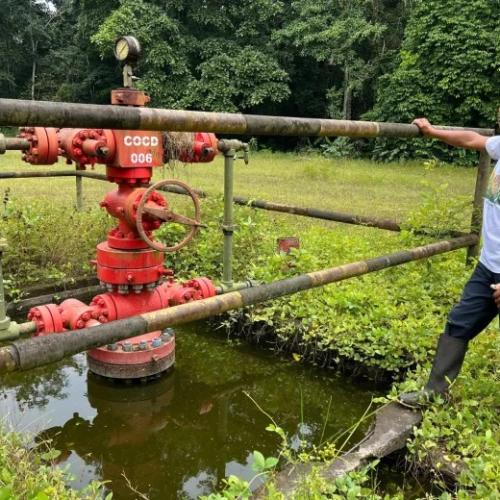
Ecuador's highest court has upheld a $9.5 billion judgment against oil giant Chevron for decades of rainforest damage. Plaintiffs celebrated the constitutional court's decision announced Tuesday night, saying it should pave the way for indigenous tribes to receive compensation for oil spills that contaminated groundwater and soil in their Amazon home. But the ruling is largely symbolic as Chevron no longer operates in the South American country. That means Ecuador's government will have to pursue assets owned by the ... company in foreign courts, where it so far has had little luck. Last week, an appeals court in Argentina rejected an attempt by Ecuador to collect on its award, echoing earlier rulings by courts in Canada, Gibraltar and Brazil. In 2014, a U.S. court of appeals ... also denied Ecuador's request, arguing that the original judgment was obtained through bribery, coercion and fraud. In an added twist, the American lawyer who for years represented Ecuador in the matter was barred Tuesday from practicing law in New York state. The New York state appeals court found Steven Donziger guilty of professional misconduct, saying that in his appeal of the 2014 ruling he did not challenge the judge's findings of bribery, witness tampering, and the ghostwriting of a court opinion.
Note: For more along these lines, see concise summaries of deeply revealing corporate corruption news articles from reliable major media sources.
Ireland will become the first country in the world to fully divest from fossil fuels after politicians voted to withdraw all public funds from oil and gas companies. In an effort to meet the country's climate change commitments, as embodied in the Paris agreement, the Fossil Fuel Divestment Bill will probably be brought into force after parliament's summer recess. First introduced by independent MP Thomas Pringle in 2016, the bill has since been backed by all opposition parties. Taking inspiration from universities and cities around the world that have withdrawn financial support from the fossil fuel industry, Mr Pringle began working on the idea after meeting Irish international development charity Trocaire. The passing of the bill will compel the Ireland Strategic Investment Fund to sell off its fossil fuel investments, which stand at more than 300m (265m) across 150 companies worldwide. Mr Pringle said the withdrawal of this money will not only remove funds from some of the biggest greenhouse gas emitters, it will act as a gesture of Irelands commitment to tackling climate change. Eamonn Meehan, executive director of Trocaire, agreed that the bill made a powerful statement that would serve to improve the nations reputation as a climate laggard.
Note: Explore a treasure trove of concise summaries of incredibly inspiring news articles which will inspire you to make a difference.
Google has more clean power than it needs. The Alphabet Inc. unit used about 7 terawatt-hours of electricity to run all of its global operations last year, and it sourced even more than that, according to Neha Palmer, its head of energy strategy. Corporate buyers are major purchasers of wind and solar power. While part of the motivation is to advance sustainability goals, theyre also finding that clean energy is often the cheapest electricity available. Big technology companies have been leading this trend, and Google has been the biggest of them all. Our electric consumption is the largest part of our carbon footprint, Palmer said in a phone interview. The renewable-energy program we have is the best way to mitigate our carbon impact. Companies signed long-term agreements for a record 5.4 gigawatts of clean capacity globally last year, according to Bloomberg New Energy Finance, up from 4.3 gigawatts in 2016. Thats enough to displace at least 10 coal-fired power plants. Google signed its first clean power-purchase agreement in 2010, and since then its arranged about 25 more, prompting more than $3 billion in new clean-power plants. Google has agreed to buy ... more than double that of Amazon.com Inc., the next biggest green consumer. Its a significant investment, leading to lots of new renewables projects, Kyle Harrison, a New York-based analyst ... said. Its a long-term bet on clean energy, a hedge against wholesale prices.
Note: Explore a treasure trove of concise summaries of incredibly inspiring news articles which will inspire you to make a difference.
In southeast Georgia, in an area filled with farms, construction will soon begin on a sprawling new 120-megawatt solar plant. It will be the first solar facility in the county, and it will exist in part because Google - which has a large data center in Georgia - is working to bring renewable electricity to every region in which it operates. The solar farm is one of two new projects in Georgia that will sell energy to Google via the local utility, and is also the latest example of the companys work to open energy markets to corporations that want to support new sources of renewable electricity. The company pioneered the practice in 2010; now, companies from Nike to Starbucks and AT&T are doing the same thing. Traditionally, wind farms and solar farms sold wholesale power only to utilities, and regulations made it impossible for companies to buy that clean energy. But the company realized that it could apply to the federal government for the right to buy and sell wholesale power itself, and then create long-term contracts - called power purchase agreements - with the developers of renewable projects. The first project was a wind farm in Iowa. By 2017, with around 20 similar projects, Google met a longstanding goal to buy as much renewable energy as it uses globally, sourced from new wind and solar plants. Ultimately, the company wants to use clean energy everywhere it works, all the time. The next step in that process is to buy renewable energy on every local grid where Google works.
Note: Explore a treasure trove of concise summaries of incredibly inspiring news articles which will inspire you to make a difference.
The potential appeal of solar roads - modified solar panels that are installed in place of asphalt - is clear. Generating electricity from highways and streets, rather than in fields and deserts packed with solar panels, could conserve a lot of land. Those advantages are particularly important in a place like China, a heavily populated country where demand for energy has risen rapidly. Now, such roads are finally becoming viable. Chinas leaders in solar road development are Pavenergy and Qilu Transportation. The surface of these panels, made of a complex polymer that resembles plastic, has slightly more friction than a conventional road surface, according to Zhang Hongchao, an engineering professor. Still, a litany of outstanding challenges means the wide deployment of solar roads is a long way off. Solar roads are ... more expensive than asphalt. It costs about $120 a square meter, or about $11 a square foot, to resurface and repair an asphalt road each decade. By comparison, Pavenergy and Colas hope to be able to bring the cost of a solar road to $310 to $460 a square meter with mass production. Panels on a highway would likely need to be replaced less often than asphalt, Professor Zhang said. And a solar road can produce about $15 a year worth of electricity from each square meter of solar panels. Less clear is whether the panels would be able to take the pounding of millions of tires each year for more than a decade, or whether they might be stolen.
Note: For more along these lines, see concise summaries of deeply revealing energy news articles from reliable major media sources.
Protesters mainly women are defying police and energy companies in non-violent environmental activism. Way out in the Appalachian hills ... an orderly clutch of tents were surrounded by a plastic yellow ribbon that read, police line do not cross. Past that, a woman sat on top of a 50ft pole. Opposite the knot of tents where the womans supporters kept 24-hour vigil lay an encampment of police, pipeline workers, and private security. On Wednesday 23 May, the protester, nicknamed Nutty, finally came down after a record-breaking 57 days spent in the trees ... to stop a fracked natural-gas pipeline from being built through the state. Her final three days in the trees were spent without food. There are others, too, who remain in the forest and are still blocking construction by putting their lives on the line. These activists hold the typical concerns of having a gas pipeline run through the yard: if it leaks it poisons the water, the font of the incredible biodiversity in the area; theres a two-and-a-half-mile blast radius if it explodes; the pipeline is taking their land through eminent domain against their will for resource extraction. But they also say this is about more than just a pipeline, built by Mountain Valley Pipeline LLC. It is, they say, also about the erosion of democracy and the natural world. Virginias governor, Ralph Northam, took $50,000 from MVPs largest shareholder, EQT Corp, and another $199,251 from Dominion Energy, [a] major shareholder of the Atlantic Coast Pipeline being built nearby.
Note: For more along these lines, see concise summaries of deeply revealing news articles on corruption in government and in the corporate world.
Engineers have developed a turbine which has the potential to power a small town all the while being no bigger than your office desk. Designed by GE Global Research, the turbine could power 10,000 homes and according to researchers, could help to solve some of the world's growing energy challenges. But rather than steam, which is typically used to set turbines in motion, the new turbine uses carbon dioxide. 'This compact machine will allow us to do amazing things,' said Doug Hofer, lead engineer on the project. According to MIT Tech Review, the turbine is driven by 'supercritical carbon dioxide', which is kept under high pressure at temperatures of 700˚C. Under these conditions, the carbon dioxide enters a physical state between a gas and a liquid, enabling the turbine to harness its energy for super-efficient power generation - with the turbines transferring 50 per cent of the heat into electricity. It could help energy firms take waste gas and repurpose it for efficient and cleaner energy production. Waste heat produced from other power generation methods, such as solar or nuclear, could be used to melt salts, with the molten salts used to the carbon dioxide gas to a super-critical liquid - which may be much quicker than heating water for steam. Currently, the design of the turbine would enable up to 10,000 kilowatts of energy to be produced, but the turbines could be scaled up to generate 500 megawatts, enough to power a city.
Note: Explore a treasure trove of concise summaries of incredibly inspiring news articles which will inspire you to make a difference.
Costa Ricas new president has announced a plan to ban fossil fuels and become the first fully decarbonised country in the world. Carlos Alvarado, a 38-year-old former journalist, made the announcement ... during his inauguration. "Decarbonisation is the great task of our generation and Costa Rica must be one of the first countries in the world to accomplish it, if not the first," Mr Alvarado said. Symbolically, the president arrived at the ceremony in San Jose aboard a hydrogen-fuelled bus. Last month, Mr Alvarado said the Central American country would begin to implement a plan to end fossil fuel use in transport by 2021 the 200th year of Costa Rican independence. "When we reach 200 years of independent life we will take Costa Rica forward and celebrate ... that we've removed gasoline and diesel from our transportation, he promised during a victory speech. Costa Rica already generates more than 99 per cent of its electricity using renewable energy sources. Costa Ricas push towards clean energy faces no large-scale backlash, in part because the country has no significant oil or gas industry. But demand for cars is rising, as is use of other transport systems, and that may prove one of the biggest challenges in meeting the new goal. Transport is today the countrys main source of climate changing emissions.
Note: Explore a treasure trove of concise summaries of incredibly inspiring news articles which will inspire you to make a difference.
Solar panels will be a required feature on virtually every new home built in California, under a policy advanced Wednesday by California regulators. The California Energy Commission voted unanimously, 5-0, to recommend energy efficiency standards that are set to be added to state building regulations later this year, effecting all construction after Jan. 1, 2020. The rules will make California the first state in the nation to require solar panels on new homes. "This will be nothing short of historic for our state and for our country," said Bernadette Del Chiaro, executive director of the California Solar & Storage Association, an industry group. The requirement will apply to single-family homes and to apartment and condominium complexes of three stories or less. Solar installations have become so cost effective that they are included in more than 15,000 homes built each year in California, even without the directive from the state. In 2020 and beyond that number promises to increase to 80,000, the number of homes built each year in the Golden State. The average estimated cost of a solar system is $9,500, or $40 a month when amortized over a 30-year mortgage. But the systems are projected to save customers an average of $80 a month on their utility bills. Another part of the new regulation ... gives energy credit to homes that employ battery storage technology.
Note: Explore a treasure trove of concise summaries of incredibly inspiring news articles which will inspire you to make a difference.
Mexico wants to produce 43% of its electricity from renewables by 2024, in only 6 years. Toward that end, in December it opened the Villanueva solar farm in the desert, with 2.3 million solar panels, generating enough juice to power 1.3 million homes. It is the largest solar project in the Western hemisphere. Thats right. The largest solar installation in the New World is not in the United States. It is in Mexico. In the first quarter of 2018, India set a record with the addition of 4.6 gigawatts of solar! Thats the name plate capacity of four small nuclear reactors, added in just one quarter. By the end of January India had 20 gigawatts of installed solar power capacity. In contrast, France only has 8 gigawatts of installed solar capacity. Dubai will tender a bid before the end of this year for a 300 megawatt solar farm, as part of its plan to get 7% of its electricity from solar by 2020. Since Dubai is one of seven emirates making up the United Arab Emirates, a major oil exporter, this push for renewables may ... seem hard to explain. But look more closely. Dubai does not have its own hydrocarbons and is rather a service economy. So ... it is highly beneficial for Dubai to get its electricity from solar, the fuel of which is free down the line once installment costs are paid off. The UAE gets enormous amounts of sunshine and bids have been let there for as little as 2.5 cents a kilowatt hour, which is world-beating. Coal, one of the cheapest hydrocarbons, is typically 5 cents a kilowatt hour.
Note: Watch a promotional video for the massive Villanueva solar farm in Mexico.
More money was invested in solar power in 2017 than in coal, gas and nuclear power combined, according to a new report for the United Nations Environment Programme (UNEP). The report says that global investment in solar rose 18% to $160.8 billion, driven by the Chinese market, which was responsible for more than half of the worlds 98GW of new solar capacity. Solar power made up 57% of last years total for all renewables (excluding large hydro) of $279.8 billion, and it towered above new investment in coal and gas generation capacity, at an estimated $103 billion. Last year was the eighth in a row in which global investment in renewables, excluding large hydropower, exceeded $200 billion. The $2.7 trillion invested in clean energy from 2007 to 2017 have increased the proportion of electricity generated by wind, solar, biomass and waste-to-energy, geothermal, marine and small hydro globally to more than 12%, from 5.2% in 2007 ... and has avoided the emission of about 1.8 gigatonnes of CO2, about the same as is emitted by the entire US transportation system. UN Environment head Erik Solheim said that the extraordinary surge in solar investment shows how the global energy map is changing and, more importantly, what the economic benefits are of such a shift. Investments in renewables bring more people into the economy, they deliver more jobs, better quality jobs and better paid jobs. Clean energy also means less pollution, which means healthier, happier development.
Note: Explore a treasure trove of concise summaries of incredibly inspiring news articles which will inspire you to make a difference.
A research team at the University of Bristol has developed a way to use a type of nuclear waste to generate electricity in a nuclear-powered battery that is an actual diamond. Such a battery produces very low power, but has no moving parts, no emissions of any type including radiation, needs no maintenance, does not need to be recharged and will operate for thousands of years. The team grew a man-made diamond that, when placed in a radiation field, was able to generate a small electrical current. And the radioactive field can be produced by the diamond itself by making the diamond from radioactive carbon-14 extracted from nuclear waste. Even better, the amount of radioactivity in each diamond battery is a lot less than in a single banana. Diamonds are made from pure carbon subjected to high pressures, usually deep in the Earths crust. But we have been artificially making them for decades. The normal way to produce electricity is to use energy, like burning coal or capturing wind, to move a magnet through a coil of wire to generate a current. However, a diamond is able to produce a charge simply by being subjected to a radiation field. The cost to produce a diamond is a lot less than disposing of used nuclear fuel and nuclear waste. These radioactive diamond batteries would have a very specific purpose low power and extremely long life. The ... battery would still be putting out 50% power after 5,730 years.
Note: For more along these lines, see concise summaries of deeply revealing news articles on nuclear power and new energy inventions.
Lockheed Martin has reportedly been working on a revolutionary new type of reactor that can power anything from cities to aircraft carriers. The Maryland-based defense contractor recently received a patent for the compact fusion reactor (CFR) after filing plans for the device in 2014. According to reports, one generator would be as small as a shipping container but produce the energy to power 80,000 homes or one of the U.S. Navys Nimitz-class carriers. Lockheeds advanced projects division, Skunk Works, has reportedly been working on the futuristic power source since 2014 and claimed at the time that a CFR could be ready for production by 2019. I started looking at all the ideas that had been published. I basically took those ideas and melded them into something new by taking the problems in one and trying to replace them with the benefits of others, Dr. Thomas McGuire of Skunk Works said during a 2014 interview. The nice thing about a fusion reaction is that if somehow it would go out of control, it would just stop itself automatically, William & Marys Saskia Mordijck told Phys.org in 2012. If a fission reaction goes out of control, it can really go out of control. You cant stop it and it actually might go into a nuclear meltdown. Lockheed advertises its quest to develop fusion power on its website, calling the technology a cleaner, safer source of energy that could be used to power communities or even travel to Mars.
Note: A 2004 New York Times article stated that Lockheed Martin runs a "breathtakingly big part" of the US. This company's "Skunk Works" was kept very secret until 2014, when reporters were given a glossy brochure featuring a "10-point "Skunk Works 2015" agenda". For more along these lines, see concise summaries of deeply revealing energy invention news articles from reliable major media sources.
Wind power in the UK set a new record today by generating 14 gigawatts for the first time nearly 37 per cent of the the countrys electricity. The National Grid control room confirmed that 13.9 gigawatts was the highest ever metered wind output. At 10am on Saturday Wind generated 13.9GW, or 36.9 per cent of the UKs electricity, increasing to 14GW by 11am. The previous record was 13.6GW in January this year. By contrast gas generated only 8.5GW (23 per cent), nuclear 6.5GW (17.3 per cent), coal just 4.7GW (12.5 per cent) and both solar and biomass 1.5GW (4.1 per cent). Hydro came last with 0.3GW or 0.9 per cent. Wind farms produced a record 15 per cent of Britains electricity in 2017, up from 10 per cent in 2016. Dr Iain Staffell of Imperial College said: The dramatic increase comes from both higher wind speeds and a jump in installed capacity. Several large offshore farms came online and onshore wind had a record year for deployment.
Note: Explore a treasure trove of concise summaries of incredibly inspiring news articles which will inspire you to make a difference.
According to a 2016 study, the top contributor of air pollution-related deaths in China is the burning of coal. To improve the country's air quality, the Chinese government vows to spend at least $360 billion on clean energy projects and create 13 million new renewable energy jobs by 2020. This year marks China's fourth anniversary since it started a "war on pollution," and there's reason to believe the country is making headway. Chinese cities have cut concentrations of fine particulates - often considered the deadliest type of pollution - by 32% on average since 2013. The city of Xingtai saw the largest pollution decline at 52.2%. China's latest energy megaproject - a giant floating solar farm on top of a former coal mine in Anhui - may get the country closer to that goal. The 166,000-panel array ... can generate 40 megawatts of power - enough to accommodate 15,000 homes. It's currently the world's largest floating solar project and will operate for up to 25 years. Local energy company Sungrow Power Supply developed the farm on a lake that was once the site of extensive coal mining. After an explosion caused the mine to collapse, a lake formed and flooded it. Building solar plants on top of lakes and reservoirs can protect agricultural land and wildlife on the ground. The water also cools the solar panels, helping them work more efficiently. Choosing to develop the Sungrow farm on an abandoned coal mine signals the slow decline of fossil fuels like coal in China and other countries around the world.
Note: Explore a treasure trove of concise summaries of incredibly inspiring news articles which will inspire you to make a difference.
Important Note: Explore our full index to revealing excerpts of key major media news stories on several dozen engaging topics. And don't miss amazing excerpts from 20 of the most revealing news articles ever published.