















































Privacy News Articles
Below are key excerpts of revealing news articles on privacy and mass surveillance issues from reliable news media sources. If any link fails to function, a paywall blocks full access, or the article is no longer available, try these digital tools.

The owner of the e-mail service [Lavabit, Ladar Levison,] said he closed it down after the government, in pursuit of Edward J. Snowden, sought untrammeled access to the protected messages of all his customers. Mr. Levison was willing to allow investigators with a court order to tap Mr. Snowdens e-mail account; he had complied with similar narrowly targeted requests involving other customers about two dozen times. But they wanted more, he said: the passwords, encryption keys and computer code that would essentially allow the government untrammeled access to the protected messages of all his customers. That, he said, was too much. On Aug. 8, Mr. Levison closed Lavabit rather than, in his view, betray his promise of secure e-mail to his customers. On [October 2], a federal judge unsealed documents in the case, allowing the tech entrepreneur to speak candidly for the first time about his experiences. He had been summoned to testify to a grand jury in Virginia; forbidden to discuss his case; held in contempt of court and fined $10,000 for handing over his private encryption keys on paper and not in digital form; and, finally, threatened with arrest for saying too much when he shuttered his business. While Mr. Levisons struggles have been with the F.B.I., hovering in the background is the N.S.A., which has worked secretly for years to undermine or bypass encrypted services like Lavabit so that their electronic message scrambling cannot obstruct the agencys spying. Mr. Levisons case shows how law enforcement officials can use legal tools to pry open messages, no matter how well protected.
Note: For an excellent 15-minute BBC Newsnight interview with Glenn Greenwald defending Edward Snowden's release of secret documents, click here. For more on government privacy invasions, see the deeply revealing reports from reliable major media sources available here.
The US National Security Agency spied on civil rights leader Martin Luther King and boxer Muhammad Ali during the height of the Vietnam War protests, declassified documents reveal. The documents show the NSA also tracked journalists from the New York Times and the Washington Post and two senators. Some NSA officials later described the programme as "disreputable if not outright illegal", the documents show. The operation, dubbed "Minaret", was originally exposed in the 1970s. However, the names of those on the phone-tapping "watch list" had been kept secret until now. The secret papers were published after a government panel ruled in favour of researchers at George Washington University. The university's National Security Archive - a research institute that seeks to check government secrecy - described the names on the NSA's watch-list as "eye-popping". The agency eavesdropped on civil rights leaders Martin Luther King and Whitney Young as well as boxing champion Muhammad Ali, New York Times journalist Tom Wicker and Washington Post columnist Art Buchwald. The NSA also monitored the overseas phone calls of two prominent US senators - Democrat Frank Church and Republican Howard Baker. In 1967 the strength of the anti-war campaign led President Lyndon Johnson to ask US intelligence agencies to find out if some protests were being stoked by foreign governments. Many of those targeted were considered to be critics of US involvement in the Vietnam War. The NSA worked with other spy agencies to draw up the "watch lists" of anti-war critics, tapping their phone calls. The programme continued after Richard Nixon entered the White House in 1969.
Note: These names were kept secret until now allegedly for reason of "national security." Note how this term is repeatedly used to cover up illegal government activity solely to protect those who commit these crimes. For more on the hidden realities of intelligence agency operations, see the deeply revealing reports from reliable major media sources available here.
One of the most overlooked aspects of the NSA reporting in the US has been just how global of a story this has become. Last week it was revealed that Belgium's largest telecom, Belgacom, was the victim of a massive hacking attack which systematically compromised its system for as long as two years. Last week, using documents obtained from NSA whistleblower Edward Snowden, Laura Poitras and other Der Spiegel journalists reported in that paper that it was the GCHQ, Britain's intelligence agency, that was behind the attack. According to that report, the attack was carried out by targeting individual engineers at the telecom with malware that allowed GCHQ agents to "own" their computer and thus exploit their access to the telecommunications system. As the US and UK run around the world protesting the hacking activities of others and warning of the dangers of cyber-attacks, that duo is one of the most aggressive and malicious, if not the most aggressive and malicious, perpetrators of those attacks of anyone on the planet. Nobody hacks as prolifically and aggressively as the two countries who most vocally warn of the dangers of hacking. A coalition called Stop Watching Us has been formed by privacy and civil liberties groups from across the political spectrum. On October 26, the 12th anniversary of the enactment of the Patriot Act, they will hold an anti-surveillance rally in Washington DC.
Note: For more on the hidden realities of intelligence agency operations, see the deeply revealing reports from reliable major media sources available here.
Today's high-end televisions are almost all equipped with "smart" PC-like features, including Internet connectivity, apps, microphones and cameras. But a recently discovered security hole in some Samsung Smart TVs shows that many of those bells and whistles aren't ready for prime time. The flaws in Samsung Smart TVs, which have now been patched, enabled hackers to remotely turn on the TVs' built-in cameras without leaving any trace of it on the screen. While you're watching TV, a hacker anywhere around the world could have been watching you. Hackers also could have easily rerouted an unsuspecting user to a malicious website to steal bank account information. Samsung quickly fixed the problem after security researchers at iSEC Partners informed the company about the bugs. Samsung sent a software update to all affected TVs. But the glitches speak to a larger problem of gadgets that connect to the Internet but have virtually no security to speak of. Security cameras, lights, heating control systems and even door locks and windows are now increasingly coming with features that allow users to control them remotely. Without proper security controls, there's little to stop hackers from invading users' privacy, stealing personal information or spying on people. In the case of Samsung Smart TVs, iSEC researchers found that they could tap into the TV's Web browser with ease, according to iSEC security analyst Josh Yavor. That gave hackers access to all the functions controlled by the browser, including the TV's built-in camera. "If there's a vulnerability in any application, there's a vulnerability in the entire TV," said Aaron Grattafiori, also an analyst at iSEC.
Note: For how deep this problem goes, read this article. For more on corporate and government privacy invasions, see the deeply revealing reports from reliable major media sources available here.
GCHQ has received at least 100 million from the US to help fund intelligence gathering, raising questions over American influence on the British agencies. The money was paid across a range of projects over three years and resulted in GCHQ spying on behalf of America, according to leaked documents. It also emerged that the intelligence agency wants the ability to exploit any phone, anywhere, any time and that some staff have raised concerns over the morality and ethics of their operational work. The payments from the US National Security Agency (NSA) are detailed in GCHQs annual investment portfolios, leaked by Mr Snowden to The Guardian. The NSA paid GCHQ 22.9 million in 2009, 39.9 million in 2010 and 34.7 million in 2011/12. The 2010 funding included ... 17.2 million for the agencys Mastering the Internet project, which gathers raw information from the web to be analysed. In return, GCHQ has to have the American view in mind when prioritising work, the papers claim. One strategy briefing disclosed the pressure on GCHQ to meet NSA demands, saying: GCHQ must pull its weight and be seen to pull its weight. In another document, from 2010, GCHQ apparently acknowledged that the US had raised a number of issues with regards to meeting NSAs minimum expectations.
Note: For more on government corruption, see the deeply revealing reports from reliable major media sources available here.
A top secret National Security Agency program allows analysts to search with no prior authorization through vast databases containing emails, online chats and the browsing histories of millions of individuals, according to documents provided by whistleblower Edward Snowden. The NSA boasts in training materials that the program, called XKeyscore, is its "widest-reaching" system for developing intelligence from the internet. The files shed light on one of Snowden's most controversial statements, made in his first video interview published by the Guardian on June 10. "I, sitting at my desk," said Snowden, could "wiretap anyone, from you or your accountant, to a federal judge or even the president, if I had a personal email". Training materials for XKeyscore detail how analysts can use it and other systems to mine enormous agency databases by filling in a simple on-screen form giving only a broad justification for the search. The request is not reviewed by a court or any NSA personnel before it is processed. One presentation claims the program covers "nearly everything a typical user does on the internet", including the content of emails, websites visited and searches, as well as their metadata. Analysts can also use XKeyscore and other NSA systems to obtain ongoing "real-time" interception of an individual's internet activity. XKeyscore provides the technological capability [to target] US persons for extensive electronic surveillance without a warrant provided that some identifying information, such as their email or IP address, is known to the analyst.
Note: For more on government privacy invasions, see the deeply revealing reports from reliable major media sources available here.
In the era of intense government surveillance and secret court orders, a murky multimillion-dollar market has emerged. Paid for by U.S. tax dollars, but with little public scrutiny, surveillance fees charged in secret by technology and phone companies can vary wildly. AT&T, for example, imposes a $325 "activation fee" for each wiretap and $10 a day to maintain it. Smaller carriers Cricket and U.S. Cellular charge only about $250 per wiretap. But snoop on a Verizon customer? That costs the government $775 for the first month and $500 each month after that. Regardless of price, the surveillance business is growing. The U.S. government long has enjoyed access to phone networks and high-speed Internet traffic under the U.S. Communications Assistance for Law Enforcement Act to catch suspected criminals and terrorists. More recently, the FBI has pushed technology companies like Google and Skype to guarantee access to real-time communications on their services. As the number of law enforcement requests for data grew and carriers upgraded their technology, the cost of accommodating government surveillance requests increased. AT&T, for example, said it devotes roughly 100 employees to review each request and hand over data. Likewise, Verizon said its team of 70 employees works around the clock, seven days a week to handle the quarter-million requests it gets each year.
Note: For more on government and corporate attacks on privacy, see the deeply revealing reports from reliable major media sources available here.
Britain's spy agency GCHQ has secretly gained access to the network of cables which carry the world's phone calls and internet traffic and has started to process vast streams of sensitive personal information which it is sharing with its American partner, the National Security Agency (NSA). The sheer scale of the agency's ambition is reflected in the titles of its two principal components: Mastering the Internet and Global Telecoms Exploitation, aimed at scooping up as much online and telephone traffic as possible. This is all being carried out without any form of public acknowledgement or debate. One key innovation has been GCHQ's ability to tap into and store huge volumes of data drawn from fibre-optic cables for up to 30 days so that it can be sifted and analysed. GCHQ and the NSA are consequently able to access and process vast quantities of communications between entirely innocent people, as well as targeted suspects. This includes recordings of phone calls, the content of email messages, entries on Facebook and the history of any internet user's access to websites all of which is deemed legal, even though the warrant system was supposed to limit interception to a specified range of targets. The existence of the programme has been disclosed in documents shown to the Guardian by the NSA whistleblower Edward Snowden. Britain's technical capacity to tap into the cables that carry the world's communications ... has made GCHQ an intelligence superpower. A total of 850,000 NSA employees and US private contractors with top secret clearance had access to GCHQ databases.
Note: For solid evidence spy agencies targeted even top politicians, click here. For more on intelligence agency corruption, see the deeply revealing reports from reliable major media sources available here.
Foreign politicians and officials who took part in two G20 summit meetings in London in 2009 had their computers monitored and their phone calls intercepted on the instructions of their British government hosts. Some delegates were tricked into using internet cafes which had been set up by British intelligence agencies to read their email traffic. The disclosure raises new questions about the boundaries of surveillance by GCHQ [Government Communications Headquarters] and its American sister organisation, the National Security Agency [NSA], whose access to phone records and internet data has been defended as necessary in the fight against terrorism and serious crime. There have often been rumours of this kind of espionage at international conferences, but it is highly unusual for hard evidence to confirm it and spell out the detail. The evidence is contained in documents classified as top secret which were uncovered by the NSA whistleblower Edward Snowden and seen by the Guardian. They reveal that during G20 meetings in April and September 2009 GCHQ used what one document calls "ground-breaking intelligence capabilities" to intercept the communications of visiting delegations. This included: Setting up internet cafes where they used an email interception programme and key-logging software to spy on delegates' use of computers; Penetrating the security on delegates' BlackBerrys to monitor their email messages and phone calls; Supplying 45 analysts with a live round-the-clock summary of who was phoning who at the summit.
Note: For deeply revealing reports from reliable major media sources on the hidden realities of intelligence agencies, click here
Since 9/11, there has been, at first secretly but increasingly openly, a revocation of the bill of rights for which this country fought over 200 years ago. In particular, the fourth and fifth amendments of the US constitution, which safeguard citizens from unwarranted intrusion by the government into their private lives, have been virtually suspended. The United States is not now a police state. But given the extent of this invasion of people's privacy, we do have the full electronic and legislative infrastructure of such a state. These powers are extremely dangerous. There are legitimate reasons for ... secrecy about communications intelligence. But what is not legitimate is to use a secrecy system to hide programs that are blatantly unconstitutional. In 1975, Senator Frank Church spoke of the National Security Agency in these terms: "I know the capacity that is there to make tyranny total in America, and we must see to it that this agency and all agencies that possess this technology operate within the law and under proper supervision, so that we never cross over that abyss. That is the abyss from which there is no return." The dangerous prospect of which he warned was that America's intelligence gathering capability which is today beyond any comparison with what existed in his pre-digital era "at any time could be turned around on the American people and no American would have any privacy left." That has now happened. That is what [Edward] Snowden has exposed, with official, secret documents. We have fallen into Senator Church's abyss.
Note: The above was written by Daniel Ellsberg, a former US military analyst who in 1971 leaked the Pentagon Papers, showing how the US public had been misled about the Vietnam war. For more along these lines, see concise summaries of deeply revealing news articles about questionable intelligence agency practices and the erosion of privacy.
The National Security Agency and the FBI are tapping directly into the central servers of nine leading U.S. Internet companies, extracting audio and video chats, photographs, e-mails, documents, and connection logs. The program, code-named PRISM, has not been made public until now. It may be the first of its kind. Equally unusual is the way the NSA extracts what it wants, according to the document: Collection directly from the servers of these U.S. Service Providers: Microsoft, Yahoo, Google, Facebook, PalTalk, AOL, Skype, YouTube, Apple. GCHQ, Britains equivalent of the NSA, also has been secretly gathering intelligence from the same internet companies through an operation set up by the NSA. PRISM was launched from the ashes of President George W. Bushs secret program of warrantless domestic surveillance in 2007, after news media disclosures, lawsuits and the Foreign Intelligence Surveillance Court forced the president to look for new authority. Congress obliged with the Protect America Act in 2007 and the FISA Amendments Act of 2008, which immunized private companies that cooperated voluntarily with U.S. intelligence collection. Government officials and the document itself made clear that the NSA regarded the identities of its private partners as PRISMs most sensitive secret, fearing that the companies would withdraw from the program if exposed. 98 percent of PRISM production is based on Yahoo, Google and Microsoft; we need to make sure we dont harm these sources, the briefings author wrote in his speakers notes.
Note: For graphs and lots more on the Prism program, see the Guardian article at this link. Technically, U.S. officials are not allowed to mine personal data from U.S. citizens. Yet if U.K. authorities mine data on U.S. citizens, they can share it freely with officials in the U.S. and vice versa. There is evidence that this happens quite frequently, thus circumventing privacy protections. For an excellent article which goes deep into this issue, click here.
Through Freedom of Information Act requests and interviews with officials at numerous agencies, The Wall Street Journal has reconstructed the clash over the counterterrorism program within the administration of President Barack Obama. The attorney general [has] signed the changes into effect. The rules now allow the little-known National Counterterrorism Center to examine the government files of U.S. citizens for possible criminal behavior, even if there is no reason to suspect them. That is a departure from past practice, which barred the agency from storing information about ordinary Americans unless a person was a terror suspect or related to an investigation. Now, NCTC can copy entire government databasesflight records, casino-employee lists, the names of Americans hosting foreign-exchange students and many others. The agency has new authority to keep data about innocent U.S. citizens for up to five years, and to analyze it for suspicious patterns of behavior. Previously, both were prohibited. Data about Americans "reasonably believed to constitute terrorism information" may be permanently retained. "It's breathtaking" in its scope, said a former senior administration official. The Fourth Amendment of the Constitution says that searches of "persons, houses, papers and effects" shouldn't be conducted without "probable cause" that a crime has been committed.
Note: This article requires subscription to view at the link above. To read it for free, click here. For analysis of this sweeping increase in government privacy invasions, click here. For deeply revealing reports from reliable major media sources on government privacy invasions, click here.
Most Americans have gotten used to regular news reports about military and CIA drones attacking terrorist suspects including US citizens in Pakistan, Yemen, and elsewhere abroad. But picture thousands of drone aircraft buzzing around the United States. By some government estimates, as many as 30,000 drones could be part of intelligence gathering and law enforcement here in the United States within the next ten years. Operated by agencies down to the local level, this would be in addition to the 110 current and planned drone activity sites run by the military services in 39 states, reported this week by the Federation of American Scientists, a non-government research project. Civil libertarians warn that unmanned aircraft carrying cameras raise the prospect of a significant new avenue for the surveillance of American life, as the American Civil Liberties Union put it in a report last December. The technology is quickly becoming cheaper and more powerful, interest in deploying drones among police departments is increasing, and our privacy laws are not strong enough to ensure that the new technology will be used responsibly and consistently with democratic values, reported the ACLU. In short, all the pieces appear to be lining up for the eventual introduction of routine aerial surveillance in American life.
Note: For deeper analysis of the threats posed to American citizens by military and police drones in the skies, click here. For information on a federal recent law compelling the Federal Aviation Administration to allow drones to fly in US skies, click here. For more information on the use of drones by police in the US, click here. For lots more from reliable sources on surveillance in the US, click here.
The Supreme Court on Monday ruled by a 5-to-4 vote that officials may strip-search people arrested for any offense, however minor, before admitting them to jails even if the officials have no reason to suspect the presence of contraband. Justice Anthony M. Kennedy, joined by the courts conservative wing, wrote that courts are in no position to second-guess the judgments of correctional officials. The procedures endorsed by the majority are forbidden by statute in at least 10 states. According to a supporting brief filed by the American Bar Association, international human rights treaties also ban the procedures. Justice Stephen G. Breyer, writing for the four dissenters, said the strip searches the majority allowed were a serious affront to human dignity and to individual privacy and should be used only when there was good reason to do so. Justice Breyer said that the Fourth Amendment should be understood to bar strip searches of people arrested for minor offenses not involving drugs or violence, unless officials had a reasonable suspicion that they were carrying contraband. People have been subjected to the humiliation of a visual strip search after being arrested for driving with a noisy muffler, failing to use a turn signal and riding a bicycle without an audible bell. A nun was strip-searched ... after an arrest for trespassing during an antiwar demonstration. In a study of 23,000 people admitted to a correctional facility in Orange County, N.Y., using that standard, there was at most one instance of contraband detected that would not otherwise have been found.
Note: For an abundance of major media articles showing severe erosion of civil liberties, click here.
When Annie Brown's daughter, Isabel, was a month old, her pediatrician asked Brown and her husband to sit down because he had some bad news to tell them: Isabel carried a gene that put her at risk for cystic fibrosis. While grateful to have the information -- Isabel received further testing and she doesn't have the disease -- the Mankato, Minnesota, couple wondered how the doctor knew about Isabel's genes in the first place. After all, they'd never consented to genetic testing. It's simple, the pediatrician answered: Newborn babies in the United States are routinely screened for a panel of genetic diseases. Since the testing is mandated by the government, it's often done without the parents' consent, according to Brad Therrell, director of the National Newborn Screening & Genetics Resource Center. In many states, such as Florida, where Isabel was born, babies' DNA is stored indefinitely, according to the resource center. Many parents don't realize their baby's DNA is being stored in a government lab, but sometimes when they find out, as the Browns did, they take action. Parents in Texas, and Minnesota have filed lawsuits, and these parents' concerns are sparking a new debate about whether it's appropriate for a baby's genetic blueprint to be in the government's possession.
Note: For many reliable reports on the increasing governmental and corporate threats to privacy, click here.
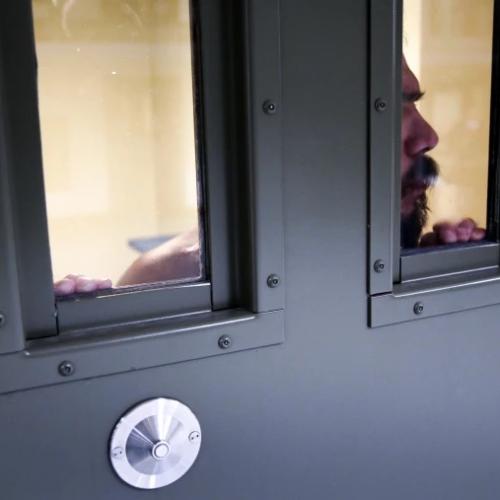
Behind the county hospital's tall cinderblock walls, a 27-year-old tuberculosis patient ... sits in a jail cell equipped with a ventilation system that keeps germs from escaping. Robert Daniels has been locked up indefinitely, perhaps for the rest of his life, since last July. But he has not been charged with a crime. Instead, he suffers from an extensively drug-resistant strain of tuberculosis. It is considered virtually untreatable. County health authorities obtained a court order to lock him up as a danger to the public because ... he did not heed doctors' instructions to wear a mask in public. "I'm being treated worse than an inmate," Daniels said. "I'm all alone. Four walls. Even the door to my room has been locked. I haven't seen my reflection in months." He said sheriff's deputies will not let him take a shower -- he cleans himself with wet wipes -- and have taken away his television, radio, personal phone and computer. His only visitors are masked medical staff members who come in to give him his medication. Though Daniels' confinement is extremely rare, health experts say it is a situation that U.S. public health officials may have to confront more and more because of the spread of drug-resistant TB and the emergence of diseases such as SARS and avian flu.
Note: If the above link fails, click here. What possible reason is there for taking away this man's TV, radio, cell phone, and computer? Are we being prepared for mass quarantines and imprisonment due to disease? For more, click here.
Let's say your teenager is a habitual truant and there is nothing you can do about it. A Washington area politician thinks he might have the solution: Fit the child with a Global Positioning System chip, then have police track him down. "It allows them to get caught easier," said Maryland Delegate Doyle Niemann (D-Prince George's), who recently co-sponsored legislation in the House that would use electronic surveillance as part of a broader truancy reduction plan. "It's going to be done unobtrusively. The chips are tiny and can be put into a hospital ID band or a necklace." Niemann's legislation mirrors a bill sponsored by state Sen. Gwendolyn Britt (D-Prince George's). Both would provide truants and their parents with better access to social services, such as mental health evaluations and help with schoolwork. Electronic monitoring would be a last resort. Still, the prospect of tagging children and using them in some "catch and release" hunt by police casts a pall over everything that's good about the plan. Odd how billions and billions of dollars keep going to a war that almost nobody wants, but there's never enough to fund the educational programs that nearly everybody says are needed. Aimed solely at students in Prince George's the only predominantly black county in the Washington area the truancy effort is called a "pilot program," a first-of-its-kind experiment. It would cost $400,000 to keep track of about 660 students a year.
Note: For more reliable information on the push to microchip the entire population, click here.
When Kevin Warwick enters his office building on the campus of Reading University, strange things happen. As Warwick heads down the main hall, lights turn on. When he turns to the right, an office door unbolts and opens. Each step is clocked and recorded. The building knows who he is, where he is, and what he expects to happen. The building [even] says, Hello Professor Warwick. The structure knows Warwick because of the electrical fuse-sized smart card implanted in his left arm. In Britain, hes been dubbed The Cyborg Man, the first person known to have a microchip implanted in his body for communication with outside machines. Warwick predicts chip implants will one day replace time cards, criminal tracking devices, even credit cards. Capable of carrying huge amounts of data, they may, he says, one day be used to identify individuals by Social Security numbers, blood type, even their banking information. No one knows yet how the body will respond to this type of invasion. Warwick is not blind to the ethical questions of this technology. Implants ostensibly designed to clock workers in and out might be misused to monitor where people are at all times and who they are meeting. Governments could move to use implants instead of I.D. cards and passports, but what would stop them from using this new science to invade privacy? I feel mentally different. When I am in the building I feel much more closely connected with the computer.
Note: Those who would like to control the public named these implants "smart cards" to encourage us to accept them. For more reliable information on important topic, click here and here.
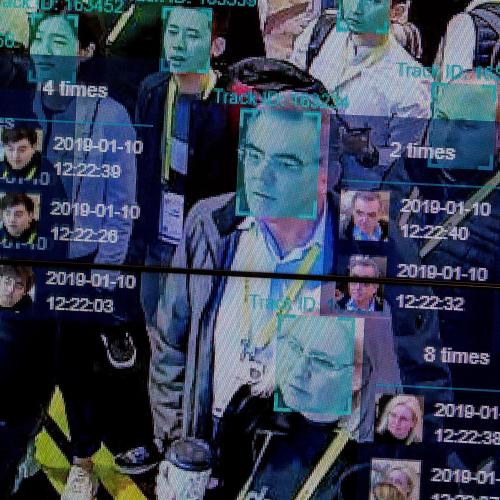
Over the last two months, Chinese citizens have had to adjust to a new level of government intrusion. Getting into ones apartment compound or workplace requires scanning a QR code, writing down ones name and ID number, temperature and recent travel history. Telecom operators track peoples movements while social media platforms like WeChat and Weibo have hotlines for people to report others who may be sick. Some cities are offering people rewards for informing on sick neighbours. Chinese companies are meanwhile rolling out facial recognition technology that can detect elevated temperatures in a crowd or flag citizens not wearing a face mask. A range of apps use the personal health information of citizens to alert others of their proximity to infected patients. Experts say the virus ... has given authorities a pretext for accelerating the mass collection of personal data to track citizens. Its mission creep, said Maya Wang, senior China researcher for Human Rights Watch. According to Wang, the virus is likely to be a catalyst for a further expansion of the surveillance regime. Citizens are particularly critical of a system called Health Code, which users can sign up for through Alipay or WeChat, that assigns individuals one of three colour codes based on their travel history, time spent in outbreak hotspots and exposure to potential carriers of the virus. The software, used in more than 100 cities, will soon allow people to check the colours of other residents when their ID numbers are entered.
Note: Learn in this New York Times article how everyone in China is given a red, yellow, or green code which determines how free they are to move about and even enter businesses. This article shows how foreigners are being stopped instantly from making live podcasts from China using facial recognition technology. For more along these lines, see concise summaries of deeply revealing news articles on the coronavirus and the disappearance of privacy from reliable major media sources.
Everywhere you go online, you’re being tracked. Almost every time you visit a website, trackers gather data about your browsing and funnel it back into targeted advertising systems, which build up detailed profiles about your interests and make big profits in the process. At the end of last year, thousands of websites started being more transparent about how many companies your data is being shared with. A WIRED analysis of the top 10,000 most popular websites shows that dozens of sites say they are sharing data with more than 1,000 companies, while thousands of other websites are sharing data with hundreds of firms. Quiz and puzzle website JetPunk tops the pile, listing 1,809 “partners” that may collect personal information, including “browsing behavior or unique IDs.” More than 20 websites from publisher Dotdash Meredith—including Investopedia.com, People.com, and Allrecipes.com—all say they can share data with 1,609 partners. The newspaper The Daily Mail lists 1,207 partners, while internet speed-monitoring firm Speedtest.net, online medical publisher WebMD, and media outlets Reuters, ESPN, and BuzzFeed all state they can share data with 809 companies. DuckDuckGo keeps a record of the companies that have the biggest tracking footprint across the web. Among the most common trackers, Google has its technology on 79 percent of websites, while those from five other companies are on more than 20 percent of websites.
Note: For more along these lines, see concise summaries of deeply revealing news articles on corporate corruption and the disappearance of privacy from reliable major media sources.
Important Note: Explore our full index to revealing excerpts of key major media news articles on several dozen engaging topics. And don't miss amazing excerpts from 20 of the most revealing news articles ever published.