















































Privacy News Articles
Below are key excerpts of revealing news articles on privacy and mass surveillance issues from reliable news media sources. If any link fails to function, a paywall blocks full access, or the article is no longer available, try these digital tools.

The United States Federal Bureau of Investigation has acknowledged for the first time that it purchased US location data rather than obtaining a warrant. The disclosure came today during a US Senate hearing. Senator Ron Wyden ... put the question of the bureau’s use of commercial data to its director, Christopher Wray: “Does the FBI purchase US phone-geolocation information?” Wray said his agency was not currently doing so. “To my knowledge, we do not currently purchase commercial database information that includes location data derived from internet advertising,” Wray said. “I understand that we previously—as in the past—purchased some such information for a specific national security pilot project. But that’s not been active for some time.” In its landmark Carpenter v. United States decision, the Supreme Court held that government agencies accessing historical location data without a warrant were violating the Fourth Amendment’s guarantee against unreasonable searches. The decision left open a glaring loophole that allows the government to simply purchase whatever it cannot otherwise legally obtain. US Customs and Border Protection (CBP) and the Defense Intelligence Agency are among the list of federal agencies known to have taken advantage of this loophole. The Department of Homeland Security ... purchased the geolocations of millions of Americans from private marketing firms. The data were derived from ... benign sources, such as mobile games and weather apps.
Note: For more along these lines, see concise summaries of deeply revealing news articles on government corruption and the disappearance of privacy from reliable major media sources.
A study published Monday ... outlines how expansive the market for people’s health data has become. After contacting data brokers to ask what kinds of mental health information she could buy, researcher Joanne Kim reported that she ultimately found 11 companies willing to sell bundles of data that included information on what antidepressants people were taking, whether they struggled with insomnia or attention issues, and details on other medical ailments, including Alzheimer’s disease or bladder-control difficulties. Some of the data was offered in an aggregate form that would have allowed a buyer to know, for instance, a rough estimate of how many people in an individual Zip code might be depressed. But other brokers offered personally identifiable data featuring names, addresses and incomes, with one data-broker sales representative pointing to lists named “Anxiety Sufferers” and “Consumers With Clinical Depression in the United States.” Some even offered a sample spreadsheet. The Health Insurance Portability and Accountability Act, known as HIPAA, restricts how hospitals, doctors’ offices and other “covered health entities” share Americans’ health data. But the law doesn’t protect the same information when it’s sent anywhere else, allowing app makers and other companies to legally share or sell the data. Some of the data brokers offered ... opt-out forms. But ... many people probably didn’t realize the brokers had collected their information in the first place. Privacy advocates have for years warned about the unregulated data trade, saying the information could be exploited by advertisers or misused for predatory means. The health-data issue has in some ways gotten worse, in large part because of the increasing sophistication with which companies can collect and share people’s personal information — including not just in defined lists, but through regularly updated search tools and machine-learning analyses.
Note: For more along these lines, see concise summaries of deeply revealing news articles on corporate corruption and the disappearance of privacy from reliable major media sources.
The outbreak of Covid-19 has been anathema for most of Chinas economy but the novel coronavirus was a shot in the arm for the states surveillance apparatus, which has expanded rapidly in pursuit of the epidemics spread. Facial recognition cameras, phone tracking technology and voluntary registrations have all been deployed to monitor the flow of people and the possible transmission of disease. The Chinese surveillance systems currently ... has two purposes: the first is to monitor public health and the second is to maintain political control, says Francis Lee, a professor ... at the Chinese University of Hong Kong. Once the outbreak is controlled, however, its unclear whether the government will retract its new powers. While facial recognition provides a way to monitor crowds from a distance, governments have deployed close-range means of tracking individuals too. The municipal government of Hangzhou worked with ecommerce giant Alibaba to launch a feature through the companys mobile wallet app, AliPay, that assesses the users risk of infection. The app generates a QR code. Guards at checkpoints in residential buildings and elsewhere can then scan that code to gain details about the user. John Bacon-Shone ... at Hong Kong University thinks that the ongoing threat of outbreaks will provide a constant justification for the new systems. I am rather pessimistic that there will be full rollback of data collection once it has been implemented, Bacon-Shone says.
Note: Remember all of the privacy and freedoms given up after 9/11? How many of those have been given back? Learn more about the serious risk of the Coronavirus increasing the surveillance state in this excellent article. For more along these lines, see concise summaries of deeply revealing news articles on government corruption and the disappearance of privacy from reliable major media sources.
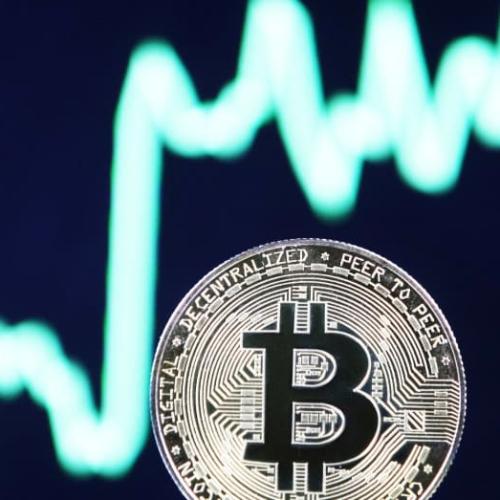
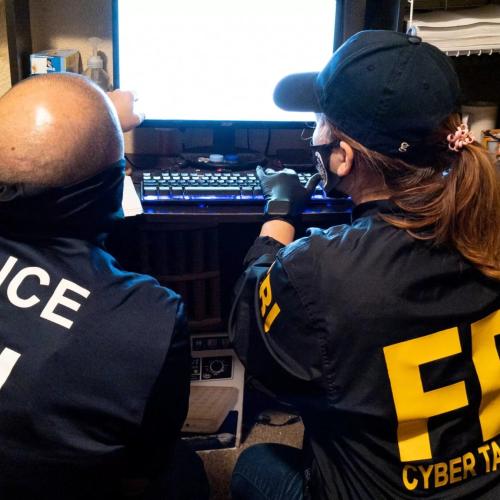
Federal investigators have ordered Google to provide information on all viewers of select YouTube videos. In a just-unsealed case from Kentucky ... undercover cops sought to identify the individual behind the online moniker “elonmuskwhm,” who they suspect of buying bitcoin for cash. In conversations with the user in early January, undercover agents sent links of YouTube tutorials for mapping via drones and augmented reality software, then asked Google for information on who had viewed the videos, which collectively have been watched over 30,000 times. The court orders show the government telling Google to provide the names, addresses, telephone numbers and user activity for all Google account users who accessed the YouTube videos between January 1 and January 8, 2023. The government also wanted the IP addresses of non-Google account owners who viewed the videos. The cops argued, “There is reason to believe that these records would be relevant and material to an ongoing criminal investigation, including by providing identification information about the perpetrators.” The court granted the order and Google was told to keep the request secret. Privacy experts said the orders were unconstitutional because they threatened to undo protections in the 1st and 4th Amendments covering free speech and freedom from unreasonable searches. Albert Fox-Cahn, executive director at the Surveillance Technology Oversight Project [says that] “no one should fear a knock at the door from police simply because of what the YouTube algorithm serves up. I’m horrified that the courts are allowing this.”
Note: The article refers to federal investigators and to undercover cops, but it doesn't specify who was actually doing the investigating. What agency or agencies were involved in these secret operations? For more along these lines, see concise summaries of deeply revealing news articles on police corruption and the disappearance of privacy from reliable major media sources.
As war in Ukraine continues, controversial defense contractors and adjacent companies like Palantir, Anduril, and Clearview AI are taking advantage to develop and level-up controversial AI-driven weapons systems and surveillance technologies. These organizations’ common link? The support of the controversial, yet ever-more powerful Silicon Valley billionaire Peter Thiel. Thiel-backed groups’ involvement in war serves to develop not only problematic and unpredictable weapons technologies and systems, but also apparently to advance and further interconnect a larger surveillance apparatus formed by Thiel and his elite allies’ collective efforts across the public and private sectors, which arguably amount to the entrenchment of a growing technocratic panopticon aimed at capturing public and private life. What’s more, Thiel’s funding efforts signal interest in developing expansive surveillance technologies, especially in the name of combatting “pre-crime” through “predictive policing” style surveillance. As an example, Thiel’s provided significant funds to Israeli intelligence-linked startup Carbyne911 (as did Jeffrey Epstein), which develops call-handling and call-identification capacities for emergency services, and has ... a predictive-policing component. Thiel also assisted in the development and subsequent privatized spinoffs of the US Government’s Defense Advanced Research Projects Agency’s (DARPA) Total Information Awareness project.
Note: Peter Thiel was also recently reported to be an FBI informant. For more along these lines, see concise summaries of deeply revealing news articles on corporate corruption and the disappearance of privacy from reliable major media sources.
The U.S. Army Cyber Command told defense contractors it planned to surveil global social media use to defend the "NATO brand," according to a 2022 webinar recording reviewed by The Intercept. "NATO is one of our key brands that we are pushing, as far as our national security alliance," [Lt. Col. David Beskow] explained. The mass social media surveillance appears to be just one component of a broader initiative to use private-sector data mining to advance the Army's information warfare efforts. Beskow expressed an interest in purchasing access to nonpublic commercial web data, corporate ownership records, supply chain data, and more. While the U.S. national security establishment frequently warns against other countries' "weaponization" of social media and the broader internet, recent reporting has shown the Pentagon engages in some of the very same conduct. Researchers from Graphika and the Stanford Internet Observatory uncovered a network of pro-U.S. Twitter and Facebook accounts covertly operated by U.S. Central Command, an embarrassing revelation that led to a “sweeping audit of how it conducts clandestine information warfare." Despite years of alarm in Washington over the threat posed by deepfake video fabrications to democratic societies, The Intercept reported last month that U.S. Special Operations Command is seeking vendors to help them make their own deepfakes to deceive foreign internet users.
Note: For more along these lines, see concise summaries of deeply revealing news articles on military corruption and media manipulation from reliable sources.
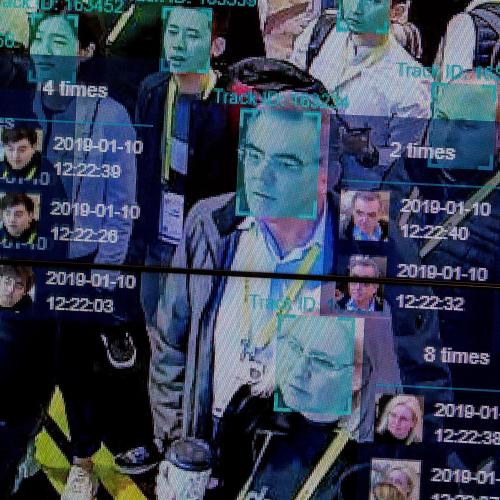
The FBI and the Defense Department were actively involved in research and development of facial recognition software that they hoped could be used to identify people from video footage captured by street cameras and flying drones, according to thousands of pages of internal documents that provide new details about the government's ambitions to build out a powerful tool for advanced surveillance. The documents, revealed in response to an ongoing Freedom of Information Act lawsuit the American Civil Liberties Union filed against the FBI, show how closely FBI and Defense officials worked with academic researchers to refine artificial-intelligence techniques that could help in the identification or tracking of Americans without their awareness or consent. Many of the records relate to the Janus program, a project funded by the Intelligence Advanced Research Projects Agency, or IARPA. The improved facial recognition system was ultimately folded into a search tool, called Horus, and made available to the Pentagon's Combating Terrorism Technical Support Office, which helps provide military technologies to civilian police forces. No federal laws regulate how facial recognition systems can be used. The tool's use in domestic mass surveillance would be a "nightmare scenario," said Nathan Wessler, a deputy director at the ACLU. "It could give the government the ability to pervasively track as many people as they want for as long as they want. There's no good outcome for that in a democratic society."
Note: For more along these lines, see concise summaries of deeply revealing news articles on intelligence agency corruption and the disappearance of privacy from reliable major media sources.
Caleb Kenyon, a defense attorney in Florida, saw a geofence warrant was when a new client received an alarming email from Google in January 2020. Police were requesting personal data from the client, Zachary McCoy, and Kenyon had just seven days to stop Google from turning it over, the email said. The geofence warrant included a map and GPS coordinates, and instructed Google to provide identifying information for every user whose device was found within the radius of that location at a certain date and time. “It was so bizarre that I just didn’t even have a concept for what I was dealing with,” he said. Kenyon is not alone. As tech firms build ever more sophisticated means of surveilling people and their devices – technology that law enforcement is eager to take advantage of – the legal community is scrambling to keep up. The National Association of Criminal Defense Lawyers (NACDL) ... recently created the Fourth Amendment Center, named for the constitutional right against unreasonable searches. The center is one of the few resources available for helping attorneys better understand how new technology is being used against their clients. It can be years before the defense community catches wind of the newest surveillance tools. Unlike other search warrants, geofence warrants don’t require probable cause or a specific suspect in mind; they gather information on anyone within the vicinity of an alleged crime. Advocates argue this violates the fourth amendment.
Note: For more along these lines, see concise summaries of deeply revealing news articles on court system corruption and the disappearance of privacy from reliable major media sources.
Under a post-9/11 surveillance program known as “Upstream”, the NSA is systematically searching Americans’ internet communications as they enter and leave the United States. The agency sifts through these streams of data looking for “identifiers” associated with its many thousands of foreign targets – identifiers like email addresses and phone numbers. The NSA does all of this without warrants, without any individual judicial approval, and without showing that any of the people it is surveilling – including countless Americans – have done anything wrong. This surveillance raises serious constitutional concerns, but no court has ever considered a legal challenge to it because the government has claimed that allowing a suit against Upstream surveillance to go forward would implicate “state secrets”. In 2007, for example, an appeals court dismissed a lawsuit filed by Khaled El-Masri claiming that, in a case of mistaken identity, he had been kidnapped and tortured by the CIA. The court acknowledged the public evidence of El-Masri’s mistreatment but held that state secrets were too central to the case to allow it to go forward. And in 2010, a different appeals court dismissed a lawsuit filed by five individuals who claimed that one of Boeing’s subsidiary companies had flown the planes carrying them to the black sites where they were tortured by the CIA. This use of the state secrets privilege – to dismiss cases – departs from the supreme court’s narrow framing of the privilege.
Note: For more along these lines, see concise summaries of deeply revealing news articles on court system corruption and the disappearance of privacy from reliable major media sources.
The Central Intelligence Agency has for years been collecting in bulk, without a warrant, some kind of data that can affect Americans’ privacy. At the same time, [the C.I.A.] declared that a report about the same topic, which had prompted the letter, must remain fully classified. That report, called “Deep Dive II,” was part of a set of studies by a watchdog board scrutinizing intelligence community operations under Executive Order 12333. In March 2021, the Senate Intelligence Committee received a copy of the report. Two Democrats on the panel, Senators Ron Wyden of Oregon and Martin Heinrich of New Mexico, urged Avril D. Haines, the director of national intelligence, and William J. Burns, the C.I.A. director, to declassify the activity. The senators suggested that its hidden existence cut against Americans’ understanding that various pieces of legislation enacted in recent years “limit and, in some cases, prohibit the warrantless collection of Americans’ records.” In 2015, Congress banned bulk collection of telecommunications metadata under the Patriot Act and limited other types of bulk collection by the F.B.I. under laws governing domestic activities like the Foreign Intelligence Surveillance Act, or FISA. Yet “the C.I.A. has secretly conducted its own bulk program” under Executive Order 12333, the senators wrote. “It has done so entirely outside the statutory framework that Congress and the public believe govern this collection, and without any of the judicial, congressional or even executive branch oversight.”
Note: For more along these lines, see concise summaries of deeply revealing news articles on intelligence agency corruption and the disappearance of privacy from reliable major media sources.
MIT researchers have now developed a novel way to record a patient’s vaccination history: storing the data in a pattern of dye, invisible to the naked eye, that is delivered under the skin at the same time as the vaccine. The researchers showed that their new dye, which consists of nanocrystals called quantum dots, can remain for at least five years under the skin, where it emits near-infrared light that can be detected by a specially equipped smartphone. The researchers designed their dye to be delivered by a microneedle patch rather than a traditional syringe and needle. Such patches are now being developed to deliver vaccines for measles, rubella, and other diseases. “It’s possible someday that this ‘invisible’ approach could create new possibilities for data storage, biosensing, and vaccine applications that could improve how medical care is provided, particularly in the developing world,” [study co-author Robert] Langer says. Tests using human cadaver skin showed that the quantum-dot patterns could be detected by smartphone cameras after up to five years of simulated sun exposure. The research was funded by the Bill and Melinda Gates Foundation and the Koch Institute Support (core) Grant from the National Cancer Institute.
Note: Could these quantum dots be used for tracking and monitoring people? This revealing article shows patents by Moderna suggesting their use in human vaccines. For more along these lines, see concise summaries of deeply revealing news articles on vaccines and the disappearance of privacy from reliable major media sources.
Samsung is warning customers about discussing personal information in front of their smart television set. The warning applies to TV viewers who control their Samsung Smart TV using its voice activation feature. When the feature is active, such TV sets "listen" to what is said and may share what they hear with Samsung or third parties, it said. Privacy campaigners said the technology smacked of the telescreens, in George Orwell's 1984, which spied on citizens. The warning came to light via a story in ... the Daily Beast which published an excerpt of a section of Samsung's privacy policy for its net-connected Smart TV sets. These record what is said when a button on a remote control is pressed. The policy explains that the TV set will be listening to people in the same room to try to spot when commands or queries are issued via the remote. It goes on to say: "If your spoken words include personal or other sensitive information, that information will be among the data captured and transmitted to a third party." Corynne McSherry, an intellectual property lawyer for the Electronic Frontier Foundation, [said] that the third party was probably the company providing speech-to-text conversion for Samsung. She added: "If I were the customer, I might like to know who that third party was, and I'd definitely like to know whether my words were being transmitted in a secure form." The third party handling the translation from speech to text is a firm called Nuance, which specialises in voice recognition, Samsung has confirmed to the BBC.
Note: Read more about Samsung's privacy issues in this 2013 Houston Chronicle article. For more along these lines, see concise summaries of deeply revealing news articles on the disappearance of privacy from reliable major media sources.
The US National Security Agency (NSA) tried to persuade its British counterpart to stop the Guardian publishing revelations about secret mass data collection from the NSA contractor, Edward Snowden. Sir Iain Lobban, the head of Government Communications Headquarters (GCHQ) ... rebuffed the suggestion that his agency should act as a censor on behalf of its US partner in electronic spying. British refusal to shut down publication of the leaks ... caused rifts within the Five Eyes signals intelligence coalition [according to] a new book ... by Richard Kerbaj. Kerbaj reports that the US-UK intelligence relationship was further strained when the head of the NSA, Gen Keith Alexander, failed to inform Lobban that the Americans had identified Snowden ... leaving the British agency investigating its own ranks in the search for the leaker. The Five Eyes allies were outraged that a contractor like Snowden, working as a computer systems administrator, could get access to their secrets, and that because of US government outsourcing, there were 1.5 million Americans with top security clearance like Snowden. Allies were not prepared to challenge the Americans out of anxiety that they could be cut off from the flow of intelligence. British officials also decided to bite their tongues ... because of the value of the intelligence and funding provided by the NSA. Sir Kim Darroch, the former UK national security adviser, is quoted ... saying: “The US give us more than we give them so we just have to basically get on with it.”
Note: Read more on how US and UK spy agencies undermine privacy and security in this news article reported by The Guardian. For a guide from The Guardian on how to remain secure against NSA surveillance, click here.
The digital Covid vaccination certification, or “passport,” is a mobile app that instantaneously affirms the vaccinated status, Covid test results, birth date, gender, and/or other identifiers of its holder. The information is usually mosaicked in a QR code, read by a proprietary scanner, and linked to a government registry. Led by New York, California, and Louisiana, as many as 30 states are rolling them out. The Biden administration announced last spring that it would wrangle them under national standards but so far it hasn’t. Internationally, the EU and a growing number of countries are adopting them, from repressive regimes like Bahrain to democracies like Denmark. Twenty U.S. states have banned the passes, and hashtags like #NoVaccinePassports are proliferating. “Spoiler alert,” tweeted British DJ ... Lange. “They are not planning on removing vax passports once introduced. This is just the first step to get you conditioned to accepting government restrictions in your daily life via your mobile phone. This digital ID is going to expand to all aspects of your life.” New York, for one, is not expecting to mothball the technology when Covid wanes. State bureaucrats are “exploring how the platform could be retrofitted to verify other types of records and credentials.” The surveillance technologies of the War on Contagion are inherited from the War on Terror, and the software is encoded with the same forever-war mentality: Both fight risk rather than actual threat.
Note: For more along these lines, see concise summaries of deeply revealing news articles on coronavirus vaccines and the disappearance of privacy from reliable major media sources.
When the government tracks the location of a cellphone it achieves near perfect surveillance, as if it had attached an ankle monitor to the phones user, wrote John Roberts, the chief justice of the Supreme Court, in a 2018 ruling that prevented the government from obtaining location data from cellphone towers without a warrant. We decline to grant the state unrestricted access to a wireless carriers database of physical location information, Chief Justice Roberts wrote in the decision, Carpenter v. United States. With that judicial intent in mind, it is alarming to read a new report in The Wall Street Journal that found the Trump administration has bought access to a commercial database that maps the movements of millions of cellphones in America and is using it for immigration and border enforcement. The data used by the government comes not from the phone companies but from a location data company, one of many that are quietly and relentlessly collecting the precise movements of all smartphone-owning Americans through their phone apps. Many apps weather apps or coupon apps, for instance gather and record location data without users understanding what the code is up to. That data can then be sold to third party buyers including, apparently, the government. The courts are [an] imperfect venue for protecting Fourth Amendment rights. The Carpenter ruling applies only to location data captured by cellphone towers and not to location data streamed from smartphone apps.
Note: For more along these lines, see concise summaries of deeply revealing news articles on government corruption and the disappearance of privacy from reliable major media sources.
Hardware that breaks into your phone; software that monitors you on the internet; systems that can recognize your face and track your car: The New York State Police are drowning in surveillance tech. Last year alone, the Troopers signed at least $15 million in contracts for powerful new surveillance tools. Surveillance technology has far outpaced traditional privacy laws. In New York, lawmakers launched a years-in-the-making legislative campaign last year to rein in police intrusion. None of their bills have made it out of committee. A report from the U.S. Office of the Director of National Intelligence, put it succinctly: “The government would never have been permitted to compel billions of people to carry location tracking devices on their persons at all times, to log and track most of their social interactions, or to keep flawless records of all their reading habits.” That report called specific attention to the “data broker loophole”: law enforcement’s practice of obtaining data for which they’d otherwise have to obtain a warrant by buying it from brokers. The New York State Police have taken greater and greater advantage of the loophole in recent years. They’ve also spent millions on mobile device forensic tools, or MDFTs, powerful hacking hardware and software that allow users to download full, searchable copies of a cellphone’s data, including social media messages, emails, web and search histories, and minute-by-minute location information.
Note: For more along these lines, see concise summaries of deeply revealing news articles on police corruption and the disappearance of privacy from reliable major media sources.
The FBI spends "every day, all day long" interrogating people over their Facebook posts. At least, that's what agents told Stillwater, Oklahoma, resident Rolla Abdeljawad when they showed up at her house to ask her about her social media activity. Three FBI agents came to Abdeljawad's house and said that they had been given "screenshots" of her posts by Facebook. Her lawyer Hassan Shibly posted a video of the incident. "Facebook gave us a couple of screenshots of your account," one agent in a gray shirt said in the video. "So we no longer live in a free country and we can't say what we want?" replied Abdeljawad. "No, we totally do. That's why we're not here to arrest you or anything," a second agent in a red shirt added. "We do this every day, all day long. It's just an effort to keep everybody safe and make sure nobody has any ill will." Shibly says that he doesn't know which Facebook post caught the agents' attention, and that it was the first time he had heard of Facebook's parent company, Meta, preemptively reporting posts to law enforcement. [Abdeljawad] made multiple angry posts per day about the war in Gaza, referring to Israel as "Israhell." But none of the posts on her feed call for violence. Ironically, Abdeljawad had also posted a warning about exactly the kind of government monitoring she was later subjected to. "Don't fall for their games. Our community is being watched & they are just waiting for any reason to round us up," Abdeljawad wrote.
Note: For more along these lines, see concise summaries of deeply revealing news articles on government corruption and the erosion of civil liberties from reliable major media sources.
In November 2020 ... a ballot initiative known as Measure J passed with 57 percent support, amending the LA County charter so that jailing people before trial would be treated as a last resort. In June, LA County signed over the handling of changes to pretrial detention under Measure J to the consulting firm Accenture, a behemoth in the world of biometric databases and predictive policing. Accenture has pushed counterterror and policing strategies around the globe: The company built the world’s biggest biometric identification system in India, which has used similar technologies to surveil protesters and conduct crowd control as part of efforts by Prime Minister Narendra Modi’s Bharatiya Janata Party to investigate the citizenship of Muslim residents. Accenture ballooned into a giant in federal consulting over the course of the “war on terror,” winning hundreds of millions of dollars in lucrative contracts from federal agencies like the Department of Homeland Security for projects from a “virtual border” to recruiting and hiring Customs and Border Protection and Border Patrol agents. In 2006, Accenture won a $10 million contract for a DHS biometric ID program, the world’s second biggest, to collect and share biometric data on foreign nationals entering or leaving the U.S. Several LA-based advocates told The Intercept that the contract is yet another development that calls into question the county’s commitment to real criminal justice reform.
Note: For more along these lines, see concise summaries of deeply revealing news articles on corporate corruption and the disappearance of privacy from reliable major media sources.
The Department of Homeland Security (DHS) is likely the single largest collector and consumer in the U.S. government of detailed, often intimate, information about Americans and foreigners alike. The department stores and analyzes this information using vast data systems to determine who can enter the country and who is subjected to intrusive inspections, including by parsing through travel records, social media data, non-immigrant visa applications, and other information to detect patterns of behavior that the department has determined are worthy of scrutiny. As we explain in a new Brennan Center report, these systems ... are too often deployed in discriminatory ways that violate Americans’ constitutional rights and civil liberties. It is past time for DHS to stop improvising how it designs and implements its automated systems, with inadequate mechanisms for evaluation and oversight, weak standards, and disproportionate impacts on marginalized communities and individuals. DHS must disclose additional information about its systems, including the policies that govern their operations and reports explaining how they are used. An independent body should undertake a rigorous investigation of DHS’s automated systems, evaluating whether they are useful and accurate, assessing how they function, and determining whether they contain sufficient safeguards to protect privacy, civil rights, and civil liberties.
Note: For more along these lines, see concise summaries of deeply revealing news articles on government corruption and the disappearance of privacy from reliable major media sources.
Public schools ... are the focus of a new report on surveillance and kids by the American Civil Liberties Union (ACLU). "Over the last two decades, a segment of the educational technology (EdTech) sector that markets student surveillance products to schools — the EdTech Surveillance industry — has grown into a $3.1 billion a year economic juggernaut," begins Digital Dystopia The Danger in Buying What the EdTech Surveillance Industry is Selling. "The EdTech Surveillance industry accomplished that feat by playing on school districts' fears of school shootings, student self-harm and suicides, and bullying — marketing them as common, ever-present threats." As the authors detail, among the technologies are surveillance cameras. These are often linked to software for facial recognition, access control, behavior analysis, and weapon detection. That is, cameras scan student faces and then algorithms identify them, allow or deny them entry based on that ID, decide if their activities are threatening, and determine if objects they carry may be dangerous or forbidden. "False hits, such as mistaking a broomstick, three-ring binder, or a Google Chromebook laptop for a gun or other type of weapon, could result in an armed police response to a school," cautions the report. Students are aware that they're being observed. Of students aged 14–18 surveyed by the ACLU ... thirty-two percent say, "I always feel like I'm being watched."
Note: For more along these lines, see concise summaries of deeply revealing news articles on government corruption and the disappearance of privacy from reliable major media sources.
Important Note: Explore our full index to revealing excerpts of key major media news articles on several dozen engaging topics. And don't miss amazing excerpts from 20 of the most revealing news articles ever published.



