


































Ray McGovern: 27-Year CIA Analyst Exposes Major Press Cover-up Around War on Terror
Dear friends,
Ray McGovern, a 27-year CIA analyst who briefed George H.W. Bush when he was Vice President, has written an article boldly exposing what so many carefully avoid. He shows how the press has failed to voice what is know only too well in powerful circles–that "Muslims do not hate our freedom, but rather, they hate our policies." It is the US government's lopsided support of Israel and other Middle Eastern regimes considered to be tyrannical which has created much of the animosity in the Arab world towards the US.
McGovern gives specific examples of how major
media like the New York Times have avoided or played down this
vital information. The deep roots of the war on terror have yet to be
discussed in open public forums. There are many wonderful, good-hearted
people in the countries of Israel and the Middle East, just as there are in
the US and every country in the world. Let us not neglect, however, to work
towards changing the policies of any country which serves the interests of
the elite at the expense of everyone else. Thanks for caring and you have a
great day!
With best wishes,
Fred Burks for WantToKnow.info
http://www.truthout.org/docs_04/120604X.shtml
All Mosquitos, No Swamp; No Elephants Either
By Ray
McGovern
t r u t h o u t | Perspective
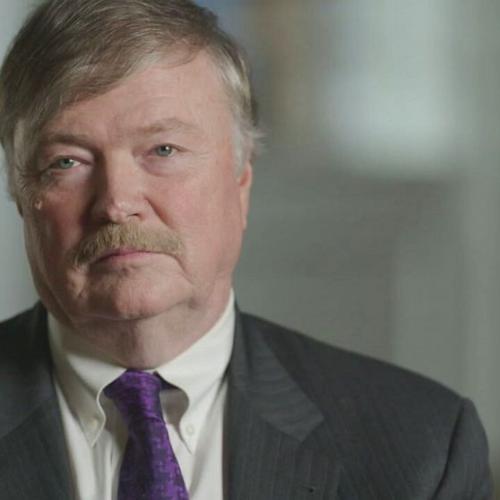
Ray McGovern's duties during his 27-year career as an analyst at the CIA included daily briefings of then-Vice President Bush and the most senior national security advisers to President Ronald Reagan. McGovern is on the Steering Group of Veteran Intelligence Professionals for Sanity (VIPS).
Sunday 05 December 2004
Last Thursday's conference on "Al Qaeda 2.0: Transnational Terrorism After 9/11," sponsored by the New America Foundation and the New York University Center on Law & Security, was a valuable gift to those wanting an update on informed opinion on the subject. The event proved to be as highly instructive for what was not addressed, though, as for the issues that were. The elephants known to be present remained largely unacknowledged.
The cavernous Caucus Room of the Russell Senate Office Building was full to the gunnels. Panel after panel of distinguished presenters from near and far, from right and left - including authors Peter Bergen, Michael Scheuer, Jessica Stern and Col. Pat Lang - exuded and freely shared their expertise. But there was myopia as well.
The mosquitos of terrorism were dissected and examined as carefully as biology students once did drosophila, but typing the generic DNA of terrorism proved more elusive. Worse, no attention was given to the swamp in which terrorists breed. Were it not for a few impertinent questions from the audience evoking a pungent smell, the swamps might have eluded attention altogether.
The first panel featured two experts from RAND, both of whom touched only in passing - and quite gingerly - on the need to drain the swamp. The first closed his remarks with a 30-second peroration in which he observed that less attention might be given to kill/capture metrics in favor of addressing the causes of terrorism and breaking the cycle of terrorist recruitment.
The second speaker from RAND, referring to that organization's numerous studies on influencing public opinion, closed his remarks with this: "When the message coheres with the context in which the message is transmitted, it works." Sending out the right message during the Cold War was easier, he said, because the context (the United States being the only alternative to the USSR) was very clear. On terrorism, he added, we need to ponder "the mismatch between context and message."
What About The Elephants?
Then came a rude question from the audience: Is it not striking that even in an academic-type setting like this, elephants must remain invisible? Is it not ironic, that a panel of the U.S. Defense Science Board, in an unclassified study on "Strategic Communication," completed on September 23 but kept under wraps until after the November 2 election, let the pachyderms out of the bag? Directly contradicting the president, the DSB panel gave voice to what virtually all who were sitting in that ornate Senate Caucus Room knew, but were afraid to say. It named the elephants.
"Muslims do not 'hate our freedom,' but rather, they hate our policies. The overwhelming majority voice their objections to what they see as one-sided support in favor of Israel and against Palestinian rights, and the longstanding, even increasing support for what Muslims collectively see as tyrannies, most notably Egypt, Saudi Arabia, Jordan, Pakistan, and the Gulf States. Thus, when American public diplomacy talks about bringing democracy to Islamic societies, this is seen as no more than self-serving hypocrisy."
"...Nor can the most carefully crafted messages, themes, and words persuade when the messenger lacks credibility."
U.S. Support For Israel "Immutable"
Another questioner pressed RAND's expert on mismatch-context-message, asking, "What can we do to change the context?" In answer the expert acknowledged that the United States has a "bad reputation" but insisted that this is "unavoidable" because, for example, U.S. support for Israel is "immutable." The United States is also connected to what many Muslims consider "apostate" regimes, but it is difficult to escape what binds us, because the U.S. needs their "tactical support." (Read: oil; military bases; intelligence.)
There was some wincing and squirming in the audience, but in the end it was left to aptly named Marc Sageman, a forensic psychiatrist, former CIA case officer, and author of the book Understanding Terror Networks (published earlier this year), to state the obvious on Israel and Iraq. Putting it even more bluntly that the Defense Science Board panel, he asserted:
"We are seen as a hypocritical bully in the Middle East and we have to stop!"
Now why should that be so hard to say, I asked myself. And I was reminded of a frequent, unnerving experience I had while on the lecture circuit in recent months. Almost invariably, someone in the audience would approach me after the talk and ensuing discussion, and congratulate me on my "courage" in naming Israel as a factor in discussing the war in Iraq and the struggle against terrorism.
I don't get it. Since when did it take uncommon courage to state simply, without fear or favor, the conclusions that fall out of one's analysis? Since when did it become an exceptional thing to tell it like it is?
Taking The Heat On Israel
I thought of the debate I had on Iraq with arch-neoconservative and former CIA Director James Woolsey on PBS' Charlie Rose Show on August 20, when I broke the taboo on mentioning Israel and was immediately branded "anti-Semitic" by Woolsey. Reflecting later on his accusation, it seemed almost OK since it was so blatantly ad hominem. And his attack was all the more transparent, coming from the self-described "anchor of the Presbyterian wing of JINSA" - the Jewish Institute of National Security Affairs, a strong advocate of war to eliminate all perceived enemies of Israel - like Iraq. In the ensuing days, a flood of e-mail reached me from all over the country - some of it repeating Woolsey's charge, but most of it warmly congratulating me on my "courage."
I still don't fully understand. And that was my candid answer to the question I dreaded - the one that so often came up during the Q and A sessions following my presentations: Why is it that the state of Israel has such pervasive influence over our body politic? No one denied that it does; most seemed genuinely puzzled as to why. My embarrassment at my inability to answer the question is attenuated by the solace I take in the thought that I am in good company.
Gen. Brent Scowcroft, National Security Adviser to President George H. W. Bush and now chair of his son's President's Foreign Intelligence Advisory Board, has been known to speak out on key issues when his patience is exhausted. Remember how, for example, before the attack on Iraq, he described the evidence of ties between Iraq and Al Qaeda as "scant" when Defense Secretary Donald Rumsfeld was calling it "bulletproof?" Well, it sounds like he has again run out of patience. Scowcroft recently told the Financial Times that George W. Bush is "mesmerized" by Israeli Prime Minister Ariel Sharon. "Sharon just has him wrapped around his little finger," Scowcroft is quoted as saying.
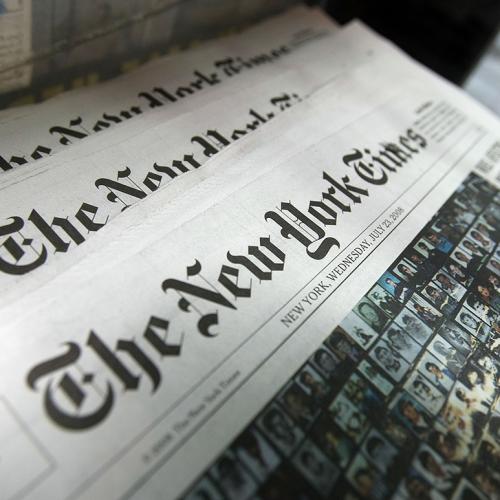
Scowcroft and I apparently have less at risk than those working for RAND...or for the New York Times, which gives off the aroma of being similarly mesmerized and intimidated. This shows through with amazing regularity; I'll adduce but two recent examples:
Times Timing...
To its credit, the New York Times on November 24 published a story by Times reporter Thom Shanker on the findings of the Defense Science Board panel report given to Defense Secretary Rumsfeld on September 23. But why was the story two months late? And the urban legend that it was the Times that broke the story is not true, even though the Washington Post's somnolent ombudsman, Michael Getler "confirms that legend in his column this morning. (Noting that the story "didn't appear in the Post," Getler implies that it should have, because "it goes to the heart of both the war on terrorism and the war in Iraq and it raises many crucial issues that don't get probed deeply enough by news organizations, in my opinion.")
It was not the Times on November 24, but rather Reasononline's Matt Welch, who broke the story. On November 15 Welch wrote an account of the panel's report in which he referred to its recommendations as having already been "made public." Were reporters from the mainstream press again asleep? Do they feed only on the thin gruel of approved Pentagon handouts? It is easy to understand that the Defense Department had no incentive to advertise the DSB panel's embarrassing and potentially explosive findings. (How often have we seen a Pentagon-sponsored report contradicting a sitting president on a matter of such significance - and before a crucial election?) It is not so easy to grasp why the media missed or ignored the story. Or perhaps it is.
Maybe the clue is in the timing. I gave a long interview on US intelligence matters to another Times reporter a few weeks before the election and at the conclusion of the interview I commented that I certainly hoped his story would appear before November 2. This reporter turned out to be as candid as he was embarrassed. No, he confessed, his superiors at the Times had made it clear that there was an embargo on criticism of the administration of the kind I had offered until after the election. I expressed amazement that the New York Times - once courageous publisher of the Pentagon Papers that helped bring an end to our last ill-conceived war - would allow itself to be so intimidated. He replied, with undisguised embarrassment, that this is simply the way it is today.
Again, I find myself wondering how long the Times sat on the material reported by Shanker. Did it have the story before November 2? What does it mean that the Times published Shanker's report only after a decent post-election interval? Also interesting is the date ultimately chosen to run it - the day before Thanksgiving, a very poor time to attract the attention such a story might otherwise evoke. Yet another sign of wimpish desire to pander to administration preferences?
...and Times Surgery
Of equal interest is how the Times abridged the story itself. Shanker did quote from the key paragraph beginning with "Muslims do not 'hate our freedom'" (quoted in full above). But he or his editors deliberately cut out the next sentence about what Muslims do object to; i.e., U.S. "one-sided support in favor of Israel and against Palestinian rights," and support for tyrannical regimes. The Times did include the sentence that immediately followed the omitted one. In other words, the offending middle sentence was surgically removed from the paragraph like a malignant tumor.
Editing Bin Laden, As Well
Similarly creative editing showed through the Times' reporting on Osama Bin Laden's videotaped speech in late October. Several paragraphs of the story made it onto page one, but the Times saw to it that the key point Bin Laden made toward the beginning of his remarks was relegated to paragraphs 23 to 25 at the very bottom of page nine. Buried there, dwarfed by a large ad for Bloomingdales, was Bin Laden's revealing claim that the idea for 9/11 first germinated after "we witnessed the oppression and tyranny of the American-Israeli coalition against our people in Palestine and Lebanon."
If, as suggested earlier, one were to look for "context," precious little is provided by the Times. A "newspaper of record" might have noted that even the risk-averse 9/11 commissioners pointed out on page 147 of the Commission Report that Khalid Sheikh Mohammed, mastermind and executioner of the 9/11 attacks, was motivated by "his violent disagreement with U.S. foreign policy favoring Israel." Was that not news fit to print?
Four More Years
With the mainstream media co-opted, and four-year older but familiar national security faces in place for the president's second term, it is a safe bet we are in for the same inept, misguided policies - only more so. Sadly, Secretary of State Colin Powell's relatively moderate views had little visible impact on policy decisions. Still, when he is gone the president's circle of advisers will have an even shorter diameter. And it is highly unlikely that Powell's designated successor, Dr. Condoleezza Rice, will be any more astute than in the past in seeking counsel from experienced statesmen like her former patron, Gen. Scowcroft.
Foreign leaders are aghast...and have been for years. In August 2002, British senior Labor backbencher Gerald Kaufman, a former shadow foreign secretary, warned that the "hawks" in the U.S. administration were giving the president poor advice:
"Bush, himself the most intellectually backward American president in my lifetime, is surrounded by advisers whose bellicosity is exceeded only by their political, military and diplomatic illiteracy. Pity the man who relies on Rumsfeld, Cheney and Rice for counsel."
Shrinking Circle
On the afternoon of February 5, 2003, after Secretary of State Colin Powell made his embarrassingly memorable speech at the UN, my colleagues and I of Veteran Intelligence Professionals for Sanity (VIPS) drafted and sent a short memorandum to the president, which concluded with this observation:
"After watching Secretary Powell today, we are convinced that you would be well served if you widened the discussion beyond... the circle of those advisers clearly bent on a war for which we see no compelling reason and from which we believe the unintended consequences are likely to be catastrophic."
Instead, the circle has been squeezed still tighter - as with wagons. And those widely known in Washington as "the crazies" when they were middle-level officials and the president's father was in the White House are now even more firmly ensconced. They remain in charge of things like war - the very same folks who brought us the "cakewalk" that became war in Iraq.
Hold
onto your hats!
See our archive of revealing news articles at https://www.WantToKnow.info/medianewsarticles
Your tax-deductible donations, however large or small, help greatly to support this important work.
To make a secure donation: https://www.WantToKnow.info/donationswtk
-- To subscribe to or unsubscribe from the WantToKnow.info list (one email every few days):
https://www.WantToKnow.info/subscribe. For the highly informative
archive of previous deep insider emails, see https://www.WantToKnow.info/medianewsarticles --