

























Secrecy Media Articles
Below are key excerpts of revealing news articles on secrecy from reliable news media sources. If any link fails to function, a paywall blocks full access, or the article is no longer available, try these digital tools.

The list of those caught up in the global surveillance net cast by the National Security Agency and its overseas partners, from social media users to foreign heads of state, now includes another entry: US lawyers. A top-secret document, obtained by former NSA contractor Edward J. Snowden, shows that a US law firm was monitored while representing a foreign government in trade disputes with the United States. The disclosure offers a rare glimpse of a specific instance of Americans ensnared by the eavesdroppers and is of particular interest because US lawyers with clients overseas have expressed growing concern that their confidential communications could be compromised by such surveillance. The government of Indonesia had retained the law firm for help in trade talks, according to the February 2013 document. The NSAs Australian counterpart, the Australian Signals Directorate, notified the agency that it was conducting surveillance of the talks, including communications between Indonesian officials and the US law firm, and offered to share information. The NSA is banned from targeting Americans, including businesses, law firms, and other organizations based in the United States, for surveillance without warrants, and intelligence officials have repeatedly said the NSA does not use spy services of its partners in the so-called Five Eyes alliance Australia, Britain, Canada, and New Zealand to skirt the law. The Australians told officials at an NSA liaison office in Canberra, that information covered by attorney-client privilege may be included in the intelligence gathering. Most attorney-client conversations do not get special protections under US law from NSA eavesdropping.
Note: For more on intense deception perpetrated by the intelligence community, see the deeply revealing reports from reliable major media sources available here.
Less than two weeks after the 2011 raid that killed Osama bin Laden, a top Pentagon official ordered all photos of bin Laden's corpse be destroyed or turned over to the CIA. In an e-mail dated May 13, 2011, Adm. William McRaven, the U.S. Special Operations commander, wrote: "One particular item that I want to emphasize is photos; particularly UBLs remains. At this point all photos should have been turned over to the CIA; if you still have them destroy them immediately or get them to the (redacted)." Shortly after the raid in Pakistan, President Obama said he would not authorize the release of any images of the al-Qaeda leader's body. Days before the order to destroy the photos, watchdog group Judicial Watch and the Associated Press had separately filed a Freedom of Information Act request for photos, videos and documents regarding bin Laden during the raid. Typically, when a Freedom of Information Act request is filed to a government agency under the Federal Records Act, the agency is obliged to preserve the material sought even if the agency later denies the request.
Note: Why would a top military commander order all photos of bin Laden's dead body destroyed? Why would Obama prevent the release of any images of the body? For powerful evidence that the dead body was not, in fact, bin Laden's, click here and here. For other solid evidence that the official story of 9/11 is riddles with holes, see our 9/11 Information Center available here.
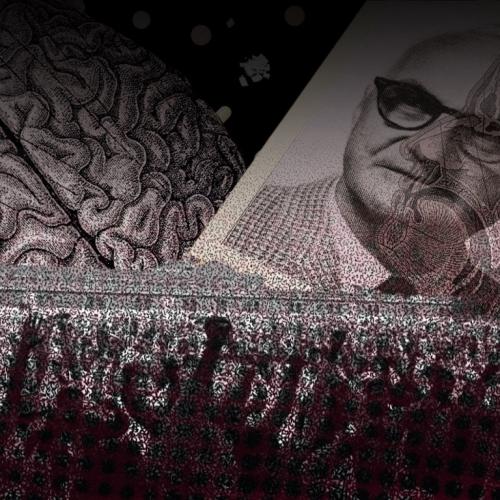
In the years after the end of WWII, CIA and US intelligence operatives tested LSD and other interrogation techniques on captured Soviet spiesall with the help of former Nazi doctors. It was 1946. The Joint Chiefs of Staff were preparing for total war with the Soviets. They even set an estimated start date of 1952. U.S. military officers had been capturing and then hiring Hitlers weapons makers in a Top Secret program that would become known as Operation Paperclip. Soon, more than 1,600 of these men and their families would be living the American dream, right here in the United States. In 1948, Operation Paperclips Brigadier General Charles E. Loucks ... was working with Hitlers former chemists when one of the scientists [shared] information about a drug with military potential ... LSD. Documents obtained through the Freedom of Information Act (FOIA) reveal that the U.S. developed its post-war enhanced interrogation techniques ... under the CIA code name Operation Bluebird. The CIA teamed up with the Army Chemical Corps at Camp Detrick, in Maryland, to conduct further research and development on the chemistry of mind-altering drugs. One [Detrick agent was] Dr. Frank Olson, a former army officer and bacteriologist turned agency operative whose sudden demiseby covert LSD poisoningin 1953 would nearly bring down the CIA. In one of the rare, surviving official documents from the program, Deputy Director of Central Intelligence Allen Dulles sent a secret memo to Richard Helms: In our conversation of 9 February 1951, I outlined to you the possibilities of augmenting the usual interrogation methods by the use of drugs, hypnosis, shock, etc., and emphasized the defensive aspects as well as the offensive opportunities.
Note: To read excerpts from incredibly revealing declassified CIA documents on these programs, click here. For more on secret government mind control programs which have had a powerful hidden influence on global politics, see our Mind Control Information Center available here.
The National Security Agency is using complex analysis of electronic surveillance, rather than human intelligence, as the primary method to locate targets for lethal drone strikes an unreliable tactic that results in the deaths of innocent or unidentified people. According to a former drone operator for the militarys Joint Special Operations Command (JSOC) who also worked with the NSA, the agency often identifies targets based on controversial metadata analysis and cell-phone tracking technologies. Rather than confirming a targets identity with operatives or informants on the ground, the CIA or the U.S. military then orders a strike based on the activity and location of the mobile phone. The former JSOC drone operator ... states that innocent people have absolutely been killed as a result. Some top Taliban leaders, knowing of the NSAs targeting method, have purposely and randomly distributed SIM cards among their units in order to elude their trackers. As a result, even when the agency correctly identifies and targets a SIM card belonging to a terror suspect, the phone may actually be carried by someone else, who is then killed in a strike. The Obama administration has repeatedly insisted that its operations kill terrorists with the utmost precision. Within the NSA ... a motto quickly caught on at Geo Cell: We Track Em, You Whack Em. In December 2009, utilizing the NSAs metadata collection programs, the Obama administration dramatically escalated U.S. drone and cruise missile strikes in Yemen. The first strike in the country known to be authorized by Obama targeted an alleged Al Qaeda camp in the southern village of al-Majala. The strike, which included the use of cluster bombs, resulted in the deaths of 14 women and 21 children.
Note: For an in-depth interview on this important topic, click here. Would anyone in a developed country tolerate their citizens being killed by the drones of a foreign government? Note also that The Intercept is the new media source being funded by Pierre Omidyar and featuring Glenn Greenwald and other top reporters known for the their independence.
British spies have developed "dirty tricks" ... that include releasing computer viruses, spying on journalists and diplomats, jamming phones and computers, and using sex to lure targets into "honey traps." Documents taken from the National Security Agency by Edward Snowden ... describe techniques developed by a secret British spy unit called the Joint Threat Research and Intelligence Group (JTRIG). According to the documents ... the agency's goal was to "destroy, deny, degrade [and] disrupt" enemies by "discrediting" them, planting misinformation and shutting down their communications. The propaganda campaigns use deception, mass messaging and "pushing stories" via Twitter, Flickr, Facebook and YouTube. JTRIG also uses "false flag" operations, in which British agents carry out online actions that are designed to look like they were performed by one of Britain's adversaries. Other documents ... show that JTRIG ... used a DDOS attack to shut down Internet chat rooms used by members of the hacktivist group known as Anonymous. A computer virus called Ambassadors Reception was "used in a variety of different areas" and was "very effective." When sent to adversaries ... the virus will "encrypt itself, delete all emails ... and block the computer user from logging on. Spies have long used sexual "honey traps" to snare, blackmail and influence targets. Most often, a male target is led to believe he has an opportunity for a romantic relationship or a sexual liaison with a woman, only to find that the woman is actually an intelligence operative.
Note: You can read the documents released by Snowden at this link and this one. For more along these lines, see concise summaries of deeply revealing news articles on intelligence agency corruption from reliable major media sources.
In early 2003, two senior CIA officers arrived at the U.S. Embassy in Warsaw to pick up a pair of large cardboard boxes. Inside were bundles of cash totaling $15 million that had been flown from Germany via diplomatic pouch. The Americans and Poles then sealed an agreement that over the previous weeks had allowed the CIA the use of a secret prison a remote villa in the Polish lake district to interrogate al-Qaeda suspects. The Polish intelligence service received the money, and the CIA had a solid location for its newest covert operation, according to former agency officials who spoke on the condition of anonymity to discuss the interrogation program, including previously unreported details about the creation of the CIAs black sites, or secret prisons. The CIA prison in Poland was arguably the most important of all the black sites created by the agency after the Sept. 11, 2001, attacks. It was the first of a trio in Europe that housed the initial wave of accused Sept. 11 conspirators, and it was where Khalid Sheik Mohammed, the self-declared mastermind of the attacks, was waterboarded 183 times after his capture. In December, the European Court of Human Rights heard arguments that Poland violated international law and participated in torture by accommodating its American ally. In the face of Polish and United States efforts to draw a veil over these abuses, the European Court of Human Rights now has an opportunity to break this conspiracy of silence and uphold the rule of law, said Amrit Singh, a lawyer with the Open Society Justice Initiative.
Note: For more on the realities of intelligence agency activities, see the deeply revealing reports from reliable major media sources available here.
A Vatican monsignor already on trial for allegedly plotting to smuggle 20 million euros ($26 million) from Switzerland to Italy was arrested ... for allegedly using his Vatican bank accounts to launder money. Financial police in the southern Italian city of Salerno said Monsignor Nunzio Scarano, dubbed "Monsignor 500" for his purported favored banknotes, had transferred millions of euros in fictitious donations from offshore companies through his accounts at the Vatican's Institute for Religious Works. Acting on evidence provided by the Vatican bank, police said they seized 6.5 million euros in real estate and assets in Italian bank accounts Tuesday, including Scarano's luxurious Salerno apartment, filled with gilt-framed oil paintings, ceramic vases and other fancy antiques. Police said in all, 52 people were under investigation. The money involved in both the Swiss smuggling case and the Salerno money-laundering case originated with one of Italy's most important shipping families, the d'Amicos. Financial police said more than 5 million euros had been made available to Scarano by the D'Amicos via offshore companies. Scarano allegedly withdrew 555,248 euros from his Vatican account in cash in 2009 and brought it into Italy. Since he couldn't deposit it in an Italian bank without drawing suspicion, he selected 50 friends to accept 10,000 euros apiece in cash in exchange for a check or wire transfer in that same amount.
Note: For more on financial corruption, see the deeply revealing reports from reliable major media sources available here.
In an extraordinary feat of subterfuge, Israel managed to assemble an entire underground nuclear arsenal now estimated at 80 warheads, on a par with India and Pakistan and even tested a bomb nearly half a century ago, with a minimum of international outcry or even much public awareness of what it was doing. Despite the fact that the Israel's nuclear programme has been an open secret since a disgruntled technician, Mordechai Vanunu, blew the whistle on it in 1986, the official Israeli position is still never to confirm or deny its existence. When the former speaker of the Knesset, Avraham Burg, broke the taboo last month, declaring Israeli possession of both nuclear and chemical weapons and describing the official non-disclosure policy as "outdated and childish" a rightwing group formally called for a police investigation for treason. Meanwhile, western governments have played along with the policy of "opacity" by avoiding all mention of the issue. Israel ... almost certainly broke a treaty banning nuclear tests, as well as countless national and international laws restricting the traffic in nuclear materials and technology. The list of nations that secretly sold Israel the material and expertise to make nuclear warheads, or who turned a blind eye to its theft, include today's staunchest campaigners against proliferation: the US, France, Germany, Britain and even Norway. Israeli agents charged with buying fissile material and state-of-the-art technology found their way into some of the most sensitive industrial establishments in the world.
Note: For more on government secrecy, see the deeply revealing reports from reliable major media sources available here.
After a tumultuous year at the war-on-terror detention center in Guantanamo Bay, Cuba, where the U.S. military's motto is "Safe, Humane, Legal, Transparent," operations are cloaked in secrecy. The prison approaches the start of its 13th year next week with a new reclusive regime that no longer discloses what was once routinely released information. The daily tally of hunger striking detainees the protest that engulfed more than 100 prisoners at its peak this summer stopped in December. Guards and other prison camp troops are under orders to withhold their names when talking to reporters. On the witness stand in the war court recently, a lawyer in the uniform of an Air Force officer gave sworn testimony under a curious, unexplained fake name "Major Krueger." Guantanamo is remote, and what is happening there in this new era has mostly gone unnoticed. The government controls access to everything pertaining to Guantanamo. Journalists have to get the military's permission to go there, navigate censorship of their pictures, wait 40 seconds to hear what happens in court and then wait weeks to see court filings. The current crackdown on information can range from the mildly curious to the outright comedic. At times it seems to signify a gratuitous use of power by troops on rotation with sudden power to [wield] a censor's scissors. At times, it suggests a government bureaucracy whose default is knee-jerk secrecy.
Note: For more on government secrecy, see the deeply revealing reports from reliable major media sources available here.
Sigurdur "Siggi" Thordarson, [is a] cherubic, blond 21-year-old who has been called everything in the [Icelandic] press from "attention seeker" to "traitor" to "psychopath". Four years ago, just as WikiLeaks was winning international notoriety, the then-17-year-old hacking prodigy became Assange's youngest and most trusted sidekick. But as Assange became more embattled and besieged, the protg turned on his mentor in the most shocking of ways: becoming the first FBI informant inside the group. His tale reveals not only the paranoia and strife within WikiLeaks, but just how far the feds were willing to go to get Assange. The revelation of Siggi's role as an FBI snitch has polarized WikiLeaks insiders. WikiLeaks spokesman Kristinn Hrafnsson [dismissed] Siggi as "a pathological liar." While other WikiLeaks insiders also question Siggi's credibility, they insist that his story can't be discounted, and there's more to it than the organization is letting on. The truth, it seems, may be held in the leaks. Siggi has provided Rolling Stone with more than a terabyte of secret files he claims to have taken from WikiLeaks before he left in November 2011 and gave to the FBI: thousands of pages of chat logs, videos, tapped phone calls, government documents and more than a few bombshells from the organization's most heated years. Whatever their origins, the SiggiLeaks are a deep and revealing portal into one of the most guarded and influential organizations of the 21st century and the extreme measures its embattled leader is willing to take.
Note: For more on the realities of intelligence agency activities, see the deeply revealing reports from reliable major media sources available here.
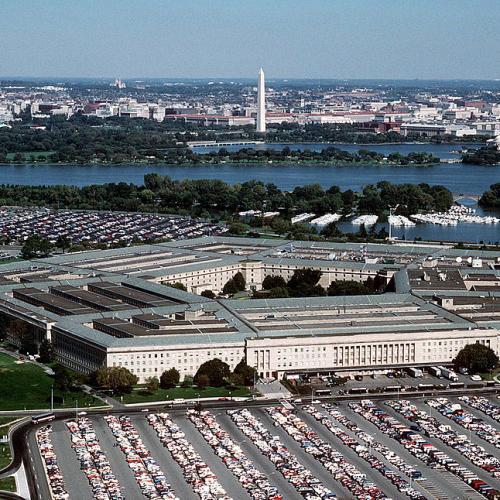
The Defense Department has launched 20 or more projects to build modern business-management systems since the late 1990s. At least five were subsequently killed as complete failures after billions of dollars were spent on them. With each failure, a pattern emerges: An off-the-shelf product with a proven track record in the private sector is chosen and then modified to the point where it doesn't work properly. The Pentagon is unable to account for itself, and thus for roughly half of all congressionally approved annual federal spending. Interviews with scores of current and former defense officials, contractors and Pentagon watchers, as well as a review of dozens of reports by oversight agencies, show that the Pentagon is continually thwarted by a lack of accountability for failures ... and an incentive to spend. All other federal agencies are audited annually ... and with rare exceptions, they pass every year. The Pentagon alone has never been audited, leaving roughly $8.5 trillion in taxpayer dollars unaccounted for since 1996. The Pentagon has for years kept lousy books with impunity. The 2009 law requiring the Defense Department to be audit-ready by 2017 provides for no penalties if it misses the deadline. From 1995 through 2002, Senator Charles Grassley pushed through an amendment to the annual defense appropriations bill requiring the Pentagon to account for its expenditures by following one seemingly simple procedure: match each payment to the expense it covered. The order was ignored, and Grassley gave up. There is no doubt that bad bookkeeping conceals movements of money that in some instances are illegal.
Note: See also this article on the Reuters website. This article sadly fails to state the obvious: Many military officers illegally rake in tons of money with false contracts which benefit those officers and contracting companies. They obviously don't want their accounts to be properly audited. For a revealing essay by a top U.S. general exposing major war manipulations, click here. For more on military corruption, see the deeply revealing reports from reliable major media sources available here.
The Senate Intelligence Committee has asked the C.I.A. for an internal study done by the agency that lawmakers believe is broadly critical of the C.I.A.s detention and interrogation program but was withheld from congressional oversight committees. The committees request comes in the midst of a yearlong battle with the C.I.A. over the release of the panels own exhaustive report about the program, one of the most controversial policies of the post-Sept. 11 era. The Senate report, totaling more than 6,000 pages, was completed last December but has yet to be declassified. According to people who have read the study, it is unsparing in its criticism of the now-defunct interrogation program and presents a chronicle of C.I.A. officials repeatedly misleading the White House, Congress and the public about the value of brutal methods that, in the end, produced little valuable intelligence. Senator Mark Udall, Democrat of Colorado, disclosed the existence of the internal C.I.A. report during an Intelligence Committee hearing on Tuesday. He said he believed it was begun several years ago and is consistent with the Intelligences Committees report although it conflicts with the official C.I.A. response to the committees report. If this is true, Mr. Udall said ... this raises fundamental questions about why a review the C.I.A. conducted internally years ago and never provided to the committee is so different from the C.I.A.s formal response to the committee study.
Note: For more on the realities of intelligence agency operations, see the deeply revealing reports from reliable major media sources available here.
National Security Agency leaker Edward Snowden wrote in a lengthy open letter to the people of Brazil that he has been inspired by the global debate ignited by his release of thousands of documents and that the NSAs culture of indiscriminate global espionage is collapsing. In the letter, Snowden commended the Brazilian government for its strong stand against U.S. spying. He wrote that he would be willing to help the South American nation investigate NSA spying on its soil but could not fully participate in doing so without being granted political asylum, because the U.S. government will continue to interfere with my ability to speak. The documents revealed that Brazil is the top NSA target in Latin America, in spying that has included the monitoring of Brazilian President Dilma Rousseffs cellphone and hacking into the internal network of the state-run oil company Petrobras. In his letter, Snowden dismissed U.S. explanations to the Brazilian government and others that the bulk metadata gathered on billions of e-mails and calls was more data collection than surveillance. There is a huge difference between legal programs, legitimate spying ... and these programs of dragnet mass surveillance that put entire populations under an all-seeing eye and save copies forever, he wrote. These programs were never about terrorism: theyre about economic spying, social control, and diplomatic manipulation. Theyre about power. Brazilian senators have asked for Snowdens help during hearings about the NSAs targeting of Brazil, an important transit hub for transatlantic fiber-optic cables that are hacked.
Note: To read Snowden's full, inspiring letter, click here.
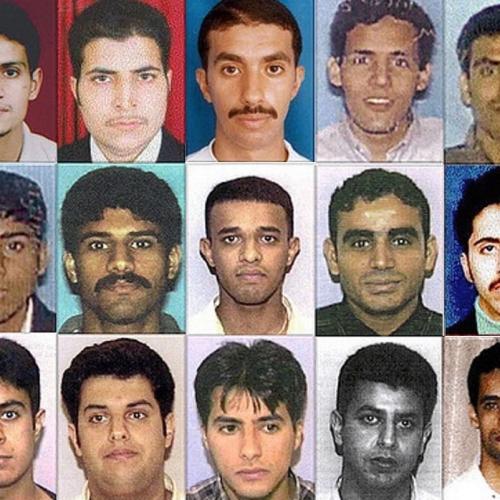
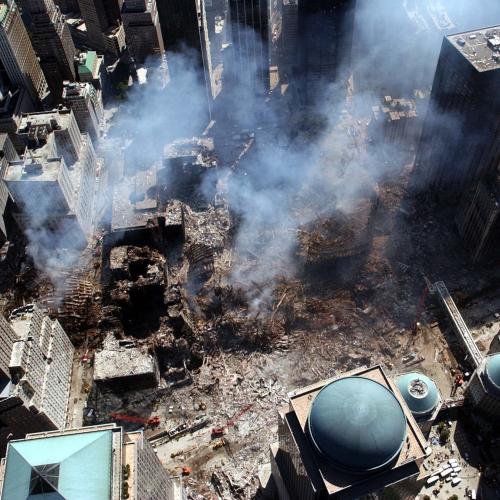
After the 9/11 attacks, the public was told al Qaeda acted alone, with no state sponsors. But the White House never let it see an entire section of Congress investigative report on 9/11 dealing with specific sources of foreign support for the 19 hijackers, 15 of whom were Saudi nationals. It was kept secret and remains so today. President Bush inexplicably censored 28 full pages of the 800-page report. The pages are completely blank. Some information already has leaked from the classified section, which is based on both CIA and FBI documents, and it points back to Saudi Arabia, a presumed ally. The Saudis deny any role in 9/11. The findings, if confirmed, would back up open-source reporting showing the hijackers had, at a minimum, ties to several Saudi officials and agents while they were preparing for their attacks inside the United States. Is the federal government protecting the Saudis? Case agents [say] they were repeatedly called off pursuing 9/11 leads back to the Saudi Embassy, which had curious sway over White House and FBI responses to the attacks. Just days after Bush met with the Saudi ambassador in the White House, the FBI evacuated from the United States dozens of Saudi officials, as well as Osama bin Laden family members. [Ambassador Bandar ibn-Saud] made the request for escorts directly to FBI headquarters on Sept. 13, 2001 just hours after he met with the president.
Note: For verifiable evidence the bin Ladens were evacuated shortly after 9/11, click here. Why are most media not reporting this important story? A search showed only one other major media outlet in the US (Boston Globe at this link) that covered this news. The appearance of this article in the most popular tabloid in New York is being interpreted by some observers as a sea change in public attitudes to the tragedy of 9/11. Of course the most important question is whether there was US government involvement in the attacks. For abundant evidence implying this, see the deeply revealing reports available at our 9/11 Information Center.
At least since the aftermath of September 2001, western governments and intelligence agencies have been hard at work expanding the scope of their own power, while eroding privacy, civil liberties and public control of policy. What used to be viewed as paranoid, Orwellian, tin-foil hat fantasies [turn] out post-Snowden, to be not even the whole story. We've been warned for years that these things were going on: wholesale surveillance of entire populations, militarization of the internet, the end of privacy. Secret laws, secret interpretations of secret laws by secret courts and no effective parliamentary oversight whatsoever. By and large the media have paid scant attention to this, even as more and more courageous, principled whistleblowers stepped forward. The unprecedented persecution of truth-tellers, initiated by the Bush administration and severely accelerated by the Obama administration, has been mostly ignored, while record numbers of well-meaning people are charged with serious felonies simply for letting their fellow citizens know what's going on. Numerous ex-NSA officials have come forward in the past decade, disclosing massive fraud, vast illegalities and abuse of power in [that] agency, including Thomas Drake, William Binney and Kirk Wiebe. The response was 100% persecution and 0% accountability by both the NSA and the rest of government. Since the summer of 2013, the public has witnessed a shift in debate over these matters. The reason is that one courageous person: Edward Snowden.
Note: For more on government corruption, see the deeply revealing reports from reliable major media sources available here.
[Since] Sept. 11, 2001, victims loved ones, injured survivors, and members of the media have all tried without much success to discover the true nature of the relationship between the 19 hijackers 15 of them Saudi nationals and the Saudi Arabian government. Many news organizations reported that some of the terrorists were linked to the Saudi royals and that they even may have received financial support from them as well as from several mysterious, moneyed Saudi men living in San Diego. Saudi Arabia has repeatedly denied any connection. But earlier this year, Reps. Walter B. Jones, R-N.C., and Stephen Lynch, D-Mass., were given access to the 28 redacted pages of the [Joint Inquiry into Intelligence Community Activities before and after the Terrorist Attacks of September 11, 2001] issued in late 2002, which have been thought to hold some answers about the Saudi connection to the attack. Last week, Jones and Lynch introduced a resolution that urges President Obama to declassify the 28 pages, which were originally classified by President George W. Bush. It has never been fully explained why the pages were blacked out, but President Bush stated in 2003 that releasing the pages would violate national security. Some of the information has leaked out over the years ... that the 28 pages in fact clearly portray that the Saudi government had at the very least an indirect role in supporting the terrorists responsible for the 9/11 attack. In addition, these classified pages clarify somewhat the links between the hijackers and at least one Saudi government worker living in San Diego.
Note: For more on the government cover-up of the truth behind 9/11, see the deeply revealing reports from reliable major media sources available here.
Europes human rights court shone a rare public light [December 3] on the secret network of European prisons that the CIA used to interrogate terrorism suspects, reviving questions about the extraordinary renditions that angered many on this continent. At [the] hearing, attorneys for two terrorism suspects currently held by the United States at Guantanamo Bay, Cuba, accused Poland of human rights abuses. The lawyers say the suspects fell victim to the CIAs rendition program, in which terrorism suspects were kidnapped and transferred to third countries; they allege that the two were tortured in a remote Polish prison. All the prisons were closed by May 2006. Interrogations at sea have replaced CIA black sites as the U.S. governments preferred method for holding terrorism suspects and questioning them without access to lawyers. One of the cases heard [concerns] 48-year-old Saudi national Abd al-Rahim al-Nashiri, who faces U.S. terrorism charges for allegedly orchestrating the al-Qaeda attack on the USS Cole in 2000, a bombing in the Yemeni port of Aden that killed 17 sailors. The second case involves 42-year-old Abu Zubaida, a Palestinian also held in Guantanamo who has never been charged with a crime. Both men say they were brought in December 2002 to Poland, where they were detained and subjected to harsh questioning at a Polish military installation in Stare Kiejkuty, a village in the countrys remote northeast. There they were subject to mock executions, waterboarding and other tortures, including being told their families would be arrested and sexually abused, said Amrit Singh, a lawyer representing Nashiri.
Note: For more on war crimes by the US and UK in the "global war on terror", see the deeply revealing reports from reliable major media sources available here.
Canada allowed the U.S. National Security Agency (NSA) to conduct widespread surveillance during the 2010 Group of 20 summit in Toronto, according to a media report that cited documents from former NSA contractor Edward Snowden. The report by the Canadian Broadcasting Corp ... cited briefing notes it said showed the United States turned its Ottawa embassy into a security command post during a six-day spying operation by the top-secret U.S. agency as President Barack Obama and other world leaders met that June. One of the bylines on the CBC report was Glenn Greenwald, the U.S. journalist who has worked with Snowden on several other NSA stories. CBC ... quoted an NSA briefing note describing the operation as "closely coordinated with the Canadian partner". The Canadian equivalent of the NSA is the Communications Security Establishment Canada, or CSEC. CBC said the documents did not reveal the targets of the NSA operation, but described part of the U.S. eavesdropping agency's mandate at the Toronto summit as "providing support to policymakers". CSEC, which has a very low public profile, employs about 2,000 people. It is part of the so-called Five Eyes intelligence-sharing network that also includes the United States, Britain, New Zealand and Australia. Last month, Brazil angrily demanded an explanation for media reports which said CSEC agents had targeted its mines and energy industry.
Note: For more on the realities of intelligence agency activities, see the deeply revealing reports from reliable major media sources available here.
Jimmy Wales, the founder of Wikipedia, has called on Barack Obama to rein in the National Security Agency as he described the whistleblower Edward Snowden as "a hero" whom history will judge "very favourably". Wales called for a "major re-evaluation" of the NSA, adding that the public "would have never approved this sweeping surveillance program" had it been put to a vote. The revelations, Wales said, had been "incredibly damaging and embarrassing to the US. It makes it very difficult for someone like me to go out, as I do, [to] speak to people in authoritarian countries, and say: 'You shouldnt be spying on activists, you shouldnt be censoring the internet', when we [in the US] are complicit in these acts of extraordinary intrusion into peoples personal lives. [Snowden] has exposed what I believe to be criminal wrongdoing, lying to Congress, and certainly [an] affront to the Fourth Amendment. I think that history will judge him very favourably. There is a growing sense of concern in Congress about this, a growing sense in Congress that public is angry about this, that they have been misled and I think we are going to see legislation to change this."
Note: For more on the realities of intelligence agency activities, see the deeply revealing reports from reliable major media sources available here.
Investigators planned to release a long-awaited report [on] the Newtown school shooting that could provide some of the first official answers to questions about the history of the gunman and the police response to one of the worst school shootings in history. The summary report by the lead investigator, State's Attorney Stephen Sedensky III, comes nearly a year after the massacre of 20 children and six women inside Sandy Hook Elementary School. The report ... will not include the full evidence file of Connecticut State Police, which is believed to total thousands of pages. The decision to continue withholding the bulk of the evidence is stirring new criticism of the secrecy surrounding the investigation. Dan Klau, a Hartford attorney who specializes in First Amendment law, said the decision to release a summary report before the full evidence file is a reversal of standard practice and one of the most unusual elements of the investigation. Sedensky has gone to court to fight release of the 911 tapes from the school and resisted calls from Connecticut's governor to divulge more information sooner. The withholding of 911 recordings, which are routinely released in other cases, has been the subject of a legal battle between The Associated Press and Sedensky before the state's Freedom of Information Commission, which ruled in favor of the AP, and now Connecticut's court system. If the recordings are released, the AP would review the content and determine what, if any, of it would meet the news cooperative's standards for publication.
Note: For more on government secrecy, see the deeply revealing reports from reliable major media sources available here.
Important Note: Explore our full index to key excerpts of revealing major media news articles on several dozen engaging topics. And don't miss amazing excerpts from 20 of the most revealing news articles ever published.