













Secrecy News Articles
Below are key excerpts of revealing news articles on secrecy from reliable news media sources. If any link fails to function, a paywall blocks full access, or the article is no longer available, try these digital tools.

WikiLeaks' publication starting Nov. 28 of more than 250,000 diplomatic cables was the largest unauthorized release of contemporary classified information in history. It contained 11,000 documents marked secret. The WikiLeaks revelations could change history. The number of documents and other communications [classified as secret] has skyrocketed nearly 10 times, from 5,685,462 in 1996 to 54,651,765 in 2009. Governments are calling more things secret when they are really not. The number of people with access to that Everest of information has grown too. In its deep investigation of American secrecy earlier this year, the Washington Post found that some 854,000 people inside and out of government had top-secret clearance, the highest classification. [Julian Assange] has launched a crusade predicated on the idea that nearly all information should be free and that confidentiality in government affairs is an affront to the governed. In the process, he has published everything from a video of U.S. troops killing civilians in Iraq to the documents behind the so-called Climategate scandal. "When trusted insiders no longer have faith in the judgment of government regarding secrets, then they start to substitute their own judgment," says William J. Bosanko, head of the Information Security Oversight Office. "The world is moving irreversibly in the direction of openness, and those who learn to operate with fewer secrets will ultimately have the advantage over those who futilely cling to a past in which millions of secrets can be protected," says a former intelligence-community official.
Note: For an abundance of major media articles showing the problems with excessive secrecy, click here.
[Introduction] An internal history of the United States governments Nazi-hunting operation provides gripping new evidence about some of the most notorious Nazi cases of the last three decades. The Justice Department kept the 600-page report secret for the last four years, releasing a heavily redacted version last month to a private research group that sued to force its release. A complete version was obtained by The New York Times. [From the document] In the 1970s, the public was shocked to leam that some Nazi persecutors had emigrated to the United States. There were calls for their expulsion and legislation was passed to facilitate their deportation. OSI was created in 1979 to handle the caseload. The Office of Special Investigations (OSI) is often referred to as the government's "Nazi-hunting" organization. While the cases and projects are individually fascinating, this report was not written simply to recount a series of unrelated but interesting undertakings. It is designed to serve as a teaching and research tool for historians, the media, academics, policy makers and the general public. While one would hope that the Holocaust was such an aberration that its like would never recur, the world has since learned of new and horrific genocidal undertakings. Bosnia, Cambodia, Croatia, Iraq, Rwanda, Serbia and Sudan are among the all too-many countries involved. These societies will inevitably have to confront some of the same issues which faced OSI.
Note: This suppressed report contains clear evidence that top Nazi war criminals were given aliases and allowed to escape prosection by elements both outside and inside of government. For even more powerful evidence from released US government documents that top government leaders felt the need for mind control techniques developed by the Nazi's warranted secretly protecting and eventually working with some of the most heartless of the Nazis, click here.
A secret internal history of the Justice Departments Nazi-hunting unit, the Office of Special Investigations, chronicles numerous hidden chapters in the offices 31-year-existence. But a heavily redacted version of the report turned over by the Justice Department in response to a lawsuit deletes more than 1,000 passages in the report, including many of the most intriguing references. Here is a sampling of the original passages in the unredacted report, obtained by the New York Times, as compared with the deleted versions. The full report details how the United States became a safe haven for some Nazis, with some American officials actively working to help persecutors gain entry to the United States and conceal their identities and crimes. But the redacted version prepared by the Justice Department omits many of the central elements of these cases. The redacted report omits the debate within the CIA in 1953 over what Otto von Bolschwing, a Nazi associate of Adolph Eichmann who became a CIA asset, should tell immigration officials or others in the United States if confronted about his Nazi past. It also deletes references to what American officials knew about his atrocities, including the assertion from a Justice Department officials that he might be guilty of acts more heinous than anyone else currently under investigation. [many additional examples follow]
Note: This suppressed report contains clear evidence that top Nazi war criminals were given aliases and allowed to escape prosecution by elements both outside and inside of government. For even more powerful evidence from released US government documents that top government leaders felt the need for mind control techniques developed by the Nazi's warranted secretly protecting and eventually working with some of the most heartless of the Nazis, click here.
American authorities sent David C. Headley, a small-time drug dealer and sometime informant, to work for them in Pakistan months after the Sept. 11, 2001, attacks, despite a warning that he sympathized with radical Islamic groups. Not long after Mr. Headley arrived there, he began training with terrorists, eventually playing a key role in the 2008 attacks that left 164 people dead in Mumbai. The October 2001 warning was dismissed, the authorities said, as the ire of a jilted girlfriend and for lack of proof. Less than a month later, those concerns did not come up when a federal court in New York granted Mr. Headley an early release from probation so that he could be sent to work for the United States Drug Enforcement Administration in Pakistan. It is unclear what Mr. Headley was supposed to do in Pakistan for the Americans. Two of the former drug dealer’s ex-wives had gone to American authorities between 2005 and 2008, before the Mumbai attacks, to say they feared he was plotting with terrorists. Combined with the earlier warning from the former girlfriend, three of the women in Mr. Headley’s life reported his ties to terrorists, only to have those warnings dismissed. An examination of Mr. Headley’s story shows that his government ties ran far deeper and longer than previously known. One senior American official knowledgeable about the case said he believed that Mr. Headley was a D.E.A. informant until at least 2003, meaning that he was talking to American agencies even as he was learning to deal with explosives and small arms in terrorist training camps.
Note: This story certainly raises the question whether the Mumbai attacks were not in fact a false-flag operation. For many reports from reliable sources that reveal similar ties between government agencies running clandestine operations and terrorist attacks, click here.
If WikiLeaks had been around in 2001, could the events of 9/11 have been prevented? The idea is worth considering. There were a lot of us in the run-up to Sept. 11 who had seen warning signs that something devastating might be in the planning stages. One of us, Coleen Rowley, was a special agent/legal counsel at the FBI's Minneapolis division and worked closely with those who arrested would-be terrorist Zacarias Moussaoui on an immigration violation less than a month before the World Trade Center was destroyed. Following up on a tip from flight school instructors who had become suspicious of the French Moroccan who claimed to want to fly a jet as an "ego boost," Special Agent Harry Samit and an INS colleague had detained Moussaoui. A foreign intelligence service promptly reported that he had connections with a foreign terrorist group, but FBI officials in Washington inexplicably turned down Samit's request for authority to search Moussaoui's laptop computer and personal effects. Later, testifying at Moussaoui's trial, Samit testified that he believed the behavior of his FBI superiors in Washington constituted "criminal negligence." WikiLeaks might have provided a pressure valve for those agents who were terribly worried about what might happen and frustrated by their superiors' seeming indifference.
Note: For questions raised about the official account of 9/11 by many courageous professionals, click here and here.
A document obtained and witnesses interviewed by Fox News raise new questions over whether there was an effort by the Defense Department to cover up a pre-9/11 military intelligence program known as "Able Danger." At least five witnesses questioned by the Defense Department's Inspector General told Fox News that their statements were distorted by investigators in the final IG's report -- or it left out key information, backing up assertions that lead hijacker Mohammed Atta was identified a year before 9/11. Lt. Col Tony Shaffer, an operative involved with Able Danger [and author of Operation Dark Heart, a recent book which discussed the Able Danger operation, and all copies of which were destroyed by the Pentagon] said, "My last interview was very, very hostile." When asked why the IG's report was so aggressive in its denials of his claims and those of other witnesses -- that the data mining project had identified Atta as a threat to the U.S. before 9/11 -- Shaffer said [the] Defense Department was worried about taking some of the blame for 9/11. Specifically, the Defense Intelligence Agency ... wanted the removal of references to a meeting between Shaffer and the executive director of the 9/11 Commission, Philip Zelikow, removed. Shaffer alleges that in that meeting, which took place in Afghanistan, the commission was told about Able Danger and the identification of Atta before the attacks. Shaffer, who was undercover at the time, said there was "stunned silence" at the meeting. No mention of this was made in the final 9/11 Commission report.
Note: Able Danger was the program which identified Mohamed Atta and three other alleged 9/11 hijackers as a potential terror threat before 9/11. To read major media reports on the intense controversy around this program (which is likely why Shaffer's book is being burned by the Pentagon), click here. For a highly revealing Fox News interview with Col. Shaffer on these major deceptions, click here.
That photo of the Rev. Dr. Martin Luther King, Jr. riding one of the first desegregated buses in Montgomery, Ala.? He took it. The well-known image of black sanitation workers carrying I Am a Man signs in Memphis? His. He was there in Room 306 of the Lorraine Hotel, Dr. Kings room, on the night he was assassinated. But now an unsettling asterisk must be added to the legacy of Ernest C. Withers, one of the most celebrated photographers of the civil rights era: He was a paid F.B.I. informer. On [September 12], The Commercial Appeal in Memphis published the results of a two-year investigation that showed Mr. Withers, who died in 2007 at age 85, had collaborated closely with two F.B.I. agents in the 1960s to keep tabs on the civil rights movement. From at least 1968 to 1970, Mr. Withers, who was black, provided photographs, biographical information and scheduling details to two F.B.I. agents in the bureaus Memphis domestic surveillance program, Howell Lowe and William H. Lawrence, according to numerous reports summarizing their meetings. The reports were obtained by the newspaper under the Freedom of Information Act and posted on its Web site. While he was growing close to top civil rights leaders, Mr. Withers was also meeting regularly with the F.B.I. agents, disclosing details about plans for marches and political beliefs of the leaders, even personal information like the leaders car tag numbers.
Note: For a fascinating CNN interview with civil rights leader and former Atlanta mayor Andrew Young on this issue, click here. For key reports from reliable sources raising unanswered questions about the assassination of Martin Luther King and other major US political leaders, click here.
Germanys intelligence service has turned over thousands of files on top Nazi Adolf Eichmanns whereabouts after World War II to a journalist who sued for them. But with so many passages blacked out and pages missing, shes taking the matter back to court. An attorney for freelance reporter Gabriele Weber said ... he was confident that she would win greater access eventually, even though Chancellor Angela Merkels office has argued that some Eichmann files should stay secret. Last week, Weber went to see the government files on the man known as the architect of the Holocaust for coordinating the Nazis genocide policy. She was surprised to find some 1,000 pages missing, despite a federal courts order in April that the intelligence agency, the BND, could not keep all of the documents secret. Of the pages she did receive, much of the information was blacked out. Weber hopes the files will shed more light on missing pieces of the [Eichmann] puzzle. Who helped him escape? How much did Germany know about where he was? Is there more to the story of his capture?
Note: Why are these documents from over 60 years ago still being censored? Could it be that the Vatican and allies were secretly working together to allow key German leaders to escape? For lots more on this learn about Operation Paperclip here and here.
A 2006 Immigration and Customs Enforcement investigation into the purchase of child pornography online turned up more than 250 civilian and military employees of the Defense Department -- including some with the highest available security clearance -- who used credit cards or PayPal to purchase images of children in sexual situations. But the Pentagon investigated only a handful of the cases, Defense Department records show. The cases turned up during a 2006 ICE inquiry, called Project Flicker, which targeted overseas processing of child-porn payments. As part of the probe, ICE investigators gained access to the names and credit card information of more than 5,000 Americans who had subscribed to websites offering images of child pornography. Many of those individuals provided military email addresses or physical addresses with Army or fleet ZIP codes when they purchased the subscriptions. In a related inquiry, the Pentagon's Defense Criminal Investigative Service (DCIS) cross-checked the ICE list against military databases to come up with a list of Defense employees and contractors who appeared to be guilty of purchasing child pornography. The names included staffers for the secretary of defense, contractors for the ultra-secretive National Security Agency, and a program manager at the Defense Advanced Research Projects Agency. But the DCIS opened investigations into only 20 percent of the individuals identified, and succeeded in prosecuting just a handful.
With Mir Hossein Mousavi as the de facto leader of the opposition movement, the mass executions of the 1980s have become a hot topic among Iranians and Iran watchers, including many readers of this site. Mousavi was prime minister in that decade. Though this article was first published in 1986, it lends a new perspective to the issue, at least with respect to the thousands of executions that took place in the early 1980s. The CIA's assistance to Ayatollah Khomeini, which apparently prompted the executions, is not a well-known fact: The Reagan administration's secret overtures and arms shipments to Iran are part of a seven-year-long pattern of covert Central Intelligence Agency operations -- some dating back to the Carter administration -- that were designed both to curry favor with the regime of Ayatollah Ruhollah Khomeini and support Iranian exiles who seek to overthrow it, according to informed sources. In 1983, for example, the CIA participated in a secret operation to provide a list of Soviet KGB agents and collaborators operating in Iran to the Khomeini regime, which then executed up to 200 suspects. Khomeini also expelled 18 Soviet diplomats, imprisoned the Tudeh party leaders and publicly thanked God for "the miracle" leading to the arrests of the "treasonous leaders." At the same time, secret presidential intelligence orders, called "findings," authorized the CIA to support Iranian exiles opposed to the Khomeini regime, the sources said.
Nearly 60 years ago, a French town was hit by a sudden outbreak of hallucinations, which left five people dead and many seriously ill. On 16 August 1951, postman Leon Armunier was doing his rounds in the southern French town of Pont-Saint-Esprit when he was suddenly overwhelmed by nausea and wild hallucinations. "It was terrible. I had the sensation of shrinking and shrinking, and the fire and the serpents coiling around my arms," he remembers. Leon, now 87, fell off his bike and was taken to the hospital in Avignon. Over the coming days, dozens of other people in the town fell prey to similar symptoms. Doctors at the time concluded that bread at one of the town's bakeries had become contaminated by ergot, a poisonous fungus that occurs naturally on rye. That view remained largely unchallenged until 2009, when an American investigative journalist, Hank Albarelli, revealed a CIA document labelled: "Re: Pont-Saint-Esprit and F.Olson Files. SO Span/France Operation file, inclusive Olson. Intel files. Hand carry to Belin - tell him to see to it that these are buried." F. Olson is Frank Olson, a CIA scientist who, at the time of the Pont St Esprit incident, led research for the agency into the drug LSD. David Belin, meanwhile, was executive director of the Rockefeller Commission created by the White House in 1975 to investigate abuses carried out worldwide by the CIA. Albarelli believes the Pont-Saint-Esprit and F. Olson Files, mentioned in the document, would show - if they had not been "buried" - that the CIA was experimenting on the townspeople, by dosing them with LSD.
Note: Frank Olson later had his drink spiked with LSD and allegedly committed suicide shortly thereafter. Yet many believe he was "suicided" as he was having misgivings about his involvement in this program and considering spilling the beans, as reported in this news article. For an overview of CIA mind-control experimentation, click here.
For six years, Nicholas Merrill has lived in a surreal world of half-truths, where he could not tell even his fiancee, his closest friends or his mother that he is "John Doe" -- the man who filed the first-ever court challenge to the FBI's ability to obtain personal data on Americans without judicial approval. No one knew he was the plaintiff challenging the FBI's authority to issue "national security letters," as they are known, and its ability to impose a gag on the recipient. Now, following the partial lifting of his gag order 11 days ago as a result of an FBI settlement, Merrill can speak openly for the first time about the experience, although he cannot disclose the full scope of the data demanded. "One of the most dangerous and troubling things about the FBI's national security letter powers is how much it has been shrouded in secrecy," said Melissa Goodman, a lawyer with the American Civil Liberties Union who helped Merrill sue the government in April 2004 and was one of only a handful of people outside the FBI -- all lawyers -- who knew Merrill had received a letter. The FBI between 2003 and 2006 issued more than 192,500 letters -- an average of almost 50,000 a year. The Justice Department inspector general in 2007 faulted the bureau for failing to adequately justify the issuance of such letters.
Note: For key reports from major media sources on the erosion of civil liberties by government, click here.
The Vatican on [June 28] issued an unprecedented rebuke of a top cardinal who had accused the retired Vatican No. 2 of blocking clerical sex abuse investigations, publicly dressing down a man who had been praised for his criticism of church abuse cover-ups. The silencing of Cardinal Christoph Schoenborn, the archbishop of Vienna and long considered a papal contender, drew heated criticism from clerical abuse victims. They said the Vatican should be honoring Schoenborn, not publicly humiliating him, for his calls for greater transparency and demands for a crackdown on priests who rape and sodomize children. Schoenborn has also called for an open discussion of priestly celibacy, views that the Vatican said he "clarified" on Monday during an audience with the pope. Schoenborn had accused the former Vatican secretary of state, Cardinal Angelo Sodano, in April of blocking a church investigation into the late Austrian Cardinal Hans Hermann Groer, who was accused by victims in 1995 of abusing boys at a seminary. "With his words, Benedict professes concern for victims. But by his actions, Benedict shows concern for his colleagues," said David Clohessy, executive director of SNAP, the Survivors Network of those Abused by Priests.
Note: For more on sex crimes and the Vatican, click here.
Hired in 2001 by the National Security Agency to help it catch up with the e-mail and cellphone revolution, Thomas A. Drake became convinced that the government’s eavesdroppers were squandering hundreds of millions of dollars on failed programs. He contacted a reporter for The Baltimore Sun. Today, because of that decision, Mr. Drake, 53, ... faces years in prison on 10 felony charges involving the mishandling of classified information and obstruction of justice. The indictment of Mr. Drake was the latest evidence that the Obama administration is proving more aggressive than the Bush administration in seeking to punish unauthorized leaks. In 17 months in office, President Obama has already outdone every previous president in pursuing leak prosecutions. His administration has taken actions that might have provoked sharp political criticism for his predecessor, George W. Bush. Mr. Drake was charged in April; in May, an F.B.I. translator was sentenced to 20 months in prison for providing classified documents to a blogger; this week, the Pentagon confirmed the arrest of a 22-year-old Army intelligence analyst suspected of passing a classified video of an American military helicopter shooting Baghdad civilians to the Web site Wikileaks.org.
Note: For key reports from reliable sources on government secrecy, click here.
When the operators of Southern Seaplane in Belle Chasse, La., called the local Coast Guard-Federal Aviation Administration command center for permission to fly over restricted airspace in [the] Gulf of Mexico, they made what they thought was a simple and routine request. A pilot wanted to take a photographer from The Times-Picayune of New Orleans to snap photographs of the oil slicks blackening the water. The response from a BP contractor who answered the phone late last month at the command center was swift and absolute: Permission denied. “We were questioned extensively. Who was on the aircraft? Who did they work for?” recalled Rhonda Panepinto, who owns Southern Seaplane with her husband, Lyle. “The minute we mentioned media, the answer was: ‘Not allowed.’ ” Journalists struggling to document the impact of the oil rig explosion have repeatedly found themselves turned away from public areas affected by the spill, and not only by BP and its contractors, but by local law enforcement, the Coast Guard and government officials. Scientists, too, have complained about the trickle of information that has emerged from BP and government sources. Three weeks passed, for instance, from the time the Deepwater Horizon oil rig exploded on April 20 and the first images of oil gushing from an underwater pipe were released by BP.
Note: For revealing reports from major media sources on government and corporate corruption and collusion, click here and here.
The Department of Defense announced that Specialist [Bradley] Manning, of Potomac, Md., had been arrested and was under investigation [for leaking a video of a US helicopter attack on civilians in Baghdad to a whistleblower website, Wikileaks]. The leak of the helicopter video, which Wikileaks titled “Collateral Murder,” caused serious consternation at the Pentagon, where senior officials are increasingly concerned about technology that makes it easier to anonymously post documents, photographs and videos online. But opponents of the Iraq war have said that the video provided irrefutable evidence of a military blunder, and that it should not have been classified. The episode also drew wide attention to Wikileaks, a once-fringe Web site that aims to bring to light secret information about governments and corporations. It was founded three years ago by Julian Assange, an Australian activist and journalist, and has published documents about toxic dumping in Africa, protocols from Guantánamo Bay and e-mail messages from Sarah Palin’s personal account.
Note: In case the above video disappears, click here to view it on one of our websites. The only reason this event made news is because the two cameramen killed were Reuters staff. US forces then fired on an unarmed van with children in it, which was attempting to bring the dead and wounded out of the combat zone. How many innocent civilians are killed like this and never make the news? Please spread this important video and help others to wake up and work together to stop the cruelty of some of the US forces. The Pentagon is working hard to shut down Wikileaks, the organization which secured this powerful video.
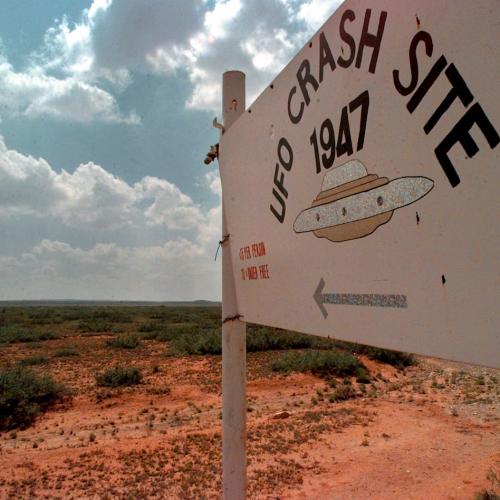
After half a century of investigation, a former nuclear physicist -- who worked on fission and fusion rockets for companies like Westinghouse and Aerojet General Nucleonics -- is convinced that not only are UFOs real, the government has known about them since 1947. "Some UFOs are intelligently controlled extraterrestrial spacecraft," Stanton Friedman told AOL News, calling the vast cover-up of their existence "the biggest story of the millennium." In 1958, UFOs caught his attention, and Friedman has since lectured about this subject at more than 700 colleges and professional groups in all 50 states and around the world. "After 53 years of investigation, I'm convinced we're dealing here with a cosmic Watergate," he [said]. "That means a few people within major governments have known since at least 1947 that some UFOs are alien spacecraft." In Friedman's new book, Science Was Wrong: Startling Truths About Cures, Theories, and Inventions "They" Declared Impossible, co-authored with Kathleen Marden, he wrote, "There's been no shortage of strong, negative proclamations from debunking groups and individuals who refuse to examine the evidence ... to support the notion that some UFOs are of extraterrestrial origin.
Note: For the full article at AOL News, click here.
The Obama administration has significantly expanded a largely secret U.S. war against al-Qaeda and other radical groups, according to senior military and administration officials. Special Operations forces have grown both in number and budget, and are deployed in 75 countries, compared with about 60 at the beginning of last year. In addition to units that have spent years in the Philippines and Colombia, teams are operating in Yemen and elsewhere in the Middle East, Africa and Central Asia. Plans exist for preemptive or retaliatory strikes in numerous places around the world. Obama, one senior military official said, has allowed "things that the previous administration did not." Special Operations commanders have also become a far more regular presence at the White House than they were under George W. Bush's administration. The Special Operations capabilities requested by the White House go beyond unilateral strikes and include the training of local counterterrorism forces and joint operations with them. Obama has made such forces a far more integrated part of his global security strategy. He has asked for a 5.7 percent increase in the Special Operations budget for fiscal 2011, for a total of $6.3 billion, plus an additional $3.5 billion in 2010 contingency funding.
Note: For an analysis, click here. For lots more from reliable sources about the war crimes committed ongoingly by the US military and Special Forces worldwide, click here.
Secret South African documents reveal that Israel offered to sell nuclear warheads to the apartheid regime, providing the first official documentary evidence of [Israel's] possession of nuclear weapons. The "top secret" minutes of meetings between senior officials from the two countries in 1975 show that South Africa's defence minister, PW Botha, asked for the warheads and Shimon Peres, then Israel's defence minister and now its president, responded by offering them "in three sizes". The two men also signed a broad-ranging agreement governing military ties between the two countries that included a clause declaring that "the very existence of this agreement" was to remain secret. The documents, uncovered by an American academic, Sasha Polakow-Suransky ... provide evidence that Israel has nuclear weapons despite its policy of "ambiguity" in neither confirming nor denying their existence. The Israeli authorities tried to stop South Africa's post-apartheid government declassifying the documents at Polakow-Suransky's request.
Note: A New York Times article states that Isreal has strongly denied this story. Yet even this articles states, "Israel has a longstanding policy of nuclear ambiguity, neither confirming nor denying that it has nuclear weapons, though it is widely believed to have developed a large arsenal."
Capitalism is dead. The economy has a new Invisible Hand, the Goldman Conspiracy of Wall Street bankers. This transfer of power happened suddenly. As recently as late 2008 the Invisible Hand was on life support, near death. Suddenly, miraculously the Treasury secretary, Goldman's former CEO, transferred the power into a new Invisible Hand of God, the free-market ideology of Reaganomics ... a power absolutely essential to the survival of Wall Street's mega-bonus culture. Yes, that's why the Goldman Conspiracy must kill financial reforms ... why they will kill effective reform with the backroom support of Obama. This was predicted back in late 2008, even before the bailouts, back when we thought Reaganomics dead. Shock Doctrine author Naomi Klein warned: "Free market ideology has always been a servant to the interests of capital ... During boom times it's profitable to preach laissez faire, because an absentee government allows speculative bubbles ... When those bubbles burst, the ideology becomes a hindrance and goes dormant while big government rides to the rescue," then a neo-Reaganomics "ideology will come roaring back when the bailouts are done. The massive debts the public is accumulating to bail out the speculators will then become part of a global budget crisis," setting up a new bubble, bigger meltdown, and the Great Depression 2 the world narrowly avoided in 2008.
Note: For a wealth of key reporting on the hidden realities of the Wall Street's shadowy operations, click here.
Important Note: Explore our full index to revealing excerpts of key major media news articles on several dozen engaging topics. And don't miss amazing excerpts from 20 of the most revealing news articles ever published.