











Secrecy News Articles
Below are key excerpts of revealing news articles on secrecy from reliable news media sources. If any link fails to function, a paywall blocks full access, or the article is no longer available, try these digital tools.

The U.S. military hid the locations of ... detainees and concealed harsh treatment to avoid the scrutiny of the International Committee of the Red Cross, according to documents that a Senate committee released. "We may need to curb the harsher operations while ICRC is around. It is better not to expose them to any controversial techniques," Lt. Col. Diane Beaver, a military lawyer, said during an October 2002 meeting at the Guantanamo Bay prison. Her comments were recorded in minutes of the meeting. At that same meeting, Beaver also appeared to confirm that U.S. officials at another detention facility Bagram Air Base in Afghanistan were using sleep deprivation to "break" detainees. "True, but officially it is not happening," she is quoted as having said. [Another] person at the meeting, Jonathan Fredman, the chief counsel for the CIA's Counterterrorism Center, disclosed that detainees were moved routinely to avoid the scrutiny of the ICRC, which keeps tabs on prisoners in conflicts around the world. "In the past when the ICRC has made a big deal about certain detainees, the DOD (Defense Department) has 'moved' them away from the attention of the ICRC," Fredman said. The document, along with two dozen others, shows that top administration officials pushed relentlessly for tougher interrogation methods. Fredman of the CIA also appeared to be advocating the use of techniques harsher than those authorized by military field guides. "If the detainee dies, you're doing it wrong," the minutes report Fredman saying at one point.
Note: For many revealing reports on the brutal realities of the Iraq and Afghanistan wars, click here.
One afternoon in April, six dozen wealthy Americans were entertained at a luncheon party in Midtown Manhattan, along with a special guest from Paris: Henri Loyrette, the director of the Louvre. The host of the exclusive gathering was the Swiss bank UBS, whose elite private bankers built a lucrative business in recent years by discreetly tending the fortunes of American millionaires and billionaires. But now, as the federal authorities intensify an investigation into offshore bank accounts, the secrets of this rarefied world are being dragged into the open and UBSs privileged clients are running scared. Under pressure from the authorities, UBS is considering whether to divulge the names of up to 20,000 of its well-heeled American clients, according to people close to the inquiry, a step that would have once been unthinkable to Swiss bankers, whose traditions of secrecy date to the Middle Ages. Federal investigators believe some of the clients may have used offshore accounts at UBS to hide as much as $20 billion in assets from the Internal Revenue Service. Doing so may have enabled these people to dodge at least $300 million in federal taxes on income from those assets, according to a government official connected with the investigation. The case could turn into an embarrassment for Marcel Rohner, the chief executive of UBS and the former head of its private bank, as well as for Phil Gramm, the former Republican senator from Texas who is now the vice chairman of UBS Securities, the Swiss banks investment banking arm. It also comes at a difficult time for UBS, which is reeling from $37 billion in bad investments, many of them linked to risky American mortgages.
Note: For an illuminating overview of the secret world of banking and finance, click here.
[News anchor LOU DOBBS:] Open borders advocates are refusing to acknowledge rising evidence of plans for a NAFTA superhighway. Many in the mainstream media absolutely refuse to acknowledge the reality. The plans could be a major step toward that North American Union of the United States, Canada and Mexico. BILL TUCKER, CNN Correspondent: There is no NAFTA superhighway. Not officially. In Texas planning a development is under way for what are officially called transportation corridors. The Trans Texas Corridor, I-69, a combination of rail lines, utility lines, car and truck lanes, [is planned] to be as wide as three football fields laid end to end. It will be financed by a private foreign company ... who will then own the lease on the road and the revenue generated by the tolls. Texas may use eminent domain to lay claim to some of the land needed to build it. For an imaginary road there's a lot of money and effort involved [and] some very real opposition. TERRI HALL, TEXASTURF.ORG: There's just no doubt that this is happening. We've been to the public hearings. We've seen the presentations. We've seen the documents. We waded through them and there's a whole lot more groups besides just ours. And we've got Farm Bureau, Sierra Club, a whole host of groups from the left and the right. TUCKER: In Kansas a resolution opposing the superhighway overwhelmingly passed the State House.
Note: To watch a video of this Lou Dobbs Tonight segment, click here.
The Bush administration has been posting hundreds of highly confidential U.N. audits and investigation reports on a U.S. government Web site, opening the United Nations' inner workings and some of its more colorful scandals to unusual public scrutiny. Together, the nearly 500 documents and thousands of pages constitute a trove of U.N. secrets stretching back over five years, including allegations of bribes paid for tsunami relief projects in Indonesia, of sexual harassment in Gaza and a revelation that a U.N. anti-drug official ran a presidential campaign while receiving a U.N. paycheck. The pages also document a spree of alleged criminal activities, including a bribery scheme at the airport in Pristina, Kosovo, gold trading by U.N. peacekeepers in Congo, and the theft and resale of food rations by Ukrainian pilots serving the United Nations in Liberia. Mark D. Wallace, the U.S. representative for U.N. management and reform, has posted 477 documents. Most of the names of those targeted in the reports have been redacted by the United Nations, but the identities are easily deciphered. For years, the United Nations has guarded the confidentiality of its audits, saying they are meant as constructive criticism for managers. Their disclosure by the United States has generated a mixed reaction from U.N. officials: One said it was ironic that an administration that has placed such a premium on secrecy would be so transparent about the United Nations.
Note: For many reliable reports on increasing government secrecy, click here.
A piece of JFK assassination history now lies buried in the most unlikely of places: a former limestone quarry in Kansas. It is the end at least for now in the long and sometimes strange journey of Parkland Memorial Hospital Trauma Room No. 1, where President John F. Kennedy died on Nov. 22, 1963. The entire room was purchased by the federal government 35 years ago, when Parkland officials decided to modernize their emergency facilities. It was dismantled and the contents all of them, the examination table, clocks, floor tiling, lockers, trash cans, surgical instruments, gloves, cotton balls, even a towel dispenser were placed in a locked vault in a Fort Worth warehouse run by the National Archives and Records Administration. The artifacts lay undisturbed there until September, when they were moved to an archives facility in Lenexa, Kan., a suburb of Kansas City, Mo. "It's in a secure location," Reed Whitaker, the agency's Central Plains Region administrator, confirmed last week. And in a comment guaranteed to get the conspiracy theorists going, he added: "Basically, it's not to be examined, not to be shown to the press, not to be photographed, not to be exhibited to the public." Under the sale agreement between Parkland and the federal government, archives officials agreed to close the trauma room and its contents to the public, saying that they wanted to shield the pieces from exploitation. A formal request in 2000 from The Dallas Morning News to view and photograph the artifacts was summarily rejected.
Note: For a treasure trove of revealing stories from reliable sources on major assassinations, click here.
Since 9/11, and seemingly without the notice of most Americans, the federal government has assumed the authority to institute martial law, arrest a wide swath of dissidents (citizen and noncitizen alike), and detain people without legal or constitutional recourse in the event of "an emergency influx of immigrants in the U.S., or to support the rapid development of new programs." Beginning in 1999, the government has entered into a series of single-bid contracts with Halliburton subsidiary Kellogg, Brown and Root (KBR) to build detention camps at undisclosed locations within the United States. The government has also contracted with several companies to build thousands of railcars, some reportedly equipped with shackles, ostensibly to transport detainees. According to diplomat and author Peter Dale Scott, the KBR contract is part of a Homeland Security plan titled ENDGAME, which sets as its goal the removal of "all removable aliens" and "potential terrorists." What kind of "new programs" require the construction and refurbishment of detention facilities in nearly every state of the union with the capacity to house perhaps millions of people? The 2007 National Defense Authorization Act (NDAA) ... gives the executive the power to invoke martial law. The Military Commissions Act of 2006 ... allows for the indefinite imprisonment of anyone who ... speaks out against the government's policies. The law calls for secret trials for citizens and noncitizens alike. What could the government be contemplating that leads it to make contingency plans to detain without recourse millions of its own citizens?
Note: This important warning from former U.S. Congressman Dan Hamburg and Lewis Seiler should be read in its entirety. For more chilling reports on serious threats to our civil liberties, click here.
A member of the Senate Intelligence Committee said ... President Bush is standing by "feverish legal theories" to justify actions which are unconstitutional. Sen. Sheldon Whitehouse, D-R.I., made the comments on the Senate floor during debate. Whitehouse said that ... he had examined "highly classified secret legal opinions" issued by the Department of Justice's Office of Legal Counsel [OLC]. Whitehouse recounted that, "Sitting in that secure room, as a lawyer, as a former U.S. Attorney, legal counsel to Rhode Islands Governor, and State Attorney General, I was increasingly dismayed and amazed as I read on." Whitehouse related three OLC legal opinions which he got declassified: "An executive order cannot limit a President. There is no constitutional requirement for a President to issue a new executive order whenever he wishes to depart from the terms of a previous executive order."; ... "The President ... can determine whether an action is a lawful exercise of the Presidents authority"; [and] "The Department of Justice is bound by the Presidents legal determinations." "Imagine a general counsel to a major U.S. corporation telling his board of directors, 'In this company the counsels office is bound by the CEOs legal determinations,'" Whitehouse said. "The board ought to throw that lawyer out - its malpractice, probably even unethical." We are a nation of laws, not of men. This nation was founded in rejection of the royalist principles that ... 'The King can do no wrong'."
Note: To hear the revealing Senate speech on this vital topic by Senator Whitehouse, a member of the Senate Intelligence Committee, click here. For Whitehouse's comments on this topic on his Senate website, click here.
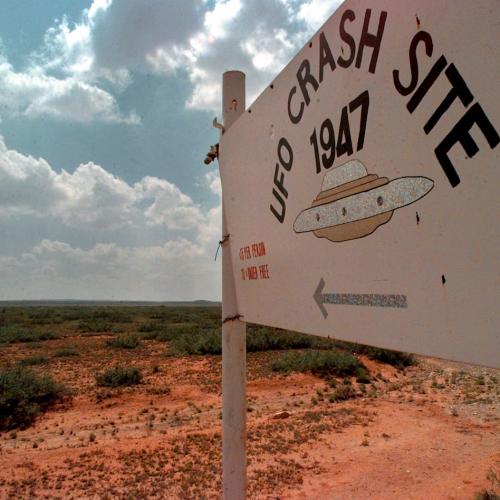
In 1997, during my second term as governor of Arizona, I saw something that defied logic and challenged my reality. I witnessed a massive delta-shaped craft silently navigate over Squaw Peak, a mountain range in Phoenix, Arizona. It was truly breathtaking. As a pilot and a former Air Force Officer, I can definitively say that this craft did not resemble any man-made object I'd ever seen. The incident was witnessed by hundreds -- if not thousands -- of people in Arizona, and my office was besieged with phone calls from very concerned Arizonians. The growing hysteria intensified when the story broke nationally. I decided to lighten the mood of the state by calling a press conference where my chief of staff arrived in an alien costume. We managed to lessen the sense of panic but, at the same time, upset many of my constituents. I would now like to set the record straight. I never meant to ridicule anyone. My office did make inquiries as to the origin of the craft, but to this day they remain unanswered. Eventually the Air Force claimed responsibility stating that they dropped flares. This is indicative of the attitude from official channels. We get explanations that fly in the face of the facts. Explanations like weather balloons, swamp gas and military flares. I was never happy with the Air Force's silly explanation. I now know that I am not alone. There are many high-ranking military, aviation and government officials who share my concerns. While on active duty, they have either witnessed a UFO incident or have conducted an official investigation into UFO cases relevant to aviation safety and national security. By speaking out with me, these people are putting their reputations on the line. Investigations need to be re-opened, documents need to be unsealed and the idea of an open dialogue can no longer be shunned.
Note: For a two-page summary of UFO testimony by top government and military officials, click here.
CIA Director Michael Hayden has mounted a highly unusual challenge to his agency's chief watchdog, ordering an internal investigation of an inspector general who has issued a series of reports sharply critical of top CIA officials. Hayden is seeking to rein in an inspector general who has used the office to bring ... scrutiny upon CIA figures from former Director George Tenet to undercover operatives running secret overseas prison sites. The investigation is focused on ... CIA Inspector General John Helgerson and his office, particularly whether they were fair and impartial in their scrutiny of the agency's terrorist detention and interrogation programs. Officials said that the investigation also will span other subjects and that it already has expanded since its start months ago. U.S. intelligence officials concerned about the inquiry said it is unprecedented and could threaten the independence of the inspector general position. The investigation "could at least lead to appearances he's trying to interfere with the IG, or intimidate the IG, or get the IG to back off," one U.S. official familiar with the investigation said. Frederick Hitz, who served as the CIA's inspector general from 1990 to 1998, said the move will be perceived as an attempt by Hayden "to call off the dogs." "What it would lead to is an undercutting of the inspector general's authority and his ability to investigate allegations of wrongdoing," Hitz said. "The rank and file will become aware of it, and it will undercut the inspector general's ability to get the truth from them." Hayden has been a staunch defender of the Bush administration's counterterrorism programs.
Note: What does it say about an agency when they accuse their own internal investigator of being corrupt?
The most intriguing secrets of the "war on terror" have nothing to do with al-Qaeda and its fellow travelers. They're about the mammoth private spying industry that all but runs U.S. intelligence operations today. In April, Director of National Intelligence Mike McConnell was poised to publicize a year-long examination of outsourcing by U.S. intelligence agencies. But the report was inexplicably delayed -- and suddenly classified a national secret. What McConnell doesn't want you to know is that the private spy industry has succeeded where no foreign government has: It has penetrated the CIA and is running the show. Over the past five years (some say almost a decade), there has been a revolution in the intelligence community toward wide-scale outsourcing. Private companies now perform key intelligence-agency functions, to the tune ... of more than $42 billion a year. Intelligence professionals [say] that more than 50 percent of the National Clandestine Service (NCS) -- the heart, brains and soul of the CIA -- has been outsourced to private firms such as Abraxas, Booz Allen Hamilton, Lockheed Martin and Raytheon. These firms recruit spies, create non-official cover identities and control the movements of CIA case officers. They also provide case officers and watch officers at crisis centers and regional desk officers who control clandestine operations worldwide. As The Los Angeles Times first reported last October, more than half the workforce in two key CIA stations -- Baghdad and Islamabad, Pakistan -- is made up of industrial contractors, or "green badgers," in CIA parlance. Intelligence insiders say that entire branches of the NCS have been outsourced to private industry.
The Pentagon has placed unprecedented restrictions on who can testify before Congress, reserving the right to bar lower-ranking officers, enlisted soldiers, and career bureaucrats from appearing before oversight committees or having their remarks transcribed. The guidelines, described in an April 19 memo to the staff director of the House Armed Services Committee, adds that all field-level officers and enlisted personnel must be "deemed appropriate" by the Department of Defense before they can participate in personal briefings for members of Congress or their staffs. In addition, according to the memo, the proceedings must not be recorded. Any officers who are allowed to testify must be accompanied by an official from the administration. Veterans of the legislative process -- who say they have never heard of such guidelines before -- maintain that the Pentagon has no authority to set such ground rules. A Pentagon spokesman confirmed that the guidelines are new. The memo has fueled complaints that the Bush administration is trying to restrict access to information about the war in Iraq. [A] special House oversight panel, according to aides, has written at least 10 letters to the Pentagon since February seeking information and has received only one official reply. Nor has the Pentagon fully complied with repeated requests for all the monthly assessments of Iraqi security forces.
Note: When the military begins to control the legislative, democracy begins to shift towards dictatorship. And for reliable information how the Pentagon cannot account for hundreds of billions of dollars, click here.
The depositions of the parents of Columbine killers Eric Harris and Dylan Klebold will be kept under seal in the National Archives for 20 years, a federal judge ruled Monday. No one, including violence prevention experts, will be able to see them until they are unsealed, U.S. District Judge Lewis Babcock ruled. They will be kept permanently in the National Archives, where they are considered to be of historical value. The depositions of the parents took place in 2003 in connection with a lawsuit filed by the families of five slain Columbine High School students. Brian Rohrbough, the father of slain student Daniel Rohrbough, said he was angered by the ruling. Rohrbough, who watched as attorneys interviewed the parents during the deposition sessions, said there is nothing in them that would cause any harm. Instead, their release could prevent further school shootings, he said. Rohrbough is under court order not to divulge details. "There is no rational reason to lock them up," Rohrbough said. "It's just the idea that it would be OK in 20 years, and can't be OK today."
Note: Why all the secrecy? Could it be to hide evidence showing it could have been stopped?
Our collective failure has been to take our political leaders at their word. This week the BBC reported that the government's own scientists advised ministers that the Johns Hopkins study on Iraq civilian mortality was accurate and reliable. Published in the Lancet ...it estimated that 650,000 Iraqi civilians had died since the American and British led invasion in March 2003. Immediately after publication, the prime minister's official spokesman said that the Lancet's study "was not one we believe to be anywhere near accurate". The foreign secretary ... said that the Lancet figures were "extrapolated" and a "leap". President Bush said: "I don't consider it a credible report". Scientists at the UK's Department for International Development thought differently. They concluded that the study's methods were "tried and tested". Indeed, the Johns Hopkins approach would likely lead to an "underestimation of mortality". The Ministry of Defence's chief scientific adviser ... recommended "caution in publicly criticising the study". When these recommendations went to the prime minister's advisers, they were horrified. Tony Blair was advised to say: "The overriding message is that there are no accurate or reliable figures of deaths in Iraq". At a time when we are celebrating our enlightened abolition of slavery 200 years ago, we are continuing to commit one of the worst international abuses of human rights of the past half-century. Two hundred years from now, the Iraq war will be mourned as the moment when Britain violated its delicate democratic constitution and joined the ranks of nations that use extreme pre-emptive killing as a tactic of foreign policy.
Note: This article is written by Richard Horton, the editor of the highly esteemed British medical journal Lancet.
For at least a year before the 2004 Republican National Convention, teams of undercover New York City police officers traveled to cities across the country, Canada and Europe to conduct covert observations of people who planned to protest at the convention, according to police records and interviews. From Albuquerque to Montreal, San Francisco to Miami, undercover New York police officers attended meetings of political groups, posing as sympathizers or fellow activists. They made friends, shared meals, swapped e-mail messages and then filed daily reports with the departments Intelligence Division. In hundreds of reports stamped N.Y.P.D. Secret, the Intelligence Division chronicled the views and plans of people who had no apparent intention of breaking the law. These included members of street theater companies, church groups and antiwar organizations. Three New York City elected officials were cited in the reports. In at least some cases, intelligence on what appeared to be lawful activity was shared with police departments in other cities. In addition to sharing information with other police departments, New York undercover officers were active themselves in at least 15 places outside New York including California, Connecticut, Florida, Georgia, Illinois, Massachusetts, Michigan, Montreal, New Hampshire, New Mexico, Oregon, Tennessee, Texas and Washington, D.C. and in Europe. To date, as the boundaries of the departments expanded powers continue to be debated, police officials have provided only glimpses of its intelligence-gathering.
The Justice Department's inspector general revealed on March 9 that the FBI has been systematically abusing one of the most controversial provisions of the USA Patriot Act: the expanded power to issue "national security letters." It no doubt surprised most Americans to learn that between 2003 and 2005 the FBI issued more than 140,000 specific demands under this provision. It did not, however, come as any surprise to me. Three years ago, I received a national security letter (NSL) in my capacity as the president of a small Internet access and consulting business. The letter ordered me to provide sensitive information about one of my clients. There was no indication that a judge had reviewed or approved the letter, and it turned out that none had. The letter came with a gag provision that prohibited me from telling anyone, including my client, that the FBI was seeking this information. Based on the context of the demand -- a context that the FBI still won't let me discuss publicly -- I suspected that the FBI was abusing its power. Living under the gag order has been stressful and surreal. Under the threat of criminal prosecution, I must hide all aspects of my involvement in the case -- including the mere fact that I received an NSL -- from my colleagues, my family and my friends. When I meet with my attorneys I cannot tell my girlfriend where I am going or where I have been. I hide any papers related to the case in a place where she will not look. When clients and friends ask me whether I am the one challenging the constitutionality of the NSL statute, I have no choice but to look them in the eye and lie. At some point -- a point we passed long ago -- the secrecy itself becomes a threat to our democracy.
A two-year congressional inquiry into the Oklahoma City bombing concludes that the FBI didn't fully investigate whether other suspects may have helped Timothy McVeigh and Terry Nichols with the deadly 1995 attack, allowing questions to linger a decade later. The House International Relations investigative subcommittee [declared that] there is no conclusive evidence of a foreign connection to the attack, but that far too many unanswered questions remain. The report also sharply criticizes the FBI for failing to be curious enough to pursue credible information that foreign or U.S. citizens may have had contact with Nichols or McVeigh and could have assisted their plot. "We did our best with limited resources, and I think we moved the understanding of this issue forward a couple of notches even though important questions remain unanswered," Rep. Dana Rohrabacher, R-Calif., the subcommittee chairman, said in an interview with The Associated Press. Rohrabacher's subcommittee saved its sharpest words for the Justice Department, saying officials there exhibited a mindset of thwarting congressional oversight and did not assist the investigation fully.
Note: Should you choose to explore the deadly Oklahoma City bombing, you will find that there are many strange inconsistencies suggesting a major cover-up. If you are interested in more, you might start here.
For decades, Israel coyly has refused to confirm or deny what, since 1986, the whole world has known for sure: that is that the Jewish state is the one country in the Middle East that has a well-developed, nuclear arsenal. It was 20 years ago that Mordechai Vanunu, a former technician at Israel's Dimona nuclear facility in the Negev Desert, informed Britain's Sunday Times about the weapons program, leading "defense analysts to rank the country as the [world's] sixth largest nuclear power." Vanunu was jailed for 18 years for revealing state secrets. Israel calls its refusal to deny or confirm the existence of its nuclear arms its "nuclear ambiguity" policy. Why? Explains the Times (U.K.): "For many years, Israel was the only country outside the five declared nuclear powers to have built an atomic weapon ... It wanted its enemies in the region to know that it had nuclear capability if threatened. But it also wanted to keep the existence secret so that it did not fall [a]foul of international action designed to halt the proliferation of nuclear weapons, particularly strict U.S. laws which could have jeopardized billions of dollars in annual aid." The Jerusalem Post notes that "Nuclear ambiguity was a comfortable arrangement for both Israeli and U.S. administrations, designed to allow Israel to get on with whatever it was doing ... without too much international pressure, and [to allow] the U.S. to not seem too hypocritical by not demanding its Middle East ally sign the [Non-proliferation Treaty]. Ambiguity might have worked for four decades, but ... it is now hopelessly outdated."
Note: The media has been quite reluctant to discuss these issues openly. Could it be they fear people might question the amount of U.S. aid? Israel's population is 6.5 million. Official U.S. yearly foreign aid to Israel has been about $2.5 to 3.0 billion for many years. If you do the math, U.S. taxpayers are giving every man, woman, and child in Israel about $400/year -- over ten times the per capita rate paid to any other country. That's quite a yearly gift! A Christian Science Monitor article says if all forms of aid are considered, the figures are even higher.
Tens of millions of Americans really believe their government was complicit in the murder of 3,000 of their fellow citizens. The government these Americans suspect of complicity in 9/11 has acquired a justified reputation for deception: weapons of mass destruction, secret prisons, illegal wiretapping. The Truth Movement's recent growth can be largely attributed to the Internet-distributed documentary "Loose Change." It's been viewed over the Internet millions of times. Complementing "Loose Change" are the more highbrow offerings of a handful of writers and scholars, many of whom are associated with Scholars for 9/11 Truth. Two of these academics, retired theologian David Ray Griffin and retired Brigham Young University physics professor Steven Jones, have written books and articles that serve as the movement's canon. The Truth Movement's relationship to the truth may be tenuous, but that it is a movement is no longer in doubt. For the Administration, "conspiracy" is a tremendously useful term, and can be applied even in the most seemingly bizarre conditions to declare an inquiry or criticism out of bounds. Of course, the ommission report was something of a whitewash Bush would only be interviewed in the presence of Dick Cheney, the commission was denied access to other key witnesses, and ... a meeting convened by George Tenet the summer before the attacks to warn Condoleezza Rice about al Qaeda's plotting ... was nowhere mentioned in the report. It's hard to blame people for thinking we're not getting the whole story. For six years, the government has prevaricated and the press has largely failed to point out this simple truth.
Note: Though this article belittles the 9/11 movement, there is abundant evidence to support the claim that the 9/11 Commission was a whitewash and the attacks may have been orchestrated. For more, click here.
By the 2008 presidential election, voters around the country are likely to see sweeping changes in how they cast their ballots and how those ballots are counted. New federal guidelines, along with legislation given a strong chance to pass in Congress next year, will probably combine to make the paperless voting machines obsolete. Motivated in part by voting problems during the midterm elections last month, the changes are a result of a growing skepticism among local and state election officials, federal legislators and the scientific community about the reliability and security of the paperless touch-screen machines used by about 30 percent of American voters. Various forms of vote-counting software used around the country ... will for the first time be inspected by federal authorities, and the code could be made public. Last year, New Mexico spent $14 million to replace its touch screens. Other states are spending millions more to retrofit the machines to add paper trails. Because some printers malfunctioned last month, election commissioners in Cuyahoga County, Ohio, which includes Cleveland, said last week that they were considering scrapping their new $17 million system of touch-screen machines. Under changes approved by the Election Assistance Commission yesterday, voting machine manufacturers would have to make their crucial software code available to federal inspectors. The code is now checked mainly by private testing laboratories paid by the manufacturers.
Note: How is it possible that the government allowed voting machine companies to keep their software secret even from the government? We may never know how many votes were manipulated. For more, click here.
The scientist who first linked smoking to lung cancer was [later] paid by a chemicals firm while investigating cancer risks in the industry. Professor Sir Richard Doll held a consultancy post with US firm Monsanto for more than 20 years. The BBC has seen private letters which show that Sir Richard ... received a US$1,500-a-day consultancy fee from Monsanto in the mid-1980s. During that time he investigated the potential cancer causing properties of the powerful herbicide Agent Orange, made by the company. Sir Richard [argued] that there was no evidence that Agent Orange caused cancer. Professor Lennart Hardell, of the Oncology Department at University Hospital Orebro, Sweden, has also studied the potential hazards posed by Agent Orange. He was one of the scientists whose work was dismissed by Sir Richard. He said: "It's quite OK to have contacts with industry, but you should be fair and say 'well, I'm [working] as a consultant for Monsanto." Further documents obtained by The Guardian newspaper allegedly show that Sir Richard was also paid a 15,000 fee by the Chemical Manufacturers Association, and chemicals companies Dow Chemicals and ICI for a review of vinyl chloride, used in plastics, which largely cleared the chemical of any link with cancers apart from liver cancer. Sir Richard's views on the chemical were used by the manufacturers' trade association to defend it for more than a decade.
Important Note: Explore our full index to revealing excerpts of key major media news articles on several dozen engaging topics. And don't miss amazing excerpts from 20 of the most revealing news articles ever published.