



















Secrecy News Articles
Below are key excerpts of revealing news articles on secrecy from reliable news media sources. If any link fails to function, a paywall blocks full access, or the article is no longer available, try these digital tools.

Factory farm operators believe that the less Americans know about what goes on behind their closed doors, the better. Thats because the animals sent through those factories often endure an unimaginable amount of mistreatment and abuse. Nearly always, this treatment comes to light only because courageous employees - or those posing as employees - take undercover video and release it to the public. The industrys lobbyists have taken the opposite approach, pushing for the passage of so-called ag-gag laws, which ban undercover recordings on farms and in slaughterhouses. These measures have ... been enacted in eight [states]. None has gone as far as North Carolina, where a new law that took effect Jan. 1 aims to silence whistle-blowers not just at agricultural facilities, but at all workplaces in the state. That includes, among others, nursing homes, day care centers, and veterans facilities. Anyone who violates the law - say, by secretly taping abuses of elderly patients or farm animals and then sharing the recording with the media or an advocacy group - can be sued by business owners for bad publicity and be required to pay a fine of $5,000 for each day that person is gathering information. This is a clear violation of the constitutional freedoms of speech and the press, as ... argued in a federal lawsuit filed in January.
Note: This law was passed following the widely publicised release of video footage showing toxic cesspools around North Carolina farms. For more along these lines, see concise summaries of deeply revealing news articles about corruption in government and in the corporate world.
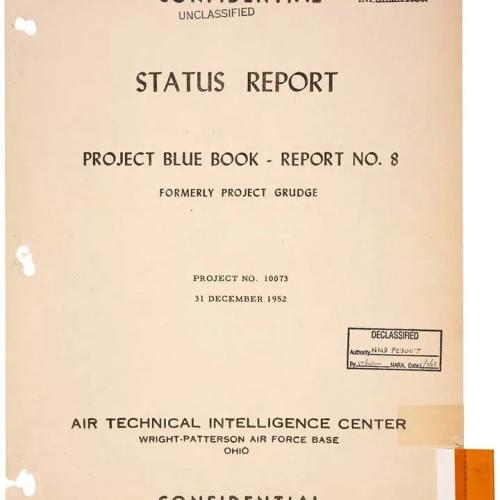
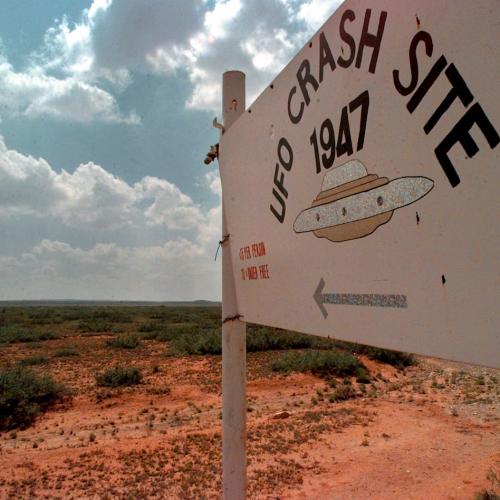
The CIA has released hundreds of declassified documents detailing investigations into possible alien life. The Central Intelligence Agency posted documents of reported Unidentified Flying Objects that range in date from the late 1940s to the 1950s. While playing off the hype of the TV show reboot "The X-Files," the CIA broke down the cases into two categories, whether you side with Agent Mulder or Agent Scully. For believers in alien life ... one case you can choose to investigate is the case of a flying saucer in Germany in 1952. An eyewitness told investigators that an object "resembling a huge flying pan" landed in a forest clearing in the Soviet zone of Germany in 1952. The eyewitness said once he was closer to the area where it landed, he saw two men dressed in shiny metallic clothing. Spooked by the eyewitness ... the mysterious men jumped into the large flying pan object and it spun out into the sky. "The whole object then began to rise slowly from the ground and rotate like a top," the eyewitness told the CIA. The man told a judge he thought he was dreaming but said there was a circular imprint on the ground where the object had landed. If that case intrigues you, there are four more listed on the CIA blog post. But if you are more of a skeptic like Scully, and believe there is a simple explanation for flying saucer sightings, then the documents from the scientific advisory panel on UFOs in 1953 will help you prove your case.
Note: Explore these intriguing 'X-Files' on the CIA website at this link. For more along these lines, see concise summaries of deeply revealing UFO cover-up and disclosure news articles from reliable major media sources. Then explore the excellent, reliable resources provided in our UFO Information Center.
Have you heard about TTIP? If your answer is no, dont get too worried; youre not meant to have. The Transatlantic Trade and Investment Partnership is a series of trade negotiations being carried out mostly in secret between the EU and US. As a bi-lateral trade agreement, TTIP is about reducing the regulatory barriers to trade for big business, things like food safety law, environmental legislation, banking regulations and the sovereign powers of individual nations. It is, as John Hilary, Executive Director of campaign group War on Want, said: An assault on European and US societies by transnational corporations. Since before TTIP negotiations began last February, the process has been secretive and undemocratic. But ... the covert nature of the talks may well be the least of our problems. TTIPs biggest threat to society is its inherent assault on democracy. One of the main aims of TTIP is the introduction of Investor-State Dispute Settlements (ISDS), which allow companies to sue governments if those governments policies cause a loss of profits. In effect it means unelected transnational corporations can dictate the policies of democratically elected governments. There are around 500 ... cases of businesses versus nations going on around the world at the moment. They are all taking place before arbitration tribunals made up of corporate lawyers appointed on an ad hoc basis, which according to War on Wants John Hilary, are little more than kangaroo courts with a vested interest in ruling in favour of business.
Note: For more along these lines, see concise summaries of deeply revealing news articles on corruption in government and in the corporate world.
A 9/11 Congressional Committee investigated whether there were terror links to Saudi Arabia, but that portion of the report is classified by the government; fearing release could hurt U.S. relationships with a key Middle East ally. Now there are growing calls for the secret report to be made public. 28 pages classified as top secret by President Bush ... look at what if any relationship existed between the 9/11 hijackers and the Saudi Government. These pages are the only part of the report kept hidden from the public. Just a few weeks ago, Republican Presidential Candidate Rand Paul introduced a measure in the Senate calling for public disclosure; both Senators Gillibrand and Schumer support it. The Former head of the 9-11 Inquiry who has read the "secret" pages says "Collectively they tell us that the hijackers did not operate alone. That there was a support network which facilitated their ability to carry out such a complicated and heinous assault as 9/11. And, they tell us that Saudi Arabia was the premier part of that support network," said Bob Graham, a former senator. Former Senator Graham believes the pages have remained classified to keep Americans from knowing the depth of Saudi involvement in 9/11. 15 of the 19 hijackers were Saudi nationals. Saudi Arabia has repeatedly denied any connection.
Note: If the former head of the 9/11 Commission says these pages should be declassified, will people listen. For more along these lines, see concise summaries of deeply revealing 9/11 news articles from reliable major media sources. Then explore the excellent, reliable resources provided in our 9/11 Information Center.
Republicans who now run Congress say they want to cooperate with President Obama, and point to the administration's Trans-Pacific Partnership, or TPP, as the model. The only problem is the TPP would be a disaster. If you haven't heard much about the TPP, that's part of the problem. It would be the largest trade deal in history ... representing 792 million people and accounting for 40 percent of the world economy -- yet it's been devised in secret. Lobbyists from America's biggest corporations and Wall Street's biggest banks have been involved but not the American public. That's a recipe for fatter profits and bigger paychecks at the top, but not a good deal for most of us, or even for most of the rest of the world. Big corporations and Wall Street want ... more international protection when it comes to their intellectual property and other assets. But they want less protection of consumers, workers, small investors, and the environment, because these interfere with their profits. So they've been seeking trade rules that allow them to override these protections. Not surprisingly for a deal that's been drafted mostly by corporate and Wall Street lobbyists, the TPP provides exactly this mix. In other words, the TPP is a Trojan horse in a global race to the bottom, giving big corporations and Wall Street banks a way to eliminate any and all laws and regulations that get in the way of their profits.
Note: The above article is written by former US Secretary of Labor Robert Reich. For more along these lines, see this summary of an article that appeared in the Guardian newspaper in 2013. You can also read the TPP's Intellectual property and environment language for yourself.
Olympic National Park and Olympic National Forest in Washington State are ... where the US Navy aims to conduct its Northwest Electromagnetic Radiation Warfare training program. It will fly ... 2,900 training exercises over wilderness, communities and cities across the Olympic Peninsula for 260 days per year, with exercises lasting up to 16 hours per day. No public notices for the Navy's plans were published in any media that directly serve the Olympic Peninsula. But word spread. Public outcry forced the Navy to extend the public comment period until November 28 and schedule more public meetings. According to the US Navy's Information Dominance Roadmap 2013-2028, the Navy states it "will require new capabilities to fully employ integrated information in warfare by expanding the use of advanced electronic warfare." The purpose of these war games is to train to deny the enemy "all possible frequencies of electromagnetic radiation (i.e. electromagnetic energy) for use in such applications as communication systems..." David King, the mayor of Port Townsend, a town on the Northeast corner of the Olympic Peninsula, has voiced his opposition to the plan, along with numerous other public officials. Mike Welding, the Naval Air Station at Whidbey Island spokesman, recently admitted to reporters, "If someone is in the exclusion area for more than 15 minutes, that's a ballpark estimate for when there would be some concern for potential to injure, to receive burns."
Note: We don't generally use truth-out.org as a reliable source, but as no major media are covering this most important development, we're including this article here. To verify this information, please click on some of the links in the article and see the U.S. Navy's "Information Dominance Roadmap".
Fears of a deliberate cover-up by public officials of the sexual abuse of children in Rotherham have been fueled by the large number of documents ... which have vanished, an investigation by MPs has concluded. They urged the Home Office to examine claims that files were stolen from a locked council office in the South Yorkshire town. At least 1,400 girls as young as 11 were groomed and abused by gangs in the town over a 16 year period. The committee raised suspicions that officials colluded to conceal evidence. The MPs heard from a former researcher who was hired by Rotherham Council. She referred in a report, which was about to be sent to the Home Office, to the alleged indifference towards, and ignorance of, child sexual exploitation on the part of senior managers, the committee said. An unknown individual subsequently gained access to her office and removed all of the data relating to the Home Office work. There were no signs of a forced entry and the action involved moving through key-coded and locked security doors. "She was also subjected to personal hostility at the hands of Council officials and police officers, the committee said. The MPs said: This is not the first case in which it has been alleged that files of information relating to child sexual exploitation have disappeared. Keith Vaz, the committee chairman, said: A number of individuals attempted to bring these crimes to light, only to face obstacles from the council and police."
Note: For more along these lines, see concise summaries of deeply revealing sex abuse scandal news articles from reliable major media sources.
In lawsuits challenging NSA mass surveillance, torture and drone strikes on Americans in recent years, the US government has turned what was once a narrow legal privilege into an immunity trump card a kind of get-out-of-jail-free card for matters of national security. And now, despite publicly promising to restrict its use, attorney general Eric Holder is trying to expand the power even further. In [the] New York Times, Matt Apuzzo [reports on a] court case between two private parties in which the US justice department has invoked the so-called state secrets privilege. A Greek shipping magnate has accused an advocacy group pushing for sanctions on Iran of lying about him, but the government argues that the case must be dismissed with hardly an explanation, citing only a concerned federal agency. Holder refuses to disclose the agency demanding secrecy, the type of information he wants [to keep] secret, or even the basis for invoking the state secrets clause (which, by the way, is an invention of the US supreme court from a 1953 case that was later proved to be based on a lie). The Obama justice department has been using the controversial clause to squash cases of more significant consequence for years. Holder allegedly created a policy for restricting its use to all but the most critical national-security cases when he first came into office. But, alas, Holder has since proceeded to shut down the exact types of cases for which George W Bush was so harshly criticized.
Note: For more on this, see concise summaries of deeply revealing government corruption news articles from reliable major media sources.
The rise of ISIS has been aided by the failure of the US government to investigate the connection between the Saudi Arabian government and jihadist networks, said former senator Bob Graham. Senator Graham, who chaired the Senate Intelligence Committee, said that successive administrations had failed to examine the connections between the Saudis and Sunni militant groups. "I believe that the failure to shine a full light on Saudi actions ... has contributed to the Saudi ability to continue to engage in actions that are damaging to the US and in particular their support for ISIS," he said. The Saudis have been accused of using Sunni militant groups as proxies, channeling money to Islamist groups battling the forces of president Bashar al-Assad in the Syrian civil war, as Sunni and Shia battle for hegemony in the Middle East. The Shia Iranians are chief backers of Assad, and Nouri al Maliki's Shia-dominated government which collapsed following ISIS' onslaught in Iraq, accused the Saudi Arabia and Qatar of funding ISIS, and facilitating "genocide". [Graham] said that Saudi Arabia gives support to the "the most extremist elements among the Sunni". Al-Qaida leader Osama bin Laden was the son of a wealthy construction magnate, who had close ties to the Saudi royal family. It is alleged that redacted pages of the [Joint Congressional 9/11 inquiry] report establish links between Saudi government officials and al-Qaida.
Note: Watch the highly illuminating BBC documentary "Power of Nightmares" that reveals that al-Qaida, under the control of Osama bin Laden, has never actually existed, but is a US/UK-government psychological operation to launch the "Global War on Terror". For more on this, read Prof. David Ray Griffin's deeply revealing book Osama bin Laden: Dead or Alive?
Jim Risen is gruff. Attorney General Eric Holder wants to force Risen to testify and reveal the identity of his confidential source on a story he had in his 2006 book concerning a bungled C.I.A. operation during the Clinton administration in which agents might have inadvertently helped Iran develop its nuclear weapon program. The tale made the C.I.A. look silly, which may have been more of a sore point than a threat to national security. But Bush officials, no doubt still smarting from Risens revelation of their illegal wiretapping, zeroed in on a disillusioned former C.I.A. agent named Jeffrey Sterling as the source of the Iran story. The subpoena forcing Risens testimony expired in 2009, and to the surprise of just about everybody, the constitutional law professors administration renewed it kicking off its strange and awful aggression against reporters and whistle-blowers. Why dont they back off Risen? How can [Obama] use the Espionage Act to throw reporters and whistle-blowers in jail even as he defends the intelligence operatives who tortured some folks, and coddles his C.I.A. chief, John Brennan, who spied on the Senate and then lied to the senators he spied on about it? Its hypocritical, Risen said. A lot of people still think this is some kind of game or signal or spin. They dont want to believe that Obama wants to crack down on the press and whistle-blowers. But he does. Hes the greatest enemy to press freedom in a generation. Risen points to recent stories about the administration pressing an unprecedented initiative known as the Insider Threat Program.
Note: For more on this, see concise summaries of deeply revealing government secrecy news articles from reliable major media sources.
The FBI thoroughly searched its archives and found no evidence that more videos of the Oklahoma City bombing exist, agency employees told a judge [on July 28] in a trial that has rekindled questions about whether any others were involved in the 1995 attack. Additional searches for videos that Salt Lake City lawyer Jesse Trentadue believes are being withheld would be burdensome and fruitless, FBI attorney Kathryn Wyer argued during the first day of a bench trial. Trentadue says the agency is refusing to release videos that show a second person was with Timothy McVeigh when he parked a truck outside the Oklahoma City federal building and detonated a bomb that killed 168 people. The government says McVeigh was alone. [But] the 30 video recordings the FBI has released don't show the explosion or McVeigh's arrival in a rental truck. Unsatisfied by the FBI's previous explanations and citing the public importance of the tapes, U.S. District Judge Clark Waddoups has ordered the agency to explain why it can't find videos that are mentioned in evidence logs. Trentadue believes the presence of a second suspect explains why his brother, Kenneth Trentadue, was flown to Oklahoma several months after the bombing, where he died in a federal holding cell. Kenneth Trentadue bore a striking resemblance to a police sketch based on witness descriptions of the enigmatic suspect "John Doe No. 2," who was never identified..
Note: There is strong evidence of a major cover-up in the Oklahoma City bombing. See this Wall Street Journal article, this Associated Press article, this ABC News article, and this Deseret News article for examples.
Just how badly does the American Red Cross want to keep secret how it raised and spent over $300 million after Hurricane Sandy? The charity has hired [law firm Gibson Dunn] to fight a public request [ProPublica] filed with New York state, arguing that information about its Sandy activities is a trade secret. The Red Cross trade secret argument has persuaded the state to redact some material, though its not clear yet how much since the documents havent yet been released. The Red Cross releases few details about how it spends money after big disasters. That makes it difficult to figure out whether donor dollars are well spent. An attorney from [Gibson Dunn] appealed to the attorney general to block disclosure of some of the Sandy information, citing the state Freedom of Information Laws trade secret exemption. Doug White, a nonprofit expert who directs the fundraising management program at Columbia University, said that its possible for nonprofits to have trade interests the logo of a university, for example but its not clear what a trade secret would be in the case of the Red Cross. He called the lawyers letter an apparent delaying tactic. Ben Smilowitz of the Disaster Accountability Project, a watchdog group, said, Invoking a trade secret exemption is not something you would expect from an organization that purports to be transparent and accountable.
Note: For more on this, see concise summaries of deeply revealing corporate corruption news articles from reliable major media sources.
As part of the American Civil Liberties Unions recent report on police militarization, the Massachusetts chapter of the organization sent open records requests to SWAT teams across that state. A number of SWAT teams in [Massachusetts] are operated by what are called law enforcement councils, or LECs. LECs are funded by several police agencies in a given geographic area and overseen by an executive board, which is usually made up of police chiefs from member police departments. Some of these LECs have also apparently incorporated as 501(c)(3) organizations. And its here that we run into problems. According to the ACLU, the LECs are claiming that the 501(c)(3) status means that theyre private corporations, not government agencies. And therefore, they say theyre immune from open records requests. Lets be clear. These agencies oversee police activities. They employ cops who carry guns, wear badges, collect paychecks provided by taxpayers and have the power to detain, arrest, injure and kill. They operate SWAT teams, which conduct raids on private residences. And yet they say that because theyve incorporated, theyre immune to Massachusetts open records laws. The states residents arent permitted to know how often the SWAT teams are used, what theyre used for, what sort of training they get or who theyre primarily used against. From the ACLU of Massachusettss report on police militarization in that state: "Due to the weakness of Massachusetts public records law and the culture of secrecy that has infected local police departments and Law Enforcement Councils, procuring empirical records from police departments and regional SWAT teams in Massachusetts about police militarization was universally difficult and, in most instances, impossible."
Note: The author of this article, Radley Balko, is the author of the book Rise of the Warrior Cop: The Militarization of America's Police Forces. For more on this topic, see concise summaries of deeply revealing government corruption news articles from reliable major media sources.
WikiLeaks has published what it calls "the secret draft text for the Trade in Services Agreement (TISA) Financial Services Annex," apparently covering 50 countries and most of the world's trade in services. "The draft Financial Services Annex sets rules which would assist the expansion of financial multinationals mainly headquartered in New York, London, Paris and Frankfurt into other nations by preventing regulatory barriers," the website says in a statement. The draft deal is seen as a way to prevent more regulation of financial services, despite calls for tighter regulatory measures that followed the 2007-08 world financial crisis. That market meltdown set the world's biggest banks up against critics who said governments needed to rein them in. The last round of TISA talks took place April 28 to May 2 in Geneva. WikiLeaks also [stated] that the U.S. is "particularly keen on boosting cross-border data flow" and that this would include personal and financial data. During his teleconference, [Assange] urged U.S. Attorney General Eric Holder to end a four-year-long grand jury investigation of Assange and WikiLeaks. "National security reporters are required by their profession to have intimate interactions in order to assess and verify and investigate the nature of the material that they are dealing with," he said. "So I call on Eric Holder today to immediately drop the ongoing national security investigation against WikiLeaks or resign."
Note: Why is this important release getting so little news coverage? For more on this, see concise summaries of deeply revealing government corruption news articles from reliable major media sources.
The Supreme Court has been quietly revising its decisions years after they were issued, altering the law of the land without public notice. The revisions include truly substantive changes in factual statements and legal reasoning, said Richard J. Lazarus, a law professor at Harvard and the author of a new study examining the phenomenon. The courts secretive editing process has led judges and law professors astray, causing them to rely on passages that were later scrubbed from the official record. The widening public access to online versions of the courts decisions, some of which do not reflect the final wording, has made the longstanding problem more pronounced. Unannounced changes have not reversed decisions outright, but they have withdrawn conclusions on significant points of law. The larger point, said Jeffrey L. Fisher, a law professor at Stanford, is that Supreme Court decisions are parsed by judges and scholars with exceptional care. In Supreme Court opinions, every word matters, he said. When theyre changing the wording of opinions, theyre basically rewriting the law. The court does warn readers that early versions of its decisions, available at the courthouse and on the courts website, are works in progress. A small-print notice says that this opinion is subject to formal revision before publication, and it asks readers to notify the court of any typographical or other formal errors. But ... the court almost never notes when a change has been made, much less specifies what it was. And many changes do not seem merely typographical or formal.
Note: Read about a new app which tracks these changes. For more on this, see concise summaries of deeply revealing government corruption news articles from reliable major media sources.
It was early December when the Central Intelligence Agency began to suspect it had suffered what it regarded as an embarrassing computer breach. Investigators for the Senate Intelligence Committee, working in the basement of a C.I.A. facility in Northern Virginia, had obtained an internal agency review summarizing thousands of documents related to the agencys detention and interrogation program. Parts of the C.I.A. report cast a particularly harsh light on the program, the same program the agency was in the midst of defending in a prolonged dispute with the intelligence committee. What the C.I.A. did next opened a new and even more rancorous chapter in the struggle over how the history of the interrogation program will be written. Agency officials began scouring the digital logs of the computer network used by the Senate staff members to try to learn how and where they got the report. Their search not only raised constitutional questions about the propriety of an intelligence agency investigating its congressional overseers, but has also resulted in two parallel inquiries by the Justice Department one into the C.I.A. and one into the committee. Each side accuses the other of spying on it, with the Justice Department now playing the uneasy role of arbitrator in the bitter dispute. Its always been a dicey proposition to be investigating Congress, said W. George Jameson, a C.I.A. lawyer for decades. You dont do it lightly.
Note: For more on the out-of-control activities of intelligence agencies, see the deeply revealing reports from reliable major media sources available here.
Should wealthy litigants be able to rent state judges and courthouses to decide cases in private and keep the results secret? The answer should be an easy no, but if the judges of Delawares Chancery Court persuade the United States Supreme Court to take their case and reverse lower federal court rulings outlawing that practice, corporations will, in Delaware, be able to do just that. The state has long been a magnet for corporate litigation because of its welcoming tax structures and the courts business expertise. Yet the State Legislature became concerned that Delaware was losing its pre-eminence in corporate litigation to a growing market in private dispute resolution. To compete, Delaware passed a law in 2009 offering new privileges to well-heeled businesses. If litigants had at least $1 million at stake and were willing to pay $12,000 in filing fees and $6,000 a day thereafter, they could use Delawares chancery judges and courtrooms for what was called an arbitration that produced enforceable legal judgments. Instead of open proceedings, filings would not be docketed, the courtroom would be closed to the public and the outcome would be secret. The Delaware Supreme Court could review judgments, but that court has not indicated whether appeals would also be confidential. A group called the Coalition for Open Government, including news and civic organizations, objected that Delawares legislation was unconstitutional. In 2012, a federal judge agreed that the law violated the publics right of access to civil proceedings under the First Amendment.
Note: For more on government corruption, see the deeply revealing reports from reliable major media sources available here.
The National Security Agency is using complex analysis of electronic surveillance, rather than human intelligence, as the primary method to locate targets for lethal drone strikes an unreliable tactic that results in the deaths of innocent or unidentified people. According to a former drone operator for the militarys Joint Special Operations Command (JSOC) who also worked with the NSA, the agency often identifies targets based on controversial metadata analysis and cell-phone tracking technologies. Rather than confirming a targets identity with operatives or informants on the ground, the CIA or the U.S. military then orders a strike based on the activity and location of the mobile phone. The former JSOC drone operator ... states that innocent people have absolutely been killed as a result. Some top Taliban leaders, knowing of the NSAs targeting method, have purposely and randomly distributed SIM cards among their units in order to elude their trackers. As a result, even when the agency correctly identifies and targets a SIM card belonging to a terror suspect, the phone may actually be carried by someone else, who is then killed in a strike. The Obama administration has repeatedly insisted that its operations kill terrorists with the utmost precision. Within the NSA ... a motto quickly caught on at Geo Cell: We Track Em, You Whack Em. In December 2009, utilizing the NSAs metadata collection programs, the Obama administration dramatically escalated U.S. drone and cruise missile strikes in Yemen. The first strike in the country known to be authorized by Obama targeted an alleged Al Qaeda camp in the southern village of al-Majala. The strike, which included the use of cluster bombs, resulted in the deaths of 14 women and 21 children.
Note: For an in-depth interview on this important topic, click here. Would anyone in a developed country tolerate their citizens being killed by the drones of a foreign government? Note also that The Intercept is the new media source being funded by Pierre Omidyar and featuring Glenn Greenwald and other top reporters known for the their independence.
A Vatican monsignor already on trial for allegedly plotting to smuggle 20 million euros ($26 million) from Switzerland to Italy was arrested ... for allegedly using his Vatican bank accounts to launder money. Financial police in the southern Italian city of Salerno said Monsignor Nunzio Scarano, dubbed "Monsignor 500" for his purported favored banknotes, had transferred millions of euros in fictitious donations from offshore companies through his accounts at the Vatican's Institute for Religious Works. Acting on evidence provided by the Vatican bank, police said they seized 6.5 million euros in real estate and assets in Italian bank accounts Tuesday, including Scarano's luxurious Salerno apartment, filled with gilt-framed oil paintings, ceramic vases and other fancy antiques. Police said in all, 52 people were under investigation. The money involved in both the Swiss smuggling case and the Salerno money-laundering case originated with one of Italy's most important shipping families, the d'Amicos. Financial police said more than 5 million euros had been made available to Scarano by the D'Amicos via offshore companies. Scarano allegedly withdrew 555,248 euros from his Vatican account in cash in 2009 and brought it into Italy. Since he couldn't deposit it in an Italian bank without drawing suspicion, he selected 50 friends to accept 10,000 euros apiece in cash in exchange for a check or wire transfer in that same amount.
Note: For more on financial corruption, see the deeply revealing reports from reliable major media sources available here.
After a tumultuous year at the war-on-terror detention center in Guantanamo Bay, Cuba, where the U.S. military's motto is "Safe, Humane, Legal, Transparent," operations are cloaked in secrecy. The prison approaches the start of its 13th year next week with a new reclusive regime that no longer discloses what was once routinely released information. The daily tally of hunger striking detainees the protest that engulfed more than 100 prisoners at its peak this summer stopped in December. Guards and other prison camp troops are under orders to withhold their names when talking to reporters. On the witness stand in the war court recently, a lawyer in the uniform of an Air Force officer gave sworn testimony under a curious, unexplained fake name "Major Krueger." Guantanamo is remote, and what is happening there in this new era has mostly gone unnoticed. The government controls access to everything pertaining to Guantanamo. Journalists have to get the military's permission to go there, navigate censorship of their pictures, wait 40 seconds to hear what happens in court and then wait weeks to see court filings. The current crackdown on information can range from the mildly curious to the outright comedic. At times it seems to signify a gratuitous use of power by troops on rotation with sudden power to [wield] a censor's scissors. At times, it suggests a government bureaucracy whose default is knee-jerk secrecy.
Note: For more on government secrecy, see the deeply revealing reports from reliable major media sources available here.
Important Note: Explore our full index to revealing excerpts of key major media news articles on several dozen engaging topics. And don't miss amazing excerpts from 20 of the most revealing news articles ever published.



